AB 335: Air quality: minor violations.
- Session Year: 2015-2016
- House: Assembly
- Latest Version Date: 2015-04-06
(1) Existing law authorizes the State Air Resources Board and air pollution control and air quality management districts to enforce air quality laws.
This bill would require the State Air Resources Board and air pollution control and air quality management districts to adopt regulations classifying minor violations. The bill would define the term notice to comply and would require a representative of those agencies, who in the course of conducting an inspection detects a minor violation, to issue a notice to comply, as specified. The bill would exempt an air pollution control or air quality management district from these provisions if it has in effect, as of January 1, 2015, a program with similar provisions, as specified.
The bill would require the State Air Resources Board to report to the Legislature by January 1, 2020, regarding implementation of the bill.
Because the bill would make a false statement of compliance submitted under those procedures a crime pursuant to specified provisions, the bill would impose a state-mandated local program by creating a new crime. In addition, the bill would impose a state-mandated local program by imposing new requirements on air pollution control and air quality management districts.
(2)The California Constitution requires the state to reimburse local agencies and school districts for certain costs mandated by the state. Statutory provisions establish procedures for making that reimbursement.
This bill would provide that no reimbursement is required by this act for a specified reason.
(1) Existing law authorizes the State Air Resources Board and air pollution control and air quality management districts to enforce air quality laws.
This bill would require the State Air Resources Board and air pollution control and air quality management districts to adopt regulations classifying minor violations. The bill would define the term notice to comply and would require a representative of those agencies, who in the course of conducting an inspection detects a minor violation, to issue a notice to comply, as specified.
The bill would require the State Air Resources Board to report to the Legislature by January 1, 2020, regarding implementation of the bill.
Because the bill would make a false statement of compliance submitted under those procedures a crime pursuant to specified provisions, the bill would impose a state-mandated local program by creating a new crime. In addition, the bill would impose a state-mandated local program by imposing new requirements on air pollution control and air quality management districts.
(2)The California Constitution requires the state to reimburse local agencies and school districts for certain costs mandated by the state. Statutory provisions establish procedures for making that reimbursement.
This bill would provide that no reimbursement is required by this act for a specified reason.
(a)The Legislature hereby finds and declares that the purpose of this chapter is to establish an enforcement policy for violations of this division that the enforcement agency finds are minor when the danger they pose to, or the potential that they have for endangering, human health, safety, or welfare or the environment is taken into account.
(b)It is the intent of the Legislature in enacting this chapter to provide a more resource-efficient enforcement mechanism, faster compliance times, and the creation of a productive and cooperative working relationship between the state board, the districts, and the regulated community while maintaining protection of human health and safety health, safety, and welfare and the environment.
(c)The Except as provided in Section 39154, the state board and each district shall, for their respective jurisdictions, implement this chapter by adopting a regulation or a rule that classifies the types of violations of this division, or of the regulations, rules, standards, orders, permit conditions, or other requirements adopted pursuant to this division, that the state board or the district finds are minor violations in accordance with subdivision (d).
(d)In classifying the types of violations that are minor violations, the state board or the district shall consider all of the following factors:
(1)The magnitude of the violation.
(2)The scope of the violation.
(3)The severity of the violation.
(4)The degree to which a violation puts human health, safety, or welfare or the environment into jeopardy.
(5)The degree to which a violation could contribute to the failure to accomplish an important goal or program objective as established by this division.
(6)The degree to which a violation may could make it difficult to determine if the violator is in compliance with other requirements of this division.
(e)For purposes of this chapter, a minor violation of this division shall not include any of the following:
(1)Any knowing, willful, or intentional violation of this division.
(2)Any violation of this division that enables the violator to benefit economically from noncompliance, either by realizing reduced costs or by gaining a competitive advantage.
(3)Any violation that is a chronic violation or that is committed by a recalcitrant violator.
(f)In determining whether a violation is chronic or a violator is recalcitrant, for purposes of paragraph (3) of subdivision (e), the state board or district or an authorized or designated officer shall consider whether there is evidence indicating that the violator has engaged in a pattern of neglect or disregard with respect to the requirements of this division or the requirements adopted pursuant to this division.
39151.For purposes of this chapter, notice to comply means a written method of alleging a minor violation that is in compliance with all of the following requirements:
(a)The notice to comply is written in the course of conducting an inspection by an authorized representative of the state board or district or an authorized or designated officer. If testing is required by the state board or district or an authorized or designated officer to determine compliance, and the testing cannot be conducted during the course of the inspection, the representative of the state board or the district or an authorized or designated officer shall have a reasonable period of time to conduct the required testing. If, after the test results are available, the representative of the state board or district or an authorized or designated officer determines that the issuance of a notice to comply is warranted, the representative or officer shall immediately notify the facility owner or operator in writing.
(b)A copy of the notice to comply is presented to a person who is an owner, operator, employee, or representative of the facility being inspected at the time that the notice to comply is written. If offsite testing is required pursuant to subdivision (a), a copy of the notice to comply may be mailed to the owner or operator of the facility.
(c)The notice to comply clearly states the nature of the alleged minor violation, a means by which compliance with the requirement cited by the state boards or districts representative or an authorized or designated officer may be achieved, and a time limit in which to comply, which shall not exceed 30 days.
(d)The notice to comply shall contain the information specified in subdivision (h) of Section 39152 with regard to the possible reinspection of the facility.
39152.(a)An authorized representative of the state board or district or an authorized or designated officer, who, in the course of conducting an inspection, detects a minor violation shall issue a notice to comply before leaving the site at which the minor violation is alleged to have occurred if the authorized representative finds that a notice to comply is warranted.
(b)A person who receives a notice to comply pursuant to subdivision (a) shall have the period specified in the notice to comply from the date of receipt of the notice to comply in which to achieve compliance with the requirement cited on the notice to comply. Within five working days of achieving compliance, the person who received the notice to comply shall sign the notice to comply and return it to the state boards or districts representative or an authorized or designated officer, stating that the person has complied with the notice to comply. A false statement that compliance has been achieved is a violation of this division pursuant to Section 42400.2 or 42402.2.
(c)A single notice to comply shall be issued for all minor violations cited during the same inspection and the notice to comply shall separately list each cited minor violation and the manner in which each minor violation may be brought into compliance.
(d)A notice to comply shall not be issued for any minor violation that is corrected immediately in the presence of the inspector. Immediate compliance in that manner may be noted in the inspection report, but the person shall not be subject to any further action by the state boards or districts representative or an authorized or designated officer.
(e)Except as otherwise provided in subdivision (g), a notice to comply shall be the only means by which the state boards or districts representative or an authorized or designated officer shall cite a minor violation. The state boards or districts representative or an authorized or designated officer shall not take any other enforcement action specified in this division to enforce the minor violation against a person who has received a notice to comply if the person is in compliance with this section.
(f)If a person who receives a notice to comply pursuant to subdivision (a) disagrees with one or more of the alleged violations cited in the notice to comply, the person shall give written notice of appeal to the state board or district, which shall develop a process for reviewing and determining the disposition of the appeal.
(g)Notwithstanding any other provision of this section, if a person fails to comply with a notice to comply within the prescribed period, or if the state board or district or an authorized or designated officer determines that the circumstances surrounding a particular minor violation are such that immediate enforcement is warranted to prevent harm to the public health or safety or to human health, safety, or welfare or the environment, the state board or district or an authorized or designated officer may take any needed enforcement action authorized by this division.
(h)A notice to comply issued to a person pursuant to this section shall contain a statement that the inspected facility may be subject to reinspection at any time. Nothing in this section shall be construed as preventing the reinspection of a facility to ensure compliance or to ensure that minor violations cited in a notice to comply have been corrected.
(i)Nothing in this section shall be construed as preventing the state board or district or an authorized or designated officer, on a case-by-case basis, from requiring a person subject to a notice to comply to submit reasonable and necessary documentation to support a claim of compliance by the person.
(j)Nothing in this section restricts the power of a city attorney, district attorney, county counsel, or the Attorney General to bring, in the name of the people of California, any criminal proceeding otherwise authorized by law. Furthermore, nothing in this section prevents the state board or district, or any representative of the state board or district, from cooperating with, or participating in, such a proceeding.
(k)Notwithstanding any other provision of this section, if the state board or district or an authorized or designated officer determines that the circumstances surrounding a particular minor violation are such that the assessment of a civil penalty pursuant to this division is warranted or required by federal law, in addition to issuance of a notice to comply, the state board or district or an authorized or designated officer shall assess a civil penalty in accordance with this division, if the state board or district or an authorized or designated officer makes written findings that set forth the basis for the determination of the state board or district.
39153.On or before January 1, 2020, the state board shall report to the Legislature on actions taken by the state board and the districts to implement this chapter and the results of that implementation. Each district shall provide the state board with the information that the state board requests to determine the degree to which the purposes described in subdivision (a) of Section 39150 have been achieved. The report shall be submitted consistent with Section 9795 of the Government Code.
39154.Sections 39150, 39151, and 39152 do not apply to a district that, as of January 1, 2015, has in effect a program with provisions similar to those required by this chapter.
SEC. 2.No reimbursement is required by this act pursuant to Section 6 of Article XIIIB of the California Constitution because a local agency or school district has the authority to levy service charges, fees, or assessments sufficient to pay for the program or level of service mandated by this act or because costs that may be incurred by a local agency or school district will be incurred because this act creates a new crime or infraction, eliminates a crime or infraction, or changes the penalty for a crime or infraction, within the meaning of Section 17556 of the Government Code, or changes the definition of a crime within the meaning of Section 6 of Article XIIIB of the California Constitution.
(a)The Legislature hereby finds and declares that the purpose of this chapter is to establish an enforcement policy for violations of this division that the enforcement agency finds are minor when the danger they pose to, or the potential that they have for endangering, human health, safety, or welfare or the environment is taken into account.
(b)It is the intent of the Legislature in enacting this chapter to provide a more resource-efficient enforcement mechanism, faster compliance times, and the creation of a productive and cooperative working relationship between the state board, the districts, and the regulated community while maintaining protection of human health and safety and the environment.
(c)The state board and each district shall, for their respective jurisdictions, implement this chapter by adopting a regulation or a rule that classifies the types of violations of this division, or of the regulations, rules, standards, orders, permit conditions, or other requirements adopted pursuant to this division, that the state board or the district finds are minor violations in accordance with subdivision (d).
(d)In classifying the types of violations that are minor violations, the state board or the district shall consider all of the following factors:
(1)The magnitude of the violation.
(2)The scope of the violation.
(3)The severity of the violation.
(4)The degree to which a violation puts human health, safety, or welfare or the environment into jeopardy.
(5)The degree to which a violation could contribute to the failure to accomplish an important goal or program objective as established by this division.
(6)The degree to which a violation may make it difficult to determine if the violator is in compliance with other requirements of this division.
(e)For purposes of this chapter, a minor violation of this division shall not include any of the following:
(1)Any knowing, willful, or intentional violation of this division.
(2)Any violation of this division that enables the violator to benefit economically from noncompliance, either by realizing reduced costs or by gaining a competitive advantage.
(3)Any violation that is a chronic violation or that is committed by a recalcitrant violator.
(f)In determining whether a violation is chronic or a violator is recalcitrant, for purposes of paragraph (3) of subdivision (e), the state board or district or an authorized or designated officer shall consider whether there is evidence indicating that the violator has engaged in a pattern of neglect or disregard with respect to the requirements of this division or the requirements adopted pursuant to this division.
39151.For purposes of this chapter, notice to comply means a written method of alleging a minor violation that is in compliance with all of the following requirements:
(a)The notice to comply is written in the course of conducting an inspection by an authorized representative of the state board or district or an authorized or designated officer. If testing is required by the state board or district or an authorized or designated officer to determine compliance, and the testing cannot be conducted during the course of the inspection, the representative of the state board or the district or an authorized or designated officer shall have a reasonable period of time to conduct the required testing. If, after the test results are available, the representative of the state board or district or an authorized or designated officer determines that the issuance of a notice to comply is warranted, the representative or officer shall immediately notify the facility owner or operator in writing.
(b)A copy of the notice to comply is presented to a person who is an owner, operator, employee, or representative of the facility being inspected at the time that the notice to comply is written. If offsite testing is required pursuant to subdivision (a), a copy of the notice to comply may be mailed to the owner or operator of the facility.
(c)The notice to comply clearly states the nature of the alleged minor violation, a means by which compliance with the requirement cited by the state boards or districts representative or an authorized or designated officer may be achieved, and a time limit in which to comply, which shall not exceed 30 days.
(d)The notice to comply shall contain the information specified in subdivision (h) of Section 39152 with regard to the possible reinspection of the facility.
39152.(a)An authorized representative of the state board or district or an authorized or designated officer, who, in the course of conducting an inspection, detects a minor violation shall issue a notice to comply before leaving the site at which the minor violation is alleged to have occurred if the authorized representative finds that a notice to comply is warranted.
(b)A person who receives a notice to comply pursuant to subdivision (a) shall have the period specified in the notice to comply from the date of receipt of the notice to comply in which to achieve compliance with the requirement cited on the notice to comply. Within five working days of achieving compliance, the person who received the notice to comply shall sign the notice to comply and return it to the state boards or districts representative or an authorized or designated officer, stating that the person has complied with the notice to comply. A false statement that compliance has been achieved is a violation of this division pursuant to Section 42400.2 or 42402.2.
(c)A single notice to comply shall be issued for all minor violations cited during the same inspection and the notice to comply shall separately list each cited minor violation and the manner in which each minor violation may be brought into compliance.
(d)A notice to comply shall not be issued for any minor violation that is corrected immediately in the presence of the inspector. Immediate compliance in that manner may be noted in the inspection report, but the person shall not be subject to any further action by the state boards or districts representative or an authorized or designated officer.
(e)Except as otherwise provided in subdivision (g), a notice to comply shall be the only means by which the state boards or districts representative or an authorized or designated officer shall cite a minor violation. The state boards or districts representative or an authorized or designated officer shall not take any other enforcement action specified in this division to enforce the minor violation against a person who has received a notice to comply if the person is in compliance with this section.
(f)If a person who receives a notice to comply pursuant to subdivision (a) disagrees with one or more of the alleged violations cited in the notice to comply, the person shall give written notice of appeal to the state board or district, which shall develop a process for reviewing and determining the disposition of the appeal.
(g)Notwithstanding any other provision of this section, if a person fails to comply with a notice to comply within the prescribed period, or if the state board or district or an authorized or designated officer determines that the circumstances surrounding a particular minor violation are such that immediate enforcement is warranted to prevent harm to the public health or safety or to the environment, the state board or district or an authorized or designated officer may take any needed enforcement action authorized by this division.
(h)A notice to comply issued to a person pursuant to this section shall contain a statement that the inspected facility may be subject to reinspection at any time. Nothing in this section shall be construed as preventing the reinspection of a facility to ensure compliance or to ensure that minor violations cited in a notice to comply have been corrected.
(i)Nothing in this section shall be construed as preventing the state board or district or an authorized or designated officer, on a case-by-case basis, from requiring a person subject to a notice to comply to submit reasonable and necessary documentation to support a claim of compliance by the person.
(j)Nothing in this section restricts the power of a city attorney, district attorney, county counsel, or the Attorney General to bring, in the name of the people of California, any criminal proceeding otherwise authorized by law. Furthermore, nothing in this section prevents the state board or district, or any representative of the state board or district, from cooperating with, or participating in, such a proceeding.
(k)Notwithstanding any other provision of this section, if the state board or district or an authorized or designated officer determines that the circumstances surrounding a particular minor violation are such that the assessment of a civil penalty pursuant to this division is warranted or required by federal law, in addition to issuance of a notice to comply, the state board or district or an authorized or designated officer shall assess a civil penalty in accordance with this division, if the state board or district or an authorized or designated officer makes written findings that set forth the basis for the determination of the state board or district.
39153.On or before January 1, 2020, the state board shall report to the Legislature on actions taken by the state board and the districts to implement this chapter and the results of that implementation. Each district shall provide the state board with the information that the state board requests to determine the degree to which the purposes described in subdivision (a) of Section 39150 have been achieved. The report shall be submitted consistent with Section 9795 of the Government Code.
SEC. 2.No reimbursement is required by this act pursuant to Section 6 of Article XIIIB of the California Constitution because a local agency or school district has the authority to levy service charges, fees, or assessments sufficient to pay for the program or level of service mandated by this act or because costs that may be incurred by a local agency or school district will be incurred because this act creates a new crime or infraction, eliminates a crime or infraction, or changes the penalty for a crime or infraction, within the meaning of Section 17556 of the Government Code, or changes the definition of a crime within the meaning of Section 6 of Article XIIIB of the California Constitution.
|
Date
|
Status
|
|---|---|
| Feb 13, 2015 | Read first time. To print. |
| Feb 17, 2015 | From printer. May be heard in committee March 19. |
| Feb 23, 2015 | Referred to Com. on NAT. RES. |
| Apr 6, 2015 | From committee chair, with author's amendments: Amend, and re-refer to Com. on NAT. RES. Read second time and amended. |
| Apr 7, 2015 | Re-referred to Com. on NAT. RES. |
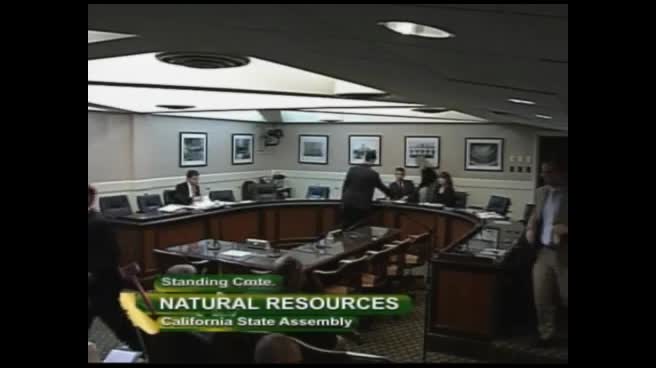
| Apr 13, 2015 | In committee: Set, first hearing. Failed passage. |
| May 18, 2015 | From committee: Without further action pursuant to Joint Rule 62(a). |
|
Date
|
Description
|
Location
|
Votes
|
|
|---|---|---|---|---|
| Apr 13, 2015 | Do pass and be re-referred to the Committee on [Appropriations] | Assembly Standing Committee on Natural Resources |
Failed |
This list shows positions taken on this bill by organizations on the date displayed, which is linked to the original source.
Positions by individuals are not included.
|
Organization
|
Position
|
Date
|
|---|---|---|
| Bay Area Air Quality Management District | ** Against | Apr 13, 2015 |
| Breathe California | ** Against | Apr 13, 2015 |
| California Air Pollution Control Officers' Association | ** Against | Apr 13, 2015 |
| California Chamber Of Commerce | ** Support | Apr 13, 2015 |
| California League Of Conservation Voters | ** Against | Apr 13, 2015 |
| California Manufacturers And Technology Association | * Support | Apr 13, 2015 |
| California Professional Association Of Specialty Contractors | ** Support | Apr 13, 2015 |
| California Trucking Association | ** Support | Apr 13, 2015 |
| Central Valley Air Quality Coalition | ** Against | Apr 13, 2015 |
| Coalition For Clean Air | ** Against | Apr 13, 2015 |
| Construction Industry Air Quality Coalition | ** Support | Apr 13, 2015 |
| Consumer Specialty Products Association | ** Support | Apr 13, 2015 |
| Fresno Chamber of Commerce | ** Support | Apr 13, 2015 |
| Industrial Environmental Association | ** Support | Apr 13, 2015 |
| National Federation Of Independent Business | * For If Amend | Apr 13, 2015 |
| National Federation Of Independent Business | * Support | Apr 13, 2015 |
| National Marine Manufacturers Association | ** Support | Apr 13, 2015 |
| Sierra Club | * Against | Apr 13, 2015 |
AB 335
Page 5
Date of Hearing: April 13, 2015
ASSEMBLY COMMITTEE ON NATURAL RESOURCES
Das Williams, Chair
AB 335
(Patterson) – As Amended April 6, 2015
SUBJECT: Air quality: minor violations
SUMMARY: Requires the Air Resources Board (ARB) and each local air district to establish a "minor violation" program, where ARB and the air districts must issue a "notice to comply" for minor violations, as defined, and violators have a right to cure the violation in lieu of facing a penalty or other further enforcement. This bill reestablishes a law that had been in effect from 1997-2006.
EXISTING LAW:
Designates ARB as the air pollution control agency responsible for the coordination of the activities of air pollution control districts and air quality management districts for the purposes of the federal Clean Air Act.
Requires air districts to adopt and enforce rules and regulations to achieve and maintain the state and federal ambient air quality standards in all areas affected by non-vehicular emission sources under their jurisdiction.
Authorizes ARB and air districts to enforce air pollution laws, including imposing administrative and civil penalties for violations.
Generally prohibits a person from discharging air contaminants or other material that cause injury, detriment, nuisance, or annoyance or endanger the comfort, repose, health or safety to any considerable number of persons, or to the public, or that cause, or have a tendency to cause, injury or damage to a business or property.
Provides that for a violation of the above, a person is strictly liable for a penalty of not more than $1,000 or $10,000, as specified. In the case that the violation results in actual injury, as defined, a person is liable for a civil penalty of not more than $15,000.
Provides that a person who violates the above provision and who is found to have acted negligently is liable for a civil penalty up to $25,000. Persons found to have acted knowingly or willfully and intentionally are liable for penalties up to $40,000 and $75,000, unless injury or bodily harm is shown, in which case a greater penalty maximum applies.
Requires that, in determining the amount of penalty assessed, that the extent of harm, nature and persistence of violation, length of time, frequency of past violations, the record of maintenance, the unproven nature of the control equipment, actions taken by the defendant to mitigate the violation and the financial burden to the defendant be taken into consideration.
THIS BILL:
Requires ARB and each air district to adopt a regulation or rule that classifies minor violations, as determined by considering:
The magnitude, scope and severity of the violation.
The degree to which a violation jeopardizes human health, safety or welfare or the environment.
The degree to which a violation could contribute to the failure to accomplish an important established air pollution goal or program objective.
The degree to which a violation may make it difficult to determine if the violator is in compliance with other air pollution requirements.
Excludes from the definition of a minor violation any of the following:
Any knowing, willful, or intentional violation.
Any violation that enables the violator to benefit economically from noncompliance, either by realizing reduced costs or by gaining a competitive advantage.
Any violation that is a chronic violation or that is committed by a recalcitrant violator, as determined by ARB or a district according to specified evidence.
Requires the issuance of a notice to comply, as defined, for minor violations, including a clear statement of the alleged violation, a means by which compliance may be achieved, and a time limit to comply, not exceeding 30 days. Generally prohibits any other enforcement action for minor violations, unless ARB or the district determines that enforcement is necessary to prevent harm to the public health or safety or to the environment, or that assessment of a civil penalty is warranted or required under federal law.
Provides that the provisions above do not apply to a district that, as of January 1, 2015, has in effect a program with provisions similar to those required by this bill.
Requires ARB to report to the Legislature by January 1, 2020 regarding actions taken by ARB and the districts to implement the minor violation program and the results of that implementation.
FISCAL EFFECT: Unknown
COMMENTS:
Background. Under current law, the ARB and local air districts are authorized to impose civil or administrative penalties for a variety of violations of state air pollution laws and regulations. The agencies and the courts are required to consider eight factors when determining the amount of an administrative or civil penalty:
extent of harm caused by the violation;
nature and persistence of the violation;
length of time over which the violation occurs;
frequency of past violations;
record of maintenance;
unproven or innovative nature of the control equipment;
any action taken by the defendant, including nature, extent, and time of response to cleanup and construction undertaken to mitigate the violation; and
financial burden to the defendant.
No minimum penalty is required, leaving the amount prosecuted at the discretion of the air pollution control officer. Offenses are generally strict liability, but affirmative defenses are allowed when officers seek more than $1,000 per day for certain violations. Civil penalties for stationary source air emission violations are assessed based on the number of days of violation and the intention of the violator. In the absence of evidence to indicate negligence or worse (i.e., knowledge and failure to correct or willful and intentional behavior), civil penalties are assessed at penalty ceilings for the strict liability classification, where the violation is found to occur without proof of carelessness or fault. The current penalty ceiling for strict liability violations can range from $1,000 to $10,000.
History of minor violation law. In 1996, AB 1827 (Brulte) created minor violation enforcement programs for air and water quality standards, including the same requirements as this bill for ARB and air districts. The intent of the program was to establish enforcement mechanisms that recognize the difference between violations with little or no potential to cause public health or environmental harm and those that are clearly the result of a bad actor, behaving in a willful and egregious manner. AB 1827 included reporting requirements to evaluate the effectiveness of the program and a provision sunsetting the program on January 1, 2001.
In 2000, SB 1865 (Perata), which increased civil and criminal penalties for air quality violations, also included a provision extending the sunset on the minor violation program for air quality violations until January 1, 2006.
In 2005, SB 109 (Ortiz) contained a provision that would have extended the minor violation program for air quality standards until January 1, 2012. However, the bill failed passage on the Assembly Floor for unrelated provisions that would have increased the criminal and civil penalties for significant violations of air quality standards. Following the failure of SB 109, the minor violation program statute was repealed by its own terms on January 1, 2006.
In 2006, AB 2394 (Aghazarian) proposed to reenact the minor violation program without reporting requirements or a sunset. AB 2394 passed this committee, but was held in the Assembly Appropriations Committee.
This bill again proposes to reenact the same minor violation program which was in effect from 1997-2006. The bill includes a report to the Legislature, but does not include a sunset.
According to California Air Pollution Control Officers Association (CAPCOA), 25 of the 35 local air districts currently have a notice to comply rule or program. CAPCOA was not able to confirm whether these existing programs would comply with the requirement proposed by this bill.
Purpose of the regulatory system. Regulatory systems encourage or deter behaviors through the threat of penalty for non-compliance. In regulatory systems, there are varying degrees of culpability, ranging from strict liability, or no fault, to negligent and intentional violations. Strict liability is vital to the maintenance of a regulatory system because it encourages individuals to know and comply with the law or risk penalty regardless of intent.
In some regulatory agencies, the risk of enforcement has been described as similar to winning the lottery. Since the chances of being monitored are often slim, the only incentive for complying with the law is the threat of a substantial penalty. To achieve deterrence, the penalty must be sufficient to deprive any economic benefit resulting from a violation, to reflect the seriousness of the violation taking into account the violator’s financial condition, to and deter others from the temptation of noncompliance.
By mandating a warning, this bill could undermine the deterrent effect by signaling to regulated entities that they don't need to comply until they are caught.
REGISTERED SUPPORT / OPPOSITION:
Support
California Chamber of Commerce
California Manufacturers and Technology Association
California Professional Association of Specialty Contractors
California Trucking Association
Construction Industry Air Quality Coalition
Consumer Specialty Products Association
Fresno Chamber of Commerce
Industrial Environmental Association
National Marine Manufacturers Association
Opposition
American Lung Association of California
Bay Area Air Quality Management District
Breathe California
California Air Pollution Control Officers Association
California League of Conservation Voters
Central Valley Air Quality Coalition
Coalition for Clean Air
Coastal Environmental Rights Foundation
Natural Resource Defense Council
Sierra Club California
South Coast Air Quality Management District
Analysis Prepared by: Lawrence Lingbloom / NAT. RES. / (916) 319-2092
Discussed in Hearing
 23MIN