AB 573: Higher education: campus closures: Corinthian Colleges.
- Session Year: 2015-2016
- House: Assembly
- Latest Version Date: 2015-09-16
(1)The California Private Postsecondary Education Act of 2009 provides for the regulation of private postsecondary educational institutions by the Bureau for Private Postsecondary Education in the Department of Consumer Affairs. The act also establishes the Student Tuition Recovery Fund and requires the bureau to adopt regulations governing the administration and maintenance of the fund, including requirements relating to assessments on students and student claims against the fund, and establishes that the moneys in this fund are continuously appropriated to the bureau for specified purposes. The act caps the amount that may be in the fund at any time at $25,000,000.
This bill would raise the cap for the fund to $30,000,000.
(2)This bill would appropriate the sum of $1,300,000 from the Student Tuition Recovery Fund to the Attorney General for the purposes of providing grants to eligible nonprofit community service organizations to assist eligible students affected by the closure of Corinthian Colleges, Inc., as defined, with loan discharge and other student loan-related requests and tuition recovery-related claims, and to pay an amount not to exceed $150,000 for the reasonable administrative costs of the Attorney Generals office related to these grants, as specified, thereby making an appropriation. The bill would require the bureau to notify the Attorney General of all unlawful Corinthian Colleges, Inc., closures within 15 days of the effective date of these provisions. The bill would require the Attorney General to, among other things, within 90 days of the notification, solicit grant applications from eligible nonprofit community service organizations, select one or more of these organizations deemed to be qualified, and set additional terms and conditions of the grants as necessary. The bill would set a schedule for how grant funds are to be distributed. The bill would require the grantee to submit specified information to the Attorney General on a quarterly basis, and require the Attorney General to make these reports available to the Legislature and the bureau upon request. The bill would require the Attorney General to provide the Legislature and the bureau a final report summarizing all the information submitted to it by grantees, promptly following the time when all funds are expended by the grantees, or by August, 1, 2018, whichever is earlier. The bill would authorize the Attorney General to contract with another qualified entity to perform the Attorney Generals duties under these provisions.
(3)This bill would, for a period not to exceed 2 years from April 27, 2015, authorize state agencies that provide certification, registration, or licensure necessary to promote the safety and protection of the public to, on a case-by-case basis, consider for certification, registration, or licensure students who were enrolled in a program of Corinthian Colleges, Inc., that provided education or training aimed towards these students receiving certification, registration, or licensure from the state agency, and who did not receive that certification, registration, or licensure due to the closure of that institution.
(4)The Cal Grant Program prohibits an applicant from receiving Cal Grant awards totaling in excess of the amount equivalent to the award level for a total of four years of full-time attendance in an undergraduate program, except as provided.
This bill would partially exempt from this limitation on Cal Grant awards a student who was enrolled and received a Cal Grant award at a California campus of Heald College, and who was unable to complete an educational program offered by the campus due to its closure.
(5)The California National Guard Education Assistance Award Program authorizes the renewal of California National Guard Education Assistance Awards, for a maximum of the greater of either four years of full-time equivalent enrollment or the duration for which the qualifying member would otherwise be eligible pursuant to the Cal Grant Program, if specified conditions are met.
This bill would partially exempt from this limitation on California National Guard Education Assistance Awards a student who was enrolled and received a California National Guard Education Assistance Award at a California campus of Heald College, and who was unable to complete an educational program offered by the campus due to its closure.
(6)This bill would declare that it is to take effect immediately as an urgency statute.
(1)Existing law establishes the California Community Colleges under the administration of the Board of Governors of the California Community Colleges, and establishes community college districts throughout the state that operate community colleges and provide instruction to students. Existing law requires community college districts to charge each student a fee of $46 per unit per semester. Existing law requires the waiver of this fee for students meeting prescribed requirements.
This bill would, until July 1, 2018, require the board of governors to waive the fee for students who meet prescribed requirements, were enrolled at a California campus of a Corinthian Colleges, Inc., institution, and were either unable to complete an educational program offered by the campus due to the campuss closure on April 27, 2015, or withdrew from an educational program offered by a Corinthian Colleges campus after the earlier of either (A) 120 days before the closure, or an earlier date as may determined by the Bureau for Private Postsecondary Education, or (B) the date set by the United States Department of Education for closed school loan discharge eligibility, and have demonstrated financial need, as determined by the enrolling campus. To the extent this provision would impose additional duties on community college districts, it would constitute a state-mandated local program.
(2)The California Private Postsecondary Education Act of 2009 provides for the regulation of private postsecondary educational institutions by the Bureau for Private Postsecondary Education in the Department of Consumer Affairs. The act requires an institution subject to its provisions to follow certain requirements prior to closing.
This bill would provide that, until January 1, 2020, the Governor shall establish a single point of contact to respond to each closure of an institution that does not comply with these closure and related requirements prior to closing. The bill would require the single point of contact to assist the students who were enrolled at, or in an online program offered by, an institution that closes in, among other things, receiving information on obtaining refunds, loan discharges, and tuition recovery.
(3)
(1)The California Private Postsecondary Education Act of 2009 provides for the regulation of private postsecondary educational institutions by the Bureau for Private Postsecondary Education in the Department of Consumer Affairs. The act also establishes the Student Tuition Recovery Fund and requires the bureau to adopt regulations governing the administration and maintenance of the fund, including requirements relating to assessments on students and student claims against the fund, and establishes that the moneys in this fund are continuously appropriated to the bureau for specified purposes. The act caps the amount that may be in the fund at any time at $25,000,000.
This bill would raise the cap for the fund to $50,000,000. The bill would, upon the unlawful closure of an institution, require the Attorney General, or a qualified entity under contract with the Attorney General, to provide timely grant funds to eligible nonprofit community service organizations, as defined, to assist students of that institution with loan discharge and other student loan-related requests and tuition recovery-related claims, as specified. The bill would provide that the aggregate amount of these grants and the reasonable administrative costs to the Attorney Generals office related to the grants would be made available from the Student Tuition Recovery Fund, thereby making an appropriation. $30,000,000.
(4)
(2)This bill would appropriate the sum of $1,300,000 from the Student Tuition Recovery Fund to the Bureau of Private Postsecondary Education Attorney General for the purposes of providing grants to eligible nonprofit community service organizations to assist eligible students affected by the closure of Corinthian Colleges, Inc., as defined, with loan discharge and other student loan-related requests and tuition recovery-related claims, and to pay an amount not to exceed $150,000 for the reasonable administrative costs of the Attorney Generals office related to these grants, as specified, thereby making an appropriation. The bill would require the bureau to ensure that these grant funds are made available within 30 days of its enactment. The bill would require the bureau to notify the Attorney General of all unlawful Corinthian Colleges, Inc., closures within 15 days of the effective date of these provisions. The bill would require the Attorney General to, among other things, within 90 days of the notification, solicit grant applications from eligible nonprofit community service organizations, select one or more of these organizations deemed to be qualified, and set additional terms and conditions of the grants as necessary. The bill would set a schedule for how grant funds are to be distributed. The bill would require the grantee to submit specified information to the Attorney General on a quarterly basis, and require the Attorney General to make these reports available to the Legislature and the bureau upon request. The bill would require the Attorney General to provide the Legislature and the bureau a final report summarizing all the information submitted to it by grantees, promptly following the time when all funds are expended by the grantees, or by August, 1, 2018, whichever is earlier. The bill would authorize the Attorney General to contract with another qualified entity to perform the Attorney Generals duties under these provisions.
(3)This bill would, for a period not to exceed 2 years from April 27, 2015, authorize state agencies that provide certification, registration, or licensure necessary to promote the safety and protection of the public to, on a case-by-case basis, consider for certification, registration, or licensure students who were enrolled in a program of Corinthian Colleges, Inc., that provided education or training aimed towards these students receiving certification, registration, or licensure from the state agency, and who did not receive that certification, registration, or licensure due to the closure of that institution.
(5)
(4)The Cal Grant Program prohibits an applicant from receiving Cal Grant awards totaling in excess of the amount equivalent to the award level for a total of four years of full-time attendance in an undergraduate program, except as provided.
This bill would partially exempt from this limitation on Cal Grant awards a student who was enrolled and received a Cal Grant award at a California campus of Heald College, and who was unable to complete an educational program offered by the campus due to its closure.
(6)
(5)The California National Guard Education Assistance Award Program authorizes the renewal of California National Guard Education Assistance Awards, for a maximum of the greater of either four years of full-time equivalent enrollment or the duration for which the qualifying member would otherwise be eligible pursuant to the Cal Grant Program, if specified conditions are met.
This bill would partially exempt from this limitation on California National Guard Education Assistance Awards a student who was enrolled and received a California National Guard Education Assistance Award at a California campus of Heald College, and who was unable to complete an educational program offered by the campus due to its closure.
(7)This bill would appropriate $100,000 from the General Fund to the Chancellor of the California Community Colleges for allocation to a community college district for the purpose of conducting a statewide media campaign to inform students affected by the closure of Corinthian Colleges, Inc., of the education opportunities available at community colleges, thereby making an appropriation.
Funds appropriated by this bill to a community college district would be applied toward the minimum funding requirements for school districts and community college districts imposed by Section 8 of Article XVI of the California Constitution.
(8)The California Constitution requires the state to reimburse local agencies and school districts for certain costs mandated by the state. Statutory provisions establish procedures for making that reimbursement.
This bill would provide that, if the Commission on State Mandates determines that the bill contains costs mandated by the state, reimbursement for those costs shall be made pursuant to these statutory provisions.
(9)
(6)This bill would declare that it is to take effect immediately as an urgency statute.
(1)Existing law establishes the California Community Colleges under the administration of the Board of Governors of the California Community Colleges, and establishes community college districts throughout the state that operate community colleges and provide instruction to students. Existing law requires community college districts to charge each student a fee of $46 per unit per semester. Existing law requires the waiver of this fee for students meeting prescribed requirements.
This bill would, until July 1, 2018, require the board of governors to waive the fee for students who meet prescribed requirements, were enrolled at a California campus of a Corinthian Colleges, Inc., institution, and were either unable to complete an educational program offered by the campus due to the campuss closure on April 27, 2015, or withdrew from an educational program offered by a Corinthian Colleges campus within 120 days of that date, after the earlier of either (A) 120 days before the closure, or an earlier date as may determined by the Bureau for Private Postsecondary Education, or (B) the date set by the United States Department of Education for closed school loan discharge eligibility, and have demonstrated financial need, as determined by the enrolling campus. To the extent this provision would impose additional duties on community college districts, it would constitute a state-mandated local program.
(2)The California Private Postsecondary Education Act of 2009 provides for the regulation of private postsecondary educational institutions by the Bureau for Private Postsecondary Education in the Department of Consumer Affairs. The act requires an institution subject to its provisions to follow certain requirements prior to closing.
This bill would provide that, until January 1, 2020, there the Governor shall be established establish a single point of contact to respond to the each closure of institutions an institution that do does not comply with these closure and related requirements prior to closing. The bill would require the single point of contact to assist the students who were enrolled at, or in an online program offered by, an institution that closes in, among other things, receiving information on obtaining refunds, loan discharges, and tuition recovery. The bill would, upon the unlawful closure of an institution, require the Attorney General, or a qualified entity under contract with the Attorney General, to provide timely grant funds to eligible local nonprofit community service organizations to assist students of that institution with loan discharge and other student loan-related requests and tuition recovery-related claims, as specified.
(3)This bill would appropriate the sum of $1,300,000 from the Private Postsecondary Education Administration Fund to the Bureau of Private Postsecondary Education for the purposes of providing financial grants to eligible local nonprofit community service organizations, as described above, for students affected by the closure of Corinthian Colleges, Inc., as specified, thereby making an appropriation.
(4)
(3)The act also establishes the Student Tuition Recovery Fund and requires the bureau to adopt regulations governing the administration and maintenance of the fund, including requirements relating to assessments on students and student claims against the fund, and establishes that the moneys in this fund are continuously appropriated to the bureau for specified purposes. The act caps the amount that may be in the fund at any time at $25,000,000.
This bill would deem a student who was enrolled at a California campus of a Corinthian Colleges, Inc., institution, or a California student who was enrolled in an online program offered by an out-of-state campus of a Corinthian Colleges, Inc., institution, to be eligible for recovery from the fund under specified circumstances. By expanding the purpose for which moneys in the Student Tuition Recovery Fund may be used, this bill would make an appropriation. The bill would raise the cap for the fund to $50,000,000. The bill would, upon the unlawful closure of an institution, require the Attorney General, or a qualified entity under contract with the Attorney General, to provide timely grant funds to eligible nonprofit community service organizations, as defined, to assist students of that institution with loan discharge and other student loan-related requests and tuition recovery-related claims, as specified. The bill would provide that the aggregate amount of these grants and the reasonable administrative costs to the Attorney Generals office related to the grants would be made available from the Student Tuition Recovery Fund, thereby making an appropriation.
The bill would authorize a private postsecondary institution to submit Student Tuition Recovery Fund assessments to the bureau for its students who are enrolled at the institution, would prohibit the institution from advertising or marketing this as a benefit it provides for its students, and would establish additional requirements related to the fund, as specified.
(4)This bill would appropriate the sum of $1,300,000 from the Student Tuition Recovery Fund to the Bureau of Private Postsecondary Education for the purposes of providing grants to eligible nonprofit community service organizations to assist students affected by the closure of Corinthian Colleges, Inc., as defined, with loan discharge and other student loan-related requests and tuition recovery-related claims, and to pay for the reasonable administrative costs of the Attorney Generals office related to these grants, as specified, thereby making an appropriation. The bill would require the bureau to ensure that these grant funds are made available within 30 days of its enactment.
(5)The Cal Grant Program prohibits an applicant from receiving Cal Grant awards totaling in excess of the amount equivalent to the award level for a total of four years of full-time attendance in an undergraduate program, except as provided.
This bill would partially exempt from this limitation on Cal Grant awards a student who was enrolled and received a Cal Grant award at a California campus of Heald College, and who was unable to complete an educational program offered by the campus due to its closure.
(6)The California National Guard Education Assistance Award Program authorizes the renewal of California National Guard Education Assistance Awards, for a maximum of the greater of either four years of full-time equivalent enrollment or the duration for which the qualifying member would otherwise be eligible pursuant to the Cal Grant Program, if specified conditions are met.
This bill would partially exempt from this limitation on California National Guard Education Assistance Awards a student who was enrolled and received a California National Guard Education Assistance Award at a California campus of Heald College, and who was unable to complete an educational program offered by the campus due to its closure.
(7)This bill would appropriate $100,000 from the General Fund to the Chancellor of the California Community Colleges for allocation to a community college district for the purpose of conducting a statewide media campaign to inform students affected by the closure of Corinthian Colleges, Inc., of the education opportunities available at community colleges, thereby making an appropriation.
Funds appropriated by this bill to a community college district would be applied toward the minimum funding requirements for school districts and community college districts imposed by Section 8 of Article XVI of the California Constitution.
(8)The California Constitution requires the state to reimburse local agencies and school districts for certain costs mandated by the state. Statutory provisions establish procedures for making that reimbursement.
This bill would provide that, if the Commission on State Mandates determines that the bill contains costs mandated by the state, reimbursement for those costs shall be made pursuant to these statutory provisions.
(9)This bill would declare that it is to take effect immediately as an urgency statute.
(1)Existing law establishes the California Community Colleges under the administration of the Board of Governors of the California Community Colleges, and establishes community college districts throughout the state that operate community colleges and provide instruction to students. Existing law requires community college districts to charge each student a fee of $46 per unit per semester. Existing law requires the waiver of this fee for students meeting prescribed requirements.
This bill would, until July 1, 2018, require the board of governors to waive the fee for students who meet prescribed requirements, were enrolled at a California campus of a Corinthian Colleges, Inc., institution, and were either unable to complete an educational program offered by the campus due to the campuss closure on April 27, 2015, or withdrew from an educational program offered by a Corinthian Colleges campus within 120 days of that date. date, and have demonstrated need, as determined by the enrolling campus. To the extent this provision would impose additional duties on community college districts, it would constitute a state-mandated local program.
(2)The California Private Postsecondary Education Act of 2009 provides for the regulation of private postsecondary educational institutions by the Bureau for Private Postsecondary Education in the Department of Consumer Affairs. The act requires an institution subject to its provisions to follow certain requirements prior to closing.
This bill would provide that, until January 1, 2020, there shall be established a single point of contact to respond to the closure of institutions that do not comply with these requirements prior to closing. The bill would require the single point of contact to assist the students who were enrolled at, or in an online program offered by, an institution that closes in, among other things, obtaining refunds, loan discharges, and tuition recovery. The bill would, upon the unlawful closure of an institution, require the Attorney General, or a qualified entity under contract with the Attorney General, to provide timely grant funds to eligible local nonprofit community service organizations to assist students of that institution with loan discharge and other student loan-related requests and tuition recovery-related claims, as specified.
(3)This bill would appropriate the sum of $1,300,000 from the Private Postsecondary Education Administration Fund to the Bureau of Private Postsecondary Education for the purposes of providing financial grants to eligible local nonprofit community service organizations, as described above, for students affected by the closure of Corinthian Colleges, Inc., as specified, thereby making an appropriation.
(4)The act also establishes the Student Tuition Recovery Fund and requires the bureau to adopt regulations governing the administration and maintenance of the fund, including requirements relating to assessments on students and student claims against the fund, and establishes that the moneys in this fund are continuously appropriated to the bureau for specified purposes. The act caps the amount that may be in the fund at any time at $25,000,000.
This bill would deem a student who was enrolled at a California campus of a Corinthian Colleges, Inc., institution, or a California student who was enrolled in an online program offered by an out-of-state campus of a Corinthian Colleges, Inc., institution, to be eligible for recovery from the fund under specified circumstances. By expanding the purpose for which moneys in the Student Tuition Recovery Fund may be used, this bill would make an appropriation. The bill would raise the cap for the fund to $50,000,000.
The bill would authorize a private postsecondary institution to submit Student Tuition Recovery Fund assessments to the bureau for its students who are enrolled at the institution, would prohibit the institution from advertising or marketing this as a benefit it provides for its students, and would establish additional requirements related to the fund, as specified.
(5)The Cal Grant Program prohibits an applicant from receiving Cal Grant awards totaling in excess of the amount equivalent to the award level for a total of four years of full-time attendance in an undergraduate program, except as provided.
This bill would partially exempt from this limitation on Cal Grant awards a student who was enrolled and received a Cal Grant award at a California campus of a Corinthian Colleges, Inc., institution, Heald College, and who was unable to complete an educational program offered by the campus due to its closure.
(6)The California National Guard Education Assistance Award Program authorizes the renewal of California National Guard Education Assistance Awards, for a maximum of the greater of either four years of full-time equivalent enrollment or the duration for which the qualifying member would otherwise be eligible pursuant to the Cal Grant Program, if specified conditions are met.
This bill would partially exempt from this limitation on California National Guard Education Assistance Awards a student who was enrolled and received a California National Guard Education Assistance Award at a California campus of Heald College, and who was unable to complete an educational program offered by the campus due to its closure.
(6)
(7)This bill would appropriate $100,000 from the General Fund to the Chancellor of the California Community Colleges for allocation to a community college district for the purpose of conducting a statewide media campaign to inform students affected by the closure of Corinthian Colleges, Inc., of the education opportunities available at community colleges, thereby making an appropriation.
Funds appropriated by this bill to a community college district would be applied toward the minimum funding requirements for school districts and community college districts imposed by Section 8 of Article XVI of the California Constitution.
(7)
(8)The California Constitution requires the state to reimburse local agencies and school districts for certain costs mandated by the state. Statutory provisions establish procedures for making that reimbursement.
This bill would provide that, if the Commission on State Mandates determines that the bill contains costs mandated by the state, reimbursement for those costs shall be made pursuant to these statutory provisions.
(8)
(9)This bill would declare that it is to take effect immediately as an urgency statute.
(1)Existing law establishes the California Community Colleges under the administration of the Board of Governors of the California Community Colleges, and establishes community college districts throughout the state that operate community colleges and provide instruction to students. Existing law requires community college districts to charge each student a fee of $46 per unit per semester. Existing law requires the waiver of this fee for students meeting prescribed requirements.
This bill would, until July 1, 2018, require the board of governors to waive the fee for students who meet prescribed requirements, were enrolled at a California campus of a Corinthian Colleges, Inc., institution, and were either unable to complete an educational program offered by the campus due to the campuss closure on April 27, 2015, or withdrew from an educational program offered by a Corinthian Colleges campus within 120 days of that date. To the extent this provision would impose additional duties on community college districts, it would constitute a state-mandated local program.
(2)The California Private Postsecondary Education Act of 2009 provides for the regulation of private postsecondary educational institutions by the Bureau for Private Postsecondary Education in the Department of Consumer Affairs. The act requires an institution subject to its provisions to follow certain requirements prior to closing.
This bill would require the bureau to establish a standing task force provide that, until January 1, 2020, there shall be established a single point of contact to respond to the closure of institutions that do not comply with these requirements prior to closing. The bill would require the task force to the single point of contact to assist the students who were enrolled at, or in an online program offered by, an institution that closes in, among other things, obtaining refunds, loan discharges, and tuition recovery. The bill would, upon the unlawful closure of an institution, require the bureau Attorney General, or a qualified entity under contract with the Attorney General, to provide timely grant funds to local legal aid eligible local nonprofit community service organizations to assist students of that institution with loan discharge and other student loan-related requests and tuition recovery related recovery-related claims, as specified.
(3)This bill would appropriate the sum of $1,300,000 from the Private Postsecondary Education Administration Fund to the Bureau of Private Postsecondary Education for the purposes of providing financial grants to legal aid eligible local nonprofit community service organizations, as described above, for students affected by the closure of Corinthian Colleges, Inc., as specified, thereby making an appropriation.
(4)The act also establishes the Student Tuition Recovery Fund and requires the bureau to adopt regulations governing the administration and maintenance of the fund, including requirements relating to assessments on students and student claims against the fund, and establishes that the moneys in this fund are continuously appropriated to the bureau for specified purposes. The act caps the amount that may be in the fund at any time at $25,000,000.
This bill would deem a student who was enrolled at a California campus of a Corinthian Colleges, Inc., institution, or a California student who was enrolled in an online program offered by an out-of-state campus of a Corinthian Colleges, Inc., institution, to be eligible for recovery from the fund under specified circumstances. By expanding the purpose for which moneys in the Student Tuition Recovery Fund may be used, this bill would make an appropriation. The bill would raise the cap for the fund to $50,000,000.
The bill would authorize a private postsecondary institution to submit Student Tuition Recovery Fund assessments to the bureau for its students who are enrolled at the institution, would prohibit the institution from advertising or marketing this as a benefit it provides for its students, and would establish additional requirements related to the fund, as specified.
(5)The Cal Grant Program prohibits an applicant from receiving Cal Grant awards totaling in excess of the amount equivalent to the award level for a total of four years of full-time attendance in an undergraduate program, except as provided.
This bill would partially exempt from this limitation on Cal Grant awards a student who was enrolled and received a Cal Grant award at a California campus of a Corinthian Colleges, Inc., institution, and who was unable to complete an educational program offered by the campus due to its closure.
(6)This bill would appropriate $100,000 from the General Fund to the Chancellor of the California Community Colleges for allocation to a community college district for the purpose of conducting a statewide media campaign to inform students affected by the closure of Corinthian Colleges, Inc., of the education opportunities available at community colleges, thereby making an appropriation.
Funds appropriated by this bill to a community college district would be applied toward the minimum funding requirements for school districts and community college districts imposed by Section 8 of Article XVI of the California Constitution.
(7)The California Constitution requires the state to reimburse local agencies and school districts for certain costs mandated by the state. Statutory provisions establish procedures for making that reimbursement.
This bill would provide that, if the Commission on State Mandates determines that the bill contains costs mandated by the state, reimbursement for those costs shall be made pursuant to these statutory provisions.
(8)This bill would declare that it is to take effect immediately as an urgency statute.
(1)Existing law establishes the California Community Colleges under the administration of the Board of Governors of the California Community Colleges, and establishes community college districts throughout the state that operate community colleges and provide instruction to students. Existing law requires community college districts to charge each student a fee of $46 per unit per semester. Existing law requires the waiver of this fee for students meeting prescribed requirements.
This bill would, until July 1, 2018, require the board of governors to waive the fee for students who meet prescribed requirements, were enrolled at a California campus of a Corinthian Colleges, Inc., institution, and were either unable to complete an educational program offered by the campus due to the campuss closure on April 27, 2015, or withdrew from an educational program offered by a Corinthian Colleges campus within 120 days, or a greater period determined by the Bureau for Private Postsecondary Education, of the campuss closure on April 27, 2015. days of that date. To the extent this provision would impose additional duties on community college districts, it would constitute a state-mandated local program.
(2)The California Private Postsecondary Education Act of 2009, 2009 provides for the regulation of private postsecondary educational institutions by the Bureau for Private Postsecondary Education in the Department of Consumer Affairs. The act requires an institution subject to its provisions to follow certain requirements prior to closing.
This bill would require the bureau to establish a standing task force to respond to the closure of institutions that do not comply with these requirements prior to closing. The bill would require the task force to assist the students who were enrolled at, or in an online program offered by, an institution that closes in, among other things, obtaining refunds, loan discharges, and tuition recovery. The bill would, upon the unlawful closure of an institution, require the bureau to provide timely grant funds to local legal aid organizations to assist students of that institution with loan discharge and other student loan-related requests and tuition recovery related claims, as specified.
(3)This bill would appropriate the sum of $1,300,000 from the Private Postsecondary Education Administration Fund to the Bureau of Private Postsecondary Education for the purposes of providing financial grants to legal aid organizations, as described above, for students affected by the closure of Corinthians Corinthian Colleges, Inc., as specified, thereby making an appropriation.
(4)The act also establishes the Student Tuition Recovery Fund and requires the bureau to adopt regulations governing the administration and maintenance of the fund, including requirements relating to assessments on students and student claims against the fund, and establishes that the moneys in this fund are continuously appropriated to the bureau for specified purposes. The act caps the amount that may be in the fund at any time at $25,000,000.
This bill would deem a student who was enrolled at a California campus of a Corinthian Colleges, Inc., institution, or a California student who was enrolled in an online program offered by an out-of-state campus of a Corinthian Colleges, Inc., institution, to be eligible for recovery from the fund under specified circumstances. By expanding the purpose for which moneys in the Student Tuition Recovery Fund may be used, this bill would make an appropriation. The bill would raise the cap for the fund to $50,000,000.
(5)The Cal Grant Program prohibits an applicant from receiving Cal Grant awards totaling in excess of the amount equivalent to the award level for a total of four years of full-time attendance in an undergraduate program, except as provided.
This bill would partially exempt from this limitation on Cal Grant awards a student who was enrolled and received a Cal Grant award at a California campus of a Corinthian Colleges, Inc., institution, and who was unable to complete an educational program offered by the campus due to its closure.
(6)This bill would appropriate $100,000 from the General Fund to the Chancellor of the California Community Colleges for allocation to a community college district for the purpose of conducting a statewide media campaign to inform students affected by the closure of Corinthian Colleges, Inc., of the education opportunities available at community colleges, thereby making an appropriation.
Funds appropriated by this bill to a community college district would be applied toward the minimum funding requirements for school districts and community college districts imposed by Section 8 of Article XVI of the California Constitution.
(7)The California Constitution requires the state to reimburse local agencies and school districts for certain costs mandated by the state. Statutory provisions establish procedures for making that reimbursement.
This bill would provide that, if the Commission on State Mandates determines that the bill contains costs mandated by the state, reimbursement for those costs shall be made pursuant to these statutory provisions.
(8)This bill would declare that it is to take effect immediately as an urgency statute.
(1)Existing law establishes the California Community Colleges under the administration of the Board of Governors of the California Community Colleges, and establishes community college districts throughout the state that operate community colleges and provide instruction to students. Existing law requires community college districts to charge each student a fee of $46 per unit per semester. Existing law requires the waiver of this fee for students meeting prescribed requirements.
This bill would authorize would, until July 1, 2018, require the board of governors to waive the fee for students who meet prescribed requirements, were enrolled in a private postsecondary educational institution that provided educational services in California or online educational services to California students at the time the institution closed or otherwise ceased to operate an academic program in which they were enrolled, and for students who at a California campus of a Corinthian Colleges, Inc., institution, and were either unable to complete an educational program offered by the campus due to the campuss closure on April 27, 2015, or withdrew from the institution an educational program offered by a campus within 120 days, or any a greater period determined by the bureau, of the closure or cessation. Bureau for Private Postsecondary Education, of the campuss closure on April 27, 2015. To the extent this provision would impose additional duties on community college districts, it would constitute a state-mandated local program.
(2)The California Private Postsecondary Education Act of 2009, provides for the regulation of private postsecondary educational institutions by the Bureau for Private Postsecondary Education in the Department of Consumer Affairs. The act requires an institution subject to its provisions to follow certain requirements prior to closing.
This bill would require the bureau to establish a standing task force to respond to the closure of an institution institutions that does do not comply with these requirements prior to closing. The bill would require the task force to assist the students who were enrolled at, or in an online program offered by, the an institution that closes in, among other things, obtaining refunds, loan discharges, and tuition recovery. The bill would, upon the unlawful closure of an institution, require the bureau to provide timely grant funds to local legal aid organizations to assist students of that institution with loan discharge requests and tuition recovery related claims, as specified.
(3)This bill would appropriate the sum of $1,300,000 from the Private Postsecondary Education Administration Fund to the Bureau of Private Postsecondary Education for the purposes of providing financial grants to legal aid organizations, as described above, for students affected by the closure of Corinthians Colleges, Inc., as specified, thereby making an appropriation.
The
(4)The act also establishes the Student Tuition Recovery Fund and requires the bureau to adopt regulations governing the administration and maintenance of the fund, including requirements relating to assessments on students and student claims against the fund, and establishes that the moneys in this fund are continuously appropriated to the bureau for specified purposes. The act caps the amount that may be in the fund at any time at $25,000,000.
This bill would deem a student who was enrolled at a California campus of a Corinthian Colleges, Inc. Inc., institution, or a California student who was enrolled in an online program offered by an out-of-state campus of a Corinthian Colleges, Inc., institution, to be eligible for recovery from the fund under specified circumstances. By expanding the purpose for which moneys in the Student Tuition Recovery Fund may be used, this bill would make an appropriation. The bill would raise the cap for the fund to $50,000,000.
(3)
(5)The Cal Grant Program prohibits an applicant from receiving Cal Grant awards totaling in excess of the amount equivalent to the award level for a total of four years of full-time attendance in an undergraduate program, except as provided.
This bill would exempt from this limitation on Cal Grant awards a student who was enrolled and received a Cal Grant award at a California campus of a Corinthian Colleges, Inc. Inc., institution, and who was unable to complete an educational program offered by the campus due to its closure.
(6)This bill would appropriate $100,000 from the General Fund to the Chancellor of the California Community Colleges for allocation to a community college district for the purpose of conducting a statewide media campaign to inform students affected by the closure of Corinthian Colleges, Inc., of the education opportunities available at community colleges, thereby making an appropriation.
Funds appropriated by this bill to a community college district would be applied toward the minimum funding requirements for school districts and community college districts imposed by Section 8 of Article XVI of the California Constitution.
(7)The California Constitution requires the state to reimburse local agencies and school districts for certain costs mandated by the state. Statutory provisions establish procedures for making that reimbursement.
This bill would provide that, if the Commission on State Mandates determines that the bill contains costs mandated by the state, reimbursement for those costs shall be made pursuant to these statutory provisions.
(4)
(8)This bill would declare that it is to take effect immediately as an urgency statute.
(1)Existing law establishes the California Community Colleges under the administration of the Board of Governors of the California Community Colleges, and establishes community college districts throughout the state that operate community colleges and provide instruction to students. Existing law requires community college districts to charge each student a fee of $46 per unit per semester. Existing law requires the waiver of this fee for students meeting prescribed requirements.
This bill would authorize the board of governors to waive the fee for students who were enrolled in a private postsecondary educational institution that provided educational services in California or online educational services to California students at the time the institution closed or otherwise ceased to operate an academic program in which they were enrolled, and for students who withdrew from the institution within 120 days, or any greater period determined by the bureau, of the closure or cessation.
(2)The California Private Postsecondary Education Act of 2009, provides for the regulation of private postsecondary educational institutions by the Bureau for Private Postsecondary Education in the Department of Consumer Affairs. The act requires an institution subject to its provisions to follow certain requirements prior to closing.
This bill would require the bureau to establish a task force to respond to the closure of an institution that does not comply with these requirements prior to closing. The bill would require the task force to assist the students who were enrolled at, or in an online program offered by, the institution in, among other things, obtaining refunds, loan discharges, and tuition recovery.
The act also establishes the Student Tuition Recovery Fund and requires the bureau to adopt regulations governing the administration and maintenance of the fund, including requirements relating to assessments on students and student claims against the fund, and establishes that the moneys in this fund are continuously appropriated to the bureau for specified purposes. The act caps the amount that may be in the fund at any time at $25,000,000.
This bill would deem a student who was enrolled at a California campus of a Corinthian Colleges, Inc. institution, or a California student who was enrolled in an online program offered by an out-of-state campus of a Corinthian Colleges, Inc., institution, to be eligible for recovery from the fund under specified circumstances. The bill would raise the cap for the fund to $50,000,000.
(3)The Cal Grant Program prohibits an applicant from receiving Cal Grant awards totaling in excess of the amount equivalent to the award level for a total of four years of full-time attendance in an undergraduate program, except as provided.
This bill would exempt from this limitation on Cal Grant awards a student who was enrolled at a California campus of a Corinthian Colleges, Inc. institution, and who was unable to complete an educational program offered by the campus due to its closure.
(4)This bill would declare that it is to take effect immediately as an urgency statute.
(1)Existing law establishes the California Community Colleges under the administration of the Board of Governors of the California Community Colleges, and establishes community college districts throughout the state that operate community colleges and provide instruction to students. Existing law requires community college districts to charge each student a fee of $46 per unit per semester. Existing law requires the waiver of this fee for students meeting prescribed requirements.
This bill would authorize the board of governors to waive the fee for students who were enrolled in a private postsecondary educational institution that provided educational services in California or online educational services to California students at the time the institution closed or otherwise ceased to operate an academic program in which they were enrolled, and for students who withdrew from the institution within 120 days, or any greater period determined by the bureau, of the closure or cessation.
(2)The California Private Postsecondary Education Act of 2009, provides for the regulation of private postsecondary educational institutions by the Bureau for Private Postsecondary Education in the Department of Consumer Affairs. The act requires an institution subject to its provisions to follow certain requirements prior to closing.
This bill would require the bureau to establish a task force to respond to the closure of an institution that does not comply with these requirements prior to closing. The bill would require the task force to assist the students who were enrolled at, or in an online program offered by, the institution in, among other things, obtaining refunds, loan discharges, and tuition recovery.
The act also establishes the Student Tuition Recovery Fund and requires the bureau to adopt regulations governing the administration and maintenance of the fund, including requirements relating to assessments on students and student claims against the fund, and establishes that the moneys in this fund are continuously appropriated to the bureau for specified purposes. The act caps the amount that may be in the fund at any time at $25,000,000.
This bill would deem a student who was enrolled at a California campus of a Corinthian Colleges, Inc. institution, or a California student who was enrolled in an online program offered by an out-of-state campus of a Corinthian Colleges, Inc., institution, to be eligible for recovery from the fund under specified circumstances. The bill would raise the cap for the fund to $50,000,000.
(3)The Cal Grant Program prohibits an applicant from receiving Cal Grant awards totaling in excess of the amount equivalent to the award level for a total of four years of full-time attendance in an undergraduate program, except as provided.
This bill would exempt from this limitation on Cal Grant awards a student who was enrolled at a California campus of a Corinthian Colleges, Inc. institution, and who was unable to complete an educational program offered by the campus due to its closure.
Existing law, the Ortiz-Pacheco-Poochigian-Vasconcellos Cal Grant Program (Cal Grant Program), establishes the Cal Grant A and B Entitlement Awards, the California Community College Transfer Cal Grant Entitlement Awards, the Competitive Cal Grant A and B Awards, the Cal Grant C Awards, and the Cal Grant T Awards under the administration of the Student Aid Commission, and establishes eligibility requirements for awards under these programs for participating students attending qualifying institutions. Existing law requires the Student Aid Commission to do certain things, including notifying all Cal Grant recipients seeking to attend, or attending, an institution that is ineligible for initial and renewal Cal Grant awards that the institution is ineligible for initial Cal Grant awards for the academic year for which the student received an initial Cal Grant award.
This bill would require the commission to establish a complete listing of California postsecondary educational institutions and identify which institutions are eligible and ineligible for participation in the Cal Grant Program. The bill would require the commission to make this information readily available on its Internet Web site.
It is the intent of the Legislature that unencumbered restitution funds awarded to the state from a lawsuit involving Corinthian Colleges, Inc., and its affiliate institutions, including Heald College, shall be used to repay any funds provided to students pursuant to this act.
SEC. 2.Section 69433.61 is added to the Education Code, to read:69433.61.(a)Notwithstanding any other law, a student who was enrolled and received a Cal Grant award in the 201314 or 201415 academic year at a California campus of Heald College, and was unable to complete an educational program offered by the campus due to the campus closure on April 27, 2015, shall not have the award years used at a Heald College campus considered for purposes of the limitation on the number of years of Cal Grant award eligibility. This restoration of award years for Cal Grant eligibility shall not exceed two years.
(b)A student shall be eligible for the restoration of award years if the student was enrolled at a campus of Heald College on April 27, 2015, or withdrew from enrollment between July 1, 2014, and April 27, 2015. The Bureau for Private Postsecondary Education shall provide the commission with information, if available, to confirm student enrollment for purposes of this section.
(c)An eligible student shall, before January 1, 2017, notify the commission of his or her intent to use the restoration of award years provided under this section and to enroll in an institution eligible for initial and renewal Cal Grant awards to be eligible for that restoration.
SEC. 3.Section 69999.19 is added to the Education Code, to read:69999.19.(a)Notwithstanding any other law, a student who was enrolled and received a California National Guard Education Assistance Award in the 201314 or 201415 academic year at a California campus of Heald College, and was unable to complete an educational program offered by the campus due to the campus closure on April 27, 2015, shall not have the award years used at a Heald College campus considered for purposes of the limitation on the number of years of California National Guard Education Assistance Award eligibility. This restoration of award years for California National Guard Education Assistance Award eligibility shall not exceed two years.
(b)A student shall be eligible for the restoration of award years if the student was enrolled at a campus of Heald College on April 27, 2015, or withdrew from enrollment between July 1, 2014, and April 27, 2015. The Bureau for Private Postsecondary Education shall provide the commission with information, if available, to confirm student enrollment for purposes of this section.
(c)An eligible student shall, before January 1, 2017, notify the commission of his or her intent to use the restoration of award years provided under this section and to enroll in an institution eligible for initial and renewal California National Guard Education Assistance Awards to be eligible for that restoration.
SEC. 4.Section 94051 is added to the Education Code, to read:94051.Notwithstanding any provision of law, for a period not to exceed two years from the date of the closure of Corinthian Colleges, Inc., a state agency that provides certification, registration, or licensure necessary to promote the safety and protection of the public may, on a case-by-case basis, consider for certification, registration, or licensure students who were enrolled in a program of Corinthian Colleges, Inc., that provided education or training aimed towards these students receiving certification, registration, or licensure from the state agency, and who did not receive that certification, registration, or licensure due to the closure of Corinthian Colleges, Inc. This consideration shall be provided at the discretion of the state agency in accordance with its public protection mandate and applicable criteria established by the agency for consumer safety.
SEC. 5.Section 94925 of the Education Code is amended to read:94925.(a)The amount in the Student Tuition Recovery Fund shall not exceed thirty million dollars ($30,000,000) at any time.
(b)If the bureau has temporarily stopped collecting the Student Tuition Recovery Fund assessments because the fund has approached the thirty million dollar (30,000,000) limit in subdivision (a), the bureau shall resume collecting Student Tuition Recovery Fund assessments when the fund falls below twenty million dollars ($20,000,000).
(c)An otherwise eligible student who enrolled during a period when institutions were not required to collect Student Tuition Recovery Fund assessments is eligible for Student Tuition Recovery Fund payments despite not having paid any Student Tuition Recovery Fund assessment.
SEC. 6.Section 94926.5 is added to the Education Code, to read:94926.5.(a)The Legislature finds and declares all of the following:
(1)Corinthian Colleges, Inc., has been the target of consumer and taxpayer protection enforcement efforts by the federal government, the Attorney General, and other state and federal authorities.
(2)Based on findings of harm to students enrolled at Corinthian Colleges, Inc., campuses, the United States Department of Education has announced debt relief programs to assist students, including all of the following:
(A)A student who attended a Corinthian Colleges, Inc., campus that closed on April 27, 2015, and withdrew any time after June 20, 2014, is eligible to apply for a closed school loan discharge, so long as the student does not transfer earned credit and subsequently complete a comparable program at another institution.
(B)A student who believes he or she was a victim of fraud or other violations of state law by Corinthian Colleges, Inc., can apply for debt relief under borrower defense to repayment. The United States Department of Education has determined that Corinthian Colleges, Inc., misrepresented job placement rates for a majority of programs at its Heald College campuses between 2010 and 2014 and is in the process of establishing a specific process for federal loan discharge for these Heald students.
(C)A Corinthian student who intends to submit a borrower defense claim may request loan forbearance while a claims review process is established and his or her claim is reviewed.
(3)Pursuant to Section 94923, the Student Tuition Recovery Fund exists to relieve or mitigate a students economic loss caused by a documented violation of certain laws or by institutional closure, as specified.
(4)On October 10, 2013, the Attorney General filed a lawsuit against Corinthian Colleges, Inc., for false and predatory advertising, intentional misrepresentations to students, securities fraud, and unlawful use of military seals in advertisements, in violation of the 2007 final judgment of the Los Angeles Superior Court in the People of the State of California v. Corinthian Schools, Inc.
(5)On April 16, 2015, the bureau issued an emergency decision ordering Corinthian Colleges, Inc., to cease enrollment of any new students in all programs at Everest College and WyoTech locations in California effective upon close of business April 23, 2015.
(6)It is consistent with the purpose of the Student Tuition Recovery Fund to provide assistance to Corinthian Colleges, Inc., students to obtain federal and private loan discharge and other financial aid relief.
(b)Upon appropriation by the Legislature, in response to the student harm caused by the practices and unlawful closure of Corinthian Colleges, Inc., grant funds shall be timely provided in accordance with this section to eligible nonprofit community service organizations, to assist the eligible students of that closed institution, including veterans, by relieving or mitigating the economic and educational opportunity loss incurred by eligible students of that institution.
(c)Services provided by eligible nonprofit community services organizations shall include assistance with loan discharge and other student financial aid, veterans education benefits, loan-related relief, and tuition recovery-related claims. Assistance may include, but is not limited to, outreach and education, screening requests for assistance, referring students for additional legal assistance through pro bono referral programs, and legal services.
(d)The terms and conditions of the grant agreements shall ensure that grant funds are used for the exclusive purpose of assisting eligible students with federal and private loan discharge and other financial aid relief, and that students eligible to claim recovery through the Student Tuition Recovery Fund are referred to the bureau for assistance with claim processing.
(e)For purposes of this section, an eligible nonprofit community service organization is an organization that satisfies all of the following conditions:
(1)The organization is a 501(c)(3) tax-exempt organization in good standing with the Internal Revenue Service and in compliance with all applicable laws and requirements.
(2)The organization demonstrates expertise in assisting students with, and currently provides free direct legal services to students for, or will work in partnership with or under the supervision of an attorney or a nonprofit legal services organization that has demonstrated expertise in assisting students with, student loan and tuition recovery-related matters.
(3)The organization does not charge students for services, including services provided pursuant to this section.
(f)For purposes of this section, an eligible student is a student who was enrolled at a California campus of, or a California student who was enrolled in an online campus of, a Corinthian Colleges, Inc., institution, and who is eligible to apply for debt relief from the United States Department of Education or other student financial aid relief.
(g)(1)The bureau shall notify the Attorney General of all unlawful Corinthian Colleges, Inc., closures within 15 days of the effective date of this section.
(2)The notification shall include the name and location of the school, the programs, and the number of students affected at each site of the school, as appropriate. The bureau shall provide the Attorney General with all additional information that the Attorney General may request, provided that the bureau has access to the requested information.
(3)The Attorney General shall, within 90 days of receipt of the notification, solicit grant applications from eligible nonprofit community service organizations as described in subdivision (e), select one or more of these organizations from among the applicants who are deemed to be qualified by the Attorney General, set additional terms and conditions of the grants as necessary, and notify the bureau and the recipient organization or organizations of the selection and the share of grant funds available that the organization shall receive. The Attorney General may enter into a contract with another qualified entity to perform the Attorney Generals duties under this subdivision.
(h)An eligible nonprofit community service organization that receives funds pursuant to this section shall enter into a grant agreement with the Attorney General, or a qualified entity entrusted with this authority pursuant to paragraph (3) of subdivision (g), as applicable, and shall use grant funds exclusively for the purposes set forth in this section in accordance with the agreement. Any unused funds shall be returned to the Attorney General, for return to the Student Tuition Recovery Fund. The Attorney General, or a contracted qualified entity, may terminate the grant agreement for material breach, and may require repayment of funds provided to the nonprofit community service organization during the time that the agreement was being materially breached. However, the Attorney General, or a qualified entity, shall provide the grantee with written notice of the breach and a reasonable opportunity of not less than 30 days to resolve the breach.
(i)An eligible nonprofit community service organization that receives a grant may give priority to low-income students if demand exceeds available grant funds. Otherwise, the organization may provide assistance regardless of student income level.
(j)(1)An eligible nonprofit community service organization that receives a grant shall report to the Attorney General, or a qualified entity pursuant to paragraph (3) of subdivision (g), as applicable, quarterly through the grant period on all of the following:
(A)The number of eligible students served pursuant to the grant agreement.
(B)A detailed summary of services provided to those students.
(C)The number of Student Tuition Recovery Fund claims referred to the bureau.
(D)The number of federal loan forgiveness claims filed and the number of those claims approved, denied, and pending.
(E)Any other information that is deemed appropriate by the Attorney General or qualified entity, as applicable.
(2)The Attorney General or qualified entity, as applicable, shall make the reports submitted pursuant to paragraph (1) available to the Legislature and the bureau upon request.
(3)The Attorney General or qualified entity, as applicable, shall provide the Legislature and the bureau a final report summarizing the information submitted pursuant to paragraph (1) promptly following the time when all funds are expended by the grantees or by August 1, 2018, whichever is earlier.
(k)Funds shall be distributed to preapproved nonprofit community service organizations as follows:
(1)Fifty percent shall be distributed to the grantee within 30 days of the grantee entering into a grant agreement.
(2)Twenty-five percent shall be distributed to the grantee upon the submission of the grantees second quarterly report.
(3)Twenty-five percent shall be distributed to the grantee upon the submission of the grantees third quarterly report.
(l)Eligible nonprofit community service organizations may use grant funds received pursuant to this section to pay the costs of assisting eligible students who have been served after the date of closure until June 30, 2018, or until any later date as may be determined necessary by the Attorney General.
(m)The adoption of any regulation pursuant to this section shall be deemed to be an emergency and necessary for the immediate preservation of the public health and safety, or general welfare.
SEC. 7.(a)The sum of one million three hundred thousand dollars ($1,300,000) is hereby appropriated from the Student Tuition Recovery Fund to the Attorney General for the purposes of providing grants pursuant to Section 94926.5 of the Education Code, and to pay an amount not to exceed one hundred fifty thousand dollars ($150,000) for the reasonable administrative costs of the Attorney Generals office related to these grants.
SEC. 8.This act is an urgency statute necessary for the immediate preservation of the public peace, health, or safety within the meaning of Article IV of the Constitution and shall go into immediate effect. The facts constituting the necessity are:
In order to provide immediate educational and economic relief to the thousands of students harmed by the closure of Corinthian Colleges, Inc., it is necessary for this act to take effect immediately.
(a)It is the intent of the Legislature that the California Community Colleges shall utilize available resources to provide matriculation services, including, but not limited to, assessments, counseling, and academic planning, to students who were enrolled at a California campus of a Corinthian Colleges, Inc., institution, including Heald College, and California students enrolled in one or more online programs offered by an out-of-state campus of a Corinthian Colleges, Inc., institution who were harmed by the closure of Corinthian Colleges, Inc., that took place on April 27, 2015.
(b)(1)The sum of one hundred thousand dollars ($100,000) is hereby appropriated from the General Fund to the Chancellor of the California Community Colleges for allocation to a community college district to conduct a statewide media campaign to inform students affected by the closure of Corinthian Colleges, Inc., of education opportunities available at community colleges.
(2)For purposes of making the computations required by Section 8 of Article XVI of the California Constitution, the funds appropriated pursuant to this section shall be deemed to be General Fund revenues appropriated for community college districts, as defined in subdivision (d) of Section 41202 of the Education Code, for the 201415 fiscal year, and included within the total allocations to school districts and community college districts from General Fund proceeds of taxes appropriated pursuant to Article XIII B, as defined in subdivision (e) of Section 41202 of the Education Code, for the 201415 fiscal year.
SEC. 2.SECTION 1.It is the intent of the Legislature that unencumbered restitution funds awarded to the state from a lawsuit involving Corinthian Colleges, Inc., and its affiliate institutions, including Heald College, shall be used to repay any funds provided to those students pursuant to this act.
SEC. 3.SEC. 2.Section 69433.61 is added to the Education Code, to read:69433.61.(a)Notwithstanding any other law, a student who was enrolled and received a Cal Grant award in the 201314 or 201415 academic year at a California campus of Heald College, and was unable to complete an educational program offered by the campus due to the campuss campus closure on April 27, 2015, shall not have the award years used at a Heald College campus considered for purposes of the limitation on the number of years of Cal Grant award eligibility. This restoration of award years for Cal Grant eligibility shall not exceed two years.
(b)A student shall be eligible for the restoration of award years if the student was enrolled at a campus of Heald College on April 27, 2015, or withdrew from enrollment between July 1, 2014, and April 27, 2015. The Bureau for Private Postsecondary Education shall provide the commission with confirmation of information, if available, to confirm student enrollment for purposes of this section.
(c)An eligible student shall, before January 1, 2017, notify the commission of his or her intent to use the restoration of award years provided under this section and to enroll in an institution eligible for initial and renewal Cal Grant awards to be eligible for that restoration.
SEC. 4.SEC. 3.Section 69999.19 is added to the Education Code, to read:69999.19.(a)Notwithstanding any other law, a student who was enrolled and received a California National Guard Education Assistance Award in the 201314 or 201415 academic year at a California campus of Heald College, and was unable to complete an educational program offered by the campus due to the campuss campus closure on April 27, 2015, shall not have the award years used at a Heald College campus considered for purposes of the limitation on the number of years of California National Guard Education Assistance Award eligibility. This restoration of award years for California National Guard Education Assistance Award eligibility shall not exceed two years.
(b)A student shall be eligible for the restoration of award years if the student was enrolled at a campus of Heald College on April 27, 2015, or withdrew from enrollment between July 1, 2014, and April 27, 2015. The Bureau for Private Postsecondary Education shall provide the commission with confirmation of information, if available, to confirm student enrollment for purposes of this section.
(c)An eligible student shall, before January 1, 2017, notify the commission of his or her intent to use the restoration of award years provided under this section and to enroll in an institution eligible for initial and renewal California National Guard Education Assistance Awards to be eligible for that restoration.
SEC. 5.Section 76300 of the Education Code is amended to read:76300.(a)The governing board of each community college district shall charge each student a fee pursuant to this section.
(b)(1)The fee prescribed by this section shall be forty-six dollars ($46) per unit per semester, effective with the summer term of the 2012 calendar year.
(2)The board of governors shall proportionately adjust the amount of the fee for term lengths based upon a quarter system, and also shall proportionately adjust the amount of the fee for summer sessions, intersessions, and other short-term courses. In making these adjustments, the board of governors may round the per unit fee and the per term or per session fee to the nearest dollar.
(c)For the purposes of computing apportionments to community college districts pursuant to Section 84750.5, the board of governors shall subtract, from the total revenue owed to each district, 98 percent of the revenues received by districts from charging a fee pursuant to this section.
(d)The board of governors shall reduce apportionments by up to 10 percent to any district that does not collect the fees prescribed by this section.
(e)The fee requirement does not apply to any of the following:
(1)Students enrolled in the noncredit courses designated by Section 84757.
(2)California State University or University of California students enrolled in remedial classes provided by a community college district on a campus of the University of California or a campus of the California State University, for whom the district claims an attendance apportionment pursuant to an agreement between the district and the California State University or the University of California.
(3)Students enrolled in credit contract education courses pursuant to Section 78021, if the entire cost of the course, including administrative costs, is paid by the public or private agency, corporation, or association with which the district is contracting and if these students are not included in the calculation of the full-time equivalent students (FTES) of that district.
(f)The governing board of a community college district may exempt special part-time students admitted pursuant to Section 76001 from the fee requirement.
(g)(1)The fee requirements of this section shall be waived for any student who meets all of the following requirements:
(A)Meets minimum academic and progress standards adopted by the board of governors, which fulfill the requirements outlined in this paragraph and paragraphs (2) to (5), inclusive. Any minimum academic and progress standards adopted pursuant to this section shall be uniform across all community college districts and campuses. These standards shall not include a maximum unit cap, and community college districts and colleges shall not impose requirements for fee waiver eligibility other than the minimum academic and progress standards adopted by the board of governors and the requirements of subparagraph (B).
(B)Meets at least one of the following criteria:
(i)At the time of enrollment, is a recipient of benefits under the Temporary Assistance for Needy Families program, the Supplemental Security Income/State Supplementary Payment Program, or a general assistance program.
(ii)Demonstrates eligibility according to income standards established by regulations of the board of governors.
(iii)Demonstrates financial need in accordance with the methodology set forth in federal law or regulation for determining the expected family contribution of students seeking financial aid.
(iv)Was enrolled at a California campus of a Corinthian Colleges, Inc., institution, was unable to complete an education program offered by the campus due to the campuss closure on April 27, 2015, and has demonstrated financial need, as determined by the enrolling campus. This clause shall become inoperative on July 1, 2018.
(v)Was enrolled at a California campus of a Corinthian Colleges, Inc., institution, withdrew from an education program offered by the campus after the earlier of either (1) 120 days before the April 27, 2015, closure, or an earlier date as may be determined by the Bureau for Private Postsecondary Education pursuant to Section 94923, or (2) the date set by the United States Department of Education for closed school loan discharge eligibility, and has demonstrated financial need, as determined by the enrolling campus. This clause shall become inoperative on July 1, 2018.
(2)(A)The board of governors, in consultation with students, faculty, and other key stakeholders, shall consider all of the following in the development and adoption of minimum academic and progress standards pursuant to subparagraph (A) of paragraph (1):
(i)Minimum uniform academic and progress standards that do not unfairly disadvantage financially needy students in pursuing their education.
(ii)Criteria for reviewing extenuating circumstances and granting appeals that, at a minimum, take into account and do not penalize a student for circumstances outside his or her control, such as reductions in student support services or changes to the economic situation of the student.
(iii)A process for reestablishing fee waiver eligibility that provides a student with a reasonable opportunity to continue or resume his or her enrollment at a community college.
(B)To ensure that students are not unfairly impacted by the requirements of subparagraph (A) of paragraph (1), the board of governors shall establish a reasonable implementation period that commences no sooner than one year from adoption of the minimum academic and progress standards, or any subsequent changes to these standards, pursuant to subparagraph (A) of paragraph (1) and that is phased in to provide students adequate notification of this requirement and information about available support resources.
(3)It is the intent of the Legislature that minimum academic and progress standards adopted pursuant to subparagraph (A) of paragraph (1) be implemented only as campuses develop and implement the student support services and interventions necessary to ensure no disproportionate impact to students based on ethnicity, gender, disability, or socioeconomic status. The board of governors shall consider the ability of community college districts to meet the requirements of this paragraph before adopting minimum academic and progress standards, or any subsequent changes to these standards, pursuant to subparagraph (A) of paragraph (1).
(4)It is the intent of the Legislature to ensure that a student shall not lose fee waiver eligibility without a community college campus first demonstrating a reasonable effort to provide a student with adequate notification and assistance in maintaining his or her fee waiver eligibility. The board of governors shall adopt regulations to implement this paragraph that ensure all of the following:
(A)Students are provided information about the available student support services to assist them in maintaining fee waiver eligibility.
(B)Community college district policies and course catalogs reflect the minimum academic and progress standards adopted pursuant to subparagraph (A) of paragraph (1) and that appropriate notice is provided to students before the policies are put into effect.
(C)A student does not lose fee waiver eligibility unless he or she has not met minimum academic and progress standards adopted pursuant to subparagraph (A) of paragraph (1) for a period of no less than two consecutive academic terms.
(5)The board of governors shall provide notification of a proposed action to adopt regulations pursuant to this subdivision to the appropriate policy and fiscal committees of the Legislature in accordance with the requirements of paragraph (1) of subdivision (a) of Section 70901.5. This notification shall include, but not be limited to, all of the following:
(A)The proposed minimum academic and progress standards and information detailing how the requirements of paragraphs (1) to (4), inclusive, have been or will be satisfied.
(B)How many students may lose fee waiver eligibility by ethnicity, gender, disability, and, to the extent relevant data is available, by socioeconomic status.
(C)The criteria for reviewing extenuating circumstances, granting appeals, and reestablishing fee waiver eligibility pursuant to paragraph (2).
(h)The fee requirements of this section shall be waived for any student who, at the time of enrollment, is a dependent or surviving spouse who has not remarried, of any member of the California National Guard who, in the line of duty and while in the active service of the state, was killed, died of a disability resulting from an event that occurred while in the active service of the state, or is permanently disabled as a result of an event that occurred while in the active service of the state. Active service of the state, for the purposes of this subdivision, refers to a member of the California National Guard activated pursuant to Section 146 of the Military and Veterans Code.
(i)The fee requirements of this section shall be waived for any student who is the surviving spouse or the child, natural or adopted, of a deceased person who met all of the requirements of Section 68120.
(j)The fee requirements of this section shall be waived for any student in an undergraduate program, including a student who has previously graduated from another undergraduate or graduate program, who is the dependent of any individual killed in the September 11, 2001, terrorist attacks on the World Trade Center and the Pentagon or the crash of United Airlines Flight 93 in southwestern Pennsylvania, if that dependent meets the financial need requirements set forth in Section 69432.7 for the Cal Grant A Program and either of the following applies:
(1)The dependent was a resident of California on September 11, 2001.
(2)The individual killed in the attacks was a resident of California on September 11, 2001.
(k)A determination of whether a person is a resident of California on September 11, 2001, for purposes of subdivision (j) shall be based on the criteria set forth in Chapter 1 (commencing with Section 68000) of Part 41 of Division 5 for determining nonresident and resident tuition.
(l)(1)Dependent, for purposes of subdivision (j), is a person who, because of his or her relationship to an individual killed as a result of injuries sustained during the terrorist attacks of September 11, 2001, qualifies for compensation under the federal September 11th Victim Compensation Fund of 2001 (Title IV (commencing with Section 401) of Public Law 107-42).
(2)A dependent who is the surviving spouse of an individual killed in the terrorist attacks of September 11, 2001, is entitled to the waivers provided in this section until January 1, 2013.
(3)A dependent who is the surviving child, natural or adopted, of an individual killed in the terrorist attacks of September 11, 2001, is entitled to the waivers under subdivision (j) until that person attains 30 years of age.
(4)A dependent of an individual killed in the terrorist attacks of September 11, 2001, who is determined to be eligible by the California Victim Compensation and Government Claims Board, is also entitled to the waivers provided in this section until January 1, 2013.
(m)(1)It is the intent of the Legislature that sufficient funds be provided to support the provision of a fee waiver for every student who demonstrates eligibility pursuant to subdivisions (g) to (j), inclusive.
(2)From funds provided in the annual Budget Act, the board of governors shall allocate to community college districts, pursuant to this subdivision, an amount equal to 2 percent of the fees waived pursuant to subdivisions (g) to (j), inclusive. From funds provided in the annual Budget Act, the board of governors shall allocate to community college districts, pursuant to this subdivision, an amount equal to ninety-one cents ($0.91) per credit unit waived pursuant to subdivisions (g) to (j), inclusive. It is the intent of the Legislature that funds provided pursuant to this subdivision be used to support the determination of financial need and delivery of student financial aid services, on the basis of the number of students for whom fees are waived. It also is the intent of the Legislature that the funds provided pursuant to this subdivision directly offset mandated costs claimed by community college districts pursuant to Commission on State Mandates consolidated Test Claims 99-TC-13 (Enrollment Fee Collection) and 00-TC-15 (Enrollment Fee Waivers). Funds allocated to a community college district for determination of financial need and delivery of student financial aid services shall supplement, and shall not supplant, the level of funds allocated for the administration of student financial aid programs during the 199293 fiscal year.
(n)The board of governors shall adopt regulations implementing this section.
(o)This section shall become operative on May 1, 2012, only if subdivision (b) of Section 3.94 of the Budget Act of 2011 is operative.
SEC. 6.SEC. 4.Section 94051 is added to the Education Code, to read:94051.Notwithstanding any provision of law, for a period not to exceed two years from the date of the closure of Corinthian Colleges, Inc., a state agency that provides certification, registration, or licensure necessary to promote the safety and protection of the public may, on a case-by-case basis, consider for certification, registration, or licensure students who were enrolled in a program of Corinthian Colleges, Inc., that provided education or training aimed towards these students receiving certification, registration, or licensure from the state agency, and who did not receive that certification, registration, or licensure due to the closure of Corinthian Colleges, Inc. This consideration shall be provided at the discretion of the state agency in accordance with its public protection mandate and applicable criteria established by the agency for consumer safety.
SEC. 7.SEC. 5.Section 94925 of the Education Code is amended to read:94925.(a)The amount in the Student Tuition Recovery Fund shall not exceed fifty thirty million dollars ($50,000,000) ($30,000,000) at any time.
(b)If the bureau has temporarily stopped collecting the Student Tuition Recovery Fund assessments because the fund has approached the fifty thirty million dollar ($50,000,000) (30,000,000) limit in subdivision (a), the bureau shall resume collecting Student Tuition Recovery Fund assessments when the fund falls below forty twenty million dollars ($40,000,000). ($20,000,000).
(c)An otherwise eligible student who enrolled during a period when institutions were not required to collect Student Tuition Recovery Fund assessments is eligible for Student Tuition Recovery Fund payments despite not having paid any Student Tuition Recovery Fund assessment.
SEC. 8.The heading of Article 15 (commencing with Section 94926) of Chapter 8 of Part 59 of Division 10 of Title 3 of the Education Code is amended to read:15.Institutional Closure and Teach-outsSEC. 9.Section 94926 of the Education Code is amended to read:94926.(a)At least 30 days prior to closing, the institution shall notify the bureau in writing of its intention to close. The notice shall be accompanied by a closure plan, which shall include, but not necessarily be limited to, all of the following:
(1)A plan for providing teach-outs of educational programs, including any agreements with any other postsecondary educational institutions to provide teach-outs.
(2)If no teach-out plan is contemplated, or for students who do not wish to participate in a teach-out, arrangements for making refunds within 45 days from the date of closure, or for institutions that participate in federal student financial aid programs arrangements for making refunds and returning federal student financial aid program funds.
(3)If the institution is a participant in federal student financial aid programs, it shall provide students information concerning these programs and institutional closures.
(4)A plan for the disposition of student records.
(b)Until January 1, 2020, the Governor shall establish a single point of contact to respond to each closure of an institution that does not comply with closure and related requirements established under state and federal law. The goal of the point of contact shall be to ensure that students who were enrolled at, or in an online program offered by, an institution that has closed receive accurate and timely information regarding the school closure process and the students rights and responsibilities under federal and state law. The point of contacts primary duty shall be to advocate on behalf of and represent the interest of California students who attended the closed institutions; other duties shall include, but not necessarily be limited to, all of the following:
(1)Coordinating and working in consultation with state and federal agencies, including, but not limited to, the Bureau for Private Postsecondary Education, the Student Aid Commission, the Attorney Generals Office, the Office of the Chancellor of the California Community Colleges, the Department of Veterans Affairs, the federal Consumer Financial Protection Bureau, and the United States Department of Education to determine both of the following:
(A)Options and resources available to students.
(B)Criteria which indicate additional steps are necessary for state agencies to take to ensure the protection of the public from school closures.
(2)Establishing and maintaining an Internet Web site to provide information to students about options available in the event of a school closure, including information necessary to help a student make an informed decision about whether to seek a loan discharge or to transfer credits. The Internet Web site shall list the names of institutions that are on the United States Department of Educations list for heightened cash monitoring.
(3)Assisting students in obtaining important documentation from a closed institution, including, but not limited to, their enrollment agreements, records, transcripts, and loan information.
(c)(1)For unlawful closures of large institutions regarding which the Attorney General has a pending investigation or ongoing litigation, consideration should be given to establishing the single point of contact within the Attorney Generals office.
(2)The Legislature finds that the Attorney Generals office has expertise in complex legal situations such as those facing students impacted by the sudden and abrupt closure of their educational institutions and has established an online tool for students to receive a personalized resource sheet regarding the types of relief available to them.
(3)The Legislature finds that the Attorney Generals office is situated to continue playing a central role in the effort to assist students of an institution that has unlawfully closed.
(4)This subdivision shall not be construed to authorize the Attorney Generals office to breach any of its responsibilities or to provide individual legal assistance or representation to students of an institution that has closed. If the single point of contact is established within the Attorney Generals office, the responsibilities of the single point of contact shall be separate and distinct from the offices efforts to uphold state law, represent state agencies, and undertake related actions.
SEC. 10.SEC. 6.Section 94926.5 is added to the Education Code, to read:94926.5.(a)The Legislature finds and declares all of the following:
(1)Corinthian Colleges, Inc., has been the target of consumer and taxpayer protection enforcement efforts by the federal government, the Attorney General, and other state and federal authorities.
(2)Based on findings of harm to students enrolled at Corinthian Colleges, Inc., campuses, the United States Department of Education has announced debt relief programs to assist students, including all of the following:
(A)A student who attended a Corinthian Colleges, Inc., campus that closed on April 27, 2015, and withdrew any time after June 20, 2014, is eligible to apply for a closed school loan discharge, so long as the student does not transfer earned credit and subsequently complete a comparable program at another institution.
(B)A student who believes he or she was a victim of fraud or other violations of state law by Corinthian Colleges, Inc., can apply for debt relief under borrower defense to repayment. The United States Department of Education has determined that Corinthian Colleges, Inc., misrepresented job placement rates for a majority of programs at its Heald College campuses between 2010 and 2014 and is in the process of establishing a specific process for federal loan discharge for these Heald students.
(C)A Corinthian student who intends to submit a borrower defense claim may request loan forbearance while a claims review process is established and his or her claim is reviewed.
(3)Pursuant to Section 94923, the Student Tuition Recovery Fund exists to relieve or mitigate a students economic loss caused by a documented violation of certain laws or by institutional closure, as specified.
(4)On October 10, 2013, the Attorney General filed a lawsuit against Corinthian Colleges, Inc., for false and predatory advertising, intentional misrepresentations to students, securities fraud, and unlawful use of military seals in advertisements, in violation of the 2007 final judgment of the Los Angeles Superior Court in the People of the State of California v. Corinthian Schools, Inc.
(5)On April 16, 2015, the bureau issued an emergency decision ordering Corinthian Colleges, Inc., to cease enrollment of any new students in all programs at Everest College and WyoTech locations in California effective upon close of business April 23, 2015.
(6)It is consistent with the purpose of the Student Tuition Recovery Fund to provide assistance to Corinthian Colleges, Inc., students to obtain federal and private loan discharge and other financial aid relief.
(b)Upon appropriation by the Legislature, in response to the student harm caused by the practices and unlawful closure of an institution, Corinthian Colleges, Inc., grant funds shall be timely provided in accordance with this section to eligible nonprofit community service organizations, including, but not limited to, legal aid organizations and organizations offering free services for counseling on student financial aid and loan debt problems, organizations, to assist the eligible students of that closed institution, including veterans, for no less than one year following the closure of the institution, by relieving or mitigating the economic and educational opportunity loss associated with the closure of the incurred by eligible students of that institution. Services
(c)Services provided by eligible nonprofit community services organizations shall include assistance with loan discharge and other student financial aid, veterans education benefits, loan-related relief, and tuition recovery-related claims. Assistance may include, but is not limited to, outreach and education, screening requests for assistance, referring students for additional legal assistance through pro bono referral programs, and legal services. The
(d)The terms and conditions of the grant funds may permit recipients to use excess grant funds to provide assistance to other clients related to school closure or student debt.For agreements shall ensure that grant funds are used for the exclusive purpose of assisting eligible students with federal and private loan discharge and other financial aid relief, and that students eligible to claim recovery through the Student Tuition Recovery Fund are referred to the bureau for assistance with claim processing.
(e)For purposes of this section, an eligible nonprofit community service organization is an organization that satisfies all of the following conditions:
(1)The organization is a 501(c)(3) tax-exempt organization in good standing with the Internal Revenue Service and in compliance with all applicable laws and requirements.
(2)The organization demonstrates expertise in assisting students with, and currently provides free direct legal services to students for, or will work in partnership with or under the supervision of an attorney or a nonprofit legal services organization that has demonstrated expertise in assisting students with, student loan and tuition recovery-related matters.
(3)The organization does not charge students for services, including services provided pursuant to this section.
(b)(1)The aggregate amount of these grant funds, which shall be made available from the Student Tuition Recovery Fund, shall be calculated by multiplying the number of students affected by the institutions closure by one hundred dollars ($100).
(2)The reasonable administrative costs of the Attorney Generals office pursuant to this section shall be made available from the Student Tuition Recovery Fund.
(f)For purposes of this section, an eligible student is a student who was enrolled at a California campus of, or a California student who was enrolled in an online campus of, a Corinthian Colleges, Inc., institution, and who is eligible to apply for debt relief from the United States Department of Education or other student financial aid relief.
(c)
(g)(1)The bureau shall notify the Attorney General of all unlawful school Corinthian Colleges, Inc., closures within 15 days of the closure. effective date of this section.
(2)The notification shall include the name and location of the school, the programs, and the number of students affected at each site of the school, as appropriate. The bureau shall provide the Attorney General with all additional information that the Attorney General may request. request, provided that the bureau has access to the requested information.
(3)The Attorney General shall, within 90 days of receipt of the notification, solicit grant applications from eligible nonprofit community service organizations as described in subdivision (a), (e), select one or more of these organizations from among the applicants who are deemed to be qualified by the Attorney General, set additional terms and conditions of the grants as necessary, and notify the bureau and the recipient organization or organizations of the selection. selection and the share of grant funds available that the organization shall receive. The Attorney General may enter into a contract with another qualified entity to perform the Attorney Generals duties under this subdivision.
(d)
(h)An eligible nonprofit community service organization that receives funds pursuant to this section shall enter into a grant agreement with the Attorney General, or a qualified entity entrusted with this authority pursuant to paragraph (3) of subdivision (c), (g), as applicable, and shall use grant funds exclusively for the purposes set forth in this section in accordance with the agreement. Any unused funds shall be returned to the Attorney General unless the parties of the agreement enter into a new agreement authorizing the organization to expend the unused funds. General, for return to the Student Tuition Recovery Fund. The Attorney General, or a contracted qualified entity, may terminate the grant agreement for material breach. breach, and may require repayment of funds provided to the nonprofit community service organization during the time that the agreement was being materially breached. However, the Attorney General, or a qualified entity, shall provide the grantee with written notice of the breach and a reasonable opportunity of not less than 30 days to resolve the breach.
(e)
(i)An eligible nonprofit community service organization that receives a grant may give priority to low-income students if demand exceeds available grant funds. Otherwise, the organization may provide assistance regardless of student income level.
(f)
(j)(1)An eligible nonprofit community service organization that receives a grant shall report to the Attorney General, or a qualified entity pursuant to paragraph (3) of subdivision (c), (g), as applicable, quarterly through the grant period on the number of students served from the date funds are distributed. all of the following:
(A)The number of eligible students served pursuant to the grant agreement.
(B)A detailed summary of services provided to those students.
(C)The number of Student Tuition Recovery Fund claims referred to the bureau.
(D)The number of federal loan forgiveness claims filed and the number of those claims approved, denied, and pending.
(E)Any other information that is deemed appropriate by the Attorney General or qualified entity, as applicable.
(2)The Attorney General or qualified entity, as applicable, shall make the reports submitted pursuant to paragraph (1) available to the Legislature and the bureau upon request.
(3)The Attorney General or qualified entity, as applicable, shall provide the Legislature and the bureau a final report summarizing the information submitted pursuant to paragraph (1) promptly following the time when all funds are expended by the grantees or by August 1, 2018, whichever is earlier.
(g)
(k)Funds shall be distributed to preapproved nonprofit community service organizations as follows:
(1)For a school closure involving fewer than 250 students, 100 percent of the grant funds shall be distributed within 30 days of the grantee entering into a grant agreement.
(2)For a school closure involving 250 or more students:
(A)
(1)Fifty percent shall be distributed to the grantee within 30 days of the grantee entering into a grant agreement.
(B)
(2)Twenty-five percent shall be distributed to the grantee upon the submission of the grantees second quarterly report.
(C)
(3)Twenty-five percent shall be distributed to the grantee upon the submission of the grantees third quarterly report.
(l)Eligible nonprofit community service organizations may use grant funds received pursuant to this section to pay the costs of assisting eligible students who have been served after the date of closure until June 30, 2018, or until any later date as may be determined necessary by the Attorney General.
(m)The adoption of any regulation pursuant to this section shall be deemed to be an emergency and necessary for the immediate preservation of the public health and safety, or general welfare.
SEC. 11.SEC. 7.(a)The sum of one million three hundred thousand dollars ($1,300,000) is hereby appropriated from the Student Tuition Recovery Fund to the Bureau of Private Postsecondary Education Attorney General for the purposes of providing grants to eligible nonprofit community service organizations to assist eligible students affected by the closure of Corinthian Colleges, Inc., pursuant to Section 94926.5 of the Education Code, and to pay an amount not to exceed one hundred fifty thousand dollars ($150,000) for the reasonable administrative costs of the Attorney Generals office related to these grants, as provided in subdivision (b). Eligible nonprofit community service organizations may use grant funds received pursuant to this section for affected students who have been served from the date of closure. grants.
(b)Grants shall be issued consistent with the procedures specified in Section 94926.5 of the Education Code, except that the Bureau of Private Postsecondary Education shall ensure that these grant funds are made available within 30 days of the enactment of this section.
(c)The adoption of any regulation pursuant to this section shall be deemed to be an emergency and necessary for the immediate preservation of the public, health, and safety, or general welfare.
(d)For purposes of this section the following definitions shall apply:
(1)Eligible nonprofit community service organization shall have the same meaning as specified in subdivision (a) of Section 94926.5 of the Education Code.
(2)Eligible students affected by the closure of Corinthian Colleges, Inc. means either of the following:
(A)A student who was enrolled at a California campus of a Corinthian Colleges, Inc., institution and was unable to complete an education program offered by the campus due to the campuss closure on April 27, 2015.
(B)A student who was enrolled at a California campus of a Corinthian Colleges, Inc., institution and withdrew from an education program offered by the campus after the earlier of either (i) 120 days before the April 27, 2015, closure, or an earlier date as may be determined by the Bureau for Private Postsecondary Education pursuant to Section 94923, or (ii) the date set by the United States Department of Education for closed school loan discharge eligibility.
SEC. 12.If the Commission on State Mandates determines that this act contains costs mandated by the state, reimbursement to local agencies and school districts for those costs shall be made pursuant to Part 7 (commencing with Section 17500) of Division 4 of Title 2 of the Government Code.
SEC. 13.SEC. 8.This act is an urgency statute necessary for the immediate preservation of the public peace, health, or safety within the meaning of Article IV of the Constitution and shall go into immediate effect. The facts constituting the necessity are:
In order to provide immediate educational and economic relief to the thousands of students harmed by the closure of Corinthian Colleges, Inc., it is necessary for this act to take effect immediately.
(a)It is the intent of the Legislature that the California Community Colleges shall utilize available resources to provide matriculation services, including, but not limited to, assessments, counseling, and academic planning, to students who were enrolled at a California campus of a Corinthian Colleges, Inc., institution, including Heald College, and California students enrolled in one or more online programs offered by an out-of-state campus of a Corinthian Colleges, Inc., institution who were harmed by the closure of Corinthian Colleges, Inc., that took place on April 27, 2015.
(b)(1)The sum of one hundred thousand dollars ($100,000) is hereby appropriated from the General Fund to the Chancellor of the California Community Colleges for allocation to a community college district to conduct a statewide media campaign to inform students affected by the closure of Corinthian Colleges, Inc., of education opportunities available at community colleges.
(2)For purposes of making the computations required by Section 8 of Article XVI of the California Constitution, the funds appropriated pursuant to this section shall be deemed to be General Fund revenues appropriated for community college districts, as defined in subdivision (d) of Section 41202 of the Education Code, for the 201415 fiscal year, and included within the total allocations to school districts and community college districts from General Fund proceeds of taxes appropriated pursuant to Article XIII B, as defined in subdivision (e) of Section 41202 of the Education Code, for the 201415 fiscal year.
SEC. 2.It is the intent of the Legislature that unencumbered restitution funds awarded to the state from a lawsuit involving Corinthian Colleges, Inc., and its affiliate institutions, including Heald College, shall be used to repay any funds provided to those students pursuant to this act.
SEC. 3.Section 69433.61 is added to the Education Code, to read:69433.61.(a)Notwithstanding any other law, a student who was enrolled and received a Cal Grant award in the 201314 or 201415 academic year at a California campus of Heald College, and was unable to complete an educational program offered by the campus due to the campuss closure on April 27, 2015, shall not have the award years used at a Heald College campus considered for purposes of the limitation on the number of years of Cal Grant award eligibility. This restoration of award years for Cal Grant eligibility shall not exceed two years.
(b)A student shall be eligible for the restoration of award years if the student was enrolled at a campus of Heald College on April 27, 2015, or had withdrawn withdrew from enrollment within 120 days of that date. between July 1, 2014, and April 27, 2015. The Bureau for Private Postsecondary Education shall provide the commission with confirmation of student enrollment for purposes of this section.
(c)An eligible student shall, before January 1, 2017, notify the commission of his or her intent to use the restoration of award years provided under this section and to enroll in an institution eligible for initial and renewal Cal Grant awards to be eligible for that restoration.
SEC. 4.Section 69999.19 is added to the Education Code, to read:69999.19.(a)Notwithstanding any other law, a student who was enrolled and received a California National Guard Education Assistance Award in the 201314 or 201415 academic year at a California campus of Heald College, and was unable to complete an educational program offered by the campus due to the campuss closure on April 27, 2015, shall not have the award years used at a Heald College campus considered for purposes of the limitation on the number of years of California National Guard Education Assistance Award eligibility. This restoration of award years for California National Guard Education Assistance Award eligibility shall not exceed two years.
(b)A student shall be eligible for the restoration of award years if the student was enrolled at a campus of Heald College on April 27, 2015, or had withdrawn withdrew from enrollment within 120 days of that date. between July 1, 2014, and April 27, 2015. The Bureau for Private Postsecondary Education shall provide the commission with confirmation of student enrollment for purposes of this section.
(c)An eligible student shall, before January 1, 2017, notify the commission of his or her intent to use the restoration of award years provided under this section and to enroll in an institution eligible for initial and renewal California National Guard Education Assistance Awards to be eligible for that restoration.
SEC. 5.Section 76300 of the Education Code is amended to read:76300.(a)The governing board of each community college district shall charge each student a fee pursuant to this section.
(b)(1)The fee prescribed by this section shall be forty-six dollars ($46) per unit per semester, effective with the summer term of the 2012 calendar year.
(2)The board of governors shall proportionately adjust the amount of the fee for term lengths based upon a quarter system, and also shall proportionately adjust the amount of the fee for summer sessions, intersessions, and other short-term courses. In making these adjustments, the board of governors may round the per unit fee and the per term or per session fee to the nearest dollar.
(c)For the purposes of computing apportionments to community college districts pursuant to Section 84750.5, the board of governors shall subtract, from the total revenue owed to each district, 98 percent of the revenues received by districts from charging a fee pursuant to this section.
(d)The board of governors shall reduce apportionments by up to 10 percent to any district that does not collect the fees prescribed by this section.
(e)The fee requirement does not apply to any of the following:
(1)Students enrolled in the noncredit courses designated by Section 84757.
(2)California State University or University of California students enrolled in remedial classes provided by a community college district on a campus of the University of California or a campus of the California State University, for whom the district claims an attendance apportionment pursuant to an agreement between the district and the California State University or the University of California.
(3)Students enrolled in credit contract education courses pursuant to Section 78021, if the entire cost of the course, including administrative costs, is paid by the public or private agency, corporation, or association with which the district is contracting and if these students are not included in the calculation of the full-time equivalent students (FTES) of that district.
(f)The governing board of a community college district may exempt special part-time students admitted pursuant to Section 76001 from the fee requirement.
(g)(1)The fee requirements of this section shall be waived for any student who meets all of the following requirements:
(A)Meets minimum academic and progress standards adopted by the board of governors, which fulfill the requirements outlined in this paragraph and paragraphs (2) to (5), inclusive. Any minimum academic and progress standards adopted pursuant to this section shall be uniform across all community college districts and campuses. These standards shall not include a maximum unit cap, and community college districts and colleges shall not impose requirements for fee waiver eligibility other than the minimum academic and progress standards adopted by the board of governors and the requirements of subparagraph (B).
(B)Meets at least one of the following criteria:
(i)At the time of enrollment, is a recipient of benefits under the Temporary Assistance for Needy Families program, the Supplemental Security Income/State Supplementary Payment Program, or a general assistance program.
(ii)Demonstrates eligibility according to income standards established by regulations of the board of governors.
(iii)Demonstrates financial need in accordance with the methodology set forth in federal law or regulation for determining the expected family contribution of students seeking financial aid.
(iv)Was enrolled at a California campus of a Corinthian Colleges, Inc., institution, was unable to complete an education program offered by the campus due to the campuss closure on April 27, 2015, and has demonstrated financial need, as determined by the enrolling campus. This clause shall become inoperative on July 1, 2018.
(v)Was enrolled at a California campus of a Corinthian Colleges, Inc., institution, withdrew from an education program offered by the campus within 120 days, or a greater period after the earlier of either (1) 120 days before the April 27, 2015, closure, or an earlier date as may be determined by the Bureau for Private Postsecondary Education pursuant to Section 94923, of the campuss closure on April 27, 2015, or (2) the date set by the United States Department of Education for closed school loan discharge eligibility, and has demonstrated financial need, as determined by the enrolling campus. This clause shall become inoperative on July 1, 2018.
(2)(A)The board of governors, in consultation with students, faculty, and other key stakeholders, shall consider all of the following in the development and adoption of minimum academic and progress standards pursuant to subparagraph (A) of paragraph (1):
(i)Minimum uniform academic and progress standards that do not unfairly disadvantage financially needy students in pursuing their education.
(ii)Criteria for reviewing extenuating circumstances and granting appeals that, at a minimum, take into account and do not penalize a student for circumstances outside his or her control, such as reductions in student support services or changes to the economic situation of the student.
(iii)A process for reestablishing fee waiver eligibility that provides a student with a reasonable opportunity to continue or resume his or her enrollment at a community college.
(B)To ensure that students are not unfairly impacted by the requirements of subparagraph (A) of paragraph (1), the board of governors shall establish a reasonable implementation period that commences no sooner than one year from adoption of the minimum academic and progress standards, or any subsequent changes to these standards, pursuant to subparagraph (A) of paragraph (1) and that is phased in to provide students adequate notification of this requirement and information about available support resources.
(3)It is the intent of the Legislature that minimum academic and progress standards adopted pursuant to subparagraph (A) of paragraph (1) be implemented only as campuses develop and implement the student support services and interventions necessary to ensure no disproportionate impact to students based on ethnicity, gender, disability, or socioeconomic status. The board of governors shall consider the ability of community college districts to meet the requirements of this paragraph before adopting minimum academic and progress standards, or any subsequent changes to these standards, pursuant to subparagraph (A) of paragraph (1).
(4)It is the intent of the Legislature to ensure that a student shall not lose fee waiver eligibility without a community college campus first demonstrating a reasonable effort to provide a student with adequate notification and assistance in maintaining his or her fee waiver eligibility. The board of governors shall adopt regulations to implement this paragraph that ensure all of the following:
(A)Students are provided information about the available student support services to assist them in maintaining fee waiver eligibility.
(B)Community college district policies and course catalogs reflect the minimum academic and progress standards adopted pursuant to subparagraph (A) of paragraph (1) and that appropriate notice is provided to students before the policies are put into effect.
(C)A student does not lose fee waiver eligibility unless he or she has not met minimum academic and progress standards adopted pursuant to subparagraph (A) of paragraph (1) for a period of no less than two consecutive academic terms.
(5)The board of governors shall provide notification of a proposed action to adopt regulations pursuant to this subdivision to the appropriate policy and fiscal committees of the Legislature in accordance with the requirements of paragraph (1) of subdivision (a) of Section 70901.5. This notification shall include, but not be limited to, all of the following:
(A)The proposed minimum academic and progress standards and information detailing how the requirements of paragraphs (1) to (4), inclusive, have been or will be satisfied.
(B)How many students may lose fee waiver eligibility by ethnicity, gender, disability, and, to the extent relevant data is available, by socioeconomic status.
(C)The criteria for reviewing extenuating circumstances, granting appeals, and reestablishing fee waiver eligibility pursuant to paragraph (2).
(h)The fee requirements of this section shall be waived for any student who, at the time of enrollment, is a dependent or surviving spouse who has not remarried, of any member of the California National Guard who, in the line of duty and while in the active service of the state, was killed, died of a disability resulting from an event that occurred while in the active service of the state, or is permanently disabled as a result of an event that occurred while in the active service of the state. Active service of the state, for the purposes of this subdivision, refers to a member of the California National Guard activated pursuant to Section 146 of the Military and Veterans Code.
(i)The fee requirements of this section shall be waived for any student who is the surviving spouse or the child, natural or adopted, of a deceased person who met all of the requirements of Section 68120.
(j)The fee requirements of this section shall be waived for any student in an undergraduate program, including a student who has previously graduated from another undergraduate or graduate program, who is the dependent of any individual killed in the September 11, 2001, terrorist attacks on the World Trade Center and the Pentagon or the crash of United Airlines Flight 93 in southwestern Pennsylvania, if that dependent meets the financial need requirements set forth in Section 69432.7 for the Cal Grant A Program and either of the following applies:
(1)The dependent was a resident of California on September 11, 2001.
(2)The individual killed in the attacks was a resident of California on September 11, 2001.
(k)A determination of whether a person is a resident of California on September 11, 2001, for purposes of subdivision (j) shall be based on the criteria set forth in Chapter 1 (commencing with Section 68000) of Part 41 of Division 5 for determining nonresident and resident tuition.
(l)(1)Dependent, for purposes of subdivision (j), is a person who, because of his or her relationship to an individual killed as a result of injuries sustained during the terrorist attacks of September 11, 2001, qualifies for compensation under the federal September 11th Victim Compensation Fund of 2001 (Title IV (commencing with Section 401) of Public Law 107-42).
(2)A dependent who is the surviving spouse of an individual killed in the terrorist attacks of September 11, 2001, is entitled to the waivers provided in this section until January 1, 2013.
(3)A dependent who is the surviving child, natural or adopted, of an individual killed in the terrorist attacks of September 11, 2001, is entitled to the waivers under subdivision (j) until that person attains 30 years of age.
(4)A dependent of an individual killed in the terrorist attacks of September 11, 2001, who is determined to be eligible by the California Victim Compensation and Government Claims Board, is also entitled to the waivers provided in this section until January 1, 2013.
(m)(1)It is the intent of the Legislature that sufficient funds be provided to support the provision of a fee waiver for every student who demonstrates eligibility pursuant to subdivisions (g) to (j), inclusive.
(2)From funds provided in the annual Budget Act, the board of governors shall allocate to community college districts, pursuant to this subdivision, an amount equal to 2 percent of the fees waived pursuant to subdivisions (g) to (j), inclusive. From funds provided in the annual Budget Act, the board of governors shall allocate to community college districts, pursuant to this subdivision, an amount equal to ninety-one cents ($0.91) per credit unit waived pursuant to subdivisions (g) to (j), inclusive. It is the intent of the Legislature that funds provided pursuant to this subdivision be used to support the determination of financial need and delivery of student financial aid services, on the basis of the number of students for whom fees are waived. It also is the intent of the Legislature that the funds provided pursuant to this subdivision directly offset mandated costs claimed by community college districts pursuant to Commission on State Mandates consolidated Test Claims 99-TC-13 (Enrollment Fee Collection) and 00-TC-15 (Enrollment Fee Waivers). Funds allocated to a community college district for determination of financial need and delivery of student financial aid services shall supplement, and shall not supplant, the level of funds allocated for the administration of student financial aid programs during the 199293 fiscal year.
(n)The board of governors shall adopt regulations implementing this section.
(o)This section shall become operative on May 1, 2012, only if subdivision (b) of Section 3.94 of the Budget Act of 2011 is operative.
SEC. 6.Section 94051 is added to the Education Code, to read:94051.Notwithstanding any provision of law, for a period not to exceed two years from the date of the closure of Corinthian Colleges, Inc., a state agency that provides certification, registration, or licensure necessary to promote the safety and protection of the public may, on a case-by-case basis, consider for certification, registration, or licensure students who were enrolled in a program of Corinthian Colleges, Inc., that provided education or training aimed towards these students receiving certification, registration, or licensure from the state agency, and who did not receive that certification, registration, or licensure due to the closure of Corinthian Colleges, Inc. This consideration shall be provided at the discretion of the state agency in accordance with its public protection mandate and applicable criteria established by the agency for consumer safety.
SEC. 7.Section 94923 of the Education Code is amended to read:94923.(a)The Student Tuition Recovery Fund relieves or mitigates economic loss suffered by a student while enrolled in an educational program, as defined in Section 94837, at a campus or through a distance education program offered by an institution with a physical presence in this state, including any affiliates of that institution, except at an independent institution of higher education, as defined in Section 66010, that is exempt from this chapter pursuant to subdivision (i) of Section 94874, who, at the time of his or her enrollment, was a California resident or was enrolled in a California residency program, prepaid tuition, and suffered economic loss.
(b)The bureau shall adopt by regulation procedures governing the administration and maintenance of the Student Tuition Recovery Fund, including requirements relating to assessments on students and student claims against the Student Tuition Recovery Fund. The regulations shall provide for awards to students who suffer economic loss.
The regulations shall ensure that the following students, and any other students deemed appropriate, are eligible for payment from the Student Tuition Recovery Fund:
(1)Any student who was enrolled at an institution, at a location of the institution, or in an educational program offered by the institution, at the time that institution, location, or program was closed or discontinued, as applicable, who did not choose to participate in a teach-out plan approved by the bureau or did not complete a chosen teach-out plan approved by the bureau.
(2)Any student who was enrolled at an institution or a location of the institution within the 120-day period before the closure of the institution or location of the institution, or who was enrolled in an educational program within the 120-day period before the program was discontinued, if the bureau determines there was a significant decline in the quality or value of that educational program during that time period.
(3)Any student who was enrolled at an institution or a location of the institution more than 120 days before the closure of the institution or location of the institution, in an educational program offered by the institution as to which the bureau determines there was a significant decline in the quality or value of the program more than 120 days before closure.
(4)A student to whom an institution has been ordered to pay a refund by the bureau but has failed to do so.
(5)A student to whom an institution has failed to pay or reimburse loan proceeds under a federal student loan program as required by law, or has failed to pay or reimburse proceeds received by the institution in excess of tuition and other costs.
(6)A student who has been awarded restitution, a refund, or other monetary award by an arbitrator or court, based on a violation of this chapter by an institution or representative of an institution, but who has been unable to collect the award from the institution. The bureau shall review the award or judgment and shall ensure the amount to be paid from the fund does not exceed the students economic loss.
(7)Notwithstanding the requirement of subdivision (a) that the institution not be exempt from this article, a student who was enrolled at a California campus of a Corinthian Colleges, Inc., institution or was a California student enrolled in an online program offered by an out-of-state campus of a Corinthian Colleges, Inc., institution, who also meets all of the other eligibility requirements, if the student was enrolled as of April 27, 2015, or withdrew within 120 days of that date or any greater period determined by the bureau pursuant to this section.
(c)Any student who is required to pay a Student Tuition Recovery Fund assessment who pays tuition equal to or greater than the required assessment shall be deemed to have paid the required assessment, whether or not his or her enrollment agreement specifies collection of the required assessment, and whether or not the institution identifies any money collected from the student as a Student Tuition Recovery Fund assessment.
(d)The bureau shall establish regulations ensuring, as permissible under California law, that a student who suffers educational opportunity losses, whose charges are paid by a third-party payer, is eligible for educational credits under the fund.
(e)The bureau may seek repayment to the Student Tuition Recovery Fund from an institution found in violation of the law for which a student claim was paid. An institution shall not be eligible to renew its approval to operate with the bureau if the repayment is not made to the bureau as requested.
(f)The bureau shall, by regulation, define economic loss. The regulation shall ensure that the definition of economic loss includes, but is not necessarily limited to, pecuniary loss, which is the sum of the students tuition, all other institutional charges as defined in Section 94844, the cost of equipment and materials required for the educational program as defined in Section 94837, interest on any student loan used to pay for such charges, collection costs, penalties, and any license or examination fees the student paid to the institution but is unable to recover. Economic loss shall also include the amount the institution collected and failed to pay to third parties on behalf of the student for license fees or any other purpose. Economic loss does not include Student Tuition Recovery Fund assessments, unless the student is entitled to a full refund under Section 94919 or 94920, room and board, supplies, transportation, application fees, or nonpecuniary damages such as inconvenience, aggravation, emotional distress, or punitive damages. Economic loss does not include legal fees, attorney fees, court costs, or arbitration fees. Nothing in this subdivision shall prevent the bureau from further defining economic loss to include loss of educational opportunity.
(g)A representation or agreement made by a person not to collect on a student loan shall not lessen a students eligibility to recover from the Student Tuition Recovery Fund or reduce the amount of the students economic loss unless the loan has been forgiven, discharged, or canceled in accordance with this section.
SEC. 8.Section 94924 of the Education Code is amended to read:94924.(a)The bureau shall determine the amount of Student Tuition Recovery Fund assessments to be collected for each student.
(b)An institution may submit Student Tuition Recovery Fund assessments to the bureau for its students who are enrolled at the institution, but shall not advertise or market this as a benefit it provides for its students.
(c)All assessments collected pursuant to this article shall be credited to the Student Tuition Recovery Fund, along with any accrued interest, for the purpose of this article. Notwithstanding Section 13340 of the Government Code, the moneys in the Student Tuition Recovery Fund are continuously appropriated to the bureau, without regard to fiscal year, for the purposes of this article.
(d)Except when an institution provides a full refund pursuant to Section 94919 or Section 94920, the Student Tuition Recovery Fund assessment is nonrefundable.
(e)The bureau shall collect Student Tuition Recovery Fund assessments from an institution for all of the institutions enrolled students as follows:
(1)For an institution that is not approved to operate as of the date this subdivision becomes operative, the bureau shall collect assessments from the institution upon issuance of the institutions approval to operate.
(2)For an institution that is approved to operate as of the date this subdivision becomes operative, the bureau shall collect assessments from the institution for its enrolled students for whom an assessment has not been collected, including assessments for students enrolled in distance education programs.
SEC. 9.SEC. 7.Section 94925 of the Education Code is amended to read:94925.(a)The amount in the Student Tuition Recovery Fund shall not exceed fifty million dollars ($50,000,000) at any time.
(b)If the bureau has temporarily stopped collecting the Student Tuition Recovery Fund assessments because the fund has approached the fifty million dollar ($50,000,000) limit in subdivision (a), the bureau shall resume collecting Student Tuition Recovery Fund assessments when the fund falls below forty-five forty million dollars ($45,000,000). ($40,000,000).
(c)An otherwise eligible student who enrolled during a period when institutions were not required to collect Student Tuition Recovery Fund assessments is eligible for Student Tuition Recovery Fund payments despite not having paid any Student Tuition Recovery Fund assessment.
(d)A student who is eligible for recovery from the Student Tuition Recovery Fund pursuant to paragraph (7) of subdivision (b) of Section 94923 shall be eligible for payments despite not having paid any Student Tuition Recovery Fund assessment.
SEC. 10.SEC. 8.The heading of Article 15 (commencing with Section 94926) of Chapter 8 of Part 59 of Division 10 of Title 3 of the Education Code is amended to read:15.Institutional Closure and Teach-outsSEC. 11.SEC. 9.Section 94926 of the Education Code is amended to read:94926.(a)At least 30 days prior to closing, the institution shall notify the bureau in writing of its intention to close. The notice shall be accompanied by a closure plan, which shall include, but not necessarily be limited to, all of the following:
(1)A plan for providing teach-outs of educational programs, including any agreements with any other postsecondary educational institutions to provide teach-outs.
(2)If no teach-out plan is contemplated, or for students who do not wish to participate in a teach-out, arrangements for making refunds within 45 days from the date of closure, or for institutions that participate in federal student financial aid programs arrangements for making refunds and returning federal student financial aid program funds.
(3)If the institution is a participant in federal student financial aid programs, it shall provide students information concerning these programs and institutional closures.
(4)A plan for the disposition of student records.
(b)Until January 1, 2020, there the Governor shall be established establish a single point of contact to respond to the each closure of institutions an institution that do does not comply with closure and related requirements established under state and federal law. The goal of the point of contact shall be to ensure that students who were enrolled at, or in an online program offered by, an institution that has closed receive accurate and timely information regarding the school closure process and the students rights and responsibilities under federal and state law. The point of contacts primary duty shall be to advocate on behalf of and represent the interest of California students who attended the closed institutions; other duties shall include, but not necessarily be limited to, all of the following:
(1)Coordinating and working in consultation with state and federal agencies, including, but not limited to, the Bureau for Private Postsecondary Education, the Student Aid Commission, the Attorney Generals Office, the Office of the Chancellor of the California Community Colleges, the Department of Veterans Affairs, the federal Consumer Financial Protection Bureau, and the United States Department of Education to determine both of the following:
(A)Options and resources available to students.
(B)Criteria which indicate additional steps are necessary for state agencies to take to ensure the protection of the public from school closures.
(2)Establishing and maintaining an Internet Web site to provide information to students about options available in the event of a school closure, including information necessary to help a student make an informed decision about whether to seek a loan discharge or to transfer credits. The Internet Web site shall list the names of institutions that are on the United States Department of Educations list for heightened cash monitoring.
(3)Assisting students in obtaining important documentation from a closed institution, including, but not limited to, their enrollment agreements, records, transcripts, and loan information.
(c)(1)Consideration For unlawful closures of large institutions regarding which the Attorney General has a pending investigation or ongoing litigation, consideration should be given to establishing the single point of contact within the Attorney Generals office.
(2)The Legislature finds that the Attorney Generals office has expertise in complex legal situations such as those facing students impacted by the sudden and abrupt closure of their educational institutions and has established an online tool for students to receive a personalized resource sheet regarding the types of relief available to them.
(3)The Legislature finds that, among the involved agencies, that the Attorney Generals office is the best situated to continue playing a central, coordinating central role in the effort to assist students of an institution that has unlawfully closed.
(4)This subdivision shall not be construed to authorize the Attorney Generals office to breach any of its responsibilities or to provide individual legal assistance or representation to students of an institution that has closed. If the single point of contact is established within the Attorney Generals office, the responsibilities of the single point of contact shall be separate and distinct from the offices efforts to uphold state law, represent state agencies, and undertake related actions.
SEC. 12.SEC. 10.Section 94926.5 is added to the Education Code, to read:94926.5.(a)Upon the unlawful closure of an institution, grant funds shall be timely provided in accordance with this section to eligible local nonprofit community service organizations, including, but not limited to, legal aid organizations, organizations and organizations offering free services for counseling on student financial aid and loan debt problems, and organizations assisting with the arrangement of debt management and settlement plans, to assist the students of that closed institution, including veterans, for no less than one year following the closure of the institution, by relieving or mitigating the economic and educational opportunity loss associated with the closure of the institution. Services provided by eligible nonprofit community services organizations shall include assistance with loan discharge and other student financial aid, veterans education benefits, loan-related requests relief, and tuition recovery-related claims. Assistance shall may include, but is not limited to, outreach and education, screening requests for assistance, referring students for additional legal assistance through pro bono referral programs, and legal services. The terms and conditions of the grant funds may permit recipients to use excess grant funds to provide assistance to other clients related to school closure or student debt. For purposes of this section, an eligible local nonprofit community service organization is an organization that satisfies both all of the following conditions:
(1)The organization is a 501(c)(3) tax-exempt organization in good standing with the Internal Revenue Service and in compliance with all applicable laws and requirements.
(2)The organization demonstrates expertise in assisting students with, and currently provides free direct legal services to students for, or will work in partnership with or under the supervision of an attorney or a nonprofit legal services organization that has demonstrated expertise in assisting students with, student loan and tuition recovery-related matters.
(3)The organization does not charge students for services, including services provided pursuant to this section.
(b)(1)The aggregate amount of these grant funds funds, which shall be made available from the Student Tuition Recovery Fund, shall be calculated by multiplying the number of students affected by the institutions closure by one hundred dollars ($100).
(2)The reasonable administrative costs of the Attorney Generals office pursuant to this section shall be made available from the Student Tuition Recovery Fund.
(c)(1)The bureau shall notify the Attorney General of all unlawful school closures within 15 days of the closure.
(2)The notification shall include the name and location of the school, the programs, and the number of students affected at each site of the school, as appropriate. The bureau shall provide the Attorney General with all additional information that the Attorney General may request.
(3)The Attorney General shall, within 90 days of receipt of the notification, solicit grant applications from eligible local nonprofit community service organizations as described in subdivision (a), select one or more of these organizations from among the applicants who are deemed to be qualified by the Attorney General, set additional terms and conditions of the grants as necessary, and notify the bureau and the recipient organization or organizations of the selection. The Attorney General may enter into a contract with another qualified entity to perform the Attorney Generals duties under this subdivision.
(d)An eligible local nonprofit community service organization that receives funds pursuant to this section shall enter into a grant agreement with the Attorney General, or a qualified entity entrusted with this authority pursuant to paragraph (3) of subdivision (c), as applicable, and shall use grant funds exclusively for the purposes set forth in this section in accordance with the agreement. Any unused funds shall be returned to the Attorney General unless the parties of the agreement enter into a new agreement authorizing the organization to expend the unused funds. The Attorney General, or a qualified entity, may terminate the agreement for material breach. However, the Attorney General, or a qualified entity, shall provide the grantee with written notice of the breach and a reasonable opportunity of not less than 30 days to resolve the breach.
(e)An eligible local nonprofit community service organization that receives a grant may give priority to low-income students if demand exceeds available grant funds. Otherwise, the organization may provide assistance regardless of student income level.
(f)An eligible local nonprofit community service organization that receives a grant shall report to the Attorney General, or a qualified entity pursuant to paragraph (3) of subdivision (c), as applicable, quarterly through the grant period on the number of students served from the date funds are distributed.
(g)Funds shall be distributed by the Attorney General, or a qualified entity pursuant to paragraph (3) of subdivision (c), as applicable, to preapproved local nonprofit community service organizations as follows:
(1)For a school closure involving fewer than 250 students, 100 percent of the grant funds shall be distributed within 30 days of the selection of one or more recipient organizations. grantee entering into a grant agreement.
(2)For a school closure involving 250 or more students:
(A)Fifty percent shall be distributed within 30 days of the date of the institutions unlawful closure. grantee entering into a grant agreement.
(B)Twenty-five percent shall be distributed upon the submission of the eligible local nonprofit community service organizations grantees second quarterly report.
(C)Twenty-five percent shall be distributed upon the submission of the eligible local nonprofit community service organizations grantees third quarterly report.
(h)This section shall become inoperative on July 1, 2020, and, as of January 1, 2021, is repealed, unless a later enacted statute, that becomes operative on or before January 1, 2021, deletes or extends the date on which it becomes inoperative and is repealed.
SEC. 13.SEC. 11.(a)The sum of one million three hundred thousand dollars ($1,300,000) is hereby appropriated from the Private Postsecondary Education Administration Student Tuition Recovery Fund to the Bureau of Private Postsecondary Education for the purposes of providing financial grants pursuant to Section 94926.5 of the Education Code to eligible local nonprofit community service organizations for to assist eligible students affected by the closure of Corinthian Colleges, Inc. Inc., and to pay for the reasonable administrative costs of the Attorney Generals office related to these grants, as provided in subdivision (b). Eligible local nonprofit community service organizations may use grant funds received pursuant to Section 94926.5 of the Education Code this section for affected students who have been served from the date of closure. Notwithstanding subdivision (g) of Section 94926.5, the
(b)Grants shall be issued consistent with the procedures specified in Section 94926.5 of the Education Code, except that the Bureau of Private Postsecondary Education shall ensure that these grant funds are made available within 30 days of the enactment of this section. The
(c)The adoption of any regulation pursuant to this subdivision section shall be deemed to be an emergency and necessary for the immediate preservation of the public, health, and safety, or general welfare.
(d)For purposes of this section the following definitions shall apply:
(1)Eligible nonprofit community service organization shall have the same meaning as specified in subdivision (a) of Section 94926.5 of the Education Code.
(2)Eligible students affected by the closure of Corinthian Colleges, Inc. means either of the following:
(A)A student who was enrolled at a California campus of a Corinthian Colleges, Inc., institution and was unable to complete an education program offered by the campus due to the campuss closure on April 27, 2015.
(B)A student who was enrolled at a California campus of a Corinthian Colleges, Inc., institution and withdrew from an education program offered by the campus after the earlier of either (i) 120 days before the April 27, 2015, closure, or an earlier date as may be determined by the Bureau for Private Postsecondary Education pursuant to Section 94923, or (ii) the date set by the United States Department of Education for closed school loan discharge eligibility.
(b)The amount appropriated in subdivision (a) may include revenues derived from the assessment of fines and penalties imposed, and expenditures of these funds is specifically authorized for purposes of Section 13332.18 of the Government Code.
(c)The Private Postsecondary Education Administration Fund reserve limit of six months of operating expenses pursuant to subdivision (b) of Section 94930 of the Education Code shall be suspended until July 1, 2016.
SEC. 14.SEC. 12.If the Commission on State Mandates determines that this act contains costs mandated by the state, reimbursement to local agencies and school districts for those costs shall be made pursuant to Part 7 (commencing with Section 17500) of Division 4 of Title 2 of the Government Code.
SEC. 15.SEC. 13.This act is an urgency statute necessary for the immediate preservation of the public peace, health, or safety within the meaning of Article IV of the Constitution and shall go into immediate effect. The facts constituting the necessity are:
In order to provide immediate educational and economic relief to the thousands of students harmed by the closure of Corinthian Colleges, Inc., it is necessary for this act to take effect immediately.
(a)It is the intent of the Legislature that the California Community Colleges shall utilize available resources to provide matriculation services, including, but not limited to, assessments, counseling, and academic planning, to students who were enrolled at a California campus of a Corinthian Colleges, Inc., institution, including Heald College, and California students enrolled in one or more online programs offered by an out-of-state campus of a Corinthian Colleges, Inc., institution who were harmed by the closure of Corinthian Colleges, Inc., that took place on April 27, 2015.
(b)(1)The sum of one hundred thousand dollars ($100,000) is hereby appropriated from the General Fund to the Chancellor of the California Community Colleges for allocation to a community college district to conduct a statewide media campaign to inform students affected by the closure of Corinthian Colleges, Inc., of education opportunities available at community colleges.
(2)For purposes of making the computations required by Section 8 of Article XVI of the California Constitution, the funds appropriated pursuant to this section shall be deemed to be General Fund revenues appropriated for community college districts, as defined in subdivision (d) of Section 41202 of the Education Code, for the 201415 fiscal year, and included within the total allocations to school districts and community college districts from General Fund proceeds of taxes appropriated pursuant to Article XIII B, as defined in subdivision (e) of Section 41202 of the Education Code, for the 201415 fiscal year.
SEC. 2.It is the intent of the Legislature that unencumbered restitution funds awarded to the state from a lawsuit involving Corinthian Colleges, Inc., and its affiliate institutions, including Heald College, shall be used to repay any funds provided to those students pursuant to this act.
SEC. 3.Section 69433.61 is added to the Education Code, to read:69433.61.(a)Notwithstanding any other law, a student who was enrolled and received a Cal Grant award in the 201314 or 201415 academic year at a California campus of a Corinthian Colleges, Inc., institution, including Heald College, and was unable to complete an educational program offered by the campus due to the campuss closure on April 27, 2015, shall not have the award years used at a Corinthian Colleges, Inc., Heald College campus considered for purposes of the limitation on the number of years of Cal Grant award eligibility. This restoration of award years for Cal Grant eligibility shall not exceed two years.
(b)A student shall be eligible for the restoration of award years if the student was enrolled at a campus of Corinthian Colleges, Inc., Heald College on April 27, 2015, or had withdrawn from enrollment within 120 days of that date. The Bureau for Private Postsecondary Education shall provide the commission with confirmation of student enrollment for purposes of this section.
(c)An eligible student shall, before January 1, 2017, notify the commission of his or her intent to use the restoration of award years provided under this section and to enroll in an institution eligible for initial and renewal Cal Grant awards to be eligible for that restoration.
SEC. 4.Section 69999.19 is added to the Education Code, to read:69999.19.(a)Notwithstanding any other law, a student who was enrolled and received a California National Guard Education Assistance Award in the 201314 or 201415 academic year at a California campus of Heald College, and was unable to complete an educational program offered by the campus due to the campuss closure on April 27, 2015, shall not have the award years used at a Heald College campus considered for purposes of the limitation on the number of years of California National Guard Education Assistance Award eligibility. This restoration of award years for California National Guard Education Assistance Award eligibility shall not exceed two years.
(b)A student shall be eligible for the restoration of award years if the student was enrolled at a campus of Heald College on April 27, 2015, or had withdrawn from enrollment within 120 days of that date. The Bureau for Private Postsecondary Education shall provide the commission with confirmation of student enrollment for purposes of this section.
(c)An eligible student shall, before January 1, 2017, notify the commission of his or her intent to use the restoration of award years provided under this section and to enroll in an institution eligible for initial and renewal California National Guard Education Assistance Awards to be eligible for that restoration.
SEC. 4.SEC. 5.Section 76300 of the Education Code is amended to read:76300.(a)The governing board of each community college district shall charge each student a fee pursuant to this section.
(b)(1)The fee prescribed by this section shall be forty-six dollars ($46) per unit per semester, effective with the summer term of the 2012 calendar year.
(2)The board of governors shall proportionately adjust the amount of the fee for term lengths based upon a quarter system, and also shall proportionately adjust the amount of the fee for summer sessions, intersessions, and other short-term courses. In making these adjustments, the board of governors may round the per unit fee and the per term or per session fee to the nearest dollar.
(c)For the purposes of computing apportionments to community college districts pursuant to Section 84750.5, the board of governors shall subtract, from the total revenue owed to each district, 98 percent of the revenues received by districts from charging a fee pursuant to this section.
(d)The board of governors shall reduce apportionments by up to 10 percent to any district that does not collect the fees prescribed by this section.
(e)The fee requirement does not apply to any of the following:
(1)Students enrolled in the noncredit courses designated by Section 84757.
(2)California State University or University of California students enrolled in remedial classes provided by a community college district on a campus of the University of California or a campus of the California State University, for whom the district claims an attendance apportionment pursuant to an agreement between the district and the California State University or the University of California.
(3)Students enrolled in credit contract education courses pursuant to Section 78021, if the entire cost of the course, including administrative costs, is paid by the public or private agency, corporation, or association with which the district is contracting and if these students are not included in the calculation of the full-time equivalent students (FTES) of that district.
(f)The governing board of a community college district may exempt special part-time students admitted pursuant to Section 76001 from the fee requirement.
(g)(1)The fee requirements of this section shall be waived for any student who meets all of the following requirements:
(A)Meets minimum academic and progress standards adopted by the board of governors, which fulfill the requirements outlined in this paragraph and paragraphs (2) to (5), inclusive. Any minimum academic and progress standards adopted pursuant to this section shall be uniform across all community college districts and campuses. These standards shall not include a maximum unit cap, and community college districts and colleges shall not impose requirements for fee waiver eligibility other than the minimum academic and progress standards adopted by the board of governors and the requirements of subparagraph (B).
(B)Meets at least one of the following criteria:
(i)At the time of enrollment, is a recipient of benefits under the Temporary Assistance for Needy Families program, the Supplemental Security Income/State Supplementary Payment Program, or a general assistance program.
(ii)Demonstrates eligibility according to income standards established by regulations of the board of governors.
(iii)Demonstrates financial need in accordance with the methodology set forth in federal law or regulation for determining the expected family contribution of students seeking financial aid.
(iv)Was enrolled at a California campus of a Corinthian Colleges, Inc., institution and institution, was unable to complete an education program offered by the campus due to the campuss closure on April 27, 2015. 2015, and has demonstrated need, as determined by the enrolling campus. This clause shall become inoperative on July 1, 2018.
(v)Was enrolled at a California campus of a Corinthian Colleges, Inc., institution and institution, withdrew from an education program offered by the campus within 120 days, or a greater period determined by the Bureau for Private Postsecondary Education pursuant to Section 94923, of the campuss closure on April 27, 2015. 2015, and has demonstrated need, as determined by the enrolling campus. This clause shall become inoperative on July 1, 2018.
(2)(A)The board of governors, in consultation with students, faculty, and other key stakeholders, shall consider all of the following in the development and adoption of minimum academic and progress standards pursuant to subparagraph (A) of paragraph (1):
(i)Minimum uniform academic and progress standards that do not unfairly disadvantage financially needy students in pursuing their education.
(ii)Criteria for reviewing extenuating circumstances and granting appeals that, at a minimum, take into account and do not penalize a student for circumstances outside his or her control, such as reductions in student support services or changes to the economic situation of the student.
(iii)A process for reestablishing fee waiver eligibility that provides a student with a reasonable opportunity to continue or resume his or her enrollment at a community college.
(B)To ensure that students are not unfairly impacted by the requirements of subparagraph (A) of paragraph (1), the board of governors shall establish a reasonable implementation period that commences no sooner than one year from adoption of the minimum academic and progress standards, or any subsequent changes to these standards, pursuant to subparagraph (A) of paragraph (1) and that is phased in to provide students adequate notification of this requirement and information about available support resources.
(3)It is the intent of the Legislature that minimum academic and progress standards adopted pursuant to subparagraph (A) of paragraph (1) be implemented only as campuses develop and implement the student support services and interventions necessary to ensure no disproportionate impact to students based on ethnicity, gender, disability, or socioeconomic status. The board of governors shall consider the ability of community college districts to meet the requirements of this paragraph before adopting minimum academic and progress standards, or any subsequent changes to these standards, pursuant to subparagraph (A) of paragraph (1).
(4)It is the intent of the Legislature to ensure that a student shall not lose fee waiver eligibility without a community college campus first demonstrating a reasonable effort to provide a student with adequate notification and assistance in maintaining his or her fee waiver eligibility. The board of governors shall adopt regulations to implement this paragraph that ensure all of the following:
(A)Students are provided information about the available student support services to assist them in maintaining fee waiver eligibility.
(B)Community college district policies and course catalogs reflect the minimum academic and progress standards adopted pursuant to subparagraph (A) of paragraph (1) and that appropriate notice is provided to students before the policies are put into effect.
(C)A student does not lose fee waiver eligibility unless he or she has not met minimum academic and progress standards adopted pursuant to subparagraph (A) of paragraph (1) for a period of no less than two consecutive academic terms.
(5)The board of governors shall provide notification of a proposed action to adopt regulations pursuant to this subdivision to the appropriate policy and fiscal committees of the Legislature in accordance with the requirements of paragraph (1) of subdivision (a) of Section 70901.5. This notification shall include, but not be limited to, all of the following:
(A)The proposed minimum academic and progress standards and information detailing how the requirements of paragraphs (1) to (4), inclusive, have been or will be satisfied.
(B)How many students may lose fee waiver eligibility by ethnicity, gender, disability, and, to the extent relevant data is available, by socioeconomic status.
(C)The criteria for reviewing extenuating circumstances, granting appeals, and reestablishing fee waiver eligibility pursuant to paragraph (2).
(h)The fee requirements of this section shall be waived for any student who, at the time of enrollment, is a dependent or surviving spouse who has not remarried, of any member of the California National Guard who, in the line of duty and while in the active service of the state, was killed, died of a disability resulting from an event that occurred while in the active service of the state, or is permanently disabled as a result of an event that occurred while in the active service of the state. Active service of the state, for the purposes of this subdivision, refers to a member of the California National Guard activated pursuant to Section 146 of the Military and Veterans Code.
(i)The fee requirements of this section shall be waived for any student who is the surviving spouse or the child, natural or adopted, of a deceased person who met all of the requirements of Section 68120.
(j)The fee requirements of this section shall be waived for any student in an undergraduate program, including a student who has previously graduated from another undergraduate or graduate program, who is the dependent of any individual killed in the September 11, 2001, terrorist attacks on the World Trade Center and the Pentagon or the crash of United Airlines Flight 93 in southwestern Pennsylvania, if that dependent meets the financial need requirements set forth in Section 69432.7 for the Cal Grant A Program and either of the following applies:
(1)The dependent was a resident of California on September 11, 2001.
(2)The individual killed in the attacks was a resident of California on September 11, 2001.
(k)A determination of whether a person is a resident of California on September 11, 2001, for purposes of subdivision (j) shall be based on the criteria set forth in Chapter 1 (commencing with Section 68000) of Part 41 of Division 5 for determining nonresident and resident tuition.
(l)(1)Dependent, for purposes of subdivision (j), is a person who, because of his or her relationship to an individual killed as a result of injuries sustained during the terrorist attacks of September 11, 2001, qualifies for compensation under the federal September 11th Victim Compensation Fund of 2001 (Title IV (commencing with Section 401) of Public Law 107-42).
(2)A dependent who is the surviving spouse of an individual killed in the terrorist attacks of September 11, 2001, is entitled to the waivers provided in this section until January 1, 2013.
(3)A dependent who is the surviving child, natural or adopted, of an individual killed in the terrorist attacks of September 11, 2001, is entitled to the waivers under subdivision (j) until that person attains 30 years of age.
(4)A dependent of an individual killed in the terrorist attacks of September 11, 2001, who is determined to be eligible by the California Victim Compensation and Government Claims Board, is also entitled to the waivers provided in this section until January 1, 2013.
(m)(1)It is the intent of the Legislature that sufficient funds be provided to support the provision of a fee waiver for every student who demonstrates eligibility pursuant to subdivisions (g) to (j), inclusive.
(2)From funds provided in the annual Budget Act, the board of governors shall allocate to community college districts, pursuant to this subdivision, an amount equal to 2 percent of the fees waived pursuant to subdivisions (g) to (j), inclusive. From funds provided in the annual Budget Act, the board of governors shall allocate to community college districts, pursuant to this subdivision, an amount equal to ninety-one cents ($0.91) per credit unit waived pursuant to subdivisions (g) to (j), inclusive. It is the intent of the Legislature that funds provided pursuant to this subdivision be used to support the determination of financial need and delivery of student financial aid services, on the basis of the number of students for whom fees are waived. It also is the intent of the Legislature that the funds provided pursuant to this subdivision directly offset mandated costs claimed by community college districts pursuant to Commission on State Mandates consolidated Test Claims 99-TC-13 (Enrollment Fee Collection) and 00-TC-15 (Enrollment Fee Waivers). Funds allocated to a community college district for determination of financial need and delivery of student financial aid services shall supplement, and shall not supplant, the level of funds allocated for the administration of student financial aid programs during the 199293 fiscal year.
(n)The board of governors shall adopt regulations implementing this section.
(o)This section shall become operative on May 1, 2012, only if subdivision (b) of Section 3.94 of the Budget Act of 2011 is operative.
SEC. 5.SEC. 6.Section 94051 is added to the Education Code, to read:94051.Notwithstanding any provision of law, for a period not to exceed two years from the date of the closure of Corinthian Colleges, Inc., a state agency that provides certification, registration, or licensure necessary to promote the safety and protection of the public may, on a case-by-case basis, consider for certification, registration, or licensure students who were enrolled in a program of Corinthian Colleges, Inc., that provided education or training aimed towards these students receiving certification, registration, or licensure from the state agency, and who did not receive that certification, registration, or licensure due to the closure of Corinthian Colleges, Inc. This consideration shall be provided at the discretion of the state agency in accordance with its public protection mandate and applicable criteria established by the agency for consumer safety.
SEC. 6.SEC. 7.Section 94923 of the Education Code is amended to read:94923.(a)The Student Tuition Recovery Fund relieves or mitigates economic loss suffered by a student while enrolled in an educational program, as defined in Section 94837, at a campus or through a distance education program offered by an institution with a physical presence in this state, including any affiliates of that institution, except at an independent institution of higher education, as defined in Section 66010, that is exempt from this chapter pursuant to subdivision (i) of Section 94874, who, at the time of his or her enrollment, was a California resident or was enrolled in a California residency program, prepaid tuition, and suffered economic loss.
(b)The bureau shall adopt by regulation procedures governing the administration and maintenance of the Student Tuition Recovery Fund, including requirements relating to assessments on students and student claims against the Student Tuition Recovery Fund. The regulations shall provide for awards to students who suffer economic loss.
The regulations shall ensure that the following students, and any other students deemed appropriate, are eligible for payment from the Student Tuition Recovery Fund:
(1)Any student who was enrolled at an institution, at a location of the institution, or in an educational program offered by the institution, at the time that institution, location, or program was closed or discontinued, as applicable, who did not choose to participate in a teach-out plan approved by the bureau or did not complete a chosen teach-out plan approved by the bureau.
(2)Any student who was enrolled at an institution or a location of the institution within the 120-day period before the closure of the institution or location of the institution, or who was enrolled in an educational program within the 120-day period before the program was discontinued, if the bureau determines there was a significant decline in the quality or value of that educational program during that time period.
(3)Any student who was enrolled at an institution or a location of the institution more than 120 days before the closure of the institution or location of the institution, in an educational program offered by the institution as to which the bureau determines there was a significant decline in the quality or value of the program more than 120 days before closure.
(4)A student to whom an institution has been ordered to pay a refund by the bureau but has failed to do so.
(5)A student to whom an institution has failed to pay or reimburse loan proceeds under a federal student loan program as required by law, or has failed to pay or reimburse proceeds received by the institution in excess of tuition and other costs.
(6)A student who has been awarded restitution, a refund, or other monetary award by an arbitrator or court, based on a violation of this chapter by an institution or representative of an institution, but who has been unable to collect the award from the institution. The bureau shall review the award or judgment and shall ensure the amount to be paid from the fund does not exceed the students economic loss.
(7)Notwithstanding the requirement of subdivision (a) that the institution not be exempt from this article, a student who was enrolled at a California campus of a Corinthian Colleges, Inc., institution or was a California student enrolled in an online program offered by an out-of-state campus of a Corinthian Colleges, Inc., institution, who also meets all of the other eligibility requirements, if the student was enrolled as of April 27, 2015, or withdrew within 120 days of that date or any greater period determined by the bureau pursuant to this section.
(c)Any student who is required to pay a Student Tuition Recovery Fund assessment who pays tuition equal to or greater than the required assessment shall be deemed to have paid the required assessment, whether or not his or her enrollment agreement specifies collection of the required assessment, and whether or not the institution identifies any money collected from the student as a Student Tuition Recovery Fund assessment.
(d)The bureau shall establish regulations ensuring, as permissible under California law, that a student who suffers educational opportunity losses, whose charges are paid by a third-party payer, is eligible for educational credits under the fund.
(e)The bureau may seek repayment to the Student Tuition Recovery Fund from an institution found in violation of the law for which a student claim was paid. An institution shall not be eligible to renew its approval to operate with the bureau if the repayment is not made to the bureau as requested.
(f)The bureau shall, by regulation, define economic loss. The regulation shall ensure that the definition of economic loss includes, but is not necessarily limited to, pecuniary loss, which is the sum of the students tuition, all other institutional charges as defined in Section 94844, the cost of equipment and materials required for the educational program as defined in Section 94837, interest on any student loan used to pay for such charges, collection costs, penalties, and any license or examination fees the student paid to the institution but is unable to recover. Economic loss shall also include the amount the institution collected and failed to pay to third parties on behalf of the student for license fees or any other purpose. Economic loss does not include Student Tuition Recovery Fund assessments, unless the student is entitled to a full refund under Section 94919 or 94920, room and board, supplies, transportation, application fees, or nonpecuniary damages such as inconvenience, aggravation, emotional distress, or punitive damages. Economic loss does not include legal fees, attorney fees, court costs, or arbitration fees. Nothing in this subdivision shall prevent the bureau from further defining economic loss to include loss of educational opportunity.
(g)A representation or agreement made by a person not to collect on a student loan shall not lessen a students eligibility to recover from the Student Tuition Recovery Fund or reduce the amount of the students economic loss unless the loan has been forgiven, discharged, or canceled in accordance with this section.
SEC. 7.SEC. 8.Section 94924 of the Education Code is amended to read:94924.(a)The bureau shall determine the amount of Student Tuition Recovery Fund assessments to be collected for each student.
(b)An institution may submit Student Tuition Recovery Fund assessments to the bureau for its students who are enrolled at the institution, but shall not advertise or market this as a benefit it provides for its students.
(c)All assessments collected pursuant to this article shall be credited to the Student Tuition Recovery Fund, along with any accrued interest, for the purpose of this article. Notwithstanding Section 13340 of the Government Code, the moneys in the Student Tuition Recovery Fund are continuously appropriated to the bureau, without regard to fiscal year, for the purposes of this article.
(d)Except when an institution provides a full refund pursuant to Section 94919 or Section 94920, the Student Tuition Recovery Fund assessment is nonrefundable.
(e)The bureau shall collect Student Tuition Recovery Fund assessments from an institution for all of the institutions enrolled students as follows:
(1)For an institution that is not approved to operate as of the date this subdivision becomes operative, the bureau shall collect assessments from the institution upon issuance of the institutions approval to operate.
(2)For an institution that is approved to operate as of the date this subdivision becomes operative, the bureau shall collect assessments from the institution for its enrolled students for whom an assessment has not been collected, including assessments for students enrolled in distance education programs.
SEC. 8.SEC. 9.Section 94925 of the Education Code is amended to read:94925.(a)The amount in the Student Tuition Recovery Fund shall not exceed fifty million dollars ($50,000,000) at any time.
(b)If the bureau has temporarily stopped collecting the Student Tuition Recovery Fund assessments because the fund has approached the fifty million dollar ($50,000,000) limit in subdivision (a), the bureau shall resume collecting Student Tuition Recovery Fund assessments when the fund falls below forty-five million dollars ($45,000,000).
(c)An otherwise eligible student who enrolled during a period when institutions were not required to collect Student Tuition Recovery Fund assessments is eligible for Student Tuition Recovery Fund payments despite not having paid any Student Tuition Recovery Fund assessment.
(d)A student who is eligible for recovery from the Student Tuition Recovery Fund pursuant to paragraph (7) of subdivision (b) of Section 94923 shall be eligible for payments despite not having paid any Student Tuition Recovery Fund assessment.
SEC. 9.SEC. 10.The heading of Article 15 (commencing with Section 94926) of Chapter 8 of Part 59 of Division 10 of Title 3 of the Education Code is amended to read:15.Institutional Closure and Teach-outsSEC. 10.SEC. 11.Section 94926 of the Education Code is amended to read:94926.(a)At least 30 days prior to closing, the institution shall notify the bureau in writing of its intention to close. The notice shall be accompanied by a closure plan, which shall include, but not necessarily be limited to, all of the following:
(1)A plan for providing teach-outs of educational programs, including any agreements with any other postsecondary educational institutions to provide teach-outs.
(2)If no teach-out plan is contemplated, or for students who do not wish to participate in a teach-out, arrangements for making refunds within 45 days from the date of closure, or for institutions that participate in federal student financial aid programs arrangements for making refunds and returning federal student financial aid program funds.
(3)If the institution is a participant in federal student financial aid programs, it shall provide students information concerning these programs and institutional closures.
(4)A plan for the disposition of student records.
(b)Until January 1, 2020, there shall be established a single point of contact to respond to the closure of institutions that do not comply with requirements established under state and federal law. The goal of the point of contact shall be to ensure that students who were enrolled at, or in an online program offered by, an institution that has closed receive accurate and timely information regarding the school closure process and the students rights and responsibilities under federal and state law. The point of contacts duties shall include, but not be limited to, all of the following:
(1)Coordinating and working in consultation with state and federal agencies, including, but not limited to, the Bureau for Private Postsecondary Education, the Student Aid Commission, the Office of the Chancellor of the California Community Colleges, the Department of Veterans Affairs, the federal Consumer Financial Protection Bureau, and the United States Department of Education to determine both of the following:
(A)Options and resources available to students.
(B)Criteria which indicate additional steps are necessary for state agencies to take to ensure the protection of the public from school closures.
(2)Establishing and maintaining an Internet Web site to provide information to students about options available in the event of a school closure, including information necessary to help a student make an informed decision about whether to seek a loan discharge or to transfer credits. The Internet Web site shall list the names of institutions that are on the United States Department of Educations list for heightened cash monitoring.
(3)Assisting students in obtaining important documentation from a closed institution, including, but not limited to, their enrollment agreements, records, transcripts, and loan information.
(c)(1)Consideration should be given to establishing the single point of contact within the Attorney Generals office.
(2)The Legislature finds that the Attorney Generals office has expertise in complex legal situations such as those facing students impacted by the sudden and abrupt closure of their educational institutions and has established an online tool for students to receive a personalized resource sheet regarding the types of relief available to them.
(3)The Legislature finds that, among the involved agencies, the Attorney Generals office is the best situated to continue playing a central, coordinating role in the effort to assist students of an institution that has closed.
(4)This subdivision shall not be construed to authorize the Attorney Generals office to breach any of its responsibilities or to provide individual legal assistance or representation to students of an institution that has closed. If the single point of contact is established within the Attorney Generals office, the responsibilities of the single point of contact shall be separate and distinct from the offices efforts to uphold state law, represent state agencies, and undertake related actions.
SEC. 11.SEC. 12.Section 94926.5 is added to the Education Code, to read:94926.5.(a)Upon the unlawful closure of an institution, grant funds shall be timely provided in accordance with this section to eligible local nonprofit community service organizations, including, but not limited to, legal aid organizations, organizations offering free services for counseling on student loan debt problems, and organizations assisting with the arrangement of debt management and settlement plans, to assist the students of that closed institution, including veterans, for no less than one year following the closure of the institution, with loan discharge and other student loan-related requests and tuition recovery-related claims. Assistance shall include, but is not limited to, outreach and education, screening requests for assistance, referring students for additional legal assistance through pro bono referral programs, and legal services. For purposes of this section, an eligible local nonprofit community service organization is an organization that satisfies both of the following conditions:
(1)The organization is a 501(c)(3) tax-exempt organization in good standing with the Internal Revenue Service and in compliance with all applicable laws and requirements.
(2)The organization demonstrates expertise in assisting students with, and currently provides direct legal services to students for, student loan matters.
(b)The amount of grant funds shall be calculated by multiplying the number of students affected by the institutions closure by one hundred dollars ($100).
(c)(1)The bureau shall notify the Attorney General of all unlawful school closures within 15 days of the closure.
(2)The notification shall include the name and location of the school, the programs, and the number of students affected at each site of the school, as appropriate. The bureau shall provide the Attorney General with all additional information that the Attorney General may request.
(3)The Attorney General shall, within 90 days of receipt of the notification, solicit grant applications from eligible local nonprofit community service organizations as described in subdivision (a), select one or more of these organizations from among the applicants who are deemed to be qualified by the Attorney General, and notify the bureau and the recipient organization or organizations of the selection. The Attorney General may enter into a contract with another qualified entity to perform the Attorney Generals duties under this subdivision.
(d)An eligible local nonprofit community service organization that receives funds pursuant to this section shall enter into a grant agreement with the Attorney General, or a qualified entity entrusted with this authority pursuant to paragraph (3) of subdivision (c), as applicable, and shall use grant funds exclusively for the purposes set forth in this section in accordance with the agreement. Any unused funds shall be returned to the Attorney General unless the parties of the agreement enter into a new agreement authorizing the organization to expend the unused funds. The Attorney General, or a qualified entity, may terminate the agreement for material breach. However, the Attorney General, or a qualified entity, shall provide the grantee with written notice of the breach and a reasonable opportunity of not less than 30 days to resolve the breach.
(e)An eligible local nonprofit community service organization that receives a grant may give priority to low-income students if demand exceeds available grant funds. Otherwise, the organization may provide assistance regardless of student income level.
(f)An eligible local nonprofit community service organization that receives a grant shall report to the Attorney General, or a qualified entity pursuant to paragraph (3) of subdivision (c), as applicable, quarterly through the grant period on the number of students served from the date funds are distributed.
(g)Funds shall be distributed by the Attorney General, or a qualified entity pursuant to paragraph (3) of subdivision (c), as applicable, to preapproved local nonprofit community service organizations as follows:
(1)For a school closure involving fewer than 250 students, 100 percent of the grant funds shall be distributed within 30 days of the selection of one or more recipient organizations.
(2)For a school closure involving 250 or more students:
(A)Fifty percent shall be distributed within 30 days of the date of the institutions unlawful closure.
(B)Twenty-five percent shall be distributed upon the submission of the eligible local nonprofit community service organizations second quarterly report.
(C)Twenty-five percent shall be distributed upon the submission of the eligible local nonprofit community service organizations third quarterly report.
(h)This section shall become inoperative on July 1, 2020, and, as of January 1, 2021, is repealed, unless a later enacted statute, that becomes operative on or before January 1, 2021, deletes or extends the date on which it becomes inoperative and is repealed.
SEC. 12.SEC. 13.(a)The sum of one million three hundred thousand dollars ($1,300,000) is hereby appropriated from the Private Postsecondary Education Administration Fund to the Bureau of Private Postsecondary Education for the purposes of providing financial grants pursuant to Section 94926.5 of the Education Code to eligible local nonprofit community service organizations for students affected by the closure of Corinthian Colleges, Inc. Eligible local nonprofit community service organizations may use grant funds received pursuant to Section 94926.5 of the Education Code for affected students served from the date of closure. Notwithstanding subdivision (g) of Section 94926.5, the Bureau of Private Postsecondary Education shall ensure that these grant funds are made available within 30 days of the enactment of this section. The adoption of any regulation pursuant to this subdivision shall be deemed to be an emergency and necessary for the immediate preservation of the public, health, and safety, or general welfare.
(b)The amount appropriated in subdivision (a) may include revenues derived from the assessment of fines and penalties imposed, and expenditures of these funds is specifically authorized for purposes of Section 13332.18 of the Government Code.
(c)The Private Postsecondary Education Administration Fund reserve limit of six months of operating expenses pursuant to subdivision (b) of Section 94930 of the Education Code shall be suspended until July 1, 2016.
SEC. 13.SEC. 14.If the Commission on State Mandates determines that this act contains costs mandated by the state, reimbursement to local agencies and school districts for those costs shall be made pursuant to Part 7 (commencing with Section 17500) of Division 4 of Title 2 of the Government Code.
SEC. 14.SEC. 15.This act is an urgency statute necessary for the immediate preservation of the public peace, health, or safety within the meaning of Article IV of the Constitution and shall go into immediate effect. The facts constituting the necessity are:
In order to provide immediate educational and economic relief to the thousands of students harmed by the closure of Corinthian Colleges, Inc., it is necessary for this act to take effect immediately.
(a)It is the intent of the Legislature that the California Community Colleges shall utilize available resources to provide matriculation services, including, but not limited to, assessments, counseling, and academic planning, to students who were enrolled at a California campus of a Corinthian Colleges, Inc., institution, including Heald College, and California students enrolled in one or more online programs offered by an out-of-state campus of a Corinthian Colleges, Inc., institution who were harmed by the closure of Corinthian Colleges, Inc., that took place on April 27, 2015.
(b)(1)The sum of one hundred thousand dollars ($100,000) is hereby appropriated from the General Fund to the Chancellor of the California Community Colleges for allocation to a community college district to conduct a statewide media campaign to inform students affected by the closure of Corinthian Colleges, Inc., of education opportunities available at community colleges.
(2)For purposes of making the computations required by Section 8 of Article XVI of the California Constitution, the funds appropriated pursuant to this section shall be deemed to be General Fund revenues appropriated for community college districts, as defined in subdivision (d) of Section 41202 of the Education Code, for the 201415 fiscal year, and included within the total allocations to school districts and community college districts from General Fund proceeds of taxes appropriated pursuant to Article XIII B, as defined in subdivision (e) of Section 41202 of the Education Code, for the 201415 fiscal year.
SEC. 2.It is the intent of the Legislature that unencumbered restitution funds awarded to the state from a lawsuit involving Corinthian Colleges, Inc., and its affiliate institutions, including Heald College, shall be used to repay any funds provided to those students pursuant to this act.
SEC. 3.Section 69433.61 is added to the Education Code, to read:69433.61.(a)Notwithstanding any other law, a student who was enrolled and received a Cal Grant award in the 201314 or 201415 academic year at a California campus of a Corinthian Colleges, Inc., institution, including Heald College, and was unable to complete an educational program offered by the campus due to the campuss closure on April 27, 2015, shall not have the award years used at a Corinthian Colleges, Inc., campus considered for purposes of the limitation on the number of years of Cal Grant award eligibility. This restoration of award years for Cal Grant eligibility shall not exceed two years.
(b)A student shall be eligible for the restoration of award years if the student was enrolled at a campus of Corinthian Colleges Colleges, Inc., on April 27, 2015, or had withdrawn from enrollment within 120 days of that date. The Bureau for Private Postsecondary Education shall provide the commission with confirmation of student enrollment for purposes of this section.
(c)An eligible student shall, before January 1, 2017, notify the commission of his or her intent to use the restoration of award years provided under this section and to enroll in an institution eligible for initial and renewal Cal Grant awards to be eligible for that restoration.
SEC. 4.Section 76300 of the Education Code is amended to read:76300.(a)The governing board of each community college district shall charge each student a fee pursuant to this section.
(b)(1)The fee prescribed by this section shall be forty-six dollars ($46) per unit per semester, effective with the summer term of the 2012 calendar year.
(2)The board of governors shall proportionately adjust the amount of the fee for term lengths based upon a quarter system, and also shall proportionately adjust the amount of the fee for summer sessions, intersessions, and other short-term courses. In making these adjustments, the board of governors may round the per unit fee and the per term or per session fee to the nearest dollar.
(c)For the purposes of computing apportionments to community college districts pursuant to Section 84750.5, the board of governors shall subtract, from the total revenue owed to each district, 98 percent of the revenues received by districts from charging a fee pursuant to this section.
(d)The board of governors shall reduce apportionments by up to 10 percent to any district that does not collect the fees prescribed by this section.
(e)The fee requirement does not apply to any of the following:
(1)Students enrolled in the noncredit courses designated by Section 84757.
(2)California State University or University of California students enrolled in remedial classes provided by a community college district on a campus of the University of California or a campus of the California State University, for whom the district claims an attendance apportionment pursuant to an agreement between the district and the California State University or the University of California.
(3)Students enrolled in credit contract education courses pursuant to Section 78021, if the entire cost of the course, including administrative costs, is paid by the public or private agency, corporation, or association with which the district is contracting and if these students are not included in the calculation of the full-time equivalent students (FTES) of that district.
(f)The governing board of a community college district may exempt special part-time students admitted pursuant to Section 76001 from the fee requirement.
(g)(1)The fee requirements of this section shall be waived for any student who meets all of the following requirements:
(A)Meets minimum academic and progress standards adopted by the board of governors, which fulfill the requirements outlined in this paragraph and paragraphs (2) to (5), inclusive. Any minimum academic and progress standards adopted pursuant to this section shall be uniform across all community college districts and campuses. These standards shall not include a maximum unit cap, and community college districts and colleges shall not impose requirements for fee waiver eligibility other than the minimum academic and progress standards adopted by the board of governors and the requirements of subparagraph (B).
(B)Meets at least one of the following criteria:
(i)At the time of enrollment, is a recipient of benefits under the Temporary Assistance for Needy Families program, the Supplemental Security Income/State Supplementary Payment Program, or a general assistance program.
(ii)Demonstrates eligibility according to income standards established by regulations of the board of governors.
(iii)Demonstrates financial need in accordance with the methodology set forth in federal law or regulation for determining the expected family contribution of students seeking financial aid.
(iv)Was enrolled at a California campus of a Corinthian Colleges, Inc., institution and was unable to complete an education program offered by the campus due to the campuss closure on April 27, 2015. This clause shall become inoperative on July 1, 2018.
(v)Was enrolled at a California campus of a Corinthian Colleges, Inc., institution and withdrew from an education program offered by the campus within 120 days, or a greater period determined by the Bureau for Private Postsecondary Education pursuant to Section 94923, of the campuss closure on April 27, 2015. This clause shall become inoperative on July 1, 2018.
(2)(A)The board of governors, in consultation with students, faculty, and other key stakeholders, shall consider all of the following in the development and adoption of minimum academic and progress standards pursuant to subparagraph (A) of paragraph (1):
(i)Minimum uniform academic and progress standards that do not unfairly disadvantage financially needy students in pursuing their education.
(ii)Criteria for reviewing extenuating circumstances and granting appeals that, at a minimum, take into account and do not penalize a student for circumstances outside his or her control, such as reductions in student support services or changes to the economic situation of the student.
(iii)A process for reestablishing fee waiver eligibility that provides a student with a reasonable opportunity to continue or resume his or her enrollment at a community college.
(B)To ensure that students are not unfairly impacted by the requirements of subparagraph (A) of paragraph (1), the board of governors shall establish a reasonable implementation period that commences no sooner than one year from adoption of the minimum academic and progress standards, or any subsequent changes to these standards, pursuant to subparagraph (A) of paragraph (1) and that is phased in to provide students adequate notification of this requirement and information about available support resources.
(3)It is the intent of the Legislature that minimum academic and progress standards adopted pursuant to subparagraph (A) of paragraph (1) be implemented only as campuses develop and implement the student support services and interventions necessary to ensure no disproportionate impact to students based on ethnicity, gender, disability, or socioeconomic status. The board of governors shall consider the ability of community college districts to meet the requirements of this paragraph before adopting minimum academic and progress standards, or any subsequent changes to these standards, pursuant to subparagraph (A) of paragraph (1).
(4)It is the intent of the Legislature to ensure that a student shall not lose fee waiver eligibility without a community college campus first demonstrating a reasonable effort to provide a student with adequate notification and assistance in maintaining his or her fee waiver eligibility. The board of governors shall adopt regulations to implement this paragraph that ensure all of the following:
(A)Students are provided information about the available student support services to assist them in maintaining fee waiver eligibility.
(B)Community college district policies and course catalogs reflect the minimum academic and progress standards adopted pursuant to subparagraph (A) of paragraph (1) and that appropriate notice is provided to students before the policies are put into effect.
(C)A student does not lose fee waiver eligibility unless he or she has not met minimum academic and progress standards adopted pursuant to subparagraph (A) of paragraph (1) for a period of no less than two consecutive academic terms.
(5)The board of governors shall provide notification of a proposed action to adopt regulations pursuant to this subdivision to the appropriate policy and fiscal committees of the Legislature in accordance with the requirements of paragraph (1) of subdivision (a) of Section 70901.5. This notification shall include, but not be limited to, all of the following:
(A)The proposed minimum academic and progress standards and information detailing how the requirements of paragraphs (1) to (4), inclusive, have been or will be satisfied.
(B)How many students may lose fee waiver eligibility by ethnicity, gender, disability, and, to the extent relevant data is available, by socioeconomic status.
(C)The criteria for reviewing extenuating circumstances, granting appeals, and reestablishing fee waiver eligibility pursuant to paragraph (2).
(h)The fee requirements of this section shall be waived for any student who, at the time of enrollment, is a dependent or surviving spouse who has not remarried, of any member of the California National Guard who, in the line of duty and while in the active service of the state, was killed, died of a disability resulting from an event that occurred while in the active service of the state, or is permanently disabled as a result of an event that occurred while in the active service of the state. Active service of the state, for the purposes of this subdivision, refers to a member of the California National Guard activated pursuant to Section 146 of the Military and Veterans Code.
(i)The fee requirements of this section shall be waived for any student who is the surviving spouse or the child, natural or adopted, of a deceased person who met all of the requirements of Section 68120.
(j)The fee requirements of this section shall be waived for any student in an undergraduate program, including a student who has previously graduated from another undergraduate or graduate program, who is the dependent of any individual killed in the September 11, 2001, terrorist attacks on the World Trade Center and the Pentagon or the crash of United Airlines Flight 93 in southwestern Pennsylvania, if that dependent meets the financial need requirements set forth in Section 69432.7 for the Cal Grant A Program and either of the following applies:
(1)The dependent was a resident of California on September 11, 2001.
(2)The individual killed in the attacks was a resident of California on September 11, 2001.
(k)A determination of whether a person is a resident of California on September 11, 2001, for purposes of subdivision (j) shall be based on the criteria set forth in Chapter 1 (commencing with Section 68000) of Part 41 of Division 5 for determining nonresident and resident tuition.
(l)(1)Dependent, for purposes of subdivision (j), is a person who, because of his or her relationship to an individual killed as a result of injuries sustained during the terrorist attacks of September 11, 2001, qualifies for compensation under the federal September 11th Victim Compensation Fund of 2001 (Title IV (commencing with Section 401) of Public Law 107-42).
(2)A dependent who is the surviving spouse of an individual killed in the terrorist attacks of September 11, 2001, is entitled to the waivers provided in this section until January 1, 2013.
(3)A dependent who is the surviving child, natural or adopted, of an individual killed in the terrorist attacks of September 11, 2001, is entitled to the waivers under subdivision (j) until that person attains 30 years of age.
(4)A dependent of an individual killed in the terrorist attacks of September 11, 2001, who is determined to be eligible by the California Victim Compensation and Government Claims Board, is also entitled to the waivers provided in this section until January 1, 2013.
(m)(1)It is the intent of the Legislature that sufficient funds be provided to support the provision of a fee waiver for every student who demonstrates eligibility pursuant to subdivisions (g) to (j), inclusive.
(2)From funds provided in the annual Budget Act, the board of governors shall allocate to community college districts, pursuant to this subdivision, an amount equal to 2 percent of the fees waived pursuant to subdivisions (g) to (j), inclusive. From funds provided in the annual Budget Act, the board of governors shall allocate to community college districts, pursuant to this subdivision, an amount equal to ninety-one cents ($0.91) per credit unit waived pursuant to subdivisions (g) to (j), inclusive. It is the intent of the Legislature that funds provided pursuant to this subdivision be used to support the determination of financial need and delivery of student financial aid services, on the basis of the number of students for whom fees are waived. It also is the intent of the Legislature that the funds provided pursuant to this subdivision directly offset mandated costs claimed by community college districts pursuant to Commission on State Mandates consolidated Test Claims 99-TC-13 (Enrollment Fee Collection) and 00-TC-15 (Enrollment Fee Waivers). Funds allocated to a community college district for determination of financial need and delivery of student financial aid services shall supplement, and shall not supplant, the level of funds allocated for the administration of student financial aid programs during the 199293 fiscal year.
(n)The board of governors shall adopt regulations implementing this section.
(o)This section shall become operative on May 1, 2012, only if subdivision (b) of Section 3.94 of the Budget Act of 2011 is operative.
SEC. 5.Section 94051 is added to the Education Code, to read:94051.Notwithstanding any provision of law, for a period not to exceed two years from the date of the closure of Corinthian Colleges, Inc., a state agency that provides certification, registration, or licensure necessary to promote the safety and protection of the public may, on a case-by-case basis, consider for certification, registration, or licensure students who were enrolled in a program of Corinthian Colleges, Inc., that provided education or training aimed towards these students receiving certification, registration, or licensure from the state agency, and who did not receive that certification, registration, or licensure due to the closure of Corinthian Colleges, Inc. This consideration shall be provided at the discretion of the state agency in accordance with its public protection mandate and applicable criteria established by the agency for consumer safety.
SEC. 5.SEC. 6.Section 94923 of the Education Code is amended to read:94923.(a)The Student Tuition Recovery Fund relieves or mitigates economic loss suffered by a student while enrolled in an educational program, as defined in Section 94837, at an institution not exempt from this article pursuant to Article 4 (commencing with Section 94874), a campus or through a distance education program offered by an institution with a physical presence in this state, including any affiliates of that institution, except at an independent institution of higher education, as defined in Section 66010, that is exempt from this chapter pursuant to subdivision (i) of Section 94874, who, at the time of his or her enrollment, was a California resident or was enrolled in a California residency program, prepaid tuition, and suffered economic loss.
(b)The bureau shall adopt by regulation procedures governing the administration and maintenance of the Student Tuition Recovery Fund, including requirements relating to assessments on students and student claims against the Student Tuition Recovery Fund. The regulations shall provide for awards to students who suffer economic loss.
The regulations shall ensure that the following students, and any other students deemed appropriate, are eligible for payment from the Student Tuition Recovery Fund:
(1)Any student who was enrolled at an institution, at a location of the institution, or in an educational program offered by the institution, at the time that institution, location, or program was closed or discontinued, as applicable, who did not choose to participate in a teach-out plan approved by the bureau or did not complete a chosen teach-out plan approved by the bureau.
(2)Any student who was enrolled at an institution or a location of the institution within the 120-day period before the closure of the institution or location of the institution, or who was enrolled in an educational program within the 120-day period before the program was discontinued, if the bureau determines there was a significant decline in the quality or value of that educational program during that time period.
(3)Any student who was enrolled at an institution or a location of the institution more than 120 days before the closure of the institution or location of the institution, in an educational program offered by the institution as to which the bureau determines there was a significant decline in the quality or value of the program more than 120 days before closure.
(4)A student to whom an institution has been ordered to pay a refund by the bureau but has failed to do so.
(5)A student to whom an institution has failed to pay or reimburse loan proceeds under a federal student loan program as required by law, or has failed to pay or reimburse proceeds received by the institution in excess of tuition and other costs.
(6)A student who has been awarded restitution, a refund, or other monetary award by an arbitrator or court, based on a violation of this chapter by an institution or representative of an institution, but who has been unable to collect the award from the institution. The bureau shall review the award or judgment and shall ensure the amount to be paid from the fund does not exceed the students economic loss.
(7)Notwithstanding the requirement of subdivision (a) that the institution not be exempt from this article, a student who was enrolled at a California campus of a Corinthian Colleges, Inc., institution or was a California student enrolled in an online program offered by an out-of-state campus of a Corinthian Colleges, Inc., institution, who also meets all of the other eligibility requirements, if the student was enrolled as of April 26, 27, 2015, or withdrew within 120 days of that date or any greater period determined by the bureau pursuant to this section.
(c)Any student who is required to pay a Student Tuition Recovery Fund assessment who pays tuition equal to or greater than the required assessment shall be deemed to have paid the required assessment, whether or not his or her enrollment agreement specifies collection of the required assessment, and whether or not the institution identifies any money collected from the student as a Student Tuition Recovery Fund assessment.
(d)The bureau shall establish regulations ensuring, as permissible under California law, that a student who suffers educational opportunity losses, whose charges are paid by a third-party payer, is eligible for educational credits under the fund.
(e)The bureau may seek repayment to the Student Tuition Recovery Fund from an institution found in violation of the law for which a student claim was paid. An institution shall not be eligible to renew its approval to operate with the bureau if the repayment is not made to the bureau as requested.
(f)The bureau shall, by regulation, define economic loss. The regulation shall ensure that the definition of economic loss includes, but is not necessarily limited to, pecuniary loss, which is the sum of the students tuition, all other institutional charges as defined in Section 94844, the cost of equipment and materials required for the educational program as defined in Section 94837, interest on any student loan used to pay for such charges, collection costs, penalties, and any license or examination fees the student paid to the institution but is unable to recover. Economic loss shall also include the amount the institution collected and failed to pay to third parties on behalf of the student for license fees or any other purpose. Economic loss does not include Student Tuition Recovery Fund assessments, unless the student is entitled to a full refund under Section 94919 or 94920, room and board, supplies, transportation, application fees, or nonpecuniary damages such as inconvenience, aggravation, emotional distress, or punitive damages. Economic loss does not include legal fees, attorney fees, court costs, or arbitration fees. Nothing in this subdivision shall prevent the bureau from further defining economic loss to include loss of educational opportunity.
(g)A representation or agreement made by a person not to collect on a student loan shall not lessen a students eligibility to recover from the Student Tuition Recovery Fund or reduce the amount of the students economic loss unless the loan has been forgiven, discharged, or canceled in accordance with this section.
SEC. 7.Section 94924 of the Education Code is amended to read:94924.(a)The bureau shall determine the amount of Student Tuition Recovery Fund assessments to be collected for each student.
(b)An institution may submit Student Tuition Recovery Fund assessments to the bureau for its students who are enrolled at the institution, but shall not advertise or market this as a benefit it provides for its students.
(b)
(c)All assessments collected pursuant to this article shall be credited to the Student Tuition Recovery Fund, along with any accrued interest, for the purpose of this article. Notwithstanding Section 13340 of the Government Code, the moneys in the Student Tuition Recovery Fund are continuously appropriated to the bureau, without regard to fiscal year, for the purposes of this article.
(c)
(d)Except when an institution provides a full refund pursuant to Section 94919 or Section 94920, the Student Tuition Recovery Fund assessment is nonrefundable.
(e)The bureau shall collect Student Tuition Recovery Fund assessments from an institution for all of the institutions enrolled students as follows:
(1)For an institution that is not approved to operate as of the date this subdivision becomes operative, the bureau shall collect assessments from the institution upon issuance of the institutions approval to operate.
(2)For an institution that is approved to operate as of the date this subdivision becomes operative, the bureau shall collect assessments from the institution for its enrolled students for whom an assessment has not been collected, including assessments for students enrolled in distance education programs.
SEC. 6.SEC. 8.Section 94925 of the Education Code is amended to read:94925.(a)The amount in the Student Tuition Recovery Fund shall not exceed fifty million dollars ($50,000,000) at any time.
(b)If the bureau has temporarily stopped collecting the Student Tuition Recovery Fund assessments because the fund has approached the fifty million dollar ($50,000,000) limit in subdivision (a), the bureau shall resume collecting Student Tuition Recovery Fund assessments when the fund falls below forty-five million dollars ($45,000,000).
(c)An otherwise eligible student who enrolled during a period when institutions were not required to collect Student Tuition Recovery Fund assessments is eligible for Student Tuition Recovery Fund payments despite not having paid any Student Tuition Recovery Fund assessment.
(d)A student who is eligible for recovery from the Student Tuition Recovery Fund pursuant to paragraph (7) of subdivision (b) of Section 94923 shall be eligible for payments despite not having paid any Student Tuition Recovery Fund assessment.
SEC. 7.Section 94926.5 is added to the Education Code, to read:94926.5.(a)(1)The bureau shall establish and coordinate a standing closed school task force to respond to the closure of institutions that do not comply with the requirements, as applicable, of this article. The task force shall ensure that students who were enrolled at, or in an online program offered by, the institution receive accurate and timely information regarding the school closure process and the students rights and responsibilities under federal and state law. The task force shall ensure that these students are provided assistance in all of the following:
(A)Obtaining refunds, loan discharges, and tuition recovery for which the student is eligible.
(B)Obtaining information regarding the option to transfer credits that the student earned while attending the institution, including information necessary to help the student make an informed decision about whether to seek a loan discharge or to transfer credits.
(C)Providing other support deemed necessary by the task force in accordance with the bureau's consumer protection mission.
(2)The members of the task force should include, but not necessarily be limited to, representatives on behalf of the Student Aid Commission, the Department of Justice, the Office of the Chancellor of the California Community Colleges, the Department of Veterans Affairs, one or more legal aid organizations, and two financial experts, one representing community colleges and one representing a bureau-approved institution that meets the performance requirements of the Cal Grant program.
(b)(1)Upon the unlawful closure of an institution, the bureau shall provide timely grant funds to local legal aid organizations to assist the students of that institution, including veterans, for no less than one year following the closure of the institution, with loan discharge and other student loan-related requests and tuition recovery related claims. Assistance shall include, but is not limited to, outreach and education, screening requests for assistance, referring students for additional legal assistance through pro bono referral programs, and legal services.
(2)The amount of grant funds shall be calculated by multiplying the number of students affected by the institutions closure by one hundred dollars ($100).
(3)The bureau shall establish an approval process to ensure each legal aid organization that receives a grant pursuant to this section meets both of the following requirements:
(A)The legal aid organization is a 501(c)(3) tax-exempt organization in good standing with the Internal Revenue Service and in compliance with all applicable laws and requirements, including, if required, registration with the Attorney Generals Registry of Charitable Trusts.
(B)The legal aid organization demonstrates expertise in assisting students with, and currently provides direct legal services to students for, student loan matters.
(4)A legal aid organization that receives funds pursuant to this section shall enter into a grant agreement with the bureau and shall use grant funds exclusively for the purposes set forth in this section in accordance with the agreement. Any unused funds shall be returned to the bureau unless the parties enter into a new agreement authorizing the legal aid organization to expend the unused funds. The bureau may terminate the agreement for material breach. However, the bureau shall provide the grantee with written notice of the breach and a reasonable opportunity of less than 30 days to resolve the breach.
(5)A legal aid organization that receives a grant may give priority to low-income students if demand exceeds available grant funds. Otherwise, the legal aid organization may provide assistance regardless of student income level.
(6)A legal aid organization that receives a grant shall report to the bureau quarterly through the grant period on the number of students served from the date funds are distributed.
(7)Funds shall be distributed by the bureau to preapproved legal aid organizations as follows:
(A)Fifty percent shall be distributed within 30 days of the date of the institutions unlawful closure.
(B)Twenty-five percent shall be distributed upon the submission of the legal aid organizations second quarterly report.
(C)Twenty-five percent shall be distributed upon the submission of the legal aid organizations third quarterly report.
SEC. 9.The heading of Article 15 (commencing with Section 94926) of Chapter 8 of Part 59 of Division 10 of Title 3 of the Education Code is amended to read:15.Orderly Institutional Closure and Teach-outsSEC. 10.Section 94926 of the Education Code is amended to read:94926.(a)At least 30 days prior to closing, the institution shall notify the bureau in writing of its intention to close. The notice shall be accompanied by a closure plan, which shall include, but not necessarily be limited to, all of the following:
(a)
(1)A plan for providing teach-outs of educational programs, including any agreements with any other postsecondary educational institutions to provide teach-outs.
(b)
(2)If no teach-out plan is contemplated, or for students who do not wish to participate in a teach-out, arrangements for making refunds within 45 days from the date of closure, or for institutions that participate in federal student financial aid programs arrangements for making refunds and returning federal student financial aid program funds.
(c)
(3)If the institution is a participant in federal student financial aid programs, it shall provide students information concerning these programs and institutional closures.
(d)
(4)A plan for the disposition of student records.
(b)Until January 1, 2020, there shall be established a single point of contact to respond to the closure of institutions that do not comply with requirements established under state and federal law. The goal of the point of contact shall be to ensure that students who were enrolled at, or in an online program offered by, an institution that has closed receive accurate and timely information regarding the school closure process and the students rights and responsibilities under federal and state law. The point of contacts duties shall include, but not be limited to, all of the following:
(1)Coordinating and working in consultation with state and federal agencies, including, but not limited to, the Bureau for Private Postsecondary Education, the Student Aid Commission, the Office of the Chancellor of the California Community Colleges, the Department of Veterans Affairs, the federal Consumer Financial Protection Bureau, and the United States Department of Education to determine both of the following:
(A)Options and resources available to students.
(B)Criteria which indicate additional steps are necessary for state agencies to take to ensure the protection of the public from school closures.
(2)Establishing and maintaining an Internet Web site to provide information to students about options available in the event of a school closure, including information necessary to help a student make an informed decision about whether to seek a loan discharge or to transfer credits. The Internet Web site shall list the names of institutions that are on the United States Department of Educations list for heightened cash monitoring.
(3)Assisting students in obtaining important documentation from a closed institution, including, but not limited to, their enrollment agreements, records, transcripts, and loan information.
(c)(1)Consideration should be given to establishing the single point of contact within the Attorney Generals office.
(2)The Legislature finds that the Attorney Generals office has expertise in complex legal situations such as those facing students impacted by the sudden and abrupt closure of their educational institutions and has established an online tool for students to receive a personalized resource sheet regarding the types of relief available to them.
(3)The Legislature finds that, among the involved agencies, the Attorney Generals office is the best situated to continue playing a central, coordinating role in the effort to assist students of an institution that has closed.
(4)This subdivision shall not be construed to authorize the Attorney Generals office to breach any of its responsibilities or to provide individual legal assistance or representation to students of an institution that has closed. If the single point of contact is established within the Attorney Generals office, the responsibilities of the single point of contact shall be separate and distinct from the offices efforts to uphold state law, represent state agencies, and undertake related actions.
SEC. 11.Section 94926.5 is added to the Education Code, to read:94926.5.(a)Upon the unlawful closure of an institution, grant funds shall be timely provided in accordance with this section to eligible local nonprofit community service organizations, including, but not limited to, legal aid organizations, organizations offering free services for counseling on student loan debt problems, and organizations assisting with the arrangement of debt management and settlement plans, to assist the students of that closed institution, including veterans, for no less than one year following the closure of the institution, with loan discharge and other student loan-related requests and tuition recovery-related claims. Assistance shall include, but is not limited to, outreach and education, screening requests for assistance, referring students for additional legal assistance through pro bono referral programs, and legal services. For purposes of this section, an eligible local nonprofit community service organization is an organization that satisfies both of the following conditions:
(1)The organization is a 501(c)(3) tax-exempt organization in good standing with the Internal Revenue Service and in compliance with all applicable laws and requirements.
(2)The organization demonstrates expertise in assisting students with, and currently provides direct legal services to students for, student loan matters.
(b)The amount of grant funds shall be calculated by multiplying the number of students affected by the institutions closure by one hundred dollars ($100).
(c)(1)The bureau shall notify the Attorney General of all unlawful school closures within 15 days of the closure.
(2)The notification shall include the name and location of the school, the programs, and the number of students affected at each site of the school, as appropriate. The bureau shall provide the Attorney General with all additional information that the Attorney General may request.
(3)The Attorney General shall, within 90 days of receipt of the notification, solicit grant applications from eligible local nonprofit community service organizations as described in subdivision (a), select one or more of these organizations from among the applicants who are deemed to be qualified by the Attorney General, and notify the bureau and the recipient organization or organizations of the selection. The Attorney General may enter into a contract with another qualified entity to perform the Attorney Generals duties under this subdivision.
(d)An eligible local nonprofit community service organization that receives funds pursuant to this section shall enter into a grant agreement with the Attorney General, or a qualified entity entrusted with this authority pursuant to paragraph (3) of subdivision (c), as applicable, and shall use grant funds exclusively for the purposes set forth in this section in accordance with the agreement. Any unused funds shall be returned to the Attorney General unless the parties of the agreement enter into a new agreement authorizing the organization to expend the unused funds. The Attorney General, or a qualified entity, may terminate the agreement for material breach. However, the Attorney General, or a qualified entity, shall provide the grantee with written notice of the breach and a reasonable opportunity of not less than 30 days to resolve the breach.
(e)An eligible local nonprofit community service organization that receives a grant may give priority to low-income students if demand exceeds available grant funds. Otherwise, the organization may provide assistance regardless of student income level.
(f)An eligible local nonprofit community service organization that receives a grant shall report to the Attorney General, or a qualified entity pursuant to paragraph (3) of subdivision (c), as applicable, quarterly through the grant period on the number of students served from the date funds are distributed.
(g)Funds shall be distributed by the Attorney General, or a qualified entity pursuant to paragraph (3) of subdivision (c), as applicable, to preapproved local nonprofit community service organizations as follows:
(1)For a school closure involving fewer than 250 students, 100 percent of the grant funds shall be distributed within 30 days of the selection of one or more recipient organizations.
(2)For a school closure involving 250 or more students:
(A)Fifty percent shall be distributed within 30 days of the date of the institutions unlawful closure.
(B)Twenty-five percent shall be distributed upon the submission of the eligible local nonprofit community service organizations second quarterly report.
(C)Twenty-five percent shall be distributed upon the submission of the eligible local nonprofit community service organizations third quarterly report.
(h)This section shall become inoperative on July 1, 2020, and, as of January 1, 2021, is repealed, unless a later enacted statute, that becomes operative on or before January 1, 2021, deletes or extends the date on which it becomes inoperative and is repealed.
SEC. 8.SEC. 12.(a)The sum of one million three hundred thousand dollars ($1,300,000) is hereby appropriated from the Private Postsecondary Education Administration Fund to the Bureau of Private Postsecondary Education for the purposes of providing financial grants pursuant to subdivision (b) of Section 94926.5 of the Education Code to legal aid organizations eligible local nonprofit community service organizations for students affected by the closure of Corinthian Colleges, Inc. Legal aid Eligible local nonprofit community service organizations may use grant funds received pursuant to subdivision (b) of Section 94926.5 of the Education Code for affected students served from the date of closure. Notwithstanding paragraph (7) of subdivision (b) (g) of Section 94926.5, the Bureau of Private Postsecondary Education shall ensure that these grant funds are made available within 30 days of the enactment of this section. The adoption of any regulation pursuant to this subdivision shall be deemed to be an emergency and necessary for the immediate preservation of the public, health, and safety, or general welfare.
(b)The amount appropriated in subdivision (a) may include revenues derived from the assessment of fines and penalties imposed, and expenditures of these funds is specifically authorized for purposes of Section 13332.18 of the Government Code.
(c)The Private Postsecondary Education Administration Fund reserve limit of six months of operating expenses pursuant to subdivision (b) of Section 94930 of the Education Code shall be suspended until July 1, 2016.
SEC. 9.SEC. 13.If the Commission on State Mandates determines that this act contains costs mandated by the state, reimbursement to local agencies and school districts for those costs shall be made pursuant to Part 7 (commencing with Section 17500) of Division 4 of Title 2 of the Government Code.
SEC. 10.SEC. 14.This act is an urgency statute necessary for the immediate preservation of the public peace, health, or safety within the meaning of Article IV of the Constitution and shall go into immediate effect. The facts constituting the necessity are:
In order to provide immediate educational and economic relief to the thousands of students harmed by the closure of Corinthian Colleges, Inc., it is necessary for this act to take effect immediately.
(a)It is the intent of the Legislature that the California Community Colleges shall utilize available resources to provide matriculation services, including, but not limited to, assessments, counseling, and academic planning to a student planning, to students who was were enrolled at a California campus of a Corinthian Colleges, Inc., institution, including Heald College, or was a and California student students enrolled in one or more online programs offered by an out-of-state campus of a Corinthian Colleges, Inc., institution and was who were harmed by the closure of Corinthian Colleges, Inc., that took place on April 27, 2015.
(b)(1)The sum of one hundred thousand dollars ($100,000) is hereby appropriated from the General Fund to the Chancellor of the California Community Colleges for allocation to a community college district to conduct a statewide media campaign to inform students affected by the closure of Corinthian Colleges, Inc., of education opportunities available at community colleges.
(2)For purposes of making the computations required by Section 8 of Article XVI of the California Constitution, the funds appropriated pursuant to this section shall be deemed to be General Fund revenues appropriated for community college districts, as defined in subdivision (d) of Section 41202 of the Education Code, for the 201415 fiscal year, and included within the total allocations to school districts and community college districts from General Fund proceeds of taxes appropriated pursuant to Article XIII B, as defined in subdivision (e) of Section 41202 of the Education Code, for the 201415 fiscal year.
SEC. 2.It is the intent of the Legislature that unencumbered restitution funds awarded to the students of the state, who received funds pursuant to Section 5 of this act, state from a lawsuit involving Corinthian Colleges, Inc. Inc., and its affiliate institutions, including Heald College, shall be used to repay any funds provided to those students pursuant to Section 5 of this act.
SEC. 3.Section 69433.61 is added to the Education Code, to read:69433.61.(a)Notwithstanding any other law, a student who was enrolled and received a Cal Grant award in the 201314 or 201415 academic year at a California campus of a Corinthian Colleges, Inc., institution, including Heald College, and was unable to complete an educational program offered by the campus due to the campuss closure on April 27, 2015, shall not have the award years used at a Corinthian Colleges, Inc., campus considered for purposes of the limitation on the number of years of Cal Grant award eligibility. This restoration of award years for Cal Grant eligibility shall not exceed two years.
(b)A student shall be eligible for the restoration of award years if the student was enrolled at a campus of Corinthian Colleges Inc., on April 27, 2015, or had withdrawn from enrollment within 120 days of that date. The Bureau for Private Postsecondary Education shall provide the commission with confirmation of student enrollment for purposes of this section.
(c)An eligible student shall, before January 1, 2017, notify the commission of his or her intent to use the restoration of award years provided under this section and to enroll in an institution eligible for initial and renewal Cal Grant awards to be eligible for that restoration.
SEC. 4.Section 76300 of the Education Code is amended to read:76300.(a)The governing board of each community college district shall charge each student a fee pursuant to this section.
(b)(1)The fee prescribed by this section shall be forty-six dollars ($46) per unit per semester, effective with the summer term of the 2012 calendar year.
(2)The board of governors shall proportionately adjust the amount of the fee for term lengths based upon a quarter system, and also shall proportionately adjust the amount of the fee for summer sessions, intersessions, and other short-term courses. In making these adjustments, the board of governors may round the per unit fee and the per term or per session fee to the nearest dollar.
(c)For the purposes of computing apportionments to community college districts pursuant to Section 84750.5, the board of governors shall subtract, from the total revenue owed to each district, 98 percent of the revenues received by districts from charging a fee pursuant to this section.
(d)The board of governors shall reduce apportionments by up to 10 percent to any district that does not collect the fees prescribed by this section.
(e)The fee requirement does not apply to any of the following:
(1)Students enrolled in the noncredit courses designated by Section 84757.
(2)California State University or University of California students enrolled in remedial classes provided by a community college district on a campus of the University of California or a campus of the California State University, for whom the district claims an attendance apportionment pursuant to an agreement between the district and the California State University or the University of California.
(3)Students enrolled in credit contract education courses pursuant to Section 78021, if the entire cost of the course, including administrative costs, is paid by the public or private agency, corporation, or association with which the district is contracting and if these students are not included in the calculation of the full-time equivalent students (FTES) of that district.
(f)The governing board of a community college district may exempt special part-time students admitted pursuant to Section 76001 from the fee requirement.
(g)(1)The fee requirements of this section shall be waived for any student who meets all of the following requirements:
(A)Meets minimum academic and progress standards adopted by the board of governors, which fulfill the requirements outlined in this paragraph and paragraphs (2) to (5), inclusive. Any minimum academic and progress standards adopted pursuant to this section shall be uniform across all community college districts and campuses. These standards shall not include a maximum unit cap, and community college districts and colleges shall not impose requirements for fee waiver eligibility other than the minimum academic and progress standards adopted by the board of governors and the requirements of subparagraph (B).
(B)Meets at least one of the following criteria:
(i)At the time of enrollment, is a recipient of benefits under the Temporary Assistance for Needy Families program, the Supplemental Security Income/State Supplementary Payment Program, or a general assistance program.
(ii)Demonstrates eligibility according to income standards established by regulations of the board of governors.
(iii)Demonstrates financial need in accordance with the methodology set forth in federal law or regulation for determining the expected family contribution of students seeking financial aid.
(iv)Was enrolled at a California campus of a Corinthian Colleges, Inc. Inc., institution and was unable to complete an education program offered by the campus due to the campuss closure on April 27, 2015. This clause shall become inoperative on July 1, 2018.
(v)Was enrolled at a California campus of a Corinthian Colleges, Inc. Inc., institution and withdrew from an education program offered by the campus within 120 days, or a greater period determined by the Bureau for Private Postsecondary Education pursuant to Section 94923, of the campuss closure on April 27, 2015. This clause shall become inoperative on July 1, 2018.
(2)(A)The board of governors, in consultation with students, faculty, and other key stakeholders, shall consider all of the following in the development and adoption of minimum academic and progress standards pursuant to subparagraph (A) of paragraph (1):
(i)Minimum uniform academic and progress standards that do not unfairly disadvantage financially needy students in pursuing their education.
(ii)Criteria for reviewing extenuating circumstances and granting appeals that, at a minimum, take into account and do not penalize a student for circumstances outside his or her control, such as reductions in student support services or changes to the economic situation of the student.
(iii)A process for reestablishing fee waiver eligibility that provides a student with a reasonable opportunity to continue or resume his or her enrollment at a community college.
(B)To ensure that students are not unfairly impacted by the requirements of subparagraph (A) of paragraph (1), the board of governors shall establish a reasonable implementation period that commences no sooner than one year from adoption of the minimum academic and progress standards, or any subsequent changes to these standards, pursuant to subparagraph (A) of paragraph (1) and that is phased in to provide students adequate notification of this requirement and information about available support resources.
(3)It is the intent of the Legislature that minimum academic and progress standards adopted pursuant to subparagraph (A) of paragraph (1) be implemented only as campuses develop and implement the student support services and interventions necessary to ensure no disproportionate impact to students based on ethnicity, gender, disability, or socioeconomic status. The board of governors shall consider the ability of community college districts to meet the requirements of this paragraph before adopting minimum academic and progress standards, or any subsequent changes to these standards, pursuant to subparagraph (A) of paragraph (1).
(4)It is the intent of the Legislature to ensure that a student shall not lose fee waiver eligibility without a community college campus first demonstrating a reasonable effort to provide a student with adequate notification and assistance in maintaining his or her fee waiver eligibility. The board of governors shall adopt regulations to implement this paragraph that ensure all of the following:
(A)Students are provided information about the available student support services to assist them in maintaining fee waiver eligibility.
(B)Community college district policies and course catalogs reflect the minimum academic and progress standards adopted pursuant to subparagraph (A) of paragraph (1) and that appropriate notice is provided to students before the policies are put into effect.
(C)A student does not lose fee waiver eligibility unless he or she has not met minimum academic and progress standards adopted pursuant to subparagraph (A) of paragraph (1) for a period of no less than two consecutive academic terms.
(5)The board of governors shall provide notification of a proposed action to adopt regulations pursuant to this subdivision to the appropriate policy and fiscal committees of the Legislature in accordance with the requirements of paragraph (1) of subdivision (a) of Section 70901.5. This notification shall include, but not be limited to, all of the following:
(A)The proposed minimum academic and progress standards and information detailing how the requirements of paragraphs (1) to (4), inclusive, have been or will be satisfied.
(B)How many students may lose fee waiver eligibility by ethnicity, gender, disability, and, to the extent relevant data is available, by socioeconomic status.
(C)The criteria for reviewing extenuating circumstances, granting appeals, and reestablishing fee waiver eligibility pursuant to paragraph (2).
(h)The fee requirements of this section shall be waived for any student who, at the time of enrollment, is a dependent or surviving spouse who has not remarried, of any member of the California National Guard who, in the line of duty and while in the active service of the state, was killed, died of a disability resulting from an event that occurred while in the active service of the state, or is permanently disabled as a result of an event that occurred while in the active service of the state. Active service of the state, for the purposes of this subdivision, refers to a member of the California National Guard activated pursuant to Section 146 of the Military and Veterans Code.
(i)The fee requirements of this section shall be waived for any student who is the surviving spouse or the child, natural or adopted, of a deceased person who met all of the requirements of Section 68120.
(j)The fee requirements of this section shall be waived for any student in an undergraduate program, including a student who has previously graduated from another undergraduate or graduate program, who is the dependent of any individual killed in the September 11, 2001, terrorist attacks on the World Trade Center and the Pentagon or the crash of United Airlines Flight 93 in southwestern Pennsylvania, if that dependent meets the financial need requirements set forth in Section 69432.7 for the Cal Grant A Program and either of the following applies:
(1)The dependent was a resident of California on September 11, 2001.
(2)The individual killed in the attacks was a resident of California on September 11, 2001.
(k)A determination of whether a person is a resident of California on September 11, 2001, for purposes of subdivision (j) shall be based on the criteria set forth in Chapter 1 (commencing with Section 68000) of Part 41 of Division 5 for determining nonresident and resident tuition.
(l)(1)Dependent, for purposes of subdivision (j), is a person who, because of his or her relationship to an individual killed as a result of injuries sustained during the terrorist attacks of September 11, 2001, qualifies for compensation under the federal September 11th Victim Compensation Fund of 2001 (Title IV (commencing with Section 401) of Public Law 107-42).
(2)A dependent who is the surviving spouse of an individual killed in the terrorist attacks of September 11, 2001, is entitled to the waivers provided in this section until January 1, 2013.
(3)A dependent who is the surviving child, natural or adopted, of an individual killed in the terrorist attacks of September 11, 2001, is entitled to the waivers under subdivision (j) until that person attains 30 years of age.
(4)A dependent of an individual killed in the terrorist attacks of September 11, 2001, who is determined to be eligible by the California Victim Compensation and Government Claims Board, is also entitled to the waivers provided in this section until January 1, 2013.
(m)(1)It is the intent of the Legislature that sufficient funds be provided to support the provision of a fee waiver for every student who demonstrates eligibility pursuant to subdivisions (g) to (j), inclusive.
(2)From funds provided in the annual Budget Act, the board of governors shall allocate to community college districts, pursuant to this subdivision, an amount equal to 2 percent of the fees waived pursuant to subdivisions (g) to (j), inclusive. From funds provided in the annual Budget Act, the board of governors shall allocate to community college districts, pursuant to this subdivision, an amount equal to ninety-one cents ($0.91) per credit unit waived pursuant to subdivisions (g) to (j), inclusive. It is the intent of the Legislature that funds provided pursuant to this subdivision be used to support the determination of financial need and delivery of student financial aid services, on the basis of the number of students for whom fees are waived. It also is the intent of the Legislature that the funds provided pursuant to this subdivision directly offset mandated costs claimed by community college districts pursuant to Commission on State Mandates consolidated Test Claims 99-TC-13 (Enrollment Fee Collection) and 00-TC-15 (Enrollment Fee Waivers). Funds allocated to a community college district for determination of financial need and delivery of student financial aid services shall supplement, and shall not supplant, the level of funds allocated for the administration of student financial aid programs during the 199293 fiscal year.
(n)The board of governors shall adopt regulations implementing this section.
(o)This section shall become operative on May 1, 2012, only if subdivision (b) of Section 3.94 of the Budget Act of 2011 is operative.
SEC. 5.Section 94923 of the Education Code is amended to read:94923.(a)The Student Tuition Recovery Fund relieves or mitigates economic loss suffered by a student while enrolled in an educational program, as defined in Section 94837, at an institution not exempt from this article pursuant to Article 4 (commencing with Section 94874), who, at the time of his or her enrollment, was a California resident or was enrolled in a California residency program, prepaid tuition, and suffered economic loss.
(b)The bureau shall adopt by regulation procedures governing the administration and maintenance of the Student Tuition Recovery Fund, including requirements relating to assessments on students and student claims against the Student Tuition Recovery Fund. The regulations shall provide for awards to students who suffer economic loss.
The regulations shall ensure that the following students, and any other students deemed appropriate, are eligible for payment from the Student Tuition Recovery Fund:
(1)Any student who was enrolled at an institution, at a location of the institution, or in an educational program offered by the institution, at the time that institution, location, or program was closed or discontinued, as applicable, who did not choose to participate in a teach-out plan approved by the bureau or did not complete a chosen teach-out plan approved by the bureau.
(2)Any student who was enrolled at an institution or a location of the institution within the 120-day period before the closure of the institution or location of the institution, or who was enrolled in an educational program within the 120-day period before the program was discontinued, if the bureau determines there was a significant decline in the quality or value of that educational program during that time period.
(3)Any student who was enrolled at an institution or a location of the institution more than 120 days before the closure of the institution or location of the institution, in an educational program offered by the institution as to which the bureau determines there was a significant decline in the quality or value of the program more than 120 days before closure.
(4)A student to whom an institution has been ordered to pay a refund by the bureau but has failed to do so.
(5)A student to whom an institution has failed to pay or reimburse loan proceeds under a federal student loan program as required by law, or has failed to pay or reimburse proceeds received by the institution in excess of tuition and other costs.
(6)A student who has been awarded restitution, a refund, or other monetary award by an arbitrator or court, based on a violation of this chapter by an institution or representative of an institution, but who has been unable to collect the award from the institution. The bureau shall review the award or judgment and shall ensure the amount to be paid from the fund does not exceed the students economic loss.
(7)Notwithstanding the requirement of subdivision (a) that the institution not be exempt from this article, a student who was enrolled at a California campus of a Corinthian Colleges, Inc., institution or was a California student enrolled in an online program offered by an out-of-state campus of a Corinthian Colleges, Inc., institution, who also meets all of the other eligibility requirements, if the student was enrolled as of April 26, 2015, or withdrew within 120 days of that date or any greater period determined by the bureau pursuant to this section.
(c)Any student who is required to pay a Student Tuition Recovery Fund assessment who pays tuition equal to or greater than the required assessment shall be deemed to have paid the required assessment, whether or not his or her enrollment agreement specifies collection of the required assessment, and whether or not the institution identifies any money collected from the student as a Student Tuition Recovery Fund assessment.
(d)The bureau shall establish regulations ensuring, as permissible under California law, that a student who suffers educational opportunity losses, whose charges are paid by a third-party payer, is eligible for educational credits under the fund.
(e)The bureau may seek repayment to the Student Tuition Recovery Fund from an institution found in violation of the law for which a student claim was paid. An institution shall not be eligible to renew its approval to operate with the bureau if the repayment is not made to the bureau as requested.
(f)The bureau shall, by regulation, define economic loss. The regulation shall ensure that the definition of economic loss includes, but is not necessarily limited to, pecuniary loss, which is the sum of the students tuition, all other institutional charges as defined in Section 94844, the cost of equipment and materials required for the educational program as defined in Section 94837, interest on any student loan used to pay for such charges, collection costs, penalties, and any license or examination fees the student paid to the institution but is unable to recover. Economic loss shall also include the amount the institution collected and failed to pay to third parties on behalf of the student for license fees or any other purpose. Economic loss does not include Student Tuition Recovery Fund assessments, unless the student is entitled to a full refund under Section 94919 or 94920, room and board, supplies, transportation, application fees, or nonpecuniary damages such as inconvenience, aggravation, emotional distress, or punitive damages. Economic loss does not include legal fees, attorney fees, court costs, or arbitration fees. Nothing in this subdivision shall prevent the bureau from further defining economic loss to include loss of educational opportunity.
SEC. 6.Section 94925 of the Education Code is amended to read:94925.(a)The amount in the Student Tuition Recovery Fund shall not exceed fifty million dollars ($50,000,000) at any time.
(b)If the bureau has temporarily stopped collecting the Student Tuition Recovery Fund assessments because the fund has approached the fifty million dollar ($50,000,000) limit in subdivision (a), the bureau shall resume collecting Student Tuition Recovery Fund assessments when the fund falls below forty-five million dollars ($45,000,000).
(c)An otherwise eligible student who enrolled during a period when institutions were not required to collect Student Tuition Recovery Fund assessments is eligible for Student Tuition Recovery Fund payments despite not having paid any Student Tuition Recovery Fund assessment.
(d)A student who is eligible for recovery from the Student Tuition Recovery Fund pursuant to paragraph (7) of subdivision (b) of Section 94923 shall be eligible for payments despite not having paid any Student Tuition Recovery Fund assessment.
SEC. 7.Section 94926.5 is added to the Education Code, to read:94926.5.(a)(1)The bureau shall establish and coordinate a standing closed school task force to respond to the closure of institutions that do not comply with the requirements, as applicable, of this article. The task force shall ensure that students who were enrolled at, or in an online program offered by, the institution receive accurate and timely information regarding the school closure process and the students rights and responsibilities under federal and state law. The task force shall ensure that these students are provided assistance in all of the following:
(A)Obtaining refunds, loan discharges, and tuition recovery for which the student is eligible.
(B)Obtaining information regarding the option to transfer credits that the student earned while attending the institution, including information necessary to help the student make an informed decision about whether to seek a loan discharge or to transfer credits.
(C)Providing other support deemed necessary by the task force in accordance with the bureau's consumer protection mission.
(2)The members of the task force should include, but not necessarily be limited to, representatives on behalf of the Student Aid Commission, the Department of Justice, the Office of the Chancellor of the California Community Colleges, the Department of Veterans Affairs, and one or more legal aid organizations. organizations, and two financial experts, one representing community colleges and one representing a bureau-approved institution that meets the performance requirements of the Cal Grant program.
(b)(1)Upon the unlawful closure of an institution, the bureau shall provide timely grant funds to local legal aid organizations, which may include local legal aid organizations designed specifically to assist veteran students, organizations to assist the students of that institution, including veterans, for no less than one year following the closure of the institution, with loan discharge and other student loan-related requests and tuition recovery related claims. The Assistance shall include, but is not limited to, outreach and education, screening requests for assistance, referring students for additional legal assistance through pro bono referral programs, and legal services.
(2)The amount of grant funds shall be calculated by multiplying the number of students affected by the institutions closure by one hundred dollars ($100). Legal aid organizations that receive grants should be located in the areas of the state affected by the institutional closure. Legal aid organizations that receive grants may give priority to low income students if demand exceeds available grant funds. Legal aid organizations that receive grants shall report to the bureau after completing their obligations under the grant on the number of students served from the date of the institutions closure.
(3)The bureau shall establish an approval process to ensure each legal aid organization that receives a grant pursuant to this section meets both of the following requirements:
(A)The legal aid organization is a 501(c)(3) tax-exempt organization in good standing with the Internal Revenue Service and in compliance with all applicable laws and requirements, including, if required, registration with the Attorney Generals Registry of Charitable Trusts.
(B)The legal aid organization demonstrates expertise in assisting students with, and currently provides direct legal services to students for, student loan matters.
(4)A legal aid organization that receives funds pursuant to this section shall enter into a grant agreement with the bureau and shall use grant funds exclusively for the purposes set forth in this section in accordance with the agreement. Any unused funds shall be returned to the bureau unless the parties enter into a new agreement authorizing the legal aid organization to expend the unused funds. The bureau may terminate the agreement for material breach. However, the bureau shall provide the grantee with written notice of the breach and a reasonable opportunity of less than 30 days to resolve the breach.
(5)A legal aid organization that receives a grant may give priority to low-income students if demand exceeds available grant funds. Otherwise, the legal aid organization may provide assistance regardless of student income level.
(6)A legal aid organization that receives a grant shall report to the bureau quarterly through the grant period on the number of students served from the date funds are distributed.
(7)Funds shall be distributed by the bureau to preapproved legal aid organizations as follows:
(A)Fifty percent shall be distributed within 30 days of the date of the institutions unlawful closure.
(B)Twenty-five percent shall be distributed upon the submission of the legal aid organizations second quarterly report.
(C)Twenty-five percent shall be distributed upon the submission of the legal aid organizations third quarterly report.
SEC. 8.(a)The sum of one million three hundred thousand dollars ($1,300,000) is hereby appropriated from the Private Postsecondary Education Administration Fund to the Bureau of Private Postsecondary Education for the purposes of providing financial grants pursuant to subdivision (b) of Section 94926.5 of the Education Code to legal aid organizations for students affected by the closure of Corinthians Corinthian Colleges, Inc., Inc. Legal aid organizations may use grant funds received pursuant to subdivision (b) of Section 94926.5 of the Education Code for affected students served from the date of closure. The Notwithstanding paragraph (7) of subdivision (b) of Section 94926.5, the Bureau of Private Postsecondary Education shall ensure that these grant funds are made available within 30 days of the enactment of this section. The adoption of any regulation pursuant to this subdivision shall be deemed to be an emergency and necessary for the immediate preservation of the public, health, and safety, or general welfare.
(b)The amount appropriated in subdivision (a) may include revenues derived from the assessment of fines and penalties imposed, and expenditures of these funds is specifically authorized for purposes of Section 13332.18 of the Government Code.
(c)The Private Postsecondary Education Administration Fund reserve limit of six months of operating expenses pursuant to subdivision (b) of Section 94930 of the Education Code shall be suspended until July 1, 2016.
SEC. 9.If the Commission on State Mandates determines that this act contains costs mandated by the state, reimbursement to local agencies and school districts for those costs shall be made pursuant to Part 7 (commencing with Section 17500) of Division 4 of Title 2 of the Government Code.
SEC. 10.This act is an urgency statute necessary for the immediate preservation of the public peace, health, or safety within the meaning of Article IV of the Constitution and shall go into immediate effect. The facts constituting the necessity are:
In order to provide immediate educational and economic relief to the thousands of students harmed by the closure of Corinthian Colleges, Inc., it is necessary for this act to take effect immediately.
(a)It is the intent of the Legislature that the California Community Colleges shall utilize available resources to provide matriculation services, including, but not limited to, assessments, counseling, and academic planning to a student who, as of April 26, 2015, who was enrolled at a California campus of a Corinthian Colleges, Inc. Inc., institution, including Heald College, or was a California student enrolled in one or more online programs offered by an out-of-state campus of a Corinthian Colleges, Inc. institution. Inc., institution and was harmed by the closure of Corinthian Colleges, Inc., that took place on April 27, 2015.
(b)(1)The sum of one hundred thousand dollars ($100,000) is hereby appropriated from the General Fund to the Chancellor of the California Community Colleges for allocation to a community college district to conduct a statewide media campaign to inform students affected by the closure of Corinthian Colleges, Inc., of education opportunities available at community colleges.
(2)For purposes of making the computations required by Section 8 of Article XVI of the California Constitution, the funds appropriated pursuant to this section shall be deemed to be General Fund revenues appropriated for community college districts, as defined in subdivision (d) of Section 41202 of the Education Code, for the 201415 fiscal year, and included within the total allocations to school districts and community college districts from General Fund proceeds of taxes appropriated pursuant to Article XIII B, as defined in subdivision (e) of Section 41202 of the Education Code, for the 201415 fiscal year.
SEC. 2.It is the intent of the Legislature that unencumbered restitution funds awarded to the state students of the state, who received funds pursuant to Section 5 of this act, from a lawsuit involving Corinthian Colleges, Inc. and its affiliate institutions, including Heald College, shall be used to fund this act. repay any funds provided to those students pursuant to Section 5 of this act.
SEC. 3.Section 69433.5 of the Education Code is amended to read:69433.5.(a)Only a resident of California, as determined by the commission pursuant to Part 41 (commencing with Section 68000), is eligible for an initial Cal Grant award. The recipient shall remain eligible for award renewal only if he or she is a California resident, in attendance, and making satisfactory academic progress at a qualifying institution, as determined by the commission.
(b)A part-time student shall not be discriminated against in the selection of Cal Grant Program award recipients, and an award to a part-time student shall be approximately proportional to the time the student spends in the instructional program, as determined by the commission. A first-time Cal Grant Program award recipient who is a part-time student shall be eligible for a full-time renewal award if he or she becomes a full-time student.
(c)Cal Grant Program awards shall be awarded without regard to race, religion, creed, sex, sexual orientation, gender identity, gender expression, or age.
(d)An applicant shall not receive more than one type of Cal Grant Program award concurrently. An applicant shall not:
(1)Receive one or a combination of Cal Grant Program awards in excess of the amount equivalent to the award level for a total of four years of full-time attendance in an undergraduate program, except as provided in Sections 69433.6 and 69433.61.
(2)Have obtained a baccalaureate degree before receiving a Cal Grant Program award.
(e)A Cal Grant Program award, except as provided in Section 69440, may only be used for educational expenses of a program of study leading directly to an undergraduate degree or certificate, or for expenses of undergraduate coursework in a program of study leading directly to a first professional degree, but for which no baccalaureate degree is awarded.
(f)The commission shall, for students who accelerate college attendance, increase the amount of award proportional to the period of additional attendance resulting from attendance in classes that fulfill requirements or electives for graduation during summer terms, sessions, or quarters. In the aggregate, the total amount a student may receive in a four-year period may not be increased as a result of accelerating his or her progress to a degree by attending summer terms, sessions, or quarters.
(g)The commission shall notify Cal Grant award recipients of the availability of funding for the summer term, session, or quarter through prominent notice in financial aid award letters, materials, guides, electronic information, and other means that may include, but not necessarily be limited to, surveys, newspaper articles, or attachments to communications from the commission and any other published documents.
(h)The commission may require, by the adoption of rules and regulations, the production of reports, accounting, documents, or other necessary statements from the award recipient and the college or university of attendance pertaining to the use or application of the award.
(i)A Cal Grant Program award may be utilized only at a qualifying institution.
(j)A recipient who initially qualified for both a Cal Grant A award and a Cal Grant B award, and received a Cal Grant B award, may be awarded a renewal Cal Grant A award if that recipient subsequently became ineligible for a renewal Cal Grant B award and meets the applicable Cal Grant A financial need and income and asset criteria.
SEC. 4.SEC. 3.Section 69433.61 is added to the Education Code, to read:69433.61.A Notwithstanding any other law, a student who was enrolled and received a Cal Grant award at a California campus of a Corinthian Colleges, Inc. Inc., institution, including Heald College, and was unable to complete an educational program offered by the campus due to the campuss closure on April 27, 2015, shall be exempt from the limitation on Cal Grant Program awards in paragraph (1) of subdivision (d) of Section 69433.5. not have the award years used at a Corinthian Colleges, Inc., campus considered for purposes of the limitation on the number of years of Cal Grant award eligibility.
SEC. 5.SEC. 4.Section 76300 of the Education Code is amended to read:76300.(a)The governing board of each community college district shall charge each student a fee pursuant to this section.
(b)(1)The fee prescribed by this section shall be forty-six dollars ($46) per unit per semester, effective with the summer term of the 2012 calendar year.
(2)The board of governors shall proportionately adjust the amount of the fee for term lengths based upon a quarter system, and also shall proportionately adjust the amount of the fee for summer sessions, intersessions, and other short-term courses. In making these adjustments, the board of governors may round the per unit fee and the per term or per session fee to the nearest dollar.
(c)For the purposes of computing apportionments to community college districts pursuant to Section 84750.5, the board of governors shall subtract, from the total revenue owed to each district, 98 percent of the revenues received by districts from charging a fee pursuant to this section.
(d)The board of governors shall reduce apportionments by up to 10 percent to any district that does not collect the fees prescribed by this section.
(e)The fee requirement does not apply to any of the following:
(1)Students enrolled in the noncredit courses designated by Section 84757.
(2)California State University or University of California students enrolled in remedial classes provided by a community college district on a campus of the University of California or a campus of the California State University, for whom the district claims an attendance apportionment pursuant to an agreement between the district and the California State University or the University of California.
(3)Students enrolled in credit contract education courses pursuant to Section 78021, if the entire cost of the course, including administrative costs, is paid by the public or private agency, corporation, or association with which the district is contracting and if these students are not included in the calculation of the full-time equivalent students (FTES) of that district.
(f)The governing board of a community college district may exempt special part-time students admitted pursuant to Section 76001 from the fee requirement.
(g)(1)The fee requirements of this section shall be waived for any student who meets all of the following requirements:
(A)Meets minimum academic and progress standards adopted by the board of governors, which fulfill the requirements outlined in this paragraph and paragraphs (2) to (5), inclusive. Any minimum academic and progress standards adopted pursuant to this section shall be uniform across all community college districts and campuses. These standards shall not include a maximum unit cap, and community college districts and colleges shall not impose requirements for fee waiver eligibility other than the minimum academic and progress standards adopted by the board of governors and the requirements of subparagraph (B).
(B)Meets at least one of the following criteria:
(i)At the time of enrollment, is a recipient of benefits under the Temporary Assistance for Needy Families program, the Supplemental Security Income/State Supplementary Payment Program, or a general assistance program.
(ii)Demonstrates eligibility according to income standards established by regulations of the board of governors.
(iii)Demonstrates financial need in accordance with the methodology set forth in federal law or regulation for determining the expected family contribution of students seeking financial aid.
(iv)Was enrolled in a private postsecondary educational institution that provided educational services in California, or online educational services to a California student, at the time the institution closed or otherwise ceased to operate an academic program in which the student was enrolled.
(v)Withdrew from a private postsecondary educational institution that provided educational services in California, or online educational services to a California student, that closed or otherwise ceased to operate an academic program in which the student was enrolled, within 120 days of the closure or cessation, or any greater period determined by the bureau pursuant to Section 94923.
(iv)Was enrolled at a California campus of a Corinthian Colleges, Inc. institution and was unable to complete an education program offered by the campus due to the campuss closure on April 27, 2015. This clause shall become inoperative on July 1, 2018.
(v)Was enrolled at a California campus of a Corinthian Colleges, Inc. institution and withdrew from an education program offered by the campus within 120 days, or a greater period determined by the Bureau for Private Postsecondary Education pursuant to Section 94923, of the campuss closure on April 27, 2015. This clause shall become inoperative on July 1, 2018.
(2)(A)The board of governors, in consultation with students, faculty, and other key stakeholders, shall consider all of the following in the development and adoption of minimum academic and progress standards pursuant to subparagraph (A) of paragraph (1):
(i)Minimum uniform academic and progress standards that do not unfairly disadvantage financially needy students in pursuing their education.
(ii)Criteria for reviewing extenuating circumstances and granting appeals that, at a minimum, take into account and do not penalize a student for circumstances outside his or her control, such as reductions in student support services or changes to the economic situation of the student.
(iii)A process for reestablishing fee waiver eligibility that provides a student with a reasonable opportunity to continue or resume his or her enrollment at a community college.
(B)To ensure that students are not unfairly impacted by the requirements of subparagraph (A) of paragraph (1), the board of governors shall establish a reasonable implementation period that commences no sooner than one year from adoption of the minimum academic and progress standards, or any subsequent changes to these standards, pursuant to subparagraph (A) of paragraph (1) and that is phased in to provide students adequate notification of this requirement and information about available support resources.
(3)It is the intent of the Legislature that minimum academic and progress standards adopted pursuant to subparagraph (A) of paragraph (1) be implemented only as campuses develop and implement the student support services and interventions necessary to ensure no disproportionate impact to students based on ethnicity, gender, disability, or socioeconomic status. The board of governors shall consider the ability of community college districts to meet the requirements of this paragraph before adopting minimum academic and progress standards, or any subsequent changes to these standards, pursuant to subparagraph (A) of paragraph (1).
(4)It is the intent of the Legislature to ensure that a student shall not lose fee waiver eligibility without a community college campus first demonstrating a reasonable effort to provide a student with adequate notification and assistance in maintaining his or her fee waiver eligibility. The board of governors shall adopt regulations to implement this paragraph that ensure all of the following:
(A)Students are provided information about the available student support services to assist them in maintaining fee waiver eligibility.
(B)Community college district policies and course catalogs reflect the minimum academic and progress standards adopted pursuant to subparagraph (A) of paragraph (1) and that appropriate notice is provided to students before the policies are put into effect.
(C)A student does not lose fee waiver eligibility unless he or she has not met minimum academic and progress standards adopted pursuant to subparagraph (A) of paragraph (1) for a period of no less than two consecutive academic terms.
(5)The board of governors shall provide notification of a proposed action to adopt regulations pursuant to this subdivision to the appropriate policy and fiscal committees of the Legislature in accordance with the requirements of paragraph (1) of subdivision (a) of Section 70901.5. This notification shall include, but not be limited to, all of the following:
(A)The proposed minimum academic and progress standards and information detailing how the requirements of paragraphs (1) to (4), inclusive, have been or will be satisfied.
(B)How many students may lose fee waiver eligibility by ethnicity, gender, disability, and, to the extent relevant data is available, by socioeconomic status.
(C)The criteria for reviewing extenuating circumstances, granting appeals, and reestablishing fee waiver eligibility pursuant to paragraph (2).
(h)The fee requirements of this section shall be waived for any student who, at the time of enrollment, is a dependent or surviving spouse who has not remarried, of any member of the California National Guard who, in the line of duty and while in the active service of the state, was killed, died of a disability resulting from an event that occurred while in the active service of the state, or is permanently disabled as a result of an event that occurred while in the active service of the state. Active service of the state, for the purposes of this subdivision, refers to a member of the California National Guard activated pursuant to Section 146 of the Military and Veterans Code.
(i)The fee requirements of this section shall be waived for any student who is the surviving spouse or the child, natural or adopted, of a deceased person who met all of the requirements of Section 68120.
(j)The fee requirements of this section shall be waived for any student in an undergraduate program, including a student who has previously graduated from another undergraduate or graduate program, who is the dependent of any individual killed in the September 11, 2001, terrorist attacks on the World Trade Center and the Pentagon or the crash of United Airlines Flight 93 in southwestern Pennsylvania, if that dependent meets the financial need requirements set forth in Section 69432.7 for the Cal Grant A Program and either of the following applies:
(1)The dependent was a resident of California on September 11, 2001.
(2)The individual killed in the attacks was a resident of California on September 11, 2001.
(k)A determination of whether a person is a resident of California on September 11, 2001, for purposes of subdivision (j) shall be based on the criteria set forth in Chapter 1 (commencing with Section 68000) of Part 41 of Division 5 for determining nonresident and resident tuition.
(l)(1)Dependent, for purposes of subdivision (j), is a person who, because of his or her relationship to an individual killed as a result of injuries sustained during the terrorist attacks of September 11, 2001, qualifies for compensation under the federal September 11th Victim Compensation Fund of 2001 (Title IV (commencing with Section 401) of Public Law 107-42).
(2)A dependent who is the surviving spouse of an individual killed in the terrorist attacks of September 11, 2001, is entitled to the waivers provided in this section until January 1, 2013.
(3)A dependent who is the surviving child, natural or adopted, of an individual killed in the terrorist attacks of September 11, 2001, is entitled to the waivers under subdivision (j) until that person attains 30 years of age.
(4)A dependent of an individual killed in the terrorist attacks of September 11, 2001, who is determined to be eligible by the California Victim Compensation and Government Claims Board, is also entitled to the waivers provided in this section until January 1, 2013.
(m)(1)It is the intent of the Legislature that sufficient funds be provided to support the provision of a fee waiver for every student who demonstrates eligibility pursuant to subdivisions (g) to (j), inclusive.
(2)From funds provided in the annual Budget Act, the board of governors shall allocate to community college districts, pursuant to this subdivision, an amount equal to 2 percent of the fees waived pursuant to subdivisions (g) to (j), inclusive. From funds provided in the annual Budget Act, the board of governors shall allocate to community college districts, pursuant to this subdivision, an amount equal to ninety-one cents ($0.91) per credit unit waived pursuant to subdivisions (g) to (j), inclusive. It is the intent of the Legislature that funds provided pursuant to this subdivision be used to support the determination of financial need and delivery of student financial aid services, on the basis of the number of students for whom fees are waived. It also is the intent of the Legislature that the funds provided pursuant to this subdivision directly offset mandated costs claimed by community college districts pursuant to Commission on State Mandates consolidated Test Claims 99-TC-13 (Enrollment Fee Collection) and 00-TC-15 (Enrollment Fee Waivers). Funds allocated to a community college district for determination of financial need and delivery of student financial aid services shall supplement, and shall not supplant, the level of funds allocated for the administration of student financial aid programs during the 199293 fiscal year.
(n)The board of governors shall adopt regulations implementing this section.
(o)This section shall become operative on May 1, 2012, only if subdivision (b) of Section 3.94 of the Budget Act of 2011 is operative.
SEC. 6.SEC. 5.Section 94923 of the Education Code is amended to read:94923.(a)The Student Tuition Recovery Fund relieves or mitigates economic loss suffered by a student while enrolled in an educational program, as defined in Section 94837, at an institution not exempt from this article pursuant to Article 4 (commencing with Section 94874), who, at the time of his or her enrollment, was a California resident or was enrolled in a California residency program, prepaid tuition, and suffered economic loss.
(b)The bureau shall adopt by regulation procedures governing the administration and maintenance of the Student Tuition Recovery Fund, including requirements relating to assessments on students and student claims against the Student Tuition Recovery Fund. The regulations shall provide for awards to students who suffer economic loss.
The regulations shall ensure that the following students, and any other students deemed appropriate, are eligible for payment from the Student Tuition Recovery Fund:
(1)Any student who was enrolled at an institution, at a location of the institution, or in an educational program offered by the institution, at the time that institution, location, or program was closed or discontinued, as applicable, who did not choose to participate in a teach-out plan approved by the bureau or did not complete a chosen teach-out plan approved by the bureau.
(2)Any student who was enrolled at an institution or a location of the institution within the 120-day period before the closure of the institution or location of the institution, or who was enrolled in an educational program within the 120-day period before the program was discontinued, if the bureau determines there was a significant decline in the quality or value of that educational program during that time period.
(3)Any student who was enrolled at an institution or a location of the institution more than 120 days before the closure of the institution or location of the institution, in an educational program offered by the institution as to which the bureau determines there was a significant decline in the quality or value of the program more than 120 days before closure.
(4)A student to whom an institution has been ordered to pay a refund by the bureau but has failed to do so.
(5)A student to whom an institution has failed to pay or reimburse loan proceeds under a federal student loan program as required by law, or has failed to pay or reimburse proceeds received by the institution in excess of tuition and other costs.
(6)A student who has been awarded restitution, a refund, or other monetary award by an arbitrator or court, based on a violation of this chapter by an institution or representative of an institution, but who has been unable to collect the award from the institution. The bureau shall review the award or judgment and shall ensure the amount to be paid from the fund does not exceed the students economic loss.
(7)Notwithstanding the requirement of subdivision (a) that the institution not be exempt from this article, a student who was enrolled at a California campus of a Corinthian Colleges, Inc. institution, including Heald College, Inc., institution or was a California student enrolled in an online program offered by an out-of-state campus of a Corinthian Colleges, Inc. Inc., institution, who also meets all of the other requirements in subdivision (a), eligibility requirements, if the student was enrolled as of April 26, 2015, or withdrew within 120 days of that date or any greater period determined by the bureau pursuant to this section.
(c)Any student who is required to pay a Student Tuition Recovery Fund assessment who pays tuition equal to or greater than the required assessment shall be deemed to have paid the required assessment, whether or not his or her enrollment agreement specifies collection of the required assessment, and whether or not the institution identifies any money collected from the student as a Student Tuition Recovery Fund assessment.
(d)The bureau shall establish regulations ensuring, as permissible under California law, that a student who suffers educational opportunity losses, whose charges are paid by a third-party payer, is eligible for educational credits under the fund.
(e)The bureau may seek repayment to the Student Tuition Recovery Fund from an institution found in violation of the law for which a student claim was paid. An institution shall not be eligible to renew its approval to operate with the bureau if the repayment is not made to the bureau as requested.
(f)The bureau shall, by regulation, define economic loss. The regulation shall ensure that the definition of economic loss includes, but is not necessarily limited to, pecuniary loss, which is the sum of the students tuition, all other institutional charges as defined in Section 94844, the cost of equipment and materials required for the educational program as defined in Section 94837, interest on any student loan used to pay for such charges, collection costs, penalties, and any license or examination fees the student paid to the institution but is unable to recover. Economic loss shall also include the amount the institution collected and failed to pay to third parties on behalf of the student for license fees or any other purpose. Economic loss does not include Student Tuition Recovery Fund assessments, unless the student is entitled to a full refund under Section 94919 or 94920, room and board, supplies, transportation, application fees, or nonpecuniary damages such as inconvenience, aggravation, emotional distress, or punitive damages. Economic loss does not include legal fees, attorney fees, court costs, or arbitration fees. Nothing in this subdivision shall prevent the bureau from further defining economic loss to include loss of educational opportunity.
SEC. 7.SEC. 6.Section 94925 of the Education Code is amended to read:94925.(a)The amount in the Student Tuition Recovery Fund shall not exceed fifty million dollars ($50,000,000) at any time.
(b)If the bureau has temporarily stopped collecting the Student Tuition Recovery Fund assessments because the fund has approached the fifty million dollar limit in subdivision (a), the bureau shall resume collecting Student Tuition Recovery Fund assessments when the fund falls below forty-five million dollars ($45,000,000).
(c)An otherwise eligible student who enrolled during a period when institutions were not required to collect Student Tuition Recovery Fund assessments is eligible for Student Tuition Recovery Fund payments despite not having paid any Student Tuition Recovery Fund assessment.
(d)A student who is eligible for recovery from the Student Tuition Recovery Fund pursuant to paragraph (7) of subdivision (b) of Section 94923 shall be eligible for payments despite not having paid any Student Tuition Recovery Fund assessment.
SEC. 8.SEC. 7.Section 94926.5 is added to the Education Code, to read:94926.5.(a)(1)The bureau shall establish and coordinate a standing closed school task force to respond to the closure of an institution institutions that does do not comply with the requirements, as applicable, of this article. The task force shall ensure that students who were enrolled at, or in an online program offered by, the institution receive accurate and uniform timely information regarding the school closure process and the students rights and responsibilities. responsibilities under federal and state law. The task force shall assist ensure that these students are provided assistance in all of the following:
(A)Obtaining refunds, loan discharges, and tuition recovery for which the student is eligible.
(B)Obtaining information regarding the option to transfer credits that the student earned while attending the institution, including information necessary to help the student make an informed decision about whether to seek a loan discharge or to transfer credits.
(C)Providing other support deemed necessary by the task force in accordance with the bureau's consumer protection mission.
(2)The members of the task force should include, but not necessarily be limited to, representatives on behalf of the Student Aid Commission, the Department of Justice, the Office of the Chancellor of the California Community Colleges, the Department of Veterans Affairs, and one or more legal aid organizations.
(b)Upon the unlawful closure of an institution, the bureau shall establish a provide timely grant fund in order to provide financial grants, not to exceed one hundred dollars ($100) per student, funds to local legal aid organizations, which may include local legal aid organizations designed specifically to assist veteran students, to assist the students of that institution institution, for no less than one year following the closure of the institution, with completing loan discharge requests and tuition recovery related claims. The amount of grant funds shall be calculated by multiplying the number of students affected by the institutions closure by one hundred dollars ($100). Legal aid organizations that receive grants should be located in the areas of the state affected by the institutional closure. Legal aid organizations that receive grants may give priority to low income students if demand exceeds available grant funds. Legal aid organizations that receive grants shall report to the bureau after completing their obligations under the grant on the number of students served from the date of the institutions closure.
SEC. 8.(a)The sum of one million three hundred thousand dollars ($1,300,000) is hereby appropriated from the Private Postsecondary Education Administration Fund to the Bureau of Private Postsecondary Education for the purposes of providing financial grants pursuant to subdivision (b) of Section 94926.5 of the Education Code to legal aid organizations for students affected by the closure of Corinthians Colleges, Inc., Legal aid organizations may use grant funds received pursuant to subdivision (b) of Section 94926.5 of the Education Code for affected students served from the date of closure. The Bureau of Private Postsecondary Education shall ensure that these grant funds are made available within 30 days of the enactment of this section. The adoption of any regulation pursuant to this subdivision shall be deemed to be an emergency and necessary for the immediate preservation of the public, health, and safety, or general welfare.
(b)The amount appropriated in subdivision (a) may include revenues derived from the assessment of fines and penalties imposed, and expenditures of these funds is specifically authorized for purposes of Section 13332.18 of the Government Code.
(c)The Private Postsecondary Education Administration Fund reserve limit of six months of operating expenses pursuant to subdivision (b) of Section 94930 of the Education Code shall be suspended until July 1, 2016.
SEC. 9.If the Commission on State Mandates determines that this act contains costs mandated by the state, reimbursement to local agencies and school districts for those costs shall be made pursuant to Part 7 (commencing with Section 17500) of Division 4 of Title 2 of the Government Code.
SEC. 9.SEC. 10.This act is an urgency statute necessary for the immediate preservation of the public peace, health, or safety within the meaning of Article IV of the Constitution and shall go into immediate effect. The facts constituting the necessity are:
In order to provide immediate educational and economic relief to the thousands of students harmed by the closure of Corinthian Colleges, Inc., it is necessary for this act to take effect immediately.
It is the intent of the Legislature that the California Community Colleges shall utilize available resources to provide matriculation services, including, but not limited to, assessments, counseling, and academic planning to a student who, as of April 26, 2015, was enrolled at a California campus of a Corinthian Colleges, Inc. institution, including Heald College, or was a California student enrolled in one or more online programs offered by an out-of-state campus of a Corinthian Colleges, Inc. institution.
SEC. 2.It is the intent of the Legislature that unencumbered funds awarded to the state from a lawsuit involving Corinthian Colleges, Inc. and its affiliate institutions, including Heald College, shall be used to fund this act.
SEC. 3.Section 69433.5 of the Education Code is amended to read:69433.5.(a)Only a resident of California, as determined by the commission pursuant to Part 41 (commencing with Section 68000), is eligible for an initial Cal Grant award. The recipient shall remain eligible for award renewal only if he or she is a California resident, in attendance, and making satisfactory academic progress at a qualifying institution, as determined by the commission.
(b)A part-time student shall not be discriminated against in the selection of Cal Grant Program award recipients, and an award to a part-time student shall be approximately proportional to the time the student spends in the instructional program, as determined by the commission. A first-time Cal Grant Program award recipient who is a part-time student shall be eligible for a full-time renewal award if he or she becomes a full-time student.
(c)Cal Grant Program awards shall be awarded without regard to race, religion, creed, sex, sexual orientation, gender identity, gender expression, or age.
(d)An applicant shall not receive more than one type of Cal Grant Program award concurrently. An applicant shall not:
(1)Receive one or a combination of Cal Grant Program awards in excess of the amount equivalent to the award level for a total of four years of full-time attendance in an undergraduate program, except as provided in Sections 69433.6 and 69433.61.
(2)Have obtained a baccalaureate degree before receiving a Cal Grant Program award.
(e)A Cal Grant Program award, except as provided in Section 69440, may only be used for educational expenses of a program of study leading directly to an undergraduate degree or certificate, or for expenses of undergraduate coursework in a program of study leading directly to a first professional degree, but for which no baccalaureate degree is awarded.
(f)The commission shall, for students who accelerate college attendance, increase the amount of award proportional to the period of additional attendance resulting from attendance in classes that fulfill requirements or electives for graduation during summer terms, sessions, or quarters. In the aggregate, the total amount a student may receive in a four-year period may not be increased as a result of accelerating his or her progress to a degree by attending summer terms, sessions, or quarters.
(g)The commission shall notify Cal Grant award recipients of the availability of funding for the summer term, session, or quarter through prominent notice in financial aid award letters, materials, guides, electronic information, and other means that may include, but not necessarily be limited to, surveys, newspaper articles, or attachments to communications from the commission and any other published documents.
(h)The commission may require, by the adoption of rules and regulations, the production of reports, accounting, documents, or other necessary statements from the award recipient and the college or university of attendance pertaining to the use or application of the award.
(i)A Cal Grant Program award may be utilized only at a qualifying institution.
(j)A recipient who initially qualified for both a Cal Grant A award and a Cal Grant B award, and received a Cal Grant B award, may be awarded a renewal Cal Grant A award if that recipient subsequently became ineligible for a renewal Cal Grant B award and meets the applicable Cal Grant A financial need and income and asset criteria.
SEC. 4.Section 69433.61 is added to the Education Code, to read:69433.61.A student who was enrolled at a California campus of a Corinthian Colleges, Inc. institution, including Heald College, and was unable to complete an educational program offered by the campus due to the campuss closure on April 27, 2015, shall be exempt from the limitation on Cal Grant Program awards in paragraph (1) of subdivision (d) of Section 69433.5.
SEC. 5.Section 76300 of the Education Code is amended to read:76300.(a)The governing board of each community college district shall charge each student a fee pursuant to this section.
(b)(1)The fee prescribed by this section shall be forty-six dollars ($46) per unit per semester, effective with the summer term of the 2012 calendar year.
(2)The board of governors shall proportionately adjust the amount of the fee for term lengths based upon a quarter system, and also shall proportionately adjust the amount of the fee for summer sessions, intersessions, and other short-term courses. In making these adjustments, the board of governors may round the per unit fee and the per term or per session fee to the nearest dollar.
(c)For the purposes of computing apportionments to community college districts pursuant to Section 84750.5, the board of governors shall subtract, from the total revenue owed to each district, 98 percent of the revenues received by districts from charging a fee pursuant to this section.
(d)The board of governors shall reduce apportionments by up to 10 percent to any district that does not collect the fees prescribed by this section.
(e)The fee requirement does not apply to any of the following:
(1)Students enrolled in the noncredit courses designated by Section 84757.
(2)California State University or University of California students enrolled in remedial classes provided by a community college district on a campus of the University of California or a campus of the California State University, for whom the district claims an attendance apportionment pursuant to an agreement between the district and the California State University or the University of California.
(3)Students enrolled in credit contract education courses pursuant to Section 78021, if the entire cost of the course, including administrative costs, is paid by the public or private agency, corporation, or association with which the district is contracting and if these students are not included in the calculation of the full-time equivalent students (FTES) of that district.
(f)The governing board of a community college district may exempt special part-time students admitted pursuant to Section 76001 from the fee requirement.
(g)(1)The fee requirements of this section shall be waived for any student who meets all of the following requirements:
(A)Meets minimum academic and progress standards adopted by the board of governors, which fulfill the requirements outlined in this paragraph and paragraphs (2) to (5), inclusive. Any minimum academic and progress standards adopted pursuant to this section shall be uniform across all community college districts and campuses. These standards shall not include a maximum unit cap, and community college districts and colleges shall not impose requirements for fee waiver eligibility other than the minimum academic and progress standards adopted by the board of governors and the requirements of subparagraph (B).
(B)Meets at least one of the following criteria:
(i)At the time of enrollment, is a recipient of benefits under the Temporary Assistance for Needy Families program, the Supplemental Security Income/State Supplementary Payment Program, or a general assistance program.
(ii)Demonstrates eligibility according to income standards established by regulations of the board of governors.
(iii)Demonstrates financial need in accordance with the methodology set forth in federal law or regulation for determining the expected family contribution of students seeking financial aid.
(iv)Was enrolled in a private postsecondary educational institution that provided educational services in California, or online educational services to a California student, at the time the institution closed or otherwise ceased to operate an academic program in which the student was enrolled.
(v)Withdrew from a private postsecondary educational institution that provided educational services in California, or online educational services to a California student, that closed or otherwise ceased to operate an academic program in which the student was enrolled, within 120 days of the closure or cessation, or any greater period determined by the bureau pursuant to Section 94923.
(2)(A)The board of governors, in consultation with students, faculty, and other key stakeholders, shall consider all of the following in the development and adoption of minimum academic and progress standards pursuant to subparagraph (A) of paragraph (1):
(i)Minimum uniform academic and progress standards that do not unfairly disadvantage financially needy students in pursuing their education.
(ii)Criteria for reviewing extenuating circumstances and granting appeals that, at a minimum, take into account and do not penalize a student for circumstances outside his or her control, such as reductions in student support services or changes to the economic situation of the student.
(iii)A process for reestablishing fee waiver eligibility that provides a student with a reasonable opportunity to continue or resume his or her enrollment at a community college.
(B)To ensure that students are not unfairly impacted by the requirements of subparagraph (A) of paragraph (1), the board of governors shall establish a reasonable implementation period that commences no sooner than one year from adoption of the minimum academic and progress standards, or any subsequent changes to these standards, pursuant to subparagraph (A) of paragraph (1) and that is phased in to provide students adequate notification of this requirement and information about available support resources.
(3)It is the intent of the Legislature that minimum academic and progress standards adopted pursuant to subparagraph (A) of paragraph (1) be implemented only as campuses develop and implement the student support services and interventions necessary to ensure no disproportionate impact to students based on ethnicity, gender, disability, or socioeconomic status. The board of governors shall consider the ability of community college districts to meet the requirements of this paragraph before adopting minimum academic and progress standards, or any subsequent changes to these standards, pursuant to subparagraph (A) of paragraph (1).
(4)It is the intent of the Legislature to ensure that a student shall not lose fee waiver eligibility without a community college campus first demonstrating a reasonable effort to provide a student with adequate notification and assistance in maintaining his or her fee waiver eligibility. The board of governors shall adopt regulations to implement this paragraph that ensure all of the following:
(A)Students are provided information about the available student support services to assist them in maintaining fee waiver eligibility.
(B)Community college district policies and course catalogs reflect the minimum academic and progress standards adopted pursuant to subparagraph (A) of paragraph (1) and that appropriate notice is provided to students before the policies are put into effect.
(C)A student does not lose fee waiver eligibility unless he or she has not met minimum academic and progress standards adopted pursuant to subparagraph (A) of paragraph (1) for a period of no less than two consecutive academic terms.
(5)The board of governors shall provide notification of a proposed action to adopt regulations pursuant to this subdivision to the appropriate policy and fiscal committees of the Legislature in accordance with the requirements of paragraph (1) of subdivision (a) of Section 70901.5. This notification shall include, but not be limited to, all of the following:
(A)The proposed minimum academic and progress standards and information detailing how the requirements of paragraphs (1) to (4), inclusive, have been or will be satisfied.
(B)How many students may lose fee waiver eligibility by ethnicity, gender, disability, and, to the extent relevant data is available, by socioeconomic status.
(C)The criteria for reviewing extenuating circumstances, granting appeals, and reestablishing fee waiver eligibility pursuant to paragraph (2).
(h)The fee requirements of this section shall be waived for any student who, at the time of enrollment, is a dependent or surviving spouse who has not remarried, of any member of the California National Guard who, in the line of duty and while in the active service of the state, was killed, died of a disability resulting from an event that occurred while in the active service of the state, or is permanently disabled as a result of an event that occurred while in the active service of the state. Active service of the state, for the purposes of this subdivision, refers to a member of the California National Guard activated pursuant to Section 146 of the Military and Veterans Code.
(i)The fee requirements of this section shall be waived for any student who is the surviving spouse or the child, natural or adopted, of a deceased person who met all of the requirements of Section 68120.
(j)The fee requirements of this section shall be waived for any student in an undergraduate program, including a student who has previously graduated from another undergraduate or graduate program, who is the dependent of any individual killed in the September 11, 2001, terrorist attacks on the World Trade Center and the Pentagon or the crash of United Airlines Flight 93 in southwestern Pennsylvania, if that dependent meets the financial need requirements set forth in Section 69432.7 for the Cal Grant A Program and either of the following applies:
(1)The dependent was a resident of California on September 11, 2001.
(2)The individual killed in the attacks was a resident of California on September 11, 2001.
(k)A determination of whether a person is a resident of California on September 11, 2001, for purposes of subdivision (j) shall be based on the criteria set forth in Chapter 1 (commencing with Section 68000) of Part 41 of Division 5 for determining nonresident and resident tuition.
(l)(1)Dependent, for purposes of subdivision (j), is a person who, because of his or her relationship to an individual killed as a result of injuries sustained during the terrorist attacks of September 11, 2001, qualifies for compensation under the federal September 11th Victim Compensation Fund of 2001 (Title IV (commencing with Section 401) of Public Law 107-42).
(2)A dependent who is the surviving spouse of an individual killed in the terrorist attacks of September 11, 2001, is entitled to the waivers provided in this section until January 1, 2013.
(3)A dependent who is the surviving child, natural or adopted, of an individual killed in the terrorist attacks of September 11, 2001, is entitled to the waivers under subdivision (j) until that person attains 30 years of age.
(4)A dependent of an individual killed in the terrorist attacks of September 11, 2001, who is determined to be eligible by the California Victim Compensation and Government Claims Board, is also entitled to the waivers provided in this section until January 1, 2013.
(m)(1)It is the intent of the Legislature that sufficient funds be provided to support the provision of a fee waiver for every student who demonstrates eligibility pursuant to subdivisions (g) to (j), inclusive.
(2)From funds provided in the annual Budget Act, the board of governors shall allocate to community college districts, pursuant to this subdivision, an amount equal to 2 percent of the fees waived pursuant to subdivisions (g) to (j), inclusive. From funds provided in the annual Budget Act, the board of governors shall allocate to community college districts, pursuant to this subdivision, an amount equal to ninety-one cents ($0.91) per credit unit waived pursuant to subdivisions (g) to (j), inclusive. It is the intent of the Legislature that funds provided pursuant to this subdivision be used to support the determination of financial need and delivery of student financial aid services, on the basis of the number of students for whom fees are waived. It also is the intent of the Legislature that the funds provided pursuant to this subdivision directly offset mandated costs claimed by community college districts pursuant to Commission on State Mandates consolidated Test Claims 99-TC-13 (Enrollment Fee Collection) and 00-TC-15 (Enrollment Fee Waivers). Funds allocated to a community college district for determination of financial need and delivery of student financial aid services shall supplement, and shall not supplant, the level of funds allocated for the administration of student financial aid programs during the 199293 fiscal year.
(n)The board of governors shall adopt regulations implementing this section.
(o)This section shall become operative on May 1, 2012, only if subdivision (b) of Section 3.94 of the Budget Act of 2011 is operative.
SEC. 6.Section 94923 of the Education Code is amended to read:94923.(a)The Student Tuition Recovery Fund relieves or mitigates economic loss suffered by a student while enrolled in an educational program, as defined in Section 94837, at an institution not exempt from this article pursuant to Article 4 (commencing with Section 94874), who, at the time of his or her enrollment, was a California resident or was enrolled in a California residency program, prepaid tuition, and suffered economic loss.
(b)The bureau shall adopt by regulation procedures governing the administration and maintenance of the Student Tuition Recovery Fund, including requirements relating to assessments on students and student claims against the Student Tuition Recovery Fund. The regulations shall provide for awards to students who suffer economic loss.
The regulations shall ensure that the following students, and any other students deemed appropriate, are eligible for payment from the Student Tuition Recovery Fund:
(1)Any student who was enrolled at an institution, at a location of the institution, or in an educational program offered by the institution, at the time that institution, location, or program was closed or discontinued, as applicable, who did not choose to participate in a teach-out plan approved by the bureau or did not complete a chosen teach-out plan approved by the bureau.
(2)Any student who was enrolled at an institution or a location of the institution within the 120-day period before the closure of the institution or location of the institution, or who was enrolled in an educational program within the 120-day period before the program was discontinued, if the bureau determines there was a significant decline in the quality or value of that educational program during that time period.
(3)Any student who was enrolled at an institution or a location of the institution more than 120 days before the closure of the institution or location of the institution, in an educational program offered by the institution as to which the bureau determines there was a significant decline in the quality or value of the program more than 120 days before closure.
(4)A student to whom an institution has been ordered to pay a refund by the bureau but has failed to do so.
(5)A student to whom an institution has failed to pay or reimburse loan proceeds under a federal student loan program as required by law, or has failed to pay or reimburse proceeds received by the institution in excess of tuition and other costs.
(6)A student who has been awarded restitution, a refund, or other monetary award by an arbitrator or court, based on a violation of this chapter by an institution or representative of an institution, but who has been unable to collect the award from the institution. The bureau shall review the award or judgment and shall ensure the amount to be paid from the fund does not exceed the students economic loss.
(7)Notwithstanding the requirements requirement of subdivision (a) that the institution not be exempt from this article, a student who was enrolled at a California campus of a Corinthian Colleges, Inc. institution, including Heald College, or was a California student enrolled in an online program offered by an out-of-state campus of a Corinthian Colleges, Inc. institution, who also meets all of the other requirements in subdivision (a), if the student was enrolled as of April 26, 2015, or withdrew within 120 days of that date or any greater period determined by the bureau pursuant to this section.
(c)Any student who is required to pay a Student Tuition Recovery Fund assessment who pays tuition equal to or greater than the required assessment shall be deemed to have paid the required assessment, whether or not his or her enrollment agreement specifies collection of the required assessment, and whether or not the institution identifies any money collected from the student as a Student Tuition Recovery Fund assessment.
(d)The bureau shall establish regulations ensuring, as permissible under California law, that a student who suffers educational opportunity losses, whose charges are paid by a third-party payer, is eligible for educational credits under the fund.
(e)The bureau may seek repayment to the Student Tuition Recovery Fund from an institution found in violation of the law for which a student claim was paid. An institution shall not be eligible to renew its approval to operate with the bureau if the repayment is not made to the bureau as requested.
(f)The bureau shall, by regulation, define economic loss. The regulation shall ensure that the definition of economic loss includes, but is not necessarily limited to, pecuniary loss, which is the sum of the students tuition, all other institutional charges as defined in Section 94844, the cost of equipment and materials required for the educational program as defined in Section 94837, interest on any student loan used to pay for such charges, collection costs, penalties, and any license or examination fees the student paid to the institution but is unable to recover. Economic loss shall also include the amount the institution collected and failed to pay to third parties on behalf of the student for license fees or any other purpose. Economic loss does not include Student Tuition Recovery Fund assessments, unless the student is entitled to a full refund under Section 94919 or 94920, room and board, supplies, transportation, application fees, or nonpecuniary damages such as inconvenience, aggravation, emotional distress, or punitive damages. Economic loss does not include legal fees, attorney fees, court costs, or arbitration fees. Nothing in this subdivision shall prevent the bureau from further defining economic loss to include loss of educational opportunity.
SEC. 7.Section 94925 of the Education Code is amended to read:94925.(a)The amount in the Student Tuition Recovery Fund shall not exceed fifty million dollars ($50,000,000) at any time.
(b)If the bureau has temporarily stopped collecting the Student Tuition Recovery Fund assessments because the fund has approached the fifty million dollar limit in subdivision (a), the bureau shall resume collecting Student Tuition Recovery Fund assessments when the fund falls below forty-five million dollars ($45,000,000).
(c)An otherwise eligible student who enrolled during a period when institutions were not required to collect Student Tuition Recovery Fund assessments is eligible for Student Tuition Recovery Fund payments despite not having paid any Student Tuition Recovery Fund assessment.
(d)A student who is eligible for recovery from the Student Tuition Recovery Fund pursuant to paragraph (7) of subdivision (b) of Section 94923 shall be eligible for payments despite not having paid any Student Tuition Recovery Fund assessment.
SEC. 8.Section 94926.5 is added to the Education Code, to read:94926.5.(a)(1)The bureau shall establish and coordinate a closed school task force to respond to the closure of an institution that does not comply with the requirements, as applicable, of this article. The task force shall ensure that students who were enrolled at, or in an online program offered by, the institution receive accurate and uniform information regarding the school closure process and the students rights and responsibilities. The task force shall assist these students in all of the following:
(A)Obtaining refunds, loan discharges, and tuition recovery for which the student is eligible.
(B)Obtaining information regarding the option to transfer credits that the student earned while attending the institution, including information necessary to help the student make an informed decision about whether to seek a loan discharge or to transfer credits.
(C)Providing other support deemed necessary by the task force in accordance with the bureau's consumer protection mission.
(2)The members of the task force should include, but not necessarily be limited to, representatives on behalf of the Student Aid Commission, the Department of Justice, the Office of the Chancellor of the California Community Colleges, the Department of Veterans Affairs, and one or more legal aid organizations.
(b)Upon the unlawful closure of an institution, the bureau shall establish a grant fund in order to provide financial grants, not to exceed one hundred dollars ($100) per student, to local legal aid organizations, which may include local legal aid organizations designed specifically to assist veteran students, to assist the students of that institution with completing loan discharge requests and tuition recovery claims.
SEC. 9.This act is an urgency statute necessary for the immediate preservation of the public peace, health, or safety within the meaning of Article IV of the Constitution and shall go into immediate effect. The facts constituting the necessity are:
In order to provide immediate educational and economic relief to the thousands of students harmed by the closure of Corinthian Colleges, Inc., it is necessary for this act to take effect immediately.
It is the intent of the Legislature that the California Community Colleges shall utilize available resources to provide matriculation services, including, but not limited to, assessments, counseling, and academic planning to a student who, as of April 26, 2015, was enrolled at a California campus of a Corinthian Colleges, Inc. institution, including Heald College, or was a California student enrolled in one or more online programs offered by an out-of-state campus of a Corinthian Colleges, Inc. institution.
SEC. 2.It is the intent of the Legislature that unencumbered funds awarded to the state from a lawsuit involving Corinthian Colleges, Inc. and its affiliate institutions, including Heald College, shall be used to fund this act.
SEC. 3.Section 69433.5 of the Education Code is amended to read:69433.5.(a)Only a resident of California, as determined by the commission pursuant to Part 41 (commencing with Section 68000), is eligible for an initial Cal Grant award. The recipient shall remain eligible for award renewal only if he or she is a California resident, in attendance, and making satisfactory academic progress at a qualifying institution, as determined by the commission.
(b)A part-time student shall not be discriminated against in the selection of Cal Grant Program award recipients, and an award to a part-time student shall be approximately proportional to the time the student spends in the instructional program, as determined by the commission. A first-time Cal Grant Program award recipient who is a part-time student shall be eligible for a full-time renewal award if he or she becomes a full-time student.
(c)Cal Grant Program awards shall be awarded without regard to race, religion, creed, sex, sexual orientation, gender identity, gender expression, or age.
(d)An applicant shall not receive more than one type of Cal Grant Program award concurrently. An applicant shall not:
(1)Receive one or a combination of Cal Grant Program awards in excess of the amount equivalent to the award level for a total of four years of full-time attendance in an undergraduate program, except as provided in Section Sections 69433.6 and 69433.61.
(2)Have obtained a baccalaureate degree before receiving a Cal Grant Program award.
(e)A Cal Grant Program award, except as provided in Section 69440, may only be used for educational expenses of a program of study leading directly to an undergraduate degree or certificate, or for expenses of undergraduate coursework in a program of study leading directly to a first professional degree, but for which no baccalaureate degree is awarded.
(f)The commission shall, for students who accelerate college attendance, increase the amount of award proportional to the period of additional attendance resulting from attendance in classes that fulfill requirements or electives for graduation during summer terms, sessions, or quarters. In the aggregate, the total amount a student may receive in a four-year period may not be increased as a result of accelerating his or her progress to a degree by attending summer terms, sessions, or quarters.
(g)The commission shall notify Cal Grant award recipients of the availability of funding for the summer term, session, or quarter through prominent notice in financial aid award letters, materials, guides, electronic information, and other means that may include, but not necessarily be limited to, surveys, newspaper articles, or attachments to communications from the commission and any other published documents.
(h)The commission may require, by the adoption of rules and regulations, the production of reports, accounting, documents, or other necessary statements from the award recipient and the college or university of attendance pertaining to the use or application of the award.
(i)A Cal Grant Program award may be utilized only at a qualifying institution.
(j)A recipient who initially qualified for both a Cal Grant A award and a Cal Grant B award, and received a Cal Grant B award, may be awarded a renewal Cal Grant A award if that recipient subsequently became ineligible for a renewal Cal Grant B award and meets the applicable Cal Grant A financial need and income and asset criteria.
SEC. 4.Section 69433.61 is added to the Education Code, to read:69433.61.A student who was enrolled at a California campus of a Corinthian Colleges, Inc. institution, including Heald College, and was unable to complete an educational program offered by the campus due to the campuss closure on April 27, 2015, shall be exempt from the limitation on Cal Grant Program awards in paragraph (1) of subdivision (d) of Section 69433.5.
SEC. 5.Section 76300 of the Education Code is amended to read:76300.(a)The governing board of each community college district shall charge each student a fee pursuant to this section.
(b)(1)The fee prescribed by this section shall be forty-six dollars ($46) per unit per semester, effective with the summer term of the 2012 calendar year.
(2)The board of governors shall proportionately adjust the amount of the fee for term lengths based upon a quarter system, and also shall proportionately adjust the amount of the fee for summer sessions, intersessions, and other short-term courses. In making these adjustments, the board of governors may round the per unit fee and the per term or per session fee to the nearest dollar.
(c)For the purposes of computing apportionments to community college districts pursuant to Section 84750.5, the board of governors shall subtract, from the total revenue owed to each district, 98 percent of the revenues received by districts from charging a fee pursuant to this section.
(d)The board of governors shall reduce apportionments by up to 10 percent to any district that does not collect the fees prescribed by this section.
(e)The fee requirement does not apply to any of the following:
(1)Students enrolled in the noncredit courses designated by Section 84757.
(2)California State University or University of California students enrolled in remedial classes provided by a community college district on a campus of the University of California or a campus of the California State University, for whom the district claims an attendance apportionment pursuant to an agreement between the district and the California State University or the University of California.
(3)Students enrolled in credit contract education courses pursuant to Section 78021, if the entire cost of the course, including administrative costs, is paid by the public or private agency, corporation, or association with which the district is contracting and if these students are not included in the calculation of the full-time equivalent students (FTES) of that district.
(f)The governing board of a community college district may exempt special part-time students admitted pursuant to Section 76001 from the fee requirement.
(g)(1)The fee requirements of this section shall be waived for any student who meets all of the following requirements:
(A)Meets minimum academic and progress standards adopted by the board of governors, which fulfill the requirements outlined in this paragraph and paragraphs (2) to (5), inclusive. Any minimum academic and progress standards adopted pursuant to this section shall be uniform across all community college districts and campuses. These standards shall not include a maximum unit cap, and community college districts and colleges shall not impose requirements for fee waiver eligibility other than the minimum academic and progress standards adopted by the board of governors and the requirements of subparagraph (B).
(B)Meets at least one of the following criteria:
(i)At the time of enrollment, is a recipient of benefits under the Temporary Assistance for Needy Families program, the Supplemental Security Income/State Supplementary Payment Program, or a general assistance program.
(ii)Demonstrates eligibility according to income standards established by regulations of the board of governors.
(iii)Demonstrates financial need in accordance with the methodology set forth in federal law or regulation for determining the expected family contribution of students seeking financial aid.
(iv)Was enrolled in a private postsecondary educational institution that provided educational services in California, or online educational services to a California student, at the time the institution closed or otherwise ceased to operate an academic program in which the student was enrolled.
(v)Withdrew from a private postsecondary educational institution that provided educational services in California, or online educational services to a California student, that closed or otherwise ceased to operate an academic program in which the student was enrolled, within 120 days of the closure or cessation, or any greater period determined by the bureau pursuant to Section 94923.
(2)(A)The board of governors, in consultation with students, faculty, and other key stakeholders, shall consider all of the following in the development and adoption of minimum academic and progress standards pursuant to subparagraph (A) of paragraph (1):
(i)Minimum uniform academic and progress standards that do not unfairly disadvantage financially needy students in pursuing their education.
(ii)Criteria for reviewing extenuating circumstances and granting appeals that, at a minimum, take into account and do not penalize a student for circumstances outside his or her control, such as reductions in student support services or changes to the economic situation of the student.
(iii)A process for reestablishing fee waiver eligibility that provides a student with a reasonable opportunity to continue or resume his or her enrollment at a community college.
(B)To ensure that students are not unfairly impacted by the requirements of subparagraph (A) of paragraph (1), the board of governors shall establish a reasonable implementation period that commences no sooner than one year from adoption of the minimum academic and progress standards, or any subsequent changes to these standards, pursuant to subparagraph (A) of paragraph (1) and that is phased in to provide students adequate notification of this requirement and information about available support resources.
(3)It is the intent of the Legislature that minimum academic and progress standards adopted pursuant to subparagraph (A) of paragraph (1) be implemented only as campuses develop and implement the student support services and interventions necessary to ensure no disproportionate impact to students based on ethnicity, gender, disability, or socioeconomic status. The board of governors shall consider the ability of community college districts to meet the requirements of this paragraph before adopting minimum academic and progress standards, or any subsequent changes to these standards, pursuant to subparagraph (A) of paragraph (1).
(4)It is the intent of the Legislature to ensure that a student shall not lose fee waiver eligibility without a community college campus first demonstrating a reasonable effort to provide a student with adequate notification and assistance in maintaining his or her fee waiver eligibility. The board of governors shall adopt regulations to implement this paragraph that ensure all of the following:
(A)Students are provided information about the available student support services to assist them in maintaining fee waiver eligibility.
(B)Community college district policies and course catalogs reflect the minimum academic and progress standards adopted pursuant to subparagraph (A) of paragraph (1) and that appropriate notice is provided to students before the policies are put into effect.
(C)A student does not lose fee waiver eligibility unless he or she has not met minimum academic and progress standards adopted pursuant to subparagraph (A) of paragraph (1) for a period of no less than two consecutive academic terms.
(5)The board of governors shall provide notification of a proposed action to adopt regulations pursuant to this subdivision to the appropriate policy and fiscal committees of the Legislature in accordance with the requirements of paragraph (1) of subdivision (a) of Section 70901.5. This notification shall include, but not be limited to, all of the following:
(A)The proposed minimum academic and progress standards and information detailing how the requirements of paragraphs (1) to (4), inclusive, have been or will be satisfied.
(B)How many students may lose fee waiver eligibility by ethnicity, gender, disability, and, to the extent relevant data is available, by socioeconomic status.
(C)The criteria for reviewing extenuating circumstances, granting appeals, and reestablishing fee waiver eligibility pursuant to paragraph (2).
(h)The fee requirements of this section shall be waived for any student who, at the time of enrollment, is a dependent or surviving spouse who has not remarried, of any member of the California National Guard who, in the line of duty and while in the active service of the state, was killed, died of a disability resulting from an event that occurred while in the active service of the state, or is permanently disabled as a result of an event that occurred while in the active service of the state. Active service of the state, for the purposes of this subdivision, refers to a member of the California National Guard activated pursuant to Section 146 of the Military and Veterans Code.
(i)The fee requirements of this section shall be waived for any student who is the surviving spouse or the child, natural or adopted, of a deceased person who met all of the requirements of Section 68120.
(j)The fee requirements of this section shall be waived for any student in an undergraduate program, including a student who has previously graduated from another undergraduate or graduate program, who is the dependent of any individual killed in the September 11, 2001, terrorist attacks on the World Trade Center and the Pentagon or the crash of United Airlines Flight 93 in southwestern Pennsylvania, if that dependent meets the financial need requirements set forth in Section 69432.7 for the Cal Grant A Program and either of the following applies:
(1)The dependent was a resident of California on September 11, 2001.
(2)The individual killed in the attacks was a resident of California on September 11, 2001.
(k)A determination of whether a person is a resident of California on September 11, 2001, for purposes of subdivision (j) shall be based on the criteria set forth in Chapter 1 (commencing with Section 68000) of Part 41 of Division 5 for determining nonresident and resident tuition.
(l)(1)Dependent, for purposes of subdivision (j), is a person who, because of his or her relationship to an individual killed as a result of injuries sustained during the terrorist attacks of September 11, 2001, qualifies for compensation under the federal September 11th Victim Compensation Fund of 2001 (Title IV (commencing with Section 401) of Public Law 107-42).
(2)A dependent who is the surviving spouse of an individual killed in the terrorist attacks of September 11, 2001, is entitled to the waivers provided in this section until January 1, 2013.
(3)A dependent who is the surviving child, natural or adopted, of an individual killed in the terrorist attacks of September 11, 2001, is entitled to the waivers under subdivision (j) until that person attains 30 years of age.
(4)A dependent of an individual killed in the terrorist attacks of September 11, 2001, who is determined to be eligible by the California Victim Compensation and Government Claims Board, is also entitled to the waivers provided in this section until January 1, 2013.
(m)(1)It is the intent of the Legislature that sufficient funds be provided to support the provision of a fee waiver for every student who demonstrates eligibility pursuant to subdivisions (g) to (j), inclusive.
(2)From funds provided in the annual Budget Act, the board of governors shall allocate to community college districts, pursuant to this subdivision, an amount equal to 2 percent of the fees waived pursuant to subdivisions (g) to (j), inclusive. From funds provided in the annual Budget Act, the board of governors shall allocate to community college districts, pursuant to this subdivision, an amount equal to ninety-one cents ($0.91) per credit unit waived pursuant to subdivisions (g) to (j), inclusive. It is the intent of the Legislature that funds provided pursuant to this subdivision be used to support the determination of financial need and delivery of student financial aid services, on the basis of the number of students for whom fees are waived. It also is the intent of the Legislature that the funds provided pursuant to this subdivision directly offset mandated costs claimed by community college districts pursuant to Commission on State Mandates consolidated Test Claims 99-TC-13 (Enrollment Fee Collection) and 00-TC-15 (Enrollment Fee Waivers). Funds allocated to a community college district for determination of financial need and delivery of student financial aid services shall supplement, and shall not supplant, the level of funds allocated for the administration of student financial aid programs during the 199293 fiscal year.
(n)The board of governors shall adopt regulations implementing this section.
(o)This section shall become operative on May 1, 2012, only if subdivision (b) of Section 3.94 of the Budget Act of 2011 is operative.
SEC. 6.Section 94923 of the Education Code is amended to read:94923.(a)The Student Tuition Recovery Fund relieves or mitigates economic loss suffered by a student while enrolled in an educational program, as defined in Section 94837, at an institution not exempt from this article pursuant to Article 4 (commencing with Section 94874), who, at the time of his or her enrollment, was a California resident or was enrolled in a California residency program, prepaid tuition, and suffered economic loss.
(b)The bureau shall adopt by regulation procedures governing the administration and maintenance of the Student Tuition Recovery Fund, including requirements relating to assessments on students and student claims against the Student Tuition Recovery Fund. The regulations shall provide for awards to students who suffer economic loss.
The regulations shall ensure that the following students, and any other students deemed appropriate, are eligible for payment from the Student Tuition Recovery Fund:
(1)Any student who was enrolled at an institution, at a location of the institution, or in an educational program offered by the institution, at the time that institution, location, or program was closed or discontinued, as applicable, who did not choose to participate in a teach-out plan approved by the bureau or did not complete a chosen teach-out plan approved by the bureau.
(2)Any student who was enrolled at an institution or a location of the institution within the 120-day period before the closure of the institution or location of the institution, or who was enrolled in an educational program within the 120-day period before the program was discontinued, if the bureau determines there was a significant decline in the quality or value of that educational program during that time period.
(3)Any student who was enrolled at an institution or a location of the institution more than 120 days before the closure of the institution or location of the institution, in an educational program offered by the institution as to which the bureau determines there was a significant decline in the quality or value of the program more than 120 days before closure.
(4)A student to whom an institution has been ordered to pay a refund by the bureau but has failed to do so.
(5)A student to whom an institution has failed to pay or reimburse loan proceeds under a federal student loan program as required by law, or has failed to pay or reimburse proceeds received by the institution in excess of tuition and other costs.
(6)A student who has been awarded restitution, a refund, or other monetary award by an arbitrator or court, based on a violation of this chapter by an institution or representative of an institution, but who has been unable to collect the award from the institution. The bureau shall review the award or judgment and shall ensure the amount to be paid from the fund does not exceed the students economic loss.
(7)Notwithstanding the requirements of subdivision (a) that the institution not be exempt from this article, a student who was enrolled at a California campus of a Corinthian Colleges, Inc. institution, including Heald College, or was a California student enrolled in an online program offered by an out-of-state campus of a Corinthian Colleges, Inc. institution, who also meets all of the other requirements in subdivision (a), if the student was enrolled as of April 26, 2015, or withdrew within 120 days of that date or any greater period determined by the bureau pursuant to this section.
(c)Any student who is required to pay a Student Tuition Recovery Fund assessment who pays tuition equal to or greater than the required assessment shall be deemed to have paid the required assessment, whether or not his or her enrollment agreement specifies collection of the required assessment, and whether or not the institution identifies any money collected from the student as a Student Tuition Recovery Fund assessment.
(d)The bureau shall establish regulations ensuring, as permissible under California law, that a student who suffers educational opportunity losses, whose charges are paid by a third-party payer, is eligible for educational credits under the fund.
(e)The bureau may seek repayment to the Student Tuition Recovery Fund from an institution found in violation of the law for which a student claim was paid. An institution shall not be eligible to renew its approval to operate with the bureau if the repayment is not made to the bureau as requested.
(f)The bureau shall, by regulation, define economic loss. The regulation shall ensure that the definition of economic loss includes, but is not necessarily limited to, pecuniary loss, which is the sum of the students tuition, all other institutional charges as defined in Section 94844, the cost of equipment and materials required for the educational program as defined in Section 94837, interest on any student loan used to pay for such charges, collection costs, penalties, and any license or examination fees the student paid to the institution but is unable to recover. Economic loss shall also include the amount the institution collected and failed to pay to third parties on behalf of the student for license fees or any other purpose. Economic loss does not include Student Tuition Recovery Fund assessments, unless the student is entitled to a full refund under Section 94919 or 94920, room and board, supplies, transportation, application fees, or nonpecuniary damages such as inconvenience, aggravation, emotional distress, or punitive damages. Economic loss does not include legal fees, attorney fees, court costs, or arbitration fees. Nothing in this subdivision shall prevent the bureau from further defining economic loss to include loss of educational opportunity.
SEC. 7.Section 94925 of the Education Code is amended to read:94925.(a)The amount in the Student Tuition Recovery Fund shall not exceed twenty-five fifty million dollars ($25,000,000) ($50,000,000) at any time.
(b)If the bureau has temporarily stopped collecting the Student Tuition Recovery Fund assessments because the fund has approached the twenty-five fifty million dollar limit in subdivision (a), the bureau shall resume collecting Student Tuition Recovery Fund assessments when the fund falls below twenty forty-five million dollars ($20,000,000). ($45,000,000).
(c)An otherwise eligible student who enrolled during a period when institutions were not required to collect Student Tuition Recovery Fund assessments is eligible for Student Tuition Recovery Fund payments despite not having paid any Student Tuition Recovery Fund assessment.
(d)A student who is eligible for recovery from the Student Tuition Recovery Fund pursuant to paragraph (7) of subdivision (b) of Section 94923 shall be eligible for payments despite not having paid any Student Tuition Recovery Fund assessment.
SEC. 8.Section 94926.5 is added to the Education Code, to read:94926.5.(a)(1)The bureau shall establish and coordinate a closed school task force to respond to the closure of an institution that does not comply with the requirements, as applicable, of this article. The task force shall ensure that students who were enrolled at, or in an online program offered by, the institution receive accurate and uniform information regarding the school closure process and the students rights and responsibilities. The task force shall assist these students in all of the following:
(A)Obtaining refunds, loan discharges, and tuition recovery for which the student is eligible.
(B)Obtaining information regarding the option to transfer credits that the student earned while attending the institution, including information necessary to help the student make an informed decision about whether to seek a loan discharge or to transfer credits.
(C)Providing other support deemed necessary by the task force in accordance with the bureau's consumer protection mission.
(2)The members of the task force should include, but not necessarily be limited to, representatives on behalf of the Student Aid Commission, the Department of Justice, the Office of the Chancellor of the California Community Colleges, the Department of Veterans Affairs, and one or more legal aid organizations.
(b)Upon the unlawful closure of an institution, the bureau shall establish a grant fund in order to provide financial grants, not to exceed one hundred dollars ($100) per student, to local legal aid organizations, which may include local legal aid organizations designed specifically to assist veteran students, to assist the students of that institution with completing loan discharge requests and tuition recovery claims.
SECTION 1.Section 69432.7 of the Education Code is amended to read:69432.7.As used in this chapter, the following terms have the following meanings:
(a)An academic year is July 1 to June 30, inclusive. The starting date of a session shall determine the academic year in which it is included.
(b)Access costs means living expenses and expenses for transportation, supplies, and books.
(c)Award year means one academic year, or the equivalent, of attendance at a qualifying institution.
(d)College grade point average and community college grade point average mean a grade point average calculated on the basis of all college work completed, except for nontransferable units and courses not counted in the computation for admission to a California public institution of higher education that grants a baccalaureate degree.
(e)Commission means the Student Aid Commission.
(f)Enrollment status means part- or full-time status.
(1)Part time, for purposes of Cal Grant eligibility, means 6 to 11 semester units, inclusive, or the equivalent.
(2)Full time, for purposes of Cal Grant eligibility, means 12 or more semester units or the equivalent.
(g)Expected family contribution, with respect to an applicant, shall be determined using the federal methodology pursuant to subdivision (a) of Section 69506 (as established by Title IV of the federal Higher Education Act of 1965, as amended (20 U.S.C. Sec. 1070 et seq.)) and applicable rules and regulations adopted by the commission.
(h)High school grade point average means a grade point average calculated on a 4.0 scale, using all academic coursework, for the sophomore year, the summer following the sophomore year, the junior year, and the summer following the junior year, excluding physical education, Reserve Officers Training Corps (ROTC), and remedial courses, and computed pursuant to regulations of the commission. However, for high school graduates who apply after their senior year, high school grade point average includes senior year coursework.
(i)Instructional program of not less than one academic year means a program of study that results in the award of an associate or baccalaureate degree or certificate requiring at least 24 semester units or the equivalent, or that results in eligibility for transfer from a community college to a baccalaureate degree program.
(j)Instructional program of not less than two academic years means a program of study that results in the award of an associate or baccalaureate degree requiring at least 48 semester units or the equivalent, or that results in eligibility for transfer from a community college to a baccalaureate degree program.
(k)(1)Maximum household income and asset levels means the applicable household income and household asset levels for participants, including new applicants and renewing recipients, in the Cal Grant Program, as defined and adopted in regulations by the commission for the 200102 academic year, which shall be set pursuant to the following income and asset ceiling amounts:
CAL GRANT PROGRAM INCOME CEILINGS |
Cal Grant A, | Cal Grant B | |
Dependent and Independent students with dependents* | ||
Family Size | ||
Six or more | $74,100 | $40,700 |
Five | $68,700 | $37,700 |
Four | $64,100 | $33,700 |
Three | $59,000 | $30,300 |
Two | $57,600 | $26,900 |
| ||
Single, no dependents | $23,500 | $23,500 |
Married | $26,900 | $26,900 |
*Applies to independent students with dependents other than a
spouse.
CAL GRANT PROGRAM ASSET CEILINGS |
Cal Grant A, | Cal Grant B | |
|
|
|
Independent | $23,600 | $23,600 |
**Applies to independent students with dependents other than a
spouse.
(2)The commission shall annually adjust the maximum household income and asset levels based on the percentage change in the cost of living within the meaning of paragraph (1) of subdivision (e) of Section 8 of Article XIIIB of the California Constitution. The maximum household income and asset levels applicable to a renewing recipient shall be the greater of the adjusted maximum household income and asset levels or the maximum household income and asset levels at the time of the renewing recipients initial Cal Grant award. For a recipient who was initially awarded a Cal Grant for an academic year before the 201112 academic year, the maximum household income and asset levels shall be the greater of the adjusted maximum household income and asset levels or the 201011 academic year maximum household income and asset levels. An applicant or renewal recipient who qualifies to be considered under the simplified needs test established by federal law for student assistance shall be presumed to meet the asset level test under this section. Before disbursing any Cal Grant funds, a qualifying institution shall be obligated, under the terms of its institutional participation agreement with the commission, to resolve any conflicts that may exist in the data the institution possesses relating to that individual.
(l)(1)Qualifying institution means an institution that complies with paragraphs (2) and (3) and is any of the following:
(A)A California private or independent postsecondary educational institution that participates in the Pell Grant Program and in at least two of the following federal student aid programs:
(i)Federal Work-Study Program.
(ii)Federal Stafford Loan Program.
(iii)Federal Supplemental Educational Opportunity Grant Program.
(B)A nonprofit institution headquartered and operating in California that certifies to the commission that 10 percent of the institutions operating budget, as demonstrated in an audited financial statement, is expended for purposes of institutionally funded student financial aid in the form of grants, that demonstrates to the commission that it has the administrative capacity to administer the funds, that is accredited by the Western Association of Schools and Colleges, and that meets any other state-required criteria adopted by regulation by the commission in consultation with the Department of Finance. A regionally accredited institution that was deemed qualified by the commission to participate in the Cal Grant Program for the 200001 academic year shall retain its eligibility as long as it maintains its existing accreditation status.
(C)A California public postsecondary educational institution.
(2)(A)The institution shall provide information on where to access California license examination passage rates for the most recent available year from graduates of its undergraduate programs leading to employment for which passage of a California licensing examination is required, if that data is electronically available through the Internet Web site of a California licensing or regulatory agency. For purposes of this paragraph, provide may exclusively include placement of an Internet Web site address labeled as an access point for the data on the passage rates of recent program graduates on the Internet Web site where enrollment information is also located, on an Internet Web site that provides centralized admissions information for postsecondary educational systems with multiple campuses, or on applications for enrollment or other program information distributed to prospective students.
(B)The institution shall be responsible for certifying to the commission compliance with the requirements of subparagraph (A).
(3)(A)The commission shall certify by November 1 of each year the institutions latest official three-year cohort default rate and graduation rate as most recently reported by the United States Department of Education. For purposes of this section, the graduation rate is the percentage of full-time, first-time degree or certificate-seeking undergraduate students who graduate in 150 percent or less of the expected time to complete degree requirements as most recently reported publicly in any format, including preliminary data records, by the United States Department of Education.
(B)For purposes of the 201112 academic year, an otherwise qualifying institution with a three-year cohort default rate reported by the United States Department of Education that is equal to or greater than 24.6 percent shall be ineligible for initial and renewal Cal Grant awards at the institution.
(C)For purposes of the 201213 academic year, and every academic year thereafter, an otherwise qualifying institution with a three-year cohort default rate that is equal to or greater than 15.5 percent, as certified by the commission on October 1, 2011, and every year thereafter, shall be ineligible for initial and renewal Cal Grant awards at the institution.
(D)(i)An otherwise qualifying institution that becomes ineligible under this paragraph for initial and renewal Cal Grant awards shall regain its eligibility for the academic year for which it satisfies the requirements established in subparagraph (B), (C), or (F), as applicable.
(ii)If the United States Department of Education corrects or revises an institutions three-year cohort default rate or graduation rate that originally failed to satisfy the requirements established in subparagraph (B), (C), or (F), as applicable, and the correction or revision results in the institutions three-year cohort default rate or graduation rate satisfying those requirements, that institution shall immediately regain its eligibility for the academic year to which the corrected or revised three-year cohort default rate or graduation rate would have been applied.
(E)An otherwise qualifying institution for which no three-year cohort default rate or graduation rate has been reported by the United States Department of Education shall be provisionally eligible to participate in the Cal Grant Program until a three-year cohort default rate or graduation rate has been reported for the institution by the United States Department of Education.
(F)For purposes of the 201213 academic year, and every academic year thereafter, an otherwise qualifying institution with a graduation rate of 30 percent or less, as certified by the commission pursuant to subparagraph (A), shall be ineligible for initial and renewal Cal Grant awards at the institution, except as provided for in subparagraph (H).
(G)Notwithstanding any other law, the requirements of this paragraph shall not apply to institutions with 40 percent or less of undergraduate students borrowing federal student loans, using information reported to the United States Department of Education for the academic year two years before the academic year in which the commission is certifying the three-year cohort default rate or graduation rate pursuant to subparagraph (A).
(H)Notwithstanding subparagraph (F), an otherwise qualifying institution that maintains a three-year cohort default rate that is less than 15.5 percent and a graduation rate above 20 percent for students taking 150 percent or less of the expected time to complete degree requirements, as certified by the commission pursuant to subparagraph (A), shall be eligible for initial and renewal Cal Grant awards at the institution through the 201617 academic year.
(I)The commission shall do all of the following:
(i)Establish a complete listing of California postsecondary educational institutions and identify which institutions are eligible and ineligible for participation in the Cal Grant program. The commission shall make this information readily available on the commissions Internet Web site.
(ii)Notify initial Cal Grant recipients seeking to attend, or attending, an institution that is ineligible for initial and renewal Cal Grant awards under subparagraph (C) or (F) that the institution is ineligible for initial Cal Grant awards for the academic year for which the student received an initial Cal Grant award.
(iii)Notify renewal Cal Grant recipients attending an institution that is ineligible for initial and renewal Cal Grant awards at the institution under subparagraph (C) or (F) that the students Cal Grant award will be reduced by 20 percent, or eliminated, as appropriate, if the student attends the ineligible institution in an academic year in which the institution is ineligible.
(iv)Provide initial and renewal Cal Grant recipients seeking to attend, or attending, an institution that is ineligible for initial and renewal Cal Grant awards at the institution under subparagraph (C) or (F) with a complete list of all California postsecondary educational institutions at which the student would be eligible to receive an unreduced Cal Grant award.
(m)Satisfactory academic progress means those criteria required by applicable federal standards published in Title 34 of the Code of Federal Regulations. The commission may adopt regulations defining satisfactory academic progress in a manner that is consistent with those federal standards.
As used in this chapter, the following terms have the following meanings:
(a)An academic year is July 1 to June 30, inclusive. The starting date of a session shall determine the academic year in which it is included.
(b)Access costs means living expenses and expenses for transportation, supplies, and books.
(c)Award year means one academic year, or the equivalent, of attendance at a qualifying institution.
(d)College grade point average and community college grade point average mean a grade point average calculated on the basis of all college work completed, except for nontransferable units and courses not counted in the computation for admission to a California public institution of higher education that grants a baccalaureate degree.
(e)Commission means the Student Aid Commission.
(f)Enrollment status means part- or full-time status.
(1)Part time, for purposes of Cal Grant eligibility, means 6 to 11 semester units, inclusive, or the equivalent.
(2)Full time, for purposes of Cal Grant eligibility, means 12 or more semester units or the equivalent.
(g)Expected family contribution, with respect to an applicant, shall be determined using the federal methodology pursuant to subdivision (a) of Section 69506 (as established by Title IV of the federal Higher Education Act of 1965, as amended (20 U.S.C. Sec. 1070 et seq.)) and applicable rules and regulations adopted by the commission.
(h)High school grade point average means a grade point average calculated on a 4.0 scale, using all academic coursework, for the sophomore year, the summer following the sophomore year, the junior year, and the summer following the junior year, excluding physical education, Reserve Officers Training Corps (ROTC), and remedial courses, and computed pursuant to regulations of the commission. However, for high school graduates who apply after their senior year, high school grade point average includes senior year coursework.
(i)Instructional program of not less than one academic year means a program of study that results in the award of an associate or baccalaureate degree or certificate requiring at least 24 semester units or the equivalent, or that results in eligibility for transfer from a community college to a baccalaureate degree program.
(j)Instructional program of not less than two academic years means a program of study that results in the award of an associate or baccalaureate degree requiring at least 48 semester units or the equivalent, or that results in eligibility for transfer from a community college to a baccalaureate degree program.
(k)(1)Maximum household income and asset levels means the applicable household income and household asset levels for participants, including new applicants and renewing recipients, in the Cal Grant Program, as defined and adopted in regulations by the commission for the 200102 academic year, which shall be set pursuant to the following income and asset ceiling amounts:
CAL GRANT PROGRAM INCOME CEILINGS |
Cal Grant A, | Cal Grant B | |
Dependent and Independent students with dependents* | ||
Family Size | ||
Six or more | $74,100 | $40,700 |
Five | $68,700 | $37,700 |
Four | $64,100 | $33,700 |
Three | $59,000 | $30,300 |
Two | $57,600 | $26,900 |
| ||
Single, no dependents | $23,500 | $23,500 |
Married | $26,900 | $26,900 |
*Applies to independent students with dependents other than a
spouse.
CAL GRANT PROGRAM ASSET CEILINGS |
Cal Grant A, | Cal Grant B | |
|
|
|
Independent | $23,600 | $23,600 |
**Applies to independent students with dependents other than a
spouse.
(2)The commission shall annually adjust the maximum household income and asset levels based on the percentage change in the cost of living within the meaning of paragraph (1) of subdivision (e) of Section 8 of Article XIIIB of the California Constitution. The maximum household income and asset levels applicable to a renewing recipient shall be the greater of the adjusted maximum household income and asset levels or the maximum household income and asset levels at the time of the renewing recipients initial Cal Grant award. For a recipient who was initially awarded a Cal Grant for an academic year before the 201112 academic year, the maximum household income and asset levels shall be the greater of the adjusted maximum household income and asset levels or the 201011 academic year maximum household income and asset levels. An applicant or renewal recipient who qualifies to be considered under the simplified needs test established by federal law for student assistance shall be presumed to meet the asset level test under this section. Before disbursing any Cal Grant funds, a qualifying institution shall be obligated, under the terms of its institutional participation agreement with the commission, to resolve any conflicts that may exist in the data the institution possesses relating to that individual.
(l)(1)Qualifying institution means an institution that complies with paragraphs (2) and (3) and is any of the following:
(A)A California private or independent postsecondary educational institution that participates in the Pell Grant Program and in at least two of the following federal student aid programs:
(i)Federal Work-Study Program.
(ii)Federal Stafford Loan Program.
(iii)Federal Supplemental Educational Opportunity Grant Program.
(B)A nonprofit institution headquartered and operating in California that certifies to the commission that 10 percent of the institutions operating budget, as demonstrated in an audited financial statement, is expended for purposes of institutionally funded student financial aid in the form of grants, that demonstrates to the commission that it has the administrative capacity to administer the funds, that is accredited by the Western Association of Schools and Colleges, and that meets any other state-required criteria adopted by regulation by the commission in consultation with the Department of Finance. A regionally accredited institution that was deemed qualified by the commission to participate in the Cal Grant Program for the 200001 academic year shall retain its eligibility as long as it maintains its existing accreditation status.
(C)A California public postsecondary educational institution.
(2)(A)The institution shall provide information on where to access California license examination passage rates for the most recent available year from graduates of its undergraduate programs leading to employment for which passage of a California licensing examination is required, if that data is electronically available through the Internet Web site of a California licensing or regulatory agency. For purposes of this paragraph, provide may exclusively include placement of an Internet Web site address labeled as an access point for the data on the passage rates of recent program graduates on the Internet Web site where enrollment information is also located, on an Internet Web site that provides centralized admissions information for postsecondary educational systems with multiple campuses, or on applications for enrollment or other program information distributed to prospective students.
(B)The institution shall be responsible for certifying to the commission compliance with the requirements of subparagraph (A).
(3)(A)The commission shall certify by November 1 of each year the institutions latest official three-year cohort default rate and graduation rate as most recently reported by the United States Department of Education. For purposes of this section, the graduation rate is the percentage of full-time, first-time degree or certificate-seeking undergraduate students who graduate in 150 percent or less of the expected time to complete degree requirements as most recently reported publicly in any format, including preliminary data records, by the United States Department of Education.
(B)For purposes of the 201112 academic year, an otherwise qualifying institution with a three-year cohort default rate reported by the United States Department of Education that is equal to or greater than 24.6 percent shall be ineligible for initial and renewal Cal Grant awards at the institution.
(C)For purposes of the 201213 academic year, and every academic year thereafter, an otherwise qualifying institution with a three-year cohort default rate that is equal to or greater than 15.5 percent, as certified by the commission on October 1, 2011, and every year thereafter, shall be ineligible for initial and renewal Cal Grant awards at the institution.
(D)(i)An otherwise qualifying institution that becomes ineligible under this paragraph for initial and renewal Cal Grant awards shall regain its eligibility for the academic year for which it satisfies the requirements established in subparagraph (B), (C), or (F), as applicable.
(ii)If the United States Department of Education corrects or revises an institutions three-year cohort default rate or graduation rate that originally failed to satisfy the requirements established in subparagraph (B), (C), or (F), as applicable, and the correction or revision results in the institutions three-year cohort default rate or graduation rate satisfying those requirements, that institution shall immediately regain its eligibility for the academic year to which the corrected or revised three-year cohort default rate or graduation rate would have been applied.
(E)An otherwise qualifying institution for which no three-year cohort default rate or graduation rate has been reported by the United States Department of Education shall be provisionally eligible to participate in the Cal Grant Program until a three-year cohort default rate or graduation rate has been reported for the institution by the United States Department of Education.
(F)For purposes of the 201213 academic year, and every academic year thereafter, an otherwise qualifying institution with a graduation rate of 30 percent or less, as certified by the commission pursuant to subparagraph (A), shall be ineligible for initial and renewal Cal Grant awards at the institution, except as provided for in subparagraph (H).
(G)Notwithstanding any other law, the requirements of this paragraph shall not apply to institutions with 40 percent or less of undergraduate students borrowing federal student loans, using information reported to the United States Department of Education for the academic year two years before the academic year in which the commission is certifying the three-year cohort default rate or graduation rate pursuant to subparagraph (A).
(H)Notwithstanding subparagraph (F), an otherwise qualifying institution that maintains a three-year cohort default rate that is less than 15.5 percent and a graduation rate above 20 percent for students taking 150 percent or less of the expected time to complete degree requirements, as certified by the commission pursuant to subparagraph (A), shall be eligible for initial and renewal Cal Grant awards at the institution through the 201617 academic year.
(I)The commission shall do all of the following:
(i)Establish a complete listing of California postsecondary educational institutions and identify which institutions are eligible and ineligible for participation in the Cal Grant program. The commission shall make this information readily available on the commissions Internet Web site.
(i)
(ii)Notify initial Cal Grant recipients seeking to attend, or attending, an institution that is ineligible for initial and renewal Cal Grant awards under subparagraph (C) or (F) that the institution is ineligible for initial Cal Grant awards for the academic year for which the student received an initial Cal Grant award.
(ii)
(iii)Notify renewal Cal Grant recipients attending an institution that is ineligible for initial and renewal Cal Grant awards at the institution under subparagraph (C) or (F) that the students Cal Grant award will be reduced by 20 percent, or eliminated, as appropriate, if the student attends the ineligible institution in an academic year in which the institution is ineligible.
(iii)
(iv)Provide initial and renewal Cal Grant recipients seeking to attend, or attending, an institution that is ineligible for initial and renewal Cal Grant awards at the institution under subparagraph (C) or (F) with a complete list of all California postsecondary educational institutions at which the student would be eligible to receive an unreduced Cal Grant award.
(m)Satisfactory academic progress means those criteria required by applicable federal standards published in Title 34 of the Code of Federal Regulations. The commission may adopt regulations defining satisfactory academic progress in a manner that is consistent with those federal standards.
|
Date
|
Status
|
|---|---|
| Sep 11, 2015 | Assembly Rule 63 suspended. (Page 3194.) |
| Jul 8, 2015 | From committee: Amend, and do pass as amended and re-refer to Com. on ED. (Ayes 7. Noes 0.) (June 29). |
| Jul 9, 2015 | Read second time and amended. Re-referred to Com. on ED. |
| Aug 17, 2015 | From committee: Amend, and do pass as amended and re-refer to Com. on APPR. (Ayes 7. Noes 0.) (July 15). |
| Aug 18, 2015 | Read second time and amended. Re-referred to Com. on APPR. |
| Aug 24, 2015 | In committee: Referred to APPR. suspense file. |
| Aug 27, 2015 | From committee: Amend, and do pass as amended. (Ayes 5. Noes 0.) (August 27). |
| Aug 31, 2015 | Read second time and amended. Ordered to third reading. |
| Sep 4, 2015 | Read third time and amended. Ordered to second reading. |
| Sep 8, 2015 | Read second time. Ordered to third reading. |
| Sep 11, 2015 | Assembly Rule 63 suspended. |
| Jun 30, 2015 | In committee: Set, first hearing. Hearing canceled at the request of author. |
| Sep 11, 2015 | In Assembly. Concurrence in Senate amendments pending. |
| Sep 11, 2015 | Read third time. Urgency clause adopted. Passed. Ordered to the Assembly. |
| Sep 11, 2015 | Read third time. Urgency clause adopted. Passed. Ordered to the Assembly. (Ayes 36. Noes 0. Page 2739.). |
| Sep 11, 2015 | Senate amendments concurred in. To Engrossing and Enrolling. |
| Sep 11, 2015 | Senate amendments concurred in. To Engrossing and Enrolling. (Ayes 79. Noes 0. Page 3195.). |
| Sep 11, 2015 | Senate amendments concurred in. To Engrossing and Enrolling. (Ayes 79. Noes 0.). |
| Sep 23, 2015 | Enrolled and presented to the Governor at 4 p.m. |
| Oct 8, 2015 | Vetoed by Governor. |
| Apr 21, 2016 | Last day to consider Governor's veto pursuant to Joint Rule 58.5. |
| May 11, 2015 | From committee chair, with author's amendments: Amend, and re-refer to Com. on HIGHER ED. Read second time and amended. |
| Feb 25, 2015 | From printer. May be heard in committee March 27. |
| Mar 9, 2015 | Referred to Com. on HIGHER ED. |
| Apr 29, 2015 | From committee: Do pass and re-refer to Com. on APPR. (Ayes 12. Noes 0.) (April 28). Re-referred to Com. on APPR. |
| May 4, 2015 | From committee chair, with author's amendments: Amend, and re-refer to Com. on APPR. Read second time and amended. |
| May 5, 2015 | Re-referred to Com. on APPR. |
| May 6, 2015 | From committee: Do pass. (Ayes 17. Noes 0.) (May 6). |
| May 7, 2015 | Re-referred to Com. on HIGHER ED. pursuant to Assembly Rule 77.2. |
| May 7, 2015 | Read and amended. (Page 1328.) |
| May 7, 2015 | Read second time. Ordered to third reading. |
| Feb 24, 2015 | Read first time. To print. |
| May 11, 2015 | Re-referred to Com. on HIGHER ED. |
| May 12, 2015 | From committee: Do pass. (Ayes 11. Noes 0.) (May 12). |
| May 12, 2015 | Re-referred to Com. on HIGHER ED. |
| May 13, 2015 | Read second time. Ordered to third reading. |
| May 14, 2015 | In Senate. Read first time. To Com. on RLS. for assignment. |
| May 14, 2015 | Read third time. Urgency clause adopted. Passed. Ordered to the Senate. (Ayes 74. Noes 0. Page 1445.). |
| May 28, 2015 | Referred to Coms. on B., P. & E.D. and ED. |
| Jun 2, 2015 | From committee chair, with author's amendments: Amend, and re-refer to committee. Read second time, amended, and re-referred to Com. on B., P. & E.D. |
| Jun 17, 2015 | In committee: Hearing postponed by committee. |
|
Date
|
Description
|
Location
|
Votes
|
|
|---|---|---|---|---|
| Sep 11, 2015 | AB 573 MEDINA Concurrence in Senate Amendments | Assembly Floor |
Passed |
|
| Sep 11, 2015 | Assembly 3rd Reading AB573 Medina By Block Urgency Clause | Senate Floor |
Passed |
|
| Aug 27, 2015 | Do pass as amended | Senate Standing Committee on Appropriations |
Passed |
|
| Aug 24, 2015 | Placed on suspense file | Senate Standing Committee on Appropriations |
Passed |
|
| Jul 15, 2015 | Do pass as amended, but first amend, and re-refer to the Committee on [Appropriations] | Senate Standing Committee on Education |
Passed |
|
| Jun 29, 2015 | Do pass as amended, but first amend, and re-refer to the Committee on [Education] | Senate Standing Committee on Business, Professions and Economic Development |
Passed |
|
| May 14, 2015 | AB 573 MEDINA Third Reading Urgency | Assembly Floor |
Passed |
|
| May 12, 2015 | Do pass. | Assembly Standing Committee on Higher Education |
Passed |
|
| May 6, 2015 | Do pass. | Assembly Standing Committee on Appropriations |
Passed |
|
| Apr 28, 2015 | Do pass and be re-referred to the Committee on [Appropriations] | Assembly Standing Committee on Higher Education |
Passed |
This list shows positions taken on this bill by organizations on the date displayed, which is linked to the original source.
Positions by individuals are not included.
|
Organization
|
Position
|
Date
|
|---|---|---|
| Aaron Read & Associates | * For If Amend | Jun 29, 2015 |
| American Career Colleges West Coast University | * For If Amend | Jun 29, 2015 |
| Attorney General Kamala Harris | ** Support | Jun 29, 2015 |
| Bay Area Legal Aid | ** Support | Sep 11, 2015 |
| Board of Governors of the California Community Colleges | ** Support | Sep 11, 2015 |
| California Association Of Private Postsecondary Schools | ** Against | Sep 11, 2015 |
| California Community College Chancellor's Office | * Support | Jul 15, 2015 |
| California Community College League | ** Support | Sep 11, 2015 |
| California Competes | ** Support | Sep 11, 2015 |
| California Federation Of Teachers | ** Support | Sep 11, 2015 |
| California Rural Legal Assistance Foundation, Inc. | ** Support | Sep 11, 2015 |
| California SEIU | ** Support | Sep 11, 2015 |
| California Student Aid Commission | ** Support | Sep 11, 2015 |
| California Student Aide Commission | * Support | Jul 15, 2015 |
| California Teachers Association | * Support | Jul 15, 2015 |
| Center for Responsible Lending | ** Support | Sep 11, 2015 |
| Children's Advocacy Institute | * Indeterminate | May 12, 2015 |
| Consumer Federation Of California | ** Support | Sep 11, 2015 |
| Consumers Union | ** Support | Jun 29, 2015 |
| Faculty Association Of California Community Colleges | * Support | Jul 15, 2015 |
| Heald College | * Support | Jun 29, 2015 |
| Hispanic Association Of Colleges And Universities (Hacu) | * Support | Jul 15, 2015 |
| Housing and Economic Rights Advocates | * For If Amend | Jun 29, 2015 |
| Housing and Economic Rights Advocates | * Support | Jun 29, 2015 |
| Institute for College Access and Success | ** Support | Sep 11, 2015 |
| Public Advocates | ** Support | Sep 11, 2015 |
| Public Law Center | ** Support | Sep 11, 2015 |
| u None received. | ** Against | Jul 15, 2015 |
| University of Phoenix | * Indeterminate | Jun 29, 2015 |
| University of San Diego Children's Advocacy Institute | ** Support | Sep 11, 2015 |
| University of San Diego Veterans Legal Clinic | ** Support | Sep 11, 2015 |
| Western Center On Law And Poverty Inc. | ** Support | Sep 11, 2015 |
| Young Invincibles | ** Support | Jun 29, 2015 |
GOVERNOR'S VETO
AB 573
(Medina and McCarty)
As Enrolled September 16, 2015
2/3 vote
ASSEMBLY: |
74-0 |
(May 14, 2015) |
SENATE: |
36-0 |
(September 11, 2015) |
ASSEMBLY: |
79-0 |
(September 11, 2015) |
|
|
|
Original Committee Reference: HIGHER ED.
SUMMARY: Provides financial and other assistance to students of Heald, Everest, and WyoTech campuses in California, which were owned by Corinthian Colleges, Inc. (CCI) and closed unlawfully on April 27, 2015. Specifically, this bill:
Establishes Legislative intent that unencumbered restitution funds awarded to the state from a lawsuit involving CCI and its affiliate institutions, including Heald College, shall be used to repay any funds provided to students pursuant to this act.
Restores up to two years of Cal Grant and National Guard Education Assistance awards for students who enrolled at Heald and received awards in the 2013-14 or 2014-15 academic years, were unable to complete their educational programs, and withdrew between July 1, 2014, and April 27, 2015. Requires an eligible student to notify the California Student Aid Commission (CSAC) of his or her intent to use this restoration by January 1, 2017.
Authorizes, for a period not to exceed two years from the date of the closure of CCI, a state agency that provides certification, registration, or licensure to, on a case-by-case basis, consider for certification, registration, or licensure students who were enrolled in a program of CCI and did not receive the required certification, registration, or licensure due to the closure of CCI. Provides that consideration is at the discretion of the agency in accordance with its public protection mandate and applicable criteria established for consumer safety.
Increases the maximum allowable fund balance in the Student Tuition Recovery Fund (STRF) from $25 million to $30 million.
Finds and declares all of the following:
CCI has been the target of consumer and taxpayer protection enforcement efforts by the federal government, the Attorney General, and other state and federal authorities;
Based on findings of harm to students enrolled at CCI campuses, the United States Department of Education (USDE) announced debt relief programs to assist students, including:
A student who attended a CCI campus that closed on April 27, 2015, and withdrew any time after June 20, 2014, is eligible to apply for a closed school loan discharge, so long as the student does not transfer credit and subsequently complete a comparable program at another institution;
A student who believes he or she was a victim of fraud or other violations of state law by CCI can apply for debt relief under borrower defense to repayment. The USDE has determined that CCI misrepresented job placement rates for a majority of programs at its Heald College campuses between 2010 and 2014 and is in the process of establishing a specific process for federal loan discharge for these Heald students; and,
A CCI student who intends to submit a borrower defense claim may request loan forbearance while a claims review process is established and the claim is reviewed.
Pursuant to Education Code Section 94923, the STRF exists to relieve or mitigate a student's economic loss caused by a documented violation of certain laws or by institutional closure, as specified;
On October 10, 2013, the California Attorney General filed a lawsuit against CCI for false and predatory advertising, intentional misrepresentations to students, securities fraud, and unlawful use of military seals in advertisements, in violation of the 2007 final judgment in the People of the State of California v. CCI;
On April 16, 2015, the Bureau for Private Postsecondary Education (BPPE) issued an emergency decision ordering CCI to cease enrollment of any new students in all programs at Everest College and WyoTech locations in California effective upon close of business April 23, 2015;
It is consistent with the purpose of STRF to provide assistance to CCI students to obtain federal and private loan discharge and other financial aid relief.
Provides $1.3 million from STRF to eligible nonprofit community service organizations (CSOs) in order to assist eligible CCI students with federal and private loan discharge and other financial aid relief. The bill establishes the following program parameters:
Eligible CSOs must be 501(c)(3) tax-exempt organizations in good standing with the Internal Revenue Service and in compliance with all applicable laws and requirements, demonstrate legal expertise in assisting students with student loan and tuition recovery-related matters, and not charge students for services.
Eligible students must have been enrolled at a California campus of, or be a California student who was enrolled in an online campus of, a CCI institution, and be eligible to apply for debt relief from the USDE or other student financial aid relief.
The program is designed to operate as follows:
BPPE is required to notify the Attorney General (AG) of all unlawful CCI closures, and provide related pertinent information, within 15 days of the effective date of this bill;
The AG, or entity contracted by the AG to perform these duties, is required to, within 90 days of the notification, solicit grant applications and select one or more eligible CSO and determine the share of grant funds available to the CSO.
The AG, or contracted entity, shall enter into a grant agreement with the selected CSO(s) to ensure funds are used exclusively for authorized purposes. Unused funds are required to be returned to the STRF. The agreement may be terminated, and funds may be required to be repaid, if the AG or contracted entity determines the CSO materially breached the agreement. The CSO must be provided reasonable opportunity to resolve the breach.
The CSO is authorized to prioritize low-income students if demand exceeds available grant funds.
A CSO that receives grant funds is required to report to the AG, or contracted entity, quarterly through the grant period on all of the following:
The number of eligible students served pursuant to the grant agreement;
A detailed summary of services provided to those students;
The number of STRF claims referred to the bureau;
The number of federal loan forgiveness claims filed and the number of those claims approved, denied, and pending;
Any other information that is deemed appropriate by the Attorney General or qualified entity, as applicable.
The AG or contracted entity is required to make the quarterly reports available to the Legislature and the BPPE upon request, and to provide the Legislature and BPPE a final report summarizing the information submitted promptly following the time when all funds are expended by the grantees or by August 1, 2018, whichever is earlier.
Provides that funds shall be distributed to preapproved CSOs as follows:
Fifty percent shall be distributed to the grantee within 30 days of the grantee entering into a grant agreement;
Twenty-five percent shall be distributed to the grantee upon the submission of the grantee's second quarterly report.
Twenty-five percent shall be distributed to the grantee upon the submission of the grantee's third quarterly report.
Provides that eligible CSOs may use grant funds received to pay the costs of assisting eligible students who have been served after the date of closure until June 30, 2018, or until any later date as may be determined necessary by the Attorney General.
Provides emergency rulemaking authority for implementation of this program.
Declares this bill an urgency statute to take effect immediately.
The Senate amendments clarify and narrowed several provisions of this bill, as outlined in the aforementioned "Summary" section, and significantly narrowed the scope by removing several sections of this bill, as follows:
Remove language that would have provided California Community Colleges (CCC) $100,000 to conduct an outreach and marketing campaign to former CCI students;
Remove language that would have provided former CCI students impacted by CCIs closure with a CCC Board of Governor's Fee Waiver until July 1, 2018;
Remove language that would have provided Heald College students eligibility to claim an economic loss under the STRF;
Remove language that would have increased the maximum amount of the STRF to $50 million.
Remove language that would have required the BPPE to establish a "Closed School Task Force" to respond to the closure of institutions; and,
Remove language that would have created an ongoing grant fund program for legal aid organizations to assist students impacted by future school closures.
EXISTING LAW:
Establishes the BPPE within the Department of Consumer Affairs with the primary function of providing protection of students/consumers through the regulation and oversight of private postsecondary educational institutions. BPPE oversight activities are funded by licensing fees paid by regulated institutions. Existing law also provides for a variety of exemptions from oversight by the Bureau for specific types of institutions, including institutions accredited by the Western Association of Schools and Colleges (WASC). However, pursuant to SB 1247 (Lieu), Chapter 840, Statutes of 2014, all for-profit institutions serving veterans and receiving federal Title 38 funds, regardless of accreditation status, are required to obtain BPPE approval by January 1, 2016. (Education Code Section 94800 et seq.)
Establishes the STRF, administered by the BPPE, to relieve or mitigate economic loss suffered by students enrolled at a non-exempt private postsecondary education institution due to the institutions' closure, the institutions' failure to pay refunds or reimburse loan proceeds, or the institutions' failure to pay students' restitution award for a violation of the Private Postsecondary Education Act. STRF is capped in statute at $25 million. Institutions are required to assess students an amount established in regulation by the BPPE and remit fund to the BPPE for STRF. In 2010, that amount was established at $2.50 per $1,000 of tuition charged. In 2013, that amount was reduced to $0.50 per $1,000. In 2015, this amount was reduced to $0.00, as the STRF had exceeded the statutory cap (STRF is currently at approximately $28 million). (Education Code Sections 94923 to 94925)
FISCAL EFFECT: According to the Senate Appropriations Committee:
Restoration of Financial Aid Award Years: Approximately $9.6 million to restore Cal Grant awards for affected students for two years ($7.9 to restore one year and $1.7 to restore the second year). (General Fund)
Legal Assistance Grants: $1.3 million appropriation from the STRF. (Special funds)
COMMENTS: Background. CCI institutions offered a range of programs, including certificate programs, with tuition and fees that ranged from $13,100 and $21,338, associate's degree programs with tuition and fees that ranged from $33,120 and $42,820, and bachelor's degree programs that were between $60,096 and $75,384. According to a 2014 complaint filed by the Consumer Financial Protection Bureau (CFPB), most students attending CCI were low-income, or the first in their families to seek an education beyond high school. In 2012, CCI reported that 85% of its students had family incomes of less than $45,000 a year. An estimated 57% of CCI students had household incomes of $19,000 or less, and 35% of CCI students had a household income of less than $10,000.
Most students attending CCI received federal financial aid; according to CCIs filing with the Securities and Exchange Commission, CCI received 84.8% of net revenue from federal financial aid (Title IV: Pell Grants and Federal Loans). Federal rules require that institutions receive at least 10% of revenues from non-Title IV sources ("90/10 rule"); however, this can include state aid, veteran's aid, and private loans (among other sources). According to the allegations in the CFPB complaint, in order to meet the 90/10 rule, CCI increased tuition in order to create "funding gaps" so that students would be required to take out private loans to pay for their education. CCI offered students their own "Genesis" loans to cover the funding gaps. According to CFPB, by 2014 the outstanding balance of Genesis loans totaled $560 million.
The aforementioned CFPB complaint sought, among other monetary penalties and student relief, the rescission of all CCI private loans originated since 2011. In addition to the CFPB complaint, CCI faced a series of legal actions and investigations into unlawful practices, including by 20 state attorneys general, several federal agencies, and the USDE. These complaints include allegations largely focused on misrepresenting career options (promising lifetime placement services and providing, at best, temporary assistance), falsifying job placements (including counting one-day employments, paying employers to temporarily hire graduates, and falsifying "self-employment" statistics), and promoting student reliance on CCIs loans that required students to begin repaying while still in programs (staff members were provided bonuses for collecting loan payments, and were encouraged to publically remove students behind on loan payments from class).
On June 19, 2014, USDE announced that it had placed CCI on an increased level of financial oversight. Financial stability is a requirement of participation in federal financial aid programs under Higher Education Act Title IV; CCI had failed to provide USDE with required financial disclosures. In response to the USDE decision to delay financial aid funds for 21-days, CCI, which was already facing a cash flow shortage, announced it would likely close. In the summer of 2014, a CCI bankruptcy would have impacted 72,000 students nationwide, with approximately $1 billion in (potentially dischargeable) federal loans. On June 23, 2014, USDE and CCI signed a memorandum of understanding requiring the company to develop a plan to sell and teach-out programs over the next six months. As a part of the agreement, CCI continued enrolling new students in programs.
On June 26, 2014, CalVet suspended CCI institutions participation in Title 38 programs due to the United States Securities and Exchange Commission filing indicating CCI was fiscally unstable. In August of 2014, CalVet withdrew institutional approval at all institutions owned and operated in California by CCI. The 23 campuses (Heald, WyoTech and Everest) were prohibited from receiving GI bill benefits. In order to continue using Title 38 benefits, veteran students were required to transfer/enroll in a California State Approving Agency for Veterans Education eligible school.
On November 20, 2014, the Education Credit Management Corporation (ECMC), a nonprofit organization that operates a large student-loan guaranty agency, announced it would purchase 56 campuses from CCI. ECMC created a nonprofit subsidiary, called the Zenith Education Group, to manage the campuses. In December of 2014, USDE approved the sale, and as part of the agreement, CCI/ECMC discharged private student loans (approximately $480 million; 40% of the private student loans) for students whose campuses were sold. Earlier in the year, the CFPB had accused CCI of luring students into its "Genesis" loan program in order for the campus to meet the federal "90/10 rule" with false promises about career counseling and misrepresented job placement statistics.
A coalition of student, consumer, veterans and civil rights groups opposed the sale of the CCI campuses, noting that ECMC did not have experience running educational institutions. According to the coalition letter to the USDE, "in the field where ECMC does have experience, its actions have veered more than occasionally into dubious terrain, using ruthless tactics to hound debtors to the point where the company has been sanctioned and reprimanded by judges for abusing the bankruptcy process." The coalition also noted that the terms of the sale would not give students the choice of having their federal loans discharged.
California campuses were not included in the sale to ECMC; press reports contributed ECMC's decision largely to a lawsuit that had been filed in October of 2013, (which remains pending) by Attorney General Kamala Harris that contained a range of allegations about deceptive marketing and job-placement claims, in violation of a 2007 judgment.
On April 14, 2015, the USDE announced a $30 million fine against Heald's Salinas and Stockton campuses for fraudulent placement and other advertising (CCI appealed this fine). The decision effectively barred all Heald campuses from receiving federal funds for new enrollments. On April 16, 2015, CSAC permanently terminated Heald's eligibility for the Cal Grant program (Everest and WyoTech were already not eligible). On April 17, 2015, the BPPE issued an emergency decision prohibiting Everest and WyoTech campuses from enrolling new students. CCI closed all campuses on April 26, 2015, and filed bankruptcy on May 4, 2015.
Federal loan forgiveness. Over the past four months, the USDE has announced expanded loan forgiveness options for CCI students who were affected by the closure or by the unlawful practices of the institution. As it currently stands, the following students are eligible to apply for student loan discharge: 1) students who can show that CCI violated state law (Heald students in most programs between 2010 and 2014 have been deemed eligible by USDE to apply through an expedited loan forgiveness pathway); and, 2) students who were enrolled after June 20, 2014. The USDE has indicated additional eligibility and financial aid relief may be established.
Numerous organizations have raised concerns regarding the application process established by the USDE. For example, an August 18, 2015, letter to the USDE requesting changes to the application process 11 states Attorneys General said the current process would "require an understanding of contract, tort or unfair practices statutes" to successfully navigate.
Purpose of this bill. According to the author, "AB 573 will provide $1.3 million in legal assistance grants to help students with the loan forgiveness and tuition recovery process. Only an estimated 6% of students eligible for a loan discharge claim it. CSOs provide loan relief assistance to low-income students. Unfortunately, these organizations are not sufficiently funded to meet demand and are currently turning away and wait-listing student clients. This bill will provide funding to assist students with the loan discharge process. Helping California students cancel as much of their student debt burden as possible will be good for these students, cost the state of California very little, and provide benefits now and in the future to California’s economy." The author further notes that "AB 573 will restore California education grant eligibility for students by providing up to 2 years of restoration in the Cal Grant and California National Guard Educational Assistance programs. This will ensure approximately 3,400 Heald students are not harmed by the award year limitations in these programs."
Assembly Bill 573 would extend Cal Grant eligibility for former students of Heald College and create a grant program within the Attorney General's office to fund nonprofit organizations providing free legal services to former students of Corinthian Colleges.
I am sympathetic to the many students who were enrolled at Corinthian Colleges when the company abruptly shuttered its doors earlier this year. I signed SB 150, which prevents students whose loans have been discharged from being penalized a second time with a significant tax bill on the value of the loan discharge, which they can ill afford to pay.
The U.S. Department of Education has taken the matter of loan discharge seriously. In recent months, it has greatly eased the burden of filings for many students, and its work to provide a simple, swift and fair process for students continues. As such, it appears premature to create an attorney grant program, especially one that provides little direction on how funds should be used.
While the bill's provisions to extend Cal Grant eligibility for Heald students are well-intentioned, I am not comfortable creating new General Fund costs outside of the budget process, particularly given the Cal Grant augmentations already included in this year's budget.
Analysis Prepared by: Laura Metune / HIGHER ED. / (916) 319-3960 FN: 0002475
AB 573
Page 7
(Without Reference to File)
CONCURRENCE IN SENATE AMENDMENTS
AB 573
(Medina and McCarty)
As Amended September 4, 2015
2/3 vote. Urgency
ASSEMBLY: |
74-0 |
(May 14, 2015) |
SENATE: |
|
(September 11, 2015) |
(vote not available)
Original Committee Reference: HIGHER ED.
SUMMARY: Provides financial and other assistance to students of Heald, Everest, and WyoTech campuses in California, which were owned by Corinthian Colleges, Inc. (CCI) and closed unlawfully on April 27, 2015. Specifically, this bill:
Establishes Legislative intent that unencumbered restitution funds awarded to the state from a lawsuit involving CCI and its affiliate institutions, including Heald College, shall be used to repay any funds provided to students pursuant to this act.
Restores up to two years of Cal Grant and National Guard Education Assistance awards for students who enrolled at Heald and received awards in the 2013-14 or 2014-15 academic years, were unable to complete their educational programs, and withdrew between July 1, 2014, and April 27, 2015. Requires an eligible student to notify the California Student Aid Commission (CSAC) of his or her intent to use this restoration by January 1, 2017.
Authorizes, for a period not to exceed two years from the date of the closure of CCI, a state agency that provides certification, registration, or licensure to, on a case-by-case basis, consider for certification, registration, or licensure students who were enrolled in a program of CCI and did not receive the required certification, registration, or licensure due to the closure of CCI. Provides that consideration is at the discretion of the agency in accordance with its public protection mandate and applicable criteria established for consumer safety.
Increases the maximum allowable fund balance in the Student Tuition Recovery Fund (STRF) from $25 million to $30 million.
Finds and declares all of the following:
CCI has been the target of consumer and taxpayer protection enforcement efforts by the federal government, the Attorney General, and other state and federal authorities;
Based on findings of harm to students enrolled at CCI campuses, the United States Department of Education (USDE) announced debt relief programs to assist students, including:
A student who attended a CCI campus that closed on April 27, 2015, and withdrew any time after June 20, 2014, is eligible to apply for a closed school loan discharge, so long as the student does not transfer credit and subsequently complete a comparable program at another institution;
A student who believes he or she was a victim of fraud or other violations of state law by CCI can apply for debt relief under borrower defense to repayment. The USDE has determined that CCI misrepresented job placement rates for a majority of programs at its Heald College campuses between 2010 and 2014 and is in the process of establishing a specific process for federal loan discharge for these Heald students; and,
A CCI student who intends to submit a borrower defense claim may request loan forbearance while a claims review process is established and the claim is reviewed.
Pursuant to Education Code Section 94923, the STRF exists to relieve or mitigate a student's economic loss caused by a documented violation of certain laws or by institutional closure, as specified;
On October 10, 2013, the California Attorney General filed a lawsuit against CCI for false and predatory advertising, intentional misrepresentations to students, securities fraud, and unlawful use of military seals in advertisements, in violation of the 2007 final judgment in the People of the State of California v. CCI;
On April 16, 2015, the Bureau for Private Postsecondary Education (BPPE) issued an emergency decision ordering CCI to cease enrollment of any new students in all programs at Everest College and WyoTech locations in California effective upon close of business April 23, 2015;
It is consistent with the purpose of STRF to provide assistance to CCI students to obtain federal and private loan discharge and other financial aid relief.
Provides $1.3 million from STRF to eligible nonprofit community service organizations (CSOs) in order to assist eligible CCI students with federal and private loan discharge and other financial aid relief. The bill establishes the following program parameters:
Eligible CSOs must be 501(c)(3) tax-exempt organizations in good standing with the Internal Revenue Service and in compliance with all applicable laws and requirements, demonstrate legal expertise in assisting students with student loan and tuition recovery-related matters, and not charge students for services.
Eligible students must have been enrolled at a California campus of, or be a California student who was enrolled in an online campus of, a CCI institution, and be eligible to apply for debt relief from the USDE or other student financial aid relief.
The program is designed to operate as follows:
BPPE is required to notify the Attorney General (AG) of all unlawful CCI closures, and provide related pertinent information, within 15 days of the effective date of this bill;
The AG, or entity contracted by the AG to perform these duties, is required to, within 90 days of the notification, solicit grant applications and select one or more eligible CSO and determine the share of grant funds available to the CSO.
The AG, or contracted entity, shall enter into a grant agreement with the selected CSO(s) to ensure funds are used exclusively for authorized purposes. Unused funds are required to be returned to the STRF. The agreement may be terminated, and funds may be required to be repaid, if the AG or contracted entity determines the CSO materially breached the agreement. The CSO must be provided reasonable opportunity to resolve the breach.
The CSO is authorized to prioritize low-income students if demand exceeds available grant funds.
A CSO that receives grant funds is required to report to the AG, or contracted entity, quarterly through the grant period on all of the following:
The number of eligible students served pursuant to the grant agreement;
A detailed summary of services provided to those students;
The number of STRF claims referred to the bureau;
The number of federal loan forgiveness claims filed and the number of those claims approved, denied, and pending;
Any other information that is deemed appropriate by the Attorney General or qualified entity, as applicable.
The AG or contracted entity is required to make the quarterly reports available to the Legislature and the BPPE upon request, and to provide the Legislature and BPPE a final report summarizing the information submitted promptly following the time when all funds are expended by the grantees or by August 1, 2018, whichever is earlier.
Provides that funds shall be distributed to preapproved CSOs as follows:
Fifty percent shall be distributed to the grantee within 30 days of the grantee entering into a grant agreement;
Twenty-five percent shall be distributed to the grantee upon the submission of the grantee's second quarterly report.
Twenty-five percent shall be distributed to the grantee upon the submission of the grantee's third quarterly report.
Provides that eligible CSOs may use grant funds received to pay the costs of assisting eligible students who have been served after the date of closure until June 30, 2018, or until any later date as may be determined necessary by the Attorney General.
Provides emergency rulemaking authority for implementation of this program.
Declares this bill an urgency statute to take effect immediately.
The Senate amendments clarify and narrowed several provisions of this bill, as outlined in the aforementioned "Summary" section, and significantly narrowed the scope by removing several sections of this bill, as follows:
Remove language that would have provided California Community Colleges (CCC) $100,000 to conduct an outreach and marketing campaign to former CCI students;
Remove language that would have provided former CCI students impacted by CCIs closure with a CCC Board of Governor's Fee Waiver until July 1, 2018;
Remove language that would have provided Heald College students eligibility to claim an economic loss under the STRF;
Remove language that would have increased the maximum amount of the STRF to $50 million.
Remove language that would have required the BPPE to establish a "Closed School Task Force" to respond to the closure of institutions; and,
Remove language that would have created an ongoing grant fund program for legal aid organizations to assist students impacted by future school closures.
EXISTING LAW:
Establishes the BPPE within the Department of Consumer Affairs with the primary function of providing protection of students/consumers through the regulation and oversight of private postsecondary educational institutions. BPPE oversight activities are funded by licensing fees paid by regulated institutions. Existing law also provides for a variety of exemptions from oversight by the Bureau for specific types of institutions, including institutions accredited by the Western Association of Schools and Colleges (WASC). However, pursuant to SB 1247 (Lieu), Chapter 840, Statutes of 2014, all for-profit institutions serving veterans and receiving federal Title 38 funds, regardless of accreditation status, are required to obtain BPPE approval by January 1, 2016. (Education Code Section 94800 et seq.)
Establishes the STRF, administered by the BPPE, to relieve or mitigate economic loss suffered by students enrolled at a non-exempt private postsecondary education institution due to the institutions' closure, the institutions' failure to pay refunds or reimburse loan proceeds, or the institutions' failure to pay students' restitution award for a violation of the Private Postsecondary Education Act. STRF is capped in statute at $25 million. Institutions are required to assess students an amount established in regulation by the BPPE and remit fund to the BPPE for STRF. In 2010, that amount was established at $2.50 per $1,000 of tuition charged. In 2013, that amount was reduced to $0.50 per $1,000. In 2015, this amount was reduced to $0.00, as the STRF had exceeded the statutory cap (STRF is currently at approximately $28 million). (Education Code Sections 94923 to 94925)
FISCAL EFFECT: According to the Senate Appropriations Committee:
Restoration of Financial Aid Award Years: Approximately $9.6 million to restore Cal Grant awards for affected students for two years ($7.9 to restore one year and $1.7 to restore the second year). (General Fund)
Legal Assistance Grants: $1.3 million appropriation from the STRF. (Special funds)
COMMENTS: Background. CCI institutions offered a range of programs, including certificate programs, with tuition and fees that ranged from $13,100 and $21,338, associate's degree programs with tuition and fees that ranged from $33,120 and $42,820, and bachelor's degree programs that were between $60,096 and $75,384. According to a 2014 complaint filed by the Consumer Financial Protection Bureau (CFPB), most students attending CCI were low-income, or the first in their families to seek an education beyond high school. In 2012, CCI reported that 85% of its students had family incomes of less than $45,000 a year. An estimated 57% of CCI students had household incomes of $19,000 or less, and 35% of CCI students had a household income of less than $10,000.
Most students attending CCI received federal financial aid; according to CCIs filing with the Securities and Exchange Commission, CCI received 84.8% of net revenue from federal financial aid (Title IV: Pell Grants and Federal Loans). Federal rules require that institutions receive at least 10% of revenues from non-Title IV sources ("90/10 rule"); however, this can include state aid, veteran's aid, and private loans (among other sources). According to the allegations in the CFPB complaint, in order to meet the 90/10 rule, CCI increased tuition in order to create "funding gaps" so that students would be required to take out private loans to pay for their education. CCI offered students their own "Genesis" loans to cover the funding gaps. According to CFPB, by 2014 the outstanding balance of Genesis loans totaled $560 million.
The aforementioned CFPB complaint sought, among other monetary penalties and student relief, the rescission of all CCI private loans originated since 2011. In addition to the CFPB complaint, CCI faced a series of legal actions and investigations into unlawful practices, including by 20 state attorneys general, several federal agencies, and the USDE. These complaints include allegations largely focused on misrepresenting career options (promising lifetime placement services and providing, at best, temporary assistance), falsifying job placements (including counting one-day employments, paying employers to temporarily hire graduates, and falsifying "self-employment" statistics), and promoting student reliance on CCIs loans that required students to begin repaying while still in programs (staff members were provided bonuses for collecting loan payments, and were encouraged to publically remove students behind on loan payments from class).
On June 19, 2014, USDE announced that it had placed CCI on an increased level of financial oversight. Financial stability is a requirement of participation in federal financial aid programs under Higher Education Act Title IV; CCI had failed to provide USDE with required financial disclosures. In response to the USDE decision to delay financial aid funds for 21-days, CCI, which was already facing a cash flow shortage, announced it would likely close. In the summer of 2014, a CCI bankruptcy would have impacted 72,000 students nationwide, with approximately $1 billion in (potentially dischargeable) federal loans. On June 23, 2014, USDE and CCI signed a memorandum of understanding requiring the company to develop a plan to sell and teach-out programs over the next six months. As a part of the agreement, CCI continued enrolling new students in programs.
On June 26, 2014, CalVet suspended CCI institutions participation in Title 38 programs due to the United States Securities and Exchange Commission filing indicating CCI was fiscally unstable. In August of 2014, CalVet withdrew institutional approval at all institutions owned and operated in California by CCI. The 23 campuses (Heald, WyoTech and Everest) were prohibited from receiving GI bill benefits. In order to continue using Title 38 benefits, veteran students were required to transfer/enroll in a California State Approving Agency for Veterans Education eligible school.
On November 20, 2014, the Education Credit Management Corporation (ECMC), a nonprofit organization that operates a large student-loan guaranty agency, announced it would purchase 56 campuses from CCI. ECMC created a nonprofit subsidiary, called the Zenith Education Group, to manage the campuses. In December of 2014, USDE approved the sale, and as part of the agreement, CCI/ECMC discharged private student loans (approximately $480 million; 40% of the private student loans) for students whose campuses were sold. Earlier in the year, the CFPB had accused CCI of luring students into its "Genesis" loan program in order for the campus to meet the federal "90/10 rule" with false promises about career counseling and misrepresented job placement statistics.
A coalition of student, consumer, veterans and civil rights groups opposed the sale of the CCI campuses, noting that ECMC did not have experience running educational institutions. According to the coalition letter to the USDE, "in the field where ECMC does have experience, its actions have veered more than occasionally into dubious terrain, using ruthless tactics to hound debtors to the point where the company has been sanctioned and reprimanded by judges for abusing the bankruptcy process." The coalition also noted that the terms of the sale would not give students the choice of having their federal loans discharged.
California campuses were not included in the sale to ECMC; press reports contributed ECMC's decision largely to a lawsuit that had been filed in October of 2013, (which remains pending) by Attorney General Kamala Harris that contained a range of allegations about deceptive marketing and job-placement claims, in violation of a 2007 judgment.
On April 14, 2015, the USDE announced a $30 million fine against Heald's Salinas and Stockton campuses for fraudulent placement and other advertising (CCI appealed this fine). The decision effectively barred all Heald campuses from receiving federal funds for new enrollments. On April 16, 2015, CSAC permanently terminated Heald's eligibility for the Cal Grant program (Everest and WyoTech were already not eligible). On April 17, 2015, the BPPE issued an emergency decision prohibiting Everest and WyoTech campuses from enrolling new students. CCI closed all campuses on April 26, 2015, and filed bankruptcy on May 4, 2015.
Federal loan forgiveness. Over the past four months, the USDE has announced expanded loan forgiveness options for CCI students who were affected by the closure or by the unlawful practices of the institution. As it currently stands, the following students are eligible to apply for student loan discharge: 1) students who can show that CCI violated state law (Heald students in most programs between 2010 and 2014 have been deemed eligible by USDE to apply through an expedited loan forgiveness pathway); and, 2) students who were enrolled after June 20, 2014. The USDE has indicated additional eligibility and financial aid relief may be established.
Numerous organizations have raised concerns regarding the application process established by the USDE. For example, an August 18, 2015, letter to the USDE requesting changes to the application process 11 states Attorneys General said the current process would "require an understanding of contract, tort or unfair practices statutes" to successfully navigate.
Purpose of this bill. According to the author, "AB 573 will provide $1.3 million in legal assistance grants to help students with the loan forgiveness and tuition recovery process. Only an estimated 6% of students eligible for a loan discharge claim it. CSOs provide loan relief assistance to low-income students. Unfortunately, these organizations are not sufficiently funded to meet demand and are currently turning away and wait-listing student clients. This bill will provide funding to assist students with the loan discharge process. Helping California students cancel as much of their student debt burden as possible will be good for these students, cost the state of California very little, and provide benefits now and in the future to California’s economy." The author further notes that "AB 573 will restore California education grant eligibility for students by providing up to 2 years of restoration in the Cal Grant and California National Guard Educational Assistance programs. This will ensure approximately 3,400 Heald students are not harmed by the award year limitations in these programs."
Analysis Prepared by: Laura Metune / HIGHER ED. / (916) 319-3960 FN: 0002255
AB 573
Page 7
|
Office of Senate Floor Analyses (916) 651-1520 Fax: (916) 327-4478 |
THIRD READING
Bill No: AB 573
Author: Medina (D) and McCarty (D), et al.
Amended: 9/4/15 in Senate
SENATE BUS, PROF. & ECON. DEV. COMMITTEE: 7-0, 6/29/15
AYES: Hill, Block, Galgiani, Hernandez, Jackson, Mendoza, Wieckowski
NO VOTE RECORDED: Bates, Berryhill
SENATE EDUCATION COMMITTEE: 7-0, 7/15/15
AYES: Liu, Block, Hancock, Leyva, Mendoza, Monning, Pan
NO VOTE RECORDED: Runner, Vidak
SENATE APPROPRIATIONS COMMITTEE: 5-0, 8/27/15
AYES: Lara, Beall, Hill, Leyva, Mendoza
NO VOTE RECORDED: Bates, Nielsen
ASSEMBLY FLOOR: 74-0, 5/14/15 - See last page for vote
SUBJECT: Higher education: campus closures: Corinthian Colleges
DIGEST: This bill provides financial and other assistance to students impacted by the recent closing of all Heald, Everest, and WyoTech campuses in California, which were owned by Corinthian Colleges, Inc. (CCI).
Senate Floor Amendments of 9/4/15 strike numerous provisions of this bill and make clarifying changes.
ANALYSIS: Existing law establishes the California Private Postsecondary Education Act of 2009 (Act) until January 1, 2017, and requires the Bureau of Private Postsecondary Education (Bureau) within the Department of Consumer Affairs to, among other things, review, investigate and approve private postsecondary institutions, programs and courses of instruction pursuant to the Act and authorizes the Bureau to take formal actions against an institution/school to ensure compliance with the Act and even seek closure of an institution/school if determined necessary. The Act also provides for specified disclosures and enrollment agreements for students, requirements for cancellations, withdrawals and refunds, and that the Bureau shall administer the Student Tuition Recovery Fund (STRF) to provide refunds to students affected by the possible closure of an institution/school. (Education Code (EC) §§ 94800 et seq.)
This bill:
Provides that Cal Grant recipient students enrolled at a Heald College campus that were unable to complete their educational program due to the closure shall not have the award years utilized at Heald College campus included in the limitation on the number of award years of Cal Grant Awards eligibility. Clarifies that a student shall be eligible for the restoration of award years if the student was enrolled at a Heald College campus on April 27, 2015, or withdrew from enrollment between July 1, 2014 and April 27, 2015.
Provides that for a period not to exceed two years from the date of the closure of CCI, a state agency that provides certification, registration, or licensure necessary to promote the safety and protection of the public may, on a case-by-case basis, consider for certification, registration, or licensure students who were enrolled in a program of CCI that provided education or training aimed towards these students receiving certification, registration, or licensure from the state agency, and who did not receive that certification, registration, or licensure due to the closure of CCI.
Increases the maximum allowable fund balance in the STRF from $25 million to $30 million, and requires the Bureau, if it stops collecting STRF assessments because the fund has approached the new maximum balance, to resume collecting assessments when the fund balance falls below $20 million.
States findings and declarations about the need to assist students impacted by the CCI closure, including stating that it is consistent with the purpose of the STRF to provide assistance to CCI students to obtain federal and private loan discharge and other financial aid relief.
Provides that, upon appropriation of the Legislature, in response to the unlawful closure of CCI, grant funds shall be provided to eligible nonprofit community service organizations to assist eligible CCI students by relieving or mitigating the economic and educational opportunity loss incurred by those students, according to the following:
Services provided by the organizations shall include assistance with loan discharge and other student financial aid, veteran's education benefits, loan-related relief and tuition recovery claims.
The organization is a 501 (c)(3) tax-exempt organization in good standing with the Internal Revenue Service and in compliance with all applicable laws and requirements; the organization demonstrates expertise in assisting students with, and currently provides, free direct legal services or will work in partnership with or under the supervision an attorney or nonprofit legal services organization with this expertise; and the organization does not charge students for services.
Terms and conditions of the grant agreements shall ensure that funds are used exclusively for assisting students with federal and private loan discharge and other financial aid relief and that students eligible for STRF are referred to the Bureau for STRF claims processing.
Organizations that receive funds shall report to the AG, or a qualified entity, quarterly through the grant period on the number of students served, services provided to those students, the number of STRF claims referred to the Bureau, the number of federal loan forgiveness claims filed and the number approved, denied or pending and any other information as applicable. Requires the Attorney General (AG) to report to the Legislature and Bureau upon request and provide a final report summarizing the information by the time all funds or expended or August 1, 2018. Requires 50 percent of funds to be distributed to the grantee within 30 days of the grantee entering into a grant agreement, 25 percent shall be distributed upon the submission of the grantee's second quarterly report and the final 25 percent upon the submission of the third quarterly report.
Appropriates $1.3 million dollars from the STRF to the AG for purposes of providing grants to organizations to assist eligible students affected by the CCI closure and to pay for the reasonable administrative costs of the AG, not to exceed $150,000 related to these grants.
Declares this bill an urgency statute to take effect immediately in order to provide immediate educational and economic relief to the thousands of students harmed by the closure of CCI.
Background
CCI.
CCI institutions offered a range of programs, including 8-12 month
certificate programs, with tuition and fees that were from
$13,100-$21,338,
24-month associate's degree programs with
tuition and fees that ranged from $33,120 and $42,820, and bachelor's
degree programs that were between $60,096 and $75,384. According to
a 2014 complaint filed by the Consumer Financial Protection Bureau
(CFPB), most students attending CCI were low-income, or the first in
their families to seek an education beyond high school. In 2012, CCI
reported that 85% of its students had family incomes of less than
$45,000 a year. An estimated 57% of CCI students had household
incomes of $19,000 or less, and 35% of CCI students had a household
income of less than $10,000.
Most students attending CCI received federal financial aid; according to CCIs filing with the Securities and Exchange Commission, CCI received 84.8% of net revenue from federal financial aid (Title IV: Pell Grants and Federal Loans). Federal rules require that institutions receive at least 10% of revenues from non-Title IV sources ("90/10 rule"); however, this can include state aid, veteran's aid, and private loans (among other sources). According to the allegations in the CFPB complaint, in order to meet the 90/10 rule, CCI increased tuition in order to create "funding gaps" so that students would be required to take out private loans to pay for their education. CCI offered students their own "Genesis" loans to cover the funding gaps. According to CFPB, by 2014 the outstanding balance of Genesis loans totaled $560 million.
In addition to the CFPB complaint, CCI faced a series of legal actions and investigations into unlawful practices, including by 20 state attorneys general, several federal agencies, and the USDE. These complaints include allegations largely focused on misrepresenting career options (promising lifetime placement services and providing, at best, temporary assistance), falsifying job placements (including counting 1-day employments, paying employers to temporarily hire graduates, and falsifying "self-employment" statistics), and promoting student reliance on CCIs Genesis loans that required students to begin repaying loans while still in programs (staff members were provided bonuses for collecting Genesis loan payments, and were encouraged to publically remove students from class if they were behind on Genesis loan payments). CCI closed all campuses on April 26, 2015, and filed bankruptcy on May 4, 2015.
Options for CCI students. On May 13, the Senate Business, Professions and Economic Development and Senate Education Committees convened a joint hearing, Corinthian College Closures: What’s Next for California Students, to examine options for relief and recourse available to the more than 13,000 students impacted by the sudden and abrupt CCI closure, particularly in light of the confusing choices, multiple application processes to multiple government agencies, pressure from private loan companies to begin paying off loans and the possibility that credits earned at Heald, Everest and WyoTech schools may yield few meaningful future educational opportunities.
USDE provides relief for students of closed schools through a loan discharge for students enrolled at the time of closure, or who withdrew within the previous 120 days, who could not complete their programs. However, students are ineligible for loan discharge if they completed their programs, benefitted from a teach-out agreement through another school or transferred credits to a similar program. USDE can also discharge loans of students defrauded by their schools through a defense against repayment. This provision also applies to students who were no longer enrolled at the time of their school’s closure, including those who completed programs. Accreditors are supposed to require schools to have closure policies, including teach-out policies, policies related to transcript availability and policies for the transfer of student records, key to assisting students in moving forward on their path to higher education. USDE is expanding eligibility for CCI students to apply for a closed school loan discharge, extending the window of time back to June 20, 2014, to capture students who attended CCI institutions at the time CCI entered into an agreement with USDE to terminate its ownership of schools. USDE also took steps for all former CCI students who apply for borrower defense to have the option of having their federal loans immediately placed into forbearance, which stops their monthly payments to ensure they do not fall behind or default on their loans while USDE works to resolve the claim.
At the hearing, the Legislative Analyst’s Office highlighted the high degree of uncertainty for students with private loans, as there are no standard discharge provisions and payments are subject to the requirements of lenders. STRF may reimburse these students for interest and penalties on loans used to pay tuition and other required educational program charges, but there are concerns that there is no guarantee students will be assisted as they navigate through this process.
This bill provides financial and other assistance to students impacted by recent closing of all Heald, Everest, and WyoTech campuses in California, which were owned by CCI. Federal loan forgiveness is available to students who qualify, but only if they do not transfer any educational credits to another institution. The STRF is available to California Everest and WyoTech students, but due to an exemption from state oversight, STRF is not available to Heald students and students enrolled in out-of-state online programs. The author states that not only are existing relief programs insufficient to support all California students harmed by the CCI closure, evidence is surfacing that students are being provided inaccurate and inconsistent information regarding their rights and options. For example, a published list of “viable transfer opportunities” released by USDE upon the CCI closure includes more than a dozen other for-profit schools that are also currently under investigation by federal and state authorities. This bill will ensure that California students harmed by the closure of private, for-profit colleges have access to economic relief and educational opportunity.
FISCAL EFFECT: Appropriation: Yes Fiscal Com.: Yes Local: No
According to the Senate Appropriations Committee:
Restoration of Financial Aid Award Years: Approximately $9.6 million to restore Cal Grant awards for affected students for two years ($7.9 to restore one year and $1.7 to restore the second year). (General Fund)
Legal Assistance Grants: $1.3 million appropriation from the STRF. (Special funds)
Bay Area Legal Aid
Board of Governors of the California Community Colleges
California Community College League
California Competes
California Federation of Teachers
California Rural Legal Assistance Foundation
California SEIU
California Student Aid Commission
Center for Responsible Lending
Consumer Federation of California
Public Advocates
Public Law Center
The Institute for College Access and Success
University of San Diego Center for Public Interest Law
University of San Diego Children’s Advocacy Institute
University of San Diego Veterans Legal Clinic
Western Center on Law and Poverty
None received
ARGUMENTS IN SUPPORT: Supporters believe that this bill is an incredibly important bill that will help make sure that students have meaningful access to consumer protections if their school closes. Supporters note that students who were enrolled at CCI campuses at or near the point of closure have had their dreams dashed, unable to complete the programs they borrowed loans to attend. Supporters state that in many cases, given widespread concerns about the quality of Corinthian-owned institutions, the credits students earned at the closed schools will not transfer to more reputable colleges. According to supporters, the students at the shuttered Corinthian campuses were taken advantage of by an unscrupulous company. California cannot let these students be victimized again by robbing them of the chance to understand their options and seek and receive needed relief.
ASSEMBLY FLOOR: 74-0, 5/14/15
AYES: Achadjian, Alejo, Baker, Bigelow, Bloom, Bonilla, Bonta, Brough, Brown, Burke, Calderon, Campos, Chang, Chau, Chávez, Chiu, Chu, Cooley, Cooper, Dababneh, Dahle, Daly, Dodd, Eggman, Frazier, Beth Gaines, Gallagher, Cristina Garcia, Eduardo Garcia, Gatto, Gipson, Gomez, Gonzalez, Gordon, Gray, Grove, Hadley, Roger Hernández, Holden, Irwin, Jones, Jones-Sawyer, Kim, Lackey, Levine, Lopez, Low, Maienschein, Mathis, McCarty, Medina, Melendez, Mullin, Nazarian, Obernolte, O'Donnell, Olsen, Patterson, Perea, Quirk, Rendon, Ridley-Thomas, Rodriguez, Salas, Santiago, Mark Stone, Thurmond, Ting, Waldron, Weber, Wilk, Williams, Wood, Atkins
NO VOTE RECORDED: Travis Allen, Harper, Linder, Mayes, Steinorth, Wagner
Prepared by: Sarah Mason / B., P. & E.D. / (916) 651-4104
9/8/15 14:42:06
**** END ****
AB 573
Page 8
|
Office of Senate Floor Analyses (916) 651-1520 Fax: (916) 327-4478 |
THIRD READING
Bill No: AB 573
Author: Medina (D) and McCarty (D), et al.
Amended: 8/31/15 in Senate
SENATE BUS, PROF. & ECON. DEV. COMMITTEE: 7-0, 6/29/15
AYES: Hill, Block, Galgiani, Hernandez, Jackson, Mendoza, Wieckowski
NO VOTE RECORDED: Bates, Berryhill
SENATE EDUCATION COMMITTEE: 7-0, 7/15/15
AYES: Liu, Block, Hancock, Leyva, Mendoza, Monning, Pan
NO VOTE RECORDED: Runner, Vidak
SENATE APPROPRIATIONS COMMITTEE: 5-0, 8/27/15
AYES: Lara, Beall, Hill, Leyva, Mendoza
NO VOTE RECORDED: Bates, Nielsen
ASSEMBLY FLOOR: 74-0, 5/14/15 - See last page for vote
SUBJECT: Higher education: campus closures: Corinthian Colleges
DIGEST: This bill provides financial and other assistance to students impacted by the recent closing of all Heald, Everest, and WyoTech campuses in California, which were owned by Corinthian Colleges, Inc. (CCI).
Existing law:
Establishes the California Private Postsecondary Education Act of 2009 (Act) until January 1, 2017, and requires the Bureau of Private Postsecondary Education (Bureau) within the Department of Consumer Affairs to, among other things, review, investigate and approve private postsecondary institutions, programs and courses of instruction pursuant to the Act and authorizes the Bureau to take formal actions against an institution/school to ensure compliance with the Act and even seek closure of an institution/school if determined necessary. The Act also provides for specified disclosures and enrollment agreements for students, requirements for cancellations, withdrawals and refunds, and that the Bureau shall administer the Student Tuition Recovery Fund (STRF) to provide refunds to students affected by the possible closure of an institution/school. (Education Code (EC) §§ 94800 et seq.)
This bill:
Appropriates $100,000 from the General Fund (GF) to the California Community Colleges (CCC) Chancellor, from GF revenues appropriated for community college districts (Prop 98), for the purposes of a CCC district conducting a statewide media campaign to inform students affected by the CCI closure of educational opportunities available at CCCs.
Provides a CCC board of governors (BOG) fee waiver, until July 1, 2018, to a student who was enrolled at a California campus of a CCI institution, was unable to complete an educational program offered by the campus due to the campus’ closure on April 27, 2015, and has demonstrated financial need as determined by the enrolling campus.
Provides a BOG fee waiver to a student who was enrolled at a California campus of a CCI institution, withdrew from an education program offered by the campus after the earlier of either: 120 days before the April 27, 2015 closure or an earlier date determined by the Bureau, or the date set by the United States Department of Education (USDE) for closed school loan discharge eligibility and has demonstrated financial need as determined by the enrolling campus.
Provides that Cal Grant recipient students enrolled at a Heald College campus that were unable to complete their educational program due to the closure shall not have the award years utilized at Heald College campus included in the limitation on the number of award years of Cal Grant Awards eligibility. Clarifies that a student shall be eligible for the restoration of award years if the student was enrolled at a Heald College campus on April 27, 2015, or withdrew from enrollment between July 1, 2014 and April 27, 2015.
Increases the maximum allowable fund balance in the STRF from $25 million to $50 million, and requires the Bureau, if it stops collecting STRF assessments because the fund has approached the new maximum balance, to resume collecting assessments when the fund balance falls below $40 million (instead of $20 million currently).
Requires, until January 1, 2020, the Governor to establish a single point of contact (POC) to respond to each closure of an institution that does not comply with closure and related requirements established under state and federal law.
States that the goal of the POC is to ensure that students who were enrolled at, or in an online program offered by, an institution that has closed, receive accurate and timely information regarding the school closure process and the students’ rights and responsibilities, and states that the POC’s primary duty shall be to advocate on behalf of and represent the interest of California students who attended the closed institution.
Provides that consideration should be given to establishing the POC within the Attorney General (AG)’s office for unlawful closures of large institutions regarding which the AG has a pending investigation or ongoing litigation.
Provides grant funds to eligible nonprofit community service organizations offering free counseling on student financial aid and loan debt problems upon the unlawful closure of an institution to assist students according to the following:
Services provided by the organizations shall include assistance with loan discharge and other student financial aid, veteran’s education benefits, loan-related relief and tuition recovery claims.
The organization is a 501 (c)(3) tax-exempt organization in good standing with the Internal Revenue Service and in compliance with all applicable laws and requirements; the organization demonstrates expertise in assisting students with, and currently provides, free direct legal services or will work in partnership with or under the supervision an attorney or nonprofit legal services organization with this expertise; and the organization does not charge students for services.
Grant funds shall be made available from the STRF and shall be calculated by multiplying the number of students affected by the institution’s closure by $100.
The Bureau shall notify the AG of all unlawful school closures within
15 days of the closure. The AG shall, within 90 days of receipt of the notification, solicit grant applications from eligible nonprofit community service organizations and may enter into a contract with another qualified entity to perform duties outlined.Organizations that receive funds shall report to the AG, or a qualified entity, quarterly through the grant period on the number of students served. For a closure involving fewer than 250 students, 100 percent of funds shall be distributed within 30 days of the grantee entering into a grant agreement; for a school closure involving 250 or more students, 50 percent shall be distributed within 30 days of the grantee entering into a grant agreement,
25 percent shall be distributed upon the submission of the grantee’s second quarterly report and the final 25 percent upon the submission of the third quarterly report.Appropriates $1.3 million dollars from the STRF to the Bureau for purposes of providing grants to organizations to assist eligible students affected by the CCI closure and to pay for the reasonable administrative costs of the AG related to these grants.
Declares this bill an urgency statute to take effect immediately in order to provide immediate educational and economic relief to the thousands of students harmed by the closure of CCI.
Background
CCI. CCI
institutions offered a range of programs, including 8-12 month
certificate programs, with tuition and fees that were from
$13,100-$21,338,
24-month associate's degree programs with
tuition and fees that ranged from $33,120 and $42,820, and bachelor's
degree programs that were between $60,096 and $75,384. According to
a 2014 complaint filed by the Consumer Financial Protection Bureau
(CFPB), most students attending CCI were low-income, or the first in
their families to seek an education beyond high school. In 2012, CCI
reported that 85% of its students had family incomes of less than
$45,000 a year. An estimated 57% of CCI students had household
incomes of $19,000 or less, and 35% of CCI students had a household
income of less than $10,000.
Most students attending CCI received federal financial aid; according to CCIs filing with the Securities and Exchange Commission, CCI received 84.8% of net revenue from federal financial aid (Title IV: Pell Grants and Federal Loans). Federal rules require that institutions receive at least 10% of revenues from non-Title IV sources ("90/10 rule"); however, this can include state aid, veteran's aid, and private loans (among other sources). According to the allegations in the CFPB complaint, in order to meet the 90/10 rule, CCI increased tuition in order to create "funding gaps" so that students would be required to take out private loans to pay for their education. CCI offered students their own "Genesis" loans to cover the funding gaps. According to CFPB, by 2014 the outstanding balance of Genesis loans totaled $560 million.
In addition to the CFPB complaint, CCI faced a series of legal actions and investigations into unlawful practices, including by 20 state attorneys general, several federal agencies, and the USDE. These complaints include allegations largely focused on misrepresenting career options (promising lifetime placement services and providing, at best, temporary assistance), falsifying job placements (including counting 1-day employments, paying employers to temporarily hire graduates, and falsifying "self-employment" statistics), and promoting student reliance on CCIs Genesis loans that required students to begin repaying loans while still in programs (staff members were provided bonuses for collecting Genesis loan payments, and were encouraged to publically remove students from class if they were behind on Genesis loan payments). CCI closed all campuses on April 26, 2015, and filed bankruptcy on May 4, 2015.
Options for CCI students. On May 13, the Senate Business, Professions and Economic Development and Senate Education Committees convened a joint hearing, Corinthian College Closures: What’s Next for California Students, to examine options for relief and recourse available to the more than 13,000 students impacted by the sudden and abrupt CCI closure, particularly in light of the confusing choices, multiple application processes to multiple government agencies, pressure from private loan companies to begin paying off loans and the possibility that credits earned at Heald, Everest and WyoTech schools may yield few meaningful future educational opportunities.
USDE provides relief for students of closed schools through a loan discharge for students enrolled at the time of closure, or who withdrew within the previous 120 days, who could not complete their programs. However, students are ineligible for loan discharge if they completed their programs, benefitted from a teach-out agreement through another school or transferred credits to a similar program. USDE can also discharge loans of students defrauded by their schools through a defense against repayment. This provision also applies to students who were no longer enrolled at the time of their school’s closure, including those who completed programs. Accreditors are supposed to require schools to have closure policies, including teach-out policies, policies related to transcript availability and policies for the transfer of student records, key to assisting students in moving forward on their path to higher education. USDE is expanding eligibility for CCI students to apply for a closed school loan discharge, extending the window of time back to June 20, 2014, to capture students who attended CCI institutions at the time CCI entered into an agreement with USDE to terminate its ownership of schools. USDE also took steps for all former CCI students who apply for borrower defense to have the option of having their federal loans immediately placed into forbearance, which stops their monthly payments to ensure they do not fall behind or default on their loans while USDE works to resolve the claim.
At the hearing, the Legislative Analyst’s Office highlighted the high degree of uncertainty for students with private loans, as there are no standard discharge provisions and payments are subject to the requirements of lenders. STRF may reimburse these students for interest and penalties on loans used to pay tuition and other required educational program charges, but there are concerns that there is no guarantee students will be assisted as they navigate through this process.
This bill provides financial and other assistance to students impacted by recent closing of all Heald, Everest, and WyoTech campuses in California, which were owned by CCI. Federal loan forgiveness is available to students who qualify, but only if they do not transfer any educational credits to another institution. The STRF is available to California Everest and WyoTech students, but due to an exemption from state oversight, STRF is not available to Heald students and students enrolled in out-of-state online programs. The author states that not only are existing relief programs insufficient to support all California students harmed by the CCI closure, evidence is surfacing that students are being provided inaccurate and inconsistent information regarding their rights and options. For example, a published list of “viable transfer opportunities” released by USDE upon the CCI closure includes more than a dozen other for-profit schools that are also currently under investigation by federal and state authorities. This bill will ensure that California students harmed by the closure of private, for-profit colleges have access to economic relief and educational opportunity.
FISCAL EFFECT: Appropriation: Yes Fiscal Com.: Yes Local: Yes
According to the Senate Appropriations Committee:
CCCs: $100,000 for allocation to a community college district to conduct a statewide media campaign targeting students affected by the closure of CCI. Potential cost pressures to backfill the loss of an unknown amount of fee revenue to the extent there is an increase in the statewide proportion of students receiving fee waivers due to this bill. This bill also allows campuses to determine their own criteria for financial need which qualifies affected CCI students to be exempt from fees. (Proposition 98)
Restoration of Financial Aid Award Years: Approximately $9.6 million to restore Cal Grant awards for affected students for two years ($7.9 to restore one year and $1.7 to restore the second year). (General Fund)
STRF Claims Payout to Affected Students: $8.2 million annually, until fiscal year 2018-19, for a total of $32.7 million in STRF to be offset by increases in fees that generate $6.9 million in the 2015-16 fiscal year and $9.2 million annually, until the 2018-19 fiscal year. (Special funds)
STRF Claims Processing: $1.5 million in the 2015-16 fiscal year and $1.3 million annually until the 2018-19 fiscal year to support 15 positions to process approximately 1,800 claims at the Bureau. (Special funds)
Single Point of Contact: Unknown cost pressures to the Department of Justice potentially in the hundreds of thousands to low millions for additional staff to be single POC for specified institutions to the extent it is designated as the single POC by the Governor. Potential significant additional costs for the entity designated by the Governor to be the single POC for all other institutions. (General Fund)
Legal Assistance Grants: $1.3 million appropriation from the STRF. (Special funds)
Bay Area Legal Aid
Board of Governors of the California Community Colleges
California Community College League
California Competes
California Federation of Teachers
California Rural Legal Assistance Foundation
California SEIU
California Student Aid Commission
Center for Responsible Lending
Consumer Federation of California
Public Advocates
Public Law Center
The Institute for College Access and Success
University of San Diego Center for Public Interest Law
University of San Diego Children’s Advocacy Institute
University of San Diego Veterans Legal Clinic
Western Center on Law and Poverty
OPPOSITION: (Verified 8/31/15)
California Association of Private Postsecondary Schools
ARGUMENTS IN SUPPORT: Supporters believe that this bill is an incredibly important bill that will help make sure that students have meaningful access to consumer protections if their school closes. Supporters note that students who were enrolled at CCI campuses at or near the point of closure have had their dreams dashed, unable to complete the programs they borrowed loans to attend. Supporters state that in many cases, given widespread concerns about the quality of Corinthian-owned institutions, the credits students earned at the closed schools will not transfer to more reputable colleges. According to supporters, the students at the shuttered Corinthian campuses were taken advantage of by an unscrupulous company. California cannot let these students be victimized again by robbing them of the chance to understand their options and seek and receive needed relief.
ARGUMENTS IN OPPOSITION: The California Association of Private Postsecondary Schools (CAPPS) states that the overriding priority of this bill must be the resolution of student issues that arise from the CCI closure and as such, this bill needs to acknowledge that if the students’ first desire is to finish their education, then all possible efforts should be made to ensure that the student can do just that and CAPPS supports the CCC and Cal Grant provisions of this bill. CAPPS believes that there is no justification to double the STRF from $25 million to $50 million. According to CAPPS, the appropriation of money to legal aid is unnecessary given the resources already provided to students and should be removed from this bill.
ASSEMBLY FLOOR: 74-0, 5/14/15
AYES: Achadjian, Alejo, Baker, Bigelow, Bloom, Bonilla, Bonta, Brough, Brown, Burke, Calderon, Campos, Chang, Chau, Chávez, Chiu, Chu, Cooley, Cooper, Dababneh, Dahle, Daly, Dodd, Eggman, Frazier, Beth Gaines, Gallagher, Cristina Garcia, Eduardo Garcia, Gatto, Gipson, Gomez, Gonzalez, Gordon, Gray, Grove, Hadley, Roger Hernández, Holden, Irwin, Jones, Jones-Sawyer, Kim, Lackey, Levine, Lopez, Low, Maienschein, Mathis, McCarty, Medina, Melendez, Mullin, Nazarian, Obernolte, O'Donnell, Olsen, Patterson, Perea, Quirk, Rendon, Ridley-Thomas, Rodriguez, Salas, Santiago, Mark Stone, Thurmond, Ting, Waldron, Weber, Wilk, Williams, Wood, Atkins
NO VOTE RECORDED: Travis Allen, Harper, Linder, Mayes, Steinorth, Wagner
Prepared by: Sarah Mason / B., P. & E.D. / (916) 651-4104
8/31/15 16:32:55
**** END ****
AB 573 (Medina) Page 2 of 2
SENATE COMMITTEE ON APPROPRIATIONS
Senator Ricardo Lara, Chair
2015 - 2016 Regular Session
AB 573 (Medina) - Higher education: campus closures: Corinthian Colleges.
|
|
Version: August 18, 2015 |
Policy Vote: B., P. & E.D. 7 - 0, ED. 7 - 0 |
Urgency: Yes |
Mandate: Yes |
Hearing Date: August 27, 2015 |
Consultant: Jillian Kissee |
*********** ANALYSIS ADDENDUM – SUSPENSE FILE ***********
The following information is revised to reflect amendments
adopted by the committee on August 27, 2015
Bill Summary:
This bill, an emergency measure, provides various forms of assistance to students impacted by the recent closure of the Heald, Everest and Wyotech campuses owned by Corinthian Colleges Inc. (CCI) and operated in California.
Fiscal Impact:
California Community Colleges: $100,000 for allocation to a community college district to conduct a statewide media campaign targeting students affected by the closure of CCI. Potential cost pressures to backfill the loss of an unknown amount of fee revenue to the extent there is an increase in the statewide proportion of students receiving fee waivers due to this bill. This bill also allows campuses to determine their own criteria for financial need which qualifies affected CCI students to be exempt from fees. (Proposition 98)
Restoration of Financial Aid Award Years: Approximately $9.6 million to restore Cal Grant awards for affected students for two years ($7.9 to restore one year and $1.7 to restore the second year). (General Fund)
STRF Claims Payout to Affected Students: $8.2 million annually, until fiscal year 2018-19, for a total of $32.7 million in Student Tuition Recovery Fund (STRF) to be offset by increases in fees that generate $6.9 million in the 2015-16 fiscal year and $9.2 million annually, until the 2018-19 fiscal year. (Special funds)
STRF Claims Processing: $1.5 million in the 2015-16 fiscal year and $1.3 million annually until the 2018-19 fiscal year to support 15 positions to process approximately 1,800 claims at the Bureau of Private Postsecondary Education. (Special funds)
Single Point of Contact: Unknown cost pressures to the Department of Justice potentially in the hundreds of thousands to low millions for additional staff to be single point of contact for specified institutions to the extent it is designated as the single point of contact by the Governor. Potential significant additional costs for the entity designated by the Governor to be the single point of contact for all other institutions. (General Fund)
Legal Assistance Grants: $1.3 million appropriation from the STRF. (Special funds)
Author Amendments:
Remove distance education programs from the bill. Narrow the expansion of those eligible for payment from the STRF to students affected by the closure of the Heald campus. Require the Governor to establish a single point of contact to respond to each closure of an institution, as specified. Change the funding source of the legal assistance grants to the STRF.
-- END --
AB 573 (Medina) Page 4 of 4
SENATE COMMITTEE ON APPROPRIATIONS
Senator Ricardo Lara, Chair
2015 - 2016 Regular Session
AB 573 (Medina) - Higher education: campus closures: Corinthian Colleges.
|
|
Version: July 9, 2015 |
Policy Vote: B., P. & E.D. 7 - 0, ED. 7 - 0 |
Urgency: Yes |
Mandate: Yes |
Hearing Date: |
Consultant: Jillian Kissee |
This bill meets the criteria for referral to the Suspense File.
Bill Summary:
This bill, an emergency measure, provides various forms of assistance to students impacted by the recent closure of the Heald, Everest and Wyotech campuses owned by Corinthian Colleges Inc. (CCI) and operated in California.
Fiscal Impact:
California Community Colleges: $100,000 for allocation to a community college district to conduct a statewide media campaign targeting students affected by the closure of CCI. Potential cost pressures to backfill the loss of an unknown amount of fee revenue to the extent there is an increase in the statewide proportion of students receiving fee waivers due to this bill. This bill also allows campuses to determine their own criteria for “need” which qualifies affected CCI students to be exempt from fees. (Proposition 98)
Restoration of Financial Aid Award Years: Approximately $9.6 million to restore Cal Grant awards for affected students for two years ($7.9 to restore one year and $1.7 to restore the second year). (General Fund)
STRF Claims Payout to Affected Students: $8.3 million annually, until fiscal year 2018-19, for a total of $33.1 million in Student Tuition Recovery Fund (STRF) to be offset by increases in fees that generate $6.9 million in the 2015-16 fiscal year and $9.2 million annually, until the 2018-19 fiscal year. (Special funds)
STRF Claims Processing: $1.5 million in the 2015-16 fiscal year and $1.3 million annually until the 2018-19 fiscal year to support 15 positions to process approximately 1,800 claims at the Bureau of Private Postsecondary Education (Bureau). (Special funds)
Single Point of Contact: The Department of Justice (DOJ) estimates up to $5 million and 10 positions to establish a single point of contact for government response to school closures, allocate legal assistance grants, travel and perform investigations, and to provide technical assistance to students and government-related entities. (General Fund)
Legal Assistance Grants: $1.3 million appropriation from the Private Postsecondary Education Administration Fund. (Special funds)
Cost Pressure: To the extent distance learning programs offered by institutions with a physical presence in the state closes in the future, potentially significant, cost pressures to the STRF to pay claims and for the Bureau to process the claims, potentially offset by revenues generated from STRF assessments.
Background:
CCI institutions offered a range of programs, including certificate
programs, associate's degree programs and bachelor's degree programs.
According to a 2014 complaint filed by the Consumer Financial
Protection Bureau (CFPB), most students attending CCI were
low-income, or the first in their families to seek an education
beyond high school. In 2012, CCI reported that 85 percent of its
students had family incomes of less than $45,000 a year. An
estimated 57 percent of CCI students had household incomes of $19,000
or less, and 35 percent of CCI students had a household income of
less than $10,000.
Federal rules require that
institutions receive at least 10 percent of revenues from non-Title
IV sources ("90/10 rule"); however, this can include state
aid, veteran's aid, and private loans (among other sources).
According to the allegations in the CFPB complaint, in order to meet
the 90/10 rule, CCI increased tuition in order to create "funding
gaps" so that students would be required to take out private
loans to pay for their education. CCI offered students their own
"Genesis" loans to cover the funding gaps.
The
CFPB complaint sought, among other monetary penalties and student
relief, the rescission of all CCI private loans originated since
2011. In addition to the CFPB complaint, CCI faced a series of legal
actions and investigations into unlawful practices, including by 20
state attorneys general, several federal agencies, and the United
States Department of Education (USDE). These complaints include
allegations largely focused on misrepresenting career options
(promising lifetime placement services and providing, at best,
temporary assistance), falsifying job placements (including counting
1-day employments, paying employers to temporarily hire graduates,
and falsifying "self-employment" statistics), and promoting
student reliance on CCIs Genesis loans that required students to
begin repaying loans while still in programs (staff members were
provided bonuses for collecting Genesis loan payments, and were
encouraged to publically remove students from class if they were
behind on Genesis loan payments).
These infractions, and others, as well as CCI’s financial instability ultimately led to the closure of CCI on April 26, 2015, and for CCI to file bankruptcy on May 4, 2015.
Proposed Law:
This bill:
Appropriates $100,000 Proposition 98 General Fund to the Chancellor of the California Community Colleges for allocation to a community college district to conduct a statewide media campaign to inform students affected by the closure of CCI of education opportunities available at community colleges.
Restoration of State Financial Aid Award Years for up to Two Years
Provides that if a student received a Cal Grant award or a California National Guard Education Assistance Award in the 2013-14 or 2014-15 academic year at a California campus of Heald College and was unable to complete an educational program offered by the campus due to the campus’s closure on April 27, 2015, it will not count towards the limitation on the number of years of the awards’ eligibility. This restoration of award years for Cal Grant and California National Guard Education Assistance Award eligibility must not exceed two years. To be eligible for the restoration of award years, a student must have been enrolled at a Heald College campus on April 27, 2015 or had withdrawn from enrollment within 120 days of that date.
Waived CCC Fees for Affected Students Until July 1, 2018
Adds to the list of criteria for which a student must meet at least once to be eligible for waived California Community College fees, the student was enrolled at a CCI campus in California and (1) was unable to complete an education program due to the campus’s closure, and has demonstrated need, as determined by the enrolling campus, or (2) withdrew from an education program offered by the campus within 120 days, or longer as determined by the Bureau, of the campus’s closure and has demonstrated need, as determined by the enrolling campus.
Affected Students May be Considered for Licensure
This bill provides that for two years from the closure date of CCI, a state agency that provides certification, registration, or licensure necessary to promote safety and the protection of the public may consider students on a case-by-case basis from the state agency who were enrolled in a CCI program aimed at preparing students for receiving certification, registration, or licensure and were unable to obtain it due to the closure of the CCI.
Expands Student Eligible for Awards from the STRF to Include Distance Education Programs
Expands the use of the STRF to include distance education programs offered by an institution with a physical presence in the state for which the monies provide relief or mitigates of economic loss suffered by a resident student. This includes any affiliates of that institution but excludes nonpublic, nonprofit institutions incorporated in California and accredited by an agency recognized by the United States Department of Education.
Expands the list of students that are eligible for payment from the STRF, a student who was enrolled at a California campus of a CCI, or was a student enrolled in an online program offered by an out-of-state campus of a CCI, if the student was enrolled as of April 27, 2015 or withdrew within 120 days or a greater time period as determined by the Bureau even despite not having paid any STRF assessment.
Requires, for institutions approved to operate after the bill’s effective date, the Bureau to collect STRF assessments for all enrolled students from an institution upon issuance of the institution’s approval to operate.
Requires, for institutions approved to operate prior to the bill’s effective date, the Bureau to collect STRF assessments from the institution for its enrolled students for whom an assessment has not been collected, including assessments for students enrolled in distance education programs.
This bill increases the cap on the STRF from $25 million to $50 million.
Single Point of Contact
Establishes, until January 2020, a single point of contact to respond to the closure of institutions that do not comply with requirements established under state and federal law. Its purpose is to ensure students who were enrolled at, or in an online program offered by, an institution that has closed receive accurate and timely information regarding the school closure process and the students’ rights and responsibilities under state and federal law.
Requires the point of contact’s duties to include: coordinating with state and federal agencies, as specified, to determine options and resources for available students and criteria which indicate additional steps are necessary for state agencies to take to ensure the protection of public school closures; establishing and maintaining a website to provide information regarding school closures to students and must list the names of institutions that are on the USDE’s list for heightened cash monitoring; assisting students with obtaining documentation from a closed institution, including enrollment agreements, records, transcripts, and loan information. This bill requires that consideration be given to establishing the contact within the Attorney General’s Office.
This bill appropriates $1.3 million from the Private Postsecondary Education Administration Fund to the Bureau for providing financial grants to eligible local nonprofit community service organizations to assist students affected by the closure of CCI, made within 30 days of the enactment of this bill. The Bureau may adopt emergency regulations.
Within 90 days of notification, the AG must solicit grant applications from eligible local nonprofit community service organizations, as specified, and select an organization to carry out the duties described above to help students in the event of a school closure. The AG can contract out for these duties.
Staff Comments:
Staff notes the funding source for Bureau positions and administrative costs would be the Private Postsecondary Education Fund which currently has a structural imbalance with expenditures exceeding revenues anticipated in the 2018-19 fiscal year. Because of the lack of sufficient reserves to fund increased administrative support, the Bureau indicates that it may be required to increase various fees charged to licensed institutions.
-- END --
AB 573 (Medina) Page 13 of 13
SENATE COMMITTEE ON EDUCATION
Senator Carol Liu, Chair
2015 - 2016 Regular
Bill No: AB 573
Author: |
Medina |
||
Version: |
July 9, 2015 Hearing Date: July 15, 2015 |
||
Urgency: |
Yes |
Fiscal: |
Yes |
Consultant: |
Kathleen Chavira, Olgalilia Ramirez |
||
Subject: Higher education: campus closures: Corinthian Colleges
SUMMARY
This bill provides for various forms of assistance to students impacted by the recent closure of the Heald, Everest and Wyotech campuses owned by Corinthian Colleges Inc. (CCI) and operated in California.
BACKGROUND
Existing law:
BPPE Oversight
Establishes the California Private Postsecondary Education Act (Act) of 2009 until January 1, 2017, which provides for the approval, regulation, and enforcement of private postsecondary educational institutions by the Bureau for Private Postsecondary Education (BPPE) within the Department of Consumer Affairs (DCA). (Education Code § 94800-94950)
Provides for specified exemptions from BPPE oversight. These include an exemption for an institution that is accredited by the Accrediting Commission for Senior Colleges and Universities (ACSC), Western Association of Schools and Colleges (WASC), or the Accrediting Commission for Community and Junior Colleges (ACCJC). An institution accredited by a regional accrediting agency, recognized by the United States Department of Education (USDE) is also exempt from oversight until January 1, 2016, but is required to comply with requirements related to the Student Tuition Recovery Fund (STRF). (EC § 94874, § 94874.1)
Authorizes an institution exempt from the Act to apply for Bureau approval and specifies that the institution shall be subject to all of the provisions of the Act and Bureau oversight. (EC § 94874.8)
Establishes various fair business practices and prohibits an institution from engaging in certain activities such as false advertising, promising or guaranteeing employment. (EC § 94897)
Establishes the Student Tuition Recovery Fund (STRF), administered by the Bureau, to relieve or mitigate economic loss suffered by students enrolled at a non-exempt private postsecondary education institution due to the institutions' closure, the institutions' failure to pay refunds or reimburse loan proceeds, or the institutions' failure to pay students' restitution award for a violation of the Private Postsecondary Education Act. (EC § 94923 – 94925)
Requires institutions to annually report to the Bureau on completion, placement, licensure and salary of students/graduates and establishes various definitions for this purpose and further requires that the information used to substantiate the reported rates and information be documented and maintained by the institution for five years from the date of the publication of the rates and be retained by the institution in an electronic format. (EC § 94928 – 94929.9)
Requires fees pursuant to the Act to be deposited in the Private Postsecondary Education Administration Fund (PPE Fund), authorizes the Bureau to adjust fees if it determines that the fees established in the Act are inconsistent with the intent, and prohibits the PPE Fund from having a reserve balance greater than the amount necessary to fund six months of authorized operating expenses of the Bureau in any fiscal year. (EC § 94930)
School Closures
Requires an institution to notify the Bureau in writing of its intention to close at least 30 days prior to closing, and to include in its notice a closure plan that includes a plan for providing teach-outs of educational programs, or, if no teach-out plan is contemplated, or a student does not wish to participate in a teach-out, include arrangements for making refunds within 45 days from the date of closure, or as applicable, arrange for refunds and the return of federal student financial aid program funds. Existing law also requires, as applicable, an institution to provide students information concerning these financial aid programs and institutional closures, and requires the closure plan to include a plan for the disposition of student records. (EC § 94926)
Requires all private postsecondary institutions, including those exempt from the Act, prior to closing to provide the Bureau with pertinent student records, including transcripts, and if accredited to provide a plan, approved by the institution’s accrediting agency, for the retention of records and transcripts that provides information as to how a student may obtain a transcript or any other information about the student’s coursework and degrees completed. (EC § 94927.5)
Financial Aid
Requires an institution, in making consumer loans to students, to comply with the Federal Truth in Lending Act. (EC § 94918)
Requires the Board of Governors (BOG) to charge each student a $46 per unit per semester fee and requires a waiver of these fees for students meeting specified income requirements, among others. (EC § 76300)
Authorizes the Cal Grant program, administered by the California Student Aid Commission (CSAC), to provide grants to financially needy students to attend college. The program consists of the Cal Grant A, Cal Grant B, and Cal Grant C programs and eligibility is based upon financial need, grade point average, California residency, and other eligibility criteria, as specified. The program also establishes requirements for institutional participation. These include a three-year Cohort Default Rate (CDR) of less than 15.5 percent and a Graduation Rate (GR) of no less than 20 percent (this rate increases to 30 percent in 2016-17). (EC § 69430, et seq.)
Establishes, under Title IV of the Federal Higher Education Act of 1965, the federal student aid program, administered by United States Department of Education (USDE) to provide grants, loans and work-study funds from the federal government to eligible students enrolled in eligible colleges or career schools (20 U.S.C. § 1070, et seq.). Institutional eligibility requirements for Title IV financial aid, include that institutions be “authorized” by each state in which they operate, and have an independent state-level student complaint process.
(34 Code of Federal Regulations § 600.9)
ANALYSIS
This bill provides for various forms of assistance to students impacted by the recent closure of the Heald, Everest and Wyotech campuses owned by Corinthian Colleges, Inc. (CCI) and operated in California: It:
Establishes assistance through the California Community Colleges (CCC). Specifically it
Declares the Legislature’s intent that the CCC utilize available resources to provide matriculation services, as specified, to students previously enrolled at Corinthian Colleges, Inc. (CCI) institutions and harmed by the their closure.
Appropriates $100,000 in Prop 98 General Fund monies to the CCC Chancellor, to be allocated to a CCC district to conduct a statewide media campaign to inform these students of educational opportunities available at CCCs.
Makes a student who was enrolled at a CCI campus on April 27, 2015, or withdrew within 120 days (or a greater period as determined by the BPPE) prior to the CCI closure, and did not complete their educational program, eligible for a Board of Governor’s (BOG) Fee Waiver until July 1, 2018.
Establishes assistance through the Cal Grant Program. It:
Requires that a student who enrolled in and received a Cal Grant award in 2013-14 or 2015-16 academic year at a CCI institution and who was unable to complete their educational program due to its closure have Cal Grant eligibility restored for up to 2 award years.
Makes eligibility for Cal Grant restoral contingent upon Bureau for Private Postsecondary Education confirmation of the student’s enrollment at a CCI campus, as specified.
Requires that an eligible student notify the California Student Aid Commission (CSAC) by January 1, 2017 of the intent to use the restored award and to enroll in a Cal Grant eligible institution.
Establishes assistance through the state professional licensing process. It:
Authorizes a state agency that provides professional certification, registration or licensure to, on a case by case basis, consider former Corinthian Colleges, Inc. (CCI) students that received applicable education and training for certification, registration or licensure for a period of up to two years from the date of the CCI closure.
Requires that the consideration extended in (a) be at the discretion of the state agency and in accordance with its public protection mandate and applicable criteria it has established for consumer safety.
Establishes the following assistance through the Student Tuition Recovery Fund (STRF) program:
Expands eligibility for payments from the STRF to include a student enrolled at a California campus of a CCI institution or a California student enrolled in an online program offered by an out-of-state CCI campus, who meets all other eligibility requirements, and was enrolled on, or withdrew within 120 days of (or a greater period as determined by the Bureau for Private Postsecondary Education), April 27, 2015, regardless if the institution attended by the student was exempt from the Act.
Requires that a CCI student eligible under the conditions outlined in (a) be eligible for payments from the STRF despite not having paid any STRF assessment.
Expands and makes changes the STRF program. It:
Clarifies that STRF is available to relieve or mitigates economic loss suffered by a California resident student enrolled through a distance education program offered by an institution with a physical presence in the state, (including its affiliates), but excepts from this provision students that attend nonpublic, nonprofit institutions incorporated in California and accredited by an agency recognized by the United States Department of Education (USDE) that is exempt from the Act.
Requires that a student’s eligibility for STRF not be lessened nor the amount of the student’s economic loss reduced unless a student loan has been forgiven, discharged or cancelled.
Authorizes an institution to submit STRF assessments on behalf of its students but prohibits an institution from advertising or marketing this as a benefit the institution provides for its students.
Requires, for institutions approved to operate after the bill’s effective date, the Bureau to collect STRF assessments for all enrolled students from an institution upon issuance of the institution’s approval to operate.
Requires, for institutions approved to operate prior to the bill’s effective date, the Bureau to collect Student Tuition Recovery Fund (STRF) assessments from the institution for its enrolled students for whom an assessment has not been collected, including assessments for students enrolled in distance education programs.
Increases the maximum allowable fund balance in the STRF from $25 million to $50 million, and makes other conforming changes.
Establishes additional assistance under the requirements regarding school closures. Specifically it:
Requires that, until January 1, 2020, a single point of contact (SPOC) be established to respond to the closure of institutions that do not comply with state and federal law and to ensure that students receive accurate and timely information regarding the closure process and their rights and responsibilities under federal and state law, and requires the SPOC’s duties to include, but not be limited to:
Coordinating and working in consultation with federal and state agencies to determine options and resources available to students and identify criteria which indicate additional steps are necessary for state agencies to take to ensure the protection of the public from school closures.
Establishing and maintaining an Internet Web site to:
Provide information to students about options available in the event of a school closure.
Provide information necessary to help a student make an informed decision about whether to seek a loan discharge or to transfer credits.
List the names of institutions that are on the United States Department of Education’s (USDE) heightened cash monitoring list.
Assisting students in obtaining documentation from a closed institution, including enrollment agreements, records, transcripts and loan information.
States that consideration shall be granted to establishing the SPOC within the Attorney General’s Office (AG) based on specified Legislative findings regarding the AG’s related experience.
Prohibits these provisions from being construed to authorize the AG to breach its responsibilities or provide individual legal assistance or representation of students impacted by school closure and requires that the responsibilities of the SPOC be separate and distinct from the AG’s other statutory responsibilities.
Establishes assistance for student loan related purposes for students affected by a school closure. It:
Establishes until July 1, 2020, a grant program for eligible local nonprofit community service organizations, as specified, to provide specified services to assist students upon the unlawful closure of an institution.
Specifies that an eligible local nonprofit community service organization must be a 501(c)(3) tax-exempt organization in good standing with the Internal Revenue Service, in compliance with all applicable laws and requirements, and demonstrate expertise in assisting students with student loan matters, and include, but not be limited to legal aid organizations, organizations offering free services for counseling on student loan debt problems, organizations assisting with the arrangement of debt management and settlement plans in order to assist the students, including veterans, for no less than one year following the closure of the institution, with loan discharge and other student loan-related requests and tuition recovery related claims.
Requires that assistance include, but not be limited to, outreach and education, screening requests for assistance, referring students for additional legal assistance through pro bono referral programs, and legal services.
Provides that the amount of grant funds shall be calculated by multiplying the number of students affected by the institution's closure by one hundred dollars ($100).
Requires the Bureau to notify the Attorney General (AG) of any unlawful school closure within 15 days, as specified, and requires the AG, within 90 days of the receipt of the notification, to solicit grant applications and select one or more recipient organizations from among any applicants deemed qualified by the AG, and authorizes the AG to enter into an agreement with another qualified entity to perform these duties.
Requires a nonprofit community service organization that receives grant funds to use them exclusively for the specified purposes, authorizes extension of priority to low-income students if demand exceeds available grant funds, and requires specified reporting on the number of students served.
Requires the distribution of grant funds by the AG, or a qualified entity designated by the AG, as specified, based upon the number of students affected by the school closure.
Appropriates $1.3 million from the Private Postsecondary Education Administration Fund to the Bureau for the purpose of providing the financial grants to be provided to nonprofit community service organizations and suspends the existing prohibition on the fund reserve balance requirements until July 1, 2016.
Declares the Legislature’s intent that unencumbered restitution funds awarded to the state from a lawsuit involving Corinthian Colleges, Inc. (CCI) and its affiliate institutions be used to repay any funds provided to students under the bill’s provisions.
STAFF COMMENTS
Need for the bill. According to the author, while current state and federal laws provide some relief to some students affected by the closure of Corinthian Colleges, Inc. (CCI) campuses, this bill ensures all California students are protected. The author notes that not only are existing relief programs insufficient to support all California students harmed by the CCI closures, evidence is surfacing that students are being provided inaccurate and inconsistent information regarding their rights and options. This bill will ensure that California students harmed by the closure of private, for-profit colleges have access to economic relief and educational opportunity.
What relief is already available? Existing state and federal law provide some relief to some students. Students enrolled at the time of closure (or who withdrew within previous 120 days) who could not complete their programs may be eligible for federal student loan discharge. However, students are ineligible for loan discharge if they completed their programs, benefitted from a “teach-out” agreement (whereby the student can complete his or her program through another school), or transferred credits to a similar program. Federal law also permits the department to discharge loans of students who were defrauded by their schools under “defense against repayment,” provisions, although this authority has rarely been used. Student Tuition Recovery Fund (STRF) payments are available to California Wyotech and Everest students who have suffered economic losses. However, as a Western Association of Schools and Colleges (WASC) accredited school, Heald Colleges were exempt from Bureau for Private Postsecondary Education (BPPE) oversight, and as such STRF payments are not available to Heald students nor are they available to students enrolled in out-of-state online programs.
What additional relief does this bill propose? In summary, this bill would provide these additional sources of relief to students who were enrolled or withdrew from enrollment within 120 days of the date of the Corinthian closures.
Makes these students eligible for a community college Board of Governor’s (BOG) fee waiver until July 1, 2018 and provides $100,000 to support a statewide media campaign to support outreach to these students through the existing “I Can Afford College” financial aid awareness campaign.
Restores Cal Grant eligibility for students who notify California Student Aid Commission (CSAC) that they will enroll in a Cal Grant eligible institution before January 1, 2017.
Authorizes state agencies, at their discretion, to consider providing these students eligibility for certification, registration or licensure on a case by case basis for up to two years.
Makes Heald students eligible for STRF payments.
Establishes, until January 1, 2020, a single point of contact within the Attorney General’s (AG) office to coordinate the efforts of state and federal agencies to assist students with understanding school closures and their options around student loan forgiveness.
Establishes, until July 1, 2020, a grant program for eligible local nonprofit community service organizations to provide debt related services to students.
Appropriates $1.3 million from fees paid by regulated institutions for purposes of providing the financial grants to the nonprofit community service organizations.
Corinthian Colleges, Incorporated (CCI) students. CCI institutions offered a range of programs, including 8-12 month certificate programs, with tuition and fees that from $13,100-$21,338, 24-month associate's degree programs with tuition and fees that ranged from $33,120 and $42,820, and bachelor's degree programs at a cost of between $60,096 and $75,384. According to a 2014 complaint filed by the Consumer Financial Protection Bureau (CFPB), most students attending CCI were low-income, or the first in their families to seek an education beyond high school. In 2012, CCI reported that 85% of its students had family incomes of less than $45,000 a year. An estimated 57% of CCI students had household incomes of $19,000 or less, and 35% of CCI students had a household income of less than $10,000.
Most students attending CCI received federal financial aid. According to CCIs filing with the Securities and Exchange Commission, CCI received 84.8% of net revenue from federal financial aid programs such as Pell Grants and federal loans.
Board of Governor (BOG) waivers. This bill requires that a student affected by the CCI closures, as specified, is automatically eligible for a BOG waiver on that basis. It appears that the vast number of these students would already be eligible for a BOG waiver on the basis that they meet existing income standards or demonstrate financial need. Financial aid policy in California has generally been focused upon the provision of need-based financial assistance. This bill would automatically waive fees for former CCI students whether or not they meet income standards or demonstrate financial need. If these students have been reimbursed from the Student Tuition Recovery Fund (STRF), had Cal Grant eligibility restored, and have no demonstrated financial need, is it reasonable to require waiver of their fees simply on the basis that they attended a CCI?
Staff recommends the bill be amended on page 7, line 19 and line 26 to insert “with demonstrated need, as determined by the campus.”
Cal Grant Restoration. This bill restores Cal Grant eligibility for Corinthian students who were enrolled and received an award during the specified time period, but were unable to complete their education program due to the closure. For the 2014-15 academic year, all ten of Heald college’s campuses were eligible for the Cal Grant program. The remaining two Corinthian institutions, Wyotech and Everest, have been ineligible for Cal Grants since the 2011-12 academic year. As such, only the students enrolled at Heald would be eligible to receive a Cal Grant award under these provisions. According to the California Student Aid Commission (CSAC) in the 2014-15 academic year, 7% of these students received a Cal Grant A, 34% received a Cal Grant B and 59% received a Cal Grant C. Based on the criteria outlined in the bill, CSAC indicates that approximately 2,000 students would qualify for one year of restoration and roughly 150 for a second year. The CSAC estimates this cost to be approximately $5 million for two years of restoration.
Since the criteria for Cal Grant restoration would only be applicable to Heald students, staff recommends the bill be amended to make this clarification.
California National Guard Education Assistance Award Program (CNGEAAP). Heald students may also have participated in the CNGEAAP, a program intended for active members of the National Guard, the State Military Reserve, or the Naval Militia. This competitive incentive program is jointly administered by the California Student Aid Commission (CSAC) and the Military Department for the purpose of retaining individuals in the California National Guard. It is estimated that only a few CNGEAAP recipients attended Heald at the time of the closure. Staff recommends the bill be amended to provide restoration for CNGEAAP recipients who attended a Heald College in the same manner it does for Cal Grant recipients.
Student Tuition Recovery Fund (STRF). STRF reimburses “economic loss” for California residents enrolled in eligible institutions at the time of closure. Economic loss includes a student’s tuition, cost of required equipment and materials, and interest on student loan debt used to pay those charges. It does not include supplies, living expenses, or damages such as emotional distress. Although the Act requires the Bureau to establish regulations providing relief for a student whose charges were paid by a third party, (such as an employer or a financial aid program) the Bureau for Private Postsecondary Education (BPPE) has not yet adopted these regulations.
The STRF is supported by fees collected from each student at regulated schools. The amount of this fee was reduced to zero effective January 1, 2015 as the current balance (approximately $28 million) exceeds the statutory cap of $25 million. This bill would increase the cap to $50 million in order to accommodate the increased demand that would be created by the expanded STRF eligibility created by its provisions. The Bureau estimates it has received about 130 STRF claims from eligible Corinthian Colleges, Inc. (CCI) students.
As previously noted, this bill extends the right to reimbursement from STRF to students who were enrolled at Heald. As such this group of students would be placed in a unique position of potentially benefiting from both STRF and the Cal Grant program. Arguably restoral of Cal Grants would provide Heald students more immediate relief than that possible under the STRF process. But the committee may wish to consider:
Should the state underwrite the restoral of Cal Grants which might otherwise be reimbursed to these students under the “economic losses” relief for charges paid by a third party?
Should the state be the “first payor” of benefits intended to compensate students harmed by the actions of a private, for-profit institution?
If Heald students are eligible for STRF, should the bill be amended to require reimbursement to the Cal Grant program for any restoral awards provided to them?
Private loans. Federal rules require that institutions receive at least 10% of revenues from non-Title IV sources ("90/10 rule"). These other sources can include state aid, veteran's aid, and private loans, among other sources. In 2013, the federal Consumer Financial Protection Bureau (CFPB) accused CCI of luring students into its “Genesis” loan program in order to meet the federal “90/10 rule”. According to the CFPB complaint, in order to meet the 90/10 rule, CCI increased tuition in order to create "funding gaps" so that students would be required to take out private loans to pay for their education. Corinthian Colleges, Inc. (CCI) offered students their own "Genesis" loans to cover the funding gaps. According to the Consumer Financial Protection Bureau (CFPB), by 2014 the outstanding balance of Genesis loans totaled $560 million. The complaint sought, among other monetary penalties and student relief, the rescission of all CCI private loans originated since 2011. Several other legal actions and investigations have been initiated by state attorneys general, federal agencies, and the United States Department of Education (USDE) and these complaints include allegations related to CCIs Genesis loans. Unlike federal student loans, there are no standard discharge provisions for private loans and payments are subject to lenders’ requirements.
Related informational hearing. On May 13, 2015, the Senate Education and Business, Professions and Economic Development Committees convened a joint hearing, Corinthian College Closures: What’s next for California Students? According to information provided by the Legislative Analyst’s Office (LAO), CCI institutions included 10 Heald campuses, 11 Everest campuses and 2 Wyotech campuses and enrolled about 10,000 California students. The Committees also heard from multiple state agencies including the Attorney General, California Student Aid Commission, and the Bureau and learned that multiple federal and state investigations have revealed that the Corinthian Colleges misrepresented job placement rates to students, unlawfully used official United States military seals, misrepresented the transferability of credits, engaged in unlawful debt collection practices in its private loan program and targeted the most vulnerable of potential students with annual incomes often near the federal poverty line. As a result of this hearing, the committees and bipartisan leadership of the Senate submitted a letter to the US Department of Education articulating their concern that these students be informed and supported so that they could achieve their academic goals while minimizing financial burdens directly related to student loan debt and requested that USDE:
Proactively inform students of their right to a closed school loan discharge.
Provide students current, reliable information about loan discharges, streamlined application processes, and extend priority consideration of discharges for students impacted by the CCI closures.
Make certain borrowers eligible for loan forgiveness under defense to repayment provisions.
Ensure that students understand how a closed school loan discharge will affect future eligibility for federal student aid programs or their ability to transfer to other colleges or universities through non-biased academic and financial aid counseling resources.
Refrain from advising students that they can consider transferring to other institutions that may put them at continued risk and that such institutions be removed from the list of transfer options provided to students.
Provide students with an "in-person" option for counseling as these students needed more proactive attention than referral to a website.
Related federal actions. On June 8, 2015, the United States Department of Education (USDE) announced steps being undertaken to specifically address the unique circumstances of former Corinthian students. Among these, the USDE reports that it is:
Expanding eligibility for students to apply for a closed school loan discharge by extending the window of time back to June 20, 2014.
Contacting potentially impacted student borrowers to provide clear information about their options, including loan discharge applications, in addition to providing enhanced information on the Department's website.
Working with organizations and institutions, some specifically in California, to establish an independent volunteer advising corps to help students navigate and determine which loan forgiveness option is best suited to their situation.
Relying on evidence established by appropriate authorities in considering whether whole groups of students (for example, an entire academic program at a specific campus during a certain time frame) are eligible for borrower defense relief in order to simplify and expedite the relief process, and reduce the burden on borrowers.
Appointing a Special Master to oversee borrower defense issues and offering students seeking such relief the option of immediately placing federal loans into forbearance while it works to resolve students’ claims.
The Department specifically cites its investigation and analysis of Heald College and relevant California law, where it determined that evidence of misrepresentation exists for students enrolled at Heald College campuses between 2010 and 2015 and that these students may have their federal loans forgiven and receive refunds for amounts paid based on a simple attestation.
Corinthian Colleges, Inc. (CCI) related history. As a part of the informational hearing referenced in staff comment #10 the Legislative Analyst’s Office (LAO) provided a timeline of events related to the Corinthian closures. The timeline is attached as part of this analysis.
Double-referral. This bill was previously heard by the Senate Business, Professions and Economic Development Committee which has jurisdiction over bills relating to business and professional practices and periodically conducts sunset review of various boards and licensing agencies, including the Bureau. In addition to
the provisions specifically affecting Corinthian students, the Committee adopted broader changes to strengthen the Act in anticipation of other potential school closures.
Specifically, this bill now authorizes the collection of Student Tuition Recovery Fund (STRF) for students enrolled in a distance education program that has a physical presence in the State and authorizes institutions to pay the STRF assessment on behalf of their students. It also creates an ongoing dedicated single point of contact within the Attorney General’s Office to assist any student harmed by a for-profit institution’s closure. The Committee analysis also notes that the appropriateness of exemptions from the Act will likely be the subject of future discussions by the Committee.
SUPPORT
Board of Governors of the California Community Colleges
California Community College League
California Competes
California Federation of Teachers
California SEIU
California Student Aid Commission
Center for Responsible Lending
Consumer Federation of California
Public Advocates
Public Law Center
The Institute for College Access and Success
University of San Diego Center for Public Interest Law
University of San Diego Children’s Advocacy Institute
University of San Diego Veterans Legal Clinic
OPPOSITION
None received.
-- END --

AB 573 (Medina) Page 19 of 19
SENATE COMMITTEE ON
BUSINESS, PROFESSIONS AND ECONOMIC DEVELOPMENT
Senator Jerry Hill, Chair
2015 - 2016 Regular
Bill No: AB 573 Hearing Date: June 29, 2015
Author: |
Medina |
||
Version: |
June 2, 2015 |
||
Urgency: |
Yes |
Fiscal: |
Yes |
Consultant: |
Sarah Mason |
||
Subject: Higher education: campus closures: Corinthian Colleges
SUMMARY:
Provides financial and other assistance to students impacted by recent closing of all Heald, Everest, and WyoTech campuses in California, which were owned by Corinthian Colleges, Inc. (CCI).
Existing law:
Establishes the California Private Postsecondary Education Act (Act) of 2009 until January 1, 2017, and requires the Bureau of Private Postsecondary Education (Bureau) within the Department of Consumer Affairs (DCA) to, among other things, to review, investigate and approve private postsecondary institutions, programs and courses of instruction pursuant to the Act and authorizes the Bureau to take formal actions against an institution/school to ensure compliance with the Act and even seek closure of an institution/school if determined necessary. The Act also provides for specified disclosures and enrollment agreements for students, requirements for cancellations, withdrawals and refunds, and that the Bureau shall administer the Student Tuition Recovery Fund (STRF) to provide refunds to students affected by the possible closure of an institution/school. (Education Code (EC) §§ 94800 et seq.)
Exempts an institution that is accredited by the Accrediting Commission for Senior Colleges and Universities (ACSC), Western Association of Schools and Colleges (WASC), or the Accrediting Commission for Community and Junior Colleges (ACCJC) from the Act and Bureau oversight. Exempts an institution that is accredited by a regional accrediting agency, recognized by the United States Department of Education (USDE) other than WASC from the Act and Bureau oversight until January 1, 2016, so long as the institution complies with requirements related to student tuition recovery. Exempts an institution accredited by an accrediting agency recognized by USDE for at least 10 years, and has not been placed on probation or on a greater level than standard monitoring, or sanctioned, by its accrediting agency; is headquartered in California and has operated continuously in this state for at least 25 years; is privately held and prior to its current exemption, was approved to operate by the Bureau or its predecessor agency and has experienced no change of ownership since the institution was last approved; during its existence, the institution has not filed for bankruptcy protection; the institution maintains an equity ratio composite score of at least 1.5 based on the current financial stability test; at least 12.5 percent of the institution’s revenues are derived from sources other than financial aid which includes all forms of state or federal student assistance, including, but not limited to, financial aid provided to veterans and financial aid through the Cal Grant Program; the institution’s cohort default rate (CDR) does not exceed 13 percent for the most recent three years, as published by USDE; the institution has a graduation rate that exceeds 60 percent, as reported to the Integrated Postsecondary Education Data System; the institution has not been subject to any legal or regulatory actions by a state attorney general for a violation of consumer protection laws that resulted in monetary settlement, fines, or other documented violations; the institution provides a pro rata refund of unearned institutional charges to students who complete 75 percent or less of the period of attendance; the institution provides to all students the right to cancel the enrollment agreement and obtain a refund of charges paid through attendance at the second class session, or the 14th day after enrollment, whichever is later; the institution complies with all other reasonable criteria, necessary to ensure educational quality and protection of veterans, established by the California State Approving Agency for Veterans Education (CSAAVE). (EC §§ 94874 (i), 94874.1 and 94947)
Beginning January 1, 2016, requires for-profit institutions receiving Title 38 funds and serving veterans to be approved by the Bureau. (EC § 94874.2)
Authorizes an institution exempt from the Act to apply for Bureau approval and specifies that the institution shall be subject to all of the provisions of the Act and Bureau oversight. (EC § 94878)
Establishes various fair business practices and prohibits an institution from engaging in certain activities such as false advertising, promising or guaranteeing employment. (EC § 94897)
Requires institutions offering educational programs designed to lead to positions in a profession, occupation, trade or career field requiring licensure to exercise reasonable care to determine if a student will not be able to obtain licensure at the time of his or her graduation and requires an institution to provide a written copy of requirements for licensure. (EC § 94905 (a))
Requires institutions, prior to enrollment, to provide a prospective student with certain information about the institution and Bureau, including a description’s of the student’s right and responsibilities with respect to the STRF and a statement describing the purpose and operation of STRF and requirements for filing a STRF claim. (EC § 94909 (a) (14))
Requires an institution, in making consumer loans to students, to comply with the Federal Truth in Lending Act. (EC § 94918)
Establishes the STRF, administered by the Bureau, to relieve or mitigate economic loss suffered by students enrolled at a non-exempt private postsecondary education institution due to the institutions' closure, the institutions' failure to pay refunds or reimburse loan proceeds, or the institutions' failure to pay students' restitution award for a violation of the Private Postsecondary Education Act. Provides that the STRF shall not exceed $25 million. Institutions are required to assess students an amount established in regulation by the Bureau and remit fund to the Bureau for STRF. In 2010, that amount was established at $2.50 per $1000 of tuition charged. In 2013, that amount was reduced to $0.50 per $1000. In 2015, this amount was reduced to $0.00, as the STRF had exceeded the statutory cap (STRF is currently at approximately $28 million). (EC §§ 94923 – 94925)
Requires an institution, at least 30 days prior to closing, to notify the Bureau in writing of its intention to close which shall be accompanied by a closure plan that includes a plan for providing teach-outs of educational programs. Provides that if no teach-out plan is contemplated, or for students who do not wish to participate in a teach-out, the plan shall include arrangements for making refunds within 45 days from the date of closure, or for institutions that participate in federal student financial aid programs arrangements for making refunds and returning federal student financial aid program funds. Requires an institution, if it is a participant in federal student financial aid programs, to provide students information concerning these programs and institutional closures. Requires the closure plan to include a plan for the disposition of student records. (EC § 94926)
Requires an institution, prior to closing, to provide the Bureau with pertinent student records, including transcripts, as determined by the Bureau. Provides that if the institution is an accredited institution, the Bureau shall be provided with a plan for the retention of records and transcripts, approved by the institution’s accrediting agency, that provides information as to how a student may obtain a transcript or any other information about the student’s coursework and degrees completed. Specifies that these provisions apply to all private postsecondary institutions, including those exempt from the Act. (EC § 94927.5)
Specifies various disclosure and reporting requirements around completion, placement, licensure and salary of students/graduates and establishes various definitions for this purpose. Requires that the information used to substantiate the reported job placement, license passage, and completion rates be documented and maintained by the institution for five years from the date of the publication of the rates and authorizes this information to be retained by the institution in an electronic format. Requires institutions to submit an annual report to the Bureau that includes specified information. (EC §§ 94928-94929.9)
Requires fees pursuant to the Act to be deposited in the Private Postsecondary Education Administration Fund (PPE Fund). Authorizes the Bureau to adjust fees if it determines by regulation that the fees established in the Act are inconsistent with the intent. Prohibits the PPE Fund from having a reserve balance greater than the amount necessary to fund six months of authorized operating expenses of the Bureau in any fiscal year. (EC § 94930)
Establishes CSAAVE within CalVet and requires minimum requirements for postsecondary institutions approved to participate in federal veteran's education benefits (Title 38), including requiring for-profit institutions to obtain BPPE approval by January 1, 2016. (EC §§ 67100 et seq.)
Establishes the California Community Colleges (CCC) with oversight and coordination provided by the CCC Board of Governors (BOG) and Chancellor, and provides that the mission of CCC is to offer lower-division academic and vocational instruction to younger and older students, including those returning to school. (EC § 66010.4)
Requires the forty-six dollars per unit per semester fee to be waived for CCC students who meet specified income requirements. The BOG is required to establish minimum academic and progress standards for students receiving a BOG fee waiver. (EC § 76300)
Establishes the Cal Grant Program, administered by the California Student Aid Commission (CSAC), to provide tuition and access cost assistance to eligible students attending qualified institution. Institutions are required to meet a series of performance standards; including, a three-year Cohort Default Rate (CDR) of less than 15.5percent and a Graduation Rate (GR) of no less than 20 percent (this rate increases to 30 percent in 2016-17). (EC § 69430 et seq.)
Title IV of the Federal Higher Education Act of 1965 (HEA), as amended, establishes the federal student aid program, administered by USDE to provide grants, loans and work-study funds from the federal government to eligible students enrolled in eligible colleges or career schools. (20 U.S.C. Sec. 1070 et seq.) Recent federal regulations to improve integrity of the programs authorized under Title IV of the HEA established new institutional eligibility requirements for financial aid, including that institutions be “authorized” by each state in which they operate, and have an independent state-level student complaint process. (34 CFR Sec. 600.9)
Establishes Legal Services Corporation (LSC) as a 501(c)(3) nonprofit that provides grants for legal assistance to low-income Americans. LSC distributes funding to 134 independent nonprofit legal aid programs with nearly 800 offices nationwide. LSC is headed by a bipartisan board of directors whose 11 members are appointed by the President and confirmed by the Senate. (42 U.S.C. 2996 et seq.)
This
bill:
Provides for the following with regards to CCC:
Declares legislative intent that the CCC provide matriculation services, including assessment, counseling, and academic planning to students enrolled at Corinthian Colleges, Inc. (CCI) institutions and harmed by the April 27, 2015 closure;
Appropriates $100,000 from the General Fund (GF) to the CCC Chancellor, from GF revenues appropriated for community college districts (Prop 98), for the purposes of a CCC district conducting a statewide media campaign to inform students affected by the CCI closure of educational opportunities available at CCCs; and,
Provides a CCC BOG Fee Waiver, until July 1, 2018, to a student who was enrolled at a CCI campus on April 27, 2015, or withdrew within 120 days (or other period determined) prior to the CCI closure on April 27, 2015, and did not complete their educational program.
Provides that Cal Grant recipient students enrolled at a CCI campus that were unable to complete their educational program due to the closure shall not have the award years utilized at a CCI campus included in the limitation on the number of award years of Cal Grant Awards eligibility. Clarifies that a student shall be eligible for the restoration of award years if the student was enrolled at a CCI campus on April 27, 2015, or had withdrawn from enrollment within 120 days of that date. Requires the Bureau to provide CSAC with confirmation of student enrollment. Requires an eligible student, before January 1, 2017, to notify CSAC of his or her intent to use the restoration of award years and to enroll in an institution eligible for initial and renewal Cal Grant awards to be eligible for that restoration.
Provides for the following regarding the STRF:
Provides that a student enrolled at a California campus of a CCI institution, including an institution exempt from the Act, or a California student enrolled in an online program offered by an out-of-state CCI campus, who meets all other eligibility requirements, and was enrolled as of April 26, 2015, or withdrew within 120 days of that date (or greater period determined by the Bureau) is eligible for the STRF;
Increases the maximum allowable fund balance in the STRF from $25 million to $50 million, and requires the Bureau, if it stops collecting STRF assessments because the fund has approached the new maximum balance, to resume collecting assessments when the fund balance falls below $45 million (instead of $20 million currently).
Requires the Bureau to establish and coordinate a standing closed school task force:
Requires the task force to respond to the closure of institutions that do not comply with the requirements, as applicable, of the Act.
Requires the task force to ensure that students affected by a closed school receive accurate and timely information regarding the school closure process and the students' rights and responsibilities under federal and state law. Requires the task force to ensure students are provided assistance in all of the following:
Obtaining refunds, loan discharges, and tuition recovery for which the student is eligible;
Obtaining information regarding the option to transfer credits that the student earned while attending the institution, including information necessary to help the student make an informed decision about whether to seek a loan discharge or to transfer credits; and,
Other support deemed necessary by the task force in accordance with the Bureau's consumer protection mission.
Provides that the members of the task force should include, but not necessarily be limited to, representatives on behalf of CSAC, the Department of Justice (DOJ), the Office of the CCC Chancellor, CalVet, one or more legal aid organizations and two financial experts, one representing CCCs and one representing a Bureau-approved institution that meets the performance requirements of the Cal Grant program.
Provides assistance for student loan related purposes for students affected by a school closure, as follows:
Requires the Bureau, upon the unanticipated closure of an institution, to provide timely (within 30 days) grant funds to local legal aid organizations, which may include organizations designed specifically to assist veteran students, to assist students, for no less than one year following the closure of the institution, with loan discharge and tuition recovery related claims;
Provides that the amount of grant funds shall be calculated by multiplying the number of students affected by the school closure by one hundred dollars ($100);
Requires the Bureau to establish an approval process to ensure each legal aid organization that receives a grant is a 501 (c)(3) tax-exempt organization in good standing with the Internal Revenue Service and in compliance with all applicable laws and requirements as well as demonstrates expertise in assisting students with, and currently provides direct legal services to students for, student loan matters;
Requires a legal aid organization that receives funds pursuant to these provisions to enter into a grant agreement with the Bureau and use funds exclusively for the purposes outlined in this bill. Provides that any unused funds shall be returned to the Bureau unless a new agreement is entered into authorizing the organization to expend the unused funds. Authorizes the Bureau to terminate the agreement for material breach and provide written notice of the breach and a reasonable opportunity of less than 30 days to resolve the breach;
Provides that a legal aid organization that receives a grant may give priority to low-income students if demand exceeds available grant funds but may otherwise provide assistance regardless of student income level;
Requires a legal aid organization that receives a grant to report to the Bureau quarterly on the number of students served from the date of the institution's closure;
Outlines the following methods for distribution of the funds to preapproved legal aid organizations by the Bureau – 50 percent distributed within 30 days of the date of the institution’s unlawful closure, 25 percent upon the submission of the legal aid organization’s second quarterly report, 25 percent upon the submission of the legal aid organization’s third quarterly report; and
Appropriates one million three-hundred thousand dollars ($1,300,000) from the Private Postsecondary Education Administration Fund to the Bureau for the aforementioned purposes to assist students affected by the closure of CCI.
Extends the suspension of the requirement that the Private Postsecondary Education Administration Fund reserve not exceed six months of operating expenses for an additional year (to July 1, 2016).
Declares this bill an urgency statute to take effect immediately in order to provide immediate educational and economic relief to the thousands of students harmed by the closure of CCI.
FISCAL EFFECT:
This bill is keyed “fiscal” by Legislative Counsel. According to the Assembly Committee on Appropriations analysis dated May 6, 2015, approximately 16,000 students were impacted by CCI school closures and this bill will result in the following:
BOG Fee Waiver. The reduction in CCC fee revenues would depend on the number of impacted students who enroll at a CCC, how many CCC units these students take to complete their CCC educational goals, and how many of these students would not otherwise qualify for a BOG fee waiver. (About two-thirds of the entire CCC course load is taken by students currently receiving a BOG waiver.) For every 1,000 full-time equivalent students from the impacted schools who would not otherwise obtain a fee waiver, the revenue loss to the community colleges would be $1.4 million annually.
Legal Assistance Grants. One-time special fund costs to the Bureau of up to a few hundred thousand dollars, assuming legal aid organizations received grants from the Bureau for assisting around 20% of the impacted students.
STRF Payments. The STRF mitigate a student's economic losses, defined as tuition and institutional charges plus the cost of equipment and supplies needed for student's educational program. STRF costs will depend on the number of impacted Heald students making STRF claims and the amounts of those claims eligible for reimbursement. If a Heald student transfers no credits to another educational institution and in turn receives forgiveness of their federal loans, the state will incur costs only to the extent that the loan forgiveness does not cover the student's economic loss. If a student transfers some or all of their credits to another institution, their federal loan will not be forgiven, and they may be eligible for a STRF payment equivalent to the value of the loan associated with those credits earned at Heald that are not accepted for transfer.
Cal Grants. According to CSAC, almost 2,800 of the impacted Heald students were awarded and used their Cal Grants. Because Heald was ineligible to participate in the Cal Grant program for several years, virtually all of these students have used one year or less of their Cal Grant eligibility. Almost two-thirds of these students were awarded a Cal Grant C, 30% were award Cal Grant B, and the remaining 4% were awarded a Cal Grant A. Costs will depend on how many of these students continue their education and what type of institution they attend. One additional award year of eligibility for these students would equate to a General Fund cost of around $10 million.
Costs for CCC counseling and the task force should be minor and absorbable.
COMMENTS:
Purpose. The Author is the Sponsor of this measure. According to the Author, this bill provides financial and other assistance to students impacted by recent closing of all Heald, Everest, and WyoTech campuses in California, which were owned by CCI. Current state and federal laws provide some relief to some students affected by the closure and this bill ensures all California students are protected. The Author notes that the bill will help these students access CCCs, allow them to continue to utilize their Cal Grants, and assist them in obtaining forgiveness from CCI-associated student loans.
According to the Author, federal loan forgiveness is available to students who qualify, but only if they do not transfer any educational credits to another institution. The STRF is available to California Everest and WyoTech students but due to an exemption from state oversight, STRF is not available to Heald students and students enrolled in out-of-state online programs. The Author notes that not only are existing relief programs insufficient to support all California students harmed by the CCI closure, evidence is surfacing that students are being provided inaccurate and inconsistent information regarding their rights and options. For example, a published list of “viable transfer opportunities” released by USDE upon the CCI closure includes more than a dozen other for-profit schools that are also currently under investigation by federal and state authorities. This bill will ensure that California students harmed by the closure of private, for-profit colleges have access to economic relief and educational opportunity.
CCI. CCI institutions offered a range of programs, including 8-12 month certificate programs, with tuition and fees that from $13,100-$21,338, 24-month associate's degree programs with tuition and fees that ranged from $33,120 and $42,820, and bachelor's degree programs that were between $60,096 and $75,384. According to a 2014 complaint filed by the Consumer Financial Protection Bureau (CFPB), most students attending CCI were low-income, or the first in their families to seek an education beyond high school. In 2012, CCI reported that 85% of its students had family incomes of less than $45,000 a year. An estimated 57% of CCI students had household incomes of $19,000 or less, and 35% of CCI students had a household income of less than $10,000.
Most students attending CCI received federal financial aid; according to CCIs filing with the Securities and Exchange Commission (SEC), CCI received 84.8% of net revenue from federal financial aid (Title IV: Pell Grants and Federal Loans). Federal rules require that institutions receive at least 10% of revenues from non-Title IV sources ("90/10 rule"); however, this can include state aid, veteran's aid, and private loans (among other sources). According to the allegations in the CFPB complaint, in order to meet the 90/10 rule, CCI increased tuition in order to create "funding gaps" so that students would be required to take out private loans to pay for their education. CCI offered students their own "Genesis" loans to cover the funding gaps. According to CFPB, by 2014 the outstanding balance of Genesis loans totaled $560 million.
The aforementioned CFPB complaint sought, among other monetary penalties and student relief, the rescission of all CCI private loans originated since 2011. In addition to the CFPB complaint, CCI faced a series of legal actions and investigations into unlawful practices, including by 20 state attorneys general, several federal agencies, and the USDE. These complaints include allegations largely focused on misrepresenting career options (promising lifetime placement services and providing, at best, temporary assistance), falsifying job placements (including counting 1-day employments, paying employers to temporarily hire graduates, and falsifying "self-employment" statistics), and promoting student reliance on CCIs Genesis loans that required students to begin repaying loans while still in programs (staff members were provided bonuses for collecting Genesis loan payments, and were encouraged to publically remove students from class if they were behind on Genesis loan payments).
On June 19, 2014, the USDE announced that it had placed CCI on an increased level of financial oversight. Financial stability is a requirement of participation in federal financial aid programs under Title IV of the HEA; CCI had failed to provide USDE with required financial disclosures. In response to the USDE decision to delay financial aid funds for 21-days, CCI, which was already facing a cash flow shortage, announced it would likely close. In the summer of 2014, a CCI bankruptcy would have impacted 72,000 students nationwide, with approximately $1 billion in (potentially dischargeable) federal loans. On June 23, 2014, USDE and CCI signed a memorandum of understanding requiring the company to develop a plan to sell and teach-out programs over the next six months. As a part of the agreement, CCI was allowed to continue enrolling new students in programs.
On June 26, 2014, CSAAVE suspended CCI institutions participation in Title 38 programs due to the SEC filing indicating CCI was fiscally unstable. In August of 2014, CSAAVE withdrew institutional approval at all institutions owned and operated in California by CCI. The 23 campuses (Heald, WyoTech and Everest) were prohibited from receiving GI bill benefits. In order to continue using Title 38 benefits, veteran students were required to transfer/enroll in a CSAAVE eligible school.
On November 20, 2014, the ECMC Group, a nonprofit organization that operates a large student-loan guaranty agency, announced it would purchase 56 campuses from CCI. ECMC created a nonprofit subsidiary, called the Zenith Education Group, to manage the campuses. In December of 2014, USDE approved the sale, and as part of the agreement, CCI/ECMC discharged private student loans (approximately $480 million dollars; 40% of the private student loans) for students whose campuses were sold. Earlier in the year, CFPB had accused CCI of luring students into its “Genesis” loan program in order for the campus to meet the federal “90/10 rule” with false promises about career counseling and misrepresented job placement statistics. A coalition of student, consumer, veterans and civil rights groups opposed the sale of the CCI campuses, noting that ECMC did not have experience running educational institutions. According to the coalition letter to the USDE, "in the field where ECMC does have experience, its actions have veered more than occasionally into dubious terrain, using ruthless tactics to hound debtors to the point where the company has been sanctioned and reprimanded by judges for abusing the bankruptcy process." The coalition also noted that the terms of the sale would not give students the choice of having their federal loans discharged.
California campuses were not included in the sale to ECMC; press reports contributed ECMC’s decision largely to a lawsuit that had been filed in October of 2013, (which remains pending) by Attorney General Kamala Harris that contained a range of allegations about deceptive marketing and job-placement claims. CCI, based in Santa Ana, continued to operate and enroll new students at WyoTech (3 campuses), Everest (11 campuses), and Heald (10 campuses) campuses throughout California. On April 14, 2015, the USDE announced a $30 million fine against Heald’s Salinas and Stockton campuses for fraudulent placement and other advertising (CCI appealed this fine). This decision effectively barred all Heald campuses from receiving federal funds for new enrollments. On April 16, 2015, CSAC permanently terminated Heald’s eligibility for the Cal Grant program (Everest and WyoTech were already not eligible). On April 17, 2015, the DCA issued an emergency decision prohibiting Everest and WyoTech campuses from enrolling new students.
CCI closed all campuses on April 26, 2015, and filed bankruptcy on May 4, 2015.
The Private Postsecondary Act and Challenges for Students Impacted by the CCI Closure Resulting from Exemptions In the Act. After numerous legislative attempts to remedy the laws and structure governing regulation of private postsecondary institutions in California, AB 48 (Portantino, Chapter 310, Statutes of 2009), established the Act and created the Bureau within DCA for the purpose of regulating private postsecondary educational institutions that provide educational services in California. The Act made many substantive changes that both created a new, solid foundation for oversight and responded to the major problems with the former Act and prior Bureau for Private Postsecondary and Vocational Education. The Act establishes prohibitions on false advertising and inappropriate recruiting and requires disclosure of critical information to students such as program outlines, graduation and job placement rates, and license examination information, and ensures colleges justify those figures. The Act also guarantees students can complete their educational objectives if their institution closes its doors while providing the Bureau with enforcement powers necessary to protect consumers. The Act directs the Bureau to:
Create a structure that provides an appropriate level of oversight, including approval of private postsecondary educational institutions and programs;
Establish minimum operating standards for California private postsecondary educational institutions to ensure quality education for students;
Provide students a meaningful opportunity to have their complaints resolved;
Ensure that private postsecondary educational institutions offer accurate information to prospective students on school and student performance, thereby promoting competition between institutions that rewards educational quality and employment success; and,
Ensure that all stakeholders have a voice and are heard in the Bureau’s operations and rulemaking process.
The Bureau is required to actively investigate and combat unlicensed activity, administer the STRF, and conduct outreach and education activities for private postsecondary educational institutions and students within the state. Based on significant and continuous insolvency of the STRF fund under the prior law, AB 48 set the limit of the STRF fund at $25 million to ensure that a robust fund is available to students eligible for claims to relieve or mitigate economic loss suffered by a student enrolled in an educational program.
Under the Act, the Bureau has oversight of all the non-exempt, private postsecondary institutions located in California. AB 48 contained numerous exemptions to state-level oversight, the most notable of which is an exemption from Bureau authority and regulation under the Act granted to for-profit and nonprofit regionally accredited institutions. As a result of this broad exemption, students attending Heald College, which was accredited by WASC, the largest number of students enrolled in a California CCI institution (estimates put this student population at around 9,000) at the time of the CCI closure are not eligible for STRF. Other for-profit regionally accredited institutions have voluntarily come under the Bureau, or are in the process of applying to receive Bureau approval for purposes of maintaining Title IV eligibility (by meeting the requirement to be “authorized” by each state in which they operate and have an independent state-level student complaint process), however students of these non-WASC regionally accredited institutions have been required to contribute to STRF, guaranteeing the option of STRF protection regardless of their exemption from the other important provisions in the Act. One WASC accredited for-profit institution is the source of the exemption outlined above in EC § 94947 and has not sought approval by the Bureau to meet the requirements of new Title IV requirements, ensuring that if the school closes abruptly in the same manner as CCI or violated any other important provisions of the Act, those students are not eligible for STRF or any recourse the Act provides. The appropriateness of exemptions has been the source of a report issued by the Legislative Analyst’s Office (LAO) in 2014, multiple conversations during legislative oversight hearings and also the subject of legislation since AB 48 took effect, and particularly in light of the significant impact of CCI on thousands of students who, without the exemption above, would have been eligible for STRF and other important options within the Act. This topic will likely be the subject of future discussions surrounding the Act.
Options for CCI Students. On May 13, the Senate Business, Professions and Economic Development and Senate Education Committees convened a joint hearing, Corinthian College Closures: What’s Next for California Students, to examine options for relief and recourse available to the more than 13,000 students impacted by the sudden and abrupt CCI closure, particularly in light of the confusing choices, multiple application processes to multiple government agencies, pressure from private loan companies to begin paying off loans and the possibility that credits earned at Heald, Everest and WyoTech schools may yield few meaningful future educational opportunities.
According to a presentation by LAO at that hearing, higher education institutions in the U.S. are overseen by a regulatory triad: USDE which sets standards for institutions participating in federal student financial aid programs; accreditors responsible for educational quality determination as well as regular review of institutions’ financial, administrative and business practices and; states who have a primary role of protecting students from unfair business practices – states are responsible for educational quality as well but often rely on accreditation to certify quality.
USDE provides relief for students of closed schools through a loan discharge for students enrolled at the time of closure, or who withdrew within the previous 120 days, who could not complete their programs. However, students are ineligible for loan discharge if they completed their programs, benefitted from a teach-out agreement through another school or transferred credits to a similar program. USDE can also discharge loans of students defrauded by their schools through a defense against repayment. This provision also applies to students who were no longer enrolled at the time of their school’s closure, including those who completed programs. Accreditors are supposed to require schools to have closure policies, including teach-out policies, policies related to transcript availability and policies for the transfer of student records, key to assisting students in moving forward on their path to higher education.
LAO outlined implications for California CCI students, including the option for STRF reimbursement for Everest and WyoTech students and the option of applying for a federal student loan discharge. The LAO also highlighted the higher degree of uncertainty for students with private loans, as there are no standard discharge provisions, payments are subject to the requirements of lenders. STRF may reimburse these students for interest and penalties on loans used to pay tuition and other required educational program charges but the Bureau, as part of administering STRF, is not guaranteed to assist students navigate through this process. Stemming from amendments to the Act in SB 1247 (Lieu, Chapter 840, Statutes of 2014), the Bureau is in the process of drafting STRF regulations to allow for the fund to pay tuition and fees at another school for a student whose charges were paid by a third party (including a financial aid program) and who suffered a loss of educational opportunity as a result of a school closure. The Bureau estimates that it has received about 130 STRF claims to date from eligible CCI students.
On June 8, USDE announced steps specifically aimed at helping CCI students. USDE is expanding eligibility for students to apply for a closed school loan discharge, extending the window of time back to June 20, 2014, to capture students who attended CCI institutions at the time CCI entered into an agreement with the Department to terminate its ownership of schools. The Department is creating what it calls a more streamlined process for students to claim a defense to repayment that requires students to assert that a college's actions violated state law and affected their provision of educational services or their federal loans. According to USDE, it will “rely on evidence established by appropriate authorities in considering whether whole groups of students (for example, an entire academic program at a specific campus during a certain time frame) are eligible for borrower defense relief” which will simplify and expedite the relief process and reduce the burden on borrowers. In citing these efforts related to defense to repayment, USDE specifically referred to its investigation of Heald College and relevant California law, determining that evidence of misrepresentation exists for students enrolled in a large majority of programs offered at Heald College campuses between 2010 and 2015. USDE also took steps for all former CCI students who apply for borrower defense to have the option of having their federal loans immediately placed into forbearance, which stops their monthly payments to ensure they do not fall behind or default on their loans while the Department works to resolve the claim. On June 25, USDE appointed a Special Master to oversee borrower defense issues while ensuring the process is simple, streamlined, and fair to students and taxpayers.
Arguments in Support. A coalition of supporters including California Competes: Higher Education for a Strong Economy, California Federation of Teachers, Consumer Federation of California, Consumers Union, The Institute for College Access & Success, Public Advocates Inc., University of San Diego Center for Public Interest Law, University of San Diego Children’s Advocacy Institute, University of San Diego Veterans Legal Clinic and Young Invincibles write that this measure is an incredibly important bill that will help make sure that students have meaningful access to consumer protections if their school closes. Supporters note that students who were enrolled at CCI campuses at or near the point of closure have had their dreams dashed, unable to complete the programs they borrowed loans to attend. Supporters state that in many cases, given widespread concerns about the quality of Corinthian-owned institutions, the credits students earned at the closed schools will not transfer to more reputable colleges. According to supporters, the students at the shuttered Corinthian campuses were taken advantage of by an unscrupulous company. California cannot let these students be victimized again by robbing them of the chance to understand their options and seek and receive needed relief.
Attorney General Kamala Harris (AG) writes in support of this bill, noting that it will equip students with the tools they need to recover their careers from CCI’s predatory scheme. According to the AG, the bill would provide much-needed financial assistance by making Heald students eligible for STRF and doubling the fund’s current maximum allowable fund balance. The AG adds that the bill clears the path for those looking to continue their educations by exempting CCI students affected by the closure from Cal Grant time limitations and making those students eligible for CCC waivers. According to the AG, the common-sense solutions contained in this bill prioritize the protection of vulnerable Californians.
The California Teachers Association believes that students displaced from private colleges should have the opportunity to easily articulate to community colleges which will provide them with a more affordable, quality education and notes that financially exploited students should have an opportunity to receive assistance in order to ensure they are not burdened by crippling student loan debt after they finish their education.
According to Charles R. Drew University of Medicine and Science, CCI students who invested their time, money and Cal Grant eligibility at the colleges have been left to find another institution for enrollment and face loss of the Cal Grant funds expended for an education program that is now unavailable for them to complete.
Other Arguments. The California Association of Private Postsecondary Schools (CAPPS) writes with a support if amended position on this bill. According to CAPPS, the overriding priority of this bill must be the resolution of student issues that arise from the CCI closure and as such, this bill needs to acknowledge that if the students’ first desire is to finish their education, then all possible efforts should be made to ensure that the student can do just that and CAPPS supports the CCC and Cal Grant provisions of the measure. CAPPS argues that resources to provide relief to Heald students should come from the General Fund and that diverting resources from STRF will result in non-exempt students having to pay higher fees. CAPPS also believes that there is no justification to double the STRF from $25 million to $50 million. According to CAPPS, the appropriation of money to legal aid is unnecessary given the resources already provided to students and should be removed from the bill.
Proposed Amendments. While this measure proposes important efforts to help CCI students begin to make their lives whole in the face of myriad challenges stemming from their enrollment in CCI institutions, the Committee suggests a number of steps to strengthen the Act, assist students through the coordination of services and provide options for students who were only weeks away from completing an educational program for which they would have been able to seek licensure and employment.
STRF should be collected for students enrolled in a distance program that has a physical presence in this state but whose students are not currently protected by the Fund, and institutions should be authorized to pay STRF on their student’s behalf.
The impact of the CCI closure on millions of California students working to improve their lives through education is very likely the first in what many anticipate will be a series of closures of large for-profit institutions. Several other large, publicly traded colleges are now under similar regulatory, financial and legal pressure. Career Education Corporation (CEC), Education Management Corporation (EDMC), and ITT Educational Services Inc. (ITT) are all under investigation by a number of state attorneys general over a variety of matters, including job placement rates as well as marketing and recruiting. The SEC also recently charged ITT which owns ITT Tech, and two of its executives with fraud for allegedly concealing from ITT's investors the poor performance and looming financial impact of two student loan programs that ITT financially guaranteed. CFPB filed a lawsuit against ITT, accusing it of predatory student lending, alleging that ITT exploited its students and pushed them into high-cost private student loans that were very likely to end in default. According to that lawsuit, in some cases, students did not even know they had a high-cost private student loan, some with rates as high as 16.25 percent, until they started getting collection calls. As the LAO noted at the May 13 hearing, tougher federal regulations and efforts to include veterans’ education benefits in the 90 percent limit on share of revenues from federal student aid further threatens the viability of many for-profit institutions that are heavily dependent upon these sources of revenue. The Committee suggests the following to address this situation and provide coverage for students in the event of a school closure, to ensure they are eligible for relief:
Amend Education Code Section 94858.
“Private postsecondary educational institution” means a private entity with a physical presence in this state that offers postsecondary education to the public for an institutional charge, including distance education offered by a private entity that maintains a physical presence in this state, regardless of whether the distance education is offered through the institution located in this state.
Amend Education Code Section 94924.
(a) The bureau shall determine the amount of Student Tuition Recovery Fund assessments to be collected for each student.
(b) An institution may submit Student Tuition Recovery Fund assessments to the bureau on behalf of students enrolled at that institution. An institution that submits Student Tuition Recovery Fund assessments on behalf of its students is prohibited from advertising or marketing this as a benefit the institution provides to students.
(b) (c) All assessments collected
pursuant to this article shall be credited to the Student Tuition
Recovery Fund, along with any accrued interest, for the purpose of
this article. Notwithstanding Section 13340 of the Government Code,
the moneys in the Student Tuition Recovery Fund are continuously
appropriated to the bureau, without regard to fiscal year, for the
purposes of this article.
(c) (d) Except when an institution
provides a full refund pursuant to Section 94919 or Section 94920,
the Student Tuition Recovery Fund assessment is nonrefundable.
(e) The bureau shall collect a Student Tuition Recovery Fund assessment from an institution for all currently enrolled students, as follows:
(1) For institutions not approved as of the operative date of this subsection, the bureau shall collect an assessment at the time of the issuance of the approval to operate.
(2) For institutions approved on the operative date of this subsection, the bureau shall collect an assessment for all currently enrolled students for which a STRF has not been assessed, including distance education students (as outlined in 94858).
State agencies should be authorized to consider the eligibility of CCI students who were within a certain time frame from completing a program at a CCI institution which was intended to lead to licensure and employment in California.
While many CCI students were at the beginning of their path to further their education and receive training intended for a job, many, many students who came to class on April 27 to find their school shuttered were only weeks away from completing their educational program. Upon completion, graduates of a number of CCI programs would have been eligible for registration, certification or licensure by a state regulatory body. Regulatory programs such as those under the DCA are often independently governed entities that establish standards and criteria for successful licensure, at the heart of which are public protection standards measured through proof of completion of a particular training program and satisfactory performance on a written and practical examination. In order to provide assistance to CCI students who may not want to transfer educational credits to another institution and begin a new program when they were so close to completing one at a CCI institution may actually be better served by being considered for licensure or recognition for which they were trained. The Committee suggests including language in the bill according to the following:
For a period not to exceed two years, state agencies that establish certification, registration or licensure necessary to promote public safety and protection of the public are authorized to provide consideration on a case by case basis to determine the eligibility for certification, registration or licensure by that program to students enrolled in a program offered by Corinthian Colleges, Inc. which provided the individual with education or training designed to lead to certification, registration or licensure by that program. Consideration of individuals affected by the sudden and abrupt closure of Corinthian Colleges, Inc. shall be at the discretion of the regulatory program, consistent with the program’s public protection mandate and according to criteria created by the program to ensure that any consideration of eligibility for certification, registration or licensure is in keeping with requirements outlined as necessary for public health and safety.
This bill requires the Bureau to establish a task force comprised of representatives of the agencies outlined above and also requires the Bureau to administer a grant program for eligible organizations assisting students. CCI students and consumers impacted by the abrupt closure of their institution or sudden discontinuation of their educational program are best served by having one centralized entity in state government that coordinates state agency efforts, provides students with timely assistance, referrals to the proper agency or organization to best meet their needs, provides accurate, meaningful information to those students through a dedicated website and phone number and monitors ongoing state and federal regulatory developments that will impact students. Additionally, the types of organizations eligible for funding for their work to assist students under this bill should be expanded to include other entities that provide student loan and debt counseling and assistance.
There are multiple agencies and organizations that have a role in assisting the students affected by the CCI closure. USDE, as noted above, is responsible for providing options to students related to their federal student loans. The Bureau administers the STRF and provides options to Everest and WyoTech students whose institutions the Bureau approved. The Bureau is also the record keeper of last resort for closed schools, thus responsible for maintaining student records, including information key to receiving consideration for STRF payment and loan discharges like enrollment agreements and transcripts. CalVet approves institutions for purposes of Title 38 veterans financial aid and helped students transfer to other institutions when it withdrew approval for CCI institutions. CSAC is working with the over 2,000 Heald students who received a Cal Grant award to ensure these students can transfer to eligible institutions and continue to receive Cal Grant payments. The CCCs are working with local CCC representatives to assist CCI students with enrollment and transfer.
Businesses in California have a one-stop government resource in state government in the form of GO-Biz which assists in all aspects of establishing a business such as providing information about access to capital, directing businesses to the regulations governing and permits required for their operations as well as monitors the state, federal and international landscape to promote greater opportunities for California businesses. Many vulnerable populations in the state are also served by a centralized contact as they navigate through state agency services, in the form of ombudspersons with missions and statutory direction to help individuals as well as to streamline processes for relief.
The Bureau under DCA is a logical starting point for any discussion about broad, centralized services to students harmed by for-profit institutions, however, the Bureau has faced challenges from its inception to implement the educational program quality standards and consumer protections for Californians attending institutions the Bureau regulates. The landscape of schools that are now regulated under the Bureau, and that have become central in California’s discussion of private, for-profit colleges, has evolved significantly since the Act took effect and the smaller, independent for-profit institutions based in California that may have made up the bulk of the former Bureau’s licensee population has shifted so that now, the largest number of students being served by larger for-profit chains with a presence in states throughout the nation. From staffing, to establishing policies and procedures, to data systems, to timelines, to processing complaints, the Bureau has faced difficulties in implementing a law that exists in a complex regulatory framework of federal law and other state agencies, which is becoming even more complex given the actions by other agencies outlined above.
Providing centralized, necessary options to students, coordinating state agency response and administering funds to organizations which are providing meaningful assistance relies on the expertise and understanding of multiple issues related to the whole sector that the DCA and Bureau may not have. Coupled with these challenges are the Bureau’s remaining administrative struggles including staffing shortages, backlogs that will impact the Bureau’s ability to meet the requirements outlined in this bill and may not be feasible to provide students what they need as they weigh options for next steps after a school closure. There is precedent for the Bureau to contract directly with other entities to meet its mission, including contracting with the AG or other appropriate state agency to establish a process for the Bureau’s staff to be trained to investigate complaints and contracting with the AG to for investigative and prosecutorial services.
Given these issues, it is more appropriate for the task force outlined in this bill to be replaced with a dedicated school closure and student loan assistance point of contact within the Office of the Attorney General (AG) that can also administer a grant funding effort for local organizations assisting students (or contract with an appropriate entity to undertake this work). The AG’s office already has expertise in complex legal situations such as those facing students and currently serves as the centralized point of contact for consumers impacted by the mortgage and foreclosure settlement. The AG’s office, in the wake of the CCI closure, created an online tool for students to receive a personalized resource sheet regarding the types of relief available to students which continues to be updated and which can be expanded to provide key information such as a list of institutions on the USDE watchlist that students should not enroll in. The majority of CCI students attending programs when operations ceased in April are located in Southern California, where the AG has a presence and office. It is important to note that the AG has no ability to, or history that it has, provided individual legal assistance or individual legal representation to Californians, however among the involved agencies, it is by far the best situated to continue playing a central, coordinating role in the effort to assist students. A point of contact within the AG can lead the synchronization of other state agencies with a role in assisting students, will continue to monitor regulatory efforts at the state and federal level as the AG currently does and will be in a position to work with partner agencies to establish key criteria for determining the appropriate steps the state should take to protect students.
It is appropriate for the bill to be amended to strike the task force and instead create, for a period of five years, a centralized point of contact within the Office of the Attorney General to serve students impacted by a school closure and navigating through options, including those made available by USDE and other state agencies. The point of contact will administer grants, or contract with an appropriate entity for this purpose, to provide funds to eligible nonprofit organizations, including legal aid and other nonprofit community service organizations offering free services with a focus on consumer credit education, counseling on consumer debt problems, assisting with the arrangement of debt management and settlement plans. There should be a clear distinction between the role of this point of contact coordinating entity as separate and unrelated to the larger duties of the AG.
Technical amendments. The Committee suggests two technical amendments to correct a typo and make a clarifying change to the Bureau’s administration of STRF.
On page 12 in line 22, replace “26” with “27”
12 if the student was enrolled as of April 26 27,
2015, or withdrew within
On page 13, between lines 20 and 21, insert the following:
(g) Any representation or agreement by a person not to collect on a student loan obligation does not reduce a student’s eligibility for a recovery from the Student Tuition Recovery Fund or reduce the student’s economic loss unless the student loan obligation has been forgiven, discharged or cancelled in accordance with the requirements of this section.
NOTE:
Double-referral to Senate Committee on Education.
SUPPORT AND OPPOSITION:
Support:
Attorney General Kamala Harris
California Competes: Higher Education for a Strong Economy
California Federation of Teachers
Consumer Federation of California
California Teachers Association
Consumers Union
The Institute for College Access & Success
Public Advocates Inc.
University of San Diego Center for Public Interest Law
University of San Diego Children’s Advocacy Institute
University of San Diego Veterans Legal Clinic
Young Invincibles
Support
if Amended
California Association of Private Postsecondary
Schools (CAPPS)
Opposition:
None on file as of June 23, 2015.
-- END --
AB 573
Page 5
ASSEMBLY THIRD READING
AB 573
(Medina and McCarty)
As Amended May 11, 2015
2/3 vote. Urgency
Committee |
Votes |
Ayes |
Noes |
Higher Education |
12-0 |
Medina, Baker, Bloom, Chávez, Harper, Irwin, Levine, Linder, Low, Santiago, Weber, Williams |
|
Appropriations |
17-0 |
Gomez, Bigelow, Bloom, Bonta, Calderon, Chang, Daly, Eggman, Gallagher, Eduardo Garcia, Holden, Jones, Quirk, Rendon, Wagner, Weber, Wood |
|
Higher Education |
11-0 |
Medina, Baker, Chávez, Irwin, Jones-Sawyer, Levine, Linder, Low, Santiago, Weber, Williams |
|
SUMMARY: Provides financial and other assistance to students impacted by recent closing of all Heald, Everest, and WyoTech campuses in California, which were owned by Corinthian Colleges, Inc. (CCI). Specifically, this bill:
Appropriates $100,000 from the General Fund (GF) to the California Community Colleges (CCC) Chancellor, from GF revenues appropriated for community college districts (Proposition 98 of 1988), for the purposes of a CCC district conducting a statewide media campaign to inform students affected by the CCI closure of educational opportunities available at CCCs; and, provides a CCC Board of Governors (BOG) Fee Waiver, until July 1, 2018, to a student who was enrolled at a CCI campus on April 27, 2015, or withdrew within 120 days (or period determined) prior to the CCI closure on April 27, 2015, and did not complete their educational program.
Provides award recipient students enrolled at a CCI campus that were unable to complete their educational program due to the closure shall not have the award years utilized at a CCI campus included in the limitation on the number of award years of Cal Grant eligibility.
Provides that a student enrolled at a California campus of a CCI institution, or a California student enrolled in an online program offered by an out-of-state CCI campus, who meets all other eligibility requirements, and was enrolled as of April 27, 2015, or withdrew within 120 days of that date (or period determined) is eligible for the Student Tuition Recovery Fund (STRF); increases the maximum allowable fund balance in the STRF from $25 million to $50 million; and, establishes legislative intent that unencumbered restitution funds awarded to students of this state from a lawsuit involving CCI be used to repay any STRF funds provided to those students pursuant to this act.
Requires the Bureau for Private Postsecondary Education (BPPE) to establish and coordinate a standing closed school task force (task force) to respond to the closure, as specified, of institutions that do not comply with the requirements of the law; and, provides that the members of the task force should include, but not necessarily be limited to, representatives on behalf of the California Student Aid Commission (CSAC), the Department of Justice, the Office of the CCC Chancellor, the Department of Veterans Affairs (CalVet), and one or more legal aid organizations.
Requires BPPE, upon the unanticipated closure of an institution, to provide timely (within 30 days) grant funds to local legal aid organizations, which may include organizations designed specifically to assist veteran students, to assist students, for no less than one year following the closure of the institution, with loan discharge and tuition recovery related claims; provides that the amount of grant funds shall be calculated by multiplying the number of students affected by the school closure by $100; provides that legal aid organizations that receive grants should be located in the areas of the state affected by the institutions closure and that legal aid organizations that receive grants may give priority to low income students if demand exceeds available grant funds; requires legal aid organizations that receive grants to report to the BPPE at the end of the grant on the number of students served from the date of the institution's closure; and, appropriates $1.3 million from the BPPE Administrative Fund to the BPPE for the aforementioned purposes to assist students affected by the closure of CCI.
Extends the suspension of the requirement that the BPPE Administrative Fund reserve not exceed six months of operating expenses for an additional year (to July 1, 2016).
Declares this bill an urgency statute to take effect immediately.
EXISTING LAW:
Establishes the BPPE within the Department of Consumer Affairs with the primary function of providing protection of students/consumers through the regulation and oversight of private postsecondary educational institutions. BPPE oversight activities are funded by licensing fees paid by regulated institutions. Existing law also provides for a variety of exemptions from oversight by the Bureau for specific types of institutions, including institutions accredited by the Western Association of Schools and Colleges (WASC). However, pursuant to SB 1247 (Lieu), Chapter 840, Statutes of 2014, all for-profit institutions serving veterans and receiving federal Title 38 funds, regardless of accreditation status, are required to obtain BPPE approval by January 1, 2016. (Education Code Section 94800 et seq.)
Establishes the STRF, administered by the BPPE, to relieve or mitigate economic loss suffered by students enrolled at a non-exempt private postsecondary education institution due to the institutions' closure, the institutions' failure to pay refunds or reimburse loan proceeds, or the institutions' failure to pay students' restitution award for a violation of the Private Postsecondary Education Act. STRF is capped in statute at $25 million. Institutions are required to assess students an amount established in regulation by the BPPE and remit fund to the BPPE for STRF. In 2010, that amount was established at $2.50 per $1,000 of tuition charged. In 2013, that amount was reduced to $0.50 per $1,000. In 2015, this amount was reduced to $0.00, as the STRF had exceeded the statutory cap (STRF is currently at approximately $28 million). (Education Code Sections 94923 to 94925)
FISCAL EFFECT: According to the Assembly Appropriations Committee, it has been estimated that approximately 16,000 students have been impacted by the school closures, including almost 12,000 from Heald.
BOG Fee Waiver. The reduction in CCC fee revenues would depend on the number of impacted students who enroll at a CCC, how many CCC units these students take to complete their CCC educational goals, and how many of these students would not otherwise qualify for a BOG fee waiver. (About two-thirds of the entire CCC course load is taken by students currently receiving a BOG waiver.) For every 1,000 full-time equivalent students (FTES) from the impacted schools who would not otherwise obtain a fee waiver, the revenue loss to the community colleges would be $1.4 million annually.
Legal Assistance Grants. Special fund costs to the BPPE of $1.3 million to legal aid organizations received grants from the BPPE for assisting impacted students. [BPPE Administrative Fund]
STRF Payments. STRF costs will depend on the number of impacted Heald students making STRF claims and the amounts of those claims eligible for reimbursement.
Cal Grants. According to CSAC, almost 2,800 of the impacted Heald students were awarded and used their Cal Grants. Because Heald was ineligible to participate in the Cal Grant program for several years, virtually all of these students have used one year or less of their Cal Grant eligibility. One additional award year of eligibility for these students would equate to a GF cost of around $10 million.
This bill appropriates $100,000 for CCC counseling [Proposition 98 GF] and costs for the BPPE task force should be minor and absorbable.
COMMENTS: Background. CCI institutions offered a range of programs, including certificate programs, with tuition and fees that ranged from $13,100 and $21,338, associate's degree programs with tuition and fees that ranged from $33,120 and $42,820, and bachelor's degree programs that were between $60,096 and $75,384. According to a 2014 complaint filed by the Consumer Financial Protection Bureau (CFPB), most students attending CCI were low-income, or the first in their families to seek an education beyond high school. In 2012, CCI reported that 85% of its students had family incomes of less than $45,000 a year. An estimated 57% of CCI students had household incomes of $19,000 or less, and 35% of CCI students had a household income of less than $10,000.
Most students attending CCI received federal financial aid; according to CCIs filing with the Securities and Exchange Commission, CCI received 84.8% of net revenue from federal financial aid (Title IV: Pell Grants and Federal Loans). Federal rules require that institutions receive at least 10% of revenues from non-Title IV sources ("90/10 rule"); however, this can include state aid, veteran's aid, and private loans (among other sources). According to the allegations in the CFPB complaint, in order to meet the 90/10 rule, CCI increased tuition in order to create "funding gaps" so that students would be required to take out private loans to pay for their education. CCI offered students their own "Genesis" loans to cover the funding gaps. According to CFPB, by 2014 the outstanding balance of Genesis loans totaled $560 million.
The aforementioned CFPB complaint sought, among other monetary penalties and student relief, the rescission of all CCI private loans originated since 2011. In addition to the CFPB complaint, CCI faced a series of legal actions and investigations into unlawful practices, including by 20 state attorneys general, several federal agencies, and the United States Department of Education (USDE). These complaints include allegations largely focused on misrepresenting career options (promising lifetime placement services and providing, at best, temporary assistance), falsifying job placements (including counting one-day employments, paying employers to temporarily hire graduates, and falsifying "self-employment" statistics), and promoting student reliance on CCIs loans that required students to begin repaying while still in programs (staff members were provided bonuses for collecting loan payments, and were encouraged to publically remove students behind on loan payments from class).
On June 19, 2014, USDE announced that it had placed CCI on an increased level of financial oversight. Financial stability is a requirement of participation in federal financial aid programs under Higher Education Act Title IV; CCI had failed to provide USDE with required financial disclosures. In response to the USDE decision to delay financial aid funds for 21-days, CCI, which was already facing a cash flow shortage, announced it would likely close. In the summer of 2014, a CCI bankruptcy would have impacted 72,000 students nationwide, with approximately $1 billion in (potentially dischargeable) federal loans. On June 23, 2014, USDE and CCI signed a memorandum of understanding requiring the company to develop a plan to sell and teach-out programs over the next six months. As a part of the agreement, CCI continued enrolling new students in programs.
On June 26, 2014, CalVet suspended CCI institutions participation in Title 38 programs due to the United States Securities and Exchange Commission filing indicating CCI was fiscally unstable. In August of 2014, CalVet withdrew institutional approval at all institutions owned and operated in California by CCI. The 23 campuses (Heald, WyoTech and Everest) were prohibited from receiving GI bill benefits. In order to continue using Title 38 benefits, veteran students were required to transfer/enroll in a California State Approving Agency for Veterans Education eligible school.
On November 20, 2014, the Education Credit Management Corporation (ECMC), a nonprofit organization that operates a large student-loan guaranty agency, announced it would purchase 56 campuses from CCI. ECMC created a nonprofit subsidiary, called the Zenith Education Group, to manage the campuses. In December of 2014, USDE approved the sale, and as part of the agreement, CCI/ECMC discharged private student loans (approximately $480 million; 40% of the private student loans) for students whose campuses were sold. Earlier in the year, the CFPB had accused CCI of luring students into its "Genesis" loan program in order for the campus to meet the federal "90/10 rule" with false promises about career counseling and misrepresented job placement statistics.
A coalition of student, consumer, veterans and civil rights groups opposed the sale of the CCI campuses, noting that ECMC did not have experience running educational institutions. According to the coalition letter to the USDE, "in the field where ECMC does have experience, its actions have veered more than occasionally into dubious terrain, using ruthless tactics to hound debtors to the point where the company has been sanctioned and reprimanded by judges for abusing the bankruptcy process." The coalition also noted that the terms of the sale would not give students the choice of having their federal loans discharged.
California campuses were not included in the sale to ECMC; press reports contributed ECMC's decision largely to a lawsuit that had been filed in October of 2013, (which remains pending) by Attorney General Kamala Harris that contained a range of allegations about deceptive marketing and job-placement claims. CCI, which is based in Santa Ana, continued to operate and enroll new students at WyoTech (three campuses), Everest (11 campuses), and Heald (10 campuses) campuses throughout California. On April 14, 2015, the USDE announced a $30 million fine against Heald's Salinas and Stockton campuses for fraudulent placement and other advertising (CCI has appealed this fine). The decision effectively barred all Heald campuses from receiving federal funds for new enrollments. On April 16, 2015, CSAC permanently terminated Heald's eligibility for the Cal Grant program (Everest and WyoTech were already not eligible). On April 17, 2015, the Department of Consumer Affairs issued an emergency decision prohibiting Everest and WyoTech campuses from enrolling new students. CCI closed all campuses on April 26, 2015, and filed bankruptcy on May 4, 2015.
Purpose of this bill. According to the author, "this bill will provide economic relief and educational opportunity to the thousands of California students harmed by the closure of CCI. Current state and federal laws provide some relief to some students affected by the closure; this bill ensures all California students are protected. Specifically the bill will help these students access community colleges, allow them to continue to utilize their Cal Grants, and assist them in obtaining forgiveness from Corinthian-associated student loans."
Please see the policy committee analysis for a full discussion of this bill.
Analysis Prepared by: Laura Metune / HIGHER ED. / (916) 319-3960 FN: 0000376
AB 573
Page 10
Date of Hearing: May 12, 2015
ASSEMBLY COMMITTEE ON HIGHER EDUCATION
Jose Medina, Chair
AB 573 (
Medina) – As Amended May 11, 2015
SUBJECT: Higher education: campus closures: Corinthian Colleges.
SUMMARY: Provides financial and other assistance to students impacted by recent closing of all Heald, Everest, and WyoTech campuses in California, which were owned by Corinthian Colleges, Inc. (CCI). Specifically, this bill:
Provides for the following with regards to California Community Colleges (CCC):
Declares legislative intent that the CCC provide matriculation services, including assessment, counseling, and academic planning to students enrolled at CCI institutions and harmed by the April 27, 2015 closure;
Appropriates $100,000 from the General Fund (GF) to the CCC Chancellor, from GF revenues appropriated for community college districts (Prop 98), for the purposes of a CCC district conducting a statewide media campaign to inform students affected by the CCI closure of educational opportunities available at CCCs; and,
Provides a CCC Board of Governors (BOG) Fee Waiver, until July 1, 2018, to a student who was enrolled at a CCI campus on April 27, 2015, or withdrew within 120 days (or period determined) prior to the CCI closure on April 27, 2015, and did not complete their educational program.
Provides that Cal Grant recipient students enrolled at a CCI campus that were unable to complete their educational program due to the closure shall not have the award years utilized at a CCI campus included in the limitation on the number of award years of Cal Grant Awards eligibility.
Provides for the following regarding the Student Tuition Recovery Fund (STRF) administered by the Bureau for Private Postsecondary Education (BPPE):
Provides that a student enrolled at a California campus of a CCI institution, including Heald College, or a California student enrolled in an online program offered by an out-of-state CCI campus, who meets all other eligibility requirements, and was enrolled as of April 27, 2015, or withdrew within 120 days of that date (or period determined) is eligible for the STRF;
Increases the maximum allowable fund balance in the STRF from $25 million to $50 million, and requires the Bureau for Private Postsecondary Education (BPPE), if it stops collecting STRF assessments because the fund has approached the new maximum balance, to resume collecting assessments when the fund balance falls below $45 million (instead of $20 million currently); and,
Establishes legislative intent that unencumbered restitution funds awarded to students of this state from a lawsuit involving CCI be used to repay any STRF funds provided to those students pursuant to this act.
Requires the BPPE to establish and coordinate a standing closed school task force:
Requires the task force to respond to the closure of institutions that do not comply with the requirements, as applicable, of the law.
Requires the task force to ensure that students affected by a closed school receive accurate and timely information regarding the school closure process and the students' rights and responsibilities under federal and state law. Requires the task force to ensure students are provided assistance in all of the following:
Obtaining refunds, loan discharges, and tuition recovery for which the student is eligible;
Obtaining information regarding the option to transfer credits that the student earned while attending the institution, including information necessary to help the student make an informed decision about whether to seek a loan discharge or to transfer credits; and,
Other support deemed necessary by the task force in accordance with the bureau's consumer protection mission.
Provides that the members of the task force should include, but not necessarily be limited to, representatives on behalf of the California Student Aid Commission (CSAC), the Department of Justice (DOJ), the Office of the CCC Chancellor, the Department of Veterans Affairs (CalVet), and one or more legal aid organizations.
Provides for legal assistance for student loan related purposes for students affected by a school closure, as follows:
Requires BPPE, upon the unanticipated closure of an institution, to provide timely (within 30 days) grant funds to local legal aid organizations, which may include organizations designed specifically to assist veteran students, to assist students, for no less than one year following the closure of the institution, with loan discharge and tuition recovery related claims;
Provides that the amount of grant funds shall be calculated by multiplying the number of students affected by the school closure by one hundred dollars ($100);
Provides that legal aid organizations that receive grants should be located in the areas of the state affected by the institutions closure and that legal aid organizations that receive grants may give priority to low income students if demand exceeds available grant funds;
Requires legal aid organizations that receive grants to report to the BPPE at the end of the grant on the number of students served from the date of the institution's closure; and,
Appropriates one million three-hundred thousand dollars ($1,300,000) from the BPPE Administrative Fund to the BPPE for the aforementioned purposes to assist students affected by the closure of CCI.
Extends the suspension of the requirement that the BPPE Administrative Fund reserve not exceed six months of operating expenses for an additional year (to July 1, 2016).
Declares this bill an urgency statute to take effect immediately.
EXISTING LAW:
Establishes the CCC with oversight and coordination provided by the CCC BOG and Chancellor, and provides that the mission of CCC is to offer lower-division academic and vocational instruction to younger and older students, including those returning to school. (Education Code Section 66010.4)
Requires the forty-six dollars per unit per semester fee to be waived for CCC students who meet specified income requirements. The BOG is required to establish minimum academic and progress standards for students receiving a BOG Fee Waiver. (EDC Sec. 76300)
Establishes the Cal Grant Program, administered by CSAC, to provide tuition and access cost assistance to eligible students attending qualified institution. Institutions are required to meet a series of performance standards; including, a three-year Cohort Default Rate (CDR) of less than 15.5% and a Graduation Rate (GR) of no less than 20% (this rate increases to 30% in 2016-17). (EDC Sec. 69430 et seq.)
Establishes the BPPE within the Department of Consumer Affairs with the primary function of providing protection of students/consumers through the regulation and oversight of private postsecondary educational institutions. BPPE oversight activities are funded by licensing fees paid by regulated institutions. Existing law also provides for a variety of exemptions from oversight by the Bureau for specific types of institutions, including institutions accredited by the Western Association of Schools and Colleges (WASC). However, pursuant to SB 1247 (Lieu, Statutes of 2014), all for-profit institutions serving veterans and receiving federal Title 38 funds, regardless of accreditation status, are required to obtain BPPE approval by January 1, 2016. (EDC Sec. 94800 et seq.)
Establishes the STRF, administered by the BPPE, to relieve or mitigate economic loss suffered by students enrolled at a non-exempt private postsecondary education institution due to the institutions' closure, the institutions' failure to pay refunds or reimburse loan proceeds, or the institutions' failure to pay students' restitution award for a violation of the Private Postsecondary Education Act. STRF is capped in statute at $25 million. Institutions are required to assess students an amount established in regulation by the BPPE and remit fund to the BPPE for STRF. In 2010, that amount was established at $2.50 per $1000 of tuition charged. In 2013, that amount was reduced to $0.50 per $1000. In 2015, this amount was reduced to $0.00, as the STRF had exceeded the statutory cap (STRF is currently at approximately $28 million). (EDC Sec. 94923 – 94925)
Establishes the California State Approving Agency for Veterans Education within CalVet and requires minimum requirements for postsecondary institutions approved to participate in federal veteran's education benefits (Title 38), including requiring for-profit institutions to obtain BPPE approval by January 1, 2016. (EDC 67100 et seq.)
Title IV of the Federal Higher Education Act of 1965 (HEA), as amended, establishes the federal student aid program, administered by the United States Department of Education (USDE) to provide grants, loans and work-study funds from the federal government to eligible students enrolled in eligible colleges or career schools. (20 U.S.C. Sec. 1070 et seq.)
Recent federal regulations to improve integrity of the programs authorized under Title IV of the HEA established new institutional eligibility requirements for financial aid, including that institutions be "authorized" by each state in which they operate, and have an independent state-level student complaint process. (34 CFR Sec. 600.9)
Federal law establishes Legal Services Corporation (LSC) as a 501(c)(3) nonprofit that provides grants for legal assistance to low-income Americans. LSC distributes funding to 134 independent nonprofit legal aid programs with nearly 800 offices nationwide. LSC is headed by a bipartisan board of directors whose 11 members are appointed by the President and confirmed by the Senate. (42 U.S.C. 2996 et seq.)
FISCAL EFFECT: According to the Assembly Appropriations Committee it has been estimated that approximately 16,000 students have been impacted by the school closures, including almost 12,000 from Heald.
BOG Fee Waiver. The reduction in CCC fee revenues would depend on the number of impacted students who enroll at a CCC, how many CCC units these students take to complete their CCC educational goals, and how many of these students would not otherwise qualify for a BOG fee waiver. (About two-thirds of the entire CCC course load is taken by students currently receiving a BOG waiver.) For every 1,000 full-time equivalent students (FTES) from the impacted schools who would not otherwise obtain a fee waiver, the revenue loss to the community colleges would be $1.4 million annually.
Legal Assistance Grants. Special fund costs to the BPPE of $1.3 million dollars to legal aid organizations received grants from the BPPE for assisting impacted students. [BPPE Administrative Fund]
STRF Payments. STRF costs will depend on the number of impacted Heald students making STRF claims and the amounts of those claims eligible for reimbursement. If a Heald student transfers no credits to another educational institution and in turn receives forgiveness of their federal loans, the state will incur costs only to the extent that the loan forgiveness does not cover the student's economic loss. If a student transfers some or all of their credits to another institution, their federal loan will not be forgiven, and they may be eligible for a STRF payment equivalent to the value of the loan associated with those credits earned at Heald that are not accepted for transfer.
STRF payments could be in the low tens of millions of dollars. In the past, STRF payments have averaged around $6,000 per student. If around one-half of the impacted Heald students received the average payment, costs would total $36 million. According to the Governor's Budget, the STRF will have an estimated fund balance of $28 million as of June 30, 2015.
Cal Grants. According to CSAC, almost 2,800 of the impacted Heald students were awarded and used their Cal Grants. Because Heald was ineligible to participate in the Cal Grant program for several years, virtually all of these students have used one year or less of their Cal Grant eligibility. Almost two-thirds of these students were awarded a Cal Grant C, 30% were award Cal Grant B, and the remaining 4% were awarded a Cal Grant A. Costs will depend on how many of these students continue their education and what type of institution they attend. One additional award year of eligibility for these students would equate to a General Fund cost of around $10 million.
Costs for CCC counseling and the BPPE task force should be minor and absorbable.
COMMENTS: Purpose of this bill. According to the author, "this bill will provide economic relief and educational opportunity to the thousands of California students harmed by the closure of CCI. Current state and federal laws provide some relief to some students affected by the closure; this bill ensures all California students are protected. Specifically the bill will help these students' access community colleges, allow them to continue to utilize their Cal Grants, and assist them in obtaining forgiveness from Corinthian-associated student loans."
Background on CCI and allegations. CCI institutions offered a range of programs, including 8-12 month certificate programs, with tuition and fees that from $13,100-$21,338, 24-month associate's degree programs with tuition and fees that ranged from $33,120 and $42,820, and bachelor's degree programs that were between $60,096 and $75,384. According to a 2014 complaint filed by the Consumer Financial Protection Bureau (CFPB), most students attending CCI were low-income, or the first in their families to seek an education beyond high school. In 2012, CCI reported that 85% of its students had family incomes of less than $45,000 a year. An estimated 57% of CCI students had household incomes of $19,000 or less, and 35% of CCI students had a household income of less than $10,000.
Most students attending CCI received federal financial aid; according to CCIs filing with the Securities and Exchange Commission, CCI received 84.8% of net revenue from federal financial aid (Title IV: Pell Grants and Federal Loans). Federal rules require that institutions receive at least 10% of revenues from non-Title IV sources ("90/10 rule"); however, this can include state aid, veteran's aid, and private loans (among other sources). According to the allegations in the CFPB complaint, in order to meet the 90/10 rule, CCI increased tuition in order to create "funding gaps" so that students would be required to take out private loans to pay for their education. CCI offered students their own "Genesis" loans to cover the funding gaps. According to CFPB, by 2014 the outstanding balance of Genesis loans totaled $560 million.
The aforementioned CFPB complaint sought, among other monetary penalties and student relief, the rescission of all CCI private loans originated since 2011. In addition to the CFPB complaint, CCI faced a series of legal actions and investigations into unlawful practices, including by 20 state attorneys general, several federal agencies, and the USDE. These complaints include allegations largely focused on misrepresenting career options (promising lifetime placement services and providing, at best, temporary assistance), falsifying job placements (including counting 1-day employments, paying employers to temporarily hire graduates, and falsifying "self-employment" statistics), and promoting student reliance on CCIs Genesis loans that required students to begin repaying loans while still in programs (staff members were provided bonuses for collecting Genesis loan payments, and were encouraged to publically remove students from class if they were behind on Genesis loan payments).
CCI financial troubles. On June 19, 2014, the USDE announced that it had placed CCI on an increased level of financial oversight. Financial stability is a requirement of participation in federal financial aid programs under Title IV of the HEA; CCI had failed to provide USDE with required financial disclosures. In response to the USDE decision to delay financial aid funds for 21-days, CCI, which was already facing a cash flow shortage, announced it would likely close. In the summer of 2014, a CCI bankruptcy would have impacted 72,000 students nationwide, with approximately $1 billion in (potentially dischargeable) federal loans. On June 23, 2014, USDE and CCI signed a memorandum of understanding requiring the company to develop a plan to sell and teach-out programs over the next six months. As a part of the agreement, CCI was allowed to continue enrolling new students in programs.
CalVet action on Title 38. On June 26, 2014, CSAAVE suspended CCI institutions participation in Title 38 programs due to the SEC filing indicating CCI was fiscally unstable. In August of 2014, CSAAVE withdrew institutional approval at all institutions owned and operated in California by CCI. The 23 campuses (Heald, WyoTech and Everest) were prohibited from receiving GI bill benefits. In order to continue using Title 38 benefits, veteran students were required to transfer/enroll in a CSAAVE eligible school.
CCI sale to ECMC. On November 20, 2014, the ECMC Group, a nonprofit organization that operates a large student-loan guaranty agency, announced it would purchase 56 campuses from CCI. ECMC created a nonprofit subsidiary, called the Zenith Education Group, to manage the campuses. In December of 2014, USDE approved the sale, and as part of the agreement, CCI/ECMC discharged private student loans (approximately $480 million dollars; 40% of the private student loans) for students whose campuses were sold. Earlier in the year, the federal Consumer Financial Protection Bureau (CFPB) had accused CCI of luring students into its “Genesis” loan program in order for the campus to meet the federal “90/10 rule” with false promises about career counseling and misrepresented job placement statistics.
A coalition of student, consumer, veterans and civil rights groups opposed the sale of the CCI campuses, noting that ECMC did not have experience running educational institutions. According to the coalition letter to the USDE, "in the field where ECMC does have experience, its actions have veered more than occasionally into dubious terrain, using ruthless tactics to hound debtors to the point where the company has been sanctioned and reprimanded by judges for abusing the bankruptcy process." The coalition also noted that the terms of the sale would not give students the choice of having their federal loans discharged.
California CCI campuses. California campuses were not included in the sale to ECMC; press reports contributed ECMC’s decision largely to a lawsuit that had been filed in October of 2013, (which remains pending) by Attorney General Kamala Harris that contained a range of allegations about deceptive marketing and job-placement claims. CCI, which is based in Santa Ana, continued to operate and enroll new students at WyoTech (3 campuses), Everest (11 campuses), and Heald (10 campuses) campuses throughout California. On April 14, 2015, the USDE announced a $30 million fine against Heald’s Salinas and Stockton campuses for fraudulent placement and other advertising (CCI has appealed this fine). The decision effectively barred all Heald campuses from receiving federal funds for new enrollments. On April 16, 2015, CSAC permanently terminated Heald’s eligibility for the Cal Grant program (Everest and WyoTech were already not eligible). On April 17, 2015, the DCA issued an emergency decision prohibiting Everest and WyoTech campuses from enrolling new students. CCI closed all campuses on April 26, 2015, and filed bankruptcy on May 4, 2015.
Existing protections for CCI students. Federal and state laws provide for some protections for some students attending CCI at (or within a specified time prior to) the closure of the institution. The California Department of Justice (DOJ) has created a website to inform students of their rights and options; the website directs students to resources for assistance.
Federal loan discharge. Federal law allows students to seek a closed school loan discharge of their federal loans; however, students are only eligible for federal loan discharge if they do not transfer credits to another institution. CCI students with federal loan debt that were in attendance within 120 days of the CCI closure are eligible for a closed school loan discharge. The DOJ website directs students to local legal aid organizations to assist with the process; however, legal aid organizations are not provided funding explicitly for this purpose.
STRF. The STRF, administered by the BPPE, is funded by students enrolled in institutions regulated by the BPPE and provides for reimbursement to students for economic loss due to the closure or illegal activity of a regulated institution. California students enrolled in a California WyoTech and Everest campus are eligible for STRF. Unlike federal loan forgiveness, STRF provides for partial refunds if students transfer some of their credits to another institution.
Industry position. The California Association of Private Postsecondary Schools (CAPPS) has taken a "support if amended" position on this bill. CAPPS believes most school closings are carried out with little or no disruption to students. According to CAPPS, the sale of California's Corinthian campuses "would have minimized the negative educational and financial impact on students. According to CAPPS, the sale was "quashed due to the inability of Corinthian and the California Attorney General, to come to an understanding regarding buyer liability. This is a unique situation for our sector in California, and had a resolution been reached there likely would be no need for AB 573. This is important to note to ensure we keep the current situation in context and try not to overreach with a legislative solution." CAPPS has asked for numerous amendments, which are further outlined below.
Provisions of this bill. As previously noted, this bill contains several provisions intended to assist the students affected by the closure of CCI, including:
Community college enrollment and fee waiver. This bill would provide funds to support the CCC I Can Afford College media campaign to inform CCI students of CCC program availability. The bill would also provide, until July 1, 2018, a BOG Fee Waiver to CCI students enrolled at the time, or within 120 days, of the closure. Students will need to meet all other academic progress and performance standards associated with the BOG Fee Waiver program. For those students still enrolled after July 1, 2018, the vast majority (an estimated 85%) would continue to qualify for a BOG Fee Waiver under the income thresholds. The author notes that this provision is intended to encourage students to continue their educational aspirations at a CCC; and, will specifically assist those students who forgo transferring units in order to obtain federal loan discharge and must start over at a CCC.
Cal Grants Restoration. Everest and WyoTech students were ineligible for the Cal Grant Program because these institutions did not meet the CDR and GR performance standards. Heald students were eligible in 2014-15 because the institution reported a compliant CDR and GR. According to CSAC, 2,772 students utilized some portion (less than a year) of Cal Grant eligibility at a Heald campus in 2014-15. According to CSAC, 116 students used a Cal Grant A, 863 students had a Cal Grant B, and 1,793 received a Cal Grant C. Cal Grant rules establish limits (4 years) on the number of awards that a student can receive. This bill would restore award year eligibility for students for the amount of time used at a Heald campus.
STRF for California Heald and online students. This bill would provide STRF eligibility for California students enrolled in Heald campuses and California students enrolled in an online program of a CCI institution housed out-of-state.
Heald students are not eligible for STRF because Heald was exempt from BPPE oversight due to an exemption provided in California law for WASC-accredited institutions. Prior to 2007, Heald was a non-profit institution that had operated in California since the 1963. CCI purchased Heald in November of 2009. Of note, Heald was required under federal law to become BPPE-approved by July 1, 2015; had Heald taken action to obtain BPPE-approval prior to closure, Heald students would be eligible for STRF. Online students may not currently be eligible for STRF because California law does not regulate online programs.
CAPPS has expressed concern that Heald was not regulated by the BPPE at the time of closure, and has requested an amendment to remove Heald students from STRF and instead require General Fund be used to pay Heald STRF claims.
While Heald was not regulated by the BPPE at the time of closure, CCI, as the corporate owner of Everest and WyoTech, did provide funds to the BPPE and STRF. According to BPPE documents, CCI students paid just over $2 million in funds to STRF, and CCI provided just over $1.5 million in administrative fees to BPPE since 2010.
CAPPS opposes the provisions of this bill that would increase STRF, arguing that this would place an additional burden on students. Committee staff understands that the proposal to increase the STRF statutory cap from $25 million to $50 million, contained in this legislation, was requested by BPPE prior to the announcement of the CCI closure. Committee staff also notes that within the last week, according to press reports, two other large for-profit chains announced closing (teaching-out and selling) some campuses.
Moving forward, as STRF is assessed, the author may wish to consider whether newly approved institutions, or those with students that have not previously paid into STRF, should be required to assess STRF first.
Legal assistance for student loan/recovery. This bill would establish a grant program (through the BPPE Administrative Fund) to provide grants to legal aid organizations that assist students in federal loan discharge and STRF recovery claims. As previously outlined, legal aid organizations are non-profits that operate throughout the country to provide legal assistance to low-income individuals. The federal legal aid program, under LSC, dates back to the 1960's and current federal statutes and regulations establish an array of requirements on grant fund recipients. Currently, the DOJ, which is prohibited from assisting individuals with legal claims, is referring CCI students to their local legal aid organization for assistance with completing loan discharge/tuition recovery processes. Committee staff understands that, while legal aid organizations are working to assist these students, they are not currently funded sufficiently to support the number of students harmed by the CCI closure.
CAPPS has requested that this provision of the bill be removed, noting that it is "not only an inappropriate use of institutional fees, but unnecessary given the resources provided by the Attorney General, CA Student Aid Commission, BPPE staff, Department of Education, and others." Committee staff notes that, with the exception of BPPE, none of the CAPPS mentioned agencies are specifically funded for the purpose of assisting students with student loan/refund related issues.
The BPPE administrative fees are provided to the BPPE for the purpose of regulating institutions and protecting students/consumers. Among its various charges, BPPE is responsible for assisting students in obtaining restitution for institutional violations of law. Unfortunately, the BPPE has not been historically successful in this role. In 2000, the California State Auditor had found that the former-Bureau had consistently failed to fulfill oversight responsibilities. In March of 2014, the Auditor found that BPPE had failed to meet responsibilities to protect the public's interest. Due to ongoing staffing shortages and lack of oversight activities, BPPE has significant operating reserves in its Administrative Fund (over $10 million). Additionally, BPPE has an outstanding $3 million loan to the GF.
Committee staff understands that the author's intent is to establish a BPPE-Legal Aid grant program similar to that created to assist homeowners during the mortgage foreclosure crisis. In 2013, the DOJ issued approximately $10 million in grants to non-profit organizations to assist consumers by providing or expanding access to free legal assistance and representation, foreclosure intervention aid, homeowner education and financial literacy clinics, blight remediation services, fraud prevention education, and employment services.
This bill would require grant recipients to assist students, including veteran students, for no less than one year following the closure of the institution, with loan discharge and tuition recovery related claims. Legal aid organizations would be required to be located in the areas of the state affected by the institution's closure. Legal aid organizations that received grants would be required to report to the BPPE at the end of the grant on the number of students served. The bill appropriates $1,300,000 from the BPPE Administrative Fund for this purpose. Committee staff understands this estimate is based on the number of students potentially eligible for a federal loan discharge, assuming a cost of $100 per student.
Closed schools task force. This bill would establish a standing closed school task force in order to respond to the unanticipated closure of institutions. The author intends this task force to ensure a prompt and coordinated response to a school closure. CAPPS and American Career College/West Coast have requested an amendment to add school representatives to the task force.
Moving forward, the author may wish to amend this bill to add two financial aid professionals, both representing Cal Grant eligible institutions, one from a CCC and one from a BPPE-approved institution, to the task force.
REGISTERED SUPPORT / OPPOSITION:
Support
None on File
Opposition
None on File
Analysis Prepared by: Laura Metune / HIGHER ED. / (916) 319-3960
AB 573
Page 3
Date of Hearing: May 6, 2015
ASSEMBLY COMMITTEE ON APPROPRIATIONS
Jimmy Gomez, Chair
AB 573
(Medina) – As Amended May 4, 2015
Policy Committee: |
N/A |
Vote: |
N/A |
|
|
|
|
|
|
|
|
Urgency: No State Mandated Local Program: Yes Reimbursable: Yes
SUMMARY:
This bill provides financial and other assistance to students impacted by recent closing of all Heald, Everest, and Wyotech campuses in California, which were owned by Corinthian Colleges, Inc. (CCI). Specifically, this bill:
Declares legislative intent that the California Community Colleges (CCC) provide matriculation services, including assessment, counseling, and academic planning to students enrolled at these schools as of the closure date of April 24, 2015 or for a California student enrolled in an online program at an out-of-state campus of a CCI institution.
Provides that students enrolled at a CCI campus and unable to complete their educational program due to the closure are exempt from the four-year limitation on receipt of a Cal Grant.
Makes students enrolled in a private postsecondary educational institution in California that closes, and students who were enrolled and withdrew within 120 days prior to the closure date, eligible for a CCC Board of Governors (BOG) fee waiver.
Provides that students enrolled at a Heald College campus or a California student enrolled in an online program of an out-of-state campus of a CCI institution at the time of closure or who were enrolled and withdrew within 120 days of the closure (or a greater period if determined by the Bureau for Private Postsecondary Education (BPPE)) are eligible for recovery through the Student Tuition Recovery Fund (STRF). These students become eligible despite not having paid any STRF assessment. (Everest and Wyotech students are already eligible for STRF payments because these schools are under BPPE oversight.)
Increases the maximum allowable fund balance in the STRF from $25 million to $50 million, and requires the BPPE, if it stops collecting STRF assessments because the fund has approached the new maximum balance, to resume collecting assessments when the fund balance falls below $45 million (instead of $20 million currently).
Requires the BPPE to coordinate a task force, with representatives of the CCC Chancellor's Office, the California Student Aid Commission (CSAC), the Department of Justice, the Department of Veterans Affairs, and legal aid organizations, to ensure that the impacted students receive accurate and consistent information regarding the school closure process and their rights and responsibilities.
Requires the BPPE provide grants, not to exceed $100 per impacted student, to local legal aid organizations for assisting the students in completing educational loan discharge requests and tuition recovery claims.
Declares legislative intent that any unencumbered funds received by the Attorney General from an action against CCI shall be used to fund the provisions of this bill.
FISCAL EFFECT:
It has been estimated that approximately 16,000 students have been impacted by the school closures, including almost 12,000 from Heald.
BOG Fee Waiver. The reduction in CCC fee revenues would depend on the number of impacted students who enroll at a CCC, how many CCC units these students take to complete their CCC educational goals, and how many of these students would not otherwise qualify for a BOG fee waiver. (About two-thirds of the entire CCC course load is taken by students currently receiving a BOG waiver.) For every 1,000 full-time equivalent students (FTES) from the impacted schools who would not otherwise obtain a fee waiver, the revenue loss to the community colleges would be $1.4 million annually.
Legal Assistance Grants. One-time special fund costs to the BPPE of up to a few hundred thousand dollars, assuming legal aid organizations received grants from the BPPE for assisting around 20% of the impacted students. [Private Postsecondary Education Administration Fund] There is no appropriation in the bill to cover this potential cost.
STRF Payments. The STRF mitigate a student's economic losses, defined as tuition and institutional charges plus the cost of equipment and supplies needed for student's educational program. STRF costs will depend on the number of impacted Heald students making STRF claims and the amounts of those claims eligible for reimbursement. If a Heald student transfers no credits to another educational institution and in turn receives forgiveness of their federal loans, the state will incur costs only to the extent that the loan forgiveness does not cover the student's economic loss. If a student transfers some or all of their credits to another institution, their federal loan will not be forgiven, and they may be eligible for a STRF payment equivalent to the value of the loan associated with those credits earned at Heald that are not accepted for transfer.
STRF payments could be in the low tens of millions of dollars. In the past, STRF payments have averaged around $6,000 per student. If around one-half of the impacted Heald students received the average payment, costs would total $36 million. According to the Governor's Budget, the STRF will have an estimated fund balance of $28 million as of June 30, 2015.
Cal Grants. According to CSAC, almost 2,800 of the impacted Heald students were awarded and used their Cal Grants. Because Heald was ineligible to participate in the Cal Grant program for several years, virtually all of these students have used one year or less of their Cal Grant eligibility. Almost two-thirds of these students were awarded a Cal Grant C, 30% were award Cal Grant B, and the remaining 4% were awarded a Cal Grant A. Costs will depend on how many of these students continue their education and what type of institution they attend. One additional award year of eligibility for these students would equate to a General Fund cost of around $10 million.
Costs for CCC counseling and the BPPE task force should be minor and absorbable.
COMMENTS:
Background and Purpose. On April 26, 2015, Corinthian Colleges, Inc. (CCI) announced that it has “ceased substantially all operations and discontinued instruction” at all Heald, Everest, and WyoTech campuses in California, which together had enrollment totaling an estimated 16,000 students. (CCI filed for bankruptcy on May 4, 2015.) Existing state and federal law provides certain relief to some of the students harmed by the CCI closure: federal loan forgiveness is available to students who qualify, but only if they do not transfer any educational credits to another institution; the state's Student Tuition Recovery Fund (STRF) is available to California Everest and WyoTech students, as those school are regulated by the state. An exemption from state oversight for Heald students and students enrolled in out-of-state online programs makes them ineligible for relief through the STRF. This bill, as described above, is intended to ensure that all students harmed by these closures have access to other educational opportunities.
Analysis Prepared by: Chuck Nicol / APPR. / (916) 319-2081
AB 573
Page 2
Date of Hearing: April 28, 2015
ASSEMBLY COMMITTEE ON HIGHER EDUCATION
Jose Medina, Chair
AB 573
(Medina) – As Introduced February 24, 2015
SUBJECT: Student financial aid: Cal Grant Program: Student Aid Commission
SUMMARY: Requires the California Student Aid Commission (CSAC) to establish a complete listing of California postsecondary educational institutions and identify which institutions are eligible and ineligible for participation in the Cal Grant program, and to make this information readily available on CSAC's Internet Web site.
EXISTING LAW:
Authorizes the Cal Grant program, administered by CSAC, to provide grants to financially needy students to attend college. The Cal Grant programs include both the entitlement and the competitive Cal Grant awards. The program consists of the Cal Grant A, Cal Grant B, and Cal Grant C programs; eligibility is based upon financial need, grade point average, residency, and other eligibility criteria. (Education Code Section 69430-69433.9)
Requires institutions to meet specified criteria in order to participate in the Cal Grant program, including, for institutions with more than 40% of undergraduate students borrowing federal student loans, (a) a three-year cohort default rate (CDR) equal to or below 15.5%; and, (b) a graduation rate above 20% for the 2015-16, 2016-17 and the 2017-18 academic years, and above 30% for subsequent academic years. (EDC 69432.7)
Requires CSAC to notify initial and renewal Cal Grant recipients of changes and the impact to their awards and to provide affected Cal Grant recipients with a complete list of all California postsecondary educational institutions at which the student would be eligible to receive an unreduced Cal Grant Award. (EDC 69432.7)
FISCAL EFFECT: Unknown
COMMENTS: Background. In an effort to increase accountability over public financial aid expenditures and address the budget deficit, as a part of the 2011-12 Budget Act, California established requirements linking an institution's participation in the Cal Grant Program to the percentage of students borrowing federal loans and the number of students defaulting on those federal loans within three years of entering repayment. To participate in the Cal Grant program in the 2011-12 academic year, an institution was required to have a CDR of less than 24.6%. In 2011-12, 76 institutions failed to meet the CDR requirements.
According to information provided by the Legislative Analyst's Office (LAO), about 3,200 students offered new Cal Grant awards in 2011-12 were planning to attend schools deemed ineligible. About 550 of these students instead attended eligible schools, and another 450 requested leaves of absence to preserve their award for later use. The remaining 2,200 students did not claim their Cal Grants and information concerning college attendance is unavailable. For students receiving renewal Cal Grant awards, of the 1,700 attending ineligible institutions approximately 60% remained at their institution and received a reduced award (an option no longer available to students), 9% transferred to eligible colleges, and another 4% took leaves of absence. No information is available on the remaining students.
In the 2012-13 Budget Act, the requirements regarding loan defaults were tightened to require a CDR of less than 15.5%, and a graduation rate of greater than 30%, as reported by the Integrated Postsecondary Education Data System (IPEDS). IPEDS graduation data calculates the percentage of first-time, full-time students who began in the fall term and graduate within 150% of the published program length. For example, the 2012 graduation rate for bachelor's degree programs is based on the number of students who began their pursuit as a full-time, first-time student in the fall of 2006.
In the 2015-16 academic year, institutions are required to maintain a CDR of less than 15.5% and a graduation rate of greater than 20%. As reported by CSAC, 301 institutions have been deemed Cal Grant eligible; an additional 23 institutions have been identified as potentially eligible, pending receipt of additional data. CSAC published a list of 21 ineligible institutions. According to CSAC, institutions that had been eligible for three or more consecutive years (2013-14, 2014-15, and 2015-16) were not included in the 2015-16 ineligible institution list.
Purpose of this bill. According to the author, currently CSAC does not post a complete list of Cal Grant ineligible institutions on its website. This bill is intended to ensure that CSAC provides a comprehensive list of Cal Grant eligible and ineligible institutions so that students have access to information that will allow them to make informed educational choices.
REGISTERED SUPPORT / OPPOSITION:
Support
California Student Aid Commission
The Institute for College Access and Success
Opposition
None on File
Analysis Prepared by: Laura Metune / HIGHER ED. / (916) 319-3960
Discussed in Hearing
 1MIN
Assembly Floor
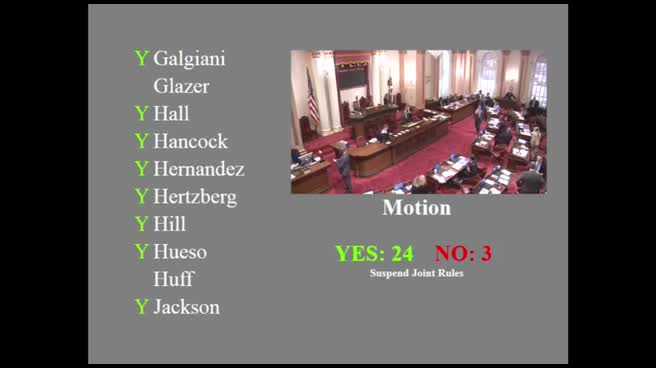 3MIN
Senate Floor
 1MIN
Senate Standing Committee on Appropriations
 20MIN
Senate Standing Committee on Education
 26MIN
Senate Standing Committee on Business, Professions and Economic Development
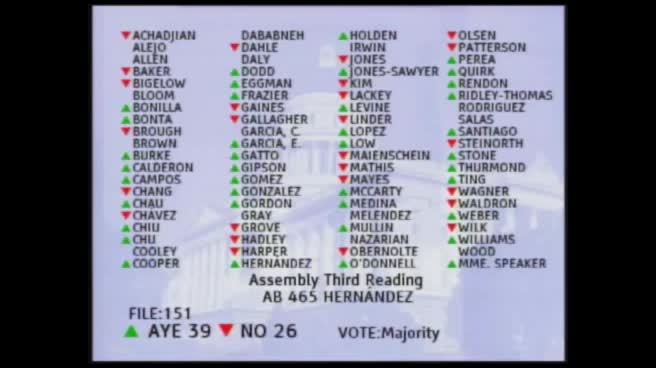 16MIN
Assembly Floor
 42MIN
Assembly Standing Committee on Higher Education
 1MIN
Assembly Floor


Bill Co-Author(s):