AB 701: Sex crimes: rape.
- Session Year: 2015-2016
- House: Assembly
- Latest Version Date: 2016-09-30
Existing law defines rape and spousal rape as an act of sexual intercourse accomplished under specified circumstances indicating a lack of consent, force, or duress, as specified. Existing law additionally makes various acts, including sodomy and oral copulation without consent or sexual intercourse with a minor, unlawful as sexual assault.
This bill would state the findings of the Legislature that all forms of nonconsensual sexual assault may be considered rape for purposes of the gravity of the offense and the support of survivors and would state that this is declarative of existing law.
Existing law defines rape and spousal rape as an act of sexual intercourse accomplished under specified circumstances indicating a lack of consent, force, or duress, as specified. Existing law additionally makes it unlawful to induce a person to engage in sexual intercourse, sexual penetration, oral copulation, or sodomy when his or her consent is procured by false or fraudulent representation or pretense that is made with the intent to create fear, and which does induce fear, and that would cause a reasonable person in like circumstances to act contrary to the persons free will, and does cause the victim to so act. various acts, including sodomy and oral copulation without consent or sexual intercourse with a minor, unlawful as sexual assault.
Existing law defines sodomy as sexual conduct consisting of contact between the penis of one person and the anus of another person. Existing law defines oral copulation as the act of copulating the mouth of one person with the sexual organ or anus of another person. Existing law makes it a crime to commit an act of sexual penetration when the act is accomplished against the victims will by means of force, violence, duress, menace, or fear of immediate and unlawful bodily injury on the victim or another person.
This bill would deem a person who is convicted of any of the aforementioned offenses guilty of rape for purposes of this bill.
This bill would state the findings of the Legislature that all forms of nonconsensual sexual assault may be considered rape for purposes of the gravity of the offense and the support of survivors and would state that this is declarative of existing law.
Existing law defines rape and spousal rape as an act of sexual intercourse accomplished under specified circumstances indicating a lack of consent, force, or duress, as specified. Existing law additionally makes it unlawful to induce a person to engage in sexual intercourse, sexual penetration, oral copulation, or sodomy when his or her consent is procured by false or fraudulent representation or pretense that is made with the intent to create fear, and which does induce fear, and that would cause a reasonable person in like circumstances to act contrary to the persons free will, and does cause the victim to so act.
Existing law defines sodomy as sexual conduct consisting of contact between the penis of one person and the anus of another person. Existing law defines oral copulation as the act of copulating the mouth of one person with the sexual organ or anus of another person. Existing law makes it a crime to commit an act of sexual penetration when the act is accomplished against the victims will by means of force, violence, duress, menace, or fear of immediate and unlawful bodily injury on the victim or another person.
This bill would deem a person who is convicted of any of the aforementioned offenses guilty of rape for purposes of this bill.
Existing law defines rape and spousal rape as an act of sexual intercourse accomplished under specified circumstances indicating lack of consent, force, or duress, as specified. Existing law defines unlawful sexual intercourse as an act of sexual intercourse with a person who is a minor, as specified. Existing law additionally makes it unlawful to induce a person to engage in sexual intercourse, sexual penetration, oral copulation, or sodomy when his or her consent is procured by false or fraudulent representation or pretense that is made with the intent to create fear, and which does induce fear, and that would cause a reasonable person in like circumstances to act contrary to the persons free will, and does cause the victim to so act.
This bill would change the definition of rape, spousal rape, and unlawful sexual intercourse to instead mean penetration, no matter how slight, of the vagina or anus with any body part or object, or oral penetration by a sex organ of another person, under the specified conditions. The bill would also make it a crime to induce another person to engage in penetration, no matter how slight, of the vagina or anus with any body part or object, or oral penetration by a sex organ of another person, when his or her consent is procured by false or fraudulent representation or pretense that is made with the intent to create fear, and which does induce fear, and that would cause a reasonable person in like circumstances to act contrary to the victims free will, and does cause the victim to so act. By expanding the definition of a crime, this bill would impose a state-mandated local program.
The California Constitution requires the state to reimburse local agencies and school districts for certain costs mandated by the state. Statutory provisions establish procedures for making that reimbursement.
This bill would provide that no reimbursement is required by this act for a specified reason.
Existing law, the Gambling Control Act, provides for the licensure and regulation of various legalized gambling activities and establishments by the California Gambling Control Commission and the investigation and enforcement of those activities and establishments by the Department of Justice. A willful violation of any provision of the act for which a penalty is not expressly provided, is punishable as a misdemeanor. Existing law requires the commission to establish a 10-member Gaming Policy Advisory Committee for the purpose of discussing matters of controlled gambling regulatory policy and other relevant gambling-related issues. The committee is composed of representatives of controlled gambling licensees and members of the general public in equal numbers.
This bill would increase the membership of the committee from 10 to 12 members, and would instead require the committee to be composed of 5 representatives of controlled gambling licensees, 5 members of the general public, and 2 representatives from the Department of Justice.
Under the act, a person is deemed unsuitable to hold a license to own a gambling establishment if the person, or any partner, officer, director, or shareholder of the person, has any financial interest in any business or organization that is engaged in a prohibited form of gambling, whether within or without this state, except as specified.
This bill would exempt from that provision a person or entity that has (1) held a license in good standing as an owner of a gambling establishment for at least 5 years as of January 1, 2015, (2) has notified the California Gambling Control Commission and the Department of Justice, has received commission approval, after completion of a background check conducted by the department, to obtain a financial interest in a business or organization within the United States that conducts lawful gambling outside of California that, if conducted within California, would be unlawful, (3) and has paid the commission and the department for the reasonable costs of the investigation and approval for obtaining the financial interest. The bill would require the commission to adopt necessary regulations addressing, at a minimum, mandatory periodic reporting to the department by a licensee regarding the ownership and operations of a business or organization within the United States that conducts lawful gambling outside of California that, if conducted in California, would be unlawful.
The bill would make it unlawful for any cross-promotion or marketing, as defined, to occur between the business or organization within the United States that conducts lawful gambling outside of California that, if conducted within California, would be unlawful, and the gambling establishment, as described. The bill would prohibit, among other things, a licensee, in connection with a business or organization that conducts lawful gambling outside of California that, if conducted within California, would be unlawful, from knowingly engaging in an activity or entering into an association that is unsuitable for the licensee because that activity or association poses an unreasonable threat to the control of gambling in this state. By creating a new crime, this bill would impose a state-mandated local program.
The California Constitution requires the state to reimburse local agencies and school districts for certain costs mandated by the state. Statutory provisions establish procedures for making that reimbursement.
This bill would provide that no reimbursement is required by this act for a specified reason.
Existing law, the Gambling Control Act, provides for the licensure and regulation of various legalized gambling activities and establishments by the California Gambling Control Commission and the investigation and enforcement of those activities and establishments by the Department of Justice. A willful violation of any provision of the act for which a penalty is not expressly provided, is punishable as a misdemeanor. Existing law requires the commission to establish a 10-member Gaming Policy Advisory Committee for the purpose of discussing matters of controlled gambling regulatory policy and other relevant gambling-related issues. The committee is composed of representatives of controlled gambling licensees and members of the general public in equal numbers.
This bill would increase the membership of the committee from 10 to 12 members, and would instead require the committee to be composed of 5 representatives of controlled gambling licensees, 5 members of the general public, and 2 representatives from the Department of Justice.
Under the act, a person is deemed unsuitable to hold a license to own a gambling establishment if the person, or any partner, officer, director, or shareholder of the person, has any financial interest in any business or organization that is engaged in a prohibited form of gambling, whether within or without this state, except as specified.
This bill would exempt from that provision a person or entity that has (1) held a license in good standing as an owner of a gambling establishment for at least 5 years as of January 1, 2015, (2) has notified the California Gambling Control Commission and the Department of Justice, has received commission approval approval, after completion of a background check conducted by the department, to obtain a financial interest in a business or organization within the United States that conducts lawful gambling outside of California that, if conducted within California, would be unlawful, (3) and has paid the commission and the department for the reasonable costs of the investigation and approval for obtaining the financial interest. The bill would require the commission to adopt necessary regulations addressing, at a minimum, mandatory periodic reporting to the department by a licensee regarding the ownership and operations of a business or organization within the United States that conducts lawful gambling outside of California that, if conducted in California, would be unlawful.
The bill would make it unlawful for any cross-promotion or marketing, as defined, to occur between the business or organization within the United States that conducts lawful gambling outside of California that, if conducted within California, would be unlawful, and the gambling establishment, as described. The bill would prohibit, among other things, a licensee, in connection with a business or organization that conducts lawful gambling outside of California that, if conducted within California, would be unlawful, from knowingly engaging in an activity or entering into an association that is unsuitable for the licensee because that activity or association poses an unreasonable threat to the control of gambling in this state. By creating a new crime, this bill would impose a state-mandated local program.
The California Constitution requires the state to reimburse local agencies and school districts for certain costs mandated by the state. Statutory provisions establish procedures for making that reimbursement.
This bill would provide that no reimbursement is required by this act for a specified reason.
Existing law, the Gambling Control Act, provides for the licensure and regulation of various legalized gambling activities and establishments by the California Gambling Control Commission and the investigation and enforcement of those activities and establishments by the Department of Justice. Existing law requires the commission to establish a 10-member Gaming Policy Advisory Committee for the purpose of discussing matters of controlled gambling regulatory policy and other relevant gambling-related issues. The committee is composed of representatives of controlled gambling licensees and members of the general public in equal numbers.
This bill would increase the membership of the committee from 10 to 12 members, and would instead require the committee to be composed of 5 representatives of controlled gambling licensees, 5 members of the general public, and 2 representatives from the Department of Justice.
Under the act, a person is deemed unsuitable to hold a license to own a gambling establishment if the person, or any partner, officer, director, or shareholder of the person, has any financial interest in any business or organization that is engaged in a prohibited form of gambling, whether within or without this state, except as specified.
This bill would exempt from that provision a person or entity that has held a license in good standing as an owner of a gambling establishment for at least 5 years as of January 1, 2015, has notified the California Gambling Control Commission and the Department of Justice, has received commission approval to obtain a financial interest in a business or organization within the United States that conducts lawful gambling outside of California that, if conducted within California, would be unlawful, and has paid the commission for the reasonable costs of the investigation and approval for obtaining the financial interest.
Existing law, the Gambling Control Act, provides for the licensure and regulation of various legalized gambling activities and establishments by the California Gambling Control Commission and the investigation and enforcement of those activities and establishments by the Department of Justice. Existing law requires the commission to establish a 10-member Gaming Policy Advisory Committee for the purpose of discussing matters of controlled gambling regulatory policy and other relevant gambling-related issues. The committee is composed of representatives of controlled gambling licensees and members of the general public in equal numbers.
This bill would increase the membership of the committee from 10 to 12 members, and would instead require the committee to be composed of 5 representatives of controlled gambling licensees, 5 members of the general public, and 2 representatives from the Department of Justice.
(a)The Legislature finds and declares that all forms of nonconsensual sexual assault may be considered rape for purposes of the gravity of the offense and the support of survivors.
(b)This section is declarative of existing law.
(a)The Legislature finds and declares that all forms of nonconsensual sexual assault may be considered rape for purposes of the gravity of the offense and the support of survivors.
(b)This section is declarative of existing law.
(a)The Legislature finds and declares that all forms of nonconsensual sexual assault may be considered rape for purposes of the gravity of the offense and the support of survivors.
(b)This section is declarative of existing law.
SECTION 1.Section 260 is added to the Penal Code, to read:260.For purposes of this section, a person shall be considered guilty of rape if he or she is convicted under any the following sections:
(a)Section 261.
(b)Section 262.
(c)Section 266c.
(d)Section 286.
(e)Section 288a.
(f)Section 289.
For purposes of this section, a person shall be considered guilty of rape if he or she is convicted under any the following sections:
(a)Section 261.
(b)Section 262.
(c)Section 266c.
(d)Section 286.
(e)Section 288a.
(f)Section 289.
SECTION 1.Section 261 of the Penal Code is amended to read:261.(a)Rape is an act of penetration, no matter how slight, of the vagina or anus with any body part or object, or oral penetration by a sex organ of another person, accomplished with a person not the spouse of the defendant, under any of the following circumstances:
(1)If the victim is incapable, because of a mental disorder or developmental or physical disability, of giving legal consent, and this is known or reasonably should be known to the defendant. Notwithstanding the existence of a conservatorship pursuant to the Lanterman-Petris-Short Act (Part 1 (commencing with Section 5000) of Division 5 of the Welfare and Institutions Code), the prosecuting attorney shall prove, as an element of the crime, that a mental disorder or developmental or physical disability rendered the victim incapable of giving consent.
(2)If the act is accomplished against the victims will by means of force, violence, duress, menace, or fear of immediate and unlawful bodily injury on the victim or another.
(3)If the victim is prevented from resisting by any intoxicating or anesthetic substance, or any controlled substance, and this condition was known, or reasonably should have been known by the defendant.
(4)If the victim is at the time unconscious of the nature of the act, and this is known to the defendant. As used in this paragraph, unconscious of the nature of the act means incapable of resisting because the victim meets any one of the following conditions:
(A)Was unconscious or asleep.
(B)Was not aware, knowing, perceiving, or cognizant that the act occurred.
(C)Was not aware, knowing, perceiving, or cognizant of the essential characteristics of the act due to the defendants fraud in fact.
(D)Was not aware, knowing, perceiving, or cognizant of the essential characteristics of the act due to the defendants fraudulent representation that the sexual penetration served a professional purpose when it served no professional purpose.
(5)If a victim submits under the belief that the person committing the act is someone known to the victim other than the defendant, and this belief is induced by any artifice, pretense, or concealment practiced by the defendant, with intent to induce the belief.
(6)If the act is accomplished against the victims will by threatening to retaliate in the future against the victim or any other person, and there is a reasonable possibility that the defendant will execute the threat. As used in this paragraph, threatening to retaliate means a threat to kidnap or falsely imprison, or to inflict extreme pain, serious bodily injury, or death.
(7)If the act is accomplished against the victims will by threatening to use the authority of a public official to incarcerate, arrest, or deport the victim or another, and the victim has a reasonable belief that the defendant is a public official. As used in this paragraph, public official means a person employed by a governmental agency who has the authority, as part of that position, to incarcerate, arrest, or deport another. The defendant does not actually have to be a public official.
(b)As used in this section, duress means a direct or implied threat of force, violence, danger, or retribution sufficient to coerce a reasonable person of ordinary susceptibilities to perform an act which otherwise would not have been performed, or acquiesce in an act to which one otherwise would not have submitted. The total circumstances, including the age of the victim, and his or her relationship to the defendant, are factors to consider in appraising the existence of duress.
(c)As used in this section, menace means any threat, declaration, or act which shows an intention to inflict an injury upon another.
SEC. 2.Section 261.5 of the Penal Code is amended to read:261.5.(a)Unlawful sexual intercourse is an act of penetration, no matter how slight, of the vagina or anus with any body part or object, or oral penetration by a sex organ of another person, accomplished with a person who is not the spouse of the defendant, if the person is a minor. For the purposes of this section, a minor is a person under 18 years of age and an adult is a person who is at least 18 years of age.
(b)A defendant who engages in an act of unlawful sexual intercourse with a minor who is not more than three years older or three years younger than the defendant, is guilty of a misdemeanor.
(c)A person who engages in an act of unlawful sexual intercourse with a minor who is more than three years younger than the defendant is guilty of either a misdemeanor or a felony, and shall be punished by imprisonment in a county jail not exceeding one year, or by imprisonment pursuant to subdivision (h) of Section 1170.
(d)A person 21 years of age or older who engages in an act of unlawful sexual intercourse with a minor who is under 16 years of age is guilty of either a misdemeanor or a felony, and shall be punished by imprisonment in a county jail not exceeding one year, or by imprisonment pursuant to subdivision (h) of Section 1170 for two, three, or four years.
(e)(1)Notwithstanding any other provision of this section, an adult who engages in an act of unlawful sexual intercourse with a minor in violation of this section may be liable for civil penalties in the following amounts:
(A)An adult who engages in an act of unlawful sexual intercourse with a minor less than two years younger than the adult is liable for a civil penalty not to exceed two thousand dollars ($2,000).
(B)An adult who engages in an act of unlawful sexual intercourse with a minor at least two years younger than the adult is liable for a civil penalty not to exceed five thousand dollars ($5,000).
(C)An adult who engages in an act of unlawful sexual intercourse with a minor at least three years younger than the adult is liable for a civil penalty not to exceed ten thousand dollars ($10,000).
(D)An adult over the age of 21 years who engages in an act of unlawful sexual intercourse with a minor under 16 years of age is liable for a civil penalty not to exceed twenty-five thousand dollars ($25,000).
(2)The district attorney may bring actions to recover civil penalties pursuant to this subdivision. From the amounts collected for each case, an amount equal to the costs of pursuing the action shall be deposited with the treasurer of the county in which the judgment was entered, and the remainder shall be deposited in the Underage Pregnancy Prevention Fund, which is hereby created in the State Treasury. Amounts deposited in the Underage Pregnancy Prevention Fund may be used only for the purpose of preventing underage pregnancy upon appropriation by the Legislature.
(3)In addition to any punishment imposed under this section, the judge may assess a fine not to exceed seventy dollars ($70) against a person who violates this section with the proceeds of this fine to be used in accordance with Section 1463.23. The court shall take into consideration the defendants ability to pay, and a defendant shall not be denied probation because of his or her inability to pay the fine permitted under this subdivision.
SEC. 3.Section 262 of the Penal Code is amended to read:262.(a)Rape of a person who is the spouse of the defendant is an act of penetration, no matter how slight, of the vagina or anus with any body part or object, or oral penetration by a sex organ of another person, accomplished under any of the following circumstances:
(1)If the act is accomplished against a victims will by means of force, violence, duress, menace, or fear of immediate and unlawful bodily injury on the victim or another.
(2)If a victim is prevented from resisting by any intoxicating or anesthetic substance, or any controlled substance, and this condition was known, or reasonably should have been known, by the defendant.
(3)If a victim is, at the time, unconscious of the nature of the act, and this is known to the defendant. As used in this paragraph, unconscious of the nature of the act means incapable of resisting because the victim meets one of the following conditions:
(A)Was unconscious or asleep.
(B)Was not aware, knowing, perceiving, or cognizant that the act occurred.
(C)Was not aware, knowing, perceiving, or cognizant of the essential characteristics of the act due to the defendants fraud in fact.
(4)If the act is accomplished against the victims will by threatening to retaliate in the future against the victim or any other person, and there is a reasonable possibility that the defendant will execute the threat. As used in this paragraph, threatening to retaliate means a threat to kidnap or falsely imprison, or to inflict extreme pain, serious bodily injury, or death.
(5)If the act is accomplished against the victims will by threatening to use the authority of a public official to incarcerate, arrest, or deport the victim or another, and the victim has a reasonable belief that the defendant is a public official. As used in this paragraph, public official means a person employed by a governmental agency who has the authority, as part of that position, to incarcerate, arrest, or deport another. The defendant does not actually have to be a public official.
(b)As used in this section, duress means a direct or implied threat of force, violence, danger, or retribution sufficient to coerce a reasonable person of ordinary susceptibilities to perform an act which otherwise would not have been performed, or acquiesce in an act to which one otherwise would not have submitted. The total circumstances, including the age of the victim and his or her relationship to the defendant, are factors to consider in apprising the existence of duress.
(c)As used in this section, menace means any threat, declaration, or act that shows an intention to inflict an injury upon another.
(d)If probation is granted upon conviction of a violation of this section, the conditions of probation may include, in lieu of a fine, one or both of the following requirements:
(1)That the defendant make payments to a battered womens shelter, up to a maximum of one thousand dollars ($1,000).
(2)That the defendant reimburse the victim for reasonable costs of counseling and other reasonable expenses that the court finds are the direct result of the defendants offense.
For any order to pay a fine, make payments to a battered womens shelter, or pay restitution as a condition of probation under this subdivision, the court shall make a determination of the defendants ability to pay. In no event shall any order to make payments to a battered womens shelter be made if it would impair the ability of the defendant to pay direct restitution to the victim or court-ordered child support. If the injury to a married person is caused in whole or in part by the criminal acts of his or her spouse in violation of this section, the community property may not be used to discharge the liability of the offending spouse for restitution to the injured spouse, required by Section 1203.04, as operative on or before August 2, 1995, or Section 1202.4, or to a shelter for costs with regard to the injured spouse and dependents, required by this section, until all separate property of the offending spouse is exhausted.
SEC. 4.Section 266c of the Penal Code is amended to read:266c.(a)Every person who induces any other person to engage in penetration, no matter how slight, of the vagina or anus with any body part or object, or oral penetration by a sex organ of another person, when the victims consent is procured by false or fraudulent representation or pretense that is made with the intent to create fear, and which does induce fear, and that would cause a reasonable person in like circumstances to act contrary to the persons free will, and does cause the victim to so act, is punishable by imprisonment in a county jail for not more than one year or in the state prison for two, three, or four years.
(b)As used in this section, fear means the fear of physical injury or death to the victim or to any relative of the victim or member of the victims family.
SEC. 5.No reimbursement is required by this act pursuant to Section 6 of Article XIIIB of the California Constitution because the only costs that may be incurred by a local agency or school district will be incurred because this act creates a new crime or infraction, eliminates a crime or infraction, or changes the penalty for a crime or infraction, within the meaning of Section 17556 of the Government Code, or changes the definition of a crime within the meaning of Section 6 of Article XIIIB of the California Constitution.
(a)Rape is an act of sexual intercourse penetration, no matter how slight, of the vagina or anus with any body part or object, or oral penetration by a sex organ of another person, accomplished with a person not the spouse of the perpetrator, defendant, under any of the following circumstances:
(1)Where a person If the victim is incapable, because of a mental disorder or developmental or physical disability, of giving legal consent, and this is known or reasonably should be known to the person committing the act. defendant. Notwithstanding the existence of a conservatorship pursuant to the provisions of the Lanterman-Petris-Short Act (Part 1 (commencing with Section 5000) of Division 5 of the Welfare and Institutions Code), the prosecuting attorney shall prove, as an element of the crime, that a mental disorder or developmental or physical disability rendered the alleged victim incapable of giving consent.
(2)Where it If the act is accomplished against a persons the victims will by means of force, violence, duress, menace, or fear of immediate and unlawful bodily injury on the person victim or another.
(3)Where a person If the victim is prevented from resisting by any intoxicating or anesthetic substance, or any controlled substance, and this condition was known, or reasonably should have been known by the accused. defendant.
(4)Where a person If the victim is at the time unconscious of the nature of the act, and this is known to the accused. defendant. As used in this paragraph, unconscious of the nature of the act means incapable of resisting because the victim meets any one of the following conditions:
(A)Was unconscious or asleep.
(B)Was not aware, knowing, perceiving, or cognizant that the act occurred.
(C)Was not aware, knowing, perceiving, or cognizant of the essential characteristics of the act due to the perpetrators defendants fraud in fact.
(D)Was not aware, knowing, perceiving, or cognizant of the essential characteristics of the act due to the perpetrators defendants fraudulent representation that the sexual penetration served a professional purpose when it served no professional purpose.
(5)Where a person If a victim submits under the belief that the person committing the act is someone known to the victim other than the accused, defendant, and this belief is induced by any artifice, pretense, or concealment practiced by the accused, defendant, with intent to induce the belief.
(6)Where If the act is accomplished against the victims will by threatening to retaliate in the future against the victim or any other person, and there is a reasonable possibility that the perpetrator defendant will execute the threat. As used in this paragraph, threatening to retaliate means a threat to kidnap or falsely imprison, or to inflict extreme pain, serious bodily injury, or death.
(7)Where If the act is accomplished against the victims will by threatening to use the authority of a public official to incarcerate, arrest, or deport the victim or another, and the victim has a reasonable belief that the perpetrator defendant is a public official. As used in this paragraph, public official means a person employed by a governmental agency who has the authority, as part of that position, to incarcerate, arrest, or deport another. The perpetrator defendant does not actually have to be a public official.
(b)As used in this section, duress means a direct or implied threat of force, violence, danger, or retribution sufficient to coerce a reasonable person of ordinary susceptibilities to perform an act which otherwise would not have been performed, or acquiesce in an act to which one otherwise would not have submitted. The total circumstances, including the age of the victim, and his or her relationship to the defendant, are factors to consider in appraising the existence of duress.
(c)As used in this section, menace means any threat, declaration, or act which shows an intention to inflict an injury upon another.
SEC. 2.Section 261.5 of the Penal Code is amended to read:261.5.(a)Unlawful sexual intercourse is an act of sexual intercourse penetration, no matter how slight, of the vagina or anus with any body part or object, or oral penetration by a sex organ of another person, accomplished with a person who is not the spouse of the perpetrator, defendant, if the person is a minor. For the purposes of this section, a minor is a person under the age of 18 years of age and an adult is a person who is at least 18 years of age.
(b)Any person A defendant who engages in an act of unlawful sexual intercourse with a minor who is not more than three years older or three years younger than the perpetrator, defendant, is guilty of a misdemeanor.
(c)Any A person who engages in an act of unlawful sexual intercourse with a minor who is more than three years younger than the perpetrator defendant is guilty of either a misdemeanor or a felony, and shall be punished by imprisonment in a county jail not exceeding one year, or by imprisonment pursuant to subdivision (h) of Section 1170.
(d)Any A person 21 years of age or older who engages in an act of unlawful sexual intercourse with a minor who is under 16 years of age is guilty of either a misdemeanor or a felony, and shall be punished by imprisonment in a county jail not exceeding one year, or by imprisonment pursuant to subdivision (h) of Section 1170 for two, three, or four years.
(e)(1)Notwithstanding any other provision of this section, an adult who engages in an act of unlawful sexual intercourse with a minor in violation of this section may be liable for civil penalties in the following amounts:
(A)An adult who engages in an act of unlawful sexual intercourse with a minor less than two years younger than the adult is liable for a civil penalty not to exceed two thousand dollars ($2,000).
(B)An adult who engages in an act of unlawful sexual intercourse with a minor at least two years younger than the adult is liable for a civil penalty not to exceed five thousand dollars ($5,000).
(C)An adult who engages in an act of unlawful sexual intercourse with a minor at least three years younger than the adult is liable for a civil penalty not to exceed ten thousand dollars ($10,000).
(D)An adult over the age of 21 years who engages in an act of unlawful sexual intercourse with a minor under 16 years of age is liable for a civil penalty not to exceed twenty-five thousand dollars ($25,000).
(2)The district attorney may bring actions to recover civil penalties pursuant to this subdivision. From the amounts collected for each case, an amount equal to the costs of pursuing the action shall be deposited with the treasurer of the county in which the judgment was entered, and the remainder shall be deposited in the Underage Pregnancy Prevention Fund, which is hereby created in the State Treasury. Amounts deposited in the Underage Pregnancy Prevention Fund may be used only for the purpose of preventing underage pregnancy upon appropriation by the Legislature.
(3)In addition to any punishment imposed under this section, the judge may assess a fine not to exceed seventy dollars ($70) against any a person who violates this section with the proceeds of this fine to be used in accordance with Section 1463.23. The court shall, however, shall take into consideration the defendants ability to pay, and no a defendant shall not be denied probation because of his or her inability to pay the fine permitted under this subdivision.
SEC. 3.Section 262 of the Penal Code is amended to read:262.(a)Rape of a person who is the spouse of the perpetrator defendant is an act of sexual intercourse penetration, no matter how slight, of the vagina or anus with any body part or object, or oral penetration by a sex organ of another person, accomplished under any of the following circumstances:
(1)Where it If the act is accomplished against a persons victims will by means of force, violence, duress, menace, or fear of immediate and unlawful bodily injury on the person victim or another.
(2)Where If a person victim is prevented from resisting by any intoxicating or anesthetic substance, or any controlled substance, and this condition was known, or reasonably should have been known, by the accused. defendant.
(3)Where If a person is victim is, at the time time, unconscious of the nature of the act, and this is known to the accused. defendant. As used in this paragraph, unconscious of the nature of the act means incapable of resisting because the victim meets one of the following conditions:
(A)Was unconscious or asleep.
(B)Was not aware, knowing, perceiving, or cognizant that the act occurred.
(C)Was not aware, knowing, perceiving, or cognizant of the essential characteristics of the act due to the perpetrators defendants fraud in fact.
(4)Where If the act is accomplished against the victims will by threatening to retaliate in the future against the victim or any other person, and there is a reasonable possibility that the perpetrator defendant will execute the threat. As used in this paragraph, threatening to retaliate means a threat to kidnap or falsely imprison, or to inflict extreme pain, serious bodily injury, or death.
(5)Where If the act is accomplished against the victims will by threatening to use the authority of a public official to incarcerate, arrest, or deport the victim or another, and the victim has a reasonable belief that the perpetrator defendant is a public official. As used in this paragraph, public official means a person employed by a governmental agency who has the authority, as part of that position, to incarcerate, arrest, or deport another. The perpetrator defendant does not actually have to be a public official.
(b)As used in this section, duress means a direct or implied threat of force, violence, danger, or retribution sufficient to coerce a reasonable person of ordinary susceptibilities to perform an act which otherwise would not have been performed, or acquiesce in an act to which one otherwise would not have submitted. The total circumstances, including the age of the victim, victim and his or her relationship to the defendant, are factors to consider in apprising the existence of duress.
(c)As used in this section, menace means any threat, declaration, or act that shows an intention to inflict an injury upon another.
(d)If probation is granted upon conviction of a violation of this section, the conditions of probation may include, in lieu of a fine, one or both of the following requirements:
(1)That the defendant make payments to a battered womens shelter, up to a maximum of one thousand dollars ($1,000).
(2)That the defendant reimburse the victim for reasonable costs of counseling and other reasonable expenses that the court finds are the direct result of the defendants offense.
For any order to pay a fine, make payments to a battered womens shelter, or pay restitution as a condition of probation under this subdivision, the court shall make a determination of the defendants ability to pay. In no event shall any order to make payments to a battered womens shelter be made if it would impair the ability of the defendant to pay direct restitution to the victim or court-ordered child support. Where If the injury to a married person is caused in whole or in part by the criminal acts of his or her spouse in violation of this section, the community property may not be used to discharge the liability of the offending spouse for restitution to the injured spouse, required by Section 1203.04, as operative on or before August 2, 1995, or Section 1202.4, or to a shelter for costs with regard to the injured spouse and dependents, required by this section, until all separate property of the offending spouse is exhausted.
SEC. 4.Section 266c of the Penal Code is amended to read:266c.(a)Every person who induces any other person to engage in sexual intercourse, sexual penetration, oral copulation, or sodomy penetration, no matter how slight, of the vagina or anus with any body part or object, or oral penetration by a sex organ of another person, when his or her the victims consent is procured by false or fraudulent representation or pretense that is made with the intent to create fear, and which does induce fear, and that would cause a reasonable person in like circumstances to act contrary to the persons free will, and does cause the victim to so act, is punishable by imprisonment in a county jail for not more than one year or in the state prison for two, three, or four years.
As
(b)As used in this section, fear means the fear of physical injury or death to the person victim or to any relative of the person victim or member of the persons victims family.
SEC. 5.No reimbursement is required by this act pursuant to Section 6 of Article XIIIB of the California Constitution because the only costs that may be incurred by a local agency or school district will be incurred because this act creates a new crime or infraction, eliminates a crime or infraction, or changes the penalty for a crime or infraction, within the meaning of Section 17556 of the Government Code, or changes the definition of a crime within the meaning of Section 6 of Article XIIIB of the California Constitution.
SECTION 1.Section 19817 of the Business and Professions Code is amended to read:19817.The commission shall establish and appoint a Gaming Policy Advisory Committee of 12 members. The committee shall be composed of five representatives of controlled gambling licensees, five members of the general public, and two members from the department. The executive director shall, from time to time, convene the committee for the purpose of discussing matters of controlled gambling regulatory policy and any other relevant gambling-related issue. The recommendations concerning gambling policy made by the committee shall be presented to the commission, but shall be deemed advisory and not binding on the commission in the performance of its duties or functions. The committee may not advise the commission on Indian gaming.
SEC. 2.Section 19858 of the Business and Professions Code is amended to read:19858.(a)Except as provided in subdivisions (b), (c), and (g), a person shall be deemed to be unsuitable to hold a state gambling license to own a gambling establishment if the person, or any partner, officer, director, or shareholder of the person, has any financial interest in any business or organization that is engaged in any form of gambling prohibited by Section 330 of the Penal Code, whether within or without this state.
(b)Subdivision (a) does not apply to a publicly traded racing association, a qualified racing association, or any person who is licensed pursuant to subdivision (b) or (c) of Section 19852.
(c)Subdivision (a) does not apply to a person or entity that meets all of the following criteria:
(1)Holds a license in good standing as an owner of a gambling establishment pursuant to this chapter for at least five years as of January 1, 2015. For purposes of this subdivision, good standing means that the owners state gambling license is not the subject of outstanding allegations by the department for any violation of the Gambling Control Act.
(2)Has notified the commission and the department and received commission approval, after completion of a background check conducted by the department, to obtain a financial interest in another business or organization within the United States that conducts lawful gambling outside of California that, if conducted within California, would be unlawful. A licensee shall provide the department with any information pertaining to the licensees proposed participation in that business or organization as the department may request. The commission shall not grant a temporary approval under this section.
(3)Has paid the commission and the department for the reasonable costs incurred by the commission and the department for the investigation and approval to obtain the financial interest described in paragraph (2).
(d)It is unlawful for any cross-promotion or marketing to occur between the business or organization described in paragraph (2) of subdivision (c) and the gambling establishment described in paragraph (1) of subdivision (c). For purposes of this subdivision, cross-promotion or marketing means the offering to any customers of the gambling establishment anything of value related to visiting or gambling at the business or organization described in paragraph (2) of subdivision (c).
(e)A licensee shall not, in connection with a business or organization described in paragraph (2) of subdivision (c), knowingly do any of the following:
(1)Violate a foreign, federal, tribal, state, county, city, or township law, regulation, ordinance, or rule, or any equivalent thereof, concerning the conduct of gambling.
(2)Fail to conduct the operation in accordance with the standards of honesty and integrity required for gambling in this state.
(3)Engage in an activity or enter into an association that is unsuitable for a licensee because that activity or association does any of the following:
(A)Poses an unreasonable threat to the control of gambling in this state.
(B)Reflects or tends to reflect discredit or disrepute upon this state or gaming in this state.
(C)Is contrary to the public policy of this state concerning gaming.
(4)Engage in an activity or enter into an association that interferes with the ability of this state to collect all license fees imposed by this chapter.
(5)Employ, contract with, or associate with, a person whom the commission has found guilty of cheating or to whom the commission has denied a gambling license, or finding of suitability, on the ground of unsuitability.
(f)The commission shall adopt necessary regulations addressing, at a minimum, mandatory periodic reporting to the department by a licensee regarding the ownership and operations of a business or organization described in paragraph (2) of subdivision (c).
(g)Subdivision (a) does not apply to a person who meets all of the following criteria:
(1)The person is licensed or had an application to be licensed on file with the commission on or before February 1, 2013.
(2)The person has a financial interest in a business or organization engaged in gambling prohibited by Section 330 of the Penal Code that was closed and was not engaged in prohibited gambling at the time the person was either licensed or had filed an application to be licensed with the commission.
(3)The person has a financial interest in a gambling establishment that is located on any portion of, or contiguous to, the grounds on which a racetrack is or had been previously located and horserace meetings were authorized to be conducted by the California Horse Racing Board on or before January 1, 2012.
(4)The grounds upon which the gambling establishment described in paragraph (3) is located are directly or indirectly owned by a racetrack limited partnership owner. For purposes of this paragraph, a racetrack limited partnership owner is defined as a limited partnership, or a number of related limited partnerships, that is or are at least 80 percent capitalized by limited partners that are an institutional investor as defined in subdivision (w) of Section 19805, an employee benefit plan as defined in Section 1002(3) of Title 29 of the United States Code, or an investment company that manages a state university endowment.
(h)Within three years of the date the closed business or organization reopens or becomes engaged in any form of gambling prohibited by Section 330 of the Penal Code, a person described in subdivision (g) shall either divest that persons interest in the business or organization, or divest that persons interest in the gambling enterprise or gambling establishment for which the person is licensed or has applied to be licensed by the commission.
(i)A person described in subdivision (g) shall inform the commission within 30 days of the date on which a business or organization in which the person has a financial interest begins to engage in any form of gambling prohibited by Section 330 of the Penal Code.
(j)During the three-year divestment period described in subdivision (h), it is unlawful for any cross-promotion or marketing to occur between the business or organization that is engaged in any form of gambling prohibited by Section 330 of the Penal Code and the gambling enterprise or gambling establishment described in paragraph (3) of subdivision (g). For purposes of this subdivision, cross-promotion or marketing means the offering to any customers of the gambling enterprise or gambling establishment anything of value related to visiting or gambling at the business or organization engaged in any form of gambling prohibited by Section 330 of the Penal Code.
(k)During the three-year divestment period described in subdivision (h), any funds used in connection with the capital improvement of the gambling enterprise or gambling establishment described in paragraph (3) of subdivision (g) shall not be provided from the gaming revenues of either the business or organization engaged in gaming prohibited under Section 330 of the Penal Code.
(l)If, at the end of the three-year divestment period described in subdivision (h), any person described in subdivision (g) has not divested his or her interest in either the gambling enterprise or gambling establishment or the business or organization engaged in any form of gaming prohibited under Section 330 of the Penal Code, the prohibitions of Section 19858 as it read on January 1, 2013, apply.
SEC. 3.No reimbursement is required by this act pursuant to Section 6 of Article XIIIB of the California Constitution because the only costs that may be incurred by a local agency or school district will be incurred because this act creates a new crime or infraction, eliminates a crime or infraction, or changes the penalty for a crime or infraction, within the meaning of Section 17556 of the Government Code, or changes the definition of a crime within the meaning of Section 6 of Article XIIIB of the California Constitution.
The commission shall establish and appoint a Gaming Policy Advisory Committee of 12 members. The committee shall be composed of five representatives of controlled gambling licensees, five members of the general public, and two members from the department. The executive director shall, from time to time, convene the committee for the purpose of discussing matters of controlled gambling regulatory policy and any other relevant gambling-related issue. The recommendations concerning gambling policy made by the committee shall be presented to the commission, but shall be deemed advisory and not binding on the commission in the performance of its duties or functions. The committee may not advise the commission on Indian gaming.
SEC. 2.Section 19858 of the Business and Professions Code is amended to read:19858.(a)Except as provided in subdivisions (b), (c), and (d), (g), a person shall be deemed to be unsuitable to hold a state gambling license to own a gambling establishment if the person, or any partner, officer, director, or shareholder of the person, has any financial interest in any business or organization that is engaged in any form of gambling prohibited by Section 330 of the Penal Code, whether within or without this state.
(b)Subdivision (a) does not apply to a publicly traded racing association, a qualified racing association, or any person who is licensed pursuant to subdivision (b) or (c) of Section 19852.
(c)Subdivision (a) does not apply to a person or entity that meets all of the following criteria:
(1)Holds a license in good standing as an owner of a gambling establishment pursuant to this chapter for at least five years as of January 1, 2015. For purposes of this subdivision, good standing means that the owners state gambling license is not the subject of outstanding allegations by the department for any violation of the Gambling Control Act.
(2)Has notified the commission and the department and received commission approval approval, after completion of a background check conducted by the department, to obtain a financial interest in another business or organization within the United States that conducts lawful gambling outside of California that, if conducted within California, would be unlawful. A licensee shall provide the department with any information pertaining to the licensees proposed participation in that business or organization as the department may request. The commission shall not grant a temporary approval under this section.
(3)Has paid the commission and the department for the reasonable costs incurred by the commission and the department for the investigation and approval to obtain the financial interest described in paragraph (2).
(d)It is unlawful for any cross-promotion or marketing to occur between the business or organization described in paragraph (2) of subdivision (c) and the gambling establishment described in paragraph (1) of subdivision (c). For purposes of this subdivision, cross-promotion or marketing means the offering to any customers of the gambling establishment anything of value related to visiting or gambling at the business or organization described in paragraph (2) of subdivision (c).
(e)A licensee shall not, in connection with a business or organization described in paragraph (2) of subdivision (c), knowingly do any of the following:
(1)Violate a foreign, federal, tribal, state, county, city, or township law, regulation, ordinance, or rule, or any equivalent thereof, concerning the conduct of gambling.
(2)Fail to conduct the operation in accordance with the standards of honesty and integrity required for gambling in this state.
(3)Engage in an activity or enter into an association that is unsuitable for a licensee because that activity or association does any of the following:
(A)Poses an unreasonable threat to the control of gambling in this state.
(B)Reflects or tends to reflect discredit or disrepute upon this state or gaming in this state.
(C)Is contrary to the public policy of this state concerning gaming.
(4)Engage in an activity or enter into an association that interferes with the ability of this state to collect all license fees imposed by this chapter.
(5)Employ, contract with, or associate with, a person whom the commission has found guilty of cheating or to whom the commission has denied a gambling license, or finding of suitability, on the ground of unsuitability.
(f)The commission shall adopt necessary regulations addressing, at a minimum, mandatory periodic reporting to the department by a licensee regarding the ownership and operations of a business or organization described in paragraph (2) of subdivision (c).
(d)
(g)Subdivision (a) does not apply to a person who meets all of the following criteria:
(1)The person is licensed or had an application to be licensed on file with the commission on or before February 1, 2013.
(2)The person has a financial interest in a business or organization engaged in gambling prohibited by Section 330 of the Penal Code that was closed and was not engaged in prohibited gambling at the time the person was either licensed or had filed an application to be licensed with the commission.
(3)The person has a financial interest in a gambling establishment that is located on any portion of, or contiguous to, the grounds on which a racetrack is or had been previously located and horserace meetings were authorized to be conducted by the California Horse Racing Board on or before January 1, 2012.
(4)The grounds upon which the gambling establishment described in paragraph (3) is located are directly or indirectly owned by a racetrack limited partnership owner. For purposes of this paragraph, a racetrack limited partnership owner is defined as a limited partnership, or a number of related limited partnerships, that is or are at least 80 percent capitalized by limited partners that are an institutional investor as defined in subdivision (w) of Section 19805, an employee benefit plan as defined in Section 1002(3) of Title 29 of the United States Code, or an investment company that manages a state university endowment.
(e)
(h)Within three years of the date the closed business or organization reopens or becomes engaged in any form of gambling prohibited by Section 330 of the Penal Code, a person described in subdivision (d) (g) shall either divest that persons interest in the business or organization, or divest that persons interest in the gambling enterprise or gambling establishment for which the person is licensed or has applied to be licensed by the commission.
(f)
(i)A person described in subdivision (d) (g) shall inform the commission within 30 days of the date on which a business or organization in which the person has a financial interest begins to engage in any form of gambling prohibited by Section 330 of the Penal Code.
(g)
(j)During the three-year divestment period described in subdivision (e), (h), it is unlawful for any cross-promotion or marketing to occur between the business or organization that is engaged in any form of gambling prohibited by Section 330 of the Penal Code and the gambling enterprise or gambling establishment described in paragraph (3) of subdivision (d). (g). For purposes of this subdivision, cross-promotion or marketing means the offering to any customers of the gambling enterprise or gambling establishment anything of value related to visiting or gambling at the business or organization engaged in any form of gambling prohibited by Section 330 of the Penal Code.
(h)
(k)During the three-year divestment period described in subdivision (e), (h), any funds used in connection with the capital improvement of the gambling enterprise or gambling establishment described in paragraph (3) of subdivision (d) (g) shall not be provided from the gaming revenues of either the business or organization engaged in gaming prohibited under Section 330 of the Penal Code.
(i)
(l)If, at the end of the three-year divestment period described in subdivision (e), (h), any person described in subdivision (d) (g) has not divested his or her interest in either the gambling enterprise or gambling establishment or the business or organization engaged in any form of gaming prohibited under Section 330 of the Penal Code, the prohibitions of Section 19858 as it read on January 1, 2013, apply.
SEC. 3.No reimbursement is required by this act pursuant to Section 6 of Article XIIIB of the California Constitution because the only costs that may be incurred by a local agency or school district will be incurred because this act creates a new crime or infraction, eliminates a crime or infraction, or changes the penalty for a crime or infraction, within the meaning of Section 17556 of the Government Code, or changes the definition of a crime within the meaning of Section 6 of Article XIIIB of the California Constitution.
The commission shall establish and appoint a Gaming Policy Advisory Committee of 12 members. The committee shall be composed of five representatives of controlled gambling licensees, five members of the general public, and two members from the department. The executive director shall, from time to time, convene the committee for the purpose of discussing matters of controlled gambling regulatory policy and any other relevant gambling-related issue. The recommendations concerning gambling policy made by the committee shall be presented to the commission, but shall be deemed advisory and not binding on the commission in the performance of its duties or functions. The committee may not advise the commission on Indian gaming.
SEC. 2.Section 19858 of the Business and Professions Code is amended to read:19858.(a)Except as provided in subdivisions (b) and (c), (b), (c), and (d), a person shall be deemed to be unsuitable to hold a state gambling license to own a gambling establishment if the person, or any partner, officer, director, or shareholder of the person, has any financial interest in any business or organization that is engaged in any form of gambling prohibited by Section 330 of the Penal Code, whether within or without this state.
(b)Subdivision (a) shall does not apply to a publicly traded racing association, a qualified racing association, or any person who is licensed pursuant to subdivision (b) or (c) of Section 19852.
(c)Subdivision (a) does not apply to a person or entity that meets all of the following criteria:
(1)Holds a license in good standing as an owner of a gambling establishment pursuant to this chapter for at least five years as of January 1, 2015.
(2)Has notified the commission and the department and received commission approval to obtain a financial interest in another business or organization within the United States that conducts lawful gambling outside of California that, if conducted within California, would be unlawful.
(3)Has paid the commission for the reasonable costs incurred by the commission for the investigation and approval to obtain the financial interest described in paragraph (2).
(c)
(d)Subdivision (a) shall does not apply to a person who meets all of the following criteria:
(1)The person is licensed or had an application to be licensed on file with the commission on or before February 1, 2013.
(2)The person has a financial interest in a business or organization engaged in gambling prohibited by Section 330 of the Penal Code that was closed and was not engaged in prohibited gambling at the time the person was either licensed or had filed an application to be licensed with the commission.
(3)The person has a financial interest in a gambling establishment that is located on any portion of, or contiguous to, the grounds on which a racetrack is or had been previously located and horserace meetings were authorized to be conducted by the California Horse Racing Board on or before January 1, 2012.
(4)The grounds upon which the gambling establishment described in paragraph (3) is located are directly or indirectly owned by a racetrack limited partnership owner. For purposes of this paragraph, a racetrack limited partnership owner is defined as a limited partnership, or a number of related limited partnerships, that is or are at least 80 percent capitalized by limited partners that are an institutional investor as defined in subdivision (w) of Section 19805, an employee benefit plan as defined in Section 1002(3) of Title 29 of the United States Code, or an investment company that manages a state university endowment.
(d)
(e)Within three years of the date the closed business or organization reopens or becomes engaged in any form of gambling prohibited by Section 330 of the Penal Code, a person described in subdivision (c) (d) shall either divest that persons interest in the business or organization, or divest that persons interest in the gambling enterprise or gambling establishment for which the person is licensed or has applied to be licensed by the commission.
(e)
(f)A person described in subdivision (c) (d) shall inform the commission within 30 days of the date on which a business or organization in which the person has a financial interest begins to engage in any form of gambling prohibited by Section 330 of the Penal Code.
(f)
(g)During the three-year divestment period described in subdivision (d), (e), it is unlawful for any cross-promotion or marketing to occur between the business or organization that is engaged in any form of gambling prohibited by Section 330 of the Penal Code and the gambling enterprise or gambling establishment described in paragraph (3) of subdivision (c). (d). For purposes of this subdivision, cross-promotion or marketing means the offering to any customers of the gambling enterprise or gambling establishment anything of value related to visiting or gambling at the business or organization engaged in any form of gambling prohibited by Section 330 of the Penal Code.
(g)
(h)During the three-year divestment period described in subdivision (d), (e), any funds used in connection with the capital improvement of the gambling enterprise or gambling establishment described in paragraph (3) of subdivision (c) (d) shall not be provided from the gaming revenues of either the business or organization engaged in gaming prohibited under Section 330 of the Penal Code.
(h)
(i)If, at the end of the three-year divestment period described in subdivision (d), (e), any person described in subdivision (c) (d) has not divested his or her interest in either the gambling enterprise or gambling establishment or the business or organization engaged in any form of gaming prohibited under Section 330 of the Penal Code, the prohibitions of Section 19858 as it read on January 1, 2013, apply.
The commission shall establish and appoint a Gaming Policy Advisory Committee of 10 12 members. The committee shall be composed of five representatives of controlled gambling licensees and licensees, five members of the general public in equal numbers. public, and two members from the department. The executive director shall, from time to time, convene the committee for the purpose of discussing matters of controlled gambling regulatory policy and any other relevant gambling-related issue. The recommendations concerning gambling policy made by the committee shall be presented to the commission, but shall be deemed advisory and not binding on the commission in the performance of its duties or functions. The committee may not advise the commission on Indian gaming.
|
Date
|
Status
|
|---|---|
| Jun 20, 2016 | Re-referred to Com. on RLS. |
| Aug 31, 2016 | Enrolled and presented to the Governor at 4 p.m. |
| Aug 24, 2016 | Senate amendments concurred in. To Engrossing and Enrolling. (Ayes 80. Noes 0. Page 6219.). |
| Aug 24, 2016 | Senate amendments concurred in. To Engrossing and Enrolling. |
| Aug 23, 2016 | From committee: That the Senate amendments be concurred in. (Ayes 6. Noes 0.) (August 23). |
| Aug 15, 2016 | Re-referred to Com. on PUB. S. pursuant to Assembly Rule 77.2. |
| Aug 11, 2016 | Read third time. Passed. Ordered to the Assembly. (Ayes 37. Noes 0. Page 4877.). |
| Aug 11, 2016 | Read third time. Passed. Ordered to the Assembly. |
| Aug 11, 2016 | In Assembly. Concurrence in Senate amendments pending. May be considered on or after August 14 pursuant to Assembly Rule 77. |
| Aug 3, 2016 | Ordered to special consent calendar. |
| Aug 2, 2016 | Read second time and amended. Ordered to third reading. |
| Aug 1, 2016 | From committee: Amend, and do pass as amended. (Ayes 7. Noes 0.) (June 28). |
| Jun 22, 2016 | From committee chair, with author's amendments: Amend, and re-refer to committee. Read second time, amended, and re-referred to Com. on PUB. S. |
| Jun 21, 2016 | Re-referred to Com. on PUB. S. |
| Jun 20, 2016 | Withdrawn from committee. |
| Feb 25, 2015 | Read first time. To print. |
| Jun 16, 2016 | From committee chair, with author's amendments: Amend, and re-refer to committee. Read second time, amended, and re-referred to Com. on G.O. |
| Sep 4, 2015 | From committee chair, with author's amendments: Amend, and re-refer to committee. Read second time, amended, and re-referred to Com. on G.O. |
| Jul 14, 2015 | In committee: Set, first hearing. Hearing canceled at the request of author. |
| Jul 7, 2015 | From committee chair, with author's amendments: Amend, and re-refer to committee. Read second time, amended, and re-referred to Com. on G.O. |
| May 21, 2015 | Referred to Com. on G.O. |
| May 7, 2015 | Read third time. Passed. Ordered to the Senate. (Ayes 76. Noes 1. Page 1329.) |
| May 7, 2015 | Read third time. Passed. Ordered to the Senate. |
| May 7, 2015 | In Senate. Read first time. To Com. on RLS. for assignment. |
| Apr 16, 2015 | Read second time. Ordered to third reading. |
| Apr 15, 2015 | From committee: Do pass. (Ayes 16. Noes 0.) (April 15). |
| Apr 9, 2015 | From committee: Do pass and re-refer to Com. on APPR. (Ayes 21. Noes 0.) (April 8). Re-referred to Com. on APPR. |
| Mar 12, 2015 | Referred to Com. on G.O. |
| Feb 26, 2015 | From printer. May be heard in committee March 28. |
|
Date
|
Description
|
Location
|
Votes
|
|
|---|---|---|---|---|
| Aug 24, 2016 | AB 701 GARCIA, C. Concurrence in Senate Amendments | Assembly Floor |
Passed |
|
| Aug 23, 2016 | With recommendation: That Senate amendments be concurred in. | Assembly Standing Committee on Public Safety |
Passed |
|
| Aug 11, 2016 | Special Consent AB701 Cristina Garcia By Lara | Senate Floor |
Passed |
|
| Jun 28, 2016 | Do pass as amended | Senate Standing Committee on Public Safety |
Passed |
|
| May 7, 2015 | AB 701 GARCIA, C. Assembly Third Reading | Assembly Floor |
Passed |
|
| Apr 15, 2015 | Do pass. | Assembly Standing Committee on Appropriations |
Passed |
|
| Apr 8, 2015 | Do pass and be re-referred to the Committee on [Appropriations] | Assembly Standing Committee on Governmental Organization |
Passed |
This list shows positions taken on this bill by organizations on the date displayed, which is linked to the original source.
Positions by individuals are not included.
|
Organization
|
Position
|
Date
|
|---|---|---|
| California Young Democrats | ** Support | Aug 23, 2016 |
| Crime Victims Action Alliance | * Support | Aug 23, 2016 |
| Crystal Casino | ** Support | Jun 28, 2016 |
| Gardena, City Of | ** Support | Jun 28, 2016 |
| Los Angeles County Professional Peace Officers Association | * Support | Aug 23, 2016 |
| Planned Parenthood Affiliates Of California | * Support | Aug 23, 2016 |
| State Board of Equalization Member Fiona Ma | ** Support | Aug 23, 2016 |
CONCURRENCE IN SENATE AMENDMENTS
CSA2 Bill Id:AB 701
Author:(Cristina Garcia and Eggman)
As Amended Ver:August 2, 2016
Majority vote
ASSEMBLY: |
| (May 7, 2015) | SENATE: | 37-0 | (August 11, 2016) |
(vote not relevant)
COMMITTEE VOTE: | 6-0 | (August 23, 2016) | RECOMMENDATION: | concur |
(Pub. S.)
Original Committee Reference: G.O.
SUMMARY: Provides that the Legislature finds and declares that all forms of nonconsensual sexual assault may be considered rape for purposes of the gravity of the offense and the support of survivors.
The Senate amendments delete the Assembly version of this bill and instead:
- Provide that the Legislature finds and declares that all forms of nonconsensual sexual assault may be considered rape for purposes of the gravity of the offense and the support of survivors.
- Specify that the findings and the declarations contained in this bill are declarative of existing law.
EXISTING LAW:
- Provides generally that "sexual assault" is a category of felonies, as specified and described in several discrete sections of the Penal Code. These sections distinctly define separate crimes depending on the circumstances of the prohibited sexual acts, based on the proscribed conduct. The following offenses are included under the category of "sexual assault" felonies:
- Rape;
- Spousal rape;
- Unlawful sexual intercourse, sexual penetration, oral copulation, or sodomy where consent is procured by false of fraud with intent to induce fear;
- Sodomy;
- Forced oral copulation; and
- Sexual penetration.
- Penalizes rape, spousal rape, sodomy, forced oral copulation, or sexual penetration with the same felony punishment as distinctly defined "sexual assault" crimes.
AS PASSED BY THE ASSEMBLY, this bill made modifications to an existing provision of the Gambling Control Act (Act) pertaining to the Gaming Policy Advisory Committee (GPAC).
FISCAL EFFECT: None. This bill has been keyed non-fiscal by the Legislative Counsel.
COMMENTS: According to the author, "Under California law rape is defined as 'an act of sexual intercourse' or penile penetration. Other types of sexual assault—including forcible acts of sexual penetration by a foreign object and sodomy—are defined and categorized as different crimes. Under this definition, since the perpetrator did not penetrate the victim with his penis, no 'rape' occurred in the eyes of the law.
"Under California law there is a bias against lesbian, gay, bisexual, transgender, and queer (LGBTQ) victims because of our narrow definition of rape. This is especially unjust given the staggering statistics which show that LGBTQ individuals are more likely to be victims of sexual violence than heterosexuals.
"According to the Human Rights Campaign, 46 percent of bisexual women have been raped, compared to 17% of heterosexual women and 13% of lesbians and 40% of gay men and 47% of bisexual men have experienced sexual violence other than rape, compared to 21% of heterosexual men.
"California's restrictive definition of rape means a man cannot be raped only sodomized and it means that despite being sexually penetrated with a foreign object, the victim in Palo Alto was not raped only sexually assaulted.
"AB 701 modernizes the definition of rape to ensure the consequences for such acts are properly assigned to their perpetrator. When we fail to call rape 'rape,' we rob survivors and their families of the justice they deserve. Rape is rape – the law should reflect that."
Analysis Prepared by: Gabriel Caswell / PUB. S. / (916) 319-3744 FN: 0004835
CONCURRENCE IN SENATE AMENDMENTS
CSA1 Bill Id:AB 701
Author:(Cristina Garcia and Eggman)
As Amended Ver:August 2, 2016
Majority vote
ASSEMBLY: |
| (May 7, 2016) | SENATE: | 37-0 | (August 11, 2016) |
(vote not relevant)
Original Committee Reference: G.O.
SUMMARY: Provides that the Legislature finds and declares that all forms of nonconsensual sexual assault may be considered rape for purposes of the gravity of the offense and the support of survivors.
The Senate amendments delete the Assembly version of this bill and instead:
- Provide that the Legislature finds and declares that all forms of nonconsensual sexual assault may be considered rape for purposes of the gravity of the offense and the support of survivors.
- Specify that the findings and the declarations contained in this bill are declarative of existing law.
EXISTING LAW:
- Provides generally that "sexual assault" is a category of felonies, as specified and described in several discrete sections of the Penal Code. These sections distinctly define separate crimes depending on the circumstances of the prohibited sexual acts, based on the proscribed conduct. The following offenses are included under the category of "sexual assault" felonies:
- Rape,
- Spousal rape,
- Unlawful sexual intercourse, sexual penetration, oral copulation, or sodomy where consent is procured by false of fraud with intent to induce fear,
- Sodomy,
- Forced oral copulation,
- Sexual penetration.
- Penalizes rape, spousal rape, sodomy, forced oral copulation, or sexual penetration with the same felony punishment as distinctly defined "sexual assault" crimes.
FISCAL EFFECT: None. This bill is keyed non-fiscal by the Legislative Counsel.
COMMENTS: According to the author, "Under California law rape is defined as 'an act of sexual intercourse' or penile penetration. Other types of sexual assault—including forcible acts of sexual penetration by a foreign object and sodomy—are defined and categorized as different crimes. Under this definition, since the perpetrator did not penetrate the victim with his penis, no 'rape' occurred in the eyes of the law.
"Under California law there is a bias against lesbian, gay, bisexual, transgender, and queer (LGBTQ) victims because of our narrow definition of rape. This is especially unjust given the staggering statistics which show that LGBTQ individuals are more likely to be victims of sexual violence than heterosexuals.
"According to the Human Rights Campaign, 46% of bisexual women have been raped, compared to 17% of heterosexual women and 13% of lesbians and 40% of gay men and 47% of bisexual men have experienced sexual violence other than rape, compared to 21% of heterosexual men.
"California's restrictive definition of rape means a man cannot be raped only sodomized and it means that despite being sexually penetrated with a foreign object, the victim in Palo Alto was not raped only sexually assaulted.
"AB 701 modernizes the definition of rape to ensure the consequences for such acts are properly assigned to their perpetrator. When we fail to call rape 'rape,' we rob survivors and their families of the justice they deserve. Rape is rape—the law should reflect that."
This bill was substantially amended in the Senate and the Assembly-approved provisions of this bill were deleted. This bill, as amended in the Senate is inconsistent with Assembly actions and the provisions of this bill, as amended in the Senate, have not been hear in an Assembly policy committee.
Analysis Prepared by: Gabriel Caswell / PUB. S. / (916) 319-3744 FN: 0003751
Office of Senate Floor Analyses (916) 651-1520 Fax: (916) 327-4478 | AB |
THIRD READING
Bill No: AB 701
:
SENATE PUBLIC SAFETY COMMITTEE: 7-0, 6/28/16
AYES: Hancock, Anderson, Glazer, Leno, Liu, Monning, Stone
ASSEMBLY FLOOR: 76-1, 5/7/15 - See last page for vote
DIGEST: This bill provides that the Legislature finds and declares that all forms of nonconsensual sexual assault may be considered rape for purposes of the gravity of the offense and the support of survivors, and that this section is declarative of existing law.
ANALYSIS: Existing law provides generally that sexual assault is a felony, as specified and described in several discrete sections of the Penal Code. (See e.g., Penal Code §§ 261; 262; 286; 288a; 289 and other sections)
This bill enacts a new statute stating that the Legislature finds and declares that all forms of nonconsensual sexual assault may be considered rape for purposes of the gravity of the offense and the support of survivors, and that this section is declarative of existing law.
Background
California’s sexual assault crimes are set forth in discrete sections that describe the specific nature of the sexual assault. For example, rape, defined as nonconsensual sexual intercourse (Penal Code § 261), nonconsensual sodomy (Penal Code § 286), nonconsensual oral copulation (Penal Code § 288a) and nonconsensual sexual penetration (Penal Code § 289) all set forth particular sex crimes based upon the nature of the felony conduct. Each of these crimes carries the same sentence triads and life sentences where aggravating circumstances are present. Over the last many years have been amended to reflect a broader, more comprehensive understanding of the fundamental nature of these sex crimes. While the specific conduct is proscribed in discrete sections of the law, those sections contain mirroring language.
Of these statutes, only nonconsensual sexual intercourse is expressly described as “rape.” Sodomy is described as “sodomy.” Oral copulation is described as “oral copulation.” And, nonconsensual sexual penetration is described as “sexual penetration.” These descriptions, however, do not limit the scope, application or sentences for these crimes. The law considers these crimes to be equally grave.
FISCAL EFFECT: Appropriation: Fiscal Com.: Local:
Audrie Pott Foundation
California Young Democrats
Los Angeles County Professional Peace Officers Association
Planned Parenthood Affiliates of California
State Board of Equalization Member Fiona Ma
None received
ASSEMBLY FLOOR: 76-1, 5/7/15
AYES: Achadjian, Alejo, Travis Allen, Baker, Bigelow, Bloom, Bonilla, Bonta, Brough, Brown, Burke, Calderon, Chang, Chau, Chiu, Chu, Cooley, Cooper, Dababneh, Dahle, Daly, Dodd, Eggman, Frazier, Beth Gaines, Gallagher, Cristina Garcia, Eduardo Garcia, Gatto, Gipson, Gomez, Gonzalez, Gordon, Gray, Grove, Hadley, Harper, Holden, Irwin, Jones, Jones-Sawyer, Kim, Lackey, Levine, Linder, Lopez, Low, Maienschein, Mathis, Mayes, McCarty, Medina, Melendez, Mullin, Nazarian, Obernolte, O'Donnell, Olsen, Patterson, Perea, Quirk, Rendon, Ridley-Thomas, Rodriguez, Salas, Santiago, Mark Stone, Thurmond, Ting, Wagner, Waldron, Weber, Wilk, Williams, Wood, Atkins
NOES: Chávez
NO VOTE RECORDED: Campos, Roger Hernández, Steinorth
8/3/16 19:17:54
**** END ****
SENATE COMMITTEE ON PUBLIC SAFETY
Senator Loni Hancock, Chair
2015 - 2016 Regular
Bill No: AB 701 Hearing Date: June 28, 2016
Author: | Cristina Garcia | ||
Version: | June 22, 2016 | ||
Urgency: | No | Fiscal: | No |
Consultant: | AA | ||
Subject: Sex Crimes: Rape
HISTORY
Source: Author
Prior Legislation: None
Support: California Young Democrats; Los Angeles County Professional Peace Officers Association
Opposition: American Civil Liberties Union
Assembly Floor Vote: Not Applicable
PURPOSE
The purpose of this bill is to enact a new code section stating that persons convicted of specified sexual assault crimes shall be considered guilty of rape.
Current law provides generally that sexual assault is a felony, as specified and described in several discrete sections of the Penal Code. (See e.g., Penal Code §§ 261; 262; 286; 288a; 289 and other sections)
This bill would enact a new law, stating:
For purposes of this section, a person shall be considered guilty of rape if he or she is convicted under any the following sections:
(a) Section 261.(b) Section 262.(c) Section 266c.(d) Section 286.(e) Section 288a.(f) Section 289.
RECEIVERSHIP/OVERCROWDING CRISIS AGGRAVATION
For the past several years this Committee has scrutinized legislation referred to its jurisdiction for any potential impact on prison overcrowding. Mindful of the United States Supreme Court ruling and federal court orders relating to the state’s ability to provide a constitutional level of health care to its inmate population and the related issue of prison overcrowding, this Committee has applied its “ROCA” policy as a content-neutral, provisional measure necessary to ensure that the Legislature does not erode progress in reducing prison overcrowding.
On February 10, 2014, the federal court ordered California to reduce its in-state adult institution population to 137.5% of design capacity by February 28, 2016, as follows:
- 143% of design bed capacity by June 30, 2014;
- 141.5% of design bed capacity by February 28, 2015; and,
- 137.5% of design bed capacity by February 28, 2016.
In December of 2015 the administration reported that as “of December 9, 2015, 112,510 inmates were housed in the State’s 34 adult institutions, which amounts to 136.0% of design bed capacity, and 5,264 inmates were housed in out-of-state facilities. The current population is 1,212 inmates below the final court-ordered population benchmark of 137.5% of design bed capacity, and has been under that benchmark since February 2015.” (Defendants’ December 2015 Status Report in Response to February 10, 2014 Order, 2:90-cv-00520 KJM DAD PC, 3-Judge Court, Coleman v. Brown, Plata v. Brown (fn. omitted).) One year ago, 115,826 inmates were housed in the State’s 34 adult institutions, which amounted to 140.0% of design bed capacity, and 8,864 inmates were housed in out-of-state facilities. (Defendants’ December 2014 Status Report in Response to February 10, 2014 Order, 2:90-cv-00520 KJM DAD PC, 3-Judge Court, Coleman v. Brown, Plata v. Brown (fn. omitted).)
While significant gains have been made in reducing the prison population, the state must stabilize these advances and demonstrate to the federal court that California has in place the “durable solution” to prison overcrowding “consistently demanded” by the court. (Opinion Re: Order Granting in Part and Denying in Part Defendants’ Request For Extension of December 31, 2013 Deadline, NO. 2:90-cv-0520 LKK DAD (PC), 3-Judge Court, Coleman v. Brown, Plata v. Brown (2-10-14). The Committee’s consideration of bills that may impact the prison population therefore will be informed by the following questions:
- Whether a proposal erodes a measure which has contributed to reducing the prison population;
- Whether a proposal addresses a major area of public safety or criminal activity for which there is no other reasonable, appropriate remedy;
- Whether a proposal addresses a crime which is directly dangerous to the physical safety of others for which there is no other reasonably appropriate sanction;
- Whether a proposal corrects a constitutional problem or legislative drafting error; and
- Whether a proposal proposes penalties which are proportionate, and cannot be achieved through any other reasonably appropriate remedy.
COMMENTS
- Stated Need for This Bill
The author states:
The recent case in Palo Alto involving a former Stanford swimmer who sexually assaulted an unconscious woman behind a dumpster has rightfully caused a national uproar. In this case, the perpetrator could not be charged with rape due to California’s outdated definition of it. Under California law rape is defined as “an act of sexual intercourse” or penile penetration. Other types of sexual assault—including forcible acts of sexual penetration by a foreign object and sodomy—are defined and categorized as different crimes. Under this definition, since the perpetrator did not penetrate the victim with his penis, no “rape” occurred in the eyes of the law.
Under California law there is a bias against lesbian, gay, bisexual, transgender, and queer (LGBTQ) victims because of our narrow definition of rape. This is especially unjust given the staggering statistics which show that LGBTQ individuals are more likely to be victims of sexual violence than heterosexuals.
According to the Human Rights Campaign, 46 percent of bisexual women have been raped, compared to 17 percent of heterosexual women and 13 percent of lesbians and 40 percent of gay men and 47 percent of bisexual men have experienced sexual violence other than rape, compared to 21 percent of heterosexual men.
California’s restrictive definition of rape means a man cannot be raped only sodomized and it means that despite being sexually penetrated with a foreign object, the victim in Palo Alto was not raped only sexually assaulted.
AB 701 modernizes the definition of rape to ensure the consequences for such acts are properly assigned to their perpetrator. When we fail to call rape “rape,” we rob survivors and their families of the justice they deserve. Rape is rape—the law should reflect that.
- Recent Gut and Amend
When this bill came over from the Assembly and until June 16th of this year, it pertained to the Gaming Policy Advisory Committee; the bill proposed to increase the membership of that committee from 10 to 12 members, and instead would have required the committee to be composed of 5 representatives of controlled gambling licensees, 5 members of the general public, and 2 representatives from the Department of Justice.
On June 16th this was amended to pertain to sexual assault, and On June 22nd it was amended again, into the version now before the Committee.
- Background: California Sex Assault Crimes
California’s sexual assault crimes are set forth in discrete sections that describe the specific nature of the sexual assault. For example, rape, defined as nonconsensual sexual intercourse (Penal Code § 261), nonconsensual sodomy (Penal Code § 286), nonconsensual oral copulation (Penal Code section 288a) and nonconsensual sexual penetration (Penal Code § 289) all set forth particular sex crimes based upon the nature of the felony conduct. Each of these crimes carries the same sentence triads and life sentences where aggravating circumstances are present. Over the last many years have been amended to reflect a broader, more comprehensive understanding of the fundamental nature of these sex crimes. While the specific conduct is proscribed in discrete sections of the law, those sections contain mirroring language.
Of these statutes, only nonconsensual sexual intercourse is expressly described as “rape.” Sodomy is described as “sodomy.” Oral copulation is described as “oral copulation.” And, nonconsensual sexual penetration is described as “sexual penetration.” These descriptions, however, do not limit the scope, application or sentences for these crimes. The law considers these crimes to be equally grave.
Sexual assault statutes have evolved significantly over the last several years. As explained in a training manual for sexual assault counselors prepared by the California Coalition Against Sexual Assault:
. . . In the past fifteen years, we’ve addressed a number of issues as they’ve emerged. Rape has been brought into the public policy arena, we’ve expanded our understanding of what sexual violence is (to include sexual harassment, for example), we’ve built multiple levels of prevention work, and continue to learn about the full range of ways sexual violence impacts the lives of survivors. We’ve learned that our solutions and remedies cannot be narrowly focused on one system or set of systems (e.g, criminal legal system, health care) but instead we should focus our solutions on every facet of our society - because, as sexual violence is a trauma that impacts the survivor’s body, mind, and soul, so too are the remedies survivors seek. Our legal remedies continue to grow, but we must also grow other systems as well.
. . . Understanding the range of behaviors that make up the spectrum of sexual violence is important to help you see the depth and breadth of the problem of sexual violence; it is also important to help you understand the specific types of experiences the survivors whom you support have had. However, though the circumstances and details about each type of sexual violence may be distinct, it is critical to note that each type of victimization does not correspond to a specific impact or type of recovery for each victim. Though there are some generalities, the impact sexual violence has on its victims varies from victim to victim. The impact and consequences of the violence vary widely, but not necessarily in direct relationship to the form the violence has taken.[1]
- What This Bill Would Do
This bill would enact a new code section stating that for its purposes, a person shall be considered guilty of rape if he or she is convicted under any the following sections:
(a) Section 261 (sexual intercourse);
(b) Section 262 (spousal rape);
(c) Section 266c (sexual acts by fraud, fear, etc.);
(d) Section 286 (sodomy);(e) Section 288a (oral copulation); or
(f) Section 289 (sexual penetration).
Members may wish to discuss how this bill, by apparently redefining the crime of “rape” to include more sex crimes than sexual intercourse, would impact the interpretation and application of the extensive case law on California’s sex crime statutes.
- Suggested Amendments
Members may wish to consider amending this bill as follows, in an attempt to ensure that its provisions do not weaken or otherwise confuse existing law:
Strike current language and replace with the following:
Add section 263.1 to the Penal Code, to provide:
(a) The Legislature finds and declares that the following sexual assault crimes may be considered as rape for purposes relating to the support of survivors:
1. Section 261.
2. Section 262.
3. Section 266c.
4. Section 286.
5. Section 288a.
6. Section 289.
(b) This section is declarative of current law.
-- END –
http://www.calcasa.org/wp-content/uploads/2010/12/CALCASA-2008-Support-for-Survivors-Mini-Book.pdf ↑
AB 701 (Cristina Garcia) Page 5 of 5
SENATE COMMITTEE ON GOVERNMENTAL ORGANIZATION
Senator Isadore Hall, III
Chair
2015 - 2016 Regular
Bill No: AB 701 Hearing Date: 7/14/2015
Author: |
Cristina Garcia |
||
Version: |
7/7/2015 Amended |
||
Urgency: |
No |
Fiscal: |
Yes |
Consultant: |
Felipe Lopez |
||
SUBJECT: Gaming.
DIGEST: This bill allows a person or entity with a financial interest in a gambling establishment outside of California, but within the United States, to hold a California Gambling license. The bill also increases the membership of the Gaming Policy Advisory Committee (GPAC) from 10 to 12 members as specified.
ANALYSIS:
Existing law:
Provides, under the Gambling Control Act (Act), for the licensure and regulation of various legalized gambling activities and establishments by the California Gambling Control Commission (CGCC) and the investigation and enforcement of those activities and establishments by the Department of Justice (DOJ).
Considers a person not suitable to hold gambling license if that person, or any partner, officer, director, or shareholder of the person, has any financial interest in any business or organization that is engaged in any form of prohibited gambling, whether within or without this state. There is an exception for publicly traded horse racing associations.
Allows a person or entity to hold a state gambling license if they have a financial interest in another business that conducts lawful gambling outside the state that, if conducted within California, would be unlawful, provided that an applicant or licensee may not own more than 1% interest in that business.
Creates a three-year licensing exemption for the owners of the card room located at Hollywood Park Racetrack by authorizing the CGCC to exempt specified limited partners in limited partnerships form specified licensing requirements.
Requires the CGCC to establish a 10-member GPAC for the purpose of discussing matters of controlled gambling regulatory policy and other relevant gambling-related issues.
Specifies that the GPAC shall be composed of representatives of controlled gambling licensees and members of the general public in equal numbers.
This bill:
Allows a person or entity with a financial interest in a gambling establishment outside of California, but within the United States, to hold a California gambling license if the person or entity meets all of the following criteria:
Holds a license in good standing as an owner of a gambling establishment for at least five years as of January 1, 2015.
Has notified the CGCC and the DOJ and received CGCC approval to obtain a financial interest in another business or organization within the United States that conducts lawful gambling outside of California that, if conducted within California, would be unlawful.
Has paid the CGCC for the reasonable costs incurred by the CGCC for the investigation and approval specified in this bill.
Increases the membership of GPAC from 10 to 12 members.
Provides that GPAC shall be composed of five representatives of controlled gambling licensees, five members of the general public, and two members from DOJ.
Background
Purpose of the bill. According to the author, “there is a barrier in existing law that prevents card room owners from having a financial interest in a Class III establishment outside of California. There is an exemption from this prohibition for race tracks and does not apply to Tribal governments. AB 701 does not allow for any new card rooms in California, it does nothing to change the voter approved Proposition 1A or allow for any expansion of gaming in California. AB 701 simply seeks to remove an artificial barrier for card room owners to conduct legal gaming outside of California while maintaining their California license.”
Gaming Regulation History. California’s regulation of gambling has been expanding over the last several decades. In 1984, the Legislature passed the Gambling Registration Act, which increased regulatory oversight of card rooms, and established state regulation of card room owners, employees and vendors. The Gambling Control Act of 1997 (Act) further strengthened state oversight of gambling. The Act created the CGCC and Division of Gambling Control within DOJ and vested within each specified powers.
Under this expanded structure, the State investigates the background of individuals and businesses that want to be involved in the gambling industry. In prior years, the state imposed broad prohibitions against certain classes of ownership. Specifically, the law denies a license to anyone who is involved in gambling activities that are outlawed by state law, such as house-banked games, even if that activity is legal in another state.
According to the Little Hoover Commission (LHC), that law was enacted at a time when gambling was closely associated with organized crime. By preventing casino operators from owning card clubs in California, lawmakers hoped to prevent organized crime from becoming involved in gambling in the State, and to keep Nevada casino owners from having ownership interests in California gambling establishments.
Little Hoover Commission Report. In 2001, Governor Davis vetoed SB 51 (Vincent), which would have authorized issuance of a gambling license to a publicly traded corporation irrespective of whether the person has any financial interest in a company outside California that engages in gambling that is not legal in the State of California. In his veto message, the Governor asked the LHC to study current state law that prohibits the ownership of card rooms by anyone associated with a gambling operation not permitted in California.
Thereafter, the LHC published a report entitled, “Card Clubs in California: A Review of Ownership Limitations,” in which the LHC concluded that:
Given that public safety was the purpose of those prohibitions, it is illogical to keep them in place. Today, the State has both an expanding gambling industry and a fortified regulatory infrastructure. Preventing publicly traded corporations – and the companies not experienced in the industry – from doing business in California is inconsistent with these deliberate and highly publicized policy decisions.
Prior/Related Legislation
SB 472 (Hill, Chapter 760, Statutes of 2013) created a three-year licensing exemption for the owners of the card room located at Hollywood Park Racetrack by authorizing the CGCC to exempt specified limited partners in limited partnerships form specified licensing requirements.
SB 356 (Yee, 2013) would have allowed a person or entity with a financial interest in a foreign gambling operation to retain a California gambling license. (Held in Assembly Appropriations Committee)
AB 654 (Hall, 2013) would have required the GPAC to meet at least twice a year. The bill was eventually amended to deal with a different issue.
AB 1290 (Hill, 2012) would have repealed and existing body of law in the Act relative to exemption from licensing requirements for a card club on the grounds of a racetrack and recasts that body of law. (Held in Assembly Appropriations Committee)
SB 175 (Vincent, 2005) would have deemed and applicant suitable to hold a state gambling license, notwithstanding the fact that the applicant has a financial interest in another business that conducts lawful gambling outside the state that may violate California law if it were conducted in California. (Held in Assembly Appropriations Committee)
SB 1524 (Vincent, 2004) would have removed the prohibition precluding a person engaged in any form of prohibited gambling, as specified, whether within or without this state, from obtaining a state gambling license to own a gambling establishment. (Held in Assembly Appropriations Committee)
SB 1314 (Vincent, 2002) would have authorized a publicly traded corporation that leases a card club from a publicly traded racing association to obtain a state gambling license for a card club located at the racing association's racetrack irrespective of whether the person has any financial interest in a company, either within our outside of this state, that is engaged in a form of gambling that is prohibited in California. (Held in Assembly Governmental Organization Committee)
AB 572 (Firebaugh, 2001) would have authorized specified persons and corporations to obtain a gambling license despite having a financial interest in an establishment that offers forms of gambling that are illegal in the state as long as the Commission, upon recommendation by the Division of Gambling Control, finds that the ownership interest is not detrimental to enforcement of state gaming law. (Held on Senate Inactive File)
SB 51 (Vincent, 2001) would have authorized a publicly traded corporation to obtain a state gambling license regardless of whether the person has any financial interest in a company, either within our outside of this state, that is engaged in a form of gambling that is prohibited in California. (Vetoed by the Governor)
SB 100 (Maddy, Chapter 387, Statutes of 1995) authorized publicly traded racing associations and qualified racing associations to be eligible for a state gambling license to own a gambling establishment.
FISCAL EFFECT: Appropriation: No Fiscal Com.: Yes Local: No
SUPPORT:
City of Gardena
Crystal Casino
OPPOSITION:
None received
ARGUMENTS IN SUPPORT: Supporters argue that this bill will only allow a licensed card room owner, holding a valid California license in good standing for at least five years as of January 2015 to seek commission approval to obtain financial interest in another business organization outside of the state but within the United States that conducts lawful gaming.
Supporters also argue that this bill has no impact on the current moratorium on new card rooms in California through 2020 and that it does not threaten existing California brick and mortar gaming establishments in the state.
In addition supporters argue that this bill does nothing to change the voter approved Proposition 1A and it will not allow for any expansion of gaming in California and will only allow a very narrowly crafted exemption for licensed card room owners to apply for the exemption to allow out of state gaming interest ownership currently available to race tracks and that do not apply to tribal governments.
AB 701
Page 2
ASSEMBLY THIRD READING
AB 701
(Cristina Garcia)
As Introduced February 25, 2015
Majority vote
Committee |
Votes |
Ayes |
Noes |
Governmental Organization |
21-0 |
Gray, Linder, Achadjian, Alejo, Bigelow, Campos, Cooley, Cooper, Daly, Cristina Garcia, Eduardo Garcia, Gipson, Roger Hernández, Jones-Sawyer, Levine, Mayes, Perea, Salas, Steinorth, Waldron, Wilk |
|
Appropriations |
16-0 |
Gomez, Bigelow, Bonta, Calderon, Chang, Daly, Eggman, Gallagher, Eduardo Garcia, Holden, Jones, Quirk, Rendon, Wagner, Weber, Wood |
|
SUMMARY: Makes modifications to an existing provision of the Gambling Control Act (Act) pertaining to the Gaming Policy Advisory Committee (GPAC). Specifically, this bill:
Increase the membership of GPAC from 10 to 12 members.
Requires GPAC to be composed of five representatives of controlled gambling licensees, five members of the general public, and two representatives from the California Department of Justice's Bureau of Gambling Control (DOJ).
EXISTING LAW:
Establishes within the Act a regulatory framework for gaming in California, creating the California Gambling Control Commission (CGCC) with the authority to approve, deny, revoke, or suspend gambling licenses and permits for reasonable cause.
Establishes a 10-member GPAC, composed of representatives of controlled gambling licensees and members of the general public in equal numbers.
Requires the executive director of the CGCC to convene the GPAC, from time to time, for the purpose of discussing matters of controlled gambling regulatory policy and any other relevant gambling-related issue.
Provides that the GPAC may not advise the CGCC on Indian gaming.
FISCAL EFFECT: According to the Assembly Appropriations Committee, minor and absorbable costs to CGCC and DOJ.
COMMENTS:
Purpose of the bill: According to the author's office, this measure is intended to take important steps to encourage state policies, laws and regulations concerning card clubs that will support job creation and increase economic activity. In addition, this bill will reiterate in statute the path of communication for card club operators and regulators to discuss pertinent issues. This bill is intended to make the GPAC more relevant to the CGCC, gaming industry, and the public at large.
According to the author, this bill will codify the involvement of the DOJ on GPAC. The input of both DOJ and CGCC has proven to be very beneficial in determining the scope and authority of GPAC and in advising on upcoming issues to be considered by the committee. In addition, by expanding the membership to include two additional seats, this bill will also allow for greater representation from the public and law enforcement representatives.
Background:
GPAC Mission Statement: The stated mission statement for GPAC is to provide advisory recommendations to the CGCC concerning matters of controlled gaming regulatory policy and other relevant gambling related issues, with special attention to guaranteeing the integrity of gambling operations and to deal effectively with problem gambling.
Current make-up of GPAC: One member is a representative of DOJ, one member is a representative of the problem gambling field, one member is a representative of a licensed or registered Third Party Provider of Proposition Player Services, two members are a representative of larger (25 tables or more) licensed gambling establishments, two members are a representative of small (less than 25 tables) licensed gambling establishments, one member is a law enforcement officer/investigator from local government where an approved ordinance allows controlled gaming, one member is a professional with an accounting background and one member is a member of the general public at large.
It should be noted, that the CGCC is responsible for appointing and constituting GPAC yet, under current law, there is no requirement that GPAC meet.
Analysis Prepared by: Eric Johnson / G.O. / (916) 319-2531 FN: 0000323
AB 701
Page 1
Date of Hearing: April 15, 2015
ASSEMBLY COMMITTEE ON APPROPRIATIONS
Jimmy Gomez, Chair
AB 701
(Cristina Garcia) – As Introduced February 25, 2015
Policy Committee: |
Governmental Organization |
Vote: |
21-0 |
Urgency: No State Mandated Local Program: No Reimbursable: No
SUMMARY:
This bill modifies the Gambling Control Act to increase the membership of the Gaming Policy Advisory Committee (GPAC), an advisory committee to the Gambling Control Commission (GCC), from 10 to 12 members as well as prescribe the composition of the membership to be: 5 representatives of controlled gambling licensees; 5 representatives of the general public; and 2 representatives from the Department of Justice's Bureau of Gambling Control (DOJ).
FISCAL EFFECT:
Minor and absorbable costs to the GCC and DOJ.
COMMENTS:
1) Purpose. According to the author, AB 701 is intended to improve communication and discussion of state policies, laws, and regulations concerning card clubs, which will in turn support job creation and increase economic activity. The author believes these committee changes will make GPAC more relevant to the GCC, gaming industry, and the public.
2) Gaming Policy Advisory Committee. The GPAC was created to provide advisory recommendations to the GCC concerning matters of controlled gaming regulatory policy and other relevant gambling-related issues, including the integrity of gambling operations and controlling problem gambling. The Gambling Control Act presently requires the GPAC to consist of 10 members, with 5 representatives from controlled gambling licensees and 5 representatives from the general public.
Current GPAC membership includes one representative from the DOJ, one representative expert in problem gambling, one representative from law enforcement, one accountant, one other member of the public, and five representatives of controlled gambling licensees.
Analysis Prepared by: Joel Tashjian / APPR. / (916) 319-2081
AB 701
Page 2
Date of Hearing: April 8, 2015
ASSEMBLY COMMITTEE ON GOVERNMENTAL ORGANIZATION
Adam Gray, Chair
AB 701
(Cristina Garcia) – As Introduced February 25, 2015
SUBJECT: Gaming: Gaming Policy Advisory Committee
SUMMARY: Makes modifications to an existing provision of the Gambling Control Act (Act) pertaining to the Gaming Policy Advisory Committee (GPAC). Specifically, this bill:
1) Increase the membership of GPAC from 10 to 12 members.
2) Requires GPAC to be composed of 5 representatives of controlled gambling licensees, 5 members of the general public, and 2 representatives from the California Department of Justice's Bureau of Gambling Control (DOJ).
EXISTING LAW:
1) Establishes within the Act a regulatory framework for gaming in California, creating the California Gambling Control Commission (CGCC) with the authority to approve, deny, revoke, or suspend gambling licenses and permits for reasonable cause.
2) Establishes a 10-member GPAC, composed of representatives of controlled gambling licensees and members of the general public in equal numbers.
3) Requires the executive director of the CGCC to convene the GPAC, from time to time, for the purpose of discussing matters of controlled gambling regulatory policy and any other relevant gambling-related issue.
4) Provides that the GPAC may not advise the CGCC on Indian gaming.
FISCAL EFFECT: Unknown
COMMENTS:
Purpose of the bill: According to the author's office, this measure is intended to take important steps to encourage state policies, laws and regulations concerning card clubs that will support job creation and increase economic activity. In addition, this bill will reiterate in statute the path of communication for card club operators and regulators to discuss pertinent issues. The bill is intended to make the GPAC more relevant to the CGCC, gaming industry, and the public at large.
According to the author, this bill will codify the involvement of the DOJ on GPAC. The input of both DOJ and CGCC has proven to be very beneficial in determining the scope and authority of GPAC and in advising on upcoming issues to be considered by the committee. In addition, by expanding the membership to include two additional seats, this bill will also allow for greater representation from the public and law enforcement representatives.
GPAC Mission Statement: The stated mission statement for GPAC is to provide advisory recommendations to the CGCC concerning matters of controlled gaming regulatory policy and other relevant gambling related issues, with special attention to guaranteeing the integrity of gambling operations and to deal effectively with problem gambling.
Current make-up of GPAC: One member is a representative of DOJ, one member is a representative of the problem gambling field, one member is a representative of a licensed or registered Third Party Provider of Proposition Player Services, two members are a representative of larger (25 tables or more) licensed gambling establishments, two members are a representative of small (less than 25 tables) licensed gambling establishments, one member is a law enforcement officer/investigator from local government where an approved ordinance allows controlled gaming, one member is a professional with an accounting background and one member is a member of the general public at large.
It should be noted, that the CGCC is responsible for appointing and constituting GPAC yet, under current law, there is no requirement that GPAC meet.
Prior Legislation: AB 654 (Hall), 2013-2014 Legislative Session. Would have required GPAC to meet at least twice a year and would require the CGCC to consult with the GPAC on recommended proposed regulations, as specified. The bill was gutted and amended in the Senate Governmental Organization Committee.
AB 1290 (Lara), 2011-2012 Legislative Session. Would have required the GPAC to meet twice a year. The bill was gutted an amended on the Senate floor.
SB 8 (Lockyer), Chapter 867, Statutes of 1997. Repealed the Gaming Regulation Act and enacted the Gambling Control Act of 1997. Established CGCC and charged it with, among other things, the authority to issue, deny, revoke, suspend, or impose conditions, restrictions, or limitations on licenses, permits, or approvals to ensure that unsuitable or unqualified persons are not involved in the operation of gambling. Furthermore, established the Bureau of Gambling Control (formerly known as the Division of Gambling Control) within the DOJ and charged it with specified investigative and enforcement duties.
REGISTERED SUPPORT / OPPOSITION:
Support
None on file
Opposition
None on file
Analysis Prepared by: Eric Johnson / G.O. / (916) 319-2531
Discussed in Hearing
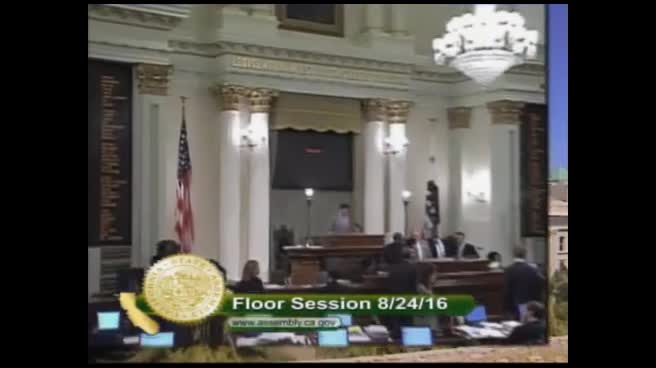 6MIN
Assembly Floor
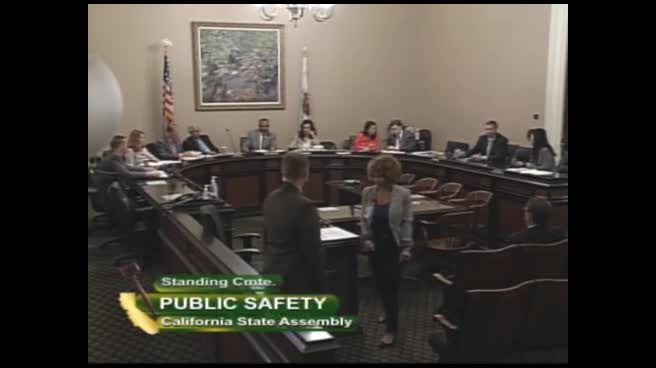 8MIN
Assembly Standing Committee on Public Safety
 6MIN
Senate Standing Committee on Public Safety
 1MIN
Assembly Standing Committee on Appropriations


Bill Co-Author(s):