AB 88: Sales and use taxes: exemption: energy or water efficient home appliances.
- Session Year: 2015-2016
- House: Assembly
- Latest Version Date: 2015-09-04
(1)Existing sales and use tax laws impose a tax on retailers measured by the gross receipts from their sales of tangible personal property sold at retail in this state, or on the storage, use, or other consumption of tangible personal property purchased from a retailer for storage, use, or other consumption in this state, and specify certain exemptions from the amount of tax imposed.
This bill, until January 1, 2021, would exempt from these taxes the gross receipts from the sale of, and the storage, use, or other consumption in this state of, an energy or water efficient home appliance purchased by a public utility that is provided at no cost to a low-income participant in a federal, state, or ratepayer-funded energy or water efficiency program for use by that low-income participant in the energy efficiency program. The bill would define terms for its purposes.
(2)The Bradley-Burns Uniform Local Sales and Use Tax Law authorizes counties and cities to impose local sales and use taxes in conformity with the Sales and Use Tax Law, and existing law authorizes districts, as specified, to impose transactions and use taxes generally in accordance with the Transactions and Use Tax Law, which generally conforms to the Sales and Use Tax Law. Amendments to state sales and use taxes are incorporated into these laws.
Section 2230 of the Revenue and Taxation Code provides that the state will reimburse counties and cities for revenue losses caused by the enactment of sales and use tax exemptions.
This bill would provide that, notwithstanding Section 2230 of the Revenue and Taxation Code, no appropriation is made and the state shall not reimburse any local agencies for sales and use tax revenues lost by them pursuant to this bill.
(3)This bill would take effect immediately as a tax levy, but its operative date would depend on its effective date.
(1)Existing sales and use tax laws impose a tax on retailers measured by the gross receipts from their sales of tangible personal property sold at retail in this state, or on the storage, use, or other consumption of tangible personal property purchased from a retailer for storage, use, or other consumption in this state, and specify certain exemptions from the amount of tax imposed.
This bill, until January 1, 2021, would exempt from these taxes the gross receipts from the sale of, and the storage, use, or other consumption in this state of, an energy or water efficient home appliance purchased by a public utility that is provided at no cost to a low-income participant in a federal, state, or ratepayer-funded energy or water efficiency program for use by that low-income participant in the energy efficiency program. This The bill would define terms for its purposes.
(2)The Bradley-Burns Uniform Local Sales and Use Tax Law authorizes counties and cities to impose local sales and use taxes in conformity with the Sales and Use Tax Law, and existing law authorizes districts, as specified, to impose transactions and use taxes generally in accordance with the Transactions and Use Tax Law, which generally conforms to the Sales and Use Tax Law. Amendments to state sales and use taxes are incorporated into these laws.
Section 2230 of the Revenue and Taxation Code provides that the state will reimburse counties and cities for revenue losses caused by the enactment of sales and use tax exemptions.
This bill would provide that, notwithstanding Section 2230 of the Revenue and Taxation Code, no appropriation is made and the state shall not reimburse any local agencies for sales and use tax revenues lost by them pursuant to this bill.
(3)This bill would take effect immediately as a tax levy, but its operative date would depend on its effective date.
(1)Existing sales and use tax laws impose a tax on retailers measured by the gross receipts from their sales of tangible personal property sold at retail in this state, or on the storage, use, or other consumption of tangible personal property purchased from a retailer for storage, use, or other consumption in this state, and specify certain exemptions from the amount of tax imposed.
This bill, until January 1, 2021, would exempt from these taxes the gross receipts from the sale of, and the storage, use, or other consumption in this state of, an energy or water efficient home appliance purchased by a public utility that is provided at no cost to a low-income participant in a federal, state, or ratepayer-funded energy or water efficiency program for use by that low-income participant in the energy efficiency program. This bill would define terms for its purposes.
(2)The Bradley-Burns Uniform Local Sales and Use Tax Law authorizes counties and cities to impose local sales and use taxes in conformity with the Sales and Use Tax Law, and existing law authorizes districts, as specified, to impose transactions and use taxes generally in accordance with the Transactions and Use Tax Law, which generally conforms to the Sales and Use Tax Law. Amendments to state sales and use taxes are incorporated into these laws.
Section 2230 of the Revenue and Taxation Code provides that the state will reimburse counties and cities for revenue losses caused by the enactment of sales and use tax exemptions.
This bill would provide that, notwithstanding Section 2230 of the Revenue and Taxation Code, no appropriation is made and the state shall not reimburse any local agencies for sales and use tax revenues lost by them pursuant to this bill.
(3)This bill would take effect immediately as a tax levy, but its operative date would depend on its effective date.
(1)Existing sales and use tax laws impose a tax on retailers measured by the gross receipts from their sales of tangible personal property sold at retail in this state, or on the storage, use, or other consumption of tangible personal property purchased from a retailer for storage, use, or other consumption in this state, and specify certain exemptions from the amount of tax imposed.
This bill bill, until January 1, 2021, would exempt from these taxes the gross receipts from the sale of, and the storage, use, or other consumption in this state of, an energy or water efficient home appliance purchased by a public utility that is provided at no cost to a low-income participant in a federal, state, or ratepayer-funded energy efficiency program for use by that low-income participant in the energy efficiency program. This bill would define terms for its purposes.
(2)The Bradley-Burns Uniform Local Sales and Use Tax Law authorizes counties and cities to impose local sales and use taxes in conformity with the Sales and Use Tax Law, and existing law authorizes districts, as specified, to impose transactions and use taxes generally in accordance with the Transactions and Use Tax Law, which generally conforms to the Sales and Use Tax Law. Amendments to state sales and use taxes are incorporated into these laws.
Section 2230 of the Revenue and Taxation Code provides that the state will reimburse counties and cities for revenue losses caused by the enactment of sales and use tax exemptions.
This bill would provide that, notwithstanding Section 2230 of the Revenue and Taxation Code, no appropriation is made and the state shall not reimburse any local agencies for sales and use tax revenues lost by them pursuant to this bill.
(3)This bill would take effect immediately as a tax levy.
(3)This bill would take effect immediately as a tax levy, but its operative date would depend on its effective date.
(1)Existing sales an and use tax laws impose a tax on retailers measured by the gross receipts from their sales of tangible personal property sold at retail in this state, or on the storage, use, or other consumption of tangible personal property purchased from a retailer for storage, use, or other consumption in this state, and specify certain exemptions from the amount of tax imposed.
This bill would exempt from these taxes the gross receipts from the sale of, and the storage, use, or other consumption in this state of, an energy or water efficient home appliance purchased by a public utility that is provided at no cost to a low-income participant in a federal, state, or ratepayer-funded energy efficiency program for use by that low-income participant in the energy efficiency program.
(2)The Bradley-Burns Uniform Local Sales and Use Tax Law authorizes counties and cities to impose local sales and use taxes in conformity with the Sales and Use Tax Law, and existing law authorizes districts, as specified, to impose transactions and use taxes in accordance with the Transactions and Use Tax Law, which generally conforms to the Sales and Use Tax Law. Amendments to state sales and use taxes are incorporated into these laws.
Section 2230 of the Revenue and Taxation Code provides that the state will reimburse counties and cities for revenue losses caused by the enactment of sales and use tax exemptions.
This bill would provide that, notwithstanding Section 2230 of the Revenue and Taxation Code, no appropriation is made and the state shall not reimburse any local agencies for sales and use tax revenues lost by them pursuant to this bill.
(3)This bill would take effect immediately as a tax levy.
(1)Existing sales an use tax laws impose a tax on retailers measured by the gross receipts from their sales of tangible personal property sold at retail in this state, or on the storage, use, or other consumption of tangible personal property purchased from a retailer for storage, use, or other consumption in this state, and specify certain exemptions from the amount of tax imposed.
This bill would exempt from these taxes the gross receipts from the sale of, and the storage, use, or other consumption in this state of, an energy or water efficient home appliance purchased by a public utility that is provided at no cost to a low-income participant in a federal, state, or ratepayer-funded energy efficiency program for use by that low-income participant in the energy efficiency program.
(2)The Bradley-Burns Uniform Local Sales and Use Tax Law authorizes counties and cities to impose local sales and use taxes in conformity with the Sales and Use Tax Law, and existing law authorizes districts, as specified, to impose transactions and use taxes in accordance with the Transactions and Use Tax Law, which conforms to the Sales and Use Tax Law. Amendments to state sales and use taxes are incorporated into these laws.
Section 2230 of the Revenue and Taxation Code provides that the state will reimburse counties and cities for revenue losses caused by the enactment of sales and use tax exemptions.
This bill would provide that, notwithstanding Section 2230 of the Revenue and Taxation Code, no appropriation is made and the state shall not reimburse any local agencies for sales and use tax revenues lost by them pursuant to this bill.
(3)This bill would take effect immediately as a tax levy.
(a)(1)There are exempted from the taxes imposed by this part the gross receipts from the sale of, and the storage and use of, or other consumption in this state of, an energy or water efficient home appliance purchased by a public utility that is provided at no cost to a low-income participant in a federal, state, or ratepayer-funded energy or water efficiency program for use by that low-income participant in the energy or water efficiency program.
(2)Any amounts that would have been paid as sales tax reimbursement or use tax by the public utility but for the exemption provided by paragraph (1) shall be used by the public utility to purchase additional energy or water efficient home appliances to be provided at no cost to low-income participants in the energy or water efficiency program.
(b)For purposes of this section:
(1)Energy or water efficient home appliance means a refrigerator or clothes washer that meets performance requirements under the ENERGY STAR program, established pursuant to Section 6294a of Title 42 of the United States Code.
(2)Low-income participant means a person who is a participant in the California Public Utilities Commissions Energy Savings Assistance Program (ESAP), or a similar energy or water efficiency program, provided by a public utility with income guidelines that do not exceed the income guidelines for ESAP participants.
(3)Public utility means an entity defined in Section 216 or 224.3 of the Public Utilities Code.
(c)It is the intent of the Legislature that no inference be drawn in connection with the addition of the sales and use tax exemption made by this act to events occurring before the passage of this act.
(d)This section shall remain in effect only until January 1, 2021, and as of that date is repealed.
SEC. 2.Notwithstanding Section 2230 of the Revenue and Taxation Code, no appropriation is made by this act and the state shall not reimburse any local agency for any sales and use tax revenues lost by it under this act.
SEC. 3.This act provides for a tax levy within the meaning of Article IV of the Constitution and shall go into immediate effect. However, the provisions of this act shall become operative on the first day of the first calendar quarter commencing more than 90 days after the effective date of this act.
(a)(1)There are exempted from the taxes imposed by this part the gross receipts from the sale of, and the storage and use of, or other consumption in this state of, an energy or water efficient home appliance purchased by a public utility that is provided at no cost to a low-income participant in a federal, state, or ratepayer-funded energy or water efficiency program for use by that low-income participant in the energy or water efficiency program.
(2)Any amounts that would have been paid as sales tax reimbursement or use tax by the public utility but for the exemption provided by paragraph (1) shall be used by the public utility to purchase additional energy or water efficient home appliances to be provided at no cost to low-income participants in the energy or water efficiency program.
(b)For purposes of this section:
(1)Energy or water efficient home appliance means a refrigerator or clothes washer that meets performance requirements under the ENERGY STAR program, established pursuant to Section 6294a of Title 42 of the United States Code.
(2)Low-income participant means a person who is a participant in the California Public Utilities Commissions Energy Savings Assistance Program (ESAP), or a similar energy or water efficiency program, provided by a public utility with income guidelines that do not exceed the income guidelines for ESAP participants.
(3)Public utility means an entity defined in Section 216 or 224.3 of the Public Utilities Code.
(c)It is the intent of the Legislature that no inference be drawn in connection with the addition of the sales and use tax exemption made by this act to events occurring before the passage of this act.
(c)
(d)This section shall remain in effect only until January 1, 2021, and as of that date is repealed.
SEC. 2.Notwithstanding Section 2230 of the Revenue and Taxation Code, no appropriation is made by this act and the state shall not reimburse any local agency for any sales and use tax revenues lost by it under this act.
SEC. 3.This act provides for a tax levy within the meaning of Article IV of the Constitution and shall go into immediate effect. However, the provisions of this act shall become operative on the first day of the first calendar quarter commencing more than 90 days after the effective date of this act.
(a)(1)There are exempted from the taxes imposed by this part the gross receipts from the sale of, and the storage and use of, or other consumption in this state of, an energy or water efficient home appliance purchased by a public utility that is provided at no cost to a low-income participant in a federal, state, or ratepayer-funded energy or water efficiency program for use by that low-income participant in the energy or water efficiency program.
(2)Any amounts that would have been paid as sales tax reimbursement or use tax by the public utility but for the exemption provided by paragraph (1) shall be used by the public utility to purchase additional energy or water efficient home appliances to be provided at no cost to low-income participants in the energy or water efficiency program.
(b)For purposes of this section:
(1)Energy or water efficient home appliance means a refrigerator or clothes washer that meets performance requirements under the ENERGY STAR program, established pursuant to Section 6294a of Title 42 of the United States Code.
(2)Low-income participant means a person who is a participant in the California Alternate Rates for Energy program, also known as the CARE program, as established by Section 739.1 of the Public Utilities Code. Public Utilities Commissions Energy Savings Assistance Program (ESAP), or a similar energy or water efficiency program, provided by a public utility with income guidelines that do not exceed the income guidelines for ESAP participants.
(3)Public utility means an entity defined in Section 216 or 224.3 of the Public Utilities Code.
(c)This section shall remain in effect only until January 1, 2021, and as of that date is repealed.
SEC. 2.Notwithstanding Section 2230 of the Revenue and Taxation Code, no appropriation is made by this act and the state shall not reimburse any local agency for any sales and use tax revenues lost by it under this act.
SEC. 3.This act provides for a tax levy within the meaning of Article IV of the Constitution and shall go into immediate effect. However, the provisions of this act shall become operative on the first day of the first calendar quarter commencing more than 90 days after the effective date of this act.
(a)(1)There are exempted from the taxes imposed by this part the gross receipts from the sale of, and the storage and use of, or other consumption in this state of of, an energy or water efficient home appliance purchased by a public utility that is provided at no cost to a low-income participant in a federal, state, or ratepayer-funded energy efficiency program for use by that low-income participant in the energy efficiency program.
(2)Any amounts that would have been paid as sales tax reimbursement or use tax by the public utility but for the exemption provided by paragraph (1) shall be used by the public utility to purchase additional energy or water efficient home appliances to be provided at no cost to low-income participants in the energy efficiency program.
(b)For purposes of this section:
(1)Energy or water efficient home appliance means a refrigerator, dishwasher, washer, dryer, or other appliance refrigerator or clothes washer that meets performance requirements under the ENERGY STAR program, established pursuant to Section 6294a of Title 42 of the United States Code. Code.
(2)Low-income participant means any a person who is, or who is residing in a home with a person who is, a recipient of Medi-Cal, CalFresh, CalWORKs, Supplemental Security Income, Special Supplemental Nutrition Program for Women, Infants, and Children Low-Income Home Energy Assistance Program, State Utility Assistance Supplement, or some other state or federal means tested program or is able to certify that their gross income, not including any amount of food assistance, is less than 200 percent of the federal poverty guidelines. is a participant in the California Alternate Rates for Energy program, also known as the CARE program, as established by Section 739.1 of the Public Utilities Code.
(3)Public utility means an entity defined in Section 216 or 224.3 of the Public Utilities Code.
(c)This section shall remain in effect only until January 1, 2021, and as of that date is repealed.
SEC. 2.Notwithstanding Section 2230 of the Revenue and Taxation Code, no appropriation is made by this act and the state shall not reimburse any local agency for any sales and use tax revenues lost by it under this act.
SEC. 3.This act provides for a tax levy within the meaning of Article IV of the Constitution and shall go into immediate effect.
SEC. 3.This act provides for a tax levy within the meaning of Article IV of the Constitution and shall go into immediate effect. However, the provisions of this act shall become operative on the first day of the first calendar quarter commencing more than 90 days after the effective date of this act.
(a)(1)There are exempted from the taxes imposed by this part the gross receipts from the sale of, and the storage and use of, or other consumption in this state of an energy or water efficient home appliance purchased by a public utility that is provided at no cost to a low-income participant in a federal, state, or ratepayer-funded energy efficiency program for use by that low-income participant in the energy efficiency program.
(2)Any amounts that would have been paid as sales tax reimbursement or use tax by the public utility but for the exemption provided by paragraph (1) shall be used by the public utility to purchase additional energy or water efficient home appliances to be provided at no cost to low-income participants in the energy efficiency program.
(b)For purposes of this section:
(1)Energy or water efficient home appliance means an appliance a refrigerator, dishwasher, washer, dryer, or other appliance that meets performance requirements under the ENERGY STAR program, established pursuant to Section 6294a of Title 42 of the United States Code, or a similarly labeled refrigerator, dishwasher, washer, dryer, or other appliance with a Tier I equivalent or better energy efficiency rating.
(2)Low-income participant means any person who is, or who is residing in a home with a person who is, a recipient of Medi-Cal, CalFresh, CalWORKs, Supplemental Security Income, Women, Infant, and Children Nutrition Supplement, Special Supplemental Nutrition Program for Women, Infants, and Children Low-Income Home Energy Assistance Program, State Utility Assistance Supplement, or some other state or federal means tested program or is able to certify that their gross income, not including any amount of food assistance, is less than 200 percent of the federal poverty guidelines.
(3)Public utility means an entity defined in Section 216 or 224.3 of the Public Utilities Code.
SEC. 2.Notwithstanding Section 2230 of the Revenue and Taxation Code, no appropriation is made by this act and the state shall not reimburse any local agency for any sales and use tax revenues lost by it under this act.
SEC. 3.This act provides for a tax levy within the meaning of Article IV of the Constitution and shall go into immediate effect.
(a)There are exempted from the taxes imposed by this part the gross receipts from the sale of, and the storage and use of, or other consumption in this state of an energy or water efficient home appliance purchased by a public utility that is provided at no cost to a low-income participant in a federal, state, or ratepayer-funded energy efficiency program for use by that low-income participant in the energy efficiency program.
(b)For purposes of this section:
(1)Energy or water efficient home appliance means an appliance that meets performance requirements under the ENERGY STAR program, established pursuant to Section 6294a of Title 42 of the United States Code, or a similarly labeled refrigerator, dishwasher, washer, dryer, or other appliance with a Tier I equivalent or better energy efficiency rating.
(2)Low-income participant means any person who is, or who is residing in a home with a person who is, a recipient of Medi-Cal, CalFresh, CalWORKs, Supplemental Security Income, Women, Infant, and Children Nutrition Supplement, Low-Income Home Energy Assistance Program, State Utility Assistance Supplement, or some other state or federal means tested program or is able to certify that their gross income, not including any amount of food assistance, is less than 200 percent of the federal poverty guidelines.
(3)Public utility means an entity defined in Section 216 or 224.3 of the Public Utilities Code.
SEC. 2.Notwithstanding Section 2230 of the Revenue and Taxation Code, no appropriation is made by this act and the state shall not reimburse any local agency for any sales and use tax revenues lost by it under this act.
SEC. 3.This act provides for a tax levy within the meaning of Article IV of the Constitution and shall go into immediate effect.
|
Date
|
Status
|
|---|---|
| Sep 1, 2015 | Read third time. Passed. Ordered to the Assembly. |
| Jun 17, 2015 | In committee: Hearing postponed by committee. |
| Jun 23, 2015 | In committee: Set, first hearing. Hearing canceled at the request of author. |
| Jun 30, 2015 | From committee chair, with author's amendments: Amend, and re-refer to committee. Read second time, amended, and re-referred to Com. on GOV. & F. |
| Jul 14, 2015 | From committee: Amend, and do pass as amended and re-refer to Com. on APPR. (Ayes 6. Noes 1.) (July 8). |
| Jul 15, 2015 | Read second time and amended. Re-referred to Com. on APPR. |
| Aug 17, 2015 | In committee: Referred to APPR. suspense file. |
| Aug 27, 2015 | From committee: Do pass. (Ayes 6. Noes 1.) (August 27). |
| Aug 31, 2015 | Read second time. Ordered to third reading. |
| Sep 1, 2015 | In Assembly. Concurrence in Senate amendments pending. May be considered on or after September 3 pursuant to Assembly Rule 77. |
| Jun 11, 2015 | Referred to Com. on GOV. & F. |
| Sep 1, 2015 | Read third time. Passed. Ordered to the Assembly. (Ayes 35. Noes 5. Page 2343.). |
| Sep 2, 2015 | Assembly Rule 77 suspended. |
| Sep 2, 2015 | Assembly Rule 77 suspended. (Page 2795.) |
| Sep 2, 2015 | Senate amendments concurred in. To Engrossing and Enrolling. (Ayes 80. Noes 0. Page 2808.). |
| Sep 2, 2015 | Senate amendments concurred in. To Engrossing and Enrolling. (Ayes 80. Noes 0.). |
| Sep 14, 2015 | Enrolled and presented to the Governor at 4 p.m. |
| Oct 10, 2015 | Vetoed by Governor. |
| Jan 15, 2016 | Consideration of Governor's veto stricken from file. |
| May 21, 2015 | Re-referred to Com. on APPR. |
| Jan 8, 2015 | From printer. May be heard in committee February 7. |
| Jan 26, 2015 | Referred to Com. on REV. & TAX. |
| Mar 23, 2015 | In committee: Set, first hearing. Hearing canceled at the request of author. |
| Apr 6, 2015 | From committee chair, with author's amendments: Amend, and re-refer to Com. on REV. & TAX. Read second time and amended. |
| Apr 7, 2015 | Re-referred to Com. on REV. & TAX. |
| Apr 13, 2015 | In committee: Hearing postponed by committee. |
| Apr 20, 2015 | In committee: Set, second hearing. Referred to REV. & TAX. suspense file. |
| May 19, 2015 | From committee: Amend, and do pass as amended and re-refer to Com. on APPR. (Ayes 9. Noes 0.) (May 18). |
| May 20, 2015 | Read second time and amended. |
| Jan 7, 2015 | Read first time. To print. |
| May 27, 2015 | In committee: Set, first hearing. Referred to APPR. suspense file. |
| May 28, 2015 | From committee: Do pass. (Ayes 17. Noes 0.) (May 28). |
| May 28, 2015 | Joint Rule 62(a), file notice suspended. |
| May 28, 2015 | Joint Rule 62(a), file notice suspended. (Page 1613.) |
| May 28, 2015 | Read second time. Ordered to third reading. |
| Jun 1, 2015 | In Senate. Read first time. To Com. on RLS. for assignment. |
| Jun 1, 2015 | Read third time. Passed. Ordered to the Senate. |
| Jun 1, 2015 | Read third time. Passed. Ordered to the Senate. (Ayes 78. Noes 0. Page 1670.) |
|
Date
|
Description
|
Location
|
Votes
|
|
|---|---|---|---|---|
| Sep 2, 2015 | AB 88 GOMEZ Concurrence in Senate Amendments | Assembly Floor |
Passed |
|
| Sep 1, 2015 | Assembly 3rd Reading AB88 Gomez By Hall | Senate Floor |
Passed |
|
| Aug 27, 2015 | Do pass | Senate Standing Committee on Appropriations |
Passed |
|
| Aug 17, 2015 | Placed on suspense file | Senate Standing Committee on Appropriations |
Passed |
|
| Jul 8, 2015 | Do pass as amended, but first amend, and re-refer to the Committee on [Appropriations] | Senate Standing Committee on Governance and Finance |
Passed |
|
| Jun 1, 2015 | AB 88 GOMEZ Assembly Third Reading | Assembly Floor |
Passed |
|
| May 28, 2015 | Do pass. | Assembly Standing Committee on Appropriations |
Passed |
|
| May 18, 2015 | Do pass as amended and be re-referred to the Committee on [Appropriations] | Assembly Standing Committee on Revenue and Taxation |
Passed |
This list shows positions taken on this bill by organizations on the date displayed, which is linked to the original source.
Positions by individuals are not included.
|
Organization
|
Position
|
Date
|
|---|---|---|
| Appliance Recycling Centers Of America, Inc. | ** Support | Sep 1, 2015 |
| ARKA | * Indeterminate | Jul 8, 2015 |
| Asian Pacific Environmental Network; California Apartment Association | ** Support | Sep 1, 2015 |
| Board of Equalization Chairman, Jerome Horton | ** Support | Sep 1, 2015 |
| California Apartment Association | ** Support | Jun 1, 2015 |
| California Building Industry Association | ** Support | Sep 1, 2015 |
| California Contract Cities Association | ** Support | Sep 1, 2015 |
| California League Of Conservation Voters | ** Support | Sep 1, 2015 |
| California Retailers Association | ** Support | Sep 1, 2015 |
| California Rural Legal Assistance Foundation, Inc. | ** Support | Sep 1, 2015 |
| California State Association Of Counties | ** Against | Sep 1, 2015 |
| California Tax Reform Association | * Indeterminate | Jul 8, 2015 |
| Californians Against Waste | ** Support | Sep 1, 2015 |
| Center for Employment Training | ** Support | Sep 1, 2015 |
| Center on Race Poverty and the Environment | ** Support | Sep 1, 2015 |
| Central Basin Municipal Water District | ** Support | Sep 1, 2015 |
| City Of Lancaster | ** Support | Sep 1, 2015 |
| City of Long Beach | ** Support | Sep 1, 2015 |
| City Of Oakland | ** Support | Sep 1, 2015 |
| Coalition for Humane Immigrant Rights of Los Angeles | ** Support | Sep 1, 2015 |
| Coalition of California Welfare Rights Organizations | * Indeterminate | Jul 8, 2015 |
| Community Water Center | ** Support | Sep 1, 2015 |
| Employers Training Resource | ** Support | Sep 1, 2015 |
| Independent Cities Association | ** Support | Sep 1, 2015 |
| la Cooperativa Campesina de California | ** Support | Sep 1, 2015 |
| League Of California Cities | ** Against | Sep 1, 2015 |
| Los Angeles Area Chamber Of Commerce | ** Support | Jun 1, 2015 |
| Los Angeles County Supervisor Michael D. Antonovich | ** Support | Jun 1, 2015 |
| Los Angeles County Supervisor, Don Knabe | ** Support | Sep 1, 2015 |
| Los Angeles County Supervisor, Michael Antonovich | ** Support | Sep 1, 2015 |
| Los Angeles Mayor, Eric Garcetti | ** Support | Sep 1, 2015 |
| Los Angeles, City Of | * Indeterminate | Jul 8, 2015 |
| Page L | ** Support | Jun 1, 2015 |
| Page M | ** Support | Jun 1, 2015 |
| REV. & TAX. | ** Against | Apr 20, 2015 |
| San Diego County Water Authority | ** Support | Sep 1, 2015 |
| Sierra Club California; State Board of Equalization | ** Support | Sep 1, 2015 |
| State Board of Equalization | ** Support | Jun 1, 2015 |
| Western Center On Law And Poverty Inc. | ** Support | Sep 1, 2015 |
GOVERNOR'S VETO
AB 88
(Gomez)
As Enrolled September 4, 2015
2/3 vote
ASSEMBLY: |
78-0 |
(June 1, 2015) |
SENATE: |
35-5 |
(September 1, 2015) |
ASSEMBLY: |
80-0 |
(September 2, 2015) |
|
|
|
Original Committee Reference: REV. & TAX.
SUMMARY: Establishes a sales and use tax (SUT) exemption for any "energy or water efficient home appliance" purchased by a "public utility" that is provided at no cost to a "low-income participant" in a federal, state, or ratepayer-funded energy or water efficiency program for use by that "low-income participant" in the energy or water efficiency program.
The Senate amendments:
Add references to water efficiency programs for consistency throughout the proposed statute.
Modify the definition of a "low-income participant" to mean a person who is participating in the California Public Utilities Commission's Energy Savings Assistance Program (ESAP), or a similar energy or water efficiency program, provided by a public utility with income guidelines that do not exceed the income guidelines for ESAP participants.
Provide that it is the Legislature's intent that no inference be drawn in connection with the addition of this SUT exemption "to events occurring before the passage of this act."
EXISTING FEDERAL LAW establishes ENERGY STAR as a voluntary program within the Department of Energy and the Environmental Protection Agency to identify and promote energy-efficient products and buildings in order to reduce energy consumption, improve energy security, and reduce pollution.
EXISTING STATE LAW:
Imposes a sales tax on retailers for the privilege of selling tangible personal property (TPP), absent a specific exemption. The tax is based upon the retailer's gross receipts from TPP sales in this state.
Imposes a complimentary use tax on the storage, use, or other consumption of TPP purchased out-of-state and brought into California. The use tax is imposed on the purchaser, and unless the purchaser pays the use tax to an out-of-state retailer registered to collect California's use tax, the purchaser remains liable for the tax. The use tax is set at the same rate as the state's sales tax and must generally be remitted to the State Board of Equalization (BOE).
AS PASSED BY THE ASSEMBLY, this bill:
Provided that any amounts that would have been paid as sales tax reimbursement or use tax by the "public utility" but for the exemption must be used by the public utility to purchase additional "energy or water efficient home appliances" to be provided at no cost to "low-income participants" in the energy efficiency program.
Defined an "energy or water efficient home appliance" as a refrigerator or clothes washer that meets performance requirements under the ENERGY STAR program, established pursuant to United States Code Title 42, Section 6294a.
Defined a "public utility" as an entity defined in Public Utilities Code (PUC) Section 216 or Section 224.3.
Defined a "low-income participant" as any person who is a participant in the California Alternate Rates for Energy program, also known as the CARE program, as established by PUC Section 739.1.
Provided that, notwithstanding Revenue and Taxation Code Section 2230, the state shall not reimburse any local agency for any SUT revenues lost as a result of this exemption.
Took immediate effect as a tax levy, but only became operative on the first day of the first calendar quarter commencing more than 90 days after this bill's effective date.
Sunset on January 1, 2021.
FISCAL EFFECT: According to the Senate Appropriations Committee:
The BOE estimates that this bill would result in an annual state and local revenue loss of $4.5 million, $2.1 million of which would be General Fund.
The BOE would incur some absorbable administrative costs related to notifying affected retailers, developing and publishing applicable guidelines, and answering inquiries from the general public and impacted retailers.
COMMENTS:
The author has provided the following statement in support of this bill:
AB 88 seeks to provide a sales and use tax exemption for energy or water efficient appliances provided free of cost to eligible low-income utility consumers. This bill helps further California's environmental and energy efficiency goals by reducing energy and water consumption, while reducing costs for a greater number of low-income Californians.
Assembly Revenue and Taxation Committee Comments:
The ESAP: The ESAP provides no-cost weatherization services to low-income households meeting specified income guidelines. For example, the income eligibility upper limit for a household of four is currently $47,700. Services provided include attic insulation, weather-stripping, caulking, and door and building envelope repairs to reduce air infiltration. Qualified ESAP customers may also be eligible to receive energy-efficient replacement appliances. For example, Pacific Gas and Electric (PG&E) notes that energy-saving measures through ESAP can include the repair or replacement of the customer's refrigerator. In addition, furnace and water heater repair or replacement may be available to eligible customers if PG&E determines that existing natural gas units are inoperable or unsafe. The author notes that ESAP helps to reduce energy and water consumption, while at the same time reducing gas and electricity costs for low-income customers.
The ENERGY STAR program: This bill defines an eligible "energy or water efficient home appliance" as a refrigerator or clothes washer that meets performance requirements under the ENERGY STAR program.
The ENERGY STAR program, in turn, is a voluntary federal program designed to identify and promote energy-efficient products and buildings in order to reduce energy consumption, improve energy security, and reduce pollution through voluntary labeling of products and buildings that meet the highest energy conservation standards. ENERGY STAR has grown to include products in more than 70 different categories, with more than 4.8 billion products sold since 1992.
Transitioning to ENERGY STAR-certified appliances has many advantages. By way of example, there are an estimated 170 million refrigerators and refrigerator-freezers currently in use in the United States. More than 60 million refrigerators are over 10 years old, costing consumers $4.7 billion per year in energy costs. ENERGY STAR-certified refrigerators, in turn, are roughly 9% to 10% more energy efficient than models meeting the federal minimum energy efficiency standard. By properly recycling an old refrigerator and replacing it with a new ENERGY STAR-certified model, the average consumer could save between $35 and $300 on energy costs over the lifetime of the appliance. Cumulatively, if all refrigerators sold in the United States were ENERGY STAR-certified, the energy cost savings would grow to more than $400 million each year and eight billion pounds of annual greenhouse gas emissions would be prevented. This is equivalent to the emissions from 750,000 vehicles.
Everything's great until you get audited: The author notes that, in the summer of 2014, a BOE audit determined that there is no specific exemption for an energy- or water-efficient appliance purchased by a public utility and provided at no cost to a qualified low-income customer. The author notes that, without a statutory exemption, fewer financial resources will be available to serve low-income families. To this end, the author states, "The goal of AB 88 is to make sure that the maximum number of families are served in a federal, state, or ratepayer-funded energy efficiency program."
Related legislation: AB 816 (Hall), of the 2013-14 Legislative Session, would have provided a SUT exemption for energy- or water-efficient home appliances purchased by a public utility and provided at no cost to a participant in a federal, state, or ratepayer-funded energy efficiency program. AB 816 originally related to alcoholic beverages, was gutted and amended with the SUT exemption, and was withdrawn from the Senate Governmental Organization Committee to the Senate Rules Committee.
I am returning the following nine bills without my signature:
Assembly Bill 35
Assembly Bill 88
Assembly Bill 99
Assembly Bill 428
Assembly Bill 437
Assembly Bill 515
Assembly Bill 931
Senate Bill 251
Senate Bill 377
Each of these bills creates a new tax credit or expands an existing tax credit.
Despite strong revenue performance over the past few years, the state's budget has remained precariously balanced due to unexpected costs and the provision of new services. Now, without the extension of the managed care organization tax that I called for in special session, next year's budget faces the prospect of over $1 billion in cuts.
Given these financial uncertainties, I cannot support providing additional tax credits that will make balancing the state's budget even more difficult. Tax credits, like new spending on programs, need to be considered comprehensively as part of the budget deliberations.
Analysis Prepared by: M. David Ruff / REV. & TAX. / (916) 319-2098 FN: 0002533
AB 88
Page 3
CONCURRENCE IN SENATE AMENDMENTS
AB 88
(Gomez)
As Amended July 15, 2015
Majority vote
ASSEMBLY: |
78-0 |
(June 1, 2015) |
SENATE: |
35-5 |
(September 1, 2015) |
Original Committee Reference: REV. & TAX.
SUMMARY: Establishes a sales and use tax (SUT) exemption for any "energy or water efficient home appliance" purchased by a "public utility" that is provided at no cost to a "low-income participant" in a federal, state, or ratepayer-funded energy or water efficiency program for use by that "low-income participant" in the energy or water efficiency program.
The Senate amendments:
Add references to water efficiency programs for consistency throughout the proposed statute.
Modify the definition of a "low-income participant" to mean a person who is participating in the California Public Utilities Commission's Energy Savings Assistance Program (ESAP), or a similar energy or water efficiency program, provided by a public utility with income guidelines that do not exceed the income guidelines for ESAP participants.
Provide that it is the Legislature's intent that no inference be drawn in connection with the addition of this SUT exemption "to events occurring before the passage of this act."
EXISTING FEDERAL LAW establishes ENERGY STAR as a voluntary program within the Department of Energy and the Environmental Protection Agency to identify and promote energy-efficient products and buildings in order to reduce energy consumption, improve energy security, and reduce pollution.
EXISTING STATE LAW:
Imposes a sales tax on retailers for the privilege of selling tangible personal property (TPP), absent a specific exemption. The tax is based upon the retailer's gross receipts from TPP sales in this state.
Imposes a complimentary use tax on the storage, use, or other consumption of TPP purchased out-of-state and brought into California. The use tax is imposed on the purchaser, and unless the purchaser pays the use tax to an out-of-state retailer registered to collect California's use tax, the purchaser remains liable for the tax. The use tax is set at the same rate as the state's sales tax and must generally be remitted to the State Board of Equalization (BOE).
AS PASSED BY THE ASSEMBLY, this bill:
Provided that any amounts that would have been paid as sales tax reimbursement or use tax by the "public utility" but for the exemption must be used by the public utility to purchase additional "energy or water efficient home appliances" to be provided at no cost to "low-income participants" in the energy efficiency program.
Defined an "energy or water efficient home appliance" as a refrigerator or clothes washer that meets performance requirements under the ENERGY STAR program, established pursuant to United States Code Title 42, Section 6294a.
Defined a "public utility" as an entity defined in Public Utilities Code (PUC) Section 216 or Section 224.3.
Defined a "low-income participant" as any person who is a participant in the California Alternate Rates for Energy program, also known as the CARE program, as established by PUC Section 739.1.
Provided that, notwithstanding Revenue and Taxation Code Section 2230, the state shall not reimburse any local agency for any SUT revenues lost as a result of this exemption.
Took immediate effect as a tax levy, but only became operative on the first day of the first calendar quarter commencing more than 90 days after this bill's effective date.
Sunset on January 1, 2021.
FISCAL EFFECT: According to the Senate Appropriations Committee:
The BOE estimates that this bill would result in an annual state and local revenue loss of $4.5 million, $2.1 million of which would be General Fund.
The BOE would incur some absorbable administrative costs related to notifying affected retailers, developing and publishing applicable guidelines, and answering inquiries from the general public and impacted retailers.
COMMENTS:
The author has provided the following statement in support of this bill:
AB 88 seeks to provide a sales and use tax exemption for energy or water efficient appliances provided free of cost to eligible low-income utility consumers. This bill helps further California's environmental and energy efficiency goals by reducing energy and water consumption, while reducing costs for a greater number of low-income Californians.
Assembly Revenue and Taxation Committee Comments:
The ESAP: The ESAP provides no-cost weatherization services to low-income households meeting specified income guidelines. For example, the income eligibility upper limit for a household of four is currently $47,700. Services provided include attic insulation, weather-stripping, caulking, and door and building envelope repairs to reduce air infiltration. Qualified ESAP customers may also be eligible to receive energy-efficient replacement appliances. For example, Pacific Gas and Electric (PG&E) notes that energy-saving measures through ESAP can include the repair or replacement of the customer's refrigerator. In addition, furnace and water heater repair or replacement may be available to eligible customers if PG&E determines that existing natural gas units are inoperable or unsafe. The author notes that ESAP helps to reduce energy and water consumption, while at the same time reducing gas and electricity costs for low-income customers.
The ENERGY STAR program: This bill defines an eligible "energy or water efficient home appliance" as a refrigerator or clothes washer that meets performance requirements under the ENERGY STAR program.
The ENERGY STAR program, in turn, is a voluntary federal program designed to identify and promote energy-efficient products and buildings in order to reduce energy consumption, improve energy security, and reduce pollution through voluntary labeling of products and buildings that meet the highest energy conservation standards. ENERGY STAR has grown to include products in more than 70 different categories, with more than 4.8 billion products sold since 1992.
Transitioning to ENERGY STAR-certified appliances has many advantages. By way of example, there are an estimated 170 million refrigerators and refrigerator-freezers currently in use in the United States. More than 60 million refrigerators are over 10 years old, costing consumers $4.7 billion per year in energy costs. ENERGY STAR-certified refrigerators, in turn, are roughly 9% to 10% more energy efficient than models meeting the federal minimum energy efficiency standard. By properly recycling an old refrigerator and replacing it with a new ENERGY STAR-certified model, the average consumer could save between $35 and $300 on energy costs over the lifetime of the appliance. Cumulatively, if all refrigerators sold in the United States were ENERGY STAR-certified, the energy cost savings would grow to more than $400 million each year and eight billion pounds of annual greenhouse gas emissions would be prevented. This is equivalent to the emissions from 750,000 vehicles.
Everything's great until you get audited: The author notes that, in the summer of 2014, a BOE audit determined that there is no specific exemption for an energy- or water-efficient appliance purchased by a public utility and provided at no cost to a qualified low-income customer. The author notes that, without a statutory exemption, fewer financial resources will be available to serve low-income families. To this end, the author states, "The goal of AB 88 is to make sure that the maximum number of families are served in a federal, state, or ratepayer-funded energy efficiency program."
Related legislation: AB 816 (Hall), of the 2013-14 Legislative Session, would have provided a SUT exemption for energy- or water-efficient home appliances purchased by a public utility and provided at no cost to a participant in a federal, state, or ratepayer-funded energy efficiency program. AB 816 originally related to alcoholic beverages, was gutted and amended with the SUT exemption, and was withdrawn from the Senate Governmental Organization Committee to the Senate Rules Committee.
Analysis Prepared by: M. David Ruff / REV. & TAX. / (916) 319-2098 FN: 0001718
AB 88
Page 6
|
Office of Senate Floor Analyses (916) 651-1520 Fax: (916) 327-4478 |
THIRD READING
Bill No: AB 88
Amended: 7/15/15 in Senate
SENATE GOVERNANCE & FIN. COMMITTEE: 6-1, 7/8/15
AYES: Hertzberg, Nguyen, Beall, Hernandez, Lara, Pavley
NOES: Moorlach
SENATE APPROPRIATIONS COMMITTEE: 6-1, 8/27/15
AYES: Lara, Bates, Beall, Hill, Leyva, Mendoza
NOES: Nielsen
ASSEMBLY FLOOR: 78-0, 6/1/15 - See last page for vote
SUBJECT: Sales and use taxes: exemption: energy or water efficient home appliances
DIGEST: This bill provides a sales and use tax exemption for the sale of energy or water efficient home appliances, purchased by a public utility that is provided at no cost to a low income participant in an energy efficiency program.
Existing law:
Imposes a sales and use tax on the sale, storage, or use of tangible personal property unless exempted by state law.
Imposes sales and use tax on nonprofits, public agencies, and charities are subject to sales and use tax, unless otherwise exempted.
Allows cities and counties to increase the sales and use tax rate up to 2% as a transactions and use tax for either specific or general purposes with a vote of the people.
This bill:
Provides a sales and use tax exemption for the sale of energy or water efficient home appliances, purchased by a public utility that is provided at no cost to a low income participant in an energy efficiency program.
Specifies that any savings from the exemption must be used by the public utility to purchase additional energy or water efficient home appliances.
Defines “energy or water efficient home appliance” as a refrigerator or clothes washer that meets performance requirements under the ENERGY STAR program. This bill defines a low-income participant as a person who is a participant in the California Public Utilities Commission’s Energy Savings Assistance Program (ESAP), or a similar energy or water efficiency program, provided by a public utility with income guidelines that do not exceed the income guidelines for ESAP participants.
Applies to federal, state, or ratepayer-funded energy or water efficiency programs.
Becomes operative on the first day of the first calendar quarter commencing more than 90 days after the effective date of this act and shall remain in effect only until January 1, 2021.
Comments
Author’s statement. According to the author, “AB 88 creates a tax exemption for Energy Star clothes washers and refrigerators that are purchased through the Energy Savings Assistance Program for low income utility customers. Maximizing rate payer funds to benefit rate payers participating in ESAP is another effective tool to helping California achieve energy efficiency and water reduction goals. While the bill is a tax levy, it has a delayed effective date to provide the Board of Equalization a timeline for notifying businesses that would be retailing the appliances. To provide appropriate review of the legislation, AB 88 has a five year sunset to review its effectiveness.”
Legal woes. The main proponent of AB 88, Appliance Recycling Centers of America (ARCA), supplies and recycles ENERGY STAR appliances for low income individuals in the Los Angeles area through the Los Angeles Department of Water & Power’s (LADWP), and the Southern California Gas Company’s low income programs. ARCA bills LADWP and Southern California Gas Company after delivering the new appliance, and recycling the old appliance. Since 2006, ARCA has provided 140,533 refrigerators and clothes washers in the Los Angeles area.
ARCA failed to assess, collect, or remit sales and use tax to the Board of Equalization (BOE) for the sale of ENERGY STAR appliances to LADWP and Southern California Gas Company, and underwent a BOE managed audit as a result. The audit covered the period from January 1, 2011 through September 30, 2014, and was expected to be completed by March 31, 2015. ARCA estimated that the audit will likely result in a Notice of Determination from BOE of an assessment of at least $4.0 million. In a press release dated February 11, 2014, ARCA stated the assessment is subject to protest and appeal, would not need to be funded until the matter has been fully resolved. The press release also stated the company was pursuing legislation to help resolve the matter.
In March of this year, a federal securities class action was filed against ARCA. The complaint claims ARCA made false and/or misleading statements in their financial statements concerning sales tax related to its appliance replacement program, among other allegations. Specifically, the complaint states ARCA knew or recklessly disregarded that material facts were being misrepresented or omitted in their financial statements concerning sales tax.
Effect of exemption. AB 88’s exemption aids low income individuals and families by providing low or no cost refrigerators and washing machines, but reduces revenues for cities, counties, and the state, which means less funds for programs that may also benefit low income individuals and families. For example, if the City of Blue purchases $100,000 in refrigerators in neighboring City of Green, the City of Blue will save $7,500 in sales and use tax, allowing the City of Blue to purchase additional refrigerators. The City of Green, where the refrigerators were sold, will lose approximately $2,063. The county City of Green is in will lose $1,000, and the state General Fund will lose $4,438. In effect, the state, city, and county governments would subsidize the purchase of tax-free refrigerators.
Related Legislation
AB 816 (Hall, 2013) would have provided a sales and use tax exemption for energy- or water-efficient home appliances purchased by a public utility and provided at no cost to a participant in a federal, state, or ratepayer-funded energy efficiency program. AB 816 originally related to alcoholic beverages, was gutted and amended with the sales and use tax exemption, and was withdrawn from the Senate Government Organization Committee to Senate Rules Committee.
FISCAL EFFECT: Appropriation: No Fiscal Com.: Yes Local: No
According to the Senate Appropriations Committee:
BOE estimates that this bill will result in an annual state and local revenue loss of $4.5 million, $2.1 million of which would be General Fund.
BOE would incur some absorbable administrative costs related to notifying affected retailers, developing and publishing applicable guidelines, and answering inquiries from the general public and affected retailers.
Appliance Recycling Centers of America
Asian Pacific Environmental Network; California Apartment Association
Board of Equalization Chairman, Jerome Horton
California Building Industry Association
California Contract Cities Association
California League of Conservation Voters
California Retailers Association
California Rural Legal Assistance Foundation
Californians Against Waste
Center for Employment Training
Center on Race Poverty and the Environment
Central Basin Municipal Water District
City of Lancaster
City of Long Beach
City of Oakland
Coalition for Humane Immigrant Rights of Los Angeles
Coalition of California Welfare Rights Organization
Community Water Center
Employers Training Resource
Independent Cities Association
La Cooperativa Campesina de California
Los Angeles Chamber of Commerce
Los Angeles County Supervisor, Don Knabe
Los Angeles County Supervisor, Michael Antonovich
Los Angeles Mayor, Eric Garcetti
Proteus Inc.
San Diego County Water Authority
Sierra Club California; State Board of Equalization
Western Center on Law and Poverty
OPPOSITION: (Verified 8/27/15)
California State Association of Counties
League of California Cities
ARGUMENTS IN SUPPORT: The supporters of this bill argue that this bill will allow additional low income individuals to participate in appliance replacement programs. Further, supporters of this bill argue that energy efficient appliance replacement will result in the reduction of greenhouse gasses and water conservation, which are goals that all Californians wish to, in fact need to, participate in.
ARGUMENTS IN OPPOSITION: The opponents of this bill argue that this bill will restrict an increasingly limited revenue source that cities depend upon to fund basic services. Cities already face an accelerating decline in local sales tax revenues, and an increasing concentration in a limited number of taxable activities that do not reflect recent changes in our economy. Also, this bill sets a dangerous precedent. This bill allows the Legislature to use increasingly scarce local government revenues to achieve a statewide policy objective.
ASSEMBLY FLOOR: 78-0, 6/1/15
AYES: Achadjian, Alejo, Travis Allen, Baker, Bigelow, Bloom, Bonilla, Bonta, Brough, Brown, Burke, Calderon, Campos, Chang, Chau, Chávez, Chiu, Chu, Cooley, Cooper, Dababneh, Dahle, Daly, Dodd, Eggman, Frazier, Beth Gaines, Gallagher, Cristina Garcia, Eduardo Garcia, Gatto, Gipson, Gomez, Gonzalez, Gordon, Gray, Grove, Harper, Roger Hernández, Holden, Irwin, Jones, Jones-Sawyer, Kim, Lackey, Levine, Linder, Lopez, Low, Maienschein, Mathis, Mayes, McCarty, Medina, Melendez, Mullin, Nazarian, O'Donnell, Olsen, Patterson, Perea, Quirk, Rendon, Ridley-Thomas, Rodriguez, Salas, Santiago, Steinorth, Mark Stone, Thurmond, Ting, Wagner, Waldron, Weber, Wilk, Williams, Wood, Atkins
NO VOTE RECORDED: Hadley, Obernolte
Prepared by: Myriam Bouaziz / GOV. & F. / (916) 651-4119
8/30/15 19:49:00
**** END ****
AB 88 (Gomez) Page 2 of 2
SENATE COMMITTEE ON APPROPRIATIONS
Senator Ricardo Lara, Chair
2015 - 2016 Regular Session
AB 88 (Gomez) - Sales and use taxes: exemption: energy or water efficient home appliances.
|
|
Version: July 15, 2015 |
Policy Vote: GOV. & F. 6 - 1 |
Urgency: Yes |
Mandate: No |
Hearing Date: August 17, 2015 |
Consultant: Robert Ingenito |
This bill meets the criteria for referral to the Suspense File.
Bill Summary:
AB 88 would provide a sales and use (SUT) tax exemption for a public utility’s ENERGY STAR refrigerator or clothes washer purchases that are provided at no cost to low-income participants in an energy efficiency program, as defined.
Fiscal Impact:
The Board of Equalization (BOE) estimates that this bill would result in an annual state and local revenue loss of $4.5 million, $2.1 million of which would be General Fund.
BOE would incur some absorbable administrative costs related to notifying affected retailers, developing and publishing applicable guidelines, and answering inquiries from the general public and affected retailers.
Background:
Except where a specific exemption or exclusion is provided, current law imposes the SUT on all retailers for the privilege of selling tangible personal property (TPP) at retail in California, or on the storage, use, or other consumption in this state of TPP purchased from a retailer. Under current law, tax does not apply to TPP sold to retailers or other sellers who resell the property before they make a taxable use of the property.
Current law imposes the SUT on energy efficient appliance purchases to the same extent as it imposes the tax on any other TPP sales not otherwise statutorily exempted or excluded from tax. While current law statutorily exempts TPP sales to the United States government, it contains no statutory exclusion or exemption when the purchaser is a utility company or a local government agency. Consequently, unless a utility company purchases TPP, such as appliances, for purposes of reselling it prior to making a taxable use of it, tax applies to the property’s sale to the utility company.
Proposed Law:
This bill would provide a SUT exemption for the sale of energy or water efficient home appliances, as defined, purchased by a public utility that is provided at no cost to a low income participant (as defined) in an energy efficiency program. The bill (1) specifies that any savings from the exemption must be used by the public utility to purchase additional energy or water efficient home appliances, and (2) would apply to federal, state, or ratepayer-funded energy or water efficiency programs.
The bill would take effect immediately as a tax levy, but its operative date would occur on the first day of the first calendar quarter commencing more than 90 days after the effective date of this act. It would remain in effect until January 1, 2021.
Staff Comments:
California Public Utilities Commission data indicate that 2014 refrigerator and clothes washer expenditures for the four large investor-owned utilities within the Low Income Energy Savings Assistance Program amounted to $54 million. However, this expenditures data include installation costs, which are exempt from the SUT. Thus, BOE staff made a corresponding downward adjustment, lowering the expenditure to $50 million. In addition, staff added two large publicly-owned utilities’ expenditures for total estimated purchase costs of $4 million. BOE staff then applied the current average statewide sales and use tax rate (8.42 percent), and concluded that the total annual state and local annual revenue loss would be $4.5 million.
To that extent that public utilities beyond the six considered by BOE engage in appliance expenditures that may be exempted under the bill’s provisions, BOE’s estimate of the bill’s revenue loss could be understated.
-- END --
AB 88 (Gomez) 6/30/15 Page 3 of 3
SENATE COMMITTEE ON GOVERNANCE AND FINANCE
Senator Robert M. Hertzberg, Chair
2015 - 2016 Regular
Bill No: |
AB 88 |
Hearing Date: |
7/1/15 |
Author: |
Gomez |
Tax Levy: |
Yes |
Version: |
6/30/15 |
Fiscal: |
Yes |
Consultant: |
Bouaziz |
||
SALES AND USE TAXES: EXEMPTION: ENERGY OR WATER EFFICIENT HOME APPLIANCES
Provides sales and use tax exemption for the sale of energy or water efficient home appliances, purchased by a public utility that is provided at no cost to a low income participant in an energy efficiency program.
Background and Existing Law
State law imposes a sales and use tax on the sale, storage, or use of tangible personal property unless exempted by state law. Generally, nonprofits, public agencies, and charities are subject to sales and use tax, unless otherwise exempted. Cities and Counties may increase the sales and use tax rate up to 2% as a transactions and use tax for either specific or general purposes with a vote of the people.
Proposed Law
Assembly Bill 88 provides sales and use tax exemption for the sale of energy or water efficient home appliances, purchased by a public utility that is provided at no cost to a low income participant in an energy efficiency program. The bill specifies that any savings from the exemption must be used by the public utility to purchase additional energy or water efficient home appliances. AB 88 applies to federal, state, or ratepayer-funded energy or water efficiency programs.
The bill defines “energy or water efficient home appliance” as a refrigerator or clothes washer that meets performance requirements under the ENERGY STAR program. The bill defines a low-income participant as a person who is a participant in the California Public Utilities Commission’s Energy Savings Assistance Program (ESAP), or a similar energy or water efficiency program, provided by a public utility with income guidelines that do not exceed the income guidelines for ESAP participants.
AB 88 becomes operative on the first day of the first calendar quarter commencing more than 90 days after the effective date of this act and shall remain in effect only until January 1, 2021.
State Revenue Impact
The Board of Equalization (BOE) estimates an annual loss of $4.5 million. This estimate only takes into account refrigerator and clothes washer expenditures for four large investor-owned utilities, and two large publicly-owned utilities. In California, there are 6 investor-owned utilities, and 46 publicly-owned utilities.
Comments
1. Purpose of the bill. According to the author, “AB 88 creates a tax exemption for Energy Star clothes washers and refrigerators that are purchased through the Energy Savings Assistance Program for low income utility customers. Maximizing rate payer funds to benefit rate payers participating in ESAP is another effective tool to helping California achieve energy efficiency and water reduction goals. While the bill is a tax levy, it has a delayed effective date to provide the Board of Equalization a timeline for notifying businesses that would be retailing the appliances. To provide appropriate review of the legislation, AB 88 has a five year sunset to review its effectiveness.”
2. Legal woes. The sponsor of AB 88, Appliance Recycling Centers of America (ARCA), supplies and recycles ENERGY STAR appliances for low income individuals in the Los Angeles area through the Los Angeles Department of Water & Power’s (LADWP), and the Southern California Gas Company’s low income programs. ARCA bills LADWP and Southern California Gas Company after delivering the new appliance, and recycling the old appliance. Since 2006, ARCA has provided 140,533 refrigerators and clothes washers in the Los Angeles area.
ARCA failed to assess, collect, or remit sales and use tax to BOE for the sale of ENERGY STAR appliances to LADWP and Southern California Gas Company, and underwent a BOE managed audit as a result. The audit covered the period from January 1, 2011 through September 30, 2014, and was expected to be completed by March 31, 2015. ARCA estimated that the audit will likely result in a Notice of Determination from BOE of an assessment of at least $4.0 million. In a press release dated February 11, 2014, ARCA stated the assessment is subject to protest and appeal, would not need to be funded until the matter has been fully resolved. The press release also stated the company was pursuing Legislation to help resolve the matter.
In March of this year, a federal securities class action was filed against ARCA. The complaint claims ARCA made false and/or misleading statements in their financial statements concerning sales tax related to its appliance replacement program, among other allegations. Specifically, the complaint states ARCA knew or recklessly disregarded that material facts were being misrepresented or omitted in their financial statements concerning sales tax. To ensure that legal disputes are determined using the law in place at the time the sales and use tax should have been collected and remitted, the Committee may wish to consider amending the bill to include “no inference” language so that any pending, or future litigation, does not consider the bill’s exemption.
3. Effect of exemption. AB 88’s exemption aids low income individuals and families by providing low or no cost refrigerators and washing machines, but reduces revenues for cities, counties, and the state, which means less funds for programs that may also benefit low income individuals and families. For example, if the City of Blue purchases $100,000 in refrigerators in neighboring City of Green, the City of Blue will save $7,500 in sales and use tax, allowing the City of Blue to purchase additional refrigerators. The City of Green, where the refrigerators were sold, will lose approximately $2,063. The county City of Green is in will lose $1,000, and the State General Fund will lose $4,438. In effect, the State, city, and county governments would subsidize the purchase of tax-free refrigerators.
4. Related legislation. AB 816 (Hall), of the 2013-14 Legislative Session, would have provided a sales and use tax exemption for energy- or water-efficient home appliances purchased by a public utility and provided at no cost to a participant in a federal, state, or ratepayer-funded energy efficiency program. AB 816 originally related to alcoholic beverages, was gutted and amended with the sales and use tax exemption, and was withdrawn from the Senate Government Organization Committee to Senate Rules.
Assembly Actions
Assembly Revenue and Taxation 9-0
Assembly Appropriations 17-0
Assembly Floor 78-0
Support and Opposition
(7/2/15)
Support: Appliance Recycling Centers of America (ARCA); Asian Pacific Environmental Network; California Apartment Association; California Board of Equalization Chairman, Jerome Horton; California Building Industry Association; California Contract Cities Association; California League of Conservation Voters; California Retailers Association; California Rural Legal Assistance Foundation; Californians Against Waste; Center for Employment Training; Center on Race Poverty and the Environment; Central Basin Municipal Water District; City of Lancaster; City of Long Beach; City of Oakland; Coalition of California Welfare Rights Organization; Coalition for Humane Immigrant Rights of Los Angeles; Community Water Center; Employers Training Resource; Independent Cities Association; La Cooperativa Campesina de California; Los Angeles Chamber of Commerce; Los Angeles County Supervisor, Don Knabe; Los Angeles County Supervisor, Michael Antonovich; Los Angeles Mayor Eric Garcetti; Proteus Inc.; San Diego County Water Authority ; Sierra Club California; State Board of Equalization; Western Center on Law and Poverty.
Opposition: California State Association of Counties; League of California Cities.
-- END --
AB 88
Page 3
ASSEMBLY THIRD READING
AB 88
(Gomez)
As Amended May 20, 2015
Majority vote. Tax levy
Committee |
Votes |
Ayes |
Noes |
Revenue & Taxation |
9-0 |
Ting, Brough, Dababneh, Gipson, Roger Hernández, Mullin, Patterson, Quirk, Wagner |
|
Appropriations |
17-0 |
Gomez, Bigelow, Bonta, Calderon, Chang, Daly, Eggman, Gallagher, Eduardo Garcia, Gordon, Holden, Jones, Quirk, Rendon, Wagner, Weber, Wood |
|
SUMMARY: Establishes a sales and use tax (SUT) exemption for any "energy or water efficient home appliance" purchased by a "public utility" that is provided at no cost to a "low-income participant" in a federal, state, or ratepayer-funded energy efficiency program for use by that "low-income participant" in the energy efficiency program. Specifically, this bill:
Provides that any amounts that would have been paid as sales tax reimbursement or use tax by the "public utility" but for the exemption must be used by the public utility to purchase additional "energy or water efficient home appliances" to be provided at no cost to "low-income participants" in the energy efficiency program.
Defines an "energy or water efficient home appliance" as a refrigerator or clothes washer that meets performance requirements under the ENERGY STAR program, established pursuant to United States Code Title 42, Section 6294a.
Defines a "public utility" as an entity defined in Public Utilities Code (PUC) Section 216 or Section 224.3.
Defines a "low-income participant" as any person who is a participant in the California Alternate Rates for Energy program, also known as the CARE program, as established by PUC Section 739.1.
Provides that, notwithstanding Revenue and Taxation Code Section 2230, the state shall not reimburse any local agency for any SUT revenues lost as a result of this exemption.
Takes immediate effect as a tax levy, but only becomes operative on the first day of the first calendar quarter commencing more than 90 days after this bill's effective date.
Sunsets on January 1, 2021.
EXISTING FEDERAL LAW establishes ENERGY STAR as a voluntary program within the Department of Energy and the Environmental Protection Agency to identify and promote energy-efficient products and buildings in order to reduce energy consumption, improve energy security, and reduce pollution.
EXISTING STATE LAW:
Imposes a sales tax on retailers for the privilege of selling tangible personal property (TPP), absent a specific exemption. The tax is based upon the retailer's gross receipts from TPP sales in this state.
Imposes a complimentary use tax on the storage, use, or other consumption of TPP purchased out-of-state and brought into California. The use tax is imposed on the purchaser, and unless the purchaser pays the use tax to an out-of-state retailer registered to collect California's use tax, the purchaser remains liable for the tax. The use tax is set at the same rate as the state's sales tax and must generally be remitted to the State Board of Equalization (BOE).
FISCAL EFFECT: According to the Assembly Appropriations Committee:
1) Minor and absorbable costs to the BOE to update systems and procedures; and,
2) Estimated revenue decreases for the state and local jurisdictions of $4.5 million per year, $2.1 million of which is from the General Fund.
COMMENTS:
The author has provided the following statement in support of this bill:
AB 88 seeks to provide a sales and use tax exemption for energy or water efficient appliances provided free of cost to eligible low-income utility consumers. This bill helps further California's environmental and energy efficiency goals by reducing energy and water consumption, while reducing costs for a greater number of low-income Californians.
Assembly Revenue and Taxation Committee Comments:
The Energy Savings Assistance Program: The Energy Savings Assistance Program (ESAP) provides no-cost weatherization services to low-income households meeting specified income guidelines. For example, the income eligibility upper limit for a household of four is currently $47,700. Services provided include attic insulation, weather-stripping, caulking, and door and building envelope repairs to reduce air infiltration. Qualified ESAP customers may also be eligible to receive energy-efficient replacement appliances. For example, Pacific Gas and Electric (PG&E) notes that energy-saving measures through ESAP can include the repair or replacement of the customer's refrigerator. In addition, furnace and water heater repair or replacement may be available to eligible customers if PG&E determines that existing natural gas units are inoperable or unsafe. The author notes that ESAP helps to reduce energy and water consumption, while at the same time reducing gas and electricity costs for low-income customers. In addition, the author states:
ESAP leads to the safe recycling of old inefficient appliances[,] which helps to reduce illegal dumping and ensures that hazardous components and materials including PCB-containing capacitors, CFC[Chloro-Flouro-Carbon]/HFC[Hydroflurocarons]/HCFC[hydrochlorofluorocarbon] refrigerants, polyurethane foam insulation, and recyclable materials such as ferrous and nonferrous metals, plastics, and glass are properly handled.
According to the California Public Utilities Commission, preliminary 2014 ESAP expenditures for the four largest investor-owned utilities amount to $230 million. This total reflects expenditures for a broad range of appliances and devices, including clothes washers, refrigerators, microwaves, central air conditioners, evaporative coolers, and compact fluorescent lights, among other items. It should be noted that these expenditures also include exempt installation costs.
The ENERGY STAR program: This bill defines an eligible "energy or water efficient home appliance" as a refrigerator or clothes washer that meets performance requirements under the ENERGY STAR program.
The ENERGY STAR program, in turn, is a voluntary federal program designed to identify and promote energy-efficient products and buildings in order to reduce energy consumption, improve energy security, and reduce pollution through voluntary labeling of products and buildings that meet the highest energy conservation standards. ENERGY STAR has grown to include products in more than 70 different categories, with more than 4.8 billion products sold since 1992.
Transitioning to ENERGY STAR-certified appliances has many advantages. By way of example, there are an estimated 170 million refrigerators and refrigerator-freezers currently in use in the United States. More than 60 million refrigerators are over 10 years old, costing consumers $4.7 billion per year in energy costs. ENERGY STAR-certified refrigerators, in turn, are roughly 9% to 10% more energy efficient than models meeting the federal minimum energy efficiency standard. By properly recycling an old refrigerator and replacing it with a new ENERGY STAR-certified model, the average consumer could save between $35 and $300 on energy costs over the lifetime of the appliance. Cumulatively, if all refrigerators sold in the United States were ENERGY STAR-certified, the energy cost savings would grow to more than $400 million each year and eight billion pounds of annual greenhouse gas emissions would be prevented. This is equivalent to the emissions from 750,000 vehicles.
Everything's great until you get audited: The author notes that, in the summer of 2014, a BOE audit determined that there is no specific exemption for an energy- or water-efficient appliance purchased by a public utility and provided at no cost to a qualified low-income customer. The author notes that, without a statutory exemption, fewer financial resources will be available to serve low-income families. To this end, the author states, "The goal of AB 88 is to make sure that the maximum number of families are served in a federal, state, or ratepayer-funded energy efficiency program."
Related legislation: AB 816 (Hall), of 2014, would have provided a SUT exemption for energy- or water-efficient home appliances purchased by a public utility and provided at no cost to a participant in a federal, state, or ratepayer-funded energy efficiency program. AB 816 originally related to alcoholic beverages, was gutted and amended with the SUT exemption, and was withdrawn from the Senate Governmental Organization Committee to the Senate Rules Committee.
Analysis Prepared by: M. David Ruff / REV. & TAX. / (916) 319-2098 FN: 0000640
AB 88
Page 2
Date of Hearing: May 27, 2015
ASSEMBLY COMMITTEE ON APPROPRIATIONS
Jimmy Gomez, Chair
AB 88
(Gomez) – As Amended May 20, 2015
Policy Committee: |
Revenue and Taxation |
Vote: |
9 - 0 |
Urgency: Yes State Mandated Local Program: No Reimbursable: No
SUMMARY:
This bill establishes, beginning the first day of the first calendar quarter commencing more than 90 days after the effective date, and until December 31, 2020, a sales and use tax exemption for any energy or water efficient refrigerator or clothes washer purchased by a public utility and provided at no cost to a participant in a federal, state, or ratepayer-funded energy efficiency program. The bill requires that any amount saved by the public utility as a result of not paying the sales and use tax must be used to purchase additional energy and water efficient appliances to be provided at no cost to low-income participants in energy efficient programs.
FISCAL EFFECT:
1) Minor and absorbable costs to the Board of Equalization (BOE) to update systems and procedures.
2) Estimated revenue decreases for the state and local jurisdictions of $4.5 million per year, $2.1 million of which is from the General Fund.
COMMENTS:
1) Purpose. According to the author, this bill helps further the state's environmental and energy efficiency goals by reducing energy and water consumption while reducing costs for a greater number of low-income customers. Proponents note that following an audit in 2014, BOE determined there is no exemption for energy or water efficient appliances purchased by public utilities and provided, at no cost, to qualified low-income customers participating in energy efficiency programs. As a result, BOE established a sales tax for these appliances. The author believes appliance replacement programs already serve too few of those who qualify, and an additional sales tax only weakens the effectiveness of those programs.
2) County Opposition. The California State Association of Counties (CSAC) opposes the bill because it exempts the qualifying purchases from all state and local sales and use taxes. Total revenue losses are estimated to be $4.5 million per year, with local governments suffering the majority of those losses. CSAC argues almost half of county revenue is derived from sales and use tax, and much of that revenue is used to provide local public safety services, criminal justice and rehabilitation services, and child welfare services. CSAC has requested AB 88 be further narrowed to apply only to the state portion of the sales tax.
3) The Energy Savings Assistance Program. In general, the state's Energy Savings Assistance Programs (ESAP) provide no-cost services to low-income households to improve energy efficiency, such as weatherization and insulation. Certain ESAP customers may also be eligible to receive energy-efficient replacement appliances, for example when older units are either too old or inefficient to reasonably repair, or when those units are unsafe. The author notes ESAP helps reduce energy and water consumption while lowering utility costs for low-income customers. The program also fosters safer recycling of older appliances, helping to reduce illegal dumping and ensuring hazardous components are handled properly.
According to the California Public Utilities Commission, preliminary 2014 ESAP expenditures for the four largest investor-owned utilities was $230 million, reflecting a broad range of purchased appliances and devices, as well as installation costs.
Analysis Prepared by: Joel Tashjian / APPR. / (916) 319-2081
AB 88
Page 6
Date of Hearing: May 18, 2015
ASSEMBLY COMMITTEE ON REVENUE AND TAXATION
Philip Ting, Chair
AB 88 (
Gomez) – As Amended April 6, 2015
SUSPENSE
Majority vote. Fiscal committee. Tax levy.
SUBJECT: Sales and use taxes: exemption: energy or water efficient home appliances.
SUBJECT: Sales and use taxes: exemption: energy or water efficient home appliances.
SUMMARY: Establishes a sales and use tax (SUT) exemption for any "energy or water efficient home appliance" purchased by a "public utility" that is provided at no cost to a "low-income participant" in a federal, state, or ratepayer-funded energy efficiency program for use by that "low-income participant" in the energy efficiency program. Specifically, this bill:
Provides that any amounts that would have been paid as sales tax reimbursement or use tax by the "public utility" but for the exemption must be used by the public utility to purchase additional "energy or water efficient home appliances" to be provided at no cost to "low-income participants" in the energy efficiency program.
Defines an "energy or water efficient home appliance" as a refrigerator, dishwasher, washer, dryer, or other appliance that meets performance requirements under the ENERGY STAR program, established pursuant to Section 6294a of Title 42 of the United States Code.
Defines a "public utility" as an entity defined in Public Utilities Code (PUC) Section 216 or 224.3.
Defines a "low-income participant" as any person who is, or who is residing in a home with a person who is:
A recipient of Medi-Cal, CalFresh, CalWORKs, Supplemental Security Income, Special Supplemental Nutrition Program for Women, Infants, and Children, Low-Income Home Energy Assistance Program, State Utility Assistance Supplement, or some other state or federal means tested program; or,
Able to certify that their gross income, not including any amount of food assistance, is less than 200% of the federal poverty guidelines.
Provides that, notwithstanding Revenue and Taxation Code Section 2230, the state shall not reimburse any local agency for any SUT revenues lost as a result of this exemption.
Takes immediate effect as a tax levy.
EXISTING
FEDERAL LAW establishes ENERGY STAR as a voluntary program within
the Department of Energy and the Environmental Protection Agency to
identify and promote energy-efficient products and buildings in order
to reduce energy consumption, improve energy security, and reduce
pollution. (42 United States Code Section 6294a.)
EXISTING
STATE LAW:
Imposes a sales tax on retailers for the privilege of selling tangible personal property (TPP), absent a specific exemption. The tax is based upon the retailer's gross receipts from TPP sales in this state.
Imposes a complimentary use tax on the storage, use, or other consumption of TPP purchased out-of-state and brought into California. The use tax is imposed on the purchaser, and unless the purchaser pays the use tax to an out-of-state retailer registered to collect California's use tax, the purchaser remains liable for the tax. The use tax is set at the same rate as the state's sales tax and must generally be remitted to the State Board of Equalization (BOE).
Defines a "public utility" to include every common carrier, toll bridge corporation, pipeline corporation, gas corporation, electrical corporation, telephone corporation, telegraph corporation, water corporation, sewer system corporation, and heat corporation, where the service is performed for, or the commodity is delivered to, the public or any portion thereof. (PUC Section 216.)
Defines a "local publicly owned electric utility" as a municipality or municipal corporation operating as a "public utility" furnishing electric service as provided in PUC Section 10001, a municipal utility district furnishing electric service formed pursuant to PUC Section 11501 et seq., a public utility district furnishing electric services formed pursuant to the Public Utility District Act, an irrigation district furnishing electric services formed pursuant to the Irrigation District Law, or a joint powers authority that includes one or more of these agencies and that owns generation or transmission facilities, or furnishes electric services over its own or its member's electric distribution system. (PUC Section 224.3.)
FISCAL EFFECT: The BOE estimates that this bill would reduce state and local revenues by $12.8 million annually.1
COMMENTS:
The author has provided the following statement in support of this bill:
AB 88 seeks to provide a sales and use tax exemption for energy or water efficient appliances provided free of cost to eligible low-income utility consumers. This bill helps further California's environmental and energy efficiency goals by reducing energy and water consumption, while reducing costs for a greater number of low-income Californians.
Proponents of this bill note the following:
A Board of Equalization (BOE) audit completed in July of 2014 discovered that there is no specific tax exemption for an energy or water efficient appliance that is purchased by a public utility and provided, at no cost, to a qualified low-income customer participating in the energy efficiency program. The BOE has established that a sales tax, of approximately $54 for a $600 refrigerator, must now be levied on appliances distributed for free through these local programs. AB 88 would exempt the new tax when the energy efficient appliance replacement programs target low-income customers.
Appliance replacement programs already serve too few of those who qualify and the programs do not have the funds to come up with additional taxes that will now be required by the BOE. Meanwhile, reduction of greenhouse gasses and water conservation are goals that all Californians wish to, in fact need to, participate in.
This bill is opposed by the California State Association of Counties, which notes:
While we appreciate the intent of this bill and the recent amendments to provide greater specificity to the program, CSAC opposes AB 88 as currently written because of the negative impact to counties. After the past thirty years of changes to sales and use tax allocations, counties now receive almost half of sales and use tax revenues. About two-thirds of that revenue is constitutionally dedicated to providing local public safety services and federal and state programs, including social services, incarceration, and rehabilitation.
Therefore, we respectfully request that the local portions of sales and use tax be untouched by AB 88 and vital dollars continue to flow to critical service needs. We have no concern with the state's portion being used for this program in an effort to further statewide energy conservation goals.
The BOE notes the following in its staff analysis of this bill:
Bill should define "home appliance": "Most recognize common household appliances as refrigerators, dishwashers, clothes washers, etc., however, the term can also mean any instrument, apparatus, or device for a particular purpose or use (see Dictionary.com). Many utility companies make no-cost energy improvements to qualified low-income homes that include things like compact fluorescent lights, in-ground pool pumps, attic insulation, and showerheads. It appears that under the broader 'appliance' definition, these items could be included within the exemption's scope, since many of these items are qualified ENERGY STAR products. A definition should be added to eliminate any ambiguity and avoid any unanticipated revenue loss."
The bill provides no lead time: "The proposed exemption takes effect immediately, which provides the BOE with no lead time to notify retailers. In order for retailers to properly claim a sales tax exemption under this bill, retailers must accept in good faith an exemption certificate from a utility company that certifies that the utility company's purchase qualifies for the exemption. The bill should provide adequate lead time to allow the BOE to notify and educate retailers of their sales tax responsibilities associated with this new exemption."
Committee Staff Comments
What is a "tax expenditure"? Existing law provides various credits, deductions, exclusions, and exemptions for particular taxpayer groups. In the late 1960s, U.S. Treasury officials began arguing that these features of the tax law should be referred to as "expenditures" since they are generally enacted to accomplish some governmental purpose and there is a determinable cost associated with each (in the form of foregone revenues).
How is a tax expenditure different from a direct expenditure? As the Department of Finance notes in its annual Tax Expenditure Report, there are several key differences between tax expenditures and direct expenditures. First, tax expenditures are reviewed less frequently than direct expenditures once they are put in place. While this affords taxpayers greater financial predictability, it can also result in tax expenditures remaining a part of the tax code without demonstrating any public benefit. Second, there is generally no control over the amount of revenue losses associated with any given tax expenditure. Finally, it should also be noted that, once enacted, it takes a two-thirds vote to rescind an existing tax expenditure absent a sunset date. This effectively results in a "one-way ratchet" whereby tax expenditures can be conferred by majority vote, but cannot be rescinded, irrespective of their efficacy or cost, without a supermajority vote.
The Energy Savings Assistance Program: The Energy Savings Assistance Program (ESAP) provides no-cost weatherization services to low-income households meeting specified income guidelines. For example, the income eligibility upper limit for a household of four is currently $47,700. Services provided include attic insulation, weather-stripping, caulking, and door and building envelope repairs to reduce air infiltration. Qualified ESAP customers may also be eligible to receive energy-efficient replacement appliances. For example, Pacific Gas & Electric (PG&E) notes that energy-saving measures through ESAP can include the repair or replacement of the customer's refrigerator. In addition, furnace and water heater repair or replacement may be available to eligible customers if PG&E determines that existing natural gas units are inoperable or unsafe. The author notes that ESAP helps to reduce energy and water consumption, while at the same time reducing gas and electricity costs for low-income customers. In addition, the author states:
ESAP leads to the safe recycling of old inefficient appliances[,] which helps to reduce illegal dumping and ensures that hazardous components and materials including PCB-containing capacitors, CFC/HFC/HCFC refrigerants, polyurethane foam insulation, and recyclable materials such as ferrous and nonferrous metals, plastics, and glass are properly handled.
According to the California Public Utilities Commission, preliminary 2014 ESAP expenditures for the four largest investor-owned utilities amount to $230 million. This total reflects expenditures for a broad range of appliances and devices, including clothes washers, refrigerators, microwaves, central air conditioners, evaporative coolers, and compact fluorescent lights, among other items. It should be noted that these expenditures also include exempt installation costs.
The ENERGY STAR program: This bill defines an eligible "energy or water efficient home appliance" as a refrigerator, dishwasher, washer, dryer, or other appliance that meets performance requirements under the ENERGY STAR program.
The ENERGY STAR program, in turn, is a voluntary federal program designed to identify and promote energy-efficient products and buildings in order to reduce energy consumption, improve energy security, and reduce pollution through voluntary labeling of products and buildings that meet the highest energy conservation standards. ENERGY STAR has grown to include products in more than 70 different categories, with more than 4.8 billion products sold since 1992.
Transitioning to ENERGY STAR-certified appliances has many advantages. By way of example, there are an estimated 170 million refrigerators and refrigerator-freezers currently in use in the United States. More than 60 million refrigerators are over 10 years old, costing consumers $4.7 billion per year in energy costs. ENERGY STAR-certified refrigerators, in turn, are roughly 9 to 10% more energy efficient than models meeting the federal minimum energy efficiency standard. By properly recycling an old refrigerator and replacing it with a new ENERGY STAR-certified model, the average consumer could save between $35 and $300 on energy costs over the lifetime of the appliance. Cumulatively, if all refrigerators sold in the United States were ENERGY STAR-certified, the energy cost savings would grow to more than $400 million each year and eight billion pounds of annual greenhouse gas emissions would be prevented. This is equivalent to the emissions from 750,000 vehicles.
Everything's great until you get audited: The author notes that, in the summer of 2014, a BOE audit determined that there is no specific exemption for an energy- or water-efficient appliance purchased by a public utility and provided at no cost to a qualified low-income customer. The author notes that, without a statutory exemption, fewer financial resources will be available to serve low-income families. To this end, the author states, "The goal of AB 88 is to make sure that the maximum number of families are served in a federal, state, or ratepayer-funded energy efficiency program."
Absence of a sunset date: In its current form, this bill's proposed tax expenditure lacks an automatic sunset provision. This Committee has a longstanding policy favoring the inclusion of sunset dates to allow the Legislature periodically to review the efficacy and cost of such programs. The author may wish to consider the addition of appropriate sunset provisions.
Getting specific: This bill defines an "energy or water efficient home appliance" as a refrigerator, dishwasher, washer, dryer, or other appliance that meets performance requirements under the ENERGY STAR program (emphasis added). As the BOE notes in its staff analysis, the generic term "appliance" could be read to include a sweeping array of devices and provides little administrative guidance. To ease administration of this exemption and prevent potential disputes, the author may wish to provide a detailed but limited enumeration of appliances qualifying for the exemption.
The very term "energy or water efficient home appliance" raises another issue. The term would seem to suggest that this bill's exemption is designed to achieve both energy and water conservation goals. While some ENERGY STAR appliances, such as front-loading washing machines, may achieve ancillary water efficiency goals, the ENERGY STAR program is concerned first and foremost with the conservation of energy. The United States Environmental Protection Agency does administer a similar program, "WaterSense", for water conservation purposes. While beyond the purview of this Committee's expertise, the author may wish to consider a reference to this or a similar program in the bill's definition of qualifying appliances.
Finally, this bill includes a rather detailed definition of a "low-income participant". Committee staff questions whether it might be administratively easier to simply define such individuals by reference to the ESAP program itself.
Related legislation: AB 816 (Hall), of the 2013-14 Legislative Session, would have provided a SUT exemption for energy- or water-efficient home appliances purchased by a public utility and provided at no cost to a participant in a federal, state, or ratepayer-funded energy efficiency program. AB 816 originally related to alcoholic beverages, was gutted and amended with the SUT exemption, and was withdrawn from the Senate Government Organization Committee to Senate Rules.
REGISTERED SUPPORT / OPPOSITION:
Support
Appliance Recycling Centers of America
BOE Member Jerome E. Horton
California Apartment Association
California Building Industry Association
California Contract Cities Association
California League of Conservation Voters
Californians Against Waste
California Retailers Association
California Rural Legal Assistance Foundation
Center on Race, Poverty & the Environment
City of Oakland
Coalition for Humane Immigrant Rights of Los Angeles
La Cooperativa Campesina de California
Los Angeles Area Chamber of Commerce
Los Angeles Mayor Eric Garcetti
Los Angeles County Supervisor Michael D. Antonovich
Sierra Club California
State Board of Equalization
Western Center on Law and Poverty
Opposition
California State Association of Counties
California Tax Reform Association
Analysis Prepared by: M. David Ruff / REV. & TAX. / (916) 319-2098
1 The BOE has provided the following qualifying remarks in connection with this fiscal estimate: "The revenue estimate is based on expenditure data of the four major IOUs and two major POUs. At the time of this estimate, data was unavailable for other public utilities' appliance expenditures that may be exempted under this bill's provisions. To that extent, this estimate may be understated."
AB 88
Page 6
Date of Hearing: April 20, 2015
ASSEMBLY COMMITTEE ON REVENUE AND TAXATION
Philip Ting, Chair
AB 88
(Gomez) – As Amended April 6, 2015
Majority vote. Tax levy. Fiscal committee.
SUBJECT: Sales and use taxes: exemption: energy or water efficient home appliances
SUMMARY: Establishes a sales and use tax (SUT) exemption for any "energy or water efficient home appliance" purchased by a "public utility" that is provided at no cost to a "low-income participant" in a federal, state, or ratepayer-funded energy efficiency program for use by that "low-income participant" in the energy efficiency program. Specifically, this bill:
Provides that any amounts that would have been paid as sales tax reimbursement or use tax by the "public utility" but for the exemption must be used by the public utility to purchase additional "energy or water efficient home appliances" to be provided at no cost to "low-income participants" in the energy efficiency program.
Defines an "energy or water efficient home appliance" as a refrigerator, dishwasher, washer, dryer, or other appliance that meets performance requirements under the ENERGY STAR program, established pursuant to Section 6294a of Title 42 of the United States Code.
Defines a "public utility" as an entity defined in Public Utilities Code (PUC) Section 216 or 224.3.
Defines a "low-income participant" as any person who is, or who is residing in a home with a person who is:
A recipient of Medi-Cal, CalFresh, CalWORKs, Supplemental Security Income, Special Supplemental Nutrition Program for Women, Infants, and Children, Low-Income Home Energy Assistance Program, State Utility Assistance Supplement, or some other state or federal means tested program; or,
Able to certify that their gross income, not including any amount of food assistance, is less than 200% of the federal poverty guidelines.
Provides that, notwithstanding Revenue and Taxation Code Section 2230, the state shall not reimburse any local agency for any SUT revenues lost as a result of this exemption.
Takes immediate effect as a tax levy.
EXISTING
FEDERAL LAW establishes ENERGY STAR as a voluntary program within
the Department of Energy and the Environmental Protection Agency to
identify and promote energy-efficient products and buildings in order
to reduce energy consumption, improve energy security, and reduce
pollution. (42 United States Code Section 6294a.)
EXISTING
STATE LAW:
Imposes a sales tax on retailers for the privilege of selling tangible personal property (TPP), absent a specific exemption. The tax is based upon the retailer's gross receipts from TPP sales in this state.
Imposes a complimentary use tax on the storage, use, or other consumption of TPP purchased out-of-state and brought into California. The use tax is imposed on the purchaser, and unless the purchaser pays the use tax to an out-of-state retailer registered to collect California's use tax, the purchaser remains liable for the tax. The use tax is set at the same rate as the state's sales tax and must generally be remitted to the State Board of Equalization (BOE).
Defines a "public utility" to include every common carrier, toll bridge corporation, pipeline corporation, gas corporation, electrical corporation, telephone corporation, telegraph corporation, water corporation, sewer system corporation, and heat corporation, where the service is performed for, or the commodity is delivered to, the public or any portion thereof. (PUC Section 216.)
Defines a "local publicly owned electric utility" as a municipality or municipal corporation operating as a "public utility" furnishing electric service as provided in PUC Section 10001, a municipal utility district furnishing electric service formed pursuant to PUC Section 11501 et seq., a public utility district furnishing electric services formed pursuant to the Public Utility District Act, an irrigation district furnishing electric services formed pursuant to the Irrigation District Law, or a joint powers authority that includes one or more of these agencies and that owns generation or transmission facilities, or furnishes electric services over its own or its member's electric distribution system. (PUC Section 224.3.)
FISCAL EFFECT: The BOE estimates that this bill would reduce state and local revenues by $12.8 million annually.1
COMMENTS:
The author has provided the following statement in support of this bill:
AB 88 seeks to provide a sales and use tax exemption for energy or water efficient appliances provided free of cost to eligible low-income utility consumers. This bill helps further California's environmental and energy efficiency goals by reducing energy and water consumption, while reducing costs for a greater number of low-income Californians.
Proponents of this bill note the following:
A Board of Equalization (BOE) audit completed in July of 2014 discovered that there is no specific tax exemption for an energy or water efficient appliance that is purchased by a public utility and provided, at no cost, to a qualified low-income customer participating in the energy efficiency program. The BOE has established that a sales tax, of approximately $54 for a $600 refrigerator, must now be levied on appliances distributed for free through these local programs. AB 88 would exempt the new tax when the energy efficient appliance replacement programs target low-income customers.
Appliance replacement programs already serve too few of those who qualify and the programs do not have the funds to come up with additional taxes that will now be required by the BOE. Meanwhile, reduction of greenhouse gasses and water conservation are goals that all Californians wish to, in fact need to, participate in.
This bill is opposed by the California State Association of Counties, which notes:
While we appreciate the intent of this bill and the recent amendments to provide greater specificity to the program, CSAC opposes AB 88 as currently written because of the negative impact to counties. After the past thirty years of changes to sales and use tax allocations, counties now receive almost half of sales and use tax revenues. About two-thirds of that revenue is constitutionally dedicated to providing local public safety services and federal and state programs, including social services, incarceration, and rehabilitation.
Therefore, we respectfully request that the local portions of sales and use tax be untouched by AB 88 and vital dollars continue to flow to critical service needs. We have no concern with the state's portion being used for this program in an effort to further statewide energy conservation goals.
The BOE notes the following in its staff analysis of this bill:
Bill should define "home appliance": "Most recognize common household appliances as refrigerators, dishwashers, clothes washers, etc., however, the term can also mean any instrument, apparatus, or device for a particular purpose or use (see Dictionary.com). Many utility companies make no-cost energy improvements to qualified low-income homes that include things like compact fluorescent lights, in-ground pool pumps, attic insulation, and showerheads. It appears that under the broader 'appliance' definition, these items could be included within the exemption's scope, since many of these items are qualified ENERGY STAR products. A definition should be added to eliminate any ambiguity and avoid any unanticipated revenue loss."
The bill provides no lead time: "The proposed exemption takes effect immediately, which provides the BOE with no lead time to notify retailers. In order for retailers to properly claim a sales tax exemption under this bill, retailers must accept in good faith an exemption certificate from a utility company that certifies that the utility company's purchase qualifies for the exemption. The bill should provide adequate lead time to allow the BOE to notify and educate retailers of their sales tax responsibilities associated with this new exemption."
Committee Staff Comments
What is a "tax expenditure"? Existing law provides various credits, deductions, exclusions, and exemptions for particular taxpayer groups. In the late 1960s, U.S. Treasury officials began arguing that these features of the tax law should be referred to as "expenditures" since they are generally enacted to accomplish some governmental purpose and there is a determinable cost associated with each (in the form of foregone revenues).
How is a tax expenditure different from a direct expenditure? As the Department of Finance notes in its annual Tax Expenditure Report, there are several key differences between tax expenditures and direct expenditures. First, tax expenditures are reviewed less frequently than direct expenditures once they are put in place. While this affords taxpayers greater financial predictability, it can also result in tax expenditures remaining a part of the tax code without demonstrating any public benefit. Second, there is generally no control over the amount of revenue losses associated with any given tax expenditure. Finally, it should also be noted that, once enacted, it takes a two-thirds vote to rescind an existing tax expenditure absent a sunset date. This effectively results in a "one-way ratchet" whereby tax expenditures can be conferred by majority vote, but cannot be rescinded, irrespective of their efficacy or cost, without a supermajority vote.
The Energy Savings Assistance Program: The Energy Savings Assistance Program (ESAP) provides no-cost weatherization services to low-income households meeting specified income guidelines. For example, the income eligibility upper limit for a household of four is currently $47,700. Services provided include attic insulation, weather-stripping, caulking, and door and building envelope repairs to reduce air infiltration. Qualified ESAP customers may also be eligible to receive energy-efficient replacement appliances. For example, Pacific Gas & Electric (PG&E) notes that energy-saving measures through ESAP can include the repair or replacement of the customer's refrigerator. In addition, furnace and water heater repair or replacement may be available to eligible customers if PG&E determines that existing natural gas units are inoperable or unsafe. The author notes that ESAP helps to reduce energy and water consumption, while at the same time reducing gas and electricity costs for low-income customers. In addition, the author states:
ESAP leads to the safe recycling of old inefficient appliances[,] which helps to reduce illegal dumping and ensures that hazardous components and materials including PCB-containing capacitors, CFC/HFC/HCFC refrigerants, polyurethane foam insulation, and recyclable materials such as ferrous and nonferrous metals, plastics, and glass are properly handled.
According to the California Public Utilities Commission, preliminary 2014 ESAP expenditures for the four largest investor-owned utilities amount to $230 million. This total reflects expenditures for a broad range of appliances and devices, including clothes washers, refrigerators, microwaves, central air conditioners, evaporative coolers, and compact fluorescent lights, among other items. It should be noted that these expenditures also include exempt installation costs.
The ENERGY STAR program: This bill defines an eligible "energy or water efficient home appliance" as a refrigerator, dishwasher, washer, dryer, or other appliance that meets performance requirements under the ENERGY STAR program.
The ENERGY STAR program, in turn, is a voluntary federal program designed to identify and promote energy-efficient products and buildings in order to reduce energy consumption, improve energy security, and reduce pollution through voluntary labeling of products and buildings that meet the highest energy conservation standards. ENERGY STAR has grown to include products in more than 70 different categories, with more than 4.8 billion products sold since 1992.
Transitioning to ENERGY STAR-certified appliances has many advantages. By way of example, there are an estimated 170 million refrigerators and refrigerator-freezers currently in use in the United States. More than 60 million refrigerators are over 10 years old, costing consumers $4.7 billion per year in energy costs. ENERGY STAR-certified refrigerators, in turn, are roughly 9 to 10% more energy efficient than models meeting the federal minimum energy efficiency standard. By properly recycling an old refrigerator and replacing it with a new ENERGY STAR-certified model, the average consumer could save between $35 and $300 on energy costs over the lifetime of the appliance. Cumulatively, if all refrigerators sold in the United States were ENERGY STAR-certified, the energy cost savings would grow to more than $400 million each year and eight billion pounds of annual greenhouse gas emissions would be prevented. This is equivalent to the emissions from 750,000 vehicles.
Everything's great until you get audited: The author notes that, in the summer of 2014, a BOE audit determined that there is no specific exemption for an energy- or water-efficient appliance purchased by a public utility and provided at no cost to a qualified low-income customer. The author notes that, without a statutory exemption, fewer financial resources will be available to serve low-income families. To this end, the author states, "The goal of AB 88 is to make sure that the maximum number of families are served in a federal, state, or ratepayer-funded energy efficiency program."
Absence of a sunset date: In its current form, this bill's proposed tax expenditure lacks an automatic sunset provision. This Committee has a longstanding policy favoring the inclusion of sunset dates to allow the Legislature periodically to review the efficacy and cost of such programs. The author may wish to consider the addition of appropriate sunset provisions.
Getting specific: This bill defines an "energy or water efficient home appliance" as a refrigerator, dishwasher, washer, dryer, or other appliance that meets performance requirements under the ENERGY STAR program (emphasis added). As the BOE notes in its staff analysis, the generic term "appliance" could be read to include a sweeping array of devices and provides little administrative guidance. To ease administration of this exemption and prevent potential disputes, the author may wish to provide a detailed but limited enumeration of appliances qualifying for the exemption.
The very term "energy or water efficient home appliance" raises another issue. The term would seem to suggest that this bill's exemption is designed to achieve both energy and water conservation goals. While some ENERGY STAR appliances, such as front-loading washing machines, may achieve ancillary water efficiency goals, the ENERGY STAR program is concerned first and foremost with the conservation of energy. The United States Environmental Protection Agency does administer a similar program, "WaterSense", for water conservation purposes. While beyond the purview of this Committee's expertise, the author may wish to consider a reference to this or a similar program in the bill's definition of qualifying appliances.
Finally, this bill includes a rather detailed definition of a "low-income participant". Committee staff questions whether it might be administratively easier to simply define such individuals by reference to the ESAP program itself.
Related legislation: AB 816 (Hall), of the 2013-14 Legislative Session, would have provided a SUT exemption for energy- or water-efficient home appliances purchased by a public utility and provided at no cost to a participant in a federal, state, or ratepayer-funded energy efficiency program. AB 816 originally related to alcoholic beverages, was gutted and amended with the SUT exemption, and was withdrawn from the Senate Government Organization Committee to Senate Rules.
REGISTERED SUPPORT / OPPOSITION:
Support
Appliance Recycling Centers of America
BOE Member Jerome E. Horton
California Apartment Association
California League of Conservation Voters
Californians Against Waste
California Retailers Association
California Rural Legal Assistance Foundation
Center on Race, Poverty & the Environment
Coalition for Humane Immigrant Rights of Los Angeles
La Cooperativa Campesina de California
Los Angeles Area Chamber of Commerce
Los Angeles Mayor Eric Garcetti
Sierra Club California
Western Center on Law and Poverty
Opposition
California State Association of Counties
Analysis Prepared by: M. David Ruff / REV. & TAX. / (916) 319-2098
1 The BOE has provided the following qualifying remarks in connection with this fiscal estimate: "The revenue estimate is based on expenditure data of the four major IOUs and two major POUs. At the time of this estimate, data was unavailable for other public utilities' appliance expenditures that may be exempted under this bill's provisions. To that extent, this estimate may be understated."
Discussed in Hearing
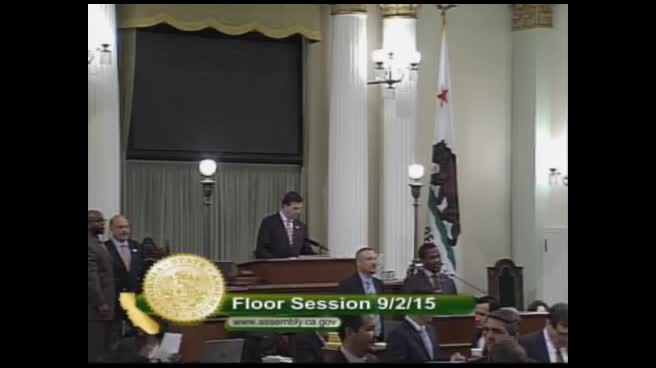 1MIN
Assembly Floor
 2MIN
Senate Floor
 1MIN
Senate Standing Committee on Appropriations
 17MIN
Senate Standing Committee on Governance and Finance
 1MIN
Assembly Floor
 12MIN
Assembly Standing Committee on Revenue and Taxation
Bill Author
Bill Co-Author(s):