SB 539: Public property: names: Confederate States of America.
- Session Year: 2015-2016
- House: Senate
- Latest Version Date: 2015-09-09
(1)Existing law prohibits the sale or display of the Battle Flag of the Confederacy, as specified, or its image, by the State of California, subject to exceptions serving educational or historical purposes.
This bill would, on and after January 1, 2017, prohibit the use of an elected leader or senior military officer of the Confederate States of America to name state or local property. The bill would require a name associated with the Confederate States of America used to name state or local property prior to January 1, 2017, to be changed and any sign associated with the name to be removed. The bill would prohibit its provisions from being construed to require renaming of a city, county, or other political jurisdiction named after an elected leader or senior military officer of the Confederate States of America, or from requiring the renaming of property, as specified, that incorporates the name of the city, county, or political jurisdiction in which it is situated. By increasing the duties of local officials, this bill would impose a state-mandated local program. The bill would also make a statement of legislative findings and a conforming change.
(2)The California Constitution requires the state to reimburse local agencies and school districts for certain costs mandated by the state. Statutory provisions establish procedures for making that reimbursement.
This bill would provide that, if the Commission on State Mandates determines that the bill contains costs mandated by the state, reimbursement for those costs shall be made pursuant to these statutory provisions.
(1)Existing law prohibits the sale or display of the Battle Flag of the Confederacy, as specified, or its image, by the State of California, subject to exceptions serving educational or historical purposes.
This bill would, on and after January 1, 2017, prohibit the use of a name associated with an elected leader or senior military officer of the Confederate States of America to name schools, government buildings, parks, roads, and other state or local property. The bill would define a name associated with the Confederate States of America to include the name of an elected leader or a senior military officer of the Confederacy. The bill would require a name associated with the Confederate States of America used to name state or local property prior to January 1, 2017, to be changed and any sign associated with the name to be removed. The bill would prohibit its provisions from being construed to require renaming of a city, county, or other political jurisdiction named after an elected leader or senior military officer of the Confederate States of America, or from requiring the renaming of property, as specified, that incorporates the name of the city, county, or political subdivision in which it is situated. By increasing the duties of local officials, this bill would impose a state-mandated local program. The bill would also make a statement of legislative findings and a conforming change.
(2)The California Constitution requires the state to reimburse local agencies and school districts for certain costs mandated by the state. Statutory provisions establish procedures for making that reimbursement.
This bill would provide that, if the Commission on State Mandates determines that the bill contains costs mandated by the state, reimbursement for those costs shall be made pursuant to these statutory provisions.
(1)Existing law prohibits the sale or display of the Battle Flag of the Confederacy, as specified, or its image, by the State of California, subject to exceptions serving educational or historical purposes.
This bill would, on and after January 1, 2017, prohibit the use of a name associated with the Confederate States of America to name schools, government buildings, parks, roads, and other state or local property. The bill would define a name associated with the Confederate States of America to include, but not be limited to, include the name of an elected leader or a senior military officer of the Confederacy. The bill would require a name associated with the Confederate States of America used to name state or local property prior to January 1, 2017, to be changed and any sign associated with the name to be removed. By increasing the duties of local officials, this bill would impose a state-mandated local program. The bill would also make a statement of legislative findings and a conforming change.
(2)The California Constitution requires the state to reimburse local agencies and school districts for certain costs mandated by the state. Statutory provisions establish procedures for making that reimbursement.
This bill would provide that, if the Commission on State Mandates determines that the bill contains costs mandated by the state, reimbursement for those costs shall be made pursuant to these statutory provisions.
(1)Existing law prohibits the sale or display of the Battle Flag of the Confederacy, as specified, or its image, by the State of California, subject to exceptions serving educational or historical purposes.
This bill would, on and after January 1, 2017, prohibit the use of a name associated with the Confederate States of America to name schools, government buildings, parks, roads, and other state or local property. The bill would define a name associated with the Confederate States of America to include, but not be limited to, the name of an elected leader or a senior military officer of the Confederacy. The bill would require a name associated with the Confederate States of America used to name state or local property prior to January 1, 2017, to be changed and any sign associated with the name to be removed. By increasing the duties of local officials, this bill would impose a state-mandated local program. The bill would also make a statement of legislative findings and a conforming change.
(2)The California Constitution requires the state to reimburse local agencies and school districts for certain costs mandated by the state. Statutory provisions establish procedures for making that reimbursement.
This bill would provide that, if the Commission on State Mandates determines that the bill contains costs mandated by the state, reimbursement for those costs shall be made pursuant to these statutory provisions.
Under existing law, the Public Utilities Commission has regulatory authority over public utilities, including electrical corporations. The Public Utilities Act authorizes the Public Utilities Commission, upon a complaint by a geothermal energy producer, to prohibit any electrical corporation from curtailing the generation, production, or transmission of electricity from a geothermal powerplant operated by the corporation, if the commission deems that the curtailment is not in the public interest.
This bill would repeal the above-described geothermal generation, production, or transmission curtailment authorization.
The existing Warren-Alquist State Energy Resources Conservation and Development Act establishes the State Energy Resources Conservation and Development Commission. Existing law requires the State Energy Resources Conservation and Development Commission to continuously carry out studies, research projects, data collection, and other activities required to assess the nature, extent, and distribution of energy resources to meet the needs of the state, including, but not limited to, fossil fuels and solar, nuclear, and geothermal energy resources.
This bill would require the State Energy Resources Conservation and Development Commission, in consultation with the Public Utilities Commission and the Independent System Operator, to study barriers to developing new baseload in-state renewable electrical generation facilities, as defined, including geothermal electrical generating facilities, and barriers to maintaining existing contracts with baseload in-state renewable electrical generation facilities, and potential solutions to those barriers, including how to level the playing field for those baseload in-state renewable electrical generation facilities. The bill would require the State Energy Resources Conservation and Development Commission to report the results of the study and recommendations to the Legislature by January 1, 2017.
Under existing law, the Public Utilities Commission has regulatory authority over public utilities, including electrical corporations. The Public Utilities Act authorizes the Public Utilities Commission, upon a complaint by a geothermal energy producer, to prohibit any electrical corporation from curtailing the generation, production, or transmission of electricity from a geothermal powerplant operated by the corporation, if the commission deems that the curtailment is not in the public interest.
This bill would require the Public Utilities Commission, upon a complaint by a geothermal energy producer, to prohibit any electrical corporation from curtailing the generation, production, or transmission of electricity from a geothermal powerplant operated by the corporation, if the commission determines that the curtailment is not in the public interest, as specified. repeal the above-described geothermal generation, production, or transmission curtailment authorization.
The existing Warren-Alquist State Energy Resources Conservation and Development Act establishes the State Energy Resources Conservation and Development Commission. Existing law requires the State Energy Resources Conservation and Development Commission to continuously carry out studies, research projects, data collection, and other activities required to assess the nature, extent, and distribution of energy resources to meet the needs of the state, including, but not limited to, fossil fuels and solar, nuclear, and geothermal energy resources.
This bill would require the State Energy Resources Conservation and Development Commission, in consultation with the Public Utilities Commission and the Independent System Operator, to study barriers to developing new baseload in-state renewable electrical generation facilities, as defined, including geothermal electrical generating facilities, and barriers to maintaining existing contracts with baseload in-state renewable electrical generation facilities, and potential solutions to those barriers, including how to level the playing field for those baseload in-state renewable electrical generation facilities. The bill would require the State Energy Resources Conservation and Development Commission to report the results of the study and recommendations to the Legislature by January 1, 2017.
Under existing law, the Public Utilities Commission has regulatory authority over public utilities, including electrical corporations. The Public Utilities Act authorizes the Public Utilities Commission, upon a complaint by a geothermal energy producer, to prohibit any electrical corporation from curtailing the generation, production, or transmission of electricity from a geothermal powerplant operated by the corporation, if the commission deems that the curtailment is not in the public interest.
This bill would require the Public Utilities Commission, upon a complaint by a geothermal energy producer, to prohibit any electrical corporation from curtailing the generation, production, or transmission of electricity from a geothermal powerplant operated by the corporation, if the commission determines that the curtailment is not in the public interest, as specified.
The existing Warren-Alquist State Energy Resources Conservation and Development Act establishes the State Energy Resources Conservation and Development Commission. Existing law requires the State Energy Resources Conservation and Development Commission to continuously carry out studies, research projects, data collection, and other activities required to assess the nature, extent, and distribution of energy resources to meet the needs of the state, including, but not limited to, fossil fuels and solar, nuclear, and geothermal energy resources.
This bill would require the State Energy Resources Conservation and Development Commission, in consultation with the Public Utilities Commission and the Independent System Operator, to study barriers to developing new baseload in-state renewable electrical generation facilities, as defined, including geothermal electrical generating facilities, and barriers to maintaining existing contracts with baseload in-state renewable electrical generation facilities, and potential solutions to those barriers, including how to level the playing field for those baseload in-state renewable electrical generation facilities. The bill would require the State Energy Resources Conservation and Development Commission to report the results of the study and recommendations to the Legislature by January 1, 2017.
The California Renewables Portfolio Standard Program requires the Public Utilities Commission to establish a renewables portfolio standard requiring all retail sellers, as defined, to procure a minimum quantity of electricity products from eligible renewable energy resources during specified compliance periods. The program additionally requires each local publicly owned electric utility, as defined, to procure a minimum quantity of electricity products from eligible renewable energy resources to achieve the targets established by the program.
This bill would state the intent of the Legislature to enact legislation to amend the program.
The Legislature finds and declares all of the following:
(a)The Confederate States of Americas secessionist movement was rooted in the defense of slavery.
(b)Currently, certain ideological groups use the symbols of this movement to demean and offend whole segments of our society while sowing racial divisions.
(c)The use of names of political leaders and senior military officers of the Confederate States of America to name California public schools, buildings, parks, roadways, and other state and local property is antithetical to Californias mission for racial equality.
(d)California is opposed to enshrining the names of those associated with the Confederate States of America, the secessionist movement, or their discriminatory ideals in our public schools, buildings, parks, roadways, and other state and local property.
(e)California celebrates individuals who represent aspirations for social good, such as Frederick Douglass, one of Americas great historical figures.
(f)Frederick Douglass was an African American social reformer, abolitionist, orator, writer, and statesman. After escaping from slavery, he became a leader of the abolitionist movement, gaining note for his dazzling oratory and incisive antislavery writing, including his famous speech about what the 4th of July meant to slaves.
(g)Frederick Douglass became one of the most famous intellectuals of his time, advising presidents and lecturing to thousands on a range of causes, including womens rights and Irish home rule. Among Douglass writings are several autobiographies eloquently describing his experiences in slavery and his life after the Civil War.
SEC. 2.The heading of Chapter 2.9 (commencing with Section 8195) of Division 1 of Title 2 of the Government Code is amended to read:2.9. The Frederick Douglass Liberty ActSEC. 3.Section 8197 is added to the Government Code, to read:8197.(a)On and after January 1, 2017, an elected leader or senior military officer of the Confederate States of America shall not be used to name state or local property. If such a name is used to name state or local public property prior to January 1, 2017, the name shall be changed and any sign associated with the name shall be removed.
(b)Nothing in this section shall be construed to require the renaming of a city, county, or other political jurisdiction that was named after an elected leader or senior military officer of the Confederate States of America prior to January 1, 2016, nor shall this section be construed to require the renaming of any school, building, park, roadway, or other property that incorporates the name of the city, county, or political jurisdiction in which it is situated.
SEC. 4.If the Commission on State Mandates determines that this act contains costs mandated by the state, reimbursement to local agencies and school districts for those costs shall be made pursuant to Part 7 (commencing with Section 17500) of Division 4 of Title 2 of the Government Code.
The Legislature finds and declares all of the following:
(a)The Confederate States of Americas secessionist movement was rooted in the defense of slavery.
(b)Currently, certain ideological groups use the symbols of this movement to demean and offend whole segments of our society while sowing racial divisions.
(c)The use of names of political leaders and senior military officers of the Confederate States of America to name California public schools, buildings, parks, roadways, and other state and local property is antithetical to Californias mission for racial equality.
(d)California is opposed to enshrining the names of those associated with the Confederate States of America, the secessionist movement, or their discriminatory ideals in our public schools, buildings, parks, roadways, and other state and local property.
(e)California celebrates individuals who represent aspirations for social good, such as Frederick Douglass, one of Americas great historical figures.
(f)Frederick Douglass was an African American social reformer, abolitionist, orator, writer, and statesman. After escaping from slavery, he became a leader of the abolitionist movement, gaining note for his dazzling oratory and incisive antislavery writing, including his famous speech about what the 4th of July meant to slaves.
(g)Frederick Douglass became one of the most famous intellectuals of his time, advising presidents and lecturing to thousands on a range of causes, including womens rights and Irish home rule. Among Douglass writings are several autobiographies eloquently describing his experiences in slavery and his life after the Civil War.
SEC. 2.The heading of Chapter 2.9 (commencing with Section 8195) of Division 1 of Title 2 of the Government Code is amended to read:2.9. The Frederick Douglass Liberty ActSEC. 3.Section 8197 is added to the Government Code, to read:8197.(a)On and after January 1, 2017, a name associated with an elected leader or senior military officer of the Confederate States of America shall not be used to name state or local property. If a name associated with the Confederate States of America such a name is used to name state or local public property prior to January 1, 2017, the name shall be changed and any sign associated with the name shall be removed.
(b)For the purpose of this section, name associated with the Confederate States of America includes the name of an elected leader or a senior military officer of the Confederacy.
(b)Nothing in this section shall be construed to require the renaming of a city, county, or other political jurisdiction that was named after an elected leader or senior military officer of the Confederate States of America prior to January 1, 2016, nor shall this section be construed to require the renaming of any school, building, park, roadway, or other property that incorporates the name of the city, county, or political jurisdiction in which it is situated.
SEC. 4.If the Commission on State Mandates determines that this act contains costs mandated by the state, reimbursement to local agencies and school districts for those costs shall be made pursuant to Part 7 (commencing with Section 17500) of Division 4 of Title 2 of the Government Code.
The Legislature finds and declares all of the following:
(a)The Confederate States of Americas secessionist movement was rooted in the defense of slavery.
(b)Currently, certain ideological groups use the symbols of this movement to demean and offend whole segments of our society while sowing racial divisions.
(c)The use of names of political leaders and senior military officers of the Confederate States of America to name California public schools, buildings, parks, roadways, and other state and local property is antithetical to Californias mission for racial equality.
(d)California is opposed to enshrining the names of those associated with the Confederate States of America, the secessionist movement, or their discriminatory ideals in our public schools, buildings, parks, roadways, and other state and local property.
(e)California celebrates individuals who represent aspirations for social good, such as Frederick Douglass, one of Americas great historical figures.
(f)Frederick Douglass was an African American social reformer, abolitionist, orator, writer, and statesman. After escaping from slavery, he became a leader of the abolitionist movement, gaining note for his dazzling oratory and incisive antislavery writing, including his famous speech about what the 4th of July meant to slaves.
(g)Frederick Douglass became one of the most famous intellectuals of his time, advising presidents and lecturing to thousands on a range of causes, including womens rights and Irish home rule. Among Douglass writings are several autobiographies eloquently describing his experiences in slavery and his life after the Civil War.
SEC. 2.The heading of Chapter 2.9 (commencing with Section 8195) of Division 1 of Title 2 of the Government Code is amended to read:2.9.Confederate Symbols The Frederick Douglass Liberty ActSEC. 3.Section 8197 is added to the Government Code, to read:8197.(a)On and after January 1, 2017, a name associated with the Confederate States of America shall not be used to name state or local property. If a name associated with the Confederate States of America is used to name state or local public property prior to January 1, 2017, the name shall be changed and any sign associated with the name shall be removed.
(b)For the purpose of this section, name associated with the Confederate States of America includes, but is not limited to, includes the name of an elected leader or a senior military officer of the Confederacy.
SEC. 4.If the Commission on State Mandates determines that this act contains costs mandated by the state, reimbursement to local agencies and school districts for those costs shall be made pursuant to Part 7 (commencing with Section 17500) of Division 4 of Title 2 of the Government Code.
The Legislature finds and declares all of the following:
(a)The Confederate States of Americas secessionist movement was rooted in the defense of slavery.
(b)Currently, certain ideological groups use the symbols of this movement to demean and offend whole segments of our society while sowing racial divisions.
(c)The use of names of political leaders and senior military officers of the Confederate States of America to name California public schools, buildings, parks, roadways, and other state and local property is antithetical to Californias mission for racial equality.
(d)California is opposed to enshrining the names of those associated with the Confederate States of America, the secessionist movement, or their discriminatory ideals in our public schools, buildings, parks, roadways, and other state and local property.
SEC. 2.The heading of Chapter 2.9 (commencing with Section 8195) of Division 1 of Title 2 of the Government Code is amended to read:2.9.Confederate Flag SymbolsSEC. 3.Section 8197 is added to the Government Code, to read:8197.(a)On and after January 1, 2017, a name associated with the Confederate States of America shall not be used to name state or local property. If a name associated with the Confederate States of America is used to name state or local public property prior to January 1, 2017, the name shall be changed and any sign associated with the name shall be removed.
(b)For the purpose of this section, name associated with the Confederate States of America includes, but is not limited to, the name of an elected leader or a senior military officer of the Confederacy.
SEC. 4.If the Commission on State Mandates determines that this act contains costs mandated by the state, reimbursement to local agencies and school districts for those costs shall be made pursuant to Part 7 (commencing with Section 17500) of Division 4 of Title 2 of the Government Code.
SECTION 1.Section 782 of the Public Utilities Code is repealed.(a)The commission, in consultation with the Public Utilities Commission and the Independent System Operator, shall conduct a study to examine both of the following:
(1)The barriers to developing new baseload in-state renewable electrical generation facilities, as defined in Section 25741, including geothermal electrical generating facilities, and maintaining existing contracts with baseload in-state renewable electrical generation facilities.
(2)Potential solutions to those barriers, including how to level the playing field for those baseload in-state renewable electrical generation facilities.
(b)The commission shall report the results of the study and recommendations to the Legislature by January 1, 2017.
(c)(1)A report to be submitted pursuant to subdivision (b) shall be submitted in compliance with Section 9795 of the Government Code.
(2)Pursuant to Section 10231.5 of the Government Code, this section is repealed on January 1, 2021.
SEC. 2.SECTION 1.Section 782 of the Public Utilities Code is repealed.(a)The commission, in consultation with the Public Utilities Commission and the Independent System Operator, shall conduct a study to examine both of the following:
(1)The barriers to developing new baseload in-state renewable electrical generation facilities, as defined in Section 25741, including geothermal electrical generating facilities, and maintaining existing contracts with baseload in-state renewable electrical generation facilities.
(2)Potential solutions to those barriers, including how to level the playing field for those baseload in-state renewable electrical generation facilities.
(b)The commission shall report the results of the study and recommendations to the Legislature by January 1, 2017.
(c)(1)A report to be submitted pursuant to subdivision (b) shall be submitted in compliance with Section 9795 of the Government Code.
(2)Pursuant to Section 10231.5 of the Government Code, this section is repealed on January 1, 2021.
SEC. 2.Section 782 of the Public Utilities Code is amended to read:782.In order to encourage the development of geothermal resources in the State of California, the commission shall, upon a complaint by a geothermal energy producer, prohibit any electrical corporation from curtailing the generation, production, or transmission of electricity from a geothermal powerplant operated by the corporation, if the commission determines that the curtailment is not in the public interest. For purposes of this section, public interest includes, but is not limited to, all of the following:
(a)Loss of economic output, including jobs and tax revenue.
(b)An increase in emissions of carbon dioxide and other greenhouse gases.
(c)The loss of production or potential production of lithium and other strategic metals.
SEC. 2.Section 782 of the Public Utilities Code is repealed.782.In order to encourage the development of geothermal resources in the State of California, the commission may, upon a complaint by a geothermal energy producer, prohibit any electrical corporation from curtailing the generation, production, or transmission of electricity from a geothermal powerplant operated by such corporation, if the commission deems that such curtailment is not in the public interest.
(a)The commission, in consultation with the Public Utilities Commission and the Independent System Operator, shall conduct a study to examine both of the following:
(1)The barriers to developing new baseload in-state renewable electrical generation facilities, as defined in Section 25741, including geothermal electrical generating facilities, and maintaining existing contracts with baseload in-state renewable electrical generation facilities.
(2)Potential solutions to those barriers, including how to level the playing field for those baseload in-state renewable electrical generation facilities.
(b)The commission shall report the results of the study and recommendations to the Legislature by January 1, 2017.
(c)(1)A report to be submitted pursuant to subdivision (b) shall be submitted in compliance with Section 9795 of the Government Code.
(2)Pursuant to Section 10231.5 of the Government Code, this section is repealed on January 1, 2021.
SEC. 2.Section 782 of the Public Utilities Code is amended to read:782.In order to encourage the development of geothermal resources in the State of California, the commission may, shall, upon a complaint by a geothermal energy producer, prohibit any electrical corporation from curtailing the generation, production, or transmission of electricity from a geothermal powerplant operated by such the corporation, if the commission deems that such determines that the curtailment is not in the public interest. For purposes of this section, public interest includes, but is not limited to, all of the following:
(a)Loss of economic output, including jobs and tax revenue.
(b)An increase in emissions of carbon dioxide and other greenhouse gases.
(c)The loss of production or potential production of lithium and other strategic metals.
SECTION 1.Section 399.35 is added to the Public Utilities Code, to read:399.35.It is the intent of the Legislature to enact legislation to amend the California Renewables Portfolio Standard Program.
It is the intent of the Legislature to enact legislation to amend the California Renewables Portfolio Standard Program.
|
Date
|
Status
|
|---|---|
| Sep 2, 2015 | Set for hearing September 3. |
| Jul 15, 2015 | From committee: Do pass as amended and re-refer to Com. on APPR. (Ayes 9. Noes 1.) (July 14). |
| Jul 16, 2015 | Read second time and amended. Re-referred to Com. on APPR. |
| Aug 19, 2015 | From committee: Do pass. (Ayes 14. Noes 3.) (August 19). |
| Aug 20, 2015 | Read second time. Ordered to third reading. |
| Aug 31, 2015 | In Senate. Concurrence in Assembly amendments pending. |
| Aug 31, 2015 | Read third time. Passed. Ordered to the Senate. |
| Aug 31, 2015 | Read third time. Passed. (Ayes 64. Noes 11. Page 2685.) Ordered to the Senate. |
| Sep 1, 2015 | From committee: Be re-referred to Com. on G.O. pursuant to Senate Rule 29.10(d). (Ayes 5. Noes 0. Page 2336.) Re-referred to Com. on G.O. |
| Sep 1, 2015 | Re-referred to Com. on G.O. pursuant to Senate Rule 29.10(d). |
| Sep 1, 2015 | Re-referred to Com. on RLS. pursuant to Senate Rule 29.10(d). |
| Jul 8, 2015 | From committee with author's amendments. Read second time and amended. Re-referred to Com. on JUD. |
| Sep 3, 2015 | From committee: That the Assembly amendments be concurred in. (Ayes 12. Noes 0. Page 2488.) |
| Sep 3, 2015 | From committee: That the Assembly amendments be concurred in. (Ayes 12. Noes 0.) |
| Sep 8, 2015 | Assembly amendments concurred in. (Ayes 31. Noes 2. Page 2554.) Ordered to engrossing and enrolling. |
| Sep 8, 2015 | Assembly amendments concurred in. (Ayes 31. Noes 2.) Ordered to engrossing and enrolling. |
| Sep 11, 2015 | Enrolled and presented to the Governor at 5 p.m. |
| Oct 11, 2015 | In Senate. Consideration of Governor's veto pending. |
| Oct 11, 2015 | Vetoed by the Governor. |
| Apr 25, 2016 | Last day to consider Governors veto pursuant to Joint Rule 58.5. |
| Apr 25, 2016 | Last day to consider Governor’s veto pursuant to Joint Rule 58.5. |
| May 4, 2015 | From committee: Be ordered to second reading pursuant to Senate Rule 28.8. |
| Feb 27, 2015 | From printer. May be acted upon on or after March 29. |
| Mar 12, 2015 | Referred to Com. on RLS. |
| Apr 6, 2015 | From committee with author's amendments. Read second time and amended. Re-referred to Com. on RLS. |
| Apr 9, 2015 | Re-referred to Com. on E., U., & C. |
| Apr 10, 2015 | Set for hearing April 21. |
| Apr 14, 2015 | From committee with author's amendments. Read second time and amended. Re-referred to Com. on E., U., & C. |
| Apr 23, 2015 | From committee: Do pass as amended and re-refer to Com. on APPR. (Ayes 9. Noes 0. Page 724.) (April 21). |
| Apr 27, 2015 | Read second time and amended. Re-referred to Com. on APPR. |
| Apr 29, 2015 | Set for hearing May 4. |
| Feb 26, 2015 | Introduced. Read first time. To Com. on RLS. for assignment. To print. |
| May 5, 2015 | Read second time. Ordered to third reading. |
| May 7, 2015 | In Assembly. Read first time. Held at Desk. |
| May 7, 2015 | Read third time. Passed. (Ayes 37. Noes 0. Page 929.) Ordered to the Assembly. |
| May 7, 2015 | Read third time. Passed. (Ayes 37. Noes 0.) Ordered to the Assembly. |
| May 22, 2015 | Referred to Com. on U. & C. |
| Jun 15, 2015 | June 22 set for first hearing canceled at the request of author. |
| Jun 29, 2015 | From committee with author's amendments. Read second time and amended. Re-referred to Com. on U. & C. |
| Jul 2, 2015 | Re-referred to Com. on RLS. pursuant to Assembly Rule 96. |
| Jul 6, 2015 | From committee: Be re-referred to Com. on JUD. (Ayes 11. Noes 0.) (July 6). Re-referred to Com. on JUD. |
|
Date
|
Description
|
Location
|
Votes
|
|
|---|---|---|---|---|
| Sep 8, 2015 | Unfinished Business SB539 Glazer Concurrence | Senate Floor |
Passed |
|
| Sep 3, 2015 | That the Assembly amendments be concurred in | Senate Standing Committee on Governmental Organization |
Passed |
|
| Aug 31, 2015 | SB 539 Glazer Senate Third Reading By WEBER | Assembly Floor |
Passed |
|
| Aug 19, 2015 | Do pass. | Assembly Standing Committee on Appropriations |
Passed |
|
| Jul 14, 2015 | Do pass as amended and be re-referred to the Committee on [Appropriations] | Assembly Standing Committee on Judiciary |
Passed |
|
| Jul 6, 2015 | Be re-referred to the Committee on [Judiciary] | Assembly Standing Committee on Rules |
Passed |
|
| May 7, 2015 | Senate 3rd Reading SB539 Hueso | Senate Floor |
Passed |
|
| Apr 21, 2015 | Do pass as amended, but first amend, and re-refer to the Committee on [Appropriations] | Senate Standing Committee on Energy, Utilities and Communications |
Passed |
This list shows positions taken on this bill by organizations on the date displayed, which is linked to the original source.
Positions by individuals are not included.
|
Organization
|
Position
|
Date
|
|---|---|---|
| California Teachers Asociation | * Support | Jul 2, 2018 |
| Pittsburgh | * Indeterminate | Jul 14, 2015 |
| The Los Angeles Urban Policy Roundtable | ** Support | Sep 3, 2015 |
SB 539
Page 5
|
Office of Senate Floor Analyses (916) 651-1520 Fax: (916) 327-4478 |
SB 539 |
VETO
Bill No: SB 539
Amended: 7/16/15
SENATE GOVERNMENTAL ORG. COMMITTEE: 12-0, 9/3/15 (pursuant to Senate Rule 29.10)
AYES: Hall, Berryhill, Block, Gaines, Glazer, Hernandez, Hill, Hueso, Lara, McGuire, Runner, Vidak
NO VOTE RECORDED: Galgiani
SENATE FLOOR: 31-2, 9/8/15
AYES: Allen, Beall, Berryhill, Block, Cannella, De León, Gaines, Galgiani, Glazer, Hall, Hancock, Hernandez, Hertzberg, Hill, Hueso, Huff, Jackson, Lara, Leno, Leyva, Liu, McGuire, Mitchell, Monning, Pan, Pavley, Roth, Stone, Vidak, Wieckowski, Wolk
NOES: Anderson, Nielsen
NO VOTE RECORDED: Bates, Fuller, Mendoza, Moorlach, Morrell, Nguyen, Runner
ASSEMBLY FLOOR: 64-11, 8/31/15 - See last page for vote
SUBJECT: Public property: names: Confederate States of America
DIGEST: This bill prohibits, as of January 1, 2017, naming any school, park, building or other public property after certain persons associated with the Confederate States of America, and requires removal of existing Confederate names by January 1, 2017.
Existing law prohibits the sale or display of the Battle Flag of the Confederacy, as specified, or its image, by the State of California, subject to exceptions serving educational or historical purposes.
This bill:
Provides that on and after January 1, 2017, the name of an elected leader or senior military officer of the Confederate States of America shall not be used to name state or local public property. If such a name is used to name state or local public property prior to January 1, 2017, the name shall be changed and any sign associated with the name shall be removed.
Prohibits the provisions of this bill from being construed to require renaming a city, county, or other political jurisdiction that was named after an elected leader or senior military officer of the Confederate States of America prior to January 1, 2016, nor shall this bill’s provisions be construed to require the renaming of any school, building, park, roadway, or other property that incorporates the name of the city, county, or political jurisdiction in which it is situated.
Finds and declares the following:
The Confederate States of America’s secessionist movement was rooted in the defense of slavery and that to this day Confederate symbols sow racial divisions in our society.
Using names of Confederate leaders to name California schools, parks, buildings, roadways, and other public property is antithetical to California’s mission for racial equality and that California is opposed to enshrining names associated with the Confederate States of America.
Other individuals, such as the escaped slave, abolitionist, orator, writer, and statesmen, Frederick Douglas, better represent our aspirations for social good.
Background
This bill prohibits naming any school, building, park, roadway, or other state or local property, after an elected leader or senior military officer of the Confederacy. This bill also requires that any existing Confederate names be changed by January 1, 2017, and any sign associated with the names be removed.
The author’s office notes that there are at least two known California public schools named after the Confederate military leader, General Robert E. Lee, one in Long Beach and the other in San Diego, and another in Stockton named after the 10th President of the United States, John Tyler, who later in life served in the House of Representatives of Confederate States of America. There are also plaques in Southern California and along stretches of Highway 99 that allegedly contain tributes to Jefferson Davis, the President of the Confederate States of America; however, it is not clear whether these plaques are on public land, or whether government or private entities placed them there.
This bill expressly states that any towns or cities named after Confederate political and military leaders (such as the city of Fort Bragg, California, named after Confederate General Braxton Bragg) will not be subject to this bill. Similarly, no school, park, building, roadway, or other public property that shares a name with the city in which it is situated will be subject to this bill.
According to the author, the "use of Confederate-associated names in California public schools, buildings, parks, roadways, and other public property is antithetical to California's mission for racial equality." The author contends that "the Confederate States of America and its secessionist movement were rooted in slavery," and therefore "California has no interest in enshrining the names of those associated with the Confederacy, its secessionist movement, or their ideals in our public schools, buildings, parks, or other state property."
Related/Prior Legislation
AB 2444 (Hall, Chapter 538, Statutes of 2014) prohibited the State of California from selling or displaying the Battle Flag of the Confederacy, or a similar image, or tangible personal property, inscribed with such an image unless the image appears in a book, digital medium, or state museum that serves an educational or historical purpose.
FISCAL EFFECT: Appropriation: No Fiscal Com.: Yes Local: Yes
According to the Assembly Appropriations Committee, minor reimbursable costs to replace signage on impacted properties.
SUPPORT: (Verified 10/13/15)
The Los Angeles Urban Policy Roundtable
OPPOSITION: (Verified 10/13/15)
None
received
GOVERNOR'S VETO MESSAGE:
I am returning SB 539 without my signature.
This bill would prohibit the naming of any school, park, building or other public property after certain persons associated with the Confederate States of America.
Recently we saw a national movement to remove the confederate flag from State Capitols in the South - a long overdue action. This bill, however, strikes me as different and an issue quintessentially for local decision makers.
As far as we know, only two schools, and a street in Stockton would be affected by this law. Existing local processes provide for the naming or re-naming of public facilities, and in several cases local residents have voiced their opposition and have succeeded in re-naming schools and other public property.
Local governments are laboratories of democracy which, under most circumstances, are quite capable of deciding for themselves which of their buildings and parks should be named, and after whom.
ASSEMBLY FLOOR: 64-11, 8/31/15
AYES: Achadjian, Alejo, Travis Allen, Baker, Bloom, Bonilla, Bonta, Brown, Burke, Calderon, Campos, Chang, Chau, Chiu, Chu, Cooley, Cooper, Dababneh, Dahle, Daly, Dodd, Eggman, Cristina Garcia, Eduardo Garcia, Gatto, Gipson, Gomez, Gonzalez, Gordon, Gray, Hadley, Roger Hernández, Holden, Irwin, Jones-Sawyer, Kim, Lackey, Levine, Linder, Lopez, Low, Maienschein, McCarty, Medina, Mullin, Nazarian, Obernolte, O'Donnell, Perea, Quirk, Rendon, Ridley-Thomas, Rodriguez, Salas, Santiago, Steinorth, Mark Stone, Thurmond, Ting, Wagner, Weber, Williams, Wood, Atkins
NOES: Bigelow, Brough, Chávez, Beth Gaines, Gallagher, Harper, Jones, Mathis, Patterson, Waldron, Wilk
NO VOTE RECORDED: Frazier, Grove, Mayes, Melendez, Olsen
Prepared by: Arthur Terzakis / G.O. / (916) 651-1530
11/4/15 13:34:12
**** END ****
SB 539
Page 4
|
Office of Senate Floor Analyses (916) 651-1520 Fax: (916) 327-4478 |
UNFINISHED BUSINESS
Bill No: SB 539
Amended: 7/16/15
SENATE GOVERNMENTAL ORG. COMMITTEE: 12-0, 9/3/15 (pursuant to Senate Rule 29.10)
AYES: Hall, Berryhill, Block, Gaines, Glazer, Hernandez, Hill, Hueso, Lara, McGuire, Runner, Vidak
NO VOTE RECORDED: Galgiani
ASSEMBLY FLOOR: 64-11, 8/31/15 - See last page for vote
SUBJECT: Public property: names: Confederate States of America
DIGEST: This bill prohibits, as of January 1, 2017, naming any school, park, building or other public property after certain persons associated with the Confederate States of America, and requires removal of existing Confederate names by January 1, 2017.
Assembly Amendments delete the contents of the bill relating to renewable energy resources and add provisions pertaining to prohibiting the naming of public property after a Confederate political or military leader.
Existing law prohibits the sale or display of the Battle Flag of the Confederacy, as specified, or its image, by the State of California, subject to exceptions serving educational or historical purposes.
This bill:
Provides that on and after January 1, 2017, the name of an elected leader or senior military officer of the Confederate States of America shall not be used to name state or local public property. If such a name is used to name state or local public property prior to January 1, 2017, the name shall be changed and any sign associated with the name shall be removed.
Prohibits the provisions of this bill from being construed to require renaming a city, county, or other political jurisdiction that was named after an elected leader or senior military officer of the Confederate States of America prior to January 1, 2016, nor shall this bill’s provisions be construed to require the renaming of any school, building, park, roadway, or other property that incorporates the name of the city, county, or political jurisdiction in which it is situated.
Finds and declares the following:
The Confederate States of America’s secessionist movement was rooted in the defense of slavery and that to this day Confederate symbols sow racial divisions in our society.
Using names of Confederate leaders to name California schools, parks, buildings, roadways, and other public property is antithetical to California’s mission for racial equality and that California is opposed to enshrining names associated with the Confederate States of America.
Other individuals, such as the escaped slave, abolitionist, orator, writer, and statesmen, Frederick Douglas, better represent our aspirations for social good.
Background
This bill prohibits naming any school, building, park, roadway, or other state or local property, after an elected leader or senior military officer of the Confederacy. This bill also requires that any existing Confederate names be changed by January 1, 2017 and any sign associated with the names be removed.
The author’s office notes that there are at least two known California public schools named after the Confederate military leader, General Robert E. Lee, one in Long Beach and the other in San Diego, and another in Stockton named after the 10th President of the United States, John Tyler, who later in life served in the House of Representatives of Confederate States of America. There are also plaques in Southern California and along stretches of Highway 99 that allegedly contain tributes to Jefferson Davis, the President of the Confederate States of America; however, it is not clear whether these plaques are on public land, or whether government or private entities placed them there.
This bill expressly states that any towns or cities named after Confederate political and military leaders (such as the city of Fort Bragg, California, named after Confederate General Braxton Bragg) will not be subject to this bill. Similarly, no school, park, building, roadway, or other public property that shares a name with the city in which it is situated will be subject to this bill.
According to the author, the "use of Confederate-associated names in California public schools, buildings, parks, roadways, and other public property is antithetical to California's mission for racial equality." The author contends that "the Confederate States of America and its secessionist movement were rooted in slavery," and therefore "California has no interest in enshrining the names of those associated with the Confederacy, its secessionist movement, or their ideals in our public schools, buildings, parks, or other state property."
Related/Prior Legislation
AB 2444 (Hall, Chapter 538, Statutes of 2014) prohibited the State of California from selling or displaying the Battle Flag of the Confederacy, or a similar image, or tangible personal property, inscribed with such an image unless the image appears in a book, digital medium, or state museum that serves an educational or historical purpose.
FISCAL EFFECT: Appropriation: No Fiscal Com.: Yes Local: Yes
According to the Assembly Appropriations Committee, minor reimbursable costs to replace signage on impacted properties.
SUPPORT: (Verified 8/31/15)
The Los Angeles Urban Policy Roundtable
OPPOSITION: (Verified 8/31/15)
None received
ASSEMBLY FLOOR: 64-11, 8/31/15
AYES: Achadjian, Alejo, Travis Allen, Baker, Bloom, Bonilla, Bonta, Brown, Burke, Calderon, Campos, Chang, Chau, Chiu, Chu, Cooley, Cooper, Dababneh, Dahle, Daly, Dodd, Eggman, Cristina Garcia, Eduardo Garcia, Gatto, Gipson, Gomez, Gonzalez, Gordon, Gray, Hadley, Roger Hernández, Holden, Irwin, Jones-Sawyer, Kim, Lackey, Levine, Linder, Lopez, Low, Maienschein, McCarty, Medina, Mullin, Nazarian, Obernolte, O'Donnell, Perea, Quirk, Rendon, Ridley-Thomas, Rodriguez, Salas, Santiago, Steinorth, Mark Stone, Thurmond, Ting, Wagner, Weber, Williams, Wood, Atkins
NOES: Bigelow, Brough, Chávez, Beth Gaines, Gallagher, Harper, Jones, Mathis, Patterson, Waldron, Wilk
NO VOTE RECORDED: Frazier, Grove, Mayes, Melendez, Olsen
Prepared by: Arthur Terzakis / G.O. / (916) 651-1530
9/3/15 17:21:08
**** END ****
SB 539
Page 4
|
Office of Senate Floor Analyses (916) 651-1520 Fax: (916) 327-4478 |
UNFINISHED BUSINESS
Bill No: SB 539
Amended: 7/16/15
ASSEMBLY FLOOR: 64-11, 8/31/15 - See last page for vote
SUBJECT: Public property: names: Confederate States of America
DIGEST: This bill prohibits, as of January 1, 2017, naming any school, park, building or other public property after certain persons associated with the Confederate States of America, and requires removal of existing Confederate names by January 1, 2017.
Assembly Amendments delete the contents of the bill relating to renewable energy resources and add provisions pertaining to prohibiting the naming of public property after a Confederate political or military leader.
Existing law prohibits the sale or display of the Battle Flag of the Confederacy, as specified, or its image, by the State of California, subject to exceptions serving educational or historical purposes.
This bill:
Provides that on and after January 1, 2017, the name of an elected leader or senior military officer of the Confederate States of America shall not be used to name state or local public property. If such a name is used to name state or local public property prior to January 1, 2017, the name shall be changed and any sign associated with the name shall be removed.
Prohibits the provisions of this bill from being construed to require renaming a city, county, or other political jurisdiction that was named after an elected leader or senior military officer of the Confederate States of America prior to January 1, 2016, nor shall this bill’s provisions be construed to require the renaming of any school, building, park, roadway, or other property that incorporates the name of the city, county, or political jurisdiction in which it is situated.
Finds and declares the following:
The Confederate States of America’s secessionist movement was rooted in the defense of slavery and that to this day Confederate symbols sow racial divisions in our society.
Using names of Confederate leaders to name California schools, parks, buildings, roadways, and other public property is antithetical to California’s mission for racial equality and that California is opposed to enshrining names associated with the Confederate States of America.
Other individuals, such as the escaped slave, abolitionist, orator, writer, and statesmen, Frederick Douglas, better represent our aspirations for social good.
Background
This bill prohibits naming any school, building, park, roadway, or other state or local property, after an elected leader or senior military officer of the Confederacy. This bill also requires that any existing Confederate names be changed by January 1, 2017 and any sign associated with the names be removed.
The author’s office notes that there are at least two known California public schools named after the Confederate military leader, General Robert E. Lee, one in Long Beach and the other in San Diego, and another in Stockton named after the 10th President of the United States, John Tyler, who later in life served in the House of Representatives of Confederate States of America. There are also plaques in Southern California and along stretches of Highway 99 that allegedly contain tributes to Jefferson Davis, the President of the Confederate States of America; however, it is not clear whether these plaques are on public land, or whether government or private entities placed them there.
This bill expressly states that any towns or cities named after Confederate political and military leaders (such as the city of Fort Bragg, California, named after Confederate General Braxton Bragg) will not be subject to this bill. Similarly, no school, park, building, roadway, or other public property that shares a name with the city in which it is situated will be subject to this bill.
According to the author, the "use of Confederate-associated names in California public schools, buildings, parks, roadways, and other public property is antithetical to California's mission for racial equality." The author contends that "the Confederate States of America and its secessionist movement were rooted in slavery," and therefore "California has no interest in enshrining the names of those associated with the Confederacy, its secessionist movement, or their ideals in our public schools, buildings, parks, or other state property."
Related/Prior Legislation
AB 2444 (Hall, Chapter 538, Statutes of 2014) prohibited the State of California from selling or displaying the Battle Flag of the Confederacy, or a similar image, or tangible personal property, inscribed with such an image unless the image appears in a book, digital medium, or state museum that serves an educational or historical purpose.
FISCAL EFFECT: Appropriation: No Fiscal Com.: Yes Local: Yes
According to the Assembly Appropriations Committee, minor reimbursable costs to replace signage on impacted properties.
SUPPORT: (Verified 8/31/15)
The Los Angeles Urban Policy Roundtable
OPPOSITION: (Verified 8/31/15)
None received
ASSEMBLY FLOOR: 64-11, 8/31/15
AYES: Achadjian, Alejo, Travis Allen, Baker, Bloom, Bonilla, Bonta, Brown, Burke, Calderon, Campos, Chang, Chau, Chiu, Chu, Cooley, Cooper, Dababneh, Dahle, Daly, Dodd, Eggman, Cristina Garcia, Eduardo Garcia, Gatto, Gipson, Gomez, Gonzalez, Gordon, Gray, Hadley, Roger Hernández, Holden, Irwin, Jones-Sawyer, Kim, Lackey, Levine, Linder, Lopez, Low, Maienschein, McCarty, Medina, Mullin, Nazarian, Obernolte, O'Donnell, Perea, Quirk, Rendon, Ridley-Thomas, Rodriguez, Salas, Santiago, Steinorth, Mark Stone, Thurmond, Ting, Wagner, Weber, Williams, Wood, Atkins
NOES: Bigelow, Brough, Chávez, Beth Gaines, Gallagher, Harper, Jones, Mathis, Patterson, Waldron, Wilk
NO VOTE RECORDED: Frazier, Grove, Mayes, Melendez, Olsen
Prepared by: Arthur Terzakis / G.O. / (916) 651-1530
8/31/15 19:37:25
**** END ****
SB 539
Page 3
SENATE THIRD READING
SB 539
(Glazer)
As Amended July 16, 2015
Majority vote
SENATE VOTE: 37-0
Committee |
Votes |
Ayes |
Noes |
Judiciary |
9-1 |
Mark Stone, Weber, Wagner, Alejo, Chau, Chiu, Cristina Garcia, Maienschein, Thurmond |
Gallagher |
Appropriations |
14-3 |
Gomez, Bloom, Bonta, Calderon, Chang, Daly, Eggman, Eduardo Garcia, Holden, Quirk, Rendon, Wagner, Weber, Wood |
Bigelow, Gallagher, Jones |
SUMMARY: Prohibits, as of January 1, 2017, naming any school, park, building or other public property after certain persons associated with the Confederate States of America, and requires removal of existing Confederate names by January 1, 2017. Specifically, this bill:
Finds and declares the following:
The Confederate States of America's secessionist movement was rooted in the defense of slavery and that to this day Confederate symbols sow racial divisions in our society.
Using names of Confederate leaders to name California schools, parks, buildings, roadways, and other public property is antithetical to California's mission for racial equality and that California is opposed to enshrining names associated with the Confederate States of America.
Other individuals, such as the escaped slave, abolitionist, orator, writer, and statesmen, Frederick Douglas, better represent our aspirations for social good.
Provides that on and after January 1, 2017, the name of an elected leader or senior military officer of the Confederate States of America shall not be used to name state or local public property. If such a name is used to name state or local public property prior to January 1, 2017, the name shall be changed and any sign associated with the name shall be removed.
Provides that nothing in this section shall be construed to require renaming a city, county, or other political jurisdiction that was named after an elected leader or senior military officer of the Confederate States of America prior to January 1, 2016, nor shall this section be construed to require the renaming of any school, building, park, roadway, or other property that incorporates the name of the city, county, or political jurisdiction in which it is situated.
EXISTING LAW prohibits the State of California from selling or displaying the Battle Flag of the Confederacy, also referred to as the Stars and Bars, or any similar image, or tangible personal property, inscribed with such an image unless the image appears in a book, digital medium or state museum that serves an educational or historical purpose.
FISCAL EFFECT: According to the Assembly Appropriations Committee, minor reimbursable costs to replace signage on impacted properties. (According to the Assembly Judiciary Committee's analysis of this bill, there are two elementary schools in the state named after Robert E. Lee, one in Long Beach and the other in San Diego, and another in Stockton named after the 10th President of the United States, John Tyler, who later in life served in the House of Representatives of the Confederate States of America.)
COMMENTS: This bill would prohibit naming any school, building, park, roadway, or other state or local property, after an elected leader or senior military officer of the Confederacy. It would require that any existing Confederate names be changed by January 1, 2017. While names honoring Confederate leaders may be as common as mint juleps in the southern states of the United States, they are (not surprisingly) relatively rare in California. To the best of the Judiciary Committee's knowledge, there are two elementary schools named after Robert E. Lee, one in Long Beach and the other in San Diego, and another in Stockton named after the 10th President of the United States, John Tyler, who later in life served in the House of Representatives of Confederate States of America. There are also plaques in Southern California and along stretches of Highway 99 that allegedly contain tributes to Jefferson Davis, the President of the Confederate States of America; however, it is not clear whether these plaques are on public land, or whether government or private entities placed them there. This bill expressly states that any towns or cities named after Confederate political and military leaders (such as the city of Fort Bragg, California, named after Confederate General Braxton Bragg) would not be covered by this bill. Similarly, no school, park, building, roadway, or other public property that shares a name with the city in which it is situated would be subject to this bill.
According to the author, the "use of Confederate-associated names in California public schools, buildings, parks, roadways, and other public property is antithetical to California's mission for racial equality." The author contends that "the Confederate States of America and its secessionist movement were rooted in slavery," and therefore "California has no interest in enshrining the names of those associated with the Confederacy, its secessionist movement, or their ideals in our public schools, buildings, parks, or other state property."
Practical Implications and Local Efforts. It is difficult to assess the impact of this bill because the Assembly Judiciary Committee has only limited information about how many parks, buildings, schools, or other public properties are named after Confederate leaders. There are two Robert E. Lee Elementary schools: one in San Diego and the other in Long Beach. According to news reports, there have already been local efforts to change those names. For example, Assembly Member Lorena Gonzalez wrote a letter to the school board in San Diego requesting that the school be named after someone more appropriate for California's history. Citizens in Long Beach have reportedly already begun a petition drive to change the name of that school. As for other schools, it may not be easy to determine the source of the names. For example, Tyler Skills Elementary School in Stockton was formerly called John Tyler Elementary School. Tyler was the 10th president of the United States, but later in his career was elected to serve a term in the House of Representatives of the Confederate States of America. It is not entirely clear whether Tyler Skills Elementary would need to change its name again under this bill, or if it's earlier name change had anything to do with the fact that John Tyler deserted the Union and joined the Confederacy.
Why Stop with Confederates? The premise of this bill appears to be that because Confederate elected officials and senior military officers led a cause dedicated to the preservation of slavery and racial hierarchy, their names should not sully our public places. This may not be an unreasonable demand, but it begs the question of why the bill should single out Confederates. Our earliest United States Presidents, Washington and Jefferson, among others, were slave owners. Removing their names from public places would require massive changes, starting with re-naming our nation's capital. Numerous places in California are named for Junipero Serra, the priest who led the Franciscan missions. Some believe that Serra should be canonized; others believe that Serra was a genocidal maniac. Many others no doubt hold more complicated views that fall somewhere in between. Many buildings and places in California are named after former Governor Earl Warren, who as state Attorney General led the charge to intern persons of Japanese descent, including American citizens, during World War II. In short, if we start looking too closely at the backgrounds of persons whose names are on our parks, streets, buildings, and schools, we may find that not all of them are worthy of commemoration.
Analysis Prepared by: Thomas Clark / JUD. / (916) 319-2334 FN: 0001406
Date of Hearing: August 19, 2015
ASSEMBLY COMMITTEE ON APPROPRIATIONS
Jimmy Gomez, Chair
SB 539
(Glazer) – As Amended July 16, 2015
Policy Committee: |
Rules |
Vote: |
11 - 0 |
|
Judiciary |
|
9 - 1 |
|
|
|
|
Urgency: No State Mandated Local Program: Yes Reimbursable: Yes
SUMMARY:
This bill:
Prohibits the name of an elected leader or senior military officer of the Confederate States of America to be used to name state or local public property, including existing such-named properties, on and after January 1, 2017.
Provides that the above prohibition shall not be construed to require renaming a city, county, or other political jurisdiction that was named after an elected leader or senior military officer of the Confederate States of America prior to January 1, 2016, nor shall it be construed to require the renaming of any school, building, park, roadway, or other property that incorporates the name of the city, county, or political jurisdiction in which it is situated.
FISCAL EFFECT:
Minor reimbursable costs to replace signage on impacted properties. (According to the Assembly Committee on Judiciary's analysis of this bill, there are two elementary schools in the state named after Robert E. Lee, one in Long Beach and the other in San Diego, and another in Stockton named after the 10th President of the United States, John Tyler, who later in life served in the House of Representatives of the Confederate States of America.)
COMMENTS:
Purpose. According to the author, the "use of Confederate-associated names in California public schools, buildings, parks, roadways, and other public property is antithetical to California’s mission for racial equality." The author contends that "the Confederate States of America and its secessionist movement were rooted in slavery," and therefore "California has no interest in enshrining the names of those associated with the Confederacy, its secessionist movement, or their ideals in our public schools, buildings, parks, or other state property."
Analysis Prepared by: Chuck Nicol / APPR. / (916) 319-2081
SB 539
Page 7
Date of Hearing: July 14, 2015
ASSEMBLY COMMITTEE ON JUDICIARY
Mark Stone, Chair
SB 539
(Glazer) – As Amended July 8, 2015
As Proposed to be Amended
SENATE VOTE: Not Relevant
SUBJECT: Public property: names: Confederate States of America
KEY ISSUE: Should the state prohibit the naming of any school, building, park, or other state or local public property after a confederate political or military leader, and should existing Confederate names be changed and associated signs removed before January 1, 2017?
SYNOPSIS
The tragic shootings at an African Methodist Episcopal church in Charleston, South Carolina, have prompted national debate about the propriety of Confederate symbols in public places. As is well known, the shooter in Charleston was a white supremacist who, literally, wrapped himself in the Confederate Battle Flag in one of his social media postings. Largely in response to this event, the South Carolina legislature debated and passed, and the Governor of South Carolina just recently signed, legislation to remove the Confederate Battle Flag from the grounds of the South Carolina capitol. In addition to calling for the removal of Confederate flags, several editorials from around the country have called for removing the names of confederate leaders from public buildings, schools, military bases, and other public property. As part of this rapidly growing trend, this bill would prohibit naming any school, building, park, roadway, or other state or local property after an elected leader or senior military officer of the Confederacy. It would require that any existing Confederate names be changed by January 1, 2017. While names honoring Confederate leaders may be as common as mint juleps in the southern states of the United States, they are, not surprisingly, relatively rare in California. To the best of the Committee's knowledge, there are two elementary schools in the state named after Robert E. Lee, one in Long Beach and the other in San Diego, and another in Stockton named after the 10th President of the United States, John Tyler, who later in life served in the House of Representatives of the Confederate States of America. As proposed to be amended, the bill will expressly state that any cities or counties named after Confederate political and military leaders (such as the city of Fort Bragg, California, named after Confederate General Braxton Bragg) would not be covered by this bill. The amendment taken today will also clarify that any schools, parks, buildings, or roads sharing a name with the city in which they are situated would also not be covered. This Committee will also hear AJR 26, which calls upon Congress to prohibit the display of any Confederate flag on federal property and to encourage the states to do likewise. Because this bill dealt with a different issue in the Senate, the prior votes are not relevant. There is no known opposition to this bill.
SUMMARY: Prohibits, as of January 1, 2017, naming any school, park, building or other public property after certain persons associated with the Confederate States of America, and requires removal of existing Confederate names by January 1, 2017. Specifically, this bill:
Finds and declares the following:
The Confederate States of America's secessionist movement was rooted in the defense of slavery and that to this day Confederate symbols sow racial divisions in our society.
Using names of Confederate leaders to name California schools, parks, buildings, roadways, and other public property is antithetical to California's mission for racial equality and that California is opposed to enshrining names associated with the Confederate States of America.
Other individuals, such as the escaped slave, abolitionist, orator, writer, and statesmen, Frederick Douglas, better represent our aspirations for social good.
Provides that on and after January 1, 2017, the name of an elected leader or senior military officer of the Confederate States of America shall not be used to name state or local public property. If such a name is used to name state or local public property prior to January 1, 2017, the name shall be changed and any sign associated with the name shall be removed.
Provides that nothing in this section shall be construed to require renaming a city, county, or other political jurisdiction that was named after an elected leader or senior military officer of the Confederate States of America prior to January 1, 2016, nor shall this section be construed to require the renaming of any school, building, park, roadway, or other property that incorporates the name of the city, county, or political jurisdiction in which it is situated.
EXISTING LAW:
Holds that when the government speaks, it is not barred by the Free Speech Clause from determining the content of what it says. A government is generally entitled to promote a program, espouse a policy, or take a position. (Pleasant Grove City v. Summum (2009) 555 U. S. 460; Walker v. Texas Division, Sons of Confederate Veterans (June 18, 2015) 135 S. Ct. 2339.)
Prohibits the State of California from selling or displaying the Battle Flag of the Confederacy, also referred to as the Stars and Bars, or any similar image, or tangible personal property, inscribed with such an image unless the image appears in a book, digital medium or state museum that serves an educational or historical purpose. (Government Code Section 8195.)
FISCAL EFFECT: As currently in print this bill is keyed fiscal.
COMMENTS: This bill – along with AJR 26, which the Committee will also hear today – concerns the propriety of racially divisive Confederate names and symbols in public places. Both this bill and AJR 26 were prompted by the recent shootings at an African-American Church in Charleston, South Carolina, where the shooter was an avowed white supremacist who draped himself in the Confederate Battle Flag on social media. This violent incident has prompted discussions about the appropriate placement of Confederate names, flags, and symbols in public places. AJR 26 calls upon Congress to ban the display of any Confederate flags on federal property, while it encourages the several states to do the same.
This bill, on the other hand, would prohibit naming any school, building, park, roadway, or other state or local property, after an elected leader or senior military officer of the Confederacy. It would require that any existing Confederate names be changed by January 1, 2017. While names honoring Confederate leaders may be as common as mint juleps in the southern states of the United States, they are (not surprisingly) relatively rare in California. To the best of the Committee's knowledge, there are two elementary schools named after Robert E. Lee, one in Long Beach and the other in San Diego, and another in Stockton named after the 10th President of the United States, John Tyler, who later in life served in the House of Representatives of Confederate States of America. There are also plaques in Southern California and along stretches of Highway 99 that allegedly contain tributes to Jefferson Davis, the President of the Confederate States of America; however, it is not clear to the Committee whether these plaques are on public land, or whether government or private entities placed them there. As proposed to be amended, the bill would expressly state that any towns or cities named after Confederate political and military leaders (such as the city of Fort Bragg, California, named after Confederate General Braxton Bragg) would not be covered by this bill. Similarly, no school, park, building, roadway, or other public property that shares a name with the city in which it is situated would be subject to this bill.
The Confederate "Cause." According to the author, despite frequent claims that the Confederate side in the Civil War fought to protect states' rights, the declarations published at the time make it clear that the primary issue in the Civil War was slavery and the South's determination to preserve it. There is, indeed, a great deal of historical support for this position. As noted in the analysis of AJR 26, the argument that the South fought the Civil War to protect states' rights generally came later. At the time, the declarations of secession focused overwhelmingly on the issue of slavery. When states' rights were invoked, it was most often to defend a state's right to maintain slavery, and the social structure that slavery supported.
Prigg v. Pennsylvania and the Myth of States' Rights. The ability of Southerners to selectively invoke states' rights was nowhere better illustrated than in the pre-Civil War case of Prigg v. Pennsylvania (1842). That case considered whether the Fugitive Slave Clause of the U.S. Constitution and Fugitive Slave Act of 1793 preempted the "personal liberty" laws enacted by Northern states. Without ever using the word "slave," the Fugitive Slave Clause (U.S. Const., Article IV, Section 2) says that any "person held to service of labor" that escapes to another state is not "discharged from such service or labor, but shall be delivered up on claim of the party to whom such service of labor may be due." This constitutional provision does not say how a claim could be made or how a slave would be "delivered up" to the party making the claim. Congress established a bare-bones procedure with the Fugitive Slave Act of 1793, which allowed a slave owner or his "agent" to capture the alleged runaway and bring him or her before any state or federal judge to obtain a "certificate of removal." This certificate allowed the owner or agent to forcibly take the alleged runaway back to the owner. Hoping to protect free black citizens from wrongful seizures, Northern state legislatures enacted what became known as "personal liberty" laws. These laws supplemented federal law by requiring agents to meet state evidentiary and due process requirements, including a requirement that any alleged "runaway slave" receive a jury trial to determine his or her status. While the Fugitive Slave Law required agents to obtain a "certificate of removal" from state courts, the personal liberty laws asserted the state's right to impose minimum standards when agents came before its courts.
In Prigg v. Pennsylvania, the agent of a Southern slave owner sought to take Margaret Morgan from Pennsylvania, where the census listed her as a "free person of color," back to a man in Maryland who claimed to own Morgan. Using the higher standards of Pennsylvania's personal liberty law, the court refused to issue Prigg, the owner's agent, a certificate of removal. When Prigg attempted to take Morgan back to her alleged owner without a certificate, he was arrested and charged with kidnapping. Prigg's appeal eventually reached the U.S. Supreme Court. The question before the court was whether the federal Fugitive Slave Act preempted Pennsylvania's personal liberty law and its higher evidentiary standards. Justice Joseph Story, a New Englander who opposed slavery but, being a former Federalist, believed in a strong national government, issued a mixed ruling. First, he held that the Pennsylvania state law was preempted by the federal law, which was the "exclusive" manner for returning fugitive slaves (or as we might say today, it "occupied the field" on the return of fugitive slaves.) But Story then went on to say that while Pennsylvania could not pass a law that conflicted with federal law, the states were not required to enforce or participate in the execution of that federal law. If the federal government wanted to return fugitive slaves, it could use its own federal courts and federal marshals. State courts and sheriffs could not interfere with federal removal, but they need not take part in it.
Chief Justice Roger Taney, a Southern slave owner and later the author of the infamous Dred Scott decision, wrote a concurring opinion. Taney agreed with the central holding – that federal law preempts state law – but he wrote separately to object to Story's suggestion that states could not be compelled to participate in the enforcement of federal law. Federal law not only preempted state law, Taney believed; it compelled state officials to enforce federal law. If Southerners were supposed to believe in states' rights, no one had told Taney. Like other Southerners, he apparently invoked states' rights when it protected slavery and abandoned it when it threatened slavery. (Prigg v. Pennsylvania reprinted in Hall, et.al. American Legal History: Cases and Materials 233-237 (4th Ed. 2014).)
The South Carolina Declaration of Secession. Taney was not alone in his views. South Carolina, the first state to secede from the Union, announced its decision to the world with a "Declaration of the Immediate Causes Which Induce and Justify the Secession of South Carolina," in December of 1860. The Declaration's central contention is that the Union should be dissolved because the federal government had failed to live up to its promise, especially by failing to force Northern states to comply with federal law. After Northern states started to follow Story's cue by passing laws prohibiting the use of state courts and sheriffs to enforce federal law, the South demanded a stronger Fugitive Slave law to compel Northern assistance, which they obtained with the Fugitive Slave Act of 1850, as part of the compromise that brought California into the Union as a free state. But even this law was not strong enough for South Carolina, as Northern states allegedly continued to pass laws and behave in ways that skirted federal law. Defenders of the view that the South stood for "states' rights" usually cite the Declaration's "compact theory" of the federal constitution – the idea that sovereign states had made the compact and sovereign states could leave it. But defenders of the theory that states caused the Civil War ignore the fact that South Carolina justified secession by claiming that the federal government had failed to use its power against the Northern states to establish their own court procedures and evidentiary standards. The South Carolina Declaration cited the efforts of Northern states to "nullify Acts of Congress" as evidence of "an increasing hostility of the part of the non-slaveholding States to the institution of slavery." The final straw was the election of Abraham Lincoln. The Declaration quoted Lincoln's statement that "Government cannot endure permanently half slave, and half free," to argue that Lincoln planned to abolish slavery in the South (despite Lincoln's repeated assurances that he only sought to prevent the extension of slavery into the Western territories). Lincoln's Republican Party, the Declaration claimed, sought not only to exclude slavery from the territories, it wanted to wage war "against slavery until it shall cease to existing throughout the United States." ("Declaration" reprinted in Hall, supra 253-255.)
According to a number of historians, the argument that the South had fought the Civil War to protect "states' rights" did not emerge until the 1880s or 1890s. In separate works, historians David Blight, Thomas Brown, Cecilia O'Leary, and James Loewen, suggest some possible reasons for this reinterpretation. First, these historians argue, there were late-19th century efforts at national "reconciliation" between North and South that required a changed understanding of the cause of the war. The South could only be reconciled, and the efforts of its troops honored, if the war was about something other than slavery. By the 1890s, it was easier to honor the South and its Confederate soldiers if they had fought for constitutional principles, as opposed to the defense of slavery. It was also during the 1880s and 1890s that Southern states faced the first challenges to its Jim Crow segregation laws, most notably in the Civil Rights Cases of 1883, and Plessy v. Ferguson in 1896, which gave us the “separate but equal” doctrine. The states’ rights argument was convenient in that context, and the re-interpretation of the Confederate "cause" gave it an historical pedigree. While the declarations issued by the Southern states at the time of the war claimed that the war was about the preservation of slavery, the writings of the 1890s greatly diminished the role of slavery and suggested that the war was about states' rights and Southern honor. (See e.g. David Blight, Race and Reunion: the Civil War in American Memory; Thomas J. Brown, Public Art and the Commemoration of the Civil War; Cecilia O'Leary, To Die For: the Paradox of American Patriotism; James Loewen, Five Myths About Why the South Seceded, Washington Post, February 26, 2011.)
Constitutional Considerations Minimal. Because this bill will be heard on the same day that the Committee hears AJR 26, it is useful to consider the ways in which they are similar and different. As noted in greater detail in the AJR 26 analysis, while a state law prohibiting the use of Confederate symbols by private persons or entities would raise serious – and perhaps insurmountable – First Amendment issues, such is not the case where the government is the speaker and there is no competing speaker. In the session that just ended, the U.S. Supreme Court once again upheld the government's right to dissociate itself from Confederate symbols. The Court ruled that the Texas Department of Motor Vehicles did not violate the free speech clause of the First Amendment when it rejected an application by the Sons of Confederate Veterans (SCV) for a "specialty" license plate that included an image of the Confederate Battle Flag. The Court reasoned that because license plates are issued by the government, bear the name of the state, and often include mottos that honor or promote the state, they have historically been seen as representing speech that the state endorses. The government, as a speaker, therefore, has the right to control its messages. The Court held that when the government speaks, it is not barred by the free speech Clause from determining the content of what it says. A government is generally entitled to promote a program, espouse a policy, or take a position. (Walker v. Texas Division, Sons of Confederate Veterans (2015) 135 S. Ct. 2239, citing Pleasant Grove City v. Summum (2009) 555 U. S. 460.) This bill, like AJR 26, raises even less of a constitutional issue than policies at issue in the Texas case discussed above. That case presented a colorable conflict between the government's right to convey its preferred message and the ability of individuals to use government property to convey a different, or even contrary, message. This bill, however, does not present any competing individual free speech claim. This bill deals only with government speech: what it decides to name a school, building, or other property.
Flags v. Names. Even though both AB 539 and AJR 26 arose out of the same set of concerns and seek to prevent memorializing the Confederacy, there is arguably a considerable difference between prohibiting Confederate flags and prohibiting Confederate names. As noted in the AJR 26 analysis, the meaning attributed to the Confederate Battle Flag has changed over time and has become associated with various racist groups and causes. Before the 1940s, the Confederate Battle Flag was rarely seen in public places, as it was used mostly for annual Confederate commemorations and veterans' parades. By the 1950s and beyond, however, the Confederate flag became associated with resistance to integration, the Ku Klux Klan, and, most recently, the rise of neo-Confederate white supremacy groups. In short, the meanings of the flag cannot be dissociated from its subsequent history. It is not clear, however, that the names of Confederate leaders have been used by hate groups in the same way, undergone a similar transition in meaning, or evoke the same connotations or emotional responses. It is conceivable that naming a school or a park after Robert E. Lee, for example, might mean that one respected Lee, but not that one supported the cause for which he fought. However, flying the Confederate more strongly suggests support for the movement that the flag symbolizes. Put differently, Lee does not necessarily symbolize the Confederacy; the Confederate flag, almost by definition, symbolizes the Confederacy.
Practical Implications and Local Efforts. It is difficult to assess the impact of this bill because the Committee has only limited information about how many parks, buildings, schools, or other public properties are named after Confederate leaders. There are two Robert E. Lee Elementary schools: one in San Diego and the other in Long Beach. According to news reports, there have already been local efforts to change those names. For example, Assembly Member Lorena Gonzalez wrote a letter to the school board in San Diego requesting that the school be named after someone more appropriate for California's history. Citizens in Long Beach have reportedly already begun a petition drive to change the name of that school. As for other schools, it may not be easy to determine the source of the names. For example, Tyler Skills Elementary School in Stockton was formerly called John Tyler Elementary School. Tyler was the tenth president of the United States, but later in his career was elected to serve a term in the House of Representatives of the Confederate States of America. It is not entirely clear whether Tyler Skills Elementary would need to change its name again under this bill, or if it's earlier name change had anything to do with the fact that John Tyler deserted the Union and joined the Confederacy.
Why Stop with Confederates? The premise of this bill appears to be that because Confederate elected officials and senior military officers led a cause dedicated to the preservation of slavery and racial hierarchy, their names should not sully our public places. This may not be an unreasonable demand, but it begs the question of why the bill should single out Confederates. Our earliest U.S. Presidents, Washington and Jefferson, among others, were slave owners. Removing their names from public places would require massive changes, starting with re-naming our nation’s capital. Numerous places in California are named for Junipero Serra, the priest who led the Franciscan missions. Some believe that Serra should be canonized; others believe that Serra was a genocidal maniac. Many others no doubt hold more complicated views that fall somewhere in between. Many buildings and places in California are named after former Governor Earl Warren, who as state Attorney General led the charge to intern persons of Japanese descent, including American citizens, during World War II. If we start looking too closely into the persons whose names are on our parks, streets, buildings, and schools, we may find that not all of them are worthy of commemoration.
ARGUMENTS IN SUPPORT: According to the author, the "use of Confederate-associated names in California public schools, buildings, parks, roadways, and other public property is antithetical to California’s mission for racial equality." The author contends that "the Confederate States of America and its secessionist movement were rooted in slavery," and therefore "California has no interest in enshrining the names of those associated with the Confederacy, its secessionist movement, or their ideals in our public schools, buildings, parks, or other state property."
Proposed Author Amendments: The author wishes to take a number of clarifying amendments in this Committee. They do two things: (1) clarify that the bill does not apply to cities or to schools, parks, buildings, and other properties that share the name of the city in which they are situated; (2) clarify that the bill only applies to the names of elected leaders and senior military officers of the Confederacy, as opposed to any name "associated" with the Confederacy.
On page 3 line 11-16 strike existing subdivision (a) and insert:
On and after January 1, 2017, an elected leader or senior military officer of the Confederate States of America shall not be used to name state or local public property. If such a name is used to name state or local public property prior to January 1, 2017, the name shall be changed and any sign associated with the name shall be removed.
- On page 3 strikes lines 17-20 and insert:
(b) Nothing in this section shall be construed to require the renaming a city, county, or other political jurisdiction that was named after an elected leader or senior military officer of the Confederate States of America prior to January 1, 2016, nor shall this section be construed to require the renaming of any school, building, park, roadway, or other property that incorporates the name of the city, county, or political jurisdiction in which it is situated.
REGISTERED SUPPORT / OPPOSITION:
Support
None on file
Opposition
None on file
Analysis Prepared by: Thomas Clark, Ph.D, J.D. / JUD. / (916) 319-2334
SB 539
Page 4
|
Office of Senate Floor Analyses (916) 651-1520 Fax: (916) 327-4478 |
THIRD READING
Bill No: SB 539
Amended: 4/27/15
SENATE ENERGY, U. & C. COMMITTEE: 9-0, 4/21/15
AYES: Hueso, Cannella, Hertzberg, Hill, Lara, Leyva, McGuire, Pavley, Wolk
NO VOTE RECORDED: Fuller, Morrell
SENATE APPROPRIATIONS COMMITTEE: Senate Rule 28.8
SUBJECT: Renewable energy resources: geothermal
DIGEST: This bill deletes a provision of existing law that authorizes the California Public Utilities Commission (CPUC) to prohibit an investor-owned utility (IOU) from curtailing the generation, production, or transmission of electricity from a geothermal powerplant operated by the IOU.
Existing law:
Grants, via the California Constitution, the CPUC authority to fix rates charged by public utilities under its jurisdiction. (Article XII, Section 6, California Constitution.)
Authorizes the CPUC, upon request of a geothermal energy producer, to prohibit any IOU from curtailing the generation, production, or transmission of electricity from a geothermal powerplant operated by the IOU, if the CPUC deems that such curtailment is not in the public interest.
This bill deletes a provision of existing law that authorizes the CPUC, upon a complaint by a geothermal energy producer, to prohibit an IOU from curtailing the generation, production, or transmission of electricity from a geothermal powerplant operated by the IOU, if the CPUC deems that such curtailment is not in the public interest.
Background
Geothermal energy is heat from the Earth. It is considered a renewable resource because the heat emanating from the interior of the Earth is practically limitless. To develop electricity from geothermal resources, wells are drilled into a geothermal reservoir. The wells bring the geothermal water to the surface, where its heat energy is converted into electricity at a geothermal power plant. Geothermal generation currently meets approximately 25 percent of the state’s renewable portfolio. However, several contracts in the generation portfolios of Southern California Edison and Pacific Gas & Electric will expire in the next five years. San Diego Gas & Electric has no geothermal in its portfolio.
Last year, the author, in response to the likely relative decline in geothermal’s role as a source of power in California, carried a bill – SB 1139. That bill would have required electric utilities to procure specified percentages of their electricity from geothermal resources. In support of that bill, the author provided the following statement to the Senate Committee on Energy, Utilities and Communications:
California and the Western United States have uniquely high quality solar and geothermal resources. California utilities are dramatically increasing their utilization of solar resources, but not effectively increasing utilization of geothermal resources. In fact, only a fraction of the geothermal resources that could be supplying California consumers are currently being tapped, and there has been very little increase in geothermal generation capacity during the past decade…This is a wasted opportunity of such a valuable resource. The long term electric supply portfolio serving California consumers should include much greater reliance on geothermal resources so that we have a balanced portfolio as we move toward a carbon-free generation supply.
The bill passed the Senate but did not pass the Assembly.
The author continues his belief that California should achieve its climate goals through greater reliance on geothermal resources – and baseload renewable resources, in general. This bill deletes a provision of existing law that authorizes the CPUC, upon a complaint by a geothermal energy producer, to prohibit an IOU from curtailing the generation, production, or transmission of electricity from a geothermal powerplant operated by the IOU, if the CPUC deems that such curtailment is not in the public interest. The author reports that he, during his efforts to promote geothermal resources, learned that (1) this decades-old provision of law has never been used and (2) it may violate the federal government’s authority over wholesale electricity. The author expresses concern that this provision, seemingly protective of geothermal energy resources, may discourage their development. This is because, according to the author, the protection that seems to be granted to geothermal may lead utilities to view the resource as constraining their operational flexibility, thereby discouraging their procurement of it.
The author is correct that the federal government retains exclusive authority overall aspects of wholesale electricity sales. Specifically, the Federal Power Act, 16 USC 824(b) grants Federal Energy Regulatory Commission exclusive jurisdiction over the “transmission of electric energy in interstate commerce,” and over the “sale of electric energy at wholesale in interstate commerce,” and over “all facilities for such transmission or sale of electric energy.” Whether the provision the author seeks to delete hampers geothermal development is an open question; its conflict with federal law is not.
Prior Legislation
SB 1139 (Hueso, 2014) would have required the IOUs and all other retail sellers of electricity, by 2024, to procure a proportionate share of a statewide total of 500 megawatts of electricity generated by baseload geothermal powerplants that began being constructed after January 1, 2015. The bill died on the Assembly Third Reading File.
FISCAL EFFECT: Appropriation: No Fiscal Com.: Yes Local: No
None received
None received
ARGUMENTS IN SUPPORT: According to the author, existing law, while seemingly protective of geothermal resources, may actually make their procurement less likely. California should remove unnecessary barriers to ensure geothermal plays a greater role in achievement of the state’s renewable energy and climate change goals.
Prepared by: Jay Dickenson / E., U., & C. / (916) 651-4107
5/6/15 16:16:27
**** END ****
SB 539 (Hueso) Page 4 of 4
SENATE COMMITTEE ON ENERGY, UTILITIES AND COMMUNICATIONS
Senator Ben Hueso, Chair
2015 - 2016 Regular
Bill No: SB 539 Hearing Date: 4/21/2015
Author: |
Hueso |
||
Version: |
4/14/2015 As Amended |
||
Urgency: |
No |
Fiscal: |
Yes |
Consultant: |
Jay Dickenson |
||
SUBJECT: Renewable energy resources: geothermal
DIGEST: This bill (1) requires the California Energy Commission (CEC), in consultation with the California Public Utilities Commission (CPUC) and the Independent System Operator (ISO), to report to the Legislature on barriers to developing new baseload in-state renewable electrical generation facilities, including geothermal facilities; and (2) deletes a provision of existing law that authorizes the CPUC to prohibit an investor-owned utility (IOU) from curtailing the generation, production, or transmission of electricity from a geothermal powerplant operated the IOU.
ANALYSIS:
Existing law:
Directs the California Energy Commission (CEC) to continually assess energy consumption trends and to analyze the social, economic, and environmental consequences of these trends. (Public Resources Code §25200 et seq.)
Grants, via the California Constitution, the CPUC authority to fix rates charged by public utilities under its jurisdiction. (Article XII, Section 6, California Constitution.)
Authorizes the CPUC, upon request of a geothermal energy producer, prohibit any IOU from curtailing the generation, production, or transmission of electricity from a geothermal powerplant operated the IOU if the CPUC deems that such curtailment is not in the public interest.
This bill:
Requires the CEC, by January 1, 2021, in consultation with the CPUC and the ISO, to conduct a study on barriers, and solutions to them, to developing new baseload in-state renewable electrical generation facilities, including geothermal electrical generating facilities, and maintaining existing contracts with baseload in-state renewable electrical generation facilities.
Deletes a provision of existing law that authorizes the CPUC, upon a complaint by a geothermal energy producer, to prohibit IOU from curtailing the generation, production, or transmission of electricity from a geothermal powerplant operated the IOU if the commission deems that such curtailment is not in the public interest.
Background
Geothermal energy is heat from the Earth. It is considered a renewable resource because the heat emanating from the interior of the Earth is practically limitless. To develop electricity from geothermal resources, wells are drilled into a geothermal reservoir. The wells bring the geothermal water to the surface, where its heat energy is converted into electricity at a geothermal power plant. Geothermal generation currently meets approximately 25percent of the state’s renewable portfolio. However, several contracts in the generation portfolios of Southern California Edison and Pacific Gas & Electric will expire in the next five years. San Diego Gas & Electric has no geothermal in its portfolio.
Last year, the author, in response to the likely relative decline in geothermal’s role as a source of power in California, carried a bill – SB 1139. That bill would have required electric utilities to procure specified percentages of their electricity from geothermal resources. In support of that bill, the author provided the following statement to this committee:
California and the Western United States have uniquely high quality solar and geothermal resources. California utilities are dramatically increasing their utilization of solar resources, but not effectively increasing utilization of geothermal resources. In fact, only a fraction of the geothermal resources that could be supplying California consumers are currently being tapped, and there has been very little increase in geothermal generation capacity during the past decade…This is a wasted opportunity of such a valuable resource. The long term electric supply portfolio serving California consumers should include much greater reliance on geothermal resources so that we have a balanced portfolio as we move toward a carbon-free generation supply.
The bill passed the Senate but did not pass the Assembly.
The author continues his belief that California should achieve its climate goals through greater reliance on geothermal resources – and baseload renewable resources, in general. This bill seeks to further that goal in two ways.
First, the bill directs the CEC, in consultation with the CPUC and the ISO, to conduct a study on the barriers to developing new baseload in-state renewable electrical generation facilities, including geothermal facilities and possible solutions to those barriers. The CEC will report its findings to the Legislature by January 1, 2021.
There is nothing inherently wrong with requiring CEC to study barriers that prevent baseload renewable generation development. Such a study might result in insight and recommendations that, over the long term, increase the likelihood that new in-state baseload renewable electrical generation facilities are developed. However, utilities are making decisions on long-term procurement contracts today. The fact that CEC is formally studying barriers to baseload renewable electrical generation facilities development may discourage the utilities from procuring electricity from such facilities until the conclusion of the CEC study in 2021. Therefore, the author and committee may wish to amend the bill to delete the study requirement, the merits of such a study notwithstanding.
Second, the bill deletes a provision of existing law that authorizes the CPUC, upon a complaint by a geothermal energy producer, to prohibit IOU from curtailing the generation, production, or transmission of electricity from a geothermal powerplant operated the IOU if the commission deems that such curtailment is not in the public interest. The author reports that he, during his efforts to promote geothermal resources, learned that (1) this decades-old provision of law has never been used and (2) it may violate the federal government’s authority over wholesale electricity. The author expresses concern that this provision, seemingly protective of geothermal energy resources, may discourage their development. This is because, according to the author, the protection that seems to be granted to geothermal may lead utilities to view the resource as constraining their operational flexibility, thereby discouraging their procurement of it.
The author is correct that the federal government retains exclusive authority overall aspects of wholesale electricity sales. Specifically, the federal power act, 16 USC 824(b) grants Federal Energy Regulatory Commission (FERC) exclusive jurisdiction over the "transmission of electric energy in interstate commerce,” and over the "sale of electric energy at wholesale in interstate commerce,” and over "all facilities for such transmission or sale of electric energy.” Whether the provision the author seeks to delete hampers geothermal development is an open question; its conflict with federal law is not.
Prior/Related Legislation
SB 1139 (Hueso) would have required the IOUs and all other retail sellers of electricity, by 2024, to procure a proportionate share of a statewide total of 500 megawatts of electricity generated by baseload geothermal powerplants that began being constructed after January 1, 2015.
FISCAL EFFECT: Appropriation: No Fiscal Com.: Yes Local: No
SUPPORT:
None received
OPPOSITION:
None received
ARGUMENTS IN SUPPORT: Current law, while seemingly protective of geothermal resources, may actually make their procurement less likely. California should remove unnecessary barriers to ensure geothermal plays a greater role in achievement of the state’s renewable energy and climate change goals.
-- END --
Discussed in Hearing
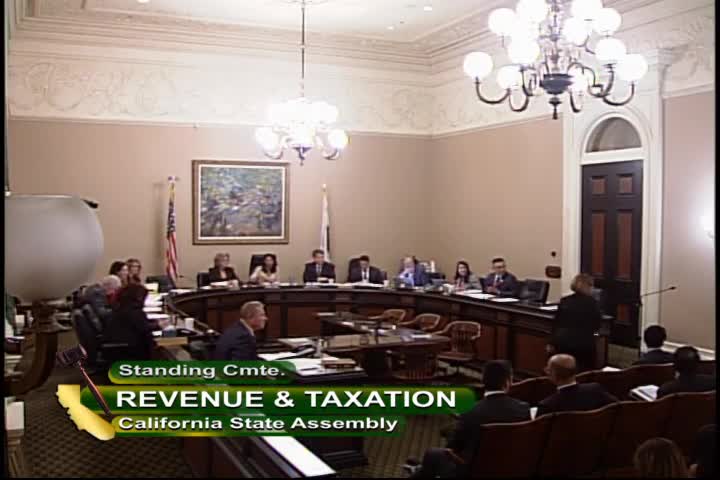 11MIN
Assembly Standing Committee on Revenue and Taxation
 16MIN
Senate Floor
 3MIN
Senate Standing Committee on Governmental Organization
 3MIN
Assembly Floor
 1MIN
Assembly Standing Committee on Appropriations
 20MIN
Assembly Standing Committee on Judiciary
 47SEC
Senate Floor
 4MIN