SB 614: Criminal procedure: legal assistance: ability to pay.
- Session Year: 2015-2016
- House: Senate
- Latest Version Date: 2016-09-23
Existing law requires a court to assign counsel to defend a defendant if the defendant desires the assistance of counsel and cannot afford to pay for counsel. Upon conclusion of the proceedings against the defendant, or withdrawal of counsel, existing law authorizes the court to make a determination of the ability of a defendant to pay all or a portion of his or her defense. Existing law authorizes the court to order a defendant to reimburse the county for those costs. Existing law provides a presumption that a defendant sentenced to state prison is determined not to have a reasonably discernible future financial ability to reimburse the costs of his or her defense, except as specified.
This bill would extend that presumption to a defendant sentenced to county jail for a period longer than 364 days.
Existing law requires a court to assign counsel to defend a defendant if the defendant desires the assistance of counsel and cannot afford to pay for counsel. Upon conclusion of the proceedings against the defendant, or withdrawal of counsel, existing law authorizes the court to make a determination of the ability of a defendant to pay all or a portion of his or her defense. Existing law authorizes the court to order a defendant to reimburse the county for those costs. Existing law provides a presumption that a defendant sentenced to state prison is determined not to have a reasonably discernible future financial ability to reimburse the costs of his or her defense, except as specified.
This bill would extend that presumption to a defendant sentenced to county jail for a period longer than 364 days.
Existing law requires a court to assign counsel to defend a defendant if the defendant desires the assistance of counsel and cannot afford to pay for counsel. Upon conclusion of the proceedings against the defendant, or withdrawal of counsel, existing law authorizes the court to make a determination of the ability of a defendant to pay all or a portion of his or her defense. Existing law authorizes the court to order a defendant to reimburse the county for those costs. Existing law provides a presumption that a defendant sentenced to state prison is determined not to have a reasonably discernible future financial ability to reimburse the costs of his or her defense, except as specified.
This bill would extend that presumption to a defendant sentenced to county jail for a period longer than 364 days.
Existing law provides for the Medi-Cal program, which is administered by the State Department of Health Care Services and under which qualified low-income persons receive health care benefits. The Medi-Cal program is, in part, governed and funded by federal Medicaid provisions. Existing law provides for a schedule of benefits under the Medi-Cal program and provides for various services, including various behavioral and mental health services.
Existing law, the Mental Health Services Act (MHSA), an initiative measure enacted by the voters as Proposition 63 at the November 2, 2004, statewide general election, establishes the continuously appropriated Mental Health Services Fund to fund various county mental health programs. The act also requires funds to be reserved for the costs for the State Department of Health Care Services, the California Mental Health Planning Council, the Office of Statewide Health Planning and Development (OSHPD), the Mental Health Services Oversight and Accountability Commission, the State Department of Public Health, and any other state agency to implement all duties pursuant to certain programs provided for by the act, subject to appropriation in the annual Budget Act. The act provides that it may be amended by the Legislature by a 2/3 vote of each house as long as the amendment is consistent with and furthers the intent of the act, and that the Legislature may also clarify procedures and terms of the act by majority vote.
This bill would require the State Department of Health Care Services to establish, by July 1, 2017, a statewide peer, parent, transition-age, and family support specialist certification program, as a part of the states comprehensive mental health and substance use disorder delivery system and the Medi-Cal program. The bill would include 4 certification categories: adult peer support specialists, transition-age youth peer support specialists, family peer support specialists, and parent peer support specialists. The certification programs components would include, among others, defining responsibilities and practice guidelines, determining curriculum and core competencies, specifying training and continuing education requirements, and establishing a code of ethics and certification revocation processes. The bill would require an applicant for the certification as a peer, parent, transition-age, and family support specialist to meet specified requirements, including successful completion of the curriculum and training requirements.
This bill would require the department to collaborate with OSHPD and interested stakeholders in developing the certification program, and to obtain technical assistance pursuant to a specified joint state-county decisionmaking process. The bill would authorize the department to use funding provided through the MHSA and designated funds administered by OSHPD, to develop and administer the program, and would authorize the use of these MHSA funds to serve as the states share of funding to develop and administer the program for the purpose of claiming federal financial participation under the Medicaid Program.
This bill would authorize the department to establish a certification fee schedule and require remittance of fees as contained in the schedule, for the purpose of supporting the departments activities associated with the ongoing state administration of the peer, parent, transition-age, and family support specialist certification program. The bill would require the department to utilize the other funding resources made available under the bill before determining the need for the certification fee schedule and requiring the remittance of fees. The bill would declare legislative intent that the certification fees be reasonable and reflect the expenditures directly applicable to the ongoing state administration of the program.
This bill would require the department to amend the Medicaid state plan to include a certified peer, parent, transition-age, and family support specialist as a provider type for purposes of the Medi-Cal program, but would implement this provision only if and to the extent that federal financial participation is available and the department obtains all necessary federal approvals. The bill would authorize the department to enter into exclusive or nonexclusive contracts on a bid or nonbid basis, as specified, on a statewide or more limited geographic basis. This bill also would authorize the department to implement, interpret, or make specific its provisions by various informational documents until regulations are adopted.
This bill would declare that it clarifies terms and procedures under the Mental Health Services Act.
Existing law provides for the Medi-Cal program, which is administered by the State Department of Health Care Services and under which qualified low-income persons receive health care benefits. The Medi-Cal program is, in part, governed and funded by federal Medicaid provisions. Existing law provides for a schedule of benefits under the Medi-Cal program and provides for various services, including various behavioral and mental health services.
Existing law, the Mental Health Services Act (MHSA), an initiative measure enacted by the voters as Proposition 63 at the November 2, 2004, statewide general election, establishes the continuously appropriated Mental Health Services Fund to fund various county mental health programs. The act also requires funds to be reserved for the costs for the State Department of Health Care Services, the California Mental Health Planning Council, the Office of Statewide Health Planning and Development (OSHPD), the Mental Health Services Oversight and Accountability Commission, the State Department of Public Health, and any other state agency to implement all duties pursuant to certain programs provided for by the act, subject to appropriation in the annual Budget Act. The act provides that it may be amended by the Legislature by a 2/3 vote of each house as long as the amendment is consistent with and furthers the intent of the act, and that the Legislature may also clarify procedures and terms of the act by majority vote.
This bill would require the State Department of Health Care Services to establish, by July 1, 2017, a statewide peer, parent, transition-age, and family support specialist certification program, as a part of the states comprehensive mental health and substance use disorder delivery system and the Medi-Cal program. The bill would include 4 certification categories: adult peer support specialists, transition-age youth peer support specialists, family peer support specialists, and parent peer support specialists. The certification programs components would include, among others, defining responsibilities and practice guidelines, determining curriculum and core competencies, specifying training and continuing education requirements, and establishing a code of ethics and certification revocation processes. The bill would require an applicant for the certification as a peer, parent, transition-age, and family support specialist to meet specified requirements, including successful completion of the curriculum and training requirements.
This bill would require the department to collaborate with OSHPD and interested stakeholders in developing the certification program, and to obtain technical assistance pursuant to a specified joint state-county decisionmaking process. The bill would authorize the department to use funding provided through the MHSA and designated funds administered by OSHPD, to develop and administer the program, and would authorize the use of these MHSA funds to serve as the states share of funding to develop and administer the program for the purpose of claiming federal financial participation under the Medicaid Program.
This bill would authorize the department to establish a certification fee schedule and require remittance of fees as contained in the schedule, for the purpose of supporting the departments activities associated with the ongoing state administration of the peer, parent, transition-age, and family support specialist certification program. The bill would require the department to utilize the other funding resources made available under the bill before determining the need for the certification fee schedule and requiring the remittance of fees. The bill would declare legislative intent that the certification fees be reasonable and reflect the expenditures directly applicable to the ongoing state administration of the program.
This bill would require the department to amend the Medicaid state plan to include a certified peer, parent, transition-age, and family support specialist as a provider type for purposes of the Medi-Cal program, but would implement this provision only if and to the extent that federal financial participation is available and the department obtains all necessary federal approvals. The bill would authorize the department to enter into exclusive or nonexclusive contracts on a bid or nonbid basis, as specified, on a statewide or more limited geographic basis. This bill also would authorize the department to implement, interpret, or make specific its provisions by various informational documents until regulations are adopted.
This bill would declare that it clarifies terms and procedures under the Mental Health Services Act.
Existing law provides for the Medi-Cal program, which is administered by the State Department of Health Care Services and under which qualified low-income persons receive health care benefits. The Medi-Cal program is, in part, governed and funded by federal Medicaid provisions. Existing law provides for a schedule of benefits under the Medi-Cal program and provides for various services, including various behavioral and mental health services.
Existing law, the Mental Health Services Act (MHSA), an initiative measure enacted by the voters as Proposition 63 at the November 2, 2004, statewide general election, establishes the continuously appropriated Mental Health Services Fund to fund various county mental health programs. The act also requires funds to be reserved for the costs for the State Department of Health Care Services, the California Mental Health Planning Council, the Office of Statewide Health Planning and Development (OSHPD), the Mental Health Services Oversight and Accountability Commission, the State Department of Public Health, and any other state agency to implement all duties pursuant to certain programs provided for by the act, subject to appropriation in the annual Budget Act. The act provides that it may be amended by the Legislature by a 2/3 vote of each house as long as the amendment is consistent with and furthers the intent of the act, and that the Legislature may also clarify procedures and terms of the act by majority vote.
This bill would require the State Department of Health Care Services to establish, by July 1, 2017, a statewide peer, parent, transition-age, and family support specialist certification program, as a part of the states comprehensive mental health and substance use disorder delivery system and the Medi-Cal program. The bill would include 4 certification categories: adult peer support specialists, transition-age youth peer support specialists, family peer support specialists, and parent peer support specialists. The certification programs components would include, among others, defining responsibilities and practice guidelines, determining curriculum and core competencies, specifying training and continuing education requirements, and establishing a code of ethics and certification revocation processes. The bill would require an applicant for the certification as a peer, parent, transition-age, and family support specialist to meet specified requirements, including successful completion of the curriculum and training requirements.
This bill would require the department to collaborate with OSHPD and interested stakeholders in developing the certification program, and to obtain technical assistance pursuant to a specified joint state-county decisionmaking process. The bill would authorize the department to use funding provided through the MHSA and designated funds administered by OSHPD, to develop and administer the program, and would authorize the use of these MHSA funds to serve as the states share of funding to develop and administer the program for the purpose of claiming federal financial participation under the Medicaid Program.
This bill would require the department to amend the Medicaid state plan to include a certified peer, parent, transition-age, and family support specialist as a provider type for purposes of the Medi-Cal program, but would implement this provision only if and to the extent that federal financial participation is available and the department obtains all necessary federal approvals. The bill would authorize the department to enter into exclusive or nonexclusive contracts on a bid or nonbid basis, as specified, on a statewide or more limited geographic basis. This bill also would authorize the department to implement, interpret, or make specific its provisions by various informational documents until regulations are adopted.
This bill would declare that it clarifies terms and procedures under the Mental Health Services Act.
Existing law provides for the Medi-Cal program, which is administered by the State Department of Health Care Services and under which qualified low-income persons receive health care benefits. The Medi-Cal program is, in part, governed and funded by federal Medicaid provisions. Existing law provides for a schedule of benefits under the Medi-Cal program and provides for various services, including various behavioral and mental health services.
Existing law, the Mental Health Services Act (MHSA), an initiative measure enacted by the voters as Proposition 63 at the November 2, 2004, statewide general election, establishes the continuously appropriated Mental Health Services Fund to fund various county mental health programs. The act also requires funds to be reserved for the costs for the State Department of Health Care Services, the California Mental Health Planning Council, the Office of Statewide Health Planning and Development (OSHPD), the Mental Health Services Oversight and Accountability Commission, the State Department of Public Health, and any other state agency to implement all duties pursuant to certain programs provided for by the act, subject to appropriation in the annual Budget Act. The act provides that it may be amended by the Legislature by a 2/3 vote of each house as long as the amendment is consistent with and furthers the intent of the act, and that the Legislature may also clarify procedures and terms of the act by majority vote.
This bill would require the State Department of Health Care Services to establish, by July 1, 2016, 2017, a statewide peer peer, parent, and family support specialist certification program, as a part of the states comprehensive mental health and substance use disorder delivery system and the Medi-Cal program. The bill would include 3 4 certification categories: adult peer support specialists, transition-age youth peer support specialists, family peer support specialists, and parent peer support specialists. The certification programs components would include, among others, defining responsibilities and practice guidelines, determining curriculum and core competencies, specifying training and continuing education requirements, and establishing a code of ethics and certification revocation processes. The bill would require an applicant for the certification as a peer, parent, and family support specialist to meet specified requirements, including successful completion of the curriculum and training requirements.
This bill would require the department to collaborate with OSHPD and interested stakeholders in developing the certification program, and to obtain technical assistance pursuant to a specified joint state-county decisionmaking process. The bill would authorize the department to use funding provided through the MHSA and designated funds administered by OSHPD, to develop and administer the program. program, and would authorize the use of these MHSA funds to serve as the states share of funding to develop and administer the program for the purpose of claiming federal financial participation under the Medicaid Program.
This bill would require the department to amend the Medicaid state plan to include a certified peer peer, parent, and family support specialist as a provider type for purposes of the Medi-Cal program, but would implement this provision only if and to the extent that federal financial participation is available and the department obtains all necessary federal approvals. The bill would authorize the department to enter into exclusive or nonexclusive contracts on a bid or nonbid basis, as specified, on a statewide or more limited geographic basis. This bill also would authorize the department to implement, interpret, or make specific its provisions by various informational documents until regulations are adopted.
This bill would declare that it clarifies terms and procedures under the Mental Health Services Act.
Existing law provides for the Medi-Cal program, which is administered by the State Department of Health Care Services and under which qualified low-income persons receive health care benefits. The Medi-Cal program is, in part, governed and funded by federal Medicaid provisions. Existing law provides for a schedule of benefits under the Medi-Cal program and provides for various services, including various behavioral and mental health services.
Existing law, the Mental Health Services Act (MHSA), an initiative measure enacted by the voters as Proposition 63 at the November 2, 2004, statewide general election, establishes the continuously appropriated Mental Health Services Fund to fund various county mental health programs. The act also requires funds to be reserved for the costs for the State Department of Health Care Services, the California Mental Health Planning Council, the Office of Statewide Health Planning and Development (OSHPD), the Mental Health Services Oversight and Accountability Commission, the State Department of Public Health, and any other state agency to implement all duties pursuant to certain programs provided for by the act, subject to appropriation in the annual Budget Act. The act provides that it may be amended by the Legislature by a 2/3 vote of each house as long as the amendment is consistent with and furthers the intent of the act, and that the Legislature may also clarify procedures and terms of he the act by majority vote.
This bill would require the State Department of Health Care Services to establish, by July 1, 2016, a statewide peer and family support specialist certification program, as a part of the states comprehensive mental health delivery system and the Medi-Cal program. The bill would include 3 certification categories: adult peer support specialists, family peer support specialists, and parent peer support specialists. The certification programs components would include, among others, defining responsibilities and practice guidelines, determining curriculum and core competencies, specifying training and continuing education requirements, and establishing a code of ethics and certification revocation processes.
This bill would require the department to collaborate with OSHPD and interested stakeholders in developing the certification program, and to obtain technical assistance pursuant to a specified joint state-county decisionmaking process. The bill would authorize the department to use funding provided through the MHSA and designated funds administered by OSHPD, to develop and administer the program.
This bill would require the department to amend the Medicaid state plan to include a certified peer and family support specialist as a provider type for purposes of the Medi-Cal program, but would implement this provision only if and to the extent that federal financial participation is available and the department obtains all necessary federal approvals. The bill would authorize the department to enter into exclusive or nonexclusive contracts on a bid or nonbid basis, as specified, on a statewide or more limited geographic basis. This bill also would authorize the department to implement, interpret, or make specific its provisions by various informational documents until regulations are adopted.
This bill would declare that it clarifies terms and procedures under the Mental Health Services Act.
Existing law provides for the Medi-Cal program, which is administered by the State Department of Health Care Services and under which qualified low-income persons receive health care benefits. The Medi-Cal program is, in part, governed and funded by federal Medicaid provisions. Existing law provides for a schedule of benefits under the Medi-Cal program and provides for various services, including various behavioral and mental health services.
Existing law, the Mental Health Services Act, an initiative measure enacted by the voters as Proposition 63 at the November 2, 2004, statewide general election, establishes the continuously appropriated Mental Health Services Fund to fund various county mental health programs. The act also requires funds to be reserved for the costs for the State Department of Health Care Services, the California Mental Health Planning Council, the Office of Statewide Health Planning and Development (OSHPD), the Mental Health Services Oversight and Accountability Commission, the State Department of Public Health, and any other state agency to implement all duties pursuant to certain programs provided for by the act, subject to appropriation in the annual Budget Act. The act provides that it may be amended by the Legislature by a 2/3 vote of each house as long as the amendment is consistent with and furthers the intent of the act, and that the Legislature may also clarify procedures and terms of he act by majority vote.
This bill would require the State Department of Health Care Services to establish, by July 1, 2016, a statewide peer and family support specialist certification program, as a part of the states comprehensive mental health delivery system. The bill would include 3 certification categories: adult peer support specialists, family peer support specialists, and parent peer support specialists. The certification programs components would include, among others, defining responsibilities and practice guidelines, determining curriculum and core competencies, specifying training and continuing education requirements, and establishing a code of ethics and certification revocation processes.
This bill would require the department to collaborate with OSHPD and interested stakeholders in developing the certification program, and to obtain technical assistance pursuant to a specified joint state-county decisionmaking process. The bill would authorize the department to use funding provided through the MHSA and designated funds administered by OSHPD, to develop and administer the program.
This bill would require the department to amend the Medicaid state plan to include a certified peer and family support specialist as a provider type for purposes of the Medi-Cal program, but would implement this provision only if and to the extent that federal financial participation is available and the department obtains all necessary federal approvals.
This bill would declare that it clarifies terms and procedures under the Mental Health Services Act.
(a)Upon a finding by the court that a defendant is entitled to counsel but is unable to employ counsel, the court may hold a hearing or, in its discretion, order the defendant to appear before a county officer designated by the court, to determine whether the defendant owns or has an interest in any real property or other assets subject to attachment and not otherwise exempt by law. The court may impose a lien on any real property owned by the defendant, or in which the defendant has an interest to the extent permitted by law. The lien shall contain a legal description of the property, shall be recorded with the county recorder in the county or counties in which the property is located, and shall have priority over subsequently recorded liens or encumbrances. The county shall have the right to enforce its lien for the payment of providing legal assistance to an indigent defendant in the same manner as other lienholders by way of attachment, except that a county shall not enforce its lien on a defendants principal place of residence pursuant to a writ of execution. No lien shall be effective as against a bona fide purchaser without notice of the lien.
(b)In any case in which a defendant is provided legal assistance, either through the public defender or private counsel appointed by the court, upon conclusion of the criminal proceedings in the trial court, or upon the withdrawal of the public defender or appointed private counsel, the court may, after notice and a hearing, make a determination of the present ability of the defendant to pay all or a portion of the cost thereof. The court may, in its discretion, hold one such additional hearing within six months of the conclusion of the criminal proceedings. The court may, in its discretion, order the defendant to appear before a county officer designated by the court to make an inquiry into the ability of the defendant to pay all or a portion of the legal assistance provided.
(c)In any case in which the defendant hires counsel replacing a publicly provided attorney; in which the public defender or appointed counsel was required by the court to proceed with the case after a determination by the public defender that the defendant is not indigent; or, in which the defendant, at the conclusion of the case, appears to have sufficient assets to repay, without undue hardship, all or a portion of the cost of the legal assistance provided to him or her, by monthly installments or otherwise; the court shall make a determination of the defendants ability to pay as provided in subdivision (b), and may, in its discretion, make other orders as provided in that subdivision.
This subdivision applies to a county only upon the adoption of a resolution by the board of supervisors to that effect.
(d)If the defendant, after having been ordered to appear before a county officer, has been given proper notice and fails to appear before a county officer within 20 working days, the county officer shall recommend to the court that the full cost of the legal assistance shall be ordered to be paid by the defendant. The notice to the defendant shall contain all of the following:
(1)A statement of the cost of the legal assistance provided to the defendant as determined by the court.
(2)The defendants procedural rights under this section.
(3)The time limit within which the defendants response is required.
(4)A warning that if the defendant fails to appear before the designated officer, the officer will recommend that the court order the defendant to pay the full cost of the legal assistance provided to him or her.
(e)At a hearing, the defendant shall be entitled to, but shall not be limited to, all of the following rights:
(1)The right to be heard in person.
(2)The right to present witnesses and other documentary evidence.
(3)The right to confront and cross-examine adverse witnesses.
(4)The right to have the evidence against him or her disclosed to him or her.
(5)The right to a written statement of the findings of the court.
If the court determines that the defendant has the present ability to pay all or a part of the cost, the court shall set the amount to be reimbursed and order the defendant to pay the sum to the county in the manner in which the court believes reasonable and compatible with the defendants financial ability. Failure of a defendant who is not in custody to appear after due notice is a sufficient basis for an order directing the defendant to pay the full cost of the legal assistance determined by the court. The order to pay all or a part of the costs may be enforced in the manner provided for enforcement of money judgments generally but may not be enforced by contempt.
Any order entered under this subdivision is subject to relief under Section 473 of the Code of Civil Procedure.
(f)Prior to the furnishing of counsel or legal assistance by the court, the court shall give notice to the defendant that the court may, after a hearing, make a determination of the present ability of the defendant to pay all or a portion of the cost of counsel. The court shall also give notice that, if the court determines that the defendant has the present ability, the court shall order him or her to pay all or a part of the cost. The notice shall inform the defendant that the order shall have the same force and effect as a judgment in a civil action and shall be subject to enforcement against the property of the defendant in the same manner as any other money judgment.
(g)As used in this section:
(1)Legal assistance means legal counsel and supportive services including, but not limited to, medical and psychiatric examinations, investigative services, expert testimony, or any other form of services provided to assist the defendant in the preparation and presentation of the defendants case.
(2)Ability to pay means the overall capability of the defendant to reimburse the costs, or a portion of the costs, of the legal assistance provided to him or her, and shall include, but not be limited to, all of the following:
(A)The defendants present financial position.
(B)The defendants reasonably discernible future financial position. In no event shall the court consider a period of more than six months from the date of the hearing for purposes of determining the defendants reasonably discernible future financial position. Unless the court finds unusual circumstances, a defendant sentenced to state prison, or to county jail for a period longer than 364 days, including, but not limited to, a sentence imposed pursuant to subdivision (h) of Section 1170, shall be determined not to have a reasonably discernible future financial ability to reimburse the costs of his or her defense.
(C)The likelihood that the defendant shall be able to obtain employment within a six-month period from the date of the hearing.
(D)Any other factor or factors that may bear upon the defendants financial capability to reimburse the county for the costs of the legal assistance provided to the defendant.
(h)At any time during the pendency of the judgment rendered according to the terms of this section, a defendant against whom a judgment has been rendered may petition the rendering court to modify or vacate its previous judgment on the grounds of a change in circumstances with regard to the defendants ability to pay the judgment. The court shall advise the defendant of this right at the time it renders the judgment.
(i)This section shall apply to all proceedings, including contempt proceedings, in which the party is represented by a public defender or appointed counsel.
(a)Upon a finding by the court that a defendant is entitled to counsel but is unable to employ counsel, the court may hold a hearing or, in its discretion, order the defendant to appear before a county officer designated by the court, to determine whether the defendant owns or has an interest in any real property or other assets subject to attachment and not otherwise exempt by law. The court may impose a lien on any real property owned by the defendant, or in which the defendant has an interest to the extent permitted by law. The lien shall contain a legal description of the property, shall be recorded with the county recorder in the county or counties in which the property is located, and shall have priority over subsequently recorded liens or encumbrances. The county shall have the right to enforce its lien for the payment of providing legal assistance to an indigent defendant in the same manner as other lienholders by way of attachment, except that a county shall not enforce its lien on a defendants principal place of residence pursuant to a writ of execution. No lien shall be effective as against a bona fide purchaser without notice of the lien.
(b)In any case in which a defendant is provided legal assistance, either through the public defender or private counsel appointed by the court, upon conclusion of the criminal proceedings in the trial court, or upon the withdrawal of the public defender or appointed private counsel, the court may, after notice and a hearing, make a determination of the present ability of the defendant to pay all or a portion of the cost thereof. The court may, in its discretion, hold one such additional hearing within six months of the conclusion of the criminal proceedings. The court may, in its discretion, order the defendant to appear before a county officer designated by the court to make an inquiry into the ability of the defendant to pay all or a portion of the legal assistance provided.
(c)In any case in which the defendant hires counsel replacing a publicly provided attorney; in which the public defender or appointed counsel was required by the court to proceed with the case after a determination by the public defender that the defendant is not indigent; or, in which the defendant, at the conclusion of the case, appears to have sufficient assets to repay, without undue hardship, all or a portion of the cost of the legal assistance provided to him or her, by monthly installments or otherwise; the court shall make a determination of the defendants ability to pay as provided in subdivision (b), and may, in its discretion, make other orders as provided in that subdivision.
This subdivision applies to a county only upon the adoption of a resolution by the board of supervisors to that effect.
(d)If the defendant, after having been ordered to appear before a county officer, has been given proper notice and fails to appear before a county officer within 20 working days, the county officer shall recommend to the court that the full cost of the legal assistance shall be ordered to be paid by the defendant. The notice to the defendant shall contain all of the following:
(1)A statement of the cost of the legal assistance provided to the defendant as determined by the court.
(2)The defendants procedural rights under this section.
(3)The time limit within which the defendants response is required.
(4)A warning that if the defendant fails to appear before the designated officer, the officer will recommend that the court order the defendant to pay the full cost of the legal assistance provided to him or her.
(e)At a hearing, the defendant shall be entitled to, but shall not be limited to, all of the following rights:
(1)The right to be heard in person.
(2)The right to present witnesses and other documentary evidence.
(3)The right to confront and cross-examine adverse witnesses.
(4)The right to have the evidence against him or her disclosed to him or her.
(5)The right to a written statement of the findings of the court.
If the court determines that the defendant has the present ability to pay all or a part of the cost, the court shall set the amount to be reimbursed and order the defendant to pay the sum to the county in the manner in which the court believes reasonable and compatible with the defendants financial ability. Failure of a defendant who is not in custody to appear after due notice is a sufficient basis for an order directing the defendant to pay the full cost of the legal assistance determined by the court. The order to pay all or a part of the costs may be enforced in the manner provided for enforcement of money judgments generally but may not be enforced by contempt.
Any order entered under this subdivision is subject to relief under Section 473 of the Code of Civil Procedure.
(f)Prior to the furnishing of counsel or legal assistance by the court, the court shall give notice to the defendant that the court may, after a hearing, make a determination of the present ability of the defendant to pay all or a portion of the cost of counsel. The court shall also give notice that, if the court determines that the defendant has the present ability, the court shall order him or her to pay all or a part of the cost. The notice shall inform the defendant that the order shall have the same force and effect as a judgment in a civil action and shall be subject to enforcement against the property of the defendant in the same manner as any other money judgment.
(g)As used in this section:
(1)Legal assistance means legal counsel and supportive services including, but not limited to, medical and psychiatric examinations, investigative services, expert testimony, or any other form of services provided to assist the defendant in the preparation and presentation of the defendants case.
(2)Ability to pay means the overall capability of the defendant to reimburse the costs, or a portion of the costs, of the legal assistance provided to him or her, and shall include, but not be limited to, all of the following:
(A)The defendants present financial position.
(B)The defendants reasonably discernible future financial position. In no event shall the court consider a period of more than six months from the date of the hearing for purposes of determining the defendants reasonably discernible future financial position. Unless the court finds unusual circumstances, a defendant sentenced to state prison, or to county jail for a period longer than 364 days, including, but not limited to, a sentence imposed pursuant to subdivision (h) of Section 1170, shall be determined not to have a reasonably discernible future financial ability to reimburse the costs of his or her defense.
(C)The likelihood that the defendant shall be able to obtain employment within a six-month period from the date of the hearing.
(D)Any other factor or factors that may bear upon the defendants financial capability to reimburse the county for the costs of the legal assistance provided to the defendant.
(h)At any time during the pendency of the judgment rendered according to the terms of this section, a defendant against whom a judgment has been rendered may petition the rendering court to modify or vacate its previous judgment on the grounds of a change in circumstances with regard to the defendants ability to pay the judgment. The court shall advise the defendant of this right at the time it renders the judgment.
(i)This section shall apply to all proceedings, including contempt proceedings, in which the party is represented by a public defender or appointed counsel.
(a)Upon a finding by the court that a defendant is entitled to counsel but is unable to employ counsel, the court may hold a hearing or, in its discretion, order the defendant to appear before a county officer designated by the court, to determine whether the defendant owns or has an interest in any real property or other assets subject to attachment and not otherwise exempt by law. The court may impose a lien on any real property owned by the defendant, or in which the defendant has an interest to the extent permitted by law. The lien shall contain a legal description of the property, shall be recorded with the county recorder in the county or counties in which the property is located, and shall have priority over subsequently recorded liens or encumbrances. The county shall have the right to enforce its lien for the payment of providing legal assistance to an indigent defendant in the same manner as other lienholders by way of attachment, except that a county shall not enforce its lien on a defendants principal place of residence pursuant to a writ of execution. No lien shall be effective as against a bona fide purchaser without notice of the lien.
(b)In any case in which a defendant is provided legal assistance, either through the public defender or private counsel appointed by the court, upon conclusion of the criminal proceedings in the trial court, or upon the withdrawal of the public defender or appointed private counsel, the court may, after notice and a hearing, make a determination of the present ability of the defendant to pay all or a portion of the cost thereof. The court may, in its discretion, hold one such additional hearing within six months of the conclusion of the criminal proceedings. The court may, in its discretion, order the defendant to appear before a county officer designated by the court to make an inquiry into the ability of the defendant to pay all or a portion of the legal assistance provided.
(c)In any case in which the defendant hires counsel replacing a publicly provided attorney; in which the public defender or appointed counsel was required by the court to proceed with the case after a determination by the public defender that the defendant is not indigent; or, in which the defendant, at the conclusion of the case, appears to have sufficient assets to repay, without undue hardship, all or a portion of the cost of the legal assistance provided to him or her, by monthly installments or otherwise; the court shall make a determination of the defendants ability to pay as provided in subdivision (b), and may, in its discretion, make other orders as provided in that subdivision.
This subdivision shall be operative in applies to a county only upon the adoption of a resolution by the board of supervisors to that effect.
(d)If the defendant, after having been ordered to appear before a county officer, has been given proper notice and fails to appear before a county officer within 20 working days, the county officer shall recommend to the court that the full cost of the legal assistance shall be ordered to be paid by the defendant. The notice to the defendant shall contain all of the following:
(1)A statement of the cost of the legal assistance provided to the defendant as determined by the court.
(2)The defendants procedural rights under this section.
(3)The time limit within which the defendants response is required.
(4)A warning that if the defendant fails to appear before the designated officer, the officer will recommend that the court order the defendant to pay the full cost of the legal assistance provided to him or her.
(e)At a hearing, the defendant shall be entitled to, but shall not be limited to, all of the following rights:
(1)The right to be heard in person.
(2)The right to present witnesses and other documentary evidence.
(3)The right to confront and cross-examine adverse witnesses.
(4)The right to have the evidence against him or her disclosed to him or her.
(5)The right to a written statement of the findings of the court.
If the court determines that the defendant has the present ability to pay all or a part of the cost, the court shall set the amount to be reimbursed and order the defendant to pay the sum to the county in the manner in which the court believes reasonable and compatible with the defendants financial ability. Failure of a defendant who is not in custody to appear after due notice is a sufficient basis for an order directing the defendant to pay the full cost of the legal assistance determined by the court. The order to pay all or a part of the costs may be enforced in the manner provided for enforcement of money judgments generally but may not be enforced by contempt.
Any order entered under this subdivision is subject to relief under Section 473 of the Code of Civil Procedure.
(f)Prior to the furnishing of counsel or legal assistance by the court, the court shall give notice to the defendant that the court may, after a hearing, make a determination of the present ability of the defendant to pay all or a portion of the cost of counsel. The court shall also give notice that, if the court determines that the defendant has the present ability, the court shall order him or her to pay all or a part of the cost. The notice shall inform the defendant that the order shall have the same force and effect as a judgment in a civil action and shall be subject to enforcement against the property of the defendant in the same manner as any other money judgment.
(g)As used in this section:
(1)Legal assistance means legal counsel and supportive services including, but not limited to, medical and psychiatric examinations, investigative services, expert testimony, or any other form of services provided to assist the defendant in the preparation and presentation of the defendants case.
(2)Ability to pay means the overall capability of the defendant to reimburse the costs, or a portion of the costs, of the legal assistance provided to him or her, and shall include, but not be limited to, all of the following:
(A)The defendants present financial position.
(B)The defendants reasonably discernible future financial position. In no event shall the court consider a period of more than six months from the date of the hearing for purposes of determining the defendants reasonably discernible future financial position. Unless the court finds unusual circumstances, a defendant sentenced to state prison prison, or to county jail for a period longer than 364 days, including, but not limited to, a sentence imposed pursuant to subdivision (h) of Section 1170, shall be determined not to have a reasonably discernible future financial ability to reimburse the costs of his or her defense.
(C)The likelihood that the defendant shall be able to obtain employment within a six-month period from the date of the hearing.
(D)Any other factor or factors which that may bear upon the defendants financial capability to reimburse the county for the costs of the legal assistance provided to the defendant.
(h)At any time during the pendency of the judgment rendered according to the terms of this section, a defendant against whom a judgment has been rendered may petition the rendering court to modify or vacate its previous judgment on the grounds of a change in circumstances with regard to the defendants ability to pay the judgment. The court shall advise the defendant of this right at the time it renders the judgment.
(i)This section shall apply to all proceedings, including contempt proceedings, in which the party is represented by a public defender or appointed counsel.
SECTION 1.Article 1.4 (commencing with Section 14045.10) is added to Chapter 7 of Part 3 of Division 9 of the Welfare and Institutions Code, to read:1.4.Peer, Parent, Transition-Age, and Family Support Specialist Certification Program14045.10.This article shall be known, and may be cited, as the Peer, Parent, Transition-Age, and Family Support Specialist Certification Program Act of 2015.
14045.11.The Legislature finds and declares all of the following:
(a)With the enactment of the Mental Health Services Act in 2004, support to include peer providers identified as consumers, parents, and family members for the provision of services has been on the rise.
(b)There are over 6,000 peer providers in California who provide individualized support, coaching, facilitation, and education to clients with mental health care needs and substance use disorder, in a variety of settings, yet no statewide scope of practice, standardized curriculum, training standards, supervision standards, or certification protocol is available.
(c)The United States Department of Veterans Affairs and over 30 states utilize standardized curricula and certification protocols for peer support services.
(d)The federal Centers for Medicare and Medicaid Services (CMS) recognizes peer support services as an evidence-based model of care and notes it is an important component in a states delivery of effective mental health and substance use disorder treatment. The CMS encourages states to offer peer support services as a component of a comprehensive mental health and substance use disorder delivery system and federal financial participation is available for this purpose.
(e)A substantial number of research studies demonstrate that peer supports improve client functioning, increase client satisfaction, reduce family burden, alleviate depression and other symptoms, reduce hospitalizations and hospital days, increase client activation, and enhance client self-advocacy.
(f)Certification at the state level can incentivize the public mental health system and the Medi-Cal program, including the Drug Medi-Cal program, to increase the number, diversity, and availability of peer providers and peer-driven services.
14045.12.It is the intent of the Legislature that the peer, parent, transition-age, and family support specialist certification program, established under this article, achieve all of the following:
(a)Establish the ongoing provision of peer support services for beneficiaries experiencing mental health care needs, substance use disorder needs, or both by certified peer support specialists.
(b)Provide support, coaching, facilitation, and education to beneficiaries with mental health needs, substance use disorder needs, or both, and to families or significant support persons.
(c)Provide increased family support, building on the strengths of families and helping them achieve desired outcomes.
(d)Provide a part of a wraparound continuum of services, in conjunction with other community mental health services and other substance use disorder services.
(e)Collaborate with others providing care or support to the beneficiary or family.
(f)Assist parents, when applicable, in developing coping mechanisms and problem-solving skills.
(g)Provide an individualized focus on the beneficiary, the family, or both, as needed.
(h)Encourage employment under the peer, parent, transition-age, and family support specialist certification program to reflect the culture, ethnicity, sexual orientation, gender identity, mental health service experiences, and substance use disorder experiences of the people whom they serve.
(i)Promote socialization, recovery, self-sufficiency, self-advocacy, development of natural supports, and maintenance of skills learned in other support services.
14045.13.For purposes of this article, the following definitions shall apply:
(a)Adult peer support specialist means a person who is 18 years of age or older and who has self-identified as having lived experience of recovery from mental illness, substance use disorder, or both, and the skills learned in formal trainings to deliver peer support services in a behavioral setting to promote mind-body recovery and resiliency for adults.
(b)Certification means, as it pertains to the peer, parent, transition-age, and family support specialist certification program, all federal and state requirements have been satisfied, federal financial participation under Title XIX of the federal Social Security Act (42 U.S.C. Sec. 1396 et seq.) is available, and all necessary federal approvals have been obtained.
(c)Certified means all federal and state requirements have been satisfied by an individual who is seeking designation under this article, including completion of curriculum and training requirements, testing, and agreement to uphold and abide by the code of ethics.
(d)Certification examination means the competency testing requirements, as approved by the department, an individual is required to successfully complete as a condition of becoming certified under this article. Each training program approved by the department may develop a unique competency examination for each category of peer, parent, transition-age, and family support specialist listed in subdivision (b) of Section 14045.14. Each certification examination shall include core curriculum elements.
(e)Code of ethics means the professional standards each certified peer, parent, transition-age, and family support specialist listed in subdivision (b) of Section 14045.14 is required to agree to uphold and abide by. These professional standards shall include principles, expected behavior and conduct of the certificate holder in an agreed-upon statement that is required to be provided to the applicant and acknowledged by signing with his or her personal signature prior to being granted certification under this article.
(f)Core competencies are the foundational and essential competencies required by each category of peer, parent, transition-age, and family support specialists listed in subdivision (b) of Section 14045.14 who provide peer support services.
(g)Cultural competence means a set of congruent behaviors, attitudes, and policies that come together in a system or agency that enables that system or agency to work effectively in cross-cultural situations. A culturally competent system of care acknowledges and incorporates, at all levels, the importance of language and culture, intersecting identities, assessment of cross-cultural relations, knowledge and acceptance of dynamics of cultural differences, expansion of cultural knowledge, and adaptation of services to meet culturally unique needs to provide services in a culturally competent manner.
(h)Family peer support specialist means a person with lived experience as a self-identified family member of an individual experiencing mental illness, substance use disorder, or both, and the skills learned in formal trainings to assist and empower families of individuals experiencing mental illness, substance use disorder, or both. For the purposes of this subdivision, family member includes a sibling or kinship caregiver, and their partners.
(i)Parent means a person who is parenting or has parented a child or individual experiencing mental illness, substance use disorder, or both, and who can articulate his or her understanding of his or her experience with another parent or caregiver. This person may be a birth parent, adoptive parent, or family member standing in for an absent parent.
(j)Parent peer support specialist means a parent with formal training to assist and empower families parenting a child or individual experiencing mental illness, substance use disorder, or both.
(k)Peer support specialist services means culturally competent services that promote engagement, socialization, recovery, self-sufficiency, self-advocacy, development of natural supports, identification of strengths, and maintenance of skills learned in other support services. Peer support specialist services shall include, but are not limited to, support, coaching, facilitation, and education to Medi-Cal beneficiaries that is individualized to the beneficiary and is conducted by a certified adult peer support specialist, a certified transition-age youth peer support specialist, a certified family peer support specialist, or a certified parent peer support specialist.
(l)Recovery means a process of change through which an individual improves his or her health and wellness, lives a self-directed life, and strives to reach his or her full potential. This process of change recognizes cultural diversity and inclusion, and honors the different routes to resilience and recovery based on the individual and his or her cultural community.
(m)Transition-age youth peer support specialist means a person who is 18 years of age or older and who has self-identified as having lived experience of recovery from mental illness, substance use disorder, or both, and the skills learned in formal trainings to deliver peer support services in a behavioral setting to promote mind-body recovery and resiliency for transition-age youth, including adolescents and young adults.
14045.14.No later than July 1, 2017, the department, as the sole state Medicaid agency, shall establish a peer, parent, transition-age, and family support specialist certification program that, at a minimum, shall do all of the following:
(a)Establish a certifying body, either within the department, through contract, or through an interagency agreement, to provide for the certification of peer, parent, transition-age, and family support specialists as described in this article.
(b)Provide for a statewide certification for each of the following categories of peer support specialists, as contained in federal guidance issued by the Centers for Medicare and Medicaid Services, State Medicaid Director Letter (SMDL) #07-011:
(1)Adult peer support specialists, who may serve individuals across the lifespan.
(2)Transition-age youth peer support specialists.
(3)Family peer support specialists.
(4)Parent peer support specialists.
(c)Define the range of responsibilities and practice guidelines for the categories of peer support specialists listed in subdivision (b), by utilizing best practice materials published by the federal Substance Abuse and Mental Health Services Administration, the federal Department of Veterans Affairs, and related notable experts in the field as a basis for development.
(d)Determine curriculum and core competencies, including curriculum that may be offered in areas of specialization, such as older adults, veterans, family support, forensics, whole health, juvenile justice, youth in foster care, sexual orientation, gender identity, and any other areas of specialization identified by the department. Specialized curriculum shall be determined for each of the categories of peer, parent, transition-age, and family support specialists listed in subdivision (b). Core competencies-based curriculum shall include, at a minimum, all of the following elements:
(1)The concepts of hope, recovery, and wellness.
(2)The role of advocacy.
(3)The role of consumers and family members.
(4)Psychiatric rehabilitation skills and service delivery, and addiction recovery principles, including defined practices.
(5)Cultural competence training.
(6)Trauma-informed care.
(7)Group facilitation skills.
(8)Self-awareness and self-care.
(9)Cooccurring disorders of mental health and substance use.
(10)Conflict resolution.
(11)Professional boundaries and ethics.
(12)Safety and crisis planning.
(13)Navigation of, and referral to, other services.
(14)Documentation skills and standards.
(15)Study and test-taking skills.
(e)Specify training requirements, including core-competencies-based training and specialized training necessary to become certified under this article, allowing for multiple qualified training entities, and requiring training to include people with lived experience as consumers and family members.
(f)Specify required continuing education requirements for certification.
(g)Determine clinical supervision requirements for personnel certified under this article, that shall require, at a minimum, personnel certified pursuant to this article to work under the direction of a mental health rehabilitation specialist, as defined in Section 782.35 of Title 9 of the California Code of Regulations, or substance use disorder professional. A licensed mental health professional, as defined in Section 782.26 of Title 9 of the California Code of Regulations, may also provide supervision.
(h)Establish a code of ethics.
(i)Determine the process for certification renewal.
(j)Determine a process for revocation of certification.
(k)Determine a process for allowing existing personnel employed in the peer support field to obtain certification under this article, at their option.
14045.15.In order to be certified as an adult peer support specialist, an individual shall, at a minimum, satisfy all of the following requirements:
(a)Be at least 18 years of age.
(b)Have or have had a primary diagnosis of mental illness, substance use disorder, or both, which is self-disclosed.
(c)Have received or is receiving mental health services, substance use disorder services, or both.
(d)Be willing to share his or her experience of recovery.
(e)Demonstrate leadership and advocacy skills.
(f)Have a strong dedication to recovery.
(g)Agree to uphold and abide by a code of ethics. A copy of the code of ethics shall be signed by the applicant.
(h)Successful completion of the curriculum and training requirements for an adult peer support specialist.
(i)Pass a certification examination approved by the department for an adult peer support specialist.
(j)Successful completion of any required continuing education, training, and recertification requirements.
14045.16.In order to be certified as a transition-age youth peer support specialist, an individual shall, at a minimum, satisfy all of the following requirements:
(a)Be at least 18 years of age.
(b)Have or have had a primary diagnosis of mental illness, substance use disorder, or both, which is self-disclosed.
(c)Have received or is receiving mental health services, substance use disorder addiction services, or both.
(d)Be willing to share his or her experience of recovery.
(e)Demonstrate leadership and advocacy skills.
(f)Have a strong dedication to recovery.
(g)Agree to uphold and abide by a code of ethics. A copy of the code of ethics shall be signed by the applicant.
(h)Successful completion of the curriculum and training requirements for a transition-age youth peer support specialist.
(i)Pass a certification examination approved by the department for a transition-age youth peer support specialist.
(j)Successful completion of any required continuing education, training, and recertification requirements.
14045.17.In order to be certified as a family peer support specialist, an individual shall, at a minimum, satisfy all of the following requirements:
(a)Be at least 18 years of age.
(b)Be self-identified as a family member of an individual experiencing mental illness, substance use disorder, or both.
(c)Be willing to share his or her experience.
(d)Demonstrate leadership and advocacy skills.
(e)Have a strong dedication to recovery.
(f)Agree to uphold and abide by a code of ethics. A copy of the code of ethics shall be signed by the applicant.
(g)Successful completion of the curriculum and training requirements for a family peer support specialist.
(h)Pass a certification examination approved by the department for a family peer support specialist.
(i)Successful completion of any required continuing education, training, and recertification requirements.
14045.18.In order to be certified as a parent peer support specialist, an individual shall, at a minimum, satisfy all of the following requirements:
(a)Be at least 18 years of age.
(b)Be self-identified as a parent, as defined in Section 14045.13.
(c)Be willing to share his or her experience.
(d)Demonstrate leadership and advocacy skills.
(e)Have a strong dedication to recovery.
(f)Agree to uphold and abide by a code of ethics. A copy of the code of ethics shall be signed by the applicant.
(g)Successful completion of the curriculum and training requirements for a parent peer support specialist.
(h)Pass a certification examination approved by the department for a parent peer support specialist.
(i)Successful completion of any required continuing education, training, and recertification requirements.
14045.19.This article shall not be construed to imply that an individual who is certified pursuant to this article is qualified to, or authorize that individual to, diagnose an illness, prescribe medication, or provide clinical services.
14045.20.The department shall closely collaborate with the Office of Statewide Health Planning and Development (OSHPD) and its associated workforce collaborative, and regularly consult with interested stakeholders, including peer support and family organizations, mental health and substance use disorder services providers and organizations, the County Behavioral Health Directors Association of California, health plans participating in the Medi-Cal managed care program, the California Mental Health Planning Council, and other interested parties in developing, implementing, and administering the peer, parent, transition-age, and family support specialist certification program established pursuant to this article. This consultation shall initially include, at a minimum, bimonthly stakeholder meetings, which may also include technical workgroup meetings. The department may seek private funds from a nonprofit organization or foundation for this purpose.
14045.21.The department may contract to obtain technical assistance for the development of the peer, parent, transition-age, and family support specialist certification program, as provided in Section 4061.
14045.22.(a)The department shall amend its Medicaid state plan to do both of the following:
(1)Include each category of peer, parent, transition-age, and family support specialist listed in subdivision (b) of Section 14045.14 certified pursuant to this article as a provider type for purposes of this chapter.
(2)Include peer support specialist services as a distinct service type for purposes of this chapter, which may be provided to eligible Medi-Cal beneficiaries who are enrolled in either a Medi-Cal managed mental health care plan or a Medi-Cal managed care health plan.
(b)The department may seek any federal waivers or other state plan amendments as necessary to implement the certification program provided for under this article.
(c)Medi-Cal reimbursement for peer support services shall be implemented only if and to the extent that federal financial participation under Title XIX of the federal Social Security Act (42 U.S.C. Sec. 1396 et seq.) is available and all necessary federal approvals have been obtained.
14045.23.To facilitate early intervention for mental health services, community health workers may partner with peer, parent, transition-age, and family support specialists for engagement, outreach, and education.
14045.24.It is not the intent of the Legislature in enacting this article to modify the Medicaid state plan in any manner that would otherwise change or nullify the requirements, billing, or reimbursement of the other qualified provider provider type, as currently authorized by the Medicaid state plan.
14045.25.The department may utilize Mental Health Services Act funds, as authorized in subdivision (d) of Section 5892, and any designated Workforce Education and Training Program resources, including funding, as administered by OSHPD pursuant to Section 5820, to develop and administer the peer, parent, transition-age, and family support specialist certification program. Further, these Mental Health Service Act funds may then serve as the states share of funding to develop and administer the peer, parent, transition-age, and family support specialist certification program and shall be available for purposes of claiming federal financial participation under Title XIX of the federal Social Security Act (42 U.S.C. Sec. 1396 et seq.) once all necessary federal approvals have been obtained.
14045.251.The department may establish a certification fee schedule and may require remittance as contained in the certification fee schedule for the purpose of supporting the departments activities associated with the ongoing state administration of the peer, parent, transition-age, and family support specialist certification program. The department shall utilize all funding resources as made available in Section 14045.25 first, prior to determining the need for the certification fee schedule and requiring the remittance of fees. It is the intent of the Legislature that any certification fees charged by the department be reasonable and reflect the expenditures directly applicable to the ongoing state administration of the peer, parent, transition-age and family support specialist certification program.
14045.26.For the purposes of implementing this article, the department may enter into exclusive or nonexclusive contracts on a bid or negotiated basis, including contracts for the purpose of obtaining subject matter expertise or other technical assistance. Contracts may be statewide or on a more limited geographic basis.
14045.27.Notwithstanding Chapter 3.5 (commencing with Section 11340) of Part 1 of Division 3 of Title 2 of the Government Code, the department may implement, interpret, or make specific this article by means of plan letters, plan or provider bulletins, or similar instructions, without taking regulatory action, until the time regulations are adopted. The department shall adopt regulations by July 1, 2019, in accordance with the requirements of Chapter 3.5 (commencing with Section 11340) of Part 1 of Division 3 of Title 2 of the Government Code. Notwithstanding Section 10231.5 of the Government Code, beginning six months after the effective date of this article, the department shall provide semiannual status reports to the Legislature, in compliance with Section 9795 of the Government Code, until regulations have been adopted.
SEC. 2.The Legislature finds and declares that this act clarifies procedures and terms of the Mental Health Services Act within the meaning of Section 18 of the Mental Health Services Act.
This article shall be known, and may be cited, as the Peer, Parent, Transition-Age, and Family Support Specialist Certification Program Act of 2015.
14045.11.The Legislature finds and declares all of the following:
(a)With the enactment of the Mental Health Services Act in 2004, support to include peer providers identified as consumers, parents, and family members for the provision of services has been on the rise.
(b)There are over 6,000 peer providers in California who provide individualized support, coaching, facilitation, and education to clients with mental health care needs and substance use disorder, in a variety of settings, yet no statewide scope of practice, standardized curriculum, training standards, supervision standards, or certification protocol is available.
(c)The United States Department of Veterans Affairs and over 30 states utilize standardized curricula and certification protocols for peer support services.
(d)The federal Centers for Medicare and Medicaid Services (CMS) recognizes peer support services as an evidence-based model of care and notes it is an important component in a states delivery of effective mental health and substance use disorder treatment. The CMS encourages states to offer peer support services as a component of a comprehensive mental health and substance use disorder delivery system and federal financial participation is available for this purpose.
(e)A substantial number of research studies demonstrate that peer supports improve client functioning, increase client satisfaction, reduce family burden, alleviate depression and other symptoms, reduce hospitalizations and hospital days, increase client activation, and enhance client self-advocacy.
(f)Certification at the state level can incentivize the public mental health system and the Medi-Cal program, including the Drug Medi-Cal program, to increase the number, diversity, and availability of peer providers and peer-driven services.
14045.12.It is the intent of the Legislature that the peer, parent, transition-age, and family support specialist certification program, established under this article, achieve all of the following:
(a)Establish the ongoing provision of peer support services for beneficiaries experiencing mental health care needs, substance use disorder needs, or both by certified peer support specialists.
(b)Provide support, coaching, facilitation, and education to beneficiaries with mental health needs, substance use disorder needs, or both, and to families or significant support persons.
(c)Provide increased family support, building on the strengths of families and helping them achieve desired outcomes.
(d)Provide a part of a wraparound continuum of services, in conjunction with other community mental health services and other substance use disorder services.
(e)Collaborate with others providing care or support to the beneficiary or family.
(f)Assist parents, when applicable, in developing coping mechanisms and problem-solving skills.
(g)Provide an individualized focus on the beneficiary, the family, or both, as needed.
(h)Encourage employment under the peer, parent, transition-age, and family support specialist certification program to reflect the culture, ethnicity, sexual orientation, gender identity, mental health service experiences, and substance use disorder experiences of the people whom they serve.
(i)Promote socialization, recovery, self-sufficiency, self-advocacy, development of natural supports, and maintenance of skills learned in other support services.
14045.13.For purposes of this article, the following definitions shall apply:
(a)Adult peer support specialist means a person who is 18 years of age or older and who has self-identified as having lived experience of recovery from mental illness, substance use disorder, or both, and the skills learned in formal trainings to deliver peer support services in a behavioral setting to promote mind-body recovery and resiliency for adults.
(b)Certification means, as it pertains to the peer, parent, transition-age, and family support specialist certification program, all federal and state requirements have been satisfied, federal financial participation under Title XIX of the federal Social Security Act (42 U.S.C. Sec. 1396 et seq.) is available, and all necessary federal approvals have been obtained.
(c)Certified means all federal and state requirements have been satisfied by an individual who is seeking designation under this article, including completion of curriculum and training requirements, testing, and agreement to uphold and abide by the code of ethics.
(d)Certification examination means the competency testing requirements, as approved by the department, an individual is required to successfully complete as a condition of becoming certified under this article. Each training program approved by the department may develop a unique competency examination for each category of peer, parent, transition-age, and family support specialist listed in subdivision (b) of Section 14045.14. Each certification examination shall include core curriculum elements.
(e)Code of ethics means the professional standards each certified peer, parent, transition-age, and family support specialist listed in subdivision (b) of Section 14045.14 is required to agree to uphold and abide by. These professional standards shall include principles, expected behavior and conduct of the certificate holder in an agreed-upon statement that is required to be provided to the applicant and acknowledged by signing with his or her personal signature prior to being granted certification under this article.
(f)Core competencies are the foundational and essential competencies required by each category of peer, parent, transition-age, and family support specialists listed in subdivision (b) of Section 14045.14 who provide peer support services.
(g)Cultural competence means a set of congruent behaviors, attitudes, and policies that come together in a system or agency that enables that system or agency to work effectively in cross-cultural situations. A culturally competent system of care acknowledges and incorporates, at all levels, the importance of language and culture, intersecting identities, assessment of cross-cultural relations, knowledge and acceptance of dynamics of cultural differences, expansion of cultural knowledge, and adaptation of services to meet culturally unique needs to provide services in a culturally competent manner.
(h)Family peer support specialist means a person with lived experience as a self-identified family member of an individual experiencing mental illness, substance use disorder, or both, and the skills learned in formal trainings to assist and empower families of individuals experiencing mental illness, substance use disorder, or both. For the purposes of this subdivision, family member includes a sibling or kinship caregiver, and their partners.
(i)Parent means a person who is parenting or has parented a child or individual experiencing mental illness, substance use disorder, or both, and who can articulate his or her understanding of his or her experience with another parent or caregiver. This person may be a birth parent, adoptive parent, or family member standing in for an absent parent.
(j)Parent peer support specialist means a parent with formal training to assist and empower families parenting a child or individual experiencing mental illness, substance use disorder, or both.
(k)Peer support specialist services means culturally competent services that promote engagement, socialization, recovery, self-sufficiency, self-advocacy, development of natural supports, identification of strengths, and maintenance of skills learned in other support services. Peer support specialist services shall include, but are not limited to, support, coaching, facilitation, and education to Medi-Cal beneficiaries that is individualized to the beneficiary and is conducted by a certified adult peer support specialist, a certified transition-age youth peer support specialist, a certified family peer support specialist, or a certified parent peer support specialist.
(l)Recovery means a process of change through which an individual improves his or her health and wellness, lives a self-directed life, and strives to reach his or her full potential. This process of change recognizes cultural diversity and inclusion, and honors the different routes to resilience and recovery based on the individual and his or her cultural community.
(m)Transition-age youth peer support specialist means a person who is 18 years of age or older and who has self-identified as having lived experience of recovery from mental illness, substance use disorder, or both, and the skills learned in formal trainings to deliver peer support services in a behavioral setting to promote mind-body recovery and resiliency for transition-age youth, including adolescents and young adults.
14045.14.No later than July 1, 2017, the department, as the sole state Medicaid agency, shall establish a peer, parent, transition-age, and family support specialist certification program that, at a minimum, shall do all of the following:
(a)Establish a certifying body, either within the department, through contract, or through an interagency agreement, to provide for the certification of peer, parent, transition-age, and family support specialists as described in this article.
(b)Provide for a statewide certification for each of the following categories of peer support specialists, as contained in federal guidance issued by the Centers for Medicare and Medicaid Services, State Medicaid Director Letter (SMDL) #07-011:
(1)Adult peer support specialists, who may serve individuals across the lifespan.
(2)Transition-age youth peer support specialists.
(3)Family peer support specialists.
(4)Parent peer support specialists.
(c)Define the range of responsibilities and practice guidelines for the categories of peer support specialists listed in subdivision (b). (b), by utilizing best practice materials published by the federal Substance Abuse and Mental Health Services Administration, the federal Department of Veterans Affairs, and related notable experts in the field as a basis for development.
(d)Determine curriculum and core competencies, including curriculum that may be offered in areas of specialization, such as older adults, veterans, family support, forensics, whole health, juvenile justice, youth in foster care, sexual orientation, gender identity, and any other areas of specialization identified by the department. Specialized curriculum shall be determined for each of the categories of peer, parent, transition-age, and family support specialists listed in subdivision (b). Core competencies-based curriculum shall include, at a minimum, all of the following elements:
(1)The concepts of hope, recovery, and wellness.
(2)The role of advocacy.
(3)The role of consumers and family members.
(4)Psychiatric rehabilitation skills and service delivery, and addiction recovery principles, including defined practices.
(5)Cultural competence training.
(6)Trauma-informed care.
(7)Group facilitation skills.
(8)Self-awareness and self-care.
(9)Cooccurring disorders of mental health and substance use.
(10)Conflict resolution.
(11)Professional boundaries and ethics.
(12)Safety and crisis planning.
(13)Navigation of, and referral to, other services.
(14)Documentation skills and standards.
(15)Study and test-taking skills.
(e)Specify training requirements, including core-competencies-based training and specialized training necessary to become certified under this article, allowing for multiple qualified training entities, and requiring training to include people with lived experience as consumers and family members.
(f)Specify required continuing education requirements for certification.
(g)Determine clinical supervision requirements for personnel certified under this article, that shall require, at a minimum, personnel certified pursuant to this article to work under the direction of a mental health rehabilitation specialist specialist, as defined in Section 782.35 of Title 9 of the California Code of Regulations, or substance use disorder professional. A licensed mental health professional, as defined in Section 782.26 of Title 9 of the California Code of Regulations, may also provide supervision.
(h)Establish a code of ethics.
(i)Determine the process for certification renewal.
(j)Determine a process for revocation of certification.
(k)Determine a process for allowing existing personnel employed in the peer support field to obtain certification under this article, at their option.
14045.15.In order to be certified as an adult peer support specialist, an individual shall, at a minimum, satisfy all of the following requirements:
(a)Be at least 18 years of age.
(b)Have or have had a primary diagnosis of mental illness, substance use disorder, or both, which is self-disclosed.
(c)Have received or is receiving mental health services, substance use disorder services, or both.
(d)Be willing to share his or her experience of recovery.
(e)Demonstrate leadership and advocacy skills.
(f)Have a strong dedication to recovery.
(g)Agree to uphold and abide by a code of ethics. A copy of the code of ethics shall be signed by the applicant.
(h)Successful completion of the curriculum and training requirements for an adult peer support specialist.
(i)Pass a certification examination approved by the department for an adult peer support specialist.
(j)Successful completion of any required continuing education, training, and recertification requirements.
14045.16.In order to be certified as a transition-age youth peer support specialist, an individual shall, at a minimum, satisfy all of the following requirements:
(a)Be at least 18 years of age.
(b)Have or have had a primary diagnosis of mental illness, substance use disorder, or both, which is self-disclosed.
(c)Have received or is receiving mental health services, substance use disorder addiction services, or both.
(d)Be willing to share his or her experience of recovery.
(e)Demonstrate leadership and advocacy skills.
(f)Have a strong dedication to recovery.
(g)Agree to uphold and abide by a code of ethics. A copy of the code of ethics shall be signed by the applicant.
(h)Successful completion of the curriculum and training requirements for a transition-age youth peer support specialist.
(i)Pass a certification examination approved by the department for a transition-age youth peer support specialist.
(j)Successful completion of any required continuing education, training, and recertification requirements.
14045.17.In order to be certified as a family peer support specialist, an individual shall, at a minimum, satisfy all of the following requirements:
(a)Be at least 18 years of age.
(b)Be self-identified as a family member of an individual experiencing mental illness, substance use disorder, or both.
(c)Be willing to share his or her experience.
(d)Demonstrate leadership and advocacy skills.
(e)Have a strong dedication to recovery.
(f)Agree to uphold and abide by a code of ethics. A copy of the code of ethics shall be signed by the applicant.
(g)Successful completion of the curriculum and training requirements for a family peer support specialist.
(h)Pass a certification examination approved by the department for a family peer support specialist.
(i)Successful completion of any required continuing education, training, and recertification requirements.
14045.18.In order to be certified as a parent peer support specialist, an individual shall, at a minimum, satisfy all of the following requirements:
(a)Be at least 18 years of age.
(b)Be self-identified as a parent, as defined in Section 14045.13.
(c)Be willing to share his or her experience.
(d)Demonstrate leadership and advocacy skills.
(e)Have a strong dedication to recovery.
(f)Agree to uphold and abide by a code of ethics. A copy of the code of ethics shall be signed by the applicant.
(g)Successful completion of the curriculum and training requirements for a parent peer support specialist.
(h)Pass a certification examination approved by the department for a parent peer support specialist.
(i)Successful completion of any required continuing education, training, and recertification requirements.
14045.19.This article shall not be construed to imply that an individual who is certified pursuant to this article is qualified to, or authorize that individual to, diagnose an illness, prescribe medication, or provide clinical services.
14045.20.The department shall closely collaborate with the Office of Statewide Health Planning and Development (OSHPD) and its associated workforce collaborative, and regularly consult with interested stakeholders, including peer support and family organizations, mental health and substance use disorder services providers and organizations, the County Behavioral Health Directors Association of California, health plans participating in the Medi-Cal managed care program, the California Mental Health Planning Council, and other interested parties in developing, implementing, and administering the peer, parent, transition-age, and family support specialist certification program established pursuant to this article. This consultation shall initially include, at a minimum, bimonthly stakeholder meetings, which may also include technical workgroup meetings. The department may seek private funds from a nonprofit organization or foundation for this purpose.
14045.21.The department may contract to obtain technical assistance for the development of the peer, parent, transition-age, and family support specialist certification program, as provided in Section 4061.
14045.22.(a)The department shall amend its Medicaid state plan to do both of the following:
(1)Include each category of peer, parent, transition-age, and family support specialist listed in subdivision (b) of Section 14045.14 certified pursuant to this article as a provider type for purposes of this chapter.
(2)Include peer support specialist services as a distinct service type for purposes of this chapter, which may be provided to eligible Medi-Cal beneficiaries who are enrolled in either a Medi-Cal managed mental health care plan or a Medi-Cal managed care health plan.
(b)The department may seek any federal waivers or other state plan amendments as necessary to implement the certification program provided for under this article.
(c)This article Medi-Cal reimbursement for peer support services shall be implemented only if and to the extent that federal financial participation under Title XIX of the federal Social Security Act (42 U.S.C. Sec. 1396 et seq.) is available and all necessary federal approvals have been obtained.
14045.23.To facilitate early intervention for mental health services, community health workers may partner with peer, parent, transition-age, and family support specialists for engagement, outreach, and education.
14045.24.It is not the intent of the Legislature in enacting this article to modify the Medicaid state plan in any manner that would otherwise change or nullify the requirements, billing, or reimbursement of the other qualified provider provider type, as currently authorized by the Medicaid state plan.
14045.25.The department may utilize Mental Health Services Act funds, as authorized in subdivision (d) of Section 5892, and any designated Workforce Education and Training Program resources, including funding, as administered by OSHPD pursuant to Section 5820, to develop and administer the peer, parent, transition-age, and family support specialist certification program. These Further, these Mental Health Service Act funds may then serve as the states share of funding to develop and administer the peer, parent, transition-age, and family support specialist certification program and shall be available for purposes of claiming federal financial participation under Title XIX of the federal Social Security Act (42 U.S.C. Sec. 1396 et seq.) once all necessary federal approvals have been obtained.
14045.251.The department may establish a certification fee schedule and may require remittance as contained in the certification fee schedule for the purpose of supporting the departments activities associated with the ongoing state administration of the peer, parent, transition-age, and family support specialist certification program. The department shall utilize all funding resources as made available in Section 14045.25 first, prior to determining the need for the certification fee schedule and requiring the remittance of fees. It is the intent of the Legislature that any certification fees charged by the department be reasonable and reflect the expenditures directly applicable to the ongoing state administration of the peer, parent, transition-age and family support specialist certification program.
14045.26.For the purposes of implementing this article, the department may enter into exclusive or nonexclusive contracts on a bid or negotiated basis, including contracts for the purpose of obtaining subject matter expertise or other technical assistance. Contracts may be statewide or on a more limited geographic basis.
14045.27.Notwithstanding Chapter 3.5 (commencing with Section 11340) of Part 1 of Division 3 of Title 2 of the Government Code, the department may implement, interpret, or make specific this article by means of plan letters, plan or provider bulletins, or similar instructions, without taking regulatory action, until the time regulations are adopted. The department shall adopt regulations by July 1, 2019, in accordance with the requirements of Chapter 3.5 (commencing with Section 11340) of Part 1 of Division 3 of Title 2 of the Government Code. Notwithstanding Section 10231.5 of the Government Code, beginning six months after the effective date of this article, the department shall provide semiannual status reports to the Legislature, in compliance with Section 9795 of the Government Code, until regulations have been adopted.
SEC. 2.The Legislature finds and declares that this act clarifies procedures and terms of the Mental Health Services Act within the meaning of Section 18 of the Mental Health Services Act.
This article shall be known, and may be cited, as the Peer, Parent, Transition-Age, and Family Support Specialist Certification Program Act of 2015.
14045.11.The Legislature finds and declares all of the following:
(a)With the enactment of the Mental Health Services Act in 2004, support to include peer providers identified as consumers, parents, and family members for the provision of services has been on the rise.
(b)There are over 6,000 peer providers in California who provide individualized support, coaching, facilitation, and education to clients with mental health care needs and substance use disorder, in a variety of settings, yet no statewide scope of practice, standardized curriculum, training standards, supervision standards, or certification protocol is available.
(c)The United States Department of Veterans Affairs and over 30 states utilize standardized curricula and certification protocols for peer support services.
(d)The federal Centers for Medicare and Medicaid Services (CMS) recognizes peer support services as an evidence-based model of care and notes it is an important component in a states delivery of effective mental health and substance use disorder treatment. The CMS encourages states to offer peer support services as a component of a comprehensive mental health and substance use disorder delivery system and federal financial participation is available for this purpose.
(e)A substantial number of research studies demonstrate that peer supports improve client functioning, increase client satisfaction, reduce family burden, alleviate depression and other symptoms, reduce hospitalizations and hospital days, increase client activation, and enhance client self-advocacy.
(f)Certification at the state level can incentivize the public mental health system and the Medi-Cal program, including the Drug Medi-Cal program, to increase the number, diversity, and availability of peer providers and peer-driven services.
14045.12.It is the intent of the Legislature that the peer, parent, transition-age, and family support specialist certification program, established under this article, achieve all of the following:
(a)Establish the ongoing provision of peer support services for beneficiaries experiencing mental health care needs, substance use disorder needs, or both by certified peer support specialists.
(b)Provide support, coaching, facilitation, and education to beneficiaries with mental health needs, substance use disorder needs, or both, and to families or significant support persons.
(c)Provide increased family support, building on the strengths of families and helping them achieve desired outcomes.
(d)Provide a part of a wraparound continuum of services, in conjunction with other community mental health services and other substance use disorder services.
(e)Collaborate with others providing care or support to the beneficiary or family.
(f)Assist parents, when applicable, in developing coping mechanisms and problem-solving skills.
(g)Provide an individualized focus on the beneficiary, the family, or both, as needed.
(h)Encourage employment under the peer, parent, transition-age, and family support specialist certification program to reflect the culture, ethnicity, sexual orientation, gender identity, mental health service experiences, and substance use disorder experiences of the people whom they serve.
(i)Promote socialization, recovery, self-sufficiency, self-advocacy, development of natural supports, and maintenance of skills learned in other support services.
14045.13.For purposes of this article, the following definitions shall apply:
(a)Adult peer support specialist means a person who is 18 years of age or older and who has self-identified as having lived experience of recovery from mental illness, substance use disorder, or both, and the skills learned in formal trainings to deliver peer support services in a behavioral setting to promote mind-body recovery and resiliency for adults.
(b)Certification means, as it pertains to the peer, parent, transition-age, and family support specialist certification program, all federal and state requirements have been satisfied, federal financial participation under Title XIX of the federal Social Security Act (42 U.S.C. Sec. 1396 et seq.) is available, and all necessary federal approvals have been obtained.
(c)Certified means all federal and state requirements have been satisfied by an individual who is seeking designation under this article, including completion of curriculum and training requirements, testing, and agreement to uphold and abide by the code of ethics.
(d)Certification examination means the competency testing requirements, as approved by the department, an individual is required to successfully complete as a condition of becoming certified under this article. Each training program approved by the department may develop a unique competency examination for each category of peer, parent, transition-age, and family support specialist listed in subdivision (b) of Section 14045.14. Each certification examination shall include core curriculum elements.
(e)Code of ethics means the professional standards by which each certified peer, parent, transition-age, and family support specialist listed in subdivision (b) of Section 14045.14 is required to agree to uphold and abide by. These professional standards shall include principles, expected behavior and conduct of the certificate holder in an agreed-upon statement that is required to be provided to the applicant and acknowledged by signing with his or her personal signature prior to being granted certification under this article.
(f)Core competencies are the foundational and essential competencies required by each category of peer, parent, transition-age, and family support specialists listed in subdivision (b) of Section 14045.14 who provide peer support services.
(g)Cultural competence means a set of congruent behaviors, attitudes, and policies that come together in a system or agency that enables that system or agency to work effectively in cross-cultural situations. A culturally competent system of care acknowledges and incorporates, at all levels, the importance of language and culture, intersecting identities, assessment of cross-cultural relations, knowledge and acceptance of dynamics of cultural differences, expansion of cultural knowledge, and adaptation of services to meet culturally unique needs to provide services in a culturally competent manner.
(h)Family peer support specialist means a person with lived experience as a self-identified family member of an individual experiencing mental illness, substance use disorder, or both, and the skills learned in formal trainings to assist and empower families of individuals experiencing mental illness, substance use disorder, or both. For the purposes of this subdivision, family member includes a sibling or kinship caregiver, and their partners.
(i)Parent means a person who is parenting or has parented a child or individual experiencing mental illness, substance use disorder, or both, and who can articulate his or her understanding of his or her experience with another parent or caregiver. This person may be a birth parent, adoptive parent, or family member standing in for an absent parent.
(j)Parent peer support specialist means a parent with formal training to assist and empower families parenting a child or individual experiencing mental illness, substance use disorder, or both.
(k)Peer support specialist services means culturally competent services that promote engagement, socialization, recovery, self-sufficiency, self-advocacy, development of natural supports, identification of strengths, and maintenance of skills learned in other support services. Peer support specialist services shall include, but are not limited to, support, coaching, facilitation, and education to Medi-Cal beneficiaries that is individualized to the beneficiary and is conducted by a certified adult peer support specialist, a certified transition-age youth peer support specialist, a certified family peer support specialist, or a certified parent peer support specialist.
(l)Recovery means a process of change through which an individual improves his or her health and wellness, lives a self-directed life, and strives to reach his or her full potential. This process of change recognizes cultural diversity and inclusion, and honors the different routes to resilience and recovery based on the individual and his or her cultural community.
(m)Transition-age youth peer support specialist means a person who is 18 years of age or older and who has self-identified as having lived experience of recovery from mental illness, substance use disorder, or both, and the skills learned in formal trainings to deliver peer support services in a behavioral setting to promote mind-body recovery and resiliency for transition-age youth, including adolescents and young adults.
14045.14.No later than July 1, 2017, the department, as the sole state Medicaid agency, shall establish a peer, parent, transition-age, and family support specialist certification program that, at a minimum, shall do all of the following:
(a)Establish a certifying body, either within the department, through contract, or through an interagency agreement, to provide for the certification of peer, parent, transition-age, and family support specialists as described in this article.
(b)Provide for a statewide certification for each of the following categories of peer support specialists, as contained in federal guidance issued by the Centers for Medicare and Medicaid Services, State Medicaid Director Letter (SMDL) #07-011:
(1)Adult peer support specialists, who may serve individuals across the lifespan.
(2)Transition-age youth peer support specialists.
(3)Family peer support specialists.
(4)Parent peer support specialists.
(c)Define the range of responsibilities and practice guidelines for the categories of peer support specialists listed in subdivision (b).
(d)Determine curriculum and core competencies, including curriculum that may be offered in areas of specialization, such as older adults, veterans, family support, forensics, whole health, juvenile justice, youth in foster care, sexual orientation, gender identity, and any other areas of specialization identified by the department. Specialized curriculum shall be determined for each of the categories of peer, parent, transition-age, and family support specialists listed in subdivision (b). Core competencies-based curriculum shall include, at a minimum, all of the following elements:
(1)The concepts of hope, recovery, and wellness.
(2)The role of advocacy.
(3)The role of consumers and family members.
(4)Psychiatric rehabilitation skills and service delivery, and addiction recovery principles, including defined practices.
(5)Cultural competence training.
(6)Trauma-informed care.
(7)Group facilitation skills.
(8)Self-awareness and self-care.
(9)Cooccurring disorders of mental health and substance use.
(10)Conflict resolution.
(11)Professional boundaries and ethics.
(12)Safety and crisis planning.
(13)Navigation of, and referral to, other services.
(14)Documentation skills and standards.
(15)Study and test-taking skills.
(e)Specify training requirements, including core-competencies-based training and specialized training necessary to become certified under this article, allowing for multiple qualified training entities, and requiring training to include people with lived experience as consumers and family members.
(f)Specify required continuing education requirements for certification.
(g)Determine clinical supervision requirements for personnel certified under this article, that shall require, at a minimum, personnel certified pursuant to this article to work under the direction of a mental health rehabilitation specialist or substance use disorder professional.
(h)Establish a code of ethics.
(i)Determine the process for certification renewal.
(j)Determine a process for revocation of certification.
(k)Determine a process for allowing existing personnel employed in the peer support field to obtain certification under this article, at their option.
14045.15.In order to be certified as an adult peer support specialist, an individual shall, at a minimum, satisfy all of the following requirements:
(a)Be at least 18 years of age.
(b)Have or have had a primary diagnosis of mental illness, substance use disorder, or both, which is self-disclosed.
(c)Have received or is receiving mental health services, substance use disorder services, or both.
(d)Be willing to share his or her experience of recovery.
(e)Demonstrate leadership and advocacy skills.
(f)Have a strong dedication to recovery.
(g)Agree to uphold and abide by a code of ethics. A copy of the code of ethics shall be signed by the applicant.
(h)Successful completion of the curriculum and training requirements for an adult peer support specialist.
(i)Pass a certification examination approved by the department for an adult peer support specialist.
(j)Successful completion of any required continuing education, training, and recertification requirements.
14045.16.In order to be certified as a transition-age youth peer support specialist, an individual shall, at a minimum, satisfy all of the following requirements:
(a)Be at least 18 years of age.
(b)Have or have had a primary diagnosis of mental illness, substance use disorder, or both, which is self-disclosed.
(c)Have received or is receiving mental health services, substance use disorder addiction services, or both.
(d)Be willing to share his or her experience of recovery.
(e)Demonstrate leadership and advocacy skills.
(f)Have a strong dedication to recovery.
(g)Agree to uphold and abide by a code of ethics. A copy of the code of ethics shall be signed by the applicant.
(h)Successful completion of the curriculum and training requirements for a transition-age youth peer support specialist.
(i)Pass a certification examination approved by the department for a transition-age youth peer support specialist.
(j)Successful completion of any required continuing education, training, and recertification requirements.
14045.17.In order to be certified as a family peer support specialist, an individual shall, at a minimum, satisfy all of the following requirements:
(a)Be at least 18 years of age.
(b)Be self-identified as a family member of an individual experiencing mental illness, substance use disorder, or both.
(c)Be willing to share his or her experience.
(d)Demonstrate leadership and advocacy skills.
(e)Have a strong dedication to recovery.
(f)Agree to uphold and abide by a code of ethics. A copy of the code of ethics shall be signed by the applicant.
(g)Successful completion of the curriculum and training requirements for a family peer support specialist.
(h)Pass a certification examination approved by the department for a family peer support specialist.
(i)Successful completion of any required continuing education, training, and recertification requirements.
14045.18.In order to be certified as a parent peer support specialist, an individual shall, at a minimum, satisfy all of the following requirements:
(a)Be at least 18 years of age.
(b)Be self-identified as a parent, as defined in Section 14045.13.
(c)Be willing to share his or her experience.
(d)Demonstrate leadership and advocacy skills.
(e)Have a strong dedication to recovery.
(f)Agree to uphold and abide by a code of ethics. A copy of the code of ethics shall be signed by the applicant.
(g)Successful completion of the curriculum and training requirements for a parent peer support specialist.
(h)Pass a certification examination approved by the department for a parent peer support specialist.
(i)Successful completion of any required continuing education, training, and recertification requirements.
14045.19.This article shall not be construed to imply that an individual who is certified pursuant to this article is qualified to, or authorize that individual to, diagnose an illness, prescribe medication, or provide clinical services.
14045.20.The department shall closely collaborate with the Office of Statewide Health Planning and Development (OSHPD) and its associated workforce collaborative, and regularly consult with interested stakeholders, including peer support and family organizations, mental health and substance use disorder services providers and organizations, the County Behavioral Health Directors Association of California, health plans participating in the Medi-Cal managed care program, the California Mental Health Planning Council, and other interested parties in developing, implementing, and administering the peer, parent, transition-age, and family support specialist certification program established pursuant to this article. This consultation shall initially include, at a minimum, bimonthly stakeholder meetings, which may also include technical workgroup meetings. The department may seek private funds from a nonprofit organization or foundation for this purpose.
14045.21.The department may contract to obtain technical assistance for the development of the peer, parent, transition-age, and family support specialist certification program, as provided in Section 4061.
14045.22.(a)The department shall amend its Medicaid state plan to do both of the following:
(1)Include each category of peer, parent, transition-age, and family support specialists specialist listed in subdivision (b) of Section 14045.14 certified pursuant to this article as a provider type for purposes of this chapter.
(2)Include peer support specialist services as a distinct service type for purposes of this chapter, which may be provided to eligible Medi-Cal beneficiaries who are enrolled in either a Medi-Cal managed mental health care plan or a Medi-Cal managed care health plan.
(b)The department may seek any federal waivers or other state plan amendments as necessary to implement the certification program provided for under this article.
(c)This article shall be implemented only if and to the extent that federal financial participation under Title XIX of the federal Social Security Act (42 U.S.C. Sec. 1396 et seq.) is available and all necessary federal approvals have been obtained.
14045.23.To facilitate early intervention for mental health services, community health workers may partner with peer, parent, transition-age, and family support specialists for engagement, outreach, and education.
14045.23.14045.24.It is not the intent of the Legislature in enacting this article to modify the Medicaid state plan in any manner that would otherwise change or nullify the requirements, billing, or reimbursement of the other qualified provider provider type, as currently authorized by the Medicaid state plan.
14045.24.14045.25.The department may utilize Mental Health Services Act funds, as authorized in subdivision (d) of Section 5892, and any designated Workforce Education and Training Program resources, including funding, as administered by OSHPD pursuant to Section 5820, to develop and administer the peer, parent, transition-age, and family support specialist certification program. These Mental Health Service Act funds may serve as the states share of funding to develop and administer the peer, parent, transition-age, and family support specialist certification program and shall be available for purposes of claiming federal financial participation under Title XIX of the federal Social Security Act (42 U.S.C. Sec. 1396 et seq.) once all necessary federal approvals have been obtained.
14045.25.14045.26.For the purposes of implementing this article, the department may enter into exclusive or nonexclusive contracts on a bid or negotiated basis, including contracts for the purpose of obtaining subject matter expertise or other technical assistance. Contracts may be statewide or on a more limited geographic basis.
14045.26.14045.27.Notwithstanding Chapter 3.5 (commencing with Section 11340) of Part 1 of Division 3 of Title 2 of the Government Code, the department may implement, interpret, or make specific this article by means of plan letters, plan or provider bulletins, or similar instructions, without taking regulatory action, until the time regulations are adopted. The department shall adopt regulations by July 1, 2019, in accordance with the requirements of Chapter 3.5 (commencing with Section 11340) of Part 1 of Division 3 of Title 2 of the Government Code. Notwithstanding Section 10231.5 of the Government Code, beginning six months after the effective date of this article, the department shall provide semiannual status reports to the Legislature, in compliance with Section 9795 of the Government Code, until regulations have been adopted.
SEC. 2.The Legislature finds and declares that this act clarifies procedures and terms of the Mental Health Services Act within the meaning of Section 18 of the Mental Health Services Act.
This article shall be known, and may be cited, as the Peer Peer, Parent, and Family Support Specialist Certification Program Act of 2015.
14045.11.The Legislature finds and declares all of the following:
(a)With the enactment of the Mental Health Services Act in 2004, support to include peer providers identified as consumers, parents, and family members for the provision of services has been on the rise.
(b)There are over 6,000 peer support specialists providers in California who provide individualized support, coaching, facilitation, and education to clients with mental health care needs, needs and substance use disorder, in a variety of settings, yet no statewide scope of practice, standardized curriculum, training standards, supervision standards, or certification protocol is available.
(c)The United States Department of Veterans Affairs and over 30 states utilize standardized curricula and certification protocols for peer provider support services.
(d)The federal Centers for Medicare and Medicaid Services (CMS) recognizes peer support services as an evidence-based mental health model of care and notes it is an important component in a states delivery of effective mental health and substance use disorder treatment. The CMS encourages states to offer peer support services as a component of a comprehensive mental health and substance use disorder delivery system and federal financial participation is available for this purpose.
(e)A substantial number of research studies demonstrate that peer providers supports improve client functioning, increase client satisfaction, reduce family burden, alleviate depression and other symptoms, reduce hospitalizations and hospital days, increase client activation, and enhance client self-advocacy.
(f)Certification at the state level can incentivize the public mental health system and the Medi-Cal program, program, including the Drug Medi-Cal program, to increase the number, diversity, and availability of peer providers and peer-driven services.
14045.12.It is the intent of the Legislature that the peer peer, parent, and family support specialist certification program, established under this article, achieve all of the following:
(a)Establish the ongoing provision of peer support services for beneficiaries with experiencing mental health care needs needs, substance use disorder needs, or both by certified peer support specialists, including adults 18 years of age or older. specialists.
(b)Provide support, coaching, facilitation, and education to beneficiaries with mental health needs, substance use disorder needs, or both, and to families or significant support persons.
(b)
(c)Provide increased family support, building on the strengths of families and helping them achieve desired outcomes.
(c)
(d)Provide a part of a wraparound continuum of services, in conjunction with other community mental health services. services and other substance use disorder services.
(d)
(e)Collaborate with others providing care or support to the beneficiary or family.
(e)
(f)Assist parents, when applicable, in developing coping mechanisms and problem-solving skills.
(f)
(g)Provide an individualized focus on the beneficiary, the family, or both, as needed.
(h)Encourage employment under the peer, parent, and family support specialist certification program to reflect the culture, ethnicity, sexual orientation, gender identity, mental health service experiences, and substance use disorder experiences of the people whom they serve.
(g)
(i)Promote socialization, recovery, self-sufficiency, self-advocacy, development of natural supports, and maintenance of skills learned in other support services.
14045.13.For purposes of this article, the following definitions shall apply:
(a)Adult peer support specialist means a person who is 18 years of age or older and who has self-identified as having lived experience of recovery from mental illness, substance use disorder, or both, and the skills learned in formal trainings to deliver peer support services in a behavioral setting to promote mind-body recovery and resiliency for adults.
(b)Certification means, as it pertains to the peer, parent, and family support specialist certification program, all federal and state requirements have been satisfied, federal financial participation under Title XIX of the federal Social Security Act (42 U.S.C. Sec. 1396 et seq.) is available, and all necessary federal approvals have been obtained.
(c)Certified means all federal and state requirements have been satisfied by an individual who is seeking designation under this article, including completion of curriculum and training requirements, testing, and agreement to uphold and abide by the code of ethics.
(d)Certification examination means the competency testing requirements, as approved by the department, an individual is required to successfully complete as a condition of becoming certified under this article. Each training program approved by the department may develop a unique competency examination for each category of peer, parent, and family support specialist listed in subdivision (b) of Section 14045.14. Each certification examination shall include core curriculum elements.
(e)Code of ethics means professional standards by which each certified peer, parent, and family support specialist listed in subdivision (b) of Section 14045.14 is required to agree to uphold and abide by. These professional standards shall include principles, expected behavior and conduct of the certificate holder in an agreed-upon statement that is required to be provided to the applicant and acknowledged by signing with his or her personal signature prior to being granted certification under this article.
(f)Core competencies are the foundational and essential competencies required by each category of peer, parent, and family support specialists listed in subdivision (b) of Section 14045.14 who provide peer support services.
(g)Cultural competence means a set of congruent behaviors, attitudes, and policies that come together in a system or agency that enables that system or agency to work effectively in cross-cultural situations. A culturally competent system of care acknowledges and incorporates, at all levels, the importance of language and culture, intersecting identities, assessment of cross-cultural relations, knowledge and acceptance of dynamics of cultural differences, expansion of cultural knowledge, and adaptation of services to meet culturally unique needs to provide services in a culturally competent manner.
(h)Family peer support specialist means a person with lived experience as a self-identified family member of an individual experiencing mental illness, substance use disorder, or both, and the skills learned in formal trainings to assist and empower families of individuals experiencing mental illness, substance use disorder, or both. For the purposes of this subdivision, family member includes a sibling or kinship caregiver, and their partners.
(i)Parent means a person who is parenting or has parented a child or individual experiencing mental illness, substance use disorder, or both, and who can articulate his or her understanding of his or her experience with another parent or caregiver. This person may be a birth parent, adoptive parent, or family member standing in for an absent parent.
(j)Parent peer support specialist means a parent with formal training to assist and empower families parenting a child or individual experiencing mental illness, substance use disorder, or both.
(k)Peer support specialist services means culturally competent services that promote engagement, socialization, recovery, self-sufficiency, self-advocacy, development of natural supports, identification of strengths, and maintenance of skills learned in other support services. Peer support specialist services shall include, but are not limited to, support, coaching, facilitation, and education to Medi-Cal beneficiaries that is individualized to the beneficiary and is conducted by a certified adult peer support specialist, a certified transition-age youth peer support specialist, a certified family peer support specialist, or a certified parent peer support specialist.
(l)Recovery means a process of change through which an individual improves his or her health and wellness, lives a self-directed life, and strives to reach his or her full potential. This process of change recognizes cultural diversity and inclusion, and honors the different routes to resilience and recovery based on the individual and his or her cultural community.
14045.13.14045.14.No later than July 1, 2016, 2017, the department department, as the sole state Medicaid agency, shall establish a certified peer peer, parent, and family support specialist certification program that, at a minimum, shall do all of the following:
(a)Establish a certifying body body, either within the department, through contract, or through an interagency agreement, to provide for the certification of peer peer, parent, and family support specialists. specialists as described in this article.
(b)Provide for a statewide certification for each of the following categories of peer support specialist providers, specialists, as contained in federal guidance issued by the Centers for Medicare and Medicaid Services, State Medical Medicaid Director Letter (SMDL) #07-011:
(1)Adult peer support specialists, 18 years of age or older. specialists, who may serve individuals across the lifespan.
(2)Transition-age youth peer support specialists.
(2)
(3)Family peer support specialists.
(3)
(4)Parent peer support specialists.
(c)Define the range of responsibilities and practice guidelines for the categories of peer support specialists. specialists listed in subdivision (b).
(d)Determine curriculum and core competencies, including curriculum that may be offered in areas of specialization, such as older adults, veterans, family support, and forensics. forensics, whole health, juvenile justice, youth in foster care, sexual orientation, gender identity, and any other areas of specialization identified by the department. Specialized curriculum shall be determined for each of the categories of peer, parent, and family support specialists listed in subdivision (b). Core competencies-based curriculum shall include, at a minimum, all of the following elements:
(1)The concepts of hope, recovery, and wellness.
(2)The role of advocacy.
(3)The role of consumers and family members.
(4)Psychiatric rehabilitation skills and service delivery, including defined practices.
(5)Cultural competence training.
(6)Trauma-informed care.
(7)Group facilitation skills.
(8)Self-awareness and self-care.
(9)Cooccurring disorders of mental health and substance use.
(10)Conflict resolution.
(11)Professional boundaries and ethics.
(12)Safety and crisis planning.
(13)Navigation of, and referral to, other services.
(14)Documentation skills and standards.
(15)Study and test-taking skills.
(e)Specify training requirements, including core-competencies-based training and specialized training necessary to become certified under this article, allowing for multiple qualified training entities, and requiring training to include individuals with practical experience as consumers of peer support services, or their family members. include people with lived experience as consumers and family members.
(f)Specify required continuing education requirements for certification.
(g)Determine clinical supervision requirements for personnel certified under this section. article, that shall require, at a minimum, personnel certified pursuant to this article to work under the direction of a mental health rehabilitation specialist or substance use disorder professional.
(h)Establish a code of ethics and processes for revocation of certification. ethics.
(i)Determine the process for certification renewal.
(j)Determine a process for revocation of certification.
(j)
(k)Determine a process for allowing existing personnel employed in the peer support field to obtain certification under this article, at their option.
14045.15.In order to be certified as an adult peer support specialist, an individual shall, at a minimum, satisfy all of the following requirements:
(a)Be at least 18 years of age.
(b)Have or have had a primary diagnosis of mental illness, substance use disorder, or both, which is self-disclosed.
(c)Have received or is receiving mental health services, substance use disorder services, or both.
(d)Be willing to share his or her experience of recovery.
(e)Demonstrate leadership and advocacy skills.
(f)Have a strong dedication to recovery.
(g)Agree to uphold and abide by a code of ethics. A copy of the code of ethics shall be signed by the applicant.
(h)Successful completion of the curriculum and training requirements for an adult peer support specialist.
(i)Pass a certification examination approved by the department for an adult peer support specialist.
(j)Successful completion of any required continuing education, training, and recertification requirements.
14045.16.In order to be certified as a transition-age youth peer support specialist, an individual shall, at a minimum, satisfy all of the following requirements:
(a)Be at least 18 years of age.
(b)Have or have had a primary diagnosis of mental illness, substance use disorder, or both, which is self-disclosed.
(c)Have received or is receiving mental health services, substance use disorder addiction services, or both.
(d)Be willing to share his or her experience of recovery.
(e)Demonstrate leadership and advocacy skills.
(f)Have a strong dedication to recovery.
(g)Agree to uphold and abide by a code of ethics. A copy of the code of ethics shall be signed by the applicant.
(h)Successful completion of the curriculum and training requirements for a transition-age youth peer support specialist.
(i)Pass a certification examination approved by the department for a transition-age youth peer support specialist.
(j)Successful completion of any required continuing education, training, and recertification requirements.
14045.17.In order to be certified as a family peer support specialist, an individual shall, at a minimum, satisfy all of the following requirements:
(a)Be at least 18 years of age.
(b)Be self-identified as a family member of an individual experiencing mental illness, substance use disorder, or both.
(c)Be willing to share his or her experience.
(d)Demonstrate leadership and advocacy skills.
(e)Have a strong dedication to recovery.
(f)Agree to uphold and abide by a code of ethics. A copy of the code of ethics shall be signed by the applicant.
(g)Successful completion of the curriculum and training requirements for a family peer support specialist.
(h)Pass a certification examination approved by the department for a family peer support specialist.
(i)Successful completion of any required continuing education, training, and recertification requirements.
14045.18.In order to be certified as a parent peer support specialist, an individual shall, at a minimum, satisfy all of the following requirements:
(a)Be at least 18 years of age.
(b)Be self-identified as a parent, as defined in Section 14045.13.
(c)Be willing to share his or her experience.
(d)Demonstrate leadership and advocacy skills.
(e)Have a strong dedication to recovery.
(f)Agree to uphold and abide by a code of ethics. A copy of the code of ethics shall be signed by the applicant.
(g)Successful completion of the curriculum and training requirements for a parent peer support specialist.
(h)Pass a certification examination approved by the department for a parent peer support specialist.
(i)Successful completion of any required continuing education, training, and recertification requirements.
14045.19.This article shall not be construed to imply that an individual who is certified pursuant to this article is qualified to, or authorize that individual to, diagnose an illness, prescribe medication, or provide clinical services.
14045.14.14045.20.The department shall closely collaborate with the Office of Statewide Health Planning and Development (OSHPD) and its associated workforce collaborative, and regularly consult with interested stakeholders, including peer support and family organizations, mental health and substance use disorder services providers and organizations, the County Behavioral Health Directors Association of California, health plans participating in the Medi-Cal managed care program, the California Mental Health Planning Council, and other interested parties, as deemed appropriate by the department, parties in developing, implementing, and administering the peer peer, parent, and family support specialist certification program. program established pursuant to this article. This consultation shall initially include, at a minimum, bimonthly stakeholder meetings, which may also include technical workgroup meetings. The department may seek private funds from a nonprofit organization or foundation for this purpose.
14045.15.14045.21.The department may contract to obtain technical assistance for the development of the peer peer, parent, and family support specialist certification program, as provided in Section 4061.
14045.16.14045.22.(a)The department shall amend its Medicaid state plan to do both of the following:
(1)Include a peer each category of peer, parent, and family support specialist specialists listed in subdivision (b) of Section 14045.14 certified pursuant to this article as a provider type for purposes of this chapter.
(2)Include peer support specialist services as a distinct service type for purposes of this chapter. chapter, which may be provided to eligible Medi-Cal beneficiaries who are enrolled in either a Medi-Cal managed mental health care plan or a Medi-Cal managed care health plan.
(b)The department may seek any federal waivers or other state plan amendments as necessary to implement the certification program provided for under this article.
(c)This article shall be implemented only if and to the extent that federal financial participation under Title XIX of the federal Social Security Act (42 U.S.C. Sec. 1396 et seq.) is available and all necessary federal approvals have been obtained.
14045.17.14045.23.It is not the intent of the Legislature in enacting this article to modify the Medicaid state plan in any manner that would otherwise change or nullify the requirements, billing, or reimbursement of the other qualified provider provider type, as currently authorized by the Medicaid state plan.
14045.18.14045.24.The department may utilize Mental Health Services Act funds, as authorized in subdivision (d) of Section 5892, and any designated Workforce Education and Training Program resources, including funding, as administered by OSHPD pursuant to Section 5820, to develop and administer the peer peer, parent, and family support specialist certification program. These Mental Health Service Act funds may serve as the states share of funding to develop and administer the peer, parent, and family support specialist certification program and shall be available for purposes of claiming federal financial participation under Title XIX of the federal Social Security Act (42 U.S.C. Sec. 1396 et seq.) once all necessary federal approvals have been obtained.
14045.19.14045.25.For the purposes of implementing this article, the department may enter into exclusive or nonexclusive contracts on a bid or negotiated basis, including contracts for the purpose of obtaining subject matter expertise or other technical assistance. Contracts may be statewide or on a more limited geographic basis.
14045.20.14045.26.Notwithstanding Chapter 3.5 (commencing with Section 11340) of Part 1 of Division 3 of Title 2 of the Government Code, the department may implement, interpret, or make specific this article by means of plan letters, plan or provider bulletins, or similar instructions, without taking regulatory action, until the time regulations are adopted. The department shall adopt regulations by July 1, 2018, 2019, in accordance with the requirements of Chapter 3.5 (commencing with Section 11340) of Part 1 of Division 3 of Title 2 of the Government Code. Notwithstanding Section 10231.5 of the Government Code, beginning six months after the effective date of this article, the department shall provide semiannual status reports to the Legislature, in compliance with Section 9795 of the Government Code, until regulations have been adopted.
SEC. 2.The Legislature finds and declares that this act clarifies procedures and terms of the Mental Health Services Act within the meaning of Section 18 of the Mental Health Services Act.
This article shall be known, and may be cited, as the Peer and Family Support Specialist Certification Program Act of 2015.
14045.11.The Legislature finds and declares all of the following:
(a)With the enactment of the Mental Health Services Act in 2004, support to include peer providers identified as consumers, parents, and family members for the provision of services has been on the rise.
(b)There are over 6,000 peer support specialists in California who provide individualized support, coaching, facilitation, and education to clients with mental health care needs, in a variety of settings, yet no statewide scope of practice, standardized curriculum, training standards, supervision standards, or certification protocol is available.
(c)The United States Department of Veterans Affairs and over 30 states utilize standardized curricula and certification protocols for peer provider services.
(d)The federal Centers for Medicare and Medicaid Services (CMS) recognizes peer support services as an evidence-based mental health model of care and notes it is an important component in a states delivery of effective treatment. The CMS encourages states to offer peer support services as a component of a comprehensive mental health delivery system and federal financial participation is available for this purpose.
(e)A substantial number of research studies demonstrate that peer providers improve client functioning, increase client satisfaction, reduce family burden, alleviate depression and other symptoms, reduce hospitalizations and hospital days, increase client activation, and enhance client self-advocacy.
(f)Certification at the state level can incentivize the public mental health system and the Medi-Cal program, to increase the number, diversity, and availability of peer providers and peer-driven services.
14045.12.It is the intent of the Legislature that the peer and family support specialist certification program, established under this article, achieve all of the following:
(a)Establish the ongoing provision of peer support services for beneficiaries with mental health care needs by certified peer support specialists, including adults 18 years of age or older.
(b)Provide increased family support, building on the strengths of families and helping them achieve desired outcomes.
(c)Provide a part of a wraparound continuum of services, in conjunction with other community mental health services.
(d)Collaborate with others providing care or support to the beneficiary or family.
(e)Assist parents, when applicable, in developing coping mechanisms and problem-solving skills.
(f)Provide an individualized focus on the beneficiary, the family, or both, as needed.
(g)Promote socialization, recovery, self-sufficiency, self-advocacy, development of natural supports, and maintenance of skills learned in other support services.
14045.13.No later than July 1, 2016, the department shall establish a certified peer and family support specialist program, which program that, at a minimum, shall do all of the following:
(a)Establish a certifying body to provide for the certification of peer and family support specialists.
(a)
(b)Provide for a statewide certification for each of the following categories: categories of peer support specialist providers, as contained in federal guidance issued by the Centers for Medicare and Medicaid Services, State Medical Director Letter (SMDL) #07-011:
(1)Adult peer support specialists, 18 years of age or older.
(2)Family peer support specialists.
(3)Parent peer support specialists.
(b)
(c)Define the range of responsibilities and practice guidelines for peer support specialists.
(c)
(d)Determine curriculum and core competencies, including areas of specialization, such as veterans, family support, and forensics.
(d)
(e)Specify required training and continuing education requirements for certification. training requirements, allowing for multiple qualified training entities, and requiring training to include individuals with practical experience as consumers of peer support services, or their family members.
(f)Specify required continuing education requirements for certification.
(e)
(g)Determine clinical supervision requirements for personnel certified under this section.
(f)
(h)Establish a code of ethics and processes for revocation of certification.
(g)
(i)Determine the process for certification renewal.
(j)Determine a process for allowing existing personnel employed in the peer support field to obtain certification under this article, at their option.
14045.14.The department shall closely collaborate with the Office of Statewide Health Planning and Development (OSHPD) and its associated workforce collaborative, and regularly consult with interested stakeholders, including peer support and family organizations, mental health providers and organizations, the County Behavioral Health Directors Association, Association of California, health plans participating in the Medi-Cal managed care program, the California Mental Health Planning Council, and other interested parties, as deemed appropriate by the department, in developing, implementing, and administering the peer and family support specialist certification program.
14045.15.The department may contract to obtain technical assistance for the development of the peer and family support specialist certification program, as provided in Section 4061.
14045.16.(a)The department shall amend its Medicaid state plan to include a peer and family support specialist pursuant to this article as a provider type for purposes of this chapter. do both of the following:
(1)Include a peer and family support specialist certified pursuant to this article as a provider type for purposes of this chapter.
(2)Include peer support specialist services as a distinct service type for purposes of this chapter.
(b)The department may seek any federal waivers or other state plan amendments as necessary to implement the certification program provided for under this article.
(c)This article shall be implemented only if and to the extent that federal financial participation under Title XIX of the federal Social Security Act (42 U.S.C. Sec. 1396 et seq.) is available and all necessary federal approvals have been obtained.
14045.17.It is not the intent of the Legislature in enacting this article to modify the Medicaid state plan in any manner that would otherwise change or nullify the requirements, billing, or reimbursement of the other qualified provider provider type, as currently authorized by the Medicaid state plan.
14045.18.The department may utilize Mental Health Services Act funds, as authorized in subdivision (d) of Section 5892, and any designated Workforce Education and Training Program resources, including funding, as administered by OSHPD pursuant to Section 5820, to develop and administer the peer and family support specialist certification program.
14045.19.For the purposes of implementing this article, the department may enter into exclusive or nonexclusive contracts on a bid or negotiated basis, including contracts for the purpose of obtaining subject matter expertise or other technical assistance. Contracts may be statewide or on a more limited geographic basis.
14045.20.Notwithstanding Chapter 3.5 (commencing with Section 11340) of Part 1 of Division 3 of Title 2 of the Government Code, the department may implement, interpret, or make specific this article by means of plan letters, plan or provider bulletins, or similar instructions, without taking regulatory action, until the time regulations are adopted. The department shall adopt regulations by July 1, 2018, in accordance with the requirements of Chapter 3.5 (commencing with Section 11340) of Part 1 of Division 3 of Title 2 of the Government Code. Notwithstanding Section 10231.5 of the Government Code, beginning six months after the effective date of this article, the department shall provide semiannual status reports to the Legislature, in compliance with Section 9795 of the Government Code, until regulations have been adopted.
SEC. 2.The Legislature finds and declares that this act clarifies procedures and terms of the Mental Health Services Act within the meaning of Section 18 of the Mental Health Services Act.
This article shall be known, and may be cited, as the Peer and Family Support Specialist Certification Program Act of 2015.
14045.11.The Legislature finds and declares all of the following:
(a)With the enactment of the Mental Health Services Act in 2004, support to include peer providers identified as consumers, parents, and family members for the provision of services has been on the rise.
(b)There are over 6,000 peer support specialists in California who provide individualized support, coaching, facilitation, and education to clients with mental health care needs, in a variety of settings, yet no statewide scope of practice, standardized curriculum, training standards, supervision standards, or certification protocol is available.
(c)The United States Department of Veterans Affairs and over 30 states utilize standardized curricula and certification protocols for peer provider services.
(d)The federal Centers for Medicare and Medicaid Services (CMS) recognizes peer support services as an evidence-based mental health model of care and notes it is an important component in a states delivery of effective treatment. The CMS encourages states to offer peer support services as a component of a comprehensive mental health delivery system and federal financial participation is available for this purpose.
(e)A substantial number of research studies demonstrate that peer providers improve client functioning, increase client satisfaction, reduce family burden, alleviate depression and other symptoms, reduce hospitalizations and hospital days, increase client activation, and enhance client self-advocacy.
(f)Certification at the state level can incentivize the public mental health system to increase the number, diversity, and availability of peer providers and peer-driven services.
14045.12.It is the intent of the Legislature that the peer and family support specialist certification program, established under this article, achieve all of the following:
(a)Establish the ongoing provision of peer support services for beneficiaries with mental health care needs by certified peer support specialists, including adults 18 years of age or older.
(b)Provide increased family support, building on the strengths of families and helping them achieve desired outcomes.
(c)Provide a part of a wraparound continuum of services, in conjunction with other community mental health services.
(d)Collaborate with others providing care or support to the beneficiary or family.
(e)Assist parents, when applicable, in developing coping mechanisms and problem-solving skills.
(f)Provide an individualized focus on the beneficiary, the family, or both, as needed.
(g)Promote socialization, recovery, self-sufficiency, self-advocacy, development of natural supports, and maintenance of skills learned in other support services.
14045.13.No later than July 1, 2016, the department shall establish a certified peer and family support specialist program, which at a minimum, shall do all of the following:
(a)Provide for a statewide certification for each of the following categories:
(1)Adult peer support specialists, 18 years of age or older.
(2)Family peer support specialists.
(3)Parent peer support specialists.
(b)Define the range of responsibilities and practice guidelines for peer support specialists.
(c)Determine curriculum and core competencies, including areas of specialization, such as veterans, family support, and forensics.
(d)Specify required training and continuing education requirements for certification.
(e)Determine clinical supervision requirements for personnel certified under this section.
(f)Establish a code of ethics and processes for revocation of certification.
(g)Determine the process for certification renewal.
14045.14.The department shall closely collaborate with the Office of Statewide Health Planning and Development (OSHPD) and its associated workforce collaborative, and regularly consult with interested stakeholders, including peer support and family organizations, mental health providers and organizations, the County Behavioral Health Directors Association, the California Mental Health Planning Council, and other interested parties, as deemed appropriate by the department, in developing, implementing, and administering the peer and family support specialist certification program.
14045.15.The department may contract to obtain technical assistance for the development of the peer and family support specialist certification program, as provided in Section 4061.
14045.16.(a)The department shall amend its Medicaid state plan to include a peer and family support specialist pursuant to this article as a provider type for purposes of this chapter.
(b)The department may seek any federal waivers or other state plan amendments as necessary to implement the certification program provided for under this article.
(c)This article shall be implemented only if and to the extent that federal financial participation under Title XIX of the federal Social Security Act (42 U.S.C. Sec. 1396 et seq.) is available and all necessary federal approvals have been obtained.
14045.17.It is not the intent of the Legislature in enacting this article to modify the Medicaid state plan in any manner that would otherwise change or nullify the requirements, billing, or reimbursement of the other qualified provider provider type, as currently authorized by the Medicaid state plan.
14045.18.The department may utilize Mental Health Services Act funds, as authorized in subdivision (d) of Section 5892, and any designated Workforce Education and Training Program resources, including funding, as administered by OSHPD pursuant to Section 5820, to develop and administer the peer and family support specialist certification program.
SEC. 2.The Legislature finds and declares that this act clarifies procedures and terms of the Mental Health Services Act within the meaning of Section 18 of the Mental Health Services Act.
|
Date
|
Status
|
|---|---|
| Aug 25, 2016 | Read third time. Passed. Ordered to the Senate. |
| Sep 1, 2015 | Read second time. Ordered to third reading. |
| Sep 3, 2015 | Ordered to inactive file on request of Assembly Member Cristina Garcia. |
| Aug 15, 2016 | Notice of intention to remove from inactive file given by Assembly Member Cooper. |
| Aug 16, 2016 | From inactive file. |
| Aug 16, 2016 | Ordered to third reading. |
| Aug 18, 2016 | Ordered to third reading. |
| Aug 18, 2016 | Re-referred to Com. on PUB. S. pursuant to Assembly Rule 77.2. |
| Aug 18, 2016 | Read third time and amended. |
| Aug 23, 2016 | From committee: Do pass. (Ayes 6. Noes 0.) (August 23). |
| Aug 24, 2016 | Read second time. Ordered to third reading. |
| Aug 25, 2016 | In Senate. Concurrence in Assembly amendments pending. |
| Aug 31, 2015 | Read second time and amended. Ordered to second reading. |
| Aug 25, 2016 | Read third time. Passed. (Ayes 79. Noes 0. Page 6275.) Ordered to the Senate. |
| Aug 26, 2016 | From committee: Be re-referred to Com. on PUB. S. pursuant to Senate Rule 29.10(d). (Ayes 5. Noes 0. Page 5448.) Re-referred to Com. on PUB. S. |
| Aug 26, 2016 | From committee: Be re-referred to Com. on PUB. S. pursuant to Senate Rule 29.10(d). (Ayes 5. Noes 0.) Re-referred to Com. on PUB. S. |
| Aug 26, 2016 | Re-referred to Com. on RLS. pursuant to Senate Rule 29.10(d). |
| Aug 27, 2016 | Set for hearing August 29. |
| Aug 29, 2016 | From committee: That the Assembly amendments be concurred in. (Ayes 7. Noes 0. Page 5501.) |
| Aug 29, 2016 | From committee: That the Assembly amendments be concurred in. (Ayes 7. Noes 0.) |
| Aug 30, 2016 | Assembly amendments concurred in. (Ayes 39. Noes 0. Page 5533.) Ordered to engrossing and enrolling. |
| Aug 30, 2016 | Assembly amendments concurred in. (Ayes 39. Noes 0.) Ordered to engrossing and enrolling. |
| Sep 8, 2016 | Enrolled and presented to the Governor at 5 p.m. |
| May 28, 2015 | Read second time. Ordered to third reading. |
| Mar 2, 2015 | From printer. May be acted upon on or after April 1. |
| Mar 2, 2015 | Read first time. |
| Mar 12, 2015 | Referred to Com. on HEALTH. |
| Mar 20, 2015 | Set for hearing April 15. |
| Apr 6, 2015 | From committee with author's amendments. Read second time and amended. Re-referred to Com. on HEALTH. |
| Apr 16, 2015 | From committee: Do pass and re-refer to Com. on APPR. (Ayes 9. Noes 0. Page 651.) (April 15). Re-referred to Com. on APPR. |
| Apr 17, 2015 | Set for hearing April 27. |
| Apr 27, 2015 | April 27 hearing: Placed on APPR. suspense file. |
| May 23, 2015 | Set for hearing May 28. |
| May 28, 2015 | From committee: Do pass. (Ayes 7. Noes 0. Page 1157.) (May 28). |
| May 28, 2015 | From committee: Do pass. (Ayes 7. Noes 0.) (May 28). |
| Feb 27, 2015 | Introduced. To Com. on RLS. for assignment. To print. |
| Jun 1, 2015 | Read third time. Passed. (Ayes 40. Noes 0. Page 1191.) Ordered to the Assembly. |
| Jun 1, 2015 | Read third time. Passed. (Ayes 40. Noes 0.) Ordered to the Assembly. |
| Jun 2, 2015 | In Assembly. Read first time. Held at Desk. |
| Jun 18, 2015 | Referred to Com. on HEALTH. |
| Jul 6, 2015 | From committee with author's amendments. Read second time and amended. Re-referred to Com. on HEALTH. |
| Jul 15, 2015 | From committee: Do pass as amended and re-refer to Com. on APPR. (Ayes 18. Noes 0.) (July 14). |
| Jul 16, 2015 | Read second time and amended. Re-referred to Com. on APPR. |
| Aug 26, 2015 | August 26 set for first hearing. Placed on APPR. suspense file. |
| Aug 27, 2015 | Joint Rule 62(a) suspended. |
| Aug 28, 2015 | From committee: Do pass as amended. (Ayes 12. Noes 0.) (August 27). |
|
Date
|
Description
|
Location
|
Votes
|
|
|---|---|---|---|---|
| Aug 30, 2016 | Unfinished Business SB614 Hertzberg Concurrence | Senate Floor |
Passed |
|
| Aug 29, 2016 | That the Assembly amendments be concurred in | Senate Standing Committee on Public Safety |
Passed |
|
| Aug 25, 2016 | SB 614 Hertzberg Senate Third Reading By MAYES | Assembly Floor |
Passed |
|
| Aug 23, 2016 | Do pass. | Assembly Standing Committee on Public Safety |
Passed |
|
| Aug 27, 2015 | Do pass as amended. | Assembly Standing Committee on Appropriations |
Passed |
|
| Jul 14, 2015 | Do pass as amended and be re-referred to the Committee on [Appropriations] | Assembly Standing Committee on Health |
Passed |
|
| Jun 1, 2015 | Senate 3rd Reading SB614 Leno | Senate Floor |
Passed |
|
| May 28, 2015 | Do pass | Senate Standing Committee on Appropriations |
Passed |
|
| Apr 27, 2015 | Placed on suspense file | Senate Standing Committee on Appropriations |
Passed |
|
| Apr 15, 2015 | Do pass, but first be re-referred to the Committee on [Appropriations] | Senate Standing Committee on Health |
Passed |
This list shows positions taken on this bill by organizations on the date displayed, which is linked to the original source.
Positions by individuals are not included.
|
Organization
|
Position
|
Date
|
|---|---|---|
| African American Empowerment Committee | * Support | Jul 14, 2015 |
| African-American Empowerment Committee | * Support | Jul 14, 2015 |
| Alameda County | * Support | Jul 14, 2015 |
| Alameda County Behavorial Health Care Services | * Support | Jul 14, 2015 |
| Alameda County Behavorial Healthcare | * Support | Jul 14, 2015 |
| Alameda County Network of Mental Health Client | * Support | Jul 14, 2015 |
| Alameda County Pool of Consumer Champions | * Support | Jul 14, 2015 |
| Alameda County Youth in Mind | * Support | Jul 14, 2015 |
| Asian American Committee | * Support | Jul 14, 2015 |
| Association of California Health Care Districts | ** Support | Apr 15, 2015 |
| Bay Area Community Services | * Support | Jul 14, 2015 |
| Behavorial Health Directors Association | * Support | Jul 14, 2015 |
| Best Now Care Specialist Program | * Support | Jul 14, 2015 |
| Best Now Pure Specialist Training Program | * Support | Jul 14, 2015 |
| Board of Behavorial Sciences | * Against Unless Amend | Jul 14, 2015 |
| California Association Of Alcohol And Drug Program Executives, Inc. | * Support | Jul 14, 2015 |
| California Association Of Marriage And Family Therapists | * Indeterminate | Jul 14, 2015 |
| California Association of Mental Health Peer Run Organizations | * Support | Jul 14, 2015 |
| California Association of Social Rehabilitation Agencies | * Support | Jul 14, 2015 |
| California Attorneys For Criminal Justice | ** Support | Aug 30, 2016 |
| California Black Women's Health Project | * Against Unless Amend | Jul 14, 2015 |
| California Coalition for Mental Health | ** Support | Jun 1, 2015 |
| California Consortium of Addiction Programs and Professionals | * Against | Jul 14, 2015 |
| California Council Of Community Mental Health Agencies | * Support | Jul 14, 2015 |
| California Mental Health Planning Council | * Support | Jul 14, 2015 |
| California Public Defenders Association | * Support | Aug 23, 2016 |
| California Reducing Disparities Project | * Against Unless Amend | Jul 14, 2015 |
| California State Association Of Counties | * Support | Jul 14, 2015 |
| California Youth Empowerment Network | * Support | Jul 14, 2015 |
| Children Now | * Support | Jul 14, 2015 |
| Common Sense Kids Action | ** Support | Jun 1, 2015 |
| County Behavioral Health Directors Association of California | ** Support | Jun 1, 2015 |
| County Of Los Angeles | ** Support | Jun 1, 2015 |
| Disability Rights California | ** Support | Jun 1, 2015 |
| Diversity and Health Training Institute | * Indeterminate | Jul 14, 2015 |
| Ella Baker Center For Human Rights | ** Support | Aug 30, 2016 |
| Hmong Woman Heritage | * Support | Jul 14, 2015 |
| Hmong Women's Heritage | * Support | Jul 14, 2015 |
| Hmong Women's Heritage Association | * Support | Jul 14, 2015 |
| La Familia Counseling Center | * Against Unless Amend | Jul 14, 2015 |
| Los Angeles County Board of Supervisors | * Support | Jul 14, 2015 |
| Mental Health America Northern California | * Support | Jul 14, 2015 |
| Mental Health America of California | * Against Unless Amend | Jul 14, 2015 |
| Mental Health Association of San Francisco | * Support | Jul 14, 2015 |
| Mental Health of America | * Support | Jul 14, 2015 |
| Mental Health of Northern California | * Support | Jul 14, 2015 |
| Muslim American Social Services Foundation, Sacramento | * Indeterminate | Jul 14, 2015 |
| National Alliance for Mental Illness | * Support | Jul 14, 2015 |
| National Alliance on Mental Illness of California | * Support | Jul 14, 2015 |
| National Association for Social Workers, California Chapter | * Support | Aug 23, 2016 |
| National Association of Social Workers | ** Support | Aug 30, 2016 |
| National Association Of Social Workers, California Chapter | * Indeterminate | Jul 14, 2015 |
| NorCal Mental Health America | * Support | Jul 14, 2015 |
| NorCal MHA | * Support | Jul 14, 2015 |
| Norcal MHA Organization | * Support | Jul 14, 2015 |
| Pacific Clinics | ** Support | Jun 1, 2015 |
| Peer and Family Support Services | * Support | Jul 14, 2015 |
| Peers Envisioning and Engaging in Recovery Services | ** Support | Jun 1, 2015 |
| POCC | * Support | Jul 14, 2015 |
| Political Consumer Champions | * Support | Jul 14, 2015 |
| Pool of Champions | * Support | Jul 14, 2015 |
| Pool of Consumer Champion | * Support | Jul 14, 2015 |
| Pool of Consumer Champions | * Support | Jul 14, 2015 |
| Racial and Ethnic Mental Health Disparities Coalition | * Against Unless Amend | Jul 14, 2015 |
| REMHDCO | * Indeterminate | Jul 14, 2015 |
| Sacramento County Board of Supervisors | * Support | Jul 14, 2015 |
| SCIU California | * Support | Jul 14, 2015 |
| Special Messages | * Support | Jul 14, 2015 |
| Steinberg Institute | * Support | Jul 14, 2015 |
| Telecare Corporation | ** Support | Jun 1, 2015 |
| United Advocates for Children and Families | * Support | Jul 14, 2015 |
| United Advocates for Children in California | * Support | Jul 14, 2015 |
| Western Center On Law And Poverty Inc. | * Support | Jul 14, 2015 |
| Youth and Mind | * Support | Jul 14, 2015 |
| Youth in Mind | * Support | Jul 14, 2015 |
Office of Senate Floor Analyses (916) 651-1520 Fax: (916) 327-4478 | SB |
UNFINISHED BUSINESS
Bill No: SB 614
:
PRIOR VOTES NOT RELEVANT
SENATE PUBLIC SAFETY COMMITTEE: 7-0, 8/29/16 (Pursuant to Senate Rule 29.10)
AYES: Hancock, Anderson, Glazer, Leno, Liu, Monning, Stone
ASSEMBLY FLOOR: 79-0, 8/25/16 – See last page for vote
SOURCE: Ella Baker Center for Human Rights
DIGEST: This bill applies the presumption of inability to pay attorney fees when a defendant is sentenced to state prison to those defendants sentenced to one year or more in county jail.
Assembly Amendments delete the Senate version of the bill and replace it with the current language.
Existing law:
- Entitles an indigent defendant the right to appointed counsel at public expense when charged with a felony or misdemeanor.
- Permits the court to require the defendant to file a financial statement or provide other financial information under penalty of perjury in order to assist the court in determining if the defendant is able to hire an attorney.
- States that in any case in which the superior court assigns an attorney to represent the defendant in a criminal proceeding or a minor in a delinquency proceeding, the assigned counsel shall receive a reasonable sum for compensation and for necessary expenses, as specified.
- States that every defendant who is represented by appointed counsel shall be assessed a registration fee not to exceed $50, unless he or she is financially unable to pay the fee. The registration fee shall be credited toward any future attorney fees that the defendant may be charged.
- Requires the court, "prior to the furnishing of counsel," to notify the defendant that he or she may be ordered to pay attorney fees.
- Allows the court, upon the conclusion of the criminal proceedings, to make a determination of the defendant's present ability to pay all or a portion of the costs of legal representation by appointed counsel.
- Defines "ability to pay" as "the overall capability of the defendant to reimburse the costs, or a portion of the costs, of the legal assistance provided to him or her."
- States that ability to pay includes, but is not limited to, all of the following:
- The defendant's present financial position;
- The defendant's reasonably discernible future financial position in the next six months;
- The likelihood that the defendant shall be able to obtain employment within a six-month period; and,
- Any other factor or factors which may bear on the defendant's financial capability to reimburse the county for the costs of legal representation.
- Establishes a presumption that a defendant sentenced to state prison does not have a reasonably discernible financial ability to reimburse defense costs.
- Permits the court to order a minor's parent or guardian to reimburse the county for all or part of the services of appointed counsel, if the parent or guardian has the ability to pay.
This bill establishes a presumption that a person sentenced to more than 364 days in county jail does not have a reasonably discernible future financial ability to reimburse the costs of his or her legal representation.
Comments
According to the author, "SB 614 protects families from unintended burdens, providing that defendants who have been sentenced to a year or more in county jail for realignment-eligible offenses are presumed unable to pay fees for court-ordered defense, as is current law regarding persons sentenced to state prison."
FISCAL EFFECT: Appropriation: Fiscal Com.: Local:
Ella Baker Center for Human Rights (source)
California Attorneys for Criminal Justice
National Association of Social Workers
OPPOSITION: (Verified 8/29/16)
None received
AYES: Achadjian, Alejo, Travis Allen, Arambula, Atkins, Baker, Bigelow, Bloom, Bonilla, Bonta, Brough, Brown, Calderon, Campos, Chang, Chau, Chávez, Chiu, Chu, Cooley, Cooper, Dababneh, Dahle, Daly, Dodd, Eggman, Frazier, Beth Gaines, Gallagher, Cristina Garcia, Eduardo Garcia, Gatto, Gipson, Gomez, Gonzalez, Gordon, Gray, Grove, Hadley, Harper, Roger Hernández, Holden, Irwin, Jones, Jones-Sawyer, Kim, Lackey, Levine, Linder, Lopez, Low, Maienschein, Mathis, Mayes, McCarty, Medina, Melendez, Mullin, Nazarian, Obernolte, O'Donnell, Olsen, Patterson, Quirk, Ridley-Thomas, Rodriguez, Salas, Santiago, Steinorth, Mark Stone, Thurmond, Ting, Wagner, Waldron, Weber, Wilk, Williams, Wood, Rendon
NO VOTE RECORDED: Burke
8/29/16 18:45:39
**** END ****
SENATE THIRD READING
STR Bill Id:SB 614
Author:(Hertzberg)
As Amended Ver:August 18, 2016
Majority vote
Re-Referred To Committee Per Assembly Rule 77.2.
SENATE VOTE: 40-0
Committee | Votes | Ayes | Noes |
Health (vote not relevant) | |||
Appropriations | 12-0 | Gomez, Bloom, Bonta, Calderon, Nazarian, Eggman, Eduardo Garcia, Holden, Quirk, Rendon, Weber, Wood | |
Public Safety | 6-0 | Jones-Sawyer, Melendez, Lackey, Lopez, Quirk, Santiago |
|
SUMMARY: Applies the presumption of inability to pay attorney fees when a defendant is sentenced to state prison to those defendants sentenced to one year or more in county jail. Specifically, this bill establishes a presumption that a person sentenced to more than 364 days in county jail does not have a reasonably discernable future financial ability to reimburse the costs of his or her legal representation.
EXISTING LAW:
- Entitles an indigent defendant the right to appointed counsel at public expense when charged with a felony or misdemeanor.
- Permits the court to require the defendant to file a financial statement or provide other financial information under penalty of perjury in order to assist the court in determining if the defendant is able to hire an attorney.
- States that in any case in which the superior court assigns an attorney to represent the defendant in a criminal proceeding or a minor in a delinquency proceeding, the assigned counsel shall receive a reasonable sum for compensation and for necessary expenses, as specified.
- States that every defendant who is represented by appointed counsel shall be assessed a registration fee not to exceed $50, unless he or she is financially unable to pay the fee. The registration fee shall be credited toward any future attorney fees that the defendant may be charged.
- Requires the court, "prior to the furnishing of counsel," to notify the defendant that he or she may be ordered to pay attorney fees.
- Allows the court, upon the conclusion of the criminal proceedings, to make a determination of the defendant's present ability to pay all or a portion of the costs of legal representation by appointed counsel.
- Defines "ability to pay" as "the overall capability of the defendant to reimburse the costs, or a portion of the costs, of the legal assistance provided to him or her."
- States that ability to pay includes, but is not limited to all of the following:
- The defendant's present financial position;
- The defendant's reasonably discernable future financial position in the next six months;
- The likelihood that the defendant shall be able to obtain employment within a six-month period; and,
- Any other factor or factors which may bear on the defendant's financial capability to reimburse the county for the costs of legal representation.
- Establishes a presumption that a defendant sentenced to state prison does not have a reasonably discernable financial ability to reimburse defense costs.
- Permits the court to order a minor's parent or guardian to reimburse the county for all or part of the services of appointed counsel, if the parent or guardian has the ability to pay.
FISCAL EFFECT: Unknown.
COMMENTS: According to the author, "SB 614 protects families from unintended burdens, providing that defendants who have been sentenced to a year or more in county jail for realignment-eligible offenses are presumed unable to pay fees for court-ordered defense, as is current law regarding persons sentenced to state prison."
Analysis Prepared by: Sandy Uribe / PUB. S. / (916) 319-3744 FN: 0004837
SB 614
Page 4
SENATE THIRD READING
SB 614
(Leno)
As Amended August 31, 2015
Majority vote
SENATE VOTE: 40-0
Committee |
Votes |
Ayes |
Noes |
Health |
18-0 |
Bonta, Maienschein, Bonilla, Burke, Chávez, Chiu, Gomez, Gonzalez, Roger Hernández, Lackey, Nazarian, Patterson, Rodriguez, Santiago, Steinorth, Thurmond, Waldron, Wood |
|
Appropriations |
12-0 |
Gomez, Bloom, Bonta, Calderon, Nazarian, Eggman, Eduardo Garcia, Holden, Quirk, Rendon, Weber, Wood |
|
SUMMARY: Requires the Department of Health Care Services (DHCS) to establish a program for certifying peer and family support specialists (PFSS) and to collaborate with interested stakeholders and allows DHCS to seek any federal waivers or state plan amendments to implement the certification program. Specifically, this bill:
Requires DHCS to establish a peer, parent, transition-age, and family support specialist (peer support specialist) certification program by July 1, 2017, that must do the following:
Establish a certifying body, either within DHCS, through contract, or through an interagency agreement, to provide for the certification of peer, parent, and family support specialists;
Provide for a statewide certification for each of the following categories of peer support specialists, as contained in federal guidance issued by the Centers for Medicare and Medicaid Services (CMS):
Adult peer support specialists, who may serve individuals across the lifespan;
Transition-age youth peer support specialists;
Family peer support specialists; and,
Parent peer support specialists.
Utilizes best practice materials published by the federal Substance abuse and Mental Health Services Administration, the federal Department of Veterans Affairs, and related notable experts in the field as a basis for development of best practices.
Determine the range of responsibilities, practice guidelines, and curriculum and core competencies for each category of peer support specialist, including curriculum that may be offered in areas of specialization, such as older adults, veterans, family support, forensics, whole health, juvenile justice, youth in foster care, sexual orientation, gender identity, and any other areas of specialization identified by DHCS;
Specify training requirements and continuing education requirements for certification;
Determine clinical supervision requirements for certified personnel that require, at a minimum, certified personnel to work under the direction of a mental health rehabilitation specialist or substance use disorder professional;
Establish a code of ethics;
Determine the process for certification renewal and revocation; and,
Determine a process for allowing existing personnel employed in the peer support field to obtain certification under this article, at their option.
Establishes minimum requirements to be certified as an adult peer support specialists, a transition-age youth peer support specialist, a family peer support specialist, or a parent peer support specialist.
Specifies that peer support specialists are not qualified or authorized to diagnose an illness, prescribe medication, or provide clinical services.
Requires full federal financial participation (FFP) and all necessary federal approvals to be obtained before the provisions of this bill are enacted.
Authorizes DHCS to utilize Mental Health Services Act (MHSA) funds and any designated Workforce Education and Training Program resources to develop and administer the peer, parent, and family support specialist certification program.
Authorizes MHSA funding to serve as the state's share of funding for purposes of claiming FFP.
Requires DHCS to adopt regulations by July 1, 2019. Requires, if regulations have not been adopted, beginning six months after the effective date of this article, DHCS must provide semiannual status reports to the Legislature until regulations have been adopted.
Permits DHCS to establish a certification fee schedule and require remittance of fees for the purpose of supporting DHCS activities associated with the ongoing state administration of the peer support specialist's certification program.
FISCAL EFFECT: According to the Assembly Appropriations Committee, approximately $1.5 million in administrative staff costs for the first year of implementation, and conservatively in the range of $1 million ongoing for DHCS state staff costs for investigation, discipline, and contract oversight. Implementation of this bill is contingent on federal approval and FFP. Fees authorized could potentially support the entire program if other funding was not made available, or could offset some of the state costs. Additional costs include contract costs, likely in the hundreds of thousands of dollars and uncertain increase in total Medi-Cal spending for peer support services.
COMMENTS: According to the author this bill provides California the opportunity to receive new federal Medicaid funds, expand our behavioral health workforce, and include evidence-based PFSS services into our comprehensive health and behavioral health care system. A PFSS is a person who uses lived experience from mental illness plus skills learned in formal trainings, coupled with a certification process, to provide guidance in a behavioral health care setting to promote mind-body recovery and resiliency. Quantitative, independently assessed research findings support the efficacy of a PFSS. Peer support services help people navigate systems of care, remove barriers to recovery, stay engaged in the recovery process, and live full lives.
More than 30 states have implemented a certification process under their Medicaid programs. The author argues that California would benefit from enactment, for we presently have no standard definition of training or certification process and could be obtaining a 50% federal match for services, which are currently supported by local funds. DHCS has included the PFSS as a workforce expansion strategy in the recent 1115 Waiver Renewal "Medi-Cal 2020", which it submitted to CMS on March 27, 2015. The author concludes that this bill can be the vehicle for this specific purpose.
The sponsor of this bill, the County Behavioral Health Directors Association (CBHDA), states in support of this bill that peer providers who use their lived experience with mental illness and recovery, coupled with skills learned through formal training, are valuable additions to service delivery in behavioral health settings. CBHDA states that this bill will offer training and certification for peers, parents, and family support specialists and enable California to receive federal funds for this purpose.
Supporters of this bill, including the California Coalition for Mental Health, Children Now, Disability Rights California, and Western Center on Law & Poverty, write that the state’s underutilization of the PFSS at a time when the Medi-Cal program has been expanded and the health care system needs to ensure that the appropriate workforce meets demand, including culturally and linguistically appropriate care. Supporters cite research that the PFSS helps clients hone life functioning skills, alleviate depression and other symptoms, enhance clients' advocacy and navigation abilities, reduce hospitalizations, and improve client satisfaction. Supporters further cite the lack of statewide training and supervision standards for the PFSS and state that CMS, the United States Department of Veteran's Affairs, and more than 30 states have already recognized the importance and value of PFSS certification.
The Health Committee notes that multiple letters of concern have been submitted stating that in order to ensure underserved communities receive equitable services that are culturally and linguistically appropriate, language for this bill should be considered that would simply allow counties to utilize "Community Health Workers" in lieu of "Peer Support Specialists" when appropriate to serve racial, ethnic, and cultural communities.
The California Consortium of Addiction Professionals (CCAPP) states in opposition to this bill that the regulatory framework presented in this bill is not practical and that this bill lacks standards of education, a code of ethics, a defined scope of practice, among other things. Additionally, CCAPP states with concern that DHCS does not currently have licensing responsibilities.
Analysis Prepared by: Paula Villescaz / HEALTH / (916) 319-2097 FN: 0001727
Date of Hearing: August 26, 2015
ASSEMBLY COMMITTEE ON APPROPRIATIONS
Jimmy Gomez, Chair
SB 614
(Leno) – As Amended July 16, 2015
Policy Committee: |
Health |
Vote: |
18 - 0 |
|
|
|
|
|
|
|
|
Urgency: No State Mandated Local Program: No Reimbursable: No
SUMMARY:
This bill requires the Department of Health Care Services (DHCS) to establish a certification program for peer and family support specialists (PFSS), for purposes of assisting clients with mental health and substance use disorders, and adds peer support services as a Medi-Cal service, subject to federal approval. Specifically, this bill:
Defines four categories of PFSS, including: Adult, transition-age youth, family, and parent peer support specialists.
Requires DHCS, not later than July 1, 2017, to establish a certification program that establishes a certifying body, either within the department, through contract, or through interagency agreement, to provide certification for the four categories of PFSS.
Defines other duties of DHCS with regard to the certification program, including: defining the range of responsibilities and practice guidelines, determining curriculum and core competencies, specifying training and continuing education (CE) requirements, determining clinical supervision requirements, establishing a code of ethics, determining processes for certification revocation and renewal, and determining a process to allow existing personnel employed as a PFSS to obtain certification at their option (which appears to be a requirement to "grandfather" in individuals already doing this work).
Specifies requirements individuals must meet to obtain certification.
Requires DHCS to amend its state plan to include PFSS as Medi-Cal providers, and peer support services as a distinct covered Medi-Cal service type.
Requires DHCS to collaborate with specified entities, including the Office of Statewide Health Planning and Development (OSHPD), in developing, implementing, and administering the certification program. Requires bi-monthly stakeholder meetings and allows DHCS to seek private funds for this purpose.
Allows DHCS to use Mental Health Services Act (MHSA) funds, as specified, and any designated Workforce Education and Training (WET) Program resources, including funding, as administered by OSHPD as specified, to develop and administer the certification program. Allows MHSA funds to serve as the state’s share of funding to develop and administer certification program, and specifies the funds shall be available for purposes of claiming FFP once federal approvals have been obtained.
Finds and declares it clarifies procedures and terms of the MHSA (a voter-approved initiative).
Allows the use of exclusive or nonexclusive contracts on a bid or negotiated basis, including those for technical assistance.
Allows DHCS to issue guidance to implement this bill without issuing regulations, but requires regulations to be issued by January 1, 2019. Requires semiannual status reports to the Legislature until regulations are adopted.
FISCAL EFFECT:
Assuming federal approval and availability of federal financial participation (FFP), approximately $1.5 million in administrative staff costs for the first year of implementation, and conservatively in the range of $1 million ongoing for DHCS state staff costs for investigation, discipline, and contract oversight (state/federal).
The state share could potentially be MHSA 5% state administrative set-aside funds or OSHPD WET funds, as authorized in the bill, or GF, depending on availability of funds and subsequent budget decisions. Implementation of this bill is contingent on federal approval and FFP. DHCS indicates that there are significant claims on MHSA state administrative dollars, but budget documents were not available at the time of this analysis.
Similarly, OSHPD indicates there is approximately $5 million in WET funds that were set aside for expenditure in the 2015-16 fiscal year that could potentially be used for purposes of this bill, but that there are significant expectations among stakeholders that ongoing funding will be used for currently funded activities. With respect to the allocation of WET funds, OSPHD currently recommends a funding plan, which must be approved by the Mental Health Planning Council. However, subject to legislative appropriation and redirection of MHSA 5% state administrative set-aside funds or OSHPD WET funds from other planned or potential uses, it appears these funding sources could support the ongoing certification program costs.
Contract costs, likely in the hundreds of thousands of dollars (state/federal, as above).
Increased federal Medi-Cal reimbursement, and possibly increased local funding, for peer support services (local/federal). Currently, some peer services are funded through existing Medi-Cal service classification such as targeted case management, but the explicit recognition would facilitate reimbursement. This is not likely to increase overall local cost pressure on counties for delivery of mental health and substance abuse services in Medi-Cal.
COMMENTS:
Purpose. The purpose of this bill is to create a certification program for PFSS. The author notes a substantial body of research shows peer support services improve outcomes and quality of life for clients of the mental health and substance abuse (behavioral health) system and their families, and save money by reducing acute incidents such as hospitalization. Stakeholders in the behavioral health community, based on years of discussion and research, have strongly recommended creating a state certification program in order to standardize training and core competencies, as well as to allow counties who deliver behavioral health services to leverage federal financial participation (FFP) in Medi-Cal.
Peer specialists and certification. Peer support specialists are persons who used lived experience from mental illness or substance abuse, plus formal training, to deliver services in a behavioral health setting to promote recovery. The federal Substance Abuse and Mental Health Services Administration (SAMHSA) notes peer services are varied and can in include the following activity types: (1) peer mentoring or coaching, (2) recovery resource connecting, (3) facilitating and leading recovery groups, and (4) building community. A 2007 Center for Medicare and Medicaid Services (CMS) letter to state health officials clarifies states can seek federal approval to receive Medicaid (Medi-Cal in California) reimbursement for peer support services, but notes state-defined training and certification is required in order to receive reimbursement. County behavioral health directors note these services are often provided to Medi-Cal enrollees but, unlike other behavioral health services they provide, they are not eligible federal reimbursement because the state does not recognize peer support services as distinct services, nor certify PFSS providers. Behavioral health services for serious mental illnesses and addiction in Medi-Cal are delivered and paid for by counties pursuant to 2011 Realignment.
Related State and Stakeholder Activities. Substantial work is ongoing in the behavioral health community to formally recognize and promote PFSS as part of a continuum of care for behavioral health services, including the following:
DHCS has included the PFSS as a workforce expansion strategy in the recent 1115 Waiver Renewal “Medi-Cal 2020”, which it submitted to the federal Centers for Medicare and Medicaid Services (CMS) on March 27, 2015.
A report by the California Mental Health Planning Council notes California is lagging behind in implementing a peer support specialist certification program, and in the inclusion of these valuable services within Medi-Cal. The report notes U.S. Department of Veterans Affairs and more than 34 states have already established programs for certification of peers and have included peer services as a component of their Medicaid plans.
The Working Well Together Statewide Technical Assistance Center, a collaborative of peer and client-oriented organizations, produced a final report including a recommendation to proceed with peer certification. This effort identified key issues for laying the foundation of certification in California, including training recommendations and core components for a statewide certification program.
DHCS Existing Certification Programs. DHCS currently licenses or certifies drug and alcohol rehabilitation facilities, programs, and counselors. A Center for Investigative Reporting and a CNN series exposed widespread fraud in the Drug Medi-Cal program in 2013. The California State Auditor also concluded that DHCS as well as the prior entity, DADP, failed to implement an effective provider certification process for the Drug Medi-Cal Program. With respect to certified counselors, DHCS oversees counselors indirectly via oversight of three designated certifying entities. This mechanism has been criticized in recent years for being ineffective and providing insufficient consumer protection. For example, a 2013 report by the California Senate Office of Oversight and Outcomes noted the state makes no attempt to review counselors’ criminal backgrounds, as well as the existence of loopholes allowing individuals to be employed in facilities as registered counselors even if their certification had been revoked by a different certifying agency. Since this time, DHCS has attempted to address the identified issues through suspension and recertification, and improved oversight.
Comments. Though a strong case exists that California should recognize certification for peer counselors in order to claim FFP, the bill's approach raises some specific questions relating to lack of specificity and delegation of authority, as well as fees, that should be resolved. Other technical notes and a comment about applicability to non-Medi-Cal populations are listed below.
Delegation of Authority. As compared to the detailed specifications in statute of other licensed and certified health care providers, this bill appears to delegate a high level of legislative authority to a state department. The day-to-day work of certification raises significant practical issues and decisions— for example: what disqualifies someone from certification? What standards are is in place to guard against arbitrary disciplinary action? How will decisions be made? Will there be a board or task force vested with decision-making authority? If so, who will comprise the board or task force? How can the state ensure individuals with adequate expertise are responsible for making decisions related to curricula, exams, and continuing education requirements? Under what circumstances and how can existing PFSS providers receive certification through an expedited path? The bill delegates such policy issues to DHCS. For other licensed or certified professions, such policy issues appear to be more clearly resolved in statute. On the other hand, there is also statutory precedent for delegating broader authority. The question is, what level of delegation is desirable for this program?
This bill delegates even the definition of the services, as well as the scope of competency and practice for a peer support specialist, to DHCS. The author and sponsor of this bill point to significant workload that has been conducted by existing entities, including the Mental Health Planning Council, OSHPD's workforce development efforts, and the Working Well Coalition, with respect to training, curricula, and identification of various components of a certification program. However, none of the specific material the author suggests should be relied on is referenced in the bill. If it is the intention of the author that the department rely heavily on resources that have already been created, the bill should direct them to do so in a clear and specific manner.
The level of specificity provided is a policy issue with fiscal implications. There is lower cost and risk if some of these issues are vetted through the legislative process and simply carried out through the administrative process based on clear statutory direction. Greater specificity may also provide greater certainty to all parties about the scope, intent, and operations of certification.
Fees? Unlike most state certification programs, this bill has no provisions for certification fees. Ideally, a certification program is entirely and appropriately supported by fees. If a fee-supported program is inappropriate in this case, the burden should be to demonstrate why, instead of defaulting to the certification program being state-funded. For example, is fee collection practically unworkable or overly burdensome for the population to be certified? Similarly, if it is the intent that fees may be charged by a non-state certifying entity under contract with DHCS to perform certification, this should be clarified. If it the intent not to allow fees to be charged, this should be specified as well.
Specific to Medi-Cal? Unlike most other licensed and certified professionals, certification as created in this bill is specific to the Medi-Cal program, but substance abuse and mental health issues are not exclusive to the Medi-Cal program. If this is indeed a highly promising model of service delivery, it is unclear that it should be limited to the Medi-Cal program. At the same time, the establishment of state certification appears urgently needed in order to allow counties, who are in many cases already delivering these services, to leverage federal dollars the state is otherwise leaving on the table. Not receiving federal funds available for these services is a missed opportunity to use local funds more efficiently and effectively. Thus, a focus on fulfilling Medi-Cal requirements seems appropriate at this time in order to leverage federal funding, but the author might consider either modifying the bill to allow flexibility for a broader recognition by removing some references that appear to restrict certification to those providers participating in Medi-Cal—or following up at a later time to ensure the implementation of state certification supports the adoption of the peer support model outside Medi-Cal if appropriate.
Technical Notes. Section 14045.22 requires FFP and federal approval in order to implement the bill. However, the bill does not specify whether FFP is required for the services or for the DHCS administrative or contract costs of a certification program, or both. Additionally, DHCS notes "while the bill assumes the program would secure federal funds through FFP, those funds cannot be used for the program until it receives federal approval. Once the program is approved, FFP would be at a 50/50 matching level, meaning additional state funds would still be needed to pay for ongoing obligations. Thus, it would be necessary to use State General Fund seed funding to start the program for an indeterminate amount of time." This section should be clarified in order to allow DHCS to move forward with certification program activities prior to federal approval and FFP, if that is the intent.
Analysis Prepared by: Lisa Murawski / APPR. / (916) 319-2081
SB 614
Page 8
Date of Hearing: July 14, 2015
ASSEMBLY COMMITTEE ON HEALTH
Rob Bonta, Chair
SB 614
(Leno) – As Amended July 6, 2015
SENATE VOTE: 40-0
SUBJECT: Medi-Cal: mental health services: peer, parent, and family support specialist certification.
SUMMARY: Requires the Department of Health Care Services (DHCS) to establish a program for certifying peer and family support specialists (PFSS) and to collaborate with interested stakeholders and allows DHCS to seek any federal waivers or state plan amendments to implement the certification program. Specifically, this bill:
Establishes numerous definitions in furtherance of this bill including adult peer support specialist, family peer support specialists, and parent peer support specialist.
Requires peer support specialist services to provide support, coaching, facilitation, and education to Medi-Cal beneficiaries that is individualized to the beneficiary and is conducted by a certified peer support specialist.
Requires DHCS to establish a peer, parent, and family support specialist certification program by July 1, 2017. that must do the following:
Establish a certifying body, either within DHCS, through contract, or through an interagency agreement, to provide for the certification of peer, parent, and family support specialists;
Provide for a statewide certification for each of the following categories of peer support specialists, as contained in federal guidance issued by the Centers for Medicare and Medicaid Services:
Adult peer support specialists, who may serve individuals across the lifespan;
Transition-age youth peer support specialists;
Family peer support specialists; and,
Parent peer support specialists.
Define the range of responsibilities and practice guidelines for the categories of peer support specialists;
Determine curriculum and core competencies, including curriculum that may be offered in areas of specialization, such as older adults, veterans, family support, forensics, whole health, juvenile justice, youth in foster care, sexual orientation, gender identity, and any other areas of specialization identified by DHCS;
Requires specialized curriculum to be determined for each of the categories of peer support specialist and requires that core competencies-based curriculum include, at a minimum, all of the following elements:
The concepts of hope, recovery, and wellness;
The role of advocacy;
The role of consumers and family members;
Psychiatric rehabilitation skills and service delivery, including defined practices;
Cultural competence training;
Trauma-informed care;
Group facilitation skills;
Self-awareness and self-care;
Co-occurring disorders of mental health and substance use;
Conflict resolution;
Professional boundaries and ethics;
Safety and crisis planning;
Navigation of, and referral to, other services;
Documentation skills and standards; and,
Study and test-taking skills.
Specify training requirements and requiring training to include people with lived experience as consumers and family members;
Specify required continuing education requirements for certification;
Determine clinical supervision requirements for certified personnel that require, at a minimum, certified personnel to work under the direction of a mental health rehabilitation specialist or substance use disorder professional;
Establish a code of ethics;
Determine the process for certification renewal;
Determine a process for revocation of certification; and,
Determine a process for allowing existing personnel employed in the peer support field to obtain certification under this article, at their option.
Establishes minimum requirements to be certified as an adult peer support specialists, a transition-age youth peer support specialist, a family peer support specialist, or a parent peer support specialist that must include the following:
Be at least 18 years of age;
Have or have had a primary diagnosis of mental illness, substance use disorder, or both, which is self-disclosed;
Have received or is receiving mental health services, substance use disorder services, or both;
Be willing to share his or her experience of recovery;
Demonstrate leadership and advocacy skills;
Have a strong dedication to recovery;
Agree to uphold and abide by a code of ethics. A copy of the code of ethics shall be signed by the applicant;
Successful completion of the curriculum and training requirements for the appropriate peer support specialist classification;
Pass a certification examination approved by the department for the appropriate peer support specialist classification; and,
Successful completion of any required continuing education, training, and recertification requirements.
Specifies that peer support specialists are not qualified or authorized to diagnose an illness, prescribe medication, or provide clinical services.
Requires DHCS to closely collaborate with the Office of Statewide Health Planning and Development and its associated workforce collaborative, and regularly consult with interested stakeholders in developing, implementing, and administering the peer, parent, and family support specialist certification program established pursuant to this article. Requires consultation to initially include, at a minimum, bimonthly stakeholder meetings, which may also include technical workgroup meetings.
Requires DHCS to amend the Medicaid state plan to do both of the following:
Include each category of certified peer, parent, and family support specialists as a provider type; and,
Include peer support specialist services as a distinct service type which may be provided to eligible Medi-Cal beneficiaries who are enrolled in either a Medi-Cal managed mental health care plan or a Medi-Cal managed care health plan.
Authorizes DHCS to seek any federal waivers or other state plan amendments as necessary to implement the certification program provided for under this article.
Requires full federal financial participation (FFP) and all necessary federal approvals to be obtained before the provisions of this bill are enacted.
Authorizes DHCS to utilize Mental Health Services Act (MHSA) funds and any designated Workforce Education and Training Program resources to develop and administer the peer, parent, and family support specialist certification program.
Authorizes MHSA funding to serve as the state’s share of funding for purposes of claiming FFP.
Authorizes DHCS to enter into exclusive or nonexclusive contracts on a bid or negotiated basis, including contracts for the purpose of obtaining subject matter expertise or other technical assistance. Authorizes contracts to be statewide or on a more limited geographic basis.
Authorizes DHCS to implement, interpret, or issue plan letters, plan or provider bulletins, or similar instructions, without taking regulatory action, until the time regulations are adopted.
Requires DHCS to adopt regulations by July 1, 2019. Requires, if regulations have not been adopted, beginning six months after the effective date of this article, DHCS must provide semiannual status reports to the Legislature until regulations have been adopted.
EXISTING LAW:
Establishes the Medi-Cal program, administered by DHCS, under which qualified low-income individuals receive health care services.
Grants DHCS the sole authority in state government to determine the qualifications, including the appropriate skills, education, training, and experience of personnel working within substance use disorder (SUD) recovery and treatment programs licensed and/or certified by DHCS.
Authorizes DHCS to require an individual providing counseling services in SUD programs licensed and/or certified by DHCS to be registered with or certified by a certifying organization (CO) approved by DHCS to register and certify counselors.
Grants DHCS the authority to conduct periodic reviews of COs to determine compliance with all applicable laws and regulations and to take actions for non-compliance, including revocation of DHCS’s approval.
Requires, through regulations, the certification of SUD counselors to be based on specific counseling competencies, training, and education, including understanding addiction, knowledge of treatment methods, and professional readiness.
FISCAL EFFECT: According to the Senate Appropriations Committee: one-time costs, likely in the hundreds of thousands per year for one to three years, to develop program standards and seek federal approvals by DHCS; uncertain ongoing costs to manage the program; uncertain impact on county mental health plans that provide specialty mental health services in the Medi-Cal program; and uncertain impact on Medi-Cal managed care plans that provide mental health services to Medi-Cal beneficiaries when the mental illness is not severe.
COMMENTS:
PURPOSE OF THIS BILL. According to the author this bill provides California the opportunity to receive new federal Medicaid funds, expand our behavioral health workforce, and include evidence-based PFSS services into our comprehensive health and behavioral health care system. A PFSS is a person who uses lived experience from mental illness plus skills learned in formal trainings, coupled with a certification process, to provide guidance in a behavioral health care setting to promote mind-body recovery and resiliency. Quantitative, independently assessed research findings support the efficacy of a PFSS. Peer support services help people navigate systems of care, remove barriers to recovery, stay engaged in the recovery process, and live full lives.
More than 30 states have implemented a certification process under their Medicaid programs. The author argues that California would benefit from enactment, for we presently have no standard definition of training or certification process and could be obtaining a 50% federal match for services, which are currently supported by local funds. DHCS has included the PFSS as a workforce expansion strategy in the recent 1115 Waiver Renewal “Medi-Cal 2020”, which it submitted to the federal Centers for Medicare and Medicaid Services (CMS) on March 27, 2015. The author concludes that this bill can be the vehicle for this specific purpose.
BACKGROUND.
PFSS. According to DHCS, a substantial number of studies demonstrate that the PFSS improves patient functioning, increases patient satisfaction, reduces family burden, alleviates depression and other symptoms, reduces hospitalizations and hospital days, increases patient activation, and enhances patient self-advocacy. PFSS are used in at least 36 states and throughout the Veterans Health Administration. PFSS participating in SUD treatment activities are currently a recognized Medicaid service provider in California for SUD services; however, these providers are often limited in the services they are able to provide in traditional health care settings. DHCS states that expanded use of PFSS in mental health and SUD as part of a care team can improve care coordination between behavioral health and physical health care needs of patients. DHCS included PFSS as a component to the recent 1115 Waiver Renewal.
Certification of PFSS. CMS released guidance for establishing a PFSS certification program to enable FFP in an effort to more fully incorporate and expand the use of peers. CMS requires peer support providers to complete training and certification as defined by each state. Substantive work has been conducted in California by the Working Well Together Statewide Technical Assistance Center, a collaborative of peer and client-oriented organizations, which culminated in a final report of recommendations to proceed with peer certification. This effort identified key issues for laying the foundation of certification, including training recommendations and core components for a statewide certification program; establishing a standard of practice and core competencies; defining the level of care and services; integrating services across physical health, mental health, and SUD services; and, allowing for portability from one county to another.
DHCS Certification Duties. While DHCS does not currently have licensing responsibilities, it does ensure that certified counselors provide quality treatment to clients by enforcing the Counselor Certification Regulations for Substance Abuse Disorder (SUD) counselors. The Department of Alcohol and Drug Programs (DADP), established to alleviate problems related to inappropriate alcohol and drug use and abuse, adopted SUD counselor certification regulations in April 2005. DADP’s programs and duties were transferred to DHCS on July 1, 2013.
Community Health Workers (CHWs). CHWs educate and promote behavioral health prevention and wellness topics, and provide resources using culturally and linguistically appropriate methods specific to the communities they serve. While CHWs are not defined in current law, CHWs are recruited at the county level and are individuals who have received services or are family members of persons who have received behavioral health services and interested community members who have general knowledge of the local county system. CHWs conduct educational presentations and perform community outreach activities addressing prevention and early intervention needs to groups and individuals within community organizations countywide such as schools, churches, etc. In Filipino and Latino communities, CHWs are widely known as "promotoras".
For example, in San Bernardino County, CHW undergo forty hours of extensive training on various behavioral health topics and learn how to identify and recognize early signs and symptoms of substance abuse and mental health conditions and carry resource manuals and brochures to disseminate health care information in several ways that include:
Educational presentations to faith based groups, community groups, and school groups (such as Parent Teacher Associations);
“Knock and Talk” sessions where they target relevant neighborhoods to provide outreach, education and support;
Conduct one-on-one educational sessions in homes or smaller groups;
Provide information at community cultural events and fairs; and,
Meet with local agencies to advocate for policy change that include primary care facilities, government agencies, and local businesses.
SUPPORT. The sponsor of the bill, the County Behavioral Health Directors Association (CBHDA), states in support of the bill that peer providers who use their lived experience with mental illness and recovery, coupled with skills learned through formal training, are valuable additions to service delivery in behavioral health settings. CBHDA states that this bill will offer training and certification for peers, parents, and family support specialists and enable California to receive federal funds for this purpose.
Supporters of the bill, including the California Coalition for Mental Health, Children Now, Disability Rights California, and Western Center on Law & Poverty, write that the state’s underutilization of the PFSS at a time when the Medi-Cal program has been expanded and the health care system needs to ensure that the appropriate workforce meets demand, including culturally and linguistically appropriate care. Supporters cite research that the PFSS helps clients hone life functioning skills, alleviate depression and other symptoms, enhance clients’ advocacy and navigation abilities, reduce hospitalizations, and improve client satisfaction. Supporters further cite the lack of statewide training and supervision standards for the PFSS and state that CMS, the U.S. Department of Veteran’s Affairs, and more than 30 states have already recognized the importance and value of PFSS certification.
CONCERNS. The Committee notes that multiple letters of concern have been submitted stating that in order to ensure underserved communities receive equitable services that are culturally and linguistically appropriate, language for the bill should be considered that would simply allow Counties to utilize “Community Health Workers” in lieu of “Peer Support Specialists” when appropriate to serve racial, ethnic, and cultural communities.
OPPOSE UNLESS AMENDED. The California Consortium of Addiction Professionals (CCAPP) states in opposition to the bill that the regulatory framework presented in the bill is not practical and that the bill lacks standards of education, a code of ethics, a defined scope of practice, among other things. Additionally, CCAPP states with concern that DHCS does not currently have licensing responsibilities.
PREVIOUS LEGISLATION. AB 2374 (Mansoor), Chapter 815, Statutes of 2014, requires DHCS to, among other things, conduct periodic reviews of COs and require COs to contact other COs before registering or certifying a person as an SUD counselor to determine if the person’s registration or certification had ever been revoked.
POLICY COMMENTS.
Transitional-Age Peer Specialists. The bill as currently drafted inconsistently references three certification categories in some sections, and four certification categories in others. The Committee recommends amendments defining "Transitional-Age Peer Specialist" and conforming amendments that consistently refer to the four defined certification categories throughout the bill.
Community Health Workers. As previously discussed, CHWs play a vital role in promoting prevention and wellness within local communities. The Committee received numerous letters of concern, requesting an amendment that would allow counties to utilize CHWs or PFSSs to provide peer mental health support services. The certification requirements for PFSSs have been carefully crafted pursuant to CMS guidance, and the inclusion of CHWs that have not met the certification requirements set forth in this bill may jeopardize FFP. The Committee may wish to amend this bill to encourage CHW cooperation in facilitating early intervention for mental health services by partnering with PFSSs for engagement, outreach and education services.
Technical Amendments. The Committee recommends technical language clarifying that core competencies-based curriculum should also include elements regarding addiction recovery principles.
REGISTERED SUPPORT / OPPOSITION:
Support
County Behavioral Health Directors Association of California (sponsor)
American Federation of State, County and Municipal Employees
Association of California Healthcare Districts
California Alliance of Child and Family Services
California Association of Alcohol and Drug Program Executives
California Association of Social Rehabilitation Agencies
California Coalition for Mental Health
California Council of Community Mental Health Agencies
California State Association of Counties
California Youth Empowerment Network
Children NOW
Common Sense Kids Action
Disability Rights California
Los Angeles County Board of Supervisors
Mental Health America of California
Mental Health America of Los Angeles
NAMI Alameda County South
NAMI California
San Bernardino County
Service Employees International Union
Steinberg Institute
Telecare Corporation
Urban Counties Caucus
Western Center on Law & Poverty
Women's Policy Foundation of California
Women's Policy Institute
Concerns
African-American Health Institute of San Bernardino County
Connections: a Counseling Center Affirming Spirituality and Diversity
Council of Sacramento Valley Islamic Organizations
Cyrus Urban Inter-Church Sustainability Network
Diversity in Health Training Institute
Hmong Health Collaborative
La Familia
MAS Social Services Foundation
Multi-Ethnic Collaborative of Community Agencies
Muslim Wellness Foundation-Atlanta
National Association of Social Workers, California Chapter
Native American Health Center
Native Directions, Inc.
Racial and Ethnic Mental Health Disparities Coalition
Tarbiya Institute
Village Project, Inc.
4 Individuals
Oppose
Unless Amended
California Consortium of Addiction Programs and Professionals
Analysis Prepared by: Paula Villescaz / HEALTH / (916) 319-2097
SB 614
Page 8
|
Office of Senate Floor Analyses (916) 651-1520 Fax: (916) 327-4478 |
THIRD READING
Bill No: SB 614
Amended: 4/6/15
SENATE HEALTH COMMITTEE: 9-0, 4/15/15
AYES: Hernandez, Nguyen, Hall, Mitchell, Monning, Nielsen, Pan, Roth, Wolk
SENATE APPROPRIATIONS COMMITTEE: 7-0, 5/28/15
AYES: Lara, Bates, Beall, Hill, Leyva, Mendoza, Nielsen
SUBJECT: Medi-Cal: mental health services: peer and family support specialist certification
SOURCE: County Behavioral Health Directors Association of California
DIGEST: This bill requires the Department of Health Care Services (DHCS) to establish a program for certifying peer and family support specialists and to collaborate with interested stakeholders, as specified; allows DHCS to seek any federal waivers or state plan amendments to implement the certification program; and allows DHCS to implement, interpret, and make specific the certification program through available means, as specified, until regulations are adopted by July 1, 2018.
Existing law:
Establishes the Medi-Cal program, administered by DHCS, under which qualified low-income individuals receive health care services.
Grants DHCS the sole authority in state government to determine the qualifications, including the appropriate skills, education, training, and experience of personnel working within substance use disorder (SUD) recovery and treatment programs licensed and/or certified by DHCS.
Authorizes DHCS to require an individual providing counseling services in SUD programs licensed and/or certified by DHCS to be registered with or certified by a certifying organization (CO) approved by DHCS to register and certify counselors.
Grants DHCS the authority to conduct periodic reviews of COs to determine compliance with all applicable laws and regulations and to take actions for non-compliance, including revocation of DHCS’s approval.
Requires, through regulations, the certification of SUD counselors to be based on specific counseling competencies, training, and education, including understanding addiction, knowledge of treatment methods, and professional readiness.
This bill:
Requires DHCS, no later than July 1, 2016, to establish a certified peer and family support specialist (PFSS) program that, at a minimum:
Establishes a certifying body to certify a PFSS;
Provides for statewide certification of the following PFSS categories: adult peer support specialists who are 18 years of age or older, family peer support specialists, and parent peer support specialists;
Defines the range of responsibilities and practice guidelines for PFSS;
Determines curriculum and core competencies, including areas of specialization, such as veterans, family support, and forensics;
Specifies training requirements, allowing for multiple training entities and requiring training to include individuals with practical experience as consumers of peer support services or their family members;
Specifies required continuing education requirements for certification;
Determines clinical supervision requirements for a certified PFSS;
Establishes a code of ethics and processes for revocation of certification;
Determines a process for certification renewal; and,
Determines a process for allowing existing PFSS to obtain certification at their option.
Requires DHCS to collaborate closely with the Office of Statewide Health Planning and Development (OSHPD) and its associated workforce collaborative, and regularly consult with interested stakeholders, including peer support and family organizations, mental health providers and organizations, the County Behavioral Health Directors Association of California, health plans participating in the Medi-Cal managed care program, the California Mental Health Planning Council, and others as deemed appropriate by DHCS, in developing, implementing, and administering the PFSS certification program.
Requires DHCS to amend its Medicaid state plan to include a certified PFSS as a provider type and include PFSS services as a distinct service type. Allows DHCS to seek any federal waivers or other state plan amendments to implement the PFSS certification program.
Allows DHCS to use Mental Health Services Act and OSHPD Workforce Education and Training Program resources and funding to develop and administer the certification program.
Authorizes DHCS to contract to obtain technical assistance for development of the PFSS certification program for the purposes of meeting the mission and goals of DHCS’s mental health and SUD services system.
Allows DHCS to enter into exclusive or non-exclusive contracts on a bid or negotiated basis, including contracts to obtain subject matter expertise or other technical assistance. Allows contracts to be statewide or on a more limited geographic basis.
Requires DHCS, by July 1, 2018, to adopt regulations for the PFSS certification program; allows DHCS to implement, interpret, or make specific the requirements of the PFSS certification program through plan letters, plan or provider bulletins, or similar instructions until the time regulations are adopted.
Requires the PFSS certification program to be implemented only to the extent that federal financial participation (FFP) is available and all necessary federal approvals have been obtained.
Comments
Author’s statement. According to the author, “SB 614—the Peer and Family Support Specialist Certification Act of 2015—provides California the opportunity to receive new federal Medicaid funds, expand our behavioral health workforce, and include evidence-based PFSS services into our comprehensive health and behavioral health care system. A PFSS is a person who uses lived experience from mental illness plus skills learned in formal trainings, coupled with a certification process, to provide guidance in a behavioral health care setting to promote mind-body recovery and resiliency. Quantitative, independently assessed research findings support the efficacy of a PFSS. Peer support services help people navigate systems of care, remove barriers to recovery, stay engaged in the recovery process, and live full lives.
More than 30 states have implemented a certification process under their Medicaid programs. California would benefit from enactment, for we presently have no standard definition of training or certification process and could be obtaining a 50 percent federal match for services, which are currently supported by local funds. DHCS has included the PFSS as a workforce expansion strategy in the recent 1115 Waiver Renewal “Medi-Cal 2020”, which it submitted to the Centers for Medicare and Medicaid Services (CMS) on March 27, 2015. SB 614 can be the vehicle for this specific purpose.
PFSS. According to DHCS, a substantial number of studies demonstrate that the PFSS improves patient functioning, increases patient satisfaction, reduces family burden, alleviates depression and other symptoms, reduces hospitalizations and hospital days, increases patient activation, and enhances patient self-advocacy. PFSS are used in at least 36 states and throughout the Veterans Health Administration. PFSS participating in SUD treatment activities are currently a recognized Medicaid service provider in California for SUD services; however, these providers are often limited in the services they are able to provide in traditional health care settings. DHCS states that expanded use of PFSS in mental health and SUD as part of a care team can improve care coordination between behavioral health and physical health care needs of patients. DHCS included PFSS as a component to the recent 1115 Waiver Renewal.
Certification of PFSS. CMS released guidance for establishing a PFSS certification program to enable FFP in an effort to more fully incorporate and expand the use of peers. CMS requires peer support providers to complete training and certification as defined by each state. Substantive work has been conducted in California by the Working Well Together Statewide Technical Assistance Center, a collaborative of peer and client-oriented organizations, which culminated in a final report of recommendations to proceed with peer certification. This effort identified key issues for laying the foundation of certification, including training recommendations and core components for a statewide certification program; establishing a standard of practice and core competencies; defining the level of care and services; integrating services across physical health, mental health, and SUD services; and allowing for portability from one county to another.
DHCS’s current certification duties. The Department of Alcohol and Drug Programs (ADP) was established to develop and implement a statewide plan to alleviate problems related to inappropriate alcohol and drug use and abuse. Following a 25-year effort, ADP adopted counselor certification regulations in April 2005. ADP’s programs and duties were transferred to DHCS on July 1, 2013, pursuant to AB 75 (Committee on Budget, Chapter 22, Statutes of 2013.) Current counselor certification regulations apply to all individuals providing counseling services in an SUD program licensed or certified by DHCS.
Prior to the enactment of AB 2374 (Mansoor, Chapter 815, Statutes of 2014), DHCS only had the authority to ensure that COs maintained a business office in California and remained accredited with the National Commission for Certifying Agencies (NCCA). Once approved, DHCS had no authority to monitor, suspend, or revoke approval of a CO unless they lost their NCCA accreditation. Ten COs were originally approved in regulations to register and certify individuals providing SUD counseling in programs licensed and/or certified by DHCS. DHCS currently recognizes four approved counselor COs. The other six COs lost their accreditation with the NCCA, thereby losing approval from DHCS. The four COs have approximately 28,000 SUD counselors, of which roughly half are certified and half are registered while working towards certification. AB 2374 established new requirements for DHCS’s oversight of COs. This new oversight authority includes periodic reviews of the COs and administrative tasks related to periodic reviews to monitor the approved COs’ adherence to state requirements.
Prior Legislation
AB 2374 (Mansoor, Chapter 815, Statutes of 2014) requires DHCS to, among other things, conduct periodic reviews of COs and require COs to contact other COs before registering or certifying a person as an SUD counselor to determine if the person’s registration or certification had ever been revoked.
FISCAL EFFECT: Appropriation: No Fiscal Com.: Yes Local: No
According to the Senate Appropriations Committee:
One-time costs, likely in the hundreds of thousands per year for one to three years, to develop program standards and seek federal approvals by DHCS (Mental Health Services Act funds, General Fund, and federal funds). This bill requires DHCS to establish a certifying body for PFSS, to define the responsibilities of PFSS, specify training requirements, set other standards, and adopt regulations. This bill also requires DHCS to amend its State Plan for the Medi-Cal program to allow PFSS to provide services. It is estimated that DHCS will incur additional staff costs in the hundreds of thousands per year for one to three years.
Uncertain ongoing costs to manage the program (Mental Health Service Act funds, General Fund, federal funds, or special funds). This bill requires DHCS to establish a certifying body to provide for the certification of PFSS. However, this bill also requires DHCS to provide for statewide certification of PFSS. If DHCS is able to designate one or more third-party bodies to provide certification to PFSS, then the annual cost to administer the certification program is likely to be minimal. However, if DHCS is unable to identify a third-party organization to certify PFSS, then this bill appears to require DHCS to fulfill that role. The total cost to actually provide certification services is unknown, and will depend on the number of applicants. If DHCS fulfills that responsibility, the annual costs could be in the hundreds of thousands to millions per year (although they could be offset by application fee revenues).
Uncertain impact on county mental health plans that provide specialty mental health services in the Medi-Cal program (county funds and federal funds). Under current law, county mental health plans provide services for Medi-Cal beneficiaries with moderate to severe mental health issues. Creating a new provider type who can provide services to this population may increase overall service utilization, by addressing shortages of providers, which would increase costs. On the other hand, PFSS are likely to be a less costly provider type than other mental health providers in Medi-Cal and could potentially reduce expenditures by providing certain services in a more cost-effective manner. Also, to the extent that counties are already providing peer support services, they are currently unable to draw down federal funding for those costs. Under this bill, they would be able to do so. Finally, to the extent that PFSS are able to provide support and assistance to Medi-Cal beneficiaries with mental illness, it is also possible that the program may reduce the need for more expensive services such as inpatient hospitalizations. The extent to which such cost avoidance may occur is unknown.
Uncertain impact on Medi-Cal managed care plans that provide mental health services to Medi-Cal beneficiaries when the mental illness is not severe (General Fund and federal funds). Under current law, Medi-Cal managed care plans provide coverage for mental health service needs of enrolled beneficiaries when the mental illness is not severe enough to warrant specialty mental health services. Creating a new provider type who can provide services to this population may increase overall service utilization, by addressing shortages of providers, which would increase costs. On the other hand, PFSS are likely to be a less costly provider type than other mental health providers in Medi-Cal and could potentially reduce expenditures by providing certain services in a more cost-effective manner. Finally, to the extent that PFSS are able to provide support and assistance to Medi-Cal beneficiaries with mental illness, it is also possible that the program may reduce the need for more expensive services such as inpatient hospitalizations. The extent to which such cost avoidance may occur is unknown.
County Behavioral Health Directors Association of California (source)
California Association of Alcohol and Drug Program Executives, Inc.
California Association of Mental Health Peer-Run Organizations
California Association of Social Rehabilitation Agencies
California Coalition for Mental Health
California Council of Community Mental Health Agencies
California Mental Health Planning Council
California State Association of Counties
Common Sense Kids Action
County of Sacramento
County of Los Angeles
Disability Rights California
Mental Health America of Los Angeles
Mental Health Association of San Francisco
National Alliance on Mental Illness California
Pacific Clinics
Peers Envisioning and Engaging in Recovery Services
SEIU California
Steinberg Institute
Telecare Corporation
OPPOSITION: (Verified 5/28/15)
None received
ARGUMENTS IN SUPPORT: Supporters of this bill cite the state’s underutilization of the PFSS at a time when the Medi-Cal program has been expanded and the health care system needs to ensure that the appropriate workforce meets demand, including culturally and linguistically appropriate care. They cite research that the PFSS helps clients hone life functioning skills, alleviate depression and other symptoms, enhance clients’ advocacy and navigation abilities, reduce hospitalizations, and improve client satisfaction. Supporters further cite the lack of statewide training and supervision standards for the PFSS and state that CMS, the U.S. Department of Veteran’s Affairs, and more than 30 states have already recognized the importance and value of PFSS certification.
Prepared by: Reyes Diaz / HEALTH /
5/30/15 17:16:17
**** END ****
SB 614 (Leno) Page 3 of 3
SENATE COMMITTEE ON APPROPRIATIONS
Senator Ricardo Lara, Chair
2015 - 2016 Regular Session
SB 614 (Leno) - Medi-Cal: mental health services: peer and family support specialist certification
|
|
Version: April 6, 2015 |
Policy Vote: HEALTH 9 - 0 |
Urgency: No |
Mandate: No |
Hearing Date: April 27, 2015 |
Consultant: Brendan McCarthy |
This bill meets the criteria for referral to the Suspense File.
Bill Summary:
SB 614 would require the Department of Health Care Services to establish a program for certifying peer and family support specialists (PFSS) to provide services to Medi-Cal beneficiaries with mental health care needs.
Fiscal Impact:
One-time costs, likely in the hundreds of thousands per year for one to three years, to develop program standards and seek federal approvals by the Department of Health Care Services (Mental Health Services Act funds, General Fund, and federal funds). The bill requires the Department to establish a certifying body for PFSS, to define the responsibilities of PFSS, specify training requirements, set other standards, and adopt regulations. The bill also requires the Department to amend its State Plan for the Medi-Cal program to allow PFSS to provide services. Staff estimates that the Department will incur additional staff costs in the hundreds of thousands per year for one to three years.
Uncertain ongoing costs to manage the program (Mental Health Service Act funds, General Fund, federal funds, or special funds). The bill requires the Department to establish a certifying body to provide for the certification of PFSS. However, the bill also requires the Department to provide for statewide certification of PFSS. If the Department is able to designate one or more third-party bodies to provide certification to PFSS, then the annual cost to administer the certification program is likely to be minimal. However, if the Department is unable to identify a third-party organization to certify PFSS, then the bill appears to require the Department to fulfill that role. The total cost to actually provide certification services is unknown, and will depend on the number of applicants. If the Department fulfills that responsibility, the annual costs could be in the hundreds of thousands to millions per year (although they could be offset by application fee revenues).
Uncertain impact on county mental health plans that provide specialty mental health services in the Medi-Cal program (county funds and federal funds). Under current law, county mental health plans provide services for Medi-Cal beneficiaries with moderate to severe mental health issues. Creating a new provider type who can provide services to this population may increase overall service utilization, by addressing shortages of providers, which would increase costs. On the other hand, PFSS are likely to be a less costly provider type than other mental health providers in Medi-Cal and could potentially reduce expenditures by providing certain services in a more cost-effective manner. Also, to the extent that counties are already providing peer support services, they are currently unable to draw down federal funding for those costs. Under this bill, they would be able to do so. Finally, to the extent that PFSS are able to provide support and assistance to Medi-Cal beneficiaries with mental illness, it is also possible that the program may reduce the need for more expensive services such as inpatient hospitalizations. The extent to which such cost avoidance may occur is unknown.
Uncertain impact on Medi-Cal managed care plans that provide mental health services to Medi-Cal beneficiaries when the mental illness is not severe (General Fund and federal funds). Under current law, Medi-Cal managed care plans provide coverage for mental health service needs of enrolled beneficiaries when the mental illness is not severe enough to warrant specialty mental health services. Creating a new provider type who can provide services to this population may increase overall service utilization, by addressing shortages of providers, which would increase costs. On the other hand, PFSS are likely to be a less costly provider type than other mental health providers in Medi-Cal and could potentially reduce expenditures by providing certain services in a more cost-effective manner. Finally, to the extent that PFSS are able to provide support and assistance to Medi-Cal beneficiaries with mental illness, it is also possible that the program may reduce the need for more expensive services such as inpatient hospitalizations. The extent to which such cost avoidance may occur is unknown.
Background:
Under state and federal law, the Department of Health Care Services operates the Medi-Cal program, which provides health care coverage to low income individuals, families, and children. Medi-Cal provides coverage to childless adults and parents with household incomes up to 138 percent of the federal poverty level and to children with household incomes up to 266 percent of the federal poverty level. The federal government provides matching funds that vary from 50 percent to 90 percent of expenditures depending on the category of beneficiary.
Under current law, the provision of mental health services to Medi-Cal beneficiaries is divided between service delivery systems, based on the severity of the mental illness. Beneficiaries with mild mental illness are provided with mental health services by Medi-Cal managed care plans (the vast majority of Medi-Cal beneficiaries are enrolled in managed care plans). Beneficiaries with moderate to severe mental illness are provided mental health services by county mental health plans.
Federal law allows states to include peer and family support specialists to provide services in state Medicaid programs, provided that PFSS are certified in that state. In California, PFSS are an eligible service provider for substance use disorder services, but not for mental health services.
Proposed Law:
SB 614 would require the Department of Health Care Services to establish a program for certifying peer and family support specialists (PFSS) to provide services to Medi-Cal beneficiaries with mental health care needs.
Specific provisions of the bill would:
Require the Department of Health Care Services to establish a peer and family support specialist program by July 1, 2016;
Require the Department to establish a certifying body, define the responsibilities and training requirements for PFSS, and establish other requirements on PFSS;
Require the Department to amend its State Medicaid Plan to include PFSS as a provider type and peer support specialist services as a service type;
Authorize the use of Mental Health Services Act and Workforce Training and Education Program funds to implement the bill;
Require the Department to adopt implementing regulations by July 1, 2018, but allow the Department to implement the bill without adopting regulations until the regulations are adopted.
Related Legislation:
SB 2374 (Mansoor, Statutes of 2014) requires the Department to conduct periodic reviews of certifying organizations for substance use disorder counselors.
Staff Comments:
Current federal law allows states to apply for “Section 1115 waivers” of requirements of the federal Social Security Act. This process allows states, on a case by case basis, to make changes to their Medicaid program with the approval of the federal Centers for Medicare and Medicaid Services. In general, for the federal government to approve a waiver, the state must demonstrate that will assist in promoting the objectives of Medicaid and that total federal costs will not exceed fee-for-service equivalent costs to the federal government over the period of the waiver, typically five years.
The Department of Health Care Services has been engaged in the process for developing a new Section 1115 waiver and has submitted a preliminary proposal to the federal government. Under that proposal, the state would be eligible for about $17 billion in additional federal funding to invest in innovative programs, such as more comprehensive care for the uninsured population, workforce development, and programs to transform health care delivery systems. In the state’s preliminary proposal to the federal government, the Department included peer support specialists as a target for additional workforce development funding. To the extent that the state’s initial proposal is ultimately adopted, there may be additional federal funding available to support the use of peer and family support specialist in the Medi-Cal program.
-- END --
SB 614 (Leno) Page 5 of 5
SENATE COMMITTEE ON HEALTH
Senator Ed Hernandez, O.D., Chair
BILL NO: SB 614
AUTHOR: |
Leno |
||
VERSION: |
April 6, 2015 |
||
HEARING DATE: |
April 15, 2015 |
|
|
CONSULTANT: |
Reyes Diaz |
||
SUBJECT: Medi-Cal: mental health services: peer and family support specialist certification
SUMMARY:
Requires the Department of Health Care Services (DHCS) to establish a program for certifying peer and family support specialists and to collaborate with interested stakeholders, as specified; allows DHCS to seek any federal waivers or state plan amendments to implement the certification program; and allows DHCS to implement, interpret, and make specific the certification program through available means, as specified, until regulations are adopted by July 1, 2018.
Existing law:
Establishes the Medi-Cal program, administered by DHCS, under which qualified low-income individuals receive health care services.
Grants DHCS the sole authority in state government to determine the qualifications, including the appropriate skills, education, training, and experience of personnel working within substance use disorder (SUD) recovery and treatment programs licensed and/or certified by DHCS.
Authorizes DHCS to require an individual providing counseling services in SUD programs licensed and/or certified by DHCS to be registered with or certified by a certifying organization (CO) approved by DHCS to register and certify counselors.
Grants DHCS the authority to conduct periodic reviews of COs to determine compliance with all applicable laws and regulations and to take actions for non-compliance, including revocation of DHCS’s approval.
Requires, through regulations, the certification of SUD counselors to be based on specific counseling competencies, training, and education, including understanding addiction, knowledge of treatment methods, and professional readiness.
This bill:
Requires DHCS, no later than July 1, 2016, to establish a certified peer and family support specialist (PFSS) program that, at a minimum:
Establishes a certifying body to certify a PFSS;
Provides for statewide certification of the following PFSS categories: adult peer support specialists who are 18 years of age or older, family peer support specialists, and parent peer support specialists;
Defines the range of responsibilities and practice guidelines for PFSS;
Determines curriculum and core competencies, including areas of specialization, such as veterans, family support, and forensics;
Specifies training requirements, allowing for multiple training entities and requiring training to include individuals with practical experience as consumers of peer support services or their family members;
Specifies required continuing education requirements for certification;
Determines clinical supervision requirements for a certified PFSS;
Establishes a code of ethics and processes for revocation of certification;
Determines a process for certification renewal; and,
Determines a process for allowing existing PFSS to obtain certification at their option.
Requires DHCS to collaborate closely with the Office of Statewide Health Planning and Development (OSHPD) and its associated workforce collaborative, and regularly consult with interested stakeholders, including peer support and family organizations, mental health providers and organizations, the County Behavioral Health Directors Association of California, health plans participating in the Medi-Cal managed care program, the California Mental Health Planning Council, and others as deemed appropriate by DHCS, in developing, implementing, and administering the PFSS certification program.
Requires DHCS to amend its Medicaid state plan to include a certified PFSS as a provider type and include PFSS services as a distinct service type. Allows DHCS to seek any federal waiver or other state plan amendments to implement the PFSS certification program.
Allows DHCS to use Mental Health Services Act and OSHPD Workforce Education and Training Program resources and funding to develop and administer the certification program.
Authorizes DHCS to contract to obtain technical assistance for development of the PFSS certification program for the purposes of meeting the mission and goals of DHCS’s mental health and SUD services system.
Allows DHCS to enter into exclusive or non-exclusive contracts on a bid or negotiated basis, including contracts to obtain subject matter expertise or other technical assistance. Allows contracts to be statewide or on a more limited geographic basis.
Requires DHCS, by July 1, 2018, to adopt regulations for the PFSS certification program; allows DHCS to implement, interpret, or make specific the requirements of the PFSS certification program through plan letters, plan or provider bulletins, or similar instructions until the time regulations are adopted.
Requires the PFSS certification program to be implemented only to the extent that federal financial participation (FFP) is available and all necessary federal approvals have been obtained.
FISCAL EFFECT:
This bill has not been analyzed by a fiscal committee.
COMMENTS:
Author’s statement. According to the author, SB 614—the Peer and Family Support Specialist Certification Act of 2015—provides California the opportunity to receive new federal Medicaid funds, expand our behavioral health workforce, and include evidence-based PFSS services into our comprehensive health and behavioral health care system. A PFSS is a person who uses lived experience from mental illness plus skills learned in formal trainings, coupled with a certification process, to provide guidance in a behavioral health care setting to promote mind-body recovery and resiliency. Quantitative, independently assessed research findings support the efficacy of a PFSS. Peer support services help people navigate systems of care, remove barriers to recovery, stay engaged in the recovery process, and live full lives.
More than 30 states have implemented a certification process under their Medicaid programs. California would benefit from enactment, for we presently have no standard definition of training or certification process and could be obtaining a 50 percent federal match for services, which are currently supported by local funds. DHCS has included the PFSS as a workforce expansion strategy in the recent 1115 Waiver Renewal “Medi-Cal 2020”, which it submitted to the Centers for Medicare and Medicaid Services (CMS) on March 27, 2015. SB 614 can be the vehicle for this specific purpose.
PFSS. According to DHCS, a substantial number of studies demonstrate that the PFSS improves patient functioning, increases patient satisfaction, reduces family burden, alleviates depression and other symptoms, reduces hospitalizations and hospital days, increases patient activation, and enhances patient self-advocacy. PFSS are used in at least 36 states and throughout the Veterans Health Administration. PFSS participating in SUD treatment activities are currently a recognized Medicaid service provider in California for SUD services; however, these providers are often limited in the services they are able to provide in traditional health care settings. DHCS states that expanded use of PFSS in mental health and SUD as part of a care team can improve care coordination between behavioral health and physical health care needs of patients. DHCS included PFSS as a component to the recent 1115 Waiver Renewal.
Certification of PFSS. CMS released guidance for establishing a PFSS certification program to enable FFP in an effort to more fully incorporate and expand the use of peers. CMS requires peer support providers to complete training and certification as defined by each state. Substantive work has been conducted in California by the Working Well Together Statewide Technical Assistance Center, a collaborative of peer and client-oriented organizations, which culminated in a final report of recommendations to proceed with peer certification. This effort identified key issues for laying the foundation of certification, including training recommendations and core components for a statewide certification program; establishing a standard of practice and core competencies; defining the level of care and services; integrating services across physical health, mental health, and SUD services; and allowing for portability from one county to another.
DHCS’s current certification duties. The Department of Alcohol and Drug Programs (ADP) was established to develop and implement a statewide plan to alleviate problems related to inappropriate alcohol and drug use and abuse. Following a 25-year effort, ADP adopted counselor certification regulations in April 2005. ADP’s programs and duties were transferred to DHCS on July 1, 2013, pursuant to AB 75 (Committee on Budget), Chapter 22, Statutes of 2013. Current counselor certification regulations apply to all individuals providing counseling services in an SUD program licensed or certified by DHCS.
Prior to the enactment of AB 2374 (Mansoor), Chapter 815, Statutes of 2014, DHCS only had the authority to ensure that COs maintained a business office in California and remained accredited with the National Commission for Certifying Agencies (NCCA). Once approved, DHCS had no authority to monitor, suspend, or revoke approval of a CO unless they lost their NCCA accreditation. Ten COs were originally approved in regulations to register and certify individuals providing SUD counseling in programs licensed and/or certified by DHCS. DHCS currently recognizes four approved counselor COs. The other six COs lost their accreditation with the NCCA, thereby losing approval from DHCS. The four COs have approximately 28,000 SUD counselors, of which roughly half are certified and half are registered while working towards certification. AB 2374 established new requirements for DHCS’s oversight of COs. This new oversight authority includes periodic reviews of the COs and administrative tasks related to periodic reviews to monitor the approved COs’ adherence to state requirements.
Prior legislation. AB 2374 (Mansoor), Chapter 815, Statutes of 2014, requires DHCS to, among other things, conduct periodic reviews of COs and require COs to contact other COs before registering or certifying a person as an SUD counselor to determine if the person’s registration or certification had ever been revoked.
Support. Supporters of the bill cite the state’s underutilization of the PFSS at a time when the Medi-Cal program has been expanded and the health care system needs to ensure that the appropriate workforce meets demand, including culturally and linguistically appropriate care. They cite research that the PFSS helps clients hone life functioning skills, alleviate depression and other symptoms, enhance clients’ advocacy and navigation abilities, reduce hospitalizations, and improve client satisfaction. Supporters further cite the lack of statewide training and supervision standards for the PFSS and state that CMS, the U.S. Department of Veteran’s Affairs, and more than 30 states have already recognized the importance and value of PFSS certification.
SUPPORT AND OPPOSITION:
Support: County Behavioral Health Directors Association of California (sponsor)
Association of California Health Care Districts
California Association of Mental Health Peer-Run Organizations
California Association of Social Rehabilitation Agencies
California Council of Community Mental Health Agencies
California State Association of Counties
Disability Rights California
National Alliance on Mental Illness California
Pacific Clinics
Peers Envisioning and Engaging in Recovery Services (PEERS)
Sacramento County Board of Supervisors
SEIU California
Steinberg Institute
Western Center on Law and Poverty
Oppose: None received.
-- END --
Discussed in Hearing
 4MIN
Senate Floor
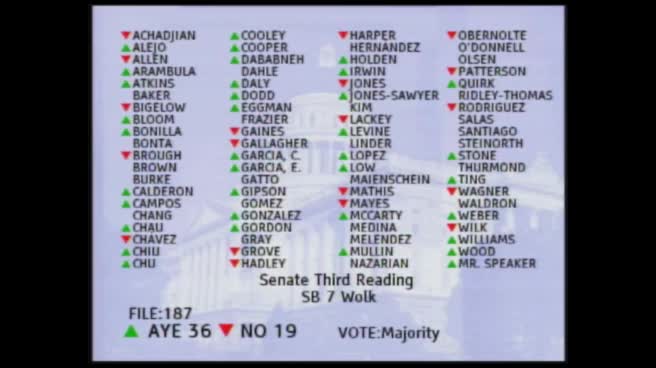 1MIN
Assembly Floor
 4MIN
Assembly Standing Committee on Public Safety
 6MIN
Assembly Floor
 36MIN
Assembly Standing Committee on Health
 1MIN
Senate Floor
 7MIN