AB 1209: Employers: gender pay differentials.
- Session Year: 2017-2018
- House: Assembly
- Latest Version Date: 2017-09-13
Existing law requires a corporation, limited liability company, or common interest development, among others, to file a statement of information with the Secretary of State, providing specified information about the entity. Existing law regulates the terms and conditions of employment, including the payment of wages. Existing law generally prohibits an employer from paying any of its employees at rates less than the rates paid to employees of the opposite sex for substantially similar work, as specified.
This bill would require, on and after July 1, 2019, and biennially thereafter, that an employer that is required to file a statement of information with the Secretary of State and that has 500 or more employees in California to collect specified information on gender wage differentials. The bill would require the employer to submit the information to the Secretary of State as specified, by July 1, 2020, and biennially thereafter. The bill would require the Secretary of State to publish the information described above on an Internet Web site available to the public upon receiving necessary funding and establishing adequate mechanisms and procedures.
Existing law requires a corporation, limited liability company, or common interest development, among others, to file a statement of information with the Secretary of State, providing specified information about the entity. Existing law regulates the terms and conditions of employment, including the payment of wages. Existing law generally prohibits an employer from paying any of its employees at rates less than the rates paid to employees of the opposite sex for substantially similar work, as specified.
This bill would require, on and after July 1, 2019, and annually biennially thereafter, that an employer that is required to file a statement of information with the Secretary of State and that has 500 or more employees to in California to collect specified information on gender pay wage differentials. The bill would require the employer to submit the information annually to the Secretary of State as specified. specified, by July 1, 2020, and biennially thereafter. The bill would require the Secretary of State to publish the information described above on an Internet Web site available to the public upon receiving necessary funding and establishing adequate mechanisms and procedures.
Existing law requires a corporation, limited liability company, or common interest development, among others, to file a statement of information with the Secretary of State, providing specified information about the entity. Existing law regulates the terms and conditions of employment, including the payment of wages. Existing law generally prohibits an employer from paying any of its employees at rates less than the rates paid to employees of the opposite sex for substantially similar work, as specified.
This bill would require, on and after July 1, 2019, and annually thereafter, that an employer that is required to file a statement of information with the Secretary of State and that has 500 or more employees to in California collect specified information on gender pay differentials. The bill would require the employer to submit the information annually to the Secretary of State as specified. The bill would require the Secretary of State to publish the information described above on an Internet Web site available to the public upon the occurrence of 2 specified events. receiving necessary funding and establishing adequate mechanisms and procedures.
Existing law requires a corporation, limited liability company, or common interest development, among others, to file a statement of information with the Secretary of State, providing specified information about the entity. Existing law regulates the terms and conditions of employment, including the payment of wages. Existing law generally prohibits an employer from paying any of its employees at rates less than the rates paid to employees of the opposite sex for substantially similar work, as specified.
This bill would require require, on and after July 1, 2019, and annually thereafter, that an employer that is required to file a statement of information with the Secretary of State and that has 250 500 or more employees to in California collect specified information on gender pay differentials. The bill would require the employer to publish the information collected on an Internet Web site that is available to the public by July 1, 2020, and to submit it the information annually to the Secretary of State, subject to the occurrence of a specified contingency. The bill would require an employer to annually update, publish, and submit the information, as specified. The bill would require the Secretary of State to publish a certification on its Internet Web site that it is prepared to receive the information described above on an Internet Web site available to the public upon the occurrence of 2 specified events.
Existing law requires a corporation, limited liability company, or common interest development, among others, to file a statement of information with the Secretary of State, providing specified information about the entity. Existing law regulates the terms and conditions of employment, including the payment of wages. Existing law generally prohibits an employer from paying any of its employees at rates less than the rates paid to employees of the opposite sex for substantially similar work, as specified.
This bill would require an employer that is required to file a statement of information with the Secretary of State and that has 250 or more employees to collect specified information on gender pay differentials. The bill would require the employer to publish the information collected on an Internet Web site that is available to the public by July 1, 2020, and to submit it to the Secretary of State, subject to the occurrence of a specified contingency. The bill would require an employer to annually update, publish, and submit the information, as specified. The bill would require the Secretary of State to publish a certification on its Internet Web site that it is prepared to receive the information described above upon the occurrence of 2 specified events.
Existing law requires a court, in any action brought for the nonpayment of wages, to award interest on all due and unpaid wages at a specified rate of interest, which shall accrue from the date that the wages were due and payable.This bill would make a technical, nonsubstantive change to that provision.Existing law requires a court, in any action brought for the nonpayment of wages, to award interest on all due and unpaid wages at a specified rate of interest, which shall accrue from the date that the wages were due and payable.
This bill would make a technical, nonsubstantive change to that provision.
(a)An employer that is required to file a statement of information with the Secretary of State and that has 500 or more employees in California shall do the following:
(1)Beginning on July 1, 2019, and biennially thereafter, collect the following information on gender wage differentials. For purposes of this paragraph, exempt means not subject to overtime requirements as an administrative, executive, or professional employee.
(A)The difference between the mean wages of male exempt employees and female exempt employees located in California, by each job classification or title.
(B)The difference between the median wages of male exempt employees and female exempt employees located in California, by each job classification or title.
(C)The difference between the mean wages of male board members and female board members located in California.
(D)The difference between the median wages of male board members and female board members located in California.
(E)The number of employees used for the determination of subparagraphs (A) and (B).
(2)(A)In a manner and form provided by the Secretary of State, submit the information collected and updated pursuant to paragraph (1) to the Secretary of State, beginning July 1, 2020, and biennially thereafter.
(B)(i)The employer shall categorize the information submitted consistently with Section 1197.5.
(ii)A gender wage differential in the information provided under this section is not, in itself, a violation of Section 1197.5. This section does not limit, in any way, the ability to demonstrate the basis of a wage differential for purposes of Section 1197.5.
(b)The Secretary of State, upon receiving the necessary funding appropriation from the Legislature and upon establishing adequate mechanisms and procedures, shall publish the information collected in paragraph (1) of subdivision (a) on an Internet Web site available to the public.
(a)An employer that is required to file a statement of information with the Secretary of State and that has 500 or more employees in California shall do the following:
(1)Beginning on July 1, 2019, and annually biennially thereafter, collect the following information on gender pay wage differentials. For purposes of this paragraph, exempt means not subject to overtime requirements as an administrative, executive, or professional employee.
(A)The difference between the mean salary wages of male exempt employees and female exempt employees, employees located in California, by each job classification or title.
(B)The difference between the median salary wages of male exempt employees and female exempt employees, employees located in California, by each job classification or title.
(C)The difference between the mean compensation wages of male board members and female board members. members located in California.
(D)The difference between the median compensation wages of male board members and female board members. members located in California.
(E)The number of employees used for the determination of subparagraphs (A) and (B).
(2)(A)Submit In a manner and form provided by the Secretary of State, submit the information collected and updated pursuant to paragraph (1) to the Secretary of State, beginning July 1, 2020, and annually biennially thereafter.
(B)(i)The employer shall categorize the information submitted consistently with Section 1197.5.
(ii)A gender wage differential in the information provided under this section is not, in itself, a violation of Section 1197.5. This section does not limit, in any way, the ability to demonstrate the basis of a wage differential for purposes of Section 1197.5.
(b)The Secretary of State, upon receiving the necessary funding appropriation from the Legislature and upon establishing adequate mechanisms and procedures, shall publish the information collected in paragraph (1) of subdivision (a) on an Internet Web site available to the public.
(a)An employer that is required to file a statement of information with the Secretary of State and that has 500 or more employees in California shall do the following:
(1)Beginning on July 1, 2019, and annually thereafter, collect the following information on gender pay differentials. For purposes of this paragraph, exempt means not subject to overtime requirements as an administrative, executive, or professional employee.
(A)The difference between the mean salary of male exempt employees and female exempt employees, by each job classification or title.
(B)The difference between the median salary of male exempt employees and female exempt employees, by each job classification or title.
(C)The difference between the mean compensation of male board members and female board members.
(D)The difference between the median compensation of male board members and female board members.
(E)The number of employees used for the determination of subparagraphs (A) and (B).
(2)(A)Submit the information collected and updated pursuant to paragraph (1) to the Secretary of State, beginning July 1, 2020, and annually thereafter.
(B)The employer shall categorize the information submitted shall be categorized consistent consistently with Section 1197.5.
(b)The Secretary of State, upon receiving the necessary funding appropriation from the Legislature and upon the Secretary of States certification of establishing adequate mechanisms in place, and procedures, shall publish the information collected in paragraph (1) of subdivision (a) on an Internet Web site available to the public.
(a)An employer that is required to file a statement of information with the Secretary of State and that has 250 500 or more employees in California shall do the following:
(1)Collect Beginning on July 1, 2019, and annually thereafter, collect the following information on gender pay differentials. For purposes of this paragraph, exempt means not subject to overtime requirements as an administrative, executive, or professional employee.
(A)The difference between the mean salary of male exempt employees and female exempt employees, by each job classification or title.
(B)The difference between the median salary of male exempt employees and female exempt employees, by each job classification or title.
(C)The difference between the mean compensation of male board members and female board members.
(D)The difference between the median compensation of male board members and female board members.
(E)The number of employees used for the determination of subparagraphs (A) and (B).
(2)Publish the information collected pursuant to paragraph (1) on or before July 1, 2020, on an Internet Web site that is available to the public.(3)For each year after 2020, annually update the information in paragraph (1) and publish it on or before July 1, on an Internet Web site that is available to the public.(4)(2)(A)Submit the information collected and updated pursuant to paragraph (1) or (3) to the Secretary of State, upon the publication of the certification described in subdivision (b). beginning July 1, 2020, and annually thereafter.
(B)The information submitted shall be categorized consistent with Section 1197.5.
(b)The Secretary of State shall publish a certification on its Internet Web site that it is prepared to receive the information collected pursuant to subdivision (a) upon the occurrence of both of the following:(1)The Legislature has appropriated the funds necessary for the Secretary of State to receive and maintain the data.(2)The Secretary of State has appropriate mechanisms in place for the data to be provided and received electronically.(b)The Secretary of State, upon receiving the necessary funding appropriation from the Legislature and upon the Secretary of States certification of adequate mechanisms in place, shall publish the information collected in paragraph (1) of subdivision (a) on an Internet Web site available to the public.
(a)An employer that is required to file a statement of information with the Secretary of State and that has 250 or more employees shall do the following:
(1)Collect the following information on gender pay differentials. For purposes of this paragraph, exempt means not subject to overtime requirements as an administrative, executive, or professional employee.
(A)The difference between the mean salary of male exempt employees and female exempt employees, by each job classification or title.
(B)The difference between the median salary of male exempt employees and female exempt employees, by each job classification or title.
(C)The difference between the mean compensation of male board members and female board members.
(D)The difference between the median compensation of male board members and female board members.
(E)The number of employees used for the determination of subparagraphs (A) and (B).
(2)Publish the information collected pursuant to paragraph (1) on or before July 1, 2020, on an Internet Web site that is available to the public.
(3)For each year after 2020, annually update the information in paragraph (1) and publish it on or before July 1, on an Internet Web site that is available to the public.
(4)Submit the information collected and updated pursuant to paragraph (1) or (3) to the Secretary of State, upon the publication of the certification described in subdivision (b).
(b)The Secretary of State shall publish a certification on its Internet Web site that it is prepared to receive the information collected pursuant to subdivision (a) upon the occurrence of both of the following:
(1)The Legislature has appropriated the funds necessary for the Secretary of State to receive and maintain the data.
(2)The Secretary of State has appropriate mechanisms in place for the data to be provided and received electronically.
(a)An employer that is required to file a statement of information with the Secretary of State and that has 250 or more employees shall do the following:
(1)Collect the following information on gender pay differentials. For purposes of this paragraph, exempt means not subject to overtime requirements as an administrative, executive, or professional employee.
(A)The difference between the mean salary of male exempt employees and female exempt employees, by each job classification or title.
(B)The difference between the median salary of male exempt employees and female exempt employees, by each job classification or title.
(C)The difference between the mean compensation of male board members and female board members.
(D)The difference between the median compensation of male board members and female board members.
(2)Publish the information collected pursuant to paragraph (1) on or before July 1, 2020, on an Internet Web site that is available to the public.
(3)For each year after 2020, annually update the information in paragraph (1) and publish it on or before July 1, on an Internet Web site that is available to the public.
(4)Submit the information collected and updated pursuant to paragraph (1) or (3) to the Secretary of State, upon the publication of the certification described in subdivision (b).
(b)The Secretary of State shall publish a certification on its Internet Web site that it is prepared to receive the information collected pursuant to subdivision (a) upon the occurrence of both of the following:
(1)The Legislature has appropriated the funds necessary for the Secretary of State to receive and maintain the data.
(2)The Secretary of State has appropriate mechanisms in place for the data to be provided and received electronically.
SECTION 1.Section 218.6 of the Labor Code is amended to read:218.6.In any action brought for the nonpayment of wages, the court shall award interest on all due and unpaid wages at the rate of interest specified in subdivision (b) of Section 3289 of the Civil Code, which shall accrue from the date that the wages were due and payable as provided in this part.In any action brought for the nonpayment of wages, the court shall award interest on all due and unpaid wages at the rate of interest specified in subdivision (b) of Section 3289 of the Civil Code, which shall accrue from the date that the wages were due and payable as provided in Part 1 (commencing with Section 200) of Division 2. this part.
|
Date
|
Status
|
|---|---|
| Jan 12, 2018 | Stricken from file. |
| Jan 3, 2018 | Consideration of Governor's veto pending. |
| Oct 15, 2017 | Vetoed by Governor. |
| Sep 19, 2017 | Enrolled and presented to the Governor at 3 p.m. |
| Sep 11, 2017 | Senate amendments concurred in. To Engrossing and Enrolling. |
| Sep 7, 2017 | In Assembly. Concurrence in Senate amendments pending. May be considered on or after September 9 pursuant to Assembly Rule 77. |
| Sep 7, 2017 | Read third time. Passed. Ordered to the Assembly. |
| Sep 5, 2017 | Read second time. Ordered to third reading. |
| Sep 1, 2017 | From committee: Amend, and do pass as amended. (Ayes 5. Noes 2.) (September 1). |
| Aug 21, 2017 | In committee: Referred to APPR. suspense file. |
| Jul 13, 2017 | Read second time and amended. Re-referred to Com. on APPR. |
| Jul 12, 2017 | From committee: Amend, and do pass as amended and re-refer to Com. on APPR. (Ayes 4. Noes 1.) (July 12). |
| Jul 5, 2017 | From committee chair, with author's amendments: Amend, and re-refer to committee. Read second time, amended, and re-referred to Com. on L. & I.R. |
| Jun 14, 2017 | Referred to Com. on L. & I.R. |
| Jun 1, 2017 | In Senate. Read first time. To Com. on RLS. for assignment. |
| May 31, 2017 | Read third time. Passed. Ordered to the Senate. (Ayes 48. Noes 19. Page 1967.) |
| May 30, 2017 | Read second time and amended. Ordered returned to second reading. |
| May 26, 2017 | From committee: Amend, and do pass as amended. (Ayes 11. Noes 6.) (May 26). |
| May 10, 2017 | In committee: Set, first hearing. Referred to APPR. suspense file. |
| Apr 20, 2017 | From committee: Do pass and re-refer to Com. on APPR. (Ayes 5. Noes 2.) (April 19). Re-referred to Com. on APPR. |
| Mar 29, 2017 | Re-referred to Com. on L. & E. |
| Mar 28, 2017 | From committee chair, with author's amendments: Amend, and re-refer to Com. on L. & E. Read second time and amended. |
| Mar 27, 2017 | Referred to Com. on L. & E. |
| Feb 19, 2017 | From printer. May be heard in committee March 21. |
| Feb 17, 2017 | Read first time. To print. |
|
Date
|
Description
|
Location
|
Votes
|
|
|---|---|---|---|---|
| Sep 11, 2017 | AB 1209 GONZALEZ FLETCHER Concurrence in Senate Amendments | Assembly Floor |
Passed |
|
| Sep 7, 2017 | Assembly 3rd Reading AB1209 Gonzalez Fletcher By Galgiani | Senate Floor |
Passed |
|
| Sep 1, 2017 | Do pass as amended | Senate Standing Committee on Appropriations |
Passed |
|
| Aug 21, 2017 | Placed on suspense file | Senate Standing Committee on Appropriations |
Passed |
|
| Jul 12, 2017 | Do pass as amended, but first amend, and re-refer to the Committee on [Appropriations] | Senate Standing Committee on Labor and Industrial Relations |
Passed |
|
| May 31, 2017 | AB 1209 GONZALEZ FLETCHER Assembly Third Reading | Assembly Floor |
Passed |
|
| May 26, 2017 | Do pass as amended. | Assembly Standing Committee on Appropriations |
Passed |
|
| Apr 19, 2017 | Do pass and be re-referred to the Committee on [Appropriations] | Assembly Standing Committee on Labor and Employment |
Passed |
This list shows positions taken on this bill by organizations on the date displayed, which is linked to the original source.
Positions by individuals are not included.
|
Organization
|
Position
|
Date
|
|---|---|---|
| 9 to 5 | ** Support | Sep 5, 2017 |
| ACLU of Northern California | ** Support | Sep 5, 2017 |
| Act for Women & Girls | ** Support | Sep 5, 2017 |
| Agricultural Council Of California | ** Against | Sep 5, 2017 |
| Alliance Of Californians For Community Empowerment | ** Support | Sep 5, 2017 |
| American Association of University Women | ** Support | Sep 5, 2017 |
| American Civil Liberties Union | ** Support | Sep 5, 2017 |
| American Insurance Association | ** Against | Sep 5, 2017 |
| Brea Chamber of Commerce | ** Against | Sep 5, 2017 |
| California Ambulance Association | ** Against | Sep 5, 2017 |
| California Asset Building Coalition | ** Support | Sep 5, 2017 |
| California Association For Health Services At Home | ** Against | Sep 5, 2017 |
| California Attractions And Parks Association | ** Against | Sep 5, 2017 |
| California Bankers Association | ** Against | Sep 5, 2017 |
| California Chamber Of Commerce California Farm Bureau Federation | ** Against | Sep 5, 2017 |
| California Child Care Resource & Referral Network | ** Support | Sep 5, 2017 |
| California Conference Board Of The Amalgamated Transit Union | ** Support | Sep 5, 2017 |
| California Conference Of Machinists | ** Support | Sep 5, 2017 |
| California Domestic Workers Coalition | ** Support | Sep 5, 2017 |
| California Employment Lawyers Association | ** Support | Sep 5, 2017 |
| California Farm Bureau Federation | * Against | Apr 19, 2017 |
| California Labor Federation, Afl-Cio | ** Support | Sep 5, 2017 |
| California Land Title Association | ** Against | Sep 5, 2017 |
| California Latinas for Reproductive Justice | ** Support | Sep 5, 2017 |
| California League of Food Processors | ** Against | Sep 5, 2017 |
| California Manufacturers And Technology Association | ** Against | Sep 5, 2017 |
| California Partnership | ** Support | Sep 5, 2017 |
| California Professional Association Of Specialty Contractors | ** Against | Sep 5, 2017 |
| California Restaurant Association | ** Against | Sep 5, 2017 |
| California Retailers Association | ** Against | Sep 5, 2017 |
| California Teamsters Public Affairs Council | ** Support | Sep 5, 2017 |
| California Women's Law Center | ** Support | Sep 5, 2017 |
| California Work and Family Coalition | ** Support | Sep 5, 2017 |
| Camarillo Chamber of Commerce | ** Against | Sep 5, 2017 |
| Career Ladders Project | ** Support | Sep 5, 2017 |
| Center for Popular Democracy | ** Support | Sep 5, 2017 |
| Cerritos Regional Chamber of Commerce | ** Against | Sep 5, 2017 |
| Child Care Law Center | ** Support | Sep 5, 2017 |
| City and County of San Francisco | ** Support | Sep 5, 2017 |
| Civil Justice Association Of California | ** Against | Sep 5, 2017 |
| Claremont Chamber of Commerce | ** Against | Sep 5, 2017 |
| Computing Technology Industry Association | ** Against | Sep 5, 2017 |
| El Centro Chamber of Commerce | ** Against | Sep 5, 2017 |
| Equal Rights Advocates | ** Support | Sep 5, 2017 |
| Fiona Ma, State Board of Equalization | ** Support | Sep 5, 2017 |
| Fresno Chamber of Commerce | ** Against | Sep 5, 2017 |
| Gilroy Chamber of Commerce | ** Against | Sep 5, 2017 |
| Greater Conejo Valley Chamber of Commerce | ** Against | Sep 5, 2017 |
| International Longshore and Warehouse Union | ** Support | Sep 5, 2017 |
| League Of California Cities | ** Against | Apr 17, 2017 |
| Legal Aid At Work | ** Support | Sep 5, 2017 |
| Mujeres Unidas Y Activas | ** Support | Sep 5, 2017 |
| National Council of Jewish Women | ** Support | Sep 5, 2017 |
| National Federation Of Independent Business | ** Against | Sep 5, 2017 |
| North Orange County Chamber of Commerce | ** Against | Sep 5, 2017 |
| Oceanside Chamber of Commerce | ** Against | Sep 5, 2017 |
| Official Police Garages of Los Angeles | ** Against | Sep 5, 2017 |
| Parent Voices | ** Support | Sep 5, 2017 |
| Personal Insurance Federation Of California | ** Against | Sep 5, 2017 |
| Professional & Technical Engineers, IFPTE Local 21, AFL-CIO | ** Support | Sep 5, 2017 |
| Raising California Together | ** Support | Sep 5, 2017 |
| Ripon Chamber of Commerce | ** Against | Sep 5, 2017 |
| San Francisco Department on the Status of Women | ** Support | Sep 5, 2017 |
| San Valley Gabriel Valley Economic Partnership | ** Against | Sep 5, 2017 |
| Santa Maria Valley Chamber of Commerce | ** Against | Sep 5, 2017 |
| Stronger California Advocates Network | ** Support | Apr 17, 2017 |
| Technet | ** Against | Sep 5, 2017 |
| The Opportunity Institute | ** Support | Sep 5, 2017 |
| Tradeswomen, Inc. | ** Support | Sep 5, 2017 |
| UC San Francisco | * Support | Apr 19, 2017 |
| UNITE-HERE, AFL-CIO | ** Support | Sep 5, 2017 |
| United Food and Commerical Workers | * Support | Apr 19, 2017 |
| utility workers union of america, local 132, afl-cio | ** Support | Sep 5, 2017 |
| Vacaville Chamber of Commerce | ** Against | Sep 5, 2017 |
| Voices for Progress | ** Support | Sep 5, 2017 |
| western center on law and poverty | ** Support | Sep 5, 2017 |
| Western Growers Association | ** Against | Sep 5, 2017 |
| Wine Institute | ** Against | Sep 5, 2017 |
| Women's Foundation of California | ** Support | Sep 5, 2017 |
| YWCA San Francisco & Marin | ** Support | Sep 5, 2017 |
GOVERNOR'S VETO
GV Bill Id:AB 1209
Author:(Gonzalez Fletcher)
As Enrolled Ver:September 13, 2017
2/3 vote
ASSEMBLY: | 48-19 | (May 31, 2017) | SENATE: | 23-13 | (September 7, 2017) |
ASSEMBLY: | 47-23 | (September 11, 2017) |
Original Committee Reference: L. & E.
SUMMARY: Requires employers of 500 or more employees in California to collect information as specified on gender wage differentials for exempt employees and board members located in California and submit it to the Secretary of State (SOS) for publication on its Internet website.
The Senate amendments make the reporting requirement biennial. Specify that a gender wage differential in the information provided is not, in itself, a violation of existing law and that these provisions do not limit, in any way, the ability to demonstrate the basis of a wage differential for purposes of Labor Code Section 1197.5. Provide clarifying changes that this measure only applies to California employees. Provide for other technical and clarifying changes.
See policy committee analysis for existing law and background.
FISCAL EFFECT: According to the Senate Appropriations Committee, "SOS would incur costs in the hundreds of thousands of dollars annually to implement the provisions of this bill."
COMMENTS: The author argues that, "On average, American women only earn 78 cents for every dollar compared to their male counterparts. The annual average gender gap is slightly better in California at 85 cents on the dollar. However, California has one of the largest wage gaps for African American women and Latinas, who only earn 64 and 54 cents, respectively, for every dollar a white man makes.[1] On average, California women with full-time jobs lose out on approximately $37.7 billion every year due to this wage gap (using 2016 data).[2] This has a significant impact on the economy, because women made up 42.3% of the 12.6 million employed Californians in 2015.[3] Additionally, nearly two-thirds of women in California are employed and nearly four in 10 mothers in the United States are primary breadwinners in their households.[4] In California, almost 58% of working mothers were breadwinners or co-breadwinners in 2015.[5]"
Arguments in Support
As the sponsors of this measure the Equal Rights Advocates write in support, "Despite the existence of state and federal laws that prohibit employers from paying employees of the opposite sex different amounts for performing the same or substantially similar work, the wage gap between men and women persists in virtually every industry and economic sector in this country… Measures that increase pay transparency are an important strategy for addressing, and eventually closing, the gender wage gap because workers and, in many cases employers themselves, are frequently unaware that pay disparities exist within their own companies. Research has shown that pay transparency requirements increase awareness of pay gaps and result in the shrinking these gaps, as occurred within California's own civil service workforce after a law was enacted requiring publication of salary information. Pay transparency policies have similarly been enacted in several countries in Europe to combat the unjust pay gap, further supporting the conclusion that pay data analysis and transparency initiatives are one important part of the solution. It is time for California, as the sixth largest economy in the world, to implement a gender wage gap disclosure policy for large companies, which is one concrete policy solution that will help to close the persistent and pernicious gender wage gap."
Arguments in Opposition
The California Chamber of Commerce and coalition of organizations write in opposition, "Collecting pay data in the aggregate will likely demonstrate wage disparity amongst employees in the different job classifications or titles according to gender. However, a disparity in wages does not automatically translate into wage discrimination or a violation of SB 358/Labor Code Section 1197.5 (SB 358), which is our primary concern with the proposed data collection. The aggregate data proposed to be collected fails to compare equal jobs or those that are "substantially similar." Specifically, AB 1209 seeks to collect pay data according to job descriptions or title, not according to whether the jobs are "substantially similar" for purposes of comparison. Job titles and descriptions are not determinative of whether two jobs are the same for purpose of equal pay under SB 358 or the federal Equal Pay Law… Given the lack of any reliable or useful data that AB 1209 will actually provide regarding wage discrimination or unequal pay, there is no valid purpose for which this data should be collected, much less posted on the internet…We strongly disagree that the state should mandate data collection for this purpose and expose employers to unnecessary investigations and lawsuits for purported wage discrimination and unequal pay where none exists."
This bill would require employers with 500 or more employees in California to provide to the Secretary of State specific information regarding gender wage differentials for exempt employees and board members.
I have strongly supported policies that ensure women are compensated equitably and will continue to do so. While transparency is often the first step to addressing an identified problem, it is unclear that the bill as written, given its ambiguous wording, will provide data that will meaningfully contribute to efforts to close the gender wage gap. Indeed, I am worried that this ambiguity could be exploited to encourage more litigation than pay equity.
Since the Equal Pay Act was signed into law in 2015, the Pay Equity Task Force, which is comprised of members from this administration, business, academia, labor, the legislature and pay equity advocates, has been engaged in analysis of the new law, as well as workplace and compensation policies that can lead to successful compliance with the Act. Guidance and recommendations coming out of the Task Force will assist companies around the state with assessing their current wage practices.
Analysis Prepared by: Taylor Jackson / L. & E. / (916) 319-2091 FN: 0002467
https://www.aauw-ca.org/equal-pay-day-april-4-2017 ↑
http://www.nationalpartnership.org/research-library/workplace-fairness/fair-pay/4-2016-ca-wage-gap.pdf ↑
http://www.bizjournals.com/sanjose/news/2017/02/21/california-silicon-valley-pay-gap-women.html ↑
http://leginfo.legislature.ca.gov/faces/billTextClient.xhtml?bill_id=201720180SCR37 ↑
http://www.sandiegouniontribune.com/news/data-watch/sd-me-breadwinners-20161221-story.html ↑
CONCURRENCE IN SENATE AMENDMENTS
CSA1 Bill Id:AB 1209
Author:(Gonzalez Fletcher)
As Amended Ver:September 1, 2017
Majority vote
ASSEMBLY: | 48-19 | (May 31, 2017) | SENATE: | 23-13 | (September 7, 2017) |
Original Committee Reference: L. & E.
SUMMARY: Requires employers of 500 or more employees in California to collect information as specified on gender wage differentials for exempt employees and board members located in California and submit it to the Secretary of State (SOS) for publication on its internet website.
The Senate amendments make the reporting requirement biennial. Specify that a gender wage differential in the information provided is not, in itself, a violation of existing law and that these provisions do not limit, in any way, the ability to demonstrate the basis of a wage differential for purposes of Labor Code Section 1197.5. Provide clarifying changes that this measure only applies to California employees. Provide for other technical and clarifying changes.
See policy committee analysis for existing law and background.
FISCAL EFFECT: According to the Senate Appropriations Committee, "SOS would incur costs in the hundreds of thousands of dollars annually to implement the provisions of this bill."
COMMENTS: The author argues that, "On average, American women only earn 78 cents for every dollar compared to their male counterparts. The annual average gender gap is slightly better in California at 85 cents on the dollar. However, California has one of the largest wage gaps for African American women and Latinas, who only earn 64 and 54 cents, respectively, for every dollar a white man makes.[1] On average, California women with full-time jobs lose out on approximately $37.7 billion every year due to this wage gap (using 2016 data).[2] This has a significant impact on the economy, because women made up 42.3% of the 12.6 million employed Californians in 2015.[3] Additionally, nearly two-thirds of women in California are employed and nearly four in 10 mothers in the United States are primary breadwinners in their households.[4] In California, almost 58% of working mothers were breadwinners or co-breadwinners in 2015.[5]"
Arguments in Support
As the sponsors of this measure the Equal Rights Advocates write in support, "Despite the existence of state and federal laws that prohibit employers from paying employees of the opposite sex different amounts for performing the same or substantially similar work, the wage gap between men and women persists in virtually every industry and economic sector in this country… Measures that increase pay transparency are an important strategy for addressing, and eventually closing, the gender wage gap because workers and, in many cases employers themselves, are frequently unaware that pay disparities exist within their own companies. Research has shown that pay transparency requirements increase awareness of pay gaps and result in the shrinking these gaps, as occurred within California's own civil service workforce after a law was enacted requiring publication of salary information. Pay transparency policies have similarly been enacted in several countries in Europe to combat the unjust pay gap, further supporting the conclusion that pay data analysis and transparency initiatives are one important part of the solution. It is time for California, as the sixth largest economy in the world, to implement a gender wage gap disclosure policy for large companies, which is one concrete policy solution that will help to close the persistent and pernicious gender wage gap."
Arguments in Opposition
The California Chamber of Commerce and coalition of organizations write in opposition, "Collecting pay data in the aggregate will likely demonstrate wage disparity amongst employees in the different job classifications or titles according to gender. However, a disparity in wages does not automatically translate into wage discrimination or a violation of SB 358/Labor Code Section 1197.5 (SB 358), which is our primary concern with the proposed data collection. The aggregate data proposed to be collected fails to compare equal jobs or those that are "substantially similar." Specifically, AB 1209 seeks to collect pay data according to job descriptions or title, not according to whether the jobs are "substantially similar" for purposes of comparison. Job titles and descriptions are not determinative of whether two jobs are the same for purpose of equal pay under SB 358 or the federal Equal Pay Law… Given the lack of any reliable or useful data that AB 1209 will actually provide regarding wage discrimination or unequal pay, there is no valid purpose for which this data should be collected, much less posted on the internet…We strongly disagree that the state should mandate data collection for this purpose and expose employers to unnecessary investigations and lawsuits for purported wage discrimination and unequal pay where none exists."
Related/ Prior Legislation
AB 46 (Cooper) of the current legislative session is pending on the Senate Floor. This bill expands California's pay equity laws for women and minorities to encompass all employees in both the public and private sectors.
AB 168 (Eggman) of the current legislative session is pending on the Senate Floor. This bill prohibits an employer, including the Legislature, state and local government employers, from seeking salary history information about an applicant for employment, as provided. It also requires an employer, upon reasonable request, to provide the pay scale for a position to an applicant for employment.
Analysis Prepared by: Taylor Jackson / L. & E. / 916-319-2091 FN: 0001958
https://www.aauw-ca.org/equal-pay-day-april-4-2017 ↑
http://www.nationalpartnership.org/research-library/workplace-fairness/fair-pay/4-2016-ca-wage-gap.pdf ↑
http://www.bizjournals.com/sanjose/news/2017/02/21/california-silicon-valley-pay-gap-women.html ↑
http://leginfo.legislature.ca.gov/faces/billTextClient.xhtml?bill_id=201720180SCR37 ↑
http://www.sandiegouniontribune.com/news/data-watch/sd-me-breadwinners-20161221-story.html ↑
Office of Senate Floor Analyses (916) 651-1520 Fax: (916) 327-4478 | AB |
THIRD READING
Bill No: AB 1209
: 9/1
SENATE LABOR & IND. REL. COMMITTEE: 4-1, 7/12/17
AYES: Bradford, Atkins, Jackson, Mitchell
NOES: Stone
SENATE APPROPRIATIONS COMMITTEE: 5-2, 9/1/17
AYES: Lara, Beall, Bradford, Hill, Wiener
NOES: Bates, Nielsen
ASSEMBLY FLOOR: 48-19, 5/31/17 - See last page for vote
SOURCE: American Association of University Women
Equal Rights Advocates
DIGEST:
This bill requires employers of 500 or more employees in California to collect specified information on gender wage differentials for exempt employees and board members located in California and submit it to the Secretary of State (SOS) for publishing on its Internet site.
Existing law:
- Bars an employer from requiring an employee to refrain from disclosing the amount of his/her wages, requiring an employee to sign a waiver or document denying the employee the right to disclose the amount of his/her wages or discharge, or disciple, or otherwise discriminating against an employee who discloses the amount of his/her wages. (Labor Code §232)
- Prohibits an employer from paying an employee at wage rates less than the rates paid to employees of the opposite sex for substantially similar work, when viewed as a composite of skill, effort, and responsibility, and performed under similar working conditions. (Labor Code §1197.5(a))
- Prohibits an employer from paying employees a wage rate less than the rate paid to employees of a different race or ethnicity for substantially similar work. (Labor Code §1197.5(b))
- Establishes exceptions to this prohibition where the employer demonstrates the payment is made pursuant to:
- A seniority system;
- A merit system;
- A system which measures earnings by quantity or quality of production;
- A bona fide factor other than sex, such as education, training, or experience which applies only if the employer demonstrates the factor is not based on or derived from a sex-based differential in compensation, is job related, and is consistent with a business necessity, as defined.
- Specifies that prior salary cannot, by itself, justify compensation disparities.
- Specifies that an employer who violates these provisions is liable to the affected employee in the amount of the wages, and interest thereon, and an additional equal amount as liquidated damages, administered and enforced by the Division of Labor Standards Enforcement (DLSE).
- Makes it a misdemeanor, punishable by a fine of up to $10,000 and/or by imprisonment, or both, for an employer, as specified, to pay or cause to be paid to any employee a wage less than the rate paid to an employee of the opposite sex, or who reduces the wages of any employee in order to comply with wage protections for an employee of the opposite sex per Section 1197.5. (Labor Code §1199.5)
- Requires a corporation, limited liability company, or common interest development, among others, to file a statement of information with the SOS, providing specified information about the entity. (Corporations Code §200.5, §17702.01, §18200)
This bill:
- Requires an employer that is required to file a statement of information with the Secretary of State and that has 500 or more employees in California to do the following:
- Beginning on July 1, 2019, and biennially thereafter, collect the following information on gender wage differentials.
- The difference between the mean wages of male and female exempt employees located in California by each job classification or title.
- The difference between the median wages of male and female exempt employees located in California by each job classification or title.
- The difference between the mean wages of male and female board members located in California.
- The difference between the median wages of male and female board members located in California.
- The number of employees used for the determination of the mean and median wages for exempt employees.
- Beginning July 1, 2020, and biennially thereafter, submit the information collected and updated, per the above, to the SOS in a manner and form specified by the SOS.
- Requires the information submitted to be categorized consistent with Labor Code Section 1197.5
- Beginning on July 1, 2019, and biennially thereafter, collect the following information on gender wage differentials.
- Specifies that a gender wage differential in the information provided is not, in itself, a violation of existing law and that these provisions do not limit, in any way, the ability to demonstrate the basis of a wage differential for purposes of Labor Code Section 1197.5.
- Specifies that “exempt” employee means not subject to overtime requirements as an administrative, executive, or professional employee.
- Requires the SOS, upon receiving the necessary funding appropriation from the Legislature and upon establishing adequate mechanisms and procedures, to publish the gender wage differential information collected on an Internet Web site available to the public.
Background
Research on gender pay disparity. In 1963, women who worked full-time year-round made 59 cents on average for every dollar earned by a man according to the American Association of University Women (AAUW). Today, women working full time in the United States typically are paid just 80 percent of what men are paid, a gap of 20 cents. AAUW also ranked the wage gap for individual states in the US for 2015, California ranking 7th with the median annual earnings being $50,562 for males and $43,335 for females, an earnings ratio of 86 percent. (The Simple Truth about the Gender Pay Gap, 2017 Edition, AAUW)
The wage gap is even larger for women of color. According to the National Partnership for Women & Families, among women who hold full-time, year-round jobs in the United States, Black women are typically paid 63 cents for every dollar paid to white men, while Latinas are paid just 54 cents for every dollar. Asian women are paid 85 cents for every dollar paid to white men, although some ethnic subgroups of Asian women fare much worse. (America’s Women and the Wage Gap, National Partnership for Women & Families, April 2017)
(NOTE: Please see Senate Labor and Industrial Relations Committee analysis for more background information.)
Comments
Need for this bill? According to the author, despite efforts to address wage disparities, in California, women earn 85 cents for every dollar compared to their male counterparts – slightly better than the national average of 78 cents for every dollar. However, California has one of the largest wage gaps for African American women and Latinas, as noted above. On average, California women with full-time jobs lose out on approximately $37.7 billion every year due to this wage gap (using 2016 data). This has a significant impact on the economy, because women made up 42.3 percent of the 12.6 million employed Californians in 2015, and almost 58 percent of working mothers were breadwinners or co-breadwinners. The author notes that according to estimates by the Institute for Women’s Policy Research, the gender wage gap in the United States will not close until 2058 if recent progress continues at its current rate. The author believes that one policy solution available to close the wage gap in California is increasing transparency.
Related/Prior Legislation
AB 168 (Eggman, 2017) prohibits an employer, including the Legislature, state and local government employers, from seeking salary history information, including compensation and benefits, about an applicant for employment. It also requires an employer, upon request, to provide the pay scale for a position.
AB 46 (Cooper, 2017) specifies that the Equal Pay Act provisions which prohibit employers from paying a lower wage rate to employees on the basis of gender, race, or ethnicity apply to both public and private employers.
FISCAL EFFECT: Appropriation: Fiscal Com.: Local:
According to the Senate Appropriations Committee, SOS would incur costs in the hundreds of thousands of dollars annually to implement the provisions of this bill.
American Association of University Women (co-source)
Equal Rights Advocates (co-source)
9 to 5
ACLU of Northern California
Act for Women & Girls
Alliance of Californians for Community Empowerment
American Association of University Women
American Civil Liberties Union
American Federation of State, County and Municipal Employees, AFL-CIO
California Asset Building Coalition
California Child Care Resource & Referral Network
California Conference Board of the Amalgamated Transit Union
California Conference of Machinists
California Domestic Workers Coalition
California Employment Lawyers Association
California Labor Federation, AFL-CIO
California Latinas for Reproductive Justice
California Partnership
California Teamsters Public Affairs Council
California Women’s Law Center
California Work and Family Coalition
Career Ladders Project
Center for Popular Democracy
Child Care Law Center
City and County of San Francisco
Engineers & Scientists of California, IFPTE Local 20, AFL-CIO
Equal Rights Advocates
Fiona Ma, State Board of Equalization
International Longshore and Warehouse Union
Legal Aid at Work
Mujeres Unidas y Activas
National Council of Jewish Women
Parent Voices
Professional & Technical Engineers, IFPTE Local 21, AFL-CIO
Raising California Together
San Francisco Department on the Status of Women
The Opportunity Institute
Tradeswomen, Inc.
United Food and Commercial Workers Union, Western States Council
UNITE-HERE, AFL-CIO
Utility Workers Union of America, Local 132, AFL-CIO
Voices for Progress
Western Center on Law and Poverty
Women’s Foundation of California
YWCA San Francisco & Marin
Agricultural Council of California
American Insurance Association
Brea Chamber of Commerce
California Ambulance Association
California Association for Health Services at Home
California Attractions and Parks Association
California Bankers Association
California Chamber of Commerce
California Farm Bureau Federation
California Land Title Association
California League of Food Processors
California Manufacturers and Technology Association
California Professional Association of Specialty Contractors
California Restaurant Association
California Retailers Association
Camarillo Chamber of Commerce
Cerritos Regional Chamber of Commerce
Civil Justice Association of California
Claremont Chamber of Commerce
Computing Technology Industry Association
El Centro Chamber of Commerce
Fresno Chamber of Commerce
Gilroy Chamber of Commerce
Greater Conejo Valley Chamber of Commerce
National Association of Theatre Owners of California and Nevada
National Federation of Independent Business
North Orange County Chamber of Commerce
Oceanside Chamber of Commerce
Official Police Garages of Los Angeles
Personal Insurance Federation of California
Ripon Chamber of Commerce
San Valley Gabriel Valley Economic Partnership
Santa Maria Valley Chamber of Commerce
TechNet
Vacaville Chamber of Commerce
Western Growers Association
Wine Institute
ARGUMENTS IN SUPPORT: According to proponents, measures that increase pay transparency are an important strategy for addressing, and eventually closing, the gender wage gap because workers and, in many cases employers themselves, are frequently unaware that pay disparities exist within their own companies. They argue that it is time for California, as the sixth largest economy in the world, to implement a gender wage gap disclosure policy for large companies, which is one concrete policy solution that will help to close the persistent gender wage gap.
ARGUMENTS IN OPPOSITION: Opposition from the California Chamber of Commerce and a coalition of employer organizations argue that this bill will create a false impression of wage discrimination or unequal pay where none exists and, therefore, subject employers to unfair public criticism as well as expose employers to significant litigation costs to defend against meritless claims. It also creates a privacy concern for employees and the disclosure of their wages. According to opponents, wage disparities do not automatically equate into wage discrimination or a violation of law, as existing law recognizes that there are numerous, lawful, bona fide factors, as to why wage disparities may exist between employees performing substantially similar work. They argue that publicly shaming companies for wage disparities that are not unlawful is simply unfair, will discourage growth in California, and expose employers meritless litigation costs.
ASSEMBLY FLOOR: 48-19, 5/31/17
AYES: Baker, Berman, Bloom, Bocanegra, Bonta, Caballero, Calderon, Cervantes, Chau, Chiu, Chu, Cooley, Dababneh, Friedman, Cristina Garcia, Eduardo Garcia, Gipson, Gloria, Gomez, Gonzalez Fletcher, Grayson, Holden, Irwin, Jones-Sawyer, Kalra, Levine, Limón, Low, Maienschein, McCarty, Medina, Mullin, Muratsuchi, Nazarian, O'Donnell, Quirk, Quirk-Silva, Reyes, Ridley-Thomas, Rodriguez, Rubio, Santiago, Mark Stone, Thurmond, Ting, Weber, Wood, Rendon
NOES: Acosta, Travis Allen, Arambula, Bigelow, Brough, Cunningham, Dahle, Flora, Fong, Gallagher, Harper, Kiley, Lackey, Mathis, Mayes, Obernolte, Patterson, Voepel, Waldron
NO VOTE RECORDED: Aguiar-Curry, Burke, Chávez, Chen, Choi, Cooper, Daly, Eggman, Frazier, Gray, Melendez, Salas, Steinorth
9/5/17 9:41:36
**** END ****
SENATE COMMITTEE ON
Senator Ricardo Lara, Chair
2017 - 2018 Regular Session
AB 1209 (Gonzalez Fletcher) - Employers: gender pay differentials
Version: | Policy Vote: |
Urgency: | Mandate: |
Hearing Date: | Consultant: |
*********** ANALYSIS ADDENDUM – SUSPENSE FILE ***********
The following information is revised to reflect amendments
adopted by the committee on September 1, 2017
Bill Summary:
AB 1209 would require employers of 500 or more employees in California to collect specified information on gender pay differentials and submit it to the Secretary of State (SOS) for publishing on its internet site.
Fiscal Impact:
SOS would incur costs in the hundreds of thousands of dollars annually to implement the provisions of the bill.
Author Amendments:
Make the reporting requirement biennial and make other clarifying changes.
Committee Amendments:
>
-- END --
SENATE COMMITTEE ON APPROPRIATIONS
Senator Ricardo Lara, Chair
2017 - 2018 Regular Session
AB 1209 (Gonzalez Fletcher) - Employers: gender pay differentials
Version: July 13, 2017 | Policy Vote: L. & I.R. 4 - 1 |
Urgency: No | Mandate: No |
Hearing Date: August 21, 2017 | Consultant: Robert Ingenito |
This bill meets the criteria for referral to the Suspense File.
Bill Summary:
AB 1209 would require employers of 500 or more employees in California to collect specified information on gender pay differentials and submit it to the Secretary of State (SOS) for publishing on its internet site.
Fiscal Impact:
SOS indicates that it would incur first-year costs of $991,000, and ongoing costs of $425,000 to implement the provisions of the bill (General Fund). The bill states that SOS would perform these duties upon receiving necessary funding and establishing adequate mechanisms and procedures.
Background:
Studies consistently show that women continue to earn less than their male counterparts. In 1963, women who worked full-time year-round made 59 cents on average for every dollar earned by a man according to the American Association of University Women (AAUW). Today, women working full time in the United States typically are paid just 80 percent of what men are paid, a gap of 20 cents.
The persistent gender pay gap has resulted in significant state efforts to curb wage discrimination. In 1949, California enacted the California Equal Pay Act, which targeted wage discrimination against women by prohibiting an employer from paying an employee a wage rate that is less than the rate of an employee of the opposite sex who does comparable work. SB 358 (Jackson, 2015) proposed a number of procedural and substantive changes to the California Equal Pay Act in order to make it easier for a victim of wage discrimination to identify an unlawful wage disparity and seek an appropriate remedy. Most notably, it changed the terminology so that an employee can more reasonably prove that he or she received lower wages for "substantially similar" work; clarifies the employer's burden to demonstrate that a wage disparity is based on some legitimate factor other than sex; and prohibits employers from interfering with employees' ability to discuss and share information about their wages. Additionally, in 2016 AB 1676 (Campos) was enacted which specifies that prior salary cannot, by itself, justify any disparity in compensation under the bona fide factor exception in the existing Equal Pay Act law. Also in 2016, SB 1063 (Hall) was enacted to expand the prohibitions laid down in the California Equal Pay Act regarding gender, to include discrimination based on race or ethnicity.
Proposed Law:
This bill would do, among other things, the following:
- Require an employer that is (1) required to file a statement of information with SOS, and (2) that has 500 or more employees in California to do the following:
- Beginning on July 1, 2019, and annually thereafter, collect the following information on gender pay differentials.
- The difference between the mean salary of male and female exempt employees, as defined, by each job classification or title.
- The difference between the median salary of male and female exempt employees, as defined, by each job classification or title.
- The difference between the mean compensation of male and female board members.
- The difference between the median compensation of male and female board members.
- The number of employees used for the determination of the mean and median salary for male and female exempt employees.
- Beginning July 1, 2020, and annually thereafter, submit this information to SOS.
- Require the employer to categorize the information consistent with Labor Code §1197.5
- Beginning on July 1, 2019, and annually thereafter, collect the following information on gender pay differentials.
- Specify that “exempt” employee means not subject to overtime requirements as an administrative, executive, or professional employee.
- Require SOS, once it has been appropriated adequate funds and once it has established adequate mechanisms and procedures, to publish a certification on its website that it is prepared to receive the information collected by employers.
Related Legislation:
- AB 168 (Eggman, 2017) would prohibit an employer, including the Legislature, state and local government employers, from seeking salary history information, including compensation and benefits, about an applicant for employment. It also requires an employer, upon request, to provide the pay scale for a position to an applicant for employment. The bill is currently pending on the Senate Floor.
- AB 46 (Cooper, 2017) specifies that the Equal Pay Act provisions which prohibit employers from paying a lower wage rate to employees on the basis of gender, race, or ethnicity apply to both public and private employers. The bill is currently pending in this Committee.
- AB 1676 (Campos, Chapter 856, Statutes of 2016) specified that prior salary cannot, by itself, justify any disparity in compensation.
- SB 1063 (Hall, Chapter 866, Statutes of 2016) expanded the prohibitions in the Equal Pay Act regarding gender, to include discrimination based on race or ethnicity.
- SB 358 (Jackson, Chapter 546, Statutes of 2015) requires that men and women doing substantially similar work under similar working conditions be paid equally, unless the employer can demonstrate that the pay differential is based on certain enumerated factors.
Staff Comments:
SOS would incur a one-time cost of about $991,000 to develop the database of gender wage differential information submitted by employers. Initial workload would include creating informational notices/letters to be mailed to new and existing businesses informing them of the new reporting requirement, updates to web forms and webpages, and distributing forms to new and existing businesses. Costs to maintain the database once it is established are estimated to be $450,000 annually.
-- END --
SENATE COMMITTEE ON LABOR AND INDUSTRIAL RELATIONS
Senator Steven Bradford, Chair
2017 - 2018 Regular
Bill No: AB 1209 Hearing Date: July 12, 2017
Author: | Gonzalez Fletcher | ||
Version: | July 5, 2017 | ||
Urgency: | No | Fiscal: | Yes |
Consultant: | Alma Perez-Schwab | ||
Subject: Employers: gender pay differentials
KEY ISSUES
Should the Legislature require employers of 500 or more employees in California to collect specified information on gender pay differentials and submit it to the Secretary of State for publishing on a public internet website?
Should employers be required to provide this gender pay information only for administrative, executive or professional employees and board members?
ANALYSIS
Existing law:
- Bars an employer from requiring an employee to refrain from disclosing the amount of his or her wages, requiring an employee to sign a waiver or other document that denies the employee the right to disclose the amount of his or her wages or discharge, or formally disciplining, or otherwise discriminating against an employee who discloses the amount of his or her wages. (Labor Code §232)
- Prohibits an employer from paying an employee at wage rates less than the rates paid to employees of the opposite sex for substantially similar work, when viewed as a composite of skill, effort, and responsibility, and performed under similar working conditions. [Labor Code §1197.5(a)]
- Prohibits an employer from paying employees a wage rate less than the rate paid to employees of a different race or ethnicity for substantially similar work.
[Labor Code §1197.5(b)]
- Establishes exceptions to this prohibition where the employer demonstrates the payment is made pursuant to:
- a seniority system;
- a merit system;
- a system which measures earnings by quantity or quality of production;
- a bona fide factor other than sex, such as education, training, or experience which applies only if the employer demonstrates the factor is not based on or derived from a sex-based differential in compensation, is job related, and is consistent with a business necessity, as defined.
(Labor Code §1197.5)
- Specifies that prior salary cannot, by itself, justify any disparity in compensation.
(Labor Code §1197.5)
- Specifies that an employer who violates these provisions is liable to the affected employee in the amount of the wages, and interest thereon, and an additional equal amount as liquidated damages, administered and enforced by the Division of Labor Standards Enforcement (DLSE) which may supervise the payment of wages owed. [Labor Code §1197.5(c) and (d)]
- Authorized any employee to file a complaint with the DLSE of wages owed, and authorizes the Department of Industrial Relations or the DLSE to commence and prosecute a civil action on behalf of the employee and on behalf of similarly affected group of employees to recover unpaid wages, liquidated damages, and costs of the suit. [Labor Code §1197.5(g)]
- Makes it a misdemeanor, punishable by a fine of up to $10,000 and/or by imprisonment, or both, for an employer or other person acting either individually or as an officer, agent, or employee of another person to pay or cause to be paid to any employee a wage less than the rate paid to an employee of the opposite sex, or who reduces the wages of any employee in order to comply with wage protections for an employee of the opposite sex per Section 1197.5. (Labor Code §1199.5)
- Requires a corporation, limited liability company, or common interest development, among others, to file a statement of information with the Secretary of State, providing specified information about the entity. (Corporations Code §200.5, §17702.01, §18200)
This Bill:
- Requires an employer that is required to file a statement of information with the Secretary of State and that has 500 or more employees in California to do the following:
- Beginning on July 1, 2019, and annually thereafter, collect the following information on gender pay differentials.
- The difference between the mean salary of male and female exempt employees, as defined, by each job classification or title.
- The difference between the median salary of male and female exempt employees, as defined, by each job classification or title.
- The difference between the mean compensation of male and female board members.
- The difference between the median compensation of male and female board members.
- The number of employees used for the determination of the mean and median salary for male and female exempt employees.
- Beginning July 1, 2020, and annually thereafter, submit the information collected and updated, per the above, to the Secretary of State.
- Requires the information submitted to be categorized consistent with Labor Code §1197.5
- Beginning on July 1, 2019, and annually thereafter, collect the following information on gender pay differentials.
- Specifies that “exempt” employee means not subject to overtime requirements as an administrative, executive, or professional employee.
- Requires the Secretary of State, upon receiving the necessary funding appropriation from the Legislature and upon the Secretary of State’s certification of adequate mechanisms in place, to publish the information collected on an Internet Web site available to the public.
COMMENTS
1. Research on Gender Pay Disparity:
There have been numerous studies dedicated to calculating disparities in earnings between men and women in the workplace over the last fifty years. In 1963, women who worked full-time year-round made 59 cents on average for every dollar earned by a man according to the American Association of University Women (AAUW). Today, women working full time in the United States typically are paid just 80 percent of what men are paid, a gap of 20 cents. AAUW also ranked the wage gap for individual states in the US for 2015, California ranking 7th with the median annual earnings being $50,562 for males and $43,335 for females, an earnings ratio of 86 percent. New York ranked number one, with an 89% earnings ratio. (The Simple Truth about the Gender Pay Gap, 2017 Edition, AAUW)
The wage gap is even larger for women of color. According to the National Partnership for Women & Families, among women who hold full-time, year-round jobs in the United States, Black women are typically paid 63 cents for every dollar paid to white men, while Latinas are paid just 54 cents for every dollar. Asian women are paid 85 cents for every dollar paid to white men, although some ethnic subgroups of Asian women fare much worse. (America’s Women and the Wage Gap, National Partnership for Women & Families, April 2017)
Research finds that the gender pay gap has lifelong financial effects including contributing to women’s poverty. According to the AAUW, at a time when 40 percent of mothers with children under the age of 18 are their families’ primary or sole breadwinners, the gender pay gap has direct impact on men and children as well. Additionally, the pay gap follows women even after they leave the workforce where you will see the impact in lower retirement benefits as well as lower benefits for other programs based on earnings. The wage gap has narrowed since the 1960s largely due to women’s progress in education and participation in the workforce and to men’s wages rising at a slower rate.
2. Existing State and Federal Efforts on Wage Equality:
The persistent gender pay gap has resulted in significant state efforts to curb wage discrimination. In 1949, California enacted the California Equal Pay Act, which targeted wage discrimination against women by prohibiting an employer from paying an employee a wage rate that is less than the rate of an employee of the opposite sex who does comparable work. SB 358 (Jackson) Chapter 546, Statutes of 2015, proposed a number of procedural and substantive changes to the California Equal Pay Act in order to make it easier for a victim of wage discrimination to identify an unlawful wage disparity and seek an appropriate remedy. Most notably, it changed the terminology so that an employee can more reasonably prove that he or she received lower wages for "substantially similar" work; clarifies the employer's burden to demonstrate that a wage disparity is based on some legitimate factor other than sex; and prohibits employers from interfering with employees' ability to discuss and share information about their wages. Additionally, in 2016 AB 1676 (Campos) was enacted which specifies that prior salary cannot, by itself, justify any disparity in compensation under the bona fide factor exception in the existing Equal Pay Act law. Also in 2016, SB 1063 (Hall) was enacted to expand the prohibitions laid down in the California Equal Pay Act regarding gender, to include discrimination based on race or ethnicity.
At the federal level, the Equal Pay Act of 1963 prohibits covered employers from paying lower wages to female employees than male employees for “equal work” on jobs requiring “equal skill, effort, and responsibility” and performed under similar working conditions at the same location. The most recent piece of pay equity legislation signed into law by President Obama was the Lilly Ledbetter Act of 2009, which extends the time period in which an employee can file a claim to recover lost wages due to discrimination.
3. Need for this bill?
According to the author, despite efforts to address wage disparities, in California, women earn 85 cents for every dollar compared to their male counterparts – slightly better than the national average of 78 cents for every dollar. However, California has one of the largest wage gaps for African American women and Latinas, as noted above. On average, California women with full-time jobs lose out on approximately $37.7 billion every year due to this wage gap (using 2016 data). This has a significant impact on the economy, because women made up 42.3 percent of the 12.6 million employed Californians in 2015, and almost 58 percent of working mothers were breadwinners or co-breadwinners. The author notes that according to estimates by the Institute for Women’s Policy Research, the gender wage gap in the United States will not close until 2058 if recent progress continues at its current rate.
The author believes that one policy solution available to close the wage gap in California is increasing transparency. According to the author, support for this approach can be found among several other countries, California’s own civil service wage transparency, federal rules initiated in 2016, as well as initial voluntary actions in the private sector. Additionally, the author points to a Washington University article (The Power of Transparency, Sept. 1, 2015) which found that disclosure results in higher wages and that awareness of this pay disparity can itself change norms. This bill would require specified employers to collect information on gender pay differentials to be submitted to the Secretary of State for online publishing and public viewing.
4. Staff Comment:
Section 2810.7(a) (2) of the bill specifies that the information collected on gender pay differentials must be submitted by the employer to the Secretary of State (SOS). Specifically, the language requires the specified employers to:
(2) (A) Submit the information collected and updated pursuant to paragraph (1) or (3) to the Secretary of State, upon the publication of the certification described in subdivision (b). beginning July 1, 2020, and annually thereafter.
(B) The information submitted shall be categorized consistent with Section 1197.5.
It is unclear from the drafting of the language which entity, if the SOS or the employer, would be responsible for the categorizing of information pursuant to Labor Code §1197.5. Since the employer knows the duties and responsibilities of its employees, it makes sense to require that this information be categorized by the employer prior to it being submitted to the Secretary of State. The author may wish to consider the following amendment:
(B) The information submitted shall be categorized consistent with Section 1197.5 by the employer.
5. Proponent Arguments:
According to proponents, measures that increase pay transparency are an important strategy for addressing, and eventually closing, the gender wage gap because workers and, in many cases employers themselves, are frequently unaware that pay disparities exist within their own companies. Research has shown that pay transparency requirements increase awareness of pay gaps and result in the shrinking these gaps, as occurred within California’s own civil service workforce after a law was enacted requiring publication of salary information. Pay transparency policies have similarly been enacted in several countries in Europe to combat the unjust pay gap, further supporting the conclusion that pay data analysis and transparency initiatives are one important part of the solution. They argue that it is time for California, as the sixth largest economy in the world, to implement a gender wage gap disclosure policy for large companies, which is one concrete policy solution that will help to close the persistent and pernicious gender wage gap.
6. Opponent Arguments:
Opposition from the California Chamber of Commerce and a coalition of employer organizations argue that, 1) this bill will create a false impression of wage discrimination or unequal pay where none exists and, therefore, subject employers to unfair public criticism; (2) require the SOS to collect the employer’s data and then categorize it; and (3) expose employers to significant litigation costs to defend against meritless claims. It also creates a privacy concern for employees and the disclosure of their wages.
According to opponents, the intent of this bill is to publicly shame companies who report any disparities in pay amongst employees of different genders. However, they argue that this criticism is totally misplaced as wage disparities do not automatically equate into wage discrimination or a violation of law, as existing law recognizes (noted above under Labor Code Section 1197.5) that there are numerous, lawful, bona fide factors, as to why wage disparities may exist between employees performing substantially similar work. They argue that publicly shaming companies for wage disparities that are not unlawful is simply unfair, will discourage growth in California, and expose employers meritless litigation costs.
Additionally, opponents argue that this bill adds another burden and costs onto the Secretary of State (SOS) who would be required to categorize the submitted data in a manner consistent with Labor Code §1197.5, not the employer. They argue that it is unclear as to how the SOS would do this categorization correctly. The SOS would also have to determine if any wage disparities reported are based upon a bona fide factor, as legally allowed. They argue that assuming the SOS could make these factual determinations; it is unclear how this information would be utilized in litigation. Opponents argue that if the requirement to categorize information is on the employer, this unfairly forces an employer to carry the employee’s burden of proof under §1197.5 and argue that there is absolutely no need for the Legislature to ease the burden on a plaintiff to file a lawsuit against an employer.
Lastly, opponents argue that this bill requires employers to provide aggregate data regarding “salaries” and “compensation,” however; it is unclear what such terms include. For example, is “salary” the employee’s annual gross salary or adjusted gross income, and does it include wages, salary, bonuses, overtime, company vehicles, travel expenses, vacation, sick leave, 401Ks, stock options, health benefits, commission or bonuses etc.? They argue that such a broad category of information, much of which may be dependent upon the employee’s own decisions and actions can also create wage disparity that has nothing to do with the discriminatory intent by the employer.
7. Prior Legislation:
AB 168 (Eggman) of 2017, pending in Senate Public Employment and Retirement: would prohibit an employer, including the Legislature, state and local government employers, from seeking salary history information, including compensation and benefits, about an applicant for employment. It also requires an employer, upon request, to provide the pay scale for a position to an applicant for employment.
AB 46 (Cooper) of 2017, pending in Senate Judiciary: specifies that the Equal Pay Act provisions which prohibit employers from paying a lower wage rate to employees on the basis of gender, race, or ethnicity apply to both public and private employers.
AB 1676 (Campos), Chapter 856, Statutes of 2016: specified that prior salary cannot, by itself, justify any disparity in compensation.
SB 1063 (Hall) Chapter 866, Statutes of 2016: expanded the prohibitions in the Equal Pay Act regarding gender, to include discrimination based on race or ethnicity.
SB 358 (Jackson), Chapter 546, Statutes of 2015: requires that men and women doing substantially similar work under similar working conditions be paid equally, unless the employer can demonstrate that the pay differential is based on certain enumerated factors.
SUPPORT
American Association of University Women (Co-Sponsor)
Equal Rights Advocates (Co-Sponsor)
ACLU of Northern California
Act for Women & Girls
Alliance of Californians for Community Empowerment
American Association of University Women
American Civil Liberties Union
American Federation of State, County and Municipal Employees, AFL-CIO
California Asset Building Coalition
California Child Care Resource & Referral Network
California Conference Board of the Amalgamated Transit Union
California Conference of Machinists
California Domestic Workers Coalition
California Employment Lawyers Association
California Labor Federation, AFL-CIO
California Latinas for Reproductive Justice
California Partnership
California Teamsters Public Affairs Council
California Women’s Law Center
California Work and Family Coalition
Career Ladders Project
Center for Popular Democracy
Child Care Law Center
Engineers & Scientists of California, IFPTE Local 20, AFL-CIO
Equal Rights Advocates
Fiona Ma, State Board of Equalization
International Longshore and Warehouse Union
Legal Aid at Work
Mujeres Unidas y Activas
National Council of Jewish Women
Parent Voices
Professional & Technical Engineers, IFPTE Local 21, AFL-CIO
Raising California Together
The Opportunity Institute
Tradeswomen, Inc.
United Food and Commercial Workers Union, Western States Council
UNITE-HERE, AFL-CIO
Utility Workers Union of America, Local 132, AFL-CIO
Voices for Progress
Western Center on Law and Poverty
Women’s Foundation of California
YWCA San Francisco & Marin
9 to 5
OPPOSITION
Agricultural Council of California
American Insurance Association
Brea Chamber of Commerce
California Ambulance Association
California Association for Health Services at Home
California Attractions and Parks Association
California Bankers Association
California Chamber of Commerce
California Farm Bureau Federation
California Land Title Association
California League of Food Processors
California Manufacturers and Technology Association
California Professional Association of Specialty Contractors
California Restaurant Association
California Retailers Association
Camarillo Chamber of Commerce
Cerritos Regional Chamber of Commerce
Civil Justice Association of California
Claremont Chamber of Commerce
Computing Technology Industry Association (CompTIA)
El Centro Chamber of Commerce
Fresno Chamber of Commerce
Gilroy Chamber of Commerce
Greater Conejo Valley Chamber of Commerce
National Association of Theatre Owners of California and Nevada
National Federation of Independent Business
North Orange County Chamber of Commerce
Oceanside Chamber of Commerce
Official Police Garages of Los Angeles
Personal Insurance Federation of California
Ripon Chamber of Commerce
San Valley Gabriel Valley Economic Partnership
Santa Maria Valley Chamber of Commerce
TechNet
Vacaville Chamber of Commerce
Western Growers Association
Wine Institute
-- END --
ASSEMBLY THIRD READING
ATR Bill Id:AB 1209
Author:(Gonzalez Fletcher)
As Amended Ver:May 30, 2017
Majority vote
Committee | Votes | Ayes | Noes |
Labor | 5-2 | Thurmond, Chiu, Jones-Sawyer, Kalra, McCarty | Flora, Harper |
Appropriations | 11-6 | Gonzalez Fletcher, Bloom, Bocanegra, Bonta, Calderon, McCarty, Quirk, Friedman, Eduardo Garcia, Muratsuchi, Reyes | Bigelow, Brough, Fong, Gallagher, Gray, Obernolte |
SUMMARY: Requires certain employers to collect specified information on gender pay differentials, and for the employer to publish the information on its publicly accessible Web site, and submit it to the Secretary of State, as specified. Specifically, this bill:
- Requires an employer that is required to file a statement of information with the Secretary of State (SOS), and that has 250 or more employees, to collect the following information on gender pay differentials and makes technical clarifications.
- The difference between the mean salary of male exempt employees and female exempt employees, by each job classification or title; and the difference between the median salary of male exempt employees and female exempt employees, by each job classification or title.
- The difference between the mean compensation of male board members and female board members; and the difference between median compensation, of male board members and female board members.
- The number of employees used for the determination of: the difference between the mean salary of male exempt employees and female exempt employees, by each job classification or title; and the difference between the median salary of male exempt employees and female exempt employees, by each job classification or title.
- Requires the specified employers to publish the information collected pursuant to this section, on or before July 1, 2020, on a website that is available to the public, and for each year after 2020, the employer shall annually update the information and publish it on or before July 1. Also requires the employers submit the information collected and updated pursuant to this section to the SOS, upon the publication of the certification.
- Authorizes the SOS to publish a certification on its website that it is prepared to receive the information collected by employers pursuant to this section, upon the occurrence of both of the following:
- The Legislature has appropriated the funds necessary for the SOS to receive and maintain the data and, the SOS has appropriate mechanisms in place for the data to be provided and received electronically.
FISCAL EFFECT: According to the Assembly Appropriations Committee,
- One-time cost pressures of approximately $950,000 for SOS to develop the database of gender wage differential information submitted by employers. As drafted, this bill only requires SOS to develop and maintain this database if it has received funds to do so.
- Additional ongoing costs of approximately $450,000 for SOS to maintain the database once it has been created.
COMMENTS: The author argues that, "California women with full-time jobs lose out on approximately $37.7 billion every year due to the wage gap (using 2016 data).[1] AB 1209 will help address the gender pay gap by increasing transparency and accountability. "
See policy committee analysis for existing law, and background on Federal and State Legislative efforts related to Equal Pay, recent California law changes regarding Equal Pay, Employer's Burden of Proof, Prohibitions on Pay Secrecy, and previous and related legislation.
Arguments in Support
The California Employment Lawyers Association writes in support, "There is mounting evidence that this type of wage gap disclosure policy should be part of the solution. It is time for California to pursue our own gender wage gap disclosure policy. Recently, the UK passed a similar measure requiring firms with at least 250 workers to publish their gender wage gap data on their company websites. This has been lauded as a way to force companies to address their gender wage gaps and to provide consumers and employees with more transparency on the companies' pay practices. California is overdue for a similar transparency measure that can make a real progress in closing the gender wage gap."
Arguments in Opposition
A coalition of employers including the California Chamber of Commerce write in opposition, "Collecting pay data in the aggregate will likely demonstrate wage disparity amongst employees in the different job classifications or titles according to gender. However, a disparity in wages does not automatically translate into wage discrimination or a violation of SB 358/Labor Code Section 1197.5, which is our concern with the proposed data collection. Job titles and descriptions are not determinative of whether two jobs are the same for purpose of equal pay under SB 358 or the federal Equal Pay Law. This bill fails to take these valid, non-discriminatory reasons into consideration and will create a false impression of wage discrimination where none exists. For example, a wage disparity could exist because one employee may be hired directly out of college while another employee has five years of prior experience in the same position. [This bill] will: (1) expose employers to litigation costs to defend against claims of alleged wage discrimination or unequal pay that are not justified; (2) instigate unnecessary investigations by public agencies; and (3) create undue public criticism. We strongly disagree that the state should mandate data collection for this purpose and expose employers to unnecessary investigations and lawsuits for purported wage discrimination and unequal pay where none exists."
Analysis Prepared by: Taylor Jackson / L. & E. / 916-319-2091 FN: 0000836
Date of Hearing: May 10, 2017
ASSEMBLY COMMITTEE ON APPROPRIATIONS
Lorena Gonzalez Fletcher, Chair
ABPCA Bill Id:AB 1209
Author:(Gonzalez Fletcher) – As Amended Ver:March 28, 2017
Policy Committee: | Labor and Employment | Vote: | 5 - 2 |
|
| ||
|
|
Urgency: No State Mandated Local Program: No Reimbursable: No
SUMMARY:
This bill requires certain employers to collect and publish specified data on gender pay differentials. Specifically, this bill:
- Requires an employer that is required to file a statement of information with the Secretary of State (SOS), and that has 250 or more employees, to collect gender pay differential information on exempt employees or board members, as defined. This information must be published by employers on a public website by July 1, 2020, and must be updated by July 1 each year thereafter.
- Requires the SOS, once it has been appropriated adequate funds and once it has the appropriate mechanisms in place, to publish a certification on its website that it is prepared to receive the information collected by employers.
- Requires affected specified employers to submit the information collected to the Secretary of State, upon the publication of the certification.
FISCAL EFFECT:
- One-time cost pressures of approximately $950,000 for SOS to develop the database of gender wage differential information submitted by employers. As drafted, AB 1209 only requires SOS to develop and maintain this database if it has received funds to do so.
- Additional ongoing costs of approximately $450,000 for SOS to maintain the database once it has been created.
COMMENTS:
- Background and Purpose. Across a variety of measures, women earn less than their male counterparts. The most commonly cited number shows that women are paid 80 cents for every dollar men are paid. This gap persists across age groups and education levels. For example, women with a college degree make $4 less per hour than their male peers. According to the author’s office, AB 1209 will help address the gender pay gap by increasing transparency and accountability.
- Past state efforts. The persistent gender pay gap has resulted in significant state efforts to curb wage discrimination. In 1949, California enacted the California Equal Pay Act, which targeted wage discrimination against women by prohibiting an employer from paying an employee a wage rate that is less than the rate of an employee of the opposite sex who does comparable work. SB 358 (Jackson) Chapter 546, Statutes of 2015, proposed a number of procedural and substantive changes to the California Equal Pay Act in order to make it easier for a victim of wage discrimination to identify an unlawful wage disparity and seek an appropriate remedy.
- What the data will show. AB 1209 will require employers to publicly post the following information:
- The difference between the mean salary of male exempt employees and female exempt employees, by each job classification or title;
- The difference between the median salary of male exempt employees and female exempt employees, by each job classification or title;
- The difference between the mean compensation of male board members and female board members; and
- The difference between the median compensation of male board members and female board members.
While the broadness of the salary measures and the job category definitions are unlikely to show many individual instances of explicit wage discrimination, this information nevertheless will provide clarity on the major drivers of the gender pay gap. Examples of the type of information this dataset will provide include:
- Within-occupation pay disparity. Some have argued that to the extent that there is a wage gap, it is because of the occupational choices of men and women. This line of argument holds that women are more likely to work in lower-wage occupations or industries while men are more likely to opt into fields that pay more. The data provided under AB 1209 will help clarify the extent to which this is true by providing information on within-occupation pay differentials.
- Outliers within job categories. The “difference in average pay” measure can provide critical information about the existence of outliers within a job classification. This is because the average is distorted by those employees earning very high salaries for that job or those earning very low salaries for that job.
The examples above suggest that AB 1209, if it were to become law, would complement existing state strategies to combat the pay gap through curbing wage discrimination. It would do this by providing more information about the factors that, directly or indirectly, have cultivated pay inequities across and within individual companies.
- Related Legislation AB 46 (Cooper), which expands California’s pay equity laws for women and minorities to encompass all employees in both the public and private sectors, and AB 168 (Eggman), which prohibits employers from seeking salary history information, will both be heard today.
Analysis Prepared by: Luke Reidenbach / APPR. / (916) 319-2081
Date of Hearing: April 19, 2017
ASSEMBLY COMMITTEE ON LABOR AND EMPLOYMENT
Tony Thurmond, Chair
ABPCA Bill Id:AB 1209 (
Author:Gonzalez Fletcher) – As Amended Ver:March 28, 2017
SUBJECT: Employers: gender pay differentials
SUMMARY: Requires specified employers to collect specified information on gender pay differentials and for the employer to publish the information on its publicly accessible website, and submit it to the Secretary of State, as specified and requires the Secretary of State to notice on its website that it is prepared to receive the information specified in this section, upon the occurrence of two specified events among other provisions. Specifically, this bill:
- Requires an employer that is required to file a statement of information with the Secretary of State, and that has 250 or more employees, to collect the following specified information on gender pay differentials.
- The difference between the mean salary of male exempt employees and female exempt employees, by each job classification or title.
- The difference between the median salary of male exempt employees and female exempt employees, by each job classification or title.
- The difference between the mean compensation of male board members and female board members.
- The difference between the median compensation of male board members and female board members.
- Requires the employer to publish the information collected pursuant to this section, on or before July 1, 2020, on a website that is available to the public.
- Provides that for each year after 2020, the employer shall annually update the information in this section and publish it on or before July 1, on a website that is available to the public.
- Authorizes the Secretary of State to publish a certification on its website that it is prepared to receive the information collected by employers pursuant to this section upon the occurrence of both of the following:
- The Legislature has appropriated the funds necessary for the Secretary of State to receive and maintain the data.
- The Secretary of State has appropriate mechanisms in place for the data to be provided and received electronically.
- Mandates the specified employers submit the information collected and updated pursuant to this section, to the Secretary of State, upon the publication of the certification.
- Defines “exempt” for purposes of this section as not subject to overtime requirements as an administrative, executive or professional employee.
EXISTING LAW:
- Requires a corporation, limited liability company, or common interest development, among others, to file a statement of information with the Secretary of State, providing specified information about the entity.
- Regulates the terms and conditions of employment, including the payment of wages.
- Prohibits an employer from paying an employee at wage rates less than the rates paid to employees of another race or ethnicity, or of the opposite sex, for substantially similar work on jobs the performance of which requires substantially similar skill, effort, and responsibility, and which are performed under similar working conditions.
- Establishes exceptions to this prohibition where the payment is made pursuant to a seniority system, a merit system, a system which measures earnings by quantity or quality of production, or a differential based on any bona fide factor other than sex.
- Requires that prior salary shall not, by itself, justify any disparity in compensation under the bona fide factor exception of employee salary history information, as specified.
- Makes it a misdemeanor for an employer or other person acting either individually or as an officer, agent, or employee of another person to pay or cause to be paid to any employee a wage less than the rate paid to an employee of the opposite sex as required by these provisions, or who reduces the wages of any employee in order to comply with these provisions.
- Prohibits an employer from paying any of its employees at wage rates less than the rates paid to employees of the opposite sex for substantially similar work, when viewed as a composite of skill, effort, and responsibility, and performed under similar working conditions, unless the employer demonstrates that specific, reasonably applied factors account for the entire wage differential.
- Authorizes an employee paid lesser wages in violation of this prohibition to file a complaint with the Division of Labor Standards Enforcement, and authorizes the employee, the division, or the Department of Industrial Relations to commence a civil action for the wages the employee was deprived of because of the violation, interest on those wages, and liquidated damages.
- Provides that an employer or other person who violates or causes a violation of that prohibition, or who reduces the wages of any employee in order to comply with that prohibition, is guilty of a misdemeanor.
- Prohibits an employer from paying any employee at wage rates less than the rates paid to employees of the opposite sex in the same establishment for equal work on jobs that require equal skill, effort, and responsibility, and that are performed under similar working conditions, except where the payment is made pursuant to a seniority system, a merit system, a system which measures earnings by quantity or quality of production, or a differential based on any bona fide factor other than sex. (Labor Code Section 1197.5(a); all other section numbers refer to the Labor Code, unless otherwise indicated.)
- States that any employer who violates the above is liable to the amount of the employee’s wages and interest that the employee is deprived in addition to liquidated damages, administered and enforced by the Division of Labor Standards Enforcement (DLSE) which may supervise the payment of wages and interest found to be due.
- Authorizes any employee to file a complaint with the DLSE that the wages paid are less than the wages to which the employee is entitled under the law, and the DLSE is required to investigate these complaints, as specified.
- Authorizes the Department of Industrial Relations (DIR) or the DLSE to commence and prosecute, except as specified, a civil action on behalf of the employee and on behalf of a similarly affected group of employees to recover unpaid wages, liquidated damages, and costs.
- Provides that any employee receiving less than the wage to which he or she is entitled may recover in a civil action the balance of the wages, including interest, and an equal amount as liquidated damages, together with the costs of the suit and reasonable attorney’s fees, notwithstanding any agreement to work for a lesser wage.
- Bars an employer from requiring an employee to refrain from disclosing the amount of his or her wages, requiring an employee to sign a waiver or other document that denies the employee the right to disclose the amount of his or her wages or discharge, or formally disciplining, or otherwise discriminating against an employee who discloses the amount of his or her wages.
FISCAL EFFECT: Unknown
COMMENTS: The author argues that, “On average, American women only earn 78 cents for every dollar compared to their male counterparts. The annual average gender gap is slightly better in California at 85 cents on the dollar. However, California has one of the largest wage gaps for African American women and Latinas, who only earn 64 and 54 cents, respectively, for every dollar a white man makes.[1] On average, California women with full-time jobs lose out on approximately $37.7 billion every year due to this wage gap (using 2016 data).[2] This has a significant impact on the economy, because women made up 42.3 percent of the 12.6 million employed Californians in 2015.[3] Additionally, nearly two-thirds of women in California are employed and nearly four in 10 mothers in the United States are primary breadwinners in their households.[4] In California, almost 58 percent of working mothers were breadwinners or co-breadwinners in 2015.[5]”
Federal and State Legislative Efforts
At the federal level, the Equal Pay Act of 1963 prohibits covered employers from paying lower wages to female employees than male employees for “equal work” on jobs requiring “equal skill, effort, and responsibility” and performed under similar working conditions at the same location. The most recent piece of pay equity legislation signed into law by President Obama was the Lilly Ledbetter Act of 2009, which extends the time period in which an employee can file a claim to recover lost wages due to discrimination. Other pay equity bills that are under consideration at the federal level include the Paycheck Fairness Act which would provide greater wage transparency as well as the Fair Pay Act which would substitute “equivalent jobs” for the “equal” work standard.
California enacted the California Equal Pay Act in 1949 with “equal pay for equal work” language, similar to the federal Equal Pay Act of 1963. It targeted wage discrimination against women by prohibiting an employer from paying an employee a wage rate that is less than the rate of an employee of the opposite sex who does comparable work. States such as Alaska, Arkansas, Idaho, Illinois, Maine, Maryland, Massachusetts, North Dakota, Oklahoma, Oregon, South Dakota, Tennessee, West Virginia, have state Equal Pay Acts with standards of equal pay for work of a substantially similar or comparable character. Although the language of the Equal Pay Act is gender neutral (i.e. it would prohibit paying a woman more than a man for the same work), the Act was designed to address wage discrimination against women.
Background on recent California law changes regarding Equal Pay
SB 358 proposed a number of procedural and substantive changes to the Equal Pay Act in order to make it easier for a victim of wage discrimination to identify an unlawful wage disparity and seek an appropriate remedy. Most notably, it changed the terminology so that an employee can more reasonably prove that he or she received lower wages for "substantially similar" work; clarifies the employer's burden to demonstrate that a wage disparity is based on some legitimate factor other than sex; and prohibits employers from interfering with employees' ability to discuss and share information about their wages.
SB 1063 adopted an identical approach to SB 358 in addressing wage discrimination. It placed the responsibility on the employer to prove or demonstrate that a wage differential between employees is not occurring as a result of a worker’s race or ethnicity. Additionally, this bill uses the definitions specified in SB 358 regarding the nature of “business necessity” and “substantially similar work” to close perceived loopholes in the law which were used to justify discriminatory wage rate differentials. “Business necessity” is taken to mean an overriding legitimate business purpose which validates a wage variance, such as paying someone more because they possess a higher degree which is essential to their duties. Only under this definition does “business necessity” justify wage rate differences. Also, in SB 358 “substantially similar work” replaced “equal work” as a comparative term for wage rates. This removed the ability of employers to use different titles in order to justify paying unequal wage rates for people who were doing similar work. Overall, SB 1063 broadened the specifications set down in SB 358 and applied them to racial and ethnic protections.
The Employer's Burden of Proof
The Equal Pay Act currently permits certain exceptions to the "equal pay for substantially similar work" requirement. For example, an employer may pay one employee more than another employee of the opposite sex, even if the two employees do the same job, as long as the wage difference is based on some factor other than sex, such as seniority, merit, or differences in the quality or quantity of work performed. SB 358 clarified that the burden of proof is on the employer to demonstrate the existence of one of these other factors. That is, the employee should not have the burden of proving that the difference in wages is based on sex. The law now expressly states that the employer must demonstrate the existence of legitimate factors, other than the sex of the employees, for the disparity in pay.
Prohibitions on "Pay Secrecy”
Existing law (Labor Code Section 232) prohibits an employer from conditioning employment on the demand that an employee refrain from disclosing the amount of his or her wages, or discriminating against an employee for making such a disclosure. Existing law also prohibits an employer from requiring an employee to waive his or her right to disclose wages. SB 358 expressly incorporated those provisions into the Equal Pay Act and strengthened the Act by barring the employer from prohibiting an employee from discussing the wages of other employees, inquiring about another employee's wages, or aiding or encouraging any other employee to exercise his or her rights under the Equal Pay Act.
Data regarding Fair Pay differentials among minorities and women
The National Women’s Law Center issued a report[6] in 2013 focused on the issue of fair pay. The report argues that, “The lowest-paid workers in the labor market, those paid the federal minimum wage or less, are about two-thirds women. The chances a worker earning the federal tipped minimum wage of $2.13 an hour is a woman are roughly the same. Women of color are disproportionately represented among female minimum wage workers: African-American women were just under 13 percent and Hispanic women were just under 14 percent of all employed women in 2012, but more than 15 percent of women paid the minimum wage were African-American and more than 18 percent were Hispanic. Most women paid the minimum wage are not relying on a spouse’s income.”
Previous and Related Legislation
AB 46 (Cooper) of 2017 is pending before the Assembly Committee on Labor and Employment. This bill expands California’s pay equity laws for women and minorities to encompass all employees in both the public and private sectors.
AB 168 (Eggman) of 2017 is pending before the Assembly Committee on Labor and Employment. This bill prohibits an employer, including the Legislature, state and local government employers, from seeking salary history information about an applicant for employment, as provided. It also requires an employer, upon reasonable request, to provide the pay scale for a position to an applicant for employment, exempts state and local government employers and the Legislature from this requirement.
AB 1676 (Campos) Chapter 856, Statutes of 2016 requires that prior salary shall not, by itself, justify any disparity in compensation.
SB 1063 (Hall) Chapter 866, Statutes of 2016 expands the prohibitions laid down in the California Equal Pay Act regarding gender, to include discrimination based on race or ethnicity.
SB 358 (Jackson) Chapter 546, Statutes of 2015 strengthens the California Equal Pay Act by, among other things, clarifying the relative burdens of proof and prohibiting retaliation against employees for disclosing or discussing their wages with co-workers.
REGISTERED SUPPORT / OPPOSITION:
Support
Equal Rights Advocates (sponsor)
Stronger California Advocates Network
9 to 5
ACLU of Northern California
Act for Women & Girls
Alliance of Californians for Community Empowerment
American Association of University Women
California Asset Building Coalition
California Child Care Resource & Referral Network
California Domestic Workers Coalition
California Employment Lawyers Association
California Latinas for Reproductive Justice
California Partnership
California Women’s Law Center
California Work and Family Coalition
Career Ladders Project
Center for Popular Democracy
Child Care Law Center
Legal Aid at Work
Mujeres Unidas y Activas
National Council of Jewish Women
The Opportunity Institute
Parent Voices
Raising California Together
Tradeswomen, Inc.
UFCW Western States Council
Voices for Progress
Western Center on Law and Poverty
Women’s Foundation of California
YWCA San Francisco & Marin
Opposition
Agricultural Council of California
Brea Chamber of Commerce
California Ambulance Association
California Attractions and Parks Association
California Bankers Association
California Chamber of Commerce
California Farm Bureau Federation
California League of Food Processors
California Professional Association of Specialty Contractors
California Restaurant Association
California Retailers Association
Camarillo Chamber of Commerce
Cerritos Regional Chamber of Commerce
Computing Technology Industry Association
El Centro Chamber of Commerce
Fresno Chamber of Commerce
Gilroy Chamber of Commerce
Greater Conejo Valley Chamber of Commerce
League of California Cities
National Federation of Independent Business
North Orange County Chamber of Commerce
Oceanside Chamber of Commerce
Official Police Garages of Los Angeles
Ripon Chamber of Commerce
San Valley Gabriel Valley Economic Partnership
Santa Maria Valley Chamber of Commerce
TechNet
Western Growers Association
Wine Institute
Analysis Prepared by: Taylor Jackson / L. & E. / 916-319-2091
https://www.aauw-ca.org/equal-pay-day-april-4-2017 ↑
http://www.nationalpartnership.org/research-library/workplace-fairness/fair-pay/4-2016-ca-wage-gap.pdf ↑
http://www.bizjournals.com/sanjose/news/2017/02/21/california-silicon-valley-pay-gap-women.html ↑
http://leginfo.legislature.ca.gov/faces/billTextClient.xhtml?bill_id=201720180SCR37 ↑
http://www.sandiegouniontribune.com/news/data-watch/sd-me-breadwinners-20161221-story.html ↑
50 Years & Counting: The Unfinished Business of Achieving Fair Pay. The National Women’s Law Center: June 2013, Washington D.C. http://www.nwlc.org/sites/default/files/pdfs/final_nwlc_equal_pay_report.pdf ↑
Discussed in Hearing
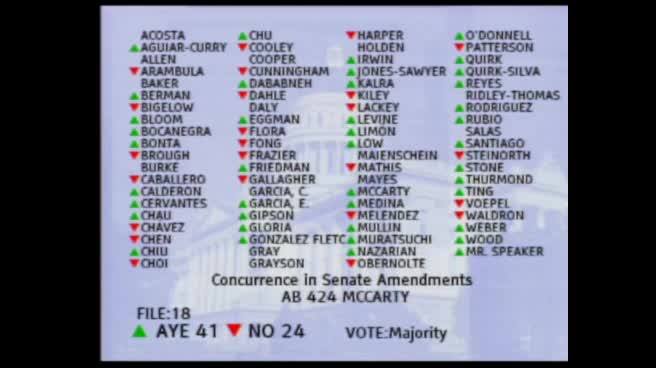 3MIN
Assembly Floor
 14MIN
Senate Floor
 1H
Senate Standing Committee on Appropriations
 5MIN
Assembly Floor
 1H
Assembly Standing Committee on Appropriations
 15MIN













