AB 1865: Guide, signal, and service dogs: injury or death.
- Session Year: 2017-2018
- House: Assembly
- Latest Version Date: 2018-08-31
Under existing law, it is an infraction or a misdemeanor for any person to permit any dog that is owned, harbored, or controlled by him or her to cause injury to, or the death of, any guide, signal, or service dog, as defined, while the guide, signal, or service dog is in discharge of its duties. Existing law makes any person who intentionally causes injury to, or the death of, any guide, signal, or service dog, as defined, while the dog is in discharge of its duties, guilty of a misdemeanor. Under existing law, if a defendant is convicted of either of these crimes, the defendant is required to make restitution to the person with a disability who has custody or ownership of the dog for any veterinary bills and replacement costs of the dog if it is disabled or killed, or other reasonable costs deemed appropriate by the court. Existing law provides for the compensation of victims of certain crimes by the California Victim Compensation Board from the Restitution Fund, a continuously appropriated fund, for specified losses suffered as a result of those crimes. Existing law authorizes the person with a disability in either of the above crimes to apply for compensation by the board for veterinary bills and replacement costs if the dog is disabled or killed, or other reasonable costs, as specified, in an amount not to exceed $10,000.
This bill would delete, from both crimes, the requirement that the guide, signal, or service dog be in discharge of its duties when the injury or death occurs and would make these crimes applicable to the injury or death of dogs that are enrolled in a training school or program for guide, signal, or service dogs, as specified. The bill would require the defendant, convicted of either crime, to also make restitution to the person for medical or medical-related expenses, or for loss of wages or income, incurred by the person as a direct result of the crime. The bill would authorize the disabled person to apply for compensation from the California Victim Compensation Board and would authorize the board to pay compensation for medical and medical-related expenses, and loss of wages or income incurred by the person with a disability as a direct result of a violation of those criminal provisions, in an amount not to exceed $10,000.
By expanding the authorization for the use of moneys in the continuously appropriated Restitution Fund, this bill would make an appropriation.
Because this bill would expand the scope and penalties of existing crimes, it would impose a state-mandated local program.
The California Constitution requires the state to reimburse local agencies and school districts for certain costs mandated by the state. Statutory provisions establish procedures for making that reimbursement.
This bill would provide that no reimbursement is required by this act for a specified reason.
This bill would incorporate additional changes to Section 13955 of the Government Code proposed by Senate Bill 1494 to be operative only if this bill and SB 1494 are enacted and this bill is enacted last.
This bill would incorporate additional changes to Section 13957 of the Government Code proposed by SB 1005, AB 900, and AB 1939 to be operative only if this bill and any or all of those bills are enacted and this bill is enacted last.
Under existing law, it is an infraction or a misdemeanor for any person to permit any dog that is owned, harbored, or controlled by him or her to cause injury to, or the death of, any guide, signal, or service dog, as defined, while the guide, signal, or service dog is in discharge of its duties. Existing law makes any person who intentionally causes injury to, or the death of, any guide, signal, or service dog, as defined, while the dog is in discharge of its duties, guilty of a misdemeanor. Under existing law, if a defendant is convicted of either of these crimes, the defendant is required to make restitution to the person with a disability who has custody or ownership of the dog for any veterinary bills and replacement costs of the dog if it is disabled or killed, or other reasonable costs deemed appropriate by the court. Existing law provides for the compensation of victims of certain crimes by the California Victim Compensation Board from the Restitution Fund, a continuously appropriated fund, for specified losses suffered as a result of those crimes. Existing law authorizes the person with a disability in either of the above crimes to apply for compensation by the board for veterinary bills and replacement costs if the dog is disabled or killed, or other reasonable costs, as specified, in an amount not to exceed $10,000.
This bill would delete, from both crimes, the requirement that the guide, signal, or service dog be in discharge of its duties when the injury or death occurs and would make these crimes applicable to the injury or death of dogs that are enrolled in a training school or program for guide, signal, or service dogs, as specified. The bill would require the defendant, convicted of either crime, to also make restitution to the person for medical or medical-related expenses, or for loss of wages or income, incurred by the person as a direct result of the crime. The bill would authorize the disabled person to apply for compensation from the California Victim Compensation Board and would authorize the board to pay compensation for medical and medical-related expenses, and loss of wages or income incurred by the person with a disability as a direct result of a violation of those criminal provisions, in an amount not to exceed $10,000.
By expanding the authorization for the use of moneys in the continuously appropriated Restitution Fund, this bill would make an appropriation.
Because this bill would expand the scope and penalties of existing crimes, it would impose a state-mandated local program.
The California Constitution requires the state to reimburse local agencies and school districts for certain costs mandated by the state. Statutory provisions establish procedures for making that reimbursement.
This bill would provide that no reimbursement is required by this act for a specified reason.
Except as provided in Section 13956, a person shall be eligible for compensation when all of the following requirements are met:
(a)The person for whom compensation is being sought is any of the following:
(1)A victim.
(2)A derivative victim.
(3)(A)A person who is entitled to reimbursement for funeral, burial, or crime scene cleanup expenses pursuant to paragraph (9) or (10) of subdivision (a) of Section 13957.
(B)This paragraph applies without respect to any felon status of the victim.
(b)Either of the following conditions is met:
(1)The crime occurred in California. This paragraph shall apply only during those time periods during which the board determines that federal funds are available to the state for the compensation of victims of crime.
(2)Whether or not the crime occurred in California, the victim was any of the following:
(A)A resident of California.
(B)A member of the military stationed in California.
(C)A family member living with a member of the military stationed in California.
(c)If compensation is being sought for a derivative victim, the derivative victim is a resident of California, or any other state, who is any of the following:
(1)At the time of the crime was the parent, grandparent, sibling, spouse, child, or grandchild of the victim.
(2)At the time of the crime was living in the household of the victim.
(3)At the time of the crime was a person who had previously lived in the household of the victim for a period of not less than two years in a relationship substantially similar to a relationship listed in paragraph (1).
(4)Is another family member of the victim, including, but not limited to, the victims fiance or fiancee, and who witnessed the crime.
(5)Is the primary caretaker of a minor victim, but was not the primary caretaker at the time of the crime.
(d)The application is timely pursuant to Section 13953.
(e)(1)Except as provided in paragraph (2), the injury or death was a direct result of a crime.
(2)Notwithstanding paragraph (1), no act involving the operation of a motor vehicle, aircraft, or water vehicle that results in injury or death constitutes a crime for the purposes of this chapter, except when the injury or death from that act was any of the following:
(A)Intentionally inflicted through the use of a motor vehicle, aircraft, or water vehicle.
(B)Caused by a driver who fails to stop at the scene of an accident in violation of Section 20001 of the Vehicle Code.
(C)Caused by a person who is under the influence of any alcoholic beverage or drug.
(D)Caused by a driver of a motor vehicle in the immediate act of fleeing the scene of a crime in which he or she knowingly and willingly participated.
(E)Caused by a person who commits vehicular manslaughter in violation of subdivision (b) of Section 191.5, subdivision (c) of Section 192, or Section 192.5 of the Penal Code.
(F)Caused by any party where a peace officer is operating a motor vehicle in an effort to apprehend a suspect, and the suspect is evading, fleeing, or otherwise attempting to elude the peace officer.
(f)As a direct result of the crime, the victim or derivative victim sustained one or more of the following:
(1)Physical injury. The board may presume a child who has been the witness of a crime of domestic violence has sustained physical injury. A child who resides in a home where a crime or crimes of domestic violence have occurred may be presumed by the board to have sustained physical injury, regardless of whether the child has witnessed the crime.
(2)Emotional injury and a threat of physical injury.
(3)Emotional injury, where the crime was a violation of any of the following provisions:
(A)Section 236.1, 261, 262, 271, 273a, 273d, 285, 286, 288, 288a, 288.5, 289, or 653.2, or subdivision (b) or (c) of Section 311.4, of the Penal Code.
(B)Section 270 of the Penal Code, where the emotional injury was a result of conduct other than a failure to pay child support, and criminal charges were filed.
(C)Section 261.5 of the Penal Code, and criminal charges were filed.
(D)Section 278 or 278.5 of the Penal Code, and criminal charges were filed. For purposes of this paragraph, the child, and not the nonoffending parent or other caretaker, shall be deemed the victim.
(4)Injury to, or the death of, a guide, signal, or service dog, as defined in Section 54.1 of the Civil Code, and medical or medical-related expenses of, and loss of wages or income incurred by, the disabled person as a result of a violation of Section 600.2 or 600.5 of the Penal Code.
(5)Emotional injury to a victim who is a minor incurred as a direct result of the nonconsensual distribution of pictures or video of sexual conduct in which the minor appears.
(g)The injury or death has resulted or may result in pecuniary loss within the scope of compensation pursuant to Sections 13957 to 13957.7, inclusive.
SEC. 1.5.Section 13955 of the Government Code is amended to read:13955.Except as provided in Section 13956, a person shall be eligible for compensation when all of the following requirements are met:
(a)The person for whom compensation is being sought is any of the following:
(1)A victim.
(2)A derivative victim.
(3)(A)A person who is entitled to reimbursement for funeral, burial, or crime scene cleanup expenses pursuant to paragraph (9) or (10) of subdivision (a) of Section 13957.
(B)This paragraph applies without respect to any felon status of the victim.
(b)Either of the following conditions is met:
(1)The crime occurred in California. This paragraph shall apply only during those time periods during which the board determines that federal funds are available to the state for the compensation of victims of crime.
(2)Whether or not the crime occurred in California, the victim was any of the following:
(A)A resident of California.
(B)A member of the military stationed in California.
(C)A family member living with a member of the military stationed in California.
(c)If compensation is being sought for a derivative victim, the derivative victim is a resident of California, or any other state, who is any of the following:
(1)At the time of the crime was the parent, grandparent, sibling, spouse, child, or grandchild of the victim.
(2)At the time of the crime was living in the household of the victim.
(3)At the time of the crime was a person who had previously lived in the household of the victim for a period of not less than two years in a relationship substantially similar to a relationship listed in paragraph (1).
(4)Is another family member of the victim, including, but not limited to, the victims fiance or fiancee, and who witnessed the crime.
(5)Is the primary caretaker of a minor victim, but was not the primary caretaker at the time of the crime.
(d)The application is timely pursuant to Section 13953.
(e)(1)Except as provided in paragraph (2), the injury or death was a direct result of a crime.
(2)Notwithstanding paragraph (1), no act involving the operation of a motor vehicle, aircraft, or water vehicle that results in injury or death constitutes a crime for the purposes of this chapter, except when the injury or death from that act was any of the following:
(A)Intentionally inflicted through the use of a motor vehicle, aircraft, or water vehicle.
(B)Caused by a driver who fails to stop at the scene of an accident in violation of Section 20001 of the Vehicle Code.
(C)Caused by a person who is under the influence of any alcoholic beverage or drug.
(D)Caused by a driver of a motor vehicle in the immediate act of fleeing the scene of a crime in which he or she knowingly and willingly participated.
(E)Caused by a person who commits vehicular manslaughter in violation of subdivision (b) of Section 191.5, subdivision (c) of Section 192, or Section 192.5 of the Penal Code.
(F)Caused by any party where a peace officer is operating a motor vehicle in an effort to apprehend a suspect, and the suspect is evading, fleeing, or otherwise attempting to elude the peace officer.
(f)As a direct result of the crime, the victim or derivative victim sustained one or more of the following:
(1)Physical injury. The board may presume a child who has been the witness of a crime of domestic violence has sustained physical injury. A child who resides in a home where a crime or crimes of domestic violence have occurred may be presumed by the board to have sustained physical injury, regardless of whether the child has witnessed the crime.
(2)Emotional injury and a threat of physical injury.
(3)Emotional injury, where the crime was a violation of any of the following provisions:
(A)Section 236.1, 261, 262, 271, 273a, 273d, 285, 286, 287, or 288 of, former Section 288a of, Section 288.5, 289, or 653.2 of, or subdivision (b) or (c) of Section 311.4 of, the Penal Code.
(B)Section 270 of the Penal Code, where the emotional injury was a result of conduct other than a failure to pay child support, and criminal charges were filed.
(C)Section 261.5 of the Penal Code, and criminal charges were filed.
(D)Section 278 or 278.5 of the Penal Code, and criminal charges were filed. For purposes of this paragraph, the child, and not the nonoffending parent or other caretaker, shall be deemed the victim.
(4)Injury to, or the death of, a guide, signal, or service dog, as defined in Section 54.1 of the Civil Code, and medical or medical-related expenses of, and loss of wages or income incurred by, the disabled person as a result of a violation of Section 600.2 or 600.5 of the Penal Code.
(5)Emotional injury to a victim who is a minor incurred as a direct result of the nonconsensual distribution of pictures or video of sexual conduct in which the minor appears.
(g)The injury or death has resulted or may result in pecuniary loss within the scope of compensation pursuant to Sections 13957 to 13957.7, inclusive.
SEC. 2.Section 13957 of the Government Code is amended to read:13957.(a)The board may grant for pecuniary loss, when the board determines it will best aid the person seeking compensation, as follows:
(1)Subject to the limitations set forth in Section 13957.2, reimburse the amount of medical or medical-related expenses incurred by the victim for services that were provided by a licensed medical provider, including, but not limited to, eyeglasses, hearing aids, dentures, or any prosthetic device taken, lost, or destroyed during the commission of the crime, or the use of which became necessary as a direct result of the crime.
(2)Subject to the limitations set forth in Section 13957.2, reimburse the amount of outpatient psychiatric, psychological, or other mental health counseling-related expenses incurred by the victim or derivative victim, including peer counseling services provided by a rape crisis center as defined by Section 13837 of the Penal Code, and including family psychiatric, psychological, or mental health counseling for the successful treatment of the victim provided to family members of the victim in the presence of the victim, whether or not the family member relationship existed at the time of the crime, that became necessary as a direct result of the crime, subject to the following conditions:
(A)The following persons may be reimbursed for the expense of their outpatient mental health counseling in an amount not to exceed ten thousand dollars ($10,000):
(i)A victim.
(ii)A derivative victim who is the surviving parent, grandparent, sibling, child, grandchild, spouse, fiance, or fiancee of a victim of a crime that directly resulted in the death of the victim.
(iii)A derivative victim, as described in paragraphs (1) to (4), inclusive, of subdivision (c) of Section 13955, who is the primary caretaker of a minor victim whose claim is not denied or reduced pursuant to Section 13956 in a total amount not to exceed ten thousand dollars ($10,000) for not more than two derivative victims.
(B)The following persons may be reimbursed for the expense of their outpatient mental health counseling in an amount not to exceed five thousand dollars ($5,000):
(i)A derivative victim not eligible for reimbursement pursuant to subparagraph (A), provided that mental health counseling of a derivative victim described in paragraph (5) of subdivision (c) of Section 13955, shall be reimbursed only if that counseling is necessary for the treatment of the victim.
(ii)A minor who suffers emotional injury as a direct result of witnessing a violent crime and who is not eligible for reimbursement of the costs of outpatient mental health counseling under any other provision of this chapter. To be eligible for reimbursement under this clause, the minor must have been in close proximity to the victim when he or she witnessed the crime.
(C)The board may reimburse a victim or derivative victim for outpatient mental health counseling in excess of that authorized by subparagraph (A) or (B) or for inpatient psychiatric, psychological, or other mental health counseling if the claim is based on dire or exceptional circumstances that require more extensive treatment, as approved by the board.
(D)Expenses for psychiatric, psychological, or other mental health counseling-related services may be reimbursed only if the services were provided by either of the following individuals:
(i)A person who would have been authorized to provide those services pursuant to former Article 1 (commencing with Section 13959) as it read on January 1, 2002.
(ii)A person who is licensed in California to provide those services, or who is properly supervised by a person who is licensed in California to provide those services, subject to the boards approval and subject to the limitations and restrictions the board may impose.
(3)Subject to the limitations set forth in Section 13957.5, authorize compensation equal to the loss of income or loss of support, or both, that a victim or derivative victim incurs as a direct result of the victims or derivative victims injury or the victims death. If the victim or derivative victim requests that the board give priority to reimbursement of loss of income or support, the board may not pay medical expenses, or mental health counseling expenses, except upon the request of the victim or derivative victim or after determining that payment of these expenses will not decrease the funds available for payment of loss of income or support.
(4)Authorize a cash payment to or on behalf of the victim for job retraining or similar employment-oriented services.
(5)Reimburse the expense of installing or increasing residential security, not to exceed one thousand dollars ($1,000). Installing or increasing residential security may include, but need not be limited to, both of the following:
(A)Home security device or system.
(B)Replacing or increasing the number of locks.
(6)Reimburse the expense of renovating or retrofitting a victims residence, or the expense of modifying or purchasing a vehicle, to make the residence or the vehicle accessible or operational by a victim upon verification that the expense is medically necessary for a victim who is permanently disabled as a direct result of the crime, whether the disability is partial or total.
(7)(A)Authorize a cash payment or reimbursement not to exceed two thousand dollars ($2,000) to a victim for expenses incurred in relocating, if the expenses are determined by law enforcement to be necessary for the personal safety of the victim or by a mental health treatment provider to be necessary for the emotional well-being of the victim.
(B)The cash payment or reimbursement made under this paragraph shall only be awarded to one claimant per crime giving rise to the relocation. The board may authorize more than one relocation per crime if necessary for the personal safety or emotional well-being of the claimant. However, the total cash payment or reimbursement for all relocations due to the same crime shall not exceed two thousand dollars ($2,000). For purposes of this paragraph a claimant is the crime victim, or, if the victim is deceased, a person who resided with the deceased at the time of the crime.
(C)The board may, under compelling circumstances, award a second cash payment or reimbursement to a victim for another crime if both of the following conditions are met:
(i)The crime occurs more than three years from the date of the crime giving rise to the initial relocation cash payment or reimbursement.
(ii)The crime does not involve the same offender.
(D)When a relocation payment or reimbursement is provided to a victim of sexual assault or domestic violence and the identity of the offender is known to the victim, the victim shall agree not to inform the offender of the location of the victims new residence and not to allow the offender on the premises at any time, or shall agree to seek a restraining order against the offender. A victim may be required to repay the relocation payment or reimbursement to the board if he or she violates the terms set forth in this paragraph.
(E)Notwithstanding subparagraphs (A) and (B), the board may increase the cash payment or reimbursement for expenses incurred in relocating to an amount greater than two thousand dollars ($2,000), if the board finds this amount is appropriate due to the unusual, dire, or exceptional circumstances of a particular claim.
(F)If a security deposit is required for relocation, the board shall be named as the recipient and receive the funds upon expiration of the victims rental agreement.
(8)When a victim dies as a result of a crime, the board may reimburse any individual who voluntarily, and without anticipation of personal gain, pays or assumes the obligation to pay any of the following expenses:
(A)The medical expenses incurred as a direct result of the crime in an amount not to exceed the rates or limitations established by the board.
(B)The funeral and burial expenses incurred as a direct result of the crime, not to exceed seven thousand five hundred dollars ($7,500). The board shall not create or comply with a regulation or policy that mandates a lower maximum potential amount of an award pursuant to this subparagraph for less than seven thousand five hundred dollars ($7,500).
(9)When the crime occurs in a residence or inside a vehicle, the board may reimburse any individual who voluntarily, and without anticipation of personal gain, pays or assumes the obligation to pay the reasonable costs to clean the scene of the crime in an amount not to exceed one thousand dollars ($1,000). Services reimbursed pursuant to this subdivision shall be performed by persons registered with the State Department of Public Health as trauma scene waste practitioners in accordance with Chapter 9.5 (commencing with Section 118321) of Part 14 of Division 104 of the Health and Safety Code.
(10)When the crime is a violation of Section 600.2 or 600.5 of the Penal Code, the board may reimburse the expense of veterinary services, replacement costs, medical or medical-related expenses of, and loss of wages or income incurred by, the disabled person, or other reasonable expenses, as ordered by the court pursuant to Section 600.2 or 600.5 of the Penal Code, in an amount not to exceed ten thousand dollars ($10,000).
(11)An award of compensation pursuant to paragraph (5) of subdivision (f) of Section 13955 shall be limited to compensation to provide mental health counseling and shall not limit the eligibility of a victim for an award that he or she may be otherwise entitled to receive under this part. A derivative victim shall not be eligible for compensation under this provision.
(b)The total award to or on behalf of each victim or derivative victim may not exceed thirty-five thousand dollars ($35,000), except that this award may be increased to an amount not exceeding seventy thousand dollars ($70,000) if federal funds for that increase are available.
SEC. 2.1.Section 13957 of the Government Code is amended to read:13957.(a)The board may grant for pecuniary loss, when the board determines it will best aid the person seeking compensation, as follows:
(1)Subject to the limitations set forth in Section 13957.2, reimburse the amount of medical or medical-related expenses incurred by the victim for services that were provided by a licensed medical provider, including, but not limited to, eyeglasses, hearing aids, dentures, or any prosthetic device taken, lost, or destroyed during the commission of the crime, or the use of which became necessary as a direct result of the crime.
(2)Subject to the limitations set forth in Section 13957.2, reimburse the amount of outpatient psychiatric, psychological, or other mental health counseling-related expenses incurred by the victim or derivative victim, including peer counseling services provided by a sexual assault services program, as defined by Section 13837 of the Penal Code, and including family psychiatric, psychological, or mental health counseling for the successful treatment of the victim provided to family members of the victim in the presence of the victim, whether or not the family member relationship existed at the time of the crime, that became necessary as a direct result of the crime, subject to the following conditions:
(A)The following persons may be reimbursed for the expense of their outpatient mental health counseling in an amount not to exceed ten thousand dollars ($10,000):
(i)A victim.
(ii)A derivative victim who is the surviving parent, grandparent, sibling, child, grandchild, spouse, fiance, or fiancee of a victim of a crime that directly resulted in the death of the victim.
(iii)A derivative victim, as described in paragraphs (1) to (4), inclusive, of subdivision (c) of Section 13955, who is the primary caretaker of a minor victim whose claim is not denied or reduced pursuant to Section 13956 in a total amount not to exceed ten thousand dollars ($10,000) for not more than two derivative victims.
(B)The following persons may be reimbursed for the expense of their outpatient mental health counseling in an amount not to exceed five thousand dollars ($5,000):
(i)A derivative victim not eligible for reimbursement pursuant to subparagraph (A), provided that mental health counseling of a derivative victim described in paragraph (5) of subdivision (c) of Section 13955, shall be reimbursed only if that counseling is necessary for the treatment of the victim.
(ii)A minor who suffers emotional injury as a direct result of witnessing a violent crime and who is not eligible for reimbursement of the costs of outpatient mental health counseling under any other provision of this chapter. To be eligible for reimbursement under this clause, the minor must have been in close proximity to the victim when he or she witnessed the crime.
(C)The board may reimburse a victim or derivative victim for outpatient mental health counseling in excess of that authorized by subparagraph (A) or (B) or for inpatient psychiatric, psychological, or other mental health counseling if the claim is based on dire or exceptional circumstances that require more extensive treatment, as approved by the board.
(D)Expenses for psychiatric, psychological, or other mental health counseling-related services may be reimbursed only if the services were provided by either of the following individuals:
(i)A person who would have been authorized to provide those services pursuant to former Article 1 (commencing with Section 13959) as it read on January 1, 2002.
(ii)A person who is licensed in California to provide those services, or who is properly supervised by a person who is licensed in California to provide those services, subject to the boards approval and subject to the limitations and restrictions the board may impose.
(3)Subject to the limitations set forth in Section 13957.5, authorize compensation equal to the loss of income or loss of support, or both, that a victim or derivative victim incurs as a direct result of the victims or derivative victims injury or the victims death. If the victim or derivative victim requests that the board give priority to reimbursement of loss of income or support, the board may not pay medical expenses, or mental health counseling expenses, except upon the request of the victim or derivative victim or after determining that payment of these expenses will not decrease the funds available for payment of loss of income or support.
(4)Authorize a cash payment to or on behalf of the victim for job retraining or similar employment-oriented services.
(5)Reimburse the expense of installing or increasing residential security, not to exceed one thousand dollars ($1,000). Installing or increasing residential security may include, but need not be limited to, both of the following:
(A)Home security device or system.
(B)Replacing or increasing the number of locks.
(6)Reimburse the expense of renovating or retrofitting a victims residence, or the expense of modifying or purchasing a vehicle, to make the residence or the vehicle accessible or operational by a victim upon verification that the expense is medically necessary for a victim who is permanently disabled as a direct result of the crime, whether the disability is partial or total.
(7)(A)Authorize a cash payment or reimbursement not to exceed two thousand dollars ($2,000) to a victim for expenses incurred in relocating, if the expenses are determined by law enforcement to be necessary for the personal safety of the victim or by a mental health treatment provider to be necessary for the emotional well-being of the victim. For purposes of this paragraph, expenses incurred in relocating may include a pet deposit and additional rent required if the victim has a pet.
(B)The cash payment or reimbursement made under this paragraph shall only be awarded to one claimant per crime giving rise to the relocation. The board may authorize more than one relocation per crime if necessary for the personal safety or emotional well-being of the claimant. However, the total cash payment or reimbursement for all relocations due to the same crime shall not exceed two thousand dollars ($2,000). For purposes of this paragraph a claimant is the crime victim, or, if the victim is deceased, a person who resided with the deceased at the time of the crime.
(C)The board may, under compelling circumstances, award a second cash payment or reimbursement to a victim for another crime if both of the following conditions are met:
(i)The crime occurs more than three years from the date of the crime giving rise to the initial relocation cash payment or reimbursement.
(ii)The crime does not involve the same offender.
(D)When a relocation payment or reimbursement is provided to a victim of sexual assault or domestic violence and the identity of the offender is known to the victim, the victim shall agree not to inform the offender of the location of the victims new residence and not to allow the offender on the premises at any time, or shall agree to seek a restraining order against the offender. A victim may be required to repay the relocation payment or reimbursement to the board if he or she violates the terms set forth in this paragraph.
(E)Notwithstanding subparagraphs (A) and (B), the board may increase the cash payment or reimbursement for expenses incurred in relocating to an amount greater than two thousand dollars ($2,000), if the board finds this amount is appropriate due to the unusual, dire, or exceptional circumstances of a particular claim.
(F)If a security deposit or pet deposit, or both, is required for relocation, the board shall be named as the recipient and receive the funds upon expiration of the victims rental agreement.
(8)When a victim dies as a result of a crime, the board may reimburse an individual who voluntarily, and without anticipation of personal gain, pays or assumes the obligation to pay any of the following expenses:
(A)The medical expenses incurred as a direct result of the crime in an amount not to exceed the rates or limitations established by the board.
(B)The funeral and burial expenses incurred as a direct result of the crime, not to exceed seven thousand five hundred dollars ($7,500). The board shall not create or comply with a regulation or policy that mandates a lower maximum potential amount of an award pursuant to this subparagraph for less than seven thousand five hundred dollars ($7,500).
(9)When the crime occurs in a residence or inside a vehicle, the board may reimburse an individual who voluntarily, and without anticipation of personal gain, pays or assumes the obligation to pay the reasonable costs to clean the scene of the crime in an amount not to exceed one thousand dollars ($1,000). Services reimbursed pursuant to this subdivision shall be performed by persons registered with the State Department of Public Health as trauma scene waste practitioners in accordance with Chapter 9.5 (commencing with Section 118321) of Part 14 of Division 104 of the Health and Safety Code.
(10)When the crime is a violation of Section 600.2 or 600.5 of the Penal Code, the board may reimburse the expense of veterinary services, replacement costs, medical or medical-related expenses of, and loss of wages or income incurred by, the disabled person, or other reasonable expenses, as ordered by the court pursuant to Section 600.2 or 600.5 of the Penal Code, in an amount not to exceed ten thousand dollars ($10,000).
(11)An award of compensation pursuant to paragraph (5) of subdivision (f) of Section 13955 shall be limited to compensation to provide mental health counseling and shall not limit the eligibility of a victim for an award that he or she may be otherwise entitled to receive under this part. A derivative victim shall not be eligible for compensation under this provision.
(b)The total award to or on behalf of each victim or derivative victim may not exceed thirty-five thousand dollars ($35,000), except that this award may be increased to an amount not exceeding seventy thousand dollars ($70,000) if federal funds for that increase are available.
SEC. 2.2.Section 13957 of the Government Code is amended to read:13957.(a)The board may grant for pecuniary loss, when the board determines it will best aid the person seeking compensation, as follows:
(1)Subject to the limitations set forth in Section 13957.2, reimburse the amount of medical or medical-related expenses incurred by the victim for services that were provided by a licensed medical provider, including, but not limited to, eyeglasses, hearing aids, dentures, or any prosthetic device taken, lost, or destroyed during the commission of the crime, or the use of which became necessary as a direct result of the crime.
(2)Subject to the limitations set forth in Section 13957.2, reimburse the amount of outpatient psychiatric, psychological, or other mental health counseling-related expenses incurred by the victim or derivative victim, including peer counseling services provided by a rape crisis center as defined by Section 13837 of the Penal Code, and including family psychiatric, psychological, or mental health counseling for the successful treatment of the victim provided to family members of the victim in the presence of the victim, whether or not the family member relationship existed at the time of the crime, that became necessary as a direct result of the crime, subject to the following conditions:
(A)The following persons may be reimbursed for the expense of their outpatient mental health counseling in an amount not to exceed ten thousand dollars ($10,000):
(i)A victim.
(ii)A derivative victim who is the surviving parent, grandparent, sibling, child, grandchild, spouse, fiance, or fiancee of a victim of a crime that directly resulted in the death of the victim.
(iii)A derivative victim, as described in paragraphs (1) to (4), inclusive, of subdivision (c) of Section 13955, who is the primary caretaker of a minor victim whose claim is not denied or reduced pursuant to Section 13956 in a total amount not to exceed ten thousand dollars ($10,000) for not more than two derivative victims.
(B)The following persons may be reimbursed for the expense of their outpatient mental health counseling in an amount not to exceed five thousand dollars ($5,000):
(i)A derivative victim not eligible for reimbursement pursuant to subparagraph (A), provided that mental health counseling of a derivative victim described in paragraph (5) of subdivision (c) of Section 13955, shall be reimbursed only if that counseling is necessary for the treatment of the victim.
(ii)A minor who suffers emotional injury as a direct result of witnessing a violent crime and who is not eligible for reimbursement of the costs of outpatient mental health counseling under any other provision of this chapter. To be eligible for reimbursement under this clause, the minor must have been in close proximity to the victim when he or she witnessed the crime.
(C)The board may reimburse a victim or derivative victim for outpatient mental health counseling in excess of that authorized by subparagraph (A) or (B) or for inpatient psychiatric, psychological, or other mental health counseling if the claim is based on dire or exceptional circumstances that require more extensive treatment, as approved by the board.
(D)Expenses for psychiatric, psychological, or other mental health counseling-related services may be reimbursed only if the services were provided by either of the following individuals:
(i)A person who would have been authorized to provide those services pursuant to former Article 1 (commencing with Section 13959) as it read on January 1, 2002.
(ii)A person who is licensed in California to provide those services, or who is properly supervised by a person who is licensed in California to provide those services, subject to the boards approval and subject to the limitations and restrictions the board may impose.
(3)Subject to the limitations set forth in Section 13957.5, authorize compensation equal to the loss of income or loss of support, or both, that a victim or derivative victim incurs as a direct result of the victims or derivative victims injury or the victims death. If the qualifying crime is a violation of Section 236.1 of the Penal Code, the board may authorize compensation equal to loss of income or support that a victim incurs as a direct result of the victims deprivation of liberty during the crime, but not exceeding the amount set forth in Section 13957.5. If the victim or derivative victim requests that the board give priority to reimbursement of loss of income or support, the board may not pay medical expenses, or mental health counseling expenses, except upon the request of the victim or derivative victim or after determining that payment of these expenses will not decrease the funds available for payment of loss of income or support.
(4)Authorize a cash payment to or on behalf of the victim for job retraining or similar employment-oriented services.
(5)Reimburse the expense of installing or increasing residential security, not to exceed one thousand dollars ($1,000). Installing or increasing residential security may include, but need not be limited to, both of the following:
(A)Home security device or system.
(B)Replacing or increasing the number of locks.
(6)Reimburse the expense of renovating or retrofitting a victims residence, or the expense of modifying or purchasing a vehicle, to make the residence or the vehicle accessible or operational by a victim upon verification that the expense is medically necessary for a victim who is permanently disabled as a direct result of the crime, whether the disability is partial or total.
(7)(A)Authorize a cash payment or reimbursement not to exceed two thousand dollars ($2,000) to a victim for expenses incurred in relocating, if the expenses are determined by law enforcement to be necessary for the personal safety of the victim or by a mental health treatment provider to be necessary for the emotional well-being of the victim.
(B)The cash payment or reimbursement made under this paragraph shall only be awarded to one claimant per crime giving rise to the relocation. The board may authorize more than one relocation per crime if necessary for the personal safety or emotional well-being of the claimant. However, the total cash payment or reimbursement for all relocations due to the same crime shall not exceed two thousand dollars ($2,000). For purposes of this paragraph, a claimant is the crime victim, or, if the victim is deceased, a person who resided with the deceased at the time of the crime.
(C)The board may, under compelling circumstances, award a second cash payment or reimbursement to a victim for another crime if both of the following conditions are met:
(i)The crime occurs more than three years from the date of the crime giving rise to the initial relocation cash payment or reimbursement.
(ii)The crime does not involve the same offender.
(D)When a relocation payment or reimbursement is provided to a victim of sexual assault or domestic violence and the identity of the offender is known to the victim, the victim shall agree not to inform the offender of the location of the victims new residence and not to allow the offender on the premises at any time, or shall agree to seek a restraining order against the offender. A victim may be required to repay the relocation payment or reimbursement to the board if he or she violates the terms set forth in this paragraph.
(E)Notwithstanding subparagraphs (A) and (B), the board may increase the cash payment or reimbursement for expenses incurred in relocating to an amount greater than two thousand dollars ($2,000), if the board finds this amount is appropriate due to the unusual, dire, or exceptional circumstances of a particular claim.
(F)If a security deposit is required for relocation, the board shall be named as the recipient and receive the funds upon expiration of the victims rental agreement.
(8)When a victim dies as a result of a crime, the board may reimburse any individual who voluntarily, and without anticipation of personal gain, pays or assumes the obligation to pay any of the following expenses:
(A)The medical expenses incurred as a direct result of the crime in an amount not to exceed the rates or limitations established by the board.
(B)The funeral and burial expenses incurred as a direct result of the crime, not to exceed seven thousand five hundred dollars ($7,500). The board shall not create or comply with a regulation or policy that mandates a lower maximum potential amount of an award pursuant to this subparagraph for less than seven thousand five hundred dollars ($7,500).
(9)When the crime occurs in a residence or inside a vehicle, the board may reimburse any individual who voluntarily, and without anticipation of personal gain, pays or assumes the obligation to pay the reasonable costs to clean the scene of the crime in an amount not to exceed one thousand dollars ($1,000). Services reimbursed pursuant to this subdivision shall be performed by persons registered with the State Department of Public Health as trauma scene waste practitioners in accordance with Chapter 9.5 (commencing with Section 118321) of Part 14 of Division 104 of the Health and Safety Code.
(10)When the crime is a violation of Section 600.2 or 600.5 of the Penal Code, the board may reimburse the expense of veterinary services, replacement costs, medical or medical-related expenses of, and loss of wages or income incurred by, the disabled person, or other reasonable expenses, as ordered by the court pursuant to Section 600.2 or 600.5 of the Penal Code, in an amount not to exceed ten thousand dollars ($10,000).
(11)An award of compensation pursuant to paragraph (5) of subdivision (f) of Section 13955 shall be limited to compensation to provide mental health counseling and shall not limit the eligibility of a victim for an award that he or she may be otherwise entitled to receive under this part. A derivative victim shall not be eligible for compensation under this provision.
(b)The total award to or on behalf of each victim or derivative victim may not exceed thirty-five thousand dollars ($35,000), except that this award may be increased to an amount not exceeding seventy thousand dollars ($70,000) if federal funds for that increase are available.
SEC. 2.3.Section 13957 of the Government Code is amended to read:13957.(a)The board may grant for pecuniary loss, when the board determines it will best aid the person seeking compensation, as follows:
(1)Subject to the limitations set forth in Section 13957.2, reimburse the amount of medical or medical-related expenses incurred by the victim for services that were provided by a licensed medical provider, including, but not limited to, eyeglasses, hearing aids, dentures, or any prosthetic device taken, lost, or destroyed during the commission of the crime, or the use of which became necessary as a direct result of the crime.
(2)Subject to the limitations set forth in Section 13957.2, reimburse the amount of outpatient psychiatric, psychological, or other mental health counseling-related expenses incurred by the victim or derivative victim, including peer counseling services provided by a rape crisis center as defined by Section 13837 of the Penal Code, and including family psychiatric, psychological, or mental health counseling for the successful treatment of the victim provided to family members of the victim in the presence of the victim, whether or not the family member relationship existed at the time of the crime, that became necessary as a direct result of the crime, subject to the following conditions:
(A)The following persons may be reimbursed for the expense of their outpatient mental health counseling in an amount not to exceed ten thousand dollars ($10,000):
(i)A victim.
(ii)A derivative victim who is the surviving parent, grandparent, sibling, child, grandchild, spouse, fiance, or fiancee of a victim of a crime that directly resulted in the death of the victim.
(iii)A derivative victim, as described in paragraphs (1) to (4), inclusive, of subdivision (c) of Section 13955, who is the primary caretaker of a minor victim whose claim is not denied or reduced pursuant to Section 13956 in a total amount not to exceed ten thousand dollars ($10,000) for not more than two derivative victims.
(B)The following persons may be reimbursed for the expense of their outpatient mental health counseling in an amount not to exceed five thousand dollars ($5,000):
(i)A derivative victim not eligible for reimbursement pursuant to subparagraph (A), provided that mental health counseling of a derivative victim described in paragraph (5) of subdivision (c) of Section 13955, shall be reimbursed only if that counseling is necessary for the treatment of the victim.
(ii)A minor who suffers emotional injury as a direct result of witnessing a violent crime and who is not eligible for reimbursement of the costs of outpatient mental health counseling under any other provision of this chapter. To be eligible for reimbursement under this clause, the minor must have been in close proximity to the victim when he or she witnessed the crime.
(C)The board may reimburse a victim or derivative victim for outpatient mental health counseling in excess of that authorized by subparagraph (A) or (B) or for inpatient psychiatric, psychological, or other mental health counseling if the claim is based on dire or exceptional circumstances that require more extensive treatment, as approved by the board.
(D)Expenses for psychiatric, psychological, or other mental health counseling-related services may be reimbursed only if the services were provided by either of the following individuals:
(i)A person who would have been authorized to provide those services pursuant to former Article 1 (commencing with Section 13959) as it read on January 1, 2002.
(ii)A person who is licensed in California to provide those services, or who is properly supervised by a person who is licensed in California to provide those services, subject to the boards approval and subject to the limitations and restrictions the board may impose.
(3)Subject to the limitations set forth in Section 13957.5, authorize compensation equal to the loss of income or loss of support, or both, that a victim or derivative victim incurs as a direct result of the victims or derivative victims injury or the victims death. If the victim or derivative victim requests that the board give priority to reimbursement of loss of income or support, the board may not pay medical expenses, or mental health counseling expenses, except upon the request of the victim or derivative victim or after determining that payment of these expenses will not decrease the funds available for payment of loss of income or support.
(4)Authorize a cash payment to or on behalf of the victim for job retraining or similar employment-oriented services.
(5)Reimburse the expense of installing or increasing residential security, not to exceed one thousand dollars ($1,000). Installing or increasing residential security may include, but need not be limited to, both of the following:
(A)Home security device or system.
(B)Replacing or increasing the number of locks.
(6)Reimburse the expense of renovating or retrofitting a victims residence, or the expense of modifying or purchasing a vehicle, to make the residence or the vehicle accessible or operational by a victim upon verification that the expense is medically necessary for a victim who is permanently disabled as a direct result of the crime, whether the disability is partial or total.
(7)(A)Authorize a cash payment or reimbursement not to exceed two thousand dollars ($2,000) to a victim for expenses incurred in relocating, if the expenses are determined by law enforcement to be necessary for the personal safety of the victim or by a mental health treatment provider to be necessary for the emotional well-being of the victim. For purposes of this paragraph, expenses incurred in relocating may include the costs of temporary housing for pets of the victim, limited to three days of pet boarding at a maximum cost of forty dollars ($40) per day for all of the victims pets.
(B)The cash payment or reimbursement made under this paragraph shall only be awarded to one claimant per crime giving rise to the relocation. The board may authorize more than one relocation per crime if necessary for the personal safety or emotional well-being of the claimant. However, the total cash payment or reimbursement for all relocations due to the same crime shall not exceed two thousand dollars ($2,000). For purposes of this paragraph a claimant is the crime victim, or, if the victim is deceased, a person who resided with the deceased at the time of the crime.
(C)The board may, under compelling circumstances, award a second cash payment or reimbursement to a victim for another crime if both of the following conditions are met:
(i)The crime occurs more than three years from the date of the crime giving rise to the initial relocation cash payment or reimbursement.
(ii)The crime does not involve the same offender.
(D)When a relocation payment or reimbursement is provided to a victim of sexual assault or domestic violence and the identity of the offender is known to the victim, the victim shall agree not to inform the offender of the location of the victims new residence and not to allow the offender on the premises at any time, or shall agree to seek a restraining order against the offender. A victim may be required to repay the relocation payment or reimbursement to the board if he or she violates the terms set forth in this paragraph.
(E)Notwithstanding subparagraphs (A) and (B), the board may increase the cash payment or reimbursement for expenses incurred in relocating to an amount greater than two thousand dollars ($2,000), if the board finds this amount is appropriate due to the unusual, dire, or exceptional circumstances of a particular claim.
(F)If a security deposit is required for relocation, the board shall be named as the recipient and receive the funds upon expiration of the victims rental agreement.
(8)When a victim dies as a result of a crime, the board may reimburse any individual who voluntarily, and without anticipation of personal gain, pays or assumes the obligation to pay any of the following expenses:
(A)The medical expenses incurred as a direct result of the crime in an amount not to exceed the rates or limitations established by the board.
(B)The funeral and burial expenses incurred as a direct result of the crime, not to exceed seven thousand five hundred dollars ($7,500). The board shall not create or comply with a regulation or policy that mandates a lower maximum potential amount of an award pursuant to this subparagraph for less than seven thousand five hundred dollars ($7,500).
(9)When the crime occurs in a residence or inside a vehicle, the board may reimburse any individual who voluntarily, and without anticipation of personal gain, pays or assumes the obligation to pay the reasonable costs to clean the scene of the crime in an amount not to exceed one thousand dollars ($1,000). Services reimbursed pursuant to this subdivision shall be performed by persons registered with the State Department of Public Health as trauma scene waste practitioners in accordance with Chapter 9.5 (commencing with Section 118321) of Part 14 of Division 104 of the Health and Safety Code.
(10)When the crime is a violation of Section 600.2 or 600.5 of the Penal Code, the board may reimburse the expense of veterinary services, replacement costs, medical or medical-related expenses of, and loss of wages or income incurred by, the disabled person, or other reasonable expenses, as ordered by the court pursuant to Section 600.2 or 600.5 of the Penal Code, in an amount not to exceed ten thousand dollars ($10,000).
(11)An award of compensation pursuant to paragraph (5) of subdivision (f) of Section 13955 shall be limited to compensation to provide mental health counseling and shall not limit the eligibility of a victim for an award that he or she may be otherwise entitled to receive under this part. A derivative victim shall not be eligible for compensation under this provision.
(b)The total award to or on behalf of each victim or derivative victim may not exceed thirty-five thousand dollars ($35,000), except that this award may be increased to an amount not exceeding seventy thousand dollars ($70,000) if federal funds for that increase are available.
SEC. 2.4.Section 13957 of the Government Code is amended to read:13957.(a)The board may grant for pecuniary loss, when the board determines it will best aid the person seeking compensation, as follows:
(1)Subject to the limitations set forth in Section 13957.2, reimburse the amount of medical or medical-related expenses incurred by the victim for services that were provided by a licensed medical provider, including, but not limited to, eyeglasses, hearing aids, dentures, or any prosthetic device taken, lost, or destroyed during the commission of the crime, or the use of which became necessary as a direct result of the crime.
(2)Subject to the limitations set forth in Section 13957.2, reimburse the amount of outpatient psychiatric, psychological, or other mental health counseling-related expenses incurred by the victim or derivative victim, including peer counseling services provided by a sexual assault services program, as defined by Section 13837 of the Penal Code, and including family psychiatric, psychological, or mental health counseling for the successful treatment of the victim provided to family members of the victim in the presence of the victim, whether or not the family member relationship existed at the time of the crime, that became necessary as a direct result of the crime, subject to the following conditions:
(A)The following persons may be reimbursed for the expense of their outpatient mental health counseling in an amount not to exceed ten thousand dollars ($10,000):
(i)A victim.
(ii)A derivative victim who is the surviving parent, grandparent, sibling, child, grandchild, spouse, fiance, or fiancee of a victim of a crime that directly resulted in the death of the victim.
(iii)A derivative victim, as described in paragraphs (1) to (4), inclusive, of subdivision (c) of Section 13955, who is the primary caretaker of a minor victim whose claim is not denied or reduced pursuant to Section 13956 in a total amount not to exceed ten thousand dollars ($10,000) for not more than two derivative victims.
(B)The following persons may be reimbursed for the expense of their outpatient mental health counseling in an amount not to exceed five thousand dollars ($5,000):
(i)A derivative victim not eligible for reimbursement pursuant to subparagraph (A), provided that mental health counseling of a derivative victim described in paragraph (5) of subdivision (c) of Section 13955, shall be reimbursed only if that counseling is necessary for the treatment of the victim.
(ii)A minor who suffers emotional injury as a direct result of witnessing a violent crime and who is not eligible for reimbursement of the costs of outpatient mental health counseling under any other provision of this chapter. To be eligible for reimbursement under this clause, the minor must have been in close proximity to the victim when he or she witnessed the crime.
(C)The board may reimburse a victim or derivative victim for outpatient mental health counseling in excess of that authorized by subparagraph (A) or (B) or for inpatient psychiatric, psychological, or other mental health counseling if the claim is based on dire or exceptional circumstances that require more extensive treatment, as approved by the board.
(D)Expenses for psychiatric, psychological, or other mental health counseling-related services may be reimbursed only if the services were provided by either of the following individuals:
(i)A person who would have been authorized to provide those services pursuant to former Article 1 (commencing with Section 13959) as it read on January 1, 2002.
(ii)A person who is licensed in California to provide those services, or who is properly supervised by a person who is licensed in California to provide those services, subject to the boards approval and subject to the limitations and restrictions the board may impose.
(3)Subject to the limitations set forth in Section 13957.5, authorize compensation equal to the loss of income or loss of support, or both, that a victim or derivative victim incurs as a direct result of the victims or derivative victims injury or the victims death. If the qualifying crime is a violation of Section 236.1 of the Penal Code, the board may authorize compensation equal to loss of income or support that a victim incurs as a direct result of the victims deprivation of liberty during the crime, but not exceeding the amount set forth in Section 13957.5. If the victim or derivative victim requests that the board give priority to reimbursement of loss of income or support, the board may not pay medical expenses, or mental health counseling expenses, except upon the request of the victim or derivative victim or after determining that payment of these expenses will not decrease the funds available for payment of loss of income or support.
(4)Authorize a cash payment to or on behalf of the victim for job retraining or similar employment-oriented services.
(5)Reimburse the expense of installing or increasing residential security, not to exceed one thousand dollars ($1,000). Installing or increasing residential security may include, but need not be limited to, both of the following:
(A)Home security device or system.
(B)Replacing or increasing the number of locks.
(6)Reimburse the expense of renovating or retrofitting a victims residence, or the expense of modifying or purchasing a vehicle, to make the residence or the vehicle accessible or operational by a victim upon verification that the expense is medically necessary for a victim who is permanently disabled as a direct result of the crime, whether the disability is partial or total.
(7)(A)Authorize a cash payment or reimbursement not to exceed two thousand dollars ($2,000) to a victim for expenses incurred in relocating, if the expenses are determined by law enforcement to be necessary for the personal safety of the victim or by a mental health treatment provider to be necessary for the emotional well-being of the victim. For purposes of this paragraph, expenses incurred in relocating may include a pet deposit and additional rent required if the victim has a pet.
(B)The cash payment or reimbursement made under this paragraph shall only be awarded to one claimant per crime giving rise to the relocation. The board may authorize more than one relocation per crime if necessary for the personal safety or emotional well-being of the claimant. However, the total cash payment or reimbursement for all relocations due to the same crime shall not exceed two thousand dollars ($2,000). For purposes of this paragraph, a claimant is the crime victim, or, if the victim is deceased, a person who resided with the deceased at the time of the crime.
(C)The board may, under compelling circumstances, award a second cash payment or reimbursement to a victim for another crime if both of the following conditions are met:
(i)The crime occurs more than three years from the date of the crime giving rise to the initial relocation cash payment or reimbursement.
(ii)The crime does not involve the same offender.
(D)When a relocation payment or reimbursement is provided to a victim of sexual assault or domestic violence and the identity of the offender is known to the victim, the victim shall agree not to inform the offender of the location of the victims new residence and not to allow the offender on the premises at any time, or shall agree to seek a restraining order against the offender. A victim may be required to repay the relocation payment or reimbursement to the board if he or she violates the terms set forth in this paragraph.
(E)Notwithstanding subparagraphs (A) and (B), the board may increase the cash payment or reimbursement for expenses incurred in relocating to an amount greater than two thousand dollars ($2,000), if the board finds this amount is appropriate due to the unusual, dire, or exceptional circumstances of a particular claim.
(F)If a security deposit or pet deposit, or both, is required for relocation, the board shall be named as the recipient and receive the funds upon expiration of the victims rental agreement.
(8)When a victim dies as a result of a crime, the board may reimburse an individual who voluntarily, and without anticipation of personal gain, pays or assumes the obligation to pay any of the following expenses:
(A)The medical expenses incurred as a direct result of the crime in an amount not to exceed the rates or limitations established by the board.
(B)The funeral and burial expenses incurred as a direct result of the crime, not to exceed seven thousand five hundred dollars ($7,500). The board shall not create or comply with a regulation or policy that mandates a lower maximum potential amount of an award pursuant to this subparagraph for less than seven thousand five hundred dollars ($7,500).
(9)When the crime occurs in a residence or inside a vehicle, the board may reimburse an individual who voluntarily, and without anticipation of personal gain, pays or assumes the obligation to pay the reasonable costs to clean the scene of the crime in an amount not to exceed one thousand dollars ($1,000). Services reimbursed pursuant to this subdivision shall be performed by persons registered with the State Department of Public Health as trauma scene waste practitioners in accordance with Chapter 9.5 (commencing with Section 118321) of Part 14 of Division 104 of the Health and Safety Code.
(10)When the crime is a violation of Section 600.2 or 600.5 of the Penal Code, the board may reimburse the expense of veterinary services, replacement costs, medical or medical-related expenses of, and loss of wages or income incurred by, the disabled person, or other reasonable expenses, as ordered by the court pursuant to Section 600.2 or 600.5 of the Penal Code, in an amount not to exceed ten thousand dollars ($10,000).
(11)An award of compensation pursuant to paragraph (5) of subdivision (f) of Section 13955 shall be limited to compensation to provide mental health counseling and shall not limit the eligibility of a victim for an award that he or she may be otherwise entitled to receive under this part. A derivative victim shall not be eligible for compensation under this provision.
(b)The total award to or on behalf of each victim or derivative victim may not exceed thirty-five thousand dollars ($35,000), except that this award may be increased to an amount not exceeding seventy thousand dollars ($70,000) if federal funds for that increase are available.
SEC. 2.5.Section 13957 of the Government Code is amended to read:13957.(a)The board may grant for pecuniary loss, when the board determines it will best aid the person seeking compensation, as follows:
(1)Subject to the limitations set forth in Section 13957.2, reimburse the amount of medical or medical-related expenses incurred by the victim for services that were provided by a licensed medical provider, including, but not limited to, eyeglasses, hearing aids, dentures, or any prosthetic device taken, lost, or destroyed during the commission of the crime, or the use of which became necessary as a direct result of the crime.
(2)Subject to the limitations set forth in Section 13957.2, reimburse the amount of outpatient psychiatric, psychological, or other mental health counseling-related expenses incurred by the victim or derivative victim, including peer counseling services provided by a sexual assault services program, as defined by Section 13837 of the Penal Code, and including family psychiatric, psychological, or mental health counseling for the successful treatment of the victim provided to family members of the victim in the presence of the victim, whether or not the family member relationship existed at the time of the crime, that became necessary as a direct result of the crime, subject to the following conditions:
(A)The following persons may be reimbursed for the expense of their outpatient mental health counseling in an amount not to exceed ten thousand dollars ($10,000):
(i)A victim.
(ii)A derivative victim who is the surviving parent, grandparent, sibling, child, grandchild, spouse, fiance, or fiancee of a victim of a crime that directly resulted in the death of the victim.
(iii)A derivative victim, as described in paragraphs (1) to (4), inclusive, of subdivision (c) of Section 13955, who is the primary caretaker of a minor victim whose claim is not denied or reduced pursuant to Section 13956 in a total amount not to exceed ten thousand dollars ($10,000) for not more than two derivative victims.
(B)The following persons may be reimbursed for the expense of their outpatient mental health counseling in an amount not to exceed five thousand dollars ($5,000):
(i)A derivative victim not eligible for reimbursement pursuant to subparagraph (A), provided that mental health counseling of a derivative victim described in paragraph (5) of subdivision (c) of Section 13955, shall be reimbursed only if that counseling is necessary for the treatment of the victim.
(ii)A minor who suffers emotional injury as a direct result of witnessing a violent crime and who is not eligible for reimbursement of the costs of outpatient mental health counseling under any other provision of this chapter. To be eligible for reimbursement under this clause, the minor must have been in close proximity to the victim when he or she witnessed the crime.
(C)The board may reimburse a victim or derivative victim for outpatient mental health counseling in excess of that authorized by subparagraph (A) or (B) or for inpatient psychiatric, psychological, or other mental health counseling if the claim is based on dire or exceptional circumstances that require more extensive treatment, as approved by the board.
(D)Expenses for psychiatric, psychological, or other mental health counseling-related services may be reimbursed only if the services were provided by either of the following individuals:
(i)A person who would have been authorized to provide those services pursuant to former Article 1 (commencing with Section 13959) as it read on January 1, 2002.
(ii)A person who is licensed in California to provide those services, or who is properly supervised by a person who is licensed in California to provide those services, subject to the boards approval and subject to the limitations and restrictions the board may impose.
(3)Subject to the limitations set forth in Section 13957.5, authorize compensation equal to the loss of income or loss of support, or both, that a victim or derivative victim incurs as a direct result of the victims or derivative victims injury or the victims death. If the victim or derivative victim requests that the board give priority to reimbursement of loss of income or support, the board may not pay medical expenses, or mental health counseling expenses, except upon the request of the victim or derivative victim or after determining that payment of these expenses will not decrease the funds available for payment of loss of income or support.
(4)Authorize a cash payment to or on behalf of the victim for job retraining or similar employment-oriented services.
(5)Reimburse the expense of installing or increasing residential security, not to exceed one thousand dollars ($1,000). Installing or increasing residential security may include, but need not be limited to, both of the following:
(A)Home security device or system.
(B)Replacing or increasing the number of locks.
(6)Reimburse the expense of renovating or retrofitting a victims residence, or the expense of modifying or purchasing a vehicle, to make the residence or the vehicle accessible or operational by a victim upon verification that the expense is medically necessary for a victim who is permanently disabled as a direct result of the crime, whether the disability is partial or total.
(7)(A)Authorize a cash payment or reimbursement not to exceed two thousand dollars ($2,000) to a victim for expenses incurred in relocating, if the expenses are determined by law enforcement to be necessary for the personal safety of the victim or by a mental health treatment provider to be necessary for the emotional well-being of the victim. For purposes of this paragraph, expenses incurred in relocating may include the costs of temporary housing for pets of the victim, limited to three days of pet boarding at a maximum cost of forty dollars ($40) per day for all of the victims pets, and may include a pet deposit and additional rent required if the victim has a pet.
(B)The cash payment or reimbursement made under this paragraph shall only be awarded to one claimant per crime giving rise to the relocation. The board may authorize more than one relocation per crime if necessary for the personal safety or emotional well-being of the claimant. However, the total cash payment or reimbursement for all relocations due to the same crime shall not exceed two thousand dollars ($2,000). For purposes of this paragraph a claimant is the crime victim, or, if the victim is deceased, a person who resided with the deceased at the time of the crime.
(C)The board may, under compelling circumstances, award a second cash payment or reimbursement to a victim for another crime if both of the following conditions are met:
(i)The crime occurs more than three years from the date of the crime giving rise to the initial relocation cash payment or reimbursement.
(ii)The crime does not involve the same offender.
(D)When a relocation payment or reimbursement is provided to a victim of sexual assault or domestic violence and the identity of the offender is known to the victim, the victim shall agree not to inform the offender of the location of the victims new residence and not to allow the offender on the premises at any time, or shall agree to seek a restraining order against the offender. A victim may be required to repay the relocation payment or reimbursement to the board if he or she violates the terms set forth in this paragraph.
(E)Notwithstanding subparagraphs (A) and (B), the board may increase the cash payment or reimbursement for expenses incurred in relocating to an amount greater than two thousand dollars ($2,000), if the board finds this amount is appropriate due to the unusual, dire, or exceptional circumstances of a particular claim.
(F)If a security deposit or pet deposit, or both, is required for relocation, the board shall be named as the recipient and receive the funds upon expiration of the victims rental agreement.
(8)When a victim dies as a result of a crime, the board may reimburse an individual who voluntarily, and without anticipation of personal gain, pays or assumes the obligation to pay any of the following expenses:
(A)The medical expenses incurred as a direct result of the crime in an amount not to exceed the rates or limitations established by the board.
(B)The funeral and burial expenses incurred as a direct result of the crime, not to exceed seven thousand five hundred dollars ($7,500). The board shall not create or comply with a regulation or policy that mandates a lower maximum potential amount of an award pursuant to this subparagraph for less than seven thousand five hundred dollars ($7,500).
(9)When the crime occurs in a residence or inside a vehicle, the board may reimburse an individual who voluntarily, and without anticipation of personal gain, pays or assumes the obligation to pay the reasonable costs to clean the scene of the crime in an amount not to exceed one thousand dollars ($1,000). Services reimbursed pursuant to this subdivision shall be performed by persons registered with the State Department of Public Health as trauma scene waste practitioners in accordance with Chapter 9.5 (commencing with Section 118321) of Part 14 of Division 104 of the Health and Safety Code.
(10)When the crime is a violation of Section 600.2 or 600.5 of the Penal Code, the board may reimburse the expense of veterinary services, replacement costs, medical or medical-related expenses of, and loss of wages or income incurred by, the disabled person, or other reasonable expenses, as ordered by the court pursuant to Section 600.2 or 600.5 of the Penal Code, in an amount not to exceed ten thousand dollars ($10,000).
(11)An award of compensation pursuant to paragraph (5) of subdivision (f) of Section 13955 shall be limited to compensation to provide mental health counseling and shall not limit the eligibility of a victim for an award that he or she may be otherwise entitled to receive under this part. A derivative victim shall not be eligible for compensation under this provision.
(b)The total award to or on behalf of each victim or derivative victim may not exceed thirty-five thousand dollars ($35,000), except that this award may be increased to an amount not exceeding seventy thousand dollars ($70,000) if federal funds for that increase are available.
SEC. 2.6.Section 13957 of the Government Code is amended to read:13957.(a)The board may grant for pecuniary loss, when the board determines it will best aid the person seeking compensation, as follows:
(1)Subject to the limitations set forth in Section 13957.2, reimburse the amount of medical or medical-related expenses incurred by the victim for services that were provided by a licensed medical provider, including, but not limited to, eyeglasses, hearing aids, dentures, or any prosthetic device taken, lost, or destroyed during the commission of the crime, or the use of which became necessary as a direct result of the crime.
(2)Subject to the limitations set forth in Section 13957.2, reimburse the amount of outpatient psychiatric, psychological, or other mental health counseling-related expenses incurred by the victim or derivative victim, including peer counseling services provided by a rape crisis center as defined by Section 13837 of the Penal Code, and including family psychiatric, psychological, or mental health counseling for the successful treatment of the victim provided to family members of the victim in the presence of the victim, whether or not the family member relationship existed at the time of the crime, that became necessary as a direct result of the crime, subject to the following conditions:
(A)The following persons may be reimbursed for the expense of their outpatient mental health counseling in an amount not to exceed ten thousand dollars ($10,000):
(i)A victim.
(ii)A derivative victim who is the surviving parent, grandparent, sibling, child, grandchild, spouse, fiance, or fiancee of a victim of a crime that directly resulted in the death of the victim.
(iii)A derivative victim, as described in paragraphs (1) to (4), inclusive, of subdivision (c) of Section 13955, who is the primary caretaker of a minor victim whose claim is not denied or reduced pursuant to Section 13956 in a total amount not to exceed ten thousand dollars ($10,000) for not more than two derivative victims.
(B)The following persons may be reimbursed for the expense of their outpatient mental health counseling in an amount not to exceed five thousand dollars ($5,000):
(i)A derivative victim not eligible for reimbursement pursuant to subparagraph (A), provided that mental health counseling of a derivative victim described in paragraph (5) of subdivision (c) of Section 13955, shall be reimbursed only if that counseling is necessary for the treatment of the victim.
(ii)A minor who suffers emotional injury as a direct result of witnessing a violent crime and who is not eligible for reimbursement of the costs of outpatient mental health counseling under any other provision of this chapter. To be eligible for reimbursement under this clause, the minor must have been in close proximity to the victim when he or she witnessed the crime.
(C)The board may reimburse a victim or derivative victim for outpatient mental health counseling in excess of that authorized by subparagraph (A) or (B) or for inpatient psychiatric, psychological, or other mental health counseling if the claim is based on dire or exceptional circumstances that require more extensive treatment, as approved by the board.
(D)Expenses for psychiatric, psychological, or other mental health counseling-related services may be reimbursed only if the services were provided by either of the following individuals:
(i)A person who would have been authorized to provide those services pursuant to former Article 1 (commencing with Section 13959) as it read on January 1, 2002.
(ii)A person who is licensed in California to provide those services, or who is properly supervised by a person who is licensed in California to provide those services, subject to the boards approval and subject to the limitations and restrictions the board may impose.
(3)Subject to the limitations set forth in Section 13957.5, authorize compensation equal to the loss of income or loss of support, or both, that a victim or derivative victim incurs as a direct result of the victims or derivative victims injury or the victims death. If the qualifying crime is a violation of Section 236.1 of the Penal Code, the board may authorize compensation equal to loss of income or support that a victim incurs as a direct result of the victims deprivation of liberty during the crime, but not exceeding the amount set forth in Section 13957.5. If the victim or derivative victim requests that the board give priority to reimbursement of loss of income or support, the board may not pay medical expenses, or mental health counseling expenses, except upon the request of the victim or derivative victim or after determining that payment of these expenses will not decrease the funds available for payment of loss of income or support.
(4)Authorize a cash payment to or on behalf of the victim for job retraining or similar employment-oriented services.
(5)Reimburse the expense of installing or increasing residential security, not to exceed one thousand dollars ($1,000). Installing or increasing residential security may include, but need not be limited to, both of the following:
(A)Home security device or system.
(B)Replacing or increasing the number of locks.
(6)Reimburse the expense of renovating or retrofitting a victims residence, or the expense of modifying or purchasing a vehicle, to make the residence or the vehicle accessible or operational by a victim upon verification that the expense is medically necessary for a victim who is permanently disabled as a direct result of the crime, whether the disability is partial or total.
(7)(A)Authorize a cash payment or reimbursement not to exceed two thousand dollars ($2,000) to a victim for expenses incurred in relocating, if the expenses are determined by law enforcement to be necessary for the personal safety of the victim or by a mental health treatment provider to be necessary for the emotional well-being of the victim. For purposes of this paragraph, expenses incurred in relocating may include the costs of temporary housing for pets of the victim, limited to three days of pet boarding at a maximum cost of forty dollars ($40) per day for all of the victims pets.
(B)The cash payment or reimbursement made under this paragraph shall only be awarded to one claimant per crime giving rise to the relocation. The board may authorize more than one relocation per crime if necessary for the personal safety or emotional well-being of the claimant. However, the total cash payment or reimbursement for all relocations due to the same crime shall not exceed two thousand dollars ($2,000). For purposes of this paragraph, a claimant is the crime victim, or, if the victim is deceased, a person who resided with the deceased at the time of the crime.
(C)The board may, under compelling circumstances, award a second cash payment or reimbursement to a victim for another crime if both of the following conditions are met:
(i)The crime occurs more than three years from the date of the crime giving rise to the initial relocation cash payment or reimbursement.
(ii)The crime does not involve the same offender.
(D)When a relocation payment or reimbursement is provided to a victim of sexual assault or domestic violence and the identity of the offender is known to the victim, the victim shall agree not to inform the offender of the location of the victims new residence and not to allow the offender on the premises at any time, or shall agree to seek a restraining order against the offender. A victim may be required to repay the relocation payment or reimbursement to the board if he or she violates the terms set forth in this paragraph.
(E)Notwithstanding subparagraphs (A) and (B), the board may increase the cash payment or reimbursement for expenses incurred in relocating to an amount greater than two thousand dollars ($2,000), if the board finds this amount is appropriate due to the unusual, dire, or exceptional circumstances of a particular claim.
(F)If a security deposit is required for relocation, the board shall be named as the recipient and receive the funds upon expiration of the victims rental agreement.
(8)When a victim dies as a result of a crime, the board may reimburse any individual who voluntarily, and without anticipation of personal gain, pays or assumes the obligation to pay any of the following expenses:
(A)The medical expenses incurred as a direct result of the crime in an amount not to exceed the rates or limitations established by the board.
(B)The funeral and burial expenses incurred as a direct result of the crime, not to exceed seven thousand five hundred dollars ($7,500). The board shall not create or comply with a regulation or policy that mandates a lower maximum potential amount of an award pursuant to this subparagraph for less than seven thousand five hundred dollars ($7,500).
(9)When the crime occurs in a residence or inside a vehicle, the board may reimburse any individual who voluntarily, and without anticipation of personal gain, pays or assumes the obligation to pay the reasonable costs to clean the scene of the crime in an amount not to exceed one thousand dollars ($1,000). Services reimbursed pursuant to this subdivision shall be performed by persons registered with the State Department of Public Health as trauma scene waste practitioners in accordance with Chapter 9.5 (commencing with Section 118321) of Part 14 of Division 104 of the Health and Safety Code.
(10)When the crime is a violation of Section 600.2 or 600.5 of the Penal Code, the board may reimburse the expense of veterinary services, replacement costs, medical or medical-related expenses of, and loss of wages or income incurred by, the disabled person, or other reasonable expenses, as ordered by the court pursuant to Section 600.2 or 600.5 of the Penal Code, in an amount not to exceed ten thousand dollars ($10,000).
(11)An award of compensation pursuant to paragraph (5) of subdivision (f) of Section 13955 shall be limited to compensation to provide mental health counseling and shall not limit the eligibility of a victim for an award that he or she may be otherwise entitled to receive under this part. A derivative victim shall not be eligible for compensation under this provision.
(b)The total award to or on behalf of each victim or derivative victim may not exceed thirty-five thousand dollars ($35,000), except that this award may be increased to an amount not exceeding seventy thousand dollars ($70,000) if federal funds for that increase are available.
SEC. 2.7.Section 13957 of the Government Code is amended to read:13957.(a)The board may grant for pecuniary loss, when the board determines it will best aid the person seeking compensation, as follows:
(1)Subject to the limitations set forth in Section 13957.2, reimburse the amount of medical or medical-related expenses incurred by the victim for services that were provided by a licensed medical provider, including, but not limited to, eyeglasses, hearing aids, dentures, or any prosthetic device taken, lost, or destroyed during the commission of the crime, or the use of which became necessary as a direct result of the crime.
(2)Subject to the limitations set forth in Section 13957.2, reimburse the amount of outpatient psychiatric, psychological, or other mental health counseling-related expenses incurred by the victim or derivative victim, including peer counseling services provided by a sexual assault services program, as defined by Section 13837 of the Penal Code, and including family psychiatric, psychological, or mental health counseling for the successful treatment of the victim provided to family members of the victim in the presence of the victim, whether or not the family member relationship existed at the time of the crime, that became necessary as a direct result of the crime, subject to the following conditions:
(A)The following persons may be reimbursed for the expense of their outpatient mental health counseling in an amount not to exceed ten thousand dollars ($10,000):
(i)A victim.
(ii)A derivative victim who is the surviving parent, grandparent, sibling, child, grandchild, spouse, fiance, or fiancee of a victim of a crime that directly resulted in the death of the victim.
(iii)A derivative victim, as described in paragraphs (1) to (4), inclusive, of subdivision (c) of Section 13955, who is the primary caretaker of a minor victim whose claim is not denied or reduced pursuant to Section 13956 in a total amount not to exceed ten thousand dollars ($10,000) for not more than two derivative victims.
(B)The following persons may be reimbursed for the expense of their outpatient mental health counseling in an amount not to exceed five thousand dollars ($5,000):
(i)A derivative victim not eligible for reimbursement pursuant to subparagraph (A), provided that mental health counseling of a derivative victim described in paragraph (5) of subdivision (c) of Section 13955, shall be reimbursed only if that counseling is necessary for the treatment of the victim.
(ii)A minor who suffers emotional injury as a direct result of witnessing a violent crime and who is not eligible for reimbursement of the costs of outpatient mental health counseling under any other provision of this chapter. To be eligible for reimbursement under this clause, the minor must have been in close proximity to the victim when he or she witnessed the crime.
(C)The board may reimburse a victim or derivative victim for outpatient mental health counseling in excess of that authorized by subparagraph (A) or (B) or for inpatient psychiatric, psychological, or other mental health counseling if the claim is based on dire or exceptional circumstances that require more extensive treatment, as approved by the board.
(D)Expenses for psychiatric, psychological, or other mental health counseling-related services may be reimbursed only if the services were provided by either of the following individuals:
(i)A person who would have been authorized to provide those services pursuant to former Article 1 (commencing with Section 13959) as it read on January 1, 2002.
(ii)A person who is licensed in California to provide those services, or who is properly supervised by a person who is licensed in California to provide those services, subject to the boards approval and subject to the limitations and restrictions the board may impose.
(3)Subject to the limitations set forth in Section 13957.5, authorize compensation equal to the loss of income or loss of support, or both, that a victim or derivative victim incurs as a direct result of the victims or derivative victims injury or the victims death. If the qualifying crime is a violation of Section 236.1 of the Penal Code, the board may authorize compensation equal to loss of income or support that a victim incurs as a direct result of the victims deprivation of liberty during the crime, but not exceeding the amount set forth in Section 13957.5. If the victim or derivative victim requests that the board give priority to reimbursement of loss of income or support, the board may not pay medical expenses, or mental health counseling expenses, except upon the request of the victim or derivative victim or after determining that payment of these expenses will not decrease the funds available for payment of loss of income or support.
(4)Authorize a cash payment to or on behalf of the victim for job retraining or similar employment-oriented services.
(5)Reimburse the expense of installing or increasing residential security, not to exceed one thousand dollars ($1,000). Installing or increasing residential security may include, but need not be limited to, both of the following:
(A)Home security device or system.
(B)Replacing or increasing the number of locks.
(6)Reimburse the expense of renovating or retrofitting a victims residence, or the expense of modifying or purchasing a vehicle, to make the residence or the vehicle accessible or operational by a victim upon verification that the expense is medically necessary for a victim who is permanently disabled as a direct result of the crime, whether the disability is partial or total.
(7)(A)Authorize a cash payment or reimbursement not to exceed two thousand dollars ($2,000) to a victim for expenses incurred in relocating, if the expenses are determined by law enforcement to be necessary for the personal safety of the victim or by a mental health treatment provider to be necessary for the emotional well-being of the victim. For purposes of this paragraph, expenses incurred in relocating may include the costs of temporary housing for pets of the victim, limited to three days of pet boarding at a maximum cost of forty dollars ($40) per day for all of the victims pets, and may include a pet deposit and additional rent required if the victim has a pet.
(B)The cash payment or reimbursement made under this paragraph shall only be awarded to one claimant per crime giving rise to the relocation. The board may authorize more than one relocation per crime if necessary for the personal safety or emotional well-being of the claimant. However, the total cash payment or reimbursement for all relocations due to the same crime shall not exceed two thousand dollars ($2,000). For purposes of this paragraph, a claimant is the crime victim, or, if the victim is deceased, a person who resided with the deceased at the time of the crime.
(C)The board may, under compelling circumstances, award a second cash payment or reimbursement to a victim for another crime if both of the following conditions are met:
(i)The crime occurs more than three years from the date of the crime giving rise to the initial relocation cash payment or reimbursement.
(ii)The crime does not involve the same offender.
(D)When a relocation payment or reimbursement is provided to a victim of sexual assault or domestic violence and the identity of the offender is known to the victim, the victim shall agree not to inform the offender of the location of the victims new residence and not to allow the offender on the premises at any time, or shall agree to seek a restraining order against the offender. A victim may be required to repay the relocation payment or reimbursement to the board if he or she violates the terms set forth in this paragraph.
(E)Notwithstanding subparagraphs (A) and (B), the board may increase the cash payment or reimbursement for expenses incurred in relocating to an amount greater than two thousand dollars ($2,000), if the board finds this amount is appropriate due to the unusual, dire, or exceptional circumstances of a particular claim.
(F)If a security deposit or pet deposit, or both, is required for relocation, the board shall be named as the recipient and receive the funds upon expiration of the victims rental agreement.
(8)When a victim dies as a result of a crime, the board may reimburse an individual who voluntarily, and without anticipation of personal gain, pays or assumes the obligation to pay any of the following expenses:
(A)The medical expenses incurred as a direct result of the crime in an amount not to exceed the rates or limitations established by the board.
(B)The funeral and burial expenses incurred as a direct result of the crime, not to exceed seven thousand five hundred dollars ($7,500). The board shall not create or comply with a regulation or policy that mandates a lower maximum potential amount of an award pursuant to this subparagraph for less than seven thousand five hundred dollars ($7,500).
(9)When the crime occurs in a residence or inside a vehicle, the board may reimburse an individual who voluntarily, and without anticipation of personal gain, pays or assumes the obligation to pay the reasonable costs to clean the scene of the crime in an amount not to exceed one thousand dollars ($1,000). Services reimbursed pursuant to this subdivision shall be performed by persons registered with the State Department of Public Health as trauma scene waste practitioners in accordance with Chapter 9.5 (commencing with Section 118321) of Part 14 of Division 104 of the Health and Safety Code.
(10)When the crime is a violation of Section 600.2 or 600.5 of the Penal Code, the board may reimburse the expense of veterinary services, replacement costs, medical or medical-related expenses of, and loss of wages or income incurred by, the disabled person, or other reasonable expenses, as ordered by the court pursuant to Section 600.2 or 600.5 of the Penal Code, in an amount not to exceed ten thousand dollars ($10,000).
(11)An award of compensation pursuant to paragraph (5) of subdivision (f) of Section 13955 shall be limited to compensation to provide mental health counseling and shall not limit the eligibility of a victim for an award that he or she may be otherwise entitled to receive under this part. A derivative victim shall not be eligible for compensation under this provision.
(b)The total award to or on behalf of each victim or derivative victim may not exceed thirty-five thousand dollars ($35,000), except that this award may be increased to an amount not exceeding seventy thousand dollars ($70,000) if federal funds for that increase are available.
SEC. 3.Section 600.2 of the Penal Code is amended to read:600.2.(a)It is a crime for any person to permit any dog that is owned, harbored, or controlled by him or her to cause injury to, or the death of, any guide, signal, or service dog, as defined by Section 54.1 of the Civil Code.
(b)A violation of this section is an infraction punishable by a fine not to exceed two hundred fifty dollars ($250) if the injury or death to any guide, signal, or service dog is caused by the persons failure to exercise ordinary care in the control of his or her dog.
(c)A violation of this section is a misdemeanor if the injury or death to any guide, signal, or service dog is caused by the persons reckless disregard in the exercise of control over his or her dog, under circumstances that constitute such a departure from the conduct of a reasonable person as to be incompatible with a proper regard for the safety and life of any guide, signal, or service dog. A violation of this subdivision shall be punishable by imprisonment in a county jail not exceeding one year, or by a fine of not less than two thousand five hundred dollars ($2,500) nor more than five thousand dollars ($5,000), or by both that fine and imprisonment. The court shall consider the costs ordered pursuant to subdivision (d) when determining the amount of any fines.
(d)A defendant who is convicted of a violation of this section shall be ordered to make restitution to the person with a disability who has custody or ownership of the guide, signal, or service dog for any veterinary bills and replacement costs of the dog if it is disabled or killed, medical or medical-related expenses of, and loss of wages or income incurred by, the person with a disability as a direct result of a violation of this section, or other reasonable costs deemed appropriate by the court. The costs ordered pursuant to this subdivision shall be paid prior to any fines. The person with the disability may apply for compensation by the California Victim Compensation Board pursuant to Chapter 5 (commencing with Section 13950) of Part 4 of Division 3 of Title 2 of the Government Code, in an amount not to exceed ten thousand dollars ($10,000).
(e)For the purpose of this section, a guide, signal, or service dog also includes a dog enrolled in a training school or program, located in this state, for guide, signal, or service dogs. For purposes of this subdivision, the term located in this state includes the training of guide, signal, or service dogs that occurs in this state, but where the training school or program is located in another state.
SEC. 4.Section 600.5 of the Penal Code is amended to read:600.5.(a)Any person who intentionally causes injury to, or the death of, any guide, signal, or service dog, as defined by Section 54.1 of the Civil Code, is guilty of a misdemeanor, punishable by imprisonment in a county jail not exceeding one year, or by a fine not exceeding ten thousand dollars ($10,000), or by both a fine and imprisonment. The court shall consider the costs ordered pursuant to subdivision (b) when determining the amount of any fines.
(b)A defendant who is convicted of a violation of this section shall be ordered to make restitution to the person with a disability who has custody or ownership of the dog for any veterinary bills and replacement costs of the dog if it is disabled or killed, medical or medical-related expenses of, and loss of wages or income incurred by, the person with a disability as a direct result of a violation of this section, or other reasonable costs deemed appropriate by the court. The costs ordered pursuant to this subdivision shall be paid prior to any fines. The person with the disability may apply for compensation by the California Victim Compensation Board pursuant to Chapter 5 (commencing with Section 13950) of Part 4 of Division 3 of Title 2 of the Government Code, in an amount not to exceed ten thousand dollars ($10,000).
(c)For the purpose of this section, a guide, signal, or service dog also includes a dog enrolled in a training school or program, located in this state, for guide, signal, or service dogs. For purposes of this subdivision, the term located in this state includes the training of guide, signal, or service dogs that occurs in this state, but where the training school or program is located in another state.
SEC. 5.Section 1.5 of this bill incorporates amendments to Section 13955 of the Government Code proposed by both this bill and Senate Bill 1494. That section of this bill shall only become operative if (1) both bills are enacted and become effective on or before January 1, 2019, (2) each bill amends Section 13955 of the Government Code, and (3) this bill is enacted after Senate Bill 1494, in which case Section 1 of this bill shall not become operative.
SEC. 6.(a)Section 2.1 of this bill incorporates amendments to Section 13957 of the Government Code proposed by both this bill and Senate Bill 1005. That section of this bill shall only become operative if (1) both bills are enacted and become effective on or before January 1, 2019, (2) each bill amends Section 13957 of the Government Code, and (3) Assembly Bill 900 and Assembly Bill 1939 are not enacted or, as enacted, do not amend that section, and (4) this bill is enacted after Senate Bill 1005, in which case Sections 2, 2.2, 2.3, 2.4, 2.5, 2.6, and 2.7 of this bill shall not become operative.
(b)Section 2.2 of this bill incorporates amendments to Section 13957 of the Government Code proposed by both this bill and Assembly Bill 900. That section of this bill shall only become operative if (1) both bills are enacted and become effective on or before January 1, 2019, (2) each bill amends Section 13957 of the Government Code, (3) Senate Bill 1005 and Assembly Bill 1939 are not enacted or, as enacted, do not amend that section, and (4) this bill is enacted after Assembly Bill 900 in which case Sections 2, 2.1, 2.3, 2.4, 2.5, 2.6, and 2.7 of this bill shall not become operative.
(c)Section 2.3 of this bill incorporates amendments to Section 13957 of the Government Code proposed by this bill and Assembly Bill 1939. That section of this bill shall only become operative if (1) both bills are enacted and become effective on or before January 1, 2019, (2) each bill amends Section 13957 of the Government Code, (3) Senate Bill 1005 and Assembly Bill 900 are not enacted or, as enacted, do not amend that section, and (4) this bill is enacted after Assembly Bill 1939 in which case Sections 2, 2.1, 2.2, 2.4, 2.5, 2.6, and 2.7 of this bill shall not become operative.
(d)Section 2.4 of this bill incorporates amendments to Section 13957 of the Government Code proposed by this bill, Senate Bill 1005, and Assembly Bill 900. That section of this bill shall only become operative if (1) all three bills are enacted and become effective on or before January 1, 2019, (2) all three bills amend Section 13957 of the Government Code, (3) Assembly Bill 1939 is not enacted or, as enacted, does not amend that section, and (4) this bill is enacted after Senate Bill 1005 and Assembly Bill 900, in which case Sections 2, 2.1, 2.2, 2.3, 2.5, 2.6, and 2.7 of this bill shall not become operative.
(e)Section 2.5 of this bill incorporates amendments to Section 13957 of the Government Code proposed by this bill, Senate Bill 1005, and Assembly Bill 1939. That section of this bill shall only become operative if (1) all three bills are enacted and become effective on or before January 1, 2019, (2) all three bills amend Section 13957 of the Government Code, (3) Assembly Bill 900 is not enacted or, as enacted, does not amend that section, and (4) this bill is enacted after Senate Bill 1005 and Assembly Bill 1939, in which case Sections 2, 2.1, 2.2, 2.3, 2.4, 2.6, and 2.7 of this bill shall not become operative.
(f)Section 2.6 of this bill incorporates amendments to Section 13957 of the Government Code proposed by this bill, Assembly Bill 900, and Assembly Bill 1939. That section of this bill shall only become operative if (1) all three bills are enacted and become effective on or before January 1, 2019, (2) all three bills amend Section 13957 of the Government Code, (3) Senate Bill 1005 is not enacted or, as enacted, does not amend that section, and (4) this bill is enacted after Assembly Bill 900 and Assembly Bill 1939, in which case Sections 2, 2.1, 2.2, 2.3, 2.4, 2.5, and 2.7 of this bill shall not become operative.
(g)Section 2.7 of this bill incorporates amendments to Section 13957 of the Government Code proposed by this bill, Senate Bill 1005, Assembly Bill 900, and Assembly Bill 1939. That section of this bill shall only become operative if (1) all four bills are enacted and become effective on or before January 1, 2019, (2) all four bills amend Section 13957 of the Government Code, and (3) this bill is enacted after Senate Bill 1005, Assembly Bill 900, and Assembly Bill 1939, in which case Sections 2, 2.1, 2.2, 2.3, 2.4, 2.5, and 2.6 of this bill shall not become operative.
SEC. 7.No reimbursement is required by this act pursuant to Section 6 of Article XIIIB of the California Constitution because the only costs that may be incurred by a local agency or school district will be incurred because this act creates a new crime or infraction, eliminates a crime or infraction, or changes the penalty for a crime or infraction, within the meaning of Section 17556 of the Government Code, or changes the definition of a crime within the meaning of Section 6 of Article XIIIB of the California Constitution.
Except as provided in Section 13956, a person shall be eligible for compensation when all of the following requirements are met:
(a)The person for whom compensation is being sought is any of the following:
(1)A victim.
(2)A derivative victim.
(3)(A)A person who is entitled to reimbursement for funeral, burial, or crime scene cleanup expenses pursuant to paragraph (9) or (10) of subdivision (a) of Section 13957.
(B)This paragraph applies without respect to any felon status of the victim.
(b)Either of the following conditions is met:
(1)The crime occurred in California. This paragraph shall apply only during those time periods during which the board determines that federal funds are available to the state for the compensation of victims of crime.
(2)Whether or not the crime occurred in California, the victim was any of the following:
(A)A resident of California.
(B)A member of the military stationed in California.
(C)A family member living with a member of the military stationed in California.
(c)If compensation is being sought for a derivative victim, the derivative victim is a resident of California, or any other state, who is any of the following:
(1)At the time of the crime was the parent, grandparent, sibling, spouse, child, or grandchild of the victim.
(2)At the time of the crime was living in the household of the victim.
(3)At the time of the crime was a person who had previously lived in the household of the victim for a period of not less than two years in a relationship substantially similar to a relationship listed in paragraph (1).
(4)Is another family member of the victim, including, but not limited to, the victims fiance or fiancee, and who witnessed the crime.
(5)Is the primary caretaker of a minor victim, but was not the primary caretaker at the time of the crime.
(d)The application is timely pursuant to Section 13953.
(e)(1)Except as provided in paragraph (2), the injury or death was a direct result of a crime.
(2)Notwithstanding paragraph (1), no act involving the operation of a motor vehicle, aircraft, or water vehicle that results in injury or death constitutes a crime for the purposes of this chapter, except when the injury or death from that act was any of the following:
(A)Intentionally inflicted through the use of a motor vehicle, aircraft, or water vehicle.
(B)Caused by a driver who fails to stop at the scene of an accident in violation of Section 20001 of the Vehicle Code.
(C)Caused by a person who is under the influence of any alcoholic beverage or drug.
(D)Caused by a driver of a motor vehicle in the immediate act of fleeing the scene of a crime in which he or she knowingly and willingly participated.
(E)Caused by a person who commits vehicular manslaughter in violation of subdivision (b) of Section 191.5, subdivision (c) of Section 192, or Section 192.5 of the Penal Code.
(F)Caused by any party where a peace officer is operating a motor vehicle in an effort to apprehend a suspect, and the suspect is evading, fleeing, or otherwise attempting to elude the peace officer.
(f)As a direct result of the crime, the victim or derivative victim sustained one or more of the following:
(1)Physical injury. The board may presume a child who has been the witness of a crime of domestic violence has sustained physical injury. A child who resides in a home where a crime or crimes of domestic violence have occurred may be presumed by the board to have sustained physical injury, regardless of whether the child has witnessed the crime.
(2)Emotional injury and a threat of physical injury.
(3)Emotional injury, where the crime was a violation of any of the following provisions:
(A)Section 236.1, 261, 262, 271, 273a, 273d, 285, 286, 288, 288a, 288.5, 289, or 653.2, or subdivision (b) or (c) of Section 311.4, of the Penal Code.
(B)Section 270 of the Penal Code, where the emotional injury was a result of conduct other than a failure to pay child support, and criminal charges were filed.
(C)Section 261.5 of the Penal Code, and criminal charges were filed.
(D)Section 278 or 278.5 of the Penal Code, and criminal charges were filed. For purposes of this paragraph, the child, and not the nonoffending parent or other caretaker, shall be deemed the victim.
(4)Injury to, or the death of, a guide, signal, or service dog, as defined in Section 54.1 of the Civil Code, and medical or medical-related expenses of, and loss of wages or income incurred by by, the disabled person as a result of a violation of Section 600.2 or 600.5 of the Penal Code.
(5)Emotional injury to a victim who is a minor incurred as a direct result of the nonconsensual distribution of pictures or video of sexual conduct in which the minor appears.
(g)The injury or death has resulted or may result in pecuniary loss within the scope of compensation pursuant to Sections 13957 to 13957.7, inclusive.
SEC. 1.5.Section 13955 of the Government Code is amended to read:13955.Except as provided in Section 13956, a person shall be eligible for compensation when all of the following requirements are met:
(a)The person for whom compensation is being sought is any of the following:
(1)A victim.
(2)A derivative victim.
(3)(A)A person who is entitled to reimbursement for funeral, burial, or crime scene cleanup expenses pursuant to paragraph (9) or (10) of subdivision (a) of Section 13957.
(B)This paragraph applies without respect to any felon status of the victim.
(b)Either of the following conditions is met:
(1)The crime occurred in California. This paragraph shall apply only during those time periods during which the board determines that federal funds are available to the state for the compensation of victims of crime.
(2)Whether or not the crime occurred in California, the victim was any of the following:
(A)A resident of California.
(B)A member of the military stationed in California.
(C)A family member living with a member of the military stationed in California.
(c)If compensation is being sought for a derivative victim, the derivative victim is a resident of California, or any other state, who is any of the following:
(1)At the time of the crime was the parent, grandparent, sibling, spouse, child, or grandchild of the victim.
(2)At the time of the crime was living in the household of the victim.
(3)At the time of the crime was a person who had previously lived in the household of the victim for a period of not less than two years in a relationship substantially similar to a relationship listed in paragraph (1).
(4)Is another family member of the victim, including, but not limited to, the victims fiance or fiancee, and who witnessed the crime.
(5)Is the primary caretaker of a minor victim, but was not the primary caretaker at the time of the crime.
(d)The application is timely pursuant to Section 13953.
(e)(1)Except as provided in paragraph (2), the injury or death was a direct result of a crime.
(2)Notwithstanding paragraph (1), no act involving the operation of a motor vehicle, aircraft, or water vehicle that results in injury or death constitutes a crime for the purposes of this chapter, except when the injury or death from such an that act was any of the following:
(A)Intentionally inflicted through the use of a motor vehicle, aircraft, or water vehicle.
(B)Caused by a driver who fails to stop at the scene of an accident in violation of Section 20001 of the Vehicle Code.
(C)Caused by a person who is under the influence of any alcoholic beverage or drug.
(D)Caused by a driver of a motor vehicle in the immediate act of fleeing the scene of a crime in which he or she knowingly and willingly participated.
(E)Caused by a person who commits vehicular manslaughter in violation of subdivision (b) of Section 191.5, subdivision (c) of Section 192, or Section 192.5 of the Penal Code.
(F)Caused by any party where a peace officer is operating a motor vehicle in an effort to apprehend a suspect, and the suspect is evading, fleeing, or otherwise attempting to elude the peace officer.
(f)As a direct result of the crime, the victim or derivative victim sustained one or more of the following:
(1)Physical injury. The board may presume a child who has been the witness of a crime of domestic violence has sustained physical injury. A child who resides in a home where a crime or crimes of domestic violence have occurred may be presumed by the board to have sustained physical injury, regardless of whether the child has witnessed the crime.
(2)Emotional injury and a threat of physical injury.
(3)Emotional injury, where the crime was a violation of any of the following provisions:
(A)Section 236.1, 261, 262, 271, 273a, 273d, 285, 286, 288, 288a, 287, or 288 of, former Section 288a of, Section 288.5, 289, or 653.2, 653.2 of, or subdivision (b) or (c) of Section 311.4, of 311.4 of, the Penal Code.
(B)Section 270 of the Penal Code, where the emotional injury was a result of conduct other than a failure to pay child support, and criminal charges were filed.
(C)Section 261.5 of the Penal Code, and criminal charges were filed.
(D)Section 278 or 278.5 of the Penal Code, and criminal charges were filed. For purposes of this paragraph, the child, and not the nonoffending parent or other caretaker, shall be deemed the victim.
(4)Injury to, or the death of, a guide, signal, or service dog, as defined in Section 54.1 of the Civil Code, and medical or medical-related expenses of, and loss of wages or income incurred by, the disabled person as a result of a violation of Section 600.2 or 600.5 of the Penal Code.
(5)Emotional injury to a victim who is a minor incurred as a direct result of the nonconsensual distribution of pictures or video of sexual conduct in which the minor appears.
(g)The injury or death has resulted or may result in pecuniary loss within the scope of compensation pursuant to Sections 13957 to 13957.7, inclusive.
SEC. 2.Section 13957 of the Government Code is amended to read:13957.(a)The board may grant for pecuniary loss, when the board determines it will best aid the person seeking compensation, as follows:
(1)Subject to the limitations set forth in Section 13957.2, reimburse the amount of medical or medical-related expenses incurred by the victim for services that were provided by a licensed medical provider, including, but not limited to, eyeglasses, hearing aids, dentures, or any prosthetic device taken, lost, or destroyed during the commission of the crime, or the use of which became necessary as a direct result of the crime.
(2)Subject to the limitations set forth in Section 13957.2, reimburse the amount of outpatient psychiatric, psychological, or other mental health counseling-related expenses incurred by the victim or derivative victim, including peer counseling services provided by a rape crisis center as defined by Section 13837 of the Penal Code, and including family psychiatric, psychological, or mental health counseling for the successful treatment of the victim provided to family members of the victim in the presence of the victim, whether or not the family member relationship existed at the time of the crime, that became necessary as a direct result of the crime, subject to the following conditions:
(A)The following persons may be reimbursed for the expense of their outpatient mental health counseling in an amount not to exceed ten thousand dollars ($10,000):
(i)A victim.
(ii)A derivative victim who is the surviving parent, grandparent, sibling, child, grandchild, spouse, fiance, or fiancee of a victim of a crime that directly resulted in the death of the victim.
(iii)A derivative victim, as described in paragraphs (1) to (4), inclusive, of subdivision (c) of Section 13955, who is the primary caretaker of a minor victim whose claim is not denied or reduced pursuant to Section 13956 in a total amount not to exceed ten thousand dollars ($10,000) for not more than two derivative victims.
(B)The following persons may be reimbursed for the expense of their outpatient mental health counseling in an amount not to exceed five thousand dollars ($5,000):
(i)A derivative victim not eligible for reimbursement pursuant to subparagraph (A), provided that mental health counseling of a derivative victim described in paragraph (5) of subdivision (c) of Section 13955, shall be reimbursed only if that counseling is necessary for the treatment of the victim.
(ii)A minor who suffers emotional injury as a direct result of witnessing a violent crime and who is not eligible for reimbursement of the costs of outpatient mental health counseling under any other provision of this chapter. To be eligible for reimbursement under this clause, the minor must have been in close proximity to the victim when he or she witnessed the crime.
(C)The board may reimburse a victim or derivative victim for outpatient mental health counseling in excess of that authorized by subparagraph (A) or (B) or for inpatient psychiatric, psychological, or other mental health counseling if the claim is based on dire or exceptional circumstances that require more extensive treatment, as approved by the board.
(D)Expenses for psychiatric, psychological, or other mental health counseling-related services may be reimbursed only if the services were provided by either of the following individuals:
(i)A person who would have been authorized to provide those services pursuant to former Article 1 (commencing with Section 13959) as it read on January 1, 2002.
(ii)A person who is licensed in California to provide those services, or who is properly supervised by a person who is licensed in California to provide those services, subject to the boards approval and subject to the limitations and restrictions the board may impose.
(3)Subject to the limitations set forth in Section 13957.5, authorize compensation equal to the loss of income or loss of support, or both, that a victim or derivative victim incurs as a direct result of the victims or derivative victims injury or the victims death. If the victim or derivative victim requests that the board give priority to reimbursement of loss of income or support, the board may not pay medical expenses, or mental health counseling expenses, except upon the request of the victim or derivative victim or after determining that payment of these expenses will not decrease the funds available for payment of loss of income or support.
(4)Authorize a cash payment to or on behalf of the victim for job retraining or similar employment-oriented services.
(5)Reimburse the expense of installing or increasing residential security, not to exceed one thousand dollars ($1,000). Installing or increasing residential security may include, but need not be limited to, both of the following:
(A)Home security device or system.
(B)Replacing or increasing the number of locks.
(6)Reimburse the expense of renovating or retrofitting a victims residence, or the expense of modifying or purchasing a vehicle, to make the residence or the vehicle accessible or operational by a victim upon verification that the expense is medically necessary for a victim who is permanently disabled as a direct result of the crime, whether the disability is partial or total.
(7)(A)Authorize a cash payment or reimbursement not to exceed two thousand dollars ($2,000) to a victim for expenses incurred in relocating, if the expenses are determined by law enforcement to be necessary for the personal safety of the victim or by a mental health treatment provider to be necessary for the emotional well-being of the victim.
(B)The cash payment or reimbursement made under this paragraph shall only be awarded to one claimant per crime giving rise to the relocation. The board may authorize more than one relocation per crime if necessary for the personal safety or emotional well-being of the claimant. However, the total cash payment or reimbursement for all relocations due to the same crime shall not exceed two thousand dollars ($2,000). For purposes of this paragraph a claimant is the crime victim, or, if the victim is deceased, a person who resided with the deceased at the time of the crime.
(C)The board may, under compelling circumstances, award a second cash payment or reimbursement to a victim for another crime if both of the following conditions are met:
(i)The crime occurs more than three years from the date of the crime giving rise to the initial relocation cash payment or reimbursement.
(ii)The crime does not involve the same offender.
(D)When a relocation payment or reimbursement is provided to a victim of sexual assault or domestic violence and the identity of the offender is known to the victim, the victim shall agree not to inform the offender of the location of the victims new residence and not to allow the offender on the premises at any time, or shall agree to seek a restraining order against the offender. A victim may be required to repay the relocation payment or reimbursement to the board if he or she violates the terms set forth in this paragraph.
(E)Notwithstanding subparagraphs (A) and (B), the board may increase the cash payment or reimbursement for expenses incurred in relocating to an amount greater than two thousand dollars ($2,000), if the board finds this amount is appropriate due to the unusual, dire, or exceptional circumstances of a particular claim.
(F)If a security deposit is required for relocation, the board shall be named as the recipient and receive the funds upon expiration of the victims rental agreement.
(8)When a victim dies as a result of a crime, the board may reimburse any individual who voluntarily, and without anticipation of personal gain, pays or assumes the obligation to pay any of the following expenses:
(A)The medical expenses incurred as a direct result of the crime in an amount not to exceed the rates or limitations established by the board.
(B)The funeral and burial expenses incurred as a direct result of the crime, not to exceed seven thousand five hundred dollars ($7,500). The board shall not create or comply with a regulation or policy that mandates a lower maximum potential amount of an award pursuant to this subparagraph for less than seven thousand five hundred dollars ($7,500).
(9)When the crime occurs in a residence or inside a vehicle, the board may reimburse any individual who voluntarily, and without anticipation of personal gain, pays or assumes the obligation to pay the reasonable costs to clean the scene of the crime in an amount not to exceed one thousand dollars ($1,000). Services reimbursed pursuant to this subdivision shall be performed by persons registered with the State Department of Public Health as trauma scene waste practitioners in accordance with Chapter 9.5 (commencing with Section 118321) of Part 14 of Division 104 of the Health and Safety Code.
(10)When the crime is a violation of Section 600.2 or 600.5 of the Penal Code, the board may reimburse the expense of veterinary services, replacement costs, medical or medical-related expenses of, and loss of wages or income incurred by, the disabled person, or other reasonable expenses, as ordered by the court pursuant to Section 600.2 or 600.5 of the Penal Code, in an amount not to exceed ten thousand dollars ($10,000).
(11)An award of compensation pursuant to paragraph (5) of subdivision (f) of Section 13955 shall be limited to compensation to provide mental health counseling and shall not limit the eligibility of a victim for an award that he or she may be otherwise entitled to receive under this part. A derivative victim shall not be eligible for compensation under this provision.
(b)The total award to or on behalf of each victim or derivative victim may not exceed thirty-five thousand dollars ($35,000), except that this award may be increased to an amount not exceeding seventy thousand dollars ($70,000) if federal funds for that increase are available.
SEC. 2.1.Section 13957 of the Government Code is amended to read:13957.(a)The board may grant for pecuniary loss, when the board determines it will best aid the person seeking compensation, as follows:
(1)Subject to the limitations set forth in Section 13957.2, reimburse the amount of medical or medical-related expenses incurred by the victim for services that were provided by a licensed medical provider, including, but not limited to, eyeglasses, hearing aids, dentures, or any prosthetic device taken, lost, or destroyed during the commission of the crime, or the use of which became necessary as a direct result of the crime.
(2)Subject to the limitations set forth in Section 13957.2, reimburse the amount of outpatient psychiatric, psychological, or other mental health counseling-related expenses incurred by the victim or derivative victim, including peer counseling services provided by a rape crisis center sexual assault services program, as defined by Section 13837 of the Penal Code, and including family psychiatric, psychological, or mental health counseling for the successful treatment of the victim provided to family members of the victim in the presence of the victim, whether or not the family member relationship existed at the time of the crime, that became necessary as a direct result of the crime, subject to the following conditions:
(A)The following persons may be reimbursed for the expense of their outpatient mental health counseling in an amount not to exceed ten thousand dollars ($10,000):
(i)A victim.
(ii)A derivative victim who is the surviving parent, grandparent, sibling, child, grandchild, spouse, fiance, or fiancee of a victim of a crime that directly resulted in the death of the victim.
(iii)A derivative victim, as described in paragraphs (1) to (4), inclusive, of subdivision (c) of Section 13955, who is the primary caretaker of a minor victim whose claim is not denied or reduced pursuant to Section 13956 in a total amount not to exceed ten thousand dollars ($10,000) for not more than two derivative victims.
(B)The following persons may be reimbursed for the expense of their outpatient mental health counseling in an amount not to exceed five thousand dollars ($5,000):
(i)A derivative victim not eligible for reimbursement pursuant to subparagraph (A), provided that mental health counseling of a derivative victim described in paragraph (5) of subdivision (c) of Section 13955, shall be reimbursed only if that counseling is necessary for the treatment of the victim.
(ii)A minor who suffers emotional injury as a direct result of witnessing a violent crime and who is not eligible for reimbursement of the costs of outpatient mental health counseling under any other provision of this chapter. To be eligible for reimbursement under this clause, the minor must have been in close proximity to the victim when he or she witnessed the crime.
(C)The board may reimburse a victim or derivative victim for outpatient mental health counseling in excess of that authorized by subparagraph (A) or (B) or for inpatient psychiatric, psychological, or other mental health counseling if the claim is based on dire or exceptional circumstances that require more extensive treatment, as approved by the board.
(D)Expenses for psychiatric, psychological, or other mental health counseling-related services may be reimbursed only if the services were provided by either of the following individuals:
(i)A person who would have been authorized to provide those services pursuant to former Article 1 (commencing with Section 13959) as it read on January 1, 2002.
(ii)A person who is licensed in California to provide those services, or who is properly supervised by a person who is licensed in California to provide those services, subject to the boards approval and subject to the limitations and restrictions the board may impose.
(3)Subject to the limitations set forth in Section 13957.5, authorize compensation equal to the loss of income or loss of support, or both, that a victim or derivative victim incurs as a direct result of the victims or derivative victims injury or the victims death. If the victim or derivative victim requests that the board give priority to reimbursement of loss of income or support, the board may not pay medical expenses, or mental health counseling expenses, except upon the request of the victim or derivative victim or after determining that payment of these expenses will not decrease the funds available for payment of loss of income or support.
(4)Authorize a cash payment to or on behalf of the victim for job retraining or similar employment-oriented services.
(5)Reimburse the expense of installing or increasing residential security, not to exceed one thousand dollars ($1,000). Installing or increasing residential security may include, but need not be limited to, both of the following:
(A)Home security device or system.
(B)Replacing or increasing the number of locks.
(6)Reimburse the expense of renovating or retrofitting a victims residence, or the expense of modifying or purchasing a vehicle, to make the residence or the vehicle accessible or operational by a victim upon verification that the expense is medically necessary for a victim who is permanently disabled as a direct result of the crime, whether the disability is partial or total.
(7)(A)Authorize a cash payment or reimbursement not to exceed two thousand dollars ($2,000) to a victim for expenses incurred in relocating, if the expenses are determined by law enforcement to be necessary for the personal safety of the victim or by a mental health treatment provider to be necessary for the emotional well-being of the victim. For purposes of this paragraph, expenses incurred in relocating may include a pet deposit and additional rent required if the victim has a pet.
(B)The cash payment or reimbursement made under this paragraph shall only be awarded to one claimant per crime giving rise to the relocation. The board may authorize more than one relocation per crime if necessary for the personal safety or emotional well-being of the claimant. However, the total cash payment or reimbursement for all relocations due to the same crime shall not exceed two thousand dollars ($2,000). For purposes of this paragraph a claimant is the crime victim, or, if the victim is deceased, a person who resided with the deceased at the time of the crime.
(C)The board may, under compelling circumstances, award a second cash payment or reimbursement to a victim for another crime if both of the following conditions are met:
(i)The crime occurs more than three years from the date of the crime giving rise to the initial relocation cash payment or reimbursement.
(ii)The crime does not involve the same offender.
(D)When a relocation payment or reimbursement is provided to a victim of sexual assault or domestic violence and the identity of the offender is known to the victim, the victim shall agree not to inform the offender of the location of the victims new residence and not to allow the offender on the premises at any time, or shall agree to seek a restraining order against the offender. A victim may be required to repay the relocation payment or reimbursement to the board if he or she violates the terms set forth in this paragraph.
(E)Notwithstanding subparagraphs (A) and (B), the board may increase the cash payment or reimbursement for expenses incurred in relocating to an amount greater than two thousand dollars ($2,000), if the board finds this amount is appropriate due to the unusual, dire, or exceptional circumstances of a particular claim.
(F)If a security deposit or pet deposit, or both, is required for relocation, the board shall be named as the recipient and receive the funds upon expiration of the victims rental agreement.
(8)When a victim dies as a result of a crime, the board may reimburse any an individual who voluntarily, and without anticipation of personal gain, pays or assumes the obligation to pay any of the following expenses:
(A)The medical expenses incurred as a direct result of the crime in an amount not to exceed the rates or limitations established by the board.
(B)The funeral and burial expenses incurred as a direct result of the crime, not to exceed seven thousand five hundred dollars ($7,500). The board shall not create or comply with a regulation or policy that mandates a lower maximum potential amount of an award pursuant to this subparagraph for less than seven thousand five hundred dollars ($7,500).
(9)When the crime occurs in a residence or inside a vehicle, the board may reimburse any an individual who voluntarily, and without anticipation of personal gain, pays or assumes the obligation to pay the reasonable costs to clean the scene of the crime in an amount not to exceed one thousand dollars ($1,000). Services reimbursed pursuant to this subdivision shall be performed by persons registered with the State Department of Public Health as trauma scene waste practitioners in accordance with Chapter 9.5 (commencing with Section 118321) of Part 14 of Division 104 of the Health and Safety Code.
(10)When the crime is a violation of Section 600.2 or 600.5 of the Penal Code, the board may reimburse the expense of veterinary services, replacement costs, medical or medical-related expenses of, and loss of wages or income incurred by, the disabled person, or other reasonable expenses, as ordered by the court pursuant to Section 600.2 or 600.5 of the Penal Code, in an amount not to exceed ten thousand dollars ($10,000).
(11)An award of compensation pursuant to paragraph (5) of subdivision (f) of Section 13955 shall be limited to compensation to provide mental health counseling and shall not limit the eligibility of a victim for an award that he or she may be otherwise entitled to receive under this part. A derivative victim shall not be eligible for compensation under this provision.
(b)The total award to or on behalf of each victim or derivative victim may not exceed thirty-five thousand dollars ($35,000), except that this award may be increased to an amount not exceeding seventy thousand dollars ($70,000) if federal funds for that increase are available.
SEC. 2.2.Section 13957 of the Government Code is amended to read:13957.(a)The board may grant for pecuniary loss, when the board determines it will best aid the person seeking compensation, as follows:
(1)Subject to the limitations set forth in Section 13957.2, reimburse the amount of medical or medical-related expenses incurred by the victim for services that were provided by a licensed medical provider, including, but not limited to, eyeglasses, hearing aids, dentures, or any prosthetic device taken, lost, or destroyed during the commission of the crime, or the use of which became necessary as a direct result of the crime.
(2)Subject to the limitations set forth in Section 13957.2, reimburse the amount of outpatient psychiatric, psychological, or other mental health counseling-related expenses incurred by the victim or derivative victim, including peer counseling services provided by a rape crisis center as defined by Section 13837 of the Penal Code, and including family psychiatric, psychological, or mental health counseling for the successful treatment of the victim provided to family members of the victim in the presence of the victim, whether or not the family member relationship existed at the time of the crime, that became necessary as a direct result of the crime, subject to the following conditions:
(A)The following persons may be reimbursed for the expense of their outpatient mental health counseling in an amount not to exceed ten thousand dollars ($10,000):
(i)A victim.
(ii)A derivative victim who is the surviving parent, grandparent, sibling, child, grandchild, spouse, fiance, or fiancee of a victim of a crime that directly resulted in the death of the victim.
(iii)A derivative victim, as described in paragraphs (1) to (4), inclusive, of subdivision (c) of Section 13955, who is the primary caretaker of a minor victim whose claim is not denied or reduced pursuant to Section 13956 in a total amount not to exceed ten thousand dollars ($10,000) for not more than two derivative victims.
(B)The following persons may be reimbursed for the expense of their outpatient mental health counseling in an amount not to exceed five thousand dollars ($5,000):
(i)A derivative victim not eligible for reimbursement pursuant to subparagraph (A), provided that mental health counseling of a derivative victim described in paragraph (5) of subdivision (c) of Section 13955, shall be reimbursed only if that counseling is necessary for the treatment of the victim.
(ii)A minor who suffers emotional injury as a direct result of witnessing a violent crime and who is not eligible for reimbursement of the costs of outpatient mental health counseling under any other provision of this chapter. To be eligible for reimbursement under this clause, the minor must have been in close proximity to the victim when he or she witnessed the crime.
(C)The board may reimburse a victim or derivative victim for outpatient mental health counseling in excess of that authorized by subparagraph (A) or (B) or for inpatient psychiatric, psychological, or other mental health counseling if the claim is based on dire or exceptional circumstances that require more extensive treatment, as approved by the board.
(D)Expenses for psychiatric, psychological, or other mental health counseling-related services may be reimbursed only if the services were provided by either of the following individuals:
(i)A person who would have been authorized to provide those services pursuant to former Article 1 (commencing with Section 13959) as it read on January 1, 2002.
(ii)A person who is licensed in California to provide those services, or who is properly supervised by a person who is licensed in California to provide those services, subject to the boards approval and subject to the limitations and restrictions the board may impose.
(3)Subject to the limitations set forth in Section 13957.5, authorize compensation equal to the loss of income or loss of support, or both, that a victim or derivative victim incurs as a direct result of the victims or derivative victims injury or the victims death. If the qualifying crime is a violation of Section 236.1 of the Penal Code, the board may authorize compensation equal to loss of income or support that a victim incurs as a direct result of the victims deprivation of liberty during the crime, but not exceeding the amount set forth in Section 13957.5. If the victim or derivative victim requests that the board give priority to reimbursement of loss of income or support, the board may not pay medical expenses, or mental health counseling expenses, except upon the request of the victim or derivative victim or after determining that payment of these expenses will not decrease the funds available for payment of loss of income or support.
(4)Authorize a cash payment to or on behalf of the victim for job retraining or similar employment-oriented services.
(5)Reimburse the expense of installing or increasing residential security, not to exceed one thousand dollars ($1,000). Installing or increasing residential security may include, but need not be limited to, both of the following:
(A)Home security device or system.
(B)Replacing or increasing the number of locks.
(6)Reimburse the expense of renovating or retrofitting a victims residence, or the expense of modifying or purchasing a vehicle, to make the residence or the vehicle accessible or operational by a victim upon verification that the expense is medically necessary for a victim who is permanently disabled as a direct result of the crime, whether the disability is partial or total.
(7)(A)Authorize a cash payment or reimbursement not to exceed two thousand dollars ($2,000) to a victim for expenses incurred in relocating, if the expenses are determined by law enforcement to be necessary for the personal safety of the victim or by a mental health treatment provider to be necessary for the emotional well-being of the victim.
(B)The cash payment or reimbursement made under this paragraph shall only be awarded to one claimant per crime giving rise to the relocation. The board may authorize more than one relocation per crime if necessary for the personal safety or emotional well-being of the claimant. However, the total cash payment or reimbursement for all relocations due to the same crime shall not exceed two thousand dollars ($2,000). For purposes of this paragraph paragraph, a claimant is the crime victim, or, if the victim is deceased, a person who resided with the deceased at the time of the crime.
(C)The board may, under compelling circumstances, award a second cash payment or reimbursement to a victim for another crime if both of the following conditions are met:
(i)The crime occurs more than three years from the date of the crime giving rise to the initial relocation cash payment or reimbursement.
(ii)The crime does not involve the same offender.
(D)When a relocation payment or reimbursement is provided to a victim of sexual assault or domestic violence and the identity of the offender is known to the victim, the victim shall agree not to inform the offender of the location of the victims new residence and not to allow the offender on the premises at any time, or shall agree to seek a restraining order against the offender. A victim may be required to repay the relocation payment or reimbursement to the board if he or she violates the terms set forth in this paragraph.
(E)Notwithstanding subparagraphs (A) and (B), the board may increase the cash payment or reimbursement for expenses incurred in relocating to an amount greater than two thousand dollars ($2,000), if the board finds this amount is appropriate due to the unusual, dire, or exceptional circumstances of a particular claim.
(F)If a security deposit is required for relocation, the board shall be named as the recipient and receive the funds upon expiration of the victims rental agreement.
(8)When a victim dies as a result of a crime, the board may reimburse any individual who voluntarily, and without anticipation of personal gain, pays or assumes the obligation to pay any of the following expenses:
(A)The medical expenses incurred as a direct result of the crime in an amount not to exceed the rates or limitations established by the board.
(B)The funeral and burial expenses incurred as a direct result of the crime, not to exceed seven thousand five hundred dollars ($7,500). The board shall not create or comply with a regulation or policy that mandates a lower maximum potential amount of an award pursuant to this subparagraph for less than seven thousand five hundred dollars ($7,500).
(9)When the crime occurs in a residence or inside a vehicle, the board may reimburse any individual who voluntarily, and without anticipation of personal gain, pays or assumes the obligation to pay the reasonable costs to clean the scene of the crime in an amount not to exceed one thousand dollars ($1,000). Services reimbursed pursuant to this subdivision shall be performed by persons registered with the State Department of Public Health as trauma scene waste practitioners in accordance with Chapter 9.5 (commencing with Section 118321) of Part 14 of Division 104 of the Health and Safety Code.
(10)When the crime is a violation of Section 600.2 or 600.5 of the Penal Code, the board may reimburse the expense of veterinary services, replacement costs, medical or medical-related expenses of, and loss of wages or income incurred by, the disabled person, or other reasonable expenses, as ordered by the court pursuant to Section 600.2 or 600.5 of the Penal Code, in an amount not to exceed ten thousand dollars ($10,000).
(11)An award of compensation pursuant to paragraph (5) of subdivision (f) of Section 13955 shall be limited to compensation to provide mental health counseling and shall not limit the eligibility of a victim for an award that he or she may be otherwise entitled to receive under this part. A derivative victim shall not be eligible for compensation under this provision.
(b)The total award to or on behalf of each victim or derivative victim may not exceed thirty-five thousand dollars ($35,000), except that this award may be increased to an amount not exceeding seventy thousand dollars ($70,000) if federal funds for that increase are available.
SEC. 2.3.Section 13957 of the Government Code is amended to read:13957.(a)The board may grant for pecuniary loss, when the board determines it will best aid the person seeking compensation, as follows:
(1)Subject to the limitations set forth in Section 13957.2, reimburse the amount of medical or medical-related expenses incurred by the victim for services that were provided by a licensed medical provider, including, but not limited to, eyeglasses, hearing aids, dentures, or any prosthetic device taken, lost, or destroyed during the commission of the crime, or the use of which became necessary as a direct result of the crime.
(2)Subject to the limitations set forth in Section 13957.2, reimburse the amount of outpatient psychiatric, psychological, or other mental health counseling-related expenses incurred by the victim or derivative victim, including peer counseling services provided by a rape crisis center as defined by Section 13837 of the Penal Code, and including family psychiatric, psychological, or mental health counseling for the successful treatment of the victim provided to family members of the victim in the presence of the victim, whether or not the family member relationship existed at the time of the crime, that became necessary as a direct result of the crime, subject to the following conditions:
(A)The following persons may be reimbursed for the expense of their outpatient mental health counseling in an amount not to exceed ten thousand dollars ($10,000):
(i)A victim.
(ii)A derivative victim who is the surviving parent, grandparent, sibling, child, grandchild, spouse, fiance, or fiancee of a victim of a crime that directly resulted in the death of the victim.
(iii)A derivative victim, as described in paragraphs (1) to (4), inclusive, of subdivision (c) of Section 13955, who is the primary caretaker of a minor victim whose claim is not denied or reduced pursuant to Section 13956 in a total amount not to exceed ten thousand dollars ($10,000) for not more than two derivative victims.
(B)The following persons may be reimbursed for the expense of their outpatient mental health counseling in an amount not to exceed five thousand dollars ($5,000):
(i)A derivative victim not eligible for reimbursement pursuant to subparagraph (A), provided that mental health counseling of a derivative victim described in paragraph (5) of subdivision (c) of Section 13955, shall be reimbursed only if that counseling is necessary for the treatment of the victim.
(ii)A minor who suffers emotional injury as a direct result of witnessing a violent crime and who is not eligible for reimbursement of the costs of outpatient mental health counseling under any other provision of this chapter. To be eligible for reimbursement under this clause, the minor must have been in close proximity to the victim when he or she witnessed the crime.
(C)The board may reimburse a victim or derivative victim for outpatient mental health counseling in excess of that authorized by subparagraph (A) or (B) or for inpatient psychiatric, psychological, or other mental health counseling if the claim is based on dire or exceptional circumstances that require more extensive treatment, as approved by the board.
(D)Expenses for psychiatric, psychological, or other mental health counseling-related services may be reimbursed only if the services were provided by either of the following individuals:
(i)A person who would have been authorized to provide those services pursuant to former Article 1 (commencing with Section 13959) as it read on January 1, 2002.
(ii)A person who is licensed in California to provide those services, or who is properly supervised by a person who is licensed in California to provide those services, subject to the boards approval and subject to the limitations and restrictions the board may impose.
(3)Subject to the limitations set forth in Section 13957.5, authorize compensation equal to the loss of income or loss of support, or both, that a victim or derivative victim incurs as a direct result of the victims or derivative victims injury or the victims death. If the victim or derivative victim requests that the board give priority to reimbursement of loss of income or support, the board may not pay medical expenses, or mental health counseling expenses, except upon the request of the victim or derivative victim or after determining that payment of these expenses will not decrease the funds available for payment of loss of income or support.
(4)Authorize a cash payment to or on behalf of the victim for job retraining or similar employment-oriented services.
(5)Reimburse the expense of installing or increasing residential security, not to exceed one thousand dollars ($1,000). Installing or increasing residential security may include, but need not be limited to, both of the following:
(A)Home security device or system.
(B)Replacing or increasing the number of locks.
(6)Reimburse the expense of renovating or retrofitting a victims residence, or the expense of modifying or purchasing a vehicle, to make the residence or the vehicle accessible or operational by a victim upon verification that the expense is medically necessary for a victim who is permanently disabled as a direct result of the crime, whether the disability is partial or total.
(7)(A)Authorize a cash payment or reimbursement not to exceed two thousand dollars ($2,000) to a victim for expenses incurred in relocating, if the expenses are determined by law enforcement to be necessary for the personal safety of the victim or by a mental health treatment provider to be necessary for the emotional well-being of the victim. For purposes of this paragraph, expenses incurred in relocating may include the costs of temporary housing for pets of the victim, limited to three days of pet boarding at a maximum cost of forty dollars ($40) per day for all of the victims pets.
(B)The cash payment or reimbursement made under this paragraph shall only be awarded to one claimant per crime giving rise to the relocation. The board may authorize more than one relocation per crime if necessary for the personal safety or emotional well-being of the claimant. However, the total cash payment or reimbursement for all relocations due to the same crime shall not exceed two thousand dollars ($2,000). For purposes of this paragraph a claimant is the crime victim, or, if the victim is deceased, a person who resided with the deceased at the time of the crime.
(C)The board may, under compelling circumstances, award a second cash payment or reimbursement to a victim for another crime if both of the following conditions are met:
(i)The crime occurs more than three years from the date of the crime giving rise to the initial relocation cash payment or reimbursement.
(ii)The crime does not involve the same offender.
(D)When a relocation payment or reimbursement is provided to a victim of sexual assault or domestic violence and the identity of the offender is known to the victim, the victim shall agree not to inform the offender of the location of the victims new residence and not to allow the offender on the premises at any time, or shall agree to seek a restraining order against the offender. A victim may be required to repay the relocation payment or reimbursement to the board if he or she violates the terms set forth in this paragraph.
(E)Notwithstanding subparagraphs (A) and (B), the board may increase the cash payment or reimbursement for expenses incurred in relocating to an amount greater than two thousand dollars ($2,000), if the board finds this amount is appropriate due to the unusual, dire, or exceptional circumstances of a particular claim.
(F)If a security deposit is required for relocation, the board shall be named as the recipient and receive the funds upon expiration of the victims rental agreement.
(8)When a victim dies as a result of a crime, the board may reimburse any individual who voluntarily, and without anticipation of personal gain, pays or assumes the obligation to pay any of the following expenses:
(A)The medical expenses incurred as a direct result of the crime in an amount not to exceed the rates or limitations established by the board.
(B)The funeral and burial expenses incurred as a direct result of the crime, not to exceed seven thousand five hundred dollars ($7,500). The board shall not create or comply with a regulation or policy that mandates a lower maximum potential amount of an award pursuant to this subparagraph for less than seven thousand five hundred dollars ($7,500).
(9)When the crime occurs in a residence or inside a vehicle, the board may reimburse any individual who voluntarily, and without anticipation of personal gain, pays or assumes the obligation to pay the reasonable costs to clean the scene of the crime in an amount not to exceed one thousand dollars ($1,000). Services reimbursed pursuant to this subdivision shall be performed by persons registered with the State Department of Public Health as trauma scene waste practitioners in accordance with Chapter 9.5 (commencing with Section 118321) of Part 14 of Division 104 of the Health and Safety Code.
(10)When the crime is a violation of Section 600.2 or 600.5 of the Penal Code, the board may reimburse the expense of veterinary services, replacement costs, medical or medical-related expenses of, and loss of wages or income incurred by, the disabled person, or other reasonable expenses, as ordered by the court pursuant to Section 600.2 or 600.5 of the Penal Code, in an amount not to exceed ten thousand dollars ($10,000).
(11)An award of compensation pursuant to paragraph (5) of subdivision (f) of Section 13955 shall be limited to compensation to provide mental health counseling and shall not limit the eligibility of a victim for an award that he or she may be otherwise entitled to receive under this part. A derivative victim shall not be eligible for compensation under this provision.
(b)The total award to or on behalf of each victim or derivative victim may not exceed thirty-five thousand dollars ($35,000), except that this award may be increased to an amount not exceeding seventy thousand dollars ($70,000) if federal funds for that increase are available.
SEC. 2.4.Section 13957 of the Government Code is amended to read:13957.(a)The board may grant for pecuniary loss, when the board determines it will best aid the person seeking compensation, as follows:
(1)Subject to the limitations set forth in Section 13957.2, reimburse the amount of medical or medical-related expenses incurred by the victim for services that were provided by a licensed medical provider, including, but not limited to, eyeglasses, hearing aids, dentures, or any prosthetic device taken, lost, or destroyed during the commission of the crime, or the use of which became necessary as a direct result of the crime.
(2)Subject to the limitations set forth in Section 13957.2, reimburse the amount of outpatient psychiatric, psychological, or other mental health counseling-related expenses incurred by the victim or derivative victim, including peer counseling services provided by a rape crisis center sexual assault services program, as defined by Section 13837 of the Penal Code, and including family psychiatric, psychological, or mental health counseling for the successful treatment of the victim provided to family members of the victim in the presence of the victim, whether or not the family member relationship existed at the time of the crime, that became necessary as a direct result of the crime, subject to the following conditions:
(A)The following persons may be reimbursed for the expense of their outpatient mental health counseling in an amount not to exceed ten thousand dollars ($10,000):
(i)A victim.
(ii)A derivative victim who is the surviving parent, grandparent, sibling, child, grandchild, spouse, fiance, or fiancee of a victim of a crime that directly resulted in the death of the victim.
(iii)A derivative victim, as described in paragraphs (1) to (4), inclusive, of subdivision (c) of Section 13955, who is the primary caretaker of a minor victim whose claim is not denied or reduced pursuant to Section 13956 in a total amount not to exceed ten thousand dollars ($10,000) for not more than two derivative victims.
(B)The following persons may be reimbursed for the expense of their outpatient mental health counseling in an amount not to exceed five thousand dollars ($5,000):
(i)A derivative victim not eligible for reimbursement pursuant to subparagraph (A), provided that mental health counseling of a derivative victim described in paragraph (5) of subdivision (c) of Section 13955, shall be reimbursed only if that counseling is necessary for the treatment of the victim.
(ii)A minor who suffers emotional injury as a direct result of witnessing a violent crime and who is not eligible for reimbursement of the costs of outpatient mental health counseling under any other provision of this chapter. To be eligible for reimbursement under this clause, the minor must have been in close proximity to the victim when he or she witnessed the crime.
(C)The board may reimburse a victim or derivative victim for outpatient mental health counseling in excess of that authorized by subparagraph (A) or (B) or for inpatient psychiatric, psychological, or other mental health counseling if the claim is based on dire or exceptional circumstances that require more extensive treatment, as approved by the board.
(D)Expenses for psychiatric, psychological, or other mental health counseling-related services may be reimbursed only if the services were provided by either of the following individuals:
(i)A person who would have been authorized to provide those services pursuant to former Article 1 (commencing with Section 13959) as it read on January 1, 2002.
(ii)A person who is licensed in California to provide those services, or who is properly supervised by a person who is licensed in California to provide those services, subject to the boards approval and subject to the limitations and restrictions the board may impose.
(3)Subject to the limitations set forth in Section 13957.5, authorize compensation equal to the loss of income or loss of support, or both, that a victim or derivative victim incurs as a direct result of the victims or derivative victims injury or the victims death. If the qualifying crime is a violation of Section 236.1 of the Penal Code, the board may authorize compensation equal to loss of income or support that a victim incurs as a direct result of the victims deprivation of liberty during the crime, but not exceeding the amount set forth in Section 13957.5. If the victim or derivative victim requests that the board give priority to reimbursement of loss of income or support, the board may not pay medical expenses, or mental health counseling expenses, except upon the request of the victim or derivative victim or after determining that payment of these expenses will not decrease the funds available for payment of loss of income or support.
(4)Authorize a cash payment to or on behalf of the victim for job retraining or similar employment-oriented services.
(5)Reimburse the expense of installing or increasing residential security, not to exceed one thousand dollars ($1,000). Installing or increasing residential security may include, but need not be limited to, both of the following:
(A)Home security device or system.
(B)Replacing or increasing the number of locks.
(6)Reimburse the expense of renovating or retrofitting a victims residence, or the expense of modifying or purchasing a vehicle, to make the residence or the vehicle accessible or operational by a victim upon verification that the expense is medically necessary for a victim who is permanently disabled as a direct result of the crime, whether the disability is partial or total.
(7)(A)Authorize a cash payment or reimbursement not to exceed two thousand dollars ($2,000) to a victim for expenses incurred in relocating, if the expenses are determined by law enforcement to be necessary for the personal safety of the victim or by a mental health treatment provider to be necessary for the emotional well-being of the victim. For purposes of this paragraph, expenses incurred in relocating may include a pet deposit and additional rent required if the victim has a pet.
(B)The cash payment or reimbursement made under this paragraph shall only be awarded to one claimant per crime giving rise to the relocation. The board may authorize more than one relocation per crime if necessary for the personal safety or emotional well-being of the claimant. However, the total cash payment or reimbursement for all relocations due to the same crime shall not exceed two thousand dollars ($2,000). For purposes of this paragraph paragraph, a claimant is the crime victim, or, if the victim is deceased, a person who resided with the deceased at the time of the crime.
(C)The board may, under compelling circumstances, award a second cash payment or reimbursement to a victim for another crime if both of the following conditions are met:
(i)The crime occurs more than three years from the date of the crime giving rise to the initial relocation cash payment or reimbursement.
(ii)The crime does not involve the same offender.
(D)When a relocation payment or reimbursement is provided to a victim of sexual assault or domestic violence and the identity of the offender is known to the victim, the victim shall agree not to inform the offender of the location of the victims new residence and not to allow the offender on the premises at any time, or shall agree to seek a restraining order against the offender. A victim may be required to repay the relocation payment or reimbursement to the board if he or she violates the terms set forth in this paragraph.
(E)Notwithstanding subparagraphs (A) and (B), the board may increase the cash payment or reimbursement for expenses incurred in relocating to an amount greater than two thousand dollars ($2,000), if the board finds this amount is appropriate due to the unusual, dire, or exceptional circumstances of a particular claim.
(F)If a security deposit or pet deposit, or both, is required for relocation, the board shall be named as the recipient and receive the funds upon expiration of the victims rental agreement.
(8)When a victim dies as a result of a crime, the board may reimburse any an individual who voluntarily, and without anticipation of personal gain, pays or assumes the obligation to pay any of the following expenses:
(A)The medical expenses incurred as a direct result of the crime in an amount not to exceed the rates or limitations established by the board.
(B)The funeral and burial expenses incurred as a direct result of the crime, not to exceed seven thousand five hundred dollars ($7,500). The board shall not create or comply with a regulation or policy that mandates a lower maximum potential amount of an award pursuant to this subparagraph for less than seven thousand five hundred dollars ($7,500).
(9)When the crime occurs in a residence or inside a vehicle, the board may reimburse any an individual who voluntarily, and without anticipation of personal gain, pays or assumes the obligation to pay the reasonable costs to clean the scene of the crime in an amount not to exceed one thousand dollars ($1,000). Services reimbursed pursuant to this subdivision shall be performed by persons registered with the State Department of Public Health as trauma scene waste practitioners in accordance with Chapter 9.5 (commencing with Section 118321) of Part 14 of Division 104 of the Health and Safety Code.
(10)When the crime is a violation of Section 600.2 or 600.5 of the Penal Code, the board may reimburse the expense of veterinary services, replacement costs, medical or medical-related expenses of, and loss of wages or income incurred by, the disabled person, or other reasonable expenses, as ordered by the court pursuant to Section 600.2 or 600.5 of the Penal Code, in an amount not to exceed ten thousand dollars ($10,000).
(11)An award of compensation pursuant to paragraph (5) of subdivision (f) of Section 13955 shall be limited to compensation to provide mental health counseling and shall not limit the eligibility of a victim for an award that he or she may be otherwise entitled to receive under this part. A derivative victim shall not be eligible for compensation under this provision.
(b)The total award to or on behalf of each victim or derivative victim may not exceed thirty-five thousand dollars ($35,000), except that this award may be increased to an amount not exceeding seventy thousand dollars ($70,000) if federal funds for that increase are available.
SEC. 2.5.Section 13957 of the Government Code is amended to read:13957.(a)The board may grant for pecuniary loss, when the board determines it will best aid the person seeking compensation, as follows:
(1)Subject to the limitations set forth in Section 13957.2, reimburse the amount of medical or medical-related expenses incurred by the victim for services that were provided by a licensed medical provider, including, but not limited to, eyeglasses, hearing aids, dentures, or any prosthetic device taken, lost, or destroyed during the commission of the crime, or the use of which became necessary as a direct result of the crime.
(2)Subject to the limitations set forth in Section 13957.2, reimburse the amount of outpatient psychiatric, psychological, or other mental health counseling-related expenses incurred by the victim or derivative victim, including peer counseling services provided by a rape crisis center sexual assault services program, as defined by Section 13837 of the Penal Code, and including family psychiatric, psychological, or mental health counseling for the successful treatment of the victim provided to family members of the victim in the presence of the victim, whether or not the family member relationship existed at the time of the crime, that became necessary as a direct result of the crime, subject to the following conditions:
(A)The following persons may be reimbursed for the expense of their outpatient mental health counseling in an amount not to exceed ten thousand dollars ($10,000):
(i)A victim.
(ii)A derivative victim who is the surviving parent, grandparent, sibling, child, grandchild, spouse, fiance, or fiancee of a victim of a crime that directly resulted in the death of the victim.
(iii)A derivative victim, as described in paragraphs (1) to (4), inclusive, of subdivision (c) of Section 13955, who is the primary caretaker of a minor victim whose claim is not denied or reduced pursuant to Section 13956 in a total amount not to exceed ten thousand dollars ($10,000) for not more than two derivative victims.
(B)The following persons may be reimbursed for the expense of their outpatient mental health counseling in an amount not to exceed five thousand dollars ($5,000):
(i)A derivative victim not eligible for reimbursement pursuant to subparagraph (A), provided that mental health counseling of a derivative victim described in paragraph (5) of subdivision (c) of Section 13955, shall be reimbursed only if that counseling is necessary for the treatment of the victim.
(ii)A minor who suffers emotional injury as a direct result of witnessing a violent crime and who is not eligible for reimbursement of the costs of outpatient mental health counseling under any other provision of this chapter. To be eligible for reimbursement under this clause, the minor must have been in close proximity to the victim when he or she witnessed the crime.
(C)The board may reimburse a victim or derivative victim for outpatient mental health counseling in excess of that authorized by subparagraph (A) or (B) or for inpatient psychiatric, psychological, or other mental health counseling if the claim is based on dire or exceptional circumstances that require more extensive treatment, as approved by the board.
(D)Expenses for psychiatric, psychological, or other mental health counseling-related services may be reimbursed only if the services were provided by either of the following individuals:
(i)A person who would have been authorized to provide those services pursuant to former Article 1 (commencing with Section 13959) as it read on January 1, 2002.
(ii)A person who is licensed in California to provide those services, or who is properly supervised by a person who is licensed in California to provide those services, subject to the boards approval and subject to the limitations and restrictions the board may impose.
(3)Subject to the limitations set forth in Section 13957.5, authorize compensation equal to the loss of income or loss of support, or both, that a victim or derivative victim incurs as a direct result of the victims or derivative victims injury or the victims death. If the victim or derivative victim requests that the board give priority to reimbursement of loss of income or support, the board may not pay medical expenses, or mental health counseling expenses, except upon the request of the victim or derivative victim or after determining that payment of these expenses will not decrease the funds available for payment of loss of income or support.
(4)Authorize a cash payment to or on behalf of the victim for job retraining or similar employment-oriented services.
(5)Reimburse the expense of installing or increasing residential security, not to exceed one thousand dollars ($1,000). Installing or increasing residential security may include, but need not be limited to, both of the following:
(A)Home security device or system.
(B)Replacing or increasing the number of locks.
(6)Reimburse the expense of renovating or retrofitting a victims residence, or the expense of modifying or purchasing a vehicle, to make the residence or the vehicle accessible or operational by a victim upon verification that the expense is medically necessary for a victim who is permanently disabled as a direct result of the crime, whether the disability is partial or total.
(7)(A)Authorize a cash payment or reimbursement not to exceed two thousand dollars ($2,000) to a victim for expenses incurred in relocating, if the expenses are determined by law enforcement to be necessary for the personal safety of the victim or by a mental health treatment provider to be necessary for the emotional well-being of the victim. For purposes of this paragraph, expenses incurred in relocating may include the costs of temporary housing for pets of the victim, limited to three days of pet boarding at a maximum cost of forty dollars ($40) per day for all of the victims pets, and may include a pet deposit and additional rent required if the victim has a pet.
(B)The cash payment or reimbursement made under this paragraph shall only be awarded to one claimant per crime giving rise to the relocation. The board may authorize more than one relocation per crime if necessary for the personal safety or emotional well-being of the claimant. However, the total cash payment or reimbursement for all relocations due to the same crime shall not exceed two thousand dollars ($2,000). For purposes of this paragraph a claimant is the crime victim, or, if the victim is deceased, a person who resided with the deceased at the time of the crime.
(C)The board may, under compelling circumstances, award a second cash payment or reimbursement to a victim for another crime if both of the following conditions are met:
(i)The crime occurs more than three years from the date of the crime giving rise to the initial relocation cash payment or reimbursement.
(ii)The crime does not involve the same offender.
(D)When a relocation payment or reimbursement is provided to a victim of sexual assault or domestic violence and the identity of the offender is known to the victim, the victim shall agree not to inform the offender of the location of the victims new residence and not to allow the offender on the premises at any time, or shall agree to seek a restraining order against the offender. A victim may be required to repay the relocation payment or reimbursement to the board if he or she violates the terms set forth in this paragraph.
(E)Notwithstanding subparagraphs (A) and (B), the board may increase the cash payment or reimbursement for expenses incurred in relocating to an amount greater than two thousand dollars ($2,000), if the board finds this amount is appropriate due to the unusual, dire, or exceptional circumstances of a particular claim.
(F)If a security deposit or pet deposit, or both, is required for relocation, the board shall be named as the recipient and receive the funds upon expiration of the victims rental agreement.
(8)When a victim dies as a result of a crime, the board may reimburse any an individual who voluntarily, and without anticipation of personal gain, pays or assumes the obligation to pay any of the following expenses:
(A)The medical expenses incurred as a direct result of the crime in an amount not to exceed the rates or limitations established by the board.
(B)The funeral and burial expenses incurred as a direct result of the crime, not to exceed seven thousand five hundred dollars ($7,500). The board shall not create or comply with a regulation or policy that mandates a lower maximum potential amount of an award pursuant to this subparagraph for less than seven thousand five hundred dollars ($7,500).
(9)When the crime occurs in a residence or inside a vehicle, the board may reimburse any an individual who voluntarily, and without anticipation of personal gain, pays or assumes the obligation to pay the reasonable costs to clean the scene of the crime in an amount not to exceed one thousand dollars ($1,000). Services reimbursed pursuant to this subdivision shall be performed by persons registered with the State Department of Public Health as trauma scene waste practitioners in accordance with Chapter 9.5 (commencing with Section 118321) of Part 14 of Division 104 of the Health and Safety Code.
(10)When the crime is a violation of Section 600.2 or 600.5 of the Penal Code, the board may reimburse the expense of veterinary services, replacement costs, medical or medical-related expenses of, and loss of wages or income incurred by, the disabled person, or other reasonable expenses, as ordered by the court pursuant to Section 600.2 or 600.5 of the Penal Code, in an amount not to exceed ten thousand dollars ($10,000).
(11)An award of compensation pursuant to paragraph (5) of subdivision (f) of Section 13955 shall be limited to compensation to provide mental health counseling and shall not limit the eligibility of a victim for an award that he or she may be otherwise entitled to receive under this part. A derivative victim shall not be eligible for compensation under this provision.
(b)The total award to or on behalf of each victim or derivative victim may not exceed thirty-five thousand dollars ($35,000), except that this award may be increased to an amount not exceeding seventy thousand dollars ($70,000) if federal funds for that increase are available.
SEC. 2.6.Section 13957 of the Government Code is amended to read:13957.(a)The board may grant for pecuniary loss, when the board determines it will best aid the person seeking compensation, as follows:
(1)Subject to the limitations set forth in Section 13957.2, reimburse the amount of medical or medical-related expenses incurred by the victim for services that were provided by a licensed medical provider, including, but not limited to, eyeglasses, hearing aids, dentures, or any prosthetic device taken, lost, or destroyed during the commission of the crime, or the use of which became necessary as a direct result of the crime.
(2)Subject to the limitations set forth in Section 13957.2, reimburse the amount of outpatient psychiatric, psychological, or other mental health counseling-related expenses incurred by the victim or derivative victim, including peer counseling services provided by a rape crisis center as defined by Section 13837 of the Penal Code, and including family psychiatric, psychological, or mental health counseling for the successful treatment of the victim provided to family members of the victim in the presence of the victim, whether or not the family member relationship existed at the time of the crime, that became necessary as a direct result of the crime, subject to the following conditions:
(A)The following persons may be reimbursed for the expense of their outpatient mental health counseling in an amount not to exceed ten thousand dollars ($10,000):
(i)A victim.
(ii)A derivative victim who is the surviving parent, grandparent, sibling, child, grandchild, spouse, fiance, or fiancee of a victim of a crime that directly resulted in the death of the victim.
(iii)A derivative victim, as described in paragraphs (1) to (4), inclusive, of subdivision (c) of Section 13955, who is the primary caretaker of a minor victim whose claim is not denied or reduced pursuant to Section 13956 in a total amount not to exceed ten thousand dollars ($10,000) for not more than two derivative victims.
(B)The following persons may be reimbursed for the expense of their outpatient mental health counseling in an amount not to exceed five thousand dollars ($5,000):
(i)A derivative victim not eligible for reimbursement pursuant to subparagraph (A), provided that mental health counseling of a derivative victim described in paragraph (5) of subdivision (c) of Section 13955, shall be reimbursed only if that counseling is necessary for the treatment of the victim.
(ii)A minor who suffers emotional injury as a direct result of witnessing a violent crime and who is not eligible for reimbursement of the costs of outpatient mental health counseling under any other provision of this chapter. To be eligible for reimbursement under this clause, the minor must have been in close proximity to the victim when he or she witnessed the crime.
(C)The board may reimburse a victim or derivative victim for outpatient mental health counseling in excess of that authorized by subparagraph (A) or (B) or for inpatient psychiatric, psychological, or other mental health counseling if the claim is based on dire or exceptional circumstances that require more extensive treatment, as approved by the board.
(D)Expenses for psychiatric, psychological, or other mental health counseling-related services may be reimbursed only if the services were provided by either of the following individuals:
(i)A person who would have been authorized to provide those services pursuant to former Article 1 (commencing with Section 13959) as it read on January 1, 2002.
(ii)A person who is licensed in California to provide those services, or who is properly supervised by a person who is licensed in California to provide those services, subject to the boards approval and subject to the limitations and restrictions the board may impose.
(3)Subject to the limitations set forth in Section 13957.5, authorize compensation equal to the loss of income or loss of support, or both, that a victim or derivative victim incurs as a direct result of the victims or derivative victims injury or the victims death. If the qualifying crime is a violation of Section 236.1 of the Penal Code, the board may authorize compensation equal to loss of income or support that a victim incurs as a direct result of the victims deprivation of liberty during the crime, but not exceeding the amount set forth in Section 13957.5. If the victim or derivative victim requests that the board give priority to reimbursement of loss of income or support, the board may not pay medical expenses, or mental health counseling expenses, except upon the request of the victim or derivative victim or after determining that payment of these expenses will not decrease the funds available for payment of loss of income or support.
(4)Authorize a cash payment to or on behalf of the victim for job retraining or similar employment-oriented services.
(5)Reimburse the expense of installing or increasing residential security, not to exceed one thousand dollars ($1,000). Installing or increasing residential security may include, but need not be limited to, both of the following:
(A)Home security device or system.
(B)Replacing or increasing the number of locks.
(6)Reimburse the expense of renovating or retrofitting a victims residence, or the expense of modifying or purchasing a vehicle, to make the residence or the vehicle accessible or operational by a victim upon verification that the expense is medically necessary for a victim who is permanently disabled as a direct result of the crime, whether the disability is partial or total.
(7)(A)Authorize a cash payment or reimbursement not to exceed two thousand dollars ($2,000) to a victim for expenses incurred in relocating, if the expenses are determined by law enforcement to be necessary for the personal safety of the victim or by a mental health treatment provider to be necessary for the emotional well-being of the victim. For purposes of this paragraph, expenses incurred in relocating may include the costs of temporary housing for pets of the victim, limited to three days of pet boarding at a maximum cost of forty dollars ($40) per day for all of the victims pets.
(B)The cash payment or reimbursement made under this paragraph shall only be awarded to one claimant per crime giving rise to the relocation. The board may authorize more than one relocation per crime if necessary for the personal safety or emotional well-being of the claimant. However, the total cash payment or reimbursement for all relocations due to the same crime shall not exceed two thousand dollars ($2,000). For purposes of this paragraph paragraph, a claimant is the crime victim, or, if the victim is deceased, a person who resided with the deceased at the time of the crime.
(C)The board may, under compelling circumstances, award a second cash payment or reimbursement to a victim for another crime if both of the following conditions are met:
(i)The crime occurs more than three years from the date of the crime giving rise to the initial relocation cash payment or reimbursement.
(ii)The crime does not involve the same offender.
(D)When a relocation payment or reimbursement is provided to a victim of sexual assault or domestic violence and the identity of the offender is known to the victim, the victim shall agree not to inform the offender of the location of the victims new residence and not to allow the offender on the premises at any time, or shall agree to seek a restraining order against the offender. A victim may be required to repay the relocation payment or reimbursement to the board if he or she violates the terms set forth in this paragraph.
(E)Notwithstanding subparagraphs (A) and (B), the board may increase the cash payment or reimbursement for expenses incurred in relocating to an amount greater than two thousand dollars ($2,000), if the board finds this amount is appropriate due to the unusual, dire, or exceptional circumstances of a particular claim.
(F)If a security deposit is required for relocation, the board shall be named as the recipient and receive the funds upon expiration of the victims rental agreement.
(8)When a victim dies as a result of a crime, the board may reimburse any individual who voluntarily, and without anticipation of personal gain, pays or assumes the obligation to pay any of the following expenses:
(A)The medical expenses incurred as a direct result of the crime in an amount not to exceed the rates or limitations established by the board.
(B)The funeral and burial expenses incurred as a direct result of the crime, not to exceed seven thousand five hundred dollars ($7,500). The board shall not create or comply with a regulation or policy that mandates a lower maximum potential amount of an award pursuant to this subparagraph for less than seven thousand five hundred dollars ($7,500).
(9)When the crime occurs in a residence or inside a vehicle, the board may reimburse any individual who voluntarily, and without anticipation of personal gain, pays or assumes the obligation to pay the reasonable costs to clean the scene of the crime in an amount not to exceed one thousand dollars ($1,000). Services reimbursed pursuant to this subdivision shall be performed by persons registered with the State Department of Public Health as trauma scene waste practitioners in accordance with Chapter 9.5 (commencing with Section 118321) of Part 14 of Division 104 of the Health and Safety Code.
(10)When the crime is a violation of Section 600.2 or 600.5 of the Penal Code, the board may reimburse the expense of veterinary services, replacement costs, medical or medical-related expenses of, and loss of wages or income incurred by, the disabled person, or other reasonable expenses, as ordered by the court pursuant to Section 600.2 or 600.5 of the Penal Code, in an amount not to exceed ten thousand dollars ($10,000).
(11)An award of compensation pursuant to paragraph (5) of subdivision (f) of Section 13955 shall be limited to compensation to provide mental health counseling and shall not limit the eligibility of a victim for an award that he or she may be otherwise entitled to receive under this part. A derivative victim shall not be eligible for compensation under this provision.
(b)The total award to or on behalf of each victim or derivative victim may not exceed thirty-five thousand dollars ($35,000), except that this award may be increased to an amount not exceeding seventy thousand dollars ($70,000) if federal funds for that increase are available.
SEC. 2.7.Section 13957 of the Government Code is amended to read:13957.(a)The board may grant for pecuniary loss, when the board determines it will best aid the person seeking compensation, as follows:
(1)Subject to the limitations set forth in Section 13957.2, reimburse the amount of medical or medical-related expenses incurred by the victim for services that were provided by a licensed medical provider, including, but not limited to, eyeglasses, hearing aids, dentures, or any prosthetic device taken, lost, or destroyed during the commission of the crime, or the use of which became necessary as a direct result of the crime.
(2)Subject to the limitations set forth in Section 13957.2, reimburse the amount of outpatient psychiatric, psychological, or other mental health counseling-related expenses incurred by the victim or derivative victim, including peer counseling services provided by a rape crisis center sexual assault services program, as defined by Section 13837 of the Penal Code, and including family psychiatric, psychological, or mental health counseling for the successful treatment of the victim provided to family members of the victim in the presence of the victim, whether or not the family member relationship existed at the time of the crime, that became necessary as a direct result of the crime, subject to the following conditions:
(A)The following persons may be reimbursed for the expense of their outpatient mental health counseling in an amount not to exceed ten thousand dollars ($10,000):
(i)A victim.
(ii)A derivative victim who is the surviving parent, grandparent, sibling, child, grandchild, spouse, fiance, or fiancee of a victim of a crime that directly resulted in the death of the victim.
(iii)A derivative victim, as described in paragraphs (1) to (4), inclusive, of subdivision (c) of Section 13955, who is the primary caretaker of a minor victim whose claim is not denied or reduced pursuant to Section 13956 in a total amount not to exceed ten thousand dollars ($10,000) for not more than two derivative victims.
(B)The following persons may be reimbursed for the expense of their outpatient mental health counseling in an amount not to exceed five thousand dollars ($5,000):
(i)A derivative victim not eligible for reimbursement pursuant to subparagraph (A), provided that mental health counseling of a derivative victim described in paragraph (5) of subdivision (c) of Section 13955, shall be reimbursed only if that counseling is necessary for the treatment of the victim.
(ii)A minor who suffers emotional injury as a direct result of witnessing a violent crime and who is not eligible for reimbursement of the costs of outpatient mental health counseling under any other provision of this chapter. To be eligible for reimbursement under this clause, the minor must have been in close proximity to the victim when he or she witnessed the crime.
(C)The board may reimburse a victim or derivative victim for outpatient mental health counseling in excess of that authorized by subparagraph (A) or (B) or for inpatient psychiatric, psychological, or other mental health counseling if the claim is based on dire or exceptional circumstances that require more extensive treatment, as approved by the board.
(D)Expenses for psychiatric, psychological, or other mental health counseling-related services may be reimbursed only if the services were provided by either of the following individuals:
(i)A person who would have been authorized to provide those services pursuant to former Article 1 (commencing with Section 13959) as it read on January 1, 2002.
(ii)A person who is licensed in California to provide those services, or who is properly supervised by a person who is licensed in California to provide those services, subject to the boards approval and subject to the limitations and restrictions the board may impose.
(3)Subject to the limitations set forth in Section 13957.5, authorize compensation equal to the loss of income or loss of support, or both, that a victim or derivative victim incurs as a direct result of the victims or derivative victims injury or the victims death. If the qualifying crime is a violation of Section 236.1 of the Penal Code, the board may authorize compensation equal to loss of income or support that a victim incurs as a direct result of the victims deprivation of liberty during the crime, but not exceeding the amount set forth in Section 13957.5. If the victim or derivative victim requests that the board give priority to reimbursement of loss of income or support, the board may not pay medical expenses, or mental health counseling expenses, except upon the request of the victim or derivative victim or after determining that payment of these expenses will not decrease the funds available for payment of loss of income or support.
(4)Authorize a cash payment to or on behalf of the victim for job retraining or similar employment-oriented services.
(5)Reimburse the expense of installing or increasing residential security, not to exceed one thousand dollars ($1,000). Installing or increasing residential security may include, but need not be limited to, both of the following:
(A)Home security device or system.
(B)Replacing or increasing the number of locks.
(6)Reimburse the expense of renovating or retrofitting a victims residence, or the expense of modifying or purchasing a vehicle, to make the residence or the vehicle accessible or operational by a victim upon verification that the expense is medically necessary for a victim who is permanently disabled as a direct result of the crime, whether the disability is partial or total.
(7)(A)Authorize a cash payment or reimbursement not to exceed two thousand dollars ($2,000) to a victim for expenses incurred in relocating, if the expenses are determined by law enforcement to be necessary for the personal safety of the victim or by a mental health treatment provider to be necessary for the emotional well-being of the victim. For purposes of this paragraph, expenses incurred in relocating may include the costs of temporary housing for pets of the victim, limited to three days of pet boarding at a maximum cost of forty dollars ($40) per day for all of the victims pets, and may include a pet deposit and additional rent required if the victim has a pet.
(B)The cash payment or reimbursement made under this paragraph shall only be awarded to one claimant per crime giving rise to the relocation. The board may authorize more than one relocation per crime if necessary for the personal safety or emotional well-being of the claimant. However, the total cash payment or reimbursement for all relocations due to the same crime shall not exceed two thousand dollars ($2,000). For purposes of this paragraph paragraph, a claimant is the crime victim, or, if the victim is deceased, a person who resided with the deceased at the time of the crime.
(C)The board may, under compelling circumstances, award a second cash payment or reimbursement to a victim for another crime if both of the following conditions are met:
(i)The crime occurs more than three years from the date of the crime giving rise to the initial relocation cash payment or reimbursement.
(ii)The crime does not involve the same offender.
(D)When a relocation payment or reimbursement is provided to a victim of sexual assault or domestic violence and the identity of the offender is known to the victim, the victim shall agree not to inform the offender of the location of the victims new residence and not to allow the offender on the premises at any time, or shall agree to seek a restraining order against the offender. A victim may be required to repay the relocation payment or reimbursement to the board if he or she violates the terms set forth in this paragraph.
(E)Notwithstanding subparagraphs (A) and (B), the board may increase the cash payment or reimbursement for expenses incurred in relocating to an amount greater than two thousand dollars ($2,000), if the board finds this amount is appropriate due to the unusual, dire, or exceptional circumstances of a particular claim.
(F)If a security deposit or pet deposit, or both, is required for relocation, the board shall be named as the recipient and receive the funds upon expiration of the victims rental agreement.
(8)When a victim dies as a result of a crime, the board may reimburse any an individual who voluntarily, and without anticipation of personal gain, pays or assumes the obligation to pay any of the following expenses:
(A)The medical expenses incurred as a direct result of the crime in an amount not to exceed the rates or limitations established by the board.
(B)The funeral and burial expenses incurred as a direct result of the crime, not to exceed seven thousand five hundred dollars ($7,500). The board shall not create or comply with a regulation or policy that mandates a lower maximum potential amount of an award pursuant to this subparagraph for less than seven thousand five hundred dollars ($7,500).
(9)When the crime occurs in a residence or inside a vehicle, the board may reimburse any an individual who voluntarily, and without anticipation of personal gain, pays or assumes the obligation to pay the reasonable costs to clean the scene of the crime in an amount not to exceed one thousand dollars ($1,000). Services reimbursed pursuant to this subdivision shall be performed by persons registered with the State Department of Public Health as trauma scene waste practitioners in accordance with Chapter 9.5 (commencing with Section 118321) of Part 14 of Division 104 of the Health and Safety Code.
(10)When the crime is a violation of Section 600.2 or 600.5 of the Penal Code, the board may reimburse the expense of veterinary services, replacement costs, medical or medical-related expenses of, and loss of wages or income incurred by, the disabled person, or other reasonable expenses, as ordered by the court pursuant to Section 600.2 or 600.5 of the Penal Code, in an amount not to exceed ten thousand dollars ($10,000).
(11)An award of compensation pursuant to paragraph (5) of subdivision (f) of Section 13955 shall be limited to compensation to provide mental health counseling and shall not limit the eligibility of a victim for an award that he or she may be otherwise entitled to receive under this part. A derivative victim shall not be eligible for compensation under this provision.
(b)The total award to or on behalf of each victim or derivative victim may not exceed thirty-five thousand dollars ($35,000), except that this award may be increased to an amount not exceeding seventy thousand dollars ($70,000) if federal funds for that increase are available.
SEC. 3.Section 600.2 of the Penal Code is amended to read:600.2.(a)It is a crime for any person to permit any dog that is owned, harbored, or controlled by him or her to cause injury to, or the death of, any guide, signal, or service dog, as defined by Section 54.1 of the Civil Code.
(b)A violation of this section is an infraction punishable by a fine not to exceed two hundred fifty dollars ($250) if the injury or death to any guide, signal, or service dog is caused by the persons failure to exercise ordinary care in the control of his or her dog.
(c)A violation of this section is a misdemeanor if the injury or death to any guide, signal, or service dog is caused by the persons reckless disregard in the exercise of control over his or her dog, under circumstances that constitute such a departure from the conduct of a reasonable person as to be incompatible with a proper regard for the safety and life of any guide, signal, or service dog. A violation of this subdivision shall be punishable by imprisonment in a county jail not exceeding one year, or by a fine of not less than two thousand five hundred dollars ($2,500) nor more than five thousand dollars ($5,000), or by both that fine and imprisonment. The court shall consider the costs ordered pursuant to subdivision (d) when determining the amount of any fines.
(d)A defendant who is convicted of a violation of this section shall be ordered to make restitution to the person with a disability who has custody or ownership of the guide, signal, or service dog for any veterinary bills and replacement costs of the dog if it is disabled or killed, medical or medical-related expenses of, and loss of wages or income incurred by, the person with a disability as a direct result of a violation of this section, or other reasonable costs deemed appropriate by the court. The costs ordered pursuant to this subdivision shall be paid prior to any fines. The person with the disability may apply for compensation by the California Victim Compensation Board pursuant to Chapter 5 (commencing with Section 13950) of Part 4 of Division 3 of Title 2 of the Government Code, in an amount not to exceed ten thousand dollars ($10,000).
(e)For the purpose of this section, a guide, signal, or service dog also includes a dog enrolled in a training school or program, located in this state, for guide, signal, or service dogs. For purposes of this subdivision, the term located in this state includes the training of guide, signal, or service dogs that occurs in this state, but where the training school or program is located in another state.
SEC. 4.Section 600.5 of the Penal Code is amended to read:600.5.(a)Any person who intentionally causes injury to, or the death of, any guide, signal, or service dog, as defined by Section 54.1 of the Civil Code, is guilty of a misdemeanor, punishable by imprisonment in a county jail not exceeding one year, or by a fine not exceeding ten thousand dollars ($10,000), or by both a fine and imprisonment. The court shall consider the costs ordered pursuant to subdivision (b) when determining the amount of any fines.
(b)A defendant who is convicted of a violation of this section shall be ordered to make restitution to the person with a disability who has custody or ownership of the dog for any veterinary bills and replacement costs of the dog if it is disabled or killed, medical or medical-related expenses of, and loss of wages or income incurred by, the person with a disability as a direct result of a violation of this section, or other reasonable costs deemed appropriate by the court. The costs ordered pursuant to this subdivision shall be paid prior to any fines. The person with the disability may apply for compensation by the California Victim Compensation Board pursuant to Chapter 5 (commencing with Section 13950) of Part 4 of Division 3 of Title 2 of the Government Code, in an amount not to exceed ten thousand dollars ($10,000).
(c)For the purpose of this section, a guide, signal, or service dog also includes a dog enrolled in a training school or program, located in this state, for guide, signal, or service dogs. For purposes of this subdivision, the term located in this state includes the training of guide, signal, or service dogs that occurs in this state, but where the training school or program is located in another state.
SEC. 5.Section 1.5 of this bill incorporates amendments to Section 13955 of the Government Code proposed by both this bill and Senate Bill 1494. That section of this bill shall only become operative if (1) both bills are enacted and become effective on or before January 1, 2019, (2) each bill amends Section 13955 of the Government Code, and (3) this bill is enacted after Senate Bill 1494, in which case Section 1 of this bill shall not become operative.
SEC. 6.(a)Section 2.1 of this bill incorporates amendments to Section 13957 of the Government Code proposed by both this bill and Senate Bill 1005. That section of this bill shall only become operative if (1) both bills are enacted and become effective on or before January 1, 2019, (2) each bill amends Section 13957 of the Government Code, and (3) Assembly Bill 900 and Assembly Bill 1939 are not enacted or, as enacted, do not amend that section, and (4) this bill is enacted after Senate Bill 1005, in which case Sections 2, 2.2, 2.3, 2.4, 2.5, 2.6, and 2.7 of this bill shall not become operative.
(b)Section 2.2 of this bill incorporates amendments to Section 13957 of the Government Code proposed by both this bill and Assembly Bill 900. That section of this bill shall only become operative if (1) both bills are enacted and become effective on or before January 1, 2019, (2) each bill amends Section 13957 of the Government Code, (3) Senate Bill 1005 and Assembly Bill 1939 are not enacted or, as enacted, do not amend that section, and (4) this bill is enacted after Assembly Bill 900 in which case Sections 2, 2.1, 2.3, 2.4, 2.5, 2.6, and 2.7 of this bill shall not become operative.
(c)Section 2.3 of this bill incorporates amendments to Section 13957 of the Government Code proposed by this bill and Assembly Bill 1939. That section of this bill shall only become operative if (1) both bills are enacted and become effective on or before January 1, 2019, (2) each bill amends Section 13957 of the Government Code, (3) Senate Bill 1005 and Assembly Bill 900 are not enacted or, as enacted, do not amend that section, and (4) this bill is enacted after Assembly Bill 1939 in which case Sections 2, 2.1, 2.2, 2.4, 2.5, 2.6, and 2.7 of this bill shall not become operative.
(d)Section 2.4 of this bill incorporates amendments to Section 13957 of the Government Code proposed by this bill, Senate Bill 1005, and Assembly Bill 900. That section of this bill shall only become operative if (1) all three bills are enacted and become effective on or before January 1, 2019, (2) all three bills amend Section 13957 of the Government Code, (3) Assembly Bill 1939 is not enacted or, as enacted, does not amend that section, and (4) this bill is enacted after Senate Bill 1005 and Assembly Bill 900, in which case Sections 2, 2.1, 2.2, 2.3, 2.5, 2.6, and 2.7 of this bill shall not become operative.
(e)Section 2.5 of this bill incorporates amendments to Section 13957 of the Government Code proposed by this bill, Senate Bill 1005, and Assembly Bill 1939. That section of this bill shall only become operative if (1) all three bills are enacted and become effective on or before January 1, 2019, (2) all three bills amend Section 13957 of the Government Code, (3) Assembly Bill 900 is not enacted or, as enacted, does not amend that section, and (4) this bill is enacted after Senate Bill 1005 and Assembly Bill 1939, in which case Sections 2, 2.1, 2.2, 2.3, 2.4, 2.6, and 2.7 of this bill shall not become operative.
(f)Section 2.6 of this bill incorporates amendments to Section 13957 of the Government Code proposed by this bill, Assembly Bill 900, and Assembly Bill 1939. That section of this bill shall only become operative if (1) all three bills are enacted and become effective on or before January 1, 2019, (2) all three bills amend Section 13957 of the Government Code, (3) Senate Bill 1005 is not enacted or, as enacted, does not amend that section, and (4) this bill is enacted after Assembly Bill 900 and Assembly Bill 1939, in which case Sections 2, 2.1, 2.2, 2.3, 2.4, 2.5, and 2.7 of this bill shall not become operative.
(g)Section 2.7 of this bill incorporates amendments to Section 13957 of the Government Code proposed by this bill, Senate Bill 1005, Assembly Bill 900, and Assembly Bill 1939. That section of this bill shall only become operative if (1) all four bills are enacted and become effective on or before January 1, 2019, (2) all four bills amend Section 13957 of the Government Code, and (3) this bill is enacted after Senate Bill 1005, Assembly Bill 900, and Assembly Bill 1939, in which case Sections 2, 2.1, 2.2, 2.3, 2.4, 2.5, and 2.6 of this bill shall not become operative.
SEC. 5. SEC. 7.No reimbursement is required by this act pursuant to Section 6 of Article XIIIB of the California Constitution because the only costs that may be incurred by a local agency or school district will be incurred because this act creates a new crime or infraction, eliminates a crime or infraction, or changes the penalty for a crime or infraction, within the meaning of Section 17556 of the Government Code, or changes the definition of a crime within the meaning of Section 6 of Article XIIIB of the California Constitution.
Except as provided in Section 13956, a person shall be eligible for compensation when all of the following requirements are met:
(a)The person for whom compensation is being sought is any of the following:
(1)A victim.
(2)A derivative victim.
(3)(A)A person who is entitled to reimbursement for funeral, burial, or crime scene cleanup expenses pursuant to paragraph (9) or (10) of subdivision (a) of Section 13957.
(B)This paragraph applies without respect to any felon status of the victim.
(b)Either of the following conditions is met:
(1)The crime occurred in California. This paragraph shall apply only during those time periods during which the board determines that federal funds are available to the state for the compensation of victims of crime.
(2)Whether or not the crime occurred in California, the victim was any of the following:
(A)A resident of California.
(B)A member of the military stationed in California.
(C)A family member living with a member of the military stationed in California.
(c)If compensation is being sought for a derivative victim, the derivative victim is a resident of California, or any other state, who is any of the following:
(1)At the time of the crime was the parent, grandparent, sibling, spouse, child, or grandchild of the victim.
(2)At the time of the crime was living in the household of the victim.
(3)At the time of the crime was a person who had previously lived in the household of the victim for a period of not less than two years in a relationship substantially similar to a relationship listed in paragraph (1).
(4)Is another family member of the victim, including, but not limited to, the victims fiance or fiancee, and who witnessed the crime.
(5)Is the primary caretaker of a minor victim, but was not the primary caretaker at the time of the crime.
(d)The application is timely pursuant to Section 13953.
(e)(1)Except as provided in paragraph (2), the injury or death was a direct result of a crime.
(2)Notwithstanding paragraph (1), no act involving the operation of a motor vehicle, aircraft, or water vehicle that results in injury or death constitutes a crime for the purposes of this chapter, except when the injury or death from such an that act was any of the following:
(A)Intentionally inflicted through the use of a motor vehicle, aircraft, or water vehicle.
(B)Caused by a driver who fails to stop at the scene of an accident in violation of Section 20001 of the Vehicle Code.
(C)Caused by a person who is under the influence of any alcoholic beverage or drug.
(D)Caused by a driver of a motor vehicle in the immediate act of fleeing the scene of a crime in which he or she knowingly and willingly participated.
(E)Caused by a person who commits vehicular manslaughter in violation of subdivision (b) of Section 191.5, subdivision (c) of Section 192, or Section 192.5 of the Penal Code.
(F)Caused by any party where a peace officer is operating a motor vehicle in an effort to apprehend a suspect, and the suspect is evading, fleeing, or otherwise attempting to elude the peace officer.
(f)As a direct result of the crime, the victim or derivative victim sustained one or more of the following:
(1)Physical injury. The board may presume a child who has been the witness of a crime of domestic violence has sustained physical injury. A child who resides in a home where a crime or crimes of domestic violence have occurred may be presumed by the board to have sustained physical injury, regardless of whether the child has witnessed the crime.
(2)Emotional injury and a threat of physical injury.
(3)Emotional injury, where the crime was a violation of any of the following provisions:
(A)Section 236.1, 261, 262, 271, 273a, 273d, 285, 286, 288, 288a, 288.5, 289, or 653.2, or subdivision (b) or (c) of Section 311.4, of the Penal Code.
(B)Section 270 of the Penal Code, where the emotional injury was a result of conduct other than a failure to pay child support, and criminal charges were filed.
(C)Section 261.5 of the Penal Code, and criminal charges were filed.
(D)Section 278 or 278.5 of the Penal Code, and criminal charges were filed. For purposes of this paragraph, the child, and not the nonoffending parent or other caretaker, shall be deemed the victim.
(4)Injury to, or the death of, a guide, signal, or service dog, as defined in Section 54.1 of the Civil Code, and medical or medical-related expenses of, and loss of wages or income incurred by the disabled person as a result of a violation of Section 600.2 or 600.5 of the Penal Code.
(5)Emotional injury to a victim who is a minor incurred as a direct result of the nonconsensual distribution of pictures or video of sexual conduct in which the minor appears.
(g)The injury or death has resulted or may result in pecuniary loss within the scope of compensation pursuant to Sections 13957 to 13957.7, inclusive.
SEC. 2.Section 13957 of the Government Code is amended to read:13957.(a)The board may grant for pecuniary loss, when the board determines it will best aid the person seeking compensation, as follows:
(1)Subject to the limitations set forth in Section 13957.2, reimburse the amount of medical or medical-related expenses incurred by the victim for services that were provided by a licensed medical provider, including, but not limited to, eyeglasses, hearing aids, dentures, or any prosthetic device taken, lost, or destroyed during the commission of the crime, or the use of which became necessary as a direct result of the crime.
(2)Subject to the limitations set forth in Section 13957.2, reimburse the amount of outpatient psychiatric, psychological, or other mental health counseling-related expenses incurred by the victim or derivative victim, including peer counseling services provided by a rape crisis center as defined by Section 13837 of the Penal Code, and including family psychiatric, psychological, or mental health counseling for the successful treatment of the victim provided to family members of the victim in the presence of the victim, whether or not the family member relationship existed at the time of the crime, that became necessary as a direct result of the crime, subject to the following conditions:
(A)The following persons may be reimbursed for the expense of their outpatient mental health counseling in an amount not to exceed ten thousand dollars ($10,000):
(i)A victim.
(ii)A derivative victim who is the surviving parent, grandparent, sibling, child, grandchild, spouse, fiance, or fiancee of a victim of a crime that directly resulted in the death of the victim.
(iii)A derivative victim, as described in paragraphs (1) to (4), inclusive, of subdivision (c) of Section 13955, who is the primary caretaker of a minor victim whose claim is not denied or reduced pursuant to Section 13956 in a total amount not to exceed ten thousand dollars ($10,000) for not more than two derivative victims.
(B)The following persons may be reimbursed for the expense of their outpatient mental health counseling in an amount not to exceed five thousand dollars ($5,000):
(i)A derivative victim not eligible for reimbursement pursuant to subparagraph (A), provided that mental health counseling of a derivative victim described in paragraph (5) of subdivision (c) of Section 13955, shall be reimbursed only if that counseling is necessary for the treatment of the victim.
(ii)A minor who suffers emotional injury as a direct result of witnessing a violent crime and who is not eligible for reimbursement of the costs of outpatient mental health counseling under any other provision of this chapter. To be eligible for reimbursement under this clause, the minor must have been in close proximity to the victim when he or she witnessed the crime.
(C)The board may reimburse a victim or derivative victim for outpatient mental health counseling in excess of that authorized by subparagraph (A) or (B) or for inpatient psychiatric, psychological, or other mental health counseling if the claim is based on dire or exceptional circumstances that require more extensive treatment, as approved by the board.
(D)Expenses for psychiatric, psychological, or other mental health counseling-related services may be reimbursed only if the services were provided by either of the following individuals:
(i)A person who would have been authorized to provide those services pursuant to former Article 1 (commencing with Section 13959) as it read on January 1, 2002.
(ii)A person who is licensed in California to provide those services, or who is properly supervised by a person who is licensed in California to provide those services, subject to the boards approval and subject to the limitations and restrictions the board may impose.
(3)Subject to the limitations set forth in Section 13957.5, authorize compensation equal to the loss of income or loss of support, or both, that a victim or derivative victim incurs as a direct result of the victims or derivative victims injury or the victims death. If the victim or derivative victim requests that the board give priority to reimbursement of loss of income or support, the board may not pay medical expenses, or mental health counseling expenses, except upon the request of the victim or derivative victim or after determining that payment of these expenses will not decrease the funds available for payment of loss of income or support.
(4)Authorize a cash payment to or on behalf of the victim for job retraining or similar employment-oriented services.
(5)Reimburse the expense of installing or increasing residential security, not to exceed one thousand dollars ($1,000). Installing or increasing residential security may include, but need not be limited to, both of the following:
(A)Home security device or system.
(B)Replacing or increasing the number of locks.
(6)Reimburse the expense of renovating or retrofitting a victims residence, or the expense of modifying or purchasing a vehicle, to make the residence or the vehicle accessible or operational by a victim upon verification that the expense is medically necessary for a victim who is permanently disabled as a direct result of the crime, whether the disability is partial or total.
(7)(A)Authorize a cash payment or reimbursement not to exceed two thousand dollars ($2,000) to a victim for expenses incurred in relocating, if the expenses are determined by law enforcement to be necessary for the personal safety of the victim or by a mental health treatment provider to be necessary for the emotional well-being of the victim.
(B)The cash payment or reimbursement made under this paragraph shall only be awarded to one claimant per crime giving rise to the relocation. The board may authorize more than one relocation per crime if necessary for the personal safety or emotional well-being of the claimant. However, the total cash payment or reimbursement for all relocations due to the same crime shall not exceed two thousand dollars ($2,000). For purposes of this paragraph a claimant is the crime victim, or, if the victim is deceased, a person who resided with the deceased at the time of the crime.
(C)The board may, under compelling circumstances, award a second cash payment or reimbursement to a victim for another crime if both of the following conditions are met:
(i)The crime occurs more than three years from the date of the crime giving rise to the initial relocation cash payment or reimbursement.
(ii)The crime does not involve the same offender.
(D)When a relocation payment or reimbursement is provided to a victim of sexual assault or domestic violence and the identity of the offender is known to the victim, the victim shall agree not to inform the offender of the location of the victims new residence and not to allow the offender on the premises at any time, or shall agree to seek a restraining order against the offender. A victim may be required to repay the relocation payment or reimbursement to the board if he or she violates the terms set forth in this paragraph.
(E)Notwithstanding subparagraphs (A) and (B), the board may increase the cash payment or reimbursement for expenses incurred in relocating to an amount greater than two thousand dollars ($2,000), if the board finds this amount is appropriate due to the unusual, dire, or exceptional circumstances of a particular claim.
(F)If a security deposit is required for relocation, the board shall be named as the recipient and receive the funds upon expiration of the victims rental agreement.
(8)When a victim dies as a result of a crime, the board may reimburse any individual who voluntarily, and without anticipation of personal gain, pays or assumes the obligation to pay any of the following expenses:
(A)The medical expenses incurred as a direct result of the crime in an amount not to exceed the rates or limitations established by the board.
(B)The funeral and burial expenses incurred as a direct result of the crime, not to exceed seven thousand five hundred dollars ($7,500). The board shall not create or comply with a regulation or policy that mandates a lower maximum potential amount of an award pursuant to this subparagraph for less than seven thousand five hundred dollars ($7,500).
(9)When the crime occurs in a residence or inside a vehicle, the board may reimburse any individual who voluntarily, and without anticipation of personal gain, pays or assumes the obligation to pay the reasonable costs to clean the scene of the crime in an amount not to exceed one thousand dollars ($1,000). Services reimbursed pursuant to this subdivision shall be performed by persons registered with the State Department of Public Health as trauma scene waste practitioners in accordance with Chapter 9.5 (commencing with Section 118321) of Part 14 of Division 104 of the Health and Safety Code.
(10)When the crime is a violation of Section 600.2 or 600.5 of the Penal Code, the board may reimburse the expense of veterinary services, replacement costs, medical or medical-related expenses of, and loss of wages or income incurred by, the disabled person, or other reasonable expenses, as ordered by the court pursuant to Section 600.2 or 600.5 of the Penal Code, in an amount not to exceed ten thousand dollars ($10,000).
(11)An award of compensation pursuant to paragraph (5) of subdivision (f) of Section 13955 shall be limited to compensation to provide mental health counseling and shall not limit the eligibility of a victim for an award that he or she may be otherwise entitled to receive under this part. A derivative victim shall not be eligible for compensation under this provision.
(b)The total award to or on behalf of each victim or derivative victim may not exceed thirty-five thousand dollars ($35,000), except that this award may be increased to an amount not exceeding seventy thousand dollars ($70,000) if federal funds for that increase are available.
SEC. 3.Section 600.2 of the Penal Code is amended to read:600.2.(a)It is a crime for any person to permit any dog that is owned, harbored, or controlled by him or her to cause injury to, or the death of, any guide, signal, or service dog, as defined by Section 54.1 of the Civil Code.
(b)A violation of this section is an infraction punishable by a fine not to exceed two hundred fifty dollars ($250) if the injury or death to any guide, signal, or service dog is caused by the persons failure to exercise ordinary care in the control of his or her dog.
(c)A violation of this section is a misdemeanor if the injury or death to any guide, signal, or service dog is caused by the persons reckless disregard in the exercise of control over his or her dog, under circumstances that constitute such a departure from the conduct of a reasonable person as to be incompatible with a proper regard for the safety and life of any guide, signal, or service dog. A violation of this subdivision shall be punishable by imprisonment in a county jail not exceeding one year, or by a fine of not less than two thousand five hundred dollars ($2,500) nor more than five thousand dollars ($5,000), or by both that fine and imprisonment. The court shall consider the costs ordered pursuant to subdivision (d) when determining the amount of any fines.
(d)A defendant who is convicted of a violation of this section shall be ordered to make restitution to the person with a disability who has custody or ownership of the guide, signal, or service dog for any veterinary bills and replacement costs of the dog if it is disabled or killed, medical or medical-related expenses of, and loss of wages or income incurred by, the person with a disability as a direct result of a violation of this section, or other reasonable costs deemed appropriate by the court. The costs ordered pursuant to this subdivision shall be paid prior to any fines. The person with the disability may apply for compensation by the California Victim Compensation Board pursuant to Chapter 5 (commencing with Section 13950) of Part 4 of Division 3 of Title 2 of the Government Code, in an amount not to exceed ten thousand dollars ($10,000).
(e)For the purpose of this section, a guide, signal, or service dog also includes a dog enrolled in a training school or program, located in this state, for guide, signal, or service dogs. For purposes of this subdivision, the term located in this state includes the training of guide, signal, or service dogs that occurs in this state, but where the training school or program is located in another state.
SEC. 4.Section 600.5 of the Penal Code is amended to read:600.5.(a)Any person who intentionally causes injury to, or the death of, any guide, signal, or service dog, as defined by Section 54.1 of the Civil Code, is guilty of a misdemeanor, punishable by imprisonment in a county jail not exceeding one year, or by a fine not exceeding ten thousand dollars ($10,000), or by both a fine and imprisonment. The court shall consider the costs ordered pursuant to subdivision (b) when determining the amount of any fines.
(b)A defendant who is convicted of a violation of this section shall be ordered to make restitution to the person with a disability who has custody or ownership of the dog for any veterinary bills and replacement costs of the dog if it is disabled or killed, medical or medical-related expenses of, and loss of wages or income incurred by, the person with a disability as a direct result of a violation of this section, or other reasonable costs deemed appropriate by the court. The costs ordered pursuant to this subdivision shall be paid prior to any fines. The person with the disability may apply for compensation by the California Victim Compensation Board pursuant to Chapter 5 (commencing with Section 13950) of Part 4 of Division 3 of Title 2 of the Government Code, in an amount not to exceed ten thousand dollars ($10,000).
(c)For the purpose of this section, a guide, signal, or service dog also includes a dog enrolled in a training school or program, located in this state, for guide, signal, or service dogs. For purposes of this subdivision, the term located in this state includes the training of guide, signal, or service dogs that occurs in this state, but where the training school or program is located in another state.
SEC. 5.No reimbursement is required by this act pursuant to Section 6 of Article XIIIB of the California Constitution because the only costs that may be incurred by a local agency or school district will be incurred because this act creates a new crime or infraction, eliminates a crime or infraction, or changes the penalty for a crime or infraction, within the meaning of Section 17556 of the Government Code, or changes the definition of a crime within the meaning of Section 6 of Article XIIIB of the California Constitution.
Except as provided in Section 13956, a person shall be eligible for compensation when all of the following requirements are met:
(a)The person for whom compensation is being sought is any of the following:
(1)A victim.
(2)A derivative victim.
(3)(A)A person who is entitled to reimbursement for funeral, burial, or crime scene cleanup expenses pursuant to paragraph (9) or (10) of subdivision (a) of Section 13957.
(B)This paragraph applies without respect to any felon status of the victim.
(b)Either of the following conditions is met:
(1)The crime occurred in California. This paragraph shall apply only during those time periods during which the board determines that federal funds are available to the state for the compensation of victims of crime.
(2)Whether or not the crime occurred in California, the victim was any of the following:
(A)A resident of California.
(B)A member of the military stationed in California.
(C)A family member living with a member of the military stationed in California.
(c)If compensation is being sought for a derivative victim, the derivative victim is a resident of California, or any other state, who is any of the following:
(1)At the time of the crime was the parent, grandparent, sibling, spouse, child, or grandchild of the victim.
(2)At the time of the crime was living in the household of the victim.
(3)At the time of the crime was a person who had previously lived in the household of the victim for a period of not less than two years in a relationship substantially similar to a relationship listed in paragraph (1).
(4)Is another family member of the victim, including, but not limited to, the victims fiance or fiancee, and who witnessed the crime.
(5)Is the primary caretaker of a minor victim, but was not the primary caretaker at the time of the crime.
(d)The application is timely pursuant to Section 13953.
(e)(1)Except as provided in paragraph (2), the injury or death was a direct result of a crime.
(2)Notwithstanding paragraph (1), no act involving the operation of a motor vehicle, aircraft, or water vehicle that results in injury or death constitutes a crime for the purposes of this chapter, except when the injury or death from such an act was any of the following:
(A)Intentionally inflicted through the use of a motor vehicle, aircraft, or water vehicle.
(B)Caused by a driver who fails to stop at the scene of an accident in violation of Section 20001 of the Vehicle Code.
(C)Caused by a person who is under the influence of any alcoholic beverage or drug.
(D)Caused by a driver of a motor vehicle in the immediate act of fleeing the scene of a crime in which he or she knowingly and willingly participated.
(E)Caused by a person who commits vehicular manslaughter in violation of subdivision (b) of Section 191.5, subdivision (c) of Section 192, or Section 192.5 of the Penal Code.
(F)Caused by any party where a peace officer is operating a motor vehicle in an effort to apprehend a suspect, and the suspect is evading, fleeing, or otherwise attempting to elude the peace officer.
(f)As a direct result of the crime, the victim or derivative victim sustained one or more of the following:
(1)Physical injury. The board may presume a child who has been the witness of a crime of domestic violence has sustained physical injury. A child who resides in a home where a crime or crimes of domestic violence have occurred may be presumed by the board to have sustained physical injury, regardless of whether the child has witnessed the crime.
(2)Emotional injury and a threat of physical injury.
(3)Emotional injury, where the crime was a violation of any of the following provisions:
(A)Section 236.1, 261, 262, 271, 273a, 273d, 285, 286, 288, 288a, 288.5, 289, or 653.2, or subdivision (b) or (c) of Section 311.4, of the Penal Code.
(B)Section 270 of the Penal Code, where the emotional injury was a result of conduct other than a failure to pay child support, and criminal charges were filed.
(C)Section 261.5 of the Penal Code, and criminal charges were filed.
(D)Section 278 or 278.5 of the Penal Code, and criminal charges were filed. For purposes of this paragraph, the child, and not the nonoffending parent or other caretaker, shall be deemed the victim.
(4)Injury to, or the death of, a guide, signal, or service dog, as defined in Section 54.1 of the Civil Code, and medical or medical-related expenses of, and loss of wages or income incurred by the disabled person as a result of a violation of Section 600.2 or 600.5 of the Penal Code.
(5)Emotional injury to a victim who is a minor incurred as a direct result of the nonconsensual distribution of pictures or video of sexual conduct in which the minor appears.
(g)The injury or death has resulted or may result in pecuniary loss within the scope of compensation pursuant to Sections 13957 to 13957.7, inclusive.
SEC. 2.Section 13957 of the Government Code is amended to read:13957.(a)The board may grant for pecuniary loss, when the board determines it will best aid the person seeking compensation, as follows:
(1)Subject to the limitations set forth in Section 13957.2, reimburse the amount of medical or medical-related expenses incurred by the victim for services that were provided by a licensed medical provider, including, but not limited to, eyeglasses, hearing aids, dentures, or any prosthetic device taken, lost, or destroyed during the commission of the crime, or the use of which became necessary as a direct result of the crime.
(2)Subject to the limitations set forth in Section 13957.2, reimburse the amount of outpatient psychiatric, psychological, or other mental health counseling-related expenses incurred by the victim or derivative victim, including peer counseling services provided by a rape crisis center as defined by Section 13837 of the Penal Code, and including family psychiatric, psychological, or mental health counseling for the successful treatment of the victim provided to family members of the victim in the presence of the victim, whether or not the family member relationship existed at the time of the crime, that became necessary as a direct result of the crime, subject to the following conditions:
(A)The following persons may be reimbursed for the expense of their outpatient mental health counseling in an amount not to exceed ten thousand dollars ($10,000):
(i)A victim.
(ii)A derivative victim who is the surviving parent, grandparent, sibling, child, grandchild, spouse, fiance, or fiancee of a victim of a crime that directly resulted in the death of the victim.
(iii)A derivative victim, as described in paragraphs (1) to (4), inclusive, of subdivision (c) of Section 13955, who is the primary caretaker of a minor victim whose claim is not denied or reduced pursuant to Section 13956 in a total amount not to exceed ten thousand dollars ($10,000) for not more than two derivative victims.
(B)The following persons may be reimbursed for the expense of their outpatient mental health counseling in an amount not to exceed five thousand dollars ($5,000):
(i)A derivative victim not eligible for reimbursement pursuant to subparagraph (A), provided that mental health counseling of a derivative victim described in paragraph (5) of subdivision (c) of Section 13955, shall be reimbursed only if that counseling is necessary for the treatment of the victim.
(ii)A minor who suffers emotional injury as a direct result of witnessing a violent crime and who is not eligible for reimbursement of the costs of outpatient mental health counseling under any other provision of this chapter. To be eligible for reimbursement under this clause, the minor must have been in close proximity to the victim when he or she witnessed the crime.
(C)The board may reimburse a victim or derivative victim for outpatient mental health counseling in excess of that authorized by subparagraph (A) or (B) or for inpatient psychiatric, psychological, or other mental health counseling if the claim is based on dire or exceptional circumstances that require more extensive treatment, as approved by the board.
(D)Expenses for psychiatric, psychological, or other mental health counseling-related services may be reimbursed only if the services were provided by either of the following individuals:
(i)A person who would have been authorized to provide those services pursuant to former Article 1 (commencing with Section 13959) as it read on January 1, 2002.
(ii)A person who is licensed in California to provide those services, or who is properly supervised by a person who is licensed in California to provide those services, subject to the boards approval and subject to the limitations and restrictions the board may impose.
(3)Subject to the limitations set forth in Section 13957.5, authorize compensation equal to the loss of income or loss of support, or both, that a victim or derivative victim incurs as a direct result of the victims or derivative victims injury or the victims death. If the victim or derivative victim requests that the board give priority to reimbursement of loss of income or support, the board may not pay medical expenses, or mental health counseling expenses, except upon the request of the victim or derivative victim or after determining that payment of these expenses will not decrease the funds available for payment of loss of income or support.
(4)Authorize a cash payment to or on behalf of the victim for job retraining or similar employment-oriented services.
(5)Reimburse the expense of installing or increasing residential security, not to exceed one thousand dollars ($1,000). Installing or increasing residential security may include, but need not be limited to, both of the following:
(A)Home security device or system.
(B)Replacing or increasing the number of locks.
(6)Reimburse the expense of renovating or retrofitting a victims residence, or the expense of modifying or purchasing a vehicle, to make the residence or the vehicle accessible or operational by a victim upon verification that the expense is medically necessary for a victim who is permanently disabled as a direct result of the crime, whether the disability is partial or total.
(7)(A)Authorize a cash payment or reimbursement not to exceed two thousand dollars ($2,000) to a victim for expenses incurred in relocating, if the expenses are determined by law enforcement to be necessary for the personal safety of the victim or by a mental health treatment provider to be necessary for the emotional well-being of the victim.
(B)The cash payment or reimbursement made under this paragraph shall only be awarded to one claimant per crime giving rise to the relocation. The board may authorize more than one relocation per crime if necessary for the personal safety or emotional well-being of the claimant. However, the total cash payment or reimbursement for all relocations due to the same crime shall not exceed two thousand dollars ($2,000). For purposes of this paragraph a claimant is the crime victim, or, if the victim is deceased, a person who resided with the deceased at the time of the crime.
(C)The board may, under compelling circumstances, award a second cash payment or reimbursement to a victim for another crime if both of the following conditions are met:
(i)The crime occurs more than three years from the date of the crime giving rise to the initial relocation cash payment or reimbursement.
(ii)The crime does not involve the same offender.
(D)When a relocation payment or reimbursement is provided to a victim of sexual assault or domestic violence and the identity of the offender is known to the victim, the victim shall agree not to inform the offender of the location of the victims new residence and not to allow the offender on the premises at any time, or shall agree to seek a restraining order against the offender. A victim may be required to repay the relocation payment or reimbursement to the board if he or she violates the terms set forth in this paragraph.
(E)Notwithstanding subparagraphs (A) and (B), the board may increase the cash payment or reimbursement for expenses incurred in relocating to an amount greater than two thousand dollars ($2,000), if the board finds this amount is appropriate due to the unusual, dire, or exceptional circumstances of a particular claim.
(F)If a security deposit is required for relocation, the board shall be named as the recipient and receive the funds upon expiration of the victims rental agreement.
(8)When a victim dies as a result of a crime, the board may reimburse any individual who voluntarily, and without anticipation of personal gain, pays or assumes the obligation to pay any of the following expenses:
(A)The medical expenses incurred as a direct result of the crime in an amount not to exceed the rates or limitations established by the board.
(B)The funeral and burial expenses incurred as a direct result of the crime, not to exceed seven thousand five hundred dollars ($7,500). The board shall not create or comply with a regulation or policy that mandates a lower maximum potential amount of an award pursuant to this subparagraph for less than seven thousand five hundred dollars ($7,500).
(9)When the crime occurs in a residence or inside a vehicle, the board may reimburse any individual who voluntarily, and without anticipation of personal gain, pays or assumes the obligation to pay the reasonable costs to clean the scene of the crime in an amount not to exceed one thousand dollars ($1,000). Services reimbursed pursuant to this subdivision shall be performed by persons registered with the State Department of Public Health as trauma scene waste practitioners in accordance with Chapter 9.5 (commencing with Section 118321) of Part 14 of Division 104 of the Health and Safety Code.
(10)When the crime is a violation of Section 600.2 or 600.5 of the Penal Code, the board may reimburse the expense of veterinary services, replacement costs, medical or medical-related expenses of, and loss of wages or income incurred by, the disabled person, or other reasonable expenses, as ordered by the court pursuant to Section 600.2 or 600.5 of the Penal Code, in an amount not to exceed ten thousand dollars ($10,000).
(11)An award of compensation pursuant to paragraph (5) of subdivision (f) of Section 13955 shall be limited to compensation to provide mental health counseling and shall not limit the eligibility of a victim for an award that he or she may be otherwise entitled to receive under this part. A derivative victim shall not be eligible for compensation under this provision.
(b)The total award to or on behalf of each victim or derivative victim may not exceed thirty-five thousand dollars ($35,000), except that this award may be increased to an amount not exceeding seventy thousand dollars ($70,000) if federal funds for that increase are available.
SEC. 3.Section 600.2 of the Penal Code is amended to read:600.2.(a)It is a crime for any person to permit any dog which that is owned, harbored, or controlled by him or her to cause injury to to, or the death of of, any guide, signal, or service dog, as defined by Section 54.1 of the Civil Code, while the guide, signal, or service dog is in discharge of its duties. Code.
(b)A violation of this section is an infraction punishable by a fine not to exceed two hundred fifty dollars ($250) if the injury or death to any guide, signal, or service dog is caused by the persons failure to exercise ordinary care in the control of his or her dog.
(c)A violation of this section is a misdemeanor if the injury or death to any guide, signal, or service dog is caused by the persons reckless disregard in the exercise of control over his or her dog, under circumstances that constitute such a departure from the conduct of a reasonable person as to be incompatible with a proper regard for the safety and life of any guide, signal, or service dog. A violation of this subdivision shall be punishable by imprisonment in a county jail not exceeding one year, or by a fine of not less than two thousand five hundred dollars ($2,500) nor more than five thousand dollars ($5,000), or both. by both that fine and imprisonment. The court shall consider the costs ordered pursuant to subdivision (d) when determining the amount of any fines.
(d)In any case in which a defendant A defendant who is convicted of a violation of this section, the defendant section shall be ordered to make restitution to the person with a disability who has custody or ownership of the guide, signal, or service dog for any veterinary bills and replacement costs of the dog if it is disabled or killed, medical or medical-related expenses of, and loss of wages or income incurred by, the person with a disability as a direct result of a violation of this section, or other reasonable costs deemed appropriate by the court. The costs ordered pursuant to this subdivision shall be paid prior to any fines. The person with the disability may apply for compensation by the California Victim Compensation Board pursuant to Chapter 5 (commencing with Section 13950) of Part 4 of Division 3 of Title 2 of the Government Code, in an amount not to exceed ten thousand dollars ($10,000).
(e)For the purpose of this section, a guide, signal, or service dog also includes a dog enrolled in a training school or program, located in this state, for guide, signal, or service dogs.
SEC. 4.Section 600.5 of the Penal Code is amended to read:600.5.(a)Any person who intentionally causes injury to to, or the death of of, any guide, signal, or service dog, as defined by Section 54.1 of the Civil Code, while the dog is in discharge of its duties, is guilty of a misdemeanor, punishable by imprisonment in a county jail not exceeding one year, or by a fine not exceeding ten thousand dollars ($10,000), or by both a fine and imprisonment. The court shall consider the costs ordered pursuant to subdivision (b) when determining the amount of any fines.
(b)In any case in which a defendant A defendant who is convicted of a violation of this section, the defendant section shall be ordered to make restitution to the person with a disability who has custody or ownership of the dog for any veterinary bills and replacement costs of the dog if it is disabled or killed, medical or medical-related expenses of, and loss of wages or income incurred by, the person with a disability as a direct result of a violation of this section, or other reasonable costs deemed appropriate by the court. The costs ordered pursuant to this subdivision shall be paid prior to any fines. The person with the disability may apply for compensation by the California Victim Compensation Board pursuant to Chapter 5 (commencing with Section 13950) of Part 4 of Division 3 of Title 2 of the Government Code, in an amount not to exceed ten thousand dollars ($10,000).
(c)For the purpose of this section, a guide, signal, or service dog also includes a dog enrolled in a training school or program, located in this state, for guide, signal, or service dogs.
SEC. 5.No reimbursement is required by this act pursuant to Section 6 of Article XIIIB of the California Constitution because the only costs that may be incurred by a local agency or school district will be incurred because this act creates a new crime or infraction, eliminates a crime or infraction, or changes the penalty for a crime or infraction, within the meaning of Section 17556 of the Government Code, or changes the definition of a crime within the meaning of Section 6 of Article XIIIB of the California Constitution.
REVISIONS: HeadingLine 2.|
Date
|
Status
|
|---|---|
| Sep 27, 2018 | Vetoed by Governor. |
| Sep 6, 2018 | Enrolled and presented to the Governor at 3 p.m. |
| Aug 29, 2018 | Senate amendments concurred in. To Engrossing and Enrolling. |
| Aug 27, 2018 | In Assembly. Concurrence in Senate amendments pending. May be considered on or after August 29 pursuant to Assembly Rule 77. |
| Aug 27, 2018 | Read third time. Passed. Ordered to the Assembly. |
| Aug 22, 2018 | Read second time. Ordered to third reading. |
| Aug 21, 2018 | Read third time and amended. Ordered to second reading. |
| Aug 17, 2018 | From committee: Do pass. (Ayes 7. Noes 0.) (August 16). |
| Jun 25, 2018 | In committee: Referred to APPR. suspense file. |
| May 16, 2018 | Read second time and amended. Re-referred to Com. on APPR. |
| May 15, 2018 | From committee: Amend, and do pass as amended and re-refer to Com. on APPR. (Ayes 7. Noes 0.) (May 15). |
| Apr 25, 2018 | Referred to Com. on PUB. S. |
| Apr 12, 2018 | In Senate. Read first time. To Com. on RLS. for assignment. |
| Apr 12, 2018 | Read third time. Passed. Ordered to the Senate. |
| Apr 5, 2018 | Read second time. Ordered to Consent Calendar. |
| Apr 4, 2018 | From committee: Do pass. To Consent Calendar. (Ayes 15. Noes 0.) (April 4). |
| Apr 3, 2018 | Re-referred to Com. on APPR. |
| Apr 2, 2018 | From committee chair, with author's amendments: Amend, and re-refer to Com. on APPR. Read second time and amended. |
| Mar 6, 2018 | Coauthors revised. |
| Jan 29, 2018 | Referred to Com. on PUB. S. |
| Jan 13, 2018 | From printer. May be heard in committee February 12. |
| Jan 12, 2018 | Read first time. To print. |
|
Date
|
Description
|
Location
|
Votes
|
|
|---|---|---|---|---|
| Aug 29, 2018 | AB 1865 LACKEY Concurrence in Senate Amendments | Assembly Floor |
Passed |
|
| Aug 27, 2018 | Assembly 3rd Reading AB1865 Lackey et al. By Wiener | Senate Floor |
Passed |
|
| Aug 16, 2018 | Do pass | Senate Standing Committee on Appropriations |
Passed |
|
| Jun 25, 2018 | Placed on suspense file | Senate Standing Committee on Appropriations |
Passed |
|
| May 15, 2018 | Do pass as amended, but first amend, and re-refer to the Committee on [Appropriations] | Senate Standing Committee on Public Safety |
Passed |
|
| Apr 12, 2018 | AB 1865 LACKEY Consent Calendar Second Day Regular Session | Assembly Floor |
Passed |
|
| Apr 4, 2018 | Do pass. To Consent Calendar. | Assembly Standing Committee on Appropriations |
Passed |
|
| Mar 6, 2018 | Do pass and be re-referred to the Committee on [Appropriations] | Assembly Standing Committee on Public Safety |
Passed |
This list shows positions taken on this bill by organizations on the date displayed, which is linked to the original source.
Positions by individuals are not included.
|
Organization
|
Position
|
Date
|
|---|---|---|
| American Association For The Deaf And Blind | ** Support | Aug 22, 2018 |
| American Society For The Prevention Of Cruelty To Animals | * Support | May 15, 2018 |
| Assembly Floor Vote: 68 - 0 | ** Against | May 14, 2018 |
| Assembly Floor: 68-0, 4 | ** Against | Aug 22, 2018 |
| California Council Of The Blind | ** Support | Aug 22, 2018 |
| California Public Defenders Association | ** Against | Aug 22, 2018 |
| Canine Companions for Independence | ** Support | Aug 22, 2018 |
| Disability Rights California | ** Support | Aug 22, 2018 |
| Golden State Guide Dog Handlers | ** Support | Mar 5, 2018 |
| Golden State Guide Dog Handlers, Inc. | ** Support | Aug 22, 2018 |
| Guide Dog Users | ** Support | Aug 22, 2018 |
| Guide Dogs for the Blind | ** Support | Aug 22, 2018 |
| Guide Dogs Of America | ** Support | Aug 22, 2018 |
| Guide Dogs Of The Desert | ** Support | Mar 5, 2018 |
| lighthouse for the blind and visually impaired | ** Support | Aug 22, 2018 |
| Los Angeles County District Attorney'S Office | * Support | May 15, 2018 |
| National Federation Of The Blind Of California | ** Support | Aug 22, 2018 |
| Northern California Association Of Deaf Blind | ** Support | Mar 5, 2018 |
| Northern California Association Of The Deaf-Blind, Inc. | ** Support | Aug 22, 2018 |
| Northern California Association Of The Deafblind,Inc. | ** Support | Aug 18, 2018 |
| Paws'Itive Teams | ** Support | Aug 22, 2018 |
| Pro-Train Innovative Dog Training | ** Support | Aug 22, 2018 |
| PURPOSE | ** Against | May 14, 2018 |
| Riverside Sheriff's Association | * Support | May 15, 2018 |
| Society for the Blind | ** Support | Aug 22, 2018 |
GOVERNOR'S VETO
GV Bill Id:AB 1865
Author:(Lackey)
As Enrolled Ver:September 6, 2018
2/3 vote
ASSEMBLY: | 68-0 | (April 12, 2018) | SENATE: | 39-0 | (August 27, 2018) |
ASSEMBLY: | 79-0 | (August 29, 2018) |
|
|
Original Committee Reference: PUB. S.
SUMMARY: Expands the situations in which an individual can be charged with causing injury to, or the death of, any guide, signal, or service dog, and adds the medical bills and lost wages of the owner to the existing list of recoverable restitution costs.
The Senate amendments:
- Double joint this bill with SB 1494 (Public Safety Committee) of the current legislative session, to avoid chaptering issues.
- Double joint this bill with AB 900 (Gonzalez-Fletcher), AB 1939 (Steinorth), and SB 1005 (Atkins), all of the current legislative session, to avoid chaptering issues.
EXISTING LAW:
- States that a person who intentionally causes injury to or the death of any guide, signal, or service dog, while the dog is in discharge of its duties, is guilty of a misdemeanor punishable by imprisonment in a county jail for up to one year, or by a fine not exceeding $10,000, or by both a fine and imprisonment.
- Provides that a defendant convicted of personally causing injury or death to a guide, signal, or service dog must pay restitution for any veterinary bills, replacement costs of the dog if it is disabled or killed, or other reasonable costs deemed appropriate by the court.
- Makes it a crime for a person to allow a dog owned or controlled by him or her to cause injury to or the death of any guide, signal, or service dog, while the dog is discharging its duties punishable as follows:
- If a violation is caused by the person's failure to exercise ordinary care in the control of his or her dog, then it is punishable as an infraction; or
- If a violation is caused by the person's reckless disregard in controlling his or her dog, then it is punishable as a misdemeanor.
- Provides that if a defendant is convicted of allowing his or her dog to cause injury or death to a guide, signal, or service dog, then he or she must pay restitution for any veterinary bills, replacement costs of the dog if it is disabled or killed, or other reasonable costs deemed appropriate by the court.
- Authorizes a person with a disability whose dog has been injured or killed in violation of either crime to apply for compensation by the California Victim Compensation Board in an amount not to exceed $10,000.
- Defines "guide dog" as any guide dog that was trained by a licensed person, as specified, or as defined under the regulations implementing the Americans with Disabilities Act.
- Defines "signal dog" as ''any dog trained to alert an individual who is deaf or hearing impaired to intruders or sounds.''
- Defines "service dog" as ''any dog individually trained to the requirements of the individual with a disability including, but not limited to, minimal protection work, rescue work, pulling a wheelchair, or fetching dropped items.''
AS PASSED BY THE ASSEMBLY, this bill:
- Deleted from specified crimes against guide, signal, or service dogs the requirement that the dog be in discharge of its duties when the injury or death occurs.
- Made these crimes applicable to the injury or death of dogs that are enrolled in a training school or program for guide, signal, or service dogs, as specified.
- Required a defendant convicted of these crimes to also make restitution to the person for medical or medical-related expenses, or for loss of wages or income.
FISCAL EFFECT: According to the Senate Appropriations Committee:
- Court: Unknown, potentially-significant workload cost pressures to the court to adjudicate charges brought against defendants who cause injury to or the death of a guide, signal, or service dog during a time other than when it is in discharge of its duties. While the superior courts are not funded on a workload basis, an increase in workload could result in delayed court services and would put pressure on the General Fund to fund additional staff and resources. (General Fund*)
- Victim Compensation Board (VCB): The board anticipates costs associated with this measure to be minor and absorbable. It has yet to receive an application for a claim related to the injury to or death of a guide, signal, or service dog for currently-allowable reimbursable losses. (Special fund**)
- Prosecution and incarceration: Unknown potential increase in non-reimbursable local enforcement and incarceration costs to prosecute and incarcerate those charged with and found guilty of conduct proscribed by this bill. Costs would be offset, to a degree, by fee and assessment revenue. (Local funds)
*Trial Court Trust Fund
**Restitution Fund
COMMENTS: According to the author, ''Currently, it is a crime for any individual to intentionally attack or allow their animal to attack a guide or service dog while the dog is in performance of its duties. However, there are situations where a guide or service dog may temporarily be off-duty, such as if a dog handler removes a harness to allow the dog to relieve itself. Unfortunately, under current law, these guide and service dogs and their handlers are not legally protected from damaging attacks in these off-duty moments. Though the guide or service dog may not be actively providing service, the dog's value to the handler does not diminish. These animals go beyond monetary value by providing a service which countless members of the disabled community depend on. AB 1865 will provide protections to guide or service dogs regardless of whether or not it is in discharge of its duties, ensuring that a handler will receive restitution for any loss of wages or medical expenses incurred as a result of an attack on his or her guide or service dog. AB 1865 will eliminate vulnerability in current law by making it a crime to attack a guide or service dog regardless of whether or not it is in discharge of its duties. This legislation will enable victims, who often lose their independence as a result of these attacks, to hold attackers accountable.''
This bill would expand the definition of a guide, signal or service dog for purposes of charging certain crimes. It would also make the owner of a dog that is injured or killed due to a criminal act eligible for victim compensation regardless of whether the dog was performing its duties at the time.
In 2016 I vetoed AB 1824 (Chang), which, like this bill, would have expanded the scope of certain crimes against guide dogs, and would allow for victims compensation in those instances. That bill also lowered the standard for convicting an individual who causes injury or death to such a dog.
While this bill does not lower the standard for conviction, it nonetheless expands the scope of several crimes without commensurate evidence that this is needed. Moreover, the existing provisions allowing compensation for crimes against service dogs have been in place for over three years and have not resulted in a single eligible claim. No claim has been denied because a dog was not in the performance of its duties at the time of a crime-the subject matter of this bill.
Accordingly I don't believe the proposed changes are warranted.
Analysis Prepared by: Sandy Uribe / PUB. S. / (916) 319-3744 FN: 0005295
CONCURRENCE IN SENATE AMENDMENTS
CSA1 Bill Id:AB 1865
Author:(Lackey)
As Amended Ver:August 21, 2018
2/3 vote
ASSEMBLY: | 68-0 | (April 12, 2018) | SENATE: | 39-0 | (August 27, 2018) |
Original Committee Reference: PUB. S.
SUMMARY: Expands the situations in which an individual can be charged with causing injury to, or the death of, any guide, signal, or service dog, and adds the medical bills and lost wages of the owner to the existing list of recoverable restitution costs.
The Senate amendments:
- Double joint this bill with SB 1494 (Public Safety Committee) of the current legislative session, to avoid chaptering issues.
- Double joint this bill with AB 900 (Gonzalez-Fletcher), AB 1939 (Steinorth), and SB 1005 (Atkins), all of the current legislative session, to avoid chaptering issues.
EXISTING LAW:
- States that a person who intentionally causes injury to or the death of any guide, signal, or service dog, while the dog is in discharge of its duties, is guilty of a misdemeanor punishable by imprisonment in a county jail for up to one year, or by a fine not exceeding $10,000, or by both a fine and imprisonment.
- Provides that a defendant convicted of personally causing injury or death to a guide, signal, or service dog must pay restitution for any veterinary bills, replacement costs of the dog if it is disabled or killed, or other reasonable costs deemed appropriate by the court.
- Makes it a crime for a person to allow a dog owned or controlled by him or her to cause injury to or the death of any guide, signal, or service dog, while the dog is discharging its duties punishable as follows:
- If a violation is caused by the person's failure to exercise ordinary care in the control of his or her dog, then it is punishable as an infraction; or
- If a violation is caused by the person's reckless disregard in controlling his or her dog, then it is punishable as a misdemeanor.
- Provides that if a defendant is convicted of allowing his or her dog to cause injury or death to a guide, signal, or service dog, then he or she must pay restitution for any veterinary bills, replacement costs of the dog if it is disabled or killed, or other reasonable costs deemed appropriate by the court.
- Authorizes a person with a disability whose dog has been injured or killed in violation of either crime to apply for compensation by the California Victim Compensation Board in an amount not to exceed $10,000.
- Defines "guide dog" as any guide dog that was trained by a licensed person, as specified, or as defined under the regulations implementing the Americans with Disabilities Act.
- Defines "signal dog" as ''any dog trained to alert an individual who is deaf or hearing impaired to intruders or sounds.''
- Defines "service dog" as ''any dog individually trained to the requirements of the individual with a disability including, but not limited to, minimal protection work, rescue work, pulling a wheelchair, or fetching dropped items.''
AS PASSED BY THE ASSEMBLY, this bill:
- Deleted from specified crimes against guide, signal, or service dogs the requirement that the dog be in discharge of its duties when the injury or death occurs.
- Made these crimes applicable to the injury or death of dogs that are enrolled in a training school or program for guide, signal, or service dogs, as specified.
- Required a defendant convicted of these crimes to also make restitution to the person for medical or medical-related expenses, or for loss of wages or income.
FISCAL EFFECT: According to the Senate Appropriations Committee:
- Court: Unknown, potentially-significant workload cost pressures to the court to adjudicate charges brought against defendants who cause injury to or the death of a guide, signal, or service dog during a time other than when it is in discharge of its duties. While the superior courts are not funded on a workload basis, an increase in workload could result in delayed court services and would put pressure on the General Fund to fund additional staff and resources. (General Fund*)
- Victim Compensation Board (VCB): The board anticipates costs associated with this measure to be minor and absorbable. It has yet to receive an application for a claim related to the injury to or death of a guide, signal, or service dog for currently-allowable reimbursable losses. (Special fund**)
- Prosecution and incarceration: Unknown potential increase in non-reimbursable local enforcement and incarceration costs to prosecute and incarcerate those charged with and found guilty of conduct proscribed by this bill. Costs would be offset, to a degree, by fee and assessment revenue. (Local funds)
*Trial Court Trust Fund
**Restitution Fund
COMMENTS: According to the author, ''Currently, it is a crime for any individual to intentionally attack or allow their animal to attack a guide or service dog while the dog is in performance of its duties. However, there are situations where a guide or service dog may temporarily be off-duty, such as if a dog handler removes a harness to allow the dog to relieve itself. Unfortunately, under current law, these guide and service dogs and their handlers are not legally protected from damaging attacks in these off-duty moments. Though the guide or service dog may not be actively providing service, the dog's value to the handler does not diminish. These animals go beyond monetary value by providing a service which countless members of the disabled community depend on. AB 1865 will provide protections to guide or service dogs regardless of whether or not it is in discharge of its duties, ensuring that a handler will receive restitution for any loss of wages or medical expenses incurred as a result of an attack on his or her guide or service dog. AB 1865 will eliminate vulnerability in current law by making it a crime to attack a guide or service dog regardless of whether or not it is in discharge of its duties. This legislation will enable victims, who often lose their independence as a result of these attacks, to hold attackers accountable.''
Analysis Prepared by: Sandy Uribe / PUB. S. / (916) 319-3744 FN: 0004630
Office of Senate Floor Analyses (916) 651-1520 Fax: (916) 327-4478 | AB |
THIRD READING
Bill No: AB 1865
: 8/21/18
SENATE PUBLIC SAFETY COMMITTEE: 7-0, 5/15/18
AYES: Skinner, Anderson, Bradford, Jackson, Mitchell, Stone, Wiener
SENATE APPROPRIATIONS COMMITTEE: 7-0, 8/16/18
AYES: Portantino, Bates, Beall, Bradford, Hill, Nielsen, Wiener
ASSEMBLY FLOOR: 68-0, 4/12/18 (Consent) - See last page for vote
SOURCE: California Council of the Blind
DIGEST:
This bill expands the situations in which an individual can be charged with causing injury to, or the death of, any guide, signal, or service dog, and adds the medical bills and lost wages of the owner to the existing list of recoverable restitution costs.
Senate Floor Amendments of 8/21/18 are double-jointing amendments that address chaptering issues between this bill and three other bills.
Existing law:
- States that a person who intentionally causes injury to or the death of any guide, signal, or service dog, while the dog is in discharge of its duties, is guilty of a misdemeanor punishable by imprisonment in a county jail for up to one year, or by a fine not exceeding $10,000, or by both a fine and imprisonment. (Penal Code § 600.5 (a).)
- Provides that a defendant convicted of personally causing injury or death to a guide, signal, or service dog must pay restitution for any veterinary bills, replacement costs of the dog if it is disabled or killed, or other reasonable costs deemed appropriate by the court. (Penal Code, § 600.5 (b).)
- Makes it a crime for a person to allow a dog owned or controlled by him or her to cause injury to or the death of any guide, signal, or service dog, while the dog is discharging its duties punishable as follows: (Penal Code § 600.2 (a).)
- If a violation is caused by the person’s failure to exercise ordinary care in the control of his or her dog, then it is punishable as an infraction; or (Penal Code, § 600.2 (b).)
- If a violation is caused by the person’s reckless disregard in controlling his or her dog, then it is punishable as a misdemeanor. (Penal Code § 600.2 (c).)
- Provides that if a defendant is convicted of allowing his or her dog to cause injury or death to a guide, signal, or service dog, then he or she must pay restitution for any veterinary bills, replacement costs of the dog if it is disabled or killed, or other reasonable costs deemed appropriate by the court. (Penal Code § 600.2 (d).)
- Authorizes a person with a disability whose dog has been injured or killed in violation of either crime to apply for compensation by the California Victim Compensation Board in an amount not to exceed $10,000. (Penal Code §§ 600.5 (b) & 600.2 (d).)
- Defines "guide dog" as any guide dog that was trained by a licensed person, as specified, or as defined under the regulations implementing the Americans with Disabilities Act. (Civil Code § 54.1 (b)(6)(C)(i).)
- Defines "signal dog" as “any dog trained to alert an individual who is deaf or hearing impaired to intruders or sounds.” (Civil Code § 54.1 (b)(6)(C)(ii).)
- Defines "service dog" as “any dog individually trained to the requirements of the individual with a disability including, but not limited to, minimal protection work, rescue work, pulling a wheelchair, or fetching dropped items.” (Civil Code § 54.1 (b)(6)(C)(iii).)
This bill:
- Deletes from specified crimes against guide, signal, or service dogs the requirement that the dog be in discharge of its duties when the injury or death occurs.
- Makes these crimes applicable to the injury or death of dogs that are enrolled in a training school or program for guide, signal, or service dogs, as specified.
- Defines “located in this state” to include the training of guide, signal or service dogs that occurs in this state but where the training school or program is located in another state.
- Requires a defendant convicted of these crimes to also make restitution to the person for medical or medical-related expenses, or for loss of wages or income.
FISCAL EFFECT: Appropriation: Fiscal Com.: Local:
According to the Senate Appropriations Committee:
- Court: Unknown, potentially-significant workload cost pressures to the court to adjudicate charges brought against defendants who cause injury to or the death of a guide, signal, or service dog during a time other than when it is in discharge of its duties. While the superior courts are not funded on a workload basis, an increase in workload could result in delayed court services and would put pressure on the General Fund to fund additional staff and resources. (General Fund*)
- Victim Compensation Board: The board anticipates costs associated with this bill to be minor and absorbable. It has yet to receive an application for a claim related to the injury to or death of a guide, signal, or service dog for currently-allowable reimbursable losses. (Special fund**)
- Prosecution & incarceration: Unknown potential increase in non-reimbursable local enforcement and incarceration costs to prosecute and incarcerate those charged with and found guilty of conduct proscribed by this bill. Costs would be offset, to a degree, by fee and assessment revenue. (Local funds)
*Trial Court Trust Fund
**Restitution Fund
California Council of the Blind (source)
American Association for the Deaf and Blind
American Society for the Prevention of Cruelty to Animals
Canine Companions for Independence
Disability Rights California
Golden State Guide Dog Handlers, Inc.
Guide Dog Users
Guide Dogs for the Blind
Guide Dogs of America
Lighthouse for the Blind and Visually Impaired
National Federation of the Blind of California
Northern California Association of the Deaf-Blind, Inc.
Paws’itive Teams
Pro-Train Innovative Dog Training
Society for the Blind
OPPOSITION: (Verified 8/21/18)
California Public Defenders Association
ASSEMBLY FLOOR: 68-0, 4/12/18
AYES: Acosta, Aguiar-Curry, Travis Allen, Arambula, Baker, Berman, Bigelow, Bonta, Brough, Burke, Caballero, Calderon, Carrillo, Cervantes, Chau, Chávez, Chen, Chiu, Choi, Chu, Cooley, Cooper, Cunningham, Dahle, Daly, Eggman, Flora, Fong, Frazier, Friedman, Gallagher, Eduardo Garcia, Gipson, Gloria, Gonzalez Fletcher, Grayson, Harper, Holden, Irwin, Kalra, Kiley, Lackey, Levine, Maienschein, Mathis, Mayes, McCarty, Medina, Melendez, Muratsuchi, Nazarian, Obernolte, O'Donnell, Patterson, Quirk, Quirk-Silva, Reyes, Rodriguez, Rubio, Salas, Mark Stone, Thurmond, Ting, Voepel, Waldron, Weber, Wood, Rendon
NO VOTE RECORDED: Bloom, Cristina Garcia, Gray, Jones-Sawyer, Limón, Low, Mullin, Santiago, Steinorth
Prepared by: Mary Kennedy / PUB. S. /
8/22/18 17:53:09
**** END ****
Office of Senate Floor Analyses (916) 651-1520 Fax: (916) 327-4478 | AB |
THIRD READING
Bill No: AB 1865
:
SENATE PUBLIC SAFETY COMMITTEE: 7-0, 5/15/18
AYES: Skinner, Anderson, Bradford, Jackson, Mitchell, Stone, Wiener
SENATE APPROPRIATIONS COMMITTEE: 7-0, 8/16/18
AYES: Portantino, Bates, Beall, Bradford, Hill, Nielsen, Wiener
ASSEMBLY FLOOR: 68-0, 4/12/18 (Consent) - See last page for vote
SOURCE: California Council of the Blind
DIGEST:
This bill expands the situations in which an individual can be charged with causing injury to, or the death of, any guide, signal, or service dog, and adds the medical bills and lost wages of the owner to the existing list of recoverable restitution costs.
Existing law:
- States that a person who intentionally causes injury to or the death of any guide, signal, or service dog, while the dog is in discharge of its duties, is guilty of a misdemeanor punishable by imprisonment in a county jail for up to one year, or by a fine not exceeding $10,000, or by both a fine and imprisonment. (Penal Code § 600.5 (a).)
- Provides that a defendant convicted of personally causing injury or death to a guide, signal, or service dog must pay restitution for any veterinary bills, replacement costs of the dog if it is disabled or killed, or other reasonable costs deemed appropriate by the court. (Penal Code, § 600.5 (b).)
- Makes it a crime for a person to allow a dog owned or controlled by him or her to cause injury to or the death of any guide, signal, or service dog, while the dog is discharging its duties punishable as follows: (Penal Code § 600.2 (a).)
- If a violation is caused by the person’s failure to exercise ordinary care in the control of his or her dog, then it is punishable as an infraction; or (Penal Code, § 600.2 (b).)
- If a violation is caused by the person’s reckless disregard in controlling his or her dog, then it is punishable as a misdemeanor. (Penal Code § 600.2 (c).)
- Provides that if a defendant is convicted of allowing his or her dog to cause injury or death to a guide, signal, or service dog, then he or she must pay restitution for any veterinary bills, replacement costs of the dog if it is disabled or killed, or other reasonable costs deemed appropriate by the court. (Penal Code § 600.2 (d).)
- Authorizes a person with a disability whose dog has been injured or killed in violation of either crime to apply for compensation by the California Victim Compensation Board in an amount not to exceed $10,000. (Penal Code §§ 600.5 (b) & 600.2 (d).)
- Defines "guide dog" as any guide dog that was trained by a licensed person, as specified, or as defined under the regulations implementing the Americans with Disabilities Act. (Civil Code § 54.1 (b)(6)(C)(i).)
- Defines "signal dog" as “any dog trained to alert an individual who is deaf or hearing impaired to intruders or sounds.” (Civil Code § 54.1 (b)(6)(C)(ii).)
- Defines "service dog" as “any dog individually trained to the requirements of the individual with a disability including, but not limited to, minimal protection work, rescue work, pulling a wheelchair, or fetching dropped items.” (Civil Code § 54.1 (b)(6)(C)(iii).)
This bill:
- Deletes from specified crimes against guide, signal, or service dogs the requirement that the dog be in discharge of its duties when the injury or death occurs.
- Makes these crimes applicable to the injury or death of dogs that are enrolled in a training school or program for guide, signal, or service dogs, as specified.
- Defines “located in this state” to include the training of guide, signal or service dogs that occurs in this state but where the training school or program is located in another state.
- Requires a defendant convicted of these crimes to also make restitution to the person for medical or medical-related expenses, or for loss of wages or income.
FISCAL EFFECT: Appropriation: Fiscal Com.: Local:
According to the Senate Appropriations Committee:
- Court: Unknown, potentially-significant workload cost pressures to the court to adjudicate charges brought against defendants who cause injury to or the death of a guide, signal, or service dog during a time other than when it is in discharge of its duties. While the superior courts are not funded on a workload basis, an increase in workload could result in delayed court services and would put pressure on the General Fund to fund additional staff and resources. (General Fund*)
- Victim Compensation Board: The board anticipates costs associated with this measure to be minor and absorbable. It has yet to receive an application for a claim related to the injury to or death of a guide, signal, or service dog for currently-allowable reimbursable losses. (Special fund**)
- Prosecution & incarceration: Unknown potential increase in non-reimbursable local enforcement and incarceration costs to prosecute and incarcerate those charged with and found guilty of conduct proscribed by this bill. Costs would be offset, to a degree, by fee and assessment revenue. (Local funds)
*Trial Court Trust Fund
**Restitution Fund
California Council of the Blind (source)
American Association for the Deaf and Blind
American Society for the Prevention of Cruelty to Animals
Canine Companions for Independence
Disability Rights California
Golden State Guide Dog Handlers, Inc.
Guide Dog Users
Guide Dogs for the Blind; Guide Dogs of America
Lighthouse for the Blind and Visually Impaired
National Federation of the Blind of California
Northern California Association of the DeafBlind,Inc.
Paws’itive Teams
Pro-Train Innovative Dog Training
Society for the Blind
OPPOSITION: (Verified 8/16/18)
California Public Defenders Association
ASSEMBLY FLOOR: 68-0, 4/12/18
AYES: Acosta, Aguiar-Curry, Travis Allen, Arambula, Baker, Berman, Bigelow, Bonta, Brough, Burke, Caballero, Calderon, Carrillo, Cervantes, Chau, Chávez, Chen, Chiu, Choi, Chu, Cooley, Cooper, Cunningham, Dahle, Daly, Eggman, Flora, Fong, Frazier, Friedman, Gallagher, Eduardo Garcia, Gipson, Gloria, Gonzalez Fletcher, Grayson, Harper, Holden, Irwin, Kalra, Kiley, Lackey, Levine, Maienschein, Mathis, Mayes, McCarty, Medina, Melendez, Muratsuchi, Nazarian, Obernolte, O'Donnell, Patterson, Quirk, Quirk-Silva, Reyes, Rodriguez, Rubio, Salas, Mark Stone, Thurmond, Ting, Voepel, Waldron, Weber, Wood, Rendon
NO VOTE RECORDED: Bloom, Cristina Garcia, Gray, Jones-Sawyer, Limón, Low, Mullin, Santiago, Steinorth
8/18/18 13:20:25
**** END ****
SENATE COMMITTEE ON
Senator Anthony Portantino, Chair
2017 - 2018 Regular Session
AB 1865 (Lackey) - Guide, signal, and service dogs: injury or death
Version: | Policy Vote: |
Urgency: | Mandate: |
Hearing Date: | Consultant: |
This bill meets the criteria for referral to the Suspense File.
Bill Summary:
AB 1865 would expand the crime of causing injury to, or the death of, a guide, signal, or service dog and would allow the owner to receive restitution for medical bills and lost wages resulting from the crime, as specified.
Fiscal Impact:
- Court: Unknown, potentially-significant workload cost pressures to the court to adjudicate charges brought against defendants who cause injury to or the death of a guide, signal, or service dog during a time other than when it is in discharge of its duties. While the superior courts are not funded on a workload basis, an increase in workload could result in delayed court services and would put pressure on the General Fund to fund additional staff and resources. (General Fund*)
- Victim Compensation Board (VCB): The board anticipates costs associated with this measure to be minor and absorbable. It has yet to receive an application for a claim related to the injury to or death of a guide, signal, or service dog for currently-allowable reimbursable losses. (Special fund**)
- Prosecution & incarceration: Unknown potential increase in non-reimbursable local enforcement and incarceration costs to prosecute and incarcerate those charged with and found guilty of conduct proscribed by this bill. Costs would be offset, to a degree, by fee and assessment revenue. (Local funds)
*Trial Court Trust Fund
**Restitution Fund
Background:
A person who intentionally causes injury to or the death of a guide, signal, or service dog, while the dog is in discharge of its duties, is guilty of a misdemeanor punishable by imprisonment in a county jail for up to one year, or by a fine not exceeding $10,000, or by both a fine and imprisonment. A defendant convicted of personally causing injury or death to a guide, signal, or service dog must pay restitution for any veterinary bills, replacement costs of the dog if it is disabled or killed, or other reasonable costs deemed appropriate by the court. Victims of crimes against guide, signal, or service dogs also may apply to VCB for compensation for specified losses.
Proposed Law:
This bill would remove as an element of the crime the requirement that a guide, signal, or service dog be in discharge of its duties when the injury or death occurs. Additionally, it would make these crimes applicable to the injury or death of dogs that are enrolled in training school or programs for guide, signal, or service dogs.
Moreover, AB 1865 would require the defendant to make restitution to the person for medical or medical-related expenses, or for loss of wages or income, incurred by the owner as a direct result of the crime. The disabled person would be allowed to apply for compensation from VCB and the board could provide compensation for medical and medical-related expenses and lost wages or income, of up to $10,000, incurred by the person with a disability as a direct result of a violation of the criminal provisions stated above.
Related Legislation:
- AB 1824 (Chang, 2016) was similar to this bill and was vetoed by the governor with the following explanation:
Lowering the mens rea standard for one of the misdemeanors covered by this measure expands the scope of the current penal code which already is convoluted and unnecessarily complex. I believe that existing law provides an adequate deterrent and sufficient punishment.
Staff Comments:
The fiscal impact of this bill cannot be known with certainty, as the actual impact will be dependent on numerous factors, including, but not limited to, judicial and prosecutorial discretion, the criminal history of a defendant, and the factors unique to each case. As the crime expanded upon by this bill is punishable as a misdemeanor with the potential for incarceration, certain rights to the defendants are attached to the proceedings, including the right to a jury trial and the right to counsel (at public expense if the defendants are unable to afford the costs of representation) which could lead to lengthier and more complex court proceedings. Consequently, to the extent that the court adjudicates a dozen or more of these new crimes, on average, that otherwise would not have been filed or resulted in a criminal action but for the alleged violation of this measure, court costs of this bill would surpass the Suspense File threshold.
-- END --
SENATE COMMITTEE ON PUBLIC SAFETY
Senator Nancy Skinner, Chair
2017 - 2018 Regular
Bill No: AB 1865 Hearing Date: May 15, 2018
Author: | Lackey | ||
Version: | April 2, 2018 | ||
Urgency: | No | Fiscal: | Yes |
Consultant: | MK | ||
Subject: Guide, Signal, and Service Dogs: Injury or Death
HISTORY
Source: California Council of the Blind
Prior Legislation: AB 1824 (Chang) Vetoed 2015
AB 2264 (Levine) Chapter 502, Stats. 2014
AB 1801 (Pavley) – Ch. 322, Stats. 2004
Support: American Association for the Deaf and Blind; American Society for the Prevention of Cruelty to Animals; Canine Companions for Independence; Disability Rights California; Golden State Guide Dog Handlers, Inc.; Guide Dogs for the Blind; Guide Dogs of America; Guide Dog Users; Lighthouse for the Blind and Visually Impaired; National Federation of the Blind of California; Northern California Association of the DeafBlind; Inc.; Paws’itive Teams; Pro-Train Innovative Dog Training; Society for the Blind
Opposition: California Public Defenders Association
Assembly Floor Vote: 68 - 0
PURPOSE
The purpose of this bill is to expand the situations in which an individual can be charged with causing injury to, or the death of, any guide, signal, or service dog, and adds the medical bills and lost wages of the owner to the existing list of recoverable restitution costs.
Existing law states that a person who intentionally causes injury to or the death of any guide, signal, or service dog, while the dog is in discharge of its duties, is guilty of a misdemeanor punishable by imprisonment in a county jail for up to one year, or by a fine not exceeding $10,000, or by both a fine and imprisonment. (Penal Code § 600.5 (a).)
Existing law provides that a defendant convicted of personally causing injury or death to a guide, signal, or service dog must pay restitution for any veterinary bills, replacement costs of the dog if it is disabled or killed, or other reasonable costs deemed appropriate by the court. (Penal Code, § 600.5 (b).)
Existing law makes it a crime for a person to allow a dog owned or controlled by him or her to cause injury to or the death of any guide, signal, or service dog, while the dog is discharging its duties punishable as follows: (Penal Code § 600.2 (a).)
- If a violation is caused by the person’s failure to exercise ordinary care in the control of his or her dog, then it is punishable as an infraction; or (Penal Code, § 600.2 (b).)
- If a violation is caused by the person’s reckless disregard in controlling his or her dog, then it is punishable as a misdemeanor. (Penal Code § 600.2 (c).)
Existing law provides that if a defendant is convicted of allowing his or her dog to cause injury or death to a guide, signal, or service dog, then he or she must pay restitution for any veterinary bills, replacement costs of the dog if it is disabled or killed, or other reasonable costs deemed appropriate by the court. (Penal Code § 600.2 (d).)
Existing law authorizes a person with a disability whose dog has been injured or killed in violation of either crime to apply for compensation by the California Victim Compensation Board in an amount not to exceed $10,000. (Penal Code §§ 600.5 (b) & 600.2 (d).)
Existing law defines "guide dog" as any guide dog that was trained by a licensed person, as specified, or as defined under the regulations implementing the Americans with Disabilities Act. (Civil Code § 54.1 (b)(6)(C)(i).)
Existing law defines "signal dog" as “any dog trained to alert an individual who is deaf or hearing impaired to intruders or sounds.” (Civil Code § 54.1 (b)(6)(C)(ii).)
Existing law defines "service dog" as “any dog individually trained to the requirements of the individual with a disability including, but not limited to, minimal protection work, rescue work, pulling a wheelchair, or fetching dropped items.” (Civil Code § 54.1 (b)(6)(C)(iii).)
This bill deletes from specified crimes against guide, signal, or service dogs the requirement that the dog be in discharge of its duties when the injury or death occurs.
This bill makes these crimes applicable to the injury or death of dogs that are enrolled in a training school or program for guide, signal, or service dogs, as specified.
This bill defines “located in this state” to include the training of guide, signal or service dogs that occurs in this state but where the training school or program is located in another state.
This bill requires a defendant convicted of these crimes to also make restitution to the person for medical or medical-related expenses, or for loss of wages or income.
COMMENTS
1. Need for This Bill
According to the author:
Currently, it is a crime for any individual to intentionally attack or allow their animal to attack a guide or service dog while the dog is in performance of its duties. However, there are situations where a guide or service dog may temporarily be off-duty, such as if a dog handler removes a harness to allow the dog to relieve itself. Unfortunately, under current law, these guide and service dogs and their handlers are not legally protected from damaging attacks in these off-duty moments. Though the guide or service dog may not be actively providing service, the dog’s value to the handler does not diminish. These animals go beyond monetary value by providing a service which countless members of the disabled community depend on. AB 1865 will provide protections to guide or service dogs regardless of whether or not it is in discharge of its duties, ensuring that a handler will receive restitution for any loss of wages or medical expenses incurred as a result of an attack on his or her guide or service dog. AB 1865 will eliminate vulnerability in current law by making it a crime to attack a guide or service dog regardless of whether or not it is in discharge of its duties. This legislation will enable victims, who often lose their independence as a result of these attacks, to hold attackers accountable.
2. The Cost of Injury to Guide and Service Dog
If a guide dog must be retired due to injury or death, the cost, in both economic and human terms, is significant. According to Guide Dogs of America, which provides specially bred and trained dog guides for blind persons, “Formal training takes four to six months with the instructor. Then, each guide dog and their blind partner will spend three weeks in class learning to work together as a team.” As far as economic costs, according to The Seeing Eye Dog, “[T]he cost incurred by the guide dog school to breed, raise and train a replacement guide dog and to instruct the blind person to work with a new dog well exceeds $50,000. (See, 2011 Dog Attack and Interference Survey United States Report, http://www.seeingeye.org/assets/pdfs/dog-attack-survey.pdf.)
3. Changes to Provisions for Crimes Against a Guide Dog
Existing law makes it a wobblette for any person to permit any dog to attack a guide dog and a misdemeanor for any person to intentionally cause injury or death to a guide dog. This bill deletes the requirement from both provisions that the dog be in the discharge of the duties at the time of the injury or death and includes dogs that are enrolled in a training school. It also provides that restitution includes medical or medical-related expenses and loss wages that are a direct result of a violation.
4. Governor’s Veto Message
AB 1824 (Chang), of the 2015-2016 legislative session, like this bill, would have expanded the definition of a guide, signal or service dog, and would have added an owner's medical bills and lost wages to the existing list of recoverable restitution costs. AB 1824 also lowered the standard for convicting an individual who causes injury or death to such a dog.
In his veto message, the Governor said:
Lowering the mens rea standard for one of the misdemeanors covered by this measure expands the scope of the current penal code which already is convoluted and unnecessarily complex. I believe that existing law provides an adequate deterrent and sufficient punishment.
The veto message did not address the provisions relating to restitution or to expanding the crime to include dogs in training and dogs which were not discharging their duties at the time of the crime.
5. Argument in Support
In support Disability Rights California states:
We appreciate the author’s recognition that the death or injury to a guide, signal, or service dog is a significant loss to the person who relies on the dog for assistance. This is true regardless of whether death or injury occurs while the dog is “working.”
Notwithstanding the tremendous emotional and personal loss experienced by a person whose dog is killed or injured there is also a loss of a person’s lifeline to work and community. The law should recognize the severity of this loss to the dog’s owner, which can be as devastating and incapacitating as it would be if the dog has been discharging its duties as the time.
6. Argument in Opposition
The California Public Defender’s Association opposes this bill because “there currently exists a variety of criminal laws and penalties that would address the behavior sought to be prohibited…”
-- END –
Date of Hearing: April 4, 2018
ASSEMBLY COMMITTEE ON APPROPRIATIONS
Lorena Gonzalez Fletcher, Chair
ABPCA Bill Id:AB 1865
Author:(Lackey) – As Amended Ver:April 2, 2018
Policy Committee: | Public Safety | Vote: | 7 - 0 |
Urgency: No State Mandated Local Program: Yes Reimbursable: No
SUMMARY:
This bill expands the situations in which an individual can be charged with causing injury to, or the death of, any guide, signal, or service dog. In addition, this bill adds the medical bills and lost wages of the owner to the existing list of recoverable restitution costs for the existing and expanded crimes against a guide, signal, or service dog. Specifically, this bill:
- Deletes from specified crimes against guide, signal, or service dogs the requirement that the dog be in discharge of its duties when the injury or death occurs.
- Makes the crimes against a guide, signal, or service dog applicable to the injury or death of a dog that is enrolled in a training school or program for guide, signal, or service dogs, as specified.
- Requires a defendant convicted of a crime against a guide, signal, or service dog to also make restitution to the dog’s owner for medical or medical-related expenses, or for loss of wages or income.
FISCAL EFFECT:
- Minor GF costs, in the low thousands of dollars annually, for the Department of Justice related to fingerprinting of individuals arrested for a crime related to harming a guide, signal, or service dog.
- Minor, likely absorbable costs (Restitution Fund) for the California Victim Compensation Program (CalVCP) for potential increased claims from owners of guide, signal, or service dogs that are injured or killed.
- Non-reimbursable local costs to incarcerate individuals convicted of a misdemeanor as expanded by this bill. These costs are offset, at least partially, by fine and fee revenue.
COMMENTS:
- Background. Existing law states that a person who intentionally causes injury to or the death of any guide, signal, or service dog, while the dog is in discharge of its duties, is guilty of a misdemeanor punishable by imprisonment in a county jail for up to one year, or by a fine not exceeding $10,000, or by both a fine and imprisonment. Existing law also provides that a defendant convicted of personally causing injury or death to a guide, signal, or service dog must pay restitution for any veterinary bills, replacement costs of the dog if it is disabled or killed, or other reasonable costs deemed appropriate by the court. Victims of crimes against guide, signal, or service dogs can also apply to CalVCP for compensation.
- Purpose. According to the author:
Currently, it is a crime for any individual to intentionally attack or allow their animal to attack a guide or service dog while the dog is in performance of its duties. However, there are situations where a guide or service dog may temporarily be off-duty, such as if a dog handler removes a harness to allow the dog to relieve itself. Unfortunately, under current law, these guide and service dogs and their handlers are not legally protected from damaging attacks in these off-duty moments. Though the guide or service dog may not be actively providing service, the dog’s value to the handler does not diminish. These animals go beyond monetary value by providing a service which countless members of the disabled community depend on. AB 1865 will provide protections to guide or service dogs regardless of whether or not it is in discharge of its duties, ensuring that a handler will receive restitution for any loss of wages or medical expenses incurred as a result of an attack on his or her guide or service dog. AB 1865 will eliminate vulnerability in current law by making it a crime to attack a guide or service dog regardless of whether or not it is in discharge of its duties. This legislation will enable victims, who often lose their independence as a result of these attacks, to hold attackers accountable.
- Prior Legislation. AB 1824 (Chang), of the 2015-2016 Legislative Session, as introduced was similar to this bill. AB 1824 was vetoed. In his veto message, the Governor said:
Lowering the mens rea standard for one of the misdemeanors covered by this measure expands the scope of the current penal code which already is convoluted and unnecessarily complex. I believe that existing law provides an adequate deterrent and sufficient punishment.
The veto message did not address the provisions relating to restitution or to expanding the crimes to include dogs in training and dogs that were not discharging their duties at the time of the crime.
Analysis Prepared by: Jessica Peters / APPR. / (916) 319-2081
Date of Hearing: March 6, 2018
Counsel: Sandra Uribe
ASSEMBLY COMMITTEE ON
Reginald Byron Jones-Sawyer, Sr., Chair
ABPCA Bill Id:
Author:() – As Ver:
SUMMARY:
Expands the situations in which an individual can be charged with causing injury to, or the death of, any guide, signal, or service dog, and adds the medical bills and lost wages of the owner to the existing list of recoverable restitution costs. Specifically, this bill:
- Deletes from specified crimes against guide, signal, or service dogs the requirement that the dog be in discharge of its duties when the injury or death occurs.
- Makes these crimes applicable to the injury or death of dogs that are enrolled in a training school or program for guide, signal, or service dogs, as specified.
- Requires a defendant convicted of these crimes to also make restitution to the person for medical or medical-related expenses, or for loss of wages or income.
EXISTING LAW:
- States that a person who intentionally causes injury to or the death of any guide, signal, or service dog, while the dog is in discharge of its duties, is guilty of a misdemeanor punishable by imprisonment in a county jail for up to one year, or by a fine not exceeding $10,000, or by both a fine and imprisonment. (Pen. Code, § 600.5, subd. (a).)
- Provides that a defendant convicted of personally causing injury or death to a guide, signal, or service dog must pay restitution for any veterinary bills, replacement costs of the dog if it is disabled or killed, or other reasonable costs deemed appropriate by the court. (Pen. Code, § 600.5, subd. (b).)
- Makes it a crime for a person to allow a dog owned or controlled by him or her to cause injury to or the death of any guide, signal, or service dog, while the dog is discharging its duties punishable as follows: (Pen. Code, § 600.2, subd. (a).)
- If a violation is caused by the person’s failure to exercise ordinary care in the control of his or her dog, then it is punishable as an infraction; or (Pen. Code, § 600.2, subd. (b).)
- If a violation is caused by the person’s reckless disregard in controlling his or her dog, then it is punishable as a misdemeanor. (Pen. Code, § 600.2, subd. (c).)
- If a violation is caused by the person’s failure to exercise ordinary care in the control of his or her dog, then it is punishable as an infraction; or (Pen. Code, § 600.2, subd. (b).)
- Provides that if a defendant is convicted of allowing his or her dog to cause injury or death to a guide, signal, or service dog, then he or she must pay restitution for any veterinary bills, replacement costs of the dog if it is disabled or killed, or other reasonable costs deemed appropriate by the court. (Pen. Code, § 600.2, subd. (d).)
- Authorizes a person with a disability whose dog has been injured or killed in violation of either crime to apply for compensation by the California Victim Compensation Board in an amount not to exceed $10,000. (Pen. Code, §§ 600.5, subd. (b) & 600.2, subd. (d).)
- Defines "guide dog" as any guide dog that was trained by a licensed person, as specified, or as defined under the regulations implementing the Americans with Disabilities Act. (Civ. Code, § 54.1, subd. (b)(6)(C)(i).)
- Defines "signal dog" as “any dog trained to alert an individual who is deaf or hearing impaired to intruders or sounds.” (Civ. Code, § 54.1, subd. (b)(6)(C)(ii).)
- Defines "service dog" as “any dog individually trained to the requirements of the individual with a disability including, but not limited to, minimal protection work, rescue work, pulling a wheelchair, or fetching dropped items.” (Civ. Code, § 54.1. subd. (b)(6)(C)(iii).)
FISCAL EFFECT:
Unknown
COMMENTS:
- Author's Statement: According to the author, “Currently, it is a crime for any individual to intentionally attack or allow their animal to attack a guide or service dog while the dog is in performance of its duties. However, there are situations where a guide or service dog may temporarily be off-duty, such as if a dog handler removes a harness to allow the dog to relieve itself. Unfortunately, under current law, these guide and service dogs and their handlers are not legally protected from damaging attacks in these off-duty moments. Though the guide or service dog may not be actively providing service, the dog’s value to the handler does not diminish. These animals go beyond monetary value by providing a service which countless members of the disabled community depend on. AB 1865 will provide protections to guide or service dogs regardless of whether or not it is in discharge of its duties, ensuring that a handler will receive restitution for any loss of wages or medical expenses incurred as a result of an attack on his or her guide or service dog. AB 1865 will eliminate vulnerability in current law by making it a crime to attack a guide or service dog regardless of whether or not it is in discharge of its duties. This legislation will enable victims, who often lose their independence as a result of these attacks, to hold attackers accountable.”
- Governor’s Veto Message: AB 1824 (Chang), of the 2015-2016 legislative session, like this bill, would have expanded the definition of a guide, signal or service dog, and would have added an owner's medical bills and lost wages to the existing list of recoverable restitution costs. AB 1824 also lowered the standard for convicting an individual who causes injury or death to such a dog.
In his veto message, the Governor said, “Lowering the mens rea standard for one of the misdemeanors covered by this measure expands the scope of the current penal code which already is convoluted and unnecessarily complex. I believe that existing law provides an adequate deterrent and sufficient punishment.”
The veto message did not address the provisions relating to restitution or to expanding the crime to include dogs in training and dogs which were not discharging their duties at the time of the crime. - The Cost of Injury to Guide and Service Dog: If a guide dog must be retired due to injury or death, the cost, in both economic and human terms, is significant. According to Guide Dogs of America, which provides specially bred and trained dog guides for blind persons, “Formal training takes four to six months with the instructor. Then, each guide dog and their blind partner will spend three weeks in class learning to work together as a team.” As far as economic costs, according to The Seeing Eye Dog, “[T]he cost incurred by the guide dog school to breed, raise and train a replacement guide dog and to instruct the blind person to work with a new dog well exceeds $50,000. (See, 2011 Dog Attack and Interference Survey United States Report, http://www.seeingeye.org/assets/pdfs/dog-attack-survey.pdf.)
- Argument in Support: According to Disability Rights California, “Notwithstanding the tremendous emotional and personal loss experienced by a person whose dog is killed or injured, there is also the loss of a person’s lifeline to work and community. The law should recognize the severity of this loss to the dog’s owner, which can be just as devastating and incapacitating as it would be if the dog had been discharging its duties at the time.
“Applying the bill’s provisions to dogs in training is a step in the right direction of recognizing that dogs trained to provide assistance reflect an investment in the independence of people who rely on canine support.” - Argument in Opposition: According to the California Public Defenders Association, “CPDA opposes this bill for the following reasons: There currently exists a variety of criminal laws and penalties that would address the behavior sought to be prohibited including:
Penal Code Section 597 “Killing Maiming or Abusing Animals
Penal Code Section 597a Cruelty in Transporting Animals
Penal Code Section 597e Impounding Animals with Insufficient Food and Water
Penal Code Section 597f Animal Neglect- Killing Neglected, Sick, or Useless Animals
Penal Code Section 597t Mistreatment of Confined Animal
Penal Code Section 597.1 Keeping Animals Without Proper Care.” - Related Legislation: SB 1005 (Atkin) would authorizes the Victim Compensation Program to reimburse for pet relocation expenses. SB 1005 is pending in the Senate Public Safety Committee.
- Prior Legislation:
- AB 1824 (Chang), of the 2015-2016 legislative session, as introduced was substantially similar to this bill. AB 1824 was vetoed.
- AB 2264 (Levine), Chapter 502, Statutes of 2014, allows a person with a disability who has ownership or custody of a guide, signal, or service dog that has been injured or killed due to the intentional actions of another individual, as specified, to seek reimbursement from the board for veterinary bills, replacement costs, or other costs deemed reasonable by the court, if the defendant is unable to pay restitution.
- AB 1824 (Chang), of the 2015-2016 legislative session, as introduced was substantially similar to this bill. AB 1824 was vetoed.
REGISTERED SUPPORT / OPPOSITION:
Support
American Society for the Prevention of Cruelty to Animals
California Council of the Blind
Canine Companions for Independence
Disability Rights California
Golden State Guide Dog Handlers
Guide Dogs for the Blind
Guide Dogs of America
Guide Dogs of the Desert
Northern California Association of Deaf Blind
Opposition
California Public Defenders Association
Analysis Prepared by:
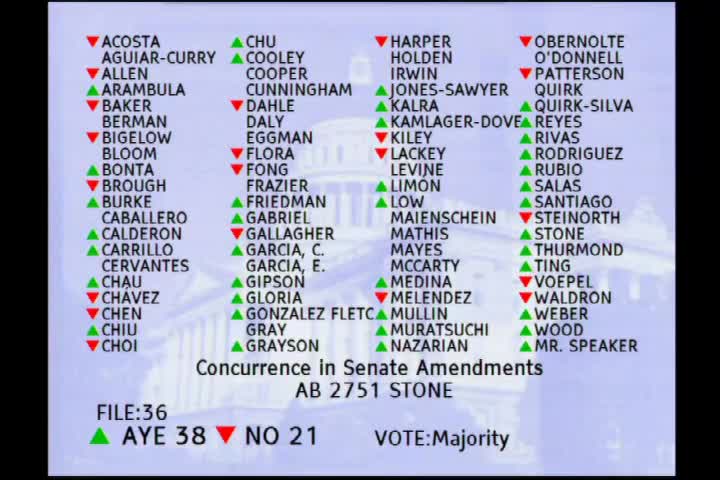



Bill Author

Bill Co-Author(s):