AB 2023: Personal income taxes: working families child care tax credit.
- Session Year: 2017-2018
- House: Assembly
- Latest Version Date: 2018-07-02
The Personal Income Tax Law, in modified conformity to federal income tax law, authorizes a credit for household and dependent care expenses necessary for gainful employment, as provided.
This bill, for taxable years beginning on or after January 1, 2019, and before January 1, 2024, for a taxpayer with an allowable credit in excess of tax liability, would allow a payment to the taxpayer in excess of that credit amount, not to exceed a specified amount, upon appropriation by the Legislature. subject to the annual Budget Act or a bill providing for appropriations related to the Budget Act, as provided, not to exceed a specified amount.
The Personal Income Tax Law, in modified conformity to federal income tax law, authorizes a credit for household and dependent care expenses necessary for gainful employment, as provided.
This bill would require, for taxable years beginning on or after January 1, 2019, and before January 1, 2024, for a taxpayer with an allowable credit in excess of tax liability, a payment from the Tax Relief and Refund Account, a continuously appropriated account, to the taxpayer equal to the amount of the allowable credit that is in excess of tax liability, as provided, not to exceed a specified amount. By authorizing additional payments from this account, the bill would make an appropriation.This bill, for taxable years beginning on or after January 1, 2019, for a taxpayer with an allowable credit in excess of tax liability, would allow a payment to the taxpayer in excess of that credit amount, not to exceed a specified amount, upon appropriation by the Legislature.
The Personal Income Tax Law, in modified conformity to federal income tax law, authorizes a credit for household and dependent care expenses necessary for gainful employment, as provided.
This bill, for taxable years beginning on or after January 1, 2019, for a taxpayer with an allowable credit in excess of tax liability, would allow a payment to the taxpayer in excess of that credit amount upon appropriation by the Legislature.This bill would require, for taxable years beginning on or after January 1, 2019, and before January 1, 2024, for a taxpayer with an allowable credit in excess of tax liability, a payment from the Tax Relief and Refund Account, a continuously appropriated account, to the taxpayer equal to the amount of the allowable credit that is in excess of tax liability, as provided, not to exceed a specified amount. By authorizing additional payments from this account, the bill would make an appropriation.
The Personal Income Tax Law, in modified conformity to federal income tax law, authorizes a credit for household and dependent care expenses necessary for gainful employment, as provided.
This bill, for taxable years beginning on or after January 1, 2019, for a taxpayer with an allowable credit in excess of tax liability, would allow a payment to the taxpayer in excess of that credit amount upon appropriation by the Legislature.
(a)For each taxable year beginning on or after January 1, 2000, there shall be allowed as a credit against the net tax, as defined in Section 17039, an amount determined in accordance with Section 21 of the Internal Revenue Code, relating to expenses for household and dependent care services necessary for gainful employment, except that the amount of the credit shall be a percentage, as provided in subdivision (b) of the allowable federal credit without taking into account whether there is a federal tax liability.
(b)For the purposes of subdivision (a), the percentage of the allowable federal credit shall be determined as follows:
(1)For taxable years beginning before January 1, 2003:
| The percentage of |
|---|---|
$40,000 or less | 63% |
Over $40,000 but not over $70,000 | 53% |
Over $70,000 but not over $100,000 | 42% |
Over $100,000 | 0% |
(2)For taxable years beginning on or after January 1, 2003:
| The percentage of |
|---|---|
$40,000 or less | 50% |
Over $40,000 but not over $70,000 | 43% |
Over $70,000 but not over $100,000 | 34% |
Over $100,000 | 0% |
(c)For purposes of this section, adjusted gross income means adjusted gross income as computed for purposes of paragraph (2) of subdivision (h) of Section 17024.5.
(d)The credit authorized by this section shall be limited, as follows:
(1)Employment-related expenses, within the meaning of Section 21 of the Internal Revenue Code, relating to expenses for household and dependent care services necessary for gainful employment, shall be limited to expenses for household services and care provided in this state.
(2)Earned income, within the meaning of Section 21(d) of the Internal Revenue Code, relating to earned income limitation, shall be limited to earned income subject to tax under this part. For purposes of this paragraph, compensation received by a member of the armed forces for active services as a member of the armed forces, other than pensions or retired pay, shall be considered earned income subject to tax under this part, whether or not the member is domiciled in this state.
(e)For purposes of this section, Section 21(b)(1) of the Internal Revenue Code, relating to qualifying individual, is modified to additionally provide that a child, as defined in Section 152(f)(1) of the Internal Revenue Code, relating to child defined, shall be treated, for purposes of Section 152 of the Internal Revenue Code, relating to dependent defined, as applicable for purposes of this section, as receiving over one-half of his or her support during the calendar year from the parent having custody for a greater portion of the calendar year, that parent shall be treated as a custodial parent, within the meaning of Section 152(e) of the Internal Revenue Code, relating to special rule for divorced parents, etc., as applicable for purposes of this section, and the child shall be treated as a qualifying individual under Section 21(b)(1) of the Internal Revenue Code, relating to qualifying individual, as applicable for purposes of this section, if both of the following apply:
(1)The child receives over one-half of his or her support during the calendar year from his or her parents who never married each other and who lived apart at all times during the last six months of the calendar year.
(2)The child is in the custody of one or both of his or her parents for more than one-half of the calendar year.
(f)(1)For taxable years beginning on or after January 1, 2019, and before January 1, 2024, if the amount allowable as a credit under this section exceeds the tax liability computed under this part for the taxable year, the excess shall be credited against other amounts due, if any, and the balance, if any, subject to paragraph (2), shall, upon appropriation by the Legislature, paragraphs (2) and (3), shall be paid to the taxpayer.
(2)Unless otherwise specified in the annual Budget Act or in any bill provided for appropriations related to the Budget Act, the amount paid to the taxpayer pursuant to this subdivision is zero dollars ($0).
(2)(3)The amount paid to the taxpayer pursuant to this subdivision shall not exceed:
(A)Two hundred fifty dollars ($250) for one qualifying individual.
(B)Five hundred dollars ($500) for two or more qualifying individuals.
(g)The amendments to this section made by Section 1.5 of Chapter 824 of the Statutes of 2002 apply only to taxable years beginning on or after January 1, 2002.
(h)The amendments made to this section by Chapter 14 of the Statutes of 2011 apply to taxable years beginning on or after January 1, 2011.
(a)For each taxable year beginning on or after January 1, 2000, there shall be allowed as a credit against the net tax, as defined in Section 17039, an amount determined in accordance with Section 21 of the Internal Revenue Code, relating to expenses for household and dependent care services necessary for gainful employment, except that the amount of the credit shall be a percentage, as provided in subdivision (b) of the allowable federal credit without taking into account whether there is a federal tax liability.
(b)For the purposes of subdivision (a), the percentage of the allowable federal credit shall be determined as follows:
(1)For taxable years beginning before January 1, 2003:
| The percentage of |
|---|---|
$40,000 or less | 63% |
Over $40,000 but not over $70,000 | 53% |
Over $70,000 but not over $100,000 | 42% |
Over $100,000 | 0% |
(2)For taxable years beginning on or after January 1, 2003:
| The percentage of |
|---|---|
$40,000 or less | 50% |
Over $40,000 but not over $70,000 | 43% |
Over $70,000 but not over $100,000 | 34% |
Over $100,000 | 0% |
(c)For purposes of this section, adjusted gross income means adjusted gross income as computed for purposes of paragraph (2) of subdivision (h) of Section 17024.5.
(d)The credit authorized by this section shall be limited, as follows:
(1)Employment-related expenses, within the meaning of Section 21 of the Internal Revenue Code, relating to expenses for household and dependent care services necessary for gainful employment, shall be limited to expenses for household services and care provided in this state.
(2)Earned income, within the meaning of Section 21(d) of the Internal Revenue Code, relating to earned income limitation, shall be limited to earned income subject to tax under this part. For purposes of this paragraph, compensation received by a member of the armed forces for active services as a member of the armed forces, other than pensions or retired pay, shall be considered earned income subject to tax under this part, whether or not the member is domiciled in this state.
(e)For purposes of this section, Section 21(b)(1) of the Internal Revenue Code, relating to qualifying individual, is modified to additionally provide that a child, as defined in Section 152(f)(1) of the Internal Revenue Code, relating to child defined, shall be treated, for purposes of Section 152 of the Internal Revenue Code, relating to dependent defined, as applicable for purposes of this section, as receiving over one-half of his or her support during the calendar year from the parent having custody for a greater portion of the calendar year, that parent shall be treated as a custodial parent, within the meaning of Section 152(e) of the Internal Revenue Code, relating to special rule for divorced parents, etc., as applicable for purposes of this section, and the child shall be treated as a qualifying individual under Section 21(b)(1) of the Internal Revenue Code, relating to qualifying individual, as applicable for purposes of this section, if both of the following apply:
(1)The child receives over one-half of his or her support during the calendar year from his or her parents who never married each other and who lived apart at all times during the last six months of the calendar year.
(2)The child is in the custody of one or both of his or her parents for more than one-half of the calendar year.
(f)(1)For taxable years beginning on or after January 1, 2019, and before January 1, 2024, if the amount allowable as a credit under this section exceeds the tax liability computed under this part for the taxable year, the excess shall be credited against other amounts due, if any, subject to paragraph (2), and shall be paid from the Tax Relief and Refund Account and refunded to the taxpayer. and the balance, if any, subject to paragraph (2), shall, upon appropriation by the Legislature, be paid to the taxpayer.
(2)The amount paid to the taxpayer pursuant to this subdivision shall not exceed:
(A)Two hundred fifty dollars ($250) for one qualifying individual.
(B)Five hundred dollars ($500) for two or more qualifying individuals.
(g)The amendments to this section made by Section 1.5 of Chapter 824 of the Statutes of 2002 apply only to taxable years beginning on or after January 1, 2002.
(h)The amendments made to this section by Chapter 14 of the Statutes of 2011 apply to taxable years beginning on or after January 1, 2011.
(a)For each taxable year beginning on or after January 1, 2000, there shall be allowed as a credit against the net tax, as defined in Section 17039, an amount determined in accordance with Section 21 of the Internal Revenue Code, relating to expenses for household and dependent care services necessary for gainful employment, except that the amount of the credit shall be a percentage, as provided in subdivision (b) of the allowable federal credit without taking into account whether there is a federal tax liability.
(b)For the purposes of subdivision (a), the percentage of the allowable federal credit shall be determined as follows:
(1)For taxable years beginning before January 1, 2003:
| The percentage of |
|---|---|
$40,000 or less | 63% |
Over $40,000 but not over $70,000 | 53% |
Over $70,000 but not over $100,000 | 42% |
Over $100,000 | 0% |
(2)For taxable years beginning on or after January 1, 2003:
| The percentage of |
|---|---|
$40,000 or less | 50% |
Over $40,000 but not over $70,000 | 43% |
Over $70,000 but not over $100,000 | 34% |
Over $100,000 | 0% |
(c)For purposes of this section, adjusted gross income means adjusted gross income as computed for purposes of paragraph (2) of subdivision (h) of Section 17024.5.
(d)The credit authorized by this section shall be limited, as follows:
(1)Employment-related expenses, within the meaning of Section 21 of the Internal Revenue Code, relating to expenses for household and dependent care services necessary for gainful employment, shall be limited to expenses for household services and care provided in this state.
(2)Earned income, within the meaning of Section 21(d) of the Internal Revenue Code, relating to earned income limitation, shall be limited to earned income subject to tax under this part. For purposes of this paragraph, compensation received by a member of the armed forces for active services as a member of the armed forces, other than pensions or retired pay, shall be considered earned income subject to tax under this part, whether or not the member is domiciled in this state.
(e)For purposes of this section, Section 21(b)(1) of the Internal Revenue Code, relating to qualifying individual, is modified to additionally provide that a child, as defined in Section 152(f)(1) of the Internal Revenue Code, relating to child defined, shall be treated, for purposes of Section 152 of the Internal Revenue Code, relating to dependent defined, as applicable for purposes of this section, as receiving over one-half of his or her support during the calendar year from the parent having custody for a greater portion of the calendar year, that parent shall be treated as a custodial parent, within the meaning of Section 152(e) of the Internal Revenue Code, relating to special rule for divorced parents, etc., as applicable for purposes of this section, and the child shall be treated as a qualifying individual under Section 21(b)(1) of the Internal Revenue Code, relating to qualifying individual, as applicable for purposes of this section, if both of the following apply:
(1)The child receives over one-half of his or her support during the calendar year from his or her parents who never married each other and who lived apart at all times during the last six months of the calendar year.
(2)The child is in the custody of one or both of his or her parents for more than one-half of the calendar year.
(f)(1)For taxable years beginning on or after January 1, 2019, and before January 1, 2024, if the amount allowable as a credit under this section exceeds the tax liability computed under this part for the taxable year, the excess shall be credited against other amounts due, if any, and the balance, if any, shall, upon appropriation by the Legislature, be paid to the taxpayer. subject to paragraph (2), and shall be paid from the Tax Relief and Refund Account and refunded to the taxpayer.
(2)The amount paid to the taxpayer pursuant to this subdivision shall not exceed:
(A)Two hundred fifty dollars ($250) for one qualifying individual.
(B)Five hundred dollars ($500) for two or more qualifying individuals.
(g)The amendments to this section made by Section 1.5 of Chapter 824 of the Statutes of 2002 apply only to taxable years beginning on or after January 1, 2002.(h)The amendments made to this section by Chapter 14 of the Statutes of 2011 apply to taxable years beginning on or after January 1, 2011.(a)For each taxable year beginning on or after January 1, 2000, there shall be allowed as a credit against the net tax, as defined in Section 17039, an amount determined in accordance with Section 21 of the Internal Revenue Code, relating to expenses for household and dependent care services necessary for gainful employment, except that the amount of the credit shall be a percentage, as provided in subdivision (b) of the allowable federal credit without taking into account whether there is a federal tax liability.
(b)For the purposes of subdivision (a), the percentage of the allowable federal credit shall be determined as follows:
(1)For taxable years beginning before January 1, 2003:
| The percentage of |
|---|---|
$40,000 or less | 63% |
Over $40,000 but not over $70,000 | 53% |
Over $70,000 but not over $100,000 | 42% |
Over $100,000 | 0% |
(2)For taxable years beginning on or after January 1, 2003:
| The percentage of |
|---|---|
$40,000 or less | 50% |
Over $40,000 but not over $70,000 | 43% |
Over $70,000 but not over $100,000 | 34% |
Over $100,000 | 0% |
(c)For purposes of this section, adjusted gross income means adjusted gross income as computed for purposes of paragraph (2) of subdivision (h) of Section 17024.5.
(d)The credit authorized by this section shall be limited, as follows:
(1)Employment-related expenses, within the meaning of Section 21 of the Internal Revenue Code, relating to expenses for household and dependent care services necessary for gainful employment, shall be limited to expenses for household services and care provided in this state.
(2)Earned income, within the meaning of Section 21(d) of the Internal Revenue Code, relating to earned income limitation, shall be limited to earned income subject to tax under this part. For purposes of this paragraph, compensation received by a member of the armed forces for active services as a member of the armed forces, other than pensions or retired pay, shall be considered earned income subject to tax under this part, whether or not the member is domiciled in this state.
(e)For purposes of this section, Section 21(b)(1) of the Internal Revenue Code, relating to a qualifying individual, is modified to additionally provide that a child, as defined in Section 152(f)(1) of the Internal Revenue Code, relating to child defined, shall be treated, for purposes of Section 152 of the Internal Revenue Code, relating to dependent defined, as applicable for purposes of this section, as receiving over one-half of his or her support during the calendar year from the parent having custody for a greater portion of the calendar year, that parent shall be treated as a custodial parent, within the meaning of Section 152(e) of the Internal Revenue Code, relating to special rule for divorced parents, etc., as applicable for purposes of this section, and the child shall be treated as a qualifying individual under Section 21(b)(1) of the Internal Revenue Code, relating to qualifying individual, as applicable for purposes of this section, if both of the following apply:
(1)The child receives over one-half of his or her support during the calendar year from his or her parents who never married each other and who lived apart at all times during the last six months of the calendar year.
(2)The child is in the custody of one or both of his or her parents for more than one-half of the calendar year.
(f)For taxable years beginning on or after January 1, 2019, if the amount allowable as a credit under this section exceeds the tax liability computed under this part for the taxable year, the excess shall be credited against other amounts due, if any, and the balance, if any, shall, upon appropriation by the Legislature, be paid to the taxpayer.
(f)(g)The amendments to this section made by Section 1.5 of Chapter 824 of the Statutes of 2002 apply only to taxable years beginning on or after January 1, 2002.
(g)(h)The amendments made to this section by Chapter 14 of the Statutes of 2011 apply to taxable years beginning on or after January 1, 2011.
|
Date
|
Status
|
|---|---|
| Aug 16, 2018 | In committee: Held under submission. |
| Aug 6, 2018 | In committee: Referred to APPR. suspense file. |
| Jul 2, 2018 | Read second time and amended. Re-referred to Com. on APPR. |
| Jun 28, 2018 | From committee: Amend, and do pass as amended and re-refer to Com. on APPR. (Ayes 6. Noes 0.) (June 27). |
| Jun 13, 2018 | Referred to Com. on GOV. & F. |
| Jun 4, 2018 | In Senate. Read first time. To Com. on RLS. for assignment. |
| May 31, 2018 | Read third time. Passed. Ordered to the Senate. |
| May 29, 2018 | Read second time. Ordered to third reading. |
| May 25, 2018 | From committee: Amend, and do pass as amended. (Ayes 12. Noes 3.) (May 25). |
| Apr 4, 2018 | In committee: Set, first hearing. Referred to suspense file. |
| Mar 13, 2018 | From committee: Do pass and re-refer to Com. on APPR. (Ayes 6. Noes 1.) (March 12). Re-referred to Com. on APPR. |
| Feb 12, 2018 | Referred to Com. on REV. & TAX. |
| Feb 6, 2018 | From printer. May be heard in committee March 8. |
| Feb 5, 2018 | Read first time. To print. |
|
Date
|
Description
|
Location
|
Votes
|
|
|---|---|---|---|---|
| Aug 6, 2018 | Placed on suspense file | Senate Standing Committee on Appropriations |
Passed |
|
| Jun 27, 2018 | Do pass as amended, but first amend, and re-refer to the Committee on [Appropriations] | Senate Standing Committee on Governance and Finance |
Passed |
|
| May 31, 2018 | AB 2023 CABALLERO Assembly Third Reading | Assembly Floor |
Passed |
|
| May 25, 2018 | Do pass as amended. | Assembly Standing Committee on Appropriations |
Passed |
|
| Mar 12, 2018 | Do pass and be re-referred to the Committee on [Appropriations] | Assembly Standing Committee on Revenue and Taxation |
Passed |
This list shows positions taken on this bill by organizations on the date displayed, which is linked to the original source.
Positions by individuals are not included.
|
Organization
|
Position
|
Date
|
|---|---|---|
| American Academy Of Pediatrics, California | ** Support | Mar 15, 2018 |
| Asset Building Strategies | ** Support | Mar 15, 2018 |
| California Alternative Payment Program Association | ** Support | Mar 15, 2018 |
| California Asset Building Coalition | * Support | Apr 4, 2018 |
| California Catholic Conference | ** Support | Mar 15, 2018 |
| California Child Care Resource and Referral Network | ** Support | Mar 15, 2018 |
| California Childcare Resource Referral Network | * Support | Mar 12, 2018 |
| California Food Policy Advocate | ** Support | Mar 15, 2018 |
| Catholic Church of California | * Support | Mar 12, 2018 |
| Childcare Alliance of Los Angeles | * Indeterminate | Apr 4, 2018 |
| Children's Defense Fund | * Support | Apr 4, 2018 |
| Coalition of California Welfare Rights Organizations | ** Support | Mar 15, 2018 |
| rise together | ** Support | Mar 15, 2018 |
| Unknown. | ** Against | Jun 25, 2018 |
| Western Center On Law And Poverty Inc. | * Support | Apr 4, 2018 |
SENATE COMMITTEE ON
Senator Anthony Portantino, Chair
2017 - 2018 Regular Session
AB 2023 (Caballero) - Personal income taxes: working families child care tax credit
Version: | Policy Vote: |
Urgency: | Mandate: |
Hearing Date: | Consultant: |
This bill meets the criteria for referral to the Suspense File.
Bill Summary:
AB 2023 would make the state Child and Dependent Care Expenses Tax Credit refundable, as specified.
Fiscal Impact:
The Franchise Tax Board (FTB) estimates that the bill would result in General Fund revenue losses of $33 million in 2018-19, $55 million in 2019-20, and $55 million in 2020-21. FTB’s costs to implement the bill have yet to be determined, but are anticipated to be about $2 million per year (General Fund).
Background:
Tax expenditure programs (TEPs) are special tax provisions that reduce the amount of revenues the “basic” tax system would otherwise generate in order to provide (1) benefits to certain groups of taxpayers, and/or (2) incentives to encourage certain types of behavior and activities, such as charitable giving. Specifically, current law provides for, among other things, various income and corporation tax credits and deductions, as well as exemptions from the sales and use tax. The Department of Finance is required to publish a list of TEPs (currently totaling several hundred), which currently total $61 billion annually.
The federal Child and Dependent Care Credit is a nonrefundable tax credit. It is equal to a portion of the taxpayer’s qualifying child or dependent care expenses. To claim the credit, the taxpayer must incur employment-related expenses to provide care for a qualifying child or dependent. Employment-related expenses are those incurred for the taxpayer to be gainfully employed, and include day care expenses or adult day care expenses. A qualifying child or dependent must be either under 13 years old or mentally incapable of taking caring of oneself.
The credit amount is equal to the amount of employment-related expenses paid, multiplied by the applicable percentage (20 to 35 percent), as determined by the taxpayer’s adjusted gross income (AGI). For example, a taxpayer with an AGI of $15,000 or less uses the highest applicable percentage (35 percent), while a taxpayer with an AGI of $43,000 or more uses the lowest applicable percentage (20 percent). The employment-related expenses are also limited. Taxpayers with one qualifying dependent are limited to $3,000 of employment-related expenses; if they have two or more qualifying dependents, the limit is $6,000 of employment-related expenses.
Existing state law provides a tax credit similar to the federal credit. The State’s credit, entitled the Child and Dependent Care Expense (CDCE) Credit, conforms to both the federal credit percentage and the federal expenses cap. Prior to 2012, the State’s CDCE Credit was refundable. However, the Legislature made the CDCE Credit nonrefundable effective with taxable year 2011 in response to budget constraints.
Proposed Law:
This bill would allow the amount of the CDCE Credit that exceeds a taxpayer’s total tax liability to be refunded back to the taxpayer; however, the change is contingent upon funding specified either in the annual Budget Act or in any bill providing for appropriations related to the Budget Act. Otherwise, the aforementioned excess paid to the taxpayer would be zero dollars. The amount of refund, if funded, would be capped at $250 for taxpayers filing for one qualifying individual and $500 for taxpayers filing for two or more qualifying individuals. The refund would be available for taxable years 2019 through 2023.
Related Legislation: SB 86 (Committee on Budget and Fiscal Review, Chapter 14, Statutes of 2011) made the CDCE Credit nonrefundable.
Staff Comments:
To develop its estimate of the bill’s revenue loss, FTB utilized its own CDCE Credit data obtained from filed tax returns. FTB estimates that in 2016, the CDCE Credit was $70 million. Taxpayers applied $31 million of the credit against their tax liabilities, leaving $39 million in nonrefundable credits unused. FTB computes that the amount of refundable credit (the lesser of either $250 or $500 as specified in the bill or the amount of credit available), would be $34 million. FTB then increased its estimated credit refunded to $55 million, to account for additional qualifying taxpayers that would file returns to claim the refundable credit.
-- END --
SENATE COMMITTEE ON GOVERNANCE AND FINANCE
Senator Mike McGuire, Chair
2017 - 2018 Regular
Bill No: | AB 2023 | Hearing Date: | 6/27/18 |
Author: | Caballero | Tax Levy: | No |
Version: | 5/29/18 | Fiscal: | Yes |
Consultant: | Brown | ||
Personal income taxes: working families child care tax credit
Amends the state Child and Dependent Care Expenses Tax Credit to become refundable — up to a specified amount —upon appropriation by the Legislature.
Background
Tax expenditures. California law allows various income tax credits, deductions, exemptions, and exclusions. The Legislature enacts such tax incentives to either compensate taxpayers for incurring certain expenses, such as child adoption, or to influence certain behavior, such as charitable giving. The Legislature uses tax incentives to encourage taxpayers to do something that but for the tax credit, they would otherwise not do. The Department of Finance is required to annually publish a list of tax expenditures, currently totaling around $61.3 billion per year.
Federal Child and Dependent Care Tax Credit. The federal Child and Dependent Care Credit is a nonrefundable tax credit, equal to a portion of the taxpayer’s qualifying child or dependent care expenses. To obtain the credit, the taxpayer must incur employment-related expenses to provide care for a qualifying child or dependent. Employment-related expenses are expenses incurred for the taxpayer to be gainfully employed such as day care expenses or adult day care expenses. A qualifying child or dependent must be either under 13 years old or mentally incapable of taking caring of oneself.
The credit amount is equal to the employment-related expenses paid multiplied by the applicable percentage (20 to 35 percent). The applicable percentage is determined by the taxpayer’s adjusted gross income (AGI). For example, a taxpayer with an AGI of $15,000 or less uses the highest applicable percentage (35%) while a taxpayer with an AGI of $43,000 or more uses the lowest applicable percentage (20%). The employment-related expenses are also limited. If a taxpayer has one qualifying dependent, the taxpayer is limited to $3,000 of employment-related expenses. If the taxpayer has two or more qualifying dependents, the taxpayer is limited to $6,000 of employment-related expenses.
For example, Mr. and Mrs. Smith have a combined AGI of $75,000, two children (one infant and one four year old), and annual child care costs of $22,077. Under federal law, the Smith family would receive a Child and Dependent Care Credit of $1,200 calculated as follows:
$6,000 (employment expenses cap for two kids) x 20% (applicable rate) = $1,200 Credit
State Child and Dependent Care Expenses Tax Credit. Existing state law provides a tax credit similar to the federal credit. The state’s credit, entitled Child and Dependent Care Expense (CDCE) Credit, conforms to both the federal credit percentage and the federal expenses cap. The CDCE Credit is computed by first applying the federal credit percentage (20 to 35 percent) to the lesser of:
- The state expenses cap (ex. $3,000 for one dependent or $6,000 for two or more dependents),
- California employment-related expenses paid, or
- California earned income.
Then, the applicable CDCE Credit percentage is applied. The percentage varies based on the taxpayer’s AGI.
If AGI is: CDCE Credit Percentage:
$40,000 or less 50%
Over $40,000 but not over $70,000 43%
Over $70,000 but not over $100,000 34%
Over $100,000 0%
For example, Mr. and Mrs. Smith — the couple in the previous example — would receive a CDCE Credit of $408 calculated as follows:
$6,000 (employment expenses cap) x 20% (federal rate) x 34% (state) = $408 CDCE Credit
Prior to 2012, the CDCE Credit was refundable. However, the Legislature made the CDCE Credit nonrefundable for tax years starting on January 1st, 2011, and thereafter due to budget constraints (SB 86, Committee on Budget and Fiscal Review, 2011).
The author would like make the credit refundable upon appropriation by the Legislature.
Proposed Law
Assembly bill 2023 allows — upon appropriation by the Legislature — the amount of the CDCE Credit that exceeds a taxpayer’s total tax liability to be refunded back to the taxpayer. The amount of refund is capped at $250 for taxpayers filing for one qualifying individual and $500 for taxpayers filing for two or more qualifying individuals. The refund is available for taxable years beginning on or after January 1st, 2019.
State Revenue Impact
The Franchise Tax Board (FTB) estimates revenue losses of $33 million in 2018–2019, $55 million in both 2019-2020 and 2020-2021.
Comments
1. Purpose of the bill. According to the author, “The cost of child care in California is considerably expensive, now starting to exceed college tuition. For many families, child care is the second most significant expense, exceeded only by housing costs. California’s subsidized child care and development programs are a critical support to many low-income families. However, only a small percentage of children who are eligible for subsidized child care are actually enrolled, which means many low-income families must pay for child care out of their pockets or forego work because they cannot afford the costs. In addition, middle class families who don’t qualify for state programs also struggle with expensive child care costs. California must do a better job in supporting working families who struggle to make ends meet. We need a multi-faceted approach to address poverty and meet the various child care needs of families. Research shows refundable tax credits promote work, reduce poverty, and help families’ wellbeing through better health outcomes, increased college enrollment, and higher earnings. Extending the California Child and Dependent Care Expenses Credit to low- and moderate-income families will help the families that need it most and improve access to child care.”
2. Refundable credits. According to FTB and a report by the Legislative Analyst’s Office, “Options for a State Earned Income Tax Credit,” refundable credits increase refund fraud and identity theft. Historically, both the Internal Revenue Service and FTB have experienced fraud and improper claims with refundable credits. More importantly, if a refund is determined to be fraudulent, the refund commonly cannot be recovered. AB 2023 does not make the CDCE Credit refundable, but rather, allows the legislature —if funds are appropriated in the budget—to refund taxpayers their unused CDCE credit up to a specified threshold. In other words, it paves the way for a future Legislature to “refund” taxpayers money which may lead to more fraudulent tax claims. The Committee may wish to consider the effects of refundable credits and the risk the state may assume in the future.
3. Cost of child care. According to a 2017 report by Child Care Aware of America, the average yearly cost of child care in California for an infant is $13,671 and for a four year old is $9,406. In fact, the cost of infant care is nearly the annual cost of college tuition at a four year state college. In 2012, the same report by Child Care Aware of America listed the average yearly cost of child care in California for an infant as $12,068 and for a four year old as $8,407. These costs have increased at a rate greater than inflation since 2012. However, the state has increased funding for child care through other measures. Since 2013, the state has added more than 41,000 subsidized child care slots as well as increased funding for CalWorks Stage 2 and Stage 3 Child Care by $5.2 million. Should the state be doing more to help alleviate the burden child care costs place on working families?
4. Another way? The Legislature has many options to help families pay for the cost of child care. For example, it could increase funding for the nine child care and early education programs the state currently administers. Three of these programs relate to California Work Opportunity and Responsibility to Kids (CalWORKS), which provides child care subsidies to families transitioning out of welfare. Another program is the California State Preschool Program, which provides part-day and full-day programs for three to four year olds from low income, working families. AB 2023 presents an additional way: making a current tax credit refundable upon appropriation by the Legislature. However, the amount of state revenue lost under AB 2023 could impact funding levels for the other nine state run child care programs as the state would ultimately collect less money in taxes. The Committee may wish to consider if AB 2023 is the best approach to reduce child care costs for California families.
5. Low-income families. The current CDCE Credit has a minimal impact if any on the state’s poorest working families. Since California has a progressive income tax, many low income families have little or no tax liability. AB 2023 makes the CDCE Credit refundable, providing a small income increase to low income families who may not receive any benefit from the current CDCE Credit due to low tax liabilities.
6. Where’s the sunset? It’s important for tax expenditures to be reviewed periodically to make sure they are producing the desired outcome. Sunset provisions nullify tax expenditures — typically after five years — to provide future Legislatures the opportunity to review them. If the desired outcome is being achieved, the Legislature can renew the tax expenditure. However, if the intended goal is not being achieved, the Legislature can modify the tax expenditure to make it more effective. AB 2023 does not include a sunset provision. The Committee may wish to consider amending AB 2023 to include a sunset date of January 1, 2024 to provide a future Legislature the opportunity to review the it’s refundability performance and make necessary modifications.
7. The process. Currently, AB 2023 allows the state to refund taxpayers the amount of the CDCE Credit that exceeds the taxpayer’s total tax liability, upon appropriation by the Legislature. The bill also specifies certain thresholds that FTB can refund back to taxpayers. However, it does not provide other guidance to FTB on exactly how to allocate funds appropriated. For example, what if the Legislature does not appropriate enough funding to refund all credits claimed by taxpayers? Does FTB then allocate refunds on a first-come first-served basis? Meaning some taxpayers who are entitled to a refund does not receive one? Would FTB allocate the amount of money appropriated proportionately among each taxpayer who is entitled to a refund? The Committee may wish to consider providing FTB guidance on how to administer the refund.
8. Related legislation. SB 1213 (Anderson), which the Senate Governance & Finance Committee approved at its April 11th hearing on a vote of 5-0, authorized an increase in the CDCE applicable percentage and made it refundable. SB 1213 is currently being held on the Senate Appropriations Committee suspense file.
9. Technical amendment. Committee staff suggests the following technical amendments:
- Strike “upon appropriation by the Legislature” and
- Insert “Unless otherwise specified in the annual Budget Act or in any bill providing for appropriations related to the Budget Act, the amount paid to the taxpayer pursuant to this subdivision shall be zero dollars ($0).
Assembly Actions
Assembly Revenue and Taxation 6-1
Assembly Appropriations 12-3
Assembly Floor 69-4
Support and Opposition
(6/22/18)
Support: Children’s Defense Fund – California (Sponsor); Alameda County Board of Supervisors; American Academy of Pediatrics, California; California Alternative Payment Program Association; California Asset Building Coalition; California Catholic Conference; California Child Care Resource & Referral Network; California Child Development Administrators Association; Child Care Law Center; Coalition of California Welfare Rights Organization; Equal Rights Advocates; Family Business Association; First 5 California; National Women’s Law Center; Parent Voices California; San Francisco Childcare Planning and Advisory Council; Small Business Majority; Stronger California Advocates Network; Women’s Foundation of California.
Opposition: Unknown.
-- END --
ASSEMBLY THIRD READING
ATR Bill Id:AB 2023
Author:(Caballero)
As Amended Ver:May 29, 2018
Majority vote
Committee | Votes | Ayes | Noes |
Revenue & Taxation | 6-1 | Burke, Bonta, Chu, Gray, McCarty, Bloom | Travis Allen |
Appropriations | 12-3 | Gonzalez Fletcher, Bloom, Bonta, Calderon, Carrillo, Chau, Eggman, Friedman, Eduardo Garcia, Nazarian, Quirk, Reyes | Bigelow, Gallagher, Obernolte |
SUMMARY: Makes a portion of the child care tax credit refundable. Specifically, this bill:
- Allows, for taxable years beginning on or after January 1, 2019, and before January 1, 2024, the excess of the child care tax credit to be credited against other amounts due, if any, and shall be paid to the taxpayer from the Tax Relief and Refund Account. The refundable credit is continuously appropriated.
- Provides that the refundable credit may not exceed the following:
- $250 for one qualifying individual; and,
- $500 for two or more qualifying individuals.
- Makes technical, non-substantive changes to related provisions.
EXISTING FEDERAL LAW:
- Allows a tax credit equal to a percentage of employment-related costs of care for a "qualifying individual." The amount of the credit percentage ranges between 20% and 35% and depends on the taxpayer's adjusted gross income (AGI).
- Defines a "qualifying individual" as any of the following:
- A dependent of the taxpayer who is under the age of 13; or,
- A dependent or spouse who is physically or mentally unable to provide self-care.
- Defines "employment-related expenses" as those expenses incurred to enable gainful employment.
- Limits the amount of "employment-related expenses" to the lesser of the taxpayer's earned income or $3,000 per taxable year for one qualifying individual or $6,000 if there are two or more qualifying individuals.
EXISTING STATE LAW:
- Conforms generally to the federal Child and Dependent Care Credit program, including the definition of "qualifying individual" and the maximum amount and types of eligible expenses.
- Limits eligible expenses to care provided only in California and, for purposes of calculating the earned income limitations, allows only earned income from California sources.
- Provides that the state credit must be computed by first applying the applicable federal credit percentage to the smallest of the expense cap, California expenses, or California earned income; and then by applying the state credit percentage.
- Prescribes credit percentages based on the taxpayer's AGI. Specifically, for taxpayers with AGI of $40,000 or less, the applicable state credit percentage is 50%, for taxpayers with AGI between $40,000 and $70,000, the applicable state credit percentage is 43%, and for taxpayers with AGI between $70,000 and $100,000, the applicable state credit percentage is 34%.
- Limits the application of the credit to taxpayers with AGI of $100,000 or less.
FISCAL EFFECT: According to the Assembly Appropriations Committee, annual General Fund revenue loss of $33 million in 2018-19, $55 million in 2019-20, and $55 million in 2020-21.
COMMENTS:
- The author has provided the following statement in support of this bill:
Quality child care is out of reach to the average working family in California. From the most urban to the most rural counties, child care expenses are starting to exceed college tuition. For many families, the cost of child care is the second most significant expense, exceeded only by housing costs. Restoring the refundability of the Child and Dependent Care Expenses Credit is critical to help working families burdened by high child care expenses.
The state funds child care slots for the neediest children, however, only a small percentage of low-income children are enrolled in these programs. This means a significant number of low-income families must pay for child care out of their pockets or forego labor force participation because they cannot afford the costs. On the other hand, middle-income families who don't qualify for state programs also struggle with expensive out-of-pocket child care expenses.
Refundable tax credits provide significant benefits to people struggling to make ends meet. California currently faces a crisis with the highest child poverty in the nation, more than 1 in 5 children live in poverty. Most impoverished young children live in households with working parents, yet their basic economic security is at risk. Raising a family's income when a child is young not only improves a child's immediate well-being, but is associated with better health, more schooling, more hours worked, and higher earnings in adulthood. Restoring the refundability of the Child and Dependent Care Expenses Credit will significantly help low-income families by putting money back in their pockets for the things they need, like food, housing or medical care.
- Proponents of this measure state that "[t]he cost of child care in California is considerably expensive. For many families, child care expenses are the second most significant expense, exceeded only by housing costs. According to recent data, the state's average annual cost of care in a child care center for an infant is $13,327 and $8,462 for in-home care. From the most urban to the most rural counties, child care costs continue to soar and are starting to exceed college tuition. Many low- and moderate-income families in California struggle to afford child care and may be unable to work due to the high cost of care." Unfortunately, the "nonrefundable credit only provides benefits to families that owe state income tax, which means low- and moderate-income families are excluded from the current credit even though they face rising child care expenses. Making the credit refundable again will allow working families who do not owe state income taxes, but who do pay other taxes like sales and property tax, to benefit from a tax refund to offset some of their child care expenses."
- Committee Staff Comments:
- The Purpose of this Bill: Child care is one of the largest expenses for low- and middle-income families. While California offers the Child and Dependent Care Expenses Credit, it is limited by the taxpayer's AGI and it is not refundable. Because the current credit is not refundable, the author argues that the existing credit is insufficient to meet the needs of hardworking low- and middle-income families. The purpose of this bill is to help minimize the financial strains of child care and dependent care by making the credit refundable and thereby accessible to lower income families.
- Background: The federal Child and Dependent Care Credit is a nonrefundable credit, equal to a portion of qualifying child or dependent care expenses paid for the purpose of allowing the taxpayer to be gainfully employed. To obtain the credit, the taxpayer must incur employment-related expenses to provide care for a dependent who has not attained the age of 13. The maximum amount of employment-related expenses to which the credit percentage may be applied is $3,000 if one qualifying individual is involved or $6,000 if two or more qualifying individuals are involved. The credit amount is equal to the applicable percentage (20% to 35%), as determined by the taxpayer's AGI times the qualified employment expenses paid. Taxpayers with an AGI of $15,000 or less use the highest applicable percentage of 35%.
Existing California law provides a tax credit similar to the federal child-care credit, the Child and Dependent Care Expenses Credit. State law conforms to the federal expenses cap, and applies the federal credit percentage to calculate the credit amount. However, state law limits expenses to care provided in California and income earned from California sources. The state credit is computed by first applying the federal credit percentage (20 to 35%) to the smallest of three amounts: the expense cap, California expenses, or California earned income. The state credit percentage is then applied. Unlike the federal credit, the state credit has an income limit: taxpayers with AGI over $100,000 cannot claim the state credit.
- Low-Income Families: From 2000 to 2010, the state Child and Dependent Care Expenses Credit was refundable, allowing tax filers with no state tax liability to receive some benefit from the credit. Due to budget constraints, the refundable portion of the credit was repealed by SB 86 (Senate Committee on Budget and Fiscal Review), Chapter 14, Statutes of 2011. On April 7, 2016, the Legislative Analyst's Office (LAO) released a report providing options for modifying the state Child and Dependent Care Expenses Credit. The report provided four alternative proposals for legislative consideration. All options presented in the report would make the state Child and Dependent Care Expenses Credit refundable. Option One would benefit low- to middle-income filers. Option Two offers to restore refundability at a somewhat lower cost by providing less benefit than Option One. Option Three would increase benefits for lower income filers, and Option Four would increase benefits across income ranges, including higher income earners, by increasing the state credit percentage but keeping the AGI percentages the same. The LAO report concluded that if the state child-care credit were made refundable again, it would provide a noticeable income boost to California working families and also encourage, to some extent, additional participation in the formal labor market.
- Refundable Credit: By allowing the credit to be paid out from the Tax Relief and Refund Account, the funds will be continuously appropriated ensuring that taxpayers claiming the state credit receive the refundable portion. To reduce the impact on the general fund, this bill limits that refundable tax credit to $250 per qualifying individual and $500 for two or more qualifying individuals.
Analysis Prepared by: Carlos Anguiano / REV. & TAX. / (916) 319-2098 FN: 0003434
ASSEMBLY THIRD READING
ATR Bill Id:AB 2023
Author:(Caballero)
As Amended Ver:May 29, 2018
Majority vote
Committee | Votes | Ayes | Noes |
Revenue & Taxation | 6-1 | Burke, Bonta, Chu, Gray, McCarty, Bloom | Travis Allen |
Appropriations | 12-3 | Gonzalez Fletcher, Bloom, Bonta, Calderon, Carrillo, Chau, Eggman, Friedman, Eduardo Garcia, Nazarian, Quirk, Reyes | Bigelow, Gallagher, Obernolte |
SUMMARY: Makes a portion of the child care tax credit refundable. Specifically, this bill:
- Allows, for taxable years beginning on or after January 1, 2019, the excess of the child care tax credit to be credited against other amounts due, if any, and the balance to be paid to the taxpayer upon appropriation by the Legislature.
- Provides that the refundable credit may not exceed the following:
- $250 for one qualifying individual; and,
- $500 for two or more qualifying individuals.
- Makes technical, non-substantive changes to related provisions.
EXISTING FEDERAL LAW:
- Allows a tax credit equal to a percentage of employment-related costs of care for a "qualifying individual." The amount of the credit percentage ranges between 20% and 35% and depends on the taxpayer's adjusted gross income (AGI).
- Defines a "qualifying individual" as any of the following:
- A dependent of the taxpayer who is under the age of 13; or,
- A dependent or spouse who is physically or mentally unable to provide self-care.
- Defines "employment-related expenses" as those expenses incurred to enable gainful employment.
- Limits the amount of "employment-related expenses" to the lesser of the taxpayer's earned income or $3,000 per taxable year for one qualifying individual or $6,000 if there are two or more qualifying individuals.
EXISTING STATE LAW:
- Conforms generally to the federal Child and Dependent Care Credit program, including the definition of "qualifying individual" and the maximum amount and types of eligible expenses.
- Limits eligible expenses to care provided only in California and, for purposes of calculating the earned income limitations, allows only earned income from California sources.
- Provides that the state credit must be computed by first applying the applicable federal credit percentage to the smallest of the expense cap, California expenses, or California earned income; and then by applying the state credit percentage.
- Prescribes credit percentages based on the taxpayer's AGI. Specifically, for taxpayers with AGI of $40,000 or less, the applicable state credit percentage is 50%, for taxpayers with AGI between $40,000 and $70,000, the applicable state credit percentage is 43%, and for taxpayers with AGI between $70,000 and $100,000, the applicable state credit percentage is 34%.
- Limits the application of the credit to taxpayers with AGI of $100,000 or less.
FISCAL EFFECT: According to the Assembly Appropriations Committee, annual General Fund revenue loss of $47 million in 2018-19, $80 million in 2019-20, and $80 million in 2020-21.
COMMENTS:
- The author has provided the following statement in support of this bill:
Quality child care is out of reach to the average working family in California. From the most urban to the most rural counties, child care expenses are starting to exceed college tuition. For many families, the cost of child care is the second most significant expense, exceeded only by housing costs. Restoring the refundability of the Child and Dependent Care Expenses Credit is critical to help working families burdened by high child care expenses.
The state funds child care slots for the neediest children, however, only a small percentage of low-income children are enrolled in these programs. This means a significant number of low-income families must pay for child care out of their pockets or forego labor force participation because they cannot afford the costs. On the other hand, middle-income families who don't qualify for state programs also struggle with expensive out-of-pocket child care expenses.
Refundable tax credits provide significant benefits to people struggling to make ends meet. California currently faces a crisis with the highest child poverty in the nation, more than one in five children live in poverty. Most impoverished young children live in households with working parents, yet their basic economic security is at risk. Raising a family's income when a child is young not only improves a child's immediate well-being, but is associated with better health, more schooling, more hours worked, and higher earnings in adulthood. Restoring the refundability of the Child and Dependent Care Expenses Credit will significantly help low-income families by putting money back in their pockets for the things they need, like food, housing or medical care.
- Committee Staff Comments:
- The Purpose of this Bill: Child care is one of the largest expenses for low- and middle-income families. While California offers the Child and Dependent Care Expenses Credit, it is limited by the taxpayer's AGI and it is not refundable. Because the current credit is not refundable, the author argues that the existing credit is insufficient to meet the needs of hardworking low- and middle-income families. The purpose of this bill is to help minimize the financial strains of child care and dependent care by making the credit refundable and thereby accessible to lower income families.
- Background: The federal Child and Dependent Care Credit is a nonrefundable credit, equal to a portion of qualifying child or dependent care expenses paid for the purpose of allowing the taxpayer to be gainfully employed. To obtain the credit, the taxpayer must incur employment-related expenses to provide care for a dependent who has not attained the age of 13. The maximum amount of employment-related expenses to which the credit percentage may be applied is $3,000 if one qualifying individual is involved or $6,000 if two or more qualifying individuals are involved. The credit amount is equal to the applicable percentage (20% to 35%), as determined by the taxpayer's AGI times the qualified employment expenses paid. Taxpayers with an AGI of $15,000 or less use the highest applicable percentage of 35%.
Existing California law provides a tax credit similar to the federal child-care credit, the Child and Dependent Care Expenses Credit. State law conforms to the federal expenses cap, and applies the federal credit percentage to calculate the credit amount. However, state law limits expenses to care provided in California and income earned from California sources. The state credit is computed by first applying the federal credit percentage (20 to 35%) to the smallest of three amounts: the expense cap, California expenses, or California earned income. The state credit percentage is then applied. Unlike the federal credit, the state credit has an income limit: taxpayers with AGI over $100,000 cannot claim the state credit.
- Low-Income Families: From 2000 to 2010, the state Child and Dependent Care Expenses Credit was refundable, allowing tax filers with no state tax liability to receive some benefit from the credit. Due to budget constraints, the refundable portion of the credit was repealed by SB 86 (Senate Committee on Budget and Fiscal Review), Chapter 14, Statutes of 2011. On April 7, 2016, the Legislative Analyst's Office (LAO) released a report providing options for modifying the state Child and Dependent Care Expenses Credit. The report provided four alternative proposals for legislative consideration. All options presented in the report would make the state Child and Dependent Care Expenses Credit refundable. Option One would benefit low- to middle-income filers. Option Two offers to restore refundability at a somewhat lower cost by providing less benefit than Option One. Option Three would increase benefits for lower income filers, and Option Four would increase benefits across income ranges, including higher income earners, by increasing the state credit percentage but keeping the AGI percentages the same. The LAO report concluded that if the state child-care credit were made refundable again, it would provide a noticeable income boost to California working families and also encourage, to some extent, additional participation in the formal labor market.
- Not yet refundable: As noted in FTB's analysis, the provisions of this bill "would require regular annual appropriations by the Legislature to pay for the refundable portion of this credit." If claims exceed the amount appropriated by the Legislature, a portion of taxpayers claiming the state credit may not receive the refundable portion. Furthermore, it is entirely possible that the Legislature never appropriates funds, in which case, this credit never becomes refundable. To reduce the impact on the general fund, this bill limits that refundable tax credit to $250 per qualifying individual and $500 for two or more qualifying individuals.
Analysis Prepared by: Carlos Anguiano / REV. & TAX. / (916) 319-2098 FN: 0003435
Date of Hearing: April 4, 2018
ASSEMBLY COMMITTEE ON APPROPRIATIONS
Lorena Gonzalez Fletcher, Chair
ABPCA Bill Id:AB 2023
Author:(Caballero) – As Introduced Ver:February 5, 2018
Policy Committee: | Revenue and Taxation | Vote: | 6 - 1 |
Urgency: No State Mandated Local Program: No Reimbursable: No
SUMMARY:
This bill allows any amount of the California Child and Dependent Care Expenses Credit that exceeds a taxpayer’s total tax liability to be refunded back to the taxpayer. The availability of this refundable provision is contingent upon appropriation by the Legislature.
FISCAL EFFECT:
Annual General Fund (GF) revenue loss of $47 million in 2018-19, $80 million in 2019-20, and $80 million in 2020-21.
COMMENTS:
- Background and purpose. The California Child and Dependent Care Expenses Credit (Child Care Expenses Credit), which is based on the federal Child and Dependent Care Credit, helps families cope with the high costs of child care. The federal credit is calculated as a percentage of qualified child or dependent care expenses for up to two children, and the percentage is based on the taxpayer’s income level. The maximum credit allowed under the federal program is $2,300, and this credit can be used to reduce a taxpayer’s tax liability.
The state Child Care Expenses Credit is calculated as a percentage of the federal credit. While there are other complicating provisions that determine the exact credit size, generally the state credit is worth between 34% and 50% of the federal credit, and the maximum credit allowed under the state program is $1,150.
One major difference between the state and federal credits was that, for a time, the state credit was fully refundable. From 2000 to 2010, any Child Care and Expenses Credit amount in excess of overall tax liability was refunded to the taxpayer. This allowed low-income households with little or no state tax liability to benefit from the credit. For example, a family who received a $1,000 credit who otherwise would have owed $500 in state income taxes would instead receive a $500 refund. This refundable option was eliminated in 2010 as a result of the state’s budget crisis.
According to the author, AB 2023 will provide a significant benefit to people struggling to make ends meet by restoring the refundable portion of the Child Care Expenses Credit.
- Fiscal implications of tax expenditures. Existing law allows for various tax expenditures such as credits, deductions, exclusions, and exemptions for particular taxpayer groups. These features of the tax code can result in significant state costs through foregone tax revenue, and, in many cases, policymakers have little control over the revenue loss that occurs in any given year. As a result, many tax expenditure bills now include provisions designed to give the Legislature more control over costs. Examples of such provisions include placing a sunset date or making a bill’s provisions contingent upon a separate budget appropriation. AB 2023 does not include a sunset date but does make its provisions contingent upon an appropriation.
- CalEITC. While the scope of the Child Care Expenses Credit was significantly narrowed in 2010 when its refundable portion was eliminated, the Legislature has since passed significant new tax expenditure legislation designed to assist low-income working families with children. Specifically, the California Earned Income Tax Credit (CalEITC) was created in 2015 and further expanded in 2017. The CalEITC is a refundable income tax credit modeled after the federal EITC. Similar to the federal credit, the state credit amount is based on a percentage of the taxpayer’s earned income, and that percentage is determined by income levels and the size of the household. The maximum CalEITC amount in 2017 was $2,775.
- Recent legislation. AB 2676 (Chavez), of the 2015-16 Legislative Session, and AB 230 (Chavez), of the 2016-17 Legislative Session, would have expanded the Child Care Expenses Credit by increasing its size and expanding eligibility. Both bills were held on this committee’s Suspense File.
Analysis Prepared by: Luke Reidenbach / APPR. / (916) 319-2081
Date of Hearing: March 12, 2018
ASSEMBLY COMMITTEE ON REVENUE AND TAXATION
Autumn R. Burke, Chairwoman
ABPCA Bill Id:AB 2023 (
Author:Caballero) – As Introduced Ver:February 5, 2018
Majority vote. Fiscal committee.
SUBJECT: Personal income taxes: working families child care tax credit
SUMMARY: Makes the child care tax credit refundable upon a future appropriation by the Legislature. Specifically, this bill:
- Allows, for taxable years beginning on or after January 1, 2019, the excess of the child care tax credit to be credited against other amounts due and the balance, if any, to be paid to the taxpayer upon appropriation by the Legislature.
- Makes technical, non-substantive changes to related provisions.
EXISTING FEDERAL LAW:
- Allows a tax credit equal to a percentage of employment-related costs of care for a "qualifying individual." The amount of the credit percentage ranges between 20% and 35% and depends on the taxpayer's adjusted gross income (AGI).
- Defines a "qualifying individual" as any of the following:
- A dependent of the taxpayer who is under the age of 13; or,
- A dependent or spouse who is physically or mentally unable to provide self-care.
- Defines "employment-related expenses" as those expenses incurred to enable gainful employment.
- Limits the amount of "employment-related expenses" to the lesser of the taxpayer's earned income or $3,000 per taxable year for one qualifying individual or $6,000 if there are two or more qualifying individuals.
EXISTING STATE LAW:
- Conforms generally to the federal Child and Dependent Care Credit program, including the definition of "qualifying individual" and the maximum amount and types of eligible expenses.
- Limits eligible expenses to care provided only in California and, for purposes of calculating the earned income limitations, allows only earned income from California sources.
- Provides that the state credit must be computed by first applying the applicable federal credit percentage to the smallest of the expense cap, California expenses, or California earned income; and then by applying the state credit percentage.
- Prescribes credit percentages based on the taxpayer's AGI. Specifically, for taxpayers with AGI of $40,000 or less, the applicable state credit percentage is 50%, for taxpayers with AGI between $40,000 and $70,000, the applicable state credit percentage is 43%, and for taxpayers with AGI between $70,000 and $100,000, the applicable state credit percentage is 34%.
- Limits the application of the credit to taxpayers with AGI of $100,000 or less.
FISCAL EFFECT: The Franchise Tax Board (FTB) estimates that this bill will result in an annual General Fund revenue loss of $47 million in fiscal year (FY) 2018-19, $80 million in FY 2019-20, and $80 million in FY 2020-21.
COMMENTS:
- The author has provided the following statement in support of this bill:
Quality child care is out of reach to the average working family in California. From the most urban to the most rural counties, child care expenses are starting to exceed college tuition. For many families, the cost of child care is the second most significant expense, exceeded only by housing costs. Restoring the refundability of the Child and Dependent Care Expenses Credit is critical to help working families burdened by high child care expenses.
The state funds child care slots for the neediest children, however, only a small percentage of low-income children are enrolled in these programs. This means a significant number of low-income families must pay for child care out of their pockets or forego labor force participation because they cannot afford the costs. On the other hand, middle-income families who don't qualify for state programs also struggle with expensive out-of-pocket child care expenses.
Refundable tax credits provide significant benefits to people struggling to make ends meet. California currently faces a crisis with the highest child poverty in the nation, more than 1 in 5 children live in poverty. Most impoverished young children live in households with working parents, yet their basic economic security is at risk. Raising a family's income when a child is young not only improves a child's immediate well-being, but is associated with better health, more schooling, more hours worked, and higher earnings in adulthood. Restoring the refundability of the Child and Dependent Care Expenses Credit will significantly help low-income families by putting money back in their pockets for the things they need, like food, housing or medical care.
- Proponents of this measure state that "[t]he cost of child care in California is considerably expensive. For many families, child care expenses are the second most significant expense, exceeded only by housing costs. According to recent data, the state's average annual cost of care in a child care center for an infant is $13,327 and $8,462 for in-home care. From the most urban to the most rural counties, child care costs continue to soar and are starting to exceed college tuition. Many low- and moderate-income families in California struggle to afford child care and may be unable to work due to the high cost of care." Unfortunately, the "nonrefundable credit only provides benefits to families that owe state income tax, which means low- and moderate-income families are excluded from the current credit even though they face rising child care expenses. Making the credit refundable again will allow working families who do not owe state income taxes, but who do pay other taxes like sales and property tax, to benefit from a tax refund to offset some of their child care expenses."
- Committee Staff Comments:
- The Purpose of this Bill: Child care is one of the largest expenses for low- and middle-income families. While California offers the Child and Dependent Care Expenses Credit, it is limited by the taxpayer's AGI and it is not refundable. Because the current credit is not refundable, the author argues that the existing credit is insufficient to meet the needs of hardworking low- and middle-income families. The purpose of this bill is to help minimize the financial strains of child care and dependent care by making the credit refundable and thereby accessible to lower income families.
- Background: The federal Child and Dependent Care Credit is a nonrefundable credit, equal to a portion of qualifying child or dependent care expenses paid for the purpose of allowing the taxpayer to be gainfully employed. To obtain the credit, the taxpayer must incur employment-related expenses to provide care for a dependent who has not attained the age of 13. The maximum amount of employment-related expenses to which the credit percentage may be applied is $3,000 if one qualifying individual is involved or $6,000 if two or more qualifying individuals are involved. The credit amount is equal to the applicable percentage (20% to 35%), as determined by the taxpayer's AGI times the qualified employment expenses paid. Taxpayers with an AGI of $15,000 or less use the highest applicable percentage of 35%.
Existing California law provides a tax credit similar to the federal child-care credit, the Child and Dependent Care Expenses Credit. State law conforms to the federal expenses cap, and applies the federal credit percentage to calculate the credit amount. However, state law limits expenses to care provided in California and income earned from California sources. The state credit is computed by first applying the federal credit percentage (20 to 35%) to the smallest of three amounts: the expense cap, California expenses, or California earned income. The state credit percentage is then applied. Unlike the federal credit, the state credit has an income limit: taxpayers with AGI over $100,000 cannot claim the state credit. - Low-Income Families: From 2000 to 2010, the state Child and Dependent Care Expenses Credit was refundable, allowing tax filers with no state tax liability to receive some benefit from the credit. Due to budget constraints, the refundable portion of the credit was repealed by SB 86 (Senate Committee on Budget and Fiscal Review), Chapter 14, Statutes of 2011. On April 7, 2016, the Legislative Analyst's Office (LAO) released a report providing options for modifying the state Child and Dependent Care Expenses Credit. The report provided four alternative proposals for legislative consideration. All options presented in the report would make the state Child and Dependent Care Expenses Credit refundable. Option One would benefit low- to middle-income filers. Option Two offers to restore refundability at a somewhat lower cost by providing less benefit than Option One. Option Three would increase benefits for lower income filers, and Option Four would increase benefits across income ranges, including higher income earners, by increasing the state credit percentage but keeping the AGI percentages the same. The LAO report concluded that if the state child-care credit were made refundable again, it would provide a noticeable income boost to California working families and also encourage, to some extent, additional participation in the formal labor market.
- Not Yet Refundable: As noted in FTB's analysis, the provisions of this bill "would require regular annual appropriations by the Legislature to pay for the refundable portion of this credit." If claims exceed the amount appropriated by the Legislature, a portion of taxpayers claiming the state credit may not receive the refundable portion. According to FTB, this concern could be alleviated if the funds for the refund are continuously appropriated from the Tax Relief and Refund Account. Furthermore, it is entirely possible that the Legislature never appropriates funds, in which case, this credit never becomes refundable.
- Prior Legislation:
- AB 2676 (Chavez), of the 2015-16 Legislative Session, would have increased the Child and Dependent Care Expense tax credit amount by modifying the amount of the applicable state credit percentage and the amount of the applicable AGI cap. AB 2676 was held on the Assembly Committee on Appropriations' Suspense File.
- AB 230 (Chavez), of the 2016-17 Legislation Session, would have increased the Child and Dependent Care Expenses tax credit amount by modifying the amount of the applicable state credit percentage and the amount of the applicable AGI cap. AB 230 was held on the Assembly Committee on Appropriations' Suspense File.
REGISTERED SUPPORT / OPPOSITION:
Support
Children's Defense Fund – California (Sponsor)
American Academy of Pediatrics, California
Asset Building Strategies
California Child Care Resource and Referral Network (Sponsor)
California Alternative Payment Program Association
California Asset Building Coalition
California Catholic Conference
California Food Policy Advocate
Coalition of California Welfare Rights Organizations
Rise Together
Opposition
None on file
Analysis Prepared by: Carlos Anguiano / REV. & TAX. / (916) 319-2098
Date of Hearing: March 12, 2018
ASSEMBLY COMMITTEE ON REVENUE AND TAXATION
Autumn R. Burke, Chairwoman
ABPCA Bill Id:AB 2023 (
Author:Caballero) – As Introduced Ver:February 5, 2018
Majority vote. Fiscal committee.
SUBJECT: Personal income taxes: working families child care tax credit
SUMMARY: Makes the child care tax credit refundable upon a future appropriation by the Legislature. Specifically, this bill:
- Allows, for taxable years beginning on or after January 1, 2019, the excess of the child care tax credit to be credited against other amounts due and the balance, if any, to be paid to the taxpayer upon appropriation by the Legislature.
- Makes technical, non-substantive changes to related provisions.
EXISTING FEDERAL LAW:
- Allows a tax credit equal to a percentage of employment-related costs of care for a "qualifying individual." The amount of the credit percentage ranges between 20% and 35% and depends on the taxpayer's adjusted gross income (AGI).
- Defines a "qualifying individual" as any of the following:
- A dependent of the taxpayer who is under the age of 13; or,
- A dependent or spouse who is physically or mentally unable to provide self-care.
- Defines "employment-related expenses" as those expenses incurred to enable gainful employment.
- Limits the amount of "employment-related expenses" to the lesser of the taxpayer's earned income or $3,000 per taxable year for one qualifying individual or $6,000 if there are two or more qualifying individuals.
EXISTING STATE LAW:
- Conforms generally to the federal Child and Dependent Care Credit program, including the definition of "qualifying individual" and the maximum amount and types of eligible expenses.
- Limits eligible expenses to care provided only in California and, for purposes of calculating the earned income limitations, allows only earned income from California sources.
- Provides that the state credit must be computed by first applying the applicable federal credit percentage to the smallest of the expense cap, California expenses, or California earned income; and then by applying the state credit percentage.
- Prescribes credit percentages based on the taxpayer's AGI. Specifically, for taxpayers with AGI of $40,000 or less, the applicable state credit percentage is 50%, for taxpayers with AGI between $40,000 and $70,000, the applicable state credit percentage is 43%, and for taxpayers with AGI between $70,000 and $100,000, the applicable state credit percentage is 34%.
- Limits the application of the credit to taxpayers with AGI of $100,000 or less.
FISCAL EFFECT: The Franchise Tax Board (FTB) estimates that this bill will result in an annual General Fund revenue loss of $47 million in fiscal year (FY) 2018-19, $80 million in FY 2019-20, and $80 million in FY 2020-21.
COMMENTS:
- The author has provided the following statement in support of this bill:
Quality child care is out of reach to the average working family in California. From the most urban to the most rural counties, child care expenses are starting to exceed college tuition. For many families, the cost of child care is the second most significant expense, exceeded only by housing costs. Restoring the refundability of the Child and Dependent Care Expenses Credit is critical to help working families burdened by high child care expenses.
The state funds child care slots for the neediest children, however, only a small percentage of low-income children are enrolled in these programs. This means a significant number of low-income families must pay for child care out of their pockets or forego labor force participation because they cannot afford the costs. On the other hand, middle-income families who don't qualify for state programs also struggle with expensive out-of-pocket child care expenses.
Refundable tax credits provide significant benefits to people struggling to make ends meet. California currently faces a crisis with the highest child poverty in the nation, more than 1 in 5 children live in poverty. Most impoverished young children live in households with working parents, yet their basic economic security is at risk. Raising a family's income when a child is young not only improves a child's immediate well-being, but is associated with better health, more schooling, more hours worked, and higher earnings in adulthood. Restoring the refundability of the Child and Dependent Care Expenses Credit will significantly help low-income families by putting money back in their pockets for the things they need, like food, housing or medical care.
- Proponents of this measure state that "[t]he cost of child care in California is considerably expensive. For many families, child care expenses are the second most significant expense, exceeded only by housing costs. According to recent data, the state's average annual cost of care in a child care center for an infant is $13,327 and $8,462 for in-home care. From the most urban to the most rural counties, child care costs continue to soar and are starting to exceed college tuition. Many low- and moderate-income families in California struggle to afford child care and may be unable to work due to the high cost of care." Unfortunately, the "nonrefundable credit only provides benefits to families that owe state income tax, which means low- and moderate-income families are excluded from the current credit even though they face rising child care expenses. Making the credit refundable again will allow working families who do not owe state income taxes, but who do pay other taxes like sales and property tax, to benefit from a tax refund to offset some of their child care expenses."
- Committee Staff Comments:
- The Purpose of this Bill: Child care is one of the largest expenses for low- and middle-income families. While California offers the Child and Dependent Care Expenses Credit, it is limited by the taxpayer's AGI and it is not refundable. Because the current credit is not refundable, the author argues that the existing credit is insufficient to meet the needs of hardworking low- and middle-income families. The purpose of this bill is to help minimize the financial strains of child care and dependent care by making the credit refundable and thereby accessible to lower income families.
- Background: The federal Child and Dependent Care Credit is a nonrefundable credit, equal to a portion of qualifying child or dependent care expenses paid for the purpose of allowing the taxpayer to be gainfully employed. To obtain the credit, the taxpayer must incur employment-related expenses to provide care for a dependent who has not attained the age of 13. The maximum amount of employment-related expenses to which the credit percentage may be applied is $3,000 if one qualifying individual is involved or $6,000 if two or more qualifying individuals are involved. The credit amount is equal to the applicable percentage (20% to 35%), as determined by the taxpayer's AGI times the qualified employment expenses paid. Taxpayers with an AGI of $15,000 or less use the highest applicable percentage of 35%.
Existing California law provides a tax credit similar to the federal child-care credit, the Child and Dependent Care Expenses Credit. State law conforms to the federal expenses cap, and applies the federal credit percentage to calculate the credit amount. However, state law limits expenses to care provided in California and income earned from California sources. The state credit is computed by first applying the federal credit percentage (20 to 35%) to the smallest of three amounts: the expense cap, California expenses, or California earned income. The state credit percentage is then applied. Unlike the federal credit, the state credit has an income limit: taxpayers with AGI over $100,000 cannot claim the state credit. - Low-Income Families: From 2000 to 2010, the state Child and Dependent Care Expenses Credit was refundable, allowing tax filers with no state tax liability to receive some benefit from the credit. Due to budget constraints, the refundable portion of the credit was repealed by SB 86 (Senate Committee on Budget and Fiscal Review), Chapter 14, Statutes of 2011. On April 7, 2016, the Legislative Analyst's Office (LAO) released a report providing options for modifying the state Child and Dependent Care Expenses Credit. The report provided four alternative proposals for legislative consideration. All options presented in the report would make the state Child and Dependent Care Expenses Credit refundable. Option One would benefit low- to middle-income filers. Option Two offers to restore refundability at a somewhat lower cost by providing less benefit than Option One. Option Three would increase benefits for lower income filers, and Option Four would increase benefits across income ranges, including higher income earners, by increasing the state credit percentage but keeping the AGI percentages the same. The LAO report concluded that if the state child-care credit were made refundable again, it would provide a noticeable income boost to California working families and also encourage, to some extent, additional participation in the formal labor market.
- Not Yet Refundable: As noted in FTB's analysis, the provisions of this bill "would require regular annual appropriations by the Legislature to pay for the refundable portion of this credit." If claims exceed the amount appropriated by the Legislature, a portion of taxpayers claiming the state credit may not receive the refundable portion. According to FTB, this concern could be alleviated if the funds for the refund are continuously appropriated from the Tax Relief and Refund Account. Furthermore, it is entirely possible that the Legislature never appropriates funds, in which case, this credit never becomes refundable.
- Prior Legislation:
- AB 2676 (Chaves), of the 2015-16 Legislative Session, would have increased the Child and Dependent Care Expense tax credit amount by modifying the amount of the applicable state credit percentage and the amount of the applicable AGI cap. AB 2676 was held on the Assembly Committee on Appropriations' Suspense File.
- AB 230 (Chaves), of the 2016-17 Legislation Session, would have increased the Child and Dependent Care Expenses tax credit amount by modifying the amount of the applicable state credit percentage and the amount of the applicable AGI cap. AB 230 was held on the Assembly Committee on Appropriations' Suspense File.
REGISTERED SUPPORT / OPPOSITION:
Support
Children's Defense Fund – California (Sponsor)
American Academy of Pediatrics, California
Asset Building Strategies
California Child Care Resource and Referral Network (Sponsor)
California Alternative Payment Program Association
California Asset Building Coalition
California Catholic Conference
California Food Policy Advocate
Coalition of California Welfare Rights Organizations
Rise Together
Opposition
None on file
Analysis Prepared by: Carlos Anguiano / REV. & TAX. / (916) 319-2098
Discussed in Hearing
 1H
Senate Standing Committee on Appropriations
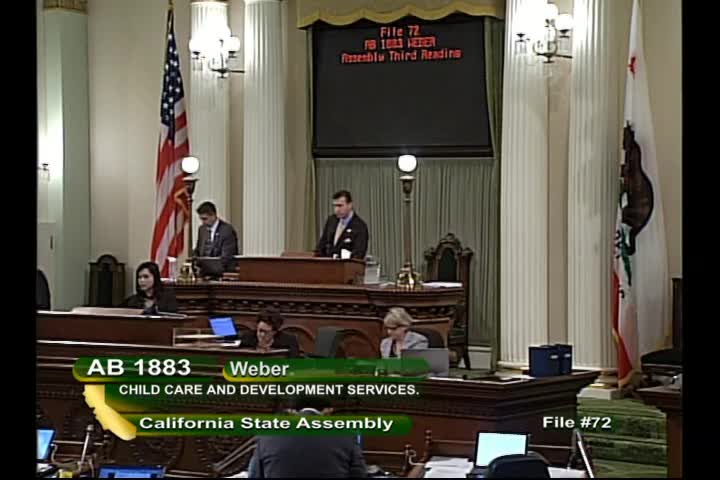 1MIN
Assembly Floor
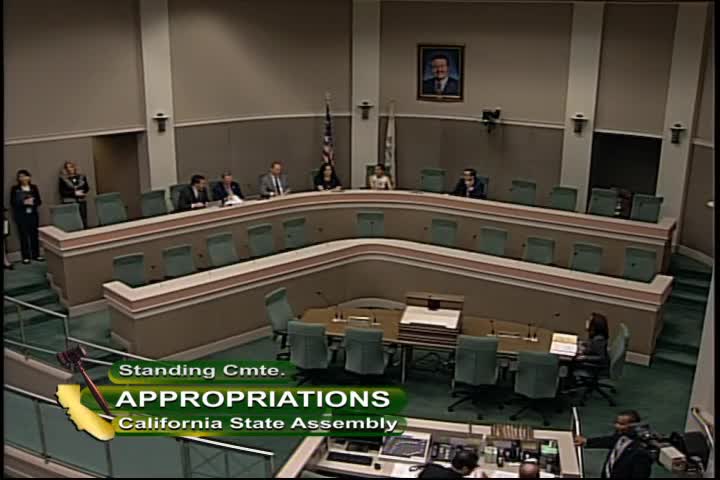 4MIN
Assembly Standing Committee on Appropriations
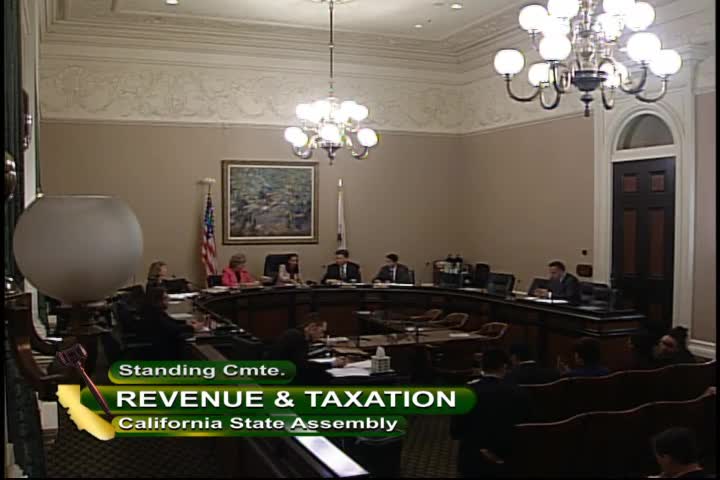 9MIN
Assembly Standing Committee on Revenue and Taxation
Bill Author

Bill Co-Author(s):