AB 2421: Wildlife Conservation Board: Monarch Butterfly and Pollinator Rescue Program.
- Session Year: 2017-2018
- House: Assembly
- Latest Version Date: 2018-09-26
The Wildlife Conservation Law of 1947 establishes the Wildlife Conservation Board and requires the board to determine the areas in the state that are most essential and suitable for certain wildlife-related purposes. Under that law, the Wildlife Conservation Board may authorize the Department of Fish and Wildlife or the State Public Works Board to acquire real property, rights in real property, water, or water rights for the benefit of wildlife.
The Rangeland, Grazing Land, and Grassland Protection Act requires the Wildlife Conservation Board to carry out the California Rangeland, Grazing Land, and Grassland Protection Program to protect Californias rangeland, grazing land, and grasslands through the use of conservation easements.
Existing law authorizes the Department of Fish and Wildlife to take feasible actions to conserve monarch butterflies and the unique habitats they depend upon for successful migration and authorizes the department to partner with federal agencies, nonprofit organizations, academic programs, private landowners, and other entities that undertake actions to conserve monarch butterflies and aid their successful migration.
This bill would establish the Monarch Butterfly and Pollinator Rescue Program, to be administered by the Wildlife Conservation Board, for the purpose of recovering and sustaining populations of monarch butterflies and other pollinators. To achieve these purposes, the bill would authorize the board to provide grants and technical assistance, as prescribed. The bill would require the board to develop and adopt project selection and evaluation guidelines, in coordination with the Department of Food and Agriculture, before disbursing these grants. The bill would establish the Monarch Butterfly and Pollinator Rescue Fund Account in the State Treasury, and would authorize expenditure of moneys in the account, upon appropriation by the Legislature, for purposes of the program.
The Wildlife Conservation Law of 1947 establishes the Wildlife Conservation Board and requires the board to determine the areas in the state that are most essential and suitable for certain wildlife-related purposes. Under that law, the Wildlife Conservation Board may authorize the Department of Fish and Wildlife or the State Public Works Board to acquire real property, rights in real property, water, or water rights for the benefit of wildlife.
The Rangeland, Grazing Land, and Grassland Protection Act requires the Wildlife Conservation Board to carry out the California Rangeland, Grazing Land, and Grassland Protection Program to protect Californias rangeland, grazing land, and grasslands through the use of conservation easements.
Existing law authorizes the Department of Fish and Wildlife to take feasible actions to conserve monarch butterflies and the unique habitats they depend upon for successful migration and authorizes the department to partner with federal agencies, nonprofit organizations, academic programs, private landowners, and other entities that undertake actions to conserve monarch butterflies and aid their successful migration.
This bill would establish the Monarch Butterfly and Pollinator Rescue Program, to be administered by the Wildlife Conservation Board, for the purpose of recovering and sustaining populations of monarch butterflies and other pollinators. To achieve these purposes, the bill would authorize the board to provide grants to private landowners, nonprofit organizations, or public agencies, for the restoration of California prairie and monarch butterfly overwintering habitat on private and public lands and to provide technical assistance to those grant recipients. and technical assistance, as prescribed. The bill would require the board to develop and adopt project selection and evaluation guidelines, in coordination with the Department of Food and Agriculture, before disbursing these grants. The bill would establish the Monarch Butterfly and Pollinator Rescue Fund Account in the State Treasury, and would authorize expenditure of moneys in the account, upon appropriation by the Legislature, for purposes of the program.
The Wildlife Conservation Law of 1947 establishes the Wildlife Conservation Board and requires the board to determine the areas in the state that are most essential and suitable for certain wildlife-related purposes. Under that law, the Wildlife Conservation Board may authorize the Department of Fish and Wildlife or the State Public Works Board to acquire real property, rights in real property, water, or water rights for the benefit of wildlife.
The Rangeland, Grazing Land, and Grassland Protection Act requires the Wildlife Conservation Board to carry out the California Rangeland, Grazing Land, and Grassland Protection Program to protect Californias rangeland, grazing land, and grasslands through the use of conservation easements.
Existing law authorizes the Department of Fish and Wildlife to take feasible actions to conserve monarch butterflies and the unique habitats they depend upon for successful migration and authorizes the department to partner with federal agencies, nonprofit organizations, academic programs, private landowners, and other entities that undertake actions to conserve monarch butterflies and aid their successful migration.
This bill would establish the Monarch Butterfly and Pollinator Rescue Program, to be administered by the Wildlife Conservation Board, for the purpose of recovering and sustaining populations of monarch butterflies and other pollinators. To achieve these purposes, the bill would authorize the board to provide grants to private landowners, nonprofit organizations, or public agencies, for the restoration of California prairie and monarch butterfly overwintering habitat on private and public lands and to provide technical assistance to those grant recipients. The bill would establish the Monarch Butterfly Rescue Fund Account in the State Treasury, and would authorize expenditure of moneys in the fund, account, upon appropriation by the Legislature, for purposes of the program.
The Wildlife Conservation Law of 1947 establishes the Wildlife Conservation Board and requires the board to determine the areas in the state that are most essential and suitable for certain wildlife-related purposes. Under that law, the Wildlife Conservation Board may authorize the Department of Fish and Wildlife or the State Public Works Board to acquire real property, rights in real property, water, or water rights for the benefit of wildlife.
The Rangeland, Grazing Land, and Grassland Protection Act requires the Wildlife Conservation Board to carry out the California Rangeland, Grazing Land, and Grassland Protection Program to protect Californias rangeland, grazing land, and grasslands through the use of conservation easements.
Existing law authorizes the Department of Fish and Wildlife to take feasible actions to conserve monarch butterflies and the unique habitats they depend upon for successful migration and authorizes the department to partner with federal agencies, nonprofit organizations, academic programs, private landowners, and other entities that undertake actions to conserve monarch butterflies and aid their successful migration.
This bill would establish the Monarch Butterfly and Pollinator Rescue Program, to be administered by the Wildlife Conservation Board, for the purpose of recovering and sustaining populations of monarch butterflies and other pollinators. To achieve these purposes, the bill would authorize the board to provide grants to private landowners, nonprofit organizations, or public agencies, for the restoration of California prairie on private and public lands and to provide technical assistance to those grant recipients. The bill would establish the Monarch Butterfly Rescue Fund Account in the State Treasury, and would authorize expenditure of moneys in the fund, upon appropriation by the Legislature, for purposes of the program.
The Legislature hereby finds and declares all of the following:
(a)Monarch butterflies are a favorite butterfly of people throughout North America, and concern for their survival brings people together like few other wildlife species such that, in February 2014, the United States, Mexico, and Canada joined efforts to ensure monarch butterfly recovery.
(b)Experts estimate that monarch butterfly populations overwintering on the California coast have declined to about 200,000 individual monarch butterflies, which is a fraction of its peak estimated to be approximately 10 million in the early 1980s.
(c)These same experts estimate that the probability of extinction of migrating monarch butterflies in the western United States is 72 percent over the next 20 years.
(d)Monarch butterflies face a variety of threats, including loss of breeding and overwintering habitat, effects of climate change, pesticides, and disease. But the consensus of most scientists is that efforts to protect and restore breeding and overwintering habitat are the best strategies to employ to recover the monarch butterfly population.
(e)Since more than one-third of the most promising California winter habitat for monarch butterflies is on privately owned land, collaboration with landowners is critical. Fortunately, many landowners are some of the strongest advocates for protecting and restoring overwintering and breeding habitat for the monarch butterfly.
(f)Concentrated action to restore breeding habitat throughout the monarch butterflys spring and summer range, particularly on farms and ranches in the Central Valley and Sierra Nevada foothills, can help rebuild populations relatively quickly.
(g)The monarch butterflys breeding habitat is California prairie, a blend of grasses, native wildflowers, and milkweed that, as documented by John Muir in the 1870s, once carpeted the Central Valley. Milkweed is the critical component. Monarch butterflies exclusively lay eggs on several species of milkweed and they only feed on milkweed during the caterpillar stage. This same habitat, California prairie, provides food and shelter to a wide variety of pollinators, including native bees and bumblebees, and dozens of bird and mammal species.
SEC. 2.Article 3.7 (commencing with Section 1374) is added to Chapter 4 of Division 2 of the Fish and Game Code, to read:3.7.Monarch Butterfly and Pollinator Rescue Program1374.(a)The Monarch Butterfly and Pollinator Rescue Program is hereby established and shall be administered by the Wildlife Conservation Board.
(b)The purpose of the program is to recover and sustain populations of monarch butterflies and other pollinators.
(c)To achieve the purposes of the program, the Wildlife Conservation Board may do all of the following:
(1)Provide grants for the restoration or enhancement of California prairie and other appropriate breeding habitat for monarch butterflies and pollinators on private and public lands.
(2)Provide grants for the restoration or enhancement of overwintering monarch butterfly habitat on private and public lands.
(3)Provide technical assistance to grant recipients, including farmers and ranchers, regarding restoration and enhancement of breeding, overwintering, and other appropriate monarch butterfly habitat.
(4)Award grants pursuant to this chapter.
(5)Provide grants for seasonal or temporary habitat improvements.
(6)Provide block grants in which suballocations are made by the grant recipient, with the approval of the Wildlife Conservation Board.
(d)Eligible recipients for grants under the program include private landowners, nonprofit organizations, resource conservation districts, or public agencies.
(e)(1) Before disbursing a grant pursuant to this article, the Wildlife Conservation Board shall develop and adopt project selection and evaluation guidelines. The guidelines shall include monitoring and reporting requirements to help assess grant outcomes.
(2)The Wildlife Conservation Board shall coordinate with the Department of Food and Agriculture in developing program guidelines.
1374.1.(a)The Monarch Butterfly and Pollinator Rescue Fund Account is hereby created in the State Treasury. The account shall be administered by the Wildlife Conservation Board. Moneys in the account may be expended, upon appropriation by the Legislature, for the purposes of this article.
(b)Moneys may be deposited into the account from gifts, donations, funds appropriated by the Legislature for the purposes of this article, or from federal grants or other sources, and shall be used for the purpose of implementing this article, including administrative costs.
The Legislature hereby finds and declares all of the following:
(a)Monarch butterflies are a favorite butterfly of people throughout North America, and concern for their survival brings people together like few other wildlife species such that, in February 2014, the United States, Mexico, and Canada joined efforts to ensure monarch butterfly recovery.
(b)Experts estimate that monarch butterfly populations overwintering on the California coast have declined to about 200,000 individual monarch butterflies, which is a fraction of its peak estimated to be approximately 10 million in the early 1980s.
(c)These same experts estimate that the probability of extinction of migrating monarch butterflies in the western United States is 72 percent over the next 20 years.
(d)Monarch butterflies face a variety of threats, including loss of breeding and overwintering habitat, effects of climate change, pesticides, and disease. But the consensus of most scientists is that efforts to protect and restore breeding and overwintering habitat are the best strategies to employ to recover the monarch butterfly population.
(e)Since more than one-third of the most promising California winter habitat for monarch butterflies is on privately owned land, collaboration with landowners is critical. Fortunately, many landowners are some of the strongest advocates for protecting and restoring overwintering and breeding habitat for the monarch butterfly.
(f)Concentrated action to restore breeding habitat throughout the monarch butterflys spring and summer range, particularly on farms and ranches in the Central Valley and Sierra Nevada foothills, can help rebuild populations relatively quickly.
(g)The monarch butterflys breeding habitat is California prairie, a blend of grasses, native wildflowers, and milkweed that, as documented by John Muir in the 1870s, once carpeted the Central Valley. Milkweed is the critical component. Monarch butterflies exclusively lay eggs on several species of milkweed and they only feed on milkweed during the caterpillar stage. This same habitat, California prairie, provides food and shelter to a wide variety of pollinators, including native bees and bumblebees, and dozens of bird and mammal species.
SEC. 2.Article 3.7 (commencing with Section 1374) is added to Chapter 4 of Division 2 of the Fish and Game Code, to read:3.7.Monarch Butterfly and Pollinator Rescue Program1374.(a)The Monarch Butterfly and Pollinator Rescue Program is hereby established and shall be administered by the Wildlife Conservation Board.
(b)The purpose of the program is to recover and sustain populations of monarch butterflies and other pollinators.
(c)To achieve the purposes of the program, the Wildlife Conservation Board may do both all of the following:
(1)Provide grants for the restoration or enhancement of California prairie and monarch butterfly overwintering habitat other appropriate breeding habitat for monarch butterflies and pollinators on private and public lands to private landowners, nonprofit organizations, or public agencies. lands.
(2)Provide grants for the restoration or enhancement of overwintering monarch butterfly habitat on private and public lands.
(2)(3)Provide technical assistance to grant recipients, including farmers and ranchers, regarding restoration of California prairie and monarch butterfly overwintering and enhancement of breeding, overwintering, and other appropriate monarch butterfly habitat.
(d)Eligible recipients for grants under the program include private landowners, nonprofit organizations, resource conservation districts, or public agencies.
(e)(1) Before disbursing a grant pursuant to this article, the Wildlife Conservation Board shall develop and adopt project selection and evaluation guidelines. The guidelines shall include monitoring and reporting requirements to help assess grant outcomes.
(2)The Wildlife Conservation Board shall coordinate with the Department of Food and Agriculture in developing program guidelines.
1374.1.(a)The Monarch Butterfly and Pollinator Rescue Fund Account is hereby created in the State Treasury. The account shall be administered by the Wildlife Conservation Board. Moneys in the account may be expended, upon appropriation by the Legislature, for the purposes of this article.
(b)Moneys may be deposited into the account from gifts, donations, funds appropriated by the Legislature for the purposes of this article, or from federal grants or other sources, and shall be used for the purpose of implementing this article, including administrative costs.
The Legislature hereby finds and declares all of the following:
(a)Monarch butterflies are a favorite butterfly of people throughout North America, and concern for their survival brings people together like few other wildlife species such that, in February 2014, the United States, Mexico, and Canada joined efforts to ensure monarch butterfly recovery.
(b)Experts estimate that monarch butterfly populations overwintering on the California coast have declined to about 300,000 200,000 individual monarch butterflies, which is a fraction of its peak estimated to be over three approximately 10 million in the early 1980s.
(c)These same experts estimate that the probability of extinction of migrating monarch butterflies in the western United States is 72 percent over the next 20 years.
(d)Monarch butterflies face a number variety of threats, including loss of breeding and overwintering habitat, disease, and predation. effects of climate change, pesticides, and disease. But the consensus of most scientists studying their decline believe that the most critical threat is the loss of their breeding habitat. is that efforts to protect and restore breeding and overwintering habitat are the best strategies to employ to recover the monarch butterfly population.
(e)Since nearly more than one-third of the most promising California winter habitat for monarch butterflies is on privately owned land, collaboration with landowners is critical. Fortunately, many landowners are some of the strongest advocates for protecting and restoring overwintering and breeding habitat for the monarch butterfly.
(f)Concentrated action to restore breeding habitat throughout the monarch butterflys spring and summer range, particularly on farms and ranches in the Central Valley and Sierra Nevada foothills, can help rebuild populations relatively quickly.
(g)The monarch butterflys breeding habitat is California prairie, a blend of grasses, native wildflowers, and milkweed that, as documented by John Muir in the 1870s, once carpeted the Central Valley. Milkweed is the critical component. Monarch butterflies exclusively lay eggs on several species of milkweed and they only feed on milkweed during the caterpillar stage. This same habitat, California prairie, provides food and shelter to a wide variety of pollinators, including native bees and bumblebees, and dozens of bird and mammal species.
SEC. 2.Article 3.7 (commencing with Section 1374) is added to Chapter 4 of Division 2 of the Fish and Game Code, to read:3.7.Monarch Butterfly and Pollinator Rescue Program1374.(a)The Monarch Butterfly and Pollinator Rescue Program is hereby established and shall be administered by the Wildlife Conservation Board.
(b)The purpose of the program is to recover and sustain populations of monarch butterflies and other pollinators.
(c)To achieve the purposes of the program, the Wildlife Conservation Board may do both of the following:
(1)Provide grants for the restoration of California prairie and monarch butterfly overwintering habitat on private and public lands to private landowners, nonprofit organizations, or public agencies.
(2)Provide technical assistance to grant recipients, including farmers and ranchers, regarding restoration of California prairie. prairie and monarch butterfly overwintering habitat.
1374.1.(a)The Monarch Butterfly Rescue Fund Account is hereby created in the State Treasury. The account shall be administered by the Wildlife Conservation Board. Moneys in the fund account may be expended, upon appropriation by the Legislature, for the purposes of this article.
(b)Moneys may be deposited into the fund account from gifts, donations, funds appropriated by the Legislature for the purposes of this article, or from federal grants or other sources, and shall be used for the purpose of implementing this article, including administrative costs.
REVISIONS: HeadingLine 2.The Legislature hereby finds and declares all of the following:
(a)Monarch butterflies are a favorite butterfly of people throughout North America, and concern for their survival brings people together like few other wildlife species such that, in February 2014, the United States, Mexico, and Canada joined efforts to ensure monarch butterfly recovery.
(b)Experts estimate that monarch butterfly populations overwintering on the California coast have declined to about 300,000 individual monarch butterflies, which is a fraction of its peak estimated to be over three million in the early 1980s.
(c)These same experts estimate that the probability of extinction of migrating monarch butterflies in the western United States is 72 percent over the next 20 years.
(d)Monarch butterflies face a number of threats, including loss of overwintering habitat, disease, and predation. But the consensus of most scientists studying their decline believe that the most critical threat is the loss of their breeding habitat.
(e)Since nearly one-third of the most promising California winter habitat for monarch butterflies is on privately owned land, collaboration with landowners is critical. Fortunately, many landowners are some of the strongest advocates for protecting and restoring overwintering and breeding habitat for the monarch butterfly.
(f)Concentrated action to restore breeding habitat throughout the monarch butterflys spring and summer range, particularly on farms and ranches in the Central Valley and Sierra Nevada foothills, can help rebuild populations relatively quickly.
(g)The monarch butterflys breeding habitat is California prairie, a blend of grasses, native wildflowers, and milkweed that, as documented by John Muir in the 1870s, once carpeted the Central Valley. Milkweed is the critical component. Monarch butterflies exclusively lay eggs on several species of milkweed and they only feed on milkweed during the caterpillar stage. This same habitat, California prairie, provides food and shelter to a wide variety of pollinators, including native bees and bumblebees, and dozens of bird and mammal species.
SEC. 2.Article 3.7 (commencing with Section 1374) is added to Chapter 4 of Division 2 of the Fish and Game Code, to read:3.7.Monarch Butterfly and Pollinator Rescue Program1374.(a)The Monarch Butterfly and Pollinator Rescue Program is hereby established and shall be administered by the Wildlife Conservation Board.
(b)The purpose of the program is to recover and sustain populations of monarch butterflies and other pollinators.
(c)To achieve the purposes of the program, the Wildlife Conservation Board may do both of the following:
(1)Provide grants for the restoration of California prairie on private and public lands to private landowners, nonprofit organizations, or public agencies.
(2)Provide technical assistance to grant recipients, including farmers and ranchers, regarding restoration of California prairie.
1374.1.(a)The Monarch Butterfly Rescue Fund Account is hereby created in the State Treasury. The account shall be administered by the Wildlife Conservation Board. Moneys in the fund may be expended, upon appropriation by the Legislature, for the purposes of this article.
(b)Moneys may be deposited into the fund from gifts, donations, funds appropriated by the Legislature for the purposes of this article, or from federal grants or other sources, and shall be used for the purpose of implementing this article, including administrative costs.
|
Date
|
Status
|
|---|---|
| Sep 26, 2018 | Chaptered by Secretary of State - Chapter 760, Statutes of 2018. |
| Sep 26, 2018 | Approved by the Governor. |
| Sep 6, 2018 | Enrolled and presented to the Governor at 3 p.m. |
| Aug 29, 2018 | Senate amendments concurred in. To Engrossing and Enrolling. |
| Aug 24, 2018 | In Assembly. Concurrence in Senate amendments pending. May be considered on or after August 26 pursuant to Assembly Rule 77. |
| Aug 24, 2018 | Read third time. Passed. Ordered to the Assembly. |
| Aug 17, 2018 | From committee: Do pass. (Ayes 7. Noes 0.) (August 16). |
| Aug 6, 2018 | In committee: Referred to APPR. suspense file. |
| Jul 3, 2018 | Read second time and amended. Re-referred to Com. on APPR. |
| Jul 2, 2018 | From committee: Amend, and do pass as amended and re-refer to Com. on APPR. (Ayes 8. Noes 1.) (June 26). |
| Jun 13, 2018 | From committee chair, with author's amendments: Amend, and re-refer to committee. Read second time, amended, and re-referred to Com. on N.R. & W. |
| Jun 7, 2018 | Referred to Com. on N.R. & W. |
| May 30, 2018 | In Senate. Read first time. To Com. on RLS. for assignment. |
| May 29, 2018 | Read third time. Passed. Ordered to the Senate. |
| May 25, 2018 | Coauthors revised. |
| May 9, 2018 | In committee: Set, first hearing. Referred to APPR. suspense file. |
| Apr 24, 2018 | From committee: Do pass and re-refer to Com. on APPR. (Ayes 13. Noes 1.) (April 24). Re-referred to Com. on APPR. |
| Mar 21, 2018 | Re-referred to Com. on W.,P., & W. |
| Mar 20, 2018 | From committee chair, with author's amendments: Amend, and re-refer to Com. on W.,P., & W. Read second time and amended. |
| Mar 5, 2018 | Referred to Com. on W.,P., & W. |
| Feb 15, 2018 | From printer. May be heard in committee March 17. |
| Feb 14, 2018 | Read first time. To print. |
|
Date
|
Description
|
Location
|
Votes
|
|
|---|---|---|---|---|
| Aug 29, 2018 | AB 2421 STONE Concurrence in Senate Amendments | Assembly Floor |
Passed |
|
| Aug 24, 2018 | Assembly 3rd Reading AB2421 Mark Stone et al. By Galgiani | Senate Floor |
Passed |
|
| Aug 16, 2018 | Do pass | Senate Standing Committee on Appropriations |
Passed |
|
| Aug 6, 2018 | Placed on suspense file | Senate Standing Committee on Appropriations |
Passed |
|
| Jun 26, 2018 | Do pass as amended, but first amend, and re-refer to the Committee on [Appropriations] | Senate Standing Committee on Natural Resources and Water |
Passed |
|
| May 29, 2018 | AB 2421 STONE Assembly Third Reading | Assembly Floor |
Passed |
|
| May 25, 2018 | Do pass. | Assembly Standing Committee on Appropriations |
Passed |
|
| Apr 24, 2018 | Do pass and be re-referred to the Committee on [Appropriations] | Assembly Standing Committee on Water, Parks, and Wildlife |
Passed |
This list shows positions taken on this bill by organizations on the date displayed, which is linked to the original source.
Positions by individuals are not included.
|
Organization
|
Position
|
Date
|
|---|---|---|
| Almond Alliance Of California | * Support | Apr 24, 2018 |
| Audubon California | ** Support | Aug 18, 2018 |
| Big Sur Land Trust | ** Support | Aug 18, 2018 |
| California Association Of Resource Conservation Districts | ** Support | Aug 18, 2018 |
| California Farm Bureau Federation | ** Support | Aug 18, 2018 |
| City of Carmel-by-the-Sea | ** Support | Aug 18, 2018 |
| County of Monterey | ** Support | Aug 18, 2018 |
| County of Santa Cruz | ** Support | Aug 18, 2018 |
| Defenders Of Wildlife | ** Support | Aug 18, 2018 |
| East Bay Regional Park District | ** Support | Aug 18, 2018 |
| Environmental Defense Fund | ** Support | Aug 18, 2018 |
| Malibu Monarch Project | ** Support | Aug 18, 2018 |
| Nature Conservancy | * Support | Apr 24, 2018 |
| Pesticide Action Network | ** Support | Aug 18, 2018 |
| San Luis Obispo County Farm Bureau | ** Support | Aug 18, 2018 |
| Save the Redwoods League | ** Support | Aug 18, 2018 |
| Sierra Club California | * Support | Apr 24, 2018 |
| The Trust For Public Land | * Support | Apr 24, 2018 |
CONCURRENCE IN SENATE AMENDMENTS
CSA1 Bill Id:AB 2421
Author:(Mark Stone)
As Amended Ver:July 3, 2018
Majority vote
ASSEMBLY: | 67-4 | (May 29, 2018) | SENATE: | 33-5 | (August 24, 2018) |
Original Committee Reference: W., P., & W.
SUBJECT: Wildlife Conservation Board: Monarch Butterfly and Pollinator Rescue Program
SUMMARY: Establishes the Monarch Butterfly and Pollinator Rescue Program, to be administered by the Wildlife Conservation Board (WCB), for the purpose of recovering and sustaining populations of monarch butterflies and other pollinators. Specifically, this bill:
- Establishes the Monarch Butterfly and Pollinator Rescue Program, to be administered by the WCB, for the purpose of recovering and sustaining populations of monarch butterflies and other pollinators.
- Permits the WCB to award grants and provide technical assistance, as specified.
- Allows eligible recipients for grants under the program to include private landowners, nonprofit organizations, resource conservation districts, or public agencies.
- Requires the WCB to develop and adopt project selection and evaluation guidelines, including monitoring and reporting requirements, prior to disbursing any grants.
- Requires the WCB to coordinate with the Department of Food and Agriculture in developing program guidelines.
- Creates the Monarch Butterfly and Pollinator Rescue Fund Account in the State Treasury, administered by the WCB, with moneys in the account expended, upon appropriation by the Legislature, for the purposes of the Monarch Butterfly and Pollinator Rescue Program, including administrative costs.
- Allows moneys to be deposited into the account from gifts, donations, funds appropriated by the Legislature, or from federal grants or other sources, and used for the purpose of implementing the Monarch Butterfly and Pollinator Rescue Program.
- Makes finding and declarations regarding monarch butterflies and their breeding and overwintering habitats.
The Senate amendments:
- Allow the WCB to provide grants for seasonal or temporary habitat improvements and provide block grants in which suballocations are made by the grant recipient.
- Make resource conservation districts eligible for grants under the program.
- Require the WCB to coordinate with the Department of Food and Agriculture in developing program guidelines.
- Require the WCB to develop and adopt project selection and evaluation guidelines, including monitoring and reporting requirements, prior to disbursing any grants.
- Make other technical and clarifying changes.
EXISTING LAW:
- Establishes the WCB, through the Wildlife Conservation Law of 1947, and requires the board to determine the areas in the state that are most essential and suitable for certain wildlife-related purposes.
- Allows the WCB to authorize the Department of Fish and Wildlife (DFW) or the State Public Works Board (PWB) to acquire real property, rights in real property, water, or water rights for the benefit of wildlife.
- Requires the WCB, through the Rangeland, Grazing Land, and Grassland Protection Act, to carry out the California Rangeland, Grazing Land, and Grassland Protection Program to protect California’s rangeland, grazing land, and grasslands through the use of conservation easements.
- Authorizes the DFW to take feasible actions to conserve monarch butterflies and the unique habitats they depend upon for successful migration and authorizes the DFW to partner with federal agencies, nonprofit organizations, academic programs, private landowners, and other entities that undertake actions to conserve monarch butterflies and aid their successful migration.
FISCAL EFFECT: According to the Assembly Appropriations Committee, there are unknown annual cost pressures on the General Fund or special funds, likely in the millions of dollars, for the WCB to fund the grants. There are also annual ongoing staff costs (1 position) of approximately $135,000 and one-time equipment costs of $7,500 for the WCB to provide technical assistance and manage the grant program.
COMMENTS:
Background and Purpose: This bill establishes the Monarch Butterfly and Pollinator Rescue Program, to be administered by the WCB, for the purpose of recovering and sustaining populations of monarch butterflies and other pollinators.
Monarch butterflies are known for a migration of up to 3,000 miles that brings millions of them to California and Mexico each winter. North American monarchs are the only butterflies that make such a journey. Habitat loss in both the United States and Mexico is the main threat to the North American monarch population. In February 2015, a United States Fish and Wildlife Service study indicated nearly a billion monarchs have vanished from overwintering sites (places where species wait out the winter) since 1990. Researchers estimate the number of monarchs overwintering on the California coast has declined to about 200,000 individuals, a fraction of the population’s peak of approximately 10 million in the 1980s.
California has both breeding and overwintering habitat for the western North American population of monarchs. The breeding habitat is California prairie, a blend of grasses, native wildflowers, and milkweed that, as documented by John Muir in the 1870s, once carpeted the Central Valley. Overwintering habitat is present along the California coast. According to the Xerces Society, more than half of the more than 400 overwintering sites in California are publicly managed, including 158 managed by the DFW, the Department of Parks and Recreation (DPR), the University of California, or local governments. Much of the breeding habitat is found on private land.
The WCB was created by legislation in 1947 to administer a capital outlay program for wildlife conservation and related public recreation. The WCB is a separate and independent board within DFW with authority and funding to carry out an acquisition and development program for wildlife conservation. The primary responsibilities of the WCB are to select, authorize and allocate funds for the purchase of land and waters suitable for recreation purposes and the preservation, protection and restoration of wildlife habitat. The WCB approves and funds projects that set aside lands within the state for such purposes, through acquisition or other means, to meet these objectives. The three main functions of the WCB are land acquisition, habitat restoration, and development of wildlife-oriented public access facilities, which are carried out through its programs.
Related Legislation:
AB 559 (Lopez), Chapter 478, Statutes of 2015, authorized the DFW to take feasible actions to conserve monarch butterflies and the habitats they depend on for migration, and requires the DFW to use best available science, as specified. This bill also encourages the DFW to partner with other organizations that undertake actions to protect monarchs.
Analysis Prepared by: Keith Cialino / W., P., & W. / (916) 319-2096 FN: 0004293
Office of Senate Floor Analyses (916) 651-1520 Fax: (916) 327-4478 | AB 2421 |
THIRD READING
Bill No: AB 2421
Author: Mark Stone (D), et al.
Amended: 7/3/18 in Senate
SENATE NATURAL RES. & WATER COMMITTEE: 8-1, 6/26/18
AYES: Hertzberg, Stone, Allen, Hueso, Jackson, McGuire, Monning, Stern
NOES: Vidak
SENATE APPROPRIATIONS COMMITTEE: 7-0, 8/16/18
AYES: Portantino, Bates, Beall, Bradford, Hill, Nielsen, Wiener
ASSEMBLY FLOOR: 67-4, 5/29/18 - See last page for vote
SUBJECT: Wildlife Conservation Board: Monarch Butterfly and Pollinator Rescue Program
DIGEST:
This bill establishes the Monarch Butterfly and Pollinator Rescue Program, to be administered by the Wildlife Conservation Board (WCB), to recover and sustain populations of monarch butterflies and other pollinators.
Existing law:
- Authorizes, pursuant to AB 559 (Lopez, Chapter 478, Statutes of 2015) the Department of Fish and Wildlife (DFW) to take feasible actions to conserve monarch butterflies and the habitats they depend on for migration, and requires the DFW to use best available science, as specified. This law also encouraged the DFW to partner with other organizations that undertake actions to protect monarchs.
- Creates the WCB which has existed since 1947 and administers a capital outlay program for wildlife conservation and related public recreation. The WCB is a separate and independent board within DFW with authority and funding to carry out an acquisition and development program for wildlife conservation. The primary responsibilities of the WCB are to select, authorize and allocate funds for the purchase of land and waters suitable for recreation purposes and the preservation, protection and restoration of wildlife habitat. The WCB approves and funds projects that set aside lands within the state for such purposes, through acquisition or other means, to meet these objectives.
This bill:
- Establishes the Monarch Butterfly and Pollinator Rescue Program, to be administered by the Wildlife Conservation Board (WCB), to recover and sustain populations of monarch butterflies and other pollinators and permits the WCB to:
- Provide grants to private landowners, nonprofit organizations, or public agencies for the restoration or enhancement of California prairie and monarch butterfly and other pollinators’ breeding habitat on private and public lands.
- Provide technical assistance to grant recipients, including farmers and ranchers, regarding restoration of California prairie and monarch butterfly overwintering habitat.
- Creates the Monarch Butterfly Rescue Fund Account in the State Treasury, administered by the WCB, with moneys in the account expended, upon appropriation by the Legislature, for the purposes of the Monarch Butterfly and Pollinator Rescue Program, including administrative costs.
- Requires the WCB to develop and adopt project selection and evaluation guidelines, including monitoring and reporting requirements. The program guidelines shall be developed in coordination with the California Department of Food and Agriculture.
- Allows moneys to be deposited into the account from gifts, donations, funds appropriated by the Legislature, or from federal grants or other sources.
FISCAL EFFECT: Appropriation: No Fiscal Com.: Yes Local: No
According to the Senate Appropriations Committee, unknown annual cost pressures, likely in the millions of dollars, for WCB to provide grants (General Fund or special fund). Annual ongoing staff cost of approximately $142,000 and one-time equipment costs of $7,500 (General Fund or special fund) for WCB to provide technical assistance and manage the grant program.
Audubon California
Big Sur Land Trust
California Association of Resource Conservation Districts
California Farm Bureau Federation
City of Carmel-by-the-Sea
County of Monterey
County of Santa Cruz
Defenders of Wildlife
East Bay Regional Park District
Environmental Defense Fund
Malibu Monarch Project
Pesticide Action Network
San Luis Obispo County Farm Bureau
Save the Redwoods League
OPPOSITION: (Verified 8/17/18)
None received
ARGUMENTS IN SUPPORT: According to the author, Monarch butterflies are dying off at alarming rates, and as their population declines, the ecosystem is threatened. The world-famous migration of the western monarch, a natural spectacle that has captivated locals and tourists across California every year, could soon be a thing of the past.
Experts estimate the populations overwintering on the California coast have declined from approximately 10 million in the 1980s to just 200,000 – a 98 percent decline over just three decades. Scientists argue that there is a 72 percent chance that the butterflies will go extinct within 20 years.
Monarch butterflies use resources that are common to many pollinators and as a result, their numbers reflect general pollinator population success. Humans rely on a healthy pollinator population for stable, secure food sources and ecosystems; therefore, it is necessary to take action to protect monarchs. The butterflies also serve as a key source of food for birds, small animals, and other insects.
The most effective way we can restore monarch populations is to create a collaborative effort that involves the state, nonprofits, and private landowners. Because more than one-third of the most promising California winter habitat for monarch butterflies is on privately owned land, collaborating with landowners is particularly critical.
AB 2421 will establish a monarch and pollinator rescue program at the WCB to provide grants and technical support to farmers, ranchers, nonprofits and public agencies to restore and protect monarch habitats across the Central Valley, the Central Coast, and the Sierra Nevada foothills.
ASSEMBLY FLOOR: 67-4, 5/29/18
AYES: Acosta, Aguiar-Curry, Travis Allen, Arambula, Baker, Berman, Bigelow, Bloom, Bonta, Burke, Caballero, Calderon, Carrillo, Cervantes, Chau, Chávez, Chiu, Choi, Chu, Cooley, Cooper, Cunningham, Daly, Eggman, Flora, Frazier, Friedman, Gallagher, Cristina Garcia, Eduardo Garcia, Gipson, Gloria, Gonzalez Fletcher, Gray, Grayson, Holden, Irwin, Jones-Sawyer, Kalra, Kamlager-Dove, Lackey, Levine, Limón, Low, Maienschein, McCarty, Medina, Mullin, Muratsuchi, Nazarian, O'Donnell, Quirk, Quirk-Silva, Reyes, Rodriguez, Rubio, Salas, Santiago, Steinorth, Mark Stone, Thurmond, Ting, Voepel, Waldron, Weber, Wood, Rendon
NOES: Harper, Kiley, Mathis, Obernolte
NO VOTE RECORDED: Brough, Chen, Dahle, Fong, Mayes, Melendez, Patterson
Prepared by: William Craven / N.R. & W. / (916) 651-4116
8/18/18 16:13:54
**** END ****
SENATE COMMITTEE ON APPROPRIATIONS
Senator Anthony Portantino, Chair
2017 - 2018 Regular Session
AB 2421 (Mark Stone) - Wildlife Conservation Board: Monarch Butterfly and Pollinator Rescue Program
Version: July 3, 2018 | Policy Vote: N.R. & W. 8 - 1 |
Urgency: No | Mandate: No |
Hearing Date: August 6, 2018 | Consultant: Ashley Ames |
This bill meets the criteria for referral to the Suspense File.
Bill Summary:
This bill establishes the Monarch Butterfly and Pollinator Rescue Program, to be administered by the Wildlife Conservation Board (WCB), to recover and sustain populations of monarch butterflies and other pollinators. Specifically, this bill:
Fiscal Impact:
- Unknown annual cost pressures, likely in the millions of dollars, for WCB to provide grants (General Fund or special fund).
- Annual ongoing staff cost of approximately $142,000 and one-time equipment costs of $7,500 (General Fund or special fund) for WCB to provide technical assistance and manage the grant program.
Background: Many scientists are concerned about the eastern population of monarchs, which summer east of the Rocky Mountains. This group is occurring in ever smaller numbers, and its survival may be threatened by a series of natural disasters in the Mexican wintering grounds, as well as by reduced acreage of milkweed plants in their summer home.
Proposed Law:
This bill would establish the Monarch Butterfly and Pollinator Rescue Program, to be administered by WCB, to recover and sustain populations of monarch butterflies and other pollinators. Specifically, this bill would:
- Permit the WCB to do both of the following:
- Provide grants to private landowners, nonprofit organizations, or public agencies for the restoration of California prairie and monarch butterfly overwintering habitat on private and public lands.
- Provide technical assistance to grant recipients, including farmers and ranchers, regarding restoration of California prairie and monarch butterfly overwintering habitat.
- Create the Monarch Butterfly Rescue Fund Account in the State Treasury, administered by the WCB, with moneys in the account expended, upon appropriation by the Legislature, for the purposes of the Monarch Butterfly and Pollinator Rescue Program, including administrative costs.
- Allow moneys to be deposited into the account from gifts, donations, funds appropriated by the Legislature, or from federal grants or other sources.
-- END --
SENATE COMMITTEE ON NATURAL RESOURCES AND WATER
Senator Robert Hertzberg, Chair
2017 - 2018 Regular
Bill No: AB Hearing Date: June 26, 2018
Author: | Mark Stone | ||
Version: | June 13, 2018 | ||
Urgency: | No | Fiscal: | Yes |
Consultant: | William Craven | ||
Subject: Wildlife Conservation Board: Monarch Butterfly and Pollinator Rescue Program
BACKGROUND AND EXISTING LAW
- AB 559 (Lopez), Chapter 478, Statutes of 2015, authorized the Department of Fish and Wildlife (DFW) to take feasible actions to conserve monarch butterflies and the habitats they depend on for migration, and requires the DFW to use best available science, as specified. This law also encouraged the DFW to partner with other organizations that undertake actions to protect monarchs.
- The Wildlife Conservation Board (WCB) was created by legislation in 1947 to administer a capital outlay program for wildlife conservation and related public recreation. The WCB is a separate and independent board within DFW with authority and funding to carry out an acquisition and development program for wildlife conservation. The primary responsibilities of the WCB are to select, authorize and allocate funds for the purchase of land and waters suitable for recreation purposes and the preservation, protection and restoration of wildlife habitat. The WCB approves and funds projects that set aside lands within the state for such purposes, through acquisition or other means, to meet these objectives.
PROPOSED LAW
- This bill establishes the Monarch Butterfly and Pollinator Rescue Program, to be administered by the Wildlife Conservation Board (WCB), to recover and sustain populations of monarch butterflies and other pollinators and permits the WCB to:
- Provide grants to private landowners, nonprofit organizations, or public agencies for the restoration or enhancement of California prairie and monarch butterfly and other pollinators’ breeding habitat on private and public lands.
- Provide technical assistance to grant recipients, including farmers and ranchers, regarding restoration of California prairie and monarch butterfly overwintering habitat.
- Creates the Monarch Butterfly Rescue Fund Account in the State Treasury, administered by the WCB, with moneys in the account expended, upon appropriation by the Legislature, for the purposes of the Monarch Butterfly and Pollinator Rescue Program, including administrative costs.
- Requires the WCB to develop and adopt project selection and evaluation guidelines, including monitoring and reporting requirements. The program guidelines shall be developed in coordination with the California Department of Food and Agriculture.
- Allows moneys to be deposited into the account from gifts, donations, funds appropriated by the Legislature, or from federal grants or other sources.
ARGUMENTS IN SUPPORT
According to the author, Monarch butterflies are dying off at alarming rates, and as their population declines, the ecosystem is threatened. The world-famous migration of the western monarch, a natural spectacle that has captivated locals and tourists across California every year, could soon be a thing of the past.
Experts estimate the populations overwintering on the California coast have declined from approximately 10 million in the 1980s to just 200,000 – a 98 percent decline over just three decades. Scientists argue that there is a 72 percent chance that the butterflies will go extinct within 20 years.
Monarch butterflies use resources that are common to many pollinators and as a result, their numbers reflect general pollinator population success. Humans rely on a healthy pollinator population for stable, secure food sources and ecosystems; therefore, it is necessary to take action to protect monarchs. The butterflies also serve as a key source of food for birds, small animals, and other insects.
The most effective way we can restore monarch populations is to create a collaborative effort that involves the state, nonprofits, and private landowners. Because more than one-third of the most promising California winter habitat for monarch butterflies is on privately owned land, collaborating with landowners is particularly critical.
AB 2421 will establish a monarch and pollinator rescue program at the WCB to provide grants and technical support to farmers, ranchers, nonprofits and public agencies to restore and protect monarch habitats across the Central Valley, the Central Coast, and the Sierra Nevada foothills.
ARGUMENTS IN OPPOSITION
None received
COMMENTS
- Monarch butterflies are known for a migration of up to 3,000 miles that brings millions of them to California and Mexico each winter. North American monarchs are the only butterflies that make such a journey.
Habitat loss in both the United States and Mexico is the main threat to the North American monarch population. In February 2015, a U.S. Fish and Wildlife Service study indicated nearly a billion monarchs have vanished from overwintering sites (places where species pass or wait out the winter) since 1990. Researchers estimate the number of monarchs overwintering on the California coast has declined to about 200,000 individuals, a fraction of the population’s peak of approximately 10 million in the 1980s.
California has both breeding and overwintering habitat for the western North American population of monarchs. The breeding habitat is California prairie, a blend of grasses, native wildflowers, and milkweed that once carpeted the Central Valley. Overwintering habitat is present along the California coast. According to the Xerces Society, more than half of the more than 400 overwintering sites in California are publicly managed, including 158 managed by the Department of Fish and Wildlife (DFW), the Department of Parks and Recreation (DPR), the University of California, or local governments.
- The Monarch Joint Venture is a partnership of federal and state agencies, non-governmental organizations and academic programs that work together to support and coordinate efforts to protect the monarch migration across the lower 48 states.
The Monarch Joint Venture reports the largest factors impacting monarch populations in North America are loss of habitat for breeding, migrating, and overwintering, in addition to pesticides, herbicides, fungicides, and climate change.
SUGGESTED AMENDMENTS
AMENDMENT 1
The first amendment recognizes that some investments from this fund may be for seasonal or temporary habitat improvements.
Page 4, line 10, add new (4): Grants may be awarded pursuant to Division 2, Chapter 4, commencing with section 1300 of the Fish and Game Code, and may also be awarded for seasonal or temporary habitat improvements.
AMENDMENT 2
The second amendment recognizes that some grants may be block grants in which sub-allocations are made to landowners by the grantee subject to the approval of the WCB.
Page 4, line 10, add new (5): Block grants in which sub-allocations are made, by the grant recipient, with the approval of the WCB, are also authorized pursuant to this article.
SUPPORT
Audubon California
Big Sur Land Trust
California Association of Resource Conservation Districts
California Farm Bureau Federation
City of Carmel-by-the-Sea
County of Monterey
County of Santa Cruz
Defenders of Wildlife
East Bay Regional Park District
Environmental Defense Fund
Malibu Monarch Project
Pesticide Action Network
San Luis Obispo County Farm Bureau
Save the Redwoods League
OPPOSITION
None Received
ASSEMBLY THIRD READING
ATR Bill Id:AB 2421
Author:(Mark Stone)
As Amended Ver:March 20, 2018
Majority vote
Committee | Votes | Ayes | Noes |
Water | 13-1 | Eduardo Garcia, Gallagher, Bigelow, Carrillo, Choi, Chu, Friedman, Gloria, Kalra, Levine, Rubio, Salas, Wood | Harper |
Appropriations | 12-1 | Gonzalez Fletcher, Bloom, Bonta, Calderon, Carrillo, Chau, Eggman, Friedman, Eduardo Garcia, Nazarian, Quirk, Reyes | Obernolte |
SUBJECT: Wildlife Conservation Board: Monarch Butterfly and Pollinator Rescue Program
SUMMARY: Establishes the Monarch Butterfly and Pollinator Rescue Program, to be administered by the Wildlife Conservation Board (WCB), for the purpose of recovering and sustaining populations of monarch butterflies and other pollinators. Specifically, this bill:
- Establishes the Monarch Butterfly and Pollinator Rescue Program, to be administered by the WCB, for the purpose of recovering and sustaining populations of monarch butterflies and other pollinators.
- Permits the WCB to do both of the following:
- Provide grants for the restoration of California prairie and monarch butterfly overwintering habitat on private and public lands to private landowners, nonprofit organizations, or public agencies.
- Provide technical assistance to grant recipients, including farmers and ranchers, regarding restoration of California prairie and monarch butterfly overwintering habitat.
- Creates the Monarch Butterfly Rescue Fund Account in the State Treasury, administered by the WCB, with moneys in the account expended, upon appropriation by the Legislature, for the purposes of the Monarch Butterfly and Pollinator Rescue Program, including administrative costs.
- Allows moneys to be deposited into the account from gifts, donations, funds appropriated by the Legislature, or from federal grants or other sources, and used for the purpose of implementing the Monarch Butterfly and Pollinator Rescue Program.
- Makes finding and declarations regarding monarch butterflies and their breeding and overwintering habitats.
EXISTING LAW:
- Establishes the WCB, through the Wildlife Conservation Law of 1947, and requires the board to determine the areas in the state that are most essential and suitable for certain wildlife-related purposes.
- Allows the WCB to authorize the Department of Fish and Wildlife (DFW) or the State Public Works Board (PWB) to acquire real property, rights in real property, water, or water rights for the benefit of wildlife.
- Requires the WCB, through the Rangeland, Grazing Land, and Grassland Protection Act, to carry out the California Rangeland, Grazing Land, and Grassland Protection Program to protect California’s rangeland, grazing land, and grasslands through the use of conservation easements.
- Authorizes the DFW to take feasible actions to conserve monarch butterflies and the unique habitats they depend upon for successful migration and authorizes the DFW to partner with federal agencies, nonprofit organizations, academic programs, private landowners, and other entities that undertake actions to conserve monarch butterflies and aid their successful migration.
FISCAL EFFECT: According to the Assembly Appropriations Committee, there are unknown annual cost pressures on the General Fund or special funds, likely in the millions of dollars, for the WCB to fund the grants. There is also annual ongoing staff cost (1 PY) of approximately $135,000 and one-time equipment costs of $7,500 for the WCB to provide technical assistance and manage the grant program.
COMMENTS:
Background and Purpose: This bill establishes the Monarch Butterfly and Pollinator Rescue Program, to be administered by the WCB, for the purpose of recovering and sustaining populations of monarch butterflies and other pollinators.
Monarch butterflies are known for a migration of up to 3,000 miles that brings millions of them to California and Mexico each winter. North American monarchs are the only butterflies that make such a journey. Habitat loss in both the United States and Mexico is the main threat to the North American monarch population. In February 2015, a United States Fish and Wildlife Service study indicated nearly a billion monarchs have vanished from overwintering sites (places where species wait out the winter) since 1990. Researchers estimate the number of monarchs overwintering on the California coast has declined to about 200,000 individuals, a fraction of the population’s peak of approximately 10 million in the 1980s.
California has both breeding and overwintering habitat for the western North American population of monarchs. The breeding habitat is California prairie, a blend of grasses, native wildflowers, and milkweed that, as documented by John Muir in the 1870s, once carpeted the Central Valley. Overwintering habitat is present along the California coast. According to the Xerces Society, more than half of the more than 400 overwintering sites in California are publicly managed, including 158 managed by the DFW, the Department of Parks and Recreation (DPR), the University of California, or local governments. Much of the breeding habitat is found on private land.
The WCB was created by legislation in 1947 to administer a capital outlay program for wildlife conservation and related public recreation. The WCB is a separate and independent board within DFW with authority and funding to carry out an acquisition and development program for wildlife conservation. The primary responsibilities of the WCB are to select, authorize and allocate funds for the purchase of land and waters suitable for recreation purposes and the preservation, protection and restoration of wildlife habitat. The WCB approves and funds projects that set aside lands within the state for such purposes, through acquisition or other means, to meet these objectives. The three main functions of the WCB are land acquisition, habitat restoration, and development of wildlife-oriented public access facilities, which are carried out through its programs
Related Legislation:
AB 559 (Lopez), Chapter 478, Statutes of 2015, authorized the DFW to take feasible actions to conserve monarch butterflies and the habitats they depend on for migration, and requires the DFW to use best available science, as specified. This bill also encourages the DFW to partner with other organizations that undertake actions to protect monarchs.
Analysis Prepared by: Keith Cialino / W., P., & W. / (916) 319-2096 FN: 0003096
Date of Hearing: May 9, 2018
ASSEMBLY COMMITTEE ON APPROPRIATIONS
Lorena Gonzalez Fletcher, Chair
ABPCA Bill Id:AB 2421
Author:(Mark Stone) – As Amended Ver:March 20, 2018
Policy Committee: | Water, Parks and Wildlife | Vote: | 13 - 1 |
|
| ||
|
|
Urgency: No State Mandated Local Program: No Reimbursable: No
SUMMARY:
This bill establishes the Monarch Butterfly and Pollinator Rescue Program, to be administered by the Wildlife Conservation Board (WCB), to recover and sustain populations of monarch butterflies and other pollinators. Specifically, this bill:
- Permits the WCB to do both of the following:
- Provide grants to private landowners, nonprofit organizations, or public agencies for the restoration of California prairie and monarch butterfly overwintering habitat on private and public lands.
- Provide technical assistance to grant recipients, including farmers and ranchers, regarding restoration of California prairie and monarch butterfly overwintering habitat.
- Creates the Monarch Butterfly Rescue Fund Account in the State Treasury, administered by the WCB, with moneys in the account expended, upon appropriation by the Legislature, for the purposes of the Monarch Butterfly and Pollinator Rescue Program, including administrative costs.
- Allows moneys to be deposited into the account from gifts, donations, funds appropriated by the Legislature, or from federal grants or other sources.
FISCAL EFFECT:
- Unknown annual cost pressures, likely in the millions of dollars, for WCB to provide grants (GF or special fund).
- Annual ongoing staff cost (1 PY) of approximately $135,000 and one-time equipment costs of $7,500 (GF or special fund) for WCB to provide technical assistance and manage the grant program.
COMMENTS:
- Purpose. According to the author, “The most effective way we can restore monarch populations is to create a collaborative effort that involves the state, nonprofits, and private landowners.”
This bill establishes a Monarch and Pollinator Rescue Program at WCB to provide grants and technical support to farmers, ranchers, nonprofits and public agencies to restore and protect monarch habitats throughout the state.
- Background. Monarch butterflies are known for a migration of up to 3,000 miles that brings millions of them to California and Mexico each winter. North American monarchs are the only butterflies that make such a journey.
Habitat loss in both the United States and Mexico is the main threat to the North American monarch population. In February 2015, a U.S. Fish and Wildlife Service study indicated nearly a billion monarchs have vanished from overwintering sites (places where species pass or wait out the winter) since 1990. Researchers estimate the number of monarchs overwintering on the California coast has declined to about 200,000 individuals, a fraction of the population’s peak of approximately 10 million in the 1980s.
California has both breeding and overwintering habitat for the western North American population of monarchs. The breeding habitat is California prairie, a blend of grasses, native wildflowers, and milkweed that, as documented by John Muir in the 1870s, once carpeted the Central Valley. Overwintering habitat is present along the California coast. According to the Xerces Society, more than half of the more than 400 overwintering sites in California are publicly managed, including 158 managed by the Department of Fish and Wildlife (DFW), the Department of Parks and Recreation (DPR), the University of California, or local governments.
- Wildlife Conservation Board. The WCB was created by legislation in 1947 to administer a capital outlay program for wildlife conservation and related public recreation. The WCB is a separate and independent board within DFW with authority and funding to carry out an acquisition and development program for wildlife conservation. The primary responsibilities of the WCB are to select, authorize and allocate funds for the purchase of land and waters suitable for recreation purposes and the preservation, protection and restoration of wildlife habitat. The WCB approves and funds projects that set aside lands within the state for such purposes, through acquisition or other means, to meet these objectives. The three main functions of the WCB are land acquisition, habitat restoration, and development of wildlife- oriented public access facilities, which are carried out through its programs.
- Other Efforts. The Monarch Joint Venture is a partnership of federal and state agencies, non-governmental organizations and academic programs that work together to support and coordinate efforts to protect the monarch migration across the lower 48 states.
The Monarch Joint Venture reports the largest factors impacting monarch populations in North America are loss of habitat for breeding, migrating, and overwintering, in addition to pesticides, herbicides, fungicides, and climate change.
- Prior Legislation. AB 559 (Lopez), Chapter 478, Statutes of 2015, authorizes DFW to take feasible actions to conserve monarch butterflies and the habitats they depend on for migration, and requires DFW to use best available science, as specified. The bill also encourages DFW to partner with other organizations that undertake actions to protect monarchs.
Analysis Prepared by: Jennifer Galehouse / APPR. / (916) 319-2081
Date of Hearing: April 24, 2018
ASSEMBLY COMMITTEE ON WATER, PARKS, AND WILDLIFE
Eduardo Garcia, Chair
ABPCA Bill Id:AB 2421 (
Author:Mark Stone) – As Amended Ver:March 20, 2018
SUBJECT: Wildlife Conservation Board: Monarch Butterfly and Pollinator Rescue Program
SUMMARY: Establishes the Monarch Butterfly and Pollinator Rescue Program, to be administered by the Wildlife Conservation Board (WCB), for the purpose of recovering and sustaining populations of monarch butterflies and other pollinators. Specifically, this bill:
- Establishes the Monarch Butterfly and Pollinator Rescue Program, to be administered by the WCB, for the purpose of recovering and sustaining populations of monarch butterflies and other pollinators.
- Permits the WCB to do both of the following:
- Provide grants for the restoration of California prairie and monarch butterfly overwintering habitat on private and public lands to private landowners, nonprofit organizations, or public agencies.
- Provide technical assistance to grant recipients, including farmers and ranchers, regarding restoration of California prairie and monarch butterfly overwintering habitat.
- Creates the Monarch Butterfly Rescue Fund Account in the State Treasury, administered by the WCB, with moneys in the account expended, upon appropriation by the Legislature, for the purposes of the Monarch Butterfly and Pollinator Rescue Program, including administrative costs.
- Allows moneys to be deposited into the account from gifts, donations, funds appropriated by the Legislature, or from federal grants or other sources, and used for the purpose of implementing the Monarch Butterfly and Pollinator Rescue Program.
- Makes finding and declarations regarding monarch butterflies and their breeding habitat.
EXISTING LAW:
- Establishes the WCB, through the Wildlife Conservation Law of 1947, and requires the board to determine the areas in the state that are most essential and suitable for certain wildlife-related purposes.
- Allows the WCB to authorize the Department of Fish and Wildlife (DFW) or the State Public Works Board (PWB) to acquire real property, rights in real property, water, or water rights for the benefit of wildlife.
- Requires the WCB, through the Rangeland, Grazing Land, and Grassland Protection Act, to carry out the California Rangeland, Grazing Land, and Grassland Protection Program to protect California’s rangeland, grazing land, and grasslands through the use of conservation easements.
- Authorizes the DFW to take feasible actions to conserve monarch butterflies and the unique habitats they depend upon for successful migration and authorizes the DFW to partner with federal agencies, nonprofit organizations, academic programs, private landowners, and other entities that undertake actions to conserve monarch butterflies and aid their successful migration.
FISCAL EFFECT: Unknown
COMMENTS: This bill establishes the Monarch Butterfly and Pollinator Rescue Program, to be administered by the WCB, for the purpose of recovering and sustaining populations of monarch butterflies and other pollinators.
Author’s Statement:
Monarch butterflies are dying off at alarming rates, and as their population declines, the ecosystem is threatened. The world-famous migration of the western monarch, a natural spectacle that has captivated locals and tourists across California every year, could soon be a thing of the past.
Experts estimate the populations overwintering on the California coast have declined from approximately 10 million in the 1980s to just 200,000 – a 98 percent decline over just three decades. Scientists argue that there is a 72 percent chance that the butterflies will go extinct within 20 years.
Monarch butterflies use resources that are common to many pollinators and as a result, their numbers reflect general pollinator population success. Humans rely on a healthy pollinator population for stable, secure food sources and ecosystems; therefore, it is necessary to take action to protect monarchs. The butterflies also serve as a key source of food for birds, small animals, and other insects.
The most effective way we can restore monarch populations is to create a collaborative effort that involves the state, nonprofits, and private landowners. Because more than one-third of the most promising California winter habitat for monarch butterflies is on privately owned land, collaborating with landowners is particularly critical.
AB 2421 will establish a Monarch and Pollinator Rescue Program at the Wildlife Conservation Board to provide grants and technical support to farmers, ranchers, nonprofits and public agencies to restore and protect monarch habitats across the Central Valley, the Central Coast, and the Sierra Nevada Foothills.
Background: Monarch Butterflies. Monarch butterflies (Danaus plexippus) are known for the mass migration of up to 3,000 miles that brings millions of them to California and Mexico each winter. North American monarchs are the only butterflies that make such a journey. Monarch butterflies begin life as eggs and hatch into larvae that eat their eggshells and, subsequently, the milkweed plants on which they were placed. Fattening larvae become caterpillars, and then create a hard protective case around them as they enter the pupa stage. They emerge as black, orange, and white adults. The distinctive pattern warns predators that the insects are foul tasting and poisonous. Only monarchs born in late summer or early fall make the migration to overwintering habitat, and they make only one round trip.
Monarch Habitat Loss. Habitat loss in both the United States and Mexico is the main threat to the North American monarch population. The overwintering numbers of the western North American population of monarchs have dropped more than 50 percent since 1997 according to the Xerces Society for Invertebrate Conservation, based on a 2014 twenty-year comparison. In the 2013 to 2014 season, the number of monarchs that migrated to Mexico was the lowest ever recorded, covering a mere 1.7 acres of forest, down from a high of 45 acres in the 1996 to 1997 season. Research indicates that habitat loss on breeding grounds in the United States is the main cause of both recent and projected population declines. In February 2015, a U.S. Fish and Wildlife Service study stated that nearly a billion monarchs have vanished from overwintering sites since 1990. Researchers estimate the number of monarchs overwintering on the California coast has declined to about 200,000 individuals, a fraction of the population’s peak of approximately 10 million in the 1980’s.
Monarch breeding is dependent on milkweed plants (Asclepias species), as the larvae eat this plant nearly exclusively. A 2016 study by Semmens et al. attributed the previous decade's ten-fold decline in overwintering numbers of the eastern monarch population to the loss of breeding habitat. The loss of milkweed in the United States continues to be a major issue. The plant previously would grow in between rows of corn, soybeans, and other commercial agriculture crops. However, many farmers now plant herbicide-resistant versions of these crops, which allow them to spray their fields with herbicides, killing milkweed in the process.
The western North American population of monarchs often migrates to overwintering sites in southern California but has been found in overwintering Mexican sites as well. After decades of effort, Mexico curbed deforestation in the butterflies’ winter habitat in the oyamel fir and pine forests of Michoacán and Mexico states.
Monarch Habitat in California. California has both breeding and overwintering habitat for the western North American population of monarchs. The breeding habitat is California prairie, a blend of grasses, native wildflowers, and milkweed that, as documented by John Muir in the 1870s, once carpeted the Central Valley. Overwintering habitat is present along the California coast. According to the Xerces Society, more than half of the more than 400 overwintering sites in California are publicly managed, including 158 managed by the DFW, the Department of Parks and Recreation, the University of California, or local governments.
Pollinators. The monarch butterfly is considered an iconic pollinator species. Many types of plants depend on animals for pollination. Pollinators are a vital part of agricultural production with more than one-third of all crop production in the United States requiring insect pollination. 90 crops ranging from nuts to berries to flowering vegetables require insect pollination, with managed honey bee colonies as primary pollinators. In addition to honey bees, many other types of animals pollinate crops and wildflowers, including wild bees, ants, beetles, wasps, lizards, birds, bats, and butterflies.
Wildlife Conservation Board. The WCB was created by legislation in 1947 to administer a capital outlay program for wildlife conservation and related public recreation. The WCB is a separate and independent board within the DFW with authority and funding to carry out an acquisition and development program for wildlife conservation. The primary responsibilities of the WCB are to select, authorize and allocate funds for the purchase of land and waters suitable for recreation purposes and the preservation, protection and restoration of wildlife habitat. The WCB approves and funds projects that set aside lands within the state for such purposes, through acquisition or other means, to meet these objectives. The three main functions of the WCB are land acquisition, habitat restoration and development of wildlife oriented public access facilities, which are carried out through its programs.
This bill creates a new program, the Monarch Butterfly and Pollinator Rescue Program, under the WCB and allows the WCB to provide grants for the restoration of California prairie and monarch butterfly overwintering habitat on private and public lands to nonprofit organizations, public agencies, and private landowners such as farmers and ranchers. The WCB can also provide technical assistance to grant recipients regarding restoration of California prairie and monarch butterfly overwintering habitat.
Other Conservation Efforts. The Monarch Joint Venture is a group of over 70 partners from across the United States that works to conserve the monarch migration. This diverse partnership ranges from government agencies to NGOs, businesses, and academic institutions that work together to implement science-based conservation actions in the form of education, habitat, and research. These actions are organized in an annually updated Monarch Conservation Implementation Plan, which serves as a framework to guide conservation planning for individuals, partners, or other interested stakeholders nationally.
Across the U.S., restoration of 0.5-1.5 million acres per year of habitat with milkweed and nectar plants is needed. There have been a number of national and local efforts to establish pollinator habitat along highways and roadways. Conservation groups have encouraged transportation departments and utilities to reduce their use of herbicides and specifically encourage milkweed to grow along roadways and power lines. Reducing roadside mowing and application of herbicides during the butterfly breeding season also encourages milkweed growth. Conservation groups also have worked to get agricultural interests to set aside areas that remain unsprayed to allow for breeding habitat. Scientists caution that native, locally appropriate milkweed species should be planted for habitat restoration efforts. Planting non-native milkweed species, like Asclepias curassavica - which is native to the tropics and does not die in the winter - can prevent monarchs from migrating and results in increases in debilitating parasitic infections.
Federal Efforts. In June 2014, President Obama issued a memorandum establishing a federal Pollinator Health Task Force, co-chaired by the U.S. Department of Agriculture and the Environmental Protection Agency, to create a National Pollinator Health Strategy that promotes the health of honey bees and other pollinators (including birds, bats, butterflies, and insects). In May 2015, the Pollinator Health Task Force issued a "National Strategy to Promote the Health of Honey Bees and Other Pollinators". The strategy lays out current and planned federal actions to achieve three goals, two of which are:
- Increasing the Eastern population of the monarch butterfly to 225 million butterflies occupying an area of approximately 15 acres in the overwintering grounds in Mexico, through domestic/international actions and public-private partnerships, by 2020; and
- Restoring or enhancing 7 million acres of land for pollinators by 2020 through federal actions and public/private partnerships.
It is not clear if the Pollinator Health Task Force is continuing its work under the new administration.
The U.S. Fish and Wildlife Service (USFWS) was petitioned to protect the monarch butterfly under the Endangered Species Act in 2014. The USFWS determined that federally protecting the monarch may be warranted and published a 90-day substantial finding in the Federal Register on December 31, 2014. The USFWS is now conducting the assessment using the Species Status Assessment framework and a listing decision is due in June 2019.
Prior and Related Legislation:
AB 559 (Lopez), Chapter 478, Statutes of 2015, authorized the DFW to take feasible actions to conserve monarch butterflies and the habitats they depend on for migration, and requires the DFW to use best available science, as specified. This bill also encourages the DFW to partner with other organizations that undertake actions to protect monarchs.
Arguments in Support: Those in support argue that the Monarch Butterfly and Pollinator Rescue Program will allow the state to restore the habitat of the monarch butterfly quickly and effectively by providing incentives to landowners. The program would restore breeding habitat throughout the monarch’s spring and summer range, particularly on farms and ranches in the Central Valley and Sierra Nevada foothills, and overwintering habitat along the California Coast.
Arguments in Opposition: None on file
REGISTERED SUPPORT / OPPOSITION:
Support
Audubon California
Big Sur Land Trust
California Association of Resource Conservation Districts
City of Carmel-by-the-Sea
Defenders of Wildlife
Environmental Defense Fund (Sponsor)
Save the Redwoods League
Opposition
None on file
Analysis Prepared by: Keith Cialino / W., P., & W. / (916) 319-2096
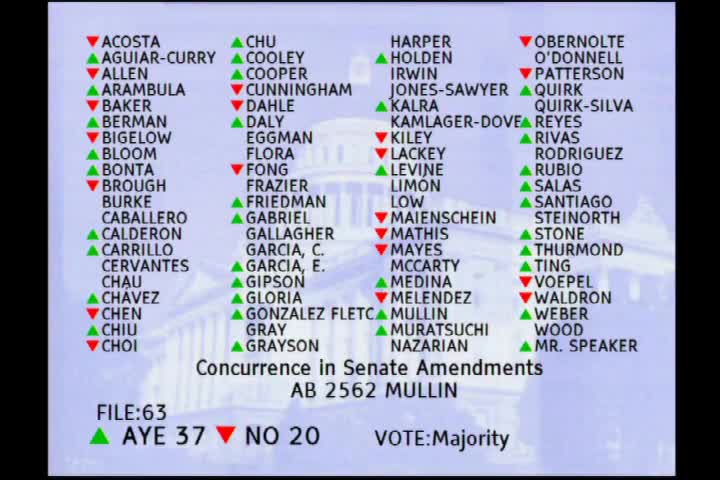
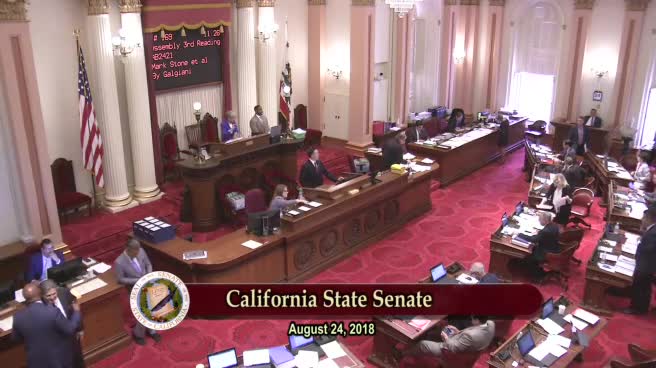

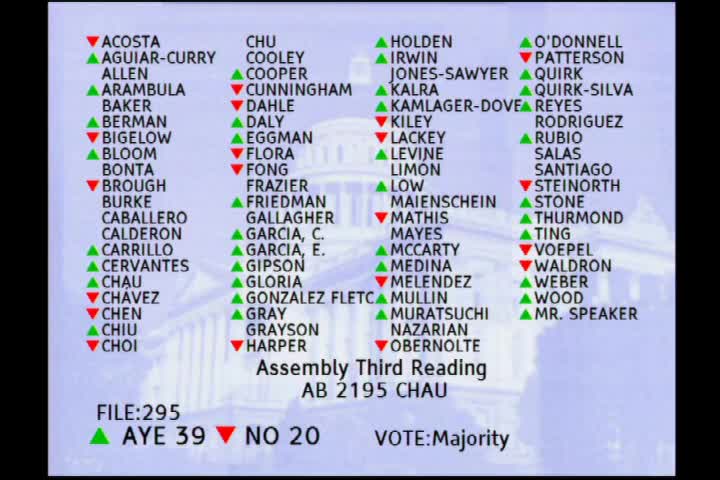
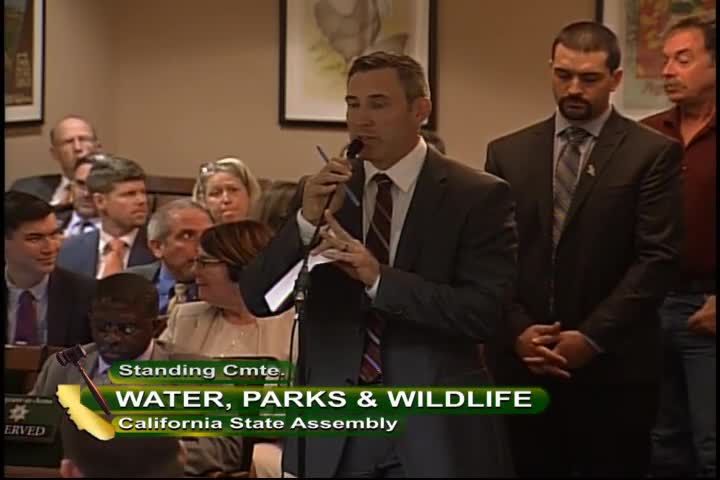
Bill Author




