AB 2724: Inmates: driver’s licenses.
- Session Year: 2017-2018
- House: Assembly
- Latest Version Date: 2018-04-16
Existing law requires the Department of Corrections and Rehabilitation and the Department of Motor Vehicles to ensure that all eligible inmates released from state prisons have valid identification cards issued by the Department of Motor Vehicles. Existing law defines eligible inmate for those purposes.
This bill would require the Department of Corrections and Rehabilitation to work with and the Department of Motor Vehicles to ensure that all eligible inmates released from state prisons inmates, as defined, have the privilege to operate a motor vehicle. vehicle upon release from state prison. The bill would require the Department of Motor Vehicles and the Department of Corrections and Rehabilitation to provide an eligible inmate with a specified form to renew his or her drivers license by mail, upon request. The bill would provide that in the event the inmate has unpaid fines and penalties if a person has a suspended drivers license as a result of delinquent court-ordered debt that would otherwise be required to be paid before issuance of a drivers license, the Department of Motor Vehicles is required to issue a restricted drivers license would be issued and restricted to only allowing, among other things, necessary travel to and from work, to attend school, or to comply with conditions of release. The bill would require the person to make payments for unpaid fines or penalties to eliminate or reduce any delinquent court-ordered debt during the time that his or her drivers license is restricted and would provide that the restriction would be lifted once the fines and penalties are paid off, and the person has otherwise complied with these provisions. The bill would define eligible inmate for those purposes. person has paid the amount due for delinquent court-ordered debt. The bill would prohibit a penalty fee from being assessed to obtain a restricted drivers license pursuant to these provisions.
Existing law requires the Department of Corrections and Rehabilitation and the Department of Motor Vehicles to ensure that all eligible inmates released from state prisons have valid identification cards issued by the Department of Motor Vehicles. Existing law defines eligible inmate for those purposes.
This bill would require the Department of Corrections and Rehabilitation to work with the Department of Motor Vehicles to ensure that all eligible inmates released from state prisons have the privilege to operate a motor vehicle. The bill would provide that in the event the inmate has unpaid fines and penalties that would otherwise be required to be paid before issuance of a drivers license, the license would be issued and restricted to only allowing, among other things, necessary travel to and from work, to attend school, or to comply with conditions of release. The bill would require the person to make payments for unpaid fines or penalties and would provide that the restriction would be lifted once the fines and penalties are paid off, and the person has otherwise complied with these provisions. The bill would define eligible inmate for those purposes.
(a)(1)The Department of Corrections and Rehabilitation shall work with and the Department of Motor Vehicles to shall ensure that all eligible inmates released from state prisons have the privilege to operate a motor vehicle, subject to any of the usual physical requirements and restrictions applicable to obtaining a drivers license. vehicle, upon release from state prison. An eligible inmate may apply to renew or replace a drivers license, or reinstate a suspended drivers license, pursuant to Article 3 (commencing with Section 12800) of Chapter 1 of Division 6 of the Vehicle Code.
(2)The Department of Motor Vehicles and the Department of Corrections and Rehabilitation shall provide an eligible inmate a California Driver License Renewal by Mail Eligibility Information form (DL 410 FO), upon request.
(2)(A)If an inmate has unpaid fines or penalties that(b)If a person has a suspended drivers license as a result of delinquent court-ordered debt that would otherwise be required to be paid before a drivers license is issued, the drivers license shall be restricted to the issued, the Department of Motor Vehicles shall issue a restricted drivers license. A penalty fee shall not be assessed to obtain a restricted drivers license pursuant to this section. The restricted drivers license shall be limited to necessary travel to and from that persons place of employment, to attend school, to comply with conditions of the persons parole or postrelease community supervision or any other conditions of release, or upon permission from the persons parole or other supervising officer. If driving a motor vehicle is necessary to perform the duties of the persons employment, the restriction may allow driving that is within that persons scope of employment.
(B)The drivers license shall be restricted for one year, during which time the person shall make installment payments to eliminate or reduce any unpaid fines or penalties, on a schedule determined by the Department of Corrections and Rehabilitation in consultation with the Department of Motor Vehicles. The person shall maintain proof of financial responsibility while licensed. The Department of Motor Vehicles may, in its discretion, extend the terms of the payment plan after one year, in which case the restriction shall also be extended concurrently. If the person fails to comply with the provisions of this section, the license may be suspended. The restriction shall be lifted when the person has paid the amount due for fines and penalties as required by the payment plan and otherwise complies with this section, and may be lifted in less than one year if all fines and penalties are paid.(c)During the time that the drivers license is restricted, the person shall make payments to eliminate or reduce any delinquent court-ordered debt. The person shall maintain proof of financial responsibility while licensed. The restriction shall be lifted when the person has paid the amount due for delinquent court-ordered debt.
(b)(d)For purposes of this section, eligible inmate means an inmate who meets all of the following requirements:
(1)The inmate has previously held a California drivers license or identification card.
(2)The inmate has a usable photo on file with the Department of Motor Vehicles that is not more than 10 years old.
(3)The inmate is serving a determinate term and has a release date.
(3)(4)The inmate has provided, and the Department of Motor Vehicles has verified, all of the following information:
(A)The inmates true full name.
(B)The inmates date of birth.
(C)The inmates social security number.
(a)(1)The Department of Corrections and Rehabilitation shall work with the Department of Motor Vehicles to ensure that all eligible inmates released from state prisons have the privilege to operate a motor vehicle, subject to any of the usual physical requirements and restrictions applicable to obtaining a drivers license.
(2)(A)If an inmate has unpaid fines or penalties that would otherwise be required to be paid before a drivers license is issued, the drivers license shall be restricted to the necessary travel to and from that persons place of employment, to attend school, to comply with conditions of the persons parole or postrelease community supervision or any other conditions of release, or upon permission from the persons parole or other supervising officer. If driving a motor vehicle is necessary to perform the duties of the persons employment, the restriction may allow driving that is within that persons scope of employment.
(B)The drivers license shall be restricted for one year, during which time the person shall make installment payments to eliminate or reduce any unpaid fines or penalties, on a schedule determined by the Department of Corrections and Rehabilitation in consultation with the Department of Motor Vehicles. The person shall maintain proof of financial responsibility while licensed. The Department of Motor Vehicles may, in its discretion, extend the terms of the payment plan after one year, in which case the restriction shall also be extended concurrently. If the person fails to comply with the provisions of this section, the license may be suspended. The restriction shall be lifted when the person has paid the amount due for fines and penalties as required by the payment plan and otherwise complies with this section, and may be lifted in less than one year if all fines and penalties are paid.
(b)For purposes of this section, eligible inmate means an inmate who meets all of the following requirements:
(1)The inmate has previously held a California drivers license or identification card.
(2)The inmate has a usable photo on file with the Department of Motor Vehicles that is not more than 10 years old.
(3)The inmate has provided, and the Department of Motor Vehicles has verified, all of the following information:
(A)The inmates true full name.
(B)The inmates date of birth.
(C)The inmates social security number.
|
Date
|
Status
|
|---|---|
| May 25, 2018 | In committee: Held under submission. |
| May 2, 2018 | In committee: Set, first hearing. Referred to APPR. suspense file. |
| Apr 17, 2018 | Re-referred to Com. on APPR. |
| Apr 16, 2018 | Read second time and amended. |
| Apr 12, 2018 | From committee: Amend, and do pass as amended and re-refer to Com. on APPR. (Ayes 5. Noes 2.) (April 10). |
| Apr 3, 2018 | In committee: Set, first hearing. Hearing canceled at the request of author. |
| Mar 8, 2018 | Referred to Com. on PUB. S. |
| Feb 16, 2018 | From printer. May be heard in committee March 18. |
| Feb 15, 2018 | Read first time. To print. |
|
Date
|
Description
|
Location
|
Votes
|
|
|---|---|---|---|---|
| Apr 10, 2018 | Do pass as amended and be re-referred to the Committee on [Appropriations] | Assembly Standing Committee on Public Safety |
Passed |
This list shows positions taken on this bill by organizations on the date displayed, which is linked to the original source.
Positions by individuals are not included.
|
Organization
|
Position
|
Date
|
|---|---|---|
| California Catholic Conference | ** Support | Apr 9, 2018 |
| California Immigrant Policy Center | ** Support | Apr 9, 2018 |
| California Probation, Parole, and Correctional Association | ** Support | Apr 9, 2018 |
| California Public Defenders Association | * Support | Apr 10, 2018 |
| Fathers and Families of San Joaquin | * Support | Apr 10, 2018 |
| Fathers and Families of San Joaquin and Stockton | * Support | Apr 10, 2018 |
| Fathers and Families of San Joaquin in Stockton | * Support | Apr 10, 2018 |
| Immigrant Legal Resource Center | * Support | Apr 10, 2018 |
| Policy Link | ** Support | Apr 9, 2018 |
| Silicon Valley De-Bug | ** Support | Apr 9, 2018 |
| Youth Justice Coalition | * Support | Apr 10, 2018 |
Date of Hearing: May 2, 2018
ASSEMBLY COMMITTEE ON APPROPRIATIONS
Lorena Gonzalez Fletcher, Chair
ABPCA Bill Id:AB 2724
Author:(Eggman) – As Amended Ver:April 16, 2018
Policy Committee: | Public Safety | Vote: | 5 - 2 |
|
| ||
|
|
Urgency: No State Mandated Local Program: No Reimbursable: No
SUMMARY:
This bill requires the Department of Corrections and Rehabilitation (CDCR) and the Department of Motor Vehicles (DMV) to ensure that eligible inmates (as defined in this bill) have the privilege of driving, upon release from state prison. Specifically, this bill:
- Requires CDCR and DMV to ensure that all eligible inmates have the privilege of operating a motor vehicle upon release from state prison. Eligible inmates may apply to renew or replace a driver’s license or reinstate a suspended driver’s license.
- Defines “eligible inmate” as an inmate who previously held a California driver’s license or identification card, has a usable photo on file with the DMV that is no more than 10 years old, is serving a determinate sentence and has a release date, and has provided the DMV with his or her true full name, date of birth, and social security number.
FISCAL EFFECT:
- Significant onetime costs (GF and Motor Vehicle Account (MVA)), in the tens of millions of dollars to hundreds of millions of dollars, for infrastructure improvements at CDCR facilities to construct small DMV field offices inside of state prisons.
- Significant ongoing costs (MVA), in the millions of dollars annually, for DMV to hire personnel who are trained to provide DMV services to inmates.
- Significant costs (GF) to CDCR or revenue loss to DMV (MVA) from inmates who are required to have driver’s licenses issued, but cannot afford the renewal fees. For example, if 18,000 inmates (half the number of inmates typically released in a year) are required to have a license issued under this bill, but cannot afford the renewal fees, this would result in either costs to CDCR of $630,000 to pay the fees on behalf of these inmates or a comparable level of revenue loss to DMV if DMV were instead to waive the fee.
- Unknown, ongoing GF costs to CDCR, likely in the hundreds of thousands of dollars, for increased security and workload.
COMMENTS:
- Background and purpose. Under current law, CDCR and DMV coordinate to provide identification cards to eligible inmates upon their release from state prison. The author is seeking to create a similar process for inmates to receive a renewed or reinstated driver’s license upon release from state prison. According to Fathers and Families of San Joaquin, the sponsors of this bill:
AB 2724 would help eliminate some of the many barriers our formerly incarcerated population faces upon re-entering back into the community. Employment is necessary to re-stabilize themselves and their families.
- Complexity of providing DMV services to inmates results in major costs. This bill requires CDCR and DMV to work cooperatively to ensure that inmates defined as eligible in this bill receive driver’s licenses upon release from state prison. However, this bill does not specify how the intended outcome must be achieved. As currently written, this bill applies to some inmates who have never before had a license and would need to take both the knowledge test and the behind-the-wheel driving test in order to receive driver’s licenses. While the bill does not specify, it appears that DMV would need to establish small field offices in each state prison in order to meet the requirements of this bill. This will result in the need for major infrastructure improvements, creating and hiring a new class of DMV personnel that are equipped to provide DMV services to inmates, and increased CDCR security. In addition, it is likely impossible to establish small DMV offices in every CDCR facility.
- Fees and required costs appear to be responsibility of CDCR or DMV. Under current law, a driver must pay a $35 fee along with meeting all other criteria to renew driver’s license. In addition, drivers who seek the reinstatement of their licenses after having them suspended as a result of committing a crime may have additional fees to pay. For example, drivers convicted of driving under the influence (DUI) and required to have an ignition interlock device must pay additional fees. This bill does not specify who is required to pay the various fees that might be charged as part of renewing or reinstating an inmate’s license. However, if an inmate is unable to pay the required DMV fees, it would appear that either CDCR would be required to pay or DMV would be required to waive the fees. This will result in either significant cost to CDCR or significant loss of revenue to DMV.
- Unclear how licenses issued pursuant to this bill are consistent with other laws. This bill includes several groups of individuals for which reinstating a driver’s license is problematic. For example, it appears that inmates who were convicted of a DUI-related crime will be included as eligible inmates. Similarly, inmates who previously had their license suspended because of failure to pay child support will also be considered eligible inmates under this bill and must be provided with a restricted license. It is unclear how DMV will meet the requirements of this bill to provide a driver’s license to a person who might otherwise be ineligible for a driver’s license. Attempting to reconcile conflicting requirements in state law could be costly and may not achieve the intended outcomes. In addition, providing a driver’s license to someone coming out of state prison that would not otherwise be eligible for a driver’s license raises equal protection questions. For example, this bill does not make eligible for a driver’s license reinstatement a person who has not been in prison but had their license suspended for failure to pay child support, yet this bill requires the reinstatement of a driver’s license for a similar individual being released from CDCR. This appears to discriminate against someone because they have not gone to state prison.
Analysis Prepared by: Jessica Peters / APPR. / (916) 319-2081
Date of Hearing:
Counsel: Liah Burnley
ASSEMBLY COMMITTEE ON PUBLIC SAFETY
Reginald Byron Jones-Sawyer, Sr., Chair
ABPCA Bill Id:AB 2724
Author:(Eggman) – As Introduced Ver:February 15, 2018
As Proposed to be Amended in Committee
SUMMARY: Requires the Department of Corrections and Rehabilitation (CDCR) and the Department of Motor Vehicles (DMV) to ensure that eligible inmates have the privilege of operating a motor vehicle upon release from state prison. Specifically, this bill:
- States that all eligible inmates may apply to renew or replace a driver’s license, or reinstate a suspended driver’s license.
- Requires the DMV and CDCR to provide eligible inmates a California Driver License Renewal By Mail Eligibility Information form (DL 410 FO), upon request.
- Provides that, if a person has a suspended driver’s license as a result of delinquent court ordered debt, which would otherwise be required to be paid before a driver’s license suspension is lifted, the DMV shall issue a restricted driver’s license.
- States that a restricted driver’s license is limited to the necessary travel to and from that person’s place of employment, to attend school, to comply with conditions of the person’s parole or postrelease community supervision or any other conditions of release, or upon permission from the person’s parole or other supervising officer. If driving a motor vehicle is necessary to perform the duties of the person’s employment, the restriction may allow driving that is within that person’s scope of employment.
- Provides that the restriction shall be lifted when the person has paid the amount due for delinquent court ordered debt.
EXISTING LAW:
- Requires the DMV to issue a restricted driver’s license to a person whose driver’s license was suspended for driving under the influence. (Veh. Code, § 13352.)
- Authorizes the DMV to issue an identification card to any person attesting to the true full name, correct age, and other identifying data as certified by the applicant for the identification card. Every application for an identification card shall be signed and verified by the applicant before a person authorized to administer oaths and shall be supported by bona fide documentary evidence of the age and identity of the applicant as the DMV may require, and shall include a legible print of the thumb or finger of the applicant. (Veh. Code, § 13000.)
- States that CDCR and the DMV shall ensure that all eligible inmates released from state prisons have valid identification cards, issued pursuant to the Vehicle Code. (Pen. Code § 3007.05)
- Provides that upon application for an original or duplicate license DMV may require the applicant to produce any that the name of the applicant stated in the application is his or her true, full name and that identification that it determines is necessary in order to ensure his or her residence address as set forth in the application is his or her true residence address. (Veh. Code, § 12800.7.)
- States that DMV, notwithstanding any other law, shall require an application for a driver's license to contain the applicant's social security account number and any other number or identifier determined to be appropriate by the department. (Veh. Code, § 12801, subd. (a).)
- Provides, notwithstanding the above provision, an applicant who provides satisfactory proof that his or her presence in the United States is authorized under federal law, but who is not eligible for a social security account number, is eligible to receive an original driver's license if he or she meets all other qualifications for licensure. (Veh. Code, § 12801, subd. (b).)
- States the finding of the Legislature that the period immediately following incarceration is critical to successful reintegration of the offender into society and to positive citizenship. (Pen. Code, § 3000, subd. (a)(1).)
FISCAL EFFECT: Unknown
COMMENTS:
- Author’s Statement: According to the author, ''As people exit the criminal justice system they face significant obstacles, such as finding housing, accessing health benefits, and obtaining a job. Unfortunately, for those who have a suspended license finding work and keeping it becomes that much harder. The practice of using suspension as a tool to collect debt has been very harmful – 4 million Californians currently have a suspended license. The ability to earn a living is essential to paying off suspension debts in order to restore a driver’s license. We should not continue to penalize people by imposing yet another barrier to reentry for folks who have served their time and who are working towards bettering themselves. AB 2724 will provide these individuals access to a driver’s license limited to activities that will allow them to work and earn a wage so they may focus on getting back on their feet.''
- Suspended Driver’s Licenses: This bill seeks to remove barriers upon reentry by allowing inmates to keep their driver’s licenses up to date while incarcerated, so that they have the privilege of driving immediately upon release from incarceration. This bill would also allow individuals to have a restricted license, instead of a suspended license, if they have delinquent court ordered debt, which will provide individuals an opportunity to legally drive to work, school, and as necessary to fulfill conditions of supervision.
In June 2017, Governor Brown signed AB 103, which included his proposal to amend Vehicle Code section 13365, the only statute that authorized the DMV to maintain a license suspension for failure to pay or failure to appear. As such, the DMV is no longer authorized to suspend licenses for failure to pay going forward. In practice, this means that individuals who incur delinquent court ordered debt after the passage of AB 103 will not have their license suspended as a consequence of their failure to pay. As Governor Brown stated, ''[t]here does not appear to be a strong connection" between the license suspensions and collecting. "Often, the primary consequence of a driver's license suspension is the inability to legally drive to work or take one's children to school.''
However, AB 103 was not retroactive. There are many people currently serving a sentence in prison, who will, upon release be unable to drive because of their failure to pay fines and fees that were assessed prior to 2017.
This bill would remedy this disparity and ensure that eligible inmates are able to obtain a restricted license so that they can drive to work, school, upon release from incarceration. The restricted license will give people the ability to drive to work, school, and as needed to complete the conditions of their supervision. Notably, the DMV already issues restricted driver’s licenses for people who have suspended license for driving while under the influence. - Argument in Support: According to Fathers and Families of San Joaquin, the sponsor of the bill, AB 2724 ''Would help eliminate some of the many barriers our formerly incarcerated population face upon re-entering back into the community. Employment is necessary to re-stabilize themselves and their families.
''According to the California Rehabilitation Oversight Board, on any given day about 40,000 people are on parole in the state of California. Additionally, the 2016 passage of Proposition 57 has resulted in an increase of those on parole, as more and more people are eligible for early release. The California Department of Corrections & Rehabilitation (CDCR) estimates the release of about 3,000 individuals every month. The probation population is much larger and comprises of hundreds of thousands of folks every day.
''We must ensure that system impacted individuals have the opportunity to rebuild their lives and develop a foundation to create a new crime free life back in their community. The ability to earn a living is a necessity for all people to meet the demands of daily life including providing safe housing, food and clothing. In order to seek, obtain and retain employment and wages, the ability to drive is a necessity.
''As one formerly incarcerated individual stated, ‘Not having your driver's' license is a huge hindrance when it comes to being able to get to and from appointments, work, school, job interviews. All those basic needs become illegal when you cannot obtain a driver’s license.’''
- Related Legislation: AB 2685 (Lackey), of the 2017-2018 Legislative Session, would allow the juvenile court to restrict a minor ward’s driving privilege, rather than suspending or delaying it, to travel which is necessary to go to from the minor’s place of employment and education for up to six months. This bill is being heard in the Assembly Public Safety Committee today.
- Prior Legislation:
- AB 103 (Committee on Budget), Chapter 17, Statues of 2017, prohibits the courts and DMV from suspending a driver’s license because of an unpaid traffic citation
- AB 412 (Ting), of the 2017-2018 Legislative Session, would have allowed a defendant to petition the court to have a civil assessment vacated because of the defendant’s incarceration. AB 412 died in the Assembly Appropriations Committee.
- SB 185 (Hertzberg), of the 2017-2018 Legislative Session, would have required courts in traffic cases to reduce fines based on a finding that the defendant is indigent and provided additional time to defendants before their driver’s license could be suspended for a failure to appear in court on a vehicle code offense. SB 185 died in the Assembly Appropriations Committee.
- AB 2308 (Stone), Chapter 607 of Statutes of 2014, requires CDCR and the DMV to ensure that all eligible inmates released from state prisons have valid identification cards.
- AB 625 (Quirk), Chapter 159, Statutes of 2013, adds inmate identification cards, issued by CDCR, to the list of documents presumed to prove the identity of an incarcerated individual who executes a written instrument, for the purposes of notarization of an instrument.
- SB 85 (Committee on Budget and Fiscal Review), Chapter 35, Statutes of 2013, created the traffic amnesty program.
- AB 1577 (Atkins), of the 2011-2012 Legislative Session, would have authorized CDCR and county jails to provide parolee identification cards and would have require the DMV to honor that card as a valid source of identification for the purposes of applying for a driver’s license or an identification card. AB 1577 died in the Assembly Public Safety Committee
- AB 639 (Hancock), of the 2007-2008 Legislative Session, would have required that prior to certain inmates being released on parole from the state prison at San Quentin, the CDCR to ensure that each parolee successfully obtains a valid California identification card. AB 631 was vetoed.
- AB 777 (Bass), of the 2007-2008 Legislative Session, would have required CDCR to establish a pilot program to allow the DMV to make biannual visits to the department’s facilities to provide state-issued identification cards to inmates upon their release and to inmates who are eligible to be released or released on parole within 6 months. AB 777 was held in the Assembly Appropriations Committee.
- AB 2262 (Bass), of the 2009-2010 Legislative Session, would have required CDCR to provide each inmate, prior to his or her release, with the inmate’s identification card number or driver’s license number. AB 2262 was held in the Senate Appropriations Committee.
REGISTERED SUPPORT / OPPOSITION:
Support
Fathers and Families of San Joaquin (Sponsor)
California Catholic Conference
California Immigrant Policy Center
California Probation, Parole, and Correctional Association
Policy Link
Silicon Valley De-Bug
Youth Justice Coalition
Opposition
None
Analysis Prepared by:
Liah Burnley / PUB. S. / (916) 319-3744
Discussed in Hearing
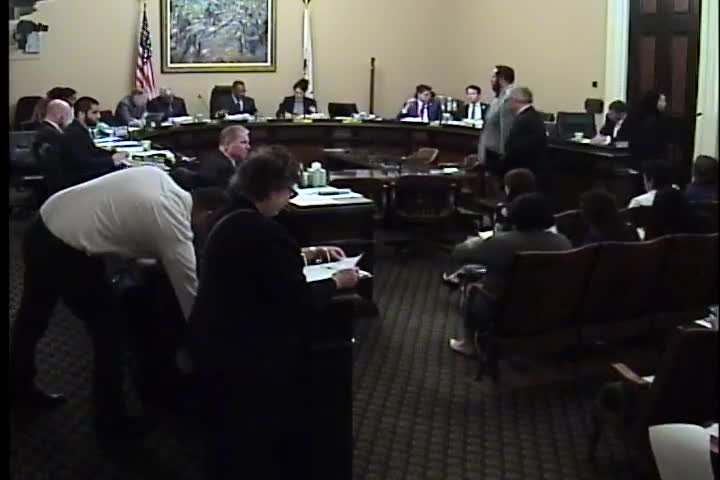 11MIN



