AB 288: State responsibility areas: fire prevention fees: amnesty program.
- Session Year: 2017-2018
- House: Assembly
- Latest Version Date: 2017-04-25
Existing law requires the state to have the primary financial responsibility for preventing and suppressing fires in areas that the State Board of Forestry and Fire Protection has determined are state responsibility areas, as defined. Existing law requires that a fire prevention fee be charged on each habitable structure on a parcel that is within a state responsibility area, collected annually by the State Board of Equalization, in accordance with specified procedures, and specifies that the annual fee shall be due and payable 30 days from the date of assessment by the state board. Existing law authorizes a petition for redetermination of the fee to be filed within 30 days after service of a notice of determination, as specified.
This bill would extend the time when the fire prevention fee is due and payable from 30 to 60 days from the date of assessment by the State Board of Equalization and would authorize the petition for redetermination to be filed within 60 days after service of the notice of determination, as specified.
The bill would establish the Fire Prevention Fee Amnesty Program. The bill would require the State Board of Equalization to develop and administer the amnesty program for a person subject to the fees described above. The bill would require the program to be conducted for a 6-month time period, as provided, and would apply to fire prevention fee liabilities due and payable for the fee reporting periods beginning before March 1, 2018. The bill would require the program to apply to a person who meets specified requirements, including the filing of a completed amnesty application under penalty of perjury. By requiring the application to be completed under penalty of perjury, the bill would create a crime, and thus impose a state-mandated local program. The bill would require the state board to waive all penalties and interest for the specified fee reporting period for which the fire prevention fee amnesty is allowed for the nonpayment or underpayment of fee liabilities for a person who meets the above requirements. The bill would require the state board to adequately publicize the program so as to maximize public awareness of and participation in the program.
The California Constitution requires the state to reimburse local agencies and school districts for certain costs mandated by the state. Statutory provisions establish procedures for making that reimbursement.
This bill would provide that no reimbursement is required by this act for a specified reason.
Existing law requires the state to have the primary financial responsibility for preventing and suppressing fires in areas that the State Board of Forestry and Fire Protection has determined are state responsibility areas, as defined. Existing law requires that a fire prevention fee be charged on each habitable structure on a parcel that is within a state responsibility area, collected annually by the State Board of Equalization, in accordance with specified procedures, and specifies that the annual fee shall be due and payable 30 days from the date of assessment by the state board. Existing law authorizes a petition for redetermination of the fee to be filed within 30 days after service of a notice of determination, as specified.
This bill would extend the time when the fire prevention fee is due and payable from 30 to 60 days from the date of assessment by the State Board of Equalization and would authorize the petition for redetermination to be filed within 60 days after service of the notice of determination, as specified.
(a)(1)The fire prevention fee imposed pursuant to Section 4212 shall be collected annually by the State Board of Equalization in accordance with the Fee Collection Procedures Law (Part 30 (commencing with Section 55001) of Division 2 of the Revenue and Taxation Code).
(2)Notwithstanding the appeal provisions in the Fee Collection Procedures Law, a determination by the department that a person is required to pay a fire prevention fee, or a determination by the department regarding the amount of that fee, is subject to review under Article 2 (commencing with Section 4220) and is not subject to a petition for redetermination by the State Board of Equalization.
(3)(A)Notwithstanding the refund provisions in the Fee Collection Procedures Law, the State Board of Equalization shall not accept a claim for refund that is based on the assertion that a determination by the department improperly or erroneously calculated the amount of the fire prevention fee, or incorrectly determined that the person is subject to that fee, unless that determination has been set aside by the department or a court reviewing the determination of the department.
(B)If the department or a reviewing court determines that a person is entitled to a refund of all or part of the fire prevention fee, the person shall make a claim to the State Board of Equalization pursuant to Chapter 5 (commencing with Section 55221) of Part 30 of Division 2 of the Revenue and Taxation Code.
(b)The annual fire prevention fee shall be due and payable 60 days from the date of assessment by the State Board of Equalization.
(c)On or before January 1, the department shall annually transmit to the State Board of Equalization the appropriate name and address of each person who is liable for the fire prevention fee and the amount of the fee to be assessed, as authorized by this article, and at the same time the department shall provide to the State Board of Equalization a contact telephone number for the board to be printed on the bill to respond to questions about the fee.
(d)If in a fiscal year there are sufficient amounts of money in the State Responsibility Area Fire Prevention Fund created pursuant to Section 4214 to finance the costs of the programs under subdivision (d) of Section 4214 for that fiscal year, the fee may not be collected that fiscal year.
SEC. 2.Section 4220 of the Public Resources Code is amended to read:4220.A person from whom the fire prevention fee is determined to be due under this chapter may petition for a redetermination of whether this chapter applies to that person within 60 days after service upon him or her of a notice of the determination. If a petition for redetermination is not filed within the 60-day period, the amount determined to be due becomes final at the expiration of the 60-day period.
SEC. 3.Section 4222 of the Public Resources Code is amended to read:4222.If a petition for redetermination of the application of this chapter is filed within the 60-day period, the department shall reconsider whether the fee is due and make a determination in writing. The department may eliminate the fee based on a determination that this chapter does not apply to the person who filed the petition.
SEC. 4.Article 3 (commencing with Section 4230) is added to Chapter 1.5 of Part 2 of Division 4 of the Public Resources Code, to read:3.Fire Prevention Fee Amnesty Program4230.For purposes of this article, the following terms have the following meanings:
(a)Program means the Fire Prevention Fee Amnesty Program established pursuant to this article.
(b)State board means the State Board of Equalization.
4231.The state board shall develop and administer the program for a person subject to the fees established by this chapter.
4232.The program shall be conducted for a six-month period beginning January 1, 2019, through June 30, 2019, inclusive, or during an alternative six-month period ending no later than December 31, 2019. The program shall apply to fire prevention fee liabilities due and payable for fee reporting periods beginning before March 1, 2018.
4233.(a)The state board shall waive all penalties and interest imposed by this chapter for the fee reporting periods for which fire prevention fee amnesty is allowed for the nonpayment or underpayment of fee liabilities for a person who meets the requirements of Section 4234.
(b)A refund or credit of a penalty or interest paid shall not be granted pursuant to the program prior to the time the person makes a request for fee amnesty pursuant to paragraph (2) of subdivision (a) of Section 4234.
4234.(a)The amnesty program shall apply to a person who meets all of the following requirements:
(1)Has fire prevention fee liability for nonpayment or underpayment of fees for the fee reporting periods for which fire prevention fee amnesty is allowed.
(2)Files a completed amnesty program application with the state board, signed under penalty of perjury.
(3)Within 60 days after the conclusion of the program period, pays in full the fire prevention fees due for all periods for which amnesty is requested, or applies for an installment agreement under subdivision (b).
(4)In the case of a person who has filed for bankruptcy protection under Title 11 of the United States Code, submits an order from a Federal Bankruptcy Court allowing the person to participate in the program.
(b)The state board may enter into an installment payment agreement in lieu of the complete payment required under paragraph (3) of subdivision (a) if final payment under the terms of that installment payment agreement is due and is paid no later than June 30, 2021. Failure by the person to fully comply with the terms of the installment payment agreement shall render the waiver of penalties and interest null and void, unless the state board determines that the failure was due to reasonable causes, and the total amount of fees, interest, and penalties shall be immediately due and payable.
(c)The application required under paragraph (2) of subdivision (a) shall be in the form and manner specified by the state board, but in no case shall a mere payment of any fees due, in whole or in part, for any period otherwise eligible for amnesty under this section be deemed to constitute an acceptable amnesty application under this section. For purposes of the preceding sentence, the application of a refund from one period to offset a fee liability for another period otherwise eligible for amnesty shall not be allowed without the filing of an amnesty application under this section.
4236.The state board shall adequately publicize the program so as to maximize public awareness of and participation in the program. The state board shall coordinate with the department to the highest degree possible its publicity efforts and other actions taken in implementing this article.
4237.The state board shall issue forms and instructions and take other actions needed to implement this article.
SEC. 5.No reimbursement is required by this act pursuant to Section 6 of Article XIIIB of the California Constitution because the only costs that may be incurred by a local agency or school district will be incurred because this act creates a new crime or infraction, eliminates a crime or infraction, or changes the penalty for a crime or infraction, within the meaning of Section 17556 of the Government Code, or changes the definition of a crime within the meaning of Section 6 of Article XIIIB of the California Constitution.
(a)(1)Commencing with the 201112 fiscal year, the The fire prevention fee imposed pursuant to Section 4212 shall be collected annually by the State Board of Equalization in accordance with the Fee Collection Procedures Law (Part 30 (commencing with Section 55001) of Division 2 of the Revenue and Taxation Code).
(2)Notwithstanding the appeal provisions in the Fee Collection Procedures Law, a determination by the department that a person is required to pay a fire prevention fee, or a determination by the department regarding the amount of that fee, is subject to review under Article 2 (commencing with Section 4220) and is not subject to a petition for redetermination by the State Board of Equalization.
(3)(A)Notwithstanding the refund provisions in the Fee Collection Procedures Law, the State Board of Equalization shall not accept any a claim for refund that is based on the assertion that a determination by the department improperly or erroneously calculated the amount of the fire prevention fee, or incorrectly determined that the person is subject to that fee, unless that determination has been set aside by the department or a court reviewing the determination of the department.
(B)If it is determined by the department or a reviewing court determines that a person is entitled to a refund of all or part of the fire prevention fee, the person shall make a claim to the State Board of Equalization pursuant to Chapter 5 (commencing with Section 55221) of Part 30 of Division 2 of the Revenue and Taxation Code.
(b)The annual fire prevention fee shall be due and payable 30 60 days from the date of assessment by the State Board of Equalization.
(c)On or before each January 1, the department shall annually transmit to the State Board of Equalization the appropriate name and address of each person who is liable for the fire prevention fee and the amount of the fee to be assessed, as authorized by this article, and at the same time the department shall provide to the State Board of Equalization a contact telephone number for the board to be printed on the bill to respond to questions about the fee.
(d)Commencing with the 201213 fiscal year, if in any given If in a fiscal year there are sufficient amounts of money in the State Responsibility Area Fire Prevention Fund created pursuant to Section 4214 to finance the costs of the programs under subdivision (d) of Section 4214 for that fiscal year, the fee may not be collected that fiscal year.
SEC. 2.Section 4220 of the Public Resources Code is amended to read:4220.A person from whom the fire prevention fee is determined to be due under this chapter may petition for a redetermination of whether this chapter applies to that person within 30 60 days after service upon him or her of a notice of the determination. If a petition for redetermination is not filed within the 30-day 60-day period, the amount determined to be due becomes final at the expiration of the 30-day 60-day period.
SEC. 3.Section 4222 of the Public Resources Code is amended to read:4222.If a petition for redetermination of the application of this chapter is filed within the 30-day 60-day period, the department shall reconsider whether the fee is due and make a determination in writing. The department may eliminate the fee based on a determination that this chapter does not apply to the person who filed the petition.
|
Date
|
Status
|
|---|---|
| Feb 1, 2018 | From committee: Filed with the Chief Clerk pursuant to Joint Rule 56. |
| Jan 31, 2018 | Died pursuant to Art. IV, Sec. 10(c) of the Constitution. |
| May 26, 2017 | In committee: Held under submission. |
| May 10, 2017 | In committee: Set, first hearing. Referred to APPR. suspense file. |
| Apr 26, 2017 | Re-referred to Com. on APPR. |
| Apr 25, 2017 | Read second time and amended. |
| Apr 24, 2017 | From committee: Amend, and do pass as amended and re-refer to Com. on APPR. (Ayes 10. Noes 0.) (April 17). |
| Apr 3, 2017 | In committee: Set, first hearing. Hearing canceled at the request of author. |
| Mar 16, 2017 | In committee: Hearing postponed by committee. |
| Feb 13, 2017 | Referred to Com. on NAT. RES. |
| Feb 3, 2017 | From printer. May be heard in committee March 5. |
| Feb 2, 2017 | Read first time. To print. |
|
Date
|
Description
|
Location
|
Votes
|
|
|---|---|---|---|---|
| Apr 17, 2017 | Do pass as amended and be re-referred to the Committee on [Appropriations] | Assembly Standing Committee on Natural Resources |
Passed |
This list shows positions taken on this bill by organizations on the date displayed, which is linked to the original source.
Positions by individuals are not included.
|
Organization
|
Position
|
Date
|
|---|---|---|
| Apple Valley Fire Protection District | ** Support | Apr 14, 2017 |
| California Association Of Realtors | ** Support | Apr 14, 2017 |
| California Fire Chiefs Association | ** Support | Apr 14, 2017 |
| California Taxpayers Association | ** Support | Apr 14, 2017 |
| Fire Districts Association Of California | ** Support | Apr 14, 2017 |
| Howard Jarvis Taxpayers Association | ** Support | Apr 14, 2017 |
| Rural County Representatives of California | ** Support | Apr 14, 2017 |
| San Diego County Board of Supervisors | ** Support | Apr 14, 2017 |
| Santa Clara County Board of Supervisors | ** Support | Apr 14, 2017 |
| Sen. George Runner, Member, State Board of Equalization | ** Support | Apr 14, 2017 |
| State Board of Equalization | ** Support | Apr 14, 2017 |
Date of Hearing: May 10, 2017
ASSEMBLY COMMITTEE ON APPROPRIATIONS
Lorena Gonzalez Fletcher, Chair
ABPCA Bill Id:AB 288
Author:(Obernolte) – As Amended Ver:April 25, 2017
Policy Committee: | Natural Resources | Vote: | 10 - 0 |
|
| ||
|
|
Urgency: No State Mandated Local Program: Yes Reimbursable: No
SUMMARY:
This bill extends the period of time owners of structures have to pay or request redetermination of the fire prevention fee from 30 days to 60 days. This bill also contains an amnesty program, which begins January 1, 2019, for fee liabilities due and payable beginning before March 1, 2018.
FISCAL EFFECT:
- Unknown increased recovery of delinquent fee revenue resulting from the amnesty program. This figure will be less than what is owed because it will not include interest and penalites. Unknown, likely unabsorbable costs for BOE to administer this program.
- Interest and penalty revenue loss of $456,000 in FY 2017-18 resulting from the extension of the time period fee-payer have to submit what is owed from 30 to 60 days.
According to Baord of Equaliztation (BOE) staff, the 31-60 day interest and penalties data indicate a continuous decline of less than 1% from FY 2012-13 through FY 2014-15. However, FY 2015-16 saw an irregular and significant 60.5% decrease in payments made between 31-60 days compared to FY 2014-15. Accounting for both a 1% decline from FY 2012-13 through FY 2014-15 and the irregular steep decline in FY 2015-16, staff used a four-year running average to determine the revenue impact. Staff estimates interest and penalty revenue loss to be $456,000 in FY 2017-18.
- The BOE will incur some minor one-time costs for computer programming and revising information and publications.
- Unknown costs for CAL FIRE to coordinate with BOE to advertise the amnesty program.
COMMENTS:
- Purpose. According to the author, many homeowners have expressed concern that the 30-day period does not allow sufficient time to pay or dispute the fee. This bill provides additional time for feepayers to review their assessments and either dispute the fee or adjust their budgets and pay their fees in a timely manner.
Additionally, the Assembly Natural Resources Committee added an amnesty program to address the $47 million in uncollected fees. This bill now establishes the amnesty program for a 6-month period beginning January 1, 2019, through June 30, 2019, or an alternative six-month period ending no later than December 31, 2019. The Program applies to fee liabilities due and payable for reporting periods beginning before March 1, 2018.
- Background. The state is responsible for wildland fire protection in state responsibility areas (SRA) which are generally defined to include most nonfederal timberlands, rangelands and watersheds thinly populated and not within the boundaries of a city. Over 31 million acres, much privately owned, are located in SRA. In the past, SRA lands were largely unpopulated. In recent years, however, local governments have allowed increased housing development in SRA but at a level of density that maintains the state's obligation to provide wildland fire protection.
As housing development in SRA increased, so did state fire protection costs. In 1996-97, the department spent $475 million on fire protection; in more recent years, CALFIRE's annual fire protection costs neared or surpassed $1 billion.
- Fire Prevention Fee. In 2011 the Legislature passed ABx1 29 (Blumenfield), requiring the Board of Forestry and Fire Protection to adopt emergency regulations to establish a fire prevention fee. The fee, not to exceed $150 on each structure, was to raise $50 million to fund CALFIRE fire prevention activities. In January 2012, the board issued its regulation, establishing a fee of $150 per habitable structure on a parcel located within SRA, with a $35 reduction for each habitable structure that is also within the boundaries of a local agency that provides fire protection services. Revenues from the fee are to be used exclusively for fire protection. In authorizing the fee, the Legislature recognized that individual owners within SRA received a disproportionately larger benefit from fire prevention activities than realized by the state’s residents generally.
As allowed by law, the Fire Board adjusted the fee for inflation and the fee is currently $152.33 per habitable structure outside a fire protection district and $117.33 for habitable structures within a fire protection district.
The fee generates approximately $80 million a year in revenues, which is used to enhance statewide fire prevention work, including local assistance grants. Recent local assistance grant awards have focused on responding to the tree mortality crisis in California where over 100 million trees have died. The local assistance grants help locals reduce wildfire and tree fall risks near homes in high tree mortality areas.
- Collection Issues. According to the BOE, approximately 72% of fee payers pay the fee within the 30 days and 7% of fee payers pay between 31 to 60 days. This bill would save the 7% of fee payers who pay between 31 to 60 days the 10% penalty assessed to late accounts.
Petitions for Redetermination have declined from over 100,000 in 2011-12 fiscal year to around 30,000 in 2014-15 fiscal year, of which only 11% were successful. Over 10% of fee payers pay after 60 days and additional 10% have not paid the fee any of the five years it has been assessed. More than $47 million in fees remain uncollected. Additional time may be warranted for paying the fee or appealing it. The Natural Resources Committee added the amnesty program in this bill to address the $47 million in fees that remain uncollected and give fee payers the onetime opportunity to pay their debts without interest or penalty.
The fee has been collected since 2011. Residents in the SRA are still receiving the vast majority of their fire protection at state expense while residents in non-SRA areas pay for their fire protection through local taxes. Additionally, some of the revenue derived from the fee is returned to SRA residents through local assistance grants.
The Committee may wish to consider whether we should be allowing SRA property owners more time to adjust to paying a fee which has been in place for almost six years and costs no more than $12.50 per month. Additionally, the Committee may wish to consider whether an amnesty program is fair to the 72% of fee payers who submit their payments on time.
- Prior Legislation. SB 1413 (Wyland), of the 2013- 2014 Legislative Session, was almost identical to this bill and was held in this Committee on Suspense.
AB 203 (Obernolte), of the 2015-2016 Legislative Session, contained the same provisions as this bill, but also codified the existing fee level. This bill was placed on the inactive file on the Assembly floor by the author.
AB 1642 (Obernolte), of the 2015- 2016Legislative Session, was almost identical to this bill and was held in this Committee on Suspense.
Analysis Prepared by: Jennifer Galehouse / APPR. / (916) 319-2081
Date of Hearing: April 17, 2017
ASSEMBLY COMMITTEE ON NATURAL RESOURCES
Cristina Garcia, Chair
ABPCA Bill Id:AB 288 (
Author:Obernolte) – As Introduced Ver:February 2, 2017
SUBJECT: State responsibility areas: fire prevention fees
SUMMARY: Extends the deadlines to either pay the state responsibility area (SRA) fire prevention fee (fee) or file a petition for redetermination of the fee from 30 days to 60 days.
EXISTING LAW:
- Requires the Board of Forestry and Fire Protection (Board) to classify all lands within the state for the purpose of determining areas in which the financial responsibility of preventing and suppressing fires is primarily the responsibility of the state.
- Declares that it is necessary to impose a fee to pay for fire prevention activities in the SRA that specifically benefit owners of structures in the SRA.
- Requires the Board to adopt regulations to establish the fee in an amount not to exceed $150, and allows the Board to adjust the fee every year for inflation. Requires the fee to be charged on each “structure” on a parcel that is within the SRA. Defines “structure” as a building used or intended to be used for human habitation, including a mobile home or manufactured home. Reduces the fire prevention fee by $35 if the structure is also within the boundaries of a local agency that provides fire protection services. Defines “owner of a habitable structure” as the person that is the owner of record of a habitable structure in the county tax assessor rolls or as recorded by the Department of Housing and Community Development (HCD) on July 1 of the state fiscal year for which the fee is due. Requires the Board of Equalization (BOE) to collect the fee.
- Requires the fee to be deposited in the State Responsibility Area (SRA) Fire Prevention Fund, which is available to the Board and the Department of Forestry and Fire Protection (CAL FIRE) to expend for fire prevention activities that benefit the owners of structures within the SRA. Limits fire prevention activities to the following:
a) Local assistance grants established by the Board;
b) Grants to Fire Safe Councils, the California Conservation Corps, or certified local conservation corps for fire prevention projects and activities in the SRA;
c) Grants to a qualified nonprofit organization with a demonstrated ability to satisfactorily plan, implement, and complete a fire prevention project applicable to the SRA;
d) Inspections by CAL FIRE for compliance with defensible space requirements around structures in the SRA;
e) Public education to reduce fire risk in the SRA;
f) Fire severity and fire hazard mapping by CAL FIRE in the SRA; and,
g) Other fire prevention projects in the SRA that are authorized by the Board.
- Allows a person to petition CAL FIRE for a redetermination of whether the fee applies to him or her within 30 days after being served with a notice of determination (i.e., the notice from CAL-FIRE stating that a person must pay the fee).
- Imposes a 10% penalty 30 days after the BOE’s date of assessment for the fee.
FISCAL EFFECT: Unknown
COMMENTS:
- Background. California’s SRA covers over 31 million acres and includes land in every county except San Francisco and Sutter. CAL FIRE operates more than 200 fire stations within the SRA, contracts with other firefighting agencies, and has a proposed wildland fire protection budget of $1.8 billion for this fiscal year. The fire protection budget includes, among other things, fire prevention activities such as brush clearance, defensible space inspections, fire breaks, and other measures to reduce the cost of firefighting, property loss, injury to firefighters, and damage to the environment.
CAL FIRE’s fire protection budget has seen a steady increase over the years and is the largest budget in the Natural Resources Agency. In the 1996-97 fiscal year, CAL FIRE’s fire protection budget was $266 million. This increase has been attributed in large part to the significant housing development at the boundaries between wildlands and urban areas, the heightened risk of catastrophic fires due to climate change and fire suppression activities over the last century, and increased staff costs.
- Fire Prevention Fee. In early 2011, the state was facing a $26.6 billion budget deficit, and an annual structural deficit of up to $21.5 billion was projected into the future. In March 2011, the Legislature passed $13.4 billion in budget solutions (consisting mostly of spending cuts) to address the deficit; however, there was still a shortfall of $10.8 billion. To assist in addressing the budget shortfall, the Legislature passed ABX1 29 (Blumenfield), Chapter 8, Statutes of 2011-12 First Extraordinary Session, which required the Board to adopt emergency regulations to establish a “fire prevention fee” not to exceed $150 for each structure on a parcel that is within the SRA. The fee was intended to fill a hole created by a $50 million General Fund cut to CAL FIRE in the 2011 budget bill. The fee generates approximately $80 million a year in revenues, which is used to enhance statewide fire prevention work, including local assistance grants. Recent local assistance grant awards have focused on responding to the tree mortality crisis in California where over 100 million trees have died. The local assistance grants help locals reduce wildfire and tree fall risks near homes in high tree mortality areas.
- Collection Issues. The author claims that many homeowners have expressed concern that the 30-day period does not allow them sufficient time to pay or dispute the fee. The author believes that a 60-day period to pay or dispute the fee would allow sufficient time for those residents to review their assessments and account for any delays. According to the BOE, approximately 72% of fee payers pay the fee within the 30 days and 7% of fee payers pay between 31 to 60 days. This bill would save the 7% of fee payers who pay between 31 to 60 days the 10% penalty assessed to late accounts. Petitions for Redetermination have declined from over 100,000 in 2011-12 fiscal year to around 30,000 in 2014-15 fiscal year, of which 11% were successful. Over 10% of fee payers pay after 60 days and additional 10% have not paid the fee any of the five years it has been assessed. More than $47 million in fees remain uncollected. Additional time may be warranted for paying the fee or appealing it. However, the additional 30 days will not have a significant impact on $47 million in outstanding fees and will not affect the over 20% of fee payer that do not pay within the 60 days. Having such a high percentage of people who don’t pay the fee is unfair to the vast majority who do. In addition, the $47 million could significantly help reduce the impacts of the tree mortality crisis California is facing.
- Amendments. The author and committee may wish to consider amending the bill to:
- Require BOE to offer a penalty and interest amnesty program to fee payers who agree to enter into a payment plan to pay their past due fees; and,
- Require BOE to file a tax lien against any fee payer who does not enter the amnesty program and owes over $1,000 in SRA fees, interest, and penalties or over $600 in SRA fees alone.
- Related/Prior Legislation.
AB 2048 (Dahle, Chesbro, and Gordon), Chapter 895, Statutes of 2014, among other things, reduces the penalties for unpaid fees and simplifies the appeals process.
SB 1413 (Wyland, 2014) was almost identical to this bill and was held in Assembly Appropriations Committee.
AB 203 (Obernolte, 2015) contained the same provisions as this bill, and was placed on the inactive file on the Assembly floor.
AB 1642 (Obernolte, 2016) was almost identical to this bill and was held in Assembly Appropriations Committee.
SB 9 (Gaines) repeals the SRA fee. This bill is awaiting hearing in Senate Natural Resource and Water Committee.
AB 211 (Bigelow) reinstates annual reporting requirements regarding the expenditure of SRA fire fees. This bill transfers reporting responsibility to CAL FIRE from the Board, and expands previous reporting requirements. This bill is awaiting hearing in the Assembly Appropriations Committee.
REGISTERED SUPPORT / OPPOSITION:
Support
Sen. George Runner, Member, State Board of Equalization (Sponsor)
Apple Valley Fire Protection District
California Association of Realtors
California Fire Chiefs Association
California Taxpayers Association
Fire Districts Association of California
Howard Jarvis Taxpayers Association
Rural County Representatives of California
San Diego County Board of Supervisors
Santa Clara County Board of Supervisors
State Board of Equalization
Opposition
None on file
Analysis Prepared by: Michael Jarred / NAT. RES. /
Discussed in Hearing
 1H
Assembly Standing Committee on Appropriations
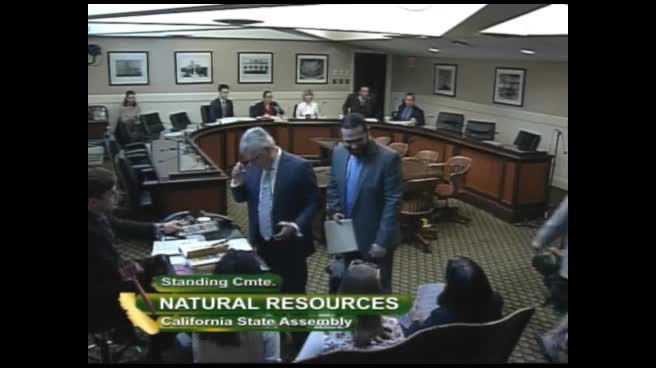 3MIN