AB 301: Commercial motor vehicles: examination requirements: driving skills test.
- Session Year: 2017-2018
- House: Assembly
- Latest Version Date: 2017-07-13
Existing law prohibits a person from operating a commercial motor vehicle unless the person has passed a written and driving test for the operation of a commercial motor vehicle that complies with specified federal standards and any other requirements imposed by the Vehicle Code. Existing law requires the Department of Motor Vehicles to implement these provisions, as specified.
This bill would require the Department of Motor Vehicles to establish performance goals to decrease the wait time to obtain an appointment to take the driving skills test to operate a commercial motor vehicle. The bill would require the department to convene a stakeholder group to make recommendations to the department on meeting these performance goals. The bill would require the department to submit a report to the relevant budget and policy committees of the Legislature detailing the recommendations of the stakeholder group group, the recommendations that the department has adopted, the recommendations that were not adopted with an explanation of why they were not adopted, and how the department intends to implement these recommendations. The bill would additionally require the department to submit a subsequent report to these committees describing the departments performance in implementing the recommendations it has adopted and achieving the performance goals.
Existing law prohibits a person from operating a commercial motor vehicle unless the person has passed a written and driving test for the operation of a commercial motor vehicle that complies with specified federal standards and any other requirements imposed by the Vehicle Code. Existing law requires the Department of Motor Vehicles to implement these provisions, as specified.
This bill would require the Department of Motor Vehicles to establish performance goals to decrease the wait time to obtain an appointment to take the driving skills test to operate a commercial motor vehicle. The bill would require the department to convene a stakeholder group to make recommendations to the department on meeting these performance goals. The bill would require the department to submit a report to the relevant budget and policy committees of the Legislature detailing the recommendations of the stakeholder group and how the department intends to implement these recommendations. The bill would additionally require the department to submit a subsequent report to these committees describing the departments performance in implementing the recommendations and achieving the performance goals.
Existing law prohibits a person from operating a commercial motor vehicle unless the person has passed a written and driving test for the operation of a commercial motor vehicle that complies with specified federal standards and any other requirements imposed by the Vehicle Code. Existing law requires the Department of Motor Vehicles to implement these provisions, as specified.
This bill would require the Department of Motor Vehicles, by June 1, 2019, to ensure that Vehicles to establish performance goals to decrease the maximum wait time to obtain an appointment to take the driving skills test to operate a commercial motor vehicle does not exceed 7 days. vehicle. The bill would require the department to convene a stakeholder group to make recommendations to the department on meeting these performance goals. The bill would require the department, by June 1, 2018, department to submit a report to the relevant budget and transportation policy committees of the Legislature detailing the recommendations of the stakeholder group and how the department intends to achieve the 7-day maximum wait time. The bill would require the report to include, among other components, the methodology the department intends to use to collect and monitor wait times, and an implementation timeline for the departments recommendations. implement these recommendations. The bill would additionally require the department to submit a subsequent report to these committees describing the departments performance in implementing the recommendations and achieving the performance goals.
Existing law prohibits a person from operating a commercial motor vehicle unless the person has passed a written and driving test for the operation of a commercial motor vehicle that complies with specified federal standards and any other requirements imposed by the Vehicle Code. Existing law requires the Department of Motor Vehicles to implement these provisions, as specified.
This bill would require the Department of Motor Vehicles, by June 1, 2019, to ensure that the maximum wait time to obtain an appointment to take the driving skills test to operate a commercial motor vehicle does not exceed 7 days. The bill would require the department, by June 1, 2018, to submit a report to the budget and transportation committees of the Legislature detailing how the department intends to achieve the 7-day maximum wait time. The bill would require the report to include, among other components, the methodology the department intends to use to collect and monitor wait times, and an implementation timeline for the departments recommendations.
Under existing law, an applicant for a drivers license is required to submit to an examination appropriate to the type of motor vehicle or combination of vehicles the applicant desires to drive. The examination includes, among other things, a test of the applicants knowledge and understanding of the law governing the operation of vehicles upon the highways, and, with specified exceptions, an actual demonstration of the applicants ability to exercise ordinary and reasonable control in operating a motor vehicle by driving it under the supervision of an examining officer. Existing law prohibits a person from operating a commercial motor vehicle unless that person has in his or her immediate possession a valid commercial drivers license of the appropriate class, and requires an applicant to pass a written and driving test for the operation of a commercial motor vehicle that complies with specified minimum federal standards and meets other prescribed requirements. Existing law authorizes the Department of Motor Vehicles to allow a 3rd-party tester to administer the driving test part of the examination if certain conditions are met. Existing law specifically authorizes the department to accept a certificate of driving skill issued by an applicants employer that is authorized by the department to issue a certificate under those provisions, in lieu of a driving test, on class A or B applications.This bill would require the department, by July 1, 2018, to accept a certificate of driving skill issued by entities, including, but not limited to, a licensed truck driving school, an accredited public or private postsecondary institution, and a municipality, of which an applicant is a member, student, client, or resident, as appropriate, in lieu of a driving test, on class A or B applications, if the applicant has first qualified for a class C license and has met the other examination requirements for the license for which he or she is applying. The bill would require the department to adopt emergency regulations to implement the bills provisions, as specified. The bill would also require the department to submit a report to the Legislature on or before January 1, 2023, comparing the relative safety of drivers who obtained their class A or B endorsement using a 3rd-party tester as compared to drivers who obtained their class A or B endorsement by taking a driving test administered by the department.Under existing law, an applicant for a drivers license is required to submit to an examination appropriate to the type of motor vehicle or combination of vehicles the applicant desires to drive. The examination includes, among other things, a test of the applicants knowledge and understanding of the law governing the operation of vehicles upon the highways, and, with specified exceptions, an actual demonstration of the applicants ability to exercise ordinary and reasonable control in operating a motor vehicle by driving it under the supervision of an examining officer. Existing law prohibits a person from operating a commercial motor vehicle unless that person has in his or her immediate possession a valid commercial drivers license of the appropriate class, and requires an applicant to pass a written and driving test for the operation of a commercial motor vehicle that complies with specified minimum federal standards and meets other prescribed requirements. Existing law authorizes the Department of Motor Vehicles to allow a 3rd-party tester to administer the driving test part of the examination if certain conditions are met. Existing law specifically authorizes the department to accept a certificate of driving skill issued by an applicants employer that is authorized by the department to issue a certificate under those provisions, in lieu of a driving test, on class A or B applications.
This bill would require the department, by July 1, 2018, to accept a certificate of driving skill issued by entities, including, but not limited to, a licensed truck driving school, an accredited public or private postsecondary institution, and a municipality, of which an applicant is a member, student, client, or resident, as appropriate, in lieu of a driving test, on class A or B applications, if the applicant has first qualified for a class C license and has met the other examination requirements for the license for which he or she is applying. The bill would require the department to adopt emergency regulations to implement the bills provisions, as specified. The bill would also require the department to submit a report to the Legislature on or before January 1, 2023, comparing the relative safety of drivers who obtained their class A or B endorsement using a 3rd-party tester as compared to drivers who obtained their class A or B endorsement by taking a driving test administered by the department.
Under existing law, an applicant for a drivers license is required to submit to an examination appropriate to the type of motor vehicle or combination of vehicles the applicant desires to drive. The examination includes, among other things, a test of the applicants knowledge and understanding of the law governing the operation of vehicles upon the highways, and, with specified exceptions, an actual demonstration of the applicants ability to exercise ordinary and reasonable control in operating a motor vehicle by driving it under the supervision of an examining officer. Under existing law, the department is authorized Existing law prohibits a person from operating a commercial motor vehicle unless that person has in his or her immediate possession a valid commercial drivers license of the appropriate class, and requires an applicant to pass a written and driving test for the operation of a commercial motor vehicle that complies with specified minimum federal standards and meets other prescribed requirements. Existing law authorizes the Department of Motor Vehicles to allow a 3rd-party tester to administer the driving test part of the examination if certain conditions are met. Existing law specifically authorizes the department to accept a certificate of driving skill issued by an applicants employer that is authorized by the department to issue a certificate under a specified provision, those provisions, in lieu of a driving test, on class A or B applications, under certain circumstances. applications.
This bill would make technical, nonsubstantive changes to those provisions.This bill would require the department, by July 1, 2018, to accept a certificate of driving skill issued by entities, including, but not limited to, a licensed truck driving school, an accredited public or private postsecondary institution, and a municipality, of which an applicant is a member, student, client, or resident, as appropriate, in lieu of a driving test, on class A or B applications, if the applicant has first qualified for a class C license and has met the other examination requirements for the license for which he or she is applying. The bill would require the department to adopt emergency regulations to implement the bills provisions, as specified.
Under existing law, an applicant for a drivers license is required to submit to an examination appropriate to the type of motor vehicle or combination of vehicles the applicant desires to drive. The examination includes, among other things, a test of the applicants knowledge and understanding of the law governing the operation of vehicles upon the highways, and, with specified exceptions, an actual demonstration of the applicants ability to exercise ordinary and reasonable control in operating a motor vehicle by driving it under the supervision of an examining officer. Under existing law, the department is authorized to accept a certificate of driving skill issued by an applicants employer that is authorized by the department to issue a certificate under a specified provision, in lieu of a driving test, on class A or B applications, under certain circumstances.
This bill would make technical, nonsubstantive changes to those provisions.
The Legislature finds and declares as follows:
(a)The expedited and efficient movement of goods and the availability of public transit are critical to the vitality of Californias economy.
(b)The United States is facing a national truck driver shortage of 38,000 drivers. Anticipated economic growth and an aging driver population will require the trucking industry to fill a net average of 89,000 driver positions per year through 2025 to meet the demand.
(c)A rapid increase in demand for commercial drivers licenses combined with increased safety standards mandated by the federal government have put a strain on the resources of the Department of Motor Vehicles, causing significant delays in the availability of driving skills test appointments.
(d)In December 2016, the Department of Motor Vehicles reported wait times for a driving skills test ranging from one to 65 business days. During the same reporting period, 11 of the states 23 locations that provide driving skills tests had wait times in excess of 30 business days.
(e)Unnecessary delays to obtain a driving skills test appointment create hardships for prospective drivers who cannot gain employment without a valid drivers license.
(f)Section 5506 of the federal Fixing Americas Surface Transportation Act (FAST Act; Public Law 114-94) requires the Administrator of the Federal Motor Carrier Safety Administration to report to Congress the status of state driving skills testing for applicants for a commercial drivers license, and describes specific steps that can be taken to address delays in driving skills testing in states with average skills test or retest wait times of more than seven days from the date the applicant requests to test or retest to the date the applicant has the opportunity to complete the test or retest.
(g)It is, therefore, consistent with the intent of the federal FAST Act to explore all options to reduce the backlog in commercial drivers license skills testing and meet future employment demand.
SEC. 2.Section 15250.2 is added to the Vehicle Code, to read:15250.2.(a)The department shall establish performance goals related to administering the driving skills tests described in Section 15250. The performance goals shall include, but not be limited to, both of the following:
(1)A goal that by July 1, 2019, the average wait time to obtain an appointment to take the commercial driving skills test in any particular field office shall not exceed 14 days.
(2)A goal that by July 1, 2021, the average wait time to obtain an appointment to take the commercial driving skills test in any particular field office shall not exceed seven days.
(b)The department shall convene a stakeholder group to make recommendations to the department on achieving the performance goals set pursuant to subdivision (a). The stakeholder group shall consist of, but not be limited to, at least one representative from each of the following:
(1)An association of commercial driving training institutions.
(2)An association of licensed motor carriers operating in the State of California.
(3)An association of public transit agencies.
(4)An association representing commercial drivers license examiners at the department.
(5)A commercial drivers license examiner employed by the department and experienced in administering the driving skills test required by Section 15250.
(6)Administrative staff at the department with knowledge of the facilities requirements for conducting the test required by Section 15250 and an understanding of facilities procurement processes.
(7)A statewide public safety labor organization whose members may be required to maintain a commercial drivers license for the performance of their duties.
(c)(1)By no later than January 1, 2019, the department shall submit to the relevant budget and policy committees of the Senate and the Assembly a report detailing the performance goals developed pursuant to subdivision (a), the recommendations generated by the stakeholder group described in subdivision (b), and a plan of how the department intends to achieve those performance goals and implement those recommendations. the recommendations it has adopted, and a list of any recommendations that it did not adopt with an explanation of why the recommendations were not adopted. The report shall include, but need not be limited to, all of the following:
(A)The number of driving skills test examiners available to test applicants, the number of additional driving skills test examiners needed to achieve the stated goals, and the estimated costs.
(B)The number and locations of current sites that offer driving skills tests, the number and proposed locations of additional department and commercial testing center locations needed to achieve the stated goals, and the estimated costs.
(C)Internal efficiency improvements that can be made within the department to reduce wait times.
(D)Actions the department intends to take to ensure driving skills test applicants use equipment that meets minimum standards required by Title 49 of the Code of Federal Regulations during the driving skills test.
(E)Actions the department has taken, or plans to take, to establish the maximum amount of time each applicant can take to complete the driving skills test.
(F)Actions the department has taken, or plans to take, to ensure the proper and efficient scheduling of appointments for license endorsements described in Section 15278.
(G)Any and all other innovative strategies to reduce wait times.
(H)The methodology the department intends to use to collect and monitor wait times.
(I)A timeline for implementation of the departments recommendations.
(2)The requirement for submitting a report imposed under this subdivision is inoperative on June 1, 2022, pursuant to Section 10231.5 of the Government Code.
(d)(1)On January 1, 2020, and annually thereafter, the department shall submit a report to the relevant budget and policy committees of the Senate and the Assembly describing its achievement of the performance goals described in subdivision (a) and the progress at implementing the recommendations made by the stakeholder group described in subdivision (b) that it has adopted and the plan described in subdivision (c).
(2)The requirement for submitting a report imposed under this subdivision is inoperative on June 1, 2023, pursuant to Section 10231.5 of the Government Code.
The Legislature finds and declares as follows:
(a)The expedited and efficient movement of goods and the availability of public transit are critical to the vitality of Californias economy.
(b)The United States is facing a national truck driver shortage of 38,000 drivers. Anticipated economic growth and an aging driver population will require the trucking industry to fill a net average of 89,000 driver positions per year through 2025 to meet the demand.
(c)A rapid increase in demand for commercial drivers licenses combined with increased safety standards mandated by the federal government have put a strain on the resources of the Department of Motor Vehicles, causing significant delays in the availability of driving skills test appointments.
(d)In December 2016, the Department of Motor Vehicles reported wait times for a driving skills test ranging from one to 65 business days. During the same reporting period, 11 of the states 23 locations that provide driving skills tests had wait times in excess of 30 business days.
(e)Unnecessary delays to obtain a driving skills test appointment create hardships for prospective drivers who cannot gain employment without a valid drivers license.
(f)Section 5506 of the federal Fixing Americas Surface Transportation Act (FAST Act; Public Law 114-94) requires the Administrator of the Federal Motor Carrier Safety Administration to report to Congress the status of state driving skills testing for applicants for a commercial drivers license, and describes specific steps that can be taken to address delays in driving skills testing in states with average skills test or retest wait times of more than seven days from the date the applicant requests to test or retest to the date the applicant has the opportunity to complete the test or retest.
(g)It is, therefore, consistent with the intent of the federal FAST Act to explore all options to reduce the backlog in commercial drivers license skills testing and meet future employment demand.
SEC. 2.Section 15250.2 is added to the Vehicle Code, to read:15250.2.(a)The department shall establish performance goals related to administering the driving skills tests described in Section 15250. The performance goals shall include, but not be limited to, both of the following:
(1)A goal that by July 1, 2019, the average wait time to obtain an appointment to take the commercial driving skills test in any particular field office shall not exceed 14 days.
(2)A goal that by July 1, 2021, the average wait time to obtain an appointment to take the commercial driving skills test in any particular field office shall not exceed seven days.
(b)The department shall convene a stakeholder group to make recommendations to the department on achieving the performance goals set pursuant to subdivision (a). The stakeholder group shall consist of, but not be limited to, at least one representative from each of the following:
(1)An association of commercial driving training institutions.
(2)An association of licensed motor carriers operating in the State of California.
(3)An association of public transit agencies.
(4)An association representing commercial drivers license examiners at the department.
(5)A commercial drivers license examiner employed by the department and experienced in administering the driving skills test required by Section 15250.
(6)Administrative staff at the department with knowledge of the facilities requirements for conducting the test required by Section 15250 and an understanding of facilities procurement processes.
(7)A statewide public safety labor organization whose members may be required to maintain a commercial drivers license for the performance of their duties.
(c)(1)By no later than January 1, 2019, the department shall submit to the relevant budget and policy committees of the Senate and the Assembly a report detailing the performance goals developed pursuant to subdivision (a), the recommendations generated by the stakeholder group described in subdivision (b), and a plan of how the department intends to achieve those performance goals and implement those recommendations. The report shall include, but need not be limited to, all of the following:
(A)The number of driving skills test examiners available to test applicants and applicants, the number of additional driving skills test examiners needed to achieve the stated goals, and the estimated costs.
(B)The number and locations of current sites that offer driving skills tests and tests, the number and proposed locations of additional department and commercial testing center locations needed to achieve the stated goals, and the estimated costs.
(C)Internal efficiency improvements that can be made within the department to reduce wait times.
(D)Actions the department intends to take to ensure driving skills test applicants use equipment that meets minimum standards required by Title 49 of the Code of Federal Regulations during the driving skills test.
(E)Actions the department has taken, or plans to take, to establish the maximum amount of time each applicant can take to complete the driving skills test.
(F)Actions the department has taken, or plans to take, to ensure the proper and efficient scheduling of appointments for license endorsements described in Section 15278.
(G)Any and all other innovative strategies to reduce wait times.
(H)The methodology the department intends to use to collect and monitor wait times.
(I)A timeline for implementation of the departments recommendations.
(2)The requirement for submitting a report imposed under this subdivision is inoperative on June 1, 2022, pursuant to Section 10231.5 of the Government Code.
(d)(1)On January 1, 2020, and annually thereafter, the department shall submit a report to the relevant budget and policy committees of the Senate and the Assembly describing its achievement of the performance goals described in subdivision (a) and the progress at implementing the recommendations made by the stakeholder group described in subdivision (b) and the plan described in subdivision (c).
(2)The requirement for submitting a report imposed under this subdivision is inoperative on June 1, 2023, pursuant to Section 10231.5 of the Government Code.
The Legislature finds and declares as follows:
(a)The expedited and efficient movement of goods and the availability of public transit are critical to the vitality of Californias economy.
(b)The United States is facing a national truck driver shortage of 38,000 drivers. Anticipated economic growth and an aging driver population will require the trucking industry to fill a net average of 89,000 driver positions per year through 2025 to meet the demand.
(c)A rapid increase in demand for commercial drivers licenses combined with increased safety standards mandated by the federal government have put a strain on the resources of the Department of Motor Vehicles, causing significant delays in the availability of driving skills test appointments.
(d)In December 2016, the Department of Motor Vehicles reported wait times for a driving skills test ranging from one to 65 business days. During the same reporting period, 11 of the states 23 locations that provide driving skills tests had wait times in excess of 30 business days.
(e)Unnecessary delays to obtain a driving skills test appointment create hardships for prospective drivers who cannot gain employment without a valid drivers license.
(f)Section 5506 of the federal Fixing Americas Surface Transportation Act (FAST Act; Public Law 114-94) requires the Administrator of the Federal Motor Carrier Safety Administration to report to Congress the status of state driving skills testing for applicants for a commercial drivers license, and describes specific steps that can be taken to address delays in driving skills testing in states with average skills test or retest wait times of more than seven days from the date the applicant requests to test or retest to the date the applicant has the opportunity to complete the test or retest.
(g)It is, therefore, consistent with the intent of the federal FAST Act to explore all options to reduce the backlog in commercial drivers license skills testing and meet future employment demand.
SEC. 2.Section 15250.2 is added to the Vehicle Code, to read:15250.2.(a)By June 1, 2019, the department shall ensure that the maximum wait The department shall establish performance goals related to administering the driving skills tests described in Section 15250. The performance goals shall include, but not be limited to, both of the following:
(1)A goal that by July 1, 2019, the average wait time to obtain an appointment to take the commercial driving skills test, as required by Section 15250, test in any particular field office shall not exceed seven 14 days.
(2)A goal that by July 1, 2021, the average wait time to obtain an appointment to take the commercial driving skills test in any particular field office shall not exceed seven days.
(b)The department shall convene a stakeholder group to make recommendations to the department on achieving the performance goals set pursuant to subdivision (a). The stakeholder group shall consist of, but not be limited to, at least one representative from each of the following:
(1)An association of commercial driving training institutions.
(2)An association of licensed motor carriers operating in the State of California.
(3)An association of public transit agencies.
(4)An association representing commercial drivers license examiners at the department.
(5)A commercial drivers license examiner employed by the department and experienced in administering the driving skills test required by Section 15250.
(6)Administrative staff at the department with knowledge of the facilities requirements for conducting the test required by Section 15250 and an understanding of facilities procurement processes.
(b)(c)(1)By June 1, 2018, no later than January 1, 2019, the department shall submit to the relevant budget and transportation policy committees of the Senate and the Assembly a report detailing the performance goals developed pursuant to subdivision (a), the recommendations generated by the stakeholder group described in subdivision (b), and a plan of how the department intends to achieve the seven-day maximum wait time described in subdivision (a). those performance goals and implement those recommendations. The report shall include, but need not be limited to, all of the following:
(1)(A)The number of driving skills test examiners available to test applicants and the number of additional driving skills test examiners needed to achieve the stated goal, goals, and the estimated costs.
(2)(B)The number and locations of current sites that offer driving skills tests and the number and proposed locations of additional department and commercial testing center locations needed to achieve the stated goal, goals, and the estimated costs.
(3)(C)Internal efficiency improvements that can be made within the department to reduce wait times.
(D)Actions the department intends to take to ensure driving skills test applicants use equipment that meets minimum standards required by Title 49 of the Code of Federal Regulations during the driving skills test.
(E)Actions the department has taken, or plans to take, to establish the maximum amount of time each applicant can take to complete the driving skills test.
(F)Actions the department has taken, or plans to take, to ensure the proper and efficient scheduling of appointments for license endorsements described in Section 15278.
(4)(G)Any and all other innovative strategies to reduce wait times and ensure compliance with the seven-day timeframe. times.
(5)(H)The methodology the department intends to use to collect and monitor wait times.
(6)(I)A timeline for implementation of the departments recommendations.
(2)The requirement for submitting a report imposed under this subdivision is inoperative on June 1, 2022, pursuant to Section 10231.5 of the Government Code.
(d)(1)On January 1, 2020, and annually thereafter, the department shall submit a report to the relevant budget and policy committees of the Senate and the Assembly describing its achievement of the performance goals described in subdivision (a) and the progress at implementing the recommendations made by the stakeholder group described in subdivision (b) and the plan described in subdivision (c).
(c)(2)The requirement for submitting a report imposed under this subdivision (b) is inoperative on June 1, 2022, 2023, pursuant to Section 10231.5 of the Government Code.
The Legislature finds and declares as follows:
(a) The expedited and efficient movement of goods and the availability of public transit are critical to the vitality of Californias economy.
(b)The United States is facing a national truck driver shortage of 38,000 drivers. Anticipated economic growth and an aging driver population will require the trucking industry to fill a net average of 89,000 driver positions per year through 2025 to meet the demand.
(c) A rapid increase in demand for commercial drivers licenses combined with increased safety standards mandated by the federal government have put a strain on the resources of the Department of Motor Vehicles, causing significant delays in the availability of driving skills test appointments.
(d) In December 2016, the Department of Motor Vehicles reported wait times for a driving skills test ranging from one to 65 business days. During the same reporting period, 11 of the states 23 locations that provide driving skills tests had wait times in excess of 30 business days.
(e) Unnecessary delays to obtain a driving skills test appointment create hardships for prospective drivers who cannot gain employment without a valid drivers license.
(f)Section 5506 of the federal Fixing Americas Surface Transportation Act (FAST Act; Public Law 114-94) requires the Administrator of the Federal Motor Carrier Safety Administration to report to Congress the status of state driving skills testing for applicants for a commercial drivers license, and describes specific steps that can be taken to address delays in driving skills testing in states with average skills test or retest wait times of more than seven days from the date the applicant requests to test or retest to the date the applicant has the opportunity to complete the test or retest.
(g) It is, therefore, consistent with the intent of the federal FAST Act to explore all options to reduce the backlog in commercial drivers license skills testing and meet future employment demand.
SEC. 2.Section 15250.2 is added to the Vehicle Code, to read:15250.2.(a)By June 1, 2019, the department shall ensure that the maximum wait time to obtain an appointment to take the driving skills test, as required by Section 15250, in any particular field office shall not exceed seven days.
(b)By June 1, 2018, the department shall submit to the budget and transportation committees of the Senate and the Assembly a report detailing how the department intends to achieve the seven-day maximum wait time described in subdivision (a). The report shall include, but need not be limited to, all of the following:
(1)The number of skills test examiners available to test applicants and the number of additional skills test examiners needed to achieve the stated goal, and the estimated costs.
(2)The number and locations of current sites that offer driving skills tests and the number and proposed locations of additional department and commercial testing center locations needed to achieve the stated goal, and the estimated costs.
(3)Internal efficiency improvements that can be made within the department to reduce wait times.
(4) Any and all other innovative strategies to reduce wait times and ensure compliance with the seven-day timeframe.
(5)The methodology the department intends to use to collect and monitor wait times.
(6) A timeline for implementation of the departments recommendations.
(c)The requirement for submitting a report imposed under subdivision (b) is inoperative on June 1, 2022, pursuant to Section 10231.5 of the Government Code.
SECTION 1.Section 12804.16 is added to the Vehicle Code, to read:12804.16.(a)(1) By July, 1, 2018, the department shall accept a certificate of driving skill issued by an entity listed in paragraph (2) that meets the requirements of subdivision (c) of Section 15250, of which an applicant is a member, student, client, or resident, as appropriate, in lieu of a driving test, on a class A or B application, if the applicant has first qualified for a class C license and has met the other examination requirements for the license for which he or she is applying. The certificate may be submitted to the department as evidence of the applicants skill in the operation of the types of equipment covered by the license for which he or she is applying.(2)This subdivision applies to the following categories of institutions:(A)A commercial motor vehicle training institution licensed by the Bureau for Private Postsecondary Education.(B)An independent testing center.(C)A union.(D)A municipality.(E)An accredited public or private postsecondary institution.(F)Any similar entity approved by the department.(b)The department shall adopt regulations to implement this section. The adoption, amendment, repeal, or readoption of a regulation authorized by this section is deemed to address an emergency, for purposes of Sections 11346.1 and 11349.6 of the Government Code, and the department is hereby exempted for this purpose from the requirements of subdivision (b) of Section 11346.1 of the Government Code.(c)(1)The Department of Motor Vehicles shall submit a report to the Legislature on or before January 1, 2023, comparing the relative safety of drivers who have obtained their class A or B endorsement pursuant to this section as compared to drivers who have obtained their class A or B endorsement by taking a driving test administered by the department.(2)A report submitted pursuant to paragraph (1) shall be submitted in compliance with Section 9795 of the Government Code.(3)The requirement that a report be submitted pursuant to paragraph (1) shall be inoperative on January 1, 2025, pursuant to Section 10231.5 of the Government Code.(a)(1) By July, 1, 2018, the department shall accept a certificate of driving skill issued by an entity listed in paragraph (2) that meets the requirements of subdivision (c) of Section 15250, of which an applicant is a member, student, client, or resident, as appropriate, in lieu of a driving test, on a class A or B application, if the applicant has first qualified for a class C license and has met the other examination requirements for the license for which he or she is applying. The certificate may be submitted to the department as evidence of the applicants skill in the operation of the types of equipment covered by the license for which he or she is applying.
(2)This subdivision applies to the following categories of institutions:
(A)A commercial motor vehicle training institution licensed by the Bureau for Private Postsecondary Education.
(B)An independent testing center.
(C)A union.
(D)A municipality.
(E)An accredited public or private postsecondary institution.
(F)Any similar entity approved by the department.
(b)The department shall adopt regulations to implement this section. The adoption, amendment, repeal, or readoption of a regulation authorized by this section is deemed to address an emergency, for purposes of Sections 11346.1 and 11349.6 of the Government Code, and the department is hereby exempted for this purpose from the requirements of subdivision (b) of Section 11346.1 of the Government Code.
(c)(1)The Department of Motor Vehicles shall submit a report to the Legislature on or before January 1, 2023, comparing the relative safety of drivers who have obtained their class A or B endorsement pursuant to this section as compared to drivers who have obtained their class A or B endorsement by taking a driving test administered by the department.
(2)A report submitted pursuant to paragraph (1) shall be submitted in compliance with Section 9795 of the Government Code.
(3)The requirement that a report be submitted pursuant to paragraph (1) shall be inoperative on January 1, 2025, pursuant to Section 10231.5 of the Government Code.
(a)(1) By July, 1, 2018, the department shall accept a certificate of driving skill issued by an entity listed in paragraph (2) that meets the requirements of subdivision (c) of Section 15250, of which an applicant is a member, student, client, or resident, as appropriate, in lieu of a driving test, on a class A or B application, if the applicant has first qualified for a class C license and has met the other examination requirements for the license for which he or she is applying. The certificate may be submitted to the department as evidence of the applicants skill in the operation of the types of equipment covered by the license for which he or she is applying.
(2)This subdivision applies to the following categories of institutions:
(A)A commercial motor vehicle training institution licensed by the Bureau for Private Postsecondary Education.
(B)An independent testing center.
(C)A union.
(D)A municipality.
(E)An accredited public or private postsecondary institution.
(F)Any similar entity approved by the department.
(b)The department shall adopt regulations to implement this section. The adoption, amendment, repeal, or readoption of a regulation authorized by this section is deemed to address an emergency, for purposes of Sections 11346.1 and 11349.6 of the Government Code, and the department is hereby exempted for this purpose from the requirements of subdivision (b) of Section 11346.1 of the Government Code.
SECTION 1.Section 12804.9 of the Vehicle Code is amended to read:12804.9.(a)(1)The examination shall include all of the following:(A)A test of the applicants knowledge and understanding of the provisions of this code governing the operation of vehicles upon the highways.(B)A test of the applicants ability to read and understand simple English used in highway traffic and directional signs.(C)A test of the applicants understanding of traffic signs and signals, including the bikeway signs, markers, and traffic control devices established by the Department of Transportation.(D)An actual demonstration of the applicants ability to exercise ordinary and reasonable control in operating a motor vehicle by driving it under the supervision of an examining officer. The applicant shall submit to an examination appropriate to the type of motor vehicle or combination of vehicles he or she desires a license to drive, except that the department may waive the driving test part of the examination for an applicant who submits a license issued by another state, territory, or possession of the United States, the District of Columbia, or the Commonwealth of Puerto Rico if the department verifies through an acknowledged national driver record data source that there are no stops, holds, or other impediments to its issuance. The examining officer may request to see evidence of financial responsibility for the vehicle prior to supervising the demonstration of the applicants ability to operate the vehicle. The examining officer may refuse to examine an applicant who is unable to provide proof of financial responsibility for the vehicle, unless proof of financial responsibility is not required by this code.(E)A test of the hearing and eyesight of the applicant, and of other matters that may be necessary to determine the applicants mental and physical fitness to operate a motor vehicle upon the highways, and whether any grounds exist for refusal of a license under this code.(2)(A)Before a class A or class B drivers license, or class C drivers license with a commercial endorsement, may be issued or renewed, the applicant shall have in his or her driver record a valid report of a medical examination of the applicant given not more than two years prior to the date of the application by a health care professional. As used in this paragraph, health care professional means a person who is licensed, certified, or registered in accordance with applicable state laws and regulations to practice medicine and perform physical examinations in the United States. Health care professionals are doctors of medicine, doctors of osteopathy, physician assistants, and registered advanced practice nurses, or doctors of chiropractic who are clinically competent to perform the medical examination presently required of motor carrier drivers by the United States Department of Transportation. The report shall be on a form approved by the department. In establishing the requirements, consideration may be given to the standards presently required of motor carrier drivers by the Federal Motor Carrier Safety Administration.(B)The department may accept a federal waiver of one or more physical qualification standards if the waiver is accompanied by a report of a nonqualifying medical examination for a class A or class B drivers license, or class C drivers license with a commercial endorsement, pursuant to Section 391.41(a)(3)(ii) of Subpart E of Part 391 of Title 49 of the Code of Federal Regulations.(3)A physical defect of the applicant that, in the opinion of the department, is compensated for to ensure safe driving ability, shall not prevent the issuance of a license to the applicant.(b)In accordance with the following classifications, an applicant for a drivers license shall be required to submit to an examination appropriate to the type of motor vehicle or combination of vehicles the applicant desires a license to drive:(1)Class A includes the following:(A)Except as provided in subparagraph (H) of paragraph (3), a combination of vehicles, if a vehicle being towed has a gross vehicle weight rating or gross vehicle weight of more than 10,000 pounds.(B)A vehicle towing more than one vehicle.(C)A trailer bus.(D)The operation of all vehicles under class B and class C.(2)Class B includes the following:(A)Except as provided in subparagraph (H) of paragraph (3), a single vehicle with a gross vehicle weight rating or gross vehicle weight of more than 26,000 pounds.(B)A single vehicle with three or more axles, except a three-axle vehicle weighing less than 6,000 pounds.(C)A bus with a gross vehicle weight rating or gross vehicle weight of more than 26,000 pounds, except a trailer bus.(D)A farm labor vehicle.(E)A single vehicle with three or more axles or a gross vehicle weight rating or gross vehicle weight of more than 26,000 pounds towing another vehicle with a gross vehicle weight rating or gross vehicle weight of 10,000 pounds or less.(F)A house car over 40 feet in length, excluding safety devices and safety bumpers.(G)The operation of all vehicles covered under class C.(3)Class C includes the following:(A)A two-axle vehicle with a gross vehicle weight rating or gross vehicle weight of 26,000 pounds or less, including when the vehicle is towing a trailer or semitrailer with a gross vehicle weight rating or gross vehicle weight of 10,000 pounds or less.(B)Notwithstanding subparagraph (A), a two-axle vehicle weighing 4,000 pounds or more unladen when towing a trailer coach not exceeding 9,000 pounds gross.(C)A house car of 40 feet in length or less.(D)A three-axle vehicle weighing 6,000 pounds gross or less.(E)A house car of 40 feet in length or less or a vehicle towing another vehicle with a gross vehicle weight rating of 10,000 pounds or less, including when a tow dolly is used. A person driving a vehicle may not tow another vehicle in violation of Section 21715.(F)(i)A two-axle vehicle weighing 4,000 pounds or more unladen when towing either a trailer coach or a fifth-wheel travel trailer not exceeding 10,000 pounds gross vehicle weight rating, when the towing of the trailer is not for compensation.(ii)A two-axle vehicle weighing 4,000 pounds or more unladen when towing a fifth-wheel travel trailer exceeding 10,000 pounds, but not exceeding 15,000 pounds, gross vehicle weight rating, when the towing of the trailer is not for compensation, and if the person has passed a specialized written examination provided by the department relating to the knowledge of this code and other safety aspects governing the towing of recreational vehicles upon the highway.The authority to operate combinations of vehicles under this subparagraph may be granted by endorsement on a class C license upon completion of that written examination.(G)A vehicle or combination of vehicles with a gross combination weight rating or a gross vehicle weight rating, as those terms are defined in subdivisions (j) and (k), respectively, of Section 15210, of 26,000 pounds or less, if all of the following conditions are met:(i)Is operated by a farmer, an employee of a farmer, or an instructor credentialed in agriculture as part of an instructional program in agriculture at the high school, community college, or university level.(ii)Is used exclusively in the conduct of agricultural operations.(iii)Is not used in the capacity of a for-hire carrier or for compensation.(H)Firefighting equipment, provided that the equipment is operated by a person who holds a firefighter endorsement pursuant to Section 12804.11.(I)A motorized scooter.(J)A bus with a gross vehicle weight rating or gross vehicle weight of 26,000 pounds or less, except a trailer bus.(K) Class C does not include a two-wheel motorcycle or a two-wheel motor-driven cycle.(4)Class M1. A two-wheel motorcycle or a motor-driven cycle. Authority to operate a vehicle included in a class M1 license may be granted by endorsement on a class A, B, or C license upon completion of an appropriate examination.(5)(A)Class M2 includes the following:(i)A motorized bicycle or moped, or a bicycle with an attached motor, except an electric bicycle as described in subdivision (a) of Section 312.5.(ii)A motorized scooter.(B)Authority to operate vehicles included in class M2 may be granted by endorsement on a class A, B, or C license upon completion of an appropriate examination, except that an endorsement is not required for a motorized scooter. Persons holding a class M1 license or endorsement may operate vehicles included in class M2 without further examination.(c)A drivers license or driver certificate is not valid for operating a commercial motor vehicle, as defined in subdivision (b) of Section 15210, any other motor vehicle defined in paragraph (1) or (2) of subdivision (b), or any other vehicle requiring a driver to hold a driver certificate or a drivers license endorsement under Section 15275, unless a medical certificate approved by the department that has been issued within two years of the date of the operation of that vehicle and a copy of the medical examination report from which the certificate was issued is on file with the department. Otherwise, the license is valid only for operating class C vehicles that are not commercial vehicles, as defined in subdivision (b) of Section 15210, and for operating class M1 or M2 vehicles, if so endorsed, that are not commercial vehicles, as defined in subdivision (b) of Section 15210.(d)A license or driver certificate issued prior to the enactment of Chapter 7 (commencing with Section 15200) is valid to operate the class or type of vehicles specified under the law in existence prior to that enactment until the license or certificate expires or is otherwise suspended, revoked, or canceled. Upon application for renewal or replacement of a drivers license, endorsement, or certificate required to operate a commercial motor vehicle, a valid medical certificate on a form approved by the department shall be submitted to the department.(e)The department may accept a certificate of driving skill issued by an employer, authorized by the department to issue a certificate under Section 15250, of the applicant, in lieu of a driving test, on class A or B applications, if the applicant has first qualified for a class C license and has met the other examination requirements for the license for which he or she is applying. The certificate may be submitted as evidence of the applicants skill in the operation of the types of equipment covered by the license for which he or she is applying.(f)The department may accept a certificate of competence in lieu of a driving test on class M1 or M2 applications, when the certificate is issued by a law enforcement agency for its officers who operate class M1 or M2 vehicles in their duties, if the applicant has met the other examination requirements for the license for which he or she is applying.(g)The department may accept a certificate of satisfactory completion of a novice motorcyclist training program approved by the commissioner pursuant to Section 2932 in lieu of a driving test on class M1 or M2 applications, if the applicant has met the other examination requirements for the license for which he or she is applying. The department shall review and approve the written and driving test used by a program to determine whether the program may issue a certificate of completion.(h)Notwithstanding subdivision (b), a person holding a valid California drivers license of any class may operate a short-term rental motorized bicycle without taking a special examination for the operation of a motorized bicycle, and without having a class M2 endorsement on that license. As used in this subdivision, short-term means 48 hours or less.(i)A person under the age of 21 years shall not be issued a class M1 or M2 license or endorsement unless he or she provides evidence satisfactory to the department of completion of a motorcycle safety training program that is operated pursuant to Article 2 (commencing with Section 2930) of Chapter 5 of Division 2.(j)A driver of a vanpool vehicle may operate with a class C license but shall possess evidence of a medical examination required for a class B license when operating vanpool vehicles. In order to be eligible to drive the vanpool vehicle, the driver shall keep in the vanpool vehicle a statement, signed under penalty of perjury, that he or she has not been convicted of reckless driving, drunk driving, or a hit-and-run offense in the last five years.(a)(1)The examination shall include all of the following:
(A)A test of the applicants knowledge and understanding of the provisions of this code governing the operation of vehicles upon the highways.
(B)A test of the applicants ability to read and understand simple English used in highway traffic and directional signs.
(C)A test of the applicants understanding of traffic signs and signals, including the bikeway signs, markers, and traffic control devices established by the Department of Transportation.
(D)An actual demonstration of the applicants ability to exercise ordinary and reasonable control in operating a motor vehicle by driving it under the supervision of an examining officer. The applicant shall submit to an examination appropriate to the type of motor vehicle or combination of vehicles he or she desires a license to drive, except that the department may waive the driving test part of the examination for any an applicant who submits a license issued by another state, territory, or possession of the United States, the District of Columbia, or the Commonwealth of Puerto Rico if the department verifies through any an acknowledged national driver record data source that there are no stops, holds, or other impediments to its issuance. The examining officer may request to see evidence of financial responsibility for the vehicle prior to supervising the demonstration of the applicants ability to operate the vehicle. The examining officer may refuse to examine an applicant who is unable to provide proof of financial responsibility for the vehicle, unless proof of financial responsibility is not required by this code.
(E)A test of the hearing and eyesight of the applicant, and of other matters that may be necessary to determine the applicants mental and physical fitness to operate a motor vehicle upon the highways, and whether any grounds exist for refusal of a license under this code.
(2)(A)Before a class A or class B drivers license, or class C drivers license with a commercial endorsement, may be issued or renewed, the applicant shall have in his or her driver record a valid report of a medical examination of the applicant given not more than two years prior to the date of the application by a health care professional. As used in this paragraph, health care professional means a person who is licensed, certified, or registered in accordance with applicable state laws and regulations to practice medicine and perform physical examinations in the United States. Health care professionals are doctors of medicine, doctors of osteopathy, physician assistants, and registered advanced practice nurses, or doctors of chiropractic who are clinically competent to perform the medical examination presently required of motor carrier drivers by the United States Department of Transportation. The report shall be on a form approved by the department. In establishing the requirements, consideration may be given to the standards presently required of motor carrier drivers by the Federal Motor Carrier Safety Administration.
(B)The department may accept a federal waiver of one or more physical qualification standards if the waiver is accompanied by a report of a nonqualifying medical examination for a class A or class B drivers license, or class C drivers license with a commercial endorsement, pursuant to Section 391.41(a)(3)(ii) of Subpart E of Part 391 of Title 49 of the Code of Federal Regulations.
(3)A physical defect of the applicant that, in the opinion of the department, is compensated for to ensure safe driving ability, shall not prevent the issuance of a license to the applicant.
(b)In accordance with the following classifications, an applicant for a drivers license shall be required to submit to an examination appropriate to the type of motor vehicle or combination of vehicles the applicant desires a license to drive:
(1)Class A includes the following:
(A)Except as provided in subparagraph (H) of paragraph (3), a combination of vehicles, if a vehicle being towed has a gross vehicle weight rating or gross vehicle weight of more than 10,000 pounds.
(B)A vehicle towing more than one vehicle.
(C)A trailer bus.
(D)The operation of all vehicles under class B and class C.
(2)Class B includes the following:
(A)Except as provided in subparagraph (H) of paragraph (3), a single vehicle with a gross vehicle weight rating or gross vehicle weight of more than 26,000 pounds.
(B)A single vehicle with three or more axles, except any a three-axle vehicle weighing less than 6,000 pounds.
(C)A bus with a gross vehicle weight rating or gross vehicle weight of more than 26,000 pounds, except a trailer bus.
(D)A farm labor vehicle.
(E)A single vehicle with three or more axles or a gross vehicle weight rating or gross vehicle weight of more than 26,000 pounds towing another vehicle with a gross vehicle weight rating or gross vehicle weight of 10,000 pounds or less.
(F)A house car over 40 feet in length, excluding safety devices and safety bumpers.
(G)The operation of all vehicles covered under class C.
(3)Class C includes the following:
(A)A two-axle vehicle with a gross vehicle weight rating or gross vehicle weight of 26,000 pounds or less, including when the vehicle is towing a trailer or semitrailer with a gross vehicle weight rating or gross vehicle weight of 10,000 pounds or less.
(B)Notwithstanding subparagraph (A), a two-axle vehicle weighing 4,000 pounds or more unladen when towing a trailer coach not exceeding 9,000 pounds gross.
(C)A house car of 40 feet in length or less.
(D)A three-axle vehicle weighing 6,000 pounds gross or less.
(E)A house car of 40 feet in length or less or a vehicle towing another vehicle with a gross vehicle weight rating of 10,000 pounds or less, including when a tow dolly is used. A person driving a vehicle may not tow another vehicle in violation of Section 21715.
(F)(i)A two-axle vehicle weighing 4,000 pounds or more unladen when towing either a trailer coach or a fifth-wheel travel trailer not exceeding 10,000 pounds gross vehicle weight rating, when the towing of the trailer is not for compensation.
(ii)A two-axle vehicle weighing 4,000 pounds or more unladen when towing a fifth-wheel travel trailer exceeding 10,000 pounds, but not exceeding 15,000 pounds, gross vehicle weight rating, when the towing of the trailer is not for compensation, and if the person has passed a specialized written examination provided by the department relating to the knowledge of this code and other safety aspects governing the towing of recreational vehicles upon the highway.
The authority to operate combinations of vehicles under this subparagraph may be granted by endorsement on a class C license upon completion of that written examination.
(G)A vehicle or combination of vehicles with a gross combination weight rating or a gross vehicle weight rating, as those terms are defined in subdivisions (j) and (k), respectively, of Section 15210, of 26,000 pounds or less, if all of the following conditions are met:
(i)Is operated by a farmer, an employee of a farmer, or an instructor credentialed in agriculture as part of an instructional program in agriculture at the high school, community college, or university level.
(ii)Is used exclusively in the conduct of agricultural operations.
(iii)Is not used in the capacity of a for-hire carrier or for compensation.
(H)Firefighting equipment, provided that the equipment is operated by a person who holds a firefighter endorsement pursuant to Section 12804.11.
(I)A motorized scooter.
(J)A bus with a gross vehicle weight rating or gross vehicle weight of 26,000 pounds or less, except a trailer bus.
(K) Class C does not include a two-wheel motorcycle or a two-wheel motor-driven cycle.
(4)Class M1. A two-wheel motorcycle or a motor-driven cycle. Authority to operate a vehicle included in a class M1 license may be granted by endorsement on a class A, B, or C license upon completion of an appropriate examination.
(5)(A)Class M2 includes the following:
(i)A motorized bicycle or moped, or a bicycle with an attached motor, except an electric bicycle as described in subdivision (a) of Section 312.5.
(ii)A motorized scooter.
(B)Authority to operate vehicles included in class M2 may be granted by endorsement on a class A, B, or C license upon completion of an appropriate examination, except that no endorsement is an endorsement is not required for a motorized scooter. Persons holding a class M1 license or endorsement may operate vehicles included in class M2 without further examination.
(c)A drivers license or driver certificate is not valid for operating a commercial motor vehicle, as defined in subdivision (b) of Section 15210, any other motor vehicle defined in paragraph (1) or (2) of subdivision (b), or any other vehicle requiring a driver to hold any a driver certificate or any a drivers license endorsement under Section 15275, unless a medical certificate approved by the department that has been issued within two years of the date of the operation of that vehicle and a copy of the medical examination report from which the certificate was issued is on file with the department. Otherwise, the license is valid only for operating class C vehicles that are not commercial vehicles, as defined in subdivision (b) of Section 15210, and for operating class M1 or M2 vehicles, if so endorsed, that are not commercial vehicles, as defined in subdivision (b) of Section 15210.
(d)A license or driver certificate issued prior to the enactment of Chapter 7 (commencing with Section 15200) is valid to operate the class or type of vehicles specified under the law in existence prior to that enactment until the license or certificate expires or is otherwise suspended, revoked, or canceled. Upon application for renewal or replacement of a drivers license, endorsement, or certificate required to operate a commercial motor vehicle, a valid medical certificate on a form approved by the department shall be submitted to the department.
(e)The department may accept a certificate of driving skill that is issued by an employer, authorized by the department to issue a certificate under Section 15250, of the applicant, in lieu of a driving test, on class A or B applications, if the applicant has first qualified for a class C license and has met the other examination requirements for the license for which he or she is applying. The certificate may be submitted as evidence of the applicants skill in the operation of the types of equipment covered by the license for which he or she is applying.
(f)The department may accept a certificate of competence in lieu of a driving test on class M1 or M2 applications, when the certificate is issued by a law enforcement agency for its officers who operate class M1 or M2 vehicles in their duties, if the applicant has met the other examination requirements for the license for which he or she is applying.
(g)The department may accept a certificate of satisfactory completion of a novice motorcyclist training program approved by the commissioner pursuant to Section 2932 in lieu of a driving test on class M1 or M2 applications, if the applicant has met the other examination requirements for the license for which he or she is applying. The department shall review and approve the written and driving test used by a program to determine whether the program may issue a certificate of completion.
(h)Notwithstanding subdivision (b), a person holding a valid California drivers license of any class may operate a short-term rental motorized bicycle without taking any a special examination for the operation of a motorized bicycle, and without having a class M2 endorsement on that license. As used in this subdivision, short-term means 48 hours or less.
(i)A person under the age of 21 years shall not be issued a class M1 or M2 license or endorsement unless he or she provides evidence satisfactory to the department of completion of a motorcycle safety training program that is operated pursuant to Article 2 (commencing with Section 2930) of Chapter 5 of Division 2.
(j)A driver of a vanpool vehicle may operate with a class C license but shall possess evidence of a medical examination required for a class B license when operating vanpool vehicles. In order to be eligible to drive the vanpool vehicle, the driver shall keep in the vanpool vehicle a statement, signed under penalty of perjury, that he or she has not been convicted of reckless driving, drunk driving, or a hit-and-run offense in the last five years.
|
Date
|
Status
|
|---|---|
| Sep 1, 2017 | In committee: Held under submission. |
| Aug 21, 2017 | In committee: Referred to APPR. suspense file. |
| Jul 13, 2017 | Read second time and amended. Re-referred to Com. on APPR. |
| Jul 12, 2017 | From committee: Amend, and do pass as amended and re-refer to Com. on APPR. (Ayes 13. Noes 0.) (July 11). |
| Jun 28, 2017 | From committee chair, with author's amendments: Amend, and re-refer to committee. Read second time, amended, and re-referred to Com. on T. & H. |
| Jun 14, 2017 | Referred to Com. on T. & H. |
| Jun 1, 2017 | In Senate. Read first time. To Com. on RLS. for assignment. |
| May 31, 2017 | Read third time. Passed. Ordered to the Senate. (Ayes 77. Noes 0. Page 1926.) |
| May 30, 2017 | Read second time. Ordered to third reading. |
| May 26, 2017 | From committee: Amend, and do pass as amended. (Ayes 16. Noes 0.) (May 26). |
| May 3, 2017 | In committee: Set, first hearing. Referred to APPR. suspense file. |
| Apr 25, 2017 | From committee: Do pass and re-refer to Com. on APPR. (Ayes 13. Noes 0.) (April 24). Re-referred to Com. on APPR. |
| Apr 20, 2017 | Re-referred to Com. on TRANS. |
| Apr 19, 2017 | From committee chair, with author's amendments: Amend, and re-refer to Com. on TRANS. Read second time and amended. |
| Apr 17, 2017 | In committee: Hearing postponed by committee. |
| Apr 3, 2017 | In committee: Hearing postponed by committee. |
| Mar 29, 2017 | Re-referred to Com. on TRANS. |
| Mar 28, 2017 | From committee chair, with author's amendments: Amend, and re-refer to Com. on TRANS. Read second time and amended. |
| Mar 22, 2017 | Re-referred to Com. on TRANS. |
| Mar 21, 2017 | From committee chair, with author's amendments: Amend, and re-refer to Com. on TRANS. Read second time and amended. |
| Mar 20, 2017 | Referred to Com. on TRANS. |
| Feb 7, 2017 | From printer. May be heard in committee March 9. |
| Feb 6, 2017 | Read first time. To print. |
|
Date
|
Description
|
Location
|
Votes
|
|
|---|---|---|---|---|
| Aug 21, 2017 | Placed on suspense file | Senate Standing Committee on Appropriations |
Passed |
|
| Jul 11, 2017 | Do pass as amended, but first amend, and re-refer to the Committee on [Appropriations] | Senate Standing Committee on Transportation and Housing |
Passed |
|
| May 31, 2017 | AB 301 RODRIGUEZ Assembly Third Reading | Assembly Floor |
Passed |
|
| May 26, 2017 | Do pass as amended. | Assembly Standing Committee on Appropriations |
Passed |
|
| Apr 24, 2017 | Do pass and be re-referred to the Committee on [Appropriations] | Assembly Standing Committee on Transportation |
Passed |
This list shows positions taken on this bill by organizations on the date displayed, which is linked to the original source.
Positions by individuals are not included.
|
Organization
|
Position
|
Date
|
|---|---|---|
| advance bus and truck driving school | ** Support | Jul 6, 2017 |
| Advance Career Institute | ** Support | Apr 21, 2017 |
| advanced career institute | ** Support | Jul 6, 2017 |
| America Truck Driving School, Inc. | ** Support | Jul 6, 2017 |
| britton trucking company, inc. | ** Support | Jul 6, 2017 |
| California Association for Coordinated Transportation | ** Support | Jul 6, 2017 |
| California Bus Association | ** Support | Jul 6, 2017 |
| california department of motor vehicles | * Support | Jul 11, 2017 |
| California Professional Firefighters | ** Support | Jul 6, 2017 |
| California Statewide Law Enforcement Association | ** Support | Jul 6, 2017 |
| California Transit Association | * Support | Jul 11, 2017 |
| California Trucking Association | * Support | Jul 11, 2017 |
| City of Fresno Department of Transportation | ** Support | Apr 21, 2017 |
| City of Fresno Professional Employees Association | ** Support | Apr 21, 2017 |
| City Of Ontario | ** Support | Jul 6, 2017 |
| commercial drivers learning center | ** Support | Jul 6, 2017 |
| Commercial Vehicle Training Association | * Support | Jul 11, 2017 |
| commercial vehicle trucking association | ** Support | Jul 6, 2017 |
| Covenant Transport | ** Support | Jul 6, 2017 |
| East Valley College | ** Support | Jul 6, 2017 |
| Foothill Transit | ** Support | Jul 6, 2017 |
| Fresno Area Express | ** Support | Apr 21, 2017 |
| Fresno Chamber of Commerce | ** Support | Jul 6, 2017 |
| Fresno County Economic Development Corporation | * Support | Jul 11, 2017 |
| Fresno County Rural Transit Agency | ** Support | Jul 6, 2017 |
| fresno department of transportation, fresno area express | ** Support | Jul 6, 2017 |
| fresno mayor lee brand | ** Support | Jul 6, 2017 |
| fresno professional employees association | ** Support | Jul 6, 2017 |
| Green Valley Truck School | ** Support | Jul 6, 2017 |
| Hi-Desert Truck Driving School | ** Support | Jul 6, 2017 |
| Honorable Lee Brand, Mayor, City of Fresno | ** Support | Apr 21, 2017 |
| Kings County Economic Development Corporation | ** Support | Jul 6, 2017 |
| Mid-Valley Disposal | ** Support | Jul 6, 2017 |
| mission truck academy | ** Support | Jul 6, 2017 |
| Modesto Truck Academy | ** Support | Apr 21, 2017 |
| p. steve ramirez vocational training centers | ** Support | Jul 6, 2017 |
| roadmaster drivers school | ** Support | Jul 6, 2017 |
| Service Employees International Union Local 1,000 | * Against Unless Amend | Jul 11, 2017 |
| Service Employees International Union, Local 1000 | * Against Unless Amend | Jul 11, 2017 |
| TRANS. | ** Against | Apr 21, 2017 |
| Truck Driving Academy | ** Support | Jul 6, 2017 |
| Truck Nation School | ** Support | Jul 6, 2017 |
| united truck driving school | ** Support | Jul 6, 2017 |
| universal truck driving school | ** Support | Jul 6, 2017 |
| Vacaville Chamber of Commerce | ** Support | Jul 6, 2017 |
| Werner Enterprises | * Support | Jul 11, 2017 |
| West Hills Community College District | ** Support | Jul 6, 2017 |
| Western Propane Gas Association | * Support | Jul 11, 2017 |
| Western Truck School | ** Support | Jul 6, 2017 |
SENATE COMMITTEE ON APPROPRIATIONS
Senator Ricardo Lara, Chair
2017 - 2018 Regular Session
AB 301 (Rodriguez) - Commercial motor vehicles: examination requirements: driving skills test
Version: July 13, 2017 | Policy Vote: T. & H. 13 - 0 |
Urgency: No | Mandate: No |
Hearing Date: August 21, 2017 | Consultant: Mark McKenzie |
This bill meets the criteria for referral to the Suspense File.
Bill Summary:
AB 301 would require the Department of Motor Vehicles (DMV) to establish performance goals to reduce the average wait time for an appointment to take the commercial driving skills test, convene a stakeholder group to develop recommendations for achieving those goals, and submit implementation plans and progress reports to the Legislature, as specified.
Fiscal Impact:
- Likely minor to moderate one-time DMV staffing costs in 2018 to convene a stakeholder process and submit a report to the Legislature with performance goals, stakeholder recommendations, and a specified implementation plan. Costs to provide an annual progress report until 2023 would be minor. (Motor Vehicle Account)
- Unknown, significant cost pressures, potentially in the millions annually, to the extent the reports conclude that additional examiner staff and field office infrastructure improvements are needed to achieve the stated goals. (Motor Vehicle Account)
Background:
Existing law prohibits an individual from operating a commercial motor vehicle unless he or she has in his or her immediate possession a valid commercial driver’s license (CDL) of the appropriate class. A person may not be issued a CDL until he or she has passed a written and driving skills test that complies with the minimum federal standards to operate a commercial motor vehicle. For Class A and B licenses, the driving test must be conducted on a vehicle of the appropriate class, and the test must be administered either by DMV or an approved third party (typically by Employer Testing partners), pursuant to federal regulations. DMV may waive the driving test for an individual with military commercial motor vehicle experience if the individual is currently licensed with the U.S. Armed Forces and his or her driving record and experience meet the minimum federal standards. Members and reservists of the U.S. Armed Forces, National Guard, and U.S. Coast Guard are exempt from all CDL requirements and sanctions.
The federal Fixing America’s Surface Transportation (FAST) Act, signed into law by President Obama in December 2015, requires the Federal Motor Carrier Safety Administration (FMCSA) to monitor wait times in each state. The FAST Act also requires FMCSA to submit a report to Congress that describes the status of skills testing for CDL applicants in each state and outlines steps that FMCSA is taking to address testing delays in states that have average skills test or retest wait times of more than 7 days. Accordingly, earlier this year FMCSA began conducting a survey of states and invited public comment. FMCSA’s first report was due to Congress by June 1, 2017, and the final report is expected this month.
A survey of DMV testing locations in June 2016 showed that wait times ranged from 18 to 61 days. As of December 2016, the wait times were as short as one day in Santa Teresa and as long as 65 days in Montebello. To address the long wait times for CDL driving skills tests, DMV began operating on Saturdays in some field offices, implemented a system for making appointments online (which prevents an individual from booking multiple appointments, thereby reducing incidences of “no-shows” and opening up appointments for others), and began monitoring appointments on a daily basis. At the time of this analysis, DMV indicated that all 23 field offices that provide skills testing appointments had wait times of 20 days or less.
Proposed Law:
AB 301 would require DMV to establish performance goals related to administering CDL driving skills tests as follows:
- A goal that the average wait time to obtain an appointment and take the driving skills test in any field office will be 14 days or less by July 1, 2019.
- A goal that the average wait time to obtain an appointment and take the driving skills test in any field office will be 7 days or less by July 1, 2021.
The bill would also require DMV to do the following:
- Convene a stakeholder group consisting of representatives from specified groups to make recommendations on achieving the performance goals noted above.
- Submit a report to the Legislature by January 1, 2019 detailing the performance goals, recommendations of the stakeholder group, a plan on how DMV intends to achieve the performance goals and implement those recommendations, and a list of any recommendations that were adopted and not adopted, and any explanations regarding those decisions. The report must include specified information, including assessments of additional resources, personnel, and testing centers needed to achieve the stated goals.
- Submit an annual report to the Legislature, beginning January 1, 2020 and until 2023, describing achievement of the performance goals and progress towards implementing the recommendations made by the stakeholder group.
Related Legislation:
SB 158 (Monning), which is currently pending in the Assembly Appropriations Committee, would require DMV to adopt regulations related to entry-level driver training requirements for commercial truck drivers, including minimum hours of behind-the-wheel training, as specified.
Staff Comments:
This bill is intended to examine the issues contributing to lengthy wait times for CDL driving skills test appointments through a stakeholder process, and identify measures that may be taken to achieve an ultimate goal of 7 day maximum wait times at any DMV field office by 2021. To the extent the stakeholder group and report recommend that additional resources are needed to hire more DMV examiners, and improve or build testing centers in order to achieve the stated goals, this bill would result in significant cost pressures, potentially in the millions of dollars annually.
DMV notes that a significant factor contributing to persistent lengthy wait times is inadequate preparation of prospective drivers by third-party testing programs; approximately 47% of applicants fail the skills test, resulting in a high demand for retests. Staff notes that recently-adopted federal regulations establish minimum training requirements prior to applying for a CDL, and require training providers to be registered with the FMCSA by February 2020. More robust training should result in better prepared applicants and improved passage rates, which should contribute to shorter wait times.
-- END --
SENATE COMMITTEE ON TRANSPORTATION AND HOUSING
Senator Jim Beall, Chair
2017 - 2018 Regular
Bill No: Hearing Date: 7/11/2017
Author: | Rodriguez | ||
Version: | 6/28/2017 Amended | ||
Urgency: | No | Fiscal: | Yes |
Consultant: | Erin Riches | ||
SUBJECT:
DIGEST: This bill requires the state Department of Motor Vehicles (DMV) to establish performance goals related to administering the driving skills test for commercial driver’s licenses (CDLs); convene a stakeholder group to make recommendations on achieving these goals; and report to the Legislature on the progress of implementing those recommendations.
ANALYSIS:
Existing law:
- Prohibits an individual from operating a commercial motor vehicle unless he or she has in his or her immediate possession a valid CDL of the appropriate class. Requires a CDL for a variety of trucks weighing more than 26,000 lbs., passenger buses, and vehicles carrying hazardous materials.
- Requires an individual, in order to obtain a CDL, to successfully complete both a written and driving test that comply with the minimum federal standards to operate a commercial motor vehicle. Requires DMV to prescribe and conduct these tests.
- Authorizes DMV to enter into agreements with third-party testers to administer the CDL driving skills test (the Employer Testing Program) but requires applicants to take the CDL written test at DMV.
- Exempts members and reservists of the U.S. Armed Forces, National Guard, and U.S. Coast Guard from all CDL requirements and sanctions.
This bill:
- Requires DMV to establish performance goals related to administering the driving skills test for CDLs, including, but not limited to, reducing the average maximum wait time to take the driving skills test for a CDL in any DMV field office to 14 days by July 1, 2019 and to 7 days by July 1, 2021.
- Requires DMV to convene a stakeholder group to make recommendations to DMV on achieving the performance goals, including, but not limited to:
- An association of commercial driving institutions.
- An association of licensed motor carriers operating in California.
- An association of public transit agencies.
- An association representing CDL examiners at DMV.
- A CDL examiner employed by DMV and experienced in administering the driving skills test.
- Administrative staff at DMV with knowledge of the facilities requirements for conducting the driving skills test and an understanding of the facilities procurement process.
- A statewide public safety labor organization whose members may be required to maintain a CDL for the performance of their duties.
- Requires DMV, no later than January 1, 2019, to submit to the relevant legislative budget and policy committees a report detailing the performance goals it has adopted, the recommendations generated by the stakeholder group, and a plan of how DMV will achieve and implement the goals and recommendations. The report shall include, but need not be limited to:
- The number of driving skills test examiners available to test applicants and the number of additional driving skills test examiners needed to achieve the stated goals, and estimated costs.
- The number and locations of current sites that offer driving skills tests and the number and proposed locations of additional DMV and commercial testing center locations needed to achieve the stated goals, and the estimated costs.
- Internal efficiency improvements that can be made within DMV to reduce wait times.
- Actions DMV needs to take to ensure driving skills test applicants use equipment that meets minimum federal standards during the driving skills test.
- Actions DMV has taken, or plans to take, to establish the maximum amount of time each applicant can take to complete the driving skills test.
- Actions DMV has taken, or plans to take, to ensure the proper and efficient scheduling of appointments for license endorsements for CDLs.
- Any and all other innovative strategies to reduce wait times.
- The methodology DMV intends to use to collect and monitor wait times.
- An implementation timeline.
- Requires DMV on January 1, 2020, and annually thereafter, to submit a report to the Legislature describing its achievement of the performance goals and progress in implementing the recommendations of the stakeholder group.
COMMENTS:
- Purpose. The author states that the U.S. is already facing a shortage of 38,000 truck drivers and that shortage is expected to grow. Delays at DMV of up to 65 business days are causing significant hardships for Californians who are ready and willing to work, but are unable to fill available jobs without a license. This bill sets the standard that students should be able to obtain a skills test appointment within a reasonable 7 days and holds the DMV accountable to develop policies to meet that goal.
- What’s the problem? CDL applicants across the state have been experiencing significant wait times to obtain a DMV driving skills test appointment. A survey of DMV testing locations in June 2016 showed that minimum wait times averaged 19 business days, with much longer wait times at some locations. In December 2016, 17 of the 23 driving skills test locations had wait times of longer than three weeks, with the Montebello location having a wait time of 65 business days, or 13 weeks.
- What’s DMV doing about it? DMV is taking steps to address industry concerns, including opening up Saturday appointments in 18 of its busiest CDL test locations to help reduce the backlog and instituting online appointment scheduling to help make it easier to book and track appointments. The author states that although DMV is making strides to reduce the backlog, it is clear that the current resources available to DMV are insufficient to keep up with increasing demand. According to the Assembly Appropriations Committee, in order to meet a seven day requirement, DMV would need to hire additional permanent staff and possibly procure new testing facilities, which could cost tens of millions of dollars. This bill does not provide any additional resources to DMV. The author states, however, that this bill will help identify additional ways to reduce the backlog and keep appointment wait times at reasonable levels.
- Other factors contributing to wait times. DMV attributes long wait times for appointments at least partially to the limited number of physical locations capable of performing the driving skills test, which can take up to three hours, as well as appointment cancellations and no-shows. In addition, some applicants must take the driving skills test multiple times due to being inadequately prepared by third-party testing programs. Until this year, the federal government required an individual to pass a written test and a driving test in order to obtain a CDL, but not to take a course of instruction prior to taking the tests. A new federal regulation establishes minimum training requirements for CDLs and requires all training providers to register with the Federal Motor Carrier Safety Administration by February 2020. The requirement to obtain federal approval may reduce the number of truck driving schools that inadequately prepare aspiring truck drivers.
- FAST Act. The federal Fixing America’s Surface Transportation (FAST) Act, signed into law by President Obama in December 2015, requires FMCSA to monitor wait times in each state. The FAST Act also requires FMCSA to report to Congress on steps it is taking to address skills testing delays in states with wait times of more than 7 days. Accordingly, earlier this year FMCSA began conducting a survey of states and invited public comment. FMCSA’s first report was due to Congress by June 1, 2017; it expects to submit a final report in August. The author points to this report as “setting a 7-day standard” for CDL wait times. SEIU Local 1000, writing in opposition to this bill, states that establishing specific goals is premature because the federal government is still reviewing state wait times.
- Stakeholder committee. This bill requires DMV to establish specific performance goals, and to convene a stakeholder group to make recommendations to DMV on how to achieve those goals. It also requires DMV to report to the Legislature on the performance goals it has adopted, the recommendations from the stakeholder groups, and a plan of how DMV will achieve and implement the goals and recommendations. Legislation requiring a state agency to convene an advisory committee generally requires the agency to consider the recommendations of the committee, rather than requiring the agency to actually implement those recommendations. Moving forward, the author may wish to consider amending this bill to require DMV to instead report the progress implementing the recommendations it adopted, as well as reporting on which recommendations it did not adopt and why not.
- REAL ID workload. The federal REAL ID Act of 2005 establishes new standards for driver’s licenses and identification (ID) cards and will require a federally compliant license or ID card in order to board an airplane or enter a federal building by October 1, 2020. In California, beginning in January 2018, individuals will have the option to obtain a federally compliant driver’s license or ID card when applying for an original or renewal at a DMV field office. There are currently 29.5 million license and ID card holders in the state; DMV estimates 62% of current and new applicants will choose to have a federally compliant card over the next five years. The recently approved state budget includes 218 positions and $23 million in funding for 2017-18, and 550 positions and $47 million in funding for 2018-19, for this purpose. It is clear that REAL ID compliance will significantly increase DMV’s workload, and could affect its ability to meet current and new workload demands.
Related Legislation:
SB 158 (Monning, 2017) — would require DMV to adopt regulations relating to entry-level driver training requirements for commercial truck drivers, as specified. This bill is scheduled to be heard in the Assembly Transportation Committee on July 10th.
Assembly Votes:
Floor: 77-0
Appr: 16-0
Trans: 13-0
FISCAL EFFECT: Appropriation: No Fiscal Com.: Yes Local: No
POSITIONS: (Communicated to the committee before noon on Wednesday,
July 5, 2017.)
SUPPORT:
California Trucking Association (co-sponsor)
Commercial Vehicle Trucking Association (co-sponsor)
Advance Bus and Truck Driving School
Advanced Career Institute
America Truck Driving School, Inc.
Britton Trucking Company, Inc.
California Association for Coordinated Transportation
California Bus Association
California Professional Firefighters
California Statewide Law Enforcement Association
California Transit Association
City of Ontario
Commercial Drivers Learning Center
Covenant Transport
East Valley College
Foothill Transit
Fresno Chamber of Commerce
Fresno County Economic Development Corporation
Fresno County Rural Transit Agency
Fresno Mayor Lee Brand
Fresno Department of Transportation, Fresno Area Express
Fresno Professional Employees Association
Green Valley Truck School
Hi-Desert Truck Driving School
Kings County Economic Development Corporation
Mid-Valley Disposal
Mission Truck Academy
P. Steve Ramirez Vocational Training Centers
Roadmaster Drivers School
Truck Driving Academy
Truck Nation School
United Truck Driving School
Universal Truck Driving School
Vacaville Chamber of Commerce
Werner Enterprises, Inc.
West Hills Community College District
Western Propane Gas Association
Western Truck School
William M. Maguy School of Education – A Division of Proteus, Inc.
OPPOSITION:
Service Employees International Union, Local 1000
-- END --
ASSEMBLY THIRD READING
ATR Bill Id:AB 301
Author:(Rodriguez and Patterson)
As Amended Ver:May 26, 2017
Majority vote
Committee | Votes | Ayes | Noes |
Transportation | 13-0 | Frazier, Fong, Aguiar-Curry, Baker, Berman, Bocanegra, Chu, Friedman, Harper, Mathis, Medina, Nazarian, O'Donnell | |
Appropriations | 16-0 | Gonzalez Fletcher, Bigelow, Bloom, Bocanegra, Bonta, Brough, Calderon, McCarty, Quirk, Fong, Friedman, Gallagher, Eduardo Garcia, Gray, Muratsuchi, Reyes |
|
SUMMARY: Requires the Department of Motor Vehicles (DMV) to establish performance goals related to administering the driving skills test required to obtain a commercial driver's license (CDL). Specifically, this bill:
- States legislative findings and declarations regarding the importance of California's trucking industry and barriers to quickly obtaining a CDL.
- Provides that the goals include reducing the average wait time to obtain an appointment to take the CDL skills test in any particular field office to 14 days by July 1, 2019, and seven days by July 1, 2021.
- Requires DMV to convene a stakeholder group to make recommendations to DMV on achieving the performance goals including a representative from each of the following:
- An association of commercial driving training institutions;
- An association of licensed motor carriers operating in the state;
- An association of public transit agencies;
- An association representing CDL examiners at DMV;
- A CDL examiner employed by DMV and experienced in administering CDL skills tests; and,
- Administrative staff at DMV with knowledge of the facilities requirements for conducting the CDL skills test and an understanding of facilities procurement processes.
- Requires DMV, by January 1, 2019, to report to the relevant budget and policy committees of the Assembly and the Senate detailing the performance goals and stakeholder recommendations described above and how DMV intends to achieve those goals and implement those recommendations, and requires that the report include the following:
- The number of CDL skills test examiners available to test applicants and the number of additional skills test examiners needed to achieve the stated goals, and the estimated costs;
- The number and locations of current sites that offer driving skills tests and the number and proposed locations of additional DMV and commercial testing center locations needed to achieve the stated goals, and the estimated costs;
- Internal efficiency improvements that can be made within DMV to improve wait times;
- Actions DMV intends to take to ensure CDL skills test applicants use equipment that meets minimum federal standards when taking the skills test;
- Actions DMV has taken, or plans to take, to establish the maximum amount of time each applicant can take to complete the CDL skills test;
- Actions DMV has taken, or plans to take, to ensure the proper and efficient scheduling of appointments for commercial vehicle license endorsements;
- Any and all innovative strategies to reduce wait times;
- The methodology DMV intends to use to collect and monitor wait times; and,
- A timeline for implementation of DMV's recommendations.
- Requires DMV to submit an annual report to the relevant budget and policy committees of the Assembly and Senate describing its achievement of the performance goals, stakeholder recommendations, and implementation plan described above, beginning January 1, 2020.
FISCAL EFFECT: According to the Assembly Appropriations Committee:
- One-time costs to DMV of about $200,000 from the Motor Vehicle Account (MVA) to develop performance criteria and report to the Legislature.
- Unknown cost pressure to the MVA to provide additional resources for DMV to reduce wait times and meet performance goals.
COMMENTS: A CDL is required to operate commercial vehicles such as buses or heavy duty trucks. In order to obtain a CDL, an applicant must complete an examination that includes a behind-the-wheel driving test demonstrating their ability to drive a commercial vehicle. For class A and class B licenses, the driving test must be performed on a vehicle of the class license being sought and, under federal law, must be administered either by DMV or by an approved third party. Under California law, DMV may authorize third parties to administer CDL skills tests, however, DMV limits the approved third parties to employers of applicants seeking CDLs. Employers participating in this program are typically large trucking companies. For tests conducted by DMV, the test must be scheduled by appointment and performed at one of 23 DMV locations.
According to the authors, CDL applicants across the state have been experiencing significant wait times to obtain a DMV driving test appointment. A survey of DMV testing locations in June 2016 found that wait times ranged from a minimum of 19 business days to 61 business days before the next available appointment. In December 2016, 17 of the 23 driving test locations had wait times longer than three weeks, with the Montebello location having a wait time of 65 business days.
DMV attributes long wait times for appointments to the limited number of physical locations capable of performing the driving test, which can take up to three hours, as well as appointment cancellations and no-shows. Some applicants must also make multiple appointments to take a driving test due to a low test pass rate after being inadequately prepared by CDL training programs.
As the authors note, long wait times can cause hardship to applicants who are otherwise willing and able to work as commercial vehicle drivers, but are unable to complete the final step in obtaining their CDL. According to the authors, the trucking industry also faces a shortage of approximately 38,000 drivers in the United States, with economic growth and an aging driver population requiring a net average increase of 89,000 positions per year to meet demand through 2025.
The authors intend to address the driving test backlog by requiring DMV to establish goals and an implementation plan to shorten its wait times for CDL driving skills test applicants to seven days by July 2021. This timeframe is consistent with federal law, the Fixing America's Surface Transportation Act, which identifies seven days as an acceptable length of time for CDL driving skills test wait times. DMV would be required to work with a stakeholder group to develop performance goals and recommendations and report to the Legislature by January 1, 2019, with statistics on CDL driving skills tests, and identifiable strategies for how to reduce the wait times further and achieve DMV's performance goals.
DMV has taken steps to address the long wait times for appointments, including offering driving tests on Saturdays and establishing a new online appointment system to reduce the number of cancellations and no-shows. Although these steps may address the existing backlog, it is unclear if they will address the structural limitations on the number of driving tests DMV can administer, or address the projected growth in need for commercial drivers. This bill would likely identify additional ways for the Legislature to provide relief to DMV and address the needs of potential drivers and the companies that rely on them.
Please see the policy committee analysis for full discussion of this bill.
Analysis Prepared by: Justin Behrens / TRANS. / (916) 319-2093 FN: 0000867
Date of Hearing: May 3, 2017
ASSEMBLY COMMITTEE ON APPROPRIATIONS
Lorena Gonzalez Fletcher, Chair
ABPCA Bill Id:AB 301
Author:(Rodriguez) – As Amended Ver:April 19, 2017
Policy Committee: | Transportation | Vote: | 13 - 0 |
|
| ||
|
|
Urgency: No State Mandated Local Program: No Reimbursable: No
SUMMARY:
This bill requires the Department of Motor Vehicles (DMV) to reduce the wait times for applicants seeking to complete the driving test requirements for a commercial driver’s license (CDL) application. Specifically, this bill:
- Requires DMV to ensure that by June 1, 2019, the maximum wait time to obtain an appointment to take the commercial driver’s license driving skills test in any particular field office does not exceed seven days.
- Requires DMV to report, by June 1, 2018, to the budget and transportation committees of the Assembly and the Senate on how DMV intends to achieve the seven-day maximum wait time, and requires that the report include specified information.
FISCAL EFFECT:
Unknown significant Motor Vehicle Account costs, likely in the millions to tens of millions of dollars, depending on the type and level of resources needed by DMV to meet the seven day requirement. For example, DMV would likely need to hire additional permanent staff and may need to procure new testing facilities.
COMMENTS:
- Background. A CDL is required for an individual to operate a commercial vehicle such as a bus or heavy duty truck. In order to obtain a CDL, an applicant must complete an examination that includes a behind-the-wheel driving test demonstrating their ability to drive a commercial vehicle. For class A and class B licenses, the driving test must be performed on a vehicle of the class license being sought and, under federal law, must be administered either by DMV or by an approved third party. Under California law, DMV may authorize third parties to administer CDL skills tests. Currently DMV allows third party certification by employers of applicants seeking CDLs. Employers participating in this program are typically large trucking companies and are incentivized to ensure they only pass drivers who truly meet the skills requirements, because the employer will have liability for the employee driver. For tests conducted by DMV, the test must be scheduled by appointment and performed at one of 23 DMV locations.
- Purpose. According to the author, CDL applicants across the state have been experiencing significant wait times to obtain a DMV driving test appointment. The author cites a survey of DMV testing locations in June 2016 that found wait times ranged from a minimum of 19 business days to 61 business days before the next available appointment.
Analysis Prepared by: Jessica Peters / APPR. / (916) 319-2081
Date of Hearing: April 24, 2017
ASSEMBLY COMMITTEE ON TRANSPORTATION
Jim Frazier, Chair
ABPCA Bill Id:AB 301 (
Author:Rodriguez) – As Amended Ver:April 19, 2017
SUBJECT: Commercial motor vehicles: examination requriements: driving skills test
SUMMARY: Requires the Department of Motor Vehicles (DMV) to reduce the wait times for applicants seeking to complete the driving test requirements for a commercial driver’s license (CDL) application. Specifically, this bill:
- States legislative findings and declarations regarding the importance of California’s trucking industry and barriers to quickly obtaining a CDL.
- Requires DMV by June 1, 2019, to ensure that the maximum wait time to obtain an appointment to take the commercial driver’s license driving skills test in any particular field office does not exceed seven days.
- Requires DMV by June 1, 2018, to report to the budget and transportation committees of the Assembly and the Senate on how DMV intends to achieve the seven-day maximum wait time, and requires that the report include the following:
- The number of skills test examiners available to test applicants and the number of additional skills test examiners needed to achieve the stated goal, and the estimated costs;
- The number and locations of current sites that offer driving skills tests and the number and proposed locations of additional DMV and commercial testing center locations needed to achieve the stated goal, and the estimated costs;
- Internal efficiency improvements that can be made within DMV to improve wait times;
- Any and all innovative strategies to reduce wait times and ensure compliance with the seven-day timeframe;
- The methodology DMV intends to use to collect and monitor wait times; and,
- A timeline for implementation of DMV’s recommendations.
EXISTING LAW:
- Defines “commercial driver’s license” as a driver’s license which authorizes the licensee to operate a class of commercial motor vehicle, and defines “commercial motor vehicle” as any vehicle or combination of vehicles that requires a class A or class B license.
- Requires an applicant for a driver’s license to complete an examination including the following:
- A test of the applicant’s knowledge and understanding of the Vehicle Code;
- A test of the applicant’s ability to read and understand simple English used in highway traffic and directional signs;
- A test of the applicant’s understanding of traffic signs and signals;
- An actual demonstration of the applicant’s ability to exercise ordinary and reasonable control in operating a motor vehicle, as specified, commonly known as a driving test; and,
- A test of the applicant’s hearing and eyesight.
- Requires the examination to be appropriate for the type of motor vehicle or combination of vehicles that the applicant desires a license to drive, based on classifications including class A and class B.
- Provides that class A includes the following:
- A combination of vehicles, if the vehicle being towed has a gross vehicle weight rating (GVWR) of more than 10,000 pounds;
- A vehicle towing more than one vehicle;
- A trailer bus; and,
- All vehicles under class B and class C.
- Provides that class B includes the following:
- A single vehicle with a GVWR of more than 26,000 pounds;
- A single vehicle with three or more axles, except any three-axle vehicle weighing less than 6,000 pounds;
- A bus with a GVWR of more than 26,000 pounds, except a trailer bus;
- A farm labor vehicle;
- A single vehicle with three or more axles or a GVWR of more than 26,000 pounds towing another vehicle with a GVWR of 10,000 pounds or less;
- A house car over 40 feet in length; and,
- All vehicles covered under class C.
- At the federal level, generally sets standards for CDLs.
FISCAL EFFECT: Unknown
COMMENTS: A CDL is required to operate commercial vehicles such as buses or heavy duty trucks. In order to obtain a CDL, an applicant must complete an examination that includes a behind-the-wheel driving test demonstrating their ability to drive a commercial vehicle. For class A and class B licenses, the driving test must be performed on a vehicle of the class license being sought and, under federal law, must be administered either by DMV or by an approved third party. Under California law, DMV may authorize third parties to administer CDL skills tests, however, DMV limits the approved third parties to employers of applicants seeking CDLs. Employers participating in this program are typically large trucking companies. For tests conducted by DMV, the test must be scheduled by appointment and performed at one of 23 DMV locations.
According to the authors, CDL applicants across the state have been experiencing significant wait times to obtain a DMV driving test appointment. A survey of DMV testing locations in June 2016 found that wait times ranged from a minimum of 19 business days to 61 business days before the next available appointment. In December 2016, 17 of the 23 driving test locations had wait times longer than three weeks, with the Montebello location having a wait time of 65 business days.
DMV attributes long wait times for appointments to the limited number of physical locations capable of performing the driving test, which can take up to three hours, as well as appointment cancellations and no-shows. Some applicants must also make multiple appointments to take a driving test due to a low test pass rate after being inadequately prepared by CDL training programs.
As the authors note, long wait times can cause hardship to applicants who are otherwise willing and able to work as commercial vehicle drivers, but are unable to complete the final step in obtaining their CDL. According to the authors, the trucking industry also faces a shortage of approximately 38,000 drivers in the United States, with economic growth and an aging driver population requiring a net average increase of 89,000 positions per year to meet demand through 2025.
The authors intend to address the driving test backlog by requiring DMV to shorten its wait times for CDL driving skills test applicants to seven days by June 2019, consistent with federal law, the Fixing America’s Surface Transportation Act, which identifies seven days as an acceptable length of time for CDL driving skills test wait times. DMV would be required to report to the Legislature by June 1, 2018, with statistics on CDL driving skills tests, and identifiable strategies for how to reduce the wait times further.
DMV has taken steps to address the long wait times for appointments, including offering driving tests on Saturdays and establishing a new online appointment system to reduce the number of cancellations and no-shows. Although these steps may address the existing backlog, it is unclear if they will address the structural limitations on the number of driving tests DMV can administer, or address the projected growth in need for commercial drivers. This bill would likely identify additional ways for the Legislature to provide relief to DMV and address the needs of potential drivers and the companies that rely on them.
Related legislation: SB 158 (Monning) would require DMV to adopt regulations related to entry-level driver training requirements for drivers of commercial vehicles including minimum hours of behind-the-wheel training in compliance with federal regulations, as specified. SB 158 passed out of the Senate Transportation and Housing Committee on April 5, 2017, with a vote of 13-0 and is scheduled to be heard by the Senate Appropriations Committee on April 24, 2017.
REGISTERED SUPPORT / OPPOSITION:
Support (earlier version of the bill)
California Trucking Association (Sponsor)
Commercial Vehicle Training Association (Sponsor)
Advance Bus & Truck Driving School
Advance Career Institute
America Truck Driving School, Inc.
Britton Trucking Co., Inc.
California Association for Coordinated Transportation
California Bus Association
California Transit Association
City of Fresno Department of Transportation/Fresno Area Express
City of Fresno Professional Employees Association
Covenant Transport
East Valley College
Fresno Chamber of Commerce
Fresno County Economic Development Corporation
Fresno County Rural Transit Agency
Green Valley Truck School
Hi-Desert Truck Driving School
Honorable Lee Brand, Mayor, City of Fresno
Kings County Economic Development Corporation
Modesto Truck Academy
P. Steve Ramirez Vocational Training Center
Truck Driving Academy
Truck Nation School
Universal Truck Driving School, Inc.
Vacaville Chamber of Commerce
Werner Enterprises, Inc.
West Hills Community College District
Western Truck School
William M. Maguy School of Education – A Division of Proteus Inc.
Opposition
Service Employees International Union Local 1000 (earlier version of the bill)
Analysis Prepared by: Justin Behrens / TRANS. /
Date of Hearing: April 17, 2017
ASSEMBLY COMMITTEE ON TRANSPORTATION
Jim Frazier, Chair
ABPCA Bill Id:AB 301 (
Author:Rodriguez) – As Amended Ver:March 28, 2017
SUBJECT: Driver’s license: examination requirements: certificate of driving skill
SUMMARY: Requires the Department of Motor Vehicles (DMV) to accept certificates of driving skill issued by third-party entities to satisfy driving test requirements for commercial driver’s license (CDL) applicants. Specifically, this bill:
- Requires the DMV by July 1, 2018, to accept a certificate of driving skill issued by a specified third-party entity in lieu of conducting a driving test for an application for a class A or B CDL application, if the entity meets DMV standards and the applicant has met all other examination requirements for the license class for which he or she is applying.
- Authorizes the following third-party entities to submit the certificate to DMV:
- A commercial motor vehicle training institution licensed by the Bureau for Private Postsecondary Education;
- An independent testing center;
- A union;
- A municipality;
- An accredited public or private postsecondary institution; or,
- Any similar entity approved by DMV.
- Requires DMV to submit a report to the Legislature on or before January 1, 2023, comparing the relative safety of drivers who have obtained their class A or B endorsement through a third party entity’s certificate of driving skill and those who have obtained their class A or B endorsement by taking a driving test administered by DMV.
- Requires DMV to adopt emergency regulations to implement the provisions of this bill.
EXISTING LAW:
- Defines “commercial driver’s license” as a driver’s license which authorizes the licensee to operate a class of commercial motor vehicle, and defines “commercial motor vehicle” as any vehicle or combination of vehicles that requires a class A or class B license.
- Requires an applicant for a driver’s license to complete an examination including the following:
- A test of the applicant’s knowledge and understanding of the Vehicle Code;
- A test of the applicant’s ability to read and understand simple English used in highway traffic and directional signs;
- A test of the applicant’s understanding of traffic signs and signals;
- An actual demonstration of the applicant’s ability to exercise ordinary and reasonable control in operating a motor vehicle, as specified, commonly known as a driving test; and,
- A test of the applicant’s hearing and eyesight.
- Requires the examination to be appropriate for the type of motor vehicle or combination of vehicles that the applicant desires a license to drive, based on classifications including class A and class B.
- Provides that class A includes the following:
- A combination of vehicles, if the vehicle being towed has a gross vehicle weight rating (GVWR) of more than 10,000 pounds;
- A vehicle towing more than one vehicle;
- A trailer bus; and,
- All vehicles under class B and class C.
- Provides that class B includes the following:
- A single vehicle with a GVWR of more than 26,000 pounds;
- A single vehicle with three or more axles, except any three-axle vehicle weighing less than 6,000 pounds;
- A bus with a GVWR of more than 26,000 pounds, except a trailer bus;
- A farm labor vehicle;
- A single vehicle with three or more axles or a GVWR of more than 26,000 pounds towing another vehicle with a GVWR of 10,000 pounds or less;
- A house car over 40 feet in length; and,
- All vehicles covered under class C.
- Authorizes DMV to allow third-party testers to administer the driving test part of the CDL examination if the tests given by the third party are the same as those given by DMV and the third party has an agreement with DMV that includes the following provisions:
- Authorization for the United States Department of Transportation and DMV to conduct random examinations, inspections, and audits without prior notice.
- Permission for DMV to conduct onsite inspections at least annually.
- A requirement that all third-party testers meet the same qualification and training standards as DMV examiners, to the extent necessary to conduct the driving skill test in compliance with specified federal regulations.
- Authorization for DMV to cancel, suspend, or revoke the agreement if the third-party tester fails to comply with the standards of the CDL testing program or any other term of the agreement, and terms for the cancellation, suspension, revocation, and reinstatement of the third-party testing agreement, as specified.
- Authorization for DMV to charge the third-party tester a fee sufficient to defray the actual costs to DMV for administering and evaluating the program, and for carrying out any other activities deemed necessary by DMV to ensure sufficient training for the drivers participating in the program.
- At the federal level, generally sets standards for CDLs and, in federal regulations, sets standards for states to authorize third-party testers to administer the skills test required to obtain a CDL.
FISCAL EFFECT: Unknown
COMMENTS: A CDL is required to operate commercial vehicles such as buses or heavy duty trucks. In order to obtain a CDL, an applicant must complete an examination that includes a behind-the-wheel driving test demonstrating their ability to drive a commercial vehicle. For class A and class B licenses, the driving test must be performed on a vehicle of the class license being sought and, under federal law, must be administered either by DMV or by an approved third party. Under California law, DMV may authorize third parties to administer CDL skills tests, however, DMV limits the approved third parties to employers of applicants seeking CDLs. Employers participating in this program are typically large trucking companies. For tests conducted by DMV, the test must be scheduled by appointment and performed at one of 23 DMV locations.
According to the authors, CDL applicants across the state have been experiencing significant wait times to obtain a DMV driving test appointment. A survey of DMV testing locations in June 2016 found that wait times ranged from a minimum of 19 business days to 61 business days before the next available appointment. In December 2016, 17 of the 23 driving test locations had wait times longer than three weeks, with the Montebello location having a wait time of 65 business days.
DMV attributes long wait times for appointments to the limited number of physical locations capable of performing the driving test, which can take up to three hours, as well as appointment cancellations and no-shows. Some applicants must also make multiple appointments to take a driving test due to a low test pass rate after being inadequately prepared by CDL training programs.
As the authors note, long wait times can cause hardship to applicants who are otherwise willing and able to work as commercial vehicle drivers, but are unable to complete the final step in obtaining their CDL. According to the authors, the trucking industry also faces a shortage of approximately 38,000 drivers in the United States, with economic growth and an aging driver population requiring a net average increase of 89,000 positions per year to meet demand through 2025.
The authors intend to address the driving test backlog by allowing additional third-party entities to issue certificates of driving skill that can be accepted by DMV in lieu of the driving test for class A and class B CDL applications. While DMV’s Employer Testing Program already allows some driving test requirements to be fulfilled by public and private third-party entities, the requirement that an applicant have an existing employer-employee relationship with the entity results in low participation rates. Several states, including Florida, Pennsylvania, and Texas allow or will soon allow a wider range of third-party entities to administer CDL skills tests.
DMV has taken steps to address the long wait times for appointments, including offering driving tests on Saturdays and establishing a new online appointment system to reduce the number of cancellations and no-shows. Although these steps may address the existing backlog, it is unclear if they will address the structural limitations on the number of driving tests DMV can administer, or address the projected growth in need for commercial drivers. This bill would likely provide relief to DMV and address the needs of potential drivers and the companies that rely on them.
Because the bill requires third-party entities to meet DMV standards and requires DMV to report on comparative safety outcomes between drivers obtaining a CDL through a DMV-administered driving test and drivers obtaining a CDL through a third-party driving skill certificate, both DMV and the Legislature will be able to monitor the program and ensure the expansion of driving test authority does not result in unsafe commercial drivers on California roads. In addition, federal regulations impose strict requirements on states choosing to offer third-party testing. Regulations require participating states to inspect third-party testers at least every two years, with a focus on examiners with irregular results. They require participating states to covertly take the tests administered by third parties, co-score tests along with third-party testers to compare results, and re-test a sample of drivers examined by a specific third party, and they prohibit a skills tester who is also a driver training school from administering a skills test to an applicant who was trained by that same school. The federal regulations also require third-party testers to maintain a bond in an amount determined by a participating state to be sufficient to pay for re-testing drivers in the event that the third-party tester or one of its examiners is involved in fraudulent activities related to conducting the CDL skills tests. DMV’s Employer Testing Program currently adheres to these requirements, and any expansion to additional third-party entities, as proposed by this bill, would require compliance with these federal rules.
Related legislation: SB 158 (Monning) would require DMV to adopt regulations related to entry-level driver training requirements for drivers of commercial vehicles including minimum hours of behind-the-wheel training in compliance with federal regulations, as specified. SB 158 passed out of the Senate Transportation and Housing Committee on April 5, 2017, with a vote of 13-0 and is scheduled to be heard by the Senate Appropriations Committee on April 17, 2017.
REGISTERED SUPPORT / OPPOSITION:
Support
Commercial Vehicle Training Association (Sponsor)
Advance Bus & Truck Driving School
Advance Career Institute
America Truck Driving School, Inc.
Britton Trucking Co., Inc.
California Association for Coordinated Transportation
California Bus Association
California Transit Association
California Trucking Association
City of Fresno Department of Transportation/Fresno Area Express
City of Fresno Professional Employees Association
Covenant Transport
East Valley College
Fresno Chamber of Commerce
Fresno County Economic Development Corporation
Fresno County Rural Transit Agency
Green Valley Truck School
Hi-Desert Truck Driving School
Honorable Lee Brand, Mayor, City of Fresno
Kings County Economic Development Corporation
Modesto Truck Academy
P. Steve Ramirez Vocational Training Center
Truck Driving Academy
Truck Nation School
Universal Truck Driving School, Inc.
Vacaville Chamber of Commerce
Werner Enterprises, Inc.
West Hills Community College District
Western Truck School
William M. Maguy School of Education – A Division of Proteus Inc.
Opposition
None on file
Analysis Prepared by: Justin Behrens / TRANS. /
Date of Hearing: April 3, 2017
ASSEMBLY COMMITTEE ON TRANSPORTATION
Jim Frazier, Chair
ABPCA Bill Id:AB 301 (
Author:Rodriguez) – As Amended Ver:March 28, 2017
SUBJECT: Driver’s license: examination requirements: certificate of driving skill
SUMMARY: Requires the Department of Motor Vehicles (DMV) to accept certificates of driving skill issued by third-party entities to satisfy driving test requirements for commercial driver’s license (CDL) applicants. Specifically, this bill:
- Requires the DMV by July 1, 2018, to accept a certificate of driving skill issued by a specified third-party entity in lieu of conducting a driving test for an application for a class A or B CDL application, if the entity meets DMV standards and the applicant has met all other examination requirements for the license class for which he or she is applying.
- Authorizes the following third-party entities to submit the certificate to DMV:
- A commercial motor vehicle training institution licensed by the Bureau for Private Postsecondary Education;
- An independent testing center;
- A union;
- A municipality;
- An accredited public or private postsecondary institution; or,
- Any similar entity approved by DMV.
- Requires DMV to submit a report to the Legislature on or before January 1, 2023, comparing the relative safety of drivers who have obtained their class A or B endorsement through a third party entity’s certificate of driving skill and those who have obtained their class A or B endorsement by taking a driving test administered by DMV.
- Requires DMV to adopt emergency regulations to implement the provisions of this bill.
EXISTING LAW:
- Defines “commercial driver’s license” as a driver’s license which authorizes the licensee to operate a class of commercial motor vehicle, and defines “commercial motor vehicle” as any vehicle or combination of vehicles that requires a class A or class B license.
- Requires an applicant for a driver’s license to complete an examination including the following:
- A test of the applicant’s knowledge and understanding of the Vehicle Code;
- A test of the applicant’s ability to read and understand simple English used in highway traffic and directional signs;
- A test of the applicant’s understanding of traffic signs and signals;
- An actual demonstration of the applicant’s ability to exercise ordinary and reasonable control in operating a motor vehicle, as specified, commonly known as a driving test; and,
- A test of the applicant’s hearing and eyesight.
- Requires the examination to be appropriate for the type of motor vehicle or combination of vehicles that the applicant desires a license to drive, based on classifications including class A and class B.
- Provides that class A includes the following:
- A combination of vehicles, if the vehicle being towed has a gross vehicle weight rating (GVWR) of more than 10,000 pounds;
- A vehicle towing more than one vehicle;
- A trailer bus; and,
- All vehicles under class B and class C.
- Provides that class B includes the following:
- A single vehicle with a GVWR of more than 26,000 pounds;
- A single vehicle with three or more axles, except any three-axle vehicle weighing less than 6,000 pounds;
- A bus with a GVWR of more than 26,000 pounds, except a trailer bus;
- A farm labor vehicle;
- A single vehicle with three or more axles or a GVWR of more than 26,000 pounds towing another vehicle with a GVWR of 10,000 pounds or less;
- A house car over 40 feet in length; and,
- All vehicles covered under class C.
- Authorizes DMV to allow employers to administer third-party driving tests to employees applying for CDLs, as specified.
- At the federal level, generally sets standards for CDLs.
FISCAL EFFECT: Unknown
COMMENTS: A CDL is required to operate commercial vehicles such as buses or heavy duty trucks. In order to obtain a CDL, an applicant must complete an examination that includes a behind-the-wheel driving test demonstrating their ability to drive a commercial vehicle. For class A and class B licenses, the driving test must be performed on a vehicle of the class license being sought and administered either by DMV or by an employer. Employers participating in this program are typically large trucking companies. For tests conducted by DMV, the test must be scheduled by appointment and performed at one of 23 DMV locations.
According to the authors, CDL applicants across the state have been experiencing significant wait times to obtain a DMV driving test appointment. A survey of DMV testing locations in June 2016 found that wait times ranged from a minimum of 19 business days to 61 business days before the next available appointment. In December 2016, 17 of the 23 driving test locations had wait times longer than three weeks, with the Montebello location having a wait time of 65 business days.
DMV attributes long wait times for appointments to the limited number of physical locations capable of performing the driving test, which can take up to three hours, as well as appointment cancellations and no-shows. Some applicants must also make multiple appointments to take a driving test due to a low test pass rate after being inadequately prepared by CDL training programs.
As the authors note, long wait times can cause hardship to applicants who are otherwise willing and able to work as commercial vehicle drivers, but are unable to complete the final step in obtaining their CDL. According to the authors, the trucking industry also faces a shortage of approximately 38,000 drivers in the United States, with economic growth and an aging driver population requiring a net average increase of 89,000 positions per year to meet demand through 2025.
The authors intend to address the driving test backlog by allowing third-party entities to issue certificates of driving skill that can be accepted by DMV in lieu of the driving test for class A and class B CDL applications. While the Employer Testing Program already allows some driving test requirements to be fulfilled by public and private third-party entities, the requirement that an applicant have an existing employer-employee relationship with the entity results in low participation rates. Several states, including Florida, Pennsylvania, and Texas allow or will soon allow third-party entities to administer CDL skills tests.
DMV has taken steps to address the long wait times for appointments, including offering driving tests on Saturdays and establishing a new online appointment system to reduce the number of cancellations and no-shows. Although these steps may address the existing backlog, it is unclear if they will address the structural limitations on the number of driving tests DMV can administer, or address the projected growth in need for commercial drivers. This bill would likely provide relief to DMV and address the needs of potential drivers and the companies that rely on them.
Because the bill requires third-party entities to meet DMV standards and requires DMV to report on comparative safety outcomes between drivers obtaining a CDL through a DMV-administered driving test and drivers obtaining a CDL through a third-party driving skill certificate, both DMV and the Legislature will be able to monitor the program and ensure the expansion of driving test authority does not result in unsafe commercial drivers on California roads.
Related legislation: SB 158 (Monning) would require DMV to adopt regulations related to entry-level driver training requirements for drivers of commercial vehicles including minimum hours of behind-the-wheel training in compliance with federal regulations, as specified. SB 158 is scheduled to be heard by the Senate Transportation and Housing Committee on April 4, 2017.
REGISTERED SUPPORT / OPPOSITION:
Support
Commercial Vehicle Training Association (Sponsor)
Advance Bus & Truck Driving School
Advance Career Institute
America Truck Driving School, Inc.
Britton Trucking Co., Inc.
California Association for Coordinated Transportation
California Bus Association
California Transit Association
California Trucking Association
City of Fresno Department of Transportation/Fresno Area Express
City of Fresno Professional Employees Association
Covenant Transport
East Valley College
Fresno Chamber of Commerce
Fresno County Economic Development Corporation
Fresno County Rural Transit Agency
Green Valley Truck School
Hi-Desert Truck Driving School
Honorable Lee Brand, Mayor, City of Fresno
Kings County Economic Development Corporation
Modesto Truck Academy
P. Steve Ramirez Vocational Training Center
Truck Driving Academy
Truck Nation School
Universal Truck Driving School, Inc.
Vacaville Chamber of Commerce
Werner Enterprises, Inc.
West Hills Community College District
Western Truck School
William M. Maguy School of Education – A Division of Proteus Inc.
Opposition
None on file
Analysis Prepared by: Justin Behrens / TRANS. /
Discussed in Hearing
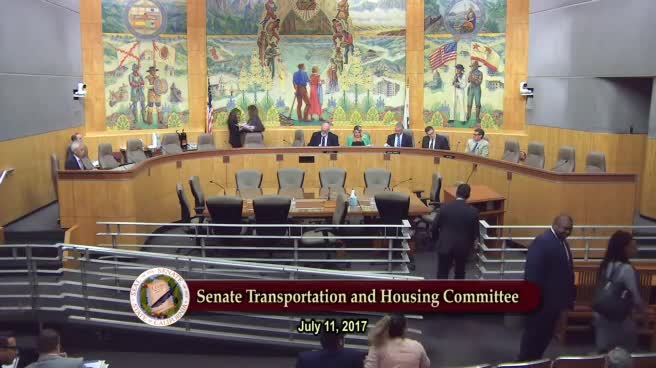 15MIN
Senate Standing Committee on Transportation and Housing
 3MIN
Assembly Floor
 1H
Assembly Standing Committee on Appropriations
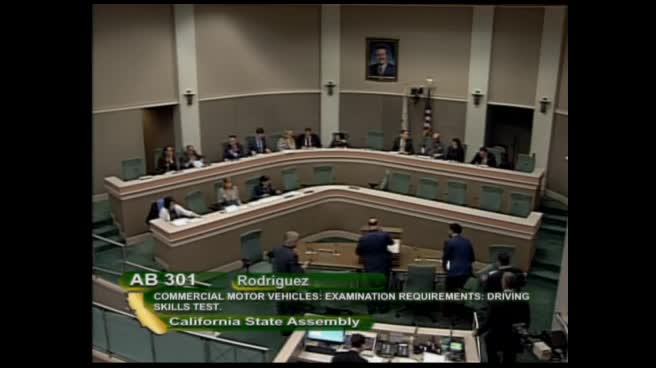 13MIN