AB 3109: Contracts: waiver of right of petition or free speech.
- Session Year: 2017-2018
- House: Assembly
- Latest Version Date: 2018-09-30
The California Constitution provides that the people have the right to petition government for redress of grievances and to assemble freely to consult for the common good. The California Constitution provides that every person may freely speak, write, and publish his or her sentiments on all subjects, being responsible for the abuse of this right. Existing law generally regulates formation and enforcement of contracts, including what constitutes an unlawful contract. Under existing law, a contract is unlawful if it is contrary to an express provision of law, contrary to the policy of express law, though not expressly prohibited, or otherwise contrary to good morals. A contract is also void to the extent that it restrains a person from engaging in a lawful profession, trade, or business of any kind.
This bill would make a provision in a contract or settlement agreement void and unenforceable if it waives a partys right to testify in an administrative, legislative, or judicial proceeding concerning alleged criminal conduct or sexual harassment.
The California Constitution provides that the people have the right to petition government for redress of grievances and to assemble freely to consult for the common good. The California Constitution provides that every person may freely speak, write, and publish his or her sentiments on all subjects, being responsible for the abuse of this right. Existing law generally regulates formation and enforcement of contracts, including what constitutes an unlawful contract. Under existing law, a contract is unlawful if it is contrary to an express provision of law, contrary to the policy of express law, though not expressly prohibited, or otherwise contrary to good morals. A contract is also void to the extent that it restrains a person from engaging in a lawful profession, trade, or business of any kind.
This bill would make a provision in a contract or settlement agreement void and unenforceable if it waives a partys right to testify in an administrative, legislative, or judicial proceeding concerning alleged criminal conduct or sexual harassment or if it constitutes a substantial restraint on a partys right to seek employment or reemployment in any lawful occupation or profession. harassment.
The California Constitution provides that the people have the right to petition government for redress of grievances and to assemble freely to consult for the common good. The California Constitution provides that every person may freely speak, write, and publish his or her sentiments on all subjects, being responsible for the abuse of this right. Existing law generally regulates formation and enforcement of contracts, including what constitutes an unlawful contract. Under existing law, a contract is unlawful if it is contrary to an express provision of law, contrary to the policy of express law, though not expressly prohibited, or otherwise contrary to good morals. A contract is also void to the extent that it restrains a person from engaging in a lawful profession, trade, or business of any kind.
This bill would make a provision in a contract or settlement agreement void and unenforceable if it waives a partys right to testify in an administrative, legislative, or judicial proceeding concerning alleged criminal conduct or sexual harassment or if it constitutes a substantial restraint on a partys right to seek employment or reemployment in any lawful occupation or profession.
The California Constitution provides that the people have the right to petition government for redress of grievances and to assemble freely to consult for the common good. The California Constitution provides that every person may freely speak, write, and publish his or her sentiments on all subjects, being responsible for the abuse of this right. Existing law generally regulates formation and enforcement of contracts, including what constitutes an unlawful contract. Under existing law, a contract is unlawful if it is contrary to an express provision of law, contrary to the policy of express law, though not expressly prohibited, or otherwise contrary to good morals. A contract is also void to the extent that it restrains a person from engaging in a lawful profession, trade, or business of any kind.
This bill would specify that make a provision in a contract or settlement agreement is void and unenforceable if it includes a provision that waives a partys right of petition or free speech under the United States Constitution or the California Constitution in connection with a public issue or restricts to testify in an administrative, legislative, or judicial proceeding concerning alleged criminal conduct or sexual harassment or if it constitutes a substantial restraint on a partys right to seek employment or reemployment in any lawful occupation or profession.
The California Constitution provides that the people have the right to petition government for redress of grievances and to assemble freely to consult for the common good. The California Constitution provides that every person may freely speak, write, and publish his or her sentiments on all subjects, being responsible for the abuse of this right. Existing law generally regulates formation and enforcement of contracts, including what constitutes an unlawful contract. Under existing law, a contract is unlawful if it is contrary to an express provision of law, contrary to the policy of express law, though not expressly prohibited, or otherwise contrary to good morals. A contract is also void to the extent that it restrains a person from engaging in a lawful profession, trade, or business of any kind.
This bill would specify that a contract or settlement agreement is void and unenforceable if it includes a provision that waives a partys right of petition or free speech under the United States Constitution or the California Constitution in connection with a public issue or restricts a partys right to seek employment or reemployment in any lawful occupation or profession.
Notwithstanding any other law, a provision in a contract or settlement agreement entered into on or after January 1, 2019, that waives a partys right to testify in an administrative, legislative, or judicial proceeding concerning alleged criminal conduct or alleged sexual harassment on the part of the other party to the contract or settlement agreement, or on the part of the agents or employees of the other party, when the party has been required or requested to attend the proceeding pursuant to a court order, subpoena, or written request from an administrative agency or the legislature, is void and unenforceable.
Notwithstanding any other law, a provision in a contract or settlement agreement entered into on or after January 1, 2019, that waives a partys right to testify in an administrative, legislative, or judicial proceeding concerning alleged criminal conduct or alleged sexual harassment on the part of the other party to the contract or settlement agreement, or on the part of the agents or employees of the other party, when the party has been required or requested to attend the proceeding pursuant to a court order, subpoena, or written request from an administrative agency or the legislature, is void and unenforceable.
Notwithstanding any other law, a provision in a contract or settlement agreement entered into on or after January 1, 2019, that does either of the following is void and unenforceable:
(a)Waives waives a partys right to testify in an administrative, legislative, or judicial proceeding concerning alleged criminal conduct or alleged sexual harassment on the part of the other party to the contract or settlement agreement, or on the part of the agents or employees of the other party, when the party has been required or requested to attend the proceeding pursuant to a court order, subpoena, or written request from an administrative agency or the legislature. legislature, is void and unenforceable.
(b)Constitutes a substantial restraint on a partys right to seek employment or reemployment in any lawful occupation or profession. This paragraph does not preclude a provision in a contract or settlement agreement that restricts a partys right to seek employment or reemployment with the partys existing or prior employer who is a party to the contract unless the employer is a public employer, as defined in Section 7522.04 of the Government Code, or a private employer that so dominates the labor market that such a restriction would impose a substantial restraint on the partys right to seek employment or reemployment in any lawful occupation or profession.(a)The Legislature finds and declares as follows:
(1)The California Supreme Court, in finding a noncompetition agreement void and unenforceable, held that state law evinces a settled legislative policy in favor of open competition and employee mobility (Edwards v. Arthur Anderson LLP (2008) 44 Cal.4th 937, 946).
(2)Although the court held a noncompetition agreement void and unenforceable, the same principle should hold true for no rehire provisions in settlement agreements that impose substantial constraints on a persons ability to engage in a lawful profession, trade, or business. This same principle is embodied in Section 16600 of the Business and Professions Code, which provides, subject to certain exceptions, that every contract by which anyone is restrained from engaging in a lawful profession, trade, or business of any kind is, to that extent, void.
(b)The intent of the Legislature in enacting subdivision (b) of Section 1670.11 of the Civil Code is to follow the reasoning of the United States Court of Appeal for the Ninth Circuit in Golden v. California Emergency Physicians Medical Group (2015) 782 F.3d 1083, which held that Section 16600 of the Business and Professions Code applies to any contract that restrains a person from engaging in a lawful profession, trade, or business, and is therefore not restricted to noncompetition agreements. It is also the intent of the Legislature to follow the courts reasoning that an agreement need not completely preclude a person from engaging in a lawful profession, trade, or business in order to be void and unenforceable, but that any agreement that imposes a restraint of a substantial character on a persons ability to engage in a lawful profession, trade, or business is void and unenforceable.
SEC. 2.Section 1670.11 is added to the Civil Code, to read:1670.11.Notwithstanding any other law, a provision in a contract or settlement agreement entered into on or after January 1, 2019, that does either of the following is void and unenforceable:
(a)Waives a partys right to testify in an administrative, legislative, or judicial proceeding concerning alleged criminal conduct or alleged sexual harassment on the part of the other party to the contract or settlement agreement, or on the part of the agents or employees of the other party, when the party has been required or requested to attend the proceeding pursuant to a court order, subpoena, or written request from an administrative agency or the legislature.
(b)Constitutes a substantial restraint on a partys right to seek employment or reemployment in any lawful occupation or profession. This paragraph does not preclude a provision in a contract or settlement agreement that restricts a partys right to seek employment or reemployment with the partys existing or prior employer who is a party to the contract unless the employer is a state agency, including a segment of the public postsecondary education system, a business with five or more locations in the state, or a business public employer, as defined in Section 7522.04 of the Government Code, or a private employer that so dominates the labor market that such a restriction would impose a substantial restraint on the partys right to seek employment or reemployment in any lawful occupation or profession.
(a)The Legislature finds and declares as follows:
(1)The California Supreme Court, in finding a noncompetition agreement void and unenforceable, held that state law evinces a settled legislative policy in favor of open competition and employee mobility (Edwards v. Arthur Anderson LLP (2008) 44 Cal.4th 937, 946).
(2)Although the court held a noncompetition agreement void and unenforceable, the same principle should hold true for no rehire provisions in settlement agreements that impose substantial constraints on a persons ability to engage in a lawful profession, trade, or business. This same principle is embodied in Section 16600 of the Business and Professions Code, which provides, subject to certain exceptions, that every contract by which anyone is restrained from engaging in a lawful profession, trade, or business of any kind is, to that extent, void.
(b)The intent of the Legislature in enacting this measure subdivision (b) of Section 1670.11 of the Civil Code is to follow the reasoning of the United States Court of Appeal for the Ninth Circuit in Golden v. California Emergency Physicians Medical Group (2015) 782 F.3d 1083, which held that Section 16600 of the Business and Professions Code applies to any contract that restrains a person from engaging in a lawful profession, trade, or business, and is therefore not restricted to noncompetition agreements. It is also the intent of the Legislature to follow the courts reasoning that an agreement need not completely preclude a person from engaging in a lawful profession, trade, or business in order to be void and unenforceable, but that any agreement that imposes a restraint of a substantial character on a persons ability to engage in a lawful profession, trade, or business is void and unenforceable.
SEC. 2.Section 1670.11 is added to the Civil Code, to read:1670.11.Notwithstanding any other law, a provision in a contract or settlement agreement entered into on or after January 1, 2019, that does either of the following is void and unenforceable:
(a)Waives a partys right to testify in an administrative, legislative, or judicial proceeding concerning alleged criminal conduct or alleged sexual harassment on the part of the other party to the contract or settlement agreement, or on the part of the agents or employees of the other party, when the party has been required or requested to attend the proceeding pursuant to a court order, subpoena, or written request from an administrative agency or the legislature.
(b)Constitutes a substantial restraint on a partys right to seek employment or reemployment in any lawful occupation or profession. This paragraph does not preclude a provision in a contract or settlement agreement that restricts a partys right to seek employment or reemployment with the partys existing or prior employer who is a party to the contract unless the employer is a state agency, including a segment of the public postsecondary education system, a business with five or more locations in the state, or a business that so dominates the labor market that such a restriction would impose a substantial restraint on the partys right to seek employment or reemployment in any lawful occupation or profession.
(a)The Legislature finds and declares as follows:
(1)The California Supreme Court, in finding a noncompetition agreement void and unenforceable, held that state law evinces a settled legislative policy in favor of open competition and employee mobility (Edwards v. Arthur Anderson LLP (2008) 44 Cal.4th 937, 946).
(2)Although the court held a noncompetition agreement void and unenforceable, the same principle should hold true for no rehire provisions in settlement agreements that impose substantial constraints on a persons ability to engage in a lawful profession, trade, or business. This same principle is embodied in Section 16600 of the Business and Professions Code, which provides, subject to certain exceptions, that every contract by which anyone is restrained from engaging in a lawful profession, trade, or business of any kind is, to that extent, void.
(b)The intent of the Legislature in enacting this measure is to follow the reasoning of the United States Court of Appeal for the Ninth Circuit in Golden v. California Emergency Physicians Medical Group (2015) 782 F.3d 1083, which held that Section 16600 of the Business and Professions Code applies to any contract that restrains a person from engaging in a lawful profession, trade, or business, and is therefore not restricted to noncompetition agreements. It is also the intent of the Legislature to follow the courts reasoning that an agreement need not completely preclude a person from engaging in a lawful profession, trade, or business in order to be void and unenforceable, but that any agreement that imposes a restraint of a substantial character on a persons ability to engage in a lawful profession, trade, or business is void and unenforceable.
SECTION 1.SEC. 2.Section 1670.11 is added to the Civil Code, to read:1670.11.(a)Notwithstanding any other law, a provision in a contract or settlement agreement entered into on or after January 1, 2019, that does either of the following is void and unenforceable:
(1)Waives a partys right of petition or free speech under the United States Constitution or the California Constitution in connection with a public issue.(2)Restricts a partys right to seek employment or reemployment in any lawful occupation or profession.(b)As used in this section, a partys right of petition or free speech under the United States Constitution or the California Constitution in connection with a public issue includes, but is not limited to, all of the following:(1)Any written or oral statement or writing made before a legislative, executive, or judicial proceeding, or any other official proceeding authorized by law.(2)Any written or oral statement or writing made in connection with an issue under consideration or review by a legislative, executive, or judicial body, or any other official proceeding authorized by law.(3)Any written or oral statement or writing made in a place open to the public or a public forum in connection with an issue of public interest.(4)Any other conduct in furtherance of the exercise of the constitutional right of petition or the constitutional right of free speech in connection with a public issue or an issue of public interest.(a)Waives a partys right to testify in an administrative, legislative, or judicial proceeding concerning alleged criminal conduct or alleged sexual harassment on the part of the other party to the contract or settlement agreement, or on the part of the agents or employees of the other party, when the party has been required or requested to attend the proceeding pursuant to a court order, subpoena, or written request from an administrative agency or the legislature.
(b)Constitutes a substantial restraint on a partys right to seek employment or reemployment in any lawful occupation or profession. This paragraph does not preclude a provision in a contract or settlement agreement that restricts a partys right to seek employment or reemployment with the partys existing or prior employer who is a party to the contract unless the employer is a state agency, including a segment of the public postsecondary education system, a business with five or more locations in the state, or a business that so dominates the labor market that such a restriction would impose a substantial restraint on the partys right to seek employment or reemployment in any lawful occupation or profession.
(a)Notwithstanding any other law, a contract or settlement agreement entered into on or after January 1, 2019, that does either of the following is void and unenforceable:
(1)Waives a partys right of petition or free speech under the United States Constitution or the California Constitution in connection with a public issue.
(2)Restricts a partys right to seek employment or reemployment in any lawful occupation or profession.
(b)As used in this section, a partys right of petition or free speech under the United States Constitution or the California Constitution in connection with a public issue includes, but is not limited to, all of the following:
(1)Any written or oral statement or writing made before a legislative, executive, or judicial proceeding, or any other official proceeding authorized by law.
(2)Any written or oral statement or writing made in connection with an issue under consideration or review by a legislative, executive, or judicial body, or any other official proceeding authorized by law.
(3)Any written or oral statement or writing made in a place open to the public or a public forum in connection with an issue of public interest.
(4)Any other conduct in furtherance of the exercise of the constitutional right of petition or the constitutional right of free speech in connection with a public issue or an issue of public interest.
|
Date
|
Status
|
|---|---|
| Sep 30, 2018 | Chaptered by Secretary of State - Chapter 949, Statutes of 2018. |
| Sep 30, 2018 | Approved by the Governor. |
| Aug 27, 2018 | Enrolled and presented to the Governor at 3 p.m. |
| Aug 20, 2018 | Senate amendments concurred in. To Engrossing and Enrolling. |
| Aug 14, 2018 | In Assembly. Concurrence in Senate amendments pending. May be considered on or after August 16 pursuant to Assembly Rule 77. |
| Aug 13, 2018 | Read third time. Passed. Ordered to the Assembly. |
| Jul 5, 2018 | Read second time. Ordered to Consent Calendar. |
| Jul 3, 2018 | From committee: Do pass. To Consent Calendar. (Ayes 7. Noes 0.) (July 3). |
| Jun 19, 2018 | From committee chair, with author's amendments: Amend, and re-refer to committee. Read second time, amended, and re-referred to Com. on JUD. |
| Jun 12, 2018 | In committee: Set, first hearing. Hearing canceled at the request of author. |
| May 31, 2018 | From committee chair, with author's amendments: Amend, and re-refer to committee. Read second time, amended, and re-referred to Com. on JUD. |
| May 30, 2018 | Referred to Com. on JUD. |
| May 17, 2018 | In Senate. Read first time. To Com. on RLS. for assignment. |
| May 17, 2018 | Read third time. Passed. Ordered to the Senate. |
| May 10, 2018 | Read second time. Ordered to third reading. |
| May 9, 2018 | Read second time and amended. Ordered returned to second reading. |
| May 8, 2018 | From committee: Amend, and do pass as amended. (Ayes 9. Noes 0.) (May 8). |
| May 3, 2018 | Re-referred to Com. on JUD. |
| May 2, 2018 | From committee chair, with author's amendments: Amend, and re-refer to Com. on JUD. Read second time and amended. |
| Apr 23, 2018 | In committee: Hearing postponed by committee. |
| Mar 22, 2018 | Referred to Com. on JUD. |
| Feb 17, 2018 | From printer. May be heard in committee March 19. |
| Feb 16, 2018 | Read first time. To print. |
|
Date
|
Description
|
Location
|
Votes
|
|
|---|---|---|---|---|
| Aug 20, 2018 | AB 3109 STONE Concurrence in Senate Amendments | Assembly Floor |
Passed |
|
| Aug 13, 2018 | Consent Calendar AB3109 | Senate Floor |
Passed |
|
| Jul 3, 2018 | Do pass and be ordered to the Consent Calendar | Senate Standing Committee on Judiciary |
Passed |
|
| May 17, 2018 | AB 3109 STONE Assembly Third Reading | Assembly Floor |
Passed |
|
| May 8, 2018 | Do pass as amended. | Assembly Standing Committee on Judiciary |
Passed |
This list shows positions taken on this bill by organizations on the date displayed, which is linked to the original source.
Positions by individuals are not included.
|
Organization
|
Position
|
Date
|
|---|---|---|
| American Insurance Association | ** Support | Aug 1, 2018 |
| California Building Industry Association | ** Support | Aug 1, 2018 |
| California Chamber Of Commerce | ** Support | Aug 1, 2018 |
| California Employment Lawyers Association | ** Support | Aug 1, 2018 |
| California Restaurant Association | * Against | May 8, 2018 |
| Civil Justice Association Of California | * Indeterminate | May 8, 2018 |
| Consumer Attorneys Of California | ** Support | Aug 1, 2018 |
| Equal Rights Advocates | ** Support | Aug 1, 2018 |
| Official Police Garages of Los Angeles | ** Support | Aug 1, 2018 |
CONCURRENCE IN SENATE AMENDMENTS
CSA1 Bill Id:AB 3109
Author:(Mark Stone)
As Amended Ver:June 19, 2018
Majority vote
ASSEMBLY: | 70-0 | (May 17, 2018) | SENATE: | 37-0 | (August 13, 2018) |
Original Committee Reference: JUD.
SUMMARY: Makes void and unenforceable a provision in a contract or settlement agreement that waives a party's right to testify in an administrative, legislative, or judicial proceeding concerning alleged criminal conduct on the part of the other party if the party has been required or requested to attend the proceeding pursuant to a court order, subpoena, or written request from an administrative agency or the Legislature.
The Senate amendments delete a provision that would have made void and unenforceable a provision in a contract or settlement agreement that would have imposed a substantial restraint on a person's ability to engage in a lawful occupation or professions, as specified.
EXISTING LAW:
- Provides that every person in California may freely speak, write, and publish his or her sentiments on all subjects, being responsible for the abuse of this right. (California Constitution, Article I, Section 2.)
- Identifies certain types of contracts as unlawful or contrary to public policy and therefore void and enforceable. (Civil Code Sections 1667 to 1670.10.)
FISCAL EFFECT: None
COMMENTS: This bill will make void and unenforceable a provision in a contract or settlement agreement that waives a party's right to testify in an administrative, legislative, or judicial proceeding concerning alleged criminal conduct on the part of the other party if the party has been required or requested to attend the proceeding pursuant to a court order, subpoena, or written request from an administrative agency or the Legislature.
Prohibiting Testimony in Public Hearings: The danger of sweeping nondisclosure agreements was recently illustrated in the case of McKayla Maroney, an Olympic gymnast who was subject to a $100,000 fine for testifying in a criminal trial against a team doctor who sexually abused Maroney and several other gymnasts. Maroney's settlement with the United States Gymnastic Association (USGA) required her to maintain public silence about the abuse. Maroney brought suit in a California court to challenge that provision so that she could testify in the doctor's criminal trial. While public pressure eventually caused USGA to forgo its right to enforce the agreement, less prominent plaintiffs might not have been so fortunate.
Confidentiality provisions in settlement agreements are sometimes appropriate; but the author believes they should never be so sweeping as to prevent a person from offering relevant testimony in a public forum on a matter of public concern. Therefore, this bill declares that any settlement provision that would prevent a person from testifying about criminal conduct or sexual harassment in a judicial, administrative, or legislative proceeding is void and unenforceable, so long as the person was required or requested to appear at the proceeding. This provision requires that the person appears and testifies pursuant to a subpoena or court order in the case of a judicial proceeding, or in response to a written request in the case of an administrative or legislative hearing. In other words, a person who signed a settlement agreement to refrain from speaking about certain matters would not be free to breach that confidentiality by voluntarily showing up and speaking at a public hearing. The testimony must be in response to a subpoena or a written request.
The author believes that the right to speak freely in public forums on public matters is enshrined in our state constitution and laws, including, for example, the state's anti-SLAPP statute (Code of Civil Procedure Section 425.16). SLAPP stands for "Strategic Lawsuits against Public Participation," and under the anti-SLAPP statute lawsuits that hinder a person's right of petition or free speech are subject to a special motion to strike. As stated in the findings and declarations of the anti-SLAPP statute, "it is in the public interest to encourage continued participation in matters of public significance." Just as the anti-SLAPP statute seeks to ensure that this public participation "should not be chilled by abuse of the judicial process," this bill would ensure that public participation in matters of public significance will not be chilled by nondisclosure agreements.
Analysis Prepared by: Thomas Clark / JUD. / (916) 319-2334 FN: 0003722
Office of Senate Floor Analyses (916) 651-1520 Fax: (916) 327-4478 | AB |
CONSENT
Bill No: AB 3109
:
SENATE JUDICIARY COMMITTEE: 7-0, 7/3/18
AYES: Jackson, Moorlach, Anderson, Hertzberg, Monning, Stern, Wieckowski
ASSEMBLY FLOOR: 70-0, 5/17/18 - See last page for vote
SOURCE: California Employment Lawyers Association
DIGEST: This bill, prospectively, renders unenforceable any provision in a contract or settlement agreement that prevents a person from testifying, in a judicial, administrative, or legislative proceeding, in response to a court order, subpoena, or official request, about alleged criminal conduct or sexual harassment.
Existing law:
- Provides that every person in California may freely speak, write, and publish his or her sentiments on all subjects, being responsible for the abuse of this right. (Cal. Const., Art. I, Sec. 2.)
- Makes a contract provision unlawful if it is contrary to an express provision of law; contrary to the policy of express law, though not expressly prohibited; or, otherwise contrary to good morals. (Civ. Code Sec. 1667.)
- Provides that all contracts which have for their object, directly or indirectly, to exempt anyone from responsibility for his own fraud, or willful injury to the person or property of another, or violation of law, whether willful or negligent, are against the policy of the law. (Civ. Code Sec. 1668.)
This bill establishes that any provision in a contract or settlement agreement is void and unenforceable if the provision waives a party’s right to testify in an administrative, legislative, or judicial proceeding concerning alleged criminal conduct on the part of the other party if the party has been required or requested to attend the proceeding pursuant to a court order, subpoena, or written request from an administrative agency or the Legislature.
The #MeToo movement has shed a light on a number of legal tactics used to silence victims and witnesses, thereby enabling a culture of impunity around sexual harassment. This bill addresses the harm caused by one of those tactics, in particular: the use of sweeping “non-disclosure agreements” in settlements and other contracts.
A “non-disclosure agreement,” as the phrase implies, is an agreement to resolve a dispute which includes promises not to discuss the terms of the settlement and not to discuss the underlying nature of the dispute. In fact, many times, such settlements include promises not to say anything at all that would cast the other party in a negative light, whether or not the subject matter was part of the dispute and even if those things are true.
As detailed in Comments, below, there are a number of problems with such contracts and settlements. One key concern is that the silence imposed by non-disclosure agreements can act to prevent victims from testifying about their experience in official proceedings, such as trials, administrative hearings, and legislative sessions. That dynamic obstructs the purpose behind those proceedings, whether it is to administer justice or to craft well-informed policy.
While this bill will not outlaw non-disclosure agreements, it will limit their scope so that victims and witnesses could never be prevented from testifying in legal or legislative proceedings when asked to do so. Specifically, this bill renders unenforceable any part of a settlement or contract that purports to restrict the ability of a party to testify about alleged criminal conduct or sexual harassment in a judicial, administrative, or legislative hearing in response to a court order, subpoena, or written request.
Comments
Variations on the theme of restricting “secret settlements”
The #MeToo movement revealed the problematic nature of “secret settlement” agreements. Such settlements generally consist of two components: a non-disclosure clause, which binds the parties to silence about the terms of the settlement itself, and non-disparagement clauses, which effectively prohibit the parties from saying anything that would paint the other in a negative light, even if it is entirely true.
These agreements allow perpetrators to escape any public shame and to limit the consequences they face for their actions, thus granting perpetrators de facto impunity. Secret settlements also isolate victims of harassment and assault from one another, enabling serial perpetrators of harassment and assault to go undetected. In these ways, secret settlements not only hide sexual harassment and violence; they facilitate it.
These dynamics were on full display in multiple scenarios involving prominent figures in the last year. The now notorious case of Harvey Weinstein offers what may be the quintessential example.[1] It is reported that sexual harassment and assault cases have been settled by Weinstein with at least 10 women, all including non-disclosure provisions that prevent the release of information underlying the victims’ claims. Such secret settlements have also been used by Fox News and its former founder Roger Ailes and host Bill O’Reilly to pay tens of millions of dollars to women sexually harassed by them in exchange for the women’s silence.
Yet while it is easy to see what is wrong with “secret settlements,” it is arguably much more difficult to find the right alternative solution. The principal difficulty arises from the fact that, while there is a broad and strong public interest in knowing who the perpetrators of harassment or assault are and what they have done, there are competing privacy and practical reasons for allowing the parties to keep some or all of the matter under wraps.
The practical considerations relate to the incentives associated with settling, rather than litigating, sexual harassment and assault cases. If a defendant knows that the allegations involved will become public knowledge regardless of whether the defendant settles the case or fights it, there are fewer reasons for the defendant to settle. On the contrary, since prevailing at trial may be the closest that the defendant can come to clearing the defendant’s name, the defendant may be all the more motivated to see the case all the way through.
The policy concerns go well beyond mere judicial economy. If sexual harassment and assault cases cannot be settled and must be litigated, the victim has to endure reliving everything that took place through interviews, depositions, interrogatories, and testimony. Moreover, if the defendant elects to attack the victim’s character and credibility, either in the court of law or the court of public opinion, the victims will have to endure that as well. Going through all this for months on end would be a steep price to pay even if prevailing were guaranteed, which, of course, it is not. Faced with this reality, it is not hard to imagine many victims concluding that seeking justice is not worth it. Finally, there is the possibility that without the security of silence, defendants in these cases may be less likely to settle with plaintiffs or will offer less money in such settlements.
The privacy issues are more obvious. For the person accused of perpetrating sexual harassment, it may be impossible to escape the stigma of the allegation once it becomes publicly known. It can be argued that this is a relatively small concern in comparison to the benefit of ensuring that serial perpetrators of sexual harassment and violence cannot go undetected. Even discounting the privacy concerns of the alleged perpetrator, however, there is a compelling argument to be made for respecting the wishes of those victims who do not want their experience to be known to others. Perhaps the victim fears re-traumatization. Maybe the victim feels a misplaced, but nevertheless genuine, shame about what happened. Perhaps the victim simply desires to consign the matter to the past. Some victims’ advocates also argue that true confidentiality is illusive, at least for the victim, and that victims should never enter into secret settlements as a result. Yet while one can argue against the wisdom of entering into a secret settlement as a victim, it is harder to make the case that the law should deprive victims of the right to choose that option, if, after listening to the advice of counsel, that is nonetheless the victim’s preference.
There are, like this one, a number of bills currently pending before the Legislature that attempt to curb the detrimental effects of secret settlements while still allowing their use in appropriate circumstances.
SB 820 (Leyva, 2017) prohibits the use of secret settlements except at the behest of the victim. This approach is laudable for giving primary agency to the victim, but could perhaps be criticized for drawing a distinction without a difference. Since, in theory at least, all settlement agreements are the product of voluntary consent given by both parties, victims can already elect to refuse to enter into a “secret settlement,” just as the alleged perpetrator can refuse to reach a settlement agreement unless it is secret.
SB 1300 (Jackson, 2018) attempts to strike the balance in the employment context by restricting the use of non-disparagement agreements preemptively, at the point of hire or as a condition of continued employment, while largely leaving parties free to enter into “secret settlements” once they have already determined to go their separate ways.
This bill offers yet another alternative. It permits non-disclosure agreements so long as the parties are always able to speak as to the matters covered by the settlement if they are ordered or asked to do so in some official context: judicial, administrative, or legislative.
It is important to note that these approaches are not mutually exclusive. In fact, it is conceivable that they might work most effectively in tandem: “secret settlements” could remain an option, so long as they are not used preemptively, the secrecy is requested by the victim, and all parties are still free to speak about what happened in official forums when they are called upon to do so.
FISCAL EFFECT: Appropriation: Fiscal Com.: Local:
California Employment Lawyers Association (source)
American Insurance Association
California Building Industry Association
California Chamber of Commerce
Consumer Attorneys of California
Equal Rights Advocates
Official Police Garages of Los Angeles
OPPOSITION: (Verified 7/27/18)
None received
ARGUMENTS IN SUPPORT: According to the author:
AB 3109 will protect parties from being forced into unwittingly giving up fundamental rights when they enter into settlement agreements, by making certain objectionable provisions unenforceable. Specifically, the bill targets pernicious provisions often used in settlements that prohibit a plaintiff from speaking about the underlying harm, even to the point of prohibiting testimony on criminal conduct or sexual harassment in judicial, administrative, or legislative hearings.
The danger of nondisclosure agreements that are so sweeping that they prohibit public testimony was recently illustrated in the case of McKayla Maroney, an Olympic gymnast who was subject to a $100,000 fine for testifying in a criminal trial against a team doctor who sexually abused Maroney and several other gymnasts. Confidentiality provisions in settlement agreements are sometimes appropriate; but they should never be so sweeping as to prevent a person from offering relevant testimony in a public forum on a matter of public concern.
As sponsor of the bill, the California Employment Lawyers Association writes:
In recent months, the #MeToo movement has helped expose a large number of sexual predators, like Harvey Weinstein and Larry Nassar, who sexually harassed and assaulted multiple victims over the course of many years without any sort of legal or public scrutiny. In large part, the unlawful conduct was able to continue because many women were forced to sign nondisclosure agreements as a condition of settling their claims. These nondisclosure agreements effectively silenced the victims and prevented them from warning others or helping corroborate or support the claims of others who were victimized by the same perpetrator. […] These silencing mechanisms are an affront to our justice system. A victim should never be prohibited from offering relevant testimony in a public forum on a matter of public concern, especially when this testimony could prevent these horrific acts from happening to others.
In support of the bill, the California Chamber of Commerce and three co-signatories write:
We agree that such a broad non-disclosure provision can interfere with the ability of the courts, Legislature, or an administrative agency from pursuing relevant information in the resolution of a dispute or policy matter regarding such important policy issues.
ASSEMBLY FLOOR: 70-0, 5/17/18
AYES: Acosta, Aguiar-Curry, Travis Allen, Arambula, Baker, Berman, Bigelow, Bloom, Bonta, Brough, Burke, Caballero, Calderon, Carrillo, Cervantes, Chau, Chávez, Chen, Chiu, Choi, Chu, Cooley, Cooper, Cunningham, Dahle, Daly, Eggman, Flora, Fong, Frazier, Friedman, Gallagher, Eduardo Garcia, Gipson, Gloria, Gonzalez Fletcher, Gray, Grayson, Harper, Holden, Irwin, Jones-Sawyer, Kalra, Kamlager-Dove, Lackey, Levine, Limón, Low, Maienschein, Mathis, Mayes, McCarty, Mullin, Nazarian, Obernolte, O'Donnell, Quirk, Quirk-Silva, Reyes, Rodriguez, Rubio, Salas, Mark Stone, Thurmond, Ting, Voepel, Waldron, Weber, Wood, Rendon
NO VOTE RECORDED: Cristina Garcia, Kiley, Medina, Melendez, Muratsuchi, Patterson, Santiago, Steinorth
8/1/18 12:17:36
**** END ****
Michelle Fabio, The Harvey Weinstein Effect: The End Of Nondisclosure Agreements In Sexual Assault Cases? (Oct. 26, 2017) Forbes <https://www.forbes.com/ sites/michellefabio/2017/10/26/the-harvey-weinstein-effect-the-end-of-nondisclosure-agreements-in-sexual-assault-cases/#3dc80f ea2c11> (as of Apr. 22, 2018). ↑
Senator Hannah-Beth Jackson, Chair
2017-2018 Regular Session
Bill No: AB 3109 (Author:Mark Stone)
Version: June 19, 2018
Hearing Date: July 3, 2018
Fiscal: No
Urgency: No
Consultant: TSG
SUBJECT
Contracts: waiver of right of petition or free speech
DESCRIPTION
This bill would prospectively render unenforceable any provision in a contract or settlement agreement that prevents a person from testifying, in response to a court order, subpoena, or official request, about alleged criminal conduct or sexual harassment in a judicial, administrative, or legislative proceeding.
BACKGROUND
The #MeToo movement has shed a light on a number of legal tactics used to silence victims and witnesses, thereby enabling a culture of impunity around sexual harassment. This bill addresses the harm caused by one of those tactics, in particular: the use of sweeping “non-disclosure agreements” in settlements and other contracts.
A “non-disclosure agreement,” as the phrase implies, is an agreement to resolve a dispute which includes promises not to discuss the terms of the settlement and not to discuss the underlying nature of the dispute. In fact, many times, such settlements include promises not to say anything at all that would cast the other party in a negative light, whether or not the subject matter was part of the dispute and even if those things are true.
As detailed in Comment 2, below, there are a number of problems with such contracts and settlements. One key concern is that the silence imposed by non-disclosure agreements can act to prevent victims from testifying about their experience in official proceedings, such as trials, administrative hearings, and legislative sessions. That dynamic obstructs the purpose behind those proceedings, whether it is to administer justice or to craft well-informed policy.
While this bill would not outlaw non-disclosure agreements, it would limit their scope so that victims and witnesses could never be prevented from testifying in legal or legislative proceedings when asked to do so. Specifically, the bill would render unenforceable any part of a settlement or contract that purports to restrict the ability of a party to testify about alleged criminal conduct or sexual harassment in a judicial, administrative, or legislative hearing in response to a court order, subpoena, or written request.
CHANGES TO EXISTING LAW
Existing law provides that every person in California may freely speak, write, and publish his or her sentiments on all subjects, being responsible for the abuse of this right. (Cal. Const., art. I, Sec. 2.)
Existing law makes a contract provision unlawful if it is contrary to an express provision of law; contrary to the policy of express law, though not expressly prohibited; or, otherwise contrary to good morals. (Civ. Code Sec. 1667.)
Existing law makes all contracts which have for their object, directly or indirectly, to exempt anyone from responsibility for his own fraud, or willful injury to the person or property of another, or violation of law, whether willful or negligent, are against the policy of the law. (Civ. Code Sec. 1668.)
This bill would establish that any provision in a contract or settlement agreement is void and unenforceable if the provision waives a party’s right to testify in an administrative, legislative, or judicial proceeding concerning alleged criminal conduct on the part of the other party if the party has been required or requested to attend the proceeding pursuant to a court order, subpoena, or written request from an administrative agency or the Legislature.
COMMENT
1. Stated need for the bill
According to the author:
AB 3109 will protect parties from being forced into unwittingly giving up fundamental rights when they enter into settlement agreements, by making certain objectionable provisions unenforceable. Specifically, the bill targets pernicious provisions often used in settlements that prohibit a plaintiff from speaking about the underlying harm, even to the point of prohibiting testimony on criminal conduct or sexual harassment in judicial, administrative, or legislative hearings.
The danger of nondisclosure agreements that are so sweeping that they prohibit public testimony was recently illustrated in the case of McKayla Maroney, an Olympic gymnast who was subject to a $100,000 fine for testifying in a criminal trial against a team doctor who sexually abused Maroney and several other gymnasts. Confidentiality provisions in settlement agreements are sometimes appropriate; but they should never be so sweeping as to prevent a person from offering relevant testimony in a public forum on a matter of public concern.
As sponsor of the bill, the California Employment Lawyers Association writes:
In recent months, the #MeToo movement has helped expose a large number of sexual predators, like Harvey Weinstein and Larry Nassar, who sexually harassed and assaulted multiple victims over the course of many years without any sort of legal or public scrutiny. In large part, the unlawful conduct was able to continue because many women were forced to sign nondisclosure agreements as a condition of settling their claims. These nondisclosure agreements effectively silenced the victims and prevented them from warning others or helping corroborate or support the claims of others who were victimized by the same perpetrator. […] These silencing mechanisms are an affront to our justice system. A victim should never be prohibited from offering relevant testimony in a public forum on a matter of public concern, especially when this testimony could prevent these horrific acts from happening to others.
In support of the bill, the California Chamber of Commerce and three co-signatories write:
We agree that such a broad non-disclosure provision can interfere with the ability of the courts, Legislature, or an administrative agency from pursuing relevant information in the resolution of a dispute or policy matter regarding such important policy issues.
2. Variations on the theme of restricting “secret settlements”
The #MeToo movement revealed the problematic nature of “secret settlement” agreements. Such settlements generally consist of two components: a non-disclosure clause, which binds the parties to silence about the terms of the settlement itself, and non-disparagement clauses, which effectively prohibit the parties from saying anything that would paint the other in a negative light, even if it is entirely true.
These agreements allow perpetrators to escape any public shame and to limit the consequences they face for their actions, thus granting perpetrators de facto impunity. Secret settlements also isolate victims of harassment and assault from one another, enabling serial perpetrators of harassment and assault to go undetected. In these ways, secret settlements not only hide sexual harassment and violence; they facilitate it.
These dynamics were on full display in multiple scenarios involving prominent figures in the last year. The now notorious case of Harvey Weinstein offers what may be the quintessential example.[1] It is reported that sexual harassment and assault cases have been settled by Weinstein with at least ten women, all including non-disclosure provisions that prevent the release of information underlying the victims’ claims. Such secret settlements have also been used by Fox News and its former founder Roger Ailes and host Bill O’Reilly to pay tens of millions of dollars to women sexually harassed by them in exchange for the women’s silence.
Yet while it is easy to see what is wrong with “secret settlements,” it is arguably much more difficult to find the right alternative solution. The principal difficulty arises from the fact that, while there is a broad and strong public interest in knowing who the perpetrators of harassment or assault are and what they have done, there are competing privacy and practical reasons for allowing the parties to keep some or all of the matter under wraps.
The practical considerations relate to the incentives associated with settling, rather than litigating, sexual harassment and assault cases. If a defendant knows that the allegations involved will become public knowledge regardless of whether the defendant settles the case or fights it, there are fewer reasons for the defendant to settle. On the contrary, since prevailing at trial may be the closest that the defendant can come to clearing the defendant’s name, the defendant may be all the more motivated to see the case all the way through.
The policy concerns go well beyond mere judicial economy. If sexual harassment and assault cases cannot be settled and must be litigated, the victim has to endure reliving everything that took place through interviews, depositions, interrogatories, and testimony. Moreover, if the defendant elects to attack the victim’s character and credibility, either in the court of law or the court of public opinion, the victims will have to endure that as well. Going through all this for months on end would be a steep price to pay even if prevailing were guaranteed, which, of course, it is not. Faced with this reality, it is not hard to imagine many victims concluding that seeking justice is not worth it. Finally, there is the possibility that without the security of silence, defendants in these cases may be less likely to settle with plaintiffs or will offer less money in such settlements.
The privacy issues are more obvious. For the person accused of perpetrating sexual harassment, it may be impossible to escape the stigma of the allegation once it becomes publicly known. It can be argued that this is a relatively small concern in comparison to the benefit of ensuring that serial perpetrators of sexual harassment and violence cannot go undetected. Even discounting the privacy concerns of the alleged perpetrator, however, there is a compelling argument to be made for respecting the wishes of those victims who do not want their experience to be known to others. Perhaps the victim fears re-traumatization. Maybe the victim feels a misplaced, but nevertheless genuine, shame about what happened. Perhaps the victim simply desires to consign the matter to the past. Some victims’ advocates also argue that true confidentiality is illusive, at least for the victim, and that victims should never enter into secret settlements as a result. Yet while one can argue against the wisdom of entering into a secret settlement as a victim, it is harder to make the case that the law should deprive victims of the right to choose that option, if, after listening to the advice of counsel, that is nonetheless the victim’s preference.
There are, like this one, a number of bills currently pending before the Legislature that attempt to curb the detrimental effects of secret settlements while still allowing their use in appropriate circumstances.
SB 820 (Leyva, 2017) would prohibit the use of secret settlements except at the behest of the victim. This approach is laudable for giving primary agency to the victim, but could perhaps be criticized for drawing a distinction without a difference. Since, in theory at least, all settlement agreements are the product of voluntary consent given by both parties, victims can already elect to refuse to enter into a “secret settlement,” just as the alleged perpetrator can refuse to reach a settlement agreement unless it is secret.
SB 1300 (Jackson, 2018) attempts to strike the balance in the employment context by restricting the use of non-disparagement agreements preemptively, at the point of hire or as a condition of continued employment, while largely leaving parties free to enter into “secret settlements” once they have already determined to go their separate ways.
This bill offers yet another alternative. It would permit non-disclosure agreements so long as the parties are always able to speak as to the matters covered by the settlement if they are ordered or asked to do so in some official context: judicial, administrative, or legislative.
It is important to note that these approaches are not mutually exclusive. In fact, it is conceivable that they might work most effectively in tandem: “secret settlements” could remain an option, so long as they are not used preemptively, the secrecy is requested by the victim, and all parties are still free to speak about what happened in official forums when they are called upon to do so.
Support: American Insurance Association; California Building Industry Association; California Chamber of Commerce; Consumer Attorneys of California; Equal Rights Advocates; Office Police Garages of Los Angeles
Opposition: None known
HISTORY
Source: California Employment Lawyers Association
Related Pending Legislation:
SB 820 (Leyva, 2017) would prohibit non-disclosure provisions in settlement agreements relating to sexual harassment except when requested by the plaintiff. SB 820 is currently pending consideration before the Assembly Committee on Judiciary.
SB 1300 (Jackson, 2018) would, among other things, make it an unfair employment practice under the Fair Employment and Housing Act for an employee to require an employee to sign a non-disparagement agreement as a condition of hire or continued employment. SB 1300 is currently pending consideration before the Assembly Committee on Appropriations.
Prior Legislation:
AB 1682 (Stone, Ch. 876, Stats. 2016) prohibited any provision in the settlement of a civil case based on an act that could be prosecuted as a felony sex offense, an act of childhood sexual abuse or sexual exploitation of a minor, or an act of sexual assault against an elder or dependent adult. The bill also prohibited courts from entering an order based on a settlement including such a non-disclosure provisions and subjected attorneys to discipline for demanding the inclusion of such a provision in a settlement.
AB 1628 (Beall, 2012) would have, among other provisions, prohibited the confidential settlement of a civil action where the factual basis for the case includes a cause of action for an act of childhood sexual abuse. This bill was held on Suspense in the Assembly Appropriations Committee.
AB 2875 (Pavley, Ch. 151, Stats. 2006) prohibits the confidential settlement of a civil action when the factual basis for the case includes a cause of action for “an act that may be prosecuted as a felony sex offense.”
AB 634 (Steinberg, Ch. 242, Stats. 2003) enacted law disfavoring confidential settlement agreements in actions for a violation of the Elder and Dependent Adult Civil Protection Act.
Prior Vote:
Assembly Floor (Ayes 70, Noes 0)
Assembly Judiciary Committee (Ayes 9, Noes 0)
**************
Michelle Fabio, The Harvey Weinstein Effect: The End Of Nondisclosure Agreements In Sexual Assault Cases? (Oct. 26, 2017) Forbes <https://www.forbes.com/ sites/michellefabio/2017/10/26/the-harvey-weinstein-effect-the-end-of-nondisclosure-agreements-in-sexual-assault-cases/#3dc80f ea2c11> (as of Apr. 22, 2018). ↑
ASSEMBLY THIRD READING
ATR Bill Id:AB 3109
Author:(Mark Stone)
As Amended Ver:May 9, 2018
Majority vote
Committee | Votes | Ayes | Noes |
Judiciary | 9-0 | Mark Stone, Cunningham, Chau, Chiu, Gonzalez Fletcher, Holden, Kalra, Maienschein, Reyes |
|
SUMMARY: Provides that a provision in a contract or settlement agreement entered into after January 1, 2019, that restricts specified rights of one of the parties is void and unenforceable. Specifically, this bill:
- Makes void and unenforceable a provision in a contract or settlement agreement that waives a party's right to testify in an administrative, legislative, or judicial proceeding concerning alleged criminal conduct on the part of the other party if the party has been required or requested to attend the proceeding pursuant to a court order, subpoena, or written request from an administrative agency or the Legislature.
- Makes void and unenforceable a provision in a contract or settlement agreement that substantially restrains a party's right to seek employment or reemployment in any lawful occupation or profession. This paragraph does not preclude a provision that restricts a party's right to seek employment or reemployment with the party's existing or prior employer who is a party to the contract, unless the employer is a state agency, a business with five or more locations within the state, or a business that so dominates the labor market that such a restriction would impose a substantial constraint on the party's right to seek employment or reemployment in any lawful occupation or profession.
- Makes findings and declarations relating to California's settled policy in favor of open competition and employee mobility in the job market and states legislative intent to follow the reasoning of court decisions holding that any contract provision that substantially restrains a person from engaging in a lawful profession, trade, or business is void and unenforceable.
EXISTING LAW:
- Provides that every person in California may freely speak, write, and publish his or her sentiments on all subjects, being responsible for the abuse of this right. (California Constitution, Article I, Section 2.)
- Identifies certain types of contracts as unlawful or contrary to public policy and therefore void and enforceable. (Civil Code Sections 1667 to 1670.10.)
- Provides that every contract by which anyone is restrained from engaging in a lawful profession, trade, or business of any kind is to that extent void, except as provided by statute. (Business and Professions Code Section 16600.)
FISCAL EFFECT: None
COMMENTS: This bill will protect parties from being pressured into giving up certain fundamental rights when they enter into settlement agreements by making the objectionable provisions of the agreement unenforceable. Specifically, the bill targets what the author sees as two especially pernicious types of provisions within settlement agreements: 1) those that prohibit a plaintiff from speaking about the underlying harm, even to the point of prohibiting testimony on criminal conduct or sexual harassment in judicial, administrative, or legislative hearings; and 22) those that restrict the plaintiff's fundamental right to engage in a lawful occupation or profession by including overly broad "no-rehire" provisions. This bill would declare such provisions void and unenforceable under specified conditions.
Prohibiting Testimony in Public Hearings. The danger of sweeping nondisclosure agreements was recently illustrated in the case of McKayla Maroney, an Olympic gymnast who was subject to a $100,000 fine for testifying in a criminal trial against a team doctor who sexually abused Maroney and several other gymnasts. Maroney's settlement with the United States Gymnastic Association (USGA) required her to maintain public silence about the abuse. Maroney brought suit in a California court to challenge that provision so that she could testify in the doctor's criminal trial. While public pressure eventually caused USGA to forgo its right to enforce the agreement, less prominent plaintiffs might not have been so fortunate.
Confidentiality provisions in settlement agreements are sometimes appropriate; but the author believes they should never be so sweeping as to prevent a person from offering relevant testimony in a public forum on a matter of public concern. Therefore, this bill declares that any settlement provision that would prevent a person from testifying about criminal conduct or sexual harassment in a judicial, administrative, or legislative proceeding is void and unenforceable, so long as the person was required or requested to appear at the proceeding. This provision requires that the person appears and testifies pursuant to a subpoena or court order in the case of a judicial proceeding, or in response to a written request in the case of an administrative or legislative hearing. In other words, a person who signed a settlement agreement to refrain from speaking about certain matters would not be free to breach that confidentiality by voluntarily showing up and speaking at a public hearing. The testimony must be in response to a subpoena or a written request.
The author believes that the right to speak freely in public forums on public matters is enshrined in our state constitution and laws, including, for example, the state's anti-SLAPP statute (Code of Civil Procedure Section 425.16). SLAPP stands for "Strategic Lawsuits against Public Participation," and under the anti-SLAPP statute lawsuits that hinder a person's right of petition or free speech are subject to a special motion to strike. As stated in the findings and declarations of the anti-SLAPP statute, "it is in the public interest to encourage continued participation in matters of public significance." Just as the anti-SLAPP statute seeks to ensure that this public participation "should not be chilled by abuse of the judicial process," This bill seeks to ensure that public participation in matters of public significance will not be chilled by nondisclosure agreements.
"No Re-Hire" Provisions. The problem with "no re-hire provisions" is illustrated by two potentially conflicting California court cases. In Brown v. State Personnel Board (2012) Cal. App. Unpub. LEXIS 676, California State University, Fresno (CSUF) police officer Auwana Brown filed a sexual harassment suit against the CSUF police chief. The settlement not only barred Brown from working for CSUF, it prevented her from working anywhere within the CSU system. Brown challenged the settlement on the ground that it violated Business and Professions Code (BPC) Section 16600, which prohibits agreements that restrict a party from engaging in a lawful occupation. However, a California appellate court held that the agreement did not violate BPC Section 16600 because it allowed her to work as a police officer outside of the CSU system. In other words, the court reasoned that so long as the agreement did not amount to a complete bar on her seeking employment in her profession, the agreement did not violate BPC Section 16600. Conversely, in Golden v. California Emergency Physicians Medical Group (2015) 782 F.3d 1083, the Ninth Circuit held that a settlement agreement that restricted an emergency room doctor from working in any emergency room that the medical group owned or contracted with, or that it might contract with in the future, constituted a "substantial restraint" of the doctor's ability to practice his profession, even though there were emergency rooms where the doctor could have been employed. In short, the court held that an agreement need not create an absolute bar on a party's ability to practice a particular occupation or profession. Any agreement that imposed a "substantial" constraint on that party's occupational freedom could be void and unenforceable.
While an employee and an employer may reasonably and mutually agree to part ways as part of a settlement, any agreement that goes beyond that and substantially interferes with a person's ability to engage in a particular occupation or profession should be void and unenforceable. The two cases discussed above expose a lack of clarity about the scope of Business and Professions Code Section 16600. Because the California Supreme Court has declared that "[BPC] section 16600 evinces a settled legislative policy in favor of open competition and employee mobility," (Edwards v. Arthur Anderson LLP (2008) 44 Cal. 4th 937), the author believes that this bill will provide clarity and consistency to existing law and will better support state policy goals.
In sum, this bill seeks to impose reasonable limits on two provisions that not infrequently appear in settlement agreements: nondisclosure agreements and no-rehire provisions. While this bill does not seek to eliminate such provisions, it will make them void and unenforceable if they do either of the following: 1) waive a party's right to testify before a judicial, administrative, or legislative proceeding concerning alleged criminal conduct or alleged sexual harassment on the part of the other party, if the party is required or requested to testify at the proceeding; or 2) constitute a substantial constraint on a party's right to seek employment or reemployment in a lawful occupation or profession of the party's choosing.
Analysis Prepared by: Thomas Clark / JUD. / (916) 319-2334 FN: 0002820
Date of Hearing: May 8, 2018
ASSEMBLY COMMITTEE ON JUDICIARY
Mark Stone, Chair
ABPCA Bill Id:AB 3109
Author:(Mark Stone) – As Amended Ver:May 2, 2018
As Proposed to be Amended
SUBJECT: Contracts: Waiver of Rights
KEY ISSUES:
- Should a settlement agreement that prevents a person from testifying about ALLEGED CRIMINAL conduct or sexual harassment in a judicial, administrative, or legislative proceeding be unenforceablE?
- Should a settlement agreement that substantially constrains a person's ability to engage in a lawful trade, profession, or occupation be UNenforceable?
SYNOPSIS
Among the troubling facts to emerge from the #MeToo movement and the reports of sexual harassment that prompted it was the extent to which cases were settled in ways that silenced the victims while allowing the perpetrators to go on as usual. Many of these settlements contained "non-disclosure agreements" (NDAs) that prohibited the victim from speaking about the case in public. In one notable instance, an NDA exposed Olympic gymnast McKayla Maroney to a $100,000 fine for testifying in a criminal trial against a team doctor who sexually abused Maroney and several other gymnasts; the NDA was in a settlement agreement Maroney signed with the U.S. Gymnastics Association (USGA). While public pressure eventually caused USGA to forgo its right to enforce the agreement, less prominent plaintiffs might not have been so fortunate.
Another troubling revelation about sexual harassment settlements involves the use of "no- rehire" provisions that prevent the victim of harassment from seeking reemployment at the place where the harassment occurred, while the harasser often continues to work at that place of employment. Making matters worse, when the employer dominates a particular type of employment in a particular area – such as the state government or the Legislature in Sacramento – no-hire provisions place a substantial restraint upon a victim's ability to continue in a chosen occupation or profession. For example, after a CSU Fresno police officer brought an action alleging sexual harassment on the part of the campus police chief, a no-rehire provision in a settlement agreement prevented her from seeking employment as a police officer throughout the CSU system, not just at CSU Fresno. Although the court upheld that agreement, other courts have found that where an employer's control over a particular job market is so great that a no-rehire provision imposes a "substantial" restraint on one's right to practice a chosen occupation, the provision is not enforceable. For example, in Golden v. California Emergency Physicians Medical Group (2015), the U.S. Ninth Circuit held that a no-rehire provision would be unenforceable because it not only prevented a doctor from seeking reemployment from his employing medical group, it also prevented him from seeking employment in any emergency room that the group contracted with now or in in the future. This bill seeks, in part, to codify the reasoning of the Golden opinion.
In sum, AB 3109 takes at aim at what the author sees as two especially pernicious types of settlement provisions: (1) those that prohibit a plaintiff from speaking about the underlying harm, even to the point of prohibiting testimony on criminal conduct or sexual harassment in public hearings and proceedings; and (2) those that restrict a plaintiff's fundamental right to engage in a lawful occupation or profession by including overly broad "no-rehire" provisions. This bill would declare such provisions void and unenforceable under specified conditions. The bill is supported by the California Employment Lawyers Association and Equal Rights Advocates. There is no opposition to this bill.
SUMMARY: Provides that a provision in a contract or settlement agreement entered into after January 1, 2019, that restricts specified rights of one of the parties is void and unenforceable. Specifically, this bill:
- Makes void and unenforceable a provision in a contract or settlement agreement that waives a party's right to testify in an administrative, legislative, or judicial proceeding concerning alleged criminal conduct on the part of the other party if the party has been required or requested to attend the proceeding pursuant to a court order, subpoena, or written request from an administrative agency or the Legislature.
- Makes void and unenforceable a provision in a contract or settlement agreement that substantially restrains a party's right to seek employment or reemployment in any lawful occupation or profession. This paragraph does not preclude a provision that restricts a party's right to seek employment or reemployment with the party's existing or prior employer who is a party to the contract, unless the employer is a state agency, a business with five or more locations within the state, or a business that so dominates the labor market that such a restriction would impose a substantial constraint on the party's right to seek employment or reemployment in any lawful occupation or profession.
- Makes findings and declarations relating to California's settled policy in favor of open competition and employee mobility in the job market and states legislative intent to follow the reasoning of court decisions holding that any contract provision that substantially restrains a person from engaging in a lawful profession, trade, or business is void and unenforceable.
EXISTING LAW:
- Provides that every person in California may freely speak, write, and publish his or her sentiments on all subjects, being responsible for the abuse of this right. (California Constitution, Article I, Section 2.)
- Identifies certain types of contracts as unlawful or contrary to public policy and therefore void and enforceable. (Civil Code Sections 1667 to 1670.10.)
- Provides that every contract by which anyone is restrained from engaging in a lawful profession, trade, or business of any kind is to that extent void, except as provided by statute. (Business & Professions Code Section 16600.)
FISCAL EFFECT: As currently in print this bill is keyed non-fiscal.
COMMENTS: AB 3109 will protect parties from being pressured into giving up certain fundamental rights when they enter into settlement agreements by making the objectionable provisions of the agreement unenforceable. Specifically, the bill targets what the author sees as two especially pernicious types of provisions within settlement agreements: (1) those that prohibit a plaintiff from speaking about the underlying harm, even to the point of prohibiting testimony on criminal conduct or sexual harassment in judicial, administrative, or legislative hearings; and (2) those that restrict the plaintiff's fundamental right to engage in a lawful occupation or profession by including overly broad "no-rehire" provisions. This bill would declare such provisions void and unenforceable under specified conditions.
Prohibiting Testimony in Public Hearings. The danger of sweeping nondisclosure agreements was recently illustrated in the case of McKayla Maroney, an Olympic gymnast who was subject to a $100,000 fine for testifying in a criminal trial against a team doctor who sexually abused Maroney and several other gymnasts. Maroney's settlement with the United States Gymnastic Association (USGA) required her to maintain public silence about the abuse. Maroney brought suit in a California court to challenge that provision so that she could testify in the doctor's criminal trial. While public pressure eventually caused USGA to forgo its right to enforce the agreement, less prominent plaintiffs might not have been so fortunate.
Confidentiality provisions in settlement agreements are sometimes appropriate; but the author believes they should never be so sweeping as to prevent a person from offering relevant testimony in a public forum on a matter of public concern. Therefore, this bill declares that any settlement provision that would prevent a person from testifying about criminal conduct or sexual harassment in a judicial, administrative, or legislative proceeding is void and unenforceable, so long as the person was required or requested to appear at the proceeding. This provision requires that the person appears and testifies pursuant to a subpoena or court order in the case of a judicial proceeding, or in response to a written request in the case of an administrative or legislative hearing. In other words, a person who signed a settlement agreement to refrain from speaking about certain matters would not be free to breach that confidentiality by voluntarily showing up and speaking at a public hearing. The testimony must be in response to a subpoena or a written request.
The author believes that the right to speak freely in public forums on public matters is enshrined in our state constitution and laws, including, for example, the state's anti-SLAPP statute (Code of Civil Procedure Section 425.16). SLAPP stands for "Strategic Lawsuits against Public Participation," and under the anti-SLAPP statute lawsuits that hinder a person's right of petition or free speech are subject to a special motion to strike. As stated in the findings and declarations of the anti-SLAPP statute, "it is in the public interest to encourage continued participation in matters of public significance." Just as the anti-SLAPP statute seeks to ensure that this public participation "should not be chilled by abuse of the judicial process," AB 3109 seeks to ensure that public participation in matters of public significance will not be chilled by nondisclosure agreements.
"No Re-Hire" Provisions. The problem with "no re-hire provisions" is illustrated by two potentially conflicting California court cases. In Brown v. State Personnel Board (2012) Cal. App. Unpub. LEXIS 676, California State University, Fresno (CSUF) police officer Auwana Brown filed a sexual harassment suit against the CSUF police chief. The settlement not only barred Brown from working for CSUF, it prevented her from working anywhere within the CSU system. Brown challenged the settlement on the ground that it violated Business & Professions Code Section 16600, which prohibits agreements that restrict a party from engaging in a lawful occupation. However, a California appellate court held that the agreement did not violate Section 16600 because it allowed her to work as a police officer outside of the CSU system. In other words, the court reasoned that so long as the agreement did not amount to a complete bar on her seeking employment in her profession, the agreement did not violate Section 16600. Conversely, in Golden v. California Emergency Physicians Medical Group (2015) 782 F.3d 1083, the Ninth Circuit held that a settlement agreement that restricted an emergency room doctor from working in any emergency room that the medical group owned or contracted with, or that it might contract with in the future, constituted a "substantial restraint" of the doctor's ability to practice his profession, even though there were emergency rooms where the doctor could have been employed. In short, the court held that an agreement need not create an absolute bar on a party's ability to practice a particular occupation or profession. Any agreement that imposed a "substantial" constraint on that party's occupational freedom could be void and unenforceable.
While an employee and an employer may reasonably and mutually agree to part ways as part of a settlement, any agreement that goes beyond that and substantially interferes with a person's ability to engage in a particular occupation or profession should be void and unenforceable. The two cases discussed above expose a lack of clarity about the scope of Business & Professions Code Section 16600. Because the California Supreme Court has declared that “section 16600 evinces a settled legislative policy in favor of open competition and employee mobility,” (Edwards v. Arthur Anderson LLP (2008) 44 Cal. 4th 937), the author believes that this bill will provide clarity and consistency to existing law and will better support state policy goals.
In sum, AB 3109 seeks to impose reasonable limits on two provisions that not infrequently appear in settlement agreements: nondisclosure agreements and no-rehire provisions. While this bill does not seek to eliminate such provisions, it will make them void and unenforceable if they do either of the following: (1) waive a party's right to testify before a judicial, administrative, or legislative proceeding concerning alleged criminal conduct or alleged sexual harassment on the part of the other party, if the party is required or requested to testify at the proceeding; or (2) constitute a substantial constraint on a party's right to seek employment or reemployment in a lawful occupation or profession of the party's choosing.
ARGUMENTS IN SUPPORT: The California Employment Lawyers Association (CELA) supports AB 3109 because it will "help protect parties from giving up certain fundamental rights when they enter into contracts, including settlement agreements, by making those objectionable provisions unenforceable." As CELA notes, in recent months the #MeToo movement has exposed the fact that many sexual predators like Harvey Weinstein and Larry Nassar were able to continue the unlawful conduct because "many women were forced to sign nondisclosure agreements as a condition of settling their claims." CELA cites, for example, the case of "McKayla Maroney, an Olympic gymnast who was subject to a $100,000 fine for testifying in a criminal trial against her team doctor who sexually assaulted her and many of her teammates." While this is a more famous case, CELA notes that the issue also arises in cases where "workers who have signed nondisclosure agreements are prevented from cooperating or participating in the investigations or hearings involving their coworkers who have been harassed by the same person." CELA argues that a "victim should never be prohibited from offering relevant testimony in a public forum on a matter of public concern, especially when this testimony could prevent these horrific acts from happening to others."
CELA also supports the provision of AB 3109 that would prohibit the use of "No Re-Hire" provisions "that are increasingly inserted into settlement agreements." CELA points out that these provisions "add insult to injury for victims of harassment or discrimination, who find it extremely difficult to find a new job and move on their career fields because of a 'No Re-Hire' term in the settlement agreement." CELA contends that its attorneys have "represented several professors and other professionals who have been harassed or discriminated against while working in the University of California (UC) and California State University systems" and who signed settlement agreements that prevented their re-hire by any campus in the system, not just the campus where they were employed. Ironically, as CELA notes, why the victim of harassment and discrimination is forced to change jobs, the perpetrator "is able stay in his position." CELA notes that some courts have ruled that "no-rehire" provisions that impose a substantial constraint on the party's ability to engage in a particular profession or occupation are void and unenforceable as a matter of public policy. CELA believes that this bill clarifies and codifies that principle.
Minor Technical amendment:
On page 2, line 16, strike out "this measure" and insert: subdivision (b) of Section 1670.11
REGISTERED SUPPORT / OPPOSITION:
Support
California Employment Lawyers Association
Equal Rights Advocates
Opposition
None on file
Analysis Prepared by: Thomas Clark / JUD. / (916) 319-2334
Discussed in Hearing
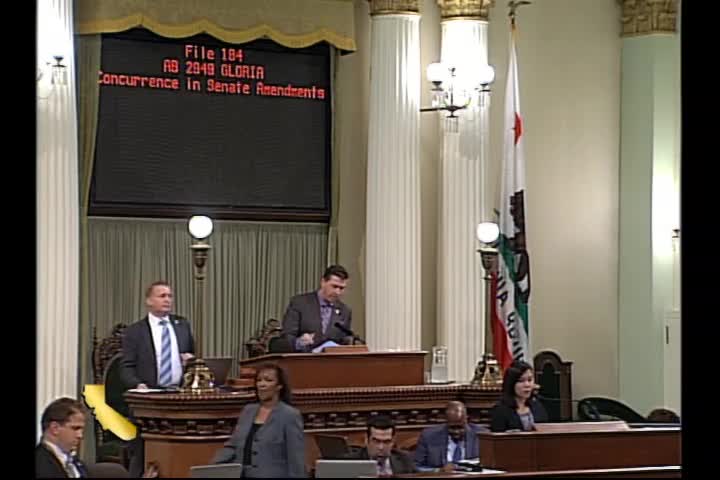 1MIN
Assembly Floor
 1MIN
Assembly Floor
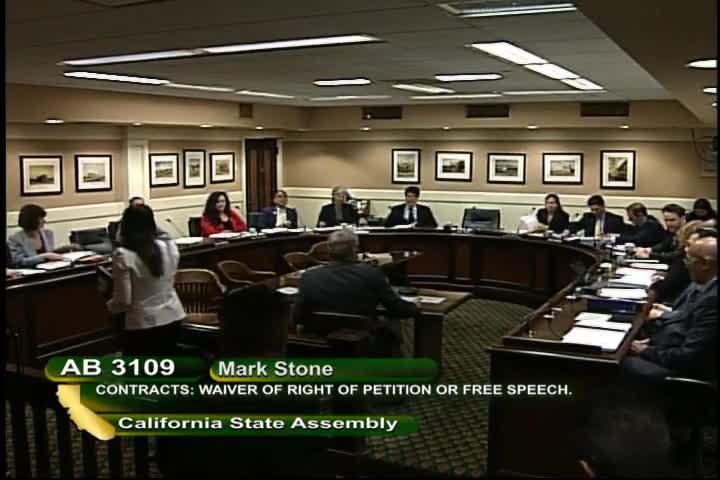 8MIN
Assembly Standing Committee on Judiciary
Bill Author


