AB 420: Personal income tax: deduction: commercial cannabis activity.
- Session Year: 2017-2018
- House: Assembly
- Latest Version Date: 2017-07-19
Existing law, the Medical Cannabis Regulation and Safety Act (MCRSA), authorizes a person who obtains both a state license under MCRSA and the applicable local license to engage in commercial medical cannabis activity pursuant to those licenses, as specified.Existing law, the Control, Regulate and Tax Adult Use of Marijuana Act (AUMA) that was added by the approval of Proposition 64 at the November 8, 2016, statewide general election, authorizes a person who obtains a state license under AUMA to engage in commercial marijuana activity, which does not include medical cannabis activity, pursuant to that license and any applicable local ordinances. Medicinal and Adult-Use Cannabis Regulation and Safety Act (MAUCRSA), among other things, consolidates the licensure and regulation of commercial medicinal and adult-use cannabis activities and authorizes persons to conduct specified commercial cannabis activities, as defined, in the state.
The Personal Income Tax Law and the Corporation Tax Law allow various deductions in computing the income that is subject to the taxes imposed by those laws. The Personal Income Tax Law conforms as of a specified date to federal income tax laws with respect to itemized deductions, including business deductions and items not deductible, except as specifically provided. The Corporation Tax Law does not conform to those federal income tax provisions, but specifically provides for deductions for purposes of that law. The Personal Income Tax Law, by conformity to federal income tax laws, disallows a deduction or credit for business expenses of a trade or business whose activities consist of trafficking specified controlled substances, including marijuana.
This bill bill, for each taxable year beginning on and after January 1, 2018, would specifically provide in the Personal Income Tax Law for nonconformity to that federal law disallowing a deduction or credit for business expenses of a trade or business whose activities consist of trafficking specified controlled substances, only for commercial cannabis activity, as defined, commercial marijuana activity, as defined, or both, authorized under MAUCRSA, thus allowing deduction of business expenses for a cannabis or marijuana trade or business under the Personal Income Tax Law, as provided.
This bill would take effect immediately as a tax levy.
Existing law, the Medical Cannabis Regulation and Safety Act (MCRSA), authorizes a person who obtains both a state license under MCRSA and the applicable local license to engage in commercial medical cannabis activity pursuant to those licenses, as specified.
This bill would require an advertisement for the sale of medical cannabis or medical cannabis products to identify the MCRSA licensee responsible for its content by including, at a minimum, the license number of the MCRSA licensee.Existing law, the Control, Regulate and Tax Adult Use of Marijuana Act (AUMA) that was added by the approval of Proposition 64 at the November 8, 2016, statewide general election, authorizes a person who obtains a state license under AUMA to engage in commercial marijuana activity, which does not include medical cannabis activity, pursuant to that license and any applicable local ordinances. AUMA requires all advertisements for the sale of nonmedical marijuana or nonmedical marijuana products, as specified, to identify accurately and legibly the licensee responsible for its content. AUMA authorizes legislative amendment of specified sections of AUMA with a majority vote of both houses, without submission to the voters, to implement the substantive provisions of those sections, provided that the amendments further its purposes and intent.
This bill would require an advertisement for the sale of nonmedical marijuana or nonmedical marijuana products to include, at a minimum, the license number of the AUMA licensee responsible for its content. The bill would declare that it furthers the purposes and intent of AUMA.The Personal Income Tax Law and the Corporation Tax Law allow various deductions in computing the income that is subject to the taxes imposed by those laws. The Personal Income Tax Law conforms as of a specified date to federal income tax laws with respect to itemized deductions, including business deductions and items not deductible, except as specifically provided. The Corporation Tax Law does not conform to those federal income tax provisions, but specifically provides for deductions for purposes of that law. The Personal Income Tax Law, by conformity to federal income tax laws, disallows a deduction or credit for business expenses of a trade or business whose activities consist of trafficking specified controlled substances, including marijuana.
This bill would specifically provide in the Personal Income Tax Law for nonconformity to that federal law disallowing a deduction or credit for business expenses of a trade or business whose activities consist of trafficking specified controlled substances, only for commercial cannabis activity, as defined, commercial marijuana activity, as defined, or both, thus allowing deduction of business expenses for a cannabis or marijuana trade or business under the Personal Income Tax Law, as provided.
This bill would take effect immediately as a tax levy.
Existing law, the Medical Cannabis Regulation and Safety Act (MCRSA), authorizes a person who obtains both a state license under MCRSA and the applicable local license to engage in commercial medical cannabis activity pursuant to those licenses, as specified.
This bill would require an advertisement for the sale of medical cannabis or medical cannabis products to identify the MCRSA licensee responsible for its content by including, at a minimum, the license number of the MCRSA licensee.
Existing law, the Control, Regulate and Tax Adult Use of Marijuana Act (AUMA) that was added by the approval of Proposition 64 at the November 8, 2016, statewide general election, authorizes a person who obtains a state license under AUMA to engage in commercial marijuana activity, which does not include medical cannabis activity, pursuant to that license and any applicable local ordinances. AUMA requires all advertisements for the sale of nonmedical marijuana or nonmedical marijuana products, as specified, to identify accurately and legibly the licensee responsible for its content. AUMA authorizes legislative amendment of specified sections of AUMA with a majority vote of both houses, without submission to the voters, to implement the substantive provisions of those sections, provided that the amendments further its purposes and intent.
This bill would require an advertisement for the sale of nonmedical marijuana or nonmedical marijuana products to include, at a minimum, the license number of the AUMA licensee responsible for its content. The bill would declare that it furthers the purposes and intent of AUMA.
Section For each taxable year beginning on or after January 1, 2018, 280E of the Internal Revenue Code, relating to expenditures in connection with the illegal sale of drugs, shall not apply to the carrying on of any trade or business that is commercial cannabis activity, as defined in subdivision (j) of Section 19300.5 of the Business and Professions Code, or commercial marijuana activity, as defined in subdivision (d) of Section 26001 of the Business and Professions Code, or both. Division 10 (commencing with Section 26000) of the Business and Professions Code.
SEC. 2.This act provides for a tax levy within the meaning of Article IV of the California Constitution and shall go into immediate effect.
Section 280E of the Internal Revenue Code, relating to expenditures in connection with the illegal sale of drugs, shall not apply to the carrying on of any trade or business that is commercial cannabis activity, as defined in subdivision (j) of Section 19300.5 of the Business and Professions Code, or commercial marijuana activity, as defined in subdivision (d) of Section 26001 of the Business and Professions Code, or both.
SEC. 2.This act provides for a tax levy within the meaning of Article IV of the California Constitution and shall go into immediate effect.
SECTION 1.Section 19327.3 is added to the Business and Professions Code, to read:19327.3.(a)For purposes of this section, advertisement includes any written or verbal statement, illustration, or depiction which is calculated to induce sales of medical cannabis or medical cannabis products, including any written, printed, graphic, or other material, billboard, sign, or other outdoor display, public transit card, other periodical literature, publication, or in a radio or television broadcast, or in any other media; except that such term shall not include:(1)Any label affixed to any cannabis or cannabis products, or any individual covering, carton, or other wrapper of such container that constitutes a part of the labeling under provisions of this division.(2)Any editorial or other reading material (e.g., news release) in any periodical or publication or newspaper for the publication of which no money or valuable consideration is paid or promised, directly or indirectly, by any licensee, and which is not written by or at the direction of the licensee.(b)An advertisement shall identify the licensee responsible for its content by including, at a minimum, the license number of the licensee.SEC. 2.Section 26151 of the Business and Professions Code is amended to read:26151.(a)(1)All advertisements and marketing shall accurately and legibly identify the licensee responsible for its content.(2)An advertisement shall identify the licensee responsible for its content pursuant to paragraph (1) by including, at a minimum, the license number of the licensee.(b)Any advertising or marketing placed in broadcast, cable, radio, print and digital communications shall only be displayed where at least 71.6 percent of the audience is reasonably expected to be 21 years of age or older, as determined by reliable, up-to-date audience composition data.(c)Any advertising or marketing involving direct, individualized communication or dialogue controlled by the licensee shall utilize a method of age affirmation to verify that the recipient is 21 years of age or older prior to engaging in such communication or dialogue controlled by the licensee. For purposes of this section, such method of age affirmation may include user confirmation, birth date disclosure, or other similar registration method.(d)All advertising shall be truthful and appropriately substantiated.SEC. 3.The Legislature finds and declares that Section 2 of this act amending Section 26151 of the Business and Professions Code implements and furthers the purposes and intent of the Control, Regulate and Tax Adult Use of Marijuana Act because this amendment ensures effective enforcement of provisions relating to the marketing and advertising of nonmedical marijuana.(a)For purposes of this section, advertisement includes any written or verbal statement, illustration, or depiction which is calculated to induce sales of medical cannabis or medical cannabis products, including any written, printed, graphic, or other material, billboard, sign, or other outdoor display, public transit card, other periodical literature, publication, or in a radio or television broadcast, or in any other media; except that such term shall not include:
(1)Any label affixed to any cannabis or cannabis products, or any individual covering, carton, or other wrapper of such container that constitutes a part of the labeling under provisions of this division.
(2)Any editorial or other reading material (e.g., news release) in any periodical or publication or newspaper for the publication of which no money or valuable consideration is paid or promised, directly or indirectly, by any licensee, and which is not written by or at the direction of the licensee.
(b)An advertisement shall identify the licensee responsible for its content by including, at a minimum, the license number of the licensee.
SEC. 2.Section 26151 of the Business and Professions Code is amended to read:26151.(a)(1)All advertisements and marketing shall accurately and legibly identify the licensee responsible for its content.
(2)An advertisement shall identify the licensee responsible for its content pursuant to paragraph (1) by including, at a minimum, the license number of the licensee.
(b)Any advertising or marketing placed in broadcast, cable, radio, print and digital communications shall only be displayed where at least 71.6 percent of the audience is reasonably expected to be 21 years of age or older, as determined by reliable, up-to-date audience composition data.
(c)Any advertising or marketing involving direct, individualized communication or dialogue controlled by the licensee shall utilize a method of age affirmation to verify that the recipient is 21 years of age or older prior to engaging in such communication or dialogue controlled by the licensee. For purposes of this section, such method of age affirmation may include user confirmation, birth date disclosure, or other similar registration method.
(d)All advertising shall be truthful and appropriately substantiated.
SEC. 3.The Legislature finds and declares that Section 2 of this act amending Section 26151 of the Business and Professions Code implements and furthers the purposes and intent of the Control, Regulate and Tax Adult Use of Marijuana Act because this amendment ensures effective enforcement of provisions relating to the marketing and advertising of nonmedical marijuana.
|
Date
|
Status
|
|---|---|
| Sep 1, 2017 | In committee: Held under submission. |
| Aug 21, 2017 | In committee: Referred to APPR. suspense file. |
| Jul 19, 2017 | Read second time and amended. Re-referred to Com. on APPR. |
| Jul 18, 2017 | From committee: Amend, and do pass as amended and re-refer to Com. on APPR. (Ayes 6. Noes 1.) (July 12). |
| Jun 21, 2017 | Re-referred to Com. on GOV. & F. |
| Jun 14, 2017 | Withdrawn from committee. |
| Jun 13, 2017 | From committee chair, with author's amendments: Amend, and re-refer to committee. Read second time, amended, and re-referred to Com. on B., P. & E.D. |
| May 24, 2017 | Referred to Com. on B., P. & E.D. |
| May 11, 2017 | In Senate. Read first time. To Com. on RLS. for assignment. |
| May 11, 2017 | Read third time. Passed. Ordered to the Senate. (Ayes 77. Noes 0. Page 1487.) |
| May 4, 2017 | Read second time. Ordered to Consent Calendar. |
| May 3, 2017 | From committee: Do pass. To Consent Calendar. (Ayes 16. Noes 0.) (May 3). |
| Apr 19, 2017 | From committee: Do pass and re-refer to Com. on APPR. (Ayes 15. Noes 0.) (April 18). Re-referred to Com. on APPR. |
| Mar 27, 2017 | Referred to Com. on B. & P. |
| Feb 10, 2017 | From printer. May be heard in committee March 12. |
| Feb 9, 2017 | Read first time. To print. |
|
Date
|
Description
|
Location
|
Votes
|
|
|---|---|---|---|---|
| Aug 21, 2017 | Placed on suspense file | Senate Standing Committee on Appropriations |
Passed |
|
| Jul 12, 2017 | Do pass as amended, but first amend, and re-refer to the Committee on [Appropriations] | Senate Standing Committee on Governance and Finance |
Passed |
|
| May 11, 2017 | AB 420 WOOD Consent Calendar Second Day Regular Session | Assembly Floor |
Passed |
|
| May 3, 2017 | Do pass. To Consent Calendar. | Assembly Standing Committee on Appropriations |
Passed |
|
| Apr 18, 2017 | Do pass and be re-referred to the Committee on [Appropriations] | Assembly Standing Committee on Business and Professions |
Passed |
This list shows positions taken on this bill by organizations on the date displayed, which is linked to the original source.
Positions by individuals are not included.
|
Organization
|
Position
|
Date
|
|---|---|---|
| Barry Brother Cannabis Company | * Support | Aug 21, 2017 |
| California Police Chiefs Association | * Support | Apr 18, 2017 |
| California Cannabis Courier Association | * Support | Aug 21, 2017 |
| League Of California Cities | * Support | Apr 18, 2017 |
| United Cannabis Business Alliance | * Support | Apr 18, 2017 |
| Unknown. | ** Against | Jul 7, 2017 |
SENATE COMMITTEE ON
Senator Ricardo Lara, Chair
2017 - 2018 Regular Session
AB 420 (Wood) - Personal income tax: deduction: commercial cannabis activity
Version: | Policy Vote: |
Urgency: | Mandate: |
Hearing Date: | Consultant: |
This bill meets the criteria for referral to the Suspense File.
Bill Summary:
AB 420 would, beginning with taxable year 2018, allow the deduction of business expenses under the Personal Income Tax Law, as provided, for a cannabis or marijuana trade or business.
Fiscal Impact:
The Franchise Tax Board (FTB) indicates that the revenue loss resulting from this bill is interminable, because it lacks the historical data required to develop a reliable estimate. However, the annual revenue loss resulting from the bill would likely be in the tens of millions of dollars annually (General Fund, see Staff Comments). FTB’s administration costs would be minor and absorbable.
Background:
Federal law prohibits the manufacture, possession, sale, or distribution of cannabis, which is listed as a Schedule I controlled substance under the Controlled Substances Act (CSA).
On August 29, 2013, the U.S. Department of Justice (DOJ) issued guidance to federal prosecutors regarding cannabis enforcement under the CSA, referred to as the "Cole Memo.” The Cole Memo reiterated DOJ 's commitment to enforcing the CSA consistent with Congress' determination that cannabis is a dangerous drug that provides a significant source of revenue to large-scale criminal enterprises, gangs, and cartels. Specifically, the Cole Memo instructed DOJ attorneys and law enforcement officials to focus on the following eight enforcement priorities: (1) preventing the distribution of cannabis to minors, (2) preventing revenue from cannabis sales from going to criminal enterprises, gangs, and cartels, (3) preventing the diversion of cannabis from states where it is legal under state law to other states where it is illegal, (4) preventing state-authorized cannabis activity from being used as a cover or pretext for the trafficking of other illegal drugs or other illegal activity, (5) preventing violence and the use of firearms in the cultivation and distribution of cannabis, (6) preventing drugged driving and the exacerbation of other adverse public health consequences associated with cannabis use, (7) preventing the growing of cannabis on public lands and the attendant public safety and environmental dangers posed by cannabis production on public lands, and (8) preventing cannabis possession or use on federal property.
The Cole Memo’s priorities guide DOJ 's enforcement of the CSA. While the Cole Memo's guidance was issued in response to recent cannabis legalization initiatives in other states, it applies to all DOJ cannabis enforcement nationwide.
Prior to 1996, both federal and state law prohibited the possession, possession with intent to sell, cultivation, sale, transportation, importation, or furnishing of cannabis. However, in 1996, California voters approved Proposition 215, known as the Compassionate Use Act of 1996 (CUA). CUA allowed qualified patients and primary caregivers to obtain and use medical cannabis. The Legislature clarified CUA by enacting SB 420 (Vasconcellos, 2003), which exempted qualified patients and caregivers from prosecution for using, or collectively or cooperatively cultivating medical cannabis, and established a medical cannabis card program for patients to use on a voluntary basis. SB 420 provides a safe harbor for qualified patients regarding the amount of cannabis they may possess and the number of plants they may maintain. It also protects patients with valid identification cards from both arrest and criminal liability for possession, transportation, delivery, or cultivation of cannabis.
In 2015, the Legislature enacted the Medical Marijuana Regulation and Safety Act (MMRSA), a package of legislation that comprehensively regulates many aspects of medical cannabis including cultivation, manufacturing, transportation, distribution, sale, and product safety. In 2016, several bills made slight changes to the MMRSA, including renaming the Act the Medical Cannabis Regulation and Safety Act (MCRSA). Among other provisions, MCRSA creates the Bureau of Medical Cannabis Regulation (the Bureau) within the Department of Consumer Affairs to oversee and enforce the state’s medical cannabis regulations in collaboration with the Board of Equalization (BOE), the California Department of Public Health, and the California Department of Food and Agriculture (CDFA).
In November, 2016, California voters approved the Control, Regulate and Tax Adult Use of Marijuana Act (Act), which legalized the recreation use of cannabis by adults age 21 and older (Proposition 64). The initiative establishes 19 different license categories, including many established by the MCRSA. However, licenses for adult cannabis use facilities are distinct from those for medical facilities issued under MCRSA.
Additionally, the Legislature recently repealed the MCRSA, but included many of its provisions into the new Medicinal and Adult-Use Cannabis Regulation and Safety Act, and renamed the Bureau as the Bureau of Cannabis Control (SB 94, Committee on Budget and Fiscal Review, 2017). SB 94 seeks to establish a single system of administration for cannabis laws in California to reflect the enactment of Proposition 64.
Existing federal and state law provides that all income, from whatever source derived, is included in a taxpayer's gross income, including income obtained from illegal business activities, actual crimes, or unethical or immoral business practices. State and federal law generally allow business taxpayers to deduct from income any ordinary and necessary business expenses.
Current federal law (IRC §280E) prohibits a taxpayer from deducting or claiming a credit for any amount paid or incurred in carrying on any trade or business if such trade or business consists of trafficking in controlled substances within the meaning of Schedule I and II of the CSA. California’s personal income tax conforms to federal law, but not the Corporation Tax. California has additional law that further denies deductions for personal income and corporation taxpayers that are directly derived from illegal activities, including for costs of goods sold, but only if the taxpayer was determined to be engaged in criminal profiteering, including drug trafficking (AB 1369, Gatto, 2011). However, the law expressly states that a taxpayer must be found to be engaged in these activities through a final determination in a criminal proceeding, or a proceeding in which the state, county, city or other political subdivision was a party.
Consequently, a business that sells marijuana, even if for medical reasons, cannot deduct ordinary and necessary business expenses from federal tax like a normal business, and can only do so for state purposes if the firm is a corporation. Instead, the marijuana business pays state and federal taxes based on their income for federal purposes, but can claim a deduction for the costs of goods sold. IRC §280E will only cease to apply to cannabis businesses if and when Congress changes the classification of cannabis to no longer be classified as a Schedule I or Schedule II controlled substance.
Proposed Law: This bill would, under the Personal Income Tax Law (PITL), repeal the prohibition on deducting ordinary and necessary business expenses attributable to commercial cannabis activity.
Staff Comments:
FTB research identified a review article issued by the University of California Agricultural Issues Centers (AIC) that examined six different studies on the cannabis market and its potential market size. The AIC review article indicated that the retail cannabis market in the State could be valued between $4 and $11 billion. FTB assumes that applicable business expenses are 20 percent of sales; thus, every $1 billion in retail sales would result in an additional $200 million in deductions. Moreover, at a six percent tax rate, the revenue loss would be $12 million per $1 billion of retail sales. Because the size of the cannabis market is unknown, the revenue loss resulting from this this bill is indeterminable, but likely in the tens of millions of dollars annually.
-- END --
SENATE COMMITTEE ON GOVERNANCE AND FINANCE
Senator Mike McGuire, Chair
2017 - 2018 Regular
Bill No: | AB 420 | Hearing Date: | 7/12/17 |
Author: | Wood | Tax Levy: | Yes |
Version: | 6/13/17 | Fiscal: | Yes |
Consultant: | Grinnell | ||
Personal income tax: deduction: medical cannabis or marijuana activity
Provides that Internal Revenue Code §280E does not apply to cannabis businesses.
Background
Federal law prohibits the manufacture, possession, sale, or distribution of cannabis. Congress enacted the Controlled Substances Act (CSA) as part of the Comprehensive Drug Abuse Prevention and Control Act of 1970. The CSA sets forth five "schedules" of specified drugs and other substances designated "controlled substances." For a drug or other substance to be designated as a "Schedule I" controlled substance, the substance must have “a high potential for abuse," and has "no currently accepted medical use in treatment in the United States." Federal law lists cannabis as a Schedule I controlled substance.
The Cole Memo. On August 29, 2013, the U.S. Department of Justice (DOJ) issued guidance to federal prosecutors regarding cannabis enforcement under the CSA, referred to as the "Cole Memo.” The Cole Memo reiterated DOJ 's commitment to enforcing the CSA consistent with Congress' determination that cannabis is a dangerous drug that provides a significant source of revenue to large-scale criminal enterprises, gangs, and cartels. In furtherance of this objective, the Cole Memo instructed DOJ attorneys and law enforcement officials to focus on the following eight enforcement priorities:
- Preventing the distribution of cannabis to minors;
- Preventing revenue from cannabis sales from going to criminal enterprises, gangs, and cartels;
- Preventing the diversion of cannabis from states where it is legal under state law to other states where it is illegal;
- Preventing state-authorized cannabis activity from being used as a cover or pretext for the trafficking of other illegal drugs or other illegal activity;
- Preventing violence and the use of firearms in the cultivation and distribution of cannabis;
- Preventing drugged driving and the exacerbation of other adverse public health consequences associated with cannabis use;
- Preventing the growing of cannabis on public lands and the attendant public safety and environmental dangers posed by cannabis production on public lands, and;
- Preventing cannabis possession or use on federal property.
The Cole Memo’s priorities guide the DOJ 's enforcement of the CSA. While the Cole Memo's guidance was issued in response to recent cannabis legalization initiatives in other states, it applies to all DOJ cannabis enforcement nationwide.
Medical Cannabis Legalization. Prior to 1996, both federal and state law prohibited the possession, possession with intent to sell, cultivation, sale, transportation, importation, or furnishing of cannabis. However, in 1996, California voters approved Proposition 215, known as the Compassionate Use Act of 1996 (CUA). Under CUA, qualified patients with specified illnesses, and their primary caregivers, cannot be prosecuted for possessing or cultivating medical cannabis upon the written or oral recommendation or approval of an attending physician. As a result, CUA allowed qualified patients and primary caregivers to obtain and use medical cannabis.
The Legislature clarified CUA by enacting SB 420 (Vasconcellos, 2003). SB 420 exempted qualified patients and caregivers from prosecution for using, or collectively or cooperatively cultivating medical cannabis, and established a medical cannabis card program for patients to use on a voluntary basis. SB 420 provides a safe harbor for qualified patients regarding the amount of cannabis they may possess and the number of plants they may maintain. It also protects patients with valid identification cards from both arrest and criminal liability for possession, transportation, delivery, or cultivation of cannabis.
Medical Marijuana Regulation and Safety Act. In 2015, the Legislature enacted the Medical Marijuana Regulation and Safety Act (MMRSA), a package of legislation that comprehensively regulates many aspects of medical cannabis including cultivation, manufacturing, transportation, distribution, sale, and product safety. The MMRSA comprises three bills: SB 643 (McGuire), AB 243 (Wood), and AB 266 (Bonta). In 2016, several bills made slight changes to the MMRSA, including renaming the Act the Medical Cannabis Regulation and Safety Act (MCRSA). Among other provisions, MCRSA:
- Creates the Bureau of Medical Cannabis Regulation (the Bureau) within the Department of Consumer Affairs to oversee and enforce the state’s medical cannabis regulations in collaboration with the Board of Equalization (BOE), the California Department of Public Health, and the California Department of Food and Agriculture (CDFA);
- Establishes categories of licenses for various medical cannabis activities, such as cultivation, manufacturing, distribution, transportation, and sale, and provides certain state agencies with the authority to issue those licenses and enforce their terms;
- Requires CDFA in collaboration with the Bureau to implement a program that allows regulators to uniquely identify each legally cultivated medical cannabis plant and trace that plant throughout the distribution chain;
- Prohibits licensees from commencing activity under the authority of a state license until the applicant has obtained a license or permit pursuant to the applicable local ordinance;
- Protects the ability of local governments to pass and enforce laws, licensing requirements, and zoning ordinances, and;
- Authorizes local governments to establish a licensing system for the cultivation of medical cannabis through their current or future land use authority, and prohibits the cultivation of medical cannabis without obtaining both a state license—issued by CDFA—and a local license.
Proposition 64. On November 8, 2016, California voters approved the Control, Regulate and Tax Adult Use of Marijuana Act (Act), which legalized the recreation use of cannabis by adults age 21 and older (Proposition 64). The initiative establishes 19 different license categories, including many established by the MCRSA. However, licenses for adult cannabis use facilities are distinct from those for medical facilities issued under MCRSA.
Additionally, the Legislature recently repealed the MCRSA, but included many of its provisions into the new Medicinal and Adult-Use Cannabis Regulation and Safety Act, and renamed the Bureau as the Bureau of Cannabis Control (SB 94, Committee on Budget and Fiscal Review, 2017). SB 94 seeks to establish a single system of administration for cannabis laws in California to reflect the enactment of Proposition 64.
IRC §280E. California law does not automatically conform to changes to federal tax law, except for specific retirement provisions. Instead, the Legislature must affirmatively conform to federal changes. Conformity legislation is introduced either as individual tax bills to conform to specific federal changes, like the Mortgage Debt Forgiveness Relief Act (AB 1393, Perea, 2014), or as one omnibus bill that provides that state law conforms to federal law as of a specified date, currently January 1, 2015 (AB 154, Ting, 2015).
Existing federal and state law provides that all income, from whatever source derived, is included in a taxpayer's gross income, including income obtained from illegal business activities, actual crimes, or unethical or immoral business practices. State and federal law generally allow business taxpayers to deduct from income any ordinary and necessary business expenses.
In 1981, the U.S. Tax Court heard the case of Edmonson v. Commissioner, in which a drug dealer claimed deductions for costs of goods sold as well as other expenses, such as mileage, air fare, and costs to purchase a scale and packaging, among others, on his federal tax return. The Court determined that most of the expenses qualified as ordinary and necessary business expense deductions. In response, Congress enacted the Tax Equity and Fiscal Responsibility Act, which added Internal Revenue Code §280E, to prohibit a taxpayer from deducting or claiming a credit for any amount paid or incurred in carrying on any trade or business if such trade or business consists of trafficking in controlled substances within the meaning of Schedule I and II of the CSA. Congress did not deny or limit the deduction for costs of goods sold, as doing so would have rendered any tax on criminal activity a gross receipts tax, which is precluded by the 16th Amendment to the United States Constitution.
California’s personal income tax conforms to IRC §280E, but not the Corporation Tax. California has additional law that further denies deductions for personal income and corporation taxpayers that are directly derived from illegal activities, including for costs of goods sold, but only if the taxpayer was determined to be engaged in criminal profiteering, including drug trafficking (AB 1369, Gatto, 2011). However, the law expressly states that a taxpayer must be found to be engaged in these activities through a final determination in a criminal proceeding, or a proceeding in which the state, county, city or other political subdivision was a party.
As a result, a business that sells marijuana, even if for medical reasons, cannot deduct ordinary and necessary business expenses from federal tax like a normal business, and can only do so for state purposes if the firm is a corporation. Instead, the marijuana business pays state and federal taxes based on their income for federal purposes, but can claim a deduction for the costs of goods sold.
IRC §280E will only cease to apply to cannabis businesses if and when Congress changes the classification of cannabis to no longer be classified as a Schedule I or Schedule II controlled substance. The author wants to allow cannabis businesses to deduct ordinary and necessary business expenses under the personal income tax.
Proposed Law
Assembly Bill 420 decouples personal income tax conformity from IRC §280E for businesses that are “commercial cannabis activity, or “commercial marijuana activity” as defined.
State Revenue Impact
The Franchise Tax Board (FTB) states that the measure would have an impact on the General Fund, but the amount is unknown.
Comments
1. Purpose of the bill. According to the author, “In order for California’s new cannabis laws to be successful, legal businesses must be able to successfully compete with black market operators. Cannabis businesses operating under these new standards and regulations will be subject to significant taxes, fees and compliance standards. Meanwhile, there will inevitably be a significant number of cannabis entities that continue to operate in the black market. Nearly every state that has legalized cannabis for adult use has taken steps to reduce the tax burden on legal businesses in an effort to eliminate black market operations. AB 420 would allow legal cannabis businesses to deduct their normal business expenses from their state income taxes, just as most other businesses in California.”
2. Federalism and conformity. Conforming state tax law to federal law to reduce differences generally benefits taxpayers and tax enforcement agencies alike by reducing confusion and making tax preparation easier. The state should generally conform to federal law whenever possible, unless doing so is inconsistent with its policy priorities, or results in fiscal losses that necessitate cuts in public services or increasing taxes. Cannabis businesses are unique because they operate legally under state law, but are barred by federal law, and are not being prosecuted due to the U.S. DOJ’s forebearance as outlined in the Cole memo. As a result, California conforming to a federal law that disallows deductions for criminal business is inconsistent with Proposition 64 and MCRSA. Additionally, to the extent that cannabis businesses paying the corporation tax can deduct business expenses, disallowing the same deduction for businesses paying the personal income tax is unfair. However, marijuana remains a Schedule I substance under federal law, so offering beneficial tax treatment to any cannabis business could be viewed as encouraging violating federal law. The Committee may wish to consider the merits of tax conformity for businesses operating amid a conflict between federal and state law.
3. Workarounds. Some California cannabis businesses have creatively adapted to IRC 280E’s denial of deductions for ordinary business deductions. In 2007, the U.S. Tax Court decided Californians Helping to Alleviate Medical Problems v. Commissioner, where a San Francisco medical marijuana dispensary that also provided counselling and caregiving challenged the Internal Revenue Service’s disallowance of all its expenses from both lines of business. The Court upheld IRC 280E’s denial of deductions for expenses from dispensary activities, but allowed them for the counselling and caregiving services, as they were a substantial part of the firm’s revenue. As a result, cannabis businesses have added other separate businesses under the same roof, and shift some expenses to the non-cannabis operation to the extent possible. Additionally, cannabis businesses have also argued that IRC §263A requires specified expenses for purchasing, handling, and storage to be included in the costs of goods sold, and not deductible business expenses, which would mean that those expenses are legally deductible under both state and federal law. However, subsequent IRS legal guidance may limit this treatment (Chief Counsel Memorandum 201504011).
4. Credits too. AB 420’s decoupling of IRC 280E not only affects deductions, but would also allow cannabis businesses filing under the personal income tax to claim credits that apply to other businesses too. As a result, cannabis businesses could claim any tax credit under California law if they qualify such as research and development credits, as well as applying to the California Competes Tax Credit Committee.
5. Other issues. Tax experts note that current law does not provide explicit protection for licensed professionals, such as attorneys and accountants, from being considered to be involved in an act discreditable by serving clients involved in cannabis operations legal under California law. Some states have provided this express protection, which in California only includes an ethics opinion from the State Bar of California and Los Angeles County Bar Association stating that representing cannabis businesses is ethical and does not violate rules of professional conduct in specified circumstances.
6. Technicals. AB 420 currently lacks an effective date, which could lead to disagreements between cannabis businesses and FTB. Committee staff recommends an amendment to specify that the measure applies to the 2018 taxable year. Additionally, the measure should refer to cannabis businesses under Division 10 of the Business and Professions Code, not Section 19300.5, which was recently repealed.
Assembly Actions
Not relevant to this version of the bill.
Support and Opposition
(7/7/17)
Support: California Cannabis Industry Association, Consortium Management Group; the Southern California Coalition
Opposition: Unknown.
-- END --
Date of Hearing: May 3, 2017
ASSEMBLY COMMITTEE ON APPROPRIATIONS
Lorena Gonzalez Fletcher, Chair
ABPCA Bill Id:AB 420
Author:(Wood) – As Introduced Ver:February 9, 2017
Policy Committee: | Business and Professions | Vote: | 15 - 0 |
|
| ||
|
|
Urgency: No State Mandated Local Program: No Reimbursable: No
SUMMARY:
This bill requires an entity advertising for the sale of medical or recreational cannabis to disclose its license number on the advertisement.
FISCAL EFFECT:
Negligible state fiscal effect.
COMMENTS:
Purpose and Background. Medical and recreational cannabis are legal under state law pursuant to voter-approved propositions. Licenses are to be issued by the state for cultivation, distribution, transport, manufacturing, testing, and dispensing beginning January 1, 2018. The California Contractor's State License Board requires its licensees to include license numbers on advertisements. With respect to cannabis-related licensees, Colorado state law requires the same.
Analysis Prepared by: Lisa Murawski / APPR. / (916) 319-2081
Date of Hearing:
ASSEMBLY COMMITTEE ON BUSINESS AND PROFESSIONS
Rudy Salas, Chair
ABPCA Bill Id:AB 420
Author:(Wood) – As Introduced Ver:February 9, 2017
SUBJECT: Marijuana and medical cannabis: advertisements: license number disclosure.
SUMMARY: Requires an advertisement for the sale of medical cannabis or medical cannabis products to identify the Medical Cannabis Regulation and Safety Act (MCRSA) licensee responsible for its content by including, at a minimum, the license number of the MCRSA licensee; and, requires an advertisement for the sale of nonmedical marijuana or nonmedical marijuana products to include, at a minimum, the license number of the Adult Use Marijuana Act (AUMA) licensee responsible for its content.
EXISTING LAW:
- Establishes the Bureau of Marijuana Control, also referred to as the Bureau of Medical Cannabis Regulation (Bureau), under the Department of Consumer Affairs (DCA), to establish a comprehensive system to control and regulate the cultivation, distribution, transport, storage, manufacturing, processing, and sale of cannabis products (Business and Professions Code (BPC) § 26000 et seq.; BPC § 19302)
- Provides guidelines for advertising the sale of cannabis. (BPC § 26150 et seq.)
- Specifies that all advertisements and marketing shall accurately and legibly identify the licensee responsible for its content. (BPC § 26151)
- Indicates that any advertising or marketing placed in broadcast, cable, radio, print and digital communications shall only be displayed where at least 71.6 percent of the audience is reasonably expected to be 21 years of age or older, as determined by reliable, up-to-date audience composition data. (BPC § 26151 (b))
- Requires any advertising or marketing involving direct, individualized communication or dialogue controlled by the licensee to utilize a method of age affirmation to verify that the recipient is 21 years of age or older prior to engaging in such communication or dialogue controlled by the licensee including user confirmation, birth date disclosure, or other similar registration method. (BPC § 26151 (c))
- Indicates that all advertising be truthful and appropriately substantiated. (BPC § 26152)
THIS BILL:
- Defines “advertisement” as any written or verbal statement, illustration, or depiction which is calculated to induce sales of medical cannabis or medical cannabis products, including any written, printed, graphic, or other material, billboard, sign, or other outdoor display, public transit card, other periodical literature, publication, or in a radio or television broadcast, or in any other media; except that such term shall not include:
- Any label affixed to any cannabis or cannabis products, or any individual covering, carton, or other wrapper of such container that constitutes a part of the labeling under provisions of this division.
- Any editorial or other reading material (e.g., news release) in any periodical or publication or newspaper for the publication of which no money or valuable consideration is paid or promised, directly or indirectly, by any licensee, and which is not written by or at the direction of the licensee.
- Specifies that an advertisement shall identify the licensee responsible for its content by including, at a minimum, the license number of the licensee.
FISCAL EFFECT: Unknown. This bill is keyed fiscal by the Legislative Counsel.
COMMENTS:
Purpose. This bill is sponsored by the author. According to the author, “As the state prepares to issue state licenses to applicants of MCRSA and AUMA, there should also be assurances that medical and nonmedical cannabis business practices follow best practices from other licensed businesses in California…similar advertisement disclosures do not apply to licensees of MCRSA or AUMA. As the state unveils the daunting task of regulating the entire medical and nonmedical cannabis industry, an industry that has largely operated in an unregulated market for the past two decades, there needs to be assurances that a black market does not continue to flourish. AB 420 will require that all licensees of medical and non-medical cannabis include their state license number on advertisements.”
Background. Advertising Guidelines in California. While current law provides guidelines for advertising cannabis business and products, it does not require a licensee to include their license number on their advertisement. In contrast, the Contractors State License Board (CSLB) requires roofers, plumbers, and electricians, among other licensees, to include their license numbers on all forms of advertisements including contracts, business cards, yard signs, and placards on commercially registered vehicles. The CSLB advertising requirements help ensure consumers can easily decipher legitimate contractors from unlicensed contractors while also serving as another way to reduce the black market of unlicensed operators. Similar to the advertisement provisions that contractors must adhere to, this measure requires any advertisement for sale of either medical or nonmedical cannabis or cannabis product to include the state license number of the licensee on the advertisement.
Other States. In March of 2017, the Colorado Legislature passed Senate Bill 17-015. Effective September 1, 2017, an individual who is not licensed to sell cannabis will be prohibited from advertising cannabis, cannabis concentrate, or a cannabis-infused product in a newspaper, magazine, handbill, or other publication, or on the internet.
ARGUMENTS IN SUPPORT:
The California Police Chiefs Association, Inc. supports the bill and writes, “…consumers should be afforded information to quickly and easily determine a licensed medical or nonmedical cannabis business from an illegal cannabis operator. A state license number requirement on all forms of advertisement is a necessary step to ensure consumer safety and provide another tool to shut down the illicit market.”
The City of Santa Monica writes in their letter of support, “The City of Santa Monica has historically supported related legislation, to improve the implementation of the regulatory framework for MCRSA to ease the transition for existing operators, local governments, patients, employees, and the general public. AB 420 ensures that medical and nonmedical cannabis businesses follow best practices in alignment with these efforts.”
REGISTERED SUPPORT:
California Policy Chiefs Association, Inc.
City of Santa Monica
REGISTERED OPPOSITION:
None on file.
Analysis Prepared by: Le Ondra Clark Harvey Ph.D. / B. & P. / (916) 319-3301
Discussed in Hearing
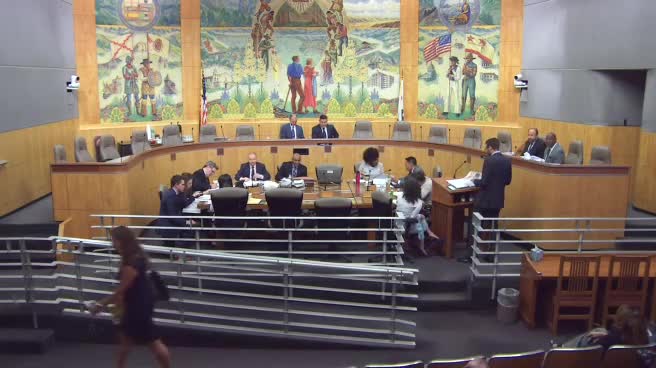 5MIN
Senate Standing Committee on Appropriations
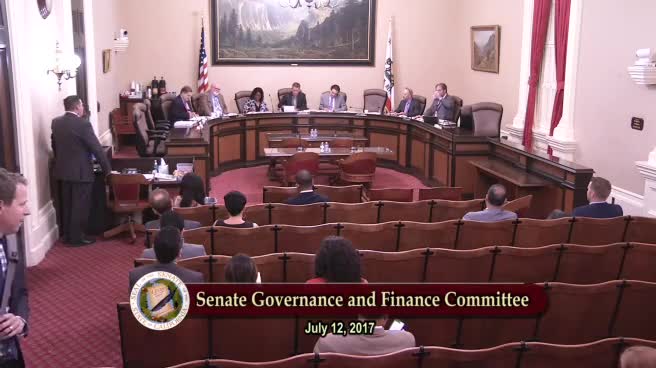 4MIN
Senate Standing Committee on Governance and Finance
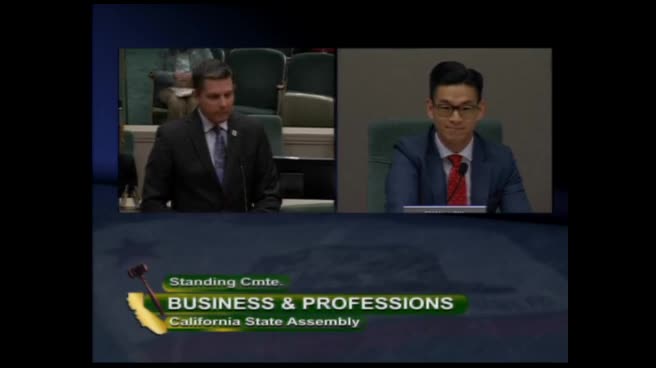 5MIN
Assembly Standing Committee on Business and Professions



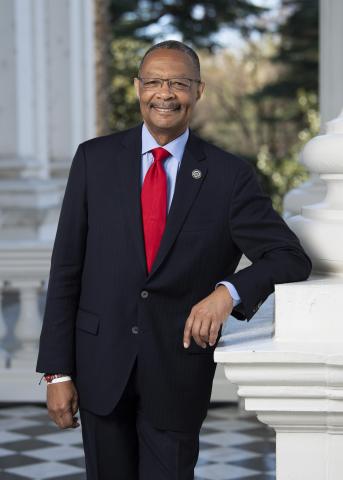


Bill Co-Author(s):