AB 53: Personal income taxes: deduction: homeownership savings accounts.
- Session Year: 2017-2018
- House: Assembly
- Latest Version Date: 2017-05-15
The Personal Income Tax Law, in modified conformity with federal income tax laws, allows various exclusions from gross income, and allows various deductions in computing the income that is subject to the taxes imposed by that law, including miscellaneous itemized deductions that are allowed only to the extent that the aggregate amount of those deductions exceeds 2% of adjusted gross income.
This bill, upon appropriation of specified funds by the Legislature, for taxable years beginning on and after January 1, 2017, and before January 1, 2019, would allow a deduction, not to exceed specified amounts, of the amount a qualified taxpayer, as defined, contributed in any taxable year to a homeownership savings account and would exclude from gross income any income earned on the moneys contributed to a homeownership savings account. The bill would provide that a qualified taxpayer may withdraw amounts from a homeownership savings account to pay for qualified homeownership savings expenses, defined as expenses paid or incurred in connection with the purchase of a principal residence in this state. The bill would provide that any amount withdrawn from that account that is not used for these expenses would be included as income for that taxpayer. The bill would define various terms for its purposes.
This bill would take effect immediately as a tax levy.
The Personal Income Tax Law, in modified conformity with federal income tax laws, allows various exclusions from gross income, and allows various deductions in computing the income that is subject to the taxes imposed by that law, including miscellaneous itemized deductions that are allowed only to the extent that the aggregate amount of those deductions exceeds 2% of adjusted gross income.
This bill, on and after January 1, 2017, would allow a deduction, not to exceed specified amounts, of the amount a qualified taxpayer, as defined, contributed in any taxable year to a homeownership savings account and would exclude from gross income any income earned on the moneys contributed to a homeownership savings account. The bill would provide that a qualified taxpayer may withdraw amounts from a homeownership savings account to pay for qualified homeownership savings expenses, defined as expenses paid or incurred in connection with the purchase of a principal residence in this state. The bill would provide that any amount withdrawn from that account that is not used for these expenses would be included as income for that taxpayer. The bill would define various terms for its purposes.
This bill would take effect immediately as a tax levy.
The Personal Income Tax Law, in modified conformity with federal income tax laws, allows various exclusions from gross income, and allows various deductions in computing the income that is subject to the taxes imposed by that law, including miscellaneous itemized deductions that are allowed only to the extent that the aggregate amount of those deductions exceeds 2% of adjusted gross income.
This bill, on and after January 1, 2017, would allow a deduction, not to exceed specified amounts, of the amount a qualified taxpayer, as defined, contributed in any taxable year to a homeownership savings account and would exclude from gross income any income earned on the moneys contributed to a homeownership savings account. The bill would provide that a qualified taxpayer may withdraw amounts from a homeownership savings account to pay for qualified homeownership savings expenses, defined as expenses paid or incurred in connection with the purchase of a principal residence in this state. The bill would provide that any amount withdrawn from that account that is not used for these expenses would be included as income for that taxpayer. The bill would define various terms for its purposes.
This bill would take effect immediately as a tax levy.
(a)For each taxable year beginning on or after January 1, 2017, and before January 1, 2019, gross income does not include, under the same conditions as provided in Section 408 of the Internal Revenue Code, relating to individual retirement accounts, any income accruing during the taxable year to a homeownership savings account as defined in Section 17204.5.
(b)This section shall become operative on the effective date of any budget measure specifically appropriating funds to the Franchise Tax Board for its costs of administering this section and Section 17204.5.
(c)This section shall remain in effect only until December 1, 2019, and as of that date is repealed.
SEC. 2.Section 17204.5 is added to the Revenue and Taxation Code, to read:17204.5.(a)For each taxable year beginning on or after January 1, 2017, and before January 1, 2019, there shall be allowed as a deduction an amount equal to the amount contributed by a qualified taxpayer during the taxable year to a homeownership savings account, not to exceed the amounts specified in subdivision (b).
(b)The deduction allowed under subdivision (a) shall not exceed the following amounts:
(1)Twenty thousand dollars ($20,000) Seven thousand dollars ($7,000) for qualified taxpayers filing a joint, head of household, or surviving spouse, as defined in Section 17046, return.
(2)Ten thousand dollars ($10,000) Three thousand five hundred dollars ($3,500) in the case of a qualified taxpayer filing a return other than as described in paragraph (1).
(c)Any amount withdrawn from a homeownership savings account shall be included in the income of the qualified taxpayer for the taxable year in which the payment or distribution is made, unless the payment or distribution is used to pay for the qualified homeownership savings expenses of a qualified taxpayer who established the account.
(d)For purposes of this section:
(1)Homeownership savings account means a trust that meets all of the following requirements:
(A)Is designated as a homeownership savings account by the trustee.
(B)Is established by a qualified taxpayer, or by qualified taxpayers who are spouses, for the exclusive benefit of any qualified taxpayer establishing the account where the written governing instrument creating the account provides for the following:
(i)All contributions to the account are required to be in cash.
(ii)The account is established to pay, pursuant to the requirements and limitations of this section, for the qualified homeownership savings expenses of a qualified taxpayer establishing the account.
(C)Is, except as otherwise required or authorized by this section, subject to the same requirements and limitations as an individual retirement account established under Section 408 of the Internal Revenue Code, relating to individual retirement accounts, and any regulations adopted thereunder.
(D)Is the only homeownership savings account established by the qualified taxpayer.
(2)Qualified homeownership savings expenses means expenses, including a downpayment or closing costs, paid or incurred in connection with the purchase of a qualified taxpayers principal residence within the meaning of Section 121 of the Internal Revenue Code, relating to exclusion of gain from sale of principal residence, in this state for use by that qualified taxpayer who established the homeownership savings account.
(3)Qualified taxpayer means any individual, or individuals spouse, who has never had an ownership interest in a principal residence within the meaning of Section 121 of the Internal Revenue Code, relating to exclusion of gain from sale of principal residence, and whose gross income for the taxable year in which the account was created and any taxable year in which a contribution is made does not exceed 80 percent of the area median income.
(4)Trustee shall have the same meaning as that term has under Section 408 of the Internal Revenue Code, relating to individual retirement accounts, and any regulations adopted thereunder.
(e)This section shall become operative on the effective date of any budget measure specifically appropriating funds to the Franchise Tax Board for its costs of administering this section and Section 17141.5.
(f)This section shall remain in effect only until December 1, 2019, and as of that date is repealed.
SEC. 3.This act provides for a tax levy within the meaning of Article IV of the California Constitution and shall go into immediate effect.
For each taxable year beginning on or after January 1, 2017, gross income does not include, under the same conditions as provided in Section 408 of the Internal Revenue Code, relating to individual retirement accounts, any income accruing during the taxable year to a homeownership savings account as defined in Section 17204.5.
SEC. 2.Section 17204.5 is added to the Revenue and Taxation Code, to read:17204.5.(a)For each taxable year beginning on or after January 1, 2017, there shall be allowed as a deduction an amount equal to the amount contributed by a qualified taxpayer during the taxable year to a homeownership savings account, not to exceed the amounts specified in subdivision (b).
(b)The deduction allowed under subdivision (a) shall not exceed the following amounts:
(1)Twenty thousand dollars ($20,000) for qualified taxpayers filing a joint return, a joint, head of household, and surviving spouses, or surviving spouse, as defined in Section 17046. 17046, return.
(2)Ten thousand dollars ($10,000) in the case of a qualified taxpayer filing a return other than as described in paragraph (1).
(c)Any amount withdrawn from a homeownership savings account shall be included in the income of the payee or distributee qualified taxpayer for the taxable year in which the payment or distribution is made, unless the payment or distribution is used to pay for the qualified homeownership savings expenses of a qualified taxpayer who established the account.
(d)For purposes of this section:
(1)Homeownership savings account means a trust that meets all of the following requirements:
(A)Is designated as a homeownership savings account by the trustee.
(B)Is established by a qualified taxpayer, or by qualified taxpayers who are spouses, for the exclusive benefit of any qualified taxpayer establishing the account where the written governing instrument creating the account provides for the following:
(i)All contributions to the account are required to be in cash.
(ii)The account is established to pay, pursuant to the requirements and limitations of this section, for the qualified homeownership savings expenses of a qualified taxpayer establishing the account.
(C)Is, except as otherwise required or authorized by this section, subject to the same requirements and limitations as an individual retirement account established under Section 408 of the Internal Revenue Code, relating to individual retirement accounts, and any regulations adopted thereunder.
(D)Is the only homeownership savings account established by the qualified taxpayer.
(2)Qualified homeownership savings expenses means expenses, including a downpayment or closing costs, paid or incurred in connection with the purchase of a qualified taxpayers principal residence within the meaning of Section 121 of the Internal Revenue Code, relating to exclusion of gain from sale of principal residence, in this state for use by that qualified taxpayer who established the homeownership savings account.
(3)Qualified taxpayer means any individual, or individuals spouse, who had no present has never had an ownership interest in a principal residence within the meaning of Section 121 of the Internal Revenue Code, relating to exclusion of gain from sale of principal residence, during the preceding three-year period ending either on the date of the individuals, or individuals spouses, contribution to a homeownership savings account or on the date of the individuals, or individuals spouses, purchase of the principal residence for which any amount is withdrawn from the individuals, or individuals spouses, homeownership savings account. and whose gross income for the taxable year in which the account was created and any taxable year in which a contribution is made does not exceed 80 percent of the area median income.
(4)Trustee shall have the same meaning as that term has under Section 408 of the Internal Revenue Code, relating to individual retirement accounts, and any regulations adopted thereunder.
SEC. 3.This act provides for a tax levy within the meaning of Article IV of the California Constitution and shall go into immediate effect.
For each taxable year beginning on or after January 1, 2017, gross income does not include, under the same conditions as provided in Section 408 of the Internal Revenue Code, relating to individual retirement accounts, any income accruing during the taxable year to a homeownership savings account as defined in Section 17204.5.
SEC. 2. Section 17204.5 is added to the Revenue and Taxation Code, to read: 17204.5.(a)For each taxable year beginning on or after January 1, 2017, there shall be allowed as a deduction an amount equal to the amount contributed by a qualified taxpayer during the taxable year to a homeownership savings account, not to exceed the amounts specified in subdivision (b).
(b)The deduction allowed under subdivision (a) shall not exceed the following amounts:
(1)Twenty thousand dollars ($20,000) for qualified taxpayers filing a joint return, a head of household, and surviving spouses, as defined in Section 17046.
(2)Ten thousand dollars ($10,000) in the case of a qualified taxpayer filing a return other than as described in paragraph (1).
(c)Any amount withdrawn from a homeownership savings account shall be included in the income of the payee or distributee for the taxable year in which the payment or distribution is made, unless the payment or distribution is used to pay for the qualified homeownership savings expenses of a qualified taxpayer who established the account.
(d)For purposes of this section:
(1)Homeownership savings account means a trust that meets all of the following requirements:
(A)Is designated as a homeownership savings account by the trustee.
(B)Is established by a qualified taxpayer, or by qualified taxpayers who are spouses, for the exclusive benefit of any qualified taxpayer establishing the account where the written governing instrument creating the account provides for the following:
(i)All contributions to the account are required to be in cash.
(ii)The account is established to pay, pursuant to the requirements and limitations of this section, for the qualified homeownership savings expenses of a qualified taxpayer establishing the account.
(C)Is, except as otherwise required or authorized by this section, subject to the same requirements and limitations as an individual retirement account established under Section 408 of the Internal Revenue Code, relating to individual retirement accounts, and any regulations adopted thereunder.
(D)Is the only homeownership savings account established by the qualified taxpayer.
(2)Qualified homeownership savings expenses means expenses, including a downpayment or closing costs, paid or incurred in connection with the purchase of a qualified taxpayers principal residence within the meaning of Section 121 of the Internal Revenue Code, relating to exclusion of gain from sale of principal residence, in this state for use by that qualified taxpayer who established the homeownership savings account.
(3)Qualified taxpayer means any individual, or individuals spouse, who had no present ownership interest in a principal residence within the meaning of Section 121 of the Internal Revenue Code, relating to exclusion of gain from sale of principal residence, during the preceding three-year period ending either on the date of the individuals, or individuals spouses, contribution to a homeownership savings account or on the date of the individuals, or individuals spouses, purchase of the principal residence for which any amount is withdrawn from the individuals, or individuals spouses, homeownership savings account.
(4)Trustee shall have the same meaning as that term has under Section 408 of the Internal Revenue Code, relating to individual retirement accounts, and any regulations adopted thereunder.
SEC. 3.This act provides for a tax levy within the meaning of Article IV of the California Constitution and shall go into immediate effect.
REVISIONS: HeadingLine 2.|
Date
|
Status
|
|---|---|
| Feb 1, 2018 | From committee: Filed with the Chief Clerk pursuant to Joint Rule 56. |
| Jan 31, 2018 | Died pursuant to Art. IV, Sec. 10(c) of the Constitution. |
| May 26, 2017 | In committee: Held under submission. |
| May 24, 2017 | In committee: Set, first hearing. Referred to APPR. suspense file. |
| May 16, 2017 | Re-referred to Com. on APPR. |
| May 15, 2017 | Read second time and amended. |
| May 11, 2017 | From committee: Amend, and do pass as amended and re-refer to Com. on APPR. (Ayes 8. Noes 1.) (May 8). |
| Apr 17, 2017 | Re-referred to Com. on REV. & TAX. |
| Apr 6, 2017 | Read second time and amended. |
| Apr 5, 2017 | From committee: Amend, and do pass as amended and re-refer to Com. on REV. & TAX. (Ayes 7. Noes 0.) (April 5). |
| Feb 16, 2017 | Coauthors revised. |
| Jan 19, 2017 | Referred to Coms. on H. & C.D. and REV. & TAX. |
| Dec 6, 2016 | From printer. May be heard in committee January 5. |
| Dec 5, 2016 | Read first time. To print. |
|
Date
|
Description
|
Location
|
Votes
|
|
|---|---|---|---|---|
| May 8, 2017 | Do pass as amended and be re-referred to the Committee on [Appropriations] | Assembly Standing Committee on Revenue and Taxation |
Passed |
|
| Apr 5, 2017 | Do pass as amended and be re-referred to the Committee on [Revenue and Taxation] | Assembly Standing Committee on Housing and Community Development |
Passed |
This list shows positions taken on this bill by organizations on the date displayed, which is linked to the original source.
Positions by individuals are not included.
|
Organization
|
Position
|
Date
|
|---|---|---|
| California Association Of Community Managers | ** Support | Apr 3, 2017 |
| California Association of Mortgage Professionals | ** Support | Apr 3, 2017 |
| California Association Of Realtors | ** Support | May 5, 2017 |
| California Building Industry Association | ** Support | May 5, 2017 |
| California Council For Affordable Housing | ** Support | May 5, 2017 |
| California Credit Union League | ** Support | May 5, 2017 |
| California Professional Firefighters | ** Against | May 5, 2017 |
| California Tax Reform Association | ** Against | May 5, 2017 |
| Habitat For Humanity California | ** Support | May 5, 2017 |
| League Of California Cities | ** Support | Apr 3, 2017 |
| Southwest California Legislative Council | ** Support | Apr 3, 2017 |
| Southwest Riverside County Association of Realtors | ** Support | Apr 3, 2017 |
| US ENERGY DEVELOPMENT CORP | * Support | Apr 5, 2017 |
| Western Manufactured Housing Communities Association | ** Support | Apr 3, 2017 |
Date of Hearing: May 24, 2017
ASSEMBLY COMMITTEE ON APPROPRIATIONS
Lorena Gonzalez Fletcher, Chair
ABPCA Bill Id:AB 53
Author:(Steinorth) – As Amended Ver:May 15, 2017
Policy Committee: | Housing and Community Development | Vote: | 7 - 0 |
Revenue and Taxation | 8 - 1 | ||
|
|
Urgency: No State Mandated Local Program: No Reimbursable: No
SUMMARY:
This bill creates a homeownership savings account (HSA) and allows a deduction for contributions made by qualified individuals to the HSA. Specifically, this bill:
- Allows a miscellaneous itemized deduction equal to the amount contributed in the HSA by a qualified taxpayer for taxable years 2017 through 2019, not to exceed:
- $7,000 for qualified taxpayers who are married filing a joint return, a head of household and surviving spouses, as defined.
- $3,500 for qualified taxpayers filing a return other than those specified.
- Excludes income withdrawn from the HSA from gross income of the taxpayer if those funds are used to pay for homeownership savings expenses.
- Allows the deduction only if a budget measure specifically appropriates moneys to the Franchise Tax Board (FTB) to administer the HSA deduction.
- Specifies that a HSA is subject to the same requirements and limitations as an Individual Retirement Account (IRA), except as otherwise noted, and that it must be established by a qualified taxpayer whose gross income is less than or equal to 80 percent of the area median income and must pay for homeownership savings expenses.
- Defines a "qualified taxpayer" as any individual, or individual's spouse, who has never had an ownership interest in a principal residence subject to the contribution allowed by this section.
FISCAL EFFECT:
- Significant GF cost pressures in excess of $150,000 for FTB’s development and administration of the proposed HSA program. These costs only materialize if FTB receives a budget appropriation to administer the provisions of this bill, as required.
- Additional General Fund (GF) cost pressures in the tens of millions of dollars in 2017-18 and 2018-19 if HSAs become available to eligible taxpayers. These cost pressures reflect the potential GF revenue loss if the proposed HSA deduction becomes operative once FTB receives an appropriation to administer it.
COMMENTS:
- Purpose. According to the author, AB 53 will help first-time homebuyers save more for their first home. This bill is intended to make the benefits of homeownership more attainable for families across California.
- Fiscal implications of tax expenditures. Existing law provides various credits, deductions, exclusions, and exemptions for particular taxpayer groups. These features of tax law are referred to as "expenditures" since they are generally enacted to accomplish some governmental purpose and there is a determinable cost associated with each (in the form of foregone revenues). One ongoing concern about tax expenditures is the lack of control over revenue losses, since the number of taxpayers taking advantage of any given tax expenditure can vary each year. This bill enacts a new tax expenditure program, in the form of both an income exclusion and a deduction, to help families save for their first home purchase.
- Existing homeownership benefits. Both federal and state laws already authorize penalty-free withdrawals of a limited amount of IRA funds for first-time homebuyers. In the case of a traditional IRA, the maximum amount of IRA funds that may be withdrawn without the penalty is $10,000. On top of these existing IRA benefits, the federal and state tax codes provide significant incentives for homeownership. For example, California spends approximately $4.2 billion on the home mortgage interest deduction.
- Double benefit. This bill allows taxpayers to make tax-deductible contributions to, and receive tax-free withdrawals from, an HSA as long as the funds are used for qualified expenses. In contrast, a traditional IRA allows tax-deductible contributions, but imposes a tax on distributions. And while qualified distributions from Roth IRAs are tax-free, contributions to these accounts are taxable.
- Recent legislation. AB 1736 (Steinorth), of the 2015-16 Legislative Session, was substantially similar to this bill, although it allowed deductions of up to $10,000 and $20,000, as specified. AB 1736 was held on this committee’s Suspense File.
Analysis Prepared by: Luke Reidenbach / APPR. / (916) 319-2081
Date of Hearing: May 8, 2017
ASSEMBLY COMMITTEE ON REVENUE AND TAXATION
Sebastian Ridley-Thomas, Chair
ABPCA Bill Id:AB 53 (
Author:Steinorth) – As Amended Ver:April 6, 2017
Majority vote. Tax levy. Fiscal committee.
SUBJECT: Personal income taxes: deduction: homeownership savings accounts
SUMMARY: Establishes a homeownership savings account (HSA), excludes from gross income any accruals to the HSA during the taxable year, and allows a miscellaneous itemized deduction under the Personal Income Tax (PIT) Law for contributions to the HSA by a qualified taxpayer during the taxable year. Specifically, this bill:
- Excludes from gross income, for each taxable year beginning on or after January 1, 2017, any income accruing to a HSA during the taxable year, under the same conditions as provided in Internal Revenue Code (IRC) Section 408, relating to Individual Retirement Accounts (IRAs).
- Allows, for each taxable year beginning on or after January 1, 2017, a miscellaneous itemized deduction under the PIT Law equal to the amount contributed to a HSA by a qualified taxpayer during the taxable year, not to exceed the following amounts:
- $20,000 for qualified taxpayers filing a joint, head of household, or surviving spouse return; or,
- $10,000 for all other qualified taxpayers filing a return.
- Provides that any amount withdrawn from a HSA is included in the income of the qualified taxpayer for the taxable year in which the payment or distribution is made, unless the payment or distribution is used to pay for qualified homeownership savings expenses of a qualified taxpayer who established the account.
- Defines a "HSA" as a trust that meets all of the following requirements:
- Is designated as a HSA by the trustee;
- Is established by a qualified taxpayer (or qualified taxpayers who are spouses) for the exclusive benefit of any qualified taxpayer establishing the account where the written governing instrument creating the account provides for the following:
- All contributions to the account are required to be in cash; and,
- The account is established to pay, as specified, for the qualified homeownership savings expenses of a qualified taxpayer establishing the account.
- Is, except as otherwise specified, subject to the same requirements and limitations as an IRA established under IRC Section 408 and any regulations adopted thereunder.
- Is the only HSA established by the qualified taxpayer.
- Defines "qualified homeownership savings expenses" as expenses, including a down payment or closing costs, paid or incurred in connection with the purchase of a qualified taxpayer's principal residence, within the meaning of IRC Section 121 relating to exclusion of gain from sale of principal residence, in this state for use by the qualified taxpayer who established the HSA.
- Defines a "qualified taxpayer" as any individual, or individual's spouse, who has never had an ownership interest in a principal residence within the meaning of IRC Section 121, and whose gross income for the taxable year in which the account was created and any taxable year in which a contribution is made does not exceed 80% of the area median income (AMI).
- Defines a "trustee" to have the same meaning as that term under IRC Section 408 relating to IRAs, and any regulations adopted thereunder.
- Takes immediate effect as a tax levy.
EXISTING LAW:
- Provides for two types of IRAs under federal law, to which state law automatically conforms: traditional IRAs and Roth IRAs. The total amount of qualified contributions to both traditional and Roth IRAs are limited to the lesser of $5,500 ($6,500 for taxpayers 50 years of age or older), or the taxpayer's taxable compensation for the year.
- Allows an income tax deduction for contributions (other than a rollover contribution) made only to a traditional IRA. In contrast, contributions made to a Roth IRA are not deductible and are subject to tax.
- Provides that amounts held in a traditional IRA are generally includible as gross income when withdrawn. In contrast, qualified distributions from a Roth IRA are excludable from gross income (although interest earned on contributions is taxable if withdrawn for a non-qualified distribution).
- Provides that withdrawals from a traditional IRA and non-qualified withdrawals of interest income from a Roth IRA are generally subject to an additional tax of 10% under federal law and 2.5% under state law if withdrawn prior to age 59 ½, death, or disability, with some exceptions. Most notably, the taxpayer is not subject to the early withdrawal tax if the withdrawal is used for first-time homebuyer expenses of up to $10,000. Such first-time homebuyer expenses of up to $10,000 are also included as "qualified distributions" from a Roth IRA.
- Allows various other deductions and exclusions under federal law, to which state law generally conforms, in computing taxable income. Individuals may claim the standard deduction, a fixed dollar amount intended to approximate deductible living expenses, or itemized deductions for various specific expenses, including miscellaneous itemized deductions that are only allowed to the extent that they exceed 2% of adjusted gross income (AGI). Contributions to or withdrawals from a savings account for homeownership expenses are not generally deductible or excludible from income under federal or state law.
FISCAL EFFECT: The Franchise Tax Board (FTB) estimates General Fund revenue losses of $70 million in fiscal year (FY) 2018-19 and $150 million in FY 2019-20.
COMMENTS:
- The author has provided the following statement in support of this bill:
Homeownership is a powerful tool for economic mobility. AB 53 will increase access to affordable housing by allowing Californians to deposit money into a designated Homeownership Savings Account. The money deposited in these accounts is tax-deductible and must be put toward qualified expenses, such as a down payment or closing costs. As the state looks to encourage housing affordability, AB 53 is an important tool to help prospective homebuyers achieve a strong foundation from which to purchase their first home.
- The California Council for Affordable Housing states in support of this bill that "state and federal assistance for first time homebuyers has all but vanished," citing the recent dissolution of local redevelopment agencies and elimination of subsidized interest rates under the Housing and Urban Development Section 235 program about 40 years ago. As a result, "solutions for improving homeownership opportunities for Californians [are] multifaceted, and [include] important changes, including those provided by AB 53, density bonus provisions, and similar local initiatives to incentivize increased housing production."
- The California Professional Firefighters states in opposition to this bill that "[t]here already exist several state and federal programs designed to assist homebuyers. AB 53 is unlikely to increase homeownership outside of the population of California taxpayers who are already likely to purchase a home."
- Committee Staff Comments:
- What is a "Tax Expenditure"? Existing law provides various credits, deductions, exclusions, and exemptions for particular taxpayer groups. In the late 1960s, United States Treasury officials began arguing that these features of the tax law should be referred to as "expenditures" since they are generally enacted to accomplish some governmental purpose and there is a determinable cost associated with each of them (in the form of forgone revenues). This bill would enact a new tax expenditure program in the form of a deduction for contributions to a HSA, an exclusion of any income accruing to a HSA, and an exclusion for withdrawals from a HSA if the distribution is used to pay for homeownership savings expenses.
- Tax Expenditure vs. Direct Expenditure: As the Department of Finance notes in its annual Tax Expenditure Report, there are several key differences between tax expenditures and direct expenditures. First, tax expenditures are reviewed less frequently than direct expenditures once they are put in place. This can offer taxpayers greater certainty, but it can also result in tax expenditures remaining part of the tax code without demonstrating any public benefit. Second, there is generally no control over the amount of revenue losses associated with any given tax expenditure. Finally, it should also be noted that, once enacted, it takes a two-thirds vote to rescind an existing tax expenditure absent a sunset date. This bill does not include a sunset date. The Committee may wish to consider including a sunset date to allow for proper legislative review of the benefits and costs of this tax expenditure in the future.
- Conformity Issues: California generally conforms to federal law regarding tax deductions and income exclusions. In general, state conformity with federal law promotes greater simplicity and eases administration of complex tax laws. This bill would bring California further out of conformity with federal law as the income deducted or excluded by this bill is still subject to federal income tax. In the absence of similar federal treatment, taxpayers and banks will need to keep separate accounting of the deposits to and withdrawals from HSAs for state and federal tax purposes.
- Tax-Advantaged Savings Accounts and Retirement Plans: Congress has authorized several types of retirement savings plans that qualify for reduced or deferred income taxes to encourage workers to save for retirement. For example, traditional IRAs allow for investment of a portion of wages on a pre-tax basis that remains untaxed until the money is withdrawn. Roth IRA investment contributions are made on an after-tax basis, but allow for tax-free qualified distributions (with interest earned on contributions subject to tax and penalty if withdrawn for a non-qualified distribution).
Existing federal law imposes a 10% withdrawal penalty on early distributions made from an IRA to a taxpayer under the age of 59 ½. California imposes a similar penalty but at the rate of 2.5%. However, recognizing that some significant event might require people to withdraw money from their retirement accounts earlier than expected, Congress has provided for a waiver of the early withdrawal penalty in some situations, to which California has conformed. Most notably, an exception from the penalty applies to distributions up to $10,000 that are used for first-time home purchases, and such distributions are also included as a "qualified distribution" from a Roth IRA.
- The "First-Time Homebuyer" Exception: Under federal and state law, first-time homebuyers are authorized to make penalty-free withdrawals of up to $10,000 of IRA funds. The $10,000 limitation applies on an individual basis, meaning that both the taxpayer and the taxpayer's spouse may qualify individually for this first-time homebuyer exception, potentially doubling the amount of money withdrawn without penalty. The definition of "first-time homebuyer" is broad and includes a taxpayer who previously owned a home, so long as the taxpayer has no present interest in a main home during the two-year period ending on the date of acquisition of the home which the distribution is being used to buy. Furthermore, the taxpayer does not have to purchase the residence for her/himself, as the penalty-free withdrawal could be used to help a child, grandchild, or parent buy a home. Given the existing allowance of penalty-free withdrawals from IRAs for first-time homebuyers, the Committee may wish to consider whether creating a new tax-advantaged savings account for homeownership is necessary.
- What Does This Bill Do? This bill allows a tax deduction for contributions made to a HSA, not to exceed $20,000 per year for qualified taxpayers filing a joint, head of household, or surviving spouse return and $10,000 per year for all other qualified taxpayers filing a return. As a miscellaneous itemized deduction, however, this deduction is only available to taxpayers who itemize deductions and whose total miscellaneous deductions for the taxable year exceed 2% of their AGI. Contributions over the deductible limits may still be made to a HSA, and any income that accrues during the taxable year in the HSA would be excluded from the taxpayer's gross income. Additionally, any income withdrawn from a HSA for qualified homeownership savings expenses of the qualified taxpayer who established the account would be excluded from income. Qualified expenses include a down payment or closing costs paid or incurred "in connection with" the purchase of a qualified taxpayer's principal residence, but are not further defined. By allowing taxpayers to make tax deductible contributions to, and receive tax-free withdrawals from, a HSA, this bill provides bidirectional tax benefits beyond those generally allowed for IRAs and other tax-advantaged savings accounts.
This bill further provides that a qualified taxpayer, in addition to never having an ownership interest in a principal residence, must have gross income under 80% of AMI during both the taxable year in which the HSA is created and the taxable year in which the deduction will be claimed. As such, some taxpayers may have fluctuating eligibility for the deduction depending on their economic circumstances for the taxable year. Lastly, the deduction and exclusion provided by this bill would be effective for taxable years beginning on or after January 1, 2017, meaning that any contributions to established accounts that meet the criteria of a HSA would qualify retroactively for the newly created tax benefits. The FTB has also identified a number of implementation considerations in its analysis of this bill that the author may wish to address.
- Who Benefits? A taxpayer may reduce his or her AGI by the larger of either the standard deduction or the total of his or her allowed itemized deductions. As a result, the miscellaneous itemized deduction for HSA contributions provided by this bill generally only benefits taxpayers who itemize deductions in lieu of taking the standard deduction and whose total miscellaneous deductions for the taxable year exceed 2% of their AGI. According to a Tax Foundation analysis of Internal Revenue Service data from the 2013 tax year, 68.5% of households chose to take the standard deduction, but higher income taxpayers were more likely to itemize deductions – only 6% of tax returns reporting less than $25,000 in income itemized deductions, whereas 93.5% of tax returns reporting more than $200,000 in income itemized deductions.
Furthermore, deductions generally are more valuable for households that fall into higher tax brackets. The value of a deduction to a taxpayer (the amount by which the deduction reduces the taxpayer's tax liability) generally may be estimated by multiplying the deduction by the taxpayer's highest marginal tax rate. For example, the approximate state tax savings to a person in the 12.30% tax bracket who deducts a $100 expense is $12.30, whereas a taxpayer in a lower tax bracket would experience lower savings. Although this bill's scope is narrowed to taxpayers whose gross income does not exceed 80% of AMI, higher income homebuyers within the income range would feel a disproportionately greater benefit than lower income homebuyers. Instead of forgoing General Fund revenues in a manner that favors an indiscriminate subset of taxpayers, the Committee may wish to consider whether a more efficient use of resources would be to increase support for clearly targeted existing programs that promote first-time homeownership for middle income or lower income families.
- Affording Homeownership: There is no doubt that California is in the midst of a serious affordable housing shortage. A 2016 report from the Legislative Analyst's Office, Perspectives on Helping Low-Income Californians Afford Housing, concludes that facilitating more private housing development, especially in the state's coastal urban communities, is the key remedy to help make housing more affordable for all Californians. Existing affordable housing programs assist only a small proportion of low-income Californians, with the majority receiving little or no assistance – expanding such programs to help these households would be prohibitively expensive and potentially have a greater impact if the programs were tailored to support Californians with specialized housing needs.
Furthermore, some economists have argued that tax subsidies for homeownership, such as the mortgage interest deduction and capital gains exclusion from the sale of a home, are factored into the price of housing and, thus, essentially inflate the prices of homes. This preferential tax treatment may encourage households to over-invest in housing and invest less in business enterprises that might contribute more to the nation's productivity and output. The Committee may wish to consider whether a tax deduction and income exclusion for HSA contributions might have a similar impact on the housing market and simply push home prices higher.
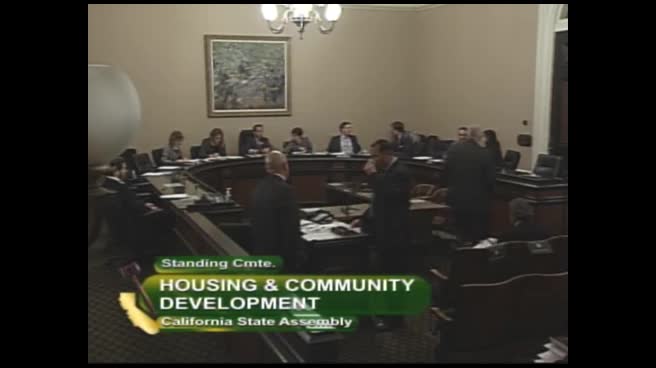
- Double Referral: This bill was double-referred to the Committee on Housing and Community Development, which passed this bill on April 5, 2017, with a vote of 7-0. Please refer to the analysis prepared by the Committee on Housing and Community Development for additional consideration of issues related to housing programs.
- Related Legislation: AB 198 (Patterson) allows an "above-the-line" deduction in calculating AGI for amounts paid or incurred by a qualified first-time home buyer for specified home-buying expenses. AB 198 has been referred to the Committee on Appropriations' Suspense File.
- Prior Legislation: AB 1736 (Steinorth), of the 2015-16 Legislative Session, was substantially similar to this bill, although its provisions would have only been effective for two taxable years and subject to appropriation in the state budget. AB 1736 was held on the Committee on Appropriations' Suspense File.
REGISTERED SUPPORT / OPPOSITION:
Support
California Association of Realtors (If Amended)
California Building Industry Association
California Council for Affordable Housing
California Credit Union League
Habitat for Humanity California
Opposition
California Professional Firefighters
California Tax Reform Association
Analysis Prepared by: Irene Ho / REV. & TAX. / (916) 319-2098
Date of Hearing: April 5, 2017
ASSEMBLY COMMITTEE ON HOUSING AND COMMUNITY DEVELOPMENT
David Chiu, Chair
ABPCA Bill Id:AB 53 (
Author:Steinorth) – As Introduced Ver:December 5, 2016
SUBJECT: Personal income taxes: deduction: homeownership savings accounts
SUMMARY: Creates a “Homeownership Savings Account” (HSA) with account requirements and limitations similar to those governing Individual Retirement Accounts (IRAS). Specifically, this bill:
- Excludes from gross income any income accruing to the HSA during the taxable years commencing on or after January 1, 2017.
- Allows a deduction equal to the amount deposited in the HSA by a qualified taxpayer in any taxable year commencing on or after January 1, 2017, not to exceed:
- $20,000 for qualified taxpayers who are married filing a joint return, a head of household, and surviving spouses.
- $10,000 for qualified taxpayers filing a return other than those specified.
- Provides that amounts may be withdrawn to pay for qualified homeownership expenses.
- Specifies that any withdrawals for other than qualified expenses shall be included in income of the payee or distributee for the taxable year in which the payment or distribution is made unless the payment or distribution is used to pay for the homeownership savings expenses of a qualified taxpayer who established the account.
- Defines “Homeownership Savings Account” as a trust that meets all of the following requirements:
- Is designated as a homeownership savings account by the trustee;
- Is established for the exclusive benefit of any qualified taxpayer establishing the account where the written governing instrument creating the account provides for the following:
- All contributions to the account are required to be in cash; and
- The account is established to pay, pursuant to the requirements and limitations of this section, for the qualified homeownership savings expenses of a qualified taxpayer establishing the account.
- Is, except as otherwise required or authorized by this section, subject to the same requirements and limitations as an IRA established under Section 408 of the Internal Revenue Code, relating to individual retirement accounts, and any regulations adopted thereunder.
- Is the only homeownership savings account established by the qualified taxpayer.
- Defines “Qualified homeownership expense” as expenses, including a down payment or closing costs, paid or incurred in connection with the purchase of a qualified taxpayer’s principal residence in California for use by that taxpayer who established the
- Defines “Qualifed taxpayer” as any individual, or individual’s spouse, who had no present ownership interest in a principal residence during the preceding three-year period ending on the date of the purchase of the principal residence subject to the contribution allowed by this section.
- Defines “Trustee” as defined under a traditional IRA.
- Takes effect immediately as a tax levy.
EXISTING LAW:
- Allows various deductions and exclusions in computing taxable income under the Personal Income Tax Law.
- Provides that amounts held in a traditional IRA are generally included as income when withdrawn, except to the extent the withdrawal is a return of nondeductible contributions. Withdrawals are subject to an additional state tax of 2.5% if it is withdrawn prior to age 59, with some exceptions. Specifically, the taxpayer is not subject to the early withdrawal tax if the withdrawal is used for first-time homebuyer expenses of up to $10,000.
- Specifies that the California Housing Finance Agency (CalHFA) provide down payment assistance in the form of deferred payment, low-interest; and junior mortgage loans which are designed to reduce principle and interest payments to make financing affordable for first time low and moderate income homebuyers. In most cases, CalHFA programs may be used in conjunction with other first-time homebuyer programs, including programs offered by nonprofit entities.
FISCAL EFFECT: Unknown
COMMENTS:
Background:
The most significant investment the state makes each year in housing is through the mortgage interest deduction on primary residences. The Franchise Tax Board (FTB) estimated that the impact of the mortgage interest deduction on state revenues for 2016-2017 was $5 billion dollars. In addition to the mortgage interest deduction homeowners receive on their primary residence FTB estimates the mortgage interest deduction for second homes for 2016-2017 will result in an estimated $360 million in revenue loss. Funding for affordable housing production and programs to assist lower income families become homeowners has been largely eliminated in the past few years. Proposition 46 of 2002 and Proposition 1C of 2006 together provided $4.95 billion for affordable housing. These funds financed the construction, rehabilitation, and preservation of 57,220 affordable apartments, including 2,500 supportive homes for people experiencing homelessness, and over 11,600 shelter spaces. In addition, these funds have helped 57,290 families become or remain homeowners. Nearly all of these funds have been awarded.
The California Housing Finance Agency (CalHFA) operates the California Homeowner Downpayment Assistance Program (CHDAP) and provides homebuyers between 3% and 6% in downpayment assistance secured as a second mortgage on the home. The program operates as a revolving loan and when a home is sold CalHFA is repaid allowing the funds to go to another homebuyer. There is approximately $150 million available in CHDAP at this time. The program can provide downpayments to individuals that make up to 120% of the area median income (AMI) and just recently raised its income limits to 140% of AMI in high cost areas. CalHFA operates independently of the state General Fund and derives the funding for its downpayment assistance program from the sale of bonds.
This bill allows taxpayers to contribute up to $20,000 a year, for a married couple filing joint returns, and $10,000 for a single filers to a HSA. The contribution to the HSA is not subject to income taxes until the taxpayer withdrawals the funds to use toward the purchase of a home. Taxpayers who have not owned a home within the last three years would be eligible for the HSA program.
Purpose of this bill: According to the author “The cost of housing in California is significant. According to the nonpartisan Legislative Analyst’s Office, California has the second-highest median home price in the nation and residents’ housing costs, as a share of income, remain far above the national average. In fact, over half of middle-class California families spend more than 30 percent of their income on housing. Increased housing costs lead to significant trade-offs for the middle and lower-income California family, including foregoing homeownership, living in more crowded housing, commuting farther to work each day, or choosing to work and live elsewhere. Homeownership is also a powerful tool for economic mobility. As discussed in the 2015 LAO report on California’s housing costs, homeowners accrue a much greater amount of savings and net worth than renters. Unfortunately, high home prices are an impediment to this clear benefit. California faces the challenge of increasing access to homeownership with limited state resources. In similar situations, governments have used tax incentives as a cost-effective solution. For example, states have enacted significant tax deductions for college savings accounts to make investing in higher education more affordable for parents."
Arguments in support: According to the California Association of Realtors, "the cost of housing in California has proven to be a significant impediment to home ownership. Increased housing costs often lead to significant trade-offs for California families, such as postponing or foregoing homeownership, living in more crowded housing, commuting further to work each day, or choosing to work and live in an area where housing costs have not increased significantly. AB 53 presents a significant opportunity for homeownership to individuals and families who have never owned a home, or who are priced out of the housing market in recent years. "
Arguments in opposition: According to the California Professional Firefighters, "there already exists a state and federal program designed to assist homebuyers. AB 53 is unlikely to increase homeownership outside of the population of California taxpayers who are already likely to purchase a home. The Great Recession forced public agencies up and down our state to implement hard-dollar cuts in core public services including fire protection as a result of severely squeezed budgets. Any policy impacting state or local revenue must be measured against the need to property fund essential government services, such as fire protection services. "
Related legislation: Last year, AB 1736 (Steinorth) was voted out of this committee 7-0 with committee amendments to limit the homeownership savings account to individuals earning 80% or less and to a taxpayers first home purchase. AB 1736 was held on suspense in Assembly Appropriations Committee.
Staff comments:
Unlike CHDAP, the funding for this program would come from a reduction in state revenues and would be a one-time investment in one individual rather than function as a revolving loan fund. The Franchise Tax Board estimated that the cost of AB 1736 (Steinorth), a similar bill to AB 53, would result in an annual revenue loss of $220 million in the fiscal year (FY) 2017-18 and $450 million in FY 2018-19. The committee may wish to consider if this is the right investment considering the affordable housing challenges facing the state. The committee may wish to consider whether there should be some income limitation on those who can qualify for a HSA to focus this bill on lower income individuals.
Committee amendments:
When this committee heard a bill identical to this one last session, the committee requested and the author agreed to the following amendments. The committee may wish to consider requesting these amendments again:
- Only allow taxpayers that make up to 80% of AMI qualify to create a HSA. If a taxpayer's income exceeds 80% AMI in any given year they cannot contribute to the HSA.
- Change the definition of "first time homebuyers" from taxpayers that have not owned a home within the last three years to a taxpayer who has never owned a home.
Double referred: If AB 53 passes out of this committee, the bill will be referred to the Committee on Revenue and Taxation.
REGISTERED SUPPORT / OPPOSITION:
Support
California Association of Community Managers
California Association of Mortgage Professionals
California Association of Realtors
Habitat for Humanity California
League of California Cities
Southwest California Legislative Council
Southwest Riverside County Association of Realtors
Western Manufactured Housing Communities Association
Opposition
California Professional Firefighters
Analysis Prepared by: Lisa Engel / H. & C.D. / 916-319-2085
Discussed in Hearing
 1H
Assembly Standing Committee on Appropriations
 4MIN
Assembly Standing Committee on Revenue and Taxation
 5MIN