AB 624: Income taxes: credit: robotics club donation.
- Session Year: 2017-2018
- House: Assembly
- Latest Version Date: 2017-04-25
The Personal Income Tax Law and the Corporation Tax Law authorize various credits against the taxes imposed by those laws.
This bill, under both laws, for taxable years beginning on or after January 1, 2018, and before January 1, 2023, would allow as a credit against those taxes an amount equal to 50% of the qualified amount paid or incurred, not to exceed $10,000, to a robotics club at a school in California during the taxable year. The bill would limit the aggregate amount of these credits to be allocated in each calendar year to up to $1,000,000. The bill would require the Franchise Tax Board to allocate and certify these tax credits to taxpayers on a first-come-first-served basis.
This bill would take effect immediately as a tax levy.
The Personal Income Tax Law and the Corporation Tax Law authorize various credits against the taxes imposed by those laws.
This bill, under both laws, would allow as a credit against those taxes an amount equal to 50% of the qualified amount paid or incurred, not to exceed $10,000, to a robotics club at a school in California during the taxable year.
This bill would take effect immediately as a tax levy.
(a)For each taxable year beginning on or after January 1, 2018, and before January 1, 2023, there shall be allowed as a credit against the net tax, as defined in Section 17039, an amount equal to 50 percent of the qualified amount paid or incurred, not to exceed ten thousand dollars ($10,000), to a robotics club during the taxable year.
(b)For purposes of this section:
(1)Qualified amount means the amount paid or incurred for robotics club competition entry fees and associated travel and amounts for the acquisition of materials and equipment.
(2)Robotics club means a STEM club at a kindergarten or any of grades 1 to 12, inclusive, at a public, charter charter, or private school in California. California that competes in robotics competitions.
(c)The aggregate amount of credits that may be allocated pursuant to this section and Section 23645 shall be an amount equal to the sum of the following:
(1)One million dollars ($1,000,000) in credits for each calendar year.
(2)The unused allocation credit amount, if any, for the preceding calendar year.
(d)For the purposes of this section, the Franchise Tax Board shall do both of the following:
(1)On or after January 1, 2018, and before January 1, 2023, allocate and certify tax credits to taxpayers on a first-come-first-served basis by determining and designating applicants who meet the requirements of this section.
(2)Once the credits allocated exceed the limit established in subdivision (c), the Franchise Tax Board shall cease to allocate and certify tax credits to taxpayers.
(c)(e)In the case where the credit allowed by this section exceeds the net tax, the excess may be carried over to reduce the net tax in the following taxable year, and succeeding years if necessary, until the credit is exhausted.
(d)(f)A deduction shall not be allowed under Article 6 (commencing with Section 17201) of Chapter 3 of Part 10 for any contribution made pursuant to subdivision (a).
(g)This section shall remain in effect only until December 1, 2023, and as of that date is repealed.
SEC. 2.Section 23645 is added to the Revenue and Taxation Code, to read:23645.(a)For each taxable year beginning on or after January 1, 2018, and before January 1, 2023, there shall be allowed as a credit against the tax, as defined in Section 23036, an amount equal to 50 percent of the qualified amount paid or incurred, not to exceed ten thousand dollars ($10,000), to a robotics club during the taxable year.
(b)For purposes of this section:
(1)Qualified amount means the amount paid or incurred for robotics club competition entry fees and associated travel and amounts for the acquisition of materials and equipment.
(2)Robotics club means a STEM club at a kindergarten or any of grades 1 to 12, inclusive, at a public, charter charter, or private school in California. California that competes in robotics competitions.
(c)The aggregate amount of credits that may be allocated pursuant to this section and Section 17053.45 shall be an amount equal to the sum of the following:
(1)One million dollars ($1,000,000) in credits for each calendar year.
(2)The unused allocation credit amount, if any, for the preceding calendar year.
(d)For the purposes of this section, the Franchise Tax Board shall do both of the following:
(1)On or after January 1, 2018, and before January 1, 2023, allocate and certify tax credits to taxpayers on a first-come-first-served basis by determining and designating applicants who meet the requirements of this section.
(2)Once the credits allocated exceed the limit established in subdivision (c), the Franchise Tax Board shall cease to allocate and certify tax credits to taxpayers.
(c)(e)In the case where the credit allowed by this section exceeds the tax, the excess may be carried over to reduce the tax in the following taxable year, and succeeding years if necessary, until the credit is exhausted.
(d)(f)A deduction shall not be allowed under Article 1 (commencing with Section 24341) of Chapter 7 of Part 11 for any contribution made pursuant to subdivision (a).
(g)This section shall remain in effect only until December 1, 2023, and as of that date is repealed.
SEC. 3.It is the intent of the Legislature to comply with Section 41 of the Revenue and Taxation Code.
SEC. 4.This act provides for a tax levy within the meaning of Article IV of the California Constitution and shall go into immediate effect.
(a)For each taxable year beginning on or after January 1, 2018, there shall be allowed as a credit against the net tax, as defined in Section 17039, an amount equal to 50 percent of the qualified amount paid or incurred, not to exceed ten thousand dollars ($10,000), to a robotics club during the taxable year.
(b)For purposes of this section:
(1)Qualified amount means the amount paid or incurred for robotics club competition entry fees and associated travel and amounts for the acquisition of materials and equipment.
(2)Robotics club means a club at a kindergarten or any of grades 1 to 12, inclusive, at a public, charter or private school in California.
(c)In the case where the credit allowed by this section exceeds the net tax, the excess may be carried over to reduce the net tax in the following taxable year, and succeeding years if necessary, until the credit is exhausted.
(d)A deduction shall not be allowed under Article 6 (commencing with Section 17201) of Chapter 3 of Part 10 for any contribution made pursuant to subdivision (a).
SEC. 2.Section 23645 is added to the Revenue and Taxation Code, to read:23645.(a)For each taxable year beginning on or after January 1, 2018, there shall be allowed as a credit against the tax, as defined in Section 23036, an amount equal to 50 percent of the qualified amount paid or incurred, not to exceed ten thousand dollars ($10,000), to a robotics club during the taxable year.
(b)For purposes of this section:
(1)Qualified amount means the amount paid or incurred for robotics club competition entry fees and associated travel and amounts for the acquisition of materials and equipment.
(2)Robotics club means a club at a kindergarten or any of grades 1 to 12, inclusive, at a public, charter or private school in California.
(c)In the case where the credit allowed by this section exceeds the tax, the excess may be carried over to reduce the tax in the following taxable year, and succeeding years if necessary, until the credit is exhausted.
(d)A deduction shall not be allowed under Article 1 (commencing with Section 24341) of Chapter 7 of Part 11 for any contribution made pursuant to subdivision (a).
SEC. 3.It is the intent of the Legislature to comply with Section 41 of the Revenue and Taxation Code.
SEC. 4.This act provides for a tax levy within the meaning of Article IV of the California Constitution and shall go into immediate effect.
REVISIONS: HeadingLine 3.|
Date
|
Status
|
|---|---|
| Feb 1, 2018 | From committee: Filed with the Chief Clerk pursuant to Joint Rule 56. |
| Jan 31, 2018 | Died pursuant to Art. IV, Sec. 10(c) of the Constitution. |
| May 26, 2017 | In committee: Held under submission. |
| May 3, 2017 | In committee: Set, first hearing. Referred to APPR. suspense file. |
| Apr 26, 2017 | Re-referred to Com. on APPR. |
| Apr 25, 2017 | Read second time and amended. |
| Apr 24, 2017 | From committee: Amend, and do pass as amended and re-refer to Com. on APPR. (Ayes 7. Noes 2.) (April 17). |
| Mar 27, 2017 | In committee: Hearing postponed by committee. |
| Mar 20, 2017 | In committee: Hearing postponed by committee. |
| Mar 14, 2017 | Coauthors revised. |
| Mar 2, 2017 | Referred to Com. on REV. & TAX. |
| Feb 15, 2017 | From printer. May be heard in committee March 17. |
| Feb 14, 2017 | Read first time. To print. |
|
Date
|
Description
|
Location
|
Votes
|
|
|---|---|---|---|---|
| Apr 17, 2017 | Do pass as amended and be re-referred to the Committee on [Appropriations] | Assembly Standing Committee on Revenue and Taxation |
Passed |
This list shows positions taken on this bill by organizations on the date displayed, which is linked to the original source.
Positions by individuals are not included.
|
Organization
|
Position
|
Date
|
|---|---|---|
| 50 individuals | ** Support | Mar 24, 2017 |
| 92 individuals | ** Support | Apr 14, 2017 |
| And Technology | ** Support | Apr 14, 2017 |
| Barobo | * Support | Apr 17, 2017 |
| California Tax Reform Association | ** Against | Apr 14, 2017 |
| California Teachers Association | ** Against | Apr 14, 2017 |
| For Inspiration and Recognition of Science | ** Support | Apr 14, 2017 |
| Million Women Mentors, California | ** Support | Apr 14, 2017 |
Date of Hearing: May 3, 2017
ASSEMBLY COMMITTEE ON APPROPRIATIONS
Lorena Gonzalez Fletcher, Chair
ABPCA Bill Id:AB 624
Author:(Maienschein) – As Amended Ver:April 25, 2017
Policy Committee: | Revenue and Taxation | Vote: | 7 - 2 |
|
| ||
|
|
Urgency: Yes State Mandated Local Program: No Reimbursable: No
SUMMARY:
This bill allows a Personal Income Tax (PIT) and Corporation Tax (CT) credit, for taxable years 2017 through 2023, equal to 50% of amounts donated to robotics clubs at California schools. The credit cannot exceed $10,000 per taxpayer and the total amount of credits provided each year cannot exceed $1 million. This bill requires the Franchise Tax Board (FTB) to allocate credits on a first-come, first serve basis.
FISCAL EFFECT:
- Significant administrative GF costs in excess of $150,000 annually for the Franchise Tax Board (FTB) to implement and run the capped credit program, as required by this bill.
- Annual GF revenue loss of up to $1 million annually.
COMMENTS:
- Purpose. According to the author, AB 624 will support the growth of the STEM fields. Supporters of the bill note that this bill will augment fundraising efforts at schools to make robotics a key component of education, which will help prepare students for the jobs of the future.
- Capped credits and fiscal implications. Existing law provides various credits, deductions, exclusions, and exemptions for particular taxpayer groups. These features of tax law are referred to as "expenditures" since they are generally enacted to accomplish some governmental purpose and there is a determinable cost associated with each (in the form of foregone revenues). One ongoing concern about tax expenditures is the lack of control over revenue losses, since the number of taxpayers taking advantage of any given tax expenditure can vary each year.
A recent policy committee amendment caps the total aggregate amount of tax credits that can be allocated to $1 million each year. This new cap greatly limits the potential revenue loss associated with this new tax credit, and it creates certainty for the state’s finances. However, it also creates additional administrative complexity that results in significant implementation costs. As this bill is written, many California taxpayers will claim the credit but not receive it, potentially resulting in them underpaying taxes as result of no longer receiving a $10,000 tax credit. Given the generosity of the credit, it can be expected that far more than $1 million in credits will be claimed. FTB will need to develop a process to both allocate credits on a first-come, first-serve basis and respond to inquiries from taxpayers about why their tax liability rose so significantly following a rejection of their claimed robotics club credit on their annual tax return.
- Credit generosity. The generous size of this credit ($10,000) means that high-income households can make significant donations to eligible clubs at little cost. While these contributions cannot be used for the state deduction on charitable giving, the taxpayer can still deduct the donation from their federal taxes. For example, a household can donate $20,000 and receive a $10,000 credit, while also deducting the original $20,000 from their federal income tax return. In essence, this bill allows such a taxpayer to donate $20,000 for the actual cost of around $5,000. This scenario is one utilized by the California Access Tax Credit (CATC). The idea behind that program is to leverage the combination of a tax credit and the federal charitable giving deduction in order to encourage large donations to the Cal Grant program at little cost to the donor. AB 490 (Quirk Silva), pending in this committee, extends the CATC program through 2022.
Analysis Prepared by: Luke Reidenbach / APPR. / (916) 319-2081
Date of Hearing: April 17, 2017
ASSEMBLY COMMITTEE ON REVENUE AND TAXATION
Sebastian Ridley-Thomas, Chair
ABPCA Bill Id:AB 624 (
Author:Maienschein) – As Introduced Ver:February 14, 2017
Majority vote. Tax levy. Fiscal committee.
SUBJECT: Income taxes: credit: robotics club donation
SUMMARY: Allows a tax credit, under both the Personal Income Tax (PIT) Law and the Corporation Tax (CT) Law, equal to 50% of the "qualified amount" paid or incurred, not to exceed $10,000, to a "robotics club" during the taxable year. Specifically, this bill:
- Allows the credit for taxable years beginning on or after January 1, 2018.
- Defines a "qualified amount" as the amount paid or incurred for "robotics club" competition entry fees and associated travel and amounts for the acquisition of materials and equipment.
- Defines a "robotics club" as a club at a Kindergarten or any of Grades 1 to 12, inclusive, at a public, charter, or private school in California.
- Provides that, in cases where the credit amount exceeds the taxpayer's tax liability, the excess may be carried over to the following year, and succeeding years if necessary, until the credit is exhausted.
- Disallows a deduction for any contribution made.
- States that it is the intent of the Legislature to comply with Revenue and Taxation Code (R&TC) Section 41.
- Takes immediate effect as a tax levy.
EXISTING LAW:
- Allows various tax credits under the PIT Law and the CT Law. These credits are generally designed to encourage socially beneficial behavior or to provide relief to taxpayers who incur specified expenses.
- Allows taxpayers to claim a charitable contribution as an itemized deduction.
- Requires any bill authorizing a new credit to contain all of the following:
- Specific goals, purposes, and objectives that the tax credit will achieve;
- Detailed performance indicators for the Legislature to use when measuring whether the tax credit meets the goals, purposes, and objectives stated in the bill; and,
- Data collection requirements to enable the Legislature to determine whether the tax credit is meeting, failing to meet, or exceeding those specific goals, purposes, and objectives. The requirements shall include the specific data and baseline measurements to be collected and remitted in each year the credit is in effect, for the Legislature to measure the change in performance indicators, and the specific taxpayers, state agencies, or other entities required to collect and remit data. (R&TC Section 41.)
FISCAL EFFECT: The Franchise Tax Board (FTB) estimates General Fund revenue losses of $37 million in fiscal year (FY) 2017-18, $360 million in FY 2018-19, and $470 million in FY 2019-20.
COMMENTS:
- The author has provided the following statement in support of this bill:
AB 624 supports the growth of STEM fields, as well as the education of our students alike.
- Proponents of this bill note the following:
AB 624 proposes a tax credit equal to 50% of the qualified amount paid or incurred, not to exceed $10,000, to a robotics club at a school in California during the taxable year. Such an incentive will go a long way in helping us augment fundraising efforts at our schools to help allow Robotics in preparing our students for 21st century STEM jobs. The more we can encourage Robotics in high school and middle school, the better trained California's workforce will be.
- This bill is opposed by the California Tax Reform Association, which notes the following:
To the extent that robotics is an important part of our technological future, the direct use of expenditures within the educational system rather than tax credits will be much more effective. To the extent that club support may be just as important for other activities, it makes little sense to single out robotics for this state subsidy through the tax system.
- The FTB notes the following in its staff analysis of this bill:
- "This bill lacks administrative details necessary to administer the bill's provisions. For example, the amount of the credit is unclear. Does the $10,000 cap apply to the amount of credit per taxable year or the costs eligible for calculating the credit per taxable year? Additionally, it is unclear if the maximum credit for a jointly filed return would be $20,000. For clarity and ease of administration, it is recommended that the bill be amended."
- "This bill would allow a credit for qualified expenses that are paid directly by the taxpayer on behalf of a robotics club and amounts contributed directly to the robotics club. If this is inconsistent with the author's intent, this bill should be amended."
- "Additionally, to verify that the amounts paid or incurred meet the credit requirements, the author may wish to consider amending the bill to require certification of qualified amounts by the school or "robotics club" that includes the following:
- “The school's name and address.
- “The club's name.
- “The taxpayer's name.
- “The amount received and date of receipt."
- "The defined phrase ‘qualified amount’ uses undefined terms and phrases that could be broadly interpreted. For example:
- " ‘Robotics club entry fees and associated travel’ would potentially include amounts paid for a specific student or dependent of the taxpayer participating in robotics club competitions, as well as travel expenses for both the student and parents.
- " ‘Materials and equipment’ would potentially include materials and equipment used for purposes other than robotics clubs and competitions."
- Committee staff comments:
- What is a "tax expenditure"? Existing law provides various credits, deductions, exclusions, and exemptions for particular taxpayer groups. In the late 1960s, U.S. Treasury officials began arguing that these features of the tax law should be referred to as "expenditures" since they are generally enacted to accomplish some governmental purpose and there is a determinable cost associated with each (in the form of foregone revenues).
- How is a tax expenditure different from a direct expenditure? As the Department of Finance notes in its annual Tax Expenditure Report, there are several key differences between tax expenditures and direct expenditures. First, tax expenditures are reviewed less frequently than direct expenditures once they are put in place. While this affords taxpayers greater financial predictability, it can also result in tax expenditures remaining a part of the tax code without demonstrating any public benefit. Second, there is generally no control over the amount of revenue losses associated with any given tax expenditure. Finally, it should also be noted that, once enacted, it takes a two-thirds vote to rescind an existing tax expenditure absent a sunset date, effectively resulting in a "one-way ratchet" whereby tax expenditures can be conferred by majority vote, but cannot be rescinded, irrespective of their cost or efficacy, without a supermajority vote.
- What would this bill do? This bill would enact a new tax credit, under both the PIT Law and the CT Law, equal to 50% of qualified amounts paid to a robotics club at a school in California during the taxable year. The credit would apply for each taxable year beginning on or after January 1, 2018. Committee staff understands that the proposed credit seeks to support student interest in science, technology, engineering, mathematics, and robotics.
- A note on sunsets: In its current form, this bill does not include a sunset provision for the credit. This Committee has a longstanding policy favoring the inclusion of sunset dates to allow periodic legislative review of tax expenditure programs. As such, the author and Committee may wish to consider adding an appropriate sunset provision to this bill.
- R&TC Section 41: On September 29, 2014, Governor Brown signed SB 1335 (Leno), Chapter 845, Statutes of 2014, which added R&TC Section 41. SB 1335 recognized that the Legislature should apply the same level of review used for government spending programs to tax preference programs, including tax credits. Thus, Section 41 requires any bill introduced on or after January 1, 2015 that allows a new income tax credit to contain specific goals, purposes, and objectives that the tax credit will achieve. In addition, Section 41 requires detailed performance indicators for the Legislature to use when measuring whether the tax credit meets the goals, purposes, and objectives so-identified.
- What is a "tax expenditure"? Existing law provides various credits, deductions, exclusions, and exemptions for particular taxpayer groups. In the late 1960s, U.S. Treasury officials began arguing that these features of the tax law should be referred to as "expenditures" since they are generally enacted to accomplish some governmental purpose and there is a determinable cost associated with each (in the form of foregone revenues).
This bill states that "[i]t is the intent of the Legislature to comply" with R&TC Section 41, but does not specify the means of compliance. Critics might argue that by not fully complying with Section 41 this bill exacerbates one of the primary problems inherent in crafting tax expenditure measures – namely, it is often unclear what objectives the Legislature is aiming to achieve and how it plans to measure the attainment of such objectives.
- Vague definitions: In its present form, this bill uses a number of rather vague definitions. For example, this bill defines a "robotics club" as a club at a Kindergarten or any of Grades 1 to 12 at a public, charter, or private school in California. While it seems clear that the author is seeking to encourage contributions to school clubs that build robotics equipment for competition, this intent is not made expressly evident in the definition. Indeed, one could make a reasonable argument that this definition includes any type of school club, be it a chess club, drama club, or model United Nations. Greater definitional precision would be useful to prevent both confusion and potential disputes between taxpayers and the FTB. In addition, covering all grades from Kindergarten through high school may encompass clubs beyond those typically contemplated when one imagines the average high school or even middle school robotics club. If this is contrary to the author's intent, additional clarifying amendments may be useful.
- Examining the scope: Clearly, there is great value in encouraging young Californians to learn about science and robotics. The robotics industry has experienced dramatic changes in recent years as the cost of components, sensors, and even vision systems has dropped. Indeed, technological advancements are continuing to drive an expansion of new applications for robot use, from manufacturing to personal care. That said, the Committee may wish to consider whether the state should effectively subsidize one particular field of student interest. Are robotics clubs inherently more worthy of state support than clubs dedicated to music, drama, literature, or civic engagement? While every tax expenditure program contains subjective assessments regarding what activities are worthy of encouragement, this question comes into even starker relief when one considers that a 50% credit is extremely generous by comparison to most other credits in state law. Finally, the Committee may wish to consider the implications of opening this credit up to both public and private schools. Should a donation to a well-funded private high school club receive the same incentive as a donation to a new or underfunded public school counterpart?
- Unlimited carryover: This bill allows a taxpayer to carry forward any unused credit amount to the following year, and succeeding years if needed, until the credit is exhausted. By allowing for an indefinite carryover period, this bill would require the FTB to maintain this credit on its forms in perpetuity. Moreover, experience has shown that the vast majority of credits are fully utilized within seven or eight years. Thus, the author and Committee may wish to limit the carryforward period in keeping with this Committee's past practice.
- Vague definitions: In its present form, this bill uses a number of rather vague definitions. For example, this bill defines a "robotics club" as a club at a Kindergarten or any of Grades 1 to 12 at a public, charter, or private school in California. While it seems clear that the author is seeking to encourage contributions to school clubs that build robotics equipment for competition, this intent is not made expressly evident in the definition. Indeed, one could make a reasonable argument that this definition includes any type of school club, be it a chess club, drama club, or model United Nations. Greater definitional precision would be useful to prevent both confusion and potential disputes between taxpayers and the FTB. In addition, covering all grades from Kindergarten through high school may encompass clubs beyond those typically contemplated when one imagines the average high school or even middle school robotics club. If this is contrary to the author's intent, additional clarifying amendments may be useful.
REGISTERED SUPPORT / OPPOSITION:
Support
For Inspiration and Recognition of Science
And Technology
FTC 11128 Team Inspiration
Million Women Mentors, California
92 individuals
Opposition
California Tax Reform Association
California Teachers Association
Analysis Prepared by: M. David Ruff / REV. & TAX. / (916) 319-2098
Date of Hearing: March 27, 2017
ASSEMBLY COMMITTEE ON REVENUE AND TAXATION
Sebastian Ridley-Thomas, Chair
ABPCA Bill Id:AB 624 (
Author:Maienschein) – As Introduced Ver:February 14, 2017
Majority vote. Tax levy. Fiscal committee.
SUBJECT: Income taxes: credit: robotics club donation
SUMMARY: Allows a tax credit, under both the Personal Income Tax (PIT) Law and the Corporation Tax (CT) Law, equal to 50% of the "qualified amount" paid or incurred, not to exceed $10,000, to a "robotics club" during the taxable year. Specifically, this bill:
- Allows the credit for taxable years beginning on or after January 1, 2018.
- Defines a "qualified amount" as the amount paid or incurred for "robotics club" competition entry fees and associated travel and amounts for the acquisition of materials and equipment.
- Defines a "robotics club" as a club at a Kindergarten or any of Grades 1 to 12, inclusive, at a public, charter, or private school in California.
- Provides that, in cases where the credit amount exceeds the taxpayer's tax liability, the excess may be carried over to the following year, and succeeding years if necessary, until the credit is exhausted.
- Disallows a deduction for any contribution made.
- States that it is the intent of the Legislature to comply with Revenue and Taxation Code (R&TC) Section 41.
- Takes immediate effect as a tax levy.
EXISTING LAW:
- Allows various tax credits under the PIT Law and the CT Law. These credits are generally designed to encourage socially beneficial behavior or to provide relief to taxpayers who incur specified expenses.
- Allows taxpayers to claim a charitable contribution as an itemized deduction.
- Requires any bill authorizing a new credit to contain all of the following:
- Specific goals, purposes, and objectives that the tax credit will achieve;
- Detailed performance indicators for the Legislature to use when measuring whether the tax credit meets the goals, purposes, and objectives stated in the bill; and,
- Data collection requirements to enable the Legislature to determine whether the tax credit is meeting, failing to meet, or exceeding those specific goals, purposes, and objectives. The requirements shall include the specific data and baseline measurements to be collected and remitted in each year the credit is in effect, for the Legislature to measure the change in performance indicators, and the specific taxpayers, state agencies, or other entities required to collect and remit data. (R&TC Section 41.)
FISCAL EFFECT: The Franchise Tax Board (FTB) estimates General Fund revenue losses of $37 million in fiscal year (FY) 2017-18, $360 million in FY 2018-19, and $470 million in FY 2019-20.
COMMENTS:
- The author has provided the following statement in support of this bill:
AB 624 supports the growth of STEM fields, as well as the education of our students alike.
- Proponents of this bill note the following:
AB 624 proposes a tax credit equal to 50% of the qualified amount paid or incurred, not to exceed $10,000, to a robotics club at a school in California during the taxable year. Such an incentive will go a long way in helping us augment fundraising efforts at our schools to help allow Robotics in preparing our students for 21st century STEM jobs. The more we can encourage Robotics in high school and middle school, the better trained California's workforce will be.
- This bill is opposed by the California Tax Reform Association, which notes the following:
To the extent that robotics is an important part of our technological future, the direct use of expenditures within the educational system rather than tax credits will be much more effective. To the extent that club support may be just as important for other activities, it makes little sense to single out robotics for this state subsidy through the tax system.
- The FTB notes the following in its staff analysis of this bill:
- "This bill lacks administrative details necessary to administer the bill's provisions. For example, the amount of the credit is unclear. Does the $10,000 cap apply to the amount of credit per taxable year or the costs eligible for calculating the credit per taxable year? Additionally, it is unclear if the maximum credit for a jointly filed return would be $20,000. For clarity and ease of administration, it is recommended that the bill be amended."
- "This bill would allow a credit for qualified expenses that are paid directly by the taxpayer on behalf of a robotics club and amounts contributed directly to the robotics club. If this is inconsistent with the author's intent, this bill should be amended."
- "Additionally, to verify that the amounts paid or incurred meet the credit requirements, the author may wish to consider amending the bill to require certification of qualified amounts by the school or "robotics club" that includes the following:
- “The school's name and address.
- “The club's name.
- “The taxpayer's name.
- “The amount received and date of receipt."
- "The defined phrase ‘qualified amount’ uses undefined terms and phrases that could be broadly interpreted. For example:
- " ‘Robotics club entry fees and associated travel’ would potentially include amounts paid for a specific student or dependent of the taxpayer participating in robotics club competitions, as well as travel expenses for both the student and parents.
- " ‘Materials and equipment’ would potentially include materials and equipment used for purposes other than robotics clubs and competitions."
- Committee staff comments:
- What is a "tax expenditure"? Existing law provides various credits, deductions, exclusions, and exemptions for particular taxpayer groups. In the late 1960s, U.S. Treasury officials began arguing that these features of the tax law should be referred to as "expenditures" since they are generally enacted to accomplish some governmental purpose and there is a determinable cost associated with each (in the form of foregone revenues).
- How is a tax expenditure different from a direct expenditure? As the Department of Finance notes in its annual Tax Expenditure Report, there are several key differences between tax expenditures and direct expenditures. First, tax expenditures are reviewed less frequently than direct expenditures once they are put in place. While this affords taxpayers greater financial predictability, it can also result in tax expenditures remaining a part of the tax code without demonstrating any public benefit. Second, there is generally no control over the amount of revenue losses associated with any given tax expenditure. Finally, it should also be noted that, once enacted, it takes a two-thirds vote to rescind an existing tax expenditure absent a sunset date, effectively resulting in a "one-way ratchet" whereby tax expenditures can be conferred by majority vote, but cannot be rescinded, irrespective of their cost or efficacy, without a supermajority vote.
- What would this bill do? This bill would enact a new tax credit, under both the PIT Law and the CT Law, equal to 50% of qualified amounts paid to a robotics club at a school in California during the taxable year. The credit would apply for each taxable year beginning on or after January 1, 2018. Committee staff understands that the proposed credit seeks to support student interest in science, technology, engineering, mathematics, and robotics.
- A note on sunsets: In its current form, this bill does not include a sunset provision for the credit. This Committee has a longstanding policy favoring the inclusion of sunset dates to allow periodic legislative review of tax expenditure programs. As such, the author and Committee may wish to consider adding an appropriate sunset provision to this bill.
- R&TC Section 41: On September 29, 2014, Governor Brown signed SB 1335 (Leno), Chapter 845, Statutes of 2014, which added R&TC Section 41. SB 1335 recognized that the Legislature should apply the same level of review used for government spending programs to tax preference programs, including tax credits. Thus, Section 41 requires any bill introduced on or after January 1, 2015 that allows a new income tax credit to contain specific goals, purposes, and objectives that the tax credit will achieve. In addition, Section 41 requires detailed performance indicators for the Legislature to use when measuring whether the tax credit meets the goals, purposes, and objectives so-identified.
- What is a "tax expenditure"? Existing law provides various credits, deductions, exclusions, and exemptions for particular taxpayer groups. In the late 1960s, U.S. Treasury officials began arguing that these features of the tax law should be referred to as "expenditures" since they are generally enacted to accomplish some governmental purpose and there is a determinable cost associated with each (in the form of foregone revenues).
This bill states that "[i]t is the intent of the Legislature to comply" with R&TC Section 41, but does not specify the means of compliance. Critics might argue that by not fully complying with Section 41 this bill exacerbates one of the primary problems inherent in crafting tax expenditure measures – namely, it is often unclear what objectives the Legislature is aiming to achieve and how it plans to measure the attainment of such objectives.
- Vague definitions: In its present form, this bill uses a number of rather vague definitions. For example, this bill defines a "robotics club" as a club at a Kindergarten or any of Grades 1 to 12 at a public, charter, or private school in California. While it seems clear that the author is seeking to encourage contributions to school clubs that build robotics equipment for competition, this intent is not made expressly evident in the definition. Indeed, one could make a reasonable argument that this definition includes any type of school club, be it a chess club, drama club, or model United Nations. Greater definitional precision would be useful to prevent both confusion and potential disputes between taxpayers and the FTB. In addition, covering all grades from Kindergarten through high school may encompass clubs beyond those typically contemplated when one imagines the average high school or even middle school robotics club. If this is contrary to the author's intent, additional clarifying amendments may be useful.
- Examining the scope: Clearly, there is great value in encouraging young Californians to learn about science and robotics. The robotics industry has experienced dramatic changes in recent years as the cost of components, sensors, and even vision systems has dropped. Indeed, technological advancements are continuing to drive an expansion of new applications for robot use, from manufacturing to personal care. That said, the Committee may wish to consider whether the state should effectively subsidize one particular field of student interest. Are robotics clubs inherently more worthy of state support than clubs dedicated to music, drama, literature, or civic engagement? While every tax expenditure program contains subjective assessments regarding what activities are worthy of encouragement, this question comes into even starker relief when one considers that a 50% credit is extremely generous by comparison to most other credits in state law. Finally, the Committee may wish to consider the implications of opening this credit up to both public and private schools. Should a donation to a well-funded private high school club receive the same incentive as a donation to a new or underfunded public school counterpart?
- Unlimited carryover: This bill allows a taxpayer to carry forward any unused credit amount to the following year, and succeeding years if needed, until the credit is exhausted. By allowing for an indefinite carryover period, this bill would require the FTB to maintain this credit on its forms in perpetuity. Moreover, experience has shown that the vast majority of credits are fully utilized within seven or eight years. Thus, the author and Committee may wish to limit the carryforward period in keeping with this Committee's past practice.
- Vague definitions: In its present form, this bill uses a number of rather vague definitions. For example, this bill defines a "robotics club" as a club at a Kindergarten or any of Grades 1 to 12 at a public, charter, or private school in California. While it seems clear that the author is seeking to encourage contributions to school clubs that build robotics equipment for competition, this intent is not made expressly evident in the definition. Indeed, one could make a reasonable argument that this definition includes any type of school club, be it a chess club, drama club, or model United Nations. Greater definitional precision would be useful to prevent both confusion and potential disputes between taxpayers and the FTB. In addition, covering all grades from Kindergarten through high school may encompass clubs beyond those typically contemplated when one imagines the average high school or even middle school robotics club. If this is contrary to the author's intent, additional clarifying amendments may be useful.
REGISTERED SUPPORT / OPPOSITION:
Support
Million Women Mentors, California
50 individuals
Opposition
California Tax Reform Association
Analysis Prepared by: M. David Ruff / REV. & TAX. / (916) 319-2098
Discussed in Hearing
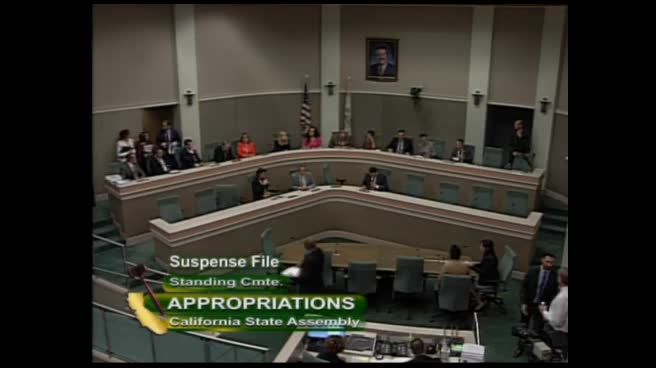 1H
Assembly Standing Committee on Appropriations
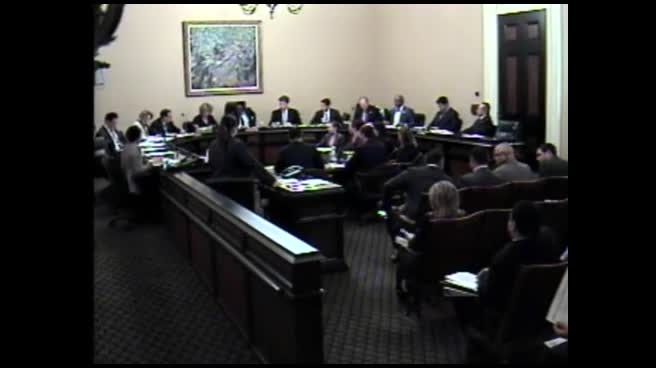 18MIN
Assembly Standing Committee on Revenue and Taxation
Bill Author