AB 900: Crime victims: the California Victim Compensation Board.
- Session Year: 2017-2018
- House: Assembly
- Latest Version Date: 2018-08-31
Existing law governs the procedure by which crime victims may obtain compensation from the Restitution Fund, a continuously appropriated fund. Existing law establishes eligibility for compensation when prescribed requirements are met and authorizes the California Victim Compensation Board to grant compensation from the fund for pecuniary loss when the board determines it will best aid the person seeking compensation. Existing law authorizes the board to provide compensation equal to the loss of income or loss of support, or both, that a victim or derivative victim incurs as a direct result of the victims or derivative victims injury or the victims death.
Under existing law, as amended by Proposition 35, the Californians Against Sexual Exploitation Act, an initiative measure approved by the voters at the November 6, 2012, statewide general election, a person who deprives or violates another persons personal liberty with the intent to obtain forced labor or services or who deprives or violates another persons personal liberty for the purpose of prostitution or sexual exploitation is guilty of human trafficking, a felony.
This bill would authorize the board to provide compensation equal to loss of income or support that a victim incurs as a direct result of the victims deprivation of liberty during the crime, if the qualifying crime is human trafficking, in an amount not exceeding the value of the victims labor as guaranteed under California law for up to 40 hours per week, as specified. The bill would require the board to adopt guidelines on or before July 1, 2019, that allow the board to rely on evidence other than official employment documentation in considering and approving an application for loss of income or support, including any reliable corroborating information approved by the board. The bill would prohibit compensation for loss of income paid by the board if the qualifying crime is human trafficking from exceeding $10,000 per year that the services were performed, for a maximum of 2 years.
By expanding the authorizations for use of moneys in the Restitution Fund, a continuously appropriated fund, this bill would make an appropriation.
This bill would incorporate additional changes to Section 13957 of the Government Code proposed by AB 1865, AB 1939, and SB 1005 to be operative only if this bill and any or all of those bills are enacted and this bill is enacted last.
Existing law governs the procedure by which crime victims may obtain compensation from the Restitution Fund, a continuously appropriated fund. Existing law establishes eligibility for compensation when prescribed requirements are met and authorizes the California Victim Compensation Board to grant compensation from the fund for pecuniary loss when the board determines it will best aid the person seeking compensation. Existing law authorizes the board to provide compensation equal to the loss of income or loss of support, or both, that a victim or derivative victim incurs as a direct result of the victims or derivative victims injury or the victims death.
Under existing law, as amended by Proposition 35, the Californians Against Sexual Exploitation Act, an initiative measure approved by the voters at the November 6, 2012, statewide general election, a person who deprives or violates another persons personal liberty with the intent to obtain forced labor or services or who deprives or violates another persons personal liberty for the purpose of prostitution or sexual exploitation is guilty of human trafficking, a felony.
This bill would authorize the board to provide compensation equal to loss of income or support that a victim incurs as a direct result of the victims deprivation of liberty during the crime, if the qualifying crime is human trafficking, in an amount not exceeding the value of the victims labor as guaranteed under California law for up to 40 hours per week, as specified. The bill would require the board to adopt guidelines on or before July 1, 2019, that allow the board to rely on evidence other than official employment documentation in considering and approving an application for loss of income or support, including any reliable corroborating information approved by the board. The bill would prohibit compensation for loss of income paid by the board if the qualifying crime is human trafficking from exceeding $10,000 per year that the services were performed, for a maximum of 2 years.
By expanding the authorizations for use of moneys in the Restitution Fund, a continuously appropriated fund, this bill would make an appropriation.
Existing law governs the procedure by which crime victims may obtain compensation from the Restitution Fund, a continuously appropriated fund. Existing law establishes eligibility for compensation when prescribed requirements are met and authorizes the California Victim Compensation Board to grant compensation from the fund for pecuniary loss when the board determines it will best aid the person seeking compensation. Existing law authorizes the board to provide compensation equal to the loss of income or loss of support, or both, that a victim or derivative victim incurs as a direct result of the victims or derivative victims injury or the victims death.
Under existing law, as amended by Proposition 35, the Californians Against Sexual Exploitation Act, an initiative measure approved by the voters at the November 6, 2012, statewide general election, a person who deprives or violates another persons personal liberty with the intent to obtain forced labor or services or who deprives or violates another persons personal liberty for the purpose of prostitution or sexual exploitation is guilty of human trafficking, a felony.
This bill would authorize the board to provide compensation equal to loss of income or support that a victim incurs as a direct result of the victims deprivation of liberty during the crime crime, if the qualifying crime is human trafficking. trafficking, in an amount not exceeding the value of the victims labor as guaranteed under California law for up to 40 hours per week, as specified. The bill would require the board to use specified valuation methodologies regarding restitution for human trafficking victims and to adopt guidelines on or before July 1, 2018, 2019, that allow the board to rely on evidence other than official employment documentation in considering and approving an application for loss of income or support, including any reliable corroborating information approved by the board. The bill would prohibit compensation for loss of income from being paid by the board for more than 5 years following the crime, unless the victim is disabled as a direct result of the deprivation of liberty during the crime. if the qualifying crime is human trafficking from exceeding $10,000 per year that the services were performed, for a maximum of 2 years.
By expanding the authorizations for use of moneys in the Restitution Fund, a continuously appropriated fund, this bill would make an appropriation.
Existing law governs the procedure by which crime victims may obtain compensation from the Restitution Fund, a continuously appropriated fund. Existing law establishes eligibility for compensation when prescribed requirements are met and authorizes the California Victim Compensation Board to grant compensation from the fund for pecuniary loss when the board determines it will best aid the person seeking compensation. Existing law authorizes the board to provide compensation equal to the loss of income or loss of support, or both, that a victim or derivative victim incurs as a direct result of the victims or derivative victims injury or the victims death.
Under existing law, as amended by Proposition 35, the Californians Against Sexual Exploitation Act, an initiative measure approved by the voters at the November 6, 2012, statewide general election, a person who deprives or violates another persons personal liberty with the intent to obtain forced labor or services or who deprives or violates another persons personal liberty for the purpose of prostitution or sexual exploitation is guilty of human trafficking, a felony.
This bill would authorize the board to provide compensation equal to loss of income or support that a victim incurs as a direct result of the victims deprivation of liberty during the crime if the qualifying crime is human trafficking. The bill would require the board to use specified valuation methodologies regarding restitution for human trafficking victims and to adopt guidelines on or before July 1, 2018, that allow the board to rely on evidence other than official employment documentation in considering and approving an application for loss of income or support, including any reliable corroborating information approved by the board. The bill would prohibit loss of income from being paid by the board for more than 5 years following the crime, unless the victim is disabled as a direct result of the deprivation of liberty during the crime.
By expanding the authorizations for use of moneys in the Restitution Fund, a continuously appropriated fund, this bill would make an appropriation.
(a)The board may grant for pecuniary loss, when the board determines it will best aid the person seeking compensation, as follows:
(1)Subject to the limitations set forth in Section 13957.2, reimburse the amount of medical or medical-related expenses incurred by the victim for services that were provided by a licensed medical provider, including, but not limited to, eyeglasses, hearing aids, dentures, or any prosthetic device taken, lost, or destroyed during the commission of the crime, or the use of which became necessary as a direct result of the crime.
(2)Subject to the limitations set forth in Section 13957.2, reimburse the amount of outpatient psychiatric, psychological, or other mental health counseling-related expenses incurred by the victim or derivative victim, including peer counseling services provided by a rape crisis center as defined by Section 13837 of the Penal Code, and including family psychiatric, psychological, or mental health counseling for the successful treatment of the victim provided to family members of the victim in the presence of the victim, whether or not the family member relationship existed at the time of the crime, that became necessary as a direct result of the crime, subject to the following conditions:
(A)The following persons may be reimbursed for the expense of their outpatient mental health counseling in an amount not to exceed ten thousand dollars ($10,000):
(i)A victim.
(ii)A derivative victim who is the surviving parent, grandparent, sibling, child, grandchild, spouse, fiance, or fiancee of a victim of a crime that directly resulted in the death of the victim.
(iii)A derivative victim, as described in paragraphs (1) to (4), inclusive, of subdivision (c) of Section 13955, who is the primary caretaker of a minor victim whose claim is not denied or reduced pursuant to Section 13956 in a total amount not to exceed ten thousand dollars ($10,000) for not more than two derivative victims.
(B)The following persons may be reimbursed for the expense of their outpatient mental health counseling in an amount not to exceed five thousand dollars ($5,000):
(i)A derivative victim not eligible for reimbursement pursuant to subparagraph (A), provided that mental health counseling of a derivative victim described in paragraph (5) of subdivision (c) of Section 13955, shall be reimbursed only if that counseling is necessary for the treatment of the victim.
(ii)A minor who suffers emotional injury as a direct result of witnessing a violent crime and who is not eligible for reimbursement of the costs of outpatient mental health counseling under any other provision of this chapter. To be eligible for reimbursement under this clause, the minor must have been in close proximity to the victim when he or she witnessed the crime.
(C)The board may reimburse a victim or derivative victim for outpatient mental health counseling in excess of that authorized by subparagraph (A) or (B) or for inpatient psychiatric, psychological, or other mental health counseling if the claim is based on dire or exceptional circumstances that require more extensive treatment, as approved by the board.
(D)Expenses for psychiatric, psychological, or other mental health counseling-related services may be reimbursed only if the services were provided by either of the following individuals:
(i)A person who would have been authorized to provide those services pursuant to former Article 1 (commencing with Section 13959) as it read on January 1, 2002.
(ii)A person who is licensed in California to provide those services, or who is properly supervised by a person who is licensed in California to provide those services, subject to the boards approval and subject to the limitations and restrictions the board may impose.
(3)Subject to the limitations set forth in Section 13957.5, authorize compensation equal to the loss of income or loss of support, or both, that a victim or derivative victim incurs as a direct result of the victims or derivative victims injury or the victims death. If the qualifying crime is a violation of Section 236.1 of the Penal Code, the board may authorize compensation equal to loss of income or support that a victim incurs as a direct result of the victims deprivation of liberty during the crime, but not exceeding the amount set forth in Section 13957.5. If the victim or derivative victim requests that the board give priority to reimbursement of loss of income or support, the board may not pay medical expenses, or mental health counseling expenses, except upon the request of the victim or derivative victim or after determining that payment of these expenses will not decrease the funds available for payment of loss of income or support.
(4)Authorize a cash payment to or on behalf of the victim for job retraining or similar employment-oriented services.
(5)Reimburse the expense of installing or increasing residential security, not to exceed one thousand dollars ($1,000). Installing or increasing residential security may include, but need not be limited to, both of the following:
(A)Home security device or system.
(B)Replacing or increasing the number of locks.
(6)Reimburse the expense of renovating or retrofitting a victims residence, or the expense of modifying or purchasing a vehicle, to make the residence or the vehicle accessible or operational by a victim upon verification that the expense is medically necessary for a victim who is permanently disabled as a direct result of the crime, whether the disability is partial or total.
(7)(A)Authorize a cash payment or reimbursement not to exceed two thousand dollars ($2,000) to a victim for expenses incurred in relocating, if the expenses are determined by law enforcement to be necessary for the personal safety of the victim or by a mental health treatment provider to be necessary for the emotional well-being of the victim.
(B)The cash payment or reimbursement made under this paragraph shall only be awarded to one claimant per crime giving rise to the relocation. The board may authorize more than one relocation per crime if necessary for the personal safety or emotional well-being of the claimant. However, the total cash payment or reimbursement for all relocations due to the same crime shall not exceed two thousand dollars ($2,000). For purposes of this paragraph, a claimant is the crime victim, or, if the victim is deceased, a person who resided with the deceased at the time of the crime.
(C)The board may, under compelling circumstances, award a second cash payment or reimbursement to a victim for another crime if both of the following conditions are met:
(i)The crime occurs more than three years from the date of the crime giving rise to the initial relocation cash payment or reimbursement.
(ii)The crime does not involve the same offender.
(D)When a relocation payment or reimbursement is provided to a victim of sexual assault or domestic violence and the identity of the offender is known to the victim, the victim shall agree not to inform the offender of the location of the victims new residence and not to allow the offender on the premises at any time, or shall agree to seek a restraining order against the offender. A victim may be required to repay the relocation payment or reimbursement to the board if he or she violates the terms set forth in this paragraph.
(E)Notwithstanding subparagraphs (A) and (B), the board may increase the cash payment or reimbursement for expenses incurred in relocating to an amount greater than two thousand dollars ($2,000), if the board finds this amount is appropriate due to the unusual, dire, or exceptional circumstances of a particular claim.
(F)If a security deposit is required for relocation, the board shall be named as the recipient and receive the funds upon expiration of the victims rental agreement.
(8)When a victim dies as a result of a crime, the board may reimburse any individual who voluntarily, and without anticipation of personal gain, pays or assumes the obligation to pay any of the following expenses:
(A)The medical expenses incurred as a direct result of the crime in an amount not to exceed the rates or limitations established by the board.
(B)The funeral and burial expenses incurred as a direct result of the crime, not to exceed seven thousand five hundred dollars ($7,500). The board shall not create or comply with a regulation or policy that mandates a lower maximum potential amount of an award pursuant to this subparagraph for less than seven thousand five hundred dollars ($7,500).
(9)When the crime occurs in a residence or inside a vehicle, the board may reimburse any individual who voluntarily, and without anticipation of personal gain, pays or assumes the obligation to pay the reasonable costs to clean the scene of the crime in an amount not to exceed one thousand dollars ($1,000). Services reimbursed pursuant to this subdivision shall be performed by persons registered with the State Department of Public Health as trauma scene waste practitioners in accordance with Chapter 9.5 (commencing with Section 118321) of Part 14 of Division 104 of the Health and Safety Code.
(10)When the crime is a violation of Section 600.2 or 600.5 of the Penal Code, the board may reimburse the expense of veterinary services, replacement costs, or other reasonable expenses, as ordered by the court pursuant to Section 600.2 or 600.5 of the Penal Code, in an amount not to exceed ten thousand dollars ($10,000).
(11)An award of compensation pursuant to paragraph (5) of subdivision (f) of Section 13955 shall be limited to compensation to provide mental health counseling and shall not limit the eligibility of a victim for an award that he or she may be otherwise entitled to receive under this part. A derivative victim shall not be eligible for compensation under this provision.
(b)The total award to or on behalf of each victim or derivative victim may not exceed thirty-five thousand dollars ($35,000), except that this award may be increased to an amount not exceeding seventy thousand dollars ($70,000) if federal funds for that increase are available.
SEC. 1.1.Section 13957 of the Government Code is amended to read:13957.(a)The board may grant for pecuniary loss, when the board determines it will best aid the person seeking compensation, as follows:
(1)Subject to the limitations set forth in Section 13957.2, reimburse the amount of medical or medical-related expenses incurred by the victim for services that were provided by a licensed medical provider, including, but not limited to, eyeglasses, hearing aids, dentures, or any prosthetic device taken, lost, or destroyed during the commission of the crime, or the use of which became necessary as a direct result of the crime.
(2)Subject to the limitations set forth in Section 13957.2, reimburse the amount of outpatient psychiatric, psychological, or other mental health counseling-related expenses incurred by the victim or derivative victim, including peer counseling services provided by a rape crisis center as defined by Section 13837 of the Penal Code, and including family psychiatric, psychological, or mental health counseling for the successful treatment of the victim provided to family members of the victim in the presence of the victim, whether or not the family member relationship existed at the time of the crime, that became necessary as a direct result of the crime, subject to the following conditions:
(A)The following persons may be reimbursed for the expense of their outpatient mental health counseling in an amount not to exceed ten thousand dollars ($10,000):
(i)A victim.
(ii)A derivative victim who is the surviving parent, grandparent, sibling, child, grandchild, spouse, fiance, or fiancee of a victim of a crime that directly resulted in the death of the victim.
(iii)A derivative victim, as described in paragraphs (1) to (4), inclusive, of subdivision (c) of Section 13955, who is the primary caretaker of a minor victim whose claim is not denied or reduced pursuant to Section 13956 in a total amount not to exceed ten thousand dollars ($10,000) for not more than two derivative victims.
(B)The following persons may be reimbursed for the expense of their outpatient mental health counseling in an amount not to exceed five thousand dollars ($5,000):
(i)A derivative victim not eligible for reimbursement pursuant to subparagraph (A), provided that mental health counseling of a derivative victim described in paragraph (5) of subdivision (c) of Section 13955, shall be reimbursed only if that counseling is necessary for the treatment of the victim.
(ii)A minor who suffers emotional injury as a direct result of witnessing a violent crime and who is not eligible for reimbursement of the costs of outpatient mental health counseling under any other provision of this chapter. To be eligible for reimbursement under this clause, the minor must have been in close proximity to the victim when he or she witnessed the crime.
(C)The board may reimburse a victim or derivative victim for outpatient mental health counseling in excess of that authorized by subparagraph (A) or (B) or for inpatient psychiatric, psychological, or other mental health counseling if the claim is based on dire or exceptional circumstances that require more extensive treatment, as approved by the board.
(D)Expenses for psychiatric, psychological, or other mental health counseling-related services may be reimbursed only if the services were provided by either of the following individuals:
(i)A person who would have been authorized to provide those services pursuant to former Article 1 (commencing with Section 13959) as it read on January 1, 2002.
(ii)A person who is licensed in California to provide those services, or who is properly supervised by a person who is licensed in California to provide those services, subject to the boards approval and subject to the limitations and restrictions the board may impose.
(3)Subject to the limitations set forth in Section 13957.5, authorize compensation equal to the loss of income or loss of support, or both, that a victim or derivative victim incurs as a direct result of the victims or derivative victims injury or the victims death. If the qualifying crime is a violation of Section 236.1 of the Penal Code, the board may authorize compensation equal to loss of income or support that a victim incurs as a direct result of the victims deprivation of liberty during the crime, but not exceeding the amount set forth in Section 13957.5. If the victim or derivative victim requests that the board give priority to reimbursement of loss of income or support, the board may not pay medical expenses, or mental health counseling expenses, except upon the request of the victim or derivative victim or after determining that payment of these expenses will not decrease the funds available for payment of loss of income or support.
(4)Authorize a cash payment to or on behalf of the victim for job retraining or similar employment-oriented services.
(5)Reimburse the expense of installing or increasing residential security, not to exceed one thousand dollars ($1,000). Installing or increasing residential security may include, but need not be limited to, both of the following:
(A)Home security device or system.
(B)Replacing or increasing the number of locks.
(6)Reimburse the expense of renovating or retrofitting a victims residence, or the expense of modifying or purchasing a vehicle, to make the residence or the vehicle accessible or operational by a victim upon verification that the expense is medically necessary for a victim who is permanently disabled as a direct result of the crime, whether the disability is partial or total.
(7)(A)Authorize a cash payment or reimbursement not to exceed two thousand dollars ($2,000) to a victim for expenses incurred in relocating, if the expenses are determined by law enforcement to be necessary for the personal safety of the victim or by a mental health treatment provider to be necessary for the emotional well-being of the victim.
(B)The cash payment or reimbursement made under this paragraph shall only be awarded to one claimant per crime giving rise to the relocation. The board may authorize more than one relocation per crime if necessary for the personal safety or emotional well-being of the claimant. However, the total cash payment or reimbursement for all relocations due to the same crime shall not exceed two thousand dollars ($2,000). For purposes of this paragraph, a claimant is the crime victim, or, if the victim is deceased, a person who resided with the deceased at the time of the crime.
(C)The board may, under compelling circumstances, award a second cash payment or reimbursement to a victim for another crime if both of the following conditions are met:
(i)The crime occurs more than three years from the date of the crime giving rise to the initial relocation cash payment or reimbursement.
(ii)The crime does not involve the same offender.
(D)When a relocation payment or reimbursement is provided to a victim of sexual assault or domestic violence and the identity of the offender is known to the victim, the victim shall agree not to inform the offender of the location of the victims new residence and not to allow the offender on the premises at any time, or shall agree to seek a restraining order against the offender. A victim may be required to repay the relocation payment or reimbursement to the board if he or she violates the terms set forth in this paragraph.
(E)Notwithstanding subparagraphs (A) and (B), the board may increase the cash payment or reimbursement for expenses incurred in relocating to an amount greater than two thousand dollars ($2,000), if the board finds this amount is appropriate due to the unusual, dire, or exceptional circumstances of a particular claim.
(F)If a security deposit is required for relocation, the board shall be named as the recipient and receive the funds upon expiration of the victims rental agreement.
(8)When a victim dies as a result of a crime, the board may reimburse any individual who voluntarily, and without anticipation of personal gain, pays or assumes the obligation to pay any of the following expenses:
(A)The medical expenses incurred as a direct result of the crime in an amount not to exceed the rates or limitations established by the board.
(B)The funeral and burial expenses incurred as a direct result of the crime, not to exceed seven thousand five hundred dollars ($7,500). The board shall not create or comply with a regulation or policy that mandates a lower maximum potential amount of an award pursuant to this subparagraph for less than seven thousand five hundred dollars ($7,500).
(9)When the crime occurs in a residence or inside a vehicle, the board may reimburse any individual who voluntarily, and without anticipation of personal gain, pays or assumes the obligation to pay the reasonable costs to clean the scene of the crime in an amount not to exceed one thousand dollars ($1,000). Services reimbursed pursuant to this subdivision shall be performed by persons registered with the State Department of Public Health as trauma scene waste practitioners in accordance with Chapter 9.5 (commencing with Section 118321) of Part 14 of Division 104 of the Health and Safety Code.
(10)When the crime is a violation of Section 600.2 or 600.5 of the Penal Code, the board may reimburse the expense of veterinary services, replacement costs, medical or medical-related expenses of, and loss of wages or income incurred by, the disabled person, or other reasonable expenses, as ordered by the court pursuant to Section 600.2 or 600.5 of the Penal Code, in an amount not to exceed ten thousand dollars ($10,000).
(11)An award of compensation pursuant to paragraph (5) of subdivision (f) of Section 13955 shall be limited to compensation to provide mental health counseling and shall not limit the eligibility of a victim for an award that he or she may be otherwise entitled to receive under this part. A derivative victim shall not be eligible for compensation under this provision.
(b)The total award to or on behalf of each victim or derivative victim may not exceed thirty-five thousand dollars ($35,000), except that this award may be increased to an amount not exceeding seventy thousand dollars ($70,000) if federal funds for that increase are available.
SEC. 1.2.Section 13957 of the Government Code is amended to read:13957.(a)The board may grant for pecuniary loss, when the board determines it will best aid the person seeking compensation, as follows:
(1)Subject to the limitations set forth in Section 13957.2, reimburse the amount of medical or medical-related expenses incurred by the victim for services that were provided by a licensed medical provider, including, but not limited to, eyeglasses, hearing aids, dentures, or any prosthetic device taken, lost, or destroyed during the commission of the crime, or the use of which became necessary as a direct result of the crime.
(2)Subject to the limitations set forth in Section 13957.2, reimburse the amount of outpatient psychiatric, psychological, or other mental health counseling-related expenses incurred by the victim or derivative victim, including peer counseling services provided by a rape crisis center as defined by Section 13837 of the Penal Code, and including family psychiatric, psychological, or mental health counseling for the successful treatment of the victim provided to family members of the victim in the presence of the victim, whether or not the family member relationship existed at the time of the crime, that became necessary as a direct result of the crime, subject to the following conditions:
(A)The following persons may be reimbursed for the expense of their outpatient mental health counseling in an amount not to exceed ten thousand dollars ($10,000):
(i)A victim.
(ii)A derivative victim who is the surviving parent, grandparent, sibling, child, grandchild, spouse, fiance, or fiancee of a victim of a crime that directly resulted in the death of the victim.
(iii)A derivative victim, as described in paragraphs (1) to (4), inclusive, of subdivision (c) of Section 13955, who is the primary caretaker of a minor victim whose claim is not denied or reduced pursuant to Section 13956 in a total amount not to exceed ten thousand dollars ($10,000) for not more than two derivative victims.
(B)The following persons may be reimbursed for the expense of their outpatient mental health counseling in an amount not to exceed five thousand dollars ($5,000):
(i)A derivative victim not eligible for reimbursement pursuant to subparagraph (A), provided that mental health counseling of a derivative victim described in paragraph (5) of subdivision (c) of Section 13955, shall be reimbursed only if that counseling is necessary for the treatment of the victim.
(ii)A minor who suffers emotional injury as a direct result of witnessing a violent crime and who is not eligible for reimbursement of the costs of outpatient mental health counseling under any other provision of this chapter. To be eligible for reimbursement under this clause, the minor must have been in close proximity to the victim when he or she witnessed the crime.
(C)The board may reimburse a victim or derivative victim for outpatient mental health counseling in excess of that authorized by subparagraph (A) or (B) or for inpatient psychiatric, psychological, or other mental health counseling if the claim is based on dire or exceptional circumstances that require more extensive treatment, as approved by the board.
(D)Expenses for psychiatric, psychological, or other mental health counseling-related services may be reimbursed only if the services were provided by either of the following individuals:
(i)A person who would have been authorized to provide those services pursuant to former Article 1 (commencing with Section 13959) as it read on January 1, 2002.
(ii)A person who is licensed in California to provide those services, or who is properly supervised by a person who is licensed in California to provide those services, subject to the boards approval and subject to the limitations and restrictions the board may impose.
(3)Subject to the limitations set forth in Section 13957.5, authorize compensation equal to the loss of income or loss of support, or both, that a victim or derivative victim incurs as a direct result of the victims or derivative victims injury or the victims death. If the qualifying crime is a violation of Section 236.1 of the Penal Code, the board may authorize compensation equal to loss of income or support that a victim incurs as a direct result of the victims deprivation of liberty during the crime, but not exceeding the amount set forth in Section 13957.5. If the victim or derivative victim requests that the board give priority to reimbursement of loss of income or support, the board may not pay medical expenses, or mental health counseling expenses, except upon the request of the victim or derivative victim or after determining that payment of these expenses will not decrease the funds available for payment of loss of income or support.
(4)Authorize a cash payment to or on behalf of the victim for job retraining or similar employment-oriented services.
(5)Reimburse the expense of installing or increasing residential security, not to exceed one thousand dollars ($1,000). Installing or increasing residential security may include, but need not be limited to, both of the following:
(A)Home security device or system.
(B)Replacing or increasing the number of locks.
(6)Reimburse the expense of renovating or retrofitting a victims residence, or the expense of modifying or purchasing a vehicle, to make the residence or the vehicle accessible or operational by a victim upon verification that the expense is medically necessary for a victim who is permanently disabled as a direct result of the crime, whether the disability is partial or total.
(7)(A)Authorize a cash payment or reimbursement not to exceed two thousand dollars ($2,000) to a victim for expenses incurred in relocating, if the expenses are determined by law enforcement to be necessary for the personal safety of the victim or by a mental health treatment provider to be necessary for the emotional well-being of the victim. For purposes of this paragraph, expenses incurred in relocating may include the costs of temporary housing for pets of the victim, limited to three days of pet boarding at a maximum cost of forty dollars ($40) per day for all of the victims pets.
(B)The cash payment or reimbursement made under this paragraph shall only be awarded to one claimant per crime giving rise to the relocation. The board may authorize more than one relocation per crime if necessary for the personal safety or emotional well-being of the claimant. However, the total cash payment or reimbursement for all relocations due to the same crime shall not exceed two thousand dollars ($2,000). For purposes of this paragraph, a claimant is the crime victim, or, if the victim is deceased, a person who resided with the deceased at the time of the crime.
(C)The board may, under compelling circumstances, award a second cash payment or reimbursement to a victim for another crime if both of the following conditions are met:
(i)The crime occurs more than three years from the date of the crime giving rise to the initial relocation cash payment or reimbursement.
(ii)The crime does not involve the same offender.
(D)When a relocation payment or reimbursement is provided to a victim of sexual assault or domestic violence and the identity of the offender is known to the victim, the victim shall agree not to inform the offender of the location of the victims new residence and not to allow the offender on the premises at any time, or shall agree to seek a restraining order against the offender. A victim may be required to repay the relocation payment or reimbursement to the board if he or she violates the terms set forth in this paragraph.
(E)Notwithstanding subparagraphs (A) and (B), the board may increase the cash payment or reimbursement for expenses incurred in relocating to an amount greater than two thousand dollars ($2,000), if the board finds this amount is appropriate due to the unusual, dire, or exceptional circumstances of a particular claim.
(F)If a security deposit is required for relocation, the board shall be named as the recipient and receive the funds upon expiration of the victims rental agreement.
(8)When a victim dies as a result of a crime, the board may reimburse any individual who voluntarily, and without anticipation of personal gain, pays or assumes the obligation to pay any of the following expenses:
(A)The medical expenses incurred as a direct result of the crime in an amount not to exceed the rates or limitations established by the board.
(B)The funeral and burial expenses incurred as a direct result of the crime, not to exceed seven thousand five hundred dollars ($7,500). The board shall not create or comply with a regulation or policy that mandates a lower maximum potential amount of an award pursuant to this subparagraph for less than seven thousand five hundred dollars ($7,500).
(9)When the crime occurs in a residence or inside a vehicle, the board may reimburse any individual who voluntarily, and without anticipation of personal gain, pays or assumes the obligation to pay the reasonable costs to clean the scene of the crime in an amount not to exceed one thousand dollars ($1,000). Services reimbursed pursuant to this subdivision shall be performed by persons registered with the State Department of Public Health as trauma scene waste practitioners in accordance with Chapter 9.5 (commencing with Section 118321) of Part 14 of Division 104 of the Health and Safety Code.
(10)When the crime is a violation of Section 600.2 or 600.5 of the Penal Code, the board may reimburse the expense of veterinary services, replacement costs, or other reasonable expenses, as ordered by the court pursuant to Section 600.2 or 600.5 of the Penal Code, in an amount not to exceed ten thousand dollars ($10,000).
(11)An award of compensation pursuant to paragraph (5) of subdivision (f) of Section 13955 shall be limited to compensation to provide mental health counseling and shall not limit the eligibility of a victim for an award that he or she may be otherwise entitled to receive under this part. A derivative victim shall not be eligible for compensation under this provision.
(b)The total award to or on behalf of each victim or derivative victim may not exceed thirty-five thousand dollars ($35,000), except that this award may be increased to an amount not exceeding seventy thousand dollars ($70,000) if federal funds for that increase are available.
SEC. 1.3.Section 13957 of the Government Code is amended to read:13957.(a)The board may grant for pecuniary loss, when the board determines it will best aid the person seeking compensation, as follows:
(1)Subject to the limitations set forth in Section 13957.2, reimburse the amount of medical or medical-related expenses incurred by the victim for services that were provided by a licensed medical provider, including, but not limited to, eyeglasses, hearing aids, dentures, or any prosthetic device taken, lost, or destroyed during the commission of the crime, or the use of which became necessary as a direct result of the crime.
(2)Subject to the limitations set forth in Section 13957.2, reimburse the amount of outpatient psychiatric, psychological, or other mental health counseling-related expenses incurred by the victim or derivative victim, including peer counseling services provided by a sexual assault services program, as defined by Section 13837 of the Penal Code, and including family psychiatric, psychological, or mental health counseling for the successful treatment of the victim provided to family members of the victim in the presence of the victim, whether or not the family member relationship existed at the time of the crime, that became necessary as a direct result of the crime, subject to the following conditions:
(A)The following persons may be reimbursed for the expense of their outpatient mental health counseling in an amount not to exceed ten thousand dollars ($10,000):
(i)A victim.
(ii)A derivative victim who is the surviving parent, grandparent, sibling, child, grandchild, spouse, fiance, or fiancee of a victim of a crime that directly resulted in the death of the victim.
(iii)A derivative victim, as described in paragraphs (1) to (4), inclusive, of subdivision (c) of Section 13955, who is the primary caretaker of a minor victim whose claim is not denied or reduced pursuant to Section 13956 in a total amount not to exceed ten thousand dollars ($10,000) for not more than two derivative victims.
(B)The following persons may be reimbursed for the expense of their outpatient mental health counseling in an amount not to exceed five thousand dollars ($5,000):
(i)A derivative victim not eligible for reimbursement pursuant to subparagraph (A), provided that mental health counseling of a derivative victim described in paragraph (5) of subdivision (c) of Section 13955, shall be reimbursed only if that counseling is necessary for the treatment of the victim.
(ii)A minor who suffers emotional injury as a direct result of witnessing a violent crime and who is not eligible for reimbursement of the costs of outpatient mental health counseling under any other provision of this chapter. To be eligible for reimbursement under this clause, the minor must have been in close proximity to the victim when he or she witnessed the crime.
(C)The board may reimburse a victim or derivative victim for outpatient mental health counseling in excess of that authorized by subparagraph (A) or (B) or for inpatient psychiatric, psychological, or other mental health counseling if the claim is based on dire or exceptional circumstances that require more extensive treatment, as approved by the board.
(D)Expenses for psychiatric, psychological, or other mental health counseling-related services may be reimbursed only if the services were provided by either of the following individuals:
(i)A person who would have been authorized to provide those services pursuant to former Article 1 (commencing with Section 13959) as it read on January 1, 2002.
(ii)A person who is licensed in California to provide those services, or who is properly supervised by a person who is licensed in California to provide those services, subject to the boards approval and subject to the limitations and restrictions the board may impose.
(3)Subject to the limitations set forth in Section 13957.5, authorize compensation equal to the loss of income or loss of support, or both, that a victim or derivative victim incurs as a direct result of the victims or derivative victims injury or the victims death. If the qualifying crime is a violation of Section 236.1 of the Penal Code, the board may authorize compensation equal to loss of income or support that a victim incurs as a direct result of the victims deprivation of liberty during the crime, but not exceeding the amount set forth in Section 13957.5. If the victim or derivative victim requests that the board give priority to reimbursement of loss of income or support, the board may not pay medical expenses, or mental health counseling expenses, except upon the request of the victim or derivative victim or after determining that payment of these expenses will not decrease the funds available for payment of loss of income or support.
(4)Authorize a cash payment to or on behalf of the victim for job retraining or similar employment-oriented services.
(5)Reimburse the expense of installing or increasing residential security, not to exceed one thousand dollars ($1,000). Installing or increasing residential security may include, but need not be limited to, both of the following:
(A)Home security device or system.
(B)Replacing or increasing the number of locks.
(6)Reimburse the expense of renovating or retrofitting a victims residence, or the expense of modifying or purchasing a vehicle, to make the residence or the vehicle accessible or operational by a victim upon verification that the expense is medically necessary for a victim who is permanently disabled as a direct result of the crime, whether the disability is partial or total.
(7)(A)Authorize a cash payment or reimbursement not to exceed two thousand dollars ($2,000) to a victim for expenses incurred in relocating, if the expenses are determined by law enforcement to be necessary for the personal safety of the victim or by a mental health treatment provider to be necessary for the emotional well-being of the victim. For purposes of this paragraph, expenses incurred in relocating may include a pet deposit and additional rent required if the victim has a pet.
(B)The cash payment or reimbursement made under this paragraph shall only be awarded to one claimant per crime giving rise to the relocation. The board may authorize more than one relocation per crime if necessary for the personal safety or emotional well-being of the claimant. However, the total cash payment or reimbursement for all relocations due to the same crime shall not exceed two thousand dollars ($2,000). For purposes of this paragraph, a claimant is the crime victim, or, if the victim is deceased, a person who resided with the deceased at the time of the crime.
(C)The board may, under compelling circumstances, award a second cash payment or reimbursement to a victim for another crime if both of the following conditions are met:
(i)The crime occurs more than three years from the date of the crime giving rise to the initial relocation cash payment or reimbursement.
(ii)The crime does not involve the same offender.
(D)When a relocation payment or reimbursement is provided to a victim of sexual assault or domestic violence and the identity of the offender is known to the victim, the victim shall agree not to inform the offender of the location of the victims new residence and not to allow the offender on the premises at any time, or shall agree to seek a restraining order against the offender. A victim may be required to repay the relocation payment or reimbursement to the board if he or she violates the terms set forth in this paragraph.
(E)Notwithstanding subparagraphs (A) and (B), the board may increase the cash payment or reimbursement for expenses incurred in relocating to an amount greater than two thousand dollars ($2,000), if the board finds this amount is appropriate due to the unusual, dire, or exceptional circumstances of a particular claim.
(F)If a security deposit or pet deposit, or both, is required for relocation, the board shall be named as the recipient and receive the funds upon expiration of the victims rental agreement.
(8)When a victim dies as a result of a crime, the board may reimburse an individual who voluntarily, and without anticipation of personal gain, pays or assumes the obligation to pay any of the following expenses:
(A)The medical expenses incurred as a direct result of the crime in an amount not to exceed the rates or limitations established by the board.
(B)The funeral and burial expenses incurred as a direct result of the crime, not to exceed seven thousand five hundred dollars ($7,500). The board shall not create or comply with a regulation or policy that mandates a lower maximum potential amount of an award pursuant to this subparagraph for less than seven thousand five hundred dollars ($7,500).
(9)When the crime occurs in a residence or inside a vehicle, the board may reimburse an individual who voluntarily, and without anticipation of personal gain, pays or assumes the obligation to pay the reasonable costs to clean the scene of the crime in an amount not to exceed one thousand dollars ($1,000). Services reimbursed pursuant to this subdivision shall be performed by persons registered with the State Department of Public Health as trauma scene waste practitioners in accordance with Chapter 9.5 (commencing with Section 118321) of Part 14 of Division 104 of the Health and Safety Code.
(10)When the crime is a violation of Section 600.2 or 600.5 of the Penal Code, the board may reimburse the expense of veterinary services, replacement costs, or other reasonable expenses, as ordered by the court pursuant to Section 600.2 or 600.5 of the Penal Code, in an amount not to exceed ten thousand dollars ($10,000).
(11)An award of compensation pursuant to paragraph (5) of subdivision (f) of Section 13955 shall be limited to compensation to provide mental health counseling and shall not limit the eligibility of a victim for an award that he or she may be otherwise entitled to receive under this part. A derivative victim shall not be eligible for compensation under this provision.
(b)The total award to or on behalf of each victim or derivative victim may not exceed thirty-five thousand dollars ($35,000), except that this award may be increased to an amount not exceeding seventy thousand dollars ($70,000) if federal funds for that increase are available.
SEC. 1.4.Section 13957 of the Government Code is amended to read:13957.(a)The board may grant for pecuniary loss, when the board determines it will best aid the person seeking compensation, as follows:
(1)Subject to the limitations set forth in Section 13957.2, reimburse the amount of medical or medical-related expenses incurred by the victim for services that were provided by a licensed medical provider, including, but not limited to, eyeglasses, hearing aids, dentures, or any prosthetic device taken, lost, or destroyed during the commission of the crime, or the use of which became necessary as a direct result of the crime.
(2)Subject to the limitations set forth in Section 13957.2, reimburse the amount of outpatient psychiatric, psychological, or other mental health counseling-related expenses incurred by the victim or derivative victim, including peer counseling services provided by a rape crisis center as defined by Section 13837 of the Penal Code, and including family psychiatric, psychological, or mental health counseling for the successful treatment of the victim provided to family members of the victim in the presence of the victim, whether or not the family member relationship existed at the time of the crime, that became necessary as a direct result of the crime, subject to the following conditions:
(A)The following persons may be reimbursed for the expense of their outpatient mental health counseling in an amount not to exceed ten thousand dollars ($10,000):
(i)A victim.
(ii)A derivative victim who is the surviving parent, grandparent, sibling, child, grandchild, spouse, fiance, or fiancee of a victim of a crime that directly resulted in the death of the victim.
(iii)A derivative victim, as described in paragraphs (1) to (4), inclusive, of subdivision (c) of Section 13955, who is the primary caretaker of a minor victim whose claim is not denied or reduced pursuant to Section 13956 in a total amount not to exceed ten thousand dollars ($10,000) for not more than two derivative victims.
(B)The following persons may be reimbursed for the expense of their outpatient mental health counseling in an amount not to exceed five thousand dollars ($5,000):
(i)A derivative victim not eligible for reimbursement pursuant to subparagraph (A), provided that mental health counseling of a derivative victim described in paragraph (5) of subdivision (c) of Section 13955, shall be reimbursed only if that counseling is necessary for the treatment of the victim.
(ii)A minor who suffers emotional injury as a direct result of witnessing a violent crime and who is not eligible for reimbursement of the costs of outpatient mental health counseling under any other provision of this chapter. To be eligible for reimbursement under this clause, the minor must have been in close proximity to the victim when he or she witnessed the crime.
(C)The board may reimburse a victim or derivative victim for outpatient mental health counseling in excess of that authorized by subparagraph (A) or (B) or for inpatient psychiatric, psychological, or other mental health counseling if the claim is based on dire or exceptional circumstances that require more extensive treatment, as approved by the board.
(D)Expenses for psychiatric, psychological, or other mental health counseling-related services may be reimbursed only if the services were provided by either of the following individuals:
(i)A person who would have been authorized to provide those services pursuant to former Article 1 (commencing with Section 13959) as it read on January 1, 2002.
(ii)A person who is licensed in California to provide those services, or who is properly supervised by a person who is licensed in California to provide those services, subject to the boards approval and subject to the limitations and restrictions the board may impose.
(3)Subject to the limitations set forth in Section 13957.5, authorize compensation equal to the loss of income or loss of support, or both, that a victim or derivative victim incurs as a direct result of the victims or derivative victims injury or the victims death. If the qualifying crime is a violation of Section 236.1 of the Penal Code, the board may authorize compensation equal to loss of income or support that a victim incurs as a direct result of the victims deprivation of liberty during the crime, but not exceeding the amount set forth in Section 13957.5. If the victim or derivative victim requests that the board give priority to reimbursement of loss of income or support, the board may not pay medical expenses, or mental health counseling expenses, except upon the request of the victim or derivative victim or after determining that payment of these expenses will not decrease the funds available for payment of loss of income or support.
(4)Authorize a cash payment to or on behalf of the victim for job retraining or similar employment-oriented services.
(5)Reimburse the expense of installing or increasing residential security, not to exceed one thousand dollars ($1,000). Installing or increasing residential security may include, but need not be limited to, both of the following:
(A)Home security device or system.
(B)Replacing or increasing the number of locks.
(6)Reimburse the expense of renovating or retrofitting a victims residence, or the expense of modifying or purchasing a vehicle, to make the residence or the vehicle accessible or operational by a victim upon verification that the expense is medically necessary for a victim who is permanently disabled as a direct result of the crime, whether the disability is partial or total.
(7)(A)Authorize a cash payment or reimbursement not to exceed two thousand dollars ($2,000) to a victim for expenses incurred in relocating, if the expenses are determined by law enforcement to be necessary for the personal safety of the victim or by a mental health treatment provider to be necessary for the emotional well-being of the victim. For purposes of this paragraph, expenses incurred in relocating may include the costs of temporary housing for pets of the victim, limited to three days of pet boarding at a maximum cost of forty dollars ($40) per day for all of the victims pets.
(B)The cash payment or reimbursement made under this paragraph shall only be awarded to one claimant per crime giving rise to the relocation. The board may authorize more than one relocation per crime if necessary for the personal safety or emotional well-being of the claimant. However, the total cash payment or reimbursement for all relocations due to the same crime shall not exceed two thousand dollars ($2,000). For purposes of this paragraph, a claimant is the crime victim, or, if the victim is deceased, a person who resided with the deceased at the time of the crime.
(C)The board may, under compelling circumstances, award a second cash payment or reimbursement to a victim for another crime if both of the following conditions are met:
(i)The crime occurs more than three years from the date of the crime giving rise to the initial relocation cash payment or reimbursement.
(ii)The crime does not involve the same offender.
(D)When a relocation payment or reimbursement is provided to a victim of sexual assault or domestic violence and the identity of the offender is known to the victim, the victim shall agree not to inform the offender of the location of the victims new residence and not to allow the offender on the premises at any time, or shall agree to seek a restraining order against the offender. A victim may be required to repay the relocation payment or reimbursement to the board if he or she violates the terms set forth in this paragraph.
(E)Notwithstanding subparagraphs (A) and (B), the board may increase the cash payment or reimbursement for expenses incurred in relocating to an amount greater than two thousand dollars ($2,000), if the board finds this amount is appropriate due to the unusual, dire, or exceptional circumstances of a particular claim.
(F)If a security deposit is required for relocation, the board shall be named as the recipient and receive the funds upon expiration of the victims rental agreement.
(8)When a victim dies as a result of a crime, the board may reimburse any individual who voluntarily, and without anticipation of personal gain, pays or assumes the obligation to pay any of the following expenses:
(A)The medical expenses incurred as a direct result of the crime in an amount not to exceed the rates or limitations established by the board.
(B)The funeral and burial expenses incurred as a direct result of the crime, not to exceed seven thousand five hundred dollars ($7,500). The board shall not create or comply with a regulation or policy that mandates a lower maximum potential amount of an award pursuant to this subparagraph for less than seven thousand five hundred dollars ($7,500).
(9)When the crime occurs in a residence or inside a vehicle, the board may reimburse any individual who voluntarily, and without anticipation of personal gain, pays or assumes the obligation to pay the reasonable costs to clean the scene of the crime in an amount not to exceed one thousand dollars ($1,000). Services reimbursed pursuant to this subdivision shall be performed by persons registered with the State Department of Public Health as trauma scene waste practitioners in accordance with Chapter 9.5 (commencing with Section 118321) of Part 14 of Division 104 of the Health and Safety Code.
(10)When the crime is a violation of Section 600.2 or 600.5 of the Penal Code, the board may reimburse the expense of veterinary services, replacement costs, medical or medical-related expenses of, and loss of wages or income incurred by, the disabled person, or other reasonable expenses, as ordered by the court pursuant to Section 600.2 or 600.5 of the Penal Code, in an amount not to exceed ten thousand dollars ($10,000).
(11)An award of compensation pursuant to paragraph (5) of subdivision (f) of Section 13955 shall be limited to compensation to provide mental health counseling and shall not limit the eligibility of a victim for an award that he or she may be otherwise entitled to receive under this part. A derivative victim shall not be eligible for compensation under this provision.
(b)The total award to or on behalf of each victim or derivative victim may not exceed thirty-five thousand dollars ($35,000), except that this award may be increased to an amount not exceeding seventy thousand dollars ($70,000) if federal funds for that increase are available.
SEC. 1.5.Section 13957 of the Government Code is amended to read:13957.(a)The board may grant for pecuniary loss, when the board determines it will best aid the person seeking compensation, as follows:
(1)Subject to the limitations set forth in Section 13957.2, reimburse the amount of medical or medical-related expenses incurred by the victim for services that were provided by a licensed medical provider, including, but not limited to, eyeglasses, hearing aids, dentures, or any prosthetic device taken, lost, or destroyed during the commission of the crime, or the use of which became necessary as a direct result of the crime.
(2)Subject to the limitations set forth in Section 13957.2, reimburse the amount of outpatient psychiatric, psychological, or other mental health counseling-related expenses incurred by the victim or derivative victim, including peer counseling services provided by a sexual assault services program, as defined by Section 13837 of the Penal Code, and including family psychiatric, psychological, or mental health counseling for the successful treatment of the victim provided to family members of the victim in the presence of the victim, whether or not the family member relationship existed at the time of the crime, that became necessary as a direct result of the crime, subject to the following conditions:
(A)The following persons may be reimbursed for the expense of their outpatient mental health counseling in an amount not to exceed ten thousand dollars ($10,000):
(i)A victim.
(ii)A derivative victim who is the surviving parent, grandparent, sibling, child, grandchild, spouse, fiance, or fiancee of a victim of a crime that directly resulted in the death of the victim.
(iii)A derivative victim, as described in paragraphs (1) to (4), inclusive, of subdivision (c) of Section 13955, who is the primary caretaker of a minor victim whose claim is not denied or reduced pursuant to Section 13956 in a total amount not to exceed ten thousand dollars ($10,000) for not more than two derivative victims.
(B)The following persons may be reimbursed for the expense of their outpatient mental health counseling in an amount not to exceed five thousand dollars ($5,000):
(i)A derivative victim not eligible for reimbursement pursuant to subparagraph (A), provided that mental health counseling of a derivative victim described in paragraph (5) of subdivision (c) of Section 13955, shall be reimbursed only if that counseling is necessary for the treatment of the victim.
(ii)A minor who suffers emotional injury as a direct result of witnessing a violent crime and who is not eligible for reimbursement of the costs of outpatient mental health counseling under any other provision of this chapter. To be eligible for reimbursement under this clause, the minor must have been in close proximity to the victim when he or she witnessed the crime.
(C)The board may reimburse a victim or derivative victim for outpatient mental health counseling in excess of that authorized by subparagraph (A) or (B) or for inpatient psychiatric, psychological, or other mental health counseling if the claim is based on dire or exceptional circumstances that require more extensive treatment, as approved by the board.
(D)Expenses for psychiatric, psychological, or other mental health counseling-related services may be reimbursed only if the services were provided by either of the following individuals:
(i)A person who would have been authorized to provide those services pursuant to former Article 1 (commencing with Section 13959) as it read on January 1, 2002.
(ii)A person who is licensed in California to provide those services, or who is properly supervised by a person who is licensed in California to provide those services, subject to the boards approval and subject to the limitations and restrictions the board may impose.
(3)Subject to the limitations set forth in Section 13957.5, authorize compensation equal to the loss of income or loss of support, or both, that a victim or derivative victim incurs as a direct result of the victims or derivative victims injury or the victims death. If the qualifying crime is a violation of Section 236.1 of the Penal Code, the board may authorize compensation equal to loss of income or support that a victim incurs as a direct result of the victims deprivation of liberty during the crime, but not exceeding the amount set forth in Section 13957.5. If the victim or derivative victim requests that the board give priority to reimbursement of loss of income or support, the board may not pay medical expenses, or mental health counseling expenses, except upon the request of the victim or derivative victim or after determining that payment of these expenses will not decrease the funds available for payment of loss of income or support.
(4)Authorize a cash payment to or on behalf of the victim for job retraining or similar employment-oriented services.
(5)Reimburse the expense of installing or increasing residential security, not to exceed one thousand dollars ($1,000). Installing or increasing residential security may include, but need not be limited to, both of the following:
(A)Home security device or system.
(B)Replacing or increasing the number of locks.
(6)Reimburse the expense of renovating or retrofitting a victims residence, or the expense of modifying or purchasing a vehicle, to make the residence or the vehicle accessible or operational by a victim upon verification that the expense is medically necessary for a victim who is permanently disabled as a direct result of the crime, whether the disability is partial or total.
(7)(A)Authorize a cash payment or reimbursement not to exceed two thousand dollars ($2,000) to a victim for expenses incurred in relocating, if the expenses are determined by law enforcement to be necessary for the personal safety of the victim or by a mental health treatment provider to be necessary for the emotional well-being of the victim. For purposes of this paragraph, expenses incurred in relocating may include a pet deposit and additional rent required if the victim has a pet.
(B)The cash payment or reimbursement made under this paragraph shall only be awarded to one claimant per crime giving rise to the relocation. The board may authorize more than one relocation per crime if necessary for the personal safety or emotional well-being of the claimant. However, the total cash payment or reimbursement for all relocations due to the same crime shall not exceed two thousand dollars ($2,000). For purposes of this paragraph, a claimant is the crime victim, or, if the victim is deceased, a person who resided with the deceased at the time of the crime.
(C)The board may, under compelling circumstances, award a second cash payment or reimbursement to a victim for another crime if both of the following conditions are met:
(i)The crime occurs more than three years from the date of the crime giving rise to the initial relocation cash payment or reimbursement.
(ii)The crime does not involve the same offender.
(D)When a relocation payment or reimbursement is provided to a victim of sexual assault or domestic violence and the identity of the offender is known to the victim, the victim shall agree not to inform the offender of the location of the victims new residence and not to allow the offender on the premises at any time, or shall agree to seek a restraining order against the offender. A victim may be required to repay the relocation payment or reimbursement to the board if he or she violates the terms set forth in this paragraph.
(E)Notwithstanding subparagraphs (A) and (B), the board may increase the cash payment or reimbursement for expenses incurred in relocating to an amount greater than two thousand dollars ($2,000), if the board finds this amount is appropriate due to the unusual, dire, or exceptional circumstances of a particular claim.
(F)If a security deposit or pet deposit, or both, is required for relocation, the board shall be named as the recipient and receive the funds upon expiration of the victims rental agreement.
(8)When a victim dies as a result of a crime, the board may reimburse an individual who voluntarily, and without anticipation of personal gain, pays or assumes the obligation to pay any of the following expenses:
(A)The medical expenses incurred as a direct result of the crime in an amount not to exceed the rates or limitations established by the board.
(B)The funeral and burial expenses incurred as a direct result of the crime, not to exceed seven thousand five hundred dollars ($7,500). The board shall not create or comply with a regulation or policy that mandates a lower maximum potential amount of an award pursuant to this subparagraph for less than seven thousand five hundred dollars ($7,500).
(9)When the crime occurs in a residence or inside a vehicle, the board may reimburse an individual who voluntarily, and without anticipation of personal gain, pays or assumes the obligation to pay the reasonable costs to clean the scene of the crime in an amount not to exceed one thousand dollars ($1,000). Services reimbursed pursuant to this subdivision shall be performed by persons registered with the State Department of Public Health as trauma scene waste practitioners in accordance with Chapter 9.5 (commencing with Section 118321) of Part 14 of Division 104 of the Health and Safety Code.
(10)When the crime is a violation of Section 600.2 or 600.5 of the Penal Code, the board may reimburse the expense of veterinary services, replacement costs, medical or medical-related expenses of, and loss of wages or income incurred by, the disabled person, or other reasonable expenses, as ordered by the court pursuant to Section 600.2 or 600.5 of the Penal Code, in an amount not to exceed ten thousand dollars ($10,000).
(11)An award of compensation pursuant to paragraph (5) of subdivision (f) of Section 13955 shall be limited to compensation to provide mental health counseling and shall not limit the eligibility of a victim for an award that he or she may be otherwise entitled to receive under this part. A derivative victim shall not be eligible for compensation under this provision.
(b)The total award to or on behalf of each victim or derivative victim may not exceed thirty-five thousand dollars ($35,000), except that this award may be increased to an amount not exceeding seventy thousand dollars ($70,000) if federal funds for that increase are available.
SEC. 1.6.Section 13957 of the Government Code is amended to read:13957.(a)The board may grant for pecuniary loss, when the board determines it will best aid the person seeking compensation, as follows:
(1)Subject to the limitations set forth in Section 13957.2, reimburse the amount of medical or medical-related expenses incurred by the victim for services that were provided by a licensed medical provider, including, but not limited to, eyeglasses, hearing aids, dentures, or any prosthetic device taken, lost, or destroyed during the commission of the crime, or the use of which became necessary as a direct result of the crime.
(2)Subject to the limitations set forth in Section 13957.2, reimburse the amount of outpatient psychiatric, psychological, or other mental health counseling-related expenses incurred by the victim or derivative victim, including peer counseling services provided by a sexual assault services program, as defined by Section 13837 of the Penal Code, and including family psychiatric, psychological, or mental health counseling for the successful treatment of the victim provided to family members of the victim in the presence of the victim, whether or not the family member relationship existed at the time of the crime, that became necessary as a direct result of the crime, subject to the following conditions:
(A)The following persons may be reimbursed for the expense of their outpatient mental health counseling in an amount not to exceed ten thousand dollars ($10,000):
(i)A victim.
(ii)A derivative victim who is the surviving parent, grandparent, sibling, child, grandchild, spouse, fiance, or fiancee of a victim of a crime that directly resulted in the death of the victim.
(iii)A derivative victim, as described in paragraphs (1) to (4), inclusive, of subdivision (c) of Section 13955, who is the primary caretaker of a minor victim whose claim is not denied or reduced pursuant to Section 13956 in a total amount not to exceed ten thousand dollars ($10,000) for not more than two derivative victims.
(B)The following persons may be reimbursed for the expense of their outpatient mental health counseling in an amount not to exceed five thousand dollars ($5,000):
(i)A derivative victim not eligible for reimbursement pursuant to subparagraph (A), provided that mental health counseling of a derivative victim described in paragraph (5) of subdivision (c) of Section 13955, shall be reimbursed only if that counseling is necessary for the treatment of the victim.
(ii)A minor who suffers emotional injury as a direct result of witnessing a violent crime and who is not eligible for reimbursement of the costs of outpatient mental health counseling under any other provision of this chapter. To be eligible for reimbursement under this clause, the minor must have been in close proximity to the victim when he or she witnessed the crime.
(C)The board may reimburse a victim or derivative victim for outpatient mental health counseling in excess of that authorized by subparagraph (A) or (B) or for inpatient psychiatric, psychological, or other mental health counseling if the claim is based on dire or exceptional circumstances that require more extensive treatment, as approved by the board.
(D)Expenses for psychiatric, psychological, or other mental health counseling-related services may be reimbursed only if the services were provided by either of the following individuals:
(i)A person who would have been authorized to provide those services pursuant to former Article 1 (commencing with Section 13959) as it read on January 1, 2002.
(ii)A person who is licensed in California to provide those services, or who is properly supervised by a person who is licensed in California to provide those services, subject to the boards approval and subject to the limitations and restrictions the board may impose.
(3)Subject to the limitations set forth in Section 13957.5, authorize compensation equal to the loss of income or loss of support, or both, that a victim or derivative victim incurs as a direct result of the victims or derivative victims injury or the victims death. If the qualifying crime is a violation of Section 236.1 of the Penal Code, the board may authorize compensation equal to loss of income or support that a victim incurs as a direct result of the victims deprivation of liberty during the crime, but not exceeding the amount set forth in Section 13957.5. If the victim or derivative victim requests that the board give priority to reimbursement of loss of income or support, the board may not pay medical expenses, or mental health counseling expenses, except upon the request of the victim or derivative victim or after determining that payment of these expenses will not decrease the funds available for payment of loss of income or support.
(4)Authorize a cash payment to or on behalf of the victim for job retraining or similar employment-oriented services.
(5)Reimburse the expense of installing or increasing residential security, not to exceed one thousand dollars ($1,000). Installing or increasing residential security may include, but need not be limited to, both of the following:
(A)Home security device or system.
(B)Replacing or increasing the number of locks.
(6)Reimburse the expense of renovating or retrofitting a victims residence, or the expense of modifying or purchasing a vehicle, to make the residence or the vehicle accessible or operational by a victim upon verification that the expense is medically necessary for a victim who is permanently disabled as a direct result of the crime, whether the disability is partial or total.
(7)(A)Authorize a cash payment or reimbursement not to exceed two thousand dollars ($2,000) to a victim for expenses incurred in relocating, if the expenses are determined by law enforcement to be necessary for the personal safety of the victim or by a mental health treatment provider to be necessary for the emotional well-being of the victim. For purposes of this paragraph, expenses incurred in relocating may include the costs of temporary housing for pets of the victim, limited to three days of pet boarding at a maximum cost of forty dollars ($40) per day for all of the victims pets, and may include a pet deposit and additional rent required if the victim has a pet.
(B)The cash payment or reimbursement made under this paragraph shall only be awarded to one claimant per crime giving rise to the relocation. The board may authorize more than one relocation per crime if necessary for the personal safety or emotional well-being of the claimant. However, the total cash payment or reimbursement for all relocations due to the same crime shall not exceed two thousand dollars ($2,000). For purposes of this paragraph, a claimant is the crime victim, or, if the victim is deceased, a person who resided with the deceased at the time of the crime.
(C)The board may, under compelling circumstances, award a second cash payment or reimbursement to a victim for another crime if both of the following conditions are met:
(i)The crime occurs more than three years from the date of the crime giving rise to the initial relocation cash payment or reimbursement.
(ii)The crime does not involve the same offender.
(D)When a relocation payment or reimbursement is provided to a victim of sexual assault or domestic violence and the identity of the offender is known to the victim, the victim shall agree not to inform the offender of the location of the victims new residence and not to allow the offender on the premises at any time, or shall agree to seek a restraining order against the offender. A victim may be required to repay the relocation payment or reimbursement to the board if he or she violates the terms set forth in this paragraph.
(E)Notwithstanding subparagraphs (A) and (B), the board may increase the cash payment or reimbursement for expenses incurred in relocating to an amount greater than two thousand dollars ($2,000), if the board finds this amount is appropriate due to the unusual, dire, or exceptional circumstances of a particular claim.
(F)If a security deposit or pet deposit, or both, is required for relocation, the board shall be named as the recipient and receive the funds upon expiration of the victims rental agreement.
(8)When a victim dies as a result of a crime, the board may reimburse an individual who voluntarily, and without anticipation of personal gain, pays or assumes the obligation to pay any of the following expenses:
(A)The medical expenses incurred as a direct result of the crime in an amount not to exceed the rates or limitations established by the board.
(B)The funeral and burial expenses incurred as a direct result of the crime, not to exceed seven thousand five hundred dollars ($7,500). The board shall not create or comply with a regulation or policy that mandates a lower maximum potential amount of an award pursuant to this subparagraph for less than seven thousand five hundred dollars ($7,500).
(9)When the crime occurs in a residence or inside a vehicle, the board may reimburse an individual who voluntarily, and without anticipation of personal gain, pays or assumes the obligation to pay the reasonable costs to clean the scene of the crime in an amount not to exceed one thousand dollars ($1,000). Services reimbursed pursuant to this subdivision shall be performed by persons registered with the State Department of Public Health as trauma scene waste practitioners in accordance with Chapter 9.5 (commencing with Section 118321) of Part 14 of Division 104 of the Health and Safety Code.
(10)When the crime is a violation of Section 600.2 or 600.5 of the Penal Code, the board may reimburse the expense of veterinary services, replacement costs, or other reasonable expenses, as ordered by the court pursuant to Section 600.2 or 600.5 of the Penal Code, in an amount not to exceed ten thousand dollars ($10,000).
(11)An award of compensation pursuant to paragraph (5) of subdivision (f) of Section 13955 shall be limited to compensation to provide mental health counseling and shall not limit the eligibility of a victim for an award that he or she may be otherwise entitled to receive under this part. A derivative victim shall not be eligible for compensation under this provision.
(b)The total award to or on behalf of each victim or derivative victim may not exceed thirty-five thousand dollars ($35,000), except that this award may be increased to an amount not exceeding seventy thousand dollars ($70,000) if federal funds for that increase are available.
SEC. 1.7.Section 13957 of the Government Code is amended to read:13957.(a)The board may grant for pecuniary loss, when the board determines it will best aid the person seeking compensation, as follows:
(1)Subject to the limitations set forth in Section 13957.2, reimburse the amount of medical or medical-related expenses incurred by the victim for services that were provided by a licensed medical provider, including, but not limited to, eyeglasses, hearing aids, dentures, or any prosthetic device taken, lost, or destroyed during the commission of the crime, or the use of which became necessary as a direct result of the crime.
(2)Subject to the limitations set forth in Section 13957.2, reimburse the amount of outpatient psychiatric, psychological, or other mental health counseling-related expenses incurred by the victim or derivative victim, including peer counseling services provided by a sexual assault services program, as defined by Section 13837 of the Penal Code, and including family psychiatric, psychological, or mental health counseling for the successful treatment of the victim provided to family members of the victim in the presence of the victim, whether or not the family member relationship existed at the time of the crime, that became necessary as a direct result of the crime, subject to the following conditions:
(A)The following persons may be reimbursed for the expense of their outpatient mental health counseling in an amount not to exceed ten thousand dollars ($10,000):
(i)A victim.
(ii)A derivative victim who is the surviving parent, grandparent, sibling, child, grandchild, spouse, fiance, or fiancee of a victim of a crime that directly resulted in the death of the victim.
(iii)A derivative victim, as described in paragraphs (1) to (4), inclusive, of subdivision (c) of Section 13955, who is the primary caretaker of a minor victim whose claim is not denied or reduced pursuant to Section 13956 in a total amount not to exceed ten thousand dollars ($10,000) for not more than two derivative victims.
(B)The following persons may be reimbursed for the expense of their outpatient mental health counseling in an amount not to exceed five thousand dollars ($5,000):
(i)A derivative victim not eligible for reimbursement pursuant to subparagraph (A), provided that mental health counseling of a derivative victim described in paragraph (5) of subdivision (c) of Section 13955, shall be reimbursed only if that counseling is necessary for the treatment of the victim.
(ii)A minor who suffers emotional injury as a direct result of witnessing a violent crime and who is not eligible for reimbursement of the costs of outpatient mental health counseling under any other provision of this chapter. To be eligible for reimbursement under this clause, the minor must have been in close proximity to the victim when he or she witnessed the crime.
(C)The board may reimburse a victim or derivative victim for outpatient mental health counseling in excess of that authorized by subparagraph (A) or (B) or for inpatient psychiatric, psychological, or other mental health counseling if the claim is based on dire or exceptional circumstances that require more extensive treatment, as approved by the board.
(D)Expenses for psychiatric, psychological, or other mental health counseling-related services may be reimbursed only if the services were provided by either of the following individuals:
(i)A person who would have been authorized to provide those services pursuant to former Article 1 (commencing with Section 13959) as it read on January 1, 2002.
(ii)A person who is licensed in California to provide those services, or who is properly supervised by a person who is licensed in California to provide those services, subject to the boards approval and subject to the limitations and restrictions the board may impose.
(3)Subject to the limitations set forth in Section 13957.5, authorize compensation equal to the loss of income or loss of support, or both, that a victim or derivative victim incurs as a direct result of the victims or derivative victims injury or the victims death. If the qualifying crime is a violation of Section 236.1 of the Penal Code, the board may authorize compensation equal to loss of income or support that a victim incurs as a direct result of the victims deprivation of liberty during the crime, but not exceeding the amount set forth in Section 13957.5. If the victim or derivative victim requests that the board give priority to reimbursement of loss of income or support, the board may not pay medical expenses, or mental health counseling expenses, except upon the request of the victim or derivative victim or after determining that payment of these expenses will not decrease the funds available for payment of loss of income or support.
(4)Authorize a cash payment to or on behalf of the victim for job retraining or similar employment-oriented services.
(5)Reimburse the expense of installing or increasing residential security, not to exceed one thousand dollars ($1,000). Installing or increasing residential security may include, but need not be limited to, both of the following:
(A)Home security device or system.
(B)Replacing or increasing the number of locks.
(6)Reimburse the expense of renovating or retrofitting a victims residence, or the expense of modifying or purchasing a vehicle, to make the residence or the vehicle accessible or operational by a victim upon verification that the expense is medically necessary for a victim who is permanently disabled as a direct result of the crime, whether the disability is partial or total.
(7)(A)Authorize a cash payment or reimbursement not to exceed two thousand dollars ($2,000) to a victim for expenses incurred in relocating, if the expenses are determined by law enforcement to be necessary for the personal safety of the victim or by a mental health treatment provider to be necessary for the emotional well-being of the victim. For purposes of this paragraph, expenses incurred in relocating may include the costs of temporary housing for pets of the victim, limited to three days of pet boarding at a maximum cost of forty dollars ($40) per day for all of the victims pets, and may include a pet deposit and additional rent required if the victim has a pet.
(B)The cash payment or reimbursement made under this paragraph shall only be awarded to one claimant per crime giving rise to the relocation. The board may authorize more than one relocation per crime if necessary for the personal safety or emotional well-being of the claimant. However, the total cash payment or reimbursement for all relocations due to the same crime shall not exceed two thousand dollars ($2,000). For purposes of this paragraph, a claimant is the crime victim, or, if the victim is deceased, a person who resided with the deceased at the time of the crime.
(C)The board may, under compelling circumstances, award a second cash payment or reimbursement to a victim for another crime if both of the following conditions are met:
(i)The crime occurs more than three years from the date of the crime giving rise to the initial relocation cash payment or reimbursement.
(ii)The crime does not involve the same offender.
(D)When a relocation payment or reimbursement is provided to a victim of sexual assault or domestic violence and the identity of the offender is known to the victim, the victim shall agree not to inform the offender of the location of the victims new residence and not to allow the offender on the premises at any time, or shall agree to seek a restraining order against the offender. A victim may be required to repay the relocation payment or reimbursement to the board if he or she violates the terms set forth in this paragraph.
(E)Notwithstanding subparagraphs (A) and (B), the board may increase the cash payment or reimbursement for expenses incurred in relocating to an amount greater than two thousand dollars ($2,000), if the board finds this amount is appropriate due to the unusual, dire, or exceptional circumstances of a particular claim.
(F)If a security deposit or pet deposit, or both, is required for relocation, the board shall be named as the recipient and receive the funds upon expiration of the victims rental agreement.
(8)When a victim dies as a result of a crime, the board may reimburse an individual who voluntarily, and without anticipation of personal gain, pays or assumes the obligation to pay any of the following expenses:
(A)The medical expenses incurred as a direct result of the crime in an amount not to exceed the rates or limitations established by the board.
(B)The funeral and burial expenses incurred as a direct result of the crime, not to exceed seven thousand five hundred dollars ($7,500). The board shall not create or comply with a regulation or policy that mandates a lower maximum potential amount of an award pursuant to this subparagraph for less than seven thousand five hundred dollars ($7,500).
(9)When the crime occurs in a residence or inside a vehicle, the board may reimburse an individual who voluntarily, and without anticipation of personal gain, pays or assumes the obligation to pay the reasonable costs to clean the scene of the crime in an amount not to exceed one thousand dollars ($1,000). Services reimbursed pursuant to this subdivision shall be performed by persons registered with the State Department of Public Health as trauma scene waste practitioners in accordance with Chapter 9.5 (commencing with Section 118321) of Part 14 of Division 104 of the Health and Safety Code.
(10)When the crime is a violation of Section 600.2 or 600.5 of the Penal Code, the board may reimburse the expense of veterinary services, replacement costs, medical or medical-related expenses of, and loss of wages or income incurred by, the disabled person, or other reasonable expenses, as ordered by the court pursuant to Section 600.2 or 600.5 of the Penal Code, in an amount not to exceed ten thousand dollars ($10,000).
(11)An award of compensation pursuant to paragraph (5) of subdivision (f) of Section 13955 shall be limited to compensation to provide mental health counseling and shall not limit the eligibility of a victim for an award that he or she may be otherwise entitled to receive under this part. A derivative victim shall not be eligible for compensation under this provision.
(b)The total award to or on behalf of each victim or derivative victim may not exceed thirty-five thousand dollars ($35,000), except that this award may be increased to an amount not exceeding seventy thousand dollars ($70,000) if federal funds for that increase are available.
SEC. 2.Section 13957.5 of the Government Code is amended to read:13957.5.(a)In authorizing compensation for loss of income and support pursuant to paragraph (3) of subdivision (a) of Section 13957, the board may take any of the following actions:
(1)Compensate the victim for loss of income directly resulting from the injury, except that loss of income may not be paid by the board for more than five years following the crime, unless the victim is disabled as defined in Section 416(i) of Title 42 of the United States Code, as a direct result of the injury.
(2)Compensate an adult derivative victim for loss of income, subject to all of the following:
(A)The derivative victim is the parent or legal guardian of a victim, who at the time of the crime was under 18 years of age and is hospitalized as a direct result of the crime.
(B)The minor victims treating physician certifies in writing that the presence of the victims parent or legal guardian at the hospital is necessary for the treatment of the victim.
(C)Reimbursement for loss of income under this paragraph may not exceed the total value of the income that would have been earned by the adult derivative victim during a 30-day period.
(3)Compensate an adult derivative victim for loss of income, subject to all of the following:
(A)The derivative victim is the parent or legal guardian of a victim who at the time of the crime was under 18 years of age.
(B)The victim died as a direct result of the crime.
(C)The board shall pay for loss of income under this paragraph for not more than 30 calendar days from the date of the victims death.
(4)Compensate a derivative victim who was legally dependent on the victim at the time of the crime for the loss of support incurred by that person as a direct result of the crime, subject to both of the following:
(A)Loss of support shall be paid by the board for income lost by an adult for a period up to, but not more than, five years following the date of the crime.
(B)Loss of support shall not be paid by the board on behalf of a minor for a period beyond the childs attaining 18 years of age.
(5)(A)If the qualifying crime is a violation of Section 236.1 of the Penal Code, and the victim has not been and will not be compensated from any other source, compensate the victim for loss of income or support directly resulting from the deprivation of liberty during the crime based upon the value of the victims labor as guaranteed under California law at the time that the services were performed for the number of hours that the services were performed, for up to 40 hours per week.
(B)On or before July 1, 2019, the board shall adopt guidelines that allow it to rely on evidence other than official employment documentation in considering and approving an application for that compensation. The evidence may include any reliable corroborating information approved by the board, including, but not limited to, a statement under penalty of perjury from the applicant, a human trafficking caseworker as defined in Section 1038.2 of the Evidence Code, a licensed attorney, or a witness to the circumstances of the crime.
(C)Compensation for loss of income paid by the board pursuant to this paragraph shall not exceed ten thousand dollars ($10,000) per year that the services were performed, for a maximum of two years.
(D)If the victim is a minor at the time of application, the board shall distribute payment under this paragraph when the minor reaches 18 years of age.
(b)The total amount payable to all derivative victims pursuant to this section as the result of one crime shall not exceed seventy thousand dollars ($70,000).
SEC. 3.(a)Section 1.1 of this bill incorporates amendments to Section 13957 of the Government Code proposed by both this bill and Assembly Bill 1865. That section of this bill shall only become operative if (1) both bills are enacted and become effective on or before January 1, 2019, (2) each bill amends Section 13957 of the Government Code, and (3) Assembly Bill 1939 and Senate Bill 1005 are not enacted or as enacted do not amend that section, and (4) this bill is enacted after Assembly Bill 1865, in which case Sections 1, 1.2, 1.3, 1.4, 1.5, 1.6, and 1.7 of this bill shall not become operative.
(b)Section 1.2 of this bill incorporates amendments to Section 13957 of the Government Code proposed by both this bill and Assembly Bill 1939. That section of this bill shall only become operative if (1) both bills are enacted and become effective on or before January 1, 2019, (2) each bill amends Section 13957 of the Government Code, and (3) Assembly Bill 1865 and Senate Bill 1005 are not enacted or as enacted do not amend that section, and (4) this bill is enacted after Assembly Bill 1939, in which case Sections 1, 1.1, 1.3, 1.4, 1.5, 1.6, and 1.7 of this bill shall not become operative.
(c)Section 1.3 of this bill incorporates amendments to Section 13957 of the Government Code proposed by both this bill and Senate Bill 1005. That section of this bill shall only become operative if (1) both bills are enacted and become effective on or before January 1, 2019, (2) each bill amends Section 13957 of the Government Code, (3) Assembly Bill 1939 and Assembly Bill 1865 are not enacted or as enacted do not amend that section, and (4) this bill is enacted after Senate Bill 1005 in which case Sections 1, 1.1, 1.2, 1.4, 1.5, 1.6, and 1.7 of this bill shall not become operative.
(d)Section 1.4 of this bill incorporates amendments to Section 13957 of the Government Code proposed by this bill, Assembly Bill 1865, and Assembly Bill 1939. That section of this bill shall only become operative if (1) all three bills are enacted and become effective on or before January 1, 2019, (2) all three bills amend Section 13957 of the Government Code, (3) Senate Bill 1005 is not enacted or, as enacted, does not amend that section, and (4) this bill is enacted after Assembly Bill 1865 and Assembly Bill 1939, in which case Sections 1, 1.1, 1.2, 1.3, 1.5, 1.6, and 1.7 of this bill shall not become operative.
(e)Section 1.5 of this bill incorporates amendments to Section 13957 of the Government Code proposed by this bill, Assembly Bill 1865, and Senate Bill 1005. That section of this bill shall only become operative if (1) all three bills are enacted and become effective on or before January 1, 2019, (2) all three bills amend Section 13957 of the Government Code, (3) Assembly Bill 1939 is not enacted or, as enacted, does not amend that section, and (4) this bill is enacted after Assembly Bill 1865 and Senate Bill 1005, in which case Sections 1, 1.1, 1.2, 1.3, 1.4, 1.6, and 1.7 of this bill shall not become operative.
(f)Section 1.6 of this bill incorporates amendments to Section 13957 of the Government Code proposed by this bill, Assembly Bill 1939, and Senate Bill 1005. That section of this bill shall only become operative if (1) all three bills are enacted and become effective on or before January 1, 2019, (2) all three bills amend Section 13957 of the Government Code, (3) Assembly Bill 1865 is not enacted or, as enacted, does not amend that section, and (4) this bill is enacted after Assembly Bill 1939 and Senate Bill 1005, in which case Sections 1, 1.1, 1.2, 1.3, 1.4, 1.5, and 1.7 of this bill shall not become operative.
(g)Section 1.7 of this bill incorporates amendments to Section 13957 of the Government Code proposed by this bill, Assembly Bill 1865, Assembly Bill 1939, and Senate Bill 1005. That section of this bill shall only become operative if (1) all four bills are enacted and become effective on or before January 1, 2019, (2) all four bills amend Section 13957 of the Government Code, and (3) this bill is enacted after Assembly Bill 1865, Assembly Bill 1939, and Senate Bill 1005, in which case Sections 1, 1.1, 1.2, 1.3, 1.4, 1.5, and 1.6 of this bill shall not become operative.
(a)The board may grant for pecuniary loss, when the board determines it will best aid the person seeking compensation, as follows:
(1)Subject to the limitations set forth in Section 13957.2, reimburse the amount of medical or medical-related expenses incurred by the victim for services that were provided by a licensed medical provider, including, but not limited to, eyeglasses, hearing aids, dentures, or any prosthetic device taken, lost, or destroyed during the commission of the crime, or the use of which became necessary as a direct result of the crime.
(2)Subject to the limitations set forth in Section 13957.2, reimburse the amount of outpatient psychiatric, psychological, or other mental health counseling-related expenses incurred by the victim or derivative victim, including peer counseling services provided by a rape crisis center as defined by Section 13837 of the Penal Code, and including family psychiatric, psychological, or mental health counseling for the successful treatment of the victim provided to family members of the victim in the presence of the victim, whether or not the family member relationship existed at the time of the crime, that became necessary as a direct result of the crime, subject to the following conditions:
(A)The following persons may be reimbursed for the expense of their outpatient mental health counseling in an amount not to exceed ten thousand dollars ($10,000):
(i)A victim.
(ii)A derivative victim who is the surviving parent, grandparent, sibling, child, grandchild, spouse, fiance, or fiancee of a victim of a crime that directly resulted in the death of the victim.
(iii)A derivative victim, as described in paragraphs (1) to (4), inclusive, of subdivision (c) of Section 13955, who is the primary caretaker of a minor victim whose claim is not denied or reduced pursuant to Section 13956 in a total amount not to exceed ten thousand dollars ($10,000) for not more than two derivative victims.
(B)The following persons may be reimbursed for the expense of their outpatient mental health counseling in an amount not to exceed five thousand dollars ($5,000):
(i)A derivative victim not eligible for reimbursement pursuant to subparagraph (A), provided that mental health counseling of a derivative victim described in paragraph (5) of subdivision (c) of Section 13955, shall be reimbursed only if that counseling is necessary for the treatment of the victim.
(ii)A minor who suffers emotional injury as a direct result of witnessing a violent crime and who is not eligible for reimbursement of the costs of outpatient mental health counseling under any other provision of this chapter. To be eligible for reimbursement under this clause, the minor must have been in close proximity to the victim when he or she witnessed the crime.
(C)The board may reimburse a victim or derivative victim for outpatient mental health counseling in excess of that authorized by subparagraph (A) or (B) or for inpatient psychiatric, psychological, or other mental health counseling if the claim is based on dire or exceptional circumstances that require more extensive treatment, as approved by the board.
(D)Expenses for psychiatric, psychological, or other mental health counseling-related services may be reimbursed only if the services were provided by either of the following individuals:
(i)A person who would have been authorized to provide those services pursuant to former Article 1 (commencing with Section 13959) as it read on January 1, 2002.
(ii)A person who is licensed in California to provide those services, or who is properly supervised by a person who is licensed in California to provide those services, subject to the boards approval and subject to the limitations and restrictions the board may impose.
(3)Subject to the limitations set forth in Section 13957.5, authorize compensation equal to the loss of income or loss of support, or both, that a victim or derivative victim incurs as a direct result of the victims or derivative victims injury or the victims death. If the qualifying crime is a violation of Section 236.1 of the Penal Code, the board may authorize compensation equal to loss of income or support that a victim incurs as a direct result of the victims deprivation of liberty during the crime, but not exceeding the amount set forth in Section 13957.5. If the victim or derivative victim requests that the board give priority to reimbursement of loss of income or support, the board may not pay medical expenses, or mental health counseling expenses, except upon the request of the victim or derivative victim or after determining that payment of these expenses will not decrease the funds available for payment of loss of income or support.
(4)Authorize a cash payment to or on behalf of the victim for job retraining or similar employment-oriented services.
(5)Reimburse the expense of installing or increasing residential security, not to exceed one thousand dollars ($1,000). Installing or increasing residential security may include, but need not be limited to, both of the following:
(A)Home security device or system.
(B)Replacing or increasing the number of locks.
(6)Reimburse the expense of renovating or retrofitting a victims residence, or the expense of modifying or purchasing a vehicle, to make the residence or the vehicle accessible or operational by a victim upon verification that the expense is medically necessary for a victim who is permanently disabled as a direct result of the crime, whether the disability is partial or total.
(7)(A)Authorize a cash payment or reimbursement not to exceed two thousand dollars ($2,000) to a victim for expenses incurred in relocating, if the expenses are determined by law enforcement to be necessary for the personal safety of the victim or by a mental health treatment provider to be necessary for the emotional well-being of the victim.
(B)The cash payment or reimbursement made under this paragraph shall only be awarded to one claimant per crime giving rise to the relocation. The board may authorize more than one relocation per crime if necessary for the personal safety or emotional well-being of the claimant. However, the total cash payment or reimbursement for all relocations due to the same crime shall not exceed two thousand dollars ($2,000). For purposes of this paragraph, a claimant is the crime victim, or, if the victim is deceased, a person who resided with the deceased at the time of the crime.
(C)The board may, under compelling circumstances, award a second cash payment or reimbursement to a victim for another crime if both of the following conditions are met:
(i)The crime occurs more than three years from the date of the crime giving rise to the initial relocation cash payment or reimbursement.
(ii)The crime does not involve the same offender.
(D)When a relocation payment or reimbursement is provided to a victim of sexual assault or domestic violence and the identity of the offender is known to the victim, the victim shall agree not to inform the offender of the location of the victims new residence and not to allow the offender on the premises at any time, or shall agree to seek a restraining order against the offender. A victim may be required to repay the relocation payment or reimbursement to the board if he or she violates the terms set forth in this paragraph.
(E)Notwithstanding subparagraphs (A) and (B), the board may increase the cash payment or reimbursement for expenses incurred in relocating to an amount greater than two thousand dollars ($2,000), if the board finds this amount is appropriate due to the unusual, dire, or exceptional circumstances of a particular claim.
(F)If a security deposit is required for relocation, the board shall be named as the recipient and receive the funds upon expiration of the victims rental agreement.
(8)When a victim dies as a result of a crime, the board may reimburse any individual who voluntarily, and without anticipation of personal gain, pays or assumes the obligation to pay any of the following expenses:
(A)The medical expenses incurred as a direct result of the crime in an amount not to exceed the rates or limitations established by the board.
(B)The funeral and burial expenses incurred as a direct result of the crime, not to exceed seven thousand five hundred dollars ($7,500). The board shall not create or comply with a regulation or policy that mandates a lower maximum potential amount of an award pursuant to this subparagraph for less than seven thousand five hundred dollars ($7,500).
(9)When the crime occurs in a residence or inside a vehicle, the board may reimburse any individual who voluntarily, and without anticipation of personal gain, pays or assumes the obligation to pay the reasonable costs to clean the scene of the crime in an amount not to exceed one thousand dollars ($1,000). Services reimbursed pursuant to this subdivision shall be performed by persons registered with the State Department of Public Health as trauma scene waste practitioners in accordance with Chapter 9.5 (commencing with Section 118321) of Part 14 of Division 104 of the Health and Safety Code.
(10)When the crime is a violation of Section 600.2 or 600.5 of the Penal Code, the board may reimburse the expense of veterinary services, replacement costs, or other reasonable expenses, as ordered by the court pursuant to Section 600.2 or 600.5 of the Penal Code, in an amount not to exceed ten thousand dollars ($10,000).
(11)An award of compensation pursuant to paragraph (5) of subdivision (f) of Section 13955 shall be limited to compensation to provide mental health counseling and shall not limit the eligibility of a victim for an award that he or she may be otherwise entitled to receive under this part. A derivative victim shall not be eligible for compensation under this provision.
(b)The total award to or on behalf of each victim or derivative victim may not exceed thirty-five thousand dollars ($35,000), except that this award may be increased to an amount not exceeding seventy thousand dollars ($70,000) if federal funds for that increase are available.
SEC. 1.1.Section 13957 of the Government Code is amended to read:13957.(a)The board may grant for pecuniary loss, when the board determines it will best aid the person seeking compensation, as follows:
(1)Subject to the limitations set forth in Section 13957.2, reimburse the amount of medical or medical-related expenses incurred by the victim for services that were provided by a licensed medical provider, including, but not limited to, eyeglasses, hearing aids, dentures, or any prosthetic device taken, lost, or destroyed during the commission of the crime, or the use of which became necessary as a direct result of the crime.
(2)Subject to the limitations set forth in Section 13957.2, reimburse the amount of outpatient psychiatric, psychological, or other mental health counseling-related expenses incurred by the victim or derivative victim, including peer counseling services provided by a rape crisis center as defined by Section 13837 of the Penal Code, and including family psychiatric, psychological, or mental health counseling for the successful treatment of the victim provided to family members of the victim in the presence of the victim, whether or not the family member relationship existed at the time of the crime, that became necessary as a direct result of the crime, subject to the following conditions:
(A)The following persons may be reimbursed for the expense of their outpatient mental health counseling in an amount not to exceed ten thousand dollars ($10,000):
(i)A victim.
(ii)A derivative victim who is the surviving parent, grandparent, sibling, child, grandchild, spouse, fiance, or fiancee of a victim of a crime that directly resulted in the death of the victim.
(iii)A derivative victim, as described in paragraphs (1) to (4), inclusive, of subdivision (c) of Section 13955, who is the primary caretaker of a minor victim whose claim is not denied or reduced pursuant to Section 13956 in a total amount not to exceed ten thousand dollars ($10,000) for not more than two derivative victims.
(B)The following persons may be reimbursed for the expense of their outpatient mental health counseling in an amount not to exceed five thousand dollars ($5,000):
(i)A derivative victim not eligible for reimbursement pursuant to subparagraph (A), provided that mental health counseling of a derivative victim described in paragraph (5) of subdivision (c) of Section 13955, shall be reimbursed only if that counseling is necessary for the treatment of the victim.
(ii)A minor who suffers emotional injury as a direct result of witnessing a violent crime and who is not eligible for reimbursement of the costs of outpatient mental health counseling under any other provision of this chapter. To be eligible for reimbursement under this clause, the minor must have been in close proximity to the victim when he or she witnessed the crime.
(C)The board may reimburse a victim or derivative victim for outpatient mental health counseling in excess of that authorized by subparagraph (A) or (B) or for inpatient psychiatric, psychological, or other mental health counseling if the claim is based on dire or exceptional circumstances that require more extensive treatment, as approved by the board.
(D)Expenses for psychiatric, psychological, or other mental health counseling-related services may be reimbursed only if the services were provided by either of the following individuals:
(i)A person who would have been authorized to provide those services pursuant to former Article 1 (commencing with Section 13959) as it read on January 1, 2002.
(ii)A person who is licensed in California to provide those services, or who is properly supervised by a person who is licensed in California to provide those services, subject to the boards approval and subject to the limitations and restrictions the board may impose.
(3)Subject to the limitations set forth in Section 13957.5, authorize compensation equal to the loss of income or loss of support, or both, that a victim or derivative victim incurs as a direct result of the victims or derivative victims injury or the victims death. If the qualifying crime is a violation of Section 236.1 of the Penal Code, the board may authorize compensation equal to loss of income or support that a victim incurs as a direct result of the victims deprivation of liberty during the crime, but not exceeding the amount set forth in Section 13957.5. If the victim or derivative victim requests that the board give priority to reimbursement of loss of income or support, the board may not pay medical expenses, or mental health counseling expenses, except upon the request of the victim or derivative victim or after determining that payment of these expenses will not decrease the funds available for payment of loss of income or support.
(4)Authorize a cash payment to or on behalf of the victim for job retraining or similar employment-oriented services.
(5)Reimburse the expense of installing or increasing residential security, not to exceed one thousand dollars ($1,000). Installing or increasing residential security may include, but need not be limited to, both of the following:
(A)Home security device or system.
(B)Replacing or increasing the number of locks.
(6)Reimburse the expense of renovating or retrofitting a victims residence, or the expense of modifying or purchasing a vehicle, to make the residence or the vehicle accessible or operational by a victim upon verification that the expense is medically necessary for a victim who is permanently disabled as a direct result of the crime, whether the disability is partial or total.
(7)(A)Authorize a cash payment or reimbursement not to exceed two thousand dollars ($2,000) to a victim for expenses incurred in relocating, if the expenses are determined by law enforcement to be necessary for the personal safety of the victim or by a mental health treatment provider to be necessary for the emotional well-being of the victim.
(B)The cash payment or reimbursement made under this paragraph shall only be awarded to one claimant per crime giving rise to the relocation. The board may authorize more than one relocation per crime if necessary for the personal safety or emotional well-being of the claimant. However, the total cash payment or reimbursement for all relocations due to the same crime shall not exceed two thousand dollars ($2,000). For purposes of this paragraph paragraph, a claimant is the crime victim, or, if the victim is deceased, a person who resided with the deceased at the time of the crime.
(C)The board may, under compelling circumstances, award a second cash payment or reimbursement to a victim for another crime if both of the following conditions are met:
(i)The crime occurs more than three years from the date of the crime giving rise to the initial relocation cash payment or reimbursement.
(ii)The crime does not involve the same offender.
(D)When a relocation payment or reimbursement is provided to a victim of sexual assault or domestic violence and the identity of the offender is known to the victim, the victim shall agree not to inform the offender of the location of the victims new residence and not to allow the offender on the premises at any time, or shall agree to seek a restraining order against the offender. A victim may be required to repay the relocation payment or reimbursement to the board if he or she violates the terms set forth in this paragraph.
(E)Notwithstanding subparagraphs (A) and (B), the board may increase the cash payment or reimbursement for expenses incurred in relocating to an amount greater than two thousand dollars ($2,000), if the board finds this amount is appropriate due to the unusual, dire, or exceptional circumstances of a particular claim.
(F)If a security deposit is required for relocation, the board shall be named as the recipient and receive the funds upon expiration of the victims rental agreement.
(8)When a victim dies as a result of a crime, the board may reimburse any individual who voluntarily, and without anticipation of personal gain, pays or assumes the obligation to pay any of the following expenses:
(A)The medical expenses incurred as a direct result of the crime in an amount not to exceed the rates or limitations established by the board.
(B)The funeral and burial expenses incurred as a direct result of the crime, not to exceed seven thousand five hundred dollars ($7,500). The board shall not create or comply with a regulation or policy that mandates a lower maximum potential amount of an award pursuant to this subparagraph for less than seven thousand five hundred dollars ($7,500).
(9)When the crime occurs in a residence or inside a vehicle, the board may reimburse any individual who voluntarily, and without anticipation of personal gain, pays or assumes the obligation to pay the reasonable costs to clean the scene of the crime in an amount not to exceed one thousand dollars ($1,000). Services reimbursed pursuant to this subdivision shall be performed by persons registered with the State Department of Public Health as trauma scene waste practitioners in accordance with Chapter 9.5 (commencing with Section 118321) of Part 14 of Division 104 of the Health and Safety Code.
(10)When the crime is a violation of Section 600.2 or 600.5 of the Penal Code, the board may reimburse the expense of veterinary services, replacement costs, medical or medical-related expenses of, and loss of wages or income incurred by, the disabled person, or other reasonable expenses, as ordered by the court pursuant to Section 600.2 or 600.5 of the Penal Code, in an amount not to exceed ten thousand dollars ($10,000).
(11)An award of compensation pursuant to paragraph (5) of subdivision (f) of Section 13955 shall be limited to compensation to provide mental health counseling and shall not limit the eligibility of a victim for an award that he or she may be otherwise entitled to receive under this part. A derivative victim shall not be eligible for compensation under this provision.
(b)The total award to or on behalf of each victim or derivative victim may not exceed thirty-five thousand dollars ($35,000), except that this award may be increased to an amount not exceeding seventy thousand dollars ($70,000) if federal funds for that increase are available.
SEC. 1.2.Section 13957 of the Government Code is amended to read:13957.(a)The board may grant for pecuniary loss, when the board determines it will best aid the person seeking compensation, as follows:
(1)Subject to the limitations set forth in Section 13957.2, reimburse the amount of medical or medical-related expenses incurred by the victim for services that were provided by a licensed medical provider, including, but not limited to, eyeglasses, hearing aids, dentures, or any prosthetic device taken, lost, or destroyed during the commission of the crime, or the use of which became necessary as a direct result of the crime.
(2)Subject to the limitations set forth in Section 13957.2, reimburse the amount of outpatient psychiatric, psychological, or other mental health counseling-related expenses incurred by the victim or derivative victim, including peer counseling services provided by a rape crisis center as defined by Section 13837 of the Penal Code, and including family psychiatric, psychological, or mental health counseling for the successful treatment of the victim provided to family members of the victim in the presence of the victim, whether or not the family member relationship existed at the time of the crime, that became necessary as a direct result of the crime, subject to the following conditions:
(A)The following persons may be reimbursed for the expense of their outpatient mental health counseling in an amount not to exceed ten thousand dollars ($10,000):
(i)A victim.
(ii)A derivative victim who is the surviving parent, grandparent, sibling, child, grandchild, spouse, fiance, or fiancee of a victim of a crime that directly resulted in the death of the victim.
(iii)A derivative victim, as described in paragraphs (1) to (4), inclusive, of subdivision (c) of Section 13955, who is the primary caretaker of a minor victim whose claim is not denied or reduced pursuant to Section 13956 in a total amount not to exceed ten thousand dollars ($10,000) for not more than two derivative victims.
(B)The following persons may be reimbursed for the expense of their outpatient mental health counseling in an amount not to exceed five thousand dollars ($5,000):
(i)A derivative victim not eligible for reimbursement pursuant to subparagraph (A), provided that mental health counseling of a derivative victim described in paragraph (5) of subdivision (c) of Section 13955, shall be reimbursed only if that counseling is necessary for the treatment of the victim.
(ii)A minor who suffers emotional injury as a direct result of witnessing a violent crime and who is not eligible for reimbursement of the costs of outpatient mental health counseling under any other provision of this chapter. To be eligible for reimbursement under this clause, the minor must have been in close proximity to the victim when he or she witnessed the crime.
(C)The board may reimburse a victim or derivative victim for outpatient mental health counseling in excess of that authorized by subparagraph (A) or (B) or for inpatient psychiatric, psychological, or other mental health counseling if the claim is based on dire or exceptional circumstances that require more extensive treatment, as approved by the board.
(D)Expenses for psychiatric, psychological, or other mental health counseling-related services may be reimbursed only if the services were provided by either of the following individuals:
(i)A person who would have been authorized to provide those services pursuant to former Article 1 (commencing with Section 13959) as it read on January 1, 2002.
(ii)A person who is licensed in California to provide those services, or who is properly supervised by a person who is licensed in California to provide those services, subject to the boards approval and subject to the limitations and restrictions the board may impose.
(3)Subject to the limitations set forth in Section 13957.5, authorize compensation equal to the loss of income or loss of support, or both, that a victim or derivative victim incurs as a direct result of the victims or derivative victims injury or the victims death. If the qualifying crime is a violation of Section 236.1 of the Penal Code, the board may authorize compensation equal to loss of income or support that a victim incurs as a direct result of the victims deprivation of liberty during the crime, but not exceeding the amount set forth in Section 13957.5. If the victim or derivative victim requests that the board give priority to reimbursement of loss of income or support, the board may not pay medical expenses, or mental health counseling expenses, except upon the request of the victim or derivative victim or after determining that payment of these expenses will not decrease the funds available for payment of loss of income or support.
(4)Authorize a cash payment to or on behalf of the victim for job retraining or similar employment-oriented services.
(5)Reimburse the expense of installing or increasing residential security, not to exceed one thousand dollars ($1,000). Installing or increasing residential security may include, but need not be limited to, both of the following:
(A)Home security device or system.
(B)Replacing or increasing the number of locks.
(6)Reimburse the expense of renovating or retrofitting a victims residence, or the expense of modifying or purchasing a vehicle, to make the residence or the vehicle accessible or operational by a victim upon verification that the expense is medically necessary for a victim who is permanently disabled as a direct result of the crime, whether the disability is partial or total.
(7)(A)Authorize a cash payment or reimbursement not to exceed two thousand dollars ($2,000) to a victim for expenses incurred in relocating, if the expenses are determined by law enforcement to be necessary for the personal safety of the victim or by a mental health treatment provider to be necessary for the emotional well-being of the victim. For purposes of this paragraph, expenses incurred in relocating may include the costs of temporary housing for pets of the victim, limited to three days of pet boarding at a maximum cost of forty dollars ($40) per day for all of the victims pets.
(B)The cash payment or reimbursement made under this paragraph shall only be awarded to one claimant per crime giving rise to the relocation. The board may authorize more than one relocation per crime if necessary for the personal safety or emotional well-being of the claimant. However, the total cash payment or reimbursement for all relocations due to the same crime shall not exceed two thousand dollars ($2,000). For purposes of this paragraph paragraph, a claimant is the crime victim, or, if the victim is deceased, a person who resided with the deceased at the time of the crime.
(C)The board may, under compelling circumstances, award a second cash payment or reimbursement to a victim for another crime if both of the following conditions are met:
(i)The crime occurs more than three years from the date of the crime giving rise to the initial relocation cash payment or reimbursement.
(ii)The crime does not involve the same offender.
(D)When a relocation payment or reimbursement is provided to a victim of sexual assault or domestic violence and the identity of the offender is known to the victim, the victim shall agree not to inform the offender of the location of the victims new residence and not to allow the offender on the premises at any time, or shall agree to seek a restraining order against the offender. A victim may be required to repay the relocation payment or reimbursement to the board if he or she violates the terms set forth in this paragraph.
(E)Notwithstanding subparagraphs (A) and (B), the board may increase the cash payment or reimbursement for expenses incurred in relocating to an amount greater than two thousand dollars ($2,000), if the board finds this amount is appropriate due to the unusual, dire, or exceptional circumstances of a particular claim.
(F)If a security deposit is required for relocation, the board shall be named as the recipient and receive the funds upon expiration of the victims rental agreement.
(8)When a victim dies as a result of a crime, the board may reimburse any individual who voluntarily, and without anticipation of personal gain, pays or assumes the obligation to pay any of the following expenses:
(A)The medical expenses incurred as a direct result of the crime in an amount not to exceed the rates or limitations established by the board.
(B)The funeral and burial expenses incurred as a direct result of the crime, not to exceed seven thousand five hundred dollars ($7,500). The board shall not create or comply with a regulation or policy that mandates a lower maximum potential amount of an award pursuant to this subparagraph for less than seven thousand five hundred dollars ($7,500).
(9)When the crime occurs in a residence or inside a vehicle, the board may reimburse any individual who voluntarily, and without anticipation of personal gain, pays or assumes the obligation to pay the reasonable costs to clean the scene of the crime in an amount not to exceed one thousand dollars ($1,000). Services reimbursed pursuant to this subdivision shall be performed by persons registered with the State Department of Public Health as trauma scene waste practitioners in accordance with Chapter 9.5 (commencing with Section 118321) of Part 14 of Division 104 of the Health and Safety Code.
(10)When the crime is a violation of Section 600.2 or 600.5 of the Penal Code, the board may reimburse the expense of veterinary services, replacement costs, or other reasonable expenses, as ordered by the court pursuant to Section 600.2 or 600.5 of the Penal Code, in an amount not to exceed ten thousand dollars ($10,000).
(11)An award of compensation pursuant to paragraph (5) of subdivision (f) of Section 13955 shall be limited to compensation to provide mental health counseling and shall not limit the eligibility of a victim for an award that he or she may be otherwise entitled to receive under this part. A derivative victim shall not be eligible for compensation under this provision.
(b)The total award to or on behalf of each victim or derivative victim may not exceed thirty-five thousand dollars ($35,000), except that this award may be increased to an amount not exceeding seventy thousand dollars ($70,000) if federal funds for that increase are available.
SEC. 1.3.Section 13957 of the Government Code is amended to read:13957.(a)The board may grant for pecuniary loss, when the board determines it will best aid the person seeking compensation, as follows:
(1)Subject to the limitations set forth in Section 13957.2, reimburse the amount of medical or medical-related expenses incurred by the victim for services that were provided by a licensed medical provider, including, but not limited to, eyeglasses, hearing aids, dentures, or any prosthetic device taken, lost, or destroyed during the commission of the crime, or the use of which became necessary as a direct result of the crime.
(2)Subject to the limitations set forth in Section 13957.2, reimburse the amount of outpatient psychiatric, psychological, or other mental health counseling-related expenses incurred by the victim or derivative victim, including peer counseling services provided by a rape crisis center sexual assault services program, as defined by Section 13837 of the Penal Code, and including family psychiatric, psychological, or mental health counseling for the successful treatment of the victim provided to family members of the victim in the presence of the victim, whether or not the family member relationship existed at the time of the crime, that became necessary as a direct result of the crime, subject to the following conditions:
(A)The following persons may be reimbursed for the expense of their outpatient mental health counseling in an amount not to exceed ten thousand dollars ($10,000):
(i)A victim.
(ii)A derivative victim who is the surviving parent, grandparent, sibling, child, grandchild, spouse, fiance, or fiancee of a victim of a crime that directly resulted in the death of the victim.
(iii)A derivative victim, as described in paragraphs (1) to (4), inclusive, of subdivision (c) of Section 13955, who is the primary caretaker of a minor victim whose claim is not denied or reduced pursuant to Section 13956 in a total amount not to exceed ten thousand dollars ($10,000) for not more than two derivative victims.
(B)The following persons may be reimbursed for the expense of their outpatient mental health counseling in an amount not to exceed five thousand dollars ($5,000):
(i)A derivative victim not eligible for reimbursement pursuant to subparagraph (A), provided that mental health counseling of a derivative victim described in paragraph (5) of subdivision (c) of Section 13955, shall be reimbursed only if that counseling is necessary for the treatment of the victim.
(ii)A minor who suffers emotional injury as a direct result of witnessing a violent crime and who is not eligible for reimbursement of the costs of outpatient mental health counseling under any other provision of this chapter. To be eligible for reimbursement under this clause, the minor must have been in close proximity to the victim when he or she witnessed the crime.
(C)The board may reimburse a victim or derivative victim for outpatient mental health counseling in excess of that authorized by subparagraph (A) or (B) or for inpatient psychiatric, psychological, or other mental health counseling if the claim is based on dire or exceptional circumstances that require more extensive treatment, as approved by the board.
(D)Expenses for psychiatric, psychological, or other mental health counseling-related services may be reimbursed only if the services were provided by either of the following individuals:
(i)A person who would have been authorized to provide those services pursuant to former Article 1 (commencing with Section 13959) as it read on January 1, 2002.
(ii)A person who is licensed in California to provide those services, or who is properly supervised by a person who is licensed in California to provide those services, subject to the boards approval and subject to the limitations and restrictions the board may impose.
(3)Subject to the limitations set forth in Section 13957.5, authorize compensation equal to the loss of income or loss of support, or both, that a victim or derivative victim incurs as a direct result of the victims or derivative victims injury or the victims death. If the qualifying crime is a violation of Section 236.1 of the Penal Code, the board may authorize compensation equal to loss of income or support that a victim incurs as a direct result of the victims deprivation of liberty during the crime, but not exceeding the amount set forth in Section 13957.5. If the victim or derivative victim requests that the board give priority to reimbursement of loss of income or support, the board may not pay medical expenses, or mental health counseling expenses, except upon the request of the victim or derivative victim or after determining that payment of these expenses will not decrease the funds available for payment of loss of income or support.
(4)Authorize a cash payment to or on behalf of the victim for job retraining or similar employment-oriented services.
(5)Reimburse the expense of installing or increasing residential security, not to exceed one thousand dollars ($1,000). Installing or increasing residential security may include, but need not be limited to, both of the following:
(A)Home security device or system.
(B)Replacing or increasing the number of locks.
(6)Reimburse the expense of renovating or retrofitting a victims residence, or the expense of modifying or purchasing a vehicle, to make the residence or the vehicle accessible or operational by a victim upon verification that the expense is medically necessary for a victim who is permanently disabled as a direct result of the crime, whether the disability is partial or total.
(7)(A)Authorize a cash payment or reimbursement not to exceed two thousand dollars ($2,000) to a victim for expenses incurred in relocating, if the expenses are determined by law enforcement to be necessary for the personal safety of the victim or by a mental health treatment provider to be necessary for the emotional well-being of the victim. For purposes of this paragraph, expenses incurred in relocating may include a pet deposit and additional rent required if the victim has a pet.
(B)The cash payment or reimbursement made under this paragraph shall only be awarded to one claimant per crime giving rise to the relocation. The board may authorize more than one relocation per crime if necessary for the personal safety or emotional well-being of the claimant. However, the total cash payment or reimbursement for all relocations due to the same crime shall not exceed two thousand dollars ($2,000). For purposes of this paragraph paragraph, a claimant is the crime victim, or, if the victim is deceased, a person who resided with the deceased at the time of the crime.
(C)The board may, under compelling circumstances, award a second cash payment or reimbursement to a victim for another crime if both of the following conditions are met:
(i)The crime occurs more than three years from the date of the crime giving rise to the initial relocation cash payment or reimbursement.
(ii)The crime does not involve the same offender.
(D)When a relocation payment or reimbursement is provided to a victim of sexual assault or domestic violence and the identity of the offender is known to the victim, the victim shall agree not to inform the offender of the location of the victims new residence and not to allow the offender on the premises at any time, or shall agree to seek a restraining order against the offender. A victim may be required to repay the relocation payment or reimbursement to the board if he or she violates the terms set forth in this paragraph.
(E)Notwithstanding subparagraphs (A) and (B), the board may increase the cash payment or reimbursement for expenses incurred in relocating to an amount greater than two thousand dollars ($2,000), if the board finds this amount is appropriate due to the unusual, dire, or exceptional circumstances of a particular claim.
(F)If a security deposit or pet deposit, or both, is required for relocation, the board shall be named as the recipient and receive the funds upon expiration of the victims rental agreement.
(8)When a victim dies as a result of a crime, the board may reimburse any an individual who voluntarily, and without anticipation of personal gain, pays or assumes the obligation to pay any of the following expenses:
(A)The medical expenses incurred as a direct result of the crime in an amount not to exceed the rates or limitations established by the board.
(B)The funeral and burial expenses incurred as a direct result of the crime, not to exceed seven thousand five hundred dollars ($7,500). The board shall not create or comply with a regulation or policy that mandates a lower maximum potential amount of an award pursuant to this subparagraph for less than seven thousand five hundred dollars ($7,500).
(9)When the crime occurs in a residence or inside a vehicle, the board may reimburse any an individual who voluntarily, and without anticipation of personal gain, pays or assumes the obligation to pay the reasonable costs to clean the scene of the crime in an amount not to exceed one thousand dollars ($1,000). Services reimbursed pursuant to this subdivision shall be performed by persons registered with the State Department of Public Health as trauma scene waste practitioners in accordance with Chapter 9.5 (commencing with Section 118321) of Part 14 of Division 104 of the Health and Safety Code.
(10)When the crime is a violation of Section 600.2 or 600.5 of the Penal Code, the board may reimburse the expense of veterinary services, replacement costs, or other reasonable expenses, as ordered by the court pursuant to Section 600.2 or 600.5 of the Penal Code, in an amount not to exceed ten thousand dollars ($10,000).
(11)An award of compensation pursuant to paragraph (5) of subdivision (f) of Section 13955 shall be limited to compensation to provide mental health counseling and shall not limit the eligibility of a victim for an award that he or she may be otherwise entitled to receive under this part. A derivative victim shall not be eligible for compensation under this provision.
(b)The total award to or on behalf of each victim or derivative victim may not exceed thirty-five thousand dollars ($35,000), except that this award may be increased to an amount not exceeding seventy thousand dollars ($70,000) if federal funds for that increase are available.
SEC. 1.4.Section 13957 of the Government Code is amended to read:13957.(a)The board may grant for pecuniary loss, when the board determines it will best aid the person seeking compensation, as follows:
(1)Subject to the limitations set forth in Section 13957.2, reimburse the amount of medical or medical-related expenses incurred by the victim for services that were provided by a licensed medical provider, including, but not limited to, eyeglasses, hearing aids, dentures, or any prosthetic device taken, lost, or destroyed during the commission of the crime, or the use of which became necessary as a direct result of the crime.
(2)Subject to the limitations set forth in Section 13957.2, reimburse the amount of outpatient psychiatric, psychological, or other mental health counseling-related expenses incurred by the victim or derivative victim, including peer counseling services provided by a rape crisis center as defined by Section 13837 of the Penal Code, and including family psychiatric, psychological, or mental health counseling for the successful treatment of the victim provided to family members of the victim in the presence of the victim, whether or not the family member relationship existed at the time of the crime, that became necessary as a direct result of the crime, subject to the following conditions:
(A)The following persons may be reimbursed for the expense of their outpatient mental health counseling in an amount not to exceed ten thousand dollars ($10,000):
(i)A victim.
(ii)A derivative victim who is the surviving parent, grandparent, sibling, child, grandchild, spouse, fiance, or fiancee of a victim of a crime that directly resulted in the death of the victim.
(iii)A derivative victim, as described in paragraphs (1) to (4), inclusive, of subdivision (c) of Section 13955, who is the primary caretaker of a minor victim whose claim is not denied or reduced pursuant to Section 13956 in a total amount not to exceed ten thousand dollars ($10,000) for not more than two derivative victims.
(B)The following persons may be reimbursed for the expense of their outpatient mental health counseling in an amount not to exceed five thousand dollars ($5,000):
(i)A derivative victim not eligible for reimbursement pursuant to subparagraph (A), provided that mental health counseling of a derivative victim described in paragraph (5) of subdivision (c) of Section 13955, shall be reimbursed only if that counseling is necessary for the treatment of the victim.
(ii)A minor who suffers emotional injury as a direct result of witnessing a violent crime and who is not eligible for reimbursement of the costs of outpatient mental health counseling under any other provision of this chapter. To be eligible for reimbursement under this clause, the minor must have been in close proximity to the victim when he or she witnessed the crime.
(C)The board may reimburse a victim or derivative victim for outpatient mental health counseling in excess of that authorized by subparagraph (A) or (B) or for inpatient psychiatric, psychological, or other mental health counseling if the claim is based on dire or exceptional circumstances that require more extensive treatment, as approved by the board.
(D)Expenses for psychiatric, psychological, or other mental health counseling-related services may be reimbursed only if the services were provided by either of the following individuals:
(i)A person who would have been authorized to provide those services pursuant to former Article 1 (commencing with Section 13959) as it read on January 1, 2002.
(ii)A person who is licensed in California to provide those services, or who is properly supervised by a person who is licensed in California to provide those services, subject to the boards approval and subject to the limitations and restrictions the board may impose.
(3)Subject to the limitations set forth in Section 13957.5, authorize compensation equal to the loss of income or loss of support, or both, that a victim or derivative victim incurs as a direct result of the victims or derivative victims injury or the victims death. If the qualifying crime is a violation of Section 236.1 of the Penal Code, the board may authorize compensation equal to loss of income or support that a victim incurs as a direct result of the victims deprivation of liberty during the crime, but not exceeding the amount set forth in Section 13957.5. If the victim or derivative victim requests that the board give priority to reimbursement of loss of income or support, the board may not pay medical expenses, or mental health counseling expenses, except upon the request of the victim or derivative victim or after determining that payment of these expenses will not decrease the funds available for payment of loss of income or support.
(4)Authorize a cash payment to or on behalf of the victim for job retraining or similar employment-oriented services.
(5)Reimburse the expense of installing or increasing residential security, not to exceed one thousand dollars ($1,000). Installing or increasing residential security may include, but need not be limited to, both of the following:
(A)Home security device or system.
(B)Replacing or increasing the number of locks.
(6)Reimburse the expense of renovating or retrofitting a victims residence, or the expense of modifying or purchasing a vehicle, to make the residence or the vehicle accessible or operational by a victim upon verification that the expense is medically necessary for a victim who is permanently disabled as a direct result of the crime, whether the disability is partial or total.
(7)(A)Authorize a cash payment or reimbursement not to exceed two thousand dollars ($2,000) to a victim for expenses incurred in relocating, if the expenses are determined by law enforcement to be necessary for the personal safety of the victim or by a mental health treatment provider to be necessary for the emotional well-being of the victim. For purposes of this paragraph, expenses incurred in relocating may include the costs of temporary housing for pets of the victim, limited to three days of pet boarding at a maximum cost of forty dollars ($40) per day for all of the victims pets.
(B)The cash payment or reimbursement made under this paragraph shall only be awarded to one claimant per crime giving rise to the relocation. The board may authorize more than one relocation per crime if necessary for the personal safety or emotional well-being of the claimant. However, the total cash payment or reimbursement for all relocations due to the same crime shall not exceed two thousand dollars ($2,000). For purposes of this paragraph paragraph, a claimant is the crime victim, or, if the victim is deceased, a person who resided with the deceased at the time of the crime.
(C)The board may, under compelling circumstances, award a second cash payment or reimbursement to a victim for another crime if both of the following conditions are met:
(i)The crime occurs more than three years from the date of the crime giving rise to the initial relocation cash payment or reimbursement.
(ii)The crime does not involve the same offender.
(D)When a relocation payment or reimbursement is provided to a victim of sexual assault or domestic violence and the identity of the offender is known to the victim, the victim shall agree not to inform the offender of the location of the victims new residence and not to allow the offender on the premises at any time, or shall agree to seek a restraining order against the offender. A victim may be required to repay the relocation payment or reimbursement to the board if he or she violates the terms set forth in this paragraph.
(E)Notwithstanding subparagraphs (A) and (B), the board may increase the cash payment or reimbursement for expenses incurred in relocating to an amount greater than two thousand dollars ($2,000), if the board finds this amount is appropriate due to the unusual, dire, or exceptional circumstances of a particular claim.
(F)If a security deposit is required for relocation, the board shall be named as the recipient and receive the funds upon expiration of the victims rental agreement.
(8)When a victim dies as a result of a crime, the board may reimburse any individual who voluntarily, and without anticipation of personal gain, pays or assumes the obligation to pay any of the following expenses:
(A)The medical expenses incurred as a direct result of the crime in an amount not to exceed the rates or limitations established by the board.
(B)The funeral and burial expenses incurred as a direct result of the crime, not to exceed seven thousand five hundred dollars ($7,500). The board shall not create or comply with a regulation or policy that mandates a lower maximum potential amount of an award pursuant to this subparagraph for less than seven thousand five hundred dollars ($7,500).
(9)When the crime occurs in a residence or inside a vehicle, the board may reimburse any individual who voluntarily, and without anticipation of personal gain, pays or assumes the obligation to pay the reasonable costs to clean the scene of the crime in an amount not to exceed one thousand dollars ($1,000). Services reimbursed pursuant to this subdivision shall be performed by persons registered with the State Department of Public Health as trauma scene waste practitioners in accordance with Chapter 9.5 (commencing with Section 118321) of Part 14 of Division 104 of the Health and Safety Code.
(10)When the crime is a violation of Section 600.2 or 600.5 of the Penal Code, the board may reimburse the expense of veterinary services, replacement costs, medical or medical-related expenses of, and loss of wages or income incurred by, the disabled person, or other reasonable expenses, as ordered by the court pursuant to Section 600.2 or 600.5 of the Penal Code, in an amount not to exceed ten thousand dollars ($10,000).
(11)An award of compensation pursuant to paragraph (5) of subdivision (f) of Section 13955 shall be limited to compensation to provide mental health counseling and shall not limit the eligibility of a victim for an award that he or she may be otherwise entitled to receive under this part. A derivative victim shall not be eligible for compensation under this provision.
(b)The total award to or on behalf of each victim or derivative victim may not exceed thirty-five thousand dollars ($35,000), except that this award may be increased to an amount not exceeding seventy thousand dollars ($70,000) if federal funds for that increase are available.
SEC. 1.5.Section 13957 of the Government Code is amended to read:13957.(a)The board may grant for pecuniary loss, when the board determines it will best aid the person seeking compensation, as follows:
(1)Subject to the limitations set forth in Section 13957.2, reimburse the amount of medical or medical-related expenses incurred by the victim for services that were provided by a licensed medical provider, including, but not limited to, eyeglasses, hearing aids, dentures, or any prosthetic device taken, lost, or destroyed during the commission of the crime, or the use of which became necessary as a direct result of the crime.
(2)Subject to the limitations set forth in Section 13957.2, reimburse the amount of outpatient psychiatric, psychological, or other mental health counseling-related expenses incurred by the victim or derivative victim, including peer counseling services provided by a rape crisis center sexual assault services program, as defined by Section 13837 of the Penal Code, and including family psychiatric, psychological, or mental health counseling for the successful treatment of the victim provided to family members of the victim in the presence of the victim, whether or not the family member relationship existed at the time of the crime, that became necessary as a direct result of the crime, subject to the following conditions:
(A)The following persons may be reimbursed for the expense of their outpatient mental health counseling in an amount not to exceed ten thousand dollars ($10,000):
(i)A victim.
(ii)A derivative victim who is the surviving parent, grandparent, sibling, child, grandchild, spouse, fiance, or fiancee of a victim of a crime that directly resulted in the death of the victim.
(iii)A derivative victim, as described in paragraphs (1) to (4), inclusive, of subdivision (c) of Section 13955, who is the primary caretaker of a minor victim whose claim is not denied or reduced pursuant to Section 13956 in a total amount not to exceed ten thousand dollars ($10,000) for not more than two derivative victims.
(B)The following persons may be reimbursed for the expense of their outpatient mental health counseling in an amount not to exceed five thousand dollars ($5,000):
(i)A derivative victim not eligible for reimbursement pursuant to subparagraph (A), provided that mental health counseling of a derivative victim described in paragraph (5) of subdivision (c) of Section 13955, shall be reimbursed only if that counseling is necessary for the treatment of the victim.
(ii)A minor who suffers emotional injury as a direct result of witnessing a violent crime and who is not eligible for reimbursement of the costs of outpatient mental health counseling under any other provision of this chapter. To be eligible for reimbursement under this clause, the minor must have been in close proximity to the victim when he or she witnessed the crime.
(C)The board may reimburse a victim or derivative victim for outpatient mental health counseling in excess of that authorized by subparagraph (A) or (B) or for inpatient psychiatric, psychological, or other mental health counseling if the claim is based on dire or exceptional circumstances that require more extensive treatment, as approved by the board.
(D)Expenses for psychiatric, psychological, or other mental health counseling-related services may be reimbursed only if the services were provided by either of the following individuals:
(i)A person who would have been authorized to provide those services pursuant to former Article 1 (commencing with Section 13959) as it read on January 1, 2002.
(ii)A person who is licensed in California to provide those services, or who is properly supervised by a person who is licensed in California to provide those services, subject to the boards approval and subject to the limitations and restrictions the board may impose.
(3)Subject to the limitations set forth in Section 13957.5, authorize compensation equal to the loss of income or loss of support, or both, that a victim or derivative victim incurs as a direct result of the victims or derivative victims injury or the victims death. If the qualifying crime is a violation of Section 236.1 of the Penal Code, the board may authorize compensation equal to loss of income or support that a victim incurs as a direct result of the victims deprivation of liberty during the crime, but not exceeding the amount set forth in Section 13957.5. If the victim or derivative victim requests that the board give priority to reimbursement of loss of income or support, the board may not pay medical expenses, or mental health counseling expenses, except upon the request of the victim or derivative victim or after determining that payment of these expenses will not decrease the funds available for payment of loss of income or support.
(4)Authorize a cash payment to or on behalf of the victim for job retraining or similar employment-oriented services.
(5)Reimburse the expense of installing or increasing residential security, not to exceed one thousand dollars ($1,000). Installing or increasing residential security may include, but need not be limited to, both of the following:
(A)Home security device or system.
(B)Replacing or increasing the number of locks.
(6)Reimburse the expense of renovating or retrofitting a victims residence, or the expense of modifying or purchasing a vehicle, to make the residence or the vehicle accessible or operational by a victim upon verification that the expense is medically necessary for a victim who is permanently disabled as a direct result of the crime, whether the disability is partial or total.
(7)(A)Authorize a cash payment or reimbursement not to exceed two thousand dollars ($2,000) to a victim for expenses incurred in relocating, if the expenses are determined by law enforcement to be necessary for the personal safety of the victim or by a mental health treatment provider to be necessary for the emotional well-being of the victim. For purposes of this paragraph, expenses incurred in relocating may include a pet deposit and additional rent required if the victim has a pet.
(B)The cash payment or reimbursement made under this paragraph shall only be awarded to one claimant per crime giving rise to the relocation. The board may authorize more than one relocation per crime if necessary for the personal safety or emotional well-being of the claimant. However, the total cash payment or reimbursement for all relocations due to the same crime shall not exceed two thousand dollars ($2,000). For purposes of this paragraph paragraph, a claimant is the crime victim, or, if the victim is deceased, a person who resided with the deceased at the time of the crime.
(C)The board may, under compelling circumstances, award a second cash payment or reimbursement to a victim for another crime if both of the following conditions are met:
(i)The crime occurs more than three years from the date of the crime giving rise to the initial relocation cash payment or reimbursement.
(ii)The crime does not involve the same offender.
(D)When a relocation payment or reimbursement is provided to a victim of sexual assault or domestic violence and the identity of the offender is known to the victim, the victim shall agree not to inform the offender of the location of the victims new residence and not to allow the offender on the premises at any time, or shall agree to seek a restraining order against the offender. A victim may be required to repay the relocation payment or reimbursement to the board if he or she violates the terms set forth in this paragraph.
(E)Notwithstanding subparagraphs (A) and (B), the board may increase the cash payment or reimbursement for expenses incurred in relocating to an amount greater than two thousand dollars ($2,000), if the board finds this amount is appropriate due to the unusual, dire, or exceptional circumstances of a particular claim.
(F)If a security deposit or pet deposit, or both, is required for relocation, the board shall be named as the recipient and receive the funds upon expiration of the victims rental agreement.
(8)When a victim dies as a result of a crime, the board may reimburse any an individual who voluntarily, and without anticipation of personal gain, pays or assumes the obligation to pay any of the following expenses:
(A)The medical expenses incurred as a direct result of the crime in an amount not to exceed the rates or limitations established by the board.
(B)The funeral and burial expenses incurred as a direct result of the crime, not to exceed seven thousand five hundred dollars ($7,500). The board shall not create or comply with a regulation or policy that mandates a lower maximum potential amount of an award pursuant to this subparagraph for less than seven thousand five hundred dollars ($7,500).
(9)When the crime occurs in a residence or inside a vehicle, the board may reimburse any an individual who voluntarily, and without anticipation of personal gain, pays or assumes the obligation to pay the reasonable costs to clean the scene of the crime in an amount not to exceed one thousand dollars ($1,000). Services reimbursed pursuant to this subdivision shall be performed by persons registered with the State Department of Public Health as trauma scene waste practitioners in accordance with Chapter 9.5 (commencing with Section 118321) of Part 14 of Division 104 of the Health and Safety Code.
(10)When the crime is a violation of Section 600.2 or 600.5 of the Penal Code, the board may reimburse the expense of veterinary services, replacement costs, medical or medical-related expenses of, and loss of wages or income incurred by, the disabled person, or other reasonable expenses, as ordered by the court pursuant to Section 600.2 or 600.5 of the Penal Code, in an amount not to exceed ten thousand dollars ($10,000).
(11)An award of compensation pursuant to paragraph (5) of subdivision (f) of Section 13955 shall be limited to compensation to provide mental health counseling and shall not limit the eligibility of a victim for an award that he or she may be otherwise entitled to receive under this part. A derivative victim shall not be eligible for compensation under this provision.
(b)The total award to or on behalf of each victim or derivative victim may not exceed thirty-five thousand dollars ($35,000), except that this award may be increased to an amount not exceeding seventy thousand dollars ($70,000) if federal funds for that increase are available.
SEC. 1.6.Section 13957 of the Government Code is amended to read:13957.(a)The board may grant for pecuniary loss, when the board determines it will best aid the person seeking compensation, as follows:
(1)Subject to the limitations set forth in Section 13957.2, reimburse the amount of medical or medical-related expenses incurred by the victim for services that were provided by a licensed medical provider, including, but not limited to, eyeglasses, hearing aids, dentures, or any prosthetic device taken, lost, or destroyed during the commission of the crime, or the use of which became necessary as a direct result of the crime.
(2)Subject to the limitations set forth in Section 13957.2, reimburse the amount of outpatient psychiatric, psychological, or other mental health counseling-related expenses incurred by the victim or derivative victim, including peer counseling services provided by a rape crisis center sexual assault services program, as defined by Section 13837 of the Penal Code, and including family psychiatric, psychological, or mental health counseling for the successful treatment of the victim provided to family members of the victim in the presence of the victim, whether or not the family member relationship existed at the time of the crime, that became necessary as a direct result of the crime, subject to the following conditions:
(A)The following persons may be reimbursed for the expense of their outpatient mental health counseling in an amount not to exceed ten thousand dollars ($10,000):
(i)A victim.
(ii)A derivative victim who is the surviving parent, grandparent, sibling, child, grandchild, spouse, fiance, or fiancee of a victim of a crime that directly resulted in the death of the victim.
(iii)A derivative victim, as described in paragraphs (1) to (4), inclusive, of subdivision (c) of Section 13955, who is the primary caretaker of a minor victim whose claim is not denied or reduced pursuant to Section 13956 in a total amount not to exceed ten thousand dollars ($10,000) for not more than two derivative victims.
(B)The following persons may be reimbursed for the expense of their outpatient mental health counseling in an amount not to exceed five thousand dollars ($5,000):
(i)A derivative victim not eligible for reimbursement pursuant to subparagraph (A), provided that mental health counseling of a derivative victim described in paragraph (5) of subdivision (c) of Section 13955, shall be reimbursed only if that counseling is necessary for the treatment of the victim.
(ii)A minor who suffers emotional injury as a direct result of witnessing a violent crime and who is not eligible for reimbursement of the costs of outpatient mental health counseling under any other provision of this chapter. To be eligible for reimbursement under this clause, the minor must have been in close proximity to the victim when he or she witnessed the crime.
(C)The board may reimburse a victim or derivative victim for outpatient mental health counseling in excess of that authorized by subparagraph (A) or (B) or for inpatient psychiatric, psychological, or other mental health counseling if the claim is based on dire or exceptional circumstances that require more extensive treatment, as approved by the board.
(D)Expenses for psychiatric, psychological, or other mental health counseling-related services may be reimbursed only if the services were provided by either of the following individuals:
(i)A person who would have been authorized to provide those services pursuant to former Article 1 (commencing with Section 13959) as it read on January 1, 2002.
(ii)A person who is licensed in California to provide those services, or who is properly supervised by a person who is licensed in California to provide those services, subject to the boards approval and subject to the limitations and restrictions the board may impose.
(3)Subject to the limitations set forth in Section 13957.5, authorize compensation equal to the loss of income or loss of support, or both, that a victim or derivative victim incurs as a direct result of the victims or derivative victims injury or the victims death. If the qualifying crime is a violation of Section 236.1 of the Penal Code, the board may authorize compensation equal to loss of income or support that a victim incurs as a direct result of the victims deprivation of liberty during the crime, but not exceeding the amount set forth in Section 13957.5. If the victim or derivative victim requests that the board give priority to reimbursement of loss of income or support, the board may not pay medical expenses, or mental health counseling expenses, except upon the request of the victim or derivative victim or after determining that payment of these expenses will not decrease the funds available for payment of loss of income or support.
(4)Authorize a cash payment to or on behalf of the victim for job retraining or similar employment-oriented services.
(5)Reimburse the expense of installing or increasing residential security, not to exceed one thousand dollars ($1,000). Installing or increasing residential security may include, but need not be limited to, both of the following:
(A)Home security device or system.
(B)Replacing or increasing the number of locks.
(6)Reimburse the expense of renovating or retrofitting a victims residence, or the expense of modifying or purchasing a vehicle, to make the residence or the vehicle accessible or operational by a victim upon verification that the expense is medically necessary for a victim who is permanently disabled as a direct result of the crime, whether the disability is partial or total.
(7)(A)Authorize a cash payment or reimbursement not to exceed two thousand dollars ($2,000) to a victim for expenses incurred in relocating, if the expenses are determined by law enforcement to be necessary for the personal safety of the victim or by a mental health treatment provider to be necessary for the emotional well-being of the victim. For purposes of this paragraph, expenses incurred in relocating may include the costs of temporary housing for pets of the victim, limited to three days of pet boarding at a maximum cost of forty dollars ($40) per day for all of the victims pets, and may include a pet deposit and additional rent required if the victim has a pet.
(B)The cash payment or reimbursement made under this paragraph shall only be awarded to one claimant per crime giving rise to the relocation. The board may authorize more than one relocation per crime if necessary for the personal safety or emotional well-being of the claimant. However, the total cash payment or reimbursement for all relocations due to the same crime shall not exceed two thousand dollars ($2,000). For purposes of this paragraph paragraph, a claimant is the crime victim, or, if the victim is deceased, a person who resided with the deceased at the time of the crime.
(C)The board may, under compelling circumstances, award a second cash payment or reimbursement to a victim for another crime if both of the following conditions are met:
(i)The crime occurs more than three years from the date of the crime giving rise to the initial relocation cash payment or reimbursement.
(ii)The crime does not involve the same offender.
(D)When a relocation payment or reimbursement is provided to a victim of sexual assault or domestic violence and the identity of the offender is known to the victim, the victim shall agree not to inform the offender of the location of the victims new residence and not to allow the offender on the premises at any time, or shall agree to seek a restraining order against the offender. A victim may be required to repay the relocation payment or reimbursement to the board if he or she violates the terms set forth in this paragraph.
(E)Notwithstanding subparagraphs (A) and (B), the board may increase the cash payment or reimbursement for expenses incurred in relocating to an amount greater than two thousand dollars ($2,000), if the board finds this amount is appropriate due to the unusual, dire, or exceptional circumstances of a particular claim.
(F)If a security deposit or pet deposit, or both, is required for relocation, the board shall be named as the recipient and receive the funds upon expiration of the victims rental agreement.
(8)When a victim dies as a result of a crime, the board may reimburse any an individual who voluntarily, and without anticipation of personal gain, pays or assumes the obligation to pay any of the following expenses:
(A)The medical expenses incurred as a direct result of the crime in an amount not to exceed the rates or limitations established by the board.
(B)The funeral and burial expenses incurred as a direct result of the crime, not to exceed seven thousand five hundred dollars ($7,500). The board shall not create or comply with a regulation or policy that mandates a lower maximum potential amount of an award pursuant to this subparagraph for less than seven thousand five hundred dollars ($7,500).
(9)When the crime occurs in a residence or inside a vehicle, the board may reimburse any an individual who voluntarily, and without anticipation of personal gain, pays or assumes the obligation to pay the reasonable costs to clean the scene of the crime in an amount not to exceed one thousand dollars ($1,000). Services reimbursed pursuant to this subdivision shall be performed by persons registered with the State Department of Public Health as trauma scene waste practitioners in accordance with Chapter 9.5 (commencing with Section 118321) of Part 14 of Division 104 of the Health and Safety Code.
(10)When the crime is a violation of Section 600.2 or 600.5 of the Penal Code, the board may reimburse the expense of veterinary services, replacement costs, or other reasonable expenses, as ordered by the court pursuant to Section 600.2 or 600.5 of the Penal Code, in an amount not to exceed ten thousand dollars ($10,000).
(11)An award of compensation pursuant to paragraph (5) of subdivision (f) of Section 13955 shall be limited to compensation to provide mental health counseling and shall not limit the eligibility of a victim for an award that he or she may be otherwise entitled to receive under this part. A derivative victim shall not be eligible for compensation under this provision.
(b)The total award to or on behalf of each victim or derivative victim may not exceed thirty-five thousand dollars ($35,000), except that this award may be increased to an amount not exceeding seventy thousand dollars ($70,000) if federal funds for that increase are available.
SEC. 1.7.Section 13957 of the Government Code is amended to read:13957.(a)The board may grant for pecuniary loss, when the board determines it will best aid the person seeking compensation, as follows:
(1)Subject to the limitations set forth in Section 13957.2, reimburse the amount of medical or medical-related expenses incurred by the victim for services that were provided by a licensed medical provider, including, but not limited to, eyeglasses, hearing aids, dentures, or any prosthetic device taken, lost, or destroyed during the commission of the crime, or the use of which became necessary as a direct result of the crime.
(2)Subject to the limitations set forth in Section 13957.2, reimburse the amount of outpatient psychiatric, psychological, or other mental health counseling-related expenses incurred by the victim or derivative victim, including peer counseling services provided by a rape crisis center sexual assault services program, as defined by Section 13837 of the Penal Code, and including family psychiatric, psychological, or mental health counseling for the successful treatment of the victim provided to family members of the victim in the presence of the victim, whether or not the family member relationship existed at the time of the crime, that became necessary as a direct result of the crime, subject to the following conditions:
(A)The following persons may be reimbursed for the expense of their outpatient mental health counseling in an amount not to exceed ten thousand dollars ($10,000):
(i)A victim.
(ii)A derivative victim who is the surviving parent, grandparent, sibling, child, grandchild, spouse, fiance, or fiancee of a victim of a crime that directly resulted in the death of the victim.
(iii)A derivative victim, as described in paragraphs (1) to (4), inclusive, of subdivision (c) of Section 13955, who is the primary caretaker of a minor victim whose claim is not denied or reduced pursuant to Section 13956 in a total amount not to exceed ten thousand dollars ($10,000) for not more than two derivative victims.
(B)The following persons may be reimbursed for the expense of their outpatient mental health counseling in an amount not to exceed five thousand dollars ($5,000):
(i)A derivative victim not eligible for reimbursement pursuant to subparagraph (A), provided that mental health counseling of a derivative victim described in paragraph (5) of subdivision (c) of Section 13955, shall be reimbursed only if that counseling is necessary for the treatment of the victim.
(ii)A minor who suffers emotional injury as a direct result of witnessing a violent crime and who is not eligible for reimbursement of the costs of outpatient mental health counseling under any other provision of this chapter. To be eligible for reimbursement under this clause, the minor must have been in close proximity to the victim when he or she witnessed the crime.
(C)The board may reimburse a victim or derivative victim for outpatient mental health counseling in excess of that authorized by subparagraph (A) or (B) or for inpatient psychiatric, psychological, or other mental health counseling if the claim is based on dire or exceptional circumstances that require more extensive treatment, as approved by the board.
(D)Expenses for psychiatric, psychological, or other mental health counseling-related services may be reimbursed only if the services were provided by either of the following individuals:
(i)A person who would have been authorized to provide those services pursuant to former Article 1 (commencing with Section 13959) as it read on January 1, 2002.
(ii)A person who is licensed in California to provide those services, or who is properly supervised by a person who is licensed in California to provide those services, subject to the boards approval and subject to the limitations and restrictions the board may impose.
(3)Subject to the limitations set forth in Section 13957.5, authorize compensation equal to the loss of income or loss of support, or both, that a victim or derivative victim incurs as a direct result of the victims or derivative victims injury or the victims death. If the qualifying crime is a violation of Section 236.1 of the Penal Code, the board may authorize compensation equal to loss of income or support that a victim incurs as a direct result of the victims deprivation of liberty during the crime, but not exceeding the amount set forth in Section 13957.5. If the victim or derivative victim requests that the board give priority to reimbursement of loss of income or support, the board may not pay medical expenses, or mental health counseling expenses, except upon the request of the victim or derivative victim or after determining that payment of these expenses will not decrease the funds available for payment of loss of income or support.
(4)Authorize a cash payment to or on behalf of the victim for job retraining or similar employment-oriented services.
(5)Reimburse the expense of installing or increasing residential security, not to exceed one thousand dollars ($1,000). Installing or increasing residential security may include, but need not be limited to, both of the following:
(A)Home security device or system.
(B)Replacing or increasing the number of locks.
(6)Reimburse the expense of renovating or retrofitting a victims residence, or the expense of modifying or purchasing a vehicle, to make the residence or the vehicle accessible or operational by a victim upon verification that the expense is medically necessary for a victim who is permanently disabled as a direct result of the crime, whether the disability is partial or total.
(7)(A)Authorize a cash payment or reimbursement not to exceed two thousand dollars ($2,000) to a victim for expenses incurred in relocating, if the expenses are determined by law enforcement to be necessary for the personal safety of the victim or by a mental health treatment provider to be necessary for the emotional well-being of the victim. For purposes of this paragraph, expenses incurred in relocating may include the costs of temporary housing for pets of the victim, limited to three days of pet boarding at a maximum cost of forty dollars ($40) per day for all of the victims pets, and may include a pet deposit and additional rent required if the victim has a pet.
(B)The cash payment or reimbursement made under this paragraph shall only be awarded to one claimant per crime giving rise to the relocation. The board may authorize more than one relocation per crime if necessary for the personal safety or emotional well-being of the claimant. However, the total cash payment or reimbursement for all relocations due to the same crime shall not exceed two thousand dollars ($2,000). For purposes of this paragraph paragraph, a claimant is the crime victim, or, if the victim is deceased, a person who resided with the deceased at the time of the crime.
(C)The board may, under compelling circumstances, award a second cash payment or reimbursement to a victim for another crime if both of the following conditions are met:
(i)The crime occurs more than three years from the date of the crime giving rise to the initial relocation cash payment or reimbursement.
(ii)The crime does not involve the same offender.
(D)When a relocation payment or reimbursement is provided to a victim of sexual assault or domestic violence and the identity of the offender is known to the victim, the victim shall agree not to inform the offender of the location of the victims new residence and not to allow the offender on the premises at any time, or shall agree to seek a restraining order against the offender. A victim may be required to repay the relocation payment or reimbursement to the board if he or she violates the terms set forth in this paragraph.
(E)Notwithstanding subparagraphs (A) and (B), the board may increase the cash payment or reimbursement for expenses incurred in relocating to an amount greater than two thousand dollars ($2,000), if the board finds this amount is appropriate due to the unusual, dire, or exceptional circumstances of a particular claim.
(F)If a security deposit or pet deposit, or both, is required for relocation, the board shall be named as the recipient and receive the funds upon expiration of the victims rental agreement.
(8)When a victim dies as a result of a crime, the board may reimburse any an individual who voluntarily, and without anticipation of personal gain, pays or assumes the obligation to pay any of the following expenses:
(A)The medical expenses incurred as a direct result of the crime in an amount not to exceed the rates or limitations established by the board.
(B)The funeral and burial expenses incurred as a direct result of the crime, not to exceed seven thousand five hundred dollars ($7,500). The board shall not create or comply with a regulation or policy that mandates a lower maximum potential amount of an award pursuant to this subparagraph for less than seven thousand five hundred dollars ($7,500).
(9)When the crime occurs in a residence or inside a vehicle, the board may reimburse any an individual who voluntarily, and without anticipation of personal gain, pays or assumes the obligation to pay the reasonable costs to clean the scene of the crime in an amount not to exceed one thousand dollars ($1,000). Services reimbursed pursuant to this subdivision shall be performed by persons registered with the State Department of Public Health as trauma scene waste practitioners in accordance with Chapter 9.5 (commencing with Section 118321) of Part 14 of Division 104 of the Health and Safety Code.
(10)When the crime is a violation of Section 600.2 or 600.5 of the Penal Code, the board may reimburse the expense of veterinary services, replacement costs, medical or medical-related expenses of, and loss of wages or income incurred by, the disabled person, or other reasonable expenses, as ordered by the court pursuant to Section 600.2 or 600.5 of the Penal Code, in an amount not to exceed ten thousand dollars ($10,000).
(11)An award of compensation pursuant to paragraph (5) of subdivision (f) of Section 13955 shall be limited to compensation to provide mental health counseling and shall not limit the eligibility of a victim for an award that he or she may be otherwise entitled to receive under this part. A derivative victim shall not be eligible for compensation under this provision.
(b)The total award to or on behalf of each victim or derivative victim may not exceed thirty-five thousand dollars ($35,000), except that this award may be increased to an amount not exceeding seventy thousand dollars ($70,000) if federal funds for that increase are available.
SEC. 2.Section 13957.5 of the Government Code is amended to read:13957.5.(a)In authorizing compensation for loss of income and support pursuant to paragraph (3) of subdivision (a) of Section 13957, the board may take any of the following actions:
(1)Compensate the victim for loss of income directly resulting from the injury, except that loss of income may not be paid by the board for more than five years following the crime, unless the victim is disabled as defined in Section 416(i) of Title 42 of the United States Code, as a direct result of the injury.
(2)Compensate an adult derivative victim for loss of income, subject to all of the following:
(A)The derivative victim is the parent or legal guardian of a victim, who at the time of the crime was under 18 years of age and is hospitalized as a direct result of the crime.
(B)The minor victims treating physician certifies in writing that the presence of the victims parent or legal guardian at the hospital is necessary for the treatment of the victim.
(C)Reimbursement for loss of income under this paragraph may not exceed the total value of the income that would have been earned by the adult derivative victim during a 30-day period.
(3)Compensate an adult derivative victim for loss of income, subject to all of the following:
(A)The derivative victim is the parent or legal guardian of a victim who at the time of the crime was under 18 years of age.
(B)The victim died as a direct result of the crime.
(C)The board shall pay for loss of income under this paragraph for not more than 30 calendar days from the date of the victims death.
(4)Compensate a derivative victim who was legally dependent on the victim at the time of the crime for the loss of support incurred by that person as a direct result of the crime, subject to both of the following:
(A)Loss of support shall be paid by the board for income lost by an adult for a period up to, but not more than, five years following the date of the crime.
(B)Loss of support shall not be paid by the board on behalf of a minor for a period beyond the childs attaining 18 years of age.
(5)(A)If the qualifying crime is a violation of Section 236.1 of the Penal Code, and the victim has not been and will not be compensated from any other source, compensate the victim for loss of income or support directly resulting from the deprivation of liberty during the crime based upon the value of the victims labor as guaranteed under California law at the time that the services were performed for the number of hours that the services were performed, for up to 40 hours per week.
(B)On or before July 1, 2019, the board shall adopt guidelines that allow it to rely on evidence other than official employment documentation in considering and approving an application for that compensation. The evidence may include any reliable corroborating information approved by the board, including, but not limited to, a statement under penalty of perjury from the applicant, a human trafficking caseworker as defined in Section 1038.2 of the Evidence Code, a licensed attorney, or a witness to the circumstances of the crime.
(C)Compensation for loss of income paid by the board pursuant to this paragraph shall not exceed ten thousand dollars ($10,000) per year that the services were performed, for a maximum of two years.
(D)If the victim is a minor at the time of application, the board shall distribute payment under this paragraph when the minor reaches 18 years of age.
(b)The total amount payable to all derivative victims pursuant to this section as the result of one crime shall not exceed seventy thousand dollars ($70,000).
SEC. 3.(a)Section 1.1 of this bill incorporates amendments to Section 13957 of the Government Code proposed by both this bill and Assembly Bill 1865. That section of this bill shall only become operative if (1) both bills are enacted and become effective on or before January 1, 2019, (2) each bill amends Section 13957 of the Government Code, and (3) Assembly Bill 1939 and Senate Bill 1005 are not enacted or as enacted do not amend that section, and (4) this bill is enacted after Assembly Bill 1865, in which case Sections 1, 1.2, 1.3, 1.4, 1.5, 1.6, and 1.7 of this bill shall not become operative.
(b)Section 1.2 of this bill incorporates amendments to Section 13957 of the Government Code proposed by both this bill and Assembly Bill 1939. That section of this bill shall only become operative if (1) both bills are enacted and become effective on or before January 1, 2019, (2) each bill amends Section 13957 of the Government Code, and (3) Assembly Bill 1865 and Senate Bill 1005 are not enacted or as enacted do not amend that section, and (4) this bill is enacted after Assembly Bill 1939, in which case Sections 1, 1.1, 1.3, 1.4, 1.5, 1.6, and 1.7 of this bill shall not become operative.
(c)Section 1.3 of this bill incorporates amendments to Section 13957 of the Government Code proposed by both this bill and Senate Bill 1005. That section of this bill shall only become operative if (1) both bills are enacted and become effective on or before January 1, 2019, (2) each bill amends Section 13957 of the Government Code, (3) Assembly Bill 1939 and Assembly Bill 1865 are not enacted or as enacted do not amend that section, and (4) this bill is enacted after Senate Bill 1005 in which case Sections 1, 1.1, 1.2, 1.4, 1.5, 1.6, and 1.7 of this bill shall not become operative.
(d)Section 1.4 of this bill incorporates amendments to Section 13957 of the Government Code proposed by this bill, Assembly Bill 1865, and Assembly Bill 1939. That section of this bill shall only become operative if (1) all three bills are enacted and become effective on or before January 1, 2019, (2) all three bills amend Section 13957 of the Government Code, (3) Senate Bill 1005 is not enacted or, as enacted, does not amend that section, and (4) this bill is enacted after Assembly Bill 1865 and Assembly Bill 1939, in which case Sections 1, 1.1, 1.2, 1.3, 1.5, 1.6, and 1.7 of this bill shall not become operative.
(e)Section 1.5 of this bill incorporates amendments to Section 13957 of the Government Code proposed by this bill, Assembly Bill 1865, and Senate Bill 1005. That section of this bill shall only become operative if (1) all three bills are enacted and become effective on or before January 1, 2019, (2) all three bills amend Section 13957 of the Government Code, (3) Assembly Bill 1939 is not enacted or, as enacted, does not amend that section, and (4) this bill is enacted after Assembly Bill 1865 and Senate Bill 1005, in which case Sections 1, 1.1, 1.2, 1.3, 1.4, 1.6, and 1.7 of this bill shall not become operative.
(f)Section 1.6 of this bill incorporates amendments to Section 13957 of the Government Code proposed by this bill, Assembly Bill 1939, and Senate Bill 1005. That section of this bill shall only become operative if (1) all three bills are enacted and become effective on or before January 1, 2019, (2) all three bills amend Section 13957 of the Government Code, (3) Assembly Bill 1865 is not enacted or, as enacted, does not amend that section, and (4) this bill is enacted after Assembly Bill 1939 and Senate Bill 1005, in which case Sections 1, 1.1, 1.2, 1.3, 1.4, 1.5, and 1.7 of this bill shall not become operative.
(g)Section 1.7 of this bill incorporates amendments to Section 13957 of the Government Code proposed by this bill, Assembly Bill 1865, Assembly Bill 1939, and Senate Bill 1005. That section of this bill shall only become operative if (1) all four bills are enacted and become effective on or before January 1, 2019, (2) all four bills amend Section 13957 of the Government Code, and (3) this bill is enacted after Assembly Bill 1865, Assembly Bill 1939, and Senate Bill 1005, in which case Sections 1, 1.1, 1.2, 1.3, 1.4, 1.5, and 1.6 of this bill shall not become operative.
(a)The board may grant for pecuniary loss, when the board determines it will best aid the person seeking compensation, as follows:
(1)Subject to the limitations set forth in Section 13957.2, reimburse the amount of medical or medical-related expenses incurred by the victim for services that were provided by a licensed medical provider, including, but not limited to, eyeglasses, hearing aids, dentures, or any prosthetic device taken, lost, or destroyed during the commission of the crime, or the use of which became necessary as a direct result of the crime.
(2)Subject to the limitations set forth in Section 13957.2, reimburse the amount of outpatient psychiatric, psychological, or other mental health counseling-related expenses incurred by the victim or derivative victim, including peer counseling services provided by a rape crisis center as defined by Section 13837 of the Penal Code, and including family psychiatric, psychological, or mental health counseling for the successful treatment of the victim provided to family members of the victim in the presence of the victim, whether or not the family member relationship existed at the time of the crime, that became necessary as a direct result of the crime, subject to the following conditions:
(A)The following persons may be reimbursed for the expense of their outpatient mental health counseling in an amount not to exceed ten thousand dollars ($10,000):
(i)A victim.
(ii)A derivative victim who is the surviving parent, grandparent, sibling, child, grandchild, spouse, fiance, or fiancee of a victim of a crime that directly resulted in the death of the victim.
(iii)A derivative victim, as described in paragraphs (1) to (4), inclusive, of subdivision (c) of Section 13955, who is the primary caretaker of a minor victim whose claim is not denied or reduced pursuant to Section 13956 in a total amount not to exceed ten thousand dollars ($10,000) for not more than two derivative victims.
(B)The following persons may be reimbursed for the expense of their outpatient mental health counseling in an amount not to exceed five thousand dollars ($5,000):
(i)A derivative victim not eligible for reimbursement pursuant to subparagraph (A), provided that mental health counseling of a derivative victim described in paragraph (5) of subdivision (c) of Section 13955, shall be reimbursed only if that counseling is necessary for the treatment of the victim.
(ii)A minor who suffers emotional injury as a direct result of witnessing a violent crime and who is not eligible for reimbursement of the costs of outpatient mental health counseling under any other provision of this chapter. To be eligible for reimbursement under this clause, the minor must have been in close proximity to the victim when he or she witnessed the crime.
(C)The board may reimburse a victim or derivative victim for outpatient mental health counseling in excess of that authorized by subparagraph (A) or (B) or for inpatient psychiatric, psychological, or other mental health counseling if the claim is based on dire or exceptional circumstances that require more extensive treatment, as approved by the board.
(D)Expenses for psychiatric, psychological, or other mental health counseling-related services may be reimbursed only if the services were provided by either of the following individuals:
(i)A person who would have been authorized to provide those services pursuant to former Article 1 (commencing with Section 13959) as it read on January 1, 2002.
(ii)A person who is licensed in California to provide those services, or who is properly supervised by a person who is licensed in California to provide those services, subject to the boards approval and subject to the limitations and restrictions the board may impose.
(3)Subject to the limitations set forth in Section 13957.5, authorize compensation equal to the loss of income or loss of support, or both, that a victim or derivative victim incurs as a direct result of the victims or derivative victims injury or the victims death. If the qualifying crime is a violation of Section 236.1 of the Penal Code, the board may authorize compensation equal to loss of income or support that a victim incurs as a direct result of the victims deprivation of liberty during the crime, but not exceeding the amount set forth in Section 13957.5. If the victim or derivative victim requests that the board give priority to reimbursement of loss of income or support, the board may not pay medical expenses, or mental health counseling expenses, except upon the request of the victim or derivative victim or after determining that payment of these expenses will not decrease the funds available for payment of loss of income or support.
(4)Authorize a cash payment to or on behalf of the victim for job retraining or similar employment-oriented services.
(5)Reimburse the expense of installing or increasing residential security, not to exceed one thousand dollars ($1,000). Installing or increasing residential security may include, but need not be limited to, both of the following:
(A)Home security device or system.
(B)Replacing or increasing the number of locks.
(6)Reimburse the expense of renovating or retrofitting a victims residence, or the expense of modifying or purchasing a vehicle, to make the residence or the vehicle accessible or operational by a victim upon verification that the expense is medically necessary for a victim who is permanently disabled as a direct result of the crime, whether the disability is partial or total.
(7)(A)Authorize a cash payment or reimbursement not to exceed two thousand dollars ($2,000) to a victim for expenses incurred in relocating, if the expenses are determined by law enforcement to be necessary for the personal safety of the victim or by a mental health treatment provider to be necessary for the emotional well-being of the victim.
(B)The cash payment or reimbursement made under this paragraph shall only be awarded to one claimant per crime giving rise to the relocation. The board may authorize more than one relocation per crime if necessary for the personal safety or emotional well-being of the claimant. However, the total cash payment or reimbursement for all relocations due to the same crime shall not exceed two thousand dollars ($2,000). For purposes of this paragraph, a claimant is the crime victim, or, if the victim is deceased, a person who resided with the deceased at the time of the crime.
(C)The board may, under compelling circumstances, award a second cash payment or reimbursement to a victim for another crime if both of the following conditions are met:
(i)The crime occurs more than three years from the date of the crime giving rise to the initial relocation cash payment or reimbursement.
(ii)The crime does not involve the same offender.
(D)When a relocation payment or reimbursement is provided to a victim of sexual assault or domestic violence and the identity of the offender is known to the victim, the victim shall agree not to inform the offender of the location of the victims new residence and not to allow the offender on the premises at any time, or shall agree to seek a restraining order against the offender. A victim may be required to repay the relocation payment or reimbursement to the board if he or she violates the terms set forth in this paragraph.
(E)Notwithstanding subparagraphs (A) and (B), the board may increase the cash payment or reimbursement for expenses incurred in relocating to an amount greater than two thousand dollars ($2,000), if the board finds this amount is appropriate due to the unusual, dire, or exceptional circumstances of a particular claim.
(F)If a security deposit is required for relocation, the board shall be named as the recipient and receive the funds upon expiration of the victims rental agreement.
(8)When a victim dies as a result of a crime, the board may reimburse any individual who voluntarily, and without anticipation of personal gain, pays or assumes the obligation to pay any of the following expenses:
(A)The medical expenses incurred as a direct result of the crime in an amount not to exceed the rates or limitations established by the board.
(B)The funeral and burial expenses incurred as a direct result of the crime, not to exceed seven thousand five hundred dollars ($7,500). The board shall not create or comply with a regulation or policy that mandates a lower maximum potential amount of an award pursuant to this subparagraph for less than seven thousand five hundred dollars ($7,500).
(9)When the crime occurs in a residence or inside a vehicle, the board may reimburse any individual who voluntarily, and without anticipation of personal gain, pays or assumes the obligation to pay the reasonable costs to clean the scene of the crime in an amount not to exceed one thousand dollars ($1,000). Services reimbursed pursuant to this subdivision shall be performed by persons registered with the State Department of Public Health as trauma scene waste practitioners in accordance with Chapter 9.5 (commencing with Section 118321) of Part 14 of Division 104 of the Health and Safety Code.
(10)When the crime is a violation of Section 600.2 or 600.5 of the Penal Code, the board may reimburse the expense of veterinary services, replacement costs, or other reasonable expenses, as ordered by the court pursuant to Section 600.2 or 600.5 of the Penal Code, in an amount not to exceed ten thousand dollars ($10,000).
(11)An award of compensation pursuant to paragraph (5) of subdivision (f) of Section 13955 shall be limited to compensation to provide mental health counseling and shall not limit the eligibility of a victim for an award that he or she may be otherwise entitled to receive under this part. A derivative victim shall not be eligible for compensation under this provision.
(b)The total award to or on behalf of each victim or derivative victim may not exceed thirty-five thousand dollars ($35,000), except that this award may be increased to an amount not exceeding seventy thousand dollars ($70,000) if federal funds for that increase are available.
SEC. 2.Section 13957.5 of the Government Code is amended to read:13957.5.(a)In authorizing compensation for loss of income and support pursuant to paragraph (3) of subdivision (a) of Section 13957, the board may take any of the following actions:
(1)Compensate the victim for loss of income directly resulting from the injury, except that loss of income may not be paid by the board for more than five years following the crime, unless the victim is disabled as defined in Section 416(i) of Title 42 of the United States Code, as a direct result of the injury.
(2)Compensate an adult derivative victim for loss of income, subject to all of the following:
(A)The derivative victim is the parent or legal guardian of a victim, who at the time of the crime was under 18 years of age and is hospitalized as a direct result of the crime.
(B)The minor victims treating physician certifies in writing that the presence of the victims parent or legal guardian at the hospital is necessary for the treatment of the victim.
(C)Reimbursement for loss of income under this paragraph may not exceed the total value of the income that would have been earned by the adult derivative victim during a 30-day period.
(3)Compensate an adult derivative victim for loss of income, subject to all of the following:
(A)The derivative victim is the parent or legal guardian of a victim who at the time of the crime was under 18 years of age.
(B)The victim died as a direct result of the crime.
(C)The board shall pay for loss of income under this paragraph for not more than 30 calendar days from the date of the victims death.
(4)Compensate a derivative victim who was legally dependent on the victim at the time of the crime for the loss of support incurred by that person as a direct result of the crime, subject to both of the following:
(A)Loss of support shall be paid by the board for income lost by an adult for a period up to, but not more than, five years following the date of the crime.
(B)Loss of support shall not be paid by the board on behalf of a minor for a period beyond the childs attaining 18 years of age.
(5)(A)If the qualifying crime is a violation of Section 236.1 of the Penal Code, and the victim has not been and will not be compensated from any other source, compensate the victim for loss of income or support directly resulting from the deprivation of liberty during the crime based upon the value of the victims labor as guaranteed under California law at the time that the services were performed for the number of hours that the services were performed, for up to 40 hours per week.
(B)On or before July 1, 2019, the board shall adopt guidelines that allow it to rely on evidence other than official employment documentation in considering and approving an application for that compensation. The evidence may include any reliable corroborating information approved by the board, including, but not limited to, a statement under penalty of perjury from the applicant, a human trafficking caseworker as defined in Section 1038.2 of the Evidence Code, a licensed attorney, or a witness to the circumstances of the crime.
(C)Compensation for loss of income paid by the board pursuant to this paragraph shall not exceed ten thousand dollars ($10,000) per year that the services were performed, for a maximum of two years.
(D)If the victim is a minor at the time of application, the board shall distribute payment under this paragraph when the minor reaches 18 years of age.
(b)The total amount payable to all derivative victims pursuant to this section as the result of one crime shall not exceed seventy thousand dollars ($70,000).
(a)The board may grant for pecuniary loss, when the board determines it will best aid the person seeking compensation, as follows:
(1)Subject to the limitations set forth in Section 13957.2, reimburse the amount of medical or medical-related expenses incurred by the victim for services that were provided by a licensed medical provider, including, but not limited to, eyeglasses, hearing aids, dentures, or any prosthetic device taken, lost, or destroyed during the commission of the crime, or the use of which became necessary as a direct result of the crime.
(2)Subject to the limitations set forth in Section 13957.2, reimburse the amount of outpatient psychiatric, psychological, or other mental health counseling-related expenses incurred by the victim or derivative victim, including peer counseling services provided by a rape crisis center as defined by Section 13837 of the Penal Code, and including family psychiatric, psychological, or mental health counseling for the successful treatment of the victim provided to family members of the victim in the presence of the victim, whether or not the family member relationship existed at the time of the crime, that became necessary as a direct result of the crime, subject to the following conditions:
(A)The following persons may be reimbursed for the expense of their outpatient mental health counseling in an amount not to exceed ten thousand dollars ($10,000):
(i)A victim.
(ii)A derivative victim who is the surviving parent, grandparent, sibling, child, grandchild, spouse, fiance, or fiancee of a victim of a crime that directly resulted in the death of the victim.
(iii)A derivative victim, as described in paragraphs (1) to (4), inclusive, of subdivision (c) of Section 13955, who is the primary caretaker of a minor victim whose claim is not denied or reduced pursuant to Section 13956 in a total amount not to exceed ten thousand dollars ($10,000) for not more than two derivative victims.
(B)The following persons may be reimbursed for the expense of their outpatient mental health counseling in an amount not to exceed five thousand dollars ($5,000):
(i)A derivative victim not eligible for reimbursement pursuant to subparagraph (A), provided that mental health counseling of a derivative victim described in paragraph (5) of subdivision (c) of Section 13955, shall be reimbursed only if that counseling is necessary for the treatment of the victim.
(ii)A minor who suffers emotional injury as a direct result of witnessing a violent crime and who is not eligible for reimbursement of the costs of outpatient mental health counseling under any other provision of this chapter. To be eligible for reimbursement under this clause, the minor must have been in close proximity to the victim when he or she witnessed the crime.
(C)The board may reimburse a victim or derivative victim for outpatient mental health counseling in excess of that authorized by subparagraph (A) or (B) or for inpatient psychiatric, psychological, or other mental health counseling if the claim is based on dire or exceptional circumstances that require more extensive treatment, as approved by the board.
(D)Expenses for psychiatric, psychological, or other mental health counseling-related services may be reimbursed only if the services were provided by either of the following individuals:
(i)A person who would have been authorized to provide those services pursuant to former Article 1 (commencing with Section 13959) as it read on January 1, 2002.
(ii)A person who is licensed in California to provide those services, or who is properly supervised by a person who is licensed in California to provide those services, subject to the boards approval and subject to the limitations and restrictions the board may impose.
(3)Subject to the limitations set forth in Section 13957.5, authorize compensation equal to the loss of income or loss of support, or both, that a victim or derivative victim incurs as a direct result of the victims or derivative victims injury or the victims death. If the qualifying crime is a violation of Section 236.1 of the Penal Code, the board may authorize compensation equal to loss of income or support that a victim incurs as a direct result of the victims deprivation of liberty during the crime. crime, but not exceeding the amount set forth in Section 13957.5. If the victim or derivative victim requests that the board give priority to reimbursement of loss of income or support, the board may not pay medical expenses, or mental health counseling expenses, except upon the request of the victim or derivative victim or after determining that payment of these expenses will not decrease the funds available for payment of loss of income or support.
(4)Authorize a cash payment to or on behalf of the victim for job retraining or similar employment-oriented services.
(5)Reimburse the expense of installing or increasing residential security, not to exceed one thousand dollars ($1,000). Installing or increasing residential security may include, but need not be limited to, both of the following:
(A)Home security device or system.
(B)Replacing or increasing the number of locks.
(6)Reimburse the expense of renovating or retrofitting a victims residence, or the expense of modifying or purchasing a vehicle, to make the residence or the vehicle accessible or operational by a victim upon verification that the expense is medically necessary for a victim who is permanently disabled as a direct result of the crime, whether the disability is partial or total.
(7)(A)Authorize a cash payment or reimbursement not to exceed two thousand dollars ($2,000) to a victim for expenses incurred in relocating, if the expenses are determined by law enforcement to be necessary for the personal safety of the victim or by a mental health treatment provider to be necessary for the emotional well-being of the victim.
(B)The cash payment or reimbursement made under this paragraph shall only be awarded to one claimant per crime giving rise to the relocation. The board may authorize more than one relocation per crime if necessary for the personal safety or emotional well-being of the claimant. However, the total cash payment or reimbursement for all relocations due to the same crime shall not exceed two thousand dollars ($2,000). For purposes of this paragraph paragraph, a claimant is the crime victim, or, if the victim is deceased, a person who resided with the deceased at the time of the crime.
(C)The board may, under compelling circumstances, award a second cash payment or reimbursement to a victim for another crime if both of the following conditions are met:
(i)The crime occurs more than three years from the date of the crime giving rise to the initial relocation cash payment or reimbursement.
(ii)The crime does not involve the same offender.
(D)When a relocation payment or reimbursement is provided to a victim of sexual assault or domestic violence and the identity of the offender is known to the victim, the victim shall agree not to inform the offender of the location of the victims new residence and not to allow the offender on the premises at any time, or shall agree to seek a restraining order against the offender. A victim may be required to repay the relocation payment or reimbursement to the board if he or she violates the terms set forth in this paragraph.
(E)Notwithstanding subparagraphs (A) and (B), the board may increase the cash payment or reimbursement for expenses incurred in relocating to an amount greater than two thousand dollars ($2,000), if the board finds this amount is appropriate due to the unusual, dire, or exceptional circumstances of a particular claim.
(F)If a security deposit is required for relocation, the board shall be named as the recipient and receive the funds upon expiration of the victims rental agreement.
(8)When a victim dies as a result of a crime, the board may reimburse any individual who voluntarily, and without anticipation of personal gain, pays or assumes the obligation to pay any of the following expenses:
(A)The medical expenses incurred as a direct result of the crime in an amount not to exceed the rates or limitations established by the board.
(B)The funeral and burial expenses incurred as a direct result of the crime, not to exceed seven thousand five hundred dollars ($7,500). The board shall not create or comply with a regulation or policy that mandates a lower maximum potential amount of an award pursuant to this subparagraph for less than seven thousand five hundred dollars ($7,500).
(9)When the crime occurs in a residence or inside a vehicle, the board may reimburse any individual who voluntarily, and without anticipation of personal gain, pays or assumes the obligation to pay the reasonable costs to clean the scene of the crime in an amount not to exceed one thousand dollars ($1,000). Services reimbursed pursuant to this subdivision shall be performed by persons registered with the State Department of Public Health as trauma scene waste practitioners in accordance with Chapter 9.5 (commencing with Section 118321) of Part 14 of Division 104 of the Health and Safety Code.
(10)When the crime is a violation of Section 600.2 or 600.5 of the Penal Code, the board may reimburse the expense of veterinary services, replacement costs, or other reasonable expenses, as ordered by the court pursuant to Section 600.2 or 600.5 of the Penal Code, in an amount not to exceed ten thousand dollars ($10,000).
(11)An award of compensation pursuant to paragraph (5) of subdivision (f) of Section 13955 shall be limited to compensation to provide mental health counseling and shall not limit the eligibility of a victim for an award that he or she may be otherwise entitled to receive under this part. A derivative victim shall not be eligible for compensation under this provision.
(b)The total award to or on behalf of each victim or derivative victim may not exceed thirty-five thousand dollars ($35,000), except that this award may be increased to an amount not exceeding seventy thousand dollars ($70,000) if federal funds for that increase are available.
SEC. 2.Section 13957.5 of the Government Code is amended to read:13957.5.(a)In authorizing compensation for loss of income and support pursuant to paragraph (3) of subdivision (a) of Section 13957, the board may take any of the following actions:
(1)Compensate the victim for loss of income directly resulting from the injury, except that loss of income may not be paid by the board for more than five years following the crime, unless the victim is disabled as defined in Section 416(i) of Title 42 of the United States Code, as a direct result of the injury.
(2)Compensate an adult derivative victim for loss of income, subject to all of the following:
(A)The derivative victim is the parent or legal guardian of a victim, who at the time of the crime was under 18 years of age and is hospitalized as a direct result of the crime.
(B)The minor victims treating physician certifies in writing that the presence of the victims parent or legal guardian at the hospital is necessary for the treatment of the victim.
(C)Reimbursement for loss of income under this paragraph may not exceed the total value of the income that would have been earned by the adult derivative victim during a 30-day period.
(3)Compensate an adult derivative victim for loss of income, subject to all of the following:
(A)The derivative victim is the parent or legal guardian of a victim who at the time of the crime was under 18 years of age.
(B)The victim died as a direct result of the crime.
(C)The board shall pay for loss of income under this paragraph for not more than 30 calendar days from the date of the victims death.
(4)Compensate a derivative victim who was legally dependent on the victim at the time of the crime for the loss of support incurred by that person as a direct result of the crime, subject to both of the following:
(A)Loss of support shall be paid by the board for income lost by an adult for a period up to, but not more than, five years following the date of the crime.
(B)Loss of support shall not be paid by the board on behalf of a minor for a period beyond the childs attaining 18 years of age.
(5)(A)If the qualifying crime is a violation of Section 236.1 of the Penal Code, and the victim has not been and will not be compensated from any other source, compensate the victim for loss of income or support directly resulting from the deprivation of liberty during the crime using the valuation methodologies set forth in subdivision (q) of Section 1202.4 of the Penal Code regarding restitution for human trafficking victims. based upon the value of the victims labor as guaranteed under California law at the time that the services were performed for the number of hours that the services were performed, for up to 40 hours per week.
(B)On or before July 1, 2018, 2019, the board shall adopt guidelines that allow it to rely on evidence other than official employment documentation in considering and approving an application for that compensation. The evidence may include any reliable corroborating information approved by the board, including, but not limited to, a statement under penalty of perjury from the applicant, a human trafficking caseworker, caseworker as defined in Section 1038.2 of the Evidence Code, a licensed attorney, or a witness to the circumstances of the crime.
(C)Loss Compensation for loss of income may not be paid by the board for more than five years following the crime, unless the victim is disabled as defined in Section 416(i) of Title 42 of the United States Code, as a direct result of the deprivation of liberty during the crime. pursuant to this paragraph shall not exceed ten thousand dollars ($10,000) per year that the services were performed, for a maximum of two years.
(b)The total amount payable to all derivative victims pursuant to this section as the result of one crime shall not exceed seventy thousand dollars ($70,000).
(a)The board may grant for pecuniary loss, when the board determines it will best aid the person seeking compensation, as follows:
(1)Subject to the limitations set forth in Section 13957.2, reimburse the amount of medical or medical-related expenses incurred by the victim for services that were provided by a licensed medical provider, including, but not limited to, eyeglasses, hearing aids, dentures, or any prosthetic device taken, lost, or destroyed during the commission of the crime, or the use of which became necessary as a direct result of the crime.
(2)Subject to the limitations set forth in Section 13957.2, reimburse the amount of outpatient psychiatric, psychological, or other mental health counseling-related expenses incurred by the victim or derivative victim, including peer counseling services provided by a rape crisis center as defined by Section 13837 of the Penal Code, and including family psychiatric, psychological, or mental health counseling for the successful treatment of the victim provided to family members of the victim in the presence of the victim, whether or not the family member relationship existed at the time of the crime, that became necessary as a direct result of the crime, subject to the following conditions:
(A)The following persons may be reimbursed for the expense of their outpatient mental health counseling in an amount not to exceed ten thousand dollars ($10,000):
(i)A victim.
(ii)A derivative victim who is the surviving parent, grandparent, sibling, child, grandchild, spouse, fiance, or fiancee of a victim of a crime that directly resulted in the death of the victim.
(iii)A derivative victim, as described in paragraphs (1) to (4), inclusive, of subdivision (c) of Section 13955, who is the primary caretaker of a minor victim whose claim is not denied or reduced pursuant to Section 13956 in a total amount not to exceed ten thousand dollars ($10,000) for not more than two derivative victims.
(B)The following persons may be reimbursed for the expense of their outpatient mental health counseling in an amount not to exceed five thousand dollars ($5,000):
(i)A derivative victim not eligible for reimbursement pursuant to subparagraph (A), provided that mental health counseling of a derivative victim described in paragraph (5) of subdivision (c) of Section 13955, shall be reimbursed only if that counseling is necessary for the treatment of the victim.
(ii)A minor who suffers emotional injury as a direct result of witnessing a violent crime and who is not eligible for reimbursement of the costs of outpatient mental health counseling under any other provision of this chapter. To be eligible for reimbursement under this clause, the minor must have been in close proximity to the victim when he or she witnessed the crime.
(C)The board may reimburse a victim or derivative victim for outpatient mental health counseling in excess of that authorized by subparagraph (A) or (B) or for inpatient psychiatric, psychological, or other mental health counseling if the claim is based on dire or exceptional circumstances that require more extensive treatment, as approved by the board.
(D)Expenses for psychiatric, psychological, or other mental health counseling-related services may be reimbursed only if the services were provided by either of the following individuals:
(i)A person who would have been authorized to provide those services pursuant to former Article 1 (commencing with Section 13959) as it read on January 1, 2002.
(ii)A person who is licensed in California to provide those services, or who is properly supervised by a person who is licensed in California to provide those services, subject to the boards approval and subject to the limitations and restrictions the board may impose.
(3)Subject to the limitations set forth in Section 13957.5, authorize compensation equal to the loss of income or loss of support, or both, that a victim or derivative victim incurs as a direct result of the victims or derivative victims injury or the victims death. If the qualifying crime is a violation of Section 236.1 of the Penal Code, the board may authorize compensation equal to loss of income or support that a victim incurs as a direct result of the victims deprivation of liberty during the crime. If the victim or derivative victim requests that the board give priority to reimbursement of loss of income or support, the board may not pay medical expenses, or mental health counseling expenses, except upon the request of the victim or derivative victim or after determining that payment of these expenses will not decrease the funds available for payment of loss of income or support.
(4)Authorize a cash payment to or on behalf of the victim for job retraining or similar employment-oriented services.
(5)Reimburse the expense of installing or increasing residential security, not to exceed one thousand dollars ($1,000). Installing or increasing residential security may include, but need not be limited to, both of the following:
(A)Home security device or system.
(B)Replacing or increasing the number of locks.
(6)Reimburse the expense of renovating or retrofitting a victims residence, or the expense of modifying or purchasing a vehicle, to make the residence or the vehicle accessible or operational by a victim upon verification that the expense is medically necessary for a victim who is permanently disabled as a direct result of the crime, whether the disability is partial or total.
(7)(A)Authorize a cash payment or reimbursement not to exceed two thousand dollars ($2,000) to a victim for expenses incurred in relocating, if the expenses are determined by law enforcement to be necessary for the personal safety of the victim or by a mental health treatment provider to be necessary for the emotional well-being of the victim.
(B)The cash payment or reimbursement made under this paragraph shall only be awarded to one claimant per crime giving rise to the relocation. The board may authorize more than one relocation per crime if necessary for the personal safety or emotional well-being of the claimant. However, the total cash payment or reimbursement for all relocations due to the same crime shall not exceed two thousand dollars ($2,000). For purposes of this paragraph a claimant is the crime victim, or, if the victim is deceased, a person who resided with the deceased at the time of the crime.
(C)The board may, under compelling circumstances, award a second cash payment or reimbursement to a victim for another crime if both of the following conditions are met:
(i)The crime occurs more than three years from the date of the crime giving rise to the initial relocation cash payment or reimbursement.
(ii)The crime does not involve the same offender.
(D)When a relocation payment or reimbursement is provided to a victim of sexual assault or domestic violence and the identity of the offender is known to the victim, the victim shall agree not to inform the offender of the location of the victims new residence and not to allow the offender on the premises at any time, or shall agree to seek a restraining order against the offender. A victim may be required to repay the relocation payment or reimbursement to the board if he or she violates the terms set forth in this paragraph.
(E)Notwithstanding subparagraphs (A) and (B), the board may increase the cash payment or reimbursement for expenses incurred in relocating to an amount greater than two thousand dollars ($2,000), if the board finds this amount is appropriate due to the unusual, dire, or exceptional circumstances of a particular claim.
(F)If a security deposit is required for relocation, the board shall be named as the recipient and receive the funds upon expiration of the victims rental agreement.
(8)When a victim dies as a result of a crime, the board may reimburse any individual who voluntarily, and without anticipation of personal gain, pays or assumes the obligation to pay any of the following expenses:
(A)The medical expenses incurred as a direct result of the crime in an amount not to exceed the rates or limitations established by the board.
(B)The funeral and burial expenses incurred as a direct result of the crime, not to exceed seven thousand five hundred dollars ($7,500). The board shall not create or comply with a regulation or policy that mandates a lower maximum potential amount of an award pursuant to this subparagraph for less than seven thousand five hundred dollars ($7,500).
(9)When the crime occurs in a residence or inside a vehicle, the board may reimburse any individual who voluntarily, and without anticipation of personal gain, pays or assumes the obligation to pay the reasonable costs to clean the scene of the crime in an amount not to exceed one thousand dollars ($1,000). Services reimbursed pursuant to this subdivision shall be performed by persons registered with the State Department of Public Health as trauma scene waste practitioners in accordance with Chapter 9.5 (commencing with Section 118321) of Part 14 of Division 104 of the Health and Safety Code.
(10)When the crime is a violation of Section 600.2 or 600.5 of the Penal Code, the board may reimburse the expense of veterinary services, replacement costs, or other reasonable expenses, as ordered by the court pursuant to Section 600.2 or 600.5 of the Penal Code, in an amount not to exceed ten thousand dollars ($10,000).
(11)An award of compensation pursuant to paragraph (5) of subdivision (f) of Section 13955 shall be limited to compensation to provide mental health counseling and shall not limit the eligibility of a victim for an award that he or she may be otherwise entitled to receive under this part. A derivative victim shall not be eligible for compensation under this provision.
(b)The total award to or on behalf of each victim or derivative victim may not exceed thirty-five thousand dollars ($35,000), except that this award may be increased to an amount not exceeding seventy thousand dollars ($70,000) if federal funds for that increase are available.
SEC. 2.Section 13957.5 of the Government Code is amended to read:13957.5.(a)In authorizing compensation for loss of income and support pursuant to paragraph (3) of subdivision (a) of Section 13957, the board may take any of the following actions:
(1)Compensate the victim for loss of income directly resulting from the injury, except that loss of income may not be paid by the board for more than five years following the crime, unless the victim is disabled as defined in Section 416(i) of Title 42 of the United States Code, as a direct result of the injury.
(2)Compensate an adult derivative victim for loss of income, subject to all of the following:
(A)The derivative victim is the parent or legal guardian of a victim, who at the time of the crime was under the age of 18 years of age and is hospitalized as a direct result of the crime.
(B)The minor victims treating physician certifies in writing that the presence of the victims parent or legal guardian at the hospital is necessary for the treatment of the victim.
(C)Reimbursement for loss of income under this paragraph may not exceed the total value of the income that would have been earned by the adult derivative victim during a 30-day period.
(3)Compensate an adult derivative victim for loss of income, subject to all of the following:
(A)The derivative victim is the parent or legal guardian of a victim who at the time of the crime was under the age of 18 years. 18 years of age.
(B)The victim died as a direct result of the crime.
(C)The board shall pay for loss of income under this paragraph for not more than 30 calendar days from the date of the victims death.
(4)Compensate a derivative victim who was legally dependent on the victim at the time of the crime for the loss of support incurred by that person as a direct result of the crime, subject to both of the following:
(A)Loss of support shall be paid by the board for income lost by an adult for a period up to, but not more than, five years following the date of the crime.
(B)Loss of support shall not be paid by the board on behalf of a minor for a period beyond the childs attaining the age of 18 years. 18 years of age.
(5)(A)If the qualifying crime is a violation of Section 236.1 of the Penal Code, compensate the victim for loss of income or support directly resulting from the deprivation of liberty during the crime using the valuation methodologies set forth in subdivision (q) of Section 1202.4 of the Penal Code regarding restitution for human trafficking victims.
(B)On or before July 1, 2018, the board shall adopt guidelines that allow it to rely on evidence other than official employment documentation in considering and approving an application for that compensation. The evidence may include any reliable corroborating information approved by the board, including, but not limited to, a statement under penalty of perjury from the applicant, a human trafficking caseworker, a licensed attorney, or a witness to the circumstances of the crime.
(C)Loss of income may not be paid by the board for more than five years following the crime, unless the victim is disabled as defined in Section 416(i) of Title 42 of the United States Code, as a direct result of the deprivation of liberty during the crime.
(b)The total amount payable to all derivative victims pursuant to this section as the result of one crime shall not exceed seventy thousand dollars ($70,000).
REVISIONS: HeadingLine 2.|
Date
|
Status
|
|---|---|
| Sep 26, 2018 | Vetoed by Governor. |
| Sep 6, 2018 | Enrolled and presented to the Governor at 3 p.m. |
| Aug 29, 2018 | Senate amendments concurred in. To Engrossing and Enrolling. |
| Aug 27, 2018 | In Assembly. Concurrence in Senate amendments pending. May be considered on or after August 29 pursuant to Assembly Rule 77. |
| Aug 27, 2018 | Read third time. Passed. Ordered to the Assembly. |
| Aug 23, 2018 | Read second time. Ordered to third reading. |
| Aug 22, 2018 | Read third time and amended. Ordered to second reading. |
| Aug 17, 2018 | From committee: Do pass. (Ayes 7. Noes 0.) (August 16). |
| Jun 25, 2018 | In committee: Referred to APPR. suspense file. |
| May 15, 2018 | From committee: Do pass and re-refer to Com. on APPR. with recommendation: To Consent Calendar. (Ayes 7. Noes 0.) (May 15). Re-referred to Com. on APPR. |
| May 8, 2018 | From committee chair, with author's amendments: Amend, and re-refer to committee. Read second time, amended, and re-referred to Com. on PUB. S. |
| Apr 19, 2018 | Referred to Com. on PUB. S. |
| Jan 29, 2018 | In Senate. Read first time. To Com. on RLS. for assignment. |
| Jan 29, 2018 | Read third time. Passed. Ordered to the Senate. |
| Jan 23, 2018 | Read second time. Ordered to third reading. |
| Jan 22, 2018 | Read second time and amended. Ordered returned to second reading. |
| Jan 18, 2018 | From committee: Amend, and do pass as amended. (Ayes 17. Noes 0.) (January 18). |
| Jun 20, 2017 | Coauthors revised. |
| May 26, 2017 | In committee: Hearing postponed by committee. |
| May 3, 2017 | In committee: Set, first hearing. Referred to APPR. suspense file. |
| Mar 28, 2017 | From committee: Do pass and re-refer to Com. on APPR. (Ayes 7. Noes 0.) (March 28). Re-referred to Com. on APPR. |
| Mar 2, 2017 | Referred to Com. on PUB. S. |
| Feb 17, 2017 | From printer. May be heard in committee March 19. |
| Feb 16, 2017 | Read first time. To print. |
|
Date
|
Description
|
Location
|
Votes
|
|
|---|---|---|---|---|
| Aug 29, 2018 | AB 900 GONZALEZ FLETCHER Concurrence in Senate Amendments | Assembly Floor |
Passed |
|
| Aug 27, 2018 | Assembly 3rd Reading AB900 Gonzalez Fletcher et al. By Bates | Senate Floor |
Passed |
|
| Aug 16, 2018 | Do pass | Senate Standing Committee on Appropriations |
Passed |
|
| Jun 25, 2018 | Placed on suspense file | Senate Standing Committee on Appropriations |
Passed |
|
| May 15, 2018 | Do pass, but first be re-referred to the Committee on [Appropriations] with the recommendation: To Consent Calendar | Senate Standing Committee on Public Safety |
Passed |
|
| Jan 29, 2018 | AB 900 GONZALEZ FLETCHER Assembly Third Reading | Assembly Floor |
Passed |
|
| Jan 18, 2018 | Do pass as amended. | Assembly Standing Committee on Appropriations |
Passed |
|
| Mar 28, 2017 | Do pass and be re-referred to the Committee on [Appropriations] | Assembly Standing Committee on Public Safety |
Passed |
This list shows positions taken on this bill by organizations on the date displayed, which is linked to the original source.
Positions by individuals are not included.
|
Organization
|
Position
|
Date
|
|---|---|---|
| Asian Americans Advancing Justice - Los Angeles | ** Support | Aug 23, 2018 |
| Association For Los Angeles Deputy Sheriffs | ** Support | Aug 23, 2018 |
| Association of Deputy District Attorneys | ** Support | Aug 23, 2018 |
| Bet Tzedek Legal Services | ** Support | Aug 23, 2018 |
| California Catholic Conference | ** Support | Aug 23, 2018 |
| California Code Enforcement Officers | ** Support | Aug 23, 2018 |
| California College And University Police Chiefs Association | ** Support | Aug 23, 2018 |
| California District Attorneys Association | ** Support | Aug 23, 2018 |
| California Narcotic Officers Association | ** Support | Aug 23, 2018 |
| California State Controller'S Office | ** Support | Aug 23, 2018 |
| Coalition to Abolish Slavery and Trafficking | ** Support | Aug 23, 2018 |
| Dignity Health | ** Support | Aug 23, 2018 |
| Jewish Public Affairs Committee | ** Support | Aug 23, 2018 |
| Justice At Last | ** Support | Aug 23, 2018 |
| Los Angeles County Professional Peace Officers Union | ** Support | Aug 23, 2018 |
| Los Angeles Police Protective League | ** Support | Aug 23, 2018 |
| National Council Of Jewish Women - Los Angeles | ** Support | Aug 23, 2018 |
| National Council of Jewish Women, California | ** Support | Mar 27, 2017 |
| Peace Officers Research Association Of California | ** Support | Aug 23, 2018 |
| Religious Sisters of Charity | ** Support | Aug 23, 2018 |
| Riverside Sheriffs' Association | ** Support | Aug 23, 2018 |
| Temple Isaiah - Cast Initiative | ** Support | Aug 23, 2018 |
| Temple Isaiah- CAST Initiative | ** Support | Mar 27, 2017 |
| Worksafe | ** Support | Aug 23, 2018 |
GOVERNOR'S VETO
GV Bill Id:AB 900
Author:(Gonzalez Fletcher)
As Enrolled Ver:September 6, 2018
2/3 vote
ASSEMBLY: | 76-0 | (January 29, 2018) | SENATE: | 39-0 | (August 27, 2018) |
ASSEMBLY: | 79-0 | (August 29, 2018) |
Original Committee Reference: PUB. S.
SUMMARY: Authorizes the California Victims Compensation Board (board) to provide compensation equal to loss of income or support to human trafficking victims.
The Senate amendments:
- Provide that if the victim is a minor at the time of the application, the board shall distribute payment when the minor reaches 18 years of age.
- Double joint this bill with AB 1865 (Lackey) of 2018, AB 1939 (Steinorth) of 2018, and SB 1005 (Atkins) of 2018, to avoid chaptering issues.
EXISTING LAW:
- Establishes the board to operate the California Victim Compensation Program (CalVCP).
- Authorizes the board to reimburse for pecuniary loss for the following types of losses:
- Medical or medical-related expenses incurred by the victim for services provided by a licensed medical provider;
- Out-patient psychiatric, psychological or other mental health counseling-related expenses incurred by the victim or derivative victim, including peer counseling services;
- Compensation equal to the loss of income or loss of support, or both, that a victim or derivative victim incurs as a direct result of the victim's injury or the victim's death,
- Cash payment to, or on behalf of, the victim for job retraining or similar employment-oriented services;
- The expense of installing or increasing residential security, not to exceed $1,000;
- The expense of renovating or retrofitting a victim's residence or a vehicle to make them accessible or operational, if it is medically necessary;
- Relocation expenses up to $2,000 if the expenses are determined by law enforcement to be necessary for the victim's personal safety, or by a mental health treatment provider to be necessary for the emotional well-being of the victim; and,
- Funeral or burial expenses.
- Limits the total award to or on behalf of each victim or derivative victim to $70,000.
AS PASSED BY THE ASSEMBLY, this bill:
- Provided that in human trafficking cases in which the victim has not been, and will not be, compensated from any other source, the board may authorize compensation equal to loss of income or support that the victim incurs as a direct result of being deprived of his or her liberty during the crime, as specified.
- Calculated loss of income based upon the value of the victim's labor as guaranteed under state law at the time that the services were performed, for the number of hours performed, up to a maximum of 40 hours per week.
- Required the board to adopt guidelines on or before July 1, 2019, allowing it to rely on evidence other than official employment documentation in considering and approving an application for that compensation.
- Specified that evidence supporting compensation may include any reliable corroborating information approved by the board, including, but not limited to, a statement under penalty of perjury from the applicant, a human trafficking caseworker, a licensed attorney, or a witness to the circumstances of the crime.
- Stated that compensation for loss of income shall not exceed $10,000 per year that the services were performed, for a maximum of two years.
FISCAL EFFECT: According to the Senate Appropriations Committee, potentially-major costs in the low millions of dollars annually in compensation payments to victims that otherwise would not have been approved. (Special fund*)
COMMENTS: "California is a popular destination for both labor and sex trafficking due to its large economy, immigrant communities, and location on the border. Over a quarter of federal human trafficking cases are based in California. "Victims of trafficking include both citizens and non-citizens, and range in all ages. According to a report by the Human Rights Center at UC Berkeley, most documented cases of human trafficking in California are for prostitution, domestic service, agriculture and sweatshop or factory work.
"Regardless of what sort of work victims are forced to perform, they are economically exploited by their traffickers in this form of modern day slavery and generally receive little to no pay.
"Once victims have escaped from their situations, they must confront the realities of needing housing; basic daily necessities like food, treatment for medical and mental health issues; and other support.
"Currently, victims of human trafficking are able to have expenses such as medical and mental health services or relocation costs covered by the California Victim Compensation Program (VCP). However, most trafficking victims are unable to receive compensation for lost income as a result of their being trafficked during the time of the crime. This is because compensation by the VCP for loss of income is limited to those with formal documentation of their previous employment (such as a W2). Human trafficking victims are in a unique situation where they are working, or rather being commercially exploited, during the crime rather than before, and likely do not have official documentation of employment or promised wages. The way current regulations are written simply do not acknowledge this kind of circumstance for compensation, and thus deny victims of human trafficking an important resource in putting their lives back together.
"AB 900 will help vulnerable victims of human trafficking rebuild their lives by compensating them for the loss of income."
This bill would authorize the California Victim Compensation Board to provide compensation to human trafficking victims in the amount equal to the loss of income or support incurred as a direct result of a victim's loss of liberty during the crime.
While I appreciate the author's intent, this bill fundamentally changes the nature of the Board's system for compensating victims, and places an unsustainable burden on the Restitution Fund which is already imbalanced. The proposed compensation is more akin to restitution, which expands the program beyond its intended purpose, and beyond the scope of other states' programs.
For the past three years the state budget has provided a line item to support services for human trafficking victims ranging up to $10 million. Any future expansion in scope of services for these victims should not rely on an already over-committed funding source.
Analysis Prepared by: Sandy Uribe / PUB. S. / (916) 319-3744 FN: 0005288
CONCURRENCE IN SENATE AMENDMENTS
CSA1 Bill Id:AB 900
Author:(Gonzalez Fletcher)
As Amended Ver:August 22, 2018
2/3 vote
ASSEMBLY: | 76-0 | (January 29, 2018) | SENATE: | 39-0 | (August 27, 2018) |
Original Committee Reference: PUB. S.
SUMMARY: Authorizes the California Victims Compensation Board (board) to provide compensation equal to loss of income or support to human trafficking victims.
The Senate amendments:
- Provide that if the victim is a minor at the time of the application, the board shall distribute payment when the minor reaches 18 years of age.
- Double joint this bill with AB 1865 (Lackey), AB 1939 (Steinorth), and SB 1005 (Atkins), all of the current legislative session, to avoid chaptering issues.
EXISTING LAW:
- Establishes the board to operate the California Victim Compensation Program (CalVCP).
- Authorizes the board to reimburse for pecuniary loss for the following types of losses:
- Medical or medical-related expenses incurred by the victim for services provided by a licensed medical provider;
- Out-patient psychiatric, psychological or other mental health counseling-related expenses incurred by the victim or derivative victim, including peer counseling services;
- Compensation equal to the loss of income or loss of support, or both, that a victim or derivative victim incurs as a direct result of the victim's injury or the victim's death,
- Cash payment to, or on behalf of, the victim for job retraining or similar employment-oriented services;
- The expense of installing or increasing residential security, not to exceed $1,000;
- The expense of renovating or retrofitting a victim's residence or a vehicle to make them accessible or operational, if it is medically necessary;
- Relocation expenses up to $2,000 if the expenses are determined by law enforcement to be necessary for the victim's personal safety, or by a mental health treatment provider to be necessary for the emotional well-being of the victim; and,
- Funeral or burial expenses.
- Limits the total award to or on behalf of each victim or derivative victim to $70,000.
AS PASSED BY THE ASSEMBLY, this bill:
- Provided that in human trafficking cases in which the victim has not been, and will not be, compensated from any other source, the board may authorize compensation equal to loss of income or support that the victim incurs as a direct result of being deprived of his or her liberty during the crime, as specified.
- Calculated loss of income based upon the value of the victim's labor as guaranteed under state law at the time that the services were performed, for the number of hours performed, up to a maximum of 40 hours per week.
- Required the board to adopt guidelines on or before July 1, 2019, allowing it to rely on evidence other than official employment documentation in considering and approving an application for that compensation.
- Specified that evidence supporting compensation may include any reliable corroborating information approved by the board, including, but not limited to, a statement under penalty of perjury from the applicant, a human trafficking caseworker, a licensed attorney, or a witness to the circumstances of the crime.
- Stated that compensation for loss of income shall not exceed $10,000 per year that the services were performed, for a maximum of two years.
FISCAL EFFECT: According to the Senate Appropriations Committee, potentially-major costs in the low millions of dollars annually in compensation payments to victims that otherwise would not have been approved. (Special fund*)
COMMENTS: "California is a popular destination for both labor and sex trafficking due to its large economy, immigrant communities, and location on the border. Over a quarter of federal human trafficking cases are based in California. "Victims of trafficking include both citizens and non-citizens, and range in all ages. According to a report by the Human Rights Center at UC Berkeley, most documented cases of human trafficking in California are for prostitution, domestic service, agriculture and sweatshop or factory work.
"Regardless of what sort of work victims are forced to perform, they are economically exploited by their traffickers in this form of modern day slavery and generally receive little to no pay.
"Once victims have escaped from their situations, they must confront the realities of needing housing; basic daily necessities like food, treatment for medical and mental health issues; and other support.
"Currently, victims of human trafficking are able to have expenses such as medical and mental health services or relocation costs covered by the California Victim Compensation Program (VCP). However, most trafficking victims are unable to receive compensation for lost income as a result of their being trafficked during the time of the crime. This is because compensation by the VCP for loss of income is limited to those with formal documentation of their previous employment (such as a W2). Human trafficking victims are in a unique situation where they are working, or rather being commercially exploited, during the crime rather than before, and likely do not have official documentation of employment or promised wages. The way current regulations are written simply do not acknowledge this kind of circumstance for compensation, and thus deny victims of human trafficking an important resource in putting their lives back together.
"AB 900 will help vulnerable victims of human trafficking rebuild their lives by compensating them for the loss of income."
Analysis Prepared by: Sandy Uribe / PUB. S. / (916) 319-3744 FN: 0004700
Office of Senate Floor Analyses (916) 651-1520 Fax: (916) 327-4478 | AB |
THIRD READING
Bill No: AB 900
:
SENATE PUBLIC SAFETY COMMITTEE: 7-0, 5/15/18
AYES: Skinner, Anderson, Bradford, Jackson, Mitchell, Stone, Wiener
SENATE APPROPRIATIONS COMMITTEE: 7-0, 8/16/18
AYES: Portantino, Bates, Beall, Bradford, Hill, Nielsen, Wiener
ASSEMBLY FLOOR: 76-0, 1/29/18 - See last page for vote
SUBJECT: Crime victims: the California Victim Compensation Board
SOURCE: Bet Tzedek Legal Services
California State Controller’s Office
Coalition to Abolish Slavery and Trafficking
DIGEST:
This bill authorizes the California Victims Compensation Board (board) to provide compensation equal to loss of income or support to human trafficking victims, as specified.
Senate Floor Amendments of 8/22/18 are double-jointing amendments to address possible chaptering issues between this bill and three other bills.
Existing law:
- Establishes the board to operate the California Victim Compensation Program (CalVCP). (Gov. Code, § 13950 et. seq.)
- Provides than an application for compensation shall be filed with the board in the manner determined by the board. (Gov. Code, § 13952, subd. (a).)
- States that, except as specified, a person shall be eligible for compensation when all of the following requirements are met:
- The person for whom compensation is being sought any of the following:
- A victim;
- A derivative victim; and,
- A person who is entitled to reimbursement for funeral, burial or crime scene clean-up expenses pursuant to specified sections of the Government Code.
- Either of the following conditions is met:
- The crime occurred in California, but only when the board determines that there are federal funds available to the state for the compensation of crime victims; or
- Whether or not the crime occurred in California, the victim was any of the following:
- A California resident;
- A member of the military stationed in California; or,
- A family member living with a member of the military stationed in California.
- If compensation is being sought for derivative victim, the derivative victim is a resident of California or any other state who is any of the following:
- At the time of the crimes was the victim's parent, grandparent, sibling, spouse, child or grandchild;
- At the time of the crime was living in the victim's household;
- At the time of the crime was a person who had previously lived in the victim's house for a period of not less than two years in a relationship substantially similar to a previously listed relationship;
- Another family member of the victim who witnessed the crime, including, but not limited to, the victim's fiancé or fiancée; or,
- Is the primary caretaker of a minor victim, but was not the primary caretaker at the time of the crime.
- And other specified requirements. (Gov. Code, § 13955.)
- The person for whom compensation is being sought any of the following:
- Authorizes the board to reimburse for pecuniary loss for the following types of losses:
- Medical or medical-related expenses incurred by the victim for services provided by a licensed medical provider;
- Out-patient psychiatric, psychological or other mental health counseling-related expenses incurred by the victim or derivative victim, including peer counseling services;
- Compensation equal to the loss of income or loss of support, or both, that a victim or derivative victim incurs as a direct result of the victim’s injury or the victim’s death;
- Cash payment to, or on behalf of, the victim for job retraining or similar employment-oriented services;
- The expense of installing or increasing residential security, not to exceed $1,000;
- The expense of renovating or retrofitting a victim’s residence or a vehicle to make them accessible or operational, if it is medically necessary;
- Relocation expenses up to $2,000 if the expenses are determined by law enforcement to be necessary for the victim's personal safety, or by a mental health treatment provider to be necessary for the emotional well-being of the victim; and,
- Funeral or burial expenses. (Gov. Code, §§ 13957, subd. (a) & 13957.5, subd. (a).)
- Authorizes the board, subject to specified limitations, authorize compensation equal to the loss of income or loss of support, or both, that a victim or derivative victim incurs as a direct result of the victim’s or derivative victim’s injury or the victim’s death. (Gov. Code, § 13957, subd. (a)(3).)
- Limits the total award to or on behalf of each victim or derivative victim to $70,000. (Gov. Code, §§ 13957, subd. (b), & 13957.5, subd. (b).)
- Provides that a person who deprives or violates another person’s personal liberty with the intent to obtain forced labor or services or who deprives or violates another person’s personal liberty for the purpose of prostitution or sexual exploitation is guilty of human trafficking. (Pen. Code, § 236.1.)
This bill:
- Authorizes the board to compensate a victim of human trafficking in an amount equal to loos of income or support that the victim incurs as a direct result of the victim’s deprivation of liberty during the crime if the victim has not been and will not be compensated from any other source.
- Specifies that compensation shall be based upon the value of the victim’s labor as guaranteed under California law at the time that the services were performed for the number of hours that the services were performed, for up to 40 hours per week, but shall not exceed $10,000 per year that the services were performed, for a maximum of two years.
- States that if the victim is a minor at the time of application, the board shall distribute payment under the provisions of this bill when the minor reaches 18 years of age.
- Requires the board, on or before July 1, 2019, to adopt guidelines that allow it to rely on evidence other than official employment documentation in considering and approving an application for that compensation.
- Specifies that the evidence may include any reliable corroborating information approved by the board, including, but not limited to, a statement under penalty of perjury from the applicant, a human trafficking caseworker, a licensed attorney, or a witness to the circumstances of the crime.
Background
The CalVCP provides compensation for victims of violent crime, or more specifically those who have been physically injured or threatened with injury. It reimburses eligible victims for many crime-related expenses, such as medical treatment, mental health services, funeral expenses, and home security. Funding for the board comes from restitution fines and penalty assessments paid by criminal offenders, as well as from federal matching funds. (See board Web site <http://www.vcgcb.ca.gov/board .)
While the board is authorized to pay for loss of income, in the usual case, this lost income comes into play after the commission of the crime. Thus, for example, the board compensates a victim for unpaid time off work after the crime due to recovery from injuries, for doctor’s or counseling appointments, or to attend court to assist in the prosecution of the case. (See Compensation Benefit Guide < http://vcgcb.ca.gov/docs/forms/victims/CalVCPBenefitReferenceGuide.pdf .)
However, a person who suffers loss of income by virtue of the commission of the crime is not in the same situation. While the crime is being committed, the lost income is more akin to theft because wages have been stolen. The board currently does not reimburse losses resulting from a theft. Reimbursement for the value of the stolen property is covered by direct victim restitution, which is paid by the perpetrator of the crime.
This bill specifies that a victim of human trafficking may be compensated for lost income the victim incurs as a direct result of the victim’s deprivation of liberty during the crime if the victim has not been and will not be compensated from any other source. Thus, if the victim is being compensated, or will be compensated, through another source such as restitution paid by the perpetrator, the victim would not be eligible for additional compensation from the CalVCP.
FISCAL EFFECT: Appropriation: Fiscal Com.: Local:
According to the Senate Appropriations Committee, potentially-major costs in the low millions of dollars annually in compensation payments to victims that otherwise would not have been approved. (Special fund*)
*Restitution Fund
Bet Tzedek Legal Services (co-source)
California State Controller’s Office (co-source)
Coalition to Abolish Slavery and Trafficking (co-source)
Asian Americans Advancing Justice – Los Angeles
Association for Los Angeles Deputy Sheriffs
Association of Deputy District Attorneys
California Catholic Conference
California Code Enforcement Officers
California College and University Police Chiefs Association
California District Attorneys Association
California Narcotic Officers Association
Dignity Health
Jewish Public Affairs Committee
Justice At Last
Los Angeles County Probation Officers Union AFSCME Local 685
Los Angeles County Professional Peace Officers Union
Los Angeles Police Protective League
National Council of Jewish Women – Los Angeles
Peace Officers Research Association of California
Religious of the Sacred Heart Mary – Western American Province
Religious Sisters of Charity
Riverside Sheriffs’ Association
Temple Isaiah – CAST Initiative
Worksafe
OPPOSITION: (Verified 8/16/18)
None received
ASSEMBLY FLOOR: 76-0, 1/29/18
AYES: Acosta, Aguiar-Curry, Travis Allen, Arambula, Baker, Berman, Bigelow, Bloom, Bonta, Brough, Burke, Caballero, Calderon, Carrillo, Cervantes, Chau, Chávez, Chen, Chiu, Choi, Chu, Cooley, Cooper, Cunningham, Dahle, Daly, Eggman, Flora, Fong, Frazier, Friedman, Gallagher, Cristina Garcia, Eduardo Garcia, Gipson, Gloria, Gonzalez Fletcher, Grayson, Harper, Holden, Irwin, Jones-Sawyer, Kalra, Kiley, Lackey, Levine, Limón, Low, Maienschein, Mathis, Mayes, McCarty, Medina, Melendez, Mullin, Muratsuchi, Nazarian, Obernolte, O'Donnell, Patterson, Quirk, Quirk-Silva, Reyes, Rodriguez, Rubio, Salas, Santiago, Steinorth, Mark Stone, Thurmond, Ting, Voepel, Waldron, Weber, Wood, Rendon
NO VOTE RECORDED: Gray
8/23/18 16:08:25
**** END ****
Office of Senate Floor Analyses (916) 651-1520 Fax: (916) 327-4478 | AB |
THIRD READING
Bill No: AB 900
:
SENATE PUBLIC SAFETY COMMITTEE: 7-0, 5/15/18
AYES: Skinner, Anderson, Bradford, Jackson, Mitchell, Stone, Wiener
SENATE APPROPRIATIONS COMMITTEE: 7-0, 8/16/18
AYES: Portantino, Bates, Beall, Bradford, Hill, Nielsen, Wiener
ASSEMBLY FLOOR: 76-0, 1/29/18 - See last page for vote
SOURCE: Bet Tzedek Legal Services
California State Controller’s Office
Coalition to Abolish Slavery and Trafficking
DIGEST:
This bill authorizes the California Victims Compensation Board (board) to provide compensation equal to loss of income or support to human trafficking victims, as specified.
Existing law:
- Establishes the board to operate the California Victim Compensation Program (CalVCP). (Gov. Code, § 13950 et. seq.)
- Provides than an application for compensation shall be filed with the board in the manner determined by the board. (Gov. Code, § 13952, subd. (a).)
- States that, except as specified, a person shall be eligible for compensation when all of the following requirements are met:
- The person for whom compensation is being sought any of the following:
- A victim;
- A derivative victim; and,
- A person who is entitled to reimbursement for funeral, burial or crime scene clean-up expenses pursuant to specified sections of the Government Code.
- Either of the following conditions is met:
- The crime occurred in California, but only when the board determines that there are federal funds available to the state for the compensation of crime victims; or
- Whether or not the crime occurred in California, the victim was any of the following:
- A California resident;
- A member of the military stationed in California; or,
- A family member living with a member of the military stationed in California.
- If compensation is being sought for derivative victim, the derivative victim is a resident of California or any other state who is any of the following:
- At the time of the crimes was the victim's parent, grandparent, sibling, spouse, child or grandchild;
- At the time of the crime was living in the victim's household;
- At the time of the crime was a person who had previously lived in the victim's house for a period of not less than two years in a relationship substantially similar to a previously listed relationship;
- Another family member of the victim who witnessed the crime, including, but not limited to, the victim's fiancé or fiancée; or,
- Is the primary caretaker of a minor victim, but was not the primary caretaker at the time of the crime.
- And other specified requirements. (Gov. Code, § 13955.)
- The person for whom compensation is being sought any of the following:
- Authorizes the board to reimburse for pecuniary loss for the following types of losses:
- Medical or medical-related expenses incurred by the victim for services provided by a licensed medical provider;
- Out-patient psychiatric, psychological or other mental health counseling-related expenses incurred by the victim or derivative victim, including peer counseling services;
- Compensation equal to the loss of income or loss of support, or both, that a victim or derivative victim incurs as a direct result of the victim’s injury or the victim’s death;
- Cash payment to, or on behalf of, the victim for job retraining or similar employment-oriented services;
- The expense of installing or increasing residential security, not to exceed $1,000;
- The expense of renovating or retrofitting a victim’s residence or a vehicle to make them accessible or operational, if it is medically necessary;
- Relocation expenses up to $2,000 if the expenses are determined by law enforcement to be necessary for the victim's personal safety, or by a mental health treatment provider to be necessary for the emotional well-being of the victim; and,
- Funeral or burial expenses. (Gov. Code, §§ 13957, subd. (a) & 13957.5, subd. (a).)
- Authorizes the board, subject to specified limitations, authorize compensation equal to the loss of income or loss of support, or both, that a victim or derivative victim incurs as a direct result of the victim’s or derivative victim’s injury or the victim’s death. (Gov. Code, § 13957, subd. (a)(3).)
- Limits the total award to or on behalf of each victim or derivative victim to $70,000. (Gov. Code, §§ 13957, subd. (b), & 13957.5, subd. (b).)
- Provides that a person who deprives or violates another person’s personal liberty with the intent to obtain forced labor or services or who deprives or violates another person’s personal liberty for the purpose of prostitution or sexual exploitation is guilty of human trafficking. (Pen. Code, § 236.1.)
This bill:
- Authorizes the board to compensate a victim of human trafficking in an amount equal to loos of income or support that the victim incurs as a direct result of the victim’s deprivation of liberty during the crime if the victim has not been and will not be compensated from any other source.
- Specifies that compensation shall be based upon the value of the victim’s labor as guaranteed under California law at the time that the services were performed for the number of hours that the services were performed, for up to 40 hours per week, but shall not exceed $10,000 per year that the services were performed, for a maximum of two years.
- States that if the victim is a minor at the time of application, the board shall distribute payment under the provisions of this bill when the minor reaches 18 years of age.
- Requires the board, on or before July 1, 2019, to adopt guidelines that allow it to rely on evidence other than official employment documentation in considering and approving an application for that compensation.
- Specifies that the evidence may include any reliable corroborating information approved by the board, including, but not limited to, a statement under penalty of perjury from the applicant, a human trafficking caseworker, a licensed attorney, or a witness to the circumstances of the crime.
Background
The CalVCP provides compensation for victims of violent crime, or more specifically those who have been physically injured or threatened with injury. It reimburses eligible victims for many crime-related expenses, such as medical treatment, mental health services, funeral expenses, and home security. Funding for the board comes from restitution fines and penalty assessments paid by criminal offenders, as well as from federal matching funds. (See board Web site <http://www.vcgcb.ca.gov/board .)
While the board is authorized to pay for loss of income, in the usual case, this lost income comes into play after the commission of the crime. Thus, for example, the board compensates a victim for unpaid time off work after the crime due to recovery from injuries, for doctor’s or counseling appointments, or to attend court to assist in the prosecution of the case. (See Compensation Benefit Guide < http://vcgcb.ca.gov/docs/forms/victims/CalVCPBenefitReferenceGuide.pdf .)
However, a person who suffers loss of income by virtue of the commission of the crime is not in the same situation. While the crime is being committed, the lost income is more akin to theft because wages have been stolen. The board currently does not reimburse losses resulting from a theft. Reimbursement for the value of the stolen property is covered by direct victim restitution, which is paid by the perpetrator of the crime.
This bill specifies that a victim of human trafficking may be compensated for lost income the victim incurs as a direct result of the victim’s deprivation of liberty during the crime if the victim has not been and will not be compensated from any other source. Thus, if the victim is being compensated, or will be compensated, through another source such as restitution paid by the perpetrator, the victim would not be eligible for additional compensation from the CalVCP.
FISCAL EFFECT: Appropriation: Fiscal Com.: Local:
According to the Senate Appropriations Committee, potentially-major costs in the low millions of dollars annually in compensation payments to victims that otherwise would not have been approved. (Special fund*)
*Restitution Fund
Bet Tzedek Legal Services (co-source)
California State Controller’s Office (co-source)
Coalition to Abolish Slavery and Trafficking (co-source)
Asian Americans Advancing Justice – Los Angeles
Association for Los Angeles Deputy Sheriffs
Association of Deputy District Attorneys
California Catholic Conference
California Code Enforcement Officers
California College and University Police Chiefs Association
California District Attorneys Association
California Narcotic Officers Association
Dignity Health
Jewish Public Affairs Committee
Justice At Last
Los Angeles County Probation Officers Union AFSCME Local 685
Los Angeles County Professional Peace Officers Union
Los Angeles Police Protective League
National Council of Jewish Women – Los Angeles
Peace Officers Research Association of California
Religious of the Sacred Heart Mary – Western American Province
Religious Sisters of Charity
Riverside Sheriffs’ Association
Temple Isaiah – CAST Initiative
Worksafe
OPPOSITION: (Verified 8/16/18)
None received
ASSEMBLY FLOOR: 76-0, 1/29/18
AYES: Acosta, Aguiar-Curry, Travis Allen, Arambula, Baker, Berman, Bigelow, Bloom, Bonta, Brough, Burke, Caballero, Calderon, Carrillo, Cervantes, Chau, Chávez, Chen, Chiu, Choi, Chu, Cooley, Cooper, Cunningham, Dahle, Daly, Eggman, Flora, Fong, Frazier, Friedman, Gallagher, Cristina Garcia, Eduardo Garcia, Gipson, Gloria, Gonzalez Fletcher, Grayson, Harper, Holden, Irwin, Jones-Sawyer, Kalra, Kiley, Lackey, Levine, Limón, Low, Maienschein, Mathis, Mayes, McCarty, Medina, Melendez, Mullin, Muratsuchi, Nazarian, Obernolte, O'Donnell, Patterson, Quirk, Quirk-Silva, Reyes, Rodriguez, Rubio, Salas, Santiago, Steinorth, Mark Stone, Thurmond, Ting, Voepel, Waldron, Weber, Wood, Rendon
NO VOTE RECORDED: Gray
Prepared by: Stephanie Jordan/ PUB. S. /
8/18/18 13:20:26
**** END ****
SENATE COMMITTEE ON APPROPRIATIONS
Senator Ricardo Lara, Chair
2017 - 2018 Regular Session
AB 900 (Gonzalez Fletcher) - Crime victims: the California Victim Compensation Board
Version: May 8, 2018 | Policy Vote: PUB. S. 7 - 0 |
Urgency: No | Mandate: No |
Hearing Date: June 25, 2018 | Consultant: Shaun Naidu |
This bill meets the criteria for referral to the Suspense File.
Bill Summary:
AB 900 would allow the California Victim Compensation Board (VCB) to provide compensation to a human trafficking victim for the loss of income and support directly resulting from the deprivation of liberty, as specified.
Fiscal Impact:
Potentially-major costs in the low millions of dollars annually in compensation payments to victims that otherwise would not have been approved. (Special fund*)
*Restitution Fund
Background:
In 2012, the voters passed Proposition 35, known as the Californians Against Sexual Exploitation Act. The act, among other things, expanded the crime of human labor and sex trafficking and increased the punishment for the commission of the crime, which occurs when a person deprives or violates another person’s personal liberty with the intent to obtain forced labor or services or for the purpose of prostitution or sexual exploitation.
Current law allows victims of specified crimes to obtain compensation from the Restitution Fund for specified expenses resulting for the crime, including the loss of income. In the traditional type of claim, the loss of income that the board compensates takes place after the commission of the crime, such as for time required to recover from injuries, for appointments with doctors and counselors, and for attending court proceedings to assist in the prosecution of the case.
Proposed Law:
This bill would allow VCB to provide compensation to a person who was trafficked for the loss of income and support directly resulting from the deprivation of the person’s liberty during the crime. It would allow VCB to approve a claim of up to the value of the victim’s labor for up to forty hours per week but no more than $10,000 per year for a maximum of two years. It would require VCB to adopt guidelines that allow the board to rely on evidence other than official employment documents, including, but not limited, a statement under penalty of perjury from specified individuals, in considering whether to approve a claim. Lastly, AB 900 would require the board to delay distribution of compensation to a minor until the person reaches eighteen years of age.
Related Legislation:
AB 1061 (Gloria, 2017) would have expanded eligibility for compensation by VCB and increased compensation limits for specified reimbursable losses. AB 1061 was held on the Suspense File of the Assembly Committee on Appropriations.
SB 381 (de León, 2017) would require VCB to post specific information about the processing of applications for victim compensation on its website and provide the time period of processing applications begins when the board first receives the application. SB 381 is on the inactive file on the Assembly floor.
AB 2160 (Bonta, 2016) was substantially similar to this bill. AB 2160 was held on the Suspense File of the Assembly Committee on Appropriations.
AB 1140 (Bonta, Ch. 569, Stats. 2015) revised standards for involvement in a crime and for cooperation with VCB in various circumstances; authorized compensation for non-consensual distribution of sexual images of minors, and revised various other rules governing the board.
Staff Comments:
According to VCB, there were a total of 146 compensation claims approved for victims of human trafficking in the 2016-17 fiscal year. In the 2017-18 fiscal year, the projected number of approved claims is 124, while the projected number of approved claims in the 2018-19 fiscal year is 169 and 195 in the 2019-20 fiscal year. AB 900 would allow VCB to approve a claim for loss of income during the period of trafficking for up to $10,000 annually for two years. With an assumption of 169 claims approved in the 2018-19 fiscal year (and an assumption that the number of approved claims will not vary widely year from year) for the maximum amount of $10,000 each year, this bill would result in a payment of approximately $1.7 million annually from the Restitution Fund for the first year of enactment, and roughly double that amount ($3.4 million) annually thereafter to account for the second year of payments for the approved claims of the prior year and the first year of payments for the approved claims of the current year.
-- END --
SENATE COMMITTEE ON PUBLIC SAFETY
Senator Nancy Skinner, Chair
2017 - 2018 Regular
Bill No: AB 900 Hearing Date: May 15, 2018
Author: | Gonzalez Fletcher | ||
Version: | May 8, 2018 | ||
Urgency: | No | Fiscal: | Yes |
Consultant: | SC | ||
Subject: Crime Victims: The California Victim Compensation Board
HISTORY
Source: Bet Tzedek Legal Services
California State Controller’s Office
Coalition to Abolish Slavery and Trafficking
Prior Legislation: AB 1061 (Gloria), 2017, held in Assembly Appropriations
AB 2160 (Bonta), 2016, held in Assembly Appropriations
AB 1754 (Waldron), 2016, held in Senate Appropriations
AB 1140 (Bonta), Ch. 569, Stats. 2015
Support: Asian Americans Advancing Justice – Los Angeles; Association for Los Angeles Deputy Sheriffs; Association of Deputy District Attorneys; California Catholic Conference; California Code Enforcement Officers; California College and University Police Chiefs Association; California District Attorneys Association; California Narcotic Officers Association; Dignity Health; Jewish Public Affairs Committee; Justice At Last; Los Angeles County Probation Officers Union AFSCME Local 685; Los Angeles County Professional Peace Officers Union; Los Angeles Police Protective League; National Council of Jewish Women – Los Angeles; Religious of the Sacred Heart Mary – Western American Province; Religious Sisters of Charity; Riverside Sheriffs’ Association; Temple Isaiah – CAST Initiative; Worksafe
Opposition: None known
Assembly Floor Vote: 76 - 0
PURPOSE
The purpose of this bill is to authorize the California Victims Compensation Board (board) to provide compensation equal to loss of income or support to human trafficking victims, as specified.
Existing law establishes the board to operate the California Victim Compensation Program (CalVCP). (Gov. Code, § 13950 et. seq.)
Existing law provides than an application for compensation shall be filed with the board in the manner determined by the board. (Gov. Code, § 13952, subd. (a).)
Existing law states that, except as specified, a person shall be eligible for compensation when all of the following requirements are met:
- The person for whom compensation is being sought any of the following:
- A victim;
- A derivative victim; and,
- A person who is entitled to reimbursement for funeral, burial or crime scene clean-up expenses pursuant to specified sections of the Government Code.
- Either of the following conditions is met:
- The crime occurred in California, but only when the board determines that there are federal funds available to the state for the compensation of crime victims; or
- Whether or not the crime occurred in California, the victim was any of the following:
- A California resident;
- A member of the military stationed in California; or,
- A family member living with a member of the military stationed in California.
- A California resident;
- If compensation is being sought for derivative victim, the derivative victim is a resident of California or any other state who is any of the following:
- At the time of the crimes was the victim's parent, grandparent, sibling, spouse, child or grandchild;
- At the time of the crime was living in the victim's household;
- At the time of the crime was a person who had previously lived in the victim's house for a period of not less than two years in a relationship substantially similar to a previously listed relationship;
- Another family member of the victim who witnessed the crime, including, but not limited to, the victim's fiancé or fiancée; or,
- Is the primary caretaker of a minor victim, but was not the primary caretaker at the time of the crime.
- At the time of the crimes was the victim's parent, grandparent, sibling, spouse, child or grandchild;
- And other specified requirements. (Gov. Code, § 13955.)
Existing law authorizes the board to reimburse for pecuniary loss for the following types of losses:
- Medical or medical-related expenses incurred by the victim for services provided by a licensed medical provider;
- Out-patient psychiatric, psychological or other mental health counseling-related expenses incurred by the victim or derivative victim, including peer counseling services;
- Compensation equal to the loss of income or loss of support, or both, that a victim or derivative victim incurs as a direct result of the victim’s injury or the victim’s death,
- Cash payment to, or on behalf of, the victim for job retraining or similar employment-oriented services;
- The expense of installing or increasing residential security, not to exceed $1,000;
- The expense of renovating or retrofitting a victim’s residence or a vehicle to make them accessible or operational, if it is medically necessary;
- Relocation expenses up to $2,000 if the expenses are determined by law enforcement to be necessary for the victim's personal safety, or by a mental health treatment provider to be necessary for the emotional well-being of the victim; and,
- Funeral or burial expenses. (Gov. Code, §§ 13957, subd. (a) & 13957.5, subd. (a).)
Existing law authorizes the board, subject to specified limitations, authorize compensation equal to the loss of income or loss of support, or both, that a victim or derivative victim incurs as a direct result of the victim’s or derivative victim’s injury or the victim’s death. (Gov. Code, § 13957, subd. (a)(3).)
Existing law generally limits the total award to or on behalf of each victim or derivative victim to $70,000. (Gov. Code, §§ 13957, subd. (b), & 13957.5, subd. (b).)
Existing law provides that a person who deprives or violates another person’s personal liberty with the intent to obtain forced labor or services or who deprives or violates another person’s personal liberty for the purpose of prostitution or sexual exploitation is guilty of human trafficking. (Pen. Code, § 236.1.)
This bill authorizes the board to compensate a victim of human trafficking in an amount equal to loos of income or support that the victim incurs as a direct result of the victim’s deprivation of liberty during the crime if the victim has not been and will not be compensated from any other source.
This bill specifies that compensation shall be based upon the value of the victim’s labor as guaranteed under California law at the time that the services were performed for the number of hours that the services were performed, for up to 40 hours per week, but shall not exceed $10,000 per year that the services were performed, for a maximum of two years.
This bill states that if the victim is a minor at the time of application, the board shall distribute payment under the provisions of this bill when the minor reaches 18 years of age.
This bill requires the board, on or before July 1, 2019, to adopt guidelines that allow it to rely on evidence other than official employment documentation in considering and approving an application for that compensation.
This bill specifies that the evidence may include any reliable corroborating information approved by the board, including, but not limited to, a statement under penalty of perjury from the applicant, a human trafficking caseworker, a licensed attorney, or a witness to the circumstances of the crime.
COMMENTS
- Need for this Bill
According to the author of this bill:
Regardless of what sort of work victims are forced to perform, they are economically exploited by their traffickers in this form of modern day slavery and generally receive little to no pay.
Once victims have escaped from their situations, they must confront the realities of needing housing; basic daily necessities like food, treatment for medical and mental health issues; and other support.
Currently, victims of human trafficking are able to have expenses such as medical and mental health services or relocation costs covered by the California Victim Compensation Program (VCP). However, most trafficking victims are unable to receive compensation for lost income as a result of their being trafficked during the time of the crime. This is because compensation by the VCP for loss of income is limited to those with formal documentation of their previous employment (such as a W2). Human trafficking victims are in a unique situation where they are working, or rather being commercially exploited, during the crime rather than before, and likely do not have official documentation of employment or promised wages. The way current regulations are written simply do not acknowledge this kind of circumstance for compensation, and thus deny victims of human trafficking an important resource in putting their lives back together.
AB 900 will help vulnerable victims of human trafficking rebuild their lives by compensating them for the loss of income that they endured.
2. CalVCP
The CalVCP provides compensation for victims of violent crime, or more specifically those who have been physically injured or threatened with injury. It reimburses eligible victims for many crime-related expenses, such as medical treatment, mental health services, funeral expenses, and home security. Funding for the board comes from restitution fines and penalty assessments paid by criminal offenders, as well as from federal matching funds. (See board Website <http://www.vcgcb.ca.gov/board>.)
3. Compensation for Loss of Income
While the board is authorized to pay for loss of income, in the usual case, this lost income comes into play after the commission of the crime. Thus, for example, the board compensates a victim for unpaid time off work after the crime due to recovery from injuries, for doctor’s or counseling appointments, or to attend court to assist in the prosecution of the case. (See Compensation Benefit Guide < http://vcgcb.ca.gov/docs/forms/victims/CalVCPBenefitReferenceGuide.pdf>.)
However, a person who suffers loss of income by virtue of the commission of the crime is not in the same situation. While the crime is being committed, the lost income is more akin to theft because wages have been stolen. The board currently does not reimburse losses resulting from a theft. Reimbursement for the value of the stolen property is covered by direct victim restitution, which is paid by the perpetrator of the crime.
This bill specifies that a victim of human trafficking may be compensated for lost income the victim incurs as a direct result of the victim’s deprivation of liberty during the crime if the victim has not been and will not be compensated from any other source. Thus, if the victim is being compensated, or will be compensated, through another source such as restitution paid by the perpetrator, the victim would not be eligible for additional compensation from the CalVCP.
-- END –
ASSEMBLY THIRD READING
ATR Bill Id:
Author:(Gonzalez Fletcher)
As Amended Ver:8
2/3 vote
Committee | Votes | Ayes | Noes |
Public Safety | 7-0 | Jones-Sawyer, Lackey, Cunningham, Gonzalez Fletcher, Quirk, Rubio, Santiago | |
Appropriations | 17-0 | Gonzalez Fletcher, Bigelow, Bloom, Bonta, Brough, Calderon, Carrillo, Chau, Eggman, Fong, Friedman, Gallagher, Eduardo Garcia, Jones-Sawyer, Obernolte, Quirk, Reyes |
|
SUMMARY: Authorizes the California Victims Compensation Board (board) to provide compensation equal to loss of income or support to human trafficking victims. Specifically, this bill:
- Provides that in human trafficking cases in which the victim has not been, and will not be, compensated from any other source, the board may authorize compensation equal to loss of income or support that the victim incurs as a direct result of being deprived of his or her liberty during the crime, as specified.
- Calculates loss of income based upon the value of the victim's labor as guaranteed under state law at the time that the services were performed, for the number of hours performed, up to a maximum of 40 hours per week.
- Requires the board to adopt guidelines on or before July 1, 2019, allowing it to rely on evidence other than official employment documentation in considering and approving an application for that compensation.
- Specifies that evidence supporting compensation may include any reliable corroborating information approved by the board, including, but not limited to, a statement under penalty of perjury from the applicant, a human trafficking caseworker, a licensed attorney, or a witness to the circumstances of the crime.
- States that compensation for loss of income shall not exceed $10,000 per year that the services were performed, for a maximum of two years.
EXISTING LAW:
- Establishes the board to operate the California Victim Compensation Program (CalVCP).
- Authorizes the board to reimburse for pecuniary loss for the following types of losses:
- Medical or medical-related expenses incurred by the victim for services provided by a licensed medical provider;
- Out-patient psychiatric, psychological or other mental health counseling-related expenses incurred by the victim or derivative victim, including peer counseling services;
- Compensation equal to the loss of income or loss of support, or both, that a victim or derivative victim incurs as a direct result of the victim's injury or the victim's death,
- Cash payment to, or on behalf of, the victim for job retraining or similar employment-oriented services;
- The expense of installing or increasing residential security, not to exceed $1,000;
- The expense of renovating or retrofitting a victim's residence or a vehicle to make them accessible or operational, if it is medically necessary;
- Relocation expenses up to $2,000 if the expenses are determined by law enforcement to be necessary for the victim's personal safety, or by a mental health treatment provider to be necessary for the emotional well-being of the victim; and,
- Funeral or burial expenses.
- Limits the total award to or on behalf of each victim or derivative victim to $70,000.
FISCAL EFFECT: According to the Department of Corrections, there were 136 admissions to state prison for human trafficking convictions in 2016. If every admission represented one victim and each victim were eligible for one month of wages, at the minimum wage of $10, the one month cost would be about $240,000. However, some convictions were for multiple victims, and in some cases the time held as a victim was more than a month.…
COMMENTS: "California is a popular destination for both labor and sex trafficking due to its large economy, immigrant communities, and location on the border. Over a quarter of federal human trafficking cases are based in California. "Victims of trafficking include both citizens and non-citizens, and range in all ages. According to a report by the Human Rights Center at UC Berkeley, most documented cases of human trafficking in California are for prostitution, domestic service, agriculture and sweatshop or factory work.
"Regardless of what sort of work victims are forced to perform, they are economically exploited by their traffickers in this form of modern day slavery and generally receive little to no pay.
"Once victims have escaped from their situations, they must confront the realities of needing housing; basic daily necessities like food, treatment for medical and mental health issues; and other support.
"Currently, victims of human trafficking are able to have expenses such as medical and mental health services or relocation costs covered by the California Victim Compensation Program (VCP). However, most trafficking victims are unable to receive compensation for lost income as a result of their being trafficked during the time of the crime. This is because compensation by the VCP for loss of income is limited to those with formal documentation of their previous employment (such as a W2). Human trafficking victims are in a unique situation where they are working, or rather being commercially exploited, during the crime rather than before, and likely do not have official documentation of employment or promised wages. The way current regulations are written simply do not acknowledge this kind of circumstance for compensation, and thus deny victims of human trafficking an important resource in putting their lives back together.
"AB 900 will help vulnerable victims of human trafficking rebuild their lives by compensating them for the loss of income."
Analysis Prepared by: Sandy Uribe / PUB. S. / (916) 319-3744 FN: 0002533
Date of Hearing: May 3, 2017
ASSEMBLY COMMITTEE ON APPROPRIATIONS
Lorena Gonzalez Fletcher, Chair
ABPCA Bill Id:AB 900
Author:(Gonzalez Fletcher) – As Introduced Ver:February 16, 2017
Policy Committee: | Public Safety | Vote: | 7 - 0 |
|
| ||
|
|
Urgency: No State Mandated Local Program: No Reimbursable: No
SUMMARY:
This bill authorizes the California Victims Compensation Board (CalVCP) to provide compensation equal to the loss of income or support to human trafficking victims. Specifically, this bill:
- Provides that in human trafficking cases, the board may authorize compensation equal to the loss of income or support that a victim incurs as a direct result of being deprived of his or her liberty during the crime, the loss of income will be greater of the following:
- The gross value of the victim’s labor or services based upon the comparable value of similar services in the labor market in which the offense occurred;
- The value of the victim’s labor as guaranteed under California law;
- The actual income derived by the defendant from the victim’s labor or services; or,
- Any other appropriate means to provide reparations to the victim.
- Requires CalVCP to adopt guidelines by July 1, 2018, for considering and approving the compensation claims authorized by this bill.
FISCAL EFFECT:
According to the Department of Corrections, there were 136 admissions to state prison for human trafficking convictions in 2016. If every admission represented one victim and each victim were eligible for one month of wages, at the minimum wage of $10, the one month cost would be about $240,000. However, some convictions were for multiple victims, and in some cases the time held as a victim was more than a month.
COMMENTS:
- Background. The CalVCP provides compensation for victims of violent crime, or more specifically those who have been physically injured or threatened with injury. It reimburses eligible victims, for up to five years after the claim, for many crime-related expenses, such as medical treatment, mental health services, funeral expenses, and home security. Funding for the board comes from restitution fines and penalty assessments paid by criminal offenders, as well as from federal matching funds. Under current law, the maximum a victim may receive is $70,000, which includes all allowable reimbursements.
CalVCP compensates a victim for unpaid time off work after the crime due to recovery from injuries, for doctor’s or counseling appointments, or to attend court to assist in the prosecution of the case. However, a person who suffers loss of income by virtue of the commission of the crime is not in the same situation. While the crime is being committed, the lost income is more akin to theft because wages have been stolen. CalVCP currently does not reimburse losses resulting from a theft. Reimbursement for the value of the stolen property is covered by direct victim restitution, which is paid by the perpetrator.
- Purpose. The author points out victims of human trafficking are economically exploited by their traffickers in this form of modern day slavery and generally receive little to no pay. The way current board regulations are written simply do not acknowledge this kind of circumstance for compensation, and thus deny victims of human trafficking an important resource in putting their lives back together.
The author states, “AB 900 will help vulnerable victims of human trafficking rebuild their lives by compensating them for the loss of income.”
This bill allows several ways to calculate lost income. As to most forms of labor trafficking, such as a domestic worker, a restaurant worker, or an agriculture laborer, the value of the labor can be calculated by comparing the wages of a person in the same occupation. However, sex-trafficking will be more difficult to calculate since it is illegal in the state, and/or difficult to determine the actual income derived by the perpetrator. In addition, the total reimbursement, including all allowable reimbursements, for a victim is currently capped at $70,000, therefore, at the true income losses may not be compensated.
- Support. The Coalition to Abolish Slavery and Trafficking point out human trafficking victims suffer income loss during their enslavement, but the current board statute is being interpreted to only authorize income loss compensation for victims who were employed before the crime and lose income when they subsequently cannot return to work for a time. Current board regulations require proof of loss wages. AB 900 also provides that human trafficking victims can rely on evidence other than official employment documentation to support their applications for lost income compensation.”
- Related Legislation. AB 1061 (Gloria), currently on Suspense in this Committee, expands eligibility for compensation under the CalVCP and increases compensation limits for specified reimbursable losses.
SB 381 (De Leon) defines times for processing of applications to the VCB. SB 381 is pending referral in the Assembly.
- Prior Legislation: AB 2160 (Bonta), of the 2015-2016 Legislative Session, was substantially similar to this bill. AB 2160 was held in this Committee on Suspense.
AB 1140 (Bonta), Chapter 569, Statutes of 2015, revised standards for involvement in a crime and for cooperation with the board in various circumstances; authorized compensation for non-consensual distribution of sexual images of minors, and revised various other rules governing the CalVCP.
Analysis Prepared by: Pedro Reyes / APPR. / (916) 319-2081
Date of Hearing:
Counsel: Sandra Uribe
ASSEMBLY COMMITTEE ON PUBLIC SAFETY
Reginald Byron Jones-Sawyer, Sr., Chair
ABPCA Bill Id:
Author:(Gonzalez Fletcher) – As Introduced Ver:
SUMMARY:
Authorizes the California Victims Compensation Board (board) to provide compensation equal to loss of income or support to human trafficking victims. Specifically, this bill:
- Provides that in human trafficking cases, the board may authorize compensation equal to loss of income or support that a victim incurs as a direct result of being deprived of his or her liberty during the crime.
- Specifies that loss of income should be calculated using the valuation method for determining direct victim restitution for human trafficking victims, which requires the court to base its order on the greater of the following:
- The gross value of the victim’s labor or services based upon the comparable value of similar services in the labor market in which the offense occurred;
- The value of the victim’s labor as guaranteed under California law;
- The actual income derived by the defendant from the victim’s labor or services; or,
- Any other appropriate means to provide reparations to the victim.
- The gross value of the victim’s labor or services based upon the comparable value of similar services in the labor market in which the offense occurred;
- Requires the board to adopt guidelines on or before July 1, 2018, allowing it to rely on evidence other than official employment documentation in considering and approving an application for that compensation.
- Specifies that evidence supporting compensation may include any reliable corroborating information approved by the board, including, but not limited to, a statement under penalty of perjury from the applicant, a human trafficking caseworker, a licensed attorney, or a witness to the circumstances of the crime.
- Prohibits the board from paying loss of income for more than five years following the crime unless the victim is disabled, as specified.
EXISTING LAW:
- Establishes the board to operate the California Victim Compensation Program (CalVCP). (Gov. Code, § 13950 et. seq.)
- Provides than an application for compensation shall be filed with the board in the manner determined by the board. (Gov. Code, § 13952, subd.(a).)
- States that, except as specified, a person shall be eligible for compensation when all of the following requirements are met:
- The person for whom compensation is being sought any of the following:
- A victim;
- A derivative victim; and,
- A person who is entitled to reimbursement for funeral, burial or crime scene clean-up expenses pursuant to specified sections of the Government Code.
- A victim;
- Either of the following conditions is met:
- The crime occurred in California, but only when the board determines that there are federal funds available to the state for the compensation of crime victims; or
- Whether or not the crime occurred in California, the victim was any of the following:
- A California resident;
- A member of the military stationed in California; or,
- A family member living with a member of the military stationed in California.
- A California resident;
- The crime occurred in California, but only when the board determines that there are federal funds available to the state for the compensation of crime victims; or
- If compensation is being sought for derivative victim, the derivative victim is a resident of California or any other state who is any of the following:
- At the time of the crimes was the victim's parent, grandparent, sibling, spouse, child or grandchild;
- At the time of the crime was living in the victim's household;
- At the time of the crime was a person who had previously lived in the victim's house for a period of not less than two years in a relationship substantially similar to a previously listed relationship;
- Another family member of the victim who witnessed the crime, including, but not limited to, the victim's fiancé or fiancée; or,
- Is the primary caretaker of a minor victim, but was not the primary caretaker at the time of the crime.
- At the time of the crimes was the victim's parent, grandparent, sibling, spouse, child or grandchild;
- And other specified requirements. (Gov. Code, § 13955.)
- The person for whom compensation is being sought any of the following:
- Authorizes the board to reimburse for pecuniary loss for the following types of losses:
- Medical or medical-related expenses incurred by the victim for services provided by a licensed medical provider;
- Out-patient psychiatric, psychological or other mental health counseling-related expenses incurred by the victim or derivative victim, including peer counseling services;
- Compensation equal to the loss of income or loss of support, or both, that a victim or derivative victim incurs as a direct result of the victim’s injury or the victim’s death,
- Cash payment to, or on behalf of, the victim for job retraining or similar employment-oriented services;
- The expense of installing or increasing residential security, not to exceed $1,000;
- The expense of renovating or retrofitting a victim’s residence or a vehicle to make them accessible or operational, if it is medically necessary;
- Relocation expenses up to $2,000 if the expenses are determined by law enforcement to be necessary for the victim's personal safety, or by a mental health treatment provider to be necessary for the emotional well-being of the victim; and,
- Funeral or burial expenses. (Gov. Code, §§ 13957, subd. (a) & 13957.5, subd. (a).)
- Medical or medical-related expenses incurred by the victim for services provided by a licensed medical provider;
- Limits the total award to or on behalf of each victim or derivative victim to $70,000. (Gov. Code, §§ 13957, subd. (b), & 13957.5, subd. (b).)
FISCAL EFFECT:
Unknown
COMMENTS:
- Author's Statement: According to the author, "California is a popular destination for both labor and sex trafficking due to its large economy, immigrant communities, and location on the border. Over a quarter of federal human trafficking cases are based in California.
“Victims of trafficking include both citizens and non-citizens, and range in all ages. According to a report by the Human Rights Center at UC Berkeley, most documented cases of human trafficking in California are for prostitution, domestic service, agriculture and sweatshop or factory work.
“Regardless of what sort of work victims are forced to perform, they are economically exploited by their traffickers in this form of modern day slavery and generally receive little to no pay.
“Once victims have escaped from their situations, they must confront the realities of needing housing; basic daily necessities like food, treatment for medical and mental health issues; and other support.
“Currently, victims of human trafficking are able to have expenses such as medical and mental health services or relocation costs covered by the California Victim Compensation Program (VCP). However, most trafficking victims are unable to receive compensation for lost income as a result of their being trafficked during the time of the crime. This is because compensation by the VCP for loss of income is limited to those with formal documentation of their previous employment (such as a W2). Human trafficking victims are in a unique situation where they are working, or rather being commercially exploited, during the crime rather than before, and likely do not have official documentation of employment or promised wages. The way current regulations are written simply do not acknowledge this kind of circumstance for compensation, and thus deny victims of human trafficking an important resource in putting their lives back together.
“AB 900 will help vulnerable victims of human trafficking rebuild their lives by compensating them for the loss of income.”
- CalVCP: The CalVCP provides compensation for victims of violent crime, or more specifically those who have been physically injured or threatened with injury. It reimburses eligible victims for many crime-related expenses, such as medical treatment, mental health services, funeral expenses, and home security. Funding for the board comes from restitution fines and penalty assessments paid by criminal offenders, as well as from federal matching funds. (See board Website <http://www.vcgcb.ca.gov/board>.)
- Compensation for Loss of Income: This bill seeks to compensate human trafficking victims for lost income during the commission of the crime.
While the board is authorized to pay for loss of income, in the usual case, this lost income comes into play after the commission of the crime. Thus, for example, the board compensates a victim for unpaid time off work after the crime due to recovery from injuries, for doctor’s or counseling appointments, or to attend court to assist in the prosecution of the case. (See Compensation Benefit Guide < http://vcgcb.ca.gov/docs/forms/victims/CalVCPBenefitReferenceGuide.pdf>.)
However, a person who suffers loss of income by virtue of the commission of the crime is not in the same situation. While the crime is being committed, the lost income is more akin to theft because wages have been stolen. The board currently does not reimburse losses resulting from a theft. Reimbursement for the value of the stolen property is covered by direct victim restitution, which is paid by the perpetrator. - Calculation of Loss of Income: This bill allows several ways to calculate lost income. The board can consider: the gross value of the victim's labor or services based upon the comparable value of similar services in the labor market in which the offense occurred; the value of the victim's labor as guaranteed under California law; the actual income derived by the defendant from the victim's labor or services; or, any other appropriate means to provide reparations to the victim.
As to most forms of labor trafficking, such as a domestic worker, a restaurant worker, or an agriculture laborer, the value of the labor can be calculated by comparing the wages of a person in the same occupation.
However, a question arises as to how to calculate loss of income in sex-trafficking situations. Except in parts of Nevada, prostitution is not legal and thus a calculation of the legal value of such services cannot easily be done. Moreover, should CalVCP be placed in the position to reimburse for illegal activity? - Argument in Support: According to the Coalition to Abolish Slavery and Trafficking, “Human trafficking victims suffer income loss during their enslavement when they are forced to labor for their traffickers without or with inadequate pay. When they escape their trafficking situation, they rarely have formal documentation of their labor. The existing VCP statute is being interpreted to only authorize income loss compensation for victims who were employed before the crime and lose income when they subsequently cannot return to work for a time. Trafficking victims who were forced to work without pay as part of the crimes committed against them are deemed ineligible. Current VCP regulations also require official evidence of employment, e.g. W2s or sworn employer statements, that trafficking victims cannot provide. Because trafficking labor is overwhelmingly undocumented and victims often escape suddenly, survivors do not escape with documentation of their enslaved labor.
“AB 900 clarifies the law to expressly state that the VCP may compensate human trafficking victims for income loss suffered when they are forced to labor for their traffickers. It also provides that human trafficking victims can rely on evidence other than official employment documentation to support their applications for lost income compensation.” - Related Legislation:
- AB 1061 (Gloria) would expand eligibility for compensation under the CalVCP and increases compensation limits for specified losses which are already reimbursed. AB 1061 is pending in the Assembly Appropriations Committee.
- SB 381 (De Leon) would clarify timelines for the CalVCP to process applications and makes specified data related to processing of applications readily available to the public. SB 381 is pending in the Senate Appropriations Committee.
- AB 1061 (Gloria) would expand eligibility for compensation under the CalVCP and increases compensation limits for specified losses which are already reimbursed. AB 1061 is pending in the Assembly Appropriations Committee.
- Prior Legislation:
- AB 2160 (Bonta), of the 2015-2016 Legislative Session, was substantially similar AB 1061 (Gloria). AB 2160 was held in the Assembly Appropriations Committee.
- AB 1140 (Bonta), Chapter 569, revised standards for involvement in a crime and for cooperation with the board in various circumstances; authorized compensation for non-consensual distribution of sexual images of minors, and revised various other rules governing the CalVCP.
- AB 2160 (Bonta), of the 2015-2016 Legislative Session, was substantially similar AB 1061 (Gloria). AB 2160 was held in the Assembly Appropriations Committee.
REGISTERED SUPPORT / OPPOSITION:
Support
Asian Americans Advancing Justice
Association for Los Angeles Deputy Sheriffs
Association of Deputy District Attorneys
California Association of Code Enforcement Officers
California Catholic Conference
California College and University Police Chiefs Association
California District Attorneys Association
California Narcotic Officers Association
Coalition to Abolish Slavery and Trafficking
Los Angeles County Probation Officers Union, AFSCME Local 685
Los Angeles County Professional Peace Officers Association
Los Angeles Police Protective League
National Council of Jewish Women, California
National Council of Jewish Women, Los Angeles
Religious Sisters of Charity
Riverside Sheriffs Association
Temple Isaiah- CAST Initiative
Opposition
None
Analysis Prepared by:
Sandy Uribe / PUB. S. /
Discussed in Hearing
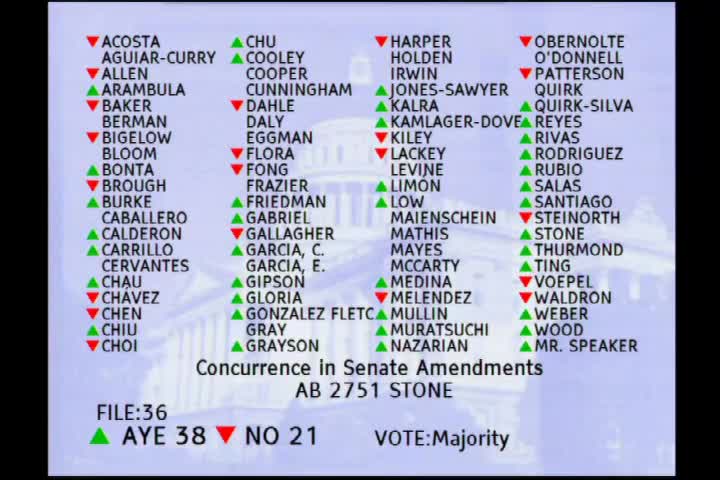 51SEC
Assembly Floor
 2MIN
Senate Floor
 1H
Senate Standing Committee on Appropriations
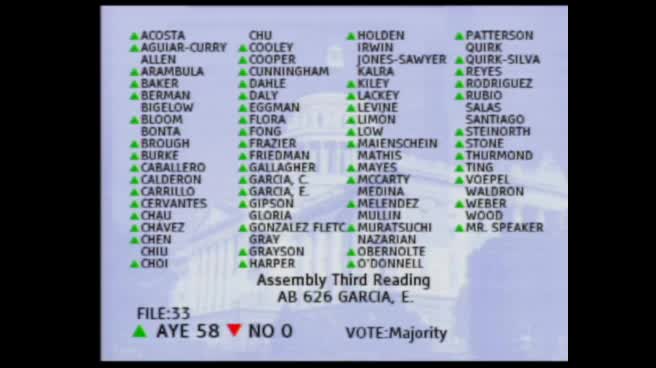 3MIN
Assembly Floor
 21MIN
Assembly Standing Committee on Appropriations
 1H
Assembly Standing Committee on Appropriations
 6MIN
Assembly Standing Committee on Public Safety
Bill Author




