SB 31: California Religious Freedom Act: state agencies: disclosure of religious affiliation information.
- Session Year: 2017-2018
- House: Senate
- Latest Version Date: 2017-10-15
Existing law prohibits a state agency from including a question regarding an applicants race, sex, marital status, or religion in any application form for employment.
This bill would prohibit a state or local agency or a public employee acting under color of law from providing or disclosing to the federal government personal information regarding a persons religious beliefs, practices, or affiliation, as specified, when the information is sought for compiling a database of individuals based on religious belief, practice, or affiliation, national origin, or ethnicity for law enforcement or immigration purposes. The bill would also prohibit a state agency from using agency resources to assist with any government program compiling such a database, or from making state databases available in connection with an investigation or enforcement under such a program. The bill would prohibit state and local law enforcement agencies and their employees from collecting personal information on the religious beliefs, practices, or affiliation of any individual, except as part of a targeted investigation, as provided, or where necessary to provide religious accommodations. The bill would also prohibit law enforcement agencies from using agency or department moneys, facilities, property, equipment, or personnel to investigate, enforce, or assist in the investigation or enforcement of any criminal, civil, or administrative violation, or warrant for a violation, of any requirement that individuals register with the federal government or any federal agency based on religion, national origin, or ethnicity. The bill would also terminate, to the extent of any conflict, any existing agreements that make any agency or department information or database available in conflict with these provisions. The bill would not prevent the collection, retention, or disclosure of personal information or documents as required by Federal law or a court order. The bill would provide that an agency or employee would only be deemed to be in violation of its provisions if the agency or employee acted with actual knowledge that the information shared would be used for purposes prohibited by these provisions.
This bill would declare that it is to take effect immediately as an urgency statute.
Existing law prohibits a state agency from including a question regarding an applicants race, sex, marital status, or religion in any application form for employment.
This bill would prohibit a state or local agency or a public employee acting under color of law from providing or disclosing to the federal government personal information regarding a persons religious beliefs, practices, or affiliation, as specified, when the information is sought for compiling a database of individuals based on religious belief, practice practice, or affiliation, national origin, or ethnicity for law enforcement or immigration purposes. The bill would also prohibit a state agency from using agency resources to assist with any government program compiling such a database, or from making state databases available in connection with an investigation or enforcement under such a program. The bill would prohibit state and local law enforcement agencies and their employees from collecting personal information on the religious beliefs, practices, or affiliation of any individual, except as part of a targeted investigation, as provided, or where necessary to provide religious accommodations. The bill would also prohibit law enforcement agencies from using agency or department moneys, facilities, property, equipment, or personnel to investigate, enforce, or assist in the investigation or enforcement of any criminal, civil, or administrative violation, or warrant for a violation, of any requirement that individuals register with the federal government or any federal agency based on religion, national origin, or ethnicity. The bill would also terminate, to the extent of any conflict, any existing agreements that make any agency or department information or database available in conflict with these provisions.
This bill would declare that it is to take effect immediately as an urgency statute.
Existing law prohibits a state agency from including a question regarding an applicants applicants race, sex, marital status, or religion in any application form for employment.
This bill would prohibit a state or local agency or a public employee acting under color of law from providing or disclosing to the federal government personally identifiable personal information regarding a persons religious beliefs, practices, or affiliation, as specified, when the information is sought for compiling a database of individuals based on religious belief, practice or affiliation, national origin, or ethnicity for law enforcement or immigration purposes. The bill would also prohibit a state agency from using agency resources to assist with any government program compiling such a database, or from making state databases available in connection with an investigation or enforcement under such a program. The bill would prohibit state and local law enforcement agencies and their employees from collecting personally identifiable personal information on the religious beliefs, practices, or affiliation of any individual, except as part of a targeted investigation, or where necessary to provide religious accommodations. The bill would also prohibit law enforcement agencies from using agency or department moneys, facilities, property, equipment, or personnel to investigate, enforce, or assist in the investigation or enforcement of any criminal, civil, or administrative violation, or warrant for a violation, of any requirement that individuals register with the federal government or any federal agency based on religion, national origin, or ethnicity. The bill would also terminate, to the extent of any conflict, any existing agreements that make any agency or department information or database available in conflict with these provisions.
This bill would declare that it is to take effect immediately as an urgency statute.
Existing law prohibits a state agency from including a question regarding an applicants race, sex, marital status, or religion in any application form for employment.
This bill would prohibit a state or local agency or a public employee acting under color of law from providing or disclosing to the federal government personally identifiable information regarding a persons religious affiliation beliefs, practices, or affiliation, as specified, when the information is sought for compiling a database of individuals based solely on religious affiliation. belief, practice or affiliation, national origin, or ethnicity for law enforcement or immigration purposes. The bill would also prohibit a state agency from using agency resources to assist with any government program compiling such a database, or from making state databases available in connection with an investigation or enforcement under such a program. The bill would prohibit state and local law enforcement agencies from collecting personally identifiable information on the religious beliefs, practices, or affiliation of any individual, except as part of a targeted investigation, or where necessary to provide religious accommodations. The bill would also prohibit law enforcement agencies from using agency or department moneys, facilities, property, equipment, or personnel to investigate, enforce, or assist in the investigation or enforcement of any criminal, civil, or administrative violation, or warrant for a violation, of any requirement that individuals register with the federal government or any federal agency based on religion, national origin, or ethnicity. The bill would also terminate, to the extent of any conflict, any existing agreements that make any agency or department information or database available in conflict with these provisions.
Existing law prohibits a state agency from including a question regarding an applicants race, sex, marital status, or religion in any application form for employment.
This bill would prohibit a state agency from providing or disclosing to the federal government information regarding a persons religious affiliation when the information is sought for compiling a database of individuals based solely on religious affiliation.
The Legislature finds and declares all of the following:
(a)In California, we celebrate the rich cultural heritage and diversity of our residents.
(b)Freedom of religion and protection from persecution on the basis of religion are founding ideals of our nation.
(c)California must uphold the protection of religious freedom enshrined in the United States Constitution for all of its people, and the state has a moral obligation to protect its citizens from religious persecution.
(d)Section 4 of Article I of the California Constitution guarantees the free exercise and enjoyment of religion without discrimination or preference.
SEC. 2.Section 8310.3 is added to the Government Code, to read:8310.3.(a)This section shall be known, and may be cited, as the California Religious Freedom Act.
(b)Notwithstanding any other law, a state or local agency or public employee acting under color of law shall not:
(1)Provide or disclose to federal government authorities personal information regarding the religious beliefs, practices, or affiliation of any individual for the purpose of compiling a list, registry, or database of individuals based on religious affiliation, national origin, or ethnicity.
(2)Use agency money, facilities, property, equipment, or personnel to assist in creation, implementation, or enforcement of any government program compiling a list, registry, or database of personal information about individuals based on religious belief, practice, or affiliation, or national origin or ethnicity, for law enforcement or immigration purposes.
(3)Make personal information from agency databases available, including any databases maintained by private vendors contracting with the agency, to anyone or any entity for the purpose of investigation or enforcement under any government program compiling a list, registry, or database of individuals based on religious belief, practice, or affiliation, or national origin or ethnicity for law enforcement or immigration purposes.
(c)Notwithstanding any other law, state and local law enforcement agencies and their employees shall not:
(1)Collect information on the religious belief, practice, or affiliation of any individual except (A) as part of a targeted investigation of an individual based on reasonable suspicion to believe that individual has engaged in, or been the victim of, criminal activity, and when there is a clear nexus between the criminal activity and the specific information collected about religious belief, practice, or affiliation, or (B) where necessary to provide religious accommodations.
(2)Use agency money, facilities, property, equipment, or personnel to investigate, enforce, or assist in the investigation or enforcement of any criminal, civil, or administrative violation, or warrant for a violation, of any requirement that individuals register with the federal government or any federal agency based on religious belief, practice, or affiliation, national origin, or ethnicity.
(d)Any agreements in existence on the operative date of this section that make any agency or department information or database available in conflict with the terms of this chapter are terminated on that date to the extent of the conflict.
(e)Nothing in this section prohibits any state or local agency from sending to, or receiving from, any local, state, or federal agency, information regarding an individuals citizenship or immigration status. Information regarding an individuals citizenship or immigration status, lawful or unlawful for purposes of this section, shall be interpreted consistent with Sections 1373 and 1644 of Title 8 of the United States Code.
(f)Nothing in this section is intended to prevent any state or local agency from compiling aggregate nonpersonal information about religious belief, practice, or affiliation, national origin, or ethnicity, or from exchanging it with other local, state, or federal agencies.
(g)Nothing in this section prevents the collection, retention, or disclosure of personal information or documents as required by Federal law, or to comply with a court order, or as necessary to comply with Federal programs of assistance.
(h)An agency or employee will only be deemed to be in violation of this section if the agency or employee acted with actual knowledge that the information shared would be used for purposes prohibited by this section.
(i)Nothing in this section shall prevent a state or local law enforcement agency from assisting, participating with, or requesting participation from, federal authorities, so long as the state or local agency acts in accordance with this section and any other applicable law.
SEC. 3.This act is an urgency statute necessary for the immediate preservation of the public peace, health, or safety within the meaning of Article IV of the California Constitution and shall go into immediate effect. The facts constituting the necessity are:
In order to protect the people of California from religious or ethnic persecution or discrimination by law enforcement or by any public agency, it is necessary that this measure take immediate effect.
The Legislature finds and declares all of the following:
(a)In California, we celebrate the rich cultural heritage and diversity of our residents.
(b)Freedom of religion and protection from persecution on the basis of religion are founding ideals of our nation.
(c)California must uphold the protection of religious freedom enshrined in the United States Constitution for all of its people, and the state has a moral obligation to protect its citizens from religious persecution.
(d)Section 4 of Article I of the California Constitution guarantees the free exercise and enjoyment of religion without discrimination or preference.
SEC. 2.Section 8310.3 is added to the Government Code, to read:8310.3.(a)This section shall be known, and may be cited, as the California Religious Freedom Act.
(b)Notwithstanding any other law, a state or local agency or public employee acting under color of law shall not:
(1)Provide or disclose to federal government authorities personal information regarding the religious beliefs, practices, or affiliation of any individual for the purpose of compiling a list, registry, or database of individuals based on religious affiliation, national origin, or ethnicity.
(2)Use agency money, facilities, property, equipment, or personnel to assist in creation, implementation, or enforcement of any government program compiling a list, registry, or database of personal information about individuals based on religious belief, practice, or affiliation, or national origin or ethnicity, for law enforcement or immigration purposes.
(3)Make personal information from agency databases available, including any databases maintained by private vendors contracting with the agency, to anyone or any entity for the purpose of investigation or enforcement under any government program compiling a list, registry, or database of individuals based on religious belief, practice, or affiliation, or national origin or ethnicity for law enforcement or immigration purposes.
(c)Notwithstanding any other law, state and local law enforcement agencies and their employees shall not:
(1)Collect information on the religious belief, practice, or affiliation of any individual except (A) as part of a targeted investigation of an individual based on reasonable suspicion to believe that individual has engaged in, or been the victim of, criminal activity, and when there is a clear nexus between the criminal activity and the specific information collected about religious belief, practice, or affiliation, or (B) where necessary to provide religious accommodations.
(2)Use agency money, facilities, property, equipment, or personnel to investigate, enforce, or assist in the investigation or enforcement of any criminal, civil, or administrative violation, or warrant for a violation, of any requirement that individuals register with the federal government or any federal agency based on religious belief, practice, or affiliation, national origin, or ethnicity.
(d)Any agreements in existence on the operative date of this section that make any agency or department information or database available in conflict with the terms of this chapter are terminated on that date to the extent of the conflict.
(e)Nothing in this section prohibits any state or local agency from sending to, or receiving from, any local, state, or federal agency, information regarding an individuals citizenship or immigration status. Information regarding an individuals citizenship or immigration status, lawful or unlawful for purposes of this section, shall be interpreted consistent with Sections 1373 and 1644 of Title 8 of the United States Code.
(f)Nothing in this section is intended to prevent any state or local agency from compiling aggregate nonpersonal information about religious belief, practice, or affiliation, national origin, or ethnicity, or from exchanging it with other local, state, or federal agencies.
(g)Nothing in this section prevent the collection, retention, or disclosure of personal information or documents as required by Federal law, or to comply with a court order, or as necessary to comply with Federal programs of assistance.
(h)An agency or employee will only be deemed to be in violation of this section if the agency or employee acted with actual knowledge that the information shared would be used for purposes prohibited by this section.
(i)Nothing in this section shall prevent a state or local law enforcement agency from assisting, participating with, or requesting participation from, federal authorities, so long as the state or local agency acts in accordance with this section and any other applicable law.
SEC. 3.This act is an urgency statute necessary for the immediate preservation of the public peace, health, or safety within the meaning of Article IV of the California Constitution and shall go into immediate effect. The facts constituting the necessity are:
In order to protect the people of California from religious or ethnic persecution or discrimination by law enforcement or by any public agency, it is necessary that this measure take immediate effect.
The Legislature finds and declares all of the following:
(a)In California, we celebrate the rich cultural heritage and diversity of our residents.
(b)Freedom of religion and protection from persecution on the basis of religion are founding ideals of our nation.
(c)California must uphold the protection of religious freedom enshrined in the United States Constitution for all of its people, and the state has a moral obligation to protect its citizens from religious persecution.
(d)Section 4 of Article I of the California Constitution guarantees the free exercise and enjoyment of religion without discrimination or preference.
SEC. 2.Section 8310.3 is added to the Government Code, to read:8310.3.(a)This section shall be known, and may be cited, as the California Religious Freedom Act.
(b)Notwithstanding any other law, a state or local agency or public employee acting under color of law shall not:
(1)Provide or disclose to federal government authorities personal information regarding the religious beliefs, practices, or affiliation of any individual for the purpose of compiling a list, registry, or database of individuals based on religious affiliation, national origin, or ethnicity.
(2)Use agency money, facilities, property, equipment, or personnel to assist in creation, implementation, or enforcement of any government program compiling a list, registry, or database of personal information about individuals based on religious belief, practice, or affiliation, or national origin or ethnicity, for law enforcement or immigration purposes.
(3)Make personal information from agency databases available, including any databases maintained by private vendors contracting with the agency, to anyone or any entity for the purpose of investigation or enforcement under any government program compiling a list, registry, or database of individuals based on religious belief, practice, or affiliation, or national origin or ethnicity for law enforcement or immigration purposes.
(c)Notwithstanding any other law, state and local law enforcement agencies and their employees shall not:
(1)Collect information on the religious belief, practice, or affiliation of any individual except (A) as part of a targeted investigation of an individual based on reasonable suspicion to believe that individual has engaged in in, or been the victim of, criminal activity, and when there is a clear nexus between the criminal activity and the specific information collected about religious belief, practice, or affiliation, or (B) where necessary to provide religious accommodations.
(2)Use agency money, facilities, property, equipment, or personnel to investigate, enforce, or assist in the investigation or enforcement of any criminal, civil, or administrative violation, or warrant for a violation, of any requirement that individuals register with the federal government or any federal agency based on religious belief, practice, or affiliation, national origin, or ethnicity.
(d)Any agreements in existence on the operative date of this section that make any agency or department information or database available in conflict with the terms of this chapter are terminated on that date to the extent of the conflict.
(e)Nothing in this section prohibits any state or local agency from sending to, or receiving from, any local, state, or federal agency, information regarding an individuals citizenship or immigration status. Information regarding an individuals citizenship or immigration status, lawful or unlawful for purposes of this section, shall be interpreted consistent with Sections 1373 and 1644 of Title 8 of the United States Code.
(f)Nothing in this section is intended to prevent any state or local agency from compiling aggregate nonpersonal information about religious belief, practice, or affiliation, national origin or ethnicity origin, or ethnicity, or from exchanging it with other local, state, or federal agencies.
SEC. 3.This act is an urgency statute necessary for the immediate preservation of the public peace, health, or safety within the meaning of Article IV of the California Constitution and shall go into immediate effect. The facts constituting the necessity are:
In order to protect the people of California from religious or ethnic persecution or discrimination by law enforcement or by any public agency, it is necessary that this measure take immediate effect.
The Legislature finds and declares all of the following:
(a)In California, we celebrate the rich cultural heritage and diversity of our residents.
(b)Freedom of religion and protection from persecution on the basis of religion are founding ideals of our nation.
(c)California must uphold the protection of religious freedom enshrined in the United States Constitution for all of its people, and the state has a moral obligation to protect its citizens from religious persecution.
(d)Section 4 of Article I of the California Constitution guarantees the free exercise and enjoyment of religion without discrimination or preference.
SEC. 2.Section 8310.3 is added to the Government Code, to read:8310.3.(a)This section shall be known, and may be cited, as the California Religious Freedom Act.
(b)Notwithstanding any other law, a state or local agency or public employee acting under color of law shall not:
(1)Provide or disclose to federal government authorities personally identifiable personal information regarding the religious beliefs, practices, or affiliation of any individual for the purpose of compiling a list, registry, or database of individuals based on religious affiliation, national origin, or ethnicity.
(2)Use agency money, facilities, property, equipment, or personnel to assist in creation, implementation, or enforcement of any government program compiling a list, registry, or database of personally identifiable personal information about individuals based on religious belief, practice, or affiliation, or national origin or ethnicity, for law enforcement or immigration purposes.
(3)Make personally identifiable personal information from agency databases available, including any databases maintained by private vendors contracting with the agency, to anyone or any entity for the purpose of investigation or enforcement under any government program compiling a list, registry, or database of individuals based on religious belief, practice, or affiliation, or national origin or ethnicity for law enforcement or immigration purposes.
(c)Notwithstanding any other law, state and local law enforcement agencies and their employees shall not:
(1)Collect information on the religious belief, practice, or affiliation of any individual except (A) as part of a targeted investigation of an individual based on reasonable suspicion to believe that individual has engaged in criminal activity, and when there is a clear nexus between the criminal activity and the specific information collected about religious belief, practice, or affiliation, or (B) where necessary to provide religious accommodations.
(2)Use agency money, facilities, property, equipment, or personnel to investigate, enforce, or assist in the investigation or enforcement of any criminal, civil, or administrative violation, or warrant for a violation, of any requirement that individuals register with the federal government or any federal agency based on religion, religious belief, practice, or affiliation, national origin, or ethnicity.
(d)Any agreements in existence on the operative date of this section that make any agency or department information or database available in conflict with the terms of this chapter are terminated on that date to the extent of the conflict.
(e)Nothing in this section prohibits any state or local agency from sending to, or receiving from, any local, state, or federal agency, information regarding an individuals citizenship or immigration status. Information regarding an individuals citizenship or immigration status, lawful or unlawful for purposes of this section, shall be interpreted consistent with Sections 1373 and 1644 of Title 8 of the United States Code.
(f)Nothing in this section is intended to prevent any state or local agency from compiling aggregate nonpersonally identifiable nonpersonal information about religious belief, practice, or affiliation, national origin or ethnicity or from exchanging it with other local, state, or federal agencies.
SEC. 3.This act is an urgency statute necessary for the immediate preservation of the public peace, health, or safety within the meaning of Article IV of the California Constitution and shall go into immediate effect. The facts constituting the necessity are:
In order to protect the people of California from religious or ethnic persecution or discrimination by law enforcement or by any public agency, it is necessary that this measure take immediate effect.
The Legislature finds and declares all of the following:
(a)In California, we celebrate the rich cultural heritage and diversity of our residents.
(b)Freedom of religion and protection from persecution on the basis of religion is one of the are founding ideals of our nation.
(c)California must uphold the protection of religious freedom enshrined in the United States Constitution for all of its people, and the state has a moral obligation to protect its citizens from religious persecution.
(d)Section 4 of Article I of the California Constitution guarantees the free exercise and enjoyment of religion without discrimination or preference.
SEC. 2.Section 8310.3 is added to the Government Code, to read:8310.3.Notwithstanding (a)This section shall be known, and may be cited, as the California Religious Freedom Act.
(b)Notwithstanding any other law, a state or local agency or public employee acting under color of law shall not provide not:
(1)Provide or disclose to federal government authorities personal personally identifiable information regarding the religious beliefs, practices, or affiliation of any individual that is requested for the purpose of compiling a list, registry, or database of individuals based solely on religious affiliation. affiliation, national origin, or ethnicity.
(2)Use agency money, facilities, property, equipment, or personnel to assist in creation, implementation, or enforcement of any government program compiling a list, registry, or database of personally identifiable information about individuals based on religious belief, practice, or affiliation, or national origin or ethnicity, for law enforcement or immigration purposes.
(3)Make personally identifiable information from agency databases available, including any databases maintained by private vendors contracting with the agency, to anyone or any entity for the purpose of investigation or enforcement under any government program compiling a list, registry, or database of individuals based on religious belief, practice, or affiliation, or national origin or ethnicity for law enforcement or immigration purposes.
(c)Notwithstanding any other law, state and local law enforcement agencies shall not:
(1)Collect information on the religious belief, practice, or affiliation of any individual except (A) as part of a targeted investigation of an individual based on reasonable suspicion to believe that individual has engaged in criminal activity, and when there is a clear nexus between the criminal activity and the specific information collected about religious belief, practice, or affiliation, or (B) where necessary to provide religious accommodations.
(2)Use agency money, facilities, property, equipment, or personnel to investigate, enforce, or assist in the investigation or enforcement of any criminal, civil, or administrative violation, or warrant for a violation, of any requirement that individuals register with the federal government or any federal agency based on religion, national origin, or ethnicity.
(d)Any agreements in existence on the operative date of this section that make any agency or department information or database available in conflict with the terms of this chapter are terminated on that date to the extent of the conflict.
(e)Nothing in this section prohibits any state or local agency from sending to, or receiving from, any local, state, or federal agency, information regarding an individuals citizenship or immigration status. Information regarding an individuals citizenship or immigration status, lawful or unlawful for purposes of this section, shall be interpreted consistent with Sections 1373 and 1644 of Title 8 of the United States Code.
(f)Nothing in this section is intended to prevent any state or local agency from compiling aggregate nonpersonally identifiable information about religious belief, practice, or affiliation, national origin or ethnicity or from exchanging it with other local, state, or federal agencies.
The Legislature finds and declares all of the following:
(a)In California, we celebrate the rich cultural heritage and diversity of our residents.
(b)Freedom of religion and protection from persecution on the basis of religion is one of the founding ideals of our nation.
(c)California must uphold the protection of religious freedom enshrined in the United States Constitution for all of its people, and the state has a moral obligation to protect its citizens from religious persecution.
(d)Section 4 of Article I of the California Constitution guarantees the free exercise and enjoyment of religion without discrimination or preference.
SEC. 2.Section 8310.3 is added to the Government Code, to read:8310.3.Notwithstanding any other law, a state agency shall not provide or disclose to federal authorities personal information regarding the religious affiliation of any individual that is requested for the purpose of compiling a database of individuals based solely on religious affiliation.
|
Date
|
Status
|
|---|---|
| Oct 15, 2017 | Chaptered by Secretary of State. Chapter 826, Statutes of 2017. |
| Oct 15, 2017 | Approved by the Governor. |
| Sep 22, 2017 | Enrolled and presented to the Governor at 3 p.m. |
| Sep 15, 2017 | Assembly amendments concurred in. (Ayes 36. Noes 0.) Ordered to engrossing and enrolling. |
| Sep 15, 2017 | In Senate. Concurrence in Assembly amendments pending. |
| Sep 15, 2017 | Read third time. Passed. Ordered to the Senate. |
| Sep 8, 2017 | Read third time and amended. |
| Sep 5, 2017 | Read second time. Ordered to third reading. |
| Sep 1, 2017 | From committee: Do pass. (Ayes 16. Noes 0.) (September 1). |
| Jun 28, 2017 | June 28 set for first hearing. Placed on suspense file. |
| Jun 13, 2017 | From committee: Do pass and re-refer to Com. on APPR. (Ayes 11. Noes 0.) (June 13). Re-referred to Com. on APPR. |
| May 18, 2017 | Referred to Com. on JUD. |
| Apr 4, 2017 | In Assembly. Read first time. Held at Desk. |
| Apr 3, 2017 | Read third time. Urgency clause adopted. Passed. (Ayes 36. Noes 0. Page 581.) Ordered to the Assembly. |
| Mar 28, 2017 | Read second time. Ordered to third reading. |
| Mar 27, 2017 | Read third time and amended. |
| Mar 14, 2017 | Read second time. Ordered to third reading. |
| Mar 13, 2017 | From committee: Do pass. (Ayes 5. Noes 0. Page 348.) (March 13). |
| Mar 3, 2017 | Set for hearing March 13. |
| Mar 2, 2017 | March 6 hearing postponed by committee. |
| Mar 1, 2017 | Set for hearing March 6. |
| Feb 27, 2017 | From committee with author's amendments. Read second time and amended. Re-referred to Com. on APPR. |
| Jan 31, 2017 | From committee: Do pass and re-refer to Com. on APPR. (Ayes 6. Noes 0. Page 130.) (January 31). Re-referred to Com. on APPR. |
| Jan 25, 2017 | Set for hearing January 31. |
| Jan 24, 2017 | From committee with author's amendments. Read second time and amended. Re-referred to Com. on JUD. |
| Jan 12, 2017 | Referred to Com. on JUD. |
| Dec 6, 2016 | From printer. May be acted upon on or after January 5. |
| Dec 5, 2016 | Introduced. Read first time. To Com. on RLS. for assignment. To print. |
|
Date
|
Description
|
Location
|
Votes
|
|
|---|---|---|---|---|
| Sep 15, 2017 | Unfinished Business SB31 Lara et al. Urgency Clause Concurrence | Senate Floor |
Passed |
|
| Sep 15, 2017 | SB 31 Lara Third Reading Urgency By CHIU | Assembly Floor |
Passed |
|
| Sep 1, 2017 | Do pass. | Assembly Standing Committee on Appropriations |
Passed |
|
| Jun 13, 2017 | Do pass and be re-referred to the Committee on [Appropriations] | Assembly Standing Committee on Judiciary |
Passed |
|
| Apr 3, 2017 | Senate 3rd Reading SB31 Lara et al. Urgency Clause | Senate Floor |
Passed |
|
| Mar 13, 2017 | Do pass | Senate Standing Committee on Appropriations |
Passed |
|
| Jan 31, 2017 | Do pass, but first be re-referred to the Committee on [Appropriations] | Senate Standing Committee on Judiciary |
Passed |
This list shows positions taken on this bill by organizations on the date displayed, which is linked to the original source.
Positions by individuals are not included.
|
Organization
|
Position
|
Date
|
|---|---|---|
| 350 Bay Area | ** Support | Sep 15, 2017 |
| Advancement Project | ** Support | Sep 15, 2017 |
| advancing justice - california, co-sponsor | ** Support | Jun 9, 2017 |
| Afghan Coalition | ** Support | Sep 15, 2017 |
| AFSCME Local 3930 | ** Support | Sep 15, 2017 |
| Against the Stream Buddhist Meditation Society | ** Support | Sep 15, 2017 |
| Alameda County Board of Supervisors | ** Support | Jun 9, 2017 |
| Allen Temple Health and Social Services | ** Support | Sep 15, 2017 |
| Alliance for Boys and Men of Color | ** Support | Sep 15, 2017 |
| American Civil Liberties Union of California | ** Support | Sep 15, 2017 |
| american muslim voice foundation | ** Support | Jun 9, 2017 |
| Anti-Defamation League | * Support | Jan 31, 2017 |
| Arab American Civic Counsel | ** Support | Sep 15, 2017 |
| Asian Americans Advancing Justice | ** Support | Sep 15, 2017 |
| Asian Law Alliance | ** Support | Sep 15, 2017 |
| Asian Pacific Islander American Public Affairs Association | ** Support | Jun 9, 2017 |
| Asian Women's Shelter | ** Support | Sep 15, 2017 |
| Association of Muslim American Lawyers | ** Support | Sep 15, 2017 |
| Beacon Presbyterian Fellowship of Oakland | ** Support | Sep 15, 2017 |
| Bend the Arc California | ** Support | Sep 15, 2017 |
| black lives matter - california | ** Support | Sep 15, 2017 |
| Black Lives Matter: Inland Empire | ** Support | Sep 15, 2017 |
| black women for wellness | ** Support | Sep 15, 2017 |
| Black Women Organized for Political Action | ** Support | Sep 15, 2017 |
| c2pla coalition | ** Support | Jun 9, 2017 |
| California Attorneys For Criminal Justice | ** Support | Sep 15, 2017 |
| California Catholic Conference | ** Support | Jun 9, 2017 |
| California Chapter National Council of Jewish Women | * Support | Jan 31, 2017 |
| California Church Impact | * Support | Jan 31, 2017 |
| California Civil Liberties Advocacy | * Support | Jan 31, 2017 |
| California Employment Lawyers Association | ** Support | Jun 9, 2017 |
| California Faculty Association | ** Support | Sep 15, 2017 |
| california faculty association - san francisco state | ** Support | Sep 15, 2017 |
| California Federation of Teachers, AFL-CIO | ** Support | Sep 15, 2017 |
| California Health Advocates | ** Support | Jun 9, 2017 |
| California Immigrant Policy Center | ** Support | Sep 15, 2017 |
| California Institute for Human Science | ** Support | Sep 15, 2017 |
| California Latinas for Reproductive Justice | ** Support | Sep 15, 2017 |
| California NOW | ** Support | Sep 15, 2017 |
| California OneCare | ** Support | Sep 15, 2017 |
| California Pan-Ethnic Health Network | ** Support | Sep 15, 2017 |
| California Rural Legal Assistance Foundation | ** Support | Sep 15, 2017 |
| California School Boards Association | ** Support | Jun 9, 2017 |
| California Teachers Association | ** Support | Jun 9, 2017 |
| Californians Together | ** Support | Sep 15, 2017 |
| CARE Sacramento Valley | * Support | Jan 31, 2017 |
| Causa Justa:: Just Cause | ** Support | Sep 15, 2017 |
| Center for Employment Training Immigration & Citizenship Program | ** Support | Sep 15, 2017 |
| Center for LGBTQ & Gender Studies in Religion | ** Support | Sep 15, 2017 |
| Central American Resource Center - Los Angeles | ** Support | Sep 15, 2017 |
| Centro Del Immigrante, Inc. | ** Support | Sep 15, 2017 |
| Children'S Defense Fund - California | ** Support | Sep 15, 2017 |
| Chinese Progressive Association | ** Support | Sep 15, 2017 |
| Church in Ocean Park, United Methodist Church | ** Support | Sep 15, 2017 |
| Church State Council | ** Support | Sep 15, 2017 |
| City of West Hollywood | ** Support | Sep 15, 2017 |
| city of west sacramento | ** Support | Jun 9, 2017 |
| Clergy and Laity United for Economic Justice | ** Support | Sep 15, 2017 |
| Coalition for Humane Immigrant Rights | ** Support | Sep 15, 2017 |
| Coalition for the Homeless | * Support | Jan 31, 2017 |
| CODEPINK | ** Support | Sep 15, 2017 |
| Community Clinic Association | ** Support | Jun 9, 2017 |
| Community Health Councils | ** Support | Sep 15, 2017 |
| Congregation Kol Ami | ** Support | Sep 15, 2017 |
| Congregation Shir Ami | ** Support | Sep 15, 2017 |
| Connect to Protect Los Angeles Coalition | ** Support | Sep 15, 2017 |
| Consumer Attorney's of California | * Support | Jun 13, 2017 |
| council on american-islamic relations - california | ** Support | Sep 15, 2017 |
| Courage Campaign | ** Support | Sep 15, 2017 |
| Cristina Carrizosa, Pomona City Councilmember, District Three | ** Support | Sep 15, 2017 |
| Culture & Conflict Forum | ** Support | Sep 15, 2017 |
| Designing Justice + Designing Spaces | ** Support | Sep 15, 2017 |
| East Bay Asian Youth Center | ** Support | Sep 15, 2017 |
| Ecology Center Berkeley | * Support | Jan 31, 2017 |
| Eden Area Interfaith Council | ** Support | Sep 15, 2017 |
| Electronic Frontier Foundation | ** Support | Sep 15, 2017 |
| Emmanuel Faith Community Church | ** Support | Sep 15, 2017 |
| Empowering Pacific Islander Communities | ** Support | Sep 15, 2017 |
| Equal Justice Society | ** Support | Sep 15, 2017 |
| Equal Rights Advocates | ** Support | Jun 9, 2017 |
| Equality California | ** Support | Sep 15, 2017 |
| faculty association of community colleges | ** Support | Jun 9, 2017 |
| Faith in the Valley | ** Support | Sep 15, 2017 |
| Fathers & Families of San Joaquin | ** Support | Sep 15, 2017 |
| Filipino Community Alliance for Immigrant Advancement | ** Support | Sep 15, 2017 |
| First Congregational Church of Palo Alto | ** Support | Jun 9, 2017 |
| Forward Together | ** Support | Sep 15, 2017 |
| Fresno Barrios Unidos | ** Support | Sep 15, 2017 |
| Friends Committee On Legislation Of California | ** Support | Jun 9, 2017 |
| Green the Church Campaign | ** Support | Sep 15, 2017 |
| Hand in Hand: The Domestic Employers Network | ** Support | Sep 15, 2017 |
| hawai'i's daughters guild | ** Support | Sep 15, 2017 |
| Hawaii NAACP State Conference | ** Support | Sep 15, 2017 |
| Health Access California | ** Support | Jun 9, 2017 |
| Hmong Innovating Politics | ** Support | Sep 15, 2017 |
| Holman U.M.C. | ** Support | Sep 15, 2017 |
| Housing Rights Committee of San Francisco | ** Support | Sep 15, 2017 |
| ICNA | ** Support | Sep 15, 2017 |
| Indian American Muslim Council | ** Support | Sep 15, 2017 |
| Inland Coalition for Immigrant Justice | ** Support | Sep 15, 2017 |
| Inland Empire Immigrant Youth Coalition | ** Support | Sep 15, 2017 |
| InnerCity Struggle | ** Support | Sep 15, 2017 |
| Instituto Familiar de la Raza | ** Support | Sep 15, 2017 |
| Insurance Commissioner Dave Jones | ** Support | Sep 15, 2017 |
| Interfaith Center at the Presidio | ** Support | Sep 15, 2017 |
| Interfaith Communities United for Justice and Peace | ** Support | Sep 15, 2017 |
| Interfaith Council of Alameda County | ** Support | Sep 15, 2017 |
| Interfaith Movement for Human Integrity | ** Support | Sep 15, 2017 |
| International Rescue Committee | ** Support | Sep 15, 2017 |
| Invisible Sacramento | * Support | Jan 31, 2017 |
| IP Task Force UMC | ** Support | Sep 15, 2017 |
| iranian american bar association | ** Support | Jun 9, 2017 |
| japanese american citizens league - pacific southwest district | ** Support | Sep 15, 2017 |
| jewish community relations council of sacramento | ** Support | Jun 9, 2017 |
| Jewish Labor Committee Western Region | ** Support | Sep 15, 2017 |
| Jewish Public Affairs Committee Of California | ** Support | Sep 15, 2017 |
| Jewish Voice for Peace California | ** Support | Sep 15, 2017 |
| Jewish Voice for Peace, Los Angeles | ** Support | Sep 15, 2017 |
| Khmer Girls in Action | ** Support | Sep 15, 2017 |
| KmB, Pro-People Youth | ** Support | Sep 15, 2017 |
| Korean Churches for Community Development | ** Support | Sep 15, 2017 |
| Korean Community Center of the East Bay | ** Support | Sep 15, 2017 |
| Koreatown Immigrant Workers Alliance | ** Support | Sep 15, 2017 |
| Lambda Legal | ** Support | Sep 15, 2017 |
| Lange Luntao, Stockton Unified School District Board Trustee | ** Support | Sep 15, 2017 |
| Latino Coalition for a Healthy California | ** Support | Sep 15, 2017 |
| latinos united for a new america | ** Support | Jun 9, 2017 |
| League Of Women Voters Of California | ** Support | Jun 9, 2017 |
| Legal Services for Prisoners with Children | ** Support | Sep 15, 2017 |
| Long Beach Immigrant Rights Coalition | ** Support | Sep 15, 2017 |
| Los Angeles Alliance for a New Economy | ** Support | Sep 15, 2017 |
| Los Angeles Black Worker Center | ** Support | Sep 15, 2017 |
| Los Angeles LGBT Center | ** Support | Sep 15, 2017 |
| Maternal and Child Health Access | ** Support | Sep 15, 2017 |
| Meet a Muslim | ** Support | Sep 15, 2017 |
| Mexican American Legal Defense Educational Fund | ** Support | Sep 15, 2017 |
| Mid-City Community Advocacy Network | ** Support | Sep 15, 2017 |
| Moms Rising | * Support | Jan 31, 2017 |
| Monarch Services | ** Support | Sep 15, 2017 |
| MPower Change | ** Support | Sep 15, 2017 |
| Multifaith Voices for Peace and Justice | ** Support | Jun 9, 2017 |
| Muslim Advocates | ** Support | Sep 15, 2017 |
| Muslim Anti-Racism Collaborative | ** Support | Sep 15, 2017 |
| Muslim Association of Silicon Valley | ** Support | Sep 15, 2017 |
| Muslim Community Association | ** Support | Sep 15, 2017 |
| Muslim Community Center East Bay | ** Support | Sep 15, 2017 |
| NAACP Pomona Valley Branch 1085 | ** Support | Sep 15, 2017 |
| National Association of Social Workers, CA Chapter | ** Support | Sep 15, 2017 |
| National Center for Lesbian Rights | ** Support | Sep 15, 2017 |
| National Center for Youth Law | ** Support | Sep 15, 2017 |
| National Compadres Network | ** Support | Sep 15, 2017 |
| National Employment Law Project | ** Support | Sep 15, 2017 |
| National Health Law Program | ** Support | Sep 15, 2017 |
| national hispanic media coalition | ** Support | Jun 9, 2017 |
| National Immigration Law Center | ** Support | Sep 15, 2017 |
| National Lawyers Guild, Los Angeles Chapter | ** Support | Sep 15, 2017 |
| National Queer Asian Pacific Islander Alliance | ** Support | Sep 15, 2017 |
| Native Hawaiian and Pacific Islander Alliance | ** Support | Sep 15, 2017 |
| NICOS Chinese Health Coalition | ** Support | Sep 15, 2017 |
| Nikkei Progressives | ** Support | Sep 15, 2017 |
| Northwest Immigrant Rights Project | ** Support | Sep 15, 2017 |
| Oak View ComUNIDAD | ** Support | Sep 15, 2017 |
| Oakland Law Collaborative | ** Support | Sep 15, 2017 |
| Oakland Privacy | ** Support | Sep 15, 2017 |
| OCA-Greater Los Angeles | ** Support | Sep 15, 2017 |
| OneLife Institute | ** Support | Sep 15, 2017 |
| Orange County Asian and Pacific Islander Community Alliance | ** Support | Sep 15, 2017 |
| Orange County Communities Organized for Responsible Development | ** Support | Sep 15, 2017 |
| Pacifica Institute San Francisco | ** Support | Apr 3, 2017 |
| pacifica institute - san francisco | ** Support | Sep 15, 2017 |
| Pangea Legal Services | ** Support | Sep 15, 2017 |
| Parent Revolution | ** Support | Sep 15, 2017 |
| Partnership for Advancement of New Americans | ** Support | Sep 15, 2017 |
| Placer People of Faith | * Support | Jun 13, 2017 |
| Planned Parenthood of California | ** Support | Jun 9, 2017 |
| PolicyLink | ** Support | Sep 15, 2017 |
| Positive Women's Network - USA | ** Support | Sep 15, 2017 |
| Positive Womens Network USA | ** Support | Apr 3, 2017 |
| Project Inform | ** Support | Sep 15, 2017 |
| Public Advocates | ** Support | Jun 9, 2017 |
| Public Counsel | ** Support | Sep 15, 2017 |
| Rapid Response Network | ** Support | Sep 15, 2017 |
| Religious Action Center of Reform Judaism | ** Support | Sep 15, 2017 |
| Root and Rebound | ** Support | Sep 15, 2017 |
| Roots Community Health Center | ** Support | Sep 15, 2017 |
| Sacred Heart Community Service | ** Support | Sep 15, 2017 |
| Salvadoran American National Network | ** Support | Sep 15, 2017 |
| San Fernando Valley Chapter Japanese American Citizens League | ** Support | Sep 15, 2017 |
| San Francisco Community Clinic Consortium | ** Support | Sep 15, 2017 |
| San Francisco Senior and Disability Action | ** Support | Sep 15, 2017 |
| San Jose | ** Support | Sep 15, 2017 |
| Santa Barbara Women's Political Committee | ** Support | Jun 9, 2017 |
| Santa Clara County Board of Supervisors | ** Support | Jun 9, 2017 |
| Santa Monica Area Interfaith Council | ** Support | Sep 15, 2017 |
| Sara Lamnin, Hayward City Councilmember | ** Support | Sep 15, 2017 |
| Satrang SEIU California | ** Support | Sep 15, 2017 |
| Secular Coalition for California | * Support | Jan 31, 2017 |
| SEIU USWW | ** Support | Sep 15, 2017 |
| Showing Up for Racial Justice | ** Support | Sep 15, 2017 |
| sikh american legal defense and education fund | ** Support | Jun 9, 2017 |
| Silicon Valley Interreligious Council | ** Support | Sep 15, 2017 |
| Silicon Valley NAACP | ** Support | Sep 15, 2017 |
| Somos Mayfair | ** Support | Sep 15, 2017 |
| South Asian Bar Association of Northern California | ** Support | Sep 15, 2017 |
| South Bay AFL-CIO Labor Council | ** Support | Sep 15, 2017 |
| South Bay Islamic Association | ** Support | Sep 15, 2017 |
| South Hayward Parish | ** Support | Sep 15, 2017 |
| Southeast Asia Resource Action Center | ** Support | Sep 15, 2017 |
| St. Ignatius of Antioch Catholic Church | ** Support | Sep 15, 2017 |
| st. john's presbyterian church in berkeley | ** Support | Sep 15, 2017 |
| Street Level Health Program | ** Support | Sep 15, 2017 |
| Summer Search | ** Support | Sep 15, 2017 |
| The Berkeley Presbyterian Mission Homes | ** Support | Sep 15, 2017 |
| The Center on Policy Initiatives | ** Support | Sep 15, 2017 |
| The Greenlining Institute | ** Support | Sep 15, 2017 |
| The Riley Center | ** Support | Sep 15, 2017 |
| The Shtibl Minyan | ** Support | Sep 15, 2017 |
| Think Dignity | ** Support | Sep 15, 2017 |
| tri-city interfaith council | ** Support | Jun 9, 2017 |
| Tri-Valley Haven | ** Support | Sep 15, 2017 |
| tri-valley haven for women | ** Support | Jun 9, 2017 |
| Tri-Valley Progressives | ** Support | Sep 15, 2017 |
| UFCW Local 1167 | * Support | Jan 31, 2017 |
| UFCW Western States Council | * Support | Jan 31, 2017 |
| unitarian universalist fellowship of sunnyvale | ** Support | Jun 9, 2017 |
| unitarian universatist church of palo alto | ** Support | Jun 9, 2017 |
| UNITE HERE Local 11 | ** Support | Sep 15, 2017 |
| United Church of Christ | ** Support | Sep 15, 2017 |
| United Domestic Workers | ** Support | Sep 15, 2017 |
| United Farm Workers | * Support | Jan 31, 2017 |
| United Religions Initiative | ** Support | Sep 15, 2017 |
| United Taxi Workers of San Diego | ** Support | Sep 15, 2017 |
| United Teachers Los Angeles | ** Support | Sep 15, 2017 |
| United University Church | ** Support | Sep 15, 2017 |
| UPLIFT | ** Support | Sep 15, 2017 |
| Urban Peace Institute | ** Support | Sep 15, 2017 |
| Village Connect | ** Support | Sep 15, 2017 |
| Voices for Progress | * Support | Jan 31, 2017 |
| Voices For Progress Education Fund | ** Support | Sep 15, 2017 |
| W. Haywood Burns Institute | ** Support | Sep 15, 2017 |
| W.O.M.A.N., Inc. | ** Support | Sep 15, 2017 |
| western center on law & poverty | ** Support | Sep 15, 2017 |
| White People 4 Black Lives | ** Support | Sep 15, 2017 |
| Working Partnerships USA | ** Support | Sep 15, 2017 |
Office of Senate Floor Analyses (916) 651-1520 Fax: (916) 327-4478 | SB |
UNFINISHED BUSINESS
Bill No: SB 31
:
SENATE JUDICIARY COMMITTEE: 6-0, 1/31/17
AYES: Jackson, Anderson, Hertzberg, Monning, Stern, Wieckowski
NO VOTE RECORDED: Moorlach
SENATE APPROPRIATIONS COMMITTEE: 5-0, 3/13/17
AYES: Lara, Beall, Bradford, Hill, Wiener
NO VOTE RECORDED: Bates, Nielsen
SENATE FLOOR: 36-0, 4/3/17
AYES: Allen, Anderson, Atkins, Bates, Beall, Bradford, Cannella, De León, Dodd, Gaines, Galgiani, Glazer, Hernandez, Hertzberg, Hill, Hueso, Jackson, Lara, Leyva, McGuire, Mendoza, Mitchell, Monning, Newman, Nguyen, Nielsen, Pan, Portantino, Roth, Skinner, Stern, Stone, Vidak, Wieckowski, Wiener, Wilk
NO VOTE RECORDED: Berryhill, Fuller, Moorlach, Morrell
ASSEMBLY FLOOR: 65-2, 9/15/17
(ROLL CALL NOT AVAILABLE)
DIGEST: This bill, to be known as the California Religious Freedom Act, directs California state and local governments to refrain from initiating, participating in, or assisting with any program to create a religious list, registry, or database, or using information about people’s national origin or ethnicity to achieve the same basic purpose.
Assembly Amendments add three clarifying subdivisions to the bill. The new subdivision (g) provides that the bill does not prevent the collection, retention, or disclosure of personal information or documents when required by Federal law, or to comply with a court order, or as necessary to comply with Federal programs of assistance. The new subdivision (h) provides that an agency or employee will only be deemed to be in violation of the bill’s terms if it the agency or employee acted with actual knowledge that the information shared would be used for purposes prohibited by the bill. The new subdivision (i) provides that nothing in the bill prevents a state or local law enforcement agency from assisting, participating with, or requesting participation from, federal authorities, so long as the state or local agency acts in accordance with this section and any other applicable law.
ANALYSIS: Existing law is currently silent as to whether or not state and local governments in California may use their employees or resources to assist the federal government with a registry program based on religion, ethnicity or national origin. Under the U.S. Supreme Court’s interpretation of the Tenth Amendment, the federal government cannot compel state or local governments to carry out its statutory or regulatory schemes. (Printz v. United States (1997) 521 U.S. 898.) Thus, if the federal government implemented a registry based on religion, national origin, or ethnicity, California state and local governments could not be obligated to assist. However, in the absence of any state law to the contrary and assuming, for the sake of argument, that the program was constitutional, state and local agencies could choose, voluntarily, to assist the federal government to compile such a registry. (Lomont v. O’Neill (D.C. Cir. 2002) 285 F.3d 9, 13.)
This bill:
- Prohibits state and local governments and public employees acting under color of law from:
- Disclosing personal religious information to the federal government for use in compiling a list, registry or database of information about people’s religion, national origin, or ethnicity;
- Using state and local government resources to initiate or assist with compilation of a list, registry, or database of personal information about people’s religion, ethnicity, or national origin for law enforcement or immigration purposes;
- Making personal information from agency databases, including databases maintained by private vendors contracting with the agency, available to anyone or any entity for the purpose of investigation or enforcement under any government program compiling a list, registry, or database of individuals based on their religion, national origin or ethnicity for law enforcement or immigration purposes.
- Prohibits state and local law enforcement agencies from:
- Collecting information about the religious beliefs, practices or affiliations except for the religious beliefs practices, or affiliations of a person who is suspected of, or has been a victim of, when specifically relevant to the targeted investigation of a crime with a nexus to that person’s religious beliefs, practices or affiliations, or for purposes of providing religious accommodations;
- Assisting in the investigation or enforcement of any federal regulatory scheme requiring that individuals to register based on their religion, national origin, or ethnicity.
- Provides that an agency or employee will only be deemed to be in violation of this section if the agency or employee acted with actual knowledge that the information shared would be used for purposes prohibited by this section.
This bill does not:
- Prevent state and local governments from exchanging information about an individual’s “citizenship or immigration status, lawful or unlawful,” with the federal government, as interpreted (8 U.S.C. 1373 and 1644).
- Prevent state or local governments from compiling and exchanging aggregate, non-personally identifiable information about people’s religion, national origin or ethnicity.
- Prevent a state or local law enforcement agency from assisting, participating with, or requesting participation from, federal authorities, so long as the state or local agency acts in accordance with this section and any other applicable law.
- Prevent the collection, retention, or disclosure of personal information or documents as required by Federal law, or to comply with a court order, or as necessary to comply with Federal programs of assistance.
Background
The Trump Administration has suggested that it may attempt to implement federal registries based on religion or national origin. During his campaign, President Trump repeatedly raised the prospect of creating some form of list, registry, or database of Muslims living in the U.S. Asked by an NBC New reporter “is there going to be a database that tracks the Muslims here in this country?” then candidate Trump responded: “[t]here should be a lot of systems, beyond database, we should have a lot of systems, and today you can do it.” He went on to discuss places where Muslims could be signed up and stated that only “good management” would be needed to get it done. Later, Mr. Trump denied suggesting a database of Muslims. Subsequently, he seemed to revise the proposal to require not that all “Muslims” register, but rather that only people originally from certain countries register. Given the opportunity to clarify his proposals during his period as President Elect, Mr. Trump simply stated “[y]ou’ve known my plans all along.”
On January 27, 2017, President Trump signed an Executive Order relating to immigration. In that order, the President imposed a 90-day ban prohibiting all foreign nationals from seven countries from entering the U.S. He further suspended the entry of all refugees into the country for 120 days and indefinitely suspended permission for refugees from Syria to come to the U.S.
While the President asserted that this was “not a Muslim ban,” all seven of the countries affected by the Order were predominately Muslim. Moreover, the Order carved out an exception to the 120-day refugee suspension allowing federal officials to let in refugees who face religious persecution and are a member of a minority religious community within their country of origin. (Exec. Ord. Sec. 5(e).) Similarly, the Order directed the government to prioritize such refugees upon reinstatement of the refugee program. (Id. Sec. 5(b).) The exception and prioritization made it clear that the bans are targeted against Muslims, specifically. President Trump appeared to acknowledge as much when, during remarks to the Christian Broadcasting Network, he stated: “If you were a Muslim you could come in, but if you were a Christian, it was almost impossible and the reason that was so unfair -- everybody was persecuted, in all fairness -- but they were chopping off the heads of everybody but more so the Christians. And I thought it was very, very unfair. So we are going to help them.” (Burke, Trump Says U.S. Will Prioritize Christian Refugees, CNN <http://www.cnn.com/2017/01/27/politics/trump-christian-refugees/ [as of Jan. 30, 2017].)
As a result of successful lawsuits challenging the Executive Order’s constitutionality, the federal courts enjoined its enforcement. The Trump Administration revised the order but it was challenged in the courts again. Ultimately, the U.S. Supreme Court upheld some elements of the ban while striking others. (Trump v. Int’l Refugee Assistance Project (2017) 137 S.Ct. 2080.)
In sum, the Trump Administration has already tried to implement programs in the immigration context that discriminate against people based on their religion, Muslims specifically. And, based on the comments he made during his campaign, it appears that the President may have something even broader in mind: a religious registry or database of all Muslims residing in the U.S., regardless of immigration status.
In the face of the prospect that the federal government may seek to implement further programs designed to target Muslims, either directly or through the use of national origin or ethnicity as proxies, California faces a choice: do nothing and allow state agencies and local governments to assist and participate if they wish, or, refuse to allow California’s public resources and personnel to assist in any such program. This bill will do the latter.
Comments
Supremacy Clause and preemption
Under the U.S. Constitution’s Supremacy Clause, when federal and state laws conflict, it is the federal law that governs. (U.S. Const., art. VI.) Two federal statutes address a state or local government’s ability to ban the exchange of certain information with the federal government. This bill is written to avoid any conflict with either federal law.
Section 1373 of Title 8 of the United States Code states: “no person or agency may prohibit, or in any way restrict, a Federal, State, or local government entity from doing any of the following with respect to information regarding the immigration status, lawful or unlawful, of any individual: (1) sending such information to, or requesting or receiving such information from, the Immigration and Naturalization Service; (2) maintaining such information; (3) exchanging such information with any other Federal, State, or local government entity.”
Section 1644 of Title 8 of the United States Code states: “no State or local government entity may be prohibited, or in any way restricted, from sending to or receiving from the Immigration and Naturalization Service information regarding the immigration status, lawful or unlawful, of an alien in the United States.”
Both of these federal statutes raise constitutional concerns, since they may violate the Tenth Amendment’s restriction on the federal government’s ability to compel state and local personnel to do its bidding. The one federal appellate court to consider the matter declined to strike these federal laws as unconstitutional (City of New York v. United States (2d Cir. 1999) 179 F.3d 29.), but because they inhibit the ability of state and local officials to avoid getting caught up in the federal government’s business of enforcing immigration law, other courts may very well reach a different conclusion. (See Printz v. United States (1997) 521 U.S. 898.)
For the purposes of preemption analysis, however, it does not matter, since the restrictions that this bill imposes do not conflict with the requirements of either federal law. The federal statutes address the exchange of information about citizenship and immigration status, lawful or unlawful, only. By contrast, this bill covers personally identifiable information about religion, national origin, and ethnicity. Religion, national origin, ethnicity, and immigration status are entirely distinct categories of information. Subdivision (e) of this bill makes it clear that, in accordance with the federal statutes, state and local governments retain the discretion to exchange citizenship and immigration status, lawful or unlawful, with the federal government, should they wish to do so.
Related/Prior Legislation
SB 54 (De León, 2017) prohibits state and local law enforcement agencies, as well as school police and security departments, from using their resources to investigate, interrogate, detain, detect or arrest persons for immigration enforcement purposes. The prohibition includes providing or responding to request for nonpublic available personal information about an individual for immigration enforcement purposes. The bill also prohibits making agency or department databases, including those maintained for the agency by private vendors, available to anyone for immigration enforcement purposes.
FISCAL EFFECT: Appropriation: Fiscal Com.: Local:
According to the Assembly Appropriations Committee:
- Initial costs of $2.4 million to the Department of Justice (DOJ), and ongoing costs of about $1.8 million annually, for 13 staff positions at DOJ to perform various activities related to the implementation of this bill. For example, DOJ anticipates workload to administer and monitor compliance with training, conduct additional audits, collect data, and establish data standards.
- Unknown costs to DOJ to defend client agencies for potential cases related to the interaction of the requirements of this bill and the California Public Records Act (PRA), to the extent that public agencies have difficulty balancing when and what type of information they are required to provide in a PRA request with the information they are not allowed to provide under the provisions of this bill. These costs would be reimbursed by the client agencies, thus resulting in potential costs to affected state agencies from the General Fund and various special funds.
- Unknown effect on state and local agencies, as there are no known public agencies that have compiled or are currently compiling a list of individuals as would be prohibited in the bill. State and local agencies will incur unknown costs to develop procedures and training to ensure compliance with this bill.
Insurance Commissioner Dave Jones
350 Bay Area
Advancement Project
Afghan Coalition
Against the Stream Buddhist Meditation Society
Allen Temple Health and Social Services
Alliance for Boys and Men of Color
American Civil Liberties Union of California
American Federation of State, County and Municipal Employees, AFL-CIO
Arab American Civic Counsel
Asian Americans Advancing Justice
Asian Law Alliance
Asian Women’s Shelter
Association of Muslim American Lawyers
Beacon Presbyterian Fellowship of Oakland
Bend the Arc California
Black Lives Matter – California
Black Lives Matter: Inland Empire
Black Women for Wellness
Black Women Organized for Political Action
California Attorneys for Criminal Justice
California Faculty Association
California Faculty Association – San Francisco State
California Federation of Teachers, AFL-CIO
California Immigrant Policy Center
California Institute for Human Science
California Latinas for Reproductive Justice
California NOW
California OneCare
California Pan-Ethnic Health Network
California Rural Legal Assistance Foundation
California/Hawaii NAACP State Conference
Californians Together
Causa Justa:: Just Cause
Center for Employment Training Immigration & Citizenship Program
Center for LGBTQ & Gender Studies in Religion
Central American Resource Center – Los Angeles
Centro Del Immigrante, Inc.
Children’s Defense Fund – California
Chinese Progressive Association
Church in Ocean Park, United Methodist Church
Church State Council
City of West Hollywood
Clergy and Laity United for Economic Justice
Coalition for Humane Immigrant Rights
CODEPINK
Community Health Councils
Congregation Kol Ami
Congregation Shir Ami
Connect to Protect Los Angeles Coalition
Council on American-Islamic Relations – California
Courage Campaign
Cristina Carrizosa, Pomona City Councilmember, District Three
Culture & Conflict Forum
Designing Justice + Designing Spaces
East Bay Asian Youth Center
Eden Area Interfaith Council
Electronic Frontier Foundation
Emmanuel Faith Community Church
Empowering Pacific Islander Communities
Equal Justice Society
Equality California
Eric Garcetti, Mayor of the City of Los Angeles
Faith in the Valley
Fathers & Families of San Joaquin
Filipino Community Alliance for Immigrant Advancement
Forward Together
Fresno Barrios Unidos
Friends of Sabeel-Sacramento Region: A Christian Voice for Palestine
Green the Church Campaign
Hand in Hand: The Domestic Employers Network
Hawai’i’s Daughters Guild
Hmong Innovating Politics
Holman U.M.C.
Housing Rights Committee of San Francisco
ICNA
Indian American Muslim Council
Inland Coalition for Immigrant Justice
Inland Empire Immigrant Youth Coalition
InnerCity Struggle
Instituto Familiar de la Raza
Interfaith Center at the Presidio
Interfaith Communities United for Justice and Peace
Interfaith Council of Alameda County
Interfaith Movement for Human Integrity
International Rescue Committee
IP Task Force UMC
Japanese American Citizens League – Pacific Southwest District
Jewish Labor Committee Western Region
Jewish Public Affairs Committee of California
Jewish Voice for Peace California (Bay Area, Los Angeles, and Sacramento Chapters)
Jewish Voice for Peace, Los Angeles
Khmer Girls in Action
KmB, Pro-People Youth
Korean Churches for Community Development
Korean Community Center of the East Bay
Koreatown Immigrant Workers Alliance
Lambda Legal
Lange Luntao, Stockton Unified School District Board Trustee
Latino Coalition for a Healthy California
Lawyers’ Committee for Civil Rights of the San Francisco Bay Area
Legal Services for Prisoners with Children
Long Beach Immigrant Rights Coalition
Los Angeles Alliance for a New Economy
Los Angeles Black Worker Center
Los Angeles LGBT Center
Mexican American Legal Defense Educational Fund
Maternal and Child Health Access
Muslim Community Center East Bay
Meet a Muslim
Mid-City Community Advocacy Network
Monarch Services
MPower Change
Muslim Advocates
Muslim Anti-Racism Collaborative
Muslim Association of Silicon Valley
Muslim Community Association
NAACP Pomona Valley Branch 1085
National Association of Social Workers, CA Chapter
National Center for Lesbian Rights
National Center for Youth Law
National Compadres Network
National Employment Law Project
National Health Law Program
National Immigration Law Center
National Lawyers Guild, Los Angeles Chapter
National Queer Asian Pacific Islander Alliance
Native Hawaiian and Pacific Islander Alliance
NICOS Chinese Health Coalition
Nikkei Progressives
Northwest Immigrant Rights Project
Oak View ComUNIDAD
Oakland Law Collaborative
Oakland Privacy
OCA-Greater Los Angeles
Orange County Communities Organized for Responsible Development
OneLife Institute
Orange County Asian and Pacific Islander Community Alliance
Pacifica Institute – San Francisco
Pangea Legal Services
Parent Revolution
Partnership for Advancement of New Americans
Peninsula Multifaith Coalition and Congregational Church of Belmont, UCC
PolicyLink
Positive Women’s Network – USA
Project Inform
Public Counsel
Rapid Response Network
Religious Action Center of Reform Judaism
Root and Rebound
Roots Community Health Center
Sacred Heart Community Service
Salvadoran American National Network
San Fernando Valley Chapter Japanese American Citizens League
San Francisco Community Clinic Consortium
San Francisco Senior and Disability Action
San Jose/Silicon Valley NAACP
Santa Monica Area Interfaith Council
Sara Lamnin, Hayward City Councilmember
Satrang SEIU California
SEIU USWW
Silicon Valley Interreligious Council
Somos Mayfair
South Asian Bar Association of Northern California
South Bay AFL-CIO Labor Council
South Bay Islamic Association
South Hayward Parish
Southeast Asia Resource Action Center
St. Ignatius of Antioch Catholic Church
St. John’s Presbyterian Church in Berkeley
Street Level Health Program
Summer Search
Showing Up for Racial Justice
The Berkeley Presbyterian Mission Homes
The Center on Policy Initiatives
The Greenlining Institute
The Riley Center
The Shtibl Minyan
Think Dignity
Tri-Valley Haven
Tri-Valley Progressives
UDI/AFSCME Local 3930
UNITE HERE Local 11
United Church of Christ
United Domestic Workers
United Religions Initiative
United Taxi Workers of San Diego
United Teachers Los Angeles
United University Church
UPLIFT
Urban Peace Institute
Village Connect
Voices for Progress Education Fund
W. Haywood Burns Institute
W.O.M.A.N., Inc.
Western Center on Law & Poverty
White People 4 Black Lives/Showing Up for Racial Justice Affiliate – Los Angeles
Working Partnerships USA
OPPOSITION: (Verified 9/11/17)
None received
ARGUMENTS IN SUPPORT: According to the author, “There is nothing in current law that explicitly bars state or local agencies or public employees acting under color of law from providing data about personal information related to religious beliefs, national origin, or ethnicity to the federal government for a religious registry. SB 31 seeks to prevent individuals from being targeted based on their religious affiliation, national origin, or ethnicity by any federal program that would compile a list, database, or registry based on that information.”
In support, the Electronic Frontier Foundation writes:
Governments gather all manner of personal information from members of the public; often for seemingly benevolent purposes, and store it in databases. All too often, governments proceed to reuse that personal information in a manner that hurts these same people. Vulnerable populations suffer most frequently from such database abuse.
The original sin at the dawn of our nation’s database era is the shameful use of stored personal information to round up and intern Japanese Americans during World War II. Specifically, the U.S. Census Bureau shared its supposedly confidential data about the names and addresses of Japanese Americans with the military officials in charge of internment. While the government initially gathered this personal information for a legitimate purpose, the government wrongfully diverted it to an illegitimate purpose.
Today, many Muslim-Americans and their allies fear that the federal government will abuse government databases to implement the President’s campaign pledge to build a Muslim registry. State and local governments in California possess myriad databases that the federal government might try to use to locate and list immigrants. Many California agencies (including police, human services, and universities) gather and store a host of personal information, including names, addresses, and social security numbers) from vast numbers of people. Federal data miners could abuse these California databases to pursue Muslims.
SB 31 would stop this from happening.
The California Federation of Teachers writes:
The sanctity of having safe schools, free from interference by discriminatory practices, is a paramount characteristic of our public education system… Students who fear for the safety of their family or themselves cannot learn effectively. Moreover, a community that allows for such fear to exist by way [sic] the creation of lists based on ethnic or religious characteristics shows some populations of students that the standards of justice and equality do not apply.
9/15/17 18:06:41
SENATE THIRD READING
STR Bill Id:SB 31
Author:(Lara)
As Amended Ver:September 8, 2017
2/3 vote. Urgency
SENATE VOTE: 36-0
Committee | Votes | Ayes | Noes |
Judiciary | 11-0 | Mark Stone, Cunningham, Chau, Chiu, Cristina Garcia, Holden, Kalra, Kiley, Maienschein, Reyes, Ting |
|
Appropriations | 16-0 | Gonzalez Fletcher, Bigelow, Bloom, Bocanegra, Bonta, Brough, Calderon, Chau, Eggman, Fong, Friedman, Gallagher, Eduardo Garcia, Jones-Sawyer, Obernolte, Reyes |
|
SUMMARY: Prohibits public agencies and public employees sharing specified information with federal authorities for the purpose of compiling a registry or database of individuals based on religion, national origin, or ethnicity, or otherwise assisting or participating in the creation, implementation, or enforcement of such a registry or database. Specifically, this bill:
- Provides that a state or local agency or public employee, acting under the color of law, shall not do any of the following:
- Provide or disclose information about a person's religious beliefs, practices, or affiliation to federal government authorities for the purpose of compiling a list, registry, or database of personal information about an individual based on the individual's religious affiliation, national origin, or ethnicity.
- Use agency money or other resources to assist in the creation, implementation, or enforcement of any government program compiling a list, registry, or database of information about a person's religion, national origin, or ethnicity for law enforcement or immigration purposes.
- Make personal information from agency databases, including databases maintained by private vendors contracting with the agency, available to any person or entity for the purpose of compiling a list, registry, or database of individuals based on religion, national origin, or ethnicity for law enforcement or immigration purposes.
- Notwithstanding any other law, state and local law enforcement agencies or employees shall not do either of the following:
- Collect information on the religious belief, practice, or affiliation of any individual except as part of a targeted investigation of an individual based on reasonable suspicion, as specified, or where necessary to provide religious accommodations.
- Use agency money or other resources to investigate, enforce, or assist in the investigation or enforcement of any criminal, civil, or administrative violation of any requirement that individuals register with the federal government or any federal agency based on the individual's religion, national origin, or ethnicity.
- Specifies that any agreements in existence on the operative date of the provisions of this bill that make any agency or department database available in a manner that conflicts with the provisions of this bill are terminated on that operative date to the extent of the conflict.
- Specifies that nothing in the provisions of this bill prohibit any state or local agency from sending to, or receiving from, any local, state, or federal agency, information regarding a person's citizenship or immigration status, as required by existing federal law.
- Specifies that nothing in the provisions of this bill is intended to prevent any state or local agency from compiling aggregate non-personal information about religious belief, practice, or affiliation, national origin, or ethnicity, or from exchanging it with other local, state, or federal agencies.
- Clarifies that the bill does not prevent the collection, retention, or disclosure of personal information or documents that is required to comply with any of the following:
- Federal law.
- A court order.
- Federal programs of assistance.
- Provides that an agency or employee will only be deemed to be in violation of the provisions of the bill if the agency or employee acted with actual knowledge that the information shared would be used for purposes prohibited by the bill.
- Clarifies that the bill does not prevent a state or local law enforcement agency from assisting, participating with, or requesting participation from, federal authorities, so long as the state or local agency acts in accordance with this section and any other applicable law.
- Makes various legislative findings and declares that this bill is an urgency measure that shall go into effect immediately upon enactment in order to protect the people of California from religious or ethnic persecution or discrimination.
FISCAL EFFECT: According to the Assembly Appropriations Committee:
- Initial costs of $2.4 million to the Department of Justice (DOJ), and ongoing costs of about $1.8 million annually, for 13 staff positions at DOJ to perform various activities related to the implementation of this bill. For example, DOJ anticipates workload to administer and monitor compliance with training, conduct additional audits, collect data, and establish data standards.
- Unknown costs to DOJ to defend client agencies for potential cases related to the interaction of the requirements of this bill and the California Public Records Act (PRA), to the extent that public agencies have difficulty balancing when and what type of information they are required to provide in a PRA request with the information they are not allowed to provide under the provisions of this bill. These costs would be reimbursed by the client agencies, thus resulting in potential costs to affected state agencies from the General Fund and various special funds.
- Unknown effect on state and local agencies, as there are no known public agencies that have compiled or are currently compiling a list of individuals as would be prohibited in the bill. State and local agencies will incur unknown costs to develop procedures and training to ensure compliance with this bill.
COMMENTS: As early as November of 2015, in the lead-up to the first presidential primaries and caucuses, then-candidate Donald Trump suggested to reporters in Iowa that he would consider creating a "registry" of persons from certain Muslim-majority countries as a means of combating "radical Islamic terrorism." Although the candidate subsequently backed away from these statements, some fear that the new administration could design something akin to the former National Security Entry-Exit Registration System (NSEERS), which was created after the terrorist attacks on September 11, 2001. Under NSEERS, non-citizens males over the age of 16 from designated countries were required to register upon entry and exit to the U.S and submit to interrogation. In addition, the program required similarly situated persons already in the country to report to immigration offices and register. The program eventually applied to persons from twenty-five countries, all of which were Muslim-majority nations in North Africa and the Middle East, with the one exception of North Korea. Although NSEERS remained in effect for about a decade, it did not lead to the arrest or conviction of any terrorist suspects.
In 2011, President Barak Obama effectively ended the program by "de-listing" the 25 effected countries after the Department of Homeland Security recommended termination of NSEERS because it was "redundant, inefficient, and provided no increase in security." However, what can be undone with a federal rule change could presumably be recreated with a federal rule change or Executive Order. Since assuming office neither the President nor anyone in his administration has publicly expressed any serious interest in reviving the program, but the President has issued executive orders that discriminate against non-citizens entering the country from Muslim-majority nations. Thus it is not beyond the realm of possibility that the President would, at some point, seek to re-institute something like the NSEERS program – especially should there be a terrorist attack in the United States.
Purpose of this bill: Whether or not the current administration will revive an NSEERS-style program, this prophylactic measure would prohibit any public agency or public employee from disclosing information about a person's religious affiliation to federal authorities for the purpose of compiling any list, registry, or database (registry) based on a person's religion, national origin, or ethnicity. The bill would prohibit any public agency or public employee from using agency money or other resources to assist in the creation of such a registry, and it would also prohibit an agency from providing access to its databases for law enforcement or immigration purposes. In addition, the bill would prohibit law enforcement agencies, in particular, from collecting information about a person's religious beliefs, practices, or affiliation, unless it is part of a targeted investigation of an individual, based on reasonable suspicion, and only where such factors are relevant to the investigation. The bill would also prohibit a law enforcement agency from using any of its resources to investigate or take an enforcement action against an alleged violation of a federal requirement to register. In short, the bill seeks to prevent public agencies and public employees from in any way participating in, or facilitating, the creation or use of a religiously-based registry that the federal administration might implement in the future.
The bill does not raise a significant federal preemption issue. While the federal government may or may not have the constitutional authority to create a religiously-based registry in order to protect national security, the federal government, as a general rule, does not have the power to force states to participate in the creation and enforcement of that registry. The United States (U.S.) Supreme Court has made it clear that the federal government cannot "commandeer" state and local governments to enforce federal laws, and it cannot withhold federal funds to coerce a state or local government to enforce those laws. (See e.g. Printz v. U.S. (1997) 521 U.S. 898; NFIB v. Sibelius (2012) 132 S. Ct. 2566.) In short, states may not enact laws that conflict with federal laws, but they cannot be forced to implement federal laws. In order to avoid any possible conflict preemption, this measure specifically provides that nothing in its provisions is intended to prohibit any state or local agency from exchanging information with federal authorities about a person's immigration or citizenship status when required to do so by federal law, stating explicitly that the bill will not interfere with a state or local agencies obligation to comply with 8 United States Code Section 1373.
Recent amendments clarify the conditions under which agencies and employees are allowed to collect and disclose information regarding religious affiliation. As recently amended, the bill clarifies that it does not prevent the collection, retention, or disclosure of personal information or documents that is required to comply with federal law; a court order; or federal programs of assistance. Recent amendments also provide that an agency or employee will only be deemed to be in violation of the provisions of the bill if the agency or employee acted with actual knowledge that the information shared would be used for purposes prohibited by the bill. Finally, the amendments clarify that the bill does not prevent a state or local law enforcement agency from assisting, participating with, or requesting participation from, federal authorities, so long as the state or local agency acts in accordance with this section and any other applicable law. These amendments make it clear that agencies and employees will be able to comply with their legal duties while still protecting the personal information about a person’s religious affiliation from inappropriate collection and disclosure.
Analysis Prepared by: Alison Merrilees and Thomas Clark / JUD. / (916) 319-2334 FN: 0002155
SENATE THIRD READING
STR Bill Id:SB 31
Author:(Lara)
As Amended Ver:March 27, 2017
2/3 vote. Urgency
SENATE VOTE: 36-0
Committee | Votes | Ayes | Noes |
Judiciary | 11-0 | Mark Stone, Cunningham, Chau, Chiu, Cristina Garcia, Holden, Kalra, Kiley, Maienschein, Reyes, Ting | |
Appropriations | 16-0 | Gonzalez Fletcher, Bigelow, Bloom, Bocanegra, Bonta, Brough, Calderon, Chau, Eggman, Fong, Friedman, Gallagher, Eduardo Garcia, Jones-Sawyer, Obernolte, Reyes |
|
SUMMARY: Prohibits public agencies and public employees sharing specified information with federal authorities for the purpose of compiling a registry or database of individuals based on religion, national origin, or ethnicity, or otherwise assisting or participating in the creation, implementation, or enforcement of such a registry or database. Specifically, this bill:
- Provides that a state or local agency or public employee, acting under the color of law, shall not do any of the following:
- Provide or disclose information about a person's religious beliefs, practices, or affiliation to federal government authorities for the purpose of compiling a list, registry, or database of personal information about an individual based on the individual's religious affiliation, national origin, or ethnicity.
- Use agency money or other resources to assist in the creation, implementation, or enforcement of any government program compiling a list, registry, or database of information about a person's religion, national origin, or ethnicity for law enforcement or immigration purposes.
- Make personal information from agency databases, including databases maintained by private vendors contracting with the agency, available to any person or entity for the purpose of compiling a list, registry, or database of individuals based on religion, national origin, or ethnicity for law enforcement or immigration purposes.
- Notwithstanding any other law, state and local law enforcement agencies or employees shall not do either of the following:
- Collect information on the religious belief, practice, or affiliation of any individual except as part of a targeted investigation of an individual based on reasonable suspicion, as specified, or where necessary to provide religious accommodations.
- Use agency money or other resources to investigate, enforce, or assist in the investigation or enforcement of any criminal, civil, or administrative violation of any requirement that individuals register with the federal government or any federal agency based on the individual's religion, national origin, or ethnicity.
- Specifies that any agreements in existence on the operative date of the provisions of this bill that make any agency or department database available in a manner that conflicts with the provisions of this bill are terminated on that operative date to the extent of the conflict.
- Specifies that nothing in the provisions of this bill prohibit any state or local agency from sending to, or receiving from, any local, state, or federal agency, information regarding a person's citizenship or immigration status, as required by existing federal law.
- Specifies that nothing in the provisions of this bill is intended to prevent any state or local agency from compiling aggregate non-personal information about religious belief, practice, or affiliation, national origin, or ethnicity, or from exchanging it with other local, state, or federal agencies.
- Makes various legislative findings and declares that this bill is an urgency measure that shall go into effect immediately upon enactment in order to protect the people of California from religious or ethnic persecution or discrimination.
FISCAL EFFECT: According to the Assembly Appropriations Committee:
- Initial costs of $2.4 million to the Department of Justice (DOJ), and ongoing costs of about $1.8 million annually, for 13 staff positions at DOJ to perform various activities related to the implementation of this bill. For example, DOJ anticipates workload to administer and monitor compliance with training, conduct additional audits, collect data, and establish data standards.
- Unknown costs to DOJ to defend client agencies for potential cases related to the interaction of the requirements of this bill and the California Public Records Act (PRA), to the extent that public agencies have difficulty balancing when and what type of information they are required to provide in a PRA request with the information they are not allowed to provide under the provisions of this bill. These costs would be reimbursed by the client agencies, thus resulting in potential costs to affected state agencies from the General Fund and various special funds.
- Unknown effect on state and local agencies, as there are no known public agencies that have compiled or are currently compiling a list of individuals as would be prohibited in the bill. State and local agencies will incur unknown costs to develop procedures and training to ensure compliance with this bill.
COMMENTS: As early as November of 2015, in the lead-up to the first presidential primaries and caucuses, then-candidate Donald Trump suggested to reporters in Iowa that he would consider creating a "registry" of persons from certain Muslim-majority countries as a means of combating "radical Islamic terrorism." Although the candidate subsequently backed away from these statements, some fear that the new administration could design something akin to the former National Security Entry-Exit Registration System (NSEERS), which was created after the terrorist attacks on September 11, 2001. Under NSEERS, non-citizens males over the age of 16 from designated countries were required to register upon entry and exit to the U.S and submit to interrogation. In addition, the program required similarly situated persons already in the country to report to immigration offices and register. The program eventually applied to persons from twenty-five countries, all of which were Muslim-majority nations in North Africa and the Middle East, with the one exception of North Korea.
Although NSEERS remained in effect for about a decade, it did not lead to the arrest or conviction of any terrorist suspects. In 2011, President Barak Obama effectively ended the program by "de-listing" the 25 effected countries after the Department of Homeland Security recommended termination of NSEERS because it was "redundant, inefficient, and provided no increase in security." However, while President Obama "de-listing" effectively ended the program, the basic framework and regulations of the program remained in place. Fearing that incoming President Trump could revive the program by re-listing countries, a number of immigrant rights and civil liberties groups called upon President Obama to eliminate the program entirely. The Obama administration agreed and, in late December of 2016, the Department of Homeland Security submitted and eventually published a rule change ending the program.
However, what can be undone with a federal rule change could presumably be recreated with a federal rule change or Executive Order. Since assuming office neither the President nor anyone in his administration has publicly expressed any serious interest in reviving the program, but the President has issued executive orders that discriminate against non-citizens entering the country from Muslim-majority nations. Thus it is not beyond the realm of possibility that the President would, at some point, seek to re-institute something like the NSEERS program – especially should there be a terrorist attack in the United States.
Purpose of this bill: Whether or not the current administration will revive an NSEERS-style program, this prophylactic measure would prohibit any public agency or public employee from disclosing information about a person's religious affiliation to federal authorities for the purpose of compiling any list, registry, or database (registry) based on a person's religion, national origin, or ethnicity. The bill would prohibit any public agency or public employee from using agency money or other resources to assist in the creation of such a registry, and it would also prohibit an agency from providing access to its databases for law enforcement or immigration purposes. In addition, the bill would prohibit law enforcement agencies, in particular, from collecting information about a person's religious beliefs, practices, or affiliation, unless it is part of a targeted investigation of an individual, based on reasonable suspicion, and only where such factors are relevant to the investigation. The bill would also prohibit a law enforcement agency from using any of its resources to investigate or take an enforcement action against an alleged violation of a federal requirement to register. In short, the bill seeks to prevent public agencies and public employees from in any way participating in, or facilitating, the creation or use of a religiously-based registry that the federal administration might implement in the future.
The bill's impact on existing agreements does not likely violate the contracts clause: The bill specifies that any existing agreement that would make an agency's information or database available in a manner that conflicts with the provisions of this bill would be terminated, at least as to that portion of the agreement that creates a conflict. As a general rule, the contracts clause of the United States (U.S.) Constitution prohibits any state law "impairing the obligation of contracts." (U.S. Constitution, Article I, Section 10, paragraph 1.) In other words, while states have the power to regulate contracts and contract formation going forward, they generally cannot interfere with obligations owed under any existing contract. However, since at least the 1930s, the courts have repeatedly held that the contracts clause does not create an absolute bar on state interference with existing contracts. For example, during the Great Depression, the U.S. Supreme Court upheld a state law that temporarily restricted the ability of mortgage holders to foreclose, notwithstanding existing mortgage agreements that guaranteed the right to foreclose. (Home Building & Loan Association v. Blaisdell (1934) 290 U.S. 398.) In Energy Reserves Group v. Kansas Power & Light (1983) 459 U.S. 400, the U.S. Supreme Court created a three-part test to determine when a state could interfere with an existing contract, notwithstanding the contracts clause. In order to avoid violation of the contract clause, the court held that 1) the law must not substantially impair a contractual relationship; 2) the state must have a "significant and legitimate purpose" for the law; and 3) the law must be reasonable and appropriate for its intended purpose.
In United States Trust Co. v. New Jersey (1977) 431 U.S. 1, the Supreme Court held that a higher level of scrutiny might apply if the state law modifies the government's own contractual obligation, which is what this bill would do. However, in that case, the Court was concerned with the prospect of a state nullifying a contract as a means of avoiding its own, especially financial, obligations. This bill, however, is clearly not motivated by any desire to avoid any specific obligation or to undo a contract the government may wish that it had not entered into. Rather, this bill is motivated by the state's desire not to participate in a constitutionally suspect registry program.
The bill does not raise a significant federal preemption issue. While the federal government may or may not have the constitutional authority to create a religiously-based registry in order to protect national security, the federal government, as a general rule, does not have the power to force states to participate in the creation and enforcement of that registry. The U.S. Supreme Court has made it clear that the federal government cannot "commandeer" state and local governments to enforce federal laws, and it cannot withhold federal funds to coerce a state or local government to enforce those laws. (See e.g. Printz v. U.S. (1997) 521 U.S. 898; NFIB v. Sibelius (2012) 132 S. Ct. 2566.) In short, states may not enact laws that conflict with federal laws, but they cannot be forced to implement federal laws. In order to avoid any possible conflict preemption, this measure specifically provides that nothing in its provisions is intended to prohibit any state or local agency from exchanging information with federal authorities about a person's immigration or citizenship status when required to do so by federal law, stating explicitly that the bill will not interfere with a state or local agencies obligation to comply with 8 USC Section 1373.
Analysis Prepared by: Thomas Clark / JUD. / (916) 319-2334 FN: 0001646
Date of Hearing: June 28, 2017
ASSEMBLY COMMITTEE ON APPROPRIATIONS
Lorena Gonzalez Fletcher, Chair
SBPCA Bill Id:SB 31
Author:(Lara) – As Amended Ver:March 27, 2017
Policy Committee: | Judiciary | Vote: | 11 - 0 |
Urgency: Yes State Mandated Local Program: No Reimbursable: No
SUMMARY:
This bill, an urgency measure, prohibits public agencies and public employees sharing specified information with federal authorities for the purpose of compiling a registry or database of individuals based on religion, national origin, or ethnicity, or otherwise assisting or participating in the creation, implementation, or enforcement of such a registry or database.
FISCAL EFFECT:
- Initial costs of $2.4 million to the Department of Justice (DOJ), and ongoing costs of about $1.8 million annually, for 13 staff positions at DOJ to perform various activities related to the implementation of SB 31. For example, DOJ anticipates workload to administer and monitor compliance with training, conduct additional audits, collect data, and establish data standards.
- Unknown costs to DOJ to defend client agencies for potential cases related to the interaction of the requirements of this bill and the California Public Records Act (PRA), to the extent that public agencies have difficulty balancing when and what type of information they are required to provide in a PRA request with the information they are not allowed to provide under the provisions of this bill. These costs would be reimbursed by the client agencies, thus resulting in potential costs to affected state agencies from the GF and various special funds.
- Unknown effect on state and local agencies, as there are no known public agencies that have compiled or are currently compiling a list of individuals as would be prohibited in the bill. State and local agencies will incur unknown costs to develop procedures and training to ensure compliance with this bill.
COMMENTS:
- Background. The U.S. Constitution prohibits the enactment of laws that prohibit the free exercise of religion. Similarly, the California Constitution guarantees the free exercise and enjoyment of religion without discrimination or preference. In addition, the federal government has broad authority to enact programs and policies for national security purposes. For example, in the wake of the 9/11 terrorist attacks, the federal government launched the National Security Entry-Exit Registration System (NSEERS). Under the NSEERS program, the federal government ordered non-citizen males 16 and older, from a list of 25 countries (24 of which are predominantly Muslim) to register and report to immigration field offices for fingerprinting, photographs, and interviews. The NSEERS program was ultimately determined to be ineffective and was ended by President Obama.
- Purpose. During the 2016 presidential campaign, then-candidate Donald Trump, suggested that, if elected, he would consider creating a registry of persons from certain Muslim-majority countries as a means of “combating radical Islamic terrorism”. According to the author, SB 31 will "prevent individuals from being targeted based on their religious affiliation, national origin, or ethnicity by any program that would compile a list, database, or registry based on that information." The author fears that the Trump administration could attempt to reinstate something like the federal NSEERS program, which was once used to register and track mostly Arab and Muslim men across the nation. The author believes that it will be "difficult for the Trump Administration to reinstate a similar program—but not impossible." In light of this possibility, the author argues, "robust state action is needed to take on similar programs that the Trump Administration may try to introduce." The author notes that there is nothing in current law that explicitly bars state or local agencies or public employees from providing data about religious beliefs, national origin, or ethnicity to the federal government for a registry. This bill would create that explicit prohibition.
Analysis Prepared by: Jessica Peters / APPR. / (916) 319-2081
Date of Hearing: June 13, 2017
ASSEMBLY COMMITTEE ON JUDICIARY
Mark Stone, Chair
SBPCA Bill Id:SB 31
Author:(Lara) – As Amended Ver:March 27, 2017
SENATE VOTE: 36-0
SUBJECT: California Religious Freedom Act: state agencies: disclosure of religious affiliation information
KEY ISSUE: Should public agencies and public employees be prohibited from disclosing information about a person's religion to federal agencies for specified purposes?
SYNOPSIS
This bill would prevent state and local agencies and public employees from in any way assisting or participating in the creation of a database, list, or registry (registry) based on a person's religious affiliation, national origin, or ethnicity. The bill is fueled by concerns that the current occupant of the White House might follow through on campaign promises to create a "Muslim registry" in order to identify and track potential "radical Islamic terrorists" within the United States. Given that Executive Orders purporting to suspend entry of refugees and noncitizens from Muslim-majority nations have been halted by the courts on constitutional grounds, it seems likely that any Executive Order requiring persons of a certain religion (including those already lawfully within the United States) to register would be even more constitutionally dubious. Specifically, this bill would prohibit public agencies or employees from doing any of the following: disclosing information about a person's religion to federal authorities for the purpose of compiling a registry; using money or resources to assist in the creation of a registry; making available to any person information from an agency database, including a database maintained by a private vendor contracting with the agency, for the purpose of creating such a registry. Additionally, the bill would prohibit a state or local law enforcement agency from collecting information about a person's religion or using agency money or resources to investigate or enforce any requirement that an individual register with a federal agency based on his or her religion, national origin, or ethnicity. This is supported by religious, civil rights, and labor groups, among others. There is no known opposition to this bill.
SUMMARY: Prohibits public agencies and public employees sharing specified information with federal authorities for the purpose of compiling a registry or database of individuals based on religion, national origin, or ethnicity, or otherwise assisting or participating in the creation, implementation, or enforcement of such a registry or database. Specifically, this bill:
- Provides that a state or local agency or public employee, acting under the color of law, shall not do any of the following:
- Provide or disclose information about a person's religious beliefs, practices, or affiliation to federal government authorities for the purpose of compiling a list, registry, or database of personal information about an individual based on the individual's religious affiliation, national origin, or ethnicity.
- Use agency money or other resources to assist in the creation, implementation, or enforcement of any government program compiling a list, registry, or database of information about a person's religion, national origin, or ethnicity for law enforcement or immigration purposes.
- Make personal information from agency databases, including databases maintained by private vendors contracting with the agency, available to any person or entity for the purpose of compiling a list, registry, or database of individuals based on religion, national origin, or ethnicity for law enforcement or immigration purposes.
- Notwithstanding any other law, state and local law enforcement agencies or employees shall not do either of the following:
- Collect information on the religious belief, practice, or affiliation of any individual except as part of a targeted investigation of an individual based on reasonable suspicion, as specified, or where necessary to provide religious accommodations.
- Use agency money or other resources to investigate, enforce, or assist in the investigation or enforcement of any criminal, civil, or administrative violation of any requirement that individuals register with the federal government or any federal agency based on the individual's religion, national origin, or ethnicity.
- Specifies that any agreements in existence on the operative date of the provisions of this bill that make any agency or department database available in a manner that conflicts with the provisions of this bill are terminated on that operative date to the extent of the conflict.
- Specifies that nothing in the provisions of this bill prohibit any state or local agency from sending to, or receiving from, any local, state, or federal agency, information regarding a person's citizenship or immigration status, as required by existing federal law.
- Specifies that nothing in the provisions of this bill is intended to prevent any state or local agency from compiling aggregate non-personal information about religious belief, practice, or affiliation, national origin, or ethnicity, or from exchanging it with other local, state, or federal agencies.
- Makes various legislative findings and declares that this bill is an urgency measure that shall go into effect immediately upon enactment in order to protect the people of California from religious or ethnic persecution or discrimination.
EXISTING LAW:
- Prohibits laws respecting an establishment of religion, or prohibiting the free exercise thereof. (United States Constitution, Amendment I, as applied to the states by Amendment XIV.)
- Guarantees free exercise and enjoyment of religion without discrimination or preference, and prohibits the Legislature from enacting laws respecting an establishment of religion. (California Constitution, Article I, Section 4.)
- Provides that all people are by nature free and independent and have inalienable rights, and that among these inalienable rights is a right to privacy. (California Constitution, Article I, Section 1.)
- Provides, under federal law, that no federal, state, or local government entity or official may prohibit, or in any way restrict any government entity or official from sending to, or receiving from, the Immigration and Naturalization Service information regarding the citizenship or immigration status of any individual. (8 U.S.C. Section1373 (a).)
FISCAL EFFECT: As currently in print this bill is keyed fiscal.
COMMENTS: As early as November of 2015, in the lead-up to the first presidential primaries and caucuses, then-candidate Donald Trump suggested to reporters in Iowa that he would consider creating a "registry" of persons from certain Muslim-majority countries as a means of combating "radical Islamic terrorism." Although the candidate subsequently backed away from these statements – saying that he only meant a "watch list" of suspected terrorists – the prospect of a Muslim registry was suggested once again after the election by Kansas Secretary of State, Kris Kobach, a member of the President elect's transition team and reportedly a candidate for U.S. Attorney General. While serving in the Department of Justice under President George W. Bush, Kobach helped design the National Security Entry-Exit Registration System (NSEERS) after the terrorist attacks on September 11, 2001. Under the NSEERS program, non-citizens males over the age of 16 from designated countries were, upon entry into the U.S. required to register upon entry and exit and submit to interrogation. In addition, the program required similarly situated persons already in the country to report to immigration offices and register. The program eventually applied to persons from twenty-five countries, all of which were Muslim-majority nations in North Africa and the Middle East, with the one exception of North Korea. (New York Times, November 21, 2015, November 17, 22, 2016; Washington Post, November 16, 17, 22, December 22, 2016; see also Penn State Law Rights Working Group, The NSEERS Effect: A Decade of Racial Profiling, Fear, and Secrecy, May 2012.)
Ineffectiveness and Eventual Abandonment of NSEERS program: Although the NSEERS program was in effect for about a decade, it did not lead to the arrest or conviction of any terrorist suspects. In 2011, President Barak Obama effectively ended the program by "de-listing" the 25 effected countries after the Department of Homeland Security recommended termination of the NSEERS program because it was "redundant, inefficient, and provided no increase in security." However, while President Obama effectively ended the program by "de-listing" the 25 countries, the basic framework and regulations of the program remained in place. Fearing that incoming President Trump could revive the program by re-listing countries, a number of immigrant rights and civil liberties groups called upon President Obama to eliminate the program entirely. The Obama administration agreed and, in late December of 2016, the Department of Homeland Security submitted a rule change ending the program and had the rule published in the Federal Register. (Washington Post December 22, 2016; see also Penn State Law Rights Working Group, The NSEERS Effect: A Decade of Racial Profiling, Fear, and Secrecy, May 2012.)
However, what can be undone with a federal rule change could presumably be recreated with a federal rule change or Executive Order. Since assuming office neither the President nor anyone in his administration has publicly expressed any serious interest in reviving the program, but the President has issued executive orders that discriminate against non-citizens entering the country from Muslim-majority nations. Thus it is not beyond the realm of possibility that the President would, at some point, seek to re-institute something like the NSEERS program – especially should there be a terrorist attack in the United States. If the President were to institute such a program – whether by Executive Order or administrative rule change – it is not clear that it would pass constitutional muster in light of the several court rulings that have stalled the Executive Orders targeting persons from Muslim-majority countries.
Purpose of this bill: Whether or not the current administration will revive an NSEERS-style program (and whether or not the courts would uphold it), this prophylactic measure would prohibit any public agency or public employee from disclosing information about a person's religious affiliation to federal authorities for the purpose of compiling any list, registry, or database (registry) based on a person's religion, national origin, or ethnicity. The bill would prohibit any public agency or public employee from using agency money or other resources to assist in the creation of such a registry, and it would also prohibit an agency from providing access to its databases for law enforcement or immigration purposes. In addition, the bill would prohibit law enforcement agencies, in particular, from collecting information about a person's religious beliefs, practices, or affiliation, unless it is part of a targeted investigation of an individual, based on reasonable suspicion, and only where such factors are relevant to the investigation. The bill would also prohibit a law enforcement agency from using any of its resources to investigate or take an enforcement action against an alleged violation of a federal requirement to register. In short, the bill seeks to prevent public agencies and public employees from in any way participating in, or facilitating, the creation or use of a religiously-based registry that the federal administration might implement in the future.
Exceptions for Compliance with Federal Law and Sharing Aggregate Data: In order to avoid any preemption issue, this measure specifically provides that nothing in its provision should be construed to prohibit any state or local agency from exchanging information with federal authorities about a person's immigration or citizenship status when required to do so by federal law, specifically as required by 8 USC Section 1373. In addition, the bill expressly states that nothing in its provisions should be construed to prevent a state or local agency from compiling aggregate non-personal information about religious affiliation, national origin, or ethnicity, or from exchanging such aggregate information with other local, state, or federal agencies.
The bill's impact on existing agreements does not likely violate the contracts clause: The bill specifies that any existing agreement that would make an agency's information or database available in a manner that conflicts with the provisions of this bill would be terminated, at least as to that portion of the agreement that creates a conflict. (It is not entirely clear whether the bill envisions any particular agreements, or even if any such agreements now exist.)
As a general rule, the contracts clause of the U.S. Constitution prohibits any state law "impairing the obligation of contracts." (U.S. Constitution, Article I, Section 10, paragraph 1.) In other words, while states have the power to regulate contracts and contract formation going forward, they generally cannot interfere with obligations owed under any existing contract. However, since at least the 1930s, the courts have repeatedly held that the contracts clause does not create an absolute bar on state interference with existing contracts. For example, during the Great Depression, the U.S. Supreme Court upheld a state law that temporarily restricted the ability of mortgage holders to foreclose, notwithstanding existing mortgage agreements that guaranteed the right to foreclose. (Home Building & Loan Association v. Blaisdell (1934) 290 U.S. 398.) The court reasoned that, given the nature of the economic emergency and the temporary nature of the restriction, the law was justified by the state's police power. However, subsequent rulings made it clear that a state's right to interfere with an existing contract is not limited only to a temporary interference during an emergency. In Energy Reserves Group v. Kansas Power & Light (1983) 459 U.S. 400, the U.S. Supreme Court created a three-part test to determine when a state could interfere with an existing contract, notwithstanding the contracts clause. In order to avoid violation of the contract clause, the court held that (1) the law must not substantially impair a contractual relationship; (2) the state must have a "significant and legitimate purpose" for the law; and (3) the law must be reasonable and appropriate for its intended purpose.
In United States Trust Co. v. New Jersey (1977) 431 U.S. 1, the Supreme Court held that a higher level of scrutiny might apply if the state law modifies the government's own contractual obligation, which is what this bill would do. However, in that case, the Court was concerned with the prospect of a state nullifying a contract as a means of avoiding its own, especially financial, obligations. This bill, however, is clearly not motivated by any desire to avoid any specific obligation or to undo a contract the government may wish that it had not entered into. Rather, this bill is motivated by the state's desire not to participate in a constitutionally suspect registry program. This bill also appears to meet the three-part test set forth in the Energy Reserves Group case. First, the bill attempts to avoid "substantial" impairment of any agreement by terminating the contract only as to that part of the contract that conflicts with the bill. Any other obligation would remain in place. Second, the state surely has a "significant and legitimate" interest in protecting its residents from unconstitutional religious discrimination. Finally, the bill would appear to be reasonable and appropriate to its intended purpose.
The bill does not raise a significant federal preemption issue. While the federal government may or may not have the constitutional authority to create a religiously-based registry in order to protect national security, the federal government, as a general rule, does not have the power to force states to participate in the creation and enforcement of that registry. The U.S. Supreme Court has made it clear that the federal government cannot "commandeer" state and local governments to enforce federal laws, and it cannot withhold federal funds to coerce a state or local government to enforce those laws. For example, in Printz v. U.S. (1997) 521 U.S. 898, the Court held that local officials could not be compelled to perform background checks required by a federal gun control law. In so doing, the Court relied upon the longtime principle that the federal government cannot "commandeer" local officials by making them enforcers of federal laws. In addition, the federal government cannot force participation in a federal program by threatening to cut off federal funds, unless the funds are directly earmarked for that program. (See NFIB v. Sibelius (2012) 132 S. Ct. 2566, holding that the federal government could not deny all Medicaid funding if a state refused to participate in Medicaid expansion under the Affordable Care Act.) In short, states may not enact laws that conflict with federal laws, but they cannot be forced to implement federal laws. In order to avoid any possible conflict preemption, this measure specifically provides that nothing in its provisions is intended to prohibit any state or local agency from exchanging information with federal authorities about a person's immigration or citizenship status when required to do so by federal law, stating explicitly that the bill will not interfere with a state or local agencies obligation to comply with 8 USC Section 1373.
ARGUMENTS IN SUPPORT: According to the author, SB 31 will "prevent individuals from being targeted based on their religious affiliation, national origin, or ethnicity by any program that would compile a list, database, or registry based on that information." The author fears that the Trump administration could attempt to reinstate something like the federal NSEERS program [discussed above], which was "once used to register and track mostly Arab and Muslim men across the nation." The author believes that it will be "difficult for the Trump Administration to reinstate a similar program – but not impossible." In light of this possibility, the author argues, "robust state action is needed to take on similar programs that the Trump Administration may try to introduce." The author notes that there "is nothing in current law that explicitly bars state or local agencies or public employees . . . from providing data about personal information related to religious beliefs, national origin, or ethnicity to the federal government for a religious registry." This bill would create that explicit prohibition.
The ACLU of California, a co-sponsor of this bill, contends that SB 31 will protect "the safe and free exercise of religion by all Californians by ensuring that state and local agencies and personnel do not participate in, or use agency resources, to create a registry, list, or database of individuals based on religious beliefs, practices, or affiliations, national origin, or ethnicity." ACLU argues that "SB 31 is consistent with the Frist Amendment of the United States Constitution and Section 4 of Article 1 of the California Constitution, which guarantees the free exercise and enjoyment of religion without discrimination." The ACLU adds that history "has demonstrated that registries based on religious affiliation and national origin are not effective law enforcement or anti-terrorism tools," citing in particular the general inefficiency and ineffectiveness of NSEERS. The ACLU concludes that "SB 31 provides robust state action to protect vulnerable communities from ineffective and harmful programs that undermine public safety and diminish public trust in law enforcement, while also fulfilling California's duty to ensure equal treatment under the law, regardless of race, religion, or national origin."
The California Catholic Conference (CCC) supports SB 31 because "freedom of religion and protection from discrimination on the basis of religion are founding ideals of our nation." CCC contends that because of the respect that our state and nation have "for the constitutional protection of religious liberty, it is wrong for the government to compile data on a person's religious beliefs, practices or affiliation, nationality, or ethnicity." CCC adds that "discrimination based on faith, nationality, or ethnicity does not improve vetting."
Several other organizations, listed below, support this bill for substantially the same reasons as those articulated above.
Prior Legislation: AB 2792 (Bonta, Ch. 768, Stats. 2016) requires local law enforcement agencies to obtain informed consent prior to allowing federal immigration enforcement representatives access to interview individuals in their custody.
AB 622 (Hernández, Ch. 696, Stats. 2015) protects immigrant workers from unscrupulous employers by stopping employers from misusing the E-Verify system to intimidate workers.
AB 899 (Levine, Ch. 267, Stats. 2015) protects immigrant children by safeguarding their records from unauthorized disclosure to federal immigration officials that may result in a child’s deportation.
AB 4 (Ammiano, Ch. 570, Stats. 2013) prohibits law enforcement officials from detaining individuals on the basis of an immigration hold after the individual becomes eligible for release, except in specified circumstances.
REGISTERED SUPPORT / OPPOSITION:
Support
ACLU of California, co-sponsor
Advancing Justice - California, co-sponsor
CAIR, California Chapter, co-sponsor
Advancement Project
AFSCME
AFSCME Local 3930/UDW
Against the Stream Buddhist Meditation Society
Alameda County Board of Supervisors
Alliance for Boys and Men of Color
American Muslim Voice Foundation
Asian Law Alliance
Asian Pacific Islander American Public Affairs Association
Bend the Arc
C2PLA Coalition
California Catholic Conference
California Employment Lawyers Association
California Federation of Teachers
California Health Advocates
California School Boards Association
California Teachers Association
California Immigrant Policy Center
Central American Resource Center - Los Angeles
City and County of San Francisco, Office of the Mayor
City of West Sacramento
Centro del Immigrante
Clergy and Laity United for Economic Justice
Coalition for Humane Immigrant Rights
Community Clinic Association
Community Health Councils
Congregation Shir Ami
Consumer Attorneys of California
Courage Campaign
Electronic Frontier Association
Equal Rights Advocates
Equality CA
Faculty Association of Community Colleges
Faith in the Valley
First Congregational Church of Palo Alto
Friends Committee on Legislation of California
Greenlining Institute
Health Access California
Hmong Innovating Politics
Inland Coalition for Immigrant Justice
InnerCity Struggle
Interfaith Movement for Human Integrity
Iranian American Bar Association
Islamic Circle of North America's Council for Social Justice California
Japanese American Citizens League - Pacific Southwest District
Jewish Community Relations Council of Sacramento
Jewish Public Affairs Committee of California
Jewish Voice for Peace Los Angeles
KIWA
Latino Coalition for a Healthy California
Latinos United for a New America
League of Women Voters of California
MALDEF
Multifaith Voices for Peace and Justice
Muslim Anti-Racism Collaborative
NAACP Pomona Valley Chapter
National Association of Social Workers, California Chapter
National Center for Youth Law
National Center for Lesbian Rights
National Compadres Network
National Hispanic Media Coalition
Oakland Privacy
Pangea Legal Services
Planned Parenthood of California
Public Advocates
Santa Barbara Women's Political Committee
Santa Clara County Board of Supervisors
SEIU California
SEIU USWW
Sikh American Legal Defense and Education Fund
Southeast Asia Resource Action Center
Tri-City Interfaith Council
Tri-Valley Haven For Women
Unitarian Universalist Fellowship of Sunnyvale
Unitarian Universatist Church of Palo Alto
UNITE Here Local 11
Opposition
None on file
Analysis Prepared by: Thomas Clark / JUD. / (916) 319-2334
Office of Senate Floor Analyses (916) 651-1520 Fax: (916) 327-4478 | SB |
THIRD READING
Bill No: SB 31
:
SENATE JUDICIARY COMMITTEE: 6-0, 1/31/17
AYES: Jackson, Anderson, Hertzberg, Monning, Stern, Wieckowski
NO VOTE RECORDED: Moorlach
SENATE APPROPRIATIONS COMMITTEE: 5-0, 3/13/17
AYES: Lara, Beall, Bradford, Hill, Wiener
NO VOTE RECORDED: Bates, Nielsen
DIGEST: This bill, to be known as the California Religious Freedom Act, directs California state and local governments to refrain from initiating, participating in, or assisting with any program to create a religious list, registry, or database, or using information about people’s national origin or ethnicity to achieve the same basic purpose.
Senate Floor Amendments of 3/27/17 (1) add three coauthors, (2) permit the collection of information on an individual’s religious belief, practice, or affiliation as part of a targeted investigation based on a reasonable suspicion when that individual was the victim of criminal activity and there is a clear nexus between the criminal activity and the information collected about the religious belief, practice or affiliation, and (3) add an Oxford comma within the series “belief, practice, or affiliation, national origin, or ethnicity” so as to clarify that each term between commas is a distinct item in the series.
ANALYSIS: Existing law is currently silent as to whether or not state and local governments in California may use their employees or resources to assist the federal government with a registry program based on religion, ethnicity or national origin. Under the U.S. Supreme Court’s interpretation of the Tenth Amendment, the federal government cannot compel state or local governments to carry out its statutory or regulatory schemes. (Printz v. United States (1997) 521 U.S. 898.) Thus, if the federal government implemented a registry based on religion, national origin, or ethnicity, California state and local governments could not be obligated to assist. However, in the absence of any state law to the contrary and assuming, for the sake of argument, that the program was constitutional, state and local agencies could choose, voluntarily, to assist the federal government to compile such a registry. (Lomont v. O’Neill (D.C. Cir. 2002) 285 F.3d 9, 13.)
This bill:
- Prohibits state and local governments and public employees acting under color of law from:
- Disclosing personal religious information to the federal government for use in compiling a list, registry or database of information about people’s religion, national origin, or ethnicity;
- Using state and local government resources to initiate or assist with compilation of a list, registry, or database of personal information about people’s religion, ethnicity, or national origin for law enforcement or immigration purposes;
- Making personal information from agency databases, including databases maintained by private vendors contracting with the agency, available to anyone or any entity for the purpose of investigation or enforcement under any government program compiling a list, registry, or database of individuals based on their religion, national origin or ethnicity for law enforcement or immigration purposes.
- Prohibits state and local law enforcement agencies from:
- Collecting information about the religious beliefs, practices or affiliations except for the religious beliefs practices, or affiliations of a person who is suspected of, or has been a victim of, when specifically relevant to the targeted investigation of a crime with a nexus to that person’s religious beliefs, practices or affiliations, or for purposes of providing religious accommodations;
- Assisting in the investigation or enforcement of any federal regulatory scheme requiring that individuals to register based on their religion, national origin, or ethnicity.
This bill does not:
- Prevent state and local governments from exchanging information about an individual’s “citizenship or immigration status, lawful or unlawful,” with the federal government, as interpreted (8 U.S.C. 1373 and 1644).
- Prevent state or local governments from compiling and exchanging aggregate, non-personally identifiable information about people’s religion, national origin or ethnicity.
Background
The Trump Administration has suggested that it may attempt to implement federal registries based on religion or national origin. During his campaign, President Trump repeatedly raised the prospect of creating some form of list, registry, or database of Muslims living in the U.S. Asked by an NBC New reporter “is there going to be a database that tracks the Muslims here in this country?” then candidate Trump responded: “[t]here should be a lot of systems, beyond database, we should have a lot of systems, and today you can do it.” He went on to discuss places where Muslims could be signed up and stated that only “good management” would be needed to get it done. Later, Mr. Trump denied suggesting a database of Muslims. Subsequently, he seemed to revise the proposal to require not that all “Muslims” register, but rather that only people originally from certain countries register. Given the opportunity to clarify his proposals during his period as President Elect, Mr. Trump simply stated “[y]ou’ve know my plans all along.”
On January 27, 2017, President Trump signed an Executive Order relating to immigration. In that order, the President imposed a 90-day ban prohibiting all foreign nationals from seven countries from entering the U.S. He further suspended the entry of all refugees into the country for 120 days and indefinitely suspended permission for refugees from Syria to come to the U.S.
While the President asserted that this was “not a Muslim ban,” all seven of the countries affected by the Order were predominately Muslim. Moreover, the Order carved out an exception to the 120-day refugee suspension allowing federal officials to let in refugees who face religious persecution and are a member of a minority religious community within their country of origin. (Exec. Ord. Sec. 5(e).) Similarly, the Order directed the government to prioritize such refugees upon reinstatement of the refugee program. (Id. Sec. 5(b).) The exception and prioritization make it clear that the bans are targeted against Muslims, specifically. President Trump appeared to acknowledge as much when, during remarks to the Christian Broadcasting Network, he stated: “If you were a Muslim you could come in, but if you were a Christian, it was almost impossible and the reason that was so unfair -- everybody was persecuted, in all fairness -- but they were chopping off the heads of everybody but more so the Christians. And I thought it was very, very unfair. So we are going to help them.” (Burke, Trump Says U.S. Will Prioritize Christian Refugees, CNN <http://www.cnn.com/2017/01/27/politics/trump-christian-refugees/ [as of Jan. 30, 2017].)
As a result of successful lawsuits challenging the Executive Order’s constitutionality, the federal courts enjoined its enforcement.
In sum, the Trump Administration has already tried to implement programs in the immigration context that discriminate against people based on their religion, Muslims specifically. And, based on the comments he made during his campaign, it appears that the President may have something even broader in mind: a religious registry or database of all Muslims residing in the U.S., regardless of immigration status.
In the face of this Executive Order and the prospect that the federal government may seek to implement further programs designed to target Muslims, either directly or through the use of national origin or ethnicity as proxies, California faces a choice: do nothing and allow state agencies and local governments to assist and participate if they wish, or, refuse to allow California’s public resources and personnel to assist in any such program. This bill will do the latter.
[NOTE: See the Senate Committee on Judiciary analysis for detailed background on this bill.]
Comments
Supremacy Clause and preemption
Under the U.S. Constitution’s Supremacy Clause, when federal and state laws conflict, it is the federal law that governs. (U.S. Const., art. VI.) Two federal statutes address a state or local government’s ability to ban the exchange of certain information with the federal government. This bill is written to avoid any conflict with either federal law.
Section 1373 of Title 8 of the United States Code states: “no person or agency may prohibit, or in any way restrict, a Federal, State, or local government entity from doing any of the following with respect to information regarding the immigration status, lawful or unlawful, of any individual: (1) sending such information to, or requesting or receiving such information from, the Immigration and Naturalization Service; (2) maintaining such information; (3) exchanging such information with any other Federal, State, or local government entity.”
Section 1644 of Title 8 of the United States Code states: “no State or local government entity may be prohibited, or in any way restricted, from sending to or receiving from the Immigration and Naturalization Service information regarding the immigration status, lawful or unlawful, of an alien in the United States.”
Both of these federal statutes raise constitutional concerns, since they may violate the Tenth Amendment’s restriction on the federal government’s ability to compel state and local personnel to do its bidding. The one federal appellate court to consider the matter declined to strike these federal laws as unconstitutional (City of New York v. United States (2d Cir. 1999) 179 F.3d 29.), but because they inhibit the ability of state and local officials to avoid getting caught up in the federal government’s business of enforcing immigration law, other courts may very well reach a different conclusion. (See Printz v. United States (1997) 521 U.S. 898.)
For the purposes of preemption analysis, however, it does not matter, since the restrictions that this bill imposes do not conflict with the requirements of either federal law. The federal statutes address the exchange of information about citizenship and immigration status, lawful or unlawful, only. By contrast, this bill covers personally identifiable information about religion, national origin, and ethnicity. Religion, national origin, ethnicity, and immigration status are entirely distinct categories of information. Subdivision (e) of this bill makes it clear that, in accordance with the federal statutes, state and local governments retain the discretion to exchange citizenship and immigration status, lawful or unlawful, with the federal government, should they wish to do so.
[NOTE: See the Senate Committee on Judiciary analysis for further commentary on this bill.]
Related/Prior Legislation
SB 54 (De León, 2017) prohibits state and local law enforcement agencies, as well as school police and security departments, from using their resources to investigate, interrogate, detain, detect or arrest persons for immigration enforcement purposes. The prohibition includes providing or responding to request for nonpublic available personal information about an individual for immigration enforcement purposes. The bill also prohibits making agency or department databases, including those maintained for the agency by private vendors, available to anyone for immigration enforcement purposes.
FISCAL EFFECT: Appropriation: Fiscal Com.: Local:
According to the Senate Appropriations Committee:
- No immediate state or local costs are expected as a result of the bill’s prohibitions because there are currently no known governmental programs that compile a list, registry, or database of individuals based upon their religion, national origin, or ethnicity.
- State and local agencies may incur minor costs to adopt procedures and practices to ensure compliance with the bill’s requirements.
Insurance Commissioner Dave Jones
350 Bay Area
Advancement Project
Afghan Coalition
Against the Stream Buddhist Meditation Society
Allen Temple Health and Social Services
Alliance for Boys and Men of Color
American Civil Liberties Union of California
American Federation of State, County and Municipal Employees, AFL-CIO
Arab American Civic Counsel
Asian Americans Advancing Justice
Asian Law Alliance
Asian Women’s Shelter
Association of Muslim American Lawyers
Beacon Presbyterian Fellowship of Oakland
Bend the Arc California
Black Lives Matter – California
Black Lives Matter: Inland Empire
Black Women for Wellness
Black Women Organized for Political Action
California Attorneys for Criminal Justice
California Faculty Association
California Faculty Association – San Francisco State
California Federation of Teachers, AFL-CIO
California Immigrant Policy Center
California Institute for Human Science
California Latinas for Reproductive Justice
California NOW
California OneCare
California Pan-Ethnic Health Network
California Rural Legal Assistance Foundation
California/Hawaii NAACP State Conference
Californians Together
Causa Justa:: Just Cause
Center for Employment Training Immigration & Citizenship Program
Center for LGBTQ & Gender Studies in Religion
Central American Resource Center – Los Angeles
Centro Del Immigrante, Inc.
Children’s Defense Fund – California
Chinese Progressive Association
Church in Ocean Park, United Methodist Church
Church State Council
City of West Hollywood
Clergy and Laity United for Economic Justice
Coalition for Humane Immigrant Rights
CODEPINK
Community Health Councils
Congregation Kol Ami
Congregation Shir Ami
Connect to Protect Los Angeles Coalition
Council on American-Islamic Relations – California
Courage Campaign
Cristina Carrizosa, Pomona City Councilmember, District Three
Culture & Conflict Forum
Designing Justice + Designing Spaces
East Bay Asian Youth Center
Eden Area Interfaith Council
Electronic Frontier Foundation
Emmanuel Faith Community Church
Empowering Pacific Islander Communities
Equal Justice Society
Equality California
Eric Garcetti, Mayor of the City of Los Angeles
Faith in the Valley
Fathers & Families of San Joaquin
Filipino Community Alliance for Immigrant Advancement
Forward Together
Fresno Barrios Unidos
Friends of Sabeel-Sacramento Region: A Christian Voice for Palestine
Green the Church Campaign
Hand in Hand: The Domestic Employers Network
Hawai’i’s Daughters Guild
Hmong Innovating Politics
Holman U.M.C.
Housing Rights Committee of San Francisco
ICNA
Indian American Muslim Council
Inland Coalition for Immigrant Justice
Inland Empire Immigrant Youth Coalition
InnerCity Struggle
Instituto Familiar de la Raza
Interfaith Center at the Presidio
Interfaith Communities United for Justice and Peace
Interfaith Council of Alameda County
Interfaith Movement for Human Integrity
International Rescue Committee
IP Task Force UMC
Japanese American Citizens League – Pacific Southwest District
Jewish Labor Committee Western Region
Jewish Public Affairs Committee of California
Jewish Voice for Peace California (Bay Area, Los Angeles, and Sacramento Chapters)
Jewish Voice for Peace, Los Angeles
Khmer Girls in Action
KmB, Pro-People Youth
Korean Churches for Community Development
Korean Community Center of the East Bay
Koreatown Immigrant Workers Alliance
Lambda Legal
Lange Luntao, Stockton Unified School District Board Trustee
Latino Coalition for a Healthy California
Lawyers’ Committee for Civil Rights of the San Francisco Bay Area
Legal Services for Prisoners with Children
Long Beach Immigrant Rights Coalition
Los Angeles Alliance for a New Economy
Los Angeles Black Worker Center
Los Angeles LGBT Center
Mexican American Legal Defense Educational Fund
Maternal and Child Health Access
Muslim Community Center East Bay
Meet a Muslim
Mid-City Community Advocacy Network
Monarch Services
MPower Change
Muslim Advocates
Muslim Anti-Racism Collaborative
Muslim Association of Silicon Valley
Muslim Community Association
NAACP Pomona Valley Branch 1085
National Association of Social Workers, CA Chapter
National Center for Lesbian Rights
National Center for Youth Law
National Compadres Network
National Employment Law Project
National Health Law Program
National Immigration Law Center
National Lawyers Guild, Los Angeles Chapter
National Queer Asian Pacific Islander Alliance
Native Hawaiian and Pacific Islander Alliance
NICOS Chinese Health Coalition
Nikkei Progressives
Northwest Immigrant Rights Project
Oak View ComUNIDAD
Oakland Law Collaborative
Oakland Privacy
OCA-Greater Los Angeles
Orange County Communities Organized for Responsible Development
OneLife Institute
Orange County Asian and Pacific Islander Community Alliance
Pacifica Institute – San Francisco
Pangea Legal Services
Parent Revolution
Partnership for Advancement of New Americans
Peninsula Multifaith Coalition and Congregational Church of Belmont, UCC
PolicyLink
Positive Women’s Network – USA
Project Inform
Public Counsel
Rapid Response Network
Religious Action Center of Reform Judaism
Root and Rebound
Roots Community Health Center
Sacred Heart Community Service
Salvadoran American National Network
San Fernando Valley Chapter Japanese American Citizens League
San Francisco Community Clinic Consortium
San Francisco Senior and Disability Action
San Jose/Silicon Valley NAACP
Santa Monica Area Interfaith Council
Sara Lamnin, Hayward City Councilmember
Satrang SEIU California
SEIU USWW
Silicon Valley Interreligious Council
Somos Mayfair
South Asian Bar Association of Northern California
South Bay AFL-CIO Labor Council
South Bay Islamic Association
South Hayward Parish
Southeast Asia Resource Action Center
St. Ignatius of Antioch Catholic Church
St. John’s Presbyterian Church in Berkeley
Street Level Health Program
Summer Search
Showing Up for Racial Justice
The Berkeley Presbyterian Mission Homes
The Center on Policy Initiatives
The Greenlining Institute
The Riley Center
The Shtibl Minyan
Think Dignity
Tri-Valley Haven
Tri-Valley Progressives
UDI/AFSCME Local 3930
UNITE HERE Local 11
United Church of Christ
United Domestic Workers
United Religions Initiative
United Taxi Workers of San Diego
United Teachers Los Angeles
United University Church
UPLIFT
Urban Peace Institute
Village Connect
Voices for Progress Education Fund
W. Haywood Burns Institute
W.O.M.A.N., Inc.
Western Center on Law & Poverty
White People 4 Black Lives/Showing Up for Racial Justice Affiliate – Los Angeles
Working Partnerships USA
OPPOSITION: (Verified 3/14/17)
None received
ARGUMENTS IN SUPPORT: According to the author, “There is nothing in current law that explicitly bars state or local agencies or public employees acting under color of law from providing data about personal information related to religious beliefs, national origin, or ethnicity to the federal government for a religious registry. SB 31 seeks to prevent individuals from being targeted based on their religious affiliation, national origin, or ethnicity by any federal program that would compile a list, database, or registry based on that information.”
In support, the Electronic Frontier Foundation writes:
Governments gather all manner of personal information from members of the public; often for seemingly benevolent purposes, and store it in databases. All too often, governments proceed to reuse that personal information in a manner that hurts these same people. Vulnerable populations suffer most frequently from such database abuse.
The original sin at the dawn of our nation’s database era is the shameful use of stored personal information to round up and intern Japanese Americans during World War II. Specifically, the U.S. Census Bureau shared its supposedly confidential data about the names and addresses of Japanese Americans with the military officials in charge of internment. While the government initially gathered this personal information for a legitimate purpose, the government wrongfully diverted it to an illegitimate purpose.
Today, many Muslim-Americans and their allies fear that the federal government will abuse government databases to implement the President’s campaign pledge to build a Muslim registry. State and local governments in California possess myriad databases that the federal government might try to use to locate and list immigrants. Many California agencies (including police, human services, and universities) gather and store a host of personal information, including names, addresses, and social security numbers) from vast numbers of people. Federal data miners could abuse these California databases to pursue Muslims.
SB 31 would stop this from happening.
The California Federation of Teachers writes:
The sanctity of having safe schools, free from interference by discriminatory practices, is a paramount characteristic of our public education system… Students who fear for the safety of their family or themselves cannot learn effectively. Moreover, a community that allows for such fear to exist by way [sic] the creation of lists based on ethnic or religious characteristics shows some populations of students that the standards of justice and equality do not apply.
4/3/17 14:50:08
**** END ****
Office of Senate Floor Analyses (916) 651-1520 Fax: (916) 327-4478 | SB |
THIRD READING
Bill No: SB 31
:
SENATE JUDICIARY COMMITTEE: 6-0, 1/31/17
AYES: Jackson, Anderson, Hertzberg, Monning, Stern, Wieckowski
NO VOTE RECORDED: Moorlach
SENATE APPROPRIATIONS COMMITTEE: 5-0, 3/13/17
AYES: Lara, Beall, Bradford, Hill, Wiener
NO VOTE RECORDED: Bates, Nielsen
DIGEST: This bill, to be known as the California Religious Freedom Act, directs California state and local governments to refrain from initiating, participating in, or assisting with any program to create a religious list, registry, or database, or using information about people’s national origin or ethnicity to achieve the same basic purpose.
ANALYSIS: Existing law is currently silent as to whether or not state and local governments in California may use their employees or resources to assist the federal government with a registry program based on religion, ethnicity or national origin. Under the U.S. Supreme Court’s interpretation of the Tenth Amendment, the federal government cannot compel state or local governments to carry out its statutory or regulatory schemes. (Printz v. United States (1997) 521 U.S. 898.) Thus, if the federal government implemented a registry based on religion, national origin, or ethnicity, California state and local governments could not be obligated to assist. However, in the absence of any state law to the contrary and assuming, for the sake of argument, that the program was constitutional, state and local agencies could choose, voluntarily, to assist the federal government to compile such a registry. (Lomont v. O’Neill (D.C. Cir. 2002) 285 F.3d 9, 13.)
This bill:
- Prohibits state and local governments and public employees acting under color of law from:
- Disclosing personal religious information to the federal government for use in compiling a list, registry or database of information about people’s religion, national origin, or ethnicity;
- Using state and local government resources to initiate or assist with compilation of a list, registry, or database of personal information about people’s religion, ethnicity, or national origin for law enforcement or immigration purposes;
- Making personal information from agency databases, including databases maintained by private vendors contracting with the agency, available to anyone or any entity for the purpose of investigation or enforcement under any government program compiling a list, registry, or database of individuals based on their religion, national origin or ethnicity for law enforcement or immigration purposes.
- Prohibits state and local law enforcement agencies from:
- Collecting information about someone’s religious beliefs, practices or affiliations except when specifically relevant to the targeted investigation of that individual or for purposes of providing religious accommodations;
- Assisting in the investigation or enforcement of any federal regulatory scheme requiring that individuals to register based on their religion, national origin, or ethnicity.
This bill does not:
- Prevent state and local governments from exchanging information about an individual’s “citizenship or immigration status, lawful or unlawful,” with the federal government, as interpreted (8 U.S.C. 1373 and 1644).
- Prevent state or local governments from compiling and exchanging aggregate, non-personally identifiable information about people’s religion, national origin or ethnicity.
Background
The Trump Administration has suggested that it may attempt to implement federal registries based on religion or national origin. During his campaign, President Trump repeatedly raised the prospect of creating some form of list, registry, or database of Muslims living in the U.S. Asked by an NBC New reporter “is there going to be a database that tracks the Muslims here in this country?” then candidate Trump responded: “[t]here should be a lot of systems, beyond database, we should have a lot of systems, and today you can do it.” He went on to discuss places where Muslims could be signed up and stated that only “good management” would be needed to get it done. Later, Mr. Trump denied suggesting a database of Muslims. Subsequently, he seemed to revise the proposal to require not that all “Muslims” register, but rather that only people originally from certain countries register. Given the opportunity to clarify his proposals during his period as President Elect, Mr. Trump simply stated “[y]ou’ve know my plans all along.”
On January 27, 2017, President Trump signed an Executive Order relating to immigration. In that order, the President imposed a 90-day ban prohibiting all foreign nationals from seven countries from entering the U.S. He further suspended the entry of all refugees into the country for 120 days and indefinitely suspended permission for refugees from Syria to come to the U.S.
While the President asserted that this was “not a Muslim ban,” all seven of the countries affected by the Order were predominately Muslim. Moreover, the Order carved out an exception to the 120-day refugee suspension allowing federal officials to let in refugees who face religious persecution and are a member of a minority religious community within their country of origin. (Exec. Ord. Sec. 5(e).) Similarly, the Order directed the government to prioritize such refugees upon reinstatement of the refugee program. (Id. Sec. 5(b).) The exception and prioritization make it clear that the bans are targeted against Muslims, specifically. President Trump appeared to acknowledge as much when, during remarks to the Christian Broadcasting Network, he stated: “If you were a Muslim you could come in, but if you were a Christian, it was almost impossible and the reason that was so unfair -- everybody was persecuted, in all fairness -- but they were chopping off the heads of everybody but more so the Christians. And I thought it was very, very unfair. So we are going to help them.” (Burke, Trump Says U.S. Will Prioritize Christian Refugees, CNN <http://www.cnn.com/2017/01/27/politics/trump-christian-refugees/ [as of Jan. 30, 2017].)
As a result of successful lawsuits challenging the Executive Order’s constitutionality, the federal courts enjoined its enforcement.
In sum, the Trump Administration has already tried to implement programs in the immigration context that discriminate against people based on their religion, Muslims specifically. And, based on the comments he made during his campaign, it appears that the President may have something even broader in mind: a religious registry or database of all Muslims residing in the U.S., regardless of immigration status.
In the face of this Executive Order and the prospect that the federal government may seek to implement further programs designed to target Muslims, either directly or through the use of national origin or ethnicity as proxies, California faces a choice: do nothing and allow state agencies and local governments to assist and participate if they wish, or, refuse to allow California’s public resources and personnel to assist in any such program. This bill will do the latter.
[NOTE: See the Senate Committee on Judiciary analysis for detailed background on this bill.]
Comments
Supremacy Clause and preemption
Under the U.S. Constitution’s Supremacy Clause, when federal and state laws conflict, it is the federal law that governs. (U.S. Const., art. VI.) Two federal statutes address a state or local government’s ability to ban the exchange of certain information with the federal government. This bill is written to avoid any conflict with either federal law.
Section 1373 of Title 8 of the United States Code states: “no person or agency may prohibit, or in any way restrict, a Federal, State, or local government entity from doing any of the following with respect to information regarding the immigration status, lawful or unlawful, of any individual: (1) sending such information to, or requesting or receiving such information from, the Immigration and Naturalization Service; (2) maintaining such information; (3) exchanging such information with any other Federal, State, or local government entity.”
Section 1644 of Title 8 of the United States Code states: “no State or local government entity may be prohibited, or in any way restricted, from sending to or receiving from the Immigration and Naturalization Service information regarding the immigration status, lawful or unlawful, of an alien in the United States.”
Both of these federal statutes raise constitutional concerns, since they may violate the Tenth Amendment’s restriction on the federal government’s ability to compel state and local personnel to do its bidding. The one federal appellate court to consider the matter declined to strike these federal laws as unconstitutional (City of New York v. United States (2d Cir. 1999) 179 F.3d 29.), but because they inhibit the ability of state and local officials to avoid getting caught up in the federal government’s business of enforcing immigration law, other courts may very well reach a different conclusion. (See Printz v. United States (1997) 521 U.S. 898.)
For the purposes of preemption analysis, however, it does not matter, since the restrictions that this bill imposes do not conflict with the requirements of either federal law. The federal statutes address the exchange of information about citizenship and immigration status, lawful or unlawful, only. By contrast, this bill covers personally identifiable information about religion, national origin, and ethnicity. Religion, national origin, ethnicity, and immigration status are entirely distinct categories of information. Subdivision (e) of this bill makes it clear that, in accordance with the federal statutes, state and local governments retain the discretion to exchange citizenship and immigration status, lawful or unlawful, with the federal government, should they wish to do so.
[NOTE: See the Senate Committee on Judiciary analysis for further commentary on this bill.]
Related/Prior Legislation
SB 54 (De León, 2017) prohibits state and local law enforcement agencies, as well as school police and security departments, from using their resources to investigate, interrogate, detain, detect or arrest persons for immigration enforcement purposes. The prohibition includes providing or responding to request for nonpublic available personal information about an individual for immigration enforcement purposes. The bill also prohibits making agency or department databases, including those maintained for the agency by private vendors, available to anyone for immigration enforcement purposes.
FISCAL EFFECT: Appropriation: Fiscal Com.: Local:
According to the Senate Appropriations Committee:
- No immediate state or local costs are expected as a result of the bill’s prohibitions because there are currently no known governmental programs that compile a list, registry, or database of individuals based upon their religion, national origin, or ethnicity.
- State and local agencies may incur minor costs to adopt procedures and practices to ensure compliance with the bill’s requirements.
Insurance Commissioner Dave Jones
350 Bay Area
Advancement Project
Afghan Coalition
Against the Stream Buddhist Meditation Society
Allen Temple Health and Social Services
Alliance for Boys and Men of Color
American Civil Liberties Union of California
American Federation of State, County and Municipal Employees, AFL-CIO
Arab American Civic Counsel
Asian Americans Advancing Justice
Asian Law Alliance
Asian Women’s Shelter
Association of Muslim American Lawyers
Beacon Presbyterian Fellowship of Oakland
Bend the Arc California
Black Lives Matter – California
Black Lives Matter: Inland Empire
Black Women for Wellness
Black Women Organized for Political Action
California Attorneys for Criminal Justice
California Faculty Association
California Faculty Association – San Francisco State
California Federation of Teachers, AFL-CIO
California Immigrant Policy Center
California Institute for Human Science
California Latinas for Reproductive Justice
California NOW
California OneCare
California Pan-Ethnic Health Network
California Rural Legal Assistance Foundation
California/Hawaii NAACP State Conference
Californians Together
Causa Justa:: Just Cause
Center for Employment Training Immigration & Citizenship Program
Center for LGBTQ & Gender Studies in Religion
Central American Resource Center – Los Angeles
Centro Del Immigrante, Inc.
Children’s Defense Fund – California
Chinese Progressive Association
Church in Ocean Park, United Methodist Church
Church State Council
Clergy and Laity United for Economic Justice
Coalition for Humane Immigrant Rights
CODEPINK
Community Health Councils
Congregation Kol Ami
Congregation Shir Ami
Connect to Protect Los Angeles Coalition
Council on American-Islamic Relations – California
Courage Campaign
Cristina Carrizosa, Pomona City Councilmember, District Three
Culture & Conflict Forum
Designing Justice + Designing Spaces
East Bay Asian Youth Center
Eden Area Interfaith Council
Electronic Frontier Foundation
Emmanuel Faith Community Church
Empowering Pacific Islander Communities
Equal Justice Society
Equality California
Eric Garcetti, Mayor of the City of Los Angeles
Faith in the Valley
Fathers & Families of San Joaquin
Filipino Community Alliance for Immigrant Advancement
Forward Together
Fresno Barrios Unidos
Friends of Sabeel-Sacramento Region: A Christian Voice for Palestine
Green the Church Campaign
Hand in Hand: The Domestic Employers Network
Hawai’i’s Daughters Guild
Hmong Innovating Politics
Holman U.M.C.
Housing Rights Committee of San Francisco
ICNA
Indian American Muslim Council
Inland Coalition for Immigrant Justice
Inland Empire Immigrant Youth Coalition
InnerCity Struggle
Instituto Familiar de la Raza
Interfaith Center at the Presidio
Interfaith Communities United for Justice and Peace
Interfaith Council of Alameda County
Interfaith Movement for Human Integrity
International Rescue Committee
IP Task Force UMC
Japanese American Citizens League – Pacific Southwest District
Jewish Labor Committee Western Region
Jewish Public Affairs Committee of California
Jewish Voice for Peace California (Bay Area, Los Angeles, and Sacramento Chapters)
Jewish Voice for Peace, Los Angeles
Khmer Girls in Action
KmB, Pro-People Youth
Korean Churches for Community Development
Korean Community Center of the East Bay
Koreatown Immigrant Workers Alliance
Lambda Legal
Lange Luntao, Stockton Unified School District Board Trustee
Latino Coalition for a Healthy California
Lawyers’ Committee for Civil Rights of the San Francisco Bay Area
Legal Services for Prisoners with Children
Long Beach Immigrant Rights Coalition
Los Angeles Alliance for a New Economy
Los Angeles Black Worker Center
Los Angeles LGBT Center
Mexican American Legal Defense Educational Fund
Maternal and Child Health Access
Muslim Community Center East Bay
Meet a Muslim
Mid-City Community Advocacy Network
Monarch Services
MPower Change
Muslim Advocates
Muslim Anti-Racism Collaborative
Muslim Association of Silicon Valley
Muslim Community Association
NAACP Pomona Valley Branch 1085
National Association of Social Workers, CA Chapter
National Center for Lesbian Rights
National Center for Youth Law
National Compadres Network
National Employment Law Project
National Health Law Program
National Immigration Law Center
National Lawyers Guild, Los Angeles Chapter
National Queer Asian Pacific Islander Alliance
Native Hawaiian and Pacific Islander Alliance
NICOS Chinese Health Coalition
Nikkei Progressives
Northwest Immigrant Rights Project
Oak View ComUNIDAD
Oakland Law Collaborative
Oakland Privacy
OCA-Greater Los Angeles
Orange County Communities Organized for Responsible Development
OneLife Institute
Orange County Asian and Pacific Islander Community Alliance
Pacifica Institute – San Francisco
Pangea Legal Services
Parent Revolution
Partnership for Advancement of New Americans
Peninsula Multifaith Coalition and Congregational Church of Belmont, UCC
PolicyLink
Positive Women’s Network – USA
Project Inform
Public Counsel
Rapid Response Network
Religious Action Center of Reform Judaism
Root and Rebound
Roots Community Health Center
Sacred Heart Community Service
Salvadoran American National Network
San Fernando Valley Chapter Japanese American Citizens League
San Francisco Community Clinic Consortium
San Francisco Senior and Disability Action
San Jose/Silicon Valley NAACP
Santa Monica Area Interfaith Council
Sara Lamnin, Hayward City Councilmember
Satrang SEIU California
SEIU USWW
Silicon Valley Interreligious Council
Somos Mayfair
South Asian Bar Association of Northern California
South Bay AFL-CIO Labor Council
South Bay Islamic Association
South Hayward Parish
Southeast Asia Resource Action Center
St. Ignatius of Antioch Catholic Church
St. John’s Presbyterian Church in Berkeley
Street Level Health Program
Summer Search
Showing Up for Racial Justice
The Berkeley Presbyterian Mission Homes
The Center on Policy Initiatives
The Greenlining Institute
The Riley Center
The Shtibl Minyan
Think Dignity
Tri-Valley Haven
Tri-Valley Progressives
UDI/AFSCME Local 3930
UNITE HERE Local 11
United Church of Christ
United Domestic Workers
United Religions Initiative
United Taxi Workers of San Diego
United Teachers Los Angeles
United University Church
UPLIFT
Urban Peace Institute
Village Connect
Voices for Progress Education Fund
W. Haywood Burns Institute
W.O.M.A.N., Inc.
Western Center on Law & Poverty
White People 4 Black Lives/Showing Up for Racial Justice Affiliate – Los Angeles
Working Partnerships USA
OPPOSITION: (Verified 3/14/17)
None received
ARGUMENTS IN SUPPORT: According to the author, “There is nothing in current law that explicitly bars state or local agencies or public employees acting under color of law from providing data about personal information related to religious beliefs, national origin, or ethnicity to the federal government for a religious registry. SB 31 seeks to prevent individuals from being targeted based on their religious affiliation, national origin, or ethnicity by any federal program that would compile a list, database, or registry based on that information.”
In support, the Electronic Frontier Foundation writes:
Governments gather all manner of personal information from members of the public; often for seemingly benevolent purposes, and store it in databases. All too often, governments proceed to reuse that personal information in a manner that hurts these same people. Vulnerable populations suffer most frequently from such database abuse.
The original sin at the dawn of our nation’s database era is the shameful use of stored personal information to round up and intern Japanese Americans during World War II. Specifically, the U.S. Census Bureau shared its supposedly confidential data about the names and addresses of Japanese Americans with the military officials in charge of internment. While the government initially gathered this personal information for a legitimate purpose, the government wrongfully diverted it to an illegitimate purpose.
Today, many Muslim-Americans and their allies fear that the federal government will abuse government databases to implement the President’s campaign pledge to build a Muslim registry. State and local governments in California possess myriad databases that the federal government might try to use to locate and list immigrants. Many California agencies (including police, human services, and universities) gather and store a host of personal information, including names, addresses, and social security numbers) from vast numbers of people. Federal data miners could abuse these California databases to pursue Muslims.
SB 31 would stop this from happening.
The California Federation of Teachers writes:
The sanctity of having safe schools, free from interference by discriminatory practices, is a paramount characteristic of our public education system… Students who fear for the safety of their family or themselves cannot learn effectively. Moreover, a community that allows for such fear to exist by way [sic] the creation of lists based on ethnic or religious characteristics shows some populations of students that the standards of justice and equality do not apply.
Prepared by: Timothy Griffiths / JUD. /
3/21/17 9:34:31
**** END ****
SENATE COMMITTEE ON
Senator Ricardo Lara, Chair
2017 - 2018 Regular Session
SB 31 (Lara) - California Religious Freedom Act: state agencies: disclosure of religious affiliation information
Version: | Policy Vote: |
Urgency: | Mandate: |
Hearing Date: | Consultant: |
This bill does not meet the criteria for referral to the Suspense File.
Bill Summary:
SB 31, an urgency measure, would prohibit state and local agencies from providing information, using resources, or otherwise assisting in the creation, implementation, or enforcement of a program to create a list, registry, or database of personal information based on individuals’ religion, national origin, or ethnicity, as specified.
Fiscal Impact:
- No immediate state or local costs are expected as a result of the bill’s prohibitions because there are currently no known governmental programs that compile a list, registry, or database of individuals based upon their religion, national origin, or ethnicity.
- State and local agencies may incur minor costs to adopt procedures and practices to ensure compliance with the bill’s requirements.
Background:
During World War II, President Franklin Roosevelt issued an executive order excluding all people of Japanese descent from the West Coast and requiring them to register with the federal government. As a result, approximately 117,000 American citizens and resident aliens of Japanese descent were removed from their homes and forced to live in internment camps without any individual review or probative evidence against them. President Roosevelt rescinded the order in 1944.
Following the terrorist attacks of September 11, 2001, the federal government implemented the National Security Entry-Exit Registration System (NSEERS), which required all nonimmigrant males aged 16 and older from a list of 25 specified countries (all but one of which was predominantly Muslim) to submit to registration, fingerprinting, photographs, and interviews at immigration field offices. The NSEERS program resulted in the registration of over 80,000 individuals, including several thousand who were subjected to interrogation, detention, and deportation. The Department of Homeland Security’s Office of the Inspector General recommended termination of the program in 2012, which ultimately occurred in 2016.
Recently, the Trump Administration has suggested that it may attempt to implement federal registries based on religion or national origin. On January 27, 2017, President Trump issued an Executive Order related to immigration that imposed a temporary ban prohibiting all foreign nationals from seven predominantly Muslim countries from entering the United States for 90 days, suspending the entry of all refugees into the country for 120 days, and indefinitely suspended permission for refugees from Syria to come to the U.S. The federal courts have enjoined enforcement of certain aspects of the Executive Order as a result of lawsuits challenging its constitutionality.
President Trump recently issued a revised executive order with changes intended to withstand legal challenges associated with the initial order. The revised order, which goes into effect March 16, 2017, removes Iraq from the list of Muslim-majority countries from which travel is temporarily banned, halts all refugee admissions for four months, removes language that would have given priority admission to religious minorities, and does not affect legal permanent residents of the U.S. or current holders of a valid visa. Four states, led by the Attorney General of Washington, have filed a lawsuit against the revised executive order, asking a federal judge to affirm that the order blocking the President’s first travel ban will also apply to the revised order. Hawaii has also filed a lawsuit against President Trump’s revised travel ban, and has been granted a hearing on March 15, 2017.
Proposed Law:
SB 31, an urgency measure, would do the following:
- Prohibit state and local agencies, and public employees acting under color of law, from:
- Providing personal religious information to the federal government for the purpose of compiling a list, registry, or database of individuals based on religion, national origin, or ethnicity.
- Using agency resources to assist in the creation, implementation, or enforcement of any government program compiling a list, registry, or database of individuals based on religion, national origin, or ethnicity for law enforcement or immigration purposes.
- Making personal information from agency databases, including those maintained by private contracting vendors, available to any person or entity for the purpose of investigation or enforcement under any government program compiling a list, registry, or database of individuals based on their religion, national origin, or ethnicity for law enforcement or immigration purposes.
- Prohibit state and local law enforcement agencies, and their employees, from:
- Collecting information related to an individual’s religion, except where necessary to provide religious accommodations, or when there is a clear nexus between criminal activity and the specific religious information collected in a targeted investigation, as specified.
- Using agency resources to investigate, enforce, or assist in the investigation or enforcement of any violation related to requirements that an individual register with a federal entity based on religion, national origin, or ethnicity.
- Terminate any existing agreements in conflict with the bill that make any agency or department information or database available, to the extent those agreements are in conflict.
- Specify that the bill does not prohibit information sharing regarding an individual’s citizenship or immigration status for purposes of specified federal law.
- Specify that the bill is not intended to prevent the collection of aggregate non-personal information about religion, national origin, or ethnicity, or from exchanging such information among local, state, and federal entities.
Staff Comments:
This bill is intended to promote religious freedom by proactively prohibiting the use of California state and local resources in any program that would compile a list, registry, or database of personal information about individuals based on religious belief, practice, or affiliation, or national origin or ethnicity.
Staff notes that no such government programs are currently in place, so there would be no immediate state or local costs related to the prohibitions in the bill other than potential costs for state and local agencies to proactively review current practices and adopt any revised procedures to ensure compliance. To the extent that the federal government implements a legal and constitutionally viable program requiring states and local governments to collect and disclose information regarding individuals’ religion, national origin, or ethnicity for purposes of compiling a list, registry, or database, the bill could present a future risk of potential state and local federal funding reductions of an unquantifiable magnitude.
-- END --
Senator Hannah-Beth Jackson, Chair
2017-2018 Regular Session
Bill No: SB 31 (Author:Lara)
Version: January 24, 2017
Hearing Date: January 31, 2017
Fiscal: Yes
Urgency: No
Consultant: TG
SUBJECT
California Religious Freedom Act: state agencies: disclosure of religious affiliation information
DESCRIPTION
This bill, which would be known as the California Religious Freedom Act, would direct California state and local governments to refrain from initiating, participating in, or assisting with any program to create a religious list, registry, or database, or using information about people’s national origin or ethnicity to achieve the same basic purpose.
BACKGROUND
At least twice in recent U.S. history, the federal government has required some of its citizens or residents to register and subjected them to disparate treatment based not on any individual suspicion of wrongdoing, but simply as a matter of their national origin or ethnicity.
In the wake of Japan’s attack on Pearl Harbor in December 1941, President Franklin Roosevelt issued an executive order excluding all people of Japanese descent from the West Coast of the nation and requiring them to register with the government. (Exec. Order No. 9066, 7 Fed. Reg. 1407 (February 19, 1942).) As a result, government officials removed around 117,000 people from their homes and forced them to live in internment camps. (Japanese Relocation During World War II, U.S. National Archives <https://www.archives.gov/education/lessons/japanese-relocation> [as of Jan. 24, 2017].) About 62 percent of these individuals were U.S. citizens. As justification for the program, the U.S. government cited national security concerns and the need to protect U.S. residents of Japanese descent from threats of violence against them. (Id.)
In the 1980s, a federal commission examined the history and circumstances surrounding Japanese Internment. It concluded: “[a] grave injustice was done to American citizens and resident aliens of Japanese ancestry who, without individual review or any probative evidence against them, were excluded, removed anddetained by the United States during World War II.”(Personal Justice Denied: Report of the Commission on Wartime Relocation and Internment of Civilians <https://www.archives.gov/files/research/
japanese-americans/justice-denied/summary.pdf> at p. 18 [as of Jan. 24, 2017].) Many of the key figures involved in Japanese Internment had misgivings about it subsequently. Earl Warren, who backed Japanese Internment as California Attorney General, later said: “I have since deeply regretted the removal order and my own testimony advocating it, because it was not in keeping with our American concept of freedom and the rights of citizens.” According to the Commission, the broad historical causes for this injustice were: “race prejudice, war hysteria and a failure of political leadership.” (Id.) The U.S. government went on to apologize and pay reparations to those interned. (50a U.S.C. Sec. 1989b et. seq.)
More recently, in the wake of the 9/11 terrorist attacks, the federal government launched the National Security Entry-Exit Registration System (NSEERS). Under the NSEERS program, the federal government ordered all nonimmigrant males 16 and older, from a list of 25 specific countries to register and report for fingerprinting, photographs, and lengthy interviews at immigration field offices. (67 Fed. Reg. 70525 (Nov. 22, 2002).) On paper, the program targeted these individuals based on their national origin alone, but there was a religious connection as well: all but one of the 25 countries listed was predominantly Muslim. The government justified the need for the NSEERS program on grounds of national security.
Under the program, approximately 80,000 individuals underwent registration, including several thousand who were subjected to interrogation, detention, and, in some instances, deportation. (The NSEERS Effect: A Decade of Racial Profiling, Fear and Secrecy (May 2012) Penn State Law and Rights Working Group at p. 4, <https://
pennstatelaw.psu.edu/_file/clinics/NSEERS_report.pdf> [as of Jan. 25, 2017].) Whether the program produced any actionable intelligence is subject to debate, in part because most aspects of the program have been kept classified. (Id. at p. 26.) According to the Administration of President George W. Bush, NSEERS resulted in the identification of 11 terrorism-related suspects. (Id. at p. 31). On the other hand, there is no evidence that NSEERS led to any terrorism-related arrests or convictions. Critics have pointed out that NSEERS may have hindered counter-terrorism efforts by breeding distrust of law enforcement among many Muslims. (Muaddi, The Bush-Era Muslim Registry Failed. Yet the US Could Be Trying It Again (Dec. 22, 2016) CNN <http://www.cnn.com/2016/
11/18/politics/nseers-muslim-database-qa-trnd/> [as of Jan. 25, 2017].) By 2012, the Department of Homeland Security’s Office of the Inspector General recommended terminating the NSEERS program. (Information Sharing on Foreign Nationals: Border Security, Department of Homeland Security, Office of the Inspector General at p.11, available at <https://www.oig.dhs.gov/assets/Mgmt/2012/OIGr_12-39_Feb12.pdf> [as of Jan. 24, 2017].) In 2016, the Obama Administration did so. (Goodman and Nixon, Obama to Dismantle Visitor Registry Before Trump Can Revive It (Dec. 22, 2016), The New York Times <https://www.nytimes.com/2016/12/22/nyregion/obama-to-dismantle-visitor-registry-before-trump-can-revive-it.html?_r=0> [as of Jan. 24, 2017].) Upon terminating the program, a spokesperson for the Department of Homeland Security said that “[i]ntervening years have shown that NSEERS is not only obsolete, but that its use would divert limited personnel and resources from more effective measures.” (Liptak and Peled, Obama Administration Ending Program Once Used to Track Mostly Arab and Muslim Men (December 22, 2016) CNN <http://www.cnn.com/2016/12/22/
politics/obama-nseers-arab-muslim-registry/> [as of Jan. 25, 2017].)
Recently, the Trump Administration has suggested that it may attempt to implement federal registries based on religion or national origin. During his campaign, President Trump repeatedly raised the prospect of creating some form of list, registry, or database of Muslims living in the U.S. Asked by an NBC News reporter, “is there going to be a database that tracks the Muslims here in this country?” then candidate Trump responded: “[t]here should be a lot of systems, beyond database, we should have a lot of systems, and today you can do it.” (Abramson, What Trump Has Said About a Muslim Registry, (Nov. 18, 2016) ABC News < http://abcnews.go.com/Politics/trump-muslim-registry/story?id=43639946> [as of Jan. 24, 2017].) He went on to discuss places where Muslims could be signed up and stated that only “good management” would be needed to get it done. Later, Mr. Trump denied suggesting a database of Muslims. (Id.) Subsequently, he seemed to revise the proposal to require not that all “Muslims” register, but rather that only people originally from certain countries register. Given the opportunity to clarify his proposals during his period as President Elect, Mr. Trump simply stated “[y]ou’ve known my plans all along.” (Phillip and Houslohner, Trump on Future of Proposed Muslim Ban, Registry: You Know My Plan (Dec. 22, 2016) The Washington Post <https://www.washingtonpost.com/news/postpolitics/wp/2016/
12/21/trump-on-the-future-of-proposed-muslim-ban-registry-you-know-my-plans/?utm_term=.93dea36898fb> [as of Jan. 24, 2017].)
On January 27, 2017, President Trump signed an Executive Order relating to immigration. In that order, the President imposed a 90 day ban prohibiting all foreign nationals from seven countries from entering the U.S. He further suspended the entry of all refugees into the country for 120 days and indefinitely suspended permission for refugees from Syria to come to the U.S.
While the President asserted that this was “not a Muslim ban,” all seven of the countries affected by the Order are predominately Muslim. (Dennis and Markon, Amid Protests and Confusion, Trump Defends Executive Order: ‘This Is Not a Muslim Ban’ (Jan. 29, 2017) The Washington Post <https://www.washingtonpost.com/national/health-science/trump-gives-no-sign-of-backing-down-from-travel-ban/2017/01/29/4ffe900a-e620-11e6-b82f-687d6e6a3e7c_story.html?utm_term=.1f15974da1bc> [as of Jan. 30, 2017].) Moreover, the Order carves out an exception to the 120 day refugee suspension allowing federal officials to let in refugees who face religious persecution and are a member of a minority religious community within their country of origin. (Exec. Ord. Sec. 5(e).) Similarly, the Order directs the government to prioritize such refugees upon reinstatement of the refugee program. (Id. Sec. 5(b).) The exception and prioritization make it clear that the bans are targeted against Muslims, specifically. President Trump appeared to acknowledge as much when, during remarks to the Christian Broadcasting Network, he stated: “If you were a Muslim you could come in, but if you were a Christian, it was almost impossible and the reason that was so unfair -- everybody was persecuted, in all fairness -- but they were chopping off the heads of everybody but more so the Christians. And I thought it was very, very unfair. So we are going to help them.” (Burke, Trump Says U.S. Will Prioritize Christian Refugees, CNN <http://www.
cnn.com/2017/01/27/politics/trump-christian-refugees/> [as of Jan. 30, 2017].)
As a result of lawsuits challenging the Executive Order’s constitutionality, four federal courts have since enjoined enforcement of aspects of it. Specifically, the courts have prohibited the government from returning anyone to their home country based on the Order. At the same time, protests against the Order erupted at airports nationwide, including several at which individuals had been detained under the Order.
In sum, the Trump Administration has already tried to implement programs in the immigration context that discriminate against people based on their religion, Muslims specifically. And, based on the comments he made during his campaign, it appears that the President may have something even broader in mind: a religious registry or database of all Muslims residing in the United States, regardless of immigration status.
In the face of this Executive Order and the prospect that the federal government may seek to implement further programs designed to target Muslims, either directly or through the use of national origin or ethnicity as proxies, California faces a choice: do nothing and allow state agencies and local governments to assist and participate if they wish, or, refuse to allow California’s public resources and personnel to assist in any such program. This bill would do the latter.
CHANGES TO EXISTING LAW
California statutory law is currently silent as to whether or not state and local governments may use their employees or resources to assist the federal government with a registry program based on religion, ethnicity or national origin. Under the U.S. Supreme Court’s interpretation of the Tenth Amendment, the federal government cannot compel state or local governments to carry out its statutory or regulatory schemes. (Printz v. United States (1997) 521 U.S. 898.) Thus, if the federal government implemented a registry based on religion, national origin, or ethnicity, California state and local governments could not be obligated to assist. However, in the absence of any state law to the contrary and assuming, for the sake of argument, that the program was constitutional, state and local agencies could choose, voluntarily, to assist the federal government to compile such a registry. (Lomont v. O’Neill (D.C. Cir. 2002) 285 F.3d 9, 13.)
In broad strokes, this bill would prohibit state and local agencies in California from participating in any federal program to construct a list, registry, or database containing personally identifiable information based on people’s religion, ethnicity, or national origin. More specifically:
This bill would:
• prohibit state and local governments and public employees acting under color of law from:
- disclosing personally identifiable religious information to the federal government for use in compiling a list, registry or database of information about people’s religion, national origin, or ethnicity;
- using state and local government resources to initiate or assist with compilation of a list, registry, or database of personally identifiable information about people’s religion, ethnicity, or national origin for law enforcement or immigration purposes; and
- making personally identifiable information from agency databases, including databases maintained by private vendors contracting with the agency, to anyone or any entity for the purpose of investigation or enforcement under any government program compiling a list, registry, or database of individuals based on their religion, national origin, or ethnicity for law enforcement or immigration purposes.
• prohibit state and local law enforcement agencies from:
- collecting information about someone’s religious beliefs, practices, or affiliations except when specifically relevant to the targeted investigation of that individual or for purposes of providing religious accommodations; and
- assisting in the investigation or enforcement of any federal regulatory scheme requiring that individuals register based on their religion, national origin, or ethnicity.
• terminate any state or local contracts that conflict with the provisions of this bill, to the extent they conflict with its terms.
This bill would not:
• prevent state and local governments from exchanging information about an individual’s “citizenship or immigration status, lawful or unlawful,” with the federal government, in accordance with 8 U.S.C. Sections 1373 and 1644; and
• prevent state or local governments from compiling and exchanging aggregate, non-personally identifiable information about people’s religion, national origin, or ethnicity.
COMMENT
1. Stated need for the bill
According to the author:
There is nothing in current law that explicitly bars state or local agencies or public employees acting under color of law from providing data about personal information related to religious beliefs, national origin, or ethnicity to the federal government for a religious registry. SB 31 seeks to prevent individuals from being targeted based on their religious affiliation, national origin, or ethnicity by any federal program that would compile a list, database, or registry based on that information.
In support, the Electronic Frontier Foundation writes:
Governments gather all manner of personal information from members of the public; often for seemingly benevolent purposes, and store it in databases. All too often, governments proceed to reuse that personal information in a manner that hurts these same people. Vulnerable populations suffer most frequently from such database abuse.
The original sin at the dawn of our nation’s database era is the shameful use of stored personal information to round up and intern Japanese Americans during World War II. Specifically, the U.S. Census Bureau shared its supposedly confidential data about the names and addresses of Japanese Americans with the military officials in charge of internment. While the government initially gathered this personal information for a legitimate purpose, the government wrongfully diverted it to an illegitimate purpose.
Today, many Muslim-Americans and their allies fear that the federal government will abuse government databases to implement the President’s campaign pledge to build a Muslim registry. State and local governments in California possess myriad databases that the federal government might try to use to locate and list immigrants. Many California agencies (including police, human services, and universities) gather and store a host of personal information, including names, addresses, and social security numbers) from vast numbers of people. Federal data miners could abuse these California databases to pursue Muslims.
SB 31 would stop this from happening.
The American Civil Liberties Union of California writes:
History has demonstrated that registries based on religious affiliation and national origin are not effective law enforcement or anti-terrorism tools… SB 31 provides robust state action to protect vulnerable communities from ineffective and harmful programs that undermine public safety and diminish public trust in law enforcement, while also fulfilling California’s duty to ensure equal treatment under the law, regardless of race, religion, or national origin.
Eric Garcetti, Mayor of the City of Los Angeles writes:
[A] draft of an Executive Order that is expected to be signed today signals the President’s intent to follow through on temporarily banning Muslim refugees from entering the country and establishing a nationwide tracking system based on religious affiliation. The Trump Administration’s rhetoric and actions are not only hateful, but unconstitutional. SB 31 (Lara) will help ensure that California protects basic human and civil rights, as well as the constitutional right to religious freedom for all.
Western Center on Law & Poverty writes:
Allowing state and state funded local agencies to participate in the creation, population or use of a religious registry not only conflicts with that obligation, it diverts the time, energy and attention of government employees away from pressing public safety issues that need their attention.
California Federation of Teachers writes:
The sanctity of having safe schools, free from interference by discriminatory practices, is a paramount characteristic of our public education system… Students who fear for the safety of their family or themselves cannot learn effectively. Moreover, a community that allows for such fear to exist by way [sic] the creation of lists based on ethnic or religious characteristics shows some populations of students that the standards of justice and equality do not apply.
2. Constitutional foundation of religious liberty
Religious freedom is a key constitutional principle, at both the federal and state level. The U.S. Constitution prevents Congress from establishing “a religion, or prohibiting the free exercise thereof…” (U.S. Const., 1st Amend.) The U.S. Supreme Court has made it clear that “a law targeting religious beliefs as such is never permissible.” (Church of Lukumi Babalu Aye, Inc. v. City of Hialeah (1993) 508 U.S. 520, 533.) Similarly, under the Equal Protection Clause, federal courts apply strict scrutiny to any law that discriminates on the basis of religion. (See, e.g., City of New Orleans v. Dukes (1976) 427 U.S. 297 at 303; see also Hassan v. City of New York (3d Cir. 2015) 804 F.3d 277 at 299-305; Alpha Delta Chi-Delta Chapter v. Reed (9th Cir. 2011) 648 F.3d 790, 804; Abcarian v. McDonald (7th Cir. 2010), 617 F.3d 931, 938.) Under such scrutiny, the government has the burden of showing that its law is narrowly tailored to achieve a compelling interest. These doctrines strongly suggest that any attempt by the federal government to impose a religious registry would be highly unconstitutional. It would likely be struck down by the courts accordingly.
With regard to any form of “Muslim Registry” then, this bill is best viewed as a backstop to constitutional protections of religious liberty.
A registry program might survive federal constitutional scrutiny if it were based on national origin, rather than religion, if it was directed at non-immigrants. On the one hand, federal courts have struck down religiously discriminatory government actions masked by facially neutral language. (See Lukumi v. Hialeah, supra, at 534 (“Facial neutrality is not determinative.”); Children’s Healthcare Is a Legal Duty, Inc. v. Min DeParle, (8th Cir. 2000) 212 F.3d 1084, 1090.) On the other hand, federal courts have generally subjected immigration-related legislation to lesser scrutiny. For example, federal courts repeatedly upheld the National Security Entry-Exit Registration System (NSEERS), the program that required nonimmigrant nationals of 25 specified, predominantly Muslim countries to register. (See, e.g., Rajah v. Mukasey (2d Cir. 2008) 544 F.3d 427; Kandamar v. Gonzales (1st Cir. 2006) 464 F.3d 65, 73-74; Ali v. Gonzales (5th Cir. 2006) 440 F.3d 678, 681 n.4; Zafar v. United States AG (11th Cir. 2006) 461 F.3d 1357, 1367; Shaybob v. Att'y Gen. (3d Cir. 2006) 189 Fed. Appx. 127, 129-30.)
3. Supremacy Clause and preemption
Under the U.S. Constitution’s Supremacy Clause, when federal and state laws conflict, it is the federal law that governs. (U.S. Const., art. VI.) Two federal statutes address a state or local government’s ability to ban the exchange of certain information with the federal government. This bill is written to avoid any conflict with either federal law.
Section 1373 of Title 8 of the United States Code states: “no person or agency may prohibit, or in any way restrict, a Federal, State, or local government entity from doing any of the following with respect to information regarding the immigration status, lawful or unlawful, of any individual: (1) sending such information to, or requesting or receiving such information from, the Immigration and Naturalization Service; (2) maintaining such information; (3) exchanging such information with any other Federal, State, or local government entity.”
Section 1644 of Title 8 of the United States Code states: “no State or local government entity may be prohibited, or in any way restricted, from sending to or receiving from the Immigration and Naturalization Service information regarding the immigration status, lawful or unlawful, of an alien in the United States.”
Both of these federal statutes raise constitutional concerns, since they may violate the Tenth Amendment’s restriction on the federal government’s ability to compel state and local personnel to do its bidding. The one federal appellate court to consider the matter declined to strike these federal laws as unconstitutional (City of New York v. United States (2d Cir. 1999) 179 F.3d 29.), but because they inhibit the ability of state and local officials to avoid getting caught up in the federal government’s business of enforcing immigration law, other courts may very well reach a different conclusion. (See Printz v. United States (1997) 521 U.S. 898.)
For the purposes of preemption analysis, however, it does not matter, since the restrictions that this bill would impose do not conflict with the requirements of either federal law. The federal statutes address the exchange of information about citizenship and immigration status, lawful or unlawful, only. By contrast, this bill would cover personally identifiable information about religion, national origin, and ethnicity. Religion, national origin, ethnicity, and immigration status are entirely distinct categories of information. Subdivison (e) of this bill would make it clear that, in accordance with the federal statutes, state and local governments retain the discretion to exchange citizenship and immigration status, lawful or unlawful, with the federal government, should they wish to do so.
4. Contracts Clause analysis
Subdivision (d) of this bill would terminate any “agreement” that conflicts with this bill’s provisions “to the extent of the conflict.” The Contracts Clause of the U.S. Constitution provides: “No State shall…pass any… law impairing the Obligation of Contracts.” (U.S. Const., Art. I, Sec. 10.) Nonetheless, subdivision (d) does not raise serious constitutional concern.
The U.S. Supreme Court has ruled that the Contracts Clause is not absolute. State and local governments may interfere with existing contracts to achieve a valid police purpose. (Stone v. Mississippi (1880) 101 U.S. (11 Otto) 814.) “All agree that the legislature cannot bargain away the police power of the state… [N]o legislature can curtail the power of its successors to make such laws as they deem proper in matters of police.” (Id. at 817-818.) In a later ruling, the U.S. Supreme Court explained that the police power “is an exercise of the sovereign right of the government to protect the lives, health, morals, comfort and general welfare of the people...” (Manigualt v. Springs (1905) 199 U.S. 473 at 480. Accord Home Building & Loan Association v. Blaisdell (1934) 290 U.S. 398.)
This bill is intended to ensure that California resources are not used for the purpose of religious persecution. To accomplish that end, it places restrictions on the collection and exchange of personally identifiable data for law and immigration enforcement purposes. A key policy objective is to make certain that Californians trust that they can interact freely with state and local governments –- obtain healthcare, report crime, access the courts, petition for redress, go to school –- without fear that the interaction will subject them to religious persecution or negative immigration consequences.
Similarly, while the U.S. Supreme Court has indicated that greater judicial scrutiny is required when state or local legislation interferes with existing contracts to which the government itself is a party (United States Trust Co. v. New Jersey (1977) 431 U.S. 1), the judicial concerns behind that added scrutiny do not apply to subdivision (d). “[C]omplete deference to legislative assessment of reasonableness and necessity is not appropriate when the State’s self-interest is at stake.” (Id. at 57.) Here, California’s self-interest is not at stake. To the degree that subdivision (d) would interfere with any existing contract, California does so not for the sake of its pocketbook, but to protect the fundamental freedoms of its residents. Even under a heightened level of scrutiny, subdivision (d) is constitutionally sound. It is narrowly tailored. It terminates existing contracts only to the degree they conflict with the terms of the bill. It serves a compelling government interest: ensuring that California resources are not utilized to engage in religious persecution, whether attempted through direct targeting of specific religious groups or through the use of ethnicity or national origin as proxies.
5. Impacts on data collection
The intent of this bill is to ensure that California state and local resources are not used to persecute people based on their religious beliefs. It accomplishes that goal by placing certain restrictions on the ability of state and local government agencies to collect and exchange information regarding people’s religion. It places similar restrictions on the collection and exchange of information about people’s ethnicity and national origin, which might otherwise be used as a proxy for religion.
State and local governments frequently rely on such data, however, for a variety of purposes unrelated to religious persecution. For example, information regarding religion, ethnicity, and national origin can inform state and local government institutions about disparities in services or outcomes. Moreover, there are many instances in which state or local governments need to report this kind of data to the federal government.
Recognizing the importance of data regarding religion, ethnicity, and national origin for many appropriate government purposes, this bill includes provisions intended to make clear that collection and exchange of aggregate data about religion, ethnicity, and national origin is fine. Only the collection and exchange of personally identifiable information for law enforcement or immigration purposes is prohibited. Even then, collection of personally identifiable information about someone’s religious beliefs, practices or affiliations would be permissible when specifically relevant to a targeted investigation of that individual or for purposes of a religious accommodation.
These provisions combine to limit the possibility that this bill could inadvertently prevent some data collection that is useful to state or local government function.
Support:
Advancement Project; Afghan Coalition; Against the Stream Buddhist Meditation Society; Allen Temple Health and Social Services; Alliance for Boys and Men of Color; American Civil Liberties Union of California; American Federation of State, County and Municipal Employee, AFL-CIO; Arab American Civic Counsel; Asian Americans Advancing Justice; Asian Law Alliance; Asian Women’s Shelter; Association of Muslim American Lawyers; Beacon Presbyterian Fellowship of Oakland; Bend the Arc California; Black Lives Matter – California; Black Lives Matter: Inland Empire; Black Women for Wellness; Black Women Organized for Political Action; California Attorneys for Criminal Justice; California Faculty Association; California Faculty Association – San Francisco State; California Federation of Teachers, AFL-CIO; California Immigrant Policy Center; California Institute for Human Science; California Latinas for Reproductive Justice; California NOW; California OneCare; California Pan-Ethnic Health Network; California Rural Legal Assistance Foundation; California/Hawaii NAACP State Conference; Californians Together; Causa Justa:: Just Cause; Center for Employment Training Immigration & Citizenship Program; Center for LGBTQ & Gender Studies in Religion; Central American Resource Center – Los Angeles; Centro Del Immigrante, Inc.; Children’s Defense Fund – California; Chinese Progressive Association; Church in Ocean Park, United Methodist Church; Church State Council; Clergy and Laity United for Economic Justice; Coalition for Humane Immigrant Rights; CODEPINK; Community Health Councils; Congregation Kol Ami; Congregation Shir Ami; Connect to Protect Los Angeles Coalition; Council on American-Islamic Relations – California; Courage Campaign; Cristina Carrizosa, Pomona City Councilmember, District Three; Culture & Conflict Forum; Designing Justice + Designing Spaces; East Bay Asian Youth Center; Eden Area Interfaith Council; Electronic Frontier Foundation; Emmanuel Faith Community Church; Empowering Pacific Islander Communities; Equal Justice Society; Equality California; Eric Garcetti, Mayor of the City of Los Angeles; Faith in the Valley; Fathers & Families of San Joaquin; Filipino Community Alliance for Immigrant Advancement; Forward Together; Fresno Barrios Unidos; Friends of Sabeel-Sacramento Region: A Christian Voice for Palestine; Green the Church Campaign; Hand in Hand: The Domestic Employers Network; Hawai’i’s Daughters Guild; Hmong Innovating Politics; Holman U.M.C.; Housing Rights Committee of San Francisco; ICNA; Indian American Muslim Council; Inland Coalition for Immigrant Justice; Inland Empire Immigrant Youth Coalition; InnerCity Struggle; Instituto Familiar de la Raza; Interfaith Center at the Presidio; Interfaith Communities United for Justice and Peace; Interfaith Council of Alameda County; Interfaith Movement for Human Integrity; International Rescue Committee; IP Task Force UMC; Japanese American Citizens League – Pacific Southwest District; Jewish Labor Committee Western Region; Jewish Voice for Peace California (Bay Area, Los Angeles, and Sacramento Chapters); Jewish Voice for Peace, Los Angeles; Khmer Girls in Action; KmB, Pro-People Youth; Korean Churches for Community Development; Korean Community Center of the East Bay; Koreatown Immigrant Workers Alliance; Lambda Legal; Lange Luntao, Stockton Unified School District Board Trustee; Latino Coalition for a Healthy California; Lawyers’ Committee for Civil Rights of the San Francisco Bay Area; Legal Services for Prisoners with Children; Long Beach Immigrant Rights Coalition; Los Angeles Alliance for a New Economy; Los Angeles Black Worker Center; Los Angeles LGBT Center; Mexican American Legal Defense Educational Fund; Maternal and Child Health Access; Muslim Community Center East Bay; Meet a Muslim; Mid-City Community Advocacy Network; Monarch Services; MPower Change; Muslim Advocates; Muslim Anti-Racism Collaborative; Muslim Association of Silicon Valley; Muslim Community Association; NAACP Pomona Valley Branch 1085; National Association of Social Workers, CA Chapter; National Center for Lesbian Rights; National Center for Youth Law; National Compadres Network; National Employment Law Project; National Health Law Program; National Immigration Law Center; National Lawyers Guild, Los Angeles Chapter; National Queer Asian Pacific Islander Alliance; Native Hawaiian and Pacific Islander Alliance; NICOS Chinese Health Coalition; Nikkei Progressives; Northwest Immigrant Rights Project; Oak View ComUNIDAD; Oakland Law Collaborative; Oakland Privacy; OCA-Greater Los Angeles; Orange County Communities Organized for Responsible Development; OneLife Institute; Orange County Asian and Pacific Islander Community Alliance; Pacifica Institute – San Francisco; Pangea Legal Services; Parent Revolution; Partnership for Advancement of New Americans; Peninsula Multifaith Coalition and Congregational Church of Belmont, UCC; PolicyLink; Positive Women’s Network – USA; Project Inform; Public Counsel; Rapid Response Network; Religious Action Center of Reform Judaism; Root and Rebound; Roots Community Health Center; Sacred Heart Community Service; Salvadoran American National Network; San Fernando Valley Chapter Japanese American Citizens League; San Francisco Community Clinic Consortium; San Francisco Senior and Disability Action; San Jose/Silicon Valley NAACP; Santa Monica Area Interfaith Council; Sara Lamnin, Hayward City Councilmember; Satrang SEIU California; SEIU USWW; Silicon Valley Interreligious Council; Somos Mayfair; South Asian Bar Association of Northern California; South Bay AFL-CIO Labor Council; South Bay Islamic Association; South Hayward Parish; Southeast Asia Resource Action Center; St. Ignatius of Antioch Catholic Church; St. John’s Presbyterian Church in Berkeley; Street Level Health Program; Summer Search; Showing Up for Racial Justice; The Berkeley Presbyterian Mission Homes; The Center on Policy Initiatives; The Greenlining Institute; The Riley Center; The Shtibl Minyan; Think Dignity; Tri-Valley Haven; Tri-Valley Progressives; UDI/AFSCME Local 3930; UNITE HERE Local 11; United Church of Christ; United Religions Initiative; United Taxi Workers of San Diego; United Teachers Los Angeles; United University Church; UPLIFT; Urban Peace Institute; Village Connect; Voices for Progress Education Fund; W. Haywood Burns Institute; W.O.M.A.N., Inc.; Western Center on Law & Poverty; White People 4 Black Lives/Showing Up for Racial Justice Affiliate – Los Angeles; Working Partnerships USA; 350 Bay Area
Opposition: None Known
HISTORY
Source: Author
Related Pending Legislation: SB 54 (De León, 2017) would prohibit state and local law enforcement agencies, as well as school police and security departments, from using their resources to investigate, interrogate, detain, detect or arrest persons for immigration enforcement purposes. The prohibition includes providing or responding to request for nonpublic available personal information about an individual for immigration enforcement purposes. The bill would also prohibit making agency or department databases, including those maintained for the agency by private vendors, available to anyone for immigration enforcement purposes.
Prior Legislation:
AB 2792 (Bonta, Ch. 768, Stats. 2016) required local law enforcement agencies to obtain informed consent prior to allowing federal immigration enforcement representatives access to interview individuals in their custody.
AB 622 (Hernández, Ch. 696, Stats. 2015) protected immigrant workers from unscrupulous employers by stopping employers from misusing the E-Verify system to intimidate workers.
AB 899 (Levine, Ch. 267, Stats. 2015) protected immigrant children by safeguarding their records from unauthorized disclosure to federal immigration officials that may result in a child’s deportation.
AB 4 (Ammiano, Ch. 570, Stats. 2013) prohibited law enforcement officials from detaining individuals on the basis of an immigration hold after the individual becomes eligible for release, except in specified circumstances.
**************
Discussed in Hearing
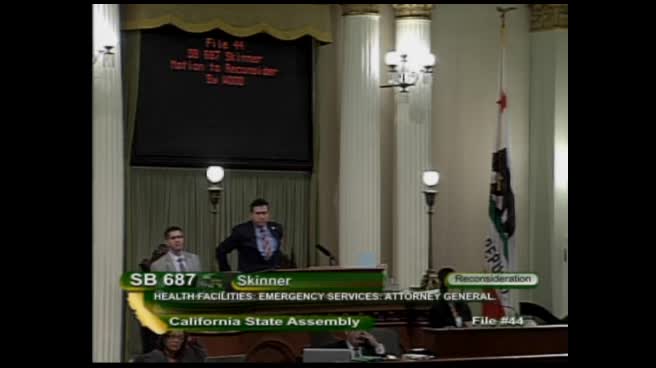 2MIN
Assembly Floor
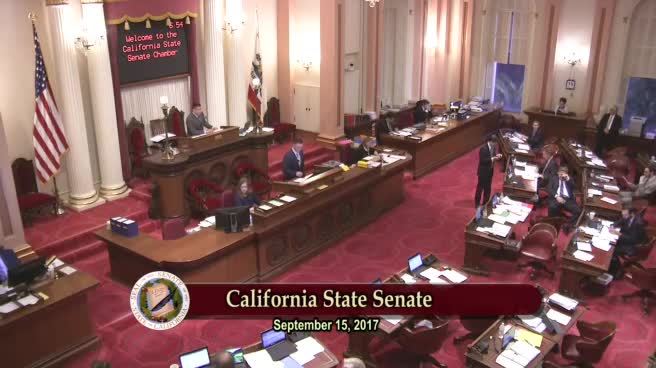 2MIN
Senate Floor
 47SEC
Assembly Floor
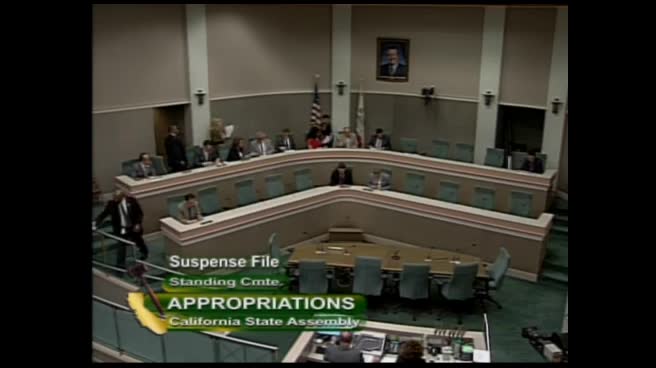 1H
Assembly Standing Committee on Appropriations
 10MIN
Assembly Standing Committee on Judiciary
 6MIN
Senate Floor
 21MIN
Senate Standing Committee on Appropriations
 22MIN