SB 492: Midpeninsula Regional Open Space District: purchase of property: San Jose Water Company.
- Session Year: 2017-2018
- House: Senate
- Latest Version Date: 2017-09-28
Under existing law, the Public Utilities Commission has regulatory authority over public utilities, including water corporations, as defined. Under the Public Utilities Act, a public utility is required to seek commission approval prior to selling, leasing, assigning, mortgaging, or otherwise disposing of or encumbering any property necessary or useful in the performance of its duties to the public.
Existing law authorizes regional park and open-space districts to acquire, and to lease or dispose of, real property, and rights in real property, within or without the regional district, that are necessary to the full exercise of the regional districts powers.
This bill would authorize the San Jose Water Company to sell lands in the Upper Guadalupe River watershed, including the Los Gatos Creek and Saratoga Creek watersheds, to the Midpeninsula Regional Open Space District until January 1, 2023, as specified.
The bill would require the water company to invest the net proceeds, if any, from the sale of land authorized by the bill in water system infrastructure, plant, facilities, and properties that are necessary or useful in the performance of its duties to the public. The bill would require the investment of the net proceeds to be included among the water companys other utility property upon which the commission authorizes the water company to earn a reasonable rate of return, as specified. The bill would provide that these requirements apply to the investment of the net proceeds from the sale for a period of 8 consecutive years, as prescribed, and would require the balance of any net proceeds and interest on the proceeds that is not invested after the 8-year period to be allocated solely to the water company ratepayers.
Under existing law, the Public Utilities Commission has regulatory authority over public utilities, including water corporations, as defined. Under the Public Utilities Act, a public utility is required to seek commission approval prior to selling, leasing, assigning, mortgaging, or otherwise disposing of or encumbering any property necessary or useful in the performance of its duties to the public.
Existing law authorizes regional park and open-space districts to acquire, and to lease or dispose of, real property, and rights in real property, within or without the regional district, that are necessary to the full exercise of the regional districts powers.
This bill would authorize the San Jose Water Company to sell lands in the Upper Guadalupe and Los Gatos Creek watershed watershed, including the Los Gatos Creek and Saratoga Creek watersheds, to the Midpeninsula Regional Open Space District, District until January 1, 2023, as specified. The
The bill would require the water company to invest the net proceeds, if any, from the sale of land authorized by the bill in water system infrastructure, plant, facilities, and properties that are necessary or useful in the performance of its duties to the public. The bill, for a period of 8 years, bill would require the investment of the net proceeds to be included among the water companys other utility property upon which the commission authorizes the water company to earn a reasonable rate of return, as specified. The bill would repeal its provisions on January 1, 2023. The bill would provide that these requirements apply to the investment of the net proceeds from the sale for a period of 8 consecutive years, as prescribed, and would require the balance of any net proceeds and interest on the proceeds that is not invested after the 8-year period to be allocated solely to the water company ratepayers.
Under existing law, the Public Utilities Commission has regulatory authority over public utilities, including water corporations, as defined. Under the Public Utilities Act, a public utility is required to seek commission approval prior to selling, leasing, assigning, mortgaging, or otherwise disposing of or encumbering any property necessary or useful in the performance of its duties to the public.
Existing law authorizes regional park and open-space districts to acquire, and to lease or dispose of, real property, and rights in real property, within or without the regional district, that are necessary to the full exercise of the regional districts powers.
This bill would authorize the San Jose Water Company to sell lands in the Upper Guadalupe and Los Gatos Creek watershed to the Midpeninsula Regional Open Space District, as specified. The bill would require the water company to invest the net proceeds, if any, from the sale of land authorized by the bill in water system infrastructure, plant, facilities, and properties that are necessary or useful in the performance of its duties to the public. The bill, for a period of 8 years, would require the investment of the net proceeds to be included among the water companys other utility property upon which the commission authorizes the water company to earn a reasonable rate of return, as specified. The bill would repeal its provisions on January 1, 2023.
(a)The Legislature finds and declares as follows:
(1)The sale of private watershed lands owned by the water company in the Upper Guadalupe watershed, including the Los Gatos Creek and Saratoga Creek watersheds, to the district offers an abundance of benefits to the public and wildlife.
(2)The transfer of these lands will ensure that several significant land conservation priorities will be addressed through active land management by the district.
(b)For the purposes of this section:
(1)District means the Midpeninsula Regional Open Space District.
(2)Water company means the San Jose Water Company.
(c)Notwithstanding any other law, the water company may sell lands in the Upper Guadalupe watershed, including the Los Gatos Creek and Saratoga Creek watersheds, to the district in accordance with the following conditions:
(1)The district shall commit to improve open-space trail connectivity, encourage forest management practices to promote late seral or old-growth habitat conditions, maintain wildland fire safety, preserve open space, and protect the downstream beneficial uses of water, including, but not limited to, critical elements of the public drinking water supply, in perpetuity.
(2)The water company shall retain all its existing water rights and a necessary fee title or easement interest, in perpetuity, to make certain that the customers of the water company have access to safe and reliable drinking water. The fee title or easement interest shall include all facilities owned and operated by the water company, including, but not limited to, treatment plants, delivery systems, reservoirs, and main tributaries.
(d)(1)If a sale of land occurs pursuant to this section, the water company shall invest the net proceeds, if any, from the sale in water system infrastructure, plant, facilities, and properties that are necessary or useful in the performance of the water companys duties to the public.
(2)For the purposes of tracking the net proceeds and their investment, the water company shall maintain records necessary to document the investment of the net proceeds pursuant to this section.
(3)All water utility infrastructure, plant, facilities, and properties constructed or acquired by, and used and useful to, the water company by investment pursuant to this section shall be included among the water companys other utility property upon which the Public Utilities Commission authorizes the water company the opportunity to earn a reasonable rate of return.
(4)This subdivision shall apply to the investment of the net proceeds from the sale of land pursuant to this section for a period of eight consecutive calendar years beginning with the calendar year immediately following the calendar year in which the water company receives the net proceeds. The balance of any net proceeds and interest on the proceeds that is not invested after the eight-year period shall be allocated solely to the water company ratepayers.
(5)The Public Utilities Commission retains continuing authority to determine the used, useful, or necessary status of any and all infrastructure improvements and investments by the water company.
(e)Section 851 of the Public Utilities Code shall not apply to the transfer of lands pursuant to this section.
(f)The authority for the water company to sell lands to the district pursuant to subdivision (c) is inoperative on January 1, 2023.
(a)The Legislature finds and declares as follows:
(1)The sale of private watershed lands owned by the water company in the Upper Guadalupe and Los Gatos Creek watershed watershed, including the Los Gatos Creek and Saratoga Creek watersheds, to the district offers an abundance of benefits to the public and wildlife.
(2)The transfer of these lands will ensure that several significant land conservation priorities will be addressed through active land management by the district.
(b)For the purposes of this section:
(1)District means the Midpeninsula Regional Open Space District.
(2)Water company means the San Jose Water Company.
(c)Notwithstanding any other law, the water company may sell lands in the Upper Guadalupe and Los Gatos Creek watershed watershed, including the Los Gatos Creek and Saratoga Creek watersheds, to the district in accordance with the following conditions:
(1)The district shall commit to improve open-space trail connectivity, encourage forest management practices to promote late seral or old-growth habitat conditions, improve maintain wildland fire safety, preserve open space, and protect the downstream beneficial uses of water, including, but not limited to, critical elements of the public drinking water supply, in perpetuity.
(2)The water company shall retain all its existing water rights and a necessary easement, fee title or easement interest, in perpetuity, to make certain that the customers of the water company have access to safe and reliable drinking water. The easement fee title or easement interest shall include all facilities owned and operated by the water company, including, but not limited to, treatment plants, delivery systems, reservoirs, and main tributaries.
(d)(1)If a sale of land occurs pursuant to this section, the water company shall invest the net proceeds, if any, from the sale in water system infrastructure, plant, facilities, and properties that are necessary or useful in the performance of the water companys duties to the public.
(2)For the purposes of tracking the net proceeds and their investment, the water company shall maintain records necessary to document the investment of the net proceeds pursuant to this section.
(3)All water utility infrastructure, plant, facilities, and properties constructed or acquired by, and used and useful to, the water company by investment pursuant to this section shall be included among the water companys other utility property upon which the Public Utilities Commission authorizes the water company the opportunity to earn a reasonable rate of return. This paragraph
(4)This subdivision shall apply to the investment of the net proceeds from the sale of land pursuant to this section for a period of eight consecutive calendar years beginning with the calendar year immediately following the calendar year in which the water company receives the net proceeds. The balance of any net proceeds and interest on the proceeds that is not invested after the eight-year period shall be allocated solely to the water company ratepayers.
(4)(5)The Public Utilities Commission retains continuing authority to determine the used, useful, or necessary status of any and all infrastructure improvements and investments by the water company.
(e)Section 851 of the Public Utilities Code shall not apply to the transfer of lands pursuant to this section.
(f)This section shall remain in effect only until January 1, 2023, and as of that date is repealed.(f)The authority for the water company to sell lands to the district pursuant to subdivision (c) is inoperative on January 1, 2023.
(a)The Legislature finds and declares as follows:
(1)The sale of private watershed lands owned by the water company in the Upper Guadalupe and Los Gatos Creek watershed to the district offers an abundance of benefits to the public and wildlife.
(2)The transfer of these lands will ensure that several significant land conservation priorities will be addressed through active land management by the district.
(b)For the purposes of this section:
(1)District means the Midpeninsula Regional Open Space District.
(2)Water company means the San Jose Water Company.
(c)Notwithstanding any other law, the water company may sell lands in the Upper Guadalupe and Los Gatos Creek watershed to the district in accordance with the following conditions:
(1)The district shall commit to improve open-space trail connectivity, encourage forest management practices to promote late seral or old-growth habitat conditions, improve wildland fire safety, preserve open space, and protect the downstream beneficial uses of water, including, but not limited to, critical elements of the public drinking water supply, in perpetuity.
(2)The water company shall retain all its existing water rights and a necessary easement, in perpetuity, to make certain that the customers of the water company have access to safe and reliable drinking water. The easement shall include all facilities owned and operated by the water company, including, but not limited to, treatment plants, delivery systems, reservoirs, and main tributaries.
(d)(1)If a sale of land occurs pursuant to this section, the water company shall invest the net proceeds, if any, from the sale in water system infrastructure, plant, facilities, and properties that are necessary or useful in the performance of the water companys duties to the public.
(2)For the purposes of tracking the net proceeds and their investment, the water company shall maintain records necessary to document the investment of the net proceeds pursuant to this section.
(3)All water utility infrastructure, plant, facilities, and properties constructed or acquired by, and used and useful to, the water company by investment pursuant to this section shall be included among the water companys other utility property upon which the Public Utilities Commission authorizes the water company the opportunity to earn a reasonable rate of return. This paragraph shall apply to the investment of the net proceeds from the sale of land pursuant to this section for a period of eight consecutive calendar years beginning with the calendar year immediately following the calendar year in which the water company receives the net proceeds. The balance of any net proceeds and interest on the proceeds that is not invested after the eight-year period shall be allocated solely to the water company ratepayers.
(4)The Public Utilities Commission retains continuing authority to determine the used, useful, or necessary status of any and all infrastructure improvements and investments by the water company.
(e)Section 851 of the Public Utilities Code shall not apply to the transfer of lands pursuant to this section.
(f)This section shall remain in effect only until January 1, 2023, and as of that date is repealed.
|
Date
|
Status
|
|---|---|
| Sep 28, 2017 | Chaptered by Secretary of State. Chapter 359, Statutes of 2017. |
| Sep 28, 2017 | Approved by the Governor. |
| Sep 6, 2017 | Enrolled and presented to the Governor at 3 p.m. |
| Aug 31, 2017 | In Senate. Ordered to engrossing and enrolling. |
| Aug 31, 2017 | Read third time. Passed. Ordered to the Senate. |
| Aug 24, 2017 | Read second time. Ordered to third reading. |
| Aug 23, 2017 | From committee: Do pass. (Ayes 15. Noes 0.) (August 23). |
| Jul 13, 2017 | From committee: Do pass and re-refer to Com. on APPR. (Ayes 14. Noes 0.) (July 12). Re-referred to Com. on APPR. |
| Jul 5, 2017 | July 5 hearing postponed by committee. |
| Jun 13, 2017 | From committee: Do pass and re-refer to Com. on U. & E. (Ayes 13. Noes 0.) (June 13). Re-referred to Com. on U. & E. |
| May 26, 2017 | Referred to Coms. on W.,P., & W. and U. & E. |
| May 4, 2017 | In Assembly. Read first time. Held at Desk. |
| May 4, 2017 | Read third time. Passed. (Ayes 39. Noes 0. Page 952.) Ordered to the Assembly. |
| May 2, 2017 | Read second time. Ordered to third reading. |
| May 1, 2017 | From committee: Be ordered to second reading pursuant to Senate Rule 28.8. |
| Apr 21, 2017 | Set for hearing May 1. |
| Apr 18, 2017 | From committee: Do pass and re-refer to Com. on APPR. (Ayes 10. Noes 1. Page 727.) (April 18). Re-referred to Com. on APPR. |
| Mar 30, 2017 | Set for hearing April 18. |
| Mar 28, 2017 | From committee: Do pass and re-refer to Com. on E., U. & C. (Ayes 9. Noes 0.) (March 28). Re-referred to Com. on E., U. & C. |
| Mar 20, 2017 | From committee with author's amendments. Read second time and amended. Re-referred to Com. on N.R. & W. |
| Mar 7, 2017 | Set for hearing March 28. |
| Mar 2, 2017 | Referred to Coms. on N.R. & W. and E., U. & C. |
| Feb 17, 2017 | From printer. May be acted upon on or after March 19. |
| Feb 16, 2017 | Introduced. Read first time. To Com. on RLS. for assignment. To print. |
|
Date
|
Description
|
Location
|
Votes
|
|
|---|---|---|---|---|
| Aug 31, 2017 | SB 492 Beall Senate Third Reading By STONE | Assembly Floor |
Passed |
|
| Aug 23, 2017 | Do pass. | Assembly Standing Committee on Appropriations |
Passed |
|
| Jul 12, 2017 | Do pass and be re-referred to the Committee on [Appropriations] | Assembly Standing Committee on Utilities and Energy |
Passed |
|
| Jun 13, 2017 | Do pass and be re-referred to the Committee on [Utilities and Energy] | Assembly Standing Committee on Water, Parks, and Wildlife |
Passed |
|
| May 4, 2017 | Senate 3rd Reading SB492 Beall et al. | Senate Floor |
Passed |
|
| Apr 18, 2017 | Do pass, but first be re-referred to the Committee on [Appropriations] | Senate Standing Committee on Energy, Utilities and Communications |
Passed |
|
| Mar 28, 2017 | Do pass, but first be re-referred to the Committee on [Energy, Utilities and Communications] | Senate Standing Committee on Natural Resources and Water |
Passed |
This list shows positions taken on this bill by organizations on the date displayed, which is linked to the original source.
Positions by individuals are not included.
|
Organization
|
Position
|
Date
|
|---|---|---|
| 1 individual | ** Support | Jul 11, 2017 |
| An individual | ** Support | May 3, 2017 |
| Audubon California | ** Support | Mar 23, 2017 |
| Bay Area Ridge Trail Council | ** Support | Jul 11, 2017 |
| California Council Of Land Trusts | ** Support | Jul 11, 2017 |
| City of Campbell | ** Support | Jul 11, 2017 |
| City of San Jose | * Support | Aug 23, 2017 |
| City of Saratoga | ** Support | Jul 11, 2017 |
| Committee for Green Foothills | ** Support | Jul 11, 2017 |
| Friends of Five Wounds Trail | ** Support | Jul 11, 2017 |
| Individual | ** Support | Jun 9, 2017 |
| Mid-Peninsula Regional Open Space District | * Support | Aug 23, 2017 |
| Open Space Authority Santa Clara Valley | * Support | Aug 23, 2017 |
| Rails-to-Trails Conservancy | ** Support | Jul 11, 2017 |
| San Jose Conservation Corps & Charter School | ** Support | Jul 11, 2017 |
| Santa Clara County Board of Supervisors | ** Support | Jul 11, 2017 |
| Santa Clara Valley Audubon Society | ** Support | Jul 11, 2017 |
| Santa Clara Valley Water District | * Support | Aug 23, 2017 |
| The Nature Conservancy | * Support | Aug 23, 2017 |
| Town of Los Gatos | ** Support | Jul 11, 2017 |
SENATE THIRD READING
STR Bill Id:SB 492
Author:(Beall and Hill)
As Amended Ver:March 20, 2017
Majority vote
SENATE VOTE: 39-0
Committee | Votes | Ayes | Noes |
Water | 13-0 | Eduardo Garcia, Gallagher, Bigelow, Choi, Chu, Friedman, Gloria, Levine, Mathis, Rubio, Salas, Thurmond, Wood | |
Utilities | 14-0 | Holden, Patterson, Burke, Chávez, Chen, Dahle, Rodriguez, Fong, Cristina Garcia, Muratsuchi, Quirk, Reyes, Santiago, Ting | |
Appropriations | 15-0 | Gonzalez Fletcher, Bigelow, Bocanegra, Bonta, Brough, Calderon, Chau, Eggman, Fong, Friedman, Gallagher, Gray, Jones-Sawyer, Obernolte, Reyes |
SUMMARY: This bill authorizes the San Jose Water Company (SJWC) to sell lands in the Upper Guadalupe watershed to the Midpeninsula Regional Open Space District (MROSD), until January 1, 2023, without California Public Utilities Commission (PUC) review and approval of the sale. Specifically, this bill:
- Requires the PUC to retain its continuing authority to determine the used, useful, or necessary status of any and all infrastructure improvements and investments by the SJWC.
- Authorizes the SJWC to sell lands in the Upper Guadalupe watershed, including the Los Gatos Creek and Saratoga Creek watersheds, to the MROSD, notwithstanding any other law, and in accordance with specified conditions.
- Directs the SJWC to invest the net proceeds of the sale, in infrastructure necessary or useful in the performance of the SJWC's duties to the public.
- Sunsets the authority for the SJWC to sell lands to the MROSD without PUC review on January 1, 2023.
FISCAL EFFECT: According to the Assembly Appropriations Committee, negligible state costs.
COMMENTS:
Purpose. According to the author, the exemption provided in this bill is necessary because the PUC review can drag out for years and jeopardize any deal that might be reached between the MROSD and the SJWC, as well as, the availability of local bond funds which have been authorized for conservation.
Background. Under existing law, the PUC must review and examine any sale of property by a PUC-regulated water utility. The PUC's review of a sale of utility property is an involved process that generally takes about 18 months and includes other stakeholders, including ratepayer advocates, in a public proceeding. In the case of a proposed sale of a utility's property that is deemed necessary or useful in the performance of a utility's duties to the public, the PUC conducts an examination of the following issues:
- Whether the sale price is reflective of the fair market value for the property in question;
- A determination that the transaction will not have an adverse effect on the public interest or on the ability of the utility to provide safe and reliable service to customers at reasonable rates (impacts on rate base, utility expenses, taxes, and rates);
- If the transaction is a transfer or change in ownership of facilities currently used in regulated utility operations, the transaction will not result in a significant physical or operational change in the facility;
- Assurance that the rights retained by the utility in any proposed easements are sufficient for present and future public utility needs;
- A determination whether the proposed sale is considered a project for purposes of the California Environmental Quality Act; and
- A determination on how any loss- or gain-on-sale from the property is to be allocated between ratepayers and utility shareholders.
While this bill contains many safeguards, by exempting the sale of SJWC property from PUC review, there may be issues that will not be examined and without further information it is not possible to determine how this will impact protections for water utility ratepayers.
Analysis Prepared by: Catherine Freeman / W., P., & W. / (916) 319-2096 FN: 0001422
Date of Hearing: August 23, 2017
ASSEMBLY COMMITTEE ON APPROPRIATIONS
Lorena Gonzalez Fletcher, Chair
SBPCA Bill Id:SB 492
Author:(Beall) – As Amended Ver:March 20, 2017
Policy Committee: | Water, Parks and Wildlife | Vote: | 13 - 0 |
Utilities and Energy | 14 - 0 | ||
|
|
Urgency: No State Mandated Local Program: No Reimbursable: No
SUMMARY:
This bill authorizes the San Jose Water Company (SJWC) to sell lands in the Upper Guadalupe watershed to the Midpeninsula Regional Open Space District (MROSD), until January 1, 2023, without California Public Utilities Commission (PUC) review and approval of the sale. Specifically, this bill:
- Requires the PUC to retain its continuing authority to determine the used, useful, or necessary status of any and all infrastructure improvements and investments by the SJWC.
- Authorizes the SJWC to sell lands in the Upper Guadalupe watershed, including the Los Gatos Creek and Saratoga Creek watersheds, to the MROSD, notwithstanding any other law, and in accordance with specified conditions.
- Directs the SJWC to invest the net proceeds of the sale, in infrastructure necessary or useful in the performance of the SJWC’s duties to the public.
- Sunsets the authority for the SJWC to sell lands to the MROSD without PUC review on January 1, 2023.
FISCAL EFFECT:
Negligible state costs.
COMMENTS:
- Purpose. According to the author, the exemption provided in this bill is necessary because PUC review can drag out for years and jeopardize any deal that might be reached between MROSD and SJWC as well as the availability of local bond funds which have been authorized for conservation.
- Background. Under existing law, the PUC must review and exam any sale of property by a PUC-regulated water utility. The PUC’s review of a sale of utility property is an involved process that generally takes about 18 months and includes other stakeholders, including ratepayer advocates, in a public proceeding. In the case of a proposed sale of a utility’s property that is deemed necessary or useful in the performance of a utility’s duties to the public, the PUC conducts an examination of the following issues:
- Whether the sale price is reflective of the fair market value for the property in question;
- A determination that the transaction will not have an adverse effect on the public interest or on the ability of the utility to provide safe and reliable service to customers at reasonable rates (impacts on rate base, utility expenses; taxes, and rates);
- If the transaction is a transfer or change in ownership of facilities currently used in regulated utility operations, the transaction will not result in a significant physical or operational change in the facility;
- Assurance that the rights retained by the utility in any proposed easements are sufficient for present and future public utility needs;
- A determination whether the proposed sale is considered a project for purposes of the California Environmental Quality Act; and
- A determination on how any loss- or gain-on-sale from the property is to be allocated between ratepayers and utility shareholders.
While this bill contains many safeguards, by exempting the sale of SJWC property from PUC review, there may be issues that will not be examined and without further information it is impossible to determine if there will be appropriate protections for water utility ratepayers.
- Is this language too broad? This bill not only exempts sale of SJWC property to the open space district from PUC review but also exempts it from any other law, subject to the conditions in the bill which reads as follows:
Notwithstanding any other law, the water company may sell lands in the Upper Guadalupe watershed, including the Los Gatos Creek and Saratoga Creek watersheds, to the district in accordance with the following conditions:
1) The district shall commit to improve open-space trail connectivity, encourage forest management practices to promote late seral or old-growth habitat conditions, maintain wildland fire safety, preserve open space, and protect the downstream beneficial uses of water, including, but not limited to, critical elements of the public drinking water supply, in perpetuity.
(2) The water company shall retain all its existing water rights and a necessary fee title or easement interest, in perpetuity, to make certain that the customers of the water company have access to safe and reliable drinking water. The fee title or easement interest shall include all facilities owned and operated by the water company, including, but not limited to, treatment plants, delivery systems, reservoirs, and main tributaries.
(d) (1) If a sale of land occurs pursuant to this section, the water company shall invest the net proceeds, if any, from the sale in water system infrastructure, plant, facilities, and properties that are necessary or useful in the performance of the water company’s duties to the public.
(2) For the purposes of tracking the net proceeds and their investment, the water company shall maintain records necessary to document the investment of the net proceeds pursuant to this section.
(3) All water utility infrastructure, plant, facilities, and properties constructed or acquired by, and used and useful to, the water company by investment pursuant to this section shall be included among the water company’s other utility property upon which the Public Utilities Commission authorizes the water company the opportunity to earn a reasonable rate of return. (4) This subdivision shall apply to the investment of the net proceeds from the sale of land pursuant to this section for a period of eight consecutive calendar years beginning with the calendar year immediately following the calendar year in which the water company receives the net proceeds. The balance of any net proceeds and interest on the proceeds that is not invested after the eight-year period shall be allocated solely to the water company ratepayers.
(5) The Public Utilities Commission retains continuing authority to determine the used, useful, or necessary status of any and all infrastructure improvements and investments by the water company.
If the goal of the bill is to exempt the sale from PUC review, the author may wish instead to nothwithstand Public Utilities Code §851.
Analysis Prepared by: Jennifer Galehouse / APPR. / (916) 319-2081
Date of Hearing: July 12, 2017
ASSEMBLY COMMITTEE ON UTILITIES AND ENERGY
Chris Holden, Chair
SBPCA Bill Id:SB 492
Author:(Beall) – As Amended Ver:March 20, 2017
SENATE VOTE: 39-0
SUBJECT: Midpeninsula Regional Open Space District: purchase of property: San Jose Water Company
SUMMARY: This bill authorizes the San Jose Water Company (SJWC) to sell lands in the Upper Guadalupe watershed to the Midpeninsula Regional Open Space District (MROSD), until January 1, 2023, without California Public Utilities Commission (CPUC) review and approval of the sale. Specifically, this bill:
- Exempts a sale of water utility lands authorized by this bill from review by the CPUC which is otherwise required to review the sale, lease, assignment, mortgage, disposal, or encumbrance of any asset necessary or useful in the performance of a utility’s duties to the public.
- States that the CPUC will retain its continuing authority to determine the used, useful, or necessary status of any and all infrastructure improvements and investments by the SJWC.
- Authorizes the SJWC to sell lands in the Upper Guadalupe watershed, including the Los Gatos Creek and Saratoga Creek watersheds, to the MROSD, notwithstanding any other law, and in accordance with the following conditions:
- The MROSD must commit to improve open-space trail connectivity, encourage forest management practices to promote late seral or old-growth habitat conditions, maintain wildland fire safety, preserve open space, and protect the downstream beneficial uses of water, including, but not limited to, critical elements of the public drinking water supply, in perpetuity.
- The SJWC must retain all existing water rights and a necessary fee title or easement interest, in perpetuity, to ensure that SJWC customers have access to safe and reliable drinking water. The fee title or easement interest shall include all facilities owned and operated by the water company, including, but not limited to, treatment plants, delivery systems, reservoirs, and main tributaries.
- The MROSD must commit to improve open-space trail connectivity, encourage forest management practices to promote late seral or old-growth habitat conditions, maintain wildland fire safety, preserve open space, and protect the downstream beneficial uses of water, including, but not limited to, critical elements of the public drinking water supply, in perpetuity.
- Directs, if a sale of land occurs, that the SJWC invest the net proceeds in infrastructure that is necessary or useful in the performance of the water company’s duties to the public.
- Sunsets the authority for the SJWC to sell lands to the MROSD on January 1, 2023.
EXISTING LAW:
- Prohibits a public utility from selling, leasing, assigning, mortgaging, otherwise disposing of, or encumbering its plant, system, or other property necessary or useful in the performance of its duties to the public without review by the CPUC. Transactions valued below $5 million can seek administrative review through an advice letter. Transactions valued above $5 million must secure an order from the CPUC. (Public Utilities Code § 851)
- Authorizes the sale, lease, encumbrance, or other disposition of water corporation assets that are no longer “necessary or useful in the performance of its duties to the public” without CPUC review and requires the proceeds from those transactions to be included among the water corporation’s other utility property upon which the CPUC authorizes the water corporation the opportunity to earn a reasonable return. (Public Utilities Code § 790)
FISCAL EFFECT: This bill is keyed fiscal and will be referred to the Assembly Committee on Appropriations for its review. This bill passed out of Senate Appropriations under Senate Rule 28.8 due to a determination that this measure has minimum impact to state costs or revenues.
BACKGROUND:
San Jose Water Company (SJWC) – Founded in 1866, SJWC is an investor-owned public utility, and is one of the largest urban water systems in the United States, serving about one million people in the greater San Jose metropolitan area. The water corporation is a Class A, CPUC-regulated, large water corporation. SJWC is owned by SJW Group, a publicly traded company listed on the New York Stock Exchange under the symbol SJW. SJW Group also owns SJW Land Company, and SJWTX, Inc.
The Property – SJWC owns approximately 6,320 acres of watershed land in the Santa Cruz Mountains on the Los Gatos Creek drainage and the Saratoga Creek drainage. The watershed lands owned by SJWC yield as much as 14 percent of the water supplied to customers annually. The watershed land serves two important purposes. First, it collects runoff from precipitation and drains it to both reservoirs and creeks where it is collected for use as drinking water. Second, it provides protection of the quality of that water, and provides a critical first level of natural treatment.
The watersheds are primarily mountain terrain characterized by steep to very steep slopes that have been dissected by several major and numerous minor drainage channels. Both creeks maintain some flow year round yet the flows vary considerably with precipitation patterns, infiltration capacities and diversions. The company has historic water rights and licenses on both creek systems.
The watershed is managed by the SJWC Water Quality Department. The Water Quality Department is responsible for raw water quality monitoring programs, treatment plant operations, and watershed maintenance activities including maintenance of structures and roads and brush management.
Operation of numerous raw water intakes requires the presence of system operators on the watershed on a daily basis. In addition to operating facilities, operators inspect and report on land use activities as well as the condition of structures. Also, key facilities are patrolled regularly by watershed guards. In addition, the Manager of Water Treatment and Watershed Maintenance performs routine monthly inspections of the watershed and is responsible for implementing the watershed management plan. San Jose Water Company employs three full time field staff under the direction of the Manager of Water Treatment and Watershed Maintenance for the purpose of watershed maintenance and upkeep. Other key managers and supervisors from the Operations Department periodically inspect watershed properties and facilities to ensure protection from possible sanitary hazards.
Midpeninsula Regional Open Space District (MROSD) – The MROSD was created by local initiative in 1972 to preserve land and open space areas, and to develop public access, in the area of Santa Clara and San Mateo Counties. The district was later extended to the Pacific Ocean and bordering Santa Cruz County. The project in question is within these boundaries.
COMMENTS:
- Author’s Statement. SB 492 is a district bill coauthored by nine Bay Area legislators to facilitate the sale of San Jose Water Company’s land holdings in the Upper Guadalupe, Los Gatos Creek, and Saratoga Creek Watersheds to the Midpeninsula Regional Open Space District.
The transaction will protect and preserve nearly 6,500 acres of vital watershed land. This includes over 1,000 acres of redwood forest in danger of unsustainable logging. At the same time, the bill allows several open space trails to be linked, such as the Bay Area Ridge Trail, providing the public with access to spectacular scenery.
Besides its many conservation benefits, the bill has direct financial benefits for San Jose Water Company’s ratepayers and reporting requirements to ensure sale proceeds are spent in accordance with this measure. The bill requires all proceeds be invested in capital projects – projects that would otherwise be paid for by rate payers. And, it requires the balance of any net proceeds, including interest on the proceeds that is not invested after the 8-year period, to be allocated solely to the water company’s ratepayers. SJWC would be required to maintain records necessary to document the investment of the net proceeds pursuant to this bill.
- CPUC Oversight of Utility Assets. A core responsibility of the CPUC is to review and approve utility asset sales to ensure that utilities retain the assets that are necessary for delivery of high quality service – referred to in state law as “necessary or useful.” To the extent that assets are sold, this process also ensures that the utility and its ratepayers are fairly compensated – whether the sale price is reflective of the fair market value for the property in question. These types of reviews are among the most common formal proceedings before the CPUC.
Several years ago the CPUC did establish a streamlined review process to approve transactions valued at less than $5 million which is triggered by the filing of an “advice letter” by the utility. This is a less formalized review that does not require attorneys or hearings and it can be managed at the staff level.
CPUC review of a transaction is not required if the assets are no longer “necessary or useful” to deliver customer services by the utility.
- Bottom Line. The property at issue is a tremendous treasure to be protected for the community. However, portions of the property are also a necessary and useful asset that is needed to continue to serve water customers and provides 14 percent of water supply for the SJWC. A fundamental responsibility of the CPUC is to review any sale of assets that are necessary and useful for service to customers and to ensure that ratepayers receive fair market value for the asset. This bill exempts the transaction from CPUC oversight. This sidesteps CPUC checks that the proceeds from the asset are managed, and that there are sufficient utility assets to serve customers “necessary or useful in the performance of its duties to the public.” The state’s limited water supply makes this review even more critical. The CPUC additionally ensures that the utility receives fair market value for the sale of the asset that the ratepayers paid for.
The author states that the exemption is necessary because CPUC review can drag out for years and jeopardize any deal that might be reached between MROSD and SJWC as well as the availability of local bond funds which have been authorized for conservation. The sale has been discussed for years but negotiations have not begun and a critical element of the negotiations will be SJWC’s continued access to the asset for its water supply. The author and sponsor state that there is also no appraisal. Since there is no final transaction between MSORD and the SJWC, it is not possible to consider the impact on utility customers at this time and this bill would exempt the final transaction from CPUC review. - They are Nothing if Not Thorough! The author has introduced this bill out of concern with the length of CPUC proceedings. He opines that “the amount of time the CPUC may take to approve the sale of utility property is unpredictable at best, and can take longer than two-years at worst.” The current process required to approve a sale of utility assets such as the SJWC property, is for the utility to file an application with the CPUC which would trigger a public proceeding of approximately 18 months – if there is no opposition to the sale. The author argues that the time required for the CPUC to approve any sale of the asset would jeopardize the availability of local bond funds to finance the sale and he therefore seeks an exemption from CPUC review of the sale.
CPUC oversight of corporate utility transactions is critical and it would be unprecedented for such a transaction (the unverified value of which may be in excess of $20 million) to bypass any regulatory scrutiny.
The CPUC does have an existing, streamlined process for the review of the sale of utility assets valued at less than $5 million. Set forth in General Order 173[1] this process allows the CPUC to review the transaction without going through a full adjudicatory proceeding. It offers a less formalized review that does not require attorneys or hearings but does get administrative scrutiny.
The CPUC reports the process typically takes 60 days and is triggered with the filing of an advice letter by the utility that includes specified information. The committee may wish to consider amending this bill to strike the exemption from CPUC review and instead require the CPUC to utilize the GO 173 process for the review of this one transaction but clarify that approval of the transaction at a voting meeting of the commission will still be required and the CPUC shall conclude its review in less than four months. This provision should sunset December 31, 2020. The existing GO 173 process is managed at the staff level and does not include a vote by the commission. Consequently, the process established by this amendment, by adding a vote of the commission, would take longer than the 60 days referenced in the order; likely 120 days.
- Restrictions on Use of Net Proceeds. In addition to exempting CPUC review of the transaction, this measure directs the use of any net proceeds from the sale to specified investments. Current law permits a water utility to dispose of assets which are “no longer used or useful” without CPUC review and directs the use of proceeds from the transaction. This bill mimics that investment mandate. However, if the committee adopts the recommended amendments in comment 4 which would require CPUC review, the mandated investments in this bill are not necessary or appropriate. The CPUC should utilize is authority to review SJWC assets in total, with the utility, and determine the best use of the proceeds under its current authority. To ensure that the CPUC retains the authority to review and direct use of any proceeds from the sale of the land, the committee may wish to consider striking all provisions which mandate the investment of the net proceeds, by striking at page 3, lines 13 through 40 and striking page 4.
REGISTERED SUPPORT / OPPOSITION:
Support
1 Individual
Bay Area Ridge Trail Council
California Council Of Land Trusts
City Of Campbell
City Of San Jose
City Of Saratoga
Committee For Green Foothills
Friends Of Five Wounds Trail
Midpeninsula Regional Open Space District
Rails-to-trails Conservancy
San Jose Conservation Corps & Charter School
Santa Clara County Board Of Supervisors
Santa Clara Valley Audubon Society
Santa Clara Valley Open Space Authority
Santa Clara Valley Water District
Santa Clara Valley Water District
The Nature Conservancy
Town Of Los Gatos
Opposition
None on file.
Analysis Prepared by: Kellie Smith / U. & E. /
Date of Hearing: July 5, 2017
ASSEMBLY COMMITTEE ON UTILITIES AND ENERGY
Chris Holden, Chair
SBPCA Bill Id:SB 492
Author:(Beall) – As Amended Ver:March 20, 2017
SENATE VOTE: 39-0
SUBJECT: Midpeninsula Regional Open Space District: purchase of property: San Jose Water Company
SUMMARY: This bill authorizes the San Jose Water Company (SJWC) to sell lands in the Upper Guadalupe watershed to the Midpeninsula Regional Open Space District (MROSD), until January 1, 2023, without California Public Utilities Commission (CPUC) review and approval of the sale. Specifically, this bill:
- Exempts a sale of water utility lands authorized by this bill from review by the CPUC which is otherwise required to review the sale, lease, assignment, mortgage, disposal, or encumbrance of any asset necessary or useful in the performance of a utility’s duties to the public.
- States that the CPUC will retain its continuing authority to determine the used, useful, or necessary status of any and all infrastructure improvements and investments by the SJWC.
- Authorizes the SJWC to sell lands in the Upper Guadalupe watershed, including the Los Gatos Creek and Saratoga Creek watersheds, to the MROSD, notwithstanding any other law, and in accordance with the following conditions:
- The MROSD must commit to improve open-space trail connectivity, encourage forest management practices to promote late seral or old-growth habitat conditions, maintain wildland fire safety, preserve open space, and protect the downstream beneficial uses of water, including, but not limited to, critical elements of the public drinking water supply, in perpetuity.
- The SJWC must retain all existing water rights and a necessary fee title or easement interest, in perpetuity, to ensure that SJWC customers have access to safe and reliable drinking water. The fee title or easement interest shall include all facilities owned and operated by the water company, including, but not limited to, treatment plants, delivery systems, reservoirs, and main tributaries.
- The MROSD must commit to improve open-space trail connectivity, encourage forest management practices to promote late seral or old-growth habitat conditions, maintain wildland fire safety, preserve open space, and protect the downstream beneficial uses of water, including, but not limited to, critical elements of the public drinking water supply, in perpetuity.
- Directs, if a sale of land occurs, that the SJWC invest the net proceeds in infrastructure that is necessary or useful in the performance of the water company’s duties to the public.
- Sunsets the authority for the SJWC to sell lands to the MROSD on January 1, 2023.
EXISTING LAW:
- Prohibits a public utility from selling, leasing, assigning, mortgaging, otherwise disposing of, or encumbering its plant, system, or other property necessary or useful in the performance of its duties to the public without review by the CPUC. Transactions valued below $5 million can seek administrative review through an advice letter. Transactions valued above $5 million must secure an order from the CPUC. (Public Utilities Code § 851)
- Authorizes the sale, lease, encumbrance, or other disposition of water corporation assets that are no longer “necessary or useful in the performance of its duties to the public” without CPUC review and requires the proceeds from those transactions to be included among the water corporation’s other utility property upon which the commission authorizes the water corporation the opportunity to earn a reasonable return. (Public Utilities Code § 790)
FISCAL EFFECT: This bill is keyed fiscal and will be referred to the Assembly Committee on Appropriations for its review. This bill passed out of Senate Appropriations under Senate Rule 28.8 due to a determination that this measure has minimum impact to state costs or revenues.
BACKGROUND:
San Jose Water Company (SJWC) – Founded in 1866, SJWC is an investor-owned public utility, and is one of the largest urban water systems in the United States, serving about one million people in the greater San Jose metropolitan area. The water corporation is a Class A, CPUC-regulated, large water corporation. SJWC is owned by SJW Group, a publicly traded company listed on the New York Stock Exchange under the symbol SJW. SJW Group also owns SJW Land Company, and SJWTX, Inc.
The Property – SJWC owns approximately 6,320 acres of watershed land in the Santa Cruz Mountains on the Los Gatos Creek drainage and the Saratoga Creek drainage. The watershed lands owned by SJWC yield as much as 14 percent of the water supplied to customers annually. The watershed land serves two important purposes. First, it collects runoff from precipitation and drains it to both reservoirs and creeks where it is collected for use as drinking water. Second, it provides protection of the quality of that water, and provides a critical first level of natural treatment.
The watersheds are primarily mountain terrain characterized by steep to very steep slopes that have been dissected by several major and numerous minor drainage channels. Both creeks maintain some flow year round yet the flows vary considerably with precipitation patterns, infiltration capacities and diversions. The company has historic water rights and licenses on both creek systems.
The watershed is managed by the SJWC Water Quality Department. The Water Quality Department is responsible for raw water quality monitoring programs, treatment plant operations, and watershed maintenance activities including maintenance of structures and roads and brush management.
Operation of numerous raw water intakes requires the presence of system operators on the watershed on a daily basis. In addition to operating facilities, operators inspect and report on land use activities as well as the condition of structures. Also, key facilities are patrolled by regularly by watershed guards. In addition, the Manager of Water Treatment and Watershed Maintenance performs routine monthly inspections of the watershed and is responsible for implementing the watershed management plan. San Jose Water Company employs three full time field staff under the direction of the Manager of Water Treatment and Watershed Maintenance for the purpose of watershed maintenance and upkeep. Other key managers and supervisors from the Operations Department periodically inspect watershed properties and facilities to ensure protection from possible sanitary hazards.
Midpeninsula Regional Open Space District (MRODSD) – The MROSD was created by local initiative in 1972 to preserve land and open space areas, and to develop public access, in the area of Santa Clara and San Mateo Counties. The district was later extended to the Pacific Ocean and bordering Santa Cruz County. The project in question is within these boundaries.
COMMENTS:
- Author’s Statement. SB 492 is a district bill coauthored by nine Bay Area legislators to facilitate the sale of San Jose Water Company’s land holdings in the Upper Guadalupe, Los Gatos Creek, and Saratoga Creek Watersheds to the Midpeninsula Regional Open Space District.
The transaction will protect and preserve nearly 6,500 acres of vital watershed land. This includes over 1,000 acres of redwood forest in danger of unsustainable logging. At the same time, the bill allows several open space trails to be linked, such as the Bay Area Ridge Trail, providing the public with access to spectacular scenery.
Besides its many conservation benefits, the bill has direct financial benefits for San Jose Water Company’s ratepayers and reporting requirements to ensure sale proceeds are spent in accordance with this measure. The bill requires all proceeds be invested in capital projects – projects that would otherwise be paid for by rate payers. And, it requires the balance of any net proceeds, including interest on the proceeds that is not invested after the 8-year period, to be allocated solely to the water company’s ratepayers. SJWC would be required to maintain records necessary to document the investment of the net proceeds pursuant to this bill.
- CPUC Oversight of Utility Assets. A core responsibility of the CPUC is to review and approve utility asset sales to ensure that utilities retain the assets that are necessary for delivery of high quality service – referred to in state law as “necessary or useful.” To the extent that assets are sold, this process also ensures that the utility and its ratepayers are fairly compensated. These types of reviews are among the most common formal proceedings before the CPUC.
Several years ago the CPUC did establish a streamlined review process to approve transactions valued at less than $5 million which is triggered by the filing of an “advice letter” by the utility. This is a less formalized review that does not require attorneys or hearings and it can be managed at the staff level.
CPUC review of a transaction is not required if the assets are no longer “necessary or useful” to deliver customer services by the utility.
- Bottom Line. The property at issue is a tremendous treasure to be protected for the community. However, portions of the property are also a necessary and useful asset that is needed to continue to serve water customers and provides 14 percent of water supply for the SJWC. A fundamental responsibility of the CPUC is to review any sale of assets that is necessary and useful for service to customers. This bill exempts the transaction from CPUC oversight. Not only to ensure that the proceeds from the asset are managed but the CPUC has a duty to ensure that there are sufficient utility assets to serve customers and that assets “necessary or useful in the performance of its duties to the public” are not squandered. State’s limited water supply makes this review even more critical.
The author states that the exemption is necessary because CPUC review can drag out for years and jeopardize any deal that might be reached between MROSD and SJWC as well as the availability of local bond funds which have been authorized for conservation. The sale has been discussed for years but negotiations have not begun and a critical element of the negotiations will be SJWC’s continued access to the asset for its water supply. The author and sponsor state that there is also no appraisal. Since there is no final transaction between MSORD and the SJWC, it is not possible to consider the impact on utility customers at this time and this bill would exempt the final transaction from CPUC review. - They are Nothing if Not Thorough! The author has introduced this bill out of concern with the length of CPUC proceedings. He opines that “the amount of time the CPUC may take to approve the sale of utility property is unpredictable at best, and can take longer than two-years at worst.” The current process required to approve a sale of utility assets such as the SJWC property, is for the utility to file an application with the CPUC which would trigger a public proceeding of approximately 18 months – if there is no opposition to the sale. The author argues that the time required for the CPUC to approve any sale of the asset would jeopardize the availability of local bond funds to finance the sale and he therefore seeks an exemption from CPUC review of the sale.
CPUC oversight of corporate utility transactions is critical and it would be unprecedented for such a transaction (the unverified value of which may be in excess of $20 million) to bypass any regulatory scrutiny.
The CPUC does have an existing, streamlined process for the review of the sale of utility assets valued at less than $5 million. Set forth in General Order 173[1] this process allows the CPUC to review the transaction without going through a full adjudicatory proceeding. It offers a less formalized review that does not require attorneys or hearings but does get administrative scrutiny.
The CPUC reports the process typically takes 60 days and is triggered with the filing of an advice letter by the utility that includes specified information. The committee may wish to consider amending this bill to strike the exemption from CPUC review and instead require the CPUC to utilize the GO 173 process for the review of this one transaction but clarify that approval of the transaction at a voting meeting of the commission will still be required and the CPUC shall conclude its review in less than four months. This provision should sunset December 31, 2020. The existing GO 173 process is managed at the staff level and does not include a vote by the commission. Consequently, the process established by this amendment, by adding a vote of the commission, would take longer than the 60 days referenced in the order; likely 120 days.
- Restrictions on Use of Net Proceeds. In addition to exempting CPUC review of the transaction, this measure directs the use of any net proceeds from the sale to specified investments. Current law permits a water utility to dispose of assets which are “no longer used or useful” without CPUC review and directs the use of proceeds from the transaction. This bill mimics that investment mandate. However, if the committee adopts the recommended amendments in comment 4 which would require CPUC review, the mandated investments in this bill are not necessary or appropriate. The CPUC should utilize is authority to review SJWC assets in total, with the utility, and determine the best use of the proceeds under its current authority. To ensure that the CPUC retains the authority to review and direct use of any proceeds from the sale of the land, the committee may wish to consider striking all provisions which mandate the investment of the net proceeds, by striking at page 3, lines 13 through 40 and striking page 4.
REGISTERED SUPPORT / OPPOSITION:
Support
1 Individual
Bay Area Ridge Trail Council
California Council Of Land Trusts
City Of Campbell
City Of San Jose
City Of Saratoga
Committee For Green Foothills
Friends Of Five Wounds Trail
Midpeninsula Regional Open Space District
Rails-to-trails Conservancy
San Jose Conservation Corps & Charter School
Santa Clara County Board Of Supervisors
Santa Clara Valley Audubon Society
Santa Clara Valley Open Space Authority
Santa Clara Valley Water District
Santa Clara Valley Water District
The Nature Conservancy
Town Of Los Gatos
Opposition
None on file.
Analysis Prepared by: Kellie Smith / U. & E. /
Date of Hearing: June 13, 2017
ASSEMBLY COMMITTEE ON WATER, PARKS, AND WILDLIFE
Eduardo Garcia, Chair
SBPCA Bill Id:SB 492
Author:(Beall) – As Amended Ver:March 20, 2017
SENATE VOTE: 39-0
SUBJECT: Midpeninsula Regional Open Space District: purchase of property: San Jose Water Company
SUMMARY: This bill authorizes the San Jose Water Company to sell lands in the Upper Guadalupe watershed to the Midpeninsula Regional Open Space District (MROSD), until January 1, 2023, without California Public Utilities Commission (CPUC) review and approval of the sale. Specifically, this bill:
- Authorizes the San Jose Water Company (SJWC) to sell lands in the Upper Guadalupe watershed, including the Los Gatos Creek and Saratoga Creek watersheds, to the MROSD, notwithstanding any other law, and in accordance with the following conditions:
- The MROSD must commit to improve open-space trail connectivity, encourage forest management practices to promote late seral or old-growth habitat conditions, maintain wildland fire safety, preserve open space, and protect the downstream beneficial uses of water, including, but not limited to, critical elements of the public drinking water supply, in perpetuity.
- The SJWC would retain all its existing water rights and a necessary fee title or easement interest, in perpetuity, to make certain that the customers of the water company have access to safe and reliable drinking water. The fee title or easement interest shall include all facilities owned and operated by the water company, including, but not limited to, treatment plants, delivery systems, reservoirs, and main tributaries.
- Specifies, if a sale of land occurs:
- The SJWC would be required to invest the net proceeds from the sale in water system infrastructure, plant, facilities, and properties that are necessary or useful in the performance of the water company’s duties to the public.
- The SJWC would be required to maintain records necessary to document the investment of the net proceeds pursuant to this bill.
- All water utility infrastructure, plant, facilities, and properties constructed or acquired by the SJWC from net proceeds of the sale are to be included among the water company’s other utility property upon which the CPUC authorizes the water company to earn a reasonable rate of return.
- These requirements would apply to the investment of the net proceeds from the sale for a period of eight consecutive calendar years. The balance of any net proceeds and interest on the proceeds not invested after the eight-year period would be required to be allocated solely to the water company ratepayers.
- The CPUC would retain continuing authority to determine the used, useful, or necessary status of any and all infrastructure improvements and investments by the SJWC.
- Exempts the transfer of lands authorized by this bill from Public Utilities Code §851, review by the CPUC.
- Sunsets the authority for the SJWC to sell lands to the MROSD under this bill on January 1, 2023.
EXISTING LAW:
- Provides, under the Public Resources Code, regional park, park and open-space, and open-space districts, such as the MROSD, are granted a number of powers and authorities, including:
- The authority to purchase or otherwise acquire real and personal property of every kind, and rights in real and personal property, within or without the district, necessary to the full exercise of its powers.
- The authority to plan, develop, operate, and maintain a system of public parks, playgrounds, trails, natural areas, ecological and open space preserves, parkways, and other facilities for public recreation, for the use and enjoyment of all the inhabitants of the district. It may also select, designate, and acquire land, or rights in land, within or without the district, to be used for such purposes, and may do all other things necessary or convenient to carry out the purposes of regional park, park and open-space, and open-space districts.
- Establishes, within Article XII of the State Constitution, that private corporations and persons that own, operate, control or manage furnishing of water to or for the public are public utilities subject to control by the Legislature. Authorizes the CPUC to fix rates, establish rules, examine records, and establish a uniform system of accounts for all public utilities subject to its jurisdiction.
- Establishes it is the policy of the state that water corporations be encouraged to dispose of real property that once was, but is no longer, necessary or useful in the provision of water utility service and to invest the net proceeds therefrom in utility infrastructure, plant, facilities, and properties that are necessary or useful in the provision of water service to the public.
- Requires, as a policy of the state, that any net proceeds from the sale of real property that was at any time, but is no longer, necessary or useful in the provision of public utility service must be invested by a water corporation in infrastructure, plant, facilities, and properties that are necessary or useful in the performance of its duties to the public and that all of that investment in infrastructure, plant, facilities, and properties must be included among the other utility property of the water corporation that is used and useful in providing water service and upon which the CPUC authorizes the water corporation the opportunity to earn a reasonable return.
- Prohibits a public utility (except for certain railroads) from selling, leasing, assigning, mortgaging, or otherwise disposing of, or encumbering the whole or any part of its plant, system, or other property necessary or useful in the performance of its duties to the public, or any franchise or permit or any right thereunder, or by any means whatsoever, directly or indirectly, merge or consolidate its plant, system, or other property, or franchises or permits or any part thereof, with any other public utility, without first having either secured an order from the CPUC authorizing it to do so for qualified transactions valued above $5,000,000, or for qualified transactions valued at $5,000,000 or less, filed an advice letter and obtained approval from the CPUC authorizing it to do so. Requires any sale that does not adhere to the above requirements is void.
- Authorizes the sale, lease, encumbrance, or other disposition by any public utility of property that is not necessary or useful in the performance of its duties to the public.
- Prohibits a person or corporation from merging, acquiring, or controlling either directly or indirectly any public utility organized and doing business in this state without first securing authorization to do so from the CPUC. Requires that any merger, acquisition, or control without that prior authorization is void and of no effect.
FISCAL EFFECT: Unknown. This bill is keyed fiscal.
COMMENTS:
Author’s Statement:
SB 492 is a district bill to facilitate the sale of San Jose Water Company’s land holdings in the Upper Guadalupe, Los Gatos Creek, and Saratoga Creek Watersheds to the Midpeninsula Regional Open Space District. The transaction will protect almost 6,500 acres of vital watershed land. This includes over 1,000 acres of redwood forests in danger of unsustainable logging. At the same time, the bill allows several open space trails to be linked, providing the public with access to spectacular scenery.
Background and Comments. This bill would authorize a local water utility (SJWC) to sell lands in the Upper Guadalupe watershed, including the Los Gatos Creek and Saratoga Creek watersheds, to the MROSD, notwithstanding any other law, and subject to various conditions. These conditions include improving open space connectivity and habitat, preserving fire safety and open space, and protecting the downstream water beneficiaries of the property. The water district would preserve its water rights and fee title to ensure that customers of the water company continue to have the benefits of the water coming from the watershed.
About San Jose Water Company (SJWC). Founded in 1866, SJWC is an investor-owned public utility, and is one of the largest urban water systems in the United States, serving about one million people in the greater San Jose metropolitan area. The water corporation is a Class A, CPUC-regulated, large water corporation. SJWC is owned by SJW Group, a publicly traded company listed on the New York Stock Exchange under the symbol SJW. SJW Group also owns SJW Land Company, and SJWTX, Inc.
About Midpeninsula Regional Open Space District (MRODSD). The MROSD was created by local initiative in 1972 to preserve land and open space areas, and to develop public access, in the area of Santa Clara and San Mateo Counties. The district was later extended to the Pacific Ocean and bordering Santa Cruz County. The project in question is within these boundaries.
Sale of the Property. According to the Senate Analyses, as required by Public Utilities Code §851, the CPUC must review and examine any sale of property by a CPUC-regulated water utility. The CPUC’s review of a sale of utility property is an involved process that generally takes about 18 months and includes other stakeholders, including ratepayer advocates, in a public proceeding. In the case of a proposed sale of a utility’s property that is deemed necessary or useful in the performance of a utility’s duties to the public, the CPUC conducts an examination of the following issues:
- Whether the sale price is reflective of the fair market value for the property in question;
- Determination that the transaction will not have an adverse effect on the public interest or on the ability of the utility to provide safe and reliable service to customers at reasonable rates (impacts on rate base, utility expenses; taxes, and rates);
- If the transaction is a transfer or change in ownership of facilities currently used in regulated utility operations, the transaction will not result in a significant physical or operational change in the facility;
- Ensure that the rights retained by the utility in any proposed easements are sufficient for present and future public utility needs;
- Determine whether the proposed sale is a project for purposes of California Environmental Quality Act; and,
- Determine how any loss- or gain-on-sale from the property is to be allocated between ratepayers and utility shareholders.
Prior and Related Legislation.
AB 2087 (Levine), Chapter 455, Statutes of 2016. This bill established a pilot project for a regional conservation investment strategy (RCIS) program that would identify and prioritize regional conservation through a science-based public process while also encouraging investments in conservation through advance mitigation. No more than eight regional strategies can be approved by the Department of Fish and Wildlife prior to January 1, 2020, and the program sunsets on that same date.
Double Referral. This bill is referred to both the Water, Parks and Wildlife Committee and the Committee on Utilities and Energy.
REGISTERED SUPPORT / OPPOSITION:
Support
Bay Area Ridge Trail Council
California Council of Land Trusts
City of Campbell
City of San Jose
City of Saratoga
Committee for Green Foothills
Friends of Five Wounds Trail
Midpeninsula Regional Open Space District (Sponsor)
Nature Conservancy, The
Rails-to-Trails Conservancy
San Jose Conservation Corps & Charter School
Santa Clara County Board of Supervisors
Santa Clara Valley Audubon Society
Santa Clara Valley Open Space Authority
Santa Clara Valley Water District
Town of Los Gatos
Individual (1)
Opposition
None on file
Analysis Prepared by: Catherine Freeman / W., P., & W. /
Office of Senate Floor Analyses (916) 651-1520 Fax: (916) 327-4478 | SB |
THIRD READING
Bill No: SB 492
:
SENATE NATURAL RES. & WATER COMMITTEE: 9-0, 3/28/17
AYES: Hertzberg, Stone, Allen, Atkins, Hueso, Jackson, Monning, Stern, Vidak
SENATE ENERGY, U. & C. COMMITTEE: 10-1, 4/18/17
AYES: Hueso, Bradford, Cannella, Hertzberg, Hill, McGuire, Skinner, Stern, Vidak, Wiener
NOES: Morrell
SENATE APPROPRIATIONS COMMITTEE: Senate Rule 28.8
SOURCE: Midpeninsula Regional Open Space District
DIGEST:
This bill authorizes the San Jose Water Company to sell lands in the Upper Guadalupe watershed to the Midpeninsula Regional Open Space District (MROSD), until January 1, 2023, without California Public Utilities Commission (CPUC) review and approval of the sale.
Existing law:
- Establishes that private corporations and persons that own, operate, control or manage furnishing of water to or for the public are public utilities subject to control by the Legislature. Authorizes the CPUC to fix rates, establish rules, examine records, and establish a uniform system of accounts for all public utilities subject to its jurisdiction. (California Constitution Article XII)
- Establishes it is the policy of the state that water corporations be encouraged to dispose of real property that once was, but is no longer, necessary or useful in the provision of water utility service and to invest the net proceeds therefrom in utility infrastructure, plant, facilities, and properties that are necessary or useful in the provision of water service to the public. (Public Utilities Code §789.1 (d))
- Requires, as a policy of the state, that any net proceeds from the sale of real property that was at any time, but is no longer, necessary or useful in the provision of public utility service must be invested by a water corporation in infrastructure, plant, facilities, and properties that are necessary or useful in the performance of its duties to the public and that all of that investment in infrastructure, plant, facilities, and properties must be included among the other utility property of the water corporation that is used and useful in providing water service and upon which the CPUC authorizes the water corporation the opportunity to earn a reasonable return. (Public Utilities Code §789.1(e))
- Requires a water corporation, whenever it sells any real property that was at any time, but is no longer, necessary or useful in the performance of the water corporation’s duties to the public, to invest the net proceeds, if any, in water system infrastructure, plant, facilities, and properties that are necessary or useful in performance of its duties to the public.
- Requires the water corporation to maintain records to track net proceeds and their investment.
- Requires that the amount of net proceeds must be the water corporation’s primary source of capital for investment in utility infrastructure, plant, facilities, and properties that are necessary or useful in the performance of the water corporation’s duties in providing water utility service to the public.
- Requires that such investment must be included among the water corporation’s other utility property upon which the CPUC authorizes the water corporation the opportunity to earn a reasonable rate of return for a period of eight years from the end of the calendar year in which the water corporation receives net proceeds.
- Requires the balance of any net proceeds and interest thereon that is not invested after the eight-year period shall be allocated solely to ratepayers. (Public Utilities Code §790)
- Prohibits a public utility (except for certain railroads) from selling, leasing, assigning, mortgaging, or otherwise disposing of, or encumbering the whole or any part of its plant, system, or other property necessary or useful in the performance of its duties to the public, or any franchise or permit or any right thereunder, or by any means whatsoever, directly or indirectly, merge or consolidate its plant, system, or other property, or franchises or permits or any part thereof, with any other public utility, without first having either secured an order from the CPUC authorizing it to do so for qualified transactions valued above $5,000,000, or for qualified transactions valued at $5,000,000 or less, filed an advice letter and obtained approval from the CPUC authorizing it to do so. Requires any sale that does not adhere to the above requirements is void. (Public Utilities Code §851)
- Authorizes the sale, lease, encumbrance, or other disposition by any public utility of property that is not necessary or useful in the performance of its duties to the public. (Public Utilities Code §851)
- Prohibits a person or corporation from merging, acquiring, or controlling either directly or indirectly any public utility organized and doing business in this state without first securing authorization to do so from the CPUC. Requires that any merger, acquisition, or control without that prior authorization is void and of no effect. (Public Utilities Code §854)
- Provides, under the Public Resources Code, regional park, park and open-space, and open-space districts, such as the MROSD, are granted a number of powers and authorities, including:
- The authority to purchase or otherwise acquire real and personal property of every kind, and rights in real and personal property, within or without the district, necessary to the full exercise of its powers. (Public Resources Code §5540).
- The authority to plan, develop, operate, and maintain a system of public parks, playgrounds, trails, natural areas, ecological and open space preserves, parkways, and other facilities for public recreation, for the use and enjoyment of all the inhabitants of the district. It may also select, designate, and acquire land, or rights in land, within or without the district, to be used for such purposes, and may do all other things necessary or convenient to carry out the purposes of regional park, park and open-space, and open-space districts. (Public Resources Code §5541).
This bill:
- Authorizes the San Jose Water Company (SJWC) to sell lands in the Upper Guadalupe watershed, including the Los Gatos Creek and Saratoga Creek watersheds, to the MROSD, notwithstanding any other law, and in accordance with the following conditions:
- The MROSD must commit to improve open-space trail connectivity, encourage forest management practices to promote late seral or old-growth habitat conditions, maintain wildland fire safety, preserve open space, and protect the downstream beneficial uses of water, including, but not limited to, critical elements of the public drinking water supply, in perpetuity.
- The SJWC would retain all its existing water rights and a necessary fee title or easement interest, in perpetuity, to make certain that the customers of the water company have access to safe and reliable drinking water. The fee title or easement interest shall include all facilities owned and operated by the water company, including, but not limited to, treatment plants, delivery systems, reservoirs, and main tributaries.
- Specifies, if a sale of land occurs:
- The SJWC would be required to invest the net proceeds from the sale in water system infrastructure, plant, facilities, and properties that are necessary or useful in the performance of the water company’s duties to the public.
- The SJWC would be required to maintain records necessary to document the investment of the net proceeds pursuant to this bill.
- All water utility infrastructure, plant, facilities, and properties constructed or acquired by the SJWC from net proceeds of the sale are to be included among the water company’s other utility property upon which the CPUC authorizes the water company to earn a reasonable rate of return.
- These requirements would apply to the investment of the net proceeds from the sale for a period of eight consecutive calendar years. The balance of any net proceeds and interest on the proceeds not invested after the eight-year period would be required to be allocated solely to the water company ratepayers.
- The CPUC would retain continuing authority to determine the used, useful, or necessary status of any and all infrastructure improvements and investments by the SJWC.
- Exempts the transfer of lands authorized by this bill from Public Utilities Code §851, review by the CPUC.
- Sunsets the authority for the SJWC to sell lands to the MROSD under this bill on January 1, 2023.
Background
CPUC-regulated Water and Sewer Utilities. The CPUC is responsible for ensuring that California’s investor-owned water utilities deliver clean, safe, and reliable water to their customers at reasonable rates. The CPUC Water Division regulates over 100 investor-owned water and sewer utilities providing water service to about 16 percent of California’s residents. Approximately 95 percent of that total is served by nine large water utilities each serving more than 10,000 connections, including SJWC. Annual water and wastewater revenues under the CPUC’s regulation total $1.4 billion. As with other investor-owned utilities, privately owned water utilities are allowed to operate as a monopoly with regulatory, including economic, oversight by the CPUC to ensure a reasonable rate of return to investors and just and reasonable rates for ratepayers.
About San Jose Water Company (SJWC). Founded in 1866, SJWC is an investor-owned public utility, and is one of the largest urban water systems in the United States, serving about one million people in the greater San Jose metropolitan area. The water corporation is a Class A, CPUC-regulated, large water corporation. SJWC is owned by SJW Group, a publicly traded company listed on the New York Stock Exchange under the symbol SJW. SJW Group also owns SJW Land Company, and SJWTX, Inc.
Sale of Property. As required by Public Utilities Code §851, the CPUC must review and exam any sale of property by a CPUC-regulated water utility. The CPUC’s review of a sale of utility property is an involved process that generally takes about 18 months and includes other stakeholders, including ratepayer advocates, in a public proceeding. In the case of a proposed sale of a utility’s property that is deemed necessary or useful in the performance of a utility’s duties to the public, the CPUC conducts an examination of the following issues:
- Whether the sale price is reflective of the fair market value for the property in question;
- Determination that the transaction will not have an adverse effect on the public interest or on the ability of the utility to provide safe and reliable service to customers at reasonable rates (impacts on rate base, utility expenses; taxes, and rates);
- If the transaction is a transfer or change in ownership of facilities currently used in regulated utility operations, the transaction will not result in a significant physical or operational change in the facility;
- Ensure that the rights retained by the utility in any proposed easements are sufficient for present and future public utility needs;
- Determine whether the proposed sale is a project for purposes of California Environmental Quality Act; and
- Determine how any loss- or gain-on-sale from the property is to be allocated between ratepayers and utility shareholders.
Effect on Ratepayers. This bill attempts to circumvent existing CPUC processes and statutory requirements required of investor owned utilities when they sell property. Per the author’s office, the sale of the utility’s land to MROSD is intended to yield benefits to the public, particularly in terms of greater access to trails and open space. The author attempts to preserve ratepayer protections by requiring that net proceeds from such a sale are invested in the utility’s infrastructure and require the investments from the sale are documented and tracked for eight years, as required by Section 790 of the Public Utilities Code. However, by exempting the sale of SJWC property from CPUC review, there may be issues that will not be examined and/or addressed adequately or ensure appropriate protections for ratepayers.
FISCAL EFFECT: Appropriation: Fiscal Com.: Local:
Midpeninsula Regional Open Space District (source)
Bay Area Ridge Trail Council
City of Campbell
City of San Jose
City of Saratoga
Committee for Green Foothills
Friends of Five Wounds Trail
Rails-to-Trails Conservancy
San Jose Conservation Corps & Charter School
Santa Clara County Board of Supervisors
Santa Clara Valley Audubon Society
Santa Clara Valley Open Space Authority
Santa Clara Valley Water District
The Nature Conservancy
Town of Los Gatos
An Individual
None received
ARGUMENTS IN SUPPORT: According to the author:
SB 492 is a district bill to facilitate the sale of SJWC’s land holdings in the Upper Guadalupe and Los Gatos Creek Watershed to the MROSD. This bill is a culmination of a series of discussions Senator Beall has had with SJWC and local stakeholders over the past 10 years. The transaction [could] protect almost 6,500 acres of vital watershed land.
5/3/17 15:15:37
**** END ****
SENATE COMMITTEE ON ENERGY, UTILITIES AND COMMUNICATIONS
Senator Ben Hueso, Chair
2017 - 2018 Regular
Bill No: SB 492 Hearing Date: 4/18/2017
Author: | Beall | ||
Version: | 3/20/2017 As Amended | ||
Urgency: | No | Fiscal: | Yes |
Consultant: | Nidia Bautista | ||
SUBJECT: Midpeninsula Regional Open Space District: purchase of property: San Jose Water Company
DIGEST: This bill would authorize the San Jose Water Company to sell lands in the Upper Guadalupe watershed to the Midpeninsula Regional Open Space District, until January 1, 2023, without California Public Utilities Commission (CPUC) review and approval of the sale.
ANALYSIS:
Existing law:
- Establishes that private corporations and persons that own, operate, control or manage furnishing of water to or for the public are public utilities subject to control by the Legislature. Authorizes the CPUC to fix rates, establish rules, examine records, and establish a uniform system of accounts for all public utilities subject to its jurisdiction. (California Constitution Article XII)
- Establishes it is the policy of the state that water corporations be encouraged to dispose of real property that once was, but is no longer, necessary or useful in the provision of water utility service and to invest the net proceeds therefrom in utility infrastructure, plant, facilities, and properties that are necessary or useful in the provision of water service to the public. (Public Utilities Code §789.1 (d))
- Requires, as a policy of the state, that any net proceeds from the sale of real property that was at any time, but is no longer, necessary or useful in the provision of public utility service must be invested by a water corporation in infrastructure, plant, facilities, and properties that are necessary or useful in the performance of its duties to the public and that all of that investment in infrastructure, plant, facilities, and properties must be included among the other utility property of the water corporation that is used and useful in providing water service and upon which the CPUC authorizes the water corporation the opportunity to earn a reasonable return. (Public Utilities Code §789.1(e))
- Requires a water corporation, whenever it sells any real property that was at any time, but is no longer, necessary or useful in the performance of the water corporation’s duties to the public, to invest the net proceeds, if any, in water system infrastructure, plant, facilities, and properties that are necessary or useful in performance of its duties to the public.
- Requires the water corporation to maintain records to track net proceeds and their investment.
- Requires that the amount of net proceeds must be the water corporation’s primary source of capital for investment in utility infrastructure, plant, facilities, and properties that are necessary or useful in the performance of the water corporation’s duties in providing water utility service to the public.
- Requires that such investment must be included among the water corporation’s other utility property upon which the CPUC authorizes the water corporation the opportunity to earn a reasonable rate of return for a period of eight years from the end of the calendar year in which the water corporation receives net proceeds.
- Requires the balance of any net proceeds and interest thereon that is not invested after the eight-year period shall be allocated solely to ratepayers.
(Public Utilities Code §790)
- Prohibits a public utility (except for certain railroads) from selling, leasing, assigning, mortgaging, or otherwise disposing of, or encumbering the whole or any part of its plant, system, or other property necessary or useful in the performance of its duties to the public, or any franchise or permit or any right thereunder, or by any means whatsoever, directly or indirectly, merge or consolidate its plant, system, or other property, or franchises or permits or any part thereof, with any other public utility, without first having either secured an order from the CPUC authorizing it to do so for qualified transactions valued above $5,000,000, or for qualified transactions valued at $5,000,000 or less, filed an advice letter and obtained approval from the CPUC authorizing it to do so. Requires any sale that does not adhere to the above requirements is void. (Public Utilities Code §851)
- Authorizes the sale, lease, encumbrance, or other disposition by any public utility of property that is not necessary or useful in the performance of its duties to the public. (Public Utilities Code §851)
- Prohibits a person or corporation from merging, acquiring, or controlling either directly or indirectly any public utility organized and doing business in this state without first securing authorization to do so from the CPUC. Requires that any merger, acquisition, or control without that prior authorization is void and of no effect. (Public Utilities Code §854)
- Under the Public Resources Code, regional park, park and open-space, and open-space districts, such as the Midpeninsula Regional Open Space District (MROSD), are granted a number of powers and authorities, including:
- The authority to purchase or otherwise acquire real and personal property of every kind, and rights in real and personal property, within or without the district, necessary to the full exercise of its powers. (Public Resources Code §5540).
- The authority to plan, develop, operate, and maintain a system of public parks, playgrounds, trails, natural areas, ecological and open space preserves, parkways, and other facilities for public recreation, for the use and enjoyment of all the inhabitants of the district. It may also select, designate, and acquire land, or rights in land, within or without the district, to be used for such purposes, and may do all other things necessary or convenient to carry out the purposes of regional park, park and open-space, and open-space districts. (Public Resources Code §5541).
This bill:
- Authorizes the San Jose Water Company (SJWC) to sell lands in the Upper Guadalupe watershed, including the Los Gatos Creek and Saratoga Creek watersheds, to the MROSD, notwithstanding any other law, and in accordance with the following conditions:
- The MROSD must commit to improve open-space trail connectivity, encourage forest management practices to promote late seral or old-growth habitat conditions, maintain wildland fire safety, preserve open space, and protect the downstream beneficial uses of water, including, but not limited to, critical elements of the public drinking water supply, in perpetuity.
- The SJWC would retain all its existing water rights and a necessary fee title or easement interest, in perpetuity, to make certain that the customers of the water company have access to safe and reliable drinking water. The fee title or easement interest shall include all facilities owned and operated by the water company, including, but not limited to, treatment plants, delivery systems, reservoirs, and main tributaries.
- If a sale of land occurs:
- The SJWC would be required to invest the net proceeds from the sale in water system infrastructure, plant, facilities, and properties that are necessary or useful in the performance of the water company’s duties to the public.
- The SJWC would be required to maintain records necessary to document the investment of the net proceeds pursuant to this bill.
- All water utility infrastructure, plant, facilities, and properties constructed or acquired by the SJWC from net proceeds of the sale are to be included among the water company’s other utility property upon which the CPUC authorizes the water company to earn a reasonable rate of return.
- These requirements would apply to the investment of the net proceeds from the sale for a period of eight consecutive calendar years. The balance of any net proceeds and interest on the proceeds not invested after the eight-year period would be required to be allocated solely to the water company ratepayers.
- The CPUC would retain continuing authority to determine the used, useful, or necessary status of any and all infrastructure improvements and investments by the SJWC.
- Exempts the transfer of lands authorized by this bill from Public Utilities Code §851.
- Sunsets the authority for the SJWC to sell lands to the MROSD under this bill on January 1, 2023.
Background
CPUC-regulated Water and Sewer Utilities. The CPUC is responsible for ensuring that California’s investor-owned water utilities deliver clean, safe, and reliable water to their customers at reasonable rates. The CPUC Water Division regulates over 100 investor-owned water and sewer utilities providing water service to about 16 percent of California’s residents. Approximately 95 percent of that total is served by nine large water utilities each serving more than 10,000 connections, including San Jose Water Company. Annual water and wastewater revenues under the CPUC’s regulation total $1.4 billion. As with other investor-owned utilities, privately owned water utilities are allowed to operate as a monopoly with regulatory, including economic, oversight by the CPUC to ensure a reasonable rate of return to investors and just and reasonable rates for ratepayers.
About San Jose Water Company. Founded in 1866, SJWC is an investor-owned public utility, and is one of the largest urban water systems in the United States, serving about one million people in the greater San Jose metropolitan area. The water corporation is a Class A, CPUC-regulated, large water corporation. SJWC is owned by SJW Group, a publicly traded company listed on the New York Stock Exchange under the symbol SJW. SJW Group also owns SJW Land Company, and SJWTX, Inc.
Sale of Property. As required by Public Utilities Code §851, the CPUC must review and exam any sale of property by a CPUC-regulated water utility. The CPUC’s review of a sale of utility property generally takes about 18 months. In the case of property necessary or useful in the performance of a utility’s duties to the public, the CPUC conducts an examination of the following issues:
- Whether the sale price is reflective of the fair market value for the property in question;
- Determination that the transaction will not have an adverse effect on the public interest or on the ability of the utility to provide safe and reliable service to customers at reasonable rates (impacts on rate base, utility expenses; taxes, and rates);
- If the transaction is a transfer or change in ownership of facilities currently used in regulated utility operations, the transaction will not result in a significant physical or operational change in the facility;
- Ensure that the rights retained by the utility in any proposed easements are sufficient for present and future public utility needs;
- Determine whether the proposed sale is a project for purposes of California Environmental Quality Act; and
- Determine how any loss- or gain-on-sale from the property is to be allocated between ratepayers and utility shareholders.
Effect on Ratepayers. This bill attempts to circumvent existing CPUC processes and statutory requirements required of investor owned utilities when they sell property. Per the author’s office, the sale of the utility’s land to MROSD is intended to yield benefits to the public, particularly in terms of greater access to trails and open space. The author attempts to preserve ratepayer protections by requiring that net proceeds from such a sale are invested in the utility’s infrastructure and require the investments from the sale are documented and tracked for eight years, as required by Section 790 of the Public Utilities Code. However, by exempting the sale of watershed lands from CPUC review, there may be issues that will not be examined and/or addressed.
FISCAL EFFECT: Appropriation: No Fiscal Com.: Yes Local: No
SUPPORT:
Midpeninsula Regional Open Space District (Source)
Bay Area Ridge Trail Council
City of Campbell
City of San Jose
City of Saratoga
Committee for Green Foothills
Friends of Five Wounds Trail
Rails-to-Trails Conservancy
San Jose Conservation Corps & Charter School
Santa Clara County Board of Supervisors
Santa Clara Valley Audubon Society
Santa Clara Valley Open Space Authority
Santa Clara Valley Water District
The Nature Conservancy
Town of Los Gatos
An Individual
OPPOSITION:
None received
ARGUMENTS IN SUPPORT: According to the author:
SB 492 is a district bill to facilitate the sale of SJWC’s land holdings in the Upper Guadalupe and Los Gatos Creek Watershed to the MROSD. This bill is a culmination of a series of discussions Senator Beall has had with SJWC and local stakeholders over the past 10 years. The transaction [could] protect almost 6,500 acres of vital watershed land.
-- END --
SENATE COMMITTEE ON ENERGY, UTILITIES AND COMMUNICATIONS
Senator Ben Hueso, Chair
2017 - 2018 Regular
Bill No: Hearing Date: 4/18/2017
Author: | |||
Version: | As Amended | ||
Urgency: | Fiscal: | ||
Consultant: | |||
SUBJECT:
DIGEST: This bill would authorize the San Jose Water Company to sell lands in the Upper Guadalupe watershed to the Midpeninsula Regional Open Space District, until January 1, 2023, without California Public Utilities Commission (CPUC) review and approval of the sale.
ANALYSIS:
Existing law:
- Establishes that private corporations and persons that own, operate, control or manage furnishing of water to or for the public are public utilities subject to control by the Legislature. Authorizes the CPUC to fix rates, establish rules, examine records, and establish a uniform system of accounts for all public utilities subject to its jurisdiction. (California Constitution Article XII)
- Establishes it is the policy of the state that water corporations be encouraged to dispose of real property that once was, but is no longer, necessary or useful in the provision of water utility service and to invest the net proceeds therefrom in utility infrastructure, plant, facilities, and properties that are necessary or useful in the provision of water service to the public. (Public Utilities Code §789.1 (d))
- Requires, as a policy of the state, that any net proceeds from the sale of real property that was at any time, but is no longer, necessary or useful in the provision of public utility service must be invested by a water corporation in infrastructure, plant, facilities, and properties that are necessary or useful in the performance of its duties to the public and that all of that investment in infrastructure, plant, facilities, and properties must be included among the other utility property of the water corporation that is used and useful in providing water service and upon which the CPUC authorizes the water corporation the opportunity to earn a reasonable return. (Public Utilities Code §789.1(e))
- Requires a water corporation, whenever it sells any real property that was at any time, but is no longer, necessary or useful in the performance of the water corporation’s duties to the public, to invest the net proceeds, if any, in water system infrastructure, plant, facilities, and properties that are necessary or useful in performance of its duties to the public.
- Requires the water corporation to maintain records to track net proceeds and their investment.
- Requires that the amount of net proceeds must be the water corporation’s primary source of capital for investment in utility infrastructure, plant, facilities, and properties that are necessary or useful in the performance of the water corporation’s duties in providing water utility service to the public.
- Requires that such investment must be included among the water corporation’s other utility property upon which the CPUC authorizes the water corporation the opportunity to earn a reasonable rate of return for a period of eight years from the end of the calendar year in which the water corporation receives net proceeds.
- Requires the balance of any net proceeds and interest thereon that is not invested after the eight-year period shall be allocated solely to ratepayers.
(Public Utilities Code §790)
- Prohibits a public utility (except for certain railroads) from selling, leasing, assigning, mortgaging, or otherwise disposing of, or encumbering the whole or any part of its plant, system, or other property necessary or useful in the performance of its duties to the public, or any franchise or permit or any right thereunder, or by any means whatsoever, directly or indirectly, merge or consolidate its plant, system, or other property, or franchises or permits or any part thereof, with any other public utility, without first having either secured an order from the CPUC authorizing it to do so for qualified transactions valued above $5,000,000, or for qualified transactions valued at $5,000,000 or less, filed an advice letter and obtained approval from the CPUC authorizing it to do so. Requires any sale that does not adhere to the above requirements is void. (Public Utilities Code §851)
- Authorizes the sale, lease, encumbrance, or other disposition by any public utility of property that is not necessary or useful in the performance of its duties to the public. (Public Utilities Code §851)
- Prohibits a person or corporation from merging, acquiring, or controlling either directly or indirectly any public utility organized and doing business in this state without first securing authorization to do so from the CPUC. Requires that any merger, acquisition, or control without that prior authorization is void and of no effect. (Public Utilities Code §854)
- Under the Public Resources Code, regional park, park and open-space, and open-space districts, such as the Midpeninsula Regional Open Space District (MROSD), are granted a number of powers and authorities, including:
- The authority to purchase or otherwise acquire real and personal property of every kind, and rights in real and personal property, within or without the district, necessary to the full exercise of its powers. (Public Resources Code §5540).
- The authority to plan, develop, operate, and maintain a system of public parks, playgrounds, trails, natural areas, ecological and open space preserves, parkways, and other facilities for public recreation, for the use and enjoyment of all the inhabitants of the district. It may also select, designate, and acquire land, or rights in land, within or without the district, to be used for such purposes, and may do all other things necessary or convenient to carry out the purposes of regional park, park and open-space, and open-space districts. (Public Resources Code §5541).
This bill:
- Authorizes the San Jose Water Company (SJWC) to sell lands in the Upper Guadalupe watershed, including the Los Gatos Creek and Saratoga Creek watersheds, to the MROSD, notwithstanding any other law, and in accordance with the following conditions:
- The MROSD must commit to improve open-space trail connectivity, encourage forest management practices to promote late seral or old-growth habitat conditions, maintain wildland fire safety, preserve open space, and protect the downstream beneficial uses of water, including, but not limited to, critical elements of the public drinking water supply, in perpetuity.
- The SJWC would retain all its existing water rights and a necessary fee title or easement interest, in perpetuity, to make certain that the customers of the water company have access to safe and reliable drinking water. The fee title or easement interest shall include all facilities owned and operated by the water company, including, but not limited to, treatment plants, delivery systems, reservoirs, and main tributaries.
- If a sale of land occurs:
- The SJWC would be required to invest the net proceeds from the sale in water system infrastructure, plant, facilities, and properties that are necessary or useful in the performance of the water company’s duties to the public.
- The SJWC would be required to maintain records necessary to document the investment of the net proceeds pursuant to this bill.
- All water utility infrastructure, plant, facilities, and properties constructed or acquired by the SJWC from net proceeds of the sale are to be included among the water company’s other utility property upon which the CPUC authorizes the water company to earn a reasonable rate of return.
- These requirements would apply to the investment of the net proceeds from the sale for a period of eight consecutive calendar years. The balance of any net proceeds and interest on the proceeds not invested after the eight-year period would be required to be allocated solely to the water company ratepayers.
- The CPUC would retain continuing authority to determine the used, useful, or necessary status of any and all infrastructure improvements and investments by the SJWC.
- Exempts the transfer of lands authorized by this bill from Public Utilities Code §851.
- Sunsets the authority for the SJWC to sell lands to the MROSD under this bill on January 1, 2023.
Background
CPUC-regulated Water and Sewer Utilities. The CPUC is responsible for ensuring that California’s investor-owned water utilities deliver clean, safe, and reliable water to their customers at reasonable rates. The CPUC Water Division regulates over 100 investor-owned water and sewer utilities providing water service to about 16 percent of California’s residents. Approximately 95 percent of that total is served by nine large water utilities each serving more than 10,000 connections, including San Jose Water Company. Annual water and wastewater revenues under the CPUC’s regulation total $1.4 billion. As with other investor-owned utilities, privately owned water utilities are allowed to operate as a monopoly with regulatory, including economic, oversight by the CPUC to ensure a reasonable rate of return to investors and just and reasonable rates for ratepayers.
About San Jose Water Company. Founded in 1866, SJWC is an investor-owned public utility, and is one of the largest urban water systems in the United States, serving about one million people in the greater San Jose metropolitan area. The water corporation is a Class A, CPUC-regulated, large water corporation. SJWC is owned by SJW Group, a publicly traded company listed on the New York Stock Exchange under the symbol SJW. SJW Group also owns SJW Land Company, and SJWTX, Inc.
Sale of Property. As required by Public Utilities Code §851, the CPUC must review and exam any sale of property by a CPUC-regulated water utility. The CPUC’s review of a sale of utility property generally takes about 18 months. In the case of property necessary or useful in the performance of a utility’s duties to the public, the CPUC conducts an examination of the following issues:
- Whether the sale price is reflective of the fair market value for the property in question;
- Determination that the transaction will not have an adverse effect on the public interest or on the ability of the utility to provide safe and reliable service to customers at reasonable rates (impacts on rate base, utility expenses; taxes, and rates);
- If the transaction is a transfer or change in ownership of facilities currently used in regulated utility operations, the transaction will not result in a significant physical or operational change in the facility;
- Ensure that the rights retained by the utility in any proposed easements are sufficient for present and future public utility needs;
- Determine whether the proposed sale is a project for purposes of California Environmental Quality Act; and
- Determine how any loss- or gain-on-sale from the property is to be allocated between ratepayers and utility shareholders.
Effect on Ratepayers. This bill attempts to circumvent existing CPUC processes and statutory requirements required of investor owned utilities when they sell property. Per the author’s office, the sale of the utility’s land to MROSD is intended to yield benefits to the public, particularly in terms of greater access to trails and open space. The author attempts to preserve ratepayer protections by requiring that net proceeds from such a sale are invested in the utility’s infrastructure and require the investments from the sale are documented and tracked for eight years, as required by Section 790 of the Public Utilities Code. However, by exempting the sale of watershed lands from CPUC review, there may be issues that will not be examined and/or addressed. The author and committee may wish to amend this bill to remove the language that exempts the transaction from Public Utilities Code §851, which requires the CPUC to review the sale to ensure the transaction is in the best interest to ratepayers.
FISCAL EFFECT: Appropriation: Fiscal Com.: Local:
SUPPORT:
Midpeninsula Regional Open Space District (Source)
Bay Area Ridge Trail Council
City of Campbell
City of San Jose
City of Saratoga
Committee for Green Foothills
Friends of Five Wounds Trail
Rails-to-Trails Conservancy
San Jose Conservation Corps & Charter School
Santa Clara County Board of Supervisors
Santa Clara Valley Audubon Society
Santa Clara Valley Open Space Authority
Santa Clara Valley Water District
The Nature Conservancy
Town of Los Gatos
An Individual
OPPOSITION:
None received
ARGUMENTS IN SUPPORT: According to the author:
SB 492 is a district bill to facilitate the sale of SJWC’s land holdings in the Upper Guadalupe and Los Gatos Creek Watershed to the MROSD. This bill is a culmination of a series of discussions Senator Beall has had with SJWC and local stakeholders over the past 10 years. The transaction [could] protect almost 6,500 acres of vital watershed land.
-- END --
SENATE COMMITTEE ON NATURAL RESOURCES AND WATER
Senator Robert Hertzberg, Chair
2017 - 2018 Regular
Bill No: SB 492 Hearing Date: March 28, 2017
Author: | |||
Version: |
| ||
Urgency: | Fiscal: | ||
Consultant: | |||
Subject: Midpeninsula Regional Open Space District: purchase of property: San Jose Water Company
BACKGROUND AND EXISTING LAW
- Under the Public Resources Code (PRC), regional park, park and open-space, and open-space districts, such as the Midpeninsula Regional Open Space District (MROSD), are granted a number of powers and authorities, including:
- The authority to purchase or otherwise acquire real and personal property of every kind, and rights in real and personal property, within or without the district, necessary to the full exercise of its powers. (PRC §5540).
- The authority to plan, develop, operate, and maintain a system of public parks, playgrounds, trails, natural areas, ecological and open space preserves, parkways, and other facilities for public recreation, for the use and enjoyment of all the inhabitants of the district. It may also select, designate, and acquire land, or rights in land, within or without the district, to be used for such purposes, and may do all other things necessary or convenient to carry out the purposes of regional park, park and open-space, and open-space districts. (PRC §5541).
- Under Section 851 of the Public Utilities Code (PUC §851), public utilities regulated by the California Public Utilities Commission (CPUC), such as the San Jose Water Company (SJWC), may sell, lease, or otherwise dispose of property as follows:
- If the property is necessary or useful in the performance of its duties to the public the public utility must first either secure an order from the CPUC authorizing it to do so for transactions valued above $5 million, or for qualified transactions valued at $5 million or less, filed an advice letter and obtained approval from the CPUC authorizing it to do so. Every sale, lease, assignment, mortgage, disposition, encumbrance, merger, or consolidation made other than in accordance with the advice letter and approval from the CPUC authorizing it is void.
- The restriction in a) does not prevent the disposition by any public utility of property that is not necessary or useful in the performance of its duties to the public.
- Last session, the Legislature passed and the Governor signed AB 2087 (Levine). This bill established a pilot project for a regional conservation investment strategy (RCIS) program that would identify and prioritize regional conservation through a science-based public process while also encouraging investments in conservation through advance mitigation. No more than eight regional strategies can be approved by the Department of Fish and Wildlife prior to January 1, 2020, and the program sunsets on that same date.
PROPOSED LAW
This bill would:
- Authorize the SJWC to sell lands in the Upper Guadalupe watershed, including the Los Gatos Creek and Saratoga Creek watersheds, to the MROSD, notwithstanding any other law, and in accordance with the following conditions:
- The MROSD must commit to improve open-space trail connectivity, encourage forest management practices to promote late seral or old-growth habitat conditions, maintain wildland fire safety, preserve open space, and protect the downstream beneficial uses of water, including, but not limited to, critical elements of the public drinking water supply, in perpetuity.
- The SJWC would retain all its existing water rights and a necessary fee title or easement interest, in perpetuity, to make certain that the customers of the water company have access to safe and reliable drinking water. The fee title or easement interest shall include all facilities owned and operated by the water company, including, but not limited to, treatment plants, delivery systems, reservoirs, and main tributaries.
- If a sale of land occurs:
- The SJWC would be required to invest the net proceeds from the sale in water system infrastructure, plant, facilities, and properties that are necessary or useful in the performance of the water company’s duties to the public.
- The SJWC would be required to maintain records necessary to document the investment of the net proceeds pursuant to this bill.
- All water utility infrastructure, plant, facilities, and properties constructed or acquired by the SJWC from net proceeds of the sale are to be included among the water company’s other utility property upon which the CPUC authorizes the water company to earn a reasonable rate of return.
- These requirements would apply to the investment of the net proceeds from the sale for a period of eight consecutive calendar years. The balance of any net proceeds and interest on the proceeds not invested after the eight-year period would be required to be allocated solely to the water company ratepayers.
- The CPUC would retain continuing authority to determine the used, useful, or necessary status of any and all infrastructure improvements and investments by the SJWC.
- Exempt the transfer of lands authorized by this bill from PUC §851.
- Sunset the authority for the SJWC to sell lands to the MROSD under this bill on January 1, 2023.
ARGUMENTS IN SUPPORT
According to the author, “SB 492 is a district bill to facilitate the sale of San Jose Water Company’s land holdings in the Upper Guadalupe, Los Gatos Creed, and Saratoga Creek Watersheds to the Midpeninsula Regional Open Space District.”
“The transaction will protect almost 6,500 acres of vital watershed land. This includes over 1,000 acres of redwood forests in danger of unsustainable logging. At the same time, the bill allows several open space trails to be linked, providing the public with access to spectacular scenery.”
“The sale of open space lands to MROSD has many benefits for the public and wildlife. The upper Los Gatos Creek and Saratoga Creek watersheds serve as a key water source for Bay Area communities. In recognition of its ecological value, the tract was designated a ‘Priority Conservation Area’ by the Association of Bay Area Governments in 2015.”
“Negotiations have accelerated with the passage of AB 2087 (Levine) and the expected designation of Santa Clara County as one of the first pilot areas to implement a Regional Conservation Investment Strategy (RCIS). Integrating these holdings allows for more robust, effective conservation planning as a key element of the RCIS program and ensures that several significant conservation priorities will be addressed through active land management by MROSD.”
ARGUMENTS IN OPPOSITION: None Received
COMMENTS
Is This Bill Necessary? This bill does not provide any new powers or authorities to MROSD. Presumably, this means that the need for the bill relate to provisions regarding SJWC. This bill has been double referred to the Energy, Utilities and Communications Committee (EUC). Should this bill pass this committee, EUC will analyze those provisions.
Double-referral The Rules Committee referred this bill to both the Committee on Natural Resources and Water and to the Committee on Energy, Utilities, and Communications. Therefore, if this bill passes this committee, it will be referred to the Committee on Energy, Utilities, and Communications, which will consider the issues within their jurisdiction.
SUPPORT
Midpeninsula Regional Open Space District (Sponsor)
Audubon California
Bay Area Ridge Trail Council
City of San Jose
City of Saratoga
Committee for Green Foothills
Rails-to-Trails Conservancy
San Jose Conservation Corps & Charter School
Santa Clara County Board of Supervisors
Santa Clara Valley Audubon Society
Santa Clara Valley Open Space Authority
Santa Clara Valley Water District
The Nature Conservancy
Individual (1)
OPPOSITION: None Received
-- END --
Discussed in Hearing
 1MIN
Assembly Floor
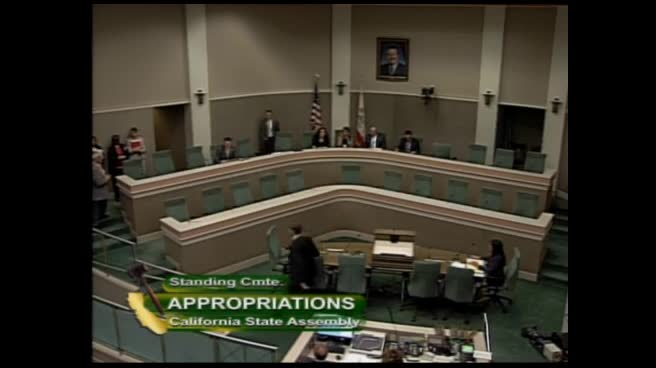 3MIN
Assembly Standing Committee on Appropriations
 9MIN
Assembly Standing Committee on Utilities and Energy
 20MIN
Assembly Standing Committee on Water, Parks, and Wildlife
 2MIN
Senate Floor
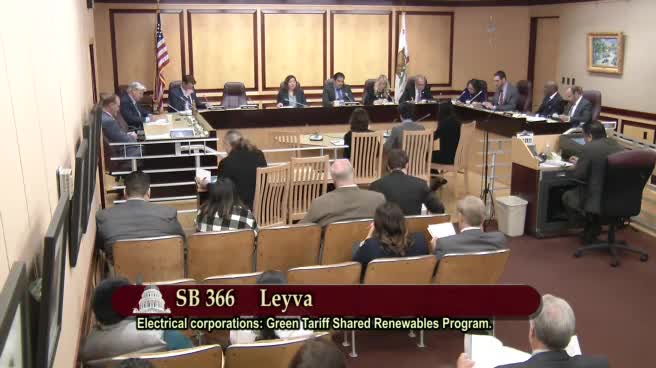 13MIN