SB 751: School finance: school districts: annual budgets: reserve balance.
- Session Year: 2017-2018
- House: Senate
- Latest Version Date: 2017-10-11
Existing law, unless the school district is granted an exemption, limits the amount of the combined assigned or unassigned ending fund balance contained in a school districts annual budget in any fiscal year immediately after a fiscal year in which a transfer is made into the Public School System Stabilization Account. Existing law establishes formulas for calculating the maximum amount allowable for school districts with less than 400,000 units of average daily attendance and for school districts with more than 400,000 units of average daily attendance, as specified.
This bill would instead make that limitation applicable in a fiscal year immediately after a fiscal year in which the amount of moneys in the Public School System Stabilization Account is equal to or exceeds 3% of the combined total of General Fund revenues appropriated for school districts and allocated local proceeds of taxes, as specified, for that fiscal year. The bill would instead provide that the school districts budget shall not contain a combined assigned or unassigned ending general fund balance, as defined, in excess of 10% of those funds. The bill would exclude from the requirements of those provisions basic aid school districts, as defined, and small school districts, as defined. To the extent the bill would impose additional duties on school districts, the bill would impose a state-mandated local program.
The bill would require the Superintendent of Public Instruction to notify school districts and county offices of education whenever the conditions specified above are met. The bill would also require the Superintendent to notify school districts and county offices of education when those conditions no longer exist.
The California Constitution requires the state to reimburse local agencies and school districts for certain costs mandated by the state. Statutory provisions establish procedures for making that reimbursement.
This bill would provide that, if the Commission on State Mandates determines that the bill contains costs mandated by the state, reimbursement for those costs shall be made pursuant to the statutory provisions noted above.
Existing law law, unless the school district is granted an exemption, limits the amount of the combined assigned or unassigned ending fund balance contained in a school districts annual budget in any fiscal year immediately after a fiscal year in which a transfer is made into the Public School System Stabilization Account. Existing law establishes formulas for calculating the maximum amount allowable for school districts with less than 400,000 units of average daily attendance and for school districts with more than 400,000 units of average daily attendance, as specified. Existing law authorizes the county superintendent of schools to grant an exemption from those requirements if the school district provides documentation indicating that extraordinary fiscal circumstances substantiate the need for a combined assigned or unassigned ending fund balance that is in excess of the minimum recommended reserve for economic uncertainties, as specified.
This bill would instead provide that the school districts budget shall not contain unassigned ending balances in the school districts general fund and special reserve fund for other than capital outlay projects in excess of 17% of those funds, and would require a county superintendent of schools to grant a school district an exemption if the school district provides documentation indicating that extraordinary fiscal circumstances substantiate the need for those fund balances, as specified.Because the bill would impose additional duties on school districts and county superintendents of schools, the bill would impose a state-mandated local program.This bill would instead make that limitation applicable in a fiscal year immediately after a fiscal year in which the amount of moneys in the Public School System Stabilization Account is equal to or exceeds 3% of the combined total of General Fund revenues appropriated for school districts and allocated local proceeds of taxes, as specified, for that fiscal year. The bill would instead provide that the school districts budget shall not contain a combined assigned or unassigned ending general fund balance, as defined, in excess of 10% of those funds. The bill would exclude from the requirements of those provisions basic aid school districts, as defined, and small school districts, as defined. To the extent the bill would impose additional duties on school districts, the bill would impose a state-mandated local program.
The bill would require the Superintendent of Public Instruction to notify school districts and county offices of education whenever the conditions specified above are met. The bill would also require the Superintendent to notify school districts and county offices of education when those conditions no longer exist.
The California Constitution requires the state to reimburse local agencies and school districts for certain costs mandated by the state. Statutory provisions establish procedures for making that reimbursement.
This bill would provide that, if the Commission on State Mandates determines that the bill contains costs mandated by the state, reimbursement for those costs shall be made pursuant to the statutory provisions noted above.
Existing law requires the governing board of a school district, on or before July 1 of each year, to hold a hearing and adopt a budget for the subsequent fiscal year. Existing law requires the governing board of a school district that proposes to adopt a budget that includes a combined assigned and unassigned ending fund balance in excess of the minimum recommended reserve for economic uncertainties adopted by the State Board of Education to provide specified information for public review and discussion.
This bill would instead require the governing board of a school district that proposes to adopt a budget that includes unassigned ending balances in the school districts general fund and special reserve fund for other than capital outlay projects in excess of the minimum recommended reserve for economic uncertainties to provide specified information for public review and discussion.
Existing law limits the amount of the combined assigned or unassigned ending fund balance contained in a school districts annual budget in any fiscal year immediately after a fiscal year in which transfer is made into the Public School System Stabilization Account. Existing law establishes formulas for calculating the maximum amount allowable for school districts with less than 400,000 units of average daily attendance and for school districts with more than 400,000 units of average daily attendance, as specified. Existing law authorizes the county superintendent of schools to grant an exemption from those requirements if the school district provides documentation indicating that extraordinary fiscal circumstances substantiate the need for a combined assigned or unassigned ending fund balance that is in excess of the minimum recommended reserve for economic uncertainties, as specified.
This bill would instead provide that the school districts budget shall not contain unassigned ending balances in the school districts general fund and special reserve fund for other than capital outlay projects in excess of 17% of those funds, and would require a county superintendent of schools to grant a school district an exemption if the school district provides documentation indicating that extraordinary fiscal circumstances substantiate the need for those fund balances, as specified.
Because the bill would impose additional duties on school districts and county superintendents of schools, the bill would impose a state-mandated local program.
The California Constitution requires the state to reimburse local agencies and school districts for certain costs mandated by the state. Statutory provisions establish procedures for making that reimbursement.
This bill would provide that, if the Commission on State Mandates determines that the bill contains costs mandated by the state, reimbursement for those costs shall be made pursuant to the statutory provisions noted above.
(a)In a fiscal year immediately after a fiscal year in which the amount of moneys in the Public School System Stabilization Account is equal to or exceeds 3 percent of the combined total of General Fund revenues appropriated for school districts pursuant to subdivision (c) of Section 41202 and allocated local proceeds of taxes pursuant to subdivision (g) of Section 41202 for that fiscal year, a school district budget that is adopted or revised pursuant to Section 42127 shall not contain a combined assigned or unassigned ending general fund balance that is in excess of 10 percent of those funds.
(b)A county superintendent of schools may grant a school district under its jurisdiction an exemption from the requirements of subdivision (a) for up to two consecutive fiscal years within a three-year period if the school district provides documentation indicating that extraordinary fiscal circumstances, including, but not limited to, multiyear infrastructure or technology projects, substantiate the need for a combined assigned or unassigned ending general fund balance that is in excess of the amount described in subdivision (a). As a condition of receiving an exemption, a school district shall do all of the following:
(1)Provide a statement that substantiates the need for a combined assigned and unassigned ending general fund balance that is in excess of the amount described in subdivision (a).
(2)Identify the funding amounts in the budget adopted by the school district that are associated with the extraordinary fiscal circumstances.
(3)Provide documentation that no other fiscal resources are available to fund the extraordinary fiscal circumstances.
(c)This section shall not apply to a basic aid school district or to a small school district.
(d)For purposes of this section, the following definitions shall apply:
(1)Basic aid school district has the same meaning as in Section 42238.02.
(2)Combined assigned or unassigned ending general fund balance refers to assigned and unassigned moneys in the general fund accounts of school districts, including assigned and unassigned moneys in the Special Fund for Other Than Capital Outlay.
(3)Small school district means a school district with fewer than 2,501 units of average daily attendance.
(e)The Superintendent shall notify school districts and county offices of education whenever the conditions specified in subdivision (a) are met, and shall notify school districts and county offices of education when those conditions no longer exist.
SEC. 2.If the Commission on State Mandates determines that this act contains costs mandated by the state, reimbursement to local agencies and school districts for those costs shall be made pursuant to Part 7 (commencing with Section 17500) of Division 4 of Title 2 of the Government Code.
(a)In a fiscal year immediately after a fiscal year in which a transfer is made into the amount of moneys in the Public School System Stabilization Account, Account is equal to or exceeds 3 percent of the combined total of General Fund revenues appropriated for school districts pursuant to subdivision (c) of Section 41202 and allocated local proceeds of taxes pursuant to subdivision (g) of Section 41202 for that fiscal year, a school district budget that is adopted or revised pursuant to Section 42127 shall not contain a combined assigned or unassigned ending general fund balance that is in excess of the following: 10 percent of those funds.
(1)For school districts with fewer than 400,000 units of average daily attendance, the sum of the school districts applicable minimum recommended reserve for economic uncertainties adopted by the state board pursuant to subdivision (a) of Section 33128, multiplied by two.(2)For school districts with more than 400,000 units of average daily attendance, the sum of the school districts applicable minimum recommended reserve for economic uncertainties adopted by the state board pursuant to subdivision (a) of Section 33128, multiplied by three.(b)A county superintendent of schools may grant a school district under its jurisdiction an exemption from the requirements of subdivision (a) for up to two consecutive fiscal years within a three-year period if the school district provides documentation indicating that extraordinary fiscal circumstances, including, but not limited to, multiyear infrastructure or technology projects, substantiate the need for a combined assigned or unassigned ending general fund balance that is in excess of the minimum recommended reserve for economic uncertainties. amount described in subdivision (a). As a condition of receiving an exception, exemption, a school district shall do all of the following:
(1)Provide a statement that substantiates the need for an a combined assigned and unassigned ending general fund balance that is in excess of the minimum recommended reserve for economic uncertainties. amount described in subdivision (a).
(2)Identify the funding amounts in the budget adopted by the school district that are associated with the extraordinary fiscal circumstances.
(3)Provide documentation that no other fiscal resources are available to fund the extraordinary fiscal circumstances.
(c)This section shall become operative on December 15, 2014, only if Assembly Constitutional Amendment No. 1 of the 201314 Second Extraordinary Session is approved by the voters at the November 4, 2014, statewide general election. If Assembly Constitutional Amendment No. 1 of the 201314 Second Extraordinary Session is not approved by the voters at the November 4, 2014, statewide general election, this section shall not become operative and is repealed on January 1, 2015. not apply to a basic aid school district or to a small school district.
(d)For purposes of this section, the following definitions shall apply:
(1)Basic aid school district has the same meaning as in Section 42238.02.
(2)Combined assigned or unassigned ending general fund balance refers to assigned and unassigned moneys in the general fund accounts of school districts, including assigned and unassigned moneys in the Special Fund for Other Than Capital Outlay.
(3)Small school district means a school district with fewer than 2,501 units of average daily attendance.
(e)The Superintendent shall notify school districts and county offices of education whenever the conditions specified in subdivision (a) are met, and shall notify school districts and county offices of education when those conditions no longer exist.
SEC. 2.If the Commission on State Mandates determines that this act contains costs mandated by the state, reimbursement to local agencies and school districts for those costs shall be made pursuant to Part 7 (commencing with Section 17500) of Division 4 of Title 2 of the Government Code.
SECTION 1.Section 42127 of the Education Code is amended to read:42127.(a)On or before July 1 of each year, the governing board of each school district shall accomplish the following:(1)Hold a public hearing conducted in accordance with Section 42103 on the budget to be adopted for the subsequent fiscal year. The budget to be adopted shall be prepared in accordance with Section 42126. The agenda for that hearing shall be posted at least 72 hours before the public hearing and shall include the location where the budget will be available for public inspection.(2)(A)Adopt a budget. Not later than five days after that adoption or by July 1, whichever occurs first, the governing board of the school district shall file that budget with the county superintendent of schools. The budget and supporting data shall be maintained and made available for public review. If the governing board of the school district does not want all or a portion of the property tax requirement levied for the purpose of making payments for the interest and redemption charges on indebtedness as described in paragraph (1) or (2) of subdivision (b) of Section 1 of Article XIIIA of the California Constitution, the budget shall include a statement of the amount or portion for which a levy shall not be made. For the 201415 fiscal year and each fiscal year thereafter, the governing board of the school district shall not adopt a budget before the governing board of the school district adopts a local control and accountability plan, if an existing local control and accountability plan or annual update to a local control and accountability plan is not effective for the budget year. The governing board of a school district shall not adopt a budget that does not include the expenditures necessary to implement the local control and accountability plan or the annual update to a local control and accountability plan that is effective for the budget year.(B)Commencing with budgets adopted for the 201819 fiscal year, the governing board of a school district that proposes to adopt a budget that includes unassigned ending balances in the school districts general fund and special reserve fund for other than capital outlay projects that are in excess of the minimum recommended reserve for economic uncertainties adopted by the state board pursuant to subdivision (a) of Section 33128 shall, at the public hearing held pursuant to paragraph (1), provide all of the following for public review and discussion:(i)The minimum recommended reserve for economic uncertainties for each fiscal year identified in the budget.(ii)The unassigned ending balances in the school districts general fund and special reserve fund for other than capital outlay projects that are in excess of the minimum recommended reserve for economic uncertainties for each fiscal year identified in the budget.(iii)A statement of reasons explaining the unassigned ending balances in the school districts general fund and special reserve fund for other than capital outlay projects that are in excess of the minimum recommended reserve for economic uncertainties for each fiscal year that the school district identifies any unassigned ending fund balances that are in excess of the minimum recommended reserve for economic uncertainties, as identified pursuant to clause (ii).(C)The governing board of the school district shall include the information required pursuant to subparagraph (B) in its budgetary submission at the time it files an adopted budget with the county superintendent of schools. The information required pursuant to subparagraph (B) shall be maintained and made available for public review.(b)The county superintendent of schools may accept changes in any statement included in the budget, pursuant to subdivision (a), of the amount or portion for which a property tax levy shall not be made. The county superintendent of schools or the county auditor shall compute the actual amounts to be levied on the property tax rolls of the school district for purposes that exceed apportionments to the school district pursuant to Chapter 6 (commencing with Section 95) of Part 0.5 of Division 1 of the Revenue and Taxation Code. Each school district shall provide all data needed by the county superintendent of schools or the county auditor to compute the amounts. On or before August 15, the county superintendent of schools shall transmit the amounts computed to the county auditor who shall compute the tax rates necessary to produce the amounts. On or before September 1, the county auditor shall submit the rate computed to the board of supervisors for adoption.(c)The county superintendent of schools shall do all of the following:(1)Examine the adopted budget to determine whether it complies with the standards and criteria adopted by the state board pursuant to Section 33127 for application to final local educational agency budgets. The county superintendent of schools shall identify, if necessary, technical corrections that are required to be made to bring the budget into compliance with those standards and criteria.(2)Determine whether the adopted budget will allow the school district to meet its financial obligations during the fiscal year and is consistent with a financial plan that will enable the school district to satisfy its multiyear financial commitments. In addition to his or her own analysis of the budget of each school district, the county superintendent of schools shall review and consider studies, reports, evaluations, or audits of the school district that were commissioned by the school district, the county superintendent of schools, the Superintendent, and state control agencies and that contain evidence that the school district is showing fiscal distress under the standards and criteria adopted in Section 33127 or that contain a finding by an external reviewer that more than 3 of the 15 most common predictors of a school district needing intervention, as determined by the County Office Fiscal Crisis and Management Assistance Team, are present. The county superintendent of schools shall either conditionally approve or disapprove a budget that does not provide adequate assurance that the school district will meet its current and future obligations and resolve any problems identified in studies, reports, evaluations, or audits described in this paragraph.(3)Determine whether the adopted budget includes the expenditures necessary to implement the local control and accountability plan or annual update to the local control and accountability plan approved by the county superintendent of schools.(4)Verify that the school district complied with the requirements of subparagraphs (B) and (C) of paragraph (2) of subdivision (a).(d)(1)On or before September 15, the county superintendent of schools shall approve, conditionally approve, or disapprove the adopted budget for each school district. For the 201415 fiscal year and each fiscal year thereafter, the county superintendent of schools shall disapprove a budget if the county superintendent of schools determines that the budget does not include the expenditures necessary to implement a local control and accountability plan or an annual update to the local control and accountability plan approved by the county superintendent of schools. If the governing board of a school district does not submit a budget to the county superintendent of schools, the county superintendent of schools shall develop, at school district expense, a budget for that school district by September 15 and transmit that budget to the governing board of the school district. The budget prepared by the county superintendent of schools shall be deemed adopted, unless the county superintendent of schools approves any modifications made by the governing board of the school district. The budget prepared by the county superintendent of schools shall also comply with the requirements of subparagraph (B) of paragraph (2) of subdivision (a). The approved budget shall be used as a guide for the school districts priorities. The Superintendent shall review and certify the budget approved by the county superintendent of schools. If, pursuant to the review conducted pursuant to subdivision (c), the county superintendent of schools determines that the adopted budget for a school district does not satisfy paragraph (1), (2), (3), or (4) of that subdivision, he or she shall conditionally approve or disapprove the budget and, not later than September 15, transmit to the governing board of the school district, in writing, his or her recommendations regarding revision of the budget and the reasons for those recommendations, including, but not limited to, the amounts of any budget adjustments needed before he or she can approve that budget. The county superintendent of schools may assign a fiscal adviser to assist the school district to develop a budget in compliance with those revisions. In addition, the county superintendent of schools may appoint a committee to examine and comment on the county superintendent of schools review and recommendations, subject to the requirement that the committee report its findings to the county superintendent of schools no later than September 20.(2) Notwithstanding any other provision of this article, for the 201415 fiscal year and each fiscal year thereafter, the budget shall not be adopted or approved by the county superintendent of schools before a local control and accountability plan or update to an existing local control and accountability plan for the budget year is approved.(3)If the adopted budget of a school district is conditionally approved or disapproved pursuant to paragraph (1), on or before October 8, the governing board of the school district, in conjunction with the county superintendent of schools, shall review and respond to the recommendations of the county superintendent of schools at a regular meeting of the governing board of the school district. The response shall include any revisions to the adopted budget and other proposed actions to be taken, if any, as a result of those recommendations.(e)On or before October 22, the county superintendent of schools shall provide a list to the Superintendent identifying all school districts for which budgets may be disapproved.(f)(1)The county superintendent of schools shall examine the revised budget as provided in paragraph (3) of subdivision (d) to determine whether it (A) complies with the standards and criteria adopted by the state board pursuant to Section 33127 for application to final local educational agency budgets, (B) allows the school district to meet its financial obligations during the fiscal year, (C) satisfies all conditions established by the county superintendent of schools in the case of a conditionally approved budget, (D) is consistent with a financial plan that will enable the school district to satisfy its multiyear financial commitments, and, not later than November 8, shall approve or disapprove the revised budget, and (E) whether the revised budget complies with the requirements of subparagraph (B) of paragraph (2) of subdivision (a). If the county superintendent of schools disapproves the budget, he or she shall call for the formation of a budget review committee pursuant to Section 42127.1, unless the governing board of the school district and the county superintendent of schools agree to waive the requirement that a budget review committee be formed and the department approves the waiver after determining that a budget review committee is not necessary. Upon the grant of a waiver, the county superintendent of schools immediately has the authority and responsibility provided in Section 42127.3. Upon approving a waiver of the budget review committee, the department shall ensure that a balanced budget is adopted for the school district by December 31. If no budget is adopted by December 31, the Superintendent may adopt a budget for the school district. The Superintendent shall report to the Legislature and the Director of Finance by January 10 if any school district, including a school district that has received a waiver of the budget review committee process, does not have an adopted budget by December 31. This report shall include the reasons why a budget has not been adopted by the deadline, the steps being taken to finalize budget adoption, the date the adopted budget is anticipated, and whether the Superintendent has or will exercise his or her authority to adopt a budget for the school district.(2)Notwithstanding any other law, for the 201415 fiscal year and each fiscal year thereafter, if the county superintendent of schools disapproves the budget for the sole reason that the county superintendent of schools has not approved a local control and accountability plan or an annual update to the local control and accountability plan filed by the governing board of the school district pursuant to Section 52070, the county superintendent of schools shall not call for the formation of a budget review committee pursuant to Section 42127.1.(g)Not later than November 8, the county superintendent of schools shall submit a report to the Superintendent identifying all school districts for which budgets have been disapproved or budget review committees waived. The report shall include a copy of the written response transmitted to each of those school districts pursuant to paragraph (1) of subdivision (d).(h)Not later than 45 days after the Governor signs the annual Budget Act, the school district shall make available for public review any revisions in revenues and expenditures that it has made to its budget to reflect the funding made available by that Budget Act.(i)Any school district for which the county board of education serves as the governing board of the school district is not subject to subdivisions (c) to (h), inclusive, but is governed instead by the budget procedures set forth in Section 1622.SEC. 2.Section 42127.01 of the Education Code is amended to read:42127.01.(a)In a fiscal year immediately after a fiscal year in which a transfer is made into the Public School System Stabilization Account, a school district budget that is adopted pursuant to Section 42127 shall not contain unassigned ending balances in the school districts general fund and special reserve fund for other than capital outlay projects in excess of 17 percent of those funds.(b)A county superintendent of schools shall grant a school district under its jurisdiction an exemption from the requirements of subdivision (a) for up to two consecutive fiscal years within a three-year period if the school district provides documentation indicating that extraordinary fiscal circumstances, including, but not limited to, multiyear infrastructure or technology projects, substantiate the need for unassigned ending balances in the school districts general fund and special reserve fund for other than capital outlay projects in excess of the amount described in subdivision (a).(c)This section shall not apply to school districts with fewer than 2,501 units of average daily attendance or to basic aid school districts, defined as those school districts that do not receive funding from the state pursuant to Section 42238.02 or 42238.03.SEC. 3.If the Commission on State Mandates determines that this act contains costs mandated by the state, reimbursement to local agencies and school districts for those costs shall be made pursuant to Part 7 (commencing with Section 17500) of Division 4 of Title 2 of the Government Code.(a)On or before July 1 of each year, the governing board of each school district shall accomplish the following:
(1)Hold a public hearing conducted in accordance with Section 42103 on the budget to be adopted for the subsequent fiscal year. The budget to be adopted shall be prepared in accordance with Section 42126. The agenda for that hearing shall be posted at least 72 hours before the public hearing and shall include the location where the budget will be available for public inspection.
(2)(A)Adopt a budget. Not later than five days after that adoption or by July 1, whichever occurs first, the governing board of the school district shall file that budget with the county superintendent of schools. The budget and supporting data shall be maintained and made available for public review. If the governing board of the school district does not want all or a portion of the property tax requirement levied for the purpose of making payments for the interest and redemption charges on indebtedness as described in paragraph (1) or (2) of subdivision (b) of Section 1 of Article XIIIA of the California Constitution, the budget shall include a statement of the amount or portion for which a levy shall not be made. For the 201415 fiscal year and each fiscal year thereafter, the governing board of the school district shall not adopt a budget before the governing board of the school district adopts a local control and accountability plan, if an existing local control and accountability plan or annual update to a local control and accountability plan is not effective for the budget year. The governing board of a school district shall not adopt a budget that does not include the expenditures necessary to implement the local control and accountability plan or the annual update to a local control and accountability plan that is effective for the budget year.
(B)Commencing with budgets adopted for the 201819 fiscal year, the governing board of a school district that proposes to adopt a budget that includes unassigned ending balances in the school districts general fund and special reserve fund for other than capital outlay projects that are in excess of the minimum recommended reserve for economic uncertainties adopted by the state board pursuant to subdivision (a) of Section 33128 shall, at the public hearing held pursuant to paragraph (1), provide all of the following for public review and discussion:
(i)The minimum recommended reserve for economic uncertainties for each fiscal year identified in the budget.
(ii)The unassigned ending balances in the school districts general fund and special reserve fund for other than capital outlay projects that are in excess of the minimum recommended reserve for economic uncertainties for each fiscal year identified in the budget.
(iii)A statement of reasons explaining the unassigned ending balances in the school districts general fund and special reserve fund for other than capital outlay projects that are in excess of the minimum recommended reserve for economic uncertainties for each fiscal year that the school district identifies any unassigned ending fund balances that are in excess of the minimum recommended reserve for economic uncertainties, as identified pursuant to clause (ii).
(C)The governing board of a the school district shall include the information required pursuant to subparagraph (B) in its budgetary submission at the time it files an adopted budget with the county superintendent of schools. The information required pursuant to subparagraph (B) shall be maintained and made available for public review.
(b)The county superintendent of schools may accept changes in any statement included in the budget, pursuant to subdivision (a), of the amount or portion for which a property tax levy shall not be made. The county superintendent of schools or the county auditor shall compute the actual amounts to be levied on the property tax rolls of the school district for purposes that exceed apportionments to the school district pursuant to Chapter 6 (commencing with Section 95) of Part 0.5 of Division 1 of the Revenue and Taxation Code. Each school district shall provide all data needed by the county superintendent of schools or the county auditor to compute the amounts. On or before August 15, the county superintendent of schools shall transmit the amounts computed to the county auditor who shall compute the tax rates necessary to produce the amounts. On or before September 1, the county auditor shall submit the rate computed to the board of supervisors for adoption.
(c)The county superintendent of schools shall do all of the following:
(1)Examine the adopted budget to determine whether it complies with the standards and criteria adopted by the state board pursuant to Section 33127 for application to final local educational agency budgets. The county superintendent of schools shall identify, if necessary, technical corrections that are required to be made to bring the budget into compliance with those standards and criteria.
(2)Determine whether the adopted budget will allow the school district to meet its financial obligations during the fiscal year and is consistent with a financial plan that will enable the school district to satisfy its multiyear financial commitments. In addition to his or her own analysis of the budget of each school district, the county superintendent of schools shall review and consider studies, reports, evaluations, or audits of the school district that were commissioned by the school district, the county superintendent of schools, the Superintendent, and state control agencies and that contain evidence that the school district is showing fiscal distress under the standards and criteria adopted in Section 33127 or that contain a finding by an external reviewer that more than 3 of the 15 most common predictors of a school district needing intervention, as determined by the County Office Fiscal Crisis and Management Assistance Team, are present. The county superintendent of schools shall either conditionally approve or disapprove a budget that does not provide adequate assurance that the school district will meet its current and future obligations and resolve any problems identified in studies, reports, evaluations, or audits described in this paragraph.
(3)Determine whether the adopted budget includes the expenditures necessary to implement the local control and accountability plan or annual update to the local control and accountability plan approved by the county superintendent of schools.
(4)Verify that the school district complied with the requirements of subparagraphs (B) and (C) of paragraph (2) of subdivision (a).
(d)(1)On or before September 15, the county superintendent of schools shall approve, conditionally approve, or disapprove the adopted budget for each school district. For the 201415 fiscal year and each fiscal year thereafter, the county superintendent of schools shall disapprove a budget if the county superintendent of schools determines that the budget does not include the expenditures necessary to implement a local control and accountability plan or an annual update to the local control and accountability plan approved by the county superintendent of schools. If the governing board of a school district does not submit a budget to the county superintendent of schools, the county superintendent of schools shall develop, at school district expense, a budget for that school district by September 15 and transmit that budget to the governing board of the school district. The budget prepared by the county superintendent of schools shall be deemed adopted, unless the county superintendent of schools approves any modifications made by the governing board of the school district. The budget prepared by the county superintendent of schools shall also comply with the requirements of subparagraph (B) of paragraph (2) of subdivision (a). The approved budget shall be used as a guide for the school districts priorities. The Superintendent shall review and certify the budget approved by the county superintendent of schools. If, pursuant to the review conducted pursuant to subdivision (c), the county superintendent of schools determines that the adopted budget for a school district does not satisfy paragraph (1), (2), (3), or (4) of that subdivision, he or she shall conditionally approve or disapprove the budget and, not later than September 15, transmit to the governing board of the school district, in writing, his or her recommendations regarding revision of the budget and the reasons for those recommendations, including, but not limited to, the amounts of any budget adjustments needed before he or she can approve that budget. The county superintendent of schools may assign a fiscal adviser to assist the school district to develop a budget in compliance with those revisions. In addition, the county superintendent of schools may appoint a committee to examine and comment on the county superintendent of schools review and recommendations, subject to the requirement that the committee report its findings to the county superintendent of schools no later than September 20.
(2) Notwithstanding any other provision of this article, for the 201415 fiscal year and each fiscal year thereafter, the budget shall not be adopted or approved by the county superintendent of schools before a local control and accountability plan or update to an existing local control and accountability plan for the budget year is approved.
(3)If the adopted budget of a school district is conditionally approved or disapproved pursuant to paragraph (1), on or before October 8, the governing board of the school district, in conjunction with the county superintendent of schools, shall review and respond to the recommendations of the county superintendent of schools at a regular meeting of the governing board of the school district. The response shall include any revisions to the adopted budget and other proposed actions to be taken, if any, as a result of those recommendations.
(e)On or before October 22, the county superintendent of schools shall provide a list to the Superintendent identifying all school districts for which budgets may be disapproved.
(f)(1)The county superintendent of schools shall examine the revised budget as provided in paragraph (3) of subdivision (d) to determine whether it (A) complies with the standards and criteria adopted by the state board pursuant to Section 33127 for application to final local educational agency budgets, (B) allows the school district to meet its financial obligations during the fiscal year, (C) satisfies all conditions established by the county superintendent of schools in the case of a conditionally approved budget, (D) is consistent with a financial plan that will enable the school district to satisfy its multiyear financial commitments, and, not later than November 8, shall approve or disapprove the revised budget, and (E) whether the revised budget complies with the requirements of subparagraph (B) of paragraph (2) of subdivision (a). If the county superintendent of schools disapproves the budget, he or she shall call for the formation of a budget review committee pursuant to Section 42127.1, unless the governing board of the school district and the county superintendent of schools agree to waive the requirement that a budget review committee be formed and the department approves the waiver after determining that a budget review committee is not necessary. Upon the grant of a waiver, the county superintendent of schools immediately has the authority and responsibility provided in Section 42127.3. Upon approving a waiver of the budget review committee, the department shall ensure that a balanced budget is adopted for the school district by December 31. If no budget is adopted by December 31, the Superintendent may adopt a budget for the school district. The Superintendent shall report to the Legislature and the Director of Finance by January 10 if any school district, including a school district that has received a waiver of the budget review committee process, does not have an adopted budget by December 31. This report shall include the reasons why a budget has not been adopted by the deadline, the steps being taken to finalize budget adoption, the date the adopted budget is anticipated, and whether the Superintendent has or will exercise his or her authority to adopt a budget for the school district.
(2)Notwithstanding any other law, for the 201415 fiscal year and each fiscal year thereafter, if the county superintendent of schools disapproves the budget for the sole reason that the county superintendent of schools has not approved a local control and accountability plan or an annual update to the local control and accountability plan filed by the governing board of the school district pursuant to Section 52070, the county superintendent of schools shall not call for the formation of a budget review committee pursuant to Section 42127.1.
(g)Not later than November 8, the county superintendent of schools shall submit a report to the Superintendent identifying all school districts for which budgets have been disapproved or budget review committees waived. The report shall include a copy of the written response transmitted to each of those school districts pursuant to paragraph (1) of subdivision (d).
(h)Not later than 45 days after the Governor signs the annual Budget Act, the school district shall make available for public review any revisions in revenues and expenditures that it has made to its budget to reflect the funding made available by that Budget Act.
(i)Any school district for which the county board of education serves as the governing board of the school district is not subject to subdivisions (c) to (h), inclusive, but is governed instead by the budget procedures set forth in Section 1622.
SEC. 2.Section 42127.01 of the Education Code is amended to read:42127.01.(a)In a fiscal year immediately after a fiscal year in which a transfer is made into the Public School System Stabilization Account, a school district budget that is adopted pursuant to Section 42127 shall not contain unassigned ending balances in the school districts general fund and special reserve fund for other than capital outlay projects in excess of 17 percent of those funds.
(b)A county superintendent of schools shall grant a school district under its jurisdiction an exemption from the requirements of subdivision (a) for up to two consecutive fiscal years within a three-year period if the school district provides documentation indicating that extraordinary fiscal circumstances, including, but not limited to, multiyear infrastructure or technology projects, substantiate the need for unassigned ending balances in the school districts general fund and special reserve fund for other than capital outlay projects in excess of the amount described in subdivision (a).
(c)This section shall not apply to school districts with fewer than 2,501 units of average daily attendance or to basic aid school districts, defined as those school districts that do not receive funding from the state pursuant to Section 42238.02 or 42238.03.
SEC. 3.If the Commission on State Mandates determines that this act contains costs mandated by the state, reimbursement to local agencies and school districts for those costs shall be made pursuant to Part 7 (commencing with Section 17500) of Division 4 of Title 2 of the Government Code.
(a)On or before July 1 of each year, the governing board of each school district shall accomplish the following:
(1)Hold a public hearing conducted in accordance with Section 42103 on the budget to be adopted for the subsequent fiscal year. The budget to be adopted shall be prepared in accordance with Section 42126. The agenda for that hearing shall be posted at least 72 hours before the public hearing and shall include the location where the budget will be available for public inspection.
(2)(A)Adopt a budget. Not later than five days after that adoption or by July 1, whichever occurs first, the governing board of the school district shall file that budget with the county superintendent of schools. The budget and supporting data shall be maintained and made available for public review. If the governing board of the school district does not want all or a portion of the property tax requirement levied for the purpose of making payments for the interest and redemption charges on indebtedness as described in paragraph (1) or (2) of subdivision (b) of Section 1 of Article XIIIA of the California Constitution, the budget shall include a statement of the amount or portion for which a levy shall not be made. For the 201415 fiscal year and each fiscal year thereafter, the governing board of the school district shall not adopt a budget before the governing board of the school district adopts a local control and accountability plan, if an existing local control and accountability plan or annual update to a local control and accountability plan is not effective for the budget year. The governing board of a school district shall not adopt a budget that does not include the expenditures necessary to implement the local control and accountability plan or the annual update to a local control and accountability plan that is effective for the budget year.
(B)Commencing with budgets adopted for the 201516 201819 fiscal year, the governing board of a school district that proposes to adopt a budget that includes a combined assigned and unassigned ending fund balance balances in the school districts general fund and special reserve fund for other than capital outlay projects that are in excess of the minimum recommended reserve for economic uncertainties adopted by the state board pursuant to subdivision (a) of Section 33128, 33128 shall, at the public hearing held pursuant to paragraph (1), provide all of the following for public review and discussion:
(i)The minimum recommended reserve for economic uncertainties for each fiscal year identified in the budget.(ii)The combined assigned and unassigned ending fund balances in the school districts general fund and special reserve fund for other than capital outlay projects that are in excess of the minimum recommended reserve for economic uncertainties for each fiscal year identified in the budget.(iii)A statement of reasons that substantiates the need for an assigned and explaining the unassigned ending fund balance that is balances in the school districts general fund and special reserve fund for other than capital outlay projects that are in excess of the minimum recommended reserve for economic uncertainties for each fiscal year that the school district identifies an assigned and any unassigned ending fund balance balances that is are in excess of the minimum recommended reserve for economic uncertainties, as identified pursuant to clause (ii).(C)The governing board of a school district shall include the information required pursuant to subparagraph (B) in its budgetary submission each at the time it files an adopted or revised budget with the county superintendent of schools. The information required pursuant to subparagraph (B) shall be maintained and made available for public review.
(b)The county superintendent of schools may accept changes in any statement included in the budget, pursuant to subdivision (a), of the amount or portion for which a property tax levy shall not be made. The county superintendent of schools or the county auditor shall compute the actual amounts to be levied on the property tax rolls of the school district for purposes that exceed apportionments to the school district pursuant to Chapter 6 (commencing with Section 95) of Part 0.5 of Division 1 of the Revenue and Taxation Code. Each school district shall provide all data needed by the county superintendent of schools or the county auditor to compute the amounts. On or before August 15, the county superintendent of schools shall transmit the amounts computed to the county auditor who shall compute the tax rates necessary to produce the amounts. On or before September 1, the county auditor shall submit the rate computed to the board of supervisors for adoption.
(c)The county superintendent of schools shall do all of the following:
(1)Examine the adopted budget to determine whether it complies with the standards and criteria adopted by the state board pursuant to Section 33127 for application to final local educational agency budgets. The county superintendent of schools shall identify, if necessary, technical corrections that are required to be made to bring the budget into compliance with those standards and criteria.
(2)Determine whether the adopted budget will allow the school district to meet its financial obligations during the fiscal year and is consistent with a financial plan that will enable the school district to satisfy its multiyear financial commitments. In addition to his or her own analysis of the budget of each school district, the county superintendent of schools shall review and consider studies, reports, evaluations, or audits of the school district that were commissioned by the school district, the county superintendent of schools, the Superintendent, and state control agencies and that contain evidence that the school district is showing fiscal distress under the standards and criteria adopted in Section 33127 or that contain a finding by an external reviewer that more than 3 of the 15 most common predictors of a school district needing intervention, as determined by the County Office Fiscal Crisis and Management Assistance Team, are present. The county superintendent of schools shall either conditionally approve or disapprove a budget that does not provide adequate assurance that the school district will meet its current and future obligations and resolve any problems identified in studies, reports, evaluations, or audits described in this paragraph.
(3)Determine whether the adopted budget includes the expenditures necessary to implement the local control and accountability plan or annual update to the local control and accountability plan approved by the county superintendent of schools.
(4)Determine whether the adopted budget includes a combined assigned and unassigned ending fund balance that exceeds the minimum recommended reserve for economic uncertainties. If the adopted budget includes a combined assigned and unassigned ending fund balance that exceeds the minimum recommended reserve for economic uncertainties, the county superintendent of schools shall verify(4)Verify that the school district complied with the requirements of subparagraphs (B) and (C) of paragraph (2) of subdivision (a).
(d)(1)On or before September 15, the county superintendent of schools shall approve, conditionally approve, or disapprove the adopted budget for each school district. For the 201415 fiscal year and each fiscal year thereafter, the county superintendent of schools shall disapprove a budget if the county superintendent of schools determines that the budget does not include the expenditures necessary to implement a local control and accountability plan or an annual update to the local control and accountability plan approved by the county superintendent of schools. If the governing board of a school district does not submit a budget to the county superintendent of schools, the county superintendent of schools shall develop, at school district expense, a budget for that school district by September 15 and transmit that budget to the governing board of the school district. The budget prepared by the county superintendent of schools shall be deemed adopted, unless the county superintendent of schools approves any modifications made by the governing board of the school district. The budget prepared by the county superintendent of schools shall also comply with the requirements of subparagraph (B) of paragraph (2) of subdivision (a). The approved budget shall be used as a guide for the school districts priorities. The Superintendent shall review and certify the budget approved by the county. county superintendent of schools. If, pursuant to the review conducted pursuant to subdivision (c), the county superintendent of schools determines that the adopted budget for a school district does not satisfy paragraph (1), (2), (3), or (4) of that subdivision, he or she shall conditionally approve or disapprove the budget and, not later than September 15, transmit to the governing board of the school district, in writing, his or her recommendations regarding revision of the budget and the reasons for those recommendations, including, but not limited to, the amounts of any budget adjustments needed before he or she can approve that budget. The county superintendent of schools may assign a fiscal adviser to assist the school district to develop a budget in compliance with those revisions. In addition, the county superintendent of schools may appoint a committee to examine and comment on the superintendents county superintendent of schools review and recommendations, subject to the requirement that the committee report its findings to the county superintendent of schools no later than September 20.
(2) Notwithstanding any other provision of this article, for the 201415 fiscal year and each fiscal year thereafter, the budget shall not be adopted or approved by the county superintendent of schools before a local control and accountability plan or update to an existing local control and accountability plan for the budget year is approved.
(3)If the adopted budget of a school district is conditionally approved or disapproved pursuant to paragraph (1), on or before October 8, the governing board of the school district, in conjunction with the county superintendent of schools, shall review and respond to the recommendations of the county superintendent of schools at a regular meeting of the governing board of the school district. The response shall include any revisions to the adopted budget and other proposed actions to be taken, if any, as a result of those recommendations.
(e)On or before October 22, the county superintendent of schools shall provide a list to the Superintendent identifying all school districts for which budgets may be disapproved.
(f)(1)The county superintendent of schools shall examine the revised budget as provided in paragraph (3) of subdivision (d) to determine whether it (A) complies with the standards and criteria adopted by the state board pursuant to Section 33127 for application to final local educational agency budgets, (B) allows the school district to meet its financial obligations during the fiscal year, (C) satisfies all conditions established by the county superintendent of schools in the case of a conditionally approved budget, (D) is consistent with a financial plan that will enable the school district to satisfy its multiyear financial commitments, and, not later than November 8, shall approve or disapprove the revised budget, and (E) whether the revised budget complies with the requirements of subparagraph (B) of paragraph (2) of subdivision (a). If the county superintendent of schools disapproves the budget, he or she shall call for the formation of a budget review committee pursuant to Section 42127.1, unless the governing board of the school district and the county superintendent of schools agree to waive the requirement that a budget review committee be formed and the department approves the waiver after determining that a budget review committee is not necessary. Upon the grant of a waiver, the county superintendent of schools immediately has the authority and responsibility provided in Section 42127.3. Upon approving a waiver of the budget review committee, the department shall ensure that a balanced budget is adopted for the school district by December 31. If no budget is adopted by December 31, the Superintendent may adopt a budget for the school district. The Superintendent shall report to the Legislature and the Director of Finance by January 10 if any school district, including a school district that has received a waiver of the budget review committee process, does not have an adopted budget by December 31. This report shall include the reasons why a budget has not been adopted by the deadline, the steps being taken to finalize budget adoption, the date the adopted budget is anticipated, and whether the Superintendent has or will exercise his or her authority to adopt a budget for the school district.
(2)Notwithstanding any other law, for the 201415 fiscal year and each fiscal year thereafter, if the county superintendent of schools disapproves the budget for the sole reason that the county superintendent of schools has not approved a local control and accountability plan or an annual update to the local control and accountability plan filed by the governing board of the school district pursuant to Section 52070, the county superintendent of schools shall not call for the formation of a budget review committee pursuant to Section 42127.1.
(g)Not later than November 8, the county superintendent of schools shall submit a report to the Superintendent identifying all school districts for which budgets have been disapproved or budget review committees waived. The report shall include a copy of the written response transmitted to each of those school districts pursuant to paragraph (1) of subdivision (d).
(h)Not later than 45 days after the Governor signs the annual Budget Act, the school district shall make available for public review any revisions in revenues and expenditures that it has made to its budget to reflect the funding made available by that Budget Act.
(i)Any school district for which the county board of education serves as the governing board of the school district is not subject to subdivisions (c) to (h), inclusive, but is governed instead by the budget procedures set forth in Section 1622.
SEC. 2.Section 42127.01 of the Education Code is amended to read:42127.01.(a)In a fiscal year immediately after a fiscal year in which a transfer is made into the Public School System Stabilization Account, a school district budget that is adopted or revised pursuant to Section 42127 shall not contain a combined assigned or unassigned ending fund balance that is balances in the school districts general fund and special reserve fund for other than capital outlay projects in excess of the following: 17 percent of those funds.
(1)For school districts with fewer than 400,000 units of average daily attendance, the sum of the school districts applicable minimum recommended reserve for economic uncertainties adopted by the state board pursuant to subdivision (a) of Section 33128, multiplied by two.(2)For school districts with more than 400,000 units of average daily attendance, the sum of the school districts applicable minimum recommended reserve for economic uncertainties adopted by the state board pursuant to subdivision (a) of Section 33128, multiplied by three.(b)A county superintendent of schools may shall grant a school district under its jurisdiction an exemption from the requirements of subdivision (a) for up to two consecutive fiscal years within a three-year period if the school district provides documentation indicating that extraordinary fiscal circumstances, including, but not limited to, multiyear infrastructure or technology projects, substantiate the need for a combined assigned or unassigned ending fund balance that is in excess of the minimum recommended reserve for economic uncertainties. As a condition of receiving an exception, a school district shall do all of the following: unassigned ending balances in the school districts general fund and special reserve fund for other than capital outlay projects in excess of the amount described in subdivision (a).
(1)Provide a statement that substantiates the need for an assigned and unassigned ending fund balance that is in excess of the minimum recommended reserve for economic uncertainties.(2)Identify the funding amounts in the budget adopted by the school district that are associated with the extraordinary fiscal circumstances.(3)Provide documentation that no other fiscal resources are available to fund the extraordinary fiscal circumstances.(c)This section shall become operative on December 15, 2014, only if Assembly Constitutional Amendment No. 1 of the 201314 Second Extraordinary Session is approved by the voters at the November 4, 2014, statewide general election. If Assembly Constitutional Amendment No. 1 of the 201314 Second Extraordinary Session is not approved by the voters at the November 4, 2014, statewide general election, this section shall not become operative and is repealed on January 1, 2015.(c)This section shall not apply to school districts with fewer than 2,501 units of average daily attendance or to basic aid school districts, defined as those school districts that do not receive funding from the state pursuant to Section 42238.02 or 42238.03.
SEC. 3.If the Commission on State Mandates determines that this act contains costs mandated by the state, reimbursement to local agencies and school districts for those costs shall be made pursuant to Part 7 (commencing with Section 17500) of Division 4 of Title 2 of the Government Code.
|
Date
|
Status
|
|---|---|
| Oct 11, 2017 | Chaptered by Secretary of State. Chapter 674, Statutes of 2017. |
| Oct 11, 2017 | Approved by the Governor. |
| Sep 21, 2017 | Enrolled and presented to the Governor at 5:30 p.m. |
| Sep 14, 2017 | Assembly amendments concurred in. (Ayes 39. Noes 0.) Ordered to engrossing and enrolling. |
| Sep 13, 2017 | From committee: That the Assembly amendments be concurred in. (Ayes 6. Noes 0.) |
| Sep 12, 2017 | From committee: Be re-referred to Com. on ED. pursuant to Senate Rule 29.10(d). (Ayes 5. Noes 0.) Re-referred to Com. on ED. |
| Sep 12, 2017 | Re-referred to Com. on RLS. pursuant to Senate Rule 29.10(d). |
| Sep 11, 2017 | In Senate. Concurrence in Assembly amendments pending. |
| Sep 11, 2017 | Read third time. Passed. Ordered to the Senate. |
| Sep 5, 2017 | Read third time and amended. |
| Aug 24, 2017 | Read second time. Ordered to third reading. |
| Aug 23, 2017 | From committee: Do pass. (Ayes 15. Noes 0.) (August 23). |
| Jul 13, 2017 | From committee: Do pass and re-refer to Com. on APPR. (Ayes 7. Noes 0.) (July 12). Re-referred to Com. on APPR. |
| May 26, 2017 | Referred to Com. on ED. |
| May 9, 2017 | In Assembly. Read first time. Held at Desk. |
| May 8, 2017 | Amendments by Senator Moorlach tabled on motion of Senator Monning. (Ayes 25. Noes 11. Page 987.) |
| May 2, 2017 | Read second time and amended. Ordered to third reading. |
| May 1, 2017 | From committee: Do pass as amended. (Ayes 7. Noes 0. Page 913.) (May 1). |
| Apr 21, 2017 | Set for hearing May 1. |
| Apr 20, 2017 | From committee: Do pass and re-refer to Com. on APPR. (Ayes 7. Noes 0. Page 783.) (April 19). Re-referred to Com. on APPR. |
| Mar 24, 2017 | Set for hearing April 19. |
| Mar 9, 2017 | Referred to Com. on ED. |
| Feb 21, 2017 | From printer. May be acted upon on or after March 23. |
| Feb 17, 2017 | Introduced. Read first time. To Com. on RLS. for assignment. To print. |
|
Date
|
Description
|
Location
|
Votes
|
|
|---|---|---|---|---|
| Sep 14, 2017 | Unfinished Business SB751 Hill et al. Concurrence | Senate Floor |
Passed |
|
| Sep 13, 2017 | That the Assembly amendments be concurred in | Senate Standing Committee on Education |
Passed |
|
| Sep 11, 2017 | SB 751 Hill Senate Third Reading By O'DONNELL | Assembly Floor |
Passed |
|
| Aug 23, 2017 | Do pass. | Assembly Standing Committee on Appropriations |
Passed |
|
| Jul 12, 2017 | Do pass and be re-referred to the Committee on [Appropriations] | Assembly Standing Committee on Education |
Passed |
|
| May 8, 2017 | Senate 3rd Reading SB751 Hill et al. | Senate Floor |
Passed |
|
| May 1, 2017 | Do pass as amended | Senate Standing Committee on Appropriations |
Passed |
|
| Apr 19, 2017 | Do pass, but first be re-referred to the Committee on [Appropriations] | Senate Standing Committee on Education |
Passed |
This list shows positions taken on this bill by organizations on the date displayed, which is linked to the original source.
Positions by individuals are not included.
|
Organization
|
Position
|
Date
|
|---|---|---|
| Association of Basic Aid School Districts | * Support | Sep 13, 2017 |
| Association Of California School Administrators | ** Support | Sep 13, 2017 |
| California Association Of Suburban School Districts | ** Support | Jul 12, 2017 |
| California Association Of Suburban School Districts | * Support | Jul 12, 2017 |
| California Forward Action Fund | ** Support | Jul 10, 2017 |
| California Forward Action Fund | ** Support | Jul 10, 2017 |
| California School Boards Association | * Support | Sep 13, 2017 |
| California Teachers Association | * Support | Sep 13, 2017 |
| Children Now | ** Support | Sep 13, 2017 |
| Compton Unified School District | ** Support | Jul 10, 2017 |
| Compton Unified School District | ** Support | Jul 10, 2017 |
| Education Trust-West | ** Support | Sep 13, 2017 |
| Fresno Unified School District | ** Support | Jul 12, 2017 |
| Fresno Unified School District | * Support | Jul 12, 2017 |
| JONES, HOGAN & BROOKS | * Support | Apr 19, 2017 |
| Kings Canyon Unified School District | ** Support | Sep 13, 2017 |
| League Of Women Voters Of California | ** Support | Sep 13, 2017 |
| Long Beach unified School Board | * Support | Apr 19, 2017 |
| Los Angeles County Office Of Education | ** Support | Sep 13, 2017 |
| Public Advocates | ** Support | Sep 13, 2017 |
| Rockland Unified School District | * Support | Apr 19, 2017 |
| Rocklin Unified School District | * Support | Apr 19, 2017 |
| Sacramento City Unified School District | ** Support | Jul 10, 2017 |
| Sacramento City Unified School District | ** Support | Jul 10, 2017 |
| Sacramento County Board of Education | * Support | Apr 19, 2017 |
| San Mateo Union High School District | * Support | Apr 19, 2017 |
| School Employers Association Of California | ** Support | Jul 12, 2017 |
| School Employers Association Of California | * Support | Jul 12, 2017 |
| Schools For Sound Finance | * Support | Sep 13, 2017 |
| Small School Districts Association | * Support | Apr 19, 2017 |
Office of Senate Floor Analyses (916) 651-1520 Fax: (916) 327-4478 | SB |
UNFINISHED BUSINESS
Bill No: SB 751
:
SENATE EDUCATION COMMITTEE: 7-0, 4/19/17
AYES: Allen, Wilk, Galgiani, Leyva, Mendoza, Pan, Vidak
SENATE APPROPRIATIONS COMMITTEE: 7-0, 5/1/17
AYES: Lara, Bates, Beall, Bradford, Hill, Nielsen, Wiener
SENATE FLOOR: 38-0, 5/8/17
AYES: Allen, Anderson, Atkins, Beall, Berryhill, Bradford, Cannella, De León, Dodd, Fuller, Gaines, Galgiani, Glazer, Hernandez, Hertzberg, Hill, Hueso, Jackson, Leyva, McGuire, Mendoza, Mitchell, Monning, Moorlach, Morrell, Newman, Nguyen, Nielsen, Pan, Portantino, Roth, Skinner, Stern, Stone, Vidak, Wieckowski, Wiener, Wilk
NO VOTE RECORDED: Bates, Lara
SENATE EDUCATION COMMITTEE: 6-0, 9/13/17 (Pursuant to Senate Rule 29.10)
AYES: Allen, Wilk, Leyva, Mendoza, Pan, Vidak
NO VOTE RECORDED: Galgiani
ASSEMBLY FLOOR: 73-0, 9/11/17 - See last page for vote
SOURCE: California School Boards Association
DIGEST:
This bill increases the cap on school district reserves, adds a minimum fund balance in the Public School System Stabilization Account (PSSSA) to the conditions that must be met for the cap on school district reserves to be triggered, and exempts small and basic aid school districts from the reserve cap requirement.
Assembly Amendments
(1) specify that the cap on local school district reserves will be imposed whenever the level of funding in the PSSSA is equal to or exceeds three percent of the combined total General Fund revenues and local proceed of taxes for school districts for that fiscal year; and (2) reduce the reserve cap from 17 percent to 10 percent.
Existing law:
- Places a cap on school district reserves in years following a deposit in the PSSSA, established by Proposition 2 (2014). Additionally, districts are required to disclose certain information about their reserves each year. Specifically, in a fiscal year immediately after a fiscal year in which a transfer is made to the PSSSA, a school district budget that is adopted or revised may not have a combined assigned or unassigned ending fund balance that is in excess of the following:
- For school districts with fewer than 400,000 units of average daily attendance (ADA), the sum of the school district’s applicable minimum recommended reserve for economic uncertainties adopted by the State Board of Education (SBE), as specified, multiplied by two.
- For school districts with more than 400,000 units of ADA, the sum of the school district’s applicable minimum recommended reserve for economic uncertainties adopted by the SBE, as specified, multiplied by three.
- Authorizes a county superintendent of schools to grant a school district under its jurisdiction an exemption from the cap for up to two consecutive fiscal years within a three-year period if the school district provides documentation indicating that extraordinary fiscal circumstances, including, but not limited to, multi-year infrastructure or technology projects, substantiate the need for a combined assigned or unassigned ending fund balance that is in excess of the minimum recommended reserve for economic uncertainties. As a condition of receiving an exemption, a school district shall do all of the following:
- Provide a statement that substantiates the need for an assigned and unassigned ending fund balance that is in excess of the minimum recommended reserve for economic uncertainties.
- Identify the funding amounts in the budget adopted by the school district that are associated with the extraordinary fiscal circumstances.
- Provide documentation that no other fiscal resources are available to fund the extraordinary fiscal circumstances.
This bill:
- Provides that a cap on local school district reserves of 10 percent will be imposed whenever the level of funding in the PSSSA is equal to or exceeds 3 percent of the combined total General Fund revenues and local proceeds of taxes for school districts for that fiscal year.
- Clarifies that the cap applies to the total of assigned and unassigned ending balances in the general fund accounts of school districts, including in the Special Fund for Other Than Capital Outlay.
- Exempts basic aid districts and small school districts from the cap.
- Requires the Superintendent of Public Instruction to notify school districts and county superintendents of schools when the conditions for imposing the reserve cap have been met and when they are no longer in effect.
Comments
- Need for the bill. According to the author’s office, local educational control is the very premise of the state’s major reform movement with the Local Control Funding Formula and the Local Control and Accountability Plan. Local school districts need to have the ability to make budget decisions that best serve their students and allow planning for economic uncertainties before a crisis hits. The longer the current cap is in place, the more it threatens the ability of California’s schools to maintain their fiscal solvency and provide their students the best possible education.
With budget projections looking uncertain in the coming years, the trigger for the cap may be activated in coming budget cycles. This could cause districts to spend their rainy day funds, creating turmoil for school districts, bond rating agencies, school boards and school administrators, and putting districts at risk of state bailout.
The cap affects small and basic aid districts in different ways. Small districts, by definition, have low ADA, which means they also have small budgets. Applying a six percent cap to these districts would result in inadequate reserves. The concern with basic aid districts is that they do not receive state funding, therefore they would not benefit from a distribution from the state’s school reserve account when conditions warrant. Further, basic aid districts only receive funding from their counties twice a year and must keep additional monies in reserve for cash flow purposes.
- When will the reserve cap requirement be triggered? The reserve cap requirement is triggered once the state makes a deposit into the PSSSA, which only occurs when certain conditions are met. Among these conditions, Test 1 must be the applicable Proposition 98 test level and the state must have paid off all maintenance factor created before 2014-15. According to multi-year forecasts published as part of the 2017-18 Governor’s Budget, no Test 1 operative years are projected through 2020-21, making a state deposit very unlikely in the near term.
- Exemptions for school districts already in law? To the extent that school districts are concerned about the potential impact the cap would have on their ability to maintain adequate reserve levels and save for future and unanticipated expenditures, existing law provides two types of exemptions for school districts. First, school districts can change the way in which they treat their reserves, increasing the amount of their committed reserves and decreasing the amount of assigned and/or unassigned reserves. Reserves become committed for a specific purpose upon a vote of the district governing board. Second, a county superintendent of schools is authorized to grant a school district under its jurisdiction an exemption if a school district is able to provide documentation that demonstrates extraordinary fiscal circumstances.
- Legislative Analyst Office (LAO)’s assessment and recommendations. The LAO released a report, “Analysis of School District Reserves” in January 2015. In the report, the LAO provided its assessment and recommendations on the reserve caps. Specifically, the LAO indicated, “to the extent districts begin shifting monies to avoid the caps, we are concerned that local budgeting practices could become more confusing. To the extent districts begin spending down their reserves, we are concerned that they would incur a number of risks.” The risks include difficulty for school districts to maintain programs in tight fiscal times, difficulty addressing unexpected costs, greater fiscal distress, and higher borrowing costs. The LAO also indicated concern that the caps become operative following any deposit into the state school reserve, even if the size of that deposit is smaller than the triggered reduction in local reserves. To avoid all of these risks, the LAO has recommended the Legislature repeal the reserve caps.
Related/Prior Legislation
SB 590 (Moorlach) repeals the current maximum reserve level school districts are allowed to maintain in any year following a deposit being made into the PSSSA. The measure was held by the Senate Education Committee.
AB 235 (O’Donnell) changes the conditions under which the cap on local school district reserves would be imposed and exempts basic aid districts and small districts from the cap. The measure is currently pending on the Senate Floor.
AB 1164 (Thurmond) extends the probationary period up to three years for certificated employees in school districts and teachers in county offices of education with an average daily attendance greater than 250 pupils, and increases the cap on school district reserves, changes the conditions that must be met for the cap to be triggered, and exempts small and basic aid school districts from the cap. The measure was held in the Senate Education Committee at the author’s request.
AB 1048 (Baker, 2015) proposed to repeal the statutory cap on the amount of fiscal reserves that a school district would be allowed to maintain under specified conditions. The bill was held in the Assembly Education Committee.
AB 1318 (Gray, 2015) proposed to modify the calculation of the statutory cap on fiscal reserves. The bill was held in the Assembly Education Committee.
SB 799 (Hill, 2015) would have modified various provisions in existing law related to school district budget ending reserves. The bill was held in the Assembly Education Committee.
FISCAL EFFECT: Appropriation: Fiscal Com.: Local:
According to the Assembly Appropriations Committee, potential cost pressures to the mandate block grant should the Commission on State Mandates determine that there are any reimbursable costs associated with this bill for workload associated with requiring county offices of education to grant school district exemptions from the cap. However, it is unlikely to be reimbursable as this bill does not mandate a new program or demand a higher level of service.
California School Boards Association (source)
Association of California School Administrators
California Teachers Association
Children Now
Education Trust-West
Kings Canyon Unified School District
League of Women Voters of California
Los Angeles County Office of Education
Public Advocates
Schools for Sound Finance
OPPOSITION: (Verified 9/13/17)
None received
ASSEMBLY FLOOR: 73-0, 9/11/17
AYES: Acosta, Aguiar-Curry, Travis Allen, Arambula, Baker, Berman, Bigelow, Bloom, Bocanegra, Bonta, Burke, Caballero, Calderon, Cervantes, Chau, Chávez, Chen, Chiu, Chu, Cooley, Cooper, Cunningham, Dababneh, Dahle, Daly, Flora, Frazier, Friedman, Gallagher, Cristina Garcia, Eduardo Garcia, Gipson, Gonzalez Fletcher, Gray, Grayson, Harper, Holden, Irwin, Jones-Sawyer, Kalra, Kiley, Lackey, Levine, Limón, Low, Maienschein, Mathis, Mayes, McCarty, Medina, Melendez, Mullin, Muratsuchi, Nazarian, Obernolte, O'Donnell, Patterson, Quirk, Quirk-Silva, Ridley-Thomas, Rodriguez, Rubio, Salas, Santiago, Steinorth, Mark Stone, Thurmond, Ting, Voepel, Waldron, Weber, Wood, Rendon
NO VOTE RECORDED: Brough, Choi, Eggman, Fong, Gloria, Reyes
9/13/17 18:38:03
**** END ****
SENATE COMMITTEE ON EDUCATION
Senator Benjamin Allen, Chair
2017 - 2018 Regular
Bill No: Hearing Date: September 13, 2017
Author: | Hill & Glazer | ||
Version: |
| ||
Urgency: | Fiscal: | ||
Consultant: | |||
Subject:
SUMMARY
This bill increases the cap on school district reserves, adds a minimum fund balance in the Public School System Stabilization Account (PSSSA) to the conditions that must be met for the cap on school district reserves to be triggered, and exempts small and basic aid school districts from the reserve cap requirement.
BACKGROUND
Existing law places a cap on school district reserves in years following a deposit in the PSSSA, established by Proposition 2 (2014). Additionally, districts are required to disclose certain information about their reserves each year. Specifically, in a fiscal year immediately after a fiscal year in which a transfer is made to the PSSSA, a school district budget that is adopted or revised may not have a combined assigned or unassigned ending fund balance that is in excess of the following:
- For school districts with fewer than 400,000 units of average daily attendance (ADA), the sum of the school district’s applicable minimum recommended reserve for economic uncertainties adopted by the State Board of Education (SBE), as specified, multiplied by two.
- For school districts with more than 400,000 units of ADA, the sum of the school district’s applicable minimum recommended reserve for economic uncertainties adopted by the SBE, as specified, multiplied by three.
Existing law authorizes a county superintendent of schools to grant a school district under its jurisdiction an exemption from the cap for up to two consecutive fiscal years within a three-year period if the school district provides documentation indicating that extraordinary fiscal circumstances, including, but not limited to, multi-year infrastructure or technology projects, substantiate the need for a combined assigned or unassigned ending fund balance that is in excess of the minimum recommended reserve for economic uncertainties. As a condition of receiving an exemption, a school district shall do all of the following:
- Provide a statement that substantiates the need for an assigned and unassigned ending fund balance that is in excess of the minimum recommended reserve for economic uncertainties.
- Identify the funding amounts in the budget adopted by the school district that are associated with the extraordinary fiscal circumstances.
- Provide documentation that no other fiscal resources are available to fund the extraordinary fiscal circumstances.
ANALYSIS
This bill:
- Provides that a cap on local school district reserves of 10 percent will be imposed whenever the level of funding in the Public School System Stabilization Account (PSSSA) is equal to or exceeds 3 percent of the combined total General Fund revenues and local proceeds of taxes for school districts for that fiscal year.
- Clarifies that the cap applies to the total of assigned and unassigned ending balances in the general fund accounts of school districts, including in the Special Fund for Other Than Capital Outlay.
- Exempts basic aid districts and small school districts from the cap.
- Requires the Superintendent of Public Instruction to notify school districts and county superintendents of schools when the conditions for imposing the reserve cap have been met and when they are no longer in effect.
STAFF COMMENTS
- Need for the bill. According to the author’s office, local educational control is the very premise of the state’s major reform movement with the Local Control Funding Formula (LCFF) and the Local Control and Accountability Plan (LCAP). Local school districts need to have the ability to make budget decisions that best serve their students and allow planning for economic uncertainties before a crisis hits. The longer the current cap is in place, the more it threatens the ability of California’s schools to maintain their fiscal solvency and provide their students the best possible education.
With budget projections looking uncertain in the coming years, the trigger for the cap may be activated in coming budget cycles. This could cause districts to spend their rainy day funds, creating turmoil for school districts, bond rating agencies, school boards and school administrators, and putting districts at risk of state bailout.
The cap affects small and basic aid districts in different ways. Small districts, by definition, have low average daily attendance, which means they also have small budgets. Applying a 6 percent cap to these districts would result in inadequate reserves. The concern with basic aid districts is that they do not receive state funding, therefore they would not benefit from a distribution from the state’s school reserve account when conditions warrant. Further, basic aid districts only receive funding from their counties twice a year and must keep additional monies in reserve for cash flow purposes.
- When will the reserve cap requirement be triggered? The reserve cap requirement is triggered once the state makes a deposit into the Public School System Stabilization Account (PSSSA), which only occurs when certain conditions are met. Among these conditions, Test 1 must be the applicable Proposition 98 test level and the state must have paid off all maintenance factor created before 2014-15. According to multi-year forecasts published as part of the 2017-18 Governor’s Budget, no Test 1 operative years are projected through 2020-21, making a state deposit very unlikely in the near term.
- Exemptions for school districts already in law? To the extent that school districts are concerned about the potential impact the cap would have on their ability to maintain adequate reserve levels and save for future and unanticipated expenditures, existing law provides two types of exemptions for school districts. First, school districts can change the way in which they treat their reserves, increasing the amount of their committed reserves and decreasing the amount of assigned and/or unassigned reserves. Reserves become committed for a specific purpose upon a vote of the district governing board. Second, a county superintendent of schools is authorized to grant a school district under its jurisdiction an exemption if a school district is able to provide documentation that demonstrates extraordinary fiscal circumstances.
- LAO’s assessment and recommendations. The Legislative Analyst Office (LAO) released a report, “Analysis of School District Reserves” in January 2015. In the report, the LAO provided its assessment and recommendations on the reserve caps. Specifically, the LAO indicated, “to the extent districts begin shifting monies to avoid the caps, we are concerned that local budgeting practices could become more confusing. To the extent districts begin spending down their reserves, we are concerned that they would incur a number of risks.” The risks include difficulty for school districts to maintain programs in tight fiscal times, difficulty addressing unexpected costs, greater fiscal distress, and higher borrowing costs. The LAO also indicated concern that the caps become operative following any deposit into the state school reserve, even if the size of that deposit is smaller than the triggered reduction in local reserves. To avoid all of these risks, the LAO has recommended the Legislature repeal the reserve caps.
- Related Legislation.
SB 590 (Moorlach) repeals the current maximum reserve level school districts are allowed to maintain in any year following a deposit being made into the PSSSA. The measure was held by this Committee.
AB 235 (O’Donnell) changes the conditions under which the cap on local school district reserves would be imposed and exempts basic aid districts and small districts from the cap. The measure is currently pending on the Senate Floor.
AB 1164 (Thurmond) extends the probationary period up to three years for certificated employees in school districts and teachers in county offices of education with an average daily attendance greater than 250 pupils, and increases the cap on school district reserves, changes the conditions that must be met for the cap to be triggered, and exempts small and basic aid school districts from the cap. The measure was held in this Committee at the author’s request.
- Prior Legislation.
AB 1048 (Baker, 2015) proposed to repeal the statutory cap on the amount of fiscal reserves that a school district would be allowed to maintain under specified conditions. The measure was held in Assembly Education Committee.
AB 1318 (Gray, 2015) proposed to modify the calculation of the statutory cap on fiscal reserves. The measure was held in Assembly Education Committee.
SB 799 (Hill, 2015) would have modified various provisions in existing law related to school district budget ending reserves. The measure was held in Assembly Education Committee.
SUPPORT
Association of California School Administrators
California School Boards Association (sponsor)
California Teachers Association
Children Now
Education Trust-West
Kings Canyon Unified School District
League of Women Voters of California
Los Angeles County Office of Education
Public Advocates
Schools for Sound Finance
OPPOSITION
None received
-- END --
SENATE THIRD READING
STR Bill Id:SB 751
Author:(Hill and Glazer)
As Amended Ver:September 5, 2017
Majority vote
SENATE VOTE: 38-0
Committee | Votes | Ayes | Noes |
Education | 7-0 | O'Donnell, Chávez, Gloria, Kiley, McCarty, Thurmond, Weber | > |
Appropriations | 15-0 | Gonzalez Fletcher, Bigelow, Bocanegra, Bonta, Brough, Calderon, Chau, Eggman, Fong, Friedman, Gallagher, Gray, Jones-Sawyer, Obernolte, Reyes | > |
SUMMARY: Modifies provisions related to the local school district budget reserve cap, which is applied in specified years, commencing with the 2018-19 fiscal year. Specifically, this bill:
- Raises the cap from two times the minimum reserve requirement (6% for most districts) to 10% for all districts.
- Clarifies that the cap applies to the ending balances in a district's general fund and special reserve fund for other than capital outlay projects.
- Provides that the cap shall be in effect when the amount of moneys in the Public School System Stabilization Account is equal to or exceeds 3% of the prior year state and local K-12 Proposition 98 allocation.
- Requires the Superintendent of Public Instruction to notify school districts when the 3% threshold is met or exceeded.
- Exempts basic aid districts and districts with fewer than 2,501 average daily attendance (ADA) from the cap.
EXISTING LAW:
- Establishes the Public School System Stabilization Account (PSSSA) at the state level to be funded by a transfer of capital gains-related tax revenues in excess of 8% of general fund revenues whenever all of the following conditions occur:
- Revenue from capital gains-related taxes exceed 8% of total General Fund revenue;
- Proposition 98 is in a Test 1 year and is not suspended;
- Proposition 98 funding has been increased for enrollment growth and a cost-of-living adjustment (COLA); and
- A Maintenance Factor is not being accrued.
- Provides that the maximum transfer into the PSSSA shall be the difference between the Proposition 98 Test 1 and Test 2 funding levels.
- Specifies that funds will be appropriated from the PSSSA to schools and community colleges when the amount required to support K-14 education growth and COLA exceeds the allocation of general fund revenues, allocated property taxes and other available resources.
- Requires school districts to maintain the following minimum reserves for economic uncertainties, as a percentage of total expenditures:
- The greater of 5% or $64,000 for districts with 0 to 300 average daily attendance (ADA);
- The greater of 4% or $64,000 for districts with 301 to 1,000 ADA;
- 3% for districts with 1,001 to 30,000 ADA;
- 2% for districts with 30,001 to 400,000 ADA; and
- 1% for districts with 400,001 and over ADA.
- Limits the amount that districts may set aside in combined assigned or unassigned reserves in the fiscal year following the fiscal year in which a transfer is made to the PSSSA as follows:
- For school districts with 400,000 or fewer ADA, the minimum reserve multiplied by two; and
- For school districts with more than 400,000 ADA, the minimum reserve multiplied by three.
- Authorizes a county superintendent of schools to grant a school district under its jurisdiction an exemption from the reserve cap for up to two consecutive fiscal years within a three-year period if the school district provides documentation indicating that extraordinary fiscal circumstances, including, but not limited to, multiyear infrastructure or technology projects, substantiate the need for a combined assigned or unassigned ending fund balance that is in excess of the minimum reserve.
- Requires a school district, as a condition of receiving an exemption to do all of the following:
- Provide a statement that substantiates the need for an assigned and unassigned ending fund balance that is in excess of the minimum;
- Identify the funding amounts in its budget that are associated with the extraordinary fiscal circumstances; and
- Provide documentation that no other fiscal resources are available to fund the extraordinary fiscal circumstances.
FISCAL EFFECT: Unknown
COMMENTS:
The cap on school district ending balances, to be applied in specified years, was established by SB 858 (Budget and Fiscal Review Committee), Chapter 32, Statutes of 2014, and made contingent on voter approval of Proposition 2 at the 2014 general election. The cap has never been in effect, and neither the Legislative Analyst's Office (LAO) nor the Department of Finance (DOF) forecast that it will take effect in the foreseeable future.
Reason for the cap. According to the California Teachers Association (CTA), which supported enactment of the cap, it is necessary to ensure that, to the maximum extent possible, today's school revenues are used to support programs and services for today's students. CTA argues that during the last recession many districts increased the sizes of their reserves instead of using them to maintain or minimize the reduction of programs and services to students. They also argue that the existence of the PSSSA, which is essentially a statewide Proposition 98 rainy day fund, eliminates the need for large local reserves, because funds will be transferred from the PSSSA to local districts when Proposition 98 funding is not sufficient to support existing programs and services.
Concerns have been raised about the cap on reserves. Many in the education community have raised concerns about the cap on school district budget reserves. The concerns focus on two primary issues. First, opponents of the cap argue that it prevents districts from setting aside prudent reserves to guard against an economic downturn and a reduction in state funding for schools. The minimum requirement to guard against such an event is 3% of total expenditures for most districts. The cap is twice that amount, or 6% of total expenditures for most districts. Supporters of the cap argue that 6% is sufficient protection, because 1) it is applied only in a year following a year in which funds are deposited in the state Proposition 98 reserve, and 2) the state reserve serves the same purpose as the local reserve — to provide a cushion against a reduction of revenue to schools. Hence, the state reserve reduces the need for large local reserves for this same purpose.
The second concern is that the cap prevents districts from setting aside monies for a specific purpose in future years. For example, districts may need to accumulate monies over two or more years to purchase technology, instructional materials, or future pension obligations. While it is true that the cap would limit the amount that districts can set aside in an assigned reserve for any of these purposes, it does not limit the amount that districts can set aside in committed reserves for these same purposes.
This bill represents a compromise agreement between the California Teachers Association and the California School Boards Association to modify the cap by raising it to 10% and providing that it not be imposed until monies in the PSSSA are equal to or exceed 3% of the prior year K-12 Proposition 98 allocation.
Related legislation. Two related bills have been introduced this year:
- AB 235 (O'Donnell) of the current legislative session, which is pending in the Senate, provides that the cap would be in effect only after the amount in the PSSSA reached 3% of prior year state and local Proposition 98 K-12 appropriations. AB 235 also exempts small and basic aid districts from the cap.
- SB 590 (Moorlach) of the current legislative session repeals the cap. SB 590 failed passage in the Senate Education Committee.
Prior year legislation includes:
- AB 531 (O'Donnell) of 2015, which clarified that the cap does not apply to committed reserves. AB 531 was the subject of a "gut and amend" and died in the Senate Transportation and Housing Committee.
- AB 1048 (Baker) of 2015, which repealed the cap. AB 1048 died in the Assembly Appropriations Committee.
- AB 1318 (Gray) of 2015, which changed the cap to an unspecified percentage of total expenditures. The hearing on AB 1318 in the Assembly Education Committee was cancelled at the author's request.
- SB 799 (Hill) of 2015, which was substantially similar to SB 751. The hearing on SB 799 in the Assembly Education Committee was cancelled at the author's request.
Analysis Prepared by: Rick Pratt / ED. / (916) 319-2087 FN: 0001717
SENATE THIRD READING
STR Bill Id:SB 751
Author:(Hill and Glazer)
As Amended Ver:May 2, 2017
Majority vote
SENATE VOTE: 38-0
Committee | Votes | Ayes | Noes |
Education | 7-0 | O'Donnell, Chávez, Gloria, Kiley, McCarty, Thurmond, Weber | |
Appropriations | 15-0 | Gonzalez Fletcher, Bigelow, Bocanegra, Bonta, Brough, Calderon, Chau, Eggman, Fong, Friedman, Gallagher, Gray, Jones-Sawyer, Obernolte, Reyes |
SUMMARY: Modifies provisions related to the local school district budget reserve cap, which is applied in specified years, commencing with the 2018-19 fiscal year. Specifically, this bill:
- Raises the cap from two times the minimum reserve requirement (6% for most districts) to 17% for all districts.
- Narrows the application of the cap from the combined assigned and unassigned balances to only the unassigned balances.
- Repeals the requirement that the cap applies to revised, as well as to adopted budgets.
- Clarifies that the cap applies to the ending balances in a district's general fund and special reserve fund for other than capital outlay projects.
- Makes the following changes to the requirement that a governing board hold a public hearing on a proposed budget that has ending balances in excess of the minimum recommended reserve for economic uncertainties:
- Narrows the application of this requirement from the combined assigned and unassigned ending balance to only the unassigned ending balance; and
- Requires the public hearing to include a statement of reasons that explain the unassigned ending balances in excess of the minimum recommended reserve instead of a statement of reasons that substantiates the needs for an ending balance in excess of the minimum recommended reserve.
- Requires, instead of authorizes, county superintendents of schools to grant a waiver of the cap for up to two consecutive fiscal years in a three year period if the school district provides documentation that substantiates the need.
- Repeals the requirement that a district do all of the following in order to receive a waiver from the cap:
- Provide a statement that substantiates the need for an assigned and unassigned ending fund balance that is in excess of the minimum recommended reserve for economic uncertainties;
- Identify the funding amounts in the budget adopted by the school district that are associated with the extraordinary fiscal circumstances; and
- Provide documentation that no other fiscal resources are available to fund the extraordinary fiscal circumstances.
- Exempts basic aid districts and districts with fewer than 2,501 average daily attendance (ADA) from the cap.
EXISTING LAW:
- Establishes the Public School System Stabilization Account (PSSSA) at the state level to be funded by a transfer of capital gains-related tax revenues in excess of 8% of general fund revenues whenever all of the following conditions occur:
- Revenue from capital gains-related taxes exceed 8% of total General Fund revenue;
- Proposition 98 is in a Test 1 year and is not suspended;
- Proposition 98 funding has been increased for enrollment growth and a cost-of-living adjustment (COLA); and
- A Maintenance Factor is not being accrued.
- Provides that the maximum transfer into the PSSSA shall be the difference between the Proposition 98 Test 1 and Test 2 funding levels.
- Specifies that funds will be appropriated from the PSSSA to schools and community colleges when the amount required to support K-14 education growth and COLA exceeds the allocation of general fund revenues, allocated property taxes and other available resources.
- Requires school districts to maintain the following minimum reserves for economic uncertainties, as a percentage of total expenditures:
- The greater of 5% or $64,000 for districts with 0 to 300 average daily attendance (ADA);
- The greater of 4% or $64,000 for districts with 301 to 1,000 ADA;
- 3% for districts with 1,001 to 30,000 ADA;
- 2% for districts with 30,001 to 400,000 ADA; and
- 1% for districts with 400,001 and over ADA.
- Limits the amount that districts may set aside in combined assigned or unassigned reserves in the fiscal year following the fiscal year in which a transfer is made to the PSSSA as follows:
- For school districts with 400,000 or fewer ADA, the minimum reserve multiplied by 2; and
- For school districts with more than 400,000 ADA, the minimum reserve multiplied by 3.
- Authorizes a county superintendent of schools to grant a school district under its jurisdiction an exemption from the reserve cap for up to two consecutive fiscal years within a three-year period if the school district provides documentation indicating that extraordinary fiscal circumstances, including, but not limited to, multiyear infrastructure or technology projects, substantiate the need for a combined assigned or unassigned ending fund balance that is in excess of the minimum reserve.
- Requires a school district, as a condition of receiving an exemption to do all of the following:
- Provide a statement that substantiates the need for an assigned and unassigned ending fund balance that is in excess of the minimum;
- Identify the funding amounts in its budget that are associated with the extraordinary fiscal circumstances; and
- Provide documentation that no other fiscal resources are available to fund the extraordinary fiscal circumstances.
FISCAL EFFECT: According to the Assembly Appropriations Committee: "Potential cost pressures to the mandate block grant should the Commission on State Mandates (CSM) determine that there are any reimbursable costs associated with this bill for workload associated with requiring county office of education (COE's) to grant school district exemptions from the cap. However, it is unlikely to be reimbursable as this bill does not mandate a new program or demand a higher level of service. "
COMMENTS:
The cap on school district ending balances, to be applied in specified years, was established by SB 858 (Budget and Fiscal Review Committee), Chapter 32, Statutes of 2014, and made contingent on voter approval of Proposition 2 at the 2014 general election. The cap has never been in effect, and neither the Legislative Analyst's Office (LAO) nor the Department of Finance (DOF) forecast that it will take effect in the foreseeable future.
The cap applies to two of three school district reserves. Existing law requires districts to maintain a minimum reserve for economic uncertainties, specified as a percentage of total expenditures, but does not impose a cap on reserves except in the year following a transfer to the PSSSA. A 2015 report by the Legislative Analyst's Office (LAO) identifies three different reserves over which school districts have control:
- Committed reserve, which is an amount that can be used for any purpose, but has been designated for specific future uses by the governing board;
- Assigned reserve, which is an amount that can be used for any purpose, but has been designated for specific uses by a district employee; and
- Unassigned reserve, which is amount that can be used for any purpose and has not been designated for any specific future use (this is generally regarded as the reserve for economic uncertainties).
The cap applies only to the combined assigned and unassigned reserves, and not to the committed reserve. The only difference between assigned and committed reserves is that using the committed reserve requires an action of the governing board, whereas using the assigned reserve does not. Accordingly, even in years in which the reserve cap may be in effect, there is no limit on the amount that may be applied to the committed reserve, as long as it reflects a governing board action, as opposed to the action of a district employee.
Reason for the cap. According to the California Teachers Association (CTA), which supported enactment of the cap, it is necessary to ensure that, to the maximum extent possible, today's school revenues are used to support programs and services for today's students. CTA argues that during the last recession many districts increased the sizes of their reserves instead of using them to maintain or minimize the reduction of programs and services to students. They also argue that the existence of the PSSSA, which is essentially a statewide Proposition 98 rainy day fund, eliminates the need for large local reserves, because funds will be transferred from the PSSSA to local districts when Proposition 98 funding is not sufficient to support existing programs and services.
Concerns have been raised about the cap on reserves. Many in the education community have raised concerns about the cap on school district budget reserves. The concerns focus on two primary issues. First, opponents of the cap argue that it prevents districts from setting aside prudent reserves to guard against an economic downturn and a reduction in state funding for schools. The minimum requirement to guard against such an event is 3% of total expenditures for most districts. The cap is twice that amount, or 6% of total expenditures for most districts. Supporters of the cap argue that 6% is sufficient protection, because 1) it is applied only in a year following a year in which funds are deposited in the state Proposition 98 reserve, and 2) the state reserve serves the same purpose as the local reserve — to provide a cushion against a reduction of revenue to schools. Hence, the state reserve reduces the need for large local reserves for this same purpose.
The second concern is that the cap prevents districts from setting aside monies for a specific purpose in future years. For example, districts may need to accumulate monies over two or more years to purchase technology, instructional materials, or future pension obligations. While it is true that the cap would limit the amount that districts can set aside in an assigned reserve for any of these purposes, it does not limit the amount that districts can set aside in committed reserves for these same purposes.
Related legislation. Two related bills have been introduced this year:
- AB 235 (O'Donnell) of the current legislative session, which is pending in the Senate, provides that the cap would be in effect only after the amount in the PSSSA reached 3% of prior year state and local Proposition 98 K-12 appropriations. AB 235 also exempts small and basic aid districts from the cap.
- SB 590 (Moorlach) of the current legislative session repeals the cap. SB 590 failed passage in the Senate Education Committee.
Prior year legislation includes:
- AB 531 (O'Donnell) of 2015, which clarified that the cap does not apply to committed reserves. AB 531 was the subject of a "gut and amend" and died in the Senate Transportation and Housing Committee.
- AB 1048 (Baker) of 2015, which repealed the cap. AB 1048 died in the Assembly Appropriations Committee.
- AB 1318 (Gray) of 2015, which changed the cap to an unspecified percentage of total expenditures. The hearing on AB 1318 in the Assembly Education Committee was cancelled at the author's request.
- SB 799 (Hill) of 2015, which was substantially similar to SB 751. The hearing on SB 799 in the Assembly Education Committee was cancelled at the author's request.
Analysis Prepared by: Rick Pratt / ED. / (916) 319-2087 FN: 0001425
Date of Hearing: August 23, 2017
ASSEMBLY COMMITTEE ON APPROPRIATIONS
Lorena Gonzalez Fletcher, Chair
SBPCA Bill Id:SB 751
Author:(Hill) – As Amended Ver:May 2, 2017
Policy Committee: | Education | Vote: | 7-0 |
|
| ||
|
|
Urgency: No State Mandated Local Program: Yes Reimbursable: Yes
SUMMARY:
This bill modifies provisions related to the local school district budget reserve cap (Cap), commencing with the 2018-19 fiscal year. Specifically, this bill:
- Raises the cap from two times the minimum reserve requirement (6% for most districts) to 17% for all districts.
- Narrows the application of the cap from the combined assigned and unassigned balances to only the unassigned balances.
- Repeals the requirement that the cap applies to revised budgets.
- Clarifies that the cap applies to the ending balances in a district's general fund and special reserve fund for other than capital outlay projects.
- Requires, instead of authorizes, county superintendents of schools to grant a waiver of the cap for up to two consecutive fiscal years in a three year period if the school district provides documentation that substantiates the need.
- Exempts basic aid districts and districts with fewer than 2,501 average daily attendance (ADA) from the cap.
FISCAL EFFECT:
Potential cost pressures to the mandate block grant should the Commission on State Mandates (CSM) determine that there are any reimbursable costs associated with this bill for workload associated with requiring county office of education (COE’s) to grant school district exemptions from the cap. However, it is unlikely to be reimbursable as this bill does not mandate a new program or demand a higher level of service.
COMMENTS:
- Background. The cap on school district reserve was established by SB 858 (Budget Omnibus), Chapter 32, Statutes of 2014, and approved by votes under Proposition 2 of the 2014 General Election. Under existing law, the cap would be imposed whenever any transfer is made into the Public School System stabilization Account (PSSSA), regardless of the amount. The cap has never been in effect, and neither the Legislative Analyst's Office nor the Department of Finance forecast that it will take effect in the foreseeable future.
Existing law establishes the PSSSA at the state level to be funded by a transfer of capital gains-related tax revenues in excess of 8% of general fund revenues whenever all of the following conditions occur:
- Revenue from capital gains-related taxes exceed 8% of total General Fund revenue;
- Proposition 98 is in a Test 1 year and is not suspended;
- Proposition 98 funding has been increased for enrollment growth and a cost-of-living adjustment (COLA); and
- A Maintenance Factor is not being accrued.
Exiting law also requires school districts to maintain the following minimum reserves for economic uncertainties, as a percentage of total expenditures:
- The greater of 5% or $64,000 for districts with 0 to 300 average daily attendance (ADA);
- The greater of 4% or $64,000 for districts with 301 to 1,000 ADA;
- 3% for districts with 1,001 to 30,000 ADA;
- 2% for districts with 30,001 to 400,000 ADA; and
- 1% for districts with 400,001 and over ADA.
Current law also sets limits for the amount that districts may set aside in combined assigned or unassigned reserves in the fiscal year following the fiscal year in which a transfer is made to the PSSSA. For school districts with 400,000 or fewer ADA, the minimum reserve multiplied by 2; and for school districts with more than 400,000 ADA, the minimum reserve multiplied by 3. Districts under extraordinary fiscal circumstances can pursue an exemption from the cap from their county superintendent of schools. Existing law limits exemptions to the reserve cap for up to two consecutive fiscal years within a three-year period if the school district provides documentation indicating extraordinary fiscal circumstances.
- Related legislation. AB 235 (O'Donnell), which is pending in the Senate Appropriations Committee, provides that the cap would be in effect only after the amount in the PSSSA reached 3% of prior year state and local Proposition 98 K-12 appropriations. AB 235 also exempts small and basic aid districts from the cap.
SB 590 (Moorlach) would have repealed the cap. SB 590 failed passage in the Senate Education Committee.
Analysis Prepared by: Daisy Gonzales / APPR. / (916) 319-2081
Date of Hearing: July 12, 2017
ASSEMBLY COMMITTEE ON EDUCATION
Patrick O'Donnell, Chair
SBPCA Bill Id:SB 751
Author:(Hill) – As Amended Ver:May 2, 2017
SENATE VOTE: 38-0
SUBJECT: School finance: school districts: annual budgets: reserve balance
SUMMARY: Modifies provisions related to the local school district budget reserve cap, which is applied in specified years, commencing with the 2018-19 fiscal year. Specifically, this bill:
- Raises the cap from two times the minimum reserve requirement (6% for most districts) to 17% for all districts.
- Narrows the application of the cap from the combined assigned and unassigned balances to only the unassigned balances.
- Repeals the requirement that the cap applies to revised, as well as to adopted budgets.
- Clarifies that the cap applies to the ending balances in a district's general fund and special reserve fund for other than capital outlay projects.
- Makes the following changes to the requirement that a governing board hold a public hearing on a proposed budget that has ending balances in excess of the minimum recommended reserve for economic uncertainties:
- Narrows the application of this requirement from the combined assigned and unassigned ending balance to only the unassigned ending balance; and
- Requires the public hearing to include a statement of reasons that explain the unassigned ending balances in excess of the minimum recommended reserve instead of a statement of reasons that substantiates the needs for an ending balance in excess of the minimum recommended reserve.
- Requires, instead of authorizes, county superintendents of schools to grant a waiver of the cap for up to two consecutive fiscal years in a three year period if the school district provides documentation that substantiates the need.
- Repeals the requirement that a district do all of the following in order to receive a waiver from the cap:
- Provide a statement that substantiates the need for an assigned and unassigned ending fund balance that is in excess of the minimum recommended reserve for economic uncertainties;
- Identify the funding amounts in the budget adopted by the school district that are associated with the extraordinary fiscal circumstances; and
- Provide documentation that no other fiscal resources are available to fund the extraordinary fiscal circumstances.
- Exempts basic aid districts and districts with fewer than 2,501 average daily attendance (ADA) from the cap.
EXISTING LAW:
- Establishes the Public School System Stabilization Account (PSSSA) at the state level to be funded by a transfer of capital gains-related tax revenues in excess of 8% of general fund revenues whenever all of the following conditions occur:
- Revenue from capital gains-related taxes exceed 8% of total General Fund revenue;
- Proposition 98 is in a Test 1 year and is not suspended;
- Proposition 98 funding has been increased for enrollment growth and a cost-of-living adjustment (COLA); and
- A Maintenance Factor is not being accrued.
- Provides that the maximum transfer into the PSSSA shall be the difference between the Proposition 98 Test 1 and Test 2 funding levels.
- Specifies that funds will be appropriated from the PSSSA to schools and community colleges when the amount required to support K-14 education growth and COLA exceeds the allocation of general fund revenues, allocated property taxes and other available resources.
- Requires school districts to maintain the following minimum reserves for economic uncertainties, as a percentage of total expenditures:
- The greater of 5% or $64,000 for districts with 0 to 300 average daily attendance (ADA);
- The greater of 4% or $64,000 for districts with 301 to 1,000 ADA;
- 3% for districts with 1,001 to 30,000 ADA;
- 2% for districts with 30,001 to 400,000 ADA; and
- 1% for districts with 400,001 and over ADA.
- Limits the amount that districts may set aside in combined assigned or unassigned reserves in the fiscal year following the fiscal year in which a transfer is made to the PSSSA as follows:
- For school districts with 400,000 or fewer ADA, the minimum reserve multiplied by 2; and
- For school districts with more than 400,000 ADA, the minimum reserve multiplied by 3.
- Authorizes a county superintendent of schools to grant a school district under its jurisdiction an exemption from the reserve cap for up to two consecutive fiscal years within a three-year period if the school district provides documentation indicating that extraordinary fiscal circumstances, including, but not limited to, multiyear infrastructure or technology projects, substantiate the need for a combined assigned or unassigned ending fund balance that is in excess of the minimum reserve.
- Requires a school district, as a condition of receiving an exemption to do all of the following:
- Provide a statement that substantiates the need for an assigned and unassigned ending fund balance that is in excess of the minimum;
- Identify the funding amounts in its budget that are associated with the extraordinary fiscal circumstances; and
- Provide documentation that no other fiscal resources are available to fund the extraordinary fiscal circumstances.
FISCAL EFFECT: According to the Senate Appropriations Committee: "The bill's modifications to school district reserve caps are unlikely to result in any increase in state costs. At the local level, to the extent that the reserve caps are triggered, the measure could enable school districts to maintain higher or more adequate reserve levels, particularly for basic aid and small school districts. By requiring county offices of education to grant school district exemption requests, there could be potential unknown Proposition 98 General Fund cost pressure for the state to provide additional resources for this new workload."
COMMENTS:
The cap on school district ending balances, to be applied in specified years, was established by SB 858 (Chapter 32, Statutes of 2014) and made contingent on voter approval of Proposition 2 at the 2014 general election. The cap has never been in effect, and neither the Legislative Analyst's Office (LAO) nor the Department of Finance (DOF) forecast that it will take effect in the foreseeable future.
The cap applies to two of three school district reserves. Existing law requires districts to maintain a minimum reserve for economic uncertainties, specified as a percentage of total expenditures, but does not impose a cap on reserves except in the year following a transfer to the PSSSA. A 2015 report by the Legislative Analyst's Office (LAO) identifies three different reserves over which school districts have control:
- Committed reserve, which is an amount that can be used for any purpose, but has been designated for specific future uses by the governing board;
- Assigned reserve, which is an amount that can be used for any purpose, but has been designated for specific uses by a district employee; and
- Unassigned reserve, which is amount that can be used for any purpose and has not been designated for any specific future use (this is generally regarded as the reserve for economic uncertainties).
The cap applies only to the combined assigned and unassigned reserves, and not to the committed reserve. The only difference between assigned and committed reserves is that using the committed reserve requires an action of the governing board, whereas using the assigned reserve does not. Accordingly, even in years in which the reserve cap may be in effect, there is no limit on the amount that may be applied to the committed reserve, as long as it reflects a governing board action, as opposed to the action of a district employee.
Reason for the cap. According to the California Teachers Association (CTA), which supported enactment of the cap, it is necessary to ensure that, to the maximum extent possible, today's school revenues are used to support programs and services for today's students. CTA argues that during the last recession many districts increased the sizes of their reserves instead of using them to maintain or minimize the reduction of programs and services to students. They also argue that the existence of the PSSSA, which is essentially a statewide Proposition 98 rainy day fund, eliminates the need for large local reserves, because funds will be transferred from the PSSSA to local districts when Proposition 98 funding is not sufficient to support existing programs and services.
Concerns have been raised about the cap on reserves. Many in the education community have raised concerns about the cap on school district budget reserves. The concerns focus on two primary issues. First, opponents of the cap argue that it prevents districts from setting aside prudent reserves to guard against an economic downturn and a reduction in state funding for schools. The minimum requirement to guard against such an event is 3% of total expenditures for most districts. The cap is twice that amount, or 6% of total expenditures for most districts. Supporters of the cap argue that 6% is sufficient protection, because (1) it is applied only in a year following a year in which funds are deposited in the state Proposition 98 reserve, and (2) the state reserve serves the same purpose as the local reserve—to provide a cushion against a reduction of revenue to schools. Hence, the state reserve reduces the need for large local reserves for this same purpose.
The second concern is that the cap prevents districts from setting aside monies for a specific purpose in future years. For example, districts may need to accumulate monies over two or more years to purchase technology, instructional materials, or future pension obligations. While it is true that the cap would limit the amount that districts can set aside in an assigned reserve for any of these purposes, it does not limit the amount that districts can set aside in committed reserves for these same purposes.
This bill effectively repeals the cap. Although this bill raises the reserve cap to 17% for all districts, it contains two other provisions that have the practical effect of repealing the cap entirely. First, whereas existing law applies the cap to unassigned and assigned reserves, this bill applies it to only unassigned reserves. Accordingly, there would be no limit on the amount that could be shifted from an unassigned to an assigned reserve by a district employee (that is, with no action by the governing board) in order to keep the unassigned reserve within the limit. In other words, any amount in an unassigned reserve that is in excess of the cap could be administratively transferred to an assigned reserve, keeping the district in compliance with the cap without changing the total amount being held in reserve.
Second, whereas existing law applies the cap to adopted and revised budgets, this bill applies it only to adopted budgets. Existing law requires school districts to adopt their budget on or before July 1 of each year. Because this coincides with the adoption of the state budget, the budgets that districts adopt on July 1 are based on incomplete information regarding the state budget and they are always tentative. Therefore, they must be revised at least once during the fiscal year to reflect the final state budget and other changing circumstances as necessary. Consequently, it is the revised budgets, not the adopted one, that actually govern school district expenditures and the amounts set aside in reserve. By applying the cap only to the adopted budget and not to revised budgets, this bill renders it moot.
Related legislation. Three related bills have been introduced this year:
- AB 235 (O'Donnell), which is pending in the Senate Education Committee, provides that the cap would be in effect only after the amount in the PSSSA reached 3% of prior year state and local Proposition 98 K-12 appropriations. AB 235 also exempts small and basic aid districts from the cap.
- SB 590 (Moorlach) repeals the cap. SB 590 failed passage in the Senate Education Committee.
Prior year legislation includes:
- AB 531 (O'Donnell, 2015), which clarified that the cap does not apply to committed reserves. AB 531 was the subject of a "gut and amend" and died in the Senate Transportation and Housing Committee.
- AB 1048 (Baker, 2015), which repealed the cap. AB 1048 died in the Assembly Appropriations Committee.
- AB 1318 (Gray, 2015), which changed the cap to an unspecified percentage of total expenditures. The hearing on AB 1318 in the Assembly Education Committee was cancelled at the author's request.
- SB 799 (Hill, 2015), which was substantially similar to SB 751. The hearing on SB 799 in the Assembly Education Committee was cancelled at the author's request.
Arguments in support. Supporters argue that the reserve cap is too restrictive, contrary to the goals of the Local Control Funding Formula, and limits the ability of districts to weather fiscal downturns. The existing cap, they state, is "wrong headed" and "serves no positive purpose from either a management or educational perspective."
Arguments in opposition. Opponents argue that the cap is needed to prevent districts from "holding an inordinate amount of funding in reserve," which "inhibits the districts' ability to provide a quality education." Opponents note that the reserves in some districts are more than 10 times the minimum recommended reserves. Holding such large amounts in reserve leads to inequities among districts, with students in some districts "receiving more goods and services than those in other districts."
REGISTERED SUPPORT / OPPOSITION:
Support
Association of California School Administrators
California Association of Suburban School Districts
California Forward Action Fund
California School Boards Association
Compton Unified School District
Fresno Unified School District
Kings Canyon Unified School District
Los Angeles County Office of Education
Public Advocates
Sacramento City Unified School District
School Employers Association of California
Schools for Sound Finance
Opposition
California Teachers Association
Analysis Prepared by: Rick Pratt / ED. / (916) 319-2087
Office of Senate Floor Analyses (916) 651-1520 Fax: (916) 327-4478 | SB |
THIRD READING
Bill No: SB 751
:
SENATE EDUCATION COMMITTEE: 7-0, 4/19/17
AYES: Allen, Wilk, Galgiani, Leyva, Mendoza, Pan, Vidak
SENATE APPROPRIATIONS COMMITTEE: 7-0, 5/1/17
AYES: Lara, Bates, Beall, Bradford, Hill, Nielsen, Wiener
SOURCE: California School Boards Association
This bill, beginning in 2018-19, increases the cap on school district reserves in years following a deposit into the Public School System Stabilization Account, exempts small and basic aid school districts from the reserve cap requirement, and specifies that only unassigned general fund and a portion of special reserve fund ending balances are counted for purposes of the reserve cap requirement.
Existing law:
- Places a cap on school district reserves in years following a deposit in the Public School System Stabilization Account, established by Proposition 2 (2014). Additionally, districts are required to disclose certain information about their reserves each year. Specifically, in a fiscal year immediately after a fiscal year in which a transfer is made to the Public School System Stabilization Account, a school district budget that is adopted or revised may not have a combined assigned or unassigned ending fund balance that is in excess of the following:
- For school districts with fewer than 400,000 units of average daily attendance (ADA), the sum of the school district’s applicable minimum recommended reserve for economic uncertainties adopted by the State Board of Education, as specified, multiplied by two.
- For school districts with more than 400,000 units of ADA, the sum of the school district’s applicable minimum recommended reserve for economic uncertainties adopted by the SBE, as specified, multiplied by three.
- Authorizes a county superintendent of schools to grant a school district under its jurisdiction an exemption from the cap for up to two consecutive fiscal years within a three-year period if the school district provides documentation indicating that extraordinary fiscal circumstances, including, but not limited to, multi-year infrastructure or technology projects, substantiate the need for a combined assigned or unassigned ending fund balance that is in excess of the minimum recommended reserve for economic uncertainties. As a condition of receiving an exemption, a school district shall do all of the following:
- Provide a statement that substantiates the need for an assigned and unassigned ending fund balance that is in excess of the minimum recommended reserve for economic uncertainties.
- Identify the funding amounts in the budget adopted by the school district that are associated with the extraordinary fiscal circumstances.
- Provide documentation that no other fiscal resources are available to fund the extraordinary fiscal circumstances. (Education Code § 42127.01)
This bill, beginning in 2018-19:
- Narrows which funds within a school district’s reserve shall be subject to a cap to the unassigned ending balances in the school district’s general fund and special reserve fund for other than capital outlay projects.
- Narrows which funds within a school district’s reserve shall be the basis for whether or not a school district must publically disclose information about their reserves to the unassigned ending balances in the school district’s general fund and special reserve fund for other than capital outlay projects.
- Increases the cap on school district reserves, as more narrowly defined above, to 17 percent of a district’s budget.
- Exempts school districts with fewer than 2,501 units of ADA and basic aid school districts from the reserve cap requirement.
Comments
- Need for the bill. According to the author’s office, local educational control is the very premise of the state’s major reform movement with the Local Control Funding Formula and the Local Control and Accountability Plan. Local school districts need to have the ability to make budget decisions that best serve their students and allow planning for economic uncertainties before a crisis hits. The longer the current cap is in place, the more it threatens the ability of California’s schools to maintain their fiscal solvency and provide their students the best possible education.
With budget projections looking uncertain in the coming years, the trigger for the cap may be activated in coming budget cycles. This could cause districts to spend their rainy day funds, creating turmoil for school districts, bond rating agencies, school boards and school administrators, and putting districts at risk of state bailout.
The cap affects small and basic aid districts in different ways. Small districts, by definition, have low ADA, which means they also have small budgets. Applying a six percent cap to these districts would result in inadequate reserves. The concern with basic aid districts is that they do not receive state funding, therefore they would not benefit from a distribution from the state’s school reserve account when conditions warrant. Further, basic aid districts only receive funding from their counties twice a year and must keep additional monies in reserve for cash flow purposes.
- When will the reserve cap requirement be triggered? The reserve cap requirement is triggered once the state makes a deposit into the Public School System Stabilization Account, which only occurs when certain conditions are met. Among these conditions, Test 1 must be the applicable Proposition 98 test level and the state must have paid off all maintenance factor created before 2014-15. According to multi-year forecasts published as part of the 2017-18 Governor’s Budget, no Test 1 operative years are projected through 2020-21, making a state deposit very unlikely in the near term.
- Exemptions for school districts already in law? To the extent that school districts are concerned about the potential impact the cap would have on their ability to maintain adequate reserve levels and save for future and unanticipated expenditures, existing law provides two types of exemptions for school districts. First, school districts can change the way in which they treat their reserves, increasing the amount of their committed reserves and decreasing the amount of assigned and/or unassigned reserves. Reserves become committed for a specific purpose upon a vote of the district governing board. Second, a county superintendent of schools is authorized to grant a school district under its jurisdiction an exemption if a school district is able to provide documentation that demonstrates extraordinary fiscal circumstances.
- Legislative Analyst Office (LAO)’s assessment and recommendations. The LAO released a report, “Analysis of School District Reserves” in January 2015. In the report, the LAO provided its assessment and recommendations on the reserve caps. Specifically, the LAO indicated, “to the extent districts begin shifting monies to avoid the caps, we are concerned that local budgeting practices could become more confusing. To the extent districts begin spending down their reserves, we are concerned that they would incur a number of risks.” The risks include difficulty for school districts to maintain programs in tight fiscal times, difficulty addressing unexpected costs, greater fiscal distress, and higher borrowing costs. The LAO also indicated concern that the caps become operative following any deposit into the state school reserve, even if the size of that deposit is smaller than the triggered reduction in local reserves. To avoid all of these risks, the LAO has recommended the Legislature repeal the reserve caps.
Related/Prior Legislation
SB 590 (Moorlach, 2017) repeals the current maximum reserve level school districts are allowed to maintain in any year following a deposit being made into the Public School System Stabilization Account. The bill is scheduled to be heard by the Senate Education Committee on April 26, 2017.
AB 235 (O’Donnell, 2017) changes the conditions under which the cap on local school district reserves would be imposed and exempts basic aid districts and small districts from the cap. The bill is pending before the Assembly Appropriations Committee.
AB 1048 (Baker, 2015) proposed to repeal the statutory cap on the amount of fiscal reserves that a school district would be allowed to maintain under specified conditions. The bill was held in the Assembly Education Committee.
AB 1318 (Gray, 2015) proposed to modify the calculation of the statutory cap on fiscal reserves. The bill was held in the Assembly Education Committee.
SB 799 (Hill, 2015) would have modified various provisions in existing law related to school district budget ending reserves. The bill was held in the Assembly Education Committee.
FISCAL EFFECT: Appropriation: Fiscal Com.: Local:
According to the Senate Appropriations Committee, this bill’s modifications to school district reserve caps are unlikely to result in any increase in state costs. At the local level, to the extent that the reserve caps are triggered, this bill could enable school districts to maintain higher or more adequate reserve levels, particularly for basic aid and small school districts. By requiring county offices of education to grant school district exemption requests, there could be potential unknown Proposition 98 General Fund cost pressure for the state to provide additional resources for this new workload.
California School Boards Association (source)
Association of California School Administrators
Children Now
Kings Canyon Unified School District
Los Angeles County Office of Education
Public Advocates
Schools for Sound Finance
California Teachers Association
5/3/17 14:40:34
**** END ****
SENATE COMMITTEE ON APPROPRIATIONS
Senator Ricardo Lara, Chair
2017 - 2018 Regular Session
SB 751 (Hill) - School finance: school districts: annual budgets: reserve balance
Version: February 17, 2017 | Policy Vote: ED. 7 - 0 |
Urgency: No | Mandate: Yes |
Hearing Date: May 1, 2017 | Consultant: Lenin Del Castillo |
This bill does not meet the criteria for referral to the Suspense File.
Bill Summary:
This bill increases the cap on school district reserves in years following a deposit into the Public School System Stabilization Account, exempts small and basic aid school districts from the reserve cap requirement, and specifies that only unassigned general fund and a portion of special reserve fund ending balances are counted for purposes of the reserve cap requirement.
Fiscal Impact:
The bill’s modifications to school district reserve caps are unlikely to result in any increase in state costs. At the local level, to the extent that the reserve caps are triggered, the measure could enable school districts to maintain higher or more adequate reserve levels, particularly for basic aid and small school districts. By requiring county offices of education to grant school district exemption requests, there could be potential unknown Proposition 98 General Fund cost pressure for the state to provide additional resources for this new workload.
Background:
Existing law places a cap on school district reserves in years following a deposit in the Public School System Stabilization Account, established by Proposition 2 (2014). Additionally, districts are required to disclose certain information about their reserves each year. Specifically, in a fiscal year immediately after a fiscal year in which a transfer is made to the Public School System Stabilization Account, a school district budget that is adopted or revised may not have a combined assigned or unassigned ending fund balance that is in excess of the following:
- For school districts with fewer than 400,000 units of average daily attendance (ADA), the sum of the school district’s applicable minimum recommended reserve for economic uncertainties adopted by the State Board of Education (SBE), as specified, multiplied by two.
- For school districts with more than 400,000 units of ADA, the sum of the school district’s applicable minimum recommended reserve for economic uncertainties adopted by the SBE, as specified, multiplied by three.
Existing law authorizes a county superintendent of schools to grant a school district under its jurisdiction an exemption from the cap for up to two consecutive fiscal years within a three-year period if the school district provides documentation indicating that extraordinary fiscal circumstances, including, but not limited to, multi-year infrastructure or technology projects, substantiate the need for a combined assigned or unassigned ending fund balance that is in excess of the minimum recommended reserve for economic uncertainties.
Proposed Law:
This bill limits which funds within a school district’s reserve shall be subject to a cap to the unassigned ending balances in the school district’s general fund and special reserve fund for other than capital outlay projects. The bill also limits which funds within a school district’s reserve shall be the basis for whether or not a school district must publically disclose information about their reserves to the unassigned ending balances in the school district’s general fund and special reserve fund for other than capital outlay projects.
Further, the bill increases the cap on school district reserves to 17 percent of a district’s budget and exempts school districts with fewer than 2,501 units of average daily attendance and basic aid school districts from the reserve cap requirement.
Related Legislation:
SB 590 (Moorlach) repeals the current maximum reserve level school districts are allowed to maintain in any year following a deposit being made into the Public School System Stabilization Account. The measure failed passage in the Senate Education Committee.
AB 235 (O’Donnell) changes the conditions under which the cap on local school district reserves would be imposed and exempts basic aid districts and small districts from the cap. The measure is pending before the Assembly Appropriations Committee.
Staff Comments:
The bill’s modifications to local district reserve caps are unlikely to result in any significant increase in state costs. At the local level, to the extent that the reserve caps are triggered and school districts have difficulty managing their resources within the cap, the measure could potentially enable school districts to maintain higher reserves. By exempting basic aid and small school districts from the reserve cap requirement, the measure would allow increased flexibility in maintaining more adequate reserve levels considering these districts have different risk factors and may be more susceptible to economic fluctuations (e.g. assessed valuations of land and/or property) and changes in enrollment or student populations (e.g. students with special needs that require more intensive, costly services).
The measure’s provision that county offices of education “shall” grant school district exemption requests from the reserve cap is not expected to drive a significant increase in workload for counties, as they are already required to monitor school district finances and ensure that they meet their financial obligations as part of their “AB 1200” responsibilities. But the workload could vary from county to county depending on the number of requests received and the fiscal situation of each district submitting such a request, so there could be potential unknown Proposition 98 General Fund cost pressure for the state to provide additional resources.
Proposed Author Amendments:
Add and delete co-authors for the measure.
-- END --
SENATE COMMITTEE ON EDUCATION
Senator Benjamin Allen, Chair
2017 - 2018 Regular
Bill No: SB 751 Hearing Date: April 19, 2017
Author: | & Glazer | ||
Version: | February 17, 2017 | ||
Urgency: | No | Fiscal: | Yes |
Consultant: | Ian Johnson | ||
Subject: School finance: school districts: annual budgets: reserve balance
SUMMARY
Beginning in 2018-19, this bill increases the cap on school district reserves in years following a deposit into the Public School System Stabilization Account, exempts small and basic aid school districts from the reserve cap requirement, and specifies that only unassigned general fund and a portion of special reserve fund ending balances are counted for purposes of the reserve cap requirement.
BACKGROUND
Existing law places a cap on school district reserves in years following a deposit in the Public School System Stabilization Account, established by Proposition 2 (2014). Additionally, districts are required to disclose certain information about their reserves each year. Specifically, in a fiscal year immediately after a fiscal year in which a transfer is made to the Public School System Stabilization Account, a school district budget that is adopted or revised may not have a combined assigned or unassigned ending fund balance that is in excess of the following:
- For school districts with fewer than 400,000 units of average daily attendance (ADA), the sum of the school district’s applicable minimum recommended reserve for economic uncertainties adopted by the State Board of Education (SBE), as specified, multiplied by two.
- For school districts with more than 400,000 units of ADA, the sum of the school district’s applicable minimum recommended reserve for economic uncertainties adopted by the SBE, as specified, multiplied by three.
Existing law authorizes a county superintendent of schools to grant a school district under its jurisdiction an exemption from the cap for up to two consecutive fiscal years within a three-year period if the school district provides documentation indicating that extraordinary fiscal circumstances, including, but not limited to, multi-year infrastructure or technology projects, substantiate the need for a combined assigned or unassigned ending fund balance that is in excess of the minimum recommended reserve for economic uncertainties. As a condition of receiving an exemption, a school district shall do all of the following:
- Provide a statement that substantiates the need for an assigned and unassigned ending fund balance that is in excess of the minimum recommended reserve for economic uncertainties.
- Identify the funding amounts in the budget adopted by the school district that are associated with the extraordinary fiscal circumstances.
- Provide documentation that no other fiscal resources are available to fund the extraordinary fiscal circumstances. (Education Code § 42127.01)
ANALYSIS
Beginning in 2018-19, this bill:
- Narrows which funds within a school district’s reserve shall be subject to a cap to the unassigned ending balances in the school district’s general fund and special reserve fund for other than capital outlay projects.
- Narrows which funds within a school district’s reserve shall be the basis for whether or not a school district must publically disclose information about their reserves to the unassigned ending balances in the school district’s general fund and special reserve fund for other than capital outlay projects.
- Increases the cap on school district reserves, as more narrowly defined above, to 17 percent of a district’s budget.
- Exempts school districts with fewer than 2,501 units of average daily attendance and basic aid school districts from the reserve cap requirement.
STAFF COMMENTS
- Need for the bill. According to the author’s office, local educational control is the very premise of the state’s major reform movement with the Local Control Funding Formula (LCFF) and the Local Control and Accountability Plan (LCAP). Local school districts need to have the ability to make budget decisions that best serve their students and allow planning for economic uncertainties before a crisis hits. The longer the current cap is in place, the more it threatens the ability of California’s schools to maintain their fiscal solvency and provide their students the best possible education.
With budget projections looking uncertain in the coming years, the trigger for the cap may be activated in coming budget cycles. This could cause districts to spend their rainy day funds, creating turmoil for school districts, bond rating agencies, school boards and school administrators, and putting districts at risk of state bailout.
The cap affects small and basic aid districts in different ways. Small districts, by definition, have low average daily attendance, which means they also have small budgets. Applying a 6 percent cap to these districts would result in inadequate reserves. The concern with basic aid districts is that they do not receive state funding, therefore they would not benefit from a distribution from the state’s school reserve account when conditions warrant. Further, basic aid districts only receive funding from their counties twice a year and must keep additional monies in reserve for cash flow purposes.
- When will the reserve cap requirement be triggered? The reserve cap requirement is triggered once the state makes a deposit into the Public School System Stabilization Account, which only occurs when certain conditions are met. Among these conditions, Test 1 must be the applicable Proposition 98 test level and the state must have paid off all maintenance factor created before 2014-15. According to multi-year forecasts published as part of the 2017-18 Governor’s Budget, no Test 1 operative years are projected through 2020-21, making a state deposit very unlikely in the near term.
- Exemptions for school districts already in law? To the extent that school districts are concerned about the potential impact the cap would have on their ability to maintain adequate reserve levels and save for future and unanticipated expenditures, existing law provides two types of exemptions for school districts. First, school districts can change the way in which they treat their reserves, increasing the amount of their committed reserves and decreasing the amount of assigned and/or unassigned reserves. Reserves become committed for a specific purpose upon a vote of the district governing board. Second, a county superintendent of schools is authorized to grant a school district under its jurisdiction an exemption if a school district is able to provide documentation that demonstrates extraordinary fiscal circumstances.
- LAO’s assessment and recommendations. The Legislative Analyst Office (LAO) released a report, “Analysis of School District Reserves” in January 2015. In the report, the LAO provided its assessment and recommendations on the reserve caps. Specifically, the LAO indicated, “to the extent districts begin shifting monies to avoid the caps, we are concerned that local budgeting practices could become more confusing. To the extent districts begin spending down their reserves, we are concerned that they would incur a number of risks.” The risks include difficulty for school districts to maintain programs in tight fiscal times, difficulty addressing unexpected costs, greater fiscal distress, and higher borrowing costs. The LAO also indicated concern that the caps become operative following any deposit into the state school reserve, even if the size of that deposit is smaller than the triggered reduction in local reserves. To avoid all of these risks, the LAO has recommended the Legislature repeal the reserve caps.
- Related Legislation.
SB 590 (Moorlach) repeals the current maximum reserve level school districts are allowed to maintain in any year following a deposit being made into the Public School System Stabilization Account. The measure is scheduled to be heard by this Committee on April 26, 2017.
AB 235 (O’Donnell) changes the conditions under which the cap on local school district reserves would be imposed and exempts basic aid districts and small districts from the cap. The measure is pending before the Assembly Appropriations Committee.
- Prior Legislation.
AB 1048 (Baker, 2015) proposed to repeal the statutory cap on the amount of fiscal reserves that a school district would be allowed to maintain under specified conditions. The measure was held in Assembly Education Committee.
AB 1318 (Gray, 2015) proposed to modify the calculation of the statutory cap on fiscal reserves. The measure was held in Assembly Education Committee.
SB 799 (Hill, 2015) would have modified various provisions in existing law related to school district budget ending reserves. The measure was held in Assembly Education Committee.
SUPPORT
Association of California School Administrators
California School Boards Association (sponsor)
Children Now
Kings Canyon Unified School District
Los Angeles County Office of Education
Public Advocates
Schools for Sound Finance
OPPOSITION
California Teachers Association
-- END --
Discussed in Hearing
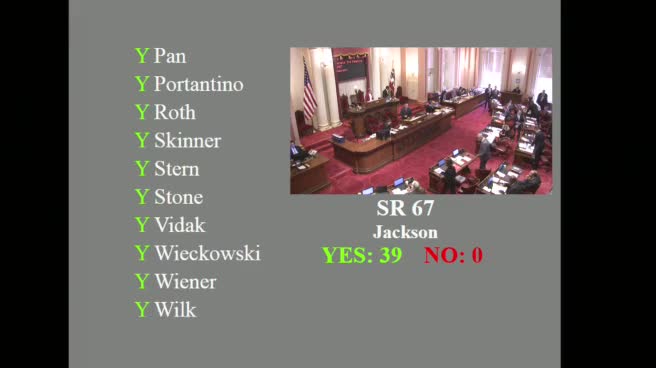 8MIN
Senate Floor
 12MIN
Senate Standing Committee on Education
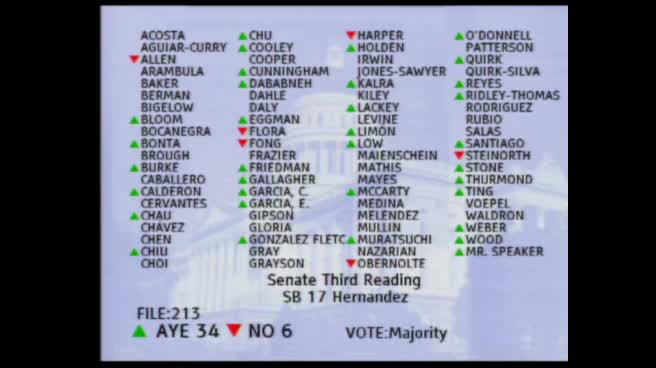 2MIN
Assembly Floor
 1MIN
Assembly Floor
 2MIN
Assembly Standing Committee on Appropriations
 6MIN
Assembly Standing Committee on Education
 25MIN
Senate Floor
 4MIN










