SB 825: State prisons: preapprenticeship program.
- Session Year: 2017-2018
- House: Senate
- Latest Version Date: 2018-03-12
(1)Existing law establishes a system of state prisons under the jurisdiction of the Department of Corrections and Rehabilitation. Existing law authorizes the department to institute various programs for inmates, including programs for education and job training.
This bill would require the department to develop guidelines for inmate participation in preapprenticeship training programs, as specified. The bill would also require the department to coordinate with local state-approved apprenticeship programs and local building trade councils so that inmates who complete an inmate preapprenticeship program have a pathway to employment upon release.
(2)Existing law authorizes the Department of General Services, the Department of Corrections and Rehabilitation, and various local agencies to use the design-build procurement process for specified public works under different laws.
This bill would authorize the Department of Corrections and Rehabilitation to award contracts for construction projects over $500,000 using the design-build contracting process or construction manager at-risk contracts, as defined, if, on or before September 30, 2019, the department enters into a 10-year community workforce agreement with the State Building and Construction Trades Council of California that applies to all construction contracts over $500,000. The bill would require the community workforce agreement to include provisions to encourage work opportunities for previously incarcerated individuals who have completed an inmate preapprenticeship program and that support hiring opportunities for women and military service veterans. program and include a plan for outreach and retention of women and military service veterans to help increase employment opportunities in the building and construction trades. The bill would authorize the Secretary of the Department of Corrections and Rehabilitation to renew or modify the agreement for 5-year terms.
(1)Existing law establishes a system of state prisons under the jurisdiction of the Department of Corrections and Rehabilitation. Existing law authorizes the department to institute various programs for inmates, including programs for education and job training.
This bill would state the intent of the Legislature to enact legislation that would create a preapprenticeship program in the California state prisons. require the department to develop guidelines for inmate participation in preapprenticeship training programs, as specified. The bill would also require the department to coordinate with local state-approved apprenticeship programs and local building trade councils so that inmates who complete an inmate preapprenticeship program have a pathway to employment upon release.
(2)Existing law authorizes the Department of General Services, the Department of Corrections and Rehabilitation, and various local agencies to use the design-build procurement process for specified public works under different laws.
This bill would authorize the Department of Corrections and Rehabilitation to award contracts for construction projects over $500,000 using the design-build contracting process or construction manager at-risk contracts, as defined, if, on or before September 30, 2019, the department enters into a 10-year community workforce agreement with the State Building and Construction Trades Council of California that applies to all construction contracts over $500,000. The bill would require the community workforce agreement to include provisions to encourage work opportunities for previously incarcerated individuals who have completed an inmate preapprenticeship program and that support hiring opportunities for women and military service veterans. The bill would authorize the Secretary of the Department of Corrections and Rehabilitation to renew or modify the agreement for 5-year terms.
Existing law establishes a system of state prisons under the jurisdiction of the Department of Corrections and Rehabilitation. Existing law authorizes the department to institute various programs for inmates, including programs for education and job training.
This bill would state the intent of the Legislature to enact legislation that would create a preapprenticeship program in the California state prisons.
The department shall develop guidelines for the participation of inmates in preapprenticeship training programs, as described in subdivision (e) of Section 14230 of the Unemployment Insurance Code. In developing the guidelines, the department shall ensure that inmate preapprenticeship training programs in the building and construction trades follow the multicraft core curriculum implemented by the State Department of Education for its California Partnership Academies pilot project and by the California Workforce Development Board and local boards. The department shall also coordinate with local state-approved apprenticeship programs and local building trade councils, so inmates who complete an inmate preapprenticeship program have a pathway to employment upon release.
SEC. 2.Article 6.1 (commencing with Section 10197) is added to Chapter 1 of Part 2 of Division 2 of the Public Contract Code, to read:6.1.State Agency Design-Build Projects 10197.(a)Notwithstanding any other law, the department may award contracts for construction projects over five hundred thousand dollars ($500,000) using the design-build contracting process or construction manager at-risk contracts if, on or before September 30, 2019, the department has entered into a community workforce agreement with the State Building and Construction Trades Council of California that applies to all construction contracts over five hundred thousand dollars ($500,000).
(b)The community workforce agreement shall include provisions to encourage work opportunities for previously incarcerated individuals who have completed an inmate preapprenticeship program, established pursuant to Section 2716.5 of the Penal Code and provisions that support hiring opportunities for women and military service veterans. Code. The community workforce agreement shall also include a plan for outreach and retention of women and military service veterans to help increase employment opportunities in the building and construction trades.
(c)The community workforce agreement shall be for a term of 10 years and may be renewed or modified for additional five-year terms upon approval of the secretary. If the secretary approves the renewal or modification of the community workforce agreement for an additional term, the secretary may award contracts in accordance with this section during an additional term.
(d)The community workforce agreement shall comply with Section 2500 of the Public Contract Code.
(e)For purposes of this article, the following definitions apply:
(1)Best value means a value determined by evaluation of objective criteria that relate to price, features, functions, life cycle costs, experience, and past performance. A best value determination may involve the selection of the lowest cost proposal meeting the interests of the department and meeting the objectives of the project, selection of the best proposal for a stipulated sum established by the department, or a tradeoff between price and other specified factors.
(2)Construction manager at-risk contract means a competitively procured contract awarded by the department, to either the lowest responsible bidder or by using the best value method, to an individual, partnership, joint venture, corporation, or other recognized legal entity that satisfies all of the following conditions:
(A)The entity is appropriately licensed in this state, including, but not limited to, having a contractors license issued by the Contractors State License Board.
(B)The entity guarantees the cost of a project and furnishes construction management services, including, but not limited to, preparation and coordination of bid packages, scheduling, cost control, value engineering, evaluation, preconstruction services, and construction administration.
(C)The entity possesses or obtains sufficient bonding to cover the contract amount for construction services and risk and liability insurance, as required by the department.
(3)Department means the Department of Corrections and Rehabilitation.
(4)Design-build means a project delivery process in which both the design and construction of a project are procured from a single entity.
(5)Secretary means the Secretary of the Department of Corrections and Rehabilitation.
The department shall develop guidelines for the participation of inmates in preapprenticeship training programs, as described in subdivision (e) of Section 14230 of the Unemployment Insurance Code. In developing the guidelines, the department shall ensure that inmate preapprenticeship training programs in the building and construction trades follow the multicraft core curriculum implemented by the State Department of Education for its California Partnership Academies pilot project and by the California Workforce Development Board and local boards. The department shall also coordinate with local state-approved apprenticeship programs and local building trade councils, so inmates who complete an inmate preapprenticeship program have a pathway to employment upon release.
SEC. 2.Article 6.1 (commencing with Section 10197) is added to Chapter 1 of Part 2 of Division 2 of the Public Contract Code, to read:6.1.State Agency Design-Build Projects 10197.(a)Notwithstanding any other law, the department may award contracts for construction projects over five hundred thousand dollars ($500,000) using the design-build contracting process or construction manager at-risk contracts if, on or before September 30, 2019, the department has entered into a community workforce agreement with the State Building and Construction Trades Council of California that applies to all construction contracts over five hundred thousand dollars ($500,000).
(b)The community workforce agreement shall include provisions to encourage work opportunities for previously incarcerated individuals who have completed an inmate preapprenticeship program, established pursuant to Section 2716.5 of the Penal Code and provisions that support hiring opportunities for women and military service veterans.
(c)The community workforce agreement shall be for a term of 10 years and may be renewed or modified for additional five-year terms upon approval of the secretary. If the secretary approves the renewal or modification of the community workforce agreement for an additional term, the secretary may award contracts in accordance with this section during an additional term.
(d)The community workforce agreement shall comply with Section 2500 of the Public Contract Code.
(e)For purposes of this article, the following definitions apply:
(1)Best value means a value determined by evaluation of objective criteria that relate to price, features, functions, life cycle costs, experience, and past performance. A best value determination may involve the selection of the lowest cost proposal meeting the interests of the department and meeting the objectives of the project, selection of the best proposal for a stipulated sum established by the department, or a tradeoff between price and other specified factors.
(2)Construction manager at-risk contract means a competitively procured contract awarded by the department, to either the lowest responsible bidder or by using the best value method, to an individual, partnership, joint venture, corporation, or other recognized legal entity that satisfies all of the following conditions:
(A)The entity is appropriately licensed in this state, including, but not limited to, having a contractors license issued by the Contractors State License Board.
(B)The entity guarantees the cost of a project and furnishes construction management services, including, but not limited to, preparation and coordination of bid packages, scheduling, cost control, value engineering, evaluation, preconstruction services, and construction administration.
(C)The entity possesses or obtains sufficient bonding to cover the contract amount for construction services and risk and liability insurance, as required by the department.
(3)Department means the Department of Corrections and Rehabilitation.
(4)Design-build means a project delivery process in which both the design and construction of a project are procured from a single entity.
(5)Secretary means the Secretary of the Department of Corrections and Rehabilitation.
SECTION 1.It is the intent of the Legislature to enact legislation that would create a preapprenticeship program in the California state prisons.It is the intent of the Legislature to enact legislation that would create a preapprenticeship program in the California state prisons.
|
Date
|
Status
|
|---|---|
| Jun 26, 2018 | June 26 set for second hearing canceled at the request of author. |
| Jun 19, 2018 | June 19 set for first hearing canceled at the request of author. |
| Jun 11, 2018 | Referred to Coms. on PUB. S. and L. & E. |
| May 29, 2018 | In Assembly. Read first time. Held at Desk. |
| May 29, 2018 | Read third time. Passed. (Ayes 26. Noes 11.) Ordered to the Assembly. |
| May 25, 2018 | From committee: Do pass. (Ayes 5. Noes 2.) (May 25). |
| May 18, 2018 | Set for hearing May 25. |
| Apr 23, 2018 | April 23 hearing: Placed on APPR. suspense file. |
| Apr 13, 2018 | Set for hearing April 23. |
| Apr 11, 2018 | From committee: Do pass and re-refer to Com. on APPR. (Ayes 4. Noes 1.) (April 11). Re-referred to Com. on APPR. |
| Mar 22, 2018 | Set for hearing April 11. |
| Mar 20, 2018 | From committee: Do pass and re-refer to Com. on L. & I.R. (Ayes 5. Noes 2.) (March 20). Re-referred to Com. on L. & I.R. |
| Mar 12, 2018 | From committee with author's amendments. Read second time and amended. Re-referred to Com. on PUB. S. |
| Mar 6, 2018 | Set for hearing March 20. |
| Mar 1, 2018 | Re-referred to Coms. on PUB. S. and L. & I.R. |
| Feb 16, 2018 | From committee with author's amendments. Read second time and amended. Re-referred to Com. on RLS. |
| Jan 16, 2018 | Referred to Com. on RLS. |
| Jan 4, 2018 | From printer. May be acted upon on or after February 3. |
| Jan 3, 2018 | Introduced. Read first time. To Com. on RLS. for assignment. To print. |
|
Date
|
Description
|
Location
|
Votes
|
|
|---|---|---|---|---|
| May 29, 2018 | Senate 3rd Reading SB825 Beall et al. | Senate Floor |
Passed |
|
| May 25, 2018 | Do pass | Senate Standing Committee on Appropriations |
Passed |
|
| Apr 23, 2018 | Placed on suspense file | Senate Standing Committee on Appropriations |
Passed |
|
| Apr 11, 2018 | Do pass, but first be re-referred to the Committee on [Appropriations] | Senate Standing Committee on Labor and Industrial Relations |
Passed |
|
| Mar 20, 2018 | Do pass, but first be re-referred to the Committee on [Labor and Industrial Relations] | Senate Standing Committee on Public Safety |
Passed |
This list shows positions taken on this bill by organizations on the date displayed, which is linked to the original source.
Positions by individuals are not included.
|
Organization
|
Position
|
Date
|
|---|---|---|
| #cut50 | ** Support | Jun 18, 2018 |
| . . . | ** Against | May 26, 2018 |
| Aclu Center For Advocacy And Policy, California | ** Support | Jun 18, 2018 |
| Alameda Building And Construction Trades Council | ** Support | Jun 18, 2018 |
| Alameda County Taxpayers Association, Inc. | ** Against | Jun 18, 2018 |
| America, San Diego Chapter, Inc. | ** Against | Jun 18, 2018 |
| American Fire Sprinkler Association | ** Against | Apr 11, 2018 |
| american fire sprinkler association, california chapters | ** Against | May 26, 2018 |
| American Plumbing Systems | * Against | Mar 20, 2018 |
| American Plumbing Systems | * Against | Mar 20, 2018 |
| American Plumbing Systems | * Against | Mar 20, 2018 |
| American Plumbing Systems | * Against | Mar 20, 2018 |
| American Plumbing Systems | * Against | Apr 11, 2018 |
| Anti-Recidivism Coalition | ** Support | Jun 18, 2018 |
| Associated General Contractors | * Against | Apr 11, 2018 |
| Bay City Incorporated | * Against | Mar 20, 2018 |
| Berg Electric | * Against | Apr 11, 2018 |
| Berk Electric | * Against | Mar 20, 2018 |
| Berkeley Underground Scholars, Uc Berkley | ** Support | Jun 18, 2018 |
| Black Leadership Kitchen Cabinet Of Silicon Valley | ** Support | Jun 18, 2018 |
| Brco Constructors, Inc. | ** Against | Jun 18, 2018 |
| California Chapters of the American Fire Sprinkler Association | ** Against | Jun 18, 2018 |
| California Chapters of the National Electrical Contractors Association | ** Support | May 26, 2018 |
| California Chapters Of The National Electrical Contractors Associations | ** Support | Jun 18, 2018 |
| California District Attorneys Association | ** Support | Jun 18, 2018 |
| California Environmental Systems | * Against | Apr 11, 2018 |
| California Labor Federation | ** Support | Jun 18, 2018 |
| California Public Defenders Association | ** Support | Jun 18, 2018 |
| California State Association Of Electrical Workers | ** Support | Jun 18, 2018 |
| California State Conference NAACP | ** Support | Jun 18, 2018 |
| California State Council Of Laborers | ** Support | Jun 18, 2018 |
| California State Pipe Trades Council | ** Support | Jun 18, 2018 |
| Central Coast Builders Association | ** Against | Apr 18, 2018 |
| Central Solano Citizen | ** Against | Jun 18, 2018 |
| Central Valley Chapters Of Associated Builders And Contractors | ** Against | Jun 18, 2018 |
| Coalition for Fair Employment in Construction | * Against | Mar 20, 2018 |
| Coalition for Fair Employment in Construction | ** Against | Apr 11, 2018 |
| Contra Costa Tax Payers Association | ** Against | Apr 18, 2018 |
| Contra Costa Taxpayer Association | ** Against | Jun 18, 2018 |
| Cut 50 | * Support | Mar 20, 2018 |
| DD Construction | * Against | Apr 11, 2018 |
| DD Construction | * Against | Apr 11, 2018 |
| Diede Construction, Inc. | ** Against | Jun 18, 2018 |
| District Council 16 Painters and Allied Trades | * Support | Apr 11, 2018 |
| Dobler Construction, Inc. | ** Against | Jun 18, 2018 |
| Don Chapin Company | ** Against | Jun 18, 2018 |
| Electrical Workers Minority Caucus | * Support | Mar 20, 2018 |
| Firehouse Community Development Corporation | ** Support | Jun 18, 2018 |
| Fresno Chamber of Commerce | ** Against | May 26, 2018 |
| GSV Painting | * Against | Apr 11, 2018 |
| Guzman Electric | * Against | Mar 20, 2018 |
| Guzman Electric, Inc. | ** Against | Jun 18, 2018 |
| Helix Electirc | * Against | Apr 11, 2018 |
| Helix Electric | * Against | Apr 11, 2018 |
| Hispanic Chamber of Commerce | ** Against | Jun 18, 2018 |
| Humboldt Builders Exchange, Inc. | ** Against | Jun 18, 2018 |
| Humboldt Builders' Exchange | ** Against | Apr 18, 2018 |
| IBEW Local 617 | * Support | Mar 20, 2018 |
| Independent Roofing Contractors of California, Inc. | ** Against | Jun 18, 2018 |
| Integrity Air Systems | ** Against | Apr 11, 2018 |
| International Brotherhood Of Electrical Workers Local 569 | * Support | Mar 20, 2018 |
| International Union of Elevator Constructors | ** Support | Jun 18, 2018 |
| Kaler | ** Against | Jun 18, 2018 |
| La Raza Roundtable de California | ** Support | Jun 18, 2018 |
| Labor State Council | * Support | Mar 20, 2018 |
| Legal Services for Prisoners with Children | ** Support | Jun 18, 2018 |
| livermore valley chamber of commerce | ** Against | Jun 18, 2018 |
| Menghetti Construction, Inc. | ** Against | Jun 18, 2018 |
| National Center For Construction Education And Research | ** Against | May 26, 2018 |
| Nor Chamber Of Commerce | ** Against | Jun 18, 2018 |
| Painters and Allied Trades | * Support | Apr 11, 2018 |
| Pleasanton Chamber Of Comerce | ** Against | Apr 18, 2018 |
| Plumbing Heating Cooling Contractors Of California | * Against | Apr 11, 2018 |
| Plumbing Iron Mechanical | * Against | Apr 11, 2018 |
| Plumbing-Heating-Cooling Contractors Association of California | ** Against | Jun 18, 2018 |
| Rising Sun Energy Center | ** Support | May 26, 2018 |
| Root & Rebound | ** Support | Jun 18, 2018 |
| Sacramento State University, Project Rebound | ** Support | Apr 18, 2018 |
| Sacramento-Sierra'S Building & Construction Trades Council | ** Support | Jun 18, 2018 |
| Salinas Valley Chamber of Commerce | ** Against | Jun 18, 2018 |
| San Diego Associated Builders And Contractors | ** Against | Jun 18, 2018 |
| San Diego Building Trades | * Support | Mar 20, 2018 |
| self | * Against | Mar 20, 2018 |
| self | * Support | Mar 20, 2018 |
| Self Awareness and Recovery | * Support | Apr 11, 2018 |
| Self Awareness and Recovery | * Support | Apr 11, 2018 |
| Several individuals | ** Against | May 26, 2018 |
| Soltek Pacific Construction | ** Against | Jun 18, 2018 |
| Southern California Associated Builders And Contractors | ** Against | Jun 18, 2018 |
| State Building And Construction Trade Council Of California | ** Support | Jun 18, 2018 |
| Taxpayer Group | ** Against | Jun 18, 2018 |
| The Black Leadership Kitchen Cabinet | ** Support | May 26, 2018 |
| The Silicon Valley Organization | ** Against | Jun 18, 2018 |
| Tradesmen International | * Against | Apr 11, 2018 |
| Tradeswomen, Inc. | ** Support | Jun 18, 2018 |
| TSC Painting | * Against | Apr 11, 2018 |
| Underground Scholars Initiative | * Support | Apr 11, 2018 |
| United Contractors | ** Support | Jun 18, 2018 |
| United Union of Roofers, Waterproofers, and Allied Workers | * Support | Mar 20, 2018 |
| Valley Contractors Exchange | ** Against | May 26, 2018 |
| valley contractors exchange, inc. | ** Against | Jun 18, 2018 |
| Vasco Electric | * Against | Apr 11, 2018 |
| Vasco Electric | * Against | Apr 11, 2018 |
| Western Council Of Sheet Metal Workers | ** Support | Jun 18, 2018 |
| Western Electrical Contractors Association | ** Against | Jun 18, 2018 |
Date of Hearing: June 19, 2018
Counsel: Liah Burnley
ASSEMBLY COMMITTEE ON PUBLIC SAFETY
Reginald Byron Jones-Sawyer, Sr., Chair
SBPCA Bill Id:SB 825
Author:(Beall) – As Amended Ver:March 12, 2018
SUMMARY: Requires the California Department of Corrections and Rehabilitation (CDCR) to develop guidelines for inmate preapprenticeship training programs. Specifically, this bill:
- Requires CDCR to develop guidelines for inmate participation in preapprenticeship training programs.
- States that CDCR shall ensure that preapprenticeship training programs in the building and construction trades follow the Multicraft Core Curriculum (MC3) implemented by the State Department of Education for its California Partnership Academies pilot project.
- Provides that CDCR shall coordinate with local state-approved apprenticeship programs and local building trade councils, so that inmates who complete preapprenticeship programs have a pathway to employment upon release from incarceration.
- Allows CDCR to award construction contracts over $500,000 using the “design-build contracting method” or the “construction manager-at-risk method (CMR)” if, by September 30, 2019, it has entered into a community workforce agreement with the State Building Construction Trades Council of California for all construction contracts over $500,000.[1]
- Provides that the community workforce shall be for term of 10 years and may be renewed or modified for additional five-year terms upon approval of the Secretary of CDCR agreement and include all of the following:
- Provisions to encourage work opportunities to previously incarcerated individuals who have completed an inmate preapprenticeship program;
- A plan for outreach and retention of women and military service veterans to help increase employment opportunities in the building and construction trades, and;
- Compliance with Section 2500 of the Public Contract Code, which provides protections to taxpayers for public entity project labor agreements, including that entities awarded for work on a project must be made without regard to whether they are a party to a collective bargaining agreement.
- Provisions to encourage work opportunities to previously incarcerated individuals who have completed an inmate preapprenticeship program;
- Defines “design-build” as “a project delivery process in which both the design and construction of a project are procured from a single entity.”
- Defines “construction manager at-risk contract” as “a competitively procured contract awarded by the department, to either the lowest responsible buyer or by using the best value method, to an individual, partnership, joint venture, corporation, or other recognized legal entity, that is appropriately licensed in this state, possess sufficient bonding to cover the contract amount for construction and risk and liability insurance, guarantees the cost of a project and furnishes construction management services.”
- Defines “best value” as “a value determined by evaluation of objective criteria that relate to price, features, functions, life cycle costs, experience, and past performance.”
EXISTING LAW:
- Vests the supervision, management and control of the state prisons, and the responsibility for the care, custody, treatment, training, discipline and employment of persons confined therein in the Secretary of CDCR. (Pen. Code, §§ 5054, 5058.)
- Requires the California Workforce Development Board (CWDB) and local workforce development boards to ensure, to the maximum extent feasible, that preapprenticeship training in the building and construction trades programs and services follow the MC3 Curriculum implemented by the State Department of Education for its pilot project with California Partnership Academies and develop a plan for outreach and retention for women participants in the preapprenticeship program to help increase the representation of women in the building and construction trades. (Unemp. Ins. Code, § 14230 subd. (e).)
- Establishes the Public Contract Code and states that work on all projects shall be done under contract awarded to the lowest responsible bidder, except that it may be done by day’s labor under the direction of the department, by contract upon informal bids, or by a combination thereof in emergency situations. (Pub. Contract Code, § 10122.)
- Provides that work performed by prisoners pursuant to an order by the Secretary of CDCR or by the Prison Industry Authority (PIA) is not subject to the provisions of the Public Contract Code, if the total cost of a project does not exceed $50,000. (Pub. Contract Code, § 1013.5.)
- Requires, for work estimated to exceed of $25,000, any state agency, including CDCR, to solicit bids in writing and award the work to the lowest responsible bidder or reject all bids, and states that the work shall not be done by day’s labor. (Pub. Contract Code, §§ 10108, 10122.6.)
- States the findings and declarations of the state Legislature, that the design-build method of project delivery, using a best value procurement methodology, has been authorized for various agencies that have reported benefits from such projects including reduced project costs, expedited project completion, and design features that are not achievable through the traditional design-bid-build method. (Pub. Contract Code, § 10187.)
- Authorizes CDCR and other specified state agencies to, until January 1, 2025, procure design-build contracts for projects in excess of $1,000,000 by awarding the contract using either the low bid or best value procurement methodology. (Pub. Contract Code, § 10187.5.)
- Repeals the provisions authorizing designated state agencies to procure design-build contracts on January 1, 2025. (Pub. Contract Code, § 10196.)
- Requires all public entities to include all of the following taxpayer protection provisions in their project labor agreements for construction projects:
- The agreement prohibits discrimination based on race, national origin, religion, sex, sexual orientation, political affiliation, or membership in a labor organization in hiring and dispatching workers for the project;
- The agreement permits all qualified contractors and subcontractors to bid for and be awarded work on the project without regard to whether they are otherwise parties to collective bargaining agreements;
- The agreement contains an agreed-upon protocol concerning drug testing for workers who will be employed on the project;
- The agreement contains guarantees against work stoppages, strikes, lockouts, and similar disruptions of the project; and,
- The agreement provides that disputes arising from the agreement shall be resolved by a neutral arbitrator.
- Defines “project labor agreement” as a “pre-hire collective bargaining agreement that establishes terms and conditions of employment for a specific construction project or projects.” (Pub. Contract Code, § 2500 subd. (b)(1).)
FISCAL EFFECT: Unknown.
COMMENTS:
- Author’s Statement: According to the author, “SB 825 changes lives and reduces California’s Recidivism Rate by preparing incarcerated men and women for rewarding careers in the building and construction trades. The bill improves existing training programs in state prisons by partnering with the State Building and Construction Trade Council (SBCTC) to align CDCR programs with the State’s curriculum standards for pre-apprenticeship programs. Specifically, the bill ensures inmates participating in CDCR pre-apprenticeship programs have access to the most applicable and current curriculum, Multi-Craft Core Curriculum (MC3). SB 825 also creates additional employment opportunities for inmates that have completes the MC3 program post release through a Community Workforce Agreement (CWA) that includes provisions to encourage the hiring of formerly incarcerated, women and veterans.
“MC3 has a proven track record of placing its graduates. 92 percent of all construction apprentices are enrolled in joint management-labor apprenticeship programs.
“MC3 is the official state curriculum for construction apprenticeship preparation and is required by the California Workforce Development Board and its local workforce boards, the California Department of Education’s construction academies, cities and counties receiving funds from the Road Repair and Accountability Act of 2017 (SB 1) and the Clean Energy and Jobs Act (Prop. 39 of 2012). In addition, community colleges, school districts and over 50 non-profits located throughout the state use MC3.”
- Preapprenticeship Training and the Multicraft Core Curriculum (MC3): The National Research council’s publication exploring the causes and consequences of the growth of incarceration in the United States explains the importance of employment after incarceration:
“Policy research on released prisoners emphasizes the importance of employment, housing, and health services. Employment programs provide a variety of services, from job readiness training to subsidized work. Although evaluation research provides uneven evidence that labor market programs can boost employment and reduce recidivism, such programs often are intrinsically valuable when they provide income support and structure the time of program clients. …Evaluation research also indicates that recidivism can be significantly reduced when social opportunity programs, such as those providing employment, are combined with programs that address criminogenic behaviors.” (National Research Council, (2014) The Growth of Incarceration in the United States: Exploring Causes and Consequences, at p. 352.)
This bill would require CDCR to develop guidelines for the participation of inmates in preapprenticeship training programs for the building and trade industries. Preapprenticeship programs are stepping-stone training courses that allow participants to obtain employment in a trade industry. In most cases, individuals undergo preapprenticeship training before completing an apprenticeship in order to prepare them for the working environment in their selected industry. An apprenticeship is a program that trains a worker to become skilled in a particular trade. Apprenticeships combine hands-on work with classroom learning to train the apprentice. Apprenticeships are considered full-time employment and apprentices earn a living wage. Preapprenticeship programs will allow incarcerated individuals to effectively complete the first stage of apprenticeship study during their incarceration, which will prepare them for an apprenticeship immediately upon release. This would give incarcerated individuals a head start in becoming employed upon release from incarceration.
Generally, there are two different curriculums for building and trades preapprenticeship programs, the National Center for Construction Education & Research (NCCER) curriculum and the MC3 curriculum. In 2007, the Building Trades National Standing Committee on Apprenticeship and Training identified courses in all building trades’ apprenticeship programs that are offered in common without regard to a particular craft, and created the MC3 curriculum. The MC3 course syllabi and educational objectives were systematically developed from these common core courses, and curriculum materials were identified and integrated into a multi-craft core curriculum. The total core includes 120 hours of class room training. (https://www.efficiencycities.org/wp-content/uploads/062309/BCTD%20TriFold_v6.pdf) The MC3 course includes classes in Construction Industry Orientation, Tools and Materials, Construction Health and Safety, Blueprint Reading, Basic Math for Construction, Heritage of the American Worker, Diversity in the Construction Industry, Green Construction, and Financial Responsibility. The purpose of the MC3 curriculum is to empower participants to make informed decisions about which craft they would pursue. The MC3 training programs are sponsored by state and local building trades councils in cooperation with local community groups, government agencies and schools. (https://cwdb.ca.gov/wp-content/uploads/sites/43/2016/08/building.trades.mc3_.9.1.2015.pdf.) The MC3 Curriculum is only offered in cooperation with state and local Building Trades Councils, and is not otherwise available to private entities.
NCCER is a not-for-profit 501(c)(3) educational foundation established by construction CEOs and national construction associations. It was founded to address the workforce shortage facing the construction industry. (NCCER, Core Curriculum: Introductory Craft Skills, Trainee Guide (2015), 5th Ed.) NCCER, in collaboration with publisher Pearson Education, Inc., developed a standardized preapprenticeship curriculum that includes courses in Basic Safety, Introductory Math, Introduction to Power Tools, Introduction to Construction Drawings, Introduction to Basic Rigging, Basic Communication Skills, Basic Employability Skills, and Introduction to Material Handling. (Id.) The NCCER curriculum is geared toward building foundational skills in construction. (Id.) NCCER aims to enhance career development and recruitment efforts for the industry. (https://www.nccer.org/about-us.)
This bill would require CDCR’s training programs to use the MC3 curriculum. There are several reasons why the MC3 program provides opportunities for increased employment for inmates upon release from incarceration:
- The MC3 curriculum partnerships with local trade unions. Thus, by choosing the MC3 programs, incarcerated people will have a clear pathway to employment immediately after incarceration. The NCCER program does not provide the same partnerships or pathway to employment.
- The MC3 curriculum is designed to give students a well-rounded education so they can choose the craft they want to pursue and includes courses in the history of labor, diversity, and green construction. Pre-apprentices who eradicate from MC3 have the broadest array of choices when it comes time to choose an apprentice program. In comparison, the NCCER is geared toward teaching construction skills.
- The California Workforce Development Board (CWDB) must award federal Workforce Innovation and Opportunity Act of 2014 funds for purposes of preapprenticeship training in the building and construction to programs that follow the MC3 curriculum implemented by the State Department of Education. This bill would standardize CDCR’s preapprenticeship programs with the other statewide preapprenticeship programs that are funded by the CWDB. This is significant considering that the bill requires CDCR to coordinate with local state-operated programs in order to provide a pathway for incarcerated people to participate in apprenticeship training upon their release.
- Likewise, entities using the MC3 program, unlike the NCCER program, must have an agreement with a local building and trades council or union. This partnership helps a pre-apprentice gain acceptance into an apprenticeship program after completing the MC3 program. Though the MC3 curriculum is used exclusively by union groups, nothing precludes nonunion contractors from hiring or enrolling MC3 graduates into their apprenticeship programs.
This bill aims to reduce recidivism and increase rehabilitation and public safety by requiring CDCR to develop guidelines for the participation of inmates in preapprenticeship training programs and ensure that programs in the building and construction trades follow the MC3 curriculum. This bill would also require CDCR to coordinate with local state-approved preapprenticeship programs and local building trade councils so inmates who complete a preapprenticeship program have pathways to employment upon release.
- Community Workforce Agreement between CDCR and the State Building Construction Trades Council of California: “Design-build” is a construction project building process in which the agency has a single point of contact for both the design and construction phases of a project. Design-build contracting more efficient method of project delivery and accelerates project completion. Under existing law, public agencies complete projects using the traditional design-bid-build method, where the contracting agency either performs the design work in-house or negotiates with an engineering design firm under a design services contract, and then separately contracts for at-risk construction by engaging a contractor through competitive bidding. CDCR has authority to enter into design-build contracts for projects exceeding $1,000,000. (Pub. Contract Code, § 10187.5.) This existing authorization will be repealed in 2025. (Pub. Contract Code, § 10196.)
This bill would require CDCR to enter into a community workforce agreement with the State Building Construction Trades Council of California, as a condition for authorization to procure design-build contracts for projects exceeding $500,000.
Opponents of the bill are concerned that the community workforce agreement would prevent non-union building and trade entities from using and working with their own employees. However, this bill only requires that the community workforce agreement contain provisions encouraging work opportunities for previously incarcerated individuals who have completed an inmate preapprenticeship program and a plan for outreach and retention of women and military veterans. Notably, the community workforce agreement must comply with Section 2500 of the Public contract code, which prohibits awarding of bids to entities based on collective bargaining agreements. Other than these provisions, CDCR is able to negotiate the terms of the community workforce agreement with the State Building Construction Trades Council of California. Nothing in this bill would mandate that the community workforce agreement prohibit or hinder any building or trade entity from bidding on one of CDCR’s projects, or using their employees to perform the work. Additionally, CDCR would only have to comply with the terms of the community workforce agreement for its contracts exceeding $500,000.
Requiring the community workforce agreement to include provisions encouraging work opportunities for previously incarcerated individuals who have completed an inmate preapprenticeship program is aimed at reducing recidivism and increasing rehabilitation. As discussed above, when previously incarcerated individuals have a pathway to employment, and the ability to earn a living wage, the probability that they will re-commit crime decreases.
- Argument in Support: According to the Anti-Recidivism Coalition, “SB 825 authorizes the California Department of Corrections and Rehabilitation (CDCR), to create an enhanced pre-apprenticeship program in state prisons, in partnership with the State Building and Construction Trade Council, that will help pave the way for stable employment for those reentering into society and, therefore, support their successful transition back to the community. Also, SB 825 will provide formerly incarcerated Californians opportunities to advance further in their careers in the construction trades by ensuring that community workforce agreements entered into with CDCR include provisions to encourage work opportunities for previously incarcerated individuals who have completed a pre-apprenticeship program.
“If formerly incarcerated individuals are given access to living-wage jobs, and the support and training needed to excel in these positions, they can succeed in the workforce and avoid re-incarceration. To tackle high recidivism rates in California – nearly 60 percent for all individuals returning home and nearly 66.9 percent for young people – there is a need to increase the probability that those returning back into society will have the tools necessary to develop a career.
“We believe that SB 825 improves CDCR’s existing pre-apprenticeship program in state prisons by partnering with the State Building and Construction Trade Council (SBCTC) to align it with the State's curriculum standards for pre-apprenticeship. By joining forces with the SBCTC, the department increases former inmates’ opportunities for employment and their successful transition back to the community.
“SB 825 ensures incarcerated participants have access to the most applicable and current curriculum, the Multi-Craft Core Curriculum (MC3), used by the California Department of Education, the California Workforce Development Board and local boards. The MC3 curriculum puts participants on a track to joint management-labor apprenticeship programs, which have the highest rates of program completion. Ninety-two percent of all construction apprentices are enrolled in joint management-labor apprenticeship programs.
“Additionally, the bill creates post release employment opportunities for individuals who have completed the MC3 program post release through a Workforce Labor Agreement that includes provisions to hire formerly incarcerated graduates, women and veterans for facility improvement projects.
“By providing those incarcerated high quality, apprentice-level content in construction, they will be prepared for careers in the industry, thus propelling them to earning livable wages that will decrease the chances of them re-offending.”
- Argument in Opposition: According to The Associated Builders and Contractors Northern California “As currently written, inmates could only participate in preapprenticeship programming that follows one particular curriculum – the multicraft core curriculum, used exclusively by union shops. The bill’s language in section 1 states that inmate preapprenticeship training programs shall follow: “the multicraft core curriculum implemented by the State Department of Education for its California Partnership Academies pilot project and by the California Workforce Development Board.”
“This bill limits inmate training programs to programs that utilize that one curriculum, that is used exclusively by union groups. We happily use another outstanding curriculum, provided by the National Center for Construction Education and Research (NCCER), an organization that has provided curricula to the California Department of Education, The California Department of Corrections and Rehabilitation, The California Community Colleges System, and the California State University System. This is a robust curriculum, provided by a legitimate group. In fact, their relationship with the state of California that the California Department of Education has authorized over 100 schools and districts to use their curriculum. Additionally, the California Department of Corrections and Rehabilitation has used NCCER Curriculum since 2005 and maintains NCCER accreditation for the 35 adult prison facilities in California. Over 50 California Community Colleges have used NCCER Curriculum. Finally, the California State University System also uses NCCER Curriculum at over 20 campuses in California.
“The ten-year mandatory project labor agreement in section 2, Section 10197 (a), (b), and (c) would prevent our members from using and working with their own employees. Project Labor Agreements decrease competition, increase costs, and provide a disincentive to bid on work. It’s disappointing to see the spirit of entrepreneurism blatantly dismissed by the State of California, leaving opportunities of in excess of $1 billion in SR/DM projects identified, with available funding of $28 million in FY 2017-18 only for the small number of workers who have found their way into union construction programs further eroding opportunities for smaller construction companies and their workers to expand their local businesses and gain invaluable work experience on a taxpayer-funded bond designed to provide opportunities for everyone.”
- Prior Legislation:
- SB 1 (Beall), Road Repair and Accountability Act of 2017, Chapter 5, Statutes of 2017, requires the CWDB to develop guidelines for public agencies receiving Road Maintenance and Rehabilitation Account funds to participate in, invest in, or partner with, new or existing pre apprenticeship training programs pursuant to Section 14230 subdivision (e) of the Unemployment Insurance Code, which requires CWDB to follow the MC3 curriculum.
- SB 634 (Wilk), Chapter 833, Statutes of 2017, created and authorizes the Santa Clarita Valley Water Agency to award contracts for recycled water program capital facilities construction projects over $500,000 using the design-build contracting or CMR contracts if, on or before September 30, 2018, the agency enters into a community workforce agreement with the Los Angeles/Orange Counties Building and Construction Trades Council that applies to all recycled water program capital facilities construction contracts over five hundred thousand dollars $500,000.
- SB 693 (Hueso), Chapter 774, Statutes of 2016, requires a public entity to obtain an enforceable commitment that a bidder, contractor, or other entity will use a skilled and trained workforce to complete a contract or project.
- AB 2288 (Burke), Chapter 692, Statutes of 2016, requires the CWDB and each local board to ensure that federal Workforce Innovation and Opportunity Act of 2014 funds for preapprenticeship training in the building and construction trades fund programs and services that follow the Multi-Craft Core Curriculum.
- AB 155 (Alejo), Chapter 865, Statutes of 2014, authorized the Monterey County Water Resources Agency to award a design-build contract for the combined design and construction of a project to connect Lake San Antonio and Lake Nacimiento, with an underground tunnel or pipeline.
- SB 785 (Wolk), Chapter 931, Statutes of 2014, created the skilled workforce requirements for design-build projects.
- AB 554 (Atkins), Chapter 499, Statutes of 2011, required the California Workforce Investment Board and each local board to ensure that programs and services funded by the Workforce Investment Act of 1998 and directed to apprenticeable occupations, including preapprenticeship training, are conducted in coordination with one or more apprenticeship programs approved by the Division of Apprenticeship Standards for the occupation and geographic area.
REGISTERED SUPPORT / OPPOSITION:
Support
State Building and Construction Trade Council of California (Co-sponsor)
Anti-Recidivism Coalition (ARC) (Co-sponsor)
ACLU Center for Advocacy and Policy, California
Black Leadership Kitchen Cabinet of Silicon Valley
Alameda Building and Construction Trades Council
Berkeley Underground Scholars, UC Berkley
California Chapters of the National Electrical Contractors Associations
California District Attorneys Association
California Labor Federation
California Legislative Conference of the Plumbing Heating and Piping Industry
California Public Defenders Association
California State Association of Electrical Workers
California State Council of Laborers
California State Conference NAACP
California State Pipe Trades Council
Firehouse Community Development Corporation
International Union of Elevator Constructors
International Union of Painters and Allied Trades, District Council 16
La Raza Roundtable de California
Legal Services for Prisoners with Children
National Association of Social Workers, California Chapter
Rising Sun Energy Center
Root & Rebound
Sacramento-Sierra’s Building & Construction Trades Council
TRADESWOMEN, INC.
United Contractors (UCON)
Western Council of Sheet Metal Workers
#cut50
Opposition
Associated Builders and Contractors of Northern California Associated General Contractors of
America, San Diego Chapter, Inc.
Alameda County Taxpayers Association, Inc.
BRCO Constructors, Inc.
California Chapters of the American Fire Sprinkler Association
Central Solano Citizen/Taxpayer Group
Central Valley Chapters of Associated Builders and Contractors
Contra Costa Taxpayer Association
Diede Construction, Inc.
Don Chapin Company
Guzman Electric, Inc.
Humboldt Builders Exchange, Inc.
Hispanic Chamber of Commerce
Independent Roofing Contractors of California, Inc.
Kaler/Dobler Construction, Inc.
Livermore Valley Chamber of Commerce
Menghetti Construction, Inc.
NOR Chamber of Commerce
Plumbing-Heating-Cooling Contractors Association of California
Salinas Valley Chamber of Commerce
San Diego Associated Builders and Contractors
The Silicon Valley Organization
Soltek Pacific Construction
Southern California Associated Builders and Contractors
Valley Contractors Exchange, Inc.
Western Electrical Contractors Association
Analysis Prepared by: Liah Burnley / PUB. S. / (916) 319-3744
This bill is double referred to the Assembly Committee on Labor and Employment. See the Senate Labor and Industrial Relations analysis of the bill for more detailed information on design-build contracts. ↑
Office of Senate Floor Analyses (916) 651-1520 Fax: (916) 327-4478 | SB |
THIRD READING
Bill No: SB 825
:
SENATE PUBLIC SAFETY COMMITTEE: 5-2, 3/20/18
AYES: Skinner, Bradford, Jackson, Mitchell, Wiener
NOES: Anderson, Stone
SENATE LABOR & IND. REL. COMMITTEE: 4-1, 4/11/18
AYES: Pan, Jackson, Mitchell, Wieckowski
NOES: Stone
SENATE APPROPRIATIONS COMMITTEE: 5-2, 5/25/18
AYES: Lara, Beall, Bradford, Hill, Wiener
NOES: Bates, Nielsen
SOURCE: Anti-Recidivism Coalition
State Building and Construction Trades Council of California
DIGEST:
This bill requires the California Department of Corrections and Rehabilitation (CDCR) to develop guidelines for inmate participation in pre-apprenticeship training programs, as specified, and requires CDCR to coordinate with local state-approved apprenticeship programs and local building trade councils so that inmates who complete an inmate pre-apprenticeship program have a pathway to employment upon release.
Existing law:
- Establishes a system of state prisons under the jurisdiction of CDCR. (Pen. Code § 2000 et seq.)
- Requires the Secretary of CDCR to appoint a Superintendent of Correctional Education, who oversees and administers all prison education programs. Requires the Superintendent of Correctional Education to set both short- and long-term goals for inmate literacy and testing and career technical education programs, and to establish priorities for prison academic and career technical education programs. (Pen. Code § 2053.4.)
- Requires a career technical education program consider all of the following factors, consistent with the goals and priorities of CDCR:
- Whether the program aligns with the workforce needs of high-demand sectors of the state and regional economies;
- Whether there is an active job market for the skills being developed where the inmate will likely be released;
- Whether the program increases the number of inmates who obtain a marketable and industry or apprenticeship board-recognized certification, credential, or degree;
- Whether there are formal or informal networks in the field that support finding employment upon release from prison; and
- Whether the program will lead to employment in occupations with a livable wage. (Pen. Code § 2053.5.)
- Provides that CDCR require every able-bodied inmate incarcerated in any state prison to work as many hours of faithful labor in each day and every day during his or her term of imprisonment as is prescribed by the rules and regulations of the Director of CDCR. (Pen. Code § 2700.)
- Authorizes the Director of CDCR to enter into agreements with other state agencies for the use of inmates confined in the state prisons to perform work necessary and proper to be done by them in facilities of such state agencies for the purpose of vocational training and the improvement of job skills preparatory to release. (Pen. Code § 2716, subd. (a).)
- Authorizes certain state agencies, including the Department of General Services and CDCR to use the design-build procurement process for specified public works, and specifies the procurement process for design-build projects. (Pub. Contract Code §§ 10187, 10191.)
This bill:
- Requires CDCR to develop guidelines for inmate participation in pre-apprenticeship training programs.
- Requires CDCR, in developing the guidelines, to ensure that inmate pre-apprenticeship training programs in the building and construction trades follow the multicraft core curriculum implemented by the State Department of Education for its California Partnership Academies pilot project and by the California Workforce Development Board and local boards.
- Requires CDCR to coordinate with local state-approved apprenticeship programs and local building trade councils so that inmates who complete a pre-apprenticeship program have a pathway to employment upon release.
- Authorizes CDCR to award contracts for construction projects over $500,000 using the design-build contracting process or construction manager at-risk contracts, as defined, if, on or before September 30, 2019, CDCR has entered into a 10-year community workforce agreement with the State Building and Construction Trades Council of California that applies to all construction contracts over $500,000.
- Requires the community workforce agreement to include provisions to encourage work opportunities for previously incarcerated individuals who have completed an inmate pre-apprenticeship program and include a plan for outreach and retention of women and military service veterans to help increase employment opportunities in the building and construction trades.
- Requires the community workforce agreement to be for a term of 10 years and specifies that it may be renewed or modified for additional five-year terms upon approval of the Secretary of CDCR.
- Specifies that if the Secretary of CDCR approves the renewal or modification of the community workforce agreement for an additional term, the Secretary may award contracts in accordance with this section during an additional term.
- Requires the community workforce agreement to comply with Public Contract Code Section 2500.
- Defines “best value” as a value determined by evaluation of objective criteria that relate to price, features, functions, life cycle costs, experience, and past performance.
- Defines “construction manager at-risk contract” as a competitively procured contract awarded by CDCR, to either the lowest responsible bidder or by using the best value method, to an individual, partnership, joint venture, corporation, or other recognized legal entity that satisfies all of the following conditions:
- The entity is appropriately licensed in this state, including, but not limited to, having a contractor’s license issued by the Contractors’ State License Board.
- The entity guarantees the cost of a project and furnishes construction management services, including, but not limited to, preparation and coordination of bid packages, scheduling, cost control, value engineering, evaluation, preconstruction services, and construction administration.
- The entity possesses or obtains sufficient bonding to cover the contract amount for construction services and risk and liability insurance, as required by the department.
- Defines “department” as CDCR.
- Defines “design-build” as a project delivery process in which both the design and construction of a project are procured from a single entity.
- Defines “Secretary” as the Secretary of CDCR.
Background
Pre-apprenticeships
The Division of Apprenticeship Standards (DAS) within the Department of Industrial Relations administers the state’s apprenticeship laws and enforces apprenticeship standards for wages, hours, working conditions, and the specific skills required for state certification as a journey person in an apprenticeable occupation. In general, apprenticeship programs provide instruction that combines a formal course of in-class instruction with practical “on-the-job” training.
Pre-apprenticeship programs are designed to prepare individuals to enter and succeed in registered apprenticeship programs. These programs have a documented partnership with at least one registered apprenticeship program sponsor and together, they expand the participant’s career pathway opportunities with industry-based training coupled with classroom instruction.
The Multi-Craft Core Curriculum (MC3) is a pre-apprenticeship training program that was developed in 2007 by North America’s Building Trades Union. It was designed to identify common elements in all building and construction trades’ apprenticeship programs and combine them into one curriculum encompassing 120 hours of training. Among other things, the curriculum includes general orientation to apprenticeships, an introduction to the construction industry, cardiopulmonary resuscitation and first aid, an Occupational Safety and Health Administration 10-hour certification course, applied mathematics for construction, and blueprint reading.
Career technical education (CTE) at CDCR
CDCR provides CTE in six different career sectors, including building trade and construction, energy and utilities, manufacturing and product development, and transportation. CDCR’s Web site indicates that 20 CTE programs are offered in the state’s prisons and are “aligned with a positive employment outlook within the State of California, providing industry recognized certification and an employment pathway to a livable wage.” (https://www.cdcr.ca.gov/Rehabilitation/docs/Fact sheets/Info_CTE.pdf)
The California Prison Industry Authority (CALPIA) provides work assignments and CTE programs to inmates. If any of CALPIA’s CTE programs are pre-apprenticeship training programs, they would be subject to the MC3 curriculum mandate in this bill.
FISCAL EFFECT: Appropriation: Fiscal Com.: Local:
According to the Senate Appropriations Committee:
- CDCR anticipates possible costs of around $640,000 for training, materials, and changes to its electronic tracking system (SOMS) to switch from the National Center for Construction Education and Research curriculum at its 35 prisons to the MC3 program. (General Fund)
- Unknown, potentially-significant project cost increases if CDCR entering into a community workforce agreement results in fewer contract bids or higher associated construction costs for projects over $500,000. These costs could be possible only if CDCR has the ability to use the design-build process for projects of this scale without the requirement to enter into a community workforce agreement. Currently, it does not have this authority. (General Fund)
Anti-Recidivism Coalition (co-source)
State Building and Construction Trades Council of California (co-source)
ACLU of California
Building and Construction Trades Council of Alameda County, AFL-CIO
California Chapters of the National Electrical Contractors Association
California Labor Federation
California Legislative Conference of the Plumbing, Heating and Piping Industry
California State Association of Electrical Workers
California State Conference of the NAACP
California State Pipe Trades Council
District Council 16 International Union of Painters and Allied Trades
Firehouse Community Development Corporation
International Union of Elevator Constructors
La Raza Roundtable de California
Rising Sun Energy Center
The Black Leadership Kitchen Cabinet
Tradeswomen, Inc.
Western States Council of Sheet Metal Workers
OPPOSITION: (Verified 5/25/18)
American Fire Sprinkler Association, California Chapters
Associated Builders and Contractors, Northern California Chapter
Associated Builders and Contractors, San Diego, Southern California, and Central Valley Chapters
Associated General Contractors of America, San Diego Chapter, Inc.
Fresno Chamber of Commerce
Independent Roofing Contractors of California, Inc.
Livermore Valley Chamber of Commerce
National Center for Construction Education and Research
Plumbing-Heating-Cooling Contractors Association of California
Salinas Valley Chamber of Commerce
The Silicon Valley Organization
Valley Contractors Exchange
Western Electrical Contractors Association
Several individuals
ARGUMENT IN SUPPORT: According to the State Building and Construction Trades Council of California, a co-sponsor of the bill:
The State Building Trades Council and our affiliated unions are steadfast supporters of vocational training for individuals who have made mistakes and are working hard towards a second chance at life. We have a long history of partnerships that establish apprenticeship preparation programs with local public agencies and non-profit organizations that focus on disadvantaged communities, including the previously incarcerated. The Building Trades’ apprenticeship programs and our project labor agreements (PLA)/community workforce agreements (CWA) provide a path towards a construction career that includes family-sustaining wages, jobsite safety, quality healthcare and a decent pension upon retirement. . . .
To achieve a successful transition from prison to society, SB 825 aligns CDCR’s construction preparation curriculum with high-performing, state-approved apprenticeship programs through the Multi-Craft Core Curriculum (MC3), developed to prepare students and pre-apprenticeship participants for entry into a labor-management apprenticeship program. The CDCR, for certain projects delivered under design-build or construction manager at risk, would also implement a community workforce agreement that specifically includes hiring provisions for veterans, women, and former inmates that have completed the MC3 program. . . .
SB 825 strengthens the partnership between CDCR, the workforce development system, and the State Building Trades which has been in statute since the early 1980’s. The bill aligns CDCR’s cost saving authority to utilize alternative delivery methods for larger construction contracts with its recidivism reduction efforts. The CWA outlined in the bill would require work opportunities for previously incarcerated individuals that complete the pre-apprenticeship program and a plan for outreach and retention of women and veterans to help increase their employment opportunities in the building and construction trades….
This legislation will no doubt prove to be an effective training and hiring tool that will also create cost savings while changing lives and providing second chances towards a successful transition from prison to society.
ARGUMENT IN OPPOSITION: According to the Associated Builders and Contractors, Northern California Chapter:
As currently written, inmates could only participate in preapprenticeship programming that follows one particular curriculum – the multicraft core curriculum, used exclusively by union shops. . . .
This bill limits inmate training programs to programs that utilize that one curriculum that is used exclusively by union groups. We happily use another outstanding curriculum, provided by the National Center for Construction Education and Research (NCCER), an organization that has provided curricula to the California Department of Education, the California Department of Corrections and Rehabilitation, the California Community Colleges System, and the California State University System. This is a robust curriculum, provided by a legitimate group. In fact, their relationship with the state of California that the California Department of Education has authorized over 100 schools and districts to use their curriculum. Additionally, the California Department of Corrections and Rehabilitation has used NCCER Curriculum since 2005 and maintains NCCER accreditation for the 35 adult prison facilities in California. Over 50 California Community Colleges have used NCCER Curriculum. Finally, the California State University System also uses NCCER Curriculum at over 20 campuses in California. There is no reason to exclude inmate students who wish to learn from preapprenticeship programs who use other valid curricula – such as the curriculum we use, developed by the National Center for Construction Education and Research.
ABC Nor Cal agrees that preapprenticeship programs can help inmates get the skills and training they need for a good career….There is no good reason to limit offenders to working only in one system.
. . .
It is unfortunate that this generation’s construction professionals are being pushed away from well-paying career opportunities within their communities. What the California Department of Corrections and Rehabilitation should be doing to promote a fulfilling career in the trades is highlighting the available opportunities, for both union and non-union job opportunities. . . .
5/26/18 15:20:23
**** END ****
SENATE COMMITTEE ON APPROPRIATIONS
Senator Ricardo Lara, Chair
2017 - 2018 Regular Session
SB 825 (Beall) - State prisons: preapprenticeship program
Version: March 12, 2018 | Policy Vote: PUB. S. 5 - 2, L. & I.R. 4 - 1 |
Urgency: No | Mandate: No |
Hearing Date: April 23, 2018 | Consultant: Shaun Naidu |
This bill meets the criteria for referral to the Suspense File.
Bill Summary:
SB 825 would require the Department of Corrections and Rehabilitation (CDCR) to develop guidelines for inmate participation in pre-apprenticeship training programs that follow the multicraft core curriculum (MC3) and would allow the department to award construction project contracts over $500,000 using the design-build process if it enters into a community workforce agreement with the State Building and Construction Trades Council of California, as specified.
Fiscal Impact:
- The department anticipates possible costs of around $640,000 for training, materials, and changes to its electronic tracking system (SOMS) to switch from the National Center for Construction Education and Research (NCCER) curriculum at its thirty-five prisons to the MC3 program. (General Fund)
- Unknown, potentially-significant project cost increases if CDCR entering into a community workforce agreement results in fewer contract bids or higher associated construction costs for projects over $500,000. These costs could be possible only if the department has the ability to use the design-build process for projects of this scale without the requirement to enter into a community workforce agreement. Currently, it does not have this authority. (General Fund)
Background:
According to the analysis of this bill by the Senate Committee on Labor and Industrial Relations:
Design-build projects are projects where the design work and the construction services are done by the same entity. By awarding both the design work and the construction work to a single entity, the goal is that the construction timeline will be streamlined and at a lower cost due to fewer change orders and the cost certainty of dealing with a single vendor. While design-build projects are not without their detractors, nor are they a guarantee of a superior product in terms of cost or time, they are attractive to local governments and state agencies due to their reputation for creating cost savings and a faster construction timeline.
Currently, CDCR is permitted to enter into design-build contracts for projects costing over $1 million if certain criteria are met, including the use of a skilled and trained workforce of fully-trained journeypersons who are graduates of apprenticeship programs approved by the Division of Apprenticeship Standards (within the Department of Industrial Relations) or the federal Department of Labor.
The multicraft core curriculum, a nine-chapter program, was developed by the North America Building Trades Union in 2008 with the goal of creating a comprehensive curriculum for high school students that would lead to a position in an apprenticeship program. This curriculum is used by the Department of Education for its California Partnership Academies pilot program—currently, it is in use at fifteen high schools and eight colleges and technical schools throughout the state.
The Department of Corrections and Rehabilitation’s Inmate/Ward Labor Program started its pre-apprenticeship program in 2011 and uses the MC3 program at some of its facilities, while the department’s Division of Rehabilitative Programs currently uses the NCCER curriculum at all thirty-five adult prisons for its Career Technical Education programs. The California Prison Industry Authority is working towards an agreement to use MC3.
Proposed Law:
This bill would:
- Require CDCR to develop guidelines for inmate participation in pre-apprenticeship training programs in the building and construction trades that follow the MC3, as specified.
- Require CDCR to coordinate with local state-approved apprenticeship programs and local building trade councils so that inmates who complete an inmate pre-apprenticeship program have a pathway to employment upon release.
- Allow CDCR to award contracts for construction projects over $500,000 using the design-build contracting process or construction manager at-risk contracts, as defined, if, on or before September 30, 2019, the department enters into a ten-year community workforce agreement with the State Building and Construction Trades Council of California that applies to all construction contracts over $500,000.
- Require the community workforce agreement to include:
- Provisions to encourage work opportunities for previously-incarcerated individuals who have completed an inmate pre-apprenticeship program and
- A plan for outreach and retention of women and military service veterans to help increase employment opportunities in the building and construction trades.
- Allow the CDCR Secretary to renew or modify the agreement for five-year terms.
Related Legislation:
Included in the governor’s 2018-19 proposed budget is a proposal to allocate $36 million to fund employment training opportunities for formerly-incarcerated individuals. The funds would be sourced from the General Fund for over a two-year period and provided to local workforce development boards to assist at least 1,000 formerly-incarcerated persons.
SB 785 (Wolk, Ch. 931, Stats. 2014) streamlined statutes authorizing the Department of General Services, CDCR, and most local agencies to use the design-build procurement process for specified public works projects.
-- END --
SENATE COMMITTEE ON LABOR AND INDUSTRIAL RELATIONS
Senator Richard Pan, Chair
2017 - 2018 Regular
Bill No: SB 825 Hearing Date: April 11, 2018
Author: | Beall | ||
Version: | March 12, 2018 | ||
Urgency: | No | Fiscal: | Yes |
Consultant: | Gideon Baum | ||
Subject: State prisons: preapprenticeship program
KEY ISSUE
Should the Legislature require the California Department of Corrections and Rehabilitation to establish guidelines for a preapprenticeship program?
Should the Legislature permit the California Department of Corrections and Rehabilitation to award contracts for design-build construction of $500,000 or more if the contractor adheres to a community workforce agreement that provides work opportunities to formerly incarcerated individuals?
ANALYSIS
Existing law:
- Provides a framework for promoting and developing apprenticeship training through the California Apprenticeship Council (CAC) and the Division of Apprenticeship Standards (DAS) within the Department of Industrial Relations (DIR). DAS enforces apprenticeship standards for, among other things, working conditions, classroom instruction and the specific skills required for state certification as a journeyperson in an apprentice occupation.
- Requires that all apprenticeship programs be approved by the Chief of the Division of Apprenticeship Standards. Existing law empowers the Chief to approve apprenticeship programs in any trade anywhere in the state, including cities and trade areas, if the apprentice training needs justify the creation of a program. (Labor Code §3075)
- Requires that, for public works projects in excess of $30,000, the contractor utilize apprentices for apprenticeable crafts or trades and that, prior to commencing work, the contractor may apply to any apprenticeship program in the craft or trade that can provide apprentices to the site of the public work. The apprenticeship program or programs, upon approving the contractor, must arrange for the dispatch of apprentices to the contractor. (Labor Code §1777.5)
- Permits the California Department of Corrections and Rehabilitation (CDCR) to enter into design-build contracts in excess of $1 million if certain specified conditions are met, which includes the use of a skilled and trained workforce of fully-trained journeypersons that are graduates of apprenticeship programs approved by the DAS or the federal Department of Labor. For 2018, 40% of the workers on these projects must be skilled journeypersons for the workforce to be considered skilled and trained.
(Public Contract Code §§ 10188 & 10191)
This Bill:
- Requires CDCR to establish guidelines for the participation of inmates in preapprenticeship training programs. In developing the guidelines, the department must ensure that inmate preapprenticeship training programs in the building and construction trades follow the multicraft core curriculum implemented by the State Department of Education for its California Partnership Academies pilot project and by the California Workforce Development Board and local boards.
- Requires CDCR to coordinate with local state-approved apprenticeship programs and local building trade councils, so inmates who complete an inmate preapprenticeship program have a pathway to employment upon release.
- Authorizes CDCR to award contracts for construction projects over $500,000 using the design-build contracting process or construction manager at-risk contracts, as defined, if, on or before September 30, 2019, CDCR enters into a 10-year community workforce agreement with the State Building and Construction Trades Council of California that applies to all construction contracts over $500,000.
- Requires the community workforce agreement to include provisions to encourage work opportunities for previously incarcerated individuals who have completed an inmate preapprenticeship program and include a plan for outreach and retention of women and military service veterans to help increase employment opportunities in the building and construction trades.
- Authorizes the Secretary of CDCR to renew or modify the agreement for 5-year terms.
- Defines “best value” as a value determined by evaluation of objective criteria that relate to price, features, functions, life cycle costs, experience, and past performance.
- Defines “construction manager at-risk contract” as a competitively procured contract awarded by CDCR, to either the lowest responsible bidder or by using the best value method, to an individual, partnership, joint venture, corporation, or other recognized legal entity that satisfies all of the following conditions:
- The entity is appropriately licensed in this state, including, but not limited to, having a contractor’s license issued by the Contractors’ State License Board.
- The entity guarantees the cost of a project and furnishes construction management services, including, but not limited to, preparation and coordination of bid packages, scheduling, cost control, value engineering, evaluation, preconstruction services, and construction administration.
- The entity possesses or obtains sufficient bonding to cover the contract amount for construction services and risk and liability insurance, as required by the department.
- Defines “design-build” as a project delivery process in which both the design and construction of a project are procured from a single entity.
COMMENTS
1. What is the MC3 Pre-Apprenticeship Curriculum?
In 2008, North America’s Building Trades Union (NABTU) developed a pre-apprenticeship curriculum, known as the Multi-Craft Core Curriculum or “MC3”. The idea behind the curriculum was to create a comprehensive curriculum for high school students that would lead to a position in an apprenticeship program. The MC3 consists of 9 chapters and includes digital information. In 2012, the MC3 program won a prestigious “Trailblazer” award from the federal Department of Labor.
In California, the MC3 program is currently used by the California Department of Education for its California Partnership Academies pilot project. In total, the program is in use 15 high schools and 8 colleges and technical schools throughout California. SB 825 would create a preapprenticeship program for incarcerated individuals that would utilize the MC3 curriculum.
2. What are Design-Build Projects?
Design-build projects are projects where the design work and the construction services are done by the same entity. By awarding both the design work and the construction work to a single entity, the goal is that the construction timeline will be streamlined and at a lower cost due to fewer change orders and the cost certainty of dealing with a single vendor. While design-build projects are not without their detractors, nor are they a guarantee of a superior product in terms of cost or time, they are attractive to local governments and state agencies due to their reputation for creating cost savings and a faster construction timeline.
3. Double Referral:
This bill was passed out of the Senate Public Safety Committee.
4. Proponent Arguments:
The State Building and Construction Trade Council of California, a co-sponsor of the bill, writes:
“The State Building Trades Council and our affiliated unions are steadfast supporters of vocational training for individuals who have made mistakes and are working hard towards a second chance at life. We have a long history of partnerships that establish apprenticeship preparation programs with local public agencies and non-profit organizations that focus on disadvantaged communities, including the previously incarcerated. The Building Trades’ apprenticeship programs and our project labor agreements (PLA)/community workforce agreements (CWA) provide a path towards a construction career that includes family-sustaining wages, jobsite safety, quality healthcare and a decent pension upon retirement….
To achieve a successful transition from prison to society, SB 825 aligns CDCR’s construction preparation curriculum with high-performing, state-approved apprenticeship programs through the Multi-Craft Core Curriculum (MC3), developed to prepare students and pre-apprenticeship participants for entry into a labor-management apprenticeship program. The CDCR, for certain projects delivered under design-build or construction manager at risk, would also implement a community workforce agreement that specifically includes hiring provisions for veterans, women, and former inmates that have completed the MC3 program….
SB 825 strengthens the partnership between CDCR, the workforce development system, and the State Building Trades which has been in statute since the early 1980’s. The bill aligns CDCR’s cost saving authority to utilize alternative delivery methods for larger construction contracts with its recidivism reduction efforts. The CWA outlined in the bill would require work opportunities for previously incarcerated individuals that complete the pre-apprenticeship program and a plan for outreach and retention of women and veterans to help increase their employment opportunities in the building and construction trades….
This legislation will no doubt prove to be an effective training and hiring tool that will also create cost savings while changing lives and providing second chances towards a successful transition from prison to society.”
5. Opponent Arguments:
According to the Associated Builders and Contractors Northern California Chapter:
“As currently written, inmates could only participate in preapprenticeship programming that follows one particular curriculum – the multicraft core curriculum, used exclusively by union shops. The bill’s language in section 1 states that inmate preapprenticeship training programs shall follow: “the multicraft core curriculum implemented by the State Department of Education for its California Partnership Academies pilot project and by the California Workforce Development Board.”
This bill limits inmate training programs to programs that utilize that one curriculum that is used exclusively by union groups. We happily use another outstanding curriculum, provided by the National Center for Construction Education and Research (NCCER), an organization that has provided curricula to the California Department of Education, the California Department of Corrections and Rehabilitation, the California Community Colleges System, and the California State University System. This is a robust curriculum, provided by a legitimate group. In fact, their relationship with the state of California that the California Department of Education has authorized over 100 schools and districts to use their curriculum. Additionally, the California Department of Corrections and Rehabilitation has used NCCER Curriculum since 2005 and maintains NCCER accreditation for the 35 adult prison facilities in California. Over 50 California Community Colleges have used NCCER Curriculum. Finally, the California State University System also uses NCCER Curriculum at over 20 campuses in California. There is no reason to exclude inmate students who wish to learn from preapprenticeship programs who use other valid curricula – such as the curriculum we use, developed by the National Center for Construction Education and Research.
ABC Nor Cal agrees that preapprenticeship programs can help inmates get the skills and training they need for a good career….There is no good reason to limit offenders to working only in one system.
The ten-year mandatory project labor agreement in section 2, Section 10197 (a), (b), and (c) would prevent our members from using and working with their own employees. Project Labor Agreements decrease competition, increase costs, and provide a disincentive to bid on work. It’s disappointing to see the spirit of entrepreneurism blatantly dismissed by the State of California, leaving opportunities of in excess of $1 billion in SR/DM projects identified, with available funding of $28 million in FY 2017-18 only for the small number of workers who have found their way into union construction programs further eroding opportunities for smaller construction companies and their workers to expand their local businesses and gain invaluable work experience on a taxpayer-funded bond designed to provide opportunities for everyone.
It is unfortunate that this generation’s construction professionals are being pushed away from well-paying career opportunities within their communities. What the California Department of Corrections and Rehabilitation should be doing to promote a fulfilling career in the trades is highlighting the available opportunities, for both union and non-union job opportunities.
Instead, the Community Works Agreement creates barriers for local, minority and women-owned construction employers and their employees from participating in building their community because it contains provisions that do not allow for the complete utilization of their workforces excluding the men, women, and veterans who have graduated from state approved, unilateral apprenticeship training programs in pursuit of a construction career that provides stability for them, their family and their community, many of whom have come from the prison system.”
6. Prior Legislation:
SB 785 (Wolk), Chapter 931, Statutes of 2014, creates the skilled workforce requirements for design-build projects.
SUPPORT
Anti-Recidivism Coalition (ARC) (Co-sponsor)
State Building and Construction Trades Council (Co-sponsor)
Building and Construction Trades Council of Alameda County (Co-sponsor)
ACLU Center for Advocacy and Policy, California
Black Leadership Kitchen Cabinet of Silicon Valley
California Chapters of the National Electrical Contractors Associations
California District Attorneys Association
California Labor Federation, AFL-CIO
California Legislative Conference of the Plumbing Heating and Piping Industry
California Public Defenders Association
California State Association of Electrical Workers
California State Association of Electrical Workers
California State Association Pipe Trades Council
California State Conference NAACP
California State Council of Laborers
Firehouse Community Development Corporation
International Union of Elevator Constructors
International Union of Painters and Allied Trades, District Council 16
La Raza Roundtable de California
Legal Services for Prisoners with Children
Rising Sun Energy Center
Sacramento State University, Project Rebound
Sacramento-Sierra’s Building & Construction Trades Council
TRADESWOMEN, INC.
Western Council of Sheet Metal Workers
OPPOSITION
Associated Builders and Contractors Northern California Chapter
Associated General Contractors of America, San Diego Chapter, Inc.
BRCO Constructors, Inc.
California Chapters of the American Fire Sprinkler Association
Central Coast Builders Association
Central Valley Chapters of Associated Builders and Contractors
Contra Costa Tax Payers Association
Diede Construction, Inc.
Fresno Chamber of Commerce
Humboldt Builders’ Exchange
Independent Roofing Contractors of California, Inc.
Kaler/Dobler Construction, Inc.
Livermore Valley Chamber of Commerce
Pleasanton Chamber of Comerce
Plumbing-Heating-Cooling Contractors Association of California
Salinas Valley Chamber of Commerce
Salinas Valley Chamber of Commerce
San Diego Associated Builders and Contractors
Soltek Pacific Construction
Southern California Associated Builders and Contractors
The Silicon Valley Organization
Valley Contractors Exchange
Western Electrical Contractors Association
-- END --
SENATE COMMITTEE ON PUBLIC SAFETY
Senator Nancy Skinner, Chair
2017 - 2018 Regular
Bill No: SB 825 Hearing Date: March 20, 2018
Author: | Beall | ||
Version: | March 12, 2018 | ||
Urgency: | No | Fiscal: | Yes |
Consultant: | SJ | ||
Subject: State Prisons: Preapprenticeship Program
HISTORY
Source: Anti-Recidivism Coalition
State Building and Construction Trade Council of California
Prior Legislation: None
Support: ACLU of California; The Black Leadership Kitchen Cabinet; Building and Construction Trades Council of Alameda County, AFL-CIO; California Labor Federation; California State Association of Electrical Workers; California State Conference of the NAACP; California State Pipe Trades Council; District Council 16 International Union of Painters and Allied Trades; Firehouse Community Development Corporation; International Union of Elevator Constructors; La Raza Roundtable de California; Rising Sun Energy Center; Tradeswomen, Inc.; Western States Council of Sheet Metal Workers
Opposition: American Fire Sprinkler Association, California Chapters; Associated Builders and Contractors, Northern California Chapter; Associated Builders and Contractors, San Diego, Southern California, and Central Valley Chapters; Fresno Chamber of Commerce; Independent Roofing Contractors of California, Inc.; Plumbing-Heating-Cooling Contractors Association of California; Salinas Valley Chamber of Commerce; The Silicon Valley Organization; Valley Contractors Exchange; Western Electrical Contractors Association; several individuals
PURPOSE
The purposes of this bill are to require the California Department of Corrections and Rehabilitation (CDCR) to develop guidelines for inmate participation in preapprenticeship training programs, as specified, and to require CDCR to coordinate with local state-approved apprenticeship programs and local building trade councils so that inmates who complete an inmate preapprenticeship program have a pathway to employment upon release.
Existing law establishes a system of state prisons under the jurisdiction of CDCR. (Pen. Code § 2000 et seq.)
Existing law requires the Secretary of CDCR to appoint a Superintendent of Correctional Education, who oversees and administers all prison education programs. Existing law requires the Superintendent of Correctional Education to set both short- and long-term goals for inmate literacy and testing and career technical education programs, and to establish priorities for prison academic and career technical education programs. (Pen. Code § 2053.4.)
Existing law requires a career technical education program consider all of the following factors, consistent with the goals and priorities of the department:
- Whether the program aligns with the workforce needs of high-demand sectors of the state and regional economies;
- Whether there is an active job market for the skills being developed where the inmate will likely be released;
- Whether the program increases the number of inmates who obtain a marketable and industry or apprenticeship board-recognized certification, credential, or degree;
- Whether there are formal or informal networks in the field that support finding employment upon release from prison; and
- Whether the program will lead to employment in occupations with a livable wage. (Pen. Code § 2053.5.)
Existing law provides that CDCR require every able-bodied inmate incarcerated in any state prison to work as many hours of faithful labor in each day and every day during his or her term of imprisonment as is prescribed by the rules and regulations of the Director of Corrections. (Pen. Code § 2700.)
Existing law authorizes the director of Corrections to enter into agreements with other state agencies for the use of inmates confined in the state prisons to perform work necessary and proper to be done by them in facilities of such state agencies for the purpose of vocational training and the improvement of job skills preparatory to release. (Pen. Code § 2716, subd. (a).)
Existing law authorizes certain state agencies, including the Department of General Services and CDCR to use the design-build procurement process for specified public works, and specifies the procurement process for design-build projects. (Pub. Contract Code §§ 10187, 10191.)
This bill requires CDCR to develop guidelines for inmate participation in preapprenticeship training programs.
This bill requires CDCR to coordinate with local state-approved apprenticeship programs and local building trade councils so that inmates who complete a preapprenticeship program have a pathway to employment upon release.
This bill authorizes CDCR to award contracts for construction projects over $500,000 using the design-build contracting process or construction manager at-risk contracts, as defined, if, on or before September 30, 2019, CDCR enters into a 10-year community workforce agreement with the State Building and Construction Trades Council of California that applies to all construction contracts over $500,000.
This bill requires the community workforce agreement to include provisions to encourage work opportunities for previously incarcerated individuals who have completed an inmate preapprenticeship program and include a plan for outreach and retention of women and military service veterans to help increase employment opportunities in the building and construction trades.
This bill authorizes the Secretary of CDCR to renew or modify the agreement for 5-year terms.
This bill defines “best value” as a value determined by evaluation of objective criteria that relate to price, features, functions, life cycle costs, experience, and past performance.
This bill defines “construction manager at-risk contract” as a competitively procured contract awarded by CDCR, to either the lowest responsible bidder or by using the best value method, to an individual, partnership, joint venture, corporation, or other recognized legal entity that satisfies all of the following conditions:
- The entity is appropriately licensed in this state, including, but not limited to, having a contractor’s license issued by the Contractors’ State License Board.
- The entity guarantees the cost of a project and furnishes construction management services, including, but not limited to, preparation and coordination of bid packages, scheduling, cost control, value engineering, evaluation, preconstruction services, and construction administration.
- The entity possesses or obtains sufficient bonding to cover the contract amount for construction services and risk and liability insurance, as required by the department.
This bill defines “department” as the Department of Corrections and Rehabilitation.
This bill defines “design-build” as a project delivery process in which both the design and construction of a project are procured from a single entity.
This bill defines “Secretary” as the Secretary of the Department of Corrections and Rehabilitation.
COMMENTS
1. Need for This Bill
According to the author:
SB 825 assists efforts to reduce the recidivism rate by aligning apprenticeship preparation programs with rewarding careers in the building and construction trades post release. According to the California Prison Industry Authority’s Report to the Legislature, CALPIA participants return to prison, on an average, 26-38 percent less often than CDCR’s general population. CALPIA’s Career Tech Program participants enjoy greater success with only 7.13 percent of participants returning to prison because of a partnership with organized labor in the building and construction trades.
SB 825 modernizes past legislation, SB 450 (Statutes of 1984), that required CDCR in cooperation with the State Building and Construction Trades of California to develop building trades opportunities for inmates. Specifically, the bill ensures inmates participating in CDCR pre-apprenticeship programs have access to the most applicable and current curriculum, Multi-Craft Core Curriculum (MC3).
MC3 was developed to prepare participants for entry into a labor-management apprenticeship that then put them on a path for a career in the trades. MC3 has a proven track record of placing its graduates because of the direct link to high performing state-approved apprenticeship programs….
In all industry sectors, it is the policy of the California Workforce Investment Board (CWIB) that pre-apprenticeship training must connect directly to apprenticeship programs approved by the California Division of Apprenticeship Standards (DAS). This is required by state law if utilizing Workforce Innovation Opportunity Act (WIOA) funds (AB 554, Atkins, Chapter 499, Statutes of 2011). In the construction industry, it is the clear policy of the State Board that pre-apprenticeship training utilize MC3. This is also required under state law if using WIOA funds (AB 2288, Burke, Chapter 692, Statutes of 2016).
MC3 is an apprenticeship readiness curriculum developed by North America’s Building Trades Unions (NABTU) National Training Directors. These programs provide a gateway for local residents, particularly those from underserved communities, including women, people of color and transitioning veterans, to gain access to the building trades’ state-approved and registered apprenticeship programs. MC3 is a standardized comprehensive pre-apprenticeship curriculum that delivers an industry-recognized credential….
In addition, MC3 applies to cities and counties receiving funds from the Road Repair and Accountability Act of 2017 (SB 1) and the Clean Energy and Jobs Act (Prop. 39 of 2012). In addition, community colleges, school districts and over 50 non-profits located throughout the state use the MC3.
SB 825 also creates additional employment opportunities for inmates that have completed the MC3 program post release through a Community Workforce Agreement (CWA) (also known as a project labor agreement or PLA) that includes provisions to encourage the hiring of formerly incarcerated, women and veterans for projects delivered with alternative methods (i.e. design-build and construction manager at-risk) of $500,000 or greater….These agreements are an invaluable tool for creating local jobs, encouraging fair and open competition, and improve the cost-effectiveness and efficiencies of publicly financed projects.
Both union and non-union contractors are able to bid on PLAs/CWAs….Public sector CWAs are successfully used by the state and local agencies, water districts, counties and cities, school and community college districts throughout the state. In fact, the Judicial Branch of California, the Department of General Services, the High Speed Rail Authority implement CWAs to maximize benefits to taxpayers,
contractors and workers.
2. Background
- Pre-Apprenticeships
The Division of Apprenticeship Standards (DAS) within the Department of Industrial Relations administers the state’s apprenticeship laws and enforces apprenticeship standards for wages, hours, working conditions, and the specific skills required for state certification as a journey person in an apprenticeable occupation. In general, apprenticeship programs provide instruction that combines a formal course of in-class instruction with practical “on-the-job” training.
Pre-apprenticeship programs are designed to prepare individuals to enter and succeed in registered apprenticeship programs. These programs have a documented partnership with at least one registered apprenticeship program sponsor and together, they expand the participant’s career pathway opportunities with industry-based training coupled with classroom instruction.
The Multi-Craft Core Curriculum (MC3) is a pre-apprenticeship training program that was developed in 2007 by North America’s Building Trades Union. It was designed to identify common elements in all building and construction trades’ apprenticeship programs and combine them into one curriculum encompassing 120 hours of training. Among other things, the curriculum includes general orientation to apprenticeships, an introduction to the construction industry, cardiopulmonary resuscitation and first aid, an Occupational Safety and Health Administration 10-hour certification course, applied mathematics for construction, and blueprint reading.
b. CDCR’s Career Technical Education
CDCR provides career technical education (CTE) in six different career sectors, including building trade and construction, energy and utilities, manufacturing and product development, and transportation. CDCR’s website indicates that 20 CTE programs are offered in the state’s prisons and are “aligned with a positive employment outlook within the State of California, providing industry recognized certification and an employment pathway to a livable wage.”[1]
The California Prison Industry Authority (CALPIA) provides work assignments and CTE programs to inmates. If any of CALPIA’s CTE programs are preapprenticeship training programs, they would be subject to the MC3 curriculum mandate in this bill. Any possible effects of this bill on CALPIA’s CTE programs are unknown.
c. Research on Vocational Training and Recidivism
Many studies have examined the complex relationship between employment and recidivism. Although the formerly incarcerated face many barriers to obtaining employment, training programs offered in prison, including preapprenticeship programs, can help to increase employment prospects. A 2014 report by the RAND Corporation for the U.S. Department of Justice found that people who participated in vocational training programs while incarcerated had a 28% greater chance of finding employment upon release than those who did not participate.[2] In addition to improved employment outcomes, vocational training has been linked to reduced recidivism. One meta-analysis of adult correctional education that participation in vocational education while incarcerated reduced adults’ odds of recidivism by 36 percent relative to no participation in correctional education.[3]
3. Argument in Support
The State Building and Construction Trade Council of California, a co-sponsor of the bill, writes:
The State Building Trades Council and our affiliated unions are steadfast supporters of vocational training for individuals who have made mistakes and are working hard towards a second chance at life. We have a long history of partnerships that establish apprenticeship preparation programs with local public agencies and non-profit organizations that focus on disadvantaged communities, including the previously incarcerated. The Building Trades’ apprenticeship programs and our project labor agreements (PLA)/community workforce agreements (CWA) provide a path towards a construction career that includes family-sustaining wages, jobsite safety, quality healthcare and a decent pension upon retirement….
To achieve a successful transition from prison to society, SB 825 aligns CDCR’s construction preparation curriculum with high-performing, state-approved apprenticeship programs through the Multi-Craft Core Curriculum (MC3), developed to prepare students and pre-apprenticeship participants for entry into a labor-management apprenticeship program. The CDCR, for certain projects delivered under design-build or construction manager at risk, would also implement a community workforce agreement that specifically includes hiring provisions for veterans, women, and former inmates that have completed the MC3 program….
SB 825 strengthens the partnership between CDCR, the workforce development system, and the State Building Trades which has been in statute since the early 1980’s. The bill aligns CDCR’s cost saving authority to utilize alternative delivery methods for larger construction contracts with its recidivism reduction efforts. The CWA outlined in the bill would require work opportunities for previously incarcerated individuals that complete the pre-apprenticeship program and a plan for outreach and retention of women and veterans to help increase their employment opportunities in the building and construction trades….
This legislation will no doubt prove to be an effective training and hiring tool that will also create cost savings while changing lives and providing second chances towards a successful transition from prison to society.
4. Argument in Opposition
According to the Associated Builders and Contractors Northern California Chapter:
As currently written, inmates could only participate in preapprenticeship programming that follows one particular curriculum – the multicraft core curriculum, used exclusively by union shops. The bill’s language in section 1 states that inmate preapprenticeship training programs shall follow: “the multicraft core curriculum implemented by the State Department of Education for its California Partnership Academies pilot project and by the California Workforce Development Board.”
This bill limits inmate training programs to programs that utilize that one curriculum that is used exclusively by union groups. We happily use another outstanding curriculum, provided by the National Center for Construction Education and Research (NCCER), an organization that has provided curricula to the California Department of Education, the California Department of Corrections and Rehabilitation, the California Community Colleges System, and the California State University System. This is a robust curriculum, provided by a legitimate group. In fact, their relationship with the state of California that the California Department of Education has authorized over 100 schools and districts to use their curriculum. Additionally, the California Department of Corrections and Rehabilitation has used NCCER Curriculum since 2005 and maintains NCCER accreditation for the 35 adult prison facilities in California. Over 50 California Community Colleges have used NCCER Curriculum. Finally, the California State University System also uses NCCER Curriculum at over 20 campuses in California. There is no reason to exclude inmate students who wish to learn from preapprenticeship programs who use other valid curricula – such as the curriculum we use, developed by the National Center for Construction Education and Research.
ABC Nor Cal agrees that preapprenticeship programs can help inmates get the skills and training they need for a good career….There is no good reason to limit offenders to working only in one system.
The ten-year mandatory project labor agreement in section 2, Section 10197 (a), (b), and (c) would prevent our members from using and working with their own employees. Project Labor Agreements decrease competition, increase costs, and provide a disincentive to bid on work. It’s disappointing to see the spirit of entrepreneurism blatantly dismissed by the State of California, leaving opportunities of in excess of $1 billion in SR/DM projects identified, with available funding of $28 million in FY 2017-18 only for the small number of workers who have found their way into union construction programs further eroding opportunities for smaller construction companies and their workers to expand their local businesses and gain invaluable work experience on a taxpayer-funded bond designed to provide opportunities for everyone.
It is unfortunate that this generation’s construction professionals are being pushed away from well-paying career opportunities within their communities. What the California Department of Corrections and Rehabilitation should be doing to promote a fulfilling career in the trades is highlighting the available opportunities, for both union and non-union job opportunities.
Instead, the Community Works Agreement creates barriers for local, minority and women-owned construction employers and their employees from participating in building their community because it contains provisions that do not allow for the complete utilization of their workforces excluding the men, women, and veterans who have graduated from state approved, unilateral apprenticeship training programs in pursuit of a construction career that provides stability for them, their family and their community, many of whom have come from the prison system.
-- END --
https://www.cdcr.ca.gov/Rehabilitation/docs/Factsheets/Info_CTE.pdf [as of Mar. 14, 2018]. ↑
https://www.rand.org/pubs/research_reports/RR564.html [as of Mar. 14, 2018]. ↑
http://www.rand.org/pubs/research_reports/RR266.html [as of Mar. 14, 2018]. ↑
Discussed in Hearing
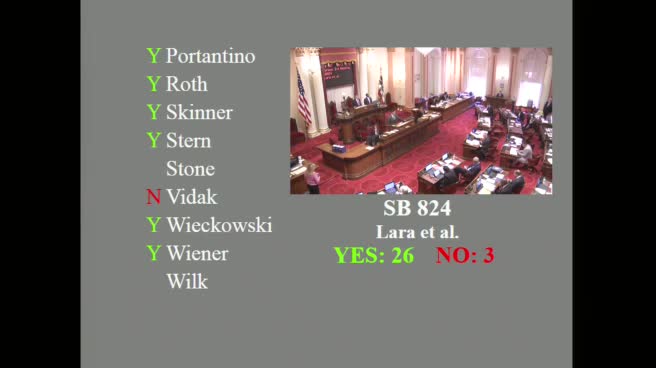 10MIN
Senate Floor
 1H
Senate Standing Committee on Labor and Industrial Relations
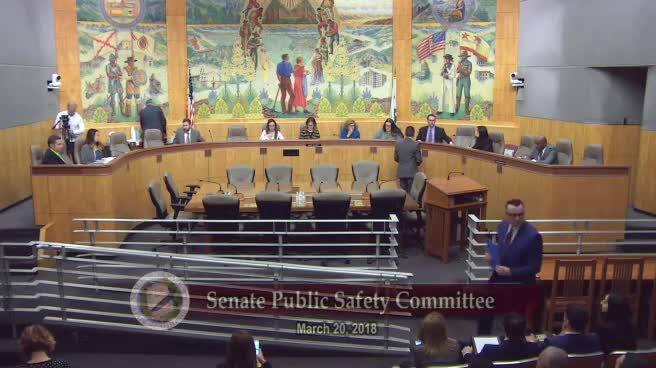 1H