SB 973: Alcoholic beverages: annual license fees: surcharge: distilled spirits manufacturers: free or discounted rides.
- Session Year: 2017-2018
- House: Senate
- Latest Version Date: 2018-09-22
(1)Existing law, the Alcoholic Beverage Control Act, which is administered by the Department of Alcoholic Beverage Control, regulates the application, issuance, and suspension of alcoholic beverage licenses. Existing law prescribes the annual fees to be charged for each type of license. Existing law requires the department to collect an annual surcharge of $5 in addition to these fees, for deposit in the Motor Vehicle Account in the State Transportation Fund, to be used for the Department of the California Highway Patrols Designated Driver Program upon appropriation.
This bill would increase this surcharge to $10 and would require the Department of California Highway Patrol to prioritize the expenditure of funds received from the imposition of the surcharge for the California Highway Patrols Designated Driver Programs outreach and education activities in, and adjacent to, individual events or venues, as specified.
(2)Existing law, the Alcoholic Beverage Control Act, prohibits a licensee from giving a premium, gift, or free goods in connection with the sale and distribution of any alcoholic beverage, except as provided. Existing law authorizes a beer manufacturer, as defined, to provide consumers free or discounted rides, as specified, for the purpose of furthering public safety, but prohibits the beer manufacturer from conditioning a free or discounted ride upon the purchase of an alcoholic beverage. Existing law prohibits a beer and wine wholesaler from directly or indirectly underwriting, sharing in, or contributing to, the costs of free or discounted rides or from serving as an agent of a beer manufacturer to provide free or discounted rides to consumers. Unless otherwise specified, a violation of the act is a misdemeanor.
This bill would also authorize a distilled spirits manufacturer, as defined, to provide consumers free or discounted rides, as specified, for the purpose of furthering public safety, and would prohibit the distilled spirits manufacturer from conditioning a free or discounted ride upon the purchase of an alcoholic beverage. The bill would prohibit a distilled spirits importer general, as described, from directly or indirectly underwriting, sharing in, or contributing to, the costs of free or discounted rides or from serving as an agent of a distilled spirits manufacturer to provide free or discounted rides to consumers.
By expanding the scope of an existing crime, the bill would impose a state-mandated local program.
The California Constitution requires the state to reimburse local agencies and school districts for certain costs mandated by the state. Statutory provisions establish procedures for making that reimbursement.
This bill would provide that no reimbursement is required by this act for a specified reason.
This bill would incorporate additional changes to Section 25600 of the Business and Professions Code proposed by AB 3264 to be operative only if this bill and AB 3264 are enacted and this bill is enacted last.
(1)Existing law, the Alcoholic Beverage Control Act, which is administered by the Department of Alcoholic Beverage Control, regulates the application, issuance, and suspension of alcoholic beverage licenses. Existing law prescribes the annual fees to be charged for each type of license. Existing law requires the department to collect an annual surcharge of $5 in addition to these fees, for deposit in the Motor Vehicle Account in the State Transportation Fund, to be used for the Department of the California Highway Patrols Designated Driver Program upon appropriation.
This bill would increase this fee to $10. surcharge to $10 and would require the Department of California Highway Patrol to prioritize the expenditure of funds received from the imposition of the surcharge for the California Highway Patrols Designated Driver Programs outreach and education activities in, and adjacent to, individual events or venues, as specified.
(2)Existing law, the Alcoholic Beverage Control Act, prohibits a licensee from giving a premium, gift, or free goods in connection with the sale and distribution of any alcoholic beverage, except as provided. Existing law authorizes a beer manufacturer, as defined, to provide consumers free or discounted rides, as specified, for the purpose of furthering public safety, but prohibits the beer manufacturer from conditioning a free or discounted ride upon the purchase of an alcoholic beverage. Existing law prohibits a beer and wine wholesaler from directly or indirectly underwriting, sharing in, or contributing to, the costs of free or discounted rides or from serving as an agent of a beer manufacturer to provide free or discounted rides to consumers. Unless otherwise specified, a violation of the act is a misdemeanor.
This bill would also authorize a distilled spirits manufacturer, as defined, to provide consumers free or discounted rides, as specified, for the purpose of furthering public safety, and would prohibit the distilled spirits manufacturer from conditioning a free or discounted ride upon the purchase of an alcoholic beverage. The bill would prohibit a distilled spirits importer general, as described, from directly or indirectly underwriting, sharing in, or contributing to, the costs of free or discounted rides or from serving as an agent of a distilled spirits manufacturer to provide free or discounted rides to consumers.
By expanding the scope of an existing crime, the bill would impose a state-mandated local program.
The California Constitution requires the state to reimburse local agencies and school districts for certain costs mandated by the state. Statutory provisions establish procedures for making that reimbursement.
This bill would provide that no reimbursement is required by this act for a specified reason.
(1)Existing law, the Alcoholic Beverage Control Act, which is administered by the Department of Alcoholic Beverage Control, regulates the application, issuance, and suspension of alcoholic beverage licenses. Existing law prescribes the annual fees to be charged for each type of license. Existing law requires the department to collect an annual surcharge of $5 in addition to these fees, for deposit in the Motor Vehicle Account in the State Transportation Fund, to be used for the Department of the California Highway Patrols Designated Driver Program upon appropriation.
This bill would increase this fee to $10.
(2)Existing law, the Alcoholic Beverage Control Act, prohibits a licensee from giving a premium, gift, or free goods in connection with the sale and distribution of any alcoholic beverage, except as provided. Existing law authorizes a beer manufacturer, as defined, to provide consumers free or discounted rides, as specified, for the purpose of furthering public safety, but prohibits the beer manufacturer from conditioning a free or discounted ride upon the purchase of an alcoholic beverage. Existing law prohibits a beer and wine wholesaler from directly or indirectly underwriting, sharing in, or contributing to, the costs of free or discounted rides or from serving as an agent of a beer manufacturer to provide free or discounted rides to consumers. Unless otherwise specified, a violation of the act is a misdemeanor.
This bill would also authorize a distilled spirits manufacturer, as defined, to provide consumers free or discounted rides, as specified, for the purpose of furthering public safety, and would prohibit the distilled spirits manufacturer from conditioning a free or discounted ride upon the purchase of an alcoholic beverage. The bill would prohibit a distilled spirits importer general, as described, from directly or indirectly underwriting, sharing in, or contributing to, the costs of free or discounted rides or from serving as an agent of a distilled spirits manufacturer to provide free or discounted rides to consumers.
By expanding the scope of an existing crime, the bill would impose a state-mandated local program.
The California Constitution requires the state to reimburse local agencies and school districts for certain costs mandated by the state. Statutory provisions establish procedures for making that reimbursement.
This bill would provide that no reimbursement is required by this act for a specified reason.
Existing law, the Alcoholic Beverage Control Act, which is administered by the Department of Alcoholic Beverage Control, regulates the application, issuance, and suspension of alcoholic beverage licenses. Existing law prescribes the annual fees to be charged for each type of license. Existing law requires the department to collect an annual surcharge of $5 in addition to these fees, for deposit in the Motor Vehicle Account in the State Transportation Fund, to be used for the Department of the California Highway Patrols Designated Driver Program upon appropriation.
This bill would increase this fee to $10.
(a)In addition to the annual fees provided for in Section 23320, the department shall collect a surcharge of ten dollars ($10).
(b)(1)All money collected from the surcharge described in subdivision (a) shall be deposited in the Motor Vehicle Account in the State Transportation Fund, and shall be used for the Department of the California Highway Patrols Designated Driver Program, when appropriated to the Department of the California Highway Patrol for that purpose.
(2)The Department of California Highway Patrol shall prioritize the expenditure of funds received pursuant to this subdivision for the Designated Driver Programs outreach and education activities in, and adjacent to, individual events or venues, including, but not limited to, stadiums, parks, entertainment complexes, and arenas.
SEC. 2.Section 25600 of the Business and Professions Code is amended to read:25600.(a)(1)No licensee shall, directly or indirectly, give any premium, gift, or free goods in connection with the sale or distribution of any alcoholic beverage, except as provided by rules that shall be adopted by the department to implement this section or as authorized by this division.
(2)(A)Notwithstanding paragraph (1), for purposes of this section, a refund to, or exchange of products for, a dissatisfied consumer by a licensee authorized to sell to consumers shall not be deemed a premium, gift, or free goods given in connection with the sale or distribution of an alcoholic beverage.
(B)A winegrower may advertise or otherwise offer consumers a guarantee of product satisfaction only in newsletters or other publications of the winegrower or at the winegrowers premises. A winegrower may refund to a dissatisfied consumer the entire purchase price of wine produced by that winegrower and sold to that consumer, regardless of where the wine was purchased.
(b)(1)Except as provided in paragraph (2), no rule of the department may permit a licensee to give any premium, gift, or free goods of greater than inconsequential value in connection with the sale or distribution of beer. With respect to beer, premiums, gifts, or free goods, including advertising specialties that have no significant utilitarian value other than advertising, shall be deemed to have greater than inconsequential value if they cost more than twenty-five cents ($0.25) per unit, or cost more than fifteen dollars ($15) in the aggregate for all those items given by a single supplier to a single retail premises per calendar year.
(2)(A)No rule of the department may impose a dollar limit for consumer advertising specialties furnished by a beer manufacturer to the general public other than three dollars ($3) per unit original cost to the beer manufacturer who purchased it.
(B)With respect to beer, a beer manufacturer may give consumer advertising specialties to the general public that do not exceed three dollars ($3) per unit original cost to the beer manufacturer who purchased it. For purposes of this paragraph, beer manufacturer includes a holder of a beer manufacturers license, a holder of an out-of-state beer manufacturers certificate, an out-of-state vendor that holds a certificate of compliance, or a holder of a beer and wine importers general license. A licensee authorized to give consumer advertising specialties pursuant to this paragraph shall not be precluded from doing so on the basis of holding any other type of alcoholic beverage license.
(C)A beer manufacturer, as defined in subparagraph (B) of paragraph (2) shall not require a beer wholesaler to fund the purchase of consumer advertising specialties that beer manufacturers are permitted to give under paragraph (2).
(D)Consumer advertising specialties furnished by a beer manufacturer are intended only for adults of legal drinking age. Coin banks, toys, balloons, magic tricks, miniature bottles or cans, confections, dolls, or other items that appeal to minors or underage drinkers may not be used in connection with the merchandising of beer.
(c)With respect to distilled spirits and wines, a licensee may furnish, give, rent, loan, or sell advertising specialties to a retailer, provided those items bear conspicuous advertising required of a sign and the total value of all retailer advertising specialties furnished by a supplier, directly or indirectly, to a retailer do not exceed fifty dollars ($50) per brand in any one calendar year per retail premises. The value of a retailer advertising specialty is the actual cost of that item to the supplier who initially purchased it, excluding transportation and installation costs. The furnishing or giving of any retailer advertising specialty shall not be conditioned upon the purchase of the suppliers product. Retail advertising specialties given or furnished free of charge may not be sold by the retail licensee. No rule of the department may impose a dollar limit for consumer advertising specialties furnished by a distilled spirits supplier to a retailer or to the general public of less than five dollars ($5) per unit original cost to the supplier who purchased it.
(d)(1)Notwithstanding any other provision of this division, a beer manufacturer or distilled spirits manufacturer may provide directly to consumers free or discounted rides through taxicabs, transportation network companies, or any other ride service for the purpose of furthering public safety. The free or discounted rides may be provided by vouchers, codes, or any other method to deliver the free or discounted ride. A free or discounted ride, or the provision of a voucher, code, or other method of delivery, shall not be conditioned upon the purchase of an alcoholic beverage. A beer and wine wholesaler or distilled spirits importer general that holds a wholesalers or retailers license only as an additional license shall not directly or indirectly underwrite, share in, or contribute to, the costs of free or discounted rides or serve as an agent of a beer manufacturer or distilled spirits manufacturer to provide free or discounted rides to consumers. Nothing in this provision authorizes a beer manufacturer or distilled spirits manufacturer to provide a gift or anything of value directly or indirectly to a retail licensee.
(2)For purposes of this section:
(A)Beer manufacturer has the same meaning as defined in subparagraph (B) of paragraph (2) of subdivision (b).
(B)Distilled spirits manufacturer means a distilled spirits manufacturer, holder of a distilled spirits rectifiers general license, distilled spirits manufacturers agent, brandy manufacturer, holder of an out-of-state distilled spirits shippers certificate, holder of a distilled spirits importer generals license, or craft distiller.
SEC. 2.5.Section 25600 of the Business and Professions Code is amended to read:25600.(a)(1)No licensee shall, directly or indirectly, give any premium, gift, or free goods in connection with the sale or distribution of any alcoholic beverage, except as provided by rules that shall be adopted by the department to implement this section or as authorized by this division.
(2)(A)Notwithstanding paragraph (1), for purposes of this section, a refund to, or exchange of products for, a dissatisfied consumer by a licensee authorized to sell to consumers shall not be deemed a premium, gift, or free goods given in connection with the sale or distribution of an alcoholic beverage.
(B)A winegrower may advertise or otherwise offer consumers a guarantee of product satisfaction only in newsletters or other publications of the winegrower or at the winegrowers premises. A winegrower may refund to a dissatisfied consumer the entire purchase price of wine produced by that winegrower and sold to that consumer, regardless of where the wine was purchased.
(b)(1)Except as provided in paragraph (2), no rule of the department may permit a licensee to give any premium, gift, or free goods of greater than inconsequential value in connection with the sale or distribution of beer. With respect to beer, premiums, gifts, or free goods, including advertising specialties that have no significant utilitarian value other than advertising, shall be deemed to have greater than inconsequential value if they cost more than twenty-five cents ($0.25) per unit, or cost more than fifteen dollars ($15) in the aggregate for all those items given by a single supplier to a single retail premises per calendar year.
(2)(A)No rule of the department may impose a dollar limit for consumer advertising specialties furnished by a beer manufacturer to the general public other than three dollars ($3) per unit original cost to the beer manufacturer who purchased it.
(B)With respect to beer, a beer manufacturer may give consumer advertising specialties to the general public that do not exceed three dollars ($3) per unit original cost to the beer manufacturer who purchased it. For purposes of this paragraph, beer manufacturer includes a holder of a beer manufacturers license, a holder of an out-of-state beer manufacturers certificate, an out-of-state vendor that holds a certificate of compliance, or a holder of a beer and wine importers general license. A licensee authorized to give consumer advertising specialties pursuant to this paragraph shall not be precluded from doing so on the basis of holding any other type of alcoholic beverage license.
(C)A beer manufacturer, as defined in subparagraph (B) of paragraph (2) shall not require a beer wholesaler to fund the purchase of consumer advertising specialties that beer manufacturers are permitted to give under paragraph (2).
(D)Consumer advertising specialties furnished by a beer manufacturer are intended only for adults of legal drinking age. Coin banks, toys, balloons, magic tricks, miniature bottles or cans, confections, dolls, or other items that appeal to minors or underage drinkers may not be used in connection with the merchandising of beer.
(c)With respect to distilled spirits and wines, a licensee may furnish, give, rent, loan, or sell advertising specialties to a retailer, provided those items bear conspicuous advertising required of a sign and the total value of all retailer advertising specialties furnished by a supplier, directly or indirectly, to a retailer do not exceed fifty dollars ($50) per brand in any one calendar year per retail premises. The value of a retailer advertising specialty is the actual cost of that item to the supplier who initially purchased it, excluding transportation and installation costs. The furnishing or giving of any retailer advertising specialty shall not be conditioned upon the purchase of the suppliers product. Retail advertising specialties given or furnished free of charge may not be sold by the retail licensee. No rule of the department may impose a dollar limit for consumer advertising specialties furnished by a distilled spirits supplier to a retailer or to the general public of less than five dollars ($5) per unit original cost to the supplier who purchased it. A rule or decision of the department may not approve glassware as an authorized retailer advertising specialty for distilled spirits or wine under this section.
(d)(1)Notwithstanding any other provision of this division, a beer manufacturer or distilled spirits manufacturer may provide directly to consumers free or discounted rides through taxicabs, transportation network companies, or any other ride service for the purpose of furthering public safety. The free or discounted rides may be provided by vouchers, codes, or any other method to deliver the free or discounted ride. A free or discounted ride, or the provision of a voucher, code, or other method of delivery, shall not be conditioned upon the purchase of an alcoholic beverage. A beer and wine wholesaler or distilled spirits importer general that holds a wholesalers or retailers license only as an additional license shall not directly or indirectly underwrite, share in, or contribute to, the costs of free or discounted rides or serve as an agent of a beer manufacturer or distilled spirits manufacturer to provide free or discounted rides to consumers. Nothing in this provision authorizes a beer manufacturer or distilled spirits manufacturer to provide a gift or anything of value directly or indirectly to a retail licensee.
(2)For purposes of this section:
(A)Beer manufacturer has the same meaning as defined in subparagraph (B) of paragraph (2) of subdivision (b).
(B)Distilled spirits manufacturer means a distilled spirits manufacturer, holder of a distilled spirits rectifiers general license, distilled spirits manufacturers agent, brandy manufacturer, holder of an out-of-state distilled spirits shippers certificate, holder of a distilled spirits importer generals license, or craft distiller.
(C)Glassware means a single-service glass container or nonglass container capable of holding no more than 23 ounces of liquid volume or a decanter, chalice, infusion jar, or similar container of any size and made of any material.
SEC. 3.Section 2.5 of this bill incorporates amendments to Section 25600 of the Business and Professions Code proposed by both this bill and Assembly Bill 3264. That section of this bill shall only become operative if (1) both bills are enacted and become effective on or before January 1, 2019, (2) each bill amends Section 25600 of the Business and Professions Code, and (3) this bill is enacted after Assembly Bill 3264, in which case Section 2 of this bill shall not become operative.
SEC. 4.No reimbursement is required by this act pursuant to Section 6 of Article XIIIB of the California Constitution because the only costs that may be incurred by a local agency or school district will be incurred because this act creates a new crime or infraction, eliminates a crime or infraction, or changes the penalty for a crime or infraction, within the meaning of Section 17556 of the Government Code, or changes the definition of a crime within the meaning of Section 6 of Article XIIIB of the California Constitution.
(a)In addition to the annual fees provided for in Section 23320, the department shall collect a surcharge of ten dollars ($10).
(b)(1)All money collected from the surcharge described in subdivision (a) shall be deposited in the Motor Vehicle Account in the State Transportation Fund, and shall be used for the Department of the California Highway Patrols Designated Driver Program, when appropriated to the Department of the California Highway Patrol for that purpose.
(2)The Department of California Highway Patrol shall prioritize the expenditure of funds received pursuant to this subdivision for the Designated Driver Programs outreach and education activities in, and adjacent to, individual events or venues, including, but not limited to, stadiums, parks, entertainment complexes, and arenas.
SEC. 2.Section 25600 of the Business and Professions Code is amended to read:25600.(a)(1)No licensee shall, directly or indirectly, give any premium, gift, or free goods in connection with the sale or distribution of any alcoholic beverage, except as provided by rules that shall be adopted by the department to implement this section or as authorized by this division.
(2)(A)Notwithstanding paragraph (1), for purposes of this section, a refund to, or exchange of products for, a dissatisfied consumer by a licensee authorized to sell to consumers shall not be deemed a premium, gift, or free goods given in connection with the sale or distribution of an alcoholic beverage.
(B)A winegrower may advertise or otherwise offer consumers a guarantee of product satisfaction only in newsletters or other publications of the winegrower or at the winegrowers premises. A winegrower may refund to a dissatisfied consumer the entire purchase price of wine produced by that winegrower and sold to that consumer, regardless of where the wine was purchased.
(b)(1)Except as provided in paragraph (2), no rule of the department may permit a licensee to give any premium, gift, or free goods of greater than inconsequential value in connection with the sale or distribution of beer. With respect to beer, premiums, gifts, or free goods, including advertising specialties that have no significant utilitarian value other than advertising, shall be deemed to have greater than inconsequential value if they cost more than twenty-five cents ($0.25) per unit, or cost more than fifteen dollars ($15) in the aggregate for all those items given by a single supplier to a single retail premises per calendar year.
(2)(A)No rule of the department may impose a dollar limit for consumer advertising specialties furnished by a beer manufacturer to the general public other than three dollars ($3) per unit original cost to the beer manufacturer who purchased it.
(B)With respect to beer, a beer manufacturer may give consumer advertising specialties to the general public that do not exceed three dollars ($3) per unit original cost to the beer manufacturer who purchased it. For purposes of this paragraph, beer manufacturer includes a holder of a beer manufacturers license, a holder of an out-of-state beer manufacturers certificate, an out-of-state vendor that holds a certificate of compliance, or a holder of a beer and wine importers general license. A licensee authorized to give consumer advertising specialties pursuant to this paragraph shall not be precluded from doing so on the basis of holding any other type of alcoholic beverage license.
(C)A beer manufacturer, as defined in subparagraph (B) of paragraph (2) shall not require a beer wholesaler to fund the purchase of consumer advertising specialties that beer manufacturers are permitted to give under paragraph (2).
(D)Consumer advertising specialties furnished by a beer manufacturer are intended only for adults of legal drinking age. Coin banks, toys, balloons, magic tricks, miniature bottles or cans, confections, dolls, or other items that appeal to minors or underage drinkers may not be used in connection with the merchandising of beer.
(c)With respect to distilled spirits and wines, a licensee may furnish, give, rent, loan, or sell advertising specialties to a retailer, provided those items bear conspicuous advertising required of a sign and the total value of all retailer advertising specialties furnished by a supplier, directly or indirectly, to a retailer do not exceed fifty dollars ($50) per brand in any one calendar year per retail premises. The value of a retailer advertising specialty is the actual cost of that item to the supplier who initially purchased it, excluding transportation and installation costs. The furnishing or giving of any retailer advertising specialty shall not be conditioned upon the purchase of the suppliers product. Retail advertising specialties given or furnished free of charge may not be sold by the retail licensee. No rule of the department may impose a dollar limit for consumer advertising specialties furnished by a distilled spirits supplier to a retailer or to the general public of less than five dollars ($5) per unit original cost to the supplier who purchased it.
(d)(1)Notwithstanding any other provision of this division, a beer manufacturer or distilled spirits manufacturer may provide directly to consumers free or discounted rides through taxicabs, transportation network companies, or any other ride service for the purpose of furthering public safety. The free or discounted rides may be provided by vouchers, codes, or any other method to deliver the free or discounted ride. A free or discounted ride, or the provision of a voucher, code, or other method of delivery, shall not be conditioned upon the purchase of an alcoholic beverage. A beer and wine wholesaler or distilled spirits importer general that holds a wholesalers or retailers license only as an additional license shall not directly or indirectly underwrite, share in, or contribute to, the costs of free or discounted rides or serve as an agent of a beer manufacturer or distilled spirits manufacturer to provide free or discounted rides to consumers. Nothing in this provision authorizes a beer manufacturer or distilled spirits manufacturer to provide a gift or anything of value directly or indirectly to a retail licensee.
(2)For purposes of this section:
(A)Beer manufacturer has the same meaning as defined in subparagraph (B) of paragraph (2) of subdivision (b).
(B)Distilled spirits manufacturer means a distilled spirits manufacturer, holder of a distilled spirits rectifiers general license, distilled spirits manufacturers agent, brandy manufacturer, holder of an out-of-state distilled spirits shippers certificate, holder of a distilled spirits importer generals license, or craft distiller.
SEC. 2.5.Section 25600 of the Business and Professions Code is amended to read:25600.(a)(1)No licensee shall, directly or indirectly, give any premium, gift, or free goods in connection with the sale or distribution of any alcoholic beverage, except as provided by rules that shall be adopted by the department to implement this section or as authorized by this division.
(2)(A)Notwithstanding paragraph (1), for purposes of this section, a refund to, or exchange of products for, a dissatisfied consumer by a licensee authorized to sell to consumers shall not be deemed a premium, gift, or free goods given in connection with the sale or distribution of an alcoholic beverage.
(B)A winegrower may advertise or otherwise offer consumers a guarantee of product satisfaction only in newsletters or other publications of the winegrower or at the winegrowers premises. A winegrower may refund to a dissatisfied consumer the entire purchase price of wine produced by that winegrower and sold to that consumer, regardless of where the wine was purchased.
(b)(1)Except as provided in paragraph (2), no rule of the department may permit a licensee to give any premium, gift, or free goods of greater than inconsequential value in connection with the sale or distribution of beer. With respect to beer, premiums, gifts, or free goods, including advertising specialties that have no significant utilitarian value other than advertising, shall be deemed to have greater than inconsequential value if they cost more than twenty-five cents ($0.25) per unit, or cost more than fifteen dollars ($15) in the aggregate for all those items given by a single supplier to a single retail premises per calendar year.
(2)(A)No rule of the department may impose a dollar limit for consumer advertising specialties furnished by a beer manufacturer to the general public other than three dollars ($3) per unit original cost to the beer manufacturer who purchased it.
(B)With respect to beer, a beer manufacturer may give consumer advertising specialties to the general public that do not exceed three dollars ($3) per unit original cost to the beer manufacturer who purchased it. For purposes of this paragraph, beer manufacturer includes a holder of a beer manufacturers license, a holder of an out-of-state beer manufacturers certificate, an out-of-state vendor that holds a certificate of compliance, or a holder of a beer and wine importers general license. A licensee authorized to give consumer advertising specialties pursuant to this paragraph shall not be precluded from doing so on the basis of holding any other type of alcoholic beverage license.
(C)A beer manufacturer, as defined in subparagraph (B) of paragraph (2) shall not require a beer wholesaler to fund the purchase of consumer advertising specialties that beer manufacturers are permitted to give under paragraph (2).
(D)Consumer advertising specialties furnished by a beer manufacturer are intended only for adults of legal drinking age. Coin banks, toys, balloons, magic tricks, miniature bottles or cans, confections, dolls, or other items that appeal to minors or underage drinkers may not be used in connection with the merchandising of beer.
(c)With respect to distilled spirits and wines, a licensee may furnish, give, rent, loan, or sell advertising specialties to a retailer, provided those items bear conspicuous advertising required of a sign and the total value of all retailer advertising specialties furnished by a supplier, directly or indirectly, to a retailer do not exceed fifty dollars ($50) per brand in any one calendar year per retail premises. The value of a retailer advertising specialty is the actual cost of that item to the supplier who initially purchased it, excluding transportation and installation costs. The furnishing or giving of any retailer advertising specialty shall not be conditioned upon the purchase of the suppliers product. Retail advertising specialties given or furnished free of charge may not be sold by the retail licensee. No rule of the department may impose a dollar limit for consumer advertising specialties furnished by a distilled spirits supplier to a retailer or to the general public of less than five dollars ($5) per unit original cost to the supplier who purchased it. A rule or decision of the department may not approve glassware as an authorized retailer advertising specialty for distilled spirits or wine under this section.
(d)(1)Notwithstanding any other provision of this division, a beer manufacturer or distilled spirits manufacturer may provide directly to consumers free or discounted rides through taxicabs, transportation network companies, or any other ride service for the purpose of furthering public safety. The free or discounted rides may be provided by vouchers, codes, or any other method to deliver the free or discounted ride. A free or discounted ride, or the provision of a voucher, code, or other method of delivery, shall not be conditioned upon the purchase of an alcoholic beverage. A beer and wine wholesaler or distilled spirits importer general that holds a wholesalers or retailers license only as an additional license shall not directly or indirectly underwrite, share in, or contribute to, the costs of free or discounted rides or serve as an agent of a beer manufacturer or distilled spirits manufacturer to provide free or discounted rides to consumers. Nothing in this provision authorizes a beer manufacturer or distilled spirits manufacturer to provide a gift or anything of value directly or indirectly to a retail licensee. For purposes of this subdivision, beer manufacturer has the same meaning as defined in subparagraph (B) of paragraph (2) of subdivision (b).
(2)For purposes of this section:
(A)Beer manufacturer has the same meaning as defined in subparagraph (B) of paragraph (2) of subdivision (b).
(B)Distilled spirits manufacturer means a distilled spirits manufacturer, holder of a distilled spirits rectifiers general license, distilled spirits manufacturers agent, brandy manufacturer, holder of an out-of-state distilled spirits shippers certificate, holder of a distilled spirits importer generals license, or craft distiller.
(C)Glassware means a single-service glass container or nonglass container capable of holding no more than 23 ounces of liquid volume or a decanter, chalice, infusion jar, or similar container of any size and made of any material.
SEC. 3.Section 2.5 of this bill incorporates amendments to Section 25600 of the Business and Professions Code proposed by both this bill and Assembly Bill 3264. That section of this bill shall only become operative if (1) both bills are enacted and become effective on or before January 1, 2019, (2) each bill amends Section 25600 of the Business and Professions Code, and (3) this bill is enacted after Assembly Bill 3264, in which case Section 2 of this bill shall not become operative.
SEC. 3.SEC. 4.No reimbursement is required by this act pursuant to Section 6 of Article XIIIB of the California Constitution because the only costs that may be incurred by a local agency or school district will be incurred because this act creates a new crime or infraction, eliminates a crime or infraction, or changes the penalty for a crime or infraction, within the meaning of Section 17556 of the Government Code, or changes the definition of a crime within the meaning of Section 6 of Article XIIIB of the California Constitution.
(a)In addition to the annual fees provided for in Section 23320, the department shall collect a surcharge of ten dollars ($10).
(b)(1)All money collected from the surcharge described in subdivision (a) shall be deposited in the Motor Vehicle Account in the State Transportation Fund, and shall be used for the Department of the California Highway Patrols Designated Driver Program, when appropriated to the Department of the California Highway Patrol for that purpose.
(2)The Department of California Highway Patrol shall prioritize the expenditure of funds received pursuant to this subdivision for the Designated Driver Programs outreach and education activities in, and adjacent to, individual events or venues, including, but not limited to, stadiums, parks, entertainment complexes, and arenas.
SEC. 2.Section 25600 of the Business and Professions Code is amended to read:25600.(a)(1)No licensee shall, directly or indirectly, give any premium, gift, or free goods in connection with the sale or distribution of any alcoholic beverage, except as provided by rules that shall be adopted by the department to implement this section or as authorized by this division.
(2)(A)Notwithstanding paragraph (1), for purposes of this section, a refund to, or exchange of products for, a dissatisfied consumer by a licensee authorized to sell to consumers shall not be deemed a premium, gift, or free goods given in connection with the sale or distribution of an alcoholic beverage.
(B)A winegrower may advertise or otherwise offer consumers a guarantee of product satisfaction only in newsletters or other publications of the winegrower or at the winegrowers premises. A winegrower may refund to a dissatisfied consumer the entire purchase price of wine produced by that winegrower and sold to that consumer, regardless of where the wine was purchased.
(b)(1)Except as provided in paragraph (2), no rule of the department may permit a licensee to give any premium, gift, or free goods of greater than inconsequential value in connection with the sale or distribution of beer. With respect to beer, premiums, gifts, or free goods, including advertising specialties that have no significant utilitarian value other than advertising, shall be deemed to have greater than inconsequential value if they cost more than twenty-five cents ($0.25) per unit, or cost more than fifteen dollars ($15) in the aggregate for all those items given by a single supplier to a single retail premises per calendar year.
(2)(A)No rule of the department may impose a dollar limit for consumer advertising specialties furnished by a beer manufacturer to the general public other than three dollars ($3) per unit original cost to the beer manufacturer who purchased it.
(B)With respect to beer, a beer manufacturer may give consumer advertising specialties to the general public that do not exceed three dollars ($3) per unit original cost to the beer manufacturer who purchased it. For purposes of this paragraph, beer manufacturer includes a holder of a beer manufacturers license, a holder of an out-of-state beer manufacturers certificate, an out-of-state vendor that holds a certificate of compliance, or a holder of a beer and wine importers general license. A licensee authorized to give consumer advertising specialties pursuant to this paragraph shall not be precluded from doing so on the basis of holding any other type of alcoholic beverage license.
(C)A beer manufacturer, as defined in subparagraph (B) of paragraph (2) shall not require a beer wholesaler to fund the purchase of consumer advertising specialties that beer manufacturers are permitted to give under paragraph (2).
(D)Consumer advertising specialties furnished by a beer manufacturer are intended only for adults of legal drinking age. Coin banks, toys, balloons, magic tricks, miniature bottles or cans, confections, dolls, or other items that appeal to minors or underage drinkers may not be used in connection with the merchandising of beer.
(c)With respect to distilled spirits and wines, a licensee may furnish, give, rent, loan, or sell advertising specialties to a retailer, provided those items bear conspicuous advertising required of a sign and the total value of all retailer advertising specialties furnished by a supplier, directly or indirectly, to a retailer do not exceed fifty dollars ($50) per brand in any one calendar year per retail premises. The value of a retailer advertising specialty is the actual cost of that item to the supplier who initially purchased it, excluding transportation and installation costs. The furnishing or giving of any retailer advertising specialty shall not be conditioned upon the purchase of the suppliers product. Retail advertising specialties given or furnished free of charge may not be sold by the retail licensee. No rule of the department may impose a dollar limit for consumer advertising specialties furnished by a distilled spirits supplier to a retailer or to the general public of less than five dollars ($5) per unit original cost to the supplier who purchased it.
(d)(1)Notwithstanding any other provision of this division, a beer manufacturer or distilled spirits manufacturer may provide directly to consumers free or discounted rides through taxicabs, transportation network companies, or any other ride service for the purpose of furthering public safety. The free or discounted rides may be provided by vouchers, codes, or any other method to deliver the free or discounted ride. A free or discounted ride, or the provision of a voucher, code, or other method of delivery, shall not be conditioned upon the purchase of an alcoholic beverage. A beer and wine wholesaler or distilled spirits importer general that holds a wholesalers or retailers license only as an additional license shall not directly or indirectly underwrite, share in, or contribute to, the costs of free or discounted rides or serve as an agent of a beer manufacturer or distilled spirits manufacturer to provide free or discounted rides to consumers. Nothing in this provision authorizes a beer manufacturer or distilled spirits manufacturer to provide a gift or anything of value directly or indirectly to a retail licensee.
(2)For purposes of this section:
(A)Beer manufacturer has the same meaning as defined in subparagraph (B) of paragraph (2) of subdivision (b).
(B)Distilled spirits manufacturer means a distilled spirits manufacturer, holder of a distilled spirits rectifiers general license, distilled spirits manufacturers agent, brandy manufacturer, holder of an out-of-state distilled spirits shippers certificate, holder of a distilled spirits importer generals license, or craft distiller.
SEC. 3.No reimbursement is required by this act pursuant to Section 6 of Article XIIIB of the California Constitution because the only costs that may be incurred by a local agency or school district will be incurred because this act creates a new crime or infraction, eliminates a crime or infraction, or changes the penalty for a crime or infraction, within the meaning of Section 17556 of the Government Code, or changes the definition of a crime within the meaning of Section 6 of Article XIIIB of the California Constitution.
(a)In addition to the annual fees provided for in Section 23320, the department shall collect a surcharge of ten dollars ($10).
(b)All money collected from the surcharge described in subdivision (a) shall be deposited in the Motor Vehicle Account in the State Transportation Fund, and shall be used for the Department of the California Highway Patrols Designated Driver Program, when appropriated to the Department of the California Highway Patrol for that purpose.
SEC. 2.Section 25600 of the Business and Professions Code is amended to read:25600.(a)(1)No licensee shall, directly or indirectly, give any premium, gift, or free goods in connection with the sale or distribution of any alcoholic beverage, except as provided by rules that shall be adopted by the department to implement this section or as authorized by this division.
(2)(A)Notwithstanding paragraph (1), for purposes of this section, a refund to, or exchange of products for, a dissatisfied consumer by a licensee authorized to sell to consumers shall not be deemed a premium, gift, or free goods given in connection with the sale or distribution of an alcoholic beverage.
(B)A winegrower may advertise or otherwise offer consumers a guarantee of product satisfaction only in newsletters or other publications of the winegrower or at the winegrowers premises. A winegrower may refund to a dissatisfied consumer the entire purchase price of wine produced by that winegrower and sold to that consumer, regardless of where the wine was purchased.
(b)(1)Except as provided in paragraph (2), no rule of the department may permit a licensee to give any premium, gift, or free goods of greater than inconsequential value in connection with the sale or distribution of beer. With respect to beer, premiums, gifts, or free goods, including advertising specialties that have no significant utilitarian value other than advertising, shall be deemed to have greater than inconsequential value if they cost more than twenty-five cents ($0.25) per unit, or cost more than fifteen dollars ($15) in the aggregate for all those items given by a single supplier to a single retail premises per calendar year.
(2)(A)No rule of the department may impose a dollar limit for consumer advertising specialties furnished by a beer manufacturer to the general public other than three dollars ($3) per unit original cost to the beer manufacturer who purchased it.
(B)With respect to beer, a beer manufacturer may give consumer advertising specialties to the general public that do not exceed three dollars ($3) per unit original cost to the beer manufacturer who purchased it. For purposes of this paragraph, beer manufacturer includes a holder of a beer manufacturers license, a holder of an out-of-state beer manufacturers certificate, an out-of-state vendor that holds a certificate of compliance, or a holder of a beer and wine importers general license. A licensee authorized to give consumer advertising specialties pursuant to this paragraph shall not be precluded from doing so on the basis of holding any other type of alcoholic beverage license.
(C)A beer manufacturer, as defined in subparagraph (B) of paragraph (2) shall not require a beer wholesaler to fund the purchase of consumer advertising specialties that beer manufacturers are permitted to give under paragraph (2).
(D)Consumer advertising specialties furnished by a beer manufacturer are intended only for adults of legal drinking age. Coin banks, toys, balloons, magic tricks, miniature bottles or cans, confections, dolls, or other items that appeal to minors or underage drinkers may not be used in connection with the merchandising of beer.
(c)With respect to distilled spirits and wines, a licensee may furnish, give, rent, loan, or sell advertising specialties to a retailer, provided those items bear conspicuous advertising required of a sign and the total value of all retailer advertising specialties furnished by a supplier, directly or indirectly, to a retailer do not exceed fifty dollars ($50) per brand in any one calendar year per retail premises. The value of a retailer advertising specialty is the actual cost of that item to the supplier who initially purchased it, excluding transportation and installation costs. The furnishing or giving of any retailer advertising specialty shall not be conditioned upon the purchase of the suppliers product. Retail advertising specialties given or furnished free of charge may not be sold by the retail licensee. No rule of the department may impose a dollar limit for consumer advertising specialties furnished by a distilled spirits supplier to a retailer or to the general public of less than five dollars ($5) per unit original cost to the supplier who purchased it.
(d)(1)Notwithstanding any other provision of this division, a beer manufacturer or distilled spirits manufacturer may provide directly to consumers free or discounted rides through taxicabs, transportation network companies, or any other ride service for the purpose of furthering public safety. The free or discounted rides may be provided by vouchers, codes, or any other method to deliver the free or discounted ride. A free or discounted ride, or the provision of a voucher, code, or other method of delivery, shall not be conditioned upon the purchase of an alcoholic beverage. A beer and wine wholesaler or distilled spirits importer general that holds a wholesalers or retailers license only as an additional license shall not directly or indirectly underwrite, share in, or contribute to, the costs of free or discounted rides or serve as an agent of a beer manufacturer or distilled spirits manufacturer to provide free or discounted rides to consumers. Nothing in this provision authorizes a beer manufacturer or distilled spirits manufacturer to provide a gift or anything of value directly or indirectly to a retail licensee. For purposes of this subdivision, beer manufacturer has the same meaning as defined in subparagraph (B) of paragraph (2) of subdivision (b).
(2)For purposes of this section:
(A)Beer manufacturer has the same meaning as defined in subparagraph (B) of paragraph (2) of subdivision (b).
(B)Distilled spirits manufacturer means a distilled spirits manufacturer, holder of a distilled spirits rectifiers general license, distilled spirits manufacturers agent, brandy manufacturer, holder of an out-of-state distilled spirits shippers certificate, holder of a distilled spirits importer generals license, or craft distiller.
SEC. 3.No reimbursement is required by this act pursuant to Section 6 of Article XIIIB of the California Constitution because the only costs that may be incurred by a local agency or school district will be incurred because this act creates a new crime or infraction, eliminates a crime or infraction, or changes the penalty for a crime or infraction, within the meaning of Section 17556 of the Government Code, or changes the definition of a crime within the meaning of Section 6 of Article XIIIB of the California Constitution.
(a)In addition to the annual fees provided for in Section 23320, the department shall collect a surcharge of ten dollars ($10).
(b)All money collected from the surcharge described in subdivision (a) shall be deposited in the Motor Vehicle Account in the State Transportation Fund, and shall be used for the Department of the California Highway Patrols Designated Driver Program, when appropriated to the Department of the California Highway Patrol for that purpose.
(a)In addition to the annual fees provided for in Section 23320, the department shall collect a surcharge of five ten dollars ($5). ($10).
(b)All money collected from the surcharge shall be deposited in the Motor Vehicle Account in the State Transportation Fund, and shall be used for the Department of the California Highway Patrols Designated Driver Program, when appropriated to the Department of the California Highway Patrol for that purpose.
|
Date
|
Status
|
|---|---|
| Sep 22, 2018 | Chaptered by Secretary of State. Chapter 689, Statutes of 2018. |
| Sep 22, 2018 | Approved by the Governor. |
| Sep 10, 2018 | Enrolled and presented to the Governor at 4 p.m. |
| Aug 30, 2018 | Assembly amendments concurred in. (Ayes 38. Noes 1.) Ordered to engrossing and enrolling. |
| Aug 29, 2018 | In Senate. Concurrence in Assembly amendments pending. |
| Aug 29, 2018 | Read third time. Passed. Ordered to the Senate. |
| Aug 24, 2018 | Read third time and amended. |
| Aug 21, 2018 | Read second time. Ordered to third reading. |
| Aug 20, 2018 | Read second time and amended. Ordered to second reading. |
| Aug 16, 2018 | From committee: Do pass as amended. (Ayes 12. Noes 0.) (August 16). |
| Aug 8, 2018 | August 8 set for first hearing. Placed on suspense file. |
| Jun 21, 2018 | From committee: Do pass and re-refer to Com. on APPR. (Ayes 18. Noes 0.) (June 20). Re-referred to Com. on APPR. |
| Jun 14, 2018 | From committee with author's amendments. Read second time and amended. Re-referred to Com. on G.O. |
| Apr 26, 2018 | Referred to Com. on G.O. |
| Apr 23, 2018 | In Assembly. Read first time. Held at Desk. |
| Apr 23, 2018 | Read third time. Passed. (Ayes 36. Noes 2.) Ordered to the Assembly. |
| Apr 17, 2018 | Read second time. Ordered to third reading. |
| Apr 16, 2018 | From committee: Be ordered to second reading pursuant to Senate Rule 28.8. |
| Apr 9, 2018 | Set for hearing April 16. |
| Mar 13, 2018 | From committee: Do pass and re-refer to Com. on APPR. (Ayes 10. Noes 0.) (March 13). Re-referred to Com. on APPR. |
| Mar 5, 2018 | From committee with author's amendments. Read second time and amended. Re-referred to Com. on G.O. |
| Feb 22, 2018 | Set for hearing March 13. |
| Feb 14, 2018 | Referred to Com. on G.O. |
| Feb 2, 2018 | From printer. May be acted upon on or after March 4. |
| Feb 1, 2018 | Introduced. Read first time. To Com. on RLS. for assignment. To print. |
|
Date
|
Description
|
Location
|
Votes
|
|
|---|---|---|---|---|
| Aug 30, 2018 | Unfinished Business SB973 Dodd et al. Concurrence | Senate Floor |
Passed |
|
| Aug 29, 2018 | SB 973 Dodd Senate Third Reading By LACKEY | Assembly Floor |
Passed |
|
| Aug 16, 2018 | Do pass as amended. | Assembly Standing Committee on Appropriations |
Passed |
|
| Jun 20, 2018 | Do pass and be re-referred to the Committee on [Appropriations] | Assembly Standing Committee on Governmental Organization |
Passed |
|
| Apr 23, 2018 | Senate 3rd Reading SB973 Dodd et al. | Senate Floor |
Passed |
|
| Mar 13, 2018 | Do pass, but first be re-referred to the Committee on [Appropriations] | Senate Standing Committee on Governmental Organization |
Passed |
This list shows positions taken on this bill by organizations on the date displayed, which is linked to the original source.
Positions by individuals are not included.
|
Organization
|
Position
|
Date
|
|---|---|---|
| AAA Northern California, Nevada, and Utah | ** Support | Aug 30, 2018 |
| Automobile Club of Southern California | ** Support | Aug 30, 2018 |
| California Association Of Highway Patrolmen | ** Support | Aug 30, 2018 |
| Diageo | ** Support | Jun 19, 2018 |
| Family Wine Makers of California | ** Support | Aug 30, 2018 |
| Mothers Against Drunk Driving | ** Support | Aug 30, 2018 |
Office of Senate Floor Analyses (916) 651-1520 Fax: (916) 327-4478 | SB |
UNFINISHED BUSINESS
Bill No: SB 973
:
SENATE GOVERNMENTAL ORG. COMMITTEE: 10-0, 3/13/18
AYES: Dodd, Bradford, Cannella, Gaines, Galgiani, Glazer, Hill, Lara, Portantino, Vidak
NO VOTE RECORDED: Berryhill, Hueso
SENATE APPROPRIATIONS COMMITTEE: Senate Rule 28.8
SENATE FLOOR: 36-2, 4/23/18
AYES: Allen, Atkins, Bates, Beall, Berryhill, Bradford, Cannella, De León, Dodd, Fuller, Gaines, Galgiani, Glazer, Hernandez, Hertzberg, Hill, Hueso, Jackson, Lara, Leyva, McGuire, Mitchell, Monning, Moorlach, Newman, Nielsen, Pan, Portantino, Roth, Skinner, Stern, Stone, Vidak, Wieckowski, Wiener, Wilk
NOES: Anderson, Nguyen
NO VOTE RECORDED: Morrell
ASSEMBLY FLOOR: 68-0, 8/29/18 - See last page for vote
SUBJECT: Alcoholic beverages: annual license fees: surcharge: distilled spirits manufacturers: free or discounted rides
DIGEST:
This bill increases the annual surcharge that the Department of Alcoholic Beverage Control (ABC) collects from each type of alcoholic beverage licensee for the California Highway Patrol’s (CHP) Designated Driver Program (DDP) from $5 to $10, and authorizes a distilled spirits manufacturer to provide consumers a free or discounted ride, as specified.
Assembly Amendments
authorize a distilled spirits manufacturer to provide consumers a free or discounted ride, and add chaptering out language to avoid potential conflicts with provisions of AB 3264 (Committee on Governmental Organization).
Existing law:
- Establishes ABC and grants it exclusive authority to administer the provisions of the Alcohol Beverage Control Act (Act) in accordance with laws enacted by the Legislature. This involves licensing individuals and businesses associated with the manufacture, importation, and sale of alcoholic beverages in this state and the collection of license fees or occupation taxes for this purpose.
- Requires ABC to collect a surcharge of $5 from licensees, in addition to the annual license fees. All money collected from the surcharge is deposited into the Motor Vehicle Account in the State Transportation Fund and used for the CHP’s DDP.
- Requires the CHP to prepare a one-page information sheet describing its DDP, and requires that each renewal notice sent to on-sale licensees include a copy of the information sheet.
- Authorizes a beer manufacturer, as defined, to provide consumers free or discounted rides, as described, for the purpose of furthering public safety.
- Prohibits conditioning a free or discounted ride, or the provision of a voucher, code, or other method of delivery, upon the purchase of an alcoholic beverage.
- States that the "Tied-house" law, separates the alcoholic beverage industry into three component parts of manufacturer, wholesaler, and retailer. The original policy rationale for this body of law was to prohibit the vertical integration of the alcohol industry and to protect the public from predatory marketing practices. Generally, other than exemptions granted by the Legislature, the holder of one type of license is not permitted to do business as another type of licensee within the "three-tier" system.
This bill:
- Increases the annual surcharge collected by ABC from $5 to $10 for deposit in the Motor Vehicle Account in the State Transportation Fund, to be used for the DDP upon appropriations.
- States that the CHP shall prioritize the expenditure of funds received for the DDP’s outreach and education activities in, and adjacent to, individual events or venues, including, but not limited to, stadiums, parks, entertainment complexes, and arenas.
- Authorizes a distilled spirits manufacturer to provide consumers free or discounted rides through taxicabs, transportation network companies (TNCs), or any other ride service, for the purpose of furthering public safety.
- Prohibits distilled spirits manufacturers from conditioning a free or discounted ride upon the purchase of an alcoholic beverage.
- Prohibits a distilled spirits importer general, as described, from directly or indirectly underwriting, sharing in, or contributing to, the costs of free or discounted rides or from serving as an agent of a distilled spirits manufacturer to provide free or discounted rides to consumers.
- Defines “distilled spirits manufacturer” to mean a distilled spirits manufacturer, holder of a distilled spirits rectifier’s general license, distilled spirits manufacturer’s agent, brandy manufacturer, holder of an out-of-state distilled spirits shipper’s certificate, holder of a distilled spirits importer general’s license, or craft distiller.
Background
Purpose of the bill. According to the author, "designated drivers are an important tool to combat drunk driving. Established in 1990, the DDP requires ABC to collect a $5 surcharge annually from alcohol licensees."
Further, the author states, "the DDP is a proactive traffic safety outreach program designed to reduce the number of drunk drivers on California roadways. The surcharge amount has remained unchanged since 1990. Raising the surcharge to $10 adjusts for inflation and doubles the budget of CHP to administer the DDP. Increasing funding for this program will help to draw attention to the effectiveness of using a designated driver."
In addition, this bill builds on the foundation created by AB 711 (Low, Chapter 226, Statutes of 2017), which allowed beer manufacturers to support Californians by offering free or discounted rides via taxi, TNC or other ride sharing service to consumers in the interest of public safety. Beer manufacturers in California and states across the country are able to partner with ride sharing companies to offer sober rides for consumers and prevent drunk driving. By enabling distilled spirits manufacturers to offer the same types of free or discounted rides to consumers – without conditioning those rides on the purchase of an alcoholic beverage. This bill will increase public safety and promote responsible drinking in California communities.
ABC annual license fees. ABC is vested with the exclusive authority to license and regulate the manufacture, distribution, and sale of alcoholic beverages within California. This involves licensing individuals and businesses engaged in the manufacture, importation, and sale of alcoholic beverages in the state, and the collection of annual license fees. As the author notes, the additional fee collected by ABC for the DDP has not been increased or adjusted for inflation since its establishment in 1990. According to the Bureau of Labor Statistics, $5 in 1990 would be worth roughly $10 today.
During fiscal year 2015-16, ABC collected $439,080 for the DDP. According to ABC's most recent license count summary report, there are over 91,000 alcohol beverage licenses in California. Should this bill pass, annual funding for the DDP would be expected to increase to over $900,000.
Designated Driver Program. The DDP seeks to eliminate driving under the influence (DUI). This program is designed not only to educate the public about the dangers of drinking and driving but also to encourage and reward those who choose not to drink in order to safely drive others home.
To participate as a designated driver, an individual: should be at least 21 years old and must possess a valid driver's license; must be part of a group of two or more persons and verbally identify himself or herself as the designated driver to the server; must abstain from consuming alcoholic beverages for the duration of the outing; must not be an otherwise impaired driver; and, must understand that management reserves the right to refuse service to anyone at any time.
According to the CHP, "the DDP is an anti-DUI effort that works. The DDP is a proactive traffic safety outreach program designed to reduce the number of drivers on California roadways who have consumed alcohol. Information about traffic safety laws and good traffic safety behaviors is provided through participation in local community events, civic functions, and by developing public and private industry partnerships. The DDP can also maximize its statewide outreach with the community through the effective use of the media."
The funding is used to advertise the DDP's traffic safety message, "Designate a Sober Driver," at locations intended to have the most impact such as minor league and college sporting events, car or drag racing events, rodeos, indoor and outdoor arena events, and with public service announcements on various music streaming applications. As the author notes, the additional fee collected by the Department of ABC for the DDP has not been increased or adjusted for inflation since its establishment in 1990. According to the Bureau of Labor Statistics, $5 in 1990 would be worth roughly $10 today.
Related/Prior Legislation
AB 711 (Low, Chapter 226, Statutes of 2017) authorized a beer manufacturer, as defined, to provide consumers free or discounted rides through taxicabs, TNCs, or any other ride service to further public safety.
SB 664 (Glazer, 2017) would have required the Department of ABC to post on their Internet Web site information pertaining to the DDP. (Gutted and amended to an unrelated issue)
AB 3620 (O'Connell, Chapter 1337, Statutes of 1990) required CHP to prepare an information sheet about its DPP and Department of ABC to distribute the information to on-sale licensees. This bill also required the Department of ABC to collect a $5 surcharge from each licensee, with revenues to be deposited in the Motor Vehicle Account for appropriation to CHP for the DDP.
FISCAL EFFECT: Appropriation: Fiscal Com.: Local:
According to the Assembly Appropriations Committee, approximately $450,000 in additional fees collected from licensees each year to fund the DDP.
Additionally, the Committee notes no additional costs for ABC to administer the provisions of this bill.
AAA Northern California, Nevada, and Utah
Automobile Club of Southern California
California Association of Highway Patrolmen
Family Wine Makers of California
Mothers Against Drunk Driving
OPPOSITION: (Verified 8/28/18)
None received
ARGUMENTS IN SUPPORT: According to Mothers Against Drunk Driving (MADD), “the DDP is designed not only to educate the public about the dangers of drinking and driving, but also to encourage and reward those who choose not to drink in order to safely drive others home. The DDP is a proactive safety outreach program designed to reduce the number of DUI drivers on California roadways.”
Additionally, MADD states that the CHP has used “the funding to promote the DDP traffic safety message by airing public service announcements through media streaming sources and by promoting this message at professional and semi-professional sports stadiums, California wine associations, and schools and universities. Statewide, five hundred billboards display the DDP logo and an anti-DUI message. However, the initial $5 per license surcharge has remained unchanged for nearly 30 years. SB 973 will increase the annual surcharge to $10. The additional funding will go towards combating DUIs as well as the injuries and fatalities cause by DUI-related crashes.”
ASSEMBLY FLOOR: 68-0, 8/29/18
AYES: Acosta, Aguiar-Curry, Arambula, Baker, Berman, Bloom, Bonta, Burke, Caballero, Calderon, Carrillo, Chau, Chávez, Chen, Chiu, Chu, Cooley, Cooper, Cunningham, Dahle, Daly, Eggman, Frazier, Friedman, Gabriel, Gallagher, Cristina Garcia, Eduardo Garcia, Gipson, Gloria, Gonzalez Fletcher, Gray, Grayson, Holden, Irwin, Jones-Sawyer, Kalra, Kamlager-Dove, Lackey, Levine, Limón, Low, Maienschein, Mathis, Mayes, McCarty, Medina, Mullin, Muratsuchi, Nazarian, O'Donnell, Patterson, Quirk, Quirk-Silva, Reyes, Rivas, Rodriguez, Rubio, Salas, Santiago, Mark Stone, Thurmond, Ting, Voepel, Waldron, Weber, Wood, Rendon
NO VOTE RECORDED: Travis Allen, Bigelow, Brough, Cervantes, Choi, Flora, Fong, Harper, Kiley, Melendez, Obernolte, Steinorth
8/30/18 10:22:08
**** END ****
SENATE THIRD READING
STR Bill Id:SB 973
Author:(Dodd)
As Amended Ver:August 24, 2018
2/3 vote
SENATE VOTE: 36-2
Committee | Votes | Ayes | Noes |
Governmental Organization | 18-0 | Gray, Bigelow, Acosta, Aguiar-Curry, Bonta, Cooley, Cooper, Daly, Gallagher, Eduardo Garcia, Gipson, Gloria, Jones-Sawyer, Lackey, Levine, Low, Salas, Waldron |
|
Appropriations | 12-0 | Gonzalez Fletcher, Bloom, Bonta, Calderon, Carrillo, Chau, Eggman, Friedman, Eduardo Garcia, Nazarian, Quirk, Reyes |
|
SUMMARY: Would increase from $5 to $10, the annual surcharge the Department of Alcoholic Beverage Control (ABC) collects from each type of alcoholic beverage licensee for the California Highway Patrol's (CHP) Designated Driver Program (DDP), as specified. This bill also authorizes a distilled spirits manufacturer to provide consumers a free or discounted ride and prohibits the manufacturer from conditioning this ride upon a purchase of an alcoholic beverage. Specifically, this bill:
- Increases the annual surcharge collected by ABC from $5 to $10 for deposit in the Motor Vehicle Account in the State Transportation Fund, to be used for DDP's upon appropriation.
- States CHP shall prioritize the expenditure of the funds received, as specified, for the Designated Driver Program's outreach and education activities in, and adjacent to, individual events or venues, including but not limited to, stadiums, parks, entertainment complexes, and arenas.
- Authorizes a distilled spirits manufacturer, as defined, to provide consumers free or discounted rides, as specified, for the purpose of furthering public safety, and would prohibit the distilled spirits manufacturer from conditioning a free or discounted ride upon the purchase of an alcoholic beverage.
- Prohibits a distilled spirits importer general, as described, from directly or indirectly underwriting, sharing in, or contributing to, the costs of free or discounted rides or from serving as an agent of a distilled spirits manufacturer to provide free or discounted rides to consumers.
- Contains chaptering out language in case this bill and AB 3264 (Committee on Governmental Organization) of the current legislative session are both enacted.
EXISTING LAW:
- Establishes ABC and grants it exclusive authority to administer the provisions of the Alcoholic Beverage Control Act (Act) in accordance with laws enacted by the Legislature. This involves licensing individuals and businesses associated with the manufacture, importation, and sale of alcoholic beverages in this state and the collection of license fees or occupation taxes for this purpose.
- Requires ABC to collect a surcharge of $5 from licensees, in addition to the annual license fees. All money collected from the surcharge is deposited into the Motor Vehicle Account in the State Transportation Fund and used for the CHP's DDP.
- Requires the CHP to prepare a one-page information sheet describing its DDP. The sheet shall include information concerning the person or entity an alcoholic beverage licensee may contact for assistance in establishing a DDP.
- Requires ABC to provide with each renewal notice sent to on-sale licensees a copy of the information sheet prepared by the CHP describing its DDP.
- Authorizes until January 1, 2018, a manufacturer of distilled spirits, distilled spirits manufacturer's agent, out-of-state distilled spirits shipper's certificate holder, winegrower, rectifier, or distiller, or its authorized unlicensed agent, to provide consumers at an invitation-only event in connection with the sale or distribution of wine or distilled spirits free ground transportation home, as described. The person authorized to conduct these events may provide attendees at the event with a free ride home. The free rides shall only constitute free ground transportation to attendees' homes or to hotels or motels where attendees are staying.
- Authorizes a beer manufacturer, as defined, to provide consumers free or discounted rides, as described, for the purpose of furthering public safety. The bill would prohibit conditioning a free or discounted ride, or the provision of a voucher, code, or other method of delivery, upon the purchase of an alcoholic beverage. The bill would prohibit a beer and wine wholesaler from directly or indirectly underwriting, sharing in, or contributing to, the costs of free or discounted rides or from serving as an agent of a beer manufacturer to provide free or discounted rides to consumers.
- States that the "Tied-house" law, separates the alcoholic beverage industry into three component parts of manufacturer, wholesaler, and retailer. The original policy rationale for this body of law was to prohibit the vertical integration of the alcohol industry and to protect the public from predatory marketing practices. Generally, other than exemptions granted by the Legislature, the holder of one type of license is not permitted to do business as another type of licensee within the "three-tier" system.
FISCAL EFFECT: According to the Assembly Appropriations Committee:
- Approximately $450,000 in additional fees collected from licensees each year to fund DDP.
- No additional costs for ABC to administer the provisions of this bill.
COMMENTS:
Purpose of the bill. According to the author, "designated drivers are an important tool to combat drunk driving. Established in 1990, the DDP requires ABC to collect a $5 surcharge annually from alcohol licensees."
Further, the author states, "the DDP is a proactive traffic safety outreach program designed to reduce the number of drunk drivers on California roadways. The surcharge amount has remained unchanged since 1990. Raising the surcharge to $10 adjusts for inflation and doubles the budget of CHP to administer the DDP. Increasing funding for this program will help to draw attention to the effectiveness of using a designated driver."
In addition, this bill builds on the foundation created by AB 711 (Low), Chapter 226, Statutes of 2017), which allowed beer manufacturers to support Californians by offering free or discounted rides via taxi, transportation network company or other ride sharing service to consumers in the interest of public safety. Beer manufacturers in California and states across the country are able to partner with ride sharing companies to offer sober rides for consumers and prevent drunk driving. By enabling distilled spirits manufacturers to offer the same types of free or discounted rides to consumers – without conditioning those rides on the purchase of an alcoholic beverage. This bill will increase public safety and promote responsible drinking in California communities.
Numerous exceptions to this restriction have been enacted through the years in specific instances where the Legislature determined that the public's interests were protected. However, the Legislature traditionally does not grant exemptions that favors the products of the entity seeking the exemption, or exemptions that unfairly compromise the role of the distributors.
ABC annual license fees. ABC is vested with the exclusive authority to license and regulate the manufacture, distribution, and sale of alcoholic beverages within California. This involves licensing individuals and businesses engaged in the manufacture, importation, and sale of alcoholic beverages in the state, and the collection of annual license fees. As the author notes, the additional fee collected by ABC for the DDP has not been increased or adjusted for inflation since its establishment in 1990. According to the Bureau of Labor Statistics, $5 in 1990 would be worth roughly $10 today.
During fiscal year 2015-16, ABC collected $439,080 for the DDP. According to ABC's most recent license count summary report, there are over 91,000 alcohol beverage licenses in California. Should this bill pass, annual funding for the DDP would be expected to increase to over $900,000.
In support. According to Mothers Against Drunk Driving (MADD), "the DDP is designed not only to educate the public about the dangers of drinking and driving, but also to encourage and reward those who choose not to drink in order to safely drive others home. The DDP is a proactive safety outreach program designed to reduce the number of DUI drivers on California roadways."
Additionally, MADD states that the CHP has used "the funding to promote the DDP traffic safety message by airing public service announcements through media streaming sources and by promoting this message at professional and semi-professional sports stadiums, California wine associations, and schools and universities. Statewide, five hundred billboards display the DDP logo and an anti-DUI message. However, the initial $5 per license surcharge has remained unchanged for nearly 30 years. This bill will increase the annual surcharge to $10. The additional funding will go towards combating DUIs as well as the injuries and fatalities cause by DUI-related crashes."
Diageo writes, "through our global Johnnie Walker #JoinThePact campaign, Diageo has secured over seven million pledges never to drink and drive, with a goal of 25 million pledges by 2025. We believe that even one death caused by drinking and driving is one too many. We support efforts to prevent drinking and driving while ensuring consumers are able to enjoy our products responsibly, and we believe this bill is consistent with this philosophy."
Designated Driver Program. The DDP seeks to eliminate driving under the influence (DUI). This program is designed not only to educate the public about the dangers of drinking and driving but also to encourage and reward those who choose not to drink in order to safely drive others home.
To participate as a designated driver, an individual:
- Should be at least 21 years old and must possess a valid driver's license.
- Must be part of a group of two or more persons and verbally identify himself or herself as the designated driver to the server.
- Must abstain from consuming alcoholic beverages for the duration of the outing.
- Must not be an otherwise impaired driver.
- Must understand that management reserves the right to refuse service to anyone at any time.
According to the CHP, "the DDP is an anti-DUI effort that works. The DDP is a proactive traffic safety outreach program designed to reduce the number of drivers on California roadways who have consumed alcohol. Information about traffic safety laws and good traffic safety behaviors is provided through participation in local community events, civic functions, and by developing public and private industry partnerships. The DDP can also maximize its statewide outreach with the community through the effective use of the media."
The funding is used to advertise the DDP's traffic safety message, "Designate a Sober Driver," at locations intended to have the most impact such as minor league and college sporting events, car or drag racing events, rodeos, indoor and outdoor arena events, and with public service announcements on various music streaming applications. The public service announcement campaigns run year-long throughout the state in major markets where DUI rates either are up or have not seen a decline. The DDP media campaigns focus on impacting the public through factually based stories that address the true consequences of drinking and driving.
With the increased funding, the DDP will be expanded into larger venues including major league sporting events, and will increase the program's potential to reach a much larger audience.
Related/Prior Legislation: AB 711 (Low), Chapter 226, Statutes of 2017. Allows a beer manufacturer, as defined, to provide consumers free or discounted rides through taxicabs, transportation network companies, or any other ride service to further public safety. SB 973 extends this authorization to distilled spirits manufacturers.
AB 609, (Santiago), Chapter 295, Statutes of 2017. Extended the sunset date for five years, from 2018 to 2023, on a specific provision in the Act, which permits specified licensees (distilled spirits manufacturers and winegrowers) or an authorized agent, to provide, free of charge, entertainment, food, and distilled spirits, wine, or nonalcoholic beverages to consumers at an invitation-only event. Additionally, the bill allows the person authorized to conduct a hosted event to provide attendees at the event with a free ride home.
AB 1116 (Hall), Chapter 461, Statutes of 2013. Expanded an existing provision of law that permits certain alcoholic beverage producers to hold private, free of charge, invitational-only promotional events, to allow these events to be held on the premises of a "hotel," as defined; and extended the sunset on this provision of law from January 1, 2014 to January 1, 2018.
AB 1282 (Hall), Chapter 521, Statutes of 2009. Extended to out-of-state domestic and overseas brewers, as well as importers, the same privileges as California brewers have with respect to the dollar value of advertising specialty items that may be given away to adult consumers.
AB 2293 (De León), Chapter 638, Statutes of 2008. Authorized distilled spirits manufacturers and winegrowers to host invitation-only promotional events on premises for which a caterer's permit authorization has been issued and allowed the person authorized to hold such an event to provide attendees with a free ride home or to a hotel or motel where the attendee is staying.
AB 1245 (Torrico), Chapter 629, Statutes of 2008. Modified an existing provision of the ABC Act to allow beer manufacturers to give adult consumers promotional advertising items valued up to $3.
SB 993 (Burton), Chapter 544, Statutes of 1997. Among other things, provided that no rule of ABC may impose a dollar limit for consumer advertising specialties furnished by a distilled spirits supplier to a retailer or to the general public of less than $5 per unit original cost to the supplier who purchased it.
SB 937 (Governmental Organization Committee), Chapter 327, Statutes of 2012. Among other things, revised the license fee schedule to set forth the fee amounts as of the 2010 calendar year.
AB 3620 (O'Connell), Chapter 1337, Statutes of 1990). Required CHP to prepare an information sheet about its DPP and ABC to distribute the information to on-sale licensees. This bill also required ABC to collect a $5 surcharge from each licensee, with revenues to be deposited in the Motor Vehicle Account for appropriation to CHP for the DDP.
Analysis Prepared by: Eric Johnson / G.O. / (916) 319-2531 FN: 0004776
SENATE THIRD READING
STR Bill Id:SB 973
Author:(Dodd)
As Amended Ver:August 20, 2018
2/3 vote
SENATE VOTE: 36-2
Committee | Votes | Ayes | Noes |
Governmental Organization | 18-0 | Gray, Bigelow, Acosta, Aguiar-Curry, Bonta, Cooley, Cooper, Daly, Gallagher, Eduardo Garcia, Gipson, Gloria, Jones-Sawyer, Lackey, Levine, Low, Salas, Waldron | |
Appropriations | 12-0 | Gonzalez Fletcher, Bloom, Bonta, Calderon, Carrillo, Chau, Eggman, Friedman, Eduardo Garcia, Nazarian, Quirk, Reyes |
SUMMARY: Would increase from $5 to $10, the annual surcharge the Department of Alcoholic Beverage Control (ABC) collects from each type of alcoholic beverage licensee for the California Highway Patrol's (CHP) Designated Driver Program (DDP), as specified. This bill also authorizes a distilled spirits manufacturer to provide consumers a free or discounted ride and prohibits the manufacturer from conditioning this ride upon a purchase of an alcoholic beverage. Specifically, this bill:
- Increases the annual surcharge collected by ABC from $5 to $10 for deposit in the Motor Vehicle Account in the State Transportation Fund, to be used for DDP's upon appropriation.
- States CHP shall prioritize the expenditure of the funds received, as specified, for the Designated Driver Program's outreach and education activities in, and adjacent to, individual events or venues, including but not limited to, stadiums, parks, entertainment complexes, and arenas.
- Authorizes a distilled spirits manufacturer, as defined, to provide consumers free or discounted rides, as specified, for the purpose of furthering public safety, and would prohibit the distilled spirits manufacturer from conditioning a free or discounted ride upon the purchase of an alcoholic beverage.
- Prohibits a distilled spirits importer general, as described, from directly or indirectly underwriting, sharing in, or contributing to, the costs of free or discounted rides or from serving as an agent of a distilled spirits manufacturer to provide free or discounted rides to consumers.
EXISTING LAW:
- Establishes ABC and grants it exclusive authority to administer the provisions of the Alcoholic Beverage Control Act (Act) in accordance with laws enacted by the Legislature. This involves licensing individuals and businesses associated with the manufacture, importation, and sale of alcoholic beverages in this state and the collection of license fees or occupation taxes for this purpose.
- Requires ABC to collect a surcharge of $5 from licensees, in addition to the annual license fees. All money collected from the surcharge is deposited into the Motor Vehicle Account in the State Transportation Fund and used for the CHP's DDP.
- Requires the CHP to prepare a one-page information sheet describing its DDP. The sheet shall include information concerning the person or entity an alcoholic beverage licensee may contact for assistance in establishing a DDP.
- Requires ABC to provide with each renewal notice sent to on-sale licensees a copy of the information sheet prepared by the CHP describing its DDP.
- Authorizes until January 1, 2018, a manufacturer of distilled spirits, distilled spirits manufacturer's agent, out-of-state distilled spirits shipper's certificate holder, winegrower, rectifier, or distiller, or its authorized unlicensed agent, to provide consumers at an invitation-only event in connection with the sale or distribution of wine or distilled spirits free ground transportation home, as described. The person authorized to conduct these events may provide attendees at the event with a free ride home. The free rides shall only constitute free ground transportation to attendees' homes or to hotels or motels where attendees are staying.
- Authorizes a beer manufacturer, as defined, to provide consumers free or discounted rides, as described, for the purpose of furthering public safety. The bill would prohibit conditioning a free or discounted ride, or the provision of a voucher, code, or other method of delivery, upon the purchase of an alcoholic beverage. The bill would prohibit a beer and wine wholesaler from directly or indirectly underwriting, sharing in, or contributing to, the costs of free or discounted rides or from serving as an agent of a beer manufacturer to provide free or discounted rides to consumers.
- States that the "Tied-house" law, separates the alcoholic beverage industry into three component parts of manufacturer, wholesaler, and retailer. The original policy rationale for this body of law was to prohibit the vertical integration of the alcohol industry and to protect the public from predatory marketing practices. Generally, other than exemptions granted by the Legislature, the holder of one type of license is not permitted to do business as another type of licensee within the "three-tier" system.
FISCAL EFFECT: According to the Assembly Appropriations Committee analysis:
- Approximately $450,000 in additional fees collected from licensees each year to fund DDP.
- No additional costs for ABC to administer the provisions of this bill.
COMMENTS:
Purpose of the bill. According to the author, "designated drivers are an important tool to combat drunk driving. Established in 1990, the DDP requires ABC to collect a $5 surcharge annually from alcohol licensees."
Further, the author states, "the DDP is a proactive traffic safety outreach program designed to reduce the number of drunk drivers on California roadways. The surcharge amount has remained unchanged since 1990. Raising the surcharge to $10 adjusts for inflation and doubles the budget of CHP to administer the DDP. Increasing funding for this program will help to draw attention to the effectiveness of using a designated driver."
In addition, this bill builds on the foundation created by AB 711 (Low), Chapter 226, Statutes of 2017), which allowed beer manufacturers to support Californians by offering free or discounted rides via taxi, transportation network company or other ride sharing service to consumers in the interest of public safety. Beer manufacturers in California and states across the country are able to partner with ride sharing companies to offer sober rides for consumers and prevent drunk driving. By enabling distilled spirits manufacturers to offer the same types of free or discounted rides to consumers – without conditioning those rides on the purchase of an alcoholic beverage. This bill will increase public safety and promote responsible drinking in California communities.
Numerous exceptions to this restriction have been enacted through the years in specific instances where the Legislature determined that the public's interests were protected. However, the Legislature traditionally does not grant exemptions that favors the products of the entity seeking the exemption, or exemptions that unfairly compromise the role of the distributors.
ABC annual license fees. ABC is vested with the exclusive authority to license and regulate the manufacture, distribution, and sale of alcoholic beverages within California. This involves licensing individuals and businesses engaged in the manufacture, importation, and sale of alcoholic beverages in the state, and the collection of annual license fees. As the author notes, the additional fee collected by ABC for the DDP has not been increased or adjusted for inflation since its establishment in 1990. According to the Bureau of Labor Statistics, $5 in 1990 would be worth roughly $10 today.
During fiscal year 2015-16, ABC collected $439,080 for the DDP. According to ABC's most recent license count summary report, there are over 91,000 alcohol beverage licenses in California. Should this bill pass, annual funding for the DDP would be expected to increase to over $900,000.
In support. According to Mothers Against Drunk Driving (MADD), "the DDP is designed not only to educate the public about the dangers of drinking and driving, but also to encourage and reward those who choose not to drink in order to safely drive others home. The DDP is a proactive safety outreach program designed to reduce the number of DUI drivers on California roadways."
Additionally, MADD states that the CHP has used "the funding to promote the DDP traffic safety message by airing public service announcements through media streaming sources and by promoting this message at professional and semi-professional sports stadiums, California wine associations, and schools and universities. Statewide, five hundred billboards display the DDP logo and an anti-DUI message. However, the initial $5 per license surcharge has remained unchanged for nearly 30 years. This bill will increase the annual surcharge to $10. The additional funding will go towards combating DUIs as well as the injuries and fatalities cause by DUI-related crashes."
Diageo writes, "through our global Johnnie Walker #JoinThePact campaign, Diageo has secured over seven million pledges never to drink and drive, with a goal of 25 million pledges by 2025. We believe that even one death caused by drinking and driving is one too many. We support efforts to prevent drinking and driving while ensuring consumers are able to enjoy our products responsibly, and we believe this bill is consistent with this philosophy."
Designated Driver Program. The DDP seeks to eliminate driving under the influence (DUI). This program is designed not only to educate the public about the dangers of drinking and driving but also to encourage and reward those who choose not to drink in order to safely drive others home.
To participate as a designated driver, an individual:
- Should be at least 21 years old and must possess a valid driver's license.
- Must be part of a group of two or more persons and verbally identify himself or herself as the designated driver to the server.
- Must abstain from consuming alcoholic beverages for the duration of the outing.
- Must not be an otherwise impaired driver.
- Must understand that management reserves the right to refuse service to anyone at any time.
According to the CHP, "the DDP is an anti-DUI effort that works. The DDP is a proactive traffic safety outreach program designed to reduce the number of drivers on California roadways who have consumed alcohol. Information about traffic safety laws and good traffic safety behaviors is provided through participation in local community events, civic functions, and by developing public and private industry partnerships. The DDP can also maximize its statewide outreach with the community through the effective use of the media."
The funding is used to advertise the DDP's traffic safety message, "Designate a Sober Driver," at locations intended to have the most impact such as minor league and college sporting events, car or drag racing events, rodeos, indoor and outdoor arena events, and with public service announcements on various music streaming applications. The public service announcement campaigns run year-long throughout the state in major markets where DUI rates either are up or have not seen a decline. The DDP media campaigns focus on impacting the public through factually based stories that address the true consequences of drinking and driving.
With the increased funding, the DDP will be expanded into larger venues including major league sporting events, and will increase the program's potential to reach a much larger audience.
Related/Prior Legislation: AB 711 (Low), Chapter 226, Statutes of 2017. Allows a beer manufacturer, as defined, to provide consumers free or discounted rides through taxicabs, transportation network companies, or any other ride service to further public safety. SB 973 extends this authorization to distilled spirits manufacturers.
AB 609, (Santiago), Chapter 295, Statutes of 2017. Extended the sunset date for five years, from 2018 to 2023, on a specific provision in the Act, which permits specified licensees (distilled spirits manufacturers and winegrowers) or an authorized agent, to provide, free of charge, entertainment, food, and distilled spirits, wine, or nonalcoholic beverages to consumers at an invitation-only event. Additionally, the bill allows the person authorized to conduct a hosted event to provide attendees at the event with a free ride home.
AB 1116 (Hall), Chapter 461, Statutes of 2013. Expanded an existing provision of law that permits certain alcoholic beverage producers to hold private, free of charge, invitational-only promotional events, to allow these events to be held on the premises of a "hotel," as defined; and extended the sunset on this provision of law from January 1, 2014 to January 1, 2018.
AB 1282 (Hall), Chapter 521, Statutes of 2009. Extended to out-of-state domestic and overseas brewers, as well as importers, the same privileges as California brewers have with respect to the dollar value of advertising specialty items that may be given away to adult consumers.
AB 2293 (De León), Chapter 638, Statutes of 2008. Authorized distilled spirits manufacturers and winegrowers to host invitation-only promotional events on premises for which a caterer's permit authorization has been issued and allowed the person authorized to hold such an event to provide attendees with a free ride home or to a hotel or motel where the attendee is staying.
AB 1245 (Torrico), Chapter 629, Statutes of 2008. Modified an existing provision of the ABC Act to allow beer manufacturers to give adult consumers promotional advertising items valued up to $3.
SB 993 (Burton), Chapter 544, Statutes of 1997. Among other things, provided that no rule of ABC may impose a dollar limit for consumer advertising specialties furnished by a distilled spirits supplier to a retailer or to the general public of less than $5 per unit original cost to the supplier who purchased it.
SB 937 (Governmental Organization Committee), Chapter 327, Statutes of 2012. Among other things, revised the license fee schedule to set forth the fee amounts as of the 2010 calendar year.
AB 3620 (O'Connell), Chapter 1337, Statutes of 1990). Required CHP to prepare an information sheet about its DPP and ABC to distribute the information to on-sale licensees. This bill also required ABC to collect a $5 surcharge from each licensee, with revenues to be deposited in the Motor Vehicle Account for appropriation to CHP for the DDP.
Analysis Prepared by: Eric Johnson / G.O. / (916) 319-2531 FN: 0004325
Date of Hearing: August 8, 2018
ASSEMBLY COMMITTEE ON APPROPRIATIONS
Lorena Gonzalez Fletcher, Chair
SBPCA Bill Id:SB 973
Author:(Dodd) – As Amended Ver:June 14, 2018
Policy Committee: | Governmental Organization | Vote: | 18 - 0 |
|
| ||
|
|
Urgency: No State Mandated Local Program: Yes Reimbursable: No
SUMMARY:
This bill increases, from $5 to $10, the annual surcharge the Department of Alcoholic Beverage Control (ABC) collects from each type of alcoholic beverage licensee for the California Highway Patrol’s Designated Driver Program (DDP). This bill also authorizes a distilled spirits manufacturer to provide consumers a free or discounted ride and prohibits the manufacturer from conditioning this ride upon a purchase of an alcoholic beverage.
FISCAL EFFECT:
- Approximately $450,000 in additional fees collected from licensees each year to fund DDP.
- No additional costs for ABC to administer the provisions of this bill.
COMMENTS:
- DDP. The DDP, established in 1990, is an outreach program whose primary goal is to reduce the number of drunk drivers on California roads. The DDP provides information about traffic safety laws through local community events, civic functions, and by developing public and private industry partnerships. Funding for DDP comes from an annual $5 fee on each licensee, and in 2015-16 ABC collected $439,080 for the DDP.
According to the author, SB 973 will increase funding to combat drunk driving. The author notes that the fee that funds DDP has remain unchanged since 1990, and increasing the funding for this program can help draw attention to the effectiveness of using a designated driver.
- Free and discounted rides. AB 711 (Low), Chapter 226, Statutes of 2017, allows a beer manufacturer to provide consumers free or discounted rides through taxicabs, transportation network companies, or any other ride service to further public safety. SB 973 extends this authorization to distilled spirits manufacturers.
Analysis Prepared by: Luke Reidenbach / APPR. / (916) 319-2081
Date of Hearing: June 20, 2018
ASSEMBLY COMMITTEE ON GOVERNMENTAL ORGANIZATION
Adam Gray, Chair
SBPCA Bill Id:SB 973
Author:(Dodd) – As Amended Ver:June 14, 2018
SENATE VOTE: 36-2
SUBJECT: Alcoholic beverages: annual license fees: surcharge: distilled spirits manufacturers: free or discounted rides
SUMMARY: Would increase the annual surcharge that the Department of Alcoholic Beverage Control (ABC) collects from each type of alcoholic beverage licensee for the California Highway Patrol’s (CHP) Designated Driver Program (DDP) from $5 to $10. In addition, would authorize a distilled spirits manufacturer, as defined, to provide consumers free or discounted rides, as specified, for the purpose of furthering public safety, and would prohibit the distilled spirits manufacturer from conditioning a free or discounted ride upon the purchase of an alcoholic beverage, as specified. Specifically, this bill:
1) Increases the annual surcharge collected by ABC from $5 to $10 for deposit in the Motor Vehicle Account in the State Transportation Fund, to be used for the Department of the California Highway Patrol’s Designated Driver Program upon appropriation.
2) Authorizes a distilled spirits manufacturer, as defined, to provide consumers free or discounted rides, as specified, for the purpose of furthering public safety, and would prohibit the distilled spirits manufacturer from conditioning a free or discounted ride upon the purchase of an alcoholic beverage.
3) Prohibits a distilled spirits importer general, as described, from directly or indirectly underwriting, sharing in, or contributing to, the costs of free or discounted rides or from serving as an agent of a distilled spirits manufacturer to provide free or discounted rides to consumers.
EXISTING LAW:
- Establishes ABC and grants it exclusive authority to administer the provisions of the Alcoholic Beverage Control Act (Act) in accordance with laws enacted by the Legislature. This involves licensing individuals and businesses associated with the manufacture, importation, and sale of alcoholic beverages in this state and the collection of license fees or occupation taxes for this purpose.
- Requires ABC to collect a surcharge of $5 from licensees, in addition to the annual license fees. All money collected from the surcharge is deposited into the Motor Vehicle Account in the State Transportation Fund and used for the CHP’s DDP.
- Requires the CHP to prepare a one-page information sheet describing its DDP. The sheet shall include information concerning the person or entity an alcoholic beverage licensee may contact for assistance in establishing a DDP.
- Requires ABC to provide with each renewal notice sent to on-sale licensees a copy of the information sheet prepared by the CHP describing its DDP.
- Authorizes until January 1, 2018, a manufacturer of distilled spirits, distilled spirits manufacturer's agent, out-of-state distilled spirits shipper's certificate holder, winegrower, rectifier, or distiller, or its authorized unlicensed agent, to provide consumers at an invitation-only event in connection with the sale or distribution of wine or distilled spirits free ground transportation home, as described. The person authorized to conduct these events may provide attendees at the event with a free ride home. The free rides shall only constitute free ground transportation to attendees' homes or to hotels or motels where attendees are staying.
- Authorizes a beer manufacturer, as defined, to provide consumers free or discounted rides, as described, for the purpose of furthering public safety. The bill would prohibit conditioning a free or discounted ride, or the provision of a voucher, code, or other method of delivery, upon the purchase of an alcoholic beverage. The bill would prohibit a beer and wine wholesaler from directly or indirectly underwriting, sharing in, or contributing to, the costs of free or discounted rides or from serving as an agent of a beer manufacturer to provide free or discounted rides to consumers.
- States that the "Tied-house" law, separates the alcoholic beverage industry into three component parts of manufacturer, wholesaler, and retailer. The original policy rationale for this body of law was to prohibit the vertical integration of the alcohol industry and to protect the public from predatory marketing practices. Generally, other than exemptions granted by the Legislature, the holder of one type of license is not permitted to do business as another type of licensee within the "three-tier" system.
FISCAL EFFECT: Unknown
COMMENTS:
Purpose of the bill. According to the author, “designated drivers are an important tool to combat drunk driving. Established in 1990, the DDP requires ABC to collect a $5 surcharge annually from alcohol licensees.”
Further, the author states that “the DDP is a proactive traffic safety outreach program designed to reduce the number of drunk drivers on California roadways. The surcharge amount has remained unchanged since 1990. Raising the surcharge to $10 adjusts for inflation and doubles the budget of CHP to administer the DDP. Increasing funding for this program will help to draw attention to the effectiveness of using a designated driver.”
In addition, SB 973 builds on the foundation created by AB 711 (Low, Chapter 226, Statutes of 2017), which allowed beer manufacturers to support Californians by offering free or discounted rides via taxi, transportation network company or other ride sharing service to consumers in the interest of public safety. Beer manufacturers in California and states across the country are able to partner with ride sharing companies to offer sober rides for consumers and prevent drunk driving. By enabling distilled spirits manufacturers to offer the same types of free or discounted rides to consumers – without conditioning those rides on the purchase of an alcoholic beverage. This bill will increase public safety and promote responsible drinking in California communities.
Numerous exceptions to this restriction have been enacted through the years in specific instances where the Legislature determined that the public's interests were protected. However, the Legislature traditionally does not grant exemptions that favors the products of the entity seeking the exemption, or exemptions that unfairly compromise the role of the distributors.
ABC annual license fees. ABC is vested with the exclusive authority to license and regulate the manufacture, distribution, and sale of alcoholic beverages within California. This involves licensing individuals and businesses engaged in the manufacture, importation, and sale of alcoholic beverages in the state, and the collection of annual license fees. As the author notes, the additional fee collected by ABC for the DDP has not been increased or adjusted for inflation since its establishment in 1990. According to the Bureau of Labor Statistics, $5 in 1990 would be worth roughly $10 today.
During fiscal year 2015-16, ABC collected $439,080 for the DDP. According to ABC’s most recent license count summary report, there are over 91,000 alcohol beverage licenses in California. Should this bill pass, annual funding for the DDP would be expected to increase to over $900,000.
In support. According to Mothers Against Drunk Driving (MADD), “the DDP is designed not only to educate the public about the dangers of drinking and driving, but also to encourage and reward those who choose not to drink in order to safely drive others home. The DDP is a proactive safety outreach program designed to reduce the number of DUI drivers on California roadways.”
Additionally, MADD states that the CHP has used “the funding to promote the DDP traffic safety message by airing public service announcements through media streaming sources and by promoting this message at professional and semi-professional sports stadiums, California wine associations, and schools and universities. Statewide, five hundred billboards display the DDP logo and an anti-DUI message. However, the initial $5 per license surcharge has remained unchanged for nearly 30 years. This bill will increase the annual surcharge to $10. The additional funding will go towards combating DUIs as well as the injuries and fatalities cause by DUI-related crashes.”
Diageo writes, "through our global Johnnie Walker #JoinThePact campaign, Diageo has secured over seven million pledges never to drink and drive, with a goal of 25 million pledges by 2025. We believe that even one death caused by drinking and driving is one too many. We support efforts to prevent drinking and driving while ensuring consumers are able to enjoy our products responsibly, and we believe this bill is consistent with this philosophy."
Designated Driver Program. The DDP seeks to eliminate driving under the influence (DUI). This program is designed not only to educate the public about the dangers of drinking and driving but also to encourage and reward those who choose not to drink in order to safely drive others home.
To participate as a designated driver, an individual:
- Should be at least 21 years old and must possess a valid driver’s license.
- Must be part of a group of two or more persons and verbally identify himself or herself as the designated driver to the server.
- Must abstain from consuming alcoholic beverages for the duration of the outing.
- Must not be an otherwise impaired driver.
- Must understand that management reserves the right to refuse service to anyone at any time.
According to the CHP, “the DDP is an anti-DUI effort that works. The DDP is a proactive traffic safety outreach program designed to reduce the number of drivers on California roadways who have consumed alcohol. Information about traffic safety laws and good traffic safety behaviors is provided through participation in local community events, civic functions, and by developing public and private industry partnerships. The DDP can also maximize its statewide outreach with the community through the effective use of the media.”
The funding is used to advertise the DDP’s traffic safety message, “Designate a Sober Driver,” at locations intended to have the most impact such as minor league and college sporting events, car or drag racing events, rodeos, indoor and outdoor arena events, and with public service announcements on various music streaming applications. The public service announcement campaigns run year-long throughout the state in major markets where DUI rates are either up or have not seen a decline. The DDP media campaigns focus on impacting the public through factually based stories that address the true consequences of drinking and driving.
With the increased funding, the DDP will be expanded into larger venues including major league sporting events, and will increase the program’s potential to reach a much larger audience.
Related/Prior Legislation: AB 711 (Low), Chapter 226, Statutes of 2017. Allows a beer manufacturer, as defined, to provide consumers free or discounted rides through taxicabs, transportation network companies, or any other ride service to further public safety.
AB 609, (Santiago), Chapter 295, Statutes of 2017. Extended the sunset date for five years, from 2018 to 2023, on a specific provision in the Act, which permits specified licensees (distilled spirits manufacturers and winegrowers) or an authorized agent, to provide, free of charge, entertainment, food, and distilled spirits, wine, or nonalcoholic beverages to consumers at an invitation-only event. Additionally, the bill allows the person authorized to conduct a hosted event to provide attendees at the event with a free ride home.
AB 1116 (Hall), Chapter 461, Statutes of 2013. Expanded an existing provision of law that permits certain alcoholic beverage producers to hold private, free of charge, invitational-only promotional events, to allow these events to be held on the premises of a “hotel,” as defined; and extended the sunset on this provision of law from January 1, 2014 to January 1, 2018.
AB 1282 (Hall), Chapter 521, Statutes of 2009. Extended to out-of-state domestic and overseas brewers, as well as importers, the same privileges as California brewers have with respect to the dollar value of advertising specialty items that may be given away to adult consumers.
AB 2293 (De leon), Chapter 638, Statutes of 2008). Authorized distilled spirits manufacturers and winegrowers to host invitation-only promotional events on premises for which a caterer’s permit authorization has been issued and allowed the person authorized to hold such an event to provide attendees with a free ride home or to a hotel or motel where the attendee is staying.
AB 1245 (Torrico), Chapter 629, Statutes of 2008. Modified an existing provision of the ABC Act to allow beer manufacturers to give adult consumers promotional advertising items valued up to $3.
SB 993 (Burton), Chapter 544, Statutes of 1997. Among other things, provided that no rule of ABC may impose a dollar limit for consumer advertising specialties furnished by a distilled spirits supplier to a retailer or to the general public of less than $5 per unit original cost to the supplier who purchased it.
SB 937 (Governmental Organization Committee), Chapter 327, Statutes of 2012. Among other things, revised the license fee schedule to set forth the fee amounts as of the 2010 calendar year.
AB 3620 (O'Connell), Chapter 1337, Statutes of 1990). Required CHP to prepare an information sheet about its DPP and ABC to distribute the information to on-sale licensees. This bill also required ABC to collect a $5 surcharge from each licensee, with revenues to be deposited in the Motor Vehicle Account for appropriation to CHP for the DDP.
REGISTERED SUPPORT / OPPOSITION:
Support
Automobile Club of Southern California
AAA Northern California, Nevada, and Utah
California Association of Highway Patrolmen
Diageo
Family Winemakers of California
Mothers Against Drunk Driving
Opposition
None on file
Analysis Prepared by: Eric Johnson / G.O. / (916) 319-2531
Office of Senate Floor Analyses (916) 651-1520 Fax: (916) 327-4478 | SB |
THIRD READING
Bill No: SB 973
:
SENATE GOVERNMENTAL ORG. COMMITTEE: 10-0, 3/13/18
AYES: Dodd, Bradford, Cannella, Gaines, Galgiani, Glazer, Hill, Lara, Portantino, Vidak
NO VOTE RECORDED: Berryhill, Hueso
SENATE APPROPRIATIONS COMMITTEE: Senate Rule 28.8
DIGEST:
This bill increases the annual surcharge that the Department of Alcoholic Beverage Control (ABC) collects from each type of alcoholic beverage licensee for the California Highway Patrol’s (CHP) Designated Driver Program (DDP) from $5 to $10.
Existing law:
- Establishes the Department of ABC and grants it exclusive authority to administer the provisions of the ABC Act in accordance with laws enacted by the Legislature. This involves licensing individuals and businesses associated with the manufacture, importation, and sale of alcoholic beverages in this state and the collection of license fees or occupation taxes for this purpose.
- Requires the Department of ABC to collect a surcharge of $5 from licensees, in addition to the annual license fees. All money collected from the surcharge is deposited into the Motor Vehicle Account in the State Transportation Fund and used for the CHP’s DDP.
- Requires the CHP to prepare a one-page information sheet describing its DDP. The sheet shall include information concerning the person or entity an alcoholic beverage licensee may contact for assistance in establishing a DDP.
- Requires the Department of ABC to provide with each renewal notice sent to on-sale licensees a copy of the information sheet prepared by the CHP describing its DDP.
This bill increases the annual surcharge collected by the Department of ABC from $5 to $10.
Background
Purpose of the bill. According to the author, “designated drivers are an important tool to combat drunk driving. Established in 1990, the DDP requires the California Department of ABC to collect a $5 surcharge annually from alcohol licensees.”
Further, the author states that “the DDP is a proactive traffic safety outreach program designed to reduce the number of drunk drivers on California roadways. The surcharge amount has remained unchanged since 1990. Raising the surcharge to $10 adjusts for inflation and doubles the budget of CHP to administer the DDP. Increasing funding for this program will help to draw attention to the effectiveness of using a designated driver.”
Designated Driver Program. The DDP seeks to eliminate driving under the influence (DUI). This program is designed not only to educate the public about the dangers of drinking and driving but also to encourage and reward those who choose not to drink in order to safely drive others home.
To participate as a designated driver, an individual:
- Should be at least 21 years old and must possess a valid driver’s license.
- Must be part of a group of two or more persons and verbally identify himself or herself as the designated driver to the server.
- Must abstain from consuming alcoholic beverages for the duration of the outing.
- Must not be an otherwise impaired driver.
- Must understand that management reserves the right to refuse service to anyone at any time.
According to the CHP, “the DDP is an anti-DUI effort that works. The DDP is a proactive traffic safety outreach program designed to reduce the number of drivers on California roadways who have consumed alcohol. Information about traffic safety laws and good traffic safety behaviors is provided through participation in local community events, civic functions, and by developing public and private industry partnerships. The DDP can also maximize its statewide outreach with the community through the effective use of the media.”
The funding is used to advertise the DDP’s traffic safety message, “Designate a Sober Driver,” at locations intended to have the most impact such as minor league and college sporting events, car or drag racing events, rodeos, indoor and outdoor arena events, and with public service announcements on various music streaming applications. The public service announcement campaigns run year-long throughout the state in major markets where DUI rates are either up or have not seen a decline. The DDP media campaigns focus on impacting the public through factually based stories that address the true consequences of drinking and driving.
With the increased funding, the DDP will be expanded into larger venues including major league sporting events, and will increase the program’s potential to reach a much larger audience.
Annual license fees. The Department of ABC is vested with the exclusive authority to license and regulate the manufacture, distribution, and sale of alcoholic beverages within California. This involves licensing individuals and businesses engaged in the manufacture, importation, and sale of alcoholic beverages in the state, and the collection of annual license fees. As the author notes, the additional fee collected by the Department of ABC for the DDP has not been increased or adjusted for inflation since its establishment in 1990. According to the Bureau of Labor Statistics, $5 in 1990 would be worth roughly $10 today.
During fiscal year 2015-16, the Department of ABC collected $439,080 for the DDP. According to the Department of ABC’s most recent license count summary report, there are over 91,000 alcohol beverage licenses in California. Should this bill pass, annual funding for the DDP would be expected to increase to over $900,000.
Related/Prior Legislation
SB 629 (McGuire, 2017) requires the Department of ABC to post the adjusted annual license fee list on its Internet Web site. (Pending in Assembly Governmental Organization Committee)
SB 664 (Glazer, 2017) would have required the Department of ABC to post on their Internet Web site information pertaining to the DDP. (Gutted and amended to an unrelated issue)
SB 937 (Governmental Organization Committee, Chapter 327, Statutes of 2012) among other things, revised the license fee schedule to set forth the fee amounts as of the 2010 calendar year.
AB 3620 (O'Connell, Chapter 1337, Statutes of 1990) required CHP to prepare an information sheet about its DPP and Department of ABC to distribute the information to on-sale licensees. This bill also required the Department of ABC to collect a $5 surcharge from each licensee, with revenues to be deposited in the Motor Vehicle Account for appropriation to CHP for the DDP.
FISCAL EFFECT: Appropriation: Fiscal Com.: Local:
AAA Northern California, Nevada, and Utah
Automobile Club of Southern California
California Association of Highway Patrolmen
Family Wine Makers of California
Mothers Against Drunk Driving
OPPOSITION: (Verified 4/16/18)
None received
ARGUMENTS IN SUPPORT: According to Mothers Against Drunk Driving (MADD), “the DDP is designed not only to educate the public about the dangers of drinking and driving, but also to encourage and reward those who choose not to drink in order to safely drive others home. The DDP is a proactive safety outreach program designed to reduce the number of DUI drivers on California roadways.”
Additionally, MADD states that the CHP has used “the funding to promote the DDP traffic safety message by airing public service announcements through media streaming sources and by promoting this message at professional and semi-professional sports stadiums, California wine associations, and schools and universities. Statewide, five hundred billboards display the DDP logo and an anti-DUI message. However, the initial $5 per license surcharge has remained unchanged for nearly 30 years. SB 973 will increase the annual surcharge to $10. The additional funding will go towards combating DUIs as well as the injuries and fatalities cause by DUI-related crashes.”
4/18/18 11:44:01
**** END ****
SENATE COMMITTEE ON GOVERNMENTAL ORGANIZATION
Senator Bill Dodd
Chair
2017 - 2018 Regular
Bill No: 973 Hearing Date: 3/13/18
Author: | , et al. | ||
Version: | 3/5/2018 Amended | ||
Urgency: | No | Fiscal: | Yes |
Consultant: | Brian Duke | ||
SUBJECT: Alcoholic beverages: annual license fees: surcharge
DIGEST: This bill increases the annual surcharge that the Department of Alcoholic Beverage Control (ABC) collects from each type of alcoholic beverage licensee for the California Highway Patrol’s (CHP) Designated Driver Program (DDP) from $5 to $10.
ANALYSIS:
Existing law:
- Establishes the Department of ABC and grants it exclusive authority to administer the provisions of the ABC Act in accordance with laws enacted by the Legislature. This involves licensing individuals and businesses associated with the manufacture, importation, and sale of alcoholic beverages in this state and the collection of license fees or occupation taxes for this purpose.
- Requires the Department of ABC to collect a surcharge of $5 from licensees, in addition to the annual license fees. All money collected from the surcharge is deposited into the Motor Vehicle Account in the State Transportation Fund and used for the CHP’s DDP.
- Requires the CHP to prepare a one-page information sheet describing its DDP. The sheet shall include information concerning the person or entity an alcoholic beverage licensee may contact for assistance in establishing a DDP.
- Requires the Department of ABC to provide with each renewal notice sent to on-sale licensees a copy of the information sheet prepared by the CHP describing its DDP.
This bill increases the annual surcharge collected by the Department of ABC from $5 to $10.
Background
Purpose of the bill. According to the author, “designated drivers are an important tool to combat drunk driving. Established in 1990, the DDP requires the California Department of ABC to collect a $5 surcharge annually from alcohol licensees.”
Further, the author states that “the DDP is a proactive traffic safety outreach program designed to reduce the number of drunk drivers on California roadways. The surcharge amount has remained unchanged since 1990. Raising the surcharge to $10 adjusts for inflation and doubles the budget of CHP to administer the DDP. Increasing funding for this program will help to draw attention to the effectiveness of using a designated driver.”
Designated Driver Program. The DDP seeks to eliminate driving under the influence (DUI). This program is designed not only to educate the public about the dangers of drinking and driving but also to encourage and reward those who choose not to drink in order to safely drive others home.
To participate as a designated driver, an individual:
- Should be at least 21 years old and must possess a valid driver’s license.
- Must be part of a group of two or more persons and verbally identify himself or herself as the designated driver to the server.
- Must abstain from consuming alcoholic beverages for the duration of the outing.
- Must not be an otherwise impaired driver.
- Must understand that management reserves the right to refuse service to anyone at any time.
According to the CHP, “the DDP is an anti-DUI effort that works. The DDP is a proactive traffic safety outreach program designed to reduce the number of drivers on California roadways who have consumed alcohol. Information about traffic safety laws and good traffic safety behaviors is provided through participation in local community events, civic functions, and by developing public and private industry partnerships. The DDP can also maximize its statewide outreach with the community through the effective use of the media.”
The funding is used to advertise the DDP’s traffic safety message, “Designate a Sober Driver,” at locations intended to have the most impact such as minor league and college sporting events, car or drag racing events, rodeos, indoor and outdoor arena events, and with public service announcements on various music streaming applications. The public service announcement campaigns run year-long throughout the state in major markets where DUI rates are either up or have not seen a decline. The DDP media campaigns focus on impacting the public through factually based stories that address the true consequences of drinking and driving.
With the increased funding, the DDP will be expanded into larger venues including major league sporting events, and will increase the program’s potential to reach a much larger audience.
Annual license fees. The Department of ABC is vested with the exclusive authority to license and regulate the manufacture, distribution, and sale of alcoholic beverages within California. This involves licensing individuals and businesses engaged in the manufacture, importation, and sale of alcoholic beverages in the state, and the collection of annual license fees. As the author notes, the additional fee collected by the Department of ABC for the DDP has not been increased or adjusted for inflation since its establishment in 1990. According to the Bureau of Labor Statistics, $5 in 1990 would be worth roughly $10 today.
During fiscal year 2015-16, the Department of ABC collected $439,080 for the DDP. According to the Department of ABC’s most recent license count summary report, there are over 91,000 alcohol beverage licenses in California. Should this bill pass, annual funding for the DDP would be expected to increase to over $900,000.
Prior/Related Legislation
SB 629 (McGuire, 2017) would have required the Department of ABC to post the adjusted annual license fee list on its Internet Web site. (Never heard in Assembly Governmental Organization Committee)
SB 664 (Glazer, 2017) would have required the Department of ABC to post on their Internet Web site information pertaining to the DDP. (Gutted and amended to an unrelated issue)
SB 937 (Committee on Governmental Organization, Chapter 327, Statutes of 2012) among other things, revised the license fee schedule to set forth the fee amounts as of the 2010 calendar year.
AB 3620 (O'Connell, Chapter 1337, Statutes of 1990) required CHP to prepare an information sheet about its DPP and Department of ABC to distribute the information to on-sale licensees. This bill also required the Department of ABC to collect a $5 surcharge from each licensee, with revenues to be deposited in the Motor Vehicle Account for appropriation to CHP for the DDP.
FISCAL EFFECT: Appropriation: Fiscal Com.: Local:
SUPPORT:
Mothers Against Drunk Driving (MADD)
OPPOSITION:
None received
ARGUMENTS IN SUPPORT: According to MADD, “the DDP is designed not only to educate the public about the dangers of drinking and driving, but also to encourage and reward those who choose not to drink in order to safely drive others home. The DDP is a proactive safety outreach program designed to reduce the number of DUI drivers on California roadways.”
Additionally, MADD states that the CHP has used “the funding to promote the DDP traffic safety message by airing public service announcements through media streaming sources and by promoting this message at professional and semi-professional sports stadiums, California wine associations, and schools and universities. Statewide, five hundred billboards display the DDP logo and an anti-DUI message. However, the initial $5 per license surcharge has remained unchanged for nearly 30 years. SB 973 will increase the annual surcharge to $10. The additional funding will go towards combating DUIs as well as the injuries and fatalities cause by DUI-related crashes.”
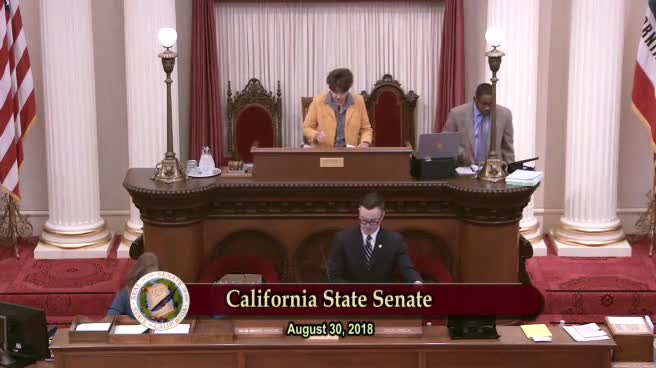
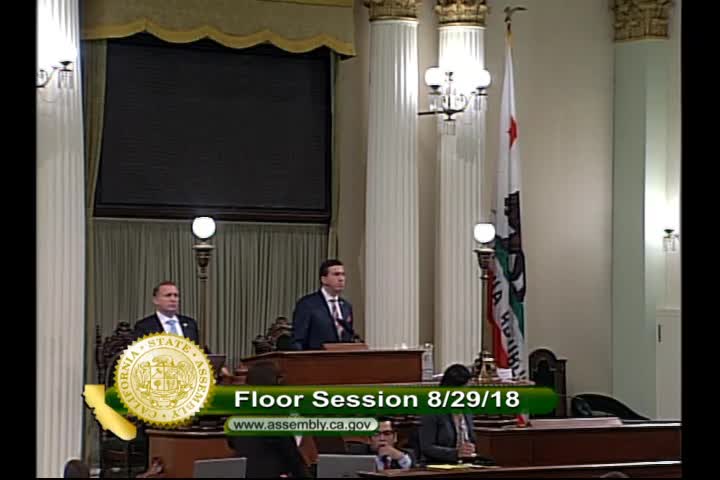

Bill Author



