AB 1016: Pest control operations: aircraft operations: private applicator.
- Session Year: 2023-2024
- House: Assembly
- Latest Version Date: 2023-10-07
Current Status:
Passed
(2023-10-07: Chaptered by Secretary of State - Chapter 354, Statutes of 2023.)
Introduced
In Committee
First Chamber
In Committee
Second Chamber
Enacted
(1)Existing law makes it unlawful for any person to operate an aircraft in pest control unless, among other things, the pilot operating the aircraft holds a valid manned or unmanned pest control aircraft pilots certificate issued by the Director of Pesticide Regulation. Existing law requires each unmanned pest control aircraft pilots certificate to designate the pilots status as a journeyman, apprentice, or vector control technician, and requires an applicant for a manned or unmanned pest control aircraft pilots certificate to pass an examination as a condition of licensure.
This bill would additionally include the status of private applicator as a designation under the unmanned pest control aircraft pilots certificate. The bill would prohibit an individual with a private applicator unmanned pest control aircraft pilots certificate from applying pesticides except for the purpose of producing an agricultural commodity on property owned, leased, or rented by the pilot or their employer. The bill would require a pilot to submit satisfactory documentary proof demonstrating the pilots completion of a program accredited by the director and possession of a valid private applicator certificate to be eligible for an unmanned pest control aircraft pilots certificate under the status of private applicator, and to pass an examination as a condition of licensure.
(2)Existing law prohibits the issuance of a journeymans certificate until the applicant has served as an apprentice under an apprentice certificate for one year and until the applicant presents to the director satisfactory documentary proof that the applicant operated an aircraft in pest control activities for a specified amount of time within the previous 2 years, as provided.
This bill would, notwithstanding the above limitation, authorize the director to establish specific requirements for obtaining an unmanned journeyman certificate, as specified.
(3)Existing law makes it unlawful for any person to act as a pest control aircraft pilot in any county without first registering with the appropriate county agricultural commissioner. Under existing law, it is unlawful to use any fraud or misrepresentation in connection with meeting any license requirement relating to pest control operations. A violation of any of these provisions is a crime.
To the extent the bill would expand the scope of existing crimes, the bill would impose a state-mandated local program.
The California Constitution requires the state to reimburse local agencies and school districts for certain costs mandated by the state. Statutory provisions establish procedures for making that reimbursement.
This bill would provide that no reimbursement is required by this act for a specified reason.
(1)Existing law makes it unlawful for any person to operate an aircraft in pest control unless, among other things, the pilot operating the aircraft holds a valid manned or unmanned pest control aircraft pilots certificate issued by the Director of Pesticide Regulation. Existing law requires each unmanned pest control aircraft pilots certificate to designate the pilots status as a journeyman, apprentice, or vector control technician, and requires an applicant for a manned or unmanned pest control aircraft pilots certificate to pass an examination as a condition of licensure.
This bill would additionally include the status of private applicator as a designation under the unmanned pest control aircraft pilots certificate. The bill would prohibit an individual with a private applicator unmanned pest control aircraft pilots certificate from applying pesticides except for the purpose of producing an agricultural commodity on property owned, leased, or rented by the pilot or their employer. The bill would require a pilot to submit satisfactory documentary proof demonstrating the pilots completion of a program accredited by the director and possession of a valid private applicator certificate to be eligible for an unmanned pest control aircraft pilots certificate under the status of private applicator, and to pass an examination as a condition of licensure.
(2)Existing law prohibits the issuance of a journeymans certificate until the applicant has served as an apprentice under an apprentice certificate for one year and until the applicant presents to the director certain documentary proof that the applicant operated an aircraft in pest control activities for a specified amount of time within the previous 2 years, as provided.
This bill would, notwithstanding the above limitation, authorize the director to establish specific requirements for obtaining an unmanned journeyman certificate. certificate, as specified.
(3)Existing law makes it unlawful for any person to act as a pest control aircraft pilot in any county without first registering with the appropriate county agricultural commissioner. Under existing law, it is unlawful to use any fraud or misrepresentation in connection with meeting any license requirement relating to pest control operations. A violation of this provision is a crime.
To the extent the bill would expand the scope of existing crimes, the bill would impose a state-mandated local program.
The California Constitution requires the state to reimburse local agencies and school districts for certain costs mandated by the state. Statutory provisions establish procedures for making that reimbursement.
This bill would provide that no reimbursement is required by this act for a specified reason.
(1)Existing law makes it unlawful for any person to operate an aircraft in pest control unless, among other things, the pilot operating the aircraft holds a valid manned or unmanned pest control aircraft pilots certificate issued by the Director of Pesticide Regulation. Existing law requires a each unmanned pest control aircraft pilots certificate to designate the pilots status as a journeyman or apprentice. Existing law prohibits the holder of an apprentice certificate from conducting pest control activities unless those activities are conducted under the direct and personal supervision of a person that holds a journeymans certificate. Existing journeyman, apprentice, or vector control technician, and requires an applicant for a manned or unmanned pest control aircraft pilots certificate to pass an examination as a condition of licensure.
This bill would additionally include the status of private applicator as a designation under the unmanned pest control aircraft pilots certificate. The bill would prohibit an individual with a private applicator unmanned pest control aircraft pilots certificate from applying pesticides except for the purpose of producing an agricultural commodity on property owned, leased, or rented by the pilot or their employer. The bill would require a pilot to submit satisfactory documentary proof demonstrating the pilots completion of a program accredited by the director and possession of a valid private applicator certificate to be eligible for an unmanned pest control aircraft pilots certificate under the status of private applicator, and to pass an examination as a condition of licensure.
(2)Existing law prohibits the issuance of a journeymans certificate until the applicant has served as an apprentice under an apprentice certificate for one year and until the applicant presents to the director certain documentary proof that the applicant operated an aircraft in pest control activities for a specified amount of time within the previous 2 years, as provided.
This bill would make nonsubstantive changes to the latter provision. would, notwithstanding the above limitation, authorize the director to establish specific requirements for obtaining an unmanned journeyman certificate.
(3)Existing law makes it unlawful for any person to act as a pest control aircraft pilot in any county without first registering with the appropriate county agricultural commissioner. Under existing law, it is unlawful to use any fraud or misrepresentation in connection with meeting any license requirement relating to pest control operations. A violation of this provision is a crime.
To the extent the bill would expand the scope of existing crimes, the bill would impose a state-mandated local program.
The California Constitution requires the state to reimburse local agencies and school districts for certain costs mandated by the state. Statutory provisions establish procedures for making that reimbursement.
This bill would provide that no reimbursement is required by this act for a specified reason.
Existing law makes it unlawful for any person to operate an aircraft in pest control unless, among other things, the pilot operating the aircraft holds a valid pest control aircraft pilots certificate issued by the Director of Pesticide Regulation. Existing law requires a pest control aircraft pilots certificate to designate the pilots status as a journeyman or apprentice. Existing law prohibits the holder of an apprentice certificate from conducting pest control activities unless those activities are conducted under the direct and personal supervision of a person that holds a journeymans certificate. Existing law prohibits the issuance of a journeymans certificate until the applicant has served as an apprentice under an apprentice certificate for one year and until the applicant presents to the director certain documentary proof that the applicant operated an aircraft in pest control activities for a specified amount of time within the previous 2 years, as provided.
This bill would make nonsubstantive changes to the latter provision.
(a)Each manned pest control aircraft pilots certificate shall designate the manned pest control aircraft pilots status as a journeyman or apprentice.
(b)Each unmanned pest control aircraft pilots certificate shall designate the unmanned pest control aircraft pilots status as a journeyman, apprentice, private applicator, or vector control technician.
SEC. 2.Section 11902.1 is added to the Food and Agricultural Code, to read:11902.1.An individual with a private applicator unmanned pest control aircraft pilots certificate shall only apply pesticides for the purpose of producing an agricultural commodity on property owned, leased, or rented by the pilot or their employer.
SEC. 3.Section 11902.5 of the Food and Agricultural Code is amended to read:11902.5.(a)To be eligible for an unmanned pest control aircraft pilots certificate under the status of vector control technician, a pilot shall be certified by the State Department of Public Health as a vector control technician in the category of mosquito control pursuant to paragraph (1) of subdivision (a) of Section 2052 of the Health and Safety Code.
(b)To be eligible for an unmanned pest control aircraft pilots certificate under the status of private applicator, a pilot shall submit satisfactory documentary proof demonstrating the pilots completion of a program accredited by the director and possession of a valid private applicator certificate.
SEC. 4.Section 11905 of the Food and Agricultural Code is amended to read:11905.Before an initial manned or unmanned certificate is issued, the applicant for an apprentice, journeyman, private applicator, or vector control technician shall pass an examination to demonstrate to the director the applicants ability to legally and safely conduct pest control operations and the applicants knowledge of the nature and effect of materials that are used in pest control.
SEC. 5.Section 11907 of the Food and Agricultural Code is amended to read:11907.(a)Except as provided in subdivision (b), a journeymans certificate shall not be issued until both of the following have occurred:
(1)The applicant has served as an apprentice under a certificate issued pursuant to this chapter for one year.
(2)The applicant presents to the director satisfactory documentary proof consisting of a declaration or affidavit by the holder of a journeymans certificate attesting to the applicants performance, under the attesting journeymans direct and personal supervision, of not less than 150 hours of operation of fixed-wing aircraft or 50 hours of operation of nonfixed-wing aircraft within the previous two calendar years in pest control activities, together with any other evidence as the director may require.
(b)(1)The director may adopt regulations to establish specific requirements for obtaining an unmanned journeyman certificate.
(2)The regulations shall consider requiring that the applicant complete 50 hours of operation of nonfixed-wing aircraft, or the equivalent practical training, in pest control activities within the previous two calendar years to ensure the legal and safe application of pesticides.
SEC. 6.No reimbursement is required by this act pursuant to Section 6 of Article XIIIB of the California Constitution because the only costs that may be incurred by a local agency or school district will be incurred because this act creates a new crime or infraction, eliminates a crime or infraction, or changes the penalty for a crime or infraction, within the meaning of Section 17556 of the Government Code, or changes the definition of a crime within the meaning of Section 6 of Article XIIIB of the California Constitution.
(a)Each manned pest control aircraft pilots certificate shall designate the manned pest control aircraft pilots status as a journeyman or apprentice.
(b)Each unmanned pest control aircraft pilots certificate shall designate the unmanned pest control aircraft pilots status as a journeyman, apprentice, private applicator, or vector control technician.
SEC. 2.Section 11902.1 is added to the Food and Agricultural Code, to read:11902.1.An individual with a private applicator unmanned pest control aircraft pilots certificate shall only apply pesticides for the purpose of producing an agricultural commodity on property owned, leased, or rented by the pilot or their employer.
SEC. 3.Section 11902.5 of the Food and Agricultural Code is amended to read:11902.5.(a)To be eligible for an unmanned pest control aircraft pilots certificate under the status of vector control technician, a pilot shall be certified by the State Department of Public Health as a vector control technician in the category of mosquito control pursuant to paragraph (1) of subdivision (a) of Section 2052 of the Health and Safety Code.
(b)To be eligible for an unmanned pest control aircraft pilots certificate under the status of private applicator, a pilot shall submit satisfactory documentary proof demonstrating the pilots completion of a program accredited by the director and possession of a valid private applicator certificate.
SEC. 4.Section 11905 of the Food and Agricultural Code is amended to read:11905.Before an initial manned or unmanned certificate is issued, the applicant for an apprentice, journeyman, private applicator, or vector control technician shall pass an examination to demonstrate to the director his or her the applicants ability to legally and safely conduct pest control operations and his or her the applicants knowledge of the nature and effect of materials that are used in pest control.
SECTION 1.SEC. 5.Section 11907 of the Food and Agricultural Code is amended to read:11907.A (a)Except as provided in subdivision (b), a journeymans certificate shall not be issued until both of the following have occurred:
(a)(1)The applicant has served as an apprentice under a certificate issued pursuant to this chapter for one year.
(b)(2)The applicant presents to the director satisfactory documentary proof consisting of a declaration or affidavit by the holder of a journeymans certificate attesting to the applicants performance, under the attesting journeymans direct and personal supervision, of not less than 150 hours of operation of fixed-wing aircraft or 50 hours of operation of nonfixed-wing aircraft within the previous two calendar years in pest control activities, together with any other evidence as the director may require.
(b)The director may adopt regulations to establish specific requirements for obtaining an unmanned journeyman certificate.
SEC. 6.No reimbursement is required by this act pursuant to Section 6 of Article XIIIB of the California Constitution because the only costs that may be incurred by a local agency or school district will be incurred because this act creates a new crime or infraction, eliminates a crime or infraction, or changes the penalty for a crime or infraction, within the meaning of Section 17556 of the Government Code, or changes the definition of a crime within the meaning of Section 6 of Article XIIIB of the California Constitution.
REVISIONS: HeadingLine 2.A journeymans certificate shall not be issued until the both of the following have occurred:
(a)The applicant has served as an apprentice under a certificate issued pursuant to this chapter for one year and until the year.
(b)The applicant presents to the director satisfactory documentary proof consisting of a declaration or affidavit by the holder of a journeymans certificate attesting to the applicants performance, under the attesting journeymans direct and personal supervision, of not less than 150 hours of operation of fixed-wing aircraft or 50 hours of operation of nonfixed-wing aircraft within the previous two calendar years in pest control activities, together with any other evidence as the director may require.
|
Date
|
Status
|
|---|---|
| Oct 7, 2023 | Chaptered by Secretary of State - Chapter 354, Statutes of 2023. |
| Oct 7, 2023 | Approved by the Governor. |
| Sep 15, 2023 | Enrolled and presented to the Governor at 4 p.m. |
| Sep 11, 2023 | Senate amendments concurred in. To Engrossing and Enrolling. (Ayes 75. Noes 0. Page 3179.). |
| Sep 7, 2023 | Assembly Rule 77 suspended. (Page 3011.) |
| Sep 6, 2023 | In Assembly. Concurrence in Senate amendments pending. May be considered on or after September 8 pursuant to Assembly Rule 77. |
| Sep 6, 2023 | Read third time. Passed. Ordered to the Assembly. (Ayes 40. Noes 0. Page 2435.). |
| Sep 5, 2023 | Read second time. Ordered to third reading. |
| Sep 1, 2023 | From committee: Do pass. (Ayes 7. Noes 0.) (September 1). |
| Aug 14, 2023 | In committee: Referred to APPR suspense file. |
| Jul 5, 2023 | From committee: Do pass and re-refer to Com. on APPR. (Ayes 3. Noes 0.) (July 3). Re-referred to Com. on APPR. |
| Jun 22, 2023 | Read second time and amended. Re-referred to Com. on AGRI. |
| Jun 21, 2023 | From committee: Amend, and do pass as amended and re-refer to Com. on AGRI. (Ayes 6. Noes 0.) (June 21). |
| Jun 7, 2023 | Referred to Coms. on E.Q. and AGRI. |
| May 31, 2023 | In Senate. Read first time. To Com. on RLS. for assignment. |
| May 30, 2023 | Read third time. Passed. Ordered to the Senate. (Ayes 72. Noes 0. Page 1888.) |
| May 18, 2023 | Read second time. Ordered to third reading. |
| May 18, 2023 | From committee: Do pass. (Ayes 14. Noes 0.) (May 18). |
| May 10, 2023 | In committee: Set, first hearing. Referred to APPR. suspense file. |
| Apr 26, 2023 | From committee: Do pass and re-refer to Com. on APPR. (Ayes 10. Noes 0.) (April 25). Re-referred to Com. on APPR. |
| Apr 26, 2023 | Coauthors revised. |
| Mar 29, 2023 | From committee: Do pass and re-refer to Com. on P. & C.P. (Ayes 11. Noes 0.) (March 29). Re-referred to Com. on P. & C.P. |
| Mar 29, 2023 | Coauthors revised. |
| Mar 13, 2023 | Re-referred to Com. on AGRI. |
| Mar 9, 2023 | Referred to Coms. on AGRI. and P. & C.P. |
| Mar 9, 2023 | From committee chair, with author's amendments: Amend, and re-refer to Com. on AGRI. Read second time and amended. |
| Feb 16, 2023 | From printer. May be heard in committee March 18. |
| Feb 15, 2023 | Read first time. To print. |
|
Date
|
Description
|
Location
|
Votes
|
|
|---|---|---|---|---|
| Sep 11, 2023 | AB 1016 Jones-Sawyer Concurrence in Senate Amendments | Assembly Floor |
Passed |
|
| Sep 6, 2023 | Assembly 3rd Reading AB1016 Jones-Sawyer et al. By Caballero | Senate Floor |
Passed |
|
| Sep 1, 2023 | Do pass | Senate Standing Committee on Appropriations |
Passed |
|
| Aug 14, 2023 | Placed on suspense file | Senate Standing Committee on Appropriations |
Passed |
|
| Jul 3, 2023 | Do pass, but first be re-referred to the Committee on [Appropriations] | Senate Standing Committee on Agriculture |
Passed |
|
| Jun 21, 2023 | Do pass as amended, but first amend, and re-refer to the Committee on [Agriculture] | Senate Standing Committee on Environmental Quality |
Passed |
|
| May 30, 2023 | AB 1016 Jones-Sawyer Assembly Third Reading | Assembly Floor |
Passed |
|
| May 18, 2023 | Do pass. | Assembly Standing Committee on Appropriations |
Passed |
|
| Apr 25, 2023 | Do pass and be re-referred to the Committee on [Appropriations] | Assembly Standing Committee on Privacy and Consumer Protection |
Passed |
|
| Mar 29, 2023 | Do pass and be re-referred to the Committee on [Privacy and Consumer Protection] | Assembly Standing Committee on Agriculture |
Passed |
This list shows positions taken on this bill by organizations on the date displayed, which is linked to the original source.
Positions by individuals are not included.
|
Organization
|
Position
|
Date
|
|---|---|---|
| Alaska Airlines | * Against Unless Amend | Jun 21, 2023 |
| California Agricultural Aircraft Association | ** Against | |
| California Agriculture Aircraft Association | * Against | Jul 3, 2023 |
| California Alfalfa & Forage Association | ** Support | |
| California Association Of Wheat Growers | * Support | Jul 3, 2023 |
| California Farm Bureau | ** Support | |
| California Grain & Feed Association | ** Support | |
| California Pear Growers | ** Support | |
| California Seed Association | * Support | Jul 3, 2023 |
| Central Valley Community Foundation | ** Support |
CONCURRENCE IN SENATE AMENDMENTS
CSA1 Bill Id:AB 1016
Author:(Jones-Sawyer)
As Amended Ver:June 22, 2023
Majority vote
SUMMARY
This bill would establish a private applicator designation under the unmanned pest control aircraft pilot's certificate. The bill would require proof of the pilot's completion of a program accredited by the Director of the Department of Pesticide Regulation (DPR) as well as a valid private applicator certificate in order to be eligible for the unmanned pest control aircraft pilot's certificate under the status of private applicator.
Senate Amendments
Add that the regulation consider that the applicant complete 50 hours of operation of non fixed-wing aircraft, or the equivalent practical training, in pest control activities within the previous two calendar years to ensure the legal and safe application of pesticides.
COMMENTS
AB 527 (Caballero), Chapter 404, statutes of 2017, allowed commercial drone operations for the purpose of pesticide application for mosquito and vector control, if the drone operator complies with FAA rules governing drone flight and the drone operator has approval from DPR. AB 527 created a new PCAP certificate for drone operators, to be provided upon operators passing the exam, as specified. Current requirements for drone pilots include a training process that requires an apprentice pilot to train under a journeyman pilot for 150 hours for fixed wing aircraft and 50 hours for non-fixed wing aircraft.
"Unmanned aircraft systems" (UAS) or drones are increasingly being used by government, businesses, and private individuals for a variety of purposes, including in agriculture to track the growth of crops, fight pests, identify nutrient deficiencies, and in precision agricultural practices to allow fine-scale monitoring and mapping of crops.
According to the Author
This bill aims to modernize aerial applicator credentialing requirements in existing statutes by expanding DPR's authority to create training programs for drone aerial applicator licensing independent of existing journeymen/ apprenticeship requirements.
Arguments in Support
Instead of spraying an entire field with pesticides, drones permit for the spot treatment of just affected crops. For all pesticide applicators, drones remove workers from intimate contact with pesticides, replacing backpack blowers and ground based delivery systems with remote delivery systems. The technology helps farmers to become more efficient, and [this bill] helps to ensure that the technology's use on farms for pesticide applications comes with regulatory controls in place to ensure worker and community safety.
Today, drones are used on farms for important data gathering related to water, soil, and crop health. These drone pilots complete their requisite FAA licensing and fly under the FAA's requirements for drone flights. This bill takes the next logical step in the adoption of drone technology on California's farms, enabling more efficient applications of pesticides on California's soils.
Arguments in Opposition
"UAS offers an opportunity to adopt precision agricultural technology, we do not support unlimited use of this technology. [The state] need to move cautiously in this arena. Too much is at stake beginning with public safety. We have provided amendments to [this bill] which would allow growers to use UAS on their own property to make spot applications. We believe that carrying up to forty liters to make spot applications on their own property strikes the right balance between safety and progress. We want to guard against unskilled pilots/applicators harming their neighbors and other agricultural operations."
FISCAL COMMENTS
According the Senate Committee on Appropriations, this bill has an estimated ongoing cost of about $436,000 annually (DPR Fund) for 2.5 positions to create the necessary examination to administer the private applicator designation under the unmanned pest control aircraft pilot's certificate program.
VOTES:
ASM AGRICULTURE: 11-0-0
YES: Robert Rivas, Mathis, Aguiar-Curry, Alanis, Connolly, Flora, Irwin, Jones-Sawyer, Soria, Villapudua, Wood
ASM PRIVACY AND CONSUMER PROTECTION: 10-0-1
YES: Gabriel, Joe Patterson, Bauer-Kahan, Bennett, Essayli, Irwin, Lowenthal, Papan, Wicks, Wilson
ABS, ABST OR NV: Vince Fong
ASM APPROPRIATIONS: 14-0-2
YES: Holden, Megan Dahle, Bryan, Calderon, Wendy Carrillo, Dixon, Mike Fong, Hart, Lowenthal, Papan, Pellerin, Sanchez, Weber, Ortega
ABS, ABST OR NV: Mathis, Robert Rivas
ASSEMBLY FLOOR: 72-0-8
YES: Addis, Aguiar-Curry, Alanis, Alvarez, Arambula, Bauer-Kahan, Bennett, Berman, Boerner, Bonta, Bryan, Calderon, Juan Carrillo, Wendy Carrillo, Cervantes, Chen, Connolly, Megan Dahle, Davies, Dixon, Mike Fong, Friedman, Gabriel, Garcia, Gipson, Grayson, Haney, Hart, Holden, Hoover, Irwin, Jackson, Jones-Sawyer, Kalra, Lee, Low, Lowenthal, Maienschein, Mathis, McCarty, McKinnor, Muratsuchi, Stephanie Nguyen, Ortega, Pacheco, Papan, Pellerin, Petrie-Norris, Quirk-Silva, Ramos, Reyes, Luz Rivas, Robert Rivas, Rodriguez, Blanca Rubio, Sanchez, Santiago, Schiavo, Soria, Ta, Ting, Valencia, Villapudua, Waldron, Wallis, Ward, Weber, Wicks, Wilson, Wood, Zbur, Rendon
ABS, ABST OR NV: Bains, Essayli, Flora, Vince Fong, Gallagher, Lackey, Jim Patterson, Joe Patterson
SENATE FLOOR: 40-0-0
YES: Allen, Alvarado-Gil, Archuleta, Ashby, Atkins, Becker, Blakespear, Bradford, Caballero, Cortese, Dahle, Dodd, Durazo, Eggman, Glazer, Gonzalez, Grove, Hurtado, Jones, Laird, Limón, McGuire, Menjivar, Min, Newman, Nguyen, Niello, Ochoa Bogh, Padilla, Portantino, Roth, Rubio, Seyarto, Skinner, Smallwood-Cuevas, Stern, Umberg, Wahab, Wiener, Wilk
UPDATED
VERSION: June 22, 2023
CONSULTANT: Victor Francovich / AGRI. / (916) 319-2084 FN: 0001898
SENATE RULES COMMITTEE Office of Senate Floor Analyses (916) 651-1520 Fax: (916) 327-4478 | AB 1016 |
THIRD READING
Bill No: AB 1016
Author: Jones-Sawyer (D), et al.
Amended: 6/22/23 in Senate
Vote: 21
SENATE ENVIRONMENTAL QUALITY COMMITTEE: 6-0, 6/21/23
AYES: Allen, Dahle, Gonzalez, Menjivar, Nguyen, Skinner
NO VOTE RECORDED: Hurtado
SENATE AGRICULTURE COMMITTEE: 3-0, 7/3/23
AYES: Hurtado, Alvarado-Gil, Padilla
NO VOTE RECORDED: Grove
SENATE APPROPRIATIONS COMMITTEE: 7-0, 9/1/23
AYES: Portantino, Jones, Ashby, Bradford, Seyarto, Wahab, Wiener
ASSEMBLY FLOOR: 72-0, 5/30/23 - See last page for vote
SUBJECT: Pest control operations: aircraft operations: private applicator
SOURCE: California Farm Bureau
DIGEST: This bill expands the Department of Pesticide Regulation’s (DPR) authority to create training programs for drone aerial applicator licensing independent of the existing journeymen/apprenticeship requirements.
ANALYSIS:
Existing law:
- Defines the following terms:
- “Unmanned aircraft” means an aircraft that is operated without the possibility of direct human intervention from within or on the aircraft. (Gov. Code § 853.5(a).)
- “Unmanned aircraft system” (UAS) means an uncrewed aircraft and associated elements, including but not limited to, communication links and the components that control the uncrewed aircraft, which are required for the pilot in command to operate safely and efficiently in the national airspace system. (Gov. Code § 853.5(b).)
- Requires any person who operates a crewed or uncrewed aircraft in pest control to, among other things, hold a valid manned or unmanned pest control aircraft (UPCA) pilot’s certificate issued by DPR. (Food & Ag Code § 11901.)
- Requires each UPCA pilot’s certificate to designate the pilot’s status as a journeyman, apprentice, or vector control technician. (Food & Ag. Code § 11902(b)
- Prohibits the issuance of a journeyman’s certificate until the applicant has served as an apprentice under an apprentice certificate for one year and until the applicant presents to DPR certain documentary proof that the applicant operated an aircraft in pest control activities for a specified amount of time within the previous 2 years, as specified. (Food & Ag. Code § 11907.)
This bill:
- Authorizes DPR to adopt regulations to establish specific requirements for obtaining an unmanned journeyman certificate. Specifies that any such regulations consider requiring that the applicant complete 50 hours of operation of nonfixed-wing aircraft, or the equivalent practical training, in pest control activities within the previous two calendar years to ensure the legal and safe application of pesticides.
- Adds the status of “private applicator” as a designation under the UPCA pilot’s certificate.
- Requires an individual with a private applicator UPCA certificate to only apply pesticides for the purpose of producing an agricultural commodity on property owned, leased, or rented by the pilot or the pilot’s employer.
- Requires a pilot, to be eligible for a UPCA certificate under the status of private applicator, to submit satisfactory documentary proof demonstrating the pilot’s completion of a program accredited by the director of DPR and possession of a valid private applicator certificate.
Background
- Unmanned aircraft systems (i.e., drones) in agriculture. Farmers have been using drones over the past 20 years mainly for aerial imaging – scanning farms from the sky with cameras to map where crops are thriving and failing. The Federal Aviation Administration (FAA) first issued an agricultural aircraft operator certificate to a UAS operator on July 31, 2015. Since that time, there have been no reported accidents or injuries among operators. The FAA also reports that UAS are lower risk than manned aircraft in a similar operation because the unmanned aircraft weighs much less than a manned aircraft, carries a much smaller payload, carries no flammable fuel, is slower and more maneuverable than a manned aircraft.
Since 2017, drones use in California has expanded to pesticide applications on farms. Farmers are using drones to spray pesticides more purposefully over smaller areas, as drones can spray with higher accuracy than most boom sprayers, tractors, or piloted aircraft.
Some speculate that pesticide-spraying drones could lead to a future with less pesticide usage and fewer pesticide impacts. According to Ken Giles, an agricultural engineer at University of California, “We’ve seen cases where, with smart application, we see 30-40% reduction in chemical [application] rates.” In rare cases, Giles adds, he’s seen as much as 90% reduction in the volume of pesticide used. - Unmanned pest control aircraft pilot certification. AB 527 (Caballero, Chapter 404, Statutes of 2017) requires pilots operating an UAS in pest control to possess either a manned or unmanned Pest Control Aircraft Pilot Certificate issued by DPR. To qualify for this, the pilot must be authorized by FAA to operate UAS in pest control, serve as an apprentice, and pass the required DPR licensing and certification exams.
- This bill. There are currently three certifications available for piloting UAS in pest control: Journeyman, Apprentice, and Vector Control. AB 1016 would create a fourth pilot certification specific to private applicators operating UAS. Activities conducted under a UAS-Private Applicator certification would be limited by prohibiting an individual with the certificate from applying pesticides except for the purpose of producing an agricultural commodity on property owned, leased, or rented by the pilot or their employer. This limitation is consistent with activities currently conducted under a Private Applicator Certificate, which AB 1016 would extend to the use of UAS.
Individuals seeking this certification would be required to: hold a valid private applicator certificate, complete a program accredited by the Director of DPR, and pass an examination [examination is an existing requirement of all pilot certifications]. This certification structure is intended to ensure the required knowledge and expertise to operate a UAS safely and effectively for pest control purposes are obtained.
Comments
- Purpose of Bill. According to the author, “Agriculture plays a vital role in California’s economy and the well-being of the state and nation. By encouraging the adoption of precision agriculture technology, specifically drones, we can eliminate the need for whole-field aerial treatment with pesticides. This reduces the risk of unwanted spray drift affecting nearby communities and provides a solution to the crop loss experienced by small farms, nurseries, and vineyards.
“By using the right tool for the right application, precise applications will allow farmers to efficiently apply pesticides, saving on water, aircraft fuel costs and health impacts to the surrounding communities.”
- Expands training pathways. Currently, in order to use a drone to apply pesticides to agricultural crops, a person must first pass a FAA exam proving they can safely fly a drone, then train as an apprentice pilot under a journeyman pilot for 50 hours before taking a DPR exam to become a licensed aerial pesticide applicator. The apprentice-journeyman pilot training was instituted decades ago to address fixed wing aircraft applicators, whereby new pilots worked alongside existing pilots. However, the drone pesticide application delivery platform is entirely different from a helicopter or fixed wing airplane. Thus, fixed-winged pilots have different skills than drone pilots, and may lack knowledge on how to pilot a drone for safe pesticide applications.
According to the bill’s sponsor, the impact of this training misalignment has resulted in a lack of precision agriculture technology being accessible for California’s farmers. Currently, only seven licensed drone applicator journeymen conduct business in California, compared to hundreds of licensed fixed-wing applicator journeymen. The disparity has made it difficult for people interested in becoming a certified drone aerial pesticide applicator pilots to receive the appropriate apprenticeship training.
AB 1016 aims to modernize aerial applicator credentialing requirements in existing statute by expanding DPR’s authority to create training programs for drone aerial applicator licensing independent of the existing journeymen/apprenticeship requirements. Establishing a pathway where drone pilot licensing occurs through instruction specific to that platform makes sense.
FISCAL EFFECT: Appropriation: No Fiscal Com.: Yes Local: Yes
According to the Senate Appropriations Committee, DPR estimates ongoing costs of about $436,000 annually (DPR Fund) for 2.5 positions to create the necessary examination, examination item pool, knowledge expectations, and study guide; develop and revise pilot certificate application materials and guidance documents; create a rulemaking package that establishes requirements for UAS – Private Applicator pilot program(s); review and approve UAS – Private Applicator pilot program(s) for accreditation by DPR; coordinate updates to DPR’s Licensing and Certification database; create a rulemaking package to establish specific requirements for unmanned journeyman pilots, if determined to be necessary; and, update the Licensing Program database and software to allow DPR to capture the new certificate designation. DPR notes it would likely need to provide continuing education (CE) guidance to CE sponsors currently offering aerial content to inform sponsors of the new pilot certification and ensure courses that offer hours in the “Aerial” CE category include knowledge applicable to UAS – Private Applicator certificate holders, as CE is required for the renewal of all DPR certified pest control pilots (manned or unmanned). DPR also notes this bill would create an additional unmanned pilot certificate option with associated fees that may offset the fiscal impact. Staff note that the DPR Fund has a significant structural deficit.
SUPPORT: (Verified 9/1/23)
California Farm Bureau (source)
OPPOSITION: (Verified 9/1/23)
California Agricultural Aircraft Association
ARGUMENTS IN SUPPORT:
According to the California Farm Bureau, “AB 1016, by authorizing DPR with a new authority to establish a safe, rigorous UAV applicator training and credentialing program, creates a new pathway to reach journeyman level status, thereby enabling those pilots to apply for and take the aerial applicator license examination. This allows applicators, farmers, and the state to benefit from precision agriculture technology, which enables for more efficient pesticide, herbicide, or fungicide applications on small farms, vineyards, and nurseries.
“Instead of spraying an entire field with pesticides, drones permit for the treatment of just the affected crops. For all pesticide applicators, drones remove workers from intimate contact with pesticides, replacing backpack blowers and ground based delivery systems with remote delivery systems. The technology helps farmers to become more efficient, and AB 1016 helps to ensure that the technology’s use on farms for pesticide applications comes with regulatory controls in place to ensure worker and community safety.”
ARGUMENTS IN OPPOSITION:
According to the California Agricultural Aircraft Association, “We write with an opposition unless amended position to AB 1016, a bill that would rollback licensing requirements for Unmanned Aerial Systems (UAS) pilot applicators.
“The California Agricultural Aircraft Association (CAAA) represents the professional aerial application industry in California. Our membership spans from the Oregon border to the Mexican border. Annually, our members make safe and effective applications of seed, fertilizer, and crop protection inputs on over 15 million acres of productive agricultural lands in California. While we agree with you that UAS offers an opportunity to adopt precision agricultural technology, we do not support unlimited use of this technology.”
ASSEMBLY FLOOR: 72-0, 5/30/23
AYES: Addis, Aguiar-Curry, Alanis, Alvarez, Arambula, Bauer-Kahan, Bennett, Berman, Boerner, Bonta, Bryan, Calderon, Juan Carrillo, Wendy Carrillo, Cervantes, Chen, Connolly, Megan Dahle, Davies, Dixon, Mike Fong, Friedman, Gabriel, Garcia, Gipson, Grayson, Haney, Hart, Holden, Hoover, Irwin, Jackson, Jones-Sawyer, Kalra, Lee, Low, Lowenthal, Maienschein, Mathis, McCarty, McKinnor, Muratsuchi, Stephanie Nguyen, Ortega, Pacheco, Papan, Pellerin, Petrie-Norris, Quirk-Silva, Ramos, Reyes, Luz Rivas, Robert Rivas, Rodriguez, Blanca Rubio, Sanchez, Santiago, Schiavo, Soria, Ta, Ting, Valencia, Villapudua, Waldron, Wallis, Ward, Weber, Wicks, Wilson, Wood, Zbur, Rendon
NO VOTE RECORDED: Bains, Essayli, Flora, Vince Fong, Gallagher, Lackey, Jim Patterson, Joe Patterson
Prepared by: Gabrielle Meindl / E.Q. / (916) 651-4108
9/2/23 9:51:48
**** END ****
SENATE COMMITTEE ON APPROPRIATIONS
Senator Anthony Portantino, Chair
2023 - 2024 Regular Session
AB 1016 (Jones-Sawyer) - Pest control operations: aircraft operations: private applicator
Version: June 22, 2023 | Policy Vote: E.Q. 6 - 0, AGRI. 3 - 0 |
Urgency: No | Mandate: Yes |
Hearing Date: August 14, 2023 | Consultant: Ashley Ames |
Bill Summary:
This bill would establish a private applicator designation under the unmanned pest control aircraft pilot’s certificate. The bill would require proof of the pilot’s completion of a program accredited by the Director of the Department of Pesticide Regulation (DPR) as well as a valid private applicator certificate in order to be eligible for the unmanned pest control aircraft pilot’s certificate under the status of private applicator.
Fiscal Impact:
- DPR estimates ongoing costs of about $436,000 annually (DPR Fund) for 2.5 positions to create the necessary examination, examination item pool, knowledge expectations, and study guide; develop and revise pilot certificate application materials and guidance documents; create a rulemaking package that establishes requirements for UAS – Private Applicator pilot program(s); review and approve UAS – Private Applicator pilot program(s) for accreditation by DPR; coordinate updates to DPR’s Licensing and Certification database; create a rulemaking package to establish specific requirements for unmanned journeyman pilots, if determined to be necessary; and, update the Licensing Program database and software to allow DPR to capture the new certificate designation. DPR notes it would likely need to provide continuing education (CE) guidance to CE sponsors currently offering aerial content to inform sponsors of the new pilot certification and ensure courses that offer hours in the “Aerial” CE category include knowledge applicable to UAS – Private Applicator certificate holders, as CE is required for the renewal of all DPR certified pest control pilots (manned or unmanned). DPR also notes this bill would create an additional unmanned pilot certificate option with associated fees that may offset the fiscal impact. Staff note that the DPR Fund has a significant structural deficit.
Background:
DPR regulates pesticides in California. DPR is responsible for protecting human health and the environment through the regulation of pesticide sales and use, and by fostering reduced-risk pest management. The department’s oversight includes product evaluation and registration, continuous assessment, reevaluation, enforcement, statewide licensing of applicators and pest control businesses, environmental monitoring, and residue testing of produce. In the United States, pesticides must be registered and licensed with the US Environmental Protection Agency (US EPA) before being registered in California. DPR conducts additional evaluations alongside the US EPA, assessing factors such as a product's toxicology, environmental behavior, effectiveness against target pests, risks to non-target organisms, fish, wildlife, and human health. The DPR continues to evaluate pesticides post-registration, even placing products into formal reevaluation if necessary.
California regulations mandate that DPR investigate reports of possible adverse effects from pesticide use on people or the environment. If significant adverse impacts occurred or are likely, DPR must reevaluate the pesticide's registration, potentially requiring additional data to determine hazards or appropriate mitigation measures. The reevaluation can conclude in various ways: if no significant adverse effects are found, the process ends without further action; if mitigation is needed, DPR imposes restrictions; if the impact cannot be mitigated, the pesticide's registration may be canceled or suspended.
Funding DPR. DPR’s Pesticide Programs and Administration are primarily funded by the DPR Fund with limited funding from the General Fund, California Environmental License Plate Fund, Federal Trust Fund, Reimbursements, and Cannabis Tax Fund. The DPR Fund supports roughly 90 percent of the department’s budget. It collects revenues from the following three sources: (1) a quarterly mill assessment on pesticide sales, (2) pesticide registration fees from over 13,750 registrants, and (3) licensing and certification fees from individual commercial applicators, pest control pilots and advisers and dealers. The fund receives 20 percent of its revenues from pesticide-related licensing and registration fees and 80 percent from a mill assessment levied on pesticides. The mill assessment is applied to agricultural and non-agricultural pesticides at the point of first sale into the state. The assessment is currently at 21 mills, or 2.1 cents per dollar, and was last adjusted in 2004. Of the total mill assessment, 7.6 mills are allocated to CACs for their pesticide compliance and enforcement activities.
Existing law:
- Defines the following:
- “Unmanned aircraft” to mean an aircraft that is operated without the possibility of direct human intervention from within or on the aircraft (Government Code Section 853.5(a)).
- “Unmanned aircraft system” (UAS) to mean un-crewed aircraft and associated elements, including but not limited to, communication links and the components that control the un-crewed aircraft, which are required for the pilot in command to operate safely and efficiently in the national airspace system (Government Code Section 853.5(b)).
- Requires any person who operates a crewed or un-crewed aircraft in pest control to, among other things, hold a valid manned or unmanned pest control aircraft (UPCA) pilot’s certificate issued by the DPR (Food and Agricultural Code Section 11901).
- Requires any person who operates an unmanned aircraft system in pest control to hold a valid manned pest control aircraft pilot’s certificate or a valid UPCA pilot’s certificate issued by the director of the DPR and is certified or otherwise authorized by the Federal Aviation Administration (FAA) to operate an unmanned aircraft system approved by the FAA to conduct pest control (Food and Agricultural Code Section 11901 (b)).
- Requires each UPCA pilot’s certificate to designate the pilot’s status as a journeyman, apprentice, or vector control technician (Food and Agricultural Code Section 11902(b)).
- Prohibits the issuance of a journeyman’s certificate until the applicant has served as an apprentice under an apprentice certificate for one year and until the applicant presents to the DPR certain documentary proof that the applicant operated an aircraft in pest control activities for a specified amount of time within the previous 2 years, as specified (Food and Agricultural Code Section 11907).
Proposed Law:
This bill would establish a private applicator designation under the unmanned pest control aircraft pilot’s certificate. Specifically, this bill would:
- Establish an unmanned pest control aircraft pilot’s certificate.
- Authorize the DPR to adopt necessary regulations and requirements for obtaining an unmanned pest control aircraft (UPCA) pilot’s journeyman certificate.
- Clarify that an individual with an UPCA pilot’s certificate shall only apply pesticides on an agricultural commodity on property that is owned, leased, or rented by the pilot or their employee.
- State to be eligible for an UPCA pilot’s certificate, a pilot shall submit satisfactory documentary proof demonstrating the pilot’s completion of a program accredited by the director of DPR and possession of a valid private applicator certificate.
Related Legislation:
AB 527 (Chapter 404, Statutes of 2017): Authorized commercial unmanned aircraft system (UAS) operations in California for purposes of pesticide application, provided the UAS operator complies with FAA rules governing UAS flight and the UAS operator has approval from the DPR.
Staff Comments:
The growth in expenditures from the DPR Fund has outpaced growth in revenues, creating a structural imbalance in the fund. The DPR Fund has operated under a structural deficit in five out of eight years from 2014-15 to FY 2021-22. According to the administration, the DPR Fund balance is estimated to be approximately $8.54 million in 2023-23 and approximately $1.73 million at the end of 2023-24. Absent any changes, the administration anticipates the DPR Fund will fall $3.85 million short of current programmatic needs in 2024-25.
DPR notes that potential mitigation measure are unknown, but the cancellation of all non-agricultural neonicotinoid uses would have the largest fiscal impact. Roughly 91% of DPR’s annual funding ($136 million in 2021-22) is generated by revenue from registration fees and fees assessed based on pesticide product sales. Cancellation of non-agricultural neonicotinoid uses would result in a decrease in registration renewals and sales. DPR currently registers 382 products containing neonicotinoids. Of those, approximately 160 products are expected to be impacted by this bill. DPR estimates a reduction in renewal fees of approximately $240,000. Additionally, there would be a reduction in mill assessment paid to DPR on the sale of neonicotinoid pesticide products and correspondingly distributed to the local CACs to support local pesticide use enforcement. The annual mill assessed on non-agricultural use neonicotinoid pesticides averages roughly $650,000. Therefore, DPR estimates this bill could result in up to a $890,000 annual reduction in revenue when taking into consideration the loss of renewal fees, registration fees, and mill assessment collected as an outcome of potential mitigation measures.
-- END –
DPR would likely need to provide continuing education (CE) guidance to CE sponsors currently offering aerial content to inform sponsors of the new pilot certification and ensure courses that offer hours in the “Aerial” CE category include knowledge applicable to UAS – Private Applicator certificate holders, as CE is required for the renewal of all DPR certified pest control pilots (manned or unmanned).
This bill would create an additional unmanned pilot certificate option with associated fees that may offset the fiscal impact.
SENATE COMMITTEE ON AGRICULTURE
Senator Melissa Hurtado, Chair
2023 - 2024 Regular
Bill No: AB 1016 Hearing Date: 7/3/2023
Author: | Jones-Sawyer | ||
Version: | 6/22/23 | ||
Urgency: | No | Fiscal: | Yes |
Consultant: | Reichel Everhart | ||
Subject: Pest control operations: aircraft operations: private applicator
SUMMARY
:
This bill would establish a private applicator designation under the unmanned pest control aircraft pilot’s certificate. The bill would require proof of the pilot’s completion of a program accredited by the Director of the Department of Pesticide Regulation (DPR) as well as a valid private applicator certificate in order to be eligible for the unmanned pest control aircraft pilot’s certificate under the status of private applicator.
BACKGROUND AND EXISTING LAW
:
Existing law:
- Defines the following:
- “Unmanned aircraft” to mean an aircraft that is operated without the possibility of direct human intervention from within or on the aircraft (Government Code Section 853.5(a)).
- “Unmanned aircraft system” (UAS) to mean un-crewed aircraft and associated elements, including but not limited to, communication links and the components that control the un-crewed aircraft, which are required for the pilot in command to operate safely and efficiently in the national airspace system (Government Code Section 853.5(b)).
- Requires any person who operates a crewed or un-crewed aircraft in pest control to, among other things, hold a valid manned or unmanned pest control aircraft (UPCA) pilot’s certificate issued by the DPR (Food and Agricultural Code Section 11901).
- Requires any person who operates an unmanned aircraft system in pest control to hold a valid manned pest control aircraft pilot’s certificate or a valid UPCA pilot’s certificate issued by the director of the DPR and is certified or otherwise authorized by the Federal Aviation Administration (FAA) to operate an unmanned aircraft system approved by the FAA to conduct pest control (Food and Agricultural Code Section 11901 (b)).
- Requires each UPCA pilot’s certificate to designate the pilot’s status as a journeyman, apprentice, or vector control technician (Food and Agricultural Code Section 11902(b)).
- Prohibits the issuance of a journeyman’s certificate until the applicant has served as an apprentice under an apprentice certificate for one year and until the applicant presents to the DPR certain documentary proof that the applicant operated an aircraft in pest control activities for a specified amount of time within the previous 2 years, as specified (Food and Agricultural Code Section 11907).
PROPOSED LAW
:
This bill:
- Establishes an unmanned pest control aircraft pilot’s certificate.
- Authorizes the DPR to adopt necessary regulations and requirements for obtaining an unmanned pest control aircraft (UPCA) pilot’s journeyman certificate.
- Clarifies that an individual with an UPCA pilot’s certificate shall only apply pesticides on an agricultural commodity on property that is owned, leased, or rented by the pilot or their employee.
- States to be eligible for an UPCA pilot’s certificate, a pilot shall submit satisfactory documentary proof demonstrating the pilot’s completion of a program accredited by the director of DPR and possession of a valid private applicator certificate.
ARGUMENTS IN SUPPORT:
According to the author:
“California’s agriculture industry feeds the state and the nation. Our fresh fruits, nuts, and vegetables are grown under the world’s strictest pesticide control measures, and our food system produces safe, affordable, and healthy foods as a result. California farmers respond to the state’s requests to do more with less – use less water, less fertilizer, less pesticides, less available labor – with ingenuity and technology.
“Farming is at the precipice of technology adoption, starting with smart irrigation, and will continue to modernize in all facets of planting, cultivation, harvesting, and processing. Gaining access to technology cannot be restricted by legacy industries stuck in an innovator’s dilemma. The existing methods for pesticide applications have been used for decades, and the modernization of these technologies will allow farmers to potentially apply fewer pesticides through precision applications. But for that to happen, the current methods of training the workforce to provide those services must also be modernized. That is the heart of AB 1016 – modernizing the training pathway so that efficiency-driven technology is more accessible to farmers.”
The California Farm Bureau, sponsors of the legislation, write in support of the bill:
“Because the drone pesticide application delivery platform is entirely different from a helicopter or fixed wing airplane, fixed-winged pilots have different skills than drone pilots, and may lack the necessary FAA licenses, exemptions, and knowledge on how to pilot a drone for safe pesticide applications. The impact of this training misalignment results in a lack of precision agriculture technology being accessible for California’s farmers. In fact, just seven licensed drone applicator journeymen conduct business in California, compared to hundreds of licensed fixed-wing applicator journeymen. The disparity results in a lack of new drone pilots being trained for pesticide applications using precision technology. Simply, the existing training pathway constricts the licensing of drone aerial applicator pilots, limiting the availability of precision technology for California’s farmers.
“AB 1016, by authorizing DPR with a new authority to establish a safe, rigorous UAV applicator training and credentialing program, creates a new pathway to reach journeyman level status, thereby enabling those pilots to apply for and take the aerial applicator license examination. This allows applicators, farmers, and the state to benefit from precision agriculture technology, which enables for more efficient pesticide, herbicide, or fungicide applications on small farms, vineyards, and nurseries.”
The letter further states that drones help with targeted spraying while removing workers from being in close contact with pesticides. The letter also notes that two community colleges have announced certification courses for unmanned aerial applicators to train aerial applicators in the use of drones.
ARGUMENTS IN OPPOSITION:
The California Agricultural Aircraft Association writes in opposition to the bill, unless it is amended. Their letter states:
“We write in opposition unless amended to AB 1016. CAAA supports the use of precision agriculture; our members utilize GPS and modern aerial application technologies to make safe and efficient applications of seed, fertilizer, and crop protection inputs on over 15 million acres of productive agricultural lands in California. However as with any new technology, thoughtful execution is vital for public and environmental safety.
“Unmanned Aerial Systems (UAS) offers the opportunity to make partial field or spot applications that can place crop inputs just where they are needed, reducing pesticide use and increasing yields. However, while the hardware and software for UAS technology is becoming more robust, there is a significant data gap in spray system analysis and development that is necessary to make safe and effective applications. The amendments provided to the committee provide an opportunity to allow the use of UAS in a targeted and prescriptive manner while providing an essential level of environmental safety.
“We support the licensing requirement for private unmanned pilots to complete an DPR accredited training program before testing. This is a positive step towards making sure that those utilizing this new technology have basic knowledge of pesticide applications specific to UAS. Additionally, we support the inclusion of a minimum amount of time that an unmanned apprentice pilot must work under the supervision of a journeyman. However, we have concerns with the vague language ‘or equivalent practical training’ as this does not require specific training in UAS applications.
“Aerial applications are unique as indicated by the inclusion of the new Aerial category in the US EPA Certification and Training regulations. In California with over 400 commodities, agricultural and urban interface issues, and diverse ecosystems, we must be thoughtful and cautious in the utilization of UAS for pesticide applications. As these systems increase in size and capacity, potential unintended consequences become more significant for the environment.
“CAAA supports the use of precision agriculture, but this must be implemented in a safe and effective manner for the safety of our communities and the environment. Thank you for the opportunity to comment.”
COMMENTS
:
Using drones in agriculture has increased in recent years. In April of this year, the USDA’s Undersecretary for Research, Education, and Economics Chavonda Jacobs-Young said the Department is looking at technologies “like drones that can spot out the weeds and where you specifically need to treat.” Known as precision agriculture, Jacobs-Young said drones allow farmers “to reduce the amount of inputs, and it allows them to reduce the cost, and environmentally it allows us to minimize the amount of treatment that’s needed” (https://rollcall.com/2023/04/04/amid-technology-worries-farm-sector-still-eyes-its-potential/).
The Committee received suggested amendments from the King’s County Farm Bureau. One of the amendments suggested would establish an unmanned pest control aircraft size limit that would not exceed a capacity of 18 gallons or 68 liters unless the unmanned aerial private applicator has complied with section 11908 of the Food and Agricultural Code. The second amendment suggested the regulations promulgated through the DPR shall require the applicant complete no less than 50 hours of operation of nonfixed-wing aircraft and has complied with the requirements of Food and Agricultural Code, Section 11908.
The Committee feels the way the bill is currently written gives the DPR the authority to establish the requirements needed for obtaining an unmanned journeyman certificate through their regulatory process.
RELATED LEGISLATION
:
AB 527 (Chapter 404, Statutes of 2017): Authorized commercial unmanned aircraft system (UAS) operations in California for purposes of pesticide application, provided the UAS operator complies with FAA rules governing UAS flight and the UAS operator has approval from the DPR.
PRIOR ACTIONS
:
Assembly Floor: | 72 - 0 |
Assembly Appropriations Committee: | 14 - 0 |
Assembly Agriculture Committee: | 11 - 0 |
SUPPORT
:
California Alfalfa & Forage Association
California Association of Wheat Growers
California Farm Bureau Federation (Sponsor)
California Grain & Feed Association
California Pear Growers
California Seed Association
Central Valley Community Foundation
OPPOSITION
:
Oppose Unless Amended
California Agricultural Aircraft Association
-- END --
SENATE COMMITTEE ON ENVIRONMENTAL QUALITY
Senator Allen, Chair
2023 - 2024 Regular
Bill No: AB 1016
Author: | Jones-Sawyer | ||
Version: | 3/9/2023 | Hearing Date: | 6/21/2023 |
Urgency: | No | Fiscal: | Yes |
Consultant: | Gabrielle Meindl | ||
SUBJECT: Pest control operations: aircraft operations: private applicator
DIGEST: Expands the Department of Pesticide Regulation’s (DPR) authority to create training programs for drone aerial applicator licensing independent of the existing journeymen/apprenticeship requirements.
ANALYSIS:
Existing law:
- Defines the following terms:
- “Unmanned aircraft” means an aircraft that is operated without the possibility of direct human intervention from within or on the aircraft. (Gov. Code § 853.5(a).)
- “Unmanned aircraft system” (UAS) means an uncrewed aircraft and associated elements, including but not limited to, communication links and the components that control the uncrewed aircraft, which are required for the pilot in command to operate safely and efficiently in the national airspace system. (Gov. Code § 853.5(b).)
- Requires any person who operates a crewed or uncrewed aircraft in pest control to, among other things, hold a valid manned or unmanned pest control aircraft (UPCA) pilot’s certificate issued by DPR. (Food & Ag Code § 11901.)
- Requires each UPCA pilot’s certificate to designate the pilot’s status as a journeyman, apprentice, or vector control technician. (Food & Ag. Code § 11902(b)
- Prohibits the issuance of a journeyman’s certificate until the applicant has served as an apprentice under an apprentice certificate for one year and until the applicant presents to DPR certain documentary proof that the applicant operated an aircraft in pest control activities for a specified amount of time within the previous 2 years, as specified. (Food & Ag. Code § 11907.)
This bill:
- Authorizes DPR to adopt regulations to establish specific requirements for obtaining an unmanned journeyman certificate.
- Adds the status of “private applicator” as a designation under the UPCA pilot’s certificate.
- Requires an individual with a private applicator UPCA certificate to only apply pesticides for the purpose of producing an agricultural commodity on property owned, leased, or rented by the pilot or the pilot’s employer.
- Requires a pilot, to be eligible for a UPCA certificate under the status of private applicator, to submit satisfactory documentary proof demonstrating the pilot’s completion of a program accredited by the director of DPR and possession of a valid private applicator certificate.
Background
- Unmanned aircraft systems (i.e., drones) in agriculture. Farmers have been using drones over the past 20 years mainly for aerial imaging – scanning farms from the sky with cameras to map where crops are thriving and failing. The Federal Aviation Administration (FAA) first issued an agricultural aircraft operator certificate to a UAS operator on July 31, 2015. Since that time, there have been no reported accidents or injuries among operators. The FAA also reports that UAS are lower risk than manned aircraft in a similar operation because the unmanned aircraft weighs much less than a manned aircraft, carries a much smaller payload, carries no flammable fuel, is slower and more maneuverable than a manned aircraft.
Since 2017, drones use in California has expanded to pesticide applications on farms. Farmers are using drones to spray pesticides more purposefully over smaller areas, as drones can spray with higher accuracy than most boom sprayers, tractors, or piloted aircraft.
Some speculate that pesticide-spraying drones could lead to a future with less pesticide usage and fewer pesticide impacts. According to Ken Giles, an agricultural engineer at University of California, “We’ve seen cases where, with smart application, we see 30-40% reduction in chemical [application] rates.” In rare cases, Giles adds, he’s seen as much as 90% reduction in the volume of pesticide used. - Unmanned pest control aircraft pilot certification. AB 527 (Caballero, Chapter 404, Statutes of 2017) requires pilots operating an UAS in pest control to possess either a manned or unmanned Pest Control Aircraft Pilot Certificate issued by DPR. To qualify for this, the pilot must be authorized by FAA to operate UAS in pest control, serve as an apprentice, and pass the required DPR licensing and certification exams.
- This bill. There are currently three certifications available for piloting UAS in pest control: Journeyman, Apprentice, and Vector Control. AB 1016 would create a fourth pilot certification specific to private applicators operating UAS. Activities conducted under a UAS-Private Applicator certification would be limited by prohibiting an individual with the certificate from applying pesticides except for the purpose of producing an agricultural commodity on property owned, leased, or rented by the pilot or their employer. This limitation is consistent with activities currently conducted under a Private Applicator Certificate, which AB 1016 would extend to the use of UAS.
Individuals seeking this certification would be required to: hold a valid private applicator certificate, complete a program accredited by the Director of DPR, and pass an examination [examination is an existing requirement of all pilot certifications]. This certification structure is intended to ensure the required knowledge and expertise to operate a UAS safely and effectively for pest control purposes are obtained.
Comments
- Purpose of Bill. According to the author, “Agriculture plays a vital role in California’s economy and the well-being of the state and nation. By encouraging the adoption of precision agriculture technology, specifically drones, we can eliminate the need for whole-field aerial treatment with pesticides. This reduces the risk of unwanted spray drift affecting nearby communities and provides a solution to the crop loss experienced by small farms, nurseries, and vineyards.
“By using the right tool for the right application, precise applications will allow farmers to efficiently apply pesticides, saving on water, aircraft fuel costs and health impacts to the surrounding communities.”
- Expands training pathways. Currently, in order to use a drone to apply pesticides to agricultural crops, a person must first pass a FAA exam proving they can safely fly a drone, then train as an apprentice pilot under a journeyman pilot for 50 hours before taking a DPR exam to become a licensed aerial pesticide applicator. The apprentice-journeyman pilot training was instituted decades ago to address fixed wing aircraft applicators, whereby new pilots worked alongside existing pilots. However, the drone pesticide application delivery platform is entirely different from a helicopter or fixed wing airplane. Thus, fixed-winged pilots have different skills than drone pilots, and may lack knowledge on how to pilot a drone for safe pesticide applications.
According to the bill’s sponsor, the impact of this training misalignment has resulted in a lack of precision agriculture technology being accessible for California’s farmers. Currently, only seven licensed drone applicator journeymen conduct business in California, compared to hundreds of licensed fixed-wing applicator journeymen. The disparity has made it difficult for people interested in becoming a certified drone aerial pesticide applicator pilots to receive the appropriate apprenticeship training.
AB 1016 aims to modernize aerial applicator credentialing requirements in existing statute by expanding DPR’s authority to create training programs for drone aerial applicator licensing independent of the existing journeymen/apprenticeship requirements. Establishing a pathway where drone pilot licensing occurs through instruction specific to that platform makes sense.
To ensure that the new training programs are equivalent to the existing aerial applicator credentialing requirements, the committee may wish to amend the bill as follows: Direct DPR to consider requiring the applicant complete 50 hours of drone operation or equivalent practical training in pest control activities within the previous two calendar years to ensure the legal and safe application of pesticides.
- Committee amendments. Staff recommends the committee adopt the bolded amendments contained in comments 2 above.
DOUBLE REFERRAL:
If this measure is approved by the Senate Environmental Quality Committee, the do pass motion must include the action to re-refer the bill to the Senate Agriculture Committee.
SOURCE:
California Farm Bureau
SUPPORT:
California Farm Bureau Federation
OPPOSITION:
California Agricultural Aircraft Association
ARGUMENTS IN SUPPORT:
According to the California Farm Bureau, “AB 1016, by authorizing DPR with a new authority to establish a safe, rigorous UAV applicator training and credentialing program, creates a new pathway to reach journeyman level status, thereby enabling those pilots to apply for and take the aerial applicator license examination. This allows applicators, farmers, and the state to benefit from precision agriculture technology, which enables for more efficient pesticide, herbicide, or fungicide applications on small farms, vineyards, and nurseries.
“Instead of spraying an entire field with pesticides, drones permit for the treatment of just the affected crops. For all pesticide applicators, drones remove workers from intimate contact with pesticides, replacing backpack blowers and ground based delivery systems with remote delivery systems. The technology helps farmers to become more efficient, and AB 1016 helps to ensure that the technology’s use on farms for pesticide applications comes with regulatory controls in place to ensure worker and community safety.”
ARGUMENTS IN OPPOSITION:
According to the California Agricultural Aircraft Association, “We write with an opposition unless amended position to AB 1016, a bill that would rollback licensing requirements for Unmanned Aerial Systems (UAS) pilot applicators.
“The California Agricultural Aircraft Association (CAAA) represents the professional aerial application industry in California. Our membership spans from the Oregon border to the Mexican border. Annually, our members make safe and effective applications of seed, fertilizer, and crop protection inputs on over 15 million acres of productive agricultural lands in California. While we agree with you that UAS offers an opportunity to adopt precision agricultural technology, we do not support unlimited use of this technology.”
-- END --
ASSEMBLY THIRD READING
ATR Bill Id:AB 1016
Author:(Jones-Sawyer)
As Amended Ver:March 9, 2023
Majority vote
SUMMARY
This bill would add the status of private applicator as a designation under the unmanned pest control aircraft (UPCA) pilot's certificate, for the purpose of agriculture pesticide applications.
Major Provisions
- Adds the private applicator classification to the UPCA certificate for the purpose of using a UPCA for the application of pesticides.
- Requires an individual with a private applicator UPCA certificate to only apply pesticides for the purpose of producing an agricultural commodity on property owned, leased, or rented by the pilot or the pilot's employer.
- Requires a pilot, to be eligible for a UPCA certificate under the status of private applicator, to submit satisfactory documentary proof demonstrating the pilot's completion of a program accredited by the director of Department of Pesticide Regulation (DPR) and possession of a valid private applicator certificate.
- Allows DPR to adopt regulations to establish specific requirements for obtaining an unmanned journeyman certificate.
COMMENTS
AB 527 (Caballero), Chapter 404, statutes of 2017, allowed commercial drone operations for the purpose of pesticide application for mosquito and vector control, if the drone operator complies with FAA rules governing drone flight and the drone operator has approval from DPR. AB 527 created a new PCAP certificate for drone operators, to be provided upon operators passing the exam, as specified. Current requirements for drone pilots include a training process that requires an apprentice pilot to train under a journeyman pilot for 150 hours for fixed wing aircraft and 50 hours for non-fixed wing aircraft.
"Unmanned aircraft systems" (UAS) or drones are increasingly being used by government, businesses, and private individuals for a variety of purposes, including in agriculture to track the growth of crops, fight pests, identify nutrient deficiencies, and in precision agricultural practices to allow fine-scale monitoring and mapping of crops.
According to the Author
This bill aims to modernize aerial applicator credentialing requirements in existing statutes by expanding DPR's authority to create training programs for drone aerial applicator licensing independent of existing journeymen/ apprenticeship requirements.
Arguments in Support
Instead of spraying an entire field with pesticides, drones permit for the spot treatment of just affected crops. For all pesticide applicators, drones remove workers from intimate contact with pesticides, replacing backpack blowers and ground based delivery systems with remote delivery systems. The technology helps farmers to become more efficient, and [this bill] helps to ensure that the technology's use on farms for pesticide applications comes with regulatory controls in place to ensure worker and community safety. Today, drones are used on farms for important data gathering related to water, soil, and crop health. These drone pilots complete their requisite FAA licensing and fly under the FAA's requirements for drone flights. This bill takes the next logical step in the adoption of drone technology on California's farms, enabling more efficient applications of pesticides on California's soils.
Arguments in Opposition
"UAS offers an opportunity to adopt precision agricultural technology, we do not support unlimited use of this technology. [The state] need to move cautiously in this arena. Too much is at stake beginning with public safety. We have provided amendments to [this bill] which would allow growers to use UAS on their own property to make spot applications. We believe that carrying up to forty liters to make spot applications on their own property strikes the right balance between safety and progress. We want to guard against unskilled pilots/applicators harming their neighbors and other agricultural operations."
FISCAL COMMENTS
According to the Assembly Appropriations Committee, this bill has an estimated ongoing annual cost of approximately $436,000.
VOTES
ASM AGRICULTURE: 11-0-0
YES: Robert Rivas, Mathis, Aguiar-Curry, Alanis, Connolly, Flora, Irwin, Jones-Sawyer, Soria, Villapudua, Wood
ASM PRIVACY AND CONSUMER PROTECTION: 10-0-1
YES: Gabriel, Joe Patterson, Bauer-Kahan, Bennett, Essayli, Irwin, Lowenthal, Papan, Wicks, Wilson
ABS, ABST OR NV: Vince Fong
ASM APPROPRIATIONS: 14-0-2
YES: Holden, Megan Dahle, Bryan, Calderon, Wendy Carrillo, Dixon, Mike Fong, Hart, Lowenthal, Papan, Pellerin, Sanchez, Weber, Ortega
ABS, ABST OR NV: Mathis, Robert Rivas
UPDATED
VERSION: March 9, 2023
CONSULTANT: Victor Francovich / AGRI. / (916) 319-2084 FN: 0000489
Date of Hearing: May 10, 2023
ASSEMBLY COMMITTEE ON APPROPRIATIONS
Chris Holden, Chair
ABPCA Bill Id:AB 1016
Author:(Jones-Sawyer) – As Amended Ver:March 9, 2023
Policy Committee: | Agriculture | Vote: | 11 - 0 |
Privacy and Consumer Protection | 10 - 0 | ||
|
|
Urgency: No State Mandated Local Program: Yes Reimbursable: No
SUMMARY:
This bill adds the status of “private applicator” as a designation under the unmanned pest control aircraft (UPCA) pilot’s certificate.
Specifically, this bill, among other things:
- Adds the private applicator classification to the UPCA certificate for the purpose of using a UPCA for the application of pesticides.
- Requires an individual with a private applicator UPCA certificate to only apply pesticides for the purpose of producing an agricultural commodity on property owned, leased, or rented by the pilot or the pilot’s employer.
- Requires a pilot, to be eligible for a UPCA certificate under the status of private applicator, to submit satisfactory documentary proof demonstrating the pilot’s completion of a program accredited by the director of Department of Pesticide Regulation (DPR) and possession of a valid private applicator certificate.
- Allows DPR to adopt regulations to establish specific requirements for obtaining an unmanned journeyman certificate.
FISCAL EFFECT:
DPR estimates ongoing annual costs of approximately $436,000 to implement this bill (DPR Fund). This includes 2.5 positions to, among other things, create the necessary examination and associated tasks, develop and revise pilot certificate application materials and guidance documents, coordinate updates to DPR’s licensing and certification database and software, and promulgate regulations, if necessary. DPR would likely also need to provide continuing education (CE) guidance to CE sponsors currently offering aerial content to inform sponsors of the new pilot certification and ensure courses that offer hours in the aerial CE category include knowledge applicable to private applicator certificate holders, as CE is required for the license renewal of all DPR-certified pest control pilots.
COMMENTS:
1) Purpose. According to the author:
The implementation of technology and more specifically drones, for spot treatment in agricultural fields/farms will eliminate the need for whole-field aerial treatment with the use of pesticides. This mitigates unwanted spray drift experienced by neighboring communities and removes the barriers that small farms, nurseries, and vineyards experience with the loss of crops by allowing for more precise applications along agriculture borders.
2) Background. “Unmanned aircraft systems” (UAS) or drones are increasingly being used by government, businesses, and private individuals for a variety of purposes, including in agriculture to track the growth of crops, fight pests, identify nutrient deficiencies, and in precision agricultural practices to allow fine-scale monitoring and mapping of crops.
According to the Federal Aviation Administration (FAA), in order to fly a drone, a person must obtain a remote pilot certificate that demonstrates they understand the regulations, operating requirements, and procedures for safely flying drones. AB 527 (Caballero), Chapter 404, Statutes of 2017, allowed commercial drone operations for the purpose of pesticide application for mosquito and vector control, provided the drone operator complies with FAA rules governing drone flight and the drone operator has approval from DPR. However, that legislation did not extend the use of a UAS to aerial pesticide applications for agricultural fields. Under current law, only traditional, crewed airplanes can be used for agricultural aerial pesticide spraying.
This bill allows DPR to create an alternative training program for UAS aerial pesticide applicator pilots in order to provide a streamlined process as an alternative to the existing process. The existing process requires a pilot to pass an FAA exam proving they can safely fly the drone, then requires them to train as an apprentice pilot under a journeyman drone pilot for 50 hours, before finally taking a DPR exam to become a licensed aerial pesticide applicator. Essentially, under this bill, the process is streamlined by allowing a drone pilot who has passed the FAA exam to begin training with DPR on aerial pesticide spraying, without needing to complete 50 hours of apprenticeship training first.
According to the California Farm Bureau, the sponsor of this bill, there are currently seven licensed unmanned aerial applicator journeymen in California, compared to hundreds of licensed fixed-wing applicator journeymen, making it nearly impossible for people interested in becoming certified drone aerial pesticide applicator pilots to receive the appropriate training in safely applying pesticides using drones as they complete their required 50-hour apprenticeship. As a result, the sponsors note, the apprenticeship requirement has resulted “in a lack of new drone pilots being trained for pesticide applications using precision technology.” The California Farm Bureau states:
AB 1016 fixes this misalignment by authorizing DPR with a new authority to establish a safe, rigorous UAV applicator training and credentialing program. This allows aerial applicators, farmers, and the state to benefit from precision agriculture technology, which enables for more efficient pesticide, herbicide, or fungicide applications on small farms, vineyards, and nurseries.
Analysis Prepared by: Nikita Koraddi / APPR. / (916) 319-2081
Date of Hearing: April 25,2023
ASSEMBLY COMMITTEE ON PRIVACY AND CONSUMER PROTECTION
Jesse Gabriel, Chair
ABPCA Bill Id:AB 1016 (
Author:Jones-Sawyer) – As Amended Ver:March 9, 2023
SUBJECT: Pest control operations: aircraft operations: private applicator
SYNOPSIS
Drones—termed “unmanned aircraft” and “unmanned aircraft systems” in the Government Code—are increasingly used by government, businesses, and private individuals for a variety of purposes, including in agriculture to track the growth of crops, fight pests, identify nutrient deficiencies, and in precision agriculture practices that use global positioning systems technology and geographic information system tools to allow fine scale monitoring and mapping of crops.
In order to use a drone to apply pesticides to agricultural crops, a person must go through a lengthy process in order to become certified. The person is required to pass a Federal Aviation Administration exam proving they can safely fly the drone, then serve as an apprentice pilot to train under a journeyman drone pilot for 50 hours before taking a Department of Pesticide Regulation exam to become a licensed aerial pesticide applicator. According to the sponsors of the bill, the California Farm Bureau, there are currently seven licensed unmanned aerial applicator journeymen in California, compared to hundreds of licensed fixed-wing applicator journeymen. This makes it nearly impossible for people interested in becoming certified drone aerial pesticide applicator pilots to receive the appropriate training in safely applying pesticides using drones as they complete their required 50 hour apprenticeship. As a result, the sponsors note, the apprenticeship requirement has resulted “in a lack of new drone pilots being trained for pesticide applications using precision technology.”
To resolve the problem, this bill, streamlines the process by allowing a drone pilot who has passed the FAA testing to begin training with DPR on aerial pesticide spraying, without needing to complete 50 hours of apprenticeship training first.
This bill has no opposition and passed the Agriculture Committee on an 11-0 vote.
SUMMARY: This bill would add the status of private applicator as a designation under the unmanned pest control aircraft (UPCA) pilot’s certificate, as specified. Specifically, this bill:
- Adds the private applicator classification to the UPCA certificate for the purpose of using a UPCA for application of pesticides.
- Requires a person with a private applicator UPCA certificate to only apply pesticides on agricultural commodities on property owned, leased, or rented by the pilot or the pilot’s employer.
- Requires a person with a private applicator UPCA certificate to submit, to the Department of Pesticide Regulation (DPR), proof of completion of a program accredited by DPR and possession of a valid private applicator certificate.
- Adds a requirement that in order to have a journeyman’s UPCA certificate, the applicant has to serve as an apprentice UPCA pilot for one year.
- Allows DPR to adopt regulations related to the journeyman UPCA certification.
EXISTING LAW:
- Defines the following terms:
- “Unmanned aircraft” means an aircraft that is operated without the possibility of direct human intervention from within or on the aircraft. (Gov. Code § 853.5(a).)
- “Unmanned aircraft system” (UAS) means an uncrewed aircraft and associated elements, including but not limited to, communication links and the components that control the uncrewed aircraft, which are required for the pilot in command to operate safely and efficiently in the national airspace system. (Gov. Code § 853.5(b).)
- Requires any person who operates a crewed or uncrewed aircraft in pest control to, among other things, hold a valid manned or UPCA pilot’s certificate issued by DPR. (Food & Ag Code § 11901.)
- Requires each UPCA pilot’s certificate to designate the pilot’s status as a journeyman, apprentice, or vector control technician. (Food & Ag. Code § 11902(b)
- Prohibits the issuance of a journeyman’s certificate until the applicant has served as an apprentice under an apprentice certificate for one year and until the applicant presents to DPR certain documentary proof that the applicant operated an aircraft in pest control activities for a specified amount of time within the previous 2 years, as specified. (Food & Ag. Code § 11907.)
- Vests, pursuant to federal law, the Federal Aviation Administration (FAA) with the authority to regulate airspace use, management and efficiency, air traffic control, safety, navigational facilities, and aircraft noise. (49 U.S.C. §§ 40103, 44502, and 44701-44735.)
- Requires the FAA, under the FAA Modernization and Reform Act of 2012, to safely integrate UAS operation into the national airspace system and to develop and implement certification requirements for the operation of UAS in the national airspace system. (Public Law Number 112-095.)
- Requires, under FAA rules, federal registration of a UAS before its first flight outdoors for any UAS weighing more than 0.55 pounds (250 grams) and less than 55 pounds (25 kilos). Upon registration, UAS owners receive a Certificate of Aircraft Registration/Proof of Ownership along with a unique identification number, which must be marked or affixed to the UAS. (14 CFR Parts 1, 45, 47, 48, 91, and 375.)
- Permits commercial UAS flight over unpopulated areas if safety conditions are met, as specified. (14 CFR Part 107.)
FISCAL EFFECT: As currently in print this bill is keyed fiscal.
COMMENTS:
1) Background. Drones—termed “unmanned aircraft” and “unmanned aircraft systems” in the Government Code—are increasingly used by government, businesses, and private individuals for a variety of purposes, including in agriculture to track the growth of crops, fight pests, identify nutrient deficiencies, and in precision agriculture practices that use global positioning systems technology and geographic information system tools to allow fine scale monitoring and mapping of crops.
According to the FAA, in order to fly drones, a person must obtain a remote pilot certificate that demonstrates they understand the regulations, operating requirements, and procedures for safely flying drones. There are currently 338,614 commercial drones registered in the United States and 308,263 remote certified pilots. (https://www.faa.gov/uas.)
AB 527 (Caballero, Chap. 404, Stats. 2017) allowed commercial drone operations for the purpose of pesticide application for mosquito and vector control, provided the drone operator complies with FAA rules governing drone flight and the drone operator has approval from DPR. However, that legislation did not extend the use of UAS to aerial pesticide applications for agricultural fields. Under current law, only traditional, crewed airplanes can be used for agricultural aerial pesticide spraying.
2) Author’s statement. According to the author:
Agriculture plays a vital role in California’s economy and the well-being of the state and nation. California alone produces nearly 13% of all agricultural production in the United States. Without farming, there would be no restaurants, no food manufacturing companies, no nutritionists, and ultimately no food on your table. Farmers do the hard work of producing the food that we need to feed those who contribute to society and the economy.
The implementation of technology and more specifically drones, for spot treatment in agricultural fields/farms will eliminate the need for whole-field aerial treatment with the use of pesticides. This mitigates unwanted spray drift experienced by neighboring communities and removes the barriers that small farms, nurseries, and vineyards experience with the loss of crops by allowing for more precise applications along agriculture borders.
3) What this bill would do. This bill allows DPR to create an alternative training program for UAS aerial pesticide applicator pilots in order to provide a streamlined process as an alternative to the existing process. The existing process requires a pilot to pass an FAA exam proving they can safely fly the drone, then requires them to train as an apprentice pilot under a journeyman drone pilot for 50 hours, before finally taking a DPR exam to become a licensed aerial pesticide applicator. Essentially, under this bill, the process is streamlined by allowing a drone pilot who has passed the FAA testing to begin training with DPR on aerial pesticide spraying, without needing to complete 50 hours of apprenticeship training first.
According to the sponsors, the California Farm Bureau:
Because the drone pesticide application delivery platform is entirely different from a helicopter or airplane, fixed-winged pilots have different skills than drone pilots, and may lack the necessary FAA licenses and knowledge on how to pilot a drone. The impact of this regulatory misalignment results in a lack of precision agriculture technology being accessible for California’s farmers. Seven licensed unmanned aerial applicator journeymen conduct business in California, compared to hundreds of licensed fixed-wing applicator journeymen. The disparity results in a lack of new drone pilots being trained for pesticide applications using precision technology. Simply, the existing pathway constricts the licensing of drone aerial applicator pilots, limiting the availability of precision technology for California’s farmers. [. . .]
Instead of spraying an entire field with pesticides, drones permit for the spot treatment of just affected crops. For all pesticide applicators, drones remove workers from intimate contact with pesticides, replacing backpack blowers and ground based delivery systems with remote delivery systems. The technology helps farmers to become more efficient, and AB 1016 helps to ensure that the technology’s use on farms for pesticide applications comes with regulatory controls in place to ensure worker and community safety.
This bill does not impact the requirement that prior to obtaining certification as a drone pest control operator, an individual must be authorized by the FAA to operate a drone approved by the FAA to spray aerial pesticides.
4) Related legislation. In this session, AB 740 (Gabriel) directs the California Department of Technology to issue regulations establishing cybersecurity and privacy requirements for data collected by drones operated by state and local government entities. That bill is currently pending in the Assembly Accountability and Administrative Review Committee.
AB 1689 (Fong, 2022) would have updated the licensing process for operators of Unmanned Aircraft Systems (drones) for pest control purposes, including agriculture pest control. The bill died in the Assembly Agriculture Committee.
AB 527 (Caballero, Chap. 404, Stats 2017) allowed commercial drone operations for the purposes of pesticide application for mosquito and vector control, provided that the drone operator complied with FAA rules governing drone flight and the drone operator had approval from DPR. This bill created a new pest control aircraft pilot certificate for drone operators, to be provided upon operators passing the exam.
REGISTERED SUPPORT / OPPOSITION:
Support
California Farm Bureau Federation
Opposition
None on file.
Analysis Prepared by: Julie Salley / P. & C.P. / (916) 319-2200
Date of Hearing: April 25,2023
ASSEMBLY COMMITTEE ON PRIVACY AND CONSUMER PROTECTION
Jesse Gabriel, Chair
ABPCA Bill Id:AB 1016 (
Author:Jones-Sawyer) – As Amended Ver:March 9, 2023
Proposed Consent
SUBJECT: Pest control operations: aircraft operations: private applicator
SYNOPSIS
Drones—termed “unmanned aircraft” and “unmanned aircraft systems” in the Government Code—are increasingly used by government, businesses, and private individuals for a variety of purposes, including in agriculture to track the growth of crops, fight pests, identify nutrient deficiencies, and in precision agriculture practices that use global positioning systems technology and geographic information system tools to allow fine scale monitoring and mapping of crops.
In order to use a drone to apply pesticides to agricultural crops, a person must go through a lengthy process in order to become certified. The person is required to pass a Federal Aviation Administration exam proving they can safely fly the drone, then serve as an apprentice pilot to train under a journeyman drone pilot for 50 hours before taking a Department of Pesticide Regulation exam to become a licensed aerial pesticide applicator. According to the sponsors of the bill, the California Farm Bureau, there are currently seven licensed unmanned aerial applicator journeymen in California, compared to hundreds of licensed fixed-wing applicator journeymen. This makes it nearly impossible for people interested in becoming certified drone aerial pesticide applicator pilots to receive the appropriate training in safely applying pesticides using drones as they complete their required 50 hour apprenticeship. As a result, the sponsors note, the apprenticeship requirement has resulted “in a lack of new drone pilots being trained for pesticide applications using precision technology.”
To resolve the problem, this bill, streamlines the process by allowing a drone pilot who has passed the FAA testing to begin training with DPR on aerial pesticide spraying, without needing to complete 50 hours of apprenticeship training first.
This bill has no opposition and passed the Agriculture Committee on an 11-0 vote.
SUMMARY: This bill would add the status of private applicator as a designation under the unmanned pest control aircraft (UPCA) pilot’s certificate, as specified. Specifically, this bill:
- Adds the private applicator classification to the UPCA certificate for the purpose of using a UPCA for application of pesticides.
- Requires a person with a private applicator UPCA certificate to only apply pesticides on agricultural commodities on property owned, leased, or rented by the pilot or the pilot’s employer.
- Requires a person with a private applicator UPCA certificate to submit, to the Department of Pesticide Regulation (DPR), proof of completion of a program accredited by DPR and possession of a valid private applicator certificate.
- Adds a requirement that in order to have a journeyman’s UPCA certificate, the applicant has to serve as an apprentice UPCA pilot for one year.
- Allows DPR to adopt regulations related to the journeyman UPCA certification.
EXISTING LAW:
- Defines the following terms:
- “Unmanned aircraft” means an aircraft that is operated without the possibility of direct human intervention from within or on the aircraft. (Gov. Code § 853.5(a).)
- “Unmanned aircraft system” (UAS) means an uncrewed aircraft and associated elements, including but not limited to, communication links and the components that control the uncrewed aircraft, which are required for the pilot in command to operate safely and efficiently in the national airspace system. (Gov. Code § 853.5(b).)
- Requires any person who operates a crewed or uncrewed aircraft in pest control to, among other things, hold a valid manned or UPCA pilot’s certificate issued by DPR. (Food & Ag Code § 11901.)
- Requires each UPCA pilot’s certificate to designate the pilot’s status as a journeyman, apprentice, or vector control technician. (Food & Ag. Code § 11902(b)
- Prohibits the issuance of a journeyman’s certificate until the applicant has served as an apprentice under an apprentice certificate for one year and until the applicant presents to DPR certain documentary proof that the applicant operated an aircraft in pest control activities for a specified amount of time within the previous 2 years, as specified. (Food & Ag. Code § 11907.)
- Vests, pursuant to federal law, the Federal Aviation Administration (FAA) with the authority to regulate airspace use, management and efficiency, air traffic control, safety, navigational facilities, and aircraft noise. (49 U.S.C. §§ 40103, 44502, and 44701-44735.)
- Requires the FAA, under the FAA Modernization and Reform Act of 2012, to safely integrate UAS operation into the national airspace system and to develop and implement certification requirements for the operation of UAS in the national airspace system. (Public Law Number 112-095.)
- Requires, under FAA rules, federal registration of a UAS before its first flight outdoors for any UAS weighing more than 0.55 pounds (250 grams) and less than 55 pounds (25 kilos). Upon registration, UAS owners receive a Certificate of Aircraft Registration/Proof of Ownership along with a unique identification number, which must be marked or affixed to the UAS. (14 CFR Parts 1, 45, 47, 48, 91, and 375.)
- Permits commercial UAS flight over unpopulated areas if safety conditions are met, as specified. (14 CFR Part 107.)
FISCAL EFFECT: As currently in print this bill is keyed fiscal.
COMMENTS:
1) Background. Drones—termed “unmanned aircraft” and “unmanned aircraft systems” in the Government Code—are increasingly used by government, businesses, and private individuals for a variety of purposes, including in agriculture to track the growth of crops, fight pests, identify nutrient deficiencies, and in precision agriculture practices that use global positioning systems technology and geographic information system tools to allow fine scale monitoring and mapping of crops.
According to the FAA, in order to fly drones, a person must obtain a remote pilot certificate that demonstrates they understand the regulations, operating requirements, and procedures for safely flying drones. There are currently 338,614 commercial drones registered in the United States and 308,263 remote certified pilots. (https://www.faa.gov/uas.)
AB 527 (Caballero, Chap. 404, Stats. 2017) allowed commercial drone operations for the purpose of pesticide application for mosquito and vector control, provided the drone operator complies with FAA rules governing drone flight and the drone operator has approval from DPR. However, that legislation did not extend the use of UAS to aerial pesticide applications for agricultural fields. Under current law, only traditional, crewed airplanes can be used for agricultural aerial pesticide spraying.
2) Author’s statement. According to the author:
Agriculture plays a vital role in California’s economy and the well-being of the state and nation. California alone produces nearly 13% of all agricultural production in the United States. Without farming, there would be no restaurants, no food manufacturing companies, no nutritionists, and ultimately no food on your table. Farmers do the hard work of producing the food that we need to feed those who contribute to society and the economy.
The implementation of technology and more specifically drones, for spot treatment in agricultural fields/farms will eliminate the need for whole-field aerial treatment with the use of pesticides. This mitigates unwanted spray drift experienced by neighboring communities and removes the barriers that small farms, nurseries, and vineyards experience with the loss of crops by allowing for more precise applications along agriculture borders.
3) What this bill would do. This bill allows DPR to create an alternative training program for UAS aerial pesticide applicator pilots in order to provide a streamlined process as an alternative to the existing process. The existing process requires a pilot to pass an FAA exam proving they can safely fly the drone, then requires them to train as an apprentice pilot under a journeyman drone pilot for 50 hours, before finally taking a DPR exam to become a licensed aerial pesticide applicator. Essentially, under this bill, the process is streamlined by allowing a drone pilot who has passed the FAA testing to begin training with DPR on aerial pesticide spraying, without needing to complete 50 hours of apprenticeship training first.
According to the sponsors, the California Farm Bureau:
Because the drone pesticide application delivery platform is entirely different from a helicopter or airplane, fixed-winged pilots have different skills than drone pilots, and may lack the necessary FAA licenses and knowledge on how to pilot a drone. The impact of this regulatory misalignment results in a lack of precision agriculture technology being accessible for California’s farmers. Seven licensed unmanned aerial applicator journeymen conduct business in California, compared to hundreds of licensed fixed-wing applicator journeymen. The disparity results in a lack of new drone pilots being trained for pesticide applications using precision technology. Simply, the existing pathway constricts the licensing of drone aerial applicator pilots, limiting the availability of precision technology for California’s farmers. [. . .]
Instead of spraying an entire field with pesticides, drones permit for the spot treatment of just affected crops. For all pesticide applicators, drones remove workers from intimate contact with pesticides, replacing backpack blowers and ground based delivery systems with remote delivery systems. The technology helps farmers to become more efficient, and AB 1016 helps to ensure that the technology’s use on farms for pesticide applications comes with regulatory controls in place to ensure worker and community safety.
This bill does not impact the requirement that prior to obtaining certification as a drone pest control operator, an individual must be authorized by the FAA to operate a drone approved by the FAA to spray aerial pesticides.
4) Related legislation. In this session, AB 740 (Gabriel) directs the California Department of Technology to issue regulations establishing cybersecurity and privacy requirements for data collected by drones operated by state and local government entities. That bill is currently pending in the Assembly Accountability and Administrative Review Committee.
AB 1689 (Fong, 2022) would have updated the licensing process for operators of Unmanned Aircraft Systems (drones) for pest control purposes, including agriculture pest control. The bill died in the Assembly Agriculture Committee.
AB 527 (Caballero, Chap. 404, Stats 2017) allowed commercial drone operations for the purposes of pesticide application for mosquito and vector control, provided that the drone operator complied with FAA rules governing drone flight and the drone operator had approval from DPR. This bill created a new pest control aircraft pilot certificate for drone operators, to be provided upon operators passing the exam.
REGISTERED SUPPORT / OPPOSITION:
Support
California Farm Bureau Federation
Opposition
None on file.
Analysis Prepared by: Julie Salley / P. & C.P. / (916) 319-2200
Date of Hearing: March 29, 2023
ASSEMBLY COMMITTEE ON AGRICULTURE
Robert Rivas, Chair
ABPCA Bill Id:AB 1016
Author:(Jones-Sawyer) – As Amended Ver:March 9, 2023
SUBJECT: Pest control operations: aircraft operations: private applicator
SUMMARY: This bill would add the status of private applicator as a designation under the unmanned pest control aircraft (UPCA) pilot’s certificate, as specified. Specifically, this bill:
- Adds private applicator classification to UPCA certificate for the purpose of using a UPCA for application of pesticides.
- Requires a person with a private applicator UPCA certificate to only apply pesticides on agricultural commodities on property controlled by the pilot or the pilot’s employer.
- Requires a person with a private applicator UPCA certificate to submit, to Department of Pesticide Regulation (DPR), proof of completion of a program accredited by DPR and possession of a valid private applicator certificate.
- Adds requirement that in order to have a journeyman’s UPCA certificate, the applicant has to serve as an apprentice UPCA for one year.
- Allows DPR to adopt regulations related to journeyman’s UPCA certification.
EXISTING LAW:
- Allows DPR to adopt regulations related to journeyman’s UPCA pilot’s certification.
- Requires any person to operate an aircraft in pest control to, among other things, holds a valid manned or UPCA pilot’s certificate issued by DPR.
- Requires each UPCA pilot’s certificate to designate the pilot’s status as a journeyman, apprentice, or vector control technician, and requires an applicant for a manned or UPCA pilot’s certificate to pass an examination as a condition of licensure.
- Prohibits the issuance of a journeyman’s certificate until the applicant has served as an apprentice under an apprentice certificate for one year and until the applicant presents to DPR certain documentary proof that the applicant operated an aircraft in pest control activities for a specified amount of time within the previous 2 years, as specified.
California Code of Regulations defines a private applicator as:
- “Individual” can be the operator of the property, the operator’s authorized representative (with written authorization), or the operator’s employee who uses or supervises the use of a pesticide for the purpose of producing an agricultural commodity as defined by Title 40 on property owned, leased, or rented by him/her or his/her employer; or Code of Federal Regulations, section 171.2(a)(5), or,
- A householder who uses or supervises the use of a pesticide outside the confines of a residential dwelling for the purpose of controlling ornamental, plant, or turf pests on residential property owned, leased, or rented by that householder.
FISCAL EFFECT: Unknown
COMMENTS: AB 527 (Caballero), Chapter 404, statutes of 2017, allowed commercial drone operations for the purpose of pesticide application for mosquito and vector control, if the drone operator complies with FAA rules governing drone flight and the drone operator has approval from DPR. AB 527 created a new PCAP certificate for drone operators, to be provided upon operators passing the exam, as specified.
Current requirements for drone pilots include a training process that requires an apprentice pilot to train under a journeyman pilot for 150 hours for fixed wing aircraft and 50 hours for non-fixed wing aircraft.
According to the author, this creates regulatory misalignment for FAA-licensed drone operators that want to offer aerial pesticide applications in California. Because the pesticide application delivery platform is entirely different, fixed-winged pilots typically do not have the requisite knowledge about how drones are piloted. Therefore, there are approximately 12 licensed drone aerial applicators in California, while there are hundreds of licensed fixed-wing applicators.
Farms only use drones to capture crop canopy, soil health, water usage, and other farm data. However, without access to licensed drone applicators, farmers cannot use drones for pesticide applications.
A February 2022 presentation by the Unites States Environmental Protection Agency (US-EPA) stated US-EPA does not currently have established data testing/information needs for UAVs.
US-EPA is working with several stakeholders/working groups - both US and international - to help inform any potential data needs and how it compares to existing application technology in areas such as: off-site drift, worker exposure and exposure to other non-target organism and crop residues.
Since 2017, the State of Oregon Aerial Applicator licensing rules have allowed for a wider array of training than California. California requires flight training that consist of 150 hours for fixed wing aircraft or 50 hours for non-fixed wing aircraft under a journeyman aerial pest applicator. In California, drone operators fall under the same rules. Oregon provides for the option to have training under the supervision of a certified Aerial Pesticide Applicator; on flights conducted for the purpose of carrying out, or training to carry out, spraying or otherwise applying pesticides by aircraft.
Supporters state instead of spraying an entire field with pesticides, drones permit for the spot treatment of just affected crops. For all pesticide applicators, drones remove workers from intimate contact with pesticides, replacing backpack blowers and ground based delivery systems with remote delivery systems. The technology helps farmers to become more efficient, and [this bill] helps to ensure that the technology’s use on farms for pesticide applications comes with regulatory controls in place to ensure worker and community safety. Today, drones are used on farms for important data gathering related to water, soil, and crop health. These drone pilots complete their requisite FAA licensing and fly under the FAA’s requirements for drone flights. This bill takes the next logical step in the adoption of drone technology on California’s farms, enabling more efficient applications of pesticides on California’s soils.
This bill aims to modernize aerial applicator credentialing requirements in existing statutes by expanding DPR's authority to create training programs for drone aerial applicator licensing independent of existing journeymen/ apprenticeship requirements.
Related legislation:
AB 1689 (Fong) of 2022 would have updated the licensing process for operators of Unmanned Aircraft Systems (drones) for pest control purposes, including agriculture pest control. Held in Assembly-never presented by Fong.
AB 527 (Caballero) Chapter 404, Statutes of 2017, allowed commercial drone operations for the purposes of pesticide application for mosquito and vector control, provided that the drone operator complied with Federal Aviation Administration (FAA) rules governing drone flight and the drone operator had approval from DPR. This bill created a new pest control aircraft pilot certificate for drone operators, to be provided upon operators passing the exam.
REGISTERED SUPPORT / OPPOSITION:
Support
California Farm Bureau Federation
Opposition
None on file
Analysis Prepared by: Victor Francovich / AGRI. / (916) 319-2084
Discussed in Hearing
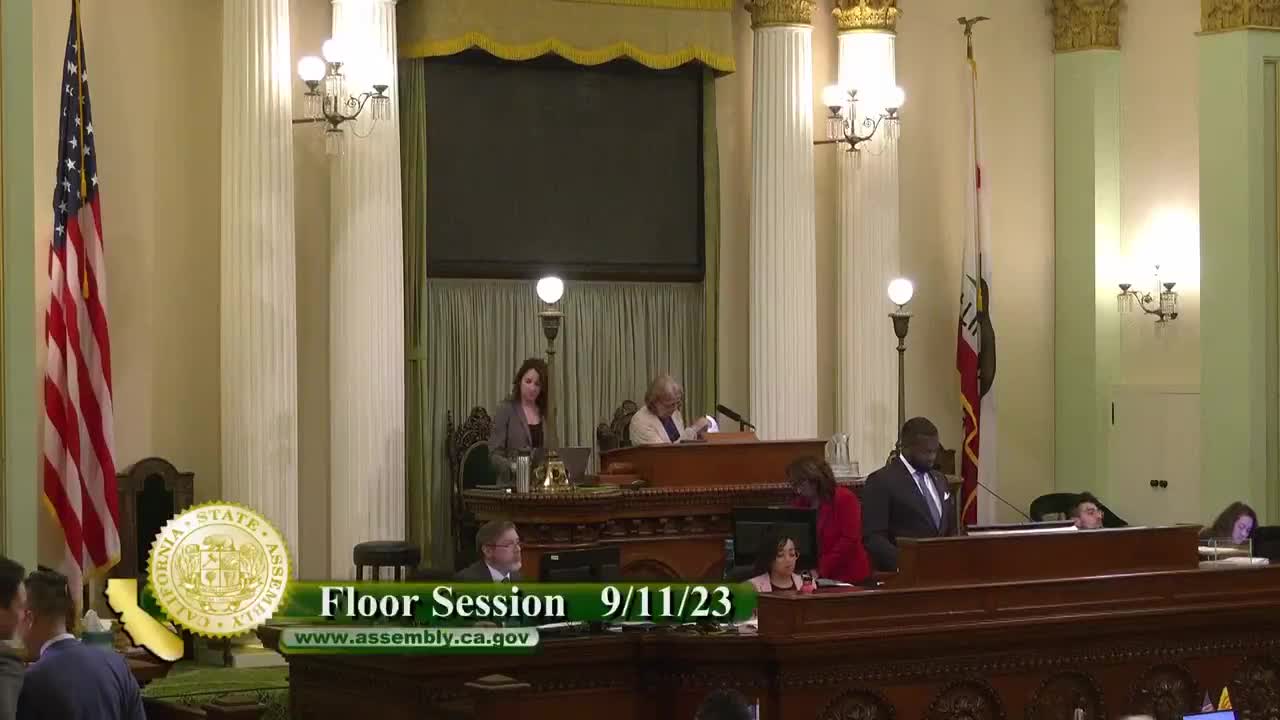 1MIN
Assembly Floor
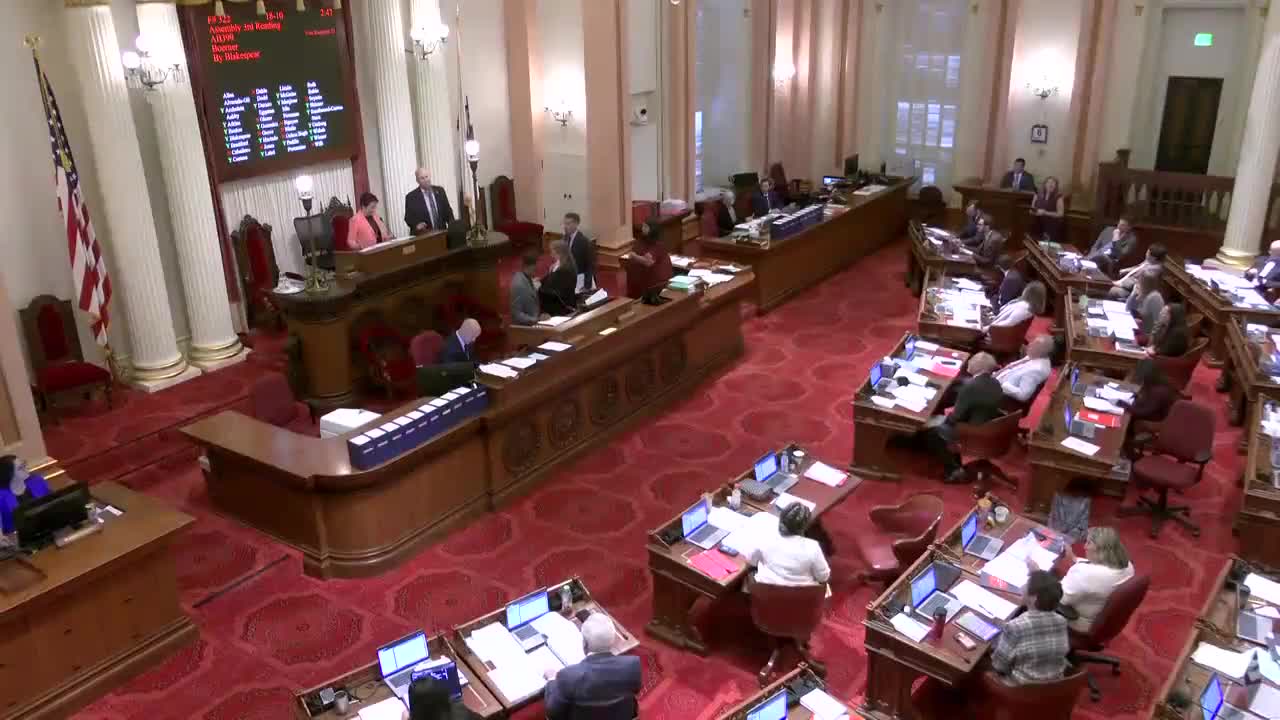 3MIN
Senate Floor
 49SEC
Senate Standing Committee on Appropriations
 11MIN
Senate Standing Committee on Agriculture
 13MIN
Senate Standing Committee on Environmental Quality
 3MIN
Assembly Floor
 16MIN
Assembly Standing Committee on Privacy and Consumer Protection
 19MIN
Assembly Standing Committee on Agriculture
Bill Author



