AB 1213: Workers’ compensation: aggregate disability payments.
- Session Year: 2023-2024
- House: Assembly
- Latest Version Date: 2023-09-14
Current Status:
Failed
(2024-01-30: Consideration of Governor's veto stricken from file.)
Introduced
In Committee
First Chamber
In Committee
Second Chamber
Enacted
Existing law establishes a workers compensation system, administered by the Administrative Director of the Division of Workers Compensation, to compensate an employee for injuries sustained in the course of their employment. Existing law requires every employer to establish a utilization review process, as described, and establishes an independent medical review process to resolve disputes over a utilization review decision, as specified. Existing law requires that aggregate disability payments for a single injury occurring on or after certain dates be limited, as provided.
This bill, from January 1, 2024, until January 1, 2027, would require that if a denial of treatment requested by a treating physician is subsequently overturned by independent medical review or by the Workers Compensation Appeals Board, any temporary disability to which the employee is entitled to receive or becomes entitled to receive from the date of the denial until the treatment is authorized would not be included in the calculation of the aggregate disability payments, as specified.
Existing law establishes a workers compensation system, administered by the Administrative Director of the Division of Workers Compensation, to compensate an employee for injuries sustained in the course of their employment. Existing law requires every employer to establish a utilization review process, as described, and establishes an independent medical review process to resolve disputes over a utilization review decision, as specified. Existing law requires that aggregate disability payments for a single injury occurring on or after certain dates be limited, as provided.
This bill, from January 1, 2024, until January 1, 2027, would require that if a denial of treatment requested by a treating physician is subsequently overturned by independent medical review or by the Workers Compensation Appeals Board, any temporary disability paid or owing to which the employee is entitled to receive or becomes entitled to receive from the date of the denial until the treatment is authorized would not be included in the calculation of the aggregate disability payments. payments, as specified.
Existing law establishes a workers compensation system, administered by the Administrative Director of the Division of Workers Compensation, to compensate an employee for injuries sustained in the course of their employment. Existing law requires every employer to establish a utilization review process, as described, and establishes an independent medical review process to resolve disputes over a utilization review decision, as specified. Existing law requires that aggregate disability payments for a single injury occurring on or after certain dates be limited, as provided.
This bill bill, until January 1, 2027, would require that if a denial of treatment requested by a treating physician is subsequently overturned by independent medical review or by the Workers Compensation Appeals Board, any temporary disability paid or owing from the date of the denial until the treatment is authorized would not be included in the calculation of the aggregate disability payments.
Existing law establishes a workers compensation system, administered by the Administrative Director of the Division of Workers Compensation, to compensate an employee for injuries sustained in the course of their employment. Existing law requires every employer to establish a utilization review process, as described, and establishes an independent medical review process to resolve disputes over a utilization review decision, as specified. Existing law requires that aggregate disability payments for a single injury occurring on or after certain dates be limited, as provided.
This bill would require that if a denial of treatment requested by a treating physician is subsequently overturned by independent medical review or by the Workers Compensation Appeals Board, any temporary disability paid or owing from the date of the denial until the treatment is authorized would not be included in the calculation of the aggregate disability payments.
(a)Aggregate disability payments for a single injury occurring prior to January 1, 1979, causing temporary disability shall not extend for more than 240 compensable weeks within a period of five years from the date of the injury.
(b)Aggregate disability payments for a single injury occurring on or after January 1, 1979, and prior to April 19, 2004, causing temporary partial disability shall not extend for more than 240 compensable weeks within a period of five years from the date of the injury.
(c)(1)Aggregate disability payments for a single injury occurring on or after April 19, 2004, causing temporary disability shall not extend for more than 104 compensable weeks within a period of two years from the date of commencement of temporary disability payment.
(2)Aggregate disability payments for a single injury occurring on or after January 1, 2008, causing temporary disability shall not extend for more than 104 compensable weeks within a period of five years from the date of injury.
(3)Notwithstanding paragraphs (1) and (2), for an employee who suffers from the following injuries or conditions, aggregate disability payments for a single injury occurring on or after April 19, 2004, causing temporary disability shall not extend for more than 240 compensable weeks within a period of five years from the date of the injury:
(A)Acute and chronic hepatitis B.
(B)Acute and chronic hepatitis C.
(C)Amputations.
(D)Severe burns.
(E)Human immunodeficiency virus (HIV).
(F)High-velocity eye injuries.
(G)Chemical burns to the eyes.
(H)Pulmonary fibrosis.
(I)Chronic lung disease.
(d)Notwithstanding subdivisions (a), (b), and (c), for an employee who suffers from an injury or condition defined in Section 3212.1, aggregate disability payments for a single injury occurring on or after January 1, 2023, causing temporary disability shall not extend for more than 240 compensable weeks.
(e)(1)On or after January 1, 2024, if a denial of treatment requested by a treating physician is subsequently overturned by independent medical review or by the Workers Compensation Appeals Board, any temporary disability to which the employee is entitled to receive or becomes entitled to receive from the date of the denial until the treatment is authorized shall not be included in the calculation of the aggregate disability payments under this section.
(2)As provided in paragraph (1), aggregate disability payments during the period in which the medical treatment was disputed may be extended up to a maximum of 90 days per medical treatment dispute.
(3)This subdivision shall become inoperative on January 1, 2027.
(a)Aggregate disability payments for a single injury occurring prior to January 1, 1979, causing temporary disability shall not extend for more than 240 compensable weeks within a period of five years from the date of the injury.
(b)Aggregate disability payments for a single injury occurring on or after January 1, 1979, and prior to April 19, 2004, causing temporary partial disability shall not extend for more than 240 compensable weeks within a period of five years from the date of the injury.
(c)(1)Aggregate disability payments for a single injury occurring on or after April 19, 2004, causing temporary disability shall not extend for more than 104 compensable weeks within a period of two years from the date of commencement of temporary disability payment.
(2)Aggregate disability payments for a single injury occurring on or after January 1, 2008, causing temporary disability shall not extend for more than 104 compensable weeks within a period of five years from the date of injury.
(3)Notwithstanding paragraphs (1) and (2), for an employee who suffers from the following injuries or conditions, aggregate disability payments for a single injury occurring on or after April 19, 2004, causing temporary disability shall not extend for more than 240 compensable weeks within a period of five years from the date of the injury:
(A)Acute and chronic hepatitis B.
(B)Acute and chronic hepatitis C.
(C)Amputations.
(D)Severe burns.
(E)Human immunodeficiency virus (HIV).
(F)High-velocity eye injuries.
(G)Chemical burns to the eyes.
(H)Pulmonary fibrosis.
(I)Chronic lung disease.
(d)Notwithstanding subdivisions (a), (b), and (c), for an employee who suffers from an injury or condition defined in Section 3212.1, aggregate disability payments for a single injury occurring on or after January 1, 2023, causing temporary disability shall not extend for more than 240 compensable weeks.
(e)(1)If On or after January 1, 2024, if a denial of treatment requested by a treating physician is subsequently overturned by independent medical review or by the Workers Compensation Appeals Board, any temporary disability paid or owing to which the employee is entitled to receive or becomes entitled to receive from the date of the denial until the treatment is authorized shall not be included in the calculation of the aggregate disability payments under this section.
(2)As provided in paragraph (1), aggregate disability payments during the period in which the medical treatment was disputed may be extended up to a maximum of 90 days per medical treatment dispute.
(2)(3)This subdivision shall become inoperative on January 1, 2027.
(a)Aggregate disability payments for a single injury occurring prior to January 1, 1979, causing temporary disability shall not extend for more than 240 compensable weeks within a period of five years from the date of the injury.
(b)Aggregate disability payments for a single injury occurring on or after January 1, 1979, and prior to April 19, 2004, causing temporary partial disability shall not extend for more than 240 compensable weeks within a period of five years from the date of the injury.
(c)(1)Aggregate disability payments for a single injury occurring on or after April 19, 2004, causing temporary disability shall not extend for more than 104 compensable weeks within a period of two years from the date of commencement of temporary disability payment.
(2)Aggregate disability payments for a single injury occurring on or after January 1, 2008, causing temporary disability shall not extend for more than 104 compensable weeks within a period of five years from the date of injury.
(3)Notwithstanding paragraphs (1) and (2), for an employee who suffers from the following injuries or conditions, aggregate disability payments for a single injury occurring on or after April 19, 2004, causing temporary disability shall not extend for more than 240 compensable weeks within a period of five years from the date of the injury:
(A)Acute and chronic hepatitis B.
(B)Acute and chronic hepatitis C.
(C)Amputations.
(D)Severe burns.
(E)Human immunodeficiency virus (HIV).
(F)High-velocity eye injuries.
(G)Chemical burns to the eyes.
(H)Pulmonary fibrosis.
(I)Chronic lung disease.
(d)Notwithstanding subdivisions (a), (b), and (c), for an employee who suffers from an injury or condition defined in Section 3212.1, aggregate disability payments for a single injury occurring on or after January 1, 2023, causing temporary disability shall not extend for more than 240 compensable weeks.
(e)(1)If a denial of treatment requested by a treating physician is subsequently overturned by independent medical review or by the Workers Compensation Appeals Board, any temporary disability paid or owing from the date of the denial until the treatment is authorized shall not be included in the calculation of the aggregate disability payments under this section.
(2)This subdivision shall become inoperative on January 1, 2027.
(a)Aggregate disability payments for a single injury occurring prior to January 1, 1979, causing temporary disability shall not extend for more than 240 compensable weeks within a period of five years from the date of the injury.
(b)Aggregate disability payments for a single injury occurring on or after January 1, 1979, and prior to April 19, 2004, causing temporary partial disability shall not extend for more than 240 compensable weeks within a period of five years from the date of the injury.
(c)(1)Aggregate disability payments for a single injury occurring on or after April 19, 2004, causing temporary disability shall not extend for more than 104 compensable weeks within a period of two years from the date of commencement of temporary disability payment.
(2)Aggregate disability payments for a single injury occurring on or after January 1, 2008, causing temporary disability shall not extend for more than 104 compensable weeks within a period of five years from the date of injury.
(3)Notwithstanding paragraphs (1) and (2), for an employee who suffers from the following injuries or conditions, aggregate disability payments for a single injury occurring on or after April 19, 2004, causing temporary disability shall not extend for more than 240 compensable weeks within a period of five years from the date of the injury:
(A)Acute and chronic hepatitis B.
(B)Acute and chronic hepatitis C.
(C)Amputations.
(D)Severe burns.
(E)Human immunodeficiency virus (HIV).
(F)High-velocity eye injuries.
(G)Chemical burns to the eyes.
(H)Pulmonary fibrosis.
(I)Chronic lung disease.
(d)Notwithstanding subdivisions (a), (b), and (c), for an employee who suffers from an injury or condition defined in Section 3212.1, aggregate disability payments for a single injury occurring on or after January 1, 2023, causing temporary disability shall not extend for more than 240 compensable weeks.
(e)If a denial of treatment requested by a treating physician is subsequently overturned by independent medical review or by the Workers Compensation Appeals Board, any temporary disability paid or owing from the date of the denial until the treatment is authorized shall not be included in the calculation of the aggregate disability payments under this section.
|
Date
|
Status
|
|---|---|
| Jan 30, 2024 | Consideration of Governor's veto stricken from file. |
| Jan 3, 2024 | Consideration of Governor's veto pending. |
| Oct 8, 2023 | Vetoed by Governor. |
| Sep 19, 2023 | Enrolled and presented to the Governor at 4 p.m. |
| Sep 12, 2023 | Senate amendments concurred in. To Engrossing and Enrolling. (Ayes 63. Noes 13. Page 3267.). |
| Sep 12, 2023 | Assembly Rule 77 suspended. (Page 3228.) |
| Sep 11, 2023 | In Assembly. Concurrence in Senate amendments pending. May be considered on or after September 13 pursuant to Assembly Rule 77. |
| Sep 11, 2023 | Read third time. Passed. Ordered to the Assembly. (Ayes 30. Noes 9. Page 2559.). |
| Sep 5, 2023 | Read second time. Ordered to third reading. |
| Sep 1, 2023 | Read second time and amended. Ordered returned to second reading. |
| Sep 1, 2023 | From committee: Amend, and do pass as amended. (Ayes 5. Noes 2.) (September 1). |
| Jul 3, 2023 | In committee: Referred to APPR suspense file. |
| Jun 22, 2023 | From committee: Do pass and re-refer to Com. on APPR. (Ayes 4. Noes 0.) (June 22). Re-referred to Com. on APPR. |
| Jun 7, 2023 | Referred to Com. on L., P.E. & R. |
| May 26, 2023 | In Senate. Read first time. To Com. on RLS. for assignment. |
| May 25, 2023 | Read third time. Passed. Ordered to the Senate. (Ayes 62. Noes 8. Page 1740.) |
| May 11, 2023 | Read second time. Ordered to third reading. |
| May 10, 2023 | From committee: Do pass. (Ayes 12. Noes 2.) (May 10). |
| Apr 26, 2023 | From committee: Do pass and re-refer to Com. on APPR. (Ayes 11. Noes 1.) (April 26). Re-referred to Com. on APPR. |
| Apr 11, 2023 | Re-referred to Com. on INS. |
| Apr 10, 2023 | From committee chair, with author's amendments: Amend, and re-refer to Com. on INS. Read second time and amended. |
| Mar 2, 2023 | Referred to Com. on INS. |
| Feb 17, 2023 | From printer. May be heard in committee March 19. |
| Feb 16, 2023 | Read first time. To print. |
|
Date
|
Description
|
Location
|
Votes
|
|
|---|---|---|---|---|
| Sep 12, 2023 | AB 1213 Ortega Concurrence in Senate Amendments | Assembly Floor |
Passed |
|
| Sep 11, 2023 | Assembly 3rd Reading AB1213 Ortega By Cortese | Senate Floor |
Passed |
|
| Sep 1, 2023 | Do pass as amended | Senate Standing Committee on Appropriations |
Passed |
|
| Jul 3, 2023 | Placed on suspense file | Senate Standing Committee on Appropriations |
Passed |
|
| Jun 22, 2023 | Do pass, but first be re-referred to the Committee on [Appropriations] | Senate Standing Committee on Labor, Public Employment and Retirement |
Passed |
|
| May 25, 2023 | AB 1213 Ortega Assembly Third Reading | Assembly Floor |
Passed |
|
| May 10, 2023 | Do pass. | Assembly Standing Committee on Appropriations |
Passed |
|
| Apr 26, 2023 | Do pass and be re-referred to the Committee on [Appropriations] | Assembly Standing Committee on Insurance |
Passed |
This list shows positions taken on this bill by organizations on the date displayed, which is linked to the original source.
Positions by individuals are not included.
|
Organization
|
Position
|
Date
|
|---|---|---|
| Acclamation Insurance Management Services | ** Against | |
| AFSCME | ** Support | |
| Allied Managed Care | ** Against | |
| American Property Casualty Insurance Association | ** Against | |
| Association of California Healthcare Districts | ** Against | |
| Association Of Claims Professionals | ** Against | |
| California Applicants' Attorneys Association | ** Support | |
| California Association For Health Services At Home | ** Against | |
| California Association Joint Powers Authorities | * Against | Jun 22, 2023 |
| California Association Of Joint Powers Authorities | ** Against | |
| California Attractions And Parks Association | ** Against | |
| California Chamber Of Commerce | ** Against | |
| California Coalition of Workers Compensation | * Against | Jun 22, 2023 |
| California Coalition On Workers Compensation | ** Against | |
| California Hotel & Lodging Association | ** Against | |
| California Labor Federation, Afl-Cio | ** Support | |
| California League of Food Producers | ** Against | |
| California Nurses Association | ** Support | |
| California Professional Firefighters | ** Support | |
| California Special Districts Association | ** Against | |
| California State Association Of Counties | ** Against | |
| California Workers Justice Alliance | ** Support | |
| City of Oceanside | ** Against | |
| Coalition of Small and Disabled Veteran Businesses | ** Against | |
| Flasher Barricade Association | ** Against | |
| Independent Lodging Industry Association. | ** Against | |
| League Of California Cities | ** Against | |
| Los Angeles County | ** Against | |
| Los Angeles County Professional Peace Officers Association | ** Support | |
| Los Angeles Police Protective League | ** Support | |
| Peace Officers Research Association Of California | ** Support | |
| Public Risk Innovation Solutions and Management | ** Against | |
| Western Electrical Contractors Association | ** Against |
GOVERNOR'S VETO
GV Bill Id:AB 1213
Author:(Ortega)
As Enrolled Ver:September 14, 2023
2/3 vote
SUMMARY
Extends, until January 1, 2027, the duration of temporary disability (TD) payments in the event an injured worker prevails at independent medical review (IMR).
Senate Amendments
Provide a cap, of up to 90 days, on the duration of the extension of TD benefits.
Governor's Veto Message
This bill would provide, until January 1, 2027, that when a utilization review (UR) denial of treatment is overturned by independent medical review (IMR) or by the Workers' Compensation Appeals Board, any temporary disability (TD) payments received during this period would not be included in the maximum aggregate calculation of TD payments.
While I understand the goal of the author and sponsor, there is a lack of data to support such a change. Under the existing workers' compensation system, employers are required to establish a UR process to evaluate the necessity and appropriateness of requested medical treatments. This process is in place to ensure that employees receive the appropriate evidence-based medical care.
Realigning incentives is an important policy tool to deliver on our shared goal of returning injured workers back to work. Such realignment should be done cautiously to avoid further friction in the system that frustrates the objective of providing timely treatment, prompt payment of benefits and returning injured workers back to work. Unfortunately, this bill does not strike the right balance.
COMMENTS
UR is the mechanism by which employers or their claims administrators can modify or deny treatment requests from injured workers. The timeline for this process is regulated and fairly quick, about five to 14 days. IMR is the process through which the injured worker or their attorney can appeal the UR decision. This process generally takes longer. In the event that IMR overturns a UR decision on medical necessity grounds, this bill allows for the period of time between the UR denial and the IMR decision overturning that denial to not count against the 104 week TD coverage limit.
Data shows that IMR upholds more than 90% of UR decisions. Therefore, the number of cases where IMR overturns the UR decision are relatively few. Additionally, in only a small percentage of these reversals is the injured worker likely to exhaust the full 104 weeks of TD. This makes the population of injured workers who would benefit from the bill fairly small.
The bill's underlying premise is that a UR denial that is reversed by IMR necessarily establishes that the injured worker's recovery and ultimate return to work has been delayed. However, opponents argue that delays are caused by an overutilization of IMR and that this bill could encourage additional overuse, thereby actually causing more delays.
The sunset provision in this bill should help to address this concern, and others expressed by opponents, because it will provide an opportunity to see whether IMR filings increase and any other challenges that arise before the provisions are made permanent.
According to the Author
Injured workers are many times apart of minority communities such as people of color, individuals with disabilities, low-income families, and other historically disadvantaged groups. When workers within these groups are injured and no longer able to work while receiving temporary disability (TD) payments, they are struggling to support their families who are reliant on their income for basic necessities such as food, housing costs, and utilities. Some injured workers have their recommended medical treatment erroneously denied under utilization review (UR) while they are on TD and then have the denial overturned. In this situation, the delay in their treatment, although no fault of their own, is still included in the 104 week TD coverage limit.
Injured workers who experience unfair delays should not be stripped of their ability to pay for their housing, utilities and food as they wait for treatment and recovery. [This bill] would require that when a UR denial is overturned by Independent Medical Review on medical necessity grounds, or by the Workers' Compensation Appeals Board because it was untimely and unreasonable, that temporary disability payments be extended beyond the 104 week limit by the same amount of time the denial delayed the worker's treatment. This bill allows injured workers to receive the treatment they need to truly heal from their job-related injury or illness.
Arguments in Support
The California Applicants' Attorneys Association, the sponsor of this bill, writes in support arguing "It is wrong for TD benefits for so many injured workers to end when necessary treatment was erroneously or unreasonably denied, and the denial delayed the injured worker's recovery and return to work."
Arguments in Opposition
In opposition, the California Coalition on Workers' Comp and other employer organizations, argue the bill is not needed because "The actual delay in the system related to care comes from the overuse of IMR by a small number of attorneys and physicians trying to push care that is conflicting with the state-established guidelines for determining medical necessity."
FISCAL COMMENTS
According to the Senate Appropriations Committee, "This bill could result in additional temporary disability benefit payments to state employees relative to current law. The magnitude is unknown, but potentially in excess of $50,000 per year (General Fund). The bill would not have a fiscal impact to the Department of Industrial Relations (DIR). "
VOTES
ASM INSURANCE: 11-1-2
YES: Calderon, Berman, Cervantes, Gipson, Grayson, Jones-Sawyer, Ortega, Rodriguez, Soria, Valencia, Wood
NO: Vince Fong
ABS, ABST OR NV: Essayli, Chen
ASM APPROPRIATIONS: 12-2-2
YES: Holden, Bryan, Calderon, Wendy Carrillo, Mike Fong, Addis, Lowenthal, Papan, Pellerin, Robert Rivas, Weber, Wilson
NO: Megan Dahle, Dixon
ABS, ABST OR NV: Mathis, Sanchez
ASSEMBLY FLOOR: 62-8-10
YES: Addis, Alvarez, Arambula, Bains, Bauer-Kahan, Bennett, Berman, Boerner, Bonta, Bryan, Calderon, Juan Carrillo, Wendy Carrillo, Cervantes, Connolly, Mike Fong, Friedman, Gabriel, Garcia, Gipson, Grayson, Haney, Hart, Holden, Irwin, Jackson, Jones-Sawyer, Kalra, Lee, Low, Lowenthal, Maienschein, McCarty, McKinnor, Muratsuchi, Stephanie Nguyen, Ortega, Pacheco, Papan, Pellerin, Petrie-Norris, Quirk-Silva, Ramos, Reyes, Luz Rivas, Robert Rivas, Rodriguez, Blanca Rubio, Santiago, Schiavo, Soria, Ting, Valencia, Villapudua, Waldron, Ward, Weber, Wicks, Wilson, Wood, Zbur, Rendon
NO: Alanis, Megan Dahle, Davies, Dixon, Essayli, Vince Fong, Hoover, Wallis
ABS, ABST OR NV: Aguiar-Curry, Chen, Flora, Gallagher, Lackey, Mathis, Jim Patterson, Joe Patterson, Sanchez, Ta
SENATE FLOOR: 30-9-1
YES: Allen, Archuleta, Ashby, Atkins, Becker, Blakespear, Bradford, Cortese, Dodd, Durazo, Eggman, Glazer, Gonzalez, Hurtado, Laird, Limón, McGuire, Menjivar, Min, Newman, Padilla, Portantino, Roth, Rubio, Skinner, Smallwood-Cuevas, Stern, Umberg, Wahab, Wiener
NO: Alvarado-Gil, Dahle, Grove, Jones, Nguyen, Niello, Ochoa Bogh, Seyarto, Wilk
ABS, ABST OR NV: Caballero
ASSEMBLY FLOOR: 63-13-4
YES: Addis, Aguiar-Curry, Alvarez, Arambula, Bains, Bauer-Kahan, Bennett, Berman, Boerner, Bonta, Bryan, Calderon, Juan Carrillo, Wendy Carrillo, Cervantes, Connolly, Mike Fong, Friedman, Gabriel, Garcia, Gipson, Grayson, Haney, Hart, Holden, Irwin, Jackson, Jones-Sawyer, Kalra, Lee, Low, Lowenthal, Maienschein, McCarty, McKinnor, Muratsuchi, Stephanie Nguyen, Ortega, Pacheco, Papan, Pellerin, Petrie-Norris, Quirk-Silva, Ramos, Rendon, Reyes, Luz Rivas, Rodriguez, Blanca Rubio, Santiago, Schiavo, Soria, Ting, Valencia, Villapudua, Waldron, Ward, Weber, Wicks, Wilson, Wood, Zbur, Robert Rivas
NO: Alanis, Megan Dahle, Davies, Dixon, Essayli, Flora, Vince Fong, Gallagher, Hoover, Mathis, Jim Patterson, Ta, Wallis
ABS, ABST OR NV: Chen, Lackey, Joe Patterson, Sanchez
UPDATED
VERSION: September 14, 2023
CONSULTANT: Claire Wendt / INS. / (916) 319-2086 FN: 0002501
CONCURRENCE IN SENATE AMENDMENTS
CSA1 Bill Id:AB 1213
Author:(Ortega)
As Amended Ver:September 1, 2023
Majority vote
SUMMARY
Extends, until January 1, 2027, the duration of temporary disability (TD) payments in the event an injured worker prevails at independent medical review (IMR).
Senate Amendments
Provide a cap, of up to 90 days, on the duration of the extension of TD benefits.
COMMENTS
UR is the mechanism by which employers or their claims administrators can modify or deny treatment requests from injured workers. The timeline for this process is regulated and fairly quick, about five to 14 days. IMR is the process through which the injured worker or their attorney can appeal the UR decision. This process generally takes longer. In the event that IMR overturns a UR decision on medical necessity grounds, this bill allows for the period of time between the UR denial and the IMR decision overturning that denial to not count against the 104 week TD coverage limit.
Data shows that IMR upholds more than 90% of UR decisions. Therefore, the number of cases where IMR overturns the UR decision are relatively few. Additionally, in only a small percentage of these reversals is the injured worker likely to exhaust the full 104 weeks of TD. This makes the population of injured workers who would benefit from the bill fairly small.
The bill's underlying premise is that a UR denial that is reversed by IMR necessarily establishes that the injured worker's recovery and ultimate return to work has been delayed. However, opponents argue that delays are caused by an overutilization of IMR and that this bill could encourage additional overuse, thereby actually causing more delays.
The sunset provision in this bill should help to address this concern, and others expressed by opponents, because it will provide an opportunity to see whether IMR filings increase and any other challenges that arise before the provisions are made permanent.
According to the Author
Injured workers are many times apart of minority communities such as people of color, individuals with disabilities, low-income families, and other historically disadvantaged groups. When workers within these groups are injured and no longer able to work while receiving temporary disability (TD) payments, they are struggling to support their families who are reliant on their income for basic necessities such as food, housing costs, and utilities. Some injured workers have their recommended medical treatment erroneously denied under utilization review (UR) while they are on TD and then have the denial overturned. In this situation, the delay in their treatment, although no fault of their own, is still included in the 104 week TD coverage limit.
Injured workers who experience unfair delays should not be stripped of their ability to pay for their housing, utilities and food as they wait for treatment and recovery. [This bill] would require that when a UR denial is overturned by Independent Medical Review on medical necessity grounds, or by the Workers' Compensation Appeals Board because it was untimely and unreasonable, that temporary disability payments be extended beyond the 104 week limit by the same amount of time the denial delayed the worker's treatment. This bill allows injured workers to receive the treatment they need to truly heal from their job-related injury or illness.
Arguments in Support
The California Applicants' Attorneys Association, the sponsor of this bill, writes in support arguing "It is wrong for TD benefits for so many injured workers to end when necessary treatment was erroneously or unreasonably denied, and the denial delayed the injured worker's recovery and return to work."
Arguments in Opposition
In opposition, the California Coalition on Workers' Comp and other employer organizations, argue the bill is not needed because "The actual delay in the system related to care comes from the overuse of IMR by a small number of attorneys and physicians trying to push care that is conflicting with the state-established guidelines for determining medical necessity."
FISCAL COMMENTS
According to the Senate Appropriations Committee, "This bill could result in additional temporary disability benefit payments to state employees relative to current law. The magnitude is unknown, but potentially in excess of $50,000 per year (General Fund). The bill would not have a fiscal impact to the Department of Industrial Relations (DIR)."
VOTES:
ASM INSURANCE: 11-1-2
YES: Calderon, Berman, Cervantes, Gipson, Grayson, Jones-Sawyer, Ortega, Rodriguez, Soria, Valencia, Wood
NO: Vince Fong
ABS, ABST OR NV: Essayli, Chen
ASM APPROPRIATIONS: 12-2-2
YES: Holden, Bryan, Calderon, Wendy Carrillo, Mike Fong, Addis, Lowenthal, Papan, Pellerin, Robert Rivas, Weber, Wilson
NO: Megan Dahle, Dixon
ABS, ABST OR NV: Mathis, Sanchez
ASSEMBLY FLOOR: 62-8-10
YES: Addis, Alvarez, Arambula, Bains, Bauer-Kahan, Bennett, Berman, Boerner, Bonta, Bryan, Calderon, Juan Carrillo, Wendy Carrillo, Cervantes, Connolly, Mike Fong, Friedman, Gabriel, Garcia, Gipson, Grayson, Haney, Hart, Holden, Irwin, Jackson, Jones-Sawyer, Kalra, Lee, Low, Lowenthal, Maienschein, McCarty, McKinnor, Muratsuchi, Stephanie Nguyen, Ortega, Pacheco, Papan, Pellerin, Petrie-Norris, Quirk-Silva, Ramos, Reyes, Luz Rivas, Robert Rivas, Rodriguez, Blanca Rubio, Santiago, Schiavo, Soria, Ting, Valencia, Villapudua, Waldron, Ward, Weber, Wicks, Wilson, Wood, Zbur, Rendon
NO: Alanis, Megan Dahle, Davies, Dixon, Essayli, Vince Fong, Hoover, Wallis
ABS, ABST OR NV: Aguiar-Curry, Chen, Flora, Gallagher, Lackey, Mathis, Jim Patterson, Joe Patterson, Sanchez, Ta
SENATE FLOOR: 30-9-1
YES: Allen, Archuleta, Ashby, Atkins, Becker, Blakespear, Bradford, Cortese, Dodd, Durazo, Eggman, Glazer, Gonzalez, Hurtado, Laird, Limón, McGuire, Menjivar, Min, Newman, Padilla, Portantino, Roth, Rubio, Skinner, Smallwood-Cuevas, Stern, Umberg, Wahab, Wiener
NO: Alvarado-Gil, Dahle, Grove, Jones, Nguyen, Niello, Ochoa Bogh, Seyarto, Wilk
ABS, ABST OR NV: Caballero
UPDATED
VERSION: September 1, 2023
CONSULTANT: Claire Wendt / INS. / (916) 319-2086 FN: 0001843
SENATE RULES COMMITTEE Office of Senate Floor Analyses (916) 651-1520 Fax: (916) 327-4478 | AB 1213 |
THIRD READING
Bill No: AB 1213
Author: Ortega (D)
Amended: 9/1/23 in Senate
Vote: 21
SENATE LABOR, PUB. EMP. & RET. COMMITTEE: 4-0, 6/22/23
AYES: Cortese, Durazo, Laird, Smallwood-Cuevas
NO VOTE RECORDED: Wilk
SENATE APPROPRIATIONS COMMITTEE: 5-2, 9/1/23
AYES: Portantino, Ashby, Bradford, Wahab, Wiener
NOES: Jones, Seyarto
ASSEMBLY FLOOR: 62-8, 5/25/23 - See last page for vote
SUBJECT: Workers’ compensation: aggregate disability payments
SOURCE: California Applicants' Attorneys Association
DIGEST:
This bill, until January 1, 2027, extends the potential duration of temporary disability payments up to 90 days if an injured employee prevails at a workers’ compensation independent medical review (IMR).
ANALYSIS:
Existing law:
- Establishes a workers’ compensation system, administered by the Division of Workers’ Compensation (Division) within the Department of Industrial Relations (DIR) and requires employers to secure payment of workers’ compensation for injuries incurred by employees that arise out of, and in the course of, employment.
- Requires every employer to establish a medical treatment utilization review (UR) UR process directly or through an insurer or an entity with which the employer or insurer contracts for these services and establishes penalties for failure to comply with UR requirements.
- Provides that an employer (or the employer’s insurer) can challenge the appropriateness of medical treatment recommended by a treating physician through UR, a system whereby physicians with comparable expertise to the treating provider apply nationally recognized, peer-reviewed, evidence-based medical guidelines to determine whether the recommended treatment is appropriate.
- Establishes the IMR system that operates as the employee’s appeal of a UR denial. The IMR system is operated by a vendor selected and regulated by the Division and its review conducted by qualified medical professionals. In most circumstances, a determination by IMR is final and binding.
- Provides, for the purpose of workers’ compensation temporary disability payments, two-thirds of the weekly loss of wages during the disability, for up to
104 weeks.
This bill:
- Provides that, from January 1, 2024, until January 1, 2027, if a UR denial of treatment recommended by a treating physician for an injured worker is overturned by IMR or the Workers’ Compensation Appeals Board, any temporary disability benefits to which the employee is entitled to receive or becomes entitled to receive from the date of the UR denial until the treatment is authorized shall not be included in the calculation of the aggregate disability payments.
- Specifies that aggregate disability payments during the period in which the medical treatment was disputed may be extended up to a maximum of 90 days per medical treatment dispute.
Background
The UR process is used by employers or claims administrators to have a doctor review a medical treatment plan to determine if the proposed treatment is medically necessary after consulting a schedule of uniform treatment guidelines. All employers, or their workers’ compensation claims administrators, are required to have a UR program. This program is used to decide whether or not to approve medical treatment recommended by a physician, which must be based on medical treatment guidelines. These guidelines, referred to as the Medical Treatment Utilization Schedule, are adopted by the Division and in most cases are consistent with treatment guidelines adopted by the American College of Occupational and Environmental Medicine.
If the UR reviewer concludes a recommended treatment is not medically necessary, they may modify or deny the treatment request. If the treatment request is modified or denied, the IMR process can be initiated by the injured worker or their physician or attorney within 30 days. Once IMR is initiated, the claims administrator has 14 days to provide records to the IMR provider, who then has 30 days to submit a decision. Recent data estimates 92.5 percent of all medical treatment requests are approved without objection and 1.6 percent are approved with modifications.
In the event a UR decision is overturned, this bill would allow up to 90 days of the period of time between the UR denial and the decision overturning that denial to not count against the 104-week limit on TD benefits paid to a worker. Available data indicate IMR upholds more than 90 percent of UR decisions. According to the Division, in 2021 the number of requests for IMR totaled 264,196. Of this amount, 19,023 (7.2 percent) overturned the UR decision. Therefore, IMR reversing a UR decision is a relatively rare occurrence. Additionally, in only a small percentage of these reversals is the injured worker likely to exhaust the full 104 weeks of TD. As such, the population of injured workers who would benefit from the bill is fairly small.
Comments
Purpose of this bill. According to the author, “Injured workers are many times a part of minority communities such as people of color, individuals with disabilities, low-income families, and other historically disadvantaged groups. When workers within these groups are injured and no longer able to work while receiving temporary disability (TD) payments, they are struggling to support their families who are reliant on their income for basic necessities such as food, housing costs, and utilities. Some injured workers have their recommended medical treatment erroneously denied under utilization review (UR) while they are on TD and then have the denial overturned. In this situation, the delay in their treatment, although no fault of their own, is still included in the 104 week TD coverage limit. Injured workers who experience unfair delays should not be stripped of their ability to pay for their housing, utilities and food as they wait for treatment and recovery. AB 1213 would require that when a UR denial is overturned by Independent Medical Review on medical necessity grounds, or by the Workers’ Compensation Appeals Board because it was untimely and unreasonable, that temporary disability payments be extended beyond the 104 week limit by the same amount of time the denial delayed the worker’s treatment. This bill allows injured workers to receive the treatment they need to truly heal from their job-related injury or illness.”
Related/Prior Legislation
AB 1295 (Chu, 2017) was identical to this bill, with the exception of the inoperative date. This bill was held by the Assembly Committee on Insurance.
SB 1160 (Mendoza - Chapter 868, Statutes of 2016) expedited medical care at the beginning of the injured worker’s claim, modernized data collection in the workers’ compensation system, and implemented anti-fraud measures in the filing and collection of liens.
SB 863 (De Leon - Chapter 363, Statutes of 2012) allowed, among other things, an employee to appeal a UR decision by requesting an IMR either immediately after the UR decision or after getting a second UR with additional information.
FISCAL EFFECT: Appropriation: No Fiscal Com.: Yes Local: No
According to the Senate Appropriations Committee, “This bill could result in additional temporary disability benefit payments to state employees relative to current law. The magnitude is unknown, but potentially in excess of $50,000 per year (General Fund). The bill would not have a fiscal impact to the Department of Industrial Relations (DIR).”
SUPPORT: (Verified 9/1/23)
California Applicants' Attorneys Association (source)
AFSCME
California Labor Federation, AFL-CIO
California Nurses Association
California Professional Firefighters
California Workers Justice Alliance
Los Angeles County Professional Peace Officers Association
Los Angeles Police Protective League
Peace Officers Research Association of California
OPPOSITION: (Verified 9/1/23)
Acclamation Insurance Management Services
Allied Managed Care
American Property Casualty Insurance Association
Association of California Healthcare Districts
Association of Claims Professionals
California Association for Health Services At Home
California Association of Joint Powers Authorities
California Attractions and Parks Association
California Chamber of Commerce
California Coalition on Workers Compensation
California Hotel & Lodging Association
California League of Food Producers
California Special Districts Association
California State Association of Counties
City of Oceanside
Coalition of Small and Disabled Veteran Businesses
Flasher Barricade Association
Independent Lodging Industry Association.
League of California Cities
Los Angeles County
Public Risk Innovation, Solutions, and Management
Western Electrical Contractors Association
ARGUMENTS IN SUPPORT: According to the California Applicants’ Attorneys Association, “California’s workers’ compensation system is a “no-fault” system. That is to say, any worker injured on the job must avail themselves of the state’s workers’ compensation system and benefits, while foregoing the ability to sue his/her employer for negligence or any other potential contributory factor that led to the underlying injury. The employer is thus shielded from potential litigation costs for any personal injury suffered by the employee.
Injured workers are often treated as though they are at fault by bureaucratic system that is built to delay medical treatment. One such example is manifested by the 104-week time limit on temporary disability payments. The 104-week cap is applied even in instances when the employee’s medical treatment has been wrongfully denied and later authorized by either IMR or the WCAB. That is to say, once the 104 week limit is met, an injured worker no longer is eligible for temporary disability payments.
According to industry data relied on by the Division of Workers’ Compensation, less than 10% of UR denials are overturned by IMR which delays necessary treatment. It is wrong for TD benefits for so many injured workers to end when necessary treatment was erroneously or unreasonably denied, and the denial delayed the injured worker’s recovery and return to work.
AB 1213 provides an elegant and simple solution to this problem. This bill provides that when a denial of medical treatment for an injured worker, made after a Utilization Review (UR), is overturned by Independent Medical Review (IMR) on medical necessity grounds, or by the Workers’ Compensation Appeals Board (WCAB), temporary disability payments between the UR denial and its reversal are not to be included within the 104 week coverage time limit.”
ARGUMENTS IN OPPOSITION: The California Coalition on Workers’ Compensation and other opponents write, “We understand why the legislature would be concerned about delays that erode an injured worker’s time-limited Temporary Disability (TD) benefits. Fortunately, there is clear data that demonstrates that UR is not a problem. The problem lies with attorneys and doctors who continue to needlessly challenge UR decisions at obscene volumes, despite losing these appeals at a rate of 90% for an entire decade. The UR process is fast, accurate, and accountable. The delay comes from the hundreds of thousands of IMR requests that are needlessly requested on an annual basis and cause a substantial delay for the injured worker…
Data continues to suggest that a small number of physicians are driving this high volume of IMR requests and therefore causing delays for injured workers. A 2021 Research Update from the California Workers’ Compensation Institute found that 1% of requesting physicians (89 doctors) account for 39.9% of disputed treatment requests. Just ten individual providers account for 11% of the disputed treatment requests. The report also notes that the same providers continue to be a problem year over year…
California’s workers’ compensation system is known for its complexity, and claims administrators are responsible for collecting, processing, and appropriately accounting for vast amounts of factual, medical, and other pieces of information in the execution of their duties. There are complex systems of accountability and oversight of claims administrators by state regulators, attorneys representing injured workers, and the workers’ compensation appeals board.
The requirements of AB 1213 would represent a substantial new complication in the administration of claims. Claims administrators would be charged with retroactively determining which benefits paid to an injured worker belonged inside versus outside of the statutory cap, which will lead to disputes and litigation related to the pursuit of penalties.
Injured workers are having their benefits wasted with needless disputes, but the data shows clearly that it isn’t UR decisions driving that delay. It is the continued flow of time consuming and expensive IMR disputes that uphold UR decisions at a consistently high rate.”
ASSEMBLY FLOOR: 62-8, 5/25/23
AYES: Addis, Alvarez, Arambula, Bains, Bauer-Kahan, Bennett, Berman, Boerner, Bonta, Bryan, Calderon, Juan Carrillo, Wendy Carrillo, Cervantes, Connolly, Mike Fong, Friedman, Gabriel, Garcia, Gipson, Grayson, Haney, Hart, Holden, Irwin, Jackson, Jones-Sawyer, Kalra, Lee, Low, Lowenthal, Maienschein, McCarty, McKinnor, Muratsuchi, Stephanie Nguyen, Ortega, Pacheco, Papan, Pellerin, Petrie-Norris, Quirk-Silva, Ramos, Reyes, Luz Rivas, Robert Rivas, Rodriguez, Blanca Rubio, Santiago, Schiavo, Soria, Ting, Valencia, Villapudua, Waldron, Ward, Weber, Wicks, Wilson, Wood, Zbur, Rendon
NOES: Alanis, Megan Dahle, Davies, Dixon, Essayli, Vince Fong, Hoover, Wallis
NO VOTE RECORDED: Aguiar-Curry, Chen, Flora, Gallagher, Lackey, Mathis, Jim Patterson, Joe Patterson, Sanchez, Ta
Prepared by: Dawn Clover / L., P.E. & R. / (916) 651-1556
9/2/23 12:11:14
**** END ****
SENATE COMMITTEE ON APPROPRIATIONS
Senator Anthony Portantino, Chair
2023 - 2024 Regular Session
AB 1213 (Ortega) - Workers’ compensation: aggregate disability payments
Version: April 10, 2023 | Policy Vote: L., P.E. & R. 4 - 0 |
Urgency: No | Mandate: No |
Hearing Date: September 1, 2023 | Consultant: Robert Ingenito |
Bill Summary:
AB 1213 would extend the potential duration of temporary disability payments if an injured employee prevails at an independent medical review.
*********** ANALYSIS ADDENDUM – SUSPENSE FILE ***********
The following information is revised to reflect amendments
adopted by the committee on September 1, 2023
Fiscal Impact:
This bill could result in additional temporary disability benefit payments to state employees relative to current law. The magnitude is unknown, but potentially in excess of $50,000 per year (General Fund). The bill would not have a fiscal impact to the Department of Industrial Relations (DIR).
Author Amendments:
Provide a cap on the extension of temporary disability benefits of 90 days.
-- END --
SENATE COMMITTEE ON APPROPRIATIONS
Senator Anthony Portantino, Chair
2023 - 2024 Regular Session
AB 1213 (Ortega) - Workers’ compensation: aggregate disability payments
Version: April 10, 2023 | Policy Vote: L., P.E. & R. 4 - 0 |
Urgency: No | Mandate: No |
Hearing Date: July 3, 2023 | Consultant: Robert Ingenito |
Bill Summary:
AB 1213 would extend the potential duration of temporary disability payments if an injured employee prevails at an independent medical review.
Fiscal Impact:
This bill could result in additional temporary disability benefit payments to state employees relative to current law. The magnitude is unknown, but potentially in excess of $50,000 per year (General Fund). The bill would not have a fiscal impact to the Department of Industrial Relations (DIR).
Background:
Current law establishes a workers’ compensation system, administered by the Division of Workers’ Compensation (DWC) within DIR, and requires employers to secure payment of workers’ compensation for injuries incurred by employees that arise out of, and in the course of, employment. When an injury occurs, the utilization review (UR) process is used by employers or claims administrators to have a doctor review a medical treatment plan to determine if the proposed treatment is medically necessary after consulting a schedule of uniform treatment guidelines. All employers, or their workers' compensation claims administrators, are required to have a UR program, which is used to decide whether or not to approve medical treatment recommended by a physician, and must be based on medical treatment guidelines. These guidelines, referred to as the Medical Treatment Utilization Schedule, are adopted by DWC and in most cases are consistent with treatment guidelines adopted by the American College of Occupational and Environmental Medicine.
A UR reviewer concluding a recommended treatment is not medically necessary may modify or deny the treatment request. If the treatment request is modified or denied, the independent medical review process can be initiated by the injured worker or their physician or attorney within 30 days. The IMR system operates as the employee’s appeal of a UR denial. Once IMR is initiated, the claims administrator has 14 days to provide records to the IMR provider, who then has 30 days to submit a decision.
Additionally, current law provides, for the purpose of workers compensation, temporary disability (TD) payments. The amount is two-thirds of the weekly loss of wages during the disability, for up to two years (104 weeks).
Proposed Law:
This bill would provide that until January 1, 2027, if a UR denial of treatment recommended by a treating physician for an injured worker is overturned by IMR or the Workers’ Compensation Appeals Board, any TD benefits paid or owing to the injured worker from the date of the UR denial until the date of the IMR decision would not be in the calculation of the aggregate disability payments.
Related Legislation:
- AB 1295 (Chu, 2017) was identical to this bill, with the exception of the inoperative date, and was held by the Assembly Insurance Committee.
- SB 1160 (Mendoza, Chapter 868, Statutes of 2016) expedited medical care at the beginning of the injured worker’s claim, modernized data collection in the workers’ compensation system, and implemented anti-fraud measures in the filing and collection of liens.
- SB 863 (De Leon, Chapter 363, Statutes of 2012) allowed, among other things, an employee to appeal a UR decision by requesting an independent medical review either immediately after the UR decision or after getting a second UR with additional information.
Staff Comments:
As noted above, in the event a UR decision is overturned, this bill would allow for the period of time between the UR denial and the decision overturning that denial to not count against the 104-week limit on TD benefits paid to a worker. Available data indicate that IMR upholds more than 90 percent of UR decisions. According to DWC, in 2021 the number of requests for IMR totaled of 264,196. Of this amount, 19,023 (or 7.2 percent) overturned the UR decision. Therefore, IMR reversing a UR decision is a relative rare occurrence. Additionally, in only a small percentage of these reversals is the injured worker likely to exhaust the full 104 weeks of TD. Consequently, the population of injured workers who would benefit from the bill is fairly small.
-- END --
SENATE COMMITTEE ON LABOR, PUBLIC EMPLOYMENT AND RETIREMENT
Senator Dave Cortese, Chair
2023 - 2024 Regular
Bill No: AB 1213 Hearing Date: June 22, 2023
Author: | Ortega | ||
Version: | April 10, 2023 | ||
Urgency: | No | Fiscal: | Yes |
Consultant: | Dawn Clover | ||
SUBJECT: Workers’ compensation: aggregate disability payments
KEY ISSUE
Should the Legislature extend the potential duration of temporary disability payments if an injured employee prevails at an independent medical review?
ANALYSIS
Existing law:
- Establishes a workers’ compensation system, administered by the Division of Workers’ Compensation (Division) within the Department of Industrial Relations and requires employers to secure payment of workers’ compensation for injuries incurred by employees that arise out of, and in the course of, employment. (Labor Code §§3200)
- Requires every employer to establish a medical treatment UR process directly or through an insurer or an entity with which the employer or insurer contracts for these services and establishes penalties for failure to establish and comply with UR requirements. (Labor Code §4610)
- Provides that an employer (or the employer’s insurer) can challenge the appropriateness of medical treatment recommended by a treating physician through UR, a system whereby physicians with comparable expertise to the treating provider apply nationally recognized, peer-reviewed, evidence-based medical guidelines to determine whether the recommended treatment is appropriate. This is the only means by which an employer can say “no” to medical treatment recommended for an injured worker. (Labor Code §4610)
- Establishes the IMR system that operates as the employee’s appeal of a UR denial. The IMR system is operated by a vendor selected and regulated by the Division of Workers’ Compensation (DWC), and its review is conducted by qualified medical professionals. In most circumstances, a determination by IMR is final and binding on the parties. (Labor Code 4610.5)
- Provides, for the purpose of workers’ compensation temporary disability payments, two-thirds of the weekly loss of wages during the disability, for up to 104 weeks. (Labor Code §§4650)
This bill: provides that, until January 1, 2027, if a UR denial of treatment recommended by a treating physician for an injured worker is overturned by IMR or the Workers’ Compensation Appeals Board, any temporary disability benefits paid or owing to the injured worker from the date of the UR denial until the date of the IMR decision shall not be in the calculation of the aggregate disability payments.
COMMENTS
1. Background
The UR process is used by employers or claims administrators to have a doctor review a medical treatment plan to determine if the proposed treatment is medically necessary after consulting a schedule of uniform treatment guidelines. All employers, or their workers' compensation claims administrators, are required to have a UR program. This program is used to decide whether or not to approve medical treatment recommended by a physician, which must be based on medical treatment guidelines. These guidelines, referred to as the Medical Treatment Utilization Schedule, are adopted by the Division of Workers’ Compensation and in most cases are consistent with treatment guidelines adopted by the American College of Occupational and Environmental Medicine.
If the UR reviewer concludes a recommended treatment is not medically necessary, they may modify or deny the treatment request. If the treatment request is modified or denied, the IMR process can be initiated by the injured worker or their physician or attorney within 30 days. Once IMR is initiated, the claims administrator has 14 days to provide records to the IMR provider, who then has 30 days to submit a decision.
According to the Department of Industrial Relations, 124, 345 new TD claims were filed in 2021. Recent data estimates 92.5 percent of all medical treatment requests are approved without objection and 1.6 percent are approved with modifications. Therefore, 94.1 percent are approved by claims or by UR. Of the remaining 5.9 percent, 29 percent are appealed to IMR, which accounts for 1.7 percent of initial medical treatment requests.
2. Need for the bill?
According to the author, “Injured workers are many times a part of minority communities such as people of color, individuals with disabilities, low-income families, and other historically disadvantaged groups. When workers within these groups are injured and no longer able to work while receiving temporary disability (TD) payments, they are struggling to support their families who are reliant on their income for basic necessities such as food, housing costs, and utilities. Some injured workers have their recommended medical treatment erroneously denied under utilization review (UR) while they are on TD and then have the denial overturned. In this situation, the delay in their treatment, although no fault of their own, is still included in the 104 week TD coverage limit.
Injured workers who experience unfair delays should not be stripped of their ability to pay for their housing, utilities and food as they wait for treatment and recovery. AB 1213 would require that when a UR denial is overturned by Independent Medical Review on medical necessity grounds, or by the Workers’ Compensation Appeals Board because it was untimely and unreasonable, that temporary disability payments be extended beyond the 104 week limit by the same amount of time the denial delayed the worker’s treatment. This bill allows injured workers to receive the treatment they need to truly heal from their job-related injury or illness.”
3. Committee Discussion
Anecdotal evidence provided by the author and sponsor describes several recent cases where UR was denied to the injured worker, only to be overturned by IMR, not only causing weeks to months of delay in care, but further harm to the injured employee. Types of denials ranged from cortisone shots to major surgery. While waiting for the IMR determination, injured employees reached and exceeded their 104 week temporary disability cap, leaving them vulnerable to financial loss on top of injury.
The California Workers’ Compensation Institute (CWCI) finds this bill would result in additional expense for claims administrators to develop new systems to track the dates of UR denials, IMR determinations, and subsequent treatment authorizations to calculate the number of days to exclude from the TD cap. CWCI estimates claims administrators would need to track 31.7 percent of all TD claims in order to identify and monitor lost-time claims that could be covered under this bill. According to CWCI, “This would further increase California’s average loss adjustment expense, which has historically been the most expensive in the country, and as of 2022, exceeded the average amount paid by the median state by 73 percent.”
2. Proponent Arguments
According to the California Applicants’ Attorneys Association, “California’s workers’ compensation system is a “no-fault” system. That is to say, any worker injured on the job must avail themselves of the state’s workers’ compensation system and benefits, while foregoing the ability to sue his/her employer for negligence or any other potential contributory factor that led to the underlying injury. The employer is thus shielded from potential litigation costs for any personal injury suffered by the employee.
Injured workers are often treated as though they are at fault by bureaucratic system that is built to delay medical treatment. One such example is manifested by the 104-week time limit on temporary disability payments. The 104-week cap is applied even in instances when the employee’s medical treatment has been wrongfully denied and later authorized by either IMR or the WCAB. That is to say, once the 104 week limit is met, an injured worker no longer is eligible for temporary disability payments.
According to industry data relied on by the Division of Workers’ Compensation, less than 10% of UR denials are overturned by IMR which delays necessary treatment. It is wrong for TD benefits for so many injured workers to end when necessary treatment was erroneously or unreasonably denied, and the denial delayed the injured worker’s recovery and return to work.
AB 1213 provides an elegant and simple solution to this problem. This bill provides that when a denial of medical treatment for an injured worker, made after a Utilization Review (UR), is overturned by Independent Medical Review (IMR) on medical necessity grounds, or by the Workers’ Compensation Appeals Board (WCAB), temporary disability payments between the UR denial and its reversal are not to be included within the 104 week coverage time limit.
3. Opponent Arguments:
According to a coalition of opponents, “In 2019, the California Institute on Workers Compensation published a report using the top law firms identified in UR data which showed that some attorneys submitted nearly all their client’s treatment denials or modifications to IMR and others sent none. If IMR is not requested, then the decision stands as final. Though the UR process is controlled entirely by the claims administrator or a contractor, it is tightly regulated and every claims administrator and UR provider is audited frequently to review their performance. Audit scores are public and compliance errors are met with steep financial penalties…
We understand why the legislature would be concerned about delays that erode an injured worker’s time-limited Temporary Disability (TD) benefits. Fortunately, there is clear data that demonstrates that UR is not a problem. The problem lies with attorneys and doctors who continue to needlessly challenge UR decisions at obscene volumes, despite losing these appeals at a rate of 90% for an entire decade. The UR process is fast, accurate, and accountable. The delay comes from the hundreds of thousands of IMR requests that are needlessly requested on an annual basis and cause a substantial delay for the injured worker…Data continues to suggest that a small number of physicians are driving this high volume of IMR requests and therefore causing delays for injured workers. A 2021 Research Update from the California Workers’ Compensation Institute found that 1% of requesting physicians (89 doctors) account for 39.9% of disputed treatment requests. Just ten individual providers account for 11% of the disputed treatment requests. The report also notes that the same providers continue to be a problem year over year…
California’s workers’ compensation system is known for its complexity, and claims administrators are responsible for collecting, processing, and appropriately accounting for vast amounts of factual, medical, and other pieces of information in the execution of their duties. There are complex systems of accountability and oversight of claims administrators by state regulators, attorneys representing injured workers, and the workers’ compensation appeals board. The requirements of AB 1213 would represent a substantial new complication in the administration of claims. Claims administrators would be charged with retroactively determining which benefits paid to an injured worker belonged inside versus outside of the statutory cap, which will lead to disputes and litigation related to the pursuit of penalties. Injured workers are having their benefits wasted with needless disputes, but the data shows clearly that it isn’t UR decisions driving that delay. It is the continued flow of time consuming and expensive IMR disputes that uphold UR decisions at a consistently high rate.”
4. Prior Legislation:
AB 1295 (Chu, 2017) was identical to this bill, with the exception of the inoperative date. This bill was held in the Assembly Committee on Insurance.
SB 1160 (Mendoza - Chapter 868, statutes of 2016) expedited medical care at the beginning of the injured worker’s claim, modernized data collection in the workers’ compensation system, and implemented anti-fraud measures in the filing and collection of liens.
SB 863 (De Leon - Chapter 363, Statutes of 2012) allowed, among other things, an employee
to appeal a UR decision by requesting an independent medical review either immediately after the UR decision or after getting a second UR with additional information.
SUPPORT
California Applicants’ Attorneys Association (Sponsor)
AFSCME
California Labor Federation
California Nurses Association
California Professional Firefighters
Los Angeles County Professional Peace Officers Association
Los Angeles Police Protective League
Peace Officers Research Association of California
OPPOSITION
Acclamation Insurance Management Services
Allied Managed Care
American Property Casualty Insurance Association
Association of California Healthcare Districts
Association of Claims Professionals
California Association for Health Services At Home
California Association of Joint Powers Authorities
California Chamber of Commerce
California Coalition on Workers Compensation
California Hotel & Lodging Association
California League of Food Producers
California Special Districts Association
California State Association of Counties
Coalition of Small & Disabled Veteran Business
Flasher Barricade Association
Independent Lodging Industry Association
League of California Cities
Public Risk Innovation, Solutions, and Management (PRISM)
Western Electrical Contractors Association
-- END --
ASSEMBLY THIRD READING
ATR Bill Id:AB 1213
Author:(Ortega)
As Amended Ver:April 10, 2023
Majority vote
SUMMARY
Extends the duration of temporary disability (TD) payments in the event an injured worker prevails at independent medical review (IMR).
Major Provisions
- Provides that if a utilization review (UR) denial of treatment recommended by a treating physician for an injured worker is overturned by IMR, any TD benefits paid or owing to the injured worker from the date of the UR denial until the date of the IMR decision shall not be used in calculating aggregate TD for which the injured worker is eligible.
- Sunsets this provision on January 1, 2027.
COMMENTS
UR is the mechanism by which employers or their claims administrators can modify or deny treatment requests from injured workers. The timeline for this process is regulated and fairly quick, about five to 14 days. IMR is the process through which the injured worker or their attorney can appeal the UR decision. This process generally takes longer. In the event that IMR overturns a UR decision on medical necessity grounds, this bill allows for the period of time between the UR denial and the IMR decision overturning that denial to not count against the 104 week TD coverage limit.
Data shows that IMR upholds more than 90% of UR decisions. Therefore, the number of cases where IMR overturns the UR decision are relatively few. Additionally, in only a small percentage of these reversals is the injured worker likely to exhaust the full 104 weeks of TD. This makes the population of injured workers who would benefit from the bill fairly small.
The bill's underlying premise is that a UR denial that is reversed by IMR necessarily establishes that the injured worker's recovery and ultimate return to work has been delayed. However, opponents argue that delays are caused by an overutilization of IMR and that this bill could encourage additional overuse, thereby actually causing more delays.
The sunset provision in this bill should help to address this concern, and others expressed by opponents, because it will provide an opportunity to see whether IMR filings increase and any other challenges that arise before the provisions are made permanent.
According to the Author
Injured workers are many times apart of minority communities such as people of color, individuals with disabilities, low-income families, and other historically disadvantaged groups. When workers within these groups are injured and no longer able to work while receiving temporary disability (TD) payments, they are struggling to support their families who are reliant on their income for basic necessities such as food, housing costs, and utilities. Some injured workers have their recommended medical treatment erroneously denied under utilization review (UR) while they are on TD and then have the denial overturned. In this situation, the delay in their treatment, although no fault of their own, is still included in the 104 week TD coverage limit.
Injured workers who experience unfair delays should not be stripped of their ability to pay for their housing, utilities and food as they wait for treatment and recovery. [This bill] would require that when a UR denial is overturned by Independent Medical Review on medical necessity grounds, or by the Workers' Compensation Appeals Board because it was untimely and unreasonable, that temporary disability payments be extended beyond the 104 week limit by the same amount of time the denial delayed the worker's treatment. This bill allows injured workers to receive the treatment they need to truly heal from their job-related injury or illness.
Arguments in Support
The California Applicants' Attorneys Association, the sponsor of this bill, writes in support arguing "It is wrong for TD benefits for so many injured workers to end when necessary treatment was erroneously or unreasonably denied, and the denial delayed the injured worker's recovery and return to work."
Arguments in Opposition
In opposition, the California Coalition on Workers' Comp and other employer organizations, argue the bill is not needed because "The actual delay in the system related to care comes from the overuse of IMR by a small number of attorneys and physicians trying to push care that is conflicting with the state-established guidelines for determining medical necessity."
FISCAL COMMENTS
According to the Assembly Appropriations Committee, costs of an unknown, but potentially absorbable, amount to the state (General Fund). This bill may result in additional temporary disability benefit payments to state employees, as well as staff workload to administer this change in benefits. However, the universe of workers impacted by this bill is fairly small.
VOTES
ASM INSURANCE: 11-1-2
YES: Calderon, Berman, Cervantes, Gipson, Grayson, Jones-Sawyer, Ortega, Rodriguez, Soria, Valencia, Wood
NO: Vince Fong
ABS, ABST OR NV: Essayli, Chen
ASM APPROPRIATIONS: 12-2-2
YES: Holden, Bryan, Calderon, Wendy Carrillo, Mike Fong, Addis, Lowenthal, Papan, Pellerin, Robert Rivas, Weber, Wilson
NO: Megan Dahle, Dixon
ABS, ABST OR NV: Mathis, Sanchez
UPDATED
VERSION: April 10, 2023
CONSULTANT: Claire Wendt / INS. / (916) 319-2086 FN: 0000343
Date of Hearing: May 10, 2023
ASSEMBLY COMMITTEE ON APPROPRIATIONS
Chris Holden, Chair
ABPCA Bill Id:AB 1213
Author:(Ortega) – As Amended Ver:April 10, 2023
Policy Committee: | Insurance | Vote: | 11 - 1 |
|
| ||
|
|
Urgency: No State Mandated Local Program: No Reimbursable: No
SUMMARY:
This bill requires, until January 1, 2027, the exclusion of any temporary disability benefits paid to a worker when calculating the duration of aggregate disability payments, if a worker is denied treatment by a physician during utilization review (UR) but the physician’s decision is subsequently overturned through independent medical review (IMR) or the Workers’ Compensation Appeals Board (WCAB).
FISCAL EFFECT:
Costs of an unknown, but potentially absorbable, amount to the state (General Fund). This bill may result in additional temporary disability benefit payments to state employees, as well as staff workload to administer this change in benefits. However, as discussed below, the universe of workers impacted by this bill is fairly small.
COMMENTS:
- Purpose. According to the author:
Injured workers who experience unfair delays should not be stripped of their ability to pay for their housing, utilities and food as they wait for treatment and recovery. AB 1213 would require that when a UR denial is overturned by [IMR] on medical necessity grounds, or by the [WCAB] because it was untimely and unreasonable, that temporary disability payments be extended beyond the 104 week limit by the same amount of time the denial delayed the worker’s treatment.
- Support and Opposition. This bill is sponsored by the California Applicants’ Attorneys Association, which argues “It is wrong for [temporary disability] benefits for so many injured workers to end when necessary treatment was erroneously or unreasonably denied, and the denial delayed the injured worker’s recovery and return to work.” This bill is also supported by various labor organizations.
This bill is opposed by a coalition of employers and insurers led by the California Coalition on Workers’ Compensation, which argues “The actual delay in the system related to care comes from the overuse of IMR by a small number of attorneys and physicians trying to push care that is conflicting with the state-established guidelines for determining medical necessity.”
- UR and IMR. UR is the mechanism by which an employer or their workers’ compensation claims administrator can modify or deny medical treatment requests form injured workers. IMR is the process through which the injured worker or their attorney can appeal a UR decision. Data shows that IMR generally upholds more than 90% of UR decisions. In the event IMR or the WCAB overturns a UR decision, this bill allows for the period of time between the UR denial and the decision overturning that denial to not count against the 104-week limit on temporary disability benefits paid to a worker. As noted in the Assembly Insurance Committee’s analysis of this bill, the population of injured workers who would benefit from this bill is fairly small, given the few number of cases overturning a UR decision and the small percentage of such reversals applying to an injured worker likely to exhaust the full 104 weeks of temporary disability. This bill also contains a three-year sunset date to evaluate whether overutilization of IMR filings occurs, as opponents allege will happen and cause more delays within the workers’ compensation system.
Analysis Prepared by: Irene Ho / APPR. / (916) 319-2081
Date of Hearing: April 26, 2023
ASSEMBLY COMMITTEE ON INSURANCE
Lisa Calderon, Chair
ABPCA Bill Id:AB 1213 (
Author:Ortega) – As Amended Ver:April 10, 2023
SUBJECT: Workers’ compensation: aggregate disability payments
SUMMARY: Extends the duration of temporary disability (TD) payments in the event an injured worker prevails at independent medical review (IMR). Specifically, this bill:
- Provides that if a utilization review (UR) denial of treatment recommended by a treating physician for an injured worker is overturned by IMR, any TD benefits paid or owing to the injured worker from the date of the UR denial until the date of the IMR decision shall not be used in calculating aggregate TD for which the injured worker is eligible.
- Sunsets this provision on January 1, 2027.
EXISTING LAW:
- Establishes a workers’ compensation system that provides benefits to an employee who suffers from an injury or illness that arises out of, and in the course of, employment, irrespective of fault. This system requires all employers to secure payment of benefits by either securing the consent of the Department of Industrial Relations (DIR) to self-insure or by securing insurance against liability from an insurance company duly authorized by the state. (California Constitution Article XIV, Section 4)
- Provides that an employer (or the employer’s insurer) can challenge the appropriateness of medical treatment recommended by a treating physician through UR, a system whereby physicians with comparable expertise to the treating provider apply nationally recognized, peer-reviewed, evidence-based medical guidelines to determine whether the recommended treatment is appropriate. (Labor Code Sections 4600 – 4615)
- Establishes the IMR system that operates as the employee’s appeal of a UR denial. The IMR system is operated by a vendor selected and regulated by the Division of Workers’ Compensation (DWC), and its review is conducted by qualified medical professionals. (Labor Code Sections 139.5 and 4610.5)
- Provides for limited circumstances where an IMR decision may be appealed to the Workers’ Compensation Appeals Board (WCAB), including but not limited to, where there was a conflict of interest, fraud, or bias. (Labor Code Section 4610.6(h))
- Provides workers' compensation TD payments at a level of two-thirds of the average weekly earnings of the injured worker during the period of such disability (Labor Code Sections 4653 - 4655)
- Prohibits aggregate disability payments for a single injury occurring on or after January 1, 2008, causing TD from extending for more than 104 compensable weeks within a period of 5 years from the date of injury, except if an employee suffers from certain injuries or conditions. (Labor Code Section 4656)
FISCAL EFFECT: Unknown
COMMENTS:
- Purpose. According to the author:
Injured workers are many times apart of minority communities such as people of color, individuals with disabilities, low-income families, and other historically disadvantaged groups. When workers within these groups are injured and no longer able to work while receiving temporary disability (TD) payments, they are struggling to support their families who are reliant on their income for basic necessities such as food, housing costs, and utilities. Some injured workers have their recommended medical treatment erroneously denied under utilization review (UR) while they are on TD and then have the denial overturned. In this situation, the delay in their treatment, although no fault of their own, is still included in the 104 week TD coverage limit.
Injured workers who experience unfair delays should not be stripped of their ability to pay for their housing, utilities and food as they wait for treatment and recovery. AB 1213 would require that when a UR denial is overturned by Independent Medical Review on medical necessity grounds, or by the Workers’ Compensation Appeals Board because it was untimely and unreasonable, that temporary disability payments be extended beyond the 104 week limit by the same amount of time the denial delayed the worker’s treatment. This bill allows injured workers to receive the treatment they need to truly heal from their job-related injury or illness.
- Background and Discussion. UR is the mechanism by which employers or their claims administrators can modify or deny treatment requests from injured workers. The timeline for this process is regulated and fairly quick, about five to 14 days. IMR is the process through which the injured worker or their attorney can appeal the UR decision. This process generally takes longer. In the event that IMR overturns a UR decision on medical necessity grounds, this bill allows for the period of time between the UR denial and the IMR decision overturning that denial to not count against the 104 week TD coverage limit.
Data shows that IMR upholds more than 90% of UR decisions. According to data from the Division of Workers’ Compensation (DWC) in 2021, which is the most recent year for which IMR data is available, there was a total of 264,196 requests for IMR.[1] Of this amount, only 19,023 (7.2%) reviews overturned the UR decision. Therefore, the number of cases where IMR overturns the UR decision are relatively few. Additionally, in only a small percentage of these reversals is the injured worker likely to exhaust the full 104 weeks of TD. This makes the population of injured workers who would benefit from the bill fairly small.
The bill’s underlying premise is that a UR denial that is reversed by IMR necessarily establishes that the injured worker’s recovery and ultimate return to work has been delayed. However, opponents argue that delays are caused by an overutilization of IMR and that this bill could encourage additional overuse, thereby actually causing more delays.
The sunset provision in this bill should help to address this concern, and others expressed by opponents, because it will provide an opportunity to see whether IMR filings increase and any other challenges that arise before the provisions are made permanent. Additionally, the sunset provides an opportunity to ascertain how many injured workers actually benefit from the provisions of this bill.
- Arguments in Support. The California Applicants’ Attorneys Association, the sponsor of this bill, writes in support arguing “It is wrong for TD benefits for so many injured workers to end when necessary treatment was erroneously or unreasonably denied, and the denial delayed the injured worker’s recovery and return to work.”
- Arguments in Opposition. In opposition, California Coalition on Workers’ Comp and other employer organizations, argue the bill is not needed because “The actual delay in the system related to care comes from the overuse of IMR by a small number of attorneys and physicians trying to push care that is conflicting with the state-established guidelines for determining medical necessity.”
REGISTERED SUPPORT / OPPOSITION:
Support
Afscme
California Applicants' Attorneys Association
California Labor Federation, Afl-cio
California Nurses Association
California Professional Firefighters
Los Angeles County Professional Peace Officers Association
Los Angeles Police Protective League
Peace Officers Research Association of California (PORAC)
Opposition
Acclamation Insurance Management Services
Allied Managed Care
American Property Casualty Insurance Association
Association of California Healthcare Districts (ACHD)
Association of Claims Professionals
California Association for Health Services At Home
California Association of Joint Powers Authorities (CAJPA)
California Chamber of Commerce
California Coalition on Workers Compensation
California Hotel & Lodging Association
California League of Food Producers
California Special Districts Association
California State Association of Counties (CSAC)
Coalition of Small & Disabled Veteran Business
Flasher Barricade Association
Independent Lodging Industry Association.
League of California Cities
Public Risk Innovation, Solutions, and Management (PRISM)
Western Electrical Contractors Association
Analysis Prepared by: Claire Wendt / INS. / (916) 319-2086
“2022 Independent Medical Review (IMR) Report: Analysis of 2021 Data,” Department of Industrial Relations, Division of Workers’ Compensation. https://www.dir.ca.gov/dwc/IMR/reports/IMR-Annual-Report.pdf ↑
Discussed in Hearing
 1MIN
Assembly Floor
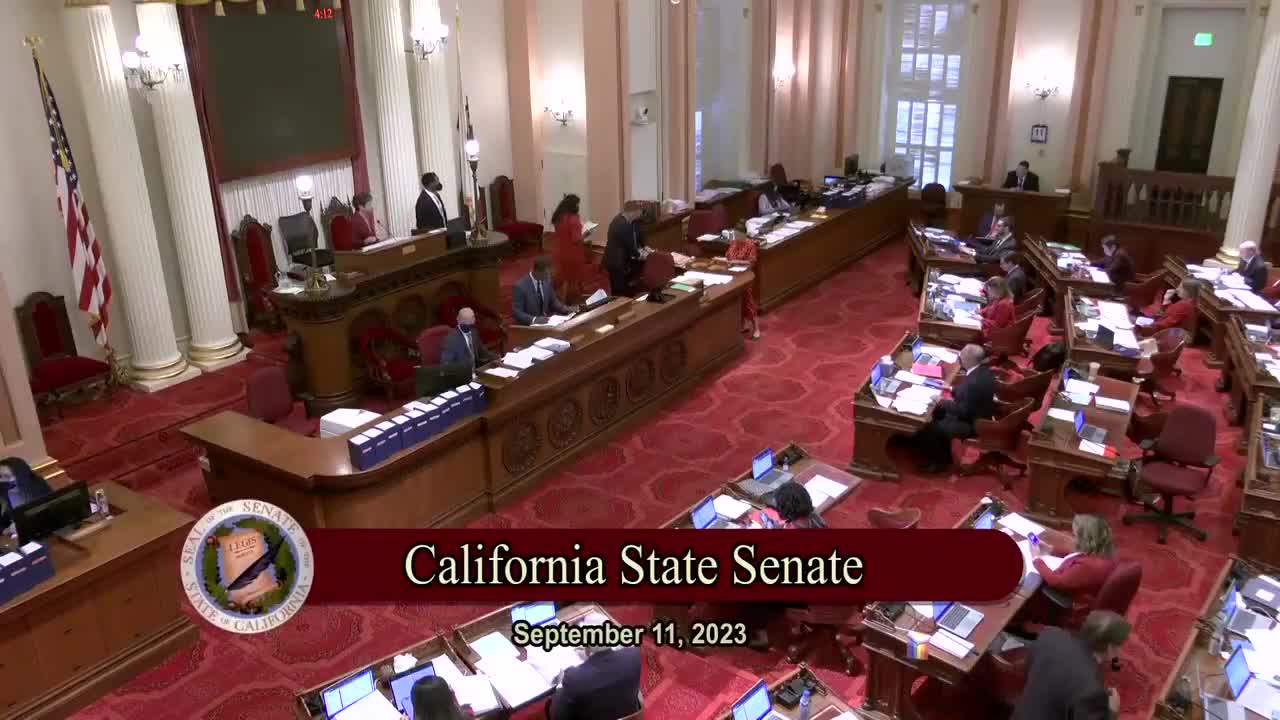 3MIN
Senate Floor
 18MIN
Senate Standing Committee on Labor, Public Employment and Retirement
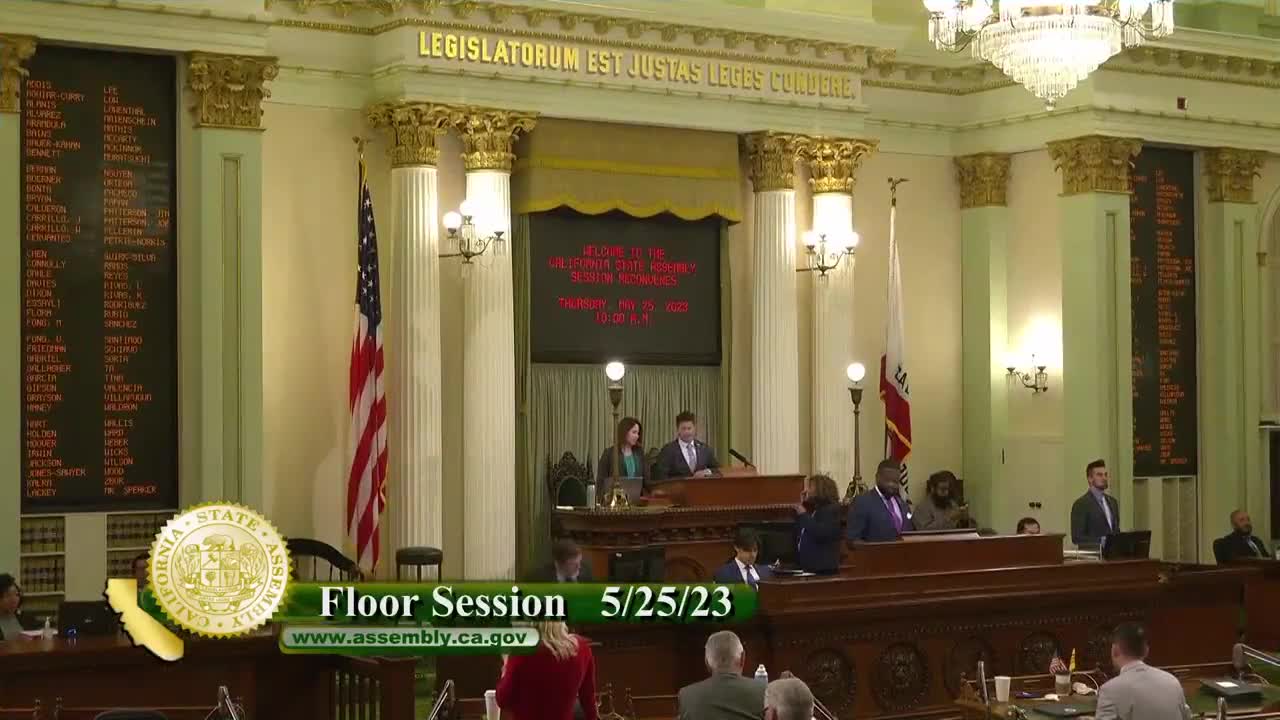 1MIN
Assembly Floor
 2MIN
Assembly Standing Committee on Appropriations
 14MIN
Assembly Standing Committee on Insurance
Bill Author

Bill Co-Author(s):