AB 1355: Employment: benefits: electronic notice and documents.
- Session Year: 2023-2024
- House: Assembly
- Latest Version Date: 2023-09-30
Current Status:
Passed
(2023-09-30: Chaptered by Secretary of State - Chapter 277, Statutes of 2023.)
Introduced
In Committee
First Chamber
In Committee
Second Chamber
Enacted
What does this bill do?
The bill lets California employers email employees the required notice about free tax‑filing help and state and federal antipoverty credits — including the federal and California Earned Income Tax Credits — instead of handing or mailing it if the worker affirmatively opts in to receive electronic statements; employers cannot fire or otherwise punish employees who do not opt in. It applies the same opt‑in email rule to required unemployment benefit claim materials and keeps the rule that employers who fail to provide required printed benefit notices may be guilty of a misdemeanor.
The summary is provided by generative AI which can make mistakes. For original language, please view the details in the table below.
(1)The Personal Income Tax Law allows various credits against the taxes imposed by that law, including certain credits that are allowed in modified conformity to credits allowed by federal income tax laws. Federal income tax laws allow a refundable earned income tax credit for certain low-income individuals who have earned income and who meet certain other requirements.
The Personal Income Tax Law, in modified conformity with federal income tax laws, allows an earned income credit against personal income tax, and a payment in excess of that credit amount, to an eligible individual that is equal to that portion of the earned income tax credit allowed by federal law as determined by the earned income tax credit adjustment factor as set forth in the annual Budget Act.
Existing law, the Earned Income Tax Credit Information Act, requires an employer, as defined, to notify all employees that they may be eligible for specified income tax filing assistance programs and state and federal antipoverty tax credits, including the federal and California earned income tax credits by handing specified documents directly to the employee or mailing the specified documents to the employees last known address twice annually, as provided. Existing law authorizes the 2nd notification to be sent electronically.
This bill, until January 1, 2029, would authorize the employer to provide the first above-described notification via email to an employees email account instead of directly handing or mailing the document to the employee if the employee affirmatively, and in writing or by electronic acknowledgment, opts into receipt of electronic statements or materials. The bill would prohibit the employer from discharging or taking other adverse action against an employee who does not opt into receipt of electronic statements or materials.
(2)Existing law prescribes a system for the payment of benefits to unemployed individuals who meet specified eligibility criteria. Existing law requires an employer to supply, pursuant to authorized regulations, each individual at the time they become unemployed with copies of printed statements or materials relating to claims for benefits. Existing law provides that the failure of an employer to comply with these provisions is a misdemeanor.
This bill, until January 1, 2029, would authorize the employer to provide the above-described notification concerning statements and materials for benefits via email to an employees email account, if the employee affirmatively, and in writing, by email, or by some form of electronic acknowledgment, opts into receipt of electronic statements or materials, as prescribed. The bill would prohibit the employer from discharging or taking other adverse action against an employee who does not opt into receipt of electronic statements or materials. By expanding the scope of a crime, the bill would impose a state-mandated local program.
The California Constitution requires the state to reimburse local agencies and school districts for certain costs mandated by the state. Statutory provisions establish procedures for making that reimbursement.
This bill would provide that no reimbursement is required by this act for a specified reason.
(1)The Personal Income Tax Law allows various credits against the taxes imposed by that law, including certain credits that are allowed in modified conformity to credits allowed by federal income tax laws. Federal income tax laws allow a refundable earned income tax credit for certain low-income individuals who have earned income and who meet certain other requirements.
The Personal Income Tax Law, in modified conformity with federal income tax laws, allows an earned income credit against personal income tax, and a payment in excess of that credit amount, to an eligible individual that is equal to that portion of the earned income tax credit allowed by federal law as determined by the earned income tax credit adjustment factor as set forth in the annual Budget Act.
Existing law, the Earned Income Tax Credit Information Act, requires an employer, as defined, to notify all employees that they may be eligible for specified income tax filing assistance programs and state and federal antipoverty tax credits, including the federal and California earned income tax credit credits by handing specified documents directly to the employee or mailing the specified documents to the employees last known address. address twice annually, as provided. Existing law authorizes the 2nd notification to be sent electronically.
This bill, until January 1, 2029, would also authorize the employer to provide the first above-described notification via email to an employees email account, account instead of directly handing or mailing the document to the employee if the employee affirmatively, and in writing or by electronic acknowledgment, opts into receipt of electronic statements or materials. The bill would prohibit the employer from discharging or taking other adverse action against an employee who does not opt into receipt of electronic statements or materials.
(2)Existing law prescribes a system for the payment of benefits to unemployed individuals who meet specified eligibility criteria. Existing law requires an employer to supply, pursuant to authorized regulations, each individual at the time they become unemployed with copies of printed statements or materials relating to claims for benefits. Existing law provides that the failure of an employer to comply with these provisions is a misdemeanor.
This bill, until January 1, 2029, would authorize the employer to provide the above-described notification concerning statements and materials for benefits via email to an employees email account, if the employee affirmatively, and in writing writing, by email, or by some form of electronic acknowledgment, opts into receipt of electronic statements or materials. materials, as prescribed. The bill would prohibit the employer from discharging or taking other adverse action against an employee who does not opt into receipt of electronic statements or materials. By expanding the scope of a crime, the bill would impose a state-mandated local program.
The California Constitution requires the state to reimburse local agencies and school districts for certain costs mandated by the state. Statutory provisions establish procedures for making that reimbursement.
This bill would provide that no reimbursement is required by this act for a specified reason.
(1)The Personal Income Tax Law allows various credits against the taxes imposed by that law, including certain credits that are allowed in modified conformity to credits allowed by federal income tax laws. Federal income tax laws allow a refundable earned income tax credit for certain low-income individuals who have earned income and who meet certain other requirements.
The Personal Income Tax Law, in modified conformity with federal income tax laws, allows an earned income credit against personal income tax, and a payment in excess of that credit amount, to an eligible individual that is equal to that portion of the earned income tax credit allowed by federal law as determined by the earned income tax credit adjustment factor as set forth in the annual Budget Act.
Existing law, the Earned Income Tax Credit Information Act, requires an employer, as defined, to notify all employees that they may be eligible for the federal and California earned income tax credit by handing specified documents directly to the employee or mailing the specified documents to the employees last known address.
This bill bill, until January 1, 2029, would also authorize the above-described notice to be provided to the employee by email if the employee opts into receipt of electronic notification. employer to provide the above-described notification via email to an employees email account, if the employee affirmatively, and in writing or by electronic acknowledgment, opts into receipt of electronic statements or materials. The bill would prohibit the employer from discharging or taking other adverse action against an employee who does not opt into receipt of electronic statements or materials.
(2)Existing law prescribes a system for the payment of benefits to unemployed individuals who meet specified eligibility criteria. Existing law requires an employer to supply, pursuant to authorized regulations, each individual at the time they become unemployed with copies of printed statements or materials relating to claims for benefits. Existing law provides that the failure of an employer to comply with these provisions is a misdemeanor.
This bill bill, until January 1, 2029, would authorize the employer to instead supply that individual with electronic statements or materials relating to claims for benefits if the individual opts into receipt of electronic statements or materials. provide the above-described notification concerning statements and materials for benefits via email to an employees email account, if the employee affirmatively, and in writing or by electronic acknowledgment, opts into receipt of electronic statements or materials. The bill would prohibit the employer from discharging or taking other adverse action against an employee who does not opt into receipt of electronic statements or materials. By expanding the scope of a crime, the bill would impose a state-mandated local program.
The California Constitution requires the state to reimburse local agencies and school districts for certain costs mandated by the state. Statutory provisions establish procedures for making that reimbursement.
This bill would provide that no reimbursement is required by this act for a specified reason.
(1)The Personal Income Tax Law allows various credits against the taxes imposed by that law, including certain credits that are allowed in modified conformity to credits allowed by federal income tax laws. Federal income tax laws allow a refundable earned income tax credit for certain low-income individuals who have earned income and who meet certain other requirements.
The Personal Income Tax Law, in modified conformity with federal income tax laws, allows an earned income credit against personal income tax, and a payment in excess of that credit amount, to an eligible individual that is equal to that portion of the earned income tax credit allowed by federal law as determined by the earned income tax credit adjustment factor as set forth in the annual Budget Act.
Existing law, the Earned Income Tax Credit Information Act, requires an employer, as defined, to notify all employees that they may be eligible for the federal and California earned income tax credit by handing specified documents directly to the employee or mailing the specified documents to the employees last known address.
This bill would also authorize the above-described notice to be provided to the employee by email if the employee opts into receipt of electronic notification.
(2)Existing law prescribes a system for the payment of benefits to unemployed individuals who meet specified eligibility criteria. Existing law requires an employer to supply, pursuant to authorized regulations, each individual at the time they become unemployed with copies of printed statements or materials relating to claims for benefits.
This bill would authorize the employer to instead supply that individual with electronic statements or materials relating to claims for benefits if the individual opts into receipt of electronic statements or materials.
(a)(1)An employer shall notify all employees that they may be eligible for VITA, CalFile, and state and federal antipoverty tax credits, including the federal and the California EITC, within one week before or after, or at the same time, that the employer provides an annual wage summary, including, but not limited to, a Form W-2 or a Form 1099, to any employee.
(2)An employer shall send a second notification to all employees during the month of March of the same year in which the employer notified employees pursuant to paragraph (1).
(b)(1)The state departments and agencies that serve those who may qualify for VITA or state and federal antipoverty tax credits, including the federal and the California EITC, as defined in subdivision (e) of Section 19852, shall notify their program recipients that they may be eligible for VITA, CalFile, and state and federal antipoverty tax credits, including the federal and the California EITC, at least once per year during the months of January through March, or, alternatively, shall provide both notifications during a regularly scheduled contact with a recipient by telephone, mail, or electronic communication, or by an in-person communication.
(2)State departments or agencies that serve those who may qualify for VITA or state and federal antipoverty tax credits, including the federal and the California EITC, as defined in subdivision (e) of Section 19852, and that do not directly communicate with persons or households with persons who may qualify for VITA, CalFile, and state and federal antipoverty tax credits, including the federal and the California EITC, may communicate indirectly through agencies, districts, or regulated entities that serve eligible persons or households with eligible persons.
(3)State departments or agencies that serve those who may qualify for VITA or state and federal antipoverty tax credits, including the federal EITC and the California EITC, as defined in subdivision (e) of Section 19852, are encouraged to develop the most effective method to provide notice to recipients of eligibility for VITA, CalFile, and state and federal antipoverty tax credits, including the federal and the California EITC, as long as the notice contains substantially the same language as the notice described in Section 19854.
(c)(1)The employer shall provide the notifications required by subdivision (a) by handing them directly to the employee or mailing them to the employees last known address.
(2)Any notice created by the employer shall include substantially the same language as the notice described in Section 19854.
(3)The notification required by paragraph (2) of subdivision (a) may be sent electronically.
(d)The employer shall not satisfy the notification required by subdivision (a) by posting a notice on an employee bulletin board or sending it through office mail. However, these methods of notification are encouraged to help inform all employees of VITA, CalFile, and state and federal antipoverty tax credit eligibility, including the federal and the California EITC.
(e)(1)Notwithstanding subdivisions (c) and (d), the employer may provide the notification required by paragraph (1) of subdivision (a) via email to an email account of the employees choosing in PDF, JPEG, or other digital image file type format, if an employee affirmatively, and in writing or by electronic acknowledgment, opts into receipt of electronic statements or materials.
(2)An employer may not discharge an employee or in any manner discriminate, retaliate, or take any adverse action against an employee who does not affirmatively, in writing or by electronic acknowledgment, opt into receipt of electronic statements or materials.
(f)The amendments made to this section by Section 3 of Chapter 294 of the Statutes of 2016 shall apply to notices furnished on or after January 1, 2017.
(g)The amendments made to this section by Section 10 of Chapter 55 of the Statutes of 2023 shall apply to notices furnished on or after January 1, 2024.
(h)The amendments made to this section by the act adding this subdivision shall apply to notices furnished on or after January 1, 2024.
(i)This section shall remain in effect only until January 1, 2029, and as of that date is repealed.
SEC. 2.Section 19853 is added to the Revenue and Taxation Code, to read:19853.(a)(1)An employer shall notify all employees that they may be eligible for VITA, CalFile, and state and federal antipoverty tax credits, including the federal and the California EITC, within one week before or after, or at the same time, that the employer provides an annual wage summary, including, but not limited to, a Form W-2 or a Form 1099, to any employee.
(2)An employer shall send a second notification to all employees during the month of March of the same year in which the employer notified employees pursuant to paragraph (1).
(b)(1)The state departments and agencies that serve those who may qualify for VITA or state and federal antipoverty tax credits, including the federal and the California EITC, as defined in subdivision (e) of Section 19852, shall notify their program recipients that they may be eligible for VITA, CalFile, and state and federal antipoverty tax credits, including the federal and the California EITC, at least once per year during the months of January through March, or, alternatively, shall provide both notifications during a regularly scheduled contact with a recipient by telephone, mail, or electronic communication, or by an in-person communication.
(2)State departments or agencies that serve those who may qualify for VITA or state and federal antipoverty tax credits, including the federal and the California EITC, as defined in subdivision (e) of Section 19852, and that do not directly communicate with persons or households with persons who may qualify for VITA, CalFile, and state and federal antipoverty tax credits, including the federal and the California EITC, may communicate indirectly through agencies, districts, or regulated entities that serve eligible persons or households with eligible persons.
(3)State departments or agencies that serve those who may qualify for VITA or state and federal antipoverty tax credits, including the federal EITC and the California EITC, as defined in subdivision (e) of Section 19852, are encouraged to develop the most effective method to provide notice to recipients of eligibility for VITA, CalFile, and state and federal antipoverty tax credits, including the federal and the California EITC, as long as the notice contains substantially the same language as the notice described in Section 19854.
(c)(1)The employer shall provide the notifications required by subdivision (a) by handing them directly to the employee or mailing them to the employees last known address.
(2)Any notice created by the employer shall include substantially the same language as the notice described in Section 19854.
(3)The notification required by paragraph (2) of subdivision (a) may be sent electronically.
(d)The employer shall not satisfy the notification required by subdivision (a) by posting a notice on an employee bulletin board or sending it through office mail. However, these methods of notification are encouraged to help inform all employees of VITA, CalFile, and state and federal antipoverty tax credit eligibility, including the federal and the California EITC.
(e)The amendments made to this section by Section 3 of Chapter 294 of the Statutes of 2016 shall apply to notices furnished on or after January 1, 2017.
(f)The amendments made to this section by Section 10 of Chapter 55 of the Statutes of 2023 shall apply to notices furnished on or after January 1, 2024.
(g)This section shall become operative on January 1, 2029.
SEC. 3.Section 1089 of the Unemployment Insurance Code is amended to read:1089.(a)Each employer shall post and maintain, in places readily accessible to individuals in the employers service, printed statements concerning benefit rights and other matters as may be prescribed by authorized regulations.
(b)Each employer shall, pursuant to authorized regulations, supply each individual at the time they become unemployed with copies of printed statements or materials relating to claims for benefits, or if the individual opts into receipt of electronic statements or materials, electronic statements or materials relating to claims for benefits.
(c)Each employer shall immediately notify each employee of any change in the employees relationship with that employer.
(d)Printed statements shall be supplied by the director to each employer without cost to them.
(e)(1)The employer may provide the notification required by subdivision (a) or (b) via email to an email account of the employees choosing in PDF, JPEG, or other digital image file type format, if an employee affirmatively, and in writing, by email, or by some form of electronic acknowledgment, opts into receipt of electronic statements or materials.
(2)(A)In the case of electronic acknowledgment, the acknowledgment form shall do all of the following:
(i)Fully explain that the employee is agreeing to electronic delivery of the notification required by this section.
(ii)Provide the employee with information about how they can revoke consent to electronic receipt.
(iii)Create a record of the employees agreement to electronic delivery of the notification required by this section.
(B)The employee may revoke the agreement at any time in writing, by email, or by some form of electronic acknowledgment.
(f)An employer may not discharge an employee or in any manner discriminate, retaliate, or take any adverse action against an employee who does not affirmatively, in writing or by electronic acknowledgment, opt into receipt of electronic statements or materials.
(g)Failure to comply with this section by an employer shall constitute a misdemeanor.
(h)This section shall remain in effect only until January 1, 2029, and as of that date is repealed.
SEC. 4.Section 1089 is added to the Unemployment Insurance Code, to read:1089.(a)Each employer shall post and maintain in places readily accessible to individuals in their service such printed statements concerning benefit rights and other matters as may be prescribed by authorized regulations. Each employer shall, pursuant to authorized regulations, supply each individual at the time they become unemployed with copies of printed statements or materials relating to claims for benefits. Each employer shall immediately notify each employee of any change in their relationship with the employer. Failure to comply with this section by an employer shall constitute a misdemeanor. Such printed statements shall be supplied by the director to each employer without cost to them.
(b)This section shall become operative on January 1, 2029.
SEC. 5.No reimbursement is required by this act pursuant to Section 6 of Article XIIIB of the California Constitution because the only costs that may be incurred by a local agency or school district will be incurred because this act creates a new crime or infraction, eliminates a crime or infraction, or changes the penalty for a crime or infraction, within the meaning of Section 17556 of the Government Code, or changes the definition of a crime within the meaning of Section 6 of Article XIIIB of the California Constitution.
(a)(1)An employer shall notify all employees that they may be eligible for VITA, CalFile, and state and federal antipoverty tax credits, including the federal and the California EITC, within one week before or after, or at the same time, that the employer provides an annual wage summary, including, but not limited to, a Form W-2 or a Form 1099, to any employee.
(2)An employer shall send a second notification to all employees during the month of March of the same year in which the employer notified employees pursuant to paragraph (1).
(b)(1)The state departments and agencies that serve those who may qualify for VITA or state and federal antipoverty tax credits, including the federal and the California EITC, as defined in subdivision (e) of Section 19852, shall notify their program recipients that they may be eligible for VITA, CalFile, and state and federal antipoverty tax credits, including the federal and the California EITC, at least once a per year during the months of January through March, or or, alternatively, shall provide both notifications during a regularly scheduled contact with a recipient by telephone, mail, or electronic communication, or by an in-person communication.
(2)State departments or agencies that serve those who may qualify for VITA or state and federal antipoverty tax credits, including the federal and the California EITC, as defined in subdivision (e) of Section 19852, and that do not directly communicate with persons or households with persons who may qualify for VITA, CalFile, and state and federal antipoverty tax credits, including the federal and the California EITC, may communicate indirectly through agencies, districts, or regulated entities that serve eligible persons or households with eligible persons.
(3)State departments or agencies that serve those who may qualify for VITA or state and federal antipoverty tax credits, including the federal EITC and the California EITC, as defined in subdivision (e) of Section 19852, are encouraged to develop the most effective method to provide notice to recipients of eligibility for VITA, CalFile, and state and federal antipoverty tax credits, including the federal and the California EITC, as long as the notice contains substantially the same language as the notice described in Section 19854.
(c)(1)The employer shall provide the notifications required by subdivision (a) by handing them directly to the employee or mailing them to the employees last known address.
(2)Any notice created by the employer shall include substantially the same language as the notice described in Section 19854.
(3)The notification required by paragraph (2) of subdivision (a) may be sent electronically.
(d)The employer shall not satisfy the notification required by subdivision (a) by posting a notice on an employee bulletin board or sending it through office mail. However, these methods of notification are encouraged to help inform all employees of VITA, CalFile, and state and federal antipoverty tax credit eligibility, including the federal and the California EITC.
(e)(1)Notwithstanding subdivisions (c) and (d), the employer may provide the notification required by paragraph (1) of subdivision (a) via email to an email account of the employees choosing in PDF, JPEG, or other digital image file type format, if an employee affirmatively, and in writing or by electronic acknowledgment, opts into receipt of electronic statements or materials.
(2)An employer may not discharge an employee or in any manner discriminate, retaliate, or take any adverse action against an employee who does not affirmatively, in writing or by electronic acknowledgment, opt into receipt of electronic statements or materials.
(e)(f)The amendments made to this section by Section 3 of Chapter 294 of the Statutes of 2016 shall apply to notices furnished on or after January 1, 2017.
(f)(g)The amendments made to this section by the act adding this subdivision Section 10 of Chapter 55 of the Statutes of 2023 shall apply to notices furnished on or after January 1, 2024.
(h)The amendments made to this section by the act adding this subdivision shall apply to notices furnished on or after January 1, 2024.
(i)This section shall remain in effect only until January 1, 2029, and as of that date is repealed.
SEC. 2.Section 19853 is added to the Revenue and Taxation Code, to read:19853.(a)(1)An employer shall notify all employees that they may be eligible for VITA, CalFile, and state and federal antipoverty tax credits, including the federal and the California EITC, within one week before or after, or at the same time, that the employer provides an annual wage summary, including, but not limited to, a Form W-2 or a Form 1099, to any employee.
(2)An employer shall send a second notification to all employees during the month of March of the same year in which the employer notified employees pursuant to paragraph (1).
(b)(1)The state departments and agencies that serve those who may qualify for VITA or state and federal antipoverty tax credits, including the federal and the California EITC, as defined in subdivision (e) of Section 19852, shall notify their program recipients that they may be eligible for VITA, CalFile, and state and federal antipoverty tax credits, including the federal and the California EITC, at least once per year during the months of January through March, or, alternatively, shall provide both notifications during a regularly scheduled contact with a recipient by telephone, mail, or electronic communication, or by an in-person communication.
(2)State departments or agencies that serve those who may qualify for VITA or state and federal antipoverty tax credits, including the federal and the California EITC, as defined in subdivision (e) of Section 19852, and that do not directly communicate with persons or households with persons who may qualify for VITA, CalFile, and state and federal antipoverty tax credits, including the federal and the California EITC, may communicate indirectly through agencies, districts, or regulated entities that serve eligible persons or households with eligible persons.
(3)State departments or agencies that serve those who may qualify for VITA or state and federal antipoverty tax credits, including the federal EITC and the California EITC, as defined in subdivision (e) of Section 19852, are encouraged to develop the most effective method to provide notice to recipients of eligibility for VITA, CalFile, and state and federal antipoverty tax credits, including the federal and the California EITC, as long as the notice contains substantially the same language as the notice described in Section 19854.
(c)(1)The employer shall provide the notifications required by subdivision (a) by handing them directly to the employee or mailing them to the employees last known address.
(2)Any notice created by the employer shall include substantially the same language as the notice described in Section 19854.
(3)The notification required by paragraph (2) of subdivision (a) may be sent electronically.
(d)The employer shall not satisfy the notification required by subdivision (a) by posting a notice on an employee bulletin board or sending it through office mail. However, these methods of notification are encouraged to help inform all employees of VITA, CalFile, and state and federal antipoverty tax credit eligibility, including the federal and the California EITC.
(e)The amendments made to this section by Section 3 of Chapter 294 of the Statutes of 2016 shall apply to notices furnished on or after January 1, 2017.
(f)The amendments made to this section by Section 10 of Chapter 55 of the Statutes of 2023 shall apply to notices furnished on or after January 1, 2024.
(g)This section shall become operative on January 1, 2029.
SEC. 3.Section 1089 of the Unemployment Insurance Code is amended to read:1089.(a)Each employer shall post and maintain, in places readily accessible to individuals in the employers service, printed statements concerning benefit rights and other matters as may be prescribed by authorized regulations.
(b)Each employer shall, pursuant to authorized regulations, supply each individual at the time they become unemployed with copies of printed statements or materials relating to claims for benefits, or if the individual opts into receipt of electronic statements or materials, electronic statements or materials relating to claims for benefits.
(c)Each employer shall immediately notify each employee of any change in the employees relationship with that employer.
(d)Printed statements shall be supplied by the director to each employer without cost to them.
(e)(1)The employer may provide the notification required by subdivision (a) or (b) via email to an email account of the employees choosing in PDF, JPEG, or other digital image file type format, if an employee affirmatively, and in writing writing, by email, or by some form of electronic acknowledgment, opts into receipt of electronic statements or materials.
(2)(A)In the case of electronic acknowledgment, the acknowledgment form shall do all of the following:
(i)Fully explain that the employee is agreeing to electronic delivery of the notification required by this section.
(ii)Provide the employee with information about how they can revoke consent to electronic receipt.
(iii)Create a record of the employees agreement to electronic delivery of the notification required by this section.
(B)The employee may revoke the agreement at any time in writing, by email, or by some form of electronic acknowledgment.
(f)An employer may not discharge an employee or in any manner discriminate, retaliate, or take any adverse action against an employee who does not affirmatively, in writing or by electronic acknowledgment, opt into receipt of electronic statements or materials.
(g)Failure to comply with this section by an employer shall constitute a misdemeanor.
(h)This section shall remain in effect only until January 1, 2029, and as of that date is repealed.
SEC. 4.Section 1089 is added to the Unemployment Insurance Code, to read:1089.(a)Each employer shall post and maintain in places readily accessible to individuals in their service such printed statements concerning benefit rights and other matters as may be prescribed by authorized regulations. Each employer shall, pursuant to authorized regulations, supply each individual at the time they become unemployed with copies of printed statements or materials relating to claims for benefits. Each employer shall immediately notify each employee of any change in their relationship with the employer. Failure to comply with this section by an employer shall constitute a misdemeanor. Such printed statements shall be supplied by the director to each employer without cost to them.
(b)This section shall become operative on January 1, 2029.
SEC. 5.No reimbursement is required by this act pursuant to Section 6 of Article XIIIB of the California Constitution because the only costs that may be incurred by a local agency or school district will be incurred because this act creates a new crime or infraction, eliminates a crime or infraction, or changes the penalty for a crime or infraction, within the meaning of Section 17556 of the Government Code, or changes the definition of a crime within the meaning of Section 6 of Article XIIIB of the California Constitution.
(a)An employer shall notify all employees that they may be eligible for the federal and the California EITC within one week before or after, or at the same time, that the employer provides an annual wage summary, including, but not limited to, a Form W-2 or a Form 1099, to any employee.
(b)The state departments and agencies that serve those who may qualify for the federal and the California EITC, as defined in subdivision (e) of Section 19852, shall notify their program recipients that they may be eligible for the federal and the California EITC, at least once a year during the months of January through April, or alternatively, shall provide this annual notification during a regularly scheduled contact with a recipient by telephone, mail, or electronic communication, or by an in-person communication. State departments or agencies that do not directly communicate with persons or households with persons who may qualify for the federal and the California EITC may communicate indirectly through agencies, districts, or regulated entities that serve eligible persons or households with eligible persons. Departments, agencies, and programs are encouraged to develop the most effective method to provide notice to recipients of federal and California EITC eligibility, as long as the notice contains substantially the same language as the notice described in Section 19854.
(c)The employer shall provide the notification required by subdivision (a) by handing directly to the employee, employee or mailing to the employees last known address, or, if the employee opts into receipt of electronic notification, emailing the employee address either of the following:
(1)Instructions on how to obtain any notices available from the Internal Revenue Service and the Franchise Tax Board for this purpose, including, but not limited to, the IRS Notice 797 and information on the California EITC at the internet website www.ftb.ca.gov.
(2)Any notice created by the employer, as long as it contains substantially the same language as the notice described in paragraph (1) or in Section 19854.
(d)The employer shall not satisfy the notification required by subdivision (a) by posting a notice on an employee bulletin board or sending it through office mail. However, these methods of notification are encouraged to help inform all employees of the federal and the California EITC.
(e)The employer may provide the notification required by subdivision (a) via email to an email account of the employees choosing in PDF, JPEG, or other digital image file type format, if an employee affirmatively, and in writing or by electronic acknowledgment, opts into receipt of electronic statements or materials.
(f)An employer may not discharge an employee or in any manner discriminate, retaliate, or take any adverse action against an employee who does not affirmatively, in writing or by electronic acknowledgment, opt into receipt of electronic statements or materials.
(e)(g)The amendments made to this section by Chapter 294 of the Statutes of 2016 shall apply to notices furnished on or after January 1, 2017.
(h)This section shall remain in effect only until January 1, 2029, and as of that date is repealed.
SEC. 2.Section 19853 is added to the Revenue and Taxation Code, to read:19853.(a)An employer shall notify all employees that they may be eligible for the federal and the California EITC within one week before or after, or at the same time, that the employer provides an annual wage summary, including, but not limited to, a Form W-2 or a Form 1099, to any employee.
(b)The state departments and agencies that serve those who may qualify for the federal and the California EITC, as defined in subdivision (e) of Section 19852, shall notify their program recipients that they may be eligible for the federal and the California EITC, at least once a year during the months of January through April, or alternatively, shall provide this annual notification during a regularly scheduled contact with a recipient by telephone, mail, or electronic communication, or by an in-person communication. State departments or agencies that do not directly communicate with persons or households with persons who may qualify for the federal and the California EITC may communicate indirectly through agencies, districts, or regulated entities that serve eligible persons or households with eligible persons. Departments, agencies, and programs are encouraged to develop the most effective method to provide notice to recipients of federal and California EITC eligibility, as long as the notice contains substantially the same language as the notice described in Section 19854.
(c)The employer shall provide the notification required by subdivision (a) by handing directly to the employee or mailing to the employees last known address either of the following:
(1)Instructions on how to obtain any notices available from the Internal Revenue Service and the Franchise Tax Board for this purpose, including, but not limited to, the IRS Notice 797 and information on the California EITC at the website www.ftb.ca.gov.
(2)Any notice created by the employer, as long as it contains substantially the same language as the notice described in paragraph (1) or in Section 19854.
(d)The employer shall not satisfy the notification required by subdivision (a) by posting a notice on an employee bulletin board or sending it through office mail. However, these methods of notification are encouraged to help inform all employees of the federal and the California EITC.
(e)The amendments made to this section by the act adding this subdivision shall apply to notices furnished on or after the effective date of that act.
(f)This section shall become operative on January 1, 2029.
SEC. 2.SEC. 3.Section 1089 of the Unemployment Insurance Code is amended to read:1089.(a)Each employer shall post and maintain, in places readily accessible to individuals in the employers service, printed statements concerning benefit rights and other matters as may be prescribed by authorized regulations.
(b)Each employer shall, pursuant to authorized regulations, supply each individual at the time they become unemployed with copies of printed statements or materials relating to claims for benefits, or if the individual opts into receipt of electronic statements or materials, electronic statements or materials relating to claims for benefits.
(c)Each employer shall immediately notify each employee of any change in the employees relationship with that employer.
(d)Failure to comply with this section by an employer shall constitute a misdemeanor. (e)(d)Printed statements shall be supplied by the director to each employer without cost to them.
(e)The employer may provide the notification required by subdivision (a) or (b) via email to an email account of the employees choosing in PDF, JPEG, or other digital image file type format, if an employee affirmatively, and in writing or by electronic acknowledgment, opts into receipt of electronic statements or materials.
(f)An employer may not discharge an employee or in any manner discriminate, retaliate, or take any adverse action against an employee who does not affirmatively, in writing or by electronic acknowledgment, opt into receipt of electronic statements or materials.
(g)Failure to comply with this section by an employer shall constitute a misdemeanor.
(h)This section shall remain in effect only until January 1, 2029, and as of that date is repealed.
SEC. 4.Section 1089 is added to the Unemployment Insurance Code, to read:1089.(a)Each employer shall post and maintain in places readily accessible to individuals in their service such printed statements concerning benefit rights and other matters as may be prescribed by authorized regulations. Each employer shall, pursuant to authorized regulations, supply each individual at the time they become unemployed with copies of printed statements or materials relating to claims for benefits. Each employer shall immediately notify each employee of any change in their relationship with the employer. Failure to comply with this section by an employer shall constitute a misdemeanor. Such printed statements shall be supplied by the director to each employer without cost to them.
(b)This section shall become operative on January 1, 2029.
SEC. 5.No reimbursement is required by this act pursuant to Section 6 of Article XIIIB of the California Constitution because the only costs that may be incurred by a local agency or school district will be incurred because this act creates a new crime or infraction, eliminates a crime or infraction, or changes the penalty for a crime or infraction, within the meaning of Section 17556 of the Government Code, or changes the definition of a crime within the meaning of Section 6 of Article XIIIB of the California Constitution.
(a)An employer shall notify all employees that they may be eligible for the federal and the California EITC within one week before or after, or at the same time, that the employer provides an annual wage summary, including, but not limited to, a Form W-2 or a Form 1099, to any employee.
(b)The state departments and agencies that serve those who may qualify for the federal and the California EITC, as defined in subdivision (e) of Section 19852, shall notify their program recipients that they may be eligible for the federal and the California EITC, at least once a year during the months of January through April, or alternatively, shall provide this annual notification during a regularly scheduled contact with a recipient by telephone, mail, or electronic communication, or by an in-person communication. State departments or agencies that do not directly communicate with persons or households with persons who may qualify for the federal and the California EITC may communicate indirectly through agencies, districts, or regulated entities that serve eligible persons or households with eligible persons. Departments, agencies, and programs are encouraged to develop the most effective method to provide notice to recipients of federal and California EITC eligibility, as long as the notice contains substantially the same language as the notice described in Section 19854.
(c)(1)The employer shall provide the notification required by subdivision (a) by handing directly to the employee, mailing to the employees last known address, or, if the employee opts into receipt of electronic notification, emailing the employee either of the following:
(A)(1)Instructions on how to obtain any notices available from the Internal Revenue Service and the Franchise Tax Board for this purpose, including, but not limited to, the IRS Notice 797 and information on the California EITC at the internet website www.ftb.ca.gov.
(B)(2)Any notice created by the employer, as long as it contains substantially the same language as the notice described in subparagraph (A) paragraph (1) or in Section 19854.
(2)The employer may provide the notification described in paragraph (1) by handing it directly to the employee or mailing it to the employees last known address even if the employee opts into receipt of electronic notification.(d)The employer shall not satisfy the notification required by subdivision (a) by posting a notice on an employee bulletin board or sending it through office mail. However, these methods of notification are encouraged to help inform all employees of the federal and the California EITC.
(e)The amendments made to this section by Chapter 294 of the Statutes of 2016 shall apply to notices furnished on or after January 1, 2017.
SEC. 2.Section 1089 of the Unemployment Insurance Code is amended to read:1089.(a)Each employer shall post and maintain, in places readily accessible to individuals in the employers service, printed statements concerning benefit rights and other matters as may be prescribed by authorized regulations.
(b)(1)Each employer shall, pursuant to authorized regulations, supply each individual at the time they become unemployed with either of the following:
(A)Copies copies of printed statements or materials relating to claims for benefits.
(B)If benefits, or if the individual opts into receipt of electronic statements or materials, electronic statements or materials relating to claims for benefits.
(2)The employer may supply the statements or materials relating to claims for benefits, as described in paragraph (1), as a printed copy even if the employee opts into receipt of electronic notification.(c)Each employer shall immediately notify each employee of any change in the employees relationship with that employer.
(d)Failure to comply with this section by an employer shall constitute a misdemeanor.
(e)Printed statements shall be supplied by the director to each employer without cost to them.
(a)An employer shall notify all employees that they may be eligible for the federal and the California EITC within one week before or after, or at the same time, that the employer provides an annual wage summary, including, but not limited to, a Form W-2 or a Form 1099, to any employee.
(b)The state departments and agencies that serve those who may qualify for the federal and the California EITC, as defined in subdivision (e) of Section 19852, shall notify their program recipients that they may be eligible for the federal and the California EITC, at least once a year during the months of January through April, or alternatively, shall provide this annual notification during a regularly scheduled contact with a recipient by telephone, mail, or electronic communication, or by an in-person communication. State departments or agencies that do not directly communicate with persons or households with persons who may qualify for the federal and the California EITC may communicate indirectly through agencies, districts, or regulated entities that serve eligible persons or households with eligible persons. Departments, agencies, and programs are encouraged to develop the most effective method to provide notice to recipients of federal and California EITC eligibility, as long as the notice contains substantially the same language as the notice described in Section 19854.
(c)(1)The employer shall provide the notification required by subdivision (a) by handing directly to the employee or employee, mailing to the employees last known address address, or, if the employee opts into receipt of electronic notification, emailing the employee either of the following:
(1)(A)Instructions on how to obtain any notices available from the Internal Revenue Service and the Franchise Tax Board for this purpose, including, but not limited to, the IRS Notice 797 and information on the California EITC at the Web site internet website www.ftb.ca.gov.
(2)(B)Any notice created by the employer, as long as it contains substantially the same language as the notice described in paragraph (1) subparagraph (A) or in Section 19854.
(2)The employer may provide the notification described in paragraph (1) by handing it directly to the employee or mailing it to the employees last known address even if the employee opts into receipt of electronic notification.
(d)The employer shall not satisfy the notification required by subdivision (a) by posting a notice on an employee bulletin board or sending it through office mail. However, these methods of notification are encouraged to help inform all employees of the federal and the California EITC.
(e)The amendments made to this section by the act adding this subdivision Chapter 294 of the Statutes of 2016 shall apply to notices furnished on or after the effective date of that act. January 1, 2017.
SEC. 2.Section 1089 of the Unemployment Insurance Code is amended to read:1089.(a)Each employer shall post and maintain maintain, in places readily accessible to individuals in his service such the employers service, printed statements concerning benefit rights and other matters as may be prescribed by authorized regulations. Each
(b)(1)Each employer shall, pursuant to authorized regulations, supply each individual at the time he becomes they become unemployed with copies either of the following:
(A)Copies of printed statements or materials relating to claims for benefits. Each
(B)If the individual opts into receipt of electronic statements or materials, electronic statements or materials relating to claims for benefits.
(2)The employer may supply the statements or materials relating to claims for benefits, as described in paragraph (1), as a printed copy even if the employee opts into receipt of electronic notification.
(c)Each employer shall immediately notify each employee of any change in his the employees relationship with said that employer. Failure
(d)Failure to comply with this section by an employer shall constitute a misdemeanor. Such printed
(e)Printed statements shall be supplied by the director to each employer without cost to him. them.
|
Date
|
Status
|
|---|---|
| Sep 30, 2023 | Chaptered by Secretary of State - Chapter 277, Statutes of 2023. |
| Sep 30, 2023 | Approved by the Governor. |
| Sep 19, 2023 | Enrolled and presented to the Governor at 4 p.m. |
| Sep 12, 2023 | Senate amendments concurred in. To Engrossing and Enrolling. (Ayes 80. Noes 0. Page 3306.). |
| Sep 12, 2023 | Assembly Rule 77 suspended. (Page 3228.) |
| Sep 11, 2023 | In Assembly. Concurrence in Senate amendments pending. May be considered on or after September 13 pursuant to Assembly Rule 77. |
| Sep 11, 2023 | Read third time. Passed. Ordered to the Assembly. (Ayes 39. Noes 0. Page 2591.). |
| Sep 7, 2023 | Read second time. Ordered to third reading. |
| Sep 6, 2023 | Reconsideration granted. (Ayes 40. Noes 0. Page 2400.) |
| Sep 6, 2023 | Read third time. Passed. (Ayes 40. Noes 0. Page 2389.) |
| Sep 6, 2023 | Read third time and amended. Ordered to second reading. |
| Sep 6, 2023 | Ordered to third reading. |
| Jun 29, 2023 | Ordered to third reading. |
| Jun 29, 2023 | From Consent Calendar. |
| Jun 27, 2023 | Read second time. Ordered to Consent Calendar. |
| Jun 26, 2023 | From committee: Be ordered to second reading file pursuant to Senate Rule 28.8 and ordered to Consent Calendar. |
| Jun 14, 2023 | From committee: Do pass and re-refer to Com. on APPR with recommendation: To Consent Calendar. (Ayes 5. Noes 0.) (June 14). Re-referred to Com. on APPR. |
| May 31, 2023 | Referred to Com. on L., P.E. & R. |
| May 18, 2023 | In Senate. Read first time. To Com. on RLS. for assignment. |
| May 18, 2023 | Read third time. Passed. Ordered to the Senate. (Ayes 74. Noes 0. Page 1597.) |
| May 11, 2023 | Read second time. Ordered to Consent Calendar. |
| May 10, 2023 | From committee: Do pass. To Consent Calendar. (Ayes 14. Noes 0.) (May 10). |
| May 2, 2023 | Re-referred to Com. on APPR. |
| May 1, 2023 | Read second time and amended. |
| Apr 27, 2023 | From committee: Amend, and do pass as amended and re-refer to Com. on APPR. (Ayes 14. Noes 0.) (April 26). |
| Apr 11, 2023 | In committee: Set, first hearing. Hearing canceled at the request of author. |
| Apr 5, 2023 | Re-referred to Com. on INS. |
| Apr 4, 2023 | From committee chair, with author's amendments: Amend, and re-refer to Com. on INS. Read second time and amended. |
| Mar 9, 2023 | Referred to Com. on INS. |
| Feb 18, 2023 | From printer. May be heard in committee March 20. |
| Feb 17, 2023 | Read first time. To print. |
|
Date
|
Description
|
Location
|
Votes
|
|
|---|---|---|---|---|
| Sep 12, 2023 | AB 1355 Valencia Concurrence in Senate Amendments | Assembly Floor |
Passed |
|
| Sep 11, 2023 | Assembly 3rd Reading AB1355 Valencia et al. By Umberg | Senate Floor |
Passed |
|
| Sep 6, 2023 | Assembly 3rd Reading AB1355 Valencia et al. By Umberg Motion To Reconsider | Senate Floor |
Passed |
|
| Sep 6, 2023 | Assembly 3rd Reading AB1355 Valencia et al. By Umberg | Senate Floor |
Passed |
|
| Jun 14, 2023 | Do pass, but first be re-referred to the Committee on [Appropriations] with the recommendation: To Consent Calendar | Senate Standing Committee on Labor, Public Employment and Retirement |
Passed |
|
| May 18, 2023 | AB 1355 Valencia Consent Calendar Second Day Regular Session | Assembly Floor |
Passed |
|
| May 10, 2023 | Do pass. To Consent Calendar. | Assembly Standing Committee on Appropriations |
Passed |
|
| Apr 26, 2023 | Do pass as amended and be re-referred to the Committee on [Appropriations] | Assembly Standing Committee on Insurance |
Passed |
This list shows positions taken on this bill by organizations on the date displayed, which is linked to the original source.
Positions by individuals are not included.
|
Organization
|
Position
|
Date
|
|---|---|---|
| Acclamation Insurance Management Services | ** Support | |
| Allied Managed Care | ** Support | |
| Anaheim Chamber Of Commerce | ** Support | |
| California Apartment Association | ** Support | |
| California Association For Health Services At Home | ** Support | |
| California Attractions And Parks Association | ** Support | |
| California Beer and Beverage Distributors | ** Support | |
| California Chamber Of Commerce | ** Support | |
| California Hispanic Chamber Of Commerce | ** Support | |
| California Labor Federation, Afl-Cio | ** Against | |
| California League of Food Producers | ** Support | |
| California New Car Dealers Association | ** Support | |
| California Restaurant Association | ** Support | |
| California Trucking Association | ** Support | |
| Coalition of Small and Disabled Veteran Businesses | ** Support | |
| Family Business Association of California | ** Support | |
| Fidelity Investments | ** Support | |
| Flasher Barricade Association | ** Support | |
| Los Angeles Area Chamber Of Commerce | ** Support | |
| National Federation Of Independent Business | ** Support | |
| National Payroll Reporting Consortium | ** Support | |
| Orange County Business Council | ** Support | |
| Orange County Hispanic Chamber of Commerce | ** Support |
CONCURRENCE IN SENATE AMENDMENTS
CSA1 Bill Id:AB 1355
Author:(Valencia)
As Amended Ver:September 6, 2023
Majority vote
SUMMARY
Allows employers to provide information to their employees regarding the Earned Income Tax Credit (EITC) and the Unemployment Insurance (UI) Program via email to an email account of the employee's choosing, if the employee affirmatively, and in writing or by electronic acknowledgment, opts into receipt of electronic statements or materials, until January 1, 2029.
Senate Amendments
- Address chaptering out issues.
- Clarify that the proposed changes become operative January 1, 2024, and are in effect only until January 1, 2029.
- Provide further direction on what information the employee's electronic acknowledgement for receipt of documents must contain.
COMMENTS
This measure would allow employees to opt into receipt of, among other things, electronic statements or materials relating to claims for benefits. In particular, the Employment Development Department (EDD) makes available online a document titled "For Your Benefit: California's Programs for the Unemployed" which is provided to an employee by their employer when they are terminated, laid off, or take a leave of absence. This bill allows this document to be provided electronically if that individual opts into receipt of those specific documents electronically. The same would apply to information related to the EITC.
Nothing in this bill changes what materials must be provided; it only gives employers and employees an additional option in regards to whether they receive hard or electronic copies of already mandated materials. As California continues to go "green," it seems reasonable to allow individuals with the ability to determine if paperless is the method they'd like to receive important information.
In 2006, Boise Cascade LLC requested an opinion from the Division of Labor Standards Enforcement within the Department of Industrial Relations, as to whether under certain circumstances an employer's obligation to provide an employee with a "wage statement" may be met by providing an employee with such a record in electronic form, as an alternative to a "hard copy" paper document. The opinion letter conditionally allowed for electronic distribution of wage statements in specific circumstances. Please note, that this measure does not impact wage statements but this opinion letter is discussed since the opposition is in disagreement with the conclusion of this specific opinion, which allows for electronic distribution.
According to the Author
According to the author, "Thanks to the advancements in technology, there are various ways in which we can share documents. Currently, informative documents related to retirement plans, medical leave, health coverage, dental coverage, pregnancy disability, and workers compensation may be shared via electronic means such as email. However, current statutes do not provide the flexibility to provide notices pertaining to California Earned Income Tax Credit, or the claim of benefits for individuals that become unemployed, by email. AB 1355 will amend the current law to allow employees to "opt-in" to receive electronic notifications related to the California Earned Income Tax Credit, and electronic statements or materials related to the claim of benefits for individuals that become unemployed, from their employers. This bill will not require employers to provide these materials electronically and will still allow employers the ability to distribute notices related to the California Earned Income Tax Credit and the claim of benefits via hardcopy paper. AB 1355 will provide eligible employees with expanded access to these critical documents, and allow our state to be more environmentally conscious by reducing paper waste."
Arguments in Support
According to the sponsor, Fidelity Investments, "AB 1355 allows California employees and employers to be more environmentally conscious by providing for the electronic delivery of two additional state required notices. Fidelity has worked diligently for years to eliminate paper in a variety of ways while complying with regulatory requirements. These include enhancing our technology to digitize transactions, encouraging customer adoption of eDelivery methods, advocating for regulatory changes that eliminate paper, and reducing our own employees' use of paper. These sustainability efforts have been thoughtfully integrated into our business units, performance metrics, and technology investments. Paper elimination is also supported by growing customer preferences for paperless options."
Arguments in Opposition
None on file.
FISCAL COMMENTS
According to the Assembly Appropriations Committee, no costs to the Franchise Tax Board, and one-time costs of approximately $10,000 to the Employment Development Department (EDD) to update two employer-related UI documents to reflect optional electronic transmission (special funds). To the extent this bill reduces the number of printed forms employers order from EDD, this bill may result in cost savings.
VOTES:
ASM INSURANCE: 14-0-0
YES: Calderon, Essayli, Berman, Cervantes, Chen, Vince Fong, Gipson, Grayson, Jones‑Sawyer, Ortega, Rodriguez, Soria, Valencia, Wood
ASM APPROPRIATIONS: 14-0-2
YES: Holden, Megan Dahle, Calderon, Wendy Carrillo, Dixon, Mike Fong, Addis, Lowenthal, Papan, Pellerin, Robert Rivas, Sanchez, Weber, Wilson
ABS, ABST OR NV: Bryan, Mathis
ASSEMBLY FLOOR: 74-0-6
YES: Addis, Aguiar-Curry, Alanis, Alvarez, Arambula, Bains, Bauer-Kahan, Bennett, Berman, Boerner, Bonta, Bryan, Calderon, Juan Carrillo, Wendy Carrillo, Chen, Connolly, Megan Dahle, Davies, Dixon, Essayli, Flora, Mike Fong, Gabriel, Gallagher, Garcia, Gipson, Grayson, Haney, Hart, Holden, Hoover, Irwin, Jackson, Jones-Sawyer, Kalra, Lackey, Lee, Low, Lowenthal, Maienschein, Mathis, McCarty, McKinnor, Muratsuchi, Stephanie Nguyen, Ortega, Pacheco, Papan, Jim Patterson, Joe Patterson, Pellerin, Petrie-Norris, Quirk-Silva, Ramos, Reyes, Luz Rivas, Robert Rivas, Rodriguez, Blanca Rubio, Sanchez, Santiago, Schiavo, Soria, Ta, Ting, Valencia, Wallis, Ward, Weber, Wicks, Wood, Zbur, Rendon
ABS, ABST OR NV: Cervantes, Vince Fong, Friedman, Villapudua, Waldron, Wilson
SENATE FLOOR: 39-0-1
YES: Allen, Alvarado-Gil, Archuleta, Ashby, Atkins, Becker, Blakespear, Bradford, Cortese, Dahle, Dodd, Durazo, Eggman, Glazer, Gonzalez, Grove, Hurtado, Jones, Laird, Limón, McGuire, Menjivar, Min, Newman, Nguyen, Niello, Ochoa Bogh, Padilla, Portantino, Roth, Rubio, Seyarto, Skinner, Smallwood-Cuevas, Stern, Umberg, Wahab, Wiener, Wilk
ABS, ABST OR NV: Caballero
SENATE FLOOR: 40-0-0
YES: Allen, Alvarado-Gil, Archuleta, Ashby, Atkins, Becker, Blakespear, Bradford, Caballero, Cortese, Dahle, Dodd, Durazo, Eggman, Glazer, Gonzalez, Grove, Hurtado, Jones, Laird, Limón, McGuire, Menjivar, Min, Newman, Nguyen, Niello, Ochoa Bogh, Padilla, Portantino, Roth, Rubio, Seyarto, Skinner, Smallwood-Cuevas, Stern, Umberg, Wahab, Wiener, Wilk
UPDATED
VERSION: September 6, 2023
CONSULTANT: Kathleen O'Malley / INS. / (916) 319-2086 FN: 0002228
SENATE RULES COMMITTEE Office of Senate Floor Analyses (916) 651-1520 Fax: (916) 327-4478 | AB 1355 |
THIRD READING
Bill No: AB 1355
Author: Valencia (D), et al.
Amended: 9/6/23 in Senate
Vote: 21
SENATE LABOR, PUB. EMP. & RET. COMMITTEE: 5-0, 6/14/23
AYES: Cortese, Wilk, Durazo, Laird, Smallwood-Cuevas
SENATE APPROPRIATIONS COMMITTEE: Senate Rule 28.8
ASSEMBLY FLOOR: 74-0, 5/18/23 (Consent) - See last page for vote
SUBJECT: Employment: benefits: electronic notice and documents
SOURCE: Fidelity Investments
DIGEST:
This bill authorizes, until January 1, 2029, employers to provide information to their employees regarding the Earned Income Tax Credit and the Unemployment Insurance Program via email to an email account of the employee’s choosing, if the employee affirmatively, and in writing or by electronic acknowledgment, opts into receipt of electronic statements or materials.
Senate Amendments of 9/6/23 1) address chaptering out issues between this bill and a budget bill adopted earlier this year; 2) clarify that the proposed changes become operative January 1, 2024 and are in effect only until January 1, 2029; and 3) provide further direction on what information the employee’s electronic acknowledgement for receipt of documents must contain.
ANALYSIS:
Existing law:
- Establishes the California Earned Income Tax Credit (EITC) in order to alleviate the tax burden on working poor persons and families, to enhance the wages and income of working poor persons and families, to ensure that California receives its share of the federal money available in the federal Earned Income Tax Credit program, to ensure that the poorest working Californians access the additional state EITC, and to inject additional federal money into the California economy. (Revenue and Taxation Code §19851)
- Requires the state shall facilitate the furnishing of information to working poor persons and families regarding the availability of the federal and state earned income tax credit so that they may claim those credits on their federal and state income tax returns. (Revenue and Taxation Code §19851)
- Requires employers to notify employees that they may be eligible for the federal and EITC by handing the information directly to the employee or mailing the information to the employee’s last known address. (Revenue and Taxation Code §19853)
- Establishes the Unemployment Insurance (UI) Program as a joint state/federal program, administered by the Employment Development Department that provides weekly unemployment insurance payments for workers who lose their job through no fault of their own. Eligibility for benefits requires that the claimant be able to work, available for work, be seeking work, and be willing to accept a suitable job. (Unemployment Insurance Code §100-144 & §301-456)
- Requires employers to post and maintain in places readily accessible to individuals printed statements concerning benefit rights and other matters as may be prescribed by authorized regulations. (Unemployment Insurance Code §1089)
- Requires employers to supply individuals when they become unemployed with copies of printed statements or materials related to the UI program and claims for benefits. Failure to comply with these requirements constitute a misdemeanor. (Unemployment Insurance Code §1089)
This bill:
- Authorizes, until January 1, 2029, employers to provide information to their employees regarding the EITC and the UI Program via email to an email account of the employee’s choosing in PDF, JPEG, or other digital image file type format, if an employee affirmatively, and in writing or by electronic acknowledgment, opts into receipt of electronic statements or materials.
- Prohibits an employer from discharging an employee or in any manner discriminate, retaliate, or take any adverse action against an employee who does not affirmatively, in writing or by electronic acknowledgment, opt into receipt of electronic statements or materials.
- Includes provisions to address chaptering out issues between this bill and SB 131 (Committee on Budget and Fiscal Review, Chapter 55, Statutes of 2023); a budget bill adopted earlier this year that also made changes to Revenue and Taxation Code section 19853, which this bill also seeks to amend.
- Specifies that in the case of electronic acknowledgement of receipt of information on Unemployment Insurance benefits, the acknowledgement form shall do all of the following:
- Fully explain that the employee is agreeing to electronic delivery of the notification.
- Provide the employee with information about how they can revoke consent to electronic receipt.
- Create a record of the employee’s agreement to electronic delivery of the notification.
- Provides that an employee may revoke the agreement at any time in writing, by email, or by some form of electronic acknowledgment.
- Strikes from existing law, and only until January 1, 2029, the provision specifying that failure to comply with the UI information notification requirements constitutes a misdemeanor.
- Makes other technical non-substantive changes.
Background
Need for this bill? According to the author, “Thanks to the advancements in technology, there are various ways in which we can share documents. Currently, informative documents related to flexible spending, loan forgiveness programs, I-9 employment eligibility verification, pregnancy disability leave, and COVID-19 supplemental sick leave may be shared via electronic means such as email. However, current statutes do not provide the flexibility to provide notices pertaining to the California Earned Income Tax Credit, or the claim of benefits for individuals that become unemployed, by email. AB 1355 will amend the current law to allow employees to affirmatively consent, in writing or by electronic acknowledgment, to “opt-in” to receive electronic statements or materials for the California Earned Income Tax Credit, and For Your Benefit, via email from their employers. This bill will not require employees to opt into electronic receipt, and provides safeguards for employees who choose not to receive these documents electronically. By providing flexibility for the distribution of these documents, we are providing employees with expanded access to these critical documents and allowing our state to be more environmentally conscious by reducing paper waste.”
Related/Prior Legislation
SB 657 (Ochoa Bogh, Chapter 109, Statutes of 2021) allowed employers, in any instance the employer is required to physically post information, to additionally distribute that information to employees by email with the document or documents attached.
FISCAL EFFECT: Appropriation: No Fiscal Com.: Yes Local: Yes
SUPPORT: (Verified 9/7/23)
Fidelity Investments (source)
Acclamation Insurance Management Services
Allied Managed Care
Anaheim Chamber of Commerce
California Apartment Association
California Association for Health Services at Home
California Attractions and Parks Association
California Beer and Beverage Distributors
California Chamber of Commerce
California Hispanic Chamber of Commerce
California League of Food Producers
California New Car Dealers Association
California Restaurant Association
California Trucking Association
Coalition of Small and Disabled Veteran Businesses
Family Business Association of California
Flasher Barricade Association
Los Angeles Area Chamber of Commerce
National Federation of Independent Business
National Payroll Reporting Consortium
Orange County Business Council
Orange County Hispanic Chamber of Commerce
OPPOSITION: (Verified 9/7/23)
None received
ARGUMENTS IN SUPPORT: According to the sponsor of this bill, Fidelity Investments, “employers are required to provide their employees with numerous notices at different times of the year when specific events occur in the employment relationship. Employers are currently able to provide many notices electronically, including information on an employee’s rights regarding pregnancy disability and family medical leave. However, there are still two documents that California law requires employers to provide in paper form. AB 1355 will provide California employees the choice to receive these forms electronically. This bill does not create a mandate on either the employee or the employer, the bill simply provides a more sustainable option if the employer chooses to offer it, and the employee opts-in to the electronic delivery of these materials.”
ASSEMBLY FLOOR: 74-0, 5/18/23
AYES: Addis, Aguiar-Curry, Alanis, Alvarez, Arambula, Bains, Bauer-Kahan, Bennett, Berman, Boerner, Bonta, Bryan, Calderon, Juan Carrillo, Wendy Carrillo, Chen, Connolly, Megan Dahle, Davies, Dixon, Essayli, Flora, Mike Fong, Gabriel, Gallagher, Garcia, Gipson, Grayson, Haney, Hart, Holden, Hoover, Irwin, Jackson, Jones-Sawyer, Kalra, Lackey, Lee, Low, Lowenthal, Maienschein, Mathis, McCarty, McKinnor, Muratsuchi, Stephanie Nguyen, Ortega, Pacheco, Papan, Jim Patterson, Joe Patterson, Pellerin, Petrie-Norris, Quirk-Silva, Ramos, Reyes, Luz Rivas, Robert Rivas, Rodriguez, Blanca Rubio, Sanchez, Santiago, Schiavo, Soria, Ta, Ting, Valencia, Wallis, Ward, Weber, Wicks, Wood, Zbur, Rendon
NO VOTE RECORDED: Cervantes, Vince Fong, Friedman, Villapudua, Waldron, Wilson
Prepared by: Alma Perez-Schwab / L., P.E. & R. / (916) 651-1556
9/8/23 14:42:29
**** END ****
SENATE RULES COMMITTEE Office of Senate Floor Analyses (916) 651-1520 Fax: (916) 327-4478 | AB 1355 |
THIRD READING
Bill No: AB 1355
Author: Valencia (D), et al.
Amended: 5/1/23 in Assembly
Vote: 21
SENATE LABOR, PUB. EMP. & RET. COMMITTEE: 5-0, 6/14/23
AYES: Cortese, Wilk, Durazo, Laird, Smallwood-Cuevas
SENATE APPROPRIATIONS COMMITTEE: Senate Rule 28.8
ASSEMBLY FLOOR: 74-0, 5/18/23 (Consent) - See last page for vote
SUBJECT: Employment: benefits: electronic notice and documents
SOURCE: Fidelity Investments
DIGEST:
This bill authorizes, until January 1, 2029, employers to provide information to their employees regarding the Earned Income Tax Credit and the Unemployment Insurance Program via email to an email account of the employee’s choosing, if the employee affirmatively, and in writing or by electronic acknowledgment, opts into receipt of electronic statements or materials.
ANALYSIS:
Existing law:
- Establishes the California Earned Income Tax Credit (EITC) in order to alleviate the tax burden on working poor persons and families, to enhance the wages and income of working poor persons and families, to ensure that California receives its share of the federal money available in the federal Earned Income Tax Credit program, to ensure that the poorest working Californians access the additional state EITC, and to inject additional federal money into the California economy. (Revenue and Taxation Code §19851)
- Requires the state shall facilitate the furnishing of information to working poor persons and families regarding the availability of the federal and state earned income tax credit so that they may claim those credits on their federal and state income tax returns. (Revenue and Taxation Code §19851)
- Requires employers to notify employees that they may be eligible for the federal and EITC by handing the information directly to the employee or mailing the information to the employee’s last known address. (Revenue and Taxation Code §19853)
- Establishes the Unemployment Insurance (UI) Program as a joint state/federal program, administered by the Employment Development Department that provides weekly unemployment insurance payments for workers who lose their job through no fault of their own. Eligibility for benefits requires that the claimant be able to work, available for work, be seeking work, and be willing to accept a suitable job. (Unemployment Insurance Code §100-144 & §301-456)
- Requires employers to post and maintain in places readily accessible to individuals printed statements concerning benefit rights and other matters as may be prescribed by authorized regulations. (Unemployment Insurance Code §1089)
- Requires employers to supply individuals when they become unemployed with copies of printed statements or materials related to the UI program and claims for benefits. (Unemployment Insurance Code §1089)
This bill:
- Authorizes, until January 1, 2029, employers to provide information to their employees regarding the EITC and the UI Program via email to an email account of the employee’s choosing in PDF, JPEG, or other digital image file type format, if an employee affirmatively, and in writing or by electronic acknowledgment, opts into receipt of electronic statements or materials.
- Prohibits an employer from discharging an employee or in any manner discriminate, retaliate, or take any adverse action against an employee who does not affirmatively, in writing or by electronic acknowledgment, opt into receipt of electronic statements or materials.
- Makes other technical non-substantive changes.
Background
Need for this bill? According to the author, “Thanks to the advancements in technology, there are various ways in which we can share documents. Currently, informative documents related to flexible spending, loan forgiveness programs, I-9 employment eligibility verification, pregnancy disability leave, and COVID-19 supplemental sick leave may be shared via electronic means such as email. However, current statutes do not provide the flexibility to provide notices pertaining to the California Earned Income Tax Credit, or the claim of benefits for individuals that become unemployed, by email. AB 1355 will amend the current law to allow employees to affirmatively consent, in writing or by electronic acknowledgment, to “opt-in” to receive electronic statements or materials for the California Earned Income Tax Credit, and For Your Benefit, via email from their employers. This bill will not require employees to opt into electronic receipt, and provides safeguards for employees who choose not to receive these documents electronically. By providing flexibility for the distribution of these documents, we are providing employees with expanded access to these critical documents and allowing our state to be more environmentally conscious by reducing paper waste.”
Related/Prior Legislation
SB 657 (Ochoa Bogh, Chapter 109, Statutes of 2021) allowed employers, in any instance the employer is required to physically post information, to additionally distribute that information to employees by email with the document or documents attached.
FISCAL EFFECT: Appropriation: No Fiscal Com.: Yes Local: Yes
SUPPORT: (Verified 6/27/23)
Fidelity Investments (source)
Acclamation Insurance Management Services
Allied Managed Care
Anaheim Chamber of Commerce
California Apartment Association
California Association for Health Services at Home
California Attractions and Parks Association
California Beer and Beverage Distributors
California Chamber of Commerce
California Hispanic Chamber of Commerce
California League of Food Producers
California New Car Dealers Association
California Restaurant Association
California Trucking Association
Coalition of Small and Disabled Veteran Businesses
Family Business Association of California
Flasher Barricade Association
Los Angeles Area Chamber of Commerce
National Federation of Independent Business
National Payroll Reporting Consortium
Orange County Business Council
Orange County Hispanic Chamber of Commerce
OPPOSITION: (Verified 6/27/23)
None received
ARGUMENTS IN SUPPORT: According to the sponsor of this bill, Fidelity Investments, “employers are required to provide their employees with numerous notices at different times of the year when specific events occur in the employment relationship. Employers are currently able to provide many notices electronically, including information on an employee’s rights regarding pregnancy disability and family medical leave. However, there are still two documents that California law requires employers to provide in paper form. AB 1355 will provide California employees the choice to receive these forms electronically. This bill does not create a mandate on either the employee or the employer, the bill simply provides a more sustainable option if the employer chooses to offer it, and the employee opts-in to the electronic delivery of these materials.”
ASSEMBLY FLOOR: 74-0, 5/18/23
AYES: Addis, Aguiar-Curry, Alanis, Alvarez, Arambula, Bains, Bauer-Kahan, Bennett, Berman, Boerner, Bonta, Bryan, Calderon, Juan Carrillo, Wendy Carrillo, Chen, Connolly, Megan Dahle, Davies, Dixon, Essayli, Flora, Mike Fong, Gabriel, Gallagher, Garcia, Gipson, Grayson, Haney, Hart, Holden, Hoover, Irwin, Jackson, Jones-Sawyer, Kalra, Lackey, Lee, Low, Lowenthal, Maienschein, Mathis, McCarty, McKinnor, Muratsuchi, Stephanie Nguyen, Ortega, Pacheco, Papan, Jim Patterson, Joe Patterson, Pellerin, Petrie-Norris, Quirk-Silva, Ramos, Reyes, Luz Rivas, Robert Rivas, Rodriguez, Blanca Rubio, Sanchez, Santiago, Schiavo, Soria, Ta, Ting, Valencia, Wallis, Ward, Weber, Wicks, Wood, Zbur, Rendon
NO VOTE RECORDED: Cervantes, Vince Fong, Friedman, Villapudua, Waldron, Wilson
Prepared by: Alma Perez-Schwab / L., P.E. & R. / (916) 651-1556
6/29/23 10:47:23
**** END ****
SENATE COMMITTEE ON LABOR, PUBLIC EMPLOYMENT AND RETIREMENT
Senator Dave Cortese, Chair
2023 - 2024 Regular
Bill No: AB 1355 Hearing Date: June 14, 2023
Author: | Valencia | ||
Version: | May 1, 2023 | ||
Urgency: | No | Fiscal: | Yes |
Consultant: | Alma Perez-Schwab | ||
SUBJECT: Employment: benefits: electronic notice and documents
KEY ISSUES
Should employers be authorized to provide information regarding the Earned Income Tax Credit and the Unemployment Insurance Program benefits (currently required to be provided in paper form) via email if the employee opts-in to receipt of these electronic materials?
Should employers be prohibited from discharging or taking other adverse action against an employee who does not opt into receipt of electronic statements or materials?
ANALYSIS
Existing law:
- Establishes the California Earned Income Tax Credit (EITC) in order to alleviate the tax burden on working poor persons and families, to enhance the wages and income of working poor persons and families, to ensure that California receives its share of the federal money available in the federal Earned Income Tax Credit program, to ensure that the poorest working Californians access the additional state EITC, and to inject additional federal money into the California economy. (Revenue and Taxation Code §19851)
- Requires the state shall facilitate the furnishing of information to working poor persons and families regarding the availability of the federal and state earned income tax credit so that they may claim those credits on their federal and state income tax returns. (Revenue and Taxation Code §19851)
- Requires employers to notify employees that they may be eligible for the federal and the California Earned Income Tax Credit (EITC) by handing the information directly to the employee or mailing the information to the employee’s last known address. (Revenue and Taxation Code §19853)
- Establishes the Unemployment Insurance (UI) Program as a joint state/federal program, administered by the Employment Development Department that provides weekly unemployment insurance payments for workers who lose their job through no fault of their own. Eligibility for benefits requires that the claimant be able to work, available for work, be seeking work, and be willing to accept a suitable job. (Unemployment Insurance Code §100-144 & §301-456)
- Requires employers to post and maintain in places readily accessible to individuals printed statements concerning benefit rights and other matters as may be prescribed by authorized regulations. (Unemployment Insurance Code §1089)
- Requires employers to supply individuals when they become unemployed with copies of printed statements or materials related to the Unemployment Insurance program and claims for benefits. (Unemployment Insurance Code §1089)
This bill:
- Until January 1, 2029, authorizes employers to provide information to their employees regarding the Earned Income Tax Credit and the Unemployment Insurance Program via email to an email account of the employee’s choosing in PDF, JPEG, or other digital image file type format, if an employee affirmatively, and in writing or by electronic acknowledgment, opts into receipt of electronic statements or materials.
- Prohibits an employer from discharging an employee or in any manner discriminate, retaliate, or take any adverse action against an employee who does not affirmatively, in writing or by electronic acknowledgment, opt into receipt of electronic statements or materials.
- Makes other technical non-substantive changes.
COMMENTS
1. Need for this bill?
According to the author, “Thanks to the advancements in technology, there are various ways in which we can share documents. Currently, informative documents related to flexible spending, loan forgiveness programs, I-9 employment eligibility verification, pregnancy disability leave, and COVID-19 supplemental sick leave may be shared via electronic means such as email. However, current statutes do not provide the flexibility to provide notices pertaining to the California Earned Income Tax Credit, or the claim of benefits for individuals that become unemployed, by email. AB 1355 will amend the current law to allow employees to affirmatively consent, in writing or by electronic acknowledgment, to “opt-in” to receive electronic statements or materials for the California Earned Income Tax Credit, and For Your Benefit, via email from their employers. This bill will not require employees to opt into electronic receipt, and provides safeguards for employees who choose not to receive these documents electronically. By providing flexibility for the distribution of these documents, we are providing employees with expanded access to these critical documents and allowing our state to be more environmentally conscious by reducing paper waste.”
2. Proponent Arguments:
According to the sponsors of the measure, Fidelity Investments, “employers are required to provide their employees with numerous notices at different times of the year when specific events occur in the employment relationship. Employers are currently able to provide many notices electronically, including information on an employee’s rights regarding pregnancy disability and family medical leave. However, there are still two documents that California law requires employers to provide in paper form. AB 1355 will provide California employees the choice to receive these forms electronically. This bill does not create a mandate on either the employee or the employer, the bill simply provides a more sustainable option if the employer chooses to offer it, and the employee opts-in to the electronic delivery of these materials.”
3. Opponent Arguments:
None received.
4. Prior Legislation:
SB 657 (Ochoa Bogh, Chapter 109, Statutes of 2021) allows employers, in any instance the employer is required to physically post information, to additionally distribute that information to employees by email with the document or documents attached.
SUPPORT
Fidelity Investments (Sponsor)
Acclamation Insurance Management Services
Allied Managed Care
Anaheim Chamber of Commerce
California Apartment Association
California Association for Health Services at Home
California Attractions and Parks Association
California Beer and Beverage Distributors
California Chamber of Commerce
California Hispanic Chamber of Commerce
California League of Food Producers
California New Car Dealers Association
California Restaurant Association
California Trucking Association
Coalition of Small and Disabled Veteran Businesses
Family Business Association of California
Flasher Barricade Association
Los Angeles Area Chamber of Commerce
National Federation of Independent Business
National Payroll Reporting Consortium
Orange County Business Council
Orange County Hispanic Chamber of Commerce
OPPOSITION
None received
-- END --
Date of Hearing: May 10, 2023
ASSEMBLY COMMITTEE ON APPROPRIATIONS
Chris Holden, Chair
ABPCA Bill Id:AB 1355
Author:(Valencia) – As Amended Ver:May 1, 2023
Policy Committee: | Insurance | Vote: | 14 - 0 |
|
| ||
|
|
Urgency: No State Mandated Local Program: Yes Reimbursable: No
SUMMARY:
This bill authorizes, until January 1, 2029, an employer to provide specified mandatory notices regarding the Earned Income Tax Credit (EITC) and Unemployment Insurance (UI) benefits to an employee’s email account, if the employee opts in to receiving electronic statements.
This bill prohibits an employer from discharging or taking other adverse action against an employee who does not opt in to receiving such materials electronically.
FISCAL EFFECT:
- No costs to the Franchise Tax Board.
- One-time costs of approximately $10,000 to the Employment Development Department (EDD) to update two employer-related UI documents to reflect optional electronic transmission (special funds). To the extent this bill reduces the number of printed forms employers order from EDD, this bill may result in cost savings.
COMMENTS:
- Purpose. According to the author:
Currently, informative documents related to retirement plans, medical leave, health coverage, dental coverage, pregnancy disability, and workers compensation may be shared via electronic means such as email. However, current statutes do not provide the flexibility to provide notices pertaining to California [EITC], or the claim of benefits for individuals that become unemployed, by email. AB 1355 will amend the current law to allow employees to “opt-in” to receive electronic notifications…
This bill is sponsored by Fidelity Investments and supported by business organizations.
- Recent Amendments. This bill allows an employer to provide employees with EITC and UI notices via email, if the employee opts in to receiving electronic statements. However, a prior version of this bill was opposed by the California Labor Federation (CLF), which argued “we strongly believe that the question of whether exclusively electronic distribution should be allowed is far bigger and more fundamental than the question of whether electronic distribution should be allowed for just these two documents.” Thus, this bill was amended by the Assembly Insurance Committee to: (a) clarify an employer is prohibited from retaliating against an employee who does not opt in to receiving electronic statements and (b) sunset this bill’s provisions on January 1, 2029, to prompt evaluation of whether the practice should continue. CLF plans to remove its opposition to this bill.
Analysis Prepared by: Irene Ho / APPR. / (916) 319-2081
Date of Hearing: April 26, 2023
ASSEMBLY COMMITTEE ON INSURANCE
Lisa Calderon, Chair
ABPCA Bill Id:AB 1355 (
Author:Valencia) – As Amended Ver:April 4, 2023
SUBJECT: Employment: benefits: electronic notice and documents
SUMMARY: Authorizes specified documents to be provided electronically if the individual opts-in. Specifically, this bill:
- Allows employers to provide information about the federal and California earned income tax credit (EITC) by email if the employee opts into receipt of electronic notification.
- Allows employers to provide individuals with electronic statements or materials relating to claims for benefits if the individual opts into receipt of electronic statements or materials.
- Makes other technical and non-substantive changes.
EXISTING LAW:
- Requires employers to notify employees that they may be eligible for the federal and the EITC by handing the information directly to the employee or mailing to the employee’s last known address. (Revenue and Taxation Code, Section 19853)
- Requires employers to supply individuals when they become unemployed with copies of information related to claims for benefits. (Unemployment Insurance Code, Section 1089)
- Requires an employer, semimonthly or at the time of each payment of wages, to furnish to his or her employee, either as a detachable part of the check, draft, or voucher paying the employee’s wages, or separately if wages are paid by personal check or cash, an accurate itemized statement in writing. (Labor Code, Section 226)
FISCAL EFFECT: Unknown
COMMENTS:
Purpose: According to the author, “Thanks to the advancements in technology, there are various ways in which we can share documents. Currently, informative documents related to retirement plans, medical leave, health coverage, dental coverage, pregnancy disability, and workers compensation may be shared via electronic means such as email. However, current statutes do not provide the flexibility to provide notices pertaining to California Earned Income Tax Credit, or the claim of benefits for individuals that become unemployed, by email. AB 1355 will amend the current law to allow employees to “opt-in” to receive electronic notifications related to the California Earned Income Tax Credit, and electronic statements or materials related to the claim of benefits for individuals that become unemployed, from their employers. This bill will not require employers to provide these materials electronically and will still allow employers the ability to distribute notices related to the California Earned Income Tax Credit and the claim of benefits via hardcopy paper. AB 1355 will provide eligible employees with expanded access to these critical documents, and allow our state to be more environmentally conscious by reducing paper waste.”
Background: This measure would allow employees to opt into receipt of, among other things, electronic statements or materials relating to claims for benefits. In particular, the Employment Development Department (EDD) makes available online a document titled “For Your Benefit: California’s Programs for the Unemployed” which is provided to an employee by their employer when they are terminated, laid off, or take a leave of absence. This bill allows this document to be provided electronically if that individual opts into receipt of those specific documents electronically. The same would apply to information related to the EITC.
Nothing in this bill changes what materials must be provided; it only gives employers and employees an additional option in regards to whether they receive hard or electronic copies of already mandated materials. As California continues to go “green,” it seems reasonable to allow individuals with the ability to determine if paperless is the method they’d like to receive important information.
In 2006, Boise Cascade LLC requested an opinion from the Division of Labor Standards Enforcement within the Department of Industrial Relations, as to whether under certain circumstances an employer’s obligation to provide an employee with a “wage statement” may be met by providing an employee with such a record in electronic form, as an alternative to a “hard copy” paper document. The opinion letter conditionally allowed for electronic distribution of wage statements in specific circumstances. Please note, that this measure does not impact wage statements but this opinion letter is discussed since the opposition is in disagreement with the conclusion of this specific opinion, which allows for electronic distribution.
Arguments in support: According to the sponsor, Fidelity Investments, “AB 1355 allows California employees and employers to be more environmentally conscious by providing for the electronic delivery of two additional state required notices. Fidelity has worked diligently for years to eliminate paper in a variety of ways while complying with regulatory requirements. These include enhancing our technology to digitize transactions, encouraging customer adoption of eDelivery methods, advocating for regulatory changes that eliminate paper, and reducing our own employees’ use of paper. These sustainability efforts have been thoughtfully integrated into our business units, performance metrics, and technology investments. Paper elimination is also supported by growing customer preferences for paperless options.”
Arguments in opposition: According to the California Labor Federation, “AB 1355 would jeopardize workers’ ability to reliably receive accurate employment documents. AB 1355 would explicitly allow employers to exclusively supply electronic access to unemployment insurance-related documents given at the time of job separation, as well as other documents addressing eligibility for the Earned Income Tax Credit (EITC). The bill would codify that employers can do away with hard copies of employment documents for workers. The proponents argue that this bill simply extends existing law that allows for employers to provide electronic employment documents to workers in place of paper, but that interpretation is based on a decades-old opinion letter, not existing law.”
Related Legislation: AB 1554 (Lorena Gonzalez) Chapter 195, Statutes of 2019: This measure required an employer to notify an employee who participates in a flexible spending account (FSA), and required the notice to be by two different forms, one of which may be electronic.
Recommended Amendments: These amendments clarify that an employer will not retaliate against an employee or individual if they do not opt-in to receive documents by electronic means. Additionally, the amendments will add a 5-year sunset date to both code sections.
Revenue and Taxation Code, Section 19853
(c) The employer shall provide the notification required by subdivision (a) by handing directly to the employee or, mailing to the employee’s last known address address, or, if the employee opts into receipt of electronic notification, emailing the employee either of the following:
(e) The employer may provide the notification required by subdivision (a) via email to an email account of the employee’s choosing in PDF, JPEG, or other digital image file type format, if an employee affirmatively and in writing opts or by electronic acknowledgement into electronic statements or materials.
(f) An employer may not discharge an employee or in any manner discriminate, retaliate, or take any adverse action against an employee who does not affirmatively and, in writing or by electronic acknowledgement, opt into electronic statements or materials.
Provisions of AB 1355 will sunset on January 1, 2029.
Unemployment Insurance Code, Section 1089
(e) The employer may provide the notification required by subdivision (a & b) via email to an email account of the employee’s choosing in PDF, JPEG, or other digital image file type format, if an employee affirmatively and in writing or by electronic acknowledgment opts into electronic statements or materials.
(f) An employer may not discharge an employee or in any manner discriminate, retaliate, or take any adverse action against an employee who does not affirmatively and, in writing or by electronic acknowledgement, opt into electronic statements or materials.
Provisions of AB 1355 will sunset on January 1, 2029.
REGISTERED SUPPORT / OPPOSITION:
Support
Acclamation Insurance Management Services
Allied Managed Care
Anaheim Chamber of Commerce
Calchamber
California Apartment Association
California Association for Health Services At Home
California Attractions and Parks Association
California Beer and Beverage Distributors
California Chamber of Commerce
California Hispanic Chamber of Commerce
California League of Food Producers
California New Car Dealers Association
California Restaurant Association
California Trucking Association
Coalition of Small and Disabled Veteran Businesses
Family Business Association of California
Fidelity Investments
Flasher Barricade Association
National Federation of Independent Business
National Payroll Reporting Consortium
Orange County Business Council
Orange County Hispanic Chamber of Commerce
Opposition
California Labor Federation, Afl-cio
Analysis Prepared by: Kathleen O'Malley / INS. / (916) 319-2086
Date of Hearing: April 12, 2023
ASSEMBLY COMMITTEE ON INSURANCE
Lisa Calderon, Chair
ABPCA Bill Id:AB 1355 (
Author:Valencia) – As Amended Ver:April 4, 2023
SUBJECT: Employment: benefits: electronic notice and documents
SUMMARY: Authorizes specified documents to be provided electronically if the individual opts-in. Specifically, this bill:
- Allows employers to provide information about the federal and California earned income tax credit (EITC) by email if the employee opts into receipt of electronic notification.
- Allows employers to provide individuals with electronic statements or materials relating to claims for benefits if the individual opts into receipt of electronic statements or materials.
- Makes other technical and non-substantive changes.
EXISTING LAW:
- Requires employers to notify employees that they may be eligible for the federal and the EITC by handing the information directly to the employee or mailing to the employee’s last known address. (Revenue and Taxation Code, Section 19853)
- Requires employers to supply individuals when they become unemployed with copies of information related to claims for benefits. (Unemployment Insurance Code, Section 1089)
FISCAL EFFECT: Unknown
COMMENTS:
Purpose: According to the author, “Thanks to the advancements in technology, there are various ways in which we can share documents. Currently, informative documents related to retirement plans, medical leave, health coverage, dental coverage, pregnancy disability, and workers compensation may be shared via electronic means such as email. However, current statutes do not provide the flexibility to provide notices pertaining to California Earned Income Tax Credit, or the claim of benefits for individuals that become unemployed, by email. AB 1355 will amend the current law to allow employees to “opt-in” to receive electronic notifications related to the California Earned Income Tax Credit, and electronic statements or materials related to the claim of benefits for individuals that become unemployed, from their employers. This bill will not require employers to provide these materials electronically and will still allow employers the ability to distribute notices related to the California Earned Income Tax Credit and the claim of benefits via hardcopy paper. AB 1355 will provide eligible employees with expanded access to these critical documents, and allow our state to be more environmentally conscious by reducing paper waste.”
Background: This measure would allow employees to opt into receipt of, among other things, electronic statements or materials relating to claims for benefits. In particular, the Employment Development Department (EDD) makes available online a document titled “For Your Benefit: California’s Programs for the Unemployed” which is provided to an employee by their employer when they are terminated, laid off, or take a leave of absence. This bill allows this document to be provided electronically if that individual opts into receipt of those specific documents electronically. The same would apply to information related to the EITC.
Nothing in this bill changes what materials must be provided, it only gives employers and employees an additional option in regards to whether they receive hard or electronic copies of already mandated materials. As California continues to go “green,” it seems reasonable to allow individuals with the ability to determine if paperless is the method they’d like to receive important information.
REGISTERED SUPPORT / OPPOSITION:
Support
Calchamber
Fidelity Investments
National Payroll Reporting Consortium
Orange County Business Council
Orange County Hispanic Chamber of Commerce
Opposition
None on file.
Analysis Prepared by: Kathleen O'Malley / INS. / (916) 319-2086
Discussed in Hearing
 1MIN
Assembly Floor
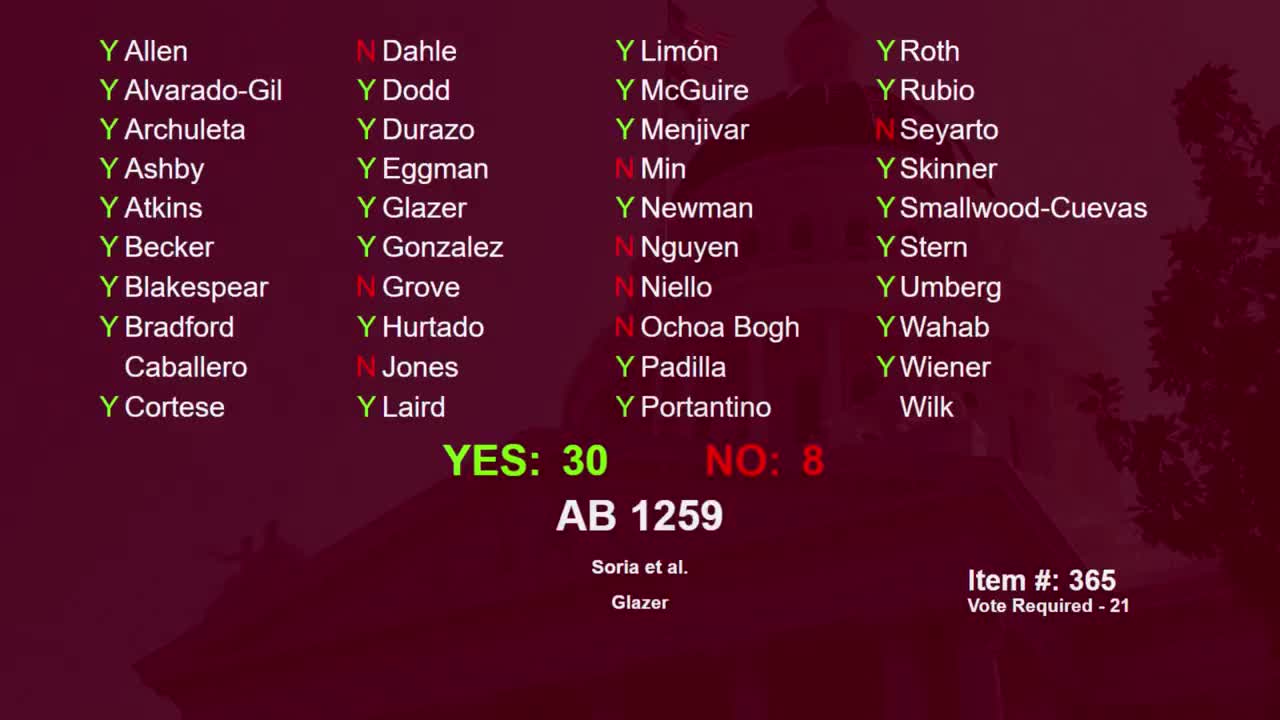 37SEC
Senate Floor
 1MIN
Senate Floor
 8MIN
Assembly Standing Committee on Insurance
Bill Author