AB 2465: Equity: socially disadvantaged groups and organizations: grants.
- Session Year: 2023-2024
- House: Assembly
- Latest Version Date: 2024-08-23
Current Status:
Failed
(2024-08-31: Ordered to inactive file at the request of Assembly Member Gipson.)
Introduced
In Committee
First Chamber
In Committee
Second Chamber
Enacted
(1)Existing law, the Farmer Equity Act of 2017, requires the Department of Food and Agriculture to ensure the inclusion of socially disadvantaged farmers and ranchers, defined as a member of a socially disadvantaged group, as defined, in the development, adoption, implementation, and enforcement of food and agriculture laws, regulations, and policies and programs, as specified.
This bill would expand the definition of socially disadvantaged group to include descendants of enslaved persons in the United States.
(2)Existing law establishes the Wildlife Conservation Board, the Department of Conservation, the Director of Forestry and Fire Protection, the Department of Parks and Recreation, the State Coastal Conservancy, the Sacramento-San Joaquin Delta Conservancy, the Sierra Nevada Conservancy, the California Environmental Protection Agency, and the Department of Water Resources. Existing law authorizes these persons and entities to award grants, as provided.
This bill would require those persons and entities, until January 1, 2031, when awarding certain grants, to prioritize the awarding of grant funding to socially disadvantaged organizations, as defined, as provided. organizations by awarding additional points equal to 15% of the total points available for scoring, as specified. The bill would define socially disadvantaged organization for that purpose to mean a nonprofit organization that has (1), as a majority of its board of directors, members who are descendants of enslaved persons in the United States, and (2) articles of incorporation stating certain information. The bill would also require grant applications submitted by a socially disadvantaged organization to include an affidavit executed by each member of its board of directors that the organization meets specified requirements.
(3)Existing law requires the Secretary of the Natural Resources Agency to manage and award financial assistance to specified entities, including a nonprofit organization, in order to support the development of sustainable communities, as provided. Existing law requires the secretary to give additional consideration to awarding moneys for a project that meets at least 2 of a list of specified criteria.This bill would, until January 1, 2031, add to this list of criteria a project that is undertaken by a socially disadvantaged organization, as defined. (4)(3)This bill would make its provisions severable.
(1)Existing law, the Farmer Equity Act of 2017, requires the Department of Food and Agriculture to ensure the inclusion of socially disadvantaged farmers and ranchers, defined as a member of a socially disadvantaged group, as defined, in the development, adoption, implementation, and enforcement of food and agriculture laws, regulations, and policies and programs, as specified.
This bill would expand the definition of socially disadvantaged group to include descendants of enslaved persons in the United States.
(2)Existing law establishes the Wildlife Conservation Board, the Department of Conservation, the Director of Forestry and Fire Protection, the Department of Parks and Recreation, the State Coastal Conservancy, the Sacramento-San Joaquin Delta Conservancy, the Sierra Nevada Conservancy, the California Environmental Protection Agency, and the Department of Water Resources. Existing law authorizes these persons and entities to award grants, as provided.
This bill would require the above those persons and entities, until January 1, 2031, when awarding those certain grants, to prioritize the awarding of grant funding to socially disadvantaged organizations, as defined, as provided.
(3)Existing law requires the Secretary of the Natural Resources Agency to manage and award financial assistance to specified entities, including a nonprofit organization, in order to support the development of sustainable communities, as provided. Existing law requires the secretary to give additional consideration to awarding moneys for a project that meets at least 2 of a list of specified criteria.
This bill would, until January 1, 2031, add to this list of criteria a project that is undertaken by a socially disadvantaged organization, as defined.
(4)This bill would make its provisions severable.
(1)Existing law, the Farmer Equity Act of 2017, requires the Department of Food and Agriculture to ensure the inclusion of socially disadvantaged farmers and ranchers, defined as a member of a socially disadvantaged group, as defined, in the development, adoption, implementation, and enforcement of food and agriculture laws, regulations, and policies and programs, as specified.
This bill would expand the definition of socially disadvantaged group to include descendants of enslaved persons in the United States.
(2)Existing law establishes the Wildlife Conservation Board, the Department of Conservation, the Director of Forestry and Fire Protection, the Department of Parks and Recreation, the State Coastal Conservancy, the Sacramento-San Joaquin Delta Conservancy, the Sierra Nevada Conservancy, the California Environmental Protection Agency, and the Department of Water Resources. Existing law authorizes these entities to award grants, as provided.
This bill would require the above entities, until January 1, 2031, when awarding those grants, to prioritize the awarding of grant funding to socially disadvantaged organizations, as defined, as provided.
(3)Existing law requires the Secretary of the Natural Resources Agency to manage and award financial assistance to specified entities, including a nonprofit organization, in order to support the development of sustainable communities, as provided. Existing law requires the secretary to give additional consideration to awarding moneys for a project that meets at least 2 of a list of specified criteria.
This bill would, until January 1, 2031, add to this list of criteria a project that is undertaken by a socially disadvantaged organization, as defined.
(a)(1)When awarding grants pursuant to this article, the board shall prioritize the awarding of grant funding to socially disadvantaged organizations, organizations by awarding additional points equal to 15 percent of the total points available for scoring, as applicable, to the extent not in conflict with the terms and conditions of a federal grant program.
(2)Eligible grant applications submitted by a socially disadvantaged organization shall be awarded additional points equal to 15 percent of the total points available for scoring.(b)The board shall not require a socially disadvantaged organization to provide matching funds and shall not penalize a socially disadvantaged organization that does not provide matching funds as part of the grant application.
(c)The board shall not penalize a socially disadvantaged organization based upon its experience, experience or capacity, but may consider the cumulative experiences of the socially disadvantaged organization implementing similar projects, including the cumulative experiences of any coapplicant and any listed contractor planning or performing the work.
(d)Grant applications submitted by a socially disadvantaged organization shall include an affidavit executed by each member of its board of directors affirming that the organization meets the requirements of subdivision (e).
(d)(e)For purposes of this section, socially disadvantaged organization means a nonprofit organization that has, as has both of the following:
(1)As a majority of its board of directors, members of a socially disadvantaged group, as that term is defined in Section 512 of the Food and Agricultural Code. who are descendants of enslaved persons in the United States.
(2)Articles of incorporation that state that the organization seeks to serve socially disadvantaged groups by promoting the conservation of agriculture, rangeland, or farmland, or the preservation, protection, or enhancement of land for its agricultural use or for its natural, scenic, historical, forested, or open-space condition or use.
(e)(f)This section shall only apply to the extent not in conflict with state and federal law.
(f)(g)This section shall remain in effect only until January 1, 2031, and as of that date is repealed.
SEC. 2.Section 512 of the Food and Agricultural Code is amended to read:512.For purposes of this article, the following terms have the following meanings:
(a)Secretary refers to the Secretary of Food and Agriculture.
(b)Socially disadvantaged farmer or rancher means a farmer or rancher who is a member of a socially disadvantaged group.
(c)Socially disadvantaged group means a group whose members have been subjected to racial, ethnic, or gender prejudice because of their identity as members of a group without regard to their individual qualities. These groups include all of the following:
(1)African Americans.
(2)Native Indians.
(3)Alaskan Natives.
(4)Hispanics.
(5)Asian Americans.
(6)Native Hawaiians and Pacific Islanders.
(7)Descendants of enslaved persons in the United States.
(d)Urbanized area, as used by the United States Census Bureau, refers to a population of at least 50,000 people.
SEC. 3.Section 12802.10 of the Government Code is amended to read:12802.10.(a)For purposes of this section, the following terms have the following meanings:(1)Critically underserved community has the same meaning as defined in Section 5642 of the Public Resources Code.(2)Disadvantaged community means a community identified pursuant to Section 39711 of the Health and Safety Code or pursuant to Section 75005 of the Public Resources Code.(3)Multiple benefits includes, but is not limited to, a decrease in air and water pollution or a reduction in the consumption of natural resources and energy, including, but not limited to, the establishment and enhancement of projects listed in subdivision (e).(4)Secretary means the Secretary of the Natural Resources Agency.(5)Special district means an agency of the state, formed pursuant to general law or a special act, for the performance of governmental or proprietary functions, with limited geographic boundaries, including, but not limited to, a school district and a community college district.(b)To support the development of sustainable communities, the secretary shall manage and award financial assistance, for the preparation and implementation of green infrastructure projects that reduce greenhouse gas emissions and provide multiple benefits, to any of the following:(1)A city.(2)A county.(3)A special district.(4)A nonprofit organization.(5)An agency or entity formed pursuant to the Joint Exercise of Powers Act (Chapter 5 (commencing with Section 6500) of Division 7 of Title 1) if at least one of the parties to the joint powers agreement qualifies as an eligible applicant, notwithstanding the Joint Exercise of Powers Act.(c)Moneys from the Greenhouse Gas Reduction Fund, created pursuant to Section 16428.8, shall be available, upon appropriation by the Legislature, for allocation by the secretary pursuant to this section.(d)The secretary shall develop minimum requirements for awarding moneys for eligible projects pursuant to this section. Those requirements shall require a project, in addition to reducing greenhouse gas emissions, to do at least one of the following:(1)Acquire, create, enhance, or expand community parks and green spaces.(2)Use natural systems or systems that mimic natural systems to achieve multiple benefits.(e)The multiple benefits of a project may include, but are not limited to, the establishment or enhancement of at least two of the following:(1)The greening of existing public lands and structures, including schools.(2)Multiobjective stormwater projects, including the construction of permeable surfaces and collection basins and barriers.(3)Green streets and alleys that integrate green infrastructure elements into the street or alley design, including permeable surfaces, bioswales, and trees.(4)Urban heat island mitigation and energy conservation efforts through greening, including green roof projects.(5)Nonmotorized urban trails that provide safe routes for both recreation and travel between residences, workplaces, commercial centers, and schools.(6)Tree canopy.(7)Wetlands.(8)Neighborhood, city, regional, or county parks and open space.(9)Climate resilience and adaptation of urban areas that reduce vulnerability to climate impacts and improve the ability of natural systems to buffer the impacts of climate change.(10)Economic, social, and health benefits, including, but not limited to, recreational opportunities, workforce education and training, contracting, and job opportunities for disadvantaged communities.(f)The secretary shall give additional consideration to awarding moneys for a project pursuant to this section that meets at least two of the following criteria:(1)Provides park or recreational benefits to a critically underserved community or disadvantaged community.(2)Is proposed by a critically underserved community or disadvantaged community.(3)Develops partnerships with local community organizations and businesses in order to strengthen outreach to disadvantaged communities, provides access to quality jobs for residents of disadvantaged communities, or provides access to workforce education and training.(4)Uses interagency cooperation and integration.(5)Uses existing public lands and facilitates the use of public resources and investments, including schools.(6)(A)The project is undertaken by a socially disadvantaged organization.(B)For purposes of this paragraph, socially disadvantaged organization means a nonprofit organization that has, as a majority of its board of directors, members of a socially disadvantaged group, as that term is defined in Section 512 of the Food and Agricultural Code.(C)This paragraph shall only apply to the extent not in conflict with state and federal law.(D)This paragraph shall be operative only until January 1, 2031.(g)The secretary shall allocate at least 75 percent of the moneys available for the purposes of this section to projects that are located in, and that provide benefits to, disadvantaged communities.(h)In implementing this section, the secretary shall maximize the expenditure of funds made available pursuant to the Statewide Park Development and Community Revitalization Act of 2008 (Chapter 3.3 (commencing with Section 5640) of Division 5 of the Public Resources Code).(i)The secretary shall hold at least two public hearings to gather public input on program development before establishing the program guidelines and selection criteria. The Administrative Procedure Act (Chapter 3.5 (commencing with Section 11340) of Part 1) does not apply to the development and adoption of guidelines and selection criteria adopted pursuant to this section.SEC. 4.SEC. 3.Section 614.5 is added to the Public Resources Code, to read:614.5.(a)(1)When awarding grants pursuant to this article, the department shall prioritize the awarding of grant funding to socially disadvantaged organizations, organizations by awarding additional points equal to 15 percent of the total points available for scoring, as applicable, to the extent not in conflict with the terms and conditions of a federal grant program.
(2)Eligible grant applications submitted by a socially disadvantaged organization shall be awarded additional points equal to 15 percent of the total points available for scoring.(b)The department shall not require a socially disadvantaged organization to provide matching funds and shall not penalize a socially disadvantaged organization that does not provide matching funds as part of the grant application.
(c)The department shall not penalize a socially disadvantaged organization based upon its experience, experience or capacity, but may consider the cumulative experiences of the socially disadvantaged organization implementing similar projects, including the cumulative experiences of any coapplicant and any listed contractor planning or performing the work.
(d)Grant applications submitted by a socially disadvantaged organization shall include an affidavit executed by each member of its board of directors affirming that the organization meets the requirements of subdivision (e) of Section 1350.5 of the Fish and Game Code.
(d)(e)For purposes of this section, socially disadvantaged organization means a nonprofit organization that has, as a majority of its board of directors, members of a socially disadvantaged group, as that term is defined in Section 512 of the Food and Agricultural Code. has the same definition as in Section 1350.5 of the Fish and Game Code.
(e)(f)This section shall only apply to the extent not in conflict with state and federal law.
(f)(g)This section shall remain in effect only until January 1, 2031, and as of that date is repealed.
SEC. 5.SEC. 4.Section 4799.05 of the Public Resources Code is amended to read:4799.05.(a)(1)The director may provide grants to, or enter into contracts or other cooperative agreements with, entities, including, but not limited to, private or nongovernmental entities, Native American tribes, or local, state, and federal public agencies, for the implementation and administration of projects and programs to improve forest health and reduce greenhouse gas emissions.
(2)(A)The director may authorize advance payments to a nonprofit organization, a local agency, a special district, a private forest landowner, or a Native American tribe from a grant awarded pursuant to this section. No single advance payment shall exceed 25 percent of the total grant award.
(B)(i)The grantee shall expend the funds from the advance payment within six months of receipt, unless the department waives this requirement.
(ii)The grantee shall file an accountability report with the department four months from the date of receiving the funds and every four months thereafter.
(C)(i)The department shall provide a report to the Legislature on or before January 1, 2023, on the outcome of the departments use of advance payments.
(ii)A report submitted pursuant to this subparagraph shall be submitted in compliance with Section 9795 of the Government Code.
(iii)The requirement for submitting a report imposed under clause (i) is inoperative on January 1, 2027, pursuant to Section 10231.5 of the Government Code.
(b)(1)When awarding grants pursuant to this section, the director shall prioritize the awarding of grant funding to socially disadvantaged organizations. organizations by awarding additional points equal to 15 percent of the total points available for scoring, as applicable.
(2)Eligible grant applications submitted by a socially disadvantaged organization shall be awarded additional points equal to 15 percent of the total points available for scoring.(3)(2)The director shall not require a socially disadvantaged organization to provide matching funds and shall not penalize a socially disadvantaged organization that does not provide matching funds as part of the grant application.
(4)(3)The director shall not penalize a socially disadvantaged organization based upon its experience, experience or capacity, but may consider the cumulative experiences of the socially disadvantaged organization implementing similar projects, including the cumulative experiences of any coapplicant and any listed contractor planning or performing the work.
(4)Grant applications submitted by a socially disadvantaged organization shall include an affidavit executed by each member of its board of directors affirming that the organization meets the requirements of subdivision (e) of Section 1350.5 of the Fish and Game Code.
(5)For purposes of this subdivision, socially disadvantaged organization means a nonprofit organization that has, as a majority of its board of directors, members of a socially disadvantaged group, as that term is defined in Section 512 of the Food and Agricultural Code. has the same definition as in Section 1350.5 of the Fish and Game Code.
(6)This subdivision shall only apply to the extent not in conflict with state and federal law.
(7)This subdivision shall be operative only until January 1, 2031.
(c)Any project or program described in this section that is funded with moneys from the Greenhouse Gas Reduction Fund, created pursuant to Section 16428.8 of the Government Code, shall comply with all statutory and program requirements applicable to the use of moneys from the fund.
(d)Moneys appropriated to the department for landscape-scale projects shall be allocated as follows:
(1)To subsidize the removal of small diameter material, especially surface fuels and ladder fuels, as well as dead trees, in order to help develop markets for beneficial uses of the material, including, but not limited to, animal bedding, biochar, cross-laminated timber, mulch, oriented strand board, pulp, post, shredding, and veneer products.
(2)For multiple benefit projects, such as tree thinning, carbon sequestration, forest resilience, and improved ecological outcome projects, including, but not limited to, restoring watershed health and function and supporting biodiversity and wildlife adaptation to climate change. The department shall give grant funding priority to landowners who practice uneven aged forest management with a resilient forest of diverse age, size, and species class within the boundaries of the project and whose activities are conducted pursuant to an approved timber harvest plan, nonindustrial timber harvest plan, or working forest management plan. An application for a grant for a project under this paragraph shall include a description of how the proposed project will increase average stem diameter and provide other site-specific improvement to forest complexity, as demonstrated by the expansion of the variety of tree age classes and species persisting for a period of at least 50 years. The department shall also give funding priority to landowners who agree to long-term forest management goals prescribed by the department.
(3)For activities on national forest lands to increase tree stand heterogeneity, create forest openings of less than one acre, and increase average tree stand diameter of residual trees. Any grants provided under this paragraph shall be approved by the department, in collaboration with appropriate state agencies, including the State Air Resources Board.
(e)(1)Division 13 (commencing with Section 21000) does not apply to prescribed fire, reforestation, habitat restoration, thinning, or fuel reduction projects, or to related activities included in the project description, undertaken, in whole or in part, on federal lands to reduce the risk of high-severity wildfire that have been reviewed under the federal National Environmental Policy Act of 1969 (42 U.S.C. Sec. 4321 et seq.) if either of the following is satisfied:
(A)The primary role of a state or local agency is providing funding or staffing for those projects.
(B)A state or local agency is undertaking those projects pursuant to the federal Good Neighbor Authority (Public Law 113-79) or a stewardship agreement with the federal government entered into pursuant to Public Law 113-79.
(2)Division 13 (commencing with Section 21000) does not apply to the issuance of a permit or other project approval by a state or local agency for projects described in paragraph (1).
(3)This section does not alter, affect, or in any way diminish the authority of a state or local agency to impose mitigation measures or conditions on projects described in paragraph (1) pursuant to other laws or regulations.
(4)(A)If the lead agency, as defined in Section 21067, determines that a project is not subject to Division 13 (commencing with Section 21000) pursuant to this subdivision and it determines to approve or carry out the project, the lead agency shall file a notice of exemption with the Office of Planning and Research and with the county clerk in the county in which the project will be located in the manner specified in subdivisions (b) and (c) of Section 21108 or subdivisions (b) and (c) of Section 21152. The lead agency shall also post the notice of exemption on its internet website together with a description of where the documents analyzing the environmental impacts of the project under the federal National Environmental Policy Act of 1969 are available for public review.
(B)If the lead agency is not the department, the lead agency shall also provide the notice of exemption together with the information set forth in subdivision (d) of Section 4137 to the department. The department shall compile the information submitted to it pursuant to this subparagraph and post the information on the departments internet website.
(5)On or before February 1, 2027, if the Secretary of the Natural Resources Agency determines that substantial changes have been made since January 1, 2023, to the federal National Environmental Policy Act of 1969 or other federal laws that affect the management of federal forest lands in California, the secretary shall report those changes to the Legislature in accordance with Section 9795 of the Government Code.
(6)This subdivision shall become inoperative on January 1, 2028.
(f)Division 13 (commencing with Section 21000) does not apply to any discretionary approval necessary to carry out or implement projects funded by the Nature-Based Solutions Tribal Program or the tribal cultural burn and tribal wildfire funding authorized by Schedule (2) of Item 3540-101-0001 of Section 2.00 of the Budget Act of 2021, as added by Section 46 of Chapter 240 of the Statutes of 2021. This subdivision only applies to projects carried out on lands subject to the jurisdictional control or the ownership of a California Native American tribe, as defined in Section 21073.
SEC. 6.Section 4799.12 of the Public Resources Code is amended to read:4799.12.(a)The director, with advice from other appropriate state agencies and interested parties, may make grants to provide assistance of 25 to 90 percent of costs for projects meeting guidelines established by the board upon recommendation by the director. The director may waive the cost sharing requirement for projects that are in disadvantaged and low-income communities. Grants may be made to cities, counties, districts, and nonprofit organizations. The director may also waive the cost sharing requirement if the funding source for a grant prohibits cost sharing requirements. The director may authorize advance payments from a grant awarded to a nonprofit organization that is located in or providing service to disadvantaged or low-income communities. The advance shall not exceed 25 percent of the total grant award. Contributions required as a condition of grants made pursuant to this section may be made in the form of material, services, or equipment, or funds. Authorized assistance may include, but is not limited to, any of the following needs:(1)Funding for development of urban tree plans that include coordination of local agency efforts and community involvement.(2)Funding for development of urban tree plans that include coordination of multiple jurisdictions, multiple agency efforts, and community involvement.(3)Funding for development of urban forest master plans or similar plans designed to provide comprehensive protection, maintenance, and management of the urban forest.(4)Provision of seedling and tree stock.(5)Tree planting projects.(6)Funding and other assistance to local agencies and nonprofit organizations for partnerships as follows:(A)Energy saving urban forest programs.(B)Developing projects or programs that use urban forests for water conservation, improving water quality, improved water management, or stormwater capture.(C)Developing projects or programs that use urban forests for air quality improvement, reduction in greenhouse gas emissions, or reduction of urban heat island effect.(D)Developing community education and engagement programs on the benefits and proper care of trees.(7)Funding for the development of training and educational materials on the benefits of the urban forest.(8)Funding for the development of training and educational materials on proper care and maintenance of trees and the urban forest, including young and mature tree care.(9)Funding and other assistance, based on criteria developed by the department, for management of urban forests to ensure their survival and ability to optimize the benefits that urban forests provide the community and the environment.(10)Funding and other assistance for demonstration projects in urban forestry with special attention given to projects or programs assisting the state in meeting the requirements of the Global Warming Solutions Act of 2006 (Division 25.5 (commencing with Section 38500) of the Health and Safety Code), improving energy and water conservation, capturing and filtering urban stormwater and dry weather runoff, improving water quality, utilizing local water, reducing the urban heat island effect, improving air quality, and wood and fiber utilization projects, including, but not limited to, biofuel and bioenergy.(11)Funding for improved urban forest maintenance and projects that respond to events that impact urban forest health, including drought, storms, pests, and disease.(12)Funding for planning and technical assistance for eligible applicants assisting disadvantaged communities.(13)Other categories of projects recommended by the director and approved by the board.(b)(1)The director shall prioritize the award of grant funding pursuant to this section to socially disadvantaged organizations.(2)For purposes of this subdivision, socially disadvantaged organization means a nonprofit organization that has, as a majority of its board of directors, members of a socially disadvantaged group, as that term is defined in Section 512 of the Food and Agricultural Code.(3)This subdivision shall only apply to the extent not in conflict with state and federal law.(4)This subdivision shall be operative only until January 1, 2031.SEC. 7.SEC. 5.Section 5072.8 of the Public Resources Code is amended to read:5072.8.(a)The Recreational Trails Fund is hereby created. Moneys in the Recreational Trails Fund shall be available, upon appropriation by the Legislature, to the department for competitive grants to cities, counties, districts, state and federal agencies, federally recognized California Native American tribes, nonfederally recognized California Native American tribes included on the contact list maintained by the Native American Heritage Commission, and nonprofit organizations with management responsibilities over public lands to acquire and develop recreational trails.
(b)The Controller shall promptly transfer all money received by the state from the federal government as allocations from the National Recreational Trails Trust Fund pursuant to the Steve Symms National Recreational Trails Fund Act of 1991 (P.L. 102-240) and deposited in the Federal Trust Fund, to the Recreational Trails Fund. The money in the Recreational Trails Fund shall be available to the department for expenditure, upon appropriation by the Legislature, for grants pursuant to subdivision (a), in accordance with the Steve Symms National Recreational Trails Fund Act of 1991. Seventy percent of the money received by the state from the federal government and transferred to the Recreational Trails Fund pursuant to this subdivision shall be available only for nonmotorized recreational trails with at least one-half of that amount available only for grants to cities, counties, districts, federally recognized California Native American tribes, nonfederally recognized California Native American tribes included on the contact list maintained by the Native American Heritage Commission, and nonprofit organizations for the acquisition and development of new nonmotorized recreational trails and the reconstruction or relocation of existing nonmotorized recreational trails.
(c)The department shall prepare and adopt criteria and procedures for evaluating applications for grants, which, at a minimum, shall include certification that the project is consistent with the applicants general plan or the equivalent planning document, complies with the California Environmental Quality Act (Division 13 (commencing with Section 21000)) and other environmental protection laws and regulations, and is not required as a mitigation measure as a condition for a permit or other entitlement. The department shall forward to the Director of Finance for inclusion in the Governors Budget of each fiscal year all projects that are recommended for funding and those projects shall be contained in the Budget Bill for that fiscal year.
(d)A grant shall not be made from the Recreational Trails Fund to an applicant unless the applicant agrees to both of the following conditions:
(1)To maintain and operate the property acquired, developed, rehabilitated, or restored with the funds in perpetuity. With the approval of the department, the applicant or its successors in interest in the property may transfer the responsibility to maintain and operate the property in accordance with this section. In the case of lands not held in fee by the applicant (limited tenure projects), perpetuity shall be in accordance with the tenure or for the length of time sufficient to provide public benefits commensurate with the type and duration of interest in land held by the applicant.
(2)To use the property only for the purposes of the grant and to make no other use, sale, or other disposition or conversion of the property except as authorized by a specific act of the Legislature and the property shall be replaced with property of equivalent value and usefulness as determined by the department. The property acquired or developed may be transferred to another public agency if the successor agency assumes the obligations imposed under this chapter.
(e)All applicants for a grant pursuant to this section shall submit an application to the department for approval. Each application shall include in writing the conditions specified in paragraphs (1) and (2) of subdivision (d).
(f)The department, before dispersing a grant pursuant to this section on or after January 1, 2024, shall have a mechanism in place to recover a grant spent outside the terms of the recipients grant agreement.
(g)(1)When awarding grants pursuant to this section, the department shall prioritize the awarding of grant funding to socially disadvantaged organizations, organizations by awarding additional points equal to 15 percent of the total points available for scoring, as applicable, to the extent not in conflict with the terms and conditions of a federal grant program.
(2)Eligible grant applications submitted by a socially disadvantaged organization shall be awarded additional points equal to 15 percent of the total points available for scoring.(3)(2)The department shall not require a socially disadvantaged organization to provide matching funds and shall not penalize a socially disadvantaged organization that does not provide matching funds as part of the grant application.
(4)(3)The department shall not penalize a socially disadvantaged organization based upon its experience, experience or capacity, but may consider the cumulative experiences of the socially disadvantaged organization implementing similar projects, including the cumulative experiences of any coapplicant and any listed contractor planning or performing the work.
(4)Grant applications submitted by a socially disadvantaged organization shall include an affidavit executed by each member of its board of directors affirming that the organization meets the requirements of subdivision (e) of Section 1350.5 of the Fish and Game Code.
(5)For purposes of this section, socially disadvantaged organization means a nonprofit organization that has, as a majority of its board of directors, members of a socially disadvantaged group, as that term is defined in Section 512 of the Food and Agricultural Code. has the same definition as in Section 1350.5 of the Fish and Game Code.
(6)This subdivision shall only apply to the extent not in conflict with state and federal law.
(7)This subdivision shall be operative only until January 1, 2031.
SEC. 8.SEC. 6.Section 31121 is added to the Public Resources Code, to read:31121.(a)(1)When awarding grants pursuant to this chapter, the conservancy shall prioritize the awarding of grant funding to socially disadvantaged organizations, organizations by awarding additional points equal to 15 percent of the total points available for scoring, as applicable, to the extent not in conflict with the terms and conditions of a federal grant program.
(2)Eligible grant applications submitted by a socially disadvantaged organization shall be awarded additional points equal to 15 percent of the total points available for scoring.(b)The conservancy shall not require a socially disadvantaged organization to provide matching funds and shall not penalize a socially disadvantaged organization that does not provide matching funds as part of the grant application.
(c)The conservancy shall not penalize a socially disadvantaged organization based upon its experience, experience or capacity, but may consider the cumulative experiences of the socially disadvantaged organization implementing similar projects, including the cumulative experiences of any coapplicant and any listed contractor planning or performing the work.
(d)Grant applications submitted by a socially disadvantaged organization shall include an affidavit executed by each member of its board of directors affirming that the organization meets the requirements of subdivision (e) of Section 1350.5 of the Fish and Game Code.
(d)(e)For purposes of this section, socially disadvantaged organization means a nonprofit organization that has, as a majority of its board of directors, members of a socially disadvantaged group, as that term is defined in Section 512 of the Food and Agricultural Code. has the same definition as in Section 1350.5 of the Fish and Game Code.
(e)(f)This section shall only apply to the extent not in conflict with state and federal law.
(f)(g)This section shall remain in effect only until January 1, 2031, and as of that date is repealed.
SEC. 9.SEC. 7.Section 32379 is added to the Public Resources Code, to read:32379.(a)(1)When awarding grants pursuant to this chapter, the conservancy shall prioritize the awarding of grant funding to socially disadvantaged organizations, organizations by awarding additional points equal to 15 percent of the total points available for scoring, as applicable, to the extent not in conflict with the terms and conditions of a federal grant program.
(2)Eligible grant applications submitted by a socially disadvantaged organization shall be awarded additional points equal to 15 percent of the total points available for scoring.(b)The conservancy shall not require a socially disadvantaged organization to provide matching funds and shall not penalize a socially disadvantaged organization that does not provide matching funds as part of the grant application.
(c)The conservancy shall not penalize a socially disadvantaged organization based upon its experience, experience or capacity, but may consider the cumulative experiences of the socially disadvantaged organization implementing similar projects, including the cumulative experiences of any coapplicant and any listed contractor planning or performing the work.
(d)Grant applications submitted by a socially disadvantaged organization shall include an affidavit executed by each member of its board of directors affirming that the organization meets the requirements of subdivision (e) of Section 1350.5 of the Fish and Game Code.
(d)(e)For purposes of this section, socially disadvantaged organization means a nonprofit organization that has, as a majority of its board of directors, members of a socially disadvantaged group, as that term is defined in Section 512 of the Food and Agricultural Code. has the same definition as in Section 1350.5 of the Fish and Game Code.
(e)(f)This section shall only apply to the extent not in conflict with state and federal law.
(f)(g)This section shall remain in effect only until January 1, 2031, and as of that date is repealed.
SEC. 10.SEC. 8.Section 33343.5 is added to the Public Resources Code, to read:33343.5.(a)(1)When awarding grants pursuant to this chapter, the conservancy shall prioritize the awarding of grant funding to socially disadvantaged organizations. organizations by awarding additional points equal to 15 percent of the total points available for scoring, as applicable.
(2)Eligible grant applications submitted by a socially disadvantaged organization shall be awarded additional points equal to 15 percent of the total points available for scoring.(b)The conservancy shall not require a socially disadvantaged organization to provide matching funds and shall not penalize a socially disadvantaged organization that does not provide matching funds as part of the grant application.
(c)The conservancy shall not penalize a socially disadvantaged organization based upon its experience, experience or capacity, but may consider the cumulative experiences of the socially disadvantaged organization implementing similar projects, including the cumulative experiences of any coapplicant and any listed contractor planning or performing the work.
(d)Grant applications submitted by a socially disadvantaged organization shall include an affidavit executed by each member of its board of directors affirming that the organization meets the requirements of subdivision (e) of Section 1350.5 of the Fish and Game Code.
(d)(e)For purposes of this section, socially disadvantaged organization means a nonprofit organization that has, as a majority of its board of directors, members of a socially disadvantaged group, as that term is defined in Section 512 of the Food and Agricultural Code. has the same definition as in Section 1350.5 of the Fish and Game Code.
(e)(f)This section shall only apply to the extent not in conflict with state and federal law.
(f)(g)This section shall remain in effect only until January 1, 2031, and as of that date is repealed.
SEC. 11.Section 71116 of the Public Resources Code is amended to read:71116.(a)The Environmental Justice Small Grant Program is hereby established under the jurisdiction of the California Environmental Protection Agency. The California Environmental Protection Agency shall adopt regulations for the implementation of this section. These regulations shall include, but need not be limited to, all of the following:(1)Specific criteria and procedures for the implementation of the program.(2)A requirement that each grant recipient submit a written report to the agency documenting its expenditures of the grant funds and the results of the funded project.(3)Provisions promoting the equitable distribution of grant funds in a variety of areas throughout the state, with the goal of making grants available to organizations that will attempt to address environmental justice issues.(b)The purpose of the program is to provide grants to eligible community groups, including, but not limited to, community-based, grassroots nonprofit organizations, that are located in areas adversely affected by environmental pollution and hazards and that are involved in work to address environmental justice issues.(c)(1)Both of the following are eligible to receive moneys from the fund:(A)A nonprofit entity.(B)A federally recognized tribal government.(2)For purposes of this section, nonprofit entity means any corporation, trust, association, cooperative, or other organization that meets all of the following criteria:(A)Is operated primarily for scientific, educational, service, charitable, or other similar purposes in the public interest.(B)Is not organized primarily for profit.(C)Uses its net proceeds to maintain, improve, or expand, or any combination thereof, its operations.(D)Is a tax-exempt organization under Section 501(c)(3) of the federal Internal Revenue Code, or is able to provide evidence to the agency that the state recognizes the organization as a nonprofit entity.(3)For purposes of this section, nonprofit entity specifically excludes an organization that is a tax-exempt organization under Section 501(c)(4) of the federal Internal Revenue Code.(d)Individuals may not receive grant moneys from the fund.(e)Grant recipients shall use the grant award to fund only the project described in the recipients application. Recipients shall not use the grant funding to shift moneys from existing or proposed projects to activities for which grant funding is prohibited under subdivision (g).(f)Grants shall be awarded on a competitive basis for projects that are based in communities with the most significant exposure to pollution. Grants shall be limited to any of the following purposes and no other:(1)Resolve environmental problems through distribution of information.(2)Identify improvements in communication and coordination among agencies and stakeholders in order to address the most significant exposure to pollution.(3)Expand the understanding of a community about the environmental issues that affect their community.(4)Develop guidance on the relative significance of various environmental risks.(5)Promote community involvement in the decisionmaking process that affects the environment of the community.(6)Present environmental data for the purposes of enhancing community understanding of environmental information systems and environmental information.(g)(1)The agency shall not award grants for, and grant funding shall not be used for, any of the following:(A)Other state grant programs.(B)Lobbying or advocacy activities relating to any federal, state, regional, or local legislative, quasi-legislative, adjudicatory, or quasi-judicial proceeding involving development or adoption of statutes, guidelines, rules, regulations, plans, or any other governmental proposal, or involving decisions concerning siting, permitting, licensing, or any other governmental action.(C)Litigation, administrative challenges, enforcement action, or any type of adjudicatory proceeding.(D)Funding of a lawsuit against any governmental entity.(E)Funding of a lawsuit against a business or a project owned by a business.(F)Matching state or federal funding.(G)Performance of any technical assessment for purposes of opposing or contradicting a technical assessment prepared by a public agency.(2)An organizations use of funds from a grant awarded under this section to educate a community regarding an environmental justice issue or a governmental process does not preclude that organization from subsequent lobbying or advocacy concerning that same issue or governmental process, as long as the lobbying or advocacy is not funded by a grant awarded under this section.(h)The agency shall review, evaluate, and select grant recipients, and screen grant applications to ensure that they meet the requirements of this section.(i)The maximum amount of a grant provided pursuant to this section may not exceed fifty thousand dollars ($50,000).(j)For purposes of this section, environmental justice has the same meaning as defined in Section 65040.12 of the Government Code.(k)(1)The Secretary for Environmental Protection may expend up to two million dollars ($2,000,000) per year for the purposes of this section.(2)(A)Of the amount described in paragraph (1), up to five hundred thousand dollars ($500,000) shall be expended by the Secretary for Environmental Protection for grants to organizations working to address and mitigate the effects of sea level rise in disadvantaged communities impacted by sea level rise.(B)For purposes of this section, disadvantaged community shall have the same meaning as defined in Section 71118.(l)Boards, departments, and offices within the California Environmental Protection Agency may allocate funds from various special funds, settlements, and penalties to implement this program.(m)(1)When awarding grants pursuant to this section, the agency shall prioritize the awarding of grant funding to socially disadvantaged organizations.(2)Eligible grant applications submitted by a socially disadvantaged organization shall be awarded additional points equal to 15 percent of the total points available for scoring.(3)The agency shall not require a socially disadvantaged organization to provide matching funds and shall not penalize a socially disadvantaged organization that does not provide matching funds as part of the grant application.(4)The agency shall not penalize a socially disadvantaged organization based upon its experience, but may consider the cumulative experiences of the socially disadvantaged organization implementing similar projects, including the cumulative experiences of any coapplicant and any listed contractor planning or performing the work.(5)For purposes of this section, socially disadvantaged organization means a nonprofit organization that has, as a majority of its board of directors, members of a socially disadvantaged group, as that term is defined in Section 512 of the Food and Agricultural Code.(6)This subdivision shall only apply to the extent not in conflict with state and federal law.(7)This subdivision shall be operative only until January 1, 2031.SEC. 12.SEC. 9.Section 6700 of the Water Code is amended to read:6700.(a)(1)The department shall, upon appropriation by the Legislature, develop and administer the Dam Safety and Climate Resilience Local Assistance Program established pursuant to this section. The purpose of the program shall be to provide state funding for repairs, rehabilitation, enhancements, and other dam safety projects at existing state jurisdictional dams and associated facilities that were in service prior to January 1, 2023.
(2)Before disbursing grant funds pursuant to this part, the department shall develop and adopt program guidelines and project solicitation documents. Any guidelines and project solicitation documents developed pursuant to this section are not subject to Chapter 3.5 (commencing with Section 11340) of Part 1 of Division 3 of Title 2 of the Government Code.
(b)Dam safety and enhancement projects eligible to receive funding under the program include the following:
(1)Dam repairs to allow water storage to full capacity.
(2)New spillway and spillway repair projects at existing dams.
(3)Dam and reservoir seismic retrofit projects.
(4)Enhancement of water supply and downstream flood risk reduction such as implementation of Forecast-Informed Reservoir Operations.
(5)One-time projects to remove sediment resulting from wildfires or extraordinary storm events.
(6)Improvements to dam appurtenances to address dam safety-related deficiencies identified by the department.
(c)Upon appropriation by the Legislature, funds shall be available to the department to provide grants to owners of state jurisdictional dams for dam safety projects that provide the following public benefits, in order of priority:
(1)Protection of public safety.
(2)Restoration of water storage.
(3)Flood risk reduction.
(4)Enhancement of water supply reliability.
(5)Enhancement, protection, or restoration of habitat for fish and wildlife.
(6)Protection of water quality.
(d)The department shall not award any funds under this section for raising dams, increasing reservoir space, or otherwise increasing water impoundment.
(e)A grant cost share of at least 50 percent shall be required for projects funded pursuant to this part. Federal funding and other state loans and grants may be used as grant cost share. The department may waive or reduce the grant cost share if it would cause extreme financial hardship to the grant recipient and the dam poses an unacceptable public safety risk.
(f)(1)When awarding grants pursuant to this section, the department shall prioritize the awarding of grant funding to socially disadvantaged organizations, organizations by awarding additional points equal to 15 percent of the total points available for scoring, as applicable, to the extent not in conflict with the terms and conditions of a federal grant program.
(2)Eligible grant applications submitted by a socially disadvantaged organization shall be awarded additional points equal to 15 percent of the total points available for scoring.(3)(2)The department shall not require a socially disadvantaged organization to provide matching funds and shall not penalize a socially disadvantaged organization that does not provide matching funds as part of the grant application.
(4)(3)The department shall not penalize a socially disadvantaged organization based upon its experience, experience or capacity, but may consider the cumulative experiences of the socially disadvantaged organization implementing similar projects, including the cumulative experiences of any coapplicant and any listed contractor planning or performing the work.
(4)Grant applications submitted by a socially disadvantaged organization shall include an affidavit executed by each member of its board of directors affirming that the organization meets the requirements of subdivision (e) of Section 1350.5 of the Fish and Game Code.
(5)For purposes of this section, socially disadvantaged organization means a nonprofit organization that has, as a majority of its board of directors, members of a socially disadvantaged group, as that term is defined in Section 512 of the Food and Agricultural Code. has the same definition as in Section 1350.5 of the Fish and Game Code.
(6)This subdivision shall only apply to the extent not in conflict with state and federal law.
(7)This subdivision shall be operative only until January 1, 2031.
SEC. 13.Section 7049 of the Water Code is amended to read:7049.(a)Upon an appropriation of funds from the Legislature, the department shall establish a program to implement watershed-based riverine and riparian stewardship improvements by providing technical and financial assistance in support of projects that reduce flood risk, restore and enhance fish populations and habitat, improve water quality, achieve climate change benefits, and in general ensure resilient ecological function within areas that include, but are not limited to, urban or urbanizing areas of the state.(b)The program shall support the purposes of and be coordinated with the Urban Streams Restoration Program established pursuant to Section 7048, fish passage improvements, and other similar programs to accomplish increased ecological, stream management, climate, and community improvement benefits from state and other funds available for riverine stewardship projects. The department may participate in and support local partnerships, including, but not limited to, in disadvantaged communities, to ensure projects incorporate the best available science, assessment data, and ecologically relevant practices, and address state and local community needs and priorities.(c)The program shall include all of the following elements:(1)Support for partnerships with local agencies, nonprofit organizations, resource conservation districts, and community groups to identify multibenefit opportunities, local needs, and watershed restoration or enhancement objectives. Partnerships shall include local community nonprofit organizations and other state agencies as appropriate and to the degree those agencies and organizations are able to participate.(2)Early engagement by the department. Engagement in conceptualizing and defining the project shall be prioritized over the design, construction, and operation of a completed project.(3)Assistance in planning the natural resource restoration, landscaping, and infrastructure elements of a project consistent with appropriate local and regional land use and resource recovery plans.(4)Design assistance to ensure a project will protect or enhance natural river and stream process and function using the best bioengineering and ecological practices while considering low-impact development, energy and water conservation, and community access and use for local recreation, trails, and other purposes.(5)Evaluation and assessment processes to monitor success in meeting riverine stewardship goals and community needs.(6)Assistance, as appropriate, with project administration, including, but not limited to, communication among partnership groups, enhancing the capacity of communities to effectively participate, and looking for and managing various funds obtained for the project.(7)Plans or schedules delineating the work to be completed by the department and each partner.(d)The department may provide technical assistance for the purposes of this section either directly or otherwise, including, but not limited to, by collaborating with other state agencies, appropriate California State University or University of California programs, or other similar programs, providing educational development and field experience for students in watershed sciences.(e)Grant funds available for the purposes of Section 7048 or this section may be available for use by the recipient for design, engineering, and other technical assistance for the purposes of the program.(f)(1)When awarding grants pursuant to this section, the department shall prioritize the awarding of grant funding to socially disadvantaged organizations, to the extent not in conflict with the terms and conditions of a federal grant program.(2)Eligible grant applications submitted by a socially disadvantaged organization shall be awarded additional points equal to 15 percent of the total points available for scoring.(3)The department shall not require a socially disadvantaged organization to provide matching funds and shall not penalize a socially disadvantaged organization that does not provide matching funds as part of the grant application.(4)The department shall not penalize a socially disadvantaged organization based upon its experience, but may consider the cumulative experiences of the socially disadvantaged organization implementing similar projects, including the cumulative experiences of any coapplicant and any listed contractor planning or performing the work.(5)For purposes of this section, socially disadvantaged organization means a nonprofit organization that has, as a majority of its board of directors, members of a socially disadvantaged group, as that term is defined in Section 512 of the Food and Agricultural Code.(6)This subdivision shall only apply to the extent not in conflict with state and federal law.(7)This subdivision shall be operative only until January 1, 2031.SEC. 14.SEC. 10.The provisions of this act are severable. If any provision of this act or its application is held invalid, that invalidity shall not affect other provisions or applications that can be given effect without the invalid provision or application.
(a)(1)When awarding grants pursuant to this article, the board shall prioritize the awarding of grant funding to socially disadvantaged organizations, to the extent not in conflict with the terms and conditions of a federal grant program.
(2)Eligible grant applications submitted by a socially disadvantaged organization shall be awarded additional points equal to 15 percent of the total points available for scoring.
(b)The board shall not require a socially disadvantaged organization to provide matching funds and shall not penalize a socially disadvantaged organization that does not provide matching funds as part of the grant application.
(c)The board shall not penalize a socially disadvantaged organization based upon its experience, but may consider the cumulative experiences of the socially disadvantaged organization implementing similar projects, including the cumulative experiences of any coapplicant and any listed contractor planning or performing the work.
(d)For purposes of this section, socially disadvantaged organization means a nonprofit organization that has, as a majority of its board of directors, members of a socially disadvantaged group, as that term is defined in Section 512 of the Food and Agricultural Code.
(e)This section shall only apply to the extent not in conflict with state and federal law.
(e)(f)This section shall remain in effect only until January 1, 2031, and as of that date is repealed.
SEC. 2.Section 512 of the Food and Agricultural Code is amended to read:512.For purposes of this article, the following terms have the following meanings:
(a)Secretary refers to the Secretary of Food and Agriculture.
(b)Socially disadvantaged farmer or rancher means a farmer or rancher who is a member of a socially disadvantaged group.
(c)Socially disadvantaged group means a group whose members have been subjected to racial, ethnic, or gender prejudice because of their identity as members of a group without regard to their individual qualities. These groups include all of the following:
(1)African Americans.
(2)Native Indians.
(3)Alaskan Natives.
(4)Hispanics.
(5)Asian Americans.
(6)Native Hawaiians and Pacific Islanders.
(7)Descendants of enslaved persons in the United States.
(d)Urbanized area, as used by the United States Census Bureau, refers to a population of at least 50,000 people.
SEC. 3.Section 12802.10 of the Government Code is amended to read:12802.10.(a)For purposes of this section, the following terms have the following meanings:
(1)Critically underserved community has the same meaning as defined in Section 5642 of the Public Resources Code.
(2)Disadvantaged community means a community identified pursuant to Section 39711 of the Health and Safety Code or pursuant to Section 75005 of the Public Resources Code.
(3)Multiple benefits includes, but is not limited to, a decrease in air and water pollution or a reduction in the consumption of natural resources and energy, including, but not limited to, the establishment and enhancement of projects listed in subdivision (e).
(4)Secretary means the Secretary of the Natural Resources Agency.
(5)Special district means an agency of the state, formed pursuant to general law or a special act, for the performance of governmental or proprietary functions, with limited geographic boundaries, including, but not limited to, a school district and a community college district.
(b)To support the development of sustainable communities, the secretary shall manage and award financial assistance, for the preparation and implementation of green infrastructure projects that reduce greenhouse gas emissions and provide multiple benefits, to any of the following:
(1)A city.
(2)A county.
(3)A special district.
(4)A nonprofit organization.
(5)An agency or entity formed pursuant to the Joint Exercise of Powers Act (Chapter 5 (commencing with Section 6500) of Division 7 of Title 1) if at least one of the parties to the joint powers agreement qualifies as an eligible applicant, notwithstanding the Joint Exercise of Powers Act.
(c)Moneys from the Greenhouse Gas Reduction Fund, created pursuant to Section 16428.8, shall be available, upon appropriation by the Legislature, for allocation by the secretary pursuant to this section.
(d)The secretary shall develop minimum requirements for awarding moneys for eligible projects pursuant to this section. Those requirements shall require a project, in addition to reducing greenhouse gas emissions, to do at least one of the following:
(1)Acquire, create, enhance, or expand community parks and green spaces.
(2)Use natural systems or systems that mimic natural systems to achieve multiple benefits.
(e)The multiple benefits of a project may include, but are not limited to, the establishment or enhancement of at least two of the following:
(1)The greening of existing public lands and structures, including schools.
(2)Multiobjective stormwater projects, including the construction of permeable surfaces and collection basins and barriers.
(3)Green streets and alleys that integrate green infrastructure elements into the street or alley design, including permeable surfaces, bioswales, and trees.
(4)Urban heat island mitigation and energy conservation efforts through greening, including green roof projects.
(5)Nonmotorized urban trails that provide safe routes for both recreation and travel between residences, workplaces, commercial centers, and schools.
(6)Tree canopy.
(7)Wetlands.
(8)Neighborhood, city, regional, or county parks and open space.
(9)Climate resilience and adaptation of urban areas that reduce vulnerability to climate impacts and improve the ability of natural systems to buffer the impacts of climate change.
(10)Economic, social, and health benefits, including, but not limited to, recreational opportunities, workforce education and training, contracting, and job opportunities for disadvantaged communities.
(f)The secretary shall give additional consideration to awarding moneys for a project pursuant to this section that meets at least two of the following criteria:
(1)Provides park or recreational benefits to a critically underserved community or disadvantaged community.
(2)Is proposed by a critically underserved community or disadvantaged community.
(3)Develops partnerships with local community organizations and businesses in order to strengthen outreach to disadvantaged communities, provides access to quality jobs for residents of disadvantaged communities, or provides access to workforce education and training.
(4)Uses interagency cooperation and integration.
(5)Uses existing public lands and facilitates the use of public resources and investments, including schools.
(6)(A)The project is undertaken by a socially disadvantaged organization.
(B)For purposes of this paragraph, socially disadvantaged organization means a nonprofit organization that has, as a majority of its board of directors, members of a socially disadvantaged group, as that term is defined in Section 512 of the Food and Agricultural Code.
(C)This paragraph shall only apply to the extent not in conflict with state and federal law.
(C)(D)This paragraph shall be operative only until January 1, 2031.
(g)The secretary shall allocate at least 75 percent of the moneys available for the purposes of this section to projects that are located in, and that provide benefits to, disadvantaged communities.
(h)In implementing this section, the secretary shall maximize the expenditure of funds made available pursuant to the Statewide Park Development and Community Revitalization Act of 2008 (Chapter 3.3 (commencing with Section 5640) of Division 5 of the Public Resources Code).
(i)The secretary shall hold at least two public hearings to gather public input on program development before establishing the program guidelines and selection criteria. The Administrative Procedure Act (Chapter 3.5 (commencing with Section 11340) of Part 1) does not apply to the development and adoption of guidelines and selection criteria adopted pursuant to this section.
SEC. 4.Section 614.5 is added to the Public Resources Code, to read:614.5.(a)(1)When awarding grants pursuant to this article, the department shall prioritize the awarding of grant funding to socially disadvantaged organizations, to the extent not in conflict with the terms and conditions of a federal grant program.
(2)Eligible grant applications submitted by a socially disadvantaged organization shall be awarded additional points equal to 15 percent of the total points available for scoring.
(b)The department shall not require a socially disadvantaged organization to provide matching funds and shall not penalize a socially disadvantaged organization that does not provide matching funds as part of the grant application.
(c)The department shall not penalize a socially disadvantaged organization based upon its experience, but may consider the cumulative experiences of the socially disadvantaged organization implementing similar projects, including the cumulative experiences of any coapplicant and any listed contractor planning or performing the work.
(d)For purposes of this section, socially disadvantaged organization means a nonprofit organization that has, as a majority of its board of directors, members of a socially disadvantaged group, as that term is defined in Section 512 of the Food and Agricultural Code.
(e)This section shall only apply to the extent not in conflict with state and federal law.
(e)(f)This section shall remain in effect only until January 1, 2031, and as of that date is repealed.
SEC. 5.Section 4799.05 of the Public Resources Code is amended to read:4799.05.(a)(1)The director may provide grants to, or enter into contracts or other cooperative agreements with, entities, including, but not limited to, private or nongovernmental entities, Native American tribes, or local, state, and federal public agencies, for the implementation and administration of projects and programs to improve forest health and reduce greenhouse gas emissions.
(2)(A)The director may authorize advance payments to a nonprofit organization, a local agency, a special district, a private forest landowner, or a Native American tribe from a grant awarded pursuant to this section. No single advance payment shall exceed 25 percent of the total grant award.
(B)(i)The grantee shall expend the funds from the advance payment within six months of receipt, unless the department waives this requirement.
(ii)The grantee shall file an accountability report with the department four months from the date of receiving the funds and every four months thereafter.
(C)(i)The department shall provide a report to the Legislature on or before January 1, 2023, on the outcome of the departments use of advance payments.
(ii)A report submitted pursuant to this subparagraph shall be submitted in compliance with Section 9795 of the Government Code.
(iii)The requirement for submitting a report imposed under clause (i) is inoperative on January 1, 2027, pursuant to Section 10231.5 of the Government Code.
(b)(1)When awarding grants pursuant to this section, the director shall prioritize the awarding of grant funding to socially disadvantaged organizations.
(2)Eligible grant applications submitted by a socially disadvantaged organization shall be awarded additional points equal to 15 percent of the total points available for scoring.
(3)The director shall not require a socially disadvantaged organization to provide matching funds and shall not penalize a socially disadvantaged organization that does not provide matching funds as part of the grant application.
(4)The director shall not penalize a socially disadvantaged organization based upon its experience, but may consider the cumulative experiences of the socially disadvantaged organization implementing similar projects, including the cumulative experiences of any coapplicant and any listed contractor planning or performing the work.
(5)For purposes of this subdivision, socially disadvantaged organization means a nonprofit organization that has, as a majority of its board of directors, members of a socially disadvantaged group, as that term is defined in Section 512 of the Food and Agricultural Code.
(6)This subdivision shall only apply to the extent not in conflict with state and federal law.
(6)(7)This subdivision shall be operative only until January 1, 2031.
(c)Any project or program described in this section that is funded with moneys from the Greenhouse Gas Reduction Fund, created pursuant to Section 16428.8 of the Government Code, shall comply with all statutory and program requirements applicable to the use of moneys from the fund.
(d)Moneys appropriated to the department for landscape-scale projects shall be allocated as follows:
(1)To subsidize the removal of small diameter material, especially surface fuels and ladder fuels, as well as dead trees, in order to help develop markets for beneficial uses of the material, including, but not limited to, animal bedding, biochar, cross-laminated timber, mulch, oriented strand board, pulp, post, shredding, and veneer products.
(2)For multiple benefit projects, such as tree thinning, carbon sequestration, forest resilience, and improved ecological outcome projects, including, but not limited to, restoring watershed health and function and supporting biodiversity and wildlife adaptation to climate change. The department shall give grant funding priority to landowners who practice uneven aged forest management with a resilient forest of diverse age, size, and species class within the boundaries of the project and whose activities are conducted pursuant to an approved timber harvest plan, nonindustrial timber harvest plan, or working forest management plan. An application for a grant for a project under this paragraph shall include a description of how the proposed project will increase average stem diameter and provide other site-specific improvement to forest complexity, as demonstrated by the expansion of the variety of tree age classes and species persisting for a period of at least 50 years. The department shall also give funding priority to landowners who agree to long-term forest management goals prescribed by the department.
(3)For activities on national forest lands to increase tree stand heterogeneity, create forest openings of less than one acre, and increase average tree stand diameter of residual trees. Any grants provided under this paragraph shall be approved by the department, in collaboration with appropriate state agencies, including the State Air Resources Board.
(e)(1)Division 13 (commencing with Section 21000) does not apply to prescribed fire, reforestation, habitat restoration, thinning, or fuel reduction projects, or to related activities included in the project description, undertaken, in whole or in part, on federal lands to reduce the risk of high-severity wildfire that have been reviewed under the federal National Environmental Policy Act of 1969 (42 U.S.C. Sec. 4321 et seq.) if either of the following is satisfied:
(A)The primary role of a state or local agency is providing funding or staffing for those projects.
(B)A state or local agency is undertaking those projects pursuant to the federal Good Neighbor Authority (Public Law 113-79) or a stewardship agreement with the federal government entered into pursuant to Public Law 113-79.
(2)Division 13 (commencing with Section 21000) does not apply to the issuance of a permit or other project approval by a state or local agency for projects described in paragraph (1).
(3)This section does not alter, affect, or in any way diminish the authority of a state or local agency to impose mitigation measures or conditions on projects described in paragraph (1) pursuant to other laws or regulations.
(4)(A)If the lead agency, as defined in Section 21067, determines that a project is not subject to Division 13 (commencing with Section 21000) pursuant to this subdivision and it determines to approve or carry out the project, the lead agency shall file a notice of exemption with the Office of Planning and Research and with the county clerk in the county in which the project will be located in the manner specified in subdivisions (b) and (c) of Section 21108 or subdivisions (b) and (c) of Section 21152. The lead agency shall also post the notice of exemption on its internet website together with a description of where the documents analyzing the environmental impacts of the project under the federal National Environmental Policy Act of 1969 are available for public review.
(B)If the lead agency is not the department, the lead agency shall also provide the notice of exemption together with the information set forth in subdivision (d) of Section 4137 to the department. The department shall compile the information submitted to it pursuant to this subparagraph and post the information on the departments internet website.
(5)On or before February 1, 2027, if the Secretary of the Natural Resources Agency determines that substantial changes have been made since January 1, 2023, to the federal National Environmental Policy Act of 1969 or other federal laws that affect the management of federal forest lands in California, the secretary shall report those changes to the Legislature in accordance with Section 9795 of the Government Code.
(6)This subdivision shall become inoperative on January 1, 2028.
(f)Division 13 (commencing with Section 21000) does not apply to any discretionary approval necessary to carry out or implement projects funded by the Nature-Based Solutions Tribal Program or the tribal cultural burn and tribal wildfire funding authorized by Schedule (2) of Item 3540-101-0001 of Section 2.00 of the Budget Act of 2021, as added by Section 46 of Chapter 240 of the Statutes of 2021. This subdivision only applies to projects carried out on lands subject to the jurisdictional control or the ownership of a California Native American tribe, as defined in Section 21073.
SEC. 6.Section 4799.12 of the Public Resources Code is amended to read:4799.12.(a)The director, with advice from other appropriate state agencies and interested parties, may make grants to provide assistance of 25 to 90 percent of costs for projects meeting guidelines established by the board upon recommendation by the director. The director may waive the cost sharing requirement for projects that are in disadvantaged and low-income communities. Grants may be made to cities, counties, districts, and nonprofit organizations. The director may also waive the cost sharing requirement if the funding source for a grant prohibits cost sharing requirements. The director may authorize advance payments from a grant awarded to a nonprofit organization that is located in or providing service to disadvantaged or low-income communities. The advance shall not exceed 25 percent of the total grant award. Contributions required as a condition of grants made pursuant to this section may be made in the form of material, services, or equipment, or funds. Authorized assistance may include, but is not limited to, any of the following needs:
(1)Funding for development of urban tree plans that include coordination of local agency efforts and community involvement.
(2)Funding for development of urban tree plans that include coordination of multiple jurisdictions, multiple agency efforts, and community involvement.
(3)Funding for development of urban forest master plans or similar plans designed to provide comprehensive protection, maintenance, and management of the urban forest.
(4)Provision of seedling and tree stock.
(5)Tree planting projects.
(6)Funding and other assistance to local agencies and nonprofit organizations for partnerships as follows:
(A)Energy saving urban forest programs.
(B)Developing projects or programs that use urban forests for water conservation, improving water quality, improved water management, or stormwater capture.
(C)Developing projects or programs that use urban forests for air quality improvement, reduction in greenhouse gas emissions, or reduction of urban heat island effect.
(D)Developing community education and engagement programs on the benefits and proper care of trees.
(7)Funding for the development of training and educational materials on the benefits of the urban forest.
(8)Funding for the development of training and educational materials on proper care and maintenance of trees and the urban forest, including young and mature tree care.
(9)Funding and other assistance, based on criteria developed by the department, for management of urban forests to ensure their survival and ability to optimize the benefits that urban forests provide the community and the environment.
(10)Funding and other assistance for demonstration projects in urban forestry with special attention given to projects or programs assisting the state in meeting the requirements of the Global Warming Solutions Act of 2006 (Division 25.5 (commencing with Section 38500) of the Health and Safety Code), improving energy and water conservation, capturing and filtering urban stormwater and dry weather runoff, improving water quality, utilizing local water, reducing the urban heat island effect, improving air quality, and wood and fiber utilization projects, including, but not limited to, biofuel and bioenergy.
(11)Funding for improved urban forest maintenance and projects that respond to events that impact urban forest health, including drought, storms, pests, and disease.
(12)Funding for planning and technical assistance for eligible applicants assisting disadvantaged communities.
(13)Other categories of projects recommended by the director and approved by the board.
(b)(1)The director shall prioritize the award of grant funding pursuant to this section to socially disadvantaged organizations.
(2)For purposes of this subdivision, socially disadvantaged organization means a nonprofit organization that has, as a majority of its board of directors, members of a socially disadvantaged group, as that term is defined in Section 512 of the Food and Agricultural Code.
(3)This subdivision shall only apply to the extent not in conflict with state and federal law.
(3)(4)This subdivision shall be operative only until January 1, 2031.
SEC. 7.Section 5072.8 of the Public Resources Code is amended to read:5072.8.(a)The Recreational Trails Fund is hereby created. Moneys in the Recreational Trails Fund shall be available, upon appropriation by the Legislature, to the department for competitive grants to cities, counties, districts, state and federal agencies, federally recognized California Native American tribes, nonfederally recognized California Native American tribes included on the contact list maintained by the Native American Heritage Commission, and nonprofit organizations with management responsibilities over public lands to acquire and develop recreational trails.
(b)The Controller shall promptly transfer all money received by the state from the federal government as allocations from the National Recreational Trails Trust Fund pursuant to the Steve Symms National Recreational Trails Fund Act of 1991 (P.L. 102-240) and deposited in the Federal Trust Fund, to the Recreational Trails Fund. The money in the Recreational Trails Fund shall be available to the department for expenditure, upon appropriation by the Legislature, for grants pursuant to subdivision (a), in accordance with the Steve Symms National Recreational Trails Fund Act of 1991. Seventy percent of the money received by the state from the federal government and transferred to the Recreational Trails Fund pursuant to this subdivision shall be available only for nonmotorized recreational trails with at least one-half of that amount available only for grants to cities, counties, districts, federally recognized California Native American tribes, nonfederally recognized California Native American tribes included on the contact list maintained by the Native American Heritage Commission, and nonprofit organizations for the acquisition and development of new nonmotorized recreational trails and the reconstruction or relocation of existing nonmotorized recreational trails.
(c)The department shall prepare and adopt criteria and procedures for evaluating applications for grants, which, at a minimum, shall include certification that the project is consistent with the applicants general plan or the equivalent planning document, complies with the California Environmental Quality Act (Division 13 (commencing with Section 21000)) and other environmental protection laws and regulations, and is not required as a mitigation measure as a condition for a permit or other entitlement. The department shall forward to the Director of Finance for inclusion in the Governors Budget of each fiscal year all projects that are recommended for funding and those projects shall be contained in the Budget Bill for that fiscal year.
(d)A grant shall not be made from the Recreational Trails Fund to an applicant unless the applicant agrees to both of the following conditions:
(1)To maintain and operate the property acquired, developed, rehabilitated, or restored with the funds in perpetuity. With the approval of the department, the applicant or its successors in interest in the property may transfer the responsibility to maintain and operate the property in accordance with this section. In the case of lands not held in fee by the applicant (limited tenure projects), perpetuity shall be in accordance with the tenure or for the length of time sufficient to provide public benefits commensurate with the type and duration of interest in land held by the applicant.
(2)To use the property only for the purposes of the grant and to make no other use, sale, or other disposition or conversion of the property except as authorized by a specific act of the Legislature and the property shall be replaced with property of equivalent value and usefulness as determined by the department. The property acquired or developed may be transferred to another public agency if the successor agency assumes the obligations imposed under this chapter.
(e)All applicants for a grant pursuant to this section shall submit an application to the department for approval. Each application shall include in writing the conditions specified in paragraphs (1) and (2) of subdivision (d).
(f)The department, before dispersing a grant pursuant to this section on or after January 1, 2024, shall have a mechanism in place to recover a grant spent outside the terms of the recipients grant agreement.
(g)(1)When awarding grants pursuant to this section, the department shall prioritize the awarding of grant funding to socially disadvantaged organizations, to the extent not in conflict with the terms and conditions of a federal grant program.
(2)Eligible grant applications submitted by a socially disadvantaged organization shall be awarded additional points equal to 15 percent of the total points available for scoring.
(3)The department shall not require a socially disadvantaged organization to provide matching funds and shall not penalize a socially disadvantaged organization that does not provide matching funds as part of the grant application.
(4)The department shall not penalize a socially disadvantaged organization based upon its experience, but may consider the cumulative experiences of the socially disadvantaged organization implementing similar projects, including the cumulative experiences of any coapplicant and any listed contractor planning or performing the work.
(5)For purposes of this section, socially disadvantaged organization means a nonprofit organization that has, as a majority of its board of directors, members of a socially disadvantaged group, as that term is defined in Section 512 of the Food and Agricultural Code.
(6)This subdivision shall only apply to the extent not in conflict with state and federal law.
(6)(7)This subdivision shall be operative only until January 1, 2031.
SEC. 8.Section 31121 is added to the Public Resources Code, to read:31121.(a)(1)When awarding grants pursuant to this chapter, the conservancy shall prioritize the awarding of grant funding to socially disadvantaged organizations, to the extent not in conflict with the terms and conditions of a federal grant program.
(2)Eligible grant applications submitted by a socially disadvantaged organization shall be awarded additional points equal to 15 percent of the total points available for scoring.
(b)The conservancy shall not require a socially disadvantaged organization to provide matching funds and shall not penalize a socially disadvantaged organization that does not provide matching funds as part of the grant application.
(c)The conservancy shall not penalize a socially disadvantaged organization based upon its experience, but may consider the cumulative experiences of the socially disadvantaged organization implementing similar projects, including the cumulative experiences of any coapplicant and any listed contractor planning or performing the work.
(d)For purposes of this section, socially disadvantaged organization means a nonprofit organization that has, as a majority of its board of directors, members of a socially disadvantaged group, as that term is defined in Section 512 of the Food and Agricultural Code.
(e)This section shall only apply to the extent not in conflict with state and federal law.
(e)(f)This section shall remain in effect only until January 1, 2031, and as of that date is repealed.
SEC. 9.Section 32379 is added to the Public Resources Code, to read:32379.(a)(1)When awarding grants pursuant to this chapter, the conservancy shall prioritize the awarding of grant funding to socially disadvantaged organizations, to the extent not in conflict with the terms and conditions of a federal grant program.
(2)Eligible grant applications submitted by a socially disadvantaged organization shall be awarded additional points equal to 15 percent of the total points available for scoring.
(b)The conservancy shall not require a socially disadvantaged organization to provide matching funds and shall not penalize a socially disadvantaged organization that does not provide matching funds as part of the grant application.
(c)The conservancy shall not penalize a socially disadvantaged organization based upon its experience, but may consider the cumulative experiences of the socially disadvantaged organization implementing similar projects, including the cumulative experiences of any coapplicant and any listed contractor planning or performing the work.
(d)For purposes of this section, socially disadvantaged organization means a nonprofit organization that has, as a majority of its board of directors, members of a socially disadvantaged group, as that term is defined in Section 512 of the Food and Agricultural Code.
(e)This section shall only apply to the extent not in conflict with state and federal law.
(e)(f)This section shall remain in effect only until January 1, 2031, and as of that date is repealed.
SEC. 10.Section 33343.5 is added to the Public Resources Code, to read:33343.5.(a)(1)When awarding grants pursuant to this chapter, the conservancy shall prioritize the awarding of grant funding to socially disadvantaged organizations.
(2)Eligible grant applications submitted by a socially disadvantaged organization shall be awarded additional points equal to 15 percent of the total points available for scoring.
(b)The conservancy shall not require a socially disadvantaged organization to provide matching funds and shall not penalize a socially disadvantaged organization that does not provide matching funds as part of the grant application.
(c)The conservancy shall not penalize a socially disadvantaged organization based upon its experience, but may consider the cumulative experiences of the socially disadvantaged organization implementing similar projects, including the cumulative experiences of any coapplicant and any listed contractor planning or performing the work.
(d)For purposes of this section, socially disadvantaged organization means a nonprofit organization that has, as a majority of its board of directors, members of a socially disadvantaged group, as that term is defined in Section 512 of the Food and Agricultural Code.
(e)This section shall only apply to the extent not in conflict with state and federal law.
(e)(f)This section shall remain in effect only until January 1, 2031, and as of that date is repealed.
SEC. 11.Section 71116 of the Public Resources Code is amended to read:71116.(a)The Environmental Justice Small Grant Program is hereby established under the jurisdiction of the California Environmental Protection Agency. The California Environmental Protection Agency shall adopt regulations for the implementation of this section. These regulations shall include, but need not be limited to, all of the following:
(1)Specific criteria and procedures for the implementation of the program.
(2)A requirement that each grant recipient submit a written report to the agency documenting its expenditures of the grant funds and the results of the funded project.
(3)Provisions promoting the equitable distribution of grant funds in a variety of areas throughout the state, with the goal of making grants available to organizations that will attempt to address environmental justice issues.
(b)The purpose of the program is to provide grants to eligible community groups, including, but not limited to, community-based, grassroots nonprofit organizations, that are located in areas adversely affected by environmental pollution and hazards and that are involved in work to address environmental justice issues.
(c)(1)Both of the following are eligible to receive moneys from the fund:
(A)A nonprofit entity.
(B)A federally recognized tribal government.
(2)For purposes of this section, nonprofit entity means any corporation, trust, association, cooperative, or other organization that meets all of the following criteria:
(A)Is operated primarily for scientific, educational, service, charitable, or other similar purposes in the public interest.
(B)Is not organized primarily for profit.
(C)Uses its net proceeds to maintain, improve, or expand, or any combination thereof, its operations.
(D)Is a tax-exempt organization under Section 501(c)(3) of the federal Internal Revenue Code, or is able to provide evidence to the agency that the state recognizes the organization as a nonprofit entity.
(3)For purposes of this section, nonprofit entity specifically excludes an organization that is a tax-exempt organization under Section 501(c)(4) of the federal Internal Revenue Code.
(d)Individuals may not receive grant moneys from the fund.
(e)Grant recipients shall use the grant award to fund only the project described in the recipients application. Recipients shall not use the grant funding to shift moneys from existing or proposed projects to activities for which grant funding is prohibited under subdivision (g).
(f)Grants shall be awarded on a competitive basis for projects that are based in communities with the most significant exposure to pollution. Grants shall be limited to any of the following purposes and no other:
(1)Resolve environmental problems through distribution of information.
(2)Identify improvements in communication and coordination among agencies and stakeholders in order to address the most significant exposure to pollution.
(3)Expand the understanding of a community about the environmental issues that affect their community.
(4)Develop guidance on the relative significance of various environmental risks.
(5)Promote community involvement in the decisionmaking process that affects the environment of the community.
(6)Present environmental data for the purposes of enhancing community understanding of environmental information systems and environmental information.
(g)(1)The agency shall not award grants for, and grant funding shall not be used for, any of the following:
(A)Other state grant programs.
(B)Lobbying or advocacy activities relating to any federal, state, regional, or local legislative, quasi-legislative, adjudicatory, or quasi-judicial proceeding involving development or adoption of statutes, guidelines, rules, regulations, plans, or any other governmental proposal, or involving decisions concerning siting, permitting, licensing, or any other governmental action.
(C)Litigation, administrative challenges, enforcement action, or any type of adjudicatory proceeding.
(D)Funding of a lawsuit against any governmental entity.
(E)Funding of a lawsuit against a business or a project owned by a business.
(F)Matching state or federal funding.
(G)Performance of any technical assessment for purposes of opposing or contradicting a technical assessment prepared by a public agency.
(2)An organizations use of funds from a grant awarded under this section to educate a community regarding an environmental justice issue or a governmental process does not preclude that organization from subsequent lobbying or advocacy concerning that same issue or governmental process, as long as the lobbying or advocacy is not funded by a grant awarded under this section.
(h)The agency shall review, evaluate, and select grant recipients, and screen grant applications to ensure that they meet the requirements of this section.
(i)The maximum amount of a grant provided pursuant to this section may not exceed fifty thousand dollars ($50,000).
(j)For purposes of this section, environmental justice has the same meaning as defined in Section 65040.12 of the Government Code.
(k)(1)The Secretary for Environmental Protection may expend up to two million dollars ($2,000,000) per year for the purposes of this section.
(2)(A)Of the amount described in paragraph (1), up to five hundred thousand dollars ($500,000) shall be expended by the Secretary for Environmental Protection for grants to organizations working to address and mitigate the effects of sea level rise in disadvantaged communities impacted by sea level rise.
(B)For purposes of this section, disadvantaged community shall have the same meaning as defined in Section 71118.
(l)Boards, departments, and offices within the California Environmental Protection Agency may allocate funds from various special funds, settlements, and penalties to implement this program.
(m)(1)When awarding grants pursuant to this section, the agency shall prioritize the awarding of grant funding to socially disadvantaged organizations.
(2)Eligible grant applications submitted by a socially disadvantaged organization shall be awarded additional points equal to 15 percent of the total points available for scoring.
(3)The agency shall not require a socially disadvantaged organization to provide matching funds and shall not penalize a socially disadvantaged organization that does not provide matching funds as part of the grant application.
(4)The agency shall not penalize a socially disadvantaged organization based upon its experience, but may consider the cumulative experiences of the socially disadvantaged organization implementing similar projects, including the cumulative experiences of any coapplicant and any listed contractor planning or performing the work.
(5)For purposes of this section, socially disadvantaged organization means a nonprofit organization that has, as a majority of its board of directors, members of a socially disadvantaged group, as that term is defined in Section 512 of the Food and Agricultural Code.
(6)This subdivision shall only apply to the extent not in conflict with state and federal law.
(6)(7)This subdivision shall be operative only until January 1, 2031.
SEC. 12.Section 6700 of the Water Code is amended to read:6700.(a)(1)The department shall, upon appropriation by the Legislature, develop and administer the Dam Safety and Climate Resilience Local Assistance Program established pursuant to this section. The purpose of the program shall be to provide state funding for repairs, rehabilitation, enhancements, and other dam safety projects at existing state jurisdictional dams and associated facilities that were in service prior to January 1, 2023.
(2)Before disbursing grant funds pursuant to this part, the department shall develop and adopt program guidelines and project solicitation documents. Any guidelines and project solicitation documents developed pursuant to this section are not subject to Chapter 3.5 (commencing with Section 11340) of Part 1 of Division 3 of Title 2 of the Government Code.
(b)Dam safety and enhancement projects eligible to receive funding under the program include the following:
(1)Dam repairs to allow water storage to full capacity.
(2)New spillway and spillway repair projects at existing dams.
(3)Dam and reservoir seismic retrofit projects.
(4)Enhancement of water supply and downstream flood risk reduction such as implementation of Forecast-Informed Reservoir Operations.
(5)One-time projects to remove sediment resulting from wildfires or extraordinary storm events.
(6)Improvements to dam appurtenances to address dam safety-related deficiencies identified by the department.
(c)Upon appropriation by the Legislature, funds shall be available to the department to provide grants to owners of state jurisdictional dams for dam safety projects that provide the following public benefits, in order of priority:
(1)Protection of public safety.
(2)Restoration of water storage.
(3)Flood risk reduction.
(4)Enhancement of water supply reliability.
(5)Enhancement, protection, or restoration of habitat for fish and wildlife.
(6)Protection of water quality.
(d)The department shall not award any funds under this section for raising dams, increasing reservoir space, or otherwise increasing water impoundment.
(e)A grant cost share of at least 50 percent shall be required for projects funded pursuant to this part. Federal funding and other state loans and grants may be used as grant cost share. The department may waive or reduce the grant cost share if it would cause extreme financial hardship to the grant recipient and the dam poses an unacceptable public safety risk.
(f)(1)When awarding grants pursuant to this section, the department shall prioritize the awarding of grant funding to socially disadvantaged organizations, to the extent not in conflict with the terms and conditions of a federal grant program.
(2)Eligible grant applications submitted by a socially disadvantaged organization shall be awarded additional points equal to 15 percent of the total points available for scoring.
(3)The department shall not require a socially disadvantaged organization to provide matching funds and shall not penalize a socially disadvantaged organization that does not provide matching funds as part of the grant application.
(4)The department shall not penalize a socially disadvantaged organization based upon its experience, but may consider the cumulative experiences of the socially disadvantaged organization implementing similar projects, including the cumulative experiences of any coapplicant and any listed contractor planning or performing the work.
(5)For purposes of this section, socially disadvantaged organization means a nonprofit organization that has, as a majority of its board of directors, members of a socially disadvantaged group, as that term is defined in Section 512 of the Food and Agricultural Code.
(6)This subdivision shall only apply to the extent not in conflict with state and federal law.
(6)(7)This subdivision shall be operative only until January 1, 2031.
SEC. 13.Section 7049 of the Water Code is amended to read:7049.(a)Upon an appropriation of funds from the Legislature, the department shall establish a program to implement watershed-based riverine and riparian stewardship improvements by providing technical and financial assistance in support of projects that reduce flood risk, restore and enhance fish populations and habitat, improve water quality, achieve climate change benefits, and in general ensure resilient ecological function within areas that include, but are not limited to, urban or urbanizing areas of the state.
(b)The program shall support the purposes of and be coordinated with the Urban Streams Restoration Program established pursuant to Section 7048, fish passage improvements, and other similar programs to accomplish increased ecological, stream management, climate, and community improvement benefits from state and other funds available for riverine stewardship projects. The department may participate in and support local partnerships, including, but not limited to, in disadvantaged communities, to ensure projects incorporate the best available science, assessment data, and ecologically relevant practices, and address state and local community needs and priorities.
(c)The program shall include all of the following elements:
(1)Support for partnerships with local agencies, nonprofit organizations, resource conservation districts, and community groups to identify multibenefit opportunities, local needs, and watershed restoration or enhancement objectives. Partnerships shall include local community nonprofit organizations and other state agencies as appropriate and to the degree those agencies and organizations are able to participate.
(2)Early engagement by the department. Engagement in conceptualizing and defining the project shall be prioritized over the design, construction, and operation of a completed project.
(3)Assistance in planning the natural resource restoration, landscaping, and infrastructure elements of a project consistent with appropriate local and regional land use and resource recovery plans.
(4)Design assistance to ensure a project will protect or enhance natural river and stream process and function using the best bioengineering and ecological practices while considering low-impact development, energy and water conservation, and community access and use for local recreation, trails, and other purposes.
(5)Evaluation and assessment processes to monitor success in meeting riverine stewardship goals and community needs.
(6)Assistance, as appropriate, with project administration, including, but not limited to, communication among partnership groups, enhancing the capacity of communities to effectively participate, and looking for and managing various funds obtained for the project.
(7)Plans or schedules delineating the work to be completed by the department and each partner.
(d)The department may provide technical assistance for the purposes of this section either directly or otherwise, including, but not limited to, by collaborating with other state agencies, appropriate California State University or University of California programs, or other similar programs, providing educational development and field experience for students in watershed sciences.
(e)Grant funds available for the purposes of Section 7048 or this section may be available for use by the recipient for design, engineering, and other technical assistance for the purposes of the program.
(f)(1)When awarding grants pursuant to this section, the department shall prioritize the awarding of grant funding to socially disadvantaged organizations, to the extent not in conflict with the terms and conditions of a federal grant program.
(2)Eligible grant applications submitted by a socially disadvantaged organization shall be awarded additional points equal to 15 percent of the total points available for scoring.
(3)The department shall not require a socially disadvantaged organization to provide matching funds and shall not penalize a socially disadvantaged organization that does not provide matching funds as part of the grant application.
(4)The department shall not penalize a socially disadvantaged organization based upon its experience, but may consider the cumulative experiences of the socially disadvantaged organization implementing similar projects, including the cumulative experiences of any coapplicant and any listed contractor planning or performing the work.
(5)For purposes of this section, socially disadvantaged organization means a nonprofit organization that has, as a majority of its board of directors, members of a socially disadvantaged group, as that term is defined in Section 512 of the Food and Agricultural Code.
(6)This subdivision shall only apply to the extent not in conflict with state and federal law.
(6)(7)This subdivision shall be operative only until January 1, 2031.
SEC. 14.The provisions of this act are severable. If any provision of this act or its application is held invalid, that invalidity shall not affect other provisions or applications that can be given effect without the invalid provision or application.
(a)(1)When awarding grants pursuant to this article, the board shall prioritize the awarding of grant funding to socially disadvantaged organizations, to the extent not in conflict with the terms and conditions of a federal grant program.
(2)Eligible grant applications submitted by a socially disadvantaged organization shall be awarded additional points equal to 15 percent of the total points available for scoring.
(b)The board shall not require a socially disadvantaged organization to provide matching funds and shall not penalize a socially disadvantaged organization that does not provide matching funds as part of the grant application.
(c)The board shall not require a socially disadvantaged organization to demonstrate experience implementing similar projects and shall not penalize a socially disadvantaged organization that does not demonstrate experience implementing similar projects as part of a grant application.(c)The board shall not penalize a socially disadvantaged organization based upon its experience, but may consider the cumulative experiences of the socially disadvantaged organization implementing similar projects, including the cumulative experiences of any coapplicant and any listed contractor planning or performing the work.
(d)For purposes of this section, socially disadvantaged organization means a nonprofit organization that has, as a majority of its board of directors, members of a socially disadvantaged group, as that term is defined in Section 512 of the Food and Agricultural Code.
(e)This section shall remain in effect only until January 1, 2031, and as of that date is repealed.
SEC. 2.Section 512 of the Food and Agricultural Code is amended to read:512.For purposes of this article, the following terms have the following meanings:
(a)Secretary refers to the Secretary of Food and Agriculture.
(b)Socially disadvantaged farmer or rancher means a farmer or rancher who is a member of a socially disadvantaged group.
(c)Socially disadvantaged group means a group whose members have been subjected to racial, ethnic, or gender prejudice because of their identity as members of a group without regard to their individual qualities. These groups include all of the following:
(1)African Americans.
(2)Native Indians.
(3)Alaskan Natives.
(4)Hispanics.
(5)Asian Americans.
(6)Native Hawaiians and Pacific Islanders.
(7)Descendants of enslaved persons in the United States.
(d)Urbanized area, as used by the United States Census Bureau, refers to a population of at least 50,000 people.
SEC. 3.Section 12802.10 of the Government Code is amended to read:12802.10.(a)For purposes of this section, the following terms have the following meanings:
(1)Critically underserved community has the same meaning as defined in Section 5642 of the Public Resources Code.
(2)Disadvantaged community means a community identified pursuant to Section 39711 of the Health and Safety Code or pursuant to Section 75005 of the Public Resources Code.
(3)Multiple benefits includes, but is not limited to, a decrease in air and water pollution or a reduction in the consumption of natural resources and energy, including, but not limited to, the establishment and enhancement of projects listed in subdivision (e).
(4)Secretary means the Secretary of the Natural Resources Agency.
(5)Special district means an agency of the state, formed pursuant to general law or a special act, for the performance of governmental or proprietary functions, with limited geographic boundaries, including, but not limited to, a school district and a community college district.
(b)To support the development of sustainable communities, the secretary shall manage and award financial assistance, for the preparation and implementation of green infrastructure projects that reduce greenhouse gas emissions and provide multiple benefits, to any of the following:
(1)A city.
(2)A county.
(3)A special district.
(4)A nonprofit organization.
(5)An agency or entity formed pursuant to the Joint Exercise of Powers Act (Chapter 5 (commencing with Section 6500) of Division 7 of Title 1) if at least one of the parties to the joint powers agreement qualifies as an eligible applicant, notwithstanding the Joint Exercise of Powers Act.
(c)Moneys from the Greenhouse Gas Reduction Fund, created pursuant to Section 16428.8, shall be available, upon appropriation by the Legislature, for allocation by the secretary pursuant to this section.
(d)The secretary shall develop minimum requirements for awarding moneys for eligible projects pursuant to this section. Those requirements shall require a project, in addition to reducing greenhouse gas emissions, to do at least one of the following:
(1)Acquire, create, enhance, or expand community parks and green spaces.
(2)Use natural systems or systems that mimic natural systems to achieve multiple benefits.
(e)The multiple benefits of a project may include, but are not limited to, the establishment or enhancement of at least two of the following:
(1)The greening of existing public lands and structures, including schools.
(2)Multiobjective stormwater projects, including the construction of permeable surfaces and collection basins and barriers.
(3)Green streets and alleys that integrate green infrastructure elements into the street or alley design, including permeable surfaces, bioswales, and trees.
(4)Urban heat island mitigation and energy conservation efforts through greening, including green roof projects.
(5)Nonmotorized urban trails that provide safe routes for both recreation and travel between residences, workplaces, commercial centers, and schools.
(6)Tree canopy.
(7)Wetlands.
(8)Neighborhood, city, regional, or county parks and open space.
(9)Climate resilience and adaptation of urban areas that reduce vulnerability to climate impacts and improve the ability of natural systems to buffer the impacts of climate change.
(10)Economic, social, and health benefits, including, but not limited to, recreational opportunities, workforce education and training, contracting, and job opportunities for disadvantaged communities.
(f)The secretary shall give additional consideration to awarding moneys for a project pursuant to this section that meets at least two of the following criteria:
(1)Provides park or recreational benefits to a critically underserved community or disadvantaged community.
(2)Is proposed by a critically underserved community or disadvantaged community.
(3)Develops partnerships with local community organizations and businesses in order to strengthen outreach to disadvantaged communities, provides access to quality jobs for residents of disadvantaged communities, or provides access to workforce education and training.
(4)Uses interagency cooperation and integration.
(5)Uses existing public lands and facilitates the use of public resources and investments, including schools.
(6)(A)The project is undertaken by a socially disadvantaged organization.
(B)For purposes of this paragraph, socially disadvantaged organization means a nonprofit organization that has, as a majority of its board of directors, members of a socially disadvantaged group, as that term is defined in Section 512 of the Food and Agricultural Code.
(C)This paragraph shall be operative only until January 1, 2031.
(g)The secretary shall allocate at least 75 percent of the moneys available for the purposes of this section to projects that are located in, and that provide benefits to, disadvantaged communities.
(h)In implementing this section, the secretary shall maximize the expenditure of funds made available pursuant to the Statewide Park Development and Community Revitalization Act of 2008 (Chapter 3.3 (commencing with Section 5640) of Division 5 of the Public Resources Code).
(i)The secretary shall hold at least two public hearings to gather public input on program development before establishing the program guidelines and selection criteria. The Administrative Procedure Act (Chapter 3.5 (commencing with Section 11340) of Part 1) does not apply to the development and adoption of guidelines and selection criteria adopted pursuant to this section.
SEC. 4.Section 614.5 is added to the Public Resources Code, to read:614.5.(a)(1)When awarding grants pursuant to this article, the department shall prioritize the awarding of grant funding to socially disadvantaged organizations, to the extent not in conflict with the terms and conditions of a federal grant program.
(2)Eligible grant applications submitted by a socially disadvantaged organization shall be awarded additional points equal to 15 percent of the total points available for scoring.
(b)The department shall not require a socially disadvantaged organization to provide matching funds and shall not penalize a socially disadvantaged organization that does not provide matching funds as part of the grant application.
(c)The department shall not require a socially disadvantaged organization to demonstrate experience implementing similar projects and shall not penalize a socially disadvantaged organization that does not demonstrate experience implementing similar projects as part of a grant application.(c)The department shall not penalize a socially disadvantaged organization based upon its experience, but may consider the cumulative experiences of the socially disadvantaged organization implementing similar projects, including the cumulative experiences of any coapplicant and any listed contractor planning or performing the work.
(d)For purposes of this section, socially disadvantaged organization means a nonprofit organization that has, as a majority of its board of directors, members of a socially disadvantaged group, as that term is defined in Section 512 of the Food and Agricultural Code.
(e)This section shall remain in effect only until January 1, 2031, and as of that date is repealed.
SEC. 5.Section 4799.05 of the Public Resources Code is amended to read:4799.05.(a)(1)The director may provide grants to, or enter into contracts or other cooperative agreements with, entities, including, but not limited to, private or nongovernmental entities, Native American tribes, or local, state, and federal public agencies, for the implementation and administration of projects and programs to improve forest health and reduce greenhouse gas emissions.
(2)(A)The director may authorize advance payments to a nonprofit organization, a local agency, a special district, a private forest landowner, or a Native American tribe from a grant awarded pursuant to this section. No single advance payment shall exceed 25 percent of the total grant award.
(B)(i)The grantee shall expend the funds from the advance payment within six months of receipt, unless the department waives this requirement.
(ii)The grantee shall file an accountability report with the department four months from the date of receiving the funds and every four months thereafter.
(C)(i)The department shall provide a report to the Legislature on or before January 1, 2023, on the outcome of the departments use of advance payments.
(ii)A report submitted pursuant to this subparagraph shall be submitted in compliance with Section 9795 of the Government Code.
(iii)The requirement for submitting a report imposed under clause (i) is inoperative on January 1, 2027, pursuant to Section 10231.5 of the Government Code.
(b)(1)When awarding grants pursuant to this section, the director shall prioritize the awarding of grant funding to socially disadvantaged organizations.
(2)Eligible grant applications submitted by a socially disadvantaged organization shall be awarded additional points equal to 15 percent of the total points available for scoring.
(3)The director shall not require a socially disadvantaged organization to provide matching funds and shall not penalize a socially disadvantaged organization that does not provide matching funds as part of the grant application.
(4)The director shall not require a socially disadvantaged organization to demonstrate experience implementing similar projects and shall not penalize a socially disadvantaged organization that does not demonstrate experience implementing similar projects as part of a grant application.(4)The director shall not penalize a socially disadvantaged organization based upon its experience, but may consider the cumulative experiences of the socially disadvantaged organization implementing similar projects, including the cumulative experiences of any coapplicant and any listed contractor planning or performing the work.
(5)For purposes of this subdivision, socially disadvantaged organization means a nonprofit organization that has, as a majority of its board of directors, members of a socially disadvantaged group, as that term is defined in Section 512 of the Food and Agricultural Code.
(6)This subdivision shall be operative only until January 1, 2031.
(c)Any project or program described in this section that is funded with moneys from the Greenhouse Gas Reduction Fund, created pursuant to Section 16428.8 of the Government Code, shall comply with all statutory and program requirements applicable to the use of moneys from the fund.
(d)Moneys appropriated to the department for landscape-scale projects shall be allocated as follows:
(1)To subsidize the removal of small diameter material, especially surface fuels and ladder fuels, as well as dead trees, in order to help develop markets for beneficial uses of the material, including, but not limited to, animal bedding, biochar, cross-laminated timber, mulch, oriented strand board, pulp, post, shredding, and veneer products.
(2)For multiple benefit projects, such as tree thinning, carbon sequestration, forest resilience, and improved ecological outcome projects, including, but not limited to, restoring watershed health and function and supporting biodiversity and wildlife adaptation to climate change. The department shall give grant funding priority to landowners who practice uneven aged forest management with a resilient forest of diverse age, size, and species class within the boundaries of the project and whose activities are conducted pursuant to an approved timber harvest plan, nonindustrial timber harvest plan, or working forest management plan. An application for a grant for a project under this paragraph shall include a description of how the proposed project will increase average stem diameter and provide other site-specific improvement to forest complexity, as demonstrated by the expansion of the variety of tree age classes and species persisting for a period of at least 50 years. The department shall also give funding priority to landowners who agree to long-term forest management goals prescribed by the department.
(3)For activities on national forest lands to increase tree stand heterogeneity, create forest openings of less than one acre, and increase average tree stand diameter of residual trees. Any grants provided under this paragraph shall be approved by the department, in collaboration with appropriate state agencies, including the State Air Resources Board.
(e)(1)Division 13 (commencing with Section 21000) does not apply to prescribed fire, reforestation, habitat restoration, thinning, or fuel reduction projects, or to related activities included in the project description, undertaken, in whole or in part, on federal lands to reduce the risk of high-severity wildfire that have been reviewed under the federal National Environmental Policy Act of 1969 (42 U.S.C. Sec. 4321 et seq.) if either of the following is satisfied:
(A)The primary role of a state or local agency is providing funding or staffing for those projects.
(B)A state or local agency is undertaking those projects pursuant to the federal Good Neighbor Authority (Public Law 113-79) or a stewardship agreement with the federal government entered into pursuant to Public Law 113-79.
(2)Division 13 (commencing with Section 21000) does not apply to the issuance of a permit or other project approval by a state or local agency for projects described in paragraph (1).
(3)This section does not alter, affect, or in any way diminish the authority of a state or local agency to impose mitigation measures or conditions on projects described in paragraph (1) pursuant to other laws or regulations.
(4)(A)If the lead agency, as defined in Section 21067, determines that a project is not subject to Division 13 (commencing with Section 21000) pursuant to this subdivision and it determines to approve or carry out the project, the lead agency shall file a notice of exemption with the Office of Planning and Research and with the county clerk in the county in which the project will be located in the manner specified in subdivisions (b) and (c) of Section 21108 or subdivisions (b) and (c) of Section 21152. The lead agency shall also post the notice of exemption on its internet website together with a description of where the documents analyzing the environmental impacts of the project under the federal National Environmental Policy Act of 1969 are available for public review.
(B)If the lead agency is not the department, the lead agency shall also provide the notice of exemption together with the information set forth in subdivision (d) of Section 4137 to the department. The department shall compile the information submitted to it pursuant to this subparagraph and post the information on the departments internet website.
(5)On or before February 1, 2027, if the Secretary of the Natural Resources Agency determines that substantial changes have been made since January 1, 2023, to the federal National Environmental Policy Act of 1969 or other federal laws that affect the management of federal forest lands in California, the secretary shall report those changes to the Legislature in accordance with Section 9795 of the Government Code.
(6)This subdivision shall become inoperative on January 1, 2028.
(f)Division 13 (commencing with Section 21000) does not apply to any discretionary approval necessary to carry out or implement projects funded by the Nature-Based Solutions Tribal Program or the tribal cultural burn and tribal wildfire funding authorized by Schedule (2) of Item 3540-101-0001 of Section 2.00 of the Budget Act of 2021, as added by Section 46 of Chapter 240 of the Statutes of 2021. This subdivision only applies to projects carried out on lands subject to the jurisdictional control or the ownership of a California Native American tribe, as defined in Section 21073.
SEC. 6.Section 4799.12 of the Public Resources Code is amended to read:4799.12.(a)The director, with advice from other appropriate state agencies and interested parties, may make grants to provide assistance of 25 to 90 percent of costs for projects meeting guidelines established by the board upon recommendation by the director. The director may waive the cost sharing requirement for projects that are in disadvantaged and low-income communities. Grants may be made to cities, counties, districts, and nonprofit organizations. The director may also waive the cost sharing requirement if the funding source for a grant prohibits cost sharing requirements. The director may authorize advance payments from a grant awarded to a nonprofit organization that is located in or providing service to disadvantaged or low-income communities. The advance shall not exceed 25 percent of the total grant award. Contributions required as a condition of grants made pursuant to this section may be made in the form of material, services, or equipment, or funds. Authorized assistance may include, but is not limited to, any of the following needs:
(1)Funding for development of urban tree plans that include coordination of local agency efforts and community involvement.
(2)Funding for development of urban tree plans that include coordination of multiple jurisdictions, multiple agency efforts, and community involvement.
(3)Funding for development of urban forest master plans or similar plans designed to provide comprehensive protection, maintenance, and management of the urban forest.
(4)Provision of seedling and tree stock.
(5)Tree planting projects.
(6)Funding and other assistance to local agencies and nonprofit organizations for partnerships as follows:
(A)Energy saving urban forest programs.
(B)Developing projects or programs that use urban forests for water conservation, improving water quality, improved water management, or stormwater capture.
(C)Developing projects or programs that use urban forests for air quality improvement, reduction in greenhouse gas emissions, or reduction of urban heat island effect.
(D)Developing community education and engagement programs on the benefits and proper care of trees.
(7)Funding for the development of training and educational materials on the benefits of the urban forest.
(8)Funding for the development of training and educational materials on proper care and maintenance of trees and the urban forest, including young and mature tree care.
(9)Funding and other assistance, based on criteria developed by the department, for management of urban forests to ensure their survival and ability to optimize the benefits that urban forests provide the community and the environment.
(10)Funding and other assistance for demonstration projects in urban forestry with special attention given to projects or programs assisting the state in meeting the requirements of the Global Warming Solutions Act of 2006 (Division 25.5 (commencing with Section 38500) of the Health and Safety Code), improving energy and water conservation, capturing and filtering urban stormwater and dry weather runoff, improving water quality, utilizing local water, reducing the urban heat island effect, improving air quality, and wood and fiber utilization projects, including, but not limited to, biofuel and bioenergy.
(11)Funding for improved urban forest maintenance and projects that respond to events that impact urban forest health, including drought, storms, pests, and disease.
(12)Funding for planning and technical assistance for eligible applicants assisting disadvantaged communities.
(13)Other categories of projects recommended by the director and approved by the board.
(b)(1)The director shall prioritize the award of grant funding pursuant to this section to socially disadvantaged organizations.
(2)For purposes of this subdivision, socially disadvantaged organization means a nonprofit organization that has, as a majority of its board of directors, members of a socially disadvantaged group, as that term is defined in Section 512 of the Food and Agricultural Code.
(3)This subdivision shall be operative only until January 1, 2031.
SEC. 7.Section 5072.8 of the Public Resources Code is amended to read:5072.8.(a)The Recreational Trails Fund is hereby created. Moneys in the Recreational Trails Fund shall be available, upon appropriation by the Legislature, to the department for competitive grants to cities, counties, districts, state and federal agencies, federally recognized California Native American tribes, nonfederally recognized California Native American tribes included on the contact list maintained by the Native American Heritage Commission, and nonprofit organizations with management responsibilities over public lands to acquire and develop recreational trails.
(b)The Controller shall promptly transfer all money received by the state from the federal government as allocations from the National Recreational Trails Trust Fund pursuant to the Steve Symms National Recreational Trails Fund Act of 1991 (P.L. 102-240) and deposited in the Federal Trust Fund, to the Recreational Trails Fund. The money in the Recreational Trails Fund shall be available to the department for expenditure, upon appropriation by the Legislature, for grants pursuant to subdivision (a), in accordance with the Steve Symms National Recreational Trails Fund Act of 1991. Seventy percent of the money received by the state from the federal government and transferred to the Recreational Trails Fund pursuant to this subdivision shall be available only for nonmotorized recreational trails with at least one-half of that amount available only for grants to cities, counties, districts, federally recognized California Native American tribes, nonfederally recognized California Native American tribes included on the contact list maintained by the Native American Heritage Commission, and nonprofit organizations for the acquisition and development of new nonmotorized recreational trails and the reconstruction or relocation of existing nonmotorized recreational trails.
(c)The department shall prepare and adopt criteria and procedures for evaluating applications for grants, which, at a minimum, shall include certification that the project is consistent with the applicants general plan or the equivalent planning document, complies with the California Environmental Quality Act (Division 13 (commencing with Section 21000)) and other environmental protection laws and regulations, and is not required as a mitigation measure as a condition for a permit or other entitlement. The department shall forward to the Director of Finance for inclusion in the Governors Budget of each fiscal year all projects that are recommended for funding and those projects shall be contained in the Budget Bill for that fiscal year.
(d)A grant shall not be made from the Recreational Trails Fund to an applicant unless the applicant agrees to both of the following conditions:
(1)To maintain and operate the property acquired, developed, rehabilitated, or restored with the funds in perpetuity. With the approval of the department, the applicant or its successors in interest in the property may transfer the responsibility to maintain and operate the property in accordance with this section. In the case of lands not held in fee by the applicant (limited tenure projects), perpetuity shall be in accordance with the tenure or for the length of time sufficient to provide public benefits commensurate with the type and duration of interest in land held by the applicant.
(2)To use the property only for the purposes of the grant and to make no other use, sale, or other disposition or conversion of the property except as authorized by a specific act of the Legislature and the property shall be replaced with property of equivalent value and usefulness as determined by the department. The property acquired or developed may be transferred to another public agency if the successor agency assumes the obligations imposed under this chapter.
(e)All applicants for a grant pursuant to this section shall submit an application to the department for approval. Each application shall include in writing the conditions specified in paragraphs (1) and (2) of subdivision (d).
(f)The department, before dispersing a grant pursuant to this section on or after January 1, 2024, shall have a mechanism in place to recover a grant spent outside the terms of the recipients grant agreement.
(g)(1)When awarding grants pursuant to this section, the department shall prioritize the awarding of grant funding to socially disadvantaged organizations, to the extent not in conflict with the terms and conditions of a federal grant program.
(2)Eligible grant applications submitted by a socially disadvantaged organization shall be awarded additional points equal to 15 percent of the total points available for scoring.
(3)The department shall not require a socially disadvantaged organization to provide matching funds and shall not penalize a socially disadvantaged organization that does not provide matching funds as part of the grant application.
(4)The department shall not require a socially disadvantaged organization to demonstrate experience implementing similar projects and shall not penalize a socially disadvantaged organization that does not demonstrate experience implementing similar projects as part of a grant application.(4)The department shall not penalize a socially disadvantaged organization based upon its experience, but may consider the cumulative experiences of the socially disadvantaged organization implementing similar projects, including the cumulative experiences of any coapplicant and any listed contractor planning or performing the work.
(5)For purposes of this section, socially disadvantaged organization means a nonprofit organization that has, as a majority of its board of directors, members of a socially disadvantaged group, as that term is defined in Section 512 of the Food and Agricultural Code.
(6)This subdivision shall be operative only until January 1, 2031.
SEC. 8.Section 31121 is added to the Public Resources Code, to read:31121.(a)(1)When awarding grants pursuant to this chapter, the conservancy shall prioritize the awarding of grant funding to socially disadvantaged organizations, to the extent not in conflict with the terms and conditions of a federal grant program.
(2)Eligible grant applications submitted by a socially disadvantaged organization shall be awarded additional points equal to 15 percent of the total points available for scoring.
(b)The conservancy shall not require a socially disadvantaged organization to provide matching funds and shall not penalize a socially disadvantaged organization that does not provide matching funds as part of the grant application.
(c)The conservancy shall not require a socially disadvantaged organization to demonstrate experience implementing similar projects and shall not penalize a socially disadvantaged organization that does not demonstrate experience implementing similar projects as part of a grant application.(c)The conservancy shall not penalize a socially disadvantaged organization based upon its experience, but may consider the cumulative experiences of the socially disadvantaged organization implementing similar projects, including the cumulative experiences of any coapplicant and any listed contractor planning or performing the work.
(d)For purposes of this section, socially disadvantaged organization means a nonprofit organization that has, as a majority of its board of directors, members of a socially disadvantaged group, as that term is defined in Section 512 of the Food and Agricultural Code.
(e)This section shall remain in effect only until January 1, 2031, and as of that date is repealed.
SEC. 9.Section 32379 is added to the Public Resources Code, to read:32379.(a)(1)When awarding grants pursuant to this chapter, the conservancy shall prioritize the awarding of grant funding to socially disadvantaged organizations, to the extent not in conflict with the terms and conditions of a federal grant program.
(2)Eligible grant applications submitted by a socially disadvantaged organization shall be awarded additional points equal to 15 percent of the total points available for scoring.
(b)The conservancy shall not require a socially disadvantaged organization to provide matching funds and shall not penalize a socially disadvantaged organization that does not provide matching funds as part of the grant application.
(c)The conservancy shall not require a socially disadvantaged organization to demonstrate experience implementing similar projects and shall not penalize a socially disadvantaged organization that does not demonstrate experience implementing similar projects as part of a grant application.(c)The conservancy shall not penalize a socially disadvantaged organization based upon its experience, but may consider the cumulative experiences of the socially disadvantaged organization implementing similar projects, including the cumulative experiences of any coapplicant and any listed contractor planning or performing the work.
(d)For purposes of this section, socially disadvantaged organization means a nonprofit organization that has, as a majority of its board of directors, members of a socially disadvantaged group, as that term is defined in Section 512 of the Food and Agricultural Code.
(e)This section shall remain in effect only until January 1, 2031, and as of that date is repealed.
SEC. 10.Section 33343.5 is added to the Public Resources Code, to read:33343.5.(a)(1)When awarding grants pursuant to this chapter, the conservancy shall prioritize the awarding of grant funding to socially disadvantaged organizations.
(2)Eligible grant applications submitted by a socially disadvantaged organization shall be awarded additional points equal to 15 percent of the total points available for scoring.
(b)The conservancy shall not require a socially disadvantaged organization to provide matching funds and shall not penalize a socially disadvantaged organization that does not provide matching funds as part of the grant application.
(c)The conservancy shall not require a socially disadvantaged organization to demonstrate experience implementing similar projects and shall not penalize a socially disadvantaged organization that does not demonstrate experience implementing similar projects as part of a grant application.(c)The conservancy shall not penalize a socially disadvantaged organization based upon its experience, but may consider the cumulative experiences of the socially disadvantaged organization implementing similar projects, including the cumulative experiences of any coapplicant and any listed contractor planning or performing the work.
(d)For purposes of this section, socially disadvantaged organization means a nonprofit organization that has, as a majority of its board of directors, members of a socially disadvantaged group, as that term is defined in Section 512 of the Food and Agricultural Code.
(e)This section shall remain in effect only until January 1, 2031, and as of that date is repealed.
SEC. 11.Section 71116 of the Public Resources Code is amended to read:71116.(a)The Environmental Justice Small Grant Program is hereby established under the jurisdiction of the California Environmental Protection Agency. The California Environmental Protection Agency shall adopt regulations for the implementation of this section. These regulations shall include, but need not be limited to, all of the following:
(1)Specific criteria and procedures for the implementation of the program.
(2)A requirement that each grant recipient submit a written report to the agency documenting its expenditures of the grant funds and the results of the funded project.
(3)Provisions promoting the equitable distribution of grant funds in a variety of areas throughout the state, with the goal of making grants available to organizations that will attempt to address environmental justice issues.
(b)The purpose of the program is to provide grants to eligible community groups, including, but not limited to, community-based, grassroots nonprofit organizations, that are located in areas adversely affected by environmental pollution and hazards and that are involved in work to address environmental justice issues.
(c)(1)Both of the following are eligible to receive moneys from the fund:
(A)A nonprofit entity.
(B)A federally recognized tribal government.
(2)For purposes of this section, nonprofit entity means any corporation, trust, association, cooperative, or other organization that meets all of the following criteria:
(A)Is operated primarily for scientific, educational, service, charitable, or other similar purposes in the public interest.
(B)Is not organized primarily for profit.
(C)Uses its net proceeds to maintain, improve, or expand, or any combination thereof, its operations.
(D)Is a tax-exempt organization under Section 501(c)(3) of the federal Internal Revenue Code, or is able to provide evidence to the agency that the state recognizes the organization as a nonprofit entity.
(3)For purposes of this section, nonprofit entity specifically excludes an organization that is a tax-exempt organization under Section 501(c)(4) of the federal Internal Revenue Code.
(d)Individuals may not receive grant moneys from the fund.
(e)Grant recipients shall use the grant award to fund only the project described in the recipients application. Recipients shall not use the grant funding to shift moneys from existing or proposed projects to activities for which grant funding is prohibited under subdivision (g).
(f)Grants shall be awarded on a competitive basis for projects that are based in communities with the most significant exposure to pollution. Grants shall be limited to any of the following purposes and no other:
(1)Resolve environmental problems through distribution of information.
(2)Identify improvements in communication and coordination among agencies and stakeholders in order to address the most significant exposure to pollution.
(3)Expand the understanding of a community about the environmental issues that affect their community.
(4)Develop guidance on the relative significance of various environmental risks.
(5)Promote community involvement in the decisionmaking process that affects the environment of the community.
(6)Present environmental data for the purposes of enhancing community understanding of environmental information systems and environmental information.
(g)(1)The agency shall not award grants for, and grant funding shall not be used for, any of the following:
(A)Other state grant programs.
(B)Lobbying or advocacy activities relating to any federal, state, regional, or local legislative, quasi-legislative, adjudicatory, or quasi-judicial proceeding involving development or adoption of statutes, guidelines, rules, regulations, plans plans, or any other governmental proposal, or involving decisions concerning siting, permitting, licensing, or any other governmental action.
(C)Litigation, administrative challenges, enforcement action, or any type of adjudicatory proceeding.
(D)Funding of a lawsuit against any governmental entity.
(E)Funding of a lawsuit against a business or a project owned by a business.
(F)Matching state or federal funding.
(G)Performance of any technical assessment for purposes of opposing or contradicting a technical assessment prepared by a public agency.
(2)An organizations use of funds from a grant awarded under this section to educate a community regarding an environmental justice issue or a governmental process does not preclude that organization from subsequent lobbying or advocacy concerning that same issue or governmental process, as long as the lobbying or advocacy is not funded by a grant awarded under this section.
(h)The agency shall review, evaluate, and select grant recipients, and screen grant applications to ensure that they meet the requirements of this section.
(i)The maximum amount of a grant provided pursuant to this section may not exceed fifty thousand dollars ($50,000).
(j)For purposes of this section, environmental justice has the same meaning as defined in Section 65040.12 of the Government Code.
(k)(1)The Secretary for Environmental Protection may expend up to two million dollars ($2,000,000) per year for the purposes of this section.
(2)(A)Of the amount described in paragraph (1), up to five hundred thousand dollars ($500,000) shall be expended by the Secretary for Environmental Protection for grants to organizations working to address and mitigate the effects of sea level rise in disadvantaged communities impacted by sea level rise.
(B)For purposes of this section, disadvantaged community shall have the same meaning as defined in Section 71118.
(l)Board, Boards, departments, and offices within the California Environmental Protection Agency may allocate funds from various special funds, settlements, and penalties to implement this program.
(m)(1)When awarding grants pursuant to this section, the agency shall prioritize the awarding of grant funding to socially disadvantaged organizations.
(2)Eligible grant applications submitted by a socially disadvantaged organization shall be awarded additional points equal to 15 percent of the total points available for scoring.
(3)The agency shall not require a socially disadvantaged organization to provide matching funds and shall not penalize a socially disadvantaged organization that does not provide matching funds as part of the grant application.
(4)The agency shall not require a socially disadvantaged organization to demonstrate experience implementing similar projects and shall not penalize a socially disadvantaged organization that does not demonstrate experience implementing similar projects as part of a grant application.(4)The agency shall not penalize a socially disadvantaged organization based upon its experience, but may consider the cumulative experiences of the socially disadvantaged organization implementing similar projects, including the cumulative experiences of any coapplicant and any listed contractor planning or performing the work.
(5)For purposes of this section, socially disadvantaged organization means a nonprofit organization that has, as a majority of its board of directors, members of a socially disadvantaged group, as that term is defined in Section 512 of the Food and Agricultural Code.
(6)This subdivision shall be operative only until January 1, 2031.
SEC. 12.Section 6700 of the Water Code is amended to read:6700.(a)(1)The department shall, upon appropriation by the Legislature, develop and administer the Dam Safety and Climate Resilience Local Assistance Program established pursuant to this section. The purpose of the program shall be to provide state funding for repairs, rehabilitation, enhancements, and other dam safety projects at existing state jurisdictional dams and associated facilities that were in service prior to January 1, 2023.
(2)Before disbursing grant funds pursuant to this part, the department shall develop and adopt program guidelines and project solicitation documents. Any guidelines and project solicitation documents developed pursuant to this section are not subject to Chapter 3.5 (commencing with Section 11340) of Part 1 of Division 3 of Title 2 of the Government Code.
(b)Dam safety and enhancement projects eligible to receive funding under the program include the following:
(1)Dam repairs to allow water storage to full capacity.
(2)New spillway and spillway repair projects at existing dams.
(3)Dam and reservoir seismic retrofit projects.
(4)Enhancement of water supply and downstream flood risk reduction such as implementation of Forecast-Informed Reservoir Operations.
(5)One-time projects to remove sediment resulting from wildfires or extraordinary storm events.
(6)Improvements to dam appurtenances to address dam safety-related deficiencies identified by the department.
(c)Upon appropriation by the Legislature, funds shall be available to the department to provide grants to owners of state jurisdictional dams for dam safety projects that provide the following public benefits, in order of priority:
(1)Protection of public safety.
(2)Restoration of water storage.
(3)Flood risk reduction.
(4)Enhancement of water supply reliability.
(5)Enhancement, protection, or restoration of habitat for fish and wildlife.
(6)Protection of water quality.
(d)The department shall not award any funds under this section for raising dams, increasing reservoir space, or otherwise increasing water impoundment.
(e)A grant cost share of at least 50 percent shall be required for projects funded pursuant to this part. Federal funding and other state loans and grants may be used as grant cost share. The department may waive or reduce the grant cost share if it would cause extreme financial hardship to the grant recipient and the dam poses an unacceptable public safety risk.
(f)(1)When awarding grants pursuant to this section, the department shall prioritize the awarding of grant funding to socially disadvantaged organizations, to the extent not in conflict with the terms and conditions of a federal grant program.
(2)Eligible grant applications submitted by a socially disadvantaged organization shall be awarded additional points equal to 15 percent of the total points available for scoring.
(3)The department shall not require a socially disadvantaged organization to provide matching funds and shall not penalize a socially disadvantaged organization that does not provide matching funds as part of the grant application.
(4)The department shall not require a socially disadvantaged organization to demonstrate experience implementing similar projects and shall not penalize a socially disadvantaged organization that does not demonstrate experience implementing similar projects as part of a grant application.(4)The department shall not penalize a socially disadvantaged organization based upon its experience, but may consider the cumulative experiences of the socially disadvantaged organization implementing similar projects, including the cumulative experiences of any coapplicant and any listed contractor planning or performing the work.
(5)For purposes of this section, socially disadvantaged organization means a nonprofit organization that has, as a majority of its board of directors, members of a socially disadvantaged group, as that term is defined in Section 512 of the Food and Agricultural Code.
(6)This subdivision shall be operative only until January 1, 2031.
SEC. 13.Section 7049 of the Water Code is amended to read:7049.(a)Upon an appropriation of funds from the Legislature, the department shall establish a program to implement watershed-based riverine and riparian stewardship improvements by providing technical and financial assistance in support of projects that reduce flood risk, restore and enhance fish populations and habitat, improve water quality, achieve climate change benefits, and in general ensure resilient ecological function within areas that include, but are not limited to, urban or urbanizing areas of the state.
(b)The program shall support the purposes of and be coordinated with the Urban Streams Restoration Program established pursuant to Section 7048, fish passage improvements, and other similar programs to accomplish increased ecological, stream management, climate, and community improvement benefits from state and other funds available for riverine stewardship projects. The department may participate in and support local partnerships, including, but not limited to, in disadvantaged communities, to ensure projects incorporate the best-available best available science, assessment data, and ecologically relevant practices, and address state and local community needs and priorities.
(c)The program shall include all of the following elements:
(1)Support for partnerships with local agencies, nonprofit organizations, resource conservation districts, and community groups to identify multibenefit opportunities, local needs, and watershed restoration or enhancement objectives. Partnerships shall include local community nonprofit organizations and other state agencies as appropriate and to the degree those agencies and organizations are able to participate.
(2)Early engagement by the department. Engagement in conceptualizing and defining the project shall be prioritized over the design, construction, and operation of a completed project.
(3)Assistance in planning the natural resource restoration, landscaping, and infrastructure elements of a project consistent with appropriate local and regional land use and resource recovery plans.
(4)Design assistance to ensure a project will protect or enhance natural river and stream process and function using the best bioengineering and ecological practices while considering low-impact development, energy and water conservation, and community access and use for local recreation, trails, and other purposes.
(5)Evaluation and assessment processes to monitor success in meeting riverine stewardship goals and community needs.
(6)Assistance, as appropriate, with project administration, including, but not limited to, communication among partnership groups, enhancing the capacity of communities to effectively participate, and looking for and managing various funds obtained for the project.
(7)Plans or schedules delineating the work to be completed by the department and each partner.
(d)The department may provide technical assistance for the purposes of this section either directly or otherwise, including, but not limited to, by collaborating with other state agencies, appropriate California State University or University of California programs, or other similar programs, providing educational development and field experience for students in watershed sciences.
(e)Grant funds available for the purposes of Section 7048 or this section may be available for use by the recipient for design, engineering, and other technical assistance for the purposes of the program.
(f)(1)When awarding grants pursuant to this section, the department shall prioritize the awarding of grant funding to socially disadvantaged organizations, to the extent not in conflict with the terms and conditions of a federal grant program.
(2)Eligible grant applications submitted by a socially disadvantaged organization shall be awarded additional points equal to 15 percent of the total points available for scoring.
(3)The department shall not require a socially disadvantaged organization to provide matching funds and shall not penalize a socially disadvantaged organization that does not provide matching funds as part of the grant application.
(4)The department shall not require a socially disadvantaged organization to demonstrate experience implementing similar projects and shall not penalize a socially disadvantaged organization that does not demonstrate experience implementing similar projects as part of a grant application.(4)The department shall not penalize a socially disadvantaged organization based upon its experience, but may consider the cumulative experiences of the socially disadvantaged organization implementing similar projects, including the cumulative experiences of any coapplicant and any listed contractor planning or performing the work.
(5)For purposes of this section, socially disadvantaged organization means a nonprofit organization that has, as a majority of its board of directors, members of a socially disadvantaged group, as that term is defined in Section 512 of the Food and Agricultural Code.
(6)This subdivision shall be operative only until January 1, 2031.
CORRECTIONS: HeadingLine 2. REVISIONS: HeadingLine 2.(a)(1)When awarding grants pursuant to this article, the board shall prioritize the awarding of grant funding to socially disadvantaged organizations, to the extent not in conflict with the terms and conditions of a federal grant program.
(2)Eligible grant applications submitted by a socially disadvantaged organization shall be awarded additional points equal to 15 percent of the total points available for scoring.
(b)The board shall not require a socially disadvantaged organization to provide matching funds and shall not penalize a socially disadvantaged organization that does not provide matching funds as part of the grant application.
(c)The board shall not require a socially disadvantaged organization to demonstrate experience implementing similar projects and shall not penalize a socially disadvantaged organization that does not demonstrate experience implementing similar projects as part of a grant application.
(d)For purposes of this section, socially disadvantaged organization means a nonprofit organization that has, as a majority of its board of directors, members of a socially disadvantaged group, as that term is defined in Section 512 of the Food and Agricultural Code.
(e)This section shall remain in effect only until January 1, 2031, and as of that date is repealed.
SEC. 2.Section 512 of the Food and Agricultural Code is amended to read:512.For purposes of this article, the following terms have the following meanings:
(a)Secretary refers to the Secretary of Food and Agriculture.
(b)Socially disadvantaged farmer or rancher means a farmer or rancher who is a member of a socially disadvantaged group.
(c)Socially disadvantaged group means a group whose members have been subjected to racial, ethnic, or gender prejudice because of their identity as members of a group without regard to their individual qualities. These groups include all of the following:
(1)African Americans.
(2)Native Indians.
(3)Alaskan Natives.
(4)Hispanics.
(5)Asian Americans.
(6)Native Hawaiians and Pacific Islanders.
(7)Descendants of enslaved persons in the United States.
(d)Urbanized area, as used by the United States Census Bureau, refers to a population of at least 50,000 people.
SEC. 3.Section 12802.10 of the Government Code is amended to read:12802.10.(a)For purposes of this section, the following terms have the following meanings:
(1)Critically underserved community has the same meaning as defined in Section 5642 of the Public Resources Code.
(2)Disadvantaged community means a community identified pursuant to Section 39711 of the Health and Safety Code or pursuant to Section 75005 of the Public Resources Code.
(3)Multiple benefits includes, but is not limited to, a decrease in air and water pollution or a reduction in the consumption of natural resources and energy, including, but not limited to, the establishment and enhancement of projects listed in subdivision (e).
(4)Secretary means the Secretary of the Natural Resources Agency.
(5)Special district means an agency of the state, formed pursuant to general law or a special act, for the performance of governmental or proprietary functions, with limited geographic boundaries, including, but not limited to, a school district and a community college district.
(b)To support the development of sustainable communities, the secretary shall manage and award financial assistance, for the preparation and implementation of green infrastructure projects that reduce greenhouse gas emissions and provide multiple benefits, to any of the following:
(1)A city.
(2)A county.
(3)A special district.
(4)A nonprofit organization.
(5)An agency or entity formed pursuant to the Joint Exercise of Powers Act (Chapter 5 (commencing with Section 6500) of Division 7 of Title 1) if at least one of the parties to the joint powers agreement qualifies as an eligible applicant, notwithstanding the Joint Exercise of Powers Act.
(c)Moneys from the Greenhouse Gas Reduction Fund, created pursuant to Section 16428.8, shall be available, upon appropriation by the Legislature, for allocation by the secretary pursuant to this section.
(d)The secretary shall develop minimum requirements for awarding moneys for eligible projects pursuant to this section. Those requirements shall require a project, in addition to reducing greenhouse gas emissions, to do at least one of the following:
(1)Acquire, create, enhance, or expand community parks and green spaces.
(2)Use natural systems or systems that mimic natural systems to achieve multiple benefits.
(e)The multiple benefits of a project may include, but are not limited to, the establishment or enhancement of at least two of the following:
(1)The greening of existing public lands and structures, including schools.
(2)Multiobjective stormwater projects, including the construction of permeable surfaces and collection basins and barriers.
(3)Green streets and alleys that integrate green infrastructure elements into the street or alley design, including permeable surfaces, bioswales, and trees.
(4)Urban heat island mitigation and energy conservation efforts through greening, including green roof projects.
(5)Nonmotorized urban trails that provide safe routes for both recreation and travel between residences, workplaces, commercial centers, and schools.
(6)Tree canopy.
(7)Wetlands.
(8)Neighborhood, city, regional, or county parks and open space.
(9)Climate resilience and adaptation of urban areas that reduce vulnerability to climate impacts and improve the ability of natural systems to buffer the impacts of climate change.
(10)Economic, social, and health benefits, including, but not limited to, recreational opportunities, workforce education and training, contracting, and job opportunities for disadvantaged communities.
(f)The secretary shall give additional consideration to awarding moneys for a project pursuant to this section that meets at least two of the following criteria:
(1)Provides park or recreational benefits to a critically underserved community or disadvantaged community.
(2)Is proposed by a critically underserved community or disadvantaged community.
(3)Develops partnerships with local community organizations and businesses in order to strengthen outreach to disadvantaged communities, provides access to quality jobs for residents of disadvantaged communities, or provides access to workforce education and training.
(4)Uses interagency cooperation and integration.
(5)Uses existing public lands and facilitates the use of public resources and investments, including schools.
(6)(A)The project is undertaken by a socially disadvantaged organization.
(B)For purposes of this paragraph, socially disadvantaged organization means a nonprofit organization that has, as a majority of its board of directors, members of a socially disadvantaged group, as that term is defined in Section 512 of the Food and Agricultural Code.
(C)This paragraph shall be operative only until January 1, 2031.
(g)The secretary shall allocate at least 75 percent of the moneys available for the purposes of this section to projects that are located in, and that provide benefits to, disadvantaged communities.
(h)In implementing this section, the secretary shall maximize the expenditure of funds made available pursuant to the Statewide Park Development and Community Revitalization Act of 2008 (Chapter 3.3 (commencing with Section 5640) of Division 5 of the Public Resources Code).
(i)The secretary shall hold at least two public hearings to gather public input on program development before establishing the program guidelines and selection criteria. The Administrative Procedure Act (Chapter 3.5 (commencing with Section 11340) of Part 1) does not apply to the development and adoption of guidelines and selection criteria adopted pursuant to this section.
SEC. 4.Section 614.5 is added to the Public Resources Code, to read:614.5.(a)(1)When awarding grants pursuant to this article, the department shall prioritize the awarding of grant funding to socially disadvantaged organizations, to the extent not in conflict with the terms and conditions of a federal grant program.
(2)Eligible grant applications submitted by a socially disadvantaged organization shall be awarded additional points equal to 15 percent of the total points available for scoring.
(b)The department shall not require a socially disadvantaged organization to provide matching funds and shall not penalize a socially disadvantaged organization that does not provide matching funds as part of the grant application.
(c)The department shall not require a socially disadvantaged organization to demonstrate experience implementing similar projects and shall not penalize a socially disadvantaged organization that does not demonstrate experience implementing similar projects as part of a grant application.
(d)For purposes of this section, socially disadvantaged organization means a nonprofit organization that has, as a majority of its board of directors, members of a socially disadvantaged group, as that term is defined in Section 512 of the Food and Agricultural Code.
(e)This section shall remain in effect only until January 1, 2031, and as of that date is repealed.
SEC. 5.Section 4799.05 of the Public Resources Code is amended to read:4799.05.(a)(1)The director may provide grants to, or enter into contracts or other cooperative agreements with, entities, including, but not limited to, private or nongovernmental entities, Native American tribes, or local, state, and federal public agencies, for the implementation and administration of projects and programs to improve forest health and reduce greenhouse gas emissions.
(2)(A)The director may authorize advance payments to a nonprofit organization, a local agency, a special district, a private forest landowner, or a Native American tribe from a grant awarded pursuant to this section. No single advance payment shall exceed 25 percent of the total grant award.
(B)(i)The grantee shall expend the funds from the advance payment within six months of receipt, unless the department waives this requirement.
(ii)The grantee shall file an accountability report with the department four months from the date of receiving the funds and every four months thereafter.
(C)(i)The department shall provide a report to the Legislature on or before January 1, 2023, on the outcome of the departments use of advance payments.
(ii)A report submitted pursuant to this subparagraph shall be submitted in compliance with Section 9795 of the Government Code.
(iii)The requirement for submitting a report imposed under clause (i) is inoperative on January 1, 2027, pursuant to Section 10231.5 of the Government Code.
(b)(1)When awarding grants pursuant to this section, the director shall prioritize the awarding of grant funding to socially disadvantaged organizations.
(2)Eligible grant applications submitted by a socially disadvantaged organization shall be awarded additional points equal to 15 percent of the total points available for scoring.
(3)The director shall not require a socially disadvantaged organization to provide matching funds and shall not penalize a socially disadvantaged organization that does not provide matching funds as part of the grant application.
(4)The director shall not require a socially disadvantaged organization to demonstrate experience implementing similar projects and shall not penalize a socially disadvantaged organization that does not demonstrate experience implementing similar projects as part of a grant application.
(5)For purposes of this subdivision, socially disadvantaged organization means a nonprofit organization that has, as a majority of its board of directors, members of a socially disadvantaged group, as that term is defined in Section 512 of the Food and Agricultural Code.
(6)This subdivision shall be operative only until January 1, 2031.
(b)(c)Any project or program described in this section that is funded with moneys from the Greenhouse Gas Reduction Fund, created pursuant to Section 16428.8 of the Government Code, shall comply with all statutory and program requirements applicable to the use of moneys from the fund.
(c)(d)Moneys appropriated to the department for landscape-scale projects shall be allocated as follows:
(1)To subsidize the removal of small diameter material, especially surface fuels and ladder fuels, as well as dead trees, in order to help develop markets for beneficial uses of the material, including, but not limited to, animal bedding, biochar, cross-laminated timber, mulch, oriented strand board, pulp, post, shredding, and veneer products.
(2)For multiple benefit projects, such as tree thinning, carbon sequestration, forest resilience, and improved ecological outcome projects, including, but not limited to, restoring watershed health and function and supporting biodiversity and wildlife adaptation to climate change. The department shall give grant funding priority to landowners who practice uneven aged forest management with a resilient forest of diverse age, size, and species class within the boundaries of the project and whose activities are conducted pursuant to an approved timber harvest plan, nonindustrial timber harvest plan, or working forest management plan. An application for a grant for a project under this paragraph shall include a description of how the proposed project will increase average stem diameter and provide other site-specific improvement to forest complexity, as demonstrated by the expansion of the variety of tree age classes and species persisting for a period of at least 50 years. The department shall also give funding priority to landowners who agree to long-term forest management goals prescribed by the department.
(3)For activities on national forest lands to increase tree stand heterogeneity, create forest openings of less than one acre, and increase average tree stand diameter of residual trees. Any grants provided under this paragraph shall be approved by the department, in collaboration with appropriate state agencies, including the State Air Resources Board.
(d)(e)(1)Division 13 (commencing with Section 21000) does not apply to prescribed fire, reforestation, habitat restoration, thinning, or fuel reduction projects, or to related activities included in the project description, undertaken, in whole or in part, on federal lands to reduce the risk of high-severity wildfire that have been reviewed under the federal National Environmental Policy Act of 1969 (42 U.S.C. Sec. 4321 et seq.) if either of the following is satisfied:
(A)The primary role of a state or local agency is providing funding or staffing for those projects.
(B)A state or local agency is undertaking those projects pursuant to the federal Good Neighbor Authority (Public Law 113-79) or a stewardship agreement with the federal government entered into pursuant to Public Law 113-79.
(2)Division 13 (commencing with Section 21000) does not apply to the issuance of a permit or other project approval by a state or local agency for projects described in paragraph (1).
(3)This section does not alter, affect, or in any way diminish the authority of a state or local agency to impose mitigation measures or conditions on projects described in paragraph (1) pursuant to other laws or regulations.
(4)(A)If the lead agency, as defined in Section 21067, determines that a project is not subject to Division 13 (commencing with Section 21000) pursuant to this subdivision and it determines to approve or carry out the project, the lead agency shall file a notice of exemption with the Office of Planning and Research and with the county clerk in the county in which the project will be located in the manner specified in subdivisions (b) and (c) of Section 21108 or subdivisions (b) and (c) of Section 21152. The lead agency shall also post the notice of exemption on its internet website together with a description of where the documents analyzing the environmental impacts of the project under the federal National Environmental Policy Act of 1969 are available for public review.
(B)If the lead agency is not the department, the lead agency shall also provide the notice of exemption together with the information set forth in subdivision (d) of Section 4137 to the department. The department shall compile the information submitted to it pursuant to this subparagraph and post the information on the departments internet website.
(5)On or before February 1, 2027, if the Secretary of the Natural Resources Agency determines that substantial changes have been made since January 1, 2023, to the federal National Environmental Policy Act of 1969 or other federal laws that affect the management of federal forest lands in California, the secretary shall report those changes to the Legislature in accordance with Section 9795 of the Government Code.
(6)This subdivision shall become inoperative on January 1, 2028.
(e)(f)Division 13 (commencing with Section 21000) does not apply to any discretionary approval necessary to carry out or implement projects funded by the Nature-Based Solutions Tribal Program or the tribal cultural burn and tribal wildfire funding authorized by Schedule (2) of Item 3540-101-0001 of Section 2.00 of the Budget Act of 2021, as added by Section 46 of Chapter 240 of the Statutes of 2021. This subdivision only applies to projects carried out on lands subject to the jurisdictional control or the ownership of a California Native American tribe, as defined in Section 21073.
SEC. 6.Section 4799.12 of the Public Resources Code is amended to read:4799.12.(a)The director, with advice from other appropriate state agencies and interested parties, may make grants to provide assistance of 25 to 90 percent of costs for projects meeting guidelines established by the board upon recommendation by the director. The director may waive the cost sharing requirement for projects that are in disadvantaged and low-income communities. Grants may be made to cities, counties, districts, and nonprofit organizations. The director may also waive the cost sharing requirement if the funding source for a grant prohibits cost sharing requirements. The director may authorize advance payments from a grant awarded to a nonprofit organization that is located in or providing service to disadvantaged or low-income communities. The advance shall not exceed 25 percent of the total grant award. Contributions required as a condition of grants made pursuant to this section may be made in the form of material, services, or equipment, or funds. Authorized assistance may include, but is not limited to, any of the following needs:
(a)(1)Funding for development of urban tree plans that include coordination of local agency efforts and community involvement.
(b)(2)Funding for development of urban tree plans that include coordination of multiple jurisdictions, multiple agency efforts, and community involvement.
(c)(3)Funding for development of urban forest master plans or similar plans designed to provide comprehensive protection, maintenance, and management of the urban forest.
(d)(4)Provision of seedling and tree stock.
(e)(5)Tree planting projects.
(f)(6)Funding and other assistance to local agencies and nonprofit organizations for partnerships as follows:
(1)(A)Energy saving urban forest programs.
(2)(B)Developing projects or programs that use urban forests for water conservation, improving water quality, improved water management, or stormwater capture.
(3)(C)Developing projects or programs that use urban forests for air quality improvement, reduction in greenhouse gas emissions, or reduction of urban heat island effect.
(4)(D)Developing community education and engagement programs on the benefits and proper care of trees.
(g)(7)Funding for the development of training and educational materials on the benefits of the urban forest.
(h)(8)Funding for the development of training and educational materials on proper care and maintenance of trees and the urban forest, including young and mature tree care.
(i)(9)Funding and other assistance, based on criteria developed by the department, for management of urban forests to ensure their survival and ability to optimize the benefits that urban forests provide the community and the environment.
(j)(10)Funding and other assistance for demonstration projects in urban forestry with special attention given to projects or programs assisting the state in meeting the requirements of the Global Warming Solutions Act of 2006 (Division 25.5 (commencing with Section 38500) of the Health and Safety Code), improving energy and water conservation, capturing and filtering urban stormwater and dry weather runoff, improving water quality, utilizing local water, reducing the urban heat island effect, improving air quality, and wood and fiber utilization projects, including, but not limited to, biofuel and bioenergy.
(k)(11)Funding for improved urban forest maintenance and projects that respond to events that impact urban forest health, including drought, storms, pests, and disease.
(l)(12)Funding for planning and technical assistance for eligible applicants assisting disadvantaged communities.
(m)(13)Other categories of projects recommended by the director and approved by the board.
(b)(1)The director shall prioritize the award of grant funding pursuant to this section to socially disadvantaged organizations.
(2)For purposes of this subdivision, socially disadvantaged organization means a nonprofit organization that has, as a majority of its board of directors, members of a socially disadvantaged group, as that term is defined in Section 512 of the Food and Agricultural Code.
(3)This subdivision shall be operative only until January 1, 2031.
SEC. 7.Section 5072.8 of the Public Resources Code is amended to read:5072.8.(a)The Recreational Trails Fund is hereby created. Moneys in the Recreational Trails Fund shall be available, upon appropriation by the Legislature, to the department for competitive grants to cities, counties, districts, state and federal agencies, federally recognized California Native American tribes, nonfederally recognized California Native American tribes included on the contact list maintained by the Native American Heritage Commission, and nonprofit organizations with management responsibilities over public lands to acquire and develop recreational trails.
(b)The Controller shall promptly transfer all money received by the state from the federal government as allocations from the National Recreational Trails Trust Fund pursuant to the Steve Symms National Recreational Trails Fund Act of 1991 (P.L. 102-240) and deposited in the Federal Trust Fund, to the Recreational Trails Fund. The money in the Recreational Trails Fund shall be available to the department for expenditure, upon appropriation by the Legislature, for grants pursuant to subdivision (a), in accordance with the Steve Symms National Recreational Trails Fund Act of 1991. Seventy percent of the money received by the state from the federal government and transferred to the Recreational Trails Fund pursuant to this subdivision shall be available only for nonmotorized recreational trails with at least one-half of that amount available only for grants to cities, counties, districts, federally recognized California Native American tribes, nonfederally recognized California Native American tribes included on the contact list maintained by the Native American Heritage Commission, and nonprofit organizations for the acquisition and development of new nonmotorized recreational trails and the reconstruction or relocation of existing nonmotorized recreational trails.
(c)The department shall prepare and adopt criteria and procedures for evaluating applications for grants, which, at a minimum, shall include certification that the project is consistent with the applicants general plan or the equivalent planning document, complies with the California Environmental Quality Act (Division 13 (commencing with Section 21000)) and other environmental protection laws and regulations, and is not required as a mitigation measure as a condition for a permit or other entitlement. The department shall forward to the Director of Finance for inclusion in the Governors Budget of each fiscal year all projects that are recommended for funding and those projects shall be contained in the Budget Bill for that fiscal year.
(d)A grant shall not be made from the Recreational Trails Fund to an applicant unless the applicant agrees to both of the following conditions:
(1)To maintain and operate the property acquired, developed, rehabilitated, or restored with the funds in perpetuity. With the approval of the department, the applicant or its successors in interest in the property may transfer the responsibility to maintain and operate the property in accordance with this section. In the case of lands not held in fee by the applicant (limited tenure projects), perpetuity shall be in accordance with the tenure or for the length of time sufficient to provide public benefits commensurate with the type and duration of interest in land held by the applicant.
(2)To use the property only for the purposes of the grant and to make no other use, sale, or other disposition or conversion of the property except as authorized by a specific act of the Legislature and the property shall be replaced with property of equivalent value and usefulness as determined by the department. The property acquired or developed may be transferred to another public agency if the successor agency assumes the obligations imposed under this chapter.
(e)All applicants for a grant pursuant to this section shall submit an application to the department for approval. Each application shall include in writing the conditions specified in paragraphs (1) and (2) of subdivision (d).
(f)The department, before dispersing a grant pursuant to this section on or after January 1, 2024, shall have a mechanism in place to recover a grant spent outside the terms of the recipients grant agreement.
(g)(1)When awarding grants pursuant to this section, the department shall prioritize the awarding of grant funding to socially disadvantaged organizations, to the extent not in conflict with the terms and conditions of a federal grant program.
(2)Eligible grant applications submitted by a socially disadvantaged organization shall be awarded additional points equal to 15 percent of the total points available for scoring.
(3)The department shall not require a socially disadvantaged organization to provide matching funds and shall not penalize a socially disadvantaged organization that does not provide matching funds as part of the grant application.
(4)The department shall not require a socially disadvantaged organization to demonstrate experience implementing similar projects and shall not penalize a socially disadvantaged organization that does not demonstrate experience implementing similar projects as part of a grant application.
(5)For purposes of this section, socially disadvantaged organization means a nonprofit organization that has, as a majority of its board of directors, members of a socially disadvantaged group, as that term is defined in Section 512 of the Food and Agricultural Code.
(6)This subdivision shall be operative only until January 1, 2031.
SEC. 8.Section 31121 is added to the Public Resources Code, to read:31121.(a)(1)When awarding grants pursuant to this chapter, the conservancy shall prioritize the awarding of grant funding to socially disadvantaged organizations, to the extent not in conflict with the terms and conditions of a federal grant program.
(2)Eligible grant applications submitted by a socially disadvantaged organization shall be awarded additional points equal to 15 percent of the total points available for scoring.
(b)The conservancy shall not require a socially disadvantaged organization to provide matching funds and shall not penalize a socially disadvantaged organization that does not provide matching funds as part of the grant application.
(c)The conservancy shall not require a socially disadvantaged organization to demonstrate experience implementing similar projects and shall not penalize a socially disadvantaged organization that does not demonstrate experience implementing similar projects as part of a grant application.
(d)For purposes of this section, socially disadvantaged organization means a nonprofit organization that has, as a majority of its board of directors, members of a socially disadvantaged group, as that term is defined in Section 512 of the Food and Agricultural Code.
(e)This section shall remain in effect only until January 1, 2031, and as of that date is repealed.
SEC. 9.Section 32379 is added to the Public Resources Code, to read:32379.(a)(1)When awarding grants pursuant to this chapter, the conservancy shall prioritize the awarding of grant funding to socially disadvantaged organizations, to the extent not in conflict with the terms and conditions of a federal grant program.
(2)Eligible grant applications submitted by a socially disadvantaged organization shall be awarded additional points equal to 15 percent of the total points available for scoring.
(b)The conservancy shall not require a socially disadvantaged organization to provide matching funds and shall not penalize a socially disadvantaged organization that does not provide matching funds as part of the grant application.
(c)The conservancy shall not require a socially disadvantaged organization to demonstrate experience implementing similar projects and shall not penalize a socially disadvantaged organization that does not demonstrate experience implementing similar projects as part of a grant application.
(d)For purposes of this section, socially disadvantaged organization means a nonprofit organization that has, as a majority of its board of directors, members of a socially disadvantaged group, as that term is defined in Section 512 of the Food and Agricultural Code.
(e)This section shall remain in effect only until January 1, 2031, and as of that date is repealed.
SEC. 10.Section 33343.5 is added to the Public Resources Code, to read:33343.5.(a)(1)When awarding grants pursuant to this chapter, the conservancy shall prioritize the awarding of grant funding to socially disadvantaged organizations.
(2)Eligible grant applications submitted by a socially disadvantaged organization shall be awarded additional points equal to 15 percent of the total points available for scoring.
(b)The conservancy shall not require a socially disadvantaged organization to provide matching funds and shall not penalize a socially disadvantaged organization that does not provide matching funds as part of the grant application.
(c)The conservancy shall not require a socially disadvantaged organization to demonstrate experience implementing similar projects and shall not penalize a socially disadvantaged organization that does not demonstrate experience implementing similar projects as part of a grant application.
(d)For purposes of this section, socially disadvantaged organization means a nonprofit organization that has, as a majority of its board of directors, members of a socially disadvantaged group, as that term is defined in Section 512 of the Food and Agricultural Code.
(e)This section shall remain in effect only until January 1, 2031, and as of that date is repealed.
SEC. 11.Section 71116 of the Public Resources Code is amended to read:71116.(a)The Environmental Justice Small Grant Program is hereby established under the jurisdiction of the California Environmental Protection Agency. The California Environmental Protection Agency shall adopt regulations for the implementation of this section. These regulations shall include, but need not be limited to, all of the following:
(1)Specific criteria and procedures for the implementation of the program.
(2)A requirement that each grant recipient submit a written report to the agency documenting its expenditures of the grant funds and the results of the funded project.
(3)Provisions promoting the equitable distribution of grant funds in a variety of areas throughout the state, with the goal of making grants available to organizations that will attempt to address environmental justice issues.
(b)The purpose of the program is to provide grants to eligible community groups, including, but not limited to, community-based, grassroots nonprofit organizations, that are located in areas adversely affected by environmental pollution and hazards and that are involved in work to address environmental justice issues.
(c)(1)Both of the following are eligible to receive moneys from the fund:
(A)A nonprofit entity.
(B)A federally recognized tribal government.
(2)For purposes of this section, nonprofit entity means any corporation, trust, association, cooperative, or other organization that meets all of the following criteria:
(A)Is operated primarily for scientific, educational, service, charitable, or other similar purposes in the public interest.
(B)Is not organized primarily for profit.
(C)Uses its net proceeds to maintain, improve, or expand, or any combination thereof, its operations.
(D)Is a tax-exempt organization under Section 501(c)(3) of the federal Internal Revenue Code, or is able to provide evidence to the agency that the state recognizes the organization as a nonprofit entity.
(3)For purposes of this section, nonprofit entity specifically excludes an organization that is a tax-exempt organization under Section 501(c)(4) of the federal Internal Revenue Code.
(d)Individuals may not receive grant moneys from the fund.
(e)Grant recipients shall use the grant award to fund only the project described in the recipients application. Recipients shall not use the grant funding to shift moneys from existing or proposed projects to activities for which grant funding is prohibited under subdivision (g).
(f)Grants shall be awarded on a competitive basis for projects that are based in communities with the most significant exposure to pollution. Grants shall be limited to any of the following purposes and no other:
(1)Resolve environmental problems through distribution of information.
(2)Identify improvements in communication and coordination among agencies and stakeholders in order to address the most significant exposure to pollution.
(3)Expand the understanding of a community about the environmental issues that affect their community.
(4)Develop guidance on the relative significance of various environmental risks.
(5)Promote community involvement in the decisionmaking process that affects the environment of the community.
(6)Present environmental data for the purposes of enhancing community understanding of environmental information systems and environmental information.
(g)(1)The agency shall not award grants for, and grant funding shall not be used for, any of the following:
(A)Other state grant programs.
(B)Lobbying or advocacy activities relating to any federal, state, regional, or local legislative, quasi-legislative, adjudicatory, or quasi-judicial proceeding involving development or adoption of statutes, guidelines, rules, regulations, plans or any other governmental proposal, or involving decisions concerning siting, permitting, licensing, or any other governmental action.
(C)Litigation, administrative challenges, enforcement action, or any type of adjudicatory proceeding.
(D)Funding of a lawsuit against any governmental entity.
(E)Funding of a lawsuit against a business or a project owned by a business.
(F)Matching state or federal funding.
(G)Performance of any technical assessment for purposes of opposing or contradicting a technical assessment prepared by a public agency.
(2)An organizations use of funds from a grant awarded under this section to educate a community regarding an environmental justice issue or a governmental process does not preclude that organization from subsequent lobbying or advocacy concerning that same issue or governmental process, as long as the lobbying or advocacy is not funded by a grant awarded under this section.
(h)The agency shall review, evaluate, and select grant recipients, and screen grant applications to ensure that they meet the requirements of this section.
(i)The maximum amount of a grant provided pursuant to this section may not exceed fifty thousand dollars ($50,000).
(j)For purposes of this section, environmental justice has the same meaning as defined in Section 65040.12 of the Government Code.
(k)(1)The Secretary for Environmental Protection may expend up to two million dollars ($2,000,000) per year for the purposes of this section.
(2)(A)Of the amount described in paragraph (1), up to five hundred thousand dollars ($500,000) shall be expended by the Secretary for Environmental Protection for grants to organizations working to address and mitigate the effects of sea level rise in disadvantaged communities impacted by sea level rise.
(B)For purposes of this section, disadvantaged community shall have the same meaning as defined in Section 71118.
(l)Board, departments, and offices within the California Environmental Protection Agency may allocate funds from various special funds, settlements, and penalties to implement this program.
(m)(1)When awarding grants pursuant to this section, the agency shall prioritize the awarding of grant funding to socially disadvantaged organizations.
(2)Eligible grant applications submitted by a socially disadvantaged organization shall be awarded additional points equal to 15 percent of the total points available for scoring.
(3)The agency shall not require a socially disadvantaged organization to provide matching funds and shall not penalize a socially disadvantaged organization that does not provide matching funds as part of the grant application.
(4)The agency shall not require a socially disadvantaged organization to demonstrate experience implementing similar projects and shall not penalize a socially disadvantaged organization that does not demonstrate experience implementing similar projects as part of a grant application.
(5)For purposes of this section, socially disadvantaged organization means a nonprofit organization that has, as a majority of its board of directors, members of a socially disadvantaged group, as that term is defined in Section 512 of the Food and Agricultural Code.
(6)This subdivision shall be operative only until January 1, 2031.
SEC. 12.Section 6700 of the Water Code is amended to read:6700.(a)(1)The department shall, upon appropriation by the Legislature, develop and administer the Dam Safety and Climate Resilience Local Assistance Program established pursuant to this section. The purpose of the program shall be to provide state funding for repairs, rehabilitation, enhancements, and other dam safety projects at existing state jurisdictional dams and associated facilities that were in service prior to January 1, 2023.
(2)Before disbursing grant funds pursuant to this part, the department shall develop and adopt program guidelines and project solicitation documents. Any guidelines and project solicitation documents developed pursuant to this section are not subject to Chapter 3.5 (commencing with Section 11340) of Part 1 of Division 3 of Title 2 of the Government Code.
(b)Dam safety and enhancement projects eligible to receive funding under the program include the following:
(1)Dam repairs to allow water storage to full capacity.
(2)New spillway and spillway repair projects at existing dams.
(3)Dam and reservoir seismic retrofit projects.
(4)Enhancement of water supply and downstream flood risk reduction such as implementation of Forecast-Informed Reservoir Operations.
(5)One-time projects to remove sediment resulting from wildfires or extraordinary storm events.
(6)Improvements to dam appurtenances to address dam safety-related deficiencies identified by the department.
(c)Upon appropriation by the Legislature, funds shall be available to the department to provide grants to owners of state jurisdictional dams for dam safety projects that provide the following public benefits, in order of priority:
(1)Protection of public safety.
(2)Restoration of water storage.
(3)Flood risk reduction.
(4)Enhancement of water supply reliability.
(5)Enhancement, protection, or restoration of habitat for fish and wildlife.
(6)Protection of water quality.
(d)The department shall not award any funds under this section for raising dams, increasing reservoir space, or otherwise increasing water impoundment.
(e)A grant cost share of at least 50 percent shall be required for projects funded pursuant to this part. Federal funding and other state loans and grants may be used as grant cost share. The department may waive or reduce the grant cost share if it would cause extreme financial hardship to the grant recipient and the dam poses an unacceptable public safety risk.
(f)(1)When awarding grants pursuant to this section, the department shall prioritize the awarding of grant funding to socially disadvantaged organizations, to the extent not in conflict with the terms and conditions of a federal grant program.
(2)Eligible grant applications submitted by a socially disadvantaged organization shall be awarded additional points equal to 15 percent of the total points available for scoring.
(3)The department shall not require a socially disadvantaged organization to provide matching funds and shall not penalize a socially disadvantaged organization that does not provide matching funds as part of the grant application.
(4)The department shall not require a socially disadvantaged organization to demonstrate experience implementing similar projects and shall not penalize a socially disadvantaged organization that does not demonstrate experience implementing similar projects as part of a grant application.
(5)For purposes of this section, socially disadvantaged organization means a nonprofit organization that has, as a majority of its board of directors, members of a socially disadvantaged group, as that term is defined in Section 512 of the Food and Agricultural Code.
(6)This subdivision shall be operative only until January 1, 2031.
SEC. 13.Section 7049 of the Water Code is amended to read:7049.(a)Upon an appropriation of funds from the Legislature, the department shall establish a program to implement watershed-based riverine and riparian stewardship improvements by providing technical and financial assistance in support of projects that reduce flood risk, restore and enhance fish populations and habitat, improve water quality, achieve climate change benefits, and in general ensure resilient ecological function within areas that include, but are not limited to, urban or urbanizing areas of the state.
(b)The program shall support the purposes of and be coordinated with the Urban Streams Restoration Program established pursuant to Section 7048, fish passage improvements, and other similar programs to accomplish increased ecological, stream management, climate, and community improvement benefits from state and other funds available for riverine stewardship projects. The department may participate in and support local partnerships, including, but not limited to, in disadvantaged communities, to ensure projects incorporate the best-available science, assessment data, and ecologically relevant practices, and address state and local community needs and priorities.
(c)The program shall include all of the following elements:
(1)Support for partnerships with local agencies, nonprofit organizations, resource conservation districts, and community groups to identify multibenefit opportunities, local needs, and watershed restoration or enhancement objectives. Partnerships shall include local community nonprofit organizations and other state agencies as appropriate and to the degree those agencies and organizations are able to participate.
(2)Early engagement by the department. Engagement in conceptualizing and defining the project shall be prioritized over the design, construction, and operation of a completed project.
(3)Assistance in planning the natural resource restoration, landscaping, and infrastructure elements of a project consistent with appropriate local and regional land use and resource recovery plans.
(4)Design assistance to ensure a project will protect or enhance natural river and stream process and function using the best bioengineering and ecological practices while considering low-impact development, energy and water conservation, and community access and use for local recreation, trails, and other purposes.
(5)Evaluation and assessment processes to monitor success in meeting riverine stewardship goals and community needs.
(6)Assistance, as appropriate, with project administration, including, but not limited to, communication among partnership groups, enhancing the capacity of communities to effectively participate, and looking for and managing various funds obtained for the project.
(7)Plans or schedules delineating the work to be completed by the department and each partner.
(d)The department may provide technical assistance for the purposes of this section either directly or otherwise, including, but not limited to, by collaborating with other state agencies, appropriate California State University or University of California programs, or other similar programs, providing educational development and field experience for students in watershed sciences.
(e)Grant funds available for the purposes of Section 7048 or this section may be available for use by the recipient for design, engineering, and other technical assistance for the purposes of the program.
(f)(1)When awarding grants pursuant to this section, the department shall prioritize the awarding of grant funding to socially disadvantaged organizations, to the extent not in conflict with the terms and conditions of a federal grant program.
(2)Eligible grant applications submitted by a socially disadvantaged organization shall be awarded additional points equal to 15 percent of the total points available for scoring.
(3)The department shall not require a socially disadvantaged organization to provide matching funds and shall not penalize a socially disadvantaged organization that does not provide matching funds as part of the grant application.
(4)The department shall not require a socially disadvantaged organization to demonstrate experience implementing similar projects and shall not penalize a socially disadvantaged organization that does not demonstrate experience implementing similar projects as part of a grant application.
(5)For purposes of this section, socially disadvantaged organization means a nonprofit organization that has, as a majority of its board of directors, members of a socially disadvantaged group, as that term is defined in Section 512 of the Food and Agricultural Code.
(6)This subdivision shall be operative only until January 1, 2031.
|
Date
|
Status
|
|---|---|
| Aug 31, 2024 | Ordered to inactive file at the request of Assembly Member Gipson. |
| Aug 30, 2024 | In Assembly. Concurrence in Senate amendments pending. |
| Aug 29, 2024 | Read third time. Passed. Ordered to the Assembly. (Ayes 31. Noes 9.). |
| Aug 26, 2024 | Read second time. Ordered to third reading. |
| Aug 23, 2024 | Read third time and amended. Ordered to second reading. |
| Aug 20, 2024 | Read second time and amended. Ordered to third reading. |
| Aug 19, 2024 | From committee: Amend, and do pass as amended. (Ayes 5. Noes 2.) (August 15). |
| Jul 1, 2024 | In committee: Referred to suspense file. |
| Jun 18, 2024 | From committee: Do pass and re-refer to Com. on APPR. (Ayes 7. Noes 2.) (June 17). Re-referred to Com. on APPR. |
| Jun 5, 2024 | Referred to Com. on N.R. & W. |
| May 23, 2024 | In Senate. Read first time. To Com. on RLS. for assignment. |
| May 22, 2024 | Read third time. Passed. Ordered to the Senate. (Ayes 59. Noes 3. Page 5480.) |
| May 20, 2024 | Read second time. Ordered to third reading. |
| May 16, 2024 | From committee: Do pass. (Ayes 11. Noes 4.) (May 16). |
| May 8, 2024 | In committee: Set, first hearing. Referred to APPR. suspense file. |
| Apr 25, 2024 | Measure version as amended on April 10 corrected. |
| Apr 23, 2024 | From committee: Do pass and re-refer to Com. on APPR. (Ayes 11. Noes 1.) (April 23). Re-referred to Com. on APPR. |
| Apr 23, 2024 | Coauthors revised. |
| Apr 11, 2024 | Re-referred to Com. on W., P., & W. |
| Apr 10, 2024 | Read second time and amended. |
| Apr 9, 2024 | From committee: Amend, and do pass as amended and re-refer to Com. on W., P., & W. (Ayes 9. Noes 0.) (April 8). |
| Mar 11, 2024 | Referred to Coms. on NAT. RES. and W., P., & W. |
| Feb 14, 2024 | From printer. May be heard in committee March 15. |
| Feb 13, 2024 | Read first time. To print. |
|
Date
|
Description
|
Location
|
Votes
|
|
|---|---|---|---|---|
| Aug 29, 2024 | Assembly 3rd Reading AB2465 Gipson et al. By Hurtado | Senate Floor |
Passed |
|
| Aug 15, 2024 | Do pass as amended | Senate Standing Committee on Appropriations |
Passed |
|
| Jul 1, 2024 | Placed on suspense file | Senate Standing Committee on Appropriations |
Passed |
|
| Jun 17, 2024 | Do pass, but first be re-referred to the Committee on [Appropriations] | Senate Standing Committee on Natural Resources and Water |
Passed |
|
| May 22, 2024 | AB 2465 Gipson Assembly Third Reading | Assembly Floor |
Passed |
|
| May 16, 2024 | Do pass. | Assembly Standing Committee on Appropriations |
Passed |
|
| Apr 23, 2024 | Do pass and be re-referred to the Committee on [Appropriations] | Assembly Standing Committee on Water, Parks, and Wildlife |
Passed |
|
| Apr 8, 2024 | Do pass as amended and be re-referred to the Committee on [Water, Parks, and Wildlife] | Assembly Standing Committee on Natural Resources |
Passed |
This list shows positions taken on this bill by organizations on the date displayed, which is linked to the original source.
Positions by individuals are not included.
|
Organization
|
Position
|
Date
|
|---|---|---|
| 100K Trees for Humanity | ** Support | |
| 40 Acre Conservation League | * Support | Apr 23, 2024 |
| 40 Acre Conservation League | ** Support | |
| Black Leadership Council | ** Support | |
| Black Small Business Association of California | ** Support | |
| California African American Water Education Foundation | ** Support | |
| California African American Water Education Foundation | * Support | Jun 17, 2024 |
| California African American Water Education Fund | * Support | Apr 23, 2024 |
| California Farmer Justice Collaborative | ** Support | |
| California Institute for Biodiversity | ** Support | |
| Community Water Center | * Support | Apr 23, 2024 |
| Courage Campaign | ** Support | |
| Environmental Justice League | ** Support | |
| Greenlining Institute, The | ** Support | |
| Justice2jobs Coalition | ** Support | |
| Outdoor Outreach | * Support | Jun 17, 2024 |
| Outward Bound Adventures | ** Support | |
| PRC/Black Leadership Council | ** Support |
CONCURRENCE IN SENATE AMENDMENTS
CSA1 Bill Id:AB 2465
Author:(Gipson)
As Amended Ver:August 23, 2024
Majority vote
SUMMARY
Requires specified state entities to prioritize socially disadvantaged groups under various grant programs, and includes, in the United States in the definition of socially disadvantaged group, descendants of enslaved persons.
Senate Amendments
- Provide that each section of the bill shall only apply to the extent it is not in conflict with state and federal law.
- Require grant applications submitted by a socially disadvantaged organization to include an affidavit executed by each member of its board of directors affirming that the organization meets the specified requirements.
- Redefine "socially disadvantaged organization."
- Delete the following programs from the bill:
- The Natural Resources Agency's sustainable communities grant program;
- The Department of Forestry and Fire Protection's urban forestry grant program;
- California Protection Agency's Environmental Justice Small Grant Program; and,
- The Department of Water Resources' watershed-based riverine and riparian stewardship grant program.
- Provide that the provisions of the bill are severable.
COMMENTS
This bill will implement three policy changes to increase equity in state governmental grant making for grant programs involving environmental justice, agriculture, urban forestry, land acquisition, and watershed improvement: 1) require state agencies to give preferential treatment to nonprofit organizations that have a majority of their board of directors comprised of members from a disadvantaged group, 2) prohibit state agencies from penalizing socially disadvantaged organizations who do not have matching funds in connection with grant requests, and 3) prohibit state agencies from requiring socially disadvantaged organizations, which are underrepresented in the myriad industries, to demonstrate experience implementing similar projects.
The author contends that these changes will reduce barriers-to-entry and unlock access to billions of dollars in state grants and level the playing field by helping organizations led by people of color qualify for more than $1 billion in grant funding to implement California's environmental initiatives.
According to the Author
AB 2465 would provide an imperative initiative of prioritization and financial assistance to socially disadvantaged groups, through incentivizing existing organizations to diversify their governing bodies and empower diverse-led organizations to be part of California's climate and green infrastructure workforce. There has been long-standing deficiencies and internal barriers to socially disadvantaged farmers and ranchers, especially those who are descendants of slaves because they have not been specified in the definition of a socially disadvantaged group. By the implementation of AB 2465, we are setting a precedent of investment towards these groups; uplifting them to the same opportunities and outcome as their socially advantaged counter-parts.
People of color are substantially underrepresented in the grants this bill addresses. Some state agencies have made some progress in addressing these gaps, but ultimately, there is plenty of work to be done. Additionally, preparation of grant applications for these grant programs can be very expensive and laborious, requiring the expense of tens of thousands of dollars without any certainty that the grant application will have a chance at funding. This is a substantial deterrent to diverse communities and organizations entering this sector.
Arguments in Support
The Black Leadership Council writes, "AB 2465 requires a specific set of state agencies and grant programs to award preference points when they are scoring grant applications received from diverse-led organizations. These preference points will elevate projects sponsored by people of color in communities of color and in places that are designed to serve people of color. It will also build Black, Brown, AAPI, Native American, and Women's capacity to serve their communities."
Arguments in Opposition
None on file
FISCAL COMMENTS
According to the Senate Appropriations Committee:
- The Department of Conservation estimates ongoing costs of approximately $150,000 annually (various funds) for one new position to incorporate the requirements of this bill into the department's grant program guidelines, assist in application review and verification, and provide technical assistance to applicants and grantees.
- The Department of Forestry and Fire Protection estimates ongoing costs in the hundreds of thousands of dollars annually (various funds) for new staff to provide additional oversight and technical assistance to grant applicants and recipients that may have less experience.
- The Department of Water Resources estimates ongoing costs in the low- to mid-hundreds of thousands of dollars annually (various funds) to modify program guidelines and administer its programs in line with the requirements of this bill.
- California Natural Resources Agency, Wildfire Conservation Board, Department of State Parks, State Coastal Conservancy, and the Sierra Nevada Conservancy anticipate costs to be minor and absorbable.
- Total costs of an unknown but potentially significant amount for other state agencies to implement the requirements of this bill (General Fund, special funds, or bond funds). These costs could vary across agencies, ranging from minor and absorbable to the low hundreds of thousands of dollars.
VOTES:
ASM NATURAL RESOURCES: 9-0-2
YES: Bryan, Flora, Connolly, Friedman, Kalra, Muratsuchi, Pellerin, Wicks, Wood
ABS, ABST OR NV: Hoover, Joe Patterson
ASM WATER, PARKS, AND WILDLIFE: 11-1-3
YES: Papan, Addis, Alanis, Alvarez, Bennett, Bonta, Hart, Luz Rivas, Schiavo, Villapudua, Weber
NO: Gallagher
ABS, ABST OR NV: Mathis, Davies, Garcia
ASM APPROPRIATIONS: 11-4-0
YES: Wicks, Arambula, Bryan, Calderon, Wendy Carrillo, Mike Fong, Grayson, Haney, Hart, Pellerin, Villapudua
NO: Sanchez, Dixon, Jim Patterson, Ta
ASSEMBLY FLOOR: 59-3-18
YES: Addis, Aguiar-Curry, Alanis, Alvarez, Arambula, Bains, Bauer-Kahan, Bennett, Berman, Boerner, Bonta, Bryan, Juan Carrillo, Wendy Carrillo, Chen, Connolly, Mike Fong, Gabriel, Garcia, Gipson, Grayson, Haney, Hart, Irwin, Jackson, Jones-Sawyer, Kalra, Lee, Low, Lowenthal, Maienschein, McCarty, McKinnor, Muratsuchi, Stephanie Nguyen, Ortega, Pacheco, Papan, Pellerin, Petrie-Norris, Quirk-Silva, Ramos, Rendon, Reyes, Rodriguez, Blanca Rubio, Santiago, Schiavo, Soria, Ting, Valencia, Villapudua, Ward, Weber, Wicks, Wilson, Wood, Zbur, Robert Rivas
NO: Dixon, Gallagher, Sanchez
ABS, ABST OR NV: Calderon, Cervantes, Megan Dahle, Davies, Essayli, Flora, Vince Fong, Friedman, Holden, Hoover, Lackey, Mathis, Jim Patterson, Joe Patterson, Luz Rivas, Ta, Waldron, Wallis
SENATE FLOOR: 31-9-0
YES: Allen, Archuleta, Ashby, Atkins, Becker, Blakespear, Bradford, Caballero, Cortese, Dodd, Durazo, Eggman, Glazer, Gonzalez, Hurtado, Laird, Limón, McGuire, Menjivar, Min, Newman, Padilla, Portantino, Roth, Rubio, Skinner, Smallwood-Cuevas, Stern, Umberg, Wahab, Wiener
NO: Alvarado-Gil, Dahle, Grove, Jones, Nguyen, Niello, Ochoa Bogh, Seyarto, Wilk
UPDATED
VERSION: August 23, 2024
CONSULTANT: Paige Brokaw / NAT. RES. / (916) 319-2092 FN: 0004803
SENATE RULES COMMITTEE Office of Senate Floor Analyses (916) 651-1520 Fax: (916) 327-4478 | AB 2465 |
THIRD READING
Bill No: AB 2465
Author: Gipson (D), et al.
Amended: 8/23/24 in Senate
Vote: 21
SENATE NATURAL RES. & WATER COMMITTEE: 7-2, 6/17/24
AYES: Min, Allen, Eggman, Hurtado, Laird, Limón, Stern
NOES: Seyarto, Dahle
NO VOTE RECORDED: Grove, Padilla
SENATE APPROPRIATIONS COMMITTEE: 5-2, 8/15/24
AYES: Caballero, Ashby, Becker, Bradford, Wahab
NOES: Jones, Seyarto
ASSEMBLY FLOOR: 59-3, 5/22/24 - See last page for vote
SUBJECT: Equity: socially disadvantaged groups and organizations: grants
SOURCE: California African American Water Education Foundation Environmental Justice League
40 Acre Conservation League
DIGEST:
This bill requires specified state entities to prioritize socially disadvantaged organizations, as defined, under various grant programs, and adds descendants of enslaved persons in the United States to the definition of a socially disadvantaged group.
Senate Floor Amendments of 8/23/24 make the following changes:
- Move the 15 percent award language for clarification purposes.
- Add “capacity” to the experience requirement exception.
- Remove reference to racial groups in the Food and Agriculture Code and redefine socially disadvantaged organizations as those having a majority of its board members who are descendents of enslaved persons in the United States and has articles of incorporation intending to serve socially disadvantaged groups by promoting specific conservation activities.
- Require a signed affidavit attesting to the above qualifications of a socially disadvantaged organization.
- Remove four granting programs from the bill:
- Department of Water Resources’ (DWR) Riverine Program
- Department of Forestry and Fire Protection’s (Cal FIRE) Urban-Forestry Program
- California Environmental Protection Agency’s Justice Grant Program
- California Natural Resources Agency’s (CNRA) grants for sustainable communities
- Make technical clarification changes.
ANALYSIS:
Existing law:
- Defines “socially disadvantaged group” to mean a group whose members have been subjected to racial, ethnic, or gender prejudice because of their identity as members of a group without regard to their individual qualities. These groups include all of the following: African Americans, Native Indians, Alaskan Natives, Hispanics, Asian Americans, and Native Hawaiians and Pacific Islanders. (Food and Agricultural Code §512.)
- Requires the Wildlife Conservation Board (WCB) to investigate, study, and determine what areas within the state are most essential and suitable for wildlife production and preservation, and will provide suitable recreation; and requires WCB to ascertain and determine what lands within the state are suitable for game propagation, game refuges, bird refuges, waterfowl refuges, game farms, fish hatcheries, and game management areas, and what streams and lakes are suitable for, or can be made suitable for, fishing and hunting. (Fish and Game Code §1345.)
- Requires the Department of Conservation (DOC) to administer local assistance grants. (Public Resources Code (PRC) §614.)
- Authorizes the director of CAL FIRE to provide grants to, or enter into contracts or other cooperative agreements with, entities, including, but not limited to, private or nongovernmental entities, Native American tribes, or local, state, and federal public agencies, for the implementation and administration of projects and programs to improve forest health and reduce GHG emissions. (PRC §4799.05.)
- Establishes the California Recreational Trails Act (PRC §5070) and requires moneys in the Recreational Trails Fund to be available to the California Department of Parks and Recreation (State Parks) for competitive grants to cities, counties, districts, state and federal agencies, federally recognized California Native American tribes, nonfederally recognized California Native American tribes included on the contact list maintained by the Native American Heritage Commission, and nonprofit organizations with management responsibilities over public lands to acquire and develop recreational trails. (PRC §5072.8.)
- Requires the State Coastal Conservancy (SCC) to award grants to local agencies and nonprofit organizations to prepare plans and feasibility studies, and provide technical assistance. (PRC §31111.)
- Establishes the Sacramento-San Joaquin Delta Conservancy in CNRA to support efforts that advance environmental protection and the economic well-being of Delta residents, and, among other things, promote environmental education through grant funding. (PRC §§32320-32322.)
- Establishes the Sierra Nevada Conservancy in CNRA to protect the environment and increase opportunities for tourism and recreation. (PRC §33320.) Authorizes the Sierra Nevada Conservancy to make grants or loans to public agencies, nonprofit organizations, and tribal organizations. (PRC §33343.)
- Requires DWR to develop and administer the Dam Safety and Climate Resilience Local Assistance Program to provide state funding for repairs, rehabilitation, enhancements, and other dam safety projects at existing state jurisdictional dams and associated facilities. (Water Code §6700.)
This bill:
- Defines, for purposes of this bill, “socially disadvantaged organization” as a nonprofit organization that has both of the following:
- As a majority of its board of directors, members who are descendants of enslaved persons in the United States; and
- Articles of incorporation that state that the organization seeks to serve socially disadvantaged groups by promoting the conservation of agriculture, rangeland, or farmland, or the preservation, protection, enhancement of land for its agricultural use and for his natural, scenic, historical, forested, or open-space condition or use.
- Requires that grant applications submitted by a socially disadvantaged organization shall include an affidavit executed by each member of its board of directors affirming that the organization meets the requirements listed in 1) above.
- Amends the definition of “socially disadvantaged group” in Food and Agriculture Code to include descendants of enslaved persons in the United States.
- Requires, to the extent not in conflict with state and federal law, until January 1, 2031, for the following to prioritize the awarding of grant funding to socially disadvantaged organizations:
- WCB, DOC, SCC, the Sacramento-San Joaquin Delta Conservancy, and the Sierra Nevada Conservancy, when awarding grants under their authority, to the extent not in conflict with the terms and conditions of a federal grant program;
- CAL FIRE, when awarding grants for the implementation and administration of projects and programs to improve forest health and reduce GHG emissions;
- State Parks, when awarding grants for the California Recreational Trails Act, to the extent not in conflict with the terms and conditions of a federal grant program; and
- DWR, when awarding grants under the Dam Safety and Climate Resilience Local Assistance Program, to the extent not in conflict with the terms and conditions of a federal grant program.
- Requires eligible grant applications submitted by a socially disadvantaged organization to all of the state entities in 3) a) – d), above, to be awarded additional points equal to 15% of the total points available for scoring, as applicable.
- Prohibits the state entities in 3) a) – d), above, from requiring a socially disadvantaged organization from providing matching funds and prohibit those state entities from penalizing a socially disadvantaged organization that does not provide matching funds as part of the grant application.
- Prohibits the state entities in 3) a) – d), above, from penalizing a socially disadvantaged organization based upon its experience or capacity, but may consider the cumulative experience of the organization.
- States that the provisions in this bill are severable.
Background
Federal Farmer Reparations. The American Rescue Plan Act of 2021, also called the COVID-19 Stimulus Package or American Rescue Plan, was a $1.9 trillion economic stimulus that also intended to provide debt relief to “socially disadvantaged farmers” — defined by the government as those who are Black, American Indian/Alaskan Native, Hispanic, Asian, and Pacific Islander. A portion of the stimulus included a $4 billion loan forgiveness program for minority farmers intended to address a long history of racial injustice in American farming. However, shortly after the passage of this loan forgiveness program, a federal judge temporarily blocked the program after it was legally challenged. The judge halted the program after determining the challenge was likely to succeed on the plaintiff’s claim that the program violates his right to equal protection under the law. The Biden administration did not appeal this decision and instead decided not to implement the program.
Reparations Task Force. AB 3121 (Weber, Chapter 319, Statutes of 2020) created the Task Force to Study and Develop Reparation Proposals for African Americans to survey the ongoing and compounding harms experienced by African Americans as a result of slavery and its lingering effects on American society today, and to propose a comprehensive reparations plan. One of the issues the task force had to grapple with was the question of eligibility. After much deliberation, the task force decided to limit state compensation to the descendants of free and enslaved Black people who were in the U.S. in the 19th century, narrowly rejecting a proposal to include all Black people based on race regardless of lineage.
Climate and Economic Justice Screening Tool. In January of 2021, President Joseph Biden issued Executive Order 14008, which directed the Council on Environmental Quality to develop the Climate and Economic Justice Screening Tool. The tool uses indicators of burdens in eight categories: climate change, energy, health, housing, legacy pollution, transportation, water and wastewater, and workforce development. This information is used to identify communities that are disadvantaged and federal agencies will use the tool to deliver investments in climate, clean energy, and related areas to disadvantaged communities.
Although research has shown that race is a major factor in terms of who experiences environmental injustice, the tool doesn’t include race as a factor in deciding where to invest resources because the Administration said that excluding race will make projects less likely to draw legal challenges and will be easier to defend.[1]
Related/Prior legislation
AB 3121 (Weber, Chapter 319, Statutes of 2020) created the Task Force to Study and Develop Reparation Proposals for African Americans to survey the ongoing and compounding harms experienced by African Americans as a result of slavery and its lingering effects on American society today, and to propose a comprehensive reparations plan.
FISCAL EFFECT: Appropriation: No Fiscal Com.: Yes Local: No
According to the Senate Appropriations Committee regarding a previous version of this bill:
- The California Environmental Protection Agency (CalEPA) estimates ongoing costs of approximately $500,000 annually (various funds) for new staff and related administrative costs to develop regulations, conduct outreach, and modify its administration of its environmental justice small grant program to comply with the requirements of this bill.
- The Department of Conservation (DOC) estimates ongoing costs of approximately $150,000 annually (various funds) for one new position to incorporate the requirements of this bill into the department’s grant program guidelines, assist in application review and verification, and provide technical assistance to applicants and grantees.
- The Department of Forestry and Fire Protection (CalFire) estimates ongoing costs in the hundreds of thousands of dollars annually (various funds) for new staff to provide additional oversight and technical assistance to grant applicants and recipients that may have less experience.
- The Department of Water Resources (DWR) estimates ongoing costs in the low- to mid-hundreds of thousands of dollars annually (various funds) to modify program guidelines and administer its programs in line with the requirements of this bill.
- CNRA, WCB, State Parks, SCC, and SNC anticipate costs to be minor and absorbable.
- Total costs of an unknown but potentially significant amount for other state agencies to implement the requirements of this bill (General Fund, special funds, or bond funds). These costs could vary across agencies, ranging from minor and absorbable to the low hundreds of thousands of dollars.
SUPPORT: (Verified 8/14/24)
California African American Water Education Foundation (co-source)
Environmental Justice League (co-source)
40 Acre Conservation League (co-source)
100k Trees for Humanity
Black Leadership Council
Black Small Business Association of California
California Farmer Justice Collaborative
California Institute for Biodiversity
Courage Campaign
Greenlining Institute, The
Justice2Jobs Coalition
Outward Bound Adventures
PRC/Black Leadership Council
OPPOSITION: (Verified 8/14/24)
None received
ARGUMENTS IN SUPPORT: According to the author regarding a previous version of the bill, “AB 2465 would provide an imperative initiative of prioritization and financial assistance to socially disadvantaged groups, through incentivizing existing organizations to diversify their governing bodies and empower diverse-led organizations to be part of California’s climate and green infrastructure workforce. There has been long-standing deficiencies and internal barriers to socially disadvantaged farmers and ranchers, especially those who are descendants of slaves because they have not been specified in the definition of a socially disadvantaged group. By the implementation of AB 2465, we are setting a precedent of investment towards these groups; uplifting them to the same opportunities and outcome as their socially advantaged counter-parts.”
ASSEMBLY FLOOR: 59-3, 5/22/24
AYES: Addis, Aguiar-Curry, Alanis, Alvarez, Arambula, Bains, Bauer-Kahan, Bennett, Berman, Boerner, Bonta, Bryan, Juan Carrillo, Wendy Carrillo, Chen, Connolly, Mike Fong, Gabriel, Garcia, Gipson, Grayson, Haney, Hart, Irwin, Jackson, Jones-Sawyer, Kalra, Lee, Low, Lowenthal, Maienschein, McCarty, McKinnor, Muratsuchi, Stephanie Nguyen, Ortega, Pacheco, Papan, Pellerin, Petrie-Norris, Quirk-Silva, Ramos, Rendon, Reyes, Rodriguez, Blanca Rubio, Santiago, Schiavo, Soria, Ting, Valencia, Villapudua, Ward, Weber, Wicks, Wilson, Wood, Zbur, Robert Rivas
NOES: Dixon, Gallagher, Sanchez
NO VOTE RECORDED: Calderon, Cervantes, Megan Dahle, Davies, Essayli, Flora, Vince Fong, Friedman, Holden, Hoover, Lackey, Mathis, Jim Patterson, Joe Patterson, Luz Rivas, Ta, Waldron, Wallis
Prepared by: Paul Jacobs / N.R. & W. / (916) 651-4116
8/26/24 17:46:05
**** END ****
Drew Costly, “Race Excluded as WH Rolls Out Climate Justice Screening Tool,” Associated Press, February 18, 2022, https://apnews.com/article/climate-science-environment-pollution-fe337100f1bb1f5fa86f081af8a3b69f. ↑
SENATE RULES COMMITTEE Office of Senate Floor Analyses (916) 651-1520 Fax: (916) 327-4478 | AB 2465 |
THIRD READING
Bill No: AB 2465
Author: Gipson (D), et al.
Amended: 8/20/24 in Senate
Vote: 21
SENATE NATURAL RES. & WATER COMMITTEE: 7-2, 6/17/24
AYES: Min, Allen, Eggman, Hurtado, Laird, Limón, Stern
NOES: Seyarto, Dahle
NO VOTE RECORDED: Grove, Padilla
SENATE APPROPRIATIONS COMMITTEE: 5-2, 8/15/24
AYES: Caballero, Ashby, Becker, Bradford, Wahab
NOES: Jones, Seyarto
ASSEMBLY FLOOR: 59-3, 5/22/24 - See last page for vote
SUBJECT: Equity: socially disadvantaged groups and organizations: nonprofit organizations: grants
SOURCE: California African American Water Education Foundation, Environmental Justice League
40 Acre Conservation League
DIGEST:
This bill requires specified state entities to prioritize socially disadvantaged groups under various grant programs, and includes descendants of enslaved persons in the United States in the definition of socially disadvantaged group.
ANALYSIS:
Existing law:
- Defines “socially disadvantaged group” to mean a group whose members have been subjected to racial, ethnic, or gender prejudice because of their identity as members of a group without regard to their individual qualities. These groups include all of the following: African Americans, Native Indians, Alaskan Natives, Hispanics, Asian Americans, and Native Hawaiians and Pacific Islanders. (Food and Agricultural Code §512.)
- Requires the Wildlife Conservation Board (WCB) to investigate, study, and determine what areas within the state are most essential and suitable for wildlife production and preservation, and will provide suitable recreation; and requires WCB to ascertain and determine what lands within the state are suitable for game propagation, game refuges, bird refuges, waterfowl refuges, game farms, fish hatcheries, and game management areas, and what streams and lakes are suitable for, or can be made suitable for, fishing and hunting. (Fish and Game Code §1345.)
- Requires the secretary of the California Natural Resources Agency (CNRA), to support the development of sustainable communities, to manage and award financial assistance, for the preparation and implementation of green infrastructure projects that reduce greenhouse gas (GHG) emissions and provide multiple benefits, to local governments and nonprofit organizations. Requires at least 75% of the moneys available for these grants to be allocated to projects that are located in, and that provide benefits to, disadvantaged communities. (Government Code §12802.10.)
- Requires the Department of Conservation (DOC) to administer local assistance grants. (Public Resources Code (PRC) §614.)
- Authorizes the director of Department of Forestry and Fire Protection (CAL FIRE) to provide grants to, or enter into contracts or other cooperative agreements with, entities, including, but not limited to, private or nongovernmental entities, Native American tribes, or local, state, and federal public agencies, for the implementation and administration of projects and programs to improve forest health and reduce GHG emissions. (PRC §4799.05.)
- Authorizes the director of CAL FIRE to award grants to provide assistance of 25% to 90% of costs for projects meeting specified urban forestry guidelines. Authorizes the director to waive the cost sharing requirement for projects that are in disadvantaged and low-income communities. (PRC §4799.12.)
- Establishes the California Recreational Trails Act (PRC §5070) and requires moneys in the Recreational Trails Fund to be available to the California Department of Parks and Recreation (State Parks) for competitive grants to cities, counties, districts, state and federal agencies, federally recognized California Native American tribes, nonfederally recognized California Native American tribes included on the contact list maintained by the Native American Heritage Commission, and nonprofit organizations with management responsibilities over public lands to acquire and develop recreational trails. PRC §5072.8.
- Requires the State Coastal Conservancy (SCC) to award grants to local agencies and nonprofit organizations to prepare plans and feasibility studies, and provide technical assistance. PRC §31111.
- Establishes the Sacramento-San Joaquin Delta Conservancy in CNRA to support efforts that advance environmental protection and the economic well-being of Delta residents, and, among other things, promote environmental education through grant funding. PRC §§32320-32322.
- Establishes the Sierra Nevada Conservancy in CNRA to protect the environment and increase opportunities for tourism and recreation. (PRC §33320.) Authorizes the Sierra Nevada Conservancy to make grants or loans to public agencies, nonprofit organizations, and tribal organizations. (PRC §33343.)
- Establishes the Environmental Justice Small Grant Program under the jurisdiction of California Environmental Protection Agency (CalEPA). (PRC §71116.)
- Requires the Department of Water Resources (DWR) to develop and administer the Dam Safety and Climate Resilience Local Assistance Program to provide state funding for repairs, rehabilitation, enhancements, and other dam safety projects at existing state jurisdictional dams and associated facilities. (Water Code (WC) §6700.)
- Requires DWR to establish a program to implement watershed-based riverine and riparian stewardship improvements by providing technical and financial assistance in support of projects that reduce flood risk, restore and enhance fish populations and habitat, improve water quality, and achieve climate change benefits. (WC §7049.)
This bill:
- Defines, for purposes of this bill, “socially disadvantaged organization” as a nonprofit organization that has, as a majority of its board of directors, members of a socially disadvantaged group.
- Amends the definition of “socially disadvantaged group” in Food and Agriculture Code to include descendants of enslaved persons in the United States.
- Requires, to the extent not in conflict with state and federal law, until January 1, 2031:
- The secretary of the CNRA, when awarding grants for sustainable communities, to give additional consideration to awarding moneys for a project that is undertaken by a socially disadvantaged organization;
- CAL FIRE to prioritize the award of an urban forestry grant to socially disadvantaged organizations;
- WCB, DOC, SCC, the Sacramento-San Joaquin Delta Conservancy, and the Sierra Nevada Conservancy, when awarding grants under their authority, to prioritize the awarding of grant funding to socially disadvantaged organizations, to the extent not in conflict with the terms and conditions of a federal grant program;
- CAL FIRE, when awarding grants for the implementation and administration of projects and programs to improve forest health and reduce GHG emissions, to prioritize the awarding of grant funding to socially disadvantaged organizations;
- State Parks, when awarding grants for the California Recreational Trails Act, to prioritize the awarding of grant funding to socially disadvantaged organizations, to the extent not in conflict with the terms and conditions of a federal grant program;
- CalEPA, when awarding grants under the Environmental Justice Small Grant Program, to prioritize the awarding of grant funding to socially disadvantaged organizations;
- DWR, when awarding grants under the Dam Safety and Climate Resilience Local Assistance Program, to prioritize the awarding of grant funding to socially disadvantaged organizations, to the extent not in conflict with the terms and conditions of a federal grant program; and
- DWR, when awarding grants for watershed-based riverine and riparian stewardship improvements, to prioritize the awarding of grant funding to socially disadvantaged organizations, to the extent not in conflict with the terms and conditions of a federal grant program.
- Requires eligible grant applications submitted by a socially disadvantaged organization to all of the state entities in 3) c) – h), above, to be awarded additional points equal to 15% of the total points available for scoring.
- Prohibits the state entities in 3) c) – h), above, from requiring a socially disadvantaged organization from providing matching funds and prohibit those state entities from penalizing a socially disadvantaged organization that does not provide matching funds as part of the grant application.
- Prohibits the state entities in 3) c) – h), above, from requiring a socially disadvantaged organization to demonstrate experience implementing similar projects and prohibit those state entities from penalizing a socially disadvantaged organization that does not demonstrate experience implementing similar projects as part of a grant application.
Background
Federal Farmer Reparations. The American Rescue Plan Act of 2021, also called the COVID-19 Stimulus Package or American Rescue Plan, was a $1.9 trillion economic stimulus that also intended to provide debt relief to “socially disadvantaged farmers” — defined by the government as those who are Black, American Indian/Alaskan Native, Hispanic, Asian, and Pacific Islander. A portion of the stimulus included a $4 billion loan forgiveness program for minority farmers intended to address a long history of racial injustice in American farming. However, shortly after the passage of this loan forgiveness program, a federal judge temporarily blocked the program after it was legally challenged. The judge halted the program after determining the challenge was likely to succeed on the plaintiff’s claim that the program violates his right to equal protection under the law. The Biden administration did not appeal this decision and instead decided not to implement the program.
Reparations Task Force. AB 3121 (Weber, Chapter 319, Statutes of 2020) created the Task Force to Study and Develop Reparation Proposals for African Americans to survey the ongoing and compounding harms experienced by African Americans as a result of slavery and its lingering effects on American society today, and to propose a comprehensive reparations plan. One of the issues the task force had to grapple with was the question of eligibility. After much deliberation, the task force decided to limit state compensation to the descendants of free and enslaved Black people who were in the U.S. in the 19th century, narrowly rejecting a proposal to include all Black people based on race regardless of lineage.
Climate and Economic Justice Screening Tool. In January of 2021, President Biden issued Executive Order 14008, which directed the Council on Environmental Quality to develop the Climate and Economic Justice Screening Tool. The tool uses indicators of burdens in eight categories: climate change, energy, health, housing, legacy pollution, transportation, water and wastewater, and workforce development. This information is used to identify communities that are disadvantaged and federal agencies will use the tool to deliver investments in climate, clean energy, and related areas to disadvantaged communities.
Although research has shown that race is a major factor in terms of who experiences environmental injustice, the tool doesn’t include race as a factor in deciding where to invest resources because the Administration said that excluding race will make projects less likely to draw legal challenges and will be easier to defend.[1]
Related/Prior legislation
AB 3121 (Weber, Chapter 319, Statutes of 2020) created the Task Force to Study and Develop Reparation Proposals for African Americans to survey the ongoing and compounding harms experienced by African Americans as a result of slavery and its lingering effects on American society today, and to propose a comprehensive reparations plan.
FISCAL EFFECT: Appropriation: No Fiscal Com.: Yes Local: No
According to the Senate Appropriations Committee:
- The California Environmental Protection Agency (CalEPA) estimates ongoing costs of approximately $500,000 annually (various funds) for new staff and related administrative costs to develop regulations, conduct outreach, and modify its administration of its environmental justice small grant program to comply with the requirements of this bill.
- The Department of Conservation (DOC) estimates ongoing costs of approximately $150,000 annually (various funds) for one new position to incorporate the requirements of this bill into the department’s grant program guidelines, assist in application review and verification, and provide technical assistance to applicants and grantees.
- The Department of Forestry and Fire Protection (CalFire) estimates ongoing costs in the hundreds of thousands of dollars annually (various funds) for new staff to provide additional oversight and technical assistance to grant applicants and recipients that may have less experience.
- The Department of Water Resources (DWR) estimates ongoing costs in the low- to mid-hundreds of thousands of dollars annually (various funds) to modify program guidelines and administer its programs in line with the requirements of this bill.
- CNRA, WCB, State Parks, SCC, and SNC anticipate costs to be minor and absorbable.
- Total costs of an unknown but potentially significant amount for other state agencies to implement the requirements of this bill (General Fund, special funds, or bond funds). These costs could vary across agencies, ranging from minor and absorbable to the low hundreds of thousands of dollars.
SUPPORT: (Verified 8/14/24)
California African American Water Education Foundation (co-source)
Environmental Justice League (co-source)
40 Acre Conservation League (co-source)
100k Trees for Humanity
Black Leadership Council
Black Small Business Association of California
California Farmer Justice Collaborative
California Institute for Biodiversity
Courage Campaign
Greenlining Institute, The
Justice2Jobs Coalition
Outward Bound Adventures
PRC/Black Leadership Council
OPPOSITION: (Verified 8/14/24)
None received
ARGUMENTS IN SUPPORT: According to the author, “AB 2465 would provide an imperative initiative of prioritization and financial assistance to socially disadvantaged groups, through incentivizing existing organizations to diversify their governing bodies and empower diverse-led organizations to be part of California’s climate and green infrastructure workforce. There has been long-standing deficiencies and internal barriers to socially disadvantaged farmers and ranchers, especially those who are descendants of slaves because they have not been specified in the definition of a socially disadvantaged group. By the implementation of AB 2465, we are setting a precedent of investment towards these groups; uplifting them to the same opportunities and outcome as their socially advantaged counter-parts.”
ASSEMBLY FLOOR: 59-3, 5/22/24
AYES: Addis, Aguiar-Curry, Alanis, Alvarez, Arambula, Bains, Bauer-Kahan, Bennett, Berman, Boerner, Bonta, Bryan, Juan Carrillo, Wendy Carrillo, Chen, Connolly, Mike Fong, Gabriel, Garcia, Gipson, Grayson, Haney, Hart, Irwin, Jackson, Jones-Sawyer, Kalra, Lee, Low, Lowenthal, Maienschein, McCarty, McKinnor, Muratsuchi, Stephanie Nguyen, Ortega, Pacheco, Papan, Pellerin, Petrie-Norris, Quirk-Silva, Ramos, Rendon, Reyes, Rodriguez, Blanca Rubio, Santiago, Schiavo, Soria, Ting, Valencia, Villapudua, Ward, Weber, Wicks, Wilson, Wood, Zbur, Robert Rivas
NOES: Dixon, Gallagher, Sanchez
NO VOTE RECORDED: Calderon, Cervantes, Megan Dahle, Davies, Essayli, Flora, Vince Fong, Friedman, Holden, Hoover, Lackey, Mathis, Jim Patterson, Joe Patterson, Luz Rivas, Ta, Waldron, Wallis
Prepared by: Paul Jacobs / N.R. & W. / (916) 651-4116
8/20/24 17:04:46
**** END ****
Drew Costly, “Race Excluded as WH Rolls Out Climate Justice Screening Tool,” Associated Press, February 18, 2022, https://apnews.com/article/climate-science-environment-pollution-fe337100f1bb1f5fa86f081af8a3b69f. ↑
SENATE COMMITTEE ON
Senator Anna Caballero, Chair
2023 - 2024 Regular Session
AB 2465 (Gipson) - Equity: socially disadvantaged groups and organizations: nonprofit organizations: grants
Version: | Policy Vote: |
Urgency: | Mandate: |
Hearing Date: | Consultant: |
Bill Summary:
This bill would require specified state entities to prioritize socially disadvantaged groups under various grant programs, and includes descendants of enslaved persons in the United States in the definition of socially disadvantaged group.
*********** ANALYSIS ADDENDUM – SUSPENSE FILE ***********
The following information is revised to reflect amendments
adopted by the committee on August 15, 2024
Fiscal Impact:
- The California Environmental Protection Agency (CalEPA) estimates ongoing costs of approximately $500,000 annually (various funds) for new staff and related administrative costs to develop regulations, conduct outreach, and modify its administration of its environmental justice small grant program to comply with the requirements of this bill.
- The Department of Conservation (DOC) estimates ongoing costs of approximately $150,000 annually (various funds) for one new position to incorporate the requirements of this bill into the department’s grant program guidelines, assist in application review and verification, and provide technical assistance to applicants and grantees.
- The Department of Forestry and Fire Protection (CalFire) estimates ongoing costs in the hundreds of thousands of dollars annually (various funds) for new staff to provide additional oversight and technical assistance to grant applicants and recipients that may have less experience.
- The Department of Water Resources (DWR) estimates ongoing costs in the low- to mid-hundreds of thousands of dollars annually (various funds) to modify program guidelines and administer its programs in line with the requirements of this bill.
- CNRA, WCB, State Parks, SCC, and SNC anticipate costs to be minor and absorbable.
- Total costs of an unknown but potentially significant amount for other state agencies to implement the requirements of this bill (General Fund, special funds, or bond funds). These costs could vary across agencies, ranging from minor and absorbable to the low hundreds of thousands of dollars.
Committee Amendments:
These amendments would clarify that grant preferences apply to the extent consistent with state and federal law. They would also add severability clauses.
-- END --
SENATE COMMITTEE ON
Senator Anna Caballero, Chair
2023 - 2024 Regular Session
AB 2465 (Gipson) - Equity: socially disadvantaged groups and organizations: nonprofit organizations: grants
Version: | Policy Vote: |
Urgency: | Mandate: |
Hearing Date: | Consultant: |
Bill Summary:
This bill would require specified state entities to prioritize socially disadvantaged groups under various grant programs, and includes descendants of enslaved persons in the United States in the definition of socially disadvantaged group.
Fiscal Impact:
- The California Environmental Protection Agency (CalEPA) estimates ongoing costs of approximately $500,000 annually (various funds) for new staff and related administrative costs to develop regulations, conduct outreach, and modify its administration of its environmental justice small grant program to comply with the requirements of this bill.
- The Department of Conservation (DOC) estimates ongoing costs of approximately $150,000 annually (various funds) for one new position to incorporate the requirements of this bill into the department’s grant program guidelines, assist in application review and verification, and provide technical assistance to applicants and grantees.
- The Department of Forestry and Fire Protection (CalFire) estimates ongoing costs in the hundreds of thousands of dollars annually (various funds) for new staff to provide additional oversight and technical assistance to grant applicants and recipients that may have less experience.
- The Department of Water Resources (DWR) estimates ongoing costs in the low- to mid-hundreds of thousands of dollars annually (various funds) to modify program guidelines and administer its programs in line with the requirements of this bill.
- CNRA, WCB, State Parks, SCC, and SNC anticipate costs to be minor and absorbable.
- Total costs of an unknown but potentially significant amount for other state agencies to implement the requirements of this bill (General Fund, special funds, or bond funds). These costs could vary across agencies, ranging from minor and absorbable to the low hundreds of thousands of dollars.
Background:
Farmer Equity Act. In 1994, the U.S. Department of Agriculture (USDA) analyzed the participation of minority and female farmers in their programs and payments. The USDA found that minority farmers received less than their fair share of USDA money for crop payments, disaster payments, and loans. The largest loans went to corporations and white male farmers (90% combined). Loans to black males averaged 25% less than those given to white males, and 97% of disaster payments went to white farmers. In 1997, a class action lawsuit was filed on behalf of black farmers against USDA for discrimination and failure to respond to discrimination complaints. The suit settled out of court in 1999, and USDA has since paid over $2 billion in cash relief, tax payments, and debt relief.
AB 1348 (Aguiar-Curry, Chapter 620, Statutes of 2017), the Farmer Equity Act of 2017, attempted to address these historic in equities by requiring the California Department of Food and Agriculture (CDFA) to ensure the inclusion of socially disadvantaged farmers and ranchers in the development, adoption, implementation, and enforcement of food and agriculture laws, regulations, and policies and programs. AB 1348 created a definition for “socially disadvantaged groups” that means a group whose members have been subjected to racial, ethnic, or gender prejudice because of their identity as members of a group without regard to their individual qualities. This definition further says these groups include African Americans, Native Indians, Alaskan Natives, Hispanics, Asian Americans, Native Hawaiians, and Pacific Islanders.
Federal Farmer Reparations. The American Rescue Plan Act of 2021, also called the COVID-19 Stimulus Package or American Rescue Plan, was a $1.9 trillion economic stimulus that also intended to provide debt relief to “socially disadvantaged farmers” — defined by the government as those who are Black, American Indian/Alaskan Native, Hispanic, Asian, and Pacific Islander. A portion of the stimulus included a $4 billion loan forgiveness program for minority farmers intended to address a long history of racial injustice in American farming. However, shortly after the passage of this loan forgiveness program, a federal judge temporarily blocked the program after it was legally challenged. The judge halted the program after determining the challenge was likely to succeed on the plaintiff’s claim that the program violates his right to equal protection under the law. The Biden administration did not appeal this decision and instead decided not to implement the program.
CalEnviroScreen. The Office of Environmental Health Hazard Assessment (OEHHA) developed CalEnviroScreen, a mapping tool, to identify which California communities are most affected by and vulnerable to the effects of pollution, potentially requiring policy intervention or investment. CalEnviroScreen captures cumulative impacts, which is defined as the exposures and public health or environmental effects from combined emissions and discharges in a geographic area, including environmental pollution from single or multi-media sources. Cumulative impacts also account for sensitive populations and socioeconomic factors. The results from CalEnviroScreen help state agencies allocate resources to the most impacted areas.
CalEnviroScreen includes 21 indicators to characterize pollution burden and population characteristics. However, CalEnviroScreen does not use race as an indicator to identify communities despite research showing that it is the primary determinant of exposure disparities across the CalEnviroScreen scores.
Reparations Task Force. AB 3121 (Weber, Chapter 319, Statutes of 2020) created the Task Force to Study and Develop Reparation Proposals for African Americans to survey the ongoing and compounding harms experienced by African Americans as a result of slavery and its lingering effects on American society today, and to propose a comprehensive reparations plan. One of the issues the task force had to grapple with was the question of eligibility. After much deliberation, the task force decided to limit state compensation to the descendants of free and enslaved Black people who were in the U.S. in the 19th century, narrowly rejecting a proposal to include all Black people based on race regardless of lineage.
Climate and Economic Justice Screening Tool. In January of 2021, President Biden issued Executive Order 14008, which directed the Council on Environmental Quality to develop the Climate and Economic Justice Screening Tool. The tool uses indicators of burdens in eight categories: climate change, energy, health, housing, legacy pollution, transportation, water and wastewater, and workforce development. This information is used to identify communities that are disadvantaged and federal agencies will use the tool to deliver investments in climate, clean energy, and related areas to disadvantaged communities.
Although research has shown that race is a major factor in terms of who experiences environmental injustice, the tool doesn’t include race as a factor in deciding where to invest resources because the Administration said that excluding race will make projects less likely to draw legal challenges and will be easier to defend.
Proposed Law:
This bill would:
- For purposes of the bill, define “socially disadvantaged organization” as a nonprofit organization that has, as a majority of its board of directors, members of a socially disadvantaged group.
- Amend the definition of “socially disadvantaged group” in Food and Agriculture Code to include descendants of enslaved persons in the United States.
- Require, until January 1, 2031:
- The secretary of the CNRA, when awarding grants for sustainable communities, to give additional consideration to awarding moneys for a project that is undertaken by a socially disadvantaged organization;
- CAL FIRE to prioritize the award of an urban forestry grant to socially disadvantaged organizations;
- WCB, DOC, SCC, the Sacramento-San Joaquin Delta Conservancy, and the Sierra Nevada Conservancy, when awarding grants under their authority, to prioritize the awarding of grant funding to socially disadvantaged organizations, to the extent not in conflict with the terms and conditions of a federal grant program;
- CAL FIRE, when awarding grants for the implementation and administration of projects and programs to improve forest health and reduce GHG emissions, to prioritize the awarding of grant funding to socially disadvantaged organizations;
- State Parks, when awarding grants for the California Recreational Trails Act, to prioritize the awarding of grant funding to socially disadvantaged organizations, to the extent not in conflict with the terms and conditions of a federal grant program;
- CalEPA, when awarding grants under the Environmental Justice Small Grant Program, to prioritize the awarding of grant funding to socially disadvantaged organizations;
- DWR, when awarding grants under the Dam Safety and Climate Resilience Local Assistance Program, to prioritize the awarding of grant funding to socially disadvantaged organizations, to the extent not in conflict with the terms and conditions of a federal grant program; and
- DWR, when awarding grants for watershed-based riverine and riparian stewardship improvements, to prioritize the awarding of grant funding to socially disadvantaged organizations, to the extent not in conflict with the terms and conditions of a federal grant program.
- Require eligible grant applications submitted by a socially disadvantaged organization to all of the state entities in #3 (c) – (h), above, to be awarded additional points equal to 15% of the total points available for scoring.
- Prohibit the state entities in #3 (c) – (h), above, from requiring a socially disadvantaged organization from providing matching funds and prohibit those state entities from penalizing a socially disadvantaged organization that does not provide matching funds as part of the grant application.
- Prohibit the state entities in #3 (c) – (h), above, from requiring a socially disadvantaged organization to demonstrate experience implementing similar projects and prohibit those state entities from penalizing a socially disadvantaged organization that does not demonstrate experience implementing similar projects as part of a grant application.
Related Legislation:
AB 3121 (Weber, Chapter 319, Statutes of 2020), created the Task Force to Study and Develop Reparation Proposals for African Americans to survey the ongoing and compounding harms experienced by African Americans as a result of slavery and its lingering effects on American society today, and to propose a comprehensive reparations plan.
AB 1348 (Aguiar-Curry, Chapter 620, Statutes of 2017), the Farmer Equity Act of 2017, requires CDFA to ensure the inclusion of socially disadvantaged farmers and ranchers in the development, adoption, implementation, and enforcement of food and agriculture laws, regulations, and policies and programs.
-- END --
SENATE COMMITTEE ON NATURAL RESOURCES AND WATER
Senator Dave Min, Chair
2023 - 2024 Regular
Bill No: AB 2465 Hearing Date: June 17, 2024
Author: | |||
Version: | Amended | ||
Urgency: | Fiscal: | ||
Consultant: | |||
Subject: Equity: socially disadvantaged groups and organizations: nonprofit organizations: grants
SUMMARY
This bill would require specified state entities to prioritize socially disadvantaged groups under various grant programs, and includes descendants of enslaved persons in the United States in the definition of socially disadvantaged group.
BACKGROUND AND EXISTING LAW
Background:
Farmer Equity Act. In 1994, the U.S. Department of Agriculture (USDA) analyzed the participation of minority and female farmers in their programs and payments. The USDA found that minority farmers received less than their fair share of USDA money for crop payments, disaster payments, and loans. The largest loans went to corporations and white male farmers (90% combined). Loans to black males averaged 25% less than those given to white males, and 97% of disaster payments went to white farmers. In 1997, a class action lawsuit was filed on behalf of black farmers against USDA for discrimination and failure to respond to discrimination complaints. The suit settled out of court in 1999, and USDA has since paid over $2 billion in cash relief, tax payments, and debt relief.
AB 1348 (Aguiar-Curry, Chapter 620, Statutes of 2017), the Farmer Equity Act of 2017, attempted to address these historic in equities by requiring the California Department of Food and Agriculture (CDFA) to ensure the inclusion of socially disadvantaged farmers and ranchers in the development, adoption, implementation, and enforcement of food and agriculture laws, regulations, and policies and programs. AB 1348 created a definition for “socially disadvantaged groups” that means a group whose members have been subjected to racial, ethnic, or gender prejudice because of their identity as members of a group without regard to their individual qualities. This definition further says these groups include African Americans, Native Indians, Alaskan Natives, Hispanics, Asian Americans, Native Hawaiians, and Pacific Islanders.
Federal Farmer Reparations. The American Rescue Plan Act of 2021, also called the COVID-19 Stimulus Package or American Rescue Plan, was a $1.9 trillion economic stimulus that also intended to provide debt relief to “socially disadvantaged farmers” — defined by the government as those who are Black, American Indian/Alaskan Native, Hispanic, Asian, and Pacific Islander. A portion of the stimulus included a $4 billion loan forgiveness program for minority farmers intended to address a long history of racial injustice in American farming. However, shortly after the passage of this loan forgiveness program, a federal judge temporarily blocked the program after it was legally challenged. The judge halted the program after determining the challenge was likely to succeed on the plaintiff’s claim that the program violates his right to equal protection under the law. The Biden administration did not appeal this decision and instead decided not to implement the program.
CalEnviroScreen. The Office of Environmental Health Hazard Assessment (OEHHA) developed CalEnviroScreen, a mapping tool, to identify which California communities are most affected by and vulnerable to the effects of pollution, potentially requiring policy intervention or investment. CalEnviroScreen captures cumulative impacts, which is defined as the exposures and public health or environmental effects from combined emissions and discharges in a geographic area, including environmental pollution from single or multi-media sources. Cumulative impacts also account for sensitive populations and socioeconomic factors. The results from CalEnviroScreen help state agencies allocate resources to the most impacted areas.
CalEnviroScreen includes 21 indicators to characterize pollution burden and population characteristics. However, CalEnviroScreen does not use race as an indicator to identify communities despite research showing that it is the primary determinant of exposure disparities across the CalEnviroScreen scores.
Reparations Task Force. AB 3121 (Weber, Chapter 319, Statutes of 2020) created the Task Force to Study and Develop Reparation Proposals for African Americans to survey the ongoing and compounding harms experienced by African Americans as a result of slavery and its lingering effects on American society today, and to propose a comprehensive reparations plan. One of the issues the task force had to grapple with was the question of eligibility. After much deliberation, the task force decided to limit state compensation to the descendants of free and enslaved Black people who were in the U.S. in the 19th century, narrowly rejecting a proposal to include all Black people based on race regardless of lineage.
Climate and Economic Justice Screening Tool. In January of 2021, President Biden issued Executive Order 14008, which directed the Council on Environmental Quality to develop the Climate and Economic Justice Screening Tool. The tool uses indicators of burdens in eight categories: climate change, energy, health, housing, legacy pollution, transportation, water and wastewater, and workforce development. This information is used to identify communities that are disadvantaged and federal agencies will use the tool to deliver investments in climate, clean energy, and related areas to disadvantaged communities.
Although research has shown that race is a major factor in terms of who experiences environmental injustice, the tool doesn’t include race as a factor in deciding where to invest resources because the Administration said that excluding race will make projects less likely to draw legal challenges and will be easier to defend.[1]
Existing law:
- Defines “socially disadvantaged group” to mean a group whose members have been subjected to racial, ethnic, or gender prejudice because of their identity as members of a group without regard to their individual qualities. These groups include all of the following: African Americans, Native Indians, Alaskan Natives, Hispanics, Asian Americans, and Native Hawaiians, and Pacific Islanders. Food and Agricultural Code §512.
- Requires the Wildlife Conservation Board (WCB) to investigate, study, and determine what areas within the state are most essential and suitable for wildlife production and preservation, and will provide suitable recreation; and requires WCB to ascertain and determine what lands within the state are suitable for game propagation, game refuges, bird refuges, waterfowl refuges, game farms, fish hatcheries, and game management areas, and what streams and lakes are suitable for, or can be made suitable for, fishing and hunting. Fish and Game Code §1345.
- Requires the secretary of the California Natural Resources Agency (CNRA), to support the development of sustainable communities, to manage and award financial assistance, for the preparation and implementation of green infrastructure projects that reduce greenhouse gas (GHG) emissions and provide multiple benefits, to local governments and nonprofit organizations. Requires at least 75% of the moneys available for these grants to be allocated to projects that are located in, and that provide benefits to, disadvantaged communities. Requires the secretary to maximize the expenditure of funds made available pursuant to the Statewide Park Development and Community Revitalization Act of 2008. Government Code §12802.10.
- Requires the Department of Conservation (DOC) to administer local assistance grants. Public Resources Code (PRC) §614.
- Authorizes the director of Department of Forestry and Fire Protection (CAL FIRE) to provide grants to, or enter into contracts or other cooperative agreements with, entities, including, but not limited to, private or nongovernmental entities, Native American tribes, or local, state, and federal public agencies, for the implementation and administration of projects and programs to improve forest health and reduce GHG emissions. PRC §4799.05.
- Authorizes the director of CAL FIRE to award grants to provide assistance of 25% to 90% of costs for projects meeting specified urban forestry guidelines. Authorizes the director to waive the cost sharing requirement for projects that are in disadvantaged and low-income communities. Grants may be made to cities, counties, districts, and nonprofit organizations. PRC §4799.12.
- Establishes the California Recreational Trails Act (PRC §5070) and requires moneys in the Recreational Trails Fund to be available to the California Department of Parks and Recreation (State Parks) for competitive grants to cities, counties, districts, state and federal agencies, federally recognized California Native American tribes, nonfederally recognized California Native American tribes included on the contact list maintained by the Native American Heritage Commission, and nonprofit organizations with management responsibilities over public lands to acquire and develop recreational trails. PRC §5072.8.
- Requires the State Coastal Conservancy (SCC) to award grants to local agencies and nonprofit organizations to prepare plans and feasibility studies, and provide technical assistance. PRC §31111.
- Establishes the Sacramento-San Joaquin Delta Conservancy in CNRA to support efforts that advance environmental protection and the economic well-being of Delta residents, and, among other things, promote environmental education through grant funding. PRC §§32320-32322.
- Establishes the Sierra Nevada Conservancy in CNRA to protect the environment and increase opportunities for tourism and recreation. PRC §33320. Authorizes the Sierra Nevada Conservancy to make grants or loans to public agencies, nonprofit organizations, and tribal organizations. PRC §33343.
- Establishes the Environmental Justice Small Grant Program under the jurisdiction of California Environmental Protection Agency (CalEPA). PRC §71116.
- Requires the Department of Water Resources (DWR) to develop and administer the Dam Safety and Climate Resilience Local Assistance Program to provide state funding for repairs, rehabilitation, enhancements, and other dam safety projects at existing state jurisdictional dams and associated facilities that were in service prior to January 1, 2023. Water Code (WC) §6700.
- Requires DWR to establish a program to implement watershed-based riverine and riparian stewardship improvements by providing technical and financial assistance in support of projects that reduce flood risk, restore and enhance fish populations and habitat, improve water quality, achieve climate change benefits, and in general ensure resilient ecological function within areas that include, but are not limited to, urban or urbanizing areas of the state. WC §7049.
PROPOSED LAW
This bill would:
- For purposes of the bill, define “socially disadvantaged organization” as a nonprofit organization that has, as a majority of its board of directors, members of a socially disadvantaged group.
- Amend the definition of “socially disadvantaged group” in Food and Agriculture Code to include descendants of enslaved persons in the United States.
- Require, until January 1, 2031:
- The secretary of the CNRA, when awarding grants for sustainable communities, to give additional consideration to awarding moneys for a project that is undertaken by a socially disadvantaged organization;
- CAL FIRE to prioritize the award of an urban forestry grant to socially disadvantaged organizations;
- WCB, DOC, SCC, the Sacramento-San Joaquin Delta Conservancy, and the Sierra Nevada Conservancy, when awarding grants under their authority, to prioritize the awarding of grant funding to socially disadvantaged organizations, to the extent not in conflict with the terms and conditions of a federal grant program;
- CAL FIRE, when awarding grants for the implementation and administration of projects and programs to improve forest health and reduce GHG emissions, to prioritize the awarding of grant funding to socially disadvantaged organizations;
- State Parks, when awarding grants for the California Recreational Trails Act, to prioritize the awarding of grant funding to socially disadvantaged organizations, to the extent not in conflict with the terms and conditions of a federal grant program;
- CalEPA, when awarding grants under the Environmental Justice Small Grant Program, to prioritize the awarding of grant funding to socially disadvantaged organizations;
- DWR, when awarding grants under the Dam Safety and Climate Resilience Local Assistance Program, to prioritize the awarding of grant funding to socially disadvantaged organizations, to the extent not in conflict with the terms and conditions of a federal grant program; and
- DWR, when awarding grants for watershed-based riverine and riparian stewardship improvements, to prioritize the awarding of grant funding to socially disadvantaged organizations, to the extent not in conflict with the terms and conditions of a federal grant program.
- Require eligible grant applications submitted by a socially disadvantaged organization to all of the state entities in #3 (c) – (h), above, to be awarded additional points equal to 15% of the total points available for scoring.
- Prohibit the state entities in #3 (c) – (h), above, from requiring a socially disadvantaged organization from providing matching funds and prohibit those state entities from penalizing a socially disadvantaged organization that does not provide matching funds as part of the grant application.
- Prohibit the state entities in #3 (c) – (h), above, from requiring a socially disadvantaged organization to demonstrate experience implementing similar projects and prohibit those state entities from penalizing a socially disadvantaged organization that does not demonstrate experience implementing similar projects as part of a grant application.
ARGUMENTS IN SUPPORT
According to the author, “AB 2465 would provide an imperative initiative of prioritization and financial assistance to socially disadvantaged groups, through incentivizing existing organizations to diversify their governing bodies and empower diverse-led organizations to be part of California’s climate and green infrastructure workforce. There has been long-standing deficiencies and internal barriers to socially disadvantaged farmers and ranchers, especially those who are descendants of slaves because they have not been specified in the definition of a socially disadvantaged group. By the implementation of AB 2465, we are setting a precedent of investment towards these groups; uplifting them to the same opportunities and outcome as their socially advantaged counter-parts.”
“People of color are substantially underrepresented in the grants this bill addresses. Some state agencies have made some progress in addressing these gaps, but ultimately, there is plenty of work to be done. Additionally, preparation of grant applications for these grant programs can be very expensive and laborious, requiring the expense of tens of thousands of dollars without any certainty that the grant application will have a chance at funding. This is a substantial deterrent to diverse communities and organizations entering this sector.”
ARGUMENTS IN OPPOSITION
None received.
COMMENTS
California, a Slave State. While California is commonly known as not being a slave state in reference to the legal practice of chattel slavery of people of African descent, the state was originally a slave state with respect to people indigenous to California. The Native American Heritage Commission website describes this practice as follows:
Despite entering the union as a free state in 1850, the California legislature rapidly enacted a series of laws legalizing Indian slavery. One of the laws sanctioned an indenture system similar to Mexican peonage in widespread practice throughout California prior to 1850. All levels of state, county and local governments participated in this ugly practice that evolved into a heartless policy of killing Indian parents and kidnapping and indenturing the victim’s children. Indian youth could be enslaved by the cruel act to the age of 30 for males and 25 for females. This barbarous law was finally repealed four years after President Lincoln’s emancipation proclamation in 1863.[2]
A recent book entitled “California, A Slave State” finds that the practice of slavery in California could span even further than that of native peoples during the above time period.[3] The book outlines several instances of historical slavery in California, including:
- Spanish invaders capturing Indigenous people to build the chain of Catholic missions;
- Russian otter hunters transporting Alaska Natives into California to be used as slaves and launching a Pacific slave triangle to China;
- Bringing African-American slaves from the South for the Gold Rush;
- Kidnapping Chinese girls who were sold in caged brothels in early San Francisco; and
- Indian boarding schools supplying new farms and hotels with unfree child workers.
This bill would include descendants of enslaved persons in the United States in the definition of “socially disadvantaged group” in the Food and Agriculture Code. However, it is not clear if it is the author’s intent to include all the instances of historical slavery mentioned above, which would likely be even more expansive across the entire United States. Additionally, it is not clear what value adding this to the existing list of racial groups in the definition would provide given that the group of descendants of enslaved people is likely already largely included in the other racial groups found in that code.
Author Considerations. Should the bill move forward, the author may wish to consider alternatives to using the definition of socially disadvantaged groups found in the Food and Agricultural Code for purposes of this bill. As noted in the background, using racial designations to provide preferences may run into legal challenges as the state entities identified in this bill implement them. To ensure that this bill is implemented as intended to address historical wrongs, the author may wish to consider creating a new definition for this bill that can target the specific groups without using racial identification in order to avoid legal challenges. For example, using descendants of enslaved persons proposed in this bill could be one effective way to identify people that have been historically wronged without using racial groups.
Prior legislation.
AB 3121 (Weber, Chapter 319, Statutes of 2020), created the Task Force to Study and Develop Reparation Proposals for African Americans to survey the ongoing and compounding harms experienced by African Americans as a result of slavery and its lingering effects on American society today, and to propose a comprehensive reparations plan.
AB 1348 (Aguiar-Curry, Chapter 620, Statutes of 2017), the Farmer Equity Act of 2017, requires CDFA to ensure the inclusion of socially disadvantaged farmers and ranchers in the development, adoption, implementation, and enforcement of food and agriculture laws, regulations, and policies and programs.
SUPPORT
California African American Water Education Foundation (co-sponsor)
Environmental Justice League (co-sponsor)
40 Acre Conservation League (co-sponsor)
Black Leadership Council
Black Small Business Association of California
California Institute for Biodiversity
Courage Campaign
Greenlining Institute, The
Justice2Jobs Coalition
Outward Bound Adventures
PRC/Black Leadership Council
OPPOSITION
None Received.
-- END --
Drew Costly, “Race Excluded as WH Rolls Out Climate Justice Screening Tool,” Associated Press, February 18, 2022, https://apnews.com/article/climate-science-environment-pollution-fe337100f1bb1f5fa86f081af8a3b69f. ↑
https://nahc.ca.gov/native-americans/california-indian-history/#:~:text=Despite%20entering%20the%20union%20as,throughout%20California%20prior%20to%201850 ↑
California, a Slave State, by Jean Pfaelzer. https://yalebooks.yale.edu/book/9780300211641/california-a-slave-state/ ↑
ASSEMBLY THIRD READING
ATR Bill Id:AB 2465
Author:(Gipson)
As Amended Ver:April 10, 2024
Majority vote
SUMMARY
Requires specified state entities to prioritize socially disadvantaged groups under various grant programs, and includes descendants of enslaved persons in the United States in the definition of socially disadvantaged group.
Major Provisions
- For purposes of the bill, defines "socially disadvantaged organization" as a nonprofit organization that has, as a majority of its board of directors, members of a socially disadvantaged group.
- Amends the definition of "socially disadvantaged group" to include descendants of enslaved persons in the United States.
- Requires, until January 1, 2031:
- The secretary of the Natural Resources Agency (NRA), when awarding grants for sustainable communities to give additional consideration to awarding moneys for a project that is undertaken by a socially disadvantaged organization.
- The Department of Forestry and Fire Protection (CAL FIRE) to prioritize the award of an urban forestry grant to socially disadvantaged organizations.
- The Wildlife Conservation Board (WCB), when awarding grants under its authority, to prioritize the awarding of grant funding to socially disadvantaged organizations, to the extent not in conflict with the terms and conditions of a federal grant program.
- The Department of Conservation (DOC), when awarding grants pursuant to its authority, to prioritize the awarding of grant funding to socially disadvantaged organizations, to the extent not in conflict with the terms and conditions of a federal grant program.
- CAL FIRE, when awarding grants for the implementation and administration of projects and programs to improve forest health and reduce GHG emissions, to prioritize the awarding of grant funding to socially disadvantaged organizations.
- The Department of Parks and Recreation (DPR), when awarding grants for the California Recreational Trails Act, to prioritize the awarding of grant funding to socially disadvantaged organizations, to the extent not in conflict with the terms and conditions of a federal grant program.
- The State Coastal Conservancy (SCC), when awarding grants pursuant to its authority, to prioritize the awarding of grant funding to socially disadvantaged organizations, to the extent not in conflict with the terms and conditions of a federal grant program.
- The Sacramento-San Joaquin Delta Conservancy, when awarding grants pursuant to its authority, to prioritize the awarding of grant funding to socially disadvantaged organizations, to the extent not in conflict with the terms and conditions of a federal grant program.
- The Sierra Nevada Conservancy (SNC), when awarding grants pursuant to its authority, to prioritize the awarding of grant funding to socially disadvantaged organizations, to the extent not in conflict with the terms and conditions of a federal grant program.
- The California Protection Agency (CalEPA), when awarding grants under the Environmental Justice Small Grant Program, to prioritize the awarding of grant funding to socially disadvantaged organizations.
- The Department of Water Resources (DWR), when awarding grants under the Dam Safety and Climate Resilience Local Assistance Program, to prioritize the awarding of grant funding to socially disadvantaged organizations, to the extent not in conflict with the terms and conditions of a federal grant program.
- DWR, when awarding grants for watershed-based riverine and riparian stewardship improvements, to prioritize the awarding of grant funding to socially disadvantaged organizations, to the extent not in conflict with the terms and conditions of a federal grant program.
- Requires eligible grant applications submitted by a socially disadvantaged organization to all of the state entities to be awarded additional points equal to 15% of the total points available for scoring.
- Prohibits the state entities from requiring a socially disadvantaged organization from providing matching funds and prohibits those state entities from penalizing a socially disadvantaged organization that does not provide matching funds as part of the grant application.
- Prohibits the state entities from requiring a socially disadvantaged organization to demonstrate experience implementing similar projects and from prohibits those state entities from penalizing a socially disadvantaged organization that does not demonstrate experience implementing similar projects as part of a grant application.
COMMENTS
This bill will implement three policy changes to increase equity in state governmental grant making for grant programs involving environmental justice, agriculture, urban forestry, land acquisition, and watershed improvement: 1) require state agencies to give preferential treatment to nonprofit organizations that have a majority of their board of directors comprised of members from a disadvantaged group, 2) prohibit state agencies from penalizing socially disadvantaged organizations who do not have matching funds in connection with grant requests, and 3) prohibit state agencies from requiring socially disadvantaged organizations, which are underrepresented in the myriad industries, to demonstrate experience implementing similar projects.
The author contends that these changes will reduce barriers-to-entry and unlock access to billions of dollars in state grants and level the playing field by helping organizations led by people of color qualify for more than $1 billion in grant funding to implement California's environmental initiatives.
According to the Author
AB 2465 would provide an imperative initiative of prioritization and financial assistance to socially disadvantaged groups, through incentivizing existing organizations to diversify their governing bodies and empower diverse-led organizations to be part of California's climate and green infrastructure workforce. There has been long-standing deficiencies and internal barriers to socially disadvantaged farmers and ranchers, especially those who are descendants of slaves because they have not been specified in the definition of a socially disadvantaged group. By the implementation of AB 2465, we are setting a precedent of investment towards these groups; uplifting them to the same opportunities and outcome as their socially advantaged counter-parts.
People of color are substantially underrepresented in the grants this bill addresses. Some state agencies have made some progress in addressing these gaps, but ultimately, there is plenty of work to be done. Additionally, preparation of grant applications for these grant programs can be very expensive and laborious, requiring the expense of tens of thousands of dollars without any certainty that the grant application will have a chance at funding. This is a substantial deterrent to diverse communities and organizations entering this sector.
Arguments in Support
The Black Leadership Council writes, "AB 2465 requires a specific set of state agencies and grant programs to award preference points when they are scoring grant applications received from diverse-led organizations. These preference points will elevate projects sponsored by people of color in communities of color and in places that are designed to serve people of color. It will also build Black, Brown, AAPI, Native American, and Women's capacity to serve their communities."
Arguments in Opposition
None on file.
FISCAL COMMENTS
According to the Assembly Appropriations Committee, this bill will result in total costs of an unknown, but potentially significant amount for state agencies to implement the requirements of this bill (General Fund, special funds, or bond funds). These costs may vary across agencies, ranging from minor and absorbable to the low hundreds of thousands of dollars.
CalEPA estimates ongoing annual costs of approximately $500,000 for new staff and related administrative costs to develop regulations, conduct outreach, and modify its administration of its environmental justice small grant program to comply with the requirements of this bill.
DOC estimates costs of approximately $167,000 in year one followed by ongoing annual costs of approximately $154,000 for one new position to incorporate the requirements of this bill into the department's grant program guidelines, assist in application review and verification, and provide technical assistance to applicants and grantees.
CAL FIRE estimates ongoing annual costs in the hundreds of thousands of dollars for new staff to provide additional oversight and technical assistance to grant applicants and recipients that may have less experience.
DWR estimates ongoing annual costs in the low- to mid-hundreds of thousands of dollars to modify program guidelines and administer its programs in line with the requirements of this bill.
NRA, WCB, DPR, SCC, and SNC anticipate costs to be minor and absorbable.
VOTES
ASM NATURAL RESOURCES: 9-0-2
YES: Bryan, Flora, Connolly, Friedman, Kalra, Muratsuchi, Pellerin, Wicks, Wood
ABS, ABST OR NV: Hoover, Joe Patterson
ASM WATER, PARKS, AND WILDLIFE: 11-1-3
YES: Papan, Addis, Alanis, Alvarez, Bennett, Bonta, Hart, Luz Rivas, Schiavo, Villapudua, Weber
NO: Gallagher
ABS, ABST OR NV: Mathis, Davies, Garcia
ASM APPROPRIATIONS: 11-4-0
YES: Wicks, Arambula, Bryan, Calderon, Wendy Carrillo, Mike Fong, Grayson, Haney, Hart, Pellerin, Villapudua
NO: Sanchez, Dixon, Jim Patterson, Ta
UPDATED
VERSION: April 10, 2024
CONSULTANT: Paige Brokaw / NAT. RES. / (916) 319-2092 FN: 0003048
Date of Hearing: May 8, 2024
ASSEMBLY COMMITTEE ON APPROPRIATIONS
Buffy Wicks, Chair
ABPCA Bill Id:AB 2465
Author:(Gipson) – As Amended Ver:April 10, 2024
Policy Committee: | Natural Resources | Vote: | 9 - 0 |
Water, Parks and Wildlife | 11 - 1 | ||
|
|
Urgency: No State Mandated Local Program: No Reimbursable: No
SUMMARY:
This bill requires specified state entities to prioritize socially disadvantaged organizations under various grant programs, and includes descendants of enslaved persons in the United States in the definition of socially disadvantaged group.
Specifically, this bill, among other things:
- For purposes of the bill, defines “socially disadvantaged organization” as a nonprofit organization that has, as a majority of its board of directors, members of a socially disadvantaged group, as defined.
- Requires the following state entities, until January 1, 2031, when awarding specified grants, to prioritize the awarding of grant funding to socially disadvantaged organizations, to the extent not in conflict with the terms and conditions of a federal grant program: the California Natural Resources Agency (CNRA), the Department of Forestry and Fire Protection (CAL FIRE), the Wildlife Conservation Board (WCB), the Department of Conservation (DOC), the Department of Parks and Recreation (State Parks), the State Coastal Conservancy (SCC), the Sacramento-San Joaquin Delta Conservancy, the Sierra Nevada Conservancy (SNC), the California Environmental Protection Agency (CalEPA), and the Department of Water Resources.
- Requires eligible grant applications submitted by a socially disadvantaged organization to a specified subset of the state entities listed above to be awarded additional points equal to 15% of the total points available for scoring.
- Prohibits a specified subset of the state entities listed above from requiring a socially disadvantaged organization to provide matching funds and prohibits those state entities from penalizing a socially disadvantaged organization that does not provide matching funds as part of the grant application.
- Prohibits a specified subset of the state entities listed above from penalizing a socially disadvantaged organization based upon its experience. Authorizes those state entities to consider the cumulative experiences of the socially disadvantaged organization implementing similar projects, including the cumulative experiences of any co-applicant and any listed contractor planning or performing the work.
FISCAL EFFECT:
1) Total costs of an unknown but potentially significant amount for state agencies to implement the requirements of this bill (General Fund, special funds, or bond funds). These costs may vary across agencies, ranging from minor and absorbable to the low hundreds of thousands of dollars.
2) CalEPA estimates ongoing annual costs of approximately $500,000 for new staff and related administrative costs to develop regulations, conduct outreach, and modify its administration of its environmental justice small grant program to comply with the requirements of this bill.
3) DOC estimates costs of approximately $167,000 in year one followed by ongoing annual costs of approximately $154,000 for one new position to incorporate the requirements of this bill into the department’s grant program guidelines, assist in application review and verification, and provide technical assistance to applicants and grantees.
4) CAL FIRE estimates ongoing annual costs in the hundreds of thousands of dollars for new staff to provide additional oversight and technical assistance to grant applicants and recipients that may have less experience.
5) DWR estimates ongoing annual costs in the low- to mid-hundreds of thousands of dollars to modify program guidelines and administer its programs in line with the requirements of this bill.
6) CNRA, WCB, State Parks, SCC, and SNC anticipate costs to be minor and absorbable.
According to the Legislative Analyst’s Office, the General Fund faces a structural deficit in the tens of billions of dollars over the next several fiscal years.
COMMENTS:
1) Purpose. According to the author:
People of color are substantially underrepresented in the grants this bill addresses. Some state agencies have made some progress in addressing these gaps, but ultimately, there is plenty of work to be done. Additionally, preparation of grant applications for these grant programs can be very expensive and laborious, requiring the expense of tens of thousands of dollars without any certainty that the grant application will have a chance at funding. This is a substantial deterrent to diverse communities and organizations entering this sector.
2) Background. In recognition of the injustice and consequences of California’s history of socially and economically inequitable policies, the state has prioritized funding for disadvantaged communities, defined differently across different state statutes, but predominantly defined by priority populations that represent economically disadvantaged individuals and communities that are also likely disproportionately exposed to and vulnerable to environmental pollutants.
The state’s cap-and-trade program generates billions of dollars annually for the Greenhouse Gas Reduction Fund. Expenditures of those funds, known as California Climate Investments (CCI), must meet multiple objectives for providing benefits to priority populations. Administering agencies must target investments to priority populations, including disadvantaged communities, and maximize benefits to disadvantaged communities.
CalEPA has historically used the CalEnviroScreen tool to identify communities that are disproportionately burdened by multiple pollution sources. The tool is used, among other things, to help direct the investment of cap-and-trade dollars. According to the 2023 annual report to the Legislature on CCI, 73%, or more than $6.7 billion, in cumulative implemented CCI project dollars are benefitting priority populations, exceeding statutory minimum requirements.
Writing in support of this bill, a coalition of organization notes:
AB 2465 recognizes that government, especially California, should lead by example. AB 2465 requires a specific set of state agencies and grant programs to award preference points when they are scoring grant applications received from diverse-led organizations. These preference points will elevate projects sponsored by people of color in communities of color and in places that are designed to serve people of color. It will also build Black, Brown, AAPI, Native American, and Women’s capacity to serve their communities.
Analysis Prepared by: Nikita Koraddi / APPR. / (916) 319-2081
Date of Hearing: April 23, 2024
ASSEMBLY COMMITTEE ON WATER, PARKS, AND WILDLIFE
Diane Papan, Chair
ABPCA Bill Id:AB 2465 (
Author:Gipson) – As Amended Ver:April 10, 2024
SUBJECT: Equity: socially disadvantaged groups and organizations: nonprofit organizations: grants
SUMMARY: Requires specified state entities to prioritize socially disadvantaged groups under various grant programs, and includes descendants of enslaved persons in the United States in the definition of socially disadvantaged group. Specifically, this bill:
- For purposes of the bill, defines “socially disadvantaged organization” as a nonprofit organization that has, as a majority of its board of directors, members of a socially disadvantaged group.
- Amends the definition of “socially disadvantaged group” in Food and Agriculture Code (FAC) § 512 to include descendants of enslaved persons in the United States.
- Requires, until January 1, 2031:
- The secretary of the Natural Resources Agency (NRA), when awarding grants for sustainable communities to give additional consideration to awarding moneys for a project that is undertaken by a socially disadvantaged organization;
- The Department of Forestry and Fire Protection (CAL FIRE) to prioritize the award of an urban forestry grant to socially disadvantaged organizations;
- The Wildlife Conservation Board (WCB), when awarding grants under its authority, to prioritize the awarding of grant funding to socially disadvantaged organizations, to the extent not in conflict with the terms and conditions of a federal grant program;
- The Department of Conservation (DOC), when awarding grants pursuant to its authority, to prioritize the awarding of grant funding to socially disadvantaged organizations, to the extent not in conflict with the terms and conditions of a federal grant program;
- CAL FIRE, when awarding grants for the implementation and administration of projects and programs to improve forest health and reduce greenhouse gas (GHG) emissions, to prioritize the awarding of grant funding to socially disadvantaged organizations;
- The Department of Parks and Recreation (State Parks), when awarding grants for the California Recreational Trails Act, to prioritize the awarding of grant funding to socially disadvantaged organizations, to the extent not in conflict with the terms and conditions of a federal grant program;
- The State Coastal Conservancy (SCC), when awarding grants pursuant to its authority, to prioritize the awarding of grant funding to socially disadvantaged organizations, to the extent not in conflict with the terms and conditions of a federal grant program;
- The Sacramento-San Joaquin Delta Conservancy, when awarding grants pursuant to its authority, to prioritize the awarding of grant funding to socially disadvantaged organizations, to the extent not in conflict with the terms and conditions of a federal grant program;
- The Sierra Nevada Conservancy, when awarding grants pursuant to its authority, to prioritize the awarding of grant funding to socially disadvantaged organizations, to the extent not in conflict with the terms and conditions of a federal grant program;
- The California Environmental Protection Agency (CalEPA), when awarding grants under the Environmental Justice Small Grant Program, to prioritize the awarding of grant funding to socially disadvantaged organizations;
- The Department of Water Resources (DWR), when awarding grants under the Dam Safety and Climate Resilience Local Assistance Program, to prioritize the awarding of grant funding to socially disadvantaged organizations, to the extent not in conflict with the terms and conditions of a federal grant program; and
- DWR, when awarding grants for watershed-based riverine and riparian stewardship improvements, to prioritize the awarding of grant funding to socially disadvantaged organizations, to the extent not in conflict with the terms and conditions of a federal grant program.
- Requires eligible grant applications submitted by a socially disadvantaged organization to all of the state entities in #3 (c) – (l), above, to be awarded additional points equal to 15% of the total points available for scoring.
- Prohibits the state entities in #3 (c) – (l), above, from requiring a socially disadvantaged organization from providing matching funds and prohibits those state entities from penalizing a socially disadvantaged organization that does not provide matching funds as part of the grant application.
- Prohibits the state entities in #3 (c) – (l), above, from requiring a socially disadvantaged organization to demonstrate experience implementing similar projects and prohibits those state entities from penalizing a socially disadvantaged organization that does not demonstrate experience implementing similar projects as part of a grant application.
EXISTING LAW:
- Defines “socially disadvantaged group” to mean a group whose members have been subjected to racial, ethnic, or gender prejudice because of their identity as members of a group without regard to their individual qualities. These groups include all of the following: African Americans, Native Indians, Alaskan Natives, Hispanics, Asian Americans, and Native Hawaiians and Pacific Islanders (FAC § 512).
- Requires WCB to investigate, study, and determine what areas within the state are most essential and suitable for wildlife production and preservation, and will provide suitable recreation; and shall ascertain and determine what lands within the state are suitable for game propagation, game refuges, bird refuges, waterfowl refuges, game farms, fish hatcheries, game management areas, and what streams and lakes are suitable for, or can be made suitable for, fishing and hunting (Fish and Game Code § 1345).
- Requires the secretary of NRA, to support the development of sustainable communities, to manage and award financial assistance, for the preparation and implementation of green infrastructure projects that reduce GHG emissions and provide multiple benefits, to local governments and nonprofit organizations. Requires at least 75% of the moneys available for these grants to be allocated to projects that are located in, and that provide benefits to, disadvantaged communities. Requires the secretary to maximize the expenditure of funds made available pursuant to the Statewide Park Development and Community Revitalization Act of 2008 (Government Code § 12802.10).
- Requires DOC to administer local assistance grants [Public Resources Code (PRC) § 614].
- Authorizes the director of CAL FIRE to provide grants to, or enter into contracts or other cooperative agreements with, entities, including, but not limited to, private or nongovernmental entities, Native American tribes, or local, state, and federal public agencies, for the implementation and administration of projects and programs to improve forest health and reduce GHG emissions (PRC § 4799.05).
- Authorizes the director of CAL FIRE to award grants to provide assistance of 25% to 90% of costs for projects meeting specified urban forestry guidelines. Authorizes the director to waive the cost sharing requirement for projects that are in disadvantaged and low-income communities. Grants may be made to cities, counties, districts, and nonprofit organizations (PRC § 4799.12).
- Establishes the California Recreational Trails Act (PRC § 5070) and requires moneys in the Recreational Trails Fund to be available to State Parks for competitive grants to cities, counties, districts, state and federal agencies, federally recognized California Native American tribes, nonfederally recognized California Native American tribes included on the contact list maintained by the Native American Heritage Commission, and nonprofit organizations with management responsibilities over public lands to acquire and develop recreational trails (PRC § 5072.8).
- Requires SCC to award grants to local agencies and nonprofits to prepare plans and feasibility studies, and provide technical assistance (PRC § 31111).
- Establishes the Sacramento-San Joaquin Delta Conservancy in NRA to support efforts that advance environmental protection and the economic well-being of Delta residents, and, among other things, promote environmental education through grant funding (PRC § 32320-32322).
- Establishes the Sierra Nevada Conservancy in NRA to protect the environment and increase opportunities for tourism and recreation (PRC § 33320). Authorizes the Sierra Nevada Conservancy to make grants or loans to public agencies, nonprofit organizations, and tribal organizations (PRC § 33343).
- Establishes the Environmental Justice Small Grant Program under the jurisdiction of CalEPA (PRC § 71116).
- Requires DWR to develop and administer the Dam Safety and Climate Resilience Local Assistance Program to provide state funding for repairs, rehabilitation, enhancements, and other dam safety projects at existing state jurisdictional dams and associated facilities that were in service prior to January 1, 2023 (Water Code § 6700).
- Requires DWR to establish a program to implement watershed-based riverine and riparian stewardship improvements by providing technical and financial assistance in support of projects that reduce flood risk, restore and enhance fish populations and habitat, improve water quality, achieve climate change benefits, and in general ensure resilient ecological function within areas that include, but are not limited to, urban or urbanizing areas of the state (Water Code § 7049).
FISCAL EFFECT: Unknown. This bill is keyed fiscal.
COMMENTS:
- Purpose of this bill. According to the author, this bill “provides an imperative initiative of prioritization and financial assistance to socially disadvantaged groups, through incentivizing existing organizations to diversify their governing bodies and empower diverse-led organizations to be part of California’s climate and green infrastructure workforce. There has been long-standing deficiencies and internal barriers to socially disadvantaged farmers and ranchers, especially those who are descendants of slaves, because they have not been specified in the definition of a socially disadvantaged group. By the implementation of [this bill], we are setting a precedent of investment towards these groups; uplifting them to the same opportunities and outcomes as their socially advantaged counter-parts.”
The author further contends that, “people of color are substantially underrepresented in the grants this bill addresses. Some state agencies have made some progress in addressing these gaps, but ultimately, there is plenty of work to be done. Additionally, preparation of grant applications for these grant programs can be very expensive and laborious, requiring the expense of tens of thousands of dollars without any certainty that the grant application will have a chance at funding. This is a substantial deterrent to diverse communities and organizations entering this sector.” - Background. In recognition of the consequences of California’s history of socially and economically inequitable policies, the state has prioritized funding for disadvantaged communities, defined differently across different state statutes, but predominantly defined by priority populations that represent economically disadvantaged individuals and communities that are also likely disproportionately exposed to and vulnerable to environmental pollutants.
Under California’s climate law – the Global Warming Solutions Act – the Cap-and-Trade system generates billions of dollars annually for the Greenhouse Gas Reduction Fund. Appropriation of those funds, known as California Climate Investments, are required to meet multiple objectives for providing benefits to priority populations. Administering agencies must both (1) target investments to priority populations, including disadvantaged communities, and (2) maximize benefits to disadvantaged communities.
CalEnviroScreen was developed at CalEPA to identify disadvantaged communities that are the most vulnerable and pollution-burdened. The tool is used to help direct those Climate Investments targeted for disadvantaged communities, as well as to guide CalEPA in administering its Environmental Justice Small Grants Program and prioritizing resources for cleanup and abatement projects and outreach efforts by the agency.
Cumulatively, $7.2 billion (74% of total California Climate Investments to-date), of project funding is benefiting priority populations, exceeding the statutory minimums. While investments in disadvantaged and underrepresented communities are important, the author’s intent with this bill is to build capacity for communities of color in implementing projects to further California’s nature-based solutions.
Reparations. On June 29, 2023, the Task Force to Study and Develop Reparation Proposals for African Americans issued its final report to the California Legislature. The report surveys the ongoing and compounding harms experienced by African Americans as a result of slavery and its lingering effects on American society today, and proposes a comprehensive reparations plan pursuant to Assembly Bill 3121 (Weber), Chapter 319, Statutes of 2020.
While the Task Force does not have any recommendations related to prioritization for decedents of slavery via state environmental grant programs, it does recommend the Legislature “provide economic support to ameliorate the disparities through the development of climate resilience hubs, community-driven facilities that support residents, facilitate communication, distribute aid, and provide an opportunity for communities to become more self-sustaining during climate emergencies.”
- Arguments in support. The Environmental Justice League, a co-sponsor of this bill, argues that “the unrestricted net-assets of diverse-led organizations are consistently smaller than white-led organizations. With less staff, smaller budgets, and less funding, diverse-led organizations are excluded from traditional grant processes. This modern red-lining exclusion results in diverse-led organizations receiving less funding with more strings attached.” Environmental Justice League asserts this bill will allow California to lead by example and “elevate projects sponsored by people of color in communities of color and in places that are designed to serve people of color. It will build Black, Brown, API, Native American, and Women’s capacity to serve their communities.”
- Double referral. This bill was also referred to the Assembly Natural Resources Committee where it passed 9-0 on April 8, 2024.
REGISTERED SUPPORT / OPPOSITION:
Support
California African American Water Education Foundation (co-sponsor)
Environmental Justice League (co-sponsor)
40 Acre Conservation League (co-sponsor)
Black Leadership Council
Black Small Business Association of California
Courage Campaign
Greenlining Institute, The
Justice2jobs Coalition
Outward Bound Adventures
Opposition
None on file
Analysis Prepared by: Pablo Garza / W., P., & W. / (916) 319-2096
Date of Hearing: April 8, 2024
ASSEMBLY COMMITTEE ON NATURAL RESOURCES
Isaac G. Bryan, Chair
ABPCA Bill Id:AB 2465 (
Author:Gipson) – As Introduced Ver:February 13, 2024
SUBJECT: Equity: socially disadvantaged groups and organizations: nonprofit organizations: grants
SUMMARY: Requires specified state entities to prioritize socially disadvantaged groups under various grant programs, and includes descendants of enslaved persons in the United States in the definition of socially disadvantaged group.
EXISTING LAW:
- Defines “socially disadvantaged group” to mean a group whose members have been subjected to racial, ethnic, or gender prejudice because of their identity as members of a group without regard to their individual qualities. These groups include all of the following: African Americans, Native Indians, Alaskan Natives, Hispanics, Asian Americans, and Native Hawaiians and Pacific Islanders. (Food and Agricultural Code (FAC) 512)
- Requires the Wildlife Conservation Board (WCB) to investigate, study, and determine what areas within the state are most essential and suitable for wildlife production and preservation, and will provide suitable recreation; and shall ascertain and determine what lands within the state are suitable for game propagation, game refuges, bird refuges, waterfowl refuges, game farms, fish hatcheries, game management areas, and what streams and lakes are suitable for, or can be made suitable for, fishing and hunting. (Fish and Game Code 1345)
- Requires the secretary of the Natural Resources Agency (NRA), to support the development of sustainable communities, to manage and award financial assistance, for the preparation and implementation of green infrastructure projects that reduce greenhouse gas (GHG) emissions and provide multiple benefits, to local governments and nonprofit organizations. Requires at least 75% of the moneys available for these grants to be allocated to projects that are located in, and that provide benefits to, disadvantaged communities. Requires the secretary to maximize the expenditure of funds made available pursuant to the Statewide Park Development and Community Revitalization Act of 2008. (Government Code 12802.10)
- Requires the Department of Conservation (DOC) to administer local assistance grants. (Public Resources Code (PRC) 614)
- Authorizes the director of the Department of Forestry and Fire Protection (CAL FIRE) to provide grants to, or enter into contracts or other cooperative agreements with, entities, including, but not limited to, private or nongovernmental entities, Native American tribes, or local, state, and federal public agencies, for the implementation and administration of projects and programs to improve forest health and reduce GHG emissions. (PRC 4799.05)
- Authorizes the director of CAL FIRE to award grants to provide assistance of 25% to 90% of costs for projects meeting specified urban forestry guidelines. Authorizes the director to waive the cost sharing requirement for projects that are in disadvantaged and low-income communities. Grants may be made to cities, counties, districts, and nonprofit organizations. (PRC 4799.12)
- Establishes the California Recreational Trails Act (PRC 5070) and requires moneys in the Recreational Trails Fund to be available to Department of Parks and Recreation (DPR) for competitive grants to cities, counties, districts, state and federal agencies, federally recognized California Native American tribes, nonfederally recognized California Native American tribes included on the contact list maintained by the Native American Heritage Commission, and nonprofit organizations with management responsibilities over public lands to acquire and develop recreational trails. (PRC 5072.8)
- Requires the State Coastal Conservancy (SCC) to award grants to local agencies and nonprofits to prepare plans and feasibility studies, and provide technical assistance. (PRC 31111)
- Establishes the Sacramento-San Joaquin Delta Conservancy in the Natural Resources Agency to support efforts that advance environmental protection and the economic well-being of Delta residents, and, among other things, promote environmental education through grant funding. (PRC 32320-32322)
- Establishes the Sierra Nevada Conservancy in the Natural Resources Agency to protect the environment and increase opportunities for tourism and recreation. (PRC 33320) Authorizes the Sierra Nevada Conservancy to make grants or loans to public agencies, nonprofit organizations, and tribal organizations. (PRC 33343)
- Establishes the Environmental Justice Small Grant Program under the jurisdiction of the California Environmental Protection Agency. (PRC 71116)
- Requires the Department of Water Resources (DWR) to develop and administer the Dam Safety and Climate Resilience Local Assistance Program to provide state funding for repairs, rehabilitation, enhancements, and other dam safety projects at existing state jurisdictional dams and associated facilities that were in service prior to January 1, 2023. (Water Code (WC) 6700)
- Requires DWR to establish a program to implement watershed-based riverine and riparian stewardship improvements by providing technical and financial assistance in support of projects that reduce flood risk, restore and enhance fish populations and habitat, improve water quality, achieve climate change benefits, and in general ensure resilient ecological function within areas that include, but are not limited to, urban or urbanizing areas of the state. (WC 7049)
THIS BILL:
- For purposes of the bill, defines “socially disadvantaged organization” as a nonprofit organization that has, as a majority of its board of directors, members of a socially disadvantaged group, as that term is defined in FAC 512.
- Amends the definition of “socially disadvantaged group” in FAC 512 to include descendants of enslaved persons in the United States.
- Requires, until January 1, 2031:
- The secretary of NRA, when awarding grants for sustainable communities to give additional consideration to awarding moneys for a project that is undertaken by a socially disadvantaged organization.
- CAL FIRE to prioritize the award of an urban forestry grant to socially disadvantaged organizations.
- WCB, when awarding grants under its authority, to prioritize the awarding of grant funding to socially disadvantaged organizations, to the extent not in conflict with the terms and conditions of a federal grant program.
- DOC, when awarding grants pursuant to its authority, to prioritize the awarding of grant funding to socially disadvantaged organizations, to the extent not in conflict with the terms and conditions of a federal grant program.
- CAL FIRE, when awarding grants for the implementation and administration of projects and programs to improve forest health and reduce GHG emissions, to prioritize the awarding of grant funding to socially disadvantaged organizations.
- DPR, when awarding grants for the California Recreational Trails Act, to prioritize the awarding of grant funding to socially disadvantaged organizations, to the extent not in conflict with the terms and conditions of a federal grant program.
- SCC, when awarding grants pursuant to its authority, to prioritize the awarding of grant funding to socially disadvantaged organizations, to the extent not in conflict with the terms and conditions of a federal grant program.
- The Sacramento-San Joaquin Delta Conservancy, when awarding grants pursuant to its authority, to prioritize the awarding of grant funding to socially disadvantaged organizations, to the extent not in conflict with the terms and conditions of a federal grant program.
- The Sierra Nevada Conservancy, when awarding grants pursuant to its authority, to prioritize the awarding of grant funding to socially disadvantaged organizations, to the extent not in conflict with the terms and conditions of a federal grant program.
- Cal EPA, when awarding grants under the Environmental Justice Small Grant Program, to prioritize the awarding of grant funding to socially disadvantaged organizations.
- DWR, when awarding grants under the Dam Safety and Climate Resilience Local Assistance Program, to prioritize the awarding of grant funding to socially disadvantaged organizations, to the extent not in conflict with the terms and conditions of a federal grant program.
- DWR, when awarding grants for watershed-based riverine and riparian stewardship improvements, to prioritize the awarding of grant funding to socially disadvantaged organizations, to the extent not in conflict with the terms and conditions of a federal grant program.
- Requires eligible grant applications submitted by a socially disadvantaged organization to all of the state entities in (c) – (l) to be awarded additional points equal to 15% of the total points available for scoring.
- Prohibits the state entities in (c) – (l) from requiring a socially disadvantaged organization from providing matching funds and prohibits those state entities from penalizing a socially disadvantaged organization that does not provide matching funds as part of the grant application.
- Prohibits the state entities in (c) – (l) from requiring a socially disadvantaged organization to demonstrate experience implementing similar projects and from prohibits those state entities from penalizing a socially disadvantaged organization that does not demonstrate experience implementing similar projects as part of a grant application.
FISCAL EFFECT: Unknown
COMMENTS:
- Author’s statement:
AB 2465 would provide an imperative initiative of prioritization and financial assistance to socially disadvantaged groups, through incentivizing existing organizations to diversify their governing bodies and empower diverse-led organizations to be part of California’s climate and green infrastructure workforce. There has been long-standing deficiencies and internal barriers to socially disadvantaged farmers and ranchers, especially those who are descendants of slaves because they have not been specified in the definition of a socially disadvantaged group. By the implementation of AB 2465, we are setting a precedent of investment towards these groups; uplifting them to the same opportunities and outcome as their socially advantaged counter-parts.
People of color are substantially underrepresented in the grants this bill addresses. Some state agencies have made some progress in addressing these gaps, but ultimately, there is plenty of work to be done. Additionally, preparation of grant applications for these grant programs can be very expensive and laborious, requiring the expense of tens of thousands of dollars without any certainty that the grant application will have a chance at funding. This is a substantial deterrent to diverse communities and organizations entering this sector.
- Prioritizing disadvantaged communities. In recognition of the consequences of California’s history of socially and economically inequitable policies, the state has prioritized funding for disadvantaged communities, defined differently across different state statutes, but predominantly defined by priority populations that represent economically disadvantaged individuals and communities that are also likely disproportionately exposed to and vulnerable to environmental pollutants.
Under California’s climate law – the Global Warming Solutions Act – the Cap-and-Trade system generates billions of dollars annually for the Greenhouse Gas Reduction Fund (GGRF). Appropriation of those funds, known as California Climate Investments, are required to meet multiple objectives for providing benefits to priority populations. Administering agencies must both (1) target investments to priority populations, including disadvantaged communities, and (2) maximize benefits to disadvantaged communities.
CalEnviroScreen was developed at CalEPA to identify disadvantaged communities that are the most vulnerable and pollution-burdened. The tool is used to help direct those Climate Investments targeted for disadvantaged communities, as well as to guide CalEPA in administering its Environmental Justice Small Grants Program and prioritizing resources for cleanup and abatement projects and outreach efforts by the agency.
Cumulatively, $7.2 billion (74% of total California Climate Investments to-date), of project funding is benefiting priority populations, exceeding the statutory minimums.
While investments in disadvantaged and underrepresented communities are important, the author’s intent with this bill is to build capacity for communities of color in implementing projects to further California’s nature-based solutions.
- Reparations. On June 29, 2023, the Task Force to Study and Develop Reparation Proposals for African Americans issued its final report to the California Legislature. The report surveys the ongoing and compounding harms experienced by African Americans as a result of slavery and its lingering effects on American society today, and proposes a comprehensive reparations plan pursuant to Assembly Bill 3121 (Weber), Chapter 319, Statutes of 2020.
While the Task Force does not have any recommendations related to prioritization for decedents of slavery via state environmental grant programs, it does recommend the Legislature “provide economic support to ameliorate the disparities through the development of climate resilience hubs, community-driven facilities that support residents, facilitate communication, distribute aid, and provide an opportunity for communities to become more self-sustaining during climate emergencies.”
- Purpose behind the selected grant programs. According to the author, this bill will implement three policy changes to increase equity in state governmental grant making for grant programs involving environmental justice, agriculture, urban forestry, land acquisition, and watershed improvement: 1) require state agencies to give preferential treatment to nonprofit organizations that have a majority of their board of directors comprised of members from a disadvantaged group, 2) prohibit state agencies from penalizing socially disadvantaged organizations who do not have matching funds in connection with grant requests, and 3) prohibit state agencies from requiring socially disadvantaged organizations, which are underrepresented in the myriad industries, to demonstrate experience implementing similar projects.
The author contends that these changes will reduce barriers-to-entry and unlock access to billions of dollars in state grants and level the playing field by helping organizations led by people of color qualify for more than $1 billion in grant funding to implement California’s environmental initiatives.
There are many environmental grant programs across the agencies included in the bill, and more across the other departments under NRA. The author chose the grant programs in the bill due to his and the sponsors’ familiarity with how these programs function and how they are scored. The sponsors – California African American Water Education Foundation, 40 Acre Conservation League, and Environmental Justice League – are diverse-led organizations that perform land acquisition, restoration, and education work with the goal of not only diversifying access to the outdoors, but “diversifying nature's workforce, and capacity building for people of color to be a part of implementing nature-based solutions in both rural and urban contexts.” These programs, the author contends, can help lower barriers to entry for all people of color who are afforded opportunities in 30x30. If this bill is enacted and successfully implemented, the author envisions this acting as a pilot for other programs in the future.
- Double referral. This bill has also been referred to the Assembly Water, Parks & Wildlife Committee.
- Committee amendments. The bill prohibits state agencies from requiring socially disadvantaged organizations from demonstrating prior experience implementing similar projects. Many grant guidelines require experience or give scoring prioritization to project experience. This reinforces ongoing inequities that the author feels are historically entrenched in many state policies.
Many diverse-led organizations are not long-time land owners like the Nature Conservancy or Trust for Public Land, but do rely on experienced contractors (biologists, registered professional foresters, archaeologists) to manage and implement a project.
While disadvantaged organizations are likely to have been impeded, or unsupported, from implementing comparable projects, some requisite experience may need to be required. Therefore, the committee may wish to consider rephrasing the requirement in FGC 1350.5 (c), PRC 614.5 (c), PRC 4799.05 (b)(4), PRC 5072.8 (g)(4), PRC 31121 (c), PRC 32379 (c), PRC 71116 (m)(4), PRC 33343.5 (c), WC 6700 (f)(4), and WC 7049 (f)(4) to read:
shall not require a socially disadvantaged organization to demonstrate experience implementing similar projects and shall not penalize a socially disadvantaged organization that does not demonstrate experience implementing similar projects as part of a grant application based upon its experience, but may consider the cumulative experiences of the socially disadvantaged organization implementing similar projects, including the cumulative experiences of any co-applicants and any contractor listed on the grant application that is planning or performing the work.
REGISTERED SUPPORT / OPPOSITION:
Support
40 Acre Conservation League
Black Leadership Council
Black Small Business Association of California
California African American Water Education Foundation
Courage Campaign
Environmental Justice League
Greenlining Institute; the
Outward Bound Adventures
PRC/Black Leadership Council
Opposition
None on file
Analysis Prepared by: Paige Brokaw / NAT. RES. /
Discussed in Hearing
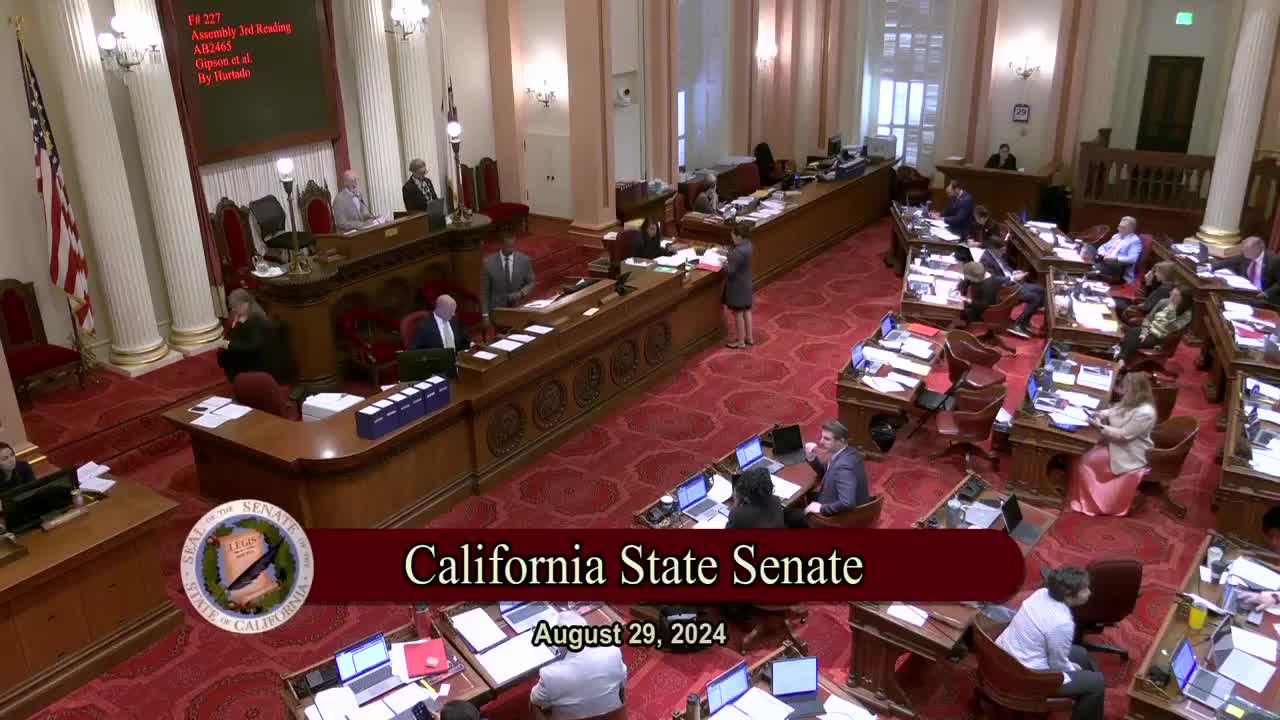 2MIN
Senate Floor
 9MIN
Senate Standing Committee on Natural Resources and Water
 54SEC
Assembly Floor
 12MIN
Assembly Standing Committee on Water, Parks, and Wildlife
 9MIN
Assembly Standing Committee on Natural Resources
Bill Author