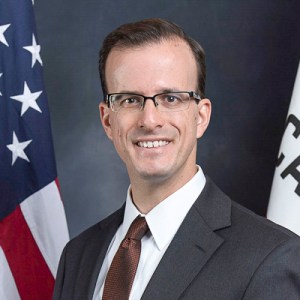
AB 321: Sales and Use Tax: exemptions: zero-emission public transportation ferries.
- Session Year: 2023-2024
- House: Assembly
- Latest Version Date: 2023-04-13
Current Status:
Failed
(2024-02-01: From committee: Filed with the Chief Clerk pursuant to Joint Rule 56.)
Introduced
In Committee
First Chamber
In Committee
Second Chamber
Enacted
Existing sales and use tax laws impose a tax on retailers measured by the gross receipts from the sale of tangible personal property sold at retail in this state, or on the storage, use, or other consumption in this state of tangible personal property purchased from a retailer for storage, use, or other consumption in this state. Those laws provide various exemptions from those taxes.
This bill, beginning January 1, 2024, and until January 1, 2028, 2029, would exempt from those taxes the gross receipts from the sale in this state of, and the storage, use, or other consumption in this state of, zero-emission public transportation ferries, as defined. defined, sold to a public agency, as specified.
Existing law requires a bill that would authorize a new tax expenditure under the Sales and Use Tax Law to identify specific goals, purposes, and objectives that the tax expenditure will achieve, and detailed performance indicators and data collection requirements for determining whether the tax expenditure achieves these goals, purposes, and objectives.
The bill would provide findings and declarations relating to the goals of the exemption for zero-emission public transportation ferries.
Existing law imposes or dedicates certain state sales and use tax rates for local funding, including through the Local Revenue Fund 2011.
This bill would specify that this exemption does not apply to those state sales and use tax rates imposed or dedicated for local government funding, including those rates for which revenues are deposited into the Local Revenue Fund 2011.
The Bradley-Burns Uniform Local Sales and Use Tax Law authorizes counties and cities to impose local sales and use taxes in conformity with the Sales and Use Tax Law, and existing laws authorize districts, as specified, to impose transactions and use taxes in accordance with the Transactions and Use Tax Law, which generally conforms to the Sales and Use Tax Law. Amendments to the Sales and Use Tax Law are automatically incorporated into the local tax laws.
This bill would specify that this exemption does not apply to local sales and use taxes or transactions and use taxes.
This bill would take effect immediately as a tax levy.
Existing sales and use tax laws impose a tax on retailers measured by the gross receipts from the sale of tangible personal property sold at retail in this state, or on the storage, use, or other consumption in this state of tangible personal property purchased from a retailer for storage, use, or other consumption in this state. Those laws provide various exemptions from those taxes.
This bill, until January 1, 2034, 2028, would exempt from those taxes the gross receipts from the sale in this state of, and the storage, use, or other consumption in this state of, zero-emission public transportation ferries, as defined.
Existing law requires a bill that would authorize a new tax expenditure under the Sales and Use Tax Law to identify specific goals, purposes, and objectives that the tax expenditure will achieve, and detailed performance indicators and data collection requirements for determining whether the tax expenditure achieves these goals, purposes, and objectives.
The bill would provide findings and declarations relating to the goals of the exemption for zero-emission public transportation ferries.
Existing law imposes or dedicates certain state sales and use tax rates for local funding, including through the Local Revenue Fund 2011.
This bill would specify that this exemption does not apply to those state sales and use tax rates imposed or dedicated for local government funding, including those rates for which revenues are deposited into the Local Revenue Fund 2011.
The Bradley-Burns Uniform Local Sales and Use Tax Law authorizes counties and cities to impose local sales and use taxes in conformity with the Sales and Use Tax Law, and existing laws authorize districts, as specified, to impose transactions and use taxes in accordance with the Transactions and Use Tax Law, which generally conforms to the Sales and Use Tax Law. Amendments to the Sales and Use Tax Law are automatically incorporated into the local tax laws.
This bill would specify that this exemption does not apply to local sales and use taxes or transactions and use taxes.
This bill would take effect immediately as a tax levy.
Existing sales and use tax laws impose a tax on retailers measured by the gross receipts from the sale of tangible personal property sold at retail in this state, or on the storage, use, or other consumption in this state of tangible personal property purchased from a retailer for storage, use, or other consumption in this state. Those laws provide various exemptions from those taxes.
This bill, until January 1, 2034, would exempt from those taxes the gross receipts from the sale in this state of, and the storage, use, or other consumption in this state of, zero-emission public transportation ferries, as defined.
Existing law requires a bill that would authorize a new tax expenditure under the Sales and Use Tax Law to identify specific goals, purposes, and objectives that the tax expenditure will achieve, and detailed performance indicators and data collection requirements for determining whether the tax expenditure achieves these goals, purposes, and objectives.
The bill would provide findings and declarations relating to the goals of the exemption for zero-emission public transportation ferries.
Existing law imposes or dedicates certain state sales and use tax rates for local funding, including through the Local Revenue Fund 2011.
This bill would specify that this exemption does not apply to those state sales and use tax rates imposed or dedicated for local government funding, including those rates for which revenues are deposited into the Local Revenue Fund 2011.
The Bradley-Burns Uniform Local Sales and Use Tax Law authorizes counties and cities to impose local sales and use taxes in conformity with the Sales and Use Tax Law, and existing laws authorize districts, as specified, to impose transactions and use taxes in accordance with the Transactions and Use Tax Law, which generally conforms to the Sales and Use Tax Law. Amendments to the Sales and Use Tax Law are automatically incorporated into the local tax laws.
This bill would specify that this exemption does not apply to local sales and use taxes or transactions and use taxes.
This bill would take effect immediately as a tax levy.
(a)There are exempted from the taxes imposed by this part the gross receipts from the sale in this state of, and the storage, use, or other consumption in this state of, any zero-emission public transportation ferry sold to a city, county, city and county, transportation or transit district, or other public agency that provides transit services to the public. public and that is subject to the State Air Resources Board regulation on airborne toxic control measures for commercial harbor craft (Section 93118.5 of Title 17 of the California Code of Regulations).
(b)For purposes of this section, zero-emission public transportation ferry means ferryboats operated, sponsored, funded, or subsidized by an STA-eligible operator, as that term is defined in Section 99312.2 of the Public Utilities Code, that produce no emissions of criteria pollutants, toxic air contaminants, and greenhouse gases when stationary or operating, as determined by the State Air Resources Board.
(c)(1)Notwithstanding any provision of the Bradley-Burns Uniform Local Sales and Use Tax Law (Part 1.5 (commencing with Section 7200)) or the Transactions and Use Tax Law (Part 1.6 (commencing with Section 7251)), the exemption established by subdivision (a) does not apply with respect to any tax levied pursuant to, or in accordance with, either of those laws.
(2)Notwithstanding subdivision (a), the exemption established by this section shall not apply with respect to any tax levied pursuant to Section 6051.2 or 6201.2, pursuant to Section 35 of Article XIII of the California Constitution, or any tax levied pursuant to Section 6051 or 6201 that is deposited in the State Treasury to the credit of the Local Revenue Fund 2011 pursuant to Section 6051.15 or 6201.15.
(d)(1)For purposes of complying with Section 41 of the Revenue and Taxation Code, the Legislature finds and declares all of the following:
(A)The specific goals, purposes, and objectives that the exemption provided by this section will achieve are the following:
(i)To assist transit agencies in transitioning public transportation ferry fleets to zero emission by reducing upfront capital costs and incremental costs between technologies.
(ii)To overcome an important upfront funding shortfall that currently impedes procurement of zero-emission public transportation ferries and is critically needed to help public transit agencies comply with the State Air Resources Boards Commercial Harbor Craft regulations.
(iii)To eliminate mobile criteria pollutant emissions and clean the air in disadvantaged communities.
(iv)To substantially reduce greenhouse gas emissions.
(B)The performance indicators for the Legislature to use in determining if the tax exemption achieves the stated goals, purposes, and objectives are as follows:
(i)The annual number of zero-emission public transit ferry vessel purchases by transit authorities and agencies statewide.
(ii)The annual number of zero-emission public transportation ferries purchased during implementation of the amendments to the State Air Resources Boards Commercial Harbor Craft regulations.
(2)The data collection requirements to enable the Legislature to determine whether the exemption is meeting, failing to meet, or exceeding its specified goals, purposes, and objectives are as follows:
(A)The Legislative Analysts Office shall review the effectiveness of the tax exemption and may request information from the California Department of Tax and Fee Administration and any state governmental entity with authority relating to the purchasing of public transportation ferries.
(B)The California Department of Tax and Fee Administration and any state governmental entity with authority relating to the purchasing of public transportation ferries shall provide to the Legislative Analysts Office any data requested by the Legislative Analysts Office pursuant to this paragraph.
(3)The Legislative Analysts Office shall submit a report to the Legislature on the effectiveness of the exemption provided by this section, in compliance with Section 9795 of the Government Code, no later than May 1, 2034. 2027.
(4)The disclosure requirements of paragraphs (2) and (3) shall be treated as an exception to the requirements of Sections 7056 and 7056.5.
(e)(1)Except as necessary to complete the reporting requirements of subdivision (d), this section shall become inoperative on January 1, 2034.(2)This section is repealed as of June 1, 2028.(e)(1)This section shall become operative on January 1, 2024.
(2)This section shall remain in effect only until January 1, 2029, and as of that date is repealed.
SEC. 2.This act provides for a tax levy within the meaning of Article IV of the California Constitution and shall go into immediate effect.
(a)There are exempted from the taxes imposed by this part the gross receipts from the sale in this state of, and the storage, use, or other consumption in this state of, any zero-emission public transportation ferry sold to a city, county, city and county, transportation or transit district, or other public agency that provides transit services to the public.
(b)For purposes of this section, zero-emission public transportation ferry means ferryboats operated, sponsored, funded, or subsidized by an STA-eligible operator, as that term is defined in Section 99312.2 of the Public Utilities Code, that produce no emissions of criteria pollutants, toxic air contaminants, and greenhouse gases when stationary or operating, as determined by the State Air Resources Board.
(c)(1)Notwithstanding any provision of the Bradley-Burns Uniform Local Sales and Use Tax Law (Part 1.5 (commencing with Section 7200)) or the Transactions and Use Tax Law (Part 1.6 (commencing with Section 7251)), the exemption established by subdivision (a) does not apply with respect to any tax levied pursuant to, or in accordance with, either of those laws.
(2)Notwithstanding subdivision (a), the exemption established by this section shall not apply with respect to any tax levied pursuant to Section 6051.2 or 6201.2, pursuant to Section 35 of Article XIII of the California Constitution, or any tax levied pursuant to Section 6051 or 6201 that is deposited in the State Treasury to the credit of the Local Revenue Fund 2011 pursuant to Section 6051.15 or 6201.15.
(d)(1)For purposes of complying with Section 41 of the Revenue and Taxation Code, the Legislature finds and declares all of the following:
(A)The specific goals, purposes, and objectives that the exemption provided by this section will achieve are the following:
(i)To assist transit agencies in transitioning public transportation ferry fleets to zero emission by reducing upfront capital costs and incremental costs between technologies.
(ii)To overcome an important upfront funding shortfall that currently impedes procurement of zero-emission public transportation ferries and is critically needed to help public transit agencies comply with the State Air Resources Boards Commercial Harbor Craft regulations.
(iii)To eliminate mobile criteria pollutant emissions and clean the air in disadvantaged communities.
(iv)To substantially reduce greenhouse gas emissions.
(B)The performance indicators for the Legislature to use in determining if the tax exemption achieves the stated goals, purposes, and objectives are as follows:
(i)The annual number of zero-emission public transit ferry vessel purchases by transit authorities and agencies statewide.
(ii)The annual number of zero-emission public transportation ferries purchased during implementation of the amendments to the State Air Resources Boards Commercial Harbor Craft regulations.
(2)The data collection requirements to enable the Legislature to determine whether the exemption is meeting, failing to meet, or exceeding its specified goals, purposes, and objectives are as follows:
(A)The Legislative Analysts Office shall review the effectiveness of the tax exemption and may request information from the California Department of Tax and Fee Administration and any state governmental entity with authority relating to the purchasing of public transportation ferries.
(B)The California Department of Tax and Fee Administration and any state governmental entity with authority relating to the purchasing of public transportation ferries shall provide to the Legislative Analysts Office any data requested by the Legislative Analysts Office pursuant to this paragraph.
(3)The Legislative Analysts Office shall submit a report to the Legislature on the effectiveness of the exemption provided by this section, in compliance with Section 9795 of the Government Code, no later than May 1, 2034.
(4)The disclosure requirements of paragraphs (2) and (3) shall be treated as an exception to the requirements of Sections 7056 and 7056.5.
(e)(1)Except as necessary to complete the reporting requirements of subdivision (d), this section shall become inoperative on January 1, 2034.
(2)This section is repealed as of June 1, 2034. 2028.
SEC. 2.This act provides for a tax levy within the meaning of Article IV of the California Constitution and shall go into immediate effect.
(a)There are exempted from the taxes imposed by this part the gross receipts from the sale in this state of, and the storage, use, or other consumption in this state of, any zero-emission public transportation ferry sold to a city, county, city and county, transportation or transit district, or other public agency that provides transit services to the public.
(b)For purposes of this section, zero-emission public transportation ferry means ferryboats operated, sponsored, funded, or subsidized by an STA-eligible operator, as that term is defined in Section 99312.2 of the Public Utilities Code, that produce no emissions of criteria pollutants, toxic air contaminants, and greenhouse gases when stationary or operating, as determined by the State Air Resources Board.
(c)(1)Notwithstanding any provision of the Bradley-Burns Uniform Local Sales and Use Tax Law (Part 1.5 (commencing with Section 7200)) or the Transactions and Use Tax Law (Part 1.6 (commencing with Section 7251)), the exemption established by subdivision (a) does not apply with respect to any tax levied pursuant to, or in accordance with, either of those laws.
(2)Notwithstanding subdivision (a), the exemption established by this section shall not apply with respect to any tax levied pursuant to Section 6051.2 or 6201.2, pursuant to Section 35 of Article XIII of the California Constitution, or any tax levied pursuant to Section 6051 or 6201 that is deposited in the State Treasury to the credit of the Local Revenue Fund 2011 pursuant to Section 6051.15 or 6201.15.
(d)(1)For purposes of complying with Section 41 of the Revenue and Taxation Code, the Legislature finds and declares all of the following:
(A)The specific goals, purposes, and objectives that the exemption provided by this section will achieve are the following:
(i)To assist transit agencies in transitioning public transportation ferry fleets to zero emission by reducing upfront capital costs and incremental costs between technologies.
(ii)To overcome an important upfront funding shortfall that currently impedes procurement of zero-emission public transportation ferries and is critically needed to help public transit agencies comply with the State Air Resources Boards Commercial Harbor Craft regulations.
(iii)To eliminate mobile criteria pollutant emissions and clean the air in disadvantaged communities.
(iv)To substantially reduce greenhouse gas emissions.
(B)The performance indicators for the Legislature to use in determining if the tax exemption achieves the stated goals, purposes, and objectives are as follows:
(i)The annual number of zero-emission public transit ferry vessel purchases by transit authorities and agencies statewide.
(ii)The annual number of zero-emission public transportation ferries purchased during implementation of the amendments to the State Air Resources Boards Commercial Harbor Craft regulations.
(2)The data collection requirements to enable the Legislature to determine whether the exemption is meeting, failing to meet, or exceeding its specified goals, purposes, and objectives are as follows:
(A)The Legislative Analysts Office shall review the effectiveness of the tax exemption and may request information from the California Department of Tax and Fee Administration and any state governmental entity with authority relating to the purchasing of public transportation ferries.
(B)The California Department of Tax and Fee Administration and any state governmental entity with authority relating to the purchasing of public transportation ferries shall provide to the Legislative Analysts Office any data requested by the Legislative Analysts Office pursuant to this paragraph.
(3)The Legislative Analysts Office shall submit a report to the Legislature on the effectiveness of the exemption provided by this section, in compliance with Section 9795 of the Government Code, no later than May 1, 2034.
(4)The disclosure requirements of paragraphs (2) and (3) shall be treated as an exception to the requirements of Sections 7056 and 7056.5.
(e)(1)Except as necessary to complete the reporting requirements of subdivision (d), this section shall become inoperative on January 1, 2034.
(2)This section is repealed as of June 1, 2034.
SEC. 2.This act provides for a tax levy within the meaning of Article IV of the California Constitution and shall go into immediate effect.
|
Date
|
Status
|
|---|---|
| Feb 1, 2024 | From committee: Filed with the Chief Clerk pursuant to Joint Rule 56. |
| Jan 31, 2024 | Died pursuant to Art. IV, Sec. 10(c) of the Constitution. |
| May 18, 2023 | In committee: Held under submission. |
| May 18, 2023 | Joint Rule 62(a), file notice suspended. (Page 1580.) |
| May 17, 2023 | In committee: Set, first hearing. Referred to APPR. suspense file. |
| May 2, 2023 | From committee: Do pass and re-refer to Com. on APPR. (Ayes 10. Noes 0.) (May 1). Re-referred to Com. on APPR. |
| Apr 17, 2023 | Re-referred to Com. on REV. & TAX. |
| Apr 13, 2023 | From committee chair, with author's amendments: Amend, and re-refer to Com. on REV. & TAX. Read second time and amended. |
| Mar 14, 2023 | In committee: Set, first hearing. Referred to REV. & TAX. suspense file. |
| Mar 7, 2023 | Re-referred to Com. on REV. & TAX. |
| Mar 6, 2023 | From committee chair, with author's amendments: Amend, and re-refer to Com. on REV. & TAX. Read second time and amended. |
| Feb 9, 2023 | Referred to Com. on REV. & TAX. |
| Jan 27, 2023 | From printer. May be heard in committee February 26. |
| Jan 26, 2023 | Read first time. To print. |
|
Date
|
Description
|
Location
|
Votes
|
|
|---|---|---|---|---|
| May 1, 2023 | Do pass and be re-referred to the Committee on [Appropriations] | Assembly Standing Committee on Revenue and Taxation |
Passed |
This list shows positions taken on this bill by organizations on the date displayed, which is linked to the original source.
Positions by individuals are not included.
|
Organization
|
Position
|
Date
|
|---|---|---|
| Alameda Chamber and Economic Alliance | ** Support | |
| Bay Area Council | * Support | Mar 13, 2023 |
| Bay Planning Coalition | ** Support | |
| Bay Ship and Yacht Co. | ** Support | |
| California State Association Of Counties | ** Support | |
| Calstart | ** Support | |
| City of Alameda | ** Support | |
| Golden Gate Bridge Highway Transportation District | * Support | Mar 13, 2023 |
| Golden State Warriors | ** Support | |
| Inland Boatman's Union of the Pacific, Marine Division of the International Longshore and Warehouse Union | ** Support | |
| International Organization of Masters, Mates, and Pilots | ** Support | |
| One Treasure Island | ** Support | |
| Pacific Environment | ** Support | |
| Port of Redwood City | ** Support | |
| Port of San Francisco | ** Support | |
| Port of San Francisco's Maritime Commerce Advisory Committee | ** Support | |
| San Francisco Bay Area Water Emergency Transportation Authority | * Support | Mar 13, 2023 |
Date of Hearing: May 17, 2023
ASSEMBLY COMMITTEE ON APPROPRIATIONS
Chris Holden, Chair
ABPCA Bill Id:AB 321
Author:(Wilson) – As Amended Ver:April 13, 2023
Policy Committee: | Revenue and Taxation | Vote: | 10 - 0 |
|
| ||
|
|
Urgency: No State Mandated Local Program: No Reimbursable: No
SUMMARY:
This bill creates, beginning on January 1, 2024, until January 1, 2029, a partial exemption under the Sales and Use Tax (SUT) Law for a zero-emission public transportation ferry sold to a public agency providing transit services and subject to the State Air Resources Board (ARB) regulation on airborne toxic control measures for commercial harbor craft.
This bill applies the SUT exemption to the state-portion of the SUT rate only. This bill defines “zero-emission public transportation ferry” as a ferryboat operated, sponsored, funded, or subsidized by a State Transit Assistance (STA)-eligible operator that produces no emissions, as determined by ARB.
This bill declares the goals and performance indicators for the partial exemption and requires the Legislative Analyst’s Office (LAO) to review the effectiveness of the exemption and submit, by May 1, 2027, a report to the Legislature. The California Department of Tax and Fee Administration (CDTFA) and any state agency involved in purchasing public transportation ferries must provide the LAO with any requested data.
FISCAL EFFECT:
- General Fund (GF) revenue loss of approximately $4.6 million by exempting zero-emission public transportation ferries from the state-portion of the SUT for five years. CDTFA notes there are three STA-eligible public transit agencies currently running ferry operations in California, but no zero-emission ferries currently operate in California, as the market is still in its infancy. Thus, it is difficult to estimate costs. However, CDTFA assumes seven small-passenger ferries and two large-passenger ferries will be purchased between fiscal year (FY) 2025-26 and FY 2027-28.
- Minor and absorbable costs to CDTFA to administer the exemption, including notifying affected retailers and revising regulations and applicable publications.
- Costs of an unknown, but likely absorbable, amount to the LAO to prepare the report reviewing the exemption’s effectiveness. However, this committee sees a wide array of bills that require the LAO to measure different tax expenditures. Generally, a request to prepare an individual report would not generate significant new workload for the LAO. But, taken together, these proposals strain the ability of the LAO fulfill other existing or future legislative mandates and requests, as the LAO’s budget is subject to the Legislature’s constitutional spending cap.
COMMENTS:
- Purpose. According to the author, this bill “will reduce the cost for public transit agencies to deploy zero-emission ferries and to help them comply with [ARB’s commercial harbor craft (CHC)] regulations.
- Support and Opposition. This bill is sponsored by the San Francisco Bay Area Water Emergency Management Authority, which argues this bill “would provide capital outlay cost savings, allowing additional funding to be maintained for transit operations” at a time when “public transit ferry operators face impending transit operating funding shortfalls due to the pandemic’s impact on ridership.” This bill is also supported by marine operators, local government entities, a clean transportation consortium, and the Golden State Warriors.
This bill is opposed by the California Teachers Association (CTA). CTA notes that while this bill is well intended, “CTA does not support this approach, as it would reduce overall funding for education” especially as the state faces a budget deficit.
- Background.
Erosion of the SUT Base. Despite being the state’s third largest source of GF revenues, the past several decades have seen a dramatic reduction in the state’s reliance on SUT and a corresponding increase in reliance on personal income tax revenues. California’s economy has seen dramatic growth in the service and information sectors, resulting in a significant erosion of the SUT base that further shrinks with any additional SUT exemption. The SUT is also widely criticized as a regressive tax that disproportionately impacts the wallets of lower-income individuals. However, there is some degree of progressivity provided via various exemptions for certain necessities of life, such as food, housing, and prescription medication.
CHC Regulations. ARB has regulated CHC emissions since 2009, including emissions from fishing vessels, ferries, excursion vessels, tug boats, tow boats, crew and supply boats, barges, and dredges. Recently adopted amendments to ARB’s CHC regulation require new, newly acquired, and in-use short-run ferries be zero-emission by December 31, 2025. The regulation intends to significantly improve the air quality in areas surrounding port operations, which are often in disadvantaged communities. This bill creates a partial SUT exemption for zero-emission public transit ferries purchased by public agencies to help comply with this regulation. This bill does not provide an exemption for components used to convert a ferry already in service to become zero-emission.
Generally, tax incentives are conferred to encourage voluntary behavior deemed beneficial for the public good. To the extent that existing regulations require public agencies to upgrade ferries to become zero-emission, this bill potentially creates a windfall for legally mandated behavior, on top of other existing incentives provided to support the transition to clean energy. If the state wants to help public agencies offset the costs of compliance, a direct appropriation of funds could be a simpler way to achieve this outcome.
- Prior Legislation. AB 2622 (Mullin), Chapter 353, Statutes of 2022, extended the existing partial SUT exemption for zero-emission transit bus vehicles to January 1, 2026.
Analysis Prepared by: Irene Ho / APPR. / (916) 319-2081
Date of Hearing: May 1, 2023
ASSEMBLY COMMITTEE ON REVENUE AND TAXATION
Jacqui Irwin, Chair
ABPCA Bill Id:AB 321 (
Author:Wilson) – As Amended Ver:April 13, 2023
SUSPENSE
Majority vote. Tax levy. Fiscal committee.
SUBJECT: Sales and Use Tax: exemptions: zero-emission public transportation ferries
SUMMARY: Provides, for a period of five years, a partial exemption under the Sales and Use Tax (SUT) Law for a "zero-emission public transportation ferry". Specifically, this bill:
- Exempts, under the SUT Law, beginning on January 1, 2024, and until January 1, 2029, the purchase of a "zero-emission public transportation ferry" by a city, county, city and county, transportation district, transit district, or other public agency that provides transit services to the public and that is subject to the California Air Resources Board's (CARB) regulation on airborne toxic control measure for commercial harbor craft (CHC).
- Defines a "zero-emission public transportation ferry" as a ferryboat operated, sponsored, funded, or subsidized by a State Transit Assistance (STA)-eligible operator, as defined, that produces no emissions of criteria pollutants, toxic air contaminants, and greenhouse gases (GHGs) when stationary or operating, as determined by the CARB.
- Provides that, notwithstanding any provision of the Bradley-Burns Uniform Local SUT Law or the Transactions and Use Tax (TUT) Law, this bill's exemption shall not apply with respect to any tax levied by a county, city, or district pursuant to, or in accordance with, either of those laws.
- Provides that this bill's exemption shall not apply with respect to any tax levied pursuant to Revenue and Taxation Code (R&TC) Section 6051.2 or 6201.2, Section 35 of Article XIII of the California Constitution, or any tax levied pursuant to R&TC Section 6051 or 6201 that is deposited into the State Treasury to the credit of the Local Revenue Fund 2011.
- Finds and declares, in compliance with R&TC Section 41, that the stated goals, purposes, and objectives of this bill's exemptions are to:
- Assist transit agencies in transitioning public transportation ferry fleets to zero-emission by reducing upfront capital costs and incremental costs between technologies;
- Overcome an important funding shortfall that currently impedes the procurement of zero-emission public transportation ferries and is critically needed to help public transit agencies comply with CARB's CHC regulations;
- Eliminate mobile criteria pollutant emissions and clean the air in disadvantaged communities; and,
- Substantially reduce GHG emissions.
- States the performance indicators for the Legislature to use in determining if this bill achieves its stated goals, purposes, and objectives are the annual number of zero-emission public transit ferry vessels purchased by transit authorities and agencies statewide, and the annual number of zero-emission public transportation ferries purchased during implementation of the amendments to the CARB's CHC regulations.
- Requires the Legislative Analyst's Office (LAO) to submit a report to the Legislature on the effectiveness of this bill's tax exemption no later than May 1, 2027.
- Authorizes the LAO to request information from the California Department of Tax and Fee Administration (CDTFA), and any state governmental entity with authority relating to the purchase of public transportation ferries, to assist the Legislature in determining whether this bill's exemption is meeting its specified goals, purposes, and objectives.
- Requires the CDTFA, or any state governmental entity with authority relating to the purchase of public transportation ferries, to provide any data requested by the LAO pursuant to this bill and treats disclosure of that data as an exception to existing law related to the unauthorized disclosure of identifying taxpayer information.
- Takes effect immediately as a tax levy.
EXISTING LAW:
- Imposes a SUT on the sale of, or storage, use, or other consumption of, tangible personal property, unless specifically exempt. (R&TC Section 6001 et seq.)
- Provides that the SUT must be computed on the gross receipts or sales price of TPP, unless specifically excluded. (R&TC Section 6051 et seq.)
- Authorizes cities and counties to impose TUTs for general or special purposes, if approved by the requisite threshold of voters. The TUT Law is administered in conformity with the SUT Law. (R&TC Section 7251 et seq.)
- Enacts the Mills-Alquist-Deddeh Act (Act), which prescribes funding allocation for transit and non-transit related purposes that comply with regional transportation plans. Funding allocated through the Act may only be used for transportation planning and mass transportation purposes. The Act defines a "STA-eligible operator" as a public transportation operator eligible to receive funds under the STA Program. (Public Utilities Code Section 99200 et seq.)
FISCAL EFFECT: Unknown
COMMENTS:
- The author's office has provided the following statement in support of this bill:
AB 321 will reduce the cost for public transit agencies to deploy zero-emission ferries and to help them comply with the CARB's CHC regulations.
- The California State Association of Counties (CSAC), writing in support of this bill, states, in part:
Existing law imposes or dedicates certain state SUT rates for local funding, including through the Local Revenue Fund 2011. AB 321 would specify that this exemption does not apply to those state SUT rates imposed or dedicated for local government funding, including those rates for which revenues are deposited into the Local Revenue Fund 2011. CSAC appreciates Assemblymember Wilson's efforts in crafting AB 321 in a manner that protects local services and realignment funds while recognizing that the biggest portion (and thus biggest benefit for the buyer) is the state's share. As a result, the measure does not negatively impact counties.
- The California Teachers Association, writing in opposition to a number of tax expenditure bills in the Committee's jurisdiction, notes "The California Teachers Association respectfully opposes . . . bills that create new or expand existing tax expenditures."
- Committee Staff Comments:
- Erosion of the SUT Base: The past 70 years have seen a dramatic reduction in the amount of General Fund (GF) revenue attributable to the SUT. Historically, the SUT represented the second largest source of GF revenues. However, Governor Newsom's proposed budget for fiscal year 2023-24 estimates the SUT will be the third largest source, representing 15.9% of GF revenues. By comparison, the SUT accounted for nearly 60% of GF revenues in FY 1950-51.
The SUT Law was enacted in a very different era. California's economy in the 1930s was predominately centered on manufacturing, with residents mostly buying and selling tangible goods. Thus, when considering the base for a new consumption tax, imposing the tax on sales of TPP, which can be "seen, weighed, measured, felt, or touched," was logical. However, California's economy has drastically changed in the intervening period as significant growth in the service and information sectors contributed to erosion of the SUT base. This transformation has led tax experts and economists from across the political spectrum to argue that California should expand its SUT base.
While well intentioned, additional SUT exemptions can arguably erode an already contracting SUT base. This increases fiscal pressures to maintain, or even increase, California's relatively high SUT rate. High rates can promote non-compliance and distort consumer decision-making, both of which counter widely accepted principles of sound tax policy.
- What does this bill do? This bill provides an exemption for the state portion of the SUT imposed on a zero-emission public transportation ferry until January 1, 2029. This bill intends to offset the cost to eligible public transportation providers associated with purchasing zero-emission public transportation ferries. Although this bill is well intentioned, existing law under the Act stipulates the process for the state to fund eligible transportation operators engaged in mass transportation, among others purposes. Given only state revenue is being forgone on these purchases, it is unclear why STA-eligible operators would be unable to request additional funding in an amount equal to the amount of revenue that would be exempt under this bill.
- Partial SUT exemptions complicate administration: Most exemptions are applied to the total state and local SUT. However, existing law does provide for a few partial SUT exemptions, including a partial SUT exemption for the purchase of any eligible zero-emission, medium- or heavy-duty transit bus. These types of partial exemptions are often difficult to process and frequently contain errors. A partial SUT exemption equal to 3.9375% may make the purchase of an eligible ferry unnecessarily complicated.
- Subsidy or incentive? Since 2009, the CARB has regulated emissions from CHC. These type of craft include fishing vessels, ferries, excursion vessels, tug boats, tow boats, crew and supply boats, barges, and dredges, among others. According to the CARB, 21% of particulate matter emissions in the Ports of Los Angeles and Long Beach are attributed to harbor craft, approximately one-half of the 45% attributed to ocean-going vessels. Recently adopted amendments to the CARB's CHC Regulation require that new, newly acquired, and in-use short-run ferries be zero-emission by December 31, 2025. The CARB predicts that these amendments to the CHC Regulation would significantly increase the air quality in areas surrounding port operations, which are often in proximity to disadvantaged communities.
Generally, tax expenditures are enacted to encourage publicly beneficial behavior that would otherwise not occur. Existing regulations require that any new, newly acquired, or in-use short-run ferries be zero-emission by December 31, 2025. Thus, this bill may provide a windfall for behavior that would have occurred independent of this bill's expenditure. However, as the stated goal is to help local transportation providers comply with the cost of new requirements, providing a SUT exemption for the purchase of a qualifying ferry may be appropriate.
- Conversions ineligible for exemption: As currently drafted, this bill only applies to the purchase of a qualifying zero-emission public transportation ferry. However, the CHC Regulations apply to new, newly acquired, and in-use short-run ferries. Should an STA-eligible operator choose to convert a ferry already in service into a qualifying zero-emission public transportation ferry, the components used to make the conversion would be ineligible for this exemption. If this is not the intent, the author may wish to amend this bill.
- Data unavailable: This bill requires that the CDTFA provide certain information upon request by the LAO for purposes of the LAO's report. If the requested information is unavailable, the CDTFA may not be able to provide the information. The author and Committee may wish to consider qualifying this provision to instead require the CDTFA to provide the requested information, as feasible.
- What is a "tax expenditure"? Existing law provides various credits, deductions, exclusions, and exemptions for particular taxpayer groups. In the late 1960s, United States Treasury officials began arguing that these features of the tax law should be referred to as "expenditures" since they are generally enacted to accomplish some governmental purpose and there is a determinable cost associated with each of them (in the form of forgone revenues). This bill would provide a partial SUT exemption on the purchase of an eligible zero-emission public transportation ferry.
- Committee's tax expenditure policy: SB 1335 (Leno), Chapter 845, Statutes of 2014, added R&TC Section 41, which recognized that the Legislature should apply the same level of review used for government spending programs to tax credits introduced on or after January 1, 2015. AB 263 (Burke), Chapter 743, Statutes of 2019, extended the requirements in R&TC Section 41 to all tax expenditure measures under the Personal Income Tax Law, the Corporation Tax Law, and the SUT Law introduced on or after January 1, 2020. A tax expenditure proposal must outline specific goals, purposes, and objectives that the tax expenditure will achieve, along with detailed performance indicators for the Legislature to use when measuring whether the tax expenditure meets those stated goals, purposes, and objectives. In addition to the R&TC Section 41 requirements, this Committee's policy also requires that all tax expenditure proposals contain an appropriate sunset provision to be eligible for a vote[1]. Sunsets are required because eliminating a tax expenditure generally requires a two-thirds vote. These requirements must be satisfied before a bill can receive a vote in this Committee. This bill complies with R&TC Section 41 and includes an appropriate five-year sunset.
- Prior legislation:
- AB 2622 (Mullin), Chapter 353, Statutes of 2022, extended by two years the existing SUT exemption for eligible zero-emission transit bus vehicles.
- AB 784 (Mullin), Chapter 684, Statutes of 2019, authorized a partial SUT exemption for the purchase of a zero-emission medium- and heavy-duty transit bus vehicle that is eligible for the California Hybrid and Zero-Emission Truck and Bus Voucher Incentive Project.
REGISTERED SUPPORT / OPPOSITION:
Support
California State Association of Counties
CALSTART
Opposition
None on file
Analysis Prepared by: Harrison Bowlby / REV. & TAX. / (916) 319-2098
An "appropriate sunset provision" shall mean five years, except in the case of a tax expenditure measure providing relief to California veterans, in which case "appropriate sunset provision" shall mean 10 years. ↑
Date of Hearing: March 13, 2023
ASSEMBLY COMMITTEE ON REVENUE AND TAXATION
Jacqui Irwin, Chair
ABPCA Bill Id:AB 321 (
Author:Wilson) – As Amended Ver:March 6, 2023
Majority vote. Tax levy. Fiscal committee.
SUBJECT: Sales and Use Tax: exemptions: zero-emission public transportation ferries
SUMMARY: Provides a partial exemption under the Sales and Use Tax (SUT) Law for a "zero-emission public transportation ferry," until June 1, 2028. Specifically, this bill:
- Partially exempts, under the SUT Law, the purchase of a "zero-emission public transportation ferry" by a city, county, city and county, transportation district, transit district, or other public agency that provides transit services to the public.
- Defines a "zero-emission public transportation ferry" as a ferryboat operated, sponsored, funded, or subsidized by a State Transit Assistance (STA)-eligible operator, as defined, that produces no emissions of criteria pollutants, toxic air contaminants, and greenhouse gases (GHGs) when stationary or operating, as determined by the California Air Resources Board (CARB).
- Provides that, notwithstanding any provision of the Bradley-Burns Uniform Local SUT Law or the Transactions and Use Tax (TUT) Law, this bill's exemption shall not apply with respect to any tax levied by a county, city, or district pursuant to, or in accordance with, either of those laws.
- Provides that this bill's exemption shall not apply with respect to any tax levied pursuant to Revenue and Taxation Code (R&TC) Section 6051.2 or 6201.2, Section 35 of Article XIII of the California Constitution, or any tax levied pursuant to R&TC Section 6051 or 6201 that is deposited into the State Treasury to the credit of the Local Revenue Fund 2011.
- Finds and declares, in compliance with R&TC Section 41, that the stated goals, purposes, and objectives of this bill's exemptions are to:
- Assist transit agencies in transitioning public transportation ferry fleets to zero-emission by reducing upfront capital costs and incremental costs between technologies;
- Overcome an important funding shortfall that currently impedes the procurement of zero-emission public transportation ferries and is critically needed to help public transit agencies comply with CARB's Commercial Harbor Craft (CHC) regulations;
- Eliminate mobile criteria pollutant emissions and clean the air in disadvantaged communities; and,
- Substantially reduce GHG emissions.
- States the performance indicators for the Legislature to use in determining if this bill achieves its stated goals, purposes, and objectives are the annual number of zero-emission public transit ferry vessels purchased by transit authorities and agencies statewide, and the annual number of zero-emission public transportation ferries purchased during implementation of the amendments to the CARB's CHC regulations.
- Requires the Legislative Analyst's Office (LAO) to submit a report to the Legislature on the effectiveness of this bill's tax exemption no later than May 1, 2034.
- Authorizes the LAO to request information from the California Department of Tax and Fee Administration (CDTFA), and any state governmental entity with authority relating to the purchase of public transportation ferries, to assist the Legislature in determining whether this bill's exemption is meeting its specified goals, purposes, and objectives.
- Requires the CDTFA, or any state governmental entity with authority relating to the purchase of public transportation ferries, to provide any data requested by the LAO pursuant to this bill and treats disclosure of that data as an exception to existing law related to the unauthorized disclosure of identifying taxpayer information.
- Makes this bill inoperative on January 1, 2034, except as necessary to comply with the reporting requirements of this bill, but repeals this bill's provisions on June 1, 2028.
- Takes effect immediately as a tax levy.
EXISTING LAW:
- Imposes a SUT on the sale of, or storage, use, or other consumption of, tangible personal property, unless specifically exempt (R&TC Section 6001 et seq).
- Provides that the SUT must be computed on the gross receipts or sales price of TPP, unless specifically excluded (R&TC Section 6051 et seq).
- Authorizes cities and counties to impose TUTs for general or special purposes, if approved by the requisite threshold of voters. The TUT Law is administered in conformity with the SUT Law (R&TC Section 7251 et seq).
- Enacts the Mills-Alquist-Deddeh Act (Act), which prescribes funding allocation for transit and non-transit related purposes that comply with regional transportation plans. Funding allocated through the Act may only be used for transportation planning and mass transportation purposes. The Act defines a "STA-eligible operator" as a public transportation operator eligible to receive funds under the STA Program (Public Utilities Code 99200 et seq).
FISCAL EFFECT: The California Department of Tax and Fee Administration (CDTFA) estimates a "revenue loss of $4.63 million between fiscal year (FY) 2025-26 and FY 2027-28."
COMMENTS:
- The author's office has provided the following statement in support of this bill:
AB 321 will reduce the cost for public transit agencies to deploy zero-emission ferries and to help them comply with the CARB's CHC regulations.
- The Water Emergency Transportation Authority, writing as sponsors, states that this bill, "in granting the proposed sales tax exemption, would assist the state's public ferry operators in transitioning to zero-emission and reduce the cost to comply with the CARB's CHC Regulation."
- Committee Staff Comments:
- Erosion of the SUT Base: The past 70 years have seen a dramatic reduction in the amount of General Fund (GF) revenue attributable to the SUT. Historically, the SUT represented the second largest source of GF revenues. However, Governor Newsom's proposed budget for fiscal year 2023-24 estimates the SUT will be the third largest source, representing 15.9% of GF revenues. By comparison, the SUT accounted for nearly 60% of GF revenues in FY 1950-51.
The SUT Law was enacted in a very different era. California's economy in the 1930s was predominately centered on manufacturing, with residents mostly buying and selling tangible goods. Thus, when considering the base for a new consumption tax, imposing the tax on sales of TPP, which can be "seen, weighed, measured, felt, or touched," was logical. However, California's economy has drastically changed in the intervening period as significant growth in the service and information sectors contributed to erosion of the SUT base. This transformation has led tax experts and economists from across the political spectrum to argue that California should expand its SUT base.
While well intentioned, additional SUT exemptions can arguably erode an already contracting SUT base. This increases fiscal pressures to maintain, or even increase, California's relatively high SUT rate. High rates can promote non-compliance and distort consumer decision-making, both of which counter widely accepted principles of sound tax policy.
- What does this bill do? This bill provides an exemption on the state portion of revenue derived from the SUT imposed on a zero-emission public transportation ferry until
June 1, 2028. This bill intends to offset the cost to eligible public transportation providers associated with purchasing zero-emission public transportation ferries. Although this bill is well intentioned, existing law under the Act stipulates the process for the state to fund eligible transportation operators engaged in mass transportation, among others purposes. Given only state revenue is exempted from the imposition of the SUT on these purchases, it is unclear why STA-eligible operators would be unable to request additional funding in an amount equal to the amount of revenue that would be exempted under this bill. The state could increase the allocation to the STA Program by an amount equivalent to the revenue loss associated with this exemption, which would fulfill the goal of this bill to help with the increased costs to eligible operators resulting from the CHC Regulations without further complicating administration. - Partial SUT exemptions complicate administration: Most exemptions are applied to the total state and local SUT. However, existing law does provide for a few partial SUT exemptions, including a partial SUT exemption for the purchase of any eligible zero-emission, medium- or heavy-duty transit bus. These types of partial exemptions are often difficult to process and frequently contain errors. A partial SUT exemption equal to 3.9375% may make the purchase of an eligible ferry unnecessarily complicated.
- Subsidy or incentive? Since 2009, the CARB has regulated emissions from commercial harbor craft. These type of craft include fishing vessels, ferries, excursion vessels, tug boats, tow boats, crew and supply boats, barges, and dredges, among others. According to the CARB, 21% of particulate matter emissions in the Ports of Los Angeles and Long Beach are attributed to harbor craft, approximately one-half of the 45% attributed to ocean-going vessels. Recently adopted amendments to the CARB's CHC Regulation require that new, newly acquired, and in-use short-run ferries be zero-emission by December 31, 2025. The CARB predicts that these amendments to the CHC Regulation would significantly increase the air quality in areas surrounding port operations, which are often in proximity to disadvantaged communities.
- What does this bill do? This bill provides an exemption on the state portion of revenue derived from the SUT imposed on a zero-emission public transportation ferry until
Generally, tax expenditures are enacted to encourage publicly beneficial behavior that would otherwise not occur. Existing regulations require that any new, newly acquired, or in-use short-run ferries be zero-emission by December 31, 2025. Thus, this bill may provide a windfall for behavior that would have occurred independent of this bill's expenditure. However, as the stated goal is to help local transportation providers comply with the cost of new requirements, providing a SUT exemption for the purchase of a qualifying ferry may be appropriate.
- Broad and potentially unclear definition: This bill's definition of a qualifying zero-emission public transportation ferry may be unclear. While a "STA-eligible operator" is defined by way of cross reference, this bill does not reference the CHC Regulation. Rather, this bill defines an eligible zero-emission ferry as one that produces no emissions, among other criteria, as determined by the CARB. Indeed, the CHC Regulation applies to short-run ferries, which limit the distance between ferry stations to three miles. This bill exempts a broader category of vessels than the CHC regulation. If this is not the intent, and to provide clarity, the author and Committee may wish to consider defining a qualifying zero-emission public transportation ferry as a ferry that is captured under the CHC Regulation.
- Conversions ineligible for exemption: As currently drafted, this bill only applies to the purchase of a qualifying zero-emission public transportation ferry. However, the CHC Regulations apply to new, newly acquired, and in-use short-run ferries. Should an STA-eligible operator choose to convert a ferry already in service into a qualifying zero-emission public transportation ferry, the components used to make the conversion would be ineligible for this exemption. If this is not the intent, the author may wish to amend this bill.
- Effective immediately: As a tax levy, this bill would take effect immediately upon enactment. Thus, should this bill be signed into law, this bill's exemption would apply for only a portion of this year, which could complicate administration of this exemption. The author and Committee may wish to consider delaying the effective date of this bill until January 1, 2024 and correspondingly extend the sunset date to January 1, 2029.
- Mismatched reporting dates: While this bill repeals this exemption by its own provisions on June 1, 2028, the reporting requirement pursuant to R&TC Section 41is delayed until January 1, 2034. The author and Committee may wish to consider providing a deadline for this bill's report proximate to the repeal date.
- Data unavailable: This bill requires that the CDTFA provide certain information upon request by the LAO for purposes of the LAO's report. If the requested information is unavailable, the CDTFA may not be able to provide the information. The author and Committee may wish to consider qualifying this provision to instead require the CDTFA to provide the requested information, as feasible.
- What is a "tax expenditure"? Existing law provides various credits, deductions, exclusions, and exemptions for particular taxpayer groups. In the late 1960s, United States Treasury officials began arguing that these features of the tax law should be referred to as "expenditures" since they are generally enacted to accomplish some governmental purpose and there is a determinable cost associated with each of them (in the form of forgone revenues). This bill would provide a partial SUT exemption on the purchase of an eligible zero-emission public transportation ferry.
- Committee's tax expenditure policy: SB 1335 (Leno), Chapter 845, Statutes of 2014, added R&TC Section 41, which recognized that the Legislature should apply the same level of review used for government spending programs to tax credits introduced on or after January 1, 2015. AB 263 (Burke), Chapter 743, Statutes of 2019, extended the requirements in R&TC Section 41 to all tax expenditure measures under the Personal Income Tax Law, the Corporation Tax Law, and the SUT Law introduced on or after January 1, 2020. A tax expenditure proposal must outline specific goals, purposes, and objectives that the tax expenditure will achieve, along with detailed performance indicators for the Legislature to use when measuring whether the tax expenditure meets those stated goals, purposes, and objectives. In addition to the R&TC Section 41 requirements, this Committee's policy also requires that all tax expenditure proposals contain an appropriate sunset provision to be eligible for a vote[1]. Sunsets are required because eliminating a tax expenditure generally requires a two-thirds vote. These requirements must be satisfied before a bill can receive a vote in this Committee. This bill complies with R&TC Section 41 and includes an appropriate five-year sunset.
- Prior legislation:
- AB 2622 (Mullin), Chapter 353, Statutes of 2022, extended by two years the existing SUT exemption for eligible zero-emission transit bus vehicles.
- AB 784 (Mullin), Chapter 684, Statutes of 2019, authorized a partial SUT exemption for the purchase of a zero-emission medium- and heavy-duty transit bus vehicle that is eligible for the California Hybrid and Zero-Emission Truck and Bus Voucher Incentive Project.
REGISTERED SUPPORT / OPPOSITION:
Support
San Francisco Bay Area Water Emergency Transportation Authority (sponsor)
Alameda Chamber and Economic Alliance
Bay Planning Coalition
Bay Ship and Yacht Co.
California Association of Counties
CALSTART
City of Alameda
Golden Gate Bridge, Highway and Transportation District
Golden State Warriors
Inland Boatman's Union of the Pacific, Marine Division of the International Longshore and Warehouse Union
International Organization of Masters, Mates, and Pilots
One Treasure Island
Pacific Environment
Port of Redwood City
Port of San Francisco
Port of San Francisco's Maritime Commerce Advisory Committee
Opposition
None on file
Analysis Prepared by: Harrison Bowlby / REV. & TAX. / (916) 319-2098
An "appropriate sunset provision" shall mean five years, except in the case of a tax expenditure measure providing relief to California veterans, in which case "appropriate sunset provision" shall mean 10 years. ↑
Discussed in Hearing
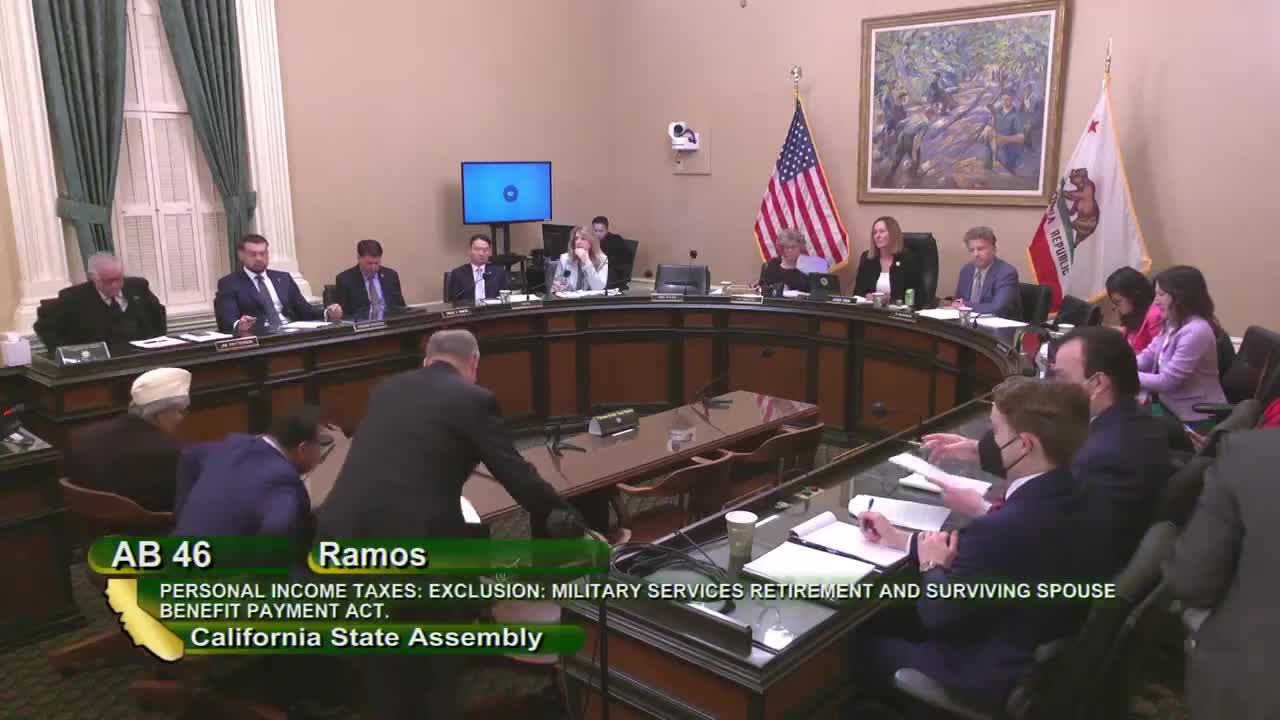 10MIN
Assembly Standing Committee on Revenue and Taxation
Bill Author