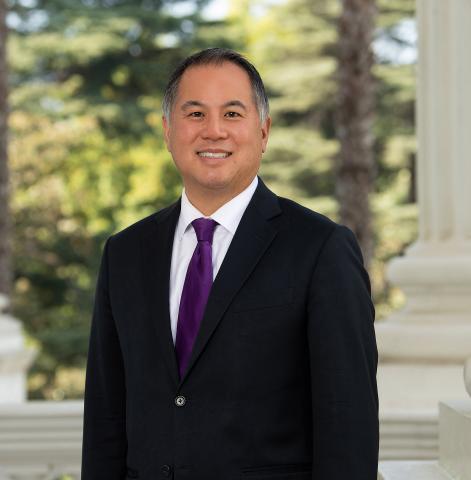
ACA 11: State tax agency.
- Session Year: 2023-2024
- House: Assembly
- Latest Version Date: 2023-05-08
Current Status:
Failed
(2023-06-27: In committee: Hearing postponed by committee.)
Introduced
In Committee
First Chamber
In Committee
Second Chamber
Enacted
The California Constitution establishes the State Board of Equalization, consisting of the Controller and 4 other members elected from districts, and provides for the election, recall, impeachment, filling of vacancies, and salaries and benefits of those board members elected from districts. The California Constitution vests the board with various powers, duties, and responsibilities related to the administration of taxes imposed on property, insurance, and alcoholic beverages.
This measure would abolish the State Board of Equalization and instead require the Legislature to create a state tax agency by statute for purposes of carrying out those powers, duties, and responsibilities previously vested in the State Board of Equalization by the California Constitution and by statute. The bill would authorize the Legislature to vest all powers, duties, and responsibilities in a single state tax agency or separately in multiple state tax agencies. The measure would deem the California Department of Tax and Fee Administration and the Office of Tax Appeals to be state tax agencies for purposes of these provisions and vest in those entities specified powers, duties, and responsibilities currently vested in the State Board of Equalization. The measure would make conforming changes by deleting various references to the State Board of Equalization throughout the California Constitution, including in those provisions regarding the election, recall, impeachment, filling of vacancies, and salaries and benefits of members of the board, and make other nonsubstantive changes. The measure would provide that these changes are operative as of January 1, 2026. 2027.
The California Constitution establishes the State Board of Equalization, consisting of the Controller and 4 other members elected from districts, and provides for the election, recall, impeachment, filling of vacancies, and salaries and benefits of those board members elected from districts. The California Constitution vests the board with various powers, duties, and responsibilities related to the administration of taxes imposed on property, insurance, and alcoholic beverages.
This measure would abolish the State Board of Equalization and instead require the Legislature to create a state tax agency by statute for purposes of carrying out those powers, duties, and responsibilities previously vested in the State Board of Equalization by the California Constitution and by statute. The bill would authorize the Legislature to vest all powers, duties, and responsibilities in a single state tax agency or separately in multiple state tax agencies. The measure would deem the California Department of Tax and Fee Administration and the Office of Tax Appeals to be state tax agencies for purposes of these provisions and vest in those entities specified powers, duties, and responsibilities currently vested in the State Board of Equalization. The measure would make conforming changes by deleting various references to the State Board of Equalization throughout the California Constitution, including in those provisions regarding the election, recall, impeachment, filling of vacancies, and salaries and benefits of members of the board, and make other nonsubstantive changes. The measure would provide that these changes are operative as of January 1, 2026.
Resolved by the Assembly, the Senate concurring, That the Legislature of the State of California at its 202324 Regular Session commencing on the fifth day of December 2022, two-thirds of the membership of each house concurring, hereby proposes to the people of the State of California, that the Constitution of the State be amended as follows:
(a)Recall of a state officer is initiated by delivering to the Secretary of State a petition alleging reason for recall. Sufficiency of reason is not reviewable. Proponents have 160 days to file signed petitions.
(b)A petition to recall a statewide officer must be signed by electors equal in number to 12 percent of the last vote for the office, with signatures from each of five counties equal in number to 1 percent of the last vote for the office in the county. Signatures to recall Senators, Members of the Assembly, and judges of courts of appeal and trial courts must equal in number 20 percent of the last vote for the office.
(c)The Secretary of State shall maintain a continuous count of the signatures certified to that office.
(d)Amendments made to this section by the measure adding this subdivision shall become operative on January 1, 2026. 2027.
(a)The California Citizens Compensation Commission is hereby created and shall consist of seven members appointed by the Governor. The commission shall establish the annual salary and the medical, dental, insurance, and other similar benefits of state officers.
(b)The commission shall consist of the following persons:
(1)Three public members, one of whom has expertise in the area of compensation, such as an economist, market researcher, or personnel manager; one of whom is a member of a nonprofit public interest organization; and one of whom is representative of the general population and may include, among others, a retiree, homemaker, or person of median income. A person appointed pursuant to this paragraph shall not, during the 12 months prior to their appointment, have held public office, either elective or appointive, have been a candidate for elective public office, or have been a lobbyist, as defined by the Political Reform Act of 1974.
(2)Two members who have experience in the business community, one of whom is an executive of a corporation incorporated in this State which ranks among the largest private sector employers in the State based on the number of employees employed by the corporation in this State and one of whom is an owner of a small business in this State.
(3)Two members, each of whom is an officer or member of a labor organization.
(c)The Governor shall strive insofar as practicable to provide a balanced representation of the geographic, gender, racial, and ethnic diversity of the State in appointing commission members.
(d)The Governor shall appoint commission members and designate a chairperson for the commission not later than 30 days after the effective date of this section. The terms of two of the initial appointees shall expire on December 31, 1992, two on December 31, 1994, and three on December 31, 1996, as determined by the Governor. Thereafter, the term of each member shall be six years. Within 15 days of any vacancy, the Governor shall appoint a person to serve the unexpired portion of the term.
(e)No current or former officer or employee of this State is eligible for appointment to the commission.
(f)Public notice shall be given of all meetings of the commission, and the meetings shall be open to the public.
(g)On or before December 3, 1990, the commission shall, by a single resolution adopted by a majority of the membership of the commission, establish the annual salary and the medical, dental, insurance, and other similar benefits of state officers. The annual salary and benefits specified in that resolution shall be effective on and after December 3, 1990.
Thereafter, at or before the end of each fiscal year, the commission shall, by a resolution adopted by a majority of the membership of the commission, adjust the medical, dental, insurance, and other similar benefits of state officers. The benefits specified in the resolution shall be effective on and after the first Monday of the next December.
Thereafter, at or before the end of each fiscal year, the commission shall adjust the annual salary of state officers by a resolution adopted by a majority of the membership of the commission. The annual salary specified in the resolution shall be effective on and after the first Monday of the next December, except that a resolution shall not be adopted or take effect in any year that increases the annual salary of any state officer if, on or before the immediately preceding June 1, the Director of Finance certifies to the commission, based on estimates for the current fiscal year, that there will be a negative balance on June 30 of the current fiscal year in the Special Fund for Economic Uncertainties in an amount equal to, or greater than, 1 percent of estimated General Fund revenues.
(h)In establishing or adjusting the annual salary and the medical, dental, insurance, and other similar benefits, the commission shall consider all of the following:
(1)The amount of time directly or indirectly related to the performance of the duties, functions, and services of a state officer.
(2)The amount of the annual salary and the medical, dental, insurance, and other similar benefits for other elected and appointed officers and officials in this State with comparable responsibilities, the judiciary, and, to the extent practicable, the private sector, recognizing, however, that state officers do not receive, and do not expect to receive, compensation at the same levels as individuals in the private sector with comparable experience and responsibilities.
(3)The responsibility and scope of authority of the entity in which the state officer serves.
(4)Whether the Director of Finance estimates that there will be a negative balance in the Special Fund for Economic Uncertainties in an amount equal to or greater than 1 percent of estimated General Fund revenues in the current fiscal year.
(i)Until a resolution establishing or adjusting the annual salary and the medical, dental, insurance, and other similar benefits for state officers takes effect, each state officer shall continue to receive the same annual salary and the medical, dental, insurance, and other similar benefits received previously.
(j)All commission members shall receive their actual and necessary expenses, including travel expenses, incurred in the performance of their duties. Each member shall be compensated at the same rate as members, other than the chairperson, of the Fair Political Practices Commission, or its successor, for each day engaged in official duties, not to exceed 45 days per year.
(k)It is the intent of the Legislature that the creation of the commission should not generate new state costs for staff and services. The Department of Personnel Administration, the Board of Administration of the Public Employees Retirement System, or other appropriate agencies, or their successors, shall furnish, from existing resources, staff and services to the commission as needed for the performance of its duties.
(l)State officer, as used in this section, means the Governor, Lieutenant Governor, Attorney General, Controller, Insurance Commissioner, Secretary of State, Superintendent of Public Instruction, Treasurer, and Member of the Legislature.
(m)Amendments made to this section by the measure adding this subdivision shall become operative on January 1, 2026. 2027.
(a)The Assembly has the sole power of impeachment. Impeachments shall be tried by the Senate. A person may not be convicted unless, by rollcall vote entered in the journal, two-thirds of the membership of the Senate concurs.
(b)State officers elected on a statewide basis and judges of state courts are subject to impeachment for misconduct in office. Judgment may extend only to removal from office and disqualification to hold any office under the State, but the person convicted or acquitted remains subject to criminal punishment according to law.
(c)Amendments made to this section by the measure adding this subdivision shall become operative on January 1, 2026. 2027.
(a)Unless the law otherwise provides, the Governor may fill a vacancy in office by appointment until a successor qualifies.
(b)Whenever there is a vacancy in the office of the Superintendent of Public Instruction, the Lieutenant Governor, Secretary of State, Controller, Treasurer, or Attorney General, the Governor shall nominate a person to fill the vacancy who shall take office upon confirmation by a majority of the membership of the Senate and a majority of the membership of the Assembly and who shall hold office for the balance of the unexpired term. In the event the nominee is neither confirmed nor refused confirmation by both the Senate and the Assembly within 90 days of the submission of the nomination, the nominee shall take office as if they had been confirmed by a majority of the Senate and Assembly; provided, that if such 90-day period ends during a recess of the Legislature, the period shall be extended until the sixth day following the day on which the Legislature reconvenes.
(c)Amendments made to this section by the measure adding this subdivision shall become operative on January 1, 2026. 2027.
(a)To eliminate any appearance of a conflict with the proper discharge of their duties and responsibilities, no state officer may knowingly receive any salary, wages, commissions, or other similar earned income from a lobbyist or lobbying firm, as defined by the Political Reform Act of 1974, or from a person who, during the previous 12 months, has been under a contract with the state agency under the jurisdiction of the state officer. The Legislature shall enact laws that define earned income. However, earned income does not include any community property interest in the income of a spouse. Any state officer who knowingly receives any salary, wages, commissions, or other similar earned income from a lobbyist employer, as defined by the Political Reform Act of 1974, may not, for a period of one year following its receipt, vote upon or make, participate in making, or in any way attempt to use their official position to influence an action or decision before the agency for which the state officer serves, other than an action or decision involving a bill described in subdivision (c) of Section 12 of Article IV, which they know, or have reason to know, would have a direct and significant financial impact on the lobbyist employer and would not impact the public generally or a significant segment of the public in a similar manner. As used in this subdivision, public generally includes an industry, trade, or profession.
(b)No state officer may accept any honorarium. The Legislature shall enact laws that implement this subdivision.
(c)The Legislature shall enact laws that ban or strictly limit the acceptance of a gift by a state officer from any source if the acceptance of the gift might create a conflict of interest.
(d)No state officer may knowingly accept any compensation for appearing, agreeing to appear, or taking any other action on behalf of another person before any state government board or agency. If a state officer knowingly accepts any compensation for appearing, agreeing to appear, or taking any other action on behalf of another person before any local government board or agency, the state officer may not, for a period of one year following the acceptance of the compensation, make, participate in making, or in any way attempt to use their official position to influence an action or decision before the state agency for which the state officer serves, other than an action or decision involving a bill described in subdivision (c) of Section 12 of Article IV, which they know, or have reason to know, would have a direct and significant financial impact on that person and would not impact the public generally or a significant segment of the public in a similar manner. As used in this subdivision, public generally includes an industry, trade, or profession. However, a state officer may engage in activities involving a board or agency which are strictly on their own behalf, appear in the capacity of an attorney before any court or the Workers Compensation Appeals Board, or act as an advocate without compensation or make an inquiry for information on behalf of a person before a board or agency. This subdivision does not prohibit any action of a partnership or firm of which the state officer is a member if the state officer does not share directly or indirectly in the fee, less any expenses attributable to that fee, resulting from that action.
(e)The Legislature shall enact laws that prohibit a state officer, or a secretary of an agency or director of a department appointed by the Governor, who has not resigned or retired from state service prior to January 7, 1991, from lobbying, for compensation, as governed by the Political Reform Act of 1974, before the executive branch of state government for 12 months after leaving office.
(f)State officer, as used in this section, means the Governor, Lieutenant Governor, Attorney General, Controller, Insurance Commissioner, Secretary of State, Superintendent of Public Instruction, and Treasurer.
(g)Amendments made to this section by the measure adding this subdivision shall become operative on January 1, 2026. 2027.
(a)(1)No person who is found liable in a civil action for making libelous or slanderous statements against an opposing candidate during the course of an election campaign for any federal, statewide, or legislative office or for any county, city and county, city, district, or any other local elective office shall retain the seat to which they are elected, where it is established that the libel or slander was a major contributing cause in the defeat of an opposing candidate.
(2)A libelous or slanderous statement shall be deemed to have been made by a person within the meaning of this section if that person actually made the statement or if the person actually or constructively assented to, authorized, or ratified the statement.
(3)Federal office, as used in this section means the office of United States Senator and Member of the House of Representatives. To the extent that the provisions of this section do not conflict with any provision of federal law, it is intended that candidates seeking the office of United States Senator or Member of the House of Representatives comply with this section.
(b)In order to determine whether libelous or slanderous statements were a major contributing cause in the defeat of an opposing candidate, the trier of fact shall make a separate, distinct finding on that issue. If the trier of fact finds that libel or slander was a major contributing cause in the defeat of an opposing candidate and that the libelous or slanderous statement was made with knowledge that it was false or with reckless disregard of whether it was false or true, the person holding office shall be disqualified from or shall forfeit that office as provided in subdivision (d). The findings required by this section shall be in writing and shall be incorporated as part of the judgment.
(c)In a case where a person is disqualified from holding office or is required to forfeit an office under subdivisions (a) and (b), that disqualification or forfeiture shall create a vacancy in office, which vacancy shall be filled in the manner provided by law for the filling of a vacancy in that particular office.
(d)Once the judgment of liability is entered by the trial court and the time for filing a notice of appeal has expired, or all possibility of direct attack in the courts of this State has been finally exhausted, the person shall be disqualified from or shall forfeit the office involved in that election and shall have no authority to exercise the powers or perform the duties of the office.
(e)This section shall apply to libelous or slanderous statements made on or after the effective date of this section.
(f)Amendments made to this section by the measure adding this subdivision shall become operative on January 1, 2026. 2027.
The following are exempt from property taxation:
(a)Property owned by the State.
(b)Property owned by a local government, except as otherwise provided in subdivision (a) of Section 11.
(c)Bonds issued by the State or a local government in the State.
(d)Property used for libraries and museums that are free and open to the public and property used exclusively for public schools, community colleges, state colleges, and state universities.
(e)Buildings, land, equipment, and securities used exclusively for educational purposes by a nonprofit institution of higher education.
(f)Buildings, land on which they are situated, and equipment used exclusively for religious worship.
(g)Property used or held exclusively for the permanent deposit of human dead or for the care and maintenance of the property or the dead, except when used or held for profit. This property is also exempt from special assessment.
(h)Growing crops.
(i)Fruit and nut trees until four years after the season in which they were planted in orchard form and grape vines until three years after the season in which they were planted in vineyard form.
(j)(1)Immature forest trees planted on lands not previously bearing merchantable timber or planted or of natural growth on lands from which the merchantable original growth timber stand to the extent of 70 percent of all trees over 16 inches in diameter has been removed. Forest trees or timber shall be considered mature at such time after 40 years from the time of planting or removal of the original timber when so declared by a majority vote of a board consisting of a representative from the State Board of Forestry, a representative from the state tax agency, and the assessor of the county in which the trees are located.
(2)The Legislature may supersede the foregoing provisions with an alternative system or systems of taxing or exempting forest trees or timber, including a taxation system not based on property valuation. Any alternative system or systems shall provide for exemption of unharvested immature trees, shall encourage the continued use of timberlands for the production of trees for timber products, and shall provide for restricting the use of timberland to the production of timber products and compatible uses with provisions for taxation of timberland based on the restrictions. Nothing in this paragraph shall be construed to exclude timberland from the provisions of Section 8 of this article.
(k)(1)$7,000 of the full value of a dwelling, as defined by the Legislature, when occupied by an owner as their principal residence, unless the dwelling is receiving another real property exemption. The Legislature may increase this exemption and may deny it if the owner received state or local aid to pay taxes either in whole or in part, and either directly or indirectly, on the dwelling.
(2)An increase in this exemption above the amount of $7,000 shall not be effective for any fiscal year unless the Legislature increases the rate of state taxes in an amount sufficient to provide the subventions required by Section 25.
(3)If the Legislature increases the homeowners property tax exemption, it shall provide increases in benefits to qualified renters, as defined by law, comparable to the average increase in benefits to homeowners, as calculated by the Legislature.
(l)Vessels of more than 50 tons burden in this State and engaged in the transportation of freight or passengers.
(m)Household furnishings and personal effects not held or used in connection with a trade, profession, or business.
(n)Any debt secured by land.
(o)(1)Property in the amount of $1,000 of a claimant who satisfies all of the following criteria:
(A)The claimant is serving in, or has served in and has been discharged under honorable conditions from service in, the United States Army, Navy, Air Force, Marine Corps, Coast Guard, or Revenue Marine (Revenue Cutter) Service.
(B)The claimant served under any of the following circumstances:
(i)In time of war.
(ii)In time of peace in a campaign or expedition for which a medal has been issued by Congress.
(iii)In time of peace and because of a service-connected disability was released from active duty.
(C)The claimant resides in the State on the current lien date.
(2)An unmarried person who owns property valued at $5,000 or more, or a married person, who, together with the spouse, owns property valued at $10,000 or more, is ineligible for this exemption.
(3)If the claimant is married and does not own property eligible for the full amount of the exemption, property of the spouse shall be eligible for the unused balance of the exemption.
(p)Property in the amount of $1,000 of a claimant who satisfies all of the following criteria:
(1)The claimant is the unmarried spouse of a deceased veteran who met the service requirement stated in subparagraphs (A) and (B) of paragraph (1) of subdivision (o).
(2)The claimant does not own property in excess of $10,000.
(3)The claimant is a resident of the State on the current lien date.
(q)(1)Property in the amount of $1,000 of a claimant who satisfies all of the following criteria:
(A)The claimant is the parent of a deceased veteran who met the service requirement stated in subparagraphs (A) and (B) of paragraph (1) of subdivision (o).
(B)The claimant receives a pension because of the veterans service.
(C)The claimant is a resident of the State on the current lien date.
(2)Either parent of a deceased veteran may claim this exemption.
(3)An unmarried person who owns property valued at $5,000 or more, or a married person, who, together with the spouse, owns property valued at $10,000 or more, is ineligible for this exemption.
(r)No individual residing in the State on the effective date of this amendment who would have been eligible for the exemption provided by the previous section 11/4 of this article had it not been repealed shall lose eligibility for the exemption as a result of this amendment.
(s)Amendments made to this section by the measure adding this subdivision shall become operative on January 1, 2026. 2027.
(a)Lands owned by a local government that are outside its boundaries, including rights to use or divert water from surface or underground sources and any other interests in lands, are taxable if (1) they are located in Inyo or Mono County and (a) they were assessed for taxation to the local government in Inyo County as of the 1966 lien date, or in Mono County as of the 1967 lien date, whether or not the assessment was valid when made, or (b) they were acquired by the local government subsequent to that lien date and were assessed to a prior owner as of that lien date and each lien date thereafter, or (2) they are located outside Inyo or Mono County and were taxable when acquired by the local government. Improvements owned by a local government that are outside its boundaries are taxable if they were taxable when acquired or were constructed by the local government to replace improvements which were taxable when acquired.
(b)(1)Taxable land belonging to a local government and located in Inyo County shall be assessed in any year subsequent to 1968 at the place where it was assessed as of the 1966 lien date and in an amount derived by multiplying its 1966 assessed value by the ratio of the statewide per capita assessed value of land as of the last lien date prior to the current lien date to $766, using civilian population only. Taxable land belonging to a local government and located in Mono County shall be assessed in any year subsequent to 1968 at the place where it was assessed as of the 1967 lien date and in an amount determined by the preceding formula except that the 1967 lien date, the 1967 assessed value, and the figure $856 shall be used in the formula. Taxable land belonging to a local government and located outside of Inyo and Mono counties shall be assessed at the place where located and in an amount that does not exceed the lower of (A) its fair market value times the prevailing percentage of fair market value at which other lands are assessed and (B) a figure derived in the manner specified in this Section for land located in Mono County.
(2)If land acquired by a local government after the lien date of the base year specified in this Section was assessed in the base year as part of a larger parcel, the assessed value of the part in the base year shall be that fraction of the assessed value of the larger parcel that the area of the part is of the area of the larger parcel.
(3)If a local government divests itself of ownership of land without water rights and this land was assessed in Inyo County as of the 1966 lien date or in Mono County as of the 1967 lien date, the divestment shall not diminish the quantity of water rights assessable and taxable at the place where assessed as of that lien date.
(c)In the event the Legislature changes the prevailing percentage of fair market value at which land is assessed for taxation, there shall be used in the computations required by subdivision (b) of this section, for the first year for which the new percentage is applicable, in lieu of the statewide per capita assessed value of land as of the last lien date prior to the current lien date, the statewide per capita assessed value of land on the prior lien date times the ratio of the new prevailing percentage of fair market value to the previous prevailing percentage.
(d)If, after March 1954, a taxable improvement is replaced while owned by and in possession of a local government, the replacement improvement shall be assessed, as long as it is owned by a local government, as other improvements are except that the assessed value shall not exceed the product of (1) the percentage at which privately owned improvements are assessed times (2) the highest full value ever used for taxation of the improvement that has been replaced. For purposes of this calculation, the full value for any year prior to 1967 shall be conclusively presumed to be 4 times the assessed value in that year.
(e)No tax, charge, assessment, or levy of any character, other than those taxes authorized by subdivisions (a) to (d), inclusive, of this section, shall be imposed upon one local government by another local government that is based or calculated upon the consumption or use of water outside the boundaries of the government imposing it.
(f)Any taxable interest of any character, other than a lease for agricultural purposes and an interest of a local government, in any land owned by a local government that is subject to taxation pursuant to subdivision (a) of this section shall be taxed in the same manner as other taxable interests. The aggregate value of all the interests subject to taxation pursuant to subdivision (a) of this section, however, shall not exceed the value of all interests in the land less the taxable value of the interest of any local government ascertained as provided in subdivisions (a) to (e), inclusive, of this section.
(g)Any assessment made pursuant to subdivisions (a) to (d), inclusive, of this section shall be subject to review, equalization, and adjustment by the state tax agency, but an adjustment shall conform to the provisions of these sections.
(h)Amendments made to this section by the measure adding this subdivision shall become operative on January 1, 2026. 2027.
(a)The Board of Equalization consists of 5 voting members: the Controller and 4 members elected for 4-year terms at gubernatorial elections. The State shall be divided into four Board of Equalization districts with the voters of each district electing one member. No member may serve more than 2 terms.
(b)This section shall remain in effect only until January 1, 2026, 2027, and as of that date is repealed.
(a)The Legislature shall establish a state tax agency by statute for purposes of carrying out the following powers, duties, and responsibilities:
(1)The following powers, duties, and responsibilities imposed under this Constitution:
(A)The review, equalization, or adjustment of a property tax assessment pursuant to Section 11.
(B)The measurement of county assessment levels and adjustment of secured local assessment rolls pursuant to Section 18.
(C)The assessment of those properties specified in Section 19.
(D)The assessment of taxes on insurers pursuant to Section 28.
(E)The assessment and collection of excise taxes on the manufacture, importation, and sale of alcoholic beverages in this state pursuant to Section 22 of Article XX.
(F)Any other power, duty, or responsibility imposed under this Constitution that was vested in the State Board of Equalization as of the date immediately preceding the effective date of this section.
(2)Any power, duty, or responsibility that the Legislature vested in the State Board of Equalization by statute as of the date immediately preceding the effective date of this section. This paragraph shall not be construed to limit the authority of the Legislature to amend or repeal any statute that previously vested a power, duty, or responsibility in the State Board of Equalization.
(3)Any additional power, duty, or responsibility that the Legislature vests in the state tax agency by statute.
(b)In implementing this section, the Legislature may vest all powers, duties, and responsibilities described in subdivision (a) in a single state tax agency or separately vest those powers, duties, and responsibilities in multiple state tax agencies. As used in this Constitution, state tax agency includes any entity established by the Legislature pursuant to this section and vested by statute with the power, duty, or responsibility described.
(c)The state taxing agency established pursuant to this section shall be the successor to, and is vested with all of the described duties, powers, and responsibilities of, the State Board of Equalization previously established pursuant to this article. Any reference to the State Board of Equalization in this Constitution shall be deemed to instead refer to the state tax agency established pursuant to this section. The Legislature shall provide by statute for the transfer of all employees serving in state civil service and all rights and property from the State Board of Equalization to the state tax agency.
(d)(1)The California Department of Tax and Fee Administration established pursuant to Part 8.7 (commencing with Section 15570) of Division 3 of Title 2 of the Government Code, and the Office of Tax Appeals established pursuant to Part 9.5 (commencing with Section 15670) of Division 3 of Title 2 of the Government Code, shall each be deemed to be a state tax agency as described in subdivision (b).
(2)(A)The California Department of Tax and Fee Administration shall be successor to and is vested with any duty, power, or responsibility, with respect to the assessment and collection of taxes, that was vested in the former State Board of Equalization pursuant to this article as of the date immediately preceding the effective date of this section.
(B)The Office of Tax Appeals shall be successor to and is vested with any duty, power, or responsibility, with respect to the review, equalization, or adjustment of taxes, that was vested in the former State Board of Equalization pursuant to this article as of the date immediately preceding the effective date of this section.
(3)This subdivision shall not be construed as limiting the authority of the Legislature to amend or repeal any statute referenced in paragraph (1) or to abolish the California Department of Tax and Fee Administration or the Office of Tax Appeals.
(e)This section shall become operative on January 1, 2026. 2027.
(a)The state tax agency shall measure county assessment levels annually and shall bring those levels into conformity by adjusting entire secured local assessment rolls. In the event a property tax is levied by the State, however, the effects of unequalized local assessment levels, to the extent any remain after such adjustments, shall be corrected for purposes of distributing this tax by equalizing the assessment levels of locally and state-assessed properties and varying the rate of the state tax inversely with the counties respective assessment levels.
(b)Amendments made to this section by the measure adding this subdivision shall become operative on January 1, 2026. 2027.
(a)(1)The state tax agency shall annually assess (A) pipelines, flumes, canals, ditches, and aqueducts lying within two or more counties and (B) property, except franchises, owned or used by regulated railway, telegraph, or telephone companies, car companies operating on railways in the State, and companies transmitting or selling gas or electricity. This property shall be subject to taxation to the same extent and in the same manner as other property.
(2)No other tax or license charge may be imposed on these companies which differs from that imposed on mercantile, manufacturing, and other business corporations. This restriction does not release a utility company from payments agreed on or required by law for a special privilege or franchise granted by a government body.
(b)The Legislature may authorize assessment by the state tax agency of property owned or used by other public utilities.
(c)The state tax agency may delegate to a local assessor the duty to assess a property used but not owned by a state assessee on which the taxes are to be paid by a local assessee.
(d)Amendments made to this section by the measure adding this subdivision shall become operative on January 1, 2026. 2027.
(a)Insurer, as used in this section, includes insurance companies or associations and reciprocal or interinsurance exchanges together with their corporate or other attorneys in fact considered as a single unit, and the State Compensation Insurance Fund. As used in this paragraph, companies includes persons, partnerships, joint stock associations, companies and corporations.
(b)An annual tax is hereby imposed on each insurer doing business in this State on the base, at the rates, and subject to the deductions from the tax hereinafter specified.
(c)In the case of an insurer not transacting title insurance in this State, the basis of the annual tax is, in respect to each year, the amount of gross premiums, less return premiums, received in such year by such insurer upon its business done in this State, other than premiums received for reinsurance and for ocean marine insurance.
In the case of an insurer transacting title insurance in this State, the basis of the annual tax is, in respect to each year, all income upon business done in this State, except:
(1)Interest and dividends.
(2)Rents from real property.
(3)Profits from the sale or other disposition of investments.
(4)Income from investments.
Investments as used in this subdivision includes property acquired by such insurer in the settlement or adjustment of claims against it but excludes investments in title plants and title records. Income derived directly or indirectly from the use of title plants and title records is included in the basis of the annual tax.
In the case of an insurer transacting title insurance in this State which has a trust department and does a trust business under the banking laws of this State, there shall be excluded from the basis of the annual tax imposed by this section, the income of, and from the assets of, such trust department and such trust business, if such income is taxed by this State or included in the measure of any tax imposed by this State.
(d)The rate of the tax to be applied to the basis of the annual tax in respect to each year is 2.35 percent.
(e)The tax imposed on insurers by this section is in lieu of all other taxes and licenses, state, county, and municipal, upon such insurers and their property, except:
(1)Taxes upon their real estate.
(2)That an insurer transacting title insurance in this State which has a trust department or does a trust business under the banking laws of this State is subject to taxation with respect to such trust department or trust business to the same extent and in the same manner as trust companies and the trust departments of banks doing business in this State.
(3)(A)When by or pursuant to the laws of any other state or foreign country any taxes, licenses and other fees, in the aggregate, and any fines, penalties, deposit requirements or other material obligations, prohibitions or restrictions are or would be imposed upon California insurers, or upon the agents or representatives of such insurers, which are in excess of such taxes, licenses and other fees, in the aggregate, or which are in excess of the fines, penalties, deposit requirements or other obligations, prohibitions, or restrictions directly imposed upon similar insurers, or upon the agents or representatives of such insurers, of such other state or country under the statutes of this State; so long as such laws of such other state or country continue in force or are so applied, the same taxes, licenses and other fees, in the aggregate, or fines, penalties or deposit requirements or other material obligations, prohibitions, or restrictions, of whatever kind shall be imposed upon the insurers, or upon the agents or representatives of such insurers, of such other state or country doing business or seeking to do business in California. Any tax, license or other fee or other obligation imposed by any city, county, or other political subdivision or agency of such other state or country on California insurers or their agents or representatives shall be deemed to be imposed by such state or country within the meaning of this paragraph.
(B)The provisions of this paragraph shall not apply as to personal income taxes, nor as to ad valorem taxes on real or personal property nor as to special purpose obligations or assessments heretofore imposed by another state or foreign country in connection with particular kinds of insurance, other than property insurance; except that deductions, from premium taxes or other taxes otherwise payable, allowed on account of real estate or personal property taxes paid shall be taken into consideration in determining the propriety and extent of retaliatory action under this paragraph.
(C)For the purposes of this paragraph, the domicile of an alien insurer, other than insurers formed under the laws of Canada, shall be that state in which is located its principal place of business in the United States.
(D)In the case of an insurer formed under the laws of Canada or a province thereof, its domicile shall be deemed to be that province in which its head office is situated.
(E)The provisions of this paragraph shall also be applicable to reciprocals or interinsurance exchanges and fraternal benefit societies.
(4)The tax on ocean marine insurance.
(5)Motor vehicle and other vehicle registration license fees and any other tax or license fee imposed by the State upon vehicles, motor vehicles vehicles, or the operation thereof.
(6)(A)That each corporate or other attorney in fact of a reciprocal or interinsurance exchange shall be subject to all taxes imposed upon corporations or others doing business in the State, other than taxes on income derived from its principal business as attorney in fact.
(B)A corporate or other attorney in fact of each exchange shall annually compute the amount of tax that would be payable by it under prevailing law except for the provisions of this section, and any management fee due from each exchange to its corporate or other attorney in fact shall be reduced pro tanto by a sum equivalent to the amount so computed.
(f)Every insurer transacting the business of ocean marine insurance in this State shall annually pay to the State a tax measured by that proportion of the underwriting profit of such insurer from such insurance written in the United States, which the gross premiums of the insurer from such insurance written in this State bear to the gross premiums of the insurer from such insurance written within the United States, at the rate of 5 percent, which tax shall be in lieu of all other taxes and licenses, state, county and municipal, upon such insurer, except taxes upon real estate, and such other taxes as may be assessed or levied against such insurer on account of any other class of insurance written by it. The Legislature shall define the terms ocean marine insurance and underwriting profit, and shall provide for the assessment, levy, collection and enforcement of the ocean marine tax.
(g)The taxes provided for by this section shall be assessed by the state tax agency.
(h)The Legislature, a majority of all the members elected to each of the two houses voting in favor thereof, may by law change the rate or rates of taxes herein imposed upon insurers.
(i)This section is not intended to and does not change the law as it has previously existed with respect to the meaning of the words gross premiums, less return premiums, received as used in this article.
(j)Amendments made to this section by the measure adding this subdivision shall become operative on January 1, 2026. 2027.
(a)Limitation on Property Tax Increases on Primary Residences for Seniors, the Severely Disabled, Wildfire and Natural Disaster Victims, and Families. It is the intent of the Legislature in proposing, and the people in adopting, this section to do both of the following:
(1)Limit property tax increases on primary residences by removing unfair location restrictions on homeowners who are severely disabled, victims of wildfires or other natural disasters, or seniors over 55 years of age that need to move closer to family or medical care, downsize, find a home that better fits their needs, or replace a damaged home and limit damage from wildfires on homes through dedicated funding for fire protection and emergency response.
(2)Limit property tax increases on family homes used as a primary residence by protecting the right of parents and grandparents to pass on their family home to their children and grandchildren for continued use as a primary residence, while eliminating unfair tax loopholes used by East Coast investors, celebrities, wealthy non-California residents, and trust fund heirs to avoid paying a fair share of property taxes on vacation homes, income properties, and beachfront rentals they own in California.
(b)Property Tax Fairness for Seniors, the Severely Disabled, and Victims of Wildfire and Natural Disasters. Notwithstanding any other provision of this Constitution or any other law, beginning on and after April 1, 2021, the following shall apply:
(1)Subject to applicable procedures and definitions as provided by statute, an owner of a primary residence who is over 55 years of age, severely disabled, or a victim of a wildfire or natural disaster may transfer the taxable value of their primary residence to a replacement primary residence located anywhere in this state, regardless of the location or value of the replacement primary residence, that is purchased or newly constructed as that persons principal residence within two years of the sale of the original primary residence.
(2)For purposes of this subdivision:
(A)For any transfer of taxable value to a replacement primary residence of equal or lesser value than the original primary residence, the taxable value of the replacement primary residence shall be deemed to be the taxable value of the original primary residence.
(B)For any transfer of taxable value to a replacement primary residence of greater value than the original primary residence, the taxable value of the replacement primary residence shall be calculated by adding the difference between the full cash value of the original primary residence and the full cash value of the replacement primary residence to the taxable value of the original primary residence.
(3)An owner of a primary residence who is over 55 years of age or severely disabled shall not be allowed to transfer the taxable value of a primary residence more than three times pursuant to this subdivision.
(4)Any person who seeks to transfer the taxable value of their primary residence pursuant to this subdivision shall file an application with the assessor of the county in which the replacement primary residence is located. The application shall, at minimum, include information comparable to that identified in paragraph (1) of subdivision (f) of Section 69.5 of the Revenue and Taxation Code, as that section read on January 1, 2020.
(c)Property Tax Fairness for Family Homes. Notwithstanding any other provision of this Constitution or any other law, beginning on and after February 16, 2021, the following shall apply:
(1)For purposes of subdivision (a) of Section 2, the terms purchased and change in ownership do not include the purchase or transfer of a family home of the transferor in the case of a transfer between parents and their children, as defined by the Legislature, if the property continues as the family home of the transferee. This subdivision shall apply to both voluntary transfers and transfers resulting from a court order or judicial decree. The new taxable value of the family home of the transferee shall be the sum of both of the following:
(A)The taxable value of the family home, subject to adjustment as authorized by subdivision (b) of Section 2, determined as of the date immediately prior to the date of the purchase by, or transfer to, the transferee.
(B)The applicable of the following amounts:
(i)If the assessed value of the family home upon purchase by, or transfer to, the transferee is less than the sum of the taxable value described in subparagraph (A) plus one million dollars ($1,000,000), then zero dollars ($0).
(ii)If the assessed value of the family home upon purchase by, or transfer to, the transferee is equal to or more than the sum of the taxable value described in subparagraph (A) plus one million dollars ($1,000,000), an amount equal to the assessed value of the family home upon purchase by, or transfer to, the transferee, minus the sum of the taxable value described in subparagraph (A) and one million dollars ($1,000,000).
(2)Paragraph (1) shall also apply to a purchase or transfer of the family home between grandparents and their grandchildren if all of the parents of those grandchildren, who qualify as children of the grandparents, are deceased as of the date of the purchase or transfer.
(3)Paragraphs (1) and (2) shall also apply to the purchase or transfer of a family farm. For purposes of this paragraph, any reference to a family home in paragraph (1) or (2) shall be deemed to instead refer to a family farm.
(4)Beginning on February 16, 2023, and every other February 16 thereafter, the state tax agency shall adjust the one million dollar ($1,000,000) amount described in paragraph (1) for inflation to reflect the percentage change in the House Price Index for California for the prior calendar year, as determined by the Federal Housing Finance Agency. The state tax agency shall calculate and publish the adjustments required by this paragraph.
(5)(A)Subject to subparagraph (B), in order to receive the property tax benefit provided by this section for the purchase or transfer of a family home, the transferee shall claim the homeowners exemption or disabled veterans exemption at the time of the purchase or transfer of the family home.
(B)A transferee who fails to claim the homeowners exemption or disabled veterans exemption at the time of the purchase or transfer of the family home may receive the property tax benefit provided by this section by claiming the homeowners exemption or disabled veterans exemption within one year of the purchase or transfer of the family home and shall be entitled to a refund of taxes previously owed or paid between the date of the transfer and the date the transferee claims the homeowner's exemption or disabled veterans exemption.
(d)Subdivision (h) of Section 2 shall apply to any purchase or transfer that occurs on or before February 15, 2021, but shall not apply to any purchase or transfer occurring after that date. Subdivision (h) of Section 2 shall be inoperative as of February 16, 2021.
(e)For purposes of this section:
(1)Disabled veterans exemption means the exemption authorized by subdivision (a) of Section 4 of Article XIII.
(2)Family farm means any real property which is under cultivation or which is being used for pasture or grazing, or that is used to produce any agricultural commodity, as that term is defined in Section 51201 of the Government Code as that section read on January 1, 2020.
(3)Family home has the same meaning as principal residence, as that term is used in subdivision (k) of Section 3 of Article XIII.
(4)Full cash value has the same meaning as defined in subdivision (a) of Section 2.
(5)Homeowners exemption means the exemption provided by subdivision (k) of Section 3 of Article XIII.
(6)Natural disaster means the existence, as declared by the Governor, of conditions of disaster or extreme peril to the safety of persons or property within the affected area caused by conditions such as fire, flood, drought, storm, mudslide, earthquake, civil disorder, foreign invasion, or volcanic eruption.
(7)Primary residence means a residence eligible for either of the following:
(A)The homeowners exemption.
(B)The disabled veterans exemption.
(8)Principal residence as used in subdivision (b) has the same meaning as that term is used in subdivision (a) of Section 2.
(9)Replacement primary residence has the same meaning as replacement dwelling, as that term is defined in subdivision (a) of Section 2.
(10)Taxable value means the base year value determined in accordance with subdivision (a) of Section 2 plus any adjustment authorized by subdivision (b) of Section 2.
(11)Victim of a wildfire or natural disaster means the owner of a primary residence that has been substantially damaged as a result of a wildfire or natural disaster that amounts to more than 50 percent of the improvement value of the primary residence immediately before the wildfire or natural disaster. For purposes of this paragraph, damage includes a diminution in the value of the primary residence as a result of restricted access caused by the wildfire or natural disaster.
(12)Wildfire has the same meaning as defined in subdivision (j) of Section 51177 of the Government Code, as that section read on January 1, 2020.
(f)Amendments made to this section by the measure adding this subdivision shall become operative on January 1, 2026. 2027.
(a)Whenever the United States government or any officer or agency of the United States government provides pensions or other aid for the aged, cooperation by the State therewith and therein is hereby authorized in such manner and to such extent as may be provided by law.
(b)The money expended by any county, city and county, municipality, district, or other political subdivision of this State made available under this section shall not be considered as a part of the base for determining the maximum expenditure for any given year permissible under Section 20 of Article XI of this Constitution independent of the vote of the electors or authorization by the state tax agency.
(c)Amendments made to this section by the measure adding this subdivision shall become operative on January 1, 2026. 2027.
The State of California, subject to the internal revenue laws of the United States, shall have the exclusive right and power to license and regulate the manufacture, sale, purchase, possession, and transportation of alcoholic beverages within the State, and, subject to the laws of the United States regulating commerce between foreign nations and among the states, shall have the exclusive right and power to regulate the importation into and exportation from the State, of alcoholic beverages. In the exercise of these rights and powers, the Legislature shall not constitute the State or any agency thereof a manufacturer or seller of alcoholic beverages.
All alcoholic beverages may be bought, sold, served, consumed, and otherwise disposed of in premises which shall be licensed as provided by the Legislature. In providing for the licensing of premises, the Legislature may provide for the issuance of, among other licenses, licenses for the following types of premises where the alcoholic beverages specified in the licenses may be sold and served for consumption upon the premises:
(a)For bona fide public eating places, as defined by the Legislature.
(b)For public premises in which food shall not be sold or served as in a bona fide public eating place, but upon which premises the Legislature may permit the sale or service of food products incidental to the sale and service of alcoholic beverages. No person under the age of 21 years shall be permitted to enter and remain in any such premises without lawful business therein.
(c)For public premises for the sale and service of beers alone.
(d)Under such conditions as the Legislature may impose, for railroad dining or club cars, passenger ships, common carriers by air, and bona fide clubs after such clubs have been lawfully operated for not less than one year.
The sale, furnishing, giving, or causing to be sold, furnished, or given away of any alcoholic beverage to any person under the age of 21 years is hereby prohibited, and no person shall sell, furnish, give, or cause to be sold, furnished, or given away any alcoholic beverage to any person under the age of 21 years, and no person under the age of 21 years shall purchase any alcoholic beverage.
The Director of Alcoholic Beverage Control shall be the head of the Department of Alcoholic Beverage Control, shall be appointed by the Governor subject to confirmation by a majority vote of all of the members elected to the Senate, and shall serve at the pleasure of the Governor. The director may be removed from office by the Governor, and the Legislature shall have the power, by a majority vote of all members elected to each house, to remove the director from office for dereliction of duty or corruption or incompetency. The director may appoint three persons who shall be exempt from civil service, in addition to the person they are authorized to appoint by Section 4 of Article XXIV.
The Department of Alcoholic Beverage Control shall have the exclusive power, except as herein provided and in accordance with laws enacted by the Legislature, to license the manufacture, importation, and sale of alcoholic beverages in this State, and to collect license fees or occupation taxes on account thereof. The department shall have the power, in its discretion, to deny, suspend, or revoke any specific alcoholic beverages license if it shall determine for good cause that the granting or continuance of such license would be contrary to public welfare or morals, or that a person seeking or holding a license has violated any law prohibiting conduct involving moral turpitude. It shall be unlawful for any person other than a licensee of that department to manufacture, import, or sell alcoholic beverages in this State.
The Alcoholic Beverage Control Appeals Board shall consist of three members appointed by the Governor, subject to confirmation by a majority vote of all of the members elected to the Senate. Each member, at the time of their initial appointment, shall be a resident of a different county from the one in which either of the other members resides. The members of the board may be removed from office by the Governor, and the Legislature shall have the power, by a majority vote of all members elected to each house, to remove any member from office for dereliction of duty, corruption, or incompetency.
When any person aggrieved thereby appeals from a decision of the department ordering any penalty assessment, issuing, denying, transferring, suspending, or revoking any license for the manufacture, importation, or sale of alcoholic beverages, the board shall review the decision subject to such limitations as may be imposed by the Legislature. In such cases, the board shall not receive evidence in addition to that considered by the department. Review by the board of a decision of the department shall be limited to the questions whether the department has proceeded without or in excess of its jurisdiction, whether the department has proceeded in the manner required by law, whether the decision is supported by the findings, and whether the findings are supported by substantial evidence in the light of the whole record. In appeals where the board finds that there is relevant evidence which, in the exercise of reasonable diligence, could not have been produced or which was improperly excluded at the hearing before the department, it may enter an order remanding the matter to the department for reconsideration in the light of such evidence. In all other appeals appeals, the board shall enter an order either affirming or reversing the decision of the department. When the order reverses the decision of the department, the board may direct the reconsideration of the matter in the light of its order and may direct the department to take such further action as is specially enjoined upon it by law, but the order shall not limit or control in any way the discretion vested by law in the department. Orders of the board shall be subject to judicial review upon petition of the director or any party aggrieved by that order.
A concurrent resolution for the removal of either the director or any member of the board may be introduced in the Legislature only if five Members of the Senate, or 10 Members of the Assembly, join as authors.
Until the Legislature shall otherwise provide, the privilege of keeping, buying, selling, serving, and otherwise disposing of alcoholic beverages in bona fide hotels, restaurants, cafes, cafeterias, railroad dining or club cars, passenger ships, and other public eating places, and in bona fide clubs after such clubs have been lawfully operated for not less than one year, and the privilege of keeping, buying, selling, serving, and otherwise disposing of beers on any premises open to the general public shall be licensed and regulated under the applicable provisions of the Alcoholic Beverage Control Act, insofar as the same are not inconsistent with the provisions hereof, and excepting that the license fee to be charged bona fide hotels, restaurants, cafes, cafeterias, railroad dining or club cars, passenger ships, and other public eating places, and any bona fide clubs after such clubs have been lawfully operated for not less than one year, for the privilege of keeping, buying, selling, or otherwise disposing of alcoholic beverages, shall be the amounts prescribed as of the operative date hereof, subject to the power of the Legislature to change such fees.
The state tax agency established pursuant to Section 17 of Article XIII shall assess and collect any excise taxes as are or may be imposed by the Legislature on account of the manufacture, importation, and sale of alcoholic beverages in this State.
The Legislature may authorize, subject to reasonable restrictions, the sale in retail stores of alcoholic beverages contained in the original packages, where such alcoholic beverages are not to be consumed on the premises where sold, and may provide for the issuance of all types of licenses necessary to carry on the activities referred to in the first paragraph of this section, including, but not limited to, licenses necessary for the manufacture, production, processing, importation, exportation, transportation, wholesaling, distribution, and sale of any and all kinds of alcoholic beverages.
The Legislature shall provide for apportioning the amounts collected for license fees or occupation taxes under the provisions hereof between the State and the cities, counties, and cities and counties of the State, in such manner as the Legislature may deem proper.
All constitutional provisions and laws inconsistent with the provisions hereof are hereby repealed.
The provisions of this section shall be self-executing, but nothing herein shall prohibit the Legislature from enacting laws implementing and not inconsistent with such provisions.
This amendment shall become operative on January 1, 1957.
(e)Amendments made to this section by the measure adding this subdivision shall become operative on January 1, 2026. 2027.
(a)In the year following the year in which the national census is taken under the direction of Congress at the beginning of each decade, the Citizens Redistricting Commission described in Section 2 shall adjust the boundary lines of the congressional, State Senatorial, and Assembly districts (also known as redistricting) in conformance with the standards and process set forth in Section 2.
(b)Amendments made to this section by the measure adding this subdivision shall become operative on January 1, 2026. 2027.
(a)The Citizens Redistricting Commission shall be created no later than December 31, 2010, and in each year ending in the number zero thereafter.
(b)The commission shall: (1) conduct an open and transparent process enabling full public consideration of and comment on the drawing of district lines; (2) draw district lines according to the redistricting criteria specified in this article; and (3) conduct themselves with integrity and fairness.
(c)(1)The selection process is designed to produce a commission that is independent from legislative influence and reasonably representative of this States diversity.
(2)The commission shall consist of 14 members, as follows: five who are registered with the largest political party in California based on registration, five who are registered with the second largest political party in California based on registration, and four who are not registered with either of the two largest political parties in California based on registration.
(3)Each commission member shall be a voter who has been continuously registered in California with the same political party or unaffiliated with a political party and who has not changed political party affiliation for five or more years immediately preceding the date of their appointment. Each commission member shall have voted in two of the last three statewide general elections immediately preceding their application.
(4)The term of office of each member of the commission expires upon the appointment of the first member of the succeeding commission.
(5)Nine members of the commission shall constitute a quorum. Nine or more affirmative votes shall be required for any official action. The four final redistricting maps must be approved by at least nine affirmative votes which must include at least three votes of members registered from each of the two largest political parties in California based on registration and three votes from members who are not registered with either of these two political parties.
(6)Each commission member shall apply this article in a manner that is impartial and that reinforces public confidence in the integrity of the redistricting process. A commission member shall be ineligible for a period of 10 years beginning from the date of appointment to hold elective public office at the federal, state, county, or city level in this State. A member of the commission shall be ineligible for a period of five years beginning from the date of appointment to hold appointive federal, state, or local public office, to serve as paid staff for, or as a paid consultant to, the Congress, the Legislature, or any individual legislator, or to register as a federal, state, or local lobbyist in this State.
(d)The commission shall establish single-member districts for the Senate, Assembly, and Congress pursuant to a mapping process using the following criteria as set forth in the following order of priority:
(1)Districts shall comply with the United States Constitution. Congressional districts shall achieve population equality as nearly as is practicable, and Senatorial and Assembly districts shall have reasonably equal population with other districts for the same office, except where deviation is required to comply with the federal Voting Rights Act or allowable by law.
(2)Districts shall comply with the federal Voting Rights Act (42 U.S.C. Sec. 1971 and following).
(3)Districts shall be geographically contiguous.
(4)The geographic integrity of any city, county, city and county, local neighborhood, or local community of interest shall be respected in a manner that minimizes their division to the extent possible without violating the requirements of any of the preceding subdivisions. A community of interest is a contiguous population which shares common social and economic interests that should be included within a single district for purposes of its effective and fair representation. Examples of such shared interests are those common to an urban area, a rural area, an industrial area, or an agricultural area, and those common to areas in which the people share similar living standards, use the same transportation facilities, have similar work opportunities, or have access to the same media of communication relevant to the election process. Communities of interest shall not include relationships with political parties, incumbents, or political candidates.
(5)To the extent practicable, and where this does not conflict with the criteria above, districts shall be drawn to encourage geographical compactness such that nearby areas of population are not bypassed for more distant population.
(6)To the extent practicable, and where this does not conflict with the criteria above, each Senate district shall be comprised of two whole, complete, and adjacent Assembly districts.
(e)The place of residence of any incumbent or political candidate shall not be considered in the creation of a map. Districts shall not be drawn for the purpose of favoring or discriminating against an incumbent, political candidate, or political party.
(f)Districts for the Congress, Senate, and Assembly shall be numbered consecutively commencing at the northern boundary of the State and ending at the southern boundary.
(g)By August 15, 2011, and in each year ending in the number one thereafter, the commission shall approve four final maps that separately set forth the district boundary lines for the congressional, Senatorial, and Assembly districts. Upon approval, the commission shall certify the four final maps to the Secretary of State.
(h)The commission shall issue, with each of the four final maps, a report that explains the basis on which the commission made its decisions in achieving compliance with the criteria listed in subdivision (d) and shall include definitions of the terms and standards used in drawing each final map.
(i)Each certified final map shall be subject to referendum in the same manner that a statute is subject to referendum pursuant to Section 9 of Article II. The date of certification of a final map to the Secretary of State shall be deemed the enactment date for purposes of Section 9 of Article II.
(j)If the commission does not approve a final map by at least the requisite votes or if voters disapprove a certified final map in a referendum, the Secretary of State shall immediately petition the California Supreme Court for an order directing the appointment of special masters to adjust the boundary lines of that map in accordance with the redistricting criteria and requirements set forth in subdivisions (d), (e), and (f). Upon its approval of the masters map, the court shall certify the resulting map to the Secretary of State, which map shall constitute the certified final map for the subject type of district.
(k)Amendments made to this section by the measure adding this subdivision shall become operative on January 1, 2026. 2027.
The amendment made by Section 17 of this measure to the heading of Article XXI of the California Constitution shall become operative on January 1, 2026. 2027.
Resolved by the Assembly, the Senate concurring, That the Legislature of the State of California at its 202324 Regular Session commencing on the fifth day of December 2022, two-thirds of the membership of each house concurring, hereby proposes to the people of the State of California, that the Constitution of the State be amended as follows:
(a)Recall of a state officer is initiated by delivering to the Secretary of State a petition alleging reason for recall. Sufficiency of reason is not reviewable. Proponents have 160 days to file signed petitions.
(b)A petition to recall a statewide officer must be signed by electors equal in number to 12 percent of the last vote for the office, with signatures from each of 5 five counties equal in number to 1 percent of the last vote for the office in the county. Signatures to recall Senators, members Members of the Assembly, members of the Board of Equalization, and judges of courts of appeal and trial courts must equal in number 20 percent of the last vote for the office.
(c)The Secretary of State shall maintain a continuous count of the signatures certified to that office.
(d)Amendments made to this section by the measure adding this subdivision shall become operative on January 1, 2026.
(a)The California Citizens Compensation Commission is hereby created and shall consist of seven members appointed by the Governor. The commission shall establish the annual salary and the medical, dental, insurance, and other similar benefits of state officers.
(b)The commission shall consist of the following persons:
(1)Three public members, one of whom has expertise in the area of compensation, such as an economist, market researcher, or personnel manager; one of whom is a member of a nonprofit public interest organization; and one of whom is representative of the general population and may include, among others, a retiree, homemaker, or person of median income. No A person appointed pursuant to this paragraph may, shall not, during the 12 months prior to his or her their appointment, have held public office, either elective or appointive, have been a candidate for elective public office, or have been a lobbyist, as defined by the Political Reform Act of 1974.
(2)Two members who have experience in the business community, one of whom is an executive of a corporation incorporated in this State which ranks among the largest private sector employers in the State based on the number of employees employed by the corporation in this State and one of whom is an owner of a small business in this State.
(3)Two members, each of whom is an officer or member of a labor organization.
(c)The Governor shall strive insofar as practicable to provide a balanced representation of the geographic, gender, racial, and ethnic diversity of the State in appointing commission members.
(d)The Governor shall appoint commission members and designate a chairperson for the commission not later than 30 days after the effective date of this section. The terms of two of the initial appointees shall expire on December 31, 1992, two on December 31, 1994, and three on December 31, 1996, as determined by the Governor. Thereafter, the term of each member shall be six years. Within 15 days of any vacancy, the Governor shall appoint a person to serve the unexpired portion of the term.
(e)No current or former officer or employee of this State is eligible for appointment to the commission.
(f)Public notice shall be given of all meetings of the commission, and the meetings shall be open to the public.
(g)On or before December 3, 1990, the commission shall, by a single resolution adopted by a majority of the membership of the commission, establish the annual salary and the medical, dental, insurance, and other similar benefits of state officers. The annual salary and benefits specified in that resolution shall be effective on and after December 3, 1990.
Thereafter, at or before the end of each fiscal year, the commission shall, by a resolution adopted by a majority of the membership of the commission, adjust the medical, dental, insurance, and other similar benefits of state officers. The benefits specified in the resolution shall be effective on and after the first Monday of the next December.
Thereafter, at or before the end of each fiscal year, the commission shall adjust the annual salary of state officers by a resolution adopted by a majority of the membership of the commission. The annual salary specified in the resolution shall be effective on and after the first Monday of the next December, except that a resolution shall not be adopted or take effect in any year that increases the annual salary of any state officer if, on or before the immediately preceding June 1, the Director of Finance certifies to the commission, based on estimates for the current fiscal year, that there will be a negative balance on June 30 of the current fiscal year in the Special Fund for Economic Uncertainties in an amount equal to, or greater than, 1 percent of estimated General Fund revenues.
(h)In establishing or adjusting the annual salary and the medical, dental, insurance, and other similar benefits, the commission shall consider all of the following:
(1)The amount of time directly or indirectly related to the performance of the duties, functions, and services of a state officer.
(2)The amount of the annual salary and the medical, dental, insurance, and other similar benefits for other elected and appointed officers and officials in this State with comparable responsibilities, the judiciary, and, to the extent practicable, the private sector, recognizing, however, that state officers do not receive, and do not expect to receive, compensation at the same levels as individuals in the private sector with comparable experience and responsibilities.
(3)The responsibility and scope of authority of the entity in which the state officer serves.
(4)Whether the Director of Finance estimates that there will be a negative balance in the Special Fund for Economic Uncertainties in an amount equal to or greater than 1 percent of estimated General Fund revenues in the current fiscal year.
(i)Until a resolution establishing or adjusting the annual salary and the medical, dental, insurance, and other similar benefits for state officers takes effect, each state officer shall continue to receive the same annual salary and the medical, dental, insurance, and other similar benefits received previously.
(j)All commission members shall receive their actual and necessary expenses, including travel expenses, incurred in the performance of their duties. Each member shall be compensated at the same rate as members, other than the chairperson, of the Fair Political Practices Commission, or its successor, for each day engaged in official duties, not to exceed 45 days per year.
(k)It is the intent of the Legislature that the creation of the commission should not generate new state costs for staff and services. The Department of Personnel Administration, the Board of Administration of the Public Employees Retirement System, or other appropriate agencies, or their successors, shall furnish, from existing resources, staff and services to the commission as needed for the performance of its duties.
(l)State officer, as used in this section, means the Governor, Lieutenant Governor, Attorney General, Controller, Insurance Commissioner, Secretary of State, Superintendent of Public Instruction, Treasurer, member of the State Board of Equalization, and Member of the Legislature.
(m)Amendments made to this section by the measure adding this subdivision shall become operative on January 1, 2026.
(a)The Assembly has the sole power of impeachment. Impeachments shall be tried by the Senate. A person may not be convicted unless, by rollcall vote entered in the journal, two thirds two-thirds of the membership of the Senate concurs.
(b)State officers elected on a statewide basis, members of the State Board of Equalization, basis and judges of state courts are subject to impeachment for misconduct in office. Judgment may extend only to removal from office and disqualification to hold any office under the State, but the person convicted or acquitted remains subject to criminal punishment according to law.
(c)Amendments made to this section by the measure adding this subdivision shall become operative on January 1, 2026.
(a)Unless the law otherwise provides, the Governor may fill a vacancy in office by appointment until a successor qualifies.
(b)Whenever there is a vacancy in the office of the Superintendent of Public Instruction, the Lieutenant Governor, Secretary of State, Controller, Treasurer, or Attorney General, or on the State Board of Equalization, the Governor shall nominate a person to fill the vacancy who shall take office upon confirmation by a majority of the membership of the Senate and a majority of the membership of the Assembly and who shall hold office for the balance of the unexpired term. In the event the nominee is neither confirmed nor refused confirmation by both the Senate and the Assembly within 90 days of the submission of the nomination, the nominee shall take office as if he or she they had been confirmed by a majority of the Senate and Assembly; provided, that if such 90-day period ends during a recess of the Legislature, the period shall be extended until the sixth day following the day on which the Legislature reconvenes.
(c)Amendments made to this section by the measure adding this subdivision shall become operative on January 1, 2026.
(a)To eliminate any appearance of a conflict with the proper discharge of his or her their duties and responsibilities, no state officer may knowingly receive any salary, wages, commissions, or other similar earned income from a lobbyist or lobbying firm, as defined by the Political Reform Act of 1974, or from a person who, during the previous 12 months, has been under a contract with the state agency under the jurisdiction of the state officer. The Legislature shall enact laws that define earned income. However, earned income does not include any community property interest in the income of a spouse. Any state officer who knowingly receives any salary, wages, commissions, or other similar earned income from a lobbyist employer, as defined by the Political Reform Act of 1974, may not, for a period of one year following its receipt, vote upon or make, participate in making, or in any way attempt to use his or her their official position to influence an action or decision before the agency for which the state officer serves, other than an action or decision involving a bill described in subdivision (c) of Section 12 of Article IV, which he or she knows, or has they know, or have reason to know, would have a direct and significant financial impact on the lobbyist employer and would not impact the public generally or a significant segment of the public in a similar manner. As used in this subdivision, public generally includes an industry, trade, or profession.
(b)No state officer may accept any honorarium. The Legislature shall enact laws that implement this subdivision.
(c)The Legislature shall enact laws that ban or strictly limit the acceptance of a gift by a state officer from any source if the acceptance of the gift might create a conflict of interest.
(d)No state officer may knowingly accept any compensation for appearing, agreeing to appear, or taking any other action on behalf of another person before any state government board or agency. If a state officer knowingly accepts any compensation for appearing, agreeing to appear, or taking any other action on behalf of another person before any local government board or agency, the state officer may not, for a period of one year following the acceptance of the compensation, make, participate in making, or in any way attempt to use his or her their official position to influence an action or decision before the state agency for which the state officer serves, other than an action or decision involving a bill described in subdivision (c) of Section 12 of Article IV, which he or she knows, or has they know, or have reason to know, would have a direct and significant financial impact on that person and would not impact the public generally or a significant segment of the public in a similar manner. As used in this subdivision, public generally includes an industry, trade, or profession. However, a state officer may engage in activities involving a board or agency which are strictly on his or her their own behalf, appear in the capacity of an attorney before any court or the Workers Compensation Appeals Board, or act as an advocate without compensation or make an inquiry for information on behalf of a person before a board or agency. This subdivision does not prohibit any action of a partnership or firm of which the state officer is a member if the state officer does not share directly or indirectly in the fee, less any expenses attributable to that fee, resulting from that action.
(e)The Legislature shall enact laws that prohibit a state officer, or a secretary of an agency or director of a department appointed by the Governor, who has not resigned or retired from state service prior to January 7, 1991, from lobbying, for compensation, as governed by the Political Reform Act of 1974, before the executive branch of state government for 12 months after leaving office.
(f)State officer, as used in this section, means the Governor, Lieutenant Governor, Attorney General, Controller, Insurance Commissioner, Secretary of State, Superintendent of Public Instruction, Treasurer, and member of the State Board of Equalization. and Treasurer.
(g)Amendments made to this section by the measure adding this subdivision shall become operative on January 1, 2026.
(a)(1)No person who is found liable in a civil action for making libelous or slanderous statements against an opposing candidate during the course of an election campaign for any federal, statewide, Board of Equalization, or legislative office or for any county, city and county, city, district, or any other local elective office shall retain the seat to which he or she is they are elected, where it is established that the libel or slander was a major contributing cause in the defeat of an opposing candidate.
A(2)A libelous or slanderous statement shall be deemed to have been made by a person within the meaning of this section if that person actually made the statement or if the person actually or constructively assented to, authorized, or ratified the statement.
Federal(3)Federal office, as used in this section means the office of United States Senator and Member of the House of Representatives; and to Representatives. To the extent that the provisions of this section do not conflict with any provision of federal law, it is intended that candidates seeking the office of United States Senator or Member of the House of Representatives comply with this section.
(b)In order to determine whether libelous or slanderous statements were a major contributing cause in the defeat of an opposing candidate, the trier of fact shall make a separate, distinct finding on that issue. If the trier of fact finds that libel or slander was a major contributing cause in the defeat of an opposing candidate and that the libelous or slanderous statement was made with knowledge that it was false or with reckless disregard of whether it was false or true, the person holding office shall be disqualified from or shall forfeit that office as provided in subdivision (d). The findings required by this section shall be in writing and shall be incorporated as part of the judgment.
(c)In a case where a person is disqualified from holding office or is required to forfeit an office under subdivisions (a) and (b), that disqualification or forfeiture shall create a vacancy in office, which vacancy shall be filled in the manner provided by law for the filling of a vacancy in that particular office.
(d)Once the judgment of liability is entered by the trial court and the time for filing a notice of appeal has expired, or all possibility of direct attack in the courts of this State has been finally exhausted, the person shall be disqualified from or shall forfeit the office involved in that election and shall have no authority to exercise the powers or perform the duties of the office.
(e)This section shall apply to libelous or slanderous statements made on or after the effective date of this section.
(f)Amendments made to this section by the measure adding this subdivision shall become operative on January 1, 2026.
The following are exempt from property taxation:
(a)Property owned by the State.
(b)Property owned by a local government, except as otherwise provided in Section 11(a). subdivision (a) of Section 11.
(c)Bonds issued by the State or a local government in the State.
(d)Property used for libraries and museums that are free and open to the public and property used exclusively for public schools, community colleges, state colleges, and state universities.
(e)Buildings, land, equipment, and securities used exclusively for educational purposes by a nonprofit institution of higher education.
(f)Buildings, land on which they are situated, and equipment used exclusively for religious worship.
(g)Property used or held exclusively for the permanent deposit of human dead or for the care and maintenance of the property or the dead, except when used or held for profit. This property is also exempt from special assessment.
(h)Growing crops.
(i)Fruit and nut trees until 4 four years after the season in which they were planted in orchard form and grape vines until 3 three years after the season in which they were planted in vineyard form.
(j)(1)Immature forest trees planted on lands not previously bearing merchantable timber or planted or of natural growth on lands from which the merchantable original growth timber stand to the extent of 70 percent of all trees over 16 inches in diameter has been removed. Forest trees or timber shall be considered mature at such time after 40 years from the time of planting or removal of the original timber when so declared by a majority vote of a board consisting of a representative from the State Board of Forestry, a representative from the State Board of Equalization, state tax agency, and the assessor of the county in which the trees are located.
The(2)The Legislature may supersede the foregoing provisions with an alternative system or systems of taxing or exempting forest trees or timber, including a taxation system not based on property valuation. Any alternative system or systems shall provide for exemption of unharvested immature trees, shall encourage the continued use of timberlands for the production of trees for timber products, and shall provide for restricting the use of timberland to the production of timber products and compatible uses with provisions for taxation of timberland based on the restrictions. Nothing in this paragraph shall be construed to exclude timberland from the provisions of Section 8 of this article.
(k)(1)$7,000 of the full value of a dwelling, as defined by the Legislature, when occupied by an owner as his their principal residence, unless the dwelling is receiving another real property exemption. The Legislature may increase this exemption and may deny it if the owner received state or local aid to pay taxes either in whole or in part, and either directly or indirectly, on the dwelling.
No(2)An increase in this exemption above the amount of $7,000 shall not be effective for any fiscal year unless the Legislature increases the rate of state taxes in an amount sufficient to provide the subventions required by Section 25.
If(3)If the Legislature increases the homeowners property tax exemption, it shall provide increases in benefits to qualified renters, as defined by law, comparable to the average increase in benefits to homeowners, as calculated by the Legislature.
(l)Vessels of more than 50 tons burden in this State and engaged in the transportation of freight or passengers.
(m)Household furnishings and personal effects not held or used in connection with a trade, profession, or business.
(n)Any debt secured by land.
(o)(1)Property in the amount of $1,000 of a claimant who who satisfies all of the following criteria:
(1)is(A)The claimant is serving in in, or has served in and has been discharged under honorable conditions from service in in, the United States Army, Navy, Air Force, Marine Corps, Coast Guard, or Revenue Marine (Revenue Cutter) Service; and Service.
(2)served either(B)The claimant served under any of the following circumstances:
(i)in In time of war, or war.
(ii)in In time of peace in a campaign or expedition for which a medal has been issued by Congress, or Congress.
(iii)in In time of peace and because of a service-connected disability was released from active duty; and duty.
(3)resides(C)The claimant resides in the State on the current lien date.
An(2)An unmarried person who owns property valued at $5,000 or more, or a married person, who, together with the spouse, owns property valued at $10,000 or more, is ineligible for this exemption.
If(3)If the claimant is married and does not own property eligible for the full amount of the exemption, property of the spouse shall be eligible for the unused balance of the exemption.
(p)Property in the amount of $1,000 of a claimant who who satisfies all of the following criteria:
(1)is The claimant is the unmarried spouse of a deceased veteran who met the service requirement stated in paragraphs (1) and (2) of subsection 3(o), and subparagraphs (A) and (B) of paragraph (1) of subdivision (o).
(2)does The claimant does not own property in excess of $10,000, and $10,000.
(3)is The claimant is a resident of the State on the current lien date.
(q)(1)Property in the amount of $1,000 of a claimant who who satisfies all of the following criteria:
(1)is(A)The claimant is the parent of a deceased veteran who met the service requirement stated in paragraphs (1) and (2) of subsection 3(o), and subparagraphs (A) and (B) of paragraph (1) of subdivision (o).
(2)receives(B)The claimant receives a pension because of the veterans service, and service.
(3)is(C)The claimant is a resident of the State on the current lien date.
Either(2)Either parent of a deceased veteran may claim this exemption.
An(3)An unmarried person who owns property valued at $5,000 or more, or a married person, who, together with the spouse, owns property valued at $10,000 or more, is ineligible for this exemption.
(r)No individual residing in the State on the effective date of this amendment who would have been eligible for the exemption provided by the previous section 11/4 of this article had it not been repealed shall lose eligibility for the exemption as a result of this amendment.
(s)Amendments made to this section by the measure adding this subdivision shall become operative on January 1, 2026.
(a)Lands owned by a local government that are outside its boundaries, including rights to use or divert water from surface or underground sources and any other interests in lands, are taxable if (1) they are located in Inyo or Mono County and (a) they were assessed for taxation to the local government in Inyo County as of the 1966 lien date, or in Mono County as of the 1967 lien date, whether or not the assessment was valid when made, or (b) they were acquired by the local government subsequent to that lien date and were assessed to a prior owner as of that lien date and each lien date thereafter, or (2) they are located outside Inyo or Mono County and were taxable when acquired by the local government. Improvements owned by a local government that are outside its boundaries are taxable if they were taxable when acquired or were constructed by the local government to replace improvements which were taxable when acquired.
(b)(1)Taxable land belonging to a local government and located in Inyo County shall be assessed in any year subsequent to 1968 at the place where it was assessed as of the 1966 lien date and in an amount derived by multiplying its 1966 assessed value by the ratio of the statewide per capita assessed value of land as of the last lien date prior to the current lien date to $766, using civilian population only. Taxable land belonging to a local government and located in Mono County shall be assessed in any year subsequent to 1968 at the place where it was assessed as of the 1967 lien date and in an amount determined by the preceding formula except that the 1967 lien date, the 1967 assessed value, and the figure $856 shall be used in the formula. Taxable land belonging to a local government and located outside of Inyo and Mono counties shall be assessed at the place where located and in an amount that does not exceed the lower of (1) (A) its fair market value times the prevailing percentage of fair market value at which other lands are assessed and (2) (B) a figure derived in the manner specified in this Section for land located in Mono County.
If(2)If land acquired by a local government after the lien date of the base year specified in this Section was assessed in the base year as part of a larger parcel, the assessed value of the part in the base year shall be that fraction of the assessed value of the larger parcel that the area of the part is of the area of the larger parcel.
If(3)If a local government divests itself of ownership of land without water rights and this land was assessed in Inyo County as of the 1966 lien date or in Mono County as of the 1967 lien date, the divestment shall not diminish the quantity of water rights assessable and taxable at the place where assessed as of that lien date.
(c)In the event the Legislature changes the prevailing percentage of fair market value at which land is assessed for taxation, there shall be used in the computations required by Section 11(b) of this Article, subdivision (b) of this section, for the first year for which the new percentage is applicable, in lieu of the statewide per capita assessed value of land as of the last lien date prior to the current lien date, the statewide per capita assessed value of land on the prior lien date times the ratio of the new prevailing percentage of fair market value to the previous prevailing percentage.
(d)If, after March 1954, a taxable improvement is replaced while owned by and in possession of a local government, the replacement improvement shall be assessed, as long as it is owned by a local government, as other improvements are except that the assessed value shall not exceed the product of (1) the percentage at which privately owned improvements are assessed times (2) the highest full value ever used for taxation of the improvement that has been replaced. For purposes of this calculation, the full value for any year prior to 1967 shall be conclusively presumed to be 4 times the assessed value in that year.
(e)No tax, charge, assessment, or levy of any character, other than those taxes authorized by Sections 11(a) to 11(d), subdivisions (a) to (d), inclusive, of this Article, section, shall be imposed upon one local government by another local government that is based or calculated upon the consumption or use of water outside the boundaries of the government imposing it.
(f)Any taxable interest of any character, other than a lease for agricultural purposes and an interest of a local government, in any land owned by a local government that is subject to taxation pursuant to Section 11(a) subdivision (a) of this Article section shall be taxed in the same manner as other taxable interests. The aggregate value of all the interests subject to taxation pursuant to Section 11(a), subdivision (a) of this section, however, shall not exceed the value of all interests in the land less the taxable value of the interest of any local government ascertained as provided in Sections 11(a) to 11(e), subdivisions (a) to (e), inclusive, of this Article. section.
(g)Any assessment made pursuant to Sections 11(a) to 11(d), subdivisions (a) to (d), inclusive, of this Article section shall be subject to review, equalization, and adjustment by the State Board of Equalization, state tax agency, but an adjustment shall conform to the provisions of these Sections. sections.
(h)Amendments made to this section by the measure adding this subdivision shall become operative on January 1, 2026.
(a)The Board of Equalization consists of 5 voting members: the Controller and 4 members elected for 4-year terms at gubernatorial elections. The State shall be divided into four Board of Equalization districts with the voters of each district electing one member. No member may serve more than 2 terms.
(b)This section shall remain in effect only until January 1, 2026, and as of that date is repealed.
(a)The Legislature shall establish a state tax agency by statute for purposes of carrying out the following powers, duties, and responsibilities:
(1)The following powers, duties, and responsibilities imposed under this Constitution:
(A)The review, equalization, or adjustment of a property tax assessment pursuant to Section 11.
(B)The measurement of county assessment levels and adjustment of secured local assessment rolls pursuant to Section 18.
(C)The assessment of those properties specified in Section 19.
(D)The assessment of taxes on insurers pursuant to Section 28.
(E)The assessment and collection of excise taxes on the manufacture, importation, and sale of alcoholic beverages in this state pursuant to Section 22 of Article XX.
(F)Any other power, duty, or responsibility imposed under this Constitution that was vested in the State Board of Equalization as of the date immediately preceding the effective date of this section.
(2)Any power, duty, or responsibility that the Legislature vested in the State Board of Equalization by statute as of the date immediately preceding the effective date of this section. This paragraph shall not be construed to limit the authority of the Legislature to amend or repeal any statute that previously vested a power, duty, or responsibility in the State Board of Equalization.
(3)Any additional power, duty, or responsibility that the Legislature vests in the state tax agency by statute.
(b)In implementing this section, the Legislature may vest all powers, duties, and responsibilities described in subdivision (a) in a single state tax agency or separately vest those powers, duties, and responsibilities in multiple state tax agencies. As used in this Constitution, state tax agency includes any entity established by the Legislature pursuant to this section and vested by statute with the power, duty, or responsibility described.
(c)The state taxing agency established pursuant to this section shall be the successor to, and is vested with all of the described duties, powers, and responsibilities of, the State Board of Equalization previously established pursuant to this article. Any reference to the State Board of Equalization in this Constitution shall be deemed to instead refer to the state tax agency established pursuant to this section. The Legislature shall provide by statute for the transfer of all employees serving in state civil service and all rights and property from the State Board of Equalization to the state tax agency.
(d)(1)The California Department of Tax and Fee Administration established pursuant to Part 8.7 (commencing with Section 15570) of Division 3 of Title 2 of the Government Code, and the Office of Tax Appeals established pursuant to Part 9.5 (commencing with Section 15670) of Division 3 of Title 2 of the Government Code, shall each be deemed to be a state tax agency as described in subdivision (b).
(2)(A)The California Department of Tax and Fee Administration shall be successor to and is vested with any duty, power, or responsibility, with respect to the assessment and collection of taxes, that was vested in the former State Board of Equalization pursuant to this article as of the date immediately preceding the effective date of this section.
(B)The Office of Tax Appeals shall be successor to and is vested with any duty, power, or responsibility, with respect to the review, equalization, or adjustment of taxes, that was vested in the former State Board of Equalization pursuant to this article as of the date immediately preceding the effective date of this section.
(3)This subdivision shall not be construed as limiting the authority of the Legislature to amend or repeal any statute referenced in paragraph (1) or to abolish the California Department of Tax and Fee Administration or the Office of Tax Appeals.
(e)This section shall become operative on January 1, 2026.
(a)The Board state tax agency shall measure county assessment levels annually and shall bring those levels into conformity by adjusting entire secured local assessment rolls. In the event a property tax is levied by the State, however, the effects of unequalized local assessment levels, to the extent any remain after such adjustments, shall be corrected for purposes of distributing this tax by equalizing the assessment levels of locally and state-assessed properties and varying the rate of the state tax inversely with the counties respective assessment levels.
(b)Amendments made to this section by the measure adding this subdivision shall become operative on January 1, 2026.
(a)(1)The Board state tax agency shall annually assess (1) (A) pipelines, flumes, canals, ditches, and aqueducts lying within 2 two or more counties and (2) (B) property, except franchises, owned or used by regulated railway, telegraph, or telephone companies, car companies operating on railways in the State, and companies transmitting or selling gas or electricity. This property shall be subject to taxation to the same extent and in the same manner as other property.
No(2)No other tax or license charge may be imposed on these companies which differs from that imposed on mercantile, manufacturing, and other business corporations. This restriction does not release a utility company from payments agreed on or required by law for a special privilege or franchise granted by a government body.
The(b)The Legislature may authorize Board assessment by the state tax agency of property owned or used by other public utilities.
The Board(c)The state tax agency may delegate to a local assessor the duty to assess a property used but not owned by a state assessee on which the taxes are to be paid by a local assessee.
(d)Amendments made to this section by the measure adding this subdivision shall become operative on January 1, 2026.
(a)Insurer, as used in this section, includes insurance companies or associations and reciprocal or interinsurance exchanges together with their corporate or other attorneys in fact considered as a single unit, and the State Compensation Insurance Fund. As used in this paragraph, companies includes persons, partnerships, joint stock associations, companies and corporations.
(b)An annual tax is hereby imposed on each insurer doing business in this State on the base, at the rates, and subject to the deductions from the tax hereinafter specified.
(c)In the case of an insurer not transacting title insurance in this State, the basis of the annual tax is, in respect to each year, the amount of gross premiums, less return premiums, received in such year by such insurer upon its business done in this State, other than premiums received for reinsurance and for ocean marine insurance.
In the case of an insurer transacting title insurance in this State, the basis of the annual tax is, in respect to each year, all income upon business done in this State, except:
(1)Interest and dividends.
(2)Rents from real property.
(3)Profits from the sale or other disposition of investments.
(4)Income from investments.
Investments as used in this subdivision includes property acquired by such insurer in the settlement or adjustment of claims against it but excludes investments in title plants and title records. Income derived directly or indirectly from the use of title plants and title records is included in the basis of the annual tax.
In the case of an insurer transacting title insurance in this State which has a trust department and does a trust business under the banking laws of this State, there shall be excluded from the basis of the annual tax imposed by this section, the income of, and from the assets of, such trust department and such trust business, if such income is taxed by this State or included in the measure of any tax imposed by this State.
(d)The rate of the tax to be applied to the basis of the annual tax in respect to each year is 2.35 percent.
(f)(e)The tax imposed on insurers by this section is in lieu of all other taxes and licenses, state, county, and municipal, upon such insurers and their property, except:
(1)Taxes upon their real estate.
(2)That an insurer transacting title insurance in this State which has a trust department or does a trust business under the banking laws of this State is subject to taxation with respect to such trust department or trust business to the same extent and in the same manner as trust companies and the trust departments of banks doing business in this State.
(3)(A)When by or pursuant to the laws of any other state or foreign country any taxes, licenses and other fees, in the aggregate, and any fines, penalties, deposit requirements or other material obligations, prohibitions or restrictions are or would be imposed upon California insurers, or upon the agents or representatives of such insurers, which are in excess of such taxes, licenses and other fees, in the aggregate, or which are in excess of the fines, penalties, deposit requirements or other obligations, prohibitions, or restrictions directly imposed upon similar insurers, or upon the agents or representatives of such insurers, of such other state or country under the statutes of this State; so long as such laws of such other state or country continue in force or are so applied, the same taxes, licenses and other fees, in the aggregate, or fines, penalties or deposit requirements or other material obligations, prohibitions, or restrictions, of whatever kind shall be imposed upon the insurers, or upon the agents or representatives of such insurers, of such other state or country doing business or seeking to do business in California. Any tax, license or other fee or other obligation imposed by any city, county, or other political subdivision or agency of such other state or country on California insurers or their agents or representatives shall be deemed to be imposed by such state or country within the meaning of this paragraph (3) of subdivision (f). paragraph.
The(B)The provisions of this paragraph (3) of subdivision (f) shall not apply as to personal income taxes, nor as to ad valorem taxes on real or personal property nor as to special purpose obligations or assessments heretofore imposed by another state or foreign country in connection with particular kinds of insurance, other than property insurance; except that deductions, from premium taxes or other taxes otherwise payable, allowed on account of real estate or personal property taxes paid shall be taken into consideration in determining the propriety and extent of retaliatory action under this paragraph (3) of subdivision (f). paragraph.
For(C)For the purposes of this paragraph (3) of subdivision (f) paragraph, the domicile of an alien insurer, other than insurers formed under the laws of Canada, shall be that state in which is located its principal place of business in the United States.
In(D)In the case of an insurer formed under the laws of Canada or a province thereof, its domicile shall be deemed to be that province in which its head office is situated.
The(E)The provisions of this paragraph (3) of subdivision (f) shall also be applicable to reciprocals or interinsurance exchanges and fraternal benefit societies.
(4)The tax on ocean marine insurance.
(5)Motor vehicle and other vehicle registration license fees and any other tax or license fee imposed by the State upon vehicles, motor vehicles or the operation thereof.
(6)(A)That each corporate or other attorney in fact of a reciprocal or interinsurance exchange shall be subject to all taxes imposed upon corporations or others doing business in the State, other than taxes on income derived from its principal business as attorney in fact.
A(B)A corporate or other attorney in fact of each exchange shall annually compute the amount of tax that would be payable by it under prevailing law except for the provisions of this section, and any management fee due from each exchange to its corporate or other attorney in fact shall be reduced pro tanto by a sum equivalent to the amount so computed.
(g)(f)Every insurer transacting the business of ocean marine insurance in this State shall annually pay to the State a tax measured by that proportion of the underwriting profit of such insurer from such insurance written in the United States, which the gross premiums of the insurer from such insurance written in this State bear to the gross premiums of the insurer from such insurance written within the United States, at the rate of 5 per centum, percent, which tax shall be in lieu of all other taxes and licenses, state, county and municipal, upon such insurer, except taxes upon real estate, and such other taxes as may be assessed or levied against such insurer on account of any other class of insurance written by it. The Legislature shall define the terms ocean marine insurance and underwriting profit, and shall provide for the assessment, levy, collection and enforcement of the ocean marine tax.
(h)(g)The taxes provided for by this section shall be assessed by the State Board of Equalization. state tax agency.
(i)(h)The Legislature, a majority of all the members elected to each of the two houses voting in favor thereof, may by law change the rate or rates of taxes herein imposed upon insurers.
(j)(i)This section is not intended to and does not change the law as it has previously existed with respect to the meaning of the words gross premiums, less return premiums, received as used in this article.
(j)Amendments made to this section by the measure adding this subdivision shall become operative on January 1, 2026.
(a)Limitation on Property Tax Increases on Primary Residences for Seniors, the Severely Disabled, Wildfire and Natural Disaster Victims, and Families. It is the intent of the Legislature in proposing, and the people in adopting, this section to do both of the following:
(1)Limit property tax increases on primary residences by removing unfair location restrictions on homeowners who are severely disabled, victims of wildfires or other natural disasters, or seniors over 55 years of age that need to move closer to family or medical care, downsize, find a home that better fits their needs, or replace a damaged home and limit damage from wildfires on homes through dedicated funding for fire protection and emergency response.
(2)Limit property tax increases on family homes used as a primary residence by protecting the right of parents and grandparents to pass on their family home to their children and grandchildren for continued use as a primary residence, while eliminating unfair tax loopholes used by East Coast investors, celebrities, wealthy non-California residents, and trust fund heirs to avoid paying a fair share of property taxes on vacation homes, income properties, and beachfront rentals they own in California.
(b)Property Tax Fairness for Seniors, the Severely Disabled, and Victims of Wildfire and Natural Disasters. Notwithstanding any other provision of this Constitution or any other law, beginning on and after April 1, 2021, the following shall apply:
(1)Subject to applicable procedures and definitions as provided by statute, an owner of a primary residence who is over 55 years of age, severely disabled, or a victim of a wildfire or natural disaster may transfer the taxable value of their primary residence to a replacement primary residence located anywhere in this state, regardless of the location or value of the replacement primary residence, that is purchased or newly constructed as that persons principal residence within two years of the sale of the original primary residence.
(2)For purposes of this subdivision:
(A)For any transfer of taxable value to a replacement primary residence of equal or lesser value than the original primary residence, the taxable value of the replacement primary residence shall be deemed to be the taxable value of the original primary residence.
(B)For any transfer of taxable value to a replacement primary residence of greater value than the original primary residence, the taxable value of the replacement primary residence shall be calculated by adding the difference between the full cash value of the original primary residence and the full cash value of the replacement primary residence to the taxable value of the original primary residence.
(3)An owner of a primary residence who is over 55 years of age or severely disabled shall not be allowed to transfer the taxable value of a primary residence more than three times pursuant to this subdivision.
(4)Any person who seeks to transfer the taxable value of their primary residence pursuant to this subdivision shall file an application with the assessor of the county in which the replacement primary residence is located. The application shall, at minimum, include information comparable to that identified in paragraph (1) of subdivision (f) of Section 69.5 of the Revenue and Taxation Code, as that section read on January 1, 2020.
(c)Property Tax Fairness for Family Homes. Notwithstanding any other provision of this Constitution or any other law, beginning on and after February 16, 2021, the following shall apply:
(1)For purposes of subdivision (a) of Section 2, the terms purchased and change in ownership do not include the purchase or transfer of a family home of the transferor in the case of a transfer between parents and their children, as defined by the Legislature, if the property continues as the family home of the transferee. This subdivision shall apply to both voluntary transfers and transfers resulting from a court order or judicial decree. The new taxable value of the family home of the transferee shall be the sum of both of the following:
(A)The taxable value of the family home, subject to adjustment as authorized by subdivision (b) of Section 2, determined as of the date immediately prior to the date of the purchase by, or transfer to, the transferee.
(B)The applicable of the following amounts:
(i)If the assessed value of the family home upon purchase by, or transfer to, the transferee is less than the sum of the taxable value described in subparagraph (A) plus one million dollars ($1,000,000), then zero dollars ($0).
(ii)If the assessed value of the family home upon purchase by, or transfer to, the transferee is equal to or more than the sum of the taxable value described in subparagraph (A) plus one million dollars ($1,000,000), an amount equal to the assessed value of the family home upon purchase by, or transfer to, the transferee, minus the sum of the taxable value described in subparagraph (A) and one million dollars ($1,000,000).
(2)Paragraph (1) shall also apply to a purchase or transfer of the family home between grandparents and their grandchildren if all of the parents of those grandchildren, who qualify as children of the grandparents, are deceased as of the date of the purchase or transfer.
(3)Paragraphs (1) and (2) shall also apply to the purchase or transfer of a family farm. For purposes of this paragraph, any reference to a family home in paragraph (1) or (2) shall be deemed to instead refer to a family farm.
(4)Beginning on February 16, 2023, and every other February 16 thereafter, the State Board of Equalization state tax agency shall adjust the one million dollar ($1,000,000) amount described in paragraph (1) for inflation to reflect the percentage change in the House Price Index for California for the prior calendar year, as determined by the Federal Housing Finance Agency. The State Board of Equalization state tax agency shall calculate and publish the adjustments required by this paragraph.
(5)(A)Subject to subparagraph (B), in order to receive the property tax benefit provided by this section for the purchase or transfer of a family home, the transferee shall claim the homeowners exemption or disabled veterans exemption at the time of the purchase or transfer of the family home.
(B)A transferee who fails to claim the homeowners exemption or disabled veterans exemption at the time of the purchase or transfer of the family home may receive the property tax benefit provided by this section by claiming the homeowners exemption or disabled veterans exemption within one year of the purchase or transfer of the family home and shall be entitled to a refund of taxes previously owed or paid between the date of the transfer and the date the transferee claims the homeowner's exemption or disabled veterans exemption.
(d)Subdivision (h) of Section 2 shall apply to any purchase or transfer that occurs on or before February 15, 2021, but shall not apply to any purchase or transfer occurring after that date. Subdivision (h) of Section 2 shall be inoperative as of February 16, 2021.
(e)For purposes of this section:
(1)Disabled veterans exemption means the exemption authorized by subdivision (a) of Section 4 of Article XIII.
(2)Family farm means any real property which is under cultivation or which is being used for pasture or grazing, or that is used to produce any agricultural commodity, as that term is defined in Section 51201 of the Government Code as that section read on January 1, 2020.
(3)Family home has the same meaning as principal residence, as that term is used in subdivision (k) of Section 3 of Article XIII.
(4)Full cash value has the same meaning as defined in subdivision (a) of Section 2.
(5)Homeowners exemption means the exemption provided by subdivision (k) of Section 3 of Article XIII.
(6)Natural disaster means the existence, as declared by the Governor, of conditions of disaster or extreme peril to the safety of persons or property within the affected area caused by conditions such as fire, flood, drought, storm, mudslide, earthquake, civil disorder, foreign invasion, or volcanic eruption.
(7)Primary residence means a residence eligible for either of the following:
(A)The homeowners exemption.
(B)The disabled veterans exemption.
(8)Principal residence as used in subdivision (b) has the same meaning as that term is used in subdivision (a) of Section 2.
(9)Replacement primary residence has the same meaning as replacement dwelling, as that term is defined in subdivision (a) of Section 2.
(10)Taxable value means the base year value determined in accordance with subdivision (a) of Section 2 plus any adjustment authorized by subdivision (b) of Section 2.
(11)Victim of a wildfire or natural disaster means the owner of a primary residence that has been substantially damaged as a result of a wildfire or natural disaster that amounts to more than 50 percent of the improvement value of the primary residence immediately before the wildfire or natural disaster. For purposes of this paragraph, damage includes a diminution in the value of the primary residence as a result of restricted access caused by the wildfire or natural disaster.
(12)Wildfire has the same meaning as defined in subdivision (j) of Section 51177 of the Government Code, as that section read on January 1, 2020.
(f)Amendments made to this section by the measure adding this subdivision shall become operative on January 1, 2026.
(a)Whenever the United States government or any officer or agency thereof shall provide of the United States government provides pensions or other aid for the aged, co-operation cooperation by the State therewith and therein is hereby authorized in such manner and to such extent as may be provided by law.
The(b)The money expended by any county, city and county, municipality, district district, or other political subdivision of this State made available under the provisions of this section shall not be considered as a part of the base for determining the maximum expenditure for any given year permissible under Section 20 of Article XI of this Constitution independent of the vote of the electors or authorization by the State Board of Equalization. state tax agency.
(c)Amendments made to this section by the measure adding this subdivision shall become operative on January 1, 2026.
The State of California, subject to the internal revenue laws of the United States, shall have the exclusive right and power to license and regulate the manufacture, sale, purchase, possession possession, and transportation of alcoholic beverages within the State, and and, subject to the laws of the United States regulating commerce between foreign nations and among the states states, shall have the exclusive right and power to regulate the importation into and exportation from the State, of alcoholic beverages. In the exercise of these rights and powers, the Legislature shall not constitute the State or any agency thereof a manufacturer or seller of alcoholic beverages.
All alcoholic beverages may be bought, sold, served, consumed consumed, and otherwise disposed of in premises which shall be licensed as provided by the Legislature. In providing for the licensing of premises, the Legislature may provide for the issuance of, among other licenses, licenses for the following types of premises where the alcoholic beverages specified in the licenses may be sold and served for consumption upon the premises:
(a)For bona fide public eating places, as defined by the Legislature.
(b)For public premises in which food shall not be sold or served as in a bona fide public eating place, but upon which premises the Legislature may permit the sale or service of food products incidental to the sale and service of alcoholic beverages. No person under the age of 21 years shall be permitted to enter and remain in any such premises without lawful business therein.
(c)For public premises for the sale and service of beers alone.
(d)Under such conditions as the Legislature may impose, for railroad dining or club cars, passenger ships, common carriers by air, and bona fide clubs after such clubs have been lawfully operated for not less than one year.
The sale, furnishing, giving, or causing to be sold, furnished, or giving given away of any alcoholic beverage to any person under the age of 21 years is hereby prohibited, and no person shall sell, furnish, give, or cause to be sold, furnished, or given away any alcoholic beverage to any person under the age of 21 years, and no person under the age of 21 years shall purchase any alcoholic beverage.
The Director of Alcoholic Beverage Control shall be the head of the Department of Alcoholic Beverage Control, shall be appointed by the Governor subject to confirmation by a majority vote of all of the members elected to the Senate, and shall serve at the pleasure of the Governor. The director may be removed from office by the Governor, and the Legislature shall have the power, by a majority vote of all members elected to each house, to remove the director from office for dereliction of duty or corruption or incompetency. The director may appoint three persons who shall be exempt from civil service, in addition to the person he is they are authorized to appoint by Section 4 of Article XXIV.
The Department of Alcoholic Beverage Control shall have the exclusive power, except as herein provided and in accordance with laws enacted by the Legislature, to license the manufacture, importation importation, and sale of alcoholic beverages in this State, and to collect license fees or occupation taxes on account thereof. The department shall have the power, in its discretion, to deny, suspend suspend, or revoke any specific alcoholic beverages license if it shall determine for good cause that the granting or continuance of such license would be contrary to public welfare or morals, or that a person seeking or holding a license has violated any law prohibiting conduct involving moral turpitude. It shall be unlawful for any person other than a licensee of said that department to manufacture, import import, or sell alcoholic beverages in this State.
The Alcoholic Beverage Control Appeals Board shall consist of three members appointed by the Governor, subject to confirmation by a majority vote of all of the members elected to the Senate. Each member, at the time of his their initial appointment, shall be a resident of a different county from the one in which either of the other members resides. The members of the board may be removed from office by the Governor, and the Legislature shall have the power, by a majority vote of all members elected to each house, to remove any member from office for dereliction of duty or corruption duty, corruption, or incompetency.
When any person aggrieved thereby appeals from a decision of the department ordering any penalty assessment, issuing, denying, transferring, suspending suspending, or revoking any license for the manufacture, importation, or sale of alcoholic beverages, the board shall review the decision subject to such limitations as may be imposed by the Legislature. In such cases, the board shall not receive evidence in addition to that considered by the department. Review by the board of a decision of the department shall be limited to the questions whether the department has proceeded without or in excess of its jurisdiction, whether the department has proceeded in the manner required by law, whether the decision is supported by the findings, and whether the findings are supported by substantial evidence in the light of the whole record. In appeals where the board finds that there is relevant evidence which, in the exercise of reasonable diligence, could not have been produced or which was improperly excluded at the hearing before the department department, it may enter an order remanding the matter to the department for reconsideration in the light of such evidence. In all other appeals the board shall enter an order either affirming or reversing the decision of the department. When the order reverses the decision of the department, the board may direct the reconsideration of the matter in the light of its order and may direct the department to take such further action as is specially enjoined upon it by law, but the order shall not limit or control in any way the discretion vested by law in the department. Orders of the board shall be subject to judicial review upon petition of the director or any party aggrieved by such that order.
A concurrent resolution for the removal of either the director or any member of the board may be introduced in the Legislature only if five Members of the Senate, or 10 Members of the Assembly, join as authors.
Until the Legislature shall otherwise provide, the privilege of keeping, buying, selling, serving, and otherwise disposing of alcoholic beverages in bona fide hotels, restaurants, cafes, cafeterias, railroad dining or club cars, passenger ships, and other public eating places, and in bona fide clubs after such clubs have been lawfully operated for not less than one year, and the privilege of keeping, buying, selling, serving, and otherwise disposing of beers on any premises open to the general public shall be licensed and regulated under the applicable provisions of the Alcoholic Beverage Control Act, insofar as the same are not inconsistent with the provisions hereof, and excepting that the license fee to be charged bona fide hotels, restaurants, cafes, cafeterias, railroad dining or club cars, passenger ships, and other public eating places, and any bona fide clubs after such clubs have been lawfully operated for not less than one year, for the privilege of keeping, buying, selling, or otherwise disposing of alcoholic beverages, shall be the amounts prescribed as of the operative date hereof, subject to the power of the Legislature to change such fees.
The State Board of Equalization state tax agency established pursuant to Section 17 of Article XIII shall assess and collect such any excise taxes as are or may be imposed by the Legislature on account of the manufacture, importation importation, and sale of alcoholic beverages in this State.
The Legislature may authorize, subject to reasonable restrictions, the sale in retail stores of alcoholic beverages contained in the original packages, where such alcoholic beverages are not to be consumed on the premises where sold; sold, and may provide for the issuance of all types of licenses necessary to carry on the activities referred to in the first paragraph of this section, including, but not limited to, licenses necessary for the manufacture, production, processing, importation, exportation, transportation, wholesaling, distribution, and sale of any and all kinds of alcoholic beverages.
The Legislature shall provide for apportioning the amounts collected for license fees or occupation taxes under the provisions hereof between the State and the cities, counties counties, and cities and counties of the State, in such manner as the Legislature may deem proper.
All constitutional provisions and laws inconsistent with the provisions hereof are hereby repealed.
The provisions of this section shall be self-executing, but nothing herein shall prohibit the Legislature from enacting laws implementing and not inconsistent with such provisions.
This amendment shall become operative on January 1, 1957.
(e)Amendments made to this section by the measure adding this subdivision shall become operative on January 1, 2026.
(a)In the year following the year in which the national census is taken under the direction of Congress at the beginning of each decade, the Citizens Redistricting Commission described in Section 2 shall adjust the boundary lines of the congressional, State Senatorial, Assembly, and Board of Equalization and Assembly districts (also known as redistricting) in conformance with the standards and process set forth in Section 2.
(b)Amendments made to this section by the measure adding this subdivision shall become operative on January 1, 2026.
(a)The Citizens Redistricting Commission shall be created no later than December 31 in 31, 2010, and in each year ending in the number zero thereafter.
(b)The commission shall: (1) conduct an open and transparent process enabling full public consideration of and comment on the drawing of district lines; (2) draw district lines according to the redistricting criteria specified in this article; and (3) conduct themselves with integrity and fairness.
(c)(1)The selection process is designed to produce a commission that is independent from legislative influence and reasonably representative of this States diversity.
(2)The commission shall consist of 14 members, as follows: five who are registered with the largest political party in California based on registration, five who are registered with the second largest political party in California based on registration, and four who are not registered with either of the two largest political parties in California based on registration.
(3)Each commission member shall be a voter who has been continuously registered in California with the same political party or unaffiliated with a political party and who has not changed political party affiliation for five or more years immediately preceding the date of his or her their appointment. Each commission member shall have voted in two of the last three statewide general elections immediately preceding his or her their application.
(4)The term of office of each member of the commission expires upon the appointment of the first member of the succeeding commission.
(5)Nine members of the commission shall constitute a quorum. Nine or more affirmative votes shall be required for any official action. The four final redistricting maps must be approved by at least nine affirmative votes which must include at least three votes of members registered from each of the two largest political parties in California based on registration and three votes from members who are not registered with either of these two political parties.
(6)Each commission member shall apply this article in a manner that is impartial and that reinforces public confidence in the integrity of the redistricting process. A commission member shall be ineligible for a period of 10 years beginning from the date of appointment to hold elective public office at the federal, state, county, or city level in this State. A member of the commission shall be ineligible for a period of five years beginning from the date of appointment to hold appointive federal, state, or local public office, to serve as paid staff for, or as a paid consultant to, the Board of Equalization, the Congress, the Legislature, or any individual legislator, or to register as a federal, state state, or local lobbyist in this State.
(d)The commission shall establish single-member districts for the Senate, Assembly, Congress, and State Board of Equalization and Congress pursuant to a mapping process using the following criteria as set forth in the following order of priority:
(1)Districts shall comply with the United States Constitution. Congressional districts shall achieve population equality as nearly as is practicable, and Senatorial, Assembly, and State Board of Equalization Senatorial and Assembly districts shall have reasonably equal population with other districts for the same office, except where deviation is required to comply with the federal Voting Rights Act or allowable by law.
(2)Districts shall comply with the federal Voting Rights Act (42 U.S.C. Sec. 1971 and following).
(3)Districts shall be geographically contiguous.
(4)The geographic integrity of any city, county, city and county, local neighborhood, or local community of interest shall be respected in a manner that minimizes their division to the extent possible without violating the requirements of any of the preceding subdivisions. A community of interest is a contiguous population which shares common social and economic interests that should be included within a single district for purposes of its effective and fair representation. Examples of such shared interests are those common to an urban area, a rural area, an industrial area, or an agricultural area, and those common to areas in which the people share similar living standards, use the same transportation facilities, have similar work opportunities, or have access to the same media of communication relevant to the election process. Communities of interest shall not include relationships with political parties, incumbents, or political candidates.
(5)To the extent practicable, and where this does not conflict with the criteria above, districts shall be drawn to encourage geographical compactness such that nearby areas of population are not bypassed for more distant population.
(6)To the extent practicable, and where this does not conflict with the criteria above, each Senate district shall be comprised of two whole, complete, and adjacent Assembly districts, and each Board of Equalization district shall be comprised of 10 whole, complete, and adjacent Senate districts.
(e)The place of residence of any incumbent or political candidate shall not be considered in the creation of a map. Districts shall not be drawn for the purpose of favoring or discriminating against an incumbent, political candidate, or political party.
(f)Districts for the Congress, Senate, Assembly, and State Board of Equalization and Assembly shall be numbered consecutively commencing at the northern boundary of the State and ending at the southern boundary.
(g)By August 15 in 15, 2011, and in each year ending in the number one thereafter, the commission shall approve four final maps that separately set forth the district boundary lines for the congressional, Senatorial, Assembly, and State Board of Equalization and Assembly districts. Upon approval, the commission shall certify the four final maps to the Secretary of State.
(h)The commission shall issue, with each of the four final maps, a report that explains the basis on which the commission made its decisions in achieving compliance with the criteria listed in subdivision (d) and shall include definitions of the terms and standards used in drawing each final map.
(i)Each certified final map shall be subject to referendum in the same manner that a statute is subject to referendum pursuant to Section 9 of Article II. The date of certification of a final map to the Secretary of State shall be deemed the enactment date for purposes of Section 9 of Article II.
(j)If the commission does not approve a final map by at least the requisite votes or if voters disapprove a certified final map in a referendum, the Secretary of State shall immediately petition the California Supreme Court for an order directing the appointment of special masters to adjust the boundary lines of that map in accordance with the redistricting criteria and requirements set forth in subdivisions (d), (e), and (f). Upon its approval of the masters map, the court shall certify the resulting map to the Secretary of State, which map shall constitute the certified final map for the subject type of district.
(k)Amendments made to this section by the measure adding this subdivision shall become operative on January 1, 2026.
The amendment made by Section 17 of this measure to the heading of Article XXI of the California Constitution shall become operative on January 1, 2026.
|
Date
|
Status
|
|---|---|
| Jun 27, 2023 | In committee: Hearing postponed by committee. |
| Jun 13, 2023 | In committee: Set, first hearing. Hearing canceled at the request of author. |
| May 9, 2023 | Re-referred to Com. on REV. & TAX. |
| May 8, 2023 | From committee chair, with author's amendments: Amend, and re-refer to Com. on REV. & TAX. Read second time and amended. |
| May 4, 2023 | Referred to Coms. on REV. & TAX. and ELECTIONS. |
| Mar 9, 2023 | From printer. May be heard in committee April 8. |
| Mar 8, 2023 | Read first time. To print. |
This list shows positions taken on this bill by organizations on the date displayed, which is linked to the original source.
Positions by individuals are not included.
|
Organization
|
Position
|
Date
|
|---|---|---|
| Acclamation Insurance Management Services | ** Against | |
| Aids Healthcare Foundation | ** Against | |
| Alameda County Taxpayers' Association | ** Against | |
| Allied Managed Care | ** Against | |
| Building Owners and Managers Association | ** Against | |
| California Alliance Of Taxpayer Advocates | ** Against | |
| California Assessors Association | ** Against | |
| California Beer and Beverage Distributors | ** Against | |
| California Business Properties Association | ** Against | |
| California Chamber Of Commerce | ** Against | |
| California Distributors Association | ** Against | |
| California Hispanic Chamber Of Commerce | ** Against | |
| California Lawyers Association – Taxation Section | ** Against | |
| California Manufacturers & Technology Association | ** Against | |
| California Railroads | ** Against | |
| California Taxpayers Association | ** Against | |
| Coalition of Small & Disabled Veteran Businesses | ** Against | |
| Council on State Taxation | ** Against | |
| Ctia The Wireless Association | ** Against | |
| Family Business Association of California | ** Against | |
| Flasher Barricade Association | ** Against | |
| Fresno County Assessor Recorder | ** Against | |
| Howard Jarvis Taxpayers Association | ** Against | |
| Los Angeles County Assessor Jeffrey Prang | ** Against | |
| NAIOP, the Commercial Real Estate Development Association | ** Against | |
| Orange County Assessor Claude Parrish | ** Against | |
| Orange County Business Council | ** Against | |
| Orange County Taxpayers Association | ** Against | |
| Ryan, LLC | ** Against | |
| San Luis Obispo County Assessor Tom J. Bordonaro, Jr. | ** Against | |
| Silicon Valley Leadership Group | ** Against | |
| Solano County Taxpayers Association | ** Against | |
| State Board of Equalization Member Antonio Vazquez | ** Against | |
| State Board of Equalization Member Mike Schaefer | ** Against | |
| State Board of Equalization Member Sally J. Lieber | ** Against | |
| State Board of Equalization Member Ted Gaines | ** Against | |
| West Coast Lumber & Building Material Association | ** Against | |
| Western States Petroleum Association | ** Against |
Date of Hearing: June 12, 2023
ASSEMBLY COMMITTEE ON REVENUE AND TAXATION
Jacqui Irwin, Chair
ABPCA Bill Id:ACA 11 (
Author:Ting) – As Amended Ver:May 8, 2023
2/3 vote. Fiscal committee.
SUBJECT: State tax agency
SUMMARY: Abolishes the State Board of Equalization (BOE) effective January 1, 2027. Specifically, this constitutional amendment:
- Deletes various references to the BOE throughout the California Constitution, including in those provisions governing:
- The recall of state officers;
- The duties of the California Citizens Compensation Commission;
- The impeachment and trial of state officers and state court judges;
- The Governor's power to fill vacancies by appointment;
- Specified conflicts of interest;
- The penalty for making libelous or slanderous statements against an opposing candidate during an election campaign;
- When forest trees or timber are considered mature for property tax purposes;
- The review, equalization, and adjustment of specified assessments;
- The annual measurement of county assessment levels;
- The annual assessment of pipelines, flumes, canals, ditches, and aqueducts lying within two or more counties and property, except franchises, owned or used by regulated railway, telegraph, or telephone companies, car companies operating on railways in the state, and companies transmitting or selling gas or electricity;
- The annual tax imposed on insurers doing business in this state;
- The limitation on property tax increases on primary residences for seniors, the severely disabled, wildfire and natural disaster victims, and families;
- The United States government's provision of pensions or other aid for the aged;
- The assessment and collection of excise taxes on alcoholic beverages;
- The duties of the Citizens Redistricting Commission; and,
- The establishment of the Citizens Redistricting Commission.
- Provides that the above-described changes shall become operative on January 1, 2027.
- Requires the Legislature to establish a "state tax agency" by statute to carry out:
- The following powers, duties, and responsibilities imposed by the California Constitution:
- The review, equalization, or adjustment of a property tax assessment under Section 11 of Article XIII;
- The measurement of county assessment levels and the adjustment of secured local assessment rolls under Section 18 of Article XIII;
- The assessment of those properties specified in Section 19 of Article XIII[1];
- The assessment of taxes on insurers under Section 28 of Article XIII;
- The assessment and collection of excise taxes on the manufacture, importation, and sale of alcoholic beverages in this state under Section 22 of Article XX; and,
- Any other power, duty, or responsibility imposed by the California Constitution that was vested in the BOE as of the date immediately preceding the effective date of this Assembly Constitutional Amendment (ACA);
- Any power, duty, or responsibility that the Legislature vested in the BOE by statute as of the date immediately preceding the effective date of this ACA. This, however, shall not be construed to limit the Legislature's authority to amend or repeal any statute that previously vested a power, duty, or responsibility in the BOE; and,
- Any additional power, duty, or responsibility that the Legislature vests in the "state tax agency" by statute.
- The following powers, duties, and responsibilities imposed by the California Constitution:
- Authorizes the Legislature to vest all powers, duties, and responsibilities described above in a single "state tax agency" or to vest those powers, duties, and responsibilities in multiple state tax agencies. The term "state tax agency" includes any entity established by the Legislature and vested by statute with the power, duty, or responsibility described.
- Provides that the state taxing agency [sic] shall be the successor to, and is vested with all of the described duties, powers, and responsibilities of, the BOE previously established under Article XIII of the California Constitution. Any references to the BOE in the California Constitution shall be deemed to instead refer to the state tax agency.
- Requires the Legislature to provide by statute for the transfer of all employees serving in state civil service and all rights and property from the BOE to the state tax agency.
- Designates the California Department of Tax and Fee Administration (CDTFA) and the Office of Tax Appeals (OTA) each as a "state tax agency".
- Provides that the CDTFA shall be successor to and is vested with any duty, power, or responsibility, with respect to the assessment and collection of taxes, that was vested in the former BOE as of the date immediately preceding the effective date of this ACA.
- Provides that the OTA shall be successor to and is vested with any duty, power, or responsibility, with respect to the review, equalization, or adjustment of taxes, that was vested in the former BOE as of the date immediately preceding the effective date of this ACA.
- Specifies that these provisions shall not be construed as limiting the Legislature's authority to amend or repeal any statute referenced above or to abolish the CDTFA or the OTA.
EXISTING LAW:
- Establishes the BOE, which consists of the State Controller and four other members elected for four-year terms at gubernatorial elections. (California Constitution Article XIII, Section 17.)
- Divides the state into four BOE districts with the voters of each district electing one member. (Id.)
- Provides that no BOE member may serve more than two terms. (Id.)
- Vests the BOE with various powers, duties, and responsibilities related to the administration of taxes imposed on property, insurance, and alcoholic beverages. (California Constitution Article XIII, Section 18; California Constitution Article XIII, Section 28; and, California Constitution Article XX, Section 22.)
- Requires the BOE to hold regular meetings each month. At least one regular meeting must be held in Sacramento each quarter. (Government Code Section 15609.)
- Authorizes each elected member of the BOE to have two staff persons who are exempt from civil service and any other civil service staff positions approved by the Legislature through the budget. (Government Code Section 15600(g).)
- Establishes, within the Government Operations Agency, the CDTFA. (Government Code Section 15570.)
- Vests the CDTFA with the administration of various statutorily prescribed taxes and fees that had previously been administered by the BOE. (Government Code Section 15570.22.)
- Specifies that all laws prescribing the duties, powers, and responsibilities of the BOE to which the CDTFA has succeeded, together with all lawful rules and regulations established under those laws, are expressly continued in force, including existing processes and remedies available to a taxpayer or feepayer, such as settlement options and appeals processes. (Id.)
- Establishes the OTA, which is now vested with responsibility for conducting appeals hearings for the various taxes and fees administered by the CDTFA and for the administrative appeals of state personal income taxes and corporation franchise and income taxes, which are administered by the Franchise Tax Board (FTB). (Government Code Section 15670 et seq.)
FISCAL EFFECT: This constitutional amendment would not impact state revenues.
COMMENTS:
- The author has provided the following statement in support of this constitutional amendment:
When the Board of Equalization (BOE) was first established in 1879 one of its primary responsibilities was to assess inter-county railroad property, a role that is now obsolete. Today, with the board's limited duties, California can no longer justify their expense or need as it does not provide a significant enough benefit to taxpayers. ACA 11 removes an unneeded elected body while ensuring that taxpayers can still resolve their tax cases with CDTFA and OTA.
- This constitutional amendment is opposed by Los Angeles County Assessor Jeffrey Prang, who notes:
California has now had nearly six years since AB 102 moved the non-Constitutional, statutory responsibilities of the BOE to the California Department of Tax and Fee Administration (CDTFA). While the professionals at CDTFA are proficient administrators, the agency is not as nimble and responsive as the pre-breakup BOE. Property tax administration is extremely complex with multiple state and local agencies each having distinct responsibilities. The public is overwhelming[ly] confused by the system and often frustrated when attempting to interface with any part of the system.
However, the BOE, consisting of elected public representatives, has played a critical role in helping the public navigate the arcane property tax administrative system. I believe that the elimination of publicly elected representatives will result in a diminishment of transparency and public service in a sector that needs more education and advocacy – not less.
Moreover, after two years of experience with divided agencies, BOE and CDTFA, I believe that it would be appropriate to reconsider this division and restore to the BOE the statutory responsibilities that were moved in 2017. As the elected Assessor of the largest assessment agency in the United States, I can personally and professionally attest to the professionalism of the BOE and its elected members and the value that it contributes to a more transparent and responsive public agency.
- Committee Staff Comments:
- BOE's historical origins: California's tax administration regime originally developed in the mid to late nineteenth century to manage a revenue system almost entirely reliant upon property taxes. (Daniel L. Simmons, California Tax Collection: Time for Reform, 48 Santa Clara L. Rev. 279, 280 (2008).) During the state's first constitutional convention, delegates from Southern California worried that northern mining interests would use their political influence to shift property taxes onto other regions of the state. (Id. at 282.) Concerns about inequitable property tax burdens persisted during the first two decades of California's statehood and eventually led to the statutory creation of a BOE consisting of the State Controller and two members appointed by the Governor. (Id. at 283.) As its name suggests, the BOE was tasked with "equalizing" property tax assessments among the various counties to fairly apportion the responsibility for funding state government. (Id.) In Houghton et al. v. Austin, 47 Cal. 646 (1874), however, the California Supreme Court held that the BOE's power to raise or lower assessments violated the California Constitution's mandate that taxes be assessed by locally elected assessors and collectors. (Id.) To address this defect, the BOE was formally enshrined in the California Constitution of 1879. (Id.)
- The era of ever-expanding jurisdiction: In the years following its establishment in the California Constitution, the BOE saw an increasing number of responsibilities added to its administrative portfolio. In the early twentieth century, various motor vehicle taxes were assigned to the BOE for assessment. (Id. at 287.) These included a registration fee for private motor vehicles, and a $0.02 per gallon tax on motor vehicle fuel. (Id.) The BOE gained additional responsibilities with the passage of the Bank and Corporation Act of 1929. (Id. at 288.) While the State Controller sought responsibility for administering the new bank and corporation income tax, so too did the members of the BOE. (Id.) The legislative compromise struck to address this impasse vested administrative responsibility in a Franchise Tax Commissioner appointed by a special committee comprised of the State Controller, the Director of Finance, and the Chair of the BOE. (Id. at 289.) Additionally, appeals from the assessment of this tax were to be made to the BOE. (Id.) A similar pattern unfolded with the enactment of the Personal Income Tax Act of 1935, with the Franchise Tax Commissioner assigned administrative responsibilities and the BOE charged with hearing appeals. (Id.) By the early twenty-first century, the BOE had amassed a sweeping range of responsibilities beyond its original property tax functions. These duties included administering the Sales and Use Tax Law along with various other tax and fee programs, and serving as the administrative appellate body for final actions of the FTB (the successor of the Franchise Tax Commissioner).
- Early efforts at elimination: Given the organic and somewhat haphazard evolution of California's tax system, it is not surprising that the past century has seen multiple efforts to either eliminate the BOE or consolidate California's tax administration functions in some other fashion. Many, if not most, of these efforts have been motivated by concerns that California's tax system is duplicative, inefficient, and confusing for taxpayers. As far back as 1929, the Martin Commission recommended abolishing the BOE and replacing it with a three-member tax commission appointed by the Governor. (Id. at 291-92.) This was only the first of several such efforts. By 2008, there had been no fewer than 40 attempts to abolish the BOE. (Id.)
These reform efforts were unsuccessful, leaving California with multiple agencies responsible for tax administration including the BOE, the FTB, the State Controller's Office, and the Employment Development Department (EDD), which is charged with administering payroll taxes. This admittedly confusing state of affairs led the Assembly Interim Committee on Government Organization to note the following in 1955:
California's present revenue administration structure is characterized by overlapping duplication, financial waste, and diffusion of activities and responsibilities. It is a hodgepodge of boards and elective and appointive officials and is not truly responsible to the Governor, the Legislature, or the people. Such adequacy of tax administration as we have in California is in spite of, rather than because of "organization".
(Id. at 279.) The 1955 report also emphasized that the failure of prior consolidation efforts could not be attributed to a lack of consensus among impartial experts. To this end, the report found:
Historically, insofar as the committee has been able to determine, every comprehensive report on the subject that has been made by objective, unbiased persons who were not part of California's existing revenue administration structure (and whose own positions would therefore not be affected) has endorsed consolidation of the State's major revenue agencies in some form or other. The committee knows of no comprehensive, independent study that has defended the existing organization – or lack of it.
(Id. at 294.) Given the failure of these consolidation efforts, critics have long argued that California's citizens face an unnecessarily complex and confusing morass of tax administration. Highlighting the potential confusion faced by taxpayers attempting to navigate this system, a 1965 Legislative study committee stated:
A taxpayer engaged in a small business, for example, pays his sales tax to the Board of Equalization, his corporation income tax to the Franchise Tax Board, his unemployment and disability insurance taxes to the Department of Employment, his registration fees for commercial vehicles to the Department of Motor Vehicles and so on. [. . .] To add to this complexity, several taxes are jointly administered by more than one agency. The Insurance Commissioner and the Board of Equalization have joint responsibilities in the assessment of the gross premiums tax on insurance companies and the tax is then collected by the State Controller.
(Id. at 295.)
- Criticism leads to incremental reforms: In the years leading up to the wholesale reform that occurred in 2017, BOE often faced criticism that its decision-making process was opaque and provided insufficient guidance to taxpayers and observers alike. Such criticisms were exemplified by the Court of Appeal's decision in City of Palmdale v. Board of Equalization, 206 Cal.App.4th 329 (2012). In this case, the Court of Appeal denied the parties' motion to vacate a trial court judgment that faulted the BOE "for rendering a decision without due regard for the statutory and constitutional laws that govern its decisionmaking." (Id. at 331.) The Court noted:
To vacate the judgment and reinstate [BOE's] decision would not only imply the agency acted properly, it would also undermine the effectiveness of the judgment in exposing [BOE's] deficiencies in handling the administrative appeal. Unless and until reversal on appeal, the judgement should remain intact as a reminder to the agency that is must comply with the laws that restrict its decisionmaking authority.
(Id.)
The trial court's judgment found that the BOE's decision granting the City of Pomona's petition for a reallocation of local sales tax was a "quasi-judicial ruling" governed by Code of Civil Procedure Section 1094.5. (Id. at 339.) Thus, the trial court reasoned that the BOE's decision "had to set forth express findings and a discussion of the evidence supporting them." (Id.) The trial court found, however, that the BOE did "not even hint at the reasons for [its] decision" and, as a result, the trial court was "forced into unguided and resource-consuming explorations . . . ." (Id.)
In refusing to vacate the trial court's judgment, the Court of Appeal noted that, under the BOE's decision, the City of Los Angeles stood to lose $2.32 million in tax revenues and that cities and their residents "have a right to know why a city is losing or gaining millions in local sales tax revenues, that is, a right to know the [BOE's] grounds for reallocating those taxes." (Id. at 341.) The Court also noted:
As recited in the judgment, the [BOE] (1) failed to understand that it must explain the basis of its decisions; (2) paid little attention to its statutory authority, or lack thereof, to apply regulations retroactively; (3) appeared unconcerned with the principles of due process; (4) was oblivious to the inequities of considering an appeal filed eight years after the Board Management decision; and (5) ignored the requirements of the Administrative Procedure Act.
(Id. at 340.)
Criticisms of this nature led to the introduction of AB 2323 (Perea), Chapter 788, Statutes of 2012, which explicitly required the BOE to publish and make available on its website a written opinion for each decision in which the amount in controversy is $500,000 or more. AB 2323 required such decisions to include all of the following: (i) findings of fact, (ii) the legal issue or issues presented, (iii) applicable law, (iv) analysis, (v), disposition, and (vi) the names of the adopting BOE members.
In support of AB 2323, Assemblymember Perea noted that the number of written BOE decisions had dropped precipitously in recent years. Specifically, during the 1980s, the BOE published a total of 1,615 formal opinions, for an average of 161.5 decisions per year. During the period from 2000 to 2010, however, the BOE only published 32 formal opinions – an average of only 3.2 decisions per year. Thus, the Assemblymember noted, "AB 2323 is needed to restore a very useful BOE practice that will, in turn, promote the twin goals of transparency and sound governance." (Ruff, M. David. "Analysis of AB 2323" (2012). Assembly Committee on Revenue and Taxation, California State Assembly.)
While AB 2323 was supported by then BOE member Michelle Steele and the California Tax Reform Association, it also engendered strenuous opposition from entities including the California Taxpayers Association, the Chamber of Commerce, and numerous large accounting firms. (Grinnell, Colin. "Analysis of AB 2323 (2012). Senate Governance and Finance Committee, California State Senate.) Among other things, opponents argued that requiring the BOE to issue more written decisions would make them more difficult to find on BOE's website, and that the AB 2323's $500,000 threshold was arbitrary. (Id.) Nevertheless, Governor Brown signed the bill into law on September 29, 2012.
- BOE in the media spotlight: In the years preceding the 2017 reform, the BOE also faced criticism focused on the role campaign contributions potentially played in its decision-making process. In a 2010 special report, the Bureau of National Affairs, Inc. (BNA) examined 70 complex cases argued before the BOE from 2002 through 2009 to ascertain the prevailing party and whether taxpayers or their representatives were making campaign contributions to the BOE's members. (Mahoney, Laura. "Campaign Contributions & the California State Board of Equalization" August 26, 2010. The Bureau of National Affairs, Inc.) The average amount in controversy in these cases was $2.2 million. (Id.) BNA's review of publicly available campaign finance data identified $1.06 million in contributions to BOE members from sources with direct or indirect ties to the 70 cases. (Id.) BNA found a significant correlation between contribution levels and success before the BOE in these cases. Specifically, the report found:
- In cases with contribution amounts of $250 or less, taxpayers won 30% of the time;
- In cases with contributions between $250 and $16,000, the winning percentage increased to 53%;
- In cases with contributions between $16,000 and $50,000, taxpayers were successful 75% of the time; and,
- In cases with contributions between $50,000 and $137,000 – the top level – taxpayers enjoyed an 88% success rate.
- BOE in the media spotlight: In the years preceding the 2017 reform, the BOE also faced criticism focused on the role campaign contributions potentially played in its decision-making process. In a 2010 special report, the Bureau of National Affairs, Inc. (BNA) examined 70 complex cases argued before the BOE from 2002 through 2009 to ascertain the prevailing party and whether taxpayers or their representatives were making campaign contributions to the BOE's members. (Mahoney, Laura. "Campaign Contributions & the California State Board of Equalization" August 26, 2010. The Bureau of National Affairs, Inc.) The average amount in controversy in these cases was $2.2 million. (Id.) BNA's review of publicly available campaign finance data identified $1.06 million in contributions to BOE members from sources with direct or indirect ties to the 70 cases. (Id.) BNA found a significant correlation between contribution levels and success before the BOE in these cases. Specifically, the report found:
(Id.)
- The State Controller Report: The BOE also faced criticism focused on its internal administrative practices. In November 2015, State Controller Yee released a detailed report on the BOE's accounting and administrative controls. Among other things, this report found that the BOE lacked adequate controls over the retail sales tax fund, rendering it unable to detect errors in a timely manner. In one case, the state General Fund received $47.8 million too much, while other funds were shortchanged by that amount. The report also found that, in quarterly reconciliations of tax revenue allocations, the BOE improperly counted items that should have been left out and made incorrect adjustments, leading to the misallocation of funds. Finally, the report identified weaknesses in the BOE's oversight of its internal revolving fund used for salaries, travel, and vendor payments.
This report was followed by a Department of Finance evaluation issued in March 2017. Among other things, this evaluation included the following key findings:
- Certain BOE member practices intervened in administrative activities and created inconsistencies in operations; breakdowns in centralized processes; and, in certain instances, resulted in activities contrary to state law;
- The BOE had difficultly providing complete and accurate documentation in response to evaluation inquiries. Specific examples included the informal establishment of a call center, the creation of an unofficial office location, and the inconsistent use of community liaisons;
- Despite having dedicated staff and operating budgets of $1.5 million, some BOE members routinely supplemented their staff by redirecting revenue-generating staff to perform non-revenue-generating BOE member activities, including "outreach"; and,
- So-called "outreach activities" had a limited nexus with the BOE's core mission, and had increased in recent years.
- The Governor and Legislature take action: On April 13, 2017, Governor Brown responded to these reports, and the related media stories, by sending a letter to all BOE members that asked the Department of Human Resources and the Department of Justice to coordinate investigations of BOE employee complaints. The letter also suspended the BOE's delegated authority for personnel, contracting, and technology. Finally, the letter convened legislative leaders to identify statutory changes to address the problems identified at BOE and to enact changes by June 2017.
The Governor's call to action culminated in the passage and enactment of AB 102 (Committee on Budget), Chapter 16, Statutes of 2017. Among other things, AB 102:
- Established, within the Government Operations Agency, the CDTFA and placed the newly established department under the control of a director appointed by the Governor and subject to Senate confirmation;
- Transferred to CDTFA the various duties, powers, and responsibilities of the BOE related to the administration of various taxes and fees except for those duties imposed or conferred upon the BOE by the California Constitution, as specified;
- Provided for the transfer to the CDTFA of the BOE's employees serving in civil service, as specified;
- Required each member of the BOE elected by the voters of an equalization district to have only one office in Sacramento and one district office;
- Required BOE member procurements to be processed through the Department of General Services; and,
- Restricted ex parte communications in relation to a BOE adjudicatory proceeding.
The above-described provisions were made operative on July 1, 2017. AB 102 also established in state government the OTA and placed the office under the control of a director appointed by the Governor and subject to Senate confirmation. To that end, AB 102 transferred to the OTA the various duties, powers, and responsibilities of the BOE necessary or appropriate to conduct appeals hearings, except for those duties imposed upon the BOE by the California Constitution.
- The BOE's remaining duties: The BOE's remaining duties, prescribed by the California Constitution, are codified in Government Code Section 15600. Those duties include:
- The review, equalization, or adjustment of a property tax assessment pursuant to Section 11 of Article XIII of the California Constitution;
- The assessment of pipelines, flumes, canals, ditches, and aqueducts lying within two or more counties and property owned or used by regulated railway, telegraph, or telephone companies, specified car companies, and companies transmitting or selling gas or electricity pursuant to Section 19 of Article XIII of the California Constitution, as well as the equalization of that assessment;
- The assessment of taxes on insurers pursuant to Section 28 of Article XIII of the California Constitution[2];
- The assessment and collection of excise taxes on the manufacture, importation, and sale of alcoholic beverages in this state pursuant to Section 22 of Article XX of the California Constitution[3];
- The administration of the welfare exemption provided by Revenue and Taxation Code (R&TC) Section 214 and the veterans' organization exemption provided by R&TC Section 215.1;
- The responsibility for receiving a change in ownership statement required to be filed due to a change in control or a change in ownership of a corporation, partnership, limited liability company, or other legal entity, as specified; and,
- The administration of the Tax-Rate Area System.
- What would this ACA do? If approved by the voters at a statewide election, this constitutional amendment would, operative January 1, 2027, abolish the BOE and transfer its duties, powers, and responsibilities to the CDTFA, the OTA, or a state tax agency established by the Legislature. Additionally, this constitutional amendment requires the Legislature to provide by statute for the retention and transfer of all BOE's employees serving in state civil service.
- Potential cost savings: While the vast majority of BOE's employees (i.e., all those in state civil service) would retain their jobs, this constitutional could still result in some cost savings. According to the California Department of Human Resources, each elected member of the BOE currently receives a salary of $168,015. Thus, eliminating the four elected BOE positions would result in savings of roughly $672,060. Additionally, each elected member of the BOE is currently authorized to have two staff persons who are exempt from civil service. (Government Code Section 15600(g).). These positions, in turn, could potentially be eliminated under this constitutional. Finally, the state could realize savings from the consolidation of BOE office space. Currently, each elected member of the BOE is authorized to have one office in Sacramento and one district office. (Government Code Section 15600(f).) While the BOE's rank and file staff work at BOE's Sacramento headquarters at 450 N Street, the BOE's website suggests that the elected members' offices are dispersed throughout downtown Sacramento.
- The arguments against reform: Many of the arguments against this ACA appear centered on the contention that this constitutional would replace the BOE with "an unelected and unaccountable state government bureaucracy." To this end, the coalition letter submitted by the California Taxpayers Association notes:
- The BOE's remaining duties: The BOE's remaining duties, prescribed by the California Constitution, are codified in Government Code Section 15600. Those duties include:
The elected members of the BOE are directly accountable to taxpayers. This is the embodiment of "taxation with representation." Their constituents frequently contact the BOE members for assistance in navigating the state's complex tax system, and every Californian has an opportunity to address the board members directly every month during the BOE's public hearings.
Critics, however, have long questioned the wisdom and propriety of having elected officials directly administer state tax regimes. Outside observers have argued that BOE's governance structure can and has produced erratic results for taxpayers because the political makeup of the board is subject to change with each election cycle. (Simmons at 281.) Inconsistent decisions or guidance, in turn, can result in a lack of certainty for taxpayers seeking to understand the tax consequences of future business plans. In addition, as far back as 1929, the Martin Commission noted:
This great preponderance of appointed tax officials seems to bear out the conclusion that neither elected nor ex officio tax officials are desirable. Elected members are subject to political pressure; ex officio members are ordinarily occupied with other duties; and neither elected nor ex officio members are apt to be chosen primarily for their fitness for the task.
(Simmons at 318.)
Many of this constitutional amendment's opponents also point to the invaluable services provided by the BOE. These services include performing regular operations audits and promulgating regulations to ensure standard assessment practices. Writing in opposition, the elected members of the BOE argue:
Throughout BOE's history, both the state and local governments have depended on our property tax assessment knowledge and expertise, and disbanding the professional staff will have serious consequences to the state's detriment.
Committee staff would note, however, that this constitutional amendment in no way seeks to disband the BOE's professional staff. Instead, this ACA makes specific provisions for the retention and transfer of all civil service staff. BOE's own letter notes that 95% of its personnel are permanent civil servants. These individuals would be transferred to either the CDTFA or the OTA, where they would continue to provide the same level of expertise and dedicated public service upon which taxpayers have come to rely.
Finally, opponents of this constitutional amendment laud the BOE's practice of allowing anyone to represent taxpayers before the elected board. Specifically, opponents note that, "Lower-income taxpayers generally cannot hire tax agents, lawyers, or accountants to represent them when appealing a property tax assessment." It should be noted, however, that this same flexibility is afforded by the OTA. OTA's website specifically notes that taxpayers need not hire an attorney or other professional to represent them in connection with their appeal. Indeed, a taxpayer may represent themselves before OTA or be represented by anyone over the age of 18.
- Potential clarifying amendments: This constitutional amendment requires the Legislature to establish a state tax agency by statute to carry out the powers, duties, and responsibilities previously assigned to the BOE. At the same time, however, this constitutional amendment specifically designates the CDTFA and the OTA as the BOE's successor agencies. The author may wish to take amendments clarifying whether CDTFA and OTA are, in fact, the successor agencies or whether additional statutory clarification will be required if this constitutional amendment is approved by the voters.
In addition, while this constitutional amendment suggests that CDTFA and OTA will be the successor agencies, it does not clearly distinguish the duties to be assigned to each entity. Specifically, this constitutional amendment transfers from BOE to the CDTFA any duty, power, or responsibility related to the assessment and collection of taxes that was previously vested in the BOE pursuant to Article XIII of the California Constitution. This includes the tax on insurers, as well as the property tax on regulated railroads, certain public utilities, and government-owned property. OTA, in turn, would be responsible for the review, equalization, or adjustment of those taxes. This constitutional amendment could benefit from additional statutory clarification on which specific duties are being transferred to each entity.
- Double referral: This ACA has been double-referred with the Assembly Committee on Elections, where it will be heard should it pass this Committee.
- Suggested technical amendment: On page 15, line 27, strike "taxing" and insert "tax".
- Prior legislation:
- AB 2330 (Nazarian), of the 2019-20 Legislative Session, would have, beginning January 1, 2023, vested the powers, duties, and responsibilities of the BOE related to the administration of taxes on insurance and alcoholic beverages in the CDTFA. AB 2330 would have vested the powers, duties, and responsibilities of the BOE related to taxes on property in the FTB. Finally, AB 2330 would have vested the powers, duties, and responsibilities of the BOE to conduct appeals hearings in the OTA. AB 2330 was referred to this Committee but was not heard as a result of the Covid-19 pandemic.
- ACA 2 (Nazarian), of the 2019-20 Legislative Session, would have abolished the BOE and required the Legislature to create a state tax agency by statute to carry out those powers, duties, and responsibilities previously vested in the BOE by the California Constitution and by statute. ACA 2 was referred to this Committee but was not heard.
- AB 576 (Nazarian), of the 2019-20 Legislative Session, would have implemented ACA 2 by transferring the remaining powers, duties, and responsibilities of the BOE related to the administration of taxes imposed on property, insurance, and alcoholic beverages, and the duty to adjust the rate of motor vehicle fuel, to the CDTFA and the OTA, as provided. AB 576 passed this Committee by a vote of 7-to-2 but was held on the Assembly Appropriations Committee's Suspense File.
- AB 102 (Committee on Budget), Chapter 16, Statutes of 2017, established in the Government Operations Agency, the CDTFA under the control of a director appointed by the Governor and subject to Senate confirmation. AB 102 additionally transferred to the CDTFA the various duties, powers, and responsibilities of the BOE relating to the administration of various taxes and fees.
- AB 2016 (Haynes), of the 2005-06 Legislative Session, would have consolidated the FTB and the EDD into the BOE. AB 2016 passed this Committee by a vote of 4-to-1, but was held on the Assembly Appropriations Committee's Suspense File.
- AB 2472 (Wolk), of the 2003-04 Legislative Session, would have established the California Tax Court to replace the BOE as the forum to hear and determine appeals from taxpayers with respect to sales and use tax determinations, specified insurance tax determinations, personal income tax deficiency assessments, and corporation tax deficiency assessments. AB 2472 was held on the Assembly Appropriations Committee's Suspense File.
- AB 15 (Klehs), of the 1993-94 Legislative Session, would have abolished the FTB and transferred its responsibilities to the BOE. AB 15 was vetoed by Governor Wilson, who noted the following in his veto message:
AB 15 would centralize all state tax policy, implementation, and administration outside the executive branch of government. This makes no sense. Ultimately, the Governor is held accountable for the operations of state government, including the tax system, and should be.
In contrast, most other state revenue departments are administered by a director appointed by the Governor, and confirmed by the state Senate.
I support streamlining government and consolidating the Board of Equalization and the Franchise Tax Board. AB 15 is not the way to accomplish this purpose. The Administration sponsored legislation that would have created a Department of Revenue within the Administration. That approach would avoid the conflict of interest inherent in AB 15, in which the Board of Equalization serves as both administrator of the tax system, as well as the appellate body for taxpayer appeals.
REGISTERED SUPPORT / OPPOSITION:
Support
None on file
Opposition
Acclamation Insurance Management Services
AIDS Healthcare Foundation
Alameda County Taxpayers' Association
Allied Managed Care
Building Owners and Managers Association
California Alliance of Taxpayer Advocates
California Assessors Association
California Beer and Beverage Distributors
California Business Properties Association
California Chamber of Commerce
California Distributors Association
California Hispanic Chamber of Commerce
California Lawyers Association, Taxation Section
California Manufacturers & Technology Association
California Railroads
Coalition of Small & Disabled Veteran Businesses
California Taxpayers Association
Council on State Taxation
CTIA – The Wireless Association
Family Business Association of California
Flasher Barricade Association
Fresno County Assessor Recorder
Howard Jarvis Taxpayers Association
Los Angeles County Assessor Jeffrey Prang
NAIOP, the Commercial Real Estate Development Association
Orange County Assessor Claude Parrish
Orange County Business Council
Orange County Taxpayers Association
Ryan, LLC
San Luis Obispo County Assessor Tom J. Bordonaro, Jr.
Silicon Valley Leadership Group
Solano County Taxpayers Association
State Board of Equalization Member Ted Gaines
State Board of Equalization Member Sally J. Lieber
State Board of Equalization Member Mike Schaefer
State Board of Equalization Member Antonio Vazquez
West Coast Lumber & Building Material Association
Western States Petroleum Association
Analysis Prepared by: M. David Ruff / REV. & TAX. / (916) 319-2098
Section 19 of Article XIII governs the assessment of: (i) pipelines, flumes, canals, ditches, and aqueducts lying within two or more counties; and, (ii) property, except franchises, owned or used by regulated railway, telegraph, or telephone companies, car companies operating on railways in the state, and companies transmitting or selling gas or electricity. ↑
CDTFA administers this tax on behalf of BOE through an interagency agreement. ↑
Same as above. ↑