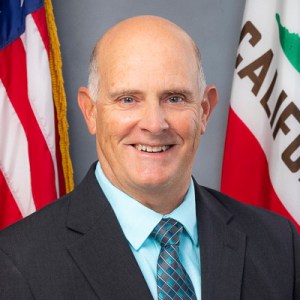
SB 276: Workweek: overtime: legislative employees.
- Session Year: 2023-2024
- House: Senate
- Latest Version Date: 2023-02-01
Current Status:
Failed
(2024-02-01: Returned to Secretary of Senate pursuant to Joint Rule 56.)
Introduced
In Committee
First Chamber
In Committee
Second Chamber
Enacted
Existing law defines and regulates the terms and conditions of employment. Existing law generally defines workweek for these purposes and requires that work in excess of 40 hours in a workweek be compensated at a rate of at least 11/2 times the employees regular rate of pay, subject to certain exceptions. Existing law makes a violation of these provisions a misdemeanor.
This bill would expressly require that overtime provisions apply to an employee of the Legislature. By expanding the application of a crime, this bill would create a state-mandated local program.
The California Constitution requires the state to reimburse local agencies and school districts for certain costs mandated by the state. Statutory provisions establish procedures for making that reimbursement.
This bill would provide that no reimbursement is required by this act for a specified reason.
(a)Eight hours of labor constitutes a days work. Any work in excess of eight hours in one workday and any work in excess of 40 hours in any one workweek and the first eight hours worked on the seventh day of work in any one workweek shall be compensated at the rate of no less than one and one-half times the regular rate of pay for an employee. Any work in excess of 12 hours in one day shall be compensated at the rate of no less than twice the regular rate of pay for an employee. In addition, any work in excess of eight hours on any seventh day of a workweek shall be compensated at the rate of no less than twice the regular rate of pay of an employee. Nothing in this section requires an employer to combine more than one rate of overtime compensation in order to calculate the amount to be paid to an employee for any hour of overtime work. The requirements of this section do not apply to the payment of overtime compensation to an employee working pursuant to any of the following:
(1)An alternative workweek schedule adopted pursuant to Section 511.
(2)An alternative workweek schedule adopted pursuant to a collective bargaining agreement pursuant to Section 514.
(3)An alternative workweek schedule to which this chapter is inapplicable pursuant to Section 554.
(b)Time spent commuting to and from the first place at which an employees presence is required by the employer shall not be considered to be a part of a days work, when the employee commutes in a vehicle that is owned, leased, or subsidized by the employer and is used for the purpose of ridesharing, as defined in Section 522 of the Vehicle Code.
(c)This section does not affect, change, or limit an employers liability under the workers compensation law.
(d)This section shall apply to an individual who is currently employed by either house of the Legislature. This section does not apply to a Member of the Legislature.
SEC. 2.No reimbursement is required by this act pursuant to Section 6 of Article XIIIB of the California Constitution because the only costs that may be incurred by a local agency or school district will be incurred because this act creates a new crime or infraction, eliminates a crime or infraction, or changes the penalty for a crime or infraction, within the meaning of Section 17556 of the Government Code, or changes the definition of a crime within the meaning of Section 6 of Article XIIIB of the California Constitution.
|
Date
|
Status
|
|---|---|
| Feb 1, 2024 | Returned to Secretary of Senate pursuant to Joint Rule 56. |
| May 18, 2023 | May 18 hearing: Held in committee and under submission. |
| May 12, 2023 | Set for hearing May 18. |
| May 8, 2023 | May 8 hearing: Placed on APPR suspense file. |
| May 1, 2023 | Set for hearing May 8. |
| Apr 26, 2023 | From committee: Do pass and re-refer to Com. on APPR. (Ayes 5. Noes 0. Page 897.) (April 26). Re-referred to Com. on APPR. |
| Apr 13, 2023 | Set for hearing April 26. |
| Feb 22, 2023 | Referred to Com. on L., P.E. & R. |
| Feb 2, 2023 | From printer. May be acted upon on or after March 4. |
| Feb 1, 2023 | Introduced. Read first time. To Com. on RLS. for assignment. To print. |
|
Date
|
Description
|
Location
|
Votes
|
|
|---|---|---|---|---|
| May 8, 2023 | Placed on suspense file | Senate Standing Committee on Appropriations |
Passed |
|
| Apr 26, 2023 | Do pass, but first be re-referred to the Committee on [Appropriations] | Senate Standing Committee on Labor, Public Employment and Retirement |
Passed |
This list shows positions taken on this bill by organizations on the date displayed, which is linked to the original source.
Positions by individuals are not included.
SENATE COMMITTEE ON APPROPRIATIONS
Senator Anthony Portantino, Chair
2023 - 2024 Regular Session
SB 276 (Seyarto) - Workweek: overtime: legislative employees
Version: February 1, 2023 | Policy Vote: L., P.E. & R. 5 - 0 |
Urgency: No | Mandate: Yes |
Hearing Date: May 8, 2023 | Consultant: Robert Ingenito |
Bill Summary:
SB 276 would apply existing Labor Code law regulating overtime compensation to an individual currently employed by the Legislature.
Fiscal Impact:
This bill would result in increased annual employment costs to the Legislature. The magnitude is unknown, and would depend on (1) the number of Legislative staff who are not exempt from overtime compensation under current law, and (2) the extent to which the Legislature authorized the future use of overtime under the bill.
However, under the Constitution, the Legislature’s annual spending is capped; consequently, any costs resulting from this bill could not be accommodated through budgetary increases relative to current law, and thus would likely displace existing workload and spending (General Fund, see Staff Comments).
Background:
As described by the Senate Committee on Labor, Public Employment and Retirement, legislative employees, since they are not members of the state civil service, fall under the federal law’s exclusion from the Fair Labor Standards Act’s (FSLA’s) definition of “employee”, as specified. Thus, federal overtime laws do not apply to legislative employees.
Although the FLSA does cover state executive branch civil service employees, its overtime compensation provisions do not apply to employees covered under a collective bargaining agreement, as specified. Most state civil service employees have collective bargaining agreements with the state pursuant to the Dills Act. Thus, state MOUs generally govern overtime compensation for state represented employees.
Additionally, the FLSA authorizes a state employer to provide compensating time off in lieu of overtime compensation for FSLA covered employees. Government Code, CalHR or departmental policy govern non-represented employees and discourage overtime but where necessary, generally provide compensated time off for non-represented employees.
State case law holds that Labor Code provisions do not apply to public sector employers unless the statute at issue specifically applies by reference to public employees. Since LC §510 regulating overtime compensation makes no applicable reference to public employers, its overtime provisions do not apply to state employees, including legislative employees. This bill would apply the LC § 510 specifically to Legislative employees.
Proposed Law:
The bill would (1) explicitly apply existing Labor Code law regulating overtime to an individual currently employed by either house of the Legislature, but (2) not apply existing Law Code law regulating overtime to Members of the Legislature.
Related Legislation:
- AB 1 (McKinnor) would authorize collective bargaining for legislative employees. The bill is currently pending in the Assembly Appropriations Committee.
- AB 1577 (Gonzalez, 2022) would have allowed legislative employees to engage in collective bargaining. The bill failed passage on concurrence in the Assembly Public Employment and Retirement Committee.
- SB 550 (Dahle, 2021) would have required that existing law that governs employment practices of private employers also apply to the Legislature. The bill was held under submission on the Suspense File of this Committee.
Staff Comments:
This bill could impose new spending requirements on the Legislature resulting from increased employment costs. Unlike other state departments whose budgets increase annually (subject to the budget process) in response to rising caseloads and additional workload, the Legislature’s ability to spend is constrained. Specifically, Proposition 140 (1990), among other things, set an annual cap on the amount of money that may be spent to support the Legislature’s operations (for example, legislator and staff salaries, travel, and communications). This cap changes annually based on growth in the State’s economy and population, and is completely outside the Legislature’s control. Thus, this bill could impose new spending requirements on the Legislature, but not provide new resources to accommodate the additional spending.
California’s minimum wage rose from $15 per hour to $15.50 per hour for all employers on January 1, 2023. This change in the minimum wage also affects the minimum salary an employee must earn to meet one part of the overtime exemption test. Exempt employees are not subject to the payment of overtime for working overtime hours. An employee must earn no less than two times the state minimum wage for full-time work to meet this initial requirement of the exemption test. As of January 1, 2023, employees in California must earn an annual salary of no less than $64,480 to meet this threshold requirement. Thus, the fiscal impact of this bill would depend upon (1) the number of Legislative staff earning less than $64,480 per year, and (2) the amount of overtime this population would be authorized to work (thus earning one and one-half times their regular rate of pay).
Any local government costs resulting from the mandate in this measure are not state-reimbursable because the mandate only involves the definition of a crime or the penalty for conviction of a crime.
-- END --
SENATE COMMITTEE ON LABOR, PUBLIC EMPLOYMENT AND RETIREMENT
Senator Dave Cortese, Chair
2023 - 2024 Regular
Bill No: SB 276 Hearing Date: April 26, 2023
Author: | Seyarto | ||
Version: | February 1, 2023 | ||
Urgency: | No | Fiscal: | Yes |
Consultant: | Glenn Miles | ||
SUBJECT: Workweek: overtime: legislative employees
KEY ISSUE
Should the state apply existing Labor Code law regulating overtime compensation to an individual currently employed by the Legislature?
ANALYSIS
Existing federal law:
- Prohibits, as specified, an employer from employing an employee for a workweek longer than forty hours unless such employee receives compensation at a rate not less than one and one-half times the employee’s regular rate. (Fair Labor Standards Act (FSLA), 29 USC 207 (a))
- Exempts from the FLSA definition of “employee” an individual employed by a State, political subdivision of a State, or an interstate governmental agency who is not subject to the civil service laws (see Existing state law, paragraph 1, infra) of the State, political subdivision, or agency which employs him; and is an employee in the legislative branch or legislative body of that State, political subdivision, or agency and is not employed by the legislative library of such State, political subdivision, or agency. (FSLA, 29 USC 203 (e)(2)(C)(V))
- Authorizes covered employees of a public agency which is a State, political subdivision of a State, or an interstate governmental agency to receive in lieu of overtime compensation, compensatory time off at a rate not less than one and one-half hours for each hour, as specified. (FSLA, 29 USC 203 (o)
Existing state law:
- Exempts officers and employees appointed or employed by the Legislature, either House, or legislative employees from the civil service. (Cal. Const. art. VII, § 4)
- Does not apply Labor Code provisions to public sector employers unless specifically provided for in the respective statute. (Johnson v. Arvin-Edison Water Storage Dist., 174 Cal.App.4th 729)
- Authorizes the Industrial Welfare Commission (IWC) to establish exemptions from the Labor Code’s overtime compensation requirements, as specified, and exempts employees directly employed by the State, as specified, from provisions of the Industrial Welfare Commission’s Work Order No. 4 regulating overtime compensation. (LC § 515; IWC Order No. 4-2001, § 1 (B))
- Requires an employer to compensate an employee at the rate of no less than one and one-half times the regular rate of pay for an employee for any work in excess of:
- Eight hours in one workday;
- Forty hours in any one workweek;
- The first eight hours worked on the seventh day of work in any one workweek
(Labor Code (LC) § 510)
- Requires an employer to compensate an employee at the rate of no less than twice the regular rate of pay of an employee for any work in excess of:
- Twelve hours in one day at the rate of no less than twice the regular rate of pay for an employee;
- Eight hours on any seventh day of a workweek. (LC § 510)
- Does not apply overtime compensation to an employee covered by a valid collective bargaining agreement if the agreement expressly provides for the wages, hours of work, and working conditions of the employees, and if the agreement provides premium wage rates for all overtime hours worked and a regular hourly rate of pay for those employees of not less than 30 percent more than the state minimum wage. (LC § 514)
- Provides collective bargaining for executive branch state employees under the Ralph C. Dills Act which establishes a process for determining wages, hours and terms and conditions of employment for represented employees but generally excludes managers and confidential employees from bargaining rights. (Government Code (GC) § 3512 et seq.)
This bill:
- Explicitly applies existing Labor Code law regulating overtime to an individual currently employed by either house of the Legislature.
- Does not apply existing Law Code law regulating overtime to a Member of the Legislature.
- Declares that the bill does not create a state mandated reimbursable mandate on a local agency or school district because it creates a new crime or infraction, eliminates a crime or infraction, or changes the penalty for a crime or infraction, within the meaning of Section 17556 of the Government Code, or changes the definition of a crime within the meaning of Section 6 of Article XIII B of the California Constitution.
COMMENTS
1. Background
Legislative employees, as they are not members of the state civil service, fall under the federal law’s exclusion from the FSLA’s definition of “employee”, as specified. Thus, federal overtime laws do not apply to legislative employees.
Although the FLSA does cover state executive branch civil service employees, its overtime compensation provisions do not apply to employees covered under a collective bargaining agreement, as specified. Most state civil service employees have collective bargaining agreements with the state pursuant to the Dills Act. Thus, state MOUs generally govern overtime compensation for state represented employees.
Additionally, the FLSA authorizes a state employer to provide compensating time off in lieu of overtime compensation for FSLA covered employees. Government Code, CalHR or departmental policy govern non-represented employees and discourage overtime but where necessary, generally provide compensated time off for non-represented employees.
State case law holds that Labor Code provisions do not apply to public sector employers unless the statute at issue specifically applies by reference to public employees. Since LC §510 regulating overtime compensation makes no applicable reference to public employers, its overtime provisions do not apply to state employees, including legislative employees. This bill would apply the LC § 510 specifically to Legislative employees.
Although state employees overtime issues are addressed though other statutes as described above, the author may wish to consider specifically applying LC § 510 to executive branch employees, subject to collective bargaining, to provide parity between legislative and executive branch state employees. Furthermore, the committee notes that the bill could specifically authorize the legislature and the executive branch to provide compensating time off in lieu of overtime compensation similar to the relevant FSLA provision which helps public agencies accommodate budget challenges and stabilize overtime costs by spreading overtime compensation over longer periods.
2. Need for this bill?
According to the author,
“The legislature has had a well-documented history of inequitable and unhealthy work environments for legislative staff. Many of these experiences have been brought to light in recent years and the #MeTOO movement prompted reforms to the way the legislature addresses harassment, discrimination and abuse. In 2019, the legislature took a significant step in addressing internal abuse by establishing the Workplace Conduct Unit (WCU).
“However, there still exists statutory inequities that the WCU does not have the authority to address. Campbell v Regents of University of California (2005) established judicial precedence that most labor laws do not apply to public sector employees unless explicitly clarified in statute. Consequently, certain abuses relating to working hours and compensation are still legally permitted and may be used for implicitly discriminatory or retaliatory purposes.”
3. Proponent Arguments
According to the author,
“This bill would ensure that legislative employees are entitled to the same overtime working hour protections that the legislature has already mandated for all other workers across the state.”
4. Opponent Arguments:
None received.
5. Related/ Prior Legislation:
AB 1 (McKinnor, 2023) would authorize collective bargaining for legislative employees. The bill is currently awaiting a hearing in the Assembly Public Employment and Retirement Committee.
SB 550 (Dahle, 2021) would have required that existing law that governs employment practices of private employers also apply to the Legislature. The Senate Appropriations Committee held the bill on its suspense file.
AB 1577 (Gonzalez, 2022) would have allowed legislative employees to engage in collective bargaining. The bill failed passage on concurrence in the Assembly Public Employment and Retirement Committee.
SUPPORT
None received
OPPOSITION
None received
-- END --
Discussed in Hearing
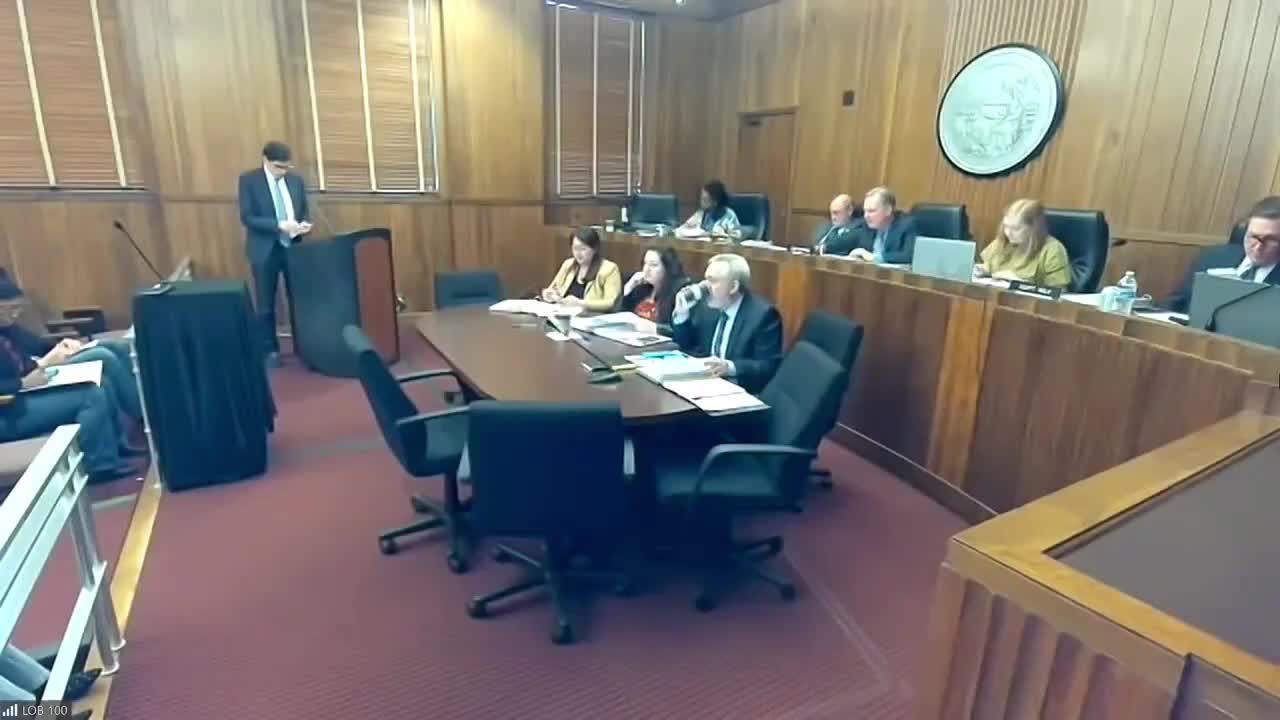 8MIN
Senate Standing Committee on Labor, Public Employment and Retirement
Bill Author