SB 300: Public employees’ retirement: fiscal impact: information.
- Session Year: 2023-2024
- House: Senate
- Latest Version Date: 2023-05-03
Current Status:
Failed
(2024-02-01: Returned to Secretary of Senate pursuant to Joint Rule 56.)
Introduced
In Committee
First Chamber
In Committee
Second Chamber
Enacted
What does this bill do?
The bill requires the Legislative Analyst to prepare and post a pension fiscal impact analysis for any bill sent to the Senate Labor, Public Employment and Retirement Committee that would force a public retirement system to stop investing in an asset or asset class, sell off an existing investment, require trustees to assess whether an action meets their duty to act in beneficiaries’ best interest, or study those actions. The analysis must be prepared with help from the California Actuarial Advisory Panel and the affected retirement system and must show effects on the system’s funding, employer and employee contribution rates, any state contribution, and likely short‑term (three years) and long‑term (ten years) costs to the General Fund; a legislator may not present such a measure to the committee until the analysis is posted.
The summary is provided by generative AI which can make mistakes. For original language, please view the details in the table below.
The Public Employees Retirement Law (PERL) establishes the Public Employees Retirement System (PERS) and sets forth the provisions for its administration and the delivery of benefits to its members. Existing law establishes PERS Board of Administration and grants management and control of PERS to the board. The California Constitution grants the board retirement board of a public retirement system plenary authority and fiduciary responsibility for investment of moneys and administration of the retirement fund and system. the system. The California Constitution qualifies this grant of powers by reserving to the Legislature the authority to prohibit investments if it is in the public interest and the prohibition satisfies standards of fiduciary care and loyalty required of the board. public retirement systems board.
Existing law establishes the Joint Legislative Budget Committee to ascertain facts and make recommendations to the Legislature and to the houses thereof concerning the state budget, the revenues and expenditures of the state, the organization and functions of the state, its departments, subdivisions and agencies, and such matters as may be provided for in the Joint Rules of the Senate and Assembly, and grants the committee the authority to appoint a legislative analyst who is also referred to as the Legislative Auditor or Legislative Analyst.
This bill would require any bill, the Legislative Analyst to prepare a pension fiscal impact analysis on any measure introduced on or after January 1, 2024, that is referred to the Senate Labor, Public Employment and Retirement Committee and relates to PERS to include a fiscal impact analysis from the Legislative Analysts Office that describes the fiscal impact of the bill on PERS and what the outcome of the bill would be if implemented. Committee, or any successor committee, as specified, and that requires a public retirement system to take prescribed action, including the divestiture of an existing investment. The bill would require the California Actuarial Advisory Panel and the affected public retirement system to provide assistance to the Legislative Analyst in preparing the analysis. By requiring the boards of local public retirement systems to take specified actions, this bill would impose a state-mandated local program. The bill would require the Legislative Analyst to develop specified criteria, including, at a minimum, the likely short-term and long-term costs to the General Fund, as prescribed.
This bill would prohibit a member of the Legislature from presenting any measure for which the Legislative Analyst must prepare a pension fiscal impact analysis under the bills provisions until the Legislative Analyst posts the completed analysis on its website and transmits it to the legislative committee.
The California Constitution requires the state to reimburse local agencies and school districts for certain costs mandated by the state. Statutory provisions establish procedures for making that reimbursement.
This bill would provide that no reimbursement shall be made pursuant to these statutory provisions for costs mandated by the state pursuant to this act, but would recognize that a local agency or school district may pursue any available remedies to seek reimbursement for these costs.
The Public Employees Retirement Law (PERL) establishes the Public Employees Retirement System (PERS) and sets forth the provisions for its administration and the delivery of benefits to its members. Existing law establishes PERS Board of Administration and grants management and control of PERS to the board. The California Constitution grants the board plenary authority and fiduciary responsibility for investment of moneys and administration of the retirement fund and system. The California Constitution qualifies this grant of powers by reserving to the Legislature the authority to prohibit investments if it is in the public interest and the prohibition satisfies standards of fiduciary care and loyalty required of the board.
This bill would require any bill, introduced on or after January 1, 2024, that is referred to the Senate Labor, Public Employment and Retirement Committee and relates to PERS to include a fiscal impact analysis from the Legislative Analysts Office that describes the fiscal impact of the bill on PERS and what the outcome of the bill would be if implemented.
Notwithstanding any other provision of law, before a Member of the Legislature may present in a legislative committee of the Senate any measure for which the Legislative Analyst must prepare a pension fiscal impact analysis pursuant to Section 9144.5, the Legislative Analyst shall post the completed analysis publicly on its website and transmit it to the legislative committee.
SEC. 2.Section 9144.5 is added to the Government Code, to read:9144.5.(a)The Legislative Analyst shall prepare a pension fiscal impact analysis on any measure introduced on or after January 1, 2024, that is referred to the Senate Labor, Public Employment and Retirement Committee, or any successor committee of the Senate that becomes responsible for the same jurisdictional remit related to pensions, and that requires any of the following of a public retirement system as defined pursuant to subdivision (j) of Section 7522.04:
(1)The cessation of, or prohibition from, investing in a particular asset or asset class.
(2)The divestiture of an existing investment.
(3)The imposition of any required activity that requires the pension board of trustees to assess whether the activity is consistent with the boards fiduciary duty.
(4)The study, investigation, or research of any activity described in paragraphs (1) to (3), inclusive.
(b)In preparing the analysis required in subdivision (a), the Legislative Analyst shall have the assistance of the California Actuarial Advisory Panel established pursuant to Section 7507.2 and the affected public retirement system.
(c)The Legislative Analyst shall develop criteria to include in the analysis required in subdivision (a), but, at a minimum, shall include the effect the measure would have on the public retirement systems funding status, employer and employee contribution rates, the states contribution rate, if any, and the likely costs to the General Fund of implementing the measure's provisions.
(d)When displaying the costs to the General Fund, the Legislative Analyst shall segment the information by short-term and long-term impact.
(e)For purposes of this section, the following definitions apply:
(1)Long term means 10 fiscal years after the measures effective date or a similar period recommended by the California Actuarial Advisory Panel.
(2)Short term means three fiscal years beginning with the fiscal year of the measures effective date.
SEC. 3.No reimbursement shall be made pursuant to Part 7 (commencing with Section 17500) of Division 4 of Title 2 of the Government Code for costs mandated by the state pursuant to this act. It is recognized, however, that a local agency or school district may pursue any remedies to obtain reimbursement available to it under Part 7 (commencing with Section 17500) and any other law.
SECTION 1.Section 20005 is added to the Government Code, to read:20005.Notwithstanding any other law, any bill, introduced on or after January 1, 2024, that is referred to the Senate Labor, Public Employment and Retirement Committee and relates to PERS shall include a fiscal impact analysis from the Legislative Analysts Office that describes the fiscal impact of the bill on PERS and what the outcome of the bill would be if implemented.Notwithstanding any other law, any bill, introduced on or after January 1, 2024, that is referred to the Senate Labor, Public Employment and Retirement Committee and relates to PERS shall include a fiscal impact analysis from the Legislative Analysts Office that describes the fiscal impact of the bill on PERS and what the outcome of the bill would be if implemented.
|
Date
|
Status
|
|---|---|
| Feb 1, 2024 | Returned to Secretary of Senate pursuant to Joint Rule 56. |
| May 18, 2023 | May 18 hearing: Held in committee and under submission. |
| May 16, 2023 | Set for hearing May 18. |
| May 15, 2023 | May 15 hearing: Placed on APPR suspense file. |
| May 5, 2023 | Set for hearing May 15. |
| May 3, 2023 | Read second time and amended. Re-referred to Com. on APPR. |
| May 2, 2023 | From committee: Do pass as amended and re-refer to Com. on APPR. (Ayes 5. Noes 0. Page 897.) (April 26). |
| Apr 13, 2023 | Set for hearing April 26. |
| Feb 22, 2023 | Referred to Coms. on L., P.E. & R. and APPR. |
| Feb 3, 2023 | From printer. May be acted upon on or after March 5. |
| Feb 2, 2023 | Introduced. Read first time. To Com. on RLS. for assignment. To print. |
|
Date
|
Description
|
Location
|
Votes
|
|
|---|---|---|---|---|
| May 15, 2023 | Placed on suspense file | Senate Standing Committee on Appropriations |
Passed |
|
| Apr 26, 2023 | Do pass as amended, but first amend, and re-refer to the Committee on [Appropriations] | Senate Standing Committee on Labor, Public Employment and Retirement |
Passed |
This list shows positions taken on this bill by organizations on the date displayed, which is linked to the original source.
Positions by individuals are not included.
|
Organization
|
Position
|
Date
|
|---|---|---|
| California Chamber Of Commerce | ** Support | |
| California Federation Of Teachers | ** Against | |
| California School Employees Association | * Against | Apr 26, 2023 |
| California Teachers Association | * Against | Apr 26, 2023 |
SENATE COMMITTEE ON
Senator Anthony Portantino, Chair
2023 - 2024 Regular Session
SB 300 (Seyarto) - Public employees’ retirement: fiscal impact: information
Version: | Policy Vote: |
Urgency: | Mandate: |
Hearing Date: | Consultant: |
Bill Summary:
SB 300 would require specified pension bills that are referred to the Senate Labor, Public Employment and Retirement Committee to include a fiscal analysis by the Legislative Analyst’s Office (LAO).
Fiscal Impact:
- The LAO indicates that it could not absorb, within its existing resources, the increased analytical workload that would result from the bill. The cost to implement the bill’s requirements would be in the hundreds of thousands of dollars annually (General Fund). The LAO’s funding comes the Legislature’s budget, which is capped by Proposition 140 (1990). Thus, to the extent the Legislature provided additional funding to the LAO to perform the duties required by the bill, less resources would be available for the remainder of its budget.
- Costs to the California Actuarial Advisory Panel, within the State Controller’s Office (STO), have yet to be identified (General Fund).
- Costs to the California Public Employees Retirement System (CalPERS) and the California State Teachers Retirement System (CalSTRS) would potentially be minor and absorbable. Any additional costs would depend on the extent to which requests from the LAO require additional work beyond the pension segments’ regular bill analysis or actuarial work.
Background:
Through CalPERS, the State provides pension benefits to retired state and California State University employees. CalPERS pensions are funded from three sources: employer contributions, employee contributions, and investment gains. Investment gains pay for roughly two‑thirds of current benefits, while employer and employee contributions fund the remainder.
Likewise, school and community college employees in California generally are eligible to receive a pension upon retirement. For teachers, administrators, and other employees having a state credential, these pension benefits are administered by CalSTRS. CalSTRS too is funded through contributions from employers (school and community college districts), employees, and investment gains. In addition, CalSTRS receives an annual General Fund appropriation. CalSTRS is the only pension system in California for which the state makes a direct appropriation on behalf of local agencies.
Proposed Law:
This bill, among other things, would do the following:
- Require the LAO to prepare a pension fiscal impact analysis on any measure introduced on or after January 1, 2024, that is referred to the Senate Labor, Public Employment and Retirement Committee, or any successor committee, as specified, and that requires a public retirement system to take prescribed action, including the divestiture of an existing investment.
- Require the California Actuarial Advisory Panel and the affected public retirement system to provide assistance to the LAO in preparing the analysis.
- Require the LAO to develop specified criteria, including, at a minimum, the likely short-term and long-term costs to the General Fund, as specified.
- Prohibit a member of the Legislature from presenting any measure for which the LAO must prepare a pension fiscal impact analysis under the bill’s provisions until the LAO posts the completed analysis on its website and transmits it to the legislative committee.
Related Legislation:
- SB 783 (Pan, 2018) would have requested the University of California (UC) establish the Pension Divestment Review Program (PDRP) to assess proposals that require a public employee pension fund to divest assets, or restrict the fund from investing, based on specific criteria or by reference to an external benchmark. The bill was held under submission on the Suspense File of the Assembly Appropriations Committee.
- SB 32 (Moorlach, 2017), among other things, would have created the Citizens’ Pension Oversight Committee (OC) consisting of 5 to 9 members jointly appointed by CalPERS and CalSTRS from persons with experience in fiduciary matters who do not receive benefits from the two systems to serve in an advisory role to CalPERS and CalSTRS.
Staff Comments:
This bill would require the LAO to hire staff who have actuarial and investment market expertise and experience. As indicated previously, annual costs are anticipated to be in the hundreds of thousands of dollars.
As noted previously, the LAO itself is a part of the Legislature; it is funded from the Legislature’s budget. Specifically, the LAO receives an annual transfer from both the Senate and the Assembly to fund its operations. Proposition 140, approved by the voters in 1990, capped the Legislature’s budget. Since that time, funding for the LAO has accounted for less than 3 percent of the Legislature’s annual budget. Under the requirements of Proposition 140, any additional resources for the LAO would have to come from the Legislature’s budget.
-- END --
SENATE COMMITTEE ON LABOR, PUBLIC EMPLOYMENT AND RETIREMENT
Senator Dave Cortese, Chair
2023 - 2024 Regular
Bill No: SB 300 Hearing Date: April 26, 2023
Author: | Seyarto | ||
Version: | February 2, 2023 | ||
Urgency: | No | Fiscal: | No |
Consultant: | Glenn Miles | ||
SUBJECT: Public employees’ retirement: fiscal impact: information
KEY ISSUE
Should the state require legislative bills relating to PERS and referred to the Senate Labor, Public Employment and Retirement Committee (SLPER) to include a fiscal analysis by the Legislative Analyst’s Office (LAO)?
ANALYSIS
Existing law:
- Establishes the California Public Employees’ Retirement System (CalPERS), which provides a defined benefit pension to state employees, classified school employees, and employees of contracting public agencies. (Government Code (GC) § 20000 et seq.)
- Establishes the Joint Legislative Budget Committee to ascertain facts and make recommendations to the Legislature and to the houses thereof concerning the State Budget, the revenues and expenditures of the State, the organization and functions of the State, its departments, subdivisions and agencies, and such other matters as may be provided for in the Joint Rules of the Senate and Assembly. (GC § 9140)
- Authorizes the appointment of a legislative analyst and such other clerical and technical employees, as specified, and deems the statutory term “Legislative Auditor” to mean the Legislative Analyst (LAO). (GC § 9143)
- Requires the LAO to prepare a judicial impact analysis, with the assistance of the Department of Finance and the Judicial Council when and as requested by the LAO, on selected measures referred to the Senate Judiciary Committee, Senate Criminal Procedure Committee, Assembly Judiciary Committee, and Assembly Committee on Public Safety. (GC § 9144)
- Requires the LAO to select for analysis, as resources permit with no additional staff, those measures with the greatest apparent potential impact on court manpower and costs. Allows the LAO to analyze other measures as staff resources permit and requires the LAO to give its analysis of a measure to the respective committee members prior to the date on which the committee schedules to hear the measure. Requires the LAO to perform the specified analyses on a nine-month trial basis. Thereafter, the three respective committees shall evaluate the cost and effectiveness of this type of analysis for the specified policy committees. (GC § 9144)
- Establishes within the State Controller’s Office, the California Actuarial Advisory Panel (CAAP) to provide impartial and independent information on pensions, other postemployment benefits, and best practices to public agencies and report thereon to the Legislature annually. (GC § 7507.2 et seq.)
- Requests the University of California (UC) to establish the California Health Benefits Review Program (CHBRP) to assess, as specified and not later than 60 days from receiving a request by the Legislature, legislation proposing to mandate or repeal a health plan or health insurance benefit or service for public health, medical, and financial impacts. (Health and Safety Code (HSC) §127660)
- Requires any bill that would authorize a new tax expenditure or that would authorize an exemption from the taxes, as specified, to contain: (1) Specific goals, purposes, and objectives that the tax expenditure will achieve; (2) Detailed performance indicators for the Legislature to use when measuring whether the tax expenditure meets the goals, purposes, and objectives stated in the bill; and (3) data collection requirements to enable the Legislature to determine whether the tax expenditure is meeting, failing to meet, or exceeding those specific goals, purposes, and objectives. The requirements shall include the specific data and baseline measurements to be collected and remitted in each year the tax expenditure is in effect, in order for the Legislature to measure the change in performance indicators, and the specific taxpayers, state agencies, or other entities required to collect and remit data. (Revenue and Tax Code (RTC) § 41)
This bill:
- Requires any bill, introduced on or after January 1, 2024, that the Senate Rules Committee refers to the Senate Labor, Public Employment and Retirement Committee that relates to PERS to include a fiscal impact analysis from the Legislative Analyst’s Office.
- Requires LAO’s analysis to describe the bill’s fiscal impact on PERS and the bill’s outcome if implemented.
COMMENTS
1. Background
In the simplest of terms, the state sponsors a defined benefit retirement plan for its employees, classified school employees, and for the employees of local agencies that contract to participate in the plan. The plan, administered by the Board of Administration of the California Public Employees’ Retirement Systems (CalPERS, also sometimes known as PERS), requires public employers and their employees (also known as members) to make pension contributions to the Public Employees’ Retirement Fund (PERF), which CalPERS then invests. CalPERS uses the proceeds from the investments to fund members’ pension benefits upon retirement. CalPERS performs actuarial valuations to determine the PERF’s asset value and the plan’s cumulative liabilities (i.e., the present value of future benefits payable to members) in order to establish an annual pension contribution rate that employers and employees must pay annually to the PERF. Constitutional, statutory, and case law establish and protect CalPERS’ authority to establish and impose the contribution rates.
Members, upon retirement, receive a defined benefit pension allowance determined by specified factors related to their years of service, final compensation, and a percentage factor applied to their final compensation. They do not receive the simple balance of their contributions grown (or reduced) by their individual account’s investment performance (i.e., this is not like a 401K plan). Any risk that the PERF’s investment performance is insufficient to fund retirees’ pension benefits falls directly on CalPERS covered employers and their active employees.
Substantial cyclical macroeconomic transitions in the economy can render previous actuarial assumptions irrelevant if they materially affect the PERF’s asset and liability valuations and/ or CalPERS’ investment return assumptions and can result in significant increased pressures on the General Fund.
Bills that affect CalPERS’ financial condition, either by increasing pension benefits for current retirees or members near retirement or by restricting CalPERS’ investment authority create particular challenges when unforeseen economic conditions destabilize the PERF’s actuarial underpinnings.
Committee Comments
By using the term “PERS”, the bill does not clearly define what entity or subject matter it covers. That term can mean CalPERS but it can also mean the subject of “Public Employment and Retirement Systems”, particularly in the context of the legislative committees’ jurisdiction. The latter terminology is far broader and includes, among other matters, the entire collective bargaining structure in public sector labor relations.
Additionally, PERS can refer generally to all “Public Employment Retirement Systems”. There are, for example, separate public retirement systems for teachers (the California State Teachers’ Retirement System (CalSTRS); for employees of counties that do not contract with CalPERS but instead have their own public retirement system pursuant to the County Employees’ Retirement Law of 1937 (CERL); employees of the University of California (UCRS); and employees of charter cities that have established their own independent retirement system through their city charter (e.g., the San Francisco Employees’ Retirement System (SFERS) or the Los Angeles City Employees' Retirement System (LACERS).
As currently drafted, the committee understands that the bill would apply only to bills affecting the California Public Employees’ Retirement System and not systems that provide retirement benefits for public teachers or public employees covered under other public retirement systems.
2. Need for this bill?
According to the author:
“Currently, in both the California Senate and Assembly, committees have implemented rules for legislation submitted to the committee in order for it to be taken up for consideration – from impact of timetable and analysis in the Senate Health Committee to data analysis of past and purported tax revenue in the Assembly Revenue and Tax Committee, however, there are no such provisions in the Senate Labor, Public Employment and Retirement Committee. This bill seeks to remedy the lack of provisions for bills, as it relates specifically to CalPERS, to be heard in the Senate Labor, Public Employment and Retirement Committee by providing clear, objective, non-partisan analysis for committee members.”
3. Proponent Arguments
According to the California Chamber of Commerce, although the legislature generally considers fiscal impacts of legislation in its fiscal committees, “…PERS presents a unique circumstance where the fiscal and the policy [impacts] are closely intertwined. As a result, we believe policymakers should have as much information about the impacts of their policy decisions in PERS committees as possible.”
“SB 300 would help address that problem by providing policymakers with additional information from the Legislative Analyst’s Office on the economic consequences of their decisions regarding employee pensions. This information is particularly critical as we face economic uncertainty and the potential for a recession in the coming years – which will challenge pension funds’ ability to meet their expected rates of return.”
4. Opponent Arguments:
According to the California Federation of Teachers:
“CFT believes that redundancy of resources by the Legislature should be avoided. The fiscal committees in both Houses already provide a thorough analysis of the fiscal impact a bill will have; an additional analysis by the Legislative Analysis (sic) Office is unnecessary.”
5. Dual Referral:
Although the Legislative Counsel has not designated the bill to have either an appropriation or a fiscal impact, the Senate Rules Committee has referred this bill to SLPER and to the Senate Appropriations Committee.
6. Prior Legislation:
SB 783 (Pan, 2018) would have requested the University of California (UC) establish the Pension Divestment Review Program (PDRP) to assess proposals that require a public employee pension fund to divest assets, or restrict the fund from investing, based on specific criteria or by reference to an external benchmark. The Assembly Appropriations Committee held the bill on its suspense file.
SB 32 (Moorlach, 2017) would have among other things creates the Citizens’ Pension Oversight Committee (OC) consisting of 5 to 9 members jointly appointed by CalPERS and CalSTRS from persons with experience in fiduciary matters who do not receive benefits from the two systems to serve in an advisory role to CalPERS and CalSTRS.
SUPPORT
California Chamber of Commerce
OPPOSITION
California Federation of Teachers
California Teachers Association
-- END --
Discussed in Hearing
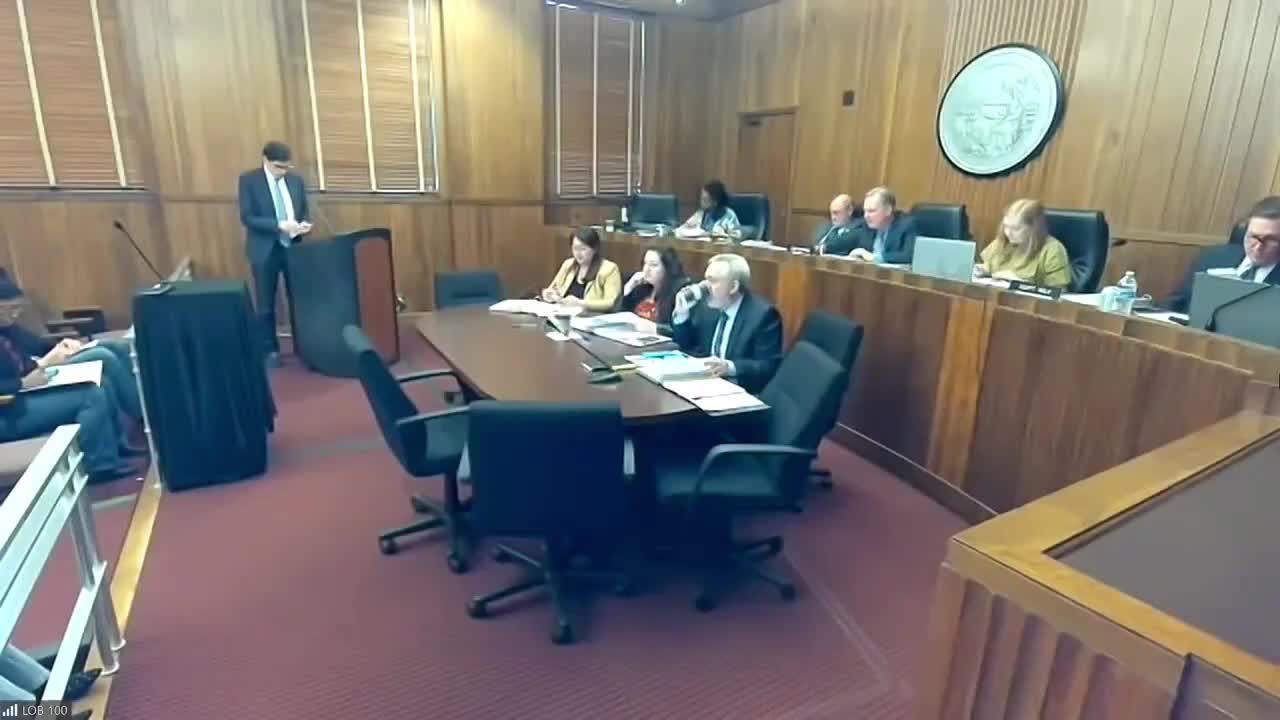 15MIN
Senate Standing Committee on Labor, Public Employment and Retirement
Bill Author