SB 41: Meal and rest breaks: airline cabin crew employees.
- Session Year: 2023-2024
- House: Senate
- Latest Version Date: 2023-03-23
Current Status:
Passed
(2023-03-23: Approved by the Governor.)
Introduced
In Committee
First Chamber
In Committee
Second Chamber
Enacted
What does this bill do?
This bill exempts airline cabin crew (flight attendants and other on‑board staff) from California meal and rest break rules when they are covered by a valid collective bargaining agreement under the federal Railway Labor Act, or for a newly organized craft or class during the first 12 months (or longer if employer and union agree). It also bars new lawsuits, beginning December 5, 2022, by or on behalf of such cabin crew claiming meal or rest break violations, and it does not affect earlier settlements or final court judgments.
The summary is provided by generative AI which can make mistakes. For original language, please view the details in the table below.
Existing law requires an employer to provide an employee with a meal period during a work period of more than 5 hours per day, except as prescribed. Industrial Welfare Commission Wage Order No. 9 regulates employment in the transportation industry and requires an employer to provide an employee with a rest period, as specified. Existing law prohibits an employer from requiring an employee to work during a meal or rest or recovery period mandated pursuant to an applicable statute, or applicable regulation, standard, or order of the Industrial Welfare Commission, the Occupational Safety and Health Standards Board, or the Division of Occupational Safety and Health. Existing law requires an employer who fails to provide an employee a mandated meal or rest or recovery period to pay the employee one additional hour of pay at the employees regular rate of compensation for each workday that the meal or rest or recovery period was not provided. Existing law provides certain exemptions from these requirements.
Existing federal law, the Railway Labor Act, regulates labor relations for rail and air carriers and entitles employees to organize and bargain collectively.
This bill would provide that the above-described meal and rest period requirements do not apply to an airline cabin crew employee if the employee is covered by a valid collective bargaining agreement under the Railway Labor Act and that agreement includes a provision addressing meal and rest breaks for airline cabin crew employees, as specified, or, if the employee is represented by a labor organization pursuant to the Railway Labor Act but is not yet covered by a valid collective bargaining agreement that includes a provision addressing meal and rest breaks, those requirements do not apply for the first 12 months of organization, or longer, if agreed upon in writing, as specified. The bill would prohibit a person, commencing December 5, 2022, from filing a new legal action brought by or on behalf of an employee covered by a valid collective bargaining agreement, as specified, asserting claims of alleged meal or rest break violations. The bill would state that it does not affect a settlement agreement or final judgment of a civil action brought by an airline cabin crew employee based on a claim of a meal or rest break violation.
This bill would declare that it is to take effect immediately as an urgency statute.
Existing law requires an employer to provide an employee with a meal period during a work period of more than 5 hours per day, except as prescribed. Industrial Welfare Commission Wage Order No. 9 regulates employment in the transportation industry and requires an employer to provide an employee with a rest period, as specified. Existing law prohibits an employer from requiring an employee to work during a meal or rest or recovery period mandated pursuant to an applicable statute, or applicable regulation, standard, or order of the Industrial Welfare Commission, the Occupational Safety and Health Standards Board, or the Division of Occupational Safety and Health. Existing law requires an employer who fails to provide an employee a mandated meal or rest or recovery period to pay the employee one additional hour of pay at the employees regular rate of compensation for each workday that the meal or rest or recovery period was not provided. Existing law provides certain exemptions from these requirements.
Existing federal law, the Railway Labor Act, regulates labor relations for rail and air carriers and entitles employees to organize and bargain collectively.
This bill would provide that the above-described meal and rest period requirements do not apply to a an airline cabin crew employee if the employee is covered by a valid collective bargaining agreement under the Railway Labor Act and that agreement includes a provision addressing meal and rest breaks for airline cabin crew employees, as specified, or, if the employee is organized represented by a labor organization pursuant to the Railway Labor Act but is not yet covered by a valid collective bargaining agreement that includes a provision addressing meal and rest breaks, those requirements do not apply for the first 12 months of organization, or longer, if agreed upon in writing, as specified. The bill would prohibit a person, commencing December 5, 2022, from filing a new legal action brought by or on behalf of an employee covered by a valid collective bargaining agreement, as specified, asserting claims of alleged meal or rest break violations. The bill would state that it does not affect a settlement agreement or final judgment of a civil action brought by a an airline cabin crew employee based on a claim of a meal or rest break violation.
This bill would declare that it is to take effect immediately as an urgency statute.
Existing law requires an employer to provide an employee with a meal period during a work period of more than 5 hours per day, except as prescribed. Industrial Welfare Commission Wage Order No. 9 regulates employment in the transportation industry and requires an employer to provide an employee with a rest period, as specified. Existing law prohibits an employer from requiring an employee to work during a meal or rest or recovery period mandated pursuant to an applicable statute, or applicable regulation, standard, or order of the Industrial Welfare Commission, the Occupational Safety and Health Standards Board, or the Division of Occupational Safety and Health. Existing law requires an employer who fails to provide an employee a mandated meal or rest or recovery period to pay the employee one additional hour of pay at the employees regular rate of compensation for each workday that the meal or rest or recovery period was not provided. Existing law provides certain exemptions from these requirements.
Existing federal law, the Railway Labor Act, regulates labor relations for rail and air carriers and entitles employees to organize and bargain collectively.
This bill would provide that the above-described meal and rest period requirements do not apply to a cabin crew employee if the employee is covered by a valid collective bargaining agreement under the Railway Labor Act and that agreement includes a provision addressing meal and rest breaks for cabin crew employees, as specified, or, if the employee is organized pursuant to the Railway Labor Act but is not yet covered by a valid collective bargaining agreement that includes a provision addressing meal and rest breaks, those requirements do not apply for the first 12 months of organization, or longer, if agreed upon in writing, as specified. The bill would prohibit a person, commencing December 5, 2022, from filing a new legal action brought by or on behalf of an employee covered by a valid collective bargaining agreement, as specified, asserting claims of alleged meal or rest break violations. The bill would state that it does not affect a settlement agreement or final judgment of a civil action brought by a cabin crew employee based on a claim of a meal or rest break violation.
This bill would declare that it is to take effect immediately as an urgency statute.
Existing law requires an employer to provide an employee with a meal period during a work period of more than 5 hours per day, except as prescribed. Industrial Welfare Commission Wage Order No. 9 regulates employment in the transportation industry and requires an employer to provide an employee with a rest period, as specified. Existing law prohibits an employer from requiring an employee to work during a meal or rest or recovery period mandated pursuant to an applicable statute, or applicable regulation, standard, or order of the Industrial Welfare Commission, the Occupational Safety and Health Standards Board, or the Division of Occupational Safety and Health. Existing law requires an employer who fails to provide an employee a mandated meal or rest or recovery period to pay the employee one additional hour of pay at the employees regular rate of compensation for each workday that the meal or rest or recovery period was not provided. Existing law provides certain exemptions from these requirements.
Existing federal law, the Railway Labor Act, regulates labor relations for rail and air carriers and entitles employees to organize and bargain collectively.
This bill would provide that the above-described meal and rest period requirements do not apply to a flight cabin crew employee if the employee is covered by a valid collective bargaining agreement under the Railway Labor Act and that agreement includes a provision addressing meal and rest breaks for flight cabin crew members, employees, as specified. specified, or, if the employee is organized pursuant to the Railway Labor Act but is not yet covered by a valid collective bargaining agreement that includes a provision addressing meal and rest breaks, those requirements do not apply for the first 12 months of organization, or longer, if agreed upon in writing, as specified. The bill would state that it does not affect a settlement agreement or final judgment of a civil action brought by a cabin crew employee based on a claim of a meal or rest break violation.
This bill would declare that it is to take effect immediately as an urgency statute.
Existing law requires an employer to provide an employee with a meal period during a work period of more than 5 hours per day, except as prescribed. Industrial Welfare Commission Wage Order No. 9 regulates employment in the transportation industry and requires an employer to provide an employee with a rest period, as specified. Existing law prohibits an employer from requiring an employee to work during a meal or rest or recovery period mandated pursuant to an applicable statute, or applicable regulation, standard, or order of the Industrial Welfare Commission, the Occupational Safety and Health Standards Board, or the Division of Occupational Safety and Health. Existing law requires an employer who fails to provide an employee a mandated meal or rest or recovery period to pay the employee one additional hour of pay at the employees regular rate of compensation for each workday that the meal or rest or recovery period was not provided. Existing law provides certain exemptions from these requirements.
Existing federal law, the Railway Labor Act, regulates labor relations for rail and air carriers and entitles employees to organize and bargain collectively.
This bill would provide that the above-described meal and rest period requirements do not apply to a flight crew employee if the employee is covered by a valid collective bargaining agreement under the Railway Labor Act and that agreement includes a provision addressing meal and rest breaks for flight crew members, as specified.
This bill would declare that it is to take effect immediately as an urgency statute.
(a)Notwithstanding any other provision of law, including applicable wage orders, the requirement to provide a meal or rest period pursuant to an applicable statute, regulation, ordinance, standard, or order shall not apply to an airline cabin crew employee if the employee meets either of the following conditions:
(1)The employee is covered by a valid collective bargaining agreement under the Railway Labor Act (45 U.S.C. Sec. 151 et seq.) and that agreement contains any provision addressing meal and rest periods for airline cabin crew employees.
(2)The employee is part of a craft or class of employees that is represented by a labor organization pursuant to the Railway Labor Act (45 U.S.C. Sec. 151 et seq.) but is not yet covered by a valid collective bargaining agreement described in paragraph (1). This paragraph shall apply for the first 12 months that the craft or class of employees is represented by a labor organization and may apply for longer than the first 12 months only if agreed upon in writing by the employer and the labor organization representing the employees craft or class.
(b)For purposes of this section, a collective bargaining agreement contains any provision addressing meal and rest periods if the agreement contains any provision providing for meal and rest periods; providing compensation in lieu of meals, or per diem, which may be in lieu of meals; or providing a recognition of a right to eat on board an aircraft during the course of a duty day.
(c)Notwithstanding any other law, commencing December 5, 2022, a person shall not file a new legal action by or on behalf of a person covered by a collective bargaining agreement meeting the requirements of paragraph (1) of subdivision (a) asserting a claim for alleged meal or rest break violations.
(d)This section shall not affect a settlement agreement or final judgment of any civil action brought by an airline cabin crew employee, or class thereof, against an employer on a claim of a meal or rest break violation.
SEC. 2.This act is an urgency statute necessary for the immediate preservation of the public peace, health, or safety within the meaning of Article IV of the California Constitution and shall go into immediate effect. The facts constituting the necessity are:
To protect the public by avoiding disruptions to passenger air travel, it is necessary that this act take effect immediately.
(a)Notwithstanding any other provision of law, including applicable wage orders, the requirement to provide a meal or rest period pursuant to an applicable statute, regulation, ordinance, standard, or order shall not apply to a an airline cabin crew employee if the employee meets either of the following conditions:
(1)The employee is covered by a valid collective bargaining agreement under the Railway Labor Act (45 U.S.C. Sec. 151 et seq.) and that agreement contains any provision addressing meal and rest periods for airline cabin crew employees.
(2)The employee is organized part of a craft or class of employees that is represented by a labor organization pursuant to the Railway Labor Act (45 U.S.C. Sec. 151 et seq.) but is not yet covered by a valid collective bargaining agreement described in paragraph (1), for, at minimum, (1). This paragraph shall apply for the first 12 months of organization, or that the craft or class of employees is represented by a labor organization and may apply for longer than the first 12 months of organization only if agreed upon in writing by the employer and the labor organization representing the employee. employees craft or class.
(b)For purposes of this section, a collective bargaining agreement contains any provision addressing meal and rest periods if the agreement contains any provision providing for meal and rest periods; providing compensation in lieu of meals, or per diem, which may be in lieu of meals; or providing a recognition of a right to eat on board an aircraft during the course of a duty day.
(c)Notwithstanding any other law, commencing December 5, 2022, a person shall not file a new legal action by or on behalf of a person covered by a collective bargaining agreement meeting the requirements of paragraph (1) of subdivision (a) asserting a claim for alleged meal or rest break violations.
(d)This section shall not affect a settlement agreement or final judgment of any civil action brought by a an airline cabin crew employee, or class thereof, against an employer on a claim of a meal or rest break violation.
SEC. 2.This act is an urgency statute necessary for the immediate preservation of the public peace, health, or safety within the meaning of Article IV of the California Constitution and shall go into immediate effect. The facts constituting the necessity are:
To protect the public by avoiding disruptions to passenger air travel, it is necessary that this act take effect immediately.
(a)Notwithstanding any other provision of law, including applicable wage orders, the requirement to provide a meal or rest period pursuant to an applicable statute, regulation, ordinance, standard, or order shall not apply to a cabin crew employee if the employee meets either of the following conditions:
(1)The employee is covered by a valid collective bargaining agreement under the Railway Labor Act (45 U.S.C. Sec. 151 et seq.) and that agreement contains any provision addressing meal and rest periods for cabin crew employees.
(2)The employee is organized pursuant to the Railway Labor Act (45 U.S.C. Sec. 151 et seq.) but is not yet covered by a valid collective bargaining agreement described in paragraph (1), for, at minimum, the first 12 months of organization, or for longer than the first 12 months of organization if agreed upon in writing by the employer and the labor organization representing the employee.
(b)For purposes of this section, a collective bargaining agreement contains any provision addressing meal and rest periods if the agreement contains any provision providing for meal and rest periods; providing compensation in lieu of meals, or per diem, which may be in lieu of meals; or providing a recognition of a right to eat on board an aircraft during the course of a duty day.
(c)This section shall have retroactive effect to the date that an employee became Notwithstanding any other law, commencing December 5, 2022, a person shall not file a new legal action by or on behalf of a person covered by a collective bargaining agreement meeting the requirements of paragraph (1) of subdivision (a). (a) asserting a claim for alleged meal or rest break violations.
(d)This section shall not affect a settlement agreement or final judgment of any civil action brought by a cabin crew employee, or class thereof, against an employer on a claim of a meal or rest break violation.
SEC. 2.This act is an urgency statute necessary for the immediate preservation of the public peace, health, or safety within the meaning of Article IV of the California Constitution and shall go into immediate effect. The facts constituting the necessity are:
To protect the public by avoiding disruptions to passenger air travel, it is necessary that this act take effect immediately.
(a)Notwithstanding any other provision of law, including applicable wage orders, the requirement to provide a meal or rest period pursuant to an applicable statute, regulation, ordinance, standard, or order shall not apply to a flight cabin crew employee who is if the employee meets either of the following conditions:
(1)The employee is covered by a valid collective bargaining agreement under the Railway Labor Act (45 U.S.C. Sec. 151 et seq.) and that agreement contains a any provision addressing meal and rest periods for flight crew members. cabin crew employees.
(2)The employee is organized pursuant to the Railway Labor Act (45 U.S.C. Sec. 151 et seq.) but is not yet covered by a valid collective bargaining agreement described in paragraph (1), for, at minimum, the first 12 months of organization, or for longer than the first 12 months of organization if agreed upon in writing by the employer and the labor organization representing the employee.
(b)For purposes of this section, a collective bargaining agreement contains a any provision addressing meal and rest periods if the agreement contains a any provision providing for meal and rest periods; providing compensation in lieu of meals, or per diem, which may be in lieu of meals; or providing a recognition of a right to eat on board an aircraft during the course of a duty day.
(c)This section shall have retroactive effect to the date that an employee became covered by a collective bargaining agreement meeting the requirements of subdivision (a).
(d)This section shall not affect a settlement agreement or final judgment of any civil action brought by a cabin crew employee, or class thereof, against an employer on a claim of a meal or rest break violation.
SEC. 2.This act is an urgency statute necessary for the immediate preservation of the public peace, health, or safety within the meaning of Article IV of the California Constitution and shall go into immediate effect. The facts constituting the necessity are:
To protect the public by avoiding disruptions to passenger air travel, it is necessary that this act take effect immediately.
(a)Notwithstanding any other provision of law, including applicable wage orders, the requirement to provide a meal or rest period pursuant to an applicable statute, regulation, ordinance, standard, or order shall not apply to a flight crew employee who is covered by a valid collective bargaining agreement under the Railway Labor Act (45 U.S.C. Sec. 151 et seq.) and that agreement contains a provision addressing meal and rest periods for flight crew members.
(b)For purposes of this section, a collective bargaining agreement contains a provision addressing meal and rest periods if the agreement contains a provision providing for meal and rest periods; providing compensation in lieu of meals, or per diem, which may be in lieu of meals; or providing a recognition of a right to eat on board an aircraft during the course of a duty day.
(c)This section shall have retroactive effect to the date that an employee became covered by a collective bargaining agreement meeting the requirements of subdivision (a).
SEC. 2.This act is an urgency statute necessary for the immediate preservation of the public peace, health, or safety within the meaning of Article IV of the California Constitution and shall go into immediate effect. The facts constituting the necessity are:
To protect the public by avoiding disruptions to passenger air travel, it is necessary that this act take effect immediately.
|
Date
|
Status
|
|---|---|
| Mar 23, 2023 | Chaptered by Secretary of State. Chapter 2, Statutes of 2023. |
| Mar 23, 2023 | Approved by the Governor. |
| Mar 21, 2023 | Enrolled and presented to the Governor at 2 p.m. |
| Mar 16, 2023 | In Senate. Ordered to engrossing and enrolling. |
| Mar 16, 2023 | Read third time. Urgency clause adopted. Passed. (Ayes 73. Noes 0. Page 690.) Ordered to the Senate. |
| Mar 15, 2023 | Read second time. Ordered to third reading. |
| Mar 14, 2023 | From committee: Do pass. (Ayes 6. Noes 0.) (March 14). |
| Mar 9, 2023 | Referred to Com. on L. & E. |
| Feb 27, 2023 | In Assembly. Read first time. Held at Desk. |
| Feb 27, 2023 | Read third time. Urgency clause adopted. Passed. (Ayes 37. Noes 0. Page 264.) Ordered to the Assembly. |
| Feb 22, 2023 | Read second time. Ordered to third reading. |
| Feb 21, 2023 | Read third time and amended. |
| Feb 21, 2023 | Read second time. Ordered to third reading. |
| Feb 21, 2023 | Ordered to second reading. |
| Feb 17, 2023 | From committee: Be ordered to second reading pursuant to Senate Rule 28.8. |
| Feb 14, 2023 | From committee: Do pass and re-refer to Com. on APPR. (Ayes 10. Noes 0. Page 190.) (February 14). Re-referred to Com. on APPR. |
| Feb 10, 2023 | Set for hearing February 14. |
| Feb 9, 2023 | From committee: Do pass and re-refer to Com. on JUD. (Ayes 5. Noes 0. Page 171.) (February 9). Re-referred to Com. on JUD. |
| Feb 8, 2023 | From committee with author's amendments. Read second time and amended. Re-referred to Com. on L., P.E. & R. |
| Feb 6, 2023 | Set for hearing February 9. |
| Jan 23, 2023 | From committee with author's amendments. Read second time and amended. Re-referred to Com. on L., P.E. & R. |
| Jan 18, 2023 | Referred to Coms. on L., P.E. & R. and JUD. |
| Dec 6, 2022 | From printer. May be acted upon on or after January 5. |
| Dec 5, 2022 | Introduced. Read first time. To Com. on RLS. for assignment. To print. |
|
Date
|
Description
|
Location
|
Votes
|
|
|---|---|---|---|---|
| Mar 16, 2023 | SB 41 Cortese Third Reading Urgency By Kalra | Assembly Floor |
Passed |
|
| Mar 14, 2023 | Do pass. | Assembly Standing Committee on Labor and Employment |
Passed |
|
| Feb 27, 2023 | Senate 3rd Reading SB41 Cortese Urgency Clause | Senate Floor |
Passed |
|
| Feb 14, 2023 | Do pass, but first be re-referred to the Committee on [Appropriations] | Senate Standing Committee on Judiciary |
Passed |
|
| Feb 9, 2023 | Do pass, but first be re-referred to the Committee on [Judiciary] | Senate Standing Committee on Labor, Public Employment and Retirement |
Passed |
This list shows positions taken on this bill by organizations on the date displayed, which is linked to the original source.
Positions by individuals are not included.
|
Organization
|
Position
|
Date
|
|---|---|---|
| Alaska Airlines | ** Support | |
| American Airlines | ** Support | |
| Association of Flight Attendants | ** Support | |
| Association of Professional Flight Attendants | ** Support | |
| Bay Area Council | * Support | Mar 14, 2023 |
| California Chamber Of Commerce | ** Support | |
| California Employment Lawyers Association | * Neutral | Feb 9, 2023 |
| California Labor Federation | * Support | Mar 14, 2023 |
| Communications Workers Of America | * Support | Feb 9, 2023 |
| Consumer Attorney's of California | * Neutral | Feb 9, 2023 |
| Los Angeles Coastal Chamber of Commmerce | ** Support | |
| Orange County Business Council | ** Support | |
| San Francisco Travel Association | ** Support | |
| Silicon Valley Leadership Group | ** Support | |
| Southwest Airlines | ** Support | |
| Transit Workers Union California State Conference | ** Support | |
| Transport Workers Union of America | ** Support | |
| United Airlines | ** Support |
SENATE COMMITTEE ON LABOR, PUBLIC EMPLOYMENT AND RETIREMENT
Senator Dave Cortese, Chair
2023 - 2024 Regular
Bill No: SB 41 Hearing Date: February 9, 2023
Author: | Cortese | ||
Version: | February 8, 2023 Amended | ||
Urgency: | Yes | Fiscal: | Yes |
Consultant: | Alma Perez-Schwab | ||
SUBJECT: Meal and rest breaks: cabin crew employees
KEY ISSUES
Should existing meal and rest break laws be amended to provide an exemption accommodating the unique nature of cabin crew employees as long as they are covered by a valid collective bargaining agreement meeting specified criteria?
Should the Legislature, commencing on December 5, 2022, the bill’s introduction date, prohibit a person from filing a new legal action by or on behalf of a person covered under an eligible CBA asserting a claim for alleged meal or rest break violations?
Should it be clear that this exemption does not affect a settlement agreement or final judgment of any civil action brought by a cabin crew employee, or class, against an employer on a claim of a meal or rest break violation?
ANALYSIS
Existing law:
- Empowers the Labor Commissioner’s office, within the Department of Industrial Relations, with ensuring a just day’s pay in every workplace in the State and promotes economic justice through robust enforcement of labor laws. (Labor Code §79-107)
- Defines a full workday as 8 hours, and 40 hours as a workweek and requires overtime to be paid at the rate of no less than one and one-half times an employee’s regular rate of pay for work performed beyond 8 hours in a day or 40 hours in a week. Furthermore, work performed beyond 12 hours in a day is to be compensated at twice the regular rate of pay. (Labor Code §510)
- Requires, with certain exemptions, that all private sector employees be provided a meal period as follows:
- 30 minutes every 5 hours, except if the total work period is no more than 6 hours, the meal period may be waived by mutual consent.
- A second 30 minute meal period if working more than 10 hours a day, except if the work period is no more than 12 hours, the second meal period may be waived by mutual consent, but only if the first was not waived. (Labor Code §512)
- Requires that employers authorize and permit employees to take rest periods based on the total hours worked daily at the rate of ten (10) minutes net rest time per four hours or major fraction thereof. However, a rest period need not be authorized for employees whose total daily work time is less than three and one-half hours (3½). Authorized rest period time must be counted as hours worked for which there shall be no deduction from wages. (IWC Wage Orders1-16)
- Prohibits an employer from requiring an employee to work during a meal or rest or recovery period (cooldown period required for heat illness prevention) mandated pursuant to statute, or applicable regulation, standard, or order of the Industrial Welfare Commission, the Occupational Safety and Health Board, or the Division of Occupational Safety and Health. (Labor Code §226.7)
- Provides that, if an employer fails to provide a meal or rest or recovery period as required by state law or applicable regulation, standard or IWC order, the employer must pay the employee one additional hour of pay at the employee’s regular rate of compensation for each workday that the meal or rest or recovery period is not provided.
(Labor Code §226.7)
- Specifies that unless the employee is relieved of all duty during their meal period, the meal period is considered “on duty” that is counted as hours worked which must be compensated at the employee’s regular rate of pay. An "on duty" meal period is permitted only when the nature of the work prevents an employee from being relieved of all duty and when by written agreement between the employer and employee an on-the-job paid meal period is agreed to. The written agreement must state that the employee may, in writing, revoke the agreement at any time. (IWC Wage Orders 1-16)
This bill:
- Provides that the existing meal and rest period requirements in law (including applicable wage orders, regulations or ordinances) do not apply to cabin crew employees if the employee meets either of the following conditions:
- The employee is covered by a valid collective bargaining agreement (CBA) under the Railway Labor Act (45 U.S.C. Sec. 151 et seq.) and that agreement contains any provision addressing meal and rest periods for cabin crew employees.
- The employee is organized pursuant to the Railway Labor Act (45 U.S.C. Sec. 151 et seq.) but is not yet covered by a valid collective bargaining agreement described above, for, at minimum, the first 12 months of organization, or for longer than the first 12 months of organization if agreed upon in writing by the employer and the labor organization representing the employee.
- Specifies that a CBA meets the requirements for this exemption if the agreement contains any provision providing for meal and rest periods; providing compensation in lieu of meals, or per diem, which may be in lieu of meals; or providing a recognition of a right to eat on board an aircraft during the course of a duty day.
- Specifies that, notwithstanding any other law, commencing December 5, 2022, a person shall not file a new legal action by or on behalf of a person covered by a collective bargaining agreement, meeting the above referenced requirements, asserting a claim for alleged meal or rest break violations.
- Specifies that these provisions shall not affect a settlement agreement or final judgment of any civil action brought by a cabin crew employee, or class thereof, against an employer on a claim of a meal or rest break violation.
- Includes an urgency clause stating its necessity to protect the public by avoiding disruptions to passenger air travel and shall go into immediate effect.
COMMENTS
1. Background: Bernstein v. Virgin America, Inc.
In 2015, under Bernstein v. Virgin America, Inc., a class action was brought by flight attendants claiming the airline violated California law by failing to pay minimum wage, overtime, and wages for all hours worked, failing to provide required meal periods, rest periods, and accurate wage statements, failing to pay waiting time penalties to discharged employees, and failing to indemnify all necessary business expenditures. The key issue in question was whether California’s wage and hour laws applied to flight crews. Virgin America argued federal preemption (under the Federal Aviation Act (FAA) and the Airline Deregulation Act) to justify inapplicability of these laws – particularly the state’s meal and rest break requirements.
The class members, all of whom were based in California, spent approximately 31.5% of their time working within California’s borders. No class members spent more than 50% of their time in other states nor did they work in any other state more than they worked in California. In November 2016, the district court held that Plaintiffs’ satisfied the requirements for a class action. In July 2018, the district court granted Plaintiffs’ Motion for Summary Judgment in large part holding, among other things, that the California Labor Code applied to all work performed in California.
Ninth Circuit ruling:
Virgin argued federal preemption to avoid application of California’s wage and hour laws and sought to reverse the district court’s ruling that its block time compensation plan violated the state’s minimum wage law. On February, 23, 2021, the Ninth Circuit issued a decision that was a mixed bag for airline employers. Bernstein v. Virgin Am., Inc., No. 19-15382, 2021 WL 867583 (9th Cir. Feb. 23, 2021). Among others, the decision made several key findings:
- The panel determined that the dormant Commerce Clause (aimed at barring state protectionism and used to prohibit state legislation that discriminates against interstate or international commerce) did not bar application of the California labor code to interstate employers, and that relevant federal statutes did not preempt the labor code’s application to interstate employers operating across state lines. Therefore, airline employers with workers in California must comply with California wage and hour laws.
- The panel affirmed the district court’s grant of summary judgment ruling in Plaintiff’s favor on their overtime claims, finding that California law applies.
- The panel affirmed the district court’s summary judgment ruling in Plaintiffs’ favor on their meal and rest break claims, finding that the Federal Aviation Administration Authorization Act and the Airline Deregulation Act do not preempt the applicability of California Labor Code.
- Regarding wage statements, the panel held that airline employers must provide California compliant wage statements to employees working across state lines.
- Similarly, the panel affirmed the district court’s summary judgment to Plaintiffs on their waiting time penalties claim (for failure of an employer to provide a former employees due wages at the time of discharge or if quitting, within 72 hours), also specifying that California law must be followed.
SCOTUS Denies Appeal
Alaska Airlines, which acquired Virgin America, appealed the decision to the U.S. Supreme Court and on June 30, 2022, the SCOTUS issued a ruling denying the appeal and leaving in place the lower court ruling.
2. FAA and Existing Meal and Rest Break Law:
The Federal Aviation Administration (FAA) sets safety standards for airlines, including minimum rest requirements for both pilots and flight attendants to guard against fatigue that could lead to accidents. Airlines are allowed to schedule flight crews on regularly assigned duty periods of no more than 14 hours with at least 10 hours of rest time in between work shifts. Under FAA regulations, flight crews are able to take meal breaks; however, they must remain on duty for the duration of the flight and prepared to respond to emergencies. California’s labor law requires employees to be considered “off duty” during meal and rest breaks. Further, the statute requires an employee must be able to leave the premises, which is not possible for employees who are inflight.
As noted above, specified under current wage orders, unless the employee is relieved of all duty during their meal period, the meal period is considered “on duty” that is counted as hours worked which must be compensated at the employee’s regular rate of pay. An "on duty" meal period is permitted only when the nature of the work prevents an employee from being relieved of all duty and when by written agreement between the employer and employee an on-the-job paid meal period is agreed to. Missed meal breaks entitle employees to one hour of pay.
Existing law recognizes the unique nature of some occupations and the need for industry specific provisions for compliance with wage and hour laws. Among a few others, existing law includes provisions for specified commercial drivers, construction workers, security service employees, and motion picture industry employees. A key element in these provisions is that the employees must be covered by a valid collective bargaining agreement that provides for meal periods and includes a monetary remedy for meal periods not received.
3. Need for this bill?
According to the author, “SB 41 reflects an agreement between airline cabin crew labor unions and airlines that has been negotiated following a court ruling (Bernstein v. Virgin America) which found commercial airline employees are subject to California’s meal and rest break law (CA MRB). Cabin crew employees take meal and rest breaks while in flight, but remain “on duty” according to federal regulations, and of course, employees cannot leave the premises during a flight.
SB 41 allows flight attendants to negotiate meal and rest break benefits while providing their respective employers the ability to comply with California law. Flight attendants without CBA’s would maintain their right to use the legal system. This measure provides a course correction for incompatible state law and federal regulations. At the same time, flight attendants would have access to meal and rest benefits no matter where there work takes them.”
Moreover, the author argues, “The liability for airlines is significant, and as such, some airlines are likely to move California-based employees to other states to accommodate medium to long-haul direct flights out of California without violating California law. In turn, employees who remain in California would be limited to short haul flights less than three hours. These cabin crew members would be unable to “bid” on longer flights which are more desirable with greater compensation.
As a result, organized cabin crew employee associations approached the airlines to find a resolution. With approximately 80% of cabin crew employees organized in California, this resolution provides the option for compliance if an airline has a CBA that includes meal and rest provisions. Cabin crew employees who are not organized would retain the ability to file claims.”
This bill will provide an exemption from existing meal and rest period requirements for CBA covered cabin crew employees, recognizing the unique nature of the industry while not impacting legal actions filed before the December 5, 2022 bill introduction date.
4. Proponent Arguments:
The sponsors of the measure, a coalition of commercial airlines and labor organizations, write “Under the Meal and Rest Break [MRB], employees must be allowed to leave the work premises and must be considered “off-duty” when they take a meal or rest break. The MRB, as written, is incompatible with the realities of cabin crew employees. It is unworkable for cabin crew employees to leave the work premises. Federal Aviation Administration (FAA) regulations require that cabin crews remain “on-duty” for flight and passenger safety purposes during all phases of flight, including boarding and deplaning periods. For this reason, an alternative MRB compliance structure needs to be established that takes into account the nature of aircraft work environments and duty day of cabin crew employees.
SB 41, which reflects months of negotiations between commercial airlines and labor organizations representing cabin crew employees, seeks to address this legal conflict between California law and FAA regulations. The bill provides commercial airlines with a clear and implementable compliance standard, while also ensuring that their cabin crew employees receive the critical protections they so deserve.”
5. Opponent Arguments:
None received.
6. Double Referral:
This bill has been double referred and if passed by our committee today, will be sent to Senate Judiciary Committee for a hearing.
7. Prior Legislation:
SB 1334 (Chapter 845, Statutes of 2022): Entitles employees providing direct patient care in general acute care hospitals, clinics or public health facilities to meal and rest breaks, unless they are covered by a CBA.
AB 736 (Chapter 44, Statutes of 2020): This bill provides an exemption for certain higher education instructors, if certain conditions are met, including salary conditions and are subject to CBAs.
AB 2605 (Chapter 584, Statutes of 2018): Allows employers to require that employees holding safety-sensitive positions at petroleum facilities be on-call and carry instant communication devices during rest periods. This exception applies only at petroleum facilities covered under Wage Order 1.
AB 2610 (Chapter 148, Statutes of 2018): This bill authorized commercial drivers employed by a motor carrier transporting nutrients and byproducts from a licensed commercial feed manufacturer to a customer located in a remote rural location to commence a meal period after 6 hours of work, if the regular rate of pay of the driver is no less than one and one-half times the state minimum wage and the driver receives overtime compensation in accordance with specific provisions of existing law.
Proposition 11 (2018): Allows emergency ambulance employees to remain on call throughout the duration of their shifts, including during paid meal and rest breaks. Employees include emergency medical technicians (EMTs), dispatchers, paramedics, or other licensed or certified ambulance transport personnel who contribute to the delivery of ambulance services.
SUPPORT
Alaska Airlines (Co-Sponsor)
American Airlines (Co-Sponsor)
Association of Flight Attendants (Co-Sponsor)
Association of Professional Flight Attendants (Co-Sponsor)
Southwest Airlines (Co-Sponsor)
Transport Workers Union of America (Co-Sponsor)
United Airlines (Co-Sponsor)
California Chamber of Commerce
Silicon Valley Leadership Group
OPPOSITION
None received
-- END --
SENATE THIRD READING
STR Bill Id:SB 41
Author:(Cortese)
As Amended Ver:February 21, 2023
2/3 vote. Urgency
SUMMARY
Exempts from state meal and rest period law airline cabin crew employees who are covered by a collective bargaining agreement (CBA) addressing meal and rest periods. Extends this exemption for 12 months to those employees who are represented by a labor organization but are not yet covered by a CBA that addresses meal and rest periods.
Major Provisions
- States that notwithstanding any other provision of law, including applicable wage orders, the requirement to provide a meal or rest period pursuant to an applicable law, as specified, shall not apply to an airline cabin crew employee if the employee meets either of the following conditions:
- The employee is covered by a valid CBA under the Railway Labor Act and that agreement contains any provision addressing meal and rest periods for airline cabin crew employees.
- The employee is part of a craft or class of employees that is represented by a labor organization pursuant to the Railway Labor Act but is not yet covered by a valid CBA described in (1)(a) above. This paragraph shall apply for the first 12 months that the craft or class of employees is represented by a labor organization and may apply for longer than the first 12 months only if agreed upon in writing by the parties.
- Provides that a CBA "contains any provision addressing meal and rest periods" if the agreement contains any provision providing for meal and rest periods; providing compensation in lieu of meals, or per diem, which may be in lieu of meals; or providing a recognition of a right to eat on board an aircraft during the course of a duty day.
- Prohibits a person, commencing on December 5, 2022, from filing a new legal action by or on behalf of a person covered by a collective bargaining agreement meeting the requirements of (1)(a) asserting a claim for alleged meal or rest break violations.
- States that (3) above shall not affect a settlement agreement or final judgment of any civil action brought by an airline cabin crew employee, or class thereof, against an employer on a claim of a meal or rest break violation.
- States that this act is an urgency statute necessary for the immediate preservation of the public peace, health, or safety within the meaning of Article IV of the California Constitution and shall go into immediate effect.
COMMENTS
In California, basic worker protections, including meal and rest breaks, are codified in long standing wage orders of the IWC. Established in 1913 but no longer in operation, the IWC has issued 17 wage orders over the years covering various industries, including the transportation industry. A central purpose of the employment rights enumerated in the wage orders is to promote the health and safety of workers. The Ninth Circuit Court of Appeals recently held that the state Legislature designed meal and rest break requirements "to prevent the evils associated with overwork, mandating that employers treat employees humanely even when employees have been unable to bargain for that contractual right.[1]"
According to the Author
"Compliance with the California meal and rest break statute for inflight cabin crews is impossible for commercial airline flights longer than 2.5 to 3 hours, because the FAA requires these employees to remain "on duty" at all times during a flight, including during meal and rest periods. Under California's meal and rest break law employees must be "off duty" during meal and rest breaks. Further, the statute requires an employee must be able to leave the premises, which is not possible for employees who are inflight. To accommodate this issue, planes with CA -based employees is to limit flights to 2.5 to 3 hours to allow cabin crew members to leave the plane.
SB 41 reflects months of negotiations resulting in an agreement between commercial airlines and cabin crew labor representatives. This bill has no opposition and provides a course correction for state and federal regulations that are incompatible. This bill allows flight attendants to negotiate meal and rest break benefits while providing their respective employers the ability to comply with California law."
In addition, the author contends that the bill will promote equity for a predominately female workforce that makes a median salary of $62,000 annually. He states, "Because of the nonconformity between state law and federal regulations, liability for airlines to route California-based cabin crews on flights longer than 2.5 to 3 hours, there are minimal options available to maintain the status quo. CA-based cabin crews limited to very short haul flights would not be eligible to pursue medium to long-haul flights, which of course, limits their opportunities to procure those desirable longer flights that pay better. Their financial growth will be limited.
Alternatively, some airlines may choose to relocate most or all their cabin crew employees outside of California, disrupting their personal and family lives in order to continue their employment. Those who choose not to move will be required to seek jobs elsewhere that may not pay as well."
Arguments in Support
Alaska Airlines, American Airlines, Southwest Airlines, United Airlines, the Association of Flight Attendants, the Association of Professional Flight Attendants, and the Transport Workers Union of America, sponsors of the bill, state that "California’s existing MRB [meal and rest break] law provides for specific periods for meal and rest breaks based upon the number of hours an employee works. For a 3.5 hour or greater work period, an employee must receive a 10-minute rest period where that employee is considered off duty. A five-hour work period must include a meal period, unless waived by the employee and employer. Under the MRB, employees must be allowed to leave the work premises and must be considered "off-duty" when they take a meal or rest break. The MRB, as written, is incompatible with the realities of cabin crew employees. It is unworkable for cabin crew employees to leave the work premises. Federal Aviation Administration (FAA) regulations require that cabin crews remain "on-duty" for flight and passenger safety purposes during all phases of flight, including boarding and deplaning periods. For this reason, an alternative MRB compliance structure needs to be established that takes into account the nature of aircraft work environments and duty day of cabin crew employees."
SB 41, which reflects months of negotiations between commercial airlines and labor organizations representing cabin crew employees, seeks to address this legal conflict between California law and FAA regulations. The bill provides commercial airlines with a clear and implementable compliance standard, while also ensuring that their cabin crew employees receive the critical protections they so deserve."
Arguments in Opposition
None on file.
FISCAL COMMENTS
According to the Senate Appropriations Committee, pursuant to SR 28.8 negligible state costs.
VOTES
SENATE FLOOR: 37-0-3
YES: Alvarado-Gil, Archuleta, Ashby, Atkins, Becker, Blakespear, Bradford, Caballero, Cortese, Dahle, Dodd, Durazo, Eggman, Glazer, Gonzalez, Grove, Jones, Laird, Limón, McGuire, Menjivar, Min, Newman, Nguyen, Niello, Ochoa Bogh, Padilla, Roth, Rubio, Seyarto, Skinner, Smallwood-Cuevas, Stern, Umberg, Wahab, Wiener, Wilk
ABS, ABST OR NV: Allen, Hurtado, Portantino
ASM LABOR AND EMPLOYMENT: 6-0-1
YES: Kalra, Chen, Haney, Ortega, Reyes, Ward
ABS, ABST OR NV: Flora
UPDATED
VERSION: February 21, 2023
CONSULTANT: Megan Lane / L. & E. / (916) 319-2091 FN: 0000024
Bernstein v. Virgin Am., Inc (9th Cir. 2021) 3 F.4th 1127; cert denied (2022)___U.S.___ (142 S.Ct. 2903). ↑
Date of Hearing: March 14, 2023
ASSEMBLY COMMITTEE ON LABOR AND EMPLOYMENT
Ash Kalra, Chair
SBPCA Bill Id:SB 41
Author:(Cortese) – As Amended Ver:February 21, 2023
SENATE VOTE:
SUBJECT: Meal and rest breaks: airline cabin crew employees
SUMMARY: Exempts from state meal and rest period law airline cabin crew employees who are covered by a collective bargaining agreement (CBA) addressing meal and rest periods. Extends this exemption for 12 months to those employees who are represented by a labor organization but are not yet covered by a CBA that addresses meal and rest periods. Specifically, this bill:
- States that notwithstanding any other provision of law, including applicable wage orders, the requirement to provide a meal or rest period pursuant to an applicable law, as specified, shall not apply to an airline cabin crew employee if the employee meets either of the following conditions:
- The employee is covered by a valid CBA under the Railway Labor Act and that agreement contains any provision addressing meal and rest periods for airline cabin crew employees.
- The employee is part of a craft or class of employees that is represented by a labor organization pursuant to the Railway Labor Act but is not yet covered by a valid CBA described in (1)(a) above. This paragraph shall apply for the first 12 months that the craft or class of employees is represented by a labor organization and may apply for longer than the first 12 months only if agreed upon in writing by the parties.
- Provides that a CBA “contains any provision addressing meal and rest periods” if the agreement contains any provision providing for meal and rest periods; providing compensation in lieu of meals, or per diem, which may be in lieu of meals; or providing a recognition of a right to eat on board an aircraft during the course of a duty day.
- Prohibits a person, commencing on December 5, 2022, from filing a new legal action by or on behalf of a person covered by a collective bargaining agreement meeting the requirements of (1)(a) asserting a claim for alleged meal or rest break violations.
- States that (3) above shall not affect a settlement agreement or final judgment of any civil action brought by an airline cabin crew employee, or class thereof, against an employer on a claim of a meal or rest break violation.
- States that this act is an urgency statute necessary for the immediate preservation of the public peace, health, or safety within the meaning of Article IV of the California Constitution and shall go into immediate effect.
EXISTING LAW:
State
- Establishes the Industrial Welfare Commission (IWC) to regulate wages, hours and working conditions in California through the issuance of 17 industry-specific wage orders. Labor Code § 70.
- Requires the State Labor Commissioner (LC) to enforce the wage orders. Labor Code § 74.
- Requires employers to provide employees with a meal break of 30 minutes before the start of the fifth hour of work, subject to certain exceptions. Employees shall also be authorized to take a ten-minute break for every four hours worked or significant fraction thereof. Labor Code § 512, IWC Wage Order No. 9, Transportation Industry.
- Requires an employer that fails to provide a rest or meal period as required by an IWC wage order to pay the employee one hour of pay at the employee’s regular rate of compensation for each workday that a rest or meal period was not provided. Labor Code § 226.7 (c).
- Prohibits an employer from requiring an employee to work during a meal or rest or recovery period mandated pursuant to statute, or applicable regulation, standard, or order of the IWC, the Occupational Safety and Health Board, or the Division of Occupational Safety and Health. Labor Code §226.7 (b).
Federal Law
Establishes the Railway Labor Act to, among other things, regulate the labor relations for rail and air carriers and provide a process for employees to organize and bargain collectively. 45 U.S.C. Chapter 8.
Federal Regulations
- Provides that a flight attendant for an air carrier, as specified, scheduled to a duty period of 14 hours or less must be given a scheduled rest period of at least ten consecutive hours. This rest period must occur between the completion of the scheduled duty period and the commencement of the subsequent duty period. 14 C.F.R. § 121.476 (b)(2).
- Defines duty period to mean the period of elapsed time between reporting for an assignment involving flight time and release from that assignment by the air carrier, as specified. 14 C.F.R. § 121.476 (a).
- Defines rest period to mean the period free of all restraint or duty for an airline carrier, as specified, and free of all responsibility for work or duty should the occasion arise. 14 C.F.R. § 121.476 (a).
FISCAL EFFECT: According to the Senate Appropriations Committee, pursuant to SR 28.8 negligible state costs.
COMMENTS: In California, basic worker protections, including meal and rest breaks, are codified in long standing wage orders of the IWC. Established in 1913 but no longer in operation, the IWC has issued 17 wage orders over the years covering various industries, including the transportation industry. A central purpose of the employment rights enumerated in the wage orders is to promote the health and safety of workers. The Ninth Circuit Court of Appeals recently held that the state Legislature designed meal and rest break requirements “to prevent the evils associated with overwork, mandating that employers treat employees humanely even when employees have been unable to bargain for that contractual right.[1]”
According to the author, “Compliance with the California meal and rest break statute for inflight cabin crews is impossible for commercial airline flights longer than 2 ½ to 3 hours, because the FAA requires these employees to remain “on duty” at all times during a flight, including during meal and rest periods. Under California’s meal and rest break law employees must be “off duty” during meal and rest breaks. Further, the statute requires an employee must be able to leave the premises, which is not possible for employees who are inflight. To accommodate this issue, planes with CA -based employees is to limit flights to 2 ½ to 3 hours to allow cabin crew members to leave the plane.
SB 41 reflects months of negotiations resulting in an agreement between commercial airlines and cabin crew labor representatives. This bill has no opposition and provides a course correction for state and federal regulations that are incompatible. The bill allows flight attendants to negotiate meal and rest break benefits while providing their respective employers the ability to comply with California law.”
In addition, the author contends that the bill will promote equity for a predominately female workforce that makes a median salary of $62,000 annually. He states, “Because of the nonconformity between state law and federal regulations, liability for airlines to route California-based cabin crews on flights longer than 2 ½ to 3 hours, there are minimal options available to maintain the status quo. CA-based cabin crews limited to very short haul flights would not be eligible to pursue medium to long-haul flights, which of course, limits their opportunities to procure those desirable longer flights that pay better. Their financial growth will be limited.
Alternatively, some airlines may choose to relocate most or all their cabin crew employees outside of California, disrupting their personal and family lives in order to continue their employment. Those who choose not to move will be required to seek jobs elsewhere that may not pay as well.”
Background on meal and rest period litigation
The applicability of California’s meal and rest period law to flight attendants (cabin crew employees) was litigated in a case before the Ninth Circuit Court of Appeals known as Bernstein v. Virgin Airlines.[2] In Bernstein, California-based flight attendants with Virgin Airlines filed a class action alleging a number of state labor law violations, including failure to comply with meal and rest break requirements. During the class period, approximately 25 percent of Virgin’s flights were between California airports and class member flight attendants spent over 30 percent of their time working within the borders of the state. In addition, Virgin’s aircraft fleet was registered with the Federal Aviation Administration at Virgin’s headquarters in Burlingame, California.[3]
Virgin disputed that it was subject to California law, arguing, among other things, that the Federal Aviation Act’s (FAA) provisions on duty periods and rest requirements preempted California’s meal and rest period laws. Virgin argued preemption on two theories-- that federal law occupies the “field” of meal and rest breaks and that without preemption there would be a “conflict” between federal and state law on the subject. The court disagreed on both counts, holding that: 1) case law has only addressed field preemption as it applies to state regulations specifically in the field of aviation safety which is distinguishable from meal and rest period law; and 2) preemption based on a conflict was inapplicable because that doctrine only applies where compliance with both federal and state regulations is a physical impossibility.[4] Therefore, the court found that California’s meal and rest break law in fact applies to flight attendants. This decision was upheld by the US Supreme Court on appeal in June 2022.
CBA exemptions to state meal and rest period law
The Legislature has taken action in a limited manner to exempt from meal and rest period law narrowly defined categories of employees in a specific industry who are unable to take meal or rest breaks due to the unique nature of their working conditions. In these cases, the exemption requires the employees: 1) be covered by a CBA containing specific provisions related to wages and dispute resolution; and 2) be provided a remedy if they miss their meal or rest period. For example, security officers employed by a private patrol operator whose rest period is interrupted must be given an opportunity to restart the rest period as soon as practicable or be paid one additional hour of pay at their regular base hourly rate.[5] Likewise, employees responding to emergencies at petroleum plants are not covered by rest period requirements but are entitled to similar remedies when a rest period is delayed or missed altogether.[6]
Similarly, as argued by the airline and labor sponsors of this bill, the nature of work performed by cabin crew employees makes it extremely difficult to take meal or rest periods. Under federal law, these employees are considered “on-duty” at all times. They cannot leave the work premises to enjoy a meal or rest period if they are on board a flight. Given these compliance concerns, the parties negotiated an exemption to state meal and rest period law for cabin crew employees who are covered by a CBA containing a provision “providing for meal and rest periods” and that provides various alternatives to taking a meal break. The parties have communicated to committee staff that alternatives to a missed rest period still need to be worked out in negotiations. In addition, cabin crew employees not yet represented by a union will continue to be covered by California’s meal and rest period requirements.
Arguments in Support
Alaska Airlines, American Airlines, Southwest Airlines, United Airlines, the Association of Flight Attendants, the Association of Professional Flight Attendants, and the Transport Workers Union of America, sponsors of the bill, state that “California’s existing MRB [meal and rest break] law provides for specific periods for meal and rest breaks based upon the number of hours an employee works. For a 3 ½ hour or greater work period, an employee must receive a 10-minute rest period where that employee is considered off duty. A 5-hour work period must include a meal period, unless waived by the employee and employer. Under the MRB, employees must be allowed to leave the work premises and must be considered “off-duty” when they take a meal or rest break. The MRB, as written, is incompatible with the realities of cabin crew employees. It is unworkable for cabin crew employees to leave the work premises. Federal Aviation Administration (FAA) regulations require that cabin crews remain “on-duty” for flight and passenger safety purposes during all phases of flight, including boarding and deplaning periods. For this reason, an alternative MRB compliance structure needs to be established that takes into account the nature of aircraft work environments and duty day of cabin crew employees.”
SB 41, which reflects months of negotiations between commercial airlines and labor organizations representing cabin crew employees, seeks to address this legal conflict between California law and FAA regulations. The bill provides commercial airlines with a clear and implementable compliance standard, while also ensuring that their cabin crew employees receive the critical protections they so deserve.”
Arguments in Opposition
None on file.
Prior Legislation
SB 1334 (Bradford) Chapter 845, Statutes of 2022, extends meal and rest period provisions to public employees who provide or support direct patient care in general acute care hospitals, clinics, or public health settings.
AB 1512 (Carrillo) Chapter 343, Statutes of 2020, authorizes a private patrol operator, as specified, to require its security officer employees, who are covered by a valid collective bargaining agreement, to remain on call during rest periods.
AB 2610 (Aguiar-Curry) Chapter 148, Statutes of 2018, permits commercial drivers transporting commercial feed to a consumer in a rural area to commence a meal period after six hours when specified conditions are met.
AB 2605 (Gipson) Chapter 584, Statutes of 2018, provides that specified employees who hold a safety-sensitive position at a petroleum facility, as defined, are exempt from rest and recovery period requirements.
REGISTERED SUPPORT / OPPOSITION:
Support
Alaska Airlines (Co-Sponsor)
American Airlines (Co-Sponsor)
Association of Flight Attendants - CWA (AFA) (Co-Sponsor)
Association of Professional Flight Attendants (Co-Sponsor)
Southwest Airlines (Co-Sponsor)
United Airlines, INC. (Co-Sponsor)
Bay Area Council
Calchamber
Los Angeles Coastal Chamber of Commmerce
Orange County Business Council
San Francisco Travel Association
Silicon Valley Leadership Group
Transit Workers Union California State Conference
Opposition
None on file.
Analysis Prepared by: Megan Lane / L. & E. /
SENATE RULES COMMITTEE Office of Senate Floor Analyses (916) 651-1520 Fax: (916) 327-4478 | SB 41 |
THIRD READING
Bill No: SB 41
Author: Cortese (D)
Amended: 2/21/23
Vote: 27 - Urgency
SENATE LABOR, PUB. EMP. & RET. COMMITTEE: 5-0, 2/9/23
AYES: Cortese, Wilk, Durazo, Laird, Smallwood-Cuevas
SENATE JUDICIARY COMMITTEE: 10-0, 2/14/23
AYES: Umberg, Wilk, Allen, Ashby, Caballero, Durazo, Laird, Min, Niello, Wiener
NO VOTE RECORDED: Stern
SENATE APPROPRIATIONS COMMITTEE: Senate Rule 28.8
SUBJECT: Meal and rest breaks: airline cabin crew employees
SOURCE: Alaska Airlines
American Airlines
Association of Flight Attendants
Association of Professional Flight Attendants
Southwest Airlines
Transport Workers Union of America
United Airlines
DIGEST:
This bill provides an exemption from meal and rest period requirements for airline cabin crew employees that are covered by a valid collective bargaining agreement when that agreement includes an alternate provision addressing meal and rest breaks, as specified. This bill also prevents such flight attendants from filing new lawsuits for meal and rest break violations starting the day this bill was introduced (December 5, 2022) while allowing all litigation already pending at that time to run its natural course.
Senate Floor Amendments of 2/21/23 (1) clarify that the bill applies to “airline” cabin crew employees; (2) make technical clean-up to the provisions covering newly organized employees; and (3) move the provisions of the bill to a different code section where other relevant provisions reside.
ANALYSIS:
Existing law:
- Empowers the Labor Commissioner’s Office, within the Department of Industrial Relations, with ensuring a just day’s pay in every workplace in the State and promotes economic justice through robust enforcement of labor laws. (Labor Code §79-107)
- Defines a full workday as 8 hours, and 40 hours as a workweek and requires overtime to be paid at the rate of no less than one and one-half times an employee’s regular rate of pay for work performed beyond eight hours in a day or 40 hours in a week. Furthermore, work performed beyond 12 hours in a day is to be compensated at twice the regular rate of pay. (Labor Code §510)
- Requires, with certain exemptions, that all private sector employees be provided a meal period as follows:
- 30 minutes every five hours, except if the total work period is no more than six hours, the meal period may be waived by mutual consent.
- A second 30 minute meal period if working more than 10 hours a day, except if the work period is no more than 12 hours, the second meal period may be waived by mutual consent, but only if the first was not waived. (Labor Code §512)
- Requires that employers authorize and permit employees to take rest periods based on the total hours worked daily at the rate of 10 minutes net rest time per four hours or major fraction thereof. However, a rest period need not be authorized for employees whose total daily work time is less than three and one-half hours. Authorized rest period time must be counted as hours worked for which there shall be no deduction from wages. (IWC Wage Orders1-16)
- Prohibits an employer from requiring an employee to work during a meal or rest or recovery period (cool down period required for heat illness prevention) mandated pursuant to statute, or applicable regulation, standard, or order of the Industrial Welfare Commission, the Occupational Safety and Health Board, or the Division of Occupational Safety and Health. (Labor Code §226.7)
- Provides that, if an employer fails to provide a meal or rest or recovery period as required by state law or applicable regulation, standard or IWC order, the employer must pay the employee one additional hour of pay at the employee’s regular rate of compensation for each workday that the meal or rest or recovery period is not provided. (Labor Code §226.7)
- Specifies that unless the employee is relieved of all duty during their meal period, the meal period is considered “on duty” that is counted as hours worked which must be compensated at the employee’s regular rate of pay. An "on duty" meal period is permitted only when the nature of the work prevents an employee from being relieved of all duty and when by written agreement between the employer and employee an on-the-job paid meal period is agreed to. The written agreement must state that the employee may, in writing, revoke the agreement at any time. (IWC Wage Orders 1-16)
This bill:
- Provides that the existing meal and rest period requirements in law (including applicable wage orders, regulations or ordinances) do not apply to airline cabin crew employees if the employee meets either of the following conditions:
- The employee is covered by a valid collective bargaining agreement (CBA) under the Railway Labor Act (45 U.S.C. Sec. 151 et seq.) and that agreement contains any provision addressing meal and rest periods for airline cabin crew employees.
- The employee is part of a craft or class of employees that is newly represented by a labor organization pursuant to the Railway Labor Act (45 U.S.C. Sec. 151 et seq.) but is not yet covered by a valid CBA, per the above. The exemption applies for the first 12 months that the craft or class of employees is represented and may apply for longer only if agreed upon in writing by the employer and the labor organization.
- Specifies that a CBA meets the requirements for this exemption if the agreement contains any provision providing for meal and rest periods; providing compensation in lieu of meals, or per diem, which may be in lieu of meals; or providing a recognition of a right to eat on board an aircraft during the course of a duty day.
- Specifies that, notwithstanding any other law, commencing December 5, 2022, a person shall not file a new legal action by or on behalf of a person covered by a CBA, meeting the above referenced requirements, asserting a claim for alleged meal or rest break violations.
- Specifies that these provisions shall not affect a settlement agreement or final judgment of any civil action brought by an airline cabin crew employee, or class thereof, against an employer on a claim of a meal or rest break violation.
- Includes an urgency clause stating its necessity to protect the public by avoiding disruptions to passenger air travel and shall go into immediate effect.
Background
Bernstein v. Virgin America, Inc.
In 2015, under Bernstein v. Virgin America, Inc., a class action was brought by flight attendants claiming the airline violated California law by failing to pay minimum wage, overtime, and wages for all hours worked, failing to provide required meal periods, rest periods, and accurate wage statements, failing to pay waiting time penalties to discharged employees, and failing to indemnify all necessary business expenditures. The key issue in question was whether California’s wage and hour laws applied to flight crews. Virgin America argued federal preemption (under the Federal Aviation Act (FAA) and the Airline Deregulation Act) to justify inapplicability of these laws – particularly the state’s meal and rest break requirements.
The class members, all of whom were based in California, spent approximately 31.5% of their time working within California’s borders. No class members spent more than 50% of their time in other states nor did they work in any other state more than they worked in California. In November 2016, the district court held that Plaintiffs’ satisfied the requirements for a class action. In July 2018, the district court granted Plaintiffs’ Motion for Summary Judgment in large part holding, among other things, that the California Labor Code applied to all work performed in California.
Ninth Circuit ruling: Virgin argued federal preemption to avoid application of California’s wage and hour laws and sought to reverse the district court’s ruling that its block time compensation plan violated the state’s minimum wage law. On February, 23, 2021, the Ninth Circuit issued a decision that was a mixed bag for airline employers. Bernstein v. Virgin Am., Inc., No. 19-15382, 2021 WL 867583 (9th Cir. Feb. 23, 2021). Among other things, the court found that the dormant Commerce Clause (aimed at barring state protectionism and used to prohibit state legislation that discriminates against interstate or international commerce) did not bar application of the California labor code to interstate employers, and that relevant federal statutes did not preempt the labor code’s application to interstate employers operating across state lines. Therefore, airline employers with workers in California must comply with California wage and hour laws.
SCOTUS Denies Appeal: Alaska Airlines, which acquired Virgin America, appealed the decision to the U.S. Supreme Court and on June 30, 2022, the SCOTUS issued a ruling denying the appeal and leaving in place the lower court ruling.
FAA and Existing Meal and Rest Break Law: The Federal Aviation Administration (FAA) sets safety standards for airlines, including minimum rest requirements for both pilots and flight attendants to guard against fatigue that could lead to accidents. Airlines are allowed to schedule flight crews on regularly assigned duty periods of no more than 14 hours with at least 10 hours of rest time in between work shifts. Under FAA regulations, flight crews are able to take meal breaks; however, they must remain on duty for the duration of the flight and prepared to respond to emergencies. California’s labor law requires employees to be considered “off duty” during meal and rest breaks. Further, the statute requires an employee must be able to leave the premises, which is not possible for employees who are inflight.
As noted above, specified under current wage orders, unless the employee is relieved of all duty during their meal period, the meal period is considered “on duty” that is counted as hours worked which must be compensated at the employee’s regular rate of pay. An "on duty" meal period is permitted only when the nature of the work prevents an employee from being relieved of all duty and when by written agreement between the employer and employee an on-the-job paid meal period is agreed to. Missed meal breaks entitle employees to one hour of pay.
Existing law recognizes the unique nature of some occupations and the need for industry specific provisions for compliance with wage and hour laws. Among a few others, existing law includes provisions for specified commercial drivers, construction workers, security service employees, and motion picture industry employees. A key element in these provisions is that the employees must be covered by a valid CBA that provides for meal periods and includes a monetary remedy for meal periods not received.
Comments
Need for this bill? According to the author, “SB 41 allows flight attendants to negotiate meal and rest break benefits while providing their respective employers the ability to comply with California law. Flight attendants without CBA’s would maintain their right to use the legal system. This measure provides a course correction for incompatible state law and federal regulations. At the same time, flight attendants would have access to meal and rest benefits no matter where there work takes them.”
This bill will provide an exemption from existing meal and rest period requirements for CBA covered cabin crew employees, recognizing the unique nature of the industry while not impacting legal actions filed before the December 5, 2022 bill introduction date.
Double referral: This bill was double referred to Senate Judiciary Committee who noted in their analysis of the bill, “As the bill’s only prohibition is on the filing of new lawsuits on or after the bill introduction date, the bill does not have any impact on cases that had already been filed as of December 5, 2022. Those cases are free to run their natural course. For example, if the case has already been certified as a class action, it may continue as a class action. If the case has not yet been certified as a class action, the named plaintiffs may continue to seek certification of the class.”
[NOTE: Please see the Senate Labor, Public Employment and Retirement Committee analysis on this bill for more background information on other industries that currently have a meal and rest break exemption for CBA covered employees and other specified situations.]
FISCAL EFFECT: Appropriation: No Fiscal Com.: Yes Local: No
SUPPORT: (Verified 2/22/23)
Alaska Airlines (co-source)
American Airlines (co-source)
Association of Flight Attendants (co-source)
Association of Professional Flight Attendants (co-source)
Southwest Airlines (co-source)
Transport Workers Union of America (co-source)
United Airlines (co-source)
Bay Area Council
California Chamber of Commerce
San Francisco Travel Association
Silicon Valley Leadership Group
OPPOSITION: (Verified 2/22/23)
None received
ARGUMENTS IN SUPPORT: The sponsors of this bill, a coalition of commercial airlines and labor organizations, write “Under the Meal and Rest Break [MRB], employees must be allowed to leave the work premises and must be considered ‘off-duty’ when they take a meal or rest break. The MRB, as written, is incompatible with the realities of cabin crew employees. It is unworkable for cabin crew employees to leave the work premises. Federal Aviation Administration (FAA) regulations require that cabin crews remain ‘on-duty’ for flight and passenger safety purposes during all phases of flight, including boarding and deplaning periods. For this reason, an alternative MRB compliance structure needs to be established that takes into account the nature of aircraft work environments and duty day of cabin crew employees.
“SB 41, which reflects months of negotiations between commercial airlines and labor organizations representing cabin crew employees, seeks to address this legal conflict between California law and FAA regulations. The bill provides commercial airlines with a clear and implementable compliance standard, while also ensuring that their cabin crew employees receive the critical protections they so deserve.”
Prepared by: Alma Perez-Schwab / L., P.E. & R. / (916) 651-1556
2/22/23 13:46:48
**** END ****
Senator Thomas Umberg, Chair
2023-2024 Regular Session
Bill No: SB 41 (Author:Cortese)
Version: February 8, 2023
Hearing Date: February 14, 2023
Fiscal: Yes
Urgency: Yes
Consultant: TSG
SUBJECT
Meal and rest breaks: cabin crew employees
DIGEST
This bill prospectively exempts flight attendants from California meal and rest break law, provided the flight attendants are covered by a collective bargaining agreement that sets forth alternative rules for handling meal and rest breaks. The bill also prevents such flight attendants from filing new lawsuits for meal and rest break violations starting the day the bill was introduced while allowing all litigation already pending at that time to run its natural course.
EXECUTIVE SUMMARY
California labor law entitles most employees to meal and rest breaks after they have put in a specified number of hours of work each day. A recent federal appellate court ruling found that these laws apply to California-based flight attendants, but the airlines contend that it is effectively impossible for them to comply. This bill – the result of negotiations between airlines and the flight attendants’ unions – allows union airlines and their flight attendants to establish alternative meal and rest break rules through the collective bargaining process. Upon the Governor’s signature and where such a collective bargaining agreement is in place, airlines will no longer have to comply with state meal and rest break laws with respect to their flight attendants. The bill has no impact on litigation alleging meal and rest break violations that was filed prior to the introduction of the bill on December 5, 2022.
The bill is sponsored by Alaska Airlines; American Airlines; the Association of Flight Attendants; the Association of Professional Flight Attendants; Southwest Airlines; the Transport Workers Union of America, AFL-CIO; and United Airlines. Support comes from organizations promoting regional travel and commerce. There is no opposition on file. The bill contains an urgency clause and would go into effect upon receiving the Governor’s signature. The bill passed out of the Senate Labor, Public Employment and Retirement Committee by a vote of 5-0. If the bill passes out of this Committee, it will next be heard in the Senate Appropriations Committee.
PROPOSED CHANGES TO THE LAW
Existing law:
- Requires most California employers to authorize and permit employees to take ten minute paid rest breaks for every four hours, or major fraction thereof, worked. (Industrial Wage Orders 1-16.)
2) Requires, with specified exemptions, that California employers enable their employees to take unpaid meal breaks as follows:
a) 30 minutes for every five hours worked, except that if the total work period is no more than 6 hours, the meal period may be waived by mutual consent; and
b) a second 30 minute meal break if working more than 10 hours a day, except that if the work period is no more than 12 hours, the second meal period may be waived by mutual consent provided that the first meal break was not waived. (Lab. Code § 512.)
3) Prohibits an employer from requiring an employee to work during a meal or rest break mandated pursuant to statute, or applicable regulation, standard, or order of the Industrial Welfare Commission, the Occupational Safety and Health Board, or the Division of Occupational Safety and Health. (Lab. Code § 226.7(b).)
4) Provides that an employer shall pay the employee one additional hour of pay at the employee’s regular rate of compensation for each workday that a required meal or rest break is not provided. (Lab. Code 226.7(c).)
5) Holds that airlines are obligated to follow California meal and rest break laws in relation to California-based flight attendants. (Bernstein v. Virgin Am., Inc. (9th Cir. 2021) 3 F.4th 1127; cert denied (2022) ___U.S.___ (142 S.Ct. 2903).)
This bill:
- Provides that, for purposes of this bill, a collective bargaining agreement “addresses” meal and rest breaks if it contains any provision providing for meal and rest breaks; providing compensation in lieu of meals, or per diem, which may be in lieu of meals; or providing a recognition of a right to eat on board an aircraft during the course of a duty day.
- Provides that California meal and rest break laws do not apply to flight attendants as long as the flight attendants are covered by a collective bargaining agreement that addresses meal and rest breaks.
- Provides that California meal and rest break laws do not apply to flight attendants who are organized pursuant to specified law but who are not yet covered by a collective bargaining agreement that addresses meal and rest breaks for at least 12 months from the time of organization, or longer if agreed upon in writing by the airline in question and the labor organization representing the flight attendants.
- Prohibits a person, commencing December 5, 2022, from filing a new legal action by or on behalf of a person covered by a collective bargaining agreement that addresses meal and rest breaks if that new legal action asserts claims for meal and rest break violations.
- Clarifies that the bill does not disturb a settlement agreement or final judgment of any civil action brought by a flight attendant, or a class of flight attendants, against an airline for alleged meal and rest break violations.
- Contains an urgency clause and will take effect immediately upon the Governor’s signature as a result.
COMMENTS
- Meal and rest break law in California
California’s meal and rest break laws are intended to help protect the health and safety of workers and the public alike by ensuring that workers do not go for lengthy periods without rest or sustenance on the job, thus helping to avoid unhealthy or dangerous fatigue while on the job. (Murphy v. Kenneth Cole Productions, Inc. (2007) 40 Cal.4th 1094, 1113.)
The law providing for rest breaks emanates from the various Industrial Wage Orders that govern employment in different sectors of the state economy. In most instances, employers are required to give their workers ten minutes of paid rest based after four hours of work or major fraction thereof. (See Industrial Wage Orders 1-16.) During these rest breaks, workers are supposed to be fully off duty. (Ibid.)
California law regarding meal breaks is set forth in Labor Code Section 512. Pursuant to that statute, in most instances California employers must enable their employees to take a 30-minute, unpaid meal break for every five hours the employee works except that, if the total work period is no more than 6 hours, the meal period may be waived by mutual consent. Employers have to give their employees a second 30-minute meal break if they work more than 10 hours a day. Here, too, the meal break may be waived by mutual consent if the work period goes no longer than 12 hours and the first meal break was not waived. (Lab. Code § 512.)
Both the meal and rest break requirements are backed by a simple remedy: for each day that an employer fails to provide a required break, the employer owes the worker one hour’s worth of additional pay at the worker’s regular hourly rate. (Lab. Code § 226.7(c). Though this additional hour of pay is sometimes referred to as a meal or rest break “penalty,” the courts have ruled that this additional pay is, in fact, a form of wages owed to the worker. (Naranjo v. Spectrum Security Services, Inc. (2022) 13 Cal.5th 93, 117). Accordingly, the employer’s failure to pay this wage premium for missed meal and rest breaks means the employer has not paid the worker their complete wages, which can lead to further liability. (See, e.g., Lab. Code § 203, which provides compensatory statutory penalties for each day, up to 30 days, that a worker must wait to receive their full and final wages.)
2. Application to flight attendants – Bernstein v. Virgin America
California’s meal and rest break laws apply to the overwhelming majority of California employers. Until recently, however, there was considerable dispute as to whether California meal and rest break laws covered flight attendants based in California.
Some California-based flight attendants asserted that California meal and rest break law applied to them. The airlines by and large disagreed. The airlines asserted a number of arguments for their view: that application of state meal and rest break laws to interstate flights violated the dormant Commerce Clause; that the work performed had only a limited actual connection to the State of California such that California state law did not apply to that work; and that state law was preempted by federal law in this area. As to this last point, the airlines claimed that California’s meal and rest break laws were preempted because, among other things, many of their operations are regulated by federal law and they claimed it was impossible to comply with Federal Aviation Administration regulations and California meal and rest break laws at the same time. Echoes of these arguments can still be found in the letters submitted to the Committee in support of this bill.
As a practical and legal matter, however, the dispute was largely laid to rest last year when the United States Supreme Court declined to review a Ninth Circuit Court of Appeals ruling that held, in essence, that California-based flight attendants are indeed entitled to the full benefit of California meal and rest break law. (Bernstein v. Virgin Am., Inc. (9th Cir. 2021) 3 F.4th 1127; cert denied (2022) ___U.S.___ (142 S.Ct. 2903).)
3. Related litigation
While the Bernstein lawsuit was pending and in the time since that case reached its final judgment, a number of similar lawsuits have been filed. In each case, one or more California-based flight attendants have come forward to allege that the airline for which they worked did not comply with California meal and rest break laws. Accordingly, these flight attendants have asked the courts to award them compensatory premium wages, among other damages.
All of these cases are – or the plaintiffs hope they will become – class actions. In other words, the individual flight attendants who have filed the lawsuits and are specifically named as plaintiffs are not just seeking relief for themselves. They also hope to force the airlines they have sued to pay the premium wages for missed meal and rest breaks to all of the other California-based flight attendants who worked for the same airline during the relevant period of time.
These flight attendant meal and rest break violation cases are all in various stages of the legal process. In some instances, the courts have yet to determine whether to allow the matter to proceed as a class action. In other cases, class certification has already taken place. Some of the cases are apparently close to settling; still others have settled already. As mentioned, Bernstein case has already reached final judgment.
4. Resolution of the underlying issues through collective bargaining going forward
While all of this litigation has been unfolding, the labor unions representing flight attendants have been holding conversations off and on with their members’ employers. The goal of these talks was, among other things, to reach a mutually agreeable resolution to the challenge of ensuring adequate meal and rest breaks in the context of air travel through collective bargaining.
Evidently, these discussions have at last born fruit. This bill is sponsored jointly by the flight attendants’ union and several of the most prominent airlines for whom their members work. These sponsors report that SB 41 “reflects months of negotiations between commercial airlines and labor organizations representing cabin crew employees […]. The bill provides commercial airlines with a clear and implementable compliance standard, while also ensuring that their cabin crew employees receive the critical protections they so deserve.”
Specifically, under SB 41, airlines whose flight attendants are covered by a collective bargaining agreement that provides alternative rules for handling meal and rest breaks will no longer be bound by California meal and rest break laws in relation to those flight attendants from the date of enactment of the bill. Similarly, SB 41 grants a minimum 12 month prospective exemption from state meal and rest break laws to airlines whose flight attendants have organized, even if they do not yet have a collective bargaining agreement addressing meal and rest breaks. This 12 month exemption can be extended, even in the ongoing absence of a collective bargaining agreement that addresses meal and rest breaks, but only if the airline and the relevant flight attendants’ union agree to that extension. The idea, presumably, is to give airlines and newly organized flight attendants a deadline to reach agreement on these issues, but also a way to extend that deadline if both sides agree it would be helpful.
The bill does not impact airlines’ legal duty to provide meal and rest breaks in accordance with California law if their flight attendants are not organized. Thus, so long as the Bernstein case is not overruled in some fashion, non-union airlines will still be liable to California-based flight attendants if those airlines do not provide meal and rest breaks as state law requires. The difference implicitly reflects the view that flight attendants represented collectively are in a stronger bargaining position in relation to their employer and, accordingly, can negotiate appropriately protective meal and rest break rules without the need for government intervention.
5. Impact of the bill on litigation
As described in Comment 4, above, the main thrust of the bill is prospective. Amendments recently taken in the Senate Labor, Public Employment and Retirement Committee removed a provision that would otherwise have given some retroactive application to the bill. The Senate Labor, Public Employment and Retirement Committee amendments replaced that provision with a different one intended to specify how litigation over California-based flight attendants’ meal and rest breaks is to be handled once the bill is enacted. The new provision states:
(c) Notwithstanding any other law, commencing December 5, 2022, a person shall not file a new legal action by or on behalf of a person covered by a collective bargaining agreement meeting the requirements of paragraph (1) of subdivision (a) asserting a claim for alleged meal or rest break violations.
This new provision does not impact non-union flight attendants at all. They remain completely at liberty to file new lawsuits alleging meal and rest break violations or to pursue lawsuits they have already filed.
As to flight attendants covered by a collective bargaining agreement with provisions addressing meal and rest breaks, the intended application of this provision to litigation is summarized as follows, below:
a. Prevents the filing of any new lawsuits for meal and rest break violations on and after the date the bill was introduced
This provision means that if flight attendants covered by a qualifying collective bargaining agreement tried to file an entirely new lawsuit alleging meal and rest break violations going forward, they would be unable to do so. It also means that any case filed by flight attendants after December 5, 2022, would be effectively null and void if those flight attendants were covered by a qualifying collective bargaining agreement. As a practical matter, however, no such case has been brought to the Committee’s attention.
b. Does not impact cases pending as of the bill introduction date
As the bill’s only prohibition is on the filing of new lawsuits on or after the bill introduction date, the bill does not have any impact on cases that had already been filed as of December 5, 2022. Those cases are free to run their natural course. For example, if the case has already been certified as a class action, it may continue as a class action. If the case has not yet been certified as a class action, the named plaintiffs may continue to seek certification of the class.
Leaving pending cases to go forward in all of the ways that they might have in the absence of this legislation is consistent with the Committee’s historical aversion to interfering with the outcome of pending litigation. There are at least two major considerations behind this general policy. First, disruption of pending litigation can sometimes raise thorny constitutional due process issues. (See, e.g., In re Marriage of Buol (1985) 39 Cal.3d 751.) Second, there is the problem of the precedent that legislation interfering with pending litigation could set. Lawsuits are filed all the time. New defendants constantly find themselves facing liability as a result. If these defendants know they might be able to sidestep that liability through legislation, no doubt many will try. In addition to inundating the Legislature with bill proposals intended to eviscerate pending litigation, such a dynamic would probably be unhealthy for the public’s confidence in the consistency and fairness of the legal and legislative systems.
6. Arguments in support of the bill
According to the author:
Compliance with the California Meal and Rest break statute for inflight cabin crews is impossible for commercial airline flights longer than 2 ½ to 3 hours, because the FAA requires these employees to remain “on duty” at all times during a flight, including during meal and rest periods. Under California’s meal and rest break law employees must be “off duty” during meal and rest breaks. Further, the statute requires an employee must be able to leave the premises, which is not possible for employees who are inflight. SB 41 provides a course correction for incompatible state law and federal regulations.
The bill reflects months of negotiations resulting in an agreement between commercial airlines and cabin crew labor representatives. The bill allows flight attendants to negotiate meal and rest break benefits while providing their respective employers the ability to comply with California law.
As sponsors of the bill, Alaska Airlines, American Airlines, the Association of Flight Attendants, the Association of Professional Flight Attendants, Southwest Airlines, the Transport Workers Union of America, AFL-CIO, and United Airlines jointly write:
SB 41, which reflects months of negotiations between commercial airlines and labor organizations representing cabin crew employees, seeks to address this legal conflict between California law and FAA regulations. The bill provides commercial airlines with a clear and implementable compliance standard, while also ensuring that their cabin crew employees receive the critical protections they so deserve.
SUPPORT
Alaska Airlines (sponsor)
American Airlines (sponsor)
Association of Flight Attendants (sponsor)
Association of Professional Flight Attendants (sponsor)
Southwest Airlines (sponsor)
Transport Workers Union of America, AFL-CIO (sponsor)
United Airlines (sponsor)
Bay Area Council
California Chamber of Commerce
San Francisco Travel Association
Silicon Valley Leadership Group
OPPOSITION
None known
RELATED LEGISLATION
Pending Legislation: None known.
Prior Legislation:
SB 646 (Hertzberg, Ch. 337, Stats. 2021) exempted janitorial employers from the Labor Code’s Private Attorney General Act (PAGA) provided that their employees are covered by a collective bargaining agreement with specified content. The bill explicitly clarified that it did not apply to cases filed before the bill’s effective date.
AB 2605 (Gipson, Ch. 584, Stats. 2018) exempted employees in specified, safety-related positions at petroleum processing facilities from aspects of state rest break laws provided that those employees are covered by a collective bargaining agreement with specified content. The bill explicitly clarified that it did not apply to cases filed before the bill’s effective date.
PRIOR VOTES:
Senate Labor, Public Employment and Retirement Committee (Ayes 5, Noes 0)
**************
Discussed in Hearing
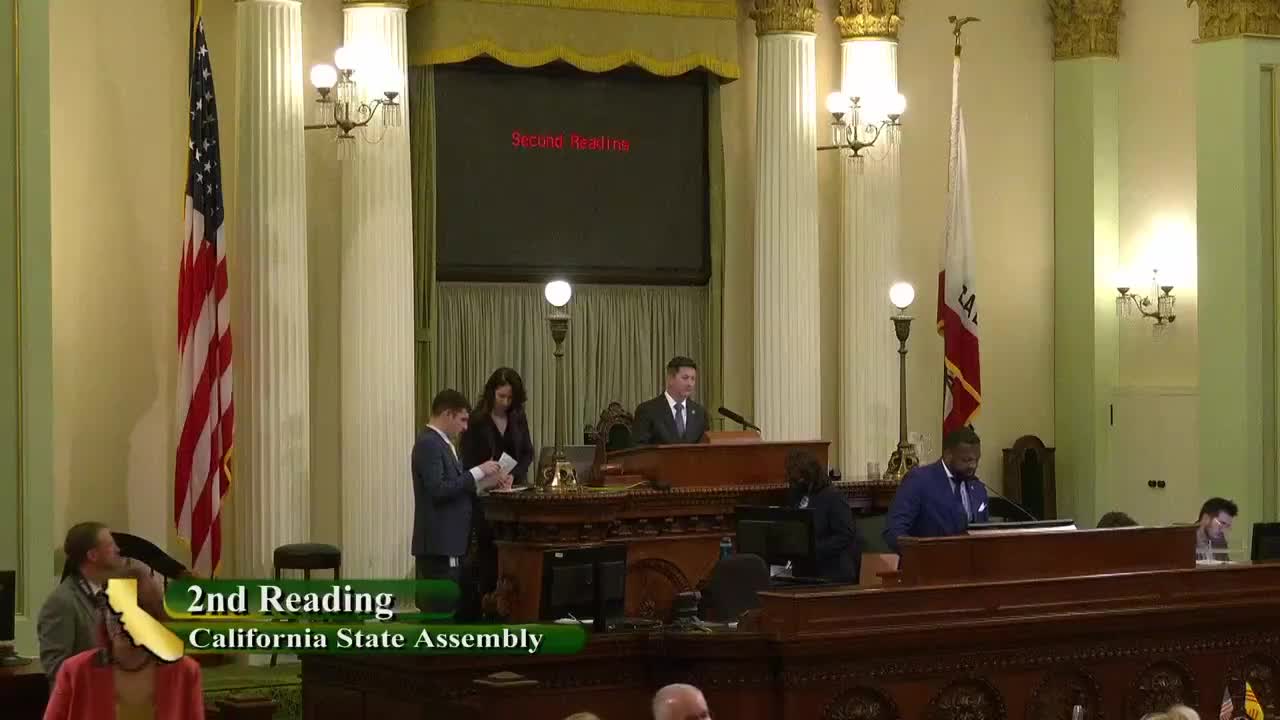 3MIN
Assembly Floor
 29MIN
Assembly Standing Committee on Labor and Employment
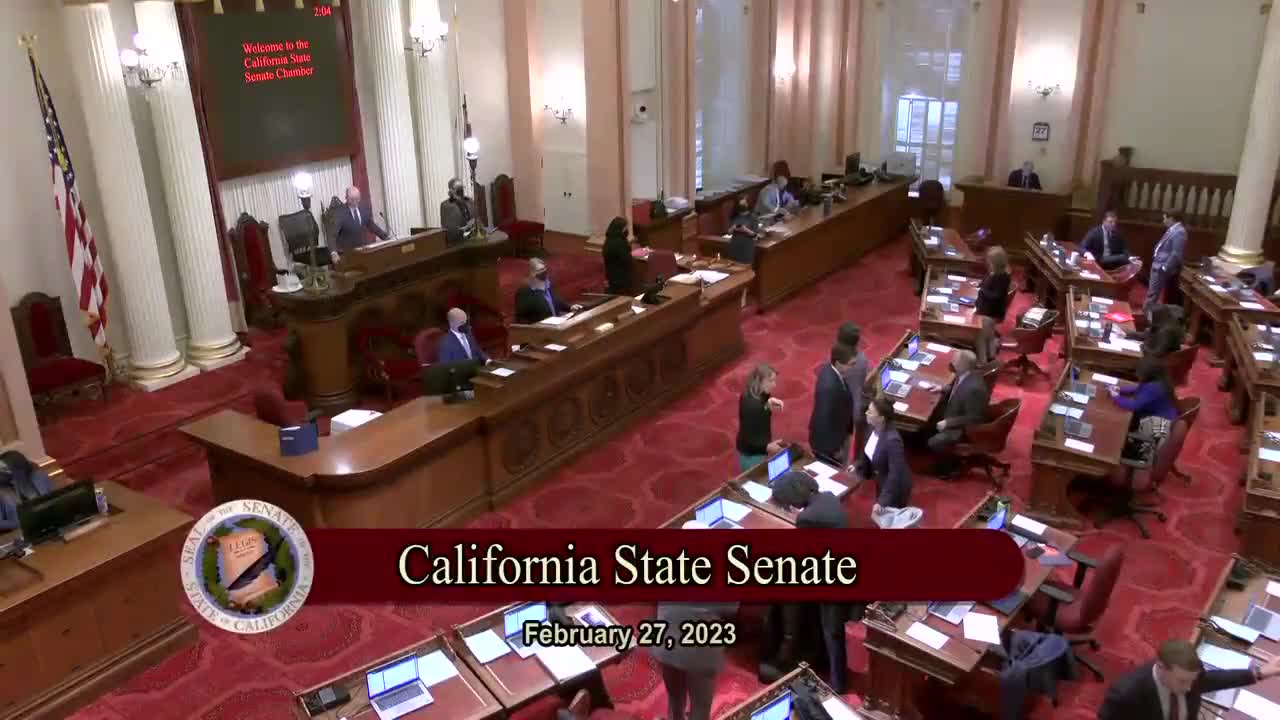 3MIN
Senate Floor
 15MIN
Senate Standing Committee on Judiciary
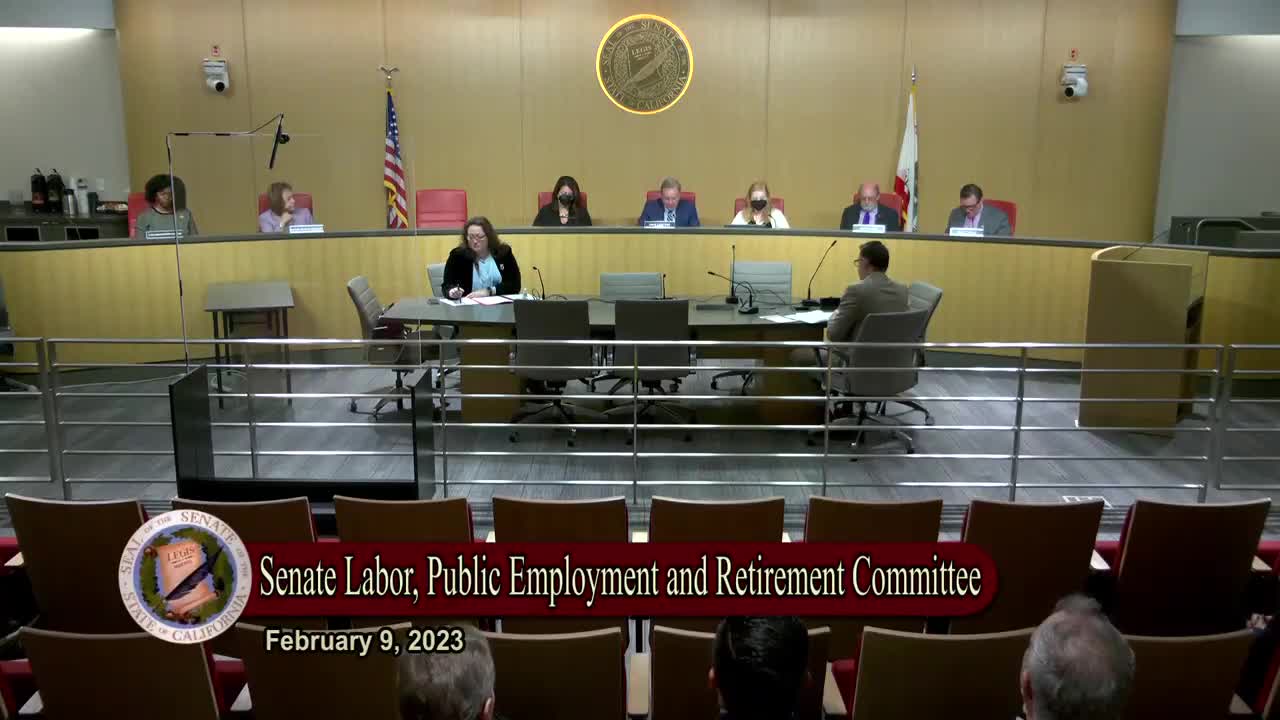 11MIN
Senate Standing Committee on Labor, Public Employment and Retirement
Bill Author

Bill Co-Author(s):