SB 46: Controlled substances: treatment.
- Session Year: 2023-2024
- House: Senate
- Latest Version Date: 2023-10-08
Current Status:
Passed
(2023-10-08: Chaptered by Secretary of State. Chapter 481, Statutes of 2023.)
Introduced
In Committee
First Chamber
In Committee
Second Chamber
Enacted
Existing law, as added by the Substance Abuse and Crime Prevention Act of 2000, adopted by voters as Proposition 36 at the November 7, 2000, statewide general election, requires that persons convicted of certain nonviolent drug possession offenses be granted probation and participate in and complete an appropriate drug treatment program as a condition of that probation. After completion of drug treatment and the terms of probation, the act requires the court to conduct a hearing, set aside the conviction, and dismiss the complaint if the court finds, among other requirements, that the defendant successfully completed drug treatment. For purposes of the act, a defendant has successfully completed treatment if they have completed the prescribed course of drug treatment and, as a result, there is reasonable cause to believe that they will not abuse controlled substances in the future. The act allows its amendment by a statute passed by 2/3 of both houses of the Legislature and requires that all amendments further the act and be consistent with its purposes.
This bill would amend the act by removing the requirement that there be reasonable cause to believe that the defendant will not abuse controlled substances in the future in order to be considered as having successfully completed treatment.
Existing law requires the court, when granting probation after conviction of any controlled substance offense, as specified, to order as a condition of probation that the defendant secure education or treatment from a local community agency designated by the court. Existing law requires a juvenile court to order a minor, found to have been in possession of any controlled substance, to receive education or treatment from a local community agency, as specified, and to order the minors parents or guardian to participate in the education or treatment if beneficial to the minor. Existing law provides that a defendants willful failure to complete a court-ordered education or treatment program shall be a circumstance in aggravation for purposes of sentencing in any subsequent prosecution for specified controlled substance violations.
This bill would allow the court to order the defendant to complete a controlled substance education or treatment program, as specified, if available and as appropriate for the individual. The bill would require the court to determine the defendants ability to pay for the program and would authorize the court to develop a sliding fee schedule based on the persons inability to pay, including making a person who is granted specified relief from court fees and costs not responsible for any costs. The bill would strike the requirement that a juvenile court order a minor and their parents or guardians to receive education or treatment. The bill would require the court or probation department to refer defendants to controlled substance education or treatment programs that adhere to specified standards. The bill would require the county drug program administrator, with input from representatives of the court, the county probation department, and substance use treatment providers, to design and implement an approval and renewal process for controlled substance education and treatment programs. The bill would require the court, when a defendant is convicted of a controlled substance offense resulting in imprisonment, to recommend that the defendant attend a controlled substance education or treatment program while imprisoned. By imposing additional duties on local entities, the bill would impose a state-mandated local program.
Existing law requires every county drug program administrator, in consultation with representatives of the court and the county probation department, to establish minimum requirements, criteria, and fees for the successful completion of drug diversion programs, including a minimum of 20 hours of education, counseling, or any combination of both for each divertee.
This bill would require that the 20 hours or more of education or counseling include education about, among other things, how the use of controlled substances affects the body and the dangers of using controlled substances, as specified.
The California Constitution requires the state to reimburse local agencies and school districts for certain costs mandated by the state. Statutory provisions establish procedures for making that reimbursement.
This bill would provide that with regard to certain mandates no reimbursement is required by this act for a specified reason.
With regard to any other mandates, this bill would provide that, if the Commission on State Mandates determines that the bill contains costs so mandated by the state, reimbursement for those costs shall be made pursuant to the statutory provisions noted above.
This bill would incorporate additional changes to Section 11373 of the Health and Safety Code proposed by AB 890 to be operative only if this bill and AB 890 are enacted and this bill is enacted last.
Existing law, as added by the Substance Abuse and Crime Prevention Act of 2000, adopted by voters as Proposition 36 at the November 7, 2000, statewide general election, requires that persons convicted of certain nonviolent drug possession offenses be granted probation and participate in and complete an appropriate drug treatment program as a condition of that probation. After completion of drug treatment and the terms of probation, the act requires the court to conduct a hearing, set aside the conviction, and dismiss the complaint if the court finds, among other requirements, that the defendant successfully completed drug treatment. For purposes of the act, a defendant has successfully completed treatment if they have completed the prescribed course of drug treatment and, as a result, there is reasonable cause to believe that they will not abuse controlled substances in the future. The act allows its amendment by a statute passed by 2/3 of both houses of the Legislature and requires that all amendments further the act and be consistent with its purposes.
This bill would amend the act by removing the requirement that there be reasonable cause to believe that the defendant will not abuse controlled substances in the future in order to be considered as having successfully completed treatment.
Existing law requires the court, when granting probation after conviction of any controlled substance offense, as specified, to order as a condition of probation that the defendant secure education or treatment from a local community agency designated by the court. Existing law requires a juvenile court to order a minor, found to have been in possession of any controlled substance, to receive education or treatment from a local community agency, as specified, and to order the minors parents or guardian to participate in the education or treatment if beneficial to the minor. Existing law provides that a defendants willful failure to complete a court-ordered education or treatment program shall be a circumstance in aggravation for purposes of sentencing in any subsequent prosecution for specified controlled substance violations.
This bill would allow the court to order the defendant to complete a controlled substance education or treatment program, as specified, if available and as appropriate for the individual. The bill would require the court to determine the defendants ability to pay for the program and would authorize the court to develop a sliding fee schedule based on the persons inability to pay, including making a person who is granted specified relief from court fees and costs not responsible for any costs. The bill would strike the requirement that a juvenile court order a minor and their parents or guardians to receive education or treatment. The bill would require the court or probation department to refer defendants to controlled substance education or treatment programs that adhere to specified standards. The bill would require the county drug program administrator and representatives of the court, with input from the administrator, with input from representatives of the court, the county probation department department, and substance use treatment providers, to design and implement an approval and renewal process for controlled substance education and treatment programs. The bill would require the court, when a defendant is convicted of a controlled substance offense resulting in imprisonment, to recommend that the defendant attend a controlled substance education or treatment program while imprisoned. By imposing additional duties on local entities, the bill would impose a state-mandated local program.
Existing law requires every county drug program administrator, in consultation with representatives of the court and the county probation department, to establish minimum requirements, criteria, and fees for the successful completion of drug diversion programs, including a minimum of 20 hours of education, counseling, or any combination of both for each divertee.
This bill would require that the 20 hours or more of education or counseling include education about, among other things, how the use of controlled substances affects the body and the dangers of using controlled substances, as specified.
The California Constitution requires the state to reimburse local agencies and school districts for certain costs mandated by the state. Statutory provisions establish procedures for making that reimbursement.
This bill would provide that with regard to certain mandates no reimbursement is required by this act for a specified reason.
With regard to any other mandates, this bill would provide that, if the Commission on State Mandates determines that the bill contains costs so mandated by the state, reimbursement for those costs shall be made pursuant to the statutory provisions noted above.
This bill would incorporate additional changes to Section 11373 of the Health and Safety Code proposed by AB 890 to be operative only if this bill and AB 890 are enacted and this bill is enacted last.
Existing law, as added by the Substance Abuse and Crime Prevention Act of 2000, adopted by voters as Proposition 36 at the November 7, 2000, statewide general election, requires that persons convicted of certain nonviolent drug possession offenses be granted probation and participate in and complete an appropriate drug treatment program as a condition of that probation. After completion of drug treatment and the terms of probation, the act requires the court to conduct a hearing, set aside the conviction, and dismiss the complaint if the court finds, among other requirements, that the defendant successfully completed drug treatment. For purposes of the act, a defendant has successfully completed treatment if they have completed the prescribed course of drug treatment and, as a result, there is reasonable cause to believe that they will not abuse controlled substances in the future. The act allows its amendment by a statute passed by 2/3 of both houses of the Legislature and requires that all amendments further the act and be consistent with its purposes.
This bill would amend the act by removing the requirement that there be reasonable cause to believe that the defendant will not abuse controlled substances in the future in order to be considered as having successfully completed treatment.
Existing law requires the court, when granting probation after conviction of any controlled substance offense, as specified, to order as a condition of probation that the defendant secure education or treatment from a local community agency designated by the court. Existing law requires a juvenile court to order a minor, found to have been in possession of any controlled substance, to receive education or treatment from a local community agency, as specified, and to order the minors parents or guardian to participate in the education or treatment if beneficial to the minor. Existing law provides that a defendants willful failure to complete a court-ordered education or treatment program shall be a circumstance in aggravation for purposes of sentencing in any subsequent prosecution for specified controlled substance violations.
This bill would allow the court to order the defendant to complete a controlled substance education or treatment program, as specified, if available and as appropriate for the individual. The bill would require the court to determine the defendants ability to pay for the program and would authorize the court to develop a sliding fee schedule based on the persons inability to pay, including making a person who is granted specified relief from court fees and costs not responsible for any costs. The bill would strike the requirement that a juvenile court order a minor and their parents or guardians to receive education or treatment. The bill would require the court or probation department to refer defendants to controlled substance education or treatment programs that adhere to specified standards. The bill would require the county drug program administrator and representatives of the court, with input from the county probation department and substance use treatment providers, to design and implement an approval and renewal process for controlled substance education and treatment programs. The bill would require the court, when a defendant is convicted of a controlled substance offense resulting in imprisonment, to recommend that the defendant attend a controlled substance education or treatment program while imprisoned. By imposing additional duties on local entities, the bill would impose a state-mandated local program.
Existing law requires every county drug program administrator, in consultation with representatives of the court and the county probation department, to establish minimum requirements, criteria, and fees for the successful completion of drug diversion programs, including a minimum of 20 hours of education, counseling, or any combination of both for each divertee.
This bill would require that the 20 hours or more of education or counseling include education about, among other things, how the use of controlled substances affects the body and the dangers of using controlled substances, as specified.
The California Constitution requires the state to reimburse local agencies and school districts for certain costs mandated by the state. Statutory provisions establish procedures for making that reimbursement.
This bill would provide that with regard to certain mandates no reimbursement is required by this act for a specified reason.
With regard to any other mandates, this bill would provide that, if the Commission on State Mandates determines that the bill contains costs so mandated by the state, reimbursement for those costs shall be made pursuant to the statutory provisions noted above.
Existing law, as added by the Substance Abuse and Crime Prevention Act of 2000, adopted by voters as Proposition 36 at the November 7, 2000, statewide general election, requires that persons convicted of certain nonviolent drug possession offenses be granted probation and participate in and complete an appropriate drug treatment program as a condition of that probation. After completion of drug treatment and the terms of probation, the act requires the court to conduct a hearing, set aside the conviction, and dismiss the complaint if the court finds, among other requirements, that the defendant successfully completed drug treatment. For purposes of the act, a defendant has successfully completed treatment if they have completed the prescribed course of drug treatment and, as a result, there is reasonable cause to believe that they will not abuse controlled substances in the future. The act allows its amendment by a statute passed by 2/3 of both houses of the Legislature and requires that all amendments further the act and be consistent with its purposes.
This bill would amend the act by removing the requirement that there be reasonable cause to believe that the defendant will not abuse controlled substances in the future in order to be considered as having successfully completed treatment.
Existing law requires the court, when granting probation after conviction of any controlled substance offense, as specified, to order as a condition of probation that the defendant secure education or treatment from a local community agency designated by the court. Existing law requires a juvenile court to order a minor, found to have been in possession of any controlled substance, to receive education or treatment from a local community agency, as specified, and to order the minors parents or guardian to participate in the education or treatment if beneficial to the minor. Existing law provides that a defendants willful failure to complete a court-ordered education or treatment program shall be a circumstance in aggravation for purposes of sentencing in any subsequent prosecution for specified controlled substance violations.
This bill would allow the court to order the defendant to complete a controlled substance education or treatment program, as specified, if available and as appropriate for the individual. The bill would strike the requirement that a juvenile court order a minor and their parents or guardians to receive education or treatment. The bill would require the court or probation department to refer defendants to controlled substance education or treatment programs that adhere to specified standards. The bill would require the county drug program administrator and representatives of the court and county probation department, court, with input from the county probation department and substance use treatment providers, to design and implement an approval and renewal process for controlled substance education and treatment programs. The bill would require the court, when a defendant is convicted of a controlled substance offense resulting in imprisonment, to recommend that the defendant attend a controlled substance education or treatment program while imprisoned. By imposing additional duties on local entities, the bill would impose a state-mandated local program.
Existing law requires every county drug program administrator, in consultation with representatives of the court and the county probation department, to establish minimum requirements, criteria, and fees for the successful completion of drug diversion programs, including a minimum of 20 hours of education, counseling, or any combination of both for each divertee.
This bill would require that the 20 hours or more of education or counseling include education about, among other things, how the use of controlled substances affects the body and the dangers of using controlled substances, as specified.
The California Constitution requires the state to reimburse local agencies and school districts for certain costs mandated by the state. Statutory provisions establish procedures for making that reimbursement.
This bill would provide that with regard to certain mandates no reimbursement is required by this act for a specified reason.
With regard to any other mandates, this bill would provide that, if the Commission on State Mandates determines that the bill contains costs so mandated by the state, reimbursement for those costs shall be made pursuant to the statutory provisions noted above.
Existing law, as added by the Substance Abuse and Crime Prevention Act of 2000, adopted by voters as Proposition 36 at the November 7, 2000, statewide general election, requires that persons convicted of certain nonviolent drug possession offenses be granted probation and participate in and complete an appropriate drug treatment program as a condition of that probation. After completion of drug treatment and the terms of probation, the act requires the court to conduct a hearing, set aside the conviction, and dismiss the complaint if the court finds, among other requirements, that the defendant successfully completed drug treatment. For purposes of the act, a defendant has successfully completed treatment if they have completed the prescribed course of drug treatment and, as a result, there is reasonable cause to believe that they will not abuse controlled substances in the future. The act allows its amendment by a statute passed by 2/3 of both houses of the Legislature and requires that all amendments further the act and be consistent with its purposes.
This bill would amend the act by removing the requirement that there be reasonable cause to believe that the defendant will not abuse controlled substances in the future in order to be considered as having successfully completed treatment.
Existing law requires the court, when granting probation after conviction of any controlled substance offense, as specified, to order as a condition of probation that the defendant secure education or treatment from a local community agency designated by the court. Existing law requires a juvenile court to order a minor, found to have been in possession of any controlled substance, to receive education or treatment from a local community agency, as specified, and to order the minors parents or guardian to participate in the education or treatment if beneficial to the minor. Existing law provides that a defendants willful failure to complete a court-ordered education or treatment program shall be a circumstance in aggravation for purposes of sentencing in any subsequent prosecution for specified controlled substance violations.
This bill would allow the court to order the defendant, and a juvenile court to order a minor, defendant to complete a controlled substance education or treatment program, as specified, if available. available and as appropriate for the individual. The bill would strike the requirement that a juvenile court order a minor and their parents or guardians to receive education or treatment. The bill would require the court or probation department to refer defendants to controlled substance education or treatment programs that adhere to specified standards. The bill would require the county drug program administrator and representatives of the court and county probation department, with input from substance use treatment providers, to design and implement an approval and renewal process for controlled substance education and treatment programs. The bill would require the court, when a defendant is convicted of a controlled substance offense resulting in imprisonment, to recommend that the defendant attend a controlled substance education or treatment program while imprisoned. By imposing additional duties on local entities, the bill would impose a state-mandated local program.
Existing law requires every county drug program administrator, in consultation with representatives of the court and the county probation department, to establish minimum requirements, criteria, and fees for the successful completion of drug diversion programs, including a minimum of 20 hours of education, counseling, or any combination of both for each divertee.
This bill would require that the 20 hours or more of education or counseling include education about, among other things, how the use of controlled substances affects the body and the dangers of using controlled substances, as specified.
The California Constitution requires the state to reimburse local agencies and school districts for certain costs mandated by the state. Statutory provisions establish procedures for making that reimbursement.
This bill would provide that with regard to certain mandates no reimbursement is required by this act for a specified reason.
With regard to any other mandates, this bill would provide that, if the Commission on State Mandates determines that the bill contains costs so mandated by the state, reimbursement for those costs shall be made pursuant to the statutory provisions noted above.
Existing law, as added by the Substance Abuse and Crime Prevention Act of 2000, adopted by voters as Proposition 36 at the November 7, 2000, statewide general election, requires that persons convicted of certain nonviolent drug possession offenses be granted probation and participate in and complete an appropriate drug treatment program as a condition of that probation. After completion of drug treatment and the terms of probation, the act requires the court to conduct a hearing, set aside the conviction, and dismiss the complaint if the court finds, among other requirements, that the defendant successfully completed drug treatment. For purposes of the act, a defendant has successfully completed treatment if they have completed the prescribed course of drug treatment and, as a result, there is reasonable cause to believe that they will not abuse controlled substances in the future. The act allows its amendment by a statute passed by 2/3 of both houses of the Legislature and requires that all amendments further the act and be consistent with its purposes.
This bill would amend the act by removing the requirement that there be reasonable cause to believe that the defendant will not abuse controlled substances in the future in order to be considered as having successfully completed treatment.
Existing law requires the court, when granting probation after conviction of any controlled substance offense, as specified, to order as a condition of probation that the defendant secure education or treatment from a local community agency designated by the court. Existing law requires a juvenile court to order a minor, found to have been in possession of any controlled substance, to receive education or treatment from a local community agency, as specified, and to order the minors parents or guardian to participate in the education or treatment if beneficial to the minor. Existing law provides that a defendants willful failure to complete a court-ordered education or treatment program shall be a circumstance in aggravation for purposes of sentencing in any subsequent prosecution for specified controlled substance violations.
This bill would allow the court to order the defendant, and a juvenile court to order a minor, to complete a controlled substance education or treatment program, as specified, if available. The bill would require the court or probation department to refer defendants to controlled substance education or treatment programs that adhere to specified standards. The bill would require the county drug program administrator and representatives of the court and county probation department, with input from substance use treatment providers, to design and implement an approval and renewal process for controlled substance education and treatment programs. The bill would require the court, when a defendant is convicted of a controlled substance offense resulting in imprisonment, to recommend that the defendant attend a controlled substance education or treatment program while imprisoned. By imposing additional duties on local entities, the bill would impose a state-mandated local program.
Existing law requires every county drug program administrator, in consultation with representatives of the court and the county probation department, to establish minimum requirements, criteria, and fees for the successful completion of drug diversion programs, including a minimum of 20 hours of education, counseling, or any combination of both for each divertee.
This bill would require that the 20 hours or more of education or counseling include education about, among other things, how the use of controlled substances affects the body and the dangers of using controlled substances, as specified.
The California Constitution requires the state to reimburse local agencies and school districts for certain costs mandated by the state. Statutory provisions establish procedures for making that reimbursement.This bill would provide that, if the Commission on State Mandates determines that the bill contains costs mandated by the state, reimbursement for those costs shall be made pursuant to the statutory provisions noted above.The California Constitution requires the state to reimburse local agencies and school districts for certain costs mandated by the state. Statutory provisions establish procedures for making that reimbursement.
This bill would provide that with regard to certain mandates no reimbursement is required by this act for a specified reason.
With regard to any other mandates, this bill would provide that, if the Commission on State Mandates determines that the bill contains costs so mandated by the state, reimbursement for those costs shall be made pursuant to the statutory provisions noted above.
Existing law, as added by the Substance Abuse and Crime Prevention Act of 2000, adopted by voters as Proposition 36 at the November 7, 2000, statewide general election, requires that persons convicted of certain nonviolent drug possession offenses be granted probation and participate in and complete an appropriate drug treatment program as a condition of that probation. After completion of drug treatment and the terms of probation, the act requires the court to conduct a hearing, set aside the conviction, and dismiss the complaint if the court finds, among other requirements, that the defendant successfully completed drug treatment. For purposes of the act, a defendant has successfully completed treatment if they have completed the prescribed course of drug treatment and, as a result, there is reasonable cause to believe that they will not abuse controlled substances in the future. The act allows its amendment by a statute passed by 2/3 of both houses of the Legislature and requires that all amendments further the act and be consistent with its purposes.
This bill would amend the act by removing the requirement that there be reasonable cause to believe that the defendant will not abuse controlled substances in the future in order to be considered as having successfully completed treatment.
Existing law requires the court, when granting probation after conviction of any controlled substance offense, as specified, to order as a condition of probation that the defendant secure education or treatment from a local community agency designated by the court. Existing law requires a juvenile court to order a minor, found to have been in possession of any controlled substance, to receive education or treatment from a local community agency, as specified, and to order the minors parents or guardian to participate in the education or treatment if beneficial to the minor. Existing law provides that a defendants willful failure to complete a court-ordered education or treatment program shall be a circumstance in aggravation for purposes of sentencing in any subsequent prosecution for specified controlled substance violations.
This bill would allow the court to order the defendant, and a juvenile court to order a minor, to complete a controlled substance education or treatment program, as specified, if available. The bill would require the court or probation department to refer defendants to controlled substance education or treatment programs that adhere to specified standards. The bill would require the county drug program administrator and representatives of the court and county probation department, with input from substance use treatment providers, to design and implement an approval and renewal process for controlled substance education and treatment programs. The bill would require the court, when a defendant is convicted of a controlled substance offense resulting in imprisonment, to recommend that the defendant attend a controlled substance education or treatment program while imprisoned. By imposing additional duties on local entities, the bill would impose a state-mandated local program.
Existing law requires every county drug program administrator, in consultation with representatives of the court and the county probation department, to establish minimum requirements, criteria, and fees for the successful completion of drug diversion programs, including a minimum of 20 hours of education, counseling, or any combination of both for each divertee.
This bill would require that the 20 hours or more of education or counseling include education about, among other things, how the use of controlled substances affects the body and the dangers of using controlled substances, as specified.
The California Constitution requires the state to reimburse local agencies and school districts for certain costs mandated by the state. Statutory provisions establish procedures for making that reimbursement.
This bill would provide that, if the Commission on State Mandates determines that the bill contains costs mandated by the state, reimbursement for those costs shall be made pursuant to the statutory provisions noted above.
(a)(1)When a person who is otherwise eligible for probation is granted probation by the trial court or sentenced pursuant to subdivision (h) of Section 1170 of the Penal Code, after conviction for a violation of any controlled substance offense under this division, the trial court shall, as a condition of probation, order that person to complete successfully a controlled substance education or treatment program, as appropriate for the individual, approved pursuant to subdivision (c), or if none is available, from a local community agency designated by the court.
(2)For purposes of this section, complete successfully means that a defendant who has had controlled substance education or treatment imposed as a condition of probation has completed the prescribed course of controlled substance education or treatment as recommended by the treatment provider and ordered by the court. Completion of education or treatment shall not require cessation of narcotic replacement therapy.
(3)When referring a person pursuant to this subdivision, the court shall determine the persons ability to pay. If the court finds that the person is financially unable to pay, the court may develop a sliding fee schedule for the program based on the persons ability to pay. A person who meets the criteria set forth in Section 68632 of the Government Code shall not be responsible for any costs.
(b)The willful failure to complete a court-ordered controlled substance education or treatment program shall be a circumstance in aggravation for purposes of sentencing for any subsequent prosecution for a violation of Section 11353, 11354, or 11380. The failure to complete an education or treatment program because of the persons inability to pay the costs of the program or because of the unavailability to the defendant of appropriate programs is not a willful failure to complete the program for the purposes of this section.
(c)(1)The court or the probation department shall refer defendants only to controlled substance education or treatment programs that follow standards outlined in paragraph (2), which may include, but are not limited to, lectures, classes, group discussions, and counseling. The county drug program administrator, with input from representatives of the court, the county probation department, and substance use treatment providers, shall design and implement an approval and renewal process for controlled substance education or treatment programs.
(2)A controlled substance education and treatment program shall be based on the best available current science and evidence and provide educational resources on the pathology of addiction and existing treatment modalities. The goal of a controlled substance education or treatment program shall be to save lives and reduce the risks associated with drug use, including the manufacture and distribution of controlled substances, and to reduce the recidivism that occurs from the use of controlled substances. As such, a controlled substance education or treatment program shall include education about how the use of controlled substances affects the body and brain, factors that contribute to physical dependence, how to recognize and respond to the signs of drug overdose, and the dangers of using controlled substances, unless under appropriate medical supervision. Such education shall be culturally and linguistically appropriate and may include, but is not limited to, informing program participants about the physical and mental health risks associated with substance use disorders, the grave health risk to those who are exposed to controlled substances and the extreme danger to human life when manufactured or distributed.
(d)Upon conviction of any felony in which the defendant is sentenced to state prison for a violation of any controlled substance offense under this division, a court shall, in addition to any other terms of imprisonment, fine, and conditions, recommend in writing that the defendant participate in a controlled substance education or treatment program while imprisoned that complies with the standards outlined in paragraph (2) of subdivision (c).
(e)Upon conviction of any felony in which the defendant is sentenced pursuant to subdivision (h) of Section 1170 of the Penal Code and the court does not order suspension of the execution of the term of imprisonment pursuant to subparagraph (B) of paragraph (5) of subdivision (h) of Section 1170 of the Penal Code, for a violation of any controlled substance offense under this division, a court shall, in addition to any other terms of imprisonment, fine, and conditions, recommend in writing that the defendant participate in a controlled substance education or treatment program while imprisoned that complies with the standards outlined in paragraph (2) of subdivision (c).
SEC. 1.5.Section 11373 of the Health and Safety Code is amended to read:11373.(a)(1)When a person who is otherwise eligible for probation is granted probation by the trial court or sentenced pursuant to subdivision (h) of Section 1170 of the Penal Code, after conviction for a violation of any controlled substance offense under this division, the trial court shall, as a condition of probation, order that person to complete successfully a controlled substance education or treatment program, as appropriate for the individual, approved pursuant to subdivision (c), or if none is available, from a local community agency designated by the court.
(2)For purposes of this section, complete successfully means that a defendant who has had controlled substance education or treatment imposed as a condition of probation has completed the prescribed course of controlled substance education or treatment as recommended by the treatment provider and ordered by the court. Completion of education or treatment shall not require cessation of narcotic replacement therapy.
(3)When referring a person pursuant to this subdivision, the court shall determine the persons ability to pay. If the court finds that the person is financially unable to pay, the court may develop a sliding fee schedule for the program based on the persons ability to pay. A person who meets the criteria set forth in Section 68632 of the Government Code shall not be responsible for any costs.
(4)(A)To fulfill the requirements of paragraph (1), when a defendant is granted probation by the trial court after conviction for a violation of Section 11350, 11351, or 11352 involving any amount of fentanyl, carfentanil, benzimidazole opiate, or an analog thereof, the trial court shall order that person to successfully complete a fentanyl and synthetic opiate education program, if one is available.
(B)A fee shall not be imposed for participation or enrollment in a fentanyl and synthetic opiate education program.
(b) The willful failure to complete a court-ordered controlled substance education or treatment program shall be a circumstance in aggravation for purposes of sentencing for any subsequent prosecution for a violation of Section 11353, 11354, or 11380. The failure to complete an education or treatment program because of the persons inability to pay the costs of the program or because of the unavailability to the defendant of appropriate programs is not a willful failure to complete the program for the purposes of this section.
(c)(1)The court or the probation department shall refer defendants only to controlled substance education or treatment programs that follow standards outlined in paragraph (2), which may include, but are not limited to, lectures, classes, group discussions, and counseling. The county drug program administrator, with input from representatives of the court, the county probation department, and substance use treatment providers, shall design and implement an approval and renewal process for controlled substance education or treatment programs.
(2)A controlled substance education and treatment program shall be based on the best available current science and evidence and provide educational resources on the pathology of addiction and existing treatment modalities. The goal of a controlled substance education or treatment program shall be to save lives and reduce the risks associated with drug use, including the manufacture and distribution of controlled substances, and to reduce the recidivism that occurs from the use of controlled substances. As such, a controlled substance education or treatment program shall include education about how the use of controlled substances affects the body and brain, factors that contribute to physical dependence, how to recognize and respond to the signs of drug overdose, and the dangers of using controlled substances, unless under appropriate medical supervision. Such education shall be culturally and linguistically appropriate and may include, but is not limited to, informing program participants about the physical and mental health risks associated with substance use disorders, the grave health risk to those who are exposed to controlled substances and the extreme danger to human life when manufactured or distributed.
(d)Upon conviction of any felony in which the defendant is sentenced to state prison for a violation of any controlled substance offense under this division, a court shall, in addition to any other terms of imprisonment, fine, and conditions, recommend in writing that the defendant participate in a controlled substance education or treatment program while imprisoned that complies with the standards outlined in paragraph (2) of subdivision (c).
(e)Upon conviction of any felony in which the defendant is sentenced pursuant to subdivision (h) of Section 1170 of the Penal Code and the court does not order suspension of the execution of the term of imprisonment pursuant to subparagraph (B) of paragraph (5) of subdivision (h) of Section 1170 of the Penal Code, for a violation of any controlled substance offense under this division, a court shall, in addition to any other terms of imprisonment, fine, and conditions, recommend in writing that the defendant participate in a controlled substance education or treatment program while imprisoned that complies with the standards outlined in paragraph (2) of subdivision (c).
(f)As used in this section, opiate includes opioid drugs.
SEC. 2.Section 1210 of the Penal Code is amended to read:1210.As used in Sections 1210.1 and 3063.1 of this code, and Division 10.8 (commencing with Section 11999.4) of the Health and Safety Code, the following definitions apply:
(a)The term nonviolent drug possession offense means the unlawful personal use, possession for personal use, or transportation for personal use of any controlled substance identified in Section 11054, 11055, 11056, 11057, or 11058 of the Health and Safety Code, or the offense of being under the influence of a controlled substance in violation of Section 11550 of the Health and Safety Code. The term nonviolent drug possession offense does not include the possession for sale, production, or manufacturing of any controlled substance and does not include violations of Section 4573.6 or 4573.8.
(b)The term drug treatment program or drug treatment means a state licensed or certified community drug treatment program, which may include one or more of the following: drug education, outpatient services, narcotic replacement therapy, residential treatment, detoxification services, and aftercare services. The term drug treatment program or drug treatment includes a drug treatment program operated under the direction of the Veterans Health Administration of the Department of Veterans Affairs or a program specified in Section 8001. That type of program shall be eligible to provide drug treatment services without regard to the licensing or certification provisions required by this subdivision. The term drug treatment program or drug treatment does not include drug treatment programs offered in a prison or jail facility.
(c)The term successful completion of treatment means that a defendant who has had drug treatment imposed as a condition of probation has completed the prescribed course of drug treatment as recommended by the treatment provider and ordered by the court. Completion of treatment shall not require cessation of narcotic replacement therapy.
(d)The term misdemeanor not related to the use of drugs means a misdemeanor that does not involve (1) the simple possession or use of drugs or drug paraphernalia, being present where drugs are used, or failure to register as a drug offender, or (2) any activity similar to those listed in (1).
SEC. 3.Section 1211 of the Penal Code is amended to read:1211.(a)In order to ensure the quality of drug diversion programs provided pursuant to this chapter and Chapter 2.5 (commencing with Section 1000) of Title 6, and to expand the availability of these programs, the county drug program administrator in each county, in consultation with representatives of the court and the county probation department, shall establish minimum requirements, criteria, and fees for the successful completion of drug diversion programs, which shall be approved by the county board of supervisors no later than January 1, 1995. These minimum requirements shall include, but not be limited to, all of the following:
(1)An initial assessment of each divertee, which may include all of the following:
(A)Social, cultural, linguistic, economic, and family background.
(B)Education.
(C)Vocational achievements.
(D)Criminal history.
(E)Medical history.
(F)Drug history and previous treatment.
(2)A minimum of 20 hours of either effective education or counseling or any combination of both for each divertee. The education and counseling program shall include education about how the use of controlled substances affects the body and brain, factors that contribute to physical dependence, how to recognize and respond to the signs of drug overdose, and the dangers of using controlled substances unless under appropriate medical supervision. This education shall be culturally and linguistically appropriate and may include, but is not limited to, informing program participants about the physical and mental health risks associated with substance use disorders, the grave health risk to those who are exposed to controlled substances and the extreme danger to human life when controlled substances are manufactured and distributed.
(3)An exit conference which shall reflect the divertees progress during their participation in the program.
(4)Fee exemptions for persons who cannot afford to pay.
(b)The county drug program administrator shall implement a certification procedure for drug diversion programs.
(c)The county drug program administrator shall recommend for approval by the county board of supervisors programs pursuant to this chapter. No program, regardless of how it is funded, may be approved unless it meets the standards established by the administrator, which shall include, but not be limited to, all of the following:
(1)Guidelines and criteria for education and treatment services, including standards of services that may include lectures, classes, group discussions, and individual counseling. However, any class or group discussion other than lectures shall not exceed 15 persons at any one meeting.
(2)Established and approved supervision, either on a regular or irregular basis, of the person for the purpose of evaluating the persons progress.
(3)A schedule of fees to be charged for services rendered to each person under a county drug program plan in accordance with the following provisions:
(A)Fees shall be used only for the purposes set forth in this chapter.
(B)Fees for the treatment or rehabilitation of each participant receiving services under a certified drug diversion program shall not exceed the actual cost thereof, as determined by the county drug program administrator according to standard accounting practices.
(C)Actual costs shall include both of the following:
(i)All costs incurred by the providers of diversion programs.
(ii)All expenses incurred by the county for administration, certification, or management of the drug diversion program in compliance with this chapter.
(d)The county shall require, as a condition of certification, that the drug diversion program pay to the county drug program administrator all expenses incurred by the county for administration, certification, or management of the drug diversion program in compliance with this chapter. No fee shall be required by any county other than that county where the program is located.
SEC. 4.Section 1.5 of this bill incorporates amendments to Section 11373 of the Health and Safety Code proposed by both this bill and Assembly Bill 890. That section shall only become operative if (1) both bills are enacted and become effective on or before January 1, 2024, (2) each bill amends Section 11373 of the Health and Safety Code, and (3) this bill is enacted after Assembly Bill 890, in which case Section 1 of this bill shall not become operative.
SEC. 5.To the extent that this act has an overall effect of increasing certain costs already borne by a local agency for programs or levels of service mandated by the 2011 Realignment Legislation within the meaning of Section 36 of Article XIII of the California Constitution, it shall apply to local agencies only to the extent that the state provides annual funding for the cost increase. Any new program or higher level of service provided by a local agency pursuant to this act above the level for which funding has been provided shall not require a subvention of funds by the state or otherwise be subject to Section 6 of Article XIIIB of the California Constitution.
However, if the Commission on State Mandates determines that this act contains other costs mandated by the state, reimbursement to local agencies and school districts for those costs shall be made pursuant to Part 7 (commencing with Section 17500) of Division 4 of Title 2 of the Government Code.
(a)(1)When a person who is otherwise eligible for probation is granted probation by the trial court or sentenced pursuant to subdivision (h) of Section 1170 of the Penal Code, after conviction for a violation of any controlled substance offense under this division, the trial court shall, as a condition of probation, order that person to complete successfully a controlled substance education or treatment program, as appropriate for the individual, approved pursuant to subdivision (c), or if none is available, from a local community agency designated by the court.
(2)For purposes of this section, complete successfully means that a defendant who has had controlled substance education or treatment imposed as a condition of probation has completed the prescribed course of controlled substance education or treatment as recommended by the treatment provider and ordered by the court. Completion of education or treatment shall not require cessation of narcotic replacement therapy.
(3)When referring a person pursuant to this subdivision, the court shall determine the persons ability to pay. If the court finds that the person is financially unable to pay, the court may develop a sliding fee schedule for the program based on the persons ability to pay. A person who meets the criteria set forth in Section 68632 of the Government Code shall not be responsible for any costs.
(b)The willful failure to complete a court-ordered controlled substance education or treatment program shall be a circumstance in aggravation for purposes of sentencing for any subsequent prosecution for a violation of Section 11353, 11354, or 11380. The failure to complete an education or treatment program because of the persons inability to pay the costs of the program or because of the unavailability to the defendant of appropriate programs is not a willful failure to complete the program for the purposes of this section.
(c)(1)The court or the probation department shall refer defendants only to controlled substance education or treatment programs that follow standards outlined in paragraph (2), which may include, but are not limited to, lectures, classes, group discussions, and counseling. The county drug program administrator and representatives of the court, with input from administrator, with input from representatives of the court, the county probation department department, and substance use treatment providers, shall design and implement an approval and renewal process for controlled substance education or treatment programs.
(2)A controlled substance education and treatment program shall be based on the best available current science and evidence and provide educational resources on the pathology of addiction and existing treatment modalities. The goal of a controlled substance education or treatment program shall be to save lives and reduce the risks associated with drug use, including the manufacture and distribution of controlled substances, and to reduce the recidivism that occurs from the use of controlled substances. As such, a controlled substance education or treatment program shall include education about how the use of controlled substances affects the body and brain, factors that contribute to physical dependence, how to recognize and respond to the signs of drug overdose, and the dangers of using controlled substances, unless under appropriate medical supervision. Such education shall be culturally and linguistically appropriate and may include, but is not limited to, informing program participants about the physical and mental health risks associated with substance use disorders, the grave health risk to those who are exposed to controlled substances and the extreme danger to human life when manufactured or distributed.
(d)Upon conviction of any felony in which the defendant is sentenced to state prison for a violation of any controlled substance offense under this division, a court shall, in addition to any other terms of imprisonment, fine, and conditions, recommend in writing that the defendant participate in a controlled substance education or treatment program while imprisoned that complies with the standards outlined in paragraph (2) of subdivision (c).
(e)Upon conviction of any felony in which the defendant is sentenced pursuant to subdivision (h) of Section 1170 of the Penal Code and the court does not order suspension of the execution of the term of imprisonment pursuant to subparagraph (B) of paragraph (5) of subdivision (h) of Section 1170 of the Penal Code, for a violation of any controlled substance offense under this division, a court shall, in addition to any other terms of imprisonment, fine, and conditions, recommend in writing that the defendant participate in a controlled substance education or treatment program while imprisoned that complies with the standards outlined in paragraph (2) of subdivision (c).
SEC. 1.5.Section 11373 of the Health and Safety Code is amended to read:11373.(a)Whenever any (1)When a person who is otherwise eligible for probation is granted probation by the trial court or sentenced pursuant to subdivision (h) of Section 1170 of the Penal Code, after conviction for a violation of any controlled substance offense under this division, the trial court shall, as a condition of probation, order that person to secure education or treatment from a local community agency designated by the court, if the service is available and the person is likely to benefit from the service. complete successfully a controlled substance education or treatment program, as appropriate for the individual, approved pursuant to subdivision (c), or if none is available, from a local community agency designated by the court.
If the defendant is a minor, the trial court shall also order his or her parents or guardian to participate in the education or treatment to the extent the court determines that participation will aid the education or treatment of the minor.If a minor is found by a juvenile court to have been in possession of any controlled substance, in addition to any other order it may make, the juvenile court shall order the minor to receive education or treatment from a local community agency designated by the court, if the service is available and the person is likely to benefit from the service, and it shall also order his or her parents or guardian to participate in the education or treatment to the extent the court determines that participation will aid the education or treatment of the minor.(2)For purposes of this section, complete successfully means that a defendant who has had controlled substance education or treatment imposed as a condition of probation has completed the prescribed course of controlled substance education or treatment as recommended by the treatment provider and ordered by the court. Completion of education or treatment shall not require cessation of narcotic replacement therapy.
(3)When referring a person pursuant to this subdivision, the court shall determine the persons ability to pay. If the court finds that the person is financially unable to pay, the court may develop a sliding fee schedule for the program based on the persons ability to pay. A person who meets the criteria set forth in Section 68632 of the Government Code shall not be responsible for any costs.
(4)(A)To fulfill the requirements of paragraph (1), when a defendant is granted probation by the trial court after conviction for a violation of Section 11350, 11351, or 11352 involving any amount of fentanyl, carfentanil, benzimidazole opiate, or an analog thereof, the trial court shall order that person to successfully complete a fentanyl and synthetic opiate education program, if one is available.
(B)A fee shall not be imposed for participation or enrollment in a fentanyl and synthetic opiate education program.
(b) The willful failure to complete a court ordered court-ordered controlled substance education or treatment program shall be a circumstance in aggravation for purposes of sentencing for any subsequent prosecution for a violation of Section 11353, 11354, or 11380. The failure to complete an education or treatment program because of the persons inability to pay the costs of the program or because of the unavailability to the defendant of appropriate programs is not a willful failure to complete the program. program for the purposes of this section.
(c)(1)The court or the probation department shall refer defendants only to controlled substance education or treatment programs that follow standards outlined in paragraph (2), which may include, but are not limited to, lectures, classes, group discussions, and counseling. The county drug program administrator, with input from representatives of the court, the county probation department, and substance use treatment providers, shall design and implement an approval and renewal process for controlled substance education or treatment programs.
(2)A controlled substance education and treatment program shall be based on the best available current science and evidence and provide educational resources on the pathology of addiction and existing treatment modalities. The goal of a controlled substance education or treatment program shall be to save lives and reduce the risks associated with drug use, including the manufacture and distribution of controlled substances, and to reduce the recidivism that occurs from the use of controlled substances. As such, a controlled substance education or treatment program shall include education about how the use of controlled substances affects the body and brain, factors that contribute to physical dependence, how to recognize and respond to the signs of drug overdose, and the dangers of using controlled substances, unless under appropriate medical supervision. Such education shall be culturally and linguistically appropriate and may include, but is not limited to, informing program participants about the physical and mental health risks associated with substance use disorders, the grave health risk to those who are exposed to controlled substances and the extreme danger to human life when manufactured or distributed.
(d)Upon conviction of any felony in which the defendant is sentenced to state prison for a violation of any controlled substance offense under this division, a court shall, in addition to any other terms of imprisonment, fine, and conditions, recommend in writing that the defendant participate in a controlled substance education or treatment program while imprisoned that complies with the standards outlined in paragraph (2) of subdivision (c).
(e)Upon conviction of any felony in which the defendant is sentenced pursuant to subdivision (h) of Section 1170 of the Penal Code and the court does not order suspension of the execution of the term of imprisonment pursuant to subparagraph (B) of paragraph (5) of subdivision (h) of Section 1170 of the Penal Code, for a violation of any controlled substance offense under this division, a court shall, in addition to any other terms of imprisonment, fine, and conditions, recommend in writing that the defendant participate in a controlled substance education or treatment program while imprisoned that complies with the standards outlined in paragraph (2) of subdivision (c).
(f)As used in this section, opiate includes opioid drugs.
SEC. 2.Section 1210 of the Penal Code is amended to read:1210.As used in Sections 1210.1 and 3063.1 of this code, and Division 10.8 (commencing with Section 11999.4) of the Health and Safety Code, the following definitions apply:
(a)The term nonviolent drug possession offense means the unlawful personal use, possession for personal use, or transportation for personal use of any controlled substance identified in Section 11054, 11055, 11056, 11057, or 11058 of the Health and Safety Code, or the offense of being under the influence of a controlled substance in violation of Section 11550 of the Health and Safety Code. The term nonviolent drug possession offense does not include the possession for sale, production, or manufacturing of any controlled substance and does not include violations of Section 4573.6 or 4573.8.
(b)The term drug treatment program or drug treatment means a state licensed or certified community drug treatment program, which may include one or more of the following: drug education, outpatient services, narcotic replacement therapy, residential treatment, detoxification services, and aftercare services. The term drug treatment program or drug treatment includes a drug treatment program operated under the direction of the Veterans Health Administration of the Department of Veterans Affairs or a program specified in Section 8001. That type of program shall be eligible to provide drug treatment services without regard to the licensing or certification provisions required by this subdivision. The term drug treatment program or drug treatment does not include drug treatment programs offered in a prison or jail facility.
(c)The term successful completion of treatment means that a defendant who has had drug treatment imposed as a condition of probation has completed the prescribed course of drug treatment as recommended by the treatment provider and ordered by the court. Completion of treatment shall not require cessation of narcotic replacement therapy.
(d)The term misdemeanor not related to the use of drugs means a misdemeanor that does not involve (1) the simple possession or use of drugs or drug paraphernalia, being present where drugs are used, or failure to register as a drug offender, or (2) any activity similar to those listed in (1).
SEC. 3.Section 1211 of the Penal Code is amended to read:1211.(a)In order to ensure the quality of drug diversion programs provided pursuant to this chapter and Chapter 2.5 (commencing with Section 1000) of Title 6, and to expand the availability of these programs, the county drug program administrator in each county, in consultation with representatives of the court and the county probation department, shall establish minimum requirements, criteria, and fees for the successful completion of drug diversion programs, which shall be approved by the county board of supervisors no later than January 1, 1995. These minimum requirements shall include, but not be limited to, all of the following:
(1)An initial assessment of each divertee, which may include all of the following:
(A)Social, cultural, linguistic, economic, and family background.
(B)Education.
(C)Vocational achievements.
(D)Criminal history.
(E)Medical history.
(F)Drug history and previous treatment.
(2)A minimum of 20 hours of either effective education or counseling or any combination of both for each divertee. The education and counseling program shall include education about how the use of controlled substances affects the body and brain, factors that contribute to physical dependence, how to recognize and respond to the signs of drug overdose, and the dangers of using controlled substances unless under appropriate medical supervision. This education shall be culturally and linguistically appropriate and may include, but is not limited to, informing program participants about the physical and mental health risks associated with substance use disorders, the grave health risk to those who are exposed to controlled substances and the extreme danger to human life when controlled substances are manufactured and distributed.
(3)An exit conference which shall reflect the divertees progress during their participation in the program.
(4)Fee exemptions for persons who cannot afford to pay.
(b)The county drug program administrator shall implement a certification procedure for drug diversion programs.
(c)The county drug program administrator shall recommend for approval by the county board of supervisors programs pursuant to this chapter. No program, regardless of how it is funded, may be approved unless it meets the standards established by the administrator, which shall include, but not be limited to, all of the following:
(1)Guidelines and criteria for education and treatment services, including standards of services that may include lectures, classes, group discussions, and individual counseling. However, any class or group discussion other than lectures shall not exceed 15 persons at any one meeting.
(2)Established and approved supervision, either on a regular or irregular basis, of the person for the purpose of evaluating the persons progress.
(3)A schedule of fees to be charged for services rendered to each person under a county drug program plan in accordance with the following provisions:
(A)Fees shall be used only for the purposes set forth in this chapter.
(B)Fees for the treatment or rehabilitation of each participant receiving services under a certified drug diversion program shall not exceed the actual cost thereof, as determined by the county drug program administrator according to standard accounting practices.
(C)Actual costs shall include both of the following:
(i)All costs incurred by the providers of diversion programs.
(ii)All expenses incurred by the county for administration, certification, or management of the drug diversion program in compliance with this chapter.
(d)The county shall require, as a condition of certification, that the drug diversion program pay to the county drug program administrator all expenses incurred by the county for administration, certification, or management of the drug diversion program in compliance with this chapter. No fee shall be required by any county other than that county where the program is located.
SEC. 4.Section 1.5 of this bill incorporates amendments to Section 11373 of the Health and Safety Code proposed by both this bill and Assembly Bill 890. That section shall only become operative if (1) both bills are enacted and become effective on or before January 1, 2024, (2) each bill amends Section 11373 of the Health and Safety Code, and (3) this bill is enacted after Assembly Bill 890, in which case Section 1 of this bill shall not become operative.
SEC. 4.SEC. 5.To the extent that this act has an overall effect of increasing certain costs already borne by a local agency for programs or levels of service mandated by the 2011 Realignment Legislation within the meaning of Section 36 of Article XIII of the California Constitution, it shall apply to local agencies only to the extent that the state provides annual funding for the cost increase. Any new program or higher level of service provided by a local agency pursuant to this act above the level for which funding has been provided shall not require a subvention of funds by the state or otherwise be subject to Section 6 of Article XIIIB of the California Constitution.
However, if the Commission on State Mandates determines that this act contains other costs mandated by the state, reimbursement to local agencies and school districts for those costs shall be made pursuant to Part 7 (commencing with Section 17500) of Division 4 of Title 2 of the Government Code.
(a)(1)When a person who is otherwise eligible for probation is granted probation by the trial court or sentenced pursuant to subdivision (h) of Section 1170 of the Penal Code, after conviction for a violation of any controlled substance offense under this division, the trial court shall, as a condition of probation or mandatory supervision, probation, order that person to complete successfully a controlled substance education or treatment program, as appropriate for the individual, approved pursuant to subdivision (c), or if none is available, from a local community agency designated by the court.
(2)For purposes of this section, complete successfully means that a defendant who has had controlled substance education or treatment imposed as a condition of probation or mandatory supervision has completed the prescribed course of controlled substance education or treatment as recommended by the treatment provider and ordered by the court. Completion of education or treatment shall not require cessation of narcotic replacement therapy.
(3)When referring a person pursuant to this subdivision, the court shall determine the persons ability to pay. If the court finds that the person is financially unable to pay, the court may develop a sliding fee schedule for the program based on the persons ability to pay. A person who meets the criteria set forth in Section 68632 of the Government Code shall not be responsible for any costs.
(b)The willful failure to complete a court-ordered controlled substance education or treatment program shall be a circumstance in aggravation for purposes of sentencing for any subsequent prosecution for a violation of Section 11353, 11354, or 11380. The failure to complete an education or treatment program because of the persons inability to pay the costs of the program or because of the unavailability to the defendant of appropriate programs is not a willful failure to complete the program for the purposes of this section.
(c)(1)The court or the probation department shall refer defendants only to controlled substance education or treatment programs that follow standards outlined in paragraph (2), which may include, but are not limited to, lectures, classes, group discussions, and counseling. The county drug program administrator and representatives of the court, with input from the county probation department and substance use treatment providers, shall design and implement an approval and renewal process for controlled substance education or treatment programs.
(2)A controlled substance education and treatment program shall be based on the best available current science and evidence and provide educational resources on the pathology of addiction and existing treatment modalities. The goal of a controlled substance education or treatment program shall be to save lives and reduce the risks associated with drug use, including the manufacture and distribution of controlled substances, and to reduce the recidivism that occurs from the use of controlled substances. As such, a controlled substance education or treatment program shall include education about how the use of controlled substances affects the body and brain, factors that contribute to physical dependence, how to recognize and respond to the signs of drug overdose, and the dangers of using controlled substances, unless under appropriate medical supervision. Such education shall be culturally and linguistically appropriate and may include, but is not limited to, informing program participants about the physical and mental health risks associated with substance use disorders, the grave health risk to those who are exposed to controlled substances and the extreme danger to human life when manufactured or distributed.
(d)Upon conviction of any felony in which the defendant is sentenced to state prison for a violation of any controlled substance offense under this division, a court shall, in addition to any other terms of imprisonment, fine, and conditions, recommend in writing that the defendant participate in a controlled substance education or treatment program while imprisoned that complies with the standards outlined in paragraph (2) of subdivision (c).
(e)Upon conviction of any felony in which the defendant is sentenced pursuant to subdivision (h) of Section 1170 of the Penal Code and the court does not order suspension of the execution of the term of imprisonment pursuant to subparagraph (B) of paragraph (5) of subdivision (h) of Section 1170 of the Penal Code, for a violation of any controlled substance offense under this division, a court shall, in addition to any other terms of imprisonment, fine, and conditions, recommend in writing that the defendant participate in a controlled substance education or treatment program while imprisoned that complies with the standards outlined in paragraph (2) of subdivision (c).
SEC. 2.Section 1210 of the Penal Code is amended to read:1210.As used in Sections 1210.1 and 3063.1 of this code, and Division 10.8 (commencing with Section 11999.4) of the Health and Safety Code, the following definitions apply:
(a)The term nonviolent drug possession offense means the unlawful personal use, possession for personal use, or transportation for personal use of any controlled substance identified in Section 11054, 11055, 11056, 11057, or 11058 of the Health and Safety Code, or the offense of being under the influence of a controlled substance in violation of Section 11550 of the Health and Safety Code. The term nonviolent drug possession offense does not include the possession for sale, production, or manufacturing of any controlled substance and does not include violations of Section 4573.6 or 4573.8.
(b)The term drug treatment program or drug treatment means a state licensed or certified community drug treatment program, which may include one or more of the following: drug education, outpatient services, narcotic replacement therapy, residential treatment, detoxification services, and aftercare services. The term drug treatment program or drug treatment includes a drug treatment program operated under the direction of the Veterans Health Administration of the Department of Veterans Affairs or a program specified in Section 8001. That type of program shall be eligible to provide drug treatment services without regard to the licensing or certification provisions required by this subdivision. The term drug treatment program or drug treatment does not include drug treatment programs offered in a prison or jail facility.
(c)The term successful completion of treatment means that a defendant who has had drug treatment imposed as a condition of probation has completed the prescribed course of drug treatment as recommended by the treatment provider and ordered by the court. Completion of treatment shall not require cessation of narcotic replacement therapy.
(d)The term misdemeanor not related to the use of drugs means a misdemeanor that does not involve (1) the simple possession or use of drugs or drug paraphernalia, being present where drugs are used, or failure to register as a drug offender, or (2) any activity similar to those listed in (1).
SEC. 3.Section 1211 of the Penal Code is amended to read:1211.(a)In order to ensure the quality of drug diversion programs provided pursuant to this chapter and Chapter 2.5 (commencing with Section 1000) of Title 6, and to expand the availability of these programs, the county drug program administrator in each county, in consultation with representatives of the court and the county probation department, shall establish minimum requirements, criteria, and fees for the successful completion of drug diversion programs, which shall be approved by the county board of supervisors no later than January 1, 1995. These minimum requirements shall include, but not be limited to, all of the following:
(1)An initial assessment of each divertee, which may include all of the following:
(A)Social, cultural, linguistic, economic, and family background.
(B)Education.
(C)Vocational achievements.
(D)Criminal history.
(E)Medical history.
(F)Drug history and previous treatment.
(2)A minimum of 20 hours of either effective education or counseling or any combination of both for each divertee. The education and counseling program shall include education about how the use of controlled substances affects the body and brain, factors that contribute to physical dependence, how to recognize and respond to the signs of drug overdose, and the dangers of using controlled substances unless under appropriate medical supervision. This education shall be culturally and linguistically appropriate and may include, but is not limited to, informing program participants about the physical and mental health risks associated with substance use disorders, the grave health risk to those who are exposed to controlled substances and the extreme danger to human life when controlled substances are manufactured and distributed.
(3)An exit conference which shall reflect the divertees progress during their participation in the program.
(4)Fee exemptions for persons who cannot afford to pay.
(b)The county drug program administrator shall implement a certification procedure for drug diversion programs.
(c)The county drug program administrator shall recommend for approval by the county board of supervisors programs pursuant to this chapter. No program, regardless of how it is funded, may be approved unless it meets the standards established by the administrator, which shall include, but not be limited to, all of the following:
(1)Guidelines and criteria for education and treatment services, including standards of services that may include lectures, classes, group discussions, and individual counseling. However, any class or group discussion other than lectures shall not exceed 15 persons at any one meeting.
(2)Established and approved supervision, either on a regular or irregular basis, of the person for the purpose of evaluating the persons progress.
(3)A schedule of fees to be charged for services rendered to each person under a county drug program plan in accordance with the following provisions:
(A)Fees shall be used only for the purposes set forth in this chapter.
(B)Fees for the treatment or rehabilitation of each participant receiving services under a certified drug diversion program shall not exceed the actual cost thereof, as determined by the county drug program administrator according to standard accounting practices.
(C)Actual costs shall include both of the following:
(i)All costs incurred by the providers of diversion programs.
(ii)All expenses incurred by the county for administration, certification, or management of the drug diversion program in compliance with this chapter.
(d)The county shall require, as a condition of certification, that the drug diversion program pay to the county drug program administrator all expenses incurred by the county for administration, certification, or management of the drug diversion program in compliance with this chapter. No fee shall be required by any county other than that county where the program is located.
SEC. 4.To the extent that this act has an overall effect of increasing certain costs already borne by a local agency for programs or levels of service mandated by the 2011 Realignment Legislation within the meaning of Section 36 of Article XIII of the California Constitution, it shall apply to local agencies only to the extent that the state provides annual funding for the cost increase. Any new program or higher level of service provided by a local agency pursuant to this act above the level for which funding has been provided shall not require a subvention of funds by the state or otherwise be subject to Section 6 of Article XIIIB of the California Constitution.
However, if the Commission on State Mandates determines that this act contains other costs mandated by the state, reimbursement to local agencies and school districts for those costs shall be made pursuant to Part 7 (commencing with Section 17500) of Division 4 of Title 2 of the Government Code.
(a)(1)When a person who is otherwise eligible for probation is granted probation by the trial court or sentenced pursuant to subdivision (h) of Section 1170 of the Penal Code, after conviction for a violation of any controlled substance offense under this division, the trial court shall, as a condition of probation or mandatory supervision, order that person to complete successfully a controlled substance education or treatment program, as appropriate for the individual, approved pursuant to subdivision (c), or if none is available, from a local community agency designated by the court.
(2)For purposes of this section, complete successfully means that a defendant who has had controlled substance education or treatment imposed as a condition of probation or mandatory supervision has completed the prescribed course of controlled substance education or treatment as recommended by the treatment provider and ordered by the court. Completion of education or treatment shall not require cessation of narcotic replacement therapy.
(b)The willful failure to complete a court-ordered controlled substance education or treatment program shall be a circumstance in aggravation for purposes of sentencing for any subsequent prosecution for a violation of Section 11353, 11354, or 11380. The failure to complete an education or treatment program because of the persons inability to pay the costs of the program or because of the unavailability to the defendant of appropriate programs is not a willful failure to complete the program for the purposes of this section.
(c)(1)The court or the probation department shall refer defendants only to controlled substance education or treatment programs that follow standards outlined in paragraph (2), which may include, but are not limited to, lectures, classes, group discussions, and counseling. The county drug program administrator and representatives of the court and county probation department, court, with input from the county probation department and substance use treatment providers, shall design and implement an approval and renewal process for controlled substance education or treatment programs.
(2)A controlled substance education and treatment program shall be based on the best available current science and evidence and provide educational resources on the pathology of addiction and existing treatment modalities. The goal of a controlled substance education or treatment program shall be to save lives and reduce the risks associated with drug use, including the manufacture and distribution of controlled substances, and to reduce the recidivism that occurs from the use of controlled substances. As such, a controlled substance education or treatment program shall include education about how the use of controlled substances affects the body and brain, factors that contribute to physical dependence, how to recognize and respond to the signs of drug overdose, and the dangers of using controlled substances, unless under appropriate medical supervision. Such education shall be culturally and linguistically appropriate and may include, but is not limited to, informing program participants about the physical and mental health risks associated with substance use disorders, the grave health risk to those who are exposed to controlled substances and the extreme danger to human life when manufactured or distributed.
(d)Upon conviction of any felony in which the defendant is sentenced to state prison for a violation of any controlled substance offense under this division, a court shall, in addition to any other terms of imprisonment, fine, and conditions, recommend in writing that the defendant participate in a controlled substance education or treatment program while imprisoned that complies with the standards outlined in paragraph (2) of subdivision (c).
(e)Upon conviction of any felony in which the defendant is sentenced pursuant to subdivision (h) of Section 1170 of the Penal Code and the court does not order suspension of the execution of the term of imprisonment pursuant to subparagraph (B) of paragraph (5) of subdivision (h) of Section 1170 of the Penal Code, for a violation of any controlled substance offense under this division, a court shall, in addition to any other terms of imprisonment, fine, and conditions, recommend in writing that the defendant participate in a controlled substance education or treatment program while imprisoned that complies with the standards outlined in paragraph (2) of subdivision (c).
SEC. 2.Section 1210 of the Penal Code is amended to read:1210.As used in Sections 1210.1 and 3063.1 of this code, and Division 10.8 (commencing with Section 11999.4) of the Health and Safety Code, the following definitions apply:
(a)The term nonviolent drug possession offense means the unlawful personal use, possession for personal use, or transportation for personal use of any controlled substance identified in Section 11054, 11055, 11056, 11057, or 11058 of the Health and Safety Code, or the offense of being under the influence of a controlled substance in violation of Section 11550 of the Health and Safety Code. The term nonviolent drug possession offense does not include the possession for sale, production, or manufacturing of any controlled substance and does not include violations of Section 4573.6 or 4573.8.
(b)The term drug treatment program or drug treatment means a state licensed or certified community drug treatment program, which may include one or more of the following: drug education, outpatient services, narcotic replacement therapy, residential treatment, detoxification services, and aftercare services. The term drug treatment program or drug treatment includes a drug treatment program operated under the direction of the Veterans Health Administration of the Department of Veterans Affairs or a program specified in Section 8001. That type of program shall be eligible to provide drug treatment services without regard to the licensing or certification provisions required by this subdivision. The term drug treatment program or drug treatment does not include drug treatment programs offered in a prison or jail facility.
(c)The term successful completion of treatment means that a defendant who has had drug treatment imposed as a condition of probation has completed the prescribed course of drug treatment as recommended by the treatment provider and ordered by the court. Completion of treatment shall not require cessation of narcotic replacement therapy.
(d)The term misdemeanor not related to the use of drugs means a misdemeanor that does not involve (1) the simple possession or use of drugs or drug paraphernalia, being present where drugs are used, or failure to register as a drug offender, or (2) any activity similar to those listed in (1).
SEC. 3.Section 1211 of the Penal Code is amended to read:1211.(a)In order to ensure the quality of drug diversion programs provided pursuant to this chapter and Chapter 2.5 (commencing with Section 1000) of Title 6, and to expand the availability of these programs, the county drug program administrator in each county, in consultation with representatives of the court and the county probation department, shall establish minimum requirements, criteria, and fees for the successful completion of drug diversion programs, which shall be approved by the county board of supervisors no later than January 1, 1995. These minimum requirements shall include, but not be limited to, all of the following:
(1)An initial assessment of each divertee, which may include all of the following:
(A)Social, cultural, linguistic, economic, and family background.
(B)Education.
(C)Vocational achievements.
(D)Criminal history.
(E)Medical history.
(F)Drug history and previous treatment.
(2)A minimum of 20 hours of either effective education or counseling or any combination of both for each divertee. The education and counseling program shall include education about how the use of controlled substances affects the body and brain, factors that contribute to physical dependence, how to recognize and respond to the signs of drug overdose, and the dangers of using controlled substances unless under appropriate medical supervision. This education shall be culturally and linguistically appropriate and may include, but is not limited to, informing program participants about the physical and mental health risks associated with substance use disorders, the grave health risk to those who are exposed to controlled substances and the extreme danger to human life when controlled substances are manufactured and distributed.
(3)An exit conference which shall reflect the divertees progress during their participation in the program.
(4)Fee exemptions for persons who cannot afford to pay.
(b)The county drug program administrator shall implement a certification procedure for drug diversion programs.
(c)The county drug program administrator shall recommend for approval by the county board of supervisors programs pursuant to this chapter. No program, regardless of how it is funded, may be approved unless it meets the standards established by the administrator, which shall include, but not be limited to, all of the following:
(1)Guidelines and criteria for education and treatment services, including standards of services that may include lectures, classes, group discussions, and individual counseling. However, any class or group discussion other than lectures shall not exceed 15 persons at any one meeting.
(2)Established and approved supervision, either on a regular or irregular basis, of the person for the purpose of evaluating the persons progress.
(3)A schedule of fees to be charged for services rendered to each person under a county drug program plan in accordance with the following provisions:
(A)Fees shall be used only for the purposes set forth in this chapter.
(B)Fees for the treatment or rehabilitation of each participant receiving services under a certified drug diversion program shall not exceed the actual cost thereof, as determined by the county drug program administrator according to standard accounting practices.
(C)Actual costs shall include both of the following:
(i)All costs incurred by the providers of diversion programs.
(ii)All expenses incurred by the county for administration, certification, or management of the drug diversion program in compliance with this chapter.
(d)The county shall require, as a condition of certification, that the drug diversion program pay to the county drug program administrator all expenses incurred by the county for administration, certification, or management of the drug diversion program in compliance with this chapter. No fee shall be required by any county other than that county where the program is located.
SEC. 4.To the extent that this act has an overall effect of increasing certain costs already borne by a local agency for programs or levels of service mandated by the 2011 Realignment Legislation within the meaning of Section 36 of Article XIII of the California Constitution, it shall apply to local agencies only to the extent that the state provides annual funding for the cost increase. Any new program or higher level of service provided by a local agency pursuant to this act above the level for which funding has been provided shall not require a subvention of funds by the state or otherwise be subject to Section 6 of Article XIIIB of the California Constitution.
However, if the Commission on State Mandates determines that this act contains other costs mandated by the state, reimbursement to local agencies and school districts for those costs shall be made pursuant to Part 7 (commencing with Section 17500) of Division 4 of Title 2 of the Government Code.
(a)(1)(A)When a person who is otherwise eligible for probation is granted probation by the trial court or sentenced pursuant to subdivision (h) of Section 1170 of the Penal Code, after conviction for a violation of any controlled substance offense under this division, the trial court shall, as a condition of probation or mandatory supervision, order that person to complete successfully a controlled substance education or treatment program program, as appropriate for the individual, approved pursuant to subdivision (c), or if none is available, from a local community agency designated by the court.
(B)If the defendant is a minor, the trial court shall also order their parents or guardian to participate in the controlled substance education or treatment program to the extent the court determines that participation will aid the education or treatment of the minor.(C)If a minor is found by a juvenile court to have been in possession of any controlled substance by entering an admission in court to possession of a controlled substance or, at a jurisdictional hearing, the juvenile court finds that the minor possessed a controlled substance, in addition to any other order it may make, the juvenile court shall order the minor to complete successfully a controlled substance education or treatment program approved pursuant to subdivision (c), or if none is available, from a local community agency designated by the court, and the juvenile court shall also order the minors parents or guardian to participate in the education or treatment to the extent the juvenile court determines that participation will aid the education or treatment of the minor.(2)For purposes of this section, complete successfully means that a defendant who has had controlled substance education or treatment imposed as a condition of probation or mandatory supervision has completed the prescribed course of controlled substance education or treatment as recommended by the treatment provider and ordered by the court. Completion of education or treatment shall not require cessation of narcotic replacement therapy.
(b)The willful failure to complete a court-ordered controlled substance education or treatment program shall be a circumstance in aggravation for purposes of sentencing for any subsequent prosecution for a violation of Section 11353, 11354, or 11380. The failure to complete an education or treatment program because of the persons inability to pay the costs of the program or because of the unavailability to the defendant of appropriate programs is not a willful failure to complete the program for the purposes of this section.
(c)(1)The court or the probation department shall refer defendants only to controlled substance education or treatment programs that follow standards outlined in paragraph (2), which may include, but are not limited to, lectures, classes, group discussions, and counseling. The county drug program administrator and representatives of the court and county probation department, with input from substance use treatment providers, shall design and implement an approval and renewal process for controlled substance education or treatment programs.
(2)A controlled substance education and treatment program shall be based on the best available current science and evidence and provide educational resources on the pathology of addiction and existing treatment modalities. The goal of a controlled substance education or treatment program shall be to stop controlled substance abuse, save lives and reduce the risks associated with drug use, including the manufacture and distribution of controlled substances, and to reduce the recidivism that occurs from the use of controlled substances, and, ultimately, to save lives. substances. As such, a controlled substance education or treatment program shall include education about how the use of controlled substances affects the body and brain, factors that contribute to physical dependence, how to recognize and respond to the signs of drug overdose, and the dangers of using controlled substances, unless under appropriate medical supervision. Such education shall be culturally and linguistically appropriate and may include, but is not limited to, informing program participants about the physical and mental health risks associated with substance use disorders, the grave health risk to those who are exposed to controlled substances and the extreme danger to human life when manufactured or distributed.
(d)Upon conviction of any felony in which the defendant is sentenced to state prison for a violation of any controlled substance offense under this division, a court shall, in addition to any other terms of imprisonment, fine, and conditions, recommend in writing that the defendant participate in a controlled substance education or treatment program while imprisoned that complies with the standards outlined in paragraph (2) of subdivision (c).
(e)Upon conviction of any felony in which the defendant is sentenced pursuant to subdivision (h) of Section 1170 of the Penal Code and the court does not order suspension of the execution of the term of imprisonment pursuant to subparagraph (B) of paragraph (5) of subdivision (h) of Section 1170 of the Penal Code, for a violation of any controlled substance offense under this division, a court shall, in addition to any other terms of imprisonment, fine, and conditions, recommend in writing that the defendant participate in a controlled substance education or treatment program while imprisoned that complies with the standards outlined in paragraph (2) of subdivision (c).
SEC. 2.Section 1210 of the Penal Code is amended to read:1210.As used in Sections 1210.1 and 3063.1 of this code, and Division 10.8 (commencing with Section 11999.4) of the Health and Safety Code, the following definitions apply:
(a)The term nonviolent drug possession offense means the unlawful personal use, possession for personal use, or transportation for personal use of any controlled substance identified in Section 11054, 11055, 11056, 11057, or 11058 of the Health and Safety Code, or the offense of being under the influence of a controlled substance in violation of Section 11550 of the Health and Safety Code. The term nonviolent drug possession offense does not include the possession for sale, production, or manufacturing of any controlled substance and does not include violations of Section 4573.6 or 4573.8.
(b)The term drug treatment program or drug treatment means a state licensed or certified community drug treatment program, which may include one or more of the following: drug education, outpatient services, narcotic replacement therapy, residential treatment, detoxification services, and aftercare services. The term drug treatment program or drug treatment includes a drug treatment program operated under the direction of the Veterans Health Administration of the Department of Veterans Affairs or a program specified in Section 8001. That type of program shall be eligible to provide drug treatment services without regard to the licensing or certification provisions required by this subdivision. The term drug treatment program or drug treatment does not include drug treatment programs offered in a prison or jail facility.
(c)The term successful completion of treatment means that a defendant who has had drug treatment imposed as a condition of probation has completed the prescribed course of drug treatment as recommended by the treatment provider and ordered by the court. Completion of treatment shall not require cessation of narcotic replacement therapy.
(d)The term misdemeanor not related to the use of drugs means a misdemeanor that does not involve (1) the simple possession or use of drugs or drug paraphernalia, being present where drugs are used, or failure to register as a drug offender, or (2) any activity similar to those listed in (1).
SEC. 3.Section 1211 of the Penal Code is amended to read:1211.(a)In order to ensure the quality of drug diversion programs provided pursuant to this chapter and Chapter 2.5 (commencing with Section 1000) of Title 6, and to expand the availability of these programs, the county drug program administrator in each county, in consultation with representatives of the court and the county probation department, shall establish minimum requirements, criteria, and fees for the successful completion of drug diversion programs, which shall be approved by the county board of supervisors no later than January 1, 1995. These minimum requirements shall include, but not be limited to, all of the following:
(1)An initial assessment of each divertee, which may include all of the following:
(A)Social, cultural, linguistic, economic, and family background.
(B)Education.
(C)Vocational achievements.
(D)Criminal history.
(E)Medical history.
(F)Drug history and previous treatment.
(2)A minimum of 20 hours of either effective education or counseling or any combination of both for each divertee. The education and counseling program shall include education about how the use of controlled substances affects the body and brain, factors that contribute to physical dependence, how to recognize and respond to the signs of drug overdose, and the dangers of using controlled substances unless under appropriate medical supervision. This education shall be culturally and linguistically appropriate and may include, but is not limited to, informing program participants about the physical and mental health risks associated with substance use disorders, the grave health risk to those who are exposed to controlled substances and the extreme danger to human life when controlled substances are manufactured and distributed.
(3)An exit conference which shall reflect the divertees progress during their participation in the program.
(4)Fee exemptions for persons who cannot afford to pay.
(b)The county drug program administrator shall implement a certification procedure for drug diversion programs.
(c)The county drug program administrator shall recommend for approval by the county board of supervisors programs pursuant to this chapter. No program, regardless of how it is funded, may be approved unless it meets the standards established by the administrator, which shall include, but not be limited to, all of the following:
(1)Guidelines and criteria for education and treatment services, including standards of services that may include lectures, classes, group discussions, and individual counseling. However, any class or group discussion other than lectures shall not exceed 15 persons at any one meeting.
(2)Established and approved supervision, either on a regular or irregular basis, of the person for the purpose of evaluating the persons progress.
(3)A schedule of fees to be charged for services rendered to each person under a county drug program plan in accordance with the following provisions:
(A)Fees shall be used only for the purposes set forth in this chapter.
(B)Fees for the treatment or rehabilitation of each participant receiving services under a certified drug diversion program shall not exceed the actual cost thereof, as determined by the county drug program administrator according to standard accounting practices.
(C)Actual costs shall include both of the following:
(i)All costs incurred by the providers of diversion programs.
(ii)All expenses incurred by the county for administration, certification, or management of the drug diversion program in compliance with this chapter.
(d)The county shall require, as a condition of certification, that the drug diversion program pay to the county drug program administrator all expenses incurred by the county for administration, certification, or management of the drug diversion program in compliance with this chapter. No fee shall be required by any county other than that county where the program is located.
SEC. 4.To the extent that this act has an overall effect of increasing certain costs already borne by a local agency for programs or levels of service mandated by the 2011 Realignment Legislation within the meaning of Section 36 of Article XIII of the California Constitution, it shall apply to local agencies only to the extent that the state provides annual funding for the cost increase. Any new program or higher level of service provided by a local agency pursuant to this act above the level for which funding has been provided shall not require a subvention of funds by the state or otherwise be subject to Section 6 of Article XIIIB of the California Constitution.
However, if the Commission on State Mandates determines that this act contains other costs mandated by the state, reimbursement to local agencies and school districts for those costs shall be made pursuant to Part 7 (commencing with Section 17500) of Division 4 of Title 2 of the Government Code.
(a)(1)(A)When a person who is otherwise eligible for probation is granted probation by the trial court or sentenced pursuant to subdivision (h) of Section 1170 of the Penal Code, after conviction for a violation of any controlled substance offense under this division, the trial court shall, as a condition of probation, probation or mandatory supervision, order that person to complete successfully a controlled substance education or treatment program approved pursuant to subdivision (c), or if none is available, from a local community agency designated by the court.
(B)If the defendant is a minor, the trial court shall also order their parents or guardian to participate in the controlled substance education or treatment program to the extent the court determines that participation will aid the education or treatment of the minor.
(C)If a minor is found by a juvenile court to have been in possession of any controlled substance by entering an admission in court to possession of a controlled substance or, at a jurisdictional hearing, the juvenile court finds that the minor possessed a controlled substance, in addition to any other order it may make, the juvenile court shall order the minor to complete successfully a controlled substance education or treatment program approved pursuant to subdivision (c), or if none is available, from a local community agency designated by the court, and the juvenile court shall also order the minors parents or guardian to participate in the education or treatment to the extent the juvenile court determines that participation will aid the education or treatment of the minor.
(2)For purposes of this section, complete successfully means that a defendant who has had controlled substance education or treatment imposed as a condition of probation has completed the prescribed course of controlled substance education or treatment as recommended by the treatment provider and ordered by the court. Completion of education or treatment shall not require cessation of narcotic replacement therapy.
(b)The willful failure to complete a court-ordered controlled substance education or treatment program shall be a circumstance in aggravation for purposes of sentencing for any subsequent prosecution for a violation of Section 11353, 11354, or 11380. The failure to complete an education or treatment program because of the persons inability to pay the costs of the program or because of the unavailability to the defendant of appropriate programs is not a willful failure to complete the program for the purposes of this section.
(c)(1)The court or the probation department shall refer defendants only to controlled substance education or treatment programs that follow standards outlined in paragraph (2), which may include, but are not limited to, lectures, classes, group discussions, and counseling. The county drug program administrator and representatives of the court and county probation department, with input from substance use treatment providers, shall design and implement an approval and renewal process for controlled substance education or treatment programs.
(2)A controlled substance education and treatment program shall be based on the best available current science and evidence and provide educational resources on the pathology of addiction and existing treatment modalities. The goal of a controlled substance education or treatment program shall be to stop controlled substance abuse, including the manufacture and distribution of controlled substances, to reduce the recidivism that occurs from the use of controlled substances, and, ultimately, to save lives. As such, a controlled substance education or treatment program shall include education about how the use of controlled substances affects the body and brain, factors that contribute to physical dependence, how to recognize and respond to the signs of drug overdose, and the dangers of using controlled substances, unless under appropriate medical supervision. Such education shall be culturally and linguistically appropriate and may include, but is not limited to, informing program participants about the physical and mental health risks associated with substance use disorders, the grave health risk to those who are exposed to controlled substances and the extreme danger to human life when manufactured or distributed.
(d)Upon conviction of any felony in which the defendant is sentenced to state prison for a violation of any controlled substance offense under this division, a court shall, in addition to any other terms of imprisonment, fine, and conditions, recommend in writing that the defendant participate in a controlled substance education or treatment program while imprisoned that complies with the standards outlined in paragraph (2) of subdivision (c).
(e)Upon conviction of any felony in which the defendant is sentenced pursuant to subdivision (h) of Section 1170 of the Penal Code and the court does not order suspension of the execution of the term of imprisonment pursuant to subparagraph (B) of paragraph (5) of subdivision (h) of Section 1170 of the Penal Code, for a violation of any controlled substance offense under this division, a court shall, in addition to any other terms of imprisonment, fine, and conditions, recommend in writing that the defendant participate in a controlled substance education or treatment program while imprisoned that complies with the standards outlined in paragraph (2) of subdivision (c).
SEC. 2.Section 1210 of the Penal Code is amended to read:1210.As used in Sections 1210.1 and 3063.1 of this code, and Division 10.8 (commencing with Section 11999.4) of the Health and Safety Code, the following definitions apply:
(a)The term nonviolent drug possession offense means the unlawful personal use, possession for personal use, or transportation for personal use of any controlled substance identified in Section 11054, 11055, 11056, 11057, or 11058 of the Health and Safety Code, or the offense of being under the influence of a controlled substance in violation of Section 11550 of the Health and Safety Code. The term nonviolent drug possession offense does not include the possession for sale, production, or manufacturing of any controlled substance and does not include violations of Section 4573.6 or 4573.8.
(b)The term drug treatment program or drug treatment means a state licensed or certified community drug treatment program, which may include one or more of the following: drug education, outpatient services, narcotic replacement therapy, residential treatment, detoxification services, and aftercare services. The term drug treatment program or drug treatment includes a drug treatment program operated under the direction of the Veterans Health Administration of the Department of Veterans Affairs or a program specified in Section 8001. That type of program shall be eligible to provide drug treatment services without regard to the licensing or certification provisions required by this subdivision. The term drug treatment program or drug treatment does not include drug treatment programs offered in a prison or jail facility.
(c)The term successful completion of treatment means that a defendant who has had drug treatment imposed as a condition of probation has completed the prescribed course of drug treatment as recommended by the treatment provider and ordered by the court. Completion of treatment shall not require cessation of narcotic replacement therapy.
(d)The term misdemeanor not related to the use of drugs means a misdemeanor that does not involve (1) the simple possession or use of drugs or drug paraphernalia, being present where drugs are used, or failure to register as a drug offender, or (2) any activity similar to those listed in (1).
SEC. 3.Section 1211 of the Penal Code is amended to read:1211.(a)In order to ensure the quality of drug diversion programs provided pursuant to this chapter and Chapter 2.5 (commencing with Section 1000) of Title 6, and to expand the availability of these programs, the county drug program administrator in each county, in consultation with representatives of the court and the county probation department, shall establish minimum requirements, criteria, and fees for the successful completion of drug diversion programs, which shall be approved by the county board of supervisors no later than January 1, 1995. These minimum requirements shall include, but not be limited to, all of the following:
(1)An initial assessment of each divertee, which may include all of the following:
(A)Social, cultural, linguistic, economic, and family background.
(B)Education.
(C)Vocational achievements.
(D)Criminal history.
(E)Medical history.
(F)Drug history and previous treatment.
(2)A minimum of 20 hours of either effective education or counseling or any combination of both for each divertee. The education and counseling program shall include education about how the use of controlled substances affects the body and brain, factors that contribute to physical dependence, how to recognize and respond to the signs of drug overdose, and the dangers of using controlled substances unless under appropriate medical supervision. This education shall be culturally and linguistically appropriate and may include, but is not limited to, informing program participants about the physical and mental health risks associated with substance use disorders, the grave health risk to those who are exposed to controlled substances and the extreme danger to human life when controlled substances are manufactured and distributed.
(3)An exit conference which shall reflect the divertees progress during their participation in the program.
(4)Fee exemptions for persons who cannot afford to pay.
(b)The county drug program administrator shall implement a certification procedure for drug diversion programs.
(c)The county drug program administrator shall recommend for approval by the county board of supervisors programs pursuant to this chapter. No program, regardless of how it is funded, may be approved unless it meets the standards established by the administrator, which shall include, but not be limited to, all of the following:
(1)Guidelines and criteria for education and treatment services, including standards of services that may include lectures, classes, group discussions, and individual counseling. However, any class or group discussion other than lectures shall not exceed 15 persons at any one meeting.
(2)Established and approved supervision, either on a regular or irregular basis, of the person for the purpose of evaluating the persons progress.
(3)A schedule of fees to be charged for services rendered to each person under a county drug program plan in accordance with the following provisions:
(A)Fees shall be used only for the purposes set forth in this chapter.
(B)Fees for the treatment or rehabilitation of each participant receiving services under a certified drug diversion program shall not exceed the actual cost thereof, as determined by the county drug program administrator according to standard accounting practices.
(C)Actual costs shall include both of the following:
(i)All costs incurred by the providers of diversion programs.
(ii)All expenses incurred by the county for administration, certification, or management of the drug diversion program in compliance with this chapter.
(d)The county shall require, as a condition of certification, that the drug diversion program pay to the county drug program administrator all expenses incurred by the county for administration, certification, or management of the drug diversion program in compliance with this chapter. No fee shall be required by any county other than that county where the program is located.
SEC. 4.If the Commission on State Mandates determines that this act contains costs mandated by the state, reimbursement to local agencies and school districts for those costs shall be made pursuant to Part 7 (commencing with Section 17500) of Division 4 of Title 2 of the Government Code.SEC. 4.To the extent that this act has an overall effect of increasing certain costs already borne by a local agency for programs or levels of service mandated by the 2011 Realignment Legislation within the meaning of Section 36 of Article XIII of the California Constitution, it shall apply to local agencies only to the extent that the state provides annual funding for the cost increase. Any new program or higher level of service provided by a local agency pursuant to this act above the level for which funding has been provided shall not require a subvention of funds by the state or otherwise be subject to Section 6 of Article XIIIB of the California Constitution.
However, if the Commission on State Mandates determines that this act contains other costs mandated by the state, reimbursement to local agencies and school districts for those costs shall be made pursuant to Part 7 (commencing with Section 17500) of Division 4 of Title 2 of the Government Code.
(a)Whenever any (1)(A)When a person who is otherwise eligible for probation is granted probation by the trial court after conviction for a violation of any controlled substance offense under this division, the trial court shall, as a condition of probation, order that person to secure complete successfully a controlled substance education or treatment from a local community agency designated by the court, if the service is available and the person is likely to benefit from the service. program approved pursuant to subdivision (c), or if none is available, from a local community agency designated by the court.
If
(B)If the defendant is a minor, the trial court shall also order his or her their parents or guardian to participate in the controlled substance education or treatment program to the extent the court determines that participation will aid the education or treatment of the minor.
If
(C)If a minor is found by a juvenile court to have been in possession of any controlled substance by entering an admission in court to possession of a controlled substance or, at a jurisdictional hearing, the juvenile court finds that the minor possessed a controlled substance, in addition to any other order it may make, the juvenile court shall order the minor to receive complete successfully a controlled substance education or treatment program approved pursuant to subdivision (c), or if none is available, from a local community agency designated by the court, if the service is available and the person is likely to benefit from the service, and it juvenile court shall also order his or her the minors parents or guardian to participate in the education or treatment to the extent the juvenile court determines that participation will aid the education or treatment of the minor.
(2)For purposes of this section, complete successfully means that a defendant who has had controlled substance education or treatment imposed as a condition of probation has completed the prescribed course of controlled substance education or treatment as recommended by the treatment provider and ordered by the court. Completion of education or treatment shall not require cessation of narcotic replacement therapy.
(b)The willful failure to complete a court ordered court-ordered controlled substance education or treatment program shall be a circumstance in aggravation for purposes of sentencing for any subsequent prosecution for a violation of Section 11353, 11354, or 11380. The failure to complete an education or treatment program because of the persons inability to pay the costs of the program or because of the unavailability to the defendant of appropriate programs is not a willful failure to complete the program. program for the purposes of this section.
(c)(1)The court or the probation department shall refer defendants only to controlled substance education or treatment programs that follow standards outlined in paragraph (2), which may include, but are not limited to, lectures, classes, group discussions, and counseling. The county drug program administrator and representatives of the court and county probation department, with input from substance use treatment providers, shall design and implement an approval and renewal process for controlled substance education or treatment programs.
(2)A controlled substance education and treatment program shall be based on the best available current science and evidence and provide educational resources on the pathology of addiction and existing treatment modalities. The goal of a controlled substance education or treatment program shall be to stop controlled substance abuse, including the manufacture and distribution of controlled substances, to reduce the recidivism that occurs from the use of controlled substances, and, ultimately, to save lives. As such, a controlled substance education or treatment program shall include education about how the use of controlled substances affects the body and brain, factors that contribute to physical dependence, how to recognize and respond to the signs of drug overdose, and the dangers of using controlled substances, unless under appropriate medical supervision. Such education shall be culturally and linguistically appropriate and may include, but is not limited to, informing program participants about the physical and mental health risks associated with substance use disorders, the grave health risk to those who are exposed to controlled substances and the extreme danger to human life when manufactured or distributed.
(d)Upon conviction of any felony in which the defendant is sentenced to state prison for a violation of any controlled substance offense under this division, a court shall, in addition to any other terms of imprisonment, fine, and conditions, recommend in writing that the defendant participate in a controlled substance education or treatment program while imprisoned that complies with the standards outlined in paragraph (2) of subdivision (c).
SEC. 2.Section 1210 of the Penal Code is amended to read:1210.As used in Sections 1210.1 and 3063.1 of this code, and Division 10.8 (commencing with Section 11999.4) of the Health and Safety Code, the following definitions apply:
(a)The term nonviolent drug possession offense means the unlawful personal use, possession for personal use, or transportation for personal use of any controlled substance identified in Section 11054, 11055, 11056, 11057 11057, or 11058 of the Health and Safety Code, or the offense of being under the influence of a controlled substance in violation of Section 11550 of the Health and Safety Code. The term nonviolent drug possession offense does not include the possession for sale, production, or manufacturing of any controlled substance and does not include violations of Section 4573.6 or 4573.8.
(b)The term drug treatment program or drug treatment means a state licensed or certified community drug treatment program, which may include one or more of the following: drug education, outpatient services, narcotic replacement therapy, residential treatment, detoxification services, and aftercare services. The term drug treatment program or drug treatment includes a drug treatment program operated under the direction of the Veterans Health Administration of the Department of Veterans Affairs or a program specified in Section 8001. That type of program shall be eligible to provide drug treatment services without regard to the licensing or certification provisions required by this subdivision. The term drug treatment program or drug treatment does not include drug treatment programs offered in a prison or jail facility.
(c)The term successful completion of treatment means that a defendant who has had drug treatment imposed as a condition of probation has completed the prescribed course of drug treatment as recommended by the treatment provider and ordered by the court and, as a result, there is reasonable cause to believe that the defendant will not abuse controlled substances in the future. court. Completion of treatment shall not require cessation of narcotic replacement therapy.
(d)The term misdemeanor not related to the use of drugs means a misdemeanor that does not involve (1) the simple possession or use of drugs or drug paraphernalia, being present where drugs are used, or failure to register as a drug offender, or (2) any activity similar to those listed in (1).
SEC. 3.Section 1211 of the Penal Code is amended to read:1211.(a)In order to ensure the quality of drug diversion programs provided pursuant to this chapter and Chapter 2.5 (commencing with Section 1000) of Title 6, and to expand the availability of these programs, the county drug program administrator in each county, in consultation with representatives of the court and the county probation department, shall establish minimum requirements, criteria, and fees for the successful completion of drug diversion programs programs, which shall be approved by the county board of supervisors no later than January 1, 1995. These minimum requirements shall include, but not be limited to, all of the following:
(1)An initial assessment of each divertee, which may include all of the following:
(A)Social, cultural, linguistic, economic, and family background.
(B)Education.
(C)Vocational achievements.
(D)Criminal history.
(E)Medical history.
(F)Drug history and previous treatment.
(2)A minimum of 20 hours of either effective education or counseling or any combination of both for each divertee. The education and counseling program shall include education about how the use of controlled substances affects the body and brain, factors that contribute to physical dependence, how to recognize and respond to the signs of drug overdose, and the dangers of using controlled substances unless under appropriate medical supervision. This education shall be culturally and linguistically appropriate and may include, but is not limited to, informing program participants about the physical and mental health risks associated with substance use disorders, the grave health risk to those who are exposed to controlled substances and the extreme danger to human life when controlled substances are manufactured and distributed.
(3)An exit conference which shall reflect the divertees progress during his or her their participation in the program.
(4)Fee exemptions for persons who cannot afford to pay.
(b)The county drug program administrator shall implement a certification procedure for drug diversion programs.
(c)The county drug program administrator shall recommend for approval by the county board of supervisors programs pursuant to this chapter. No program, regardless of how it is funded, may be approved unless it meets the standards established by the administrator, which shall include, but not be limited to, all of the following:
(1)Guidelines and criteria for education and treatment services, including standards of services which that may include lectures, classes, group discussions, and individual counseling. However, any class or group discussion other than lectures, lectures shall not exceed 15 persons at any one meeting.
(2)Established and approved supervision, either on a regular or irregular basis, of the person for the purpose of evaluating the persons progress.
(3)A schedule of fees to be charged for services rendered to each person under a county drug program plan in accordance with the following provisions:
(A)Fees shall be used only for the purposes set forth in this chapter.
(B)Fees for the treatment or rehabilitation of each participant receiving services under a certified drug diversion program shall not exceed the actual cost thereof, as determined by the county drug program administrator according to standard accounting practices.
(C)Actual costs shall include both of the following:
(i)All costs incurred by the providers of diversion programs.
(ii)All expenses incurred by the county for administration, certification, or management of the drug diversion program in compliance with this chapter.
(d)The county shall require, as a condition of certification, that the drug diversion program pay to the county drug program administrator all expenses incurred by the county for administration, certification, or management of the drug diversion program in compliance with this chapter. No fee shall be required by any county other than that county where the program is located.
SEC. 4.If the Commission on State Mandates determines that this act contains costs mandated by the state, reimbursement to local agencies and school districts for those costs shall be made pursuant to Part 7 (commencing with Section 17500) of Division 4 of Title 2 of the Government Code.
|
Date
|
Status
|
|---|---|
| Oct 8, 2023 | Chaptered by Secretary of State. Chapter 481, Statutes of 2023. |
| Oct 8, 2023 | Approved by the Governor. |
| Sep 18, 2023 | Enrolled and presented to the Governor at 3 p.m. |
| Sep 12, 2023 | Assembly amendments concurred in. (Ayes 38. Noes 0. Page 2669.) Ordered to engrossing and enrolling. |
| Sep 11, 2023 | In Senate. Concurrence in Assembly amendments pending. |
| Sep 11, 2023 | Read third time. Passed. (Ayes 80. Noes 0. Page 3147.) Ordered to the Senate. |
| Sep 7, 2023 | Read third time and amended. |
| Sep 7, 2023 | Ordered to third reading. |
| Sep 5, 2023 | Read second time. Ordered to third reading. |
| Sep 1, 2023 | From committee: Do pass. (Ayes 16. Noes 0.) (September 1). |
| Aug 16, 2023 | August 16 set for first hearing. Placed on suspense file. |
| Jun 29, 2023 | Read second time and amended. Re-referred to Com. on APPR. |
| Jun 28, 2023 | From committee: Do pass as amended and re-refer to Com. on APPR. with recommendation: To consent calendar. (Ayes 8. Noes 0.) (June 27). |
| Jun 8, 2023 | Referred to Com. on PUB. S. |
| May 31, 2023 | In Assembly. Read first time. Held at Desk. |
| May 30, 2023 | Read third time. Passed. (Ayes 40. Noes 0. Page 1357.) Ordered to the Assembly. |
| May 22, 2023 | Read second time. Ordered to third reading. |
| May 18, 2023 | Read second time and amended. Ordered to second reading. |
| May 18, 2023 | From committee: Do pass as amended. (Ayes 7. Noes 0. Page 1158.) (May 18). |
| May 12, 2023 | Set for hearing May 18. |
| Apr 17, 2023 | April 17 hearing: Placed on APPR suspense file. |
| Apr 10, 2023 | Set for hearing April 17. |
| Mar 21, 2023 | Read second time and amended. Re-referred to Com. on APPR. |
| Mar 20, 2023 | From committee: Do pass as amended and re-refer to Com. on APPR. (Ayes 4. Noes 0. Page 340.) (March 14). |
| Mar 6, 2023 | From committee with author's amendments. Read second time and amended. Re-referred to Com. on PUB S. |
| Feb 23, 2023 | Set for hearing March 14. |
| Jan 18, 2023 | Referred to Com. on PUB S. |
| Dec 6, 2022 | From printer. May be acted upon on or after January 5. |
| Dec 5, 2022 | Introduced. Read first time. To Com. on RLS. for assignment. To print. |
|
Date
|
Description
|
Location
|
Votes
|
|
|---|---|---|---|---|
| Sep 12, 2023 | Unfinished Business SB46 Roth et al. Concurrence | Senate Floor |
Passed |
|
| Sep 11, 2023 | SB 46 Roth Senate Third Reading By Cervantes | Assembly Floor |
Passed |
|
| Sep 1, 2023 | Do pass. | Assembly Standing Committee on Appropriations |
Passed |
|
| Jun 27, 2023 | Do pass as amended, and be re-referred to the Committee on [Appropriations] with recommendation: To Consent Calendar | Assembly Standing Committee on Public Safety |
Passed |
|
| May 30, 2023 | Senate 3rd Reading SB46 Roth et al. | Senate Floor |
Passed |
|
| May 18, 2023 | Do pass as amended | Senate Standing Committee on Appropriations |
Passed |
|
| Apr 17, 2023 | Placed on suspense file | Senate Standing Committee on Appropriations |
Passed |
|
| Mar 14, 2023 | Do pass as amended, but first amend, and re-refer to the Committee on [Appropriations] | Senate Standing Committee on Public Safety |
Passed |
This list shows positions taken on this bill by organizations on the date displayed, which is linked to the original source.
Positions by individuals are not included.
|
Organization
|
Position
|
Date
|
|---|---|---|
| ARCADIA POLICE OFFICERS ASSOCIATION | ** Support | |
| Burbank Police Officers Association | ** Support | |
| California Coalition of School Safety Professionals | ** Support | |
| California District Attorneys Association | ** Support | |
| California Police Chiefs Association | ** Support | |
| California Reserve Peace Officers Association | ** Support | |
| CLAREMONT POLICE OFFICERS ASSOCIATION | ** Support | |
| Corona Police Officers Association | ** Support | |
| Culver City Police Officers' Association | ** Support | |
| Deputy Sheriffs Association of Monterey County | ** Support | |
| FULLERTON POLICE OFFICERS ASSOCIATION | ** Support | |
| Hill Alcohol and Drug Treatment | * Support | Mar 14, 2023 |
| Inglewood Police Officers Association | ** Support | |
| los angeles school police officers association | ** Support | |
| Murrieta Police Officers' Association | ** Support | |
| Newport Beach Police Association | ** Support | |
| Novato Police Officers Association | ** Support | |
| Pacific Juvenile Defender Center | ** Support | |
| Palos Verdes Police Officers Association | ** Support | |
| Placer County Deputy Sheriffs’ Association | ** Support | |
| POMONA POLICE OFFICERS ASSOCIATION | ** Support | |
| Riverside County District Attorney | ** Support | |
| Riverside County District Attorney's Office | ** Support | |
| RIVERSIDE POLICE OFFICERS ASSOCIATION | ** Support | |
| Riverside Sheriffs Association | ** Support | |
| San Diego County District Attorneys Office | ** Support | |
| Santa Ana Police Officers Association | ** Support | |
| Upland Police Officers Association | ** Support |
SENATE RULES COMMITTEE Office of Senate Floor Analyses (916) 651-1520 Fax: (916) 327-4478 | SB 46 |
UNFINISHED BUSINESS
Bill No: SB 46
Author: Roth (D), et al.
Amended: 9/7/23
Vote: 27
SENATE PUBLIC SAFETY COMMITTEE: 4-0, 3/14/23
AYES: Wahab, Bradford, Skinner, Wiener
NO VOTE RECORDED: Ochoa Bogh
SENATE APPROPRIATIONS COMMITTEE: 7-0, 5/18/23
AYES: Portantino, Jones, Ashby, Bradford, Seyarto, Wahab, Wiener
SENATE FLOOR: 40-0, 5/30/23
AYES: Allen, Alvarado-Gil, Archuleta, Ashby, Atkins, Becker, Blakespear, Bradford, Caballero, Cortese, Dahle, Dodd, Durazo, Eggman, Glazer, Gonzalez, Grove, Hurtado, Jones, Laird, Limón, McGuire, Menjivar, Min, Newman, Nguyen, Niello, Ochoa Bogh, Padilla, Portantino, Roth, Rubio, Seyarto, Skinner, Smallwood-Cuevas, Stern, Umberg, Wahab, Wiener, Wilk
ASSEMBLY FLOOR: 80-0, 9/11/23 - See last page for vote
SUBJECT: Controlled substances: treatment
SOURCE: Riverside County District Attorney’s Office
DIGEST:
This bill requires a person convicted of a drug offense and who is granted probation or sentenced pursuant to Penal Code Section 1170(h) to successfully complete a controlled substance education or treatment program while on probation; outlines standards for these programs; and adds requirements for drug diversion education and counseling.
Assembly Amendments require the court to make an ability to pay determination when referring a person to a controlled substance education or treatment program, remove mandatory supervision from the bill, and include double-jointing language.
ANALYSIS:
Existing law:
- Requires, whenever any person who is otherwise eligible for probation is granted probation by the trial court after conviction for a violation of any controlled substance offense, the trial court, as a condition of probation, to order that person to secure education or treatment from a local community agency designated by the court, if the service is available and the person is likely to benefit from the service. (Health & Saf. Code, § 11373, subd. (a).)
- Requires the trial court, if the defendant is a minor, to also order the minor’s parents or guardian to participate in the education or treatment to the extent the court determines that participation will aid the education or treatment of the minor. (Health & Saf. Code, § 11373, subd. (a).)
- Requires the juvenile court, if a minor is found to have been in possession of any controlled substance, in addition to any other order it may make, to order the minor to receive education or treatment from a local community agency designated by the court, if the service is available and the person is likely to benefit from the service. Requires the court to also order the minor’s parents or guardian to participate in the education or treatment to the extent the court determines that participation will aid the education or treatment of the minor. (Health & Saf. Code, § 11373, subd. (a).)
- Defines the term “successful completion of treatment” to mean that a defendant who has had drug treatment imposed as a condition of probation has completed the prescribed course of drug treatment as recommended by the treatment provider and ordered by the court and, as a result, there is reasonable cause to believe that the defendant will not abuse controlled substances in the future. Provides that completion of treatment does not require cessation of narcotic replacement therapy. (Pen. Code, § 1210, subd. (c).)
- Requires the county drug program administrator in each county, in consultation with representatives of the court and the county probation department, to establish minimum requirements, criteria, and fees for the successful completion of drug diversion programs. Requires these minimum requirements to include, but not be limited to an initial assessment of each divertee, a minimum of 20 hours of education or counseling or a combination of both for each divertee, an exit conference reflecting the divertee’s progress of their participation in the program, and fee exemptions for persons who cannot afford to pay. (Pen. Code, § 1211, subd. (a).)
This bill:
- Requires, when a person who is otherwise eligible for probation is granted probation by the trial court or sentenced pursuant to Penal Code Section 1170(h), after conviction for a violation of any controlled substance offense, the trial court, as a condition of probation or mandatory supervision, to order that person to complete successfully an approved controlled substance education or treatment program, as specified, or if none is available, from a local community agency designated by the court. Removes language in existing law regarding the likelihood the person will benefit from the service.
- Requires the juvenile court to order a minor who has been found by the court to have been in possession of any controlled substance to complete successfully an approved controlled substance education or treatment program as specified, or if none is available, from a local community agency designated by the court. Removes language in existing law regarding the likelihood the minor will benefit from the service.
- Defines “complete successfully” to mean that a defendant who has had controlled substance education or treatment imposed as a condition of probation or mandatory supervision has completed the prescribed course of controlled substance education or treatment as recommended by the treatment provider and ordered by the court. Specifies that completion of education or treatment does not require cessation of narcotic replacement therapy.
- Requires the court or probation department to refer defendants only to controlled substance education or treatment programs that include specified controlled substance education standards which may include, but are not limited to, lectures, classes, group discussions, and counseling. Requires the county drug program administrator and representatives of the court, with input from the county probation department and substance use treatment providers, to design and implement an approval and renewal process for controlled substance education or treatment programs.
- Requires a controlled substance education and treatment program to be based on the best available current science and evidence and provide educational resources on the pathology of addiction and existing treatment modalities.
- Provides that the goal of a controlled substance education or treatment program shall be to save lives and reduce the risks associated with drug use, including the manufacture and distribution of controlled substances, and to reduce the recidivism that occurs from the use of controlled substances.
- Requires a controlled substance education or treatment program to include education about how drugs affect the body and brain, factors that contribute to physical dependence, how to recognize and respond to the signs of drug overdose, and the dangers of using controlled substances, unless under appropriate medical supervision. Requires such education to be culturally and linguistically appropriate and provides that such education may include, but is not limited to, informing program participants about the physical and mental health risks associated with substance use disorders, the grave health risk to those who are exposed to controlled substances and the extreme danger to human life when manufactured or distributed.
- Requires a court, upon conviction of any felony in which the defendant is sentenced to state prison for a violation of any controlled substance offense, in addition to any other terms of imprisonment, fine, and conditions, to recommend in writing that the defendant participate in a controlled substance education or treatment program that complies with the standards outlined above.
- Requires a court, upon conviction of any felony in which the defendant is sentenced to pursuant to Section 1170(h) and the court does not order suspension of the execution of the term of imprisonment, for a violation of any controlled substance offense, in addition to any other terms of imprisonment, fine, and conditions, to recommend in writing that the defendant participate in a controlled substance education or treatment program that complies with the standards outlined above.
- Amends the definition of “successful completion of treatment” to remove the following language: “and, as a result, reasonable cause to believe that the defendant will not abuse controlled substances in the future.”
- Requires the initial assessment of each divertee to include the person’s cultural and linguistic background.
- Requires that the 20 hours of education or counseling that a divertee receive include education about how the use of controlled substances affect the body and brain, factors that contribute to physical dependence, how to recognize and respond to the signs of drug overdose, and the dangers of controlled substances unless under appropriate medical supervision. Requires this education to be culturally and linguistically appropriate, and provides that this education may include, but is not limited to, informing program participants about the physical and mental health risks associated with substance use disorders, the grave health risk to those who are exposed to controlled substances and the extreme danger to human life when controlled substances are manufactured and distributed.
Background
Court-Ordered Drug Education and Treatment
Probation
Under current law, when the court grants probation to a person convicted of any drug offense, it must order the defendant to secure education or treatment from a local community agency designated by the court, if the service is available and the defendant is likely to benefit from the service. If the defendant is a minor, the court must also order the minor’s parents or guardian to participate in the education or treatment to the extent the court determines that participation will aid the education or treatment of the minor. If a minor is found to have been in possession of a controlled substance, the court must order the minor to receive education or treatment from a local community agency designated by the court, if the service is available and the person is likely to benefit from the service. The minor’s parents or guardian are also required to participate in the education or treatment to the extent the court determines that participation will aid the education or treatment of the minor. Finally, current law provides that the willful failure to complete a court ordered education or treatment program is an aggravating circumstance for purposes of sentencing for any subsequent prosecution for a violation of specified drug offenses involving a minor. Existing law specifies that the failure to complete an education or treatment program due to an inability to pay the costs of the program or the unavailability of appropriate programs does not constitute a willful failure to complete the program.
Diversion
Existing law provides that the county drug program administrator in each county, in consultation with representatives of the court and the county probation department, is required to establish minimum requirements, criteria, and fees for the successful completion of drug diversion programs. Specifically, the minimum requirements must include, but are not limited to an initial assessment of each divertee, a minimum of 20 hours of education or counseling or a combination of both for each divertee, an exit conference reflecting the divertee’s progress of their participation in the program, and fee exemptions for persons who cannot afford to pay. Current law additionally requires the county drug program administrator to implement a certification procedure for drug diversion programs, and requires the county drug program administrator to recommend programs for approval by the county board of supervisors. A program may only be approved if it meets the standards established by the administrator, which must include, but is not limited to, all of the following: guidelines and criteria for education and treatment services, including standards of services which may include lectures, classes, group discussions, and individual counseling; established and approved supervision, either on a regular or irregular basis, of the person for the purpose of evaluating the person’s progress; and a schedule of fees to be charged for services rendered to each person under a county drug program plan, as specified.
FISCAL EFFECT: Appropriation: No Fiscal Com.: Yes Local: Yes
According to the Assembly Appropriations Committee, costs of an unknown amount, potentially exceeding $150,000, to county behavioral health and probation departments to establish an approval and renewal process and ensure controlled substance treatment and education programs meet the standards established by the bill. Costs will depend on the types of programs currently used by each county and how extensively they must be updated to comply with this bill’s requirements. If the duties imposed by this bill constitute a reimbursable state mandate, as determined by the Commission on State Mandates, the state may need to reimburse these local costs (General Fund).
SUPPORT: (Verified 9/11/23)
Riverside County District Attorney’s Office (source)
Arcadia Police Officers’ Association
Burbank Police Officers’ Association
California Coalition of School Safety Professionals
California District Attorneys Association
Claremont Police Officers Association
Corona Police Officers Association
Culver City Police Officers’ Association
Fullerton Police Officers’ Association
Inglewood Police Officers Association
Los Angeles School Police Officers Association
Newport Beach Police Association
Pacific Juvenile Defender Center
Palos Verdes Police Officers Association
Placer County Deputy Sheriffs’ Association
Pomona Police Officers’ Association
Riverside Police Officers Association
Riverside Sheriffs’ Association
San Diego County District Attorney’s Office
Santa Ana Police Officers Association
Upland Police Officers Association
OPPOSITION: (Verified 9/11/23)
None received
ASSEMBLY FLOOR: 80-0, 9/11/23
AYES: Addis, Aguiar-Curry, Alanis, Alvarez, Arambula, Bains, Bauer-Kahan, Bennett, Berman, Boerner, Bonta, Bryan, Calderon, Juan Carrillo, Wendy Carrillo, Cervantes, Chen, Connolly, Megan Dahle, Davies, Dixon, Essayli, Flora, Mike Fong, Vince Fong, Friedman, Gabriel, Gallagher, Garcia, Gipson, Grayson, Haney, Hart, Holden, Hoover, Irwin, Jackson, Jones-Sawyer, Kalra, Lackey, Lee, Low, Lowenthal, Maienschein, Mathis, McCarty, McKinnor, Muratsuchi, Stephanie Nguyen, Ortega, Pacheco, Papan, Jim Patterson, Joe Patterson, Pellerin, Petrie-Norris, Quirk-Silva, Ramos, Rendon, Reyes, Luz Rivas, Rodriguez, Blanca Rubio, Sanchez, Santiago, Schiavo, Soria, Ta, Ting, Valencia, Villapudua, Waldron, Wallis, Ward, Weber, Wicks, Wilson, Wood, Zbur, Robert Rivas
Prepared by: Stephanie Jordan / PUB. S. /
9/11/23 19:51:21
**** END ****
SENATE THIRD READING
STR Bill Id:SB 46
Author:(Roth)
As Amended Ver:September 7, 2023
2/3 vote
SUMMARY
Requires the county drug program administrator, with input from representatives from the court, the county probation department and substance use treatment providers, to design and implement an approval and renewal process for controlled substance education or treatment.
Major Provisions
- Requires a person convicted of a controlled substance offense, for which they are granted probation, to complete successfully an approved controlled substance education or treatment program, as specified, as opposed to requiring that person to secure education and treatment from a local community agency.
- Defines "complete successfully" as completing the prescribed course of controlled substance education or treatment as recommended by the treatment provider and ordered by the court.
- Provides that "complete successfully" shall not require cessation of narcotic replacement therapy.
- Removes from the definition of "successful completion of treatment" the requirement that "there is reasonable cause to believe that the defendant will not abuse controlled substances in the future."
- Requires the court, when referring a person to substance education or treatment program, to determine the defendant's ability to pay and to develop a sliding fee schedule for the program based on the defendant's ability to pay, which may relieve a person from paying for the program if they meet specified criteria.
- Requires the county drug program administrator, with input from representatives from the court, the county probation department and substance use treatment providers, to design and implement an approval and renewal process for controlled substance education or treatment programs.
- Requires the court or the probation department to refer defendants only to controlled substance education or treatment programs that follow specified standards.
- Requires the controlled substance education and treatment program to be based on the best available current science and evidence and provide education resources on the pathology of addiction and existing treatment modalities.
- Requires controlled substance education or treatment programs to include education about how the use of controlled substances affects the body and brain, factors that contribute to physical dependence, how to recognize and respond to the signs of drug overdose, and the dangers of using controlled substances unless under appropriate medical supervision.
- Requires the education to be culturally and linguistically appropriate.
- Provides that the education may include, without limitation, informing program participants about the physical and mental health risks associated with substance use disorders, the grave health risk to those who are exposed to controlled substances, and the extreme danger to human life when manufactured or distributed.
- Requires the court to recommend in writing that a defendant convicted of a felony for a controlled substance offense, for which the defendant is sentenced to state prison, participate in a controlled substance education or treatment program while imprisoned.
- Requires the court to recommend in writing that a defendant convicted of a felony for a controlled substance offense, for which the defendant is sentenced to county jail but for which the court has not ordered suspension of the execution of the term of imprisonment, participate in a controlled substance education or treatment program while imprisoned.
- States that the goal of controlled substance education or treatment is to save lives and reduce the risks associated with drug use, including the manufacture and distribution of controlled substances, and to reduce the recidivism that occurs from the use of controlled substances.
- Removes the requirement that, when a minor is granted probation for a controlled substance offense, the court order the juvenile's parents or guardian to participate in the education and treatment to the extent the court determines that participation will aid the education or treatment of the minor.
- Removes the requirement that, when a minor is found by a juvenile court to have been in possession of any controlled substance, the juvenile court order the minor to receive education or treatment from a local community agency designated by the court, if the services is available and the minor is likely to benefit from the service.
- Double-joint this bill with AB 890 (Joe Patterson) of the current legislative session to avoid chaptering out issues.
COMMENTS
- Probation for Drug Offenses: Current law requires a trial court to order a person granted probation subsequent to a conviction for any controlled substance offense to secure education or treatment in a local community agency. (Health and Safety Code Section 11373(a).) Under Proposition 36, any person convicted of a nonviolent drug possession offense must be granted probation, unless otherwise precluded by law. (Penal Code Section 1210.1(a).) A person convicted of drug trafficking may be granted probation if the trial court determines that there are circumstances in mitigation of the punishment prescribed by law or that the ends of justice would be served by granting probation to the person, and that person is not otherwise precluded by law from receiving probation. (Penal Code Section 1203(b)(3).)
- Changes to Existing Law: This bill makes a number of changes to existing law. First, this bill requires the defendant to complete successfully, rather than to simply secure, an education or treatment program and would eliminate language regarding whether the defendant is likely to benefit from the service. This bill defines "complete successfully" to mean that a defendant who has had controlled substance education or treatment imposed as a condition of probation has completed the prescribed course of controlled substance education or treatment as recommended by the treatment provider and ordered by the court, and specifies that completion of education or treatment does not require cessation of narcotic replacement therapy.
This bill additionally requires a controlled substance education and treatment program to be based on the best available current science and evidence and provide educational resources on the pathology of addiction and existing treatment modalities. It requires the court to refer defendants only to education or treatment programs that include specified controlled substance education standards, including education about how drugs affect the body and brain, factors that contribute to physical dependence, how to recognize and respond to the signs of drug overdose, and the dangers of using controlled substances, unless under appropriate medical supervision, and requires such education to be culturally and linguistically appropriate.
This bill also amends the current definition of "successful completion of treatment" to remove the following language: "and, as a result, reasonable cause to believe that the defendant will not abuse controlled substances in the future."
According to the Author
"In 2021, more than 71,000 people died from synthetic opioid-related drug overdose in the United States according to provisional data from the Centers for Disease Control and Prevention (CDC). Recent data suggests that number continues to increase each year. Similarly, based on preliminary 2021 data from the California Department of Health, there were 6,843 opioid-related overdose deaths in California; 5,722 of which were related to fentanyl.
"Without better education and treatment programs, our communities will lack the tools they need if they are to positively impact individuals battling substance use disorders. Similarly, we need to educate those selling drugs as well, since often times these folks unknowingly distribute drugs containing fentanyl. Now more than ever, the state must adopt the policies necessary to support the rehabilitation of those suffering from this epidemic. If we as a state are serious about the commitment to correct and rehabilitate, specific and intentional education and treatment must be required to reduce recidivism and ensure long term success. The ambiguity in existing law creates barriers for probationers and divertees at a time when clarity and structure is most imperative. SB 46 is a crucial step forward if we are to meet those objectives and save more lives."
Arguments in Support
According to the California District Attorneys Association, "The Nation, including California, is facing a major overdose epidemic, mostly driven by the dangerous opioid fentanyl. Indeed, fentanyl was the number one cause of death last year for people ages 18-45, outpacing suicides and COVID-19. While current law requires probationers and diverted individuals to complete education and treatment programs, the definition and scope of these programs are vague and undefined, leaving many probationers and diverted individuals without much help, education, or treatment options. SB 46 would provide probationers and diverted individuals with access to treatment programs adhering to specified standards and provide much-needed education about the extreme dangers of controlled substances, including fentanyl."
Arguments in Opposition
None on file
FISCAL COMMENTS
According to the Assembly Appropriations Committee, Costs of an unknown amount, potentially exceeding $150,000, to county behavioral health and probation departments to establish an approval and renewal process and ensure controlled substance treatment and education programs meet the standards established by the bill. Costs will depend on the types of programs currently used by each county and how extensively they must be updated to comply with this bill's requirements. If the duties imposed by this bill constitute a reimbursable state mandate, as determined by the Commission on State Mandates, the state may need to reimburse these local costs (General Fund).
VOTES
SENATE FLOOR: 40-0-0
YES: Allen, Alvarado-Gil, Archuleta, Ashby, Atkins, Becker, Blakespear, Bradford, Caballero, Cortese, Dahle, Dodd, Durazo, Eggman, Glazer, Gonzalez, Grove, Hurtado, Jones, Laird, Limón, McGuire, Menjivar, Min, Newman, Nguyen, Niello, Ochoa Bogh, Padilla, Portantino, Roth, Rubio, Seyarto, Skinner, Smallwood-Cuevas, Stern, Umberg, Wahab, Wiener, Wilk
ASM PUBLIC SAFETY: 8-0-0
YES: Jones-Sawyer, Alanis, Bonta, Bryan, Lackey, Ortega, Santiago, Jackson
ASM APPROPRIATIONS: 16-0-0
YES: Holden, Megan Dahle, Bryan, Calderon, Wendy Carrillo, Dixon, Mike Fong, Hart, Lowenthal, Mathis, Papan, Pellerin, Sanchez, Soria, Weber, Wilson
UPDATED
VERSION: September 7, 2023
CONSULTANT: Andrew Ironside / PUB. S. / (916) 319-3744 FN: 0001968
SENATE THIRD READING
STR Bill Id:SB 46
Author:(Roth)
As Amended Ver:June 29, 2023
2/3 vote
SUMMARY
Requires the county drug program administrator and representatives of the court, with input from the county probation department and substance use treatment providers, to design and implement an approval and renewal process for controlled substance education or treatment.
Major Provisions
- Requires a person convicted of a controlled substance offense, for which they are granted probation, to complete successfully an approved controlled substance education or treatment program, as specified, as opposed to requiring that person to secure education and treatment from a local community agency.
- Defines "complete successfully" as completing the prescribed course of controlled substance education or treatment as recommended by the treatment provider and ordered by the court.
- Provides that "complete successfully" shall not require cessation of narcotic replacement therapy.
- Removes from the definition of "successful completion of treatment" the requirement that "there is reasonable cause to believe that the defendant will not abuse controlled substances in the future."
- Requires the court, when referring a person to substance education or treatment program, to determine the defendant's ability to pay and to develop a sliding fee schedule for the program based on the defendant's ability to pay, which may relieve a person from paying for the program if they meet specified criteria.
- Requires the county drug program administrator and representatives of the court, with input from the county probation department and substance use treatment providers, to design and implement an approval and renewal process for controlled substance education or treatment programs.
- Requires the court or the probation department to refer defendants only to controlled substance education or treatment programs that follow specified standards.
- Requires the controlled substance education and treatment program to be based on the best available current science and evidence and provide education resources on the pathology of addiction and existing treatment modalities.
- Requires controlled substance education or treatment programs to include education about how the use of controlled substances affects the body and brain, factors that contribute to physical dependence, how to recognize and respond to the signs of drug overdose, and the dangers of using controlled substances unless under appropriate medical supervision.
- Requires the education to be culturally and linguistically appropriate.
- Provides that the education may include, without limitation, informing program participants about the physical and mental health risks associated with substance use disorders, the grave health risk to those who are exposed to controlled substances, and the extreme danger to human life when manufactured or distributed.
- Requires the court to recommend in writing that a defendant convicted of a felony for a controlled substance offense, for which the defendant is sentenced to state prison, participate in a controlled substance education or treatment program while imprisoned.
- Requires the court to recommend in writing that a defendant convicted of a felony for a controlled substance offense, for which the defendant is sentenced to county jail but for which the court has not ordered suspension of the execution of the term of imprisonment, participate in a controlled substance education or treatment program while imprisoned.
- States that the goal of controlled substance education or treatment is to save lives and reduce the risks associated with drug use, including the manufacture and distribution of controlled substances, and to reduce the recidivism that occurs from the use of controlled substances.
- Removes the requirement that, when a minor is granted probation for a controlled substance offense, the court order the juvenile's parents or guardian to participate in the education and treatment to the extent the court determines that participation will aid the education or treatment of the minor.
- Removes the requirement that, when a minor is found by a juvenile court to have been in possession of any controlled substance, the juvenile court order the minor to receive education or treatment from a local community agency designated by the court, if the services is available and the minor is likely to benefit from the service.
COMMENTS
- Probation for Drug Offenses: Current law requires a trial court to order a person granted probation subsequent to a conviction for any controlled substance offense to secure education or treatment in a local community agency. (Health and Safety Code Section 11373(a).) Under Proposition 36, any person convicted of a nonviolent drug possession offense must be granted probation, unless otherwise precluded by law. (Penal Code Section 1210.1(a).) A person convicted of drug trafficking may be granted probation if the trial court determines that there are circumstances in mitigation of the punishment prescribed by law or that the ends of justice would be served by granting probation to the person, and that person is not otherwise precluded by law from receiving probation. (Penal Code Section 1203(b)(3).)
- Changes to Existing Law: This bill makes a number of changes to existing law. First, this bill requires the defendant to complete successfully, rather than to simply secure, an education or treatment program and would eliminate language regarding whether the defendant is likely to benefit from the service. This bill defines "complete successfully" to mean that a defendant who has had controlled substance education or treatment imposed as a condition of probation has completed the prescribed course of controlled substance education or treatment as recommended by the treatment provider and ordered by the court, and specifies that completion of education or treatment does not require cessation of narcotic replacement therapy.
This bill additionally requires a controlled substance education and treatment program to be based on the best available current science and evidence and provide educational resources on the pathology of addiction and existing treatment modalities. It requires the court to refer defendants only to education or treatment programs that include specified controlled substance education standards, including education about how drugs affect the body and brain, factors that contribute to physical dependence, how to recognize and respond to the signs of drug overdose, and the dangers of using controlled substances, unless under appropriate medical supervision, and requires such education to be culturally and linguistically appropriate.
This bill also amends the current definition of "successful completion of treatment" to remove the following language: "and, as a result, reasonable cause to believe that the defendant will not abuse controlled substances in the future."
According to the Author
"In 2021, more than 71,000 people died from synthetic opioid-related drug overdose in the United States according to provisional data from the Centers for Disease Control and Prevention (CDC). Recent data suggests that number continues to increase each year. Similarly, based on preliminary 2021 data from the California Department of Health, there were 6,843 opioid-related overdose deaths in California; 5,722 of which were related to fentanyl.
"Without better education and treatment programs, our communities will lack the tools they need if they are to positively impact individuals battling substance use disorders. Similarly, we need to educate those selling drugs as well, since often times these folks unknowingly distribute drugs containing fentanyl. Now more than ever, the state must adopt the policies necessary to support the rehabilitation of those suffering from this epidemic. If we as a state are serious about the commitment to correct and rehabilitate, specific and intentional education and treatment must be required to reduce recidivism and ensure long term success. The ambiguity in existing law creates barriers for probationers and divertees at a time when clarity and structure is most imperative. SB 46 is a crucial step forward if we are to meet those objectives and save more lives."
Arguments in Support
According to the California District Attorneys Association, "The Nation, including California, is facing a major overdose epidemic, mostly driven by the dangerous opioid fentanyl. Indeed, fentanyl was the number one cause of death last year for people ages 18-45, outpacing suicides and COVID-19. While current law requires probationers and diverted individuals to complete education and treatment programs, the definition and scope of these programs are vague and undefined, leaving many probationers and diverted individuals without much help, education, or treatment options. SB 46 would provide probationers and diverted individuals with access to treatment programs adhering to specified standards and provide much-needed education about the extreme dangers of controlled substances, including fentanyl."
Arguments in Opposition
None on file.
FISCAL COMMENTS
According to the Assembly Appropriations Committee, Costs of an unknown amount, potentially exceeding $150,000, to county behavioral health and probation departments to establish an approval and renewal process and ensure controlled substance treatment and education programs meet the standards established by the bill. Costs will depend on the types of programs currently used by each county and how extensively they must be updated to comply with this bill's requirements. If the duties imposed by this bill constitute a reimbursable state mandate, as determined by the Commission on State Mandates, the state may need to reimburse these local costs (General Fund).
VOTES
SENATE FLOOR: 40-0-0
YES: Allen, Alvarado-Gil, Archuleta, Ashby, Atkins, Becker, Blakespear, Bradford, Caballero, Cortese, Dahle, Dodd, Durazo, Eggman, Glazer, Gonzalez, Grove, Hurtado, Jones, Laird, Limón, McGuire, Menjivar, Min, Newman, Nguyen, Niello, Ochoa Bogh, Padilla, Portantino, Roth, Rubio, Seyarto, Skinner, Smallwood-Cuevas, Stern, Umberg, Wahab, Wiener, Wilk
ASM PUBLIC SAFETY: 8-0-0
YES: Jones-Sawyer, Alanis, Bonta, Bryan, Lackey, Ortega, Santiago, Jackson
ASM APPROPRIATIONS: 16-0-0
YES: Holden, Megan Dahle, Bryan, Calderon, Wendy Carrillo, Dixon, Mike Fong, Hart, Lowenthal, Mathis, Papan, Pellerin, Sanchez, Soria, Weber, Wilson
UPDATED
VERSION: June 29, 2023
CONSULTANT: Andrew Ironside / PUB. S. / (916) 319-3744 FN: 0001491
Date of Hearing: August 16, 2023
ASSEMBLY COMMITTEE ON APPROPRIATIONS
Chris Holden, Chair
SBPCA Bill Id:SB 46
Author:(Roth) – As Amended Ver:June 29, 2023
Policy Committee: | Public Safety | Vote: | 8 - 0 |
|
| ||
|
|
Urgency: No State Mandated Local Program: Yes Reimbursable: Yes
SUMMARY:
This bill requires a person convicted of and granted probation for a controlled substance offense to successfully complete an approved controlled substance education or treatment program and establishes guidelines for controlled substance education and treatment programs provided by counties.
Specifically, among other provisions, this bill:
- Requires a court to order a person convicted of a specified controlled substance offense and granted probation to successfully complete an approved controlled substance education or treatment program.
- When the court refers a person to a substance education or treatment program, requires the court to determine the defendant’s ability to pay for the program. If the person is unable to pay, the court may develop a sliding fee schedule for the program.
- Requires the county drug program administrator and representatives of the court to design and implement an approval and renewal process for controlled substance education or treatment programs.
- Requires the court or the probation department to refer defendants only to controlled substance education or treatment programs that follow specified standards, including that programs must be based on the best available current science and evidence, and provide information on the pathology of addiction, existing treatment modalities, and how drug use affects the body and brain.
- Removes requirements that a juvenile court order participation in substance abuse treatment and education programs for certain minors and their parents or guardians.
FISCAL EFFECT:
Costs of an unknown amount, potentially exceeding $150,000, to county behavioral health and probation departments to establish an approval and renewal process and ensure controlled substance treatment and education programs meet the standards established by the bill. Costs will depend on the types of programs currently used by each county and how extensively they must be updated to comply with this bill’s requirements. If the duties imposed by this bill constitute a reimbursable state mandate, as determined by the Commission on State Mandates, the state may need to reimburse these local costs (General Fund).
COMMENTS:
- Purpose. According to the author:
Without better education and treatment programs, our communities will lack the tools they need if they are to positively impact individuals battling substance use disorders. Similarly, we need to educate those selling drugs as well, since often times these folks unknowingly distribute drugs containing fentanyl. Now more than ever, the state must adopt the policies necessary to support the rehabilitation of those suffering from this epidemic. If we as a state are serious about the commitment to correct and rehabilitate, specific and intentional education and treatment must be required to reduce recidivism and ensure long term success. The ambiguity in existing law creates barriers for probationers and divertees at a time when clarity and structure is most imperative. SB 46 is a crucial step forward if we are to meet those objectives and save more lives.
- Background. Existing law requires a court to order a defendant who has been granted probation for certain drug-related crimes to complete education or treatment from a designated local community agency, if the service is available and the person is likely to benefit from it. This bill eliminates the requirement that a court determine availability and potential benefit to a defendant and instead requires a court to order any defendant placed on probation for specified drug offenses to successfully complete a controlled substance program.
Under the bill, a defendant has successfully completed a program if they complete the required course of controlled substance education or treatment as recommended by the treatment provider and ordered by the court. A defendant is not required to stop using narcotic replacement therapy like methadone or buprenorphine to successfully complete such a program. The bill also eliminates the current requirement there be reasonable cause to believe a defendant will not abuse drugs in the future to deem their treatment successfully completed. Finally, the bill establishes new statewide standards for the information that must be covered in court-ordered drug education and treatment programs and requires county drug program administrators and representatives from the court to create and implement a process for approving and renewing approval of drug education or treatment programs. However, it is unclear whether these requirements are supported by research regarding successful substance use treatment approaches.
- Related Legislation. AB 890 (Patterson) requires a court to order a defendant who is granted probation for specified drug offenses to complete a fentanyl and synthetic opiate education program. AB 890 is pending in the Senate Appropriations Committee.
- Prior Legislation. SB 904 (Bates), of the 2021-2022 Legislative Session, was substantially similar to this bill. SB 904 was held on this committee’s suspense file.
Analysis Prepared by: Annika Carlson / APPR. / (916) 319-2081
Date of Hearing: June 27, 2023
Counsel: Andrew Ironside
ASSEMBLY COMMITTEE ON PUBLIC SAFETY
Reginald Byron Jones-Sawyer, Sr., Chair
SBPCA Bill Id:SB 46
Author:(Roth) – As Amended Ver:May 18, 2023
As Proposed to be Amended in Committee
SUMMARY: Requires the county drug program administrator and representatives of the court, with input from the county probation department and substance use treatment providers, to design and implement an approval and renewal process for controlled substance education or treatment. Specifically, this bill:
- Requires a person convicted of a controlled substance offense, for which they are granted probation, to complete successfully an approved controlled substance education or treatment program, as specified, as opposed to requiring that person to secure education and treatment from a local community agency.
- Defines “complete successfully” as completing the prescribed course of controlled substance education or treatment as recommended by the treatment provider and ordered by the court.
- Provides that “complete successfully” shall not require cessation of narcotic replacement therapy.
- Removes from the definition of “successful completion of treatment” the requirement that “there is reasonable cause to believe that the defendant will not abuse controlled substances in the future.”
- Requires the court, when referring a person to substance education or treatment program, to determine the defendant’s ability to pay and to develop a sliding fee schedule for the program based on the defendant’s ability to pay, which may relieve a person from paying for the program if they meet specified criteria.
- Requires the county drug program administrator and representatives of the court, with input from the county probation department and substance use treatment providers, to design and implement an approval and renewal process for controlled substance education or treatment programs.
- Requires the court or the probation department to refer defendants only to controlled substance education or treatment programs that follow specified standards.
- Requires the controlled substance education and treatment program to be based on the best available current science and evidence and provide education resources on the pathology of addiction and existing treatment modalities.
- Requires controlled substance education or treatment programs to include education about how the use of controlled substances affects the body and brain, factors that contribute to physical dependence, how to recognize and respond to the signs of drug overdose, and the dangers of using controlled substances unless under appropriate medical supervision.
- Requires the education to be culturally and linguistically appropriate.
- Provides that the education may include, without limitation, informing program participants about the physical and mental health risks associated with substance use disorders, the grave health risk to those who are exposed to controlled substances, and the extreme danger to human life when manufactured or distributed.
- Requires the court to recommend in writing that a defendant convicted of a felony for a controlled substance offense, for which the defendant is sentenced to state prison, participate in a controlled substance education or treatment program while imprisoned.
- Requires the court to recommend in writing that a defendant convicted of a felony for a controlled substance offense, for which the defendant is sentenced to county jail but for which the court has not ordered suspension of the execution of the term of imprisonment, participate in a controlled substance education or treatment program while imprisoned.
- States that the goal of controlled substance education or treatment is to save lives and reduce the risks associated with drug use, including the manufacture and distribution of controlled substances, and to reduce the recidivism that occurs from the use of controlled substances.
- Removes the requirement that, when a minor is granted probation for a controlled substance offense, the court order the juvenile’s parents or guardian to participate in the education and treatment to the extent the court determines that participation will aid the education or treatment of the minor.
- Removes the requirement that, when a minor is found by a juvenile court to have been in possession of any controlled substance, the juvenile court order the minor to receive education or treatment from a local community agency designated by the court, if the services is available and the minor is likely to benefit from the service.
EXISTING LAW:
- Requires the trial court, whenever a person is granted probation after conviction for a violation of a controlled substance offense, to order as a condition of probation that the person secure education or treatment from a local community agency designated by the court, if the service is available and the person is likely to benefit from the service. (Health & Saf. Code, §11373, subd. (a).)
- Requires the trial court, when the defendant granted probation is a minor, to order their parents or guardian to participate in the education or treatment to the extent the court determines that participation will aid the education or treatment of the minor. (Health & Saf. Code, §11373, subd. (a).)
- Provides that the willful failure to complete a court ordered education or treatment program shall be a circumstance in aggravation for purposes of sentencing for any subsequent prosecution for specified controlled substance offenses. (Health & Saf. Code, §11373, subd. (b).)
- Provides that the failure to complete an education or treatment program because of the person’s inability to pay the costs of the program or because of the unavailability to the defendant of appropriate programs is not a willful failure to complete the program. (Health & Saf. Code, §11373, subd. (b).)
- Provides that a person who possesses a controlled substance, as specified, without a written prescription from a licensed physician, dentist, podiatrist, or veterinarian shall be imprisoned in a county jail for not more than one year. (Health & Saf. Code, § 11350, subd. (a).)
- Provides that a court may not deny a defendant probation because of their inability to pay the fine for specified controlled substance offenses. (Health & Saf. Code, § 11350, subd. (b).)
- Provides that it is unlawful for a person other than the prescription holder to possess a controlled substances if both of the following apply:
- The possession of the controlled substance is at the direction or with the express authorization of the prescription holder; and,
- The sole intent of the possessor is to deliver the prescription to the prescription holder for its prescribed use or to discard the substance in a lawful manner. (Health & Saf. Code, § 11350, subd. (d)(1)-(2).)
- The possession of the controlled substance is at the direction or with the express authorization of the prescription holder; and,
- Prohibits the use of a controlled substance by a person other than the prescription holder or permit the distribution or sale of a controlled substance that is otherwise inconsistent with the prescription. (Health & Saf. Code, § 11350, subd. (e).)
- Provides that it is unlawful to visit or to be in any room or place where any controlled substances are being unlawfully smoked or used with knowledge that such activity is occurring. (Health & Saf. Code, § 11365, subd. (a).)
- Provides that every person who opens or maintains any place for the purpose of unlawfully selling, giving away, or using any controlled substance shall be punished by imprisonment in the county jail for a period of not more than one year or the state prison. (Health & Saf. Code, § 11366.)
- Provides that a person who possesses, uses, or controls a false compartment with the intent to store, conceal, smuggle, or transport a controlled substance within the false compartment shall be punished by imprisonment in a county jail for a term of imprisonment not to exceed one year. (Health & Saf. Code, § 11366.8, subd. (a).)
- Provides that every person who forges or alters a prescription or who issues or utters an altered prescription, or who issues or utters a prescription bearing a forged or fictitious signature for any narcotic drug, shall be punished by imprisonment in the county jail for not less than six months nor more than one year, or in the state prison. (Health & Saf. Code, § 11368.)
- Provides that a person who obtains or has possession of any narcotic drug secured by a forged, fictitious, or altered prescription shall be punished be imprisonment in county jail for not less than six months nor more than one year, or in the state prison. (Health & Saf. Code, § 11368.)
FISCAL EFFECT: Unknown.
COMMENTS:
- Author's Statement: According to the author, “In 2021, more than 71,000 people died from synthetic opioid-related drug overdose in the United States according to provisional data from the Centers for Disease Control and Prevention (CDC). Recent data suggests that number continues to increase each year. Similarly, based on preliminary 2021 data from the California Department of Health, there were 6,843 opioid-related overdose deaths in California; 5,722 of which were related to fentanyl.
“Without better education and treatment programs, our communities will lack the tools they need if they are to positively impact individuals battling substance use disorders. Similarly, we need to educate those selling drugs as well, since often times these folks unknowingly distribute drugs containing fentanyl. Now more than ever, the state must adopt the policies necessary to support the rehabilitation of those suffering from this epidemic. If we as a state are serious about the commitment to correct and rehabilitate, specific and intentional education and treatment must be required to reduce recidivism and ensure long term success. The ambiguity in existing law creates barriers for probationers and divertees at a time when clarity and structure is most imperative. SB 46 is a crucial step forward if we are to meet those objectives and save more lives.” - Drug Overdose Rates in California: Following the nationwide trend, opioid related overdoses in California have risen dramatically over the last decade. In 2018, emergency room visits related to any opioid overdose totaled 8,832, and opioid related overdose deaths totaled 2,428. (CDPH, Injury and Violent Prevention (IVP) Branch, Overdose Prevention Initiative (OPI) <https://www.cdph.ca.gov/Programs/CCDPHP/DCDIC/SACB/Pages/ PrescriptionDrugOverdoseProgram.aspx> [last visited Mar. 7, 2022.] (“OPI”).) Two years later, those numbers had roughly doubled, with 16,537 emergency room visits related to opioid overdoses and 5,502 deaths related to opioid overdose in 2020. (CDPH, California Overdose Surveillance Dashboard <https://skylab.cdph.ca.gov/ODdash/> [last visited Mar. 7, 2022].) A significant contributor to this increase is fentanyl, a synthetic opioid used to treat severe pain. Between 2012 and 2018, fentanyl overdose deaths increased by more than 800%—from 82 to 786. (OPI, supra.) In 2020, there were 3,946 deaths related to fentanyl overdoes. That number increased to 5,961 in 2021. (CDPH, California Overdose Surveillance Dashboard, supra.) Overdose rates related to other controlled substances have increased as well. (Ibid.)
- Probation for Drug Offenses: Current law requires a trial court to order a person granted probation subsequent to a conviction for any controlled substance offense to secure education or treatment in a local community agency. (Health & Saf. Code, § 11373, subd. (a).) Under Proposition 36, any person convicted of a nonviolent drug possession offense must be granted probation, unless otherwise precluded by law. (Pen. Code, § 1210.1, subd. (a).) A person convicted of drug trafficking may be granted probation if the trial court determines that there are circumstances in mitigation of the punishment prescribed by law or that the ends of justice would be served by granting probation to the person, and that person is not otherwise precluded by law from receiving probation. (Pen. Code, § 1203, subd. (b)(3).)
- Changes to Existing Law: This bill makes a number of changes to existing law. First, this bill requires the defendant to complete successfully, rather than to simply secure, an education or treatment program and would eliminate language regarding whether the defendant is likely to benefit from the service. This bill defines “complete successfully” to mean that a defendant who has had controlled substance education or treatment imposed as a condition of probation has completed the prescribed course of controlled substance education or treatment as recommended by the treatment provider and ordered by the court, and specifies that completion of education or treatment does not require cessation of narcotic replacement therapy.
This bill additionally requires a controlled substance education and treatment program to be based on the best available current science and evidence and provide educational resources on the pathology of addiction and existing treatment modalities. It requires the court to refer defendants only to education or treatment programs that include specified controlled substance education standards, including education about how drugs affect the body and brain, factors that contribute to physical dependence, how to recognize and respond to the signs of drug overdose, and the dangers of using controlled substances, unless under appropriate medical supervision, and requires such education to be culturally and linguistically appropriate.
This bill also amends the current definition of “successful completion of treatment” to remove the following language: “and, as a result, reasonable cause to believe that the defendant will not abuse controlled substances in the future.” - Argument in Support: According to the California District Attorneys Association, “The Nation, including California, is facing a major overdose epidemic, mostly driven by the dangerous opioid fentanyl. Indeed, fentanyl was the number one cause of death last year for people ages 18-45, outpacing suicides and COVID-19. While current law requires probationers and diverted individuals to complete education and treatment programs, the definition and scope of these programs are vague and undefined, leaving many probationers and diverted individuals without much help, education, or treatment options. SB 46 would provide probationers and diverted individuals with access to treatment programs adhering to specified standards and provide much-needed education about the extreme dangers of controlled substances, including fentanyl.”
- Related Legislation:
- AB 697 (Davies), would establish the Drug Court Success Incentives Pilot Program, which would authorize the Counties of Sacramento, San Diego, and Solano to offer up to $500 per month of supportive services to adult defendants who participate in the county’s drug court to encourage participation in, and successful completion of, drug court. AB 697 was held in the Assembly Appropriations Committee in the Suspense File.
- AB 890 (Joe Patterson), would require a court to order a defendant who is granted probation for specified drug offenses involving fentanyl and other specified opiates to complete a fentanyl and synthetic opiate education program. Requires the California Department of Public Health to approve, oversee, and develop statewide standards for the education program. AB 890 is pending hearing in the Senate Public Safety Committee.
- AB 1186 (Bonta), would remove the requirement that a minor ordered by the juvenile court to complete a sex offender treatment program must pay the reasonable costs of the program and provides that the minor or the minor’s parent or guardian shall not be responsible for the cost of the program. AB 1186 is pending hearing in the Senate Public Safety Committee.
- AB 1360 (McCarty), would authorize the Counties of San Joaquin, Santa Clara, and Yolo to establish pilot programs to offer secured residential treatment for qualifying individuals suffering from substance use disorders (SUDs) who have been convicted of drug-motivated felony crimes. AB 1360 is pending hearing in the Senate Public Safety Committee.
- AB 697 (Davies), would establish the Drug Court Success Incentives Pilot Program, which would authorize the Counties of Sacramento, San Diego, and Solano to offer up to $500 per month of supportive services to adult defendants who participate in the county’s drug court to encourage participation in, and successful completion of, drug court. AB 697 was held in the Assembly Appropriations Committee in the Suspense File.
- Prior Legislation:
- SB 904 (Bates), of the 2021-2022 Legislative Session, was nearly identical to this bill. SB 904 was held in the Assembly Appropriations Committee in the Suspense File.
- AB 1750 (Davies), would have required probation departments to design and implement approval and renewal processes for controlled substance education or treatment programs, and would require those programs to include education about the dangers of controlled substances. AB 1750 was held in the Assembly Appropriations Committee in the Suspense File.
- AB 1928 (McCarty), would have authorized the Counties of San Joaquin, Santa Clara, and Yolo to establish pilot programs to offer secured residential treatment for qualifying individuals suffering from substance use disorders who have been convicted of drug-motivated felony crimes. AB 1928 was held in the Assembly Appropriations Committee in the Suspense File.
- AB 644 (Waldron), Chapter 59, Statutes of 2021, changed the existing requirement for the California MAT Re-Entry Incentive Program that a person participate in an institutional substance abuse program in order to be eligible for a reduction to the period of parole to a requirement that the person has been enrolled or participated in a post-release substance abuse program.
- AB 653 (Waldron), Chapter 745, Statutes of 2021, established the MAT Grant Program, in order for the Board of State and Community Corrections to award grants to counties for purposes relating to the treatment of substance use disorders and the provision of medication-assisted treatment.
- AB 1304 (Waldron), Chapter 325, Statutes of 2020, required a person to participate in a post-release substance abuse program rather than an institutional substance abuse program in order to be eligible for a 30-day reduction to the period of parole for every six months of treatment that is not ordered by the court, up to a maximum 90-day reduction.
- SB 904 (Bates), of the 2021-2022 Legislative Session, was nearly identical to this bill. SB 904 was held in the Assembly Appropriations Committee in the Suspense File.
REGISTERED SUPPORT / OPPOSITION:
Support
Arcadia Police Officers' Association
Burbank Police Officers' Association
California Coalition of School Safety Professionals
California District Attorneys Association
California Police Chiefs Association
California Reserve Peace Officers Association
Claremont Police Officers Association
Corona Police Officers Association
Culver City Police Officers' Association
Deputy Sheriffs' Association of Monterey County
Fullerton Police Officers' Association
Inglewood Police Officers Association
Los Angeles School Police Officers Association
Murrieta Police Officers' Association
Newport Beach Police Association
Novato Police Officers Association
Pacific Juvenile Defender Center
Palos Verdes Police Officers Association
Placer County Deputy Sheriffs' Association
Pomona Police Officers' Association
Riverside County District Attorney
Riverside Police Officers Association
Riverside Sheriffs' Association
San Diego County District Attorney's Office
Santa Ana Police Officers Association
Upland Police Officers Association
Opposition
None
Analysis Prepared by: Andrew Ironside / PUB. S. / (916) 319-3744
SENATE RULES COMMITTEE Office of Senate Floor Analyses (916) 651-1520 Fax: (916) 327-4478 | SB 46 |
THIRD READING
Bill No: SB 46
Author: Roth (D), et al.
Amended: 5/18/23
Vote: 27
SENATE PUBLIC SAFETY COMMITTEE: 4-0, 3/14/23
AYES: Wahab, Bradford, Skinner, Wiener
NO VOTE RECORDED: Ochoa Bogh
SENATE APPROPRIATIONS COMMITTEE: 7-0, 5/18/23
AYES: Portantino, Jones, Ashby, Bradford, Seyarto, Wahab, Wiener
SUBJECT: Controlled substances: treatment
SOURCE: Riverside County District Attorney’s Office
DIGEST:
This bill requires a person convicted of a drug offense and who is granted probation or sentenced pursuant to Penal Code Section 1170(h) to successfully complete a controlled substance education or treatment program while on probation or mandatory supervision; outlines standards for these programs; and adds requirements for drug diversion education and counseling.
ANALYSIS:
Existing law:
- Requires, whenever any person who is otherwise eligible for probation is granted probation by the trial court after conviction for a violation of any controlled substance offense, the trial court, as a condition of probation, to order that person to secure education or treatment from a local community agency designated by the court, if the service is available and the person is likely to benefit from the service. (Health & Saf. Code, § 11373, subd. (a).)
- Requires the trial court, if the defendant is a minor, to also order the minor’s parents or guardian to participate in the education or treatment to the extent the court determines that participation will aid the education or treatment of the minor. (Health & Saf. Code, § 11373, subd. (a).)
- Requires the juvenile court, if a minor is found to have been in possession of any controlled substance, in addition to any other order it may make, to order the minor to receive education or treatment from a local community agency designated by the court, if the service is available and the person is likely to benefit from the service. Requires the court to also order the minor’s parents or guardian to participate in the education or treatment to the extent the court determines that participation will aid the education or treatment of the minor. (Health & Saf. Code, § 11373, subd. (a).)
- Defines the term “successful completion of treatment” to mean that a defendant who has had drug treatment imposed as a condition of probation has completed the prescribed course of drug treatment as recommended by the treatment provider and ordered by the court and, as a result, there is reasonable cause to believe that the defendant will not abuse controlled substances in the future. Provides that completion of treatment does not require cessation of narcotic replacement therapy. (Pen. Code, § 1210, subd. (c).)
- Requires the county drug program administrator in each county, in consultation with representatives of the court and the county probation department, to establish minimum requirements, criteria, and fees for the successful completion of drug diversion programs. Requires these minimum requirements to include, but not be limited to an initial assessment of each divertee, a minimum of 20 hours of education or counseling or a combination of both for each divertee, an exit conference reflecting the divertee’s progress of their participation in the program, and fee exemptions for persons who cannot afford to pay. (Pen. Code, § 1211, subd. (a).)
This bill:
- Requires, when a person who is otherwise eligible for probation is granted probation by the trial court or sentenced pursuant to Penal Code Section 1170(h), after conviction for a violation of any controlled substance offense, the trial court, as a condition of probation or mandatory supervision, to order that person to complete successfully an approved controlled substance education or treatment program, as specified, or if none is available, from a local community agency designated by the court. Removes language in existing law regarding the likelihood the person will benefit from the service.
- Requires the juvenile court to order a minor who has been found by the court to have been in possession of any controlled substance to complete successfully an approved controlled substance education or treatment program as specified, or if none is available, from a local community agency designated by the court. Removes language in existing law regarding the likelihood the minor will benefit from the service.
- Defines “complete successfully” to mean that a defendant who has had controlled substance education or treatment imposed as a condition of probation or mandatory supervision has completed the prescribed course of controlled substance education or treatment as recommended by the treatment provider and ordered by the court. Specifies that completion of education or treatment does not require cessation of narcotic replacement therapy.
- Requires the court or probation department to refer defendants only to controlled substance education or treatment programs that include specified controlled substance education standards which may include, but are not limited to, lectures, classes, group discussions, and counseling. Requires the county drug program administrator and representatives of the court, with input from the county probation department and substance use treatment providers, to design and implement an approval and renewal process for controlled substance education or treatment programs.
- Requires a controlled substance education and treatment program to be based on the best available current science and evidence and provide educational resources on the pathology of addiction and existing treatment modalities.
- Provides that the goal of a controlled substance education or treatment program shall be to save lives and reduce the risks associated with drug use, including the manufacture and distribution of controlled substances, and to reduce the recidivism that occurs from the use of controlled substances.
- Requires a controlled substance education or treatment program to include education about how drugs affect the body and brain, factors that contribute to physical dependence, how to recognize and respond to the signs of drug overdose, and the dangers of using controlled substances, unless under appropriate medical supervision. Requires such education to be culturally and linguistically appropriate and provides that such education may include, but is not limited to, informing program participants about the physical and mental health risks associated with substance use disorders, the grave health risk to those who are exposed to controlled substances and the extreme danger to human life when manufactured or distributed.
- Requires a court, upon conviction of any felony in which the defendant is sentenced to state prison for a violation of any controlled substance offense, in addition to any other terms of imprisonment, fine, and conditions, to recommend in writing that the defendant participate in a controlled substance education or treatment program that complies with the standards outlined above.
- Requires a court, upon conviction of any felony in which the defendant is sentenced to pursuant to Section 1170(h) and the court does not order suspension of the execution of the term of imprisonment, for a violation of any controlled substance offense, in addition to any other terms of imprisonment, fine, and conditions, to recommend in writing that the defendant participate in a controlled substance education or treatment program that complies with the standards outlined above.
- Amends the definition of “successful completion of treatment” to remove the following language: “and, as a result, reasonable cause to believe that the defendant will not abuse controlled substances in the future.”
- Requires the initial assessment of each divertee to include the person’s cultural and linguistic background.
- Requires that the 20 hours of education or counseling that a divertee receive include education about how the use of controlled substances affect the body and brain, factors that contribute to physical dependence, how to recognize and respond to the signs of drug overdose, and the dangers of controlled substances unless under appropriate medical supervision. Requires this education to be culturally and linguistically appropriate, and provides that this education may include, but is not limited to, informing program participants about the physical and mental health risks associated with substance use disorders, the grave health risk to those who are exposed to controlled substances and the extreme danger to human life when controlled substances are manufactured and distributed.
Background
Court-Ordered Drug Education and Treatment
Probation
Under current law, when the court grants probation to a person convicted of any drug offense, it must order the defendant to secure education or treatment from a local community agency designated by the court, if the service is available and the defendant is likely to benefit from the service. If the defendant is a minor, the court must also order the minor’s parents or guardian to participate in the education or treatment to the extent the court determines that participation will aid the education or treatment of the minor. If a minor is found to have been in possession of a controlled substance, the court must order the minor to receive education or treatment from a local community agency designated by the court, if the service is available and the person is likely to benefit from the service. The minor’s parents or guardian are also required to participate in the education or treatment to the extent the court determines that participation will aid the education or treatment of the minor. Finally, current law provides that the willful failure to complete a court ordered education or treatment program is an aggravating circumstance for purposes of sentencing for any subsequent prosecution for a violation of specified drug offenses involving a minor. Existing law specifies that the failure to complete an education or treatment program due to an inability to pay the costs of the program or the unavailability of appropriate programs does not constitute a willful failure to complete the program.
This bill makes a number of changes to existing law. First, this bill adds individuals on mandatory supervision who were sentenced pursuant to Penal Code Section 1170(h) for a conviction for a drug offense to the provision of law requiring individuals granted probation following a conviction for a drug offense to secure education or treatment. Next, this bill requires the defendant to complete successfully rather than secure an education or treatment program and would eliminate language regarding whether the defendant is likely to benefit from the service. This bill defines “complete successfully” to mean that a defendant who has had controlled substance education or treatment imposed as a condition of probation or mandatory supervision has completed the prescribed course of controlled substance education or treatment as recommended by the treatment provider and ordered by the court, and specifies that completion of education or treatment does not require cessation of narcotic replacement therapy.
This bill additionally requires a controlled substance education and treatment program to be based on the best available current science and evidence and provide educational resources on the pathology of addiction and existing treatment modalities. This bill further requires the court to refer defendants only to education or treatment programs that include specified controlled substance education standards, including education about how drugs affect the body and brain, factors that contribute to physical dependence, how to recognize and respond to the signs of drug overdose, and the dangers of using controlled substances, unless under appropriate medical supervision, and requires such education to be culturally and linguistically appropriate. Finally, this bill requires the court to recommend drug treatment or education to a person convicted of a felony drug offense and sentenced to state prison or pursuant to Section 1170(h) while the person is incarcerated.
Diversion
Existing law provides that the county drug program administrator in each county, in consultation with representatives of the court and the county probation department, is required to establish minimum requirements, criteria, and fees for the successful completion of drug diversion programs. Specifically, the minimum requirements must include, but are not limited to an initial assessment of each divertee, a minimum of 20 hours of education or counseling or a combination of both for each divertee, an exit conference reflecting the divertee’s progress of their participation in the program, and fee exemptions for persons who cannot afford to pay. Current law additionally requires the county drug program administrator to implement a certification procedure for drug diversion programs, and requires the county drug program administrator to recommend programs for approval by the county board of supervisors. A program may only be approved if it meets the standards established by the administrator, which must include, but is not limited to, all of the following: guidelines and criteria for education and treatment services, including standards of services which may include lectures, classes, group discussions, and individual counseling; established and approved supervision, either on a regular or irregular basis, of the person for the purpose of evaluating the person’s progress; and a schedule of fees to be charged for services rendered to each person under a county drug program plan, as specified.
This bill amends the current definition of “successful completion of treatment” to remove the following language: “and, as a result, reasonable cause to believe that the defendant will not abuse controlled substances in the future.” This bill also requires that the 20 hours of education or counseling that a divertee receives include education about how the use of controlled substances affect the body and brain, factors that contribute to physical dependence, how to recognize and respond to the signs of drug overdose, and the dangers of using controlled substances unless under appropriate medical supervision, requires the education to be culturally and linguistically appropriate, and provides that the education may include informing program participants about the physical and mental health risks associated with substance use disorders, the grave health risk to those who are exposed to controlled substances and the extreme danger to human life when controlled substances are manufactured and distributed.
FISCAL EFFECT: Appropriation: No Fiscal Com.: Yes Local: Yes
According to the Senate Appropriations Committee:
- Local Costs: Unknown, potentially reimbursable costs for increased staffing and possible third party contracts for county behavioral health and probation departments to create a new controlled substance education program (Local Funds, General Fund). Actual costs, and impact to the General Fund, will depend on the type of substance abuse education and treatment program each county uses presently and whether any changes are necessary to comply with the requirements of this bill, and if so, whether the duties imposed by this bill constitute a reimbursable state mandate, as determined by the Commission on State Mandates.
- CDCR: The Department of Corrections and Rehabilitation (CDCR) reported that it did not anticipate a fiscal impact from SB 46. Staff notes that this bill requires the court to recommend in writing that a defendant sentenced to state prison participate in a controlled substance education or treatment program while imprisoned that complies with the standards outlined by the bill. CDCR uses the Integrated Substance Use Disorder Treatment (ISUDT) program. ISUDT requires timely and effective evidence-based treatment for incarcerated individuals with substance use disorder. Should CDCR need to design and implement a new substance abuse treatment program, or alter its existing program, there would be an impact to the General Fund.
SUPPORT: (Verified 5/18/23)
Riverside County District Attorney’s Office (source)
Arcadia Police Officers’ Association
Burbank Police Officers’ Association
California Coalition of School Safety Professionals
California District Attorneys Association
Claremont Police Officers Association
Corona Police Officers Association
Culver City Police Officers’ Association
Fullerton Police Officers’ Association
Inglewood Police Officers Association
Los Angeles School Police Officers Association
Newport Beach Police Association
Palos Verdes Police Officers Association
Placer County Deputy Sheriffs’ Association
Pomona Police Officers’ Association
Riverside Police Officers Association
Riverside Sheriffs’ Association
San Diego County District Attorney’s Office
Santa Ana Police Officers Association
Upland Police Officers Association
OPPOSITION: (Verified 5/18/23)
Pacific Juvenile Defender Center
Prepared by: Stephanie Jordan / PUB. S. /
5/23/23 11:04:13
**** END ****
SENATE COMMITTEE ON
Senator Anthony Portantino, Chair
2023 - 2024 Regular Session
SB 46 (Roth) - Controlled substances: treatment
Version: | Policy Vote: |
Urgency: | Mandate: |
Hearing Date: | Consultant: |
Bill Summary:
SB 46 would require a person convicted of a drug offense who is granted probation or sentenced under criminal justice realignment, to successfully complete a controlled substance education or treatment program while on probation or mandatory supervision. The bill would also outline standards for these programs and add requirements for drug diversion education and counseling.
*********** ANALYSIS ADDENDUM – SUSPENSE FILE ***********
The following information is revised to reflect amendments
adopted by the committee on May 18, 2023
Fiscal Impact:
- Local Costs: Unknown, potentially reimbursable costs for increased staffing and possible third party contracts for county behavioral health and probation departments to create a new controlled substance education program (Local Funds, General Fund). Actual costs, and impact to the General Fund, will depend on the type of substance abuse education and treatment program each county uses presently and whether any changes are necessary to comply with the requirements of this bill, and if so, whether the duties imposed by this bill constitute a reimbursable state mandate, as determined by the Commission on State Mandates.
- CDCR: The Department of Corrections and Rehabilitation (CDCR) reported that it did not anticipate a fiscal impact from SB 46. Staff notes that this bill requires the court to recommend in writing that a defendant sentenced to state prison participate in a controlled substance education or treatment program while imprisoned that complies with the standards outlined by the bill. CDCR uses the Integrated Substance Use Disorder Treatment (ISUDT) program. ISUDT requires timely and effective evidence-based treatment for incarcerated individuals with substance use disorder. Should CDCR need to design and implement a new substance abuse treatment program, or alter its existing program, there would be an impact to the General Fund.
Author Amendments:
Make a technical change.
-- END --
SENATE COMMITTEE ON
Senator Anthony Portantino, Chair
2023 - 2024 Regular Session
SB 46 (Roth) - Controlled substances: treatment
Version: | Policy Vote: |
Urgency: | Mandate: |
Hearing Date: | Consultant: |
Bill Summary:
SB 46 would require a person convicted of a drug offense who is granted probation or sentenced under criminal justice realignment, to successfully complete a controlled substance education or treatment program while on probation or mandatory supervision. The bill would also outline standards for these programs and add requirements for drug diversion education and counseling.
Fiscal Impact:
- Local Costs: Unknown, potentially reimbursable costs for increased staffing and possible third party contracts for county behavioral health and probation departments to create a new controlled substance education program (Local Funds, General Fund). Actual costs, and impact to the General Fund, will depend on the type of substance abuse education and treatment program each county uses presently and whether any changes are necessary to comply with the requirements of this bill, and if so, whether the duties imposed by this bill constitute a reimbursable state mandate, as determined by the Commission on State Mandates.
- CDCR: The Department of Corrections and Rehabilitation (CDCR) reported that it did not anticipate a fiscal impact from SB 46. Staff notes that this bill requires the court to recommend in writing that a defendant sentenced to state prison participate in a controlled substance education or treatment program while imprisoned that complies with the standards outlined by the bill. CDCR uses the Integrated Substance Use Disorder Treatment (ISUDT) program. ISUDT requires timely and effective evidence-based treatment for incarcerated individuals with substance use disorder. Should CDCR need to design and implement a new substance abuse treatment program, or alter its existing program, there would be an impact to the General Fund.
Background:
Under current law, when the court grants probation to a person convicted of any drug offense, it must order the defendant to secure education or treatment from a local community agency designated by the court, if the service is available and the defendant is likely to benefit from the service. If the defendant is a minor, the court must also order the minor’s parents or guardian to participate in the education or treatment to the extent the court determines that participation will aid the education or treatment of the minor. If a minor is found to have been in possession of a controlled substance, the court must order the minor to receive education or treatment from a local community agency designated by the court, if the service is available and the person is likely to benefit from the service. The minor’s parents or guardian are also required to participate in the education or treatment to the extent the court determines that participation will aid the education or treatment of the minor. Finally, current law provides that the willful failure to complete a court ordered education or treatment program is an aggravating circumstance for purposes of sentencing for any subsequent prosecution for a violation of specified drug offenses involving a minor. Existing law specifies that the failure to complete an education or treatment program due to an inability to pay the costs of the program or the unavailability of appropriate programs does not constitute a willful failure to complete the program.
This bill makes a number of changes to existing law. First, this bill adds individuals on mandatory supervision who were sentenced pursuant to Penal Code section 1170(h) for a conviction for a drug offense to the provision of law requiring individuals granted probation following a conviction for a drug offense to secure education or treatment. Next, this bill requires the defendant to complete successfully rather than secure an education or treatment program and would eliminate language regarding whether the defendant is likely to benefit from the service. The bill would also strike the requirement that a juvenile court order a minor and their parents or guardians to receive education or treatment.
Existing law provides that the county drug program administrator in each county, in consultation with representatives of the court and the county probation department, is required to establish minimum requirements, criteria, and fees for the successful completion of drug diversion programs. Specifically, the minimum requirements must include, but are not limited to an initial assessment of each divertee, a minimum of 20 hours of education or counseling or a combination of both for each divertee, an exit conference reflecting the divertee’s progress of their participation in the program, and fee exemptions for persons who cannot afford to pay. Current law additionally requires the county drug program administrator to implement a certification procedure for drug diversion programs, and requires the county drug program administrator to recommend programs for approval by the county board of supervisors. A program may only be approved if it meets the standards established by the administrator, which must include, but is not limited to, all of the following: guidelines and criteria for education and treatment services, including standards of services which may include lectures, classes, group discussions, and individual counseling; established and approved supervision, either on a regular or irregular basis, of the person for the purpose of evaluating the person’s progress; and a schedule of fees to be charged for services rendered to each person under a county drug program plan, as specified.
This bill amends the current definition of “successful completion of treatment” to remove the following language: “and, as a result, reasonable cause to believe that the defendant will not abuse controlled substances in the future.” This bill also requires that the 20 hours of education or counseling that a divertee receives include education about how the use of controlled substances affect the body and brain, factors that contribute to physical dependence, how to recognize and respond to the signs of drug overdose, and the dangers of using controlled substances unless under appropriate medical supervision, requires the education to be culturally and linguistically appropriate, and provides that the education may include informing program participants about the physical and mental health risks associated with substance use disorders, the grave health risk to those who are exposed to controlled substances and the extreme danger to human life when controlled substances are manufactured and distributed.
Proposed Law:
- Requires, when a person who is otherwise eligible for probation is granted probation by the trial court or sentenced pursuant to Penal Code section 1170(h) (Criminal Justice Realignment), after conviction for a violation of any controlled substance offense, the trial court, as a condition of probation or mandatory supervision, to order that person to complete successfully an approved controlled substance education or treatment program, as specified, or if none is available, from a local community agency designated by the court. Removes language in existing law regarding the likelihood the person will benefit from the service.
- Defines “complete successfully” to mean that a defendant who has had controlled substance education or treatment imposed as a condition of probation has completed the prescribed course of controlled substance education or treatment as recommended by the treatment provider and ordered by the court. Specifies that completion of education or treatment does not require cessation of narcotic replacement therapy.
- Requires the court or probation department to refer defendants only to controlled substance education or treatment programs that include specified controlled substance education standards which may include, but are not limited to, lectures, classes, group discussions, and counseling.
- Requires the county drug program administrator and representatives of the court and county probation department, with input from substance use treatment providers, to design and implement an approval and renewal process for controlled substance education or treatment programs.
- Requires a controlled substance education and treatment program to be based on the best available current science and evidence and provide educational resources on the pathology of addiction and existing treatment modalities.
- Provides that the goal of a controlled substance education or treatment program is to stop controlled substance abuse, including the manufacture and distribution of controlled substances, to reduce the recidivism that occurs from the use of controlled substances, and, ultimately, to save lives.
- Requires a controlled substance education or treatment program to include education about how drugs affect the body and brain, factors that contribute to physical dependence, how to recognize and respond to the signs of drug overdose, and the dangers of using controlled substances, unless under appropriate medical supervision.
- Requires such education to be culturally and linguistically appropriate and provides that such education may include, but is not limited to, informing program participants about the physical and mental health risks associated with substance use disorders, the grave health risk to those who are exposed to controlled substances and the extreme danger to human life when manufactured or distributed.
- Requires a court, upon conviction of any felony in which the defendant is sentenced to state prison for a violation of any controlled substance offense, in addition to any other terms of imprisonment, fine, and conditions, to recommend in writing that the defendant participate in a controlled substance education or treatment program that complies with the standards outlined above.
- Requires a court, upon conviction of any felony in which the defendant is sentenced to pursuant to Section 1170(h) and the court does not order suspension of the execution of the term of imprisonment, for a violation of any controlled substance offense, in addition to any other terms of imprisonment, fine, and conditions, to recommend in writing that the defendant participate in a controlled substance education or treatment program that complies with the standards outlined above.
- Amends the definition of “successful completion of treatment” to remove the following language: “and, as a result, reasonable cause to believe that the defendant will not abuse controlled substances in the future.”
- Requires the initial assessment of each divertee to include the person’s cultural and linguistic background.
- Requires that the 20 hours of education or counseling that a divertee receive include education about how the use of controlled substances affect the body and brain, factors that contribute to physical dependence, how to recognize and respond to the signs of drug overdose, and the dangers of controlled substances unless under appropriate medical supervision.
- Requires this education to be culturally and linguistically appropriate, and provides that this education may include, but is not limited to, informing program participants about the physical and mental health risks associated with substance use disorders, the grave health risk to those who are exposed to controlled substances and the extreme danger to human life when controlled substances are manufactured and distributed.
Related Legislation:
SB 904 (Bates) was substantially similar to this bill. SB 904 was held on the Assembly Appropriations Suspense File.
-- END --
SENATE COMMITTEE ON PUBLIC SAFETY
Senator Aisha Wahab, Chair
2023 - 2024 Regular
Bill No: SB 46 Hearing Date: March 14, 2023
Author: | Roth | ||
Version: | March 6, 2023 | ||
Urgency: | No | Fiscal: | Yes |
Consultant: | SJ | ||
Subject: Controlled substances: treatment
HISTORY
Source: Riverside County District Attorney’s Office
Prior Legislation: SB 904 (Bates), held in Assembly Appropriations
Support: Arcadia Police Officers’ Association; Burbank Police Officers’ Association; California Coalition of School Safety Professionals; California District Attorneys Association; Claremont Police Officers Association; Corona Police Officers Association; Culver City Police Officers’ Association; Fullerton Police Officers’ Association; Inglewood Police Officers Association; Los Angeles School Police Officers Association; Newport Beach Police Association; Palos Verdes Police Officers Association; Placer County Deputy Sheriffs’ Association; Pomona Police Officers’ Association; Riverside Police Officers Association; Riverside Sheriffs’ Association; San Diego County District Attorney’s Office; Santa Ana Police Officers Association; Upland Police Officers Association
Opposition: Pacific Juvenile Defender Center
PURPOSE
The purpose of this bill is to: 1) require a person convicted of a drug offense and who is granted probation or sentenced pursuant to Penal Code section 1170(h) to successfully complete a controlled substance education or treatment program while on probation or mandatory supervision; 2) outline standards for these programs; and 3) add requirements for drug diversion education and counseling.
Existing law requires, whenever any person who is otherwise eligible for probation is granted probation by the trial court after conviction for a violation of any controlled substance offense, the trial court, as a condition of probation, to order that person to secure education or treatment from a local community agency designated by the court, if the service is available and the person is likely to benefit from the service. (Health & Saf. Code, § 11373, subd. (a).)
Existing law requires the trial court, if the defendant is a minor, to also order the minor’s parents or guardian to participate in the education or treatment to the extent the court determines that participation will aid the education or treatment of the minor. (Health & Saf. Code, § 11373, subd. (a).)
Existing law requires the juvenile court, if a minor is found to have been in possession of any controlled substance, in addition to any other order it may make, to order the minor to receive
education or treatment from a local community agency designated by the court, if the service is
available and the person is likely to benefit from the service. Requires the court to also order the minor’s parents or guardian to participate in the education or treatment to the extent the court determines that participation will aid the education or treatment of the minor. (Health & Saf. Code, § 11373, subd. (a).)
Existing law defines the term “successful completion of treatment” to mean that a defendant who has had drug treatment imposed as a condition of probation has completed the prescribed course of drug treatment as recommended by the treatment provider and ordered by the court and, as a result, there is reasonable cause to believe that the defendant will not abuse controlled substances in the future. Provides that completion of treatment does not require cessation of narcotic replacement therapy. (Pen. Code, § 1210, subd. (c).)
Existing law requires the county drug program administrator in each county, in consultation with representatives of the court and the county probation department, to establish minimum requirements, criteria, and fees for the successful completion of drug diversion programs. Requires these minimum requirements to include, but not be limited to an initial assessment of each divertee, a minimum of 20 hours of education or counseling or a combination of both for each divertee, an exit conference reflecting the divertee’s progress of their participation in the program, and fee exemptions for persons who cannot afford to pay. (Pen. Code, § 1211, subd. (a).)
This bill requires, when a person who is otherwise eligible for probation is granted probation by the trial court or sentenced pursuant to Penal Code section 1170(h), after conviction for a violation of any controlled substance offense, the trial court, as a condition of probation or mandatory supervision, to order that person to complete successfully an approved controlled substance education or treatment program, as specified, or if none is available, from a local community agency designated by the court. Removes language in existing law regarding the likelihood the person will benefit from the service.
This bill requires the juvenile court to order a minor who has been found by the court to have been in possession of any controlled substance to complete successfully an approved controlled substance education or treatment program as specified, or if none is available, from a local community agency designated by the court. Removes language in existing law regarding the likelihood the minor will benefit from the service.
This bill defines “complete successfully” to mean that a defendant who has had controlled substance education or treatment imposed as a condition of probation has completed the prescribed course of controlled substance education or treatment as recommended by the treatment provider and ordered by the court. Specifies that completion of education or treatment does not require cessation of narcotic replacement therapy.
This bill requires the court or probation department to refer defendants only to controlled substance education or treatment programs that include specified controlled substance education standards which may include, but are not limited to, lectures, classes, group discussions, and counseling. Requires the county drug program administrator and representatives of the court and county probation department, with input from substance use treatment providers, to design and implement an approval and renewal process for controlled substance education or treatment programs.
This bill requires a controlled substance education and treatment program to be based on the best available current science and evidence and provide educational resources on the pathology of addiction and existing treatment modalities.
This bill provides that the goal of a controlled substance education or treatment program is to stop controlled substance abuse, including the manufacture and distribution of controlled substances, to reduce the recidivism that occurs from the use of controlled substances, and, ultimately, to save lives. Requires a controlled substance education or treatment program to include education about how drugs affect the body and brain, factors that contribute to physical dependence, how to recognize and respond to the signs of drug overdose, and the dangers of using controlled substances, unless under appropriate medical supervision. Requires such education to be culturally and linguistically appropriate and provides that such education may include, but is not limited to, informing program participants about the physical and mental health risks associated with substance use disorders, the grave health risk to those who are exposed to controlled substances and the extreme danger to human life when manufactured or distributed.
This bill requires a court, upon conviction of any felony in which the defendant is sentenced to state prison for a violation of any controlled substance offense, in addition to any other terms of imprisonment, fine, and conditions, to recommend in writing that the defendant participate in a controlled substance education or treatment program that complies with the standards outlined above.
This bill requires a court, upon conviction of any felony in which the defendant is sentenced to pursuant to Section 1170(h) and the court does not order suspension of the execution of the term of imprisonment, for a violation of any controlled substance offense, in addition to any other terms of imprisonment, fine, and conditions, to recommend in writing that the defendant participate in a controlled substance education or treatment program that complies with the standards outlined above.
This bill amends the definition of “successful completion of treatment” to remove the following language: “and, as a result, reasonable cause to believe that the defendant will not abuse controlled substances in the future.”
This bill requires the initial assessment of each divertee to include the person’s cultural and linguistic background.
This bill requires that the 20 hours of education or counseling that a divertee receive include education about how the use of controlled substances affect the body and brain, factors that contribute to physical dependence, how to recognize and respond to the signs of drug overdose, and the dangers of controlled substances unless under appropriate medical supervision. Requires this education to be culturally and linguistically appropriate, and provides that this education may include, but is not limited to, informing program participants about the physical and mental health risks associated with substance use disorders, the grave health risk to those who are exposed to controlled substances and the extreme danger to human life when controlled substances are manufactured and distributed.
COMMENTS
- Need for This Bill
According to the author:
In 2021, more than 71,000 people died from synthetic opioid-related drug overdose in the United States according to provisional data from the Centers for Disease Control and Prevention (CDC). Recent data suggests that number continues to increase each year. Similarly, based on preliminary 2021 data from the California Department of Health, there were 6,843 opioid-related overdose deaths in California; 5,722 of which were related to fentanyl.
Without better education and treatment programs, our communities will lack the tools they need if they are to positively impact individuals battling substance use disorders. Similarly, we need to educate those selling drugs as well, since oftentimes these folks unknowingly distribute drugs containing fentanyl. Now more than ever, the state must adopt the policies necessary to support the rehabilitation of those suffering from this epidemic. If we as a state are serious about the commitment to correct and rehabilitate, specific and intentional education and treatment must be required to reduce recidivism and ensure long term success. The ambiguity in existing law creates barriers for probationers and divertees at a time when clarity and structure is most imperative
- Court-Ordered Drug Education and Treatment
Probation
Under current law, when the court grants probation to a person convicted of any drug offense, it must order the defendant to secure education or treatment from a local community agency designated by the court, if the service is available and the defendant is likely to benefit from the service. If the defendant is a minor, the court must also order the minor’s parents or guardian to participate in the education or treatment to the extent the court determines that participation will aid the education or treatment of the minor. If a minor is found to have been in possession of a controlled substance, the court must order the minor to receive education or treatment from a local community agency designated by the court, if the service is available and the person is likely to benefit from the service. The minor’s parents or guardian are also required to participate in the education or treatment to the extent the court determines that participation will aid the education or treatment of the minor. Finally, current law provides that the willful failure to complete a court ordered education or treatment program is an aggravating circumstance for purposes of sentencing for any subsequent prosecution for a violation of specified drug offenses involving a minor. Existing law specifies that the failure to complete an education or treatment program due to an inability to pay the costs of the program or the unavailability of appropriate programs does not constitute a willful failure to complete the program.
This bill makes a number of changes to existing law. First, this bill adds individuals on mandatory supervision who were sentenced pursuant to Penal Code section 1170(h) for a conviction for a drug offense to the provision of law requiring individuals granted probation following a conviction for a drug offense to secure education or treatment. Next, this bill requires the defendant to complete successfully rather than secure an education or treatment program and would eliminate language regarding whether the defendant is likely to benefit from the service. Similarly, this bill requires a juvenile court to order a minor who has been found to have been in possession of any controlled substance to complete successfully a drug education or treatment program rather than receive education or treatment and would eliminate language regarding whether the minor is likely to benefit from the service. This bill defines “complete successfully” to mean that a defendant who has had controlled substance education or treatment imposed as a condition of probation has completed the prescribed course of controlled substance education or treatment as recommended by the treatment provider and ordered by the court, and specifies that completion of education or treatment does not require cessation of narcotic replacement therapy.
This bill additionally requires a controlled substance education and treatment program to be based on the best available current science and evidence and provide educational resources on the pathology of addiction and existing treatment modalities. This bill further requires the court to refer defendants only to education or treatment programs that include specified controlled substance education standards, including education about how drugs affect the body and brain, factors that contribute to physical dependence, how to recognize and respond to the signs of drug overdose, and the dangers of using controlled substances, unless under appropriate medical supervision, and requires such education to be culturally and linguistically appropriate. Finally, this bill requires the court to recommend drug treatment or education to a person convicted of a felony drug offense and sentenced to state prison or pursuant to Section 1170(h) while the person is incarcerated.
Diversion
Existing law provides that the county drug program administrator in each county, in consultation with representatives of the court and the county probation department, is required to establish minimum requirements, criteria, and fees for the successful completion of drug diversion programs. Specifically, the minimum requirements must include, but are not limited to an initial assessment of each divertee, a minimum of 20 hours of education or counseling or a combination of both for each divertee, an exit conference reflecting the divertee’s progress of their participation in the program, and fee exemptions for persons who cannot afford to pay. Current law additionally requires the county drug program administrator to implement a certification procedure for drug diversion programs, and requires the county drug program administrator to recommend programs for approval by the county board of supervisors. A program may only be approved if it meets the standards established by the administrator, which must include, but is not limited to, all of the following: guidelines and criteria for education and treatment services, including standards of services which may include lectures, classes, group discussions, and individual counseling; established and approved supervision, either on a regular or irregular basis, of the person for the purpose of evaluating the person’s progress; and a schedule of fees to be charged for services rendered to each person under a county drug program plan, as specified.
This bill amends the current definition of “successful completion of treatment” to remove the following language: “and, as a result, reasonable cause to believe that the defendant will not abuse controlled substances in the future.” This bill also requires that the 20 hours of education or counseling that a divertee receives include education about how the use of controlled substances affect the body and brain, factors that contribute to physical dependence, how to recognize and respond to the signs of drug overdose, and the dangers of using controlled substances unless under appropriate medical supervision, requires the education to be culturally and linguistically appropriate, and provides that the education may include informing program participants about the physical and mental health risks associated with substance use disorders, the grave health risk to those who are exposed to controlled substances and the extreme danger to human life when controlled substances are manufactured and distributed.
- Amendments
The author intends to amend the bill to change Health and Safety Code section 11373, subdivision (c), paragraph (2) to read:
(2) A controlled substance education and treatment program shall be based on the best available current science and evidence and provide educational resources on the pathology of addiction and existing treatment modalities. The goal of a controlled substance education or treatment program shall be to save lives and reduce the risks associated with drug use to stop controlled substance abuse, including the manufacture and distribution of controlled substances, and to reduce the recidivism that occurs from the use of controlled substances, and ultimately, to save lives. As such, a controlled substance education or treatment program shall include education about how the use of controlled substances affects the body and brain, factors that contribute to physical dependence, how to recognize and respond to the signs of drug overdose, and the dangers of using controlled substances, unless under appropriate medical supervision. Such education shall be culturally and linguistically appropriate and may include, but is not limited to, informing program participants about the physical and mental health risks associated with substance use disorders, the grave health risk to those who are exposed to controlled substances and the extreme danger to human life when manufactured or distributed.
The author additionally intends to amend Health and Safety Code section 11373, subdivision (a), paragraph (2), to add “or mandatory supervision” for consistency with subdivision (a), paragraph (1) so that it reads:
(2) For purposes of this section, “complete successfully” means that a defendant who has had controlled substance education or treatment imposed as a condition of probation or mandatory supervision has completed the prescribed course of controlled substance education or treatment as recommended by the treatment provider and ordered by the court. Completion of education or treatment shall not require cessation of narcotic replacement therapy.
- Argument in Support
According to a coalition of law enforcement associations, including the Riverside Sheriffs’ Association:
SB 46 would require the court or probation department to refer defendants to programs to adhere to [] specified standards. These standards would also apply to the education and counseling required for divertees in drug diversion programs.
…
Our law enforcement associations traditionally support legislation that seeks to improve the safety of the public. By improving the information provided to probationers and divertees during education and treatment program, we believe SB 46 can help them become less likely to reoffend.
- Argument in Opposition
According to the Pacific Juvenile Defender Center:
SB 46 seeks to curtail the considered discretion of juvenile court judges to selectively order treatment when it would benefit youth and to select treatment programs in the community that best meet the needs of youth and their families. It also imposes a definition of “successful completion” that would allow treatment providers to dictate the length of treatment a youth and family must complete, an inherent conflict that potentially incentivizes longer courses of recommended treatment for the financial gain of providers.
Current law requires the court to order substance abuse treatment if the youth is found to have been in possession of any controlled substance, but allows the court discretion not to do so if the young person is not likely to benefit from such treatment. SB 46 would remove this discretion from the court even where the court finds that such treatment would not benefit the youth. This cookie cutter one size fits all solution is contrary to the very function of the juvenile court—to provide individualized dispositions that serve to rehabilitate the youth….
SB 46 does allow the court to forego ordering the parent or guardian to participate “to the extent the juvenile court determines that participation will not aid the education or treatment of the minor.” This same discretion should apply to any order for treatment directed to the youth.
SB 46 is also problematic in explicitly tying successful completion to completion of the course of treatment “as recommended by the treatment provider and ordered by the court.” … PJDC is concerned that there may be an unintended negative impact on the ability of youth to have their records sealed automatically for satisfactory completion of probation if the provider has recommended a lengthier course of treatment and the court is thereby barred from finding successful completion.
…[W]e continue to move towards a health-based approach and innovation in juvenile justice treatment. ... SB 46 … tie[s] the hands of juvenile [court] judges, who are in the best position to determine the needs of children and families. While we recognize the significant and devastating human toll of substance abuse, we believe that treatment—particularly for youth—must be tailored to the particular needs of the individual child, taking account of his or her individual circumstances.
-- END --
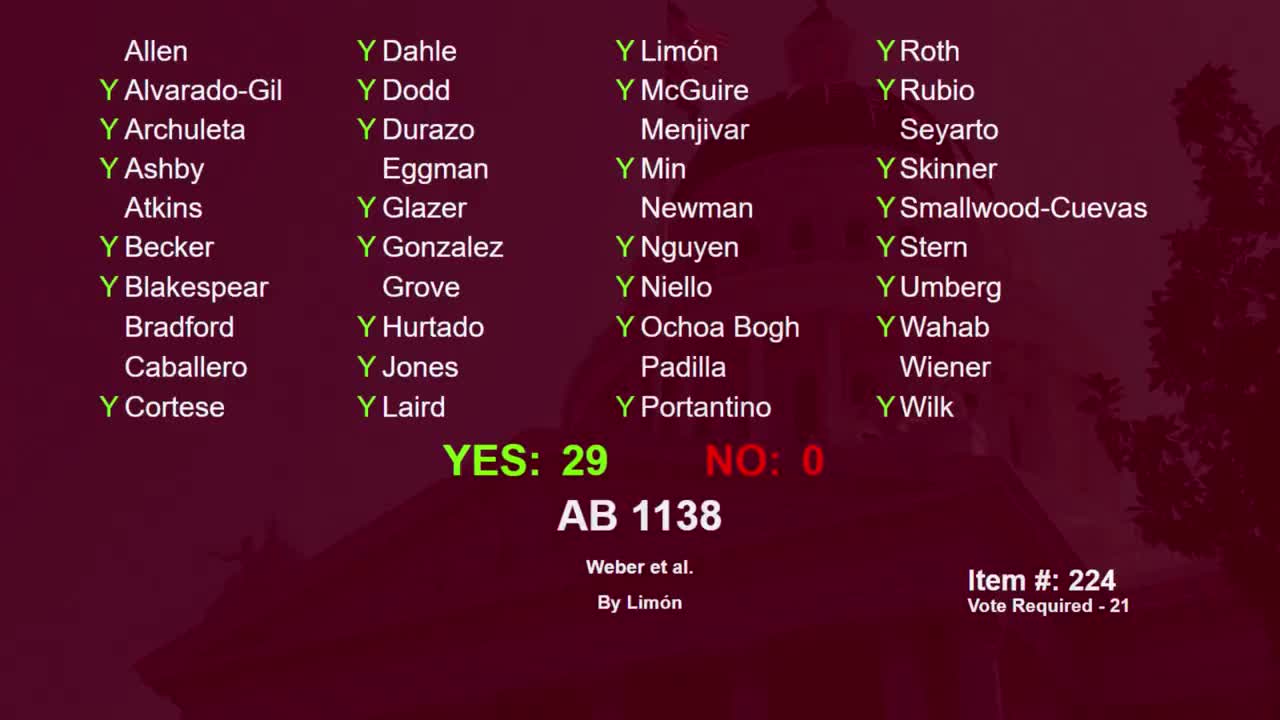
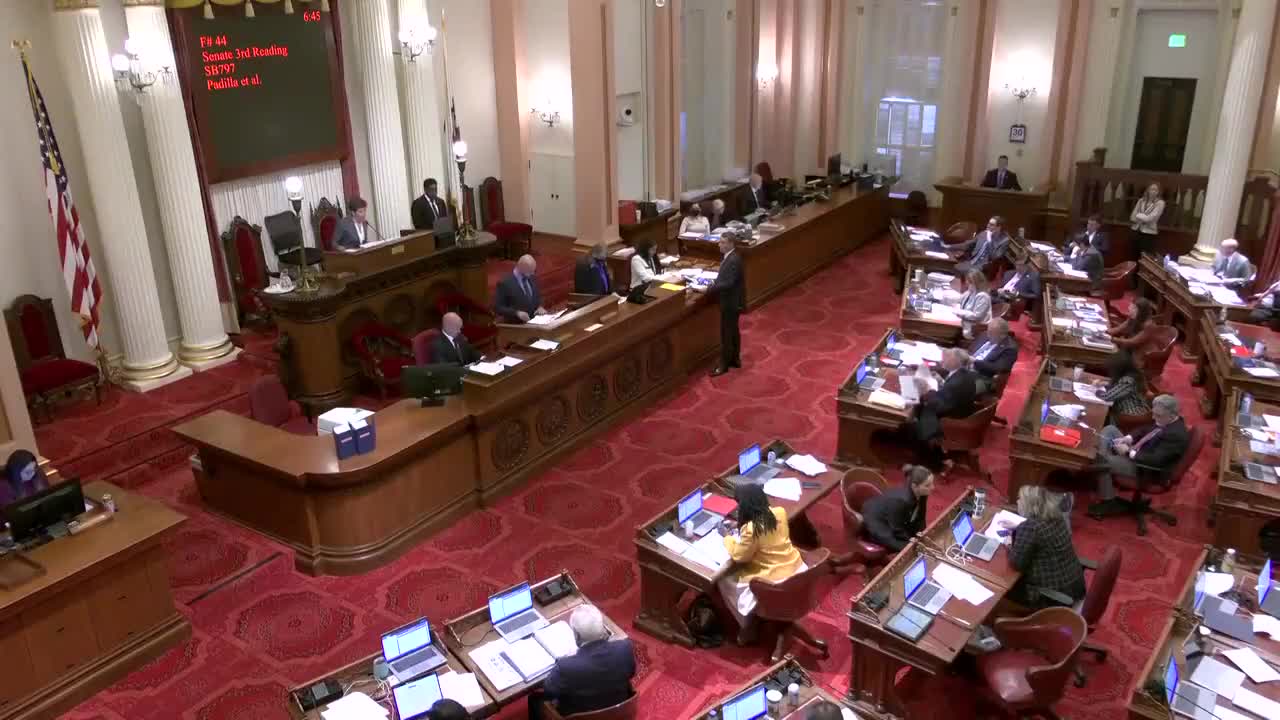
Bill Author