SB 838: Victim compensation: use of force by a law enforcement officer.
- Session Year: 2023-2024
- House: Senate
- Latest Version Date: 2023-02-17
Current Status:
Failed
(2024-02-01: Returned to Secretary of Senate pursuant to Joint Rule 56.)
Introduced
In Committee
First Chamber
In Committee
Second Chamber
Enacted
Existing law provides for the compensation of victims and derivative victims of specified types of crimes by the California Victim Compensation Board from the Restitution Fund, a continuously appropriated fund, for specified losses suffered as a result of those crimes. Existing law defines various terms for purposes of these provisions, including crime, which includes any public offense wherever it may take place that would constitute a misdemeanor or felony.
This bill would revise the definition of crime to include, solely for the purposes of eligibility for compensation under this chapter, an incident occurring on or after January 1, 2024, in which an individual sustains serious bodily injury, as defined, or death as a result of a law enforcement officers use of force, regardless of whether the law enforcement officer is arrested for, charged with, or convicted of committing a crime. The bill would define law enforcement officer for these purposes. By expanding the types of incidents for which compensation can be paid from a continuously appropriated fund, the bill would make an appropriation.
Existing law requires that a person be ineligible for compensation under specified conditions, including, among other things, if the board determines that denial of the claim for compensation is appropriate because of the nature of the victims involvement in the events leading to the crime or the involvement of the person whose injury or death gives rise to the application. Existing law requires the board to deny an application if it finds that the victim failed to cooperate reasonably with a law enforcement agency in the apprehension and conviction of the person committing the crime.
This bill, in the case of a claim based on a victims serious bodily injury or death that resulted from a law enforcement officers use of force, as described above, would prohibit the board from denying an application based on certain circumstances, including the victims or other applicants involvement in the crime, except as specified, the victims failure to cooperate, or the contents of a police report, or the lack thereof. The bill, in the case of a claim based on a victims serious bodily injury or death as a result of a crime, would require the board to adopt guidelines that allow the board to rely on evidence other than a police report, as specified.
Existing law requires that the board be subrogated to the rights of the recipient to the extent of any compensation granted by the board.
This bill would specify that the above-described subrogation of the board applies to compensation by the board for any claim, including a claim based on serious bodily injury or death that resulted from a law enforcement officers use of force.
As used in this chapter, the following definitions shall apply:
(a)Board means the California Victim Compensation Board.
(b)(1)Crime means a crime or public offense, wherever it may take place, that would constitute a misdemeanor or a felony if the crime had been committed in California by a competent adult. adult regardless of whether any person is arrested for, charged with, or convicted of committing the crime or public offense.
(2)Crime includes an act of terrorism, as defined in Section 2331 of Title 18 of the United States Code, committed against a resident of the state, whether or not the act occurs within the state.
(3)Crime includes, solely for the purposes of eligibility for compensation under this chapter, an incident occurring on or after January 1, 2024, in which an individual sustains serious bodily injury, as defined in Section 243 of the Penal Code, or death as a result of a law enforcement officers use of force, regardless of whether the law enforcement officer is arrested for, charged with, or convicted of committing a crime.
(c)Derivative victim means an individual who sustains pecuniary loss as a result of injury or death to a victim.
(d)Law enforcement means every district attorney, municipal police department, sheriffs department, district attorneys office, county probation department, and social services agency, the Department of Justice, the Department of Corrections, the Department of the Youth Authority, Corrections and Rehabilitation, the Division of Juvenile Justice, the Department of the California Highway Patrol, the police department of any campus of the University of California, California State University, or community college, and every agency of the State of California expressly authorized by statute to investigate or prosecute law violators.
(e)Law enforcement officer means a peace officer, as defined in Section 830 of the Penal Code.
(e)(f)Pecuniary loss means an economic loss or expense resulting from an injury or death to a victim of crime that has not been and will not be reimbursed from any other source.
(f)(g)Peer counseling means counseling offered by a provider of mental health counseling services who has completed a specialized course in rape crisis counseling skills development, participates in continuing education in rape crisis counseling skills development, and provides rape crisis counseling within the State of California.
(g)(h)Victim means an individual who sustains injury or death as a direct result of a crime as specified in subdivision (e) of Section 13955.
(h)(i)Victim center means a victim and witness assistance center that receives funds pursuant to Section 13835.2 of the Penal Code.
(j)Victim services provider means an individual, whether paid or serving as a volunteer, who provides services to victims under the supervision of an agency or organization that has a documented record of providing services to victims or a law enforcement or prosecution agency.
SEC. 2.Section 13956 of the Government Code, as amended by Section 2 of Chapter 771 of the Statutes of 2022, is amended to read:13956.Notwithstanding Section 13955, a person shall not be eligible for compensation under the following conditions:
(a)An Except as otherwise provided by this subdivision, an application may be denied, in whole or in part, if the board finds that denial is appropriate because of the nature of the victims or other applicants involvement in the events leading to the crime, or the involvement of the person whose injury or death gives rise to the application.
(1)Factors that may be considered in determining whether the victim or derivative victim was involved in the events leading to the qualifying crime include, but are not limited to:
(A)The victim or derivative victim initiated the qualifying crime, or provoked or aggravated the suspect into initiating the qualifying crime.
(B)The qualifying crime was a reasonably foreseeable consequence of the conduct of the victim or derivative victim.
(C)The victim or derivative victim was committing a crime that could be charged as a felony and reasonably lead to the victim being victimized. However, committing a crime shall not be considered involvement if the victims injury or death occurred as a direct result of a crime committed in violation of Section 261, 273.5, or former Section 262 of, or for a crime of unlawful sexual intercourse with a minor in violation of subdivision (d) of Section 261.5 of, the Penal Code.
(2)If the victim is determined to have been involved in the events leading to the qualifying crime, factors that may be considered to mitigate or overcome involvement include, but are not limited to:
(A)The victims injuries were significantly more serious than reasonably could have been expected based on the victims level of involvement.
(B)A third party interfered in a manner not reasonably foreseeable by the victim or derivative victim.
(C)The board shall consider the victims age, physical condition, and psychological state, as well as any compelling health and safety concerns, in determining whether the application should be denied pursuant to this section. The application of a derivative victim of domestic violence under 18 years of age or derivative victim of trafficking under 18 years of age shall not be denied on the basis of the denial of the victims application under this subdivision.
(3)Notwithstanding paragraphs (1) and (2), and except as provided in paragraphs (4) and (5), for a claim based on a victims serious bodily injury or death resulting from a law enforcement officers use of force, as provided in Section 13951, the board shall not deny the application based on the victims or other applicants involvement in the qualifying crime that gave rise to the claim.
(4)(A)Notwithstanding paragraph (3), for a claim based on a victims serious bodily injury that resulted from a law enforcement officers use of force, as provided in Section 13951, the board may deny the application based on the victims involvement in the qualifying crime that gave rise to the claim if both of the following conditions are met:
(i)The victim is convicted of a violent felony, as defined in Section 667.5 of the Penal Code, or a crime that resulted in death or serious bodily injury, as defined in Section 243 of the Penal Code.
(ii)The crime described in clause (i) occurred at the time and location of the incident on which the claim is based.
(B)(i)The board shall not consider a claim under this paragraph while charges are pending alleging that the victim committed a crime described in clauses (i) and (ii) of subparagraph (A).
(ii)Charges shall not be considered pending pursuant to clause (i) if the victim is deceased.
(C)A claimant subject to this paragraph may apply for compensation pursuant to this chapter at any time for any expense, but the award of that compensation shall not be considered until the charges are no longer pending against the victim as described in subparagraph (B).
(5)Notwithstanding paragraph (3), for a claim based on a victims death that resulted from a law enforcement officers use of force, as provided in Section 13951, the board may deny an application based on the victims involvement in the qualifying crime that gave rise to the claim if there is clear and convincing evidence that the deceased victim committed a crime during which the deceased victim personally inflicted serious bodily injury, as defined in Section 243 of the Penal Code, or personally killed another person at the time and location of the incident on which the claim is based.
(b)(1)An application shall be denied if the board finds that the victim or, if compensation is sought by, or on behalf of, a derivative victim, either the victim or derivative victim failed to cooperate reasonably with a law enforcement agency in the apprehension and conviction of a criminal committing the crime. In determining whether cooperation has been reasonable, the board shall consider the victims or derivative victims age, physical condition, and psychological state, cultural or linguistic barriers, any compelling health and safety concerns, including, but not limited to, a reasonable fear of retaliation or harm that would jeopardize the well-being of the victim or the victims family or the derivative victim or the derivative victims family, and giving due consideration to the degree of cooperation of which the victim or derivative victim is capable in light of the presence of any of these factors. A victim of domestic violence shall not be determined to have failed to cooperate based on the victims conduct with law enforcement at the scene of the crime. Lack of cooperation shall also not be found solely because a victim of sexual assault, domestic violence, or human trafficking delayed reporting the qualifying crime.
(2)Notwithstanding paragraph (1), an application for a claim based on a victims serious bodily injury or death that resulted from a law enforcement officers use of force, as provided in Section 13951, shall not be denied based on a victim or derivative victims failure to cooperate reasonably with a law enforcement agency.
(2)(3)An application for a claim based on domestic violence shall not be denied solely because a police report was not made by the victim. The board shall adopt guidelines that allow the board to consider and approve applications for assistance based on domestic violence relying upon evidence other than a police report to establish that a domestic violence crime has occurred. Factors evidencing that a domestic violence crime has occurred may include, but are not limited to, medical records documenting injuries consistent with allegations of domestic violence, mental health records, or that the victim has obtained a permanent restraining order.
(3)(4)An application for a claim based on a sexual assault shall not be denied solely because a police report was not made by the victim. The board shall adopt guidelines that allow it to consider and approve applications for assistance based on a sexual assault relying upon evidence other than a police report to establish that a sexual assault crime has occurred. Factors evidencing that a sexual assault crime has occurred may include, but are not limited to, medical records documenting injuries consistent with allegations of sexual assault, mental health records, or that the victim received a sexual assault examination.
(4)(5)An application for a claim based on human trafficking as defined in Section 236.1 of the Penal Code shall not be denied solely because a police report was not made by the victim. The board shall adopt guidelines that allow the board to consider and approve applications for assistance based on human trafficking relying upon evidence other than a police report to establish that a human trafficking crime has occurred. That evidence may include any reliable corroborating information approved by the board, including, but not limited to, the following:
(A)A Law Enforcement Agency Endorsement issued pursuant to Section 236.5 of the Penal Code.
(B)A human trafficking caseworker, as identified in Section 1038.2 of the Evidence Code, has attested by affidavit that the individual was a victim of human trafficking.
(5)(6)(A)An application for a claim by a military personnel victim based on a sexual assault by another military personnel shall not be denied solely because it was not reported to a superior officer or law enforcement at the time of the crime.
(B)Factors that the board shall consider for purposes of determining if a claim qualifies for compensation include, but are not limited to, the evidence of the following:
(i)Restricted or unrestricted reports to a military victim advocate, sexual assault response coordinator, chaplain, attorney, or other military personnel.
(ii)Medical or physical evidence consistent with sexual assault.
(iii)A written or oral report from military law enforcement or a civilian law enforcement agency concluding that a sexual assault crime was committed against the victim.
(iv)A letter or other written statement from a sexual assault counselor, as defined in Section 1035.2 of the Evidence Code, licensed therapist, or mental health counselor, stating that the victim is seeking services related to the allegation of sexual assault.
(v)A credible witness to whom the victim disclosed the details that a sexual assault crime occurred.
(vi)A restraining order from a military or civilian court against the perpetrator of the sexual assault.
(vii)Other behavior by the victim consistent with sexual assault.
(C)For purposes of this subdivision, the sexual assault at issue shall have occurred during military service, including deployment.
(D)For purposes of this subdivision, the sexual assault may have been committed off base.
(E)For purposes of this subdivision, a perpetrator means an individual who is any of the following at the time of the sexual assault:
(i)An active duty military personnel from the United States Army, Navy, Marine Corps, Air Force, or Coast Guard.
(ii)A civilian employee of any military branch specified in clause (i), military base, or military deployment.
(iii)A contractor or agent of a private military or private security company.
(iv)A member of the California National Guard.
(F)For purposes of this subdivision, sexual assault means an offense included in Section 261, 264.1, 286, 287, formerly 288a, or Section 289 of the Penal Code, as of January 1, 2015.
(7)(A)Notwithstanding any other law, for an application for a claim based on an individuals serious bodily injury or death that resulted from a law enforcement officers use of force, as provided in Section 13951, the board shall not deny an application, in whole or in part, based solely on any of the following:
(i)The contents of a police report.
(ii)Whether a police report was made.
(iii)Whether a suspect was arrested or charged with the qualifying crime that gave rise to the claim.
(B)For an application for a claim based on an individuals serious bodily injury or death that resulted from a law enforcement officers use of force, as provided in Section 13951, if the only evidence the board receives that the qualifying crime occurred is a police report and the police report does not establish that the qualifying crime occurred, the board shall notify the applicant of the deficiency in the application and solicit additional information to verify the claim pursuant to the procedures set forth in Section 13952.
(C)The board shall adopt guidelines that allow the board to rely on evidence other than a police report to establish that a qualifying crime occurred when considering applications for assistance based on an individuals serious bodily injury or death that resulted from a law enforcement officers use of force, as provided in Section 13951, including, but not limited to, any of the following:
(i)Medical records documenting injuries consistent with the allegation that the victim suffered serious bodily injury or death as a result of a law enforcement officers use of force.
(ii)A written statement from a victim services provider stating that the victim is seeking services related to suffering serious bodily injury as a result of a law enforcement officers use of force.
(iii)A statement from a licensed medical provider, physicians assistant, nurse practitioner, or other person licensed to provide medical or mental health care documenting that the victim suffered serious bodily injury or death as a result of a law enforcement officers use of force.
(iv)A written or oral report from a law enforcement agency documenting that the victim suffered serious bodily injury or death as a result of a law enforcement officers use of force.
(v)Evidence that the qualifying crime was reported under Section 12525.2 to the Department of Justice as an incident in which the use of force by a law enforcement officer against a civilian resulted in serious bodily injury or death.
(vi)A death certificate documenting a cause of death consistent with the allegation that the victim died as a result of a law enforcement officers use of force.
(c)(1)Notwithstanding Section 13955, a person who is convicted of a violent felony listed in subdivision (c) of Section 667.5 of the Penal Code shall not be granted compensation until that person has been discharged from probation or has been released from a correctional institution and has been discharged from parole, or has been discharged from postrelease community supervision or mandatory supervision, if any, for that violent crime. Compensation shall not be granted to an applicant pursuant to this chapter during any period of time the applicant is held in a correctional institution or while an applicant is required to register as a sex offender pursuant to Section 290 of the Penal Code.(2)A person who has been convicted of a violent felony listed in subdivision (c) of Section 667.5 of the Penal Code may apply for compensation pursuant to this chapter at any time, but the award of that compensation may shall not be considered until the applicant meets the requirements for compensation set forth in paragraph (1).
(d)(1)This section shall become inoperative on July 1, 2024, only if General Fund moneys over the multiyear forecasts beginning in the 202425 fiscal year are available to support ongoing augmentations and actions, and if an appropriation is made to backfill the Restitution Fund to support the actions in this section. If those conditions are met, this section is repealed January 1, 2025.(2)The amendments made by the act adding this subdivision shall become operative on January 1, 2023.
SEC. 3.Section 13956 of the Government Code, as added by Section 3 of Chapter 771 of the Statutes of 2022, is amended to read:13956.Notwithstanding Section 13955, a person shall not be eligible for compensation under the following conditions:
(a)An Except as otherwise provided by this subdivision, an application may be denied, in whole or in part, if the board finds that denial is appropriate because of the nature of the victims or other applicants involvement in the events leading to the crime, or the involvement of the person whose injury or death gives rise to the application.
(1)Factors that may be considered in determining whether the victim or derivative victim was involved in the events leading to the qualifying crime include, but are not limited to:
(A)The victim or derivative victim initiated the qualifying crime, or provoked or aggravated the suspect into initiating the qualifying crime.
(B)The qualifying crime was a reasonably foreseeable consequence of the conduct of the victim or derivative victim.
(C)The victim or derivative victim was committing a crime that could be charged as a felony and reasonably lead to the victim being victimized. However, committing a crime shall not be considered involvement if the victims injury or death occurred as a direct result of a crime committed in violation of Section 261, 273.5, or former Section 262 of, or for a crime of unlawful sexual intercourse with a minor in violation of subdivision (d) of Section 261.5 of, the Penal Code.
(2)If the victim is determined to have been involved in the events leading to the qualifying crime, factors that may be considered to mitigate or overcome involvement include, but are not limited to:
(A)The victims injuries were significantly more serious than reasonably could have been expected based on the victims level of involvement.
(B)A third party interfered in a manner not reasonably foreseeable by the victim or derivative victim.
(C)The board shall consider the victims age, physical condition, and psychological state, as well as any compelling health and safety concerns, in determining whether the application should be denied pursuant to this section. The application of a derivative victim of domestic violence under 18 years of age or derivative victim of trafficking under 18 years of age shall not be denied on the basis of the denial of the victims application under this subdivision.
(3)Notwithstanding paragraphs (1) and (2), and except as provided in paragraphs (4) and (5), for a claim based on a victims serious bodily injury or death resulting from a law enforcement officers use of force, as provided in Section 13951, the board shall not deny the application based on the victims or other applicants involvement in the qualifying crime that gave rise to the claim.
(4)(A)Notwithstanding paragraph (3), for a claim based on a victims serious bodily injury that resulted from a law enforcement officers use of force, as provided in Section 13951, the board may deny the application based on the victims involvement in the qualifying crime that gave rise to the claim if both of the following conditions are met:
(i)The victim is convicted of a violent felony, as defined in Section 667.5 of the Penal Code, or a crime that resulted in death or serious bodily injury, as defined in Section 243 of the Penal Code.
(ii)The crime described in clause (i) occurred at the time and location of the incident on which the claim is based.
(B)(i)The board shall not consider a claim under this paragraph while charges are pending alleging that the victim committed a crime described in clauses (i) and (ii) of subparagraph (A).
(ii)Charges shall not be considered pending pursuant to clause (i) if the victim is deceased.
(C)A claimant subject to this paragraph may apply for compensation pursuant to this chapter at any time for any expense, but the award of that compensation shall not be considered until the charges are no longer pending against the victim as described in subparagraph (B).
(5)Notwithstanding paragraph (3), for a claim based on a victims death that resulted from a law enforcement officers use of force, as provided in Section 13951, the board may deny an application based on the victims involvement in the qualifying crime that gave rise to the claim if there is clear and convincing evidence that the deceased victim committed a crime during which the deceased victim personally inflicted serious bodily injury, as defined in Section 243 of the Penal Code, or personally killed another person at the time and location of the incident on which the claim is based.
(b)(1)An application shall be denied if the board finds that the victim or, if compensation is sought by, or on behalf of, a derivative victim, either the victim or derivative victim failed to cooperate reasonably with a law enforcement agency in the apprehension and conviction of a criminal committing the crime. In determining whether cooperation has been reasonable, the board shall consider the victims or derivative victims age, physical condition, and psychological state, cultural or linguistic barriers, any compelling health and safety concerns, including, but not limited to, a reasonable fear of retaliation or harm that would jeopardize the well-being of the victim or the victims family or the derivative victim or the derivative victims family, and giving due consideration to the degree of cooperation of which the victim or derivative victim is capable in light of the presence of any of these factors. A victim shall not be determined to have failed to cooperate based on the victims conduct with law enforcement at the scene of the crime. Lack of cooperation shall also not be found solely because a victim delayed reporting the qualifying crime.
(2)Notwithstanding paragraph (1), an application for a claim based on a victims serious bodily injury or death that resulted from a law enforcement officers use of force, as provided in Section 13951, shall not be denied based on a victim or derivative victims failure to cooperate reasonably with a law enforcement agency.
(2)(3)An application for a claim based on domestic violence shall not be denied solely because a police report was not made by the victim. The board shall adopt guidelines that allow the board to consider and approve applications for assistance based on domestic violence relying upon evidence other than a police report to establish that a domestic violence crime has occurred. Factors evidencing that a domestic violence crime has occurred may include, but are not limited to, medical records documenting injuries consistent with allegations of domestic violence, mental health records, or that the victim has obtained a permanent restraining order.
(3)(4)An application for a claim based on a sexual assault shall not be denied solely because a police report was not made by the victim. The board shall adopt guidelines that allow it to consider and approve applications for assistance based on a sexual assault relying upon evidence other than a police report to establish that a sexual assault crime has occurred. Factors evidencing that a sexual assault crime has occurred may include, but are not limited to, medical records documenting injuries consistent with allegations of sexual assault, mental health records, or that the victim received a sexual assault examination.
(4)(5)An application for a claim based on human trafficking as defined in Section 236.1 of the Penal Code shall not be denied solely because a police report was not made by the victim. The board shall adopt guidelines that allow the board to consider and approve applications for assistance based on human trafficking relying upon evidence other than a police report to establish that a human trafficking crime has occurred. That evidence may include any reliable corroborating information approved by the board, including, but not limited to, the following:
(A)A Law Enforcement Agency Endorsement issued pursuant to Section 236.5 of the Penal Code.
(B)A human trafficking caseworker, as identified in Section 1038.2 of the Evidence Code, has attested by affidavit that the individual was a victim of human trafficking.
(5)(6)(A) An application for a claim by a military personnel victim based on a sexual assault by another military personnel shall not be denied solely because it was not reported to a superior officer or law enforcement at the time of the crime.
(B)Factors that the board shall consider for purposes of determining if a claim qualifies for compensation include, but are not limited to, the evidence of the following:
(i)Restricted or unrestricted reports to a military victim advocate, sexual assault response coordinator, chaplain, attorney, or other military personnel.
(ii)Medical or physical evidence consistent with sexual assault.
(iii)A written or oral report from military law enforcement or a civilian law enforcement agency concluding that a sexual assault crime was committed against the victim.
(iv)A letter or other written statement from a sexual assault counselor, as defined in Section 1035.2 of the Evidence Code, licensed therapist, or mental health counselor, stating that the victim is seeking services related to the allegation of sexual assault.
(v)A credible witness to whom the victim disclosed the details that a sexual assault crime occurred.
(vi)A restraining order from a military or civilian court against the perpetrator of the sexual assault.
(vii)Other behavior by the victim consistent with sexual assault.
(C)For purposes of this subdivision, the sexual assault at issue shall have occurred during military service, including deployment.
(D)For purposes of this subdivision, the sexual assault may have been committed off base.
(E)For purposes of this subdivision, a perpetrator means an individual who is any of the following at the time of the sexual assault:
(i)An active duty military personnel from the United States Army, Navy, Marine Corps, Air Force, or Coast Guard.
(ii)A civilian employee of any military branch specified in clause (i), military base, or military deployment.
(iii)A contractor or agent of a private military or private security company.
(iv)A member of the California National Guard.
(F)For purposes of this subdivision, sexual assault means an offense included in Section 261, 264.1, 286, 287, formerly 288a, or Section 289 of the Penal Code, as of January 1, 2015.
(7)(A)Notwithstanding any other law, for an application for a claim based on an individuals serious bodily injury or death that resulted from a law enforcement officers use of force, as provided in Section 13951, the board shall not deny an application, in whole or in part, based solely on any of the following:
(i)The contents of a police report.
(ii)Whether a police report was made.
(iii)Whether a suspect was arrested or charged with the qualifying crime that gave rise to the claim.
(B)If the only evidence the board receives that the qualifying crime occurred is a police report and the police report does not establish that the qualifying crime occurred, the board shall notify the applicant of the deficiency in the application and solicit additional information to verify the claim pursuant to the procedures set forth in Section 13952.
(C)The board shall adopt guidelines that allow the board to rely on evidence other than a police report to establish that a qualifying crime occurred when considering applications for assistance based on an individuals serious bodily injury or death that resulted from a law enforcement officers use of force, as provided in Section 13951, including, but not limited to, any of the following:
(i)Medical records documenting injuries consistent with the allegation that the victim suffered serious bodily injury or death as a result of a law enforcement officers use of force.
(ii)A written statement from a victim services provider stating that the victim is seeking services related to suffering serious bodily injury as a result of a law enforcement officers use of force.
(iii)A statement from a licensed medical provider, physicians assistant, nurse practitioner, or other person licensed to provide medical or mental health care documenting that the victim suffered serious bodily injury or death as a result of a law enforcement officers use of force.
(iv)A written or oral report from a law enforcement agency documenting that the victim suffered serious bodily injury or death as a result of a law enforcement officers use of force.
(v)Evidence that the qualifying crime was reported under Section 12525.2 to the Department of Justice as an incident in which the use of force by a law enforcement officer against a civilian resulted in serious bodily injury or death.
(vi)A death certificate documenting a cause of death consistent with the allegation that the victim died as a result of a law enforcement officers use of force.
(c)(1)Notwithstanding Section 13955, a person who is convicted of a violent felony listed in subdivision (c) of Section 667.5 of the Penal Code shall not be granted compensation until that person has been released from a correctional institution. Compensation shall not be granted to an applicant pursuant to this chapter during any period of time the applicant is held in a correctional institution or while an applicant is required to register as a sex offender pursuant to Section 290 of the Penal Code.(2)A person who has been convicted of a violent felony listed in subdivision (c) of Section 667.5 of the Penal Code may apply for compensation pursuant to this chapter at any time, but the award of that compensation may shall not be considered until the applicant meets the requirements for compensation set forth in paragraph (1).
(d)This section shall become operative on July 1, 2024, only if General Fund moneys over the multiyear forecasts beginning in the 202425 fiscal year are available to support ongoing augmentations and actions, and if an appropriation is made to backfill the Restitution Fund to support the actions in this section.SEC. 4.Section 13963 of the Government Code is amended to read:13963.(a)The board shall be subrogated to the rights of the recipient to the extent of any compensation granted by the board. The subrogation rights shall be against the perpetrator of the crime or any person liable for the losses suffered as a direct result of the crime which was the basis for receipt of compensation, including an insurer held liable in accordance with the provision of a policy of insurance issued pursuant to Section 11580.2 of the Insurance Code.
(b)The board shall also be entitled to a lien on any judgment, award, or settlement in favor of or on behalf of the recipient for losses suffered as a direct result of the crime that was the basis for receipt of compensation in the amount of the compensation granted by the board. The board may recover this amount in a separate action, or may intervene in an action brought by or on behalf of the recipient. If a claim is filed within one year of the date of recovery, the board shall pay 25 percent of the amount of the recovery that is subject to a lien on the judgment, award, or settlement, to the recipient responsible for recovery if the recipient notified the board of the action prior to receiving any recovery. The remaining amount, and any amount not claimed within one year pursuant to this section, shall be deposited in the Restitution Fund.
(c)The board may compromise or settle and release any lien pursuant to this chapter if it is found that the action is in the best interest of the state or the collection would cause undue hardship upon the recipient. Repayment obligations to the Restitution Fund shall be enforceable as a summary judgment.
(d)No judgment, award, or settlement in any action or claim by a recipient, where the board has an interest, shall be satisfied without first giving the board notice and a reasonable opportunity to perfect and satisfy the lien. The notice shall be given to the board in Sacramento except in cases where the board specifies that the notice shall be given otherwise. The notice shall include the complete terms of the award, settlement, or judgment, and the name and address of any insurer directly or indirectly providing for the satisfaction.
(e)(1)If the recipient brings an action or asserts a claim for damages against the person or persons liable for the injury or death giving rise to an award by the board under this chapter, notice of the institution of legal proceedings, notice of all hearings, conferences, and proceedings, and notice of settlement shall be given to the board in Sacramento except in cases where the board specifies that notice shall be given to the Attorney General. Notice of the institution of legal proceedings shall be given to the board within 30 days of filing the action. All notices shall be given by the attorney employed to bring the action for damages or by the recipient if no attorney is employed.
(2)Notice shall include all of the following:
(A)Names of all parties to the claim or action.
(B)The address of all parties to the claim or action except for those persons represented by attorneys and in that case the name of the party and the name and address of the attorney.
(C)The nature of the claim asserted or action brought.
(D)In the case of actions before courts or administrative agencies, the full title of the case including the identity of the court or agency, the names of the parties, and the case or docket number.
(3)When the recipient or his or her the recipients attorney has reason to believe that a person from whom damages are sought is receiving a defense provided in whole or in part by an insurer, or is insured for the injury caused to the recipient, notice shall include a statement of that fact and the name and address of the insurer. Upon request of the board, a person obligated to provide notice shall provide the board with a copy of the current written claim or complaint.
(f)The board shall pay the county probation department or other county agency responsible for collection of funds owed to the Restitution Fund under Section 13967, as operative on or before September 28, 1994, Section 1202.4 of the Penal Code, Section 1203.04 of the Penal Code, as operative on or before August 2, 1995, or Section 730.6 of the Welfare and Institutions Code, 10 percent of the funds so owed and collected by the county agency and deposited in the Restitution Fund. This payment shall be made only when the funds are deposited in the Restitution Fund within 45 days of the end of the month in which the funds are collected. Receiving 10 percent of the moneys collected as being owed to the Restitution Fund shall be considered an incentive for collection efforts and shall be used for furthering these collection efforts. The 10-percent rebates shall be used to augment the budgets for the county agencies responsible for collection of funds owed to the Restitution Fund, as provided in Section 13967, as operative on or before September 28, 1994, Section 1202.4 of the Penal Code, Section 1203.04 of the Penal Code, operative on or before August 2, 1995, or Section 730.6 of the Welfare and Institutions Code. The 10-percent rebates shall not be used to supplant county funding.
(g)In the event of judgment or award in a suit or claim against a third party or insurer, if the action or claim is prosecuted by the recipient alone, the court or agency shall first order paid from any judgment or award the reasonable litigation expenses incurred in preparation and prosecution of the action or claim, together with reasonable attorneys fees when an attorney has been retained. After payment of the expenses and attorneys fees, the court or agency shall, on the application of the board, allow as a lien against the amount of the judgment or award, the amount of the compensation granted by the board to the recipient for losses sustained as a result of the same incident upon which the settlement, award, or judgment is based.
(h)For purposes of this section, recipient means any person who has received compensation or will be provided compensation pursuant to this chapter, including the victims guardian, conservator or other personal representative, estate, and survivors.
(i)In accordance with subparagraph (B) of paragraph (4) of subdivision (f) of Section 1202.4 of the Penal Code, a representative of the board may provide the probation department, district attorney, and court with information relevant to the boards losses prior to the imposition of a sentence.
(j)This section applies to compensation by the board for any claim, including, but not limited to, a claim based on serious bodily injury or death that resulted from a law enforcement officers use of force, as provided in Section 13951.
|
Date
|
Status
|
|---|---|
| Feb 1, 2024 | Returned to Secretary of Senate pursuant to Joint Rule 56. |
| Jan 18, 2024 | January 18 hearing: Held in committee and under submission. |
| Jan 12, 2024 | Set for hearing January 18. |
| May 18, 2023 | May 18 hearing: Held in committee and under submission. |
| May 12, 2023 | Set for hearing May 18. |
| Apr 10, 2023 | April 10 hearing: Placed on APPR suspense file. |
| Apr 3, 2023 | Set for hearing April 10. |
| Mar 29, 2023 | From committee: Do pass and re-refer to Com. on APPR. (Ayes 5. Noes 0. Page 579.) (March 28). Re-referred to Com. on APPR. |
| Mar 9, 2023 | Set for hearing March 28. |
| Mar 1, 2023 | Referred to Com. on PUB S. |
| Feb 21, 2023 | From printer. May be acted upon on or after March 20. |
| Feb 17, 2023 | Introduced. Read first time. To Com. on RLS. for assignment. To print. |
|
Date
|
Description
|
Location
|
Votes
|
|
|---|---|---|---|---|
| Apr 10, 2023 | Placed on suspense file | Senate Standing Committee on Appropriations |
Passed |
|
| Mar 28, 2023 | Do pass, but first be re-referred to the Committee on [Appropriations] | Senate Standing Committee on Public Safety |
Passed |
This list shows positions taken on this bill by organizations on the date displayed, which is linked to the original source.
Positions by individuals are not included.
|
Organization
|
Position
|
Date
|
|---|---|---|
| California District Attorneys Association | * Against | Mar 28, 2023 |
| Crime Survivors for Safety and Justice | * Support | Mar 28, 2023 |
| Youth Alive | * Support | Mar 28, 2023 |
SENATE COMMITTEE ON
Senator Anthony Portantino, Chair
2023 - 2024 Regular Session
SB 838 (Menjivar) - Victim compensation: use of force by a law enforcement officer
Version: | Policy Vote: |
Urgency: | Mandate: |
Hearing Date: | Consultant: |
Bill Summary:
SB 838 would revise the definition of “crime” for purposes of the Victim Compensation Program (VCP) to include an incident in which an individual sustains serious bodily injury or death as the result of a law enforcement officer’s use of force.
Fiscal Impact:
Unknown costs, in the hundreds of thousands to low millions, to pay claims for law enforcement officer use of force incidents (Restitution Fund*, General Fund). The California Victim Compensation Board (CalVCB) reports annual and ongoing costs ranging from $2.4 million to $5.78 million to pay compensation claims and $214,000 for salary and benefits for two additional Staff Service Analysts. See Staff Comments for additional detail.
*Structurally imbalanced
Background:
The victim compensation program was created in 1965, the first such program in the country. The program provides compensation for victims of violent crime. It reimburses eligible victims for many crime-related expenses, such as counseling and medical fees. Funding for the CalVCB comes from restitution fines and penalty assessments paid by criminal offenders, as well as federal matching funds.
The victim compensation program is the payor of last resort, which means applicants are compensated for covered expenses that have not been and will not be compensated from any other source. The types of expenses that may be reimbursed include medical and dental expenses, funeral or burial expenses, wage or income loss, etc. Reimbursement is limited to the actual amount paid out-of-pocket or bills accrued by the victim. The maximum amount reimburse a victim or derivative victim is $35,000, except this amount may be increased to $70,000 if federal funds are available. Payments are paid from a combination of state funds and federal matching funds. Specifically, claims are paid from the Restitution Fund, which is a continuously-appropriated fund, and a 60-percent match (of state funds spent) from the federal Victims of Crime Act (VOCA) grant, which are calculated at 60 percent of the California state funds spent on the eligible compensation of victims from two years prior.
Existing law requires a victim or directive victim to file a claim for compensation within seven years of the date of the crime, seven years after the victim attains age 21, or seven years from the discovery that an injury or death had been sustained as a direct result of the crime, whichever is later. Last year, AB 160 (Committee on Budget), Chapter 771, Statutes of 2022, raised the maximum reimbursable amount and the individual limits for specified expenses which will go into effect July 1, 2024, contingent on funds being available and appropriated in the 2024-2025 fiscal year.
This bill would allow compensation claims for incidents in which an individual sustains serious bodily injury or death as the result of a law enforcement officer’s use of force. The Department of Justice (DOJ) Use of Force Incident Reporting for 2021 noted that in 2021, there were 628 law enforcement use of force incidents, and 660 civilians involved in incidents that involved the discharge of a firearm or use of force resulting in serious bodily injury or death. Of the 628 incidents, 300 occurred during a call for service,124 occurred while either a crime was in progress or while officers were investigating suspicious persons or circumstances, and 97 resulted from a vehicle/ bike/pedestrian stop.
Proposed Law:
- Provides that “crime” includes, for purposes of eligibility for compensation, an incident occurring on or after January 1, 2024, in which an individual sustains serious bodily injury or death as a result of a law enforcement officer’s use of force, regardless of whether the law enforcement officer is arrested, charged, or convicted of committing a crime.
- Provides that an application may be denied, in whole or in part, if the board finds that denial is appropriate because of the nature of the victim’s or other applicant’s involvement in the events leading to the crime, or the involvement of the person whose injury or death gives rise to the application, as specified.
- Provides that notwithstanding specified ineligibility factors, for a claim based on a victim’s serious bodily injury or death resulting from a law enforcement officer’s use of force, CalVCB shall not deny the application based on the victim’s or other applicant’s involvement in the qualifying crime that gave rise to the claim, unless both of the following conditions are met:
- The victim is convicted of a violent felony, as defined, or a crime that resulted in death or serious bodily injury, as defined; and,
- The crime that the victim is convicted of occurred at the time and location of the incident on which the claim is based.
- Provides that the claimant may apply for compensation based on law enforcement officer’s use of force at any time for any expense but that CalVCB shall not consider the claim while charges are pending alleging that the victim committed a crime that may make the victim ineligible for compensation. Specifies that charges shall not be considered pending if the victim is deceased.
- Provides that for a claim based on a victim’s death that resulted from a law enforcement officer’s use of force, CalVCB may deny an application based on the victim’s involvement in the qualifying crime that gave rise to the claim if there is clear and convincing evidence that the deceased victim committed a crime during which the deceased victim personally inflicted serious bodily injury, as defined, or personally killed another person at the time and location of the incident on which the claim is based.
- Provides that an application for a claim based on a victim’s serious bodily injury or death that resulted from a law enforcement officer’s use of force shall not be denied based on a victim or derivative victim’s failure to cooperate reasonably with a law enforcement’s agency.
- Provides that notwithstanding any other law, for an application for a claim based on serious injury or death that resulted from a law enforcement officer’s use of force, the CalVCB shall not deny an application, in whole or in part, based solely on any of the following:
- The contents of a police report;
- Whether a police report was made;
- Whether a suspect was arrested or charged with the qualifying crime that gave rise to the claim.
- Provides that the claimant may apply for compensation based on law enforcement officer’s use of force at any time for any expense but that CalVCB shall not consider the claim while charges are pending alleging that the victim committed a crime that may make the victim ineligible for compensation.
- Specifies that charges shall not be considered pending if the victim is deceased.
- Provides that for a claim based on a victim’s death that resulted from a law enforcement officer’s use of force, CalVCB may deny an application based on the victim’s involvement in the qualifying crime that gave rise to the claim if there is clear and convincing evidence that the deceased victim committed a crime during which the deceased victim personally inflicted serious bodily injury, as defined, or personally killed another person at the time and location of the incident on which the claim is based.
- Provides that an application for a claim based on a victim’s serious bodily injury or death that resulted from a law enforcement officer’s use of force shall not be denied based on a victim or derivative victim’s failure to cooperate reasonably with a law enforcement’s agency.
- Provides that notwithstanding any other law, for an application for a claim based on serious injury or death that resulted from a law enforcement officer’s use of force, the CalVCB shall not deny an application, in whole or in part, based solely on any of the following:
- The contents of a police report;
- Whether a police report was made;
- Whether a suspect was arrested or charged with the qualifying crime that gave rise to the claim.
Related Legislation:
- AB 160 (Committee on Budget), Ch. 771, Stats. of 2022, raised the maximum reimbursable amount and the individual limits for specified expenses which will go into effect July 1, 2024, contingent on funds being available and appropriated in the 2024-2025 fiscal year.
- AB 767 (Grayson, 2019) would have expanded eligibility for compensation under the Victims Compensation Program (VCP) for injuries or death caused by use of force by a police officer. AB 767 was held on suspense in this committee.
- SB 299 (Leyva, 2022) was substantially similar to this bill. SB 299 was ordered to the inactive file on the Assembly floor.
Staff Comments:
A primary cost driver of this bill will be the number of claimants who seek compensation under its provisions, a number that cannot be known with certainty. The Department of Justice’s (DOJ) Use of Force Incident Reporting for 2021 cited 628 use of force incidents involving 660 civilians, of which 149 were killed and 406 were injured. Of the 555 civilians that were injured or killed, it is unclear how many went on to be convicted of a violent crime that would make them ineligible for compensation under this bill’s provisions. However, the DOJ report indicates that 124 incidents occurred while either a crime was in progress or while officers were investigating suspicious persons or circumstances. Assuming that all 124 of those incidents would be ineligible for compensation that would leave approximately 430 claims that could have been filed under this bill, had it been in effect in 2021.
According to CalVCB, the average approved claimant receives approximately $1,200 in compensation, but that number is likely skewed by the fact that half of all eligible claimants never submit a reimbursable claim. The average amount for those who actually receive payment is $2,400. If 430 individuals were paid $2400 under SB 838, then the costs of this bill would exceed $1 million.
The Restitution Fund is the source of CalVCB reimbursements. It operated under a structural deficiency for a number of years. Although revenue has remained consistent, expenditures have outpaced revenues since FY 2015-16. The Governor’s 2023-24 budget proposes $39.5 million ongoing to backfill declining fine and fee revenues in the Restitution Fund and allow the California Victim Compensation Board to continue operating at its current funding level.
By expanding the criteria for CalVCB reimbursement claims, which are paid out of the continuously appropriated Restitution Fund, this bill would appropriate moneys from the General Fund. Staff notes that this bill is drafted in such a way as to be subject to triggering language that was enacted by budget trailer bill AB 160 (2022). Amendments may be necessary to clarify the operation of this bill.
-- END --
SENATE COMMITTEE ON PUBLIC SAFETY
Senator Aisha Wahab, Chair
2023 - 2024 Regular
Bill No: SB 838 Hearing Date: March 28, 2023
Author: | Menjivar | ||
Version: | February 17, 2023 | ||
Urgency: | No | Fiscal: | Yes |
Consultant: | SC | ||
Subject: Victim compensation: use of force by a law enforcement officer
HISTORY
Source: Californians for Safety and Justice
Prosecutors Alliance of California
Youth ALIVE!
Prior Legislation: AB 160 (Committee on Budget), Ch. 771, Stats. 2022
SB 299 (Leyva), died on Assem. Floor, 2022
SB 993 (Skinner), dies on Assem. Floor, 2022
AB 767 (Grayson), held in Sen. Appropriations, 2020
SB 329 (Kamlager), was not heard by Sen. Public Safety, 2020
Support: Asian Solidarity Collective; Black Lives Matter – Los Angeles; Bolda Bridges Inc.; California Alliance for Youth and Community Justice; California Coalition for Women Prisoners; California Families Against Solitary Confinement; California Public Defenders Association; Californians United for A Responsible Budget; Catron Academy Learning Institute; Communities United for Restorative Youth Justice; Crime Survivors for Safety and Justice; Ella Baker Center for Human Rights; Everytown for Gun Safety Action Fund; Fresno Barrios Unidos; Initiate Justice; Lawyers’ Committee for Civil Rights of the San Francisco Bay Area; Legal Services for Prisoners With Children; Match for Our Lives Action Fund; Motivating Individual Leadership for Public Advancement; National Association of Social Workers – California Chapter; Pacific Juvenile Defender Center; Sacred Purpose LLC; Santa Cruz Barrios Unidos; Secure Justice; Sister Warriors Freedom Center; Smart Justice California; Southern California Crossroads; Starting Over, Inc.; The Gathering for Justice; United Communities for Peace; Young Women’s Freedom Center
Opposition: Arcadia Police Officers' Association; Burbank Police Officers' Association; California Coalition of School Safety Professionals; California District Attorneys Association; Claremont Police Officers Association; Corona Police Officers Association; Culver City Police Officers' Association; Deputy Sheriffs' Association of Monterey County; Fullerton Police Officers' Association; Los Angeles School Police Officers Association; Murrieta Police Officers' Association; Newport Beach Police Association; Palos Verdes Police Officers Association; Peace Officers Research Association of California (PORAC); Placer County Deputy Sheriffs' Association; Pomona Police Officers' Association; Riverside Police Officers Association; Riverside Sheriffs' Association; San Diegans Against Crime; San Diego Deputy District Attorneys Association; Santa Ana Police Officers Association; Upland Police Officers Association;
PURPOSE
The purpose of this bill is to revise the definition of “crime” for purposes of the Victim Compensation Program to include an incident in which an individual sustains serious bodily injury or death as the result of a law enforcement officer’s use of force and make changes to eligibility factors as they would apply to these types of claims.
Existing law states that the Legislature finds and declares that it is in the public interest to assist residents of the State of California in obtaining compensation for the pecuniary losses they suffer as a direct result of criminal acts. (Gov. Code, § 13950, subd. (a).)
Existing law establishes the California Victims Compensation Claims Board (CalVCB) to operate the Victim Compensation Program (VCP). (Gov. Code, §§ 13950 et. seq.)
Existing law provides than an application for compensation shall be filed with CalVCB in the manner determined by the board. (Gov. Code, § 13952, subd. (a).)
Existing law requires an application be filed in accordance with the following timelines:
- Within seven years of the date of the crime;
- Seven years after the victim attains 21 years of age; or,
- Seven years of the time the victim or derivative victim knew or in the exercise of ordinary diligence could have discovered than an injury or death had been sustained as a direct result of crime, whichever is later. (Gov. Code, § 13953, subd. (a).)
Existing law authorizes CalVCB to reimburse for pecuniary loss for the following types of losses:
- Medical or medical-related expenses incurred by the victim for services provided by a licensed medical provider;
- Out-patient psychiatric, psychological or other mental health counseling-related expenses incurred by the victim or derivative victim, including peer counseling services provided by a rape crisis center, not to exceed $10,000;
- Compensation equal to the loss of income or loss of support, or both, that a victim or derivative victim incurs as a direct result of the victim’s injury or the victim’s death;
- Cash payment to, or on behalf of, the victim for job retraining or similar employment-oriented services;
- The expense of installing or increasing residential security;
- The expense of renovating or retrofitting a victim’s residence or a vehicle to make them accessible or operational, if it is medically necessary;
- Relocation expenses, not to exceed $2,000, if the expenses are determined by law enforcement to be necessary for the victim's personal safety, or by a mental health treatment provider to be necessary for the emotional well-being of the victim;
- Funeral or burial expenses, not to exceed $7,500;
- Costs to clean the scene of the crime, not to exceed $1,000s; and,
- Costs of veterinary services. (Gov. Code, § 13957, subd. (a).)
Existing law limits the total award to or on behalf of each victim to $35,000, except that this amount may be increased up to $70,000 if federal funds for that increase are available. (Gov. Code, § 13957, subd. (b).)
Existing law authorizes CalVCB to require submission of additional information supporting the application that is reasonably necessary to verify the application and determine eligibility for compensation. (Gov. Code, § 13952, subd. (c)(1).)
Existing law requires the CalVCB to verify with hospitals, physicians, law enforcement officials, or other interested parties involved, the treatment of the victim or derivative victim, circumstances of the crime, amounts paid or received by or for the victim or derivative victim, and any other pertinent information deemed necessary by the board. (Gov. Code, § 13954, subd. (a).)
Existing law provides that verification information shall be returned to CalVCB within 10 business days after a request for verification has been made by the board. Verification information shall be provided at no cost to the applicant, the board, or victim centers. (Gov. Code, § 13954, subd. (a)).
Existing law requires an applicant to cooperate with the staff of CalVCB or the victim center in the verification of the information contained in the application and states that failure to cooperate shall be reported to CalVCB, which, in its discretion, may reject the application solely on this ground. (Gov. Code, § 13954, subd. (b).)
Existing law states that an applicant’s refusal to apply for other benefits potentially available to them from other sources, including, but not limited to, worker’s compensation, state disability insurance, social security benefits, and unemployment insurance may be used to find that the applicant failed to cooperate with CalVCB. (Gov. Code, § 13954, subd. (b)(2)(C).)
Existing law requires the Department of Justice (DOJ) to furnish, upon application of CalVCB, all information necessary to verify the eligibility of any applicant for other available benefits, to recover any restitution fine or order obligations that are owed to the Restitution Fund or to any victim of crime, or to evaluate the status of any criminal disposition. (Gov. Code, § 13954, subd. (f).)
Existing law defines “crime” for purposes of victim compensation to mean “a crime or public offense, wherever it may take place, that would constitute a misdemeanor or a felony if the crime had been committed in California by a competent adult. (Gov. Code, § 13951, subd. (b)(1).)
Existing law defines “victim” to mean an individual who sustains injury or death as a direct result of a crime as specified. (Gov. Code, § 13951, subd. (e).)
Existing law defines “derivative victim” to mean an individual who sustains pecuniary loss as a result of injury or death to a victim. (Gov. Code, § 13951, subd. (e).)
This bill provides that “crime” includes, for purposes of eligibility for compensation, an incident occurring on or after January 1, 2024, in which an individual sustains serious bodily injury or death as a result of a law enforcement officer’s use of force, regardless of whether the law enforcement officer is arrested, charged, or convicted of committing a crime.
Existing law defines “serious bodily injury” as a serious impairment of physical condition, including, but not limited to, the following: loss of consciousness; concussion; bone fracture; protracted loss or impairment of function of any bodily member or organ; a wound requiring extensive suturing; and serious disfigurement. (Pen. Code, § 243, subd. (f)(4).)
This bill defines “law enforcement officer” to mean a peace officer as defined in Section 830 of the Penal Code.
This bill defines “victim services provider” to mean an individual, whether paid or serving as a volunteer, who provides services to victims under the supervision of an agency or organization that has a documented record of providing services to victims or law enforcement or prosecution agency.
Existing law provides that a person shall not be eligible for compensation under the following conditions:
- If CalVCB finds that denial is appropriate because of the nature of the victim’s or other applicant’s involvement in the events leading to the crime, or the involvement of the person whose injury or death gives rise to the application. Factors that may be considered when making this determination include, but are not limited to:
- The victim or derivative victim initiated the qualifying crime, or provoked or aggravated the suspect into initiating the qualifying crime;
- The qualifying crime was a reasonably foreseeable consequence of the conduct of the victim or derivative victim;
- The victim or derivative victim was committing a crime that could be charged as a felony and reasonably lead to them being victimized, unless the injury or death occurred as a direct result of specified crimes including rape, domestic violence, or statutory rape where the minor is under 16 and the perpetrator is over 20.
- If CalVCB finds that the victim or derivative victim failed to cooperate reasonably with a law enforcement agency in the apprehension and conviction of a criminal committing the crime. In determining whether cooperation has been reasonable, the board shall consider:
- The victim’s or derivative victim’s age, physical condition, and psychological state, cultural or linguistic barriers, any compelling health and safety concerns, including but not limited to, a reasonable fear of retaliation or harm that would jeopardize the well-being of the victim or victim’s family or the derivative victim or derivative victim’s family, and giving due consideration to the degree of cooperation of which the victim or derivative victim is capable in light of the presence of any of these factors.
- A victim of domestic violence shall not be determined to have failed to cooperate based on their conduct with law enforcement at the scene of the crime.
- Lack of cooperation shall not be found solely because a victim of sexual assault, domestic violence, or human trafficking delayed reporting the qualifying crime.
(Gov. Code, § 13956, subds. (a) & (b).)
Existing law states that if the victim is determined to have been involved in the events leading to the qualifying crime, factors that may be considered to mitigate or overcome involvement include, but are not limited to:
- The victim’s injuries were significantly more serious than reasonably could have been expected based on the victim’s level of involvement;
- A third party interfered in a manner not foreseeable by the victim or derivative victim; and,
- CalVCB shall consider the victim’s age, physical condition, and psychological state, as well as any compelling health and safety concerns, in determining whether the application should be denied for this reason. (Gov. Code, § 13956, subd. (a)(2).)
This bill states that notwithstanding the above ineligibility factors, for a claim based on a victim’s serious bodily injury or death resulting from a law enforcement officer’s use of force, CalVCB shall not deny the application based on the victim’s or other applicant’s involvement in the qualifying crime that gave rise to the claim, unless both of the following conditions are met:
- The victim is convicted of a violent felony, as defined, or a crime that resulted in death or serious bodily injury, as defined; and,
- The crime that the victim is convicted of occurred at the time and location of the incident on which the claim is based.
This bill states that the claimant may apply for compensation based on law enforcement officer’s use of force at any time for any expense but that CalVCB shall not consider the claim while charges are pending alleging that the victim committed a crime that may make the victim ineligible for compensation.
This bill specifies that charges shall not be considered pending if the victim is deceased.
This bill states that for a claim based on a victim’s death that resulted from a law enforcement officer’s use of force, CalVCB may deny an application based on the victim’s involvement in the qualifying crime that gave rise to the claim if there is clear and convincing evidence that the deceased victim committed a crime during which the deceased victim personally inflicted serious bodily injury, as defined, or personally killed another person at the time and location of the incident on which the claim is based.
This bill provides that an application for a claim based on a victim’s serious bodily injury or death that resulted from a law enforcement officer’s use of force shall not be denied based on a victim or derivative victim’s failure to cooperate reasonably with a law enforcement’s agency.
This bill states that notwithstanding any other law, for an application for a claim based on serious injury or death that resulted from a law enforcement officer’s use of force, the CalVCB shall not deny an application, in whole or in part, based solely on any of the following:
- The contents of a police report;
- Whether a police report was made;
- Whether a suspect was arrested or charged with the qualifying crime that gave rise to the claim.
Existing law requires the CalVCB staff to determine whether an application for compensation contains all of the information required by the board. If the staff determines that an application does not contain all of the required information, the staff shall communicate that determination to the applicant with a brief statement of the additional information required. (Gov. Code, § 13952, subd. (c)(2).)
Existing law states that the applicant, within 30 calendar days of being notified that the application is incomplete, may either supply the additional information or appeal the staff’s determination to CalVCB, which shall review the application to determine whether it is complete. (Gov. Code, § 13952, subd. (c)(2).)
This bill states that if the only evidence CalVCB receives that the qualifying crime occurred is a police report and the report does not establish that the qualifying crime occurred, CalVCB shall notify the applicant of the deficiency and solicit additional information to verify the claim.
This bill requires CalVCB to adopt guidelines that allow the board to rely on evidence other than a police report to establish that a qualifying crime occurred when considering applications for assistance based on serious bodily injury or death that resulted from a law enforcement officer’s use of force, including, but not limited to, any of the following:
- Medical records documenting injuries consistent with the allegation that the victim suffered serious bodily injury or death as a result of a law enforcement officer’s use of force;
- A written statement from a victim services provider stating that the victim is seeking services related to suffering serious bodily injury as a result of a law enforcement officer’s use of force;
- A statement from a licensed medical provider, physician’s assistant, nurse practitioner, or other person licensed to provide medical or mental health care documenting that the victim suffered serious bodily injury or death as a result of a law enforcement officer’s use of force;
- A written or oral report from a law enforcement agency documenting that the victim suffered serious bodily injury or death as a result of a law enforcement officer’s use of force;
- Evidence that the qualifying crime was reported to the Department of Justice as an incident in which the use of force by a law enforcement officer against a civilian resulted in serious bodily injury or death; or,
- A death certificate documenting a cause of death consistent with the allegation that the victim died as a result of a law enforcement officer’s use of force.
COMMENTS
- Need for This Bill
According to the author of this bill:
Survivors of police violence are victims that need support and healing. For too long, these survivors have been revictimized by a justice system that ignores their trauma and pain. We must stand with all survivors of crime by working to ensure they and their families have access to the supportive services they need to heal. Supporting survivors and making sure their needs are met is critical for increasing the safety and wellbeing of all of our communities.
- History and Purpose of California Victim Compensation Program
The victim compensation program was created in 1965, the first such program in the country. The program provides compensation for victims of violent crime. It reimburses eligible victims for many crime-related expenses, such as counseling and medical fees. Funding for the CalVCB comes from restitution fines and penalty assessments paid by criminal offenders, as well as federal matching funds. (See the California Victim Compensation Board’s website <http://www.vcgcb.ca.gov/board/>.)
The victim compensation program is the payor of last resort, which means applicants are compensated for covered expenses that have not been and will not be compensated from any other source. The types of expenses that may be reimbursed include:
- Medical, medical-related, dental.
- Outpatient mental health treatment or counseling.
- Funeral and burial.
- Wage or income loss up to five years following the date of the crime due to the victim’s disability resulting from the qualifying crime. If the victim is permanently disabled, wage or income loss may be extended.
- Support loss for legal dependents of a deceased or injured victim.
- Up to 30 days wage loss for the parent or legal guardian of a minor victim who is hospitalized or dies as a direct result of a crime.
- Job retraining.
- Medically necessary renovation or retrofitting of a home or vehicle for a person permanently disabled as a result of the crime.
- Home security installation or improvements
- In-patient psychiatric hospitalization costs.
- Relocation.
- Crime scene clean-up.
- Veterinary fees, or replacement costs for a guide, signal or service dog.
- Roundtrip mileage reimbursement to medical, dental or mental health appointments.
- Minors who suffer emotional injuries from witnessing a violent crime may be eligible for mental health counseling. To qualify, the minor witness must have been in close proximity to the crime.
Reimbursement is limited to the actual amount paid out-of-pocket or bills accrued by the victim. The maximum amount reimburse a victim or derivative victim is $35,000, except this amount may be increased to $70,000 if federal funds are available. Additionally, there are specified limits for certain expenses.
Last year, AB 160 (Committee on Budget), Chapter 771, Statutes of 2022, raised the maximum reimbursable amount and the individual limits for specified expenses which will go into effect July 1, 2024, contingent on funds being available and appropriated in the 2024-2025 fiscal year.
- Current Eligibility Requirements for Compensation and Changes Made by this Bill
The CalVCP reimburses eligible victims for specified expenses such as counseling and medical fees. Eligible persons are victims and derivative victims where the crime either occurred in California or the victim is a resident of California or a member or a family member living with a member of the military stationed in California. The victim or derivative victim must have sustained either physical injury or emotional injury for specified violent crimes.
Once an application is filed, the board is required to verify with hospitals, physicians, law enforcement officials, or other interested parties involved, the treatment of the victim or derivative victim, circumstances of the crime, amounts paid or received by or for the victim or derivative victim, and any other pertinent information deemed necessary by the board. (Gov. Code, § 13954, subd. (a).) Any verification information requested by the board must be returned within 10 days of the request. (Ibid.) The applicant is also required to cooperate with the staff of the board or the victim center in the verification of the information contained in the application. Failure to cooperate may constitute grounds to reject the application. (Gov. Code, §13954, subd. (b)(1).)
Under existing law, the board may deny an application based on a finding that the victim was involved in the events leading to the crime or the victim’s failure to reasonably cooperate with law enforcement. The proponents of this bill state that these disqualifying factors unjustly exclude victims of a law enforcement officer’s use of force from compensation. Specifically, the board may find that the victim was involved in the events leading up to their own injury or death because of a minor act that caused the police to initiate contact with the victim or because the victim resisted the officer’s orders during the encounter. The board may also find that the victim failed to reasonably cooperate with law enforcement by not filing a police report regarding the use of force or not answering officers’ questions when arrested or detained.
This bill expands the definition of a qualifying crime to include “an incident occurring on or after January 1, 2024, in which an individual sustains serious bodily injury, as defined in Section 243 of the Penal Code, or death as a result of a law enforcement officer’s use of force, regardless of whether the law enforcement officer is arrested for, charged with, or convicted of committing a crime.” Serious bodily injury is defined in existing law as “a serious impairment of physical condition, including, but not limited to, the following: loss of consciousness; concussion; bone fracture; protracted loss of impairment of function of any bodily member or organ; a wound requiring extensive suturing; and serious disfigurement.” (Pen. Code, § 243, subd. (f)(4).)
This bill states that for claims involving serious bodily injury or death caused by law enforcement use of force, the board shall not deny an application for compensation based on the victim’s or other applicant’s involvement in the qualifying crime that gave rise to the claim.
For claims involving serious bodily injury, the bill states that the board may deny the claim if the victim is convicted of a violent felony, as defined in Penal Code section 667, or a crime that resulted in serious bodily injury or death, and the crime occurred at the time and location of the incident on which the claim is based. The board shall not consider a claim for compensation while charges are pending alleging that a victim committed the crime. A victim may apply for compensation at any time for any expense, but the award of that compensation shall not be granted until the charges are no longer pending against the victim. However, if the victim is deceased, charges shall not be considered pending against the victim.
For claims based on a victim’s death that resulted from a law enforcement officer’s use of force, this bill states that the board may deny an application based on the victim’s involvement in the qualifying crime that gave rise to the claim if there is clear and convincing evidence that the deceased victim committed a crime during which the deceased victim personally inflicted serious bodily injury or personally killed another person at the time and location of the incident on which the claim is based.
Under existing law, the board is required to approve or deny an application within an average of 90 calendar days and no longer than 180 days of acceptance by the board or victim center. (Gov. Code, § 13958.) If the board fails to meet the 90 day average, the board is required to report to the Legislature on a quarterly basis, its progress and current average time of processing applications until it meets the 90-day average standard for two consecutive quarters. (Gov. Code, §13958, subd. (a).) Allowing victims to apply for compensation while criminal charges may be pending against the victim may create delays in approving or denying applications, which could lead to an overall increase in the average length of time the board approves or denies applications.
This bill also provides that for claims involving serious injury or death caused by law enforcement use of force, the board shall not deny an application based on the victim’s failure to cooperate reasonably with law enforcement. Existing law provides that “[i]n determining whether cooperation has been reasonable, the board shall consider the victim or derivative victim’s age, physical condition, and psychological state, cultural or linguistic barriers, and any compelling health and safety concerns, including, but not limited to, a reasonable fear of retaliation or harm that would jeopardize the well-being of the victim or victim’s family or derivative victim or derivative victim’s family, and giving due consideration to the degree of cooperation of which the victim or derivative victim is capable in light of the presence of these factors.” (Gov. Code, § 13956, subd. (b)(1).)
Additionally, the bill states that the board shall not deny an application, in whole or in part, based solely upon the contents of a police report, or because a police report was not made, or based on whether any suspect was arrested or charged with the crime that gave rise to the claim. This bill states if the only evidence the board receives that the qualifying crime occurred is a police report and the police report does not establish that the crime occurred, the board shall notify the applicant of the deficiency and solicit additional information to verify the claim. Under existing law, an applicant is given 30 days to provide the additional information. (Gov. Code, § 13952, subd. (c)(2).)
This bill also requires the board to adopt guidelines that allow the board to rely on evidence other than a police report when considering applications for assistance based on an individual’s serious bodily injury or death that resulted from a law enforcement officer’s use of force, such as medical records or a written statement from a victim services provider.
These provisions are similar to existing provisions for victims of domestic violence and sexual assault. (Gov. Code, §13956, subd. (b)(2)-(4).)
- Police Use of Force Statistics
The California Department of Justice collects information on use of force incidents that result in serious bodily injury or death or involved the discharge of a firearm. According to the 2021 use of force incident reporting, there were 660 civilians involved in police use of force incidents that involved the discharge of a firearm or use of force resulting in serious bodily injury or death. (DOJ, 2021 Use of Force Incident Reporting (2022), pg. 2, see https://data-openjustice.doj.ca.gov/sites/default/files/2022-08/USE%20OF%20FORCE%202021.pdf [as of Mar. 16, 2023].) Of those, 349 resulted in serious bodily injury and 149 resulted in death. (Id. at pg. 43.) Demographics of the civilians were 50.6 percent (334) Hispanic, 25.5 percent (168) white, and 16.7 percent (110) black. (Id. at pg. 2.)
The report showed that 1,462 officers were involved in the use of force incidents. (Id. at pg. 3.) Of the 1,462 officers, 43.6 percent (638) did not receive force from a; civilian, 18.9 percent (277) received force during physical contact with a civilian, and 17.5 percent (256) received force by the discharge of a firearm from a civilian. (Ibid.) Demographics of officers were 49.6 percent (725) white, 38.3 percent (560) Hispanic, 6.0 percent (88) Asian/Pacific Islander, and 4.0 percent (58) black. (Ibid.)
- Condition of the Restitution Fund
The Restitution Fund, which funds CalVCB reimbursements, has been operating under a structural deficiency for a number of years. In 2015, the Legislative Analyst’s Office reported the Restitution Fund was depleting and would eventually face insolvency. Although revenue has remained consistent, expenditures have outpaced revenues since FY 2015-16. The Governor’s 2021-22 budget proposed $33 million dollars in one-time General Fund monies to backfill declining fine and fee revenues in the Restitution Fund, and $39.5 million annually afterwards. This amount will allow CalVCB to continue operating at its current resource level. Furthermore, the Budget Act allows for additional backfill if a determination is made that revenues are insufficient to support CalVCB. (Department of Finance, California State Budget –2023-24 at 90 <https://ebudget.ca.gov/2023-24/pdf/BudgetSummary/CriminalJustice.pdf> [as of Feb. 8, 2023].) In addition, the 2022 Budget prioritized changes to the victim compensation program and the elimination of the restitution fine, if a determination is made in the spring of 2024 that the General Fund over the multiyear forecast is available to support this ongoing augmentation. (Ibid.)
- Argument in Support
According to Communities United for a Restorative Youth Justice:
Existing law requires the California Victim Compensation Board (CalVCB) to verify that a crime occurred based on a police report and deny applications if it finds that the victim was involved in the events that gave rise to the application, giving significant weight to the opinion of law enforcement. Survivors may be denied for noncooperation with police, and—for most victims—CalVCB cannot approve a claim without a police report. Yet data collected by the U.S.
Department of Justice indicate that 6 in 10 violent victimizations in California are never reported to police. CalVCB may use other evidence to establish eligibility for victims of sexual assault, domestic violence, and human trafficking, but other victims are not afforded the same flexibility.
For survivors of police violence and loved ones of those killed by police, these restrictions are especially wrong. A police report documenting the victimization is often elusive. Survivors may not want to speak with officers, resulting in exclusion for noncooperation. And, state regulation encourages giving “significant weight…to the conclusions of a law enforcement agency” when assessing “involvement.” The very people responsible for the victimization are tasked with assigning blame, and denying the victim or their family access to needed resources.
These policies also entrench racialized perceptions of survivors as “deserving” or “undeserving”, and disproportionately deny survivors of color compensation. Trauma is compounded for victims and loved ones who receive the message that their experience or loss is not worthy of support.
SB 838 is critically important, as it ensures that more survivors receive the support needed to address their trauma, regardless of who caused that harm. Survivors of police violence should not have to overcome unjust barriers to compensation. Ultimately, this bill will improve access to this crucial program for survivors.
- Argument in Opposition
According to San Diego Deputy District Attorneys Association:
SB838 would revise the definition of "crime" to include, solely for the purposes of eligibility for compensation by the CalVCP, an incident occurring on or after January 1, 2024, in which an individual sustains serious bodily injury, as defined, or death as a result of a law enforcement officer's use of force, regardless of whether the law enforcement officer is arrested for, charged with, or convicted of committing any crime.
SB838 would prohibit the CalVCP from denying funds based on the victim's involvement in the crime, the victim's failure to cooperate, or the contents of a police report, or the lack thereof. CalVCP may deny funds only if the victim is convicted of a violent felony that resulted in death or serious bodily injury. If the victim is deceased, funds may only be denied if the victim personally inflicted serious bodily injury or death on another person at the time and location of the incident on which the claim for funds is based. SB838 would lead to ludicrous results. A perpetrator could kill a person at one location and flee. If the killer later shot at law enforcement to avoid arrest at a separate location, the killer would be eligible to seek compensation for an injury inflicted at the time of arrest.
The restitution fund is limited and should be reserved for victims of crime. Persons who are unlawfully injured or killed by police should be entitled to compensation. But this bill allows persons who are lawfully injured or killed while engaging in serious and dangerous crimes to demand compensation unless they fall into one of two very limited exceptions.
-- END –
Discussed in Hearing
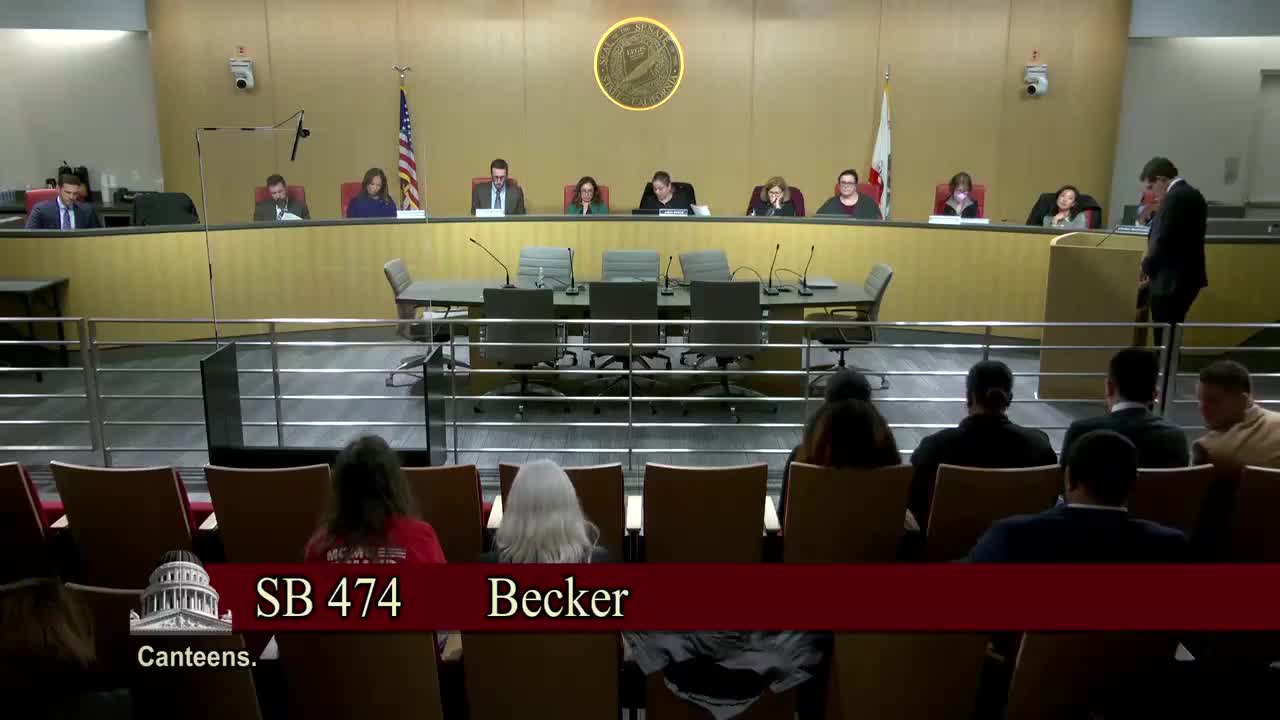 19MIN
Senate Standing Committee on Public Safety
Bill Author