AB 1074: CalWORKs.
- Session Year: 2025-2026
- House: Assembly
- Latest Version Date: 2025-09-12
Current Status:
Failed
(2026-01-22: Consideration of Governor's veto stricken from file.)
Introduced
In Committee
Awaiting First Chamber Vote
Passed First Chamber
In Committee
Awaiting Second Chamber Vote
Passed Second Chamber
Enacted
(1)Under existing law, if the federal government provides funds for the care of a needy relative with whom a needy child is living, aid to the child for any month includes aid to meet the needs of that relative, except as prescribed. Existing law establishes the California Work Opportunity and Responsibility to Kids (CalWORKs) program, under which each county provides cash assistance and other benefits to qualified low-income families using federal, state, and county funds. Existing law provides that the parent or parents are to be considered living with the needy child for a period of up to 6 months, or for a time period as determined by the State Department of Social Services, of the needy childs absence from the family assistance unit, and that the parents are eligible for CalWORKs aid and childcare services if specified conditions are met, including, among others, that the child has been removed from the parent or parents and that the family was receiving aid under when the child was removed. Existing law requires all applicants for or recipients of CalWORKs to ensure and provide documentation that each child in the assistance unit who is not required to be enrolled in school has received all age-appropriate immunizations, as specified.
This bill would make technical changes to the provisions regarding a parents eligibility to receive aid as if the child or children were living with them. The bill would also specify that those provisions do not require (A) all children to be removed from the parent or parents or (B) that, at the time of removal, the needs of the parent or parents were included in the grant. The bill would make these provisions that authorize the provision of aid and child care services, as specified, operative on July 1, 2026, or when the Statewide Automated Welfare System can perform the necessary automation, whichever is later, and would prohibit the implementation of these provisions from resulting in a retroactive payment or underpayment. The bill would exempt a family participating in a reunification case plan from specified immunization requirements. To the extent that this bill would expand county responsibilities under the CalWORKs program, this bill would impose a state-mandated local program.
(2)Existing law generally requires a recipient of CalWORKs to participate in welfare-to-work activities as a condition of eligibility. Existing law requires the recipient and the county welfare department to enter into a written welfare-to-work plan that includes the activities and services that will move the individual into employment. Existing departmental guidance strongly encourages, for individuals receiving benefits as described in paragraph (1), counties to use a CalWORKs family reunification plan, which is the case plan developed by the county child welfare services agency for the provision of services to those individuals, in lieu of the welfare-to-work plan.
This bill would instead authorize, for those individuals, either (A) a case plan, as specified, to serve as a CalWORKs family reunification plan or (B) a jointly developed child welfare services and CalWORKs welfare-to-work plan to serve as the CalWORKs family reunification plan, both of which would satisfy the requirement to have a welfare-to-work plan. To the extent that this bill would expand county responsibilities under the CalWORKs program, this bill would impose a state-mandated local program.
(3)Existing law continuously appropriates moneys from the General Fund to defray a portion of county costs under the CalWORKs program.
This bill would provide that the continuous appropriation would not be made for the purposes of implementing the bill.
(4)The California Constitution requires the state to reimburse local agencies and school districts for certain costs mandated by the state. Statutory provisions establish procedures for making that reimbursement.
This bill would provide that, if the Commission on State Mandates determines that the bill contains costs mandated by the state, reimbursement for those costs shall be made pursuant to the statutory provisions noted above.
(1)Under existing law, if the federal government provides funds for the care of a needy relative with whom a needy child is living, aid to the child for any month includes aid to meet the needs of that relative, except as prescribed. Existing law establishes the California Work Opportunity and Responsibility to Kids (CalWORKs) program, under which each county provides cash assistance and other benefits to qualified low-income families using federal, state, and county funds. Existing law provides that the parent or parents are to be considered living with the needy child for a period of up to 6 months, or for a time period as determined by the State Department of Social Services, of the needy childs absence from the family assistance unit, and that the parents are eligible for CalWORKs aid and childcare services if specified conditions are met, including, among others, that the child has been removed from the parent or parents and that the family was receiving aid under when the child was removed. Existing law requires all applicants for or recipients of CalWORKs to ensure and provide documentation that each child in the assistance unit who is not required to be enrolled in school has received all age-appropriate immunizations, as specified.
This bill would specify that the department may determine the time period the parent or parents are considered living with the needy child to be a longer time period than 6 months and that the parents are eligible make technical changes to the provisions regarding a parents eligibility to receive aid as if the child or children were living with them. The bill would also specify that those provisions do not require (A) all children to be removed from the parent or parents or (B) that, at the time of removal, the needs of the parent or parents were included in the grant. The bill would make these provisions that authorize the provision of aid and child care services, as specified, operative on July 1, 2026, or when the Statewide Automated Welfare System can perform the necessary automation, whichever is later, and would prohibit the implementation of these provisions from resulting in a retroactive payment or underpayment. The bill would exempt a family participating in a reunification case plan from specified immunization requirements. To the extent that this bill would expand county responsibilities under the CalWORKs program, this bill would impose a state-mandated local program.
(2)Existing law generally requires a recipient of CalWORKs to participate in welfare-to-work activities as a condition of eligibility. Existing law requires the recipient and the county welfare department to enter into a written welfare-to-work plan that includes the activities and services that will move the individual into employment. Existing departmental guidance strongly encourages, for individuals receiving benefits as described in paragraph (1), counties to use a CalWORKs family reunification plan, which is the case plan developed by the county child welfare services agency for the provision of services to those individuals, in lieu of the welfare-to-work plan.
This bill would instead authorize, for those individuals, either (A) a case plan, as specified, to serve as a CalWORKs family reunification plan or (B) a jointly developed child welfare services and CalWORKs welfare-to-work plan to serve as the CalWORKs family reunification plan, both of which would satisfy the requirement to have a welfare-to-work plan. To the extent that this bill would expand county responsibilities under the CalWORKs program, this bill would impose a state-mandated local program.
(3)Existing law continuously appropriates moneys from the General Fund to defray a portion of county costs under the CalWORKs program.
This bill would provide that the continuous appropriation would not be made for the purposes of implementing the bill.
(4)The California Constitution requires the state to reimburse local agencies and school districts for certain costs mandated by the state. Statutory provisions establish procedures for making that reimbursement.
This bill would provide that, if the Commission on State Mandates determines that the bill contains costs mandated by the state, reimbursement for those costs shall be made pursuant to the statutory provisions noted above.
(1)Under existing law, if the federal government provides funds for the care of a needy relative with whom a needy child is living, aid to the child for any month includes aid to meet the needs of that relative, except as prescribed. Existing law establishes the California Work Opportunity and Responsibility to Kids (CalWORKs) program, under which each county provides cash assistance and other benefits to qualified low-income families using federal, state, and county funds. Existing law provides that the parent or parents are to be considered living with the needy child for a period of up to 6 months, or for a time period as determined by the State Department of Social Services, of the needy childs absence from the family assistance unit, and that the parents are eligible for CalWORKs aid and childcare services if specified conditions are met, including, among others, that the child has been removed from the parent or parents and that the family was receiving aid under when the child was removed. Existing law requires all applicants for or recipients of CalWORKs to ensure and provide documentation that each child in the assistance unit who is not required to be enrolled in school has received all age-appropriate immunizations, as specified.
This bill would specify that the department may determine the time period the parent or parents are considered living with the needy child to be a longer time period than 6 months and that the parents are eligible to receive aid as if the child or children were living with them. The bill would also specify that those provisions do not require (A) all children to be removed from the parent or parents or (B) that, at the time of removal, the needs of the parent or parents were included in the grant. The bill would make these provisions effective only upon the department determining that they will be either cost neutral or result in savings. The bill would make these provisions that authorize the provision of aid and child care services, as specified, operative on July 1, 2026, or when the Statewide Automated Welfare System can perform the necessary automation, whichever is later, and would prohibit the implementation of these provisions from resulting in a retroactive payment or underpayment. The bill would exempt a family participating in a reunification case plan from specified immunization requirements. To the extent that this bill would expand county responsibilities under the CalWORKs program, this bill would impose a state-mandated local program.
(2)Existing law generally requires a recipient of CalWORKs to participate in welfare-to-work activities as a condition of eligibility. Existing law requires the recipient and the county welfare department to enter into a written welfare-to-work plan that includes the activities and services that will move the individual into employment. Existing departmental guidance strongly encourages, for individuals receiving benefits as described in paragraph (1), counties to use a CalWORKs family reunification plan, which is the case plan developed by the county child welfare services agency for the provision of services to those individuals, in lieu of the welfare-to-work plan.
This bill would instead require, for those individuals, a county to include welfare-to-work activities and services in a CalWORKs reunification plan or in a jointly developed child welfare services and CalWORKs welfare-to-work plan, which would serve as the CalWORKs reunification plan. The bill would specify that use of the CalWORKs reunification plan would satisfy the requirement to have a welfare-to-work plan and would define a CalWORKs reunification plan for the purposes of these provisions. By imposing new duties on counties, this bill would impose a state-mandated local program.(3)Existing law generally prohibits the governing authority of a school or other institution from unconditionally admitting a person as a pupil of a public or private elementary or secondary school, childcare center, day nursery, nursery school, family daycare home, or development center, unless prior to the persons admission to that institution they have been fully immunized against various diseases, including measles, mumps, and pertussis, subject to any specific age criteria.Existing law requires all applicants for or recipients of CalWORKs to ensure and provide documentation that each child in the assistance unit who is not required to be enrolled in school has received all age-appropriate immunizations, as specified, and prohibits the needs of all parents or caretaker relatives in the assistance unit from being considered in determining the grant to the assistance unit until the required documentation is provided. Existing law requires a notice of that immunization requirement to be given to an applicant or recipient at the time of application and at the next redetermination of eligibility for aid.This bill would require that a sanction imposed for failing to verify the immunization of a child end upon the removal of the child from the assistance unit and their placement into out-of-home care. To the extent that this bill would expand county responsibilities under the CalWORKs program, this bill would impose a state-mandated local program.This bill would instead authorize, for those individuals, either (A) a case plan, as specified, to serve as a CalWORKs family reunification plan or (B) a jointly developed child welfare services and CalWORKs welfare-to-work plan to serve as the CalWORKs family reunification plan, both of which would satisfy the requirement to have a welfare-to-work plan. To the extent that this bill would expand county responsibilities under the CalWORKs program, this bill would impose a state-mandated local program.
(4)(3)Existing law continuously appropriates moneys from the General Fund to defray a portion of county costs under the CalWORKs program.
This bill would provide that the continuous appropriation would not be made for the purposes of implementing the bill.
(5)(4)The California Constitution requires the state to reimburse local agencies and school districts for certain costs mandated by the state. Statutory provisions establish procedures for making that reimbursement.
This bill would provide that, if the Commission on State Mandates determines that the bill contains costs mandated by the state, reimbursement for those costs shall be made pursuant to the statutory provisions noted above.
(1)Under existing law, if the federal government provides funds for the care of a needy relative with whom a needy child is living, aid to the child for any month includes aid to meet the needs of that relative, except as prescribed. Existing law establishes the California Work Opportunity and Responsibility to Kids (CalWORKs) program, under which each county provides cash assistance and other benefits to qualified low-income families using federal, state, and county funds. Existing law provides that the parent or parents are to be considered living with the needy child for a period of up to 6 months, or for a time period as determined by the State Department of Social Services, of the needy childs absence from the family assistance unit, and that the parents are eligible for CalWORKs aid and childcare services if specified conditions are met, including, among others, that the child has been removed from the parent or parents and that the family was receiving aid under when the child was removed.
This bill would specify that the department may determine the time period determined by the department the parent or parents are considered living with the needy child to be a longer time period than 6 months and that the parents are eligible to receive aid as if the child or children were living with them. The bill would also specify that those provisions do not require (A) all children to be removed from the parent or parents or (B) that the parent or parents were receiving aid independently from the family at the time of removal. that, at the time of removal, the needs of the parent or parents were included in the grant. The bill would make these provisions effective only upon the department determining that they will be either cost neutral or result in savings.
(2)Existing law generally requires a recipient of CalWORKs to participate in welfare-to-work activities as a condition of eligibility. Existing law requires the recipient and the county welfare department to enter into a written welfare-to-work plan that includes the activities and services that will move the individual into employment. Existing departmental guidance strongly encourages, for individuals receiving benefits as described in paragraph (1), counties to use a CalWORKs family reunification plan, which is the case plan developed by the county child welfare services agency for the provision of services to those individuals, in lieu of the welfare-to-work plan.
This bill would instead require, for those individuals, a county to include welfare-to-work activities and services in a CalWORKs reunification plan or in a jointly developed child welfare services and CalWORKs welfare-to-work plan, which would serve as the CalWORKs reunification plan. The bill would specify that use of the CalWORKs reunification plan would satisfy the requirement to have a welfare-to-work plan and would define a CalWORKs reunification plan for the purposes of these provisions. By imposing new duties on counties, this bill would impose a state-mandated local program.
(3)Existing law generally prohibits the governing authority of a school or other institution from unconditionally admitting a person as a pupil of a public or private elementary or secondary school, childcare center, day nursery, nursery school, family daycare home, or development center, unless prior to the persons admission to that institution they have been fully immunized against various diseases, including measles, mumps, and pertussis, subject to any specific age criteria.
Existing law requires all applicants for or recipients of CalWORKs to ensure and provide documentation that each child in the assistance unit who is not required to be enrolled in school has received all age-appropriate immunizations, as specified, and prohibits the needs of all parents or caretaker relatives in the assistance unit from being considered in determining the grant to the assistance unit until the required documentation is provided. Existing law requires a notice of that immunization requirement to be given to an applicant or recipient at the time of application and at the next redetermination of eligibility for aid.
This bill would require that a sanction imposed for failing to verify the immunization of a child end upon the removal of the child from the assistance unit and their placement into out-of-home care. To the extent that this bill would expand county responsibilities under the CalWORKs program, this bill would impose a state-mandated local program.
(4)Existing law continuously appropriates moneys from the General Fund to defray a portion of county costs under the CalWORKs program.
This bill would provide that the continuous appropriation would not be made for the purposes of implementing the bill.
(5)The California Constitution requires the state to reimburse local agencies and school districts for certain costs mandated by the state. Statutory provisions establish procedures for making that reimbursement.
This bill would provide that, if the Commission on State Mandates determines that the bill contains costs mandated by the state, reimbursement for those costs shall be made pursuant to the statutory provisions noted above.
(1)Under existing law, if the federal government provides funds for the care of a needy relative with whom a needy child is living, aid to the child for any month includes aid to meet the needs of that relative, except as prescribed. Existing law establishes the California Work Opportunity and Responsibility to Kids (CalWORKs) program, under which each county provides cash assistance and other benefits to qualified low-income families using federal, state, and county funds. Existing law provides that the parent or parents are to be considered living with the needy child for a period of up to 6 months, or for a time period as determined by the State Department of Social Services, of the needy childs absence from the family assistance unit, and that the parents are eligible for CalWORKs aid and childcare services if specified conditions are met, including, among others, that the child has been removed from the parent or parents and that the family was receiving aid under when the child was removed.
This bill would specify that the department may determine the time period determined by the department to be a longer time period and that the parents are eligible to receive aid as if the child or children were living with them. The bill would also specify that those provisions do not require (A) all children to be removed from the parent or parents or (B) that the parent or parents were receiving aid independently from the family at the time of removal.
(2)Existing law generally requires a recipient of CalWORKs to participate in welfare-to-work activities as a condition of eligibility. Existing law requires the recipient and the county welfare department to enter into a written welfare-to-work plan that includes the activities and services that will move the individual into employment. Existing departmental guidance strongly encourages, for individuals receiving benefits as described in paragraph (1), counties to use a CalWORKs family reunification plan, which is the case plan developed by the county child welfare services agency for the provision of services to those individuals, in lieu of the welfare-to-work plan.
This bill would instead require, for those individuals, a county to include welfare-to-work activities and services in a CalWORKs reunification plan or in a jointly developed child welfare services and CalWORKs welfare-to-work plan, which would serve as the CalWORKs reunification plan. The bill would specify that use of the CalWORKs reunification plan would satisfy the requirement to have a welfare-to-work plan and would define a CalWORKs reunification plan for the purposes of these provisions. By imposing new duties on counties, this bill would impose a state-mandated local program.
(2)(3)Existing law generally prohibits the governing authority of a school or other institution from unconditionally admitting a person as a pupil of a public or private elementary or secondary school, childcare center, day nursery, nursery school, family daycare home, or development center, unless prior to the persons admission to that institution they have been fully immunized against various diseases, including measles, mumps, and pertussis, subject to any specific age criteria.
Existing law requires all applicants for or recipients of CalWORKs to ensure and provide documentation that each child in the assistance unit who is not required to be enrolled in school has received all age-appropriate immunizations, as specified, and prohibits the needs of all parents or caretaker relatives in the assistance unit from being considered in determining the grant to the assistance unit until the required documentation is provided. Existing law requires a notice of that immunization requirement to be given to an applicant or recipient at the time of application and at the next redetermination of eligibility for aid.
This bill would require that a sanction imposed for failing to verify the immunization of a child end upon the removal of the child from the assistance unit and their placement into out-of-home care. To the extent that this bill would expand county responsibilities under the CalWORKs program, this bill would impose a state-mandated local program.
(3)(4)Existing law continuously appropriates moneys from the General Fund to defray a portion of county costs under the CalWORKs program.
This bill would provide that the continuous appropriation would not be made for the purposes of implementing the bill.
(4)(5)The California Constitution requires the state to reimburse local agencies and school districts for certain costs mandated by the state. Statutory provisions establish procedures for making that reimbursement.
This bill would provide that, if the Commission on State Mandates determines that the bill contains costs mandated by the state, reimbursement for those costs shall be made pursuant to the statutory provisions noted above.
(1)Under existing law, if the federal government provides funds for the care of a needy relative with whom a needy child is living, aid to the child for any month includes aid to meet the needs of that relative, except as prescribed. Existing law establishes the California Work Opportunity and Responsibility to Kids (CalWORKs) program, under which each county provides cash assistance and other benefits to qualified low-income families using federal, state, and county funds. Existing law provides that the parent or parents are to be considered living with the needy child for a period of up to 6 months, or for a time period as determined by the State Department of Social Services, of the needy childs absence from the family assistance unit, and that the parents are eligible for CalWORKs aid and childcare services if specified conditions are met, including, among others, that the child has been removed from the parent or parents and that the family was receiving aid under when the child was removed.
This bill would specify that the department may determine the time period determined by the department to be a longer time period and that the parents are eligible to receive aid as if the child or children were living with them. The bill would also specify that those provisions do not require (A) all children to be removed from the parent or parents or (B) that the parent or parents were receiving aid independently from the family at the time of removal.
(2)Existing law generally prohibits the governing authority of a school or other institution from unconditionally admitting a person as a pupil of a public or private elementary or secondary school, childcare center, day nursery, nursery school, family daycare home, or development center, unless prior to the persons admission to that institution they have been fully immunized against various diseases, including measles, mumps, and pertussis, subject to any specific age criteria.
Existing law requires all applicants for or recipients of CalWORKs to ensure and provide documentation that each child in the assistance unit who is not required to be enrolled in school has received all age-appropriate immunizations, as specified, and prohibits the needs of all parents or caretaker relatives in the assistance unit from being considered in determining the grant to the assistance unit until the required documentation is provided. Existing law requires a notice of that immunization requirement to be given to an applicant or recipient at the time of application and at the next redetermination of eligibility for aid.
This bill would require that a sanction imposed for failing to verify the immunization of a child end upon the removal of the child from the assistance unit and their placement into out-of-home care. To the extent that this bill would expand county responsibilities under the CalWORKs program, this bill would impose a state-mandated local program.
(3)Existing law continuously appropriates moneys from the General Fund to defray a portion of county costs under the CalWORKs program.
This bill would provide that the continuous appropriation would not be made for the purposes of implementing the bill.
(4)The California Constitution requires the state to reimburse local agencies and school districts for certain costs mandated by the state. Statutory provisions establish procedures for making that reimbursement.
This bill would provide that, if the Commission on State Mandates determines that the bill contains costs mandated by the state, reimbursement for those costs shall be made pursuant to the statutory provisions noted above.
(a)During those times as the federal government provides funds for the care of a needy relative with whom a needy child or needy children are living, aid to the child or children for any month includes aid to meet the needs of that relative, if money payments are made with respect to the child or children for that month, and if the relative is not receiving aid under Chapter 3 (commencing with Section 12000) or 5.1 (commencing with Section 13000) of this part or Part A of Title XVI of the Social Security Act for that month. Needy relatives under this chapter include only natural or adoptive parents, the spouse of a natural or adoptive parent, and other needy caretaker relatives.
(b)For a family receiving CalWORKs, a needy child or children shall be considered living with their parent or parents for a period of up to six months, or for a time period as determined by the department, of the needy childs or childrens absence from the family assistance unit, and the parent or parents shall be eligible to receive aid, as otherwise eligible as if the child or children were living with the parent or parents, as specified in subdivision (a) of Section 11450 and childcare services under Chapter 21 (commencing with Section 10370) of Part 1.8, as well as services under this chapter, including services funded under Sections 15204.2 and 15204.8, and the special needs benefit specified in clause (i) of subparagraph (A) of paragraph (3) of subdivision (f) of Section 11450, if all of the following conditions are met:
(1)(A)The child has been removed from the parent or parents and placed in out-of-home care.
(B)This paragraph does not require that all children be removed from the parent or parents.
(2)(A)When the child was removed from the parent or parents, the family was receiving aid under this section.
(B)This paragraph includes a family receiving aid under this section even if, at the time of removal, the needs of the parent or parents were not included in the grant.
(3)(A)The county has determined that the provision of aid as specified in subdivision (a) of Section 11450 or the provision of childcare services under Chapter 21 (commencing with Section 10370) of Part 1.8 or the provision of services under this chapter, including services funded under Sections 15204.2 and 15204.8, and the special needs benefit specified in clause (i) of subparagraph (A) of paragraph (3) of subdivision (f) of Section 11450, is necessary for reunification.
(B)If a family is participating in a reunification case plan developed by a county child welfare agency, the county shall deem aid and services described in this paragraph as necessary for reunification.
(4)The changes made to this subdivision by the act that added this paragraph that authorize the provision of aid as specified in subdivision (a) of Section 11450 and childcare services under Chapter 21 (commencing with Section 10370) of Part 1.8 shall become operative on July 1, 2026, or when the Statewide Automated Welfare System can perform the necessary automation, whichever date is later. Implementation of these provisions shall not result in retroactive payment or underpayment pursuant to subdivision (k) of Section 11004, or related regulations or guidance, for any period of time prior to implementation pursuant to this paragraph.
(c)A family participating in a reunification case plan developed by a county child welfare agency and receiving aid under subdivision (a) of Section 11450, pursuant to subdivision (b) of this section, shall be exempt from the immunization requirements under Section 11265.8.
(d)The department shall revise its state Temporary Assistance for Needy Families plan to incorporate the provisions of subdivision (b) and to incorporate the good cause exception provisions the department deems necessary as authorized by Section 608(a)(10)(B) of Title 42 of the United States Code.
(e)Notwithstanding the rulemaking provisions of the Administrative Procedure Act (Chapter 3.5 (commencing with Section 11340) of Part 1 of Division 3 of Title 2 of the Government Code), the department may implement and administer this section through all-county letters or similar instruction that shall have the same force and effect as regulations until regulations are adopted.
SEC. 2.Section 11325.21 of the Welfare and Institutions Code, as amended by Section 52 of Chapter 11 of the Statutes of 2020, is amended to read:11325.21.(a)(1)Any individual who is required to participate in welfare-to-work activities pursuant to this article shall enter into a written welfare-to-work plan with the county welfare department after assessment, as required by subdivision (c) of Section 11320.1, but no more than 90 days after the date that a recipients eligibility for aid is determined or the date the recipient is required to participate in welfare-to-work activities pursuant to Section 11320.3. The recipient and the county may enter into a welfare-to-work plan as late as 90 days after the completion of the job search activity, as defined in subdivision (b) of Section 11320.1, if the job search activity is initiated within 30 days after the recipients eligibility for aid is determined. The plan shall include the activities and services that will move the individual into employment.
(2)(A)For an individual receiving CalWORKs family reunification services pursuant to subdivision (b) of Section 11203, either of the following shall apply:
(i)A case plan pursuant to Section 16501.1 that includes the need for CalWORKs family reunification cash aid or childcare services may serve as a CalWORKs family reunification plan, which shall satisfy the requirement to have a welfare-to-work plan.
(ii)A jointly developed child welfare services and CalWORKs welfare-to-work plan may serve as the CalWORKs family reunification plan, which shall satisfy the requirement to have a welfare-to-work plan.
(B)For the purposes of this paragraph, CalWORKs family reunification plan means the plan for individuals receiving CalWORKs benefits pursuant to subdivision (b) of Section 11203 that sets forth all of the activities and services that will be provided through the welfare-to-work program and all of the reunification services, as defined in Section 16601, that will be provided to the individual through the child welfare services case plan to assist the individual in reunifying with children who have been removed from the home and placed in out-of-home care.
(b)The county shall allow the participant three working days after completion of the plan or subsequent amendments to the plan in which to evaluate and request changes to the terms of the plan.
(c)The plan shall be written in clear and understandable language, and have a simple and easy-to-read format.
(d)The plan shall contain at least all of the following general information:
(1)A general description of the program provided for in this article, including available program components and supportive services.
(2)A general description of the rights, duties, and responsibilities of program participants, including a list of the exemptions from the required participation under this article, the consequences of a refusal to participate in program components, and criteria for successful completion of the program.
(3)A description of the grace period required in paragraph (5) of subdivision (b) of Section 11325.22.
(e)(1)The plan shall specify, and shall be amended to reflect changes in, the participants welfare-to-work activity, a description of services to be provided in accordance with Sections 11322.6, 11322.8, and 11322.85, as needed, and specific requirements for successful completion of assigned activities, including required hours of participation.
(2)The plan shall also include a general description of supportive services pursuant to Section 11323.2 that are to be provided as necessary for the participant to complete assigned program activities.
(f)Any assignment to a program component shall be reflected in the plan or an amendment to the plan. The participant shall maintain satisfactory progress toward employment through the methods set forth in the plan, and the county shall provide the services pursuant to Section 11323.2.
(g)This section shall not apply to individuals subject to Article 3.5 (commencing with Section 11331) during the time that article is operative.
(h)(1)This section shall become inoperative on July 1, 2026, or when the department notifies the Legislature that the California Statewide Automated Welfare System can perform the necessary automation to implement this section, whichever date is later. Prior to that date, the department shall issue comprehensive policy, fiscal, and claiming instructions to the counties.
(2)This section shall remain in effect only until January 1 of the year following the section becoming inoperative pursuant to paragraph (1), and as of that date is repealed.
SEC. 3.Section 11325.21 of the Welfare and Institutions Code, as added by Section 53 of Chapter 11 of the Statutes of 2020, is amended to read:11325.21.(a)(1)Any individual who is required to participate in welfare-to-work activities pursuant to this article shall enter into a written welfare-to-work plan with the county welfare department after assessment, as required by subdivision (c) of Section 11320.1, but no more than 90 days after the date that a recipients eligibility for aid is determined or the date the recipient is required to participate in welfare-to-work activities pursuant to Section 11320.3. The recipient and the county may enter into a welfare-to-work plan as late as 90 days after the completion of the job search activity, as defined in subdivision (b) of Section 11320.1, if the job search activity is initiated within 30 days after the recipients eligibility for aid is determined. The plan shall include the activities and services that will move the individual into employment.
(2)(A)For an individual receiving CalWORKs family reunification services pursuant to subdivision (b) of Section 11203, either of the following shall apply:
(i)A case plan pursuant to Section 16501.1 that includes the need for CalWORKs family reunification cash aid or childcare services may serve as a CalWORKs family reunification plan, which shall satisfy the requirement to have a welfare-to-work plan.
(ii)A jointly developed child welfare services and CalWORKs welfare-to-work plan may serve as the CalWORKs family reunification plan, which shall satisfy the requirement to have a welfare-to-work plan.
(B)For the purposes of this paragraph, CalWORKs family reunification plan means the plan for individuals receiving CalWORKs benefits pursuant to subdivision (b) of Section 11203 that sets forth all of the activities and services that will be provided through the welfare-to-work program and all of the reunification services, as defined in Section 16601, that will be provided to the individual through the child welfare services case plan to assist the individual in reunifying with children who have been removed from the home and placed in out-of-home care.
(b)The county shall allow the participant three working days after completion of the plan or subsequent amendments to the plan in which to evaluate and request changes to the terms of the plan.
(c)The plan shall be written in clear and understandable language, and have a simple and easy-to-read format.
(d)The plan shall contain at least all of the following general information:
(1)A general description of the program provided for in this article, including available program components and supportive services.
(2)A general description of the rights, duties, and responsibilities of program participants, including a list of the exemptions from the required participation under this article, the consequences of a refusal to participate in program components, and criteria for successful completion of the program.
(3)A description of the grace period required in paragraph (5) of subdivision (b) of Section 11325.22.
(e)(1)The plan shall specify, and shall be amended to reflect changes in, the participants welfare-to-work activity, a description of services to be provided in accordance with Sections 11322.6 and 11322.8, as needed, and specific requirements for successful completion of assigned activities, including required hours of participation.
(2)The plan shall also include a general description of supportive services pursuant to Section 11323.2 that are to be provided as necessary for the participant to complete assigned program activities.
(f)Any assignment to a program component shall be reflected in the plan or an amendment to the plan. The participant shall maintain satisfactory progress toward employment through the methods set forth in the plan, and the county shall provide the services pursuant to Section 11323.2.
(g)This section shall not apply to individuals subject to Article 3.5 (commencing with Section 11331) during the time that article is operative.
(h)This section shall become operative on July 1, 2026, or when the department notifies the Legislature that the California Statewide Automated Welfare System can perform the necessary automation to implement this section, whichever is later.
SEC. 4.No appropriation pursuant to Section 15200 of the Welfare and Institutions Code shall be made for purposes of this act.
SEC. 5.If the Commission on State Mandates determines that this act contains costs mandated by the state, reimbursement to local agencies and school districts for those costs shall be made pursuant to Part 7 (commencing with Section 17500) of Division 4 of Title 2 of the Government Code.
(a)During those times as the federal government provides funds for the care of a needy relative with whom a needy child or needy children are living, aid to the child or children for any month includes aid to meet the needs of that relative, if money payments are made with respect to the child or children for that month, and if the relative is not receiving aid under Chapter 3 (commencing with Section 12000) or 5.1 (commencing with Section 13000) of this part or Part A of Title XVI of the Social Security Act for that month. Needy relatives under this chapter include only natural or adoptive parents, the spouse of a natural or adoptive parent, and other needy caretaker relatives.
(b)For a family receiving CalWORKs, a needy child or children shall be considered living with their parent or parents for a period of up to six months, or for a longer time period as determined by the department, of the needy childs or childrens absence from the family assistance unit, and the parent or parents shall be eligible to receive aid, as otherwise eligible as if the child or children were living with the parent or parents, as specified in subdivision (a) of Section 11450 and childcare services under Chapter 21 (commencing with Section 10370) of Part 1.8, as well as services under this chapter, including services funded under Sections 15204.2 and 15204.8, and the special needs benefit specified in clause (i) of subparagraph (A) of paragraph (3) of subdivision (f) of Section 11450, if all of the following conditions are met:
(1)(A)The child has been removed from the parent or parents and placed in out-of-home care.
(B)This paragraph does not require that all children be removed from the parent or parents.
(2)(A)When the child was removed from the parent or parents, the family was receiving aid under this section.
(B)This paragraph includes a family receiving aid under this section even if, at the time of removal, the needs of the parent or parents were not included in the grant.
(3)(A)The county has determined that the provision of aid as specified in subdivision (a) of Section 11450 or the provision of childcare services under Chapter 21 (commencing with Section 10370) of Part 1.8 or the provision of services under this chapter, including services funded under Sections 15204.2 and 15204.8, and the special needs benefit specified in clause (i) of subparagraph (A) of paragraph (3) of subdivision (f) of Section 11450, is necessary for reunification.
(B)If a family is participating in a reunification case plan developed by a county child welfare agency, the county shall deem aid and services described in this paragraph as necessary for reunification.
(4)The changes made to this subdivision by the act that added this paragraph that authorize the provision of aid as specified in subdivision (a) of Section 11450 and childcare services under Chapter 21 (commencing with Section 10370) of Part 1.8 shall become operative on July 1, 2026, or when the Statewide Automated Welfare System can perform the necessary automation, whichever date is later. Implementation of these provisions shall not result in retroactive payment or underpayment pursuant to subdivision (k) of Section 11004, or related regulations or guidance, for any period of time prior to implementation pursuant to this paragraph.
(c)A family participating in a reunification case plan developed by a county child welfare agency and receiving aid under subdivision (a) of Section 11450, pursuant to subdivision (b) of this section, shall be exempt from the immunization requirements under Section 11265.8.
(d)The department shall revise its state Temporary Assistance for Needy Families plan to incorporate the provisions of subdivision (b) and to incorporate the good cause exception provisions the department deems necessary as authorized by Section 608(a)(10)(B) of Title 42 of the United States Code.
(e)Notwithstanding the rulemaking provisions of the Administrative Procedure Act (Chapter 3.5 (commencing with Section 11340) of Part 1 of Division 3 of Title 2 of the Government Code), the department may implement and administer this section through all-county letters or similar instruction that shall have the same force and effect as regulations until regulations are adopted.
SEC. 2.Section 11325.21 of the Welfare and Institutions Code, as amended by Section 52 of Chapter 11 of the Statutes of 2020, is amended to read:11325.21.(a)(1)Any individual who is required to participate in welfare-to-work activities pursuant to this article shall enter into a written welfare-to-work plan with the county welfare department after assessment, as required by subdivision (c) of Section 11320.1, but no more than 90 days after the date that a recipients eligibility for aid is determined or the date the recipient is required to participate in welfare-to-work activities pursuant to Section 11320.3. The recipient and the county may enter into a welfare-to-work plan as late as 90 days after the completion of the job search activity, as defined in subdivision (b) of Section 11320.1, if the job search activity is initiated within 30 days after the recipients eligibility for aid is determined. The plan shall include the activities and services that will move the individual into employment.
(2)(A)For an individual receiving CalWORKs family reunification services pursuant to subdivision (b) of Section 11203, either of the following shall apply:
(i)A case plan pursuant to Section 16501.1 that includes the need for CalWORKs family reunification cash aid or childcare services may serve as a CalWORKs family reunification plan, which shall satisfy the requirement to have a welfare-to-work plan.
(ii)A jointly developed child welfare services and CalWORKs welfare-to-work plan may serve as the CalWORKs family reunification plan, which shall satisfy the requirement to have a welfare-to-work plan.
(B)For the purposes of this paragraph, CalWORKs family reunification plan means the plan for individuals receiving CalWORKs benefits pursuant to subdivision (b) of Section 11203 that sets forth all of the activities and services that will be provided through the welfare-to-work program and all of the reunification services, as defined in Section 16601, that will be provided to the individual through the child welfare services case plan to assist the individual in reunifying with children who have been removed from the home and placed in out-of-home care.
(b)The county shall allow the participant three working days after completion of the plan or subsequent amendments to the plan in which to evaluate and request changes to the terms of the plan.
(c)The plan shall be written in clear and understandable language, and have a simple and easy-to-read format.
(d)The plan shall contain at least all of the following general information:
(1)A general description of the program provided for in this article, including available program components and supportive services.
(2)A general description of the rights, duties, and responsibilities of program participants, including a list of the exemptions from the required participation under this article, the consequences of a refusal to participate in program components, and criteria for successful completion of the program.
(3)A description of the grace period required in paragraph (5) of subdivision (b) of Section 11325.22.
(e)(1)The plan shall specify, and shall be amended to reflect changes in, the participants welfare-to-work activity, a description of services to be provided in accordance with Sections 11322.6, 11322.8, and 11322.85, as needed, and specific requirements for successful completion of assigned activities, including required hours of participation.
(2)The plan shall also include a general description of supportive services pursuant to Section 11323.2 that are to be provided as necessary for the participant to complete assigned program activities.
(f)Any assignment to a program component shall be reflected in the plan or an amendment to the plan. The participant shall maintain satisfactory progress toward employment through the methods set forth in the plan, and the county shall provide the services pursuant to Section 11323.2.
(g)This section shall not apply to individuals subject to Article 3.5 (commencing with Section 11331) during the time that article is operative.
(h)(1)This section shall become inoperative on July 1, 2026, or when the department notifies the Legislature that the California Statewide Automated Welfare System can perform the necessary automation to implement this section, whichever date is later. Prior to that date, the department shall issue comprehensive policy, fiscal, and claiming instructions to the counties.
(2)This section shall remain in effect only until January 1 of the year following the section becoming inoperative pursuant to paragraph (1), and as of that date is repealed.
SEC. 3.Section 11325.21 of the Welfare and Institutions Code, as added by Section 53 of Chapter 11 of the Statutes of 2020, is amended to read:11325.21.(a)(1)Any individual who is required to participate in welfare-to-work activities pursuant to this article shall enter into a written welfare-to-work plan with the county welfare department after assessment, as required by subdivision (c) of Section 11320.1, but no more than 90 days after the date that a recipients eligibility for aid is determined or the date the recipient is required to participate in welfare-to-work activities pursuant to Section 11320.3. The recipient and the county may enter into a welfare-to-work plan as late as 90 days after the completion of the job search activity, as defined in subdivision (b) of Section 11320.1, if the job search activity is initiated within 30 days after the recipients eligibility for aid is determined. The plan shall include the activities and services that will move the individual into employment.
(2)(A)For an individual receiving CalWORKs family reunification services pursuant to subdivision (b) of Section 11203, either of the following shall apply:
(i)A case plan pursuant to Section 16501.1 that includes the need for CalWORKs family reunification cash aid or childcare services may serve as a CalWORKs family reunification plan, which shall satisfy the requirement to have a welfare-to-work plan.
(ii)A jointly developed child welfare services and CalWORKs welfare-to-work plan may serve as the CalWORKs family reunification plan, which shall satisfy the requirement to have a welfare-to-work plan.
(B)For the purposes of this paragraph, CalWORKs family reunification plan means the plan for individuals receiving CalWORKs benefits pursuant to subdivision (b) of Section 11203 that sets forth all of the activities and services that will be provided through the welfare-to-work program and all of the reunification services, as defined in Section 16601, that will be provided to the individual through the child welfare services case plan to assist the individual in reunifying with children who have been removed from the home and placed in out-of-home care.
(b)The county shall allow the participant three working days after completion of the plan or subsequent amendments to the plan in which to evaluate and request changes to the terms of the plan.
(c)The plan shall be written in clear and understandable language, and have a simple and easy-to-read format.
(d)The plan shall contain at least all of the following general information:
(1)A general description of the program provided for in this article, including available program components and supportive services.
(2)A general description of the rights, duties, and responsibilities of program participants, including a list of the exemptions from the required participation under this article, the consequences of a refusal to participate in program components, and criteria for successful completion of the program.
(3)A description of the grace period required in paragraph (5) of subdivision (b) of Section 11325.22.
(e)(1)The plan shall specify, and shall be amended to reflect changes in, the participants welfare-to-work activity, a description of services to be provided in accordance with Sections 11322.6 and 11322.8, as needed, and specific requirements for successful completion of assigned activities, including required hours of participation.
(2)The plan shall also include a general description of supportive services pursuant to Section 11323.2 that are to be provided as necessary for the participant to complete assigned program activities.
(f)Any assignment to a program component shall be reflected in the plan or an amendment to the plan. The participant shall maintain satisfactory progress toward employment through the methods set forth in the plan, and the county shall provide the services pursuant to Section 11323.2.
(g)This section shall not apply to individuals subject to Article 3.5 (commencing with Section 11331) during the time that article is operative.
(h)This section shall become operative on July 1, 2026, or when the department notifies the Legislature that the California Statewide Automated Welfare System can perform the necessary automation to implement this section, whichever is later.
SEC. 4.No appropriation pursuant to Section 15200 of the Welfare and Institutions Code shall be made for purposes of this act.
SEC. 5.If the Commission on State Mandates determines that this act contains costs mandated by the state, reimbursement to local agencies and school districts for those costs shall be made pursuant to Part 7 (commencing with Section 17500) of Division 4 of Title 2 of the Government Code.
(a)During those times as the federal government provides funds for the care of a needy relative with whom a needy child or needy children are living, aid to the child or children for any month includes aid to meet the needs of that relative, if money payments are made with respect to the child or children for that month, and if the relative is not receiving aid under Chapter 3 (commencing with Section 12000) or 5.1 (commencing with Section 13000) of this part or Part A of Title XVI of the Social Security Act for that month. Needy relatives under this chapter include only natural or adoptive parents, the spouse of a natural or adoptive parent, and other needy caretaker relatives.
(b)For a family receiving CalWORKs, a needy child or children shall be considered living with their parent or parents for a period of up to six months, or for a longer time period as determined by the department, of the needy childs or childrens absence from the family assistance unit, and the parent or parents shall be eligible to receive aid, as otherwise eligible as if the child or children were living with the parent or parents, as specified in subdivision (a) of Section 11450 and childcare services under Article 15.5 (commencing with Section 8350) of Chapter 2 of Part 6 of Division 1 of Title 1 of the Education Code, as that article read on May 1, 2021, Chapter 21 (commencing with Section 10370) of Part 1.8, as well as services under this chapter, including services funded under Sections 15204.2 and 15204.8, and the special needs benefit specified in clause (i) of subparagraph (A) of paragraph (3) of subdivision (f) of Section 11450, if all of the following conditions are met:
(1)(A)The child has been removed from the parent or parents and placed in out-of-home care.
(B)This paragraph does not require that all children be removed from the parent or parents.
(2)(A)When the child was removed from the parent or parents, the family was receiving aid under this section.
(B)This paragraph includes a family receiving aid under this section even if, at the time of removal, the needs of the parent or parents were not included in the grant.
(3)(A)The county has determined that the provision of aid as specified in subdivision (a) of Section 11450 or the provision of childcare services under Article 15.5 (commencing with Section 8350) of Chapter 2 of Part 6 of Division 1 of Title 1 of the Education Code, as that article read on May 1, 2021, Chapter 21 (commencing with Section 10370) of Part 1.8 or the provision of services under this chapter, including services funded under Sections 15204.2 and 15204.8, and the special needs benefit specified in clause (i) of subparagraph (A) of paragraph (3) of subdivision (f) of Section 11450, is necessary for reunification.
(4)The changes made to this subdivision by the act that added this paragraph shall only take effect upon the department determining that the changes will be cost neutral or will result in savings. In making that determination, the department shall consider, at a minimum, the ongoing cost of providing foster care benefits for children for whom reunification will be delayed or unsuccessful if the aid provided pursuant to this subdivision is unavailable.(B)If a family is participating in a reunification case plan developed by a county child welfare agency, the county shall deem aid and services described in this paragraph as necessary for reunification.
(4)The changes made to this subdivision by the act that added this paragraph that authorize the provision of aid as specified in subdivision (a) of Section 11450 and childcare services under Chapter 21 (commencing with Section 10370) of Part 1.8 shall become operative on July 1, 2026, or when the Statewide Automated Welfare System can perform the necessary automation, whichever date is later. Implementation of these provisions shall not result in retroactive payment or underpayment pursuant to subdivision (k) of Section 11004, or related regulations or guidance, for any period of time prior to implementation pursuant to this paragraph.
(c)A family participating in a reunification case plan developed by a county child welfare agency and receiving aid under subdivision (a) of Section 11450, pursuant to subdivision (b) of this section, shall be exempt from the immunization requirements under Section 11265.8.
(c)(d)The department shall revise its state Temporary Assistance for Needy Families plan to incorporate the provisions of subdivision (b) and to incorporate the good cause exception provisions the department deems necessary as authorized by Section 608(a)(10)(B) of Title 42 of the United States Code.
(d)(e)Notwithstanding the rulemaking provisions of the Administrative Procedure Act (Chapter 3.5 (commencing with Section 11340) of Part 1 of Division 3 of Title 2 of the Government Code), the department may implement and administer this section through all-county letters or similar instruction that shall have the same force and effect as regulations until regulations are adopted.
(e)This section shall become operative on July 1, 2022. Prior to this date, the department shall issue comprehensive policy, fiscal, and claiming instructions to the counties. The department shall notify the Legislature when the Statewide Automated Welfare System has automated this section.SEC. 2.Section 11265.85 is added to the Welfare and Institutions Code, to read:11265.85.A sanction imposed for failing to verify the immunization of a child, pursuant to Section 11265.8, shall end upon the removal of the child from the assistance unit and their placement into out-of-home care.SEC. 3.SEC. 2.Section 11325.21 of the Welfare and Institutions Code, as amended by Section 52 of Chapter 11 of the Statutes of 2020, is amended to read:11325.21.(a)(1)Any individual who is required to participate in welfare-to-work activities pursuant to this article shall enter into a written welfare-to-work plan with the county welfare department after assessment, as required by subdivision (c) of Section 11320.1, but no more than 90 days after the date that a recipients eligibility for aid is determined or the date the recipient is required to participate in welfare-to-work activities pursuant to Section 11320.3. The recipient and the county may enter into a welfare-to-work plan as late as 90 days after the completion of the job search activity, as defined in subdivision (b) of Section 11320.1, if the job search activity is initiated within 30 days after the recipients eligibility for aid is determined. The plan shall include the activities and services that will move the individual into employment.
(2)(A)For individuals receiving benefits pursuant to subdivision (b) of Section 11203, welfare-to-work activities and services shall be included in a CalWORKs reunification plan, which shall satisfy the requirement to have a welfare-to-work plan, or in a jointly developed child welfare services and CalWORKs welfare-to-work plan, which shall serve as the CalWORKs reunification plan.(2)(A)For an individual receiving CalWORKs family reunification services pursuant to subdivision (b) of Section 11203, either of the following shall apply:
(i)A case plan pursuant to Section 16501.1 that includes the need for CalWORKs family reunification cash aid or childcare services may serve as a CalWORKs family reunification plan, which shall satisfy the requirement to have a welfare-to-work plan.
(ii)A jointly developed child welfare services and CalWORKs welfare-to-work plan may serve as the CalWORKs family reunification plan, which shall satisfy the requirement to have a welfare-to-work plan.
(B)For the purposes of this paragraph, CalWORKs family reunification plan means the plan for individuals receiving CalWORKs benefits pursuant to subdivision (b) of Section 11203 that sets forth all of the activities and services that will be provided through the welfare-to-work program and all of the reunification services, as defined in Section 16601, that will be provided to the individual through the child welfare services case plan to assist the individual in reunifying with children who have been removed from the home and placed in out-of-home care.
(b)The county shall allow the participant three working days after completion of the plan or subsequent amendments to the plan in which to evaluate and request changes to the terms of the plan.
(c)The plan shall be written in clear and understandable language, and have a simple and easy-to-read format.
(d)The plan shall contain at least all of the following general information:
(1)A general description of the program provided for in this article, including available program components and supportive services.
(2)A general description of the rights, duties, and responsibilities of program participants, including a list of the exemptions from the required participation under this article, the consequences of a refusal to participate in program components, and criteria for successful completion of the program.
(3)A description of the grace period required in paragraph (5) of subdivision (b) of Section 11325.22.
(e)(1)The plan shall specify, and shall be amended to reflect changes in, the participants welfare-to-work activity, a description of services to be provided in accordance with Sections 11322.6, 11322.8, and 11322.85, as needed, and specific requirements for successful completion of assigned activities, including required hours of participation.
(2)The plan shall also include a general description of supportive services pursuant to Section 11323.2 that are to be provided as necessary for the participant to complete assigned program activities.
(f)Any assignment to a program component shall be reflected in the plan or an amendment to the plan. The participant shall maintain satisfactory progress toward employment through the methods set forth in the plan, and the county shall provide the services pursuant to Section 11323.2.
(g)This section shall not apply to individuals subject to Article 3.5 (commencing with Section 11331) during the time that article is operative.
(h)This section shall become inoperative on May 1, 2022, or when the department notifies the Legislature that the Statewide Automated Welfare System can perform the necessary automation to implement Section 11325.21, as added by the act that added this subdivision, whichever date is later, and, as of January 1 of the following year, is repealed.(h)(1)This section shall become inoperative on July 1, 2026, or when the department notifies the Legislature that the California Statewide Automated Welfare System can perform the necessary automation to implement this section, whichever date is later. Prior to that date, the department shall issue comprehensive policy, fiscal, and claiming instructions to the counties.
(2)This section shall remain in effect only until January 1 of the year following the section becoming inoperative pursuant to paragraph (1), and as of that date is repealed.
SEC. 4.SEC. 3.Section 11325.21 of the Welfare and Institutions Code, as added by Section 53 of Chapter 11 of the Statutes of 2020, is amended to read:11325.21.(a)(1)Any individual who is required to participate in welfare-to-work activities pursuant to this article shall enter into a written welfare-to-work plan with the county welfare department after assessment, as required by subdivision (c) of Section 11320.1, but no more than 90 days after the date that a recipients eligibility for aid is determined or the date the recipient is required to participate in welfare-to-work activities pursuant to Section 11320.3. The recipient and the county may enter into a welfare-to-work plan as late as 90 days after the completion of the job search activity, as defined in subdivision (b) of Section 11320.1, if the job search activity is initiated within 30 days after the recipients eligibility for aid is determined. The plan shall include the activities and services that will move the individual into employment.
(2)(A)For individuals receiving benefits pursuant to subdivision (b) of Section 11203, welfare-to-work activities and services shall be included in a CalWORKs reunification plan, which shall satisfy the requirement to have a welfare-to-work plan, or in a jointly developed child welfare services and CalWORKs welfare-to-work plan, which shall serve as the CalWORKs reunification plan.(2)(A)For an individual receiving CalWORKs family reunification services pursuant to subdivision (b) of Section 11203, either of the following shall apply:
(i)A case plan pursuant to Section 16501.1 that includes the need for CalWORKs family reunification cash aid or childcare services may serve as a CalWORKs family reunification plan, which shall satisfy the requirement to have a welfare-to-work plan.
(ii)A jointly developed child welfare services and CalWORKs welfare-to-work plan may serve as the CalWORKs family reunification plan, which shall satisfy the requirement to have a welfare-to-work plan.
(B)For the purposes of this paragraph, CalWORKs family reunification plan means the plan for individuals receiving CalWORKs benefits pursuant to subdivision (b) of Section 11203 that sets forth all of the activities and services that will be provided through the welfare-to-work program and all of the reunification services, as defined in Section 16601, that will be provided to the individual through the child welfare services case plan to assist the individual in reunifying with children who have been removed from the home and placed in out-of-home care.
(b)The county shall allow the participant three working days after completion of the plan or subsequent amendments to the plan in which to evaluate and request changes to the terms of the plan.
(c)The plan shall be written in clear and understandable language, and have a simple and easy-to-read format.
(d)The plan shall contain at least all of the following general information:
(1)A general description of the program provided for in this article, including available program components and supportive services.
(2)A general description of the rights, duties, and responsibilities of program participants, including a list of the exemptions from the required participation under this article, the consequences of a refusal to participate in program components, and criteria for successful completion of the program.
(3)A description of the grace period required in paragraph (5) of subdivision (b) of Section 11325.22.
(e)(1)The plan shall specify, and shall be amended to reflect changes in, the participants welfare-to-work activity, a description of services to be provided in accordance with Sections 11322.6 and 11322.8, as needed, and specific requirements for successful completion of assigned activities, including required hours of participation.
(2)The plan shall also include a general description of supportive services pursuant to Section 11323.2 that are to be provided as necessary for the participant to complete assigned program activities.
(f)Any assignment to a program component shall be reflected in the plan or an amendment to the plan. The participant shall maintain satisfactory progress toward employment through the methods set forth in the plan, and the county shall provide the services pursuant to Section 11323.2.
(g)This section shall not apply to individuals subject to Article 3.5 (commencing with Section 11331) during the time that article is operative.
(h)This section shall become operative on May 1, 2022, or when the department notifies the Legislature that the Statewide Automated Welfare System can perform the necessary automation to implement this section, whichever date is later.(h)This section shall become operative on July 1, 2026, or when the department notifies the Legislature that the California Statewide Automated Welfare System can perform the necessary automation to implement this section, whichever is later.
SEC. 5.SEC. 4.No appropriation pursuant to Section 15200 of the Welfare and Institutions Code shall be made for purposes of this act.
SEC. 6.SEC. 5.If the Commission on State Mandates determines that this act contains costs mandated by the state, reimbursement to local agencies and school districts for those costs shall be made pursuant to Part 7 (commencing with Section 17500) of Division 4 of Title 2 of the Government Code.
(a)During those times as the federal government provides funds for the care of a needy relative with whom a needy child or needy children are living, aid to the child or children for any month includes aid to meet the needs of that relative, if money payments are made with respect to the child or children for that month, and if the relative is not receiving aid under Chapter 3 (commencing with Section 12000) or 5.1 (commencing with Section 13000) of this part or Part A of Title XVI of the Social Security Act for that month. Needy relatives under this chapter include only natural or adoptive parents, the spouse of a natural or adoptive parent, and other needy caretaker relatives.
(b)For a family receiving CalWORKs, a needy child or children shall be considered living with their parent or parents for a period of up to six months, or for a longer time period as determined by the department, of the needy childs or childrens absence from the family assistance unit, and the parent or parents shall be eligible to receive aid, as otherwise eligible as if the child or children were living with the parent or parents, as specified in subdivision (a) of Section 11450 and childcare services under Article 15.5 (commencing with Section 8350) of Chapter 2 of Part 6 of Division 1 of Title 1 of the Education Code, as that article read on May 1, 2021, as well as services under this chapter, including services funded under Sections 15204.2 and 15204.8, and the special needs benefit specified in clause (i) of subparagraph (A) of paragraph (3) of subdivision (f) of Section 11450, if all of the following conditions are met:
(1)(A)The child has been removed from the parent or parents and placed in out-of-home care.
(B)This paragraph does not require that all children be removed from the parent or parents.
(2)(A)When the child was removed from the parent or parents, the family was receiving aid under this section.
(B)This paragraph does not require that the parent or parents were receiving aid independently from the family at the time of removal. includes a family receiving aid under this section even if, at the time of removal, the needs of the parent or parents were not included in the grant.
(3)The county has determined that the provision of aid as specified in subdivision (a) of Section 11450 or the provision of childcare services under Article 15.5 (commencing with Section 8350) of Chapter 2 of Part 6 of Division 1 of Title 1 of the Education Code, as that article read on May 1, 2021, or the provision of services under this chapter, including services funded under Sections 15204.2 and 15204.8, and the special needs benefit specified in clause (i) of subparagraph (A) of paragraph (3) of subdivision (f) of Section 11450, is necessary for reunification.
(4)The changes made to this subdivision by the act that added this paragraph shall only take effect upon the department determining that the changes will be cost neutral or will result in savings. In making that determination, the department shall consider, at a minimum, the ongoing cost of providing foster care benefits for children for whom reunification will be delayed or unsuccessful if the aid provided pursuant to this subdivision is unavailable.
(c)The department shall revise its state Temporary Assistance for Needy Families plan to incorporate the provisions of subdivision (b) and to incorporate the good cause exception provisions the department deems necessary as authorized by Section 608(a)(10)(B) of Title 42 of the United States Code.
(d)Notwithstanding the rulemaking provisions of the Administrative Procedure Act (Chapter 3.5 (commencing with Section 11340) of Part 1 of Division 3 of Title 2 of the Government Code), the department may implement and administer this section through all-county letters or similar instruction that shall have the same force and effect as regulations until regulations are adopted.
(e)This section shall become operative on July 1, 2022. Prior to this date, the department shall issue comprehensive policy, fiscal, and claiming instructions to the counties. The department shall notify the Legislature when the Statewide Automated Welfare System has automated this section.
SEC. 2.Section 11265.85 is added to the Welfare and Institutions Code, to read:11265.85.A sanction imposed for failing to verify the immunization of a child, pursuant to Section 11265.8, shall end upon the removal of the child from the assistance unit and their placement into out-of-home care.
SEC. 3.Section 11325.21 of the Welfare and Institutions Code, as amended by Section 52 of Chapter 11 of the Statutes of 2020, is amended to read:11325.21.(a)(1)Any individual who is required to participate in welfare-to-work activities pursuant to this article shall enter into a written welfare-to-work plan with the county welfare department after assessment, as required by subdivision (c) of Section 11320.1, but no more than 90 days after the date that a recipients eligibility for aid is determined or the date the recipient is required to participate in welfare-to-work activities pursuant to Section 11320.3. The recipient and the county may enter into a welfare-to-work plan as late as 90 days after the completion of the job search activity, as defined in subdivision (b) of Section 11320.1, if the job search activity is initiated within 30 days after the recipients eligibility for aid is determined. The plan shall include the activities and services that will move the individual into employment.
(2)(A)For individuals receiving benefits pursuant to subdivision (b) of Section 11203, welfare-to-work activities and services shall be included in a CalWORKs reunification plan, which shall satisfy the requirement to have a welfare-to-work plan, or in a jointly developed child welfare services and CalWORKs welfare-to-work plan, which shall serve as the CalWORKs reunification plan.
(B)For the purposes of this paragraph, CalWORKs reunification plan means the plan for individuals receiving CalWORKs benefits pursuant to subdivision (b) of Section 11203 that sets forth all of the activities and services that will be provided through the welfare-to-work program and all of the reunification services, as defined in Section 16601, that will be provided to the individual through the child welfare services case plan to assist the individual in reunifying with children who have been removed from the home and placed in out-of-home care.
(b)The county shall allow the participant three working days after completion of the plan or subsequent amendments to the plan in which to evaluate and request changes to the terms of the plan.
(c)The plan shall be written in clear and understandable language, and have a simple and easy-to-read format.
(d)The plan shall contain at least all of the following general information:
(1)A general description of the program provided for in this article, including available program components and supportive services.
(2)A general description of the rights, duties, and responsibilities of program participants, including a list of the exemptions from the required participation under this article, the consequences of a refusal to participate in program components, and criteria for successful completion of the program.
(3)A description of the grace period required in paragraph (5) of subdivision (b) of Section 11325.22.
(e)(1)The plan shall specify, and shall be amended to reflect changes in, the participants welfare-to-work activity, a description of services to be provided in accordance with Sections 11322.6, 11322.8, and 11322.85, as needed, and specific requirements for successful completion of assigned activities, including required hours of participation.
(2)The plan shall also include a general description of supportive services pursuant to Section 11323.2 that are to be provided as necessary for the participant to complete assigned program activities.
(f)Any assignment to a program component shall be reflected in the plan or an amendment to the plan. The participant shall maintain satisfactory progress toward employment through the methods set forth in the plan, and the county shall provide the services pursuant to Section 11323.2.
(g)This section shall not apply to individuals subject to Article 3.5 (commencing with Section 11331) during the time that article is operative.
(h)This section shall become inoperative on May 1, 2022, or when the department notifies the Legislature that the Statewide Automated Welfare System can perform the necessary automation to implement Section 11325.21, as added by the act that added this subdivision, whichever date is later, and, as of January 1 of the following year, is repealed.
SEC. 4.Section 11325.21 of the Welfare and Institutions Code, as added by Section 53 of Chapter 11 of the Statutes of 2020, is amended to read:11325.21.(a)(1)Any individual who is required to participate in welfare-to-work activities pursuant to this article shall enter into a written welfare-to-work plan with the county welfare department after assessment, as required by subdivision (c) of Section 11320.1, but no more than 90 days after the date that a recipients eligibility for aid is determined or the date the recipient is required to participate in welfare-to-work activities pursuant to Section 11320.3. The recipient and the county may enter into a welfare-to-work plan as late as 90 days after the completion of the job search activity, as defined in subdivision (b) of Section 11320.1, if the job search activity is initiated within 30 days after the recipients eligibility for aid is determined. The plan shall include the activities and services that will move the individual into employment.
(2)(A)For individuals receiving benefits pursuant to subdivision (b) of Section 11203, welfare-to-work activities and services shall be included in a CalWORKs reunification plan, which shall satisfy the requirement to have a welfare-to-work plan, or in a jointly developed child welfare services and CalWORKs welfare-to-work plan, which shall serve as the CalWORKs reunification plan.
(B)For the purposes of this paragraph, CalWORKs reunification plan means the plan for individuals receiving CalWORKs benefits pursuant to subdivision (b) of Section 11203 that sets forth all of the activities and services that will be provided through the welfare-to-work program and all of the reunification services, as defined in Section 16601, that will be provided to the individual through the child welfare services case plan to assist the individual in reunifying with children who have been removed from the home and placed in out-of-home care.
(b)The county shall allow the participant three working days after completion of the plan or subsequent amendments to the plan in which to evaluate and request changes to the terms of the plan.
(c)The plan shall be written in clear and understandable language, and have a simple and easy-to-read format.
(d)The plan shall contain at least all of the following general information:
(1)A general description of the program provided for in this article, including available program components and supportive services.
(2)A general description of the rights, duties, and responsibilities of program participants, including a list of the exemptions from the required participation under this article, the consequences of a refusal to participate in program components, and criteria for successful completion of the program.
(3)A description of the grace period required in paragraph (5) of subdivision (b) of Section 11325.22.
(e)(1)The plan shall specify, and shall be amended to reflect changes in, the participants welfare-to-work activity, a description of services to be provided in accordance with Sections 11322.6 and 11322.8, as needed, and specific requirements for successful completion of assigned activities, including required hours of participation.
(2)The plan shall also include a general description of supportive services pursuant to Section 11323.2 that are to be provided as necessary for the participant to complete assigned program activities.
(f)Any assignment to a program component shall be reflected in the plan or an amendment to the plan. The participant shall maintain satisfactory progress toward employment through the methods set forth in the plan, and the county shall provide the services pursuant to Section 11323.2.
(g)This section shall not apply to individuals subject to Article 3.5 (commencing with Section 11331) during the time that article is operative.
(h)This section shall become operative on May 1, 2022, or when the department notifies the Legislature that the Statewide Automated Welfare System can perform the necessary automation to implement this section, whichever date is later.
SEC. 5.No appropriation pursuant to Section 15200 of the Welfare and Institutions Code shall be made for purposes of this act.
SEC. 6.If the Commission on State Mandates determines that this act contains costs mandated by the state, reimbursement to local agencies and school districts for those costs shall be made pursuant to Part 7 (commencing with Section 17500) of Division 4 of Title 2 of the Government Code.
(a)During those times as the federal government provides funds for the care of a needy relative with whom a needy child or needy children are living, aid to the child or children for any month includes aid to meet the needs of that relative, if money payments are made with respect to the child or children for that month, and if the relative is not receiving aid under Chapter 3 (commencing with Section 12000) or 5.1 (commencing with Section 13000) of this part or Part A of Title XVI of the Social Security Act for that month. Needy relatives under this chapter include only natural or adoptive parents, the spouse of a natural or adoptive parent, and other needy caretaker relatives.
(b)For a family receiving CalWORKs, a needy child or children shall be considered living with their parent or parents for a period of up to six months, or for a longer time period as determined by the department, of the needy childs or childrens absence from the family assistance unit, and the parent or parents shall be eligible to receive aid, as otherwise eligible as if the child or children were living with the parent or parents, as specified in subdivision (a) of Section 11450 and childcare services under Article 15.5 (commencing with Section 8350) of Chapter 2 of Part 6 of Division 1 of Title 1 of the Education Code, as that article read on May 1, 2021, as well as services under this chapter, including services funded under Sections 15204.2 and 15204.8, and the special needs benefit specified in clause (i) of subparagraph (A) of paragraph (3) of subdivision (f) of Section 11450, if all of the following conditions are met:
(1)(A)The child has been removed from the parent or parents and placed in out-of-home care.
(B)This paragraph does not require that all children be removed from the parent or parents.
(2)(A)When the child was removed from the parent or parents, the family was receiving aid under this section.
(B)This paragraph does not require that the parent or parents were receiving aid independently from the family at the time of removal.
(3)The county has determined that the provision of aid as specified in subdivision (a) of Section 11450 or the provision of childcare services under Article 15.5 (commencing with Section 8350) of Chapter 2 of Part 6 of Division 1 of Title 1 of the Education Code, as that article read on May 1, 2021, or the provision of services under this chapter, including services funded under Sections 15204.2 and 15204.8, and the special needs benefit specified in clause (i) of subparagraph (A) of paragraph (3) of subdivision (f) of Section 11450, is necessary for reunification.
(c)The department shall revise its state Temporary Assistance for Needy Families plan to incorporate the provisions of subdivision (b) and to incorporate the good cause exception provisions the department deems necessary as authorized by Section 608(a)(10)(B) of Title 42 of the United States Code.
(d)Notwithstanding the rulemaking provisions of the Administrative Procedure Act (Chapter 3.5 (commencing with Section 11340) of Part 1 of Division 3 of Title 2 of the Government Code), the department may implement and administer this section through all-county letters or similar instruction that shall have the same force and effect as regulations until regulations are adopted.
(e)This section shall become operative on July 1, 2022. Prior to this date, the department shall issue comprehensive policy, fiscal, and claiming instructions to the counties. The department shall notify the Legislature when the Statewide Automated Welfare System has automated this section.
SEC. 2.Section 11265.85 is added to the Welfare and Institutions Code, to read:11265.85.A sanction imposed for failing to verify the immunization of a child, pursuant to Section 11265.8, shall end upon the removal of the child from the assistance unit and their placement into out-of-home care.
SEC. 3.Section 11325.21 of the Welfare and Institutions Code, as amended by Section 52 of Chapter 11 of the Statutes of 2020, is amended to read:11325.21.(a)(1)Any individual who is required to participate in welfare-to-work activities pursuant to this article shall enter into a written welfare-to-work plan with the county welfare department after assessment, as required by subdivision (c) of Section 11320.1, but no more than 90 days after the date that a recipients eligibility for aid is determined or the date the recipient is required to participate in welfare-to-work activities pursuant to Section 11320.3. The recipient and the county may enter into a welfare-to-work plan as late as 90 days after the completion of the job search activity, as defined in subdivision (b) of Section 11320.1, if the job search activity is initiated within 30 days after the recipients eligibility for aid is determined. The plan shall include the activities and services that will move the individual into employment.
(2)(A)For individuals receiving benefits pursuant to subdivision (b) of Section 11203, welfare-to-work activities and services shall be included in a CalWORKs reunification plan, which shall satisfy the requirement to have a welfare-to-work plan, or in a jointly developed child welfare services and CalWORKs welfare-to-work plan, which shall serve as the CalWORKs reunification plan.
(B)For the purposes of this paragraph, CalWORKs reunification plan means the plan for individuals receiving CalWORKs benefits pursuant to subdivision (b) of Section 11203 that sets forth all of the activities and services that will be provided through the welfare-to-work program and all of the reunification services, as defined in Section 16601, that will be provided to the individual through the child welfare services case plan to assist the individual in reunifying with children who have been removed from the home and placed in out-of-home care.
(b)The county shall allow the participant three working days after completion of the plan or subsequent amendments to the plan in which to evaluate and request changes to the terms of the plan.
(c)The plan shall be written in clear and understandable language, and have a simple and easy-to-read format.
(d)The plan shall contain at least all of the following general information:
(1)A general description of the program provided for in this article, including available program components and supportive services.
(2)A general description of the rights, duties, and responsibilities of program participants, including a list of the exemptions from the required participation under this article, the consequences of a refusal to participate in program components, and criteria for successful completion of the program.
(3)A description of the grace period required in paragraph (5) of subdivision (b) of Section 11325.22.
(e)(1)The plan shall specify, and shall be amended to reflect changes in, the participants welfare-to-work activity, a description of services to be provided in accordance with Sections 11322.6, 11322.8, and 11322.85, as needed, and specific requirements for successful completion of assigned activities, including required hours of participation.
(2)The plan shall also include a general description of supportive services pursuant to Section 11323.2 that are to be provided as necessary for the participant to complete assigned program activities.
(f)Any assignment to a program component shall be reflected in the plan or an amendment to the plan. The participant shall maintain satisfactory progress toward employment through the methods set forth in the plan, and the county shall provide the services pursuant to Section 11323.2.
(g)This section shall not apply to individuals subject to Article 3.5 (commencing with Section 11331) during the time that article is operative.
(h)This section shall become inoperative on May 1, 2022, or when the department notifies the Legislature that the Statewide Automated Welfare System can perform the necessary automation to implement Section 11325.21, as added by the act that added this subdivision, whichever date is later, and, as of January 1 of the following year, is repealed.
SEC. 4.Section 11325.21 of the Welfare and Institutions Code, as added by Section 53 of Chapter 11 of the Statutes of 2020, is amended to read:11325.21.(a)(1)Any individual who is required to participate in welfare-to-work activities pursuant to this article shall enter into a written welfare-to-work plan with the county welfare department after assessment, as required by subdivision (c) of Section 11320.1, but no more than 90 days after the date that a recipients eligibility for aid is determined or the date the recipient is required to participate in welfare-to-work activities pursuant to Section 11320.3. The recipient and the county may enter into a welfare-to-work plan as late as 90 days after the completion of the job search activity, as defined in subdivision (b) of Section 11320.1, if the job search activity is initiated within 30 days after the recipients eligibility for aid is determined. The plan shall include the activities and services that will move the individual into employment.
(2)(A)For individuals receiving benefits pursuant to subdivision (b) of Section 11203, welfare-to-work activities and services shall be included in a CalWORKs reunification plan, which shall satisfy the requirement to have a welfare-to-work plan, or in a jointly developed child welfare services and CalWORKs welfare-to-work plan, which shall serve as the CalWORKs reunification plan.
(B)For the purposes of this paragraph, CalWORKs reunification plan means the plan for individuals receiving CalWORKs benefits pursuant to subdivision (b) of Section 11203 that sets forth all of the activities and services that will be provided through the welfare-to-work program and all of the reunification services, as defined in Section 16601, that will be provided to the individual through the child welfare services case plan to assist the individual in reunifying with children who have been removed from the home and placed in out-of-home care.
(b)The county shall allow the participant three working days after completion of the plan or subsequent amendments to the plan in which to evaluate and request changes to the terms of the plan.
(c)The plan shall be written in clear and understandable language, and have a simple and easy-to-read format.
(d)The plan shall contain at least all of the following general information:
(1)A general description of the program provided for in this article, including available program components and supportive services.
(2)A general description of the rights, duties, and responsibilities of program participants, including a list of the exemptions from the required participation under this article, the consequences of a refusal to participate in program components, and criteria for successful completion of the program.
(3)A description of the grace period required in paragraph (5) of subdivision (b) of Section 11325.22.
(e)(1)The plan shall specify, and shall be amended to reflect changes in, the participants welfare-to-work activity, a description of services to be provided in accordance with Sections 11322.6 and 11322.8, as needed, and specific requirements for successful completion of assigned activities, including required hours of participation.
(2)The plan shall also include a general description of supportive services pursuant to Section 11323.2 that are to be provided as necessary for the participant to complete assigned program activities.
(f)Any assignment to a program component shall be reflected in the plan or an amendment to the plan. The participant shall maintain satisfactory progress toward employment through the methods set forth in the plan, and the county shall provide the services pursuant to Section 11323.2.
(g)This section shall not apply to individuals subject to Article 3.5 (commencing with Section 11331) during the time that article is operative.
(h)This section shall become operative on May 1, 2022, or when the department notifies the Legislature that the Statewide Automated Welfare System can perform the necessary automation to implement this section, whichever date is later.
SEC. 3.SEC. 5.No appropriation pursuant to Section 15200 of the Welfare and Institutions Code shall be made for purposes of this act.
SEC. 4.SEC. 6.If the Commission on State Mandates determines that this act contains costs mandated by the state, reimbursement to local agencies and school districts for those costs shall be made pursuant to Part 7 (commencing with Section 17500) of Division 4 of Title 2 of the Government Code.
(a)During those times as the federal government provides funds for the care of a needy relative with whom a needy child or needy children are living, aid to the child or children for any month includes aid to meet the needs of that relative, if money payments are made with respect to the child or children for that month, and if the relative is not receiving aid under Chapter 3 (commencing with Section 12000) or 5.1 (commencing with Section 13000) of this part or Part A of Title XVI of the Social Security Act for that month. Needy relatives under this chapter include only natural or adoptive parents, the spouse of a natural or adoptive parent, and other needy caretaker relatives.
(b)The parent or parents For a family receiving CalWORKs, a needy child or children shall be considered living with the needy child or needy children their parent or parents for a period of up to six months, or for a longer time period as determined by the department, of the needy childs or childrens absence from the family assistance unit, and the parent or parents shall be eligible for aid to receive aid, as otherwise eligible as if the child or children were living with the parent or parents, as specified in subdivision (a) of Section 11450 and childcare services under Article 15.5 (commencing with Section 8350) of Chapter 2 of Part 6 of Division 1 of Title 1 of the Education Code, as that article read on May 1, 2021, as well as services under this chapter, including services funded under Sections 15204.2 and 15204.8, and the special needs benefit specified in clause (i) of subparagraph (A) of paragraph (3) of subdivision (f) of Section 11450, if all of the following conditions are met:
(1)(A)The child has been removed from the parent or parents and placed in out-of-home care.
(B)This paragraph does not require that all children be removed from the parent or parents.
(2)(A)When the child was removed from the parent or parents, the family was receiving aid under this section.
(B)This paragraph does not require that the parent or parents were receiving aid independently from the family at the time of removal.
(3)The county has determined that the provision of aid as specified in subdivision (a) of Section 11450 or the provision of childcare services under Article 15.5 (commencing with Section 8350) of Chapter 2 of Part 6 of Division 1 of Title 1 of the Education Code, as that article read on May 1, 2021, or the provision of services under this chapter, including services funded under Sections 15204.2 and 15204.8, and the special needs benefit specified in clause (i) of subparagraph (A) of paragraph (3) of subdivision (f) of Section 11450, is necessary for reunification.
(c)The department shall revise its state Temporary Assistance for Needy Families plan to incorporate the provisions of subdivision (b) and to incorporate the good cause exception provisions the department deems necessary as authorized by Section 608(a)(10)(B) of Title 42 of the United States Code.(d)Notwithstanding the rulemaking provisions of the Administrative Procedure Act (Chapter 3.5 (commencing with Section 11340) of Part 1 of Division 3 of Title 2 of the Government Code), the department may implement and administer this section through all-county letters or similar instruction that shall have the same force and effect as regulations until regulations are adopted.
(e)This section shall become operative on July 1, 2022. Prior to this date, the department shall issue comprehensive policy, fiscal, and claiming instructions to the counties. The department shall notify the Legislature when the Statewide Automated Welfare System has automated this section.
SEC. 2.Section 11265.85 is added to the Welfare and Institutions Code, to read:11265.85.A sanction imposed for failing to verify the immunization of a child, pursuant to Section 11265.8, shall end upon the removal of the child from the assistance unit and their placement into out-of-home care.
SEC. 3.No appropriation pursuant to Section 15200 of the Welfare and Institutions Code shall be made for purposes of this act.
SEC. 4.If the Commission on State Mandates determines that this act contains costs mandated by the state, reimbursement to local agencies and school districts for those costs shall be made pursuant to Part 7 (commencing with Section 17500) of Division 4 of Title 2 of the Government Code.
|
Date
|
Status
|
|---|---|
| Jan 22, 2026 | Consideration of Governor's veto stricken from file. |
| Oct 6, 2025 | Consideration of Governor's veto pending. |
| Oct 6, 2025 | Vetoed by Governor. |
| Sep 22, 2025 | Enrolled and presented to the Governor at 3 p.m. |
| Sep 10, 2025 | Senate amendments concurred in. To Engrossing and Enrolling. (Ayes 60. Noes 13. Page 3230.). |
| Sep 9, 2025 | In Assembly. Concurrence in Senate amendments pending. |
| Sep 9, 2025 | Read third time. Passed. Ordered to the Assembly. (Ayes 34. Noes 4. Page 2675.). |
| Sep 8, 2025 | Read second time. Ordered to third reading. |
| Sep 5, 2025 | Read third time and amended. Ordered to second reading. |
| Sep 2, 2025 | Read second time. Ordered to third reading. |
| Aug 29, 2025 | Read second time and amended. Ordered returned to second reading. |
| Aug 29, 2025 | From committee: Amend, and do pass as amended. (Ayes 5. Noes 0.) (August 29). |
| Aug 18, 2025 | In committee: Referred to suspense file. |
| Jul 8, 2025 | From committee: Do pass and re-refer to Com. on APPR. (Ayes 5. Noes 0.) (July 7). Re-referred to Com. on APPR. |
| Jun 18, 2025 | Referred to Com. on HUMAN S. |
| Jun 5, 2025 | In Senate. Read first time. To Com. on RLS. for assignment. |
| Jun 4, 2025 | Read third time. Passed. Ordered to the Senate. (Ayes 61. Noes 13. Page 2069.) |
| May 27, 2025 | Read second time. Ordered to third reading. |
| May 23, 2025 | Read second time and amended. Ordered returned to second reading. |
| May 23, 2025 | From committee: Amend, and do pass as amended. (Ayes 11. Noes 3.) (May 23). |
| May 23, 2025 | Assembly Rule 63 suspended. (Ayes 51. Noes 16. Page 1644.) |
| Apr 23, 2025 | In committee: Set, first hearing. Referred to suspense file. |
| Apr 9, 2025 | From committee: Do pass and re-refer to Com. on APPR. (Ayes 5. Noes 1.) (April 8). Re-referred to Com. on APPR. |
| Mar 28, 2025 | Re-referred to Com. on HUM. S. |
| Mar 27, 2025 | From committee chair, with author's amendments: Amend, and re-refer to Com. on HUM. S. Read second time and amended. |
| Mar 10, 2025 | Referred to Com. on HUM. S. |
| Feb 21, 2025 | From printer. May be heard in committee March 23. |
| Feb 20, 2025 | Read first time. To print. |
|
Date
|
Description
|
Location
|
Votes
|
|
|---|---|---|---|---|
| Sep 10, 2025 | AB 1074 Patel Concurrence in Senate Amendments | Assembly Floor |
Passed |
|
| Sep 9, 2025 | Assembly 3rd Reading AB1074 Patel By Limón | Senate Floor |
Passed |
|
| Aug 29, 2025 | Do pass as amended | Senate Standing Committee on Appropriations |
Passed |
|
| Aug 18, 2025 | Placed on suspense file | Senate Standing Committee on Appropriations |
Passed |
|
| Jul 7, 2025 | Do pass, but first be re-referred to the Committee on [Appropriations] | Senate Standing Committee on Human Services |
Passed |
|
| Jun 4, 2025 | AB 1074 Patel Assembly Third Reading | Assembly Floor |
Passed |
|
| May 23, 2025 | Do pass as amended. | Assembly Standing Committee on Appropriations |
Passed |
|
| Apr 8, 2025 | Do pass and be re-referred to the Committee on [Appropriations] | Assembly Standing Committee on Human Services |
Passed |
This list shows positions taken on this bill by organizations on the date displayed, which is linked to the original source.
Positions by individuals are not included.
|
Organization
|
Position
|
Date
|
|---|---|---|
| AdvoKids | ** Support | |
| Alliance for Childrens Rights | ** Support | |
| California Community College CalWORKs Association | ** Support | |
| California Family Resource Association | ** Support | |
| California Womens Law Center | ** Support | |
| Child Abuse Prevention Center | ** Support | |
| Coalition of California Welfare Rights Organizations | ** Support | |
| Dependency Advocacy Center | ** Support | |
| Legal Aid Society of San Diego | ** Support | |
| Neighborhood Legal Services of Los Angeles County | ** Support | |
| Prevent Child Abuse California | ** Support | |
| Public Counsel | ** Support | |
| Safe Kids California | ** Support | |
| The Child Abuse Prevention Center And Its Affiliates Safe Kids California, Prevent Child Abuse California And The California Family Resource Association | ** Support | |
| western center on law and poverty | ** Support |
GOVERNOR'S VETO
GV Bill Id:AB 1074
Author:(Patel)
As Enrolled Ver:September 12, 2025
2/3 vote
SUMMARY
Makes updates to the California Work Opportunity and Responsibility to Kids (CalWORKs) Reunification Program, which allows CalWORKs families who have children placed into foster care to receive monthly cash assistance for up to six months while active reunification efforts are ongoing, by clarifying that families can receive aid as if the child or children are still living with their parents
Senate Amendments:
- Clarify that a family is participating in a reunification case plan developed by a county child welfare agency, the county shall deem aid and services, as specified, as necessary for reunification.
- Clarifies what family reunification services apply.
- Delay implementation date to July 1, 2026, or when the Statewide Automated Welfare System can perform necessary automation, whichever is later.
- Make technical changes.
Governor's Veto Message
This bill would expand eligibility for the California Work Opportunity and Responsibility to Kids (CalWORKs) Family Reunification (FR) program by authorizing the program's cash aid period for longer than six months, if needed; no longer requiring that all children be removed from the home to be eligible for CalWORKs FR; and no longer requiring that all parents be receiving cash aid to be eligible for CalWORKs FR cash aid and services.
While I support the author's intent to remove barriers in CalWORKs Family Reunification, this bill results in ongoing costs that were not accounted for in the 2025 Budget Act.
In partnership with the Legislature this year, my Administration has enacted a balanced budget that recognizes the challenging fiscal landscape our state faces while maintaining our commitment to working families and our most vulnerable communities. With significant fiscal pressures and the federal government's hostile economic policies, it is vital that we remain disciplined when considering bills with significant fiscal implications that are not included in the budget, such as this measure.
COMMENTS
Background: California Work Opportunity and Responsibility to Kids. CalWORKs, the state's largest anti-poverty program, provides temporary cash assistance aimed at moving children out of poverty and helping qualified low income families meet their basic needs, such as rent, clothing, utility bills, food and other items needed to ensure children are cared for at home and safely remain with their families. In addition to cash assistance, adult CalWORKs recipients are provided education, employment and training services designed to help remove barriers to work and promote self-sufficiency.
Child Welfare Services (CWS). California's CWS system plays a vital role in the state's safety net. Social workers across counties receive reports of abuse or neglect, investigate these concerns, and work to address them. Children who have been removed from their homes due to abuse or neglect fall under the jurisdiction of the county's juvenile dependency court. While the court maintains legal authority over the child, the CWS social worker is responsible for supporting the child's well-being.
The primary goal of the system is to ensure the safety and protection of children, while also striving to preserve and strengthen families through visitation and efforts at family reunification when possible. The CWS system allows for regular evaluations and reviews of the child's custody and placement, with decisions made in consultation with the child's social worker to ensure the best outcomes for the child. The state prioritizes the reunification of foster children with their biological families whenever feasible. When reunification isn't possible, the state aims to provide a permanent alternative placement, such as adoption or guardianship, with a secondary priority of placing the child with relatives or nonrelative extended family members.
Using CalWORKs to Reunite Families in the CWS System. Most counties report a significant number of children and families involved in both CalWORKs and the CWS system. Under such circumstances, parents or caretakers must navigate between the two systems, which often have conflicting requirements and timeframes.
AB 429 (Aroner), Chapter 111, Statutes of 2001, allowed for the continuation of CalWORKs services only for the parents of children who have been removed from the home and are receiving out-of-home care when a county welfare department or a court recommends family reunification services only.
Effective January 1, 2025, AB 135 (Committee on Budget), Chapter 85, Statues of 2021, expanded upon on AB 429 and now allows for cash aid, child care, and reunification services to families participating in the CalWORKs Family Reunification program as part of their Reunification Plan for up to six full months, provided all other eligibility criteria are met.
The general premise of this program is to help families reunify rather than continue separation which is both harmful to the child and more costly to the state.
To be eligible, all participants who were members of the CalWORKs family when the CalWORKs-eligible child(ren) was removed from the home are eligible for the CalWORKs cash aid, child care, and/or reunification services for up to six full months when all of the following conditions apply:
- All CalWORKs-eligible children were removed from the home and temporarily placed in out-of-home care by county welfare department or a court.
- The family was receiving CalWORKs cash aid when all CalWORKs-eligible children were removed from the home.
- The county welfare department or a court has determined that CalWORKs Reunification Program cash aid, child care, and/or services are necessary for reunification, and a reunification plan is in effect or being developed.
This bill would clarify that not all children in the home need to be taken away in order to be eligible and families did not need to be receiving aid prior to the removal of the child(ren).
Equity Implications: Reducing cash aid to CalWORKs families while their children are in foster care can further destabilize the family and hinder their ability to successfully reunify. Family reunification is considered to be one of the ultimate goals of the CWS system, when reunification is considered a safe and appropriate outcome. This bill seeks to clarify the provisions CalWORKs Reunification Program to allow for maximum usage.
According to the Author
"This bill is critically needed to ensure California prioritizes keeping vulnerable families together by removing bureaucratic hurdles that unintentionally undermine family reunification efforts. Currently, overly rigid CalWORKs requirements can force low-income parents into impossible situations, jeopardizing their ability to maintain stability and reunify successfully with their children. By eliminating these counterproductive rules, [this bill] ensures families have the necessary resources—like cash aid and child care support—to address underlying issues that initially led to separation. Additionally, failing to make these reforms comes at a significant cost to the state, as placing children into the foster care system is far more expensive than providing families with continued CalWORKs cash aid. Ultimately, [this bill] offers an economically sound and compassionate approach, aligning state policy with the goal of strengthening families rather than further burdening those who need support the most."
Arguments in Support
According to the Sponsors, Western Center on Law and Poverty, this bill allows the state to better achieve its goal of family reunification by promoting family stabilization.
Arguments in Opposition
No opposition on file.
FISCAL COMMENTS
According to the Senate Appropriations Committee on August 29, 2025:
- Unknown ongoing General Fund costs for CalWORKs benefits and/or services and for the California Department of Social Services (CDSS) for state administration.
- Unknown one-time General Fund costs, potentially hundreds of thousands, for automation.
- Unknown costs to counties for administration. Cost to counties would be potentially reimbursable by the state, subject to a determination by the Commission on State Mandates.
VOTES
ASM HUMAN SERVICES: 5-1-0
YES: Lee, Calderon, Elhawary, Jackson, Celeste Rodriguez
NO: Castillo
ASM APPROPRIATIONS: 11-3-1
YES: Wicks, Arambula, Calderon, Caloza, Elhawary, Fong, Mark González, Hart, Pacheco, Pellerin, Solache
NO: Dixon, Ta, Tangipa
ABS, ABST OR NV: Sanchez
ASSEMBLY FLOOR: 61-13-5
YES: Addis, Aguiar-Curry, Ahrens, Alvarez, Arambula, Ávila Farías, Bains, Bauer-Kahan, Bennett, Berman, Boerner, Bonta, Bryan, Calderon, Caloza, Carrillo, Connolly, Elhawary, Fong, Gabriel, Garcia, Gipson, Mark González, Haney, Harabedian, Hart, Irwin, Jackson, Kalra, Krell, Lee, Lowenthal, McKinnor, Muratsuchi, Nguyen, Ortega, Pacheco, Papan, Patel, Pellerin, Petrie-Norris, Quirk-Silva, Ramos, Ransom, Celeste Rodriguez, Michelle Rodriguez, Rogers, Blanca Rubio, Schiavo, Schultz, Sharp-Collins, Solache, Soria, Stefani, Valencia, Wallis, Ward, Wicks, Wilson, Zbur, Rivas
NO: Alanis, Davies, DeMaio, Dixon, Ellis, Flora, Gallagher, Jeff Gonzalez, Macedo, Patterson, Sanchez, Ta, Tangipa
ABS, ABST OR NV: Castillo, Chen, Hadwick, Hoover, Lackey
SENATE FLOOR: 34-4-2
YES: Allen, Archuleta, Arreguín, Ashby, Becker, Blakespear, Cabaldon, Caballero, Cervantes, Cortese, Durazo, Gonzalez, Grayson, Grove, Hurtado, Laird, Limón, McGuire, McNerney, Menjivar, Ochoa Bogh, Padilla, Pérez, Reyes, Richardson, Rubio, Smallwood-Cuevas, Stern, Strickland, Umberg, Valladares, Wahab, Weber Pierson, Wiener
NO: Alvarado-Gil, Choi, Jones, Seyarto
ABS, ABST OR NV: Dahle, Niello
ASSEMBLY FLOOR: 60-13-7
YES: Addis, Aguiar-Curry, Ahrens, Alvarez, Arambula, Ávila Farías, Bains, Bauer-Kahan, Bennett, Berman, Boerner, Bonta, Bryan, Calderon, Caloza, Carrillo, Connolly, Elhawary, Fong, Gabriel, Garcia, Gipson, Mark González, Haney, Harabedian, Hart, Irwin, Jackson, Kalra, Krell, Lee, Lowenthal, McKinnor, Muratsuchi, Nguyen, Ortega, Pacheco, Papan, Patel, Pellerin, Petrie-Norris, Quirk-Silva, Ramos, Ransom, Celeste Rodriguez, Michelle Rodriguez, Rogers, Blanca Rubio, Schiavo, Schultz, Sharp-Collins, Solache, Soria, Stefani, Valencia, Ward, Wicks, Wilson, Zbur, Rivas
NO: Alanis, Castillo, Davies, DeMaio, Dixon, Ellis, Flora, Gallagher, Jeff Gonzalez, Johnson, Macedo, Sanchez, Ta
ABS, ABST OR NV: Chen, Hadwick, Hoover, Lackey, Patterson, Tangipa, Wallis
UPDATED
VERSION: September 12, 2025
CONSULTANT: Alexandria Smith / HUM. S. / (916) 319-2089 FN: 0002146
CONCURRENCE IN SENATE AMENDMENTS
CSA1 Bill Id:AB 1074
Author:(Patel)
As Amended Ver:September 5, 2025
Majority vote
SUMMARY
Makes updates to the California Work Opportunity and Responsibility to Kids (CalWORKs) Reunification Program, which allows CalWORKs families who have children placed into foster care to receive monthly cash assistance for up to six months while active reunification efforts are ongoing, by clarifying that families can receive aid as if the child or children are still living with their parents.
Senate Amendments
- Clarify that a family is participating in a reunification case plan developed by a county child welfare agency, the county shall deem aid and services, as specified, as necessary for reunification.
- Clarifies what family reunification services apply.
- Delay implementation date to July 1, 2026, or when the Statewide Automated Welfare System can perform necessary automation, whichever is later.
- Make technical changes.
COMMENTS
Background: California Work Opportunity and Responsibility to Kids. CalWORKs, the state's largest anti-poverty program, provides temporary cash assistance aimed at moving children out of poverty and helping qualified low income families meet their basic needs, such as rent, clothing, utility bills, food and other items needed to ensure children are cared for at home and safely remain with their families. In addition to cash assistance, adult CalWORKs recipients are provided education, employment and training services designed to help remove barriers to work and promote self-sufficiency.
Child Welfare Services (CWS). California's CWS system plays a vital role in the state's safety net. Social workers across counties receive reports of abuse or neglect, investigate these concerns, and work to address them. Children who have been removed from their homes due to abuse or neglect fall under the jurisdiction of the county's juvenile dependency court. While the court maintains legal authority over the child, the CWS social worker is responsible for supporting the child's well-being.
The primary goal of the system is to ensure the safety and protection of children, while also striving to preserve and strengthen families through visitation and efforts at family reunification when possible. The CWS system allows for regular evaluations and reviews of the child's custody and placement, with decisions made in consultation with the child's social worker to ensure the best outcomes for the child. The state prioritizes the reunification of foster children with their biological families whenever feasible. When reunification isn't possible, the state aims to provide a permanent alternative placement, such as adoption or guardianship, with a secondary priority of placing the child with relatives or nonrelative extended family members.
Using CalWORKs to Reunite Families in the CWS System. Most counties report a significant number of children and families involved in both CalWORKs and the CWS system. Under such circumstances, parents or caretakers must navigate between the two systems, which often have conflicting requirements and timeframes.
AB 429 (Aroner), Chapter 111, Statutes of 2001, allowed for the continuation of CalWORKs services only for the parents of children who have been removed from the home and are receiving out-of-home care when a county welfare department or a court recommends family reunification services only.
Effective January 1, 2025, AB 135 (Committee on Budget), Chapter 85, Statues of 2021, expanded upon on AB 429 and now allows for cash aid, child care, and reunification services to families participating in the CalWORKs Family Reunification program as part of their Reunification Plan for up to six full months, provided all other eligibility criteria are met.
The general premise of this program is to help families reunify rather than continue separation which is both harmful to the child and more costly to the state.
To be eligible, all participants who were members of the CalWORKs family when the CalWORKs-eligible child(ren) was removed from the home are eligible for the CalWORKs cash aid, child care, and/or reunification services for up to six full months when all of the following conditions apply:
- All CalWORKs-eligible children were removed from the home and temporarily placed in out-of-home care by county welfare department or a court.
- The family was receiving CalWORKs cash aid when all CalWORKs-eligible children were removed from the home.
- The county welfare department or a court has determined that CalWORKs Reunification Program cash aid, child care, and/or services are necessary for reunification, and a reunification plan is in effect or being developed.
This bill would clarify that not all children in the home need to be taken away in order to be eligible and families did not need to be receiving aid prior to the removal of the child(ren).
Equity Implications: Reducing cash aid to CalWORKs families while their children are in foster care can further destabilize the family and hinder their ability to successfully reunify. Family reunification is considered to be one of the ultimate goals of the CWS system, when reunification is considered a safe and appropriate outcome. This bill seeks to clarify the provisions CalWORKs Reunification Program to allow for maximum usage.
According to the Author
"This bill is critically needed to ensure California prioritizes keeping vulnerable families together by removing bureaucratic hurdles that unintentionally undermine family reunification efforts. Currently, overly rigid CalWORKs requirements can force low-income parents into impossible situations, jeopardizing their ability to maintain stability and reunify successfully with their children. By eliminating these counterproductive rules, [this bill] ensures families have the necessary resources—like cash aid and child care support—to address underlying issues that initially led to separation. Additionally, failing to make these reforms comes at a significant cost to the state, as placing children into the foster care system is far more expensive than providing families with continued CalWORKs cash aid. Ultimately, [this bill] offers an economically sound and compassionate approach, aligning state policy with the goal of strengthening families rather than further burdening those who need support the most."
Arguments in Support
According to the Sponsors, Western Center on Law and Poverty, this bill allows the state to better achieve its goal of family reunification by promoting family stabilization.
Arguments in Opposition
No opposition on file.
FISCAL COMMENTS
According to the Senate Appropriations Committee on August 29, 2025:
- Unknown ongoing General Fund costs for CalWORKs benefits and/or services and for the California Department of Social Services (CDSS) for state administration.
- Unknown one-time General Fund costs, potentially hundreds of thousands, for automation.
- Unknown costs to counties for administration. Cost to counties would be potentially reimbursable by the state, subject to a determination by the Commission on State Mandates.
VOTES:
ASM HUMAN SERVICES: 5-1-0
YES: Lee, Calderon, Elhawary, Jackson, Celeste Rodriguez
NO: Castillo
ASM APPROPRIATIONS: 11-3-1
YES: Wicks, Arambula, Calderon, Caloza, Elhawary, Fong, Mark González, Hart, Pacheco, Pellerin, Solache
NO: Dixon, Ta, Tangipa
ABS, ABST OR NV: Sanchez
ASSEMBLY FLOOR: 61-13-5
YES: Addis, Aguiar-Curry, Ahrens, Alvarez, Arambula, Ávila Farías, Bains, Bauer-Kahan, Bennett, Berman, Boerner, Bonta, Bryan, Calderon, Caloza, Carrillo, Connolly, Elhawary, Fong, Gabriel, Garcia, Gipson, Mark González, Haney, Harabedian, Hart, Irwin, Jackson, Kalra, Krell, Lee, Lowenthal, McKinnor, Muratsuchi, Nguyen, Ortega, Pacheco, Papan, Patel, Pellerin, Petrie‑Norris, Quirk-Silva, Ramos, Ransom, Celeste Rodriguez, Michelle Rodriguez, Rogers, Blanca Rubio, Schiavo, Schultz, Sharp-Collins, Solache, Soria, Stefani, Valencia, Wallis, Ward, Wicks, Wilson, Zbur, Rivas
NO: Alanis, Davies, DeMaio, Dixon, Ellis, Flora, Gallagher, Jeff Gonzalez, Macedo, Patterson, Sanchez, Ta, Tangipa
ABS, ABST OR NV: Castillo, Chen, Hadwick, Hoover, Lackey
UPDATED
VERSION: September 5, 2025
CONSULTANT: Alexandria Smith / HUM. S. / (916) 319-2089 FN: 0001907
SENATE RULES COMMITTEE Office of Senate Floor Analyses (916) 651-1520 Fax: (916) 327-4478 | AB 1074 |
THIRD READING
Bill No: AB 1074
Author: Patel (D)
Amended: 9/5/25 in Senate
Vote: 21
SENATE HUMAN SERVICES COMMITTEE: 5-0, 7/7/25
AYES: Arreguín, Ochoa Bogh, Becker, Durazo, Limón
SENATE APPROPRIATIONS COMMITTEE: 5-0, 8/29/25
AYES: Caballero, Cabaldon, Grayson, Richardson, Wahab
NO VOTE RECORDED: Seyarto, Dahle
ASSEMBLY FLOOR: 61-13, 6/4/25 - See last page for vote
SUBJECT: CalWORKs
SOURCE: Western Center on Law & Poverty
DIGEST:
This bill (1) makes a number of changes to the Welfare and Institutions Code for recipients of CalWORKs benefits and child welfare family reunification services. This bill (2) clarifies that a family of CalWORKs beneficiaries can still receive benefits if a child is removed from the home even if other children remain in the home if they are otherwise still eligible and allows CalWORKs welfare-to-work requirements and family reunification service requirements to be provided in one document.
Senate Floor Amendments of 9/5/25 make technical changes to the provisions regarding a parent’s eligibility.
ANALYSIS:
Existing Law:
- Establishes the federal Temporary Assistance for Needy Families (TANF) program, which permits states to implement the program under a state plan. (42 United States Code (USC) section 601 et seq.)
- Establishes the CalWORKs program to provide cash assistance and other social services for low-income families through the federal TANF program. Under CalWORKs, each county provides assistance through a combination of state, county, and federal TANF funds. (Welfare and Institutions Code (WIC) section 11200 et seq.)
- Requires families to be grouped into “assistance units” for the purposes of determining eligibility and computing the amount of aid payment in CalWORKs. (WIC section 11450.16)
- Establishes income, asset, and real property limits used to determine eligibility for the CalWORKs program and grant amounts based on family size and county of residence. (WIC section 11150-11160, 11450 et seq.)
- Requires all individuals 16 years of age or older, unless they are otherwise exempt, to participate in welfare-to-work activities as a condition of eligibility for CalWORKs. (WIC section 11320.3, 11322.6)
- Requires individuals who participate in welfare-to-work activities to enter into a written welfare-to-work plan with the county welfare department after assessment. (WIC section 11325.21)
- Establishes asset limits to determine eligibility for CalWORKs aid. Prohibits a CalWORKs applicant or recipient from receiving aid if they have countable resources over $10,000, or over $15,000 if one member of the household is age 60 or older or has a disability or has a vehicle valued over $25,000. Requires asset limits to be increased every year based on the California Necessities Index. (WIC section 11155)
- Requires all children in a CalWORKs assistance unit for whom school attendance is compulsory to attend school, with specified exceptions. States that a child shall be presumed to be attending school unless they have been deemed a chronic truant, as specified, and prohibits, unless specified conditions exist, the consideration of the needs of a child in an assistance unit who is 16 years old or older from being considered in the calculation of the family’s CalWORKs cash grant in any month in which the county is informed that the child did not attend school. (WIC section 11253.5)
- Requires CalWORKs participants to submit documentation showing that all the children in a CalWORKs assistance unit who are not required to be enrolled in school have received the appropriate immunizations unless they provide evidence that it is medically inappropriate or against their beliefs, within 45 days of eligibility determination. Also requires CDSS to provide recipients with information about childhood vaccinations, where to get them, and a notice saying a recipient may file an affidavit claiming that the immunizations are contrary to the applicant’s or recipient’s beliefs. (WIC section 11265.8)
- Prohibits an aid payment for any adult in the assistance unit if the required documentation of immunization is not provided within the specified time period. (WIC section 11265.8)
- Allows a family receiving CalWORKs, when a child has been removed from the home to continue to receive aid for six months if they are otherwise eligible if the following conditions are met:
- The child has been removed from the parent or parents and placed in out-of-home care.
- When the child was removed from the parent or parents, the family was receiving aid.
- The county has determined that the provision of aid or other CalWORKs supportive services are necessary for reunification. (WIC section 11203(b))
- Defines “family reunification services” as the services and activities described in the United States Code that are provided to a child that is removed from the child’s home and placed in a foster family home or a child care institution or a child who has been returned home and to the parents or primary caregiver of the child, in order to facilitate the reunification of the child safely and appropriately within a timely fashion, and to ensure the strength and stability of the reunification. (WIC section 16601)
This bill:
- Clarifies that a family receiving CalWORKs, when a child has been removed from the home but the family is still eligible for assistance, can still receive aid up to six months or a time period determined by CDSS, even if all children were not removed from the home.
- Clarifies that a family receiving CalWORKs, when a child has been removed from the home but the family is still eligible for assistance, can receive still receive aid even if, at the time of removal, the needs of the parent or parents were not included in the grant.
- Requires the county to deem the aid and services provided to a CalWORKs family when a child is absent from the home necessary for reunification if the family is participating in a reunification case plan.
- Authorizes the changes described in (1), (2), and (3) above to become operative on July 1, 2026 or when the California Statewide Automated Welfare System (CalSAWS) can perform that necessary automation, whichever is later. Prohibits retroactive payments or underpayments from being remitted for time prior to the operative date of this section.
- Exempts families that are participating in a reunification plan, are CalWORKs recipients, and have children absent from the home as described in WIC 11203(b) from CalWORKs immunization requirements.
- Strikes an expired operative date.
- The following changes will become inoperative on July 1, 2026 or when CalSAWS can perform the necessary automation, whichever is later. The changes will only be operative until January 1 of the year following the section becoming inoperative and then is repealed.
- For an individual receiving CalWORKs family reunification services, either of the following shall apply:
- A case plan that includes the need for CalWORKs family reunification cash aid or childcare services may serve as a CalWORKs family reunification plan and welfare- to- work plan.
- A jointly developed child welfare services and CalWORKs welfare- to- work plan may services as a CalWORKs family reunification plan and will satisfy the requirement to have a welfare- to- work plan.
- For an individual receiving CalWORKs family reunification services, either of the following shall apply:
- The following will become operative July 1, 2026 or when CalSAWS can perform the necessary automation, whichever is later.
- For an individual receiving CalWORKs family reunification services, either of the following shall apply:
- A case plan that includes the need for CalWORKs family reunification cash aid or childcare services may serve as a CalWORKs family reunification plan and welfare- to- work plan.
- A jointly developed child welfare services and CalWORKs welfare- to- work plan may serve as the CalWORKs family reunification plan, which will satisfy the requirement to have a welfare- to- work plan.
- For an individual receiving CalWORKs family reunification services, either of the following shall apply:
- Defines “CalWORKs family reunification plan” to mean the plan for individuals receiving CalWORKs benefits and child welfare reunification services that includes their requirements pursuant to the welfare-to-work program and the reunification services provided through the child welfare services case plan.
- Prohibits appropriation being made to implement this bill.
Comments
According to the author, “This bill is critically needed to ensure California prioritizes keeping vulnerable families together by removing bureaucratic hurdles that unintentionally undermine family reunification efforts. Currently, overly rigid CalWORKs requirements can force low-income parents into impossible situations, jeopardizing their ability to maintain stability and reunify successfully with their children. By eliminating these counterproductive rules, AB 1074 ensures families have the necessary resources—like cash aid and child care support—to address underlying issues that initially led to separation. Additionally, failing to make these reforms comes at a significant cost to the state, as placing children into the foster care system is far more expensive than providing families with continued CalWORKs cash aid. Ultimately, AB 1074 offers an economically sound and compassionate approach, aligning state policy with the goal of strengthening families rather than further burdening those who need support the most.”
CalWORKs. As the California’s version of the federal TANF program, CalWORKs is the state’s largest anti-poverty program. CalWORKs provides temporary cash assistance aimed at moving children out of poverty and helping qualified low-income families meet their basic needs, such as rent, clothing, utility bills, food, and other items needed to ensure children are cared for at home and safely remain with their families. In addition to cash assistance, adult CalWORKs recipients are provided education, employment, and training services designed to help remove barriers to work and promote self-sufficiency. These services are typically outlined in a welfare-to-work plan. CDSS is the designated state agency responsible for program supervision at the state level, and counties are responsible for administering the program at the local level.
Eligibility for CalWORKs is based on family size, income level, and region. Families must show economic hardship through income and asset tests and participation in the program is also time limited. Adults are only allowed to use CalWORKs for 60 months in their lifetime. Children of adults who receive cash aid can continue to receive benefits only until they are 18 years old in California.
Welfare-to-Work. Adults are who participate in CalWORKs are also required to participate in welfare-to-work activities, unless exempted, which includes: employment, education, job skills training, and/or vocational education, work study on college campuses, on-the-job training, community service, and job retention services, or activities to address or remove barriers like mental health, substance use disorder, and domestic abuse. Eligible families can also receive supportive services like child care, transportation financial assistance, financial assistance for ancillary expenses, mental health services, substance abuse services, and personal counseling. Everyone who is required to participate in welfare-to-work activities must obtain a welfare-to-work plan. The plan outlines what a participant must do, including working, going to school, or other activities, the hours they need to participate, and the services they can use.
Reunification Services. When a child enters the child welfare system, parents are generally provided services in order to safely reunify with their children due to the goal of the dependency system being, whenever possible, to reunite children with their families. These services are time limited, and the length of time for which services are provided depends on the child’s age at the time of removal. Reunification services are typically offered for six to 12 months, with the ability to extend services to 18 or 24 months. These services, generally geared towards addressing the circumstances that caused the child to be removed from the parents in the first place, can include drug or alcohol treatment, anger management, counseling and other behavioral health services, parenting classes, or other services that would allow the child to be safely returned to the home.
Additionally, reunification services often include services and case planning to assist with reunification, such as mental health treatment for the child and parents, and visitation between the parent and child. As parents make progress on their treatment and move towards the goal of reunification, visitation may become more frequent and extend to overnight or weekend visits. This bill makes clarification of existing law that says parents receiving reunification services that are also CalWORKs beneficiaries can continue receive benefits after a child has been removed to ensure it is clear that not all children need to be removed for the law to apply. This bill also allows for those parents, if they are required to fulfill welfare- to- work requirements, for the welfare- to- work plan and reunification service document to be combined into one document to create a CalWORKs reunification plan and decrease paperwork.
CalWORKs Immunization Policy. Though CalWORKs is administered by the state, benefits are funded by the federal government and the program abides by federal laws and regulations. Within the bounds of those federal laws, California has the ability to add additional regulations. Currently California has CalWORKS requirements about childhood vaccinations that are state specific. Specifically, recipients of CalWORKs must submit proof that any children in the household under the age of six have received age appropriate vaccinations. For CalWORKs applicants, documentation must be submitted within 30 days of approval of Medi-Cal or within 45 days from date of application for CalWORKs if a person is already enrolled in Medi-Cal. For CalWORKs recipients, documentation must be submitted 45 days after the county notifies the recipient that proof of immunization is required. If documentation is not submitted, the household will be sanctioned and cash aid will be lowered until proof is submitted. However, there are exemptions; if a parent submits documentation from a healthcare professional that the child should not be vaccinated for medical reasons or submits an affidavit stating that immunizations are against their beliefs, they will not be sanctioned.
Related/Prior Legislation
SB 290 (Smallwood-Cuevas, 2025) would, commencing July 1, 2026, or the date when CDSS has made a specified determination, whichever is later, repeal certain CalWORKs provisions and instead require that notice to advise CalWORKs applicants and recipients of the obligation for children admitted to a public or private elementary or secondary school, childcare center, day nursery, nursery school, family daycare home, or development center, to secure the immunizations required for that admission. This bill was held on the Assembly Appropriations suspense file.
SB 1341 (Hurtado, 2020) would have provided that eligible parents are eligible for the payment of aid, subject to an appropriation by the Legislature for this purpose. SB 1341 was vetoed.
AB 135 (Committee on Budget, Chapter 85, Statutes of 2021) clarified the CalWORKs services and aid available to families who families have had a child removed by child welfare services.
AB 283 (Chu, 2019) would have revised the requirements regarding mandatory school attendance, eliminated the personal belief exemption for immunization within CalWORKs, deleted the requirement that the needs of all parents or caretaker relatives in the assistance unit shall not be considered in determining the amount of the monthly grant if immunization documentation is not provided and, instead permit $50 per month to be withheld from the monthly grant until the required immunization documentation is provided, regardless of the size of the family. AB 283 bill was vetoed.
FISCAL EFFECT: Appropriation: No Fiscal Com.: Yes Local: Yes
According to the Senate Appropriations Committee, there are unknown ongoing General Fund costs for CalWORKs benefits and/or services and for the California Department of Social Services (CDSS) for state administration; unknown one-time General Fund costs, potentially hundreds of thousands, for automation; and unknown costs to counties for administration. Cost to counties would be potentially reimbursable by the state, subject to a determination by the Commission on State Mandates.
SUPPORT: (Verified 9/5/25)
Western Center on Law & Poverty (Sponsor)
Advokids
Alliance for Children's Rights
California Family Resource Association
California Women's Law Center
Child Abuse Prevention Center and its Affiliates Safe Kids California, Prevent Child Abuse California and the California Family Resource Association; the
Coalition of California Welfare Rights Organizations
Legal Aid Society of San Diego
OPPOSITION: (Verified 9/5/25)
None received
ASSEMBLY FLOOR: 61-13, 6/4/25
AYES: Addis, Aguiar-Curry, Ahrens, Alvarez, Arambula, Ávila Farías, Bains, Bauer-Kahan, Bennett, Berman, Boerner, Bonta, Bryan, Calderon, Caloza, Carrillo, Connolly, Elhawary, Fong, Gabriel, Garcia, Gipson, Mark González, Haney, Harabedian, Hart, Irwin, Jackson, Kalra, Krell, Lee, Lowenthal, McKinnor, Muratsuchi, Nguyen, Ortega, Pacheco, Papan, Patel, Pellerin, Petrie-Norris, Quirk-Silva, Ramos, Ransom, Celeste Rodriguez, Michelle Rodriguez, Rogers, Blanca Rubio, Schiavo, Schultz, Sharp-Collins, Solache, Soria, Stefani, Valencia, Wallis, Ward, Wicks, Wilson, Zbur, Rivas
NOES: Alanis, Davies, DeMaio, Dixon, Ellis, Flora, Gallagher, Jeff Gonzalez, Macedo, Patterson, Sanchez, Ta, Tangipa
NO VOTE RECORDED: Castillo, Chen, Hadwick, Hoover, Lackey
Prepared by: Naima Ford Antal / HUMAN S. / (916) 651-1524
9/8/25 21:33:30
**** END ****
SENATE RULES COMMITTEE Office of Senate Floor Analyses (916) 651-1520 Fax: (916) 327-4478 | AB 1074 |
THIRD READING
Bill No: AB 1074
Author: Patel (D)
Amended: 8/29/25 in Senate
Vote: 21
SENATE HUMAN SERVICES COMMITTEE: 5-0, 7/7/25
AYES: Arreguín, Ochoa Bogh, Becker, Durazo, Limón
SENATE APPROPRIATIONS COMMITTEE: 5-0, 8/29/25
AYES: Caballero, Cabaldon, Grayson, Richardson, Wahab
NO VOTE RECORDED: Seyarto, Dahle
ASSEMBLY FLOOR: 61-13, 6/4/25 - See last page for vote
SUBJECT: CalWORKs
SOURCE: Western Center on Law & Poverty
DIGEST:
This bill makes a number of changes to the Welfare and Institutions Code for recipients of CalWORKs benefits and child welfare family reunification services. Specifically, the bill clarifies that a family of CalWORKs beneficiaries can still receive benefits if a child is removed from the home even if other children remain in the home if they are otherwise still eligible and allows CalWORKs welfare-to-work requirements and family reunification service requirements to be provided in one document.
ANALYSIS:
Existing Law:
- Establishes the federal Temporary Assistance for Needy Families (TANF) program, which permits states to implement the program under a state plan. (42 United States Code (USC) section 601 et seq.)
- Establishes the CalWORKs program to provide cash assistance and other social services for low-income families through the federal TANF program. Under CalWORKs, each county provides assistance through a combination of state, county, and federal TANF funds. (Welfare and Institutions Code (WIC) section 11200 et seq.)
- Requires families to be grouped into “assistance units” for the purposes of determining eligibility and computing the amount of aid payment in CalWORKs. (WIC section 11450.16)
- Establishes income, asset, and real property limits used to determine eligibility for the CalWORKs program and grant amounts based on family size and county of residence. (WIC section 11150-11160, 11450 et seq.)
- Requires all individuals 16 years of age or older, unless they are otherwise exempt, to participate in welfare-to-work activities as a condition of eligibility for CalWORKs. (WIC section 11320.3, 11322.6)
- Requires individuals who participate in welfare-to-work activities to enter into a written welfare-to-work plan with the county welfare department after assessment. (WIC section 11325.21)
- Establishes asset limits to determine eligibility for CalWORKs aid. Prohibits a CalWORKs applicant or recipient from receiving aid if they have countable resources over $10,000, or over $15,000 if one member of the household is age 60 or older or has a disability or has a vehicle valued over $25,000. Requires asset limits to be increased every year based on the California Necessities Index. (WIC section 11155)
- Requires all children in a CalWORKs assistance unit for whom school attendance is compulsory to attend school, with specified exceptions. States that a child shall be presumed to be attending school unless they have been deemed a chronic truant, as specified, and prohibits, unless specified conditions exist, the consideration of the needs of a child in an assistance unit who is 16 years old or older from being considered in the calculation of the family’s CalWORKs cash grant in any month in which the county is informed that the child did not attend school. (WIC section 11253.5)
- Requires CalWORKs participants to submit documentation showing that all the children in a CalWORKs assistance unit who are not required to be enrolled in school have received the appropriate immunizations unless they provide evidence that it is medically inappropriate or against their beliefs, within 45 days of eligibility determination. Also requires CDSS to provide recipients with information about childhood vaccinations, where to get them, and a notice saying a recipient may file an affidavit claiming that the immunizations are contrary to the applicant’s or recipient’s beliefs. (WIC section 11265.8)
- Prohibits an aid payment for any adult in the assistance unit if the required documentation of immunization is not provided within the specified time period. (WIC section 11265.8)
- Allows a family receiving CalWORKs, when a child has been removed from the home to continue to receive aid for six months if they are otherwise eligible if the following conditions are met:
- The child has been removed from the parent or parents and placed in out-of-home care.
- When the child was removed from the parent or parents, the family was receiving aid.
- The county has determined that the provision of aid or other CalWORKs supportive services are necessary for reunification. (WIC section 11203(b))
- Defines “family reunification services” as the services and activities described in the United States Code that are provided to a child that is removed from the child’s home and placed in a foster family home or a child care institution or a child who has been returned home and to the parents or primary caregiver of the child, in order to facilitate the reunification of the child safely and appropriately within a timely fashion, and to ensure the strength and stability of the reunification. (WIC section 16601)
This Bill:
- Clarifies that a family receiving CalWORKs, when a child has been removed from the home but the family is still eligible for assistance, can still receive aid up to six months or a time period determined by CDSS, even if all children were not removed from the home.
- Clarifies that a family receiving CalWORKs, when a child has been removed from the home but the family is still eligible for assistance, can receive still receive aid even if, at the time of removal, the needs of the parent or parents were not included in the grant.
- Requires the county to deem the aid and services provided to a CalWORKs family when a child is absent from the home necessary for reunification if the family is participating in a reunification case plan.
- Authorizes the changes described in (1), (2), and (3) above to become operative on July 1, 2026 or when the California Statewide Automated Welfare System (CalSAWS) can perform that necessary automation, whichever is later. Prohibits retroactive payments or underpayments from being remitted for time prior to the operative date of this section.
- Exempts families that are participating in a reunification plan, are CalWORKs recipients, and have children absent from the home as described in WIC 11203(b) from CalWORKs immunization requirements.
- Strikes an expired operative date.
- The following changes will become inoperative on July 1, 2026 or when CalSAWS can perform the necessary automation, whichever is later. The changes will only be operative until January 1 of the year following the section becoming inoperative and then is repealed.
- For an individual receiving CalWORKs family reunification services, either of the following shall apply:
- A case plan that includes the need for CalWORKs family reunification cash aid or childcare services may serve as a CalWORKs family reunification plan and welfare- to- work plan.
- A jointly developed child welfare services and CalWORKs welfare- to- work plan may services as a CalWORKs family reunification plan and will satisfy the requirement to have a welfare- to- work plan.
- For an individual receiving CalWORKs family reunification services, either of the following shall apply:
- The following changes will become operative July 1, 2026 or when CalSAWS can perform the necessary automation, whichever is later.
- For an individual receiving CalWORKs family reunification services, either of the following shall apply:
- A case plan that includes the need for CalWORKs family reunification cash aid or childcare services may serve as a CalWORKs family reunification plan and welfare- to- work plan.
- A jointly developed child welfare services and CalWORKs welfare- to- work plan may serve as the CalWORKs family reunification plan, which will satisfy the requirement to have a welfare- to- work plan.
- For an individual receiving CalWORKs family reunification services, either of the following shall apply:
- Defines “CalWORKs family reunification plan” to mean the plan for individuals receiving CalWORKs benefits and child welfare reunification services that includes their requirements pursuant to the welfare-to-work program and the reunification services provided through the child welfare services case plan.
- Prohibits appropriation being made to implement this bill.
Comments
According to the author, “This bill is critically needed to ensure California prioritizes keeping vulnerable families together by removing bureaucratic hurdles that unintentionally undermine family reunification efforts. Currently, overly rigid CalWORKs requirements can force low-income parents into impossible situations, jeopardizing their ability to maintain stability and reunify successfully with their children. By eliminating these counterproductive rules, AB 1074 ensures families have the necessary resources—like cash aid and child care support—to address underlying issues that initially led to separation. Additionally, failing to make these reforms comes at a significant cost to the state, as placing children into the foster care system is far more expensive than providing families with continued CalWORKs cash aid. Ultimately, AB 1074 offers an economically sound and compassionate approach, aligning state policy with the goal of strengthening families rather than further burdening those who need support the most.”
CalWORKs. As the California’s version of the federal TANF program, CalWORKs is the state’s largest anti-poverty program. CalWORKs provides temporary cash assistance aimed at moving children out of poverty and helping qualified low-income families meet their basic needs, such as rent, clothing, utility bills, food, and other items needed to ensure children are cared for at home and safely remain with their families. In addition to cash assistance, adult CalWORKs recipients are provided education, employment, and training services designed to help remove barriers to work and promote self-sufficiency. These services are typically outlined in a welfare-to-work plan. CDSS is the designated state agency responsible for program supervision at the state level, and counties are responsible for administering the program at the local level.
Eligibility for CalWORKs is based on family size, income level, and region. Families must show economic hardship through income and asset tests and participation in the program is also time limited. Adults are only allowed to use CalWORKs for 60 months in their lifetime. Children of adults who receive cash aid can continue to receive benefits only until they are 18 years old in California.
Welfare-to-Work. Adults are who participate in CalWORKs are also required to participate in welfare-to-work activities, unless exempted, which includes: employment, education, job skills training, and/or vocational education, work study on college campuses, on-the-job training, community service, and job retention services, or activities to address or remove barriers like mental health, substance use disorder, and domestic abuse. Eligible families can also receive supportive services like child care, transportation financial assistance, financial assistance for ancillary expenses, mental health services, substance abuse services, and personal counseling. Everyone who is required to participate in welfare-to-work activities must obtain a welfare-to-work plan. The plan outlines what a participant must do, including working, going to school, or other activities, the hours they need to participate, and the services they can use.
Reunification Services. When a child enters the child welfare system, parents are generally provided services in order to safely reunify with their children due to the goal of the dependency system being, whenever possible, to reunite children with their families. These services are time limited, and the length of time for which services are provided depends on the child’s age at the time of removal. Reunification services are typically offered for six to 12 months, with the ability to extend services to 18 or 24 months. These services, generally geared towards addressing the circumstances that caused the child to be removed from the parents in the first place, can include drug or alcohol treatment, anger management, counseling and other behavioral health services, parenting classes, or other services that would allow the child to be safely returned to the home.
Additionally, reunification services often include services and case planning to assist with reunification, such as mental health treatment for the child and parents, and visitation between the parent and child. As parents make progress on their treatment and move towards the goal of reunification, visitation may become more frequent and extend to overnight or weekend visits. This bill makes clarification of existing law that says parents receiving reunification services that are also CalWORKs beneficiaries can continue receive benefits after a child has been removed to ensure it is clear that not all children need to be removed for the law to apply. This bill also allows for those parents, if they are required to fulfill welfare- to- work requirements, for the welfare- to- work plan and reunification service document to be combined into one document to create a CalWORKs reunification plan and decrease paperwork.
CalWORKs Immunization Policy. Though CalWORKs is administered by the state, benefits are funded by the federal government and the program abides by federal laws and regulations. Within the bounds of those federal laws, California has the ability to add additional regulations. Currently California has CalWORKS requirements about childhood vaccinations that are state specific. Specifically, recipients of CalWORKs must submit proof that any children in the household under the age of six have received age appropriate vaccinations. For CalWORKs applicants, documentation must be submitted within 30 days of approval of Medi-Cal or within 45 days from date of application for CalWORKs if a person is already enrolled in Medi-Cal. For CalWORKs recipients, documentation must be submitted 45 days after the county notifies the recipient that proof of immunization is required. If documentation is not submitted, the household will be sanctioned and cash aid will be lowered until proof is submitted. However, there are exemptions; if a parent submits documentation from a healthcare professional that the child should not be vaccinated for medical reasons or submits an affidavit stating that immunizations are against their beliefs, they will not be sanctioned.
Related/Prior Legislation
SB 290 (Smallwood-Cuevas, 2025) would, commencing July 1, 2026, or the date when CDSS has made a specified determination, whichever is later, repeal certain CalWORKs provisions and instead require that notice to advise CalWORKs applicants and recipients of the obligation for children admitted to a public or private elementary or secondary school, childcare center, day nursery, nursery school, family daycare home, or development center, to secure the immunizations required for that admission. This bill is pending in the Assembly Human Services Committee.
SB 1341 (Hurtado, 2020) would have provided that eligible parents are eligible for the payment of aid, subject to an appropriation by the Legislature for this purpose. SB 1341 was vetoed.
AB 135 (Committee on Budget, Chapter 85, Statutes of 2021) clarified the CalWORKs services and aid available to families who families have had a child removed by child welfare services.
AB 283 (Chu, 2019) would have revised the requirements regarding mandatory school attendance, eliminated the personal belief exemption for immunization within CalWORKs, deleted the requirement that the needs of all parents or caretaker relatives in the assistance unit shall not be considered in determining the amount of the monthly grant if immunization documentation is not provided and, instead permit $50 per month to be withheld from the monthly grant until the required immunization documentation is provided, regardless of the size of the family. AB 283 bill was vetoed.
FISCAL EFFECT: Appropriation: No Fiscal Com.: Yes Local: Yes
According to the Senate Appropriations Committee, there are unknown ongoing General Fund costs for CalWORKs benefits and/or services and for the California Department of Social Services (CDSS) for state administration; unknown one-time General Fund costs, potentially hundreds of thousands, for automation; and unknown costs to counties for administration. Cost to counties would be potentially reimbursable by the state, subject to a determination by the Commission on State Mandates.
SUPPORT: (Verified 9/3/25)
Western Center on Law & Poverty (source)
California Family Resource Association
California Women's Law Center
Child Abuse Prevention Center and its Affiliates Safe Kids California, Prevent Child Abuse California and the California Family Resource Association
OPPOSITION: (Verified 9/3/25)
None received
ASSEMBLY FLOOR: 61-13, 6/4/25
AYES: Addis, Aguiar-Curry, Ahrens, Alvarez, Arambula, Ávila Farías, Bains, Bauer-Kahan, Bennett, Berman, Boerner, Bonta, Bryan, Calderon, Caloza, Carrillo, Connolly, Elhawary, Fong, Gabriel, Garcia, Gipson, Mark González, Haney, Harabedian, Hart, Irwin, Jackson, Kalra, Krell, Lee, Lowenthal, McKinnor, Muratsuchi, Nguyen, Ortega, Pacheco, Papan, Patel, Pellerin, Petrie-Norris, Quirk-Silva, Ramos, Ransom, Celeste Rodriguez, Michelle Rodriguez, Rogers, Blanca Rubio, Schiavo, Schultz, Sharp-Collins, Solache, Soria, Stefani, Valencia, Wallis, Ward, Wicks, Wilson, Zbur, Rivas
NOES: Alanis, Davies, DeMaio, Dixon, Ellis, Flora, Gallagher, Jeff Gonzalez, Macedo, Patterson, Sanchez, Ta, Tangipa
NO VOTE RECORDED: Castillo, Chen, Hadwick, Hoover, Lackey
Prepared by: Naima Ford Antal / HUMAN S. / (916) 651-1524
9/3/25 18:31:29
**** END ****
SENATE RULES COMMITTEE Office of Senate Floor Analyses (916) 651-1520 Fax: (916) 327-4478 | AB 1074 |
THIRD READING
Bill No: AB 1074
Author: Patel (D)
Amended: 8/29/25 in Senate
Vote: 21
SENATE HUMAN SERVICES COMMITTEE: 5-0, 7/7/25
AYES: Arreguín, Ochoa Bogh, Becker, Durazo, Limón
SENATE APPROPRIATIONS COMMITTEE: 5-0, 8/29/25
AYES: Caballero, Cabaldon, Grayson, Richardson, Wahab
NO VOTE RECORDED: Seyarto, Dahle
ASSEMBLY FLOOR: 61-13, 6/4/25 - See last page for vote
SUBJECT: CalWORKs
SOURCE: Western Center on Law & Poverty
DIGEST:
This bill makes a number of changes to the Welfare and Institutions Code for recipients of CalWORKs benefits and child welfare family reunification services. Specifically, the bill clarifies that a family of CalWORKs beneficiaries can still receive benefits if a child is removed from the home even if other children remain in the home if they are otherwise still eligible and allows CalWORKs welfare-to-work requirements and family reunification service requirements to be provided in one document.
ANALYSIS:
Existing Law:
- Establishes the federal Temporary Assistance for Needy Families (TANF) program, which permits states to implement the program under a state plan. (42 United States Code (USC) section 601 et seq.)
- Establishes the CalWORKs program to provide cash assistance and other social services for low-income families through the federal TANF program. Under CalWORKs, each county provides assistance through a combination of state, county, and federal TANF funds. (Welfare and Institutions Code (WIC) section 11200 et seq.)
- Requires families to be grouped into “assistance units” for the purposes of determining eligibility and computing the amount of aid payment in CalWORKs. (WIC section 11450.16)
- Establishes income, asset, and real property limits used to determine eligibility for the CalWORKs program and grant amounts based on family size and county of residence. (WIC section 11150-11160, 11450 et seq.)
- Requires all individuals 16 years of age or older, unless they are otherwise exempt, to participate in welfare-to-work activities as a condition of eligibility for CalWORKs. (WIC section 11320.3, 11322.6)
- Requires individuals who participate in welfare-to-work activities to enter into a written welfare-to-work plan with the county welfare department after assessment. (WIC section 11325.21)
- Establishes asset limits to determine eligibility for CalWORKs aid. Prohibits a CalWORKs applicant or recipient from receiving aid if they have countable resources over $10,000, or over $15,000 if one member of the household is age 60 or older or has a disability or has a vehicle valued over $25,000. Requires asset limits to be increased every year based on the California Necessities Index. (WIC section 11155)
- Requires all children in a CalWORKs assistance unit for whom school attendance is compulsory to attend school, with specified exceptions. States that a child shall be presumed to be attending school unless they have been deemed a chronic truant, as specified, and prohibits, unless specified conditions exist, the consideration of the needs of a child in an assistance unit who is 16 years old or older from being considered in the calculation of the family’s CalWORKs cash grant in any month in which the county is informed that the child did not attend school. (WIC section 11253.5)
- Requires CalWORKs participants to submit documentation showing that all the children in a CalWORKs assistance unit who are not required to be enrolled in school have received the appropriate immunizations unless they provide evidence that it is medically inappropriate or against their beliefs, within 45 days of eligibility determination. Also requires CDSS to provide recipients with information about childhood vaccinations, where to get them, and a notice saying a recipient may file an affidavit claiming that the immunizations are contrary to the applicant’s or recipient’s beliefs. (WIC section 11265.8)
- Prohibits an aid payment for any adult in the assistance unit if the required documentation of immunization is not provided within the specified time period. (WIC section 11265.8)
- Allows a family receiving CalWORKs, when a child has been removed from the home to continue to receive aid for six months if they are otherwise eligible if the following conditions are met:
- The child has been removed from the parent or parents and placed in out-of-home care.
- When the child was removed from the parent or parents, the family was receiving aid.
- The county has determined that the provision of aid or other CalWORKs supportive services are necessary for reunification. (WIC section 11203(b))
- Defines “family reunification services” as the services and activities described in the United States Code that are provided to a child that is removed from the child’s home and placed in a foster family home or a child care institution or a child who has been returned home and to the parents or primary caregiver of the child, in order to facilitate the reunification of the child safely and appropriately within a timely fashion, and to ensure the strength and stability of the reunification. (WIC section 16601)
This Bill:
- Clarifies that a family receiving CalWORKs, when a child has been removed from the home but the family is still eligible for assistance, can still receive aid even if all children were not removed from the home.
- Clarifies that a family receiving CalWORKs, when a child has been removed from the home but the family is still eligible for assistance, can receive still receive aid even if, at the time of removal, the needs of the parent or parents were not included in the grant.
- Requires the county to deem the aid and services provided to a CalWORKs family when a child is absent from the home necessary for reunification if the family is participating in a reunification case plan.
- Authorizes the changes described in (1), (2), and (3) above to become operative on July 1, 2026 or when the California Statewide Automated Welfare System (CalSAWS) can perform that necessary automation, whichever is later. Prohibits retroactive payments or underpayments from being remitted for time prior to the operative date of this section.
- Exempts families that are participating in a reunification plan, are CalWORKs recipients, and have children absent from the home as described in WIC 11203(b) from CalWORKs immunization requirements.
- Strikes an expired operative date.
- The following changes will become inoperative on July 1, 2026 or when CalSAWS can perform the necessary automation, whichever is later. The changes will only be operative until January 1 of the year following the section becoming inoperative and then is repealed.
- For an individual receiving CalWORKs family reunification services, either of the following shall apply:
- A case plan that includes the need for CalWORKs family reunification cash aid or childcare services may serve as a CalWORKs family reunification plan and welfare- to- work plan.
- A jointly developed child welfare services and CalWORKs welfare- to- work plan may services as a CalWORKs family reunification plan and will satisfy the requirement to have a welfare- to- work plan.
- For an individual receiving CalWORKs family reunification services, either of the following shall apply:
- The following will become operative July 1, 2026 or when CalSAWS can perform the necessary automation, whichever is later.
- For an individual receiving CalWORKs family reunification services, either of the following shall apply:
- A case plan that includes the need for CalWORKs family reunification cash aid or childcare services may serve as a CalWORKs family reunification plan and welfare- to- work plan.
- A jointly developed child welfare services and CalWORKs welfare- to- work plan may serve as the CalWORKs family reunification plan, which will satisfy the requirement to have a welfare- to- work plan.
- For an individual receiving CalWORKs family reunification services, either of the following shall apply:
- Defines “CalWORKs family reunification plan” to mean the plan for individuals receiving CalWORKs benefits and child welfare reunification services that includes their requirements pursuant to the welfare-to-work program and the reunification services provided through the child welfare services case plan.
- Prohibits appropriation being made to implement this bill.
Comments
According to the author, “This bill is critically needed to ensure California prioritizes keeping vulnerable families together by removing bureaucratic hurdles that unintentionally undermine family reunification efforts. Currently, overly rigid CalWORKs requirements can force low-income parents into impossible situations, jeopardizing their ability to maintain stability and reunify successfully with their children. By eliminating these counterproductive rules, AB 1074 ensures families have the necessary resources—like cash aid and child care support—to address underlying issues that initially led to separation. Additionally, failing to make these reforms comes at a significant cost to the state, as placing children into the foster care system is far more expensive than providing families with continued CalWORKs cash aid. Ultimately, AB 1074 offers an economically sound and compassionate approach, aligning state policy with the goal of strengthening families rather than further burdening those who need support the most.”
CalWORKs. As the California’s version of the federal TANF program, CalWORKs is the state’s largest anti-poverty program. CalWORKs provides temporary cash assistance aimed at moving children out of poverty and helping qualified low-income families meet their basic needs, such as rent, clothing, utility bills, food, and other items needed to ensure children are cared for at home and safely remain with their families. In addition to cash assistance, adult CalWORKs recipients are provided education, employment, and training services designed to help remove barriers to work and promote self-sufficiency. These services are typically outlined in a welfare-to-work plan. CDSS is the designated state agency responsible for program supervision at the state level, and counties are responsible for administering the program at the local level.
Eligibility for CalWORKs is based on family size, income level, and region. Families must show economic hardship through income and asset tests and participation in the program is also time limited. Adults are only allowed to use CalWORKs for 60 months in their lifetime. Children of adults who receive cash aid can continue to receive benefits only until they are 18 years old in California.
Welfare-to-Work. Adults are who participate in CalWORKs are also required to participate in welfare-to-work activities, unless exempted, which includes: employment, education, job skills training, and/or vocational education, work study on college campuses, on-the-job training, community service, and job retention services, or activities to address or remove barriers like mental health, substance use disorder, and domestic abuse. Eligible families can also receive supportive services like child care, transportation financial assistance, financial assistance for ancillary expenses, mental health services, substance abuse services, and personal counseling. Everyone who is required to participate in welfare-to-work activities must obtain a welfare-to-work plan. The plan outlines what a participant must do, including working, going to school, or other activities, the hours they need to participate, and the services they can use.
Reunification Services. When a child enters the child welfare system, parents are generally provided services in order to safely reunify with their children due to the goal of the dependency system being, whenever possible, to reunite children with their families. These services are time limited, and the length of time for which services are provided depends on the child’s age at the time of removal. Reunification services are typically offered for six to 12 months, with the ability to extend services to 18 or 24 months. These services, generally geared towards addressing the circumstances that caused the child to be removed from the parents in the first place, can include drug or alcohol treatment, anger management, counseling and other behavioral health services, parenting classes, or other services that would allow the child to be safely returned to the home.
Additionally, reunification services often include services and case planning to assist with reunification, such as mental health treatment for the child and parents, and visitation between the parent and child. As parents make progress on their treatment and move towards the goal of reunification, visitation may become more frequent and extend to overnight or weekend visits. This bill makes clarification of existing law that says parents receiving reunification services that are also CalWORKs beneficiaries can continue receive benefits after a child has been removed to ensure it is clear that not all children need to be removed for the law to apply. This bill also allows for those parents, if they are required to fulfill welfare- to- work requirements, for the welfare- to- work plan and reunification service document to be combined into one document to create a CalWORKs reunification plan and decrease paperwork.
CalWORKs Immunization Policy. Though CalWORKs is administered by the state, benefits are funded by the federal government and the program abides by federal laws and regulations. Within the bounds of those federal laws, California has the ability to add additional regulations. Currently California has CalWORKS requirements about childhood vaccinations that are state specific. Specifically, recipients of CalWORKs must submit proof that any children in the household under the age of six have received age appropriate vaccinations. For CalWORKs applicants, documentation must be submitted within 30 days of approval of Medi-Cal or within 45 days from date of application for CalWORKs if a person is already enrolled in Medi-Cal. For CalWORKs recipients, documentation must be submitted 45 days after the county notifies the recipient that proof of immunization is required. If documentation is not submitted, the household will be sanctioned and cash aid will be lowered until proof is submitted. However, there are exemptions; if a parent submits documentation from a healthcare professional that the child should not be vaccinated for medical reasons or submits an affidavit stating that immunizations are against their beliefs, they will not be sanctioned.
Related/Prior Legislation
SB 290 (Smallwood-Cuevas, 2025) would, commencing July 1, 2026, or the date when CDSS has made a specified determination, whichever is later, repeal certain CalWORKs provisions and instead require that notice to advise CalWORKs applicants and recipients of the obligation for children admitted to a public or private elementary or secondary school, childcare center, day nursery, nursery school, family daycare home, or development center, to secure the immunizations required for that admission. This bill is pending in the Assembly Human Services Committee.
SB 1341 (Hurtado, 2020) would have provided that eligible parents are eligible for the payment of aid, subject to an appropriation by the Legislature for this purpose. SB 1341 was vetoed.
AB 135 (Committee on Budget, Chapter 85, Statutes of 2021) clarified the CalWORKs services and aid available to families who families have had a child removed by child welfare services.
AB 283 (Chu, 2019) would have revised the requirements regarding mandatory school attendance, eliminated the personal belief exemption for immunization within CalWORKs, deleted the requirement that the needs of all parents or caretaker relatives in the assistance unit shall not be considered in determining the amount of the monthly grant if immunization documentation is not provided and, instead permit $50 per month to be withheld from the monthly grant until the required immunization documentation is provided, regardless of the size of the family. AB 283 bill was vetoed.
FISCAL EFFECT: Appropriation: No Fiscal Com.: Yes Local: Yes
According to the Senate Appropriations Committee, there are unknown ongoing General Fund costs for CalWORKs benefits and/or services and for the California Department of Social Services (CDSS) for state administration; unknown one-time General Fund costs, potentially hundreds of thousands, for automation; and unknown costs to counties for administration. Cost to counties would be potentially reimbursable by the state, subject to a determination by the Commission on State Mandates.
SUPPORT: (Verified 8/29/25)
Western Center on Law & Poverty (source)
California Family Resource Association
California Women's Law Center
Child Abuse Prevention Center and its Affiliates Safe Kids California, Prevent Child Abuse California and the California Family Resource Association; the
OPPOSITION: (Verified 8/29/25)
None received
ASSEMBLY FLOOR: 61-13, 6/4/25
AYES: Addis, Aguiar-Curry, Ahrens, Alvarez, Arambula, Ávila Farías, Bains, Bauer-Kahan, Bennett, Berman, Boerner, Bonta, Bryan, Calderon, Caloza, Carrillo, Connolly, Elhawary, Fong, Gabriel, Garcia, Gipson, Mark González, Haney, Harabedian, Hart, Irwin, Jackson, Kalra, Krell, Lee, Lowenthal, McKinnor, Muratsuchi, Nguyen, Ortega, Pacheco, Papan, Patel, Pellerin, Petrie-Norris, Quirk-Silva, Ramos, Ransom, Celeste Rodriguez, Michelle Rodriguez, Rogers, Blanca Rubio, Schiavo, Schultz, Sharp-Collins, Solache, Soria, Stefani, Valencia, Wallis, Ward, Wicks, Wilson, Zbur, Rivas
NOES: Alanis, Davies, DeMaio, Dixon, Ellis, Flora, Gallagher, Jeff Gonzalez, Macedo, Patterson, Sanchez, Ta, Tangipa
NO VOTE RECORDED: Castillo, Chen, Hadwick, Hoover, Lackey
Prepared by: Naima Ford Antal / HUMAN S. / (916) 651-1524
9/2/25 18:13:22
**** END ****
SENATE COMMITTEE ON APPROPRIATIONS
Senator Anna Caballero, Chair
2025 - 2026 Regular Session
AB 1074 (Patel) - CalWORKs
Version: May 23, 2025 | Policy Vote: HUMAN S. 5 - 0 |
Urgency: No | Mandate: Yes |
Hearing Date: August 29, 2025 | Consultant: Agnes Lee |
Bill Summary:
AB 1074 would make changes to the CalWORKs program related to family reunification cases.
*********** ANALYSIS ADDENDUM – SUSPENSE FILE ***********
The following information is revised to reflect amendments
adopted by the committee on August 29, 2025
Fiscal Impact:
- Unknown ongoing General Fund costs for CalWORKs benefits and/or services and for the California Department of Social Services (CDSS) for state administration.
- Unknown one-time General Fund costs, potentially hundreds of thousands, for automation.
- Unknown costs to counties for administration. Cost to counties would be potentially reimbursable by the state, subject to a determination by the Commission on State Mandates.
Author Amendments:
Make changes to the operative dates and clarify requirements related to the CalWORKs family reunification plan.
-- END --
SENATE COMMITTEE ON APPROPRIATIONS
Senator Anna Caballero, Chair
2025 - 2026 Regular Session
AB 1074 (Patel) - CalWORKs
Version: May 23, 2025 | Policy Vote: HUMAN S. 5 - 0 |
Urgency: No | Mandate: Yes |
Hearing Date: August 18, 2025 | Consultant: Agnes Lee |
Bill Summary:
AB 1074 would make changes to the CalWORKs program related to family reunification cases.
Fiscal Impact:
- Unknown ongoing General Fund costs for CalWORKs benefits and/or services and for the California Department of Social Services (CDSS) for state administration.
- Unknown one-time General Fund costs, potentially hundreds of thousands, for automation.
- Unknown costs to counties for administration. Cost to counties would be potentially reimbursable by the state, subject to a determination by the Commission on State Mandates.
Background:
The CalWORKs program provides temporary cash assistance aimed at moving children out of poverty and helping qualified low-income families meet their basic needs such as rent, clothing, utility bills, food, and other items needed to ensure children are cared for at home and safely remain with their families. In addition to cash assistance, adult CalWORKs recipients participate in welfare-to-work activities and are provided education and employment and training services designed to help remove barriers to work and promote self-sufficiency. CalWORKs is funded through a combination of state and county funds and federal funds received through the federal Temporary Assistance for Needy Families (TANF) program.
Child Welfare Services Family Reunification. Under current law, when a child has been removed from the home through the child welfare system, the parent is considered to be living with the child for a period of up to six months, or for a time period as determined by CDSS, of the child’s absence from the family assistance unit. The parent is eligible for CalWORKs aid, childcare and other services, if all of the following conditions are met:
- The child has been removed from the parent or parents and placed in out-of-home care.
- When the child was removed from the parent or parents, the family was receiving CalWORKs aid.
- The county has determined that the provision of CalWORKs aid or services is necessary for reunification.
Welfare-to-Work Plan. Adults who participate in CalWORKs are also required to participate in welfare-to-work activities, unless exempted, which includes: employment, education, job skills training, and/or vocational education, work study on college campuses, on-the-job training, community service, and job retention services, or activities to address or remove barriers like mental health, substance use disorder, and domestic abuse. Eligible families can also receive supportive services like child care, transportation financial assistance, financial assistance for ancillary expenses, mental health services, substance abuse services, and personal counseling. Everyone who is required to participate in welfare-to-work activities must obtain a welfare-to-work plan.
Immunization Policy. Current law requires CalWORKs applicants to provide documentation that all children in the assistance unit not required to be enrolled in school have received all age appropriate immunizations, unless it has been medically determined that an immunization for a child is not appropriate or the applicant or recipient has filed with the county welfare department an affidavit that the immunizations are contrary to the applicant’s or recipient’s beliefs. If the documentation is not provided within the required time period, as specified, the family will be sanctioned whereby the needs of all parents or caretaker relatives in the assistance unit will not be considered in determining the grant to the assistance unit until the required documentation is provided.
Proposed Law:
Specific provisions of the bill would:
- Clarify that for purposes of receiving CalWORKs benefits when a child has been removed from the home through child welfare services, existing provisions do not require that all children be removed from the parent or parents and that a family is considered receiving aid, even if, at the time of removal, the needs of the parent or parents were not included in the grant; and require that these changes only take effect upon the CDSS determining that the changes will be cost neutral or will result in savings, as specified.
- Require that for individuals receiving CalWORKs benefits when a child has been removed from the home through child welfare services, welfare-to-work activities and services must be included in a CalWORKs reunification plan, as defined, which must satisfy the requirement to have a welfare-to-work plan, or in a jointly developed child welfare services and CalWORKs welfare-to-work plan, which must serve as the CalWORKs reunification plan, as defined.
- Require that a sanction imposed for failing to verify the immunization of a child, must end upon the removal of the child from the assistance unit and their placement into out-of-home care.
Related Legislation:
SB 290 (Smallwood-Cuevas) would repeal the existing requirement that CalWORKs applicants provide documentation that children have received all age appropriate immunizations. The bill is currently in the Assembly Appropriations Committee.
-- END --
ASSEMBLY THIRD READING
ATR Bill Id:AB 1074
Author:(Patel)
As Amended Ver:May 23, 2025
Majority vote
SUMMARY
Makes updates to the California Work Opportunity and Responsibility to Kids (CalWORKs) Reunification Program, which allows CalWORKs families who have children placed into foster care to receive monthly cash assistance for up to six months while active reunification efforts are ongoing, by clarifying that families can receive aid as if the child or children are still living with their parents.
Major Provisions
- Clarifies that not all children need to be removed to be eligible, and includes a family receiving aid even if, at the time of removal, the needs of the parent or parents were not included in the grant.
- Requires that the sanction for failing to verify the immunization of a child, ends upon the removal of the child from the assistance unit and their placement in an out-of-home.
- Rather than multiple plans, requires welfare-to-work activities and services to be included in a CalWORKs reunification plan and satisfy the requirement to have a welfare-to-work plan, or in a jointly developed child welfare services and CalWORKs welfare-to-work plan, which will serve as the CalWORKs reunification plan.
- Defines CalWORKs reunification plan as the plan for individuals receiving CalWORKs benefits that sets forth all of the activities and services that will be provided through the welfare-to-work program and all of the reunification services that will be provided to the individual through the child welfare services case plan to assist the individual in reunifying with children who have been removed from the home and placed in out-of-home care.
- Specifies that the changes made to this subdivision by the act that added this paragraph shall only take effect upon the department determining that the changes will be cost neutral or will result in savings. In making that determination, the department shall consider, at a minimum, the ongoing cost of providing foster care benefits for children for whom reunification will be delayed or unsuccessful if the aid provided pursuant to this subdivision is unavailable.
COMMENTS
Background: California Work Opportunity and Responsibility to Kids. CalWORKs, the state's largest anti-poverty program, provides temporary cash assistance aimed at moving children out of poverty and helping qualified low income families meet their basic needs, such as rent, clothing, utility bills, food and other items needed to ensure children are cared for at home and safely remain with their families. In addition to cash assistance, adult CalWORKs recipients are provided education, employment and training services designed to help remove barriers to work and promote self-sufficiency.
Child Welfare Services (CWS). California's CWS system plays a vital role in the state's safety net. Social workers across counties receive reports of abuse or neglect, investigate these concerns, and work to address them. Children who have been removed from their homes due to abuse or neglect fall under the jurisdiction of the county's juvenile dependency court. While the court maintains legal authority over the child, the CWS social worker is responsible for supporting the child's well-being.
The primary goal of the system is to ensure the safety and protection of children, while also striving to preserve and strengthen families through visitation and efforts at family reunification when possible. The CWS system allows for regular evaluations and reviews of the child's custody and placement, with decisions made in consultation with the child's social worker to ensure the best outcomes for the child. The state prioritizes the reunification of foster children with their biological families whenever feasible. When reunification isn't possible, the state aims to provide a permanent alternative placement, such as adoption or guardianship, with a secondary priority of placing the child with relatives or nonrelative extended family members.
Using CalWORKs to Reunite Families in the CWS System. Most counties report a significant number of children and families involved in both CalWORKs and the CWS system. Under such circumstances, parents or caretakers must navigate between the two systems, which often have conflicting requirements and timeframes.
AB 429 (Aroner), Chapter 111, Statutes of 2001, allowed for the continuation of CalWORKs services only for the parents of children who have been removed from the home and are receiving out-of-home care when a county welfare department or a court recommends family reunification services only.
Effective January 1, 2025, AB 135 (Committee on Budget), Chapter 85, Statues of 2021, expanded upon on AB 429 and now allows for cash aid, child care, and reunification services to families participating in the CalWORKs Family Reunification program as part of their Reunification Plan for up to six full months, provided all other eligibility criteria are met.
The general premise of this program is to help families reunify rather than continue separation which is both harmful to the child and more costly to the state.
To be eligible, all participants who were members of the CalWORKs family when the CalWORKs-eligible child(ren) was removed from the home are eligible for the CalWORKs cash aid, child care, and/or reunification services for up to six full months when all of the following conditions apply:
- All CalWORKs-eligible children were removed from the home and temporarily placed in out-of-home care by county welfare department or a court.
- The family was receiving CalWORKs cash aid when all CalWORKs-eligible children were removed from the home.
- The county welfare department or a court has determined that CalWORKs Reunification Program cash aid, child care, and/or services are necessary for reunification, and a reunification plan is in effect or being developed.
This bill would clarify that not all children in the home need to be taken away in order to be eligible and families did not need to be receiving aid prior to the removal of the child(ren).
Equity Implications: Reducing cash aid to CalWORKs families while their children are in foster care can further destabilize the family and hinder their ability to successfully reunify. Family reunification is considered to be one of the ultimate goals of the CWS system, when reunification is considered a safe and appropriate outcome. This bill seeks to clarify the provisions CalWORKs Reunification Program to allow for maximum usage.
According to the Author
"This bill is critically needed to ensure California prioritizes keeping vulnerable families together by removing bureaucratic hurdles that unintentionally undermine family reunification efforts. Currently, overly rigid CalWORKs requirements can force low-income parents into impossible situations, jeopardizing their ability to maintain stability and reunify successfully with their children. By eliminating these counterproductive rules, [this bill] ensures families have the necessary resources—like cash aid and child care support—to address underlying issues that initially led to separation. Additionally, failing to make these reforms comes at a significant cost to the state, as placing children into the foster care system is far more expensive than providing families with continued CalWORKs cash aid. Ultimately, [this bill] offers an economically sound and compassionate approach, aligning state policy with the goal of strengthening families rather than further burdening those who need support the most."
Arguments in Support
According to the Sponsors, Western Center on Law and Poverty, this bill allows the state to better achieve its goal of family reunification by promoting family stabilization.
Arguments in Opposition
None on file.
FISCAL COMMENTS
According to the Assembly Committee on Appropriations on May 23, 2025:
- Ongoing General Fund (GF) costs to CDSS of an unknown amount, likely in the hundreds of thousands of dollars annually, to provide family reunification services under additional circumstances and to accommodate the immunization exemption.
California's annual $3.7 billion federal TANF block grant may be used flexibly within the CalWORKs program. It is fully allocated within the existing and proposed state budgets. Therefore, this analysis assumes any new costs for CalWORKs will be funded by the GF. State GF costs may be mitigated to the extent TANF funding is not fully expended in any particular year, or if one of the CalWORKs subaccounts has sufficient revenue available to support grant costs.
- CDSS estimates one-time GF automation costs of $244,000 for necessary programing changes.
- Potential increase in county administrative costs of an unknown, but potentially significant amount for county social workers to include CalWORKs welfare-to-work activities and services in a California CalWORKs reunification plan, or in a jointly developed child welfare services and CalWORKs welfare-to-work plan, as required in the bill. County administrative costs are potentially reimbursable by the state, subject to a determination by the Commission on State Mandates.
VOTES
ASM HUMAN SERVICES: 5-1-0
YES: Lee, Calderon, Elhawary, Jackson, Celeste Rodriguez
NO: Castillo
ASM APPROPRIATIONS: 11-3-1
YES: Wicks, Arambula, Calderon, Caloza, Elhawary, Fong, Mark González, Hart, Pacheco, Pellerin, Solache
NO: Dixon, Ta, Tangipa
ABS, ABST OR NV: Sanchez
UPDATED
VERSION: March 27, 2025
CONSULTANT: Alexandria Smith / HUM. S. / (916) 319-2089 FN: 0000903
Date of Hearing: April 23, 2025
ASSEMBLY COMMITTEE ON APPROPRIATIONS
Buffy Wicks, Chair
ABPCA Bill Id:AB 1074
Author:(Patel) – As Amended Ver:March 27, 2025
Policy Committee: | Human Services | Vote: | 5 - 1 |
|
| ||
|
|
Urgency: No State Mandated Local Program: Yes Reimbursable: Yes
SUMMARY:
This bill updates and clarifies the California Work Opportunity and Responsibility to Kids (CalWORKs) family reunification program.
Specifically, this bill, for purposes of the CalWORKs Reunification Program:
- Clarifies that CalWORKs families who have children placed into foster care may receive cash aid as if the child or children are still living with their parents.
- Clarifies that the California Department of Social Services (CDSS) may extend the six-month time period under which parents are eligible to receive aid.
- Clarifies that not all children need to be removed for the parents to be eligible for aid, and that parents are not required to be receiving aid independently from the family at the time of removal.
- Requires the sanction for failing to verify the immunization of a child to end upon the removal of the child from the assistance unit and their placement into out-of-home care.
- Requires a county to include CalWORKs welfare-to-work activities and services in a California CalWORKs reunification plan, which satisfies the requirement to have a welfare-to-work plan, or in a jointly developed child welfare services and CalWORKs welfare-to-work plan, which will serve as the CalWORKs reunification plan.
- Defines “CalWORKs reunification plan” for purposes of the provisions of this bill.
FISCAL EFFECT:
- CDSS estimates ongoing General Fund (GF) costs in the low millions of dollars annually to provide family reunification under additional circumstances and to accommodate the immunization exemption.
California's annual $3.7 billion federal TANF block grant may be used flexibly within the CalWORKs program. It is fully allocated within the existing and proposed state budgets. Therefore, this analysis assumes any new costs for CalWORKs will be funded by the GF. State GF costs may be mitigated to the extent TANF funding is not fully expended in any particular year, or if one of the CalWORKs subaccounts has sufficient revenue available to support grant costs.
- CDSS estimates one-time GF automation costs of $244,000 for necessary programing changes.
COMMENTS:
- Purpose. This bill is sponsored by the Western Center on Law and Poverty. According to the author:
This bill is critically needed to ensure California prioritizes keeping vulnerable families together by removing bureaucratic hurdles that unintentionally undermine family reunification efforts. Currently, overly rigid CalWORKs requirements can force low-income parents into impossible situations, jeopardizing their ability to maintain stability and reunify successfully with their children. By eliminating these counterproductive rules, [this bill] ensures families have the necessary resources—like cash aid and child care support—to address underlying issues that initially led to separation.
- Background. Child Welfare Services (CWS) and CalWORKs. A child who has been removed from their home due to abuse or neglect fall under the jurisdiction of the county’s juvenile dependency court. While the court maintains legal authority over the child, the CWS social worker is responsible for supporting the child’s well-being. The state prioritizes the reunification of foster children with their biological families whenever feasible.
CalWORKs, the state’s largest anti-poverty program, provides temporary cash assistance and supportive services aimed at moving children out of poverty and helping qualified low income families meet their basic needs, such as rent, clothing, utility bills, food and other items needed to ensure children are cared for at home and safely remain with their families.
Most counties report a significant number of children and families involved in both the CalWORKs and the CWS systems.
Family Reunification. The CalWORKs family reunification program allows parents who are receiving CalWORKs benefits to continue to receive aid and services when their child has been removed from the home and placed in foster care or the home of a relative. Services are available for up to six months while active reunification efforts are ongoing, if certain conditions are met.
Existing law requires CDSS to provide implementing guidance for the reunification program. Advocates assert that CDSS’s guidance overly restricts when a family may continue to receive assistance, which is inconsistent with the intent of the statute. This bill makes clarifying changes that allow reunification assistance to continue under broader circumstances.
Welfare-to-work Plan. Existing law generally requires a recipient of CalWORKs to participate in welfare-to-work activities as a condition of eligibility. Existing law requires the recipient and the county welfare department to enter into a written welfare-to-work plan that includes the activities and services that will move the individual into employment.
For individuals receiving benefits under the CalWORKs family reunification program, existing regulations strongly encourage, but do not require, counties to use a CalWORKs family reunification plan, in lieu of the welfare-to-work plan.
This bill would instead require, for those individuals, a county to include welfare-to-work activities and services in a CalWORKs reunification plan or in a jointly developed child welfare services and CalWORKs welfare-to-work plan, which would serve as the CalWORKs reunification plan.
Advocates assert this change implements a single statewide policy so that parents need to navigate only one set of requirements that covers both reunification and welfare-to-work CalWORKs requirements.
Immunization Sanction. Existing law requires every applicant for or recipients of CalWORKs to provide documentation that each child in the “assistance unit” (CalWORKs family) who is not required to be enrolled in school has received all age-appropriate immunizations, as specified. Existing law prohibits the needs of all parents or caretaker relatives in the CalWORKs family from being considered in determining the CalWORKs grant to the family until the required documentation is provided.
Advocates assert the family does not have physical or legal custody of a child once a child is no longer in the CalWORKs family and, therefore, cannot meet this proof-of-immunization requirement. This bill requires a sanction imposed for failing to verify the immunization of a child end upon the removal of the child from the home and their placement into out-of-home care.
Analysis Prepared by: Jennifer Swenson / APPR. / (916) 319-2081
Date of Hearing: April 8, 2025
ASSEMBLY COMMITTEE ON HUMAN SERVICES
Alex Lee, Chair
ABPCA Bill Id:AB 1074 (
Author:Patel) – As Amended Ver:March 27, 2025
SUBJECT: CalWORKs
SUMMARY: Makes updates to the CalWORKs Reunification Program, which allows CalWORKs families who have children placed into foster care to receive monthly cash assistance for up to six months while active reunification efforts are ongoing, by clarifying that families can receive aid as if the child or children are still living with their parents. Specifically, this bill:
- Clarifies that not all children need to be removed to be eligible, and that parents are not required to be receiving aid independently from the family at the time of removal.
- Requires that the sanction for failing to verify the immunization of a child, ends upon the removal of the child from the assistance unit and their placement in an out-of-home.
- Rather than multiple plans, requires welfare-to-work activities and services to be included in a California Work Opportunity and Responsibility to Kids (CalWORKs) reunification plan and satisfy the requirement to have a welfare-to-work plan, or in a jointly developed child welfare services and CalWORKs welfare-to-work plan, which will serve as the CalWORKs reunification plan.
- Defines CalWORKs reunification plan as the plan for individuals receiving CalWORKs benefits that sets forth all of the activities and services that will be provided through the welfare-to-work program and all of the reunification services that will be provided to the individual through the child welfare services case plan to assist the individual in reunifying with children who have been removed from the home and placed in out-of-home care.
EXISTING LAW:
- Allows reunification parents who were receiving aid when the child was removed to also be eligible to receive cash aid and child care services if the county has determined that they are necessary for reunification. (Welfare and Institutions Code [WIC] § 11203)
- Defines “Family preservative services” as services for children and families designed to help families, including adoptive and extended families, at risk or in crisis, including all of the following:
- Services programs designed to help children return to families from which they have been removed, where safe and appropriate, or be placed for adoption or with a legal guardian, or, if adoption or legal guardianship is determined not to be safe and appropriate for the child, in some other planned, permanent living arrangement.
- Preplacement preventive services programs, including, but not limited to, intensive family preservation programs designed to help children at risk of foster care placement remain safely with their families.
- Service programs designed to provide followup care to families to whom a child has been returned after a foster care placement.
- Respite care of children to provide temporary relief for parents and other caregivers, including, but not limited to, foster parents.
- Services designed to improve parenting skills by reinforcing parents’ confidence in their strengths and helping them to identify where improvement is needed and to obtain assistance in improving those skills with respect to matters such as child development, family budgeting, coping with stress, health, and nutrition.
- Infant safe haven programs that provide a way for a parent to safely relinquish a newborn infant at a safe haven designated pursuant to state law. (WIC § 16601)
- Requires the court, at the dispositional hearing, to order a social worker to provide child welfare services to a child who has been removed from their parents' custody, and to the parents in order to support the goal of reunification, for a specified time period, except under certain circumstances. Provides that children and families in the child welfare services system should typically receive a full six months of reunification services if the child is under three years of age, and twelve months if the child is over three years of age, but that may be extended up to 18 or 24 months, as provided. (WIC § 361.5(a))
- Provides that reunification services under 3) above, need not be provided if the court finds, by clear and convincing evidence, that specified conditions exist, including:
- The parent is suffering from a mental disability that renders the parent incapable of using the reunification services;
- The parent has caused the death of another child through abuse or neglect;
- The child or a sibling has been adjudicated a dependent as the result of physical or sexual abuse;
- The parent has been convicted of a violent felony; or,
- The parent has a history of drug or alcohol abuse and has failed to comply with treatment programs as provided. (WIC § 361.5(b))
FISCAL EFFECT: Unknown, this bill has not been analyzed by a fiscal committee.
COMMENTS:
Background: California Work Opportunity and Responsibility to Kids. CalWORKs, the state’s largest anti-poverty program, provides temporary cash assistance aimed at moving children out of poverty and helping qualified low income families meet their basic needs, such as rent, clothing, utility bills, food and other items needed to ensure children are cared for at home and safely remain with their families. In addition to cash assistance, adult CalWORKs recipients are provided education, employment and training services designed to help remove barriers to work and promote self-sufficiency.
Child Welfare Services (CWS). California’s CWS system plays a vital role in the state's safety net. Social workers across counties receive reports of abuse or neglect, investigate these concerns, and work to address them. Children who have been removed from their homes due to abuse or neglect fall under the jurisdiction of the county’s juvenile dependency court. While the court maintains legal authority over the child, the CWS social worker is responsible for supporting the child’s well-being.
The primary goal of the system is to ensure the safety and protection of children, while also striving to preserve and strengthen families through visitation and efforts at family reunification when possible. The CWS system allows for regular evaluations and reviews of the child’s custody and placement, with decisions made in consultation with the child’s social worker to ensure the best outcomes for the child. The state prioritizes the reunification of foster children with their biological families whenever feasible. When reunification isn’t possible, the state aims to provide a permanent alternative placement, such as adoption or guardianship, with a secondary priority of placing the child with relatives or nonrelative extended family members.
Using CalWORKs to Reunite Families in the CWS System. Most counties report a significant number of children and families involved in both CalWORKs and the CWS system. Under such circumstances, parents or caretakers must navigate between the two systems, which often have conflicting requirements and timeframes.
AB 429 (Aronor), Chapter 111, Statutes of 2001, allowed for the continuation of CalWORKs services only for the parents of children who have been removed from the home and are receiving out-of-home care when a county welfare department or a court recommends Family Reunification services only.
Effective January 1, 2025, AB 135 (Committee on Budget), Chapter 85, Statues of 2021, expanded upon on AB 429 and now allows for cash aid, child care, and reunification services to families participating in the CalWORKs Family Reunification program as part of their Reunification Plan for up to six full months, provided all other eligibility criteria are met.
The general premise of this program is to help families reunify rather than continue separation which is both harmful to the child and more costly to the state.
To be eligible, all participants who were members of the CalWORKs family when the CalWORKs-eligible child(ren) was removed from the home are eligible for the CalWORKs cash aid, child care, and/or reunification services for up to six full months when all of the following conditions apply:
- All CalWORKs-eligible children were removed from the home and temporarily placed in out-of-home care by county welfare department or a court.
- The family was receiving CalWORKs cash aid when all CalWORKs-eligible children were removed from the home.
- The county welfare department or a court has determined that CalWORKs Reunification Program cash aid, child care, and/or services are necessary for reunification, and a reunification plan is in effect or being developed.
This bill would clarify that not all children in the home need to be taken away in order to be eligible and families did not need to be receiving aid prior to the removal of the child(ren).
Author’s Statement: According to the Author, “This bill is critically needed to ensure California prioritizes keeping vulnerable families together by removing bureaucratic hurdles that unintentionally undermine family reunification efforts. Currently, overly rigid CalWORKs requirements can force low-income parents into impossible situations, jeopardizing their ability to maintain stability and reunify successfully with their children. By eliminating these counterproductive rules, [this bill] ensures families have the necessary resources—like cash aid and child care support—to address underlying issues that initially led to separation. Additionally, failing to make these reforms comes at a significant cost to the state, as placing children into the foster care system is far more expensive than providing families with continued CalWORKs cash aid. Ultimately, [this bill] offers an economically sound and compassionate approach, aligning state policy with the goal of strengthening families rather than further burdening those who need support the most”
Equity Implications: Reducing cash aid to CalWORKs families while their children are in foster care can further destabilize the family and hinder their ability to successfully reunify. Family reunification is considered to be one of the ultimate goals of the CWS system, when reunification is considered a safe and appropriate outcome. This bill seeks to clarify the provisions CalWORKs Reunification Program to allow for maximum usage.
RELATED AND PRIOR LEGISLATION:
AB 135 (Committee on Budget) Chapter 85, Statues of 2021, see comments above.
AB 429 (Aronor), Chapter 111, Statutes of 2001, see comments above.
REGISTERED SUPPORT / OPPOSITION:
Support
Western Center on Law & Poverty (Sponsor)
Advokids
Alliance for Children's Rights
California Community College CalWORKs Association
California Family Resource Association
Child Abuse Prevention Center and Its Affiliates Safe Kids California, Prevent Child Abuse California and The California Family Resource Association
Coalition of California Welfare Rights Organizations
Dependency Advocacy Center
Neighborhood Legal Services of Los Angeles County
Public Counsel
Opposition
None on file.
Analysis Prepared by: Alexandria Smith / HUM. S. / (916) 319-2089
Discussed in Hearing
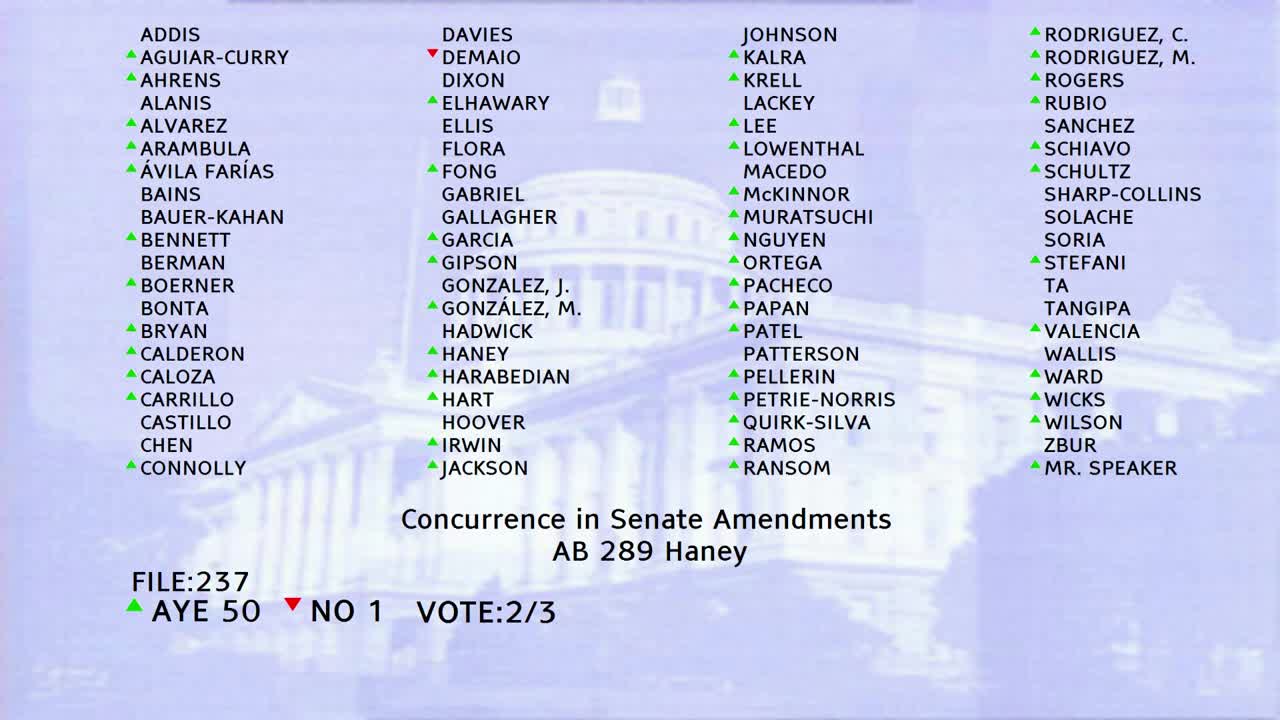 1MIN
Assembly Floor
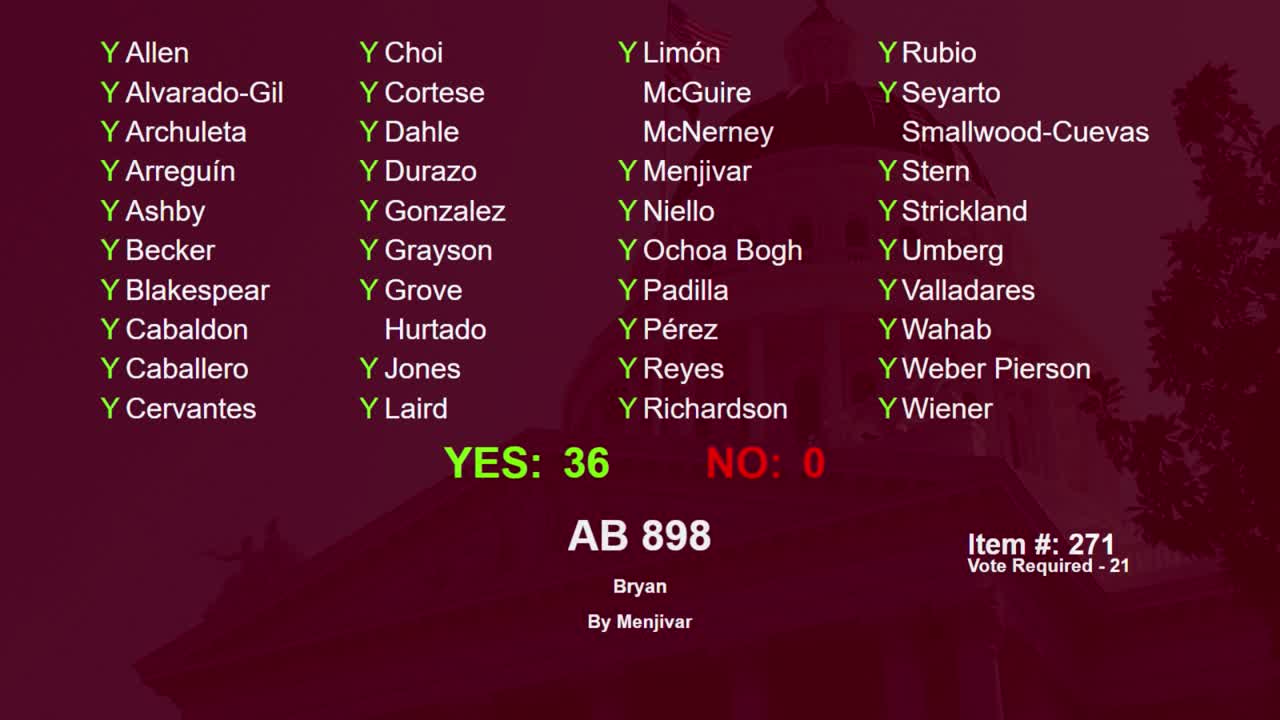 2MIN
Senate Floor
 1MIN
Senate Standing Committee on Appropriations
 7MIN
Senate Standing Committee on Human Services
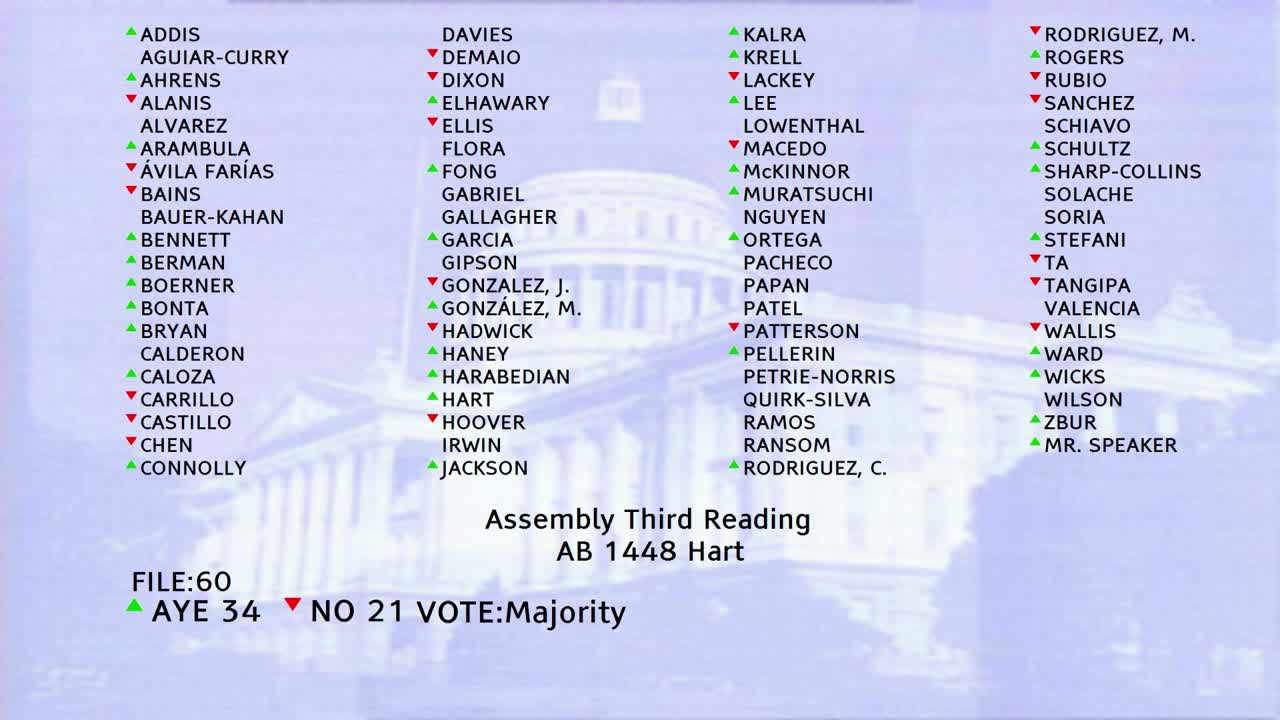 1MIN
Assembly Floor
 9MIN
Assembly Standing Committee on Human Services
Bill Author

Bill Co-Author(s):