AB 1075: Fire protection: privately contracted fire prevention resources: public water sources.
- Session Year: 2025-2026
- House: Assembly
- Latest Version Date: 2025-10-10
Current Status:
Passed
(2025-10-10: Chaptered by Secretary of State - Chapter 538, Statutes of 2025.)
Introduced
In Committee
Awaiting First Chamber Vote
Passed First Chamber
In Committee
Awaiting Second Chamber Vote
Passed Second Chamber
Enacted
Existing law establishes in state government, within the office of the Governor, the Office of Emergency Services. Existing law requires the office to be responsible for the states emergency and disaster response services for natural, technological, or manmade disasters and emergencies, including responsibility for activities necessary to prevent, respond to, recover from, and mitigate the effects of emergencies and disasters to people and property. Existing law, the FIRESCOPE Act of 1989, requires the office to establish and administer a program, known as the FIRESCOPE program, to maintain and enhance the efficiency and effectiveness of managing multiagency firefighting resources in responding to an incident. Existing law requires the office, in collaboration with the Department of Forestry and Fire Protection and the board of directors of the FIRESCOPE program, to develop standards and regulations for any privately contracted private fire prevention resources operating during an active fire incident in the state, as provided, and to develop regulations to govern the use of equipment used by privately contracted private fire prevention resources during an active fire incident, as provided.
This bill would additionally require the office to develop regulations prohibiting privately contracted private fire prevention resources from hooking up their equipment to public water sources, unless approved by incident command or the authority having jurisdiction over the active fire incident and unless the equipment includes a backflow prevention device.
The California Safe Drinking Water Act provides for the operation of public water systems and imposes certain responsibilities on community water systems related to the operation of water distribution systems, as defined.
This bill would explicitly state that none of the above-described regulations governing the use of equipment used by privately contracted fire prevention resources during an active fire incident shall alter, impair, or interfere with the authority of a community water system to operate a water distribution system.
Existing law establishes in state government, within the office of the Governor, the Office of Emergency Services. Existing law requires the office to be responsible for the states emergency and disaster response services for natural, technological, or manmade disasters and emergencies, including responsibility for activities necessary to prevent, respond to, recover from, and mitigate the effects of emergencies and disasters to people and property. Existing law, the FIRESCOPE Act of 1989, requires the office to establish and administer a program, known as the FIRESCOPE program, to maintain and enhance the efficiency and effectiveness of managing multiagency firefighting resources in responding to an incident. Existing law requires the office, in collaboration with the Department of Forestry and Fire Protection and the board of directors of the FIRESCOPE program, to develop standards and regulations for any privately contracted private fire prevention resources operating during an active fire incident in the state, as provided, and to develop regulations to govern the use of equipment used by privately contracted private fire prevention resources during an active fire incident, as provided.
This bill would additionally require the office to develop regulations prohibiting privately contracted private fire prevention resources from hooking up their equipment to public water sources, unless approved by incident command or the authority having jurisdiction over the active fire incident. incident and unless the equipment includes a backflow prevention device.
The California Safe Drinking Water Act provides for the operation of public water systems and imposes certain responsibilities on community water systems related to the operation of water distribution systems, as defined.
This bill would explicitly state that none of the above-described regulations governing the use of equipment used by privately contracted fire prevention resources during an active fire incident shall alter, impair, or interfere with the authority of a community water system to operate a water distribution system.
Existing law establishes in state government, within the office of the Governor, the Office of Emergency Services. Existing law requires the office to be responsible for the states emergency and disaster response services for natural, technological, or manmade disasters and emergencies, including responsibility for activities necessary to prevent, respond to, recover from, and mitigate the effects of emergencies and disasters to people and property. Existing law, the FIRESCOPE Act of 1989, requires the office to establish and administer a program, known as the FIRESCOPE program, to maintain and enhance the efficiency and effectiveness of managing multiagency firefighting resources in responding to an incident. Existing law requires the office, in collaboration with the Department of Forestry and Fire Protection and the board of directors of the FIRESCOPE program, to develop standards and regulations for any privately contracted private fire prevention resources operating during an active fire incident in the state, as provided, and to develop regulations to govern the use of equipment used by privately contracted private fire prevention resources during an active fire incident, as provided.
This bill would additionally require the office to develop regulations prohibiting privately contracted firefighters private fire prevention resources from hooking up their equipment to public water sources, unless approved by incident command or the authority having jurisdiction over the active fire incident.
Existing law establishes in state government, within the office of the Governor, the Office of Emergency Services. Existing law requires the office to be responsible for the states emergency and disaster response services for natural, technological, or manmade disasters and emergencies, including responsibility for activities necessary to prevent, respond to, recover from, and mitigate the effects of emergencies and disasters to people and property. Existing law, the FIRESCOPE Act of 1989, requires the office to establish and administer a program, known as the FIRESCOPE program, to maintain and enhance the efficiency and effectiveness of managing multiagency firefighting resources in responding to an incident. Existing law requires the office, in collaboration with the Department of Forestry and Fire Protection and the board of directors of the FIRESCOPE program, to develop standards and regulations for any privately contracted private fire prevention resources operating during an active fire incident in the state, as provided, and to develop regulations to govern the use of equipment used by privately contracted private fire prevention resources during an active fire incident, as provided.
This bill would additionally require the office to develop regulations prohibiting privately contracted firefighters from hooking up their equipment to public water sources. sources, unless approved by incident command or the authority having jurisdiction over the active fire incident.
Existing law establishes in state government, within the office of the Governor, the Office of Emergency Services. Existing law requires the office to be responsible for the states emergency and disaster response services for natural, technological, or manmade disasters and emergencies, including responsibility for activities necessary to prevent, respond to, recover from, and mitigate the effects of emergencies and disasters to people and property. Existing law, the FIRESCOPE Act of 1989, requires the office to establish and administer a program, known as the FIRESCOPE program, to maintain and enhance the efficiency and effectiveness of managing multiagency firefighting resources in responding to an incident. Existing law requires the office, in collaboration with the Department of Forestry and Fire Protection and the board of directors of the FIRESCOPE program, to develop standards and regulations for any privately contracted private fire prevention resources operating during an active fire incident in the state, as provided, and to develop regulations to govern the use of equipment used by privately contracted private fire prevention resources during an active fire incident, as provided.
This bill would additionally require the office to develop regulations prohibiting privately contracted firefighters from hooking up their equipment to public water sources.
(a)The office, in collaboration with the department and the board of directors of the FIRESCOPE Program, shall develop regulations to govern the use of equipment used by privately contracted private fire prevention resources during an active fire incident. The regulations shall include, but not be limited to, the following:
(1)All equipment shall be clearly labeled nonemergency.
(2)Privately contracted private fire prevention resource vehicles shall not use emergency lights or sirens.
(3)Privately contracted private fire prevention resource vehicles shall not have any labeling that indicates emergency personnel or fire department.
(4)Privately contracted private fire prevention resources shall not hook up their equipment to public water sources, unless approved by incident command or the authority having jurisdiction over the active fire incident and unless the equipment includes a backflow prevention device.
(b)The office may consult with both private sector entities that provide privately contracted private fire prevention resources and public sector fire agencies before developing the regulations as required by this section.
(c)Nothing in this section shall alter, impair, or interfere with the authority of a community water system to operate a water distribution system, as defined in Section 116275.
(a)The office, in collaboration with the department and the board of directors of the FIRESCOPE Program, shall develop regulations to govern the use of equipment used by privately contracted private fire prevention resources during an active fire incident. The regulations shall include, but not be limited to, the following:
(1)All equipment shall be clearly labeled nonemergency.
(2)Privately contracted private fire prevention resource vehicles shall not use emergency lights or sirens.
(3)Privately contracted private fire prevention resource vehicles shall not have any labeling that indicates emergency personnel or fire department.
(4)Privately contracted private fire prevention resources shall not hook up their equipment to public water sources, unless approved by incident command or the authority having jurisdiction over the active fire incident. incident and unless the equipment includes a backflow prevention device.
(b)The office may consult with both private sector entities that provide privately contracted private fire prevention resources and public sector fire agencies before developing the regulations as required by this section.
(c)Nothing in this section shall alter, impair, or interfere with the authority of a community water system to operate a water distribution system, as defined in Section 116275.
(a)The office, in collaboration with the department and the board of directors of the FIRESCOPE Program, shall develop regulations to govern the use of equipment used by privately contracted private fire prevention resources during an active fire incident. The regulations shall include, but not be limited to, the following:
(1)All equipment shall be clearly labeled nonemergency.
(2)Privately contracted private fire prevention resource vehicles shall not use emergency lights or sirens.
(3)Privately contracted private fire prevention resource vehicles shall not have any labeling that indicates emergency personnel or fire department.
(4)Privately contracted firefighters private fire prevention resources shall not hook up their equipment to public water sources, unless approved by incident command or the authority having jurisdiction over the active fire incident.
(b)The office may consult with both private sector entities that provide privately contracted private fire prevention resources and public sector fire agencies before developing the regulations as required by this section.
(a)The office, in collaboration with the department and the board of directors of the FIRESCOPE Program, shall develop regulations to govern the use of equipment used by privately contracted private fire prevention resources during an active fire incident. The regulations shall include, but not be limited to, the following:
(1)All equipment shall be clearly labeled nonemergency.
(2)Privately contracted private fire prevention resource vehicles shall not use emergency lights or sirens.
(3)Privately contracted private fire prevention resource vehicles shall not have any labeling that indicates emergency personnel or fire department.
(4)Privately contracted firefighters shall not hook up their equipment to public water sources. sources, unless approved by incident command or the authority having jurisdiction over the active fire incident.
(b)The office may consult with both private sector entities that provide privately contracted private fire prevention resources and public sector fire agencies before developing the regulations as required by this section.
(a)The office, in collaboration with the department and the board of directors of the FIRESCOPE Program, shall develop regulations to govern the use of equipment used by privately contracted private fire prevention resources during an active fire incident. The regulations shall include, but not be limited to, the following:
(1)All equipment shall be clearly labeled nonemergency.
(2)Privately contracted private fire prevention resource vehicles shall not use emergency lights or sirens.
(3)Privately contracted private fire prevention resource vehicles shall not have any labeling that indicates emergency personnel or fire department.
(4)Privately contracted firefighters shall not hook up their equipment to public water sources.
(b)The office may consult with both private sector entities that provide privately contracted private fire prevention resources and public sector fire agencies before developing the regulations as required by this section.
|
Date
|
Status
|
|---|---|
| Oct 10, 2025 | Chaptered by Secretary of State - Chapter 538, Statutes of 2025. |
| Oct 10, 2025 | Approved by the Governor. |
| Sep 16, 2025 | Enrolled and presented to the Governor at 2 p.m. |
| Sep 9, 2025 | Senate amendments concurred in. To Engrossing and Enrolling. (Ayes 78. Noes 2. Page 3116.). |
| Sep 8, 2025 | In Assembly. Concurrence in Senate amendments pending. |
| Sep 8, 2025 | Read third time. Passed. Ordered to the Assembly. (Ayes 39. Noes 0. Page 2609.). |
| Aug 20, 2025 | Read second time. Ordered to third reading. |
| Aug 19, 2025 | From committee: Be ordered to second reading pursuant to Senate Rule 28.8. |
| Jul 16, 2025 | From committee: Do pass and re-refer to Com. on APPR. (Ayes 7. Noes 0.) (July 16). Re-referred to Com. on APPR. |
| Jun 27, 2025 | From committee chair, with author's amendments: Amend, and re-refer to committee. Read second time, amended, and re-referred to Com. on N.R. & W. |
| Jun 10, 2025 | From committee: Do pass and re-refer to Com. on N.R. & W. (Ayes 14. Noes 0.) (June 10). Re-referred to Com. on N.R. & W. |
| May 21, 2025 | Referred to Coms. on G.O. and N.R. & W. |
| May 13, 2025 | In Senate. Read first time. To Com. on RLS. for assignment. |
| May 12, 2025 | Read third time. Passed. Ordered to the Senate. (Ayes 75. Noes 2. Page 1519.) |
| May 8, 2025 | Read second time. Ordered to third reading. |
| May 7, 2025 | From committee: Do pass. (Ayes 15. Noes 0.) (May 7). |
| Apr 24, 2025 | Re-referred to Com. on APPR. |
| Apr 23, 2025 | Read second time and amended. |
| Apr 22, 2025 | From committee: Amend, and do pass as amended and re-refer to Com. on APPR. (Ayes 14. Noes 0.) (April 21). |
| Apr 8, 2025 | From committee: Do pass and re-refer to Com. on NAT. RES. (Ayes 6. Noes 1.) (April 7). Re-referred to Com. on NAT. RES. |
| Apr 3, 2025 | Re-referred to Com. on E.M. |
| Apr 2, 2025 | From committee chair, with author's amendments: Amend, and re-refer to Com. on E.M. Read second time and amended. |
| Mar 10, 2025 | Referred to Coms. on E.M and NAT. RES. |
| Feb 21, 2025 | From printer. May be heard in committee March 23. |
| Feb 20, 2025 | Read first time. To print. |
|
Date
|
Description
|
Location
|
Votes
|
|
|---|---|---|---|---|
| Sep 9, 2025 | AB 1075 Bryan Concurrence in Senate Amendments | Assembly Floor |
Passed |
|
| Sep 8, 2025 | Assembly 3rd Reading AB1075 Bryan et al. By Cervantes | Senate Floor |
Passed |
|
| Jul 16, 2025 | Do pass, but first be re-referred to the Committee on [Appropriations] | Senate Standing Committee on Natural Resources and Water |
Passed |
|
| Jun 10, 2025 | Do pass, but first be re-referred to the Committee on [Natural Resources and Water] | Senate Standing Committee on Governmental Organization |
Passed |
|
| May 12, 2025 | AB 1075 Bryan Assembly Third Reading | Assembly Floor |
Passed |
|
| May 7, 2025 | Do pass. | Assembly Standing Committee on Appropriations |
Passed |
|
| Apr 21, 2025 | Do pass as amended and be re-referred to the Committee on [Appropriations] | Assembly Standing Committee on Natural Resources |
Passed |
|
| Apr 7, 2025 | Do pass and be re-referred to the Committee on [Natural Resources] | Assembly Standing Committee on Emergency Management |
Passed |
This list shows positions taken on this bill by organizations on the date displayed, which is linked to the original source.
Positions by individuals are not included.
|
Organization
|
Position
|
Date
|
|---|---|---|
| CALIFORNIA PROFESSIONAL FIREFIGHTERS (CPF) | ** Support |
CONCURRENCE IN SENATE AMENDMENTS
CSA1 Bill Id:AB 1075
Author:(Bryan)
As Amended Ver:June 27, 2025
Majority vote
SUMMARY
Requires the California Office of Emergency Services (Cal OES) to develop regulations that prohibit private fire prevention resources from connecting their equipment to public water sources, unless approved by the authority with jurisdiction over an active fire incident and unless the equipment includes a backflow device.
Senate Amendments
- Requires the drafted regulations prohibit connecting private fire prevention resources without a backflow prevention device.
- Clarifies the regulations regarding the use of equipment used by privately contracted fire prevention resources during an active fire incident shall not alter, impair, or interfere with the authority of a community water system to operate a water distribution system.
COMMENTS
Background: Private firefighting services have become increasingly prominent—and controversial— in California's wildfire response, particularly in affluent communities. Often hired by insurance providers or wealthy individuals, these companies deploy crews to protect high-value properties by applying fire retardants, clearing brush, and creating defensible space. While some local governments have contracted with private firms for additional firefighting capacity, the practice remains primarily associated with private property protection, raising questions about equity in disaster response. Insurers argue that using private firefighters helps reduce overall wildfire losses and keeps insurance companies in the California market.
The backlash against private firefighting has intensified following the 2025 Palisades and Eaton wildfires. Reports of a Los Angeles millionaire offering to pay "any amount" for private crews to protect his home, alongside a billionaire developer hiring private firefighters to safeguard a luxury shopping mall, have fueled public frustration. However, this debate isn't new—past wildfires saw similar outrage when celebrities made headlines for employing private teams to protect their homes. Critics argue these services exacerbate inequalities, ensuring that those who can afford premium insurance or direct contracts receive enhanced protection while lower-income communities must rely on overstretched public resources.
Another growing concern is private crews' access to public infrastructure, particularly water. Reports of private teams tapping into municipal hydrants have raised questions about whether they are diverting resources needed by public fire departments. In extreme cases, some private crews have been accused of interfering with official operations, further complicating coordination efforts.
Wildfires: Wildfires are a severe and growing threat to lives, property, and infrastructure in California. According to data from CAL FIRE, 15 of California's 20 most destructive fires have occurred in the past decade. Collectively, these most recent fires have resulted in 180 deaths and the loss of 57,483 structures (homes, outbuildings, and commercial properties). While fewer wildfires threatened California in 2023 due to the increased number of weather events and atmospheric rivers, the vegetative growth from the significant rainfall contributed to devastating wildfires in 2024 and 2025.
In 2024, the Park Fire became the fourth-largest fire in California's history. Despite aggressive initial attack suppression efforts, the fire rapidly expanded, ultimately consuming 429,603 acres across Butte and Tehama counties. The Park Fire led to the destruction of 709 structures and damage to 54 others, prompting widespread evacuations and the temporary closure of Lassen Volcanic National Park.
In January 2025, Los Angeles County experienced the second and third most destructive fires in California history: the Palisades Fire and Eaton Fire. The Eaton Fire became the second most destructive fire in California history after destroying 9,418 buildings, 1,074 structures damaged, and 17 confirmed civilian fatalities. The Palisades Fire is the third most destructive fire in state history, with 6,837 structures destroyed, 973 structures damaged, and 12 confirmed civilian fatalities. According to the Los Angeles County Economic Development Corporation, as published in their report, Impact of 2025 Los Angeles Wildfires and Comparative Study, the early 2025 Los Angeles wildfires resulted in property damages estimated between $28.0 billion and $53.8 billion and estimated lost economic output ranging from $4.6 billion to $8.9 billion between the years 2025 and 2029.
Backflow Prevention Device: A backflow prevention device protects water systems from contamination or pollution by stopping water from flowing in the incorrect, or reverse, direction due to pressure or suction.
According to the Author
"AB 1075 would protect municipal water systems by prohibiting private firefighters from hooking up to public water sources. During the Palisades and Eaton Fires, LA residents were asked to limit their water usage to minimize demands on water systems. Similarly, private firefighters working for a select few individuals should limit their reliance on these systems. Public fire hydrants are a public good and we must preserve them for use by official fire departments during a fire incident."
Arguments in Support
According to the California Professional Firefighters (CPF), "During the Palisades and Eaton Fires there were significant reports of privately contracted private fire prevention resources operating across Los Angeles County. Some of these reports indicated that they were utilizing public water systems to support their efforts. Privately contracted private fire prevention resources hooking up to hydrants and other public water sources could impact the ability for professional firefighters to complete their mission of protecting life and property. Moreover, firefighting is a public good delivered by public agency firefighters and the public water system is designed to support the public good when firefighters are responding to an emergency. With this in mind, it is critical that we update the existing regulations governing these resources to prohibit the use of public water systems for privately contracted private fire prevention resources operating on an active fire incident. Updating the current law with this adjustment is critical to ensure that public water systems are maintained for California's professional firefighters."
Arguments in Opposition
None on file.
FISCAL COMMENTS
The Senate Committee on Appropriations, under Senate Rule 28.8, determined the state cost of this bill is not significant and sent this bill directly to the Senate Floor without a committee hearing.
VOTES:
ASM EMERGENCY MANAGEMENT: 6-1-0
YES: Ransom, Hadwick, Arambula, Bains, Bennett, Calderon
NO: DeMaio
ASM NATURAL RESOURCES: 14-0-0
YES: Bryan, Alanis, Connolly, Ellis, Flora, Garcia, Haney, Hoover, Kalra, Muratsuchi, Pellerin, Schultz, Wicks, Zbur
ASM APPROPRIATIONS: 15-0-0
YES: Wicks, Sanchez, Arambula, Calderon, Caloza, Dixon, Elhawary, Fong, Mark González, Hart, Pacheco, Pellerin, Solache, Ta, Tangipa
ASSEMBLY FLOOR: 75-2-2
YES: Addis, Aguiar-Curry, Ahrens, Alanis, Alvarez, Arambula, Ávila Farías, Bains, Bauer‑Kahan, Bennett, Berman, Boerner, Bonta, Bryan, Calderon, Caloza, Carrillo, Castillo, Chen, Connolly, Davies, Dixon, Elhawary, Ellis, Flora, Fong, Gabriel, Garcia, Gipson, Jeff Gonzalez, Mark González, Hadwick, Haney, Harabedian, Hart, Hoover, Irwin, Jackson, Kalra, Krell, Lackey, Lee, Lowenthal, Macedo, McKinnor, Muratsuchi, Nguyen, Ortega, Pacheco, Papan, Patel, Patterson, Pellerin, Quirk-Silva, Ramos, Ransom, Celeste Rodriguez, Michelle Rodriguez, Rogers, Blanca Rubio, Sanchez, Schiavo, Schultz, Sharp-Collins, Solache, Soria, Ta, Tangipa, Valencia, Wallis, Ward, Wicks, Wilson, Zbur, Rivas
NO: DeMaio, Gallagher
ABS, ABST OR NV: Petrie-Norris, Stefani
UPDATED
VERSION: June 27, 2025
CONSULTANT: Ryan Fleming / E.M. / (916) 319-3802 FN: 0001871
SENATE RULES COMMITTEE Office of Senate Floor Analyses (916) 651-1520 Fax: (916) 327-4478 | AB 1075 |
THIRD READING
Bill No: AB 1075
Author: Bryan (D), et al.
Amended: 6/27/25 in Senate
Vote: 21
SENATE GOVERNMENTAL ORG. COMMITTEE: 14-0, 6/10/25
AYES: Padilla, Valladares, Ashby, Blakespear, Cervantes, Dahle, Hurtado, Jones, Ochoa Bogh, Richardson, Rubio, Smallwood-Cuevas, Wahab, Weber Pierson
NO VOTE RECORDED: Archuleta
SENATE NATURAL RES. & WATER COMMITTEE: 7-0, 7/16/25
AYES: Limón, Seyarto, Allen, Grove, Hurtado, Laird, Stern
SENATE APPROPRIATIONS COMMITTEE: Senate Rule 28.8
ASSEMBLY FLOOR: 75-2, 5/12/25 - See last page for vote
SUBJECT: Fire protection: privately contracted fire prevention resources: public water sources
SOURCE: California Professional Firefighters
DIGEST:
This bill requires the Office of Emergency Services (OES) to develop regulations prohibiting privately contracted private fire prevention resources from hooking up their equipment to public water resources, unless approved by incident command or the authority having jurisdiction over the active fire incident, as specified.
ANALYSIS:
Existing law:
- Establishes OES, within the office of the Governor, and requires OES to be responsible for the state’s emergency and disaster response services for natural, technological, or manmade disasters and emergencies, as specified.
- Requires, pursuant to the FIRESCOPE Act of 1989, OES to establish and administer a program, known as the FIRESCOPE program, to maintain and enhance the efficiency and effectiveness of managing multiagency firefighting resources in responding to an incident.
- Requires OES, in collaboration with the Department of Forestry and Fire Protection (Cal FIRE) and the board of directors of the FIRESCOPE program, to develop standards and regulations for any privately contracted private fire prevention resources operating during an active fire incident in the state, as specified, and to develop regulations to govern the use of equipment used by privately contracted private fire prevention resources during an active fire incident, as specified.
- Authorizes OES to consult with both private sector entities that provide privately contracted private fire prevention resources and public sector fire agencies before developing the regulations, as specified.
- Provides, pursuant to the California Safe Drinking Water Act, for the operation of public water systems and imposes certain responsibilities on community water systems related to the operation of water distribution systems, as defined.
- Governs, pursuant to the Administrative Procedures Act (APA), the procedures for the adoption, amendment, or repeal of regulations by state agencies and for the review of those regulatory actions by the Office of Administrative Law (OAL).
This bill:
- Requires OES, in collaboration with Cal FIRE and the board of directors of the FIRESCOPE Program, to develop regulations that prohibit privately contracted private fire prevention resources from hooking up their equipment to public water sources, unless approved by incident command or the authority having jurisdiction over the active fire incident and unless the equipment includes a backflow prevention device.
- Provides that nothing in this bill shall alter, impair, or interfere with the authority of a community water system to operate a water distribution system, as defined.
Background
Author Statement. According to the author’s office, “AB 1075 would protect municipal water systems by prohibiting private firefighters from hooking up to public water sources. During the Palisades and Eaton Fires, LA residents were asked to limit their water usage to minimize demands on water systems. Similarly, private firefighters working for a select few individuals should limit their reliance on these systems. Public fire hydrants are a public good and we must preserve them for use by official fire departments during a fire incident.”
California’s Worsening Wildfire Reality. The State of California has the main responsibility for wildfire response activities on about one-third of California’s land area. With over 39 million residents, the State of California is the most populous state in the nation and has the third largest land area among the states (163,695 square miles). OES serves as the state’s leadership hub during all major emergencies and disasters. This includes responding, directing, and coordinating state and federal resources and mutual aid assets across all regions to support the diverse communities across the state.
A series of 14 destructive wildfire’s tore through the Los Angeles area of Southern California in January, 2025, placing an estimated 330,000 people on an evacuation advisory, with approximately 190,000 individuals facing mandatory evacuation. The fires damaged or destroyed over 18,000 structures and claimed the lives of 30 Californians. The Palisades fire and Eaton fire now rank among the deadliest and most destructive fires in California history. These fires ignited amid an extreme weather event, fueled by unusually severe fire weather conditions including Santa Ana winds of nearly 100 miles per hour across the State’s southern region, and following an extended period of drought in the area. These fires were, at least in part, a product of what UCLA and University of California Agriculture and Natural Resources scientist Daniel Swain calls a sort of “hydroclimate whiplash.”
According to the report Whiplash: How Big Swings in Precipitation Fueled the L.A. Fires published at the Yale School of the Environment, “[i]n 2023 and 2024, the city experienced unusually wet winters, which spurred the growth of grasses and shrubs. Then the rain stopped. Since July, the city has received a mere three-hundredths of an inch of precipitation. The result has been acre after acre of desiccated brush – the perfect kindling for wildfires.” The causes of the fires are still under investigation.
As the fires raged on, firefighters were forced to rely on local water infrastructure not designed for fires of that size. According to CapRadio’s report “[c]onspiracies are rife about water and the LA fires. Here’s what experts say,” a “reservoir in the Palisades was empty while its cover was getting repaired. And the water systems used to fight the Palisades and Eaton fires couldn’t maintain the continuous high water pressures needed, meaning water stopped flowing in some hydrants. Newsom has called for an investigation.”
The article notes that, “water and climate experts say that even if the Palisades reservoir had been full and hydrants working perfectly, they wouldn’t have allowed firefighters to change the course of large wildfires. Hurricane-force winds fueled the fires, and meant that in the first days planes and helicopters couldn’t fly and drop water, experts say. These municipal water systems were structured for residential and commercial needs and everyday fires – not firefighting on many fronts without aerial support, says Josh Lappen, a climate researcher at University of Notre Dame who studies Los Angeles’ infrastructure systems.”
Private Fire Prevention Resources. The January 2025 wildfires in Los Angeles, notably the Palisades and Eaton fires, have reignited debates over the role of private firefighting services and their access to public resources. A central concern remains the use of public water infrastructure by privately contracted private fire prevention resources. Reports indicate that during the peak of the fires, hydrants in areas like Pacific Palisades ran dry, severely hampering public firefighting efforts. Compounding the problem, the Santa Ynez Reservoir, a critical water source, had been offline for repairs for an extended period of time.
Amid these challenges, affluent homeowners and developers are increasingly employing private firefighting teams to protect their properties. These crews, often hired through insurance companies, have been criticized for potentially diverting essential resources and complicating coordination with public fire services. The California Professional Firefighters (CPF) union has expressed concerns about private crews accessing public hydrants without proper authorization, arguing that they may lack the training and equipment standards of public firefighters.
Specifically, CPF notes that, “[d]uring the Palisades and Eaton Fires there were significant reports of privately contracted private fire prevention resources operating across Los Angeles County. Some of these reports indicated that they were utilizing public water systems to support their efforts. Privately contracted private fire prevention resources hooking up to hydrants and other public water sources could impact the ability for professional firefighters to complete their mission of protecting life and property.”
Following the deadly and destructive 2017 California wildfire season, the Legislature approved and the Governor signed AB 2380 (Chapter 636, Statutes of 2018), requiring OES, in collaboration with Cal FIRE and the board of directors of the FIRESCOPE Program, to develop regulations to govern the use of equipment used by privately contracted private fire prevention resources during an active fire incident. Specifically, the regulations are required to include, but not be limited to, the following: all equipment shall be clearly labeled nonemergency; privately contracted private fire prevention resource vehicles shall not use emergency lights or sirens; and privately contracted private fire prevention resource vehicles shall not have any labeling that indicates emergency personnel or fire department.
This came after during the initial hours of the 2017 Tubbs fire, the fire hydrants in the hilltop community of Fountaingrove in Santa Rosa of the North Bay Area repeatedly lost water pressure. Firefighters were forced to travel to the valley of Santa Rosa, where water pressure was stronger, and then return to the hilltop to fight the fire. Reports at the time noted that there were 75 private loss prevention contractors on 41 private engines assigned to the Thomas Fire. Further, an article by the Associated Press titled “Insurers dispatch private firefighters in California,” noted that the equipment being utilized was “indistinguishable” from public agency fire equipment.
FIRESCOPE California. The FIRESCOPE program originated in Southern California in 1972, and today is organized under the acronym, “FIrefighting RESources of California Organized for Potential Emergencies.” By legislative action, the FIRESCOPE Board of Directors and OES’s Fire and Rescue Service Advisory Committee were consolidated into a working partnership on September 10, 1986. This consolidation represents all facets of local, rural, and metropolitan fire departments, Cal FIRE, and federal fire agencies. Existing law requires OES, Cal FIRE, and the State Fire Marshal (SFM) to jointly establish and administer the FIRESCOPE Program.
The FIRESOPE program is intended to complete the legislative attempt to unify these various fire agencies together into one voice and direction. The mission of FIRESCOPE is to provide recommendations and technical assistance to OES, to maintain the FIRESCOPE Decision Process, and to continue the operation, development, and maintenance of the FIRESCOPE Incident Command System (ICS) and the Multi-Agency Coordination System.
Public Water Infrastructure. Public firefighters pull water from hydrants – municipal water supplies – to fight structure fires, and rely on tenders to fight fires in the wildland urban interface. Firefighters can also use lakes, ponds, and even pool water for additional water resources. Private firefighters rely on the same sources, which can create competition with the fire crews serving and protecting the public.
This bill requires OES, in collaboration with Cal FIRE and the board of directors of the FIRESCOPE Program, to develop regulations to govern the use of equipment used by privately contracted private fire prevention resources during an active incident to specifically prohibit privately contracted private fire prevention resources from hooking up their equipment to public water sources, unless approved by incident command or the authority having jurisdiction over the active fire incident and unless the equipment includes a backflow prevention device.
OAL is responsible for ensuring that California state agencies comply with the rulemaking procedures and standards set forth in the APA. A “regulation” is any rule, regulation, order or standard of general application or the amendment, supplement, or revision of any rule, regulation, order, or standard adopted by any state agency to implement, interpret, or make specific the law enforced or administered by it. The APA requirements are designed to provide the public with a meaningful opportunity to participate in the adoption of regulations or rules that have the force of law by California state agencies and to ensure the creation of an adequate record for the OAL and judicial review.
Existing law authorizes OES to consult with both private sector entities that provide privately contracted private fire prevention resources and public sector fire agencies before developing the regulations as required by this bill.
This bill provides that nothing in this legislation shall alter, impair, or interfere with the authority of a community water system to operate a water distribution system, as defined.
Prior/Related Legislation
SB 90 (Seyarto, 2025) would have explicitly specified certain projects available for wildfire mitigation grant program funding from the Safe Drinking Water, Wildfire Prevention, Drought Preparedness, and Clean Air Bond Act of 2024 – Proposition 4. (Held on the Senate Appropriations Committee Suspense File)
AB 2380 (Aguiar-Curry, Chapter 636, Statutes of 2018) required OES, in collaboration with Cal FIRE, to develop standards and regulations for any privately contracted private fire prevention resources operating during an active fire incident in the state, as specified.
FISCAL EFFECT: Appropriation: No Fiscal Com.: Yes Local: No
SUPPORT: (Verified 8/18/25)
California Professional Firefighters
OPPOSITION: (Verified 8/18/25)
None received
ARGUMENTS IN SUPPORT: In support of this bill, the California Professional Firefighters (CPF) write that, in “2018, CPF worked closely with the author on AB 2380 (Aguiar-Curry, Chapter 636, Statutes of 2018) which established regulations governing the operation and use of privately contracted private fire prevention resources on active fire incidents. This law and subsequent regulations were the result of reports of significant private resources operating on the Thomas Fire. In fact, it was reported that there were 75 private loss prevention contractors on 41 private engines assigned to the Thomas Fire. Further, media reports noted that the equipment used is ‘indistinguishable’ from public agency fire equipment. These privately contracted private fire prevention resources are typically hired by insurers to pre-treat policyholders’ homes to help protect them during a wildfire.”
Further, “[s]ince the passage of this measure, the state established regulations under Title 19, Division 2, Chapter 1.1 which govern and control how these resources operate on an active fire incident. These regulations not only ensure safety of these resources but also the professional firefighters operating in the area and the members of the community. In 2024, FIRECOPE published ICS 902, which published the rules governing privately contracted private fire prevention resources for easy access and use by incident command during active fire incidents.”
Moreover, “firefighting is a public good delivered by public agency firefighters and the public water system is designed to support the public good when firefighters are responding to an emergency. With this in mind, it is critical that we update the existing regulations governing these resources to prohibit the use of public water systems for privately contracted private fire prevention resources operating on an active fire incident. Updating the current law with this adjustment is critical to ensure that public water systems are maintained for California’s professional firefighters.”
ASSEMBLY FLOOR: 75-2, 5/12/25
AYES: Addis, Aguiar-Curry, Ahrens, Alanis, Alvarez, Arambula, Ávila Farías, Bains, Bauer-Kahan, Bennett, Berman, Boerner, Bonta, Bryan, Calderon, Caloza, Carrillo, Castillo, Chen, Connolly, Davies, Dixon, Elhawary, Ellis, Flora, Fong, Gabriel, Garcia, Gipson, Jeff Gonzalez, Mark González, Hadwick, Haney, Harabedian, Hart, Hoover, Irwin, Jackson, Kalra, Krell, Lackey, Lee, Lowenthal, Macedo, McKinnor, Muratsuchi, Nguyen, Ortega, Pacheco, Papan, Patel, Patterson, Pellerin, Quirk-Silva, Ramos, Ransom, Celeste Rodriguez, Michelle Rodriguez, Rogers, Blanca Rubio, Sanchez, Schiavo, Schultz, Sharp-Collins, Solache, Soria, Ta, Tangipa, Valencia, Wallis, Ward, Wicks, Wilson, Zbur, Rivas
NOES: DeMaio, Gallagher
NO VOTE RECORDED: Petrie-Norris, Stefani
Prepared by: Brian Duke / G.O. / (916) 651-1530
8/20/25 23:28:47
**** END ****
SENATE COMMITTEE ON NATURAL RESOURCES AND WATER
Senator Monique Limón, Chair
2025 - 2026 Regular
Bill No: AB 1075 Hearing Date: July 16, 2025
Author: | |||
Version: | Amended | ||
Urgency: | Fiscal: | ||
Consultant: | |||
Subject: Fire protection: privately contracted fire prevention resources: public water sources
SUMMARY
This bill would require the Governor’s Office of Emergency Services (Cal OES) to develop regulations prohibiting privately contracted private fire prevention resources from hooking up their equipment to public water sources, unless certain conditions are met.
BACKGROUND AND EXISTING LAW
Wildfire in California.
Catastrophic and devastating wildfires have occurred repeatedly in the state in recent years. Thirteen of the 20 largest and 15 of the 20 most destructive wildland fires in state history have occurred since 2015. The 2020 August Complex Fire in northern California – the largest fire in California’s modern history – burned over one million acres, and the 2021 Dixie Fire was almost one million acres. Two wildland fires in recent years burned over the crest of the Sierras, which had not been previously observed. In the last several years, tens of thousands of structures – mostly homes – have been destroyed from wildland fire, insured losses incurred are in the billions of dollars, prime habitat has been destroyed or damaged, and, tragically, hundreds of lives have been lost. Most recently, the Palisades and Eaton Fires in Los Angeles in January resulted in the loss of approximately 17,250 structures and 30 deaths.
Privately-contracted private fire prevention resources.
The Palisades and Eaton Fires have restarted the discussion of privately-contracted private fire prevention services with reports of these services supposedly hooking up to public water systems, putting additional pressure on already overstressed infrastructure. Following the 2017 California wildfire season, and reports of private contractors hired by insurance companies to provide prevention and protection services for homeowners, the Legislature approved and the Governor signed AB 2380 (Aguiar-Curry, Chapter 636, Statutes of 2018), requiring Cal OES, in collaboration with the Department of Forestry and Fire Protection (CAL FIRE), and the board of directors of the FIRESCOPE Program, to develop regulations to govern the use of their equipment by privately contracted private fire prevention resources during an active fire incident. Specifically, the regulations were required to include, but not be limited to, that all equipment shall be clearly labeled nonemergency; privately contracted private fire prevention resource vehicles shall not use emergency lights or sirens; and privately contracted private fire prevention resource vehicles shall not have any labeling that indicates emergency personnel or fire department.
FIRESCOPE Program.
The Firefighting Resources of California Organized for Potential Emergencies Program (FIRESCOPE) is jointed administered by Cal OES, CAL FIRE, and the Office of the State Fire Marshal to maintain and enhance the efficiency and effectiveness of managing multiagency firefighting resources in responding to an incident. According to its website, the FIRESCOPE Program “is intended … to unify [the] various fire agencies together into one voice and direction. […] The synergy created by these diverse fire agencies truly provides valuable input to the Director of Cal OES in addressing the future of fire/rescue services in California and assures excellent representation for the continued development of FIRESCOPE products.”
Existing law:
- The California Emergency Services Act establishes Cal OES within the office of the Governor, under the supervision of the Director of Emergency Services (Director).
- Provides that Cal OES is responsible for the state’s emergency and disaster response services for natural, technological, or manmade disasters and emergencies.
- Prescribes a process for the declaration of a local emergency and permits a local emergency to be proclaimed only by the governing body of a city or county or by an official designated by ordinance adopted by that governing body.
- Establishes the FIRESCOPE Program, administered by Cal OES, to maintain and enhance the efficiency and effectiveness of managing multiagency firefighting resources in responding to an incident.
- Requires Cal OES, in collaboration with CAL FIRE and the board of directors of the FIRESCOPE Program, to develop standards and regulations for any privately contracted private fire prevention resources operating during an active fire incident in California.
- Requires Cal OES, in collaboration with CAL FIRE and the board of directors of the FIRESCOPE Program, to develop regulations to govern the use of equipment used by privately contracted private fire prevention resources during an active fire incident. Requires the regulations to include, but is not limited to:
- All equipment to be clearly labeled nonemergency.
- Privately contracted private prevention resource vehicles are prohibited from using emergency lights or sirens.
- Privately contracted private fire prevention resource vehicles are prohibited from having any labeling that indicates emergency personnel or fire department.
PROPOSED LAW
This bill would:
- Additionally require the regulations include that privately contracted private fire prevention resources shall not hook up their equipment to public water sources, unless approved by incident command or the authority having jurisdiction over the active fire incident and unless the equipment includes a backflow prevention device.
- Specify that the regulations governing the use of equipment used by privately contracted fire prevention resources during an active fire incident does not alter, impair, or interfere with the authority of a community water system to operate a water distribution system.
ARGUMENTS IN SUPPORT
According to the author, “AB 1075 would protect municipal water systems by prohibiting private firefighters from hooking up to public water sources. During the Palisades and Eaton Fires, LA residents were asked to limit their water usage to minimize demands on water systems. Similarly, private firefighters working for a select few individuals should limit their reliance on these systems. Public fire hydrants are a public good and we must preserve them for use by official fire departments during a fire incident.”
ARGUMENTS IN OPPOSITION
None received
COMMENTS
This bill is double referred. This bill has been referred to both the Senate Governmental Organization Committee and this Committee for hearing. This Committee is the second committee of referral. This bill was heard in the Senate Governmental Organization Committee on June 10, 2025, and passed out with a vote of 14 – 0 – 1. Elements of this bill under the jurisdiction of the Senate Governmental Organization Committee are included here for completeness and context only.
SUPPORT
California Professional Firefighters
OPPOSITION
None received
-- END --
SENATE COMMITTEE ON GOVERNMENTAL ORGANIZATION
Senator Steve Padilla
Chair
2025 - 2026 Regular
Bill No: AB Hearing Date: 6/10/2025
Author: | Bryan, et al. | ||
Version: | Amended | ||
Urgency: | Fiscal: | ||
Consultant: | |||
SUBJECT:
DIGEST: This bill requires the Office of Emergency Services (OES) to develop regulations prohibiting privately contracted private fire prevention resources from hooking up their equipment to public water resources, unless approved by incident command or the authority having jurisdiction over the active fire incident.
ANALYSIS:
Existing law:
- Establishes OES, within the office of the Governor, and requires OES to be responsible for the state’s emergency and disaster response services for natural, technological, or manmade disasters and emergencies, as specified.
- Requires, pursuant to the FIRESCOPE Act of 1989, OES to establish and administer a program, known as the FIRESCOPE program, to maintain and enhance the efficiency and effectiveness of managing multiagency firefighting resources in responding to an incident.
- Requires OES, in collaboration with the Department of Forestry and Fire Protection (Cal FIRE) and the board of directors of the FIRESCOPE program, to develop standards and regulations for any privately contracted private fire prevention resources operating during an active fire incident in the state, as specified, and to develop regulations to govern the use of equipment used by privately contracted private fire prevention resources during an active fire incident, as specified.
- Authorizes OES to consult with both private sector entities that provide privately contracted private fire prevention resources and public sector fire agencies before developing the regulations, as specified.
- Governs, pursuant to the Administrative Procedures Act (APA), the procedures for the adoption, amendment, or repeal of regulations by state agencies and for the review of those regulatory actions by the Office of Administrative Law (OAL).
This bill requires OES, in collaboration with Cal FIRE and the board of directors of the FIRESCOPE Program, to develop regulations that prohibit privately contracted private fire prevention resources from hooking up their equipment to public water sources, unless approved by incident command or the authority having jurisdiction over the active fire incident.
Background
Author Statement. According to the author’s office, “AB 1075 would protect municipal water systems by prohibiting private firefighters from hooking up to public water sources. During the Palisades and Eaton Fires, LA residents were asked to limit their water usage to minimize demands on water systems. Similarly, private firefighters working for a select few individuals should limit their reliance on these systems. Public fire hydrants are a public good and we must preserve them for use by official fire departments during a fire incident.”
California’s Worsening Wildfire Reality. The State of California has the main responsibility for wildfire response activities on about one-third of California’s land area. With over 39 million residents, the State of California is the most populous state in the nation and has the third largest land area among the states (163,695 square miles). OES serves as the state’s leadership hub during all major emergencies and disasters. This includes responding, directing, and coordinating state and federal resources and mutual aid assets across all regions to support the diverse communities across the state.
A series of 14 destructive wildfire’s tore through the Los Angeles area of Southern California in January, 2025, placing an estimated 330,000 people on an evacuation advisory, with approximately 190,000 individuals facing mandatory evacuation. The fires damaged or destroyed over 18,000 structures and claimed the lives of 30 Californians. The Palisades fire and Eaton fire now rank among the deadliest and most destructive fires in California history. These fires ignited amid an extreme weather event, fueled by unusually severe fire weather conditions including Santa Ana winds of nearly 100 miles per hour across the State’s southern region, and following an extended period of drought in the area. These fires were, at least in part, a product of what UCLA and University of California Agriculture and Natural Resources scientist Daniel Swain calls a sort of “hydroclimate whiplash.”
According to the report Whiplash: How Big Swings in Precipitation Fueled the L.A. Fires published at the Yale School of the Environment, “[i]n 2023 and 2024, the city experienced unusually wet winters, which spurred the growth of grasses and shrubs. Then the rain stopped. Since July, the city has received a mere three-hundredths of an inch of precipitation. The result has been acre after acre of desiccated brush – the perfect kindling for wildfires.” The causes of the fires are still under investigation.
As the fires raged on, firefighters were forced to rely on local water infrastructure not designed for fires of that size. According to CapRadio’s report “[c]onspiracies are rife about water and the LA fires. Here’s what experts say,” a “reservoir in the Palisades was empty while its cover was getting repaired. And the water systems used to fight the Palisades and Eaton fires couldn’t maintain the continuous high water pressures needed, meaning water stopped flowing in some hydrants. Newsom has called for an investigation.”
The article notes that, “water and climate experts say that even if the Palisades reservoir had been full and hydrants working perfectly, they wouldn’t have allowed firefighters to change the course of large wildfires. Hurricane-force winds fueled the fires, and meant that in the first days planes and helicopters couldn’t fly and drop water, experts say. These municipal water systems were structured for residential and commercial needs and everyday fires – not firefighting on many fronts without aerial support, says Josh Lappen, a climate researcher at University of Notre Dame who studies Los Angeles’ infrastructure systems.”
Private Fire Prevention Resources. The January 2025 wildfires in Los Angeles, notably the Palisades and Eaton fires, have reignited debates over the role of private firefighting services and their access to public resources. A central concern remains the use of public water infrastructure by privately contracted private fire prevention resources. Reports indicate that during the peak of the fires, hydrants in areas like Pacific Palisades ran dry, severely hampering public firefighting efforts. Compounding the problem, the Santa Ynez Reservoir, a critical water source, had been offline for repairs for an extended period of time.
Amid these challenges, affluent homeowners and developers are increasingly employing private firefighting teams to protect their properties. These crews, often hired through insurance companies, have been criticized for potentially diverting essential resources and complicating coordination with public fire services. The California Professional Firefighters (CPF) union has expressed concerns about private crews accessing public hydrants without proper authorization, arguing that they may lack the training and equipment standards of public firefighters.
Specifically, CPF notes that, “[d]uring the Palisades and Eaton Fires there were significant reports of privately contracted private fire prevention resources operating across Los Angeles County. Some of these reports indicated that they were utilizing public water systems to support their efforts. Privately contracted private fire prevention resources hooking up to hydrants and other public water sources could impact the ability for professional firefighters to complete their mission of protecting life and property.”
Following the deadly and destructive 2017 California wildfire season, the Legislature approved and the Governor signed AB 2380 (Chapter 636, Statutes of 2018), requiring OES, in collaboration with Cal FIRE and the board of directors of the FIRESCOPE Program, to develop regulations to govern the use of equipment used by privately contracted private fire prevention resources during an active fire incident. Specifically, the regulations are required to include, but not be limited to, the following: all equipment shall be clearly labeled nonemergency; privately contracted private fire prevention resource vehicles shall not use emergency lights or sirens; and privately contracted private fire prevention resource vehicles shall not have any labeling that indicates emergency personnel or fire department.
This came after during the initial hours of the 2017 Tubbs fire, the fire hydrants in the hilltop community of Fountaingrove in Santa Rosa of the North Bay Area repeatedly lost water pressure. Firefighters were forced to travel to the valley of Santa Rosa, where water pressure was stronger, and then return to the hilltop to fight the fire. Reports at the time noted that there were 75 private loss prevention contractors on 41 private engines assigned to the Thomas Fire. Further, an article by the Associated Press titled “Insurers dispatch private firefighters in California,” noted that the equipment being utilized was “indistinguishable” from public agency fire equipment.
FIRESCOPE California. The FIRESCOPE program originated in Southern California in 1972, and today is organized under the acronym, “FIrefighting RESources of California Organized for Potential Emergencies.” By legislative action, the FIRESCOPE Board of Directors and OES’s Fire and Rescue Service Advisory Committee were consolidated into a working partnership on September 10, 1986. This consolidation represents all facets of local, rural, and metropolitan fire departments, Cal FIRE, and federal fire agencies. Existing law requires OES, Cal FIRE, and the State Fire Marshal (SFM) to jointly establish and administer the FIRESCOPE Program.
The FIRESOPE program is intended to complete the legislative attempt to unify these various fire agencies together into one voice and direction. The mission of FIRESCOPE is to provide recommendations and technical assistance to OES, to maintain the FIRESCOPE Decision Process, and to continue the operation, development, and maintenance of the FIRESCOPE Incident Command System (ICS) and the Multi-Agency Coordination System (MACS).
Public Water Infrastructure. Public firefighters pull water from hydrants – municipal water supplies – to fight structure fires, and rely on tenders to fight fires in the wildland urban interface. Firefighters can also use lakes, ponds, and even pool water for additional water resources. Private firefighters rely on the same sources, which can create competition with the fire crews serving and protecting the public.
This bill requires OES, in collaboration with Cal FIRE and the board of directors of the FIRESCOPE Program, to develop regulations to govern the use of equipment used by privately contracted private fire prevention resources during an active incident to specifically prohibit privately contracted private fire prevention resources from hooking up their equipment to public water sources, unless approved by incident command or the authority having jurisdiction over the active fire incident.
OAL is responsible for ensuring that California state agencies comply with the rulemaking procedures and standards set forth in the APA. A “regulation” is any rule, regulation, order or standard of general application or the amendment, supplement, or revision of any rule, regulation, order, or standard adopted by any state agency to implement, interpret, or make specific the law enforced or administered by it. The APA requirements are designed to provide the public with a meaningful opportunity to participate in the adoption of regulations or rules that have the force of law by California state agencies and to ensure the creation of an adequate record for the OAL and judicial review.
Existing law authorizes OES to consult with both private sector entities that provide privately contracted private fire prevention resources and public sector fire agencies before developing the regulations as required by this bill.
Prior/Related Legislation
SB 90 (Seyarto, 2025) would have explicitly specified certain projects available for wildfire mitigation grant program funding from the Safe Drinking Water, Wildfire Prevention, Drought Preparedness, and Clean Air Bond Act of 2024 – Proposition 4. (Held on the Senate Appropriations Committee Suspense File)
AB 2380 (Aguiar-Curry, Chapter 636, Statutes of 2018) required OES, in collaboration with Cal FIRE, to develop standards and regulations for any privately contracted private fire prevention resources operating during an active fire incident in the state, as specified.
FISCAL EFFECT: Appropriation: No Fiscal Com.: Yes Local: No
SUPPORT:
California Professional Firefighters (Source)
OPPOSITION:
None received
ARGUMENTS IN SUPPORT: In support of the bill, the California Professional Firefighters (CPF) write that, in “2018, CPF worked closely with the author on AB 2380 (Chapter 636, Statutes of 2018) which established regulations governing the operation and use of privately contracted private fire prevention resources on active fire incidents. This law and subsequent regulations were the result of reports of significant private resources operating on the Thomas Fire. In fact, it was reported that there were 75 private loss prevention contractors on 41 private engines assigned to the Thomas Fire. Further, media reports noted that the equipment used is ‘indistinguishable’ from public agency fire equipment. These privately contracted private fire prevention resources are typically hired by insurers to pre-treat policyholders’ homes to help protect them during a wildfire.”
Further, “[s]ince the passage of this measure, the state established regulations under Title 19, Division 2, Chapter 1.1 which govern and control how these resources operate on an active fire incident. These regulations not only ensure safety of these resources but also the professional firefighters operating in the area and the members of the community. In 2024, FIRECOPE published ICS 902, which published the rules governing privately contracted private fire prevention resources for easy access and use by incident command during active fire incidents.”
Moreover, “firefighting is a public good delivered by public agency firefighters and the public water system is designed to support the public good when firefighters are responding to an emergency. With this in mind, it is critical that we update the existing regulations governing these resources to prohibit the use of public water systems for privately contracted private fire prevention resources operating on an active fire incident. Updating the current law with this adjustment is critical to ensure that public water systems are maintained for California’s professional firefighters.”
DUAL REFERRAL: Senate Committee on Governmental Organization and Senate Committee on Natural Resources & Water
ASSEMBLY THIRD READING
ATR Bill Id:AB 1075
Author:(Bryan)
As Amended Ver:April 23, 2025
Majority vote
SUMMARY
This bill prohibits privately contracted fire prevention resources from connecting their equipment to public water sources, as specified.
Major Provisions
Prohibits privately contracted fire prevention resources from connecting their equipment to public water sources, unless authorized by the Incident Command or authority overseeing an active fire incident.
COMMENTS
Background: Private firefighting services have become increasingly prominent—and controversial— in California's wildfire response, particularly in affluent communities. Often hired by insurance providers or wealthy individuals, these companies deploy crews to protect high-value properties by applying fire retardants, clearing brush, and creating defensible space. While some local governments have contracted with private firms for additional firefighting capacity, the practice remains primarily associated with private property protection, raising questions about equity in disaster response. Insurers argue that using private firefighters helps reduce overall wildfire losses and keeps insurance companies in the California market.
The backlash against private firefighting has intensified following the 2025 Palisades and Eaton wildfires. Reports of a Los Angeles millionaire offering to pay "any amount" for private crews to protect his home, alongside a billionaire developer hiring private firefighters to safeguard a luxury shopping mall, have fueled public frustration. However, this debate isn't new—past wildfires saw similar outrage when celebrities made headlines for employing private teams to protect their homes. Critics argue these services exacerbate inequalities, ensuring that those who can afford premium insurance or direct contracts receive enhanced protection while lower-income communities must rely on overstretched public resources.
Another growing concern is private crews' access to public infrastructure, particularly water. Reports of private teams tapping into municipal hydrants have raised questions about whether they are diverting resources needed by public fire departments. In extreme cases, some private crews have been accused of interfering with official operations, further complicating coordination efforts.
Wildfires: Wildfires are a severe and growing threat to lives, property, and infrastructure in California. According to data from CAL FIRE, 15 of California's 20 most destructive fires have occurred in the past decade. Collectively, these most recent fires have resulted in 180 deaths and the loss of 57,483 structures (homes, outbuildings, and commercial properties). While fewer wildfires threatened California in 2023 due to the increased number of weather events and atmospheric rivers, the vegetative growth from the significant rainfall contributed to devastating wildfires in 2024 and 2025.
In 2024, the Park Fire became the fourth-largest fire in California's history. Despite aggressive initial attack suppression efforts, the fire rapidly expanded, ultimately consuming 429,603 acres across Butte and Tehama counties. The Park Fire led to the destruction of 709 structures and damage to 54 others, prompting widespread evacuations and the temporary closure of Lassen Volcanic National Park.
In January 2025, Los Angeles County experienced the second and third most destructive fires in California history: the Palisades Fire and Eaton Fire. The Eaton Fire became the second most destructive fire in California history after destroying 9,418 buildings, 1,074 structures damaged, and 17 confirmed civilian fatalities. The Palisades Fire is the third most destructive fire in state history, with 6,837 structures destroyed, 973 structures damaged, and 12 confirmed civilian fatalities. According to the Los Angeles County Economic Development Corporation, as published in their report, Impact of 2025 Los Angeles Wildfires and Comparative Study, the early 2025 Los Angeles wildfires resulted in property damages estimated between $28.0 billion and $53.8 billion and estimated lost economic output ranging from $4.6 billion to $8.9 billion between the years 2025 and 2029.
According to the Author
"AB 1075 would protect municipal water systems by prohibiting private firefighters from hooking up to public water sources. During the Palisades and Eaton Fires, LA residents were asked to limit their water usage to minimize demands on water systems. Similarly, private firefighters working for a select few individuals should limit their reliance on these systems. Public fire hydrants are a public good and we must preserve them for use by official fire departments during a fire incident."
Arguments in Support
According to the California Professional Firefighters, "During the Palisades and Eaton Fires there were significant reports of privately contracted private fire prevention resources operating across Los Angeles County. Some of these reports indicated that they were utilizing public water systems to support their efforts. Privately contracted private fire prevention resources hooking up to hydrants and other public water sources could impact the ability for professional firefighters to complete their mission of protecting life and property. Moreover, firefighting is a public good delivered by public agency firefighters and the public water system is designed to support the public good when firefighters are responding to an emergency."
They continue, "With this in mind, it is critical that we update the existing regulations governing these resources to prohibit the use of public water systems for privately contracted private fire prevention resources operating on an active fire incident. Updating the current law with this adjustment is critical to ensure that public water systems are maintained for California's professional firefighters."
Arguments in Opposition
None on file.
FISCAL COMMENTS
According to the Assembly Committee on Appropriations, "Minor and absorbable costs to OES to develop the regulations, as OES has already developed regulations generally governing the use of equipment used by privately-contracted private fire prevention resources during an active fire incident. Likely similar costs to CAL FIRE."
VOTES
ASM EMERGENCY MANAGEMENT: 6-1-0
YES: Ransom, Hadwick, Arambula, Bains, Bennett, Calderon
NO: DeMaio
ASM NATURAL RESOURCES: 14-0-0
YES: Bryan, Alanis, Connolly, Ellis, Flora, Garcia, Haney, Hoover, Kalra, Muratsuchi, Pellerin, Schultz, Wicks, Zbur
ASM APPROPRIATIONS: 15-0-0
YES: Wicks, Sanchez, Arambula, Calderon, Caloza, Dixon, Elhawary, Fong, Mark González, Hart, Pacheco, Pellerin, Solache, Ta, Tangipa
UPDATED
VERSION: April 23, 2025
CONSULTANT: Ryan Fleming / E.M. / (916) 319-3802 FN: 0000368
Date of Hearing: May 7, 2025
ASSEMBLY COMMITTEE ON APPROPRIATIONS
Buffy Wicks, Chair
ABPCA Bill Id:AB 1075
Author:(Bryan) – As Amended Ver:April 23, 2025
Policy Committee: | Emergency Management | Vote: | 6 - 1 |
Natural Resources | 14 - 0 | ||
|
|
Urgency: No State Mandated Local Program: No Reimbursable: No
SUMMARY:
This bill requires the Office of Emergency Services (OES) to develop regulations prohibiting privately-contracted firefighters from attaching their equipment to public water sources.
Attachment may occur if approved by incident command or the authority with jurisdiction over the active fire incident. OES must collaborate with the Department of Forestry and Fire Protection (CAL FIRE) to develop the regulations.
FISCAL EFFECT:
Minor and absorbable costs to OES to develop the regulations, as OES has already developed regulations generally governing the use of equipment used by privately-contracted private fire prevention resources during an active fire incident. Likely similar costs to CAL FIRE.
COMMENTS:
- Purpose. According to the author:
AB 1075 would protect municipal water systems by prohibiting private firefighters from hooking up to public water sources. During the Palisades and Eaton Fires, LA residents were asked to limit their water usage to minimize demands on water systems. Similarly, private firefighters working for a select few individuals should limit their reliance on these systems. Public fire hydrants are a public good and we must preserve them for use by official fire departments during a fire incident.
This bill is sponsored by the California Professional Firefighters.
- Private Firefighters. Demand for private firefighters has been rising as wildfires have grown in ferocity and frequency over the past several decades. According to the National Wildfire Suppression Association, about 45% of all firefighters working in the U.S. today are employed privately, with the majority working as government contractors supplementing local firefighting teams when needed. However, private firefighters are also increasingly being hired by wealthy individuals to protect their properties during wildfires. In such scenarios, private firefighters rely on the same municipal water sources to fight fires, creating competition with fire crews serving and protecting the public.
AB 2380 (Aguiar-Curry), Chapter 634, Statutes of 2018, requires a private firefighter arriving in an evacuation zone to check in with the local incident commander and follow the commander’s instructions, including leaving the scene when asked. Pursuant to regulations developed by OES, a private firefighter is not allowed to use the same radio frequency as government firefighters to communicate, must mark their vehicle as “non-emergency,” and must avoid using sirens. This bill requires OES to develop additional regulations prohibiting a privately-contracted firefighter from attaching their equipment to water sources without approval from incident command.
Analysis Prepared by: Irene Ho / APPR. / (916) 319-2081
Date of Hearing: April 21, 2025
ASSEMBLY COMMITTEE ON NATURAL RESOURCES
Isaac G. Bryan, Chair
ABPCA Bill Id:AB 1075 (
Author:Bryan) – As Amended Ver:April 2, 2025
SUBJECT: Fire protection: privately contracted firefighters: public water sources
SUMMARY: Prohibits privately contracted firefighters from hooking up their equipment to public water sources for use during an active fire incident, unless approved by incident command or the authority having jurisdiction over the active fire incident.
EXISTING LAW, pursuant to Health and Safety Code (HSC) 14868:
- Requires the Office of the State Fire Marshal (OSFM), in collaboration with the Department of Forestry and Fire Protection (CAL FIRE) and the board of directors of the FIRESCOPE Program, to develop regulations to govern the use of equipment used by privately contracted private fire prevention resources during an active fire incident. Requires the regulations to include, but not be limited to, the following:
- All equipment shall be clearly labeled nonemergency.
- Privately contracted private fire prevention resource vehicles shall not use emergency lights or sirens.
- Privately contracted private fire prevention resource vehicles shall not have any labeling that indicates emergency personnel or fire department.
- Authorizes the OSFM to consult with both private sector entities that provide privately contracted private fire prevention resources and public sector fire agencies before developing the regulations.
FISCAL EFFECT: Unknown
COMMENTS:
- Author’s statement:
AB 1075 would protect municipal water systems by prohibiting private firefighters from hooking up to public water sources. During the Palisades and Eaton Fires, LA residents were asked to limit their water usage to minimize demands on water systems. Similarly, private firefighters working for a select few individuals should limit their reliance on these systems. Public fire hydrants are a public good and we must preserve them for use by official fire departments during a fire incident.
- Los Angeles fires. On January 7, multiple mega fires erupted in Los Angeles (LA) and were fanned by the Santa Ana Winds blowing at hurricane force speeds, spreading embers and igniting structure fires miles beyond the limits of the active fires. The Los Angeles fires burned an area nearly the size of Washington, D.C., killed 28 people, and damaged or destroyed nearly 16,000 structures, according to CAL FIRE. AccuWeather projects damage and economic losses at more than $250 billion; others project the fires have damaged or destroyed $350 billion in public infrastructure alone.
- Firefighting LA fires. As firefighters were contending with the extraordinary circumstances with strong winds and bone-dry conditions, the local water systems got overwhelmed and failed. Three million gallons of water (enough water to cover 2 football fields in a foot of water) were stored in three large tanks for fire hydrants in the area before the Palisades fire, but the supply was exhausted because of the extraordinary nature of this urban-wildland fire. Because of the high water demand fighting multiple fires concurrently, pump stations at lower elevations did not have enough pressure to refill tanks at higher elevations, and the ongoing fire hampered the ability of crews to access the pumps. The issue wasn’t water shortage; Orange County Water District, which supplies groundwater to the north half of the county, has enough supply to carry its 2.5 million customers through the worst of any potential droughts for 3 to 5 years. The Metropolitan Water District of Southern California — which serves 19 million people mostly with imported water — also has an abundance, “with a record 3.8 million acre-feet of water in storage.” That’s enough water to supply 40 million people for a year. Also, reservoirs are full, but they are not close to the fire – meaning it takes a herculean effort to transport the amount of water needed close in order to be effective. Further, hydrants are used to extinguish 1-2 structure fires, not wildland fires. (Wildland firefighters don’t use hydrants — they use water tenders)
The hydrants running dry, however, fed into fears about available water supplies that are accessible to firefighters to successfully douse fire before it spreads to other homes.
- Private fire fighters. Private firefighters are increasingly being hired by wealthy individuals to protect their properties during wildfires. A two-person private firefighting crew with a small vehicle can cost $3,000 a day, while a larger crew of 20 firefighters in four fire trucks can run to $10,000 a day, according to Grayback Forestry, a private firefighting company in Oregon.
Demand for private firefighting has been rising as wildfires have grown in ferocity and frequency over the past several decades. About 45% of all firefighters working in the United States today are employed privately, according to the National Wildfire Suppression Association. The majority of them work as government contractors fighting wildfires supplementing local firefighting teams when needed.
The extent of the role private firefighters played in protecting certain businesses and homes in the Palisades is still emerging.
- Whose water is it anyway? Public firefighters pull water from hydrants – municipal water supplies – to fight structure fires, and rely on tenders to fight fires in the wildland urban interface. Firefighters can also use lakes, ponds, and even pool water for additional water resources. Private firefighters rely on the same sources, creating competition with the fire crews serving and protecting the public.
AB 2380 (Aguiar Curry), Chapter 634, Statutes of 2018, requires private firefighters arriving in an evacuation zone to check in with the local incident commander and follow any of the commander’s instructions, including leaving the scene when asked. The private firefighters are not allowed to use the same radio frequency as government firefighters to communicate with each other, must mark their vehicles as “nonemergency,” and avoid using sirens. The law doesn’t prevent private firefighters from hooking up to public fire hydrants.
- This bill. AB 1075 prohibits privately contracted firefighters from hooking up their equipment to public water sources for use during an active fire incident, unless approved by incident command or the authority having jurisdiction over the active fire incident
- Double referral. This bill was heard in the Assembly Emergency Management Committee on April 7 and approved 6-1.
- Committee amendments. To clarify terms used in the bill, the committee may wish to consider amending the bill to amend HSC 14868 (a)(4) to replace the term “firefighters” with “fire prevention resources.”
REGISTERED SUPPORT / OPPOSITION:
Support
California Professional Firefighters
Opposition
None on file
Analysis Prepared by: Paige Brokaw / NAT. RES. /
Date of Hearing: April 7, 2025
ASSEMBLY COMMITTEE ON EMERGENCY MANAGEMENT
Rhodesia Ransom, Chair
ABPCA Bill Id:AB 1075 (
Author:Bryan) – As Amended Ver:April 2, 2025
SUBJECT: Fire protection: privately contracted firefighters: public water sources
SUMMARY: This bill prohibits privately contracted firefighters from connecting their equipment to public water sources, as specified. Specifically, this bill:
- Prohibits privately contracted firefighters from connecting their equipment to public water sources, unless authorized by the Incident Command or authority overseeing an active fire incident.
EXISTING LAW:
- Requires Cal OES, in collaboration with CAL FIRE, and the board of directors of the FIRESCOPE Program, to create regulations for how privately hired fire prevention crews can use equipment during an active fire, including
- All equipment shall be clearly labeled nonemergency.
- Privately contracted private fire prevention resource vehicles shall not use emergency lights or sirens.
- Privately contracted private fire prevention resource vehicles shall not have any labeling that indicates emergency personnel or fire department. (HSC § 14868)
- Authorizes Cal OES to consult private fire prevention companies and public fire agencies to develop these regulations. (HSC § 14868)
FISCAL EFFECT: A fiscal committee has not heard this bill.
COMMENTS:
Purpose of this bill: According to the author, “AB 1075 would protect municipal water systems by prohibiting private firefighters from hooking up to public water sources. During the Palisades and Eaton Fires, LA residents were asked to limit their water usage to minimize demands on water systems. Similarly, private firefighters working for a select few individuals should limit their reliance on these systems. Public fire hydrants are a public good and we must preserve them for use by official fire departments during a fire incident.”
Equity Impact: According to the author’s staff, “Only the wealthiest individuals can afford to hire privately contracted fire protection resources. In the LA fires, we saw this disparity play out between the Palisades and Altadena. While there are many examples of private firefighters who were protecting homes and businesses in the Palisades, we have not been able to identify any who were active in the Eaton Fire. Firefighting is a public good and public water resources should be reserved for official firefighting departments to use to protect all at-risk community members.”
Background: Private firefighting services have become increasingly prominent—and controversial— in California’s wildfire response, particularly in affluent communities. Often hired by insurance providers or wealthy individuals, these companies deploy crews to protect high-value properties by applying fire retardants, clearing brush, and creating defensible space. While some local governments have contracted with private firms for additional firefighting capacity, the practice remains primarily associated with private property protection, raising questions about equity in disaster response. Insurers argue that using private firefighters helps reduce overall wildfire losses and keeps insurance companies in the California market.
The backlash against private firefighting has intensified following the Palisades and Eaton wildfires. Reports of a Los Angeles millionaire offering to pay “any amount” for private crews to protect his home, alongside a billionaire developer hiring private firefighters to safeguard a luxury shopping mall, have fueled public frustration. However, this debate isn’t new—past wildfires saw similar outrage when celebrities made headlines for employing private teams to protect their homes. Critics argue these services exacerbate inequalities, ensuring that those who can afford premium insurance or direct contracts receive enhanced protection while lower-income communities must rely on overstretched public resources.
Another growing concern is private crews’ access to public infrastructure, particularly water. Reports of private teams tapping into municipal hydrants have raised questions about whether they are diverting resources needed by public fire departments. In extreme cases, some private crews have been accused of interfering with official operations, further complicating coordination efforts.
Wildfires: Wildfires are a severe and growing threat to lives, property, and infrastructure in California. The confluence of a changing climate, urbanization, and constraints on forest management has added urgency to the need to enhance our strategy to address this threat. In Cal FIRE’s 2020 Fire Siege Report, the Director states, “At the end of 2020, we closed the book on, arguably, the worst fire year ever experienced on the west coast, and specifically in California. Since 2015, the term “unprecedented” has been used year over year as conditions have worsened, and the operational reality of a changing climate sets in.
According to data from CAL FIRE, 15 of California's 20 most destructive fires have occurred in the past decade. Collectively, these most recent fires have resulted in 180 deaths and the loss of 57,483 structures (homes, outbuildings, and commercial properties). While fewer wildfires threatened California in 2023 due to the increased number of weather events and atmospheric rivers, the vegetative growth from the significant rainfall contributed to devastating wildfires in 2024 and 2025. In 2024, the Park Fire became the fourth-largest fire in California’s history. Despite aggressive initial attack suppression efforts, the fire rapidly expanded, ultimately consuming 429,603 acres across Butte and Tehama counties. The Park Fire led to the destruction of 709 structures and damage to 54 others, prompting widespread evacuations and the temporary closure of Lassen Volcanic National Park. In 2025, Los Angeles County experienced two of the most destructive wildfires in history (discussed below).
As the state continues adapting to climate change, including the increasing likelihood of extreme Fire Weather Index conditions, it will be essential to establish programs and policies that help reduce the risk of loss during a fire.
2025 Los Angeles Fires: In January 2025, Los Angeles County experienced the second and third most destructive fires in California history: the Palisades Fire and Eaton Fire. AccuWeather estimates these fires' total damage and economic loss to be between $250 billion and $275 billion.
At its height, the fires placed an estimated 331,335 people on an evacuation advisory, with nearly 192,000 residents facing mandatory evacuation and roughly 140,000 subject to warnings. The blazes burned a combined 37,469 acres and leveled entire communities in the Pacific Palisades and Altadena neighborhoods of LA County.
The Eaton Fire became the second most destructive fire in California history after destroying 9,418 buildings, 1,074 structures damaged, and 17 confirmed civilian fatalities. The Palisades Fire is the third most destructive fire in state history, with 6,837 structures destroyed, 973 structures damaged, and 12 confirmed civilian fatalities.
As firefighters were battling the largest conflagrations, additional fires broke out in the Los Angeles area. Crews were able to stop the forward spread and contain the blazes. These fires included the Lidia, Archer, Woodley, Sunset, Kenneth, Hurst, and Auto fires, which burned close to 2,400 acres between them. Two weeks after the initial fires, the Hughes Fire began near Castaic Lake in northern Los Angeles County on January 22 and grew to over 10,000 acres. Firefighters fully contained the fire on January 30 after covering 10,425 acres.
Public Water Access Overwhelmed in the Palisades Fire: In the early days of the fire, extreme winds made it impossible for aerial firefighting to continue, putting a significant strain on the public water system. According to LADWP, water use spiked to four times the normal level for over 15 hours, leaving some hydrants dry. While there was no overall water shortage, the sheer demand overwhelmed the system, preventing water tanks from refilling fast enough to maintain the pressure needed to reach higher-elevation areas in the Palisades.
Tubbs Fire and Public Water Inaccessibility: During the initial hours of the 2017 Tubbs fire, the fire hydrants in the hilltop community of Fountaingrove in Santa Rosa repeatedly lost pressure. Firefighters were forced to travel to the valley of Santa Rosa, where water pressure was stronger, and then return to the hilltop to fight the fire.
Prior Legislation:
AB 2389 (Aguiar-Curry) Chapter 636, Statutes of 2018. Requires the Governor's Office of Emergency Services (Cal OES), in collaboration with the Department of Forestry and Fire Protection (CAL FIRE), to develop standards and regulations for any privately contracted private fire prevention resources operating during an active fire incident in the state.
Double Referral: Should this bill be approved, it will be referred to the Assembly Committee on Natural Resources.
REGISTERED SUPPORT / OPPOSITION:
Support
California Professional Firefighters (Sponsor)
Opposition
None on file.
Analysis Prepared by: Ryan Fleming / E.M. / (916) 319-3802
Discussed in Hearing
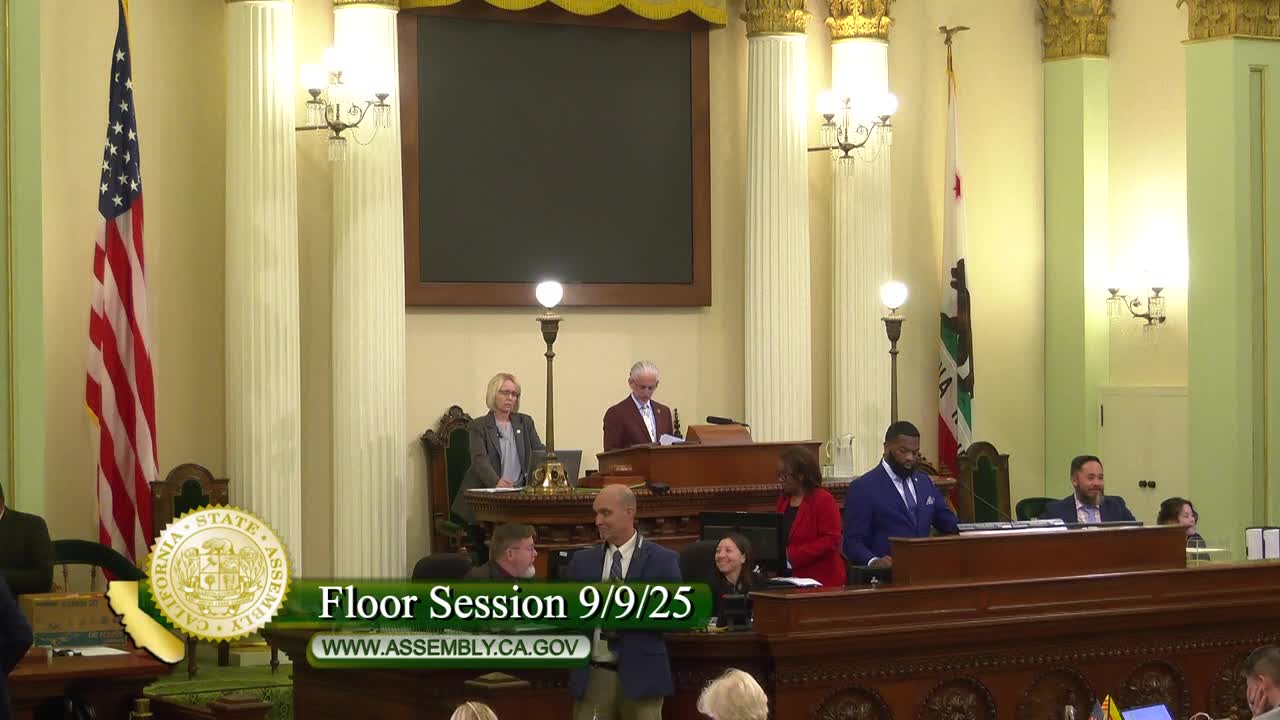 2MIN
Assembly Floor
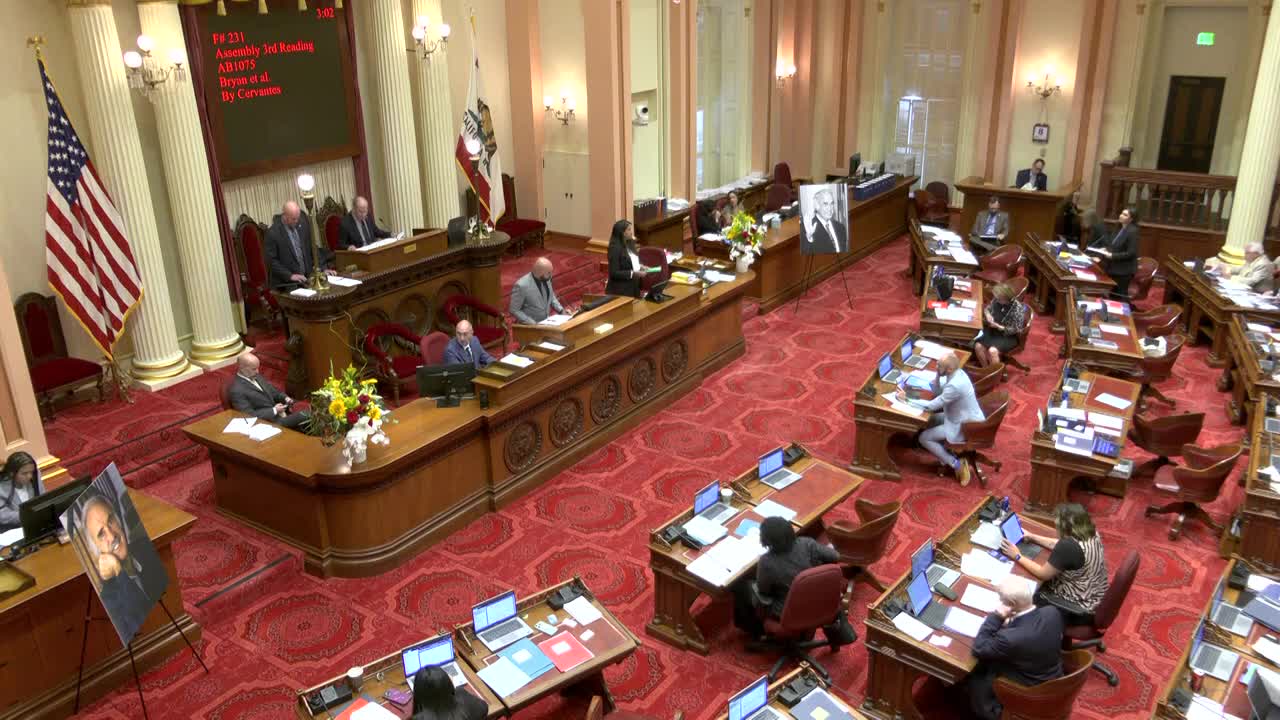 2MIN
Senate Floor
 7MIN
Senate Standing Committee on Natural Resources and Water
 4MIN
Senate Standing Committee on Governmental Organization
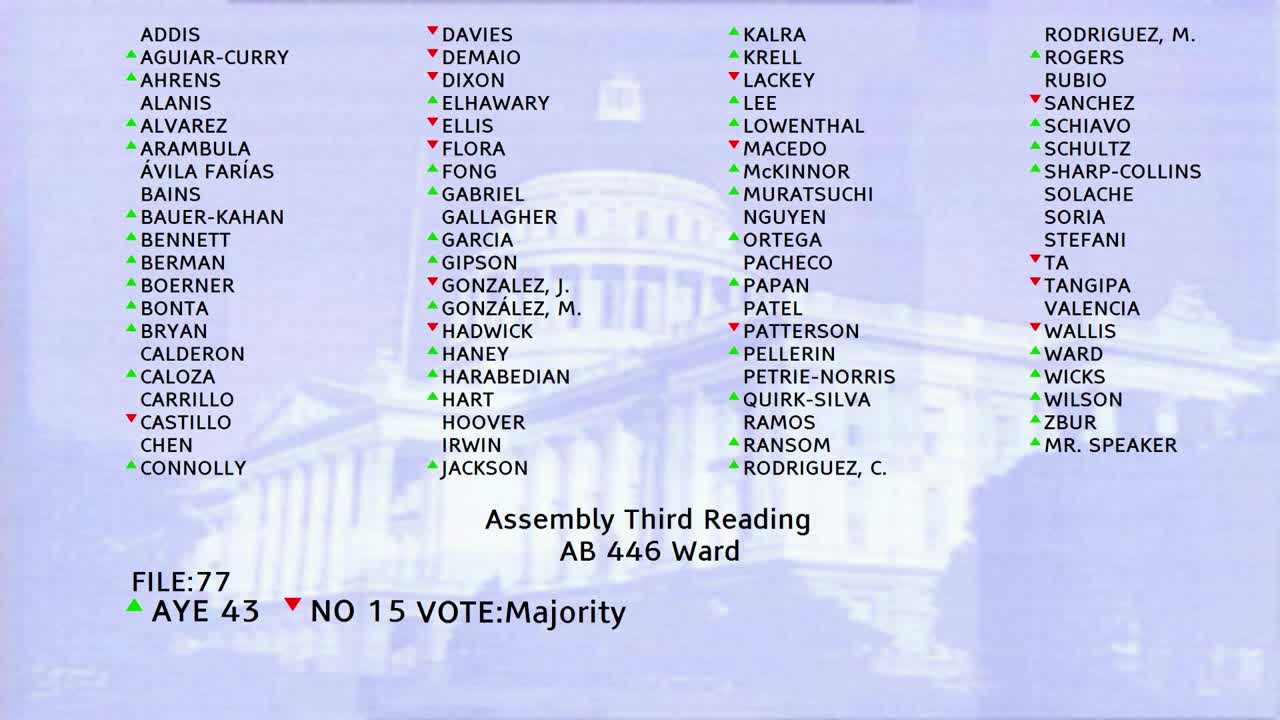 2MIN
Assembly Floor
 4MIN
Assembly Standing Committee on Natural Resources
 1MIN
Assembly Standing Committee on Emergency Management
Bill Author


