AB 1146: Water infrastructure: dams and reservoirs: water release: false pretenses.
- Session Year: 2025-2026
- House: Assembly
- Latest Version Date: 2025-06-23
Current Status:
In Progress
(2025-08-29: In committee: Held under submission.)
Introduced
In Committee
Awaiting First Chamber Vote
Passed First Chamber
In Committee
Awaiting Second Chamber Vote
Passed Second Chamber
Enacted
Existing law provides for the regulation and supervision of dams and reservoirs exclusively by the state. Under existing law, a person who violates certain provisions related to the regulation and supervision of dams and reservoirs or of any approval, order, rule, regulation, or requirement of the Department of Water Resources is guilty of a misdemeanor, as specified.
This bill would prohibit the release of stored water from a reservoir owned and operated by the United States in this state if the release is done under false pretenses, which the bill would define to mean a release of water from a reservoir owned and operated by the United States in a manner that is knowingly, designedly, and intentionally under any false or fraudulent representation as to the purpose and intended use of the water. The bill would authorize the State Water Resources Control Board to issue an interim relief order, as specified, to a reservoir operator to prohibit the release of stored water in or the Attorney General, as provided, to bring an action for injunctive relief for a violation of the above-described prohibition. The bill would authorize the board to commence an interim relief proceeding on its own motion. The bill would make any person who violates these provisions civilly liable in an amount not to exceed $10,000 for each day in which the violation occurs. The bill would also require these penalties to apply to the United States to the extent authorized under federal law, as specified. By expanding the scope of a crime, the bill would impose a state-mandated local program.
The California Constitution requires the state to reimburse local agencies and school districts for certain costs mandated by the state. Statutory provisions establish procedures for making that reimbursement.
This bill would provide that no reimbursement is required by this act for a specified reason.
Existing law provides for the regulation and supervision of dams and reservoirs exclusively by the state. Existing law provides that every person who violates specified provisions of the Water Code related to the regulation and supervision of dams and reservoirs or of any approval, order, rule, regulation, or requirement of the Department of Water Resources is guilty of a misdemeanor, as specified.
This bill would prohibit the release of stored water from a reservoir in this state if the release is done under false pretenses, which the bill would define to mean a release of water from a reservoir in a manner that is knowingly and designedly knowingly, designedly, and intentionally under any false or fraudulent representation or assumption as to the purpose and intended use of the water. The bill would authorize the State Water Resources Control Board to issue an interim relief order, as specified, to a reservoir operator to prohibit the release of stored water in violation of the above-described prohibition. The bill would authorize the board to commence an interim relief proceeding on its own motion or upon the petition of an interested party, and would specify information required to be included in the petition. motion. The bill would provide make any person who violates these provisions would be guilty of a misdemeanor, punishable by a fine or imprisonment in the county jail, or both. By expanding the scope of a crime, this bill would impose a state-mandated local program. civilly liable in an amount not to exceed $10,000 for each day in which the violation occurs. The bill would also require these penalties to apply to the United States to the extent authorized under federal law, as specified.
The California Constitution requires the state to reimburse local agencies and school districts for certain costs mandated by the state. Statutory provisions establish procedures for making that reimbursement.This bill would provide that no reimbursement is required by this act for a specified reason.Existing law provides for the regulation and supervision of dams and reservoirs exclusively by the state. Existing law provides that every person who violates specified provisions of the Water Code related to the regulation and supervision of dams and reservoirs or of any approval, order, rule, regulation, or requirement of the Department of Water Resources is guilty of a misdemeanor, as specified.
This bill would make a nonsubstantive change to that provision.This bill would prohibit the release of stored water from a reservoir in this state if the release is done under false pretenses, which the bill would define to mean a release of water from a reservoir in a manner that is knowingly and designedly under any false or fraudulent representation or assumption as to the purpose and intended use of the water. The bill would authorize the State Water Resources Control Board to issue an interim relief order, as specified, to a reservoir operator to prohibit the release of stored water in violation of the above-described prohibition. The bill would authorize the board to commence an interim relief proceeding on its own motion or upon the petition of an interested party, and would specify information required to be included in the petition. The bill would provide any person who violates these provisions would be guilty of a misdemeanor, punishable by a fine or imprisonment in the county jail, or both. By expanding the scope of a crime, this bill would impose a state-mandated local program.
The California Constitution requires the state to reimburse local agencies and school districts for certain costs mandated by the state. Statutory provisions establish procedures for making that reimbursement.
This bill would provide that no reimbursement is required by this act for a specified reason.
Existing law provides for the regulation and supervision of dams and reservoirs exclusively by the state.
This bill would make a nonsubstantive change to that provision.
(a)The release of stored water from a reservoir owned and operated by the United States in this state is prohibited if the release is done under false pretenses.
(b)A release under false pretenses shall mean a release of water from a reservoir owned and operated by the United States in a manner that is knowingly, designedly, and intentionally under any false or fraudulent representation as to the purpose and intended use of the water.
SEC. 2.Section 6034 is added to the Water Code, to read:6034.(a)(1)The board may issue an interim relief order to a reservoir operator to prohibit the release of stored water that may be in violation of Section 6033.(2)The board may commence an interim relief proceeding on its own motion.(b)Except as provided in subdivision (c), the board shall provide notice at least 10 days before the date of the hearing.(c)The board may issue an interim order before the opportunity for a hearing as long as the order includes a finding by the board that immediate compliance with the order is necessary because the release of water is in violation of subdivision (a) of Section 6033 or will prevent imminent or irreparable injury to any of the following:(1)Public health, safety, or welfare.(2)Other legal users of water.(3)Instream beneficial uses of water.(d)If the board issues an interim relief order before the opportunity for a hearing, it shall, at the request of the party to whom the order is issued, hold a hearing within 15 days of the date the board receives a request for a hearing, unless the party to whom the interim relief order is issued agrees to an extension of that period.(e)An interim relief order issued by the board shall remain in effect for a period not to exceed 30 days unless the party to whom the interim relief order is issued agrees to an extension of that period. This subdivision is not a limitation on the authority of the board to issue any additional interim relief in response to changed circumstances.SEC. 3.Section 6425 of the Water Code is amended to read:6425.(a)Every person who violates any of the provisions of this part or of any approval, order, rule, regulation, or requirement of the department is guilty of a misdemeanor and punishable by a fine of not more than two thousand dollars ($2,000) or by imprisonment in the county jail not exceeding six months, or both. In the event of a continuing violation each day that the violation continues constitutes a separate and distinct offense. This subdivision shall not apply to a violation of Section 6033 or any order issued by the board pursuant to Section 6034.(b)(1)Every person who violates Section 6033 or any order issued by the board pursuant to Section 6034 may be held civilly liable in an amount not to exceed ten thousand dollars ($10,000) for each day in which the violation occurs.(2)The penalties established under this section apply to the United States to the extent authorized under federal law, including the McCarran Amendment of 1952 (codified at 43 U.S.C. Sec. 666).(3)If the United States declines to pay a penalty, or the board determines that the United States is likely to decline to pay a fee or expense, the board may do any of the following:(A)Initiate appropriate action to collect the fee or expense, including any appropriate enforcement action for failure to pay the fee or expense, if the board determines that the federal law authorizes the collection of the fee or expense.(B)Allocate the right to collect the fee or expense, or an appropriate portion of the fee or expense, to persons or entities who have contracts for the delivery of water from the person or entity on whom the fee or expense was initially imposed. The allocation of the fee or expense to a contractor does not affect ownership of a permit, license, or other water right, and does not vest an equitable title in the contractor.(C)Enter into a contractual arrangement that requires the United States to reimburse the board, in whole or in part, for the services furnished by the board, either directly or indirectly, in connection with the activity for which the fee or expense is imposed.(D)Refuse to process any application, registration, petition, request, or proof of claim for which the fee or expense is not paid, if the board determines that refusal would not be inconsistent with federal law or the public interest.SEC. 2.Section 6034 is added to the Water Code, to read:6034.An action for the issuance of injunctive relief as may be warranted by way of temporary restraining order, preliminary injunction, or permanent injunction, may be brought by the board, the Attorney General on behalf of the board, or in the Attorney Generals independent capacity in the name of the people of the State of California, where a release of stored water is threatened, is occurring, or has occurred in violation of Section 6033.
SEC. 3.No reimbursement is required by this act pursuant to Section 6 of Article XIIIB of the California Constitution because the only costs that may be incurred by a local agency or school district will be incurred because this act creates a new crime or infraction, eliminates a crime or infraction, or changes the penalty for a crime or infraction, within the meaning of Section 17556 of the Government Code, or changes the definition of a crime within the meaning of Section 6 of Article XIIIB of the California Constitution.
(a)The release of stored water from a reservoir in this state is prohibited if the release is done under false pretenses.
(b)A release under false pretenses shall mean a release of water from a reservoir in a manner that is knowingly and designedly knowingly, designedly, and intentionally under any false or fraudulent representation or assumption as to the purpose and intended use of the water.
SEC. 2.Section 6034 is added to the Water Code, to read:6034.(a)(1)The board may issue an interim relief order to a reservoir operator to prohibit the release of stored water that may be in violation of Section 6033.
(b)(2)The board may commence an interim relief proceeding on its own motion or upon the petition of an interested party. The petition shall contain all of the following information: motion.
(1)The name and mailing address of the petitioner.(2)A description of the specific release of water that the petitioner is contesting.(3)A statement of the petitioners interest in the contested release of water.(4)A description of the alleged harm or injury.(5)An explanation of the nexus between the release of water and the alleged harm or injury.(6)The relief the petitioner is requesting.(7)A statement of reasons explaining why the relief is justified.(8)Any additional information that the board may deem appropriate.(c)The board may dismiss a petition that does not raise substantial issues that are appropriate for review.(d)(b)Except as provided in subdivision (e), (c), the board shall provide notice at least 10 days before the date of the hearing.
(e)(c)The board may issue an interim order before the opportunity for a hearing as long as the order includes a finding by the board that immediate compliance with the order is necessary because the release of water is in violation of subdivision (a) of Section 6033 or will prevent imminent or irreparable injury to any of the following:
(1)Public health, safety, or welfare.
(2)Other legal users of water.
(3)Instream beneficial uses of water.
(f)(d)If the board issues an interim relief order before the opportunity for a hearing, it shall, at the request of the party to whom the order is issued, hold a hearing within 15 days of the date the board receives a request for a hearing, unless the party to whom the interim relief order is issued agrees to an extension of that period.
(e)An interim relief order issued by the board shall remain in effect for a period not to exceed 30 days unless the party to whom the interim relief order is issued agrees to an extension of that period. This subdivision is not a limitation on the authority of the board to issue any additional interim relief in response to changed circumstances.
SEC. 3.Section 6425 of the Water Code is amended to read:6425.(a)Every person who violates any of the provisions of this part or of any approval, order, rule, regulation, or requirement of the department is guilty of a misdemeanor and punishable by a fine of not more than two thousand dollars ($2,000) or by imprisonment in the county jail not exceeding six months, or both. In the event of a continuing violation each day that the violation continues constitutes a separate and distinct offense. This subdivision shall not apply to a violation of Section 6033 or any order issued by the board pursuant to Section 6034.
(b)(1)Every person who violates Section 6033 or any order issued by the board pursuant to Section 6034 is guilty of a misdemeanor and punishable by a fine of not more than two thousand dollars ($2,000) or by imprisonment in the county jail not exceeding six months, or both. In the event of a continuing violation each day that the violation continues constitutes a separate and distinct offense. may be held civilly liable in an amount not to exceed ten thousand dollars ($10,000) for each day in which the violation occurs.
(2)The penalties established under this section apply to the United States to the extent authorized under federal law, including the McCarran Amendment of 1952 (codified at 43 U.S.C. Sec. 666).
(3)If the United States declines to pay a penalty, or the board determines that the United States is likely to decline to pay a fee or expense, the board may do any of the following:
(A)Initiate appropriate action to collect the fee or expense, including any appropriate enforcement action for failure to pay the fee or expense, if the board determines that the federal law authorizes the collection of the fee or expense.
(B)Allocate the right to collect the fee or expense, or an appropriate portion of the fee or expense, to persons or entities who have contracts for the delivery of water from the person or entity on whom the fee or expense was initially imposed. The allocation of the fee or expense to a contractor does not affect ownership of a permit, license, or other water right, and does not vest an equitable title in the contractor.
(C)Enter into a contractual arrangement that requires the United States to reimburse the board, in whole or in part, for the services furnished by the board, either directly or indirectly, in connection with the activity for which the fee or expense is imposed.
(D)Refuse to process any application, registration, petition, request, or proof of claim for which the fee or expense is not paid, if the board determines that refusal would not be inconsistent with federal law or the public interest.
SEC. 4.No reimbursement is required by this act pursuant to Section 6 of Article XIIIB of the California Constitution because the only costs that may be incurred by a local agency or school district will be incurred because this act creates a new crime or infraction, eliminates a crime or infraction, or changes the penalty for a crime or infraction, within the meaning of Section 17556 of the Government Code, or changes the definition of a crime within the meaning of Section 6 of Article XIIIB of the California Constitution.(a)The release of stored water from a reservoir in this state is prohibited if the release is done under false pretenses.
(b)A release under false pretenses shall mean a release of water from a reservoir in a manner that is knowingly and designedly under any false or fraudulent representation or assumption as to the purpose and intended use of the water.
SEC. 2.Section 6034 is added to the Water Code, to read:6034.(a)The board may issue an interim relief order to a reservoir operator to prohibit the release of stored water that may be in violation of Section 6033.
(b)The board may commence an interim relief proceeding on its own motion or upon the petition of an interested party. The petition shall contain all of the following information:
(1)The name and mailing address of the petitioner.
(2)A description of the specific release of water that the petitioner is contesting.
(3)A statement of the petitioners interest in the contested release of water.
(4)A description of the alleged harm or injury.
(5)An explanation of the nexus between the release of water and the alleged harm or injury.
(6)The relief the petitioner is requesting.
(7)A statement of reasons explaining why the relief is justified.
(8)Any additional information that the board may deem appropriate.
(c)The board may dismiss a petition that does not raise substantial issues that are appropriate for review.
(d)Except as provided in subdivision (e), the board shall provide notice at least 10 days before the date of the hearing.
(e)The board may issue an interim order before the opportunity for a hearing as long as the order includes a finding by the board that immediate compliance with the order is necessary because the release of water is in violation of subdivision (a) of Section 6033 or will prevent imminent or irreparable injury to any of the following:
(1)Public health, safety, or welfare.
(2)Other legal users of water.
(3)Instream beneficial uses of water.
(f)If the board issues an interim relief order before the opportunity for a hearing, it shall, at the request of the party to whom the order is issued, hold a hearing within 15 days of the date the board receives a request for a hearing, unless the party to whom the interim relief order is issued agrees to an extension of that period.
SEC. 3.Section 6425 of the Water Code is amended to read:6425.(a)Every person who violates any of the provisions of this part or of any approval, order, rule, regulation, or requirement of the department is guilty of a misdemeanor and punishable by a fine of not more than two thousand dollars ($2,000) or by imprisonment in the county jail not exceeding six months, or both. In the event of a continuing violation each day that the violation continues constitutes a separate and distinct offense.
(b)Every person who violates Section 6033 or any order issued by the board pursuant to Section 6034 is guilty of a misdemeanor and punishable by a fine of not more than two thousand dollars ($2,000) or by imprisonment in the county jail not exceeding six months, or both. In the event of a continuing violation each day that the violation continues constitutes a separate and distinct offense.
SEC. 4.No reimbursement is required by this act pursuant to Section 6 of Article XIIIB of the California Constitution because the only costs that may be incurred by a local agency or school district will be incurred because this act creates a new crime or infraction, eliminates a crime or infraction, or changes the penalty for a crime or infraction, within the meaning of Section 17556 of the Government Code, or changes the definition of a crime within the meaning of Section 6 of Article XIIIB of the California Constitution.
SECTION 1.Section 6025 of the Water Code is amended to read:6025.It is the intent of the Legislature by this part to provide for the regulation and supervision of dams and reservoirs exclusively by the state.It is the intent of the Legislature by this part to provide for the regulation and supervision of dams and reservoirs exclusively by the State. state.
|
Date
|
Status
|
|---|---|
| Aug 29, 2025 | In committee: Held under submission. |
| Aug 18, 2025 | In committee: Referred to suspense file. |
| Jul 16, 2025 | From committee: Do pass and re-refer to Com. on APPR. (Ayes 12. Noes 1.) (July 15). Re-referred to Com. on APPR. |
| Jul 9, 2025 | From committee: Do pass and re-refer to Com. on JUD. (Ayes 7. Noes 0.) (July 8). Re-referred to Com. on JUD. |
| Jun 23, 2025 | From committee chair, with author's amendments: Amend, and re-refer to committee. Read second time, amended, and re-referred to Com. on N.R. & W. |
| Jun 18, 2025 | Referred to Coms. on N.R. & W. and JUD. |
| Jun 9, 2025 | In Senate. Read first time. To Com. on RLS. for assignment. |
| Jun 5, 2025 | Read third time. Passed. Ordered to the Senate. (Ayes 55. Noes 17. Page 2110.) |
| May 27, 2025 | Read second time. Ordered to third reading. |
| May 23, 2025 | From committee: Do pass. (Ayes 11. Noes 3.) (May 23). |
| May 14, 2025 | In committee: Set, first hearing. Referred to APPR. suspense file. |
| May 5, 2025 | Re-referred to Com. on APPR. |
| May 1, 2025 | Read second time and amended. |
| Apr 30, 2025 | From committee: Amend, and do pass as amended and re-refer to Com. on APPR. (Ayes 8. Noes 3.) (April 29). |
| Mar 18, 2025 | Re-referred to Com. on W. P., & W. |
| Mar 17, 2025 | Referred to Com. on W. P., & W. |
| Mar 17, 2025 | From committee chair, with author's amendments: Amend, and re-refer to Com. on W. P., & W. Read second time and amended. |
| Feb 21, 2025 | From printer. May be heard in committee March 23. |
| Feb 20, 2025 | Read first time. To print. |
|
Date
|
Description
|
Location
|
Votes
|
|
|---|---|---|---|---|
| Aug 18, 2025 | Placed on suspense file | Senate Standing Committee on Appropriations |
Passed |
|
| Jul 15, 2025 | Do pass, but first be re-referred to the Committee on [Appropriations] | Senate Standing Committee on Judiciary |
Passed |
|
| Jul 8, 2025 | Do pass, but first be re-referred to the Committee on [Judiciary] | Senate Standing Committee on Natural Resources and Water |
Passed |
|
| Jun 5, 2025 | AB 1146 Papan Assembly Third Reading | Assembly Floor |
Passed |
|
| May 23, 2025 | Do pass. | Assembly Standing Committee on Appropriations |
Passed |
|
| Apr 29, 2025 | Do pass as amended and be re-referred to the Committee on [Appropriations] | Assembly Standing Committee on Water, Parks, and Wildlife |
Passed |
This list shows positions taken on this bill by organizations on the date displayed, which is linked to the original source.
Positions by individuals are not included.
|
Organization
|
Position
|
Date
|
|---|---|---|
| Almond Alliance | ** Against | |
| American Pistachio Growers | ** Against | |
| California Bean Shippers Association | ** Against | |
| California Chamber Of Commerce | ** Against | |
| California Cotton Ginners & Growers Association | ** Against | |
| California Democratic Party Rural Caucus | ** Support | |
| California Fresh Fruit Association | ** Against | |
| California Grain & Feed Association | ** Against | |
| California League of Food Producers | ** Against | |
| California Municipal Utilities Association | ** Against | |
| California Pear Growers Association | ** Against | |
| California Seed Association | ** Against | |
| California Walnut Commission | ** Against | |
| Pacific Egg and Poultry Association | ** Against | |
| Planning And Conservation League | ** Support | |
| Sierra Club | ** Support | |
| Valley Ag Water Coalition | ** Against | |
| Western Growers Association | ** Against | |
| Western Tree Nut Association | ** Against |
SENATE COMMITTEE ON
Senator Anna Caballero, Chair
2025 - 2026 Regular Session
AB 1146 (Papan) - Water infrastructure: dams and reservoirs: water release: false pretenses
Version: | Policy Vote: |
Urgency: | Mandate: |
Hearing Date: | Consultant: |
Bill Summary:
This bill would prohibit the release of stored water from a reservoir owned and operated by the United States in this state if the release is done under false pretenses, as defined by the bill.
Fiscal Impact:
- The Department of Justice anticipates unquantifiable but potentially significant costs (Legal Services Revolving Fund) relating to client representation, litigation, and enforcement work arising from this bill.
Background:
On January 24, 2025, President Trump released an executive order that required federal officials to exert all efforts to send more water to fight southern California wildfires. On January 30, 2025, the Trump Administration notified water managers on the Tule and Kaweah Rivers that it would soon be releasing water from Success Lake and Kaweah Lake, respectively, in response to the President’s executive order.
The Tule and Kaweah rivers flow into the old Tulare Lake bed, a terminal water body with no hydrologic connection to southern California. On January 31st, President Trump posted on social media “photo of beautiful water flow that I just opened in California. Today, 1.6 billion gallons and, in 3 days, it will be 5.2 billion gallons. Everybody should be happy about this long fought Victory! I only wished they listened to me six years ago – There would have been no fire!”
On Success Dam (Success Lake), the releases went from 50 cubic-feet per second (cfs) on January 30th to a high of 1,000 cfs on January 31st and returned to 50 cfs on February 2nd. On Terminus Dam (Lake Kaweah), the releases went from 3 cfs on January 30th to a high of 1,500 cfs on January 31st and returned to 3 cfs on February 2nd.
Combined, more than 2 billion gallons of water was released. Contrary to President’s Trumps claims, the releases did not result in sending more water to southern California as represented in the executive order. Further, there were no storms forecasted for the area and the snowpack was well below average. There was sufficient capacity to store the water that was released. The releases also occurred at a time when the farmers downstream did not need the water for irrigation.
Proposed Law:
This bill would:
- Prohibit the release of stored water from a reservoir owned and operated by the United States in this state if the release is done under false pretenses.
- Provide that a release under false pretense means a release of water from a reservoir owned and operated by the United States in a manner that is knowingly, designedly, and intentionally under any false or fraudulent representation as to the purpose and intended use of water.
- Authorize the State Water Board, the Attorney General on behalf of the State Water Board, or the Attorney General in its independent capacity to bring an action for the issuance of injunctive relief, as specified, when a release of stored water is threatened, is occurring, or has occurred in violation of the above-described prohibition.
Staff Comments:
This bill would authorize the State Water Board and Attorney General to bring an action for injunctive relief if a release of water from a federal reservoir under false pretenses is threatened, is occurring, or has occurred. In determining whether the release is occurring under false pretenses and determining whether to bring an action for injunctive relief, the State Water Board or Attorney General will likely have to evaluate a variety of other factors, as there can be various reasons behind a decision to release water from a reservoir.
It is assumed, that in implementing this section, that the State Water Board or Attorney General would only bring an action for injunctive relief if there is no other valid reason present for the decision to release water.
-- END --
Senator Thomas Umberg, Chair
2025-2026 Regular Session
Bill No: AB 1146 (Author:Papan)
Version: June 23, 2025
Hearing Date: July 15, 2025
Fiscal: Yes
Urgency: No
Consultant: AM
SUBJECT
Water infrastructure: dams and reservoirs: water release: false pretenses
DIGEST
This bill prohibits the release of stored water from a reservoir owned and operated by the United States that is located in California if the release is done under false pretenses, as specified, and authorizes injunctive relief to be sought by the State Water Resources Control Board or the Attorney General in the name of the people of the State of California.
EXECUTIVE SUMMARY
In January 2025, a number of deadly wildfires in Los Angeles, including the Palisades and Eaton fires, collectively burned over 39,000 acres,[1] caused at least 30 deaths,[2] destroyed over 16,000 structures, and resulted in property damage estimates ranging from $28 to $53.8 billion.[3] During this devastating emergency when real assistance from the federal government was needed, President Trump issued an executive order that caused the release of over 2 billion gallons of water from the Success Lake and Kaweah Lake. The purported purpose of the release was to bring water to Southern California to assist the wildfires; however, it was known by the Army Corps of Engineers colonel responsible for releasing the water that there was no way the released water could reach Southern California. Instead, this stunt resulted in the waste of scarce and badly needed irrigation water, and caused panic in downstream communities who had only an hour to prepare for the release.[4] The bill is author sponsored and supported by the California Democratic Party Rural Caucus. No timely opposition was received by the Committee. In the Assembly, there were several organizations in opposition to the bill, but in light of recent amendments, they have moved to neutral. This bill passed the Senate Committee on Natural Resources and Water by a vote of 7 to 0.
PROPOSED CHANGES TO THE LAW
Existing federal law:
- Provides that Congress has the power to dispose of and make all needful rules and regulations respecting the territory or other property belonging to the United States; and nothing in the U.S. Constitution is to be construed as to prejudice any claims of the United States, or of any particular State. (U.S. Const. art. IV, § 3, cl. 2.)
Existing state law:
- Authorizes the executive director of the State Water Resources Control Board (State Water Board) to issue a complaint to any person that diverts water in violation of a water right, fails to comply with a cease and desist order issued by the State Water Board, or makes a willful misstatement on a water diversion and use statement. (Wat. Code § 1055.)
- Subjects all dams and reservoirs to regulation and oversight by the Division of Safety of Dams (DSOD) within the Department of Water Resources (DWR). (Wat. Code §6075)
- Defines “dam” as any artificial barrier, together with additional appurtenant structures (including training walls, spillways, outlets, tunnels, channels, pipelines, or dikes) that may impound or divert water and is either (a) 25 feet or greater in height from the natural stream bed to the top of the barrier/maximum storage elevation, or (b) impounds a capacity of 50 acre-feet of water or more. (Wat. Code § 6002.)
- Excludes dams owned and operated by the federal government from regulation and oversight by DSOD. (Wat. Code § 6009.)
This bill:
- Prohibits the release of stored water from a reservoir owned and operated by the United States located in this state if the release is done under false pretenses.
- Provides that a release under false pretense means a release of water from a reservoir owned and operated by the United States in a manner that is knowingly, designedly, and intentionally under any false or fraudulent representation as to the purpose and intended use of water.
- Authorizes the State Water Board, the Attorney General on behalf of the State Water Board, or the Attorney General in its independent capacity to bring an action for the issuance of injunctive relief, as specified, when a release of stored water is threatened, is occurring, or has occurred in violation of the above-described prohibition.
COMMENTS
- Stated need for the bill
The author writes:
This bill is in response to President Trump’s order that water be released from Success Lake and Kaweah Lake from January 31, 2025 through February 2, 2025. Unquestionably, these releases were a political stunt by President Trump and served no purpose other than to provide a photo for a social media post. The net result was that the president placed communities downstream of the reservoirs at risk of flooding and played with their livelihoods under the false pretense that the released water would ‘help’ southern California fight wildfires. Furthermore, the released water is California water that farmers and water managers had legal rights to use under California law. The released water should have remained in storage until the summertime when farmers and communities will actually need it. Given the effects of climate change and resulting water supply challenges, this kind of fraud, chicanery, and waste cannot be allowed to occur again.
- Background
The Senate Committee on Natural Resources and Water analysis of this bill provides useful context on the events that precipitated the author introducing this bill:
On January 24, 2025, President Trump released an executive order that required federal officials to exert all efforts to send more water to fight southern California wildfires. On January 30, 2025, the Trump Administration notified water managers on the Tule and Kaweah Rivers that it would soon be releasing water from Success Lake and Kaweah Lake, respectively, in response to the President’s executive order.
The Tule and Kaweah rivers flow into the old Tulare Lake bed, a terminal water body with no hydrologic connection to southern California. On January 31st, President Trump posted on social media “photo of beautiful water flow that I just opened in California. Today, 1.6 billion gallons and, in 3 days, it will be 5.2 billion gallons. Everybody should be happy about this long fought Victory! I only wished they listened to me six years ago – There would have been no fire!”
On Success Dam (Success Lake), the releases went from 50 cubic-feet per second (cfs) on January 30th to a high of 1,000 cfs on January 31st and returned to 50 cfs on February 2nd. On Terminus Dam (Lake Kaweah), the releases went from 3 cfs on January 30th to a high of 1,500 cfs on January 31st and returned to 3 cfs on February 2nd.
Combined, more than 2 billion gallons of water was released. Contrary to President’s Trumps claims, the releases did not result in sending more water to southern California as represented in the executive order. Further, there were no storms forecasted for the area and the snowpack was well below average. There was sufficient capacity to store the water that was released. The releases also occurred at a time when the farmers downstream did not need the water for irrigation.[5]
Newspaper reports of the incident reported that the Army Corps of Engineers colonel responsible for releasing the water from the reservoirs knew that the water was unlikely to reach Southern California as President Trump claimed.[6] A memo written four days after the release stated that the water “could not be delivered to Southern California directly” and that the release was conducted to mollify the executive order.[7]
- This bill raises issues of federal preemption
The concept of preemption derives from the “supremacy clause” of the federal Constitution, which provides that the laws of the United States “shall be the supreme Law of the Land.”[8] Courts have typically identified three circumstances in which federal preemption of state law occurs:
(1) express preemption, where Congress explicitly defines the extent to which its enactments preempt state law; (2) field preemption, where state law attempts to regulate conduct in a field that Congress intended the federal law exclusively to occupy; and (3) conflict preemption, where it is impossible to comply with both state and federal requirements, or where state law stands as an obstacle to the accomplishment and execution of the full purpose and objectives of Congress. [9]
The property clause of the U.S. Constitution provides that Congress has the power to dispose of and make all needful rules and regulations respecting the territory or other property belonging to the United States.[10] The property clause has been held “to give Congress the power to determine what are ‘needful’ rules ‘respecting’ the public lands.”[11] The court stated the “general government doubtless has a power over its own property analogous to the police power of the several states, and the extent to which it may go in the exercise of such power is measured by the exigencies of the particular case.”[12] In Kleppe, the court noted that the property clause does not authorize control over the public policy of a state, and that “[a]bsent consent or cession a [s]tate undoubtedly retains jurisdiction over federal lands within its territory.”[13] However, the Court did note Congress has complete power over public property entrusted to it, and any “federal legislation necessarily overrides conflicting state laws.”[14]
The McCarran Amendment of 1952 provided consent for the U.S. to be a defendant in any suit for the adjudication of water rights of a river system or other source where the U.S. is the owner or in the process of acquiring those rights by appropriation under State law, by purchase, by exchange, or otherwise when the U.S. is a necessary party to the suit.[15] The amendment further provided that the U.S. is subject to the judgments, orders, and decrees of the court having jurisdiction and may obtain review in the same manner as a private individual, provided that no judgment or costs can be entered against the U.S. in any suit.
Given the above, it is unclear if the bill would be found to be preempted under federal law. However, if the bill were enacted and the state tried to enforce it, the issue of preemption would undoubtedly be litigated in the case.
SUPPORT
California Democratic Party Rural Caucus
OPPOSITION
None received.
RELATED LEGISLATION
Pending Legislation: None known.
Prior Legislation: None known.
PRIOR VOTES
Senate Committee on Natural Resources and Water (Ayes 7, Noes 0)
Assembly Floor (Ayes 55, Noes 17)
Assembly Appropriations Committee (Ayes 11, Noes 3)
Assembly Water, Parks and Wildlife Committee (Ayes 8, Noes 3)
**************
Governor’s Exec. Order No. N-4-25 (Jan. 12, 2025). ↑
Jesus Jiménez, L.A. Fires Death Toll Rises to 30 After Remains Are Found, L.A. Times, (Apr. 3, 2025), available at https://www.nytimes.com/2025/04/03/us/la-fires-death-toll.html. ↑
Palisades and Eaton wildfires caused up to $53.8 billion in property damage, study finds, The Orange County Register, (Feb. 27, 2025), available at https://www.ocregister.com/2025/02/27/palisades-and-eaton-wildfires-caused-up-to-53-8-billion-in-property-damage-study-finds/. ↑
Gabriel Canon, ‘Ridiculous blunder’: Trump wades into California’s water wars – and strikes some of his strongest supporters, The Guardian, (Feb. 11, 2025), available at https://www.theguardian.com/us-news/2025/feb/11/california-water-trump. ↑
Senate Committee on Natural Resources and Water analysis of AB 1146 (2025-26 reg. sess.) as amended June 23, 2025 at p. 1. ↑
Scott Dance & Joshua Partlow, Army Corps knew Trump order would waste California water, memo shows, Washington Post, (Mar. 7, 2025), available at https://www.washingtonpost.com/climate-environment/2025/03/07/trump-water-release-california-fires/. See also, Ian James, Water officials knew that opening dams to meet Trump’s wishes was ill-advised. Here’s why it happened anyway, Los Angels Times, (Mar. 13, 2025), available at https://www.latimes.com/environment/story/2025-03-13/trump-army-corps-dam-water-dumped. ↑
Ibid. ↑
U.S. Const., art. VI, cl. 2. ↑
English v. Gen. Elec. Co. (1990) 496 U.S. 72, 78-80. ↑
U.S. Const. art. IV, § 3, cl. 2. ↑
Kleppe v. New Mexico (1976) 426 U.S. 529, 539. ↑
Camfiled v. U.S. (1897) 167 U.S. 518, 525. ↑
Kleppe, supra at 543. ↑
Ibid. ↑
43 U.S.C. § 666 ↑
ASSEMBLY THIRD READING
ATR Bill Id:AB 1146
Author:(Papan)
As Amended Ver:May 1, 2025
Majority vote
SUMMARY
Prohibits the release of stored water under false pretenses, authorizes the State Water Resources Control Board (State Water Board) to issue an interim release order to enforce this prohibition, and imposes penalties for violations of this prohibition.
Major Provisions
- Provides that the release of stored water from a reservoir is prohibited if the release is done under false pretenses.
- Defines release under false pretenses as a release in a manner that is knowingly, designedly, and intentionally under any false or fraudulent representation as to the purpose and intended use of the water.
- Authorizes the State Water Board to commence an interim relief proceeding on its own motion. Requires 10-day notice before a hearing on an interim relief notice unless the State Water Board makes findings described in #4, below.
- Authorizes the State Water Board to issue an interim relief order before providing an opportunity for hearing if the order includes a finding that immediate compliance is necessary to prevent a release of stored water under false pretenses or to prevent imminent or irreparable injury to: a) public health, safety, or welfare; b) other legal users of water; or c) instream beneficial uses of water.
- Provides that every person who violates this bill may be held civilly liable in an amount not to exceed $10,000 for each day in which the violation occurs. Specifies the penalties established under this bill apply to the United States to the extent authorized under federal law.
COMMENTS
On January 30, 2025, the Trump Administration notified water managers on the Tule and Kaweah Rivers that it would soon be releasing water from Success Lake and Kaweah Lake, respectively, in response to President Trump's January 24th executive order that required federal officials exert all efforts to send more water to fight southern California wildfires.
The Tule and Kaweah rivers flow into the old Tulare Lake bed, a terminal water body that has no hydrologic connection to southern California; nonetheless, on January 31st, President Trump crowed on social media: "photo of beautiful water flow that I just opened in California. Today, 1.6 billion gallons and, in 3 days, it will be 5.2 billion gallons. Everybody should be happy about this long fought Victory! I only wished they listened to me six years ago – There would have been no fire!"
On Success Dam (Success Lake), the releases went from 50 cubic-feet per second (cfs) on January 30th to a high of 1,000 cfs on January 31st and returned to 50 cfs on February 2nd. On Terminus Dam (Lake Kaweah), the releases went from 3 cfs on January 30th to a high of 1,500 cfs on January 31st and returned to three cfs on February 2nd. Combined, the Trump Administration unnecessarily released more than 2 billion gallons of water. The releases were unnecessary because they could not send water to southern California as represented in the executive order. Further, there were no storms forecasted for the area and the snowpack was well below average so there was ample capacity to store the water that was released. The releases also occurred at a time when the farmers downstream did not need the water for irrigation.
According to the Author
This bill is in response to President Trump's order that water be released from Success Lake and Kaweah Lake from January 31, 2025 through February 2, 2025: "unquestionably, these releases were a political stunt by President Trump and served no purpose other than to provide a photo for a social media post. The net result was that the president placed communities downstream of the reservoirs at risk of flooding and played with their livelihoods under the false pretense that the released water would 'help' southern California fight wildfires. Furthermore, the released water is California water that farmers and water managers had legal rights to use under California law. The released water should have remained in storage until the summertime when farmers and communities will actually need it. Given the effects of climate change and resulting water supply challenges, this kind of fraud, chicanery, and waste cannot be allowed to occur again."
Arguments in Support
The Sierra Club supports this bill and argues it puts in place an appropriate prohibition and penalty and that "this is a timely and important bill given the increased weaponization of water in California."
Arguments in Opposition
The California Chamber of Commerce (Chamber) opposes this bill and argues it "would create unprecedented regulatory enforcement authority, lead to abuse, and create tremendous uncertainty for reservoir operators and water right holders throughout the state." Further, the Chamber contends this bill would fail to prevent the example cited to justify this bill as "under the Supremacy clause of the U.S. Constitution (Article VI), federal laws supersede conflicting state laws. Courts have repeatedly ruled that state-imposed restrictions on federal water operations are preempted when they interfere with congressionally authorized purposes, such as flood control, water supply, and environmental mandates."
FISCAL COMMENTS
According to Assembly Appropriations Committee:
- The State Water Board reports minor and absorbable costs (General Fund), noting the interim relief authority granted by the bill would be integrated into the board's existing water rights enforcement policies and workload.
2) The Department of Justice (DOJ) anticipates costs of an unquantifiable but potentially significant amount as a result of this bill (Legal Services Revolving Fund). The Natural Resources Law Section (NRLS) within DOJ's Public Rights Division anticipates the potential for increased referrals from its client agency, the State Water Board, relating to client representation, litigation, and enforcement work arising from this bill. The work anticipated by NRLS may require a significant increase in attorney hours.
3) Cost pressures (Trial Court Trust Fund, General Fund) of an unknown amount to the courts to adjudicate enforcement actions authorized by this bill. Actual costs will depend on the number of cases filed and the amount of court time needed to resolve each case. It generally costs approximately $1,000 to operate a courtroom for one hour. Although courts are not funded on the basis of workload, increased pressure on the Trial Court Trust Fund may create a demand for increased funding for courts from the General Fund. The fiscal year 2024-25 state budget provides $37.3 million ongoing General Fund to backfill declining revenue to the Trial Court Trust Fund.
VOTES
ASM WATER, PARKS, AND WILDLIFE: 8-3-2
YES: Papan, Alvarez, Bennett, Boerner, Caloza, Hart, Celeste Rodriguez, Rogers
NO: Bains, Macedo, Tangipa
ABS, ABST OR NV: Jeff Gonzalez, Ávila Farías
ASM APPROPRIATIONS: 11-3-1
YES: Wicks, Arambula, Calderon, Caloza, Elhawary, Fong, Mark González, Hart, Pacheco, Pellerin, Solache
NO: Dixon, Ta, Tangipa
ABS, ABST OR NV: Sanchez
UPDATED
VERSION: May 1, 2025
CONSULTANT: Pablo Garza / W., P., & W. / (916) 319-2096 FN: 0000663
Date of Hearing: May 14, 2025
ASSEMBLY COMMITTEE ON APPROPRIATIONS
Buffy Wicks, Chair
ABPCA Bill Id:AB 1146
Author:(Papan) – As Amended Ver:May 1, 2025
Policy Committee: | Water, Parks and Wildlife | Vote: | 8 - 3 |
|
| ||
|
|
Urgency: No State Mandated Local Program: No Reimbursable: No
SUMMARY:
This bill prohibits the release of stored water from a state reservoir under false pretenses, authorizes the State Water Resources Control Board (State Water Board) to issue an interim relief order to enforce this prohibition, and imposes penalties for violations of this prohibition.
Specifically, this bill, among other things:
- Provides that the release of stored water from a reservoir in the state is prohibited if the release is done under false pretenses, and defines “release under false pretenses” for purposes of this bill.
- Authorizes the State Water Board to issue an interim relief order to a reservoir operator to prohibit the release of stored water that may be in violation of item 1, above. Authorizes the State Water Board to commence an interim relief proceeding on its own motion, and requires the board to provide notice at least 10 days before the hearing date, except as provided in item 3, below.
- Authorizes the State Water Board to issue an interim relief order before the opportunity for a hearing if the order includes a finding that immediate compliance is necessary to prevent a release of stored water under false pretenses or to prevent imminent or irreparable injury to any of the following: (a) public health, safety, or welfare, (b) other legal users of water, or (c) instream beneficial uses of water.
- Requires the State Water Board, if it issues an interim relief order before providing an opportunity to be heard, to hold a hearing within 15 days of receiving a request for a hearing, unless the party to whom the interim relief order is issued agrees to an extension of that period.
- Provides that an interim relief order issued by the State Water Board shall remain in effect for a period not to exceed 30 days unless the party to whom the interim relief order is issued agrees to an extension of that period. Specifies that this provision is not a limitation on the authority of the board to issue any additional interim relief in response to changed circumstances.
- Provides that (a) every person who violates this bill may be held civilly liable in an amount not to exceed $10,000 for each day in which the violation occurs; (b) the penalties established under this bill apply to the United States to the extent authorized under federal law, as specified; and (c) if the United States declines to pay a penalty, or the State Water Board determines that the United States is likely to decline to pay a fee or expense, the board may take specified actions.
FISCAL EFFECT:
1) The State Water Board reports minor and absorbable costs (General Fund), noting the interim relief authority granted by the bill would be integrated into the board’s existing water rights enforcement policies and workload.
2) The Department of Justice (DOJ) anticipates costs of an unquantifiable but potentially significant amount as a result of this bill (Legal Services Revolving Fund). The Natural Resources Law Section (NRLS) within DOJ’s Public Rights Division anticipates the potential for increased referrals from its client agency, the State Water Board, relating to client representation, litigation, and enforcement work arising from this bill. The work anticipated by NRLS may require a significant increase in attorney hours.
3) Cost pressures (Trial Court Trust Fund, General Fund) of an unknown amount to the courts to adjudicate enforcement actions authorized by this bill. Actual costs will depend on the number of cases filed and the amount of court time needed to resolve each case. It generally costs approximately $1,000 to operate a courtroom for one hour. Although courts are not funded on the basis of workload, increased pressure on the Trial Court Trust Fund may create a demand for increased funding for courts from the General Fund. The fiscal year 2024-25 state budget provides $37.3 million ongoing General Fund to backfill declining revenue to the Trial Court Trust Fund.
COMMENTS:
1) Purpose. According to the author:
Unquestionably, these releases were a political stunt by President Trump and served no purpose other than to provide a photo for a social media post. The net result was that the president placed communities downstream of the reservoirs at risk of flooding and played with their livelihoods under the false pretense that the released water would ‘help’ southern California fight wildfires. Furthermore, the released water is California water that farmers and water managers had legal rights to use under California law. The released water should have remained in storage until the summertime when farmers and communities will actually need it.
2) Background. On January 30, 2025, the Trump Administration notified water managers on the Tule and Kaweah rivers that it would soon be releasing water from Success Lake and Kaweah Lake, respectively, in response to President Trump’s January 24, 2025, executive order that required federal officials undertake all efforts to send more water to fight Southern California wildfires. The Tule and Kaweah rivers flow into the old Tulare Lakebed, a terminal water body that has no hydrologic connection to Southern California. On Success Dam (Success Lake), the releases went from 50 cubic-feet per second (cfs) on January 30th to a high of 1,000 cfs on January 31st and returned to 50 cfs on February 2nd. On Terminus Dam (Kaweah Lake), the releases went from 3 cfs on January 30th to a high of 1,500 cfs on January 31st and returned to 3 cfs on February 2nd.
Combined, the Trump Administration unnecessarily released more than two billion gallons of water. The releases were unnecessary because the water had no way of reaching Southern California. Further, there were no storms forecasted for the area and the snowpack was well below average, so there was ample capacity to store the water that was released. The releases also occurred at a time when downstream farmers did not need the water for irrigation.
3) Support and Opposition. Writing in support, the Planning and Conservation League argues that ensuring the State Water Board has the ability to take action in the face of fraudulent and unlawful releases from reservoirs “is crucial for protecting the human right to water, agricultural communities reliant on consistent water supply, and the flows vital for our fish populations and riparian ecosystems – before irreversible harms can occur.”
Writing in opposition, a coalition of business, agricultural, and water associations argue the bill creates an enforcement mechanism for a single and vague cause of action. The coalition argues if this bill were law at the time of the aforementioned release, the state would have still lacked the authority to impose an interim relief order on the federal government given federal preemption and sovereign immunity issues. Instead, they argue, the only operators who would be subject to interim relief would be state and local agencies. The coalition contends creating interim relief authority sets a concerning precedent, and there undoubtedly will be attempts in the future to expand its application.
Analysis Prepared by: Nikita Koraddi / APPR. / (916) 319-2081
Date of Hearing: April 29, 2025
ASSEMBLY COMMITTEE ON WATER, PARKS, AND WILDLIFE
Diane Papan, Chair
ABPCA Bill Id:AB 1146 (
Author:Papan) – As Amended Ver:March 17, 2025
SUBJECT: Water infrastructure: dams and reservoirs: water release: false pretenses
SUMMARY: Prohibits the release of stored water under false pretenses, authorizes the State Water Resources Control Board (State Water Board) to issue an interim release order to enforce this prohibition, and imposes penalties for violations of this prohibition. Specifically, this bill:
- Provides that the release of stored water from a reservoir is prohibited if the release is done under false pretenses.
- Defines release under false pretenses as a release in a manner that is knowingly and designedly under any false or fraudulent representation or assumption as to the purpose and intended use of the water.
- Authorizes the State Water Board to issue an interim relief order to a reservoir operator to prohibit the release of stored water that may be done under false pretenses.
- Authorizes the State Water Board to commence an interim relief proceeding on its own motion or upon the petition of an interested party. Provides that a petition shall include all of the following:
- Name and address of petitioner;
- A description of the specific release of water being contested;
- A statement of petitioner’s interest in the contested release of water;
- A description of the alleged harm or injury;
- An explanation of the nexus between the release of water and the alleged harm or injury;
- The relief requested by petitioner;
- A statement of reasons why relief is justified; and
- Any additional information deemed appropriate by the State Water Board.
- Provides that the State Water Board may dismiss a petition that does not raise substantial issues that are appropriate for review.
- Requires the State Water Board to provide at least 10 days’ notice before a hearing date on the issuance of an interim relief order.
- Authorizes the State Water Board to issue an interim relief order before providing an opportunity for hearing if the order includes a finding that immediate compliance is necessary to prevent a release of stored water under false pretenses or to prevent imminent or irreparable injury to any of the following:
- Public health, safety, or welfare;
- Other legal users of water; or
- Instream beneficial uses of water.
- Provides that if the State Water Board issues an interim relief order before providing opportunity to be heard, it shall hold a hearing within 15 days of receiving a request for hearing unless the party that is recipient of an interim relief order agrees to an extension of that period.
- Provides that violations of this bill are a misdemeanor and punishable by a fine of up to $2,000 or by imprisonment in county jail for up to six months, or both a fine and imprisonment.
EXISTING LAW:
- Authorizes the executive director of the State Water Board to issue a complaint to any person that diverts water in violation of a water right, fails to comply with a cease and desist order issued by the State Water Board, or makes a willful misstatement on a water diversion and use statement. Prescribes procedure for service of such a complaint and authorizes the State Water Board to issue an order to impose administrative civil liability after any necessary hearing (Water Code § 1055).
- Subjects all dams and reservoirs to regulation and oversight by Division of Safety of Dams (DSOD) within the Department of Water Resources (DWR) (Water Code § 6075).
- Defines “dam” as any artificial barrier, together with additional appurtenant structures (including training walls, spillways, outlets, tunnels, channels, pipelines, or dikes) that may impound or divert water and is either (a) 25 feet or greater in height from the natural stream bed to the top of the barrier/maximum storage elevation, or (b) impounds a capacity of 50 acre-feet of water or more (Water Code § 6002).
- Excludes dams owned and operated by the federal government from regulation and oversight by DSOD (Water Code § 6009).
FISCAL EFFECT: Unknown. This bill is keyed fiscal.
COMMENTS:
- Purpose of this bill. This bill is in response to President Trump’s order that water be released from Success Lake and Kaweah Lake from January 31, 2025 through February 2, 2025. The author states: “Unquestionably, these releases were a political stunt by President Trump and served no purpose other than to provide a photo for a social media post. The net result was that the president placed communities downstream of the reservoirs at risk of flooding and played with their livelihoods under the false pretense that the released water would ‘help’ southern California fight wildfires. Furthermore, the released water is California water that farmers and water managers had legal rights to use under California law. The released water should have remained in storage until the summertime when farmers and communities will actually need it. Given the effects of climate change and resulting water supply challenges, this kind of fraud, chicanery, and waste cannot be allowed to occur again.”
- Background. On January 30, 2025, the Trump Administration notified water managers on the Tule and Kaweah Rivers that it would soon be releasing water from Success Lake and Kaweah Lake, respectively, in response to President Trump’s January 24th executive order that required federal officials exert all efforts to send more water to fight southern California wildfires.
The Tule and Kaweah rivers flow into the old Tulare Lake bed, a terminal water body that has no hydrologic connection to southern California; nonetheless, on January 31st, President Trump crowed on social media “photo of beautiful water flow that I just opened in California. Today, 1.6 billion gallons and, in 3 days, it will be 5.2 billion gallons. Everybody should be happy about this long fought Victory! I only wished they listened to me six years ago – There would have been no fire!”
On Success Dam (Success Lake), the releases went from 50 cubic-feet per second (cfs) on January 30th to a high of 1,000 cfs on January 31st and returned to 50 cfs on February 2nd. On Terminus Dam (Lake Kaweah), the releases went from 3 cfs on January 30th to a high of 1,500 cfs on January 31st and returned to 3 cfs on February 2nd.
Combined, the Trump Administration unnecessarily released more than 2 billion gallons of water. The releases were unnecessary because they could not send water to southern California as represented in the executive order. Further, there were no storms forecasted for the area and the snowpack was well below average so there was ample capacity to store the water that was released. The releases also occurred at a time when the farmers downstream did not need the water for irrigation. - Arguments in support. The Sierra Club supports this bill and argues it puts in place an appropriate prohibition and penalty and that “this is a timely and important bill given the increased weaponization of water in California.”
- Arguments in opposition. The California Chamber of Commerce (Chamber) opposes this bill and argues it “would create unprecedented regulatory enforcement authority, lead to abuse, and create tremendous uncertainty for reservoir operators and water right holders throughout the state.” Further, the Chamber contends this bill would fail to prevent the example cited to justify this bill as “under the Supremacy clause of the U.S. Constitution (Article VI), federal laws supersede conflicting state laws. Courts have repeatedly ruled that state-imposed restrictions on federal water operations are preempted when they interfere with congressionally authorized purposes, such as flood control, water supply, and environmental mandates.”
- Proposed committee amendments. The following amendments are intended to reduce the potential for abuse of the interim relief authority granted by this bill. These amendments will tighten the definition of “a release under false pretense,” remove the ability of any interested party to petition the State Water Board for interim relief, limit the duration of an interim relief order to 30 days, remove the misdemeanor and jail time penalties for a violation of this bill, increase the penalty to $10,000 per day of violation, and clarify a process for the State Water Board to collect any penalties against the United States for violations of this bill:
Amendment 1
6033. (a) The release of stored water from a reservoir in this state is prohibited if the release is done under false pretenses.
(b) A release under false pretenses shall mean a release of water from a reservoir in a manner that is knowingly and, designedly, and intentionally under any false or fraudulent representation or assumption as to the purpose and intended use of the water.
Amendment 2
6034. (a) The board may issue an interim relief order to a reservoir operator to prohibit the release of stored water that may be in violation of Section 6033.(b) The board may commence an interim relief proceeding on its own motion. or upon the petition of an interested party. The petition shall contain all of the following information: (b) Except as provided in subdivision (c)
(1) The name and mailing address of the petitioner.
(2) A description of the specific release of water that the petitioner is contesting.
(3) A statement of the petitioner’s interest in the contested release of water.
(4) A description of the alleged harm or injury.
(5) An explanation of the nexus between the release of water and the alleged harm or injury.
(6) The relief the petitioner is requesting.
(7) A statement of reasons explaining why the relief is justified.
(8) Any additional information that the board may deem appropriate.
(c) The board may dismiss a petition that does not raise substantial issues that are appropriate for review.
(d)(e), the board shall provide notice at least 10 days before the date of the hearing.(e) (c) The board may issue an interim order before the opportunity for a hearing as long as the order includes a finding by the board that immediate compliance with the order is necessary because the release of water is in violation of subdivision (a) of Section 6033 or will prevent imminent or irreparable injury to any of the following:
(1) Public health, safety, or welfare.
(2) Other legal users of water.
(3) Instream beneficial uses of water.(f) (d) If the board issues an interim relief order before the opportunity for a hearing, it shall, at the request of the party to whom the order is issued, hold a hearing within 15 days of the date the board receives a request for a hearing, unless the party to whom the interim relief order is issued agrees to an extension of that period.
(e) An interim relief order issued by the board shall remain in effect for a period not to exceed 30 days unless the party to whom the interim relief order is issued agrees to an extension of that period. This subdivision is not a limitation on the authority of the board to issue any additional interim relief in response to changed circumstances.
Amendment 3
6425. (a) Every person who violates any of the provisions of this part or of any approval, order, rule, regulation, or requirement of the department is guilty of a misdemeanor and punishable by a fine of not more than two thousand dollars ($2,000) or by imprisonment in the county jail not exceeding six months, or both. In the event of a continuing violation each day that the violation continues constitutes a separate and distinct offense.
(b) (1) Every person who violates Section 6033 or any order issued by the board pursuant to Section 6034 may be liable in an amount not to exceed is guilty of a misdemeanor and punishable by a fine of not more than two ten thousand dollars ($10,000) ($2,000) or by imprisonment in the county jail not exceeding six months, or both. In the event of a continuing violation each day that the violation continues constitutes a separate and distinct offense. for each day in which the violation occurs.
(2) The penalties established under this section apply to the United States to the extent authorized under federal law, including the McCarran Amendment of 1952 (43 U.S. Code, Section 666).
(3) If the United States declines to pay a penalty, or the board determines that the United States is likely to decline to pay a fee or expense, the board may do any of the following:
(i) Initiate appropriate action to collect the fee or expense, including any appropriate enforcement action for failure to pay the fee or expense, if the board determines that federal law authorizes collection of the fee or expense.
(ii) Allocate the fee or expense, or an appropriate portion of the fee or expense, to persons or entities who have contracts for the delivery of water from the person or entity on whom the fee or expense was initially imposed. The allocation of the fee or expense to these contractors does not affect ownership of any permit, license, or other water right, and does not vest any equitable title in the contractors
(iii) Enter into a contractual arrangement that requires the United States to reimburse the board, in whole or in part, for the services furnished by the board, either directly or indirectly, in connection with the activity for which the fee or expense is imposed
(iv) Refuse to process any application, registration, petition, request, or proof of claim for which the fee or expense is not paid, if the board determines that refusal would not be inconsistent with federal law or the public interest.
REGISTERED SUPPORT / OPPOSITION:
Support
Planning and Conservation League
Sierra Club
Opposition
Almond Alliance
American Pistachio Growers
California Bean Shippers Association
California Chamber of Commerce
California Cotton Ginners & Growers Association
California Fresh Fruit Association
California Grain & Feed Association
California League of Food Producers
California Municipal Utilities Association
California Pear Growers Association
California Seed Association
California Walnut Commission
Pacific Egg and Poultry Association
Valley Ag Water Coalition
Western Growers Association
Western Tree Nut Association
Analysis Prepared by: Pablo Garza / W., P., & W. / (916) 319-2096
Discussed in Hearing
 30SEC
Senate Standing Committee on Appropriations
 2MIN
Senate Standing Committee on Judiciary
 4MIN
Senate Standing Committee on Natural Resources and Water
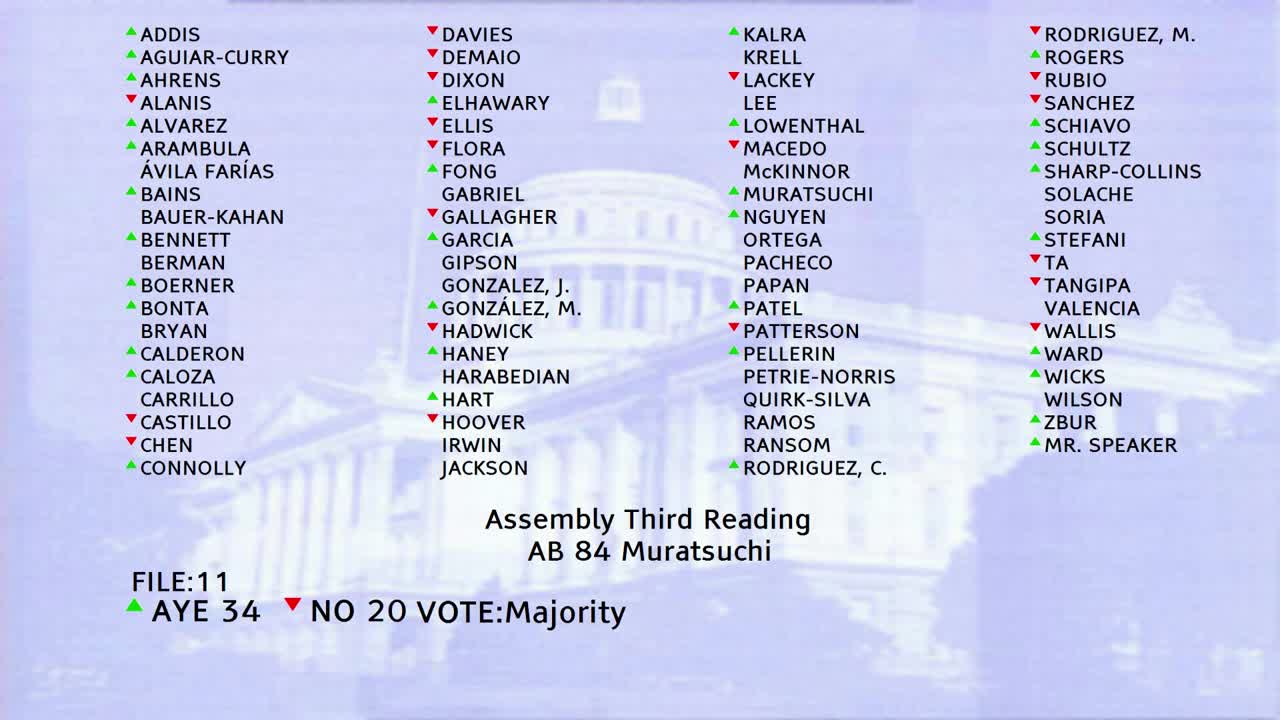 2MIN
Assembly Floor
 9MIN
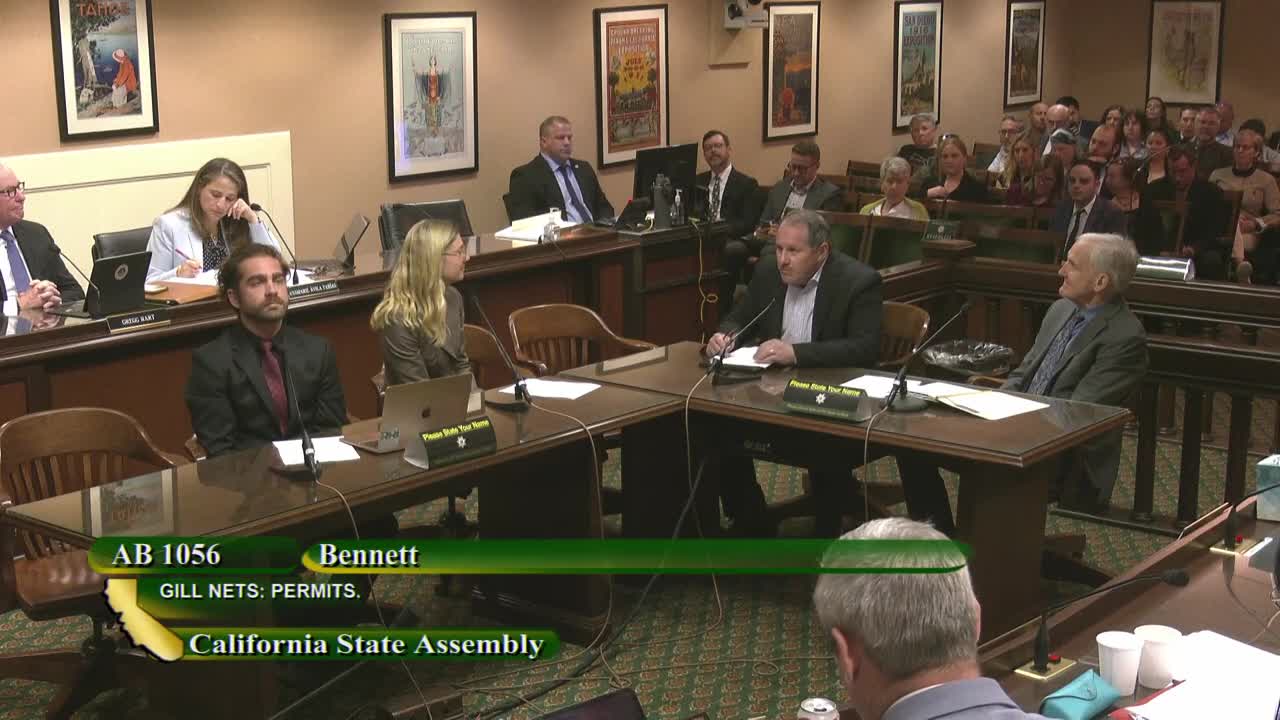
Assembly Standing Committee on Water, Parks, and Wildlife
Bill Author

Bill Co-Author(s):