AB 1152: Controlled substances: human chorionic gonadotropin.
- Session Year: 2025-2026
- House: Assembly
- Latest Version Date: 2025-10-01
Current Status:
Passed
(2025-10-01: Chaptered by Secretary of State - Chapter 183, Statutes of 2025.)
Introduced
In Committee
Awaiting First Chamber Vote
Passed First Chamber
In Committee
Awaiting Second Chamber Vote
Passed Second Chamber
Enacted
Existing law, the California Uniform Controlled Substances Act, categorizes controlled substances into 5 schedules and places the greatest restrictions on those substances contained in Schedule I. Under existing law, the substances in Schedule I are deemed to have a high potential for abuse and no accepted medical use while substances in Schedules II through V are substances that have an accepted medical use, but have the potential for abuse. Existing law generally restricts the prescription, furnishing, possession, sale, and use of controlled substances, and makes a violation of those laws a crime, except as specified. Existing law categorizes chorionic gonadotropin, including human chorionic gonadotropin (hCG), as a Schedule III controlled substance except when the hCG is possessed by, sold to, purchased by, transferred to, or administrated by, a licensed veterinarian or a licensed veterinarians designated agent, exclusively for veterinary use.
This bill would remove hCG from the list of Schedule III controlled substances under the California Uniform Controlled Substances Act.
The Housing Crisis Act of 2019 prohibits certain counties and cities from enacting a development policy, standard, or condition that would have any of specified effects, including imposing or enforcing design standards on or after January 1, 2020, that are not objective design standards. The act authorizes certain counties and cities to enact a development policy, standard, or condition to prohibit the commercial use of land that is designated for residential use. The act defines development policy, standard, or condition for these purposes.This bill would provide that development policy, standard, or condition does not mean an action by certain counties or cities related to allowing a conservation easement to preserve residentially zoned property if certain conditions are met.The Housing Crisis Act of 2019 prohibits certain counties and cities from enacting a development policy, standard, or condition that would have any of specified effects, including imposing or enforcing design standards on or after January 1, 2020, that are not objective design standards. The act authorizes certain counties and cities to enact a development policy, standard, or condition to prohibit the commercial use of land that is designated for residential use. The act defines development policy, standard, or condition for these purposes.
This bill would provide that development policy, standard, or condition does not mean an action by certain counties or cities related to allowing a conservation easement to preserve residentially zoned property if certain conditions are met.
The Permit Streamlining Act, which is part of the Planning and Zoning Law, requires each public agency to compile one or more lists that specify in detail the information that will be required from any applicant for a development project.This bill would make a nonsubstantive change to that provision.The Permit Streamlining Act, which is part of the Planning and Zoning Law, requires each public agency to compile one or more lists that specify in detail the information that will be required from any applicant for a development project.
This bill would make a nonsubstantive change to that provision.
(a)The controlled substances listed in this section are included in Schedule III.
(b)Stimulants. Unless specifically excepted or unless listed in another schedule, any material, compound, mixture, or preparation that contains any quantity of the following substances having a stimulant effect on the central nervous system, including its salts, isomers (whether optical, position, or geometric), and salts of those isomers whenever the existence of those salts, isomers, and salts of isomers is possible within the specific chemical designation:
(1)Those compounds, mixtures, or preparations in dosage unit form containing any stimulant substances listed in Schedule II which compounds, mixtures, or preparations were listed on August 25, 1971, as excepted compounds under Section 1308.32 of Title 21 of the Code of Federal Regulations, and any other drug of the quantitative composition shown in that list for those drugs or that is the same except that it contains a lesser quantity of controlled substances.
(2)Benzphetamine.
(3)Chlorphentermine.
(4)Clortermine.
(5)Mazindol.
(6)Phendimetrazine.
(c)Depressants. Unless specifically excepted in Section 11059 or elsewhere, or unless listed in another schedule, any material, compound, mixture, or preparation that contains any quantity of the following substances having a depressant effect on the central nervous system:
(1)Any compound, mixture, or preparation containing any of the following:
(A)Amobarbital.
(B)Secobarbital.
(C)Pentobarbital or any salt thereof and one or more other active medicinal ingredients that are not listed in any schedule.
(2)Any suppository dosage form containing any of the following:
(A)Amobarbital.
(B)Secobarbital.
(C)Pentobarbital or any salt of any of these drugs and approved by the federal Food and Drug Administration for marketing only as a suppository.
(3)Any substance that contains any quantity of a derivative of barbituric acid or any salt thereof.
(4)Chlorhexadol.
(5)Lysergic acid.
(6)Lysergic acid amide.
(7)Methyprylon.
(8)Sulfondiethylmethane.
(9)Sulfonethylmethane.
(10)Sulfonmethane.
(11)Gamma hydroxybutyric acid, and its salts, isomers, and salts of isomers, contained in a drug product for which an application has been approved under Section 505 of the Federal Food, Drug, and Cosmetic Act (21 U.S.C. Sec. 355).
(d)Nalorphine.
(e)Narcotic drugs. Unless specifically excepted or unless listed in another schedule, any material, compound, mixture, or preparation containing any of the following narcotic drugs, or their salts calculated as the free anhydrous base or alkaloid, in limited quantities as set forth below:
(1)Not more than 1.8 grams of codeine per 100 milliliters or not more than 90 milligrams per dosage unit, with an equal or greater quantity of an isoquinoline alkaloid of opium.
(2)Not more than 1.8 grams of codeine per 100 milliliters or not more than 90 milligrams per dosage unit, with one or more active, nonnarcotic ingredients in recognized therapeutic amounts.
(3)Not more than 1.8 grams of dihydrocodeine per 100 milliliters or not more than 90 milligrams per dosage unit, with one or more active nonnarcotic ingredients in recognized therapeutic amounts.
(4)Not more than 300 milligrams of ethylmorphine per 100 milliliters or not more than 15 milligrams per dosage unit, with one or more active, nonnarcotic ingredients in recognized therapeutic amounts.
(5)Not more than 500 milligrams of opium per 100 milliliters or per 100 grams or not more than 25 milligrams per dosage unit, with one or more active, nonnarcotic ingredients in recognized therapeutic amounts.
(6)Not more than 50 milligrams of morphine per 100 milliliters or per 100 grams, with one or more active, nonnarcotic ingredients in recognized therapeutic amounts.
(f)Anabolic steroids and chorionic gonadotropin, except for human chorionic gonadotropin (hCG). Any material, compound, mixture, or preparation containing chorionic gonadotropin, except hCG, or an anabolic steroid (excluding anabolic steroid products listed in the Table of Exempt Anabolic Steroid Products (Section 1308.34 of Title 21 of the Code of Federal Regulations), as exempt from the federal Controlled Substances Act (Section 801 and following of Title 21 of the United States Code)), including, but not limited to, the following:
(1)Androisoxazole.
(2)Androstenediol.
(3)Bolandiol.
(4)Bolasterone.
(5)Boldenone.
(6)Chloromethandienone.
(7)Clostebol.
(8)Dihydromesterone.
(9)Ethylestrenol.
(10)Fluoxymesterone.
(11)Formyldienolone.
(12)4-Hydroxy-19-nortestosterone.
(13)Mesterolone.
(14)Methandriol.
(15)Methandrostenolone.
(16)Methenolone.
(17)17-Methyltestosterone.
(18)Methyltrienolone.
(19)Nandrolone.
(20)Norbolethone.
(21)Norethandrolone.
(22)Normethandrolone.
(23)Oxandrolone.
(24)Oxymesterone.
(25)Oxymetholone.
(26)Quinbolone.
(27)Stanolone.
(28)Stanozolol.
(29)Stenbolone.
(30)Testosterone.
(31)Trenbolone.
(g)Ketamine. Any material, compound, mixture, or preparation containing ketamine.
(h)Hallucinogenic substances. Any of the following hallucinogenic substances: dronabinol (synthetic) in sesame oil and encapsulated in a soft gelatin capsule in a drug product approved by the federal Food and Drug Administration.
(a)The controlled substances listed in this section are included in Schedule III.
(b)Stimulants. Unless specifically excepted or unless listed in another schedule, any material, compound, mixture, or preparation that contains any quantity of the following substances having a stimulant effect on the central nervous system, including its salts, isomers (whether optical, position, or geometric), and salts of those isomers whenever the existence of those salts, isomers, and salts of isomers is possible within the specific chemical designation:
(1)Those compounds, mixtures, or preparations in dosage unit form containing any stimulant substances listed in Schedule II which compounds, mixtures, or preparations were listed on August 25, 1971, as excepted compounds under Section 1308.32 of Title 21 of the Code of Federal Regulations, and any other drug of the quantitative composition shown in that list for those drugs or that is the same except that it contains a lesser quantity of controlled substances.
(2)Benzphetamine.
(3)Chlorphentermine.
(4)Clortermine.
(5)Mazindol.
(6)Phendimetrazine.
(c)Depressants. Unless specifically excepted in Section 11059 or elsewhere, or unless listed in another schedule, any material, compound, mixture, or preparation that contains any quantity of the following substances having a depressant effect on the central nervous system:
(1)Any compound, mixture, or preparation containing any of the following:
(A)Amobarbital.
(B)Secobarbital.
(C)Pentobarbital or any salt thereof and one or more other active medicinal ingredients that are not listed in any schedule.
(2)Any suppository dosage form containing any of the following:
(A)Amobarbital.
(B)Secobarbital.
(C)Pentobarbital or any salt of any of these drugs and approved by the federal Food and Drug Administration for marketing only as a suppository.
(3)Any substance that contains any quantity of a derivative of barbituric acid or any salt thereof.
(4)Chlorhexadol.
(5)Lysergic acid.
(6)Lysergic acid amide.
(7)Methyprylon.
(8)Sulfondiethylmethane.
(9)Sulfonethylmethane.
(10)Sulfonmethane.
(11)Gamma hydroxybutyric acid, and its salts, isomers, and salts of isomers, contained in a drug product for which an application has been approved under Section 505 of the Federal Food, Drug, and Cosmetic Act (21 U.S.C. Sec. 355).
(d)Nalorphine.
(e)Narcotic drugs. Unless specifically excepted or unless listed in another schedule, any material, compound, mixture, or preparation containing any of the following narcotic drugs, or their salts calculated as the free anhydrous base or alkaloid, in limited quantities as set forth below:
(1)Not more than 1.8 grams of codeine per 100 milliliters or not more than 90 milligrams per dosage unit, with an equal or greater quantity of an isoquinoline alkaloid of opium.
(2)Not more than 1.8 grams of codeine per 100 milliliters or not more than 90 milligrams per dosage unit, with one or more active, nonnarcotic ingredients in recognized therapeutic amounts.
(3)Not more than 1.8 grams of dihydrocodeine per 100 milliliters or not more than 90 milligrams per dosage unit, with one or more active nonnarcotic ingredients in recognized therapeutic amounts.
(4)Not more than 300 milligrams of ethylmorphine per 100 milliliters or not more than 15 milligrams per dosage unit, with one or more active, nonnarcotic ingredients in recognized therapeutic amounts.
(5)Not more than 500 milligrams of opium per 100 milliliters or per 100 grams or not more than 25 milligrams per dosage unit, with one or more active, nonnarcotic ingredients in recognized therapeutic amounts.
(6)Not more than 50 milligrams of morphine per 100 milliliters or per 100 grams, with one or more active, nonnarcotic ingredients in recognized therapeutic amounts.
(f)Anabolic steroids and chorionic gonadotropin, except for human chronic chorionic gonadotropin (hCG). Any material, compound, mixture, or preparation containing chorionic gonadotropin, except hCG, or an anabolic steroid (excluding anabolic steroid products listed in the Table of Exempt Anabolic Steroid Products (Section 1308.34 of Title 21 of the Code of Federal Regulations), as exempt from the federal Controlled Substances Act (Section 801 and following of Title 21 of the United States Code)), including, but not limited to, the following:
(1)Androisoxazole.
(2)Androstenediol.
(3)Bolandiol.
(4)Bolasterone.
(5)Boldenone.
(6)Chloromethandienone.
(7)Clostebol.
(8)Dihydromesterone.
(9)Ethylestrenol.
(10)Fluoxymesterone.
(11)Formyldienolone.
(12)4-Hydroxy-19-nortestosterone.
(13)Mesterolone.
(14)Methandriol.
(15)Methandrostenolone.
(16)Methenolone.
(17)17-Methyltestosterone.
(18)Methyltrienolone.
(19)Nandrolone.
(20)Norbolethone.
(21)Norethandrolone.
(22)Normethandrolone.
(23)Oxandrolone.
(24)Oxymesterone.
(25)Oxymetholone.
(26)Quinbolone.
(27)Stanolone.
(28)Stanozolol.
(29)Stenbolone.
(30)Testosterone.
(31)Trenbolone.
(g)Ketamine. Any material, compound, mixture, or preparation containing ketamine.
(h)Hallucinogenic substances. Any of the following hallucinogenic substances: dronabinol (synthetic) in sesame oil and encapsulated in a soft gelatin capsule in a drug product approved by the federal Food and Drug Administration.
(a)The controlled substances listed in this section are included in Schedule III.
(b)Stimulants. Unless specifically excepted or unless listed in another schedule, any material, compound, mixture, or preparation that contains any quantity of the following substances having a stimulant effect on the central nervous system, including its salts, isomers (whether optical, position, or geometric), and salts of those isomers whenever the existence of those salts, isomers, and salts of isomers is possible within the specific chemical designation:
(1)Those compounds, mixtures, or preparations in dosage unit form containing any stimulant substances listed in Schedule II which compounds, mixtures, or preparations were listed on August 25, 1971, as excepted compounds under Section 1308.32 of Title 21 of the Code of Federal Regulations, and any other drug of the quantitative composition shown in that list for those drugs or that is the same except that it contains a lesser quantity of controlled substances.
(2)Benzphetamine.
(3)Chlorphentermine.
(4)Clortermine.
(5)Mazindol.
(6)Phendimetrazine.
(c)Depressants. Unless specifically excepted in Section 11059 or elsewhere, or unless listed in another schedule, any material, compound, mixture, or preparation that contains any quantity of the following substances having a depressant effect on the central nervous system:
(1)Any compound, mixture, or preparation containing any of the following:
(A)Amobarbital.
(B)Secobarbital.
(C)Pentobarbital
or any salt thereof and one or more other active medicinal ingredients that are not listed in any schedule.
(2)Any suppository dosage form containing any of the following:
(A)Amobarbital.
(B)Secobarbital.
(C)Pentobarbital
or any salt of any of these drugs and approved by the federal Food and Drug Administration
for marketing only as a suppository.
(3)Any substance that contains any quantity of a derivative of barbituric acid or any salt thereof.
(4)Chlorhexadol.
(5)Lysergic acid.
(6)Lysergic acid amide.
(7)Methyprylon.
(8)Sulfondiethylmethane.
(9)Sulfonethylmethane.
(10)Sulfonmethane.
(11)Gamma hydroxybutyric acid, and its salts, isomers, and salts of isomers, contained in a drug product for which an application has been approved under Section 505 of the Federal Food, Drug, and Cosmetic Act (21 U.S.C. Sec. 355).
(d)Nalorphine.
(e)Narcotic drugs. Unless specifically excepted or unless listed in another schedule, any material, compound, mixture, or preparation containing any of the following narcotic drugs, or their salts calculated as the free anhydrous base or alkaloid, in limited quantities as set forth below:
(1)Not more than 1.8 grams of codeine per 100 milliliters or not more than 90 milligrams per dosage unit, with an equal or greater quantity of an isoquinoline alkaloid of opium.
(2)Not more than 1.8 grams of codeine per 100 milliliters or not more than 90 milligrams per dosage unit, with one or more active, nonnarcotic ingredients in recognized therapeutic amounts.
(3)Not more than 1.8 grams of dihydrocodeine per 100 milliliters or not more than 90 milligrams per dosage unit, with one or more active nonnarcotic ingredients in recognized therapeutic amounts.
(4)Not more than 300 milligrams of ethylmorphine per 100 milliliters or not more than 15 milligrams per dosage unit, with one or more active, nonnarcotic ingredients in recognized therapeutic amounts.
(5)Not more than 500 milligrams of opium per 100 milliliters or per 100 grams or not more than 25 milligrams per dosage unit, with one or more active, nonnarcotic ingredients in recognized therapeutic amounts.
(6)Not more than 50 milligrams of morphine per 100 milliliters or per 100 grams, with one or more active, nonnarcotic ingredients in recognized therapeutic amounts.
(f)Anabolic steroids and chorionic gonadotropin. gonadotropin, except for human chronic gonadotropin (hCG). Any material, compound, mixture, or preparation containing chorionic gonadotropin gonadotropin, except hCG, or an anabolic steroid (excluding anabolic steroid products listed in the Table of Exempt Anabolic Steroid Products (Section 1308.34 of Title 21 of the Code of Federal Regulations), as exempt from the federal Controlled Substances Act (Section 801 and following of Title 21 of the United States Code)), including, but not limited to, the following:
(1)Androisoxazole.
(2)Androstenediol.
(3)Bolandiol.
(4)Bolasterone.
(5)Boldenone.
(6)Chloromethandienone.
(7)Clostebol.
(8)Dihydromesterone.
(9)Ethylestrenol.
(10)Fluoxymesterone.
(11)Formyldienolone.
(12)4-Hydroxy-19-nortestosterone.
(13)Mesterolone.
(14)Methandriol.
(15)Methandrostenolone.
(16)Methenolone.
(17)17-Methyltestosterone.
(18)Methyltrienolone.
(19)Nandrolone.
(20)Norbolethone.
(21)Norethandrolone.
(22)Normethandrolone.
(23)Oxandrolone.
(24)Oxymesterone.
(25)Oxymetholone.
(26)Quinbolone.
(27)Stanolone.
(28)Stanozolol.
(29)Stenbolone.
(30)Testosterone.
(31)Trenbolone.
(32)Human chorionic gonadotropin (hCG), except when possessed by, sold to, purchased by, transferred to, or administered by a licensed veterinarian, or a licensed veterinarians designated agent, exclusively for veterinary use.(g)Ketamine. Any material, compound, mixture, or preparation containing ketamine.
(h)Hallucinogenic substances. Any of the following hallucinogenic substances: dronabinol (synthetic) in sesame oil and encapsulated in a soft gelatin capsule in a drug product approved by the federal Food and Drug Administration.
All matter omitted in this version of the bill appears in the bill as amended in the Assembly, March 28, 2025. (JR11)(a)As used in this article, the following definitions shall apply:
(1)(A)Except as otherwise provided in subparagraph (B), affected city means a city, including a charter city, that the Department of Housing and Community Development determines, pursuant to subdivision (d), is in an urbanized area or urban cluster, as designated by the United States Census Bureau.
(B)Notwithstanding subparagraph (A), affected city does not include any city that has a population of 5,000 or less and is not located within an urbanized area, as designated by the United States Census Bureau.
(2)Affected county means a census-designated place, based on the 2013-2017 American Community Survey 5-year Estimates, that is wholly located within the boundaries of an urbanized area, as designated by the United States Census Bureau.
(3)Notwithstanding any other law, affected county and affected city includes the electorate of an affected county or city exercising its local initiative or referendum power, whether that power is derived from the California Constitution, statute, or the charter or ordinances of the affected county or city.
(4)Department means the Department of Housing and Community Development.
(5)(A)Development policy, standard, or condition means any of the following:
(A)(i)A provision of, or amendment to, a general plan.
(B)(ii)A provision of, or amendment to, a specific plan.
(C)(iii)A provision of, or amendment to, a zoning ordinance.
(D)(iv)A subdivision standard or criterion.
(B)Notwithstanding subparagraph (A), development policy, standard, or condition does not mean an action by an affected county or affected city related to allowing a conservation easement pursuant to Chapter 4 (commencing with Section 815) of Title 2 of Part 2 of Division 2 of the Civil Code to preserve residentially zoned property if both of the following conditions are met:
(i)The action will have no impact on the affected countys or affected citys ability to meet the obligations of its adopted housing element.
(ii)The action will not reduce the amount of high-density residentially zoned property within the affected county or affected city.
(6)Housing development project has the same meaning as defined in paragraph (3) of subdivision (b) of Section 65905.5.
(7)Objective design standard means a design standard that involves no personal or subjective judgment by a public official and is uniformly verifiable by reference to an external and uniform benchmark or criterion available and knowable by both the development applicant or proponent and the public official before submittal of an application.
(b)(1)Notwithstanding any other law except as provided in subdivision (h), with respect to land where housing is an allowable use, an affected county or an affected city shall not enact a development policy, standard, or condition that would have any of the following effects:
(A)Changing the general plan land use designation, specific plan land use designation, or zoning of a parcel or parcels of property to a less intensive use or reducing the intensity of land use within an existing general plan land use designation, specific plan land use designation, or zoning district in effect at the time of the proposed change, below what was allowed under the land use designation or zoning ordinances of the affected county or affected city, as applicable, as in effect on January 1, 2018, except as otherwise provided in clause (ii) of subparagraph (B) or subdivision (h). For purposes of this subparagraph, reducing the intensity of land use includes, but is not limited to, reductions to height, density, or floor area ratio, new or increased open space or lot size requirements, new or increased setback requirements, minimum frontage requirements, or maximum lot coverage limitations, or any other action that would individually or cumulatively reduce the sites residential development capacity.
(B)(i)Imposing a moratorium or similar restriction or limitation on housing development, including mixed-use development, within all or a portion of the jurisdiction of the affected county or city, other than to specifically protect against an imminent threat to the health and safety of persons residing in, or within the immediate vicinity of, the area subject to the moratorium or for projects specifically identified as existing restricted affordable housing.
(ii)The affected county or affected city, as applicable, shall not enforce a zoning ordinance imposing a moratorium or other similar restriction on or limitation of housing development until it has submitted the ordinance to, and received approval from, the department. The department shall approve a zoning ordinance submitted to it pursuant to this subparagraph only if it determines that the zoning ordinance satisfies the requirements of this subparagraph. If the department denies approval of a zoning ordinance imposing a moratorium or similar restriction or limitation on housing development as inconsistent with this subparagraph, that ordinance shall be deemed void.
(C)Imposing or enforcing design standards established on or after January 1, 2020, that are not objective design standards.
(D)Except as provided in subparagraph (E), establishing or implementing any provision that:
(i)Limits the number of land use approvals or permits necessary for the approval and construction of housing that will be issued or allocated within all or a portion of the affected county or affected city, as applicable.
(ii)Acts as a cap on the number of housing units that can be approved or constructed either annually or for some other time period.
(iii)Limits the population of the affected county or affected city, as applicable.
(E)Notwithstanding subparagraph (D), an affected county or affected city may enforce a limit on the number of approvals or permits or a cap on the number of housing units that can be approved or constructed if the provision of law imposing the limit was approved by voters prior to January 1, 2005, and the affected county or affected city is located in a predominantly agricultural county. For the purposes of this subparagraph, predominantly agricultural county means a county that meets both of the following, as determined by the most recent California Farmland Conversion Report produced by the Department of Conservation:
(i)Has more than 550,000 acres of agricultural land.
(ii)At least one-half of the county area is agricultural land.
(2)Any development policy, standard, or condition enacted on or after the effective date of this section that does not comply with this section shall be deemed void.
(c)Notwithstanding subdivisions (b) and (e), an affected county or affected city may enact a development policy, standard, or condition to prohibit the commercial use of land that is designated for residential use, including, but not limited to, short-term occupancy of a residence, consistent with the authority conferred on the county or city by other law.
(d)The Department of Housing and Community Development shall determine those cities and counties in this state that are affected cities and affected counties, in accordance with subdivision (a) by June 30, 2020. The department may update the list of affected cities and affected counties once on or after January 1, 2021, and once on or after January 1, 2025, to account for changes in urbanized areas or urban clusters due to new data obtained from the 2020 census. The departments determination shall remain valid until January 1, 2030.
(e)(1)Except as provided in paragraphs (3) and (4) and subdivisions (g) and (h), this section shall prevail over any conflicting provision of this title or other law regulating housing development in this state to the extent that this section more fully advances the intent specified in paragraph (2).
(2)It is the intent of the Legislature that this section be broadly construed so as to maximize the development of housing within this state. Any exception to the requirements of this section, including an exception for the health and safety of occupants of a housing development project, shall be construed narrowly.
(3)This section shall not be construed as prohibiting the adoption or amendment of a development policy, standard, or condition in a manner that:
(A)Allows greater density.
(B)Facilitates the development of housing.
(C)Reduces the costs to a housing development project.
(D)Imposes or implements mitigation measures as necessary to comply with the California Environmental Quality Act (Division 13 (commencing with Section 21000) of the Public Resources Code).
(4)This section shall not apply to a housing development project located within a very high fire hazard severity zone. For purposes of this paragraph, very high fire hazard severity zone has the same meaning as provided in Section 51177.
(f)This section shall not be construed to void a height limit, urban growth boundary, or urban limit established by the electorate of an affected county or an affected city, provided that the height limit, urban growth boundary, or urban limit complies with subparagraph (A) of paragraph (1) of subdivision (b).
(g)(1)Nothing in this section supersedes, limits, or otherwise modifies the requirements of, or the standards of review pursuant to, Division 13 (commencing with Section 21000) of the Public Resources Code.
(2)Nothing in this section supersedes, limits, or otherwise modifies the requirements of the California Coastal Act of 1976 (Division 20 (commencing with Section 30000) of the Public Resources Code). For a housing development project proposed within the coastal zone, nothing in this section shall be construed to prohibit an affected county or an affected city from enacting a development policy, standard, or condition necessary to implement or amend a certified local coastal program consistent with the California Coastal Act of 1976 (Division 20 (commencing with Section 30000) of the Public Resources Code).
(h)(1)This section does not prohibit an affected county or an affected city, including the local electorate acting through the initiative process, from changing a land use designation or zoning ordinance to a less intensive use, or reducing the intensity of land use, if the city or county concurrently changes the development standards, policies, and conditions applicable to other parcels within the jurisdiction to ensure that there is no net loss in residential capacity.
(2)(A)For purposes of this subdivision, concurrently means the action is approved at the same meeting of the legislative body.
(B)Notwithstanding subparagraph (A), if the action that would result in a net loss of residential capacity is requested by an applicant for a housing development project, concurrently means within 180 days.
(C)Notwithstanding subparagraph (A), in the case of an initiative measure, concurrently means the action is included in the initiative in a manner that ensures the added residential capacity is effective at the same time as the reduction in residential capacity.
(3)(A)(i)The City of San Jose may proactively change a zoning ordinance to a more intensive use and subsequently use the additional capacity to change a zoning ordinance applicable to an eligible parcel to a less intensive use as long as there is no net loss in residential capacity.
(ii)A change to a zoning ordinance to a less intensive use under this paragraph shall occur within one year of the change to the zoning ordinance to a more intensive use.
(iii)For purposes of this paragraph, eligible parcel means a parcel that meets all of the following criteria:
(I)It is zoned for residential uses.
(II)It does not have a multifamily housing general plan designation.
(III)Its zoning is inconsistent with the general plan of the city in effect on January 1, 2018.
(B)A change to a zoning ordinance to a less intensive use under this paragraph shall not be effective until the City of San Jose establishes zoning districts that implement mixed-use neighborhood, urban residential, transit residential, and urban village general plan land use designations.
(C)The City of San Jose shall report each zoning ordinance amendment establishing a less intensive use pursuant to this paragraph in the following ways:
(i)In its annual report submitted pursuant to paragraph (2) of subdivision (a) of Section 65400 and submit the annual report to the relevant policy committees of the Legislature each year that the City of San Jose adopts a zoning ordinance amendment pursuant to this paragraph.
(ii)Electronically on an internet website accessible to the public by the time the zoning ordinance amendment is in effect.
(D)This paragraph shall become inoperative upon the date that the City of San Joses housing element update for the sixth cycle is due pursuant to Section 65588.
(4)This section does not prohibit an affected county or an affected city from changing a land use designation or zoning ordinance to a less intensive use on a site that is a mobilehome park, as defined in Section 18214 of the Health and Safety Code, as of the effective date of this section, and the no net loss requirement in paragraph (1) shall not apply.
(i)Notwithstanding subdivisions (b) and (e), this section does not prohibit an affected city or an affected county from enacting a development policy, standard, or condition that is intended to preserve or facilitate the production of housing for lower income households, as defined in Section 50079.5 of the Health and Safety Code, or housing types that traditionally serve lower income households, including mobilehome parks, single-room occupancy units, or units subject to any form of rent or price control through a public entitys valid exercise of its police power.
(j)The amendments to subparagraph (A) of paragraph (1) of subdivision (b), and to paragraph (1) of subdivision (h) made by the act adding this subdivision do not constitute a change in, but are declaratory of, existing law.
SECTION 1.Section 65940 of the Government Code, as amended by Section 3 of Chapter 754 of the Statutes of 2023, is amended to read:65940.(a)(1)Each public agency shall compile one or more lists that specify in detail the information that will be required from any applicant for a development project. Each public agency shall revise the list of information required from an applicant to include a certification of compliance with Section 65962.5, and the statement of application required by Section 65943. Copies of the information, including the statement of application required by Section 65943, shall be made available to all applicants for development projects and to any person who requests the information.(2)An affected city or affected county, as defined in Section 66300, shall include the information necessary to determine compliance with the requirements of Article 2 (commencing with Section 66300.5) of Chapter 12 in the list compiled pursuant to paragraph (1).(b)The list of information required from any applicant shall include, where applicable, identification of whether the proposed project is located within 1,000 feet of a military installation, beneath a low-level flight path or within special use airspace as defined in Section 21098 of the Public Resources Code, and within an urbanized area as defined in Section 65944.(c)(1)A public agency that is not beneath a low-level flight path or not within special use airspace and does not contain a military installation is not required to change its list of information required from applicants to comply with subdivision (b).(2)A public agency that is entirely urbanized, as defined in subdivision (e) of Section 65944, with the exception of a jurisdiction that contains a military installation, is not required to change its list of information required from applicants to comply with subdivision (b).(d)For purposes of this section, development project includes a housing development project as defined in paragraph (3) of subdivision (b) of Section 65905.5.(e)This section shall remain in effect only until January 1, 2030, and as of that date is repealed.(a)(1)Each public agency shall compile one or more lists that shall specify in detail the information that will be required from any applicant for a development project. Each public agency shall revise the list of information required from an applicant to include a certification of compliance with Section 65962.5, and the statement of application required by Section 65943. Copies of the information, including the statement of application required by Section 65943, shall be made available to all applicants for development projects and to any person who requests the information.
(2)An affected city or affected county, as defined in Section 66300, shall include the information necessary to determine compliance with the requirements of Article 2 (commencing with Section 66300.5) of Chapter 12 in the list compiled pursuant to paragraph (1).
(b)The list of information required from any applicant shall include, where applicable, identification of whether the proposed project is located within 1,000 feet of a military installation, beneath a low-level flight path or within special use airspace as defined in Section 21098 of the Public Resources Code, and within an urbanized area as defined in Section 65944.
(c)(1)A public agency that is not beneath a low-level flight path or not within special use airspace and does not contain a military installation is not required to change its list of information required from applicants to comply with subdivision (b).
(2)A public agency that is entirely urbanized, as defined in subdivision (e) of Section 65944, with the exception of a jurisdiction that contains a military installation, is not required to change its list of information required from applicants to comply with subdivision (b).
(d)For purposes of this section, development project includes a housing development project as defined in paragraph (3) of subdivision (b) of Section 65905.5.
(e)This section shall remain in effect only until January 1, 2030, and as of that date is repealed.
|
Date
|
Status
|
|---|---|
| Oct 1, 2025 | Chaptered by Secretary of State - Chapter 183, Statutes of 2025. |
| Oct 1, 2025 | Approved by the Governor. |
| Sep 24, 2025 | Enrolled and presented to the Governor at 3 p.m. |
| Sep 13, 2025 | Senate amendments concurred in. To Engrossing and Enrolling. (Ayes 74. Noes 0. Page 3505.). |
| Sep 13, 2025 | Joint Rules 61(a)(14) and 51(a)(4) suspended. (Ayes 59. Noes 20. Page 3413.) |
| Sep 12, 2025 | From committee: That the Senate amendments be concurred in. (Ayes 9. Noes 0.) (September 12). |
| Sep 11, 2025 | Re-referred to Com. on PUB. S. pursuant to Assembly Rule 77.2. |
| Sep 11, 2025 | Joint Rule 62(a), file notice suspended. (Page 3319.) |
| Sep 10, 2025 | In Assembly. Concurrence in Senate amendments pending. |
| Sep 10, 2025 | Read third time. Passed. Ordered to the Assembly. (Ayes 39. Noes 1. Page 2796.). |
| Sep 3, 2025 | Read second time. Ordered to third reading. |
| Sep 2, 2025 | Read third time and amended. Ordered to second reading. |
| Aug 20, 2025 | Read second time. Ordered to third reading. |
| Aug 19, 2025 | From committee: Be ordered to second reading pursuant to Senate Rule 28.8. |
| Jul 15, 2025 | From committee: Do pass and re-refer to Com. on APPR. with recommendation: To Consent Calendar. (Ayes 6. Noes 0.) (July 15). Re-referred to Com. on APPR. |
| Jun 25, 2025 | Re-referred to Com. on PUB. S. |
| Jun 24, 2025 | Withdrawn from committee. |
| Jun 24, 2025 | Re-referred to Com. on RLS. |
| Jun 23, 2025 | From committee chair, with author's amendments: Amend, and re-refer to committee. Read second time, amended, and re-referred to Com. on L. GOV. |
| May 21, 2025 | Referred to Coms. on L. GOV. and HOUSING. |
| May 8, 2025 | In Senate. Read first time. To Com. on RLS. for assignment. |
| May 8, 2025 | Read third time. Passed. Ordered to the Senate. (Ayes 68. Noes 0. Page 1484.) |
| May 5, 2025 | Read second time. Ordered to third reading. |
| May 1, 2025 | From committee: Do pass. (Ayes 10. Noes 0.) (April 30). |
| Apr 28, 2025 | From committee: Do pass and re-refer to Com. on L. GOV. with recommendation: To Consent Calendar. (Ayes 11. Noes 0.) (April 24). Re-referred to Com. on L. GOV. |
| Apr 24, 2025 | Assembly Rule 56 suspended. (Page 1265.) |
| Apr 24, 2025 | (Pending re-refer to Com. on L. GOV.) |
| Apr 1, 2025 | Re-referred to Com. on H. & C.D. |
| Mar 28, 2025 | Referred to Coms. on H. & C.D. and L. GOV. |
| Mar 28, 2025 | From committee chair, with author's amendments: Amend, and re-refer to Com. on H. & C.D. Read second time and amended. |
| Feb 21, 2025 | From printer. May be heard in committee March 23. |
| Feb 20, 2025 | Read first time. To print. |
|
Date
|
Description
|
Location
|
Votes
|
|
|---|---|---|---|---|
| Sep 13, 2025 | AB 1152 Patterson Concurrence in Senate Amendments | Assembly Floor |
Passed |
|
| Sep 12, 2025 | With recommendation: That Senate amendments be concurred in. | Assembly Standing Committee on Public Safety |
Passed |
|
| Sep 10, 2025 | Assembly 3rd Reading AB1152 Patterson By Valladares | Senate Floor |
Passed |
|
| Jul 15, 2025 | Do pass, but first be re-referred to the Committee on [Appropriations] with the recommendation: To Consent Calendar | Senate Standing Committee on Public Safety |
Passed |
|
| May 8, 2025 | AB 1152 Patterson Assembly Third Reading | Assembly Floor |
Passed |
|
| Apr 30, 2025 | Do pass. | Assembly Standing Committee on Local Government |
Passed |
|
| Apr 24, 2025 | Do pass and be re-referred to the Committee on [Local Government] with recommendation: To Consent Calendar | Assembly Standing Committee on Housing and Community Development |
Passed |
This list shows positions taken on this bill by organizations on the date displayed, which is linked to the original source.
Positions by individuals are not included.
|
Organization
|
Position
|
Date
|
|---|---|---|
| City of Rocklin | ** Support |
CONCURRENCE IN SENATE AMENDMENTS
CSA2 Bill Id:AB 1152
Author:(Patterson)
As Amended Ver:September 2, 2025
Majority vote
SUMMARY
Original Committee of Reference: Housing and Community Development
Removes human chorionic gonadotropin (hCG) from the list of Schedule III controlled substances under the California Uniform Controlled Substances Act.
Senate Amendments
Current Committee Recommendation: To Concur in.
Delete the Assembly version of this bill and instead: Remove hCG from the list of Schedule III controlled substances.
COMMENTS
- The California Uniform Controlled Substances Act: In 1970, Congress passed the Comprehensive Drug Abuse Prevention and Control Act, which established a framework for federal regulation of controlled substances. Title II of the act is the Controlled Substances Act (CSA), which placed controlled substances in one of five "schedules."
The schedule on which a controlled substance is placed determines the level of restriction imposed on its production, distribution, and possession, as well as the penalties applicable to any improper handling of the substance… [W]hen DEA places substances under control by regulation, the agency assigns each controlled substance to a schedule based on its medical utility and its potential for abuse and dependence. (The Controlled Substances ACT (CSA): A Legal Overview for the 118th Congress, Congressional Research Service (Jan. 19, 2023) p. 2 <https://crsreports.congress.gov/product/pdf/r/r45948> [last visited Sept. 9, 2025].)
Substances are added to or removed from schedules through agency action or by legislation. (Id. at p. 9.)
State laws generally follow the federal scheduling decisions, and "they are relatively uniform across jurisdictions because almost all states have adopted a version of a model statute called the Uniform Controlled Substances Act (UCSA)." (Id. at 4.) California adopted the UCSA in 1972. (Stats. 1972, ch. 1407, Section 3.) The UCSA generally aligns with the federal government's scheduling decisions. (See People v. Ward (2008) 167 Cal.App.4th 252, 259 ["In the California Uniform Controlled Substances Act, California adopted the five schedules of controlled substances used in federal law and in the Uniform Controlled Substances Act"]; Williamson v. Bd. Of Medical Quality Assurance (1990) 271 Cal.App.3d 1343, 1352, fn. 1. ["Effective January 1, 1985, Schedules I through V of the California Uniform Controlled Substances Act were revised so as to generally parallel the five schedules contained in the Federal Controlled Substances Act."].)
- Human Chorionic Gonadotropin (hCG): hCG is a hormone produced by the placenta during pregnancy. The federal Food and Drug Administration (FDA) has approved hCG to treat female infertility and as a hormone treatment for men, including to treat low sperm count. (U.S. FDA, Questions and Answers on HCG Products for Weight Loss (May 4, 2016) available at <https://www.fda.gov/drugs/medication-health-fraud/questions-and-answers-hcg-products-weight-loss>.) A prescription is required to obtain hCG. (Ibid.)
Synthetic hCG is considered a performance-enhancing drug. (U.S. Anti-Doping Agency, Effects of Performance-Enhancing Drugs available at <https://www.usada.org/athletes/substances/effects-of-performance-enhancing-drugs/>.) Its use is generally prohibited in male athletes by various U.S. and international sports leagues, federations, and governing bodies.[1] hCG is strongly associated with anabolic steroids due to its restoration of natural testosterone production following a cycle of steroid use. (Stenman et al., Gonadotropins in doping: pharmacological basis and detection of illicit use (Apr. 2008) available at <https://pmc.ncbi.nlm.nih.gov/articles/PMC2439513/>; Lance Williams, HCG helps steroid users restore testosterone (May 8, 2009) available at <https://www.sfgate.com/sports/article/hcg-helps-steroid-users-restore-testosterone-3162496.php>; Mike Fish, First Gibbons and Bell, now Manny (May 7, 2009) available at <https://www.espn.com/mlb/news/story?id=4150133>.)
hCG is currently included in Schedule III of the controlled substance schedules along with anabolic steroids and testosterone. Anabolic steroids and hCG were added to Schedule III in 1986. (See AB 4029 (Condit), Ch. 1033, Stats. of 1986; Randy Harvey, Weightlifter, Lobbyist Join Forces in Fighting Steroids (Apr. 9, 1986) available at <https://www.latimes.com/archives/la-xpm-1986-04-09-sp-3668-story.html>.) This bill removes hCG from the controlled substances schedules. As such, obtaining hCG would still require a prescription but it would be subject to fewer restrictions and regulations. For example, prescribers and dispensers would no longer be mandated to report their prescribing and dispensing activities to the state's prescription drug monitoring program. Criminal liability under Health and Safety Code section 11377—which prohibits the possession of a non-narcotic Schedule III substance without a prescription—would also no longer apply. Removing hCG from Schedule III raises the question of whether there are other similarly situated controlled substances, such as testosterone, that should also be removed from the controlled substance schedules in order to maintain consistency across the controlled substance schedules.
According to the Author
"Human chorionic gonadotropin (HCG) has been shown for years to be a safe and effective infertility treatment for both men and women. FDA regulations, which require a prescription, protect against the misuse of this medicine. However, California is the exception to the vast majority of states: it regulates HCG as a Schedule III controlled substance, in the same category as steroids, which means its possession can land someone in jail.
"The federal government, and most states, do not classify it as a controlled substance because there is no public safety risk and the risk of personal abuse is near non-existent. AB 1152 removes this unnecessary inclusion."
Arguments in Support
None on file.
Arguments in Opposition
None on file.
FISCAL COMMENTS
According to the Assembly Appropriations Committee, "No significant state costs. Possible cost savings to the courts and to the counties to the extent crimes related to possession and use of hCG are no longer prosecuted, though actual incidence of these crimes is unknown."
VOTES
ASM HOUSING AND COMMUNITY DEVELOPMENT: 11-0-1
YES: Haney, Patterson, Ávila Farías, Caloza, Garcia, Kalra, Lee, Quirk-Silva, Ta, Wicks, Wilson
ABS, ABST OR NV: Tangipa
ASM LOCAL GOVERNMENT: 10-0-0
YES: Carrillo, Ta, Hoover, Pacheco, Ramos, Ransom, Blanca Rubio, Stefani, Ward, Wilson
ASSEMBLY FLOOR: 68-0-11
YES: Addis, Aguiar-Curry, Ahrens, Alanis, Alvarez, Ávila Farías, Bains, Bauer-Kahan, Bennett, Berman, Bonta, Bryan, Calderon, Caloza, Castillo, Chen, Connolly, Davies, DeMaio, Dixon, Elhawary, Ellis, Fong, Gabriel, Garcia, Gipson, Mark González, Hadwick, Haney, Harabedian, Hart, Hoover, Kalra, Krell, Lackey, Lowenthal, Macedo, McKinnor, Muratsuchi, Nguyen, Ortega, Pacheco, Papan, Patel, Patterson, Pellerin, Petrie-Norris, Quirk-Silva, Ramos, Ransom, Michelle Rodriguez, Rogers, Blanca Rubio, Sanchez, Schiavo, Schultz, Sharp-Collins, Solache, Soria, Stefani, Ta, Tangipa, Valencia, Ward, Wicks, Wilson, Zbur, Rivas
ABS, ABST OR NV: Arambula, Boerner, Carrillo, Flora, Gallagher, Jeff Gonzalez, Irwin, Jackson, Lee, Celeste Rodriguez, Wallis
SENATE FLOOR: 39-1-0
YES: Allen, Alvarado-Gil, Archuleta, Arreguín, Ashby, Becker, Blakespear, Cabaldon, Caballero, Cervantes, Choi, Cortese, Dahle, Durazo, Gonzalez, Grayson, Grove, Hurtado, Jones, Laird, Limón, McGuire, McNerney, Niello, Ochoa Bogh, Padilla, Pérez, Reyes, Richardson, Rubio, Seyarto, Smallwood-Cuevas, Stern, Strickland, Umberg, Valladares, Wahab, Weber Pierson, Wiener
NO: Menjivar
ASM PUBLIC SAFETY: 9-0-0
YES: Schultz, Alanis, Mark González, Haney, Harabedian, Lackey, Nguyen, Ramos, Sharp-Collins
UPDATED
VERSION: September 2, 2025
CONSULTANT: Andrew Ironside / PUB. S. / (916) 319-3744 FN: 0002099
The International Olympics Committee has banned hCG since 1987. The World Anti-Doping Agency, responsible for the World Anti-Doping Code which has been adopted by more than 650 sports organizations, includes hCG on its banned-substances list. ↑
CONCURRENCE IN SENATE AMENDMENTS
CSA1 Bill Id:AB 1152
Author:(Patterson)
As Amended Ver:September 2, 2025
Majority vote
SUMMARY
Removes human chorionic gonadotropin (hCG) from the list of Schedule III controlled substances under the California Uniform Controlled Substances Act.
Senate Amendments
Remove hCG from the list of Schedule III controlled substances.
COMMENTS
- The California Uniform Controlled Substances Act: In 1970, Congress passed the Comprehensive Drug Abuse Prevention and Control Act, which established a framework for federal regulation of controlled substances. Title II of the act is the Controlled Substances Act (CSA), which placed controlled substances in one of five "schedules."
The schedule on which a controlled substance is placed determines the level of restriction imposed on its production, distribution, and possession, as well as the penalties applicable to any improper handling of the substance… [W]hen DEA places substances under control by regulation, the agency assigns each controlled substance to a schedule based on its medical utility and its potential for abuse and dependence. (The Controlled Substances ACT (CSA): A Legal Overview for the 118th Congress, Congressional Research Service (Jan. 19, 2023) p. 2 <https://crsreports.congress.gov/product/pdf/r/r45948> [last visited Sept. 9, 2025].)
Substances are added to or removed from schedules through agency action or by legislation. (Id. at p. 9.)
State laws generally follow the federal scheduling decisions, and "they are relatively uniform across jurisdictions because almost all states have adopted a version of a model statute called the Uniform Controlled Substances Act (UCSA)." (Id. at 4.) California adopted the UCSA in 1972. (Stats. 1972, ch. 1407, Section 3.) The UCSA generally aligns with the federal government's scheduling decisions. (See People v. Ward (2008) 167 Cal.App.4th 252, 259 ["In the California Uniform Controlled Substances Act, California adopted the five schedules of controlled substances used in federal law and in the Uniform Controlled Substances Act"]; Williamson v. Bd. Of Medical Quality Assurance (1990) 271 Cal.App.3d 1343, 1352, fn. 1. ["Effective January 1, 1985, Schedules I through V of the California Uniform Controlled Substances Act were revised so as to generally parallel the five schedules contained in the Federal Controlled Substances Act."].)
- Human Chorionic Gonadotropin (hCG): hCG is a hormone produced by the placenta during pregnancy. The federal Food and Drug Administration (FDA) has approved hCG to treat female infertility and as a hormone treatment for men, including to treat low sperm count. (U.S. FDA, Questions and Answers on HCG Products for Weight Loss (May 4, 2016) available at <https://www.fda.gov/drugs/medication-health-fraud/questions-and-answers-hcg-products-weight-loss>.) A prescription is required to obtain hCG. (Ibid.)
Synthetic hCG is considered a performance-enhancing drug. (U.S. Anti-Doping Agency, Effects of Performance-Enhancing Drugs available at <https://www.usada.org/athletes/substances/effects-of-performance-enhancing-drugs/>.) Its use is generally prohibited in male athletes by various U.S. and international sports leagues, federations, and governing bodies.[1] hCG is strongly associated with anabolic steroids due to its restoration of natural testosterone production following a cycle of steroid use. (Stenman et al., Gonadotropins in doping: pharmacological basis and detection of illicit use (Apr. 2008) available at <https://pmc.ncbi.nlm.nih.gov/articles/PMC2439513/>; Lance Williams, HCG helps steroid users restore testosterone (May 8, 2009) available at <https://www.sfgate.com/sports/article/hcg-helps-steroid-users-restore-testosterone-3162496.php>; Mike Fish, First Gibbons and Bell, now Manny (May 7, 2009) available at <https://www.espn.com/mlb/news/story?id=4150133>.)
hCG is currently included in Schedule III of the controlled substance schedules along with anabolic steroids and testosterone. Anabolic steroids and hCG were added to Schedule III in 1986. (See AB 4029 (Condit), Ch. 1033, Stats. of 1986; Randy Harvey, Weightlifter, Lobbyist Join Forces in Fighting Steroids (Apr. 9, 1986) available at <https://www.latimes.com/archives/la-xpm-1986-04-09-sp-3668-story.html>.) This bill removes hCG from the controlled substances schedules. As such, obtaining hCG would still require a prescription but it would be subject to fewer restrictions and regulations. For example, prescribers and dispensers would no longer be mandated to report their prescribing and dispensing activities to the state's prescription drug monitoring program. Criminal liability under Health and Safety Code section 11377—which prohibits the possession of a non-narcotic Schedule III substance without a prescription—would also no longer apply. Removing hCG from Schedule III raises the question of whether there are other similarly situated controlled substances, such as testosterone, that should also be removed from the controlled substance schedules in order to maintain consistency across the controlled substance schedules.
According to the Author
"Human chorionic gonadotropin (HCG) has been shown for years to be a safe and effective infertility treatment for both men and women. FDA regulations, which require a prescription, protect against the misuse of this medicine. However, California is the exception to the vast majority of states: it regulates HCG as a Schedule III controlled substance, in the same category as steroids, which means its possession can land someone in jail.
"The federal government, and most states, do not classify it as a controlled substance because there is no public safety risk and the risk of personal abuse is near non-existent. AB 1152 removes this unnecessary inclusion."
Arguments in Support
None on file.
Arguments in Opposition
None on file.
FISCAL COMMENTS
Unknown.
VOTES:
ASM HOUSING AND COMMUNITY DEVELOPMENT: 11-0-1
YES: Haney, Patterson, Ávila Farías, Caloza, Garcia, Kalra, Lee, Quirk-Silva, Ta, Wicks, Wilson
ABS, ABST OR NV: Tangipa
ASM LOCAL GOVERNMENT: 10-0-0
YES: Carrillo, Ta, Hoover, Pacheco, Ramos, Ransom, Blanca Rubio, Stefani, Ward, Wilson
ASSEMBLY FLOOR: 68-0-11
YES: Addis, Aguiar-Curry, Ahrens, Alanis, Alvarez, Ávila Farías, Bains, Bauer-Kahan, Bennett, Berman, Bonta, Bryan, Calderon, Caloza, Castillo, Chen, Connolly, Davies, DeMaio, Dixon, Elhawary, Ellis, Fong, Gabriel, Garcia, Gipson, Mark González, Hadwick, Haney, Harabedian, Hart, Hoover, Kalra, Krell, Lackey, Lowenthal, Macedo, McKinnor, Muratsuchi, Nguyen, Ortega, Pacheco, Papan, Patel, Patterson, Pellerin, Petrie-Norris, Quirk-Silva, Ramos, Ransom, Michelle Rodriguez, Rogers, Blanca Rubio, Sanchez, Schiavo, Schultz, Sharp-Collins, Solache, Soria, Stefani, Ta, Tangipa, Valencia, Ward, Wicks, Wilson, Zbur, Rivas
ABS, ABST OR NV: Arambula, Boerner, Carrillo, Flora, Gallagher, Jeff Gonzalez, Irwin, Jackson, Lee, Celeste Rodriguez, Wallis
UPDATED
VERSION: September 2, 2025
CONSULTANT: Andrew Ironside / PUB. S. / (916) 319-3744 FN: 0002050
The International Olympics Committee has banned hCG since 1987. The World Anti-Doping Agency, responsible for the World Anti-Doping Code which has been adopted by more than 650 sports organizations, includes hCG on its banned-substances list. ↑
SENATE RULES COMMITTEE Office of Senate Floor Analyses (916) 651-1520 Fax: (916) 327-4478 | AB 1152 |
THIRD READING
Bill No: AB 1152
Author: Patterson (R)
Amended: 9/2/25 in Senate
Vote: 21
SENATE PUBLIC SAFETY COMMITTEE: 6-0, 7/15/25
AYES: Arreguín, Seyarto, Caballero, Gonzalez, Pérez, Wiener
ASSEMBLY FLOOR VOTE: Not relevant
SUBJECT: Controlled substances: human chorionic gonadotropin
SOURCE: Author
DIGEST:
This bill removes human chorionic gonadotropin (HCG) from the list of Schedule III controlled substances.
Senate Floor Amendments of 9/2/25 correct a drafting error.
ANALYSIS:
Existing law:
- Classifies controlled substances in five schedules according to their danger and potential for abuse. (Health & Safety (Saf.) Code, §§ 11054-11058.)
- Classifies hCG as a Schedule III controlled substance. Provides an exception when possessed by, sold to, purchased by, transferred to, or administered by a licensed veterinarian, or a licensed veterinarian’s designated agent, exclusively for veterinary use. (Health & Saf. Code, § 11056, subd. (f)(32).)
- Makes the possession of a non-narcotic Schedule III controlled substance a misdemeanor, unless upon the prescription of a physician, dentist, podiatrist, or veterinarian licensed to practice in this state, and punishable by imprisonment in a county jail for a period of not more than one year. Provides that a person may instead be sentenced to 16 months, two years, or three years in county jail if that person has one or more prior convictions for specified offenses. (Health & Saf. Code § 11377, subd. (a).)
This bill removes hCG from the list of Schedule III controlled substances.
Background
Through the Controlled Substances Act (CSA) of 1970, the federal government regulates the manufacture, distribution, and dispensing of controlled substances. The CSA groups drugs into five schedules with decreasing potential for physical or psychological harm, based on three considerations: accepted medical use; potential for abuse; and, safety or dependency liability. Two goals of the CSA are “to ensure that patients have access to pharmaceutical controlled substances for legitimate medical purposes while also seeking to protect public health from the dangers of controlled substances diverted into or produced for the illicit market.” (Congressional Research Service, Summary, The Controlled Substances Act: A Legal Overview for the 119th Congress (Jan. 22, 2025) available at <https://www.congress.gov/crs-product/R45948 .) Consistent with those goals are the CSA’s provisions designed to prevent diversion and misuse of controlled substances. (Id. at p. 2.)
California’s controlled substances schedules largely follow the federal schedules and are codified in Health and Safety Code sections 11054 to 11058.
- Schedule I controlled substances, such as heroin, ecstasy, and LSD, have a high potential for abuse and no generally accepted medical use.
- Schedule II controlled substances have a currently accepted medical use, with significant risk to patient safety, and have a high potential for abuse and dependence. Schedule II drugs can be narcotics or non-narcotic. Examples of Schedule II controlled substances include morphine, oxycodone, codeine, and amphetamine.
- Schedule III controlled substances have a currently accepted medical use and potential for abuse leading to moderate physical dependence. Examples of Schedule III controlled substances include ketamine and anabolic steroids.
- Schedule IV controlled substances have a currently accepted medical use and low potential for abuse which may lead to limited physical dependence. Examples of Schedule IV controlled substances include benzodiazepines.
- Schedule V controlled substances have a low potential for abuse or dependence. Examples of Schedule V controlled substances include buprenorphine and narcotic drugs containing non-narcotic active medicinal ingredients.
Human chorionic gonadotropin (hCG). hCG is a hormone produced by the placenta during pregnancy. The federal Food and Drug Administration (FDA) has approved hCG to treat female infertility and as a hormone treatment for men, including to treat low sperm count. (U.S. FDA, Questions and Answers on HCG Products for Weight Loss (May 4, 2016) available at <https://www.fda.gov/drugs/medication-health-fraud/questions-and-answers-hcg-products-weight-loss .) A prescription is required to obtain hCG. (Ibid.)
Synthetic hCG is considered a performance-enhancing drug. (U.S. Anti-Doping Agency, Effects of Performance-Enhancing Drugs available at <https://www.usada.org/athletes/substances/effects-of-performance-enhancing-drugs/ .) Its use is generally prohibited in male athletes by various U.S. and international sports leagues, federations, and governing bodies. hCG is strongly associated with anabolic steroids due to its restoration of natural testosterone production following a cycle of steroid use. (Stenman et al., Gonadotropins in doping: pharmacological basis and detection of illicit use (Apr. 2008) available at <https://pmc.ncbi.nlm.nih.gov/articles/PMC2439513/ ; Lance Williams, HCG helps steroid users restore testosterone (May 8, 2009) available at <https://www.sfgate.com/sports/article/hcg-helps-steroid-users-restore-testosterone-3162496.php ; Mike Fish, First Gibbons and Bell, now Manny (May 7, 2009) available at <https://www.espn.com/mlb/news/story?id=4150133 .)
hCG is currently included in Schedule III of the controlled substance schedules along with anabolic steroids and testosterone. Anabolic steroids and hCG were added to Schedule III in 1986. (See AB 4029 (Condit), Ch. 1033, Stats. of 1986; Randy Harvey, Weightlifter, Lobbyist Join Forces in Fighting Steroids (Apr. 9, 1986) available at <https://www.latimes.com/archives/la-xpm-1986-04-09-sp-3668-story.html .) This bill removes hCG from the controlled substances schedules. As such, obtaining hCG would still require a prescription but it would be subject to fewer restrictions and regulations. For example, prescribers and dispensers would no longer be mandated to report their prescribing and dispensing activities to the state’s prescription drug monitoring program. Criminal liability under Health and Safety Code section 11377—which prohibits the possession of a non-narcotic Schedule III substance without a prescription—would also no longer apply. Removing hCG from Schedule III raises the question of whether there are other similarly situated controlled substances, such as testosterone, that should also be removed from the controlled substance schedules in order to maintain consistency across the controlled substance schedules.
FISCAL EFFECT: Appropriation: No Fiscal Com.: Yes Local: No
Senate Rule 28.8
SUPPORT: (Verified 9/2/25)
None received
OPPOSITION: (Verified 9/2/25)
None received
Prepared by: Stephanie Jordan / PUB. S. /
9/3/25 18:31:29
**** END ****
SENATE RULES COMMITTEE Office of Senate Floor Analyses (916) 651-1520 Fax: (916) 327-4478 | AB 1152 |
THIRD READING
Bill No: AB 1152
Author: Patterson (R)
Amended: 6/23/25 in Senate
Vote: 21
SENATE PUBLIC SAFETY COMMITTEE: 6-0, 7/15/25
AYES: Arreguín, Seyarto, Caballero, Gonzalez, Pérez, Wiener
ASSEMBLY FLOOR: Not relevant
SUBJECT: Controlled substances: human chorionic gonadotropin
SOURCE: Author
DIGEST:
This bill removes human chorionic gonadotropin (hCG) from the list of Schedule III controlled substances.
ANALYSIS:
Existing law:
- Classifies controlled substances in five schedules according to their danger and potential for abuse. (Health & Safety (Saf.) Code, §§ 11054-11058.)
- Classifies hCG as a Schedule III controlled substance. Provides an exception when possessed by, sold to, purchased by, transferred to, or administered by a licensed veterinarian, or a licensed veterinarian’s designated agent, exclusively for veterinary use. (Health & Saf. Code, § 11056, subd. (f)(32).)
- Makes the possession of a non-narcotic Schedule III controlled substance a misdemeanor, unless upon the prescription of a physician, dentist, podiatrist, or veterinarian licensed to practice in this state, and punishable by imprisonment in a county jail for a period of not more than one year. Provides that a person may instead be sentenced to 16 months, two years, or three years in county jail if that person has one or more prior convictions for specified offenses. (Health & Saf. Code § 11377, subd. (a).)
This bill removes hCG from the list of Schedule III controlled substances.
Background
Through the Controlled Substances Act (CSA) of 1970, the federal government regulates the manufacture, distribution, and dispensing of controlled substances. The CSA groups drugs into five schedules with decreasing potential for physical or psychological harm, based on three considerations: accepted medical use; potential for abuse; and, safety or dependency liability. Two goals of the CSA are “to ensure that patients have access to pharmaceutical controlled substances for legitimate medical purposes while also seeking to protect public health from the dangers of controlled substances diverted into or produced for the illicit market.” (Congressional Research Service, Summary, The Controlled Substances Act: A Legal Overview for the 119th Congress (Jan. 22, 2025) available at <https://www.congress.gov/crs-product/R45948 .) Consistent with those goals are the CSA’s provisions designed to prevent diversion and misuse of controlled substances. (Id. at p. 2.)
California’s controlled substances schedules largely follow the federal schedules and are codified in Health and Safety Code sections 11054 to 11058.
- Schedule I controlled substances, such as heroin, ecstasy, and LSD, have a high potential for abuse and no generally accepted medical use.
- Schedule II controlled substances have a currently accepted medical use, with significant risk to patient safety, and have a high potential for abuse and dependence. Schedule II drugs can be narcotics or non-narcotic. Examples of Schedule II controlled substances include morphine, oxycodone, codeine, and amphetamine.
- Schedule III controlled substances have a currently accepted medical use and potential for abuse leading to moderate physical dependence. Examples of Schedule III controlled substances include ketamine and anabolic steroids.
- Schedule IV controlled substances have a currently accepted medical use and low potential for abuse which may lead to limited physical dependence. Examples of Schedule IV controlled substances include benzodiazepines.
- Schedule V controlled substances have a low potential for abuse or dependence. Examples of Schedule V controlled substances include buprenorphine and narcotic drugs containing non-narcotic active medicinal ingredients.
Human chorionic gonadotropin (hCG). hCG is a hormone produced by the placenta during pregnancy. The federal Food and Drug Administration (FDA) has approved hCG to treat female infertility and as a hormone treatment for men, including to treat low sperm count. (U.S. FDA, Questions and Answers on HCG Products for Weight Loss (May 4, 2016) available at <https://www.fda.gov/drugs/medication-health-fraud/questions-and-answers-hcg-products-weight-loss .) A prescription is required to obtain hCG. (Ibid.)
Synthetic hCG is considered a performance-enhancing drug. (U.S. Anti-Doping Agency, Effects of Performance-Enhancing Drugs available at <https://www.usada.org/athletes/substances/effects-of-performance-enhancing-drugs/ .) Its use is generally prohibited in male athletes by various U.S. and international sports leagues, federations, and governing bodies. hCG is strongly associated with anabolic steroids due to its restoration of natural testosterone production following a cycle of steroid use. (Stenman et al., Gonadotropins in doping: pharmacological basis and detection of illicit use (Apr. 2008) available at <https://pmc.ncbi.nlm.nih.gov/articles/PMC2439513/ ; Lance Williams, HCG helps steroid users restore testosterone (May 8, 2009) available at <https://www.sfgate.com/sports/article/hcg-helps-steroid-users-restore-testosterone-3162496.php ; Mike Fish, First Gibbons and Bell, now Manny (May 7, 2009) available at <https://www.espn.com/mlb/news/story?id=4150133 .)
hCG is currently included in Schedule III of the controlled substance schedules along with anabolic steroids and testosterone. Anabolic steroids and hCG were added to Schedule III in 1986. (See AB 4029 (Condit), Ch. 1033, Stats. of 1986; Randy Harvey, Weightlifter, Lobbyist Join Forces in Fighting Steroids (Apr. 9, 1986) available at <https://www.latimes.com/archives/la-xpm-1986-04-09-sp-3668-story.html .) This bill removes hCG from the controlled substances schedules. As such, obtaining hCG would still require a prescription but it would be subject to fewer restrictions and regulations. For example, prescribers and dispensers would no longer be mandated to report their prescribing and dispensing activities to the state’s prescription drug monitoring program. Criminal liability under Health and Safety Code section 11377—which prohibits the possession of a non-narcotic Schedule III substance without a prescription—would also no longer apply. Removing hCG from Schedule III raises the question of whether there are other similarly situated controlled substances, such as testosterone, that should also be removed from the controlled substance schedules in order to maintain consistency across the controlled substance schedules.
FISCAL EFFECT: Appropriation: No Fiscal Com.: Yes Local: No
Senate Rule 28.8
SUPPORT: (Verified 8/18/25)
None received
OPPOSITION: (Verified 8/18/25)
None received
ASSEMBLY FLOOR: Not relevant
Prepared by: Stephanie Jordan / PUB. S. /
8/20/25 23:28:50
**** END ****
SENATE COMMITTEE ON PUBLIC SAFETY
Senator Jesse Arreguín, Chair
2025 - 2026 Regular
Bill No: AB 1152 Hearing Date: July 15, 2025
Author: | Patterson | ||
Version: | June 23, 2025 | ||
Urgency: | No | Fiscal: | Yes |
Consultant: | SJ | ||
Subject: Controlled substances: human chorionic gonadotropin
HISTORY
Source: Author
Prior Legislation: AB 2589 (Bigelow), Ch. 81, Stats. of 2018
AB 1591 (Condit), Ch. 567, Stats. of 1989
AB 4029 (Condit), Ch. 1033, Stats. of 1986
Support: Unknown
Opposition: None known
Assembly Floor Vote: Not relevant
PURPOSE
The purpose of this bill is to remove human chorionic gonadotropin (hCG) from the list of Schedule III controlled substances.
Existing law classifies controlled substances in five schedules according to their danger and potential for abuse. (Health & Saf. Code, §§ 11054-11058.)
Existing law classifies hCG as a Schedule III controlled substance. Provides an exception when possessed by, sold to, purchased by, transferred to, or administered by a licensed veterinarian, or a licensed veterinarian’s designated agent, exclusively for veterinary use. (Health & Saf. Code, § 11056, subd. (f)(32).)
Existing law makes the possession of a non-narcotic Schedule III controlled substance a misdemeanor, unless upon the prescription of a physician, dentist, podiatrist, or veterinarian licensed to practice in this state, and punishable by imprisonment in a county jail for a period of not more than one year. Provides that a person may instead be sentenced to 16 months, two years, or three years in county jail if that person has one or more prior convictions for specified offenses. (Health & Saf. Code § 11377, subd. (a).)
This bill removes hCG from the list of Schedule III controlled substances.
COMMENTS
- Need For This Bill
According to the author:
Human chorionic gonadotropin (HCG) has been shown for years to be a safe and effective infertility treatment for both men and women. FDA regulations, which require a prescription, protect against the misuse of this medicine. However, California is the exception to the vast majority of states: it regulates HCG as a Schedule III controlled substance, in the same category as steroids, which means its possession can land someone in jail.
The federal government, and most states, do not classify it as a controlled substance because there is no public safety risk and the risk of personal abuse is near non-existent. AB 1152 removes this unnecessary inclusion.
- Controlled Substance Schedules
Through the Controlled Substances Act (CSA) of 1970, the federal government regulates the manufacture, distribution, and dispensing of controlled substances. The CSA groups drugs into five schedules with decreasing potential for physical or psychological harm, based on three considerations: accepted medical use; potential for abuse; and, safety or dependency liability. Two goals of the CSA are “to ensure that patients have access to pharmaceutical controlled substances for legitimate medical purposes while also seeking to protect public health from the dangers of controlled substances diverted into or produced for the illicit market.” (Congressional Research Service, Summary, The Controlled Substances Act: A Legal Overview for the 119th Congress (Jan. 22, 2025) available at <https://www.congress.gov/crs-product/R45948>.) Consistent with those goals are the CSA’s provisions designed to prevent diversion and misuse of controlled substances. (Id. at p. 2.)
California’s controlled substances schedules largely follow the federal schedules and are codified in Health and Safety Code sections 11054 to 11058.
- Schedule I controlled substances, such as heroin, ecstasy, and LSD, have a high potential for abuse and no generally accepted medical use.
- Schedule II controlled substances have a currently accepted medical use, with significant risk to patient safety, and have a high potential for abuse and dependence. Schedule II drugs can be narcotics or non-narcotic. Examples of Schedule II controlled substances include morphine, oxycodone, codeine, and amphetamine.
- Schedule III controlled substances have a currently accepted medical use and potential for abuse leading to moderate physical dependence. Examples of Schedule III controlled substances include ketamine and anabolic steroids.
- Schedule IV controlled substances have a currently accepted medical use and low potential for abuse which may lead to limited physical dependence. Examples of Schedule IV controlled substances include benzodiazepines.
- Schedule V controlled substances have a low potential for abuse or dependence. Examples of Schedule V controlled substances include buprenorphine and narcotic drugs containing non-narcotic active medicinal ingredients.
- Human Chorionic Gonadotropin (hCG)
hCG is a hormone produced by the placenta during pregnancy. The federal Food and Drug Administration (FDA) has approved hCG to treat female infertility and as a hormone treatment for men, including to treat low sperm count. (U.S. FDA, Questions and Answers on HCG Products for Weight Loss (May 4, 2016) available at <https://www.fda.gov/drugs/medication-health-fraud/questions-and-answers-hcg-products-weight-loss>.) A prescription is required to obtain hCG. (Ibid.)
Synthetic hCG is considered a performance-enhancing drug. (U.S. Anti-Doping Agency, Effects of Performance-Enhancing Drugs available at <https://www.usada.org/athletes/substances/effects-of-performance-enhancing-drugs/>.) Its use is generally prohibited in male athletes by various U.S. and international sports leagues, federations, and governing bodies.[1] hCG is strongly associated with anabolic steroids due to its restoration of natural testosterone production following a cycle of steroid use. (Stenman et al., Gonadotropins in doping: pharmacological basis and detection of illicit use (Apr. 2008) available at <https://pmc.ncbi.nlm.nih.gov/articles/PMC2439513/>; Lance Williams, HCG helps steroid users restore testosterone (May 8, 2009) available at <https://www.sfgate.com/sports/article/hcg-helps-steroid-users-restore-testosterone-3162496.php>; Mike Fish, First Gibbons and Bell, now Manny (May 7, 2009) available at <https://www.espn.com/mlb/news/story?id=4150133>.)
hCG is currently included in Schedule III of the controlled substance schedules along with anabolic steroids and testosterone. Anabolic steroids and hCG were added to Schedule III in 1986. (See AB 4029 (Condit), Ch. 1033, Stats. of 1986; Randy Harvey, Weightlifter, Lobbyist Join Forces in Fighting Steroids (Apr. 9, 1986) available at <https://www.latimes.com/archives/la-xpm-1986-04-09-sp-3668-story.html>.) This bill removes hCG from the controlled substances schedules. As such, obtaining hCG would still require a prescription but it would be subject to fewer restrictions and regulations. For example, prescribers and dispensers would no longer be mandated to report their prescribing and dispensing activities to the state’s prescription drug monitoring program. Criminal liability under Health and Safety Code section 11377—which prohibits the possession of a non-narcotic Schedule III substance without a prescription—would also no longer apply. Removing hCG from Schedule III raises the question of whether there are other similarly situated controlled substances, such as testosterone, that should also be removed from the controlled substance schedules in order to maintain consistency across the controlled substance schedules.
-- END --
The International Olympics Committee has banned hCG since 1987. The World Anti-Doping Agency, responsible for the World Anti-Doping Code which has been adopted by more than 650 sports organizations, includes hCG on its banned-substances list. ↑
ASSEMBLY THIRD READING
ATR Bill Id:AB 1152
Author:(Patterson)
As Amended Ver:March 28, 2025
Majority vote
SUMMARY
Revises the Housing Crisis Act of 2019 (HCA) to permit an affected county or city to allow a conservation easement to preserve residentially zoned property if certain conditions are met.
Major Provisions
- Revises the definition of ″development policy, standard, or condition″ in the HCA to exempt an action by an affected city or county related to allowing a conservation easement, as specified, to preserve residentially zoned property if both of the following conditions are met:
- The action will have no impact on the affected county or city′s ability to meet the obligations of its adopted housing element; and
- The action will not reduce the amount of high-density residentially zoned property within the affected county or city.
COMMENTS
HCA of 2019: In response to the state′s ongoing housing affordability crisis, the Legislature enacted the Housing Crisis Act of 2019 via SB 330 (Skinner), Chapter 654, and subsequent amendments to the HCA that, among other things, extended its sunset to January 1, 2030 in SB 8 (Skinner), Chapter 161, Statutes of 2021. The HCA had several main components, including the following:
- Maintaining the amount of development capacity in the state, by prohibiting certain local actions that would reduce housing capacity;
- Increasing certainty for developers, by prohibiting a local agency from applying new rules or standards to a project after a preliminary application containing specified information is submitted;
- Facilitating a timely approval process, by establishing a cap of five hearings that can be conducted on a project that complies with objective local standards in place at the time a development application is deemed complete; and
- Ensuring there is no reduction of housing in the state, especially affordable housing, by establishing anti-demolition and anti-displacement protections.
This bill only impacts the provision of the HCA that restricts the ability of affected cities and counties to downzone or reduce the amount of development capacity in their communities unless certain conditions are met. The HCA currently prohibits an affected city or county from enacting a development policy, standard, or condition that has the effect of reducing or otherwise limiting the intensity of land use on land where housing is an allowable use below a minimum floor of what was in effect on January 1, 2018 in the jurisdiction. For affected jurisdictions, the HCA declares actions taken in violation of these provisions to be void. There is a ″safe harbor″ provision that permits a reduction in the intensity of land use if the jurisdiction concurrently increases the allowable density on other parcels such that there is ″no net loss″ in residential capacity in the jurisdiction.
Adoption and Implementation of Housing Elements: One important tool in addressing the state′s housing crisis is to ensure that all of the state′s 539 cities and counties appropriately plan for new housing. Such planning is required through the housing element of each community′s General Plan, which outlines a long-term plan for meeting the community′s existing and projected housing needs. Cities and counties are required to update their housing elements every eight years in most of the high population parts of the state, and five years in areas with smaller populations. Localities must adopt a legally valid housing element by their statutory deadline for adoption. Failure to do so can result in certain escalating penalties, including an accelerated deadline for completing rezoning, exposure to the ″builder′s remedy,″ public or private lawsuits, financial penalties, potential loss of permitting authority, or even court receivership.
Among other things, the housing element must demonstrate how the community plans to accommodate its share of its region′s housing needs allocation. To do so, each community establishes an inventory of sites designated for new housing that is sufficient to accommodate its fair share. Where a community does not already contain the existing capacity to accommodate its fair share of housing, it must undertake a rezoning program to accommodate the housing planned for in the housing element. Adequate zoning, removal of regulatory barriers, protection of existing stock and targeting of resources are essential to obtaining a sufficient permanent supply of housing affordable to all economic segments of the community. Although not requiring the community to develop the housing, housing element law requires the community to plan for housing. Recognizing that local governments may lack adequate resources to house all those in need, the law nevertheless mandates that the community do all that it can and that it not engage in exclusionary and harmful practices.
The requirement to identify adequate sites to accommodate the jurisdiction′s RHNA by income category – and if adequate sites do not exist, to rezone additional sites – is a crucial component of housing element law. To that end, local governments must maintain that adequacy of sites throughout the entire planning cycle (eight years for most urban and suburban areas, five for more rural areas) and not take actions that reduce or permit the reduction of residential density for any parcel in its housing element that has been identified to meet its share of RHNA. This ″no net loss″ requirement, similar to the requirement in the HCA, does permit a loss in density on such a site as long as the local government identifies and makes available additional sites to cover the lost portion of RHNA within 180 days.
This Bill: This bill would amend the definition of ″development policy, standard, or condition″ in the HCA to exclude an action by an affected city or county to allow a conservation easement to preserve residentially zoned property if the action will have no impact on the jurisdiction′s ability to meet the obligations of its adopted housing element, and will not reduce the amount of high-density residentially zoned property in the locality.
The author indicates there is a large oak grove known as Clover Valley in the City of Rocklin that various local agencies and the Placer Land Trust have been working to preserve, but because the city originally annexed the land and zoned it for low-density residential housing and had granted an entitlement to a developer who owned the land, the imposition of a conservation easement would likely not be allowed under the HCA′s prohibition on reducing a site′s development capacity. This bill is intended to allow the recording of the conservation easement after various entities pulled together funding to purchase the remaining portion of the valley from the developer.
The City of Rocklin included the proposed development (Clover Valley Lakes) in their most recent sixth cycle housing element as accounting for an estimated 558 units of their total above moderate-income housing allocation of 1,828 units. The bill only allows the use of the conservation easement if the action will have no impact on the city′s ability to meet the obligations of its adopted housing element and as previously mentioned, housing element law imposes a ″no net loss″ requirement that would also be triggered by the imposition of the easement, giving the city 180 days to identify additional sites to ensure that RHNA capacity is maintained.
According to the Author
″Several local governments and the Placer Land Trust have teamed up to preserve hundreds of acres of an oak woodland located in the City of Rocklin. Known as Clover Valley, this scenic, rolling hillside is known for its beauty and tribal artifacts. As zoned, this oak woodland would have been destroyed for the development of million dollar mansions. Due to the hard work of the governments and developer, this land will now be preserved forever through its transfer to the Placer Land Trust. However, when Rocklin annexed this land into the city, it did so as low density housing and it has placed it into its housing element as such. AB 1152 would ensure Rocklin is not penalized by HCD if the mansions are not built, so long as it meets its total number of low density units in other places throughout the city. This ensures enough housing is built while also preserving this land for generations to come. Since Placer County is one of the fastest growing regions in the state, housing development will progress efficiently while Clover Valley is protected.″
Arguments in Support
According to the City of Rocklin, the bill′s sponsor, ″As more land is developed in cities and counties, there are fewer natural resources available for residents to enjoy. Outdoor recreation is one of the only hobbies that is enjoyed by people of all income levels. Connection to nature and conservation of sensitive cultural and wildlife habitats is vital for a person′s health. Numerous studies published in medical and psychology journals point to the importance of nature in maintaining physical and mental health. As areas become more built out, these unique natural resources are being lost. This bill would make it so that placing a conservation easement on properties that are residentially zoned would only be allowable if the agency remained in compliance with their adopted housing element and the easement did not reduce the amount of high-density residentially zoned property. High-density housing is what is needed the most in the state to address the housing crisis. This bill allows conservations easements to be placed on residential properties without losing these vital housing units.″
Arguments in Opposition
None on file.
FISCAL COMMENTS
None.
VOTES
ASM HOUSING AND COMMUNITY DEVELOPMENT: 11-0-1
YES: Haney, Patterson, Ávila Farías, Caloza, Garcia, Kalra, Lee, Quirk-Silva, Ta, Wicks, Wilson
ABS, ABST OR NV: Tangipa
ASM LOCAL GOVERNMENT: 10-0-0
YES: Carrillo, Ta, Hoover, Pacheco, Ramos, Ransom, Blanca Rubio, Stefani, Ward, Wilson
UPDATED
VERSION: March 28, 2025
CONSULTANT: Nicole Restmeyer / H. & C.D. / (916) 319-2085 FN: 0000325
Date of Hearing: April 30, 2025
ASSEMBLY COMMITTEE ON LOCAL GOVERNMENT
Juan Carrillo, Chair
ABPCA Bill Id:AB 1152 (
Author:Patterson) – As Amended Ver:March 28, 2025
SUBJECT: Housing Crisis Act of 2019: development policy, standard, or condition.
SUMMARY: Revises the Housing Crisis Act of 2019 (HCA) to permit an affected county or city to allow a conservation easement to preserve residentially zoned property, if certain conditions are met. Specifically, this bill:
- Revises the definition of “development policy, standard, or condition” in the HCA to exempt an action by an affected city or county related to allowing a conservation easement, pursuant to existing provisions of law governing conservation easements, to preserve residentially zoned property.
- Requires both of the following conditions to be met for the exemption provided above:
- The action will have no impact on the affected county or city’s ability to meet the obligations of its adopted housing element.
- The action will not reduce the amount of high-density residentially zoned property within the affected county or city.
EXISTING LAW:
- Prohibits an affected county or city from enacting a development policy, standard, or condition that would have any of the following effects with respect to land where housing is an allowable use:
- Changing the general plan land use designation, specific plan land use designation, or zoning of a parcel or parcels of property to a less intensive use or reducing the intensity of land use within an existing general plan land use designation, specific plan land use designation, or zoning district in effect at the time of the proposed change, below what was allowed under the land use designation or zoning ordinances of the affected county or city as in effect on January 1, 2018, with certain exceptions;
- Imposing a moratorium or similar restriction or limitation on housing development, including mixed-use development, within all or a portion of the jurisdiction of the affected county or city, other than to specifically protect against an imminent threat to the health and safety of persons residing in, or within the immediate vicinity of, the area subject to the moratorium or for projects specifically identified as existing restricted affordable housing, as provided;
- Imposing or enforcing design standards established on or after January 1, 2020, that are not objective design standards; or
- Establishing or implementing any provision that does any of the following, unless the provision was approved by voters prior to January 1, 2005 and the affected county or city is located in a predominantly agricultural county:
- Limits the number of land use approvals or permits necessary for the approval and construction of housing that will be issued or allocated within all or a portion of the affected county or city;
- Acts as a cap on the number of housing units that can be approved or constructed either annually or for some other time period; or
- Limits the population of the affected county or city. (Government Code (GOV) 66300(b)(1))
- Deems void any development policy, standard, or condition enacted on or after the effective date of the HCA if it does not comply with the HCA. (GOV 66300(b)(2))
- Requires the Department of Housing and Community Development (HCD) to determine those cities and counties in the state that are affected cities and counties by June 30, 2020, and allows HCD to update the list of affected cities and counties once on or after January 1, 2021 and once on or after January 1, 2025, to account for changes in urbanized areas or urban clusters due to new data from the 2020 census. Provides that HCD’s determination remains valid until January 1, 2030. (GOV 66300(d))
- Clarifies that the HCA does not prohibit an affected county or city, including the local electorate acting through the initiative process, from changing a land use designation or zoning ordinance to a less intensive use, or reducing the intensity of land use, if the county or city concurrently changes the development standards, policies, and conditions applicable to other parcels within the jurisdiction to ensure there is no net loss in residential capacity. (GOV 66300(h))
- Defines the following terms within the HCA:
- “Affected city” to mean a city, including a charter city, that HCD determines is in an urbanized area or urban cluster, as designated by the US Census Bureau;
- “Affected county” to mean a census-designated place, based on the 2013-2017 American Community Survey 5-year Estimates, that is wholly located within the boundaries of an urbanized area, as designated by the US Census Bureau;
- “Development policy, standard, or condition” to mean any of the following:
- A provision of, or amendment to, a general plan;
- A provision of, or amendment to, a specific plan;
- A provision of, or amendment to, a zoning ordinance; and
- A subdivision standard or criterion. (GOV 66300(a))
- Defines “conservation easement” to mean any limitation in a deed, will, or other instrument in the form of an easement, restriction, covenant, or condition, which is or has been executed by or on behalf of the owner of the land subject to such easement and is binding upon successive owners of such land, and the purpose of which is to retain the land predominantly in its natural, scenic, historical, agricultural, forested, or open-space condition. (Civil Code (CIV) Section 815.1)
- Establishes that a conservation easement is an interest in real property voluntarily created and freely transferable in whole or in part for the purposes described in 6) above by any lawful method for the transfer of interest in real property in this state, is perpetual in duration, must not be deemed personal in nature, must constitute an interest in real property notwithstanding that it may be negative in character, and the particular characteristics of a conservation easement must be those granted or specified in the instrument creating or transferring the easement. (CIV 815.2)
- Allows only the following entities to acquire and hold conservation easements:
- A tax-exempt nonprofit organization, as provided, which has as its primary purpose the preservation, protection, or enhancement of land in its natural, scenic, historical, agricultural, forested, or open-space condition or use;
- The state or any city, county, district, or other state or local governmental entity, if otherwise authorized to acquire and hold title to real property and if the conservation easement is voluntarily conveyed, meaning no local government entity may condition the issuance of an entitlement on the applicant’s granting of a conservation easement; or
- A federally recognized California Native American tribe or a nonfederally recognized California Native American tribe that is on the contact list maintained by the Native American Heritage Commission to protect a California Native American prehistoric, archaeological, cultural, spiritual, or ceremonial place, if the conservation easement is voluntarily conveneyed. (CIV 815.3)
- Requires each city and county to adopt a housing element, which must contain specified information, programs, and objectives, including:
- An assessment of housing needs and an inventory of resources and constraints relevant to the meeting of these needs, including a quantification of the locality’s existing and projected housing needs for all income levels; an inventory of land suitable and available for residential development; an analysis of potential and actual governmental and nongovernmental constraints upon the maintenance, improvement, or development of housing for all income levels; and a demonstration of local efforts to remove constraints that hinder the locality from meeting its share of the regional housing need, among other things;
- A statement of the community’s goals, quantified objectives, and policies relative to affirmatively furthering fair housing and to the maintenance, preservation, improvement, and development of housing; and
- A program that sets forth a schedule of actions during the planning period, and timelines for implementation, that the local government is undertaking to implement the policies and achieve the goals and objectives of the housing element, including actions that will be taken to make sites available during the planning period with appropriate zoning and development standards and with services and facilities to accommodate that portion of the local government’s share of the regional housing need for each income level (RHNA) that could not be accommodated on sites identified in the sites inventory without rezoning, among other things. (GOV 65583(a)-(c))
- Requires each city or county to ensure its housing element sites inventory can accommodate, at all times throughout the planning period, its remaining unmet share of RHNA and prohibits a city or county from permitting or causing its inventory of sites identified in the housing element to be insufficient to meet its remaining unmet share of RHNA for lower and moderate-income households. (GOV 65863(a))
- Allows a jurisdiction, if a reduction in residential density for any parcel would result in the remaining sites in the housing element not being adequate to meet the requirements of 9) above and to accommodate the jurisdiction’s share of RHNA, to reduce the density on that parcel if it identifies sufficient additional, adequate, and available sites with an equal or greater residential density in the jurisdiction so that there is no net loss of residential unit capacity. (GOV 65863(c)(1))
- Requires a jurisdiction, if the approval of a development project results in fewer units by income category than identified in the jurisdiction’s housing element for that parcel and the jurisdiction does not find that the remaining sites in the housing element are adequate to accommodate the jurisdiction’s share of RHNA by income level, to identify and make available additional adequate sites to accommodate the RHNA within 180 days. (GOV 65863(c)(2))
FISCAL EFFECT: None
COMMENTS:
- Author’s Statement. According to the author, “Several local governments and the Placer Land Trust have teamed up to preserve hundreds of acres of an oak woodland located in the City of Rocklin. Known as Clover Valley, this scenic, rolling hillside is known for its beauty and tribal artifacts. As zoned, this oak woodland would have been destroyed for the development of million dollar mansions. Due to the hard work of the governments and developer, this land will now be preserved forever through its transfer to the Placer Land Trust. However, when Rocklin annexed this land into the city, it did so as low density housing and it has placed it into its housing element as such.
“AB 1152 would ensure Rocklin is not penalized by HCD if the mansions are not built, so long as it meets its total number of low density units in other places throughout the city. This ensures enough housing is built while also preserving this land for generations to come. Since Placer County is one of the fastest growing regions in the state, housing development will progress efficiently while Clover Valley is protected.”
- Bill Summary. This bill revises the definition of “development policy, standard, or condition” in the HCA to exempt an action by an affected city or county related to allowing a conservation easement to preserve residentially zoned property.
This bill requires both of the following conditions to be met in order for the exemption to apply:
- The action will have no impact on the affected county or city’s ability to meet the obligations of its adopted housing element.
- The action will not reduce the amount of high-density residentially zoned property within the affected county or city.
This bill is sponsored by the City of Rocklin.
- HCA of 2019. In response to the state’s ongoing housing affordability crisis, the Legislature enacted the Housing Crisis Act of 2019 via SB 330 (Skinner), Chapter 654, and subsequent amendments to the HCA that, among other things, extended its sunset to January 1, 2030 in SB 8 (Skinner), Chapter 161, Statutes of 2021. The HCA had several main components, including the following:
- Maintaining the amount of development capacity in the state, by prohibiting certain local actions that would reduce housing capacity.
- Increasing certainty for developers, by prohibiting a local agency from applying new rules or standards to a project after a preliminary application containing specified information is submitted.
- Facilitating a timely approval process, by establishing a cap of five hearings that can be conducted on a project that complies with objective local standards in place at the time a development application is deemed complete.
- Ensuring there is no reduction of housing in the state, especially affordable housing, by establishing anti-demolition and anti-displacement protections.
The HCA prohibits an affected city or county from enacting a development policy, standard, or condition that has the effect of reducing or otherwise limiting the intensity of land use on land where housing is an allowable use below a minimum floor of what was in effect on January 1, 2018 in the jurisdiction. For affected jurisdictions, the HCA declares actions taken in violation of these provisions to be void. There is a “safe harbor” provision that permits a reduction in the intensity of land use if the jurisdiction concurrently increases the allowable density on other parcels such that there is “no net loss” in residential capacity in the jurisdiction.
- Adoption and Implementation of Housing Elements. One important tool in addressing the state’s housing crisis is to ensure that cities and counties appropriately plan for new housing. Such planning is required through the housing element of each community’s General Plan, which outlines a long-term plan for meeting the community’s existing and projected housing needs. Cities and counties are required to update their housing elements every eight years in most of the high population parts of the state, and five years in areas with smaller populations. Localities must adopt a legally valid housing element by their statutory deadline for adoption. Failure to do so can result in certain escalating penalties, including an accelerated deadline for completing rezoning, exposure to the “builder’s remedy,” public or private lawsuits, financial penalties, potential loss of permitting authority, or even court receivership.
Among other things, the housing element must demonstrate how the community plans to accommodate its share of its region’s housing needs allocation. To do so, each community establishes an inventory of sites designated for new housing that is sufficient to accommodate its fair share. Where a community does not already contain the existing capacity to accommodate its fair share of housing, it must undertake a rezoning program to accommodate the housing planned for in the housing element. Adequate zoning, removal of regulatory barriers, protection of existing stock and targeting of resources are essential to obtaining a sufficient permanent supply of housing affordable to all economic segments of the community. Although not requiring the community to develop the housing, housing element law requires the community to plan for housing. Recognizing that local governments may lack adequate resources to house all those in need, the law nevertheless mandates that the community do all that it can and that it not engage in exclusionary and harmful practices.
The requirement to identify adequate sites to accommodate the jurisdiction’s RHNA by income category – and if adequate sites do not exist, to rezone additional sites – is a crucial component of housing element law. To that end, local governments must maintain the adequacy of sites throughout the entire planning cycle and not take actions that reduce or permit the reduction of residential density for any parcel in its housing element that has been identified to meet its share of RHNA. This “no net loss” requirement, similar to the requirement in the HCA, does permit a loss in density on such a site as long as the local government identifies and makes available additional sites to cover the lost portion of RHNA within 180 days.
- Clover Valley in the City of Rocklin. The author indicates there is a large oak grove known as Clover Valley in the City of Rocklin that various local agencies and the Placer Land Trust have been working to preserve. However, because the city originally annexed the land and zoned it for low-density residential housing and had granted an entitlement to a developer who owned the land, the imposition of a conservation easement would likely not be allowed under the HCA’s prohibition on reducing a site’s development capacity. This bill is intended to allow the recording of the conservation easement after various entities pulled together funding to purchase the remaining portion of the valley from the developer.
The City of Rocklin included the proposed development (Clover Valley Lakes) in their most recent sixth cycle housing element as accounting for an estimated 558 units of their total above moderate-income housing allocation of 1,828 units.
- Previous Legislation. SB 8 (Skinner), Chapter 161, Statutes of 2021, made changes to the HCA and extended its sunset to 2030.
SB 330 (Skinner), Chapter 654, Statutes of 2019, enacted the HCA of 2019, which restricted actions by affected cities and counties that would reduce the production of housing, among other changes, for five years.
- Arguments in Support. The City of Rocklin, sponsor of this bill, writes, “This amendment to the Housing Crisis Act of 2019 will allow cities to comply with their adopted housing elements while still providing flexibility to address ongoing environmental concerns from their residents. As part of the RHNA process, cities need to identify and zone locations to meet the growing housing needs in the region. As housing costs become more unattainable for residents, the presence of additional housing units, particularly high-density housing units, will provide relief for many Californians. High density housing units are more likely to serve low-income individuals, and high-density zoning will increase the housing that is available for those at the lowest income levels. Medium-density and low-density housing is often developed for market rate or luxury developments, and although California needs housing at all income levels, the most pressing need is to provide housing for low-income households.
“As more land is developed in cities and counties, there are fewer natural resources available for residents to enjoy. Outdoor recreation is one of the only hobbies that is enjoyed by people of all income levels. Connection to nature and conservation of sensitive cultural and wildlife habitats is vital for a person’s health. Numerous studies published in medical and psychology journals point to the importance of nature in maintaining physical and mental health. As areas become more built out, these unique natural resources are being lost.
“This bill would make it so that placing a conservation easement on properties that are residentially zoned would only be allowable if the agency remained in compliance with their adopted housing element and the easement did not reduce the amount of high-density residentially zoned property. High-density housing is what is needed the most in the state to address the housing crisis. This bill allows conservations easements to be placed on residential properties without losing these vital housing units.”
- Arguments in Opposition. None on file.
- Double-Referral. This bill is double-referred to the Assembly Housing and Community Development Committee, where it passed on a 11-0 vote on April 24, 2025.
REGISTERED SUPPORT / OPPOSITION:
Support
City of Rocklin [SPONSOR]
Opposition
None on file
Analysis Prepared by: Angela Mapp / L. GOV. / (916) 319-3958
Date of Hearing: April 24, 2025
ASSEMBLY COMMITTEE ON HOUSING AND COMMUNITY DEVELOPMENT
Matt Haney, Chair
ABPCA Bill Id:AB 1152 (
Author:Patterson) – As Amended Ver:March 28, 2025
SUBJECT: Housing Crisis Act of 2019: development policy, standard, or condition
SUMMARY: Revises the Housing Crisis Act of 2019 (HCA) to permit an affected county or city to allow a conservation easement to preserve residentially zoned property if certain conditions are met. Specifically, this bill:
- Revises the definition of “development policy, standard, or condition” in the HCA to exempt an action by an affected city or county related to allowing a conservation easement, as specified, to preserve residentially zoned property if both of the following conditions are met:
- The action will have no impact on the affected county or city’s ability to meet the obligations of its adopted housing element; and
- The action will not reduce the amount of high-density residentially zoned property within the affected county or city.
EXISTING LAW:
- Prohibits an affected county or city from enacting a development policy, standard, or condition that would have any of the following effects with respect to land where housing is an allowable use:
- Changing the general plan land use designation, specific plan land use designation, or zoning of a parcel or parcels of property to a less intensive use or reducing the intensity of land use within an existing general plan land use designation, specific plan land use designation, or zoning district in effect at the time of the proposed change, below what was allowed under the land use designation or zoning ordinances of the affected county or city as in effect on January 1, 2018, with certain exceptions;
- Imposing a moratorium or similar restriction or limitation on housing development, including mixed-use development, within all or a portion of the jurisdiction of the affected county or city, other than to specifically protect against an imminent threat to the health and safety of persons residing in, or within the immediate vicinity of, the area subject to the moratorium or for projects specifically identified as existing restricted affordable housing, as provided;
- Imposing or enforcing design standards established on or after January 1, 2020, that are not objective design standards; or
- Establishing or implementing any provision that does any of the following, unless the provision was approved by voters prior to January 1, 2005 and the affected county or city is located in a predominantly agricultural county:
- Limits the number of land use approvals or permits necessary for the approval and construction of housing that will be issued or allocated within all or a portion of the affected county or city;
- Acts as a cap on the number of housing units that can be approved or constructed either annually or for some other time period; or
- Limits the population of the affected county or city. (Government Code (GOV) 66300(b)(1))
- Deems void any development policy, standard, or condition enacted on or after the effective date of the HCA if it does not comply with the HCA. (GOV 66300(b)(2))
- Requires the Department of Housing and Community Development (HCD) to determine those cities and counties in the state that are affected cities and counties by June 30, 2020, and allows HCD to update the list of affected cities and counties once on or after January 1, 2021 and once on or after January 1, 2025, to account for changes in urbanized areas or urban clusters due to new data from the 2020 census. Provides that HCD’s determination remains valid until January 1, 2030. (GOV 66300(d))
- Clarifies that the HCA does not prohibit an affected county or city, including the local electorate acting through the initiative process, from changing a land use designation or zoning ordinance to a less intensive use, or reducing the intensity of land use, if the county or city concurrently changes the development standards, policies, and conditions applicable to other parcels within the jurisdiction to ensure there is no net loss in residential capacity. (GOV 66300(h))
- Defines the following terms within the HCA:
- “Affected city” to mean a city, including a charter city, that HCD determines is in an urbanized area or urban cluster, as designated by the US Census Bureau;
- “Affected county” to mean a census-designated place, based on the 2013-2017 American Community Survey 5-year Estimates, that is wholly located within the boundaries of an urbanized area, as designated by the US Census Bureau;
- “Development policy, standard, or condition” to mean any of the following:
- A provision of, or amendment to, a general plan;
- A provision of, or amendment to, a specific plan;
- A provision of, or amendment to, a zoning ordinance; and
- A subdivision standard or criterion. (GOV 66300(a))
- Defines “conservation easement” to mean any limitation in a deed, will, or other instrument in the form of an easement, restriction, covenant, or condition, which is or has been executed by or on behalf of the owner of the land subject to such easement and is binding upon successive owners of such land, and the purpose of which is to retain the land predominantly in its natural, scenic, historical, agricultural, forested, or open-space condition. (Civil Code (CIV) Section 815.1)
- Establishes that a conservation easement is an interest in real property voluntarily created and freely transferable in whole or in part for the purposes described in 6) above by any lawful method for the transfer of interest in real property in this state, is perpetual in duration, must not be deemed personal in nature, must constitute an interest in real property notwithstanding that it may be negative in character, and the particular characteristics of a conservation easement must be those granted or specified in the instrument creating or transferring the easement. (CIV 815.2)
- Allows only the following entities to acquire and hold conservation easements:
- A tax-exempt nonprofit organization, as provided, which has as its primary purpose the preservation, protection, or enhancement of land in its natural, scenic, historical, agricultural, forested, or open-space condition or use;
- The state or any city, county, district, or other state or local governmental entity, if otherwise authorized to acquire and hold title to real property and if the conservation easement is voluntarily conveyed, meaning no local government entity may condition the issuance of an entitlement on the applicant’s granting of a conservation easement; or
- A federally recognized California Native American tribe or a nonfederally recognized California Native American tribe that is on the contact list maintained by the Native American Heritage Commission to protect a California Native American prehistoric, archaeological, cultural, spiritual, or ceremonial place, if the conservation easement is voluntarily conveneyed. (CIV 815.3)
- Requires each city and county to adopt a housing element, which must contain specified information, programs, and objectives, including:
- An assessment of housing needs and an inventory of resources and constraints relevant to the meeting of these needs, including a quantification of the locality’s existing and projected housing needs for all income levels; an inventory of land suitable and available for residential development; an analysis of potential and actual governmental and nongovernmental constraints upon the maintenance, improvement, or development of housing for all income levels; and a demonstration of local efforts to remove constraints that hinder the locality from meeting its share of the regional housing need, among other things;
- A statement of the community’s goals, quantified objectives, and policies relative to affirmatively furthering fair housing and to the maintenance, preservation, improvement, and development of housing; and
- A program that sets forth a schedule of actions during the planning period, and timelines for implementation, that the local government is undertaking to implement the policies and achieve the goals and objectives of the housing element, including actions that will be taken to make sites available during the planning period with appropriate zoning and development standards and with services and facilities to accommodate that portion of the local government’s share of the regional housing need for each income level (RHNA) that could not be accommodated on sites identified in the sites inventory without rezoning, among other things. (GOV 65583(a)-(c))
- Requires each city or county to ensure its housing element sites inventory can accommodate, at all times throughout the planning period, its remaining unmet share of RHNA and prohibits a city or county from permitting or causing its inventory of sites identified in the housing element to be insufficient to meet its remaining unmet share of RHNA for lower and moderate-income households. (GOV 65863(a))
- Allows a jurisdiction, if a reduction in residential density for any parcel would result in the remaining sites in the housing element not being adequate to meet the requirements of 9) above and to accommodate the jurisdiction’s share of RHNA, to reduce the density on that parcel if it identifies sufficient additional, adequate, and available sites with an equal or greater residential density in the jurisdiction so that there is no net loss of residential unit capacity. (GOV 65863(c)(1))
- Requires a jurisdiction, if the approval of a development project results in fewer units by income category than identified in the jurisdiction’s housing element for that parcel and the jurisdiction does not find that the remaining sites in the housing element are adequate to accommodate the jurisdiction’s share of RHNA by income level, to identify and make available additional adequate sites to accommodate the RHNA within 180 days. (GOV 65863(c)(2))
FISCAL EFFECT: None.
COMMENTS:
Author’s Statement: According to the author, “Several local governments and the Placer Land Trust have teamed up to preserve hundreds of acres of an oak woodland located in the City of Rocklin. Known as Clover Valley, this scenic, rolling hillside is known for its beauty and tribal artifacts. As zoned, this oak woodland would have been destroyed for the development of million dollar mansions. Due to the hard work of the governments and developer, this land will now be preserved forever through its transfer to the Placer Land Trust. However, when Rocklin annexed this land into the city, it did so as low density housing and it has placed it into its housing element as such. AB 1152 would ensure Rocklin is not penalized by HCD if the mansions are not built, so long as it meets its total number of low density units in other places throughout the city. This ensures enough housing is built while also preserving this land for generations to come. Since Placer County is one of the fastest growing regions in the state, housing development will progress efficiently while Clover Valley is protected.”
HCA of 2019: In response to the state’s ongoing housing affordability crisis, the Legislature enacted the Housing Crisis Act of 2019 via SB 330 (Skinner), Chapter 654, and subsequent amendments to the HCA that, among other things, extended its sunset to January 1, 2030 in SB 8 (Skinner), Chapter 161, Statutes of 2021. The HCA had several main components, including the following:
- Maintaining the amount of development capacity in the state, by prohibiting certain local actions that would reduce housing capacity;
- Increasing certainty for developers, by prohibiting a local agency from applying new rules or standards to a project after a preliminary application containing specified information is submitted;
- Facilitating a timely approval process, by establishing a cap of five hearings that can be conducted on a project that complies with objective local standards in place at the time a development application is deemed complete; and
- Ensuring there is no reduction of housing in the state, especially affordable housing, by establishing anti-demolition and anti-displacement protections.
This bill only impacts the provision of the HCA that restricts the ability of affected cities and counties to downzone or reduce the amount of development capacity in their communities unless certain conditions are met. The HCA currently prohibits an affected city or county from enacting a development policy, standard, or condition that has the effect of reducing or otherwise limiting the intensity of land use on land where housing is an allowable use below a minimum floor of what was in effect on January 1, 2018 in the jurisdiction. For affected jurisdictions, the HCA declares actions taken in violation of these provisions to be void. There is a “safe harbor” provision that permits a reduction in the intensity of land use if the jurisdiction concurrently increases the allowable density on other parcels such that there is “no net loss” in residential capacity in the jurisdiction.
Adoption and Implementation of Housing Elements: One important tool in addressing the state’s housing crisis is to ensure that all of the state’s 539 cities and counties appropriately plan for new housing. Such planning is required through the housing element of each community’s General Plan, which outlines a long-term plan for meeting the community’s existing and projected housing needs. Cities and counties are required to update their housing elements every eight years in most of the high population parts of the state, and five years in areas with smaller populations. Localities must adopt a legally valid housing element by their statutory deadline for adoption. Failure to do so can result in certain escalating penalties, including an accelerated deadline for completing rezoning, exposure to the “builder’s remedy,” public or private lawsuits, financial penalties, potential loss of permitting authority, or even court receivership.
Among other things, the housing element must demonstrate how the community plans to accommodate its share of its region’s housing needs allocation. To do so, each community establishes an inventory of sites designated for new housing that is sufficient to accommodate its fair share. Where a community does not already contain the existing capacity to accommodate its fair share of housing, it must undertake a rezoning program to accommodate the housing planned for in the housing element. Adequate zoning, removal of regulatory barriers, protection of existing stock and targeting of resources are essential to obtaining a sufficient permanent supply of housing affordable to all economic segments of the community. Although not requiring the community to develop the housing, housing element law requires the community to plan for housing. Recognizing that local governments may lack adequate resources to house all those in need, the law nevertheless mandates that the community do all that it can and that it not engage in exclusionary and harmful practices.
The requirement to identify adequate sites to accommodate the jurisdiction’s RHNA by income category – and if adequate sites do not exist, to rezone additional sites – is a crucial component of housing element law. To that end, local governments must maintain that adequacy of sites throughout the entire planning cycle (eight years for most urban and suburban areas, five for more rural areas) and not take actions that reduce or permit the reduction of residential density for any parcel in its housing element that has been identified to meet its share of RHNA. This “no net loss” requirement, similar to the requirement in the HCA, does permit a loss in density on such a site as long as the local government identifies and makes available additional sites to cover the lost portion of RHNA within 180 days.
This Bill: This bill would amend the definition of “development policy, standard, or condition” in the HCA to exclude an action by an affected city or county to allow a conservation easement to preserve residentially zoned property if the action will have no impact on the jurisdiction’s ability to meet the obligations of its adopted housing element, and will not reduce the amount of high-density residentially zoned property in the locality.
The author indicates there is a large oak grove known as Clover Valley in the City of Rocklin that various local agencies and the Placer Land Trust have been working to preserve, but because the city originally annexed the land and zoned it for low-density residential housing and had granted an entitlement to a developer who owned the land, the imposition of a conservation easement would likely not be allowed under the HCA’s prohibition on reducing a site’s development capacity. This bill is intended to allow the recording of the conservation easement after various entities pulled together funding to purchase the remaining portion of the valley from the developer.[1]
The City of Rocklin included the proposed development (Clover Valley Lakes) in their most recent sixth cycle housing element as accounting for an estimated 558 units of their total above moderate-income housing allocation of 1,828 units. The bill only allows the use of the conservation easement if the action will have no impact on the city’s ability to meet the obligations of its adopted housing element and as previously mentioned, housing element law imposes a “no net loss” requirement that would also be triggered by the imposition of the easement, giving the city 180 days to identify additional sites to ensure that RHNA capacity is maintained.
Arguments in Support: According to the City of Rocklin, the bill’s sponsor, “As more land is developed in cities and counties, there are fewer natural resources available for residents to enjoy. Outdoor recreation is one of the only hobbies that is enjoyed by people of all income levels. Connection to nature and conservation of sensitive cultural and wildlife habitats is vital for a person’s health. Numerous studies published in medical and psychology journals point to the importance of nature in maintaining physical and mental health. As areas become more built out, these unique natural resources are being lost. This bill would make it so that placing a conservation easement on properties that are residentially zoned would only be allowable if the agency remained in compliance with their adopted housing element and the easement did not reduce the amount of high-density residentially zoned property. High-density housing is what is needed the most in the state to address the housing crisis. This bill allows conservations easements to be placed on residential properties without losing these vital housing units.”
Arguments in Opposition: None on file.
Related Legislation:
SB 8 (Skinner), Chapter 161, Statutes of 2021: Made changes to the HCA and extended the sunset to 2030.
SB 330 (Skinner), Chapter 654, Statutes of 2019: Enacted the HCA of 2019, which restricts actions by affected cities and counties that would reduce the production of housing, among other changes, for five years.
Double-referred: This bill was also referred to the Assembly Committee on Local Government where it will be heard should it pass out of this committee.
REGISTERED SUPPORT / OPPOSITION:
Support
City of Rocklin (Sponsor)
Opposition
None on file.
Analysis Prepared by: Nicole Restmeyer / H. & C.D. / (916) 319-2085
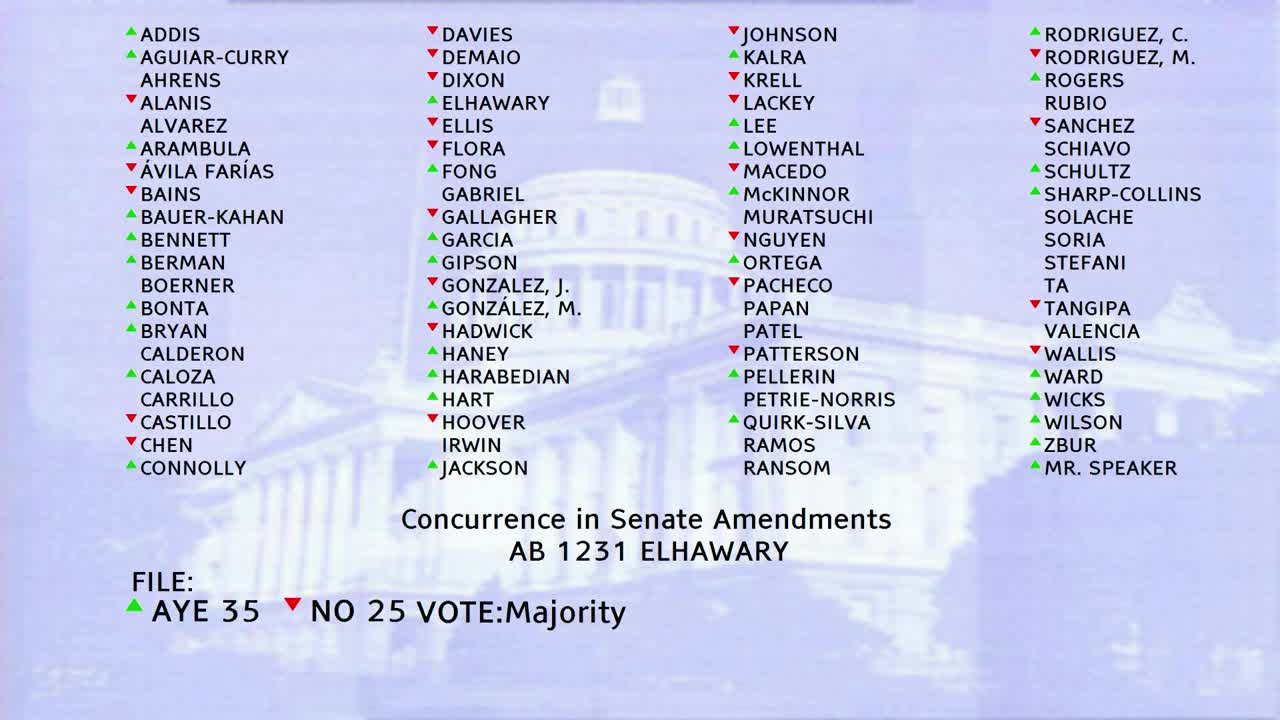

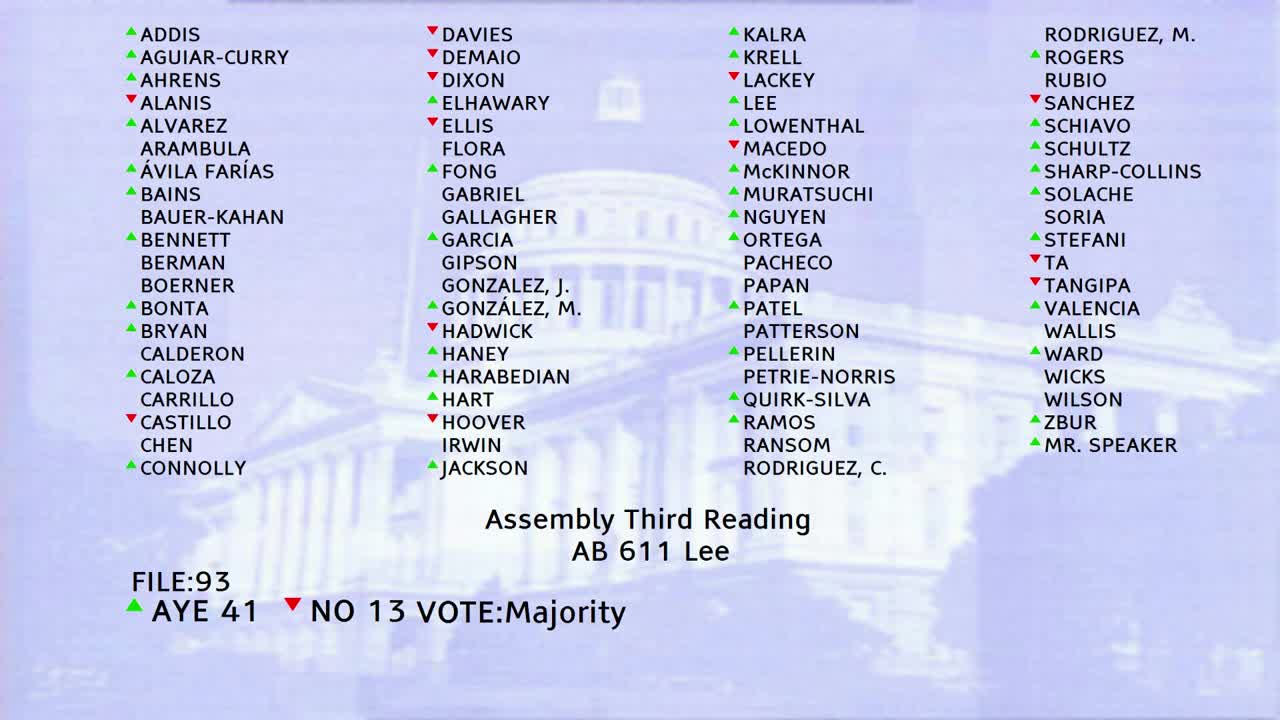
Bill Author

Bill Co-Author(s):