AB 1249: Early voting: satellite locations.
- Session Year: 2025-2026
- House: Assembly
- Latest Version Date: 2025-10-03
Current Status:
Passed
(2025-10-03: Chaptered by Secretary of State - Chapter 296, Statutes of 2025.)
Introduced
In Committee
Awaiting First Chamber Vote
Passed First Chamber
In Committee
Awaiting Second Chamber Vote
Passed Second Chamber
Enacted
Existing law requires an elections official, no later than 29 days before the day of an election, to begin mailing vote by mail ballots to registered voters. Existing law permits a voter using a vote by mail ballot to vote the ballot at the office of the elections official, including satellite locations, before the close of polls on election day. Existing law requires the elections official to provide notice of a satellite location by issuing a general news release no later than 14 days before voting at the satellite location may occur. Existing law requires a vote by mail ballot voted at a satellite location pursuant to the above provisions to be placed in a vote by mail voter identification envelope for processing, except as specified.
This bill would permit a voter using a vote by mail ballot, no later than 29 days before the day of an election, to vote the ballot at the office of the elections official or a satellite location. For a statewide election, if the county does not conduct an all-mailed ballot election, as specified, the bill would require the county to provide at least one early voting location on the Saturday before the day of the election that is open for at least 6 hours. The bill would require the early voting location to permit the voter to return their vote by mail ballot, register to vote, receive and vote a provisional ballot, and receive a replacement ballot, among other requirements. The bill would repeal the above requirement that the voter use a voter identification envelope when voting their vote by mail ballot at the satellite location. The bill would repeal the above requirement that the elections official issue a news release regarding satellite locations, and instead require the elections official to provide notice of a satellite location not later than two weeks before voting may occur at the satellite location.
By imposing new duties on local elections officials, the bill would create a state-mandated local program.
The California Constitution requires the state to reimburse local agencies and school districts for certain costs mandated by the state. Statutory provisions establish procedures for making that reimbursement.
This bill would provide that, if the Commission on State Mandates determines that the bill contains costs mandated by the state, reimbursement for those costs shall be made pursuant to the statutory provisions noted above.
Existing law requires an elections official, no later than 29 days before the day of an election, to begin mailing vote by mail ballots to registered voters. Existing law permits a voter using a vote by mail ballot to vote the ballot at the office of the elections official, including satellite locations, before the close of polls on election day. Existing law requires the elections official to provide notice of a satellite location by issuing a general news release no later than 14 days before voting at the satellite location may occur. Existing law requires a vote by mail ballot voted at a satellite location pursuant to the above provisions to be placed in a vote by mail voter identification envelope for processing, except as specified.
This bill would permit a voter using a vote by mail ballot, beginning no later than 29 days before the day of an election, to vote the ballot at the office of the elections official or a satellite location. For a statewide election, if the county does not conduct an all-mailed ballot election, as specified, the bill would require the county to provide at least one early voting location on the Saturday before the day of the election that is open for at least 6 hours. The bill would require the early voting location to permit the voter to return their vote by mail ballot, register to vote, receive and vote a provisional ballot, and receive a replacement ballot, among other requirements. The bill would repeal the above requirement that the voter use a voter identification envelope when voting their vote by mail ballot at the satellite location. The bill would repeal the above requirement that the elections official issue a news release regarding satellite locations, and instead require the elections official to provide notice of a satellite location not later than two weeks before voting may occur at the satellite location.
By imposing new duties on local elections officials, the bill would create a state-mandated local program.
The California Constitution requires the state to reimburse local agencies and school districts for certain costs mandated by the state. Statutory provisions establish procedures for making that reimbursement.
This bill would provide that, if the Commission on State Mandates determines that the bill contains costs mandated by the state, reimbursement for those costs shall be made pursuant to the statutory provisions noted above.
Existing law requires an elections official, no later than 29 days before the day of an election, to begin mailing vote by mail ballots to registered voters. Existing law permits a voter using a vote by mail ballot to vote the ballot at the office of the elections official, including satellite locations, before the close of polls on election day. Existing law requires the elections official to provide notice of a satellite location by issuing a general news release no later than 14 days before voting at the satellite location may occur. Existing law requires a vote by mail ballot voted at a satellite location pursuant to the above provisions to be placed in a vote by mail voter identification envelope for processing, except as specified.
This bill would permit a voter using a vote by mail ballot, beginning 29 days before the day of an election, to vote the ballot at the office of the elections official or a satellite location. For a statewide election, if the county does not conduct an all-mailed ballot election, as specified, the bill would require the county to provide at least one early voting location on the Saturday before the day of the election that is open for at least 8 6 hours. The bill would require the early voting location to permit the voter to return their vote by mail ballot, register to vote, receive and vote a provisional ballot, and receive a replacement ballot, among other requirements. The bill would repeal the above requirement that the voter use a voter identification envelope when voting their vote by mail ballot at the satellite location. The bill would repeal the above requirement that the elections official issue a news release regarding satellite locations, and instead require the elections official to provide notice of a satellite location not later than two weeks before voting may occur at the satellite location.
By imposing new duties on local elections officials, the bill would create a state-mandated local program.
The California Constitution requires the state to reimburse local agencies and school districts for certain costs mandated by the state. Statutory provisions establish procedures for making that reimbursement.
This bill would provide that, if the Commission on State Mandates determines that the bill contains costs mandated by the state, reimbursement for those costs shall be made pursuant to the statutory provisions noted above.
Existing law requires an elections official, no later than 29 days before the day of an election, to begin mailing vote by mail ballots to registered voters. Existing law permits a voter using a vote by mail ballot to vote the ballot at the office of the elections official, including satellite locations, before the close of polls on election day. Existing law requires the elections official to provide notice of a satellite location by issuing a general news release no later than 14 days before voting at the satellite location may occur. Existing law requires a vote by mail ballot voted at a satellite location pursuant to the above provisions to be placed in a vote by mail voter identification envelope for processing, except as specified.
This bill would permit a voter using a vote by mail ballot, beginning 29 days before the day of an election, to vote the ballot at the office of the elections official or a satellite location. For a statewide election, if the county does not conduct an all-mailed ballot election, as specified, the bill would require the county to provide at least one early voting location on the Saturday before the day of the election that is open for at least 8 hours. The bill would repeal the above requirement that the voter use a voter identification envelope when voting their vote by mail ballot at the satellite location. The bill would repeal the above requirement that the elections official issue a news release regarding satellite locations, and instead require the elections official to provide notice of a satellite location not later than 48 hours two weeks before voting may occur at the satellite location.
By imposing new duties on local elections officials, the bill would create a state-mandated local program.
The California Constitution requires the state to reimburse local agencies and school districts for certain costs mandated by the state. Statutory provisions establish procedures for making that reimbursement.
This bill would provide that, if the Commission on State Mandates determines that the bill contains costs mandated by the state, reimbursement for those costs shall be made pursuant to the statutory provisions noted above.
Existing law requires an elections official, no later than 29 days before the day of an election, to begin mailing vote by mail ballots to registered voters. Existing law permits a voter using a vote by mail ballot to vote the ballot at the office of the elections official, including satellite locations, before the close of polls on election day. Existing law requires the elections official to provide notice of a satellite location by issuing a general news release no later than 14 days before voting at the satellite location may occur. Existing law requires a vote by mail ballot voted at a satellite location pursuant to the above provisions to be placed in a vote by mail voter identification envelope for processing, except as specified.
This bill would permit a voter using a vote by mail ballot, beginning 29 days before the day of an election, to vote the ballot at the office of the elections official or a satellite location. For a statewide election, if the county does not conduct an all-mailed ballot election, as specified, the bill would require the county to provide at least one early voting location on the Saturday before the day of the election that is open for at least 8 hours. The bill would repeal the above requirement that the voter use a voter identification envelope when voting their vote by mail ballot at the satellite location. The bill would repeal the above requirement that the elections official issue a news release regarding satellite locations, and instead require the elections official to provide notice of a satellite location not later than 48 hours before voting may occur at the satellite location.
By imposing new duties on local elections officials, the bill would create a state-mandated local program.
The California Constitution requires the state to reimburse local agencies and school districts for certain costs mandated by the state. Statutory provisions establish procedures for making that reimbursement.
This bill would provide that, if the Commission on State Mandates determines that the bill contains costs mandated by the state, reimbursement for those costs shall be made pursuant to the statutory provisions noted above.
Existing law establishes procedures and requirements related to replacement ballots, as specified.This bill would express the intent of the Legislature to enact legislation relating to replacement ballots.Existing law establishes procedures and requirements related to replacement ballots, as specified.
This bill would express the intent of the Legislature to enact legislation relating to replacement ballots.
(a)Electioneering means the visible display or audible dissemination of information that advocates for or against any candidate or measure on the ballot within the 100 foot limit specified in subdivision (b). Prohibited electioneering information or activity includes, but is not limited to, any of the following:
(1)A display of a candidates name, likeness, or logo.
(2)A display of a ballot measures number, title, subject, or logo.
(3)Buttons, hats, pencils, pens, shirts, signs, or stickers containing electioneering information.
(4)Dissemination of audible electioneering information.
(5)Obstructing access to, loitering near, or disseminating visible or audible electioneering information at vote by mail ballot drop boxes.
(b)The activities described in subdivision (a) are prohibited within 100 feet of either of the following:
(1)The entrance to a building that contains a polling place as defined by Section 338.5, an elections officials office, or a satellite location.
(2)An outdoor site, including a curbside voting area, at which a voter may cast or drop off a ballot.
SEC. 2.Section 3016.3 is added to the Elections Code, to read:3016.3.(a)No later than 29 days before the day of the election, any voter using a vote by mail ballot may, prior to the close of the polls on election day, vote the ballot at the office of the elections official or a satellite location. The voter shall vote the ballot in the presence of an officer of the elections official or in a voting booth, at the discretion of the elections official, but in no case may their vote be observed.
(b)For a statewide election, a county that does not conduct an election pursuant to Section 4005 shall provide at least one early voting location on the Saturday before the day of the election that is open for a minimum of six hours.
(c)(1)For purposes of subdivisions (a) and (b), the elections official shall do all of the following:
(A)Provide at least one voting unit that is certified or conditionally approved by the Secretary of State to allow voters with disabilities the access required under the federal Help America Vote Act of 2002 (52 U.S.C. Sec. 20901 et seq.).
(B)Permit a voter to vote their vote by mail ballot as provided in Section 3016.5.
(C)Provide notice of any satellite location not later than two weeks before voting may occur at the satellite location.
(2)For purposes of the early voting location described in subdivision (b), the elections official shall also permit a voter to do all of the following:
(A)Return the voters vote by mail ballot.
(B)Register to vote, update the voters voter registration, and vote pursuant to Section 2170.
(C)Receive and vote a provisional ballot pursuant to Section 3016 or Article 5 (commencing with Section 14310) of Chapter 3 of Division 14.
(D)Receive a replacement ballot upon verification that a ballot for the same election has not been received from the voter by the county elections official. If the county elections official is unable to determine if a ballot for the same election has been received from the voter, the county elections official may issue a provisional ballot.
(E)Vote a regular, provisional, or replacement ballot using accessible voting equipment that provides for a private and independent voting experience.
SEC. 3.Section 3016.5 of the Elections Code is amended to read:3016.5.(a)A voter may vote their vote by mail ballot, without the identification envelope, in person at the office of the county elections official, a satellite location, the polling place designated for the voters home precinct, or a vote center established pursuant to Section 4005, if all of the following conditions are met:
(1)The county elections official or their staff, including any staff managing a satellite location, a precinct board, or a vote center election board, as applicable, has real-time access to the county elections officials election management system, and does both of the following:
(A)Verifies that the voter has not returned a vote by mail ballot for that election.
(B)Changes the status of the voter in the election management system from a vote by mail voter to an in person voter.
(2)After the voters status has been changed pursuant to subparagraph (B) of paragraph (1), the voter provides their name, address, and signature pursuant to Section 14216.
(3)The county elections official has established procedures to ensure that a voter who casts a ballot pursuant to this subdivision does not submit more than one vote by mail ballot without the identification envelope, and the precinct board or vote center election board complies with those procedures.
(b)A ballot cast pursuant to subdivision (a) shall be processed and counted in the same manner as a nonprovisional ballot cast in person at the polling place or vote center.
(c)The elections official shall provide notice of any satellite location not later than two weeks before voting may occur at the satellite location.
SEC. 4.Section 3018 of the Elections Code is repealed.SEC. 5.Section 18370 of the Elections Code is amended to read:18370.(a)A person shall not, on election day, or at any time that a voter may be casting a ballot, within the 100 foot limit specified in subdivision (b), do any of the following:
(1)Circulate an initiative, referendum, recall, or nomination petition or any other petition.
(2)Solicit a vote or speak to a voter on the subject of marking the voters ballot.
(3)Place a sign relating to voters qualifications or speak to a voter on the subject of the voters qualifications except as provided in Section 14240.
(4)Do any electioneering as defined by Section 319.5.
(b)The activities described in subdivision (a) are prohibited within 100 feet of either of the following:
(1)The entrance to a building that contains a polling place as defined by Section 338.5, an elections officials office, or a satellite location.
(2)An outdoor site, including a curbside voting area, at which a voter may cast or drop off a ballot.
(c)A person shall not, on election day, or at any time that a voter may be casting a ballot, do any of the following within the immediate vicinity of a voter in line to cast a ballot or drop off a ballot:
(1)Solicit a vote.
(2)Speak to a voter about marking the voters ballot.
(3)Disseminate visible or audible electioneering information.
(d)Any person who violates any of the provisions of this section is guilty of a misdemeanor.
SEC. 6.Section 18502 of the Elections Code is amended to read:18502.(a)Any person who in any manner interferes with the officers holding an election or conducting a canvass, as to prevent the election or canvass from being fairly held and lawfully conducted, or with the voters lawfully exercising their rights of voting at an election, is punishable by imprisonment pursuant to subdivision (h) of Section 1170 of the Penal Code for 16 months or two or three years.
(b)For purposes of this section, officers holding an election or conducting a canvass include, but are not limited to, the Secretary of State as the chief elections officer, and their staff, as it relates to performance of any of their duties related to administering the provisions of the Elections Code, and elections officials and their staff, including temporary workers and poll workers, and members of a precinct board, in their performance of any duty related to assisting with holding an election or conducting a canvass.
(c)For purposes of this section, holding an election or conducting a canvass includes, but is not limited to, the election observation process governed by the Elections Code and applicable regulations adopted by the Secretary of State.
(d)For purposes of this section, voting at an election includes, but is not limited to, voting in person at a polling place, the office of the elections official, and satellite locations, and voting by mail and returning a voted ballot pursuant to subdivision (a) of Section 3017.
SEC. 7.Section 18540 of the Elections Code is amended to read:18540.(a)Every person who makes use of or threatens to make use of any force, violence, or tactic of coercion or intimidation, to induce or compel any other person to vote or refrain from voting at any election or to vote or refrain from voting for any particular person or measure at any election, or because any person voted or refrained from voting at any election or voted or refrained from voting for any particular person or measure at any election is guilty of a felony punishable by imprisonment pursuant to subdivision (h) of Section 1170 of the Penal Code for 16 months or two or three years.
(b)Every person who hires or arranges for any other person to make use of or threaten to make use of any force, violence, or tactic of coercion or intimidation, to induce or compel any other person to vote or refrain from voting at any election or to vote or refrain from voting for any particular person or measure at any election, or because any person voted or refrained from voting at any election or voted or refrained from voting for any particular person or measure at any election is guilty of a felony punishable by imprisonment pursuant to subdivision (h) of Section 1170 of the Penal Code for 16 months or two or three years.
(c)For purposes of this section, voting at any election includes, but is not limited to, voting in person at a polling place, the office of the elections official, and satellite locations, and voting by mail and returning a voted ballot pursuant to subdivision (a) of Section 3017.
SEC. 8.Section 18541 of the Elections Code is amended to read:18541.(a)A person shall not, with the intent of dissuading another person from voting, within the 100 foot limit specified in subdivision (b), do any of the following:
(1)Solicit a vote or speak to a voter on the subject of marking the voters ballot.
(2)Place a sign relating to voters qualifications or speak to a voter on the subject of the voters qualifications except as provided in Section 14240.
(3)Photograph, video record, or otherwise record a voter entering or exiting a polling place.
(4)Obstruct ingress, egress, or parking.
(b)The activities described in subdivision (a) are prohibited within 100 feet of either of the following:
(1)The entrance to a building that contains a polling place as defined by Section 338.5, an elections officials office, or a satellite location.
(2)An outdoor site, including a curbside voting area, at which a voter may cast or drop off a ballot.
(c)A person shall not, with the intent of dissuading another person from voting, do any of the following within the immediate vicinity of a voter in line to cast a ballot or drop off a ballot:
(1)Solicit a vote.
(2)Speak to a voter about marking the voters ballot.
(3)Disseminate visible or audible electioneering information.
(d)A violation of this section is punishable by imprisonment in a county jail for not more than 12 months, or in state prison. Any person who conspires to violate this section is guilty of a felony.
SEC. 9.Section 66852 of the Education Code is amended to read:66852.Each campus of the California Community Colleges and the California State University shall, and each campus of the University of California is requested to, do all of the following:
(a)(1)In consultation with the Secretary of State, during the first month of each academic semester or quarter, distribute campuswide emails to all students providing the following civic and election dates and information:
(A)National Voter Registration Day, held annually on the fourth Tuesday in September.
(B)The last day to register to vote online or to register to vote by mail or in person.
(C)The date when a county may begin to offer early voting at the office of the elections official or at a satellite location, pursuant to Section 3016.3 of the Elections Code, and a statement that the date, times, and locations for early voting and conditional voter registration may be confirmed on the internet website of the Secretary of State or at the county elections office.
(D)The primary and general election dates as provided in Chapter 4 of Division 0.5 of the Elections Code and Division 1 of the Elections Code.
(E)A statement that, pursuant to Chapter 1 of Division 3 of the Elections Code, a voter may apply to vote by mail at any time until after the seventh day prior to an election, and that a vote by mail voter may vote in person at the office of the county elections official or at a satellite location established by the county elections official on or before the day of the election.
(F)A link to the internet web page for the Secretary of States Students Vote Project, established pursuant to Section 2148.5 of the Elections Code.
(2)In consultation with the Secretary of State, one month before each statewide election, distribute by campuswide emails to all students the dates and information specified in subparagraphs (A) through (F) of paragraph (1) and an internet website address link or unique Uniform Resource Locator (URL) link furnished by the Secretary of States office providing all of the following election information:
(A)The Secretary of States internet web page for online voter registration. That website shall include a statement providing the information specified in subparagraph (B) of paragraph (1).
(B)The Secretary of States internet website address for election information.
(C)The Secretary of States internet website address for the most current voter information guide, required to be prepared pursuant to Section 9082.7 of the Elections Code.
(D)The Secretary of States internet website address for the voter registration status tool, or a similar web page that directs the recipient to voter or election information for the county of the recipient.
(E)A disclaimer stating all of the following:
(i)That the civic and election information provided applies to the county where the campus is located.
(ii)That election information varies by county.
(iii)That recipients of the email are encouraged to check the internet website containing the Secretary of States voter registration status tool, or a similar web page, to find election information for the county where the recipients voter registration is active.
(3)Include in both printed and electronic academic calendars the dates specified in subparagraphs (A), (B), (C), and (D) of paragraph (1).
(b)(1)Post on social media reminders to students, at least one day before each event occurs unless specified otherwise, of all of the following:
(A)The early voting and conditional voter registration information specified in subparagraph (C) of paragraph (1) of subdivision (a).
(B)Election day, including a reminder the day before and the day of the election. The reminders shall state that a qualified voter may register to vote on the day of the election, if necessary, at a conditional voter registration site established by the voters county elections official.
(C)After the emails required by paragraph (2) of subdivision (a) are sent, the voter information guide and county sample ballot information provided in that email.
(2)For the purposes of this subdivision, the social media content can be furnished, or requested, by the Secretary of State.
(c)(1)Designate one person per campus to act as a Civic and Voter Empowerment Coordinator, who shall do all of the following:
(A)Implement the requirements of this section.
(B)Ensure that, in every academic year, each campus holds a minimum of three election outreach events to increase civic learning, democratic participation, civic engagement, and voter turnout consistent with all of the following:
(i)During an academic term in each even-numbered year, an outreach event shall occur within the final 30 days preceding each statewide primary and general election.
(ii)All students shall be invited to participate in the coordination of and to attend these events.
(iii)All events may be sponsored by a campus-based student organization.
(C)Develop a Civic and Voter Empowerment Action Plan consistent with all of the following:
(i)The coordinator shall invite leadership from faculty and students, and administrators from each of student affairs, academic affairs, and government relations or a similar office to participate in a meeting or meetings to develop the action plan.
(ii)The action plan shall include, but not necessarily be limited to, a campus-specific effort to increase civic learning and democratic participation, with an emphasis on civic engagement, voter turnout, and community building.
(iii)Students shall be invited to develop the action plan and to coordinate the meeting or meetings to develop the action plan.
(D)The coordinator shall share the action plan developed pursuant to subparagraph (C) with the Secretary of State no later than December 1, 2020, for inclusion in the report to the Legislature submitted pursuant to subdivision (b) of Section 66851. The action plan shall be periodically updated and resubmitted to the Secretary of State, as determined necessary by the coordinator.
(2)The Civic and Voter Empowerment Coordinator shall be nonpartisan.
SEC. 10.If the Commission on State Mandates determines that this act contains costs mandated by the state, reimbursement to local agencies and school districts for those costs shall be made pursuant to Part 7 (commencing with Section 17500) of Division 4 of Title 2 of the Government Code.
(a)Electioneering means the visible display or audible dissemination of information that advocates for or against any candidate or measure on the ballot within the 100 foot limit specified in subdivision (b). Prohibited electioneering information or activity includes, but is not limited to, any of the following:
(1)A display of a candidates name, likeness, or logo.
(2)A display of a ballot measures number, title, subject, or logo.
(3)Buttons, hats, pencils, pens, shirts, signs, or stickers containing electioneering information.
(4)Dissemination of audible electioneering information.
(5)Obstructing access to, loitering near, or disseminating visible or audible electioneering information at vote by mail ballot drop boxes.
(b)The activities described in subdivision (a) are prohibited within 100 feet of either of the following:
(1)The entrance to a building that contains a polling place as defined by Section 338.5, an elections officials office, or a satellite location.
(2)An outdoor site, including a curbside voting area, at which a voter may cast or drop off a ballot.
SEC. 2.Section 3016.3 is added to the Elections Code, to read:3016.3.(a)Beginning No later than 29 days before the day of the election, any voter using a vote by mail ballot may, prior to the close of the polls on election day, vote the ballot at the office of the elections official or a satellite location. The voter shall vote the ballot in the presence of an officer of the elections official or in a voting booth, at the discretion of the elections official, but in no case may their vote be observed.
(b)For a statewide election, a county that does not conduct an election pursuant to Section 4005 shall provide at least one early voting location on the Saturday before the day of the election that is open for a minimum of six hours.
(c)(1)For purposes of subdivisions (a) and (b), the elections official shall do all of the following:
(A)Provide at least one voting unit that is certified or conditionally approved by the Secretary of State to allow voters with disabilities the access required under the federal Help America Vote Act of 2002 (52 U.S.C. Sec. 20901 et seq.).
(B)Permit a voter to vote their vote by mail ballot as provided in Section 3016.5.
(C)Provide notice of any satellite location not later than two weeks before voting may occur at the satellite location.
(2)For purposes of the early voting location described in subdivision (b), the elections official shall also permit a voter to do all of the following:
(A)Return the voters vote by mail ballot.
(B)Register to vote, update the voters voter registration, and vote pursuant to Section 2170.
(C)Receive and vote a provisional ballot pursuant to Section 3016 or Article 5 (commencing with Section 14310) of Chapter 3 of Division 14.
(D)Receive a replacement ballot upon verification that a ballot for the same election has not been received from the voter by the county elections official. If the county elections official is unable to determine if a ballot for the same election has been received from the voter, the county elections official may issue a provisional ballot.
(E)Vote a regular, provisional, or replacement ballot using accessible voting equipment that provides for a private and independent voting experience.
SEC. 3.Section 3016.5 of the Elections Code is amended to read:3016.5.(a)A voter may vote their vote by mail ballot, without the identification envelope, in person at the office of the county elections official, a satellite location, the polling place designated for the voters home precinct, or a vote center established pursuant to Section 4005, if all of the following conditions are met:
(1)The county elections official or their staff, including any staff managing a satellite location, a precinct board, or a vote center election board, as applicable, has real-time access to the county elections officials election management system, and does both of the following:
(A)Verifies that the voter has not returned a vote by mail ballot for that election.
(B)Changes the status of the voter in the election management system from a vote by mail voter to an in person voter.
(2)After the voters status has been changed pursuant to subparagraph (B) of paragraph (1), the voter provides their name, address, and signature pursuant to Section 14216.
(3)The county elections official has established procedures to ensure that a voter who casts a ballot pursuant to this subdivision does not submit more than one vote by mail ballot without the identification envelope, and the precinct board or vote center election board complies with those procedures.
(b)A ballot cast pursuant to subdivision (a) shall be processed and counted in the same manner as a nonprovisional ballot cast in person at the polling place or vote center.
(c)The elections official shall provide notice of any satellite location not later than two weeks before voting may occur at the satellite location.
SEC. 4.Section 3018 of the Elections Code is repealed.SEC. 5.Section 18370 of the Elections Code is amended to read:18370.(a)A person shall not, on election day, or at any time that a voter may be casting a ballot, within the 100 foot limit specified in subdivision (b), do any of the following:
(1)Circulate an initiative, referendum, recall, or nomination petition or any other petition.
(2)Solicit a vote or speak to a voter on the subject of marking the voters ballot.
(3)Place a sign relating to voters qualifications or speak to a voter on the subject of the voters qualifications except as provided in Section 14240.
(4)Do any electioneering as defined by Section 319.5.
(b)The activities described in subdivision (a) are prohibited within 100 feet of either of the following:
(1)The entrance to a building that contains a polling place as defined by Section 338.5, an elections officials office, or a satellite location.
(2)An outdoor site, including a curbside voting area, at which a voter may cast or drop off a ballot.
(c)A person shall not, on election day, or at any time that a voter may be casting a ballot, do any of the following within the immediate vicinity of a voter in line to cast a ballot or drop off a ballot:
(1)Solicit a vote.
(2)Speak to a voter about marking the voters ballot.
(3)Disseminate visible or audible electioneering information.
(d)Any person who violates any of the provisions of this section is guilty of a misdemeanor.
SEC. 6.Section 18502 of the Elections Code is amended to read:18502.(a)Any person who in any manner interferes with the officers holding an election or conducting a canvass, as to prevent the election or canvass from being fairly held and lawfully conducted, or with the voters lawfully exercising their rights of voting at an election, is punishable by imprisonment pursuant to subdivision (h) of Section 1170 of the Penal Code for 16 months or two or three years.
(b)For purposes of this section, officers holding an election or conducting a canvass include, but are not limited to, the Secretary of State as the chief elections officer, and their staff, as it relates to performance of any of their duties related to administering the provisions of the Elections Code, and elections officials and their staff, including temporary workers and poll workers, and members of a precinct board, in their performance of any duty related to assisting with holding an election or conducting a canvass.
(c)For purposes of this section, holding an election or conducting a canvass includes, but is not limited to, the election observation process governed by the Elections Code and applicable regulations adopted by the Secretary of State.
(d)For purposes of this section, voting at an election includes, but is not limited to, voting in person at a polling place, the office of the elections official, and satellite locations, and voting by mail and returning a voted ballot pursuant to subdivision (a) of Section 3017.
SEC. 7.Section 18540 of the Elections Code is amended to read:18540.(a)Every person who makes use of or threatens to make use of any force, violence, or tactic of coercion or intimidation, to induce or compel any other person to vote or refrain from voting at any election or to vote or refrain from voting for any particular person or measure at any election, or because any person voted or refrained from voting at any election or voted or refrained from voting for any particular person or measure at any election is guilty of a felony punishable by imprisonment pursuant to subdivision (h) of Section 1170 of the Penal Code for 16 months or two or three years.
(b)Every person who hires or arranges for any other person to make use of or threaten to make use of any force, violence, or tactic of coercion or intimidation, to induce or compel any other person to vote or refrain from voting at any election or to vote or refrain from voting for any particular person or measure at any election, or because any person voted or refrained from voting at any election or voted or refrained from voting for any particular person or measure at any election is guilty of a felony punishable by imprisonment pursuant to subdivision (h) of Section 1170 of the Penal Code for 16 months or two or three years.
(c)For purposes of this section, voting at any election includes, but is not limited to, voting in person at a polling place, the office of the elections official, and satellite locations, and voting by mail and returning a voted ballot pursuant to subdivision (a) of Section 3017.
SEC. 8.Section 18541 of the Elections Code is amended to read:18541.(a)A person shall not, with the intent of dissuading another person from voting, within the 100 foot limit specified in subdivision (b), do any of the following:
(1)Solicit a vote or speak to a voter on the subject of marking the voters ballot.
(2)Place a sign relating to voters qualifications or speak to a voter on the subject of the voters qualifications except as provided in Section 14240.
(3)Photograph, video record, or otherwise record a voter entering or exiting a polling place.
(4)Obstruct ingress, egress, or parking.
(b)The activities described in subdivision (a) are prohibited within 100 feet of either of the following:
(1)The entrance to a building that contains a polling place as defined by Section 338.5, an elections officials office, or a satellite location.
(2)An outdoor site, including a curbside voting area, at which a voter may cast or drop off a ballot.
(c)A person shall not, with the intent of dissuading another person from voting, do any of the following within the immediate vicinity of a voter in line to cast a ballot or drop off a ballot:
(1)Solicit a vote.
(2)Speak to a voter about marking the voters ballot.
(3)Disseminate visible or audible electioneering information.
(d)A violation of this section is punishable by imprisonment in a county jail for not more than 12 months, or in state prison. Any person who conspires to violate this section is guilty of a felony.
SEC. 9.Section 66852 of the Education Code is amended to read:66852.Each campus of the California Community Colleges and the California State University shall, and each campus of the University of California is requested to, do all of the following:
(a)(1)In consultation with the Secretary of State, during the first month of each academic semester or quarter, distribute campuswide emails to all students providing the following civic and election dates and information:
(A)National Voter Registration Day, held annually on the fourth Tuesday in September.
(B)The last day to register to vote online or to register to vote by mail or in person.
(C)The date when a county may begin to offer early voting at the office of the elections official or at a satellite location, pursuant to Section 3016.3 of the Elections Code, and a statement that the date, times, and locations for early voting and conditional voter registration may be confirmed on the internet website of the Secretary of State or at the county elections office.
(D)The primary and general election dates as provided in Chapter 4 of Division 0.5 of the Elections Code and Division 1 of the Elections Code.
(E)A statement that, pursuant to Chapter 1 of Division 3 of the Elections Code, a voter may apply to vote by mail at any time until after the seventh day prior to an election, and that a vote by mail voter may vote in person at the office of the county elections official or at a satellite location established by the county elections official on or before the day of the election.
(F)A link to the internet web page for the Secretary of States Students Vote Project, established pursuant to Section 2148.5 of the Elections Code.
(2)In consultation with the Secretary of State, one month before each statewide election, distribute by campuswide emails to all students the dates and information specified in subparagraphs (A) through (F) of paragraph (1) and an internet website address link or unique Uniform Resource Locator (URL) link furnished by the Secretary of States office providing all of the following election information:
(A)The Secretary of States internet web page for online voter registration. That website shall include a statement providing the information specified in subparagraph (B) of paragraph (1).
(B)The Secretary of States internet website address for election information.
(C)The Secretary of States internet website address for the most current voter information guide, required to be prepared pursuant to Section 9082.7 of the Elections Code.
(D)The Secretary of States internet website address for the voter registration status tool, or a similar web page that directs the recipient to voter or election information for the county of the recipient.
(E)A disclaimer stating all of the following:
(i)That the civic and election information provided applies to the county where the campus is located.
(ii)That election information varies by county.
(iii)That recipients of the email are encouraged to check the internet website containing the Secretary of States voter registration status tool, or a similar web page, to find election information for the county where the recipients voter registration is active.
(3)Include in both printed and electronic academic calendars the dates specified in subparagraphs (A), (B), (C), and (D) of paragraph (1).
(b)(1)Post on social media reminders to students, at least one day before each event occurs unless specified otherwise, of all of the following:
(A)The early voting and conditional voter registration information specified in subparagraph (C) of paragraph (1) of subdivision (a).
(B)Election day, including a reminder the day before and the day of the election. The reminders shall state that a qualified voter may register to vote on the day of the election, if necessary, at a conditional voter registration site established by the voters county elections official.
(C)After the emails required by paragraph (2) of subdivision (a) are sent, the voter information guide and county sample ballot information provided in that email.
(2)For the purposes of this subdivision, the social media content can be furnished, or requested, by the Secretary of State.
(c)(1)Designate one person per campus to act as a Civic and Voter Empowerment Coordinator, who shall do all of the following:
(A)Implement the requirements of this section.
(B)Ensure that, in every academic year, each campus holds a minimum of three election outreach events to increase civic learning, democratic participation, civic engagement, and voter turnout consistent with all of the following:
(i)During an academic term in each even-numbered year, an outreach event shall occur within the final 30 days preceding each statewide primary and general election.
(ii)All students shall be invited to participate in the coordination of and to attend these events.
(iii)All events may be sponsored by a campus-based student organization.
(C)Develop a Civic and Voter Empowerment Action Plan consistent with all of the following:
(i)The coordinator shall invite leadership from faculty and students, and administrators from each of student affairs, academic affairs, and government relations or a similar office to participate in a meeting or meetings to develop the action plan.
(ii)The action plan shall include, but not necessarily be limited to, a campus-specific effort to increase civic learning and democratic participation, with an emphasis on civic engagement, voter turnout, and community building.
(iii)Students shall be invited to develop the action plan and to coordinate the meeting or meetings to develop the action plan.
(D)The coordinator shall share the action plan developed pursuant to subparagraph (C) with the Secretary of State no later than December 1, 2020, for inclusion in the report to the Legislature submitted pursuant to subdivision (b) of Section 66851. The action plan shall be periodically updated and resubmitted to the Secretary of State, as determined necessary by the coordinator.
(2)The Civic and Voter Empowerment Coordinator shall be nonpartisan.
SEC. 10.If the Commission on State Mandates determines that this act contains costs mandated by the state, reimbursement to local agencies and school districts for those costs shall be made pursuant to Part 7 (commencing with Section 17500) of Division 4 of Title 2 of the Government Code.
(a)Electioneering means the visible display or audible dissemination of information that advocates for or against any candidate or measure on the ballot within the 100 foot limit specified in subdivision (b). Prohibited electioneering information or activity includes, but is not limited to, any of the following:
(1)A display of a candidates name, likeness, or logo.
(2)A display of a ballot measures number, title, subject, or logo.
(3)Buttons, hats, pencils, pens, shirts, signs, or stickers containing electioneering information.
(4)Dissemination of audible electioneering information.
(5)Obstructing access to, loitering near, or disseminating visible or audible electioneering information at vote by mail ballot drop boxes.
(b)The activities described in subdivision (a) are prohibited within 100 feet of either of the following:
(1)The entrance to a building that contains a polling place as defined by Section 338.5, an elections officials office, or a satellite location.
(2)An outdoor site, including a curbside voting area, at which a voter may cast or drop off a ballot.
SEC. 2.Section 3016.3 is added to the Elections Code, to read:3016.3.(a)Beginning 29 days before the day of the election, any voter using a vote by mail ballot may, prior to the close of the polls on election day, vote the ballot at the office of the elections official or a satellite location. The voter shall vote the ballot in the presence of an officer of the elections official or in a voting booth, at the discretion of the elections official, but in no case may their vote be observed.
(b)For a statewide election, a county that does not conduct an election pursuant to Section 4005 shall provide at least one early voting location on the Saturday before the day of the election that is open for a minimum of eight six hours.
(c)(1)For purposes of this section, subdivisions (a) and (b), the elections official shall do all of the following:
(1)(A)Provide at least one voting unit that is certified or conditionally approved by the Secretary of State to allow voters with disabilities the access required under the federal Help America Vote Act of 2002 (52 U.S.C. Sec. 20901 et seq.).
(2)(B)Permit a voter to vote their vote by mail ballot as provided in Section 3016.5.
(3)(C)Provide notice of any satellite location not later than two weeks before voting may occur at the satellite location.
(2)For purposes of the early voting location described in subdivision (b), the elections official shall also permit a voter to do all of the following:
(A)Return the voters vote by mail ballot.
(B)Register to vote, update the voters voter registration, and vote pursuant to Section 2170.
(C)Receive and vote a provisional ballot pursuant to Section 3016 or Article 5 (commencing with Section 14310) of Chapter 3 of Division 14.
(D)Receive a replacement ballot upon verification that a ballot for the same election has not been received from the voter by the county elections official. If the county elections official is unable to determine if a ballot for the same election has been received from the voter, the county elections official may issue a provisional ballot.
(E)Vote a regular, provisional, or replacement ballot using accessible voting equipment that provides for a private and independent voting experience.
SEC. 3.Section 3016.5 of the Elections Code is amended to read:3016.5.(a)A voter may vote their vote by mail ballot, without the identification envelope, in person at the office of the county elections official, a satellite location, the polling place designated for the voters home precinct, or a vote center established pursuant to Section 4005, if all of the following conditions are met:
(1)The county elections official or their staff, including any staff managing a satellite location, a precinct board, or a vote center election board, as applicable, has real-time access to the county elections officials election management system, and does both of the following:
(A)Verifies that the voter has not returned a vote by mail ballot for that election.
(B)Changes the status of the voter in the election management system from a vote by mail voter to an in person voter.
(2)After the voters status has been changed pursuant to subparagraph (B) of paragraph (1), the voter provides their name, address, and signature pursuant to Section 14216.
(3)The county elections official has established procedures to ensure that a voter who casts a ballot pursuant to this subdivision does not submit more than one vote by mail ballot without the identification envelope, and the precinct board or vote center election board complies with those procedures.
(b)A ballot cast pursuant to subdivision (a) shall be processed and counted in the same manner as a nonprovisional ballot cast in person at the polling place or vote center.
(c)The elections official shall provide notice of any satellite location not later than two weeks before voting may occur at the satellite location.
SEC. 4.Section 3018 of the Elections Code is repealed.SEC. 5.Section 18370 of the Elections Code is amended to read:18370.(a)A person shall not, on election day, or at any time that a voter may be casting a ballot, within the 100 foot limit specified in subdivision (b), do any of the following:
(1)Circulate an initiative, referendum, recall, or nomination petition or any other petition.
(2)Solicit a vote or speak to a voter on the subject of marking the voters ballot.
(3)Place a sign relating to voters qualifications or speak to a voter on the subject of the voters qualifications except as provided in Section 14240.
(4)Do any electioneering as defined by Section 319.5.
(b)The activities described in subdivision (a) are prohibited within 100 feet of either of the following:
(1)The entrance to a building that contains a polling place as defined by Section 338.5, an elections officials office, or a satellite location.
(2)An outdoor site, including a curbside voting area, at which a voter may cast or drop off a ballot.
(c)A person shall not, on election day, or at any time that a voter may be casting a ballot, do any of the following within the immediate vicinity of a voter in line to cast a ballot or drop off a ballot:
(1)Solicit a vote.
(2)Speak to a voter about marking the voters ballot.
(3)Disseminate visible or audible electioneering information.
(d)Any person who violates any of the provisions of this section is guilty of a misdemeanor.
SEC. 6.Section 18502 of the Elections Code is amended to read:18502.(a)Any person who in any manner interferes with the officers holding an election or conducting a canvass, as to prevent the election or canvass from being fairly held and lawfully conducted, or with the voters lawfully exercising their rights of voting at an election, is punishable by imprisonment pursuant to subdivision (h) of Section 1170 of the Penal Code for 16 months or two or three years.
(b)For purposes of this section, officers holding an election or conducting a canvass include, but are not limited to, the Secretary of State as the chief elections officer, and their staff, as it relates to performance of any of their duties related to administering the provisions of the Elections Code, and elections officials and their staff, including temporary workers and poll workers, and members of a precinct board, in their performance of any duty related to assisting with holding an election or conducting a canvass.
(c)For purposes of this section, holding an election or conducting a canvass includes, but is not limited to, the election observation process governed by the Elections Code and applicable regulations adopted by the Secretary of State.
(d)For purposes of this section, voting at an election includes, but is not limited to, voting in person at a polling place, the office of the elections official, and satellite locations, and voting by mail and returning a voted ballot pursuant to subdivision (a) of Section 3017.
SEC. 7.Section 18540 of the Elections Code is amended to read:18540.(a)Every person who makes use of or threatens to make use of any force, violence, or tactic of coercion or intimidation, to induce or compel any other person to vote or refrain from voting at any election or to vote or refrain from voting for any particular person or measure at any election, or because any person voted or refrained from voting at any election or voted or refrained from voting for any particular person or measure at any election is guilty of a felony punishable by imprisonment pursuant to subdivision (h) of Section 1170 of the Penal Code for 16 months or two or three years.
(b)Every person who hires or arranges for any other person to make use of or threaten to make use of any force, violence, or tactic of coercion or intimidation, to induce or compel any other person to vote or refrain from voting at any election or to vote or refrain from voting for any particular person or measure at any election, or because any person voted or refrained from voting at any election or voted or refrained from voting for any particular person or measure at any election is guilty of a felony punishable by imprisonment pursuant to subdivision (h) of Section 1170 of the Penal Code for 16 months or two or three years.
(c)For purposes of this section, voting at any election includes, but is not limited to, voting in person at a polling place, the office of the elections official, and satellite locations, and voting by mail and returning a voted ballot pursuant to subdivision (a) of Section 3017.
SEC. 8.Section 18541 of the Elections Code is amended to read:18541.(a)A person shall not, with the intent of dissuading another person from voting, within the 100 foot limit specified in subdivision (b), do any of the following:
(1)Solicit a vote or speak to a voter on the subject of marking the voters ballot.
(2)Place a sign relating to voters qualifications or speak to a voter on the subject of the voters qualifications except as provided in Section 14240.
(3)Photograph, video record, or otherwise record a voter entering or exiting a polling place.
(4)Obstruct ingress, egress, or parking.
(b)The activities described in subdivision (a) are prohibited within 100 feet of either of the following:
(1)The entrance to a building that contains a polling place as defined by Section 338.5, an elections officials office, or a satellite location.
(2)An outdoor site, including a curbside voting area, at which a voter may cast or drop off a ballot.
(c)A person shall not, with the intent of dissuading another person from voting, do any of the following within the immediate vicinity of a voter in line to cast a ballot or drop off a ballot:
(1)Solicit a vote.
(2)Speak to a voter about marking the voters ballot.
(3)Disseminate visible or audible electioneering information.
(d)A violation of this section is punishable by imprisonment in a county jail for not more than 12 months, or in state prison. Any person who conspires to violate this section is guilty of a felony.
SEC. 9.Section 66852 of the Education Code is amended to read:66852.Each campus of the California Community Colleges and the California State University shall, and each campus of the University of California is requested to, do all of the following:
(a)(1)In consultation with the Secretary of State, during the first month of each academic semester or quarter, distribute campuswide emails to all students providing the following civic and election dates and information:
(A)National Voter Registration Day, held annually on the fourth Tuesday in September.
(B)The last day to register to vote online or to register to vote by mail or in person.
(C)The date when a county may begin to offer early voting at the office of the elections official or at a satellite location, pursuant to Section 3016.3 of the Elections Code, and a statement that the date, times, and locations for early voting and conditional voter registration may be confirmed on the internet website of the Secretary of State or at the county elections office.
(D)The primary and general election dates as provided in Chapter 4 of Division 0.5 of the Elections Code and Division 1 of the Elections Code.
(E)A statement that, pursuant to Chapter 1 of Division 3 of the Elections Code, a voter may apply to vote by mail at any time until after the seventh day prior to an election, and that a vote by mail voter may vote in person at the office of the county elections official or at a satellite location established by the county elections official on or before the day of the election.
(F)A link to the internet web page for the Secretary of States Students Vote Project, established pursuant to Section 2148.5 of the Elections Code.
(2)In consultation with the Secretary of State, one month before each statewide election, distribute by campuswide emails to all students the dates and information specified in subparagraphs (A) through (F) of paragraph (1) and an internet website address link or unique Uniform Resource Locator (URL) link furnished by the Secretary of States office providing all of the following election information:
(A)The Secretary of States internet web page for online voter registration. That website shall include a statement providing the information specified in subparagraph (B) of paragraph (1).
(B)The Secretary of States internet website address for election information.
(C)The Secretary of States internet website address for the most current voter information guide, required to be prepared pursuant to Section 9082.7 of the Elections Code.
(D)The Secretary of States internet website address for the voter registration status tool, or a similar web page that directs the recipient to voter or election information for the county of the recipient.
(E)A disclaimer stating all of the following:
(i)That the civic and election information provided applies to the county where the campus is located.
(ii)That election information varies by county.
(iii)That recipients of the email are encouraged to check the internet website containing the Secretary of States voter registration status tool, or a similar web page, to find election information for the county where the recipients voter registration is active.
(3)Include in both printed and electronic academic calendars the dates specified in subparagraphs (A), (B), (C), and (D) of paragraph (1).
(b)(1)Post on social media reminders to students, at least one day before each event occurs unless specified otherwise, of all of the following:
(A)The early voting and conditional voter registration information specified in subparagraph (C) of paragraph (1) of subdivision (a).
(B)Election day, including a reminder the day before and the day of the election. The reminders shall state that a qualified voter may register to vote on the day of the election, if necessary, at a conditional voter registration site established by the voters county elections official.
(C)After the emails required by paragraph (2) of subdivision (a) are sent, the voter information guide and county sample ballot information provided in that email.
(2)For the purposes of this subdivision, the social media content can be furnished, or requested, by the Secretary of State.
(c)(1)Designate one person per campus to act as a Civic and Voter Empowerment Coordinator, who shall do all of the following:
(A)Implement the requirements of this section.
(B)Ensure that, in every academic year, each campus holds a minimum of three election outreach events to increase civic learning, democratic participation, civic engagement, and voter turnout consistent with all of the following:
(i)During an academic term in each even-numbered year, an outreach event shall occur within the final 30 days preceding each statewide primary and general election.
(ii)All students shall be invited to participate in the coordination of and to attend these events.
(iii)All events may be sponsored by a campus-based student organization.
(C)Develop a Civic and Voter Empowerment Action Plan consistent with all of the following:
(i)The coordinator shall invite leadership from faculty and students, and administrators from each of student affairs, academic affairs, and government relations or a similar office to participate in a meeting or meetings to develop the action plan.
(ii)The action plan shall include, but not necessarily be limited to, a campus-specific effort to increase civic learning and democratic participation, with an emphasis on civic engagement, voter turnout, and community building.
(iii)Students shall be invited to develop the action plan and to coordinate the meeting or meetings to develop the action plan.
(D)The coordinator shall share the action plan developed pursuant to subparagraph (C) with the Secretary of State no later than December 1, 2020, for inclusion in the report to the Legislature submitted pursuant to subdivision (b) of Section 66851. The action plan shall be periodically updated and resubmitted to the Secretary of State, as determined necessary by the coordinator.
(2)The Civic and Voter Empowerment Coordinator shall be nonpartisan.
SEC. 10.If the Commission on State Mandates determines that this act contains costs mandated by the state, reimbursement to local agencies and school districts for those costs shall be made pursuant to Part 7 (commencing with Section 17500) of Division 4 of Title 2 of the Government Code.
(a)Electioneering means the visible display or audible dissemination of information that advocates for or against any candidate or measure on the ballot within the 100 foot limit specified in subdivision (b). Prohibited electioneering information or activity includes, but is not limited to, any of the following:
(1)A display of a candidates name, likeness, or logo.
(2)A display of a ballot measures number, title, subject, or logo.
(3)Buttons, hats, pencils, pens, shirts, signs, or stickers containing electioneering information.
(4)Dissemination of audible electioneering information.
(5)Obstructing access to, loitering near, or disseminating visible or audible electioneering information at vote by mail ballot drop boxes.
(b)The activities described in subdivision (a) are prohibited within 100 feet of either of the following:
(1)The entrance to a building that contains a polling place as defined by Section 338.5, an elections officials office, or a satellite location.
(2)An outdoor site, including a curbside voting area, at which a voter may cast or drop off a ballot.
SEC. 2.Section 3016.3 is added to the Elections Code, to read:3016.3.(a)Beginning 29 days before the day of the election, any voter using a vote by mail ballot may, prior to the close of the polls on election day, vote the ballot at the office of the elections official or a satellite location. The voter shall vote the ballot in the presence of an officer of the elections official or in a voting booth, at the discretion of the elections official, but in no case may their vote be observed.
(b)For a statewide election, a county that does not conduct an election pursuant to Section 4005 shall provide at least one early voting location on the Saturday before the day of the election that is open for a minimum of eight hours.
(c)For purposes of this section, the elections official shall do all of the following:
(1)Provide at least one voting unit that is certified or conditionally approved by the Secretary of State to allow voters with disabilities the access required under the federal Help America Vote Act of 2002 (52 U.S.C. Sec. 20901 et seq.).
(2)Permit a voter to vote their vote by mail ballot as provided in Section 3016.5.
(3)Provide notice of any satellite location not later than 48 hours two weeks before voting may occur at the satellite location.
SEC. 3.Section 3016.5 of the Elections Code is amended to read:3016.5.(a)A voter may vote their vote by mail ballot, without the identification envelope, in person at the office of the county elections official, a satellite location, the polling place designated for the voters home precinct, or a vote center established pursuant to Section 4005, if all of the following conditions are met:
(1)The county elections official or their staff, including any staff managing a satellite location, a precinct board, or a vote center election board, as applicable, has real-time access to the county elections officials election management system, and does both of the following:
(A)Verifies that the voter has not returned a vote by mail ballot for that election.
(B)Changes the status of the voter in the election management system from a vote by mail voter to an in person voter.
(2)After the voters status has been changed pursuant to subparagraph (B) of paragraph (1), the voter provides their name, address, and signature pursuant to Section 14216.
(3)The county elections official has established procedures to ensure that a voter who casts a ballot pursuant to this subdivision does not submit more than one vote by mail ballot without the identification envelope, and the precinct board or vote center election board complies with those procedures.
(b)A ballot cast pursuant to subdivision (a) shall be processed and counted in the same manner as a nonprovisional ballot cast in person at the polling place or vote center.
(c)The elections official shall provide notice of any satellite location not later than 48 hours two weeks before voting may occur at the satellite location.
SEC. 4.Section 3018 of the Elections Code is repealed.SEC. 5.Section 18370 of the Elections Code is amended to read:18370.(a)A person shall not, on election day, or at any time that a voter may be casting a ballot, within the 100 foot limit specified in subdivision (b), do any of the following:
(1)Circulate an initiative, referendum, recall, or nomination petition or any other petition.
(2)Solicit a vote or speak to a voter on the subject of marking the voters ballot.
(3)Place a sign relating to voters qualifications or speak to a voter on the subject of the voters qualifications except as provided in Section 14240.
(4)Do any electioneering as defined by Section 319.5.
(b)The activities described in subdivision (a) are prohibited within 100 feet of either of the following:
(1)The entrance to a building that contains a polling place as defined by Section 338.5, an elections officials office, or a satellite location.
(2)An outdoor site, including a curbside voting area, at which a voter may cast or drop off a ballot.
(c)A person shall not, on election day, or at any time that a voter may be casting a ballot, do any of the following within the immediate vicinity of a voter in line to cast a ballot or drop off a ballot:
(1)Solicit a vote.
(2)Speak to a voter about marking the voters ballot.
(3)Disseminate visible or audible electioneering information.
(d)Any person who violates any of the provisions of this section is guilty of a misdemeanor.
SEC. 6.Section 18502 of the Elections Code is amended to read:18502.(a)Any person who in any manner interferes with the officers holding an election or conducting a canvass, as to prevent the election or canvass from being fairly held and lawfully conducted, or with the voters lawfully exercising their rights of voting at an election, is punishable by imprisonment pursuant to subdivision (h) of Section 1170 of the Penal Code for 16 months or two or three years.
(b)For purposes of this section, officers holding an election or conducting a canvass include, but are not limited to, the Secretary of State as the chief elections officer, and their staff, as it relates to performance of any of their duties related to administering the provisions of the Elections Code, and elections officials and their staff, including temporary workers and poll workers, and members of a precinct board, in their performance of any duty related to assisting with holding an election or conducting a canvass.
(c)For purposes of this section, holding an election or conducting a canvass includes, but is not limited to, the election observation process governed by the Elections Code and applicable regulations adopted by the Secretary of State.
(d)For purposes of this section, voting at an election includes, but is not limited to, voting in person at a polling place, the office of the elections official, and satellite locations, and voting by mail and returning a voted ballot pursuant to subdivision (a) of Section 3017.
SEC. 7.Section 18540 of the Elections Code is amended to read:18540.(a)Every person who makes use of or threatens to make use of any force, violence, or tactic of coercion or intimidation, to induce or compel any other person to vote or refrain from voting at any election or to vote or refrain from voting for any particular person or measure at any election, or because any person voted or refrained from voting at any election or voted or refrained from voting for any particular person or measure at any election is guilty of a felony punishable by imprisonment pursuant to subdivision (h) of Section 1170 of the Penal Code for 16 months or two or three years.
(b)Every person who hires or arranges for any other person to make use of or threaten to make use of any force, violence, or tactic of coercion or intimidation, to induce or compel any other person to vote or refrain from voting at any election or to vote or refrain from voting for any particular person or measure at any election, or because any person voted or refrained from voting at any election or voted or refrained from voting for any particular person or measure at any election is guilty of a felony punishable by imprisonment pursuant to subdivision (h) of Section 1170 of the Penal Code for 16 months or two or three years.
(c)For purposes of this section, voting at any election includes, but is not limited to, voting in person at a polling place, the office of the elections official, and satellite locations, and voting by mail and returning a voted ballot pursuant to subdivision (a) of Section 3017.
SEC. 8.Section 18541 of the Elections Code is amended to read:18541.(a)A person shall not, with the intent of dissuading another person from voting, within the 100 foot limit specified in subdivision (b), do any of the following:
(1)Solicit a vote or speak to a voter on the subject of marking the voters ballot.
(2)Place a sign relating to voters qualifications or speak to a voter on the subject of the voters qualifications except as provided in Section 14240.
(3)Photograph, video record, or otherwise record a voter entering or exiting a polling place.
(4)Obstruct ingress, egress, or parking.
(b)The activities described in subdivision (a) are prohibited within 100 feet of either of the following:
(1)The entrance to a building that contains a polling place as defined by Section 338.5, an elections officials office, or a satellite location.
(2)An outdoor site, including a curbside voting area, at which a voter may cast or drop off a ballot.
(c)A person shall not, with the intent of dissuading another person from voting, do any of the following within the immediate vicinity of a voter in line to cast a ballot or drop off a ballot:
(1)Solicit a vote.
(2)Speak to a voter about marking the voters ballot.
(3)Disseminate visible or audible electioneering information.
(d)A violation of this section is punishable by imprisonment in a county jail for not more than 12 months, or in state prison. Any person who conspires to violate this section is guilty of a felony.
SEC. 9.Section 66852 of the Education Code is amended to read:66852.Each campus of the California Community Colleges and the California State University shall, and each campus of the University of California is requested to, do all of the following:
(a)(1)In consultation with the Secretary of State, during the first month of each academic semester or quarter, distribute campuswide emails to all students providing the following civic and election dates and information:
(A)National Voter Registration Day, held annually on the fourth Tuesday in September.
(B)The last day to register to vote online or to register to vote by mail or in person.
(C)The date when a county may begin to offer early voting at the office of the elections official or at a satellite location, pursuant to Section 3016.3 of the Elections Code, and a statement that the date, times, and locations for early voting and conditional voter registration may be confirmed on the internet website of the Secretary of State or at the county elections office.
(D)The primary and general election dates as provided in Chapter 4 of Division 0.5 of the Elections Code and Division 1 of the Elections Code.
(E)A statement that, pursuant to Chapter 1 of Division 3 of the Elections Code, a voter may apply to vote by mail at any time until after the seventh day prior to an election, and that a vote by mail voter may vote in person at the office of the county elections official or at a satellite location established by the county elections official on or before the day of the election.
(F)A link to the internet web page for the Secretary of States Students Vote Project, established pursuant to Section 2148.5 of the Elections Code.
(2)In consultation with the Secretary of State, one month before each statewide election, distribute by campuswide emails to all students the dates and information specified in subparagraphs (A) through (F) of paragraph (1) and an internet website address link or unique Uniform Resource Locator (URL) link furnished by the Secretary of States office providing all of the following election information:
(A)The Secretary of States internet web page for online voter registration. That website shall include a statement providing the information specified in subparagraph (B) of paragraph (1).
(B)The Secretary of States internet website address for election information.
(C)The Secretary of States internet website address for the most current voter information guide, required to be prepared pursuant to Section 9082.7 of the Elections Code.
(D)The Secretary of States internet website address for the voter registration status tool, or a similar web page that directs the recipient to voter or election information for the county of the recipient.
(E)A disclaimer stating all of the following:
(i)That the civic and election information provided applies to the county where the campus is located.
(ii)That election information varies by county.
(iii)That recipients of the email are encouraged to check the internet website containing the Secretary of States voter registration status tool, or a similar web page, to find election information for the county where the recipients voter registration is active.
(3)Include in both printed and electronic academic calendars the dates specified in subparagraphs (A), (B), (C), and (D) of paragraph (1).
(b)(1)Post on social media reminders to students, at least one day before each event occurs unless specified otherwise, of all of the following:
(A)The early voting and conditional voter registration information specified in subparagraph (C) of paragraph (1) of subdivision (a).
(B)Election day, including a reminder the day before and the day of the election. The reminders shall state that a qualified voter may register to vote on the day of the election, if necessary, at a conditional voter registration site established by the voters county elections official.
(C)After the emails required by paragraph (2) of subdivision (a) are sent, the voter information guide and county sample ballot information provided in that email.
(2)For the purposes of this subdivision, the social media content can be furnished, or requested, by the Secretary of State.
(c)(1)Designate one person per campus to act as a Civic and Voter Empowerment Coordinator, who shall do all of the following:
(A)Implement the requirements of this section.
(B)Ensure that, in every academic year, each campus holds a minimum of three election outreach events to increase civic learning, democratic participation, civic engagement, and voter turnout consistent with all of the following:
(i)During an academic term in each even-numbered year, an outreach event shall occur within the final 30 days preceding each statewide primary and general election.
(ii)All students shall be invited to participate in the coordination of and to attend these events.
(iii)All events may be sponsored by a campus-based student organization.
(C)Develop a Civic and Voter Empowerment Action Plan consistent with all of the following:
(i)The coordinator shall invite leadership from faculty and students, and administrators from each of student affairs, academic affairs, and government relations or a similar office to participate in a meeting or meetings to develop the action plan.
(ii)The action plan shall include, but not necessarily be limited to, a campus-specific effort to increase civic learning and democratic participation, with an emphasis on civic engagement, voter turnout, and community building.
(iii)Students shall be invited to develop the action plan and to coordinate the meeting or meetings to develop the action plan.
(D)The coordinator shall share the action plan developed pursuant to subparagraph (C) with the Secretary of State no later than December 1, 2020, for inclusion in the report to the Legislature submitted pursuant to subdivision (b) of Section 66851. The action plan shall be periodically updated and resubmitted to the Secretary of State, as determined necessary by the coordinator.
(2)The Civic and Voter Empowerment Coordinator shall be nonpartisan.
SEC. 10.If the Commission on State Mandates determines that this act contains costs mandated by the state, reimbursement to local agencies and school districts for those costs shall be made pursuant to Part 7 (commencing with Section 17500) of Division 4 of Title 2 of the Government Code.
(a)Electioneering means the visible display or audible dissemination of information that advocates for or against any candidate or measure on the ballot within the 100 foot limit specified in subdivision (b). Prohibited electioneering information or activity includes, but is not limited to, any of the following:
(1)A display of a candidates name, likeness, or logo.
(2)A display of a ballot measures number, title, subject, or logo.
(3)Buttons, hats, pencils, pens, shirts, signs, or stickers containing electioneering information.
(4)Dissemination of audible electioneering information.
(5)Obstructing access to, loitering near, or disseminating visible or audible electioneering information at vote by mail ballot drop boxes.
(b)The activities described in subdivision (a) are prohibited within 100 feet of either of the following:
(1)The entrance to a building that contains a polling place as defined by Section 338.5, an elections officials office, or a satellite location specified in Section 3018. location.
(2)An outdoor site, including a curbside voting area, at which a voter may cast or drop off a ballot.
SEC. 2.Section 3016.3 is added to the Elections Code, to read:3016.3.(a)Beginning 29 days before the day of the election, any voter using a vote by mail ballot may, prior to the close of the polls on election day, vote the ballot at the office of the elections official or a satellite location. The voter shall vote the ballot in the presence of an officer of the elections official or in a voting booth, at the discretion of the elections official, but in no case may their vote be observed.
(b)For a statewide election, a county that does not conduct an election pursuant to Section 4005 shall provide at least one early voting location on the Saturday before the day of the election that is open for a minimum of eight hours.
(c)For purposes of this section, the elections official shall do all of the following:
(1)Provide at least one voting unit that is certified or conditionally approved by the Secretary of State to allow voters with disabilities the access required under the federal Help America Vote Act of 2002 (52 U.S.C. Sec. 20901 et seq.).
(2)Permit a voter to vote their vote by mail ballot as provided in Section 3016.5.
(3)Provide notice of any satellite location not later than 48 hours before voting may occur at the satellite location.
SEC. 3.Section 3016.5 of the Elections Code is amended to read:3016.5.(a)A voter may vote their vote by mail ballot, without the identification envelope, in person at the office of the county elections official, a satellite location, the polling place designated for the voters home precinct precinct, or at a vote center established pursuant to Section 4005, if all of the following conditions are met:
(1)The county elections official or their staff, including any staff managing a satellite location, a precinct board or vote board, or a vote center election board board, as applicable, has real-time access to the county elections officials election management system, and does both of the following:
(A)Verifies that the voter has not returned a vote by mail ballot for that election.
(B)Changes the status of the voter in the election management system from a vote by mail voter to an in person voter.
(2)After the voters status has been changed pursuant to subparagraph (B) of paragraph (1), the voter provides their name, address, and signature pursuant to Section 14216.
(3)The county elections official has established procedures to ensure that a voter who casts a ballot pursuant to this subdivision does not submit more than one vote by mail ballot without the identification envelope, and the precinct board or vote center election board complies with those procedures.
(b)A ballot cast pursuant to subdivision (a) shall be processed and counted in the same manner as a nonprovisional ballot cast in person at the polling place or vote center.
(c)The elections official shall provide notice of any satellite location not later than 48 hours before voting may occur at the satellite location.
SEC. 4.Section 3018 of the Elections Code is repealed.3018.(a)Any voter using a vote by mail ballot may, prior to the close of the polls on election day, vote the ballot at the office of the elections official. The voter shall vote the ballot in the presence of an officer of the elections official or in a voting booth, at the discretion of the elections official, but in no case may his or her vote be observed. Where direct recording electronic voting systems, as defined in subdivision (b) of Section 19271, are used the elections official shall provide sufficient direct recording electronic voting systems to include all ballot types in the election.(b)For purposes of this section, the office of an elections official may include satellite locations. Notice of the satellite locations shall be made by the elections official by the issuance of a general news release, issued not later than 14 days prior to voting at the satellite location, except that in a county with a declared emergency or disaster, notice shall be made not later than 48 hours prior to voting at the satellite location. The news release shall set forth the following information:(1)The satellite location or locations.(2)The dates and hours the satellite location or locations will be open.(3)A telephone number that voters may use to obtain information regarding vote by mail ballots and the satellite locations.(c)Vote by mail ballots voted at a satellite location pursuant to this section shall be placed in a vote by mail voter identification envelope to be completed by the voter pursuant to Section 3011. However, if the elections official provides sufficient direct recording electronic voting systems such that all ballot types in the election may be cast, the vote by mail ballot may be cast on a direct recording electronic voting system.SEC. 5.Section 18370 of the Elections Code is amended to read:18370.(a)A person shall not, on election day, or at any time that a voter may be casting a ballot, within the 100 foot limit specified in subdivision (b), do any of the following:
(1)Circulate an initiative, referendum, recall, or nomination petition or any other petition.
(2)Solicit a vote or speak to a voter on the subject of marking the voters ballot.
(3)Place a sign relating to voters qualifications or speak to a voter on the subject of the voters qualifications except as provided in Section 14240.
(4)Do any electioneering as defined by Section 319.5.
(b)The activities described in subdivision (a) are prohibited within 100 feet of either of the following:
(1)The entrance to a building that contains a polling place as defined by Section 338.5, an elections officials office, or a satellite location specified in Section 3018. location.
(2)An outdoor site, including a curbside voting area, at which a voter may cast or drop off a ballot.
(c)A person shall not, on election day, or at any time that a voter may be casting a ballot, do any of the following within the immediate vicinity of a voter in line to cast a ballot or drop off a ballot:
(1)Solicit a vote.
(2)Speak to a voter about marking the voters ballot.
(3)Disseminate visible or audible electioneering information.
(d)Any person who violates any of the provisions of this section is guilty of a misdemeanor.
SEC. 6.Section 18502 of the Elections Code is amended to read:18502.(a)Any person who in any manner interferes with the officers holding an election or conducting a canvass, as to prevent the election or canvass from being fairly held and lawfully conducted, or with the voters lawfully exercising their rights of voting at an election, is punishable by imprisonment pursuant to subdivision (h) of Section 1170 of the Penal Code for 16 months or two or three years.
(b)For purposes of this section, officers holding an election or conducting a canvass include, but are not limited to, the Secretary of State as the chief elections officer, and their staff, as it relates to performance of any of their duties related to administering the provisions of the Elections Code, and elections officials and their staff, including temporary workers and poll workers, and members of a precinct board, in their performance of any duty related to assisting with holding an election or conducting a canvass.
(c)For purposes of this section, holding an election or conducting a canvass includes, but is not limited to, the election observation process governed by the Elections Code and applicable regulations adopted by the Secretary of State.
(d)For purposes of this section, voting at an election includes, but is not limited to, voting in person at a polling place or at place, the office of the elections official, including satellite locations pursuant to Section 3018, and satellite locations, and voting by mail and returning a voted ballot pursuant to subdivision (a) of Section 3017.
SEC. 7.Section 18540 of the Elections Code is amended to read:18540.(a)Every person who makes use of or threatens to make use of any force, violence, or tactic of coercion or intimidation, to induce or compel any other person to vote or refrain from voting at any election or to vote or refrain from voting for any particular person or measure at any election, or because any person voted or refrained from voting at any election or voted or refrained from voting for any particular person or measure at any election is guilty of a felony punishable by imprisonment pursuant to subdivision (h) of Section 1170 of the Penal Code for 16 months or two or three years.
(b)Every person who hires or arranges for any other person to make use of or threaten to make use of any force, violence, or tactic of coercion or intimidation, to induce or compel any other person to vote or refrain from voting at any election or to vote or refrain from voting for any particular person or measure at any election, or because any person voted or refrained from voting at any election or voted or refrained from voting for any particular person or measure at any election is guilty of a felony punishable by imprisonment pursuant to subdivision (h) of Section 1170 of the Penal Code for 16 months or two or three years.
(c)For purposes of this section, voting at any election includes, but is not limited to, voting in person at a polling place or at place, the office of the elections official, including satellite locations pursuant to Section 3018, and satellite locations, and voting by mail and returning a voted ballot pursuant to subdivision (a) of Section 3017.
SEC. 8.Section 18541 of the Elections Code is amended to read:18541.(a)A person shall not, with the intent of dissuading another person from voting, within the 100 foot limit specified in subdivision (b), do any of the following:
(1)Solicit a vote or speak to a voter on the subject of marking the voters ballot.
(2)Place a sign relating to voters qualifications or speak to a voter on the subject of the voters qualifications except as provided in Section 14240.
(3)Photograph, video record, or otherwise record a voter entering or exiting a polling place.
(4)Obstruct ingress, egress, or parking.
(b)The activities described in subdivision (a) are prohibited within 100 feet of either of the following:
(1)The entrance to a building that contains a polling place as defined by Section 338.5, an elections officials office, or a satellite location specified in Section 3018. location.
(2)An outdoor site, including a curbside voting area, at which a voter may cast or drop off a ballot.
(c)A person shall not, with the intent of dissuading another person from voting, do any of the following within the immediate vicinity of a voter in line to cast a ballot or drop off a ballot:
(1)Solicit a vote.
(2)Speak to a voter about marking the voters ballot.
(3)Disseminate visible or audible electioneering information.
(d)A violation of this section is punishable by imprisonment in a county jail for not more than 12 months, or in state prison. Any person who conspires to violate this section is guilty of a felony.
SEC. 9.Section 66852 of the Education Code is amended to read:66852.Each campus of the California Community Colleges and the California State University shall, and each campus of the University of California is requested to, do all of the following:
(a)(1)In consultation with the Secretary of State, during the first month of each academic semester or quarter, distribute campuswide emails to all students providing the following civic and election dates and information:
(A)National Voter Registration Day, held annually on the fourth Tuesday in September.
(B)The last day to register to vote online or to register to vote by mail or in person.
(C)The date when a county may begin to offer early voting at the office of the elections official or at a satellite location, pursuant to Section 3018 of the Section 3016.3 of the Elections Code, and a statement that the date, times, and locations for early voting and conditional voter registration may be confirmed on the internet website of the Secretary of State or at the county elections office.
(D)The primary and general election dates as provided in Chapter 4 of Division 0.5 of the Elections Code and Division 1 of the Elections Code.
(E)A statement that, pursuant to Chapter 1 of Division 3 of the Elections Code, a voter may apply to vote by mail at any time until after the seventh day prior to an election, and that a vote by mail voter may vote in person at the office of the county elections official or at a satellite location established by the county elections official on or before the day of the election.
(F)A link to the internet web page for the Secretary of States Students Vote Project, established pursuant to Section 2148.5 of the Elections Code.
(2)In consultation with the Secretary of State, one month before each statewide election, distribute by campuswide emails to all students the dates and information specified in subparagraphs (A) through (F) of paragraph (1) and an internet website address link or unique Uniform Resource Locator (URL) link furnished by the Secretary of States office providing all of the following election information:
(A)The Secretary of States internet web page for online voter registration. That website shall include a statement providing the information specified in subparagraph (B) of paragraph (1).
(B)The Secretary of States internet website address for election information.
(C)The Secretary of States internet website address for the most current voter information guide, required to be prepared pursuant to Section 9082.7 of the Elections Code.
(D)The Secretary of States internet website address for the voter registration status tool, or a similar web page that directs the recipient to voter or election information for the county of the recipient.
(E)A disclaimer stating all of the following:
(i)That the civic and election information provided applies to the county where the campus is located.
(ii)That election information varies by county.
(iii)That recipients of the email are encouraged to check the internet website containing the Secretary of States voter registration status tool, or a similar web page, to find election information for the county where the recipients voter registration is active.
(3)Include in both printed and electronic academic calendars the dates specified in subparagraphs (A), (B), (C), and (D) of paragraph (1).
(b)(1)Post on social media reminders to students, at least one day before each event occurs unless specified otherwise, of all of the following:
(A)The early voting and conditional voter registration information specified in subparagraph (C) of paragraph (1) of subdivision (a).
(B)Election day, including a reminder the day before and the day of the election. The reminders shall state that a qualified voter may register to vote on the day of the election, if necessary, at a conditional voter registration site established by the voters county elections official.
(C)After the emails required by paragraph (2) of subdivision (a) are sent, the voter information guide and county sample ballot information provided in that email.
(2)For the purposes of this subdivision, the social media content can be furnished, or requested, by the Secretary of State.
(c)(1)Designate one person per campus to act as a Civic and Voter Empowerment Coordinator, who shall do all of the following:
(A)Implement the requirements of this section.
(B)Ensure that, in every academic year, each campus holds a minimum of three election outreach events to increase civic learning, democratic participation, civic engagement, and voter turnout consistent with all of the following:
(i)During an academic term in each even-numbered year, an outreach event shall occur within the final 30 days preceding each statewide primary and general election.
(ii)All students shall be invited to participate in the coordination of and to attend these events.
(iii)All events may be sponsored by a campus-based student organization.
(C)Develop a Civic and Voter Empowerment Action Plan consistent with all of the following:
(i)The coordinator shall invite leadership from faculty and students, and administrators from each of student affairs, academic affairs, and government relations or a similar office to participate in a meeting or meetings to develop the action plan.
(ii)The action plan shall include, but not necessarily be limited to, a campus-specific effort to increase civic learning and democratic participation, with an emphasis on civic engagement, voter turnout, and community building.
(iii)Students shall be invited to develop the action plan and to coordinate the meeting or meetings to develop the action plan.
(D)The coordinator shall share the action plan developed pursuant to subparagraph (C) with the Secretary of State no later than December 1, 2020, for inclusion in the report to the Legislature submitted pursuant to subdivision (b) of Section 66851. The action plan shall be periodically updated and resubmitted to the Secretary of State, as determined necessary by the coordinator.
(2)The Civic and Voter Empowerment Coordinator shall be nonpartisan.
SEC. 10.If the Commission on State Mandates determines that this act contains costs mandated by the state, reimbursement to local agencies and school districts for those costs shall be made pursuant to Part 7 (commencing with Section 17500) of Division 4 of Title 2 of the Government Code.
SECTION 1.It is the intent of the Legislature to enact legislation relating to replacement ballots.It is the intent of the Legislature to enact legislation relating to replacement ballots.
|
Date
|
Status
|
|---|---|
| Oct 3, 2025 | Chaptered by Secretary of State - Chapter 296, Statutes of 2025. |
| Oct 3, 2025 | Approved by the Governor. |
| Sep 22, 2025 | Enrolled and presented to the Governor at 3 p.m. |
| Sep 10, 2025 | Senate amendments concurred in. To Engrossing and Enrolling. (Ayes 60. Noes 18. Page 3247.). |
| Sep 9, 2025 | In Assembly. Concurrence in Senate amendments pending. |
| Sep 9, 2025 | Read third time. Passed. Ordered to the Assembly. (Ayes 30. Noes 10. Page 2659.). |
| Aug 29, 2025 | Read second time. Ordered to third reading. |
| Aug 29, 2025 | From committee: Do pass. (Ayes 5. Noes 2.) (August 29). |
| Aug 18, 2025 | In committee: Referred to suspense file. |
| Jul 16, 2025 | Read second time and amended. Re-referred to Com. on APPR. |
| Jul 15, 2025 | From committee: Amend, and do pass as amended and re-refer to Com. on APPR. (Ayes 4. Noes 1.) (July 15). |
| Jun 18, 2025 | Referred to Com. on E. & C.A. |
| Jun 5, 2025 | In Senate. Read first time. To Com. on RLS. for assignment. |
| Jun 4, 2025 | Read third time. Passed. Ordered to the Senate. (Ayes 60. Noes 19. Page 2060.) |
| May 29, 2025 | Read third time and amended. Ordered to third reading. (Page 1789.) |
| May 27, 2025 | Read second time. Ordered to third reading. |
| May 23, 2025 | From committee: Do pass. (Ayes 11. Noes 3.) (May 23). |
| Apr 30, 2025 | In committee: Set, first hearing. Referred to suspense file. |
| Apr 23, 2025 | Re-referred to Com. on APPR. |
| Apr 22, 2025 | Read second time and amended. |
| Apr 21, 2025 | From committee: Amend, and do pass as amended and re-refer to Com. on APPR. (Ayes 5. Noes 2.) (April 9). |
| Mar 25, 2025 | Re-referred to Com. on ELECTIONS. |
| Mar 24, 2025 | Referred to Com. on ELECTIONS. |
| Mar 24, 2025 | From committee chair, with author's amendments: Amend, and re-refer to Com. on ELECTIONS. Read second time and amended. |
| Feb 24, 2025 | Read first time. |
| Feb 22, 2025 | From printer. May be heard in committee March 24. |
| Feb 21, 2025 | Introduced. To print. |
|
Date
|
Description
|
Location
|
Votes
|
|
|---|---|---|---|---|
| Sep 10, 2025 | AB 1249 Wilson Concurrence in Senate Amendments | Assembly Floor |
Passed |
|
| Sep 9, 2025 | Assembly 3rd Reading AB1249 Wilson By Limón | Senate Floor |
Passed |
|
| Aug 29, 2025 | Do pass | Senate Standing Committee on Appropriations |
Passed |
|
| Aug 18, 2025 | Placed on suspense file | Senate Standing Committee on Appropriations |
Passed |
|
| Jul 15, 2025 | Do pass as amended, but first amend, and re-refer to the Committee on [Appropriations] | Senate Standing Committee on Elections and Constitutional Amendments |
Passed |
|
| Jun 4, 2025 | AB 1249 Wilson Assembly Third Reading | Assembly Floor |
Passed |
|
| May 23, 2025 | Do pass. | Assembly Standing Committee on Appropriations |
Passed |
|
| Apr 9, 2025 | Do pass as amended and be re-referred to the Committee on [Appropriations] | Assembly Standing Committee on Elections |
Passed |
This list shows positions taken on this bill by organizations on the date displayed, which is linked to the original source.
Positions by individuals are not included.
|
Organization
|
Position
|
Date
|
|---|---|---|
| California Common Cause | ** Support | |
| California Secretary of State, Shirley N. Weber, Ph.D. | ** Support | |
| California Voter Foundation | ** Support | |
| Disability Rights California | ** Support | |
| Election Integrity Project California, Inc. | ** Against | |
| League Of Women Voters Of California | ** Support | |
| One individual | ** Against |
CONCURRENCE IN SENATE AMENDMENTS
CSA1 Bill Id:AB 1249
Author:(Wilson)
As Amended Ver:July 16, 2025
Majority vote
SUMMARY
Requires a county that does not conduct their elections under the Voter's Choice Act (VCA) model to provide early voting on the Saturday before statewide elections, as specified.
Senate Amendments
Make a clarifying change.
COMMENTS
SB 450 (Allen), Chapter 832, Statutes of 2016, established the VCA and provided a new model for counties to administer elections. The VCA requires counties to mail a ballot to all active registered voters and replaced polling places with vote centers and ballot drop-off locations. For regularly scheduled elections, one vote center is required for every 50,000 registered voters open from the 10th day to the 4th day prior to the election, and one vote center for every 10,000 registered voters from the 3rd day prior to the election through Election Day, with no fewer than two vote centers. Voters can visit any vote center in the voter's county to return their ballot, register to vote, and vote. Vote centers are required to be accessible to voters with disabilities and provide language assistance in a way that is consistent with current state and federal law. Additionally, a VCA county is required to provide a ballot drop-off location for every 15,000 registered voters and make them available from the 28th day before the election through Election Day. For the November 5, 2024 statewide presidential general election, 29 counties conducted their elections using the VCA model.
While existing law does not expressly require a non-VCA county to offer early voting opportunities, in practice many provide early voting opportunities at their office or a satellite location. This bill requires a non-VCA county to provide at least one early voting location on the Saturday before a statewide election that is open for at least six hours, and requires the polling location to permit a voter to return their VBM ballot in person without the identification envelope.
The Senate amendments clarify that a voter may vote their VBM ballot at an elections official office or satellite location no later than 29 days before Election Day, instead of beginning 29 days before the election. This amendment ensures the bill aligns with existing law that permits a county elections official to begin mailing VBM ballots earlier than the 29th day before Election Day. This bill, as amended in the Senate, is consistent with prior Assembly actions.
According to the Author
"Currently, 29 of California's 58 counties offer voters the convenience of early voting through the Voter's Choice Act (VCA), while the remaining 29 counties do not. AB 1249 seeks to address this gap by ensuring that voters in non-VCA counties have access to at least one early voting location on the Saturday before statewide elections. This will provide critical flexibility for those who may face challenges on Election Day due to work, childcare, transportation, or other barriers. By passing this bill, we can help increase voter participation and ensure that every Californian has equal access to voting."
Arguments in Support
In support of a prior version of this bill, California Common Cause wrote: "Since the passage of SB 450 (Allen, 2016), VCA counties have demonstrated how expanded voting options—such as vote centers, early voting days, and more flexible VBM return methods—can improve accessibility and modernize elections. Yet, gaps remain between VCA and non-VCA counties. AB 1249 helps close those gaps, offering voters in all parts of the state more consistent and flexible options to participate in our democracy.
"By encouraging more early, in-person voter engagement and streamlining VBM ballot processing, AB 1249 also has the potential to ease election administration burdens and speed up vote counting on election night."
Arguments in Opposition
In opposition to a prior version of this bill, the Election Integrity Project California, Inc (EIPCa), wrote: "EIPCa's reservations regarding AB 1249 are two: 1) In counties of large area, or with challenging commute within the county due to geographical complexity, the addition of only one satellite may be insufficient. EIPCa recommends that qualifying counties under this statute be evaluated by the [Secretary of State (SOS)] for ease or difficulty of voter access, and assigned a number of satellites deemed necessary by circumstances unique to them.
"2) There is no legitimate reason for satellite 'pop-ups' that are not part of the original election plan. EIPCa believes that allowing pop-up satellites that have not been announced before the early voting 29 days begins opens the door for capricious, partisan placement decisions designed to benefit a single party or candidate rather than to benefit the county's voters as a whole.
Additionally, establishing pop-ups without full appropriate notice ensures that fewer voters (or only targeted voters) will be notified of the expanded voting opportunities."
FISCAL COMMENTS
According to the Senate Appropriations Committee:
- By imposing new duties on local elections officials, this bill creates a state-mandated local program. To the extent the Commission on State Mandates determines that the provisions of this bill create a new program or impose a higher level of service on local agencies, local agencies could claim reimbursement of those costs. The magnitude is unknown, but potentially in excess of $50,000 annually (General Fund).
- The SOS indicates that this bill would result in negligible costs.
VOTES:
ASM ELECTIONS: 5-2-0
YES: Pellerin, Bennett, Berman, Solache, Stefani
NO: Macedo, Tangipa
ASM APPROPRIATIONS: 11-3-1
YES: Wicks, Arambula, Calderon, Caloza, Elhawary, Fong, Mark González, Hart, Pacheco, Pellerin, Solache
NO: Dixon, Ta, Tangipa
ABS, ABST OR NV: Sanchez
ASSEMBLY FLOOR: 60-19-0
YES: Addis, Aguiar-Curry, Ahrens, Alvarez, Arambula, Ávila Farías, Bains, Bauer-Kahan, Bennett, Berman, Boerner, Bonta, Bryan, Calderon, Caloza, Carrillo, Connolly, Elhawary, Fong, Gabriel, Garcia, Gipson, Mark González, Haney, Harabedian, Hart, Irwin, Jackson, Kalra, Krell, Lee, Lowenthal, McKinnor, Muratsuchi, Nguyen, Ortega, Pacheco, Papan, Patel, Pellerin, Petrie‑Norris, Quirk-Silva, Ramos, Ransom, Celeste Rodriguez, Michelle Rodriguez, Rogers, Blanca Rubio, Schiavo, Schultz, Sharp-Collins, Solache, Soria, Stefani, Valencia, Ward, Wicks, Wilson, Zbur, Rivas
NO: Alanis, Castillo, Chen, Davies, DeMaio, Dixon, Ellis, Flora, Gallagher, Jeff Gonzalez, Hadwick, Hoover, Lackey, Macedo, Patterson, Sanchez, Ta, Tangipa, Wallis
UPDATED
VERSION: July 16, 2025
CONSULTANT: Nichole Becker / ELECTIONS / (916) 319-2094 FN: 0001621
SENATE RULES COMMITTEE Office of Senate Floor Analyses (916) 651-1520 Fax: (916) 327-4478 | AB 1249 |
THIRD READING
Bill No: AB 1249
Author: Wilson (D)
Amended: 7/16/25 in Senate
Vote: 21
SENATE ELECTIONS & C.A. COMMITTEE: 4-1, 7/15/25
AYES: Cervantes, Allen, Limón, Umberg
NOES: Choi
SENATE APPROPRIATIONS COMMITTEE: 5-2, 8/29/25
AYES: Caballero, Cabaldon, Grayson, Richardson, Wahab
NOES: Seyarto, Dahle
ASSEMBLY FLOOR: 60-19, 6/4/25 - See last page for vote
SUBJECT: Early voting: satellite locations
SOURCE: California Secretary of State Shirley N. Weber, Ph.D.
DIGEST:
This bill requires a county that does not conduct their elections using the Voter’s Choice Act (VCA) to provide at least one early voting location.
ANALYSIS:
Existing law:
- Permits any voter using a vote by mail (VBM) ballot, prior to the close of the polls on Election Day, to vote the ballot at the office of the elections official. An elections official’s office may include satellite locations. A notice of satellite locations must be made by the elections official through a general news release, issued not later than 14 days prior to voting at the satellite location. If there is a declared emergency or disaster in the county, the notice must be made not later than 48 hours prior to voting at the satellite location.
- Requires a VBM ballot voted at a satellite location to be placed in a VBM voter identification envelope to be completed by the voter.
- Allows a voter to return their VBM ballot in-person at the polling place designated for the voter's home precinct or at a vote center without placing the ballot into a ballot identification envelope, if certain conditions are met.
- Authorizes any county, pursuant to the VCA, to conduct elections in which every registered voter is mailed a ballot with vote centers and ballot drop-off locations available prior to and on Election Day, instead of operating polling places for the election. The VCA also requires a number of planning and outreach requirements for counties adopting and conducting.
This bill:
- Specifies the ability for any voter to vote their VBM ballot at their elections official’s office or satellite location no later than 29 days before Election Day.
- Requires a county that does not conduct its elections using the VCA to provide at least one early voting location on the Saturday before Election Day. This location must be open for at least six hours.
- Requires county election officials to do the following at their elections offices, satellite locations, and early voting locations:
- Provide at least one voting unit for voters with disabilities that is certified or conditionally certified by the Secretary of State (SOS).
- Permit a voter to vote their VBM ballot without placing it in a VBM envelope.
- Provide notice of satellite locations not later than two weeks before voting may occur at the satellite location.
- Requires election officials to permit voters to do the following at early voting locations:
- Return the voter’s VBM ballot without placing it in a VBM envelope.
- Register to vote, update a voter registration, and vote.
- Receive and vote a provisional ballot.
- Receive a replacement ballot.
- Vote a regular, provisional, or replacement ballot using an accessible voting machine or equipment.
- Repeals a provision that permits the office of an elections official from being considered a satellite location.
- Repeals provisions that require a VBM ballot voted at a satellite location to be placed in a VBM ballot identification envelope. A voter may vote their VBM ballot, without the identification envelope, in person at the office of the elections official, a satellite location, polling place, or a vote center if certain conditions are met.
Background
Voter’s Choice Act. SB 450 (Allen, Chapter 832, Statutes of 2016) enacted the VCA and provided an additional model for counties to administer elections. This election model provides every registered voter a VBM ballot and allows a voter to visit any voting location, known as vote centers, within the voter’s county prior to and on Election Day to vote or seek assistance with voting.
As part of the VCA, for regularly scheduled elections, one vote center is required for every 50,000 registered voters and needs to be open from the 10th day to the 4th day prior to the election. One vote center needs to be open for every 10,000 registered voters from the 3rd day prior to the election through Election Day. A minimum of two vote centers are required in jurisdictions with a population below 50,000 and 10,000, respectively. For special elections, one vote center is required for every 60,000 registered voters from the 10th day to the day prior to the election, and one vote center for every 30,000 registered voters on Election Day.
Voters may visit any vote center in the voter’s county to return a VBM ballot, register to vote, and vote. Vote centers also need to be accessible to voters with disabilities and provide language assistance in a way consistent with current state and federal law. Finally, SB 450 required a ballot drop-off location for every 15,000 registered voters and available from the 28th day before the election through Election Day.
Following the enactment of SB 450, five counties elected to change their election model to the VCA for the 2018 elections. In 2020, 10 counties made the switch and in 2022, 12 more counties opted to conduct their elections using the VCA model. For the November 2024 statewide presidential general election, 29 counties conducted their elections using the VCA model. For upcoming elections, Imperial County has indicated it will also use the VCA model.
Early Voting Statistics at Vote Centers. As previously mentioned, VCA counties are required to provide early voting options for voters. Below is a chart using data provided by the SOS on the number of in-person voters in VCA counties who voted a regular ballot, voted a provisional ballot, or used conditional voter registration (e.g. same-day registration). It should be noted that the total number of voters vary by election year because different numbers of counties used the VCA model in 2020, 2022, and 2024.
In-Person Voters in VCA Counties (Regular, Provisional, Conditional Voter Registration) | |||||||
2020 Primary | 2020 General | 2021 Recall | 2022 Primary | 2022 General | 2024 Primary | 2024 General | |
E-4 (Friday) | 15,147 | 173,212 | 18,442 | 4,712 | 12,684 | 6,508 | 48,316 |
E-3 (Saturday) | 48,118 | 113,570 | 38,487 | 13,783 | 37,002 | 21,882 | 145,833 |
E-2 (Sunday) | 51,018 | 108,760 | 34,190 | 16,656 | 45,372 | 23,658 | 134,368 |
E-1 (Monday) | 75,187 | 235,032 | 105,476 | 42,144 | 103,566 | 64,346 | 305,016 |
Election Day* | 1,130,332 | 658,469 | 407,745 | 398,684 | 835,761 | 554,895 | 1,590,410 |
*Includes votes recorded on or after Election Day. Even though these votes are cast on Election Day, it may be recorded by election officials on a subsequent day.
Non-VCA Counties. With Imperial County planning on using the VCA model for future elections, there will be 28 counties conducting their elections using the traditional polling place model or an all-VBM model. This includes Alpine, Colusa, Contra Costa, Del Norte, Glenn, Inyo, Kern, Lake, Lassen, Mendocino, Modoc, Mono, Monterey, Plumas, San Bernardino, San Francisco, San Joaquin, San Luis Obispo, Santa Barbara, Shasta, Sierra, Siskiyou, Solano, Sutter, Tehama, Trinity, Tulare, and Yuba counties. Of the 28 counties, Alpine and Sierra counties conduct their elections solely by mail. The remaining 26 counties use polling places where there are polling locations for every 1,000 voters or, if consolidated precincts are used, one polling location for up to 6,000 voters.
While there is not a requirement to provide early voting opportunities to voters in non-VCA counties, all counties generally provide an in-person voting opportunity at their elections office before Election Day. For example, according to data from the SOS’s website, for the 2024 presidential general election, Contra Costa County had six early voting locations, including the county elections official’s office in Martinez. The elections office was open on weekdays from October 7 to November 4 from 8 a.m. to 5 p.m. The office was also open on Saturday, November 2, from 9 a.m. to 3 p.m. The other five locations were open November 1 and November 4 from 11 a.m. to 6 p.m. and open Saturday, November 2, from 9 a.m. to 3 p.m.
Comments
Author’s Statement. This bill seeks to address the gap for early voting opportunities between VCA counties and non-VCA counties by ensuring that voters in non-VCA counties have access to at least one early voting location on the Saturday before statewide elections. This bill will provide critical flexibility for those who may face challenges on Election Day due to work, childcare, transportation, or other barriers. Its passage would help increase voter participation and ensure that every Californian has equal access to voting.
Polling from the Institute of Governmental Studies. On July 1, 2025, the Institute of Governmental Studies (IGS) at the University of California, Berkeley, released the results of a poll about early voting and vote centers. The poll surveyed 6,474 registered voters in California, including 856 voters who voted in person. While 48% of in-person voters said they prefer to vote on Election Day, 46% preferred early voting options. One of the questions asked, “When you vote at an in-person voting site, what time of day do you prefer to vote?” Of the in-person respondents, 86% said on a weekday (14% before 9 a.m., 44% between 9 a.m. and 5 p.m., and 28% after 5 p.m.) and 14% said on the weekend.
Why Saturday? This bill requires county election officials to provide an early voting location on the Saturday before Election Day in non-VCA counties. The author contends that having a Saturday option for voting provides needed flexibility who may find it challenging to vote during the week.
As noted previously, the IGS poll signals that there is a greater desire for voting options during the week than on the weekend. The SOS data on early in-person voting in VCA counties affirms the IGS polling data. With 29 counties representing over 75% of the state’s electorate for elections in 2024, data on when a voter visits a vote center to vote could be a good indicator on what could happen in non-VCA counties. In-person voting on the day before Election Day (Monday) is substantially higher than any other early voting day. Monday’s in-person totals is more than double Saturday’s turnout in six of the last seven statewide elections. When looking at data for Sundays, it was comparable to Saturdays and had a higher turnout than Saturday in three of the last four statewide elections.
Only Statewide Elections? This bill requires at least one early voting location in non-VCA counties for statewide elections, but not for a standalone local election or special election. In these elections, an early voting location may be beneficial considering the time and distance a voter may have to travel to get to an elections office to vote early. Additionally, voters may eventually become accustomed to having early voting as an option, but see that the same option is unavailable depending on the type of election.
Language Access. This bill requires early voting locations to have an accessible voting machine to allow voters with a disability access to voting. This bill is silent on language services provided at these early voting locations. On one hand, having language access increases voter access. On the other, it may be difficult to provide every required language at a single early voting location.
Effect on the VCA. One of the pillars and requirements of the VCA is early voting options for voters. By requiring non-VCA counties to have at least one early voting location, this bill would bring these counties one step closer to implementing VCA. This could potentially make it easier for counties to transition from a polling place county or an all-mail county to a VCA county. Alternatively, VCA counties may view this bill as a way to maintain services and opt to move from vote centers back to polling places.
Related/Prior Legislation
AB 1411 (Sharp-Collins) of 2025 requires counties that do not conduct their elections using the VCA to design a voter education and outreach plan.
SB 450 (Allen, Chapter 832, Statutes of 2016) enacted the VCA and required that every registered voter is mailed a VBM ballot and may visit any voting location, known as vote centers, within the voter’s county prior to and on Election Day to vote or seek assistance with voting.
FISCAL EFFECT: Appropriation: No Fiscal Com.: Yes Local: Yes
According to the Senate Committee on Appropriations:
- By imposing new duties on local elections officials, this bill creates a state-mandated local program. To the extent the Commission on State Mandates determines that the provisions of this bill create a new program or impose a higher level of service on local agencies, local agencies could claim reimbursement of those costs. The magnitude is unknown, but potentially in excess of $50,000 annually (General Fund).
- The SOS indicates that this bill would result in negligible costs.
SUPPORT: (Verified 8/29/25)
California Secretary of State Shirley N. Weber, Ph.D. (Source)
California Common Cause
California Voter Foundation
Disability Rights California
League of Women Voters of California
OPPOSITION: (Verified 8/29/25)
Election Integrity Project California, Inc.
One individual
ARGUMENTS IN SUPPORT:
The SOS, this bill’s sponsor, stated, in support:
…a significant disparity exists between VCA and non-VCA counties regarding early voting options. Voters in non-VCA counties face limited opportunities to cast their ballots before Election Day, creating barriers for those with work obligations, transportation challenges, or other conflicts.
[…]
These changes will significantly enhance voter convenience and accessibility while minimizing financial and logistical burdens on county election officials. Our democracy is strongest when all eligible voters can participate fully in the electoral process.
ARGUMENTS IN OPPOSITION:
Election Integrity Project California, Inc. (EIPCa) submitted a letter in opposition to this bill. While EIPCa notes that establishing early voting locations is a good idea, this bill may negatively impact geographically large counties and cause concerns around when the public is notified about early voting locations. Specifically, EIPCa recommends the following amendments:
- The SOS evaluate qualifying counties for ease or difficulty of voter access, and assign a number of satellite locations deemed necessary by circumstances unique to them.
- Provide that early voting locations are determined so that all voters of the county are equally served with no consideration other than convenience and accessibility to the population of the county as a whole.
- Determine and publicize early voting locations in the same time and manner as polling locations.
ASSEMBLY FLOOR: 60-19, 6/4/25
AYES: Addis, Aguiar-Curry, Ahrens, Alvarez, Arambula, Ávila Farías, Bains, Bauer-Kahan, Bennett, Berman, Boerner, Bonta, Bryan, Calderon, Caloza, Carrillo, Connolly, Elhawary, Fong, Gabriel, Garcia, Gipson, Mark González, Haney, Harabedian, Hart, Irwin, Jackson, Kalra, Krell, Lee, Lowenthal, McKinnor, Muratsuchi, Nguyen, Ortega, Pacheco, Papan, Patel, Pellerin, Petrie-Norris, Quirk-Silva, Ramos, Ransom, Celeste Rodriguez, Michelle Rodriguez, Rogers, Blanca Rubio, Schiavo, Schultz, Sharp-Collins, Solache, Soria, Stefani, Valencia, Ward, Wicks, Wilson, Zbur, Rivas
NOES: Alanis, Castillo, Chen, Davies, DeMaio, Dixon, Ellis, Flora, Gallagher, Jeff Gonzalez, Hadwick, Hoover, Lackey, Macedo, Patterson, Sanchez, Ta, Tangipa, Wallis
Prepared by: Scott Matsumoto / E. & C.A. / (916) 651-4106
8/30/25 16:21:05
**** END ****
SENATE COMMITTEE ON
Senator Anna Caballero, Chair
2025 - 2026 Regular Session
AB 1249 (Wilson) - Early voting: satellite locations
Version: | Policy Vote: |
Urgency: | Mandate: |
Hearing Date: | Consultant: |
Bill Summary:
AB 1249 would require a county that does not conduct its elections using the Voter’s Choice Act (VCA) to provide at least one early voting location.
Fiscal Impact:
- By imposing new duties on local elections officials, this bill creates a state-mandated local program. To the extent the Commission on State Mandates determines that the provisions of this bill create a new program or impose a higher level of service on local agencies, local agencies could claim reimbursement of those costs. The magnitude is unknown, but potentially in excess of $50,000 annually (General Fund, see Staff Comments).
- The Secretary of State (SOS) indicates that this bill would result in negligible costs.
Background:
SB 450 (Allen, 2016) enacted the VCA and provided an additional model for counties to administer elections, providing every registered voter a vote-by-mail (VBM) ballot and allowing a voter to visit any voting location, known as vote centers, within the voter’s county prior to and on Election Day to vote or seek assistance with voting.
Under the VCA, for regularly scheduled elections, one vote center is required for every 50,000 registered voters and needs to be open from the 10th day to the 4th day prior to the election. One vote center needs to be open for every 10,000 registered voters from the 3rd day prior to the election through Election Day. A minimum of two vote centers are required in jurisdictions with a population below 50,000 and 10,000, respectively. For special elections, one vote center is required for every 60,000 registered voters from the 10th day to the day prior to the election, and one vote center for every 30,000 registered voters on Election Day.
Voters may visit any county vote center to return a VBM ballot, register to vote, and vote. Vote centers also need to be accessible to voters with disabilities and provide language assistance in a way consistent with current state and federal law. Finally, SB 450 required a ballot drop-off location for every 15,000 registered voters and available from the 28th day before the election through Election Day.
Following SB 450’s enactment, five counties changed their election model to the VCA for the 2018 elections. In 2020, 10 counties made the switch and in 2022, 12 more counties opted to conduct their elections using the VCA model. For the November 2024 statewide presidential general election, 29 counties conducted their elections using the VCA model. For upcoming elections, Imperial County has indicated it will also use the VCA model. A total of 28 counties will be conducting their elections using the traditional polling place model or an all-VBM model. Two of them, Alpine and Sierra counties, conduct their elections solely by mail. The remaining 26 counties use polling places where there are polling locations for every 1,000 voters or, if consolidated precincts are used, one polling location for up to 6,000 voters.
While there is not a requirement to provide early voting opportunities to voters in non-VCA counties, all counties generally provide an in-person voting opportunity at their elections office before Election Day.
Proposed Law:
This bill would do the following:
- Specify the ability for any voter to vote their VBM ballot at their elections official’s office or satellite location no later than 29 days before Election Day.
- Require a county that does not conduct its elections using the VCA to provide at least one early voting location on the Saturday before Election Day. This location must be open for at least six hours.
- Require county election officials to do the following at their elections offices, satellite locations, and early voting locations: (1) provide at least one voting unit for voters with disabilities that is certified or conditionally certified by SOS, (2) permit a voter to vote their VBM ballot without placing it in a VBM envelope, and (3) provide notice of satellite locations not later than two weeks before voting may occur at the satellite location.
- Require election officials to permit voters to do the following at early voting locations: (1) return the voter’s VBM ballot without placing it in a VBM envelope, (2) register to vote, update a voter registration, and vote, (3) receive and vote a provisional ballot, (4) receive a replacement ballot, and (5) vote a regular, provisional, or replacement ballot using an accessible voting machine or equipment.
- Repeal a provision that permits the office of an elections official from being considered a satellite location.
- Repeal provisions that require a VBM ballot voted at a satellite location to be placed in a VBM ballot identification envelope. A voter may vote their VBM ballot, without the identification envelope, in person at the office of the elections official, a satellite location, polling place, or a vote center if certain conditions are met.
Related Legislation:
- AB 1411 (Sharp-Collins) would require counties that do not conduct their elections using the VCA to design a voter education and outreach plan. The bill is currently pending in this Committee.
- SB 450 (Allen, Chapter 832, Statutes of 2016) enacted the VCA and required that every registered voter is mailed a VBM ballot and may visit any voting location, known as vote centers, within the voter’s county prior to and on Election Day to vote or seek assistance with voting.
Staff Comments:
This bill could result in costs in excess of $50,000 per election across the 28 non-VCA counties, to open and staff an early voting location. The magnitude of costs ultimately would depend on the availability of existing personnel and physical infrastructure to support the day of early voting. For example, one county anticipates costs of up to $5,000 per election, while another anticipates costs of $30,000. Ultimately, any impacts to the General Fund would be subject to a determination by the Commission on State Mandates.
-- END --
SENATE COMMITTEE ON
ELECTIONS AND CONSTITUTIONAL AMENDMENTS
Senator Sabrina Cervantes, Chair
2025 - 2026 Regular
Bill No: AB Hearing Date: 7/15/25
Author: | |||
Version: | 5/29/25 | ||
Urgency: | No | Fiscal: | Yes |
Consultant: | Scott Matsumoto | ||
Subject: Early voting: satellite locations.
DIGEST
This bill requires a county that does not conduct their elections using the Voter’s Choice Act (VCA) to provide at least one early voting location.
ANALYSIS
Existing law:
- Permits any voter using a vote by mail (VBM) ballot, prior to the close of the polls on Election Day, to vote the ballot at the office of the elections official. An elections official’s office may include satellite locations. A notice of satellite locations must be made by the elections official through a general news release, issued not later than 14 days prior to voting at the satellite location. If there is a declared emergency or disaster in the county, the notice must be made not later than 48 hours prior to voting at the satellite location.
- Requires a VBM ballot voted at a satellite location to be placed in a VBM voter identification envelope to be completed by the voter.
- Allows a voter to return their VBM ballot in-person at the polling place designated for the voter's home precinct or at a vote center without placing the ballot into a ballot identification envelope, if certain conditions are met.
- Authorizes any county, pursuant to the VCA, to conduct elections in which every registered voter is mailed a ballot with vote centers and ballot drop-off locations available prior to and on Election Day, instead of operating polling places for the election. The VCA also requires a number of planning and outreach requirements for counties adopting and conducting.
This bill:
- Specifies the ability for any voter to vote their VBM ballot at their elections official’s office or satellite location beginning 29 days before Election Day.
- Requires a county that does not conduct its elections using the VCA to provide at least one early voting location on the Saturday before Election Day. This location must be open for at least six hours.
- Requires county election officials to do the following at their elections offices, satellite locations, and early voting locations:
- Provide at least one voting unit for voters with disabilities that is certified or conditionally certified by the Secretary of State (SOS).
- Permit a voter to vote their VBM ballot without placing it in a VBM envelope.
- Provide notice of satellite locations not later than two weeks before voting may occur at the satellite location.
- Requires election officials to permit voters to do the following at early voting locations:
- Return the voter’s VBM ballot without placing it in a VBM envelope.
- Register to vote, update a voter registration, and vote.
- Receive and vote a provisional ballot.
- Receive a replacement ballot.
- Vote a regular, provisional, or replacement ballot using an accessible voting machine or equipment.
- Repeals a provision that permits the office of an elections official from being considered a satellite location.
- Repeals provisions that require a VBM ballot voted at a satellite location to be placed in a VBM ballot identification envelope. A voter may vote their VBM ballot, without the identification envelope, in person at the office of the elections official, a satellite location, polling place, or a vote center if certain conditions are met.
BACKGROUND
Voter’s Choice Act. SB 450 (Allen), Chapter 832, Statutes of 2016, enacted the VCA and provided an additional model for counties to administer elections. This election model provides every registered voter a VBM ballot and allows a voter to visit any voting location, known as vote centers, within the voter’s county prior to and on Election Day to vote or seek assistance with voting.
As part of the VCA, for regularly scheduled elections, one vote center is required for every 50,000 registered voters and needs to be open from the 10th day to the 4th day prior to the election. One vote center needs to be open for every 10,000 registered voters from the 3rd day prior to the election through Election Day. A minimum of two vote centers are required in jurisdictions with a population below 50,000 and 10,000, respectively. For special elections, one vote center is required for every 60,000 registered voters from the 10th day to the day prior to the election, and one vote center for every 30,000 registered voters on Election Day.
Voters may visit any vote center in the voter’s county to return a VBM ballot, register to vote, and vote. Vote centers also need to be accessible to voters with disabilities and provide language assistance in a way consistent with current state and federal law. Finally, SB 450 required a ballot drop-off location for every 15,000 registered voters and available from the 28th day before the election through Election Day.
Following the enactment of SB 450, five counties elected to change their election model to the VCA for the 2018 elections. In 2020, 10 counties made the switch and in 2022, 12 more counties opted to conduct their elections using the VCA model. For the November 2024 statewide presidential general election, 29 counties conducted their elections using the VCA model. For upcoming elections, Imperial County has indicated it will also use the VCA model.
Early Voting Statistics at Vote Centers. As previously mentioned, VCA counties are required to provide early voting options for voters. Below is a chart using data provided by the SOS on the number of in-person voters in VCA counties who voted a regular ballot, voted a provisional ballot, or used conditional voter registration (e.g. same-day registration). It should be noted that the total number of voters vary by election year because different numbers of counties used the VCA model in 2020, 2022, and 2024.
In-Person Voters in VCA Counties (Regular, Provisional, Conditional Voter Registration) | |||||||
2020 Primary | 2020 General | 2021 Recall | 2022 Primary | 2022 General | 2024 Primary | 2024 General | |
E-4 (Friday) | 15,147 | 173,212 | 18,442 | 4,712 | 12,684 | 6,508 | 48,316 |
E-3 (Saturday) | 48,118 | 113,570 | 38,487 | 13,783 | 37,002 | 21,882 | 145,833 |
E-2 (Sunday) | 51,018 | 108,760 | 34,190 | 16,656 | 45,372 | 23,658 | 134,368 |
E-1 (Monday) | 75,187 | 235,032 | 105,476 | 42,144 | 103,566 | 64,346 | 305,016 |
Election Day* | 1,130,332 | 658,469 | 407,745 | 398,684 | 835,761 | 554,895 | 1,590,410 |
*Includes votes recorded on or after Election Day. Even though these votes are cast on Election Day, it may be recorded by election officials on a subsequent day.
Non-VCA Counties. With Imperial County planning on using the VCA model for future elections, there will be 28 counties conducting their elections using the traditional polling place model or an all-VBM model. This includes Alpine, Colusa, Contra Costa, Del Norte, Glenn, Inyo, Kern, Lake, Lassen, Mendocino, Modoc, Mono, Monterey, Plumas, San Bernardino, San Francisco, San Joaquin, San Luis Obispo, Santa Barbara, Shasta, Sierra, Siskiyou, Solano, Sutter, Tehama, Trinity, Tulare, and Yuba counties. Of the 28 counties, Alpine and Sierra counties conduct their elections solely by mail. The remaining 26 counties use polling places where there are polling locations for every 1,000 voters or, if consolidated precincts are used, one polling location for up to 6,000 voters.
While there is not a requirement to provide early voting opportunities to voters in non-VCA counties, all counties generally provide an in-person voting opportunity at their elections office before Election Day. For example, according to data from the SOS’s website, for the 2024 presidential general election, Contra Costa County had six early voting locations, including the county elections official’s office in Martinez. The elections office was open on weekdays from October 7 to November 4 from 8 a.m. to 5 p.m. The office was also open on Saturday, November 2, from 9 a.m. to 3 p.m. The other five locations were open November 1 and November 4 from 11 a.m. to 6 p.m. and open Saturday, November 2, from 9 a.m. to 3 p.m.
COMMENTS
- Author’s Statement. This bill seeks to address the gap for early voting opportunities between VCA counties and non-VCA counties by ensuring that voters in non-VCA counties have access to at least one early voting location on the Saturday before statewide elections. This bill will provide critical flexibility for those who may face challenges on Election Day due to work, childcare, transportation, or other barriers. Its passage would help increase voter participation and ensure that every Californian has equal access to voting.
- Polling from the Institute of Governmental Studies. On July 1, 2025, the Institute of Governmental Studies (IGS) at the University of California, Berkeley, released the results of a poll about early voting and vote centers. The poll surveyed 6,474 registered voters in California, including 856 voters who voted in person. While 48 percent of in-person voters said they prefer to vote on Election Day, 46 percent preferred early voting options. One of the questions asked, “When you vote at an in-person voting site, what time of day do you prefer to vote?” Of the in-person respondents, 86 percent said on a weekday (14 percent before 9 a.m., 44 percent between 9 a.m. and 5 p.m., and 28 percent after 5 p.m.) and 14 percent said on the weekend.
- Why Saturday? This bill requires county election officials to provide an early voting location on the Saturday before Election Day in non-VCA counties. The author contends that having a Saturday option for voting provides needed flexibility who may find it challenging to vote during the week.
As noted previously, the IGS poll signals that there is a greater desire for voting options during the week than on the weekend. The SOS data on early in-person voting in VCA counties affirms the IGS polling data. With 29 counties representing over 75 percent of the state’s electorate for elections in 2024, data on when a voter visits a vote center to vote could be a good indicator on what could happen in non-VCA counties. In-person voting on the day before Election Day (Monday) is substantially higher than any other early voting day. Monday’s in-person totals is more than double Saturday’s turnout in six of the last seven statewide elections. When looking at data for Sundays, it was comparable to Saturdays and had a higher turnout than Saturday in three of the last four statewide elections.
- Early Voting Locations, Satellite Locations, and Election Offices. This bill uses various terminology, such as “office of the elections official,” “satellite location,” and “early voting location.” This bill also repeals language that explicitly permitted the office of the elections official to be a satellite location. Satellite locations could include a pop-up event or sending a Vote-Mobile to a particular location for a few hours. It is unclear whether the elections official’s office is considered a satellite location under the bill.
Election officials are also required to provide notice of any satellite location. It is also unclear whether the same notice requirement applies to the election’s office, if the satellite location is not the same as the elections office. The author should consider making clarifications to stem any potential confusion when implementing the bill’s requirements.
- Only Statewide Elections? This bill requires at least one early voting location in non-VCA counties for statewide elections, but not for a standalone local election or special election. In these elections, an early voting location may be beneficial considering the time and distance a voter may have to travel to get to an elections office to vote early. Additionally, voters may eventually become accustomed to having early voting as an option, but see that the same option is unavailable depending on the type of election. The committee should consider whether the bill should be expanded to apply to any election.
- Language Access. This bill requires early voting locations to have an accessible voting machine to allow voters with a disability access to voting. This bill is silent on language services provided at these early voting locations. On one hand, having language access increases voter access. On the other, it may be difficult to provide every required language at a single early voting location.
- Effect on the VCA. One of the pillars and requirements of the VCA is early voting options for voters. By requiring non-VCA counties to have at least one early voting location, the bill would bring these counties one step closer to implementing VCA. This could potentially make it easier for counties to transition from a polling place county or an all-mail county to a VCA county. Alternatively, VCA counties may view this bill as a way to maintain services and opt to move from vote centers back to polling places.
- Suggested Amendment – The Start of Early Voting. This bill specifies the ability for any voter to vote their VBM ballot at the office of the elections official or satellite location beginning 29 days before Election Day. Pursuant to AB 49 (Cervantes), Chapter 553, Statutes of 2019, county election officials are permitted to begin mailing VBM ballots earlier than the 29th day before Election Day. This could create a gap where a voter may have their VBM ballot before the 29th day before Election Day, want to vote in person at the elections office, and be unable to vote. Committee staff recommends replacing the phrase to “beginning 29 days before the day of the election” to “no later than 29 days before the day of the election.” This amendment would provide the flexibility and create a floor rather than establish a ceiling.
- Arguments in Support. The SOS, the bill’s sponsor, stated, in support:
…a significant disparity exists between VCA and non-VCA counties regarding early voting options. Voters in non-VCA counties face limited opportunities to cast their ballots before Election Day, creating barriers for those with work obligations, transportation challenges, or other conflicts.
[…]
These changes will significantly enhance voter convenience and accessibility while minimizing financial and logistical burdens on county election officials. Our democracy is strongest when all eligible voters can participate fully in the electoral process.
- Arguments in Opposition. Election Integrity Project California, Inc. (EIPCa) submitted a letter in opposition to this bill. While EIPCa notes that establishing early voting locations is a good idea, this bill may negatively impact geographically large counties and cause concerns around when the public is notified about early voting locations. Specifically, EIPCa recommends the following amendments:
- The SOS evaluate qualifying counties for ease or difficulty of voter access, and assign a number of satellite locations deemed necessary by circumstances unique to them.
- Provide that early voting locations are determined so that all voters of the county are equally served with no consideration other than convenience and accessibility to the population of the county as a whole.
- Determine and publicize early voting locations in the same time and manner as polling locations.
RELATED/PRIOR LEGISLATION
AB 1411 (Sharp-Collins) of 2025 requires counties that do not conduct their elections using the VCA to design a voter education and outreach plan. The bill is being heard at today’s hearing.
SB 450 (Allen), Chapter 832, Statutes of 2016, enacted the VCA and required that every registered voter is mailed a VBM ballot and may visit any voting location, known as vote centers, within the voter’s county prior to and on Election Day to vote or seek assistance with voting.
PRIOR ACTION
Assembly Floor: | |
Assembly Appropriations Committee: | |
Assembly Elections Committee: |
|
POSITIONS
Sponsor: California Secretary of State Shirley N. Weber, Ph.D.
Support: California Common Cause
California Voter Foundation
Disability Rights California
League of Women Voters of California
Oppose: Election Integrity Project California, Inc.
-- END --
ASSEMBLY THIRD READING
ATR Bill Id:AB 1249
Author:(Wilson)
As Amended Ver:May 29, 2025
Majority vote
SUMMARY
Requires a county that does not conduct their elections under the Voter's Choice Act (VCA) model to provide early voting on the Saturday before statewide elections, as specified.
Major Provisions
- Requires a non-VCA county to provide at least one early voting location on the Saturday before a statewide election that is open for a minimum of six hours. Requires an elections official, for purposes of these provisions, to do all of the following:
- Provide at least one voting unit that is certified or conditionally approved by the Secretary of State (SOS) to allow voters with disabilities the access required under the federal Help America Vote Act of 2002.
- Permit a voter to vote their vote by mail (VBM) ballot without the identification envelope, as specified.
- Provide notice of any satellite location not later than two weeks before voting may occur at the satellite location.
- Requires an elections official to permit a voter to do all of the following at an early voting location:
- Return the voter's VBM ballot.
- Register to vote, update the voter's voter registration, and conditionally register to vote.
- Receive and vote a provisional ballot.
- Receive a replacement ballot upon verification that a ballot for the same election has not been received from the voter by the county elections official.
- Vote a regular, provisional, or replacement ballot using accessible voting equipment that provides for a private and independent voting experience.
- Expands an existing law that permits a voter to vote their VBM ballot, without the identification envelope, in person at a polling place designated for the voter's home precinct or a vote center, such that a voter may similarly vote their VBM ballot without the identification envelope at the office of the county elections official and at a satellite voting location.
COMMENTS
SB 450 (Allen), Chapter 832, Statutes of 2016, established the VCA and provided a new model for counties to administer elections. The VCA requires counties to mail a ballot to all active registered voters and replaced polling places with vote centers and ballot drop-off locations. For regularly scheduled elections, one vote center is required for every 50,000 registered voters open from the 10th day to the 4th day prior to the election, and one vote center for every 10,000 registered voters from the 3rd day prior to the election through Election Day, with no fewer than two vote centers. Voters can visit any vote center in the voter's county to return their ballot, register to vote, and vote. Vote centers are required to be accessible to voters with disabilities and provide language assistance in a way consistent with current state and federal law. Additionally, a VCA county is required to provide a ballot drop-off location for every 15,000 registered voters and make them available from the 28th day before the election through Election Day. For the November 5, 2024 statewide presidential primary, 29 counties conducted their elections using the VCA model.
While existing law does not expressly require a non-VCA county to offer early voting opportunities, in practice many provide early voting opportunities at their office or a satellite location. This bill requires a non-VCA county to provide at least one early voting location on the Saturday before a statewide election that is open for at least eight hours, and requires the polling location to permit a voter to return their VBM ballot in person without the identification envelope.
According to the Author
"Currently, 29 of California's 58 counties offer voters the convenience of early voting through the Voter's Choice Act (VCA), while the remaining 29 counties do not. AB 1249 seeks to address this gap by ensuring that voters in non-VCA counties have access to at least one early voting location on the Saturday before statewide elections. This will provide critical flexibility for those who may face challenges on Election Day due to work, childcare, transportation, or other barriers. By passing this bill, we can help increase voter participation and ensure that every Californian has equal access to voting."
Arguments in Support
In support of previous version of this bill, the League of Women Voters California wrote: "California has made tremendous strides in expanding voting access through the VCA, which now operates in 29 of our 58 counties. However, a significant disparity exists between VCA and non-VCA counties regarding early voting options. Voters in non-VCA counties face limited opportunities to cast their ballots before Election Day, creating barriers for those with work obligations, transportation challenges, or other conflicts. AB 1249 takes a measured approach to addressing this disparity... These changes will significantly enhance voter convenience and accessibility while minimizing financial and logistical burdens on county election officials. Our democracy is strongest when all eligible voters can participate fully in the electoral process."
Arguments in Opposition
None received.
FISCAL COMMENTS
According to the Assembly Appropriations Committee:
- Costs of an unknown amount, but potentially in excess of $150,000 per election across the 29 non-VCA counties, to open and staff an early voting location. Although some counties already provide early voting opportunities, non-VCA counties are not required to do so under existing law. The magnitude of costs depends on the availability of existing personnel and physical infrastructure to support the day of early voting. For example, one county estimates costs of approximately $6,500, while another county estimates costs of approximately $25,000. If the Commission on State Mandates determines this bill's requirements to be a reimbursable state mandate, the state would need to reimburse these costs to counties (General Fund).
- Negligible costs to the SOS.
VOTES
ASM ELECTIONS: 5-2-0
YES: Pellerin, Bennett, Berman, Solache, Stefani
NO: Macedo, Tangipa
ASM APPROPRIATIONS: 11-3-1
YES: Wicks, Arambula, Calderon, Caloza, Elhawary, Fong, Mark González, Hart, Pacheco, Pellerin, Solache
NO: Dixon, Ta, Tangipa
ABS, ABST OR NV: Sanchez
UPDATED
VERSION: May 29, 2025
CONSULTANT: Nichole Becker / ELECTIONS / (916) 319-2094 FN: 0000947
ASSEMBLY THIRD READING
ATR Bill Id:AB 1249
Author:(Wilson)
As Amended Ver:April 22, 2025
Majority vote
SUMMARY
Requires a county that does not conduct their elections under the Voter's Choice Act (VCA) model to provide early voting on the Saturday before statewide elections, as specified.
Major Provisions
- Requires a non-VCA county to provide at least one early voting location on the Saturday before a statewide election that is open for a minimum of eight hours. Requires an elections official, for purposes of these provisions to do all of the following:
- Provide at least one voting unit that is certified or conditionally approved by the Secretary of State (SOS) to allow voters with disabilities the access required under the federal Help America Vote Act of 2002.
- Permit a voter to vote their vote by mail (VBM) ballot without the identification envelope, as specified.
- Provide notice of any satellite location not later than two weeks before voting may occur at the satellite location
- Expands an existing law that permits a voter to vote their VBM ballot, without the identification envelope, in person at a polling place designated for the voter's home precinct or a vote center, such that a voter may similarly vote their VBM ballot without the identification envelope at the office of the county elections official and at a satellite voting location.
COMMENTS
SB 450 (Allen), Chapter 832, Statutes of 2016, established the VCA and provided a new model for counties to administer elections. The VCA requires counties to mail a ballot to all active registered voters and replaced polling places with vote centers and ballot drop-off locations. For regularly scheduled elections, one vote center is required for every 50,000 registered voters open from the 10th day to the 4th day prior to the election, and one vote center for every 10,000 registered voters from the 3rd day prior to the election through Election Day, with no fewer than two vote centers. Voters can visit any vote center in the voter's county to return their ballot, register to vote, and vote. Vote centers are required to be accessible to voters with disabilities and provide language assistance in a way consistent with current state and federal law. Additionally, a VCA county is required to provide a ballot drop-off location for every 15,000 registered voters and make them available from the 28th day before the election through Election Day. For the November 5, 2024 statewide presidential primary, 29 counties conducted their elections using the VCA model.
While existing law does not expressly require a non-VCA county to offer early voting opportunities, in practice many provide early voting opportunities at their office or a satellite location. This bill requires a non-VCA county to provide at least one early voting location on the Saturday before a statewide election that is open for at least 8 hours, and requires the polling location to permit a voter to return their VBM ballot in person without the identification envelope.
According to the Author
"Currently, 29 of California's 58 counties offer voters the convenience of early voting through the Voter's Choice Act (VCA), while the remaining 29 counties do not. AB 1249 seeks to address this gap by ensuring that voters in non-VCA counties have access to at least one early voting location on the Saturday before statewide elections. This will provide critical flexibility for those who may face challenges on Election Day due to work, childcare, transportation, or other barriers. By passing this bill, we can help increase voter participation and ensure that every Californian has equal access to voting."
Arguments in Support
In support of this bill, the League of Women Voters California writes: "California has made tremendous strides in expanding voting access through the VCA, which now operates in 29 of our 58 counties. However, a significant disparity exists between VCA and non-VCA counties regarding early voting options. Voters in non-VCA counties face limited opportunities to cast their ballots before Election Day, creating barriers for those with work obligations, transportation challenges, or other conflicts. AB 1249 takes a measured approach to addressing this disparity... These changes will significantly enhance voter convenience and accessibility while minimizing financial and logistical burdens on county election officials. Our democracy is strongest when all eligible voters can participate fully in the electoral process."
Arguments in Opposition
None received.
FISCAL COMMENTS
According to the Assembly Appropriations Committee:
- Costs of an unknown amount, but potentially in excess of $150,000 per election across the 29 non-VCA counties, to open and staff an early voting location. Although some counties already provide early voting opportunities, non-VCA counties are not required to do so under existing law. The magnitude of costs depends on the availability of existing personnel and physical infrastructure to support the day of early voting. For example, one county estimates costs of approximately $6,500, while another county estimates costs of approximately $25,000. If the Commission on State Mandates determines this bill's requirements to be a reimbursable state mandate, the state would need to reimburse these costs to counties (General Fund).
- Negligible costs to the SOS.
VOTES
ASM ELECTIONS: 5-2-0
YES: Pellerin, Bennett, Berman, Solache, Stefani
NO: Macedo, Tangipa
ASM APPROPRIATIONS: 11-3-1
YES: Wicks, Arambula, Calderon, Caloza, Elhawary, Fong, Mark González, Hart, Pacheco, Pellerin, Solache
NO: Dixon, Ta, Tangipa
ABS, ABST OR NV: Sanchez
UPDATED
VERSION: April 22, 2025
CONSULTANT: Nichole Becker / ELECTIONS / (916) 319-2094 FN: 0000581
Date of Hearing: April 30, 2025
ASSEMBLY COMMITTEE ON APPROPRIATIONS
Buffy Wicks, Chair
ABPCA Bill Id:AB 1249
Author:(Wilson) – As Amended Ver:April 22, 2025
Policy Committee: | Elections | Vote: | 5 - 2 |
|
| ||
|
|
Urgency: No State Mandated Local Program: Yes Reimbursable: Yes
SUMMARY:
This bill requires a county that does not utilize the Voter’s Choice Act (VCA) model for elections to provide voters with one early voting location.
Specifically, this bill:
- Allows, beginning 29 days prior to Election Day, a voter using a vote-by-mail (VBM) ballot to vote at the elections official’s office or a satellite location.
- Requires a non-VCA county to provide at least one early voting location open for at least eight hours on the Saturday prior to Election Day. The elections official must: (a) ensure the location has at least one voting unit accessible to voters with disabilities, (b) allow a voter to return their VBM ballot without the identification envelope, and (c) provide public notice of a satellite location at least two weeks before voting may occur at the location.
FISCAL EFFECT:
- Costs of an unknown amount, but potentially in excess of $150,000 per election across the 29 non-VCA counties, to open and staff an early voting location. Although some counties already provide early voting opportunities, non-VCA counties are not required to do so under existing law. The magnitude of costs depends on the availability of existing personnel and physical infrastructure to support the day of early voting. For example, one county estimates costs of approximately $6,500, while another county estimates costs of approximately $25,000. If the Commission on State Mandates determines this bill’s requirements to be a reimbursable state mandate, the state would need to reimburse these costs to counties (General Fund).
- Negligible costs to the Secretary of State (SOS).
COMMENTS:
- Purpose. According to the author:
Currently, 29 of California’s 58 counties offer voters the convenience of early voting through the [VCA], while the remaining 29 counties do not. AB 1249 seeks to address this gap by ensuring that voters in non-VCA counties have access to at least one early voting location on the Saturday before statewide elections. This will provide critical flexibility for those who may face challenges on Election Day due to work, childcare, transportation, or other barriers.
This bill is sponsored by SOS Shirley N. Weber and supported by the League of Women Voters of California.
- Background.
VCA. SB 450 (Allen), Chapter 832, Statutes of 2016, established the VCA, a model for elections administration where every registered voter is mailed a ballot and may visit any vote center or ballot drop-off location within the county, not just one assigned polling place, prior to and on Election Day to vote or seek assistance with voting. County elections officials are required to develop a plan for election administration under the VCA to determine the placement of vote centers and ballot drop-off locations, which must consider proximity to public transportation, voters with disabilities, language minority communities, and other factors. One vote center must be open for every 50,000 registered voters beginning 10 days prior to Election Day and one vote center must be open for every 10,000 registered voters beginning three days prior to Election Day. Additionally, a VCA county must provide a ballot drop-off location for every 15,000 registered voters, with the location available on Election Day and the 28 days prior. For the November 2024 statewide presidential general election, 29 counties conducted elections using the VCA model.
Early Voting. Although existing law does not expressly require a county to offer early voting opportunities, in practice, many counties provide early voting opportunities at the county elections office or a satellite location. However, the hours and days when early voting occurs varies from county to county in non-VCA counties. This bill requires a non-VCA county to provide at least one early voting location open for at least eight hours on the Saturday before a statewide election.
Analysis Prepared by: Irene Ho / APPR. / (916) 319-2081
Date of Hearing: April 9, 2025
ASSEMBLY COMMITTEE ON ELECTIONS
Gail Pellerin, Chair
ABPCA Bill Id:AB 1249 (
Author:Wilson) – As Amended Ver:March 24, 2025
SUBJECT: Early voting: satellite locations.
SUMMARY: Requires a county that does not conduct their elections under the Voter’s Choice Act (VCA) model to provide one early voting location, as specified. Specifically, this bill:
- Requires a non-VCA county to provide at least one early voting location on the Saturday before a statewide election that is open for a minimum of eight hours. Requires an elections official, for purposes of these provisions to do all of the following:
- Provide at least one voting unit that is certified or conditionally approved by the Secretary of State (SOS) to allow voters with disabilities the access required under the federal Help America Vote Act of 2002 (HAVA).
- Permit a voter to vote their vote by mail (VBM) ballot without the identification envelope, as specified.
- Provide notice of any satellite location not later than 48 hours before voting may occur at the satellite location.
- Provide at least one voting unit that is certified or conditionally approved by the Secretary of State (SOS) to allow voters with disabilities the access required under the federal Help America Vote Act of 2002 (HAVA).
- Expands an existing law that permits a voter to vote their VBM ballot, without the identification envelope, in person at a polling place designated for the voter’s home precinct or a vote center, such that a voter may similarly vote their VBM ballot without the identification envelope at the office of the county elections official and at a satellite voting location. Requires an elections official to provide notice of any satellite location not later than 48 hours before voting may occur at the satellite location, instead of requiring that an elections official issue a news release regarding satellite locations not later than 14 days prior to voting at the satellite location.
- Makes conforming changes.
EXISTING LAW:
- Requires, in general, accessible polling places in federal elections for elderly individuals and people with disabilities. Provides that where no accessible location is available to serve as a polling place, an alternate means of casting a ballot on the day of the election must be provided. Requires states to make available registration and voting aids for disabled and elderly voters, including information by telecommunications devices for the deaf. (52 U.S.C. §§20101 et seq.)
- Permits any voter using a VBM ballot, prior to the close of the polls on Election Day, to vote the ballot at the office of the elections official. Allows the office of an elections official to include satellite locations. Requires a notice of the satellite locations to be made by the elections official by the issuance of a general news release, issued not later than 14 days prior to voting at the satellite location, except that in a county with a declared emergency or disaster, notice shall be made not later than 48 hours prior to voting at the satellite location, as specified. Requires a VBM ballot voted at a satellite location to be placed in a VBM voter identification envelope to be completed by the voter. (Elections Code § 3018)
- Allows a voter to return their VBM ballot in-person at the polling place designated for the voter's home precinct or at a vote center, without placing the ballot into a ballot identification envelope, if specified conditions are met. (Elections Code §3016.5)
- Authorizes any county, pursuant to the VCA, to conduct elections in which every registered voter is mailed a ballot and vote centers and ballot drop-off locations are available prior to and on Election Day, in lieu of operating polling places for the election, subject to certain conditions. Provides a number of planning and outreach requirements for counties adopting and conducting elections pursuant to the VCA, as specified. (Elections Code §4005)
FISCAL EFFECT: Unknown. State-mandated local program; contains reimbursement direction.
COMMENTS:
- Purpose of the Bill: According to the author:
I am proud to introduce AB 1249, a bill that will expand access to the ballot box for all Californians, regardless of where they live. Currently, 29 of California's 58 counties offer voters the convenience of early voting through the Voter's Choice Act (VCA), while the remaining 29 counties do not. AB 1249 seeks to address this gap by ensuring that voters in non-VCA counties have access to at least one early voting location on the Saturday before statewide elections. This will provide critical flexibility for those who may face challenges on Election Day due to work, childcare, transportation, or other barriers. By passing this bill, we can help increase voter participation and ensure that every Californian has equal access to voting.
- Voting with a VBM Ballot and Previous Legislation: Last session, AB 626 (Pellerin), Chapter 661, Statutes of 2023, was signed into law and permits a voter to return their VBM ballot, without the identification envelope, in person at the polling place designated for the voter's home precinct or at a vote center, if the election board has real-time access to the county elections official's election management system to verify that the voter has not returned a VBM ballot for that election and changes the status of the voter in the system from a VBM voter to an in-person voter. After the voter's status has been changed, the voter must provide their name and address and sign the roster for the voting location, and a county elections official must establish procedures to ensure that a voter who casts a ballot does not submit more than one VBM ballot without the identification envelope. This bill expands these provisions and allows a voter to vote their VBM ballot, without the identification envelope, in person at the office of the county elections official and a satellite location.
- Voter’s Choice Act and Previous Legislation: In 2016, the Legislature passed and Governor Brown signed SB 450 (Allen), Chapter 832, Statutes of 2016, which established the VCA and provided a new model for counties to administer elections. This election model was based off of a Colorado election model where every registered voter is mailed a ballot and may visit any voting location, known as a vote center, within the voter’s county prior to and on Election Day to vote or seek assistance with voting.
The VCA requires counties to mail a ballot to all active registered voters and replaced polling places with vote centers and ballot drop-off locations. For regularly scheduled elections, one vote center is required for every 50,000 registered voters open from the 10th day to the 4th day prior to the election, and one vote center for every 10,000 registered voters from the 3rd day prior to the election through Election Day, with no fewer than two vote centers. Voters could visit any vote center in the voter’s county to return their ballot, register to vote, and vote. Vote centers are required to be accessible to voters with disabilities and provide language assistance in a way consistent with current state and federal law. Additionally, a VCA county is required to provide a ballot drop-off location for every 15,000 registered voters and make them available from the 28th day before the election through Election Day.
- Counties under the VCA: Following the enactment of SB 450, five counties elected to change their election model to the VCA for the 2018 elections. In 2020, 10 counties made the switch and in 2022, 12 more counties opted to conduct their elections using the VCA model. For the November 5, 2024 statewide presidential primary, 29 counties conducted their elections using the VCA model. The remaining 29 counties are non-VCA counties, also referred to as traditional polling place counties.
- Early Voting: While existing law does not expressly require a county elections official to offer early voting opportunities, in practice many provide early voting opportunities at their office or a satellite location. This bill requires a non-VCA county to provide at least one early voting location on the Saturday before a statewide election that is open for at least 8 hours, and requires the polling location to permit a voter to return their VBM ballot in person without the identification envelope. According to the author and sponsor, this bill creates parity and makes voting more accessible to those voters who reside in non-VCA counties.
While many county elections officials already offer early voting opportunities before Election Day, the hours and days when early voting occurs varies from county to county in non-VCA counties. Specifying the day when an early voting location must be available to voters, and a minimum number of hours that such a location must be open, may not provide an elections official with much flexibility to comply with this requirement. On the other hand, a county elections official has the discretion to decide where to make early voting available, and could comply with this requirement by opening their main elections office on the Saturday before statewide elections. - Author’s Amendments: After the committee’s deadline for pre-committee author’s amendments, the author proposed amendments to fix a drafting error that would have shortened the amount of advance public notice that county elections officials must provide before the start of voting at satellite locations. Committee staff recommends the following amendments to correct that drafting error:
On page 3, starting in line 31, strike “48 hours,” and insert “two weeks.”
On page 4, in line 22, strike “48 hours,” and insert “two weeks.”
REGISTERED SUPPORT / OPPOSITION:
Support
None on file.
Opposition
None on file.
Analysis Prepared by: Nichole Becker / ELECTIONS / (916) 319-2094
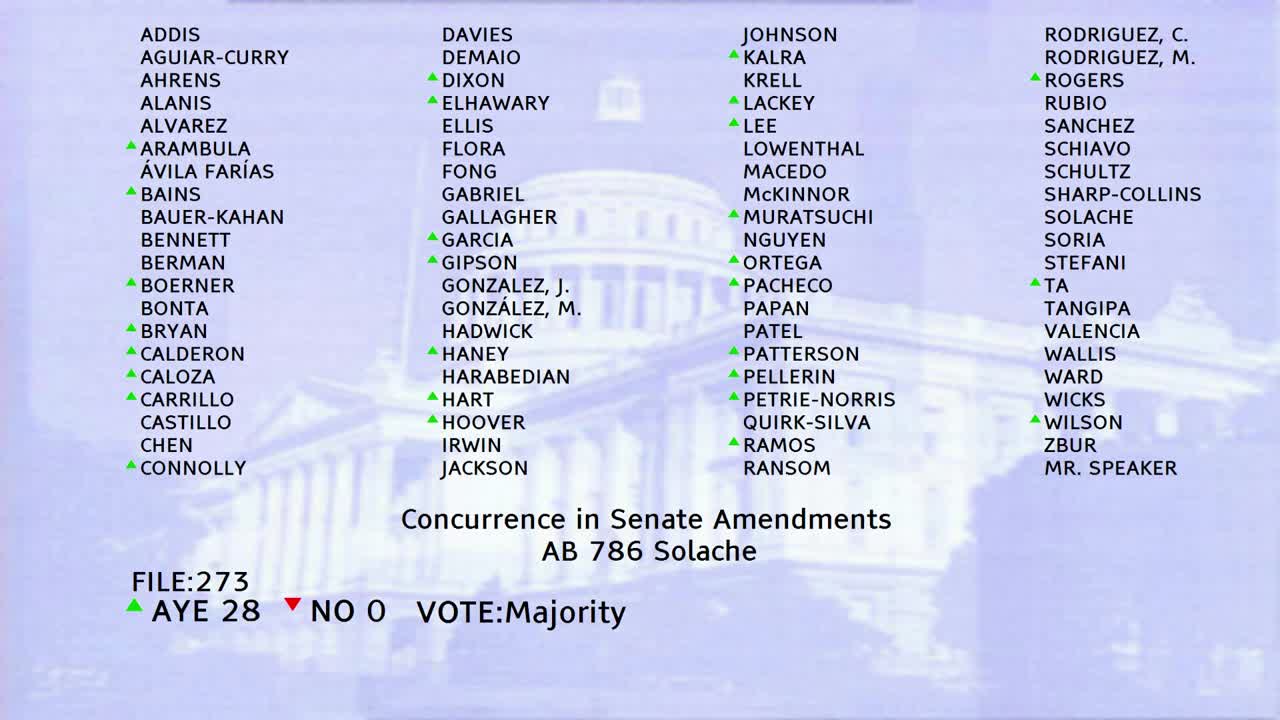
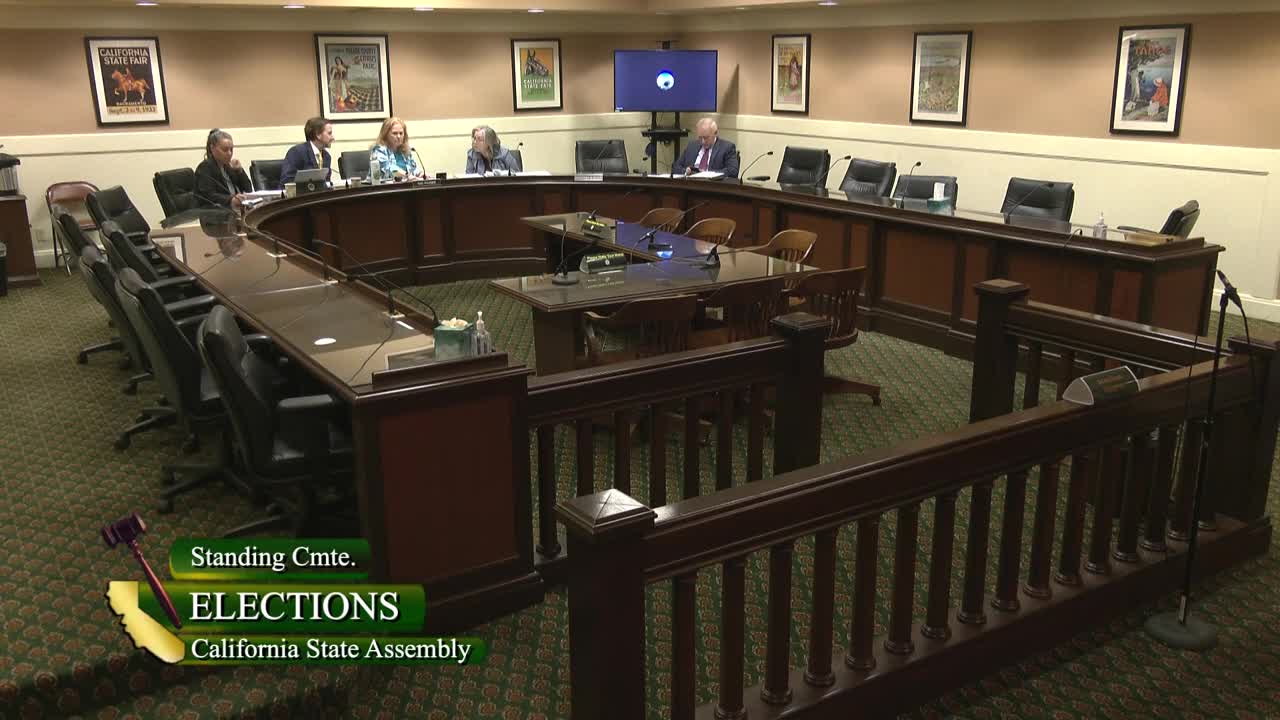
Bill Author

Bill Co-Author(s):