AB 1523: Court-ordered mediation.
- Session Year: 2025-2026
- House: Assembly
- Latest Version Date: 2025-10-01
Current Status:
Passed
(2025-10-01: Chaptered by Secretary of State - Chapter 201, Statutes of 2025.)
Introduced
In Committee
Awaiting First Chamber Vote
Passed First Chamber
In Committee
Awaiting Second Chamber Vote
Passed Second Chamber
Enacted
Existing law prohibits a court from ordering a civil action into mediation when the amount in controversy exceeds $50,000, as specified.
This bill would, as of January 1, 2027, increase the dollar amount of the above-described amount in controversy limitation to $75,000 and impose additional requirements, such as there being no ongoing discovery disputes and at least one party notifying the court of an interest in mediation, to be met before a court may order a civil action into mediation. If the parties do not stipulate to a mutually agreeable mediator, the bill would require the court to select a mediator, at no cost to the parties. Court-ordered mediation would be required to conclude with a mutually acceptable statement of agreement or nonagreement, as specified.
Existing law prohibits a court from ordering a civil action into mediation when the amount in controversy exceeds $50,000, as specified.
This bill would would, as of January 1, 2027, increase the dollar amount of the above-described amount in controversy limitation to $75,000 and impose additional requirements, such as there being no ongoing discovery disputes and at least one party notifying the court of an interest in mediation, to be met before a court may order a civil action into mediation. If the parties do not stipulate to a mutually agreeable mediator, the bill would require the court to select a mediator, at no cost to the parties. Court-ordered mediation would be required to conclude with a mutually acceptable statement of agreement or nonagreement, as specified.
Existing law prohibits a court from ordering a civil action into mediation when the amount in controversy exceeds $50,000, as specified.
This bill would increase the dollar amount of the above-described amount in controversy limitation to $75,000 and impose additional requirements, such as there being no ongoing discovery disputes and at least one party notifying the court of an interest in mediation, to be met before a court may order a civil action into mediation. If the parties do not stipulate to a mutually agreeable mediator, the bill would require the court to select a mediator, at no cost to the parties. Court-ordered mediation would be required to conclude with a mutually acceptable statement of agreement or nonagreement, as specified.
(a)The court shall not order a case into mediation where the amount in controversy exceeds fifty thousand dollars ($50,000). The determination of the amount in controversy shall be made in the same manner as provided in Section 1141.16 and, in making this determination, the court shall not consider the merits of questions of liability, defenses, or comparative negligence.
(b)This section shall remain in effect until January 1, 2027, and as of that date is repealed.
SEC. 2.Section 1775.5 is added to the Code of Civil Procedure, to read:1775.5.(a)The court shall not order a case into mediation unless all of the following conditions are met:
(1)The amount in controversy does not exceed seventy-five thousand dollars ($75,000). The determination of the amount in controversy shall be made in the same manner as provided in Section 1141.16 and, in making this determination, the court shall not consider the merits of questions of liability, defenses, or comparative negligence.
(2)The case has been set for trial.
(3)At least one party has notified the court of its interest in mediation.
(4)There are no ongoing discovery disputes impacting the case.
(5)The parties have been notified of their option to stipulate to a mutually agreeable mediator.
(6)The parties have the ability to mediate through the use of remote technology upon the stipulation of all parties.
(b)If the parties do not stipulate to a mutually agreeable mediator within 15 days of the date the case is submitted to mediation, the court shall select a mediator, at no cost to the parties, pursuant to standards adopted by the Judicial Council.
(c)All parties and counsel attending the mediation shall comply with subdivision (a) of Rule 3.894 of the California Rules of Court, except that the parties may utilize any means of remote technology in accordance with the stipulation provided in paragraph (6) of subdivision (a).
(d)Mediation ordered pursuant to subdivision (a) shall conclude in the form of a mutually acceptable agreement or statement of nonagreement, as described in Section 1775.9, no later than 120 days before the trial date described in paragraph (2) of subdivision (a). Any mediation shall not delay the trial date described in paragraph (2) of subdivision (a).
(e)The determination and any stipulation of the amount in controversy shall be without prejudice as to any finding on the value of the case.
(f)This section shall become operative on January 1, 2027.
(a)The court shall not order a case into mediation unless all of the following conditions are met:
(1)The amount in controversy does not exceed seventy-five thousand dollars ($75,000). The determination of the amount in controversy shall be made in the same manner as provided in Section 1141.16 and, in making this determination, the court shall not consider the merits of questions of liability, defenses, or comparative negligence.
(2)The case has been set for trial.
(3)At least one party has notified the court of its interest in mediation.
(4)There are no ongoing discovery disputes impacting the case.
(5)The parties have been notified of their option to stipulate to a mutually agreeable mediator.
(6)The parties have the ability to mediate through the use of remote technology upon the stipulation of all parties.
(b)If the parties do not stipulate to a mutually agreeable mediator within 15 days of the date the case is submitted to mediation, the court shall select a mediator, at no cost to the parties, pursuant to standards adopted by the Judicial Council.
(c)All parties and counsel attending the mediation shall comply with subdivision (a) of Rule 3.894 of the California Rules of Court. Court, except that the parties may utilize any means of remote technology in accordance with the stipulation provided in paragraph (6) of subdivision (a).
(d)Mediation ordered pursuant to subdivision (a) shall conclude in the form of a mutually acceptable agreement or statement of nonagreement, as described in Section 1775.9, no later than 120 days before the trial date described in paragraph (2) of subdivision (a). Any mediation shall not delay the trial date described in paragraph (2) of subdivision (a).
(e)The determination and any stipulation of the amount in controversy shall be without prejudice as to any finding on the value of the case.
(a)The court shall not order a case into mediation unless all of the following conditions are met:
(1)The amount in controversy does not exceed seventy-five thousand dollars ($75,000). The determination of the amount in controversy shall be made in the same manner as provided in Section 1141.16 and, in making this determination, the court shall not consider the merits of questions of liability, defenses, or comparative negligence.
(2)The case has been set for trial.
(3)At least one party has notified the court of its interest in mediation.
(4)There are no ongoing discovery disputes impacting the case.
(5)The parties have been notified of their option to stipulate to a mutually agreeable mediator.
(6)The parties have the ability to mediate through the use of remote technology upon the stipulation of all parties.
(b)If the parties do not stipulate to a mutually agreeable mediator within 15 days of the date the case is submitted to mediation, the court shall select a mediator, at no cost to the parties, pursuant to standards adopted by the Judicial Council.
(c)All parties and counsel attending the mediation shall comply with subdivision (a) of Rule 3.894 of the California Rules of Court.
(d)Mediation ordered pursuant to subdivision (a) shall conclude in the form of a mutually acceptable agreement or statement of nonagreement, as described in Section 1775.9, no later than 120 days before the trial date described in paragraph (2) of subdivision (a). Any mediation shall not delay the trial date described in paragraph (2) of subdivision (a).
(e)The determination and any stipulation of the amount in controversy shall be without prejudice as to any finding on the value of the case.
|
Date
|
Status
|
|---|---|
| Oct 1, 2025 | Chaptered by Secretary of State - Chapter 201, Statutes of 2025. |
| Oct 1, 2025 | Approved by the Governor. |
| Sep 9, 2025 | Enrolled and presented to the Governor at 3 p.m. |
| Sep 3, 2025 | Senate amendments concurred in. To Engrossing and Enrolling. (Ayes 75. Noes 0. Page 2877.). |
| Sep 2, 2025 | In Assembly. Concurrence in Senate amendments pending. |
| Sep 2, 2025 | Read third time. Passed. Ordered to the Assembly. (Ayes 40. Noes 0. Page 2397.). |
| Aug 26, 2025 | Read second time. Ordered to third reading. |
| Aug 25, 2025 | Read third time and amended. Ordered to second reading. |
| Aug 20, 2025 | Read second time. Ordered to third reading. |
| Aug 19, 2025 | Read third time and amended. Ordered to second reading. |
| Jun 19, 2025 | Read second time. Ordered to third reading. |
| Jun 18, 2025 | From committee: Do pass. (Ayes 9. Noes 0.) (June 17). |
| May 28, 2025 | Referred to Com. on JUD. |
| May 20, 2025 | In Senate. Read first time. To Com. on RLS. for assignment. |
| May 19, 2025 | Read third time. Passed. Ordered to the Senate. (Ayes 74. Noes 0. Page 1594.) |
| May 7, 2025 | Read second time. Ordered to third reading. |
| May 6, 2025 | From committee: Do pass. (Ayes 12. Noes 0.) (May 6). |
| Mar 24, 2025 | Referred to Com. on JUD. |
| Mar 19, 2025 | From printer. May be heard in committee April 18. |
| Mar 18, 2025 | Read first time. To print. |
|
Date
|
Description
|
Location
|
Votes
|
|
|---|---|---|---|---|
| Sep 3, 2025 | AB 1523 Judiciary Concurrence in Senate Amendments By KALRA | Assembly Floor |
Passed |
|
| Sep 2, 2025 | The committee(s) on EDU recommend(s) that the measure be PASSED, WITH AMENDMENTS | Senate Floor |
Passed |
|
| Jun 17, 2025 | Do pass | Senate Standing Committee on Judiciary |
Passed |
|
| May 19, 2025 | AB 1523 JUD. Assembly Third Reading By KALRA | Assembly Floor |
Passed |
|
| May 6, 2025 | Do pass. | Assembly Standing Committee on Judiciary |
Passed |
This list shows positions taken on this bill by organizations on the date displayed, which is linked to the original source.
Positions by individuals are not included.
|
Organization
|
Position
|
Date
|
|---|---|---|
| Assembly Judiciary Committee (Source) | ** Support | |
| California Dispute Resolution Council | ** Support | |
| Los Angeles County Superior Court | ** Support |
CONCURRENCE IN SENATE AMENDMENTS
CSA1 Bill Id:AB 1523
Author:(Committee on Judiciary)
As Amended Ver:August 25, 2025
Majority vote
SUMMARY
Increases the amount in controversy limit for court ordered mediation in civil actions to $75,000 and adopts procedural guidelines regarding when a matter can be referred to mediation.
Major Provisions
- Prohibits a court from ordering a civil action into mediation unless all of the following conditions are met:
- The amount in controversy does not exceed seventy five thousand dollars ($75,000), as specified;
- The case has been set for trial;
- At least one party has notified the court of its interest in mediation; and
- The parties have been notified of their option to stipulate to a mutually agreeable mediator;
- The parties have the ability to mediate through the use of remote technology upon the stipulation of all parties.
- Requires, if the parties do not stipulate to a mutually agreeable mediator within 15 days of the date the case is submitted to mediation, the court to select a mediator in accordance with the standards adopted by the Judicial Council of California.
- Requires parties, counsel, and other specified stakeholders involved in the mediation to comply with the attendance requirements set forth in the California Rules of Court.
- Requires any mediation mandated in 1), above, to conclude, with or without an agreement or proposed settlement, no later than 120 days before the trial date.
- Requires that the determination and any stipulation of the amount in controversy is to be without prejudice as to any finding on the value of the case in a subsequent trial.
Senate Amendments
- Clarify that the means of conducting a remote mediation is subject to stipulation of the parties.
- Delay the implementation of the bill until January 1, 2027.
COMMENTS
For 30 years, California's civil courts have had the ability to direct some civil actions to mediation before a case proceeds to trial. The mediation process is designed to force all of the parties to a civil action to work with a trained mediator to see if a mutually agreeable solution to the dispute can be reached. When all of the parties to a matter are open to mediation, the process can be successful. However, given the potentially contentious nature of litigation, frequently, the parties are not prepared to amicably resolve their differences, especially if mediation is ordered before all discovery has been conducted and if other procedural disputes are still playing out. In cases in which the parties are not amenable to mediation, the process simply serves as a waste of time and money that delays the inevitable trial.
Unfortunately, outside of a twenty-plus year old study, there is little information outlining the success or failure rates for mediation in California's civil justice system. While the Judicial Council of California tracks when civil cases are disposed of, and reports that 80% of unlimited cases in recent years were disposed of before trial, the Council does not specify how pretrial resolutions were reached. (2024 Court Statistics Report, Judicial Council of California (2024) at p. 51.) Accordingly, the 80% of cases resolved before trial may have been settled without mediation, dismissed for lack of evidence, or otherwise resolved. Nonetheless, as a result of the increased amount in controversy for unlimited civil matters adopted in SB 71 (Umberg, Chap. 861, Stats. 2023), fewer civil cases are presently eligible for mediation, thus increasing pressure on civil department calendars across the state.
Just about every stakeholder involved in both this bill agree that when conducted in the proper circumstances, mediation can streamline litigation and produce resolutions amenable to all litigants. However, building on 30-years' of lived experience in the trenches of California's civil litigation system, some litigators note that the existing mediation system can deny vulnerable clients their day in court, especially when judges order matters into litigation driven more by the need to manage burdensome civil court calendars than to seek a meaningful resolution of the matter.
One example shared by several stakeholders does a particularly good job of highlighting the flaws with the current system. In that case, a woman of color was subjected to rampant workplace sexual and racial harassment. Due to the intersectional nature of the harassment, expert witnesses on the topic were needed, causing inevitable discovery disputes regarding the actual expertise of the witnesses. Nonetheless, the case was forced into mediation without a full resolution of the discovery issues. Compounding the problem was the difficulty both parties had in finding a mediator skilled in labor issues that could quickly facilitate the dispute resolution. As a result of the delays caused by the basic scheduling difficulties, the proposed trial date was delayed. When the mediation failed, due in no small part to the ongoing evidentiary dispute, the case was forced to trial. The delayed trial date not only denied the victim her timely day in court, but exacerbated attorney costs and fees for all parties as the attorneys were forced to prepare for a mediation that appeared doomed to fail from the start, and then expend additional time and resources on a trial that most objective observers would have seen as inevitable.
This bill recognizes that following the increase in the amount in controversy level for unlimited civil cases, following the passage of SB 71, an increase in the mandatory mediation amount in controversy is merited. Accordingly, this bill increases the amount in controversy threshold to $75,000, the same amount in controversy threshold for removing a case from state court entirely through federal diversity jurisdiction. Additionally, recognizing the above described flaws in the existing mandatory mediation process, this bill adopts several new safeguards designed to protect the rights of litigants. These safeguards include the following:
- The case must be set for trial. This lessens the potential for a mediation to fail as the result of it occurring too early in the litigation process;
- At least one party must express an interest in mediating the matter. This provision ensures that cases in which neither side believes a non-litigated resolution is possible is not pointlessly submitted to mediation that is doomed to fail;
- There are no ongoing discovery disputes remaining in the matter. This provision ensures that the mediator can assess the full scope of admissible evidence in a case and prevents any party from rejecting a mediated proposal in the hopes of prevailing in a subsequent discovery fight;
- The mediation must be attended by persons with the ability to approve settlements, including insurance adjusters and other similarly situated parties. This provision ensures that mediations that do reach an amicable agreement are not nonetheless unsuccessful due to the lack of participation by a critical player in the case;
- Mediation must cease, with or without a resolution, 120 days prior to a trial date. This ensures that mediation cannot delay a trial; and
- The mediation amount in controversy is separated from the finding of the value of the case. This ensures that a mediation determination does not undermine any ultimate financial decisions made in a matter.
Finally, the bill authorizes the use of remote technology in the mediation so long as all of the parties to the matter mutually agree to conduct the proceeding remotely.
According to the Author
AB 1523 raises the amount in controversy level for referring civil disputes to mediation from $50,000 or less to $75,000 or less. Given that the existing amount in controversy level has not been increased in decades, this straightforward bill will permit courts to direct more litigants to mediation. This bill also recognizes many of the flaws in the existing mediation system and adopts safeguards to the existing law to ensure that only cases with a legitimate chance of being resolved are sent to mediation, thus avoiding unnecessary expense and delay for litigants.
Arguments in Support
The bill is supported, if amended, by the Los Angeles County Superior Court. They write:
The Superior Court of Los Angeles County (Court) has a support if amended position on AB 1523 – Court-ordered mediation, which would increase the amount in controversy threshold for court-ordered mediation from $50,000 to $75,000. While we appreciate the Committee's recognition that the monetary thresholds for court-ordered mediation should be updated, as written, this measure imposes new restrictions that may unintentionally reduce the number of eligible cases. To have a more positive and meaningful impact, we recommend increasing the threshold further to ensure that more cases, not fewer, can benefit from court-ordered mediation without additional limitations.
Arguments in Opposition
None on file.
FISCAL COMMENTS
None
VOTES:
ASM JUDICIARY: 12-0-0
YES: Kalra, Dixon, Bauer-Kahan, Bryan, Connolly, Harabedian, Macedo, Pacheco, Papan, Sanchez, Stefani, Zbur
ASSEMBLY FLOOR: 74-0-5
YES: Addis, Aguiar-Curry, Ahrens, Alanis, Alvarez, Arambula, Ávila Farías, Bains, Bauer-Kahan, Bennett, Berman, Boerner, Bonta, Bryan, Calderon, Caloza, Carrillo, Castillo, Chen, Connolly, Davies, DeMaio, Elhawary, Fong, Gabriel, Gallagher, Garcia, Gipson, Mark González, Hadwick, Haney, Harabedian, Hart, Hoover, Irwin, Jackson, Kalra, Krell, Lackey, Lee, Lowenthal, Macedo, McKinnor, Muratsuchi, Nguyen, Ortega, Pacheco, Patel, Patterson, Pellerin, Petrie-Norris, Quirk-Silva, Ramos, Ransom, Celeste Rodriguez, Michelle Rodriguez, Rogers, Blanca Rubio, Sanchez, Schiavo, Schultz, Sharp-Collins, Solache, Soria, Stefani, Ta, Tangipa, Valencia, Wallis, Ward, Wicks, Wilson, Zbur, Rivas
ABS, ABST OR NV: Dixon, Ellis, Flora, Jeff Gonzalez, Papan
SENATE FLOOR: 40-0-0
YES: Allen, Alvarado-Gil, Archuleta, Arreguín, Ashby, Becker, Blakespear, Cabaldon, Caballero, Cervantes, Choi, Cortese, Dahle, Durazo, Gonzalez, Grayson, Grove, Hurtado, Jones, Laird, Limón, McGuire, McNerney, Menjivar, Niello, Ochoa Bogh, Padilla, Pérez, Reyes, Richardson, Rubio, Seyarto, Smallwood-Cuevas, Stern, Strickland, Umberg, Valladares, Wahab, Weber Pierson, Wiener
UPDATED
VERSION: August 25, 2025
CONSULTANT: Nicholas Liedtke / JUD. / (916) 319-2334 FN: 0001406
SENATE RULES COMMITTEE Office of Senate Floor Analyses (916) 651-1520 Fax: (916) 327-4478 | AB 1523 |
THIRD READING
Bill No: AB 1523
Author: Committee on Judiciary
Amended: 8/25/25 in Senate
Vote: 21
SENATE JUDICIARY COMMITTEE: 9-0, 6/17/25
AYES: Umberg, Allen, Arreguín, Caballero, Durazo, Laird, Stern, Wahab, Wiener
NO VOTE RECORDED: Niello, Ashby, Valladares, Weber Pierson
ASSEMBLY FLOOR: 74-0, 5/19/25 - See last page for vote
SUBJECT: Court-ordered mediation
SOURCE: Assembly Judiciary Committee
DIGEST:
This bill raises the threshold under which a court may order a case into mediation from $50,000 to $75,000 and places additional conditions which must be met before such an order can be made. This bill provides for the process of such mediation and its aftermath.
Senate Floor Amendments of 8/19/25 clarify that mediation can be conducted through remote technology, as provided.
Senate Floor Amendments of 8/25/25 delay the operative date of the bill’s changes until January 1, 2027.
ANALYSIS:
Existing law:
- Defines “mediation” as a process in which a neutral person or persons facilitate communication between the disputants to assist them in reaching a mutually acceptable agreement. (Code of Civil Procedure (Code Civ. Proc.) § 1775.1.)
- Prohibits the court from ordering a case into mediation where the amount in controversy exceeds $50,000. The determination of the amount in controversy shall be made in the same manner as provided in Section 1141.16 and, in making this determination, the court shall not consider the merits of questions of liability, defenses, or comparative negligence. (Code Civ. Proc. § 1775.5.)
- Provides that the determination of the amount in controversy shall be made by the court and the case referred to arbitration after all named parties have appeared or defaulted. The determination shall be made at a case management conference or based upon review of the written submissions of the parties, as provided in rules adopted by the Judicial Council. The determination shall be based on the total amount of damages, and the judge may not consider questions of liability or comparative negligence or any other defense. At that time the court shall also make a determination whether any prayer for equitable relief is frivolous or insubstantial. The determination of the amount in controversy and whether any prayer for equitable relief is frivolous or insubstantial may not be appealable. No determination pursuant to this section shall be made if all parties stipulate in writing that the amount in controversy exceeds the amount specified. The determination and any stipulation of the amount in controversy shall be without prejudice to any finding on the value of the case by an arbitrator or in a subsequent trial de novo. (Code Civ. Proc. § 1141.16.)
- Provides that in the courts of the County of Los Angeles and in other courts that elect to apply this section of law, all at-issue civil actions in which arbitration is otherwise required, whether or not the action includes a prayer for equitable relief, may be submitted to mediation by the presiding judge as an alternative to judicial arbitration. Any civil action otherwise within the scope of this title in which a party to the action is a public agency or public entity may be submitted to mediation. (Code Civ. Proc. § 1775.3.)
- Requires a mediator to be selected for the action within 30 days of its submission to mediation. The method of selection and qualification of the mediator shall be as the parties determine. If the parties are unable to agree on a mediator within 15 days of the date of submission of the action to mediation, the court may select a mediator pursuant to standards adopted by the Judicial Council. (Code Civ. Proc. § 1775.6.)
This bill:
- Raises the threshold at which a court may not order a case into mediation to an amount in controversy exceeding $75,000. It makes clear that this determination and any stipulation thereto is without prejudice as to any finding on the value of the case.
- Imposes additional conditions that must be met before a case can be ordered into mediation as follows:
- The case has been set for trial.
- At least one party has notified the court of its interest in mediation.
- There are no ongoing discovery disputes impacting the case.
- The parties have been notified of their option to stipulate to a mutually agreeable mediator.
- The parties have the ability to mediate through the use of remote technology upon the stipulation of all parties.
- Provides that if the parties do not stipulate to a mutually agreeable mediator within 15 days of the date the case is submitted to mediation, the court shall select a mediator, at no cost to the parties, pursuant to standards adopted by the Judicial Council.
- Requires all parties and counsel attending the mediation to comply with subdivision (a) of Rule 3.894 of the California Rules of Court, except that the parties may utilize any means of remote technology in accordance with the stipulation above.
- Provides that such mediation shall conclude in the form of a mutually acceptable agreement or statement of nonagreement, as described in Section 1775.9, no later than 120 days before the trial date.
- Prohibits the mediation from delaying the trial date.
- Delays the operative date of these changes until January 1, 2027.
Background
“Mediation” means a process in which a neutral person or persons facilitate communication between the disputants to assist them in reaching a mutually acceptable agreement. Generally, mediation is entered into voluntarily by the parties to a dispute. However, the law provides a limited authorization for courts to order the parties to an action into mediation. Courts may not order a case into mediation if the amount in controversy exceeds $50,000.
This bill, effective January 1, 2027, raises that threshold to $75,000 and places additional conditions that must be met, including that the case must be set for trial and that there are no ongoing discovery disputes. This bill also lays out the relevant process, including the selection of a mediator and the rules to apply in such mediation.
This bill is sponsored by the Assembly Judiciary Committee. It is supported by the California Dispute Resolution Council. No timely opposition has been received.
Comments
According to the author:
AB 1523 raises the amount in controversy level for referring civil disputes to mediation from $50 thousand or less to $75 thousand or less. Given that the existing amount in controversy level has not been increased in decades, this straightforward bill will permit courts to direct more litigants to mediation. This bill also recognizes some of the flaws in the existing mediation system and add safeguards to the existing law to ensure that only cases with a legitimate chance of being resolved are sent to litigation, thus avoiding unnecessary expense and delay.
“Mediation” is the process in which a neutral person or persons facilitate communication between the disputants to assist them in reaching a mutually acceptable agreement. (Code Civ. Proc. § 1775.1.) The law currently provides a narrow authorization for courts to force a case into mediation without the parties consent. The law provides that in the courts of the County of Los Angeles and in other courts that elect to do so, specified civil actions may be submitted to mediation, as provided. (Code Civ. Proc. § 1775.3.)
A mediator must be selected for the action within 30 days of its submission to mediation. The method of selection and qualification of the mediator shall be as the parties determine. If the parties are unable to agree on a mediator within 15 days of the date of submission of the action to mediation, the court may select a mediator pursuant to standards adopted by the Judicial Council. (Code Civ. Proc. § 1775.6.)
However, currently the law prohibits the court from ordering a case into mediation where the amount in controversy exceeds $50,000. (Code Civ. Proc. § 1775.5.)
This bill amends the statute in several ways. First, it raises the threshold at which a court may not order a case into mediation to an amount in controversy exceeding $75,000. It also establishes a series of conditions that must be met for the case to be eligible. It requires that no outstanding discovery disputes exist and that at least one party notify the court of interest in mediation. Parties must be able to mediate through remote technology, if the parties so stipulate, and they must be notified of the option to stipulate to a mutually agreeable mediator. However, if the parties do not so stipulate within 15 days, the court shall select a mediator, as provided, at no cost to the parties.
The conditions also require that the case must already be set for trial, and this bill prohibits the mediation from delaying that trial date.
As the author asserts, these conditions work to ensure that only cases likely to benefit from such mediation are eligible, reducing the inefficiencies attendant to unsuccessful mediation.
FISCAL EFFECT: Appropriation: No Fiscal Com.: No Local: No
SUPPORT: (Verified 8/25/25)
Assembly Judiciary Committee (Source)
California Dispute Resolution Council
OPPOSITION: (Verified 8/25/25)
None received
ARGUMENTS IN SUPPORT: The California Dispute Resolution Council states:
There has been a sharp rise in civil filings in the past few years. This rise has taxed the resources of our courts and mediation has proven to be one of the most effective methods of resolving these disputes. However, courts are generally prohibited from ordering mediation, See Jeld-Wen, Inc. v. Superior Court (2007) 146 Cal. App. 4th 536. An exception to this restriction is set forth in former section 1775.5, which allowed court-ordered mediation where the amount in controversy did not exceed $50,000. The $50,000 limitation has been in effect for over 30 years and so an increase in the limitation is long overdue.
ASSEMBLY FLOOR: 74-0, 5/19/25
AYES: Addis, Aguiar-Curry, Ahrens, Alanis, Alvarez, Arambula, Ávila Farías, Bains, Bauer-Kahan, Bennett, Berman, Boerner, Bonta, Bryan, Calderon, Caloza, Carrillo, Castillo, Chen, Connolly, Davies, DeMaio, Elhawary, Fong, Gabriel, Gallagher, Garcia, Gipson, Mark González, Hadwick, Haney, Harabedian, Hart, Hoover, Irwin, Jackson, Kalra, Krell, Lackey, Lee, Lowenthal, Macedo, McKinnor, Muratsuchi, Nguyen, Ortega, Pacheco, Patel, Patterson, Pellerin, Petrie-Norris, Quirk-Silva, Ramos, Ransom, Celeste Rodriguez, Michelle Rodriguez, Rogers, Blanca Rubio, Sanchez, Schiavo, Schultz, Sharp-Collins, Solache, Soria, Stefani, Ta, Tangipa, Valencia, Wallis, Ward, Wicks, Wilson, Zbur, Rivas
NO VOTE RECORDED: Dixon, Ellis, Flora, Jeff Gonzalez, Papan
Prepared by: Christian Kurpiewski / JUD. / (916) 651-4113
8/26/25 16:07:32
**** END ****
SENATE RULES COMMITTEE Office of Senate Floor Analyses (916) 651-1520 Fax: (916) 327-4478 | AB 1523 |
THIRD READING
Bill No: AB 1523
Author: Committee on Judiciary
Amended: 8/19/25 in Senate
Vote: 21
SENATE JUDICIARY COMMITTEE: 9-0, 6/17/25
AYES: Umberg, Allen, Arreguín, Caballero, Durazo, Laird, Stern, Wahab, Wiener
NO VOTE RECORDED: Niello, Ashby, Valladares, Weber Pierson
ASSEMBLY FLOOR: 74-0, 5/19/25 - See last page for vote
SUBJECT: Court-ordered mediation
SOURCE: Assembly Judiciary Committee
DIGEST:
This bill raises the threshold under which a court may order a case into mediation from $50,000 to $75,000 and places additional conditions which must be met before such an order can be made. This bill provides for the process of such mediation and its aftermath.
Senate Floor Amendments of 8/19/25 clarify that mediation can be conducted through remote technology, as provided.
ANALYSIS:
Existing law:
- Defines “mediation” as a process in which a neutral person or persons facilitate communication between the disputants to assist them in reaching a mutually acceptable agreement. (Code of Civil Procedure (Code Civ. Proc.) § 1775.1.)
- Prohibits the court from ordering a case into mediation where the amount in controversy exceeds $50,000. The determination of the amount in controversy shall be made in the same manner as provided in Section 1141.16 and, in making this determination, the court shall not consider the merits of questions of liability, defenses, or comparative negligence. (Code Civ. Proc. § 1775.5.)
- Provides that the determination of the amount in controversy shall be made by the court and the case referred to arbitration after all named parties have appeared or defaulted. The determination shall be made at a case management conference or based upon review of the written submissions of the parties, as provided in rules adopted by the Judicial Council. The determination shall be based on the total amount of damages, and the judge may not consider questions of liability or comparative negligence or any other defense. At that time the court shall also make a determination whether any prayer for equitable relief is frivolous or insubstantial. The determination of the amount in controversy and whether any prayer for equitable relief is frivolous or insubstantial may not be appealable. No determination pursuant to this section shall be made if all parties stipulate in writing that the amount in controversy exceeds the amount specified. The determination and any stipulation of the amount in controversy shall be without prejudice to any finding on the value of the case by an arbitrator or in a subsequent trial de novo. (Code Civ. Proc. § 1141.16.)
- Provides that in the courts of the County of Los Angeles and in other courts that elect to apply this section of law, all at-issue civil actions in which arbitration is otherwise required, whether or not the action includes a prayer for equitable relief, may be submitted to mediation by the presiding judge as an alternative to judicial arbitration. Any civil action otherwise within the scope of this title in which a party to the action is a public agency or public entity may be submitted to mediation. (Code Civ. Proc. § 1775.3.)
- Requires a mediator to be selected for the action within 30 days of its submission to mediation. The method of selection and qualification of the mediator shall be as the parties determine. If the parties are unable to agree on a mediator within 15 days of the date of submission of the action to mediation, the court may select a mediator pursuant to standards adopted by the Judicial Council. (Code Civ. Proc. § 1775.6.)
This bill:
- Raises the threshold at which a court may not order a case into mediation to an amount in controversy exceeding $75,000. It makes clear that this determination and any stipulation thereto is without prejudice as to any finding on the value of the case.
- Imposes additional conditions that must be met before a case can be ordered into mediation as follows:
- The case has been set for trial.
- At least one party has notified the court of its interest in mediation.
- There are no ongoing discovery disputes impacting the case.
- The parties have been notified of their option to stipulate to a mutually agreeable mediator.
- The parties have the ability to mediate through the use of remote technology upon the stipulation of all parties.
- Provides that if the parties do not stipulate to a mutually agreeable mediator within 15 days of the date the case is submitted to mediation, the court shall select a mediator, at no cost to the parties, pursuant to standards adopted by the Judicial Council.
- Requires all parties and counsel attending the mediation to comply with subdivision (a) of Rule 3.894 of the California Rules of Court, except that the parties may utilize any means of remote technology in accordance with the stipulation above.
- Provides that such mediation shall conclude in the form of a mutually acceptable agreement or statement of nonagreement, as described in Section 1775.9, no later than 120 days before the trial date.
- Prohibits the mediation from delaying the trial date.
Background
“Mediation” means a process in which a neutral person or persons facilitate communication between the disputants to assist them in reaching a mutually acceptable agreement. Generally, mediation is entered into voluntarily by the parties to a dispute. However, the law provides a limited authorization for courts to order the parties to an action into mediation. Courts may not order a case into mediation if the amount in controversy exceeds $50,000.
This bill raises that threshold to $75,000 and places additional conditions that must be met, including that the case must be set for trial and that there are no ongoing discovery disputes. This bill also lays out the relevant process, including the selection of a mediator and the rules to apply in such mediation.
This bill is sponsored by the Assembly Judiciary Committee. It is supported by the California Dispute Resolution Council. No timely opposition has been received.
Comments
According to the author:
AB 1523 raises the amount in controversy level for referring civil disputes to mediation from $50 thousand or less to $75 thousand or less. Given that the existing amount in controversy level has not been increased in decades, this straightforward bill will permit courts to direct more litigants to mediation. This bill also recognizes some of the flaws in the existing mediation system and add safeguards to the existing law to ensure that only cases with a legitimate chance of being resolved are sent to litigation, thus avoiding unnecessary expense and delay.
“Mediation” is the process in which a neutral person or persons facilitate communication between the disputants to assist them in reaching a mutually acceptable agreement. (Code Civ. Proc. § 1775.1.) The law currently provides a narrow authorization for courts to force a case into mediation without the parties consent. The law provides that in the courts of the County of Los Angeles and in other courts that elect to do so, specified civil actions may be submitted to mediation, as provided. (Code Civ. Proc. § 1775.3.)
A mediator must be selected for the action within 30 days of its submission to mediation. The method of selection and qualification of the mediator shall be as the parties determine. If the parties are unable to agree on a mediator within 15 days of the date of submission of the action to mediation, the court may select a mediator pursuant to standards adopted by the Judicial Council. (Code Civ. Proc. § 1775.6.)
However, currently the law prohibits the court from ordering a case into mediation where the amount in controversy exceeds $50,000. (Code Civ. Proc. § 1775.5.)
This bill amends the statute in several ways. First, it raises the threshold at which a court may not order a case into mediation to an amount in controversy exceeding $75,000. It also establishes a series of conditions that must be met for the case to be eligible. It requires that no outstanding discovery disputes exist and that at least one party notify the court of interest in mediation. Parties must be able to mediate through remote technology, if the parties so stipulate, and they must be notified of the option to stipulate to a mutually agreeable mediator. However, if the parties do not so stipulate within 15 days, the court shall select a mediator, as provided, at no cost to the parties.
The conditions also require that the case must already be set for trial, and this bill prohibits the mediation from delaying that trial date.
As the author asserts, these conditions work to ensure that only cases likely to benefit from such mediation are eligible, reducing the inefficiencies attendant to unsuccessful mediation.
FISCAL EFFECT: Appropriation: No Fiscal Com.: No Local: No
SUPPORT: (Verified 8/18/25)
Assembly Judiciary Committee (Source)
California Dispute Resolution Council
OPPOSITION: (Verified 8/18/25)
None received
ARGUMENTS IN SUPPORT: The California Dispute Resolution Council states:
There has been a sharp rise in civil filings in the past few years. This rise has taxed the resources of our courts and mediation has proven to be one of the most effective methods of resolving these disputes. However, courts are generally prohibited from ordering mediation, See Jeld-Wen, Inc. v. Superior Court (2007) 146 Cal. App. 4th 536. An exception to this restriction is set forth in former section 1775.5, which allowed court-ordered mediation where the amount in controversy did not exceed $50,000. The $50,000 limitation has been in effect for over 30 years and so an increase in the limitation is long overdue.
ASSEMBLY FLOOR: 74-0, 5/19/25
AYES: Addis, Aguiar-Curry, Ahrens, Alanis, Alvarez, Arambula, Ávila Farías, Bains, Bauer-Kahan, Bennett, Berman, Boerner, Bonta, Bryan, Calderon, Caloza, Carrillo, Castillo, Chen, Connolly, Davies, DeMaio, Elhawary, Fong, Gabriel, Gallagher, Garcia, Gipson, Mark González, Hadwick, Haney, Harabedian, Hart, Hoover, Irwin, Jackson, Kalra, Krell, Lackey, Lee, Lowenthal, Macedo, McKinnor, Muratsuchi, Nguyen, Ortega, Pacheco, Patel, Patterson, Pellerin, Petrie-Norris, Quirk-Silva, Ramos, Ransom, Celeste Rodriguez, Michelle Rodriguez, Rogers, Blanca Rubio, Sanchez, Schiavo, Schultz, Sharp-Collins, Solache, Soria, Stefani, Ta, Tangipa, Valencia, Wallis, Ward, Wicks, Wilson, Zbur, Rivas
NO VOTE RECORDED: Dixon, Ellis, Flora, Jeff Gonzalez, Papan
Prepared by: Christian Kurpiewski / JUD. / (916) 651-4113
8/20/25 23:35:47
**** END ****
SENATE RULES COMMITTEE Office of Senate Floor Analyses (916) 651-1520 Fax: (916) 327-4478 | AB 1523 |
THIRD READING
Bill No: AB 1523
Author: Committee on Judiciary
Introduced: 3/18/25
Vote: 21
SENATE JUDICIARY COMMITTEE: 9-0, 6/17/25
AYES: Umberg, Allen, Arreguín, Caballero, Durazo, Laird, Stern, Wahab, Wiener
NO VOTE RECORDED: Niello, Ashby, Valladares, Weber Pierson
ASSEMBLY FLOOR: 74-0, 5/19/25 - See last page for vote
SUBJECT: Court-ordered mediation
SOURCE: Assembly Judiciary Committee
DIGEST:
This bill raises the threshold under which a court may order a case into mediation from $50,000 to $75,000 and places additional conditions which must be met before such an order can be made. This bill provides for the process of such mediation and its aftermath.
ANALYSIS:
Existing law:
- Defines “mediation” as a process in which a neutral person or persons facilitate communication between the disputants to assist them in reaching a mutually acceptable agreement. (Code of Civil Procedure (Code Civ. Proc.) § 1775.1.)
- Prohibits the court from ordering a case into mediation where the amount in controversy exceeds $50,000. The determination of the amount in controversy shall be made in the same manner as provided in Section 1141.16 and, in making this determination, the court shall not consider the merits of questions of liability, defenses, or comparative negligence. (Code Civ. Proc. § 1775.5.)
- Provides that the determination of the amount in controversy shall be made by the court and the case referred to arbitration after all named parties have appeared or defaulted. The determination shall be made at a case management conference or based upon review of the written submissions of the parties, as provided in rules adopted by the Judicial Council. The determination shall be based on the total amount of damages, and the judge may not consider questions of liability or comparative negligence or any other defense. At that time the court shall also make a determination whether any prayer for equitable relief is frivolous or insubstantial. The determination of the amount in controversy and whether any prayer for equitable relief is frivolous or insubstantial may not be appealable. No determination pursuant to this section shall be made if all parties stipulate in writing that the amount in controversy exceeds the amount specified. The determination and any stipulation of the amount in controversy shall be without prejudice to any finding on the value of the case by an arbitrator or in a subsequent trial de novo. (Code Civ. Proc. § 1141.16.)
- Provides that in the courts of the County of Los Angeles and in other courts that elect to apply this section of law, all at-issue civil actions in which arbitration is otherwise required, whether or not the action includes a prayer for equitable relief, may be submitted to mediation by the presiding judge as an alternative to judicial arbitration. Any civil action otherwise within the scope of this title in which a party to the action is a public agency or public entity may be submitted to mediation. (Code Civ. Proc. § 1775.3.)
- Requires a mediator to be selected for the action within 30 days of its submission to mediation. The method of selection and qualification of the mediator shall be as the parties determine. If the parties are unable to agree on a mediator within 15 days of the date of submission of the action to mediation, the court may select a mediator pursuant to standards adopted by the Judicial Council. (Code Civ. Proc. § 1775.6.)
This bill:
- Raises the threshold at which a court may not order a case into mediation to an amount in controversy exceeding $75,000. It makes clear that this determination and any stipulation thereto is without prejudice as to any finding on the value of the case.
- Imposes additional conditions that must be met before a case can be ordered into mediation as follows:
- The case has been set for trial.
- At least one party has notified the court of its interest in mediation.
- There are no ongoing discovery disputes impacting the case.
- The parties have been notified of their option to stipulate to a mutually agreeable mediator.
- The parties have the ability to mediate through the use of remote technology upon the stipulation of all parties.
- Provides that if the parties do not stipulate to a mutually agreeable mediator within 15 days of the date the case is submitted to mediation, the court shall select a mediator, at no cost to the parties, pursuant to standards adopted by the Judicial Council.
- Requires all parties and counsel attending the mediation to comply with subdivision (a) of Rule 3.894 of the California Rules of Court.
- Provides that such mediation shall conclude in the form of a mutually acceptable agreement or statement of nonagreement, as described in Section 1775.9, no later than 120 days before the trial date.
- Prohibits the mediation from delaying the trial date.
Background
“Mediation” means a process in which a neutral person or persons facilitate communication between the disputants to assist them in reaching a mutually acceptable agreement. Generally, mediation is entered into voluntarily by the parties to a dispute. However, the law provides a limited authorization for courts to order the parties to an action into mediation. Courts may not order a case into mediation if the amount in controversy exceeds $50,000.
This bill raises that threshold to $75,000 and places additional conditions that must be met, including that the case must be set for trial and that there are no ongoing discovery disputes. This bill also lays out the relevant process, including the selection of a mediator and the rules to apply in such mediation.
This bill is sponsored by the Assembly Judiciary Committee. It is supported by the California Dispute Resolution Council. No timely opposition has been received.
Comment
According to the author:
AB 1523 raises the amount in controversy level for referring civil disputes to mediation from $50 thousand or less to $75 thousand or less. Given that the existing amount in controversy level has not been increased in decades, this straightforward bill will permit courts to direct more litigants to mediation. This bill also recognizes some of the flaws in the existing mediation system and add safeguards to the existing law to ensure that only cases with a legitimate chance of being resolved are sent to litigation, thus avoiding unnecessary expense and delay.
“Mediation” is the process in which a neutral person or persons facilitate communication between the disputants to assist them in reaching a mutually acceptable agreement. (Code Civ. Proc. § 1775.1.) The law currently provides a narrow authorization for courts to force a case into mediation without the parties consent. The law provides that in the courts of the County of Los Angeles and in other courts that elect to do so, specified civil actions may be submitted to mediation, as provided. (Code Civ. Proc. § 1775.3.)
A mediator must be selected for the action within 30 days of its submission to mediation. The method of selection and qualification of the mediator shall be as the parties determine. If the parties are unable to agree on a mediator within 15 days of the date of submission of the action to mediation, the court may select a mediator pursuant to standards adopted by the Judicial Council. (Code Civ. Proc. § 1775.6.)
However, currently the law prohibits the court from ordering a case into mediation where the amount in controversy exceeds $50,000. (Code Civ. Proc. § 1775.5.)
This bill amends the statute in several ways. First, it raises the threshold at which a court may not order a case into mediation to an amount in controversy exceeding $75,000. It also establishes a series of conditions that must be met for the case to be eligible. It requires that no outstanding discovery disputes exist and that at least one party notify the court of interest in mediation. Parties must be able to mediate through remote technology, if the parties so stipulate, and they must be notified of the option to stipulate to a mutually agreeable mediator. However, if the parties do not so stipulate within 15 days, the court shall select a mediator, as provided, at no cost to the parties.
The conditions also require that the case must already be set for trial, and this bill prohibits the mediation from delaying that trial date.
As the author asserts, these conditions work to ensure that only cases likely to benefit from such mediation are eligible, reducing the inefficiencies attendant to unsuccessful mediation.
FISCAL EFFECT: Appropriation: No Fiscal Com.: No Local: No
SUPPORT: (Verified 6/18/25)
Assembly Judiciary Committee (Source)
California Dispute Resolution Council
OPPOSITION: (Verified 6/18/25)
None received
ARGUMENTS IN SUPPORT: The California Dispute Resolution Council states:
There has been a sharp rise in civil filings in the past few years. This rise has taxed the resources of our courts and mediation has proven to be one of the most effective methods of resolving these disputes. However, courts are generally prohibited from ordering mediation, See Jeld-Wen, Inc. v. Superior Court (2007) 146 Cal. App. 4th 536. An exception to this restriction is set forth in former section 1775.5, which allowed court-ordered mediation where the amount in controversy did not exceed $50,000. The $50,000 limitation has been in effect for over 30 years and so an increase in the limitation is long overdue.
ASSEMBLY FLOOR: 74-0, 5/19/25
AYES: Addis, Aguiar-Curry, Ahrens, Alanis, Alvarez, Arambula, Ávila Farías, Bains, Bauer-Kahan, Bennett, Berman, Boerner, Bonta, Bryan, Calderon, Caloza, Carrillo, Castillo, Chen, Connolly, Davies, DeMaio, Elhawary, Fong, Gabriel, Gallagher, Garcia, Gipson, Mark González, Hadwick, Haney, Harabedian, Hart, Hoover, Irwin, Jackson, Kalra, Krell, Lackey, Lee, Lowenthal, Macedo, McKinnor, Muratsuchi, Nguyen, Ortega, Pacheco, Patel, Patterson, Pellerin, Petrie-Norris, Quirk-Silva, Ramos, Ransom, Celeste Rodriguez, Michelle Rodriguez, Rogers, Blanca Rubio, Sanchez, Schiavo, Schultz, Sharp-Collins, Solache, Soria, Stefani, Ta, Tangipa, Valencia, Wallis, Ward, Wicks, Wilson, Zbur, Rivas
NO VOTE RECORDED: Dixon, Ellis, Flora, Jeff Gonzalez, Papan
Prepared by: Christian Kurpiewski / JUD. / (916) 651-4113
6/19/25 16:25:47
**** END ****
Senator Thomas Umberg, Chair
2025-2026 Regular Session
Bill No: AB 1523 (Author:Committee on Judiciary)
Version: March 18, 2025
Hearing Date: June 17, 2025
Fiscal: No
Urgency: No
Consultant: CK
SUBJECT
Court-ordered mediation
DIGEST
This bill raises the threshold under which a court may order a case into mediation from $50,000 to $75,000 and places additional conditions which must be met before such an order can be made. The bill provides for the process of such mediation and its aftermath.
EXECUTIVE SUMMARY
“Mediation” means a process in which a neutral person or persons facilitate communication between the disputants to assist them in reaching a mutually acceptable agreement. Generally, mediation is entered into voluntarily by the parties to a dispute. However, the law provides a limited authorization for courts to order the parties to an action into mediation. Courts may not order a case into mediation if the amount in controversy exceeds $50,000.
This bill raises that threshold to $75,000 and places additional conditions that must be met, including that the case must be set for trial and that there are no ongoing discovery disputes. The bill also lays out the relevant process, including the selection of a mediator and the rules to apply in such mediation.
This bill is sponsored by the Assembly Judiciary Committee. It is supported by the California Dispute Resolution Council. No timely opposition has been received by the Committee.
PROPOSED CHANGES TO THE LAW
Existing law:
- Defines “mediation” as a process in which a neutral person or persons facilitate communication between the disputants to assist them in reaching a mutually acceptable agreement. (Code Civ. Proc. § 1775.1.)
- Prohibits the court from ordering a case into mediation where the amount in controversy exceeds $50,000. The determination of the amount in controversy shall be made in the same manner as provided in Section 1141.16 and, in making this determination, the court shall not consider the merits of questions of liability, defenses, or comparative negligence. (Code Civ. Proc. § 1775.5.)
- Provides that the determination of the amount in controversy shall be made by the court and the case referred to arbitration after all named parties have appeared or defaulted. The determination shall be made at a case management conference or based upon review of the written submissions of the parties, as provided in rules adopted by the Judicial Council. The determination shall be based on the total amount of damages, and the judge may not consider questions of liability or comparative negligence or any other defense. At that time the court shall also make a determination whether any prayer for equitable relief is frivolous or insubstantial. The determination of the amount in controversy and whether any prayer for equitable relief is frivolous or insubstantial may not be appealable. No determination pursuant to this section shall be made if all parties stipulate in writing that the amount in controversy exceeds the amount specified. The determination and any stipulation of the amount in controversy shall be without prejudice to any finding on the value of the case by an arbitrator or in a subsequent trial de novo. (Code Civ. Proc. § 1141.16.)
- Provides that in the courts of the County of Los Angeles and in other courts that elect to apply this section of law, all at-issue civil actions in which arbitration is otherwise required, whether or not the action includes a prayer for equitable relief, may be submitted to mediation by the presiding judge as an alternative to judicial arbitration. Any civil action otherwise within the scope of this title in which a party to the action is a public agency or public entity may be submitted to mediation. (Code Civ. Proc. § 1775.3.)
- Requires a mediator to be selected for the action within 30 days of its submission to mediation. The method of selection and qualification of the mediator shall be as the parties determine. If the parties are unable to agree on a mediator within 15 days of the date of submission of the action to mediation, the court may select a mediator pursuant to standards adopted by the Judicial Council. (Code Civ. Proc. § 1775.6.)
This bill:
- Raises the threshold at which a court may not order a case into mediation to an amount in controversy exceeding $75,000. It makes clear that this determination and any stipulation thereto is without prejudice as to any finding on the value of the case.
- Imposes additional conditions that must be met before a case can be ordered into mediation as follows:
- The case has been set for trial.
- At least one party has notified the court of its interest in mediation.
- There are no ongoing discovery disputes impacting the case.
- The parties have been notified of their option to stipulate to a mutually agreeable mediator.
- The parties have the ability to mediate through the use of remote technology upon the stipulation of all parties.
- Provides that if the parties do not stipulate to a mutually agreeable mediator within 15 days of the date the case is submitted to mediation, the court shall select a mediator, at no cost to the parties, pursuant to standards adopted by the Judicial Council.
- Requires all parties and counsel attending the mediation to comply with subdivision (a) of Rule 3.894 of the California Rules of Court.
- Provides that such mediation shall conclude in the form of a mutually acceptable agreement or statement of nonagreement, as described in Section 1775.9, no later than 120 days before the trial date.
- Prohibits the mediation from delaying the trial date.
COMMENTS
- Stated intent of the bill
According to the author:
AB 1523 raises the amount in controversy level for referring civil disputes to mediation from $50 thousand or less to $75 thousand or less. Given that the existing amount in controversy level has not been increased in decades, this straightforward bill will permit courts to direct more litigants to mediation. This bill also recognizes some of the flaws in the existing mediation system and add safeguards to the existing law to ensure that only cases with a legitimate chance of being resolved are sent to litigation, thus avoiding unnecessary expense and delay.
- Mandatory mediation
“Mediation” is the process in which a neutral person or persons facilitate communication between the disputants to assist them in reaching a mutually acceptable agreement. (Code Civ. Proc. § 1775.1.) The law currently provides a narrow authorization for courts to force a case into mediation without the parties consent. The law provides that in the courts of the County of Los Angeles and in other courts that elect to do so, specified civil actions may be submitted to mediation, as provided. (Code Civ. Proc. § 1775.3.)
A mediator must be selected for the action within 30 days of its submission to mediation. The method of selection and qualification of the mediator shall be as the parties determine. If the parties are unable to agree on a mediator within 15 days of the date of submission of the action to mediation, the court may select a mediator pursuant to standards adopted by the Judicial Council. (Code Civ. Proc. § 1775.6.)
However, currently the law prohibits the court from ordering a case into mediation where the amount in controversy exceeds $50,000. (Code Civ. Proc. § 1775.5.)
This bill amends the statute in several ways. First, it raises the threshold at which a court may not order a case into mediation to an amount in controversy exceeding $75,000. It also establishes a series of conditions that must be met for the case to be eligible. It requires that no outstanding discovery disputes exist and that at least one party notify the court of interest in mediation. Parties must be able to mediate through remote technology, if the parties so stipulate, and they must be notified of the option to stipulate to a mutually agreeable mediator. However, if the parties do not so stipulate within 15 days, the court shall select a mediator, as provided, at no cost to the parties.
The conditions also require that the case must already be set for trial, and the bill prohibits the mediation from delaying that trial date.
As the author asserts, these conditions work to ensure that only cases likely to benefit from such mediation are eligible, reducing the inefficiencies attendant to unsuccessful mediation.
Writing in support, the California Dispute Resolution Council makes the case for the bill:
There has been a sharp rise in civil filings in the past few years. This rise has taxed the resources of our courts and mediation has proven to be one of the most effective methods of resolving these disputes. However, courts are generally prohibited from ordering mediation, See Jeld-Wen, Inc. v. Superior Court (2007) 146 Cal. App. 4th 536. An exception to this restriction is set forth in former section 1775.5, which allowed court-ordered mediation where the amount in controversy did not exceed $50,000. The $50,000 limitation has been in effect for over 30 years and so an increase in the limitation is long overdue.
SUPPORT
California Dispute Resolution Council
OPPOSITION
None received
RELATED LEGISLATION
Pending Legislation: None known.
Prior Legislation:
SB 1141 (Niello, 2024) was similar to this bill and would have raised the monetary threshold and imposed certain conditions before mandatory mediation can be ordered. SB 1141 died in the Assembly Judiciary Committee.
SB 401 (Lockyer, Ch. 1261, Stats. 1993) required the courts in Los Angeles County and authorized others to implement a prescribed program of mediation of specified civil matters, where the amount in controversy does not exceed $50,000.
PRIOR VOTES:
Assembly Floor (Ayes 74, Noes 0)
Assembly Judiciary Committee (Ayes 12, Noes 0)
**************
ASSEMBLY THIRD READING
ATR Bill Id:AB 1523
Author:(Committee on Judiciary)
As Introduced Ver:March 18, 2025
Majority vote
SUMMARY
Increases the amount in controversy limit for court ordered mediation in civil actions to $75,000 and adopts procedural guidelines regarding when a matter can be referred to mediation.
Major Provisions
- Prohibits a court from ordering a civil action into mediation unless all of the following conditions are met:
- The amount in controversy does not exceed seventy five thousand dollars ($75,000), as specified;
- The case has been set for trial;
- At least one party has notified the court of its interest in mediation; and
- The parties have been notified of their option to stipulate to a mutually agreeable mediator;
- The parties have the ability to mediate through the use of remote technology upon the stipulation of all parties.
- Requires, if the parties do not stipulate to a mutually agreeable mediator within 15 days of the date the case is submitted to mediation, the court to select a mediator in accordance with the standards adopted by the Judicial Council of California.
- Requires parties, counsel, and other specified stakeholders involved in the mediation to comply with the attendance requirements set forth in the California Rules of Court.
- Requires any mediation mandated in 1), above, to conclude, with or without an agreement or proposed settlement, no later than 120 days before the trial date.
- Requires that the determination and any stipulation of the amount in controversy is to be without prejudice as to any finding on the value of the case in a subsequent trial.
COMMENTS
For 30 years, California's civil courts have had the ability to direct some civil actions to mediation before a case proceeds to trial. The mediation process is designed to force all of the parties to a civil action to work with a trained mediator to see if a mutually agreeable solution to the dispute can be reached. When all of the parties to a matter are open to mediation, the process can be successful. However, given the potentially contentious nature of litigation, frequently, the parties are not prepared to amicably resolve their differences, especially if mediation is ordered before all discovery has been conducted and if other procedural disputes are still playing out. In cases in which the parties are not amenable to mediation, the process simply serves as a waste of time and money that delays the inevitable trial.
Unfortunately, outside of a twenty-plus year old study, there is little information outlining the success or failure rates for mediation in California's civil justice system. While the Judicial Council of California tracks when civil cases are disposed of, and reports that 80% of unlimited cases in recent years were disposed of before trial, the Council does not specify how pretrial resolutions were reached. (2024 Court Statistics Report, Judicial Council of California (2024) at p. 51.) Accordingly, the 80% of cases resolved before trial may have been settled without mediation, dismissed for lack of evidence, or otherwise resolved. Nonetheless, as a result of the increased amount in controversy for unlimited civil matters adopted in SB 71 (Umberg, Chapter 861, Statutes 2023), fewer civil cases are presently eligible for mediation, thus increasing pressure on civil department calendars across the state.
Just about every stakeholder involved in both this bill agree that when conducted in the proper circumstances, mediation can streamline litigation and produce resolutions amenable to all litigants. However, building on 30-years' of lived experience in the trenches of California's civil litigation system, some litigators note that the existing mediation system can deny vulnerable clients their day in court, especially when judges order matters into litigation driven more by the need to manage burdensome civil court calendars than to seek a meaningful resolution of the matter.
One example shared by several stakeholders does a particularly good job of highlighting the flaws with the current system. In that case, a woman of color was subjected to rampant workplace sexual and racial harassment. Due to the intersectional nature of the harassment, expert witnesses on the topic were needed, causing inevitable discovery disputes regarding the actual expertise of the witnesses. Nonetheless, the case was forced into mediation without a full resolution of the discovery issues. Compounding the problem was the difficulty both parties had in finding a mediator skilled in labor issues that could quickly facilitate the dispute resolution. As a result of the delays caused by the basic scheduling difficulties, the proposed trial date was delayed. When the mediation failed, due in no small part to the ongoing evidentiary dispute, the case was forced to trial. The delayed trial date not only denied the victim her timely day in court, but exacerbated attorney costs and fees for all parties as the attorneys were forced to prepare for a mediation that appeared doomed to fail from the start, and then expend additional time and resources on a trial that most objective observers would have seen as inevitable.
This bill recognizes that following the increase in the amount in controversy level for unlimited civil cases, following the passage of SB 71, an increase in the mandatory mediation amount in controversy is merited. Accordingly, this bill increases the amount in controversy threshold to $75,000, the same amount in controversy threshold for removing a case from state court entirely through federal diversity jurisdiction. Additionally, recognizing the above described flaws in the existing mandatory mediation process, this bill adopts several new safeguards designed to protect the rights of litigants. These safeguards include the following:
- The case must be set for trial. This lessens the potential for a mediation to fail as the result of it occurring too early in the litigation process;
- At least one party must express an interest in mediating the matter. This provision ensures that cases in which neither side believes a non-litigated resolution is possible is not pointlessly submitted to mediation that is doomed to fail;
- There are no ongoing discovery disputes remaining in the matter. This provision ensures that the mediator can assess the full scope of admissible evidence in a case and prevents any party from rejecting a mediated proposal in the hopes of prevailing in a subsequent discovery fight;
- The mediation must be attended by persons with the ability to approve settlements, including insurance adjusters and other similarly situated parties. This provision ensures that mediations that do reach an amicable agreement are not nonetheless unsuccessful due to the lack of participation by a critical player in the case;
- Mediation must cease, with or without a resolution, 120 days prior to a trial date. This ensures that mediation cannot delay a trial; and
- The mediation amount in controversy is separated from the finding of the value of the case. This ensures that a mediation determination does not undermine any ultimate financial decisions made in a matter.
Finally, the bill authorizes the use of remote technology in the mediation so long as all of the parties to the matter mutually agree to conduct the proceeding remotely.
According to the Author
AB 1523 raises the amount in controversy level for referring civil disputes to mediation from $50,000 or less to $75,000 or less. Given that the existing amount in controversy level has not been increased in decades, this straightforward bill will permit courts to direct more litigants to mediation. This bill also recognizes many of the flaws in the existing mediation system and adopts safeguards to the existing law to ensure that only cases with a legitimate chance of being resolved are sent to mediation, thus avoiding unnecessary expense and delay for litigants.
Arguments in Support
The bill is supported, if amended, by the Los Angeles County Superior Court. They write:
The Superior Court of Los Angeles County (Court) has a support if amended position on AB 1523 – Court-ordered mediation, which would increase the amount in controversy threshold for court-ordered mediation from $50,000 to $75,000. While we appreciate the Committee's recognition that the monetary thresholds for court-ordered mediation should be updated, as written, this measure imposes new restrictions that may unintentionally reduce the number of eligible cases. To have a more positive and meaningful impact, we recommend increasing the threshold further to ensure that more cases, not fewer, can benefit from court-ordered mediation without additional limitations.
Arguments in Opposition
None on file.
FISCAL COMMENTS
None
VOTES
ASM JUDICIARY: 12-0-0
YES: Kalra, Dixon, Bauer-Kahan, Bryan, Connolly, Harabedian, Macedo, Pacheco, Papan, Sanchez, Stefani, Zbur
UPDATED
VERSION: March 18, 2025
CONSULTANT: Nicholas Liedtke / JUD. / (916) 319-2334 FN: 0000343
Date of Hearing: May 6, 2025
ASSEMBLY COMMITTEE ON JUDICIARY
Ash Kalra, Chair
ABPCA Bill Id:AB 1523
Author:(Committee on Judiciary) – As Introduced Ver:March 18, 2025
SUBJECT: Court-ordered mediation
KEY ISSUES:
- should the amount in controversy cap for mandatory mediation in unlimited civil cases be increased to $75,000?
- After 30 years of on-the-ground experience by litigants, should safeguards be added to the existing mandatory mediation statute to ensure that only cases with a strong likelihood of resolution are sent to mediation?
SYNOPSIS
Civil litigation can be a costly and contentious undertaking. When conducted properly and commenced with buy-in from all parties, mediation can be a useful tool to resolving civil actions without the need for protracted litigation. When parties are unready or unwilling to mediate a dispute, however, it can be little more than a costly waste of time. Regardless of one’s thoughts about the merits of mediation, when the Legislature increased the amount in controversy limit for unlimited civil cases in 2023 with the passage of SB 71 (Umberg) Chap. 861, Stats. 2023, that law inadvertently decreased the amount of unlimited civil cases eligible for court-mandated mediation.
This measure builds on SB 71 and unsuccessful legislative efforts in 2024, and increases the amount in controversy limit for mandatory mediation from $50,000 to $75,000. The bill also acknowledges many litigants’ on-the-ground experience over the 30 years mandatory mediation has been state law and adopts several procedural safeguards to ensure that only matters ripe for success can be referred to mediation by judicial officers.
This bill reflects a compromise between many of the stakeholders involved in last session’s SB 1141 (Niello, 2024) including plaintiff’s attorneys, labor attorneys, the defense bar, the courts, and some mediation service providers. The measure before the Committee reflects a carefully balanced compromise in which each stakeholder was able to arrive at a neutral position on this matter. Several other stakeholders involved in SB 1171 are continuing to press for the adoption of a bill more in-line with the original version of that bill, an effort almost certain to doom this measure and leave all stakeholders stuck with the mutually disliked status quo.
SUMMARY: Increases the amount in controversy limit for court ordered mediation in civil actions to $75,000 and adopts procedural guidelines regarding when a matter can be referred to mediation. Specifically, this bill:
- Prohibits a court from ordering a civil action into mediation unless all of the following conditions are met:
- The amount in controversy does not exceed seventy five thousand dollars ($75,000), as specified;
- The case has been set for trial;
- At least one party has notified the court of its interest in mediation; and
- The parties have been notified of their option to stipulate to a mutually agreeable mediator;
- The parties have the ability to mediate through the use of remote technology upon the stipulation of all parties.
- Requires, if the parties do not stipulate to a mutually agreeable mediator within 15 days of the date the case is submitted to mediation, the court to select a mediator in accordance with the standards adopted by the Judicial Council of California.
- Requires parties, counsel, and other specified stakeholders involved in the mediation to comply with the attendance requirements set forth in the California Rules of Court.
- Requires any mediation mandated in 1) to conclude, with or without an agreement or proposed settlement, no later than 120 days before the trial date.
- Requires that the determination and any stipulation of the amount in controversy is to be without prejudice as to any finding on the value of the case in a subsequent trial.
EXISTING LAW:
- Prohibits a court from ordering a civil action into mediation when the amount in controversy exceeds $50,000. (Code of Civil Procedure Section 1775.5.)
- Defines “mediation” as a process in which a neutral person or persons facilitate communication between the disputants to assist them in reaching a mutually acceptable agreement. (Code of Civil Procedure Section 1775.1.)
- Provides that a court’s determination of an amount in controversy is to be based on the total amount of damages, and that the judge may not consider questions of liability or comparative negligence or any other defense when making such a determination. (Code of Civil Procedure Section 1141.16.)
- Authorizes the courts of the County of Los Angeles and in other courts that elect to utilize mediation procedures for all civil actions in which arbitration is otherwise required, whether or not the action includes a prayer for equitable relief, to submit the action to mediation by the presiding judge as an alternative to judicial arbitration. (Code of Civil Procedure Section 1775.3.)
- Requires, when a court forces an action into mediation, a mediator to be selected for the action within 30 days of its submission to mediation, and if the parties cannot mutually agree on a mediator to oversee the action the court to select a mediator pursuant to rules adopted by the Judicial Council of California. (Code of Civil Procedure Section 1775.6.)
- Requires all parties and attorneys of record to attend all mediation sessions in person unless excused or permitted to attend by telephone, and that if any party is insured under a policy of insurance that provides or may provide coverage for a claim that is a subject of the action, a representative of the insurer with authority to settle or recommend settlement of the claim must attend all mediation sessions in person. (California Rules of Court, Rule 3.894.)
- Provides, pursuant to federal law, that federal district courts have original jurisdiction of all civil actions where the matter in controversy exceeds the sum or value of $75,000, exclusive of interest and costs, and is between any of the following parties:
- Citizens of different States;
- Citizens of a State and citizens or subjects of a foreign state, as specified; and
- A foreign state, or citizens thereof, as specified. (28 U.S. Code Section 1332 (a).)
FISCAL EFFECT: As currently in print this bill is keyed non-fiscal.
COMMENTS: Court-ordered mediation is the process whereby the judge overseeing a civil action sends the dispute to a neutral person or facilitator before trial seeking to promote productive communication between the disputants to assist them in reaching a mutually acceptable agreement. When the parties in a civil dispute have settled on discovery issues, are agreeable to resolving matters out-of-court, and a final resolution of the matter seems to be within reach, mediation is a highly useful tool to lower litigation costs. When litigants are entrenched in their positions and speeding toward an eventual trial, mediation does little more than waste the litigant’s time, money, and delay the inevitable trial.
Existing law permits a judge to order matters to pre-trial mediation for any case with an amount in controversy of $50,000 or less, regardless of the parties’ desire to mediate the dispute and regardless of the parties’ beliefs that mediation will be helpful. In the wake of 2023’s increase in the amount in controversy level for unlimited civil cases, SB 71 (Umberg) Chap. 861, Stats. 2023, legislative attempts were made to increase the amount in controversy cap for mediation. However, as that bill moved through the legislative process, the significant deficiencies with the existing mandatory mediation process became known and those efforts ultimately failed in this Committee.
This measure represents this Committee’s attempt to bridge the gap between the stakeholders involved in last year’s SB 1141 (Niello, 2024). This year’s measure adopts a more modest increase in the amount in controversy limit, increasing the limit from the existing $50,000 to $75,000, and adopts critical safeguards to ensure that only cases with a strong likelihood of amicable resolution are eligible for mandatory mediation. In support of this bill, the Committee notes:
AB 1523 raises the amount in controversy level for referring civil disputes to mediation from $50,000 or less to $75,000 or less. Given that the existing amount in controversy level has not been increased in decades, this straightforward bill will permit courts to direct more litigants to mediation. This bill also recognizes many of the flaws in the existing mediation system and adopts safeguards to the existing law to ensure that only cases with a legitimate chance of being resolved are sent to mediation, thus avoiding unnecessary expense and delay for litigants.
Under the correct circumstances, mediation can facilitate the resolution of a civil dispute without a trial. For 30 years, California’s civil courts have had the ability to direct some civil actions to mediation before a case proceeds to trial. The mediation process is designed to force all of the parties to a civil action to work with a trained mediator to see if a mutually agreeable solution to the dispute can be reached. When all of the parties to a matter are open to mediation, the process can be successful. However, given the potentially contentious nature of litigation, frequently, the parties are not prepared to amicably resolve their differences, especially if mediation is ordered before all discovery has been conducted and if other procedural disputes are still playing out. In cases in which the parties are not amenable to mediation, the process simply serves as a waste of time and money that delays the inevitable trial.
Unfortunately, outside of a twenty-plus year old study, there is little information outlining the success or failure rates for mediation in California’s civil justice system. While the Judicial Council of California tracks when civil cases are disposed of, and reports that 80 percent of unlimited cases in recent years were disposed of before trial, the Council does not specify how pretrial resolutions were reached. (2024 Court Statistics Report, Judicial Council of California (2024) at p. 51.) Accordingly, the 80 percent of cases resolved before trial may have been settled without mediation, dismissed for lack of evidence, or otherwise resolved. Nonetheless, as a result of the increased amount in controversy for unlimited civil matters adopted in SB 71, fewer civil cases are presently eligible for mediation, thus increasing pressure on civil department calendars across the state.
In the 30 years since California adopted mandatory mediation for some unlimited civil cases, flaws in the system have arisen that are harming justice for too many Californians. Just about every stakeholder involved in both this bill and SB 1171 agree that when conducted in the proper circumstances, mediation can streamline litigation and produce resolutions amenable to all litigants. However, building on 30-years’ of lived experience in the trenches of California’s civil litigation system, some litigators note that the existing mediation system can deny vulnerable clients their day in court, especially when judges order matters into litigation driven more by the need to manage burdensome civil court calendars than to seek a meaningful resolution of the matter.
One example shared by several stakeholders does a particularly good job of highlighting the flaws with the current system. In that case, a woman of color was subjected to rampant workplace sexual and racial harassment. Due to the intersectional nature of the harassment, expert witnesses on the topic were needed, causing inevitable discovery disputes regarding the actual expertise of the witnesses. Nonetheless, the case was forced into mediation without a full resolution of the discovery issues. Compounding the problem was the difficulty both parties had in finding a mediator skilled in labor issues that could quickly facilitate the dispute resolution. As a result of the delays caused by the basic scheduling difficulties, the proposed trial date was delayed. When the mediation failed, due in no small part to the ongoing evidentiary dispute, the case was forced to trial. The delayed trial date not only denied the victim her timely day in court, but exacerbated attorney costs and fees for all parties as the attorneys were forced to prepare for a mediation that appeared doomed to fail from the start, and then expend additional time and resources on a trial that most objective observers would have seen as inevitable.
This bill recognizes that following the increase in the amount in controversy level for unlimited civil cases, following the passage of SB 71, an increase in the mandatory mediation amount in controversy is merited. Accordingly, this bill increases the amount in controversy threshold to $75,000, the same amount in controversy threshold for removing a case from state court entirely through federal diversity jurisdiction. Additionally, recognizing the above described flaws in the existing mandatory mediation process, this bill adopts several new safeguards designed to protect the rights of litigants. These safeguards include the following:
- The case must be set for trial. This lessens the potential for a mediation to fail as the result of it occurring too early in the litigation process;
- At least one party must express an interest in mediating the matter. This provision ensures that cases in which neither side believes a non-litigated resolution is possible is not pointlessly submitted to mediation that is doomed to fail;
- There are no ongoing discovery disputes remaining in the matter. This provision ensures that the mediator can assess the full scope of admissible evidence in a case and prevents any party from rejecting a mediated proposal in the hopes of prevailing in a subsequent discovery fight;
- The mediation must be attended by persons with the ability to approve settlements, including insurance adjusters and other similarly situated parties. This provision ensures that mediations that do reach an amicable agreement are not nonetheless unsuccessful due to the lack of participation by a critical player in the case;
- Mediation must cease, with or without a resolution, 120 days prior to a trial date. This ensures that mediation cannot delay a trial; and
- The mediation amount in controversy is separated from the finding of the value of the case. This ensures that a mediation determination does not undermine any ultimate financial decisions made in a matter.
Finally, the bill authorizes the use of remote technology in the mediation so long as all of the parties to the matter mutually agree to conduct the proceeding remotely.
Some stakeholders, largely those that supported SB 1141, would like to see this bill go further, however, doing so will significantly jeopardize the fragile agreement that produced this measure. Several stakeholders, including those with a financial stake in increasing the number of mediations compelled in California, have informed this Committee that they would like to see the proposed $75,000 amount in controversy be raised to $150,000, as was proposed in last year’s SB 1141. It should be noted that the present $75,000 level was determined in consultation with numerous stakeholders, some who would prefer higher levels and some who would prefer no change. Several stakeholders note that the $75,000 is in-line with federal law’s amount in controversy level for establishing diversity jurisdiction. Given that cases with an amount in controversy level above $75,000, and an out-of-state litigant, face a high likelihood of removal to federal court, this dollar amount appears prudent at this time.
Several other stakeholders, including the Los Angeles County Superior Court, would like to see several of the conditions placed on mandatory mediation removed. The Court specifically highlights the requirement that discovery disputes be resolved prior to mediation and the requirement that mediation be concluded 120-days prior to trial. As noted above, these safeguards were recommended by representatives of numerous litigants who have experienced mandatory mediation and were largely proposed as a result of the real world experience of the past thirty years. Furthermore, it should be noted that many of the innovate alternative dispute resolution programs utilized by the Los Angeles County Superior Court, and mentioned in their letter to this Committee, should not be impacted by this bill as they are voluntary programs or are related to limited civil matters and thus fall outside the scope of the unlimited civil mandatory mediation process implicated by this bill.
Finally, this bill is the product of lengthy discussions between the Committee and many of the stakeholders involved in last year’s legislative efforts. Prior to its introduction, representatives from the plaintiff’s bar, employment lawyers, the courts, the state’s largest alternative dispute resolution firms, and the defense bar reviewed this bill. Indeed, reflected by the lack of official positions on the bill, this measure represents a true compromise. Many stakeholders wish for a higher amount in controversy level with fewer conditions, while others prefer the existing amount in controversy level and seek additional safeguards. However, the bill in print reflects a delicate compromise in which no party is fully satisfied. Any attempt, by any stakeholder, to aggressively alter the contours of this agreement risks this fragile detente and the retention of the widely-disliked status quo. Accordingly, should this measure advance, any stakeholders wishing to engage in further discussions should proceed carefully as not to upset the balanced, and unopposed, approach to mandatory mediation proposed in this measure.
ARGUMENTS IN SUPPORT: The Superior Court for Los Angeles County would support this measure if it is amended. The write:
The Superior Court of Los Angeles County (Court) has a support if amended position on AB 1523 – Court-ordered mediation, which would increase the amount in controversy threshold for court-ordered mediation from $50,000 to $75,000. While we appreciate the Committee’s recognition that the monetary thresholds for court-ordered mediation should be updated, as written, this measure imposes new restrictions that may unintentionally reduce the number of eligible cases. To have a more positive and meaningful impact, we recommend increasing the threshold further to ensure that more cases, not fewer, can benefit from court-ordered mediation without additional limitations.
REGISTERED SUPPORT / OPPOSITION:
Support
Superior Court for Los Angeles County (if amended)
Opposition
None on file
Analysis Prepared by: Nicholas Liedtke / JUD. / (916) 319-2334
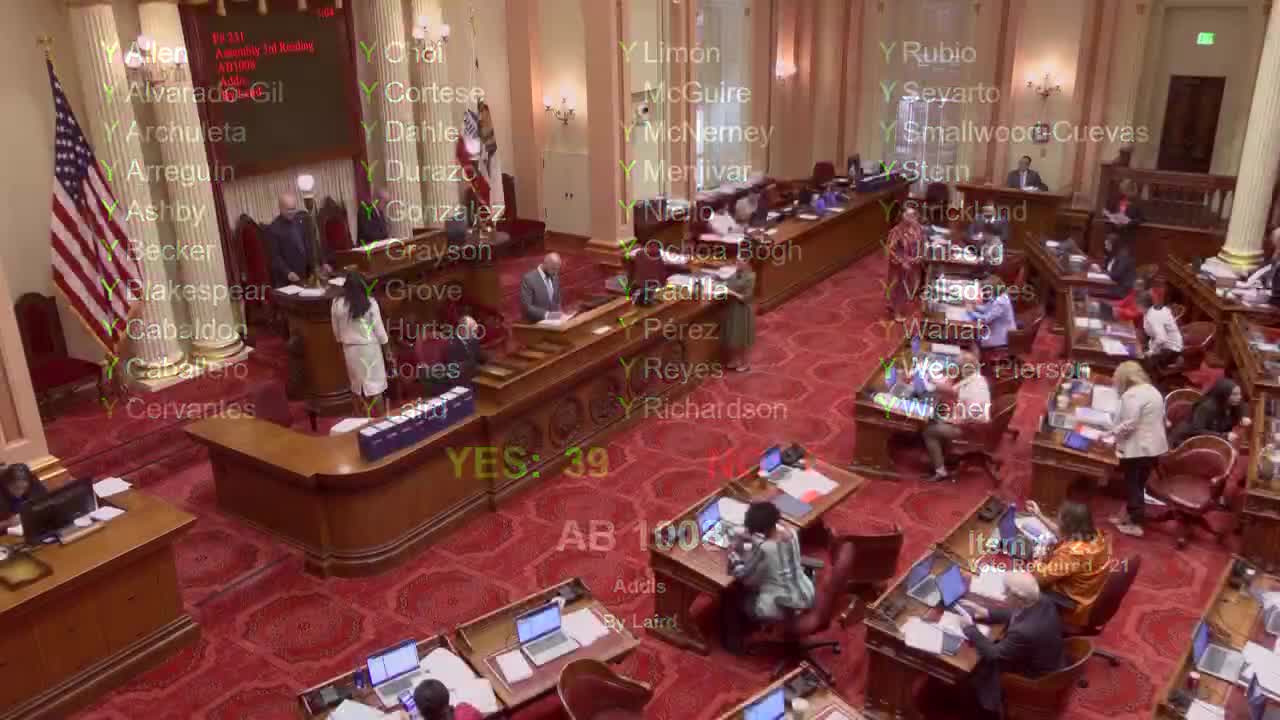
Bill Author
Bill Co-Author(s):