AB 2405: Mental health.
- Session Year: 2025-2026
- House: Assembly
- Latest Version Date: 2026-09-30
Current Status:
Passed
(2026-09-30: Chaptered by Secretary of State - Chapter 939, Statutes of 2026.)
Introduced
In Committee
Awaiting First Chamber Vote
Passed First Chamber
In Committee
Awaiting Second Chamber Vote
Passed Second Chamber
Enacted
What does this bill do?
The bill requires a police officer who is taking someone into custody for a mental health assessment to transport that person to the closest appropriate facility set up for evaluation or, if needed, the closest emergency room by distance or travel time. The person may tell the officer which facility they prefer, and the officer can consider that preference but must not unreasonably delay care or make large detours. It allows following local behavioral health diversion agreements and does not apply to state prison or state correctional health transfers.
The summary is provided by generative AI which can make mistakes. For original language, please view the details in the table below.
Under existing law, when a person, as a result of a mental disorder, is a danger to others or to themselves, or is gravely disabled, they may, upon probable cause, be taken into custody for a period of up to 72 hours for assessment, evaluation, and crisis intervention, or placement for evaluation and treatment, as specified. Existing law prohibits mental health personnel from instructing a peace officer to take a person to, or keep the person at, a jail, solely because of the unavailability of an acute bed.
This bill would require a peace officer who is transporting the above-described person to a designated facility for assessment to transport the person to the closest appropriate designated facility, either geographically or by time, from where the peace officer took the person into custody, as specified. If a person is being transported by a peace officer to a designated facility for assessment, the bill would authorize the person to affirmatively express their preference to the peace officer regarding the facility that they would prefer the peace officer to take them. By requiring a higher level of service from local law enforcement, this bill would impose a state-mandated local program.
The California Constitution requires the state to reimburse local agencies and school districts for certain costs mandated by the state. Statutory provisions establish procedures for making that reimbursement.
This bill would provide that, if the Commission on State Mandates determines that the bill contains costs mandated by the state, reimbursement for those costs shall be made pursuant to the statutory provisions noted above.
Under existing law, when a person, as a result of a mental disorder, is a danger to others or to themselves, or is gravely disabled, they may, upon probable cause, be taken into custody for a period of up to 72 hours for assessment, evaluation, and crisis intervention, or placement for evaluation and treatment, as specified. Existing law prohibits mental health personnel from instructing a peace officer to take a person to, or keep the person at, a jail, solely because of the unavailability of an acute bed.
This bill would require a peace officer who is transporting the above-described person to a designated facility for assessment to transport the person to the closest appropriate designated facility, either geographically or by time, from where the peace officer took the person into custody, as specified. If a person is being transported by a peace officer to a designated facility for assessment, the bill would authorize the person to affirmatively express their preference to the peace officer regarding the facility that they would prefer the peace officer to take them. By requiring a higher level of service from local law enforcement, this bill would impose a state-mandated local program.
The California Constitution requires the state to reimburse local agencies and school districts for certain costs mandated by the state. Statutory provisions establish procedures for making that reimbursement.
This bill would provide that, if the Commission on State Mandates determines that the bill contains costs mandated by the state, reimbursement for those costs shall be made pursuant to the statutory provisions noted above.
Under existing law, when a person, as a result of a mental disorder, is a danger to others or to themselves, or is gravely disabled, they may, upon probable cause, be taken into custody for a period of up to 72 hours for assessment, evaluation, and crisis intervention, or placement for evaluation and treatment, as specified. Existing law prohibits mental health personnel from instructing a peace officer to take a person to, or keep the person at, a jail, solely because of the unavailability of an acute bed.
This bill would require a peace officer who is transporting the above-described person to a designated facility for assessment to transport the person to the closest appropriate designated facility, either geographically or by time, to from where the peace officer took the person into custody. custody, as specified. If a person is being transported by a peace officer to a designated facility for assessment, the bill would authorize the person to affirmatively express their preference to the peace officer regarding the facility that they would prefer the peace officer to take them. By requiring a higher level of service from local law enforcement, this bill would impose a state-mandated local program.
Existing law, the Emergency Medical Services System and the Prehospital Emergency Medical Care Personnel Act, establishes the Emergency Medical Services Authority. Under existing law, the authority is responsible for the coordination and integration of all state activities concerning emergency medical services. Existing law requires local emergency medical services agencies to establish policies that govern, among other things, the transport and destination of patients within the emergency medical services system.This bill would require each law enforcement agency to submit a quarterly report to the authority containing specified information regarding transports conducted pursuant to these provisions, including, among other things, the origin location of the transported person. By imposing additional duties on local law enforcement agencies, this bill would impose a state-mandated local program.The bill would require the authority to publish the reports annually, as specified.The California Constitution requires the state to reimburse local agencies and school districts for certain costs mandated by the state. Statutory provisions establish procedures for making that reimbursement.
This bill would provide that, if the Commission on State Mandates determines that the bill contains costs mandated by the state, reimbursement for those costs shall be made pursuant to the statutory provisions noted above.
Under existing law, when a person, as a result of a mental disorder, is a danger to others or to themselves, or is gravely disabled, they may, upon probable cause, be taken into custody for a period of up to 72 hours for assessment, evaluation, and crisis intervention, or placement for evaluation and treatment, as specified. Existing law prohibits mental health personnel from instructing a peace officer to take a person to, or keep the person at, a jail, solely because of the unavailability of an acute bed.
This bill would require a peace officer who is transporting the above-described person to a designated facility for assessment to transport the person to the closest designated facility, either geographically or by time, to where the peace officer took the person into custody.
Existing law, the Emergency Medical Services System and the Prehospital Emergency Medical Care Personnel Act, establishes the Emergency Medical Services Authority. Under existing law, the authority is responsible for the coordination and integration of all state activities concerning emergency medical services. Existing law requires local emergency medical services agencies to establish policies that govern, among other things, the transport and destination of patients within the emergency medical services system.
This bill would require a law enforcement agency transporting a person to an emergency department to transport the person to the nearest appropriate emergency department, as defined, except as specified. The bill would require each law enforcement agency to submit a quarterly report to the authority containing specified information regarding transports conducted pursuant to these provisions, including, among other things, the origin location of the transported person. By imposing additional duties on local law enforcement agencies, this bill would impose a state-mandated local program.
The bill would require the authority to publish the reports annually, as specified. The bill would require the authority to exercise regulatory oversight to implement and ensure compliance with these provisions and would authorize the authority to, among other things, conduct audits, as specified.
The bill would make related findings and declarations.The California Constitution requires the state to reimburse local agencies and school districts for certain costs mandated by the state. Statutory provisions establish procedures for making that reimbursement.
This bill would provide that, if the Commission on State Mandates determines that the bill contains costs mandated by the state, reimbursement for those costs shall be made pursuant to the statutory provisions noted above.
Existing law, the Emergency Medical Services System and the Prehospital Emergency Medical Care Personnel Act, establishes the Emergency Medical Services Authority. Under existing law, the authority is responsible for the coordination and integration of all state activities concerning emergency medical services. Existing law requires local emergency medical services agencies to establish policies that govern, among other things, the transport and destination of patients within the emergency medical services system.
This bill would require a law enforcement agency transporting a person to an emergency department to transport the person to the nearest appropriate emergency department, as defined, except as specified. The bill would require each law enforcement agency to submit a quarterly report to the authority containing specified information regarding transports conducted pursuant to these provisions, including, among other things, the origin location of the transported person. By imposing additional duties on local law enforcement agencies, this bill would impose a state-mandated local program.
The bill would require the authority to publish the reports annually, as specified. The bill would require the authority to exercise regulatory oversight to implement and ensure compliance with these provisions and would authorize the authority to, among other things, conduct audits, as specified.
The bill would make related findings and declarations.
The California Constitution requires the state to reimburse local agencies and school districts for certain costs mandated by the state. Statutory provisions establish procedures for making that reimbursement.
This bill would provide that, if the Commission on State Mandates determines that the bill contains costs mandated by the state, reimbursement for those costs shall be made pursuant to the statutory provisions noted above.
Existing law, the Emergency Medical Services System and the Prehospital Emergency Medical Care Personnel Act, establishes the Emergency Medical Services Authority. Under existing law, the authority is responsible for the coordination and integration of all state activities concerning emergency medical services. Existing law requires local emergency medical services agencies to establish policies that govern, among other things, the transport and destination of patients within the emergency medical services system.
This bill would require a law enforcement agency transporting a person to an emergency department to transport the person to the nearest appropriate emergency department, as defined, except as specified. The bill would require each law enforcement agency to submit a quarterly report to the authority containing specified information regarding transports conducted pursuant to these provisions, including, among other things, the origin location of the transported person. By imposing additional duties on local law enforcement agencies, this bill would impose a state-mandated local program.
The bill would require the authority to publish the reports annually, as specified. The bill would require the authority to exercise regulatory oversight to implement and ensure compliance with these provisions and would authorize the authority to, among other things, conduct audits, as specified. The bill would authorize the Attorney General to bring a civil action for a violation of these provisions, as specified.
The bill would make related findings and declarations.
The California Constitution requires the state to reimburse local agencies and school districts for certain costs mandated by the state. Statutory provisions establish procedures for making that reimbursement.
This bill would provide that, if the Commission on State Mandates determines that the bill contains costs mandated by the state, reimbursement for those costs shall be made pursuant to the statutory provisions noted above.
Existing law, the Emergency Medical Services System and the Prehospital Emergency Medical Care Personnel Act, establishes the Emergency Medical Services Authority. Under existing law, the authority is responsible for the coordination and integration of all state activities concerning emergency medical services. Existing law requires local emergency medical services agencies to establish policies that govern, among other things, the transport and destination of patients within the emergency medical services system.
This bill would require a law enforcement agency transporting a person to an emergency department to transport the person to the nearest appropriate emergency department, as defined, except as specified. The bill would require each law enforcement agency to submit a quarterly report to the authority containing specified information regarding transports conducted pursuant to these provisions, including, among other things, the origin location of the transported person. By imposing additional duties on local law enforcement agencies, this bill would impose a state-mandated local program.
The bill would require the authority to publish the reports annually, as specified. The bill would require the authority to exercise regulatory oversight to implement and ensure compliance with these provisions and would authorize the authority to, among other things, conduct audits, as specified. The bill would authorize the Attorney General to bring a civil action for a violation of these provisions, as specified.
The bill would make related findings and declarations.
The California Constitution requires the state to reimburse local agencies and school districts for certain costs mandated by the state. Statutory provisions establish procedures for making that reimbursement.
This bill would provide that, if the Commission on State Mandates determines that the bill contains costs mandated by the state, reimbursement for those costs shall be made pursuant to the statutory provisions noted above.
Existing law prescribes the time after the commission of a crime in which a criminal action is required to be commenced, referred to as a statute of limitation. Existing law also prescribes situations in which a statute of limitation is tolled or extended.This bill would make technical, nonsubstantive changes to those provisions.Existing law prescribes the time after the commission of a crime in which a criminal action is required to be commenced, referred to as a statute of limitation. Existing law also prescribes situations in which a statute of limitation is tolled or extended.
This bill would make technical, nonsubstantive changes to those provisions.
(a)A peace officer who is transporting a person to a designated facility for assessment pursuant to Section 5150 shall transport the person to the closest appropriate designated facility, geographically or by time, from where the peace officer took the person into custody.
(b)If an emergency department is the most appropriate destination, the person shall be transported to the closest appropriate emergency department, geographically or by time, from where the peace officer took the person into custody.
(c)(1)If a person is being transported by a peace officer to a designated facility for assessment pursuant to Section 5150, the person may affirmatively express their preference to the peace officer regarding the facility that they would prefer the peace officer to take them.
(2)A peace officer may consider a persons affirmatively expressed preference, as described in paragraph (1), but transport shall not unreasonably delay care or excessively deviate from the closest appropriate destination.
(d)This section does not prevent a peace officer from following written local behavioral health diversion, transportation, and destination policies or agreements.
(e)This section does not apply to either of the following:
(1)The Department of Corrections and Rehabilitation.
(2)California Correctional Health Care Services.
SEC. 2.If the Commission on State Mandates determines that this act contains costs mandated by the state, reimbursement to local agencies and school districts for those costs shall be made pursuant to Part 7 (commencing with Section 17500) of Division 4 of Title 2 of the Government Code.
(a)A peace officer who is transporting a person to a designated facility for assessment pursuant to Section 5150 shall transport the person to the closest appropriate designated facility, geographically or by time, from where the peace officer took the person into custody.
(b)If an emergency department is the most appropriate destination, the person shall be transported to the closest appropriate emergency department, geographically or by time, from where the peace officer took the person into custody.
(c)(1)If a person is being transported by a peace officer to a designated facility for assessment pursuant to Section 5150, the person may affirmatively express their preference to the peace officer regarding the facility that they would prefer the peace officer to take them.
(2)A peace officer may consider a persons affirmatively expressed preference, as described in paragraph (1), but transport shall not unreasonably delay care or excessively deviate from the closest appropriate destination.
(d)This section does not prevent a peace officer from following written local behavioral health diversion, transportation, and destination policies or agreements.
(e)This section does not apply to either of the following:
(1)The Department of Corrections and Rehabilitation.
(2)California Correctional Health Care Services.
SEC. 2.If the Commission on State Mandates determines that this act contains costs mandated by the state, reimbursement to local agencies and school districts for those costs shall be made pursuant to Part 7 (commencing with Section 17500) of Division 4 of Title 2 of the Government Code.
(a)A peace officer who is transporting a person to a designated facility for assessment pursuant to Section 5150 shall transport the person to the closest appropriate designated facility, geographically or by time, to from where the peace officer took the person into custody.
(b)In cases where a designated facility is unable to accept the individual and the emergency department becomes the chosen destination, the individual If an emergency department is the most appropriate destination, the person shall be transported to the nearest closest appropriate emergency department to department, geographically or by time, from where the peace officer first assumed custody of the individual for purposes of transport. took the person into custody.
(c)(1)If a person is being transported by a peace officer to a designated facility for assessment pursuant to Section 5150, the person may affirmatively express their preference to the peace officer regarding the facility that they would prefer the peace officer to take them.
(2)A peace officer may consider a persons affirmatively expressed preference, as described in paragraph (1), but transport shall not unreasonably delay care or excessively deviate from the closest appropriate destination.
(d)This section does not prevent a peace officer from following written local behavioral health diversion, transportation, and destination policies or agreements.
(e)This section does not apply to either of the following:
(1)The Department of Corrections and Rehabilitation.
(2)California Correctional Health Care Services.
SEC. 3.SEC. 2.If the Commission on State Mandates determines that this act contains costs mandated by the state, reimbursement to local agencies and school districts for those costs shall be made pursuant to Part 7 (commencing with Section 17500) of Division 4 of Title 2 of the Government Code.
(a)Each law enforcement agency shall report quarterly to the Emergency Medical Services Authority, in a format prescribed by the authority, all transports to an emergency department.
(b)Reported data shall include, but not be limited to, all of the following:
(1)Origin location of the transported individual.
(2)Destination facility and the date and time of transport.
(3)Stated rationale for destination selection.
(4)Whether the destination was the nearest appropriate emergency department or an alternative destination site.
(5)Demographic information of the transported individual, excluding personally identifiable information.
(6)Reason the individual was transported to the emergency department, including whether they were being transported for purposes of assessment pursuant to Section 5150 of the Welfare and Institutions Code, or for a nonbehavioral health medical emergency.
(c)The authority shall publish annual aggregate reports on its internet website.
(d)For purposes of this section, law enforcement agency means any city or municipal police department, county sheriffs department, or other public agency that employs peace officers, as defined in Chapter 4.5 (commencing with Section 830) of Title 3 of Part 2 of the Penal Code.
SEC. 2.Section 5150.3 is added to the Welfare and Institutions Code, to read:5150.3.(a)A peace officer who is transporting a person to a designated facility for assessment pursuant to Section 5150 shall transport the person to the closest designated facility, geographically or by time, to where the peace officer took the person into custody.
(b)In cases where a designated facility is unable to accept the individual and the emergency department becomes the chosen destination, the individual shall be transported to the nearest appropriate emergency department to where the peace officer first assumed custody of the individual for purposes of transport.
SEC. 2.SEC. 3.If the Commission on State Mandates determines that this act contains costs mandated by the state, reimbursement to local agencies and school districts for those costs shall be made pursuant to Part 7 (commencing with Section 17500) of Division 4 of Title 2 of the Government Code.
(a)The Legislature finds and declares all of the following:
(1)Timely access to emergency medical care is a matter of statewide concern.
(2)Currently, emergency medical services (EMS) personnel are required to transport patients to the nearest appropriate receiving facility consistent with established destination protocols.
(3)However, law enforcement agencies also frequently transport individuals who are determined to have a behavioral health need but are not subject to uniform statewide medical destination standards.
(4)Inconsistent transport practices may result in unsafe delays in care, overcrowding of safety-net hospitals, and inequitable distribution of emergency department utilization.
(b)It is the intent of the Legislature to align law enforcement medical transport practices with established EMS destination principles and ensure accountability.
1797.286.For purposes of this chapter, the following definitions apply:
(a)Law enforcement agency means any city or municipal police department, county sheriffs department, or other public agency that employs peace officers, as defined in Chapter 4.5 (commencing with Section 830) of Title 3 of Part 2 of the Penal Code.
(b)Nearest appropriate emergency department means the licensed general acute care hospital emergency department that is closest, geographically or by time, to where the peace officer first assumed custody of the individual for purposes of transport.
1797.287.(a)Any transport by law enforcement to an emergency department for any reason shall be to the nearest appropriate emergency department, pursuant to Section 1797.114, except as provided in subdivision (b).
(b)This section shall does not apply to transports involving trauma, ST-elevation under any of the following circumstances:
(1)During the exigent circumstances of a mass casualty incident or a declared local emergency pursuant to Section 8680.9 of the Government Code.
(2)When transporting a patient with trauma, ST-elevation myocardial infarction (STEMI), stroke, or other conditions subject to established state or local specialty destination protocols. protocols, if those protocols apply to transportation conducted by law enforcement.
(3)When a receiving hospital has formally declared diversion or is otherwise unavailable to receive patients, and that status is affirmatively communicated to the transporting law enforcement officer by a public safety answering point, emergency medical services provider, or hospital during the time of transport, in which case the individual shall be transported to the next nearest appropriate emergency department consistent with local emergency medical services agency policies.
(c)Nothing in this section limits (1)This section does not limit a peace officers ability to transport individuals to the appropriate alternative destination site, including sobering centers, detox centers, behavioral health crisis centers, psychiatric stabilization units, freestanding psychiatric hospitals, or designated or contracted psychiatric emergency facilities.
(2)In cases where the alternative destination site is unable to accept the individual and the emergency department becomes the chosen destination, the individual shall be transported to the nearest appropriate emergency department to where the peace officer first assumed custody of the individual for purposes of transport.
(d)Nothing in this This section shall does not limit the authority of local EMS agencies to establish destination policies.
(e)This section does not require a peace officer to independently determine hospital diversion status.
1797.288.(a)Each law enforcement agency shall report quarterly to the Emergency Medical Services Authority, in a format prescribed by the authority, all transports conducted pursuant to this chapter.
(b)Reported data shall include, but not be limited to, all of the following:
(1)Origin location of the transported individual.
(2)Destination facility and the date and time of transport.
(3)Stated rationale for destination selection.
(4)Whether the destination was the nearest appropriate emergency department or an alternative destination site.
(5)Demographic information of the transported individual, excluding personally identifiable information.
(c)The authority shall publish annual aggregate reports on its internet website.
1797.289.(a)The Emergency Medical Services Authority shall have regulatory oversight authority to implement and ensure compliance with this chapter.
(b)The authority may conduct audits, require corrective action plans, and impose administrative civil penalties, not to exceed twenty-five thousand dollars ($25,000), per pattern of violation, as defined by regulation.
SEC. 2.If the Commission on State Mandates determines that this act contains costs mandated by the state, reimbursement to local agencies and school districts for those costs shall be made pursuant to Part 7 (commencing with Section 17500) of Division 4 of Title 2 of the Government Code.
(a)The Legislature finds and declares all of the following:
(1)Timely access to emergency medical care is a matter of statewide concern.
(2)Currently, emergency medical services (EMS) personnel are required to transport patients to the nearest appropriate receiving facility consistent with established destination protocols.
(3)However, law enforcement agencies also frequently transport individuals who are determined to have a behavioral health need but are not subject to uniform statewide medical destination standards.
(4)Inconsistent transport practices may result in unsafe delays in care, overcrowding of safety-net hospitals, and inequitable distribution of emergency department utilization.
(b)It is the intent of the Legislature to align law enforcement medical transport practices with established EMS destination principles and ensure accountability.
1797.286.For purposes of this chapter, the following definitions apply:
(a)Law enforcement agency means any city or municipal police department, county sheriffs department, or other public agency that employs peace officers, as defined in Chapter 4.5 (commencing with Section 830) of Title 3 of Part 2 of the Penal Code.
(b)Nearest appropriate emergency department means the licensed general acute care hospital emergency department that is geographically closest closest, geographically or by time, to where the peace officer first assumed custody of the individual for purposes of transport.
1797.287.(a)Any transport by law enforcement to an emergency department for any reason shall be to the nearest appropriate emergency department, pursuant to Section 1797.114, except as provided in subdivision (b).
(b)This section shall not apply to transports involving trauma, ST-elevation myocardial infarction (STEMI), stroke, or other conditions subject to established state or local specialty destination protocols.
(c)Nothing in this section limits a peace officers ability to transport individuals to the appropriate alternative destination site, including sobering centers, detox centers, behavioral health crisis centers, psychiatric stabilization units, freestanding psychiatric hospitals, or designated or contracted psychiatric emergency facilities.
(d)Nothing in this section shall limit the authority of local EMS agencies to establish destination policies.
1797.288.(a)Each law enforcement agency shall report quarterly to the Emergency Medical Services Authority, in a format prescribed by the authority, all transports conducted pursuant to this chapter.
(b)Reported data shall include, but not be limited to, all of the following:
(1)Origin location of the transported individual.
(2)Destination facility and the date and time of transport.
(3)Stated rationale for destination selection.
(4)Whether the destination was the nearest appropriate emergency department or an alternative destination site.
(5)Demographic information of the transported individual, excluding personally identifiable information.
(c)The authority shall publish annual aggregate reports on its internet website.
1797.289.(a)The Emergency Medical Services Authority shall have regulatory oversight authority to implement and ensure compliance with this chapter.
(b)The authority may conduct audits, require corrective action plans, and impose administrative civil penalties, not to exceed twenty-five thousand dollars ($25,000), per pattern of violation, as defined by regulation.
(c)The Attorney General may bring a civil action for injunctive relief or civil penalties for a violation of this article.SEC. 2.If the Commission on State Mandates determines that this act contains costs mandated by the state, reimbursement to local agencies and school districts for those costs shall be made pursuant to Part 7 (commencing with Section 17500) of Division 4 of Title 2 of the Government Code.
(a)The Legislature finds and declares all of the following:
(1)Timely access to emergency medical care is a matter of statewide concern.
(2)Currently, emergency medical services (EMS) personnel are required to transport patients to the nearest appropriate receiving facility consistent with established destination protocols.
(3)However, law enforcement agencies also frequently transport individuals who are determined to have a behavioral health need but are not subject to uniform statewide medical destination standards.
(4)Inconsistent transport practices may result in unsafe delays in care, overcrowding of safety-net hospitals, and inequitable distribution of emergency department utilization.
(b)It is the intent of the Legislature to align law enforcement medical transport practices with established EMS destination principles and ensure accountability.
1797.286.For purposes of this chapter, the following definitions apply:
(a)Law enforcement agency means any city or municipal police department, county sheriffs department, or other public agency that employs peace officers, as defined in Chapter 4.5 (commencing with Section 830) of Title 3 of Part 2 of the Penal Code.
(b)Nearest appropriate emergency department means the licensed general acute care hospital emergency department that is geographically closest to where the peace officer first assumed custody of the individual for purposes of transport.
1797.287.(a)Any transport by law enforcement to an emergency department for any reason shall be to the nearest appropriate emergency department, except as provided in subdivision (b).
(b)This section shall not apply to transports involving trauma, ST-elevation myocardial infarction (STEMI), stroke, or other conditions subject to established state or local specialty destination protocols.
(c)Nothing in this section limits a peace officers ability to transport individuals to the appropriate alternative destination site, including sobering centers, detox centers, behavioral health crisis centers, psychiatric stabilization units, freestanding psychiatric hospitals, or designated or contracted psychiatric emergency facilities.
(d)Nothing in this section shall limit the authority of local EMS agencies to establish destination policies.
1797.288.(a)Each law enforcement agency shall report quarterly to the Emergency Medical Services Authority, in a format prescribed by the authority, all transports conducted pursuant to this chapter.
(b)Reported data shall include, but not be limited to, all of the following:
(1)Origin location of the transported individual.
(2)Destination facility and the date and time of transport.
(3)Stated rationale for destination selection.
(4)Whether the destination was the nearest appropriate emergency department or an alternative destination site.
(5)Demographic information of the transported individual, excluding personally identifiable information.
(c)The authority shall publish annual aggregate reports on its internet website.
1797.289.(a)The Emergency Medical Services Authority shall have regulatory oversight authority to implement and ensure compliance with this chapter.
(b)The authority may conduct audits, require corrective action plans, and impose administrative civil penalties, not to exceed twenty-five thousand dollars ($25,000), per pattern of violation, as defined by regulation.
(c)The Attorney General may bring a civil action for injunctive relief or civil penalties for a violation of this article.
SEC. 2.If the Commission on State Mandates determines that this act contains costs mandated by the state, reimbursement to local agencies and school districts for those costs shall be made pursuant to Part 7 (commencing with Section 17500) of Division 4 of Title 2 of the Government Code.
SECTION 1.Section 803 of the Penal Code is amended to read:803.(a)Except as provided in this section, a limitation of time prescribed in this chapter is not tolled or extended for any reason.(b)The time during which prosecution of the same person for the same conduct is pending in a court of this state is not a part of a limitation of time prescribed in this chapter.(c)A limitation of time prescribed in this chapter does not commence to run until the discovery of an offense described in this subdivision. This subdivision applies to an offense punishable by imprisonment in the state prison or imprisonment pursuant to subdivision (h) of Section 1170, a material element of which is fraud or breach of a fiduciary obligation, the commission of the crimes of theft or embezzlement upon an elder or dependent adult, or the basis of which is misconduct in office by a public officer, employee, or appointee, including, but not limited to, the following offenses:(1)Grand theft of any type, forgery, falsification of public records, or acceptance of, or asking, receiving, or agreeing to receive, a bribe, by a public official or a public employee, including, but not limited to, a violation of Section 68, 86, or 93.(2)A violation of Section 72, 118, 118a, 132, 134, or 186.10.(3)A violation of Section 25540, of any type, or Section 25541 of the Corporations Code.(4)A violation of Section 1090 or 27443 of the Government Code.(5)Felony welfare fraud or Medi-Cal fraud in violation of Section 11483 or 14107 of the Welfare and Institutions Code.(6)Felony insurance fraud in violation of Section 548 or 550 of this code or former Section 1871.1, or Section 1871.4, of the Insurance Code.(7)A violation of Section 580, 581, 582, 583, or 584 of the Business and Professions Code.(8)A violation of Section 22430 of the Business and Professions Code.(9)A violation of Section 103800 of the Health and Safety Code.(10)A violation of Section 529a.(11)A violation of subdivision (d) or (e) of Section 368.(d)If the defendant is out of the state when or after the offense is committed, the prosecution may be commenced as provided in Section 804 within the limitations of time prescribed by this chapter, and time, up to a maximum of three years, during which the defendant is not within the state shall not be a part of those limitations.(e)A limitation of time prescribed in this chapter does not commence to run until the offense has been discovered, or could have reasonably been discovered, with regard to offenses under Division 7 (commencing with Section 13000) of the Water Code, under Chapter 6.5 (commencing with Section 25100) or Chapter 6.7 (commencing with Section 25280) of Division 20 of, or Part 4 (commencing with Section 41500) of Division 26 of, or Part 2 (commencing with Section 78000) of Division 45 of, the Health and Safety Code, or under Section 386, or offenses under Chapter 5 (commencing with Section 2000) of Division 2 of, Chapter 9 (commencing with Section 4000) of Division 2 of, Section 6126 of, Chapter 10 (commencing with Section 7301) of Division 3 of, or Chapter 19.5 (commencing with Section 22440) of Division 8 of, the Business and Professions Code.(f)(1)Notwithstanding any other limitation of time described in this chapter, if subdivision (b) of Section 799 does not apply, a criminal complaint may be filed within one year of the date of a report to a California law enforcement agency by a person of any age alleging that the person, while under 18 years of age, was the victim of a crime described in Section 261, 286, 287, 288, 288.5, or 289, former Section 288a, or Section 289.5, as enacted by Chapter 293 of the Statutes of 1991 relating to penetration by an unknown object.(2)This subdivision applies only if all of the following occur:(A)The limitation period specified in Section 800, 801, or 801.1, whichever is later, has expired.(B)The crime involved substantial sexual conduct, as described in subdivision (b) of Section 1203.066, excluding masturbation that is not mutual.(C)There is independent evidence that corroborates the victims allegation. If the victim was 21 years of age or older at the time of the report, the independent evidence shall clearly and convincingly corroborate the victims allegation.(3)Evidence shall not be used to corroborate the victims allegation if that evidence would otherwise be inadmissible during trial. Independent evidence excludes the opinions of mental health professionals.(4)(A)In a criminal investigation involving any of the crimes listed in paragraph (1) committed against a child, if the applicable limitations period has not expired, that period shall be tolled from the time a party initiates litigation challenging a grand jury subpoena until the end of the litigation, including any associated writ or appellate proceeding, or until the final disclosure of evidence to the investigating or prosecuting agency, if that disclosure is ordered pursuant to the subpoena after the litigation.(B)This subdivision does not affect the definition or applicability of any evidentiary privilege.(C)This subdivision shall not apply if a court finds that the grand jury subpoena was issued or caused to be issued in bad faith.(g)(1)Notwithstanding any other limitation of time described in this chapter, a criminal complaint may be filed within one year of the date on which the identity of the suspect is conclusively established by DNA testing, if both of the following conditions are met:(A)The crime is one that is described in subdivision (c) of Section 290.(B)The offense was committed before January 1, 2001, and biological evidence collected in connection with the offense is analyzed for DNA type no later than January 1, 2004, or the offense was committed on or after January 1, 2001, and biological evidence collected in connection with the offense is analyzed for DNA type no later than two years from the date of the offense.(2)For purposes of this section, DNA means deoxyribonucleic acid.(h)For any crime, the proof of which depends substantially upon evidence that was seized under a warrant, but which is unavailable to the prosecuting authority under the procedures described in People v. Superior Court (Laff) (2001) 25 Cal.4th 703, People v. Superior Court (Bauman & Rose) (1995) 37 Cal.App.4th 1757, or subdivision (c) of Section 1524, relating to claims of evidentiary privilege or attorney work product, the limitation of time prescribed in this chapter shall be tolled from the time of the seizure until final disclosure of the evidence to the prosecuting authority. This section does not otherwise affect the definition or applicability of any evidentiary privilege or attorney work product.(i)(1)Notwithstanding any other limitation of time described in this chapter, a criminal complaint may be filed within one year of the date on which a hidden recording is discovered related to a violation of paragraph (2) or (3) of subdivision (j) of Section 647.(2)Notwithstanding any other limitation of time described in this chapter, a criminal complaint may be filed within one year of the date on which it is discovered that, but not more than four years after, an image was intentionally distributed in violation of paragraph (4) of subdivision (j) of Section 647.(j)(1)Notwithstanding any other limitation of time described in this chapter, if a person flees the scene of an accident that caused death or permanent, serious injury, as defined in subdivision (d) of Section 20001 of the Vehicle Code, a criminal complaint brought pursuant to paragraph (2) of subdivision (b) of Section 20001 of the Vehicle Code may be filed within the applicable time period described in Section 801 or 802 or one year after the person is initially identified by law enforcement as a suspect in the commission of the offense, whichever is later, but in no case later than six years after the commission of the offense.(2)If, after committing the crime described in paragraph (1), a person is out of the state for the purpose of evading prosecution, the statute of limitations may be tolled for up to three years during any time the person is out of the state.(k)Notwithstanding any other limitation of time described in this chapter, if a person flees the scene of an accident, a criminal complaint brought pursuant to paragraph (1) or (2) of subdivision (c) of Section 192 may be filed within the applicable time period described in Section 801 or 802, or one year after the person is initially identified by law enforcement as a suspect in the commission of that offense, whichever is later, but in no case later than six years after the commission of the offense.(l)A limitation of time prescribed in this chapter does not commence to run until the discovery of an offense involving the offering or giving of a bribe to a public official or public employee, including, but not limited to, a violation of Section 67, 67.5, 85, 92, or 165, or Section 35230 or 72530 of the Education Code.(m)Notwithstanding any other limitation of time prescribed in this chapter, if a person actively conceals or attempts to conceal an accidental death in violation of Section 152, a criminal complaint may be filed within one year after the person is initially identified by law enforcement as a suspect in the commission of that offense, provided, however, that in any case a complaint may not be filed more than four years after the commission of the offense.(n)(1)Notwithstanding any other limitation of time described in this chapter, a criminal complaint brought pursuant to a violation of Section 367g may be filed within one year of the discovery of the offense or within one year after the offense could have reasonably been discovered.(2)This subdivision applies to crimes that were committed on or after January 1, 2021, and to crimes for which the statute of limitations that was in effect before January 1, 2021, has not run as of January 1, 2021.(a)Except as provided in this section, a limitation of time prescribed in this chapter is not tolled or extended for any reason.
(b)The time during which prosecution of the same person for the same conduct is pending in a court of this state is not a part of a limitation of time prescribed in this chapter.
(c)A limitation of time prescribed in this chapter does not commence to run until the discovery of an offense described in this subdivision. This subdivision applies to an offense punishable by imprisonment in the state prison or imprisonment pursuant to subdivision (h) of Section 1170, a material element of which is fraud or breach of a fiduciary obligation, the commission of the crimes of theft or embezzlement upon an elder or dependent adult, or the basis of which is misconduct in office by a public officer, employee, or appointee, including, but not limited to, the following offenses:
(1)Grand theft of any type, forgery, falsification of public records, or acceptance of, or asking, receiving, or agreeing to receive, a bribe, by a public official or a public employee, including, but not limited to, a violation of Section 68, 86, or 93.
(2)A violation of Section 72, 118, 118a, 132, 134, or 186.10.
(3)A violation of Section 25540, of any type, or Section 25541 of the Corporations Code.
(4)A violation of Section 1090 or 27443 of the Government Code.
(5)Felony welfare fraud or Medi-Cal fraud in violation of Section 11483 or 14107 of the Welfare and Institutions Code.
(6)Felony insurance fraud in violation of Section 548 or 550 of this code or former Section 1871.1, or Section 1871.4, of the Insurance Code.
(7)A violation of Section 580, 581, 582, 583, or 584 of the Business and Professions Code.
(8)A violation of Section 22430 of the Business and Professions Code.
(9)A violation of Section 103800 of the Health and Safety Code.
(10)A violation of Section 529a.
(11)A violation of subdivision (d) or (e) of Section 368.
(d)If the defendant is out of the state when or after the offense is committed, the prosecution may be commenced as provided in Section 804 within the limitations of time prescribed by this chapter, and no time time, up to a maximum of three years years, during which the defendant is not within the state shall not be a part of those limitations.
(e)A limitation of time prescribed in this chapter does not commence to run until the offense has been discovered, or could have reasonably been discovered, with regard to offenses under Division 7 (commencing with Section 13000) of the Water Code, under Chapter 6.5 (commencing with Section 25100) or Chapter 6.7 (commencing with Section 25280) of Division 20 of, or Part 4 (commencing with Section 41500) of Division 26 of, or Part 2 (commencing with Section 78000) of Division 45 of, the Health and Safety Code, or under Section 386, or offenses under Chapter 5 (commencing with Section 2000) of Division 2 of, Chapter 9 (commencing with Section 4000) of Division 2 of, Section 6126 of, Chapter 10 (commencing with Section 7301) of Division 3 of, or Chapter 19.5 (commencing with Section 22440) of Division 8 of, the Business and Professions Code.
(f)(1)Notwithstanding any other limitation of time described in this chapter, if subdivision (b) of Section 799 does not apply, a criminal complaint may be filed within one year of the date of a report to a California law enforcement agency by a person of any age alleging that the person, while under 18 years of age, was the victim of a crime described in Section 261, 286, 287, 288, 288.5, or 289, former Section 288a, or Section 289.5, as enacted by Chapter 293 of the Statutes of 1991 relating to penetration by an unknown object.
(2)This subdivision applies only if all of the following occur:
(A)The limitation period specified in Section 800, 801, or 801.1, whichever is later, has expired.
(B)The crime involved substantial sexual conduct, as described in subdivision (b) of Section 1203.066, excluding masturbation that is not mutual.
(C)There is independent evidence that corroborates the victims allegation. If the victim was 21 years of age or older at the time of the report, the independent evidence shall clearly and convincingly corroborate the victims allegation.
(3)Evidence shall not be used to corroborate the victims allegation if that evidence would otherwise be inadmissible during trial. Independent evidence excludes the opinions of mental health professionals.
(4)(A)In a criminal investigation involving any of the crimes listed in paragraph (1) committed against a child, if the applicable limitations period has not expired, that period shall be tolled from the time a party initiates litigation challenging a grand jury subpoena until the end of the litigation, including any associated writ or appellate proceeding, or until the final disclosure of evidence to the investigating or prosecuting agency, if that disclosure is ordered pursuant to the subpoena after the litigation.
(B)This subdivision does not affect the definition or applicability of any evidentiary privilege.
(C)This subdivision shall not apply if a court finds that the grand jury subpoena was issued or caused to be issued in bad faith.
(g)(1)Notwithstanding any other limitation of time described in this chapter, a criminal complaint may be filed within one year of the date on which the identity of the suspect is conclusively established by DNA testing, if both of the following conditions are met:
(A)The crime is one that is described in subdivision (c) of Section 290.
(B)The offense was committed before January 1, 2001, and biological evidence collected in connection with the offense is analyzed for DNA type no later than January 1, 2004, or the offense was committed on or after January 1, 2001, and biological evidence collected in connection with the offense is analyzed for DNA type no later than two years from the date of the offense.
(2)For purposes of this section, DNA means deoxyribonucleic acid.
(h)For any crime, the proof of which depends substantially upon evidence that was seized under a warrant, but which is unavailable to the prosecuting authority under the procedures described in People v. Superior Court (Laff) (2001) 25 Cal.4th 703, People v. Superior Court (Bauman & Rose) (1995) 37 Cal.App.4th 1757, or subdivision (c) of Section 1524, relating to claims of evidentiary privilege or attorney work product, the limitation of time prescribed in this chapter shall be tolled from the time of the seizure until final disclosure of the evidence to the prosecuting authority. This section does not otherwise affect the definition or applicability of any evidentiary privilege or attorney work product.
(i)(1)Notwithstanding any other limitation of time described in this chapter, a criminal complaint may be filed within one year of the date on which a hidden recording is discovered related to a violation of paragraph (2) or (3) of subdivision (j) of Section 647.
(2)Notwithstanding any other limitation of time described in this chapter, a criminal complaint may be filed within one year of the date on which it is discovered that, but not more than four years after, an image was intentionally distributed in violation of paragraph (4) of subdivision (j) of Section 647.
(j)(1)Notwithstanding any other limitation of time described in this chapter, if a person flees the scene of an accident that caused death or permanent, serious injury, as defined in subdivision (d) of Section 20001 of the Vehicle Code, a criminal complaint brought pursuant to paragraph (2) of subdivision (b) of Section 20001 of the Vehicle Code may be filed within the applicable time period described in Section 801 or 802 or one year after the person is initially identified by law enforcement as a suspect in the commission of the offense, whichever is later, but in no case later than six years after the commission of the offense.
(2)If, after committing the crime described in paragraph (1), a person is out of the state for the purpose of evading prosecution, the statute of limitations may be tolled for up to three years during any time the person is out of the state.
(k)Notwithstanding any other limitation of time described in this chapter, if a person flees the scene of an accident, a criminal complaint brought pursuant to paragraph (1) or (2) of subdivision (c) of Section 192 may be filed within the applicable time period described in Section 801 or 802, or one year after the person is initially identified by law enforcement as a suspect in the commission of that offense, whichever is later, but in no case later than six years after the commission of the offense.
(l)A limitation of time prescribed in this chapter does not commence to run until the discovery of an offense involving the offering or giving of a bribe to a public official or public employee, including, but not limited to, a violation of Section 67, 67.5, 85, 92, or 165, or Section 35230 or 72530 of the Education Code.
(m)Notwithstanding any other limitation of time prescribed in this chapter, if a person actively conceals or attempts to conceal an accidental death in violation of Section 152, a criminal complaint may be filed within one year after the person is initially identified by law enforcement as a suspect in the commission of that offense, provided, however, that in any case a complaint may not be filed more than four years after the commission of the offense.
(n)(1)Notwithstanding any other limitation of time described in this chapter, a criminal complaint brought pursuant to a violation of Section 367g may be filed within one year of the discovery of the offense or within one year after the offense could have reasonably been discovered.
(2)This subdivision applies to crimes that were committed on or after January 1, 2021, and to crimes for which the statute of limitations that was in effect before January 1, 2021, has not run as of January 1, 2021.
|
Date
|
Status
|
|---|---|
| Sep 30, 2026 | Chaptered by Secretary of State - Chapter 939, Statutes of 2026. |
| Sep 30, 2026 | Approved by the Governor. |
| Sep 4, 2026 | Enrolled and presented to the Governor at 4 p.m. |
| Aug 27, 2026 | Senate amendments concurred in. To Engrossing and Enrolling. (Ayes 48. Noes 15.). |
| Aug 27, 2026 | Senate amendments concurred in. To Engrossing and Enrolling. (Ayes 48. Noes 15. Page 6733.). |
| Aug 27, 2026 | From committee: That the Senate amendments be concurred in. (Ayes 9. Noes 3.) (August 27). |
| Aug 26, 2026 | Joint Rule 62(a), file notice suspended. (Page 6563.) |
| Aug 26, 2026 | In Assembly. Concurrence in Senate amendments pending. |
| Aug 26, 2026 | Joint Rule 62(a), file notice suspended. |
| Aug 26, 2026 | Re-referred to Com. on HEALTH. pursuant to Assembly Rule 77.2. |
| Aug 25, 2026 | Read third time. Passed. Ordered to the Assembly. (Ayes 26. Noes 7.). |
| Aug 17, 2026 | Read second time. Ordered to third reading. |
| Aug 13, 2026 | Read second time and amended. Ordered returned to second reading. |
| Aug 13, 2026 | From committee: Amend, and do pass as amended. (Ayes 5. Noes 2.) (August 13). |
| Aug 3, 2026 | In committee: Referred to APPR. suspense file. |
| Jul 1, 2026 | From committee: Do pass and re-refer to Com. on APPR. (Ayes 5. Noes 1.) (June 30). Re-referred to Com. on APPR. |
| Jun 25, 2026 | From committee chair, with author's amendments: Amend, and re-refer to committee. Read second time, amended, and re-referred to Com. on PUB. S. |
| Jun 25, 2026 | From committee: Do pass and re-refer to Com. on PUB. S. (Ayes 9. Noes 0.) (June 24). Re-referred to Com. on PUB. S. |
| Jun 10, 2026 | Referred to Coms. on HEALTH and PUB. S. |
| May 28, 2026 | In Senate. Read first time. To Com. on RLS. for assignment. |
| May 27, 2026 | Read third time. Passed. Ordered to the Senate. (Ayes 47. Noes 18.) |
| May 27, 2026 | Read third time. Passed. Ordered to the Senate. (Ayes 47. Noes 18. Page 5483.) |
| May 27, 2026 | Read third time. Passed. Ordered to the Senate. |
| May 19, 2026 | Read second time. Ordered to third reading. |
| May 18, 2026 | Read second time and amended. Ordered returned to second reading. |
| May 14, 2026 | From committee: Amend, and do pass as amended. (Ayes 11. Noes 3.) (May 14). |
| May 6, 2026 | In committee: Set, first hearing. Referred to APPR. suspense file. |
| Apr 22, 2026 | From committee: Do pass and re-refer to Com. on APPR. (Ayes 7. Noes 0.) (April 21). Re-referred to Com. on APPR. |
| Apr 20, 2026 | Re-referred to Com. on PUB. S. |
| Apr 16, 2026 | From committee chair, with author's amendments: Amend, and re-refer to Com. on PUB. S. Read second time and amended. |
| Apr 14, 2026 | From committee: Do pass and re-refer to Com. on PUB. S. (Ayes 5. Noes 1.) (April 13). Re-referred to Com. on PUB. S. |
| Mar 24, 2026 | Re-referred to Com. on E.M. |
| Mar 23, 2026 | Referred to Coms. on E.M and PUB. S. |
| Mar 23, 2026 | From committee chair, with author's amendments: Amend, and re-refer to Com. on E.M. Read second time and amended. |
| Feb 21, 2026 | From printer. May be heard in committee March 23. |
| Feb 20, 2026 | Read first time. To print. |
|
Date
|
Description
|
Location
|
Votes
|
|
|---|---|---|---|---|
| Aug 27, 2026 | AB 2405 Gipson Concurrence in Senate Amendments | Assembly Floor |
Passed |
|
| Aug 27, 2026 | With recommendation: That Senate amendments be concurred in. | Assembly Standing Committee on Health |
Passed |
|
| Aug 25, 2026 | Assembly 3rd Reading AB2405 Gipson By Weber Pierson | Senate Floor |
Passed |
|
| Aug 13, 2026 | Do pass as amended | Senate Standing Committee on Appropriations |
Passed |
|
| Aug 3, 2026 | Placed on suspense file | Senate Standing Committee on Appropriations |
Passed |
|
| Jun 30, 2026 | Do pass, but first be re-referred to the Committee on [Appropriations] | Senate Standing Committee on Public Safety |
Passed |
|
| Jun 24, 2026 | Do pass, but first be re-referred to the Committee on [Public Safety] | Senate Standing Committee on Health |
Passed |
|
| May 27, 2026 | AB 2405 Gipson Assembly Third Reading | Assembly Floor |
Passed |
|
| May 14, 2026 | Do pass as amended. | Assembly Standing Committee on Appropriations |
Passed |
|
| Apr 21, 2026 | Do pass and be re-referred to the Committee on [Appropriations] | Assembly Standing Committee on Public Safety |
Passed |
|
| Apr 13, 2026 | Do pass and be re-referred to the Committee on [Public Safety] | Assembly Standing Committee on Emergency Management |
Passed |
This list shows positions taken on this bill by organizations on the date displayed, which is linked to the original source.
Positions by individuals are not included.
|
Organization
|
Position
|
Date
|
|---|---|---|
| American Civil Liberties Union California Action | ** Support | |
| California Fire Chiefs Association | ** Against | |
| California Hospital Association | ** Support | |
| California Police Chiefs Association | ** Against | |
| California Professional Firefighters | ** Against | |
| California State Sheriffs' Association | ** Against | |
| County of Shasta | ** Against | |
| Disability Rights California | ** Against | |
| Fire Districts Association Of California | ** Against | |
| League Of California Cities | ** Against | |
| MLK Community Healthcare | ** Support | |
| MLK Community Hospital | ** Support | |
| National Association of EMS Physicians | ** Against |
CONCURRENCE IN SENATE AMENDMENTS
CSA2 Bill Id:AB 2405
Author:(Gipson)
As Amended Ver:August 13, 2026
Majority vote
SUMMARY
Original Committee of Reference: E.M.
Requires a peace officer who is transporting a person to a designated facility for assessment pursuant to the Lanterman-Petris-Short (LPS) Act to transport the person to the closest appropriate designated facility, either geographically or by time, from where the peace officer took the person into custody, as specified. Authorizes the person to affirmatively express their preference to the peace officer regarding the facility that they would prefer the peace officer to take them, and permits the peace officer to consider that preference, but prohibits transport from unreasonably delaying care or excessively deviating from the closest appropriate destination. States that the provisions of this bill do not prevent a peace officer from following written local behavioral health diversion, transportation, and destination policies or agreements.
Senate Amendments
Current Committee Recommendation: CONCUR
- Strike provisions of the bill containing requirements on law enforcement transports to emergency departments (EDs) other than LPS transports.
- Add specific requirements related to the transport by law enforcement for the purposes of LPS assessment contained in the summary above.
- Strike all requirements on the Emergency Medical Services Authority (EMSA) to exercise regulatory oversight to implement and ensure compliance with the provisions of this bill.
- Strike the requirement on law enforcement agencies to submit a quarterly report containing specified information regarding transports conducted pursuant to this bill, including, among other things, the origin location of the transported person.
COMMENTS
Background provided by author. The author states that inconsistent law enforcement transport practices contribute to overcrowding, delays in care, and inequitable distribution of patients across hospital EDs, particularly burdening safety-net facilities who have scare resources. The author points to an analysis of MLK Community Hospital (MLKCH) data that shows a total of 1,160 law enforcement drop-offs in 2025, or approximately 100 per month. MLKCH is located in South Los Angeles, yet these drop-offs include individuals in police custody from as far as El Segundo, Santa Monica, and Rolling Hills Estates. Given the recent passage of SB 43 (Eggman) Chapter 637, Statutes of 2023, the state's legal definition of "gravely disabled" expanded for the first-time in more than 50 years and now includes individuals unable to provide for their own personal safety and necessary medical care or experiencing severe substance use disorders as qualifying criteria for involuntary holds. This expansion has the ability to significantly increase the volume of law enforcement agency drop-offs to EDs. Safety-net EDs like MLKCH are under extreme fiscal pressure currently, and the equitable distribution of patients is an important matter for the sustainability of the hospital and the care provided to the surrounding community. The author also points out that by requiring transport to the nearest appropriate ED, this bill would reduce the cases in which patients are transported away from their community and making it more challenging for them and their families.
LPS Act involuntary detentions and designated facilities. The LPS Act provides for involuntary detentions for varying lengths of time for the purpose of evaluation and treatment, provided certain requirements are met, such as that an individual is taken to a county-designated facility. Typically, one first interacts with the LPS Act through a 5150-hold initiated by a peace officer or other person authorized by a county, who must determine and document that the individual meets the standard for a 5150 hold. A county-designated facility is authorized to then involuntarily detain an individual for up to 72 hours for evaluation and treatment if they are determined to be, as a result of a mental health (MH) disorder, a danger to self or others, or gravely disabled. The professional person in charge of the county-designated facility is required to assess an individual to determine the appropriateness of the involuntary detention prior to admitting the individual.
Peace officers. In February 2025, Sacramento County Sheriff Jim Cooper announced that his officers would no longer respond to mental health calls unless a crime is involved. The Sacramento Bee reports that in the "first six days of implementing the change in January, the Sheriff's Office received 320 mental health calls, and deputies didn't respond to 18 calls for help." The policy change comes after a July 2024 ruling from that Ninth Circuit Court of Appeals finding that two Las Vegas police officers who responded to a 911 call from a mentally ill man will have to face excessive force claims for killing the man when they restrained him and knelt on his back. According to The Sacramento Bee, Cooper said his deputies will still respond to mental health calls when a crime is in progress, when a crime has been committed, and when someone is at risk of injury or death, but not when only the person experiencing a mental health crisis is at risk of injury or death.
SB 882 (Eggman), Chapter 899, Statutes of 2022, creates the Advisory Council on Improving Interactions between People with Intellectual and Development Disabilities and Law Enforcement, under the Department of Justice, to, among other things, evaluate existing training for peace officers specific to interactions between law enforcement and individuals with intellectual and developmental disabilities and mental health conditions. The advisory council began meeting in April 2024 and released a final report with the current state of these interactions, discussion of best practices for law enforcement training, and other non-training interventions, in April 2026. The Council makes several recommendations regarding data collection and training for behavioral health providers and peace officers. Specifically, the Council recommends special grants for each county to operate 24/7 mental health crisis teams to respond to non-crime related 911 and 988 calls. While the state has invested heavily in mobile crisis, the continuation of mobile crisis as a statewide Medi-Cal benefit was debated in the state budget and only extended through the current fiscal year.
According to the Author
This bill ensures some of the most vulnerable Californians receive timely emergency care by aligning law enforcement transport practices with established EMS standards and promoting fairness across our healthcare system. This change is in the best interest of vulnerable patients who need access to emergency care as well as resource-constrained community hospitals who are overwhelmed by drop-offs from law enforcement agents.
Arguments in Support
The California Hospital Association (CHA) supports this bill arguing that current law does not establish a consistent statewide standard for where peace officers should transport individuals requiring assessment under a 5150 hold, resulting in varying practices across California. CHA states this bill would establish a clear standard by requiring peace officers transporting an individual under a 5150 hold to take them to the closest appropriate designated facility, geographically or by time. This bill would also allow individuals to express a preference for their destination, provided doing so would not unreasonably delay care or excessively deviate from the closest appropriate facility. CHA concludes this would help ensure individuals receive timely access to the appropriate level of care while providing greater consistency for law enforcement and health care providers.
MLK Community Healthcare supports this bill stating that across California, hospitals routinely receive individuals transported by local law enforcement agencies from far outside their service areas, despite the presence of closer, capable EDs. This practice worsens overcrowding and creates dangerous delays in care in already overburdened safety-net hospitals. Unlike emergency medical services (EMS) providers, who operate under clear destination protocols requiring transport to the nearest appropriate facility, law enforcement agencies are not uniformly guided by comparable statewide medical transport standards. MLK Community Healthcare says this results in inconsistent and inequitable practices across jurisdictions. MLK Community Health care argues this bill seeks to remedy this problem by requiring that law enforcement officers who transport an individual to an ED go to the nearest appropriate LPS facility. If the facility is unable to take the patient, then they must be transported to the nearest (by geography or time) available ED. This would support patients getting the care they need in a timely manner and help distribute ED care fairly among existing hospitals.
Arguments in Opposition
The California Police Chiefs Association (CPCA) opposes this bill stating that it requires a peace officer transporting a person detained pursuant to Section 5150 to transport that individual to the "closest appropriate designated facility, geographically or by time." If an ED is the most appropriate destination, the officer must similarly transport the person to the "closest appropriate ED." CPCA contends this bill does not define what constitutes an "appropriate" facility, nor does it provide law enforcement with the information necessary to make that determination. Peace officers responding to a behavioral health crisis are not operating within an EMS dispatch system that provides real-time information regarding available facilities, their capabilities, current diversion status, travel times, patient capacity, or whether a particular facility is accepting a specific category of patient. Fire and EMS systems may have access to specialized medical dispatch information and established destination protocols. A patrol officer generally does not have a comparable system available from the front seat of a patrol vehicle. CPCA concludes this bill imposes an unclear statutory mandate on officers without providing the information or systems necessary to comply with it and attempts to solve through statewide legislation an issue that should first be addressed through local coordination.
FISCAL COMMENTS
According to the Senate Appropriations Committee, costs to local law enforcement agencies would be potentially reimbursable by the state, subject to a determination by the Commission on State Mandates.
VOTES
ASM EMERGENCY MANAGEMENT: 5-1-1
YES: Ransom, Arambula, Bains, Bennett, Calderon
NO: Hadwick
ABS, ABST OR NV: DeMaio
ASM PUBLIC SAFETY: 7-0-2
YES: Schultz, Mark González, Haney, Harabedian, Nguyen, Ramos, Sharp-Collins
ABS, ABST OR NV: Alanis, Lackey
ASM APPROPRIATIONS: 11-3-1
YES: Wicks, Aguiar-Curry, Calderon, Caloza, Fong, Mark González, Krell, Pacheco, Pellerin, Sharp-Collins, Solache
NO: Dixon, Ta, Tangipa
ABS, ABST OR NV: Hoover
ASSEMBLY FLOOR: 47-18-15
YES: Addis, Aguiar-Curry, Ahrens, Alvarez, Arambula, Ávila Farías, Bains, Bauer-Kahan, Berman, Boerner, Bonta, Bryan, Calderon, Caloza, Carrillo, Connolly, Elhawary, Fong, Gipson, Mark González, Haney, Harabedian, Hart, Jackson, Kalra, Lee, Lowenthal, McKinnor, Nguyen, Ortega, Pacheco, Papan, Patel, Pellerin, Quirk-Silva, Ransom, Rogers, Blanca Rubio, Schiavo, Schultz, Sharp-Collins, Solache, Soria, Stefani, Wicks, Zbur, Rivas
NO: Alanis, Castillo, Davies, DeMaio, Dixon, Ellis, Flora, Gallagher, Jeff Gonzalez, Hadwick, Hoover, Johnson, Macedo, Patterson, Sanchez, Ta, Tangipa, Wallis
ABS, ABST OR NV: Bennett, Chen, Gabriel, Garcia, Irwin, Krell, Lackey, Muratsuchi, Petrie-Norris, Ramos, Celeste Rodriguez, Michelle Rodriguez, Valencia, Ward, Wilson
SENATE FLOOR: 27-7-6
YES: Allen, Archuleta, Arreguín, Ashby, Becker, Blakespear, Cabaldon, Caballero, Cervantes, Cortese, Durazo, Gonzalez, Laird, Limón, McGuire, McNerney, Padilla, Pérez, Reyes, Richardson, Rubio, Smallwood-Cuevas, Stern, Umberg, Wahab, Weber Pierson, Wiener
NO: Alvarado-Gil, Choi, Dahle, Hurtado, Jones, Seyarto, Strickland
ABS, ABST OR NV: Grayson, Grove, Menjivar, Niello, Ochoa Bogh, Valladares
ASM HEALTH: 9-3-4
YES: Bonta, Addis, Aguiar-Curry, Ahrens, Caloza, Patel, Celeste Rodriguez, Schiavo, Stefani
NO: Sanchez, Johnson, Patterson
ABS, ABST OR NV: Carrillo, Jeff Gonzalez, Mark González, Sharp-Collins
UPDATED
VERSION: August 13, 2026
CONSULTANT: Logan Hess / HEALTH / (916) 319-2097 FN: 0004346
SENATE RULES COMMITTEE Office of Senate Floor Analyses (916) 651-4171 | AB 2405 |
THIRD READING
Bill No: AB 2405
Author: Gipson (D)
Amended: 8/13/26 in Senate
Vote: 21
SENATE HEALTH COMMITTEE: 9-0, 6/24/26
AYES: Weber Pierson, Caballero, Durazo, Gonzalez, Menjivar, Padilla, Pérez, Rubio, Smallwood-Cuevas
NO VOTE RECORDED: Valladares, Grove
SENATE PUBLIC SAFETY COMMITTEE: 5-1, 6/30/26
AYES: Arreguín, Caballero, Cortese, Pérez, Wiener
NOES: Seyarto
SENATE APPROPRIATIONS COMMITTEE: 5-2, 8/13/26
AYES: Cervantes, Cabaldon, Grayson, Richardson, Wahab
NOES: Seyarto, Dahle
ASSEMBLY FLOOR: 47-18, 5/27/26 - See last page for vote
SUBJECT: Mental health
SOURCE: Author
DIGEST:
This bill requires a peace officer who is transporting a person who is a danger to themselves or others to a designated facility for evaluation and treatment, to transport the person to the closest appropriate designated facility, geographically or by time, from where the peace officer took the person into custody.
ANALYSIS:
Existing law:
- Establishes the Lanterman-Petris-Short Act (LPS Act), which among other provisions, permits a peace officer, and certain other persons designed by a county, when a person is a danger to themselves or others, or is gravely disabled, to take the person into custody for a period of up to 72 hours in a facility designed by the county for evaluation and treatment approved by the Department of Health Care Services. [Welfare and Institutions Code (WIC) §5000 et seq., §5150]
- Defines a “designated facility” or “facility designated by the county for evaluation and treatment,” for purposes of the LPS Act, as a facility that is licensed or certified as a mental health treatment facility or a hospital, as specified, and includes a licensed psychiatric hospital, a licensed psychiatric health facility, and a certified crisis stabilization unit. [WIC §5008]
- Establishes the Emergency Medical Services System and the Prehospital Emergency Medical Care Personnel Act (EMS Act) to provide for a statewide system for emergency medical services (EMS), and establishes the Emergency Medical Services Authority (EMSA), which is responsible for the coordination and integration of all state activities concerning EMS, including the establishment of minimum standards, policies, and procedures. [Health and Safety Code (HSC) §1797, et seq.]
- Authorizes counties to develop an EMS program and designate a local EMS agency (LEMSA) responsible for planning and implementing an EMS system, which includes day-to-day EMS system operations. [HSC §1797.200, et seq.]
- Requires the rules and regulations of EMSA to include a requirement that a LEMSA local plan require, in providing emergency medical transportation to any patient, the patient be transported to the closest appropriate medical facility, if the emergency health care needs of the patient dictate this course of action. [HSC §1797.114]
- Requires all peace officers, except those whose duties are primarily clerical or administrative, to be trained to administer first aid and cardiopulmonary resuscitation (CPR). Requires this training to meet standards prescribed by EMSA, in consultation with the Commission on Peace Officers Standards and Training. [HSC §1797.183]
This bill:
- Requires a peace officer who is transporting a person to a designated facility for assessment pursuant to a provision of law allowing a person who is a danger to themselves or others to be taken into custody for up to 72 hours for evaluation and treatment, to transport the person to the closest appropriate designated facility, geographically or by time, from where the peace officer took the person into custody.
- Requires, if an emergency department is the most appropriate destination, the person to be transported to the closest appropriate emergency department, geographically or by time, from where the peace officer took the person into custody.
- Permits a person being transported by a peace officer to a designated facility to affirmatively express their preference to the peace officer regarding the facility that they would prefer the peace officer to take them, and permits the peace officer to consider a person’s preference, but prohibits transport from unreasonably delaying care or excessively deviating from the closest appropriate destination.
- Prohibits the provisions of this bill from preventing a peace officer from following written local behavioral health diversion, transportation, and destination policies or agreements.
- Specifies that the provisions of this bill do not apply to either the Department of Corrections and Rehabilitation, or the California Correctional Health Care Services.
Comments
According to the author of this bill:
This bill ensures some of the most vulnerable Californians receive timely emergency care by aligning law enforcement transport practices with established EMS standards and promoting fairness across our healthcare system. This change is in the best interest of vulnerable patients who need access to emergency care as well as resource-constrained community hospitals who are overwhelmed by drop-offs from law enforcement agents.
Background
Background provided by author. The author states that inconsistent law enforcement transport practices contribute to overcrowding, delays in care, and inequitable distribution of patients across hospital emergency departments, particularly burdening safety-net facilities who have scare resources. The author points to an analysis of MLK Community Hospital (MLKCH) data that shows a total of 1,160 law enforcement drop-offs in 2025, or approximately 100 per month. MLKCH is located in South Los Angeles, yet these drop-offs include individuals in police custody from as far as El Segundo, Santa Monica, and Rolling Hills Estates. Given the recent passage of SB 43 (Eggman, Chapter 637, Statutes of 2023), the state’s legal definition of “gravely disabled” expanded for the first-time in more than 50 years and now includes individuals unable to provide for their own personal safety and necessary medical care or experiencing severe substance use disorders as qualifying criteria for involuntary holds. This expansion has the ability to significantly increase the volume of law enforcement agency drop-offs to emergency departments. Safety-net emergency departments like MLKCH are under extreme fiscal pressure currently, and the equitable distribution of patients is an important matter for the sustainability of the hospital and the care provided to the surrounding community. The author also points out that by requiring transport to the nearest appropriate emergency department, this bill would reduce the cases in which patients are transported away from their community and making it more challenging for them and their families.
LPS Act involuntary detentions and designated facilities. The LPS Act provides for involuntary detentions for varying lengths of time for the purpose of evaluation and treatment, provided certain requirements are met, such as that an individual is taken to a county-designated facility. Typically, one first interacts with the LPS Act through a 5150-hold initiated by a peace officer or other person authorized by a county, who must determine and document that the individual meets the standard for a 5150 hold. A county-designated facility is authorized to then involuntarily detain an individual for up to 72 hours for evaluation and treatment if they are determined to be, as a result of a mental health (MH) disorder, a danger to self or others, or gravely disabled. The professional person in charge of the county-designated facility is required to assess an individual to determine the appropriateness of the involuntary detention prior to admitting the individual.
Related/Prior Legislation
SB 43 (Eggman, Chapter 637, Statutes of 2023) expands the definition of “gravely disabled,” for purposes of involuntarily detaining an individual, to include the inability to provide for personal safety or necessary medical care due to a severe substance use disorder (SUD), or a co-occurring MH disorder and a severe SUD, or chronic alcoholism.
FISCAL EFFECT: Appropriation: No Fiscal Com.: Yes Local: Yes
According to the Senate Appropriations Committee, costs to local law enforcement agencies would be potentially reimbursable by the state, subject to a determination by the Commission on State Mandates.
American Civil Liberties Union California Action
California Hospital Association
MLK Community Hospital
OPPOSITION: (Verified 8/14/26)
California Police Chiefs Association
California State Sheriffs' Association
County of Shasta
Disability Rights California
National Association of EMS Physicians
ARGUMENTS IN SUPPORT: MLKCH states that hospitals routinely receive individuals transported by local law enforcement agencies from far outside their service area, despite the presence of closer, capable emergency departments. This practice worsens overcrowding and creates dangerous delays in care in already overburdened safety-net hospitals. Unlike EMS providers, who operate under clear destination protocols requiring transport to the nearest appropriate facility, law enforcement agencies are not uniformly guided by comparable statewide medical transport standards, which results in inconsistent and inequitable practices across jurisdictions. This bill seeks to remedy this problem by requiring law enforcement officers to take individuals to the nearest available emergency department, which would promote equity and reduce unsafe delays in care across all jurisdictions. The California Hospital Association, as well as the American Civil Liberties Union California Action, both support this bill, making similar arguments.
ARGUMENTS IN OPPOSITION: The California Police Chiefs Association argues in opposition that officers frequently transport individuals experiencing acute mental health episodes, substance-induced psychosis, or violent behavior, and in such cases, officer safety, hospital security capabilities, and prior coordination with specific facilities are critical considerations that go well beyond geographic proximity. The California State Sheriffs’ Association makes similar arguments in opposition. The Shasta County Board of Supervisors opposes this bill, stating that this bill supersedes or duplicates existing processes by imposing a statewide standard without fully accounting for regional infrastructure differences, hospital availability patterns, or existing collaborative frameworks between law enforcement and EMS providers. The National Association of EMS Physicians states in opposition that this bill is based on anecdote and not data, and is concerned that law enforcement will not follow the requirements of this bill and instead just call EMS to respond to cases that are currently transported safely and effectively by law enforcement to emergency departments and psychiatric urgent care systems.
Oppose unless amended. Disability Rights California (DRC) is opposed to this bill unless amended, due to concerns that the provision that allows people being transported to express a preference to where they are taken is drafted in such a way that it might not meet the objective. DRC states that that the terms “unreasonably delay care” and “excessively deviate” are too vague and that officers may fear liability risk for considering patent preference at all, leaving this provision unused. Additionally, DRC is concerned that individuals on 5150 holds are too often taken to emergency departments rather than designated facilities, and that because this bill asks officers to determine whether an emergency department is the “appropriate” destination, which is a clinical judgment. DRC is suggesting that bill instead allow for transport to emergency departments when “necessary” rather than when “appropriate.”
ASSEMBLY FLOOR: 47-18, 5/27/26
AYES: Addis, Aguiar-Curry, Ahrens, Alvarez, Arambula, Ávila Farías, Bains, Bauer-Kahan, Berman, Boerner, Bonta, Bryan, Calderon, Caloza, Carrillo, Connolly, Elhawary, Fong, Gipson, Mark González, Haney, Harabedian, Hart, Jackson, Kalra, Lee, Lowenthal, McKinnor, Nguyen, Ortega, Pacheco, Papan, Patel, Pellerin, Quirk-Silva, Ransom, Rogers, Blanca Rubio, Schiavo, Schultz, Sharp-Collins, Solache, Soria, Stefani, Wicks, Zbur, Rivas
NOES: Alanis, Castillo, Davies, DeMaio, Dixon, Ellis, Flora, Gallagher, Jeff Gonzalez, Hadwick, Hoover, Johnson, Macedo, Patterson, Sanchez, Ta, Tangipa, Wallis
NO VOTE RECORDED: Bennett, Chen, Gabriel, Garcia, Irwin, Krell, Lackey, Muratsuchi, Petrie-Norris, Ramos, Celeste Rodriguez, Michelle Rodriguez, Valencia, Ward, Wilson
Prepared by: Vincent D. Marchand / HEALTH / (916) 651-4111
8/17/26 10:03:11
**** END ****
SENATE COMMITTEE ON
Senator Sabrina Cervantes, Chair
2025 - 2026 Regular Session
AB 2405 (Gipson) - Mental health
Version: | Policy Vote: |
Urgency: | Mandate: |
Hearing Date: | Consultant: |
Bill Summary:
AB 2405 would require law enforcement agencies to report specified data regarding transports to emergency departments and impose requirements on peace officers regarding transports of persons to a designated facility under the Lanterman-Petris-Short (LPS) Act.
*********** ANALYSIS ADDENDUM – SUSPENSE FILE ***********
The following information is revised to reflect amendments
adopted by the committee on August 13, 2026
Fiscal Impact:
Costs to local law enforcement agencies would be potentially reimbursable by the state, subject to a determination by the Commission on State Mandates.
Author Amendments:
Delete requirements on law enforcement agencies to report data regarding transports to emergency departments and clarify requirements on peace officers regarding transports of persons under the LPS Act.
-- END --
SENATE COMMITTEE ON
Senator Sabrina Cervantes, Chair
2025 - 2026 Regular Session
AB 2405 (Gipson) - Mental health
Version: | Policy Vote: |
Urgency: | Mandate: |
Hearing Date: | Consultant: |
Bill Summary:
AB 2405 would require law enforcement agencies to report specified data regarding transports to emergency departments and impose requirements on peace officers regarding transports of persons to a designated facility under the Lanterman-Petris-Short Act.
Fiscal Impact:
- The Emergency Medical Services Authority (EMSA) estimates General Fund costs of $1.5 million in 2026-27 and $500,000 annually thereafter to support the development, operation, and maintenance of a statewide information technology system to collect, store, and manage data submitted by law enforcement agencies. In addition, EMSA estimates annual General Fund costs of $410,000 for staffing resources for state administration.
- The California Department of Justice indicates no fiscal impact to the department.
- Unknown ongoing General Fund costs to state-level law enforcement agencies to comply with the bill’s provisions.
- Costs to local law enforcement agencies would be potentially reimbursable by the state, subject to a determination by the Commission on State Mandates.
Background:
Emergency Medical Services System. Current law establishes the Emergency Medical Services System and the Prehospital Emergency Medical Care Personnel Act (EMS Act) to provide for a statewide system for emergency medical services (EMS). EMSA is responsible for the coordination and integration of all state activities concerning EMS, including the establishment of minimum standards, policies, and procedures. Current law authorizes counties to develop an EMS program and designate a local EMS agency (LEMSA) responsible for planning and implementing an EMS system, which includes day-to-day EMS system operations. Current law requires the rules and regulations of EMSA to include a requirement that a LEMSA local plan require, in providing emergency medical transportation to any patient, the patient be transported to the closest appropriate medical facility, if the emergency health care needs of the patient dictate this course of action.
Lanterman-Petris-Short Act (LPS Act). The LPS Act provides for involuntary detentions for varying lengths of time for the purpose of evaluation and treatment, provided certain requirements are met. Typically, one first interacts with the LPS Act through a “5150 hold” initiated by a peace officer or other person authorized by a county, who must determine and document that the individual meets the standard for a 5150 hold. A county-designated facility is authorized to then involuntarily detain an individual for up to 72 hours for evaluation and treatment if they are determined to be, as a result of a mental health disorder, a danger to self or others, or gravely disabled. Current law defines a “designated facility” or “facility designated by the county for evaluation and treatment,” for purposes of the LPS Act, as a facility that is licensed or certified as a mental health treatment facility or a hospital, as specified, and includes a licensed psychiatric hospital, a licensed psychiatric health facility, and a certified crisis stabilization unit.
Proposed Law:
Specific provisions of the bill would:
- Require each law enforcement agency, as defined, to report quarterly to the EMSA, in a format prescribed by the EMSA, all transports to an emergency department; and require the data to include, but not be limited to, all of the following:
- Origin location of the transported individual.
- Destination facility and the date and time of transport.
- Stated rationale for destination selection.
- Whether the destination was the nearest appropriate emergency department or an alternative destination site.
- Demographic information of the transported individual, excluding personally identifiable information.
- Reason the individual was transported to the emergency department, including whether they were being transported for purposes of an LPS Act 5150 hold assessment, or for a nonbehavioral health medical emergency.
- Require a peace officer who is transporting a person to a designated facility for an LPS Act 5150 hold assessment to transport the person to the closest designated facility, geographically or by time, to where the peace officer took the person into custody; and require in cases where a designated facility is unable to accept the individual and the emergency department becomes the chosen destination, the individual must be transported to the nearest appropriate emergency department to where the peace officer first assumed custody of the individual for purposes of transport.
-- END --
SENATE COMMITTEE ON PUBLIC SAFETY
Senator Jesse Arreguín, Chair
2025 - 2026 Regular
Bill No: AB 2405 Hearing Date: June 30, 2026
Author: | Gipson | ||
Version: | May 18, 2026 | ||
Urgency: | No | Fiscal: | Yes |
Consultant: | AB | ||
Subject: Emergency Medical Services Act
HISTORY
Source: Martin Luther King Jr. Community Hospital
Prior Legislation: N/A
Support (amended Assembly 5/18/26): ACLU California Action; California Hospital Association; Disability Rights California
Opposition (amended Assembly 5/18/26): California Fire Chiefs Association; California State Sheriffs' Association; Fire Districts Association of California; League of California Cities; Shasta County Board of Supervisors
Assembly Floor Vote: 47 - 18
PURPOSE
The purpose of this bill is to require a peace officer who is transporting a person subject to an involuntary psychiatric hold (of “5150 hold”) to transport the person to the closest designated facility, geographically or by time, to where the peace officer took the person into custody; and to require law enforcement agencies to report such transports to the Emergency Medical Services Authority (EMSA), as specified.
Existing law establishes the EMSA, under the Emergency Medical Services (EMS) System and the Prehospital Emergency Medical Care Personnel Act, which is responsible for the coordination of various state activities concerning emergency medical services. (Health & Saf. Code, §§ 1797, et seq.)
Existing law requires, among other things, EMSA to develop planning and implementation guidelines for EMS systems, provide technical assistance to existing agencies, counties, and cities for the purpose of developing the components of EMS systems, and receive plans for the implementation of EMS and trauma care systems from local EMS agencies. (Health & Saf. Code, §§ 1797.103 & 1797.105)
Existing law provides that regulations, standards, and guidelines adopted by the authority and by local EMS agencies shall provide for the transport and transfer of a member of a group practice prepayment health care service plan to a hospital that contracts with the plan when the base hospital determines that the condition of the member permits the transport or when the condition of the member permits the transfer, except that when the dispatching agency determines that the transport by a transport unit would unreasonably remove the transport unit from the area, the member may be transported to the nearest hospital capable of treating the member. . (Health & Saf. Code, § 1797.106)
Existing law provides each county may develop an emergency medical services program. Each county developing such a program shall designate a local emergency medical services authority (LEMSA) which shall be the county health department, an agency established and operated by the county, an entity with which the county contracts for the purposes of local emergency medical services administration, or a joint powers agency created for the administration of emergency medical services by agreement between counties or cities and counties, as specified. (Health & Saf. Code §1797.200.)
Existing law requires local plans developed by a local EMS agency, as specified, to require that in providing emergency medical transportation services to any patient, the patient shall be transported to the closest appropriate medical facility, if the emergency health care needs of the patient dictate this course of action. (Health & Saf. Code, § 1797.114.)
Existing law authorizes a county, as specified, to adopt ordinances governing the transport of a patient who is receiving care in the field from prehospital emergency medical personnel, when the patient meets specific criteria for trauma, burn, or pediatric centers adopted by the LEMSA. (Health & Saf. Code, § 1797.222.)
Existing law declares the intent of the Legislature to improve the health of individuals in their communities by authorizing licensed paramedics, working under expert medical oversight, to deliver community paramedicine or triage to alternate destination services in California utilizing existing providers, promoting continuity of care, and maximizing existing efficiencies within the first response and emergency medical services system. (Health & Saf. Code, § 1801, subd. (c).)
Existing law permits LEMSAs to develop a community paramedicine or triage to alternate destination program that is consistent with the Emergency Medical Services Authority’s regulations. (Health & Saf. Code, § 1840.)
Existing law establishes the Lanterman-Petris-Short Act, which provides for the involuntary detention for treatment and evaluation of people who are gravely disabled, as defined, or are a danger to self or others. (Welf. & Inst. Code, §§ 5000 et seq.)
Existing law provides that if a person is gravely disabled, as defined, as a result of mental illness, or a danger to self or others, then a peace officer, staff of a designated treatment facility or crisis team, or other professional person designated by the county, may, upon probable cause, take that person into custody for a period of up to 72 hours for assessment, evaluation, crisis intervention, or placement in a designated treatment facility (known as a “5150 hold”). (Welf. & Inst. Code, § 5150.)
Existing law provides that a person who has been detained for 72 hours may be further detained for up to 14 days of intensive treatment if the person continues to pose a danger to self or others, or to be gravely disabled, and the person has been unwilling or unable to accept voluntary treatment. (Welf. & Inst. Code, § 5250.)
Existing law establishes that a person who has been taken into custody on a 5150 hold because that person is a danger to themselves or to others and admitted to a designated facility because of that danger shall not own, possess, control, receive, or purchase, or attempt to own, possess, control, receive, or purchase, a firearm, other deadly weapon, or ammunition for a period of five years after the person is released from the facility. (Welf. & Inst. Code, § 8103, subd. (f)(1)(A).)
Existing law specifies that for each person subject to involuntary commitment, as specified, the facility shall, within 24 hours of the time of admission, submit a report to DOJ containing information that includes, but is not limited to, the identity of the person and the legal grounds upon which the person was admitted to the facility. (Welf. & Inst. Code, § 8103, subd. (f)(2)(A)(i).)
Existing law provides that no peace officer seeking to transport, or having transport or having transported, a person to a designated facility for assessment under Section 5150, shall be instructed by mental health personnel to take the person to, or keep the person at, a jail solely because of the unavailability of an acute bed, nor shall the peace officer be forbidden to transport the person directly to the designated facility. (Welf. & Inst. Code, § 5150.1.)
Existing law provides that no mental health employee from any county, state, city, or any private agency providing specified psychiatric emergency services shall interfere with a peace officer performing duties under Section 5150 by preventing the peace officer from entering a designated facility with the person to be assessed, nor shall any employee of such an agency require the peace officer to remove the person without assessment as a condition of allowing the peace officer to depart. (Ibid.)
Existing law provides that in each county whenever a peace officer has transported a person to a designated facility for assessment under Section 5150, that officer shall be detained no longer than the time necessary to complete documentation of the factual basis of the detention under Section 5150 and a safe and orderly transfer of physical custody of the person, as provided. (Welf. & Inst. Code, § 5150.2)
This bill requires a peace officer who is transporting a person to a designated facility for assessment under Welfare and Institutions Code 5150 to transport the person to the closest designated facility, geographically or by time, to where the peace officer took the person into custody.
This bill specifies that in cases where a designated facility is unable to accept the individual and the emergency department becomes the chosen destination, the individual shall be transported to the nearest appropriate emergency department to where the peace officer first assumed custody of the individual for purposes of transport.
This bill requires each law enforcement agency to report quarterly to EMSA, all transports to an emergency department, including, but not limited to, the following data:
- Origin location of the transported individual.
- Destination facility and the date and time of transport.
- Stated rationale for destination selection.
- Whether the destination was the nearest appropriate emergency department or an alternative destination site.
- Demographic information of the transported individual, excluding personally identifiable information.
- Reason the individual was transported to the emergency department, including whether they were being transported for purposes of assessment pursuant to a 5150 hold, or for a non-behavioral health medical emergency.
This bill requires EMSA to publish annual aggregate reports on its website.
This bill defines “law enforcement agency” for the purposes of the reporting provision above as any city or municipal police department, county sheriff’s department, or other public agency that employs peace officers, as specified.
COMMENTS
- Need for This Bill
According to the author:
AB 2405 ensures some of the most vulnerable Californians receive timely emergency care by aligning law enforcement transport practices with established EMS standards and promoting fairness across our healthcare system. This change is in the best interest of vulnerable patients who need access to emergency care as well as resource-constrained community hospitals who are overwhelmed by drop-offs from law enforcement agents.
- 5150 Holds and Transport of Detained Individuals
The Lanterman-Petris-Short (LPS) Act governs the involuntary detention for evaluation and treatment of mentally ill individuals in California who are gravely disabled or a danger to self or others. A key feature of the LPS Act is what is known as a “5150 hold,” whereby, if a person is gravely disabled as a result of mental illness, or a danger to self or others, then a peace officer, staff of a designated treatment facility or crisis team, or other professional person designated by the county, may, upon probable cause, take that person into custody for a period of up to 72 hours for assessment, evaluation, crisis intervention, or placement in a designated treatment facility.[1] A person who has been detained for 72 hours may be further detained for up to 14 days of intensive treatment if the person continues to pose a danger to self or others, or to be gravely disabled, and the person has been unwilling or unable to accept voluntary treatment. After the 14 days, a person may be detained for an additional 30 days of intensive treatment if the person remains gravely disabled and is unwilling or unable to voluntarily accept treatment. A 180-day commitment requires a superior court order.[2]
Existing law generally ensures that peace officers have significant autonomy and discretion in transporting a person subject to a 5150 hold to a designated facility and returning to their law enforcement duties. Specifically, existing law provides that mental health personnel at a facility cannot force peace officers to take or keep a 5150 patient at a jail just because an acute bed is not available, nor can they stop officers from bringing a patient directly into a facility for assessment.[3] Furthermore, facility staff are strictly prohibited from blocking an officer's entry or requiring them to leave with the patient before an assessment is conducted.[4] In addition, when an officer drops someone off at a facility under a 5150 hold, the officer can only be kept there long enough to finish their paperwork and safely hand over custody of the person.[5]
This bill provides that a peace officer who is transporting a person to a facility for a 5150 assessment must transport the person to the closest designated facility, geographically or by time, to where the peace officer took the person into custody. Moreover, in cases where a facility is unable to accept the individual and the emergency department becomes the chosen destination, the bill requires that patient be to the nearest appropriate emergency department to where the peace officer first assumed custody of the individual for purposes of transport.
While this appears to be generally consistent with many agencies’ departmental policy regarding 5150 transport, it this provision does raise various questions that the author and Committee may wish to consider.[6] First, how will officers know whether the “closest” designated facility, or even their second or third choice, is under diversion? Generally, peace officers do not have access to the same EMS information system that firefighters and other emergency medical responders do. Moreover, what enforcement mechanism does the bill contemplate if the peace officer does not comply with the bill, either intentionally or inadvertently? Is it even appropriate to penalize officers or their agencies in such circumstances? A prior version of the bill authorized EMSA to levy substantial fines against law enforcement agencies, but this penalty provision was removed in recent amendments.
- California Emergency Medical Services Authority and Reporting Requirement
The Emergency Medical Services Authority (EMSA) was created in 1980 to provide leadership in developing EMS systems throughout California and to develop standards for training and scope of practice for EMS personnel. Prior to 1980, California did not have a central state agency responsible for ensuring the development and coordination of EMS services and programs statewide. According to the EMSA website:
Although the many stakeholders in EMS, including local administrators, fire agencies, ambulance companies, hospitals, physicians, nurses, and other health care providers did not agree on all issues, there was a consensus that a more unified approach was needed to emergency and disaster medical services. After several years of effort by the EMS constituents to establish a state lead agency, Governor Jerry Brown signed into law the Emergency Medical Services System and Prehospital Emergency Care Personnel Act in 1980 creating the Emergency Medical Services Authority. EMSA’s mission is to ensure quality patient care by administering an effective statewide system of coordinated emergency medical care, injury prevention and disaster medical response.[7]
The EMS Act authorizes each county to develop an EMS program and to designate a local emergency medical services authority (LEMSA; usually a single county or multi-county region) that oversees the delivery of EMS within that geographic area. EMSA and LEMSAs do not usually cover law enforcement officers such as police and sheriff deputies. EMS regulatory agencies cover firefighters, paramedics, EMTs, and other first responders, but law enforcement is not required to maintain licensure through their LEMSA, except where they chose to obtain a Public Safety First Aid Certification to provide basic emergency medical care while performing their job duties.
This bill requires each law enforcement agency to report, on a quarterly basis to EMSA, all transports to an emergency department, including specified information, such as 1) the origin location of the transported individual, 2) destination facility and the date and time of transport, 3) the stated rationale for destination selection, 4) whether the destination was the nearest appropriate emergency department or an alternative destination site, 5) demographic information of the transported individual, excluding personally identifiable information, and 6) the reason the individual was transported to the emergency department, including whether they were being transported for purposes of assessment pursuant to Section 5150 of the Welfare and Institutions, or for a non-behavioral health medical emergency. Although such information may be valuable, given that EMSA has little connection to local law enforcement agencies, and there appears to be no existing requirement that law enforcement agencies report any other types of information to EMSA, is EMSA the appropriate agency? Moreover, California law enforcement officers are already subject to a myriad of reporting requirements based on other responsibilities – should the Legislature add another such requirement?
- Argument in Support[8]
According to ACLU California Action:
California’s emergency medical services (EMS) system operates under well-established protocols that require paramedics and EMTs to transport patients, including those experiencing behavioral health crises, to the nearest appropriate facility. However, law enforcement agencies are not subject to comparable statewide standards, resulting in inconsistent or discretionary practices. These gaps have led to inequitable patterns of care, where certain hospitals — particularly safety-net facilities — receive a disproportionate share of patients transported from outside their service areas.
Moreover, these inconsistent law enforcement transport practices are contributing to overcrowding, delays in care, and inequitable burdens on safety-net hospitals. For example, MLK Community Hospital in South LA experienced over 1,150 law enforcement drop-offs in 2025, including from jurisdictions far outside its service area. This places significant strain on the limited resources of safety net hospitals and exacerbates already high emergency department utilization This bill will improve fairness in how emergency care is distributed across hospitals and reduce unsafe delays in treatment.
- Argument in Opposition
According to the California State Sheriffs Association:
This sort of law enforcement practice should not be subjected to specific statutory regulation. There are many factors that might go into a decision as to where a person should be transported and local protocols should be determinative. The bill’s recent inclusion of an exigent circumstances exception is far too narrow and AB 2405 still ignores a situation in which the nearest ED might be physically inaccessible.
In addition to this inflexible requirement, AB 2405 allows for the imposition of civil penalties “per pattern of violation,” a term that is not defined in statute but rather would be defined in regulations. The bill also imposes an unfunded mandate that law enforcement agencies report quarterly on several categories of data relative to ED transport.
-- END –
Welf. & Inst. Code, § 5150. ↑
Welf. & Inst. Code, §§ 5150, 5250, 5260, 5301. ↑
Welf. & Inst. Code, § 5150.1. ↑
Ibid. ↑
Welf. & Inst. Code, § 5150.2 ↑
See the following policies, all of which generally require officers transporting 5150 patients to take them to the “nearest” appropriate facility. Orange County Sheriff: https://ocsheriff.gov/sites/ocsd/files/2021-03/Policy%20409%20Mental%20Illness%20Commitments.pdf ; Yolo County https://www.cityofwinters.org/DocumentCenter/View/684/MOU-Yolo-HHSA-and-5150-PDF ; Sacramento PD: https://www.cityofsacramento.gov/content/dam/portal/police/Transparency/policy/GO/Section-500/GO-52201-Handling-Mentally-Ill-Persons-31618-website.pdf ↑
It should be noted that letters included in this analysis were received by committee prior to the most recent amendments substantially changing the bill. They may not reflect the positions of these groups after the most recent round of amendments were taken. These letters have been included here to provide arguments in favor of and against the general approach proposed by the bill. ↑
SENATE COMMITTEE ON HEALTH
Senator Akilah Weber Pierson, Chair
BILL NO: AB 2405
AUTHOR: | Gipson | ||
VERSION: | May 18, 2026 | ||
HEARING DATE: | June 24, 2026 | ||
CONSULTANT: | Vincent D. Marchand | ||
SUBJECT: Emergency Medical Services Act
SUMMARY:
Requires any transport by law enforcement to an emergency department for any reason to be to the nearest appropriate emergency department, with certain exceptions, including during local emergencies or when transporting a patient with trauma or certain other conditions. Requires law enforcement agencies to report all transports to the Emergency Medical Services Authority (EMSA), and permits EMSA to enforce the requirements of this bill, including imposing civil penalties of up to $25,0000 for a pattern of violation.
Existing law:
- Establishes the Emergency Medical Services System and the Prehospital Emergency Medical Care Personnel Act (EMS Act) to provide for a statewide system for emergency medical services (EMS), and establishes the Emergency Medical Services Authority (EMSA), which is responsible for the coordination and integration of all state activities concerning EMS, including the establishment of minimum standards, policies, and procedures. [HSC §1797, et seq.]
- Authorizes counties to develop an EMS program and designate a local EMS agency (LEMSA) responsible for planning and implementing an EMS system, which includes day-to-day EMS system operations. [HSC §1797.200, et seq.]
- Requires the rules and regulations of EMSA to include a requirement that a LEMSA local plan require, in providing emergency medical transportation to any patient, the patient be transported to the closest appropriate medical facility, if the emergency health care needs of the patient dictate this course of action. [HSC §1797.114]
- Defines "Emergency Medical Technician-I" or "EMT-I" as an individual trained in all facets of basic life support, as specified. Defines an "Emergency Medical Technician-II," "EMT-II," "Advanced Emergency Medical Technician," or "Advanced EMT" as an EMT-I with additional training in limited advanced life support according to specified standards. Both EMT-Is and Advanced EMTs are certified at the local level. [HSC §1797.80 and §1797.82]
- Defines "Emergency Medical Technician-Paramedic," "EMT-P," "paramedic" or "mobile intensive care paramedic" as an individual whose scope of practice includes the ability to provide advanced life support, as specified, including administering specified medications. EMT-Ps are licensed and regulated at the state level through EMSA. [HSC §1797.84]
- Permits EMSA to develop, or prescribe standards for and approve, an EMT training program for the California Highway Patrol, Department of Forestry and Fire Protection, the California Fire Fighter Joint Apprenticeship Committee, and other public safety agency personnel, upon the request of the director for the particular agency. [HSC §1797.109]
- Requires all peace officers, except those whose duties are primarily clerical or administrative, to be trained to administer first aid and cardiopulmonary resuscitation (CPR). Requires the training to meet standards prescribed by EMSA, in consultation with the Commission on Peace Officers Standards and Training. [HSC §1797.183]
- Establishes the Warren-911-Emergency Assistance Act, which requires every public agency to have in operation a telephone service, which automatically connects a person dialing the digits “911” to an established public safety answering point. Defines “public agency” to include the state, any city or county, or any public district that provides or has authority to provide firefighting, police, ambulance, or other emergency services. Prohibits these provisions of law from prohibiting or discouraging the formation of multijurisdictional or regional systems. [GOV §53100, et seq.]
- Establishes the Lanterman-Petris-Short (LPS) Act to end the inappropriate, indefinite, and involuntary commitment of persons with mental health disorders, developmental disabilities, and chronic alcoholism, as well as to safeguard a person’s rights, provide prompt evaluation and treatment, and provide services in the least restrictive setting appropriate to the needs of each person. Permits involuntary detention of a person deemed to be a danger to self or others, or “gravely disabled,” as defined, for periods of up to 72 hours for evaluation and treatment, or for up-to 14 days and up-to 30 days for additional intensive treatment in county-designated facilities. [WIC §5000, et seq.]
- Establishes the Lanterman-Petris-Short Act (LPS Act), which among other provisions, permits a peace officer, and certain other persons designed by a county, when a person is a danger to themselves or others, or is gravely disabled, to take the person into custody for a period of up to 72 hours in a facility designed by the county for evaluation and treatment approved by the Department of Health Care Services. [WIC §5000 et seq., §5150]
- Defines a “designated facility” or “facility designated by the county for evaluation and treatment,” for purposes of the LPS Act, as a facility that is licensed or certified as a mental health treatment facility or a hospital, as specified, and includes a licensed psychiatric hospital, a licensed psychiatric health facility, and a certified crisis stabilization unit. [WIC §5008]
This bill:
- Requires any transport by law enforcement to an emergency department for any reason to be to the nearest appropriate emergency department, pursuant to Existing Law 3) above. Defines “nearest appropriate emergency department” as the licensed general acute care hospital emergency department that is closest, geographically or by time, to where the peace officer first assumed custody of the individual for purposes of transport.
- Specifies that the requirement in 1) above does not apply in any of the following circumstances:
- During the exigent circumstances of a mass casualty incident or a declared local emergency, as specified;
- When transporting a patient with trauma, ST-elevation myocardial infarction (STEMI), stroke, or other conditions subject to established state or local specialty destination protocols, if those protocols apply to transportation conducted by law enforcement; and,
- When a receiving hospital has formally declared diversion or is otherwise unavailable to receive patients, and that status is affirmatively communicated to the transporting law enforcement officer by a public safety answering point, EMS provider, or hospital during the time of transport, in which case the individual is required to be transported to the next nearest appropriate emergency department consistent with LEMSA policies.
- Specifies that this bill does not limit a peace officer’s ability to transport individuals to the appropriate alternative destination site, including sobering centers, detox centers, behavioral health crisis centers, psychiatric stabilization units, freestanding psychiatric hospitals, or designated or contract psychiatric emergency facilities. However, in cases where the alternative destination site is unable to accept the individual and the emergency department becomes the chose destination, requires the individual to be transported to the nearest appropriate emergency department to where the peace officer first assumed custody of the individual for purpose of transport.
- Specifies that this bill does not limit the authority of LEMSAs to establish destination policies, nor does it require a peace officer to independently determine the hospital’s diversion status.
- Requires each law enforcement agency, defined to include police and sheriff’s departments, and any other public agency that employes peace officers, as defined in existing law, to report quarterly to EMSA on all transports pursuant to this bill. Requires the reported data to include, but is not limited to, all of the following:
- Original location of the transported individual;
- Destination facility and the data and time of transport;
- Stated rationale for destination selection;
- Whether the destination was the nearest appropriate emergency department or an alternative destination site; and,
- Demographic information of the transported individual, excluding personally identifiable information;
- Requires EMSA to publish annual aggregate reports on its internet website.
- Requires EMSA to have regulatory oversight authority to implement and ensure compliance with this bill, and permits EMSA to conduct audits, require corrective action plans, and impose administrative civil penalties of up to $25,000 per pattern of violation, as defined by regulation.
- Makes legislative findings and declarations, including that currently, EMS personnel are required to transport patients to the nearest appropriate receiving facility, however, law enforcement agencies also frequently transport individuals who are determined to have a behavioral health need but are not subject to uniform statewide destination standards. Finds and declares that inconsistent transport practices may result in unsafe delays in care, overcrowding of safety-net hospitals, and inequitable distribution of emergency department utilization. States the intent of the Legislature to align law enforcement medical transport practices with established EMS destination principles and ensure accountability.
FISCAL EFFECT:
According to the Assembly Committee on Appropriations:
- Costs of an unknown amount to state law enforcement agencies to update emergency transport practices, to the extent existing practices differ from this bill's requirements, and submit quarterly reports to EMSA (special fund).
- By requiring a local law enforcement agency to update emergency transport practices and submit quarterly reports to EMSA, this bill may create a state-mandated local program. If the Commission on State Mandates determines the provisions of this bill create a new program or impose a higher level of service for which the state must reimburse local costs, the local agency could seek reimbursement from the state (General Fund (GF)). The magnitude of costs may exceed $150,000 across the 58 county sheriff departments and hundreds of city police departments in California.
- Costs of approximately $1.5 million in fiscal year 2026-27 to EMSA, including $1 million to automate the collection of required data, and $500,000 ongoing to EMSA to oversee the collection of data, review data, and publish the annual report (GF).
PRIOR VOTES:
Assembly Floor: | 47 - 18 |
Assembly Appropriations Committee: | 11 - 3 |
Assembly Public Safety Committee | 7 - 0 |
Assembly Emergency Management Committee: | 5 - 1 |
COMMENTS:
- Author’s statement. According to the author, this bill ensures some of the most vulnerable Californians receive timely emergency care by aligning law enforcement transport practices with established EMS standards and promoting fairness across our healthcare system. This change is in the best interest of vulnerable patients who need access to emergency care as well as resource-constrained community hospitals who are overwhelmed by drop-offs from law enforcement agents.
- Background provided by author. The author states that inconsistent law enforcement transport practices contribute to overcrowding, delays in care, and inequitable distribution of patients across hospital emergency departments, particularly burdening safety-net facilities who have scare resources. The author points to an analysis of MLK Community Hospital (MLKCH) data that shows a total of 1,160 law enforcement drop-offs in 2025, or approximately 100 per month. MLKCH is located in South Los Angeles, yet these drop-offs include individuals in police custody from as far as El Segundo, Santa Monica, and Rolling Hills Estates. Given the recent passage of SB 43 (Eggman, Chapter 637, Statutes of 2023), the state’s legal definition of “gravely disabled” expanded for the first-time in more than 50 years and now includes individuals unable to provide for their own personal safety and necessary medical care or experiencing severe substance use disorders as qualifying criteria for involuntary holds. This expansion has the ability to significantly increase the volume of law enforcement agency drop-offs to emergency departments. Safety-net emergency departments like MLKCH are under extreme fiscal pressure currently, and the equitable distribution of patients is an important matter for the sustainability of the hospital and the care provided to the surrounding community. The author also points out that by requiring transport to the nearest appropriate emergency department, this bill would reduce the cases in which patients are transported away from their community and making it more challenging for them and their families.
- LPS Act involuntary detentions and designated facilities. The LPS Act provides for involuntary detentions for varying lengths of time for the purpose of evaluation and treatment, provided certain requirements are met, such as that an individual is taken to a county-designated facility. Typically, one first interacts with the LPS Act through a 5150 hold initiated by a peace officer or other person authorized by a county, who must determine and document that the individual meets the standard for a 5150 hold. A county-designated facility is authorized to then involuntarily detain an individual for up to 72 hours for evaluation and treatment if they are determined to be, as a result of a mental health (MH) disorder, a danger to self or others, or gravely disabled. The professional person in charge of the county-designated facility is required to assess an individual to determine the appropriateness of the involuntary detention prior to admitting the individual.
- Double referral. This bill is double referred. Should it pass out of this Committee, it will be referred to the Senate Public Safety Committee.
- Related legislation. AB 2041 (Carrillo) would require a public safety agency that provides 911 call processing services for emergency medical response, but was not providing prearrival instructions to 911 callers requiring medical assistance before January 1, 2026, to report to their LEMSA, by January 31, 2027, on the status of their compliance with the requirement to provide prearrival instructions. AB 2041 pass this Committee by a vote of 10-0 on June 10, 2026.
- Prior legislation. AB 645 (Carrillo, Chapter 273, Statutes of 2025) requires a public safety agency that processes 911 calls for emergency medical response, commencing January 1, 2027, to provide pre-arrival medical instructions to 911 callers requiring medical assistance, including airway and choking instructions, automatic external defibrillator and CPR instructions, childbirth, bleeding control and hemorrhage, administration of epinephrine auto-injectors, and administration of naloxone for suspected overdoses. Requires pre-arrival medical instructions to be approved by the medical director of the local emergency medical services agency.
SB 43 (Eggman, Chapter 637, Statutes of 2023) expands the definition of “gravely disabled,” for purposes of involuntarily detaining an individual, to include the inability to provide for personal safety or necessary medical care due to a severe substance use disorder (SUD), or a co-occurring MH disorder and a severe SUD, or chronic alcoholism.
SB 438 (Hertzberg, Chapter 389, Statutes of 2019), among other provisions, prohibits a public agency from delegating, assigning, or entering into a contract for 911 call process services regarding the dispatch of emergency medical response resources unless it is with another public agency, with certain exceptions, including allowing contracts in existence at the time to be renewed if public agencies do not object. - Support. MLKCH states that hospitals routinely receive individuals transported by local law enforcement agencies from far outside their service area, despite the presence of closer, capable emergency departments. This practice worsens overcrowding and creates dangerous delays in care in already overburdened safety-net hospitals. Unlike EMS providers, who operate under clear destination protocols requiring transport to the nearest appropriate facility, law enforcement agencies are not uniformly guided by comparable statewide medical transport standards, which results in inconsistent and inequitable practices across jurisdictions. This bill seeks to remedy this problem by requiring law enforcement officers to take individuals to the nearest available emergency department, which would promote equity and reduce unsafe delays in care across all jurisdictions. The California Hospital Association, as well as the American Civil Liberties Union California Action, both support this bill, making similar arguments.
- Opposition. The California Professional Firefighters (CPF) states in opposition that the EMS Act set up a structure for operation of the EMS system in California, and that despite its flaws, currently provides a framework for regulation and oversight of the EMS system that has multiple public and private system providers overseen by both state and local agencies. This bill would upset that system by adding the concept of law enforcement transport in the EMS Act without consideration for the highly skilled and trained EMTs, Paramedics, and others who are currently operating to provide emergency medical services. CPF states that this proposal is a result of law enforcement transport of individuals on behavioral health holds in LA County, and that behavioral health holds fall under the LPS Act. Adding to the EMS Act in this manner creates ambiguity on who delivers emergency medical services under various circumstances and who would make significant health related determinations regarding transport. For example, if a patient is exhibiting stroke symptoms, they receive advance life support services of a paramedic who follows specific protocols to determine if a patient should go to a stroke center. Transport of patients with complex medical conditions should not be subject to statutory vagueness, and recommends that this issue be addressed through collaboration by stakeholders in Los Angeles.
The California Police Chiefs Association argues in opposition that the exigent circumstances exception in the bill is too limited, and does not adequately account for the wide range of emergencies that law enforcement encounters, particularly in behavioral health crises. Officers frequently transport individuals experiencing acute mental health episodes, substance-induced psychosis, or violent behavior, and in such cases, officer safety, hospital security capabilities, and prior coordination with specific facilities are critical considerations that go well beyond geographic proximity. Additionally, the California Police Chiefs Association asserts this bill raises serious concerns regarding the expansion of authority and oversight by EMSA, which represents a significant and unprecedented shift in authority over law enforcement operations, placing medical regulatory entities in a position to second-guess decisions made by officers in dynamic and often dangerous situations. The California State Sheriffs’ Association makes similar arguments in opposition. The Shasta County Board of Supervisors opposes this bill, stating that this bill supersedes or duplicates existing processes by imposing a statewide standard without fully accounting for regional infrastructure differences, hospital availability patterns, or existing collaborative frameworks between law enforcement and EMS providers. Additionally, Shasta County argues that granting EMSA the power to conduct audits, mandate corrective action plans, and impose civil penalties of up to $25,000 creates a punitive environment rather than a collaborative one. - Policy comment. One of the arguments for this bill is that it is “aligning law enforcement transport practices with established EMS standards.” However, the corresponding EMS Act provisions requiring transport to the nearest appropriate emergency room are in the context of a regulated emergency medical dispatch, response, and transport framework involving licensed or certified emergency medical response personnel, with local control by LEMSAs providing direction on where medical transports are to take patients with emergency medical conditions. While police can and do take people to the emergency department, this form of transport is not part of the established emergency medical response framework. When detaining people with mental health conditions under the LPS Act, however, law enforcement is required to take people to a designated facility for assessment and evaluation, which in many cases is a hospital emergency department. There is no explicit requirement that these individuals are taken to the closest designated facility. If the problem being addressed by this bill are the involuntary holds that are being taken to hospitals outside of the service area where the person was taken into custody, one possible solution would be to amend the LPS Act to require law enforcement to take involuntary holds to the nearest designated facility.
SUPPORT AND OPPOSITION:
Support: American Civil Liberties Union California Action
California Hospital Association
MLK Community Healthcare
Oppose: California Police Chiefs Association
California Professional Firefighters
California State Sheriffs' Association
County of Shasta
League of California Cities
-- END --
ASSEMBLY THIRD READING
ATR Bill Id:AB 2405
Author:(Gipson)
As Amended Ver:May 18, 2026
Majority vote
SUMMARY
Requires a law enforcement agency, when transporting a person to an emergency department, to transport the person to the nearest appropriate emergency department, as specified.
Major Provisions
- Requires a local or state law enforcement agency providing emergency transport to transport the person to the nearest appropriate emergency department, which means the licensed general acute care hospital emergency department that is the closest, geographically or by time, to where the peace officer first assumed custody of the individual, exclusive of the following:
- transports during a mass casualty incident or a declared local emergency,
- when transports involving trauma or other specialty conditions, as specified, are subject to established specialty destinations protocols, if those protocols apply to law enforcement, as specified.
- When the closest hospital has formally declared diversion or when a public safety answering point, emergency medical services provider, or hospital conveys to the transporting law enforcement officer that the hospital cannot receive patients, in which case the person must be transported to the next nearest appropriate emergency department, as specified.
- Clarifies the above requirements does not limit a peace officer's ability to transport a person to an appropriate alternative destination site and requires that, if an alternative destination site is unable to accept an individual, the individual be transported to the nearest appropriate emergency department to where the peace officer first assumed custody of the individual.
- Clarifies the above requirements does not limit the authority of local emergency medical services (EMS) agencies to establish destination policies.
- Requires each law enforcement agency to submit a quarterly report to the Emergency Medical Services Authority (EMSA) containing certain information about law enforcement emergency transports, such as the origin location of the transported person and stated rationale for destination selection, and requires EMSA to publish aggregate reports annually on EMSA's website.
- Requires EMSA to have regulatory oversight authority to ensure compliance with these provisions, and authorizes EMSA to conduct audits, require corrective action plans, and impose administrative civil penalties of up to $25,000 per pattern of violation.
COMMENTS
Background: Existing law mandates that local EMS agency local plans require that, in providing emergency medical transportation services to any patient, the patient is transported to the closest appropriate medical facility, if the emergency health care needs of the patient dictate this course of action. This bill intends to apply the same standard, along with reporting requirements, to law enforcement agencies.
Law Enforcement Transport to Emergency Departments: While ambulance transport remains the preferred and standard mode of patient transfer to a hospital, law enforcement officers may transport injured individuals directly in patrol vehicles. This most often occurs in time-critical emergencies where delays in EMS arrival are likely to worsen patient outcomes and reduce survival rates, such as severe trauma, mass casualty, or large emergency or disaster incidents. In these situations, officers on scene must make rapid, high-stakes decisions about whether immediate transport to the nearest appropriate medical facility is preferable to waiting for paramedics, often after providing basic lifesaving interventions. Although police transport can serve as a viable option in overwhelmed or resource-constrained environments, it is not a substitute for EMS care, as it lacks in-transit medical support, monitoring, and hospital pre-notification. As a result, this type of emergency department transfer is typically guided by situational factors including injury severity, proximity to care, EMS availability, and established local protocols.
The Emergency Medical Services Authority (EMSA): EMSA is charged with providing leadership in developing and implementing EMS systems throughout California and setting standards for the training and scope of practice of various levels of EMS personnel. The EMS Authority also has responsibility for promoting disaster medical preparedness throughout the state, and, when required, coordinating and supporting the state’s medical response to major disasters. According to EMSA, emergency and disaster medical services in California are rooted in the skills and commitment of the first responders, emergency medical technicians (EMTs), nurses, physicians, and administrators who deliver care to the public and operate the system.
In California, day-to-day EMS system management is the responsibility of the local and regional EMS agencies. It is principally through these agencies that the EMS Authority works to promote quality EMS services statewide. EMS Authority staff also work closely with many local, state and federal agencies and private enterprises with emergency and/or disaster medical services roles and responsibilities.
Local EMS Agencies (LEMSAs): California's EMS Act authorizes each county to develop an EMS program and to designate a LEMSA that oversees the delivery of EMS within that geographic area. This level of governance allows for local control of emergency medical services that is desirable in a state as large and diverse as California. Essential functions performed by local EMS agencies include, among other things: planning, implementing, evaluating, and continually improving local EMS systems including prehospital services and relevant hospital services such as trauma and pediatrics; collaborating with other health officials to ensure a unified, coordinated approach in the delivery of health care; carrying out regulations relative to EMS systems; certifying, accrediting, and authorizing EMS field personnel; developing medical treatment protocols and policies for local EMS service providers (EMTs, paramedics, dispatchers); and designating trauma centers and other specialty care centers.
According to EMSA, "All 33 LEMSAs (single county or multi county regions) have developed an EMS system and plan, implement, and evaluate their EMS systems in accordance with HSC 1797.204. The LEMSAs submit their EMS plans to the Authority for approval. The LEMSAs, upon request, evaluate cities and fire districts for compliance with HSC 1797.201, and create exclusive operating areas pursuant to HSC 1797.224 where applicable. The procedures and provisions for carrying out the responsibilities noted above have been specified in state guidelines and county policies and procedures, and adhered to voluntarily over the years.
According to the Author
"AB 2405 ensures some of the most vulnerable Californians receive timely emergency care by aligning law enforcement transport practices with established EMS standards and promoting fairness across our healthcare system. This change is in the best interest of vulnerable patients who need access to emergency care as well as resource-constrained community hospitals who are overwhelmed by drop-offs from law enforcement agents."
Arguments in Support
According to MLK Community Hospital, "Unlike EMS providers (e.g. paramedics, EMTs), who operate under clear destination protocols requiring transport to the nearest appropriate facility, law enforcement agencies are not uniformly guided by comparable statewide medical transport standards. This results in inconsistent and inequitable practices across jurisdictions. AB 2405 seeks to remedy this problem by requiring that law enforcement officers who transport an individual to an emergency department go to the nearest available emergency department. This would support patients getting the care they need in a timely manner and help distribute emergency department care fairly among existing hospitals."
Arguments in Opposition
According to the League of California Cities, "While we are in support of transporting patients to the nearest hospital, the measure would amend the Emergency Medical Services Act (EMSA) and make this a requirement statewide. Under existing law, regions have a designated Local Emergency Services Agency (LEMSA) which adopts protocols for EMS including patient transport. This means that there are different protocols in each region to provide maximum flexibility for local conditions. AB 2405 would make changes statewide which may not work in every region and Cal Cities is opposed to removing this local flexibility. While we have heard of the issues in Los Angeles County related to patient dumping at one facility, there has not been any data or evidence that this is a statewide problem. Without this information, this bill could have unintentional consequences for the rest of the state. In addition, this bill adds significant reporting requirements which may be difficult to achieve and imposes fines for noncompliance. However, the bill does not provide specifics regarding the fines and it is unclear how these fines would be imposed by the State."
FISCAL COMMENTS
According to the Assembly Committee on Appropriations:
- Costs of an unknown amount to state law enforcement agencies to update emergency transport practices, to the extent existing practices differ from this bill's requirements, and submit quarterly reports to EMSA (special fund).
- By requiring a local law enforcement agency to update emergency transport practices and submit quarterly reports to EMSA, this bill may create a state-mandated local program. If the Commission on State Mandates determines the provisions of this bill create a new program or impose a higher level of service for which the state must reimburse local costs, the local agency could seek reimbursement from the state (General Fund (GF)). The magnitude of costs may exceed $150,000 across the 58 county sheriff departments and hundreds of city police departments in California.
- Costs of approximately $1.5 million in fiscal year 2026-27 to EMSA, including $1 million to automate the collection of required data, and $500,000 ongoing to EMSA to oversee the collection of data, review data, and publish the annual report (GF).
VOTES
ASM EMERGENCY MANAGEMENT: 5-1-1
YES: Ransom, Arambula, Bains, Bennett, Calderon
NO: Hadwick
ABS, ABST OR NV: DeMaio
ASM PUBLIC SAFETY: 7-0-2
YES: Schultz, Mark González, Haney, Harabedian, Nguyen, Ramos, Sharp-Collins
ABS, ABST OR NV: Alanis, Lackey
ASM APPROPRIATIONS: 11-3-1
YES: Wicks, Aguiar-Curry, Calderon, Caloza, Fong, Mark González, Krell, Pacheco, Pellerin, Sharp-Collins, Solache
NO: Dixon, Ta, Tangipa
ABS, ABST OR NV: Hoover
UPDATED
VERSION: May 18, 2026
CONSULTANT: Ryan Fleming / E.M. / (916) 319-3802 FN: 0002937
Date of Hearing: May 6, 2026
ASSEMBLY COMMITTEE ON APPROPRIATIONS
Buffy Wicks, Chair
ABPCA Bill Id:AB 2405
Author:(Gipson) – As Amended Ver:April 16, 2026
Policy Committee: | Emergency Management | Vote: | 5 - 1 |
Public Safety | 7 - 0 | ||
|
|
Urgency: No State Mandated Local Program: Yes Reimbursable: Yes
SUMMARY:
This bill requires a law enforcement agency transporting a person to an emergency department to provide transport to the nearest appropriate emergency department.
Specifically, this bill:
- Requires a local or state law enforcement agency providing emergency transport to transport the person to the nearest appropriate emergency department, which means the licensed general acute care hospital emergency department that is the closest, geographically or by time, to where the peace officer first assumed custody of the individual, exclusive of transports involving trauma or other specialty conditions.
- Requires each law enforcement agency to submit a quarterly report to the Emergency Medical Services Authority (EMSA) containing certain information about law enforcement emergency transports, such as the origin location of the transported person and stated rationale for destination selection, and requires EMSA to publish aggregate reports annually on EMSA’s website.
- Requires EMSA to have regulatory oversight authority to ensure compliance with these provisions, and authorizes EMSA to conduct audits, require corrective action plans, and impose administrative civil penalties of up to $25,000 per pattern of violation.
FISCAL EFFECT:
- Costs of an unknown amount to state law enforcement agencies to update emergency transport practices, to the extent existing practices differ from this bill’s requirements, and submit quarterly reports to EMSA (special fund).
- By requiring a local law enforcement agency to update emergency transport practices and submit quarterly reports to EMSA, this bill may create a state-mandated local program. If the Commission on State Mandates determines the provisions of this bill create a new program or impose a higher level of service for which the state must reimburse local costs, the local agency could seek reimbursement from the state (General Fund (GF)). The magnitude of costs may exceed $150,000 across the 58 county sheriff departments and hundreds of city police departments in California.
- Costs of an unknown, but potentially significant amount, to EMSA to ensure compliance with these provisions (GF).
The Legislative Analyst’s Office recently warned of GF structural deficits of around $35 billion per year in the 2027-28 fiscal year and ongoing.
COMMENTS:
- Purpose. According to the author:
AB 2405 ensures some of the most vulnerable Californians receive timely emergency care by aligning law enforcement transport practices with established EMS standards and promoting fairness across our healthcare system. This change is in the best interest of vulnerable patients who need access to emergency care as well as resource-constrained community hospitals who are overwhelmed by drop-offs from law enforcement agents.
- Emergency Transport. Existing law requires a local emergency medical services agency plan to require that a patient be transported to the closest appropriate medical facility if the emergency health care needs of the patient dictate such a course of action. However, these requirements do not generally cover transport by law enforcement officers, such as police and sheriff deputies. While ambulance transfer is the preferred and standard mode of patient transfer to a hospital, a law enforcement officer may occasionally transport an individual needing care directly in a patrol vehicle. This most often occurs during emergency situations, when delays in transport are likely to worsen patient outcomes and reduce survival rates, such as after severe trauma, mass casualty, or large disaster incidents. In such situations, a responding peace officer must make a rapid, high-stakes decision about whether transporting the patient immediately is preferable to waiting for EMS.
This bill requires transport by a law enforcement agency to an emergency department be to the nearest appropriate emergency department. To ensure compliance, this bill requires each law enforcement agency to submit quarterly emergency transport reports to EMSA and grants EMSA regulatory oversight authority, including the power to conduct audits, require corrective action plans, and impose civil penalties for violations.
- Support and Opposition. This bill is supported by hospital entities, with MLK Community Hospital arguing:
Across California, hospitals like MLK Community Hospital routinely receive individuals transported by local law enforcement agencies from far outside their service areas, despite the presence of closer, capable emergency departments. This practice worsens overcrowding and creates dangerous delays in care in already overburdened safety-net hospitals.
This bill is opposed by law enforcement associations, with the California Police Chiefs Association arguing:
Officers frequently transport individuals experiencing acute mental health episodes, substance-induced psychosis, or violent behavior. In these cases, officer safety, hospital security capabilities, and prior coordination with specific facilities are critical considerations that go well beyond geographic proximity.
Analysis Prepared by: Irene Ho / APPR. / (916) 319-2081
Date of Hearing:
Counsel: Mary Kennedy
ASSEMBLY COMMITTEE ON PUBLIC SAFETY
Nick Schultz, Chair
ABPCA Bill Id:AB 2405
Author:(Gipson) – As Amended Ver:April 16, 2026
SUMMARY:
Requires a law enforcement agency, when transporting a person to an emergency department, to transport the person to the nearest appropriate emergency department, as specified. Specifically, this bill:
- Requires any transport by law enforcement to an emergency department for any reason to be transport to the nearest appropriate emergency department.
- Provides exceptions for the requirements in this bill for transports involving trauma, ST-elevation myocardial infarction (STEMI), stroke, or other conditions subject to established state or local specialty destination protocols.
- Clarifies that none of the obligations required in this bill limit a peace officer’s ability to transport individuals to the appropriate alternative destination site, including sobering centers, detox centers, behavioral health crisis centers, psychiatric stabilization units, freestanding psychiatric hospitals, or designated or contracted psychiatric emergency facilities.
- Specifies nothing in this bill limits local EMS agency authority to establish destination policies.
- Defines the following terms:
- “Law enforcement agency” means any city or municipal police department, county sheriff’s department, or other public agency that employs peace officers, as specified.
- “Nearest appropriate emergency department” to mean the licensed general acute care hospital emergency department that is geographically closest to where the peace officer first assumed custody of the individual for purposes of transport.
- Clarifies none of the obligations required in this bill limit a peace officer’s ability to transport individuals to the appropriate alternative destination site, including sobering centers, detox centers, behavioral health crisis centers, psychiatric stabilization units, freestanding psychiatric hospitals, or designated or contracted psychiatric emergency facilities.
- Specifies nothing in this bill limits local Emergency Medical Authority (LEMSA) to establish destination policies.
- Requires each law enforcement agency to report all emergency department transports quarterly to the Emergency Medical Services Authority (EMSA), as specified.
- Requires the reported data include, but is not limited to:
- Origin location of the transported individual.
- Destination facility and the date and time of transport.
- Stated rationale for destination selection.
- Whether the destination was the nearest appropriate emergency department or an alternative destination site.
- Demographic information of the transported individual, excluding personally identifiable information.
- Requires EMSA to publish annual aggregate reports on its website.
- Requires EMSA to have regulatory oversight authority to implement and ensure compliance.
- Authorizes EMSA to conduct audits, require corrective action plans, and impose administrative civil penalties not to exceed $25,000 per pattern of violation, as specified.
- Authorizes the Department of Justice (DOJ) to bring a civil action for injunctive relief or civil penalties for violations of these requirements.
EXISTING LAW:
- Establishes the EMSA, under the Emergency Medical Services System and the Prehospital Emergency Medical Care Personnel Act, which is responsible for the coordination of various state activities concerning emergency medical services. (Health & Saf. Code, § 1797, et seq.)
- Requires, among other things, EMSA to develop planning and implementation guidelines for EMS systems, provide technical assistance to existing agencies, counties, and cities for the purpose of developing the components of EMS systems, and receive plans for the implementation of EMS and trauma care systems from local EMS agencies. (Health & Saf. Code, §§ 1797.103 & 1797.105)
- Provides each county may develop an emergency medical services program. Each county developing such a program shall designate a LEMSA which shall be the county health department, an agency established and operated by the county, an entity with which the county contracts for the purposes of local emergency medical services administration, or a joint powers agency created for the administration of emergency medical services by agreement between counties or cities and counties, as specified. (Health & Saf. Code §1797.200.)
- Declares the intent of the Legislature to promote the development, accessibility, and provision of emergency medical services to the people of the State of California and it is the policy of the State of California that people shall be encouraged and trained to assist others at the scene of a medical emergency. Local governments, agencies, and other organizations shall be encouraged to offer training in cardiopulmonary resuscitation and lifesaving first aid techniques so that people may be adequately trained, prepared, and encouraged to assist others immediately. (Health & Saf. Code, § 1797.5.)
- Requires LEMSA local plans, as specified, to require that in providing emergency medical transportation services to any patient, the patient shall be transported to the closest appropriate medical facility, if the emergency health care needs of the patient dictate this course of action. (Health & Saf. Code, § 1797.114.)
- Authorizes each county to develop an emergency medical services program. Each county developing such a program shall designate a local EMS agency which shall be the county health department, an agency established and operated by the county, an entity with which the county contracts for the purposes of local emergency medical services administration, or a joint powers agency created for the administration of emergency medical services by agreement between counties or cities and counties. (Health & Saf. Code, § 1797.200.)
- States that, upon the request of a city or fire district that contracted for or provided prehospital emergency medical services, a county must enter into a written agreement with the city or fire district regarding the provision of prehospital emergency medical services for that city or fire district. Until such time that an agreement is reached, prehospital emergency medical services shall be continued at not less than the existing level, and the administration of prehospital EMS by cities and fire districts presently providing such services shall be retained by those cities and fire districts, except the level of prehospital EMS may be reduced where the city council, or the governing body of a fire district, pursuant to a public hearing, determines that the reduction is necessary. (Health & Saf. Code, § 1797.201.)
- Authorizes a county, as specified, to adopt ordinances governing the transport of a patient who is receiving care in the field from prehospital emergency medical personnel, when the patient meets specific criteria for trauma, burn, or pediatric centers adopted by the LEMSA. (Health & Saf. Code, § 1797.222.)
- Authorizes a LEMSA to develop a community paramedicine or triage to alternate destination program that is consistent with the EMSA’s regulations, as specified. (Health & Saf. Code, § 1840.)
FISCAL EFFECT:
Unknown
COMMENTS:
- Author's Statement: According to the author, “AB 2405 ensures some of the most vulnerable Californians receive timely emergency care by aligning law enforcement transport practices with established EMS standards and promoting fairness across our healthcare system. This change is in the best interest of vulnerable patients who need access to emergency care as well as resource-constrained community hospitals who are overwhelmed by drop-offs from law enforcement agents.”
- EMSA: The Emergency Medical Services Authority (EMSA) was created in 1980 to provide leadership in developing EMS systems throughout California and to develop standards for training and scope of practice for EMS personnel. Prior to 1980, California did not have a central state agency responsible for ensuring the development and coordination of EMS services and programs statewide.
According to the EMSA website:
Although the many stakeholders in EMS, including local administrators, fire agencies, ambulance companies, hospitals, physicians, nurses, and other health care providers did not agree on all issues, there was a consensus that a more unified approach was needed to emergency and disaster medical services. After several years of effort by the EMS constituents to establish a state lead agency, Governor Jerry Brown signed into law the Emergency Medical Services System and Prehospital Emergency Care Personnel Act in 1980 creating the Emergency Medical Services Authority. EMSA’s mission is to ensure quality patient care by administering an effective statewide system of coordinated emergency medical care, injury prevention and disaster medical response.[1]
The stated vision of EMSA is strong internal and external working relationships that promote public trust and quality patient care. Emergency and disaster medical services in California are rooted in the skills and commitment of the first responders, EMTs, nurses, physicians, and administrators who deliver care to the public and operate the system. In order for high quality services to be delivered efficiently, all aspects of EMS systems must work together, mutually reinforcing and supporting each other for the benefit of the patient. The EMSA plays a central role in improving the quality of emergency medical services available for all Californians by setting standards, building consensus, and providing leadership.
- LEMSA: The EMS Act authorizes each county to develop an EMS program and to designate a LEMSA that oversees the delivery of EMS within that geographic area. This level of governance allows for local control of emergency medical services that is desirable in a state as large and diverse as California. Essential functions performed by local EMS agencies include, among other things: planning, implementing, evaluating, and continually improving local EMS systems including prehospital services and relevant hospital services such as trauma and pediatrics; collaborating with other health officials to ensure a unified, coordinated approach in the delivery of health care; carrying out regulations relative to EMS systems; certifying, accrediting, and authorizing EMS field personnel; developing medical treatment protocols and policies for local EMS service providers (EMTs, paramedics, dispatchers); and designating trauma centers and other specialty care centers.[2]
According to EMSA’s website,
“All 33 LEMSAs (single county or multi county regions) have developed an EMS system and plan, implement, and evaluate their EMS systems in accordance with HSC 1797.204. The LEMSAs submit their EMS plans to the Authority for approval. The LEMSAs, upon request, evaluate cities and fire districts for compliance with HSC 1797.201, and create exclusive operating areas pursuant to HSC 1797.224 where applicable. The procedures and provisions for carrying out the responsibilities noted above have been specified in state guidelines and county policies and procedures, and adhered to voluntarily over the years.[3]
LEMSAs include Alameda County EMS, Central California EMSA, Coastal Valley EMSA, Contra Costa EMSA, El Dorado County EMSA, Imperial Counties EMSA, Kern County EMSA, Los Angeles County EMSA, Marin County EMSA, Merced County EMSA, Monterey County EMSA, Mountain Counties EMSA, Napa County EMSA, North Coast EMSA, Northern California EMSA, Orange County EMSA, Riverside County EMSA, Sacramento County EMSA, San Benito EMSA, San Diego County EMSA, San Francisco EMSA, San Joaquin EMSA, San Luis Obispo EMSA, San Mateo County Health EMSA, County of Santa Barbara EMSA, County of Santa Clara EMSA, County of Santa Cruz EMSA, Sierra-Sacramento Valley EMSA, Solano County EMSA, Stanislaus County EMSA, Tuolumne County EMSA, Ventura County EMSA, and Yolo County EMSA.
- Local Law Enforcement Roles in EMSA: EMSA and LEMSAs do not usually cover law enforcement officers such as police and sheriff deputies. EMS regulatory agencies cover firefighters, paramedics, EMTs, and other first responders, but law enforcement is not required to maintain licensure through their LEMSA, except where they chose to obtain a Public Safety First Aid Certification to provide basic emergency medical care while performing their job duties.
To become Public Safety First Aid certified, you must complete an approved Public Safety First Aid and Cardiopulmonary Resuscitation course that meets state standards. The initial course must include at least 21 hours of instruction and cover topics such as scene safety and patient assessment, bleeding control and shock care, medical and trauma emergencies, airway and breathing emergencies, adult, child, and infant cardiopulmonary resuscitation, use of an automated external defibrillator, and relief of choking. Students must successfully demonstrate both knowledge and hands-on skills during the course. Training is typically arranged through your employer or agency. Public Safety First Aid certification is valid for two years from the date of course completion. To continue performing public safety duties that require first aid care, certification must be renewed before it expires.[4]
- Law Enforcement Transport to Emergency Departments: While ambulance transport remains the preferred and standard mode of patient transfer to a hospital, law enforcement officers may transport injured individuals directly in patrol vehicles. This most often occurs in time-critical emergencies where delays in EMS arrival are likely to worsen patient outcomes and reduce survival rates, such as severe trauma, mass casualty, or large emergency or disaster incidents. In these situations, officers on scene must make rapid, high-stakes decisions about whether immediate transport to the nearest appropriate medical facility is preferable to waiting for paramedics, often after providing basic lifesaving interventions. Although police transport can serve as a viable option in overwhelmed or resource-constrained environments, it is not a substitute for EMS care, as it lacks in-transit medical support, monitoring, and hospital pre-notification. As a result, this type of emergency department transfer is typically guided by situational factors including injury severity, proximity to care, EMS availability, and established local protocols.
- Law enforcement to transfer to nearest appropriate emergency department: This bill requires that any transport by law enforcement to an emergency department for any reason should be to the nearest emergency department. The nearest emergency department is defined as the licensed general acute care hospital emergency department that is closest either geographically or by time to where the peace officer assumed custody.
The requirement that the emergency department is the nearest does not apply if the transport involves trauma, heart attack, stroke or other conditions that might require a specialty destination.
The bill also does not limit a peace officer’s ability to transport individuals to appropriate alternative sites such as sober center, detox centers, behavioral health crisis centers, psychiatric stabilization units, freestanding psychiatric hospitals, ted or contracted psychiatric emergency facilities.
This bill also does not limit the authority of a local EMS agency to establish destination policies as described in Comment 3.
- Reporting: This bill requires each law enforcement agency to report quarterly to the EMS authority specified data related to transports by the agency. The EMS authority shall publish annual aggregate reports on its website.
- Regulatory oversight: This bill provides that the EMS authority has regulatory authority over the implementation and compliance with the provisions of this bill. It provides that the EMS authority can take corrective action and impose administrative civil fines not to exceed $25,000 when there is a pattern of violations of the provisions of this bill.
- Argument in Support: According to the California Hospital Association: “There is no greater priority for California’s hospitals than providing timely, appropriate care to all who come to an emergency department (ED). EDs remain open and provide care to all patients at all times. With ED visits at an all-time high — and approximately 2.1 million Californians estimated to lose health coverage by 2034 because of the One Big Beautiful Bill Act (OBBBA) — ensuring equitable, timely, and consistent access to emergency care is more essential than ever. On behalf of nearly 400 hospitals and health systems, the California Hospital Association (CHA) supports Assembly Bill (AB) 2405 (Gipson D-Gardena), which would reduce unsafe, inequitable delays in care for vulnerable patients.
Law enforcement agencies are not uniformly guided by statewide medical transport standards, resulting in inconsistent and discretionary practices across California. AB 2405 would clarify practices by requiring that law enforcement officers who transport an individual to an ED go to the nearest appropriate facility, with exceptions for specialized care needs and alternate destinations such as behavioral health facilities, detox centers, or sobering centers. This would ensure patients transported by law enforcement get the care they need as quickly as possible.”
- Related Legislation: None
- Prior Legislation: None
REGISTERED SUPPORT / OPPOSITION:
Support
California Hospital Association
Mlk Community Healthcare
Opposition
California Police Chiefs Association
California State Sheriffs' Association
Analysis Prepared by:
Mary Kennedy / PUB. S. / (916) 319-3744
Date of Hearing: April 13, 2026
ASSEMBLY COMMITTEE ON EMERGENCY MANAGEMENT
Rhodesia Ransom, Chair
ABPCA Bill Id:AB 2405 (
Author:Gipson) – As Amended Ver:March 23, 2026
SUBJECT: Emergency Medical Services Act
SUMMARY: Requires a law enforcement agency, when transporting a person to an emergency department, to transport the person to the nearest appropriate emergency department and establishes related reporting and oversight requirements and civil action authorizations. Specifically, this bill:
- Defines” law enforcement agency” to mean any city or municipal police department, county sheriff’s department, or other public agency that employs peace officers, as specified.
- Defines, “nearest appropriate emergency department” to mean the licensed general acute care hospital emergency department that is geographically closest to where the peace officer first assumed custody of the individual for purposes of transport.
- Requires any transport by law enforcement to an emergency department for any reason to be transport to the nearest appropriate emergency department.
- Provides exceptions for the above requirement for transports involving trauma, ST-elevation myocardial infarction (STEMI), stroke, or other conditions subject to established state or local specialty destination protocols.
- Specifies nothing in this bill limits a peace officer’s ability to transport individuals to the appropriate alternative destination site, including sobering centers, detox centers, behavioral health crisis centers, psychiatric stabilization units, freestanding psychiatric hospitals, or designated or contracted psychiatric emergency facilities.
- Specifies nothing in this bill limits local EMS agency authority to establish destination policies.
- Requires each law enforcement agency to report all emergency department transports in a quarterly report to the Emergency Medical Services Authority(EMSA), as specified.
- Requires the reported data to include, but not be limited to,:
- Origin location of the transported individual;
- Destination facility and the date and time of transport;
- Stated rationale for destination selection;
- Whether the destination was the nearest appropriate emergency department or an alternative destination site; and
- Demographic information of the transported individual, excluding personally identifiable information.
- Requires EMSA to publish annual aggregate reports on its internet website.
- Requires EMSA to have regulatory oversight authority to implement and ensure compliance.
- Authorizes EMSA to conduct audits, require corrective action plans, and impose administrative civil penalties, as specified.
- Authorizes the Attorney General to bring a civil action for injunctive relief or civil penalties for a related violation.
EXISTING LAW:
- Establishes the Emergency Medical Services Authority, under the Emergency Medical Services System and the Prehospital Emergency Medical Care Personnel Act, which is responsible for the coordination of various state activities concerning emergency medical services. (Health and Safety Code Section 1797)
- Requires, among other things, EMSA to develop planning and implementation guidelines for EMS systems, provide technical assistance to existing agencies, counties, and cities for the purpose of developing the components of EMS systems, and receive plans for the implementation of EMS and trauma care systems from local EMS agencies. (Health and Safety Code Section 1797.103-105)
- Provides each county may develop an emergency medical services program. Each county developing such a program shall designate a local EMS agency which shall be the county health department, an agency established and operated by the county, an entity with which the county contracts for the purposes of local emergency medical services administration, or a joint powers agency created for the administration of emergency medical services by agreement between counties or cities and counties, as specified. (Health and Safety Code Section 1797.200)
- Requires local EMS agency local plans, as specified, to require that in providing emergency medical transportation services to any patient, the patient shall be transported to the closest appropriate medical facility, if the emergency health care needs of the patient dictate this course of action. (Health and Safety Code (HSC) Section 1797.114)
- Authorizes a county, as specified, to adopt ordinances governing the transport of a patient who is receiving care in the field from prehospital emergency medical personnel, when the patient meets specific criteria for trauma, burn, or pediatric centers adopted by the local EMS agency. (HSC Code Section 1797.222)
- Authorizes a local EMS agency to develop a community paramedicine or triage to alternate destination program that is consistent with the Emergency Medical Services Authority’s regulations, as specified. (HSC Code Section 1840)
FISCAL EFFECT: Unknown. A fiscal committee has not analyzed this bill.
COMMENTS:
Author Statement: “AB 2405 ensures some of the most vulnerable Californians receive timely emergency care by aligning law enforcement transport practices with established EMS standards and promoting fairness across our healthcare system. This change is in the best interest of vulnerable patients who need access to emergency care as well as resource-constrained community hospitals who are overwhelmed by drop-offs from law enforcement agents.”
Equity Statement: “Emergency departments in low-income communities that disproportionately care for patients with behavioral health needs, including those who require 5150 involuntary holds, are often under-resourced and overcrowded. This bill addresses inequities affecting low-income communities and patients served by safety-net hospitals by ensuring fair distribution of emergency care and patient load. It will also help reduce delays in treatment and improve safety and quality by reducing dangerous overcrowding in strained emergency departments. For example, [MLK Community Hospital] already has the highest Medicaid emergency department volume compared to every hospital emergency department in the state of California and has one of the highest ED bed burdens.
Background: Existing law mandates that local EMS agency local plans require that, in providing emergency medical transportation services to any patient, the patient is transported to the closest appropriate medical facility, if the emergency health care needs of the patient dictate this course of action. This bill intends to apply the same standard, along with reporting requirements, to law enforcement agencies.
Law Enforcement Transport to Emergency Departments: While ambulance transport remains the preferred and standard mode of patient transfer to a hospital, law enforcement officers may transport injured individuals directly in patrol vehicles. This most often occurs in time-critical emergencies where delays in EMS arrival are likely to worsen patient outcomes and reduce survival rates, such as severe trauma, mass casualty, or large emergency or disaster incidents. In these situations, officers on scene must make rapid, high-stakes decisions about whether immediate transport to the nearest appropriate medical facility is preferable to waiting for paramedics, often after providing basic lifesaving interventions. Although police transport can serve as a viable option in overwhelmed or resource-constrained environments, it is not a substitute for EMS care, as it lacks in-transit medical support, monitoring, and hospital pre-notification. As a result, this type of emergency department transfer is typically guided by situational factors including injury severity, proximity to care, EMS availability, and established local protocols.
The Emergency Medical Services Authority (EMSA): EMSA is charged with providing leadership in developing and implementing EMS systems throughout California and setting standards for the training and scope of practice of various levels of EMS personnel. The EMS Authority also has responsibility for promoting disaster medical preparedness throughout the state, and, when required, coordinating and supporting the state’s medical response to major disasters. According to EMSA, emergency and disaster medical services in California are rooted in the skills and commitment of the first responders, EMTs, nurses, physicians, and administrators who deliver care to the public and operate the system.
In California, day-to-day EMS system management is the responsibility of the local and regional EMS agencies. It is principally through these agencies that the EMS Authority works to promote quality EMS services statewide. EMS Authority staff also work closely with many local, state and federal agencies and private enterprises with emergency and/or disaster medical services roles and responsibilities.
Local EMS Agencies (LEMSAs): California's EMS Act authorizes each county to develop an EMS program and to designate a LEMSA that oversees the delivery of EMS within that geographic area. This level of governance allows for local control of emergency medical services that is desirable in a state as large and diverse as California. Essential functions performed by local EMS agencies include, among other things: planning, implementing, evaluating, and continually improving local EMS systems including prehospital services and relevant hospital services such as trauma and pediatrics; collaborating with other health officials to ensure a unified, coordinated approach in the delivery of health care; carrying out regulations relative to EMS systems; certifying, accrediting, and authorizing EMS field personnel; developing medical treatment protocols and policies for local EMS service providers (EMTs, paramedics, dispatchers); and designating trauma centers and other specialty care centers.
According to EMSA, “All 33 LEMSAs (single county or multi county regions) have developed an EMS system and plan, implement, and evaluate their EMS systems in accordance with HSC 1797.204. The LEMSAs submit their EMS plans to the Authority for approval. The LEMSAs, upon request, evaluate cities and fire districts for compliance with HSC 1797.201, and create exclusive operating areas pursuant to HSC 1797.224 where applicable. The procedures and provisions for carrying out the responsibilities noted above have been specified in state guidelines and county policies and procedures, and adhered to voluntarily over the years.
Double Referral: If AB 2405 passes this Committee, it will be heard by the Assembly Committee on Public Safety.
Arguments in Support: According to MLK Community Hospital, “Unlike EMS providers (e.g. paramedics, EMTs), who operate under clear destination protocols requiring transport to the nearest appropriate facility, law enforcement agencies are not uniformly guided by comparable statewide medical transport standards. This results in inconsistent and inequitable practices across jurisdictions. AB 2405 seeks to remedy this problem by requiring that law enforcement officers who transport an individual to an emergency department go to the nearest available emergency department. This would support patients getting the care they need in a timely manner and help distribute emergency department care fairly among existing hospitals.”
REGISTERED SUPPORT / OPPOSITION:
Support
MLK Community Hospital
Opposition
None on file.
Analysis Prepared by: Ryan Fleming / E.M. / (916) 319-3802
Discussed in Hearing
 7MIN
Assembly Standing Committee on Health
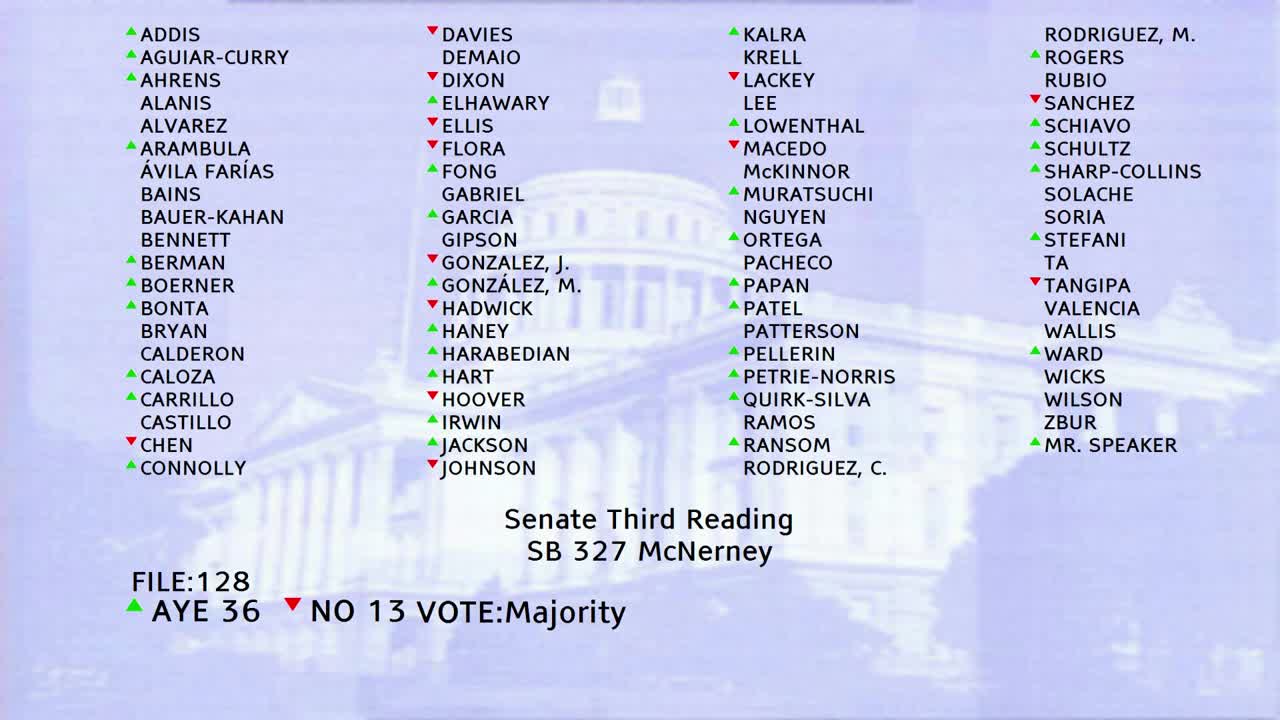 3MIN
Assembly Floor
 3MIN
Senate Floor
 18MIN
Senate Standing Committee on Public Safety
 56MIN
Senate Standing Committee on Health
 4MIN
Assembly Floor
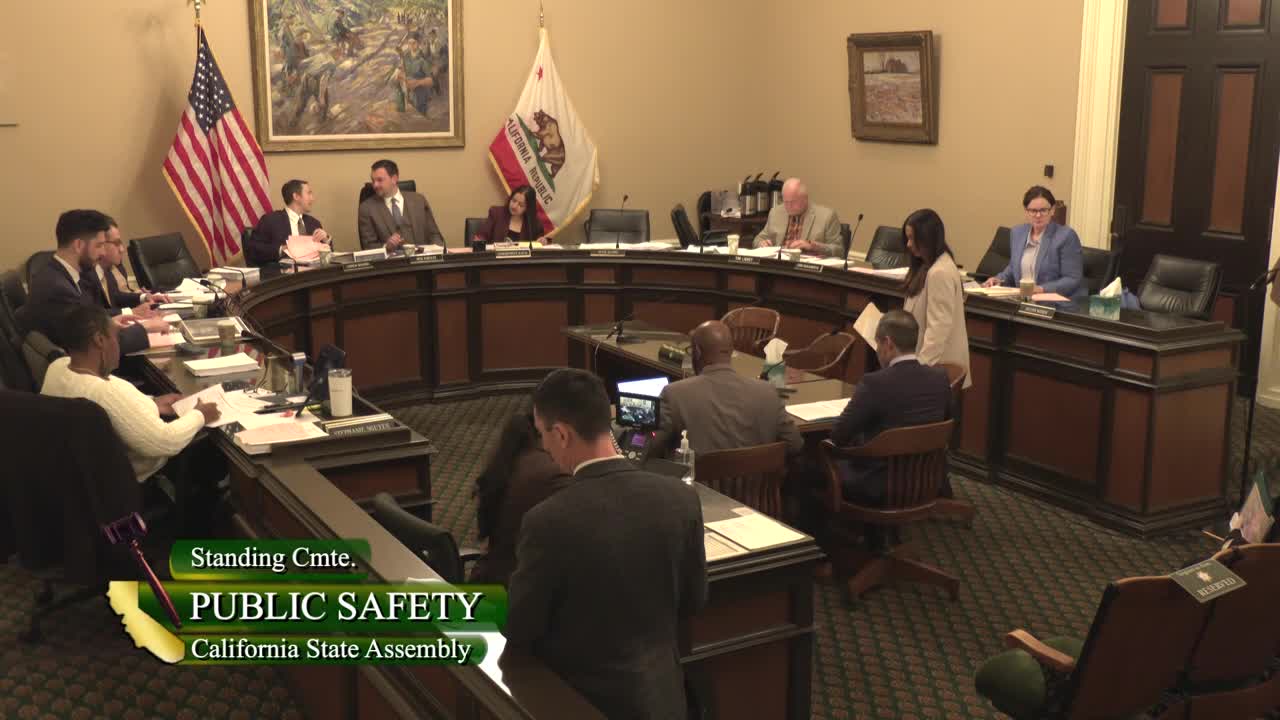 27MIN
Assembly Standing Committee on Public Safety
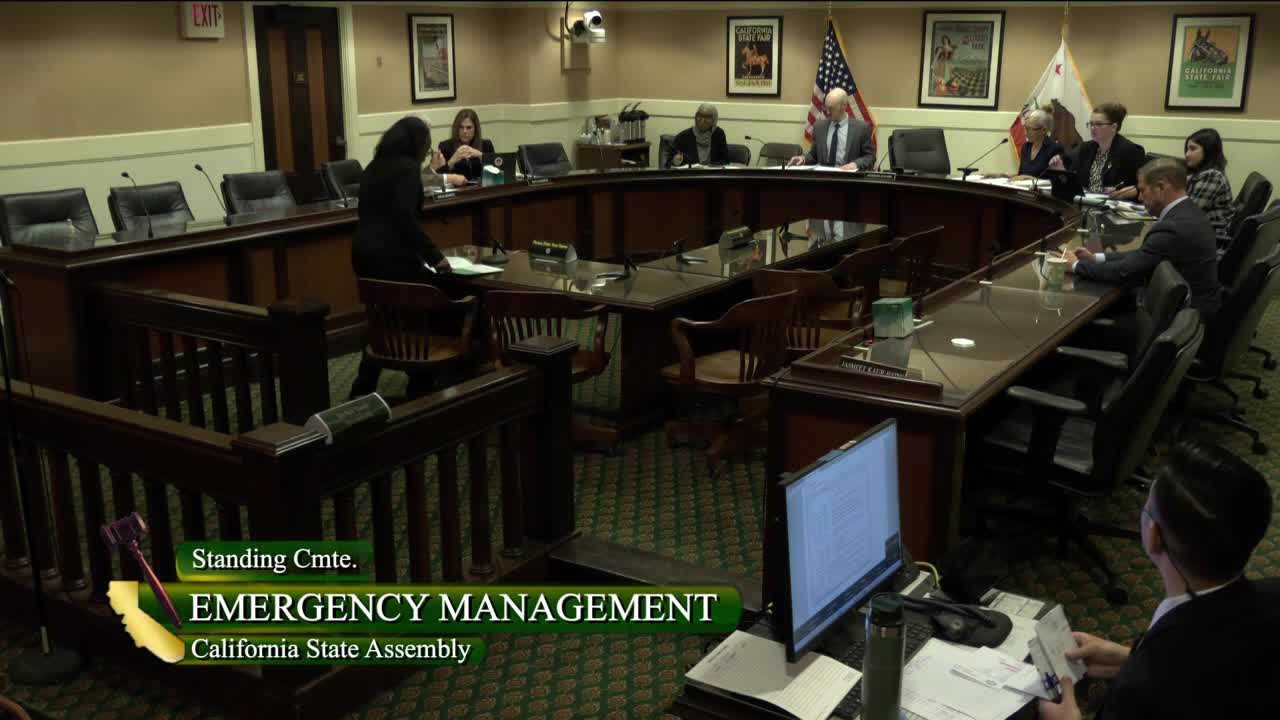 24MIN
Assembly Standing Committee on Emergency Management
Bill Author

Bill Co-Author(s):