AB 247: Incarcerated individual hand crew members: wages.
- Session Year: 2025-2026
- House: Assembly
- Latest Version Date: 2025-10-13
Current Status:
Passed
(2025-10-13: Chaptered by Secretary of State - Chapter 681, Statutes of 2025.)
Introduced
In Committee
Awaiting First Chamber Vote
Passed First Chamber
In Committee
Awaiting Second Chamber Vote
Passed Second Chamber
Enacted
What does this bill do?
The bill requires inmate firefighters and youth hand crew members placed at the Pine Grove Youth Conservation Camp to be paid $7.25 per hour while they are assigned to active fire incidents. That pay is in addition to existing time-off credits that reduce their jail or prison time, must be reviewed annually, and the Department of Corrections and Rehabilitation and counties must keep procedures to resolve disputes over sums owed.
The summary is provided by generative AI which can make mistakes. For original language, please view the details in the table below.
Under existing law, a prisoner can reduce their term of imprisonment by earning credit for, among other things, continuous incarceration, good behavior, and participation in approved rehabilitative programming. Existing law makes an inmate of a county jail or state prison who has completed training for assignment to a conservation camp, state or county facility, or a correctional institution as an inmate firefighter, or who is assigned to a state or county facility or a correctional institution as an inmate firefighter, and who is eligible to earn one day of credit for every one day of incarceration, instead eligible to earn 2 days of credit for every one day served in that assignment or after completing that training.
Existing law authorizes a juvenile court to order placement of a ward at the Pine Grove Youth Conservation Camp if specified criteria are met, including if the county has entered into a contract with the Department of Corrections and Rehabilitation and the department has found the ward amenable. Existing law authorizes the department to enter into contracts with counties to operate the Pine Grove Youth Conservation Camp through a state-local partnership, or other management arrangement, to train justice-involved youth, as specified, in wildland firefighting skills.
This bill would require an incarcerated individual hand crew member, in addition to receiving credits, and a ward or youth hand crew member placed at the Pine Grove Youth Conservation Camp to be paid an hourly wage equal to $7.25 while assigned to an active fire incident. The bill would require that wage rate to be reviewed annually. The bill would require the Department of Corrections and Rehabilitation and counties to maintain regulations regarding an administrative adjudication and remedy process for any disputes over sums owned pursuant to these provisions.
This bill would declare that it is to take effect immediately as an urgency statute.
Under existing law, a prisoner can reduce their term of imprisonment by earning credit for, among other things, continuous incarceration, good behavior, and participation in approved rehabilitative programming. Existing law makes an inmate of a county jail or state prison who has completed training for assignment to a conservation camp, state or county facility, or a correctional institution as an inmate firefighter, or who is assigned to a state or county facility or a correctional institution as an inmate firefighter, and who is eligible to earn one day of credit for every one day of incarceration, instead eligible to earn 2 days of credit for every one day served in that assignment or after completing that training.
Existing law authorizes a juvenile court to order placement of a ward at the Pine Grove Youth Conservation Camp if specified criteria are met, including if the county has entered into a contract with the Department of Corrections and Rehabilitation and the department has found the ward amenable. Existing law authorizes the department to enter into contracts with counties to operate the Pine Grove Youth Conservation Camp through a state-local partnership, or other management arrangement, to train justice-involved youth, as specified, in wildland firefighting skills.
This bill would require an incarcerated individual hand crew member, in addition to receiving credits, and a ward or youth hand crew member placed at the Pine Grove Youth Conservation Camp to be paid an hourly wage equal to $7.25 while assigned to an active fire incident. The bill would require that wage rate to be updated reviewed annually. The bill would require the Department of Corrections and Rehabilitation and counties to maintain regulations regarding an administrative adjudication and remedy process for any disputes over sums owned pursuant to these provisions.
This bill would declare that it is to take effect immediately as an urgency statute.
Under existing law, a prisoner can reduce their term of imprisonment by earning credit for, among other things, continuous incarceration, good behavior, and participation in approved rehabilitative programming. Existing law makes an inmate of a county jail or state prison who has completed training for assignment to a conservation camp, state or county facility, or a correctional institution as an inmate firefighter, or who is assigned to a state or county facility or a correctional institution as an inmate firefighter, and who is eligible to earn one day of credit for every one day of incarceration, instead eligible to earn 2 days of credit for every one day served in that assignment or after completing that training.
Existing law authorizes a juvenile court to order placement of a ward at the Pine Grove Youth Conservation Camp if specified criteria are met, including if the county has entered into a contract with the Department of Corrections and Rehabilitation and the department has found the ward amenable. Existing law authorizes the department to enter into contracts with counties to operate the Pine Grove Youth Conservation Camp through a state-local partnership, or other management arrangement, to train justice-involved youth, as specified, in wildland firefighting skills.
This bill would require an incarcerated individual hand crew member, in addition to receiving credits, and a ward or youth placed at the Pine Grove Youth Conservation Camp to be paid an hourly wage equal to $7.25 while assigned to an active fire incident. The bill would require that wage rate to be updated annually.
This bill would declare that it is to take effect immediately as an urgency statute.
Under existing law, a prisoner can reduce their term of imprisonment by earning credit for, among other things, continuous incarceration, good behavior, and participation in approved rehabilitative programming. Existing law makes an inmate of a county jail or state prison who has completed training for assignment to a conservation camp, state or county facility facility, or a correctional institution as an inmate firefighter, or who is assigned to a state or county facility or a correctional institution as an inmate firefighter, and who is eligible to earn one day of credit for every one day of incarceration, instead eligible to earn 2 days of credit for every one day served in that assignment or after completing that training.
Existing law authorizes a juvenile court to order placement of a ward at the Pine Grove Youth Conservation Camp if specified criteria are met, including if the county has entered into a contract with the Department of Corrections and Rehabilitation and the department has found the ward amenable. Existing law authorizes the department to enter into contracts with counties to operate the Pine Grove Youth Conservation Camp through a state-local partnership, or other management arrangement, to train justice-involved youth, as specified, in wildland firefighting skills.
This bill would require an incarcerated individual hand crew member, in addition to receiving credits, and a ward or youth placed at the Pine Grove Youth Conservation Camp to be paid an hourly wage equal to $7.25 while assigned to an active fire incident. The bill would require that wage rate to be updated annually.
Under existing law, a prisoner can reduce their term of imprisonment by earning credit for, among other things, continuous incarceration, good behavior, and participation in approved rehabilitative programming. Existing law makes an inmate of a county jail who has completed training for assignment to a state or county facility as an inmate firefighter, or who is assigned to a state or county facility as an inmate firefighter, and who is eligible to earn one day of credit for every one day of incarceration, instead eligible to earn 2 days of credit for every one day served in that assignment or after completing that training.
This bill would require an incarcerated individual hand crew member, in addition to receiving credits, to be paid an hourly wage equal to $19 $7.25 while assigned to an active fire incident. The bill would require that wage rate to be updated annually.
Under existing law, a prisoner can reduce their term of imprisonment by earning credit for, among other things, continuous incarceration, good behavior, and participation in approved rehabilitative programming. Existing law makes an inmate of a county jail who has completed training for assignment to a state or county facility as an inmate firefighter, or who is assigned to a state or county facility as an inmate firefighter, and who is eligible to earn one day of credit for every one day of incarceration, instead eligible to earn 2 days of credit for every one day served in that assignment or after completing that training.
This bill would require the above-described inmate firefighters, an incarcerated individual hand crew member, in addition to receiving credits, to be paid an hourly wage equal to the lowest nonincarcerated firefighter in the state for the time that they are actively fighting a fire. $19 while assigned to an active fire incident. The bill would require that wage rate to be updated annually.
Under existing law, a prisoner can reduce their term of imprisonment by earning credit for, among other things, continuous incarceration, good behavior, and participation in approved rehabilitative programming. Existing law makes an inmate of a county jail who has completed training for assignment to a state or county facility as an inmate firefighter, or who is assigned to a state or county facility as an inmate firefighter, and who is eligible to earn one day of credit for every one day of incarceration, instead eligible to earn 2 days of credit for every one day served in that assignment or after completing that training.
This bill would require the above-described inmate firefighters, in addition to receiving credits, to be paid an hourly wage equal to the lowest nonincarcerated firefighter in the state for the time that they are actively fighting a fire.
In addition to the credits received pursuant to subdivision (b) of Section 2933.3, incarcerated individual hand crew members shall be paid an hourly wage equal to seven dollars and twenty-five cents ($7.25) while assigned to an active fire incident. The wage rate shall be reviewed annually.
SEC. 2.Section 4019.2 of the Penal Code is amended to read:4019.2.(a)Notwithstanding any other law, any inmate sentenced to county jail assigned to a conservation camp by a sheriff and who is eligible to earn one day of credit for every one day of incarceration pursuant to Section 4019 shall instead earn two days of credit for every one day of service.
(b)Notwithstanding any other law, any inmate who has completed training for assignment to a conservation camp or to a state or county facility as an inmate firefighter or who is assigned to a county or state correctional institution as an inmate firefighter and who is eligible to earn one day of credit for every one day of incarceration pursuant to Section 4019 shall instead earn two days of credit for every one day served in that assignment or after completing that training.
(c)(1)In addition to the credits received pursuant to subdivision (b), incarcerated individual hand crew members shall be paid an hourly wage equal to seven dollars and twenty-five cents ($7.25) while assigned to an active fire incident. The wage rate shall be reviewed annually.
(2)The Department of Corrections and Rehabilitation shall maintain regulations regarding an administrative adjudication and remedy process for any dispute over sums owed pursuant to this section for incarcerated individual hand crew members assigned to a state conservation camp, facility, or institution.
(3)A county shall maintain regulations regarding an administrative adjudication and remedy process for any disputes over sums owed pursuant to this section for incarcerated individual hand crew members assigned to that countys conservation camp, facility, or institution.
(d)In addition to credits granted pursuant to subdivision (a) or (b), inmates who have successfully completed training for firefighter assignments shall receive a credit reduction from their term of confinement.
(e)The credits authorized in subdivisions (b) and (d) shall only apply to inmates who are eligible after October 1, 2011.
SEC. 3.Section 1760.46 is added to the Welfare and Institutions Code, to read:1760.46.(a)A ward or youth hand crew member placed at the Pine Grove Youth Conservation Camp pursuant to Section 730, Section 875, or Section 1760.45 shall be paid an hourly wage equal to seven dollars and twenty-five cents ($7.25) while assigned to an active fire incident. The wage rate shall be reviewed annually.
(b)The Department of Corrections and Rehabilitation shall maintain regulations regarding an administrative adjudication and remedy process for any disputes over sums owed pursuant to this section.
SEC. 4.This act is an urgency statute necessary for the immediate preservation of the public peace, health, or safety within the meaning of Article IV of the California Constitution and shall go into immediate effect. The facts constituting the necessity are:
To ensure that resources are ready and available to combat Californias wildfires, it is necessary that this act take effect immediately.
In addition to the credits received pursuant to subdivision (b) of Section 2933.3, incarcerated individual hand crew members shall be paid an hourly wage equal to seven dollars and twenty-five cents ($7.25) while assigned to an active fire incident. The wage rate shall be updated reviewed annually.
SEC. 2.Section 4019.2 of the Penal Code is amended to read:4019.2.(a)Notwithstanding any other law, any inmate sentenced to county jail assigned to a conservation camp by a sheriff and who is eligible to earn one day of credit for every one day of incarceration pursuant to Section 4019 shall instead earn two days of credit for every one day of service.
(b)Notwithstanding any other law, any inmate who has completed training for assignment to a conservation camp or to a state or county facility as an inmate firefighter or who is assigned to a county or state correctional institution as an inmate firefighter and who is eligible to earn one day of credit for every one day of incarceration pursuant to Section 4019 shall instead earn two days of credit for every one day served in that assignment or after completing that training.
(c)(1)In addition to the credits received pursuant to subdivision (b), incarcerated individual hand crew members shall be paid an hourly wage equal to seven dollars and twenty-five cents ($7.25) while assigned to an active fire incident. The wage rate shall be updated reviewed annually.
(2)The Department of Corrections and Rehabilitation shall maintain regulations regarding an administrative adjudication and remedy process for any dispute over sums owed pursuant to this section for incarcerated individual hand crew members assigned to a state conservation camp, facility, or institution.
(3)A county shall maintain regulations regarding an administrative adjudication and remedy process for any disputes over sums owed pursuant to this section for incarcerated individual hand crew members assigned to that countys conservation camp, facility, or institution.
(d)In addition to credits granted pursuant to subdivision (a) or (b), inmates who have successfully completed training for firefighter assignments shall receive a credit reduction from their term of confinement.
(e)The credits authorized in subdivisions (b) and (d) shall only apply to inmates who are eligible after October 1, 2011.
SEC. 3.Section 1760.46 is added to the Welfare and Institutions Code, to read:1760.46.(a)A ward or youth hand crew member placed at the Pine Grove Youth Conservation Camp pursuant to Section 730, Section 875, or Section 1760.45 shall be paid an hourly wage equal to seven dollars and twenty-five cents ($7.25) while assigned to an active fire incident. The wage rate shall be updated reviewed annually.
(b)The Department of Corrections and Rehabilitation shall maintain regulations regarding an administrative adjudication and remedy process for any disputes over sums owed pursuant to this section.
SEC. 4.This act is an urgency statute necessary for the immediate preservation of the public peace, health, or safety within the meaning of Article IV of the California Constitution and shall go into immediate effect. The facts constituting the necessity are:
To ensure that resources are ready and available to combat Californias wildfires, it is necessary that this act take effect immediately.
In addition to the credits received pursuant to subdivision (b) of Section 2933.3, incarcerated individual hand crew members shall be paid an hourly wage equal to seven dollars and twenty-five cents ($7.25) while assigned to an active fire incident. The wage rate shall be updated annually.
SEC. 2.Section 4019.2 of the Penal Code is amended to read:4019.2.(a)Notwithstanding any other law, any inmate sentenced to county jail assigned to a conservation camp by a sheriff and who is eligible to earn one day of credit for every one day of incarceration pursuant to Section 4019 shall instead earn two days of credit for every one day of service.
(b)Notwithstanding any other law, any inmate who has completed training for assignment to a conservation camp or to a state or county facility as an inmate firefighter or who is assigned to a county or state correctional institution as an inmate firefighter and who is eligible to earn one day of credit for every one day of incarceration pursuant to Section 4019 shall instead earn two days of credit for every one day served in that assignment or after completing that training.
(c)In addition to the credits received pursuant to subdivision (b), incarcerated individual hand crew members shall be paid an hourly wage equal to seven dollars and twenty-five cents ($7.25) while assigned to an active fire incident. The wage rate shall be updated annually.
(d)In addition to credits granted pursuant to subdivision (a) or (b), inmates who have successfully completed training for firefighter assignments shall receive a credit reduction from their term of confinement.
(e)The credits authorized in subdivisions (b) and (d) shall only apply to inmates who are eligible after October 1, 2011.
SEC. 3.Section 1760.46 is added to the Welfare and Institutions Code, to read:1760.46.A ward or youth placed at the Pine Grove Youth Conservation Camp pursuant to Section 730, Section 875, or Section 1760.45 shall be paid an hourly wage equal to seven dollars and twenty-five cents ($7.25) while assigned to an active fire incident. The wage rate shall be updated annually.
SEC. 4.This act is an urgency statute necessary for the immediate preservation of the public peace, health, or safety within the meaning of Article IV of the California Constitution and shall go into immediate effect. The facts constituting the necessity are:
To ensure that resources are ready and available to combat Californias wildfires, it is necessary that this act take effect immediately.
In addition to the credits received pursuant to subdivision (b) of Section 2933.3, incarcerated individual hand crew members shall be paid an hourly wage equal to seven dollars and twenty-five cents ($7.25) while assigned to an active fire incident. The wage rate shall be updated annually.
SECTION 1.SEC. 2.Section 4019.2 of the Penal Code is amended to read:4019.2.(a)Notwithstanding any other law, any inmate sentenced to county jail assigned to a conservation camp by a sheriff and who is eligible to earn one day of credit for every one day of incarceration pursuant to Section 4019 shall instead earn two days of credit for every one day of service.
(b)Notwithstanding any other law, any inmate who has completed training for assignment to a conservation camp or to a state or county facility as an inmate firefighter or who is assigned to a county or state correctional institution as an inmate firefighter and who is eligible to earn one day of credit for every one day of incarceration pursuant to Section 4019 shall instead earn two days of credit for every one day served in that assignment or after completing that training.
(c)In addition to the credits received pursuant to subdivision (b), incarcerated individual hand crew members shall be paid an hourly wage equal to seven dollars and twenty-five cents ($7.25) while assigned to an active fire incident. The wage rate shall be updated annually.
(d)In addition to credits granted pursuant to subdivision (a) or (b), inmates who have successfully completed training for firefighter assignments shall receive a credit reduction from their term of confinement.
(e)The credits authorized in subdivisions (b) and (d) shall only apply to inmates who are eligible after October 1, 2011.
SEC. 3.Section 1760.46 is added to the Welfare and Institutions Code, to read:1760.46.A ward or youth placed at the Pine Grove Youth Conservation Camp pursuant to Section 730, Section 875, or Section 1760.45 shall be paid an hourly wage equal to seven dollars and twenty-five cents ($7.25) while assigned to an active fire incident. The wage rate shall be updated annually.
REVISIONS: HeadingLine 4. CORRECTIONS: HeadingLines 4 and 5.(a)Notwithstanding any other law, any inmate sentenced to county jail assigned to a conservation camp by a sheriff and who is eligible to earn one day of credit for every one day of incarceration pursuant to Section 4019 shall instead earn two days of credit for every one day of service.
(b)Notwithstanding any other law, any inmate who has completed training for assignment to a conservation camp or to a state or county facility as an inmate firefighter or who is assigned to a county or state correctional institution as an inmate firefighter and who is eligible to earn one day of credit for every one day of incarceration pursuant to Section 4019 shall instead earn two days of credit for every one day served in that assignment or after completing that training.
(c)In addition to the credits received pursuant to subdivision (b), incarcerated individual hand crew members shall be paid an hourly wage equal to nineteen dollars ($19) seven dollars and twenty-five cents ($7.25) while assigned to an active fire incident. The wage rate shall be updated annually.
(d)In addition to credits granted pursuant to subdivision (a) or (b), inmates who have successfully completed training for firefighter assignments shall receive a credit reduction from their term of confinement.
(e)The credits authorized in subdivisions (b) and (d) shall only apply to inmates who are eligible after October 1, 2011.
(a)Notwithstanding any other law, any inmate sentenced to county jail assigned to a conservation camp by a sheriff and who is eligible to earn one day of credit for every one day of incarceration pursuant to Section 4019 shall instead earn two days of credit for every one day of service.
(b)Notwithstanding any other law, any inmate who has completed training for assignment to a conservation camp or to a state or county facility as an inmate firefighter or who is assigned to a county or state correctional institution as an inmate firefighter and who is eligible to earn one day of credit for every one day of incarceration pursuant to Section 4019 shall instead earn two days of credit for every one day served in that assignment or after completing that training.
(c)In addition to the credits received pursuant to subdivision (b), inmate firefighters incarcerated individual hand crew members shall be paid an hourly wage equal to the lowest nonincarcerated firefighter wage in the State of California for the time that they are actively fighting a fire. The lowest firefighter wage nineteen dollars ($19) while assigned to an active fire incident. The wage rate shall be updated annually.
(d)In addition to credits granted pursuant to subdivision (a) or (b), inmates who have successfully completed training for firefighter assignments shall receive a credit reduction from their term of confinement.
(e)The credits authorized in subdivisions (b) and (d) shall only apply to inmates who are eligible after October 1, 2011.
REVISIONS: HeadingLine 2.(a)Notwithstanding any other law, any inmate sentenced to county jail assigned to a conservation camp by a sheriff and who is eligible to earn one day of credit for every one day of incarceration pursuant to Section 4019 shall instead earn two days of credit for every one day of service.
(b)Notwithstanding any other law, any inmate who has completed training for assignment to a conservation camp or to a state or county facility as an inmate firefighter or who is assigned to a county or state correctional institution as an inmate firefighter and who is eligible to earn one day of credit for every one day of incarceration pursuant to Section 4019 shall instead earn two days of credit for every one day served in that assignment or after completing that training.
(c)In addition to the credits received pursuant to subdivision (b), inmate firefighters shall be paid an hourly wage equal to the lowest nonincarcerated firefighter wage in the State of California for the time that they are actively fighting a fire. The lowest firefighter wage shall be updated annually.
(c)(d)In addition to credits granted pursuant to subdivision (a) or (b), inmates who have successfully completed training for firefighter assignments shall receive a credit reduction from his or her their term of confinement.
(d)(e)The credits authorized in subdivisions (b) and (c) (d) shall only apply to inmates who are eligible after October 1, 2011.
|
Date
|
Status
|
|---|---|
| Oct 13, 2025 | Chaptered by Secretary of State - Chapter 681, Statutes of 2025. |
| Oct 13, 2025 | Approved by the Governor. |
| Sep 23, 2025 | Enrolled and presented to the Governor at 4 p.m. |
| Sep 11, 2025 | Urgency clause adopted. Senate amendments concurred in. To Engrossing and Enrolling. (Ayes 78. Noes 0. Page 3301.). |
| Sep 10, 2025 | In Assembly. Concurrence in Senate amendments pending. |
| Sep 10, 2025 | Read third time. Urgency clause adopted. Passed. Ordered to the Assembly. (Ayes 39. Noes 0. Page 2825.). |
| Sep 8, 2025 | Read second time. Ordered to third reading. |
| Sep 5, 2025 | Read third time and amended. Ordered to second reading. |
| Aug 29, 2025 | Read second time. Ordered to third reading. |
| Aug 29, 2025 | From committee: Do pass. (Ayes 7. Noes 0.) (August 29). |
| Aug 18, 2025 | In committee: Referred to suspense file. |
| Jul 8, 2025 | From committee: Do pass and re-refer to Com. on APPR. (Ayes 6. Noes 0.) (July 8). Re-referred to Com. on APPR. |
| Jun 27, 2025 | From committee chair, with author's amendments: Amend, and re-refer to committee. Read second time, amended, and re-referred to Com. on PUB. S. |
| Jun 18, 2025 | Referred to Com. on PUB. S. |
| Jun 9, 2025 | In Senate. Read first time. To Com. on RLS. for assignment. |
| Jun 5, 2025 | Read third time. Passed. Ordered to the Senate. (Ayes 74. Noes 0. Page 2113.) |
| Jun 4, 2025 | Measure version as amended on May 28 corrected. |
| Jun 4, 2025 | Read second time. Ordered to third reading. |
| Jun 3, 2025 | From committee: Do pass. (Ayes 9. Noes 0.) (June 3). |
| Jun 3, 2025 | Coauthors revised. |
| Jun 2, 2025 | Re-referred to Com. on APPR. pursuant to Assembly Rule 77.2. |
| Jun 2, 2025 | Joint Rule 62(a) suspended. (Ayes 55. Noes 6. Page 1871.) |
| May 28, 2025 | Read third time and amended. Ordered to third reading. (Page 1756.) |
| May 27, 2025 | Read second time. Ordered to third reading. |
| May 23, 2025 | Assembly Rule 63 suspended. (Ayes 51. Noes 16. Page 1644.) |
| May 23, 2025 | From committee: Amend, and do pass as amended. (Ayes 12. Noes 2.) (May 23). |
| May 23, 2025 | Read second time and amended. Ordered returned to second reading. |
| Apr 30, 2025 | In committee: Set, first hearing. Referred to suspense file. |
| Mar 11, 2025 | From committee: Do pass and re-refer to Com. on APPR. (Ayes 8. Noes 0.) (March 11). Re-referred to Com. on APPR. |
| Mar 11, 2025 | Coauthors revised. |
| Mar 6, 2025 | Re-referred to Com. on PUB. S. |
| Mar 5, 2025 | From committee chair, with author's amendments: Amend, and re-refer to Com. on PUB. S. Read second time and amended. |
| Mar 4, 2025 | In committee: Set, first hearing. Hearing canceled at the request of author. |
| Feb 10, 2025 | Referred to Com. on PUB. S. |
| Jan 16, 2025 | From printer. May be heard in committee February 15. |
| Jan 15, 2025 | Read first time. To print. |
|
Date
|
Description
|
Location
|
Votes
|
|
|---|---|---|---|---|
| Sep 11, 2025 | AB 247 Bryan Concurrence - Urgency Added | Assembly Floor |
Passed |
|
| Sep 10, 2025 | Assembly 3rd Reading AB247 Bryan et al. By Pérez Urgency Clause | Senate Floor |
Passed |
|
| Aug 29, 2025 | Do pass | Senate Standing Committee on Appropriations |
Passed |
|
| Aug 18, 2025 | Placed on suspense file | Senate Standing Committee on Appropriations |
Passed |
|
| Jul 8, 2025 | Do pass, but first be re-referred to the Committee on [Appropriations] | Senate Standing Committee on Public Safety |
Passed |
|
| Jun 5, 2025 | AB 247 Bryan Assembly Third Reading | Assembly Floor |
Passed |
|
| Jun 3, 2025 | Do pass. | Assembly Standing Committee on Appropriations |
Passed |
|
| May 23, 2025 | Do pass as amended. | Assembly Standing Committee on Appropriations |
Passed |
|
| Mar 11, 2025 | Do pass and be re-referred to the Committee on [Appropriations] | Assembly Standing Committee on Public Safety |
Passed |
This list shows positions taken on this bill by organizations on the date displayed, which is linked to the original source.
Positions by individuals are not included.
|
Organization
|
Position
|
Date
|
|---|---|---|
| A New Way of Life Re-Entry Project | ** Support | |
| Aclu California Action | ** Support | |
| Alliance for Boys and Men of Color | ** Support | |
| Anti-Recidivism Coalition | ** Support | |
| Asian Americans Advancing Justice Southern California | ** Support | |
| California Attorneys For Criminal Justice | ** Support | |
| California Coalition for Women Prisoners | ** Support | |
| California for Safety and Justice | ** Support | |
| California Forestry Association | ** Support | |
| California Immigrant Policy Center | ** Support | |
| California Innocence Coalition | ** Support | |
| California Public Defenders Association | ** Support | |
| California State Sheriff's Association | ** Against | |
| California Youth Defender Center | ** Support | |
| Californians United for a Responsible Budget | ** Support | |
| Catalyst California | ** Support | |
| Center for Employment Opportunities | ** Support | |
| Center on Juvenile and Criminal Justice | ** Support | |
| Communities United for Restorative Youth Justice | ** Support | |
| Courage California | ** Support | |
| Debt Free Justice California | ** Support | |
| Democratic Party of the San Fernando Valley | ** Support | |
| Diversity, Inc. | ** Support | |
| East Bay Community Law Center | ** Support | |
| Ella Baker Center For Human Rights | ** Support | |
| End Poverty In California Action Aka Epic Action A Project Of Tides Advocacy | ** Support | |
| Essie Justice Group | ** Support | |
| Fresh Lifelines for Youth | ** Support | |
| Friends Committee On Legislation Of California | ** Support | |
| Grip Training Institute | ** Support | |
| Initiate Justice | ** Support | |
| Justice2jobs Coalition | ** Support | |
| LA Defensa | ** Support | |
| Land Together | ** Support | |
| League Of Women Voters Of California | ** Support | |
| Legal Services for Prisoners with Children | ** Support | |
| Local 148 La County Public Defenders Union | ** Support | |
| Los Angeles County Democratic Party | ** Support | |
| Michelson Center For Public Policy | ** Support | |
| NextGen California | ** Support | |
| One Fair Wage | ** Support | |
| Prosecutors Alliance of California | ** Support | |
| Root and Rebound Reentry Advocates | ** Support | |
| Rubicon Programs | ** Support | |
| Ryse Center | ** Support | |
| San Francisco Public Defender | ** Support | |
| Sister Warriors Freedom Coalition | ** Support | |
| Smart Justice California | ** Support | |
| The California State Sheriffs Association | ** Against | |
| The Forestry and Fire Recruitment Program | ** Support | |
| The W. Haywood Burns Institute | ** Support | |
| University of San Francisco School of Law Racial Justice Clinic | ** Support | |
| Vera Institute Of Justice | ** Support | |
| Western Center on Law & Poverty, INC. | ** Support |
CONCURRENCE IN SENATE AMENDMENTS
CSA1 Bill Id:AB 247
Author:(Bryan)
As Amended Ver:September 5, 2025
2/3 vote. Urgency
SUMMARY
Requires incarcerated individual hand crew members from county jails and state prison, and youth placed at the Pine Grove Youth Conservation Camp, to be paid an hourly wage of $7.25 while assigned to an active fire incident and to have the wage rate updated on an annual basis.
Senate Amendments
- Require that individual hand crew members incarcerated in a state prison or county jail, or a ward hand crew member placed at Pine Grove Youth Conservation Camp, be paid an hourly wage of $7.25 while assigned to an active fire incident.
- Requires the California Department of Corrections and Rehabilitation and counties to maintain regulations regarding an administrative adjudication and remedy process for any dispute over sums owed, as specified, for incarcerated individual hand crew members assigned to a conservation camp, facility, or institution.
- Add an urgency clause and make technical changes.
COMMENTS
According to the Author
"Incarcerated people who fight fires heroically step forward to protect communities statewide. They currently earn $5 to $10 per day. Crews typically work grueling 24-hour shifts – although this year's Los Angeles fires saw many working double that. AB 247 will ensure that incarcerated people on the front line of fire disasters receive fair compensation for their invaluable service during devastating fires. This bill is a step forward in recognizing and compensating the essential work that incarcerated workers do for our state during unprecedented disasters."
Arguments in Support
According to Initiate Justice, a cosponsor of this bill, "We believe this legislation strikes at the heart of the many injustices facing incarcerated firefighters, who demonstrate the same level of bravery, sacrifice, and commitment to protecting our communities as non-incarcerated firefighters, yet face extreme disparities in pay.
"Initiate Justice fights to end mass incarceration by activating the political power of those directly impacted by it. Reaching over 60,000 people currently incarcerated in California's state prisons and training hundreds of advocates inside and outside of our prisons, we advocate for policy change that centers the lived experiences of those most affected by incarceration. Incarcerated people are too often seen as disposable, and are not recognized for their positive contributions to our communities.
"The state of California has relied on incarcerated labor since its inception, and specifically for fire response for nearly 100 years. Known as the Conservation Camp Program, it is a program jointly run by the Department of Corrections and Rehabilitation (CDCR) and the California Department of Forestry and Fire Protection (CAL FIRE). During the height of the program, prior to many of the policy reforms enacted by the Legislature towards reducing the state prison population, as many as a third of all CAL FIRE firefighters were incarcerated.
"Incarcerated firefighters normally work on what are known as 'hand crews' conducting the grueling work of charting paths to slow the spread of fires usinghand tools such as chainsaws, axes, and shovels. They are tasked with cutting down fire lines and removing "fuel" (i.e. debris like dead branches and leaves) from close to structures. During active deployments, incarcerated hand crews are often working 24-hour shifts right alongside non-incarcerated firefighters.
"While the prison population - including the population of people in fire camps and houses - has reduced in recent years as a result of positive reforms, incarcerated firefighters continue to play a vital role in our state's response to these emergencies. Indeed, as Los Angeles County faced the most destructive wildfires in its history in January 2025, over 1,100 of the firefighters deployed to assist the city and county in its response were incarcerated.
"Despite the enormity of our state's reliance on these firefighters, people in prison who are fire crew members are paid as little as $5.80 per day by CDCR, and receive a shamefully low additional $1 per hour, paid by CAL FIRE, during their active deployment. By increasing their pay to equal what the lowest paid non-incarcerated firefighter receives during active deployment, AB 247 takes a strong step towards ending the exploitative pay inequities that exist.
"Our incarcerated firefighters deserve dignity in pay for their relentless work in safeguarding our lives, communities, and properties." (citations omitted)
Arguments in Opposition
The California State Sheriff's Association states, "Under existing law, any inmate who has completed training for assignment to a conservation camp or to a state or county facility as an inmate firefighter or who is assigned to a county or state correctional institution as an inmate firefighter shall earn two days of credit for every one day served in that assignment or after completing that training.
"We recognize the contribution made by inmate firefighters and in return for their service, these inmates earn very generous early release credits that reduce their sentences. Every day served in this role earns two additional days of credit, meaning an inmate would only serve one-third of their sentence for the time they qualify.
"AB 247 could also create significant fiscal pressure on counties already facing challenging budget times. Counties, if they are to be responsible for paying this new wage, would be forced to consider a substantial new cost when determining if and how to deploy inmate firefighters."
FISCAL COMMENTS
According to the Senate Appropriations Committee:
- The California Department of Corrections and Rehabilitation (CDCR) indicates that, as of July 2025, approximately 1,997 incarcerated individuals are assigned to conservation camps, with around 1,150 qualified as fire line hand crew members. In addition to hand crews, participants may also serve in support and maintenance roles such as cooks, laundry workers, landscapers, and water treatment plant operators. It is unclear how significantly increasing the hourly rate of pay will impact the population at the camps as it could create further incentives for eligible individuals to participate in the camp program. Currently, CDCR pays incarcerated firefighters a daily rate ranging $5.80 to $10.24, depending on the role. In addition to this daily rate, incarcerated hand crew members are paid $1.00 per hour while actively engaged in fire suppression. This equates to total wages of $29.80 to $34.24 for a 24-hour shift on an active fire. CDCR notes that, while future fire season severity is difficult to predict, the table below reflects the estimated cost impact of increasing the hourly wage from $1.00/hr. to $7.25/hr. based on prior calendar years:
Calendar Year | CDCR Contributed Labor Response Hours | Current Hourly Wage Costs ($1.00/hr.) | Proposed Hourly Wage Costs ($7.25/hr.) | Difference/Expected Increase |
2020 | 2,095,453 | $2,095,453 | $15,192,034 | $13,096,581 |
2021 | 1,372,819 | $1,372,819 | $9,952,938 | $8,580,119 |
2022 | 839,986 | $839,986 | $6,089,899 | $5,249,913 |
2023 | 781,689 | $781,689 | $5,667,245 | $4,885,556 |
2024 | 1,820,637 | $1,820,637 | $13,199,618 | $11,378,981 |
Five-Year Average | 1,382,117 | $1,382,117 | $10,020,347 | $8,638,230 |
The proposed wage increase could have tax implications for incarcerated individuals and may require CDCR to develop or enhance its accounting infrastructure to manage the changes. While the full scope of these impacts is currently unknown, they could be substantial and ongoing, likely $1 million at minimum to develop the necessary pay infrastructure, which will include necessary support staff and technology updates.
Since AB 247 includes an urgency clause and would take effect immediately upon enactment, the new wage structure would have to be implemented without the benefit of lead time. This accelerated timeline could create downstream cost pressures by requiring staff to expedite development or modification of accounting systems capable of managing adjusted wages and tax obligations. In the absence of existing infrastructure to support these functions, CDCR may need to divert resources, authorize temporary staffing, or contract with external vendors, which could contribute to additional, unanticipated fiscal impacts.
- Non-reimbursable local costs for increased pay for incarcerated firefighters in county custody.
VOTES:
ASM PUBLIC SAFETY: 8-0-1
YES: Schultz, Alanis, Mark González, Haney, Harabedian, Lackey, Nguyen, Sharp-Collins
ABS, ABST OR NV: Ramos
ASM APPROPRIATIONS: 9-0-6
YES: Wicks, Caloza, Elhawary, Fong, Mark González, Hart, Pacheco, Pellerin, Solache
ABS, ABST OR NV: Sanchez, Arambula, Calderon, Dixon, Ta, Tangipa
ASSEMBLY FLOOR: 74-0-5
YES: Addis, Aguiar-Curry, Ahrens, Alanis, Alvarez, Arambula, Ávila Farías, Bains, Bauer-Kahan, Bennett, Berman, Boerner, Bonta, Bryan, Calderon, Caloza, Carrillo, Castillo, Chen, Connolly, Davies, DeMaio, Dixon, Elhawary, Ellis, Flora, Fong, Gabriel, Gallagher, Garcia, Gipson, Jeff Gonzalez, Mark González, Hadwick, Haney, Harabedian, Hart, Hoover, Irwin, Jackson, Kalra, Krell, Lackey, Lee, Lowenthal, McKinnor, Muratsuchi, Nguyen, Pacheco, Papan, Patel, Patterson, Pellerin, Petrie-Norris, Quirk-Silva, Ransom, Celeste Rodriguez, Michelle Rodriguez, Rogers, Blanca Rubio, Sanchez, Schiavo, Schultz, Sharp-Collins, Solache, Soria, Stefani, Ta, Wallis, Ward, Wicks, Wilson, Zbur, Rivas
ABS, ABST OR NV: Macedo, Ortega, Ramos, Tangipa, Valencia
ASM APPROPRIATIONS: 12-2-1
YES: Wicks, Arambula, Calderon, Caloza, Dixon, Elhawary, Fong, Mark González, Hart, Pacheco, Pellerin, Solache
NO: Ta, Tangipa
ABS, ABST OR NV: Sanchez
UPDATED
VERSION: September 5, 2025
CONSULTANT: Samarpreet Kaur / PUB. S. / (916) 319-3744 FN: 0002005
CONCURRENCE IN SENATE AMENDMENTS
CSA1 Bill Id:AB 247
Author:(Bryan)
As Amended Ver:September 5, 2025
2/3 vote. Urgency
SUMMARY
Requires incarcerated individual hand crew members from county jails and state prison, and youth placed at the Pine Grove Youth Conservation Camp, to be paid an hourly wage of $7.25 while assigned to an active fire incident and to have the wage rate updated on an annual basis.
Senate Amendments
- Require that individual hand crew members incarcerated in a state prison or county jail, or a ward hand crew member placed at Pine Grove Youth Conservation Camp, be paid an hourly wage of $7.25 while assigned to an active fire incident.
- Requires the California Department of Corrections and Rehabilitation and counties to maintain regulations regarding an administrative adjudication and remedy process for any dispute over sums owed, as specified, for incarcerated individual hand crew members assigned to a conservation camp, facility, or institution.
- Add an urgency clause and make technical changes.
COMMENTS
According to the Author
"Incarcerated people who fight fires heroically step forward to protect communities statewide. They currently earn $5 to $10 per day. Crews typically work grueling 24-hour shifts – although this year's Los Angeles fires saw many working double that. AB 247 will ensure that incarcerated people on the front line of fire disasters receive fair compensation for their invaluable service during devastating fires. This bill is a step forward in recognizing and compensating the essential work that incarcerated workers do for our state during unprecedented disasters."
Arguments in Support
According to Initiate Justice, a cosponsor of this bill, "We believe this legislation strikes at the heart of the many injustices facing incarcerated firefighters, who demonstrate the same level of bravery, sacrifice, and commitment to protecting our communities as non-incarcerated firefighters, yet face extreme disparities in pay.
"Initiate Justice fights to end mass incarceration by activating the political power of those directly impacted by it. Reaching over 60,000 people currently incarcerated in California's state prisons and training hundreds of advocates inside and outside of our prisons, we advocate for policy change that centers the lived experiences of those most affected by incarceration. Incarcerated people are too often seen as disposable, and are not recognized for their positive contributions to our communities.
"The state of California has relied on incarcerated labor since its inception, and specifically for fire response for nearly 100 years. Known as the Conservation Camp Program, it is a program jointly run by the Department of Corrections and Rehabilitation (CDCR) and the California Department of Forestry and Fire Protection (CAL FIRE). During the height of the program, prior to many of the policy reforms enacted by the Legislature towards reducing the state prison population, as many as a third of all CAL FIRE firefighters were incarcerated.
"Incarcerated firefighters normally work on what are known as 'hand crews' conducting the grueling work of charting paths to slow the spread of fires usinghand tools such as chainsaws, axes, and shovels. They are tasked with cutting down fire lines and removing "fuel" (i.e. debris like dead branches and leaves) from close to structures. During active deployments, incarcerated hand crews are often working 24-hour shifts right alongside non-incarcerated firefighters.
"While the prison population - including the population of people in fire camps and houses - has reduced in recent years as a result of positive reforms, incarcerated firefighters continue to play a vital role in our state's response to these emergencies. Indeed, as Los Angeles County faced the most destructive wildfires in its history in January 2025, over 1,100 of the firefighters deployed to assist the city and county in its response were incarcerated.
"Despite the enormity of our state's reliance on these firefighters, people in prison who are fire crew members are paid as little as $5.80 per day by CDCR, and receive a shamefully low additional $1 per hour, paid by CAL FIRE, during their active deployment. By increasing their pay to equal what the lowest paid non-incarcerated firefighter receives during active deployment, AB 247 takes a strong step towards ending the exploitative pay inequities that exist.
"Our incarcerated firefighters deserve dignity in pay for their relentless work in safeguarding our lives, communities, and properties." (citations omitted)
Arguments in Opposition
The California State Sheriff's Association states, "Under existing law, any inmate who has completed training for assignment to a conservation camp or to a state or county facility as an inmate firefighter or who is assigned to a county or state correctional institution as an inmate firefighter shall earn two days of credit for every one day served in that assignment or after completing that training.
"We recognize the contribution made by inmate firefighters and in return for their service, these inmates earn very generous early release credits that reduce their sentences. Every day served in this role earns two additional days of credit, meaning an inmate would only serve one-third of their sentence for the time they qualify.
"AB 247 could also create significant fiscal pressure on counties already facing challenging budget times. Counties, if they are to be responsible for paying this new wage, would be forced to consider a substantial new cost when determining if and how to deploy inmate firefighters."
FISCAL COMMENTS
According to the Senate Appropriations Committee:
- The California Department of Corrections and Rehabilitation (CDCR) indicates that, as of July 2025, approximately 1,997 incarcerated individuals are assigned to conservation camps, with around 1,150 qualified as fire line hand crew members. In addition to hand crews, participants may also serve in support and maintenance roles such as cooks, laundry workers, landscapers, and water treatment plant operators. It is unclear how significantly increasing the hourly rate of pay will impact the population at the camps as it could create further incentives for eligible individuals to participate in the camp program. Currently, CDCR pays incarcerated firefighters a daily rate ranging $5.80 to $10.24, depending on the role. In addition to this daily rate, incarcerated hand crew members are paid $1.00 per hour while actively engaged in fire suppression. This equates to total wages of $29.80 to $34.24 for a 24-hour shift on an active fire. CDCR notes that, while future fire season severity is difficult to predict, the table below reflects the estimated cost impact of increasing the hourly wage from $1.00/hr. to $7.25/hr. based on prior calendar years:
Calendar Year | CDCR Contributed Labor Response Hours | Current Hourly Wage Costs ($1.00/hr.) | Proposed Hourly Wage Costs ($7.25/hr.) | Difference/ Expected Increase |
2020 | 2,095,453 | $2,095,453 | $15,192,034 | $13,096,581 |
2021 | 1,372,819 | $1,372,819 | $9,952,938 | $8,580,119 |
2022 | 839,986 | $839,986 | $6,089,899 | $5,249,913 |
2023 | 781,689 | $781,689 | $5,667,245 | $4,885,556 |
2024 | 1,820,637 | $1,820,637 | $13,199,618 | $11,378,981 |
Five-Year Average | 1,382,117 | $1,382,117 | $10,020,347 | $8,638,230 |
The proposed wage increase could have tax implications for incarcerated individuals and may require CDCR to develop or enhance its accounting infrastructure to manage the changes. While the full scope of these impacts is currently unknown, they could be substantial and ongoing, likely $1 million at minimum to develop the necessary pay infrastructure, which will include necessary support staff and technology updates.
Since AB 247 includes an urgency clause and would take effect immediately upon enactment, the new wage structure would have to be implemented without the benefit of lead time. This accelerated timeline could create downstream cost pressures by requiring staff to expedite development or modification of accounting systems capable of managing adjusted wages and tax obligations. In the absence of existing infrastructure to support these functions, CDCR may need to divert resources, authorize temporary staffing, or contract with external vendors, which could contribute to additional, unanticipated fiscal impacts.
- Non-reimbursable local costs for increased pay for incarcerated firefighters in county custody.
VOTES:
ASM PUBLIC SAFETY: 8-0-1
YES: Schultz, Alanis, Mark González, Haney, Harabedian, Lackey, Nguyen, Sharp-Collins
ABS, ABST OR NV: Ramos
ASM APPROPRIATIONS: 9-0-6
YES: Wicks, Caloza, Elhawary, Fong, Mark González, Hart, Pacheco, Pellerin, Solache
ABS, ABST OR NV: Sanchez, Arambula, Calderon, Dixon, Ta, Tangipa
ASSEMBLY FLOOR: 74-0-5
YES: Addis, Aguiar-Curry, Ahrens, Alanis, Alvarez, Arambula, Ávila Farías, Bains, Bauer-Kahan, Bennett, Berman, Boerner, Bonta, Bryan, Calderon, Caloza, Carrillo, Castillo, Chen, Connolly, Davies, DeMaio, Dixon, Elhawary, Ellis, Flora, Fong, Gabriel, Gallagher, Garcia, Gipson, Jeff Gonzalez, Mark González, Hadwick, Haney, Harabedian, Hart, Hoover, Irwin, Jackson, Kalra, Krell, Lackey, Lee, Lowenthal, McKinnor, Muratsuchi, Nguyen, Pacheco, Papan, Patel, Patterson, Pellerin, Petrie-Norris, Quirk-Silva, Ransom, Celeste Rodriguez, Michelle Rodriguez, Rogers, Blanca Rubio, Sanchez, Schiavo, Schultz, Sharp-Collins, Solache, Soria, Stefani, Ta, Wallis, Ward, Wicks, Wilson, Zbur, Rivas
ABS, ABST OR NV: Macedo, Ortega, Ramos, Tangipa, Valencia
ASM APPROPRIATIONS: 12-2-1
YES: Wicks, Arambula, Calderon, Caloza, Dixon, Elhawary, Fong, Mark González, Hart, Pacheco, Pellerin, Solache
NO: Ta, Tangipa
ABS, ABST OR NV: Sanchez
UPDATED
VERSION: September 5, 2025
CONSULTANT: Samarpreet Kaur / PUB. S. / (916) 319-3744 FN: 0002005
SENATE RULES COMMITTEE Office of Senate Floor Analyses (916) 651-1520 Fax: (916) 327-4478 | AB 247 |
THIRD READING
Bill No: AB 247
Author: Bryan (D), et al.
Amended: 9/5/25 in Senate
Vote: 27 - Urgency
SENATE PUBLIC SAFETY COMMITTEE: 6-0, 7/8/25
AYES: Arreguín, Seyarto, Caballero, Gonzalez, Pérez, Wiener
SENATE APPROPRIATIONS COMMITTEE: 7-0, 8/29/25
AYES: Caballero, Seyarto, Cabaldon, Dahle, Grayson, Richardson, Wahab
ASSEMBLY FLOOR: 74-0, 6/5/25 - See last page for vote
SUBJECT: Incarcerated individual hand crew members: wages
SOURCE: Anti-Recidivism Coalition
Initiate Justice
Initiate Justice Action
Legal Services for Prisoners with Children
DIGEST:
This bill requires that individual hand crew members incarcerated in a state prison or county jail, or a ward hand crew member placed at Pine Grove Youth Conservation Camp, be paid an hourly wage of $7.25 while assigned to an active fire incident.
Senate Floor Amendments of 9/5/25 require the wage rate to be reviewed annually rather than updated annually and require the California Department of Corrections and Rehabilitation (CDCR) and the counties to maintain regulations regarding a process for any disputes over sums owed pursuant to the provisions of the bill.
ANALYSIS:
Existing law:
- Prohibits slavery and provides that involuntary servitude is prohibited except to punish crime. (California Constitution (Cal. Const.), art. I, § 6.)
- Authorizes the Secretary of CDCR to award credits earned for good behavior and approved rehabilitative or educational achievements. (Cal. Const., art. 1, § 32, subd. (b).)
- Provides that CDCR require every able-bodied incarcerated individual imprisoned in any state prison as many hours of faithful labor in each day and every day during the person’s term of imprisonment as is prescribed by the rules and regulations of the Secretary. (Penal (Pen.) Code, § 2700.)
- Provides, notwithstanding any other law, that any incarcerated person who has completed training for assignment to a conservation camp or to a correctional institution as an incarcerated firefighter or who is assigned to a correctional institution as an incarcerated firefighter shall earn two days of credit for every one day served in that assignment or after completing that training. (Pen. Code, § 2933.3, subd. (b).)
- Provides that one day be deducted for each four-day period in which a person is confined in or committed to a jail facility, except as specified. (Pen. Code, § 4019, subds. (b) & (c).)
- Provides that it is the intent of the Legislature that if all days are earned under the credit earning provisions for county jail, a term of four days will be deemed to have been served for every two days spent in actual custody. (Pen. Code, § 4019, subd. (f).)
- Provides, notwithstanding any other law, that any person sentenced to county jail assigned to a conservation camp by a sheriff shall earn two days of credit for every one day of service. an incarcerated person who has completed training for assignment to a conservation camp or to a state or county facility as an incarcerated firefighter or who is assigned to a county or state correctional institution as an incarcerated firefighter shall earn two days of credit for every one day served in that assignment or after completing that training. (Pen. Code, § 4019.2, subds. (a) & (b).)
- Provides that incarcerated individuals who have successfully completed training for firefighter assignments shall receive a credit reduction from his or her term of confinement in addition to the other credits granted. (Pen. Code, § 4019.2, subd. (c).)
- Specifies that the above outlined credit earning only applies to individuals who are eligible after October 1, 2011. (Pen. Code, § 4019.2, subd. (d).)
- Authorizes CDCR to enter into contracts with counties to furnish training and rehabilitation programs, and necessary services, at Pine Grove Youth Conservation Camp for persons 18 years of age and older who are under the jurisdiction of the juvenile court and the supervision of a county probation department following adjudication for a felony. (Welfare & Institutions Code § 1760.45, subd. (a).)
This bill:
- Provides that individual hand crew members incarcerated in a state prison or county jail be paid an hourly wage of $7.25 while assigned to an active fire incident.
- Provides that a ward or youth placed at the Pine Grove Youth Conservation Camp be paid an hourly wage of $7.25 while assigned to an active fire incident.
Background
CDCR, in cooperation with Cal Fire and the Los Angeles County Fire Department, jointly operates 35 conservation camps, commonly referred to as fire camps, in 25 counties across the state. Conservation Camp Program participants support state, local and federal government agencies as they respond to emergencies such as fires, floods, and other natural or manmade disasters, and complete community service projects when not assigned to an emergency. All fire camps are minimum-security facilities which are overseen by CDCR employees. Participants are supervised by Cal Fire staff when responding to a wildfire or working on a conservation project. (See <https://www.cdcr.ca.gov/facility-locator/conservation-camps/faq-conservation-fire-camp-program/.)
Incarcerated individuals participating in fire camps receive the same entry-level training as Cal Fire’s seasonal firefighters as well as ongoing training from Cal Fire throughout their time in the program. An incarcerated person must volunteer for the fire camp program, and some individuals are ineligible for fire camp assignment based on their convictions, including convictions for sex offenses, arson, and escape with force or violence. (https://www.cdcr.ca.gov/facility-locator/conservation-camps/faq-conservation-fire-camp-program/.)
Individuals who volunteer for fire camp must complete Cal Fire’s Firefighting Training Program, and program participants become certified wildland firefighters after completing this training. (<https://www.cdcr.ca.gov/facility-locator/conservation-camps/faq-conservation-fire-camp-program/)
Wages for Incarcerated Firefighters. Under existing law, an incarcerated person who has completed training for assignment to a conservation camp or to a correctional institution as an incarcerated firefighter or who is assigned to a correctional institution as an incarcerated firefighter earns two days of credit for every one day served in that assignment or after completing that training. (Pen. Code, § 2933.3, subd. (b).) In addition, incarcerated hand crew members housed at one of the state’s fire camps are compensated for each day’s work within the month. (CDCR Department Operations Manual (DOM) § 51130.27.2.) The standard workweek is five eight-hour days, Monday through Friday, with Saturdays, Sundays, and approved holidays off. (DOM § 51130.27.2.) The current compensation is $5.80 and $10.24 per day based on skill level and position.
(<https://www.cdcr.ca.gov/facility-locator/conservation-camps/faq-conservation-fire-camp-program/) These individuals earn an additional $1 per hour while assigned to an active emergency. During active emergencies, individual hand crews generally work a 24-hour shift, followed by 24-hour rest period, and are paid during rest periods. (Id.)
Under Penal Code section 4019.2, individuals incarcerated in a county jail may similarly earn credits for participation in a sheriff’s conservation camp or successful completion of training for assignment to a conservation camp as an incarcerated firefighter. These individuals are eligible to earn two days of credit for every one day served.
This bill increases the wages of the participants of the state’s fire camps to $7.25 per hour while actively fighting a fire. This bill also applies to individuals incarcerated in county jail as well as to wards with a placement at Pine Grove Conservation Camp, and requires that individual hand crew members are paid an hourly wage of $7.25 while assigned to an active fire incident.
FISCAL EFFECT: Appropriation: No Fiscal Com.: Yes Local: No
According to the Senate Appropriations Committee:
- The California Department of Corrections and Rehabilitation (CDCR) indicates that, as of July 2025, approximately 1,997 incarcerated individuals are assigned to conservation camps, with around 1,150 qualified as fire line hand crew members. In addition to hand crews, participants may also serve in support and maintenance roles such as cooks, laundry workers, landscapers, and water treatment plant operators. It is unclear how significantly increasing the hourly rate of pay will impact the population at the camps as it could create further incentives for eligible individuals to participate in the camp program. Currently, CDCR pays incarcerated firefighters a daily rate ranging $5.80 to $10.24, depending on the role. In addition to this daily rate, incarcerated hand crew members are paid $1.00 per hour while actively engaged in fire suppression. This equates to total wages of $29.80 to $34.24 for a 24-hour shift on an active fire. CDCR notes that, while future fire season severity is difficult to predict, the table below reflects the estimated cost impact of increasing the hourly wage from $1.00/hr. to $7.25/hr. based on prior calendar years:
Calendar Year | CDCR Contributed Labor Response Hours | Current Hourly Wage Costs ($1.00/hr.) | Proposed Hourly Wage Costs ($7.25/hr.) | Difference/Expected Increase |
2020 | 2,095,453 | $2,095,453 | $15,192,034 | $13,096,581 |
2021 | 1,372,819 | $1,372,819 | $9,952,938 | $8,580,119 |
2022 | 839,986 | $839,986 | $6,089,899 | $5,249,913 |
2023 | 781,689 | $781,689 | $5,667,245 | $4,885,556 |
2024 | 1,820,637 | $1,820,637 | $13,199,618 | $11,378,981 |
Five-Year Average | 1,382,117 | $1,382,117 | $10,020,347 | $8,638,230 |
The proposed wage increase could have tax implications for incarcerated individuals and may require CDCR to develop or enhance its accounting infrastructure to manage the changes. While the full scope of these impacts is currently unknown, they could be substantial and ongoing, likely $1 million at minimum to develop the necessary pay infrastructure, which will include necessary support staff and technology updates.
Since AB 247 includes an urgency clause and would take effect immediately upon enactment, the new wage structure would have to be implemented without the benefit of lead time. This accelerated timeline could create downstream cost pressures by requiring staff to expedite development or modification of accounting systems capable of managing adjusted wages and tax obligations. In the absence of existing infrastructure to support these functions, CDCR may need to divert resources, authorize temporary staffing, or contract with external vendors, which could contribute to additional, unanticipated fiscal impacts.
- Non-reimbursable local costs for increased pay for incarcerated firefighters in county custody.
SUPPORT: (Verified 9/5/25)
Anti-Recidivism Coalition (co-source)
Initiate Justice (co-source)
Initiate Justice Action (co-source)
Legal Services for Prisoners with Children (co-source)
ACLU California Action
California Attorneys for Criminal Justice
California Forestry Association
California Public Defenders Association
California Youth Defender Center
Center for Employment Opportunities
Courage California
Debt Free Justice California
Diversity, Inc.
Ella Baker Center for Human Rights
GRIP Training Institute
Justice2Jobs Coalition
La Defensa
League of Women Voters of California
Michelson Center for Public Policy
Prosecutors Alliance of California
Rubicon Programs
San Francisco Public Defender
Sister Warriors Freedom Coalition
Smart Justice California
The Forestry and Fire Recruitment Program
The W. Haywood Burns Institute
University of San Francisco School of Law, Racial Justice Clinic
Vera Institute of Justice
OPPOSITION: (Verified 9/5/25)
California State Sheriffs’ Association
ARGUMENT IN SUPPORT: The W. Haywood Burns Institute writes:
… AB 247 … would increase the hourly pay for incarcerated hand crews during active deployment. This legislation addresses a longstanding and deeply unjust disparity: incarcerated firefighters perform the same high-risk, physically demanding work as their non-incarcerated counterparts, yet receive only a fraction of the compensation.
…
California has relied on incarcerated labor for firefighting for nearly a century… At the height of the program, as many as one-third of CAL FIRE’s frontline workforce was made up of incarcerated individuals.
…
Even as California’s prison population has decreased in recent years due to positive and necessary criminal justice reforms, incarcerated firefighters continue to be a vital part of our state’s emergency response infrastructure. As recently as January 2025, during Los Angeles County’s most destructive wildfire season, more than 1,100 incarcerated individuals were deployed as first responders.
Despite this essential role, incarcerated firefighters are currently paid as little as $5.80 per day by CDCR, with just $1 per hour added during active deployments by CAL FIRE. AB 247 would raise that hourly pay to at least $7.25 … and provide for annual adjustments. This change is a small but powerful step toward recognizing the humanity and labor of incarcerated people and correcting the structural inequities that have persisted for far too long.
ARGUMENT IN OPPOSITION: According to the California State Sheriffs’ Association:
Under existing law, any inmate who has completed training for assignment to a conservation camp or to a state or county facility as an inmate firefighter or who is assigned to a county or state correctional institution as an inmate firefighter shall earn two days of credit for every one day served in that assignment or after completing that training.
We recognize the contribution made by inmate firefighters and in return for their service, these inmates earn very generous early release credits that reduce their sentences. Every day served in this role earns two additional days of credit, meaning an inmate would only serve one-third of their sentence for the time they qualify.
AB 247 could also create significant fiscal pressure on counties already facing challenging budget times. Counties, if they are to be responsible for paying this new wage, would be forced to consider a substantial new cost when determining if and how to deploy inmate firefighters.
ASSEMBLY FLOOR: 74-0, 6/5/25
AYES: Addis, Aguiar-Curry, Ahrens, Alanis, Alvarez, Arambula, Ávila Farías, Bains, Bauer-Kahan, Bennett, Berman, Boerner, Bonta, Bryan, Calderon, Caloza, Carrillo, Castillo, Chen, Connolly, Davies, DeMaio, Dixon, Elhawary, Ellis, Flora, Fong, Gabriel, Gallagher, Garcia, Gipson, Jeff Gonzalez, Mark González, Hadwick, Haney, Harabedian, Hart, Hoover, Irwin, Jackson, Kalra, Krell, Lackey, Lee, Lowenthal, McKinnor, Muratsuchi, Nguyen, Pacheco, Papan, Patel, Patterson, Pellerin, Petrie-Norris, Quirk-Silva, Ransom, Celeste Rodriguez, Michelle Rodriguez, Rogers, Blanca Rubio, Sanchez, Schiavo, Schultz, Sharp-Collins, Solache, Soria, Stefani, Ta, Wallis, Ward, Wicks, Wilson, Zbur, Rivas
NO VOTE RECORDED: Macedo, Ortega, Ramos, Tangipa, Valencia
Prepared by: Stephanie Jordan / PUB. S. /
9/8/25 21:08:07
**** END ****
SENATE RULES COMMITTEE Office of Senate Floor Analyses (916) 651-1520 Fax: (916) 327-4478 | AB 247 |
THIRD READING
Bill No: AB 247
Author: Bryan (D), et al.
Amended: 6/27/25 in Senate
Vote: 27 - Urgency
SENATE PUBLIC SAFETY COMMITTEE: 6-0, 7/8/25
AYES: Arreguín, Seyarto, Caballero, Gonzalez, Pérez, Wiener
SENATE APPROPRIATIONS COMMITTEE: 7-0, 8/29/25
AYES: Caballero, Seyarto, Cabaldon, Dahle, Grayson, Richardson, Wahab
ASSEMBLY FLOOR: 74-0, 6/5/25 - See last page for vote
SUBJECT: Incarcerated individual hand crew members: wages
SOURCE: Anti-Recidivism Coalition
Initiate Justice
Initiate Justice Action
Legal Services for Prisoners with Children
DIGEST:
This bill requires that individual hand crew members incarcerated in a state prison or county jail, or a ward placed at Pine Grove Youth Conservation Camp, be paid an hourly wage of $7.25 while assigned to an active fire incident, and require that the wage rate be updated annually.
ANALYSIS:
Existing law:
- Prohibits slavery and provides that involuntary servitude is prohibited except to punish crime. (California Constitution (Cal. Const.), art. I, § 6.)
- Authorizes the Secretary of the California Department of Corrections and Rehabilitation (CDCR) to award credits earned for good behavior and approved rehabilitative or educational achievements. (Cal. Const., art. 1, § 32, subd. (b).)
- Provides that CDCR require every able-bodied incarcerated individual imprisoned in any state prison as many hours of faithful labor in each day and every day during the person’s term of imprisonment as is prescribed by the rules and regulations of the Secretary. (Penal (Pen.) Code, § 2700.)
- Provides, notwithstanding any other law, that any incarcerated person who has completed training for assignment to a conservation camp or to a correctional institution as an incarcerated firefighter or who is assigned to a correctional institution as an incarcerated firefighter shall earn two days of credit for every one day served in that assignment or after completing that training. (Pen. Code, § 2933.3, subd. (b).)
- Provides that one day be deducted for each four-day period in which a person is confined in or committed to a jail facility, except as specified. (Pen. Code, § 4019, subds. (b) & (c).)
- Provides that it is the intent of the Legislature that if all days are earned under the credit earning provisions for county jail, a term of four days will be deemed to have been served for every two days spent in actual custody. (Pen. Code, § 4019, subd. (f).)
- Provides, notwithstanding any other law, that any person sentenced to county jail assigned to a conservation camp by a sheriff shall earn two days of credit for every one day of service. an incarcerated person who has completed training for assignment to a conservation camp or to a state or county facility as an incarcerated firefighter or who is assigned to a county or state correctional institution as an incarcerated firefighter shall earn two days of credit for every one day served in that assignment or after completing that training. (Pen. Code, § 4019.2, subds. (a) & (b).)
- Provides that incarcerated individuals who have successfully completed training for firefighter assignments shall receive a credit reduction from his or her term of confinement in addition to the other credits granted. (Pen. Code, § 4019.2, subd. (c).)
- Specifies that the above outlined credit earning only applies to individuals who are eligible after October 1, 2011. (Pen. Code, § 4019.2, subd. (d).)
- Authorizes CDCR to enter into contracts with counties to furnish training and rehabilitation programs, and necessary services, at Pine Grove Youth Conservation Camp for persons 18 years of age and older who are under the jurisdiction of the juvenile court and the supervision of a county probation department following adjudication for a felony. (Welfare & Institutions Code § 1760.45, subd. (a).)
This bill:
- Provides that individual hand crew members incarcerated in a state prison or county jail be paid an hourly wage of $7.25 while assigned to an active fire incident. Requires the wage rate to be updated annually.
- Provides that a ward or youth placed at the Pine Grove Youth Conservation Camp be paid an hourly wage of $7.25 while assigned to an active fire incident. Requires that the wage rate to be updated annually.
Background
CDCR, in cooperation with Cal Fire and the Los Angeles County Fire Department, jointly operates 35 conservation camps, commonly referred to as fire camps, in 25 counties across the state. Conservation Camp Program participants support state, local and federal government agencies as they respond to emergencies such as fires, floods, and other natural or manmade disasters, and complete community service projects when not assigned to an emergency. All fire camps are minimum-security facilities which are overseen by CDCR employees. Participants are supervised by Cal Fire staff when responding to a wildfire or working on a conservation project. (See <https://www.cdcr.ca.gov/facility-locator/conservation-camps/faq-conservation-fire-camp-program/ .)
Incarcerated individuals participating in fire camps receive the same entry-level training as Cal Fire’s seasonal firefighters as well as ongoing training from Cal Fire throughout their time in the program. An incarcerated person must volunteer for the fire camp program, and some individuals are ineligible for fire camp assignment based on their convictions, including convictions for sex offenses, arson, and escape with force or violence. (https://www.cdcr.ca.gov/facility-locator/conservation-camps/faq-conservation-fire-camp-program/.)
Individuals who volunteer for fire camp must complete Cal Fire’s Firefighting Training Program, and program participants become certified wildland firefighters after completing this training. (<https://www.cdcr.ca.gov/facility-locator/conservation-camps/faq-conservation-fire-camp-program/ )
Wages for Incarcerated Firefighters. Under existing law, an incarcerated person who has completed training for assignment to a conservation camp or to a correctional institution as an incarcerated firefighter or who is assigned to a correctional institution as an incarcerated firefighter earns two days of credit for every one day served in that assignment or after completing that training. (Pen. Code, § 2933.3, subd. (b).) In addition, incarcerated hand crew members housed at one of the state’s fire camps are compensated for each day’s work within the month. (CDCR Department Operations Manual (DOM) § 51130.27.2.) The standard workweek is five eight-hour days, Monday through Friday, with Saturdays, Sundays, and approved holidays off. (DOM § 51130.27.2.) The current compensation is $5.80 and $10.24 per day based on skill level and position.
(<https://www.cdcr.ca.gov/facility-locator/conservation-camps/faq-conservation-fire-camp-program/ ) These individuals earn an additional $1 per hour while assigned to an active emergency. During active emergencies, individual hand crews generally work a 24-hour shift, followed by 24-hour rest period, and are paid during rest periods. (Id.)
Under Penal Code section 4019.2, individuals incarcerated in a county jail may similarly earn credits for participation in a sheriff’s conservation camp or successful completion of training for assignment to a conservation camp as an incarcerated firefighter. These individuals are eligible to earn two days of credit for every one day served.
This bill increases the wages of the participants of the state’s fire camps to $7.25 per hour while actively fighting a fire, and requires that the hourly wage be updated annually. This bill also applies to individuals incarcerated in county jail as well as to wards with a placement at Pine Grove Conservation Camp, and requires that individual hand crew members are paid an hourly wage of $7.25 while assigned to an active fire incident.
FISCAL EFFECT: Appropriation: No Fiscal Com.: Yes Local: No
According to the Senate Appropriations Committee:
- The California Department of Corrections and Rehabilitation (CDCR) indicates that, as of July 2025, approximately 1,997 incarcerated individuals are assigned to conservation camps, with around 1,150 qualified as fire line hand crew members. In addition to hand crews, participants may also serve in support and maintenance roles such as cooks, laundry workers, landscapers, and water treatment plant operators. It is unclear how significantly increasing the hourly rate of pay will impact the population at the camps as it could create further incentives for eligible individuals to participate in the camp program. Currently, CDCR pays incarcerated firefighters a daily rate ranging $5.80 to $10.24, depending on the role. In addition to this daily rate, incarcerated hand crew members are paid $1.00 per hour while actively engaged in fire suppression. This equates to total wages of $29.80 to $34.24 for a 24-hour shift on an active fire. CDCR notes that, while future fire season severity is difficult to predict, the table below reflects the estimated cost impact of increasing the hourly wage from $1.00/hr. to $7.25/hr. based on prior calendar years:
Calendar Year | CDCR Contributed Labor Response Hours | Current Hourly Wage Costs ($1.00/hr.) | Proposed Hourly Wage Costs ($7.25/hr.) | Difference/Expected Increase |
2020 | 2,095,453 | $2,095,453 | $15,192,034 | $13,096,581 |
2021 | 1,372,819 | $1,372,819 | $9,952,938 | $8,580,119 |
2022 | 839,986 | $839,986 | $6,089,899 | $5,249,913 |
2023 | 781,689 | $781,689 | $5,667,245 | $4,885,556 |
2024 | 1,820,637 | $1,820,637 | $13,199,618 | $11,378,981 |
Five-Year Average | 1,382,117 | $1,382,117 | $10,020,347 | $8,638,230 |
The proposed wage increase could have tax implications for incarcerated individuals and may require CDCR to develop or enhance its accounting infrastructure to manage the changes. While the full scope of these impacts is currently unknown, they could be substantial and ongoing, likely $1 million at minimum to develop the necessary pay infrastructure, which will include necessary support staff and technology updates.
Since AB 247 includes an urgency clause and would take effect immediately upon enactment, the new wage structure would have to be implemented without the benefit of lead time. This accelerated timeline could create downstream cost pressures by requiring staff to expedite development or modification of accounting systems capable of managing adjusted wages and tax obligations. In the absence of existing infrastructure to support these functions, CDCR may need to divert resources, authorize temporary staffing, or contract with external vendors, which could contribute to additional, unanticipated fiscal impacts.
- Non-reimbursable local costs for increased pay for incarcerated firefighters in county custody.
SUPPORT: (Verified 8/29/25)
Anti-Recidivism Coalition (co-source)
Initiate Justice (co-source)
Initiate Justice Action (co-source)
Legal Services for Prisoners with Children (co-source)
ACLU California Action
California Attorneys for Criminal Justice
California Forestry Association
California Public Defenders Association
California Youth Defender Center
Center for Employment Opportunities
Courage California
Debt Free Justice California
Diversity, Inc.
Ella Baker Center for Human Rights
GRIP Training Institute
Justice2Jobs Coalition
La Defensa
League of Women Voters of California
Michelson Center for Public Policy
Prosecutors Alliance of California
Rubicon Programs
San Francisco Public Defender
Sister Warriors Freedom Coalition
Smart Justice California
The Forestry and Fire Recruitment Program
The W. Haywood Burns Institute
University of San Francisco School of Law, Racial Justice Clinic
Vera Institute of Justice
OPPOSITION: (Verified 8/29/25)
California State Sheriffs’ Association
ARGUMENT IN SUPPORT: The W. Haywood Burns Institute writes:
… AB 247 … would increase the hourly pay for incarcerated hand crews during active deployment. This legislation addresses a longstanding and deeply unjust disparity: incarcerated firefighters perform the same high-risk, physically demanding work as their non-incarcerated counterparts, yet receive only a fraction of the compensation.
…
California has relied on incarcerated labor for firefighting for nearly a century… At the height of the program, as many as one-third of CAL FIRE’s frontline workforce was made up of incarcerated individuals.
…
Even as California’s prison population has decreased in recent years due to positive and necessary criminal justice reforms, incarcerated firefighters continue to be a vital part of our state’s emergency response infrastructure. As recently as January 2025, during Los Angeles County’s most destructive wildfire season, more than 1,100 incarcerated individuals were deployed as first responders.
Despite this essential role, incarcerated firefighters are currently paid as little as $5.80 per day by CDCR, with just $1 per hour added during active deployments by CAL FIRE. AB 247 would raise that hourly pay to at least $7.25 … and provide for annual adjustments. This change is a small but powerful step toward recognizing the humanity and labor of incarcerated people and correcting the structural inequities that have persisted for far too long.
ARGUMENT IN OPPOSITION: According to the California State Sheriffs’ Association:
Under existing law, any inmate who has completed training for assignment to a conservation camp or to a state or county facility as an inmate firefighter or who is assigned to a county or state correctional institution as an inmate firefighter shall earn two days of credit for every one day served in that assignment or after completing that training.
We recognize the contribution made by inmate firefighters and in return for their service, these inmates earn very generous early release credits that reduce their sentences. Every day served in this role earns two additional days of credit, meaning an inmate would only serve one-third of their sentence for the time they qualify.
AB 247 could also create significant fiscal pressure on counties already facing challenging budget times. Counties, if they are to be responsible for paying this new wage, would be forced to consider a substantial new cost when determining if and how to deploy inmate firefighters.
ASSEMBLY FLOOR: 74-0, 6/5/25
AYES: Addis, Aguiar-Curry, Ahrens, Alanis, Alvarez, Arambula, Ávila Farías, Bains, Bauer-Kahan, Bennett, Berman, Boerner, Bonta, Bryan, Calderon, Caloza, Carrillo, Castillo, Chen, Connolly, Davies, DeMaio, Dixon, Elhawary, Ellis, Flora, Fong, Gabriel, Gallagher, Garcia, Gipson, Jeff Gonzalez, Mark González, Hadwick, Haney, Harabedian, Hart, Hoover, Irwin, Jackson, Kalra, Krell, Lackey, Lee, Lowenthal, McKinnor, Muratsuchi, Nguyen, Pacheco, Papan, Patel, Patterson, Pellerin, Petrie-Norris, Quirk-Silva, Ransom, Celeste Rodriguez, Michelle Rodriguez, Rogers, Blanca Rubio, Sanchez, Schiavo, Schultz, Sharp-Collins, Solache, Soria, Stefani, Ta, Wallis, Ward, Wicks, Wilson, Zbur, Rivas
NO VOTE RECORDED: Macedo, Ortega, Ramos, Tangipa, Valencia
Prepared by: Stephanie Jordan / PUB. S. /
8/29/25 20:27:48
**** END ****
SENATE COMMITTEE ON APPROPRIATIONS
Senator Anna Caballero, Chair
2025 - 2026 Regular Session
AB 247 (Bryan) - Incarcerated individual hand crew members: wages
Version: June 27, 2025 | Policy Vote: PUB. S. 6 - 0 |
Urgency: Yes | Mandate: No |
Hearing Date: August 18, 2025 | Consultant: Liah Burnley |
Bill Summary:
AB 247 requires incarcerated hand crew members to be paid $7.25 per hour while assigned to an active fire.
Fiscal Impact:
- The California Department of Corrections and Rehabilitation (CDCR) indicates that, as of July 2025, approximately 1,997 incarcerated individuals are assigned to conservation camps, with around 1,150 qualified as fire line hand crew members. In addition to hand crews, participants may also serve in support and maintenance roles such as cooks, laundry workers, landscapers, and water treatment plant operators. It is unclear how significantly increasing the hourly rate of pay will impact the population at the camps as it could create further incentives for eligible individuals to participate in the camp program. Currently, CDCR pays incarcerated firefighters a daily rate ranging $5.80 to $10.24, depending on the role. In addition to this daily rate, incarcerated hand crew members are paid $1.00 per hour while actively engaged in fire suppression. This equates to total wages of $29.80 to $34.24 for a 24-hour shift on an active fire. CDCR notes that, while future fire season severity is difficult to predict, the table below reflects the estimated cost impact of increasing the hourly wage from $1.00/hr. to $7.25/hr. based on prior calendar years:
Calendar Year | CDCR Contributed Labor Response Hours | Current Hourly Wage Costs ($1.00/hr.) | Proposed Hourly Wage Costs ($7.25/hr.) | Difference/Expected Increase |
2020 | 2,095,453 | $2,095,453 | $15,192,034 | $13,096,581 |
2021 | 1,372,819 | $1,372,819 | $9,952,938 | $8,580,119 |
2022 | 839,986 | $839,986 | $6,089,899 | $5,249,913 |
2023 | 781,689 | $781,689 | $5,667,245 | $4,885,556 |
2024 | 1,820,637 | $1,820,637 | $13,199,618 | $11,378,981 |
Five-Year Average | 1,382,117 | $1,382,117 | $10,020,347 | $8,638,230 |
The proposed wage increase could have tax implications for incarcerated individuals and may require CDCR to develop or enhance its accounting infrastructure to manage the changes. While the full scope of these impacts is currently unknown, they could be substantial and ongoing, likely $1 million at minimum to develop the necessary pay infrastructure, which will include necessary support staff and technology updates.
Since AB 247 includes an urgency clause and would take effect immediately upon enactment, the new wage structure would have to be implemented without the benefit of lead time. This accelerated timeline could create downstream cost pressures by requiring staff to expedite development or modification of accounting systems capable of managing adjusted wages and tax obligations. In the absence of existing infrastructure to support these functions, CDCR may need to divert resources, authorize temporary staffing, or contract with external vendors, which could contribute to additional, unanticipated fiscal impacts.
- Non-reimbursable local costs for increased pay for incarcerated firefighters in county custody.
Background:
Incarcerated hand crew members housed at one of the state’s fire camps are compensated for each day’s work within the month. The standard workweek is five eight-hour days, Monday through Friday, with Saturdays, Sundays, and approved holidays off. The current compensation is $5.80 and $10.24 per day based on skill level and position. These individuals earn an additional $1 per hour while assigned to an active emergency. During active emergencies, individual hand crews generally work a 24-hour shift, followed by 24-hour rest period, and are paid during rest periods.
Individuals incarcerated in a county jail may similarly earn credits for participation in a sheriff’s conservation camp or successful completion of training for assignment to a conservation camp as an incarcerated firefighter. These individuals are eligible to earn two days of credit for every one day served.
Proposed Law:
- Provides that incarcerated individual hand crewmembers, in county jails and state prisons, shall be paid an hourly wage equal of $7.25 while assigned to an active fire incident. The wage rate shall be updated annually.
- Provides that a ward or youth placed at the Pine Grove Youth Conservation Camp shall be paid an hourly wage of $7.25 while assigned to an active fire incident. The wage rate shall be updated annually.
Staff Comments: Paying incarcerated persons an increased wage could potentially result in significant cost pressures to the state and counties, but a fraction could be offset by an increase in state and local income tax, paid restitution fines to compensate victims of crime and the state Restitution Fund[1], and to family support and court ordered debt via wage garnishments. To the extent incarcerated hand crews earn more pay for their labor, this bill could have other unknown effects on state and local government programs. For example, it could reduce the need for people exiting the incarceration to rely on government services, such as subsidized housing.
-- END --
CDCR automatically collects 50% of prison wages or other money deposited into an incarcerated person’s trust account to pay court ordered restitution. CDCR always collects money to pay direct orders to victims before collecting money to pay for restitution fines, which are deposited into the Restitution Fund. The Restitution Fund has been operating under a structural deficiency for a number of years. ↑
Date of Hearing: June 3, 2025
ASSEMBLY COMMITTEE ON APPROPRIATIONS
Buffy Wicks, Chair
ABPCA Bill Id:AB 247
Author:(Bryan) – As Amended Ver:May 28, 2025
Policy Committee: | Public Safety | Vote: | 8 - 0 |
|
| ||
|
|
Urgency: No State Mandated Local Program: No Reimbursable: No
SUMMARY:
This bill requires an incarcerated individual hand crew member and a ward or youth placed at the Pine Grove Youth Conservation Camp be paid $7.25 per hour while assigned to an active fire incident and requires the wage rate be updated annually.
FISCAL EFFECT:
- Costs (General Fund, State Emergency Fund) in increased wages for incarcerated hand crew members and wards and youth placed in conservation camps (“affected incarcerated people”), possibly in the millions of dollars annually. The California Department of Corrections and Rehabilitation (CDCR) reports it pays an incarcerated firefighter $5.80 to $10.24 per day depending on their level of experience and the difficulty of their assignment. CDCR pays an incarcerated firefighter who is actively fighting a fire an additional $1 per hour, which is reimbursed by the California Department of Forestry and Fire Protection (CAL FIRE) from the State Emergency Fund.
Actual costs resulting from this bill will depend on the number of affected incarcerated people, the pay rate each affected person currently earns, and the number of hours worked by each affected person. If there are 1,250 affected incarcerated people and each earns $7.25 per hour for 400 hours of work, the resulting wages would be approximately $3.6 million. This estimate does not account for the emergency CAL FIRE pay or the amount currently earned by each affected incarcerated person. It is not clear which department or fund source will pay the increased wages required by this bill. CDCR may also incur ongoing annual accounting workload costs because the bill may have tax implications for incarcerated firefighters.
- Non-reimbursable local costs for increased pay for incarcerated firefighters in county custody.
COMMENTS:
- Purpose. According to the author:
Incarcerated people who fight fires heroically step forward to protect communities statewide. They currently earn $5 to $10 per day. Crews typically work grueling 24-hour shifts – although this year’s Los Angeles fires saw many working double that. AB 247 will ensure that incarcerated people on the front line of fire disasters receive fair compensation for their invaluable service during devastating fires.
- Background. CDCR operates 35 minimum-security conservation camps with CAL FIRE and the Los Angeles County Fire Department. Conservation camp workers support government agencies during emergency responses to fires, floods, and other disasters. CDCR reports that, as of January 2025, there were approximately 1,872 adult incarcerated people working in conservation camps, 1,150 of whom were fire line-qualified crew members. Incarcerated hand crews use hand tools to aid fire suppression by clearing brush and establishing firelines during wildland fires. In addition to monetary pay, incarcerated people working in conservation camps may also earn credits to reduce the length of their incarceration, and may be eligible for expedited criminal record expungement upon release.
In 2023, CDCR established the Youth Offender Pilot (YOP) Camp Pilot Program at one of its conservation camps. In the YOP Camp Pilot Program, qualifying incarcerated people aged 25 or younger are housed in a conservation camps and receive wildland firefighting training, education, and rehabilitative programming. Participants may also work on hand crews during emergency disaster responses. The population fluctuates, but there have been 15 to 50 participants at a time. In 2024, the program expanded to a second conservation camp. Finally, in addition to the populations described above, a court may also order a qualifying youth or ward of the court who has been adjudicated for a criminal offense to serve a term of confinement in a conservation camp.
This bill significantly increases compensation for affected incarcerated people. The bill requires incarcerated people working on hand crews be paid $7.25 per hour during an active fire incident. The bill also requires a ward or youth working in a conservation camp, including those participating in the YOP Camp Pilot Program, be paid $7.25 per hour while assigned to an active fire incident. The bill requires these pay rates be updated annually. The bill does not provide guidance about how pay rate updates must be made or who must make them.
- Related Legislation. AB 952 (Elhawary) requires CDCR to make permanent the YOP Camp Pilot Program and authorizes CDCR to expand the program. AB 952 is pending hearing in the Senate Committee on Public Safety.
Analysis Prepared by: Annika Carlson / APPR. / (916) 319-2081
ASSEMBLY THIRD READING
ATR Bill Id:AB 247
Author:(Bryan)
As Amended Ver:May 28, 2025
Majority vote
SUMMARY
Requires incarcerated individual hand crew members from county jails and state prison, and youth placed at the Pine Grove Youth Conservation Camp to be paid an hourly wage of $7.25 while assigned to an active fire incident and to have the wage rate updated on an annual basis.
Major Provisions
COMMENTS
According to the Author
"Incarcerated people who fight fires heroically step forward to protect communities statewide. They currently earn $5 to $10 per day. Crews typically work grueling 24-hour shifts – although this year's Los Angeles fires saw many working double that. AB 247 will ensure that incarcerated people on the front line of fire disasters receive fair compensation for their invaluable service during devastating fires. This bill is a step forward in recognizing and compensating the essential work that incarcerated workers do for our state during unprecedented disasters."
Arguments in Support
According to Initiate Justice, a cosponsor of this bill, "We believe this legislation strikes at the heart of the many injustices facing incarcerated firefighters, who demonstrate the same level of bravery, sacrifice, and commitment to protecting our communities as non-incarcerated firefighters, yet face extreme disparities in pay.
"Initiate Justice fights to end mass incarceration by activating the political power of those directly impacted by it. Reaching over 60,000 people currently incarcerated in California's state prisons and training hundreds of advocates inside and outside of our prisons, we advocate for policy change that centers the lived experiences of those most affected by incarceration. Incarcerated people are too often seen as disposable, and are not recognized for their positive contributions to our communities.
"The state of California has relied on incarcerated labor since its inception, and specifically for fire response for nearly 100 years. Known as the Conservation Camp Program, it is a program jointly run by the Department of Corrections and Rehabilitation (CDCR) and the California Department of Forestry and Fire Protection (CAL FIRE). During the height of the program, prior to many of the policy reforms enacted by the Legislature towards reducing the state prison population, as many as a third of all CAL FIRE firefighters were incarcerated.
"Incarcerated firefighters normally work on what are known as 'hand crews' conducting the grueling work of charting paths to slow the spread of fires usinghand tools such as chainsaws, axes, and shovels. They are tasked with cutting down fire lines and removing "fuel" (i.e. debris like dead branches and leaves) from close to structures. During active deployments, incarcerated hand crews are often working 24-hour shifts right alongside non-incarcerated firefighters.
"While the prison population - including the population of people in fire camps and houses - has reduced in recent years as a result of positive reforms, incarcerated firefighters continue to play a vital role in our state's response to these emergencies. Indeed, as Los Angeles County faced the most destructive wildfires in its history in January 2025, over 1,100 of the firefighters deployed to assist the city and county in its response were incarcerated.
"Despite the enormity of our state's reliance on these firefighters, people in prison who are fire crew members are paid as little as $5.80 per day by CDCR, and receive a shamefully low additional $1 per hour, paid by CAL FIRE, during their active deployment. By increasing their pay to equal what the lowest paid non-incarcerated firefighter receives during active deployment, AB 247 takes a strong step towards ending the exploitative pay inequities that exist.
"Our incarcerated firefighters deserve dignity in pay for their relentless work in safeguarding our lives, communities, and properties." (citations omitted)
Arguments in Opposition
The California State Sheriff's Association states, "Under existing law, any inmate who has completed training for assignment to a conservation camp or to a state or county facility as an inmate firefighter or who is assigned to a county or state correctional institution as an inmate firefighter shall earn two days of credit for every one day served in that assignment or after completing that training.
"We recognize the contribution made by inmate firefighters and in return for their service, these inmates earn very generous early release credits that reduce their sentences. Every day served in this role earns two additional days of credit, meaning an inmate would only serve one-third of their sentence for the time they qualify.
"AB 247 could also create significant fiscal pressure on counties already facing challenging budget times. Counties, if they are to be responsible for paying this new wage, would be forced to consider a substantial new cost when determining if and how to deploy inmate firefighters."
FISCAL COMMENTS
- Costs (General Fund, State Emergency Fund) in increased wages for incarcerated hand crew members and wards and youth placed in conservation camps ("affected incarcerated people"), possibly in the millions of dollars annually. The California Department of Corrections and Rehabilitation (CDCR) reports it pays an incarcerated firefighter $5.80 to $10.24 per day depending on their level of experience and the difficulty of their assignment. CDCR pays an incarcerated firefighter who is actively fighting a fire an additional $1 per hour, which is reimbursed by the California Department of Forestry and Fire Protection (CAL FIRE) from the State Emergency Fund.
Actual costs resulting from this bill will depend on the number of affected incarcerated people, the pay rate each affected person currently earns, and the number of hours worked by each affected person. If there are 1,250 affected incarcerated people and each earns $7.25 per hour for 400 hours of work, the resulting wages would be approximately $3.6 million. This estimate does not account for the emergency CAL FIRE pay or the amount currently earned by each affected incarcerated person. It is not clear which department or fund source will pay the increased wages required by this bill. CDCR may also incur ongoing annual accounting workload costs because the bill may have tax implications for incarcerated firefighters.
- Non-reimbursable local costs for increased pay for incarcerated firefighters in county custody.
VOTES
ASM PUBLIC SAFETY: 8-0-1
YES: Schultz, Alanis, Mark González, Haney, Harabedian, Lackey, Nguyen, Sharp-Collins
ABS, ABST OR NV: Ramos
ASM APPROPRIATIONS: 9-0-6
YES: Wicks, Caloza, Elhawary, Fong, Mark González, Hart, Pacheco, Pellerin, Solache
ABS, ABST OR NV: Sanchez, Arambula, Calderon, Dixon, Ta, Tangipa
ASM APPROPRIATIONS: 12-2-1
YES: Wicks, Arambula, Calderon, Caloza, Dixon, Elhawary, Fong, Mark González, Hart, Pacheco, Pellerin, Solache
NO: Ta, Tangipa
ABS, ABST OR NV: Sanchez
UPDATED
VERSION: May 28, 2025
CONSULTANT: Elizabeth Potter / PUB. S. / (916) 319-3744 FN: 0000942
ASSEMBLY THIRD READING
ATR Bill Id:AB 247
Author:(Bryan)
As Amended Ver:May 28, 2025
Majority vote
SUMMARY
Requires incarcerated individual hand crew members from county jails and state prison, and youth placed at the Pine Grove Youth Conservation Camp to be paid an hourly wage of $7.25 while assigned to an active fire incident and to have the wage rate updated on an annual basis.
Major Provisions
COMMENTS
According to the Author
"Incarcerated people who fight fires heroically step forward to protect communities statewide. They currently earn $5 to $10 per day. Crews typically work grueling 24-hour shifts – although this year's Los Angeles fires saw many working double that. AB 247 will ensure that incarcerated people on the front line of fire disasters receive fair compensation for their invaluable service during devastating fires. This bill is a step forward in recognizing and compensating the essential work that incarcerated workers do for our state during unprecedented disasters."
Arguments in Support
According to Initiate Justice, a cosponsor of this bill, "We believe this legislation strikes at the heart of the many injustices facing incarcerated firefighters, who demonstrate the same level of bravery, sacrifice, and commitment to protecting our communities as non-incarcerated firefighters, yet face extreme disparities in pay.
"Initiate Justice fights to end mass incarceration by activating the political power of those directly impacted by it. Reaching over 60,000 people currently incarcerated in California's state prisons and training hundreds of advocates inside and outside of our prisons, we advocate for policy change that centers the lived experiences of those most affected by incarceration. Incarcerated people are too often seen as disposable, and are not recognized for their positive contributions to our communities.
"The state of California has relied on incarcerated labor since its inception, and specifically for fire response for nearly 100 years. Known as the Conservation Camp Program, it is a program jointly run by the Department of Corrections and Rehabilitation (CDCR) and the California Department of Forestry and Fire Protection (CAL FIRE). During the height of the program, prior to many of the policy reforms enacted by the Legislature towards reducing the state prison population, as many as a third of all CAL FIRE firefighters were incarcerated.
"Incarcerated firefighters normally work on what are known as 'hand crews' conducting the grueling work of charting paths to slow the spread of fires usinghand tools such as chainsaws, axes, and shovels. They are tasked with cutting down fire lines and removing "fuel" (i.e. debris like dead branches and leaves) from close to structures. During active deployments, incarcerated hand crews are often working 24-hour shifts right alongside non-incarcerated firefighters.
"While the prison population - including the population of people in fire camps and houses - has reduced in recent years as a result of positive reforms, incarcerated firefighters continue to play a vital role in our state's response to these emergencies. Indeed, as Los Angeles County faced the most destructive wildfires in its history in January 2025, over 1,100 of the firefighters deployed to assist the city and county in its response were incarcerated.
"Despite the enormity of our state's reliance on these firefighters, people in prison who are fire crew members are paid as little as $5.80 per day by CDCR, and receive a shamefully low additional $1 per hour, paid by CAL FIRE, during their active deployment. By increasing their pay to equal what the lowest paid non-incarcerated firefighter receives during active deployment, AB 247 takes a strong step towards ending the exploitative pay inequities that exist.
"Our incarcerated firefighters deserve dignity in pay for their relentless work in safeguarding our lives, communities, and properties." (citations omitted)
Arguments in Opposition
The California State Sheriff's Association states, "Under existing law, any inmate who has completed training for assignment to a conservation camp or to a state or county facility as an inmate firefighter or who is assigned to a county or state correctional institution as an inmate firefighter shall earn two days of credit for every one day served in that assignment or after completing that training.
"We recognize the contribution made by inmate firefighters and in return for their service, these inmates earn very generous early release credits that reduce their sentences. Every day served in this role earns two additional days of credit, meaning an inmate would only serve one-third of their sentence for the time they qualify.
"AB 247 could also create significant fiscal pressure on counties already facing challenging budget times. Counties, if they are to be responsible for paying this new wage, would be forced to consider a substantial new cost when determining if and how to deploy inmate firefighters."
FISCAL COMMENTS
According to the Assembly Appropriations Committee, Costs (General Fund, State Emergency Fund) in increased wages for incarcerated hand crew members, possibly in the millions of dollars annually ongoing. Actual costs will depend on the number of incarcerated firefighters and the number of hours worked by each firefighter. Both the California Department of Corrections and Rehabilitation (CDCR) and the California Department of Forestry and Fire Protections (CAL FIRE) currently provide compensation for incarcerated firefighters working during emergency operations. It is not clear which agency or fund source will pay the increased wages required by this bill. CDCR may also incur ongoing annual accounting workload costs because the bill may have tax implications for incarcerated firefighters.
VOTES
ASM PUBLIC SAFETY: 8-0-1
YES: Schultz, Alanis, Mark González, Haney, Harabedian, Lackey, Nguyen, Sharp-Collins
ABS, ABST OR NV: Ramos
ASM APPROPRIATIONS: 12-2-1
YES: Wicks, Arambula, Calderon, Caloza, Dixon, Elhawary, Fong, Mark González, Hart, Pacheco, Pellerin, Solache
NO: Ta, Tangipa
ABS, ABST OR NV: Sanchez
UPDATED
VERSION: May 28, 2025
CONSULTANT: Elizabeth Potter / PUB. S. / (916) 319-3744 FN: 0000942
ASSEMBLY THIRD READING
ATR Bill Id:AB 247
Author:(Bryan)
As Amended Ver:May 23, 2025
Majority vote
SUMMARY
Requires incarcerated individual hand crew members, from county jails, to be paid an hourly wage of $7.25 and to have the wage rate updated on an annual basis.
Major Provisions
COMMENTS
According to the Author
"Incarcerated people who fight fires heroically step forward to protect communities statewide. They currently earn $5 to $10 per day. Crews typically work grueling 24-hour shifts – although this year's Los Angeles fires saw many working double that. AB 247 will ensure that incarcerated people on the front line of fire disasters receive fair compensation for their invaluable service during devastating fires. This bill is a step forward in recognizing and compensating the essential work that incarcerated workers do for our state during unprecedented disasters."
Arguments in Support
According to Initiate Justice, a cosponsor of this bill, "We believe this legislation strikes at the heart of the many injustices facing incarcerated firefighters, who demonstrate the same level of bravery, sacrifice, and commitment to protecting our communities as non-incarcerated firefighters, yet face extreme disparities in pay.
"Initiate Justice fights to end mass incarceration by activating the political power of those directly impacted by it. Reaching over 60,000 people currently incarcerated in California's state prisons and training hundreds of advocates inside and outside of our prisons, we advocate for policy change that centers the lived experiences of those most affected by incarceration. Incarcerated people are too often seen as disposable, and are not recognized for their positive contributions to our communities.
"The state of California has relied on incarcerated labor since its inception, and specifically for fire response for nearly 100 years. Known as the Conservation Camp Program, it is a program jointly run by the Department of Corrections and Rehabilitation (CDCR) and the California Department of Forestry and Fire Protection (CAL FIRE). During the height of the program, prior to many of the policy reforms enacted by the Legislature towards reducing the state prison population, as many as a third of all CAL FIRE firefighters were incarcerated.
"Incarcerated firefighters normally work on what are known as 'hand crews' conducting the grueling work of charting paths to slow the spread of fires usinghand tools such as chainsaws, axes, and shovels. They are tasked with cutting down fire lines and removing "fuel" (i.e. debris like dead branches and leaves) from close to structures. During active deployments, incarcerated hand crews are often working 24-hour shifts right alongside non-incarcerated firefighters.
"While the prison population - including the population of people in fire camps and houses - has reduced in recent years as a result of positive reforms, incarcerated firefighters continue to play a vital role in our state's response to these emergencies. Indeed, as Los Angeles County faced the most destructive wildfires in its history in January 2025, over 1,100 of the firefighters deployed to assist the city and county in its response were incarcerated.
"Despite the enormity of our state's reliance on these firefighters, people in prison who are fire crew members are paid as little as $5.80 per day by CDCR, and receive a shamefully low additional $1 per hour, paid by CAL FIRE, during their active deployment. By increasing their pay to equal what the lowest paid non-incarcerated firefighter receives during active deployment, AB 247 takes a strong step towards ending the exploitative pay inequities that exist.
"Our incarcerated firefighters deserve dignity in pay for their relentless work in safeguarding our lives, communities, and properties." (citations omitted)
Arguments in Opposition
The California State Sheriff's Association states, "Under existing law, any inmate who has completed training for assignment to a conservation camp or to a state or county facility as an inmate firefighter or who is assigned to a county or state correctional institution as an inmate firefighter shall earn two days of credit for every one day served in that assignment or after completing that training.
"We recognize the contribution made by inmate firefighters and in return for their service, these inmates earn very generous early release credits that reduce their sentences. Every day served in this role earns two additional days of credit, meaning an inmate would only serve one-third of their sentence for the time they qualify.
"AB 247 could also create significant fiscal pressure on counties already facing challenging budget times. Counties, if they are to be responsible for paying this new wage, would be forced to consider a substantial new cost when determining if and how to deploy inmate firefighters."
FISCAL COMMENTS
According to the Assembly Appropriations Committee, Costs (General Fund, State Emergency Fund) in increased wages for incarcerated hand crew members, possibly in the millions of dollars annually ongoing. Actual costs will depend on the number of incarcerated firefighters and the number of hours worked by each firefighter. Both the California Department of Corrections and Rehabilitation (CDCR) and the California Department of Forestry and Fire Protections (CAL FIRE) currently provide compensation for incarcerated firefighters working during emergency operations. It is not clear which agency or fund source will pay the increased wages required by this bill. CDCR may also incur ongoing annual accounting workload costs because the bill may have tax implications for incarcerated firefighters.
VOTES
ASM PUBLIC SAFETY: 8-0-1
YES: Schultz, Alanis, Mark González, Haney, Harabedian, Lackey, Nguyen, Sharp-Collins
ABS, ABST OR NV: Ramos
ASM APPROPRIATIONS: 12-2-1
YES: Wicks, Arambula, Calderon, Caloza, Dixon, Elhawary, Fong, Mark González, Hart, Pacheco, Pellerin, Solache
NO: Ta, Tangipa
ABS, ABST OR NV: Sanchez
UPDATED
VERSION: May 23, 2025
CONSULTANT: Elizabeth Potter / PUB. S. / (916) 319-3744 FN: 0000767
Date of Hearing: April 30, 2025
ASSEMBLY COMMITTEE ON APPROPRIATIONS
Buffy Wicks, Chair
ABPCA Bill Id:AB 247
Author:(Bryan) – As Amended Ver:March 5, 2025
Policy Committee: | Public Safety | Vote: | 8 - 0 |
|
| ||
|
|
Urgency: No State Mandated Local Program: No Reimbursable: No
SUMMARY:
This bill requires an incarcerated individual hand crew member be paid $19 per hour while assigned to an active fire incident and requires the wage rate be updated annually.
FISCAL EFFECT:
Costs (General Fund, State Emergency Fund) in increased wages for incarcerated hand crew members, likely in the millions to tens of millions of dollars annually ongoing. Actual costs will depend on the number of incarcerated firefighters and the number of hours worked by each firefighter. As described below, both the California Department of Corrections and Rehabilitation (CDCR) and the California Department of Forestry and Fire Protections (CAL FIRE) currently provide compensation for incarcerated firefighters working during emergency operations. It is not clear which agency or fund source will pay the increased wages required by this bill. CDCR anticipates likely costs in the millions to tens of millions of dollars annually ongoing, with fluctuations based on the severity of future fire seasons. CDCR also reports ongoing annual accounting workload costs because the bill may have tax implications for incarcerated firefighters.
COMMENTS:
- Purpose. According to the author:
Incarcerated people who fight fires heroically step forward to protect communities statewide. They currently earn $5 to $10 per day. Crews typically work grueling 24-hour shifts – although this year’s Los Angeles fires saw many working double that. AB 247 will ensure that incarcerated people on the front line of fire disasters receive fair compensation for their invaluable service during devastating fires.
- Background. CDCR operates 35 minimum-security conservation camps with CAL FIRE and the Los Angeles County Fire Department. Conservation camp workers support government agencies during emergency responses to fires, floods, and other disasters. CDCR reports that, as of January 2025, there were approximately 1,872 incarcerated people working in conservation camps, 1,150 of whom were fire line-qualified crew members. Incarcerated hand crews use hand tools to aid fire suppression by clearing brush and establishing firelines during wildland fires. An incarcerated conservation camp worker is paid $1.45 to $3.90 per day depending on their level of experience and the difficulty of the assignment. When working as an emergency firefighter, they are paid an additional $1 per hour, which is reimbursed by CAL FIRE from the State Emergency Fund. These pay rates are established in CDCR’s Department Operations Manual. Incarcerated people working in conservation camps may also earn credits to reduce the length of their incarceration, and may be eligible for expedited criminal record expungement upon release.
This bill significantly increases compensation for incarcerated people working on hand crews by requiring they be paid $19 per hour during an active fire incident. The bill also requires the rate be updated annually.
Analysis Prepared by: Annika Carlson / APPR. / (916) 319-2081
Date of Hearing: March 11, 2025
Consultant: Elizabeth Potter
ASSEMBLY COMMITTEE ON
Nick Schultz, Chair
ABPCA Bill Id:
Author:() – As Ver:
SUMMARY: Requires incarcerated individual hand crew members, from county jails, to be paid an hourly wage of $19 and to have the wage rate updated on an annual basis.
EXISTING LAW:
- Provides that for time spent in the county jail, a term of four days will be deemed to have been served for every two days spent in actual custody. (Pen. Code, § 4019.)
- Provides that a county jail inmate assigned to a conservation camp by a sheriff and who is eligible to earn day-for-day credits shall instead earn two-for-one credits. (Pen. Code, § 4019.2, subd. (a).)
- Provides that a county jail inmate who has completed training for assignment to a conservation camp or to a state or county facility as an inmate firefighter or who is assigned to a county or state correctional institution as an inmate firefighter and who is eligible to earn day-for-day credits shall instead earn two-for-one credits. Application is limited to eligible inmates after October 1, 2011. (Pen. Code, § 4019.2, subd. (b).)
- Allows county jail inmates who have successfully completed training for firefighter assignments to also receive a credit reduction from their term of confinement. Application is limited to eligible inmates after October 1, 2011. (Pen. Code, § 4019.2, subd. (d).)
- Prohibits a person convicted of murder from accruing work-time or program credit reductions. (Pen. Code, § 2933.2.)
- States CDCR shall have authority to award credits earned for good behavior and approved rehabilitative or educational achievements. (Cal. Const. Art. 1, § 32, subd. (b).)
- Prohibits slavery and provides that involuntary servitude is prohibited except to punish crime. (Cal. Const., art. I, §6.)
- Authorizes the Legislature to provide for minimum wages and for the general welfare of employees. (Cal. Const., art. XIV, § 1.)
- Provides that CDCR shall require of every able-bodied incarcerated person as many hours of faithful labor in each day and every day during their term of imprisonment. (Pen. Code, § 2700.)
FISCAL EFFECT: Unknown
COMMENTS:
- Author's Statement: According to the author, “Incarcerated people who fight fires heroically step forward to protect communities statewide. They currently earn $5 to $10 per day. Crews typically work grueling 24-hour shifts – although this year’s Los Angeles fires saw many working double that. AB 247 will ensure that incarcerated people on the front line of fire disasters receive fair compensation for their invaluable service during devastating fires. This bill is a step forward in recognizing and compensating the essential work that incarcerated workers do for our state during unprecedented disasters.”
- Conservation (Fire) Camps: According to CDCR’s website, “The primary mission of the Conservation (Fire) Camp Program is to support state, local and federal government agencies as they respond to emergencies including fires, floods, and other natural or disasters Additionally, hand crews respond to rescue efforts in local parks or flood suppression.
“CDCR, in cooperation with the California Department of Forestry and Fire Protection (CAL FIRE) and the Los Angeles County Fire Department (LACFD), jointly operates 35 conservation camps, commonly known as fire camps, located in 25 counties across California. All camps are minimum-security facilities and staffed with correctional staff.”[1]
The conservation camp can be a vital part of a person’s rehabilitation. “Just as in every CDCR prison, every conservation camp offers rehabilitative and educational services, including substance abuse programs, religious programs, and GED and college courses.”[2]
The participants are volunteers and must have “minimum custody” status – i.e., the lowest classification for an incarcerated person based on behavior and following rules while in prison and when participating in rehabilitative programing. Additionally, minimum custody status notwithstanding, certain convictions automatically make a person ineligible for a conservation camp assignment.[3]
Persons are excluded from fire camp based on any of the following: a conviction requiring sex offender registration; a life sentence; a sentence for escape within the last 10 years; an arson conviction; a felony hold; validated active or inactive prison gang membership or association; a public interest case; current or prior convictions of murder, rape, or kidnap (violent felonies); or a pattern of excessive misconduct or disruption of the orderly operations of the institution.[4] - Conservation Camp (Fire) Wages: CDCR runs 35 conservation/fire camps in partnership with the California Department of Forestry and Fire Protection and the Los Angeles County Fire Department. (DOM § 51130.3.) State law permits CDCR to establish a Conservation Camp Program and to promulgate rules and regulations for the government of and management of their affairs. (Pen Code, §S 6200 & 6204; DOM § 51130.1.) The purpose of the Correctional Conservation Camp Program is to promote the conservation of natural and human resources in cooperation with other state and local agencies in a joint operation. (Ibid.) Incarcerated workers may be assigned to perform public conservation projects including, but not limited to, forest fire protection and control, forest and watershed management, recreational area development, fish and game management, soil conservation, and forest watershed revegetation. (DOM § 51130.2.)
Incarcerated staff in the camps are assigned to one of five pay grades with a pay rate of $1.45 to $3.90 per day. (DOM § 51130.27.3.) When working as emergency firefighters during a wildfire, that pay is increased to $1 per hour and is paid by the State Emergency Fund. (Ibid.) The specific rate per hour is established by CDCR:
Fire Camp Pay Schedule[5] | |
Pay Grade | Rates |
Grade I The majority of workers are assigned to this grade | $1.45 per day |
Grade II Skilled and experienced workers and a selected number of in-camp workers are assigned to this grade | $1.67 per day |
Grade III A limited number of skilled workers who have been given special assignments are included at this level | $1.95 per day |
Grade IV Reserved for a very limited number of highly skilled journeyman level workers | $2.56 per day |
Grade V Two positions in each camp are designated for this grade | $3.90 per day |
Emergency Fire Fighter | $1.00 hourly |
The pay period for fire camps is based on the calendar month and incarcerated workers are compensated for each day’s work within the month. (DOM § 51130.27.2.) The standard workweek is five eight-hour days, Monday through Friday, with Saturdays, Sundays, and approved holidays off. (DOM § 51130.27.2.)
According to CDCR’s website, “depending on skill level, conservation camp incarcerated fire crew members earn between $5.80 and $10.24 per day, paid by CDCR. While assigned to an active emergency, incarcerated fire crew members earn an additional $1 per hour paid by CAL FIRE, regardless of skill level. During emergencies, crews can work a 24-hour shift, followed by 24 hours of rest. For example, for one 24 hour shift during an active emergency, the lowest skill level would earn $29.80 per day. They are paid during rest periods, as well.”
Each camp has an in-camp pay committee. (DOM § 51130.27.1.) The committee determines the promotion and/or demotion of inmates in the various pay grades. (Ibid.)
While the information above applies to volunteers in CDCR, it provides a framework for how much these individuals are paid. This bill seeks to pay incarcerated individual hand crew members a minimum wage of $19 per hour, which would subsequently be updated on annual basis. As written, this legislation is only applicable to incarcerated individual hand crew members that come from county jails.
- California Firefighter Wages: California firefighter wages vary throughout the state. Some agencies, like the Los Angeles Fire Department, begin trainees (Firefighter I) at $85,351 and include medical and dental benefits during their probationary period.[6] CalFIRE, one of California’s oldest agencies, states that a Firefighter I at CalFire pays Monthly Base salary of $3,672.00 - $4,643.00 Plus $1,824 - $2,306 Extended Duty Week Compensation (paid every 4 weeks). Firefighter I is a seasonal, temporary classification.[7] Comparatively, a volunteer firefighter in the Long Valley Fire Protection District in Mono County received a wage of $2,308 dollars for their service.
As California wild fire season grows annually and more intensely, the work that hand crews provide is invaluable. Given the continuous and dangerous work that incarcerated individual hand crew members provide for the State of California, paying these individuals a comparable hourly wage, recognizes the work they do in combatting California wildfires. - Argument in Support: According to Initiate Justice, a cosponsor of this bill, “We believe this legislation strikes at the heart of the many injustices facing incarcerated firefighters, who demonstrate the same level of bravery, sacrifice, and commitment to protecting our communities as non-incarcerated firefighters, yet face extreme disparities in pay.
“Initiate Justice fights to end mass incarceration by activating the political power of those directly impacted by it. Reaching over 60,000 people currently incarcerated in California’s state prisons and training hundreds of advocates inside and outside of our prisons, we advocate for policy change that centers the lived experiences of those most affected by incarceration. Incarcerated people are too often seen as disposable, and are not recognized for their positive contributions to our communities.
“The state of California has relied on incarcerated labor since its inception, and specifically for fire response for nearly 100 years. Known as the Conservation Camp Program, it is a program jointly run by the Department of Corrections and Rehabilitation (CDCR) and the California Department of Forestry and Fire Protection (CAL FIRE). During the height of the program, prior to many of the policy reforms enacted by the Legislature towards reducing the state prison population, as many as a third of all CAL FIRE firefighters were incarcerated.
“Incarcerated firefighters normally work on what are known as ‘hand crews’ conducting the grueling work of charting paths to slow the spread of fires usinghand tools such as chainsaws, axes, and shovels. They are tasked with cutting down fire lines and removing “fuel” (i.e. debris like dead branches and leaves) from close to structures. During active deployments, incarcerated hand crews are often working 24-hour shifts right alongside non-incarcerated firefighters.
“While the prison population - including the population of people in fire camps and houses - has reduced in recent years as a result of positive reforms, incarcerated firefighters continue to play a vital role in our state’s response to these emergencies. Indeed, as Los Angeles County faced the most destructive wildfires in its history in January 2025, over 1,100 of the firefighters deployed to assist the city and county in its response were incarcerated.
“Despite the enormity of our state’s reliance on these firefighters, people in prison who are fire crew members are paid as little as $5.80 per day by CDCR, and receive a shamefully low additional $1 per hour, paid by CAL FIRE, during their active deployment. By increasing their pay to equal what the lowest paid non-incarcerated firefighter receives during active deployment, AB 247 takes a strong step towards ending the exploitative pay inequities that exist.
“Our incarcerated firefighters deserve dignity in pay for their relentless work in safeguarding our lives, communities, and properties.” (citations omitted) - Argument in Opposition: The California State Sheriff’s Association states, “Under existing law, any inmate who has completed training for assignment to a conservation camp or to a state or county facility as an inmate firefighter or who is assigned to a county or state correctional institution as an inmate firefighter shall earn two days of credit for every one day served in that assignment or after completing that training.
“We recognize the contribution made by inmate firefighters and in return for their service, these inmates earn very generous early release credits that reduce their sentences. Every day served in this role earns two additional days of credit, meaning an inmate would only serve one-third of their sentence for the time they qualify.
“AB 247 could also create significant fiscal pressure on counties already facing challenging budget times. Counties, if they are to be responsible for paying this new wage, would be forced to consider a substantial new cost when determining if and how to deploy inmate firefighters.” - Related Legislation: AB 248 (Bryan), would allow the Board of Supervisors in their respective counties, to credit a prisoner who is confined in or committed in a county jail performs a work assignment with a wage.
- Prior Legislation: AB 2147 (Reyes), Chapter 60, Statutes of 2020, allowed a defendant who successfully participated in the California Conservation Camp Program (Fire Camp) or a county inmate hand crew to petition for a dismissal of their conviction.
REGISTERED SUPPORT / OPPOSITION:
Support
Initiate Justice (Co-Sponsor)
Initiate Justice Action (Co-Sponsor)
A New Way of Life Re-entry Project
ACLU California Action
All of Us or None Los Angeles
Alliance for Boys and Men of Color
Asian Americans Advancing Justice Southern California
California Attorneys for Criminal Justice
California Coalition for Women Prisoners
California for Safety and Justice
California Immigrant Policy Center
California Innocence Coalition
California Public Defenders Association (CPDA)
Californians United for A Responsible Budget
Catalyst California
Center on Juvenile and Criminal Justice
Communities United for Restorative Youth Justice (CURYJ)
Courage California
Debt Free Justice California
Democratic Party of The San Fernando Valley
East Bay Community Law Center
Ella Baker Center for Human Rights
End Poverty in California Action Aka Epic Action, a Project of Tides Advocacy
Essie Justice Group
Fresh Lifelines for Youth
Friends Committee on Legislation of California
Grip Training Institute
Justice2jobs Coalition
LA Defensa
Land Together
League of Women Voters of California
Legal Services for Prisoners With Children
Local 148 LA County Public Defenders Union
Los Angeles County Democratic Party
Nextgen California
One Fair Wage
Root and Rebound Reentry Advocates
Rubicon Programs
Ryse Center
San Francisco Public Defender
Sister Warriors Freedom Coalition
Smart Justice California, a Project of Tides Advocacy
The W. Haywood Burns Institute
University of San Francisco School of Law | Racial Justice Clinic
Vera Institute of Justice
Western Center on Law & Poverty, INC.
Oppose
California State Sheriffs' Association
Analysis Prepared by:
CDCR Conservation (Fire) Camp Program website: (<https://www.cdcr.ca.gov/facility-locator/conservation-camps/>) [as of Mar. 3, 2025] ↑
CDCR Conservation (Fire) Camp Program website: (<https://www.cdcr.ca.gov/facility-locator/conservation-camps/faq-conservation-fire-camp-program/>) [as of Mar. 3, 2025] ↑
CDCR Conservation (Fire) Camp Program website: (<https://www.cdcr.ca.gov/facility-locator/conservation-camps/faq-conservation-fire-camp-program/>) [as of Mar. 3, 2025]
↑CDCR Conservation (Fire) Camp Program website: (<https://www.cdcr.ca.gov/facility-locator/conservation-camps/fire_camp_expungement/>) ↑
Source: DOM § 51130.27.3., Department Operations Manual (DOM) - Regulations and Policy, p. 382. ↑
Los Angeles Fire Department: <https://www.joinlafd.org/salary-and-benefits> ↑
CalFIRE website: <https://www.fire.ca.gov/join-calfire/seasonal-firefighter> ↑
Discussed in Hearing
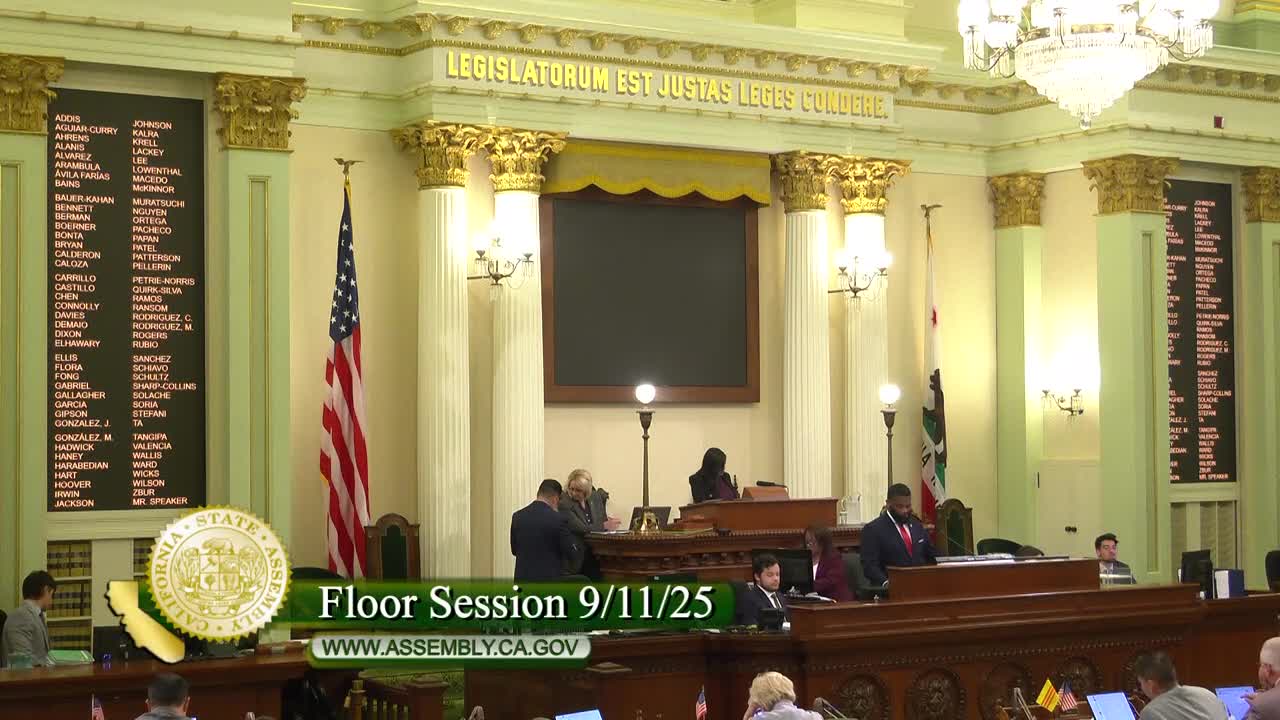 15MIN
Assembly Floor
 4MIN
Senate Floor
 44SEC
Senate Standing Committee on Appropriations
 22MIN
Senate Standing Committee on Public Safety
 16MIN
Assembly Floor
 10MIN
Assembly Standing Committee on Appropriations
Bill Author

Bill Co-Author(s):