AB 387: Nevaeh Youth Sports Safety Act.
- Session Year: 2025-2026
- House: Assembly
- Latest Version Date: 2026-09-27
Current Status:
Passed
(2026-09-27: Chaptered by Secretary of State - Chapter 502, Statutes of 2026.)
Introduced
In Committee
Awaiting First Chamber Vote
Passed First Chamber
In Committee
Awaiting Second Chamber Vote
Passed Second Chamber
Enacted
Existing law, the Nevaeh Youth Sports Safety Act, requires a youth sports organization to ensure, by January 1, 2028, that its athletes have access to an automated external defibrillator (AED) during any official practice or match. Existing law requires a youth sports organization, commencing January 1, 2028, to ensure that its AED is maintained and tested according to specified operation and maintenance guidelines.
This bill would require, commencing January 1, 2028, a public or private local facility with a permanent sports infrastructure, as defined, to ensure that the youth sports organization has access to an AED procured and maintained by the facility during an official practice or match permitted by the facility, except as specified with respect to local educational agencies. The bill would require the youth sports organization, commencing January 1, 2028, to ensure there is access to an operational AED if an AED is not available at a public or private local facility where an official practice or match is taking place. The bill would additionally require a public or private local facility, commencing January 1, 2028, to ensure that its AED is maintained and tested according to specified operation and maintenance guidelines. The bill would require a public or private local facility to work in collaboration with the youth sports organization to ensure that any AED that is installed be accessible to youth sports organizations at the time of official practices or matches permitted by the facility. The bill would require a public or private local facility that has installed an AED to work with the youth sports organization to identify means to share the financial costs associated with ensuring the AED is maintained and accessible at the facility, or to identify means to share the financial costs associated with installing an AED at the facility.
Existing law, the Nevaeh Youth Sports Safety Act, requires a youth sports organization to ensure, by January 1, 2028, that its athletes have access to an automated external defibrillator (AED) during any official practice or match. Existing law requires a youth sports organization, commencing January 1, 2028, to ensure that its AED is maintained and tested according to specified operation and maintenance guidelines.
This bill would require, commencing January 1, 2028, a public or private local facility with a permanent sports infrastructure, as defined, to ensure that the youth sports organization has access to an AED procured and maintained by the facility during an official practice or match permitted by the facility. facility, except as specified with respect to local educational agencies. The bill would require the youth sports organization, commencing January 1, 2028, to ensure there is access to an operational AED if an AED is not available at a public or private local facility where an official practice or match is taking place. The bill would additionally require a public or private local facility, commencing January 1, 2028, to ensure that its AED is maintained and tested according to specified operation and maintenance guidelines. The bill would require a public or private local facility to work in collaboration with the youth sports organization to ensure that any AED that is installed be accessible to youth sports organizations at the time of official practices or matches permitted by the facility. The bill would require a public or private local facility that has installed an AED to work with the youth sports organization to identify means to share the financial costs associated with ensuring the AED is maintained and accessible at the facility. facility, or to identify means to share the financial costs associated with installing an AED at the facility.
Existing law, the Nevaeh Youth Sports Safety Act, requires a youth sports organization to ensure, by January 1, 2028, that its athletes have access to an automated external defibrillator (AED) during any official practice or match. Existing law requires a youth sports organization, commencing January 1, 2028, to ensure that its AED is maintained and tested according to specified operation and maintenance guidelines.
This bill would require, commencing January 1, 2028, a public or private local facility with a permanent sports infrastructure, as defined, to ensure that the youth sports organization has access to an AED procured and maintained by the facility during an official practice or match. match permitted by the facility. The bill would require the youth sports organization, commencing January 1, 2028, to ensure there is access to an operational AED if an AED is not available at a public or private local facility where an official practice or match is taking place. The bill would additionally require a public or private local facility, commencing January 1, 2028, to ensure that its AED is maintained and tested according to specified operation and maintenance guidelines. The bill would require a public or private local facility, commencing January 1, 2028, facility to work in collaboration with the youth sports organization to ensure an AED that any AED that is installed or accessible at the facility. be accessible to youth sports organizations at the time of official practices or matches permitted by the facility. The bill would require a public or private local facility, commencing January 1, 2028, facility that has installed an AED to work with the youth sports organization to identify means to share the financial costs associated with ensuring an AED is installed or the AED is maintained and accessible at the facility.
Existing law, the Nevaeh Youth Sports Safety Act, requires a youth sports organization to ensure, by January 1, 2027, 2028, that its athletes have access to an automated external defibrillator (AED) during any official practice or match. Existing law requires a youth sports organization, commencing January 1, 2028, to ensure that its AED is maintained and tested according to specified operation and maintenance guidelines.
This bill would require that these athletes have access to an AED during any official practice or match at a location where an AED already exists or at any public or private local facility with a permanent sports infrastructure, as defined, used for youth sports programs. The bill would require the require, commencing January 1, 2028, a public or private local facility with a permanent sports infrastructure used for youth sports to procure and maintain the AED and infrastructure, as defined, to ensure that the youth sports organization has access to the AED. an AED during an official practice or match. The bill would require the youth sports organization, commencing January 1, 2028, to ensure there is access to an operational AED if an AED is not available at a public or private local facility where an official practice or match is taking place. The bill would additionally require a public or private local facility, commencing January 1, 2028, to ensure that its AED is maintained and tested according to specified operation and maintenance guidelines. The bill would require a public or private local facility, commencing January 1, 2028, to work in collaboration with the youth sports organization to ensure an AED is installed or accessible at the facility. The bill would require a public or private local facility, commencing January 1, 2028, to work with the youth sports organization to identify means to share the financial costs associated with ensuring an AED is installed or accessible at the facility.
Existing law, the Nevaeh Youth Sports Safety Act, requires a youth sports organization to ensure, by January 1, 2027, that its athletes have access to an automated external defibrillator (AED) during any official practice or match.
This bill would require that these athletes have access to an AED during any official practice or match at a location where an AED already exists or at any public or private local facility with a permanent sports infrastructure, as defined, used for youth sports programs. The bill would require the public or private local facility with a permanent sports infrastructure used for youth sports to procure and maintain the AED and ensure that the youth sports organization has access to the AED.
The Trial Jury Selection and Management Act prescribes procedures for the selection of jurors and the formation of trial juries for both civil and criminal cases in all trial courts. Existing law requires the jury commissioner of each county to randomly select jurors for jury panels to be sent to courtrooms for voir dire. Existing law prohibits specified peace officers from being selected for voir dire in civil or criminal matters.This bill would provide that in addition to those specified peace officers, probation officers, as defined, may not be selected for voir dire in criminal matters.The Trial Jury Selection and Management Act prescribes procedures for the selection of jurors and the formation of trial juries for both civil and criminal cases in all trial courts. Existing law requires the jury commissioner of each county to randomly select jurors for jury panels to be sent to courtrooms for voir dire. Existing law prohibits specified peace officers from being selected for voir dire in civil or criminal matters.
This bill would provide that in addition to those specified peace officers, probation officers, as defined, may not be selected for voir dire in civil or criminal matters.
The Trial Jury Selection and Management Act prescribes procedures for the selection of jurors and the formation of trial juries for both civil and criminal cases in all trial courts. Existing law requires the jury commissioner of each county to randomly select jurors for jury panels to be sent to courtrooms for voir dire. Existing law prohibits specified peace officers from being selected for voir dire in civil or criminal matters.
This bill would provide that in addition to those specified peace officers, probation officers, as defined, may not be selected for voir dire in civil or criminal matters.
For purposes of this article, the following definitions apply:
(a)Coach means a person appointed by the youth sports organization to supervise or instruct a participant in a sport.
(b)Official practice or match means a sport session in which live action or one or more drills are conducted, or a match, as scheduled by the youth sports organization, the coach, or other designee of the organization.
(c)Permanent sports infrastructure means a fixed, nontemporary facility or structure designed and maintained for the purpose of hosting organized sports activities that is regularly permitted, rented, leased, or otherwise granted permission of use for youth sports programs.
(d)Youth sports organization has the same meaning as set forth in Section 124235.
SEC. 2.Section 124238.5 of the Health and Safety Code is amended to read:124238.5.(a)(1)A youth sports organization that elects to offer an athletic program shall ensure that its athletes have access to an automated external defibrillator (AED) during any official practice or match, subject to subdivisions (b) and (c).
(2)During an official practice or match permitted by any public or private local facility with a permanent sports infrastructure, the facility may procure and maintain an AED and, in these cases, shall ensure that the youth sports organization has access to the AED.
(3)(A)A local educational agency is not deemed to have procured or maintained an AED pursuant to paragraph (2) unless either of the following has been met:
(i)The AED is in the same common area of the building where the official practice or match is taking place.
(ii)The AED is in the same outdoor field where the official practice or match is taking place, or attached externally to a building and is reasonably accessible from where the official practice or match is taking place.
(B)For purposes of this paragraph, a local educational agency shall not be required to have staff remain onsite to provide access to an AED to a youth sports organization.
(4)If an AED is not available at a public or private local facility where an official practice or match is taking place, the youth sports organization shall ensure there is access to one that is operational and has it available during the entire practice or match.
(5)This subdivision shall become operative on January 1, 2028.
(b)A youth sports organization shall ensure that its coaches are certified, and recertified at least every two years, to perform cardiopulmonary resuscitation and operate an AED and that there is a written cardiac emergency response plan. Certified training may be conducted in person or online and shall be offered by an accredited organization, consistent with national evidence-based cardiovascular care guidelines. The written cardiac emergency response plan shall be reviewed annually with coaches and staff. The written emergency response plan shall be consistent with nationally recognized, evidence-based standards and shall detail all of the following:
(1)The location of any AEDs and procedures to be followed in the event of sudden cardiac arrest.
(2)The responsibilities of the coach, administration, and athletes during the event.
(3)How the coach, administration, and athletes will be notified and trained on the emergency response plan.
(4)An annual electronic communication to the parents or guardians of enrolled participants that includes the cardiac emergency response plan or an internet link to the plan, the location or locations of any AEDs, and identifies the staff members designated to be notified in the event of a sudden cardiac event.
(c)(1)Commencing January 1, 2028, a public or private local facility and a youth sports organization shall ensure that its AED is maintained and tested according to the operation and maintenance guidelines established by the manufacturer of that AED and the applicable rules and regulations of the federal Food and Drug Administration or any other applicable state or federal authority.
(2)A public or private local facility that is already maintaining or testing an AED pursuant to another statutory requirement is deemed to have met the requirement of paragraph (1).
(d)(1)A public or private local facility shall work in collaboration with the youth sports organization to ensure that any AED that is installed at the public or private local facility is accessible to youth sports organizations at the time of official practices or matches permitted by the facility.
(2)A public or private local facility that has installed an AED at the facility shall work with the youth sports organization to identify means to share the financial costs associated with ensuring the AED is maintained and accessible at the facility, or to identify means to share the financial costs associated with installing an AED at the facility.
(e)(1)This section shall not be construed to require a public or private local facility or its employees to procure or install an AED or to operate or administer an AED in the event of a cardiac emergency or suspected cardiac emergency.
(2)The requirements of this section shall not be construed to impose a mandatory duty pursuant to Section 815.6 of the Government Code, and shall not be construed to affect the availability of any immunity otherwise applicable to the public or private local facility or its employees.
For purposes of this article, the following definitions apply:
(a)Coach means a person appointed by the youth sports organization to supervise or instruct a participant in a sport.
(b)Official practice or match means a sport session in which live action or one or more drills are conducted, or a match, as scheduled by the youth sports organization, the coach, or other designee of the organization.
(c)Permanent sports infrastructure means a fixed, nontemporary facility or structure designed and maintained for the purpose of hosting organized sports activities that is regularly permitted, rented, leased, or otherwise granted permission of use for youth sports programs.
(d)Youth sports organization has the same meaning as set forth in Section 124235.
SEC. 2.Section 124238.5 of the Health and Safety Code is amended to read:124238.5.(a)(1)A youth sports organization that elects to offer an athletic program shall ensure that its athletes have access to an automated external defibrillator (AED) during any official practice or match, subject to subdivisions (b) and (c).
(2)During an official practice or match permitted by any public or private local facility with a permanent sports infrastructure, the facility may procure and maintain an AED and, in these cases, shall ensure that the youth sports organization has access to the AED.
(3)(A)A local educational agency is not deemed to have procured or maintained an AED pursuant to paragraph (2) unless either of the following has been met:
(i)The AED is in the same common area of the building where the official practice or match is taking place.
(ii)The AED is in the same outdoor field where the official practice or match is taking place, or attached externally to a building and is reasonably accessible from where the official practice or match is taking place.
(B)For purposes of this paragraph, a local educational agency shall not be required to have staff remain onsite to provide access to an AED to a youth sports organization.
(3)(4)If an AED is not available at a public or private local facility where an official practice or match is taking place, the youth sports organization shall ensure there is access to one that is operational and has it available during the entire practice or match.
(4)(5)This subdivision shall become operative on January 1, 2028.
(b)A youth sports organization shall ensure that its coaches are certified, and recertified at least every two years, to perform cardiopulmonary resuscitation and operate an AED and that there is a written cardiac emergency response plan. Certified training may be conducted in person or online and shall be offered by an accredited organization, consistent with national evidence-based cardiovascular care guidelines. The written cardiac emergency response plan shall be reviewed annually with coaches and staff. The written emergency response plan shall be consistent with nationally recognized, evidence-based standards and shall detail all of the following:
(1)The location of any AEDs and procedures to be followed in the event of sudden cardiac arrest.
(2)The responsibilities of the coach, administration, and athletes during the event.
(3)How the coach, administration, and athletes will be notified and trained on the emergency response plan.
(4)An annual electronic communication to the parents or guardians of enrolled participants that includes the cardiac emergency response plan or an internet link to the plan, the location or locations of any AEDs, and identifies the staff members designated to be notified in the event of a sudden cardiac event.
(c)(1)Commencing January 1, 2028, a public or private local facility and a youth sports organization shall ensure that its AED is maintained and tested according to the operation and maintenance guidelines established by the manufacturer of that AED and the applicable rules and regulations of the federal Food and Drug Administration or any other applicable state or federal authority.
(2)A public or private local facility that is already maintaining or testing an AED pursuant to another statutory requirement is deemed to have met the requirement of paragraph (1).
(d)(1)A public or private local facility shall work in collaboration with the youth sports organization to ensure that any AED that is installed at the public or private local facility is accessible to youth sports organizations at the time of official practices or matches permitted by the facility.
(2)A public or private local facility that has installed an AED at the facility shall work with the youth sports organization to identify means to share the financial costs associated with ensuring the AED is maintained and accessible at the facility. facility, or to identify means to share the financial costs associated with installing an AED at the facility.
For purposes of this article, the following definitions apply:
(a)Coach means a person appointed by the youth sports organization to supervise or instruct a participant in a sport.
(b)Official practice or match means a sport session in which live action or one or more drills are conducted, or a match, as scheduled by the youth sports organization, the coach, or other designee of the organization.
(c)Permanent sports infrastructure means a fixed, nontemporary facility or structure designed and maintained for the purpose of hosting organized sports activities that is regularly permitted, rented, leased, or otherwise granted permission of use for youth sports programs.
(d)Youth sports organization has the same meaning as set forth in Section 124235.
SEC. 2.Section 124238.5 of the Health and Safety Code is amended to read:124238.5.(a)(1)A youth sports organization that elects to offer an athletic program shall ensure that its athletes have access to an automated external defibrillator (AED) during any official practice or match, subject to subdivisions (b) and (c).
(2)During an official practice or match at permitted by any public or private local facility with a permanent sports infrastructure, the facility shall may procure and maintain an AED and AED and, in these cases, shall ensure that the youth sports organization has access to the AED.
(3)If an AED is not available at a public or private local facility where an official practice or match is taking place, the youth sports organization shall ensure there is access to one that is operational and has it available during the entire practice or match.
(4)This subdivision shall become operative on January 1, 2028.
(b)A youth sports organization shall ensure that its coaches are certified, and recertified at least every two years, to perform cardiopulmonary resuscitation and operate an AED and that there is a written cardiac emergency response plan. Certified training may be conducted in person or online and shall be offered by an accredited organization, consistent with national evidence-based cardiovascular care guidelines. The written cardiac emergency response plan shall be reviewed annually with coaches and staff. The written emergency response plan shall be consistent with nationally recognized, evidence-based standards and shall detail all of the following:
(1)The location of any AEDs and procedures to be followed in the event of sudden cardiac arrest.
(2)The responsibilities of the coach, administration, and athletes during the event.
(3)How the coach, administration, and athletes will be notified and trained on the emergency response plan.
(4)An annual electronic communication to the parents or guardians of enrolled participants that includes the cardiac emergency response plan or an internet link to the plan, the location or locations of any AEDs, and identifies the staff members designated to be notified in the event of a sudden cardiac event.
(c)Commencing January 1, 2028, a public or private local facility and a youth sports organization shall ensure that its AED is maintained and tested according to the operation and maintenance guidelines established by the manufacturer of that AED and the applicable rules and regulations of the federal Food and Drug Administration or any other applicable state or federal authority.
(d)(1)Commencing January 1, 2028, a A public or private local facility shall work in collaboration with the youth sports organization to ensure an AED is installed or that any AED that is installed at the public or private local facility is accessible at the facility. to youth sports organizations at the time of official practices or matches permitted by the facility.
(2)Commencing January 1, 2028, a A public or private local facility that has installed an AED at the facility shall work with the youth sports organization to identify means to share the financial costs associated with ensuring an AED is installed or accessible the AED is maintained and accessible at the facility.
For purposes of this article, the following definitions apply:
(a)Coach means a person appointed by the youth sports organization to supervise or instruct a participant in a sport.
(b)Official practice or match means a sport session in which live action or one or more drills are conducted, or a match, as scheduled by the youth sports organization, the coach, or other designee of the organization.
(c)Permanent sports infrastructure means a fixed, nontemporary facility or structure designed and maintained for the purpose of hosting organized sports activities that is regularly permitted, rented, leased, or otherwise granted permission of use for youth sports programs.
(c)(d)Youth sports organization has the same meaning as set forth in Section 124235.
SEC. 2.Section 124238.5 of the Health and Safety Code is amended to read:124238.5.(a)Commencing January 1, 2028, a (1)A youth sports organization that elects to offer an athletic program shall ensure that its athletes have access to an automated external defibrillator (AED) during any official practice or match, subject to subdivisions (b) and (c).
(2)During an official practice or match at any public or private local facility with a permanent sports infrastructure, the facility shall procure and maintain an AED and shall ensure that the youth sports organization has access to the AED.
(3)If an AED is not available at a public or private local facility where an official practice or match is taking place, the youth sports organization shall ensure there is access to one that is operational and has it available during the entire practice or match.
(4)This subdivision shall become operative on January 1, 2028.
(b)Commencing January 1, 2027, a A youth sports organization shall ensure that its coaches are certified, and recertified at least every two years, to perform cardiopulmonary resuscitation and operate an AED and that there is a written cardiac emergency response plan. Certified training may be conducted in person or online and shall be offered by an accredited organization, consistent with national evidence-based cardiovascular care guidelines. The written cardiac emergency response plan shall be reviewed annually with coaches and staff. The written emergency response plan shall be consistent with nationally recognized, evidence-based standards and shall detail all of the following:
(1)The location of any AEDs and procedures to be followed in the event of sudden cardiac arrest.
(2)The responsibilities of the coach, administration, and athletes during the event.
(3)How the coach, administration, and athletes will be notified and trained on the emergency response plan.
(4)An annual electronic communication to the parents or guardians of enrolled participants that includes the cardiac emergency response plan or an internet link to the plan, the location or locations of any AEDs, and identifies the staff members designated to be notified in the event of a sudden cardiac event.
(c)Commencing January 1, 2028, a public or private local facility and a youth sports organization shall ensure that its AED is maintained and tested according to the operation and maintenance guidelines established by the manufacturer of that AED and the applicable rules and regulations of the federal Food and Drug Administration or any other applicable state or federal authority.
(d)(1)Commencing January 1, 2028, a public or private local facility shall work in collaboration with the youth sports organization to ensure an AED is installed or accessible at the facility.
(2)Commencing January 1, 2028, a public or private local facility shall work with the youth sports organization to identify means to share the financial costs associated with ensuring an AED is installed or accessible at the facility.
SECTION 1.Section 124238.5 of the Health and Safety Code is amended to read:124238.5.(a)(1)Commencing January 1, 2027, a youth sports organization that elects to offer an athletic program shall ensure that its athletes have access to an automated external defibrillator (AED) during any official practice or match at a location where an AED already exists or during an official practice or match at any public or private local facility with a permanent sports infrastructure used for youth sports programs, subject to subdivision (b).(2)The public or private local facility, described in paragraph (1), shall procure and maintain the AED and ensure that the youth sports organization, described in paragraph (1), has access to the AED.(b)For purposes of subdivision (a), if an AED is administered during an applicable medical circumstance, the AED shall be administered by a medical professional, coach, or other person designated by the youth sports organization, who holds AED certification and who complies with any other qualifications required pursuant to federal and state law applicable to the use of an AED.(c)For purposes of this section, permanent sports infrastructure means a fixed, nontemporary facility or structure designed and maintained for the purpose of hosting organized sports activities.(a)(1)Commencing January 1, 2027, a youth sports organization that elects to offer an athletic program shall ensure that its athletes have access to an automated external defibrillator (AED) during any official practice or match, match at a location where an AED already exists or during an official practice or match at any public or private local facility with a permanent sports infrastructure used for youth sports programs, subject to subdivision (b).
(2)The public or private local facility, described in paragraph (1), shall procure and maintain the AED and ensure that the youth sports organization, described in paragraph (1), has access to the AED.
(b)For purposes of subdivision (a), if an AED is administered during an applicable medical circumstance, the AED shall be administered by a medical professional, coach, or other person designated by the youth sports organization, who holds AED certification and who complies with any other qualifications required pursuant to federal and state law applicable to the use of an AED.
(c)For purposes of this section, permanent sports infrastructure means a fixed, nontemporary facility or structure designed and maintained for the purpose of hosting organized sports activities.
SECTION 1.Section 219 of the Code of Civil Procedure is amended to read:219.(a)Except as provided in subdivision (b), the jury commissioner shall randomly select jurors for jury panels to be sent to courtrooms for voir dire.(b)(1)Notwithstanding subdivision (a), a peace officer, as defined in Section 830.1, subdivision (a) of Section 830.2, and subdivision (a) of Section 830.33, of the Penal Code, shall not be selected for voir dire in civil or criminal matters.(2)Notwithstanding subdivision (a), a peace officer, as defined in subdivisions (b) and (c) of Section 830.2 of the Penal Code, shall not be selected for voir dire in criminal matters.(3)(A)Notwithstanding subdivision (a), a probation officer shall not be selected for voir dire in criminal matters.(B)For purposes of this paragraph, probation officer means a probation officer as described in subdivision (a) of Section 830.5 of the Penal Code.(a)Except as provided in subdivision (b), the jury commissioner shall randomly select jurors for jury panels to be sent to courtrooms for voir dire.
(b)(1)Notwithstanding subdivision (a), a peace officer, as defined in Section 830.1, subdivision (a) of Section 830.2, and subdivision (a) of Section 830.33, of the Penal Code, shall not be selected for voir dire in civil or criminal matters.
(2)Notwithstanding subdivision (a), a peace officer, as defined in subdivisions (b) and (c) of Section 830.2 of the Penal Code, shall not be selected for voir dire in criminal matters.
(3)(A)Notwithstanding subdivision (a), a probation officer shall not be selected for voir dire in civil or criminal matters.
(B)For purposes of this paragraph, probation officer means a probation officer as described in subdivision (a) of Section 830.5 of the Penal Code.
(a)Except as provided in subdivision (b), the jury commissioner shall randomly select jurors for jury panels to be sent to courtrooms for voir dire.
(b)(1)Notwithstanding subdivision (a), no a peace officer, as defined in Section 830.1, subdivision (a) of Section 830.2, and subdivision (a) of Section 830.33, of the Penal Code, shall not be selected for voir dire in civil or criminal matters.
(2)Notwithstanding subdivision (a), no a peace officer, as defined in subdivisions (b) and (c) of Section 830.2 of the Penal Code, shall not be selected for voir dire in criminal matters.
(3)(A)Notwithstanding subdivision (a), a probation officer shall not be selected for voir dire in civil or criminal matters.
(B)For purposes of this paragraph, probation officer means a probation officer as described in subdivision (a) of Section 830.5 of the Penal Code.
|
Date
|
Status
|
|---|---|
| Sep 27, 2026 | Chaptered by Secretary of State - Chapter 502, Statutes of 2026. |
| Sep 27, 2026 | Approved by the Governor. |
| Sep 9, 2026 | Enrolled and presented to the Governor at 1 p.m. |
| Aug 30, 2026 | Senate amendments concurred in. To Engrossing and Enrolling. (Ayes 77. Noes 0.). |
| Aug 30, 2026 | Senate amendments concurred in. To Engrossing and Enrolling. (Ayes 77. Noes 0. Page 6852.). |
| Aug 30, 2026 | Senate amendments concurred in. To Engrossing and Enrolling. |
| Aug 28, 2026 | Joint Rule 62(a), file notice suspended. |
| Aug 28, 2026 | From committee: That the Senate amendments be concurred in. (Ayes 8. Noes 0.) (August 28). |
| Aug 28, 2026 | Joint Rule 62(a), file notice suspended. (Page 6793.) |
| Aug 28, 2026 | Re-referred to Com. on A.,E.,S., & T. pursuant to Assembly Rule 77.2. |
| Aug 27, 2026 | In Assembly. Concurrence in Senate amendments pending. |
| Aug 27, 2026 | Read third time. Passed. Ordered to the Assembly. (Ayes 40. Noes 0.). |
| Aug 27, 2026 | Read third time. Passed. Ordered to the Assembly. (Ayes 40. Noes 0. Page 6007.). |
| Aug 24, 2026 | Read second time. Ordered to third reading. |
| Aug 21, 2026 | Read third time and amended. Ordered to second reading. |
| Aug 3, 2026 | Read second time and amended. Ordered to third reading. |
| Jul 2, 2026 | From committee: Amend, and do pass as amended. (Ayes 7. Noes 0.) (July 1). |
| Jun 25, 2026 | From committee chair, with author's amendments: Amend, and re-refer to committee. Read second time, amended, and re-referred to Com. on ED. |
| Jun 25, 2026 | From committee: Do pass and re-refer to Com. on ED. (Ayes 11. Noes 0.) (June 24). Re-referred to Com. on ED. |
| Jun 15, 2026 | From committee chair, with author's amendments: Amend, and re-refer to committee. Read second time, amended, and re-referred to Com. on HEALTH. |
| Jun 25, 2025 | Re-referred to Coms. on HEALTH and ED. |
| Jun 24, 2025 | Withdrawn from committee. |
| Jun 24, 2025 | Re-referred to Com. on RLS. |
| Jun 23, 2025 | From committee chair, with author's amendments: Amend, and re-refer to committee. Read second time, amended, and re-referred to Com. on PUB. S. |
| Jun 10, 2025 | In committee: Set, first hearing. Hearing canceled at the request of author. |
| May 7, 2025 | Referred to Com. on PUB. S. |
| Mar 13, 2025 | In Senate. Read first time. To Com. on RLS. for assignment. |
| Mar 13, 2025 | Read third time. Passed. Ordered to the Senate. (Ayes 67. Noes 0. Page 618.) |
| Mar 12, 2025 | Read second time. Ordered to third reading. |
| Mar 11, 2025 | From committee: Do pass. (Ayes 11. Noes 1.) (March 11). |
| Mar 6, 2025 | Re-referred to Com. on JUD. |
| Mar 5, 2025 | From committee chair, with author's amendments: Amend, and re-refer to Com. on JUD. Read second time and amended. |
| Feb 18, 2025 | Referred to Com. on JUD. |
| Feb 4, 2025 | From printer. May be heard in committee March 6. |
| Feb 3, 2025 | Read first time. To print. |
|
Date
|
Description
|
Location
|
Votes
|
|
|---|---|---|---|---|
| Aug 30, 2026 | AB 387 Alanis Concurrence in Senate Amendments | Assembly Floor |
Passed |
|
| Aug 28, 2026 | With recommendation: That Senate amendments be concurred in. | Assembly Standing Committee on Arts, Entertainment, Sports, and Tourism |
Passed |
|
| Aug 27, 2026 | Assembly 3rd Reading AB387 Alanis By Valladares | Senate Floor |
Passed |
|
| Jul 1, 2026 | Do pass as amended | Senate Standing Committee on Education |
Passed |
|
| Jun 24, 2026 | Do pass, but first be re-referred to the Committee on [Education] | Senate Standing Committee on Health |
Passed |
|
| Mar 13, 2025 | The committee on ECD recommend that the measure be PASSED, WITH AMENDMENTS. | Assembly Floor |
Passed |
|
| Mar 11, 2025 | Do pass. | Assembly Standing Committee on Judiciary |
Passed |
This list shows positions taken on this bill by organizations on the date displayed, which is linked to the original source.
Positions by individuals are not included.
|
Organization
|
Position
|
Date
|
|---|---|---|
| Aclu California Action | ** Support | |
| All of Us or None Los Angeles | ** Support | |
| American Youth Soccer Organization | ** Support | |
| American Youth Soccer Organization (AYSO) | ** Support | |
| Association Of California School Administrators | ** Against | |
| BU 702- SEIU 721 Joint Council | ** Support | |
| California Association Of Joint Powers Authorities | ** Against | |
| California Association Of Recreation & Park Districts | ** Against | |
| California Association Of School Business Officials | ** Against | |
| California Association of School Police Chiefs | ** Support | |
| California Coalition of School Safety Professionals | ** Support | |
| California Park & Recreation Society (unless amended) | ** Against | |
| California Public Defenders Association (CPDA) | ** Support | |
| California State Association Of Counties | ** Against | |
| CHIEF PROBATION OFFICERS' OF CALIFORNIA (CPOC) | ** Support | |
| City of Belmont | ** Against | |
| City of Buena Park | ** Against | |
| City of Chino Hills | ** Against | |
| City of Corona | ** Against | |
| City Of Lancaster | ** Against | |
| City of Rancho Cucamonga | ** Against | |
| City of Rancho Cucamonga (unless amended) | ** Against | |
| City of Santa Rosa | ** Against | |
| Courage California | ** Support | |
| Ella Baker Center For Human Rights | ** Support | |
| Eric Paredes Save a Life Foundation | ** Support | |
| Initiate Justice | ** Support | |
| Judicial Council of California | ** Against | |
| Justice2jobs Coalition | ** Support | |
| LA Defensa | ** Support | |
| League of California Cities (unless amended) | ** Against | |
| Legal Services for Prisoners with Children | ** Support | |
| Local 148 La County Public Defenders Union | ** Support | |
| Los Angeles County Probation Managers Association Afscme Local 1967 | ** Support | |
| Los Angeles County Probation Officers Union Afscme Local 685 | ** Support | |
| Los Angeles School Police Management Association | ** Support | |
| los angeles school police officers association | ** Support | |
| Los Angeles Unified School District | ** Against | |
| Public Risk Innovation, Solutions, and Management | ** Against | |
| Riverside County District Attorney | ** Against | |
| RIVERSIDE POLICE OFFICERS ASSOCIATION | ** Support | |
| Riverside Sheriffs’ Association | ** Support | |
| Rubicon Programs | ** Support | |
| Rural County Representatives | ** Against | |
| Sonoma County Regional Parks | ** Against | |
| Sonoma County Regional Parks (unless amended) | ** Against | |
| The Eric Paredes Save a Life Foundation | ** Support | |
| Urban Counties of California | ** Against |
Date of Hearing: August 28, 2025
ASSEMBLY COMMITTEE ON ARTS, ENTERTAINMENT, SPORTS, AND TOURISM
Christopher M. Ward, Chair
ABPCA Bill Id:AB 387 (
Author:Alanis) – As Amended Ver:August 21, 2026
FOR CONCURRENCE
SUBJECT: Nevaeh Youth Sports Safety Act
SUMMARY: AB 387 revises the requirement that a youth sports organization ensure its athletes have access to an Automated External Defibrillator (AED) during any official practice or match, starting January 1, 2028, by allowing a public or private local facility with a permanent sports infrastructure to procure and maintain an AED, in which case the public or private local facility would be responsible for ensuring access to the AED.
Specifically, this bill:
- Revises the requirement that a youth sports organization ensure its athletes have access to an AED during any official practice or match, by assigning responsibility for ensuring access to an AED as follows:
- Permits a public or private local facility with a permanent sports infrastructure, as defined by this bill, to procure and maintain an AED for use during an official practice or match permitted by the facility, and in these cases, requires the facility to ensure that the youth sports organization as access to the AED; or,
- If an AED is not available at a public or private local facility, requires the youth sports organization to ensure there is access to an AED.
- Defines “permanent sports infrastructure,” as a fixed, non-temporary facility or structure designed and maintained for the purpose of hosting organized sports activities that is regularly permitted, rented, leased, or otherwise granted permission of use for youth sports programs.
- Clarifies that a public or private local facility with a permanent sports infrastructure, in addition to a youth sports organization, is required to ensure that its AED is maintained and tested.
- Requires a public or private local facility to work in collaboration with the youth sports organization to ensure that any AED that is installed at the public or private local facility is accessible to youth sports organizations at the time of official practices or matches permitted by the facility.
- Requires a public or private local facility that has installed an AED at the facility to work with the youth sports organization to identify means to share the financial costs associated with ensuring that the AED is maintained and accessible at the facility.
- Prohibits this bill from being construed to require a public or private local facility or its employees from being required to procure or install an AED or to operate or administer an AED in the event of a cardiac emergency.
- Prohibits this bill from being construed to impose a mandatory duty pursuant to a provision of law that specifies that where a public entity is under a mandatory duty designed to protect against the risk of a particular kind of injury, the public entity is liable for an injury of that kind proximately caused by its failure to discharge the duty.
- Prohibits this bill from being construed to affect the availability of any immunity otherwise applicable to the public or private local facility or its employees.
EXISTING LAW:
- Defines a “youth sports organization” as an organization, business, nonprofit entity, or a local governmental agency that sponsors or conducts amateur sports competitions, training, camps, or clubs in which persons 17 years of age or younger participate. [Health and Safety Code (HSC) §124235(b)(4)]
- Requires a youth sports organization, beginning January 1, 2028, to ensure that its athletes have access to an AED during any official practice or match, defined as a sport session in which live action or one or more drills are conducted, or a match, as scheduled by the youth sports organization, the coach, or other designee of the organization. [HSC §124238 and §124238.5]
- Requires, beginning January 1, 2027, a youth sports organization to ensure that its coaches are certified, and recertified every two years, to perform cardiopulmonary resuscitation (CPR) and operate an AED and that there is a written cardiac emergency response plan, as specified. [HSC §124238.5(b)]
- Requires a youth sports organization to comply with certain requirements related to athletes suspected of sustaining a concussion or head injury, or who has passed out or fainted, including removal from the athletic activity and a prohibition on returning until he or she is evaluated by a licensed health care provider. Requires youth sports organizations to give both a concussion and head injury information sheet, and a sudden cardiac arrest (SCA) information sheet, to each athlete on an annual basis. [HSC §124235]
- Requires each coach, administrator, and referee, umpire, or other game official of the youth sports organization to successfully complete concussion and head injury and SCA prevention education at least once, either online or in person, before supervising an athlete in an activity of the youth sports organization. [HSC §124235(a)(5)]
- Requires “SCA prevention education and educational materials” and a “SCA information sheet” to include, at a minimum, information relating to cardiac conditions and their potential consequences, the signs and symptoms of SCA, best practices for removal of an athlete from an athletic activity after fainting or a suspected cardiac condition is observed, steps for returning an athlete to activity, and what to do in the event of a cardiac emergency, which includes calling 911, performing hands-only CPR, and using an AED if available. [HSC §124235(b)(3)]
- Establishes the California Youth Football Act, which establishes additional requirements on youth sports organizations that conduct a tackle football program, including requiring a minimum of one certified emergency medical technician, state-licensed paramedic, or higher-level medical professional to be present during all games, and requiring coaches to annually receive first aid, CPR, and AED certification. [HSC §124240, et seq. and §124241(h) and (i)]
- Requires, as part of the California Youth Football Act, that at least one independent non-rostered individual, appointed by the youth sports organization, to be present at all practice locations, and requires the individual to hold current certifications in first aid, CPR, AED, and concussion protocols. [HSC §124241(j)]
- Requires a school district or charter school that offers any interscholastic athletic program to acquire at least one AED for each school that participates in the program, and encourages the school district or charter school to ensure that the AED is available for the purpose of rendering emergency care or treatment within a recommended three to five minutes of SCA to pupils, spectators, and any other individuals in attendance at the program’s on-campus activities or events, and to ensure that the AED is available to athletic trainers and coaches and authorized persons at these activities or events. [Education Code [EDC] §35179.6]
- Requires a person or entity that acquires an AED to comply with all regulations governing its placement, notify an agent of the local emergency medical services agency of the existence, location, and type of AED acquired, ensure that the AED is maintained and tested according to the operation and maintenance guidelines of the manufacturer, ensure that it is tested at least biannually and after each use, ensure that an inspection is made of all AEDs on the premises at least every 90 days for potential issues related to operability, and ensure that maintenance and testing records are maintained. [HSC §1797.196]
- Exempts a person or entity that acquires an AED for emergency use from liability for any civil damages resulting from the use of the AED if the person or entity has complied with the requirements in 8) above. [Civil Code [CIV] §1714.21(d)]
- Exempts any person who, in good faith and not for compensation, renders emergency care or treatment by use of an AED at the scene of an emergency from liability for any civil damages resulting from any acts or omissions in rendering the emergency care. [CIV §1714.21(b)]
FISCAL EFFECT: None. This measure has been keyed non-fiscal by the Legislative Counsel.
COMMENTS:
- Author’s statement. According to the author, “This bill would require public or private local facilities with a permanent sports infrastructure, that have installed an AED, ensure youth sports organizations have access to those AEDs. SCA is the number one killer of student athletes. Having an AED present during official practices or matches can be the difference between life and death for youth athletes. Timely intervention of SCA remains critical for the safety of youth athletes. This bill would continue to require youth sports organizations to be responsible for ensuring athletes have access to AEDs during official practices or matches if the facility has not installed an AED.”
- Background. According to the National Heart, Blood, and Lung Institute, SCA is a condition in which the heart suddenly and unexpectedly stops beating, and usually causes death if not treated within minutes. SCA is not the same as a heart attack. A heart attack is when blood flow to the heart is blocked (a “circulation” problem), and SCA is when the heart malfunctions and suddenly stops beating unexpectedly (an “electrical” problem). However, SCA can happen after or during recovery from a heart attack. Ventricular fibrillation (v-fib), a type of arrhythmia, causes most SCAs. During v-fib, the heart's lower chambers do not beat normally, and instead quiver very rapidly and irregularly and little or no blood is pumped to the body. Other problems with the heart's electrical system can also cause SCA. For example, SCA can occur if the rate of the heart's electrical signals becomes very slow and stops. SCA also can occur if the heart muscle does not respond to the heart's electrical signals. Coronary heart disease; severe physical stress; certain inherited disorders; and structural changes in the heart can also cause SCA.
According to the American College of Cardiology (ACC), when playing sports, an athlete’s heart is working faster and pumping harder. Adrenaline is pumped throughout the body, and the heart needs more oxygen than normal. Dehydration, fever, or changes in electrolytes can also play a part. In people whose hearts are not normal to begin with, these extra stresses can sometimes trigger the electrical system of the heart and cause SCA. While rare, SCA is the leading medical cause of death in young athletes. ACC states that warning signs during exercise include passing out, dizziness, chest pain, shortness of breath, and seizures. The Centers for Disease Control and Prevention estimates that every year in the U.S., approximately 2,000 patients younger than 25 years will die of SCA. The likelihood of child and young adult SCA for those with underlying cardiovascular disease is increased by athletic participation. According to a study published in December 2017, a loss of consciousness in athletes during sports activity is usually not immediately recognized as SCA and time is wasted by checking breathing and body movement. Immediate CPR and defibrillation with an AED should be initiated if an athlete is experiencing SCA. Without defibrillation, the probability of surviving declines by 10% per minute.
- AEDs. According to the American Heart Association (AHA), an AED is a lightweight, portable device that delivers an electric shock through the chest to the heart. The shock can stop an irregular rhythm and allow a normal rhythm to resume in a heart in SCA. The AED has a built-in computer, which assesses the patient's heart rhythm, determines whether the person is in cardiac arrest, and signals whether to administer the shock. Inside the AED box are pads and a diagram that shows where to place them on the bare skin. Once the device is turned on, a voice tells the person using it exactly what to do. The AHA states that more than 15% of out-of-hospital cardiac arrests occur in a public location, and therefore public access to AEDs and community training have a large role to play in early defibrillation. However, the number of patients who have an AED applied by a bystander remains low, occurring after only 10.2% of public cardiac arrests. According to the AHA, nine in ten cardiac arrest victims who receive a shock from an AED in the first minute live. The AHA states that children over age eight can be treated with a standard AED, and for children ages one through eight, the AHA recommends the pediatric attenuated pads that are purchased separately.
- Arguments in support. This bill is supported by American Youth Soccer Organization (AYSO), which states that this bill represents a thoughtful, practical approach to improving athlete safety without placing undue burdens on the volunteer-driven programs that form the backbone of youth sports. This bill allows organizations to continue delivering safe, inclusive, and accessible opportunities for children to play, grow, and thrive. AYSO states that passing this bill is vital to ensuring youth sports remain a positive and sustainable part of California’s communities.
The Eric Paredes Save a Life Foundation supports this bill, stating that this bill builds upon California’s existing youth sports safety standards by closing a loophole requiring public and private local facilities with permanent sports infrastructure to procure, maintain, and provide access to AEDs during youth sports activities. According to the Eric Paredes Save a Life Foundation, SCA is the leading cause of death on school campuses and number one killer of student athletes, and that an estimated 23,000 youth are stricken annually by cardiac conditions across the country. Fragmented youth leagues often travel across various fields and lack the financial capability or permanent authority to manage physical hardware at the facilities they rent. This bill ensures life-saving equipment remains reliably on-site, fully functional, and accessible precisely when a cardiac emergency happens.
- Prior and related legislation:
- AB 310 (Alanis, Chapter 254, Statutes of 2025) delayed the implementation of the requirement, from January 1, 2027 to January 1, 2028, that youth sports organizations ensure their athletes have access to an AED during any official practice or match. AB 310 requires youth sports organizations to ensure their coaches are certified to perform CPR and operate an AED, and have a written cardiac emergency response plan, beginning January 1, 2028.
- AB 1467 (Alanis, Chapter 24, Statutes of 2023) requires a youth sports organization that elects to offer an athletic program to ensure that by January 1, 2027, its athletes have access to an AED during any official practice or match.
REGISTERED SUPPORT / OPPOSITION:
Support
American Youth Soccer Organization
California Association of School Police Chiefs
California Coalition of School Safety Professionals
Eric Paredes Save a Life Foundation
Los Angeles School Police Management Association
Los Angeles School Police Officers Association
Riverside Police Officers Association
Riverside Sheriffs’ Association
Opposition
None on file. All prior opposition was to a previous version of this bill.
Analysis Prepared by: Brian V. Anderson, Jr. / A.,E.,S., & T. / (916) 319-3450
CONCURRENCE IN SENATE AMENDMENTS
CSA2 Bill Id:AB 387
Author:(Alanis)
As Amended Ver:August 21, 2026
Majority vote
SUMMARY
Original Committee of Reference: Assembly Judiciary Committee
AB 387 revises the requirement that a youth sports organization ensure its athletes have access to an Automated External Defibrillator (AED) during any official practice or match, starting January 1, 2028, by allowing a public or private local facility with a permanent sports infrastructure to procure and maintain an AED, in which case the public or private local facility would be responsible for ensuring access to the AED.
Senate Amendments
Current Committee Recommendation: Concur in Senate Amendments
Senate Amendments deleted the original contents of the Assembly's version of this bill, and instead:
- Revises the requirement that a youth sports organization ensure its athletes have access to an AED during any official practice or match, by assigning responsibility for ensuring access to an AED as follows:
- Permits a public or private local facility with a permanent sports infrastructure, as defined by this bill, to procure and maintain an AED for use during an official practice or match permitted by the facility, and in these cases, requires the facility to ensure that the youth sports organization as access to the AED; or,
- If an AED is not available at a public or private local facility, requires the youth sports organization to ensure there is access to an AED.
- Defines "permanent sports infrastructure," as a fixed, non-temporary facility or structure designed and maintained for the purpose of hosting organized sports activities that is regularly permitted, rented, leased, or otherwise granted permission of use for youth sports programs.
- Clarifies that a public or private local facility with a permanent sports infrastructure, in addition to a youth sports organization, is required to ensure that its AED is maintained and tested.
- Requires a public or private local facility to work in collaboration with the youth sports organization to ensure that any AED that is installed at the public or private local facility is accessible to youth sports organizations at the time of official practices or matches permitted by the facility.
- Requires a public or private local facility that has installed an AED at the facility to work with the youth sports organization to identify means to share the financial costs associated with ensuring that the AED is maintained and accessible at the facility.
- Prohibits this bill from being construed to require a public or private local facility or its employees from being required to procure or install an AED or to operate or administer an AED in the event of a cardiac emergency.
- Prohibits this bill from being construed to impose a mandatory duty pursuant to a provision of law that specifies that where a public entity is under a mandatory duty designed to protect against the risk of a particular kind of injury, the public entity is liable for an injury of that kind proximately caused by its failure to discharge the duty.
- Prohibits this bill from being construed to affect the availability of any immunity otherwise applicable to the public or private local facility or its employees.
COMMENTS
Background. According to the National Heart, Blood, and Lung Institute, sudden cardiac arrest (SCA) is a condition in which the heart suddenly and unexpectedly stops beating, and usually causes death if not treated within minutes. SCA is not the same as a heart attack. A heart attack is when blood flow to the heart is blocked (a "circulation" problem), and SCA is when the heart malfunctions and suddenly stops beating unexpectedly (an "electrical" problem). However, SCA can happen after or during recovery from a heart attack. Ventricular fibrillation (v-fib), a type of arrhythmia, causes most SCAs. During v-fib, the heart's lower chambers do not beat normally, and instead quiver very rapidly and irregularly and little or no blood is pumped to the body. Other problems with the heart's electrical system can also cause SCA. For example, SCA can occur if the rate of the heart's electrical signals becomes very slow and stops. SCA also can occur if the heart muscle does not respond to the heart's electrical signals. Coronary heart disease; severe physical stress; certain inherited disorders; and structural changes in the heart can also cause SCA.
According to the American College of Cardiology (ACC), when playing sports, an athlete's heart is working faster and pumping harder. Adrenaline is pumped throughout the body, and the heart needs more oxygen than normal. Dehydration, fever, or changes in electrolytes can also play a part. In people whose hearts are not normal to begin with, these extra stresses can sometimes trigger the electrical system of the heart and cause SCA. While rare, SCA is the leading medical cause of death in young athletes. ACC states that warning signs during exercise include passing out, dizziness, chest pain, shortness of breath, and seizures. The Centers for Disease Control and Prevention estimates that every year in the U.S., approximately 2,000 patients younger than 25 years will die of SCA. The likelihood of child and young adult SCA for those with underlying cardiovascular disease is increased by athletic participation. According to a study published in December 2017, a loss of consciousness in athletes during sports activity is usually not immediately recognized as SCA and time is wasted by checking breathing and body movement. Immediate CPR and defibrillation with an AED should be initiated if an athlete is experiencing SCA. Without defibrillation, the probability of surviving declines by 10% per minute.
AEDs. According to the American Heart Association (AHA), an AED is a lightweight, portable device that delivers an electric shock through the chest to the heart. The shock can stop an irregular rhythm and allow a normal rhythm to resume in a heart in SCA. The AED has a built-in computer, which assesses the patient's heart rhythm, determines whether the person is in cardiac arrest, and signals whether to administer the shock. Inside the AED box are pads and a diagram that shows where to place them on the bare skin. Once the device is turned on, a voice tells the person using it exactly what to do. The AHA states that more than 15% of out-of-hospital cardiac arrests occur in a public location, and therefore public access to AEDs and community training have a large role to play in early defibrillation. However, the number of patients who have an AED applied by a bystander remains low, occurring after only 10.2% of public cardiac arrests. According to the AHA, nine in ten cardiac arrest victims who receive a shock from an AED in the first minute live. The AHA states that children over age eight can be treated with a standard AED, and for children ages one through eight, the AHA recommends the pediatric attenuated pads that are purchased separately.
According to the Author
"This bill would require public or private local facilities with a permanent sports infrastructure, that have installed an AED, ensure youth sports organizations have access to those AEDs. SCA is the number one killer of student athletes. Having an AED present during official practices or matches can be the difference between life and death for youth athletes. Timely intervention of SCA remains critical for the safety of youth athletes. This bill would continue to require youth sports organizations to be responsible for ensuring athletes have access to AEDs during official practices or matches if the facility has not installed an AED."
Arguments in Support
This bill is supported by American Youth Soccer Organization (AYSO), which states that this bill represents a thoughtful, practical approach to improving athlete safety without placing undue burdens on the volunteer-driven programs that form the backbone of youth sports. This bill allows organizations to continue delivering safe, inclusive, and accessible opportunities for children to play, grow, and thrive. AYSO states that passing this bill is vital to ensuring youth sports remain a positive and sustainable part of California's communities.
The Eric Paredes Save a Life Foundation supports this bill, stating that this bill builds upon California's existing youth sports safety standards by closing a loophole requiring public and private local facilities with permanent sports infrastructure to procure, maintain, and provide access to AEDs during youth sports activities. According to the Eric Paredes Save a Life Foundation, SCA is the leading cause of death on school campuses and number one killer of student athletes, and that an estimated 23,000 youth are stricken annually by cardiac conditions across the country. Fragmented youth leagues often travel across various fields and lack the financial capability or permanent authority to manage physical hardware at the facilities they rent. This bill ensures life-saving equipment remains reliably on-site, fully functional, and accessible precisely when a cardiac emergency happens.
Arguments in Opposition
None on file. All prior opposition was to a previous version of this bill.
FISCAL COMMENTS
None. This measure has been keyed non-fiscal by the Legislative Counsel.
VOTES
ASM JUDICIARY: 11-1-0
YES: Kalra, Dixon, Bauer-Kahan, Bryan, Connolly, Harabedian, Pacheco, Papan, Sanchez, Stefani, Zbur
NO: Essayli
ASSEMBLY FLOOR: 67-0-13
YES: Addis, Aguiar-Curry, Ahrens, Alanis, Alvarez, Arambula, Ávila Farías, Bains, Bennett, Berman, Boerner, Bonta, Bryan, Calderon, Caloza, Carrillo, Castillo, Chen, Connolly, Davies, DeMaio, Dixon, Elhawary, Ellis, Flora, Fong, Gallagher, Gipson, Jeff Gonzalez, Mark González, Haney, Harabedian, Hoover, Jackson, Kalra, Krell, Lackey, Lowenthal, Macedo, McKinnor, Muratsuchi, Nguyen, Pacheco, Papan, Patel, Patterson, Pellerin, Quirk-Silva, Ransom, Celeste Rodriguez, Michelle Rodriguez, Rogers, Blanca Rubio, Sanchez, Schiavo, Schultz, Sharp-Collins, Solache, Soria, Stefani, Ta, Tangipa, Wallis, Wicks, Wilson, Zbur, Rivas
ABS, ABST OR NV: Bauer-Kahan, Essayli, Gabriel, Garcia, Hadwick, Hart, Irwin, Lee, Ortega, Petrie-Norris, Ramos, Valencia, Ward
SENATE FLOOR: 40-0-0
YES: Allen, Alvarado-Gil, Archuleta, Arreguín, Ashby, Becker, Blakespear, Cabaldon, Caballero, Cervantes, Choi, Cortese, Dahle, Durazo, Gonzalez, Grayson, Grove, Hurtado, Jones, Laird, Limón, McGuire, McNerney, Menjivar, Niello, Ochoa Bogh, Padilla, Pérez, Reyes, Richardson, Rubio, Seyarto, Smallwood-Cuevas, Stern, Strickland, Umberg, Valladares, Wahab, Weber Pierson, Wiener
ASM ARTS, ENTERTAINMENT, SPORTS, AND TOURISM: 8-0-1
YES: Ward, Lackey, Elhawary, Jeff Gonzalez, Ortega, Quirk-Silva, Valencia, Zbur
ABS, ABST OR NV: McKinnor
UPDATED
VERSION: August 21, 2026
CONSULTANT: Brian V. Anderson, Jr. / A.,E.,S., & T. / (916) 319-3450 FN: 0004432
CONCURRENCE IN SENATE AMENDMENTS
CSA1 Bill Id:AB 387
Author:(Alanis)
As Amended Ver:August 21, 2026
Majority vote
SUMMARY
AB 387 revises the requirement that a youth sports organization ensure its athletes have access to an Automated External Defibrillator (AED) during any official practice or match, starting January 1, 2028, by allowing a public or private local facility with a permanent sports infrastructure to procure and maintain an AED, in which case the public or private local facility would be responsible for ensuring access to the AED.
Senate Amendments
Senate Amendments deleted the original contents of the Assembly′s version of this bill, and instead:
- Revises the requirement that a youth sports organization ensure its athletes have access to an AED during any official practice or match, by assigning responsibility for ensuring access to an AED as follows:
- Permits a public or private local facility with a permanent sports infrastructure, as defined by this bill, to procure and maintain an AED for use during an official practice or match permitted by the facility, and in these cases, requires the facility to ensure that the youth sports organization as access to the AED; or,
- If an AED is not available at a public or private local facility, requires the youth sports organization to ensure there is access to an AED.
- Defines ″permanent sports infrastructure,″ as a fixed, non-temporary facility or structure designed and maintained for the purpose of hosting organized sports activities that is regularly permitted, rented, leased, or otherwise granted permission of use for youth sports programs.
- Clarifies that a public or private local facility with a permanent sports infrastructure, in addition to a youth sports organization, is required to ensure that its AED is maintained and tested.
- Requires a public or private local facility to work in collaboration with the youth sports organization to ensure that any AED that is installed at the public or private local facility is accessible to youth sports organizations at the time of official practices or matches permitted by the facility.
- Requires a public or private local facility that has installed an AED at the facility to work with the youth sports organization to identify means to share the financial costs associated with ensuring that the AED is maintained and accessible at the facility.
- Prohibits this bill from being construed to require a public or private local facility or its employees from being required to procure or install an AED or to operate or administer an AED in the event of a cardiac emergency.
- Prohibits this bill from being construed to impose a mandatory duty pursuant to a provision of law that specifies that where a public entity is under a mandatory duty designed to protect against the risk of a particular kind of injury, the public entity is liable for an injury of that kind proximately caused by its failure to discharge the duty.
- Prohibits this bill from being construed to affect the availability of any immunity otherwise applicable to the public or private local facility or its employees.
COMMENTS
Background. According to the National Heart, Blood, and Lung Institute, sudden cardiac arrest (SCA) is a condition in which the heart suddenly and unexpectedly stops beating, and usually causes death if not treated within minutes. SCA is not the same as a heart attack. A heart attack is when blood flow to the heart is blocked (a ″circulation″ problem), and SCA is when the heart malfunctions and suddenly stops beating unexpectedly (an ″electrical″ problem). However, SCA can happen after or during recovery from a heart attack. Ventricular fibrillation (v-fib), a type of arrhythmia, causes most SCAs. During v-fib, the heart′s lower chambers do not beat normally, and instead quiver very rapidly and irregularly and little or no blood is pumped to the body. Other problems with the heart′s electrical system can also cause SCA. For example, SCA can occur if the rate of the heart′s electrical signals becomes very slow and stops. SCA also can occur if the heart muscle does not respond to the heart′s electrical signals. Coronary heart disease; severe physical stress; certain inherited disorders; and structural changes in the heart can also cause SCA.
According to the American College of Cardiology (ACC), when playing sports, an athlete′s heart is working faster and pumping harder. Adrenaline is pumped throughout the body, and the heart needs more oxygen than normal. Dehydration, fever, or changes in electrolytes can also play a part. In people whose hearts are not normal to begin with, these extra stresses can sometimes trigger the electrical system of the heart and cause SCA. While rare, SCA is the leading medical cause of death in young athletes. ACC states that warning signs during exercise include passing out, dizziness, chest pain, shortness of breath, and seizures. The Centers for Disease Control and Prevention estimates that every year in the U.S., approximately 2,000 patients younger than 25 years will die of SCA. The likelihood of child and young adult SCA for those with underlying cardiovascular disease is increased by athletic participation. According to a study published in December 2017, a loss of consciousness in athletes during sports activity is usually not immediately recognized as SCA and time is wasted by checking breathing and body movement. Immediate CPR and defibrillation with an AED should be initiated if an athlete is experiencing SCA. Without defibrillation, the probability of surviving declines by 10% per minute.
AEDs. According to the American Heart Association (AHA), an AED is a lightweight, portable device that delivers an electric shock through the chest to the heart. The shock can stop an irregular rhythm and allow a normal rhythm to resume in a heart in SCA. The AED has a built-in computer, which assesses the patient′s heart rhythm, determines whether the person is in cardiac arrest, and signals whether to administer the shock. Inside the AED box are pads and a diagram that shows where to place them on the bare skin. Once the device is turned on, a voice tells the person using it exactly what to do. The AHA states that more than 15% of out-of-hospital cardiac arrests occur in a public location, and therefore public access to AEDs and community training have a large role to play in early defibrillation. However, the number of patients who have an AED applied by a bystander remains low, occurring after only 10.2% of public cardiac arrests. According to the AHA, nine in ten cardiac arrest victims who receive a shock from an AED in the first minute live. The AHA states that children over age eight can be treated with a standard AED, and for children ages one through eight, the AHA recommends the pediatric attenuated pads that are purchased separately.
According to the Author
″This bill would require public or private local facilities with a permanent sports infrastructure, that have installed an AED, ensure youth sports organizations have access to those AEDs. SCA is the number one killer of student athletes. Having an AED present during official practices or matches can be the difference between life and death for youth athletes. Timely intervention of SCA remains critical for the safety of youth athletes. This bill would continue to require youth sports organizations to be responsible for ensuring athletes have access to AEDs during official practices or matches if the facility has not installed an AED.″
Arguments in Support
This bill is supported by American Youth Soccer Organization (AYSO), which states that this bill represents a thoughtful, practical approach to improving athlete safety without placing undue burdens on the volunteer-driven programs that form the backbone of youth sports. This bill allows organizations to continue delivering safe, inclusive, and accessible opportunities for children to play, grow, and thrive. AYSO states that passing this bill is vital to ensuring youth sports remain a positive and sustainable part of California′s communities.
The Eric Paredes Save a Life Foundation supports this bill, stating that this bill builds upon California′s existing youth sports safety standards by closing a loophole requiring public and private local facilities with permanent sports infrastructure to procure, maintain, and provide access to AEDs during youth sports activities. According to the Eric Paredes Save a Life Foundation, SCA is the leading cause of death on school campuses and number one killer of student athletes, and that an estimated 23,000 youth are stricken annually by cardiac conditions across the country. Fragmented youth leagues often travel across various fields and lack the financial capability or permanent authority to manage physical hardware at the facilities they rent. This bill ensures life-saving equipment remains reliably on-site, fully functional, and accessible precisely when a cardiac emergency happens.
Arguments in Opposition
None on file. All prior opposition was to a previous version of this bill.
FISCAL COMMENTS
None. This measure has been keyed non-fiscal by the Legislative Counsel.
VOTES:
ASM JUDICIARY: 11-1-0
YES: Kalra, Dixon, Bauer-Kahan, Bryan, Connolly, Harabedian, Pacheco, Papan, Sanchez, Stefani, Zbur
NO: Essayli
ASSEMBLY FLOOR: 67-0-13
YES: Addis, Aguiar-Curry, Ahrens, Alanis, Alvarez, Arambula, Ávila Farías, Bains, Bennett, Berman, Boerner, Bonta, Bryan, Calderon, Caloza, Carrillo, Castillo, Chen, Connolly, Davies, DeMaio, Dixon, Elhawary, Ellis, Flora, Fong, Gallagher, Gipson, Jeff Gonzalez, Mark González, Haney, Harabedian, Hoover, Jackson, Kalra, Krell, Lackey, Lowenthal, Macedo, McKinnor, Muratsuchi, Nguyen, Pacheco, Papan, Patel, Patterson, Pellerin, Quirk-Silva, Ransom, Celeste Rodriguez, Michelle Rodriguez, Rogers, Blanca Rubio, Sanchez, Schiavo, Schultz, Sharp-Collins, Solache, Soria, Stefani, Ta, Tangipa, Wallis, Wicks, Wilson, Zbur, Rivas
ABS, ABST OR NV: Bauer-Kahan, Essayli, Gabriel, Garcia, Hadwick, Hart, Irwin, Lee, Ortega, Petrie-Norris, Ramos, Valencia, Ward
SENATE FLOOR: 40-0-0
YES: Allen, Alvarado-Gil, Archuleta, Arreguín, Ashby, Becker, Blakespear, Cabaldon, Caballero, Cervantes, Choi, Cortese, Dahle, Durazo, Gonzalez, Grayson, Grove, Hurtado, Jones, Laird, Limón, McGuire, McNerney, Menjivar, Niello, Ochoa Bogh, Padilla, Pérez, Reyes, Richardson, Rubio, Seyarto, Smallwood-Cuevas, Stern, Strickland, Umberg, Valladares, Wahab, Weber Pierson, Wiener
UPDATED
VERSION: August 21, 2026
CONSULTANT: Brian V. Anderson, Jr. / A.,E.,S., & T. / (916) 319-3450 FN: 0004399
SENATE RULES COMMITTEE Office of Senate Floor Analyses (916) 651-4171 | AB 387 |
THIRD READING
Bill No: AB 387
Author: Alanis (R)
Amended: 8/21/26 in Senate
Vote: 21
SENATE HEALTH COMMITTEE: 11-0, 6/24/26
AYES: Weber Pierson, Valladares, Caballero, Durazo, Gonzalez, Grove, Menjivar, Padilla, Pérez, Rubio, Smallwood-Cuevas
SENATE EDUCATION COMMITTEE: 7-0, 7/1/26
AYES: Pérez, Ochoa Bogh, Cabaldon, Choi, Cortese, Gonzalez, Reyes
ASSEMBLY FLOOR: 67-0, 3/13/25 - See last page for vote
SUBJECT: Nevaeh Youth Sports Safety Act
SOURCE: Author
DIGEST:
This bill revises the requirement that a youth sports organization ensure its athletes have access to an Automated External Defibrillator (AED) during any official practice or match, starting January 1, 2028, by allowing a public or private local facility with a permanent sports infrastructure to procure and maintain an AED, in which case the public or private local facility would be responsible for ensuring access to the AED.
Senate Floor Amendments of 8/21/26 clarify that a public or private local facility or its employees are not required to procure or install an AED or to operate or administer an AED in the event of a cardiac emergency, and that this bill does not affect the availability of any otherwise applicable immunity.
ANALYSIS:
Existing law:
- Defines a “youth sports organization” as an organization, business, nonprofit entity, or a local governmental agency that sponsors or conducts amateur sports competitions, training, camps, or clubs in which persons 17 years of age or younger participate. [Health and Safety Code (HSC) §124235(b)(4)]
- Requires a youth sports organization, beginning January 1, 2028, to ensure that its athletes have access to an AED during any official practice or match, defined as a sport session in which live action or one or more drills are conducted, or a match, as scheduled by the youth sports organization, the coach, or other designee of the organization. [HSC §124238 and §124238.5]
- Requires, beginning January 1, 2027, a youth sports organization to ensure that its coaches are certified, and recertified every two years, to perform cardiopulmonary resuscitation (CPR) and operate an AED and that there is a written cardiac emergency response plan, as specified. [HSC §124238.5(b)]
- Requires a youth sports organization to comply with certain requirements related to athletes suspected of sustaining a concussion or head injury, or who has passed out or fainted, including removal from the athletic activity and a prohibition on returning until he or she is evaluated by a licensed health care provider. Requires youth sports organizations to give both a concussion and head injury information sheet, and a sudden cardiac arrest (SCA) information sheet, to each athlete on an annual basis. [HSC §124235]
- Requires each coach, administrator, and referee, umpire, or other game official of the youth sports organization to successfully complete concussion and head injury and SCA prevention education at least once, either online or in person, before supervising an athlete in an activity of the youth sports organization. [HSC §124235(a)(5)]
- Requires “SCA prevention education and educational materials” and a “SCA information sheet” to include, at a minimum, information relating to cardiac conditions and their potential consequences, the signs and symptoms of SCA, best practices for removal of an athlete from an athletic activity after fainting or a suspected cardiac condition is observed, steps for returning an athlete to activity, and what to do in the event of a cardiac emergency, which includes calling 911, performing hands-only CPR, and using an AED if available. [HSC §124235(b)(3)]
- Establishes the California Youth Football Act, which establishes additional requirements on youth sports organizations that conduct a tackle football program, including requiring a minimum of one certified emergency medical technician, state-licensed paramedic, or higher-level medical professional to be present during all games, and requiring coaches to annually receive first aid, CPR, and AED certification. [HSC §124240, et seq. and §124241(h) and (i)]
- Requires, as part of the California Youth Football Act, that at least one independent nonrostered individual, appointed by the youth sports organization, to be present at all practice locations, and requires the individual to hold current certifications in first aid, CPR, AED, and concussion protocols. [HSC §124241(j)]
- Requires a school district or charter school that offers any interscholastic athletic program to acquire at least one AED for each school that participates in the program, and encourages the school district or charter school to ensure that the AED is available for the purpose of rendering emergency care or treatment within a recommended three to five minutes of SCA to pupils, spectators, and any other individuals in attendance at the program’s on-campus activities or events, and to ensure that the AED is available to athletic trainers and coaches and authorized persons at these activities or events. [Education Code [EDC] §35179.6]
- Requires a person or entity that acquires an AED to comply with all regulations governing its placement, notify an agent of the local emergency medical services agency of the existence, location, and type of AED acquired, ensure that the AED is maintained and tested according to the operation and maintenance guidelines of the manufacturer, ensure that it is tested at least biannually and after each use, ensure that an inspection is made of all AEDs on the premises at least every 90 days for potential issues related to operability, and ensure that maintenance and testing records are maintained. [HSC §1797.196]
- Exempts a person or entity that acquires an AED for emergency use from liability for any civil damages resulting from the use of the AED if the person or entity has complied with the requirements in 8) above. [Civil Code [CIV] §1714.21(d)]
- Exempts any person who, in good faith and not for compensation, renders emergency care or treatment by use of an AED at the scene of an emergency from liability for any civil damages resulting from any acts or omissions in rendering the emergency care. [CIV §1714.21(b)]
This bill:
- Revises the requirement that a youth sports organization ensure its athletes have access to an AED during any official practice or match, by assigning responsibility for ensuring access to an AED as follows:
- Permits a public or private local facility with a permanent sports infrastructure, as defined by this bill, to procure and maintain an AED for use during an official practice or match permitted by the facility, and in these cases, requires the facility to ensure that the youth sports organization as access to the AED; or,
- If an AED is not available at a public or private local facility, requires the youth sports organization to ensure there is access to an AED.
- Defines “permanent sports infrastructure,” as a fixed, nontemporary facility or structure designed and maintained for the purpose of hosting organized sports activities that is regularly permitted, rented, leased, or otherwise granted permission of use for youth sports programs.
- Clarifies that a public or private local facility with a permanent sports infrastructure, in addition to a youth sports organization, is required to ensure that its AED is maintained and tested.
- Requires a public or private local facility to work in collaboration with the youth sports organization to ensure that any AED that is installed at the public or private local facility is accessible to youth sports organizations at the time of official practices or matches permitted by the facility.
- Requires a public or private local facility that has installed an AED at the facility to work with the youth sports organization to identify means to share the financial costs associated with ensuring that the AED is maintained and accessible at the facility.
- Prohibits this bill from being construed to require a public or private local facility or its employees from being required to procure or install an AED or to operate or administer an AED in the event of a cardiac emergency.
- Prohibits this bill from being construed to impose a mandatory duty pursuant to a provision of law that specifies that where a public entity is under a mandatory duty designed to protect against the risk of a particular kind of injury, the public entity is liable for an injury of that kind proximately caused by its failure to discharge the duty.
- Prohibits this bill from being construed to affect the availability of any immunity otherwise applicable to the public or private local facility or its employees.
Background
This bill would require public or private local facilities with a permanent sports infrastructure, that have installed an AED, ensure youth sports organizations have access to those AEDs. SCA is the number one killer of student athletes. Having an AED present during official practices or matches can be the difference between life and death for youth athletes. Timely intervention of SCA remains critical for the safety of youth athletes. This bill would continue to require youth sports organizations to be responsible for ensuring athletes have access to AEDs during official practices or matches if the facility has not installed an AED.
Background on SCA. According to the National Heart, Blood, and Lung Institute, SCA is a condition in which the heart suddenly and unexpectedly stops beating, and usually causes death if not treated within minutes. SCA is not the same as a heart attack. A heart attack is when blood flow to the heart is blocked (a “circulation” problem), and SCA is when the heart malfunctions and suddenly stops beating unexpectedly (an “electrical” problem). However, SCA can happen after or during recovery from a heart attack. Ventricular fibrillation (v-fib), a type of arrhythmia, causes most SCAs. During v-fib, the heart's lower chambers do not beat normally, and instead quiver very rapidly and irregularly and little or no blood is pumped to the body. Other problems with the heart's electrical system can also cause SCA. For example, SCA can occur if the rate of the heart's electrical signals becomes very slow and stops. SCA also can occur if the heart muscle does not respond to the heart's electrical signals. Coronary heart disease; severe physical stress; certain inherited disorders; and structural changes in the heart can also cause SCA.
According to the American College of Cardiology (ACC), when playing sports, an athlete’s heart is working faster and pumping harder. Adrenaline is pumped throughout the body, and the heart needs more oxygen than normal. Dehydration, fever, or changes in electrolytes can also play a part. In people whose hearts are not normal to begin with, these extra stresses can sometimes trigger the electrical system of the heart and cause SCA. While rare, SCA is the leading medical cause of death in young athletes. ACC states that warning signs during exercise include passing out, dizziness, chest pain, shortness of breath, and seizures. The Centers for Disease Control and Prevention estimates that every year in the U.S., approximately 2,000 patients younger than 25 years will die of SCA. The likelihood of child and young adult SCA for those with underlying cardiovascular disease is increased by athletic participation. According to a study published in December 2017, a loss of consciousness in athletes during sports activity is usually not immediately recognized as SCA and time is wasted by checking breathing and body movement. Immediate CPR and defibrillation with an AED should be initiated if an athlete is experiencing SCA. Without defibrillation, the probability of surviving declines by 10% per minute.
Background on AEDs. According to the American Heart Association (AHA), an AED is a lightweight, portable device that delivers an electric shock through the chest to the heart. The shock can stop an irregular rhythm and allow a normal rhythm to resume in a heart in SCA. The AED has a built-in computer, which assesses the patient's heart rhythm, determines whether the person is in cardiac arrest, and signals whether to administer the shock. Inside the AED box are pads and a diagram that shows where to place them on the bare skin. Once the device is turned on, a voice tells the person using it exactly what to do. The AHA states that more than 15% of out-of-hospital cardiac arrests occur in a public location, and therefore public access to AEDs and community training have a large role to play in early defibrillation. However, the number of patients who have an AED applied by a bystander remains low, occurring after only 10.2% of public cardiac arrests. According to the AHA, nine in ten cardiac arrest victims who receive a shock from an AED in the first minute live. The AHA states that children over age eight can be treated with a standard AED, and for children ages one through eight, the AHA recommends the pediatric attenuated pads that are purchased separately.
Related/Prior Legislation
AB 310 (Alanis, Chapter 254, Statutes of 2025) delayed the implementation of the requirement, from January 1, 2027 to January 1, 2028, that youth sports organizations ensure their athletes have access to an AED during any official practice or match. AB 310 requires youth sports organizations to ensure their coaches are certified to perform CPR and operate an AED, and have a written cardiac emergency response plan, beginning January 1, 2028.
AB 1467 (Alanis, Chapter 24, Statutes of 2023) requires a youth sports organization that elects to offer an athletic program to ensure that by January 1, 2027, its athletes have access to an AED during any official practice or match.
FISCAL EFFECT: Appropriation: No Fiscal Com.: No Local: No
SUPPORT: (Verified 8/26/26)
American Youth Soccer Organization
California Association of School Police Chiefs
California Coalition of School Safety Professionals
Eric Paredes Save a Life Foundation
Los Angeles School Police Management Association
Los Angeles School Police Officers Association
Riverside Police Officers Association
Riverside Sheriffs’ Association
OPPOSITION: (Verified 8/26/26)
All prior opposition was to a previous version of this bill.
ARGUMENTS IN SUPPORT: This bill is supported by AYSO, which states that this bill represents a thoughtful, practical approach to improving athlete safety without placing undue burdens on the volunteer-driven programs that form the backbone of youth sports. This bill allows organizations to continue delivering safe, inclusive, and accessible opportunities for children to play, grow, and thrive. AYSO states that passing this bill is vital to ensuring youth sports remain a positive and sustainable part of California’s communities.
The Eric Paredes Save a Life Foundation supports this bill, stating that this bill builds upon California’s existing youth sports safety standards by closing a loophole requiring public and private local facilities with permanent sports infrastructure to procure, maintain, and provide access to AEDs during youth sports activities. According to the Eric Paredes Save a Life Foundation, SCA is the leading cause of death on school campuses and number one killer of student athletes, and that an estimated 23,000 youth are stricken annually by cardiac conditions across the country. Fragmented youth leagues often travel across various fields and lack the financial capability or permanent authority to manage physical hardware at the facilities they rent. This bill ensures life-saving equipment remains reliably on-site, fully functional, and accessible precisely when a cardiac emergency happens.
ASSEMBLY FLOOR: 67-0, 3/13/25
AYES: Addis, Aguiar-Curry, Ahrens, Alanis, Alvarez, Arambula, Ávila Farías, Bains, Bennett, Berman, Boerner, Bonta, Bryan, Calderon, Caloza, Carrillo, Castillo, Chen, Connolly, Davies, DeMaio, Dixon, Elhawary, Ellis, Flora, Fong, Gallagher, Gipson, Jeff Gonzalez, Mark González, Haney, Harabedian, Hoover, Jackson, Kalra, Krell, Lackey, Lowenthal, Macedo, McKinnor, Muratsuchi, Nguyen, Pacheco, Papan, Patel, Patterson, Pellerin, Quirk-Silva, Ransom, Celeste Rodriguez, Michelle Rodriguez, Rogers, Blanca Rubio, Sanchez, Schiavo, Schultz, Sharp-Collins, Solache, Soria, Stefani, Ta, Tangipa, Wallis, Wicks, Wilson, Zbur, Rivas
NO VOTE RECORDED: Bauer-Kahan, Essayli, Gabriel, Garcia, Hadwick, Hart, Irwin, Lee, Ortega, Petrie-Norris, Ramos, Valencia, Ward
Prepared by: Vincent D. Marchand / HEALTH / (916) 651-4111
8/26/26 11:49:52
**** END ****
SENATE RULES COMMITTEE Office of Senate Floor Analyses (916) 651-4171 | AB 387 |
THIRD READING
Bill No: AB 387
Author: Alanis (R)
Amended: 8/21/26 in Senate
Vote: 21
SENATE HEALTH COMMITTEE: 11-0, 6/24/26
AYES: Weber Pierson, Valladares, Caballero, Durazo, Gonzalez, Grove, Menjivar, Padilla, Pérez, Rubio, Smallwood-Cuevas
SENATE EDUCATION COMMITTEE: 7-0, 7/1/26
AYES: Pérez, Ochoa Bogh, Cabaldon, Choi, Cortese, Gonzalez, Reyes
ASSEMBLY FLOOR: 67-0, 3/13/25 - See last page for vote
SUBJECT: Nevaeh Youth Sports Safety Act
SOURCE: Author
DIGEST:
This bill revises the requirement that a youth sports organization ensure its athletes have access to an Automated External Defibrillator (AED) during any official practice or match, starting January 1, 2028, by allowing a public or private local facility with a permanent sports infrastructure to procure and maintain an AED, in which case the public or private local facility would be responsible for ensuring access to the AED.
Senate Floor Amendments of 8/21/26 clarify that a public or private local facility or its employees are not required to procure or install an AED or to operate or administer an AED in the event of a cardiac emergency, and that this bill does not affect the availability of any otherwise applicable immunity.
ANALYSIS:
Existing law:
- Defines a “youth sports organization” as an organization, business, nonprofit entity, or a local governmental agency that sponsors or conducts amateur sports competitions, training, camps, or clubs in which persons 17 years of age or younger participate. [Health and Safety Code (HSC) §124235(b)(4)]
- Requires a youth sports organization, beginning January 1, 2028, to ensure that its athletes have access to an AED during any official practice or match, defined as a sport session in which live action or one or more drills are conducted, or a match, as scheduled by the youth sports organization, the coach, or other designee of the organization. [HSC §124238 and §124238.5]
- Requires, beginning January 1, 2027, a youth sports organization to ensure that its coaches are certified, and recertified every two years, to perform cardiopulmonary resuscitation (CPR) and operate an AED and that there is a written cardiac emergency response plan, as specified. [HSC §124238.5(b)]
- Requires a youth sports organization to comply with certain requirements related to athletes suspected of sustaining a concussion or head injury, or who has passed out or fainted, including removal from the athletic activity and a prohibition on returning until he or she is evaluated by a licensed health care provider. Requires youth sports organizations to give both a concussion and head injury information sheet, and a sudden cardiac arrest (SCA) information sheet, to each athlete on an annual basis. [HSC §124235]
- Requires each coach, administrator, and referee, umpire, or other game official of the youth sports organization to successfully complete concussion and head injury and SCA prevention education at least once, either online or in person, before supervising an athlete in an activity of the youth sports organization. [HSC §124235(a)(5)]
- Requires “SCA prevention education and educational materials” and a “SCA information sheet” to include, at a minimum, information relating to cardiac conditions and their potential consequences, the signs and symptoms of SCA, best practices for removal of an athlete from an athletic activity after fainting or a suspected cardiac condition is observed, steps for returning an athlete to activity, and what to do in the event of a cardiac emergency, which includes calling 911, performing hands-only CPR, and using an AED if available. [HSC §124235(b)(3)]
- Establishes the California Youth Football Act, which establishes additional requirements on youth sports organizations that conduct a tackle football program, including requiring a minimum of one certified emergency medical technician, state-licensed paramedic, or higher-level medical professional to be present during all games, and requiring coaches to annually receive first aid, CPR, and AED certification. [HSC §124240, et seq. and §124241(h) and (i)]
- Requires, as part of the California Youth Football Act, that at least one independent nonrostered individual, appointed by the youth sports organization, to be present at all practice locations, and requires the individual to hold current certifications in first aid, CPR, AED, and concussion protocols. [HSC §124241(j)]
- Requires a school district or charter school that offers any interscholastic athletic program to acquire at least one AED for each school that participates in the program, and encourages the school district or charter school to ensure that the AED is available for the purpose of rendering emergency care or treatment within a recommended three to five minutes of SCA to pupils, spectators, and any other individuals in attendance at the program’s on-campus activities or events, and to ensure that the AED is available to athletic trainers and coaches and authorized persons at these activities or events. [Education Code [EDC] §35179.6]
- Requires a person or entity that acquires an AED to comply with all regulations governing its placement, notify an agent of the local emergency medical services agency of the existence, location, and type of AED acquired, ensure that the AED is maintained and tested according to the operation and maintenance guidelines of the manufacturer, ensure that it is tested at least biannually and after each use, ensure that an inspection is made of all AEDs on the premises at least every 90 days for potential issues related to operability, and ensure that maintenance and testing records are maintained. [HSC §1797.196]
- Exempts a person or entity that acquires an AED for emergency use from liability for any civil damages resulting from the use of the AED if the person or entity has complied with the requirements in 8) above. [Civil Code [CIV] §1714.21(d)]
- Exempts any person who, in good faith and not for compensation, renders emergency care or treatment by use of an AED at the scene of an emergency from liability for any civil damages resulting from any acts or omissions in rendering the emergency care. [CIV §1714.21(b)]
This bill:
- Revises the requirement that a youth sports organization ensure its athletes have access to an AED during any official practice or match, by assigning responsibility for ensuring access to an AED as follows:
- Permits a public or private local facility with a permanent sports infrastructure, as defined by this bill, to procure and maintain an AED for use during an official practice or match permitted by the facility, and in these cases, requires the facility to ensure that the youth sports organization as access to the AED; or,
- If an AED is not available at a public or private local facility, requires the youth sports organization to ensure there is access to an AED.
- Defines “permanent sports infrastructure,” as a fixed, nontemporary facility or structure designed and maintained for the purpose of hosting organized sports activities that is regularly permitted, rented, leased, or otherwise granted permission of use for youth sports programs.
- Clarifies that a public or private local facility with a permanent sports infrastructure, in addition to a youth sports organization, is required to ensure that its AED is maintained and tested.
- Requires a public or private local facility to work in collaboration with the youth sports organization to ensure that any AED that is installed at the public or private local facility is accessible to youth sports organizations at the time of official practices or matches permitted by the facility.
- Requires a public or private local facility that has installed an AED at the facility to work with the youth sports organization to identify means to share the financial costs associated with ensuring that the AED is maintained and accessible at the facility.
- Prohibits this bill from being construed to require a public or private local facility or its employees from being required to procure or install an AED or to operate or administer an AED in the event of a cardiac emergency.
- Prohibits this bill from being construed to impose a mandatory duty pursuant to a provision of law that specifies that where a public entity is under a mandatory duty designed to protect against the risk of a particular kind of injury, the public entity is liable for an injury of that kind proximately caused by its failure to discharge the duty.
- Prohibits this bill from being construed to affect the availability of any immunity otherwise applicable to the public or private local facility or its employees.
Background
This bill would require public or private local facilities with a permanent sports infrastructure, that have installed an AED, ensure youth sports organizations have access to those AEDs. SCA is the number one killer of student athletes. Having an AED present during official practices or matches can be the difference between life and death for youth athletes. Timely intervention of SCA remains critical for the safety of youth athletes. This bill would continue to require youth sports organizations to be responsible for ensuring athletes have access to AEDs during official practices or matches if the facility has not installed an AED.
Background on SCA. According to the National Heart, Blood, and Lung Institute, SCA is a condition in which the heart suddenly and unexpectedly stops beating, and usually causes death if not treated within minutes. SCA is not the same as a heart attack. A heart attack is when blood flow to the heart is blocked (a “circulation” problem), and SCA is when the heart malfunctions and suddenly stops beating unexpectedly (an “electrical” problem). However, SCA can happen after or during recovery from a heart attack. Ventricular fibrillation (v-fib), a type of arrhythmia, causes most SCAs. During v-fib, the heart's lower chambers do not beat normally, and instead quiver very rapidly and irregularly and little or no blood is pumped to the body. Other problems with the heart's electrical system can also cause SCA. For example, SCA can occur if the rate of the heart's electrical signals becomes very slow and stops. SCA also can occur if the heart muscle does not respond to the heart's electrical signals. Coronary heart disease; severe physical stress; certain inherited disorders; and structural changes in the heart can also cause SCA.
According to the American College of Cardiology (ACC), when playing sports, an athlete’s heart is working faster and pumping harder. Adrenaline is pumped throughout the body, and the heart needs more oxygen than normal. Dehydration, fever, or changes in electrolytes can also play a part. In people whose hearts are not normal to begin with, these extra stresses can sometimes trigger the electrical system of the heart and cause SCA. While rare, SCA is the leading medical cause of death in young athletes. ACC states that warning signs during exercise include passing out, dizziness, chest pain, shortness of breath, and seizures. The Centers for Disease Control and Prevention estimates that every year in the U.S., approximately 2,000 patients younger than 25 years will die of SCA. The likelihood of child and young adult SCA for those with underlying cardiovascular disease is increased by athletic participation. According to a study published in December 2017, a loss of consciousness in athletes during sports activity is usually not immediately recognized as SCA and time is wasted by checking breathing and body movement. Immediate CPR and defibrillation with an AED should be initiated if an athlete is experiencing SCA. Without defibrillation, the probability of surviving declines by 10% per minute.
Background on AEDs. According to the American Heart Association (AHA), an AED is a lightweight, portable device that delivers an electric shock through the chest to the heart. The shock can stop an irregular rhythm and allow a normal rhythm to resume in a heart in SCA. The AED has a built-in computer, which assesses the patient's heart rhythm, determines whether the person is in cardiac arrest, and signals whether to administer the shock. Inside the AED box are pads and a diagram that shows where to place them on the bare skin. Once the device is turned on, a voice tells the person using it exactly what to do. The AHA states that more than 15% of out-of-hospital cardiac arrests occur in a public location, and therefore public access to AEDs and community training have a large role to play in early defibrillation. However, the number of patients who have an AED applied by a bystander remains low, occurring after only 10.2% of public cardiac arrests. According to the AHA, nine in ten cardiac arrest victims who receive a shock from an AED in the first minute live. The AHA states that children over age eight can be treated with a standard AED, and for children ages one through eight, the AHA recommends the pediatric attenuated pads that are purchased separately.
Related/Prior Legislation
AB 310 (Alanis, Chapter 254, Statutes of 2025) delayed the implementation of the requirement, from January 1, 2027 to January 1, 2028, that youth sports organizations ensure their athletes have access to an AED during any official practice or match. AB 310 requires youth sports organizations to ensure their coaches are certified to perform CPR and operate an AED, and have a written cardiac emergency response plan, beginning January 1, 2028.
AB 1467 (Alanis, Chapter 24, Statutes of 2023) requires a youth sports organization that elects to offer an athletic program to ensure that by January 1, 2027, its athletes have access to an AED during any official practice or match.
FISCAL EFFECT: Appropriation: No Fiscal Com.: No Local: No
SUPPORT: (Verified 8/21/26)
American Youth Soccer Organization
California Association of School Police Chiefs
California Coalition of School Safety Professionals
Eric Paredes Save a Life Foundation
Los Angeles School Police Management Association
Los Angeles School Police Officers Association
Riverside Police Officers Association
Riverside Sheriffs’ Association
OPPOSITION: (Verified 8/21/26)
Association of California School Administrators
California Association of Joint Powers Authorities
California Association of School Business Officials
California State Association of Counties
City of Belmont
City of Buena Park
City of Chino Hills
City of Lancaster
City of Santa Rosa
Los Angeles Unified School District
Public Risk Innovation, Solutions, and Management
Rural County Representatives
Sonoma County Regional Parks
Urban Counties of California
ARGUMENTS IN SUPPORT: This bill is supported by AYSO, which states that this bill represents a thoughtful, practical approach to improving athlete safety without placing undue burdens on the volunteer-driven programs that form the backbone of youth sports. This bill allows organizations to continue delivering safe, inclusive, and accessible opportunities for children to play, grow, and thrive. AYSO states that passing this bill is vital to ensuring youth sports remain a positive and sustainable part of California’s communities.
The Eric Paredes Save a Life Foundation supports this bill, stating that this bill builds upon California’s existing youth sports safety standards by closing a loophole requiring public and private local facilities with permanent sports infrastructure to procure, maintain, and provide access to AEDs during youth sports activities. According to the Eric Paredes Save a Life Foundation, SCA is the leading cause of death on school campuses and number one killer of student athletes, and that an estimated 23,000 youth are stricken annually by cardiac conditions across the country. Fragmented youth leagues often travel across various fields and lack the financial capability or permanent authority to manage physical hardware at the facilities they rent. This bill ensures life-saving equipment remains reliably on-site, fully functional, and accessible precisely when a cardiac emergency happens.
ARGUMENTS IN OPPOSITION: A coalition of opponents, including the California State Association of Counties, the Rural County Representatives of California, the Association of California School Administrators, Urban Counties of California, and the Los Angeles Unified School District, wrote jointly in opposition. This coalition notes that existing law already requires youth sports organizations to ensure their athletes have access to an AED at every practice and match by January 1, 2028, and that this bill would transfer that obligation to facility owners – including schools and parks. This shift amounts to a significant unfunded mandate, and the coalition argues that the costs, burden, and risks brought by this bill are necessary for public agencies, particularly at a time of severe fiscal challenges and uncertainty.
Oppose unless amended. Sonoma County Regional Parks Department has concerns that the definition of “permanent facilities” described in this bill is, in fact, undefinable and can lead to a litany of ambiguities as to the scope and number of devices required to achieve compliance. Additionally, this bill clouds and exacerbates questions surrounding immunity protections given the disconnect between facility and AED ownership and facility user groups. Sonoma County Parks recommends that this bill be under consideration as a two-year bill, or failing that, to adopt an alternative approach to prevent possible unintended consequences.
ASSEMBLY FLOOR: 67-0, 3/13/25
AYES: Addis, Aguiar-Curry, Ahrens, Alanis, Alvarez, Arambula, Ávila Farías, Bains, Bennett, Berman, Boerner, Bonta, Bryan, Calderon, Caloza, Carrillo, Castillo, Chen, Connolly, Davies, DeMaio, Dixon, Elhawary, Ellis, Flora, Fong, Gallagher, Gipson, Jeff Gonzalez, Mark González, Haney, Harabedian, Hoover, Jackson, Kalra, Krell, Lackey, Lowenthal, Macedo, McKinnor, Muratsuchi, Nguyen, Pacheco, Papan, Patel, Patterson, Pellerin, Quirk-Silva, Ransom, Celeste Rodriguez, Michelle Rodriguez, Rogers, Blanca Rubio, Sanchez, Schiavo, Schultz, Sharp-Collins, Solache, Soria, Stefani, Ta, Tangipa, Wallis, Wicks, Wilson, Zbur, Rivas
NO VOTE RECORDED: Bauer-Kahan, Essayli, Gabriel, Garcia, Hadwick, Hart, Irwin, Lee, Ortega, Petrie-Norris, Ramos, Valencia, Ward
Prepared by: Vincent D. Marchand / HEALTH / (916) 651-4111
8/24/26 11:45:45
**** END ****
SENATE RULES COMMITTEE Office of Senate Floor Analyses (916) 651-4171 | AB 387 |
THIRD READING
Bill No: AB 387
Author: Alanis (R)
Amended: 6/25/26 in Senate
Vote: 21
SENATE HEALTH COMMITTEE: 11-0, 6/24/26
AYES: Weber Pierson, Valladares, Caballero, Durazo, Gonzalez, Grove, Menjivar, Padilla, Pérez, Rubio, Smallwood-Cuevas
SENATE EDUCATION COMMITTEE: 7-0, 7/1/26
AYES: Pérez, Ochoa Bogh, Cabaldon, Choi, Cortese, Gonzalez, Reyes
ASSEMBLY FLOOR: 67-0, 3/13/25 - See last page for vote
SUBJECT: Nevaeh Youth Sports Safety Act
SOURCE: Author
DIGEST:
This bill revises the requirement that a youth sports organization ensure its athletes have access to an Automated External Defibrillator (AED) during any official practice or match, starting January 1, 2028, by allowing a public or private local facility with a permanent sports infrastructure to procure and maintain an AED, in which case the public or private local facility would be responsible for ensuring access to the AED.
ANALYSIS:
Existing law:
- Defines a “youth sports organization” as an organization, business, nonprofit entity, or a local governmental agency that sponsors or conducts amateur sports competitions, training, camps, or clubs in which persons 17 years of age or younger participate. [Health and Safety Code (HSC) §124235(b)(4)]
- Requires a youth sports organization, beginning January 1, 2028, to ensure that its athletes have access to an AED during any official practice or match, defined as a sport session in which live action or one or more drills are conducted, or a match, as scheduled by the youth sports organization, the coach, or other designee of the organization. [HSC §124238 and §124238.5]
- Requires, beginning January 1, 2027, a youth sports organization to ensure that its coaches are certified, and recertified every two years, to perform cardiopulmonary resuscitation (CPR) and operate an AED and that there is a written cardiac emergency response plan, as specified. [HSC §124238.5(b)]
- Requires a youth sports organization to comply with certain requirements related to athletes suspected of sustaining a concussion or head injury, or who has passed out or fainted, including removal from the athletic activity and a prohibition on returning until he or she is evaluated by a licensed health care provider. Requires youth sports organizations to give both a concussion and head injury information sheet, and a sudden cardiac arrest (SCA) information sheet, to each athlete on an annual basis. [HSC §124235]
- Requires each coach, administrator, and referee, umpire, or other game official of the youth sports organization to successfully complete concussion and head injury and SCA prevention education at least once, either online or in person, before supervising an athlete in an activity of the youth sports organization. [HSC §124235(a)(5)]
- Requires “SCA prevention education and educational materials” and a “SCA information sheet” to include, at a minimum, information relating to cardiac conditions and their potential consequences, the signs and symptoms of SCA, best practices for removal of an athlete from an athletic activity after fainting or a suspected cardiac condition is observed, steps for returning an athlete to activity, and what to do in the event of a cardiac emergency, which includes calling 911, performing hands-only CPR, and using an AED if available. [HSC §124235(b)(3)]
- Establishes the California Youth Football Act, which establishes additional requirements on youth sports organizations that conduct a tackle football program, including requiring a minimum of one certified emergency medical technician, state-licensed paramedic, or higher-level medical professional to be present during all games, and requiring coaches to annually receive first aid, CPR, and AED certification. [HSC §124240, et seq. and §124241(h) and (i)]
- Requires, as part of the California Youth Football Act, that at least one independent nonrostered individual, appointed by the youth sports organization, to be present at all practice locations, and requires the individual to hold current certifications in first aid, CPR, AED, and concussion protocols. [HSC §124241(j)]
- Requires a school district or charter school that offers any interscholastic athletic program to acquire at least one AED for each school that participates in the program, and encourages the school district or charter school to ensure that the AED is available for the purpose of rendering emergency care or treatment within a recommended three to five minutes of SCA to pupils, spectators, and any other individuals in attendance at the program’s on-campus activities or events, and to ensure that the AED is available to athletic trainers and coaches and authorized persons at these activities or events. [EDC §35179.6]
- Requires a person or entity that acquires an AED to comply with all regulations governing its placement, notify an agent of the local emergency medical services agency of the existence, location, and type of AED acquired, ensure that the AED is maintained and tested according to the operation and maintenance guidelines of the manufacturer, ensure that it is tested at least biannually and after each use, ensure that an inspection is made of all AEDs on the premises at least every 90 days for potential issues related to operability, and ensure that maintenance and testing records are maintained. [HSC §1797.196]
- Exempts a person or entity that acquires an AED for emergency use from liability for any civil damages resulting from the use of the AED if the person or entity has complied with the requirements in 8) above. [CIV §1714.21(d)]
- Exempts any person who, in good faith and not for compensation, renders emergency care or treatment by use of an AED at the scene of an emergency from liability for any civil damages resulting from any acts or omissions in rendering the emergency care. [CIV §1714.21(b)]
This bill:
- Revises the requirement that a youth sports organization ensure its athletes have access to an AED during any official practice or match, by assigning responsibility for ensuring access to an AED as follows:
- Permits a public or private local facility with a permanent sports infrastructure, as defined by this bill, to procure and maintain an AED for use during an official practice or match permitted by the facility, and in these cases, requires the facility to ensure that the youth sports organization as access to the AED; or,
- If an AED is not available at a public or private local facility, requires the youth sports organization to ensure there is access to an AED.
- Defines “permanent sports infrastructure,” as a fixed, nontemporary facility or structure designed and maintained for the purpose of hosting organized sports activities that is regularly permitted, rented, leased, or otherwise granted permission of use for youth sports programs.
- Clarifies that a public or private local facility with a permanent sports infrastructure, in addition to a youth sports organization, is required to ensure that its AED is maintained and tested.
- Requires a public or private local facility to work in collaboration with the youth sports organization to ensure that any AED that is installed at the public or private local facility is accessible to youth sports organizations at the time of official practices or matches permitted by the facility.
- Requires a public or private local facility that has installed an AED at the facility to work with the youth sports organization to identify means to share the financial costs associated with ensuring that the AED is maintained and accessible at the facility.
Comments
This bill would require public or private local facilities with a permanent sports infrastructure, that have installed an AED, ensure youth sports organizations have access to those AEDs. SCA is the number one killer of student athletes. Having an AED present during official practices or matches can be the difference between life and death for youth athletes. Timely intervention of SCA remains critical for the safety of youth athletes. This bill would continue to require youth sports organizations to be responsible for ensuring athletes have access to AEDs during official practices or matches if the facility has not installed an AED.
Background
Background on SCA. According to the National Heart, Blood, and Lung Institute, SCA is a condition in which the heart suddenly and unexpectedly stops beating, and usually causes death if not treated within minutes. SCA is not the same as a heart attack. A heart attack is when blood flow to the heart is blocked (a “circulation” problem), and SCA is when the heart malfunctions and suddenly stops beating unexpectedly (an “electrical” problem). However, SCA can happen after or during recovery from a heart attack. Ventricular fibrillation (v-fib), a type of arrhythmia, causes most SCAs. During v-fib, the heart's lower chambers do not beat normally, and instead quiver very rapidly and irregularly and little or no blood is pumped to the body. Other problems with the heart's electrical system can also cause SCA. For example, SCA can occur if the rate of the heart's electrical signals becomes very slow and stops. SCA also can occur if the heart muscle does not respond to the heart's electrical signals. Coronary heart disease; severe physical stress; certain inherited disorders; and structural changes in the heart can also cause SCA.
According to the American College of Cardiology (ACC), when playing sports, an athlete’s heart is working faster and pumping harder. Adrenaline is pumped throughout the body, and the heart needs more oxygen than normal. Dehydration, fever, or changes in electrolytes can also play a part. In people whose hearts are not normal to begin with, these extra stresses can sometimes trigger the electrical system of the heart and cause SCA. While rare, SCA is the leading medical cause of death in young athletes. ACC states that warning signs during exercise include passing out, dizziness, chest pain, shortness of breath, and seizures. The Centers for Disease Control and Prevention estimates that every year in the U.S., approximately 2,000 patients younger than 25 years will die of SCA. The likelihood of child and young adult SCA for those with underlying cardiovascular disease is increased by athletic participation. According to a study published in December 2017, a loss of consciousness in athletes during sports activity is usually not immediately recognized as SCA and time is wasted by checking breathing and body movement. Immediate CPR and defibrillation with an AED should be initiated if an athlete is experiencing SCA. Without defibrillation, the probability of surviving declines by 10% per minute.
Background on AEDs. According to the American Heart Association (AHA), an AED is a lightweight, portable device that delivers an electric shock through the chest to the heart. The shock can stop an irregular rhythm and allow a normal rhythm to resume in a heart in SCA. The AED has a built-in computer, which assesses the patient's heart rhythm, determines whether the person is in cardiac arrest, and signals whether to administer the shock. Inside the AED box are pads and a diagram that shows where to place them on the bare skin. Once the device is turned on, a voice tells the person using it exactly what to do. The AHA states that more than 15% of out-of-hospital cardiac arrests occur in a public location, and therefore public access to AEDs and community training have a large role to play in early defibrillation. However, the number of patients who have an AED applied by a bystander remains low, occurring after only 10.2% of public cardiac arrests. According to the AHA, nine in ten cardiac arrest victims who receive a shock from an AED in the first minute live. The AHA states that children over age eight can be treated with a standard AED, and for children ages one through eight, the AHA recommends the pediatric attenuated pads that are purchased separately.
Related/Prior Legislation
AB 310 (Alanis, Chapter 254, Statutes of 2025) delayed the implementation of the requirement, from January 1, 2027 to January 1, 2028, that youth sports organizations ensure their athletes have access to an AED during any official practice or match. AB 310 requires youth sports organizations to ensure their coaches are certified to perform CPR and operate an AED, and have a written cardiac emergency response plan, beginning January 1, 2028.
AB 1467 (Alanis, Chapter 24, Statutes of 2023) requires a youth sports organization that elects to offer an athletic program to ensure that by January 1, 2027, its athletes have access to an AED during any official practice or match.
FISCAL EFFECT: Appropriation: No Fiscal Com.: No Local: No
SUPPORT: (Verified 7/27/26)
American Youth Soccer Organization
California Association of School Police Chiefs
California Coalition of School Safety Professionals
Eric Paredes Save a Life Foundation
Los Angeles School Police Management Association
Los Angeles School Police Officers Association
Riverside Police Officers Association
Riverside Sheriffs’ Association
OPPOSITION: (Verified 7/27/26)
Association of California School Administrators
California Association of Joint Powers Authorities
California Association of School Business Officials
California State Association of Counties
City of Belmont
City of Buena Park
City of Corona
City of Lancaster
City of Santa Rosa
Los Angeles Unified School District
Public Risk Innovation, Solutions, and Management
Rural County Representatives
Sonoma County Regional Parks
Urban Counties of California
ARGUMENTS IN SUPPORT:
This bill is supported by AYSO, which states that this bill represents a thoughtful, practical approach to improving athlete safety without placing undue burdens on the volunteer-driven programs that form the backbone of youth sports. This bill allows organizations to continue delivering safe, inclusive, and accessible opportunities for children to play, grow, and thrive. AYSO states that passing this bill is vital to ensuring youth sports remain a positive and sustainable part of California’s communities.
The Eric Paredes Save a Life Foundation supports this bill, stating that this bill builds upon California’s existing youth sports safety standards by closing a loophole requiring public and private local facilities with permanent sports infrastructure to procure, maintain, and provide access to AEDs during youth sports activities. According to the Eric Paredes Save a Life Foundation, SCA is the leading cause of death on school campuses and number one killer of student athletes, and that an estimated 23,000 youth are stricken annually by cardiac conditions across the country. Fragmented youth leagues often travel across various fields and lack the financial capability or permanent authority to manage physical hardware at the facilities they rent. This bill ensures life-saving equipment remains reliably on-site, fully functional, and accessible precisely when a cardiac emergency happens.
ARGUMENTS IN OPPOSITION:
Oppose unless amended. Sonoma County Regional Parks Department has concerns that the definition of “permanent facilities” described in this bill is, in fact, undefinable and can lead to a litany of ambiguities as to the scope and number of devices required to achieve compliance. Additionally, this bill clouds and exacerbates questions surrounding immunity protections given the disconnect between facility and AED ownership and facility user groups. Sonoma County Parks recommends that this bill be under consideration as a two-year bill, or failing that, to adopt an alternative approach to prevent possible unintended consequences.
Opposition. A coalition of opponents, including the California State Association of Counties, the Rural County Representatives of California, the Association of California School Administrators, Urban Counties of California, and the Los Angeles Unified School District, wrote jointly in opposition. This coalition notes that existing law already requires youth sports organizations to ensure their athletes have access to an AED at every practice and match by January 1, 2028, and that this bill would transfer that obligation to facility owners – including schools and parks. This shift amounts to a significant unfunded mandate, and the coalition argues that the costs, burden, and risks brought by this bill are necessary for public agencies, particularly at a time of severe fiscal challenges and uncertainty.
ASSEMBLY FLOOR: 67-0, 3/13/25
AYES: Addis, Aguiar-Curry, Ahrens, Alanis, Alvarez, Arambula, Ávila Farías, Bains, Bennett, Berman, Boerner, Bonta, Bryan, Calderon, Caloza, Carrillo, Castillo, Chen, Connolly, Davies, DeMaio, Dixon, Elhawary, Ellis, Flora, Fong, Gallagher, Gipson, Jeff Gonzalez, Mark González, Haney, Harabedian, Hoover, Jackson, Kalra, Krell, Lackey, Lowenthal, Macedo, McKinnor, Muratsuchi, Nguyen, Pacheco, Papan, Patel, Patterson, Pellerin, Quirk-Silva, Ransom, Celeste Rodriguez, Michelle Rodriguez, Rogers, Blanca Rubio, Sanchez, Schiavo, Schultz, Sharp-Collins, Solache, Soria, Stefani, Ta, Tangipa, Wallis, Wicks, Wilson, Zbur, Rivas
NO VOTE RECORDED: Bauer-Kahan, Essayli, Gabriel, Garcia, Hadwick, Hart, Irwin, Lee, Ortega, Petrie-Norris, Ramos, Valencia, Ward
Prepared by: Vincent D. Marchand / HEALTH / (916) 651-4111
8/3/26 17:24:30
**** END ****
SENATE COMMITTEE ON EDUCATION
Senator Sasha Renée Pérez, Chair
2025 - 2026 Regular
Bill No: Hearing Date: July 1, 2026
Author: | |||
Version: |
| ||
Urgency: | Fiscal: | ||
Consultant: | |||
Subject: .
NOTE: This bill has been amended to replace its contents, and this is the first time the bill is being heard in its current form.
SUMMARY
This bill allows a public and private local facility with a permanent sports infrastructure to procure and maintain an automated external defibrillator (AED) during an official practice or match permitted by the facility. This bill requires that a facility that has procured and maintained an AED ensure that a youth sports organization has access to the AED.
BACKGROUND
Existing law:
- Requires a youth sports organization that elects to offer an athletic program, commencing January 1, 2028, to ensure that its athletes have access to an AED during any official practice or match. (Health and Safety Code (HSC) § 124238.5)
- Requires a youth sports organization, commencing January 1, 2027, to ensure that its coaches are certified, and recertified at least every two years, to perform cardiopulmonary resuscitation (CPR) and operate an AED, and that there is a written cardiac emergency response plan. (HSC § 124238.5)
- Requires that the written cardiac emergency response plan be reviewed annually with coaches and staff and that the written emergency response plan be consistent with nationally recognized, evidence-based standards. (HSC § 124238.5)
- Requires that the written cardiac emergency response plan detail the following:
- The location of any AEDs and procedures to be followed in the event of sudden cardiac arrest.
- The responsibilities of the coach, administration, and athletes during the event.
- How the coach, administration, and athletes will be notified and trained on the emergency response plan.
- An annual electronic communication to the parents or guardians of enrolled participants that includes the cardiac emergency response plan or an internet link to the plan, the location or locations of any AEDs, and identifies the staff members designated to be notified in the event of a sudden cardiac event. (HSC § 124238.5)
- Requires a youth sports organization, commencing January 1, 2028, to ensure that its AED is maintained and tested according to the operation and maintenance guidelines established by the manufacturer of that AED and the applicable rules and regulations of the federal Food and Drug Administration or any other applicable state or federal authority. (HSC § 124238.5)
- Requires buildings used for educational purposes through grade 12 with an occupancy of 200 or more, and constructed on or after January 1, 2017, or renovated as specified on or after January 1, 2020, to have an AED on the premises subject to specified requirements, and requires that a person or entity that acquires an AED for emergency care pursuant to this requirement not be liable for any civil damages resulting from any acts or omissions in the rendering of the emergency care by use of an AED if that person or entity has complied with specified requirements. (HSC § 19300)
- Requires a school district or the charter school, if a school district or the charter school elects to offer any interscholastic athletic program, to acquire at least one AED for each school that participates in the program within the jurisdiction of the school district or the charter school. (Education Code § 35179.6)
ANALYSIS
This bill:
- Defines “permanent sports infrastructure” as a fixed, nontemporary facility or structure designed and maintained for the purpose of hosting organized sports activities that is regularly permitted, rented, leased, or otherwise granted permission of use for youth sports programs.
- Requires a public or private local facility with a permanent sports infrastructure, commencing January 1, 2028, to procure and maintain an AED during an official practice or match at that facility and ensure that the youth sports organization has access to the AED.
- Requires the youth sports organization, commencing January 1, 2028, if an AED is not available at the public or private local facility where an official practice or match is taking place, to ensure there is access to one that is operational and has it available during the entire practice or match.
- Requires that a public or private local facility—in addition to a youth sports organization—ensure that its AED is maintained and tested according to the operation and maintenance guidelines established by the manufacturer of that AED and the applicable rules and regulations of the federal Food and Drug Administration or any other applicable state or federal authority.
- Requires a public or private local facility, commencing January 1, 2028, to work in collaboration with the youth sports organization to ensure an AED is installed or accessible at the facility.
- Requires a public or private local facility, commencing January 1, 2028, to work with the youth sports organization to identify means to share the financial costs associated with ensuring an AED is installed or accessible at the facility.
STAFF COMMENTS
- Need for the bill. According to the author, “California took an important step forward with the passage of the Nevaeh Youth Sports Safety Act, but as implementation has progressed, it has become clear that many youth sports organizations, particularly those serving rural and underserved communities, face significant challenges in providing and maintaining access to automated external defibrillators (AEDs) on their own. AB 387 builds upon that foundation by promoting collaboration between youth sports organizations and the public and private facilities where athletic activities occur, helping ensure that lifesaving equipment is available when and where it is needed most. By creating a more practical framework for AED access and emergency preparedness, this bill seeks to improve safety for young athletes while recognizing the operational and financial realities faced by youth sports programs and facility operators throughout California.”
- Follow-up to legislation requiring youth sports organizations to ensure access to an AED during an official practice or match. To protect young athletes against sudden cardiac arrest, AB 1467 (Alanis, Chapter 24, Statutes of 2023) requires a youth sports organization that elects to offer an athletic program to ensure that by January 1, 2027, its athletes have access to an AED during any official practice or match. Two years later, AB 310 (Alanis, Chapter 254, Statutes of 2025) added a requirement for youth sports organizations to ensure their coaches are certified to perform CPR and operate an AED, and have a written cardiac emergency response plan, beginning January 1, 2027.
This bill aims to provide a collaborative framework between youth sports organizations and facility operators to shift which entities are responsible for AEDs and to share the overall cost.
- This bill previously shifted the cost burden from youth sports organizations to local facilities, but recent amendments soften that burden. A previous version of this bill required local facilities to procure and maintain an AED and to ensure that youth sports organizations have access to the AED. This effectively shifted the cost burden of ensuring access to an AED from youth sports organizations to public and private local facilities. Public and private local entities include cities, counties, special districts (such as parks and recreation districts), and schools that can host organized sports activities. The cost of a new portable AED can be under $1,000. However, according to an opposition letter submitted by multiple organizations, if an AED needs to be installed in an outdoor storage case and needs to be weather-proof and vandalism-proof, estimates can range from $3,000 to $15,000 to procure, install, and maintain an AED in an outdoor area.
Recent amendments have softened that requirement as well as the cost pressures for local facilities. This bill now requires that a facility that has procured and maintained an AED must ensure that a youth sports organization has access to the AED, and this bill no longer requires local facilities to procure and maintain AEDs.
- Outstanding concerns around ensuring access to AEDs. Though the recent amendments alleviated some groups’ concerns about cost, other organizations, including several school associations, still have outstanding concerns about what it means to provide access to an AED.
Existing law requires a school district or charter school electing to offer an interscholastic athletic program to acquire at least one AED for use by participants in the program. Nearly all public and private high schools are members of the California Interscholastic Federation and therefore also offer interscholastic athletic programs, so this means that nearly all high schools have an AED, assuming they are complying with existing law. Existing law also requires TK-12 educational buildings with an occupancy of 200 or more, and constructed on or after January 1, 2017, or renovated on or after January 1, 2020, to have an AED on the premises.
Opponents of this bill have expressed concern around what it means to provide access. This includes navigating the logistics and rules of providing a youth sports organization access to an AED if it is located in a different part of the school and if these organizations should be allowed access to other parts of a school campus if staff are not present. There are also fiscal concerns about schools potentially needing to pay for additional staff time to ensure access to an AED, especially because youth sports organizations are more likely to be using school facilities when school is out (after school or in the summer), which is when there are fewer staff on campus.
- Committee amendments. To provide greater clarity on what it means to coordinate access to an AED on a school campus, Committee staff recommends, and the author accepts, the following amendments:
- State that an LEA is not deemed to have procured or maintained an AED, for purposes of this bill, unless the AED is in the same common area of the building where the official practice or match has taken place, or unless the AED is in the same outdoor field, or is attached externally to a building and is reasonably accessible, where the official practice or match has taken place.
- Provide clarification that the cost sharing between a local facility and a youth sports organization includes identifying sharing financial costs of installing an AED at a facility.
- Related and Prior Legislation.
AB 310 (Alanis, Chapter 254, Statutes of 2025) (1) delays the implementation of a requirement, by one year to January 1, 2028, that youth sports organizations ensure their athletes have access to an AED during any official practice or match, and (2) requires youth sports organizations to ensure their coaches are certified to perform CPR and operate an AED, and have a written cardiac emergency response plan, beginning January 1, 2027.
AB 1467 (Alanis, Chapter 24, Statutes of 2023) requires a youth sports organization that elects to offer an athletic program to ensure that by January 1, 2027, its athletes have access to an AED during any official practice or match.
AB 2009 (Maienschein, Chapter 646, Statutes of 2018) requires a school district or charter school elects to offer any interscholastic athletic program to ensure that there is a written emergency action plan in place and, commencing July 1, 2019, to acquire at least one AED for each school within the school district or the charter school.
SUPPORT
Eric Paredes Save a Life Foundation
OPPOSITION
Association of California School Administrators
California Association of Joint Powers Authorities
California Association of School Business Officials
California State Association of Counties
City of Belmont
City of Buena Park
City of Corona
City of Rancho Cucamonga
City of Santa Rosa
Los Angeles Unified School District
Public Risk Innovation, Solutions, and Management
Rural County Representatives of California
Urban Counties of California
-- END --
SENATE COMMITTEE ON HEALTH
Senator Akilah Weber Pierson, Chair
BILL NO: AB 387
AUTHOR: | Alanis | ||
VERSION: | June 15, 2026 | ||
HEARING DATE: | June 24, 2026 | ||
CONSULTANT: | Vincent D. Marchand | ||
SUBJECT: Nevaeh Youth Sports Safety Act
SUMMARY:
Revises the requirement that a youth sports organization ensure its athletes have access to an Automated External Defibrillator (AED) during any official practice or match, starting January 1, 2028, by assigning responsibility for ensuring access to an AED to a public or private local facility, if that public or private local facility has a permanent sports infrastructure that is designed and maintained for the purpose of hosting organized sports activities.
Existing law:
- Defines a “youth sports organization” as an organization, business, nonprofit entity, or a local governmental agency that sponsors or conducts amateur sports competitions, training, camps, or clubs in which persons 17 years of age or younger participate. [HSC §124235(b)(4)]
- Requires a youth sports organization, beginning January 1, 2028, to ensure that its athletes have access to an AED during any official practice or match, defined as a sport session in which live action or one or more drills are conducted, or a match, as scheduled by the youth sports organization, the coach, or other designee of the organization. [HSC §124238 and §124238.5]
- Requires, beginning January 1, 2027, a youth sports organization to ensure that its coaches are certified, and recertified every two years, to perform cardiopulmonary resuscitation (CPR) and operate an AED and that there is a written cardiac emergency response plan, as specified. [HSC §124238.5(b)]
- Requires a youth sports organization to comply with certain requirements related to athletes suspected of sustaining a concussion or head injury, or who has passed out or fainted, including removal from the athletic activity and a prohibition on returning until he or she is evaluated by a licensed health care provider. Requires youth sports organizations to give both a concussion and head injury information sheet, and a sudden cardiac arrest (SCA) information sheet, to each athlete on an annual basis. [HSC §124235]
- Requires each coach, administrator, and referee, umpire, or other game official of the youth sports organization to successfully complete concussion and head injury and SCA prevention education at least once, either online or in person, before supervising an athlete in an activity of the youth sports organization. [HSC §124235(a)(5)]
- Requires “SCA prevention education and educational materials” and a “SCA information sheet” to include, at a minimum, information relating to cardiac conditions and their potential consequences, the signs and symptoms of SCA, best practices for removal of an athlete from an athletic activity after fainting or a suspected cardiac condition is observed, steps for returning an athlete to activity, and what to do in the event of a cardiac emergency, which includes calling 911, performing hands-only CPR, and using an AED if available. [HSC §124235(b)(3)]
- Establishes the California Youth Football Act, which establishes additional requirements on youth sports organizations that conduct a tackle football program, including requiring a minimum of one certified emergency medical technician, state-licensed paramedic, or higher-level medical professional to be present during all games, and requiring coaches to annually receive first aid, CPR, and AED certification. [HSC §124240, et seq. and §124241(h) and (i)]
- Requires, as part of the California Youth Football Act, that at least one independent nonrostered individual, appointed by the youth sports organization, to be present at all practice locations, and requires the individual to hold current certifications in first aid, CPR, AED, and concussion protocols. [HSC §124241(j)]
- Requires a school district or charter school that offers any interscholastic athletic program to acquire at least one AED for each school that participates in the program, and encourages the school district or charter school to ensure that the AED is available for the purpose of rendering emergency care or treatment within a recommended three to five minutes of SCA to pupils, spectators, and any other individuals in attendance at the program’s on-campus activities or events, and to ensure that the AED is available to athletic trainers and coaches and authorized persons at these activities or events. [EDC §35179.6]
- Requires a person or entity that acquires an AED to comply with all regulations governing its placement, notify an agent of the local emergency medical services agency of the existence, location, and type of AED acquired, ensure that the AED is maintained and tested according to the operation and maintenance guidelines of the manufacturer, ensure that it is tested at least biannually and after each use, ensure that an inspection is made of all AEDs on the premises at least every 90 days for potential issues related to operability, and ensure that maintenance and testing records are maintained. [HSC §1797.196]
- Exempts a person or entity that acquires an AED for emergency use from liability for any civil damages resulting from the use of the AED if the person or entity has complied with the requirements in 8) above. [CIV §1714.21(d)]
- Exempts any person who, in good faith and not for compensation, renders emergency care or treatment by use of an AED at the scene of an emergency from liability for any civil damages resulting from any acts or omissions in rendering the emergency care. [CIV §1714.21(b)]
This bill:
- Revises the requirement that a youth sports organization ensure its athletes have access to an AED during any official practice or match, by assigning responsibility for ensuring access to an AED as follows:
- Requires the facility to procure and maintain an AED and ensure access during an official practice or match at any public or private local facility with a permanent sports infrastructure; and,
- Requires the youth sports organization to ensure there is access to an AED that is operational and has it available during the practice or match if the AED is not available at a public or private local facility.
- Defines “permanent sports infrastructure,” as a fixed, nontemporary facility or structure designed and maintained for the purpose of hosting organized sports activities that is regularly permitted, rented, leased, or otherwise granted permission of use for youth sports programs.
- Clarifies that a public or private local facility with a permanent sports infrastructure, in addition to a youth sports organization, is required to ensure that its AED is maintained and tested.
- Requires, beginning January 1, 2028, a public or private local facility to work in collaboration with the youth sports organization to ensure an AED is installed or accessible at the facility.
- Requires, beginning January 1, 2028, a public or private local facility to work with the youth sports organization to identify means to share the financial costs associated with ensuring an AED is installed or accessible at the facility.
FISCAL EFFECT:
This bill has not been analyzed by a fiscal committee.
PRIOR VOTES:
Not relevant.
COMMENTS:
- Author’s statement. According to the author, this bill would require public or private local facilities with a permanent sports infrastructure to procure and maintain an AED and ensure youth sports organizations have access. SCA is the number one killer of student athletes. Having an AED present during official practices or matches can be the difference between life and death for youth athletes. Timely intervention of SCA remains critical for the safety of youth athletes. This bill would require youth sports organizations to be responsible for ensuring athletes have access to AEDs during official practices or matches held at facilities or locations where an AED already exists. The shift in responsibilities is intended to improve the reliability and accessibility of life-saving AEDs, helping prevent fatalities from SCA among athletes.
- Background on SCA. According to the National Heart, Blood, and Lung Institute, SCA is a condition in which the heart suddenly and unexpectedly stops beating, and usually causes death if not treated within minutes. SCA is not the same as a heart attack. A heart attack is when blood flow to the heart is blocked (a “circulation” problem), and SCA is when the heart malfunctions and suddenly stops beating unexpectedly (an “electrical” problem). However, SCA can happen after or during recovery from a heart attack. Ventricular fibrillation (v-fib), a type of arrhythmia, causes most SCAs. During v-fib, the heart's lower chambers do not beat normally, and instead quiver very rapidly and irregularly and little or no blood is pumped to the body. Other problems with the heart's electrical system can also cause SCA. For example, SCA can occur if the rate of the heart's electrical signals becomes very slow and stops. SCA also can occur if the heart muscle does not respond to the heart's electrical signals. Coronary heart disease; severe physical stress; certain inherited disorders; and structural changes in the heart can also cause SCA.
According to the American College of Cardiology (ACC), when playing sports, an athlete’s heart is working faster and pumping harder. Adrenaline is pumped throughout the body, and the heart needs more oxygen than normal. Dehydration, fever, or changes in electrolytes can also play a part. In people whose hearts are not normal to begin with, these extra stresses can sometimes trigger the electrical system of the heart and cause SCA. While rare, SCA is the leading medical cause of death in young athletes. ACC states that warning signs during exercise include passing out, dizziness, chest pain, shortness of breath, and seizures. The Centers for Disease Control and Prevention estimates that every year in the U.S., approximately 2,000 patients younger than 25 years will die of SCA. The likelihood of child and young adult SCA for those with underlying cardiovascular disease is increased by athletic participation. According to a study published in December 2017, a loss of consciousness in athletes during sports activity is usually not immediately recognized as SCA and time is wasted by checking breathing and body movement. Immediate CPR and defibrillation with an AED should be initiated if an athlete is experiencing SCA. Without defibrillation, the probability of surviving declines by 10% per minute. - Background on AEDs. According to the American Heart Association (AHA), an AED is a lightweight, portable device that delivers an electric shock through the chest to the heart. The shock can stop an irregular rhythm and allow a normal rhythm to resume in a heart in SCA. The AED has a built-in computer, which assesses the patient's heart rhythm, determines whether the person is in cardiac arrest, and signals whether to administer the shock. Inside the AED box are pads and a diagram that shows where to place them on the bare skin. Once the device is turned on, a voice tells the person using it exactly what to do. The AHA states that more than 15% of out-of-hospital cardiac arrests occur in a public location, and therefore public access to AEDs and community training have a large role to play in early defibrillation. However, the number of patients who have an AED applied by a bystander remains low, occurring after only 10.2% of public cardiac arrests. According to the AHA, nine in ten cardiac arrest victims who receive a shock from an AED in the first minute live. The AHA states that children over age eight can be treated with a standard AED, and for children ages one through eight, the AHA recommends the pediatric attenuated pads that are purchased separately.
- This bill was amended in the Senate last year to address concerns arising from a prior bill. As described in related prior legislation below, the author of this bill also had AB 310 (Alanis, Chapter 254, Statutes of 2025) last year. AB 310 was introduced as a follow-up to AB 1467 (Alanis, Chapter 24, Statutes of 2023), which required youth sports organizations to ensure access to AEDs. AB 310, as introduced, deleted a requirement that an AED only be administered by someone who holds an AED certification, and instead required youth sports organizations to ensure that its coaches are certified to perform CPR and operate an AED, and that there is a written emergency response plan. However, the American Youth Soccer Organization (AYSO), along with a number of youth leagues and teams, realizing the looming cost of complying with AB 1467 beginning in 2027, opposed AB 310 unless the burden of procuring and maintaining the AEDs was shifted to the facilities where the teams played. Under an agreement reached between these groups and the author, AB 310 was amended to extend the deadline of the underlying requirement to ensure access to AEDs by one year (to January 1, 2028), and this bill was gut and amended in the Senate last June to shift the burden of procuring the AEDs from the youth sports organizations to the facilities where they practice and play.
- Double referral. This bill is double referred. Should it pass out of this Committee, it will be referred to the Senate Education Committee.
- Prior legislation. AB 310 (Alanis, Chapter 254, Statutes of 2025) delayed the implementation of the requirement, from January 1, 2027 to January 1, 2028, that youth sports organizations ensure their athletes have access to an AED during any official practice or match. AB 310 requires youth sports organizations to ensure their coaches are certified to perform CPR and operate an AED, and have a written cardiac emergency response plan, beginning January 1, 2028.
AB 1467 (Alanis, Chapter 24, Statutes of 2023) requires a youth sports organization that elects to offer an athletic program to ensure that by January 1, 2027, its athletes have access to an AED during any official practice or match.
AB 379 (Maienschein, Chapter 174, Statutes of 2019) adds “an athlete who has passed out or fainted” to provisions of law that prohibit an athlete in a youth sports organization from returning to athletic activity until being evaluated and cleared by a health care provider. AB 379 requires the athlete, if the health care provider suspects that they have a cardiac condition that puts them at risk for SCA or other heart-related issues, to remain under the care of the health care provider until the athlete is cleared to play.
AB 1 (Cooper, Chapter 158, Statutes of 2019) enacts the California Youth Football Act, which establishes certain requirements on youth football, including limiting full-contact practices to 30 minutes per day, and no more than two days per week, and requires an EMT or higher-level medical professional to be present during all games, and one independent non-rostered individual to be present at all practice locations with the authority to evaluate and remove any youth tackle football participant from practice who exhibits an injury.
SB 1397 (Hill, Chapter 1014, Statutes of 2018) extends the requirement that buildings constructed after January 1, 2017 have an AED on the premises, and applies this requirement to existing buildings that undergo a significant modification after January 1, 2020.
AB 2009 (Maienschein, Chapter 646, Statutes of 2018) requires a school district or charter school that elects to offer any interscholastic athletic program to ensure that there is a written emergency action plan in place, and to acquire at least one AED for each school.
SB 287 (Hueso, Chapter 449, Statutes of 2015) requires certain buildings with capacities of 200 persons or greater, as specified, constructed after January 1, 2017, to have an AED on the premises.
SB 658 (Hill, Chapter 264, Statutes of 2015) repeals or reduces various requirements relating to entities who acquire AEDs, including repealing requirements that employees complete training, and reducing the inspection requirements from every 30 days to every 90 days. - Support. This bill is supported by AYSO, which states that this bill represents a thoughtful, practical approach to improving athlete safety without placing undue burdens on the volunteer-driven programs that form the backbone of youth sports. This bill allows organizations to continue delivering safe, inclusive, and accessible opportunities for children to play, grow, and thrive. AYSO states that passing this bill is vital to ensuring youth sports remain a positive and sustainable part of California’s communities.
The Eric Paredes Save a Life Foundation supports this bill, stating that this bill builds upon California’s existing youth sports safety standards by closing a loophole requiring public and private local facilities with permanent sports infrastructure to procure, maintain, and provide access to AEDs during youth sports activities. According to the Eric Paredes Save a Life Foundation, SCA is the leading cause of death on school campuses and number one killer of student athletes, and that an estimated 23,000 youth are stricken annually by cardiac conditions across the country. Fragmented youth leagues often travel across various fields and lack the financial capability or permanent authority to manage physical hardware at the facilities they rent. This bill shifts the responsibility of AED procurement and maintenance to the entities that own the permanent sports infrastructure. This bill ensures life-saving equipment remains reliably on-site, fully functional, and accessible precisely when a cardiac emergency happens. - Oppose unless amended. The League of California Cities and the California Association of Recreation and Park Districts submitted a joint oppose unless amended letter, stating that they want to be partners in the author’s desire to improve safety for children, parents, and coaches. Unfortunately, as currently drafted, this bill raises significant concerns related to feasibility and cost that may result in unintended consequences. Specifically, their letter points to the requirement that facilities with “permanent sports infrastructure” ensure access to an AED, and states that this definition is very broad, encompassing most public parks, including community parks with a single basketball or tennis court and school gymnasiums. Additionally, there are outlier activities including interscholastic golf, mountain biking, and skiing which may also fall within this definition. Ensuring AEDs are accessible at all parks would require significant new investments, including installing secure, weather-resistant enclosures. A stationary outdoor AED with a lockable storage case can cost more than $3,000, and some estimates, including installation costs, run as high as $15,000 per device, compared to as little as $500 for a portable AED that travels with teams.
- Opposition. A coalition of opponents, including the California State Association of Counties, the Rural County Representatives of California, the Association of California School Administrators, the California Association of Recreation and Parks Districts, Urban Counties of California, and the Los Angeles Unified School District, wrote jointly in opposition. This coalition notes that existing law already requires youth sports organizations to ensure their athletes have access to an AED at every practice and match by January 1, 2027, and that this bill would transfer that obligation entirely to facility owners – including schools and parks. This shift amounts to a significant unfunded mandate, and the coalition argues that the costs, burden, and risks brought by this bill are necessary for public agencies, particularly at a time of severe fiscal challenges and uncertainty.
The City of Santa Rosa opposes this bill, stating that they own and operate numerous athletic fields, parks, and recreational facilities that are used by a variety of youth sports leagues throughout the year. Compliance with this bill would require substantial new expenditures for the purchase of AEDs, replacement batteries and pads, routine inspections, staff training, and the development of storage and access protocols. This bill does not provide any state funding or grant assistance to offset these costs, leaving local governments and taxpayers responsible for implementation. In addition, this bill creates significant administrative challenges by requiring local agencies to monitor and enforce compliance among independent organizations that use public facilities for youth sports activities. Without dedicated funding, the costs associated with this bill could ultimately reduce access to youth sports opportunities, particularly for low-income families and communities. The City of Belmont is opposed to this bill, stating that it has serious concerns about the unfunded nature of this mandate and unintended consequences it may impose on municipalities and community programs across California. Belmont states that recent advancements in AED technology and a generous grant from a local healthcare agency has allowed Belmont to install locked, publicly accessible AED units in visible, strategic locations at all fields with permanent sports infrastructure. However, Belmont states that their success in implementing this model relied heavily on grant funding and external support, and without such resources, the cost of procuring, installing, and maintaining readiness would have been prohibitive. The reality is that not every city or district can access similar funding or has the capacity to absorb such costs. Belmont is concerned that without significant financial support, fiscally constrained cities may be left with no choice but to reduce public access to athletic fields or raise user fees to comply, steps that could ultimately limit youth participation in organized sports.
SUPPORT AND OPPOSITION:
Support: American Youth Soccer Organization
California Association of School Police Chiefs
California Coalition of School Safety Professionals
Eric Paredes Save a Life Foundation
Los Angeles School Police Management Association
Los Angeles School Police Officers Association
Riverside Police Officers Association
Riverside Sheriffs’ Association
Oppose: Association of California School Administrators
California Association of Joint Powers Authorities
California Association of Recreation & Park Districts
California Association of School Business Officials
California Park & Recreation Society (unless amended)
California State Association of Counties
City of Belmont
City of Corona
City of Rancho Cucamonga (unless amended)
City of Santa Rosa
League of California Cities (unless amended)
Los Angeles Unified School District
Public Risk Innovation, Solutions, and Management
Rural County Representatives
Sonoma County Regional Parks (unless amended)
Urban Counties of California
-- END --
SENATE COMMITTEE ON HEALTH
Senator Caroline Menjivar, Chair
BILL NO: AB 387
AUTHOR: | Alanis | ||
VERSION: | June 23, 2025 | ||
HEARING DATE: | July 9, 2025 | ||
CONSULTANT: | Vincent D. Marchand | ||
SUBJECT: Nevaeh Youth Sports Safety Act
SUMMARY:
Revises the requirement that a youth sports organization ensure its athletes have access to an automated external defibrillator (AED) during any official practice or match, which is scheduled to take effect on January 1, 2027, by limiting this requirement to locations where an AED already exists or during an official practice or match at any public or private local facility with a permanent sports infrastructure used for youth sports programs. Requires a public or private local facility with a permanent sports infrastructure to procure and maintain the AED.
Existing law:
- Defines a “youth sports organization” as an organization, business, nonprofit entity, or a local governmental agency that sponsors or conducts amateur sports competitions, training, camps, or clubs in which persons 17 years of age or younger participate. [HSC §124235 (b)(4)]
- Requires a youth sports organization to comply with certain requirements related to athletes suspected of sustaining a concussion or head injury, or who has passed out or fainted, including removal from the athletic activity and a prohibition on returning until he or she is evaluated by a licensed health care provider. Requires youth sports organizations to give both a concussion and head injury information sheet, and a sudden cardiac arrest information sheet, to each athlete on an annual basis. [HSC §124235]
- Requires each coach, administrator, and referee, umpire, or other game official of the youth sports organization to successfully complete concussion and head injury and sudden cardiac arrest prevention education at least once, either online or in person, before supervising an athlete in an activity of the youth sports organization. [HSC §124235(a)(5)]
- Requires “sudden cardiac arrest prevention education and educational materials” and a “sudden cardiac arrest information sheet” to include, at a minimum, information relating to cardiac conditions and their potential consequences, the signs and symptoms of sudden cardiac arrest, best practices for removal of an athlete from an athletic activity after fainting or a suspected cardiac condition is observed, steps for returning an athlete to activity, and what to do in the event of a cardiac emergency, which includes calling 911, performing hands-only CPR, and using an AED if available. [HSC §124235(b)(3)]
- Establishes the California Youth Football Act, which establishes additional requirements on youth sports organizations that conduct a tackle football program, including requiring a minimum of one certified emergency medical technician, state-licensed paramedic, or higher-level medical professional to be present during all games, and requiring coaches to annually receive first aid, CPR, and AED certification. [HSC §124240, et seq. and §124241(h) and (i)]
- Requires, as part of the California Youth Football Act, that at least one independent nonrostered individual, appointed by the youth sports organization, to be present at all practice locations, and requires the individual to hold current certifications in first aid, CPR, AED, and concussion protocols. [HSC §124241(j)]
- Requires a school district or charter school that offers any interscholastic athletic program to acquire at least one AED for each school that participates in the program, and encourages the school district or charter school to ensure that the AED is available for the purpose of rendering emergency care or treatment within a recommended three to five minutes of sudden cardiac arrest to pupils, spectators, and any other individuals in attendance at the program’s on-campus activities or events, and to ensure that the AED is available to athletic trainers and coaches and authorized persons at these activities or events. [EDC §35179.6]
- Requires a person or entity that acquires an AED to comply with all regulations governing its placement, notify an agent of the local emergency medical services agency of the existence, location, and type of AED acquired, ensure that the AED is maintained and tested according to the operation and maintenance guidelines of the manufacturer, ensure that it is tested at least biannually and after each use, ensure that an inspection is made of all AEDs on the premises at least every 90 days for potential issues related to operability, and ensure that maintenance and testing records are maintained. [HSC §1797.196]
- Exempts a person or entity that acquires an AED for emergency use from liability for any civil damages resulting from the use of the AED if the person or entity has complied with the requirements in 8) above. [CIV §1714.21(d)]
- Exempts any person who, in good faith and not for compensation, renders emergency care or treatment by use of an AED at the scene of an emergency from liability for any civil damages resulting from any acts or omissions in rendering the emergency care. [CIV §1714.21(b)]
This bill:
- Revises the requirement that a youth sports organization ensure its athletes have access to an AED during any official practice or match, by limiting this requirement to locations where an AED already exists or during an official practice or match at any public or private local facility with a permanent sports infrastructure used for youth sports programs.
- Requires the public or private local facility with a permanent sports infrastructure to procure and maintain the AED, and ensure the youth sports organization has access to the AED.
- Defines “permanent sports infrastructure” as a fixed, nontemporary facility or structure designed and maintained for the purpose of hosting organized sports activities.
FISCAL EFFECT:
This bill is keyed non-fiscal.
PRIOR VOTES:
Not relevant.
COMMENTS:
- Author’s statement. According to the author, this bill would require public or private local facilities with a permanent sports infrastructure to procure and maintain an AED and ensure youth sports organizations have access. Sudden cardiac arrest (SCA) is the number one killer of student athletes. Having an AED present during official practices or matches can be the difference between life and death for youth athletes. Timely intervention of sudden cardiac arrest remains critical for the safety of youth athletes. This bill would require youth sports organizations to be responsible for ensuring athletes have access to AEDs during official practices or matches held at facilities or locations where an AED already exists. The shift in responsibilities is intended to improve the reliability and accessibility of life-saving AEDs, helping prevent fatalities from SCA among athletes.
- Background on sudden cardiac arrest. According to the National Heart, Blood, and Lung Institute, SCA is a condition in which the heart suddenly and unexpectedly stops beating, and usually causes death if it's not treated within minutes. SCA is not the same as a heart attack. A heart attack is when blood flow to the heart is blocked, and SCA is when the heart malfunctions and suddenly stops beating unexpectedly. A heart attack is a “circulation” problem and sudden cardiac arrest is an “electrical” problem. However, SCA can happen after or during recovery from a heart attack. Ventricular fibrillation (v-fib), a type of arrhythmia, causes most SCAs. During v-fib, the heart's lower chambers don't beat normally, and instead quiver very rapidly and irregularly and little or no blood is pumped to the body. Other problems with the heart's electrical system can also cause SCA. For example, SCA can occur if the rate of the heart's electrical signals becomes very slow and stops. SCA also can occur if the heart muscle doesn't respond to the heart's electrical signals. Coronary heart disease; severe physical stress; certain inherited disorders; and structural changes in the heart can also cause SCA.
According to the American College of Cardiology (ACC), when playing sports, an athlete’s heart is working faster and pumping harder. Adrenaline is pumped throughout the body, and the heart needs more oxygen than normal. Dehydration, fever, or changes in electrolytes can also play a part. In people whose hearts are not normal to begin with, these extra stresses can sometimes trigger the electrical system of the heart and cause SCA. While rare, SCA is the leading medical cause of death in young athletes. ACC states that warning signs during exercise include passing out, dizziness, chest pain, shortness of breath, and seizures. The Centers for Disease Control and Prevention estimates that every year in the U.S., approximately 2,000 patients younger than 25 years, will die of SCA. The likelihood of child and young adult SCA for those with underlying cardiovascular disease is increased by athletic participation. According to a study published in December 2017, a loss of consciousness in athletes during sports activity is usually not immediately recognized as SCA and time is wasted by checking breathing and body movement. Immediate CPR and defibrillation with an AED should be initiated if an athlete is experiencing SCA. Without defibrillation, the probability of surviving declines by 10% per minute. - Background on AEDs. According to the American Heart Association (AHA), an AED is a lightweight, portable device that delivers an electric shock through the chest to the heart. The shock can stop an irregular rhythm and allow a normal rhythm to resume in a heart in sudden cardiac arrest. The AED has a built-in computer, which assesses the patient's heart rhythm, determines whether the person is in cardiac arrest, and signals whether to administer the shock. Inside the AED box are pads and a diagram that shows where to place them on the bare skin. Once the device is turned on, a voice tells the person using it exactly what to do. The AHA states that more than 15% of out-of-hospital cardiac arrests occur in a public location, and therefore public access AEDs and community training have a large role to play in early defibrillation. However, the number of patients who have an AED applied by a bystander remains low, occurring after only 10.2% of public cardiac arrests. According to the AHA, nine in ten cardiac arrest victims who receive a shock from an AED in the first minute live. The AHA states that children over age eight can be treated with a standard AED, and for children ages one through eight, the AHA recommends the pediatric attenuated pads that are purchased separately.
- This bill was recently amended to address concerns to a related bill. As described in related legislation below, the author of this bill also has AB 310, which amends the same code section as this bill. AB 310 was introduced as a follow-up to AB 1467 (Alanis, Chapter 24, Statutes of 2023), which required youth sports organizations to ensure access to AEDs. AB 310, as introduced, deleted a requirement that an AED only be administered by someone who holds an AED certification, and instead required youth sports organizations to ensure that its coaches are certified to perform CPR and operate an AED, and that there is a written emergency response plan. However, the American Youth Soccer Organization (AYSO), along with a number of youth leagues and teams, realizing the looming cost of complying with AB 1467 beginning in 2027, opposed AB 310 unless the burden of procuring and maintaining the AEDs was shifted to the facilities where the teams played. Under an agreement reached between these opponents and the author, AB 310 was amended to extend the deadline of the underlying requirement to ensure access to AEDs by one year (to January 1, 2028), and this bill was gut & amended to shift the burden of procuring the AEDs from the youth sports organizations to the facilities where they practice and play.
- Double referral. This bill is double referred. Should it pass out of this Committee, it will be referred to the Senate Education Committee.
- Related legislation. AB 310 (Alanis) Delays the implementation of a requirement, from January 1, 2027 to January 1, 2028, that youth sports organizations ensure their athletes have access to an AED during any official practice or match. Requires youth sports organizations to ensure their coaches are certified to perform CPR and operate an AED, and have a written cardiac emergency response plan, beginning January 1, 2028. AB 310 passed this Committee by a vote of 11-0 on July 2, 2025.
- Prior legislation. AB 1467 (Alanis, Chapter 24, Statutes of 2023) requires a youth sports organization that elects to offer an athletic program to ensure that by January 1, 2027, its athletes have access to an AED during any official practice or match.
AB 379 (Maienschein, Chapter 174, Statutes of 2019) adds “an athlete who has passed out or fainted” to provisions of law that prohibit an athlete in a youth sports organization from returning to athletic activity until being evaluated and cleared by a health care provider. AB 379 requires the athlete, if the health care provider suspects that they have a cardiac condition that puts them at risk for sudden cardiac arrest or other heart-related issues, to remain under the care of the health care provider until the athlete is cleared to play.
AB 1 (Cooper, Chapter 158, Statutes of 2019) enacts the California Youth Football Act, which establishes certain requirements on youth football, including limiting full-contact practices to 30 minutes per day, and no more than two days per week, and requires an EMT or higher-level medical professional to be present during all games, and one independent non-rostered individual to be present at all practice locations with the authority to evaluate and remove any youth tackle football participant from practice who exhibits an injury.
SB 1397 (Hill, Chapter 1014, Statutes of 2018) extends the requirement that buildings constructed after January 1, 2017 have an AED on the premises, to apply this requirement to existing buildings that undergo a significant modification on or after January 1, 2020.
AB 2009 (Maienschein, Chapter 646, Statutes of 2018) requires a school district or charter school that elects to offer any interscholastic athletic program to ensure that there is a written emergency action plan in place, and to acquire at least one AED for each school.
SB 287 (Hueso, Chapter 449, Statutes of 2015), requires certain buildings with capacities of 200 persons or greater, as specified, constructed on or after January 1, 2017, to have an AED on the premises.
SB 658 (Hill, Chapter 264, Statutes of 2015) repeals or reduces various requirements relating to entities who acquire AEDs, including repealing requirements that employees complete training, and reducing the inspection requirements from every 30 days to every 90 days. - Support. This bill is supported by AYSO, which states that the amended versions of this bill and AB 310 represent a thoughtful, practical approach to improving athlete safety without placing undue burdens on the volunteer-driven programs that form the backbone of youth sports. These measures provide critical safeguards while allowing organizations like ours to continue delivering safe, inclusive, and accessible opportunities for children to play, grow, and thrive. AYSO states that passing both of these bills is vital to ensuring youth sports remain a positive and sustainable part of California’s communities.
- Oppose unless amended. The League of California Cities and the California Association of Recreation and Park Districts submitted a joint oppose unless amended letter, stating that they want to be partners in the author’s desire to improve safety for children, parents, and coaches. Unfortunately, as currently drafted, this bill raises significant concerns related to feasibility and cost that may result in unintended consequences. Ensuring AEDS are accessible at all parks during practices and games would require significant new investments, staffing, and equipment management. This includes not just purchasing the AED but also installing secure, weather-resistant enclosures, expanding maintenance and inspection protocols, and potentially revising field-use policies. Many jurisdictions would need to install AEDs outdoors, affixing them to park infrastructures, since many of these practices and games are after hours when city hall and community centers are closed. Outdoor AEDS can cost thousands of dollars to purchase and securely install, as additional measures are needed to protect from vandalism and theft. Additionally, the definition of “permanent sports infrastructure” could be interpreted to include a wide range of infrastructure, from parks with a single basketball court to large-scale sports complexes. It also raises questions about how many AEDs must be available in a park with multiple sports facilities. Fields and facilities may be restricted or closed to youth sports if compliance is not possible. The League of Cities and the California Association of Recreation and Park Districts note that implementation of the AED requirement is not until 2027 (or 2028 if AB 310 is signed into law), and there has not been enough time to consider the implications of this bill that was only recently amended. These organizations request that stakeholders would review over the fall and come back next year with a proposal that balances access to AEDs and effective implementation for municipalities ahead of the 2027 implementation deadline.
The California Park & Recreation Society (CPRS) is also opposed unless amended, making similar arguments to the League of California Cities above. CPRS states the definition of “permanent facilities” is vague and can lead to underutilization of a public asset. CPRS points to a park in Folsom, and states that this bill would require AED installations at its three soccer fields, four softball/little league fields, and its basketball facility, with an average cost to comply at $1,500 per AED plus $2,000 per unit to house the AED for weatherization and to prevent vandalism. Folsom has more than forty parks and over one hundred permanent facilities. Los Angeles County’s Department of Parks and Recreation operates five times the number of facilities. Therefore, the one-time capital cost for compliance statewide will be in the tens if not hundreds of millions, with an additional cost in the millions for maintenance purposes. CPRS proposes an alternative approach to require the California Department of Public Health to develop regulations to resolve some of these questions.
Sonoma County Regional Park’s Department also opposes this bill unless amended, for many of the reasons stated above, and also requests that it be made a two-year bill, or joins CPRS in requesting that CDPH adopt regulations resolving some of the issues. - Opposition. The City of Belmont is opposed to this bill, stating that it has serious concerns about the unfunded nature of this mandate and unintended consequences it may impose on municipalities and community programs across California. Belmont states that recent advancements in AED technology and a generous grant from a local healthcare agency has allowed Belmont to install locked, publicly accessible AED units in visible, strategic locations at all fields with permanent sports infrastructure. However, Belmont states that their success in implementing this model relied heavily on grant funding and external support, and without such resources, the cost of procuring, installing, and maintaining readiness would have been prohibitive. The reality is that not every city or district can access similar funding or has the capacity to absorb such costs. Belmont is concerned that without significant financial support, fiscally constrained cities may be left with no choice but to reduce public access to athletic fields or raise user fees to comply, steps that could ultimately limit youth participation in organized sports.
- What’s the rush? The driving force behind this bill is the looming requirement for youth sports organizations to ensure access to AEDs at all official practices and matches. However, under existing law, this requirement does not take effect until January 1, 2027. Further, AB 310 is extending that effective date until January 1, 2028. The burden of complying with the AED requirement is a real issue for youth sports organizations, but this bill’s proposal to shift that burden to the facilities where teams play also raises a number of issues for the owners of those facilities, whether they are schools, cities, park districts, churches, or other entities. There are questions about what constitutes “permanent sports infrastructure,” defined as a “fixed, nontemporary facility or structure designed and maintained for the purpose of hosting organized sports activities.” For example, would it include every school or park with just a single basketball court, or are some of those excluded because they “are not designed and maintained for the purpose of hosting organized sports activities”? Would it include soccer fields with large goals that are left in the field year round, even though they are technically moveable? And even if a location doesn’t meet the definition of a facility with “permanent sports infrastructure,” a youth team has to ensure access to an AED at any location where one already exists. Does that mean an elementary school with a basketball court, where a team practices after hours, has to ensure the team has a key to the office where the school nurse has an AED?
This bill was amended at the deadline to process gut & amends as part of a good faith effort to address the concerns of youth sports organizations. However, given that there is at least another full year, possibly two, before the AED requirement kicks in, the author and committee may wish to consider whether this bill should remain in this Committee for this year to allow stakeholders the time to try and resolve the questions raised by these amendments, and move the bill next year.
SUPPORT AND OPPOSITION:
Support: American Youth Soccer Organization
Oppose: California Association of Recreation & Park Districts (unless amended)
California Park & Recreation Society (unless amended)
City of Belmont
League of California Cities (unless amended)
Sonoma County Regional Parks (unless amended)
-- END --
SENATE COMMITTEE ON PUBLIC SAFETY
Senator Jesse Arreguín, Chair
2025 - 2026 Regular
Bill No: AB 387 Hearing Date: June 10, 2025
Author: | Alanis | ||
Version: | March 5, 2025 | ||
Urgency: | No | Fiscal: | No |
Consultant: | CA | ||
Subject: Juries: voir dire: probation officers
HISTORY
Source: Author
Prior Legislation: AB 2240 (Grayson), vetoed, 2018
SB 428 (Hall), failed in Senate Judiciary, 2015
SB 1133 (Anderson), failed in the Senate Judiciary, 2014
AB 1708 (Alejo), died in Assembly Public Safety, 2014
AB 1769 (Galgiani), vetoed, 2008
AB 2271 (Parra), failed in Senate Public Safety, 2004
AB 270 (Bates), failed in Senate Public Safety, 2003
AB 513 (Matthews), Ch. 353, Stats. of 2003
AB 1970 (Matthews), not heard in Senate, 2001-2002
SB 303 (Torlakson), Ch. 353, Stats. of 2001
SB 2066 (Rogers), Ch. 742, Stats. of 1994
AB 2577 (Wright), Ch. 324, Stats. of 1992
Support: ACLU California Action; Bu 702-Seiu 721 Joint Council; California Public Defenders Association (CPDA); Chief Probation Officers' of California (CPOC); Ella Baker Center for Human Rights; Initiate Justice; Justice2jobs Coalition; LA Defensa; Local 148 LA County Public Defenders Union; Los Angeles County Probation Managers Association AFSCME Local 1967; Los Angeles County Probation Officers Union, AFSCME Local 685
Opposition: Judicial Council of California; Riverside County District Attorney
Assembly Floor Vote: 67 - 0
PURPOSE
The purpose of this bill is to exempt probation officers, as defined, from serving as a juror in a criminal trial.
Existing law provides a right to a jury trial in felony and misdemeanor cases. (Cal. Const., art I § 16.)
Existing law states that the policy of the State of California is that all persons selected for jury service are to be selected at random from the population of the area served by the court; that all qualified persons have an equal opportunity to be considered for jury service in the state; that all qualified persons have an obligation to serve as jurors when summoned; and that it is the responsibility of jury commissioners to manage all jury systems in an efficient, equitable, and cost-effective manner. (Code Civ. Proc., § 191.)
Existing law requires all persons selected for jury service to be selected at random, from sources that include a representative cross section of the population of the area served by the court, as specified. (Code Civ. Proc., § 197.)
Existing law states that no person shall be excluded from jury service in California unless they:
● Are not citizens of the United States;
● Are under 18 years of age;
● Are not domiciliaries of the State of California, or residents of the jurisdiction wherein they are summoned to serve;
● Have been convicted of malfeasance in office and whose civil rights have not been restored;
● Do not hold sufficient knowledge of the English language;
● Currently serve as a grand or trial juror in any court of this state;
● Currently are incarcerated;
● Currently are subject to a conservatorship;
● Have been convicted of a felony and remain on parole, probation, or post-release supervision; or,
● Currently are required to register as a sex offender. (Code Civ. Proc., § 203.)
Existing law states that no eligible person shall be exempt from jury service as a trial juror by reason of occupation, except as specified. (Code Civ. Pro., § 204, subd. (a).)
Existing law requires the jury commissioner to randomly select jurors for jury panels to be sent to courtrooms for voir dire. (Code Civ. Proc., § 219, subd. (a).)
Existing law excludes the following peace officers from random selection to be sent to courtrooms for voir dire in civil and criminal matters:
● Any sheriff, undersheriff, or deputy sheriff employed in the capacity by a county government;
● Any chief of police, of a city, or a chief, a director, or a chief executive officer of a municipal public safety agency, and any peace officer appointed by one of these individuals;
● Any police officers or port wardens employed by the San Diego Unified Port District Police or the Harbor District of the City of Los Angeles;
● Any marshal or deputy marshal of a superior court or county;
● The Attorney General of California;
● All special agents and investigators of the Department of Justice;
● Any chief, assistant chief, deputy chief, deputy director, and division director of the Department of Justice designated as a peace officer by the Attorney General;
● Any deputy sheriff from counties, as specified, employed to perform duties related to custodial responsibilities at any county custodial facility;
● Any member of the Department of the Highway Patrol provided that their duty is the enforcement of the law or the protection of state officers, state properties, and the occupants of state properties; and,
● A member of the San Francisco Bay Area Rapid Transit District Police Department provided that their duty is the enforcement of the law in or about the property owned by the District. (Code Civ. Proc., § 219, subd. (b)(1).)
Existing law excludes the following peace officers from random selection to be sent to courtrooms for voir dire in criminal matters:
● A member of the University of California Police Department provided that the officer is assigned to the enforcement of the law within one mile of a University of California campus or property owned and administered by the University of California; and,
● A member of the California State University Police Department provided that the officer is assigned to the enforcement of the law within one mile of a California State University campus or property owned and administered by the California State University. (Code Civ. Proc., § 219, subd. (b)(2).)
Existing law allows an eligible person to be excused from jury duty in cases of undue hardship, upon the person or the public. (Code Civ. Proc., § 204 subd. (b).)
Existing law provides that it is an undue hardship for a prospective juror whose services are immediately needed for the protection of the public health and safety, if it is not feasible to make alternative arrangements to relieve the person of those responsibilities during the period of service as a juror without substantially reducing essential public services. (Cal. Rules of Court, rule 2.1008(d)(6).)
Existing law requires the Judicial Council to adopt a rule of court, requiring the trial courts to establish procedures for jury service that gives peace officers scheduling accommodations when necessary. (Code Civ. Proc., § 219.5.)
This bill exempts probation officers from being selected for voir dire in a criminal matter.
Existing law defines a peace officer as including a probation officer with authority extended only as follows:
● To conditions of parole, probation, mandatory supervision, or postrelease community supervision by any person in this state on parole, probation, mandatory supervision, or postrelease community supervision;
● To the escape of any inmate or ward from a state or local institution;
● To the transportation of persons on parole, probation, mandatory supervision, or postrelease community supervision;
● To violations of any penal provisions of law which are discovered while performing the usual or authorized duties of the officer’s employment; and,
● To the rendering of mutual aid to any other law enforcement agency. (Pen. Code, § 830.5, subd. (a).)
This bill provides that “probation officer” means a probation officer as described in the aforementioned provision.
COMMENTS
- Need for This Bill
According to the author:
Probation officers play a pivotal role in our justice system tasked with supervising offenders, conducting presentence investigations, testifying in court, developing rehabilitation plans, maintaining detailed records, providing counseling and guidance, communicating with police, correctional officers, attorneys and judges, ensuring compliance with court orders, and directly interacting with both offenders and victims. However, under current law, a probation officer may also be called to serve on a jury. Their professional responsibilities create a perception of bias if they are selected as jurors, as they often have prior knowledge of defendants or firsthand experience with similar cases. The jury selection process is designed to ensure impartiality, yet placing a probation officer in the jury box introduces the potential for perceptions that probation officers will have preconceived notions that could unfairly influence a trial’s outcome. Additionally, exempting probation officers from serving on criminal trials aligns with existing law, which already excludes certain peace officers from jury duty due to their close ties to the justice system. Additionally, requiring probation officers to serve on juries can delay probation hearings, leaving offenders unsupervised or unaccountable for extended periods. Making probation officers sit in a courtroom only to be excused during voir dire wastes valuable time and resources that could be better spent on supervision, case management, and ensuring probationers are receiving timely access to critical services needed to comply with court orders.
- Potential Conflicts, Bias, and Impartiality
Both the U.S. and state constitutions guarantee defendants accused of a crime the right to a trial by unbiased, impartial jurors. (U.S. Const., 6th and 14th Amends.; Cal. Const., art. I, section 16; Irvin v. Dowd (1961) 366 U.S. 717, 722; In re Hitchings (1993) 6 Cal.4th 97, 110.) An impartial juror is someone capable and willing to decide the case solely on the evidence presented at trial. (Smith v. Phillips (1982) 455 U.S. 209, 217.) A sitting juror's bias renders them unable to perform their duty and thus the juror could be challenged for cause and subject to discharge and substitution. (People v. Keenan (1988) 46 Cal.3d 478, 532; People v. Lomax (2010) 49 Cal.4th 530, 589; Code Civ. Pro., §§ 225, subds. (b)(1)(B) [implied bias] & (b)(1)(C) [actual bias], § 229 [implied bias].)
Whether a juror is impartial is discovered through the voir dire process. During voir dire the parties and judge ask questions of prospective jurors in order to learn information about them. For example, during voir dire prospective jurors are commonly asked whether they know any of the people associated with the case, including the parties, their witnesses, the attorneys, the judge, and the court staff.
Even where inquiry during voir dire does not disclose proof supporting a challenge for cause, a party may exercise a certain number of peremptory challenges to remove a juror in both civil and criminal trials. (Code Civ. Pro., §§ 225, subd. (b)(2), 231.) Peremptory challenges may not be used in an unlawful discriminatory manner. (Batson v. Kentucky (1986) 476 U.S. 79; People v. Wheeler (1978) 22 Cal.3d 258; Code Civ. Pro., § 231.7.) - The Constitutional Problem of Categorically Excluding from Jury Duty Certain Occupations
The Legislature should exercise caution when deciding whether to continue down the path of excluding certain categories of people from jury service. "…[T]he constitutional rule requiring a representative jury bars not only the exclusion of a group, but disproportionate reduction in its members; if some persons with a particular life experience are barred from the jury, others cannot properly represent the perspective of those excluded because the number of persons with that perspective will be disproportionately small." (People v. Harris (1984) 36 Cal.3d 36, 51, fn. 5.)
It is a fundamental tenet of the U.S. Constitution that a criminal defendant is entitled to trial by an impartial jury drawn from a representative cross-section of the community. (Taylor v. Louisiana (1975) 419 U.S. 522, 530; People v. Wheeler, supra, 22 Cal.3d at p. 272.) As the Supreme Court stated, “in our heterogeneous society jurors will inevitably belong to diverse and often overlapping groups defined by race, religion, ethnic or national origin, sex, age, education, occupation, economic condition, place of residence, and political affiliation; that it is unrealistic to expect jurors to be devoid of opinions, preconceptions, or even deep-rooted biases derived from their life experiences in such groups; and hence that the only practical way to achieve an overall impartiality is to encourage the representation of a variety of such groups on the jury so that the respective biases of their members, to the extent they are antagonistic, will tend to cancel each other out.” (Wheeler, supra, at pp. 266-267.) The Court concluded that the exclusion of prospective jurors solely on the ground of group bias violates the right to trial by a jury drawn from a representative cross-section of the community. (Id. at pp. 276-277.)
A defendant may challenge a jury conviction for a violation of the fair-cross-section requirement. To do so the defendant must show (1) that the group alleged to be excluded is a distinctive group in the community; (2) that the representation of this group in venires from which juries are selected is not fair and reasonable in relation to the number of such persons in the community; and (3) that this underrepresentation is due to systematic exclusion of the group in the jury-selection process." (Duren v. Missouri (1979) 439 U.S. 357, 364.) No litigant has the right to a jury that mirrors the demographic composition of the population, or necessarily includes members of their own group, or is composed of any particular individuals. (People v. Wheeler, supra, at p. 277.) Jurors are subject to for cause and peremptory challenges on grounds of specific bias; but, as the Court warned "we cannot countenance the decimation of the surviving jurors" on the ground of group bias. (Id. at pp. 277-278.) In Sixth Amendment fair-cross-section cases, systematic disproportion itself demonstrates an infringement of the defendant's interest in a jury chosen from a fair community cross section. The only remaining question is whether there is adequate justification for the infringement. (Duren v. Missouri, supra, at p. 368, fn. 26.) To be adequate “requires that a significant state interest be manifestly and primarily advanced by those aspects of the jury-selection process, such as exemption criteria, that result in the disproportionate exclusion of a distinctive group.” (Id. at p. 367.)
California law has long recognized that a broad pool of potential jurors is needed to ensure the fairness of the legal process. In 1975, AB 681 (Siegler) Chapter 593, Statutes of 1975 replaced California’s remaining limited jury duty exemptions with a generic provision allowing any person to be excused from jury duty for undue hardship to themselves or the public. In the years since 1975, several categories of front-line peace officers have been exempted from jury service. (See Code Civ. Pro., § 219.)
An exemption for specified peace officers and California Highway Patrol (CHP) officers from civil and criminal matters was created in 1992 and an exemption for University of California police officers and members of the Department of Corrections Law Enforcement Liaison Unit was added in 1994. (AB 2577 (Wright), Ch. 324, Stats. of 1992; SB 2066 (Rogers), Ch. 742, Stats. of 1994.) In 2001, SB 303 (Torlakson), Chapter 55, Statutes of 2001, created a new public safety officer carve out that exempted San Francisco Bay Area Rapid Transit District police from jury service in both civil and criminal matters. In 2002, AB 1970 (Mathews) attempted to add probation, parole, and correctional officers to the jury duty exemptions, and it was never heard in Senate Public Safety. In 2014, AB 1708 (Alezo) attempted to add certain parole officers, probation officers, deputy probation officers, board coordinating parole agents, correctional officers, transportation officers of a probation department, and other employees of the Department of Corrections and Rehabilitation, the State Department of State Hospitals, and the Board of Parole Hearings to the jury duty exemption. AB 1708 was never heard in Assembly Public Safety. In 2018, the Legislature passed AB 2240 (Grayson), which would have exempted probation, parole, and correctional officers from jury service in criminal trials. The Governor vetoed AB 2240, stating:
“Jury service is a fundamental obligation of citizenship. I am not inclined to expand the list of those exempt simply because of their occupation.”
The following year, AB 310 (Santiago) sought to exempt probation officers from having to serve in criminal trials. This provision was removed from the bill which was then withdrawn from the Senate Public Safety Committee.
This bill adds probation officers to the list of occupations already categorically exempted from jury duty in criminal cases. This is so despite the fact that probation officers may already be excused from jury service if it is an undue hardship because their services are immediately needed for the protection of the public health and safety. (Code Civ. Pro., § 213; Cal. Rules of Court, rule 2.1008(d)(6).) Members of this group can also be dismissed for cause during voir dire, if needed. (Code Civ. Pro., § 225, subds. (b)(1)(B) [implied bias] & (b)(1)(C) [actual bias], § 229 [implied bias].)
Are the parties and the judge in a better position to determine, through voir dire, whether a particular probation officer has a conflict of interest in serving on the jury on a case by case basis? Despite the current exemptions, most participants in the criminal justice process, including attorneys and judges, remain eligible for jury service, reflecting the widely held belief that making the full scope of the citizenry eligible for jury service is imperative to a functioning democracy. Should the Legislature exclude probation officers from jury duty when parole officers, who play similar role in the criminal justice system, are not excluded? What about correctional officers who work in the prison system?
Additionally, as amended in the Assembly on March 5, 2025, the bill does not exempt probation officers from serving in civil trials. However, similar impartiality and conflict concerns can arise in civil cases. For example, state and local inmates, former inmates, and parolees file civil actions challenging their conditions of confinement and supervision against officers and correctional institutions under state and federal law. These lawsuits often allege civil rights violations on the incarcerated person, parolee, or probationer by an officer. In these cases, correctional officers, probation officers, and parole officers selected for jury duty could still end up supervising the plaintiff, and could have preexisting knowledge of prior offenses committed by a repeat offender who may be a plaintiff or a witness, and could be more favorable to the defendants and defendants’ witnesses. In both criminal and civil cases, these potential conflicts should be exposed during voir dire, and the officer could be dismissed via a preemptory challenge, or by a judge or either party for cause.
Should the Legislature categorically exclude probation officers from jury duty in criminal trials, but not civil trials, even though both could present a conflict of interest in some cases, and both require officers to miss time from work?
- Argument in Support
According to the Chief Probation Officers:
…[W]e are pleased to support Assembly Bill 387, which would exempt probation officers from being selected for voir dire for jury service in criminal matters. This exemption is the same as that afforded to other peace officers including sheriffs, police, California Highway Patrol, San Francisco BART police, and UC and CSU police.
As an entity responsible for critical community safety services for youth and adults, as well as our role in supporting the court, pulling probation officers away from their duties, even for the important civic act of serving on a jury, significantly impacts their respective agencies’ ability to effectively manage delivery of these critical services. More often than not, probation officers get released from the jury pool as part of the voir dire process, precisely because of the responsibilities articulated above. Continuing to include probation officers as part of the eligible pool is both a waste of the courts’ time and resources as well as creates additional pressures on probation departments to pull officers away from core functions.
As an arm of the court, probation officers have obligatory pretrial responsibilities such as administering pretrial programs in coordination with courts and preparing reports to the courts. These duties may involve interviewing the defendant and witnesses and reviewing information on the circumstances of the offense.
Probation officers also have significant post-conviction responsibilities including supervision and programming for people on probation, mandatory supervision, and Post Release Community Supervision. Further, probation is also responsible for administering the operation and programming of juvenile halls, camps, and ranches along with providing services to youth in the community including cognitive behavioral therapy, wraparound services, referrals to mental health or substance use disorder treatment, and vocational and educational programming among others.
AB 387 recognizes the role of probation in both the adult and juvenile justice systems, both from a pre conviction and post-conviction perspective, and ensures that officers can continue to best serve the needs of those under our care and supervision. For these reasons, CPOC is pleased to support AB 387.
- Argument in Opposition
According to the Judicial Council of California:
The Judicial Council must regretfully oppose Assembly Bill 387, which exempts probation officers, as defined, from being selected for voir dire in criminal matters. While we appreciate the most recent amendments to the bill to remove the exemption for civil matters, the council remains in opposition to an exemption for probation officers from service on criminal juries.
The council has a longstanding policy of opposing categorical exemptions from jury service and believes that statutorily exempting specific categories of persons from jury duty reduces the number of available jurors, makes it more difficult to select representative juries, unfairly increases the burden of jury service on other segments of the population, and is unnecessary as existing law allows for exemptions based on hardships.
In principle, the jury system shares the same core tenet as a democracy, namely, that the most equitable way of managing societal affairs is to ensure all different segments of our community are afforded a meaningful opportunity to participate in, and help inform, significant decisions. Constitutional law has interpreted the Sixth Amendment’s right to an impartial jury to mean that a jury should ideally be a body that is a fairly representative cross section of the community. As pointed out in Thiel[ v. Southern Pacific Co. (1946) 328 U.S. 217, 220], this does not mean,
that every jury must contain representatives of all the economic, social, religious, racial, political, and geographical groups of the community… [however,] it does mean that prospective jurors shall be selected by court officials without systematic and intentional exclusion of any of these groups.. Jury competence is an individual rather than a group or class matter.. To disregard it is to open the door to class distinctions and discriminations which are abhorrent to the democratic ideals of trial by jury.
For decades, there have been repeated attempts to exclude certain groups from participating in the jury process. Although the constitutionality of categorical exemptions would be decided on a case-by-case basis, our concern derives from the exhortation for restraint issued by the United States Supreme Court when discussing categorical jury duty exemptions. In warning state legislatures to be mindful when creating categorical exemptions it stated, “We stress, however, that the constitutional guarantee to a jury drawn from a fair cross section of the community requires that States exercise proper caution in exempting broad categories of persons from jury service.
While existing law exempts only certain types of peace officers, at one point of time in California’s history, the Code of Civil Procedure exempted 17 different occupations from jury service. Among other occupations, the list included teachers, doctors, faith healers, merchant seamen, clergy, railroad employees, attorneys, peace officers, telephone and telegraph operators, firefighters, military personnel, and dentists. Then in 1975, AB 681 (Siegler) Ch. 593, repealed the entire list and replaced it a general provision which allowed for an excusal if jury duty would be an undue hardship on the person or public served by the person.
After the lists of exempt occupations was repealed in 1975 and the undue hardship rule was created, the Legislature has since reinstated several exemptions. According to a Senate Judiciary Committee analysis from 2015:
First, a full exemption from jury duty was re-established for “line” peace officers—police, sheriffs, CHP—by passage of SB 549 (Wilson, Ch. 748, Stats. 1977), the rationale being that such individuals were rarely chosen to serve and a vital public resource was wasted in attendance through the process of jury selection. This exemption was later extended to judges. Then in 1988, a comprehensive revision of the law relating to juries was enacted by AB 2617 (Harris, Ch. 1245, Stats. 1988) wherein the exemption for judges was removed, and the peace officer exemption was limited to criminal matters only. Again, in 1992, the peace officer exemption was expanded to include civil cases and, two years later, an exemption from voir dire in criminal cases was extended to California State University and University of California police. Finally, in 2001, an exemption was provided for Bay Area Rapid Transit [BART] District police from jury duty in civil and criminal matters.
Although BART officers were the last occupation to successfully exempt themselves from jury duty, throughout the years numerous bills have been introduced that attempted to exempt certain occupations. These occupations include firefighters, nurses, judges, self-employed persons, community college and school district police, and correctional, parole, and probation officers. While many of these bills failed passage in the legislature, two of the bills were expressly vetoed. In vetoing AB 2240 (Grayson), of the 2017-18 legislative session, which would have exempted probation, parole, and correctional officers, Governor Brown stated, “Jury service is a fundamental obligation of citizenship. I am not inclined to expand the list of those exempt simply because of their occupation.” In his veto message of AB 1769 (Galgiani), which would have exempted community college and school district officers, Governor Schwarzenegger specifically noted how the current rule for undue hardship gives flexibility to jurors:
“Currently a specified group of peace officers are exempt from voir dire due to the public need of their critical public safety function. This bill would extend the exemption to yet another specified group, in this instance police and peace officers employed by a community college or school district. All peace officers perform critical public safety functions but not all are exempt. In addition, this bill could reduce the pool of potential jurors, thus creating a strain on the judicial system. The judicial system already has enough difficulty gathering potential jurors. In the event that an officer is unable to serve on a jury, current law already allows jury service exemption for undue hardship, which renders this bill unnecessary.”
(AB 1769 (Galgiani) of the 2007-08 legislative session.)
Part of the council’s reasoning for opposing such categorical exemptions is its belief that the existing jury duty structure contains enough flexibility for jurors whose lives would be unduly burdened if they had to serve. Current law continues to allow an individual to be excused from jury service for undue hardship upon themselves or the public. (Code Civ. Proc. § 204(b).) Jurors can be excused on the ground of undue hardship for a variety of reasons; including if their services are immediately needed for the protection of public health and safety, in cases where alternative arrangements would substantially reduce essential public services. (Cal. Rules of Court, rule 2.1008(6).) In addition to the existing rules for the general public, probation officers are given greater scheduling accommodations. Code of Civil Procedure section 219.5 required the Judicial Council to adopt a rule of court to give certain peace officers, including probation officers, scheduling accommodations when necessary. Accordingly, for members of the general public, a jury commissioner should try to accommodate a juror’s schedule by granting a one-time deferral of jury service, and should not require a juror appear in person to make the request if it was sent under penalty of perjury. (Cal. Rules of Court, rule 2.1004(a).) However, for specified officers, including probation officers, the jury commissioner must make scheduling accommodations with no limit on how many deferrals can be made, and they cannot require a probation officer to make the request in person if it was sent under penalty of perjury. (Cal. Rules of Court, rule 2.1004(b).) While probation officers play a significant role in the criminal justice system, along with district attorneys, defense attorneys, judges, court clerks, and numerous other nonexempt occupations, the council respectfully believes the list of categorical exemptions should not be further expanded.
For these reasons, the Judicial Council opposes AB 387. [Footnotes omitted.]
-- END –
ASSEMBLY THIRD READING
ATR Bill Id:AB 387
Author:(Alanis)
As Amended Ver:March 5, 2025
Majority vote
SUMMARY
Exempts sworn probation officers from serving as a juror in a criminal trial.
Major Provisions
- Prohibits a court from selecting a probation officer for voir dire in a criminal matter.
- Provides, that for the purpose of this bill, a "probation officer" is to mean a sworn officer as defined in the Penal Code.
COMMENTS
This bill seeks to exempt probation officers from criminal jury service in light of probation officers highly interconnected role in the criminal justice system. Although similar measures have been introduced and failed to progress in prior years, this bill is the first jury service exemption for probation officers to win the support of criminal justice reform organizations -- who recognize the potential biases that probation officers may bring with them to the courthouse when evaluating a criminal trial.
Although the United States Constitution was the first document to formally codify the right of a criminal defendant to a trial by jury, the use of panels compromised of members of the public to adjudicate legal matters long predates the founding of the United States. While the earliest evidence of the use of juries can be traced to the ancient Greeks, the American tradition of trial juries has roots in early Nordic influences on the English Common Law. Norway long utilized courts comprised of "laugrettomadr," or lawmen, who were citizens nominated from various districts to hear cases of national importance. During the Norman Conquest, these traditions took hold in England. However, as the English legal scholar Blackstone noted, trial by jury in England is a privilege, not a right. Nonetheless, the use of jury trials became an established practice in the American colonies.
Seeking to maintain royal order in North America, colonial juries were frequently made up of loyalists to the English monarch. However, as the interests of the American colonists and the English monarch began to diverge in the mid-1700s, colonial attorneys who were loyal to the crown sought to exclude persons perceived as bias from juries. Following the widely publicized trial of John Peter Zenger for seditious libel in 1735, the legislature of the Massachusetts Bay Colony passed America's first jury selection law removing the monarch's control of the jury selection process and granting sole control of jury selection to the courts. The Massachusetts courts then developed a system to select jury pools encompassing all land-owning men within the colony in order to diversify the jury pool and further limit the crown's influence in the judicial process. Believing that the Massachusetts law provided too much control over the questioning and selection of jurors to the people, the English Parliament subsequently passed a law restoring full control of jury selection in the colonies to the crown. (Hans, Valerie P., and Neil Vidmar. Judging the Jury. Perseus, 2001.)
The pro-monarch juries of the pre-Revolutionary period convinced early Americans of the need for unbiased juries to handle legal matters as a check on unrestrained government power. To protect these beliefs, the jury process was codified in the Fifth, Sixth, and Seventh Amendments to the United States Constitution, enshrining the American notion that democratic deliberation, "by jurors of different backgrounds and perspectives, to reach consensus through debate and discussion" was a right guaranteed to all Americans. (Robert P. Burns, The History and Theory of the American Jury, 83 Cal. L.Rev. 1477 (1995).) The right to trial by a jury of one's peers remains one of the most fundamental rights given to Americans.
Throughout American history, jury participation has been expanded to better reflect the community as a whole. As the United States began to fully recognize the rights of all Americans, not just land owning white men, this country has significantly broadened the pool of potential jurors throughout its history. The passage of the Federal Civil Rights Act of 1875 (now codified at 18 United Sates Code Section 243) formally required African Americans to be included in the jury pool for federal cases. The first record of women serving on a trial jury was in the Wyoming Territory in 1870, although that right was removed upon the Territory's obtaining statehood. As late as 1961, the U.S. Supreme Court held that a "woman is still regarded as the center of home and family life. We cannot say that it is constitutionally impermissible for a State... to conclude that a woman should be relieved from the civic duty of jury service unless she herself determines that such service is consistent with her own special responsibilities." (Hoyt v. Florida, 368 U.S. 57 (1961).) The Hoyt decision was not formally overturned until 1975. However, generally, American law has favored broad jury pools and disfavored attempts to curtail a person's eligibility for jury service.
California law has long held that a broad pool of potential jurors is needed to ensure the fairness of the legal process. California expanded jury service faster than the nation as a whole such that by 1975, the only groups exempt from jury duty were those that the Legislature believed worked in occupations that provided a valuable public service that should not be interrupted by a requirement of jury service. Those occupations included the legislators themselves, members of Congress, military personnel, peace officers, local office holders, attorneys, clergy, teachers, doctors, dentists, merchant seamen, telephone and telegraph operators, firefighters, railroad employees, faith healers, and cloister monks and nuns. In 1975, AB 681 (Siegler), Chapter 593, Statutes of 1975 replaced the remaining jury duty exemptions with a generic provision allowing any person to be excused from jury duty for undue hardship to themselves or the public. In the years since 1975, several categories of front-line peace officers have been exempted from jury service based on the notion that they were rarely chosen for jury service, and frequently had potential conflicts. Nonetheless, most participants in the criminal justice process, including attorneys and judges, remained eligible for jury service, reflecting the widely held belief that making the full scope of the citizenry eligible for jury service is imperative to a functioning democracy.
A growing body of legal scholarship, however, notes that criminal juries increasingly consider the behavior of law enforcement investigating a crime in addition to evaluating a defendant's alleged conduct. (Ouziel, Beyond Law and Fact: Jury Evaluation of Law Enforcement (2017) 92 Notre Dame L. Rev. 691.) As this phenomenon grows, so too does the risk that members of law enforcement serving on juries may not be able to impartially evaluate the adequacy of their colleague's professional conduct. Additionally, empirical studies repeatedly find that those regularly participating in the criminal justice system (specifically judges, attorneys, and law enforcement) frequently demonstrate latent biases against criminal defendants, particularly minority defendants. (Levinson et al, Judging Implicit Bias: A National Empirical Study of Judicial Stereotypes (2017) 69 Fla. L. Rev. 63, 79.)
Given the growing recognition of jury biases, this bill marks the first measure seeking to exempt probation officers from criminal jury service to receive the support of criminal justice reform advocates. Representative of this new coalition of supporters, Initiate Justice notes:
Probation officers are responsible for court-directed duties, including supervision, investigations, and working closely with law enforcement, victims, and the courts. Their deep involvement in the justice system can create concerns about impartiality if they are selected to serve as jurors. In some cases, they may even be directly familiar with the individuals involved in a trial, which undermines the very purpose of an impartial jury.
It should be noted that the above mentioned biases are far less likely to exist in civil proceedings than criminal matters. Therefore, this bill prudently ensures that probation officers are still eligible for civil jury service. Thus, the bill appears to strike a reasonable balance between jury impartiality and the needs of the court system to obtain the most diverse jury pool possible.
According to the Author
The justice system rests on the principles of fairness, impartiality, and due process. Yet, under current law, probation officers can still be called for jury duty, even in cases they've been directly involved in. Probation officers should be exempt from jury duty because their professional responsibilities can create a conflict of interest. This issue can threaten judicial integrity, disrupt the justice system, and compromise public safety. Probation officers are active participants in law enforcement, overseeing offender rehabilitation and ensuring compliance with court orders. Removing them from their duties means fewer officers ensuring compliance and fewer safeguards against potential harm to our communities. It further weakens public safety by delaying hearings, disrupting supervision, and reducing accountability. Unlike police officers, probation officers remain eligible for jury duty. Not applying the same logic to probation officers as we do for police officers, undermines the fairness of our jury selection process and weakens the very system it seeks to protect.
Arguments in Support
This bill is supported by a unique coalition of organizations representing probation officers as well as criminal justice reform advocates. In support of this bill the Chief Probation Officers of California (CPOC) write:
As an entity responsible for critical community safety services for youth and adults, as well as our role in supporting the court, pulling probation officers away from their duties, even for the important civic act of serving on a jury, significantly impacts their respective agencies’ ability to effectively manage delivery of these critical services. More often than not, probation officers get released from the jury pool as part of the voir dire process, precisely because of the responsibilities articulated above. Continuing to include probation officers as part of the eligible pool is both a waste of the courts’ time and resources as well as creates additional pressures on probation departments to pull officers away from core functions.
As an arm of the court, probation officers have obligatory pretrial responsibilities such as administering pretrial programs in coordination with courts and preparing reports to the courts. These duties may involve interviewing the defendant and witnesses and reviewing information on the circumstances of the offense.
AB 387 recognizes the role of probation in both the adult and juvenile justice systems, both from a pre-conviction and post-conviction perspective, and ensures that officers can continue to best serve the needs of those under our care and supervision. For these reasons, CPOC is pleased to support AB 387.
Additionally, ACLU California Action writes:
Ultimately, excluding California Probation Officers from jury duty will reduce the specter impropriety, decrease bias, and strengthen public trust in the fairness of trials and our judicial system.
Arguments in Opposition
The Judicial Council of California opposes this measure. The Council contends:
The Council's reasoning for opposing categorical exemptions is its belief that the existing jury duty structure contains enough flexibility for jurors whose lives would be unduly burdened if they had to serve. Current law continues to allow an individual to be excused from jury service for undue hardship upon themselves or the public. (Code of Civil Procedure Section 204(b).) Jurors can be excused on the ground of undue hardship for a variety of reasons; including if their services are immediately needed for the protection of public health and safety, in cases where alternative arrangements would substantially reduce essential public services. (Cal. Rules of Court, rule 2.1008(6).) In addition to the existing rules for the general public, probation officers are given greater scheduling accommodations under Code of Civil Procedure section 219.5 that required the Judicial Council to adopt a rule of court to give certain peace officers, including probation officers, scheduling accommodations when necessary. Accordingly, for members of the general public, a jury commissioner should try to accommodate a juror's schedule by granting a one-time deferral of jury service, and should not require a juror appear in person to make the request if it was sent under penalty of perjury. (Cal. Rules of Court, rule 2.1004(a).) However, for specified officers, including probation officers, the jury commissioner must make scheduling accommodations with no limit on how many deferrals can be made, and they cannot require a probation officer to make the request in person if it was sent under penalty of perjury. (Cal. Rules of Court, rule 2.1004(b).)
While probation officers play a significant role in the criminal justice system, along with district attorneys, defense attorneys, judges, court clerks, and numerous other nonexempt occupations, the council respectfully believes the list of categorical exemptions should not be further expanded.
FISCAL COMMENTS
None
VOTES
ASM JUDICIARY: 11-1-0
YES: Kalra, Dixon, Bauer-Kahan, Bryan, Connolly, Harabedian, Pacheco, Papan, Sanchez, Stefani, Zbur
NO: Essayli
UPDATED
VERSION: March 5, 2025
CONSULTANT: Nicholas Liedtke / JUD. / (916) 319-2334 FN: 0000036
Date of Hearing: March 11, 2025
ASSEMBLY COMMITTEE ON JUDICIARY
Ash Kalra, Chair
ABPCA Bill Id:AB 387
Author:(Alanis) – As Amended Ver:March 5, 2025
PROPOSED CONSENT
SUBJECT: Juries: voir dire: probation officers
KEY ISSUE: should a probation officer be categorically exempt from serving as a juror in criminal trialS?
SYNOPSIS
Probation officers are sworn peace officers tasked with supervising those convicted of crimes and subsequently released back into the population subject to law enforcement supervision. As a result of this role, probation officers must regularly testify in court regarding the status of those under their supervision to ensure compliance with court orders. Given this role in the criminal justice system, unsurprisingly, probation officers have long sought to be exempt from jury service. Accordingly, this measure reflects the fourth attempt in the past decade to exempt probation officers from being summoned for voir dire for jury service. Since the last bill on the topic was heard by this Committee (AB 310 (Santiago, 2019)), a growing awareness has taken hold in the legal community regarding trial jurors’ potential latent biases. Accordingly, this measure is the first bill seeking to exempt any category of peace officer from jury service that has the support of both the law enforcement community and criminal justice reform advocates. The coalition of supporters note that probation officers play a unique role in the criminal justice system that makes serving on criminal juries largely incompatible with their professional duties.
Prudently, as a result of recent author’s amendments, this bill only exempts probation officers from service on criminal juries. Recognizing that the potential for a probation officer to hold biases due to their professional experiences is significantly reduced when rendering judgment in civil matters, this bill wisely applies the exemption from jury service to only criminal proceedings. This straightforward measure has no recorded opposition.
SUMMARY: Exempts sworn probation officers from serving as a juror in a criminal trial. Specifically, this bill:
- Prohibits a court from selecting a probation officer for voir dire in a criminal matter.
- Provides, that for the purpose of this bill, a “probation officer” is to mean a sworn officer as defined in the Penal Code.
EXISTING LAW:
- States that the policy of the State of California is that all persons selected for jury service are to be selected at random from the population of the area served by the court; that all qualified persons have an equal opportunity to be considered for jury service in the State; that all qualified persons have an obligation to serve as jurors when summoned; and that it is the responsibility of jury commissioners to manage all jury systems in an efficient, equitable, and cost-effective manner. (Code of Civil Procedure Section 191.)
- Requires all persons selected for jury service to be selected at random, from sources that include a representative cross section of the population of the area served by the court, as specified. (Code of Civil Procedure Section 197.)
- Presumes a person is eligible for jury service unless they:
- Are not citizens of the United States;
- Are under 18 years of age;
- Are not domiciliaries of the State of California, or residents of the jurisdiction wherein they are summoned to serve;
- Have been convicted of malfeasance in office and whose civil rights have not been restored;
- Do not hold sufficient knowledge of the English language;
- Currently serve as a grand or trial juror in any court of this state;
- Currently are incarcerated;
- Currently are subject to a conservatorship;
- Have been convicted of a felony and remain on parole, probation, or post-release probation; or
- Currently are required to register as a sex offender. (Code of Civil Procedure Section 203.)
- Prohibits a person from being exempt from jury service on the grounds of their occupation, except as specified. (Code of Civil Procedure Section 204 (a).)
- Prohibits from selection for voir dire for jury service in civil and criminal matters the following peace officers:
- Any sheriff, undersheriff, or deputy sheriff employed in the capacity by a county government;
- Any chief of police, of a city, or a chief, a director, or a chief executive officer of a municipal public safety agency;
- A police officer appointed by a person designated in b);
- Any police officers or port wardens employed by the San Diego Unified Port District Police or the Harbor District of the City of Los Angeles;
- Any marshal or deputy marshal of a superior court or county;
- The Attorney General of California;
- All special agents and investigators of the Department of Justice;
- Any chief, assistant chief, deputy chief, deputy director, and division director of the Department of Justice designated as a peace officer by the Attorney General;
- Any deputy sheriff from 32 counties, as specified, employed to perform duties related to custodial responsibilities at any county custodial facility;
- Any member of the Department of the Highway Patrol provided that their duty is the enforcement of the law or the protection of state officers, state properties, and the occupants of state properties; and
- A member of the San Francisco Bay Area Rapid Transit District Police Department provided that their duty is the enforcement of the law in or about the property owned by the District. (Code of Civil Procedure Section 219 (a).)
- Prohibits from selection for voir dire for jury service in criminal matters the following peace officers:
- A member of the University of California Police Department provided that the officer is assigned to the enforcement of the law within one mile of a University of California campus or property owned and administered by the University of California; and
- A member of the California State University Police Department provided that the officer is assigned to the enforcement of the law within one mile of a California State University campus or property owned and administered by the California State University. (Code of Civil Procedure Section 219 (b).)
- Defines a probation officer as a person with the authority to enforce the conditions of probation, mandatory supervision, or postrelease community supervision by any person in this state on probation, mandatory supervision, or postrelease community supervision. (Penal Code Section 830.5 (a).)
FISCAL EFFECT: As currently in print this bill is keyed non-fiscal.
COMMENTS: This bill seeks to exempt probation officers from criminal jury service in light of probation officers highly interconnected role in the criminal justice system. Although similar measures have been introduced and failed to progress in prior years, this bill is the first jury service exemption for probation officers to win the support of criminal justice reform organizations -- who recognize the potential biases that probation officers may bring with them to the courthouse when evaluating a criminal trial. In support of this bill, the author states:
The justice system rests on the principles of fairness, impartiality, and due process. Yet, under current law, probation officers can still be called for jury duty, even in cases they’ve been directly involved in. Probation officers should be exempt from jury duty because their professional responsibilities can create a conflict of interest. This issue can threaten judicial integrity, disrupt the justice system, and compromise public safety. Probation officers are active participants in law enforcement, overseeing offender rehabilitation and ensuring compliance with court orders. Removing them from their duties means fewer officers ensuring compliance and fewer safeguards against potential harm to our communities. It further weakens public safety by delaying hearings, disrupting supervision, and reducing accountability. Unlike police officers, probation officers remain eligible for jury duty. Not applying the same logic to probation officers as we do for police officers, undermines the fairness of our jury selection process and weakens the very system it seeks to protect.
Diverse trial juries are an essential tool for a functioning democracy. Although the United States Constitution was the first document to formally codify the right of a criminal defendant to a trial by jury, the use of panels compromised of members of the public to adjudicate legal matters long predates the founding of the United States. While the earliest evidence of the use of juries can be traced to the ancient Greeks, the American tradition of trial juries has roots in early Nordic influences on the English Common Law. Norway long utilized courts comprised of “laugrettomadr,” or lawmen, who were citizens nominated from various districts to hear cases of national importance. During the Norman Conquest, these traditions took hold in England. However, as the English legal scholar Blackstone noted, trial by jury in England is a privilege, not a right. Nonetheless, the use of jury trials became an established practice in the American colonies.
Seeking to maintain royal order in North America, colonial juries were frequently made up of loyalists to the English monarch. However, as the interests of the American colonists and the English monarch began to diverge in the mid-1700s, colonial attorneys who were loyal to the crown sought to exclude persons perceived as bias from juries. Following the widely publicized trial of John Peter Zenger for seditious libel in 1735, the legislature of the Massachusetts Bay Colony passed the America’s first jury selection law removing the monarch’s control of the jury selection process and granting sole control of jury selection to the courts. The Massachusetts courts then developed a system to select jury pools encompassing all land-owning men within the colony in order to diversify the jury pool and further limit the crown’s influence in the judicial process. Believing that the Massachusetts law provided too much control over the questioning and selection of jurors to the people, the English Parliament subsequently passed a law restoring full control of jury selection in the colonies to the crown. (Hans, Valerie P., and Neil Vidmar. Judging the Jury. Perseus, 2001.)
The pro-monarch juries of the pre-Revolutionary period convinced early Americans of the need for unbiased juries to handle legal matters as a check on unrestrained government power. To protect these beliefs, the jury process was codified in the Fifth, Sixth, and Seventh Amendments to the United States Constitution, enshrining the American notion that democratic deliberation, “by jurors of different backgrounds and perspectives, to reach consensus through debate and discussion” was a right guaranteed to all Americans. (Robert P. Burns, The History and Theory of the American Jury, 83 Cal. L.Rev. 1477 (1995).) The right to trial by a jury of one’s peers remains one of the most fundamental rights given to Americans.
Throughout American history, jury participation has been expanded to better reflect the community as a whole. As the United States began to fully recognize the rights of all Americans, not just land owning white men, this country has significantly broadened the pool of potential jurors throughout its history. The passage of the Federal Civil Rights Act of 1875 (now codified at 18 USC § 243) formally required African Americans to be included in the jury pool for federal cases. The first record of women serving on a trial jury was in the Wyoming Territory in 1870, although that right was removed upon the Territory’s obtaining statehood. As late as 1961, the U.S. Supreme Court held that a “woman is still regarded as the center of home and family life. We cannot say that it is constitutionally impermissible for a State... to conclude that a woman should be relieved from the civic duty of jury service unless she herself determines that such service is consistent with her own special responsibilities.” (Hoyt v. Florida, 368 U.S. 57 (1961).) The Hoyt decision was not formally overturned until 1975. However, generally, American law has favored broad jury pools and disfavored attempts to curtail a person’s eligibility for jury service.
California law has long held that a broad pool of potential jurors is needed to ensure the fairness of the legal process. California expanded jury service faster than the nation as a whole such that by 1975, the only groups exempt from jury duty were those that the Legislature believed worked in occupations that provided a valuable public service that should not be interrupted by a requirement of jury service. Those occupations included the legislators themselves, members of Congress, military personnel, peace officers, local office holders, attorneys, clergy, teachers, doctors, dentists, merchant seamen, telephone and telegraph operators, firefighters, railroad employees, faith healers, and cloister monks and nuns. In 1975, AB 681 (Siegler) Chap. 593, Stats. 1975 replaced the remaining jury duty exemptions with a generic provision allowing any person to be excused from jury duty for undue hardship to themselves or the public. In the years since 1975, several categories of front-line peace officers have been exempted from jury service based on the notion that they were rarely chosen for jury service, and frequently had potential conflicts. Nonetheless, most participants in the criminal justice process, including attorneys and judges, remained eligible for jury service, reflecting the widely held belief that making the full scope of the citizenry eligible for jury service is imperative to a functioning democracy.
Criminal justice reform advocates see merit in exempting law enforcement officials from service on criminal juries. A growing body of legal scholarship notes that criminal juries increasingly consider the behavior of law enforcement investigating a crime in addition to evaluating a defendant’s alleged conduct. (Ouziel, Beyond Law and Fact: Jury Evaluation of Law Enforcement (2017) 92 Notre Dame L. Rev. 691.) As this phenomenon grows, so too does the risk that members of law enforcement serving on juries may not be able to impartially evaluate the adequacy of their colleague’s professional conduct. Additionally, empirical studies repeatedly find that those regularly participating in the criminal justice system (specifically judges, attorneys, and law enforcement) frequently demonstrate latent biases against criminal defendants, particularly minority defendants. (Levinson et al, Judging Implicit Bias: A National Empirical Study of Judicial Stereotypes (2017) 69 Fla. L. Rev. 63, 79.)
Given the growing recognition of jury biases, this bill marks the first measure seeking to exempt probation officers from criminal jury service to receive the support of criminal justice reform advocates. Representative of this new coalition of supporters, Initiate Justice notes:
Probation officers are responsible for court-directed duties, including supervision, investigations, and working closely with law enforcement, victims, and the courts. Their deep involvement in the justice system can create concerns about impartiality if they are selected to serve as jurors. In some cases, they may even be directly familiar with the individuals involved in a trial, which undermines the very purpose of an impartial jury.
It should be noted that the above mentioned biases are far less likely to exist in civil proceedings than criminal matters. Therefore, this bill prudently ensures that probation officers are still eligible for civil jury service. Thus, the bill appears to strike a reasonable balance between jury impartiality and the needs of the court system to obtain the most diverse jury pool possible.
The Legislature is frequently called upon to weigh the merits of jury service exemptions without any meaningful data to understand the impact to the courts. Since the unification of California’s court system in the early 2000s, nearly a dozen bills have been introduced seeking to exempt specific classifications of persons from jury service. Prior measures have been opposed by the courts who contend that the bills make empaneling juries more difficult. When evaluating the last iteration of a bill seeking jury service exemptions, AB 310 (Santiago, 2019), this Committee inserted provisions into that measure requiring the Judicial Council to study the impacts on the court’s ability to empanel diverse juries. Given that the Judicial Council, during its public testimony on that measure, expressed vociferous opposition to such a study in that bill, the Committee is opting to forego such an amendment to this bill.
ARGUMENTS IN SUPPORT: This bill is supported by a unique coalition of organizations representing probation officers as well as criminal justice reform advocates. In support of this bill the Chief Probation Officers of California write:
As an entity responsible for critical community safety services for youth and adults, as well as our role in supporting the court, pulling probation officers away from their duties, even for the important civic act of serving on a jury, significantly impacts their respective agencies’ ability to effectively manage delivery of these critical services. More often than not, probation officers get released from the jury pool as part of the voir dire process, precisely because of the responsibilities articulated above. Continuing to include probation officers as part of the eligible pool is both a waste of the courts’ time and resources as well as creates additional pressures on probation departments to pull officers away from core functions.
As an arm of the court, probation officers have obligatory pretrial responsibilities such as administering pretrial programs in coordination with courts and preparing reports to the courts. These duties may involve interviewing the defendant and witnesses and reviewing information on the circumstances of the offense.
AB 387 recognizes the role of probation in both the adult and juvenile justice systems, both from a pre-conviction and post-conviction perspective, and ensures that officers can continue to best serve the needs of those under our care and supervision. For these reasons, CPOC is pleased to support AB 387.
Additionally, ACLU California Action writes:
Ultimately, excluding California Probation Officers from jury duty will reduce the specter impropriety, decrease bias, and strengthen public trust in the fairness of trials and our judicial system.
REGISTERED SUPPORT / OPPOSITION:
Support
ACLU California Action
All of Us or None Los Angeles
American Federation of State, County and Municipal Employees, AFL-CIO
Bargaining Unit 702- SEIU 721 Joint Council
Chief Probation Officers' of California
Courage California
Initiate Justice
LA Defensa
Legal Services for Prisoners With Children
Los Angeles County Probation Managers Association AFSCME Local 1967
Los Angeles County Probation Officers Union, AFSCME Local 685
Rubicon Programs
Opposition
None on file
Analysis Prepared by: Nicholas Liedtke / JUD. / (916) 319-2334
Discussed in Hearing
 55SEC
Assembly Floor
 8MIN
Assembly Standing Committee on Arts, Entertainment, Sports, and Tourism
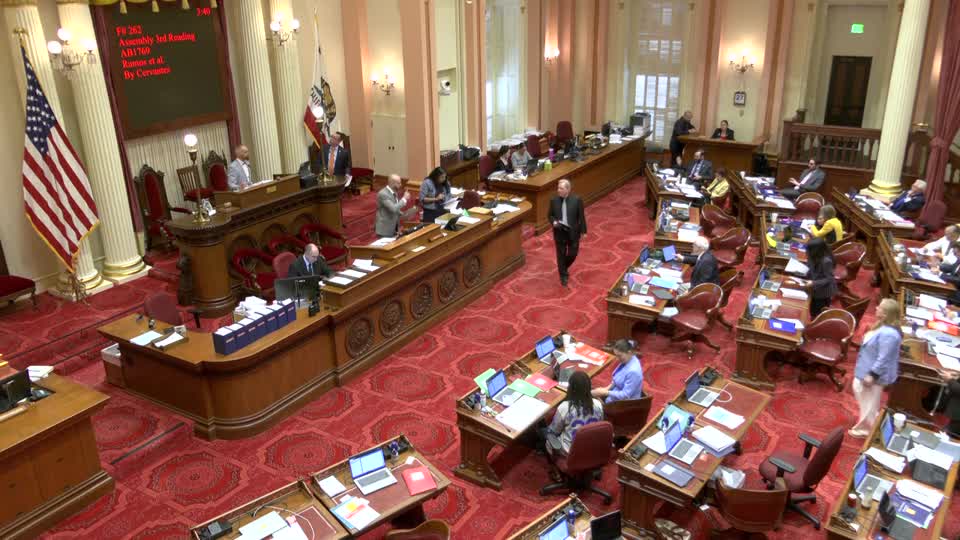 1MIN
Senate Floor
 12MIN
Senate Standing Committee on Education
 13MIN
Senate Standing Committee on Health
 1MIN
Assembly Floor
 19MIN
Assembly Standing Committee on Judiciary
Bill Author

Bill Co-Author(s):