AB 568: Tule East Groundwater Sustainability Agency Act.
- Session Year: 2025-2026
- House: Assembly
- Latest Version Date: 2025-07-18
Current Status:
In Progress
(2026-03-09: Ordered to inactive file at the request of Assembly Member Macedo.)
Introduced
In Committee
Awaiting First Chamber Vote
Passed First Chamber
In Committee
Awaiting Second Chamber Vote
Passed Second Chamber
Enacted
What does this bill do?
This bill creates the Tule East Groundwater Sustainability Agency in Tulare County and makes it the local agency responsible for managing groundwater in the portion of the Tule Subbasin within its boundaries. It sets the agency's initial boundaries, requires it to prepare and carry out a groundwater sustainability plan (a plan to keep groundwater supplies healthy), establishes a five-member board with seats for Hope Water District, Ducor Water District, a Tulare County supervisor, and two agricultural representatives (including at least one socially disadvantaged farmer), and gives the agency authority to adopt rules, charge fees, hire staff, and coordinate with other agencies.
The summary is provided by generative AI which can make mistakes. For original language, please view the details in the table below.
Existing law, the Sustainable Groundwater Management Act, requires all groundwater basins designated as high- or medium-priority basins by the Department of Water Resources to be managed under a groundwater sustainability plan or coordinated groundwater sustainability plans, except as specified. The act authorizes any local agency or combination of local agencies overlying a groundwater basin to decide to become a groundwater sustainability agency for that basin. The act deems certain agencies created by statute to manage groundwater the exclusive local agencies within their respective statutory boundaries with powers to comply with the act and authorizes these agencies to opt out of being the exclusive groundwater management agency.
This bill would create the Tule East Groundwater Sustainability Agency and would establish the agencys initial boundaries. The bill would authorize the boundaries of the agency to be adjusted, as specified. The bill would require the agency to elect to be a groundwater sustainability agency under the Sustainable Groundwater Management Act for that portion of the Tule Subbasin that lies within the boundaries of the agency and would require the agency to develop and implement a groundwater sustainability plan to achieve sustainable groundwater management within the territory of the agency. The bill would generally specify the powers and purposes of the agency. The bill would prescribe the composition of the 5-member board of directors of the agency and would require members and alternates to be chosen, as specified. By imposing duties on the agency and the County of Tulare, the bill would impose a state-mandated local program. The bill would deem the Tule East Groundwater Sustainability Agency the exclusive local agency with powers to comply with the Sustainable Groundwater Management Act.
This bill would make legislative findings and declarations as to the necessity of a special statute for the Tule Subbasin.
The California Constitution requires the state to reimburse local agencies and school districts for certain costs mandated by the state. Statutory provisions establish procedures for making that reimbursement.
This bill would provide that no reimbursement is required by this act for a specified reason.
Existing law, as added by the Victims Bill of Rights, approved as Proposition 8 at the June 8, 1982, statewide primary election, and as amended by the Gang Violence and Juvenile Crime Prevention Act of 1998, approved as Proposition 21 at the March 7, 2000, statewide primary election, among other things, defines a serious felony.Existing law prohibits plea bargaining in a case in which a serious felony is charged and imposes a 5-year enhancement for conviction of a serious felony if the person has previously been convicted of a serious felony.This bill would include knowingly furnishing fentanyl to a minor within the definition of a serious felony. By expanding the scope of an enhancement, this bill would impose a state-mandated local program.The California Constitution requires the state to reimburse local agencies and school districts for certain costs mandated by the state. Statutory provisions establish procedures for making that reimbursement.This bill would provide that no reimbursement is required by this act for a specified reason.Existing law, as added by the Victims Bill of Rights, approved as Proposition 8 at the June 8, 1982, statewide primary election, and as amended by the Gang Violence and Juvenile Crime Prevention Act of 1998, approved as Proposition 21 at the March 7, 2000, statewide primary election, among other things, defines a serious felony.
Existing law prohibits plea bargaining in a case in which a serious felony is charged and imposes a 5-year enhancement for conviction of a serious felony if the person has previously been convicted of a serious felony.
This bill would include knowingly furnishing fentanyl to a minor within the definition of a serious felony. By expanding the scope of an enhancement, this bill would impose a state-mandated local program.
The California Constitution requires the state to reimburse local agencies and school districts for certain costs mandated by the state. Statutory provisions establish procedures for making that reimbursement.
This bill would provide that no reimbursement is required by this act for a specified reason.
Existing law, as added by the Victims Bill of Rights, approved as Proposition 8 at the June 8, 1982, statewide primary election, and as amended by the Gang Violence and Juvenile Crime Prevention Act of 1998, approved as Proposition 21 at the March 7, 2000, statewide primary election, among other things, defines a serious felony. Existing law, as added by Proposition 184, approved at the November 8, 1994, statewide general election, and amended by the Three Strikes Reform Act of 2012, approved as Proposition 36 at the November 6, 2012, statewide general election, commonly known as the three strikes law, imposes additional years of imprisonment in the state prison on a person who commits a serious felony and has been convicted of, or who has a prior conviction for, a serious felony. Existing law includes furnishing specified controlled substances to a minor as a serious felony for these purposes. The Legislature may directly amend these initiatives by a statute passed in each house by a 2/3 vote, or by a statute that becomes effective only when approved by the voters.
Existing law prohibits plea bargaining in a case in which a serious felony is charged and imposes a 5-year enhancement for conviction of a serious felony if the person has previously been convicted of a serious felony.
This bill would include furnishing fentanyl to a minor within the definition of a serious felony, including for purposes of the three strikes law. felony. By expanding the scope of an enhancement, this bill would impose a state-mandated local program.
The California Constitution requires the state to reimburse local agencies and school districts for certain costs mandated by the state. Statutory provisions establish procedures for making that reimbursement.
This bill would provide that no reimbursement is required by this act for a specified reason.
Existing law, as added by the Victims Bill of Rights, approved as Proposition 8 at the June 8, 1982, statewide primary election, and as amended by the Gang Violence and Juvenile Crime Prevention Act of 1998, approved as Proposition 21 at the March 7, 2000, statewide primary election, among other things, defines a serious felony. Existing law, as added by Proposition 184, approved at the November 8, 1994, statewide general election, and amended by the Three Strikes Reform Act of 2012, approved as Proposition 36 at the November 6, 2012, statewide general election, commonly known as the three strikes law, imposes additional years of imprisonment in the state prison on a person who commits a serious felony and has been convicted of, or who has a prior conviction for, a serious felony. Existing law includes furnishing specified controlled substances to a minor as a serious felony for these purposes. The Legislature may directly amend these initiatives by a statute passed in each house by a 2/3 vote, or by a statute that becomes effective only when approved by the voters.
This bill would include furnishing fentanyl to a minor within the definition of a serious felony, including for purposes of the three strikes law. By expanding the scope of an enhancement, this bill would impose a state-mandated local program.
The California Constitution requires the state to reimburse local agencies and school districts for certain costs mandated by the state. Statutory provisions establish procedures for making that reimbursement.
This bill would provide that no reimbursement is required by this act for a specified reason.
(a)Except as provided in subdivision (c), any local agency or combination of local agencies overlying a groundwater basin may decide to become a groundwater sustainability agency for that basin.
(b)Before deciding to become a groundwater sustainability agency, and after publication of notice pursuant to Section 6066 of the Government Code, the local agency or agencies shall hold a public hearing in the county or counties overlying the basin.
(c)(1)Except as provided in paragraph (2), the following agencies created by statute to manage groundwater shall be deemed the exclusive local agencies within their respective statutory boundaries with powers to comply with this part:
(A)Alameda County Flood Control and Water Conservation District, Zone 7.
(B)Alameda County Water District.
(C)Desert Water Agency.
(D)Fox Canyon Groundwater Management Agency.
(E)Honey Lake Valley Groundwater Management District.
(F)Kings River East Groundwater Sustainability Agency.
(G)Long Valley Groundwater Management District.
(H)Mendocino City Community Services District.
(I)Mono County Tri-Valley Groundwater Management District.
(J)Monterey Peninsula Water Management District.
(K)North Fork Kings Groundwater Sustainability Agency.
(L)Ojai Groundwater Management Agency.
(M)Orange County Water District.
(N)Pajaro Valley Water Management Agency.
(O)San Joaquin River Exchange Contractors Groundwater Sustainability Agency.
(P)Santa Clara Valley Water District.
(Q)Sierra Valley Groundwater Management District.
(R)Tule East Groundwater Sustainability Agency.
(S)Willow Creek Groundwater Management Agency.
(2)An agency identified in this subdivision may opt out of being the exclusive groundwater management agency within its statutory boundaries by sending a notice to the department, which shall be posted on the departments internet website within 15 days of receipt. If an agency identified in paragraph (1) opts out of being the exclusive groundwater management agency, any other local agency or combination of local agencies operating within the statutory boundaries of the agency that has opted out may notify the department pursuant to Section 10723.8 of its decision to be the groundwater sustainability agency.
(3)A local agency listed in paragraph (1) may comply with this part by meeting the requirements of Section 10733.6 or opting to become a groundwater sustainability agency pursuant to this section. A local agency with authority to implement a basin-specific management plan pursuant to its principal act shall not exercise any authorities granted in this part in a manner inconsistent with any prohibitions or limitations in its principal act unless the governing board of the local agency makes a finding that the agency is unable to sustainably manage the basin without the prohibited authority.
(d)The decision of a local agency or combination of agencies to become a groundwater sustainability agency shall take effect as provided in Section 10723.8.
SEC. 2.This act shall be known and may be cited as the Tule East Groundwater Sustainability Agency Act. Tule East Groundwater Sustainability Agency Act1.Findings and Declarations101.The Legislature hereby finds and declares that the preservation of the groundwater resources within the territory of the agency is in the public interest and that the creation of the agency pursuant to this act is for the common benefit.
102.The Legislature further finds and declares that the groundwater management activities of the agency benefit all operators of groundwater extraction facilities within the territory of the agency.
103.The Legislature further finds and declares that circumstances in the territory of the agency to be formed hereby, which may not exist in other locations, justify the formation of the agency and the grant of powers contained in this act.
2.Creation and Purposes201.(a)A groundwater management agency is hereby created in the County of Tulare to be known as the Tule East Groundwater Sustainability Agency.
(b)The agency shall be governed by a board as specified in Section 501 and shall have the boundaries specified in Section 301. The agency shall only exercise the powers granted by this act and the Sustainable Groundwater Management Act (Part 2.74 (commencing with Section 10720) of Division 6 of the Water Code) for purposes of groundwater management within the boundaries of the agency, together with any other powers as are reasonably implied, necessary, and proper to carry out the objectives and purposes of the agency to implement the Sustainable Groundwater Management Act (Part 2.74 (commencing with Section 10720) of Division 6 of the Water Code). The agency shall abide by the rules and regulations promulgated by the Department of Water Resources and the State Water Resources Control Board to implement the Sustainable Groundwater Management Act.
3.Boundaries301.For purposes of this act, the initial boundaries of the agency shall include the following:
(a)All land located within the boundaries of the Hope Water District and the Ducor Water District located in the County of Tulare.
(b)The area within the Tule Subbasin east of the boundaries of the Lower Tule Irrigation District, Pixley Irrigation District, and Delano-Earlimart Irrigation District, excluding the boundaries of the Porterville Irrigation District, Saucelito Irrigation District, Vandalia Water District, Tea Pot Dome Water District, Terra Bella Irrigation District, Kern-Tulare Water District, and the City of Porterville.
302.(a)The initial boundaries may be changed upon action by the agencys board of directors after a noticed public hearing with 14 30 calendar days notice. The boundaries shall be depicted on a map that shall be submitted to the department and maintained by the board of directors of the agency.
(b)The boundaries of the agency shall not be adjusted to include an area of the basin within the management area of another groundwater sustainability agency unless the agency has entered into a memorandum of agreement or other legal agreement with that groundwater sustainability agency that permits the area to be included.
(c)The boundaries of the agency shall not be adjusted to include any part of a proposed management area, as defined in a notice of intent submitted pursuant Section 10723.8 of the Water Code, unless the agency has entered into a memorandum of agreement or other legal agreement with all agencies listed in the notice of intent that permits the area to be included.
4.Definitions401.Unless otherwise indicated by their context, the definitions set forth in this article govern the interpretation of this act.
402.Agency means the Tule East Groundwater Sustainability Agency established by this act.
403.Aquifer means a geologic formation or structure that transmits water in sufficient quantities to supply pumping wells or springs.
404.Basin has the same meaning as defined in Section 10721 of the Water Code.
405.Board means the board of directors of the agency, as more particularly described in Section 501.
406.Coordination agreement has the same meaning as defined in Section 10721 of the Water Code.
407.County means the County of Tulare.
408.Ducor means the Ducor Water District.
409.Extraction means the act of obtaining groundwater by pumping or other controlled means.
410.Groundwater has the same meaning as defined in Section 10721 of the Water Code.
411.Groundwater management activities means programs, projects, measures, or actions taken to preserve, protect, and enhance groundwater resources within the territory of the agency.
412.Hope means the Hope Water District.
413.Member agency means the Hope Water District, the Ducor Water District, the County of Tulare, and the entities entitled to representation on the agencys board of directors as specified in Section 501.
414.Operator has the same meaning as defined in Section 10721 of the Water Code.
415.Person has the same meaning as defined in Section 10735 of the Water Code.
416.Plan means a groundwater sustainability plan prepared by the agency pursuant to this act.
417.Supplemental water means surface water or groundwater imported from outside the watershed or watersheds of the basin or aquifer and floodwaters that are conserved and saved within the watershed or watersheds that would otherwise have been lost or would not have reached the basin or aquifer.418.417.Tule Subbasin means the San Joaquin Valley Groundwater Basin Tule Subbasin.
5.General Provisions501.(a)The agency shall be governed by a board of directors that shall consist of five members, as follows:
(1)One member shall be chosen by Hope from the members of the board of directors of Hope.
(2)One member shall be chosen by Ducor from the members of the board of directors of Ducor.
(3)One member shall be chosen by the county. county from the members of the board of supervisors of the County of Tulare.
(4)(A)Two members shall be chosen by the other three board members to represent groundwater-dependent agricultural interests within the territory of the agency. These members shall be actively engaged in the production of agriculture within the territory of the agency. These members shall may be selected from a list of nominations submitted by the Tulare County Farm Bureau, but the nominees need not be members of the farm bureau.
(B)At least one member chosen pursuant to this paragraph shall be or represent socially disadvantaged farmers. This provision shall apply to the extent authorized by law.
(b)The board members described in paragraphs (1), (2), and (3) of subdivision (a) shall be chosen by their respective governing boards from their board members whose districts or divisions overlie, at least in part, the territory of the agency.
(c)There shall be an alternate for each board member, chosen in the same manner and by the same entity as the board member. The alternate member shall act in place of the board member they are an alternate for in case of that board members absence or inability to act.
(d)Members and their alternates shall be chosen on or before November 30, 2026.
502.(a)The members described in paragraphs (1) to (3), inclusive, of subdivision (a) of Section 501 shall serve for a four-year term of office, or until the member is no longer an eligible official of the member agency. These members may serve for more than one term of office.
(b)The member described in paragraph (4) of subdivision (a) of Section 501 shall serve four-year terms of office.
503.(a)The board may adopt an ordinance to provide compensation to members of the board in an amount not to exceed one hundred dollars ($100) per day for each days attendance at meetings of the board or for each days service rendered as a member of the board by request of the board. For purposes of this section, the determination of whether a board members activities on any specific day are compensable shall be made pursuant to Article 2.3 (commencing with Section 53232) of Chapter 2 of Part 1 of Division 2 of Title 5 of the Government Code.
(b)Reimbursement for expenses of members of the board is subject to Sections 53232.2 and 53232.3 of the Government Code.
(c)The board may adopt an ordinance to increase the compensation received by members of the board above the amount of one hundred dollars ($100) per day. The increase shall not exceed an amount equal to 5 percent, for each calendar year following the operative date of the last adjustment, of the compensation that is received when the ordinance is adopted.
(d)A board member shall not be compensated for more than a total of 10 days in any calendar month.
504.(a)The board may adopt resolutions, policies, rules, and regulations for the purpose of regulating, conserving, managing, and controlling the use and extraction of groundwater within the territory of the agency.
(b)All resolutions, policies, rules, and regulations shall be adopted at a public meeting and require a majority vote of the board.
505.No provision of this act shall be construed as denying to the county, Hope, or Ducor, or any other member agency any rights or powers that they already have or that they may be granted.
506.The agency may contract with the county for staff and other services. The agency may hire contractors, consultants, and legal counsel as it considers appropriate.
507.The agency shall enter into a coordination agreement with other local agencies for purposes of coordinating the agencys plan with other agencies or groundwater sustainability plans within the Tule Subbasin as required by the Sustainable Groundwater Management Act (Part 2.74 (commencing with Section 10720) of Division 6 of the Water Code).
508.The agency may exclude from any of the requirements of this act, or the operation of any resolution, policy, rule, or regulation, any operator who annually extracts less than a minimum amount of groundwater as specified by a resolution adopted by the board.
6.Studies and Investigations601.The agency may collect data and conduct technical and other investigations of all kinds in order to carry out the provisions of this act. All hydrological investigations and studies carried out by or on behalf of the agency shall be constructed by or under the supervision of licensed engineers or other persons qualified in groundwater geology or hydrology.
602.The agency may recommend and encourage water recycling and other water development projects, where those projects will enhance and contribute to the responsible management of groundwater resources, as part of its annual plan for implementation of groundwater management objectives.
7.Sustainable Groundwater Management Powers701.The agency shall develop and implement a groundwater sustainability plan pursuant to Chapter 6 (commencing with Section 10727) of Part 2.74 of Division 6 of the Water Code to achieve sustainable groundwater management within the territory of the agency.
702.The agency shall elect to be a groundwater sustainability agency pursuant to Chapter 4 (commencing with Section 10723) of Part 2.74 of Division 6 of the Water Code for that portion of the Tule Subbasin that lies within the boundaries of the agency.
703.The agency may exercise any of the powers described in Chapter 5 (commencing with Section 10725) of Part 2.74 of Division 6 of the Water Code and the enforcement powers described in Chapter 9 (commencing with Section 10732) of Part 2.74 of Division 6 of the Water Code.
704.The availability of supplemental water to any operator shall not subject that operator to regulations by the agency that are more restrictive than those imposed on other operators.8.Fee Authority801.Pursuant to Chapter 8 (commencing with Section 10730) of Part 2.74 of Division 6 of the Water Code, the agency may impose fees, including, but not limited to, permit fees and fees on groundwater extraction or other regulated activity, to fund the costs of a groundwater sustainability program, that include, but are not limited to, the preparation, adoption, and amendment of a groundwater sustainability plan, investigations, inspections, compliance assistance, enforcement, and program administration, including a prudent reserve.
9.Miscellaneous901.In the event of any conflict between this act and the provisions of the Sustainable Groundwater Management Act (Part 2.74 (commencing with Section 10720) of Division 6 of the Water Code), the provisions of the Sustainable Groundwater Management Act shall prevail.
SEC. 3.The Legislature finds and declares that a special statute is necessary and that a general statute cannot be made applicable within the meaning of Section 16 of Article IV of the California Constitution because of the unique need to establish a functional groundwater sustainability agency in the Tule Subbasin.
SEC. 4.No reimbursement is required by this act pursuant to Section 6 of Article XIIIB of the California Constitution because a local agency or school district has the authority to levy service charges, fees, or assessments sufficient to pay for the program or level of service mandated by this act, within the meaning of Section 17556 of the Government Code.
(a)Except as provided in subdivision (c), any local agency or combination of local agencies overlying a groundwater basin may decide to become a groundwater sustainability agency for that basin.
(b)Before deciding to become a groundwater sustainability agency, and after publication of notice pursuant to Section 6066 of the Government Code, the local agency or agencies shall hold a public hearing in the county or counties overlying the basin.
(c)(1)Except as provided in paragraph (2), the following agencies created by statute to manage groundwater shall be deemed the exclusive local agencies within their respective statutory boundaries with powers to comply with this part:
(A)Alameda County Flood Control and Water Conservation District, Zone 7.
(B)Alameda County Water District.
(C)Desert Water Agency.
(D)Fox Canyon Groundwater Management Agency.
(E)Honey Lake Valley Groundwater Management District.
(F)Kings River East Groundwater Sustainability Agency.
(G)Long Valley Groundwater Management District.
(H)Mendocino City Community Services District.
(I)Mono County Tri-Valley Groundwater Management District.
(J)Monterey Peninsula Water Management District.
(K)North Fork Kings Groundwater Sustainability Agency.
(L)Ojai Groundwater Management Agency.
(M)Orange County Water District.
(N)Pajaro Valley Water Management Agency.
(O)San Joaquin River Exchange Contractors Groundwater Sustainability Agency.
(P)Santa Clara Valley Water District.
(Q)Sierra Valley Groundwater Management District.
(R)Tule East Groundwater Sustainability Agency.
(R)(S)Willow Creek Groundwater Management Agency.
(2)An agency identified in this subdivision may opt out of being the exclusive groundwater management agency within its statutory boundaries by sending a notice to the department, which shall be posted on the departments Internet Web site internet website within 15 days of receipt. If an agency identified in paragraph (1) opts out of being the exclusive groundwater management agency, any other local agency or combination of local agencies operating within the statutory boundaries of the agency that has opted out may notify the department pursuant to Section 10723.8 of its decision to be the groundwater sustainability agency.
(3)A local agency listed in paragraph (1) may comply with this part by meeting the requirements of Section 10733.6 or opting to become a groundwater sustainability agency pursuant to this section. A local agency with authority to implement a basin-specific management plan pursuant to its principal act shall not exercise any authorities granted in this part in a manner inconsistent with any prohibitions or limitations in its principal act unless the governing board of the local agency makes a finding that the agency is unable to sustainably manage the basin without the prohibited authority.
(d)The decision of a local agency or combination of agencies to become a groundwater sustainability agency shall take effect as provided in Section 10723.8.
SEC. 2.This act shall be known and may be cited as the Tule East Groundwater Sustainability Agency Act. Tule East Groundwater Sustainability Agency Act 1.Findings and Declarations101.The Legislature hereby finds and declares that the preservation of the groundwater resources within the territory of the agency is in the public interest and that the creation of the agency pursuant to this act is for the common benefit.
102.The Legislature further finds and declares that the groundwater management activities of the agency benefit all operators of groundwater extraction facilities within the territory of the agency.
103.The Legislature further finds and declares that circumstances in the territory of the agency to be formed hereby, which may not exist in other locations, justify the formation of the agency and the grant of powers contained in this act.
2.Creation and Purposes201.(a)A groundwater management agency is hereby created in the County of Tulare to be known as the Tule East Groundwater Sustainability Agency.
(b)The agency shall be governed by a board as specified in Section 501 and shall have the boundaries specified in Section 301. The agency shall only exercise the powers granted by this act and the Sustainable Groundwater Management Act (Part 2.74 (commencing with Section 10720) of Division 6 of the Water Code) for purposes of groundwater management within the boundaries of the agency, together with any other powers as are reasonably implied, necessary, and proper to carry out the objectives and purposes of the agency to implement the Sustainable Groundwater Management Act (Part 2.74 (commencing with Section 10720) of Division 6 of the Water Code). The agency shall abide by the rules and regulations promulgated by the Department of Water Resources and the State Water Resources Control Board to implement the Sustainable Groundwater Management Act.
3.Boundaries301.For purposes of this act, the initial boundaries of the agency shall include the following:
(a)All land located within the boundaries of the Hope Water District and the Ducor Water District located in the County of Tulare.
(b)The area within the Tule Subbasin east of the boundaries of the Lower Tule Irrigation District, Pixley Irrigation District, and Delano-Earlimart Irrigation District, excluding the boundaries of the Porterville Irrigation District, Saucelito Irrigation District, Vandalia Water District, Tea Pot Dome Water District, Terra Bella Irrigation District, Kern-Tulare Water District, and the City of Porterville.
302.(a)The initial boundaries may be changed upon action by the agencys board of directors after a noticed public hearing with 14 calendar days notice. The boundaries shall be depicted on a map that shall be maintained by the board of directors of the agency.
(b)The boundaries of the agency shall not be adjusted to include an area of the basin within the management area of another groundwater sustainability agency unless the agency has entered into a memorandum of agreement or other legal agreement with that groundwater sustainability agency that permits the area to be included.
(c)The boundaries of the agency shall not be adjusted to include any part of a proposed management area, as defined in a notice of intent submitted pursuant Section 10723.8 of the Water Code, unless the agency has entered into a memorandum of agreement or other legal agreement with all agencies listed in the notice of intent that permits the area to be included.
4.Definitions401.Unless otherwise indicated by their context, the definitions set forth in this article govern the interpretation of this act.
402.Agency means the Tule East Groundwater Sustainability Agency established by this act.
403.Aquifer means a geologic formation or structure that transmits water in sufficient quantities to supply pumping wells or springs.
404.Basin has the same meaning as defined in Section 10721 of the Water Code.
405.Board means the board of directors of the agency, as more particularly described in Section 501.
406.Coordination agreement has the same meaning as defined in Section 10721 of the Water Code.
407.County means the County of Tulare.
408.Ducor means the Ducor Water District.
409.Extraction means the act of obtaining groundwater by pumping or other controlled means.
410.Groundwater has the same meaning as defined in Section 10721 of the Water Code.
411.Groundwater management activities means programs, projects, measures, or actions taken to preserve, protect, and enhance groundwater resources within the territory of the agency.
412.Hope means the Hope Water District.
413.Member agency means the Hope Water District, the Ducor Water District, the County of Tulare, and the entities entitled to representation on the agencys board of directors as specified in Section 501.
414.Operator has the same meaning as defined in Section 10721 of the Water Code.
415.Person has the same meaning as defined in Section 10735 of the Water Code.
416.Plan means a groundwater sustainability plan prepared by the agency pursuant to this act.
417.Supplemental water means surface water or groundwater imported from outside the watershed or watersheds of the basin or aquifer and floodwaters that are conserved and saved within the watershed or watersheds that would otherwise have been lost or would not have reached the basin or aquifer.
418.Tule Subbasin means the San Joaquin Valley Groundwater Basin Tule Subbasin.
5.General Provisions501.(a)The agency shall be governed by a board of directors that shall consist of five members, as follows:
(1)One member shall be chosen by Hope from the members of the board of directors of Hope.
(2)One member shall be chosen by Ducor from the members of the board of directors of Ducor.
(3)One member shall be chosen by the county.
(4)Two members shall be chosen by the other three board members to represent groundwater-dependent agricultural interests within the territory of the agency. These members shall be actively engaged in the production of agriculture within the territory of the agency. These members shall be selected from a list of nominations submitted by the Tulare County Farm Bureau, but the nominees need not be members of the farm bureau.
(b)The board members described in paragraphs (1), (2), and (3) of subdivision (a) shall be chosen by their respective governing boards from their board members whose districts or divisions overlie, at least in part, the territory of the agency.
(c)There shall be an alternate for each board member, chosen in the same manner and by the same entity as the board member. The alternate member shall act in place of the board member they are an alternate for in case of that board members absence or inability to act.
(d)Members and their alternates shall be chosen on or before November 30, 2026.
502.(a)The members described in paragraphs (1) to (3), inclusive, of subdivision (a) of Section 501 shall serve for a four-year term of office, or until the member is no longer an eligible official of the member agency. These members may serve for more than one term of office.
(b)The member described in paragraph (4) of subdivision (a) of Section 501 shall serve four-year terms of office.
503.(a)The board may adopt an ordinance to provide compensation to members of the board in an amount not to exceed one hundred dollars ($100) per day for each days attendance at meetings of the board or for each days service rendered as a member of the board by request of the board. For purposes of this section, the determination of whether a board members activities on any specific day are compensable shall be made pursuant to Article 2.3 (commencing with Section 53232) of Chapter 2 of Part 1 of Division 2 of Title 5 of the Government Code.
(b)Reimbursement for expenses of members of the board is subject to Sections 53232.2 and 53232.3 of the Government Code.
(c)The board may adopt an ordinance to increase the compensation received by members of the board above the amount of one hundred dollars ($100) per day. The increase shall not exceed an amount equal to 5 percent, for each calendar year following the operative date of the last adjustment, of the compensation that is received when the ordinance is adopted.
(d)A board member shall not be compensated for more than a total of 10 days in any calendar month.
504.(a)The board may adopt resolutions, policies, rules, and regulations for the purpose of regulating, conserving, managing, and controlling the use and extraction of groundwater within the territory of the agency.
(b)All resolutions, policies, rules, and regulations shall be adopted at a public meeting and require a majority vote of the board.
505.No provision of this act shall be construed as denying to the county, Hope, or Ducor, or any other member agency any rights or powers that they already have or that they may be granted.
506.The agency may contract with the county for staff and other services. The agency may hire contractors, consultants, and legal counsel as it considers appropriate.
507.The agency shall enter into a coordination agreement with other local agencies for purposes of coordinating the agencys plan with other agencies or groundwater sustainability plans within the Tule Subbasin as required by the Sustainable Groundwater Management Act (Part 2.74 (commencing with Section 10720) of Division 6 of the Water Code).
508.The agency may exclude from any of the requirements of this act, or the operation of any resolution, policy, rule, or regulation, any operator who annually extracts less than a minimum amount of groundwater as specified by a resolution adopted by the board.
6.Studies and Investigations601.The agency may collect data and conduct technical and other investigations of all kinds in order to carry out the provisions of this act. All hydrological investigations and studies carried out by or on behalf of the agency shall be constructed by or under the supervision of licensed engineers or other persons qualified in groundwater geology or hydrology.
602.The agency may recommend and encourage water recycling and other water development projects, where those projects will enhance and contribute to the responsible management of groundwater resources, as part of its annual plan for implementation of groundwater management objectives.
7.Sustainable Groundwater Management Powers701.The agency shall develop and implement a groundwater sustainability plan pursuant to Chapter 6 (commencing with Section 10727) of Part 2.74 of Division 6 of the Water Code to achieve sustainable groundwater management within the territory of the agency.
702.The agency shall elect to be a groundwater sustainability agency pursuant to Chapter 4 (commencing with Section 10723) of Part 2.74 of Division 6 of the Water Code for that portion of the Tule Subbasin that lies within the boundaries of the agency.
703.The agency may exercise any of the powers described in Chapter 5 (commencing with Section 10725) of Part 2.74 of Division 6 of the Water Code and the enforcement powers described in Chapter 9 (commencing with Section 10732) of Part 2.74 of Division 6 of the Water Code.
704.The availability of supplemental water to any operator shall not subject that operator to regulations by the agency that are more restrictive than those imposed on other operators.
8.Fee Authority801.Pursuant to Chapter 8 (commencing with Section 10730) of Part 2.74 of Division 6 of the Water Code, the agency may impose fees, including, but not limited to, permit fees and fees on groundwater extraction or other regulated activity, to fund the costs of a groundwater sustainability program, that include, but are not limited to, the preparation, adoption, and amendment of a groundwater sustainability plan, investigations, inspections, compliance assistance, enforcement, and program administration, including a prudent reserve.
9.Miscellaneous901.In the event of any conflict between this act and the provisions of the Sustainable Groundwater Management Act (Part 2.74 (commencing with Section 10720) of Division 6 of the Water Code), the provisions of the Sustainable Groundwater Management Act shall prevail.
SEC. 3.The Legislature finds and declares that a special statute is necessary and that a general statute cannot be made applicable within the meaning of Section 16 of Article IV of the California Constitution because of the unique need to establish a functional groundwater sustainability agency in the Tule Subbasin.
SEC. 4.No reimbursement is required by this act pursuant to Section 6 of Article XIIIB of the California Constitution because a local agency or school district has the authority to levy service charges, fees, or assessments sufficient to pay for the program or level of service mandated by this act, within the meaning of Section 17556 of the Government Code.
SECTION 1.Section 1192.7 of the Penal Code is amended to read:1192.7.(a)(1)It is the intent of the Legislature that district attorneys prosecute violent sex crimes under statutes that provide sentencing under a one strike, three strikes or habitual sex offender statute instead of engaging in plea bargaining over those offenses.(2)Plea bargaining in any case in which the indictment or information charges any serious felony, any felony in which it is alleged that a firearm was personally used by the defendant, or any offense of driving while under the influence of alcohol, drugs, narcotics, or any other intoxicating substance, or any combination thereof, is prohibited, unless there is insufficient evidence to prove the peoples case, or testimony of a material witness cannot be obtained, or a reduction or dismissal would not result in a substantial change in sentence.(3)If the indictment or information charges the defendant with a violent sex crime, as listed in subdivision (c) of Section 667.61, that could be prosecuted under Sections 269, 288.7, subdivisions (b) through (i) of Section 667, Section 667.61, or 667.71, plea bargaining is prohibited unless there is insufficient evidence to prove the peoples case, or testimony of a material witness cannot be obtained, or a reduction or dismissal would not result in a substantial change in sentence. At the time of presenting the agreement to the court, the district attorney shall state on the record why a sentence under one of those sections was not sought.(b)As used in this section, plea bargaining means any bargaining, negotiation, or discussion between a criminal defendant, or their counsel, and a prosecuting attorney or judge, whereby the defendant agrees to plead guilty or nolo contendere, in exchange for any promises, commitments, concessions, assurances, or consideration by the prosecuting attorney or judge relating to any charge against the defendant or to the sentencing of the defendant.(c)As used in this section, serious felony means any of the following:(1)Murder or voluntary manslaughter; (2) mayhem; (3) rape; (4) sodomy by force, violence, duress, menace, threat of great bodily injury, or fear of immediate and unlawful bodily injury on the victim or another person; (5) oral copulation by force, violence, duress, menace, threat of great bodily injury, or fear of immediate and unlawful bodily injury on the victim or another person; (6) lewd or lascivious act on a child under 14 years of age; (7) any felony punishable by death or imprisonment in the state prison for life; (8) any felony in which the defendant personally inflicts great bodily injury on any person, other than an accomplice, or any felony in which the defendant personally uses a firearm; (9) attempted murder; (10) assault with intent to commit rape or robbery; (11) assault with a deadly weapon or instrument on a peace officer; (12) assault by a life prisoner on a noninmate; (13) assault with a deadly weapon by an inmate; (14) arson; (15) exploding a destructive device or any explosive with intent to injure; (16) exploding a destructive device or any explosive causing bodily injury, great bodily injury, or mayhem; (17) exploding a destructive device or any explosive with intent to murder; (18) any burglary of the first degree; (19) robbery or bank robbery; (20) kidnapping; (21) holding of a hostage by a person confined in a state prison; (22) attempt to commit a felony punishable by death or imprisonment in the state prison for life; (23) any felony in which the defendant personally used a dangerous or deadly weapon; (24) selling, furnishing, administering, giving, or offering to sell, furnish, administer, or give to a minor any heroin, cocaine, phencyclidine (PCP), or any methamphetamine-related drug, as described in paragraph (2) of subdivision (d) of Section 11055 of the Health and Safety Code, or any of the precursors of methamphetamines, as described in subparagraph (A) of paragraph (1) of subdivision (f) of Section 11055 or subdivision (a) of Section 11100 of the Health and Safety Code; (25) any violation of subdivision (a) of Section 289 where the act is accomplished against the victims will by force, violence, duress, menace, or fear of immediate and unlawful bodily injury on the victim or another person; (26) grand theft involving a firearm; (27) carjacking; (28) any felony offense, which would also constitute a felony violation of Section 186.22; (29) assault with the intent to commit mayhem, rape, sodomy, or oral copulation, in violation of Section 220; (30) throwing acid or flammable substances, in violation of Section 244; (31) assault with a deadly weapon, firearm, machinegun, assault weapon, or semiautomatic firearm or assault on a peace officer or firefighter, in violation of Section 245; (32) assault with a deadly weapon against a public transit employee, custodial officer, or school employee, in violation of Section 245.2, 245.3, or 245.5; (33) discharge of a firearm at an inhabited dwelling, vehicle, or aircraft, in violation of Section 246; (34) commission of rape or sexual penetration in concert with another person, in violation of Section 264.1; (35) continuous sexual abuse of a child, in violation of Section 288.5; (36) shooting from a vehicle, in violation of subdivision (c) or (d) of Section 26100; (37) intimidation of victims or witnesses, in violation of Section 136.1; (38) criminal threats, in violation of Section 422; (39) any attempt to commit a crime listed in this subdivision other than an assault; (40) any violation of Section 12022.53; (41) a violation of subdivision (b) or (c) of Section 11418; (42) human trafficking of a minor, in violation of subdivision (c) of Section 236.1, except, with respect to a violation of paragraph (1) of subdivision (c) of Section 236.1, where the person who committed the offense was a victim of human trafficking, as described in subdivision (b) or (c) of Section 236.1, at the time of the offense; (43) selling, furnishing, administering, giving, or offering to sell, furnish, administer, or give to a minor any fentanyl, as described in subdivision (c) of Section 11055 of the Health and Safety Code, when the person knew that the substance was fentanyl; and (44) any conspiracy to commit an offense described in this subdivision.(d)As used in this section, bank robbery means to take or attempt to take, by force or violence, or by intimidation from the person or presence of another any property or money or any other thing of value belonging to, or in the care, custody, control, management, or possession of, any bank, credit union, or any savings and loan association.As used in this subdivision, the following terms have the following meanings:(1)Bank means any member of the Federal Reserve System, and any bank, banking association, trust company, savings bank, or other banking institution organized or operating under the laws of the United States, and any bank the deposits of which are insured by the Federal Deposit Insurance Corporation.(2)Savings and loan association means any federal savings and loan association and any insured institution as defined in Section 401 of the National Housing Act, as amended, and any federal credit union as defined in Section 2 of the Federal Credit Union Act.(3)Credit union means any federal credit union and any state-chartered credit union the accounts of which are insured by the Administrator of the National Credit Union administration.(e)The provisions of this section shall not be amended by the Legislature except by statute passed in each house by rollcall vote entered in the journal, two-thirds of the membership concurring, or by a statute that becomes effective only when approved by the electors.SEC. 2.No reimbursement is required by this act pursuant to Section 6 of Article XIIIB of the California Constitution because the only costs that may be incurred by a local agency or school district will be incurred because this act creates a new crime or infraction, eliminates a crime or infraction, or changes the penalty for a crime or infraction, within the meaning of Section 17556 of the Government Code, or changes the definition of a crime within the meaning of Section 6 of Article XIIIB of the California Constitution.(a)(1)It is the intent of the Legislature that district attorneys prosecute violent sex crimes under statutes that provide sentencing under a one strike, three strikes or habitual sex offender statute instead of engaging in plea bargaining over those offenses.
(2)Plea bargaining in any case in which the indictment or information charges any serious felony, any felony in which it is alleged that a firearm was personally used by the defendant, or any offense of driving while under the influence of alcohol, drugs, narcotics, or any other intoxicating substance, or any combination thereof, is prohibited, unless there is insufficient evidence to prove the peoples case, or testimony of a material witness cannot be obtained, or a reduction or dismissal would not result in a substantial change in sentence.
(3)If the indictment or information charges the defendant with a violent sex crime, as listed in subdivision (c) of Section 667.61, that could be prosecuted under Sections 269, 288.7, subdivisions (b) through (i) of Section 667, Section 667.61, or 667.71, plea bargaining is prohibited unless there is insufficient evidence to prove the peoples case, or testimony of a material witness cannot be obtained, or a reduction or dismissal would not result in a substantial change in sentence. At the time of presenting the agreement to the court, the district attorney shall state on the record why a sentence under one of those sections was not sought.
(b)As used in this section, plea bargaining means any bargaining, negotiation, or discussion between a criminal defendant, or their counsel, and a prosecuting attorney or judge, whereby the defendant agrees to plead guilty or nolo contendere, in exchange for any promises, commitments, concessions, assurances, or consideration by the prosecuting attorney or judge relating to any charge against the defendant or to the sentencing of the defendant.
(c)As used in this section, serious felony means any of the following:
(1)Murder or voluntary manslaughter; (2) mayhem; (3) rape; (4) sodomy by force, violence, duress, menace, threat of great bodily injury, or fear of immediate and unlawful bodily injury on the victim or another person; (5) oral copulation by force, violence, duress, menace, threat of great bodily injury, or fear of immediate and unlawful bodily injury on the victim or another person; (6) lewd or lascivious act on a child under 14 years of age; (7) any felony punishable by death or imprisonment in the state prison for life; (8) any felony in which the defendant personally inflicts great bodily injury on any person, other than an accomplice, or any felony in which the defendant personally uses a firearm; (9) attempted murder; (10) assault with intent to commit rape or robbery; (11) assault with a deadly weapon or instrument on a peace officer; (12) assault by a life prisoner on a noninmate; (13) assault with a deadly weapon by an inmate; (14) arson; (15) exploding a destructive device or any explosive with intent to injure; (16) exploding a destructive device or any explosive causing bodily injury, great bodily injury, or mayhem; (17) exploding a destructive device or any explosive with intent to murder; (18) any burglary of the first degree; (19) robbery or bank robbery; (20) kidnapping; (21) holding of a hostage by a person confined in a state prison; (22) attempt to commit a felony punishable by death or imprisonment in the state prison for life; (23) any felony in which the defendant personally used a dangerous or deadly weapon; (24) selling, furnishing, administering, giving, or offering to sell, furnish, administer, or give to a minor any fentanyl, heroin, cocaine, phencyclidine (PCP), or any methamphetamine-related drug, as described in paragraph (2) of subdivision (d) of Section 11055 of the Health and Safety Code, or any of the precursors of methamphetamines, as described in subparagraph (A) of paragraph (1) of subdivision (f) of Section 11055 or subdivision (a) of Section 11100 of the Health and Safety Code; (25) any violation of subdivision (a) of Section 289 where the act is accomplished against the victims will by force, violence, duress, menace, or fear of immediate and unlawful bodily injury on the victim or another person; (26) grand theft involving a firearm; (27) carjacking; (28) any felony offense, which would also constitute a felony violation of Section 186.22; (29) assault with the intent to commit mayhem, rape, sodomy, or oral copulation, in violation of Section 220; (30) throwing acid or flammable substances, in violation of Section 244; (31) assault with a deadly weapon, firearm, machinegun, assault weapon, or semiautomatic firearm or assault on a peace officer or firefighter, in violation of Section 245; (32) assault with a deadly weapon against a public transit employee, custodial officer, or school employee, in violation of Section 245.2, 245.3, or 245.5; (33) discharge of a firearm at an inhabited dwelling, vehicle, or aircraft, in violation of Section 246; (34) commission of rape or sexual penetration in concert with another person, in violation of Section 264.1; (35) continuous sexual abuse of a child, in violation of Section 288.5; (36) shooting from a vehicle, in violation of subdivision (c) or (d) of Section 26100; (37) intimidation of victims or witnesses, in violation of Section 136.1; (38) criminal threats, in violation of Section 422; (39) any attempt to commit a crime listed in this subdivision other than an assault; (40) any violation of Section 12022.53; (41) a violation of subdivision (b) or (c) of Section 11418; (42) human trafficking of a minor, in violation of subdivision (c) of Section 236.1, except, with respect to a violation of paragraph (1) of subdivision (c) of Section 236.1, where the person who committed the offense was a victim of human trafficking, as described in subdivision (b) or (c) of Section 236.1, at the time of the offense; and (43) (43) selling, furnishing, administering, giving, or offering to sell, furnish, administer, or give to a minor any fentanyl, as described in subdivision (c) of Section 11055 of the Health and Safety Code, when the person knew that the substance was fentanyl; and (44) any conspiracy to commit an offense described in this subdivision.
(d)As used in this section, bank robbery means to take or attempt to take, by force or violence, or by intimidation from the person or presence of another any property or money or any other thing of value belonging to, or in the care, custody, control, management, or possession of, any bank, credit union, or any savings and loan association.
As used in this subdivision, the following terms have the following meanings:
(1)Bank means any member of the Federal Reserve System, and any bank, banking association, trust company, savings bank, or other banking institution organized or operating under the laws of the United States, and any bank the deposits of which are insured by the Federal Deposit Insurance Corporation.
(2)Savings and loan association means any federal savings and loan association and any insured institution as defined in Section 401 of the National Housing Act, as amended, and any federal credit union as defined in Section 2 of the Federal Credit Union Act.
(3)Credit union means any federal credit union and any state-chartered credit union the accounts of which are insured by the Administrator of the National Credit Union administration.
(e)The provisions of this section shall not be amended by the Legislature except by statute passed in each house by rollcall vote entered in the journal, two-thirds of the membership concurring, or by a statute that becomes effective only when approved by the electors.
SEC. 2.No reimbursement is required by this act pursuant to Section 6 of Article XIIIB of the California Constitution because the only costs that may be incurred by a local agency or school district will be incurred because this act creates a new crime or infraction, eliminates a crime or infraction, or changes the penalty for a crime or infraction, within the meaning of Section 17556 of the Government Code, or changes the definition of a crime within the meaning of Section 6 of Article XIIIB of the California Constitution.
(a)(1)It is the intent of the Legislature that district attorneys prosecute violent sex crimes under statutes that provide sentencing under a one strike, three strikes or habitual sex offender statute instead of engaging in plea bargaining over those offenses.
(2)Plea bargaining in any case in which the indictment or information charges any serious felony, any felony in which it is alleged that a firearm was personally used by the defendant, or any offense of driving while under the influence of alcohol, drugs, narcotics, or any other intoxicating substance, or any combination thereof, is prohibited, unless there is insufficient evidence to prove the peoples case, or testimony of a material witness cannot be obtained, or a reduction or dismissal would not result in a substantial change in sentence.
(3)If the indictment or information charges the defendant with a violent sex crime, as listed in subdivision (c) of Section 667.61, that could be prosecuted under Sections 269, 288.7, subdivisions (b) through (i) of Section 667, Section 667.61, or 667.71, plea bargaining is prohibited unless there is insufficient evidence to prove the peoples case, or testimony of a material witness cannot be obtained, or a reduction or dismissal would not result in a substantial change in sentence. At the time of presenting the agreement to the court, the district attorney shall state on the record why a sentence under one of those sections was not sought.
(b)As used in this section, plea bargaining means any bargaining, negotiation, or discussion between a criminal defendant, or their counsel, and a prosecuting attorney or judge, whereby the defendant agrees to plead guilty or nolo contendere, in exchange for any promises, commitments, concessions, assurances, or consideration by the prosecuting attorney or judge relating to any charge against the defendant or to the sentencing of the defendant.
(c)As used in this section, serious felony means any of the following:
(1)Murder or voluntary manslaughter; (2) mayhem; (3) rape; (4) sodomy by force, violence, duress, menace, threat of great bodily injury, or fear of immediate and unlawful bodily injury on the victim or another person; (5) oral copulation by force, violence, duress, menace, threat of great bodily injury, or fear of immediate and unlawful bodily injury on the victim or another person; (6) lewd or lascivious act on a child under 14 years of age; (7) any felony punishable by death or imprisonment in the state prison for life; (8) any felony in which the defendant personally inflicts great bodily injury on any person, other than an accomplice, or any felony in which the defendant personally uses a firearm; (9) attempted murder; (10) assault with intent to commit rape or robbery; (11) assault with a deadly weapon or instrument on a peace officer; (12) assault by a life prisoner on a noninmate; (13) assault with a deadly weapon by an inmate; (14) arson; (15) exploding a destructive device or any explosive with intent to injure; (16) exploding a destructive device or any explosive causing bodily injury, great bodily injury, or mayhem; (17) exploding a destructive device or any explosive with intent to murder; (18) any burglary of the first degree; (19) robbery or bank robbery; (20) kidnapping; (21) holding of a hostage by a person confined in a state prison; (22) attempt to commit a felony punishable by death or imprisonment in the state prison for life; (23) any felony in which the defendant personally used a dangerous or deadly weapon; (24) selling, furnishing, administering, giving, or offering to sell, furnish, administer, or give to a minor any fentanyl, heroin, cocaine, phencyclidine (PCP), or any methamphetamine-related drug, as described in paragraph (2) of subdivision (d) of Section 11055 of the Health and Safety Code, or any of the precursors of methamphetamines, as described in subparagraph (A) of paragraph (1) of subdivision (f) of Section 11055 or subdivision (a) of Section 11100 of the Health and Safety Code; (25) any violation of subdivision (a) of Section 289 where the act is accomplished against the victims will by force, violence, duress, menace, or fear of immediate and unlawful bodily injury on the victim or another person; (26) grand theft involving a firearm; (27) carjacking; (28) any felony offense, which would also constitute a felony violation of Section 186.22; (29) assault with the intent to commit mayhem, rape, sodomy, or oral copulation, in violation of Section 220; (30) throwing acid or flammable substances, in violation of Section 244; (31) assault with a deadly weapon, firearm, machinegun, assault weapon, or semiautomatic firearm or assault on a peace officer or firefighter, in violation of Section 245; (32) assault with a deadly weapon against a public transit employee, custodial officer, or school employee, in violation of Section 245.2, 245.3, or 245.5; (33) discharge of a firearm at an inhabited dwelling, vehicle, or aircraft, in violation of Section 246; (34) commission of rape or sexual penetration in concert with another person, in violation of Section 264.1; (35) continuous sexual abuse of a child, in violation of Section 288.5; (36) shooting from a vehicle, in violation of subdivision (c) or (d) of Section 26100; (37) intimidation of victims or witnesses, in violation of Section 136.1; (38) criminal threats, in violation of Section 422; (39) any attempt to commit a crime listed in this subdivision other than an assault; (40) any violation of Section 12022.53; (41) a violation of subdivision (b) or (c) of Section 11418; (42) human trafficking of a minor, in violation of subdivision (c) of Section 236.1, except, with respect to a violation of paragraph (1) of subdivision (c) of Section 236.1, where the person who committed the offense was a victim of human trafficking, as described in subdivision (b) or (c) of Section 236.1, at the time of the offense; and (43) any conspiracy to commit an offense described in this subdivision.
(d)As used in this section, bank robbery means to take or attempt to take, by force or violence, or by intimidation from the person or presence of another any property or money or any other thing of value belonging to, or in the care, custody, control, management, or possession of, any bank, credit union, or any savings and loan association.
As used in this subdivision, the following terms have the following meanings:
(1)Bank means any member of the Federal Reserve System, and any bank, banking association, trust company, savings bank, or other banking institution organized or operating under the laws of the United States, and any bank the deposits of which are insured by the Federal Deposit Insurance Corporation.
(2)Savings and loan association means any federal savings and loan association and any insured institution as defined in Section 401 of the National Housing Act, as amended, and any federal credit union as defined in Section 2 of the Federal Credit Union Act.
(3)Credit union means any federal credit union and any state-chartered credit union the accounts of which are insured by the Administrator of the National Credit Union administration.
(e)The provisions of this section shall not be amended by the Legislature except by statute passed in each house by rollcall vote entered in the journal, two-thirds of the membership concurring, or by a statute that becomes effective only when approved by the electors.
SEC. 4.SEC. 2.No reimbursement is required by this act pursuant to Section 6 of Article XIIIB of the California Constitution because the only costs that may be incurred by a local agency or school district will be incurred because this act creates a new crime or infraction, eliminates a crime or infraction, or changes the penalty for a crime or infraction, within the meaning of Section 17556 of the Government Code, or changes the definition of a crime within the meaning of Section 6 of Article XIIIB of the California Constitution.
(a)Notwithstanding subdivision (h) of Section 667, 667 and except as provided in subdivision (b), for all offenses committed on or after November 7, 2012, but before January 1, 2024, January 1, 2026, all references to existing statutes in subdivisions (c) to (g), inclusive, of Section 667, are to those statutes as they read on November 7, 2012. January 1, 2026.
(b)Notwithstanding subdivision (h) of Section 667, for all offenses the offense of human trafficking of a minor, in violation of subdivision (c) of Section 236.1, except with respect to a violation of paragraph (1) of subdivision (c) of Section 236.1, where the person who committed the offense was a victim of human trafficking, as described in subdivision (b) or (c) of Section 236.1, at the time of the offense, committed on or after January 1, 2024, all references to existing statutes in subdivisions (c) to (g), inclusive, of Section 667, are to those statutes as they read on January 1, 2024.
SEC. 2.Section 1170.125 of the Penal Code is amended to read:1170.125.(a)Notwithstanding Section 2 of Proposition 184, as adopted at the November 8, 1994, statewide general election, election and except as provided in subdivision (b), for all offenses committed on or after November 7, 2012, but before January 1, 2024, January 1, 2026, all references to existing statutes in Sections 1170.12 and 1170.126 are to those sections as they read on November 7, 2012. January 1, 2026.
(b)Notwithstanding Section 2 of Proposition 184, as adopted at the November 8, 1994, statewide general election, for all offenses the offense of human trafficking of a minor, in violation of subdivision (c) of Section 236.1, except with respect to a violation of paragraph (1) of subdivision (c) of Section 236.1, where the person who committed the offense was a victim of human trafficking, as described in subdivision (b) or (c) of Section 236.1, at the time of the offense, committed on or after January 1, 2024, all references to existing statutes in Sections 1170.12 and 1170.126 are to those sections as they read on January 1, 2024.
SEC. 3.Section 1192.7 of the Penal Code is amended to read:1192.7.(a)(1)It is the intent of the Legislature that district attorneys prosecute violent sex crimes under statutes that provide sentencing under a one strike, three strikes or habitual sex offender statute instead of engaging in plea bargaining over those offenses.
(2)Plea bargaining in any case in which the indictment or information charges any serious felony, any felony in which it is alleged that a firearm was personally used by the defendant, or any offense of driving while under the influence of alcohol, drugs, narcotics, or any other intoxicating substance, or any combination thereof, is prohibited, unless there is insufficient evidence to prove the peoples case, or testimony of a material witness cannot be obtained, or a reduction or dismissal would not result in a substantial change in sentence.
(3)If the indictment or information charges the defendant with a violent sex crime, as listed in subdivision (c) of Section 667.61, that could be prosecuted under Sections 269, 288.7, subdivisions (b) through (i) of Section 667, Section 667.61, or 667.71, plea bargaining is prohibited unless there is insufficient evidence to prove the peoples case, or testimony of a material witness cannot be obtained, or a reduction or dismissal would not result in a substantial change in sentence. At the time of presenting the agreement to the court, the district attorney shall state on the record why a sentence under one of those sections was not sought.
(b)As used in this section, plea bargaining means any bargaining, negotiation, or discussion between a criminal defendant, or their counsel, and a prosecuting attorney or judge, whereby the defendant agrees to plead guilty or nolo contendere, in exchange for any promises, commitments, concessions, assurances, or consideration by the prosecuting attorney or judge relating to any charge against the defendant or to the sentencing of the defendant.
(c)As used in this section, serious felony means any of the following:
(1)Murder or voluntary manslaughter; (2) mayhem; (3) rape; (4) sodomy by force, violence, duress, menace, threat of great bodily injury, or fear of immediate and unlawful bodily injury on the victim or another person; (5) oral copulation by force, violence, duress, menace, threat of great bodily injury, or fear of immediate and unlawful bodily injury on the victim or another person; (6) lewd or lascivious act on a child under 14 years of age; (7) any felony punishable by death or imprisonment in the state prison for life; (8) any felony in which the defendant personally inflicts great bodily injury on any person, other than an accomplice, or any felony in which the defendant personally uses a firearm; (9) attempted murder; (10) assault with intent to commit rape or robbery; (11) assault with a deadly weapon or instrument on a peace officer; (12) assault by a life prisoner on a noninmate; (13) assault with a deadly weapon by an inmate; (14) arson; (15) exploding a destructive device or any explosive with intent to injure; (16) exploding a destructive device or any explosive causing bodily injury, great bodily injury, or mayhem; (17) exploding a destructive device or any explosive with intent to murder; (18) any burglary of the first degree; (19) robbery or bank robbery; (20) kidnapping; (21) holding of a hostage by a person confined in a state prison; (22) attempt to commit a felony punishable by death or imprisonment in the state prison for life; (23) any felony in which the defendant personally used a dangerous or deadly weapon; (24) selling, furnishing, administering, giving, or offering to sell, furnish, administer, or give to a minor any fentanyl, heroin, cocaine, phencyclidine (PCP), or any methamphetamine-related drug, as described in paragraph (2) of subdivision (d) of Section 11055 of the Health and Safety Code, or any of the precursors of methamphetamines, as described in subparagraph (A) of paragraph (1) of subdivision (f) of Section 11055 or subdivision (a) of Section 11100 of the Health and Safety Code; (25) any violation of subdivision (a) of Section 289 where the act is accomplished against the victims will by force, violence, duress, menace, or fear of immediate and unlawful bodily injury on the victim or another person; (26) grand theft involving a firearm; (27) carjacking; (28) any felony offense, which would also constitute a felony violation of Section 186.22; (29) assault with the intent to commit mayhem, rape, sodomy, or oral copulation, in violation of Section 220; (30) throwing acid or flammable substances, in violation of Section 244; (31) assault with a deadly weapon, firearm, machinegun, assault weapon, or semiautomatic firearm or assault on a peace officer or firefighter, in violation of Section 245; (32) assault with a deadly weapon against a public transit employee, custodial officer, or school employee, in violation of Section 245.2, 245.3, or 245.5; (33) discharge of a firearm at an inhabited dwelling, vehicle, or aircraft, in violation of Section 246; (34) commission of rape or sexual penetration in concert with another person, in violation of Section 264.1; (35) continuous sexual abuse of a child, in violation of Section 288.5; (36) shooting from a vehicle, in violation of subdivision (c) or (d) of Section 26100; (37) intimidation of victims or witnesses, in violation of Section 136.1; (38) criminal threats, in violation of Section 422; (39) any attempt to commit a crime listed in this subdivision other than an assault; (40) any violation of Section 12022.53; (41) a violation of subdivision (b) or (c) of Section 11418; (42) human trafficking of a minor, in violation of subdivision (c) of Section 236.1, except, with respect to a violation of paragraph (1) of subdivision (c) of Section 236.1, where the person who committed the offense was a victim of human trafficking, as described in subdivision (b) or (c) of Section 236.1, at the time of the offense; and (43) any conspiracy to commit an offense described in this subdivision.
(d)As used in this section, bank robbery means to take or attempt to take, by force or violence, or by intimidation from the person or presence of another any property or money or any other thing of value belonging to, or in the care, custody, control, management, or possession of, any bank, credit union, or any savings and loan association.
As used in this subdivision, the following terms have the following meanings:
(1)Bank means any member of the Federal Reserve System, and any bank, banking association, trust company, savings bank, or other banking institution organized or operating under the laws of the United States, and any bank the deposits of which are insured by the Federal Deposit Insurance Corporation.
(2)Savings and loan association means any federal savings and loan association and any insured institution as defined in Section 401 of the National Housing Act, as amended, and any federal credit union as defined in Section 2 of the Federal Credit Union Act.
(3)Credit union means any federal credit union and any state-chartered credit union the accounts of which are insured by the Administrator of the National Credit Union administration.
(e)The provisions of this section shall not be amended by the Legislature except by statute passed in each house by rollcall vote entered in the journal, two-thirds of the membership concurring, or by a statute that becomes effective only when approved by the electors.
SEC. 4.No reimbursement is required by this act pursuant to Section 6 of Article XIIIB of the California Constitution because the only costs that may be incurred by a local agency or school district will be incurred because this act creates a new crime or infraction, eliminates a crime or infraction, or changes the penalty for a crime or infraction, within the meaning of Section 17556 of the Government Code, or changes the definition of a crime within the meaning of Section 6 of Article XIIIB of the California Constitution.
|
Date
|
Status
|
|---|---|
| Mar 9, 2026 | Ordered to inactive file at the request of Assembly Member Macedo. |
| Sep 10, 2025 | From committee: That the Senate amendments be concurred in. (Ayes 13. Noes 0.) (September 10). |
| Sep 4, 2025 | Re-referred to Com. on W. P., & W. pursuant to Assembly Rule 77.2. |
| Sep 4, 2025 | In Assembly. Concurrence in Senate amendments pending. |
| Sep 4, 2025 | Read third time. Passed. Ordered to the Assembly. (Ayes 39. Noes 0. Page 2501.). |
| Aug 20, 2025 | Read second time. Ordered to third reading. |
| Aug 19, 2025 | From committee: Be ordered to second reading pursuant to Senate Rule 28.8. |
| Jul 18, 2025 | Read second time and amended. Re-referred to Com. on APPR. |
| Jul 18, 2025 | From committee: Amend, and do pass as amended and re-refer to Com. on APPR. (Ayes 7. Noes 0.) (July 16). |
| Jul 2, 2025 | Re-referred to Com. on N.R. & W. |
| Jun 25, 2025 | Withdrawn from committee. |
| Jun 25, 2025 | Re-referred to Com. on RLS. |
| Jun 24, 2025 | In committee: Set, first hearing. Hearing canceled at the request of author. |
| Jun 24, 2025 | From committee chair, with author's amendments: Amend, and re-refer to committee. Read second time, amended, and re-referred to Com. on PUB. S. |
| Jun 18, 2025 | Referred to Com. on PUB. S. |
| Jun 5, 2025 | In Senate. Read first time. To Com. on RLS. for assignment. |
| Jun 4, 2025 | Read third time. Passed. Ordered to the Senate. (Ayes 72. Noes 0. Page 2079.) |
| Jun 3, 2025 | Ordered to inactive file at the request of Assembly Member Lackey. |
| Jun 3, 2025 | Action rescinded whereby the bill was placed on inactive file. |
| May 27, 2025 | Read second time. Ordered to third reading. |
| May 23, 2025 | Read second time and amended. Ordered returned to second reading. |
| May 23, 2025 | From committee: Amend, and do pass as amended. (Ayes 11. Noes 0.) (May 23). |
| May 23, 2025 | Assembly Rule 63 suspended. (Ayes 51. Noes 16. Page 1644.) |
| Apr 9, 2025 | In committee: Set, first hearing. Referred to APPR. suspense file. |
| Mar 28, 2025 | Re-referred to Com. on APPR. |
| Mar 27, 2025 | Read second time and amended. |
| Mar 26, 2025 | From committee: Amend, and do pass as amended and re-refer to Com. on APPR. (Ayes 9. Noes 0.) (March 25). |
| Feb 24, 2025 | Referred to Com. on PUB. S. |
| Feb 13, 2025 | From printer. May be heard in committee March 15. |
| Feb 12, 2025 | Read first time. To print. |
|
Date
|
Description
|
Location
|
Votes
|
|
|---|---|---|---|---|
| Sep 10, 2025 | With recommendation: That Senate amendments be concurred in. | Assembly Standing Committee on Water, Parks, and Wildlife |
Passed |
|
| Sep 4, 2025 | Assembly 3rd Reading AB568 Macedo By Grove | Senate Floor |
Passed |
|
| Jul 16, 2025 | Do pass as amended, but first amend, and re-refer to the Committee on [Appropriations] | Senate Standing Committee on Natural Resources and Water |
Passed |
|
| Jun 4, 2025 | AB 568 Lackey Assembly Third Reading | Assembly Floor |
Passed |
|
| May 23, 2025 | Do pass as amended. | Assembly Standing Committee on Appropriations |
Passed |
|
| Mar 25, 2025 | Do pass as amended and be re-referred to the Committee on [Appropriations] | Assembly Standing Committee on Public Safety |
Passed |
This list shows positions taken on this bill by organizations on the date displayed, which is linked to the original source.
Positions by individuals are not included.
|
Organization
|
Position
|
Date
|
|---|---|---|
| Aclu California Action | ** Against | |
| All of Us or None Los Angeles | ** Against | |
| Arcadia Police Officers' Association | ** Support | |
| Brea Police Association | ** Support | |
| Burbank Police Officers' Association | ** Support | |
| California Alliance for Youth and Community Justice | ** Against | |
| California Association of School Police Chiefs | ** Support | |
| California Coalition of School Safety Professionals | ** Support | |
| California District Attorneys Association | ** Support | |
| California Narcotic Officers' Association | ** Support | |
| California Public Defenders Association | ** Against | |
| California Reserve Peace Officers Association | ** Support | |
| California State Sheriffs' Association | ** Support | |
| Californians for Safety and Justice | ** Against | |
| Center on Juvenile and Criminal Justice | ** Against | |
| Central California Environmental Justice Network | ** Against | |
| CLAREMONT POLICE OFFICERS ASSOCIATION | ** Support | |
| Clean Water Action | ** Against | |
| Community Water Center | ** Against | |
| Community Water Leaders Network | ** Against | |
| Courage California | ** Against | |
| Culver City Police Officers' Association | ** Support | |
| Drug Policy Alliance 1 | ** Against | |
| Ella Baker Center For Human Rights | ** Against | |
| Felony Murder Elimination Project | ** Against | |
| Friends Committee On Legislation Of California | ** Against | |
| Fullerton Police Officers' Association | ** Support | |
| Initiate Justice | ** Against | |
| Initiate Justice Action | ** Against | |
| Justice2jobs Coalition | ** Against | |
| LA Defensa | ** Against | |
| Leadership Counsel for Justice and Accountability | ** Against | |
| Legal Services for Prisoners with Children | ** Against | |
| Local 148 La County Public Defenders Union | ** Against | |
| Los Angeles School Police Management Association | ** Support | |
| los angeles school police officers association | ** Support | |
| Murrieta Police Officers' Association | ** Support | |
| Newport Beach Police Association | ** Support | |
| Orange County Sheriff's Department | ** Support | |
| Palos Verdes Police Officers Association | ** Support | |
| Peace Officers Research Association Of California | ** Support | |
| PLACER COUNTY DEPUTY SHERIFFS ASSOCIATION | ** Support | |
| Pomona Police Officers' Association | ** Support | |
| Riverside County Sheriff's Office | ** Support | |
| RIVERSIDE POLICE OFFICERS ASSOCIATION | ** Support | |
| Riverside Sheriffs' Association | ** Support | |
| Ryse Center | ** Against | |
| San Bernardino County Sheriff'S Department | ** Support | |
| San Francisco Public Defender | ** Against | |
| Santa Ana Police Officers Association | ** Support | |
| Sister Warriors Freedom Coalition | ** Against | |
| Tulare County | ** Support | |
| Valley Ag Water Coalition | ** Support |
CONCURRENCE IN SENATE AMENDMENTS
CSA2 Bill Id:AB 568
Author:(Macedo)
As Amended Ver:July 18, 2025
Majority vote
SUMMARY
Original Committee of Reference: Assembly Public Safety Committee
Creates the Tule East Groundwater Sustainability Agency (GSA) to oversee groundwater management and compliance with the Sustainable Groundwater Management Act (SGMA) in portions of the Tule subbasin in eastern Tulare County.
Senate Amendments
Current Committee Recommendation: Concur
- Delete the previous contents of this bill pertaining to establishing a felony penalty for knowingly furnishing fentanyl to a minor.
- Create the Tule East GSA and deems it the exclusive GSA for purposes of complying with SGMA within its boundaries.
- Provide the initial boundaries of the Tule East GSA shall include all land located within the boundaries of Hope Water District and Ducor Water District and areas east of the Lower Tule Irrigation District, Pixley Irrigation District, and Delano-Earlimart Irrigation District, excluding the boundaries of the Porterville Irrigation District, Saucelito Irrigation District, Vandalia Water District, Tea Pot Dome Water District, Terra Bella Irrigation District, Kern-Tulare Water District, and the City of Porterville.
- Provide the initial boundaries may change upon an action by the Tule East GSA board at a public hearing with 30 days' notice. The boundaries shall be depicted on a map and submitted to the Department of Water Resources (DWR). Provides the boundaries shall not include an area subject to management by another GSA or a management area unless the Tulare Basin GSA has entered into a memorandum of understanding or other legal agreement with said GSA.
- Provide that the Tule East GSA shall be governed by a five-member board that consists of the following members: (a) one member chosen by Hope Water District; (b) one member chosen by Ducor Water District; (c) one member from the Tulare County board of supervisors; and (d) two members to represent groundwater-dependent agricultural interests within the territory of the Tulare Basin GSA that may be selected from a list provided by the Tulare County Farm Bureau; at least one of these two members shall represent socially disadvantaged farmers.
- Authorize the board to adopt resolutions, policies, rules and regulations at a public hearing for the purpose of regulating, conserving, managing, and controlling groundwater within the agency's territory.
- Require the Tule East GSA to enter into a coordination agreement with other GSAs managing portions of the Tule subbasin.
- Authorize the Tule East GSA to impose fees, including permit fees and groundwater extraction fees, to fund the costs of a groundwater sustainability program.
COMMENTS
This bill is substantially similar to AB 1044 (Macedo) of the current legislative session. AB 1044 did not pass out of the Assembly before the house of origin deadline. The author subsequently amended this bill to include the contents of AB 1044, making three notable changes: 1) provide that a Tulare County supervisor shall represent Tulare County on the Tule East GSA; 2) provide that an individual who represents socially disadvantaged farmers shall be on the board of the Tule East GSA; and 3) remove a provision exempting "supplemental water" from oversight by the Tule East GSA.
Located in California's Central Valley in the southern portion of the San Joaquin Valley, the Tule Subbasin covers approximately 475,895 acres, or about 744 square miles. DWR designates the subbasin as "high" priority and subject to conditions of critical overdraft. Communities within the subbasin include the City of Porterville, Allensworth, Alpaugh, Ducor, Earlimart, East Porterville, Pixley, Poplar-Cotton Center, Richgrove, Terra Bella, Teviston, Tipton, and Woodville. According to the 2022 Census data, the Tule Subbasin has an estimated population of 152,577 people. Most of the land within the subbasin and surrounding areas is used for growing crops and raising livestock. Groundwater in the subbasin is used for drinking water, agriculture, wildlife habitat, and oil and gas extraction.
As recently as 2023, there were seven GSAs responsible for managing groundwater in the subbasin: Pixley Irrigation District GSA, Tri-County Water Authority GSA, Alpaugh GSA, Delano-Earlimart Irrigation District GSA, Eastern Tule GSA, Tulare County GSA, and the Lower Tule River Irrigation District GSA. Today there are 12 GSAs managing portions of the Tule subbasin. The increase in GSAs is a result of the breakup of the Eastern Tule GSA, which this bill seeks to address.
Formed in 2016, the Eastern Tule GSA is a joint powers authority that took on responsibility for managing groundwater in the eastern portion of the subbasin. This GSA initially had eight members: the County of Tulare, City of Porterville, Saucelito Irrigation District, Teapot Dome Water District, Vandalia Water District, Terra Bella Irrigation District, Kern-Tulare Water District, and Porterville Irrigation District. For various reasons, all of the original members of the GSA, except Tulare County, have since split off to form new GSAs.
The State Water Resources Control Board (State Water Board) designated the Tule subbasin as a "probationary" basin in September 2024 due to significant deficiencies in several of the groundwater sustainability plans for the subbasin and the adverse impacts that land subsidence resulting from over-pumping of groundwater is having on the Friant-Kern canal. Due to this designation, the basin is subject to "state intervention" under which the State Water Board will work with GSAs to develop an interim plan that will get the subbasin back on track to achieve sustainable groundwater management. Delano-Earlimart Irrigation District GSA and Kern-Tulare Water District were partially excluded from the State Water Board's probationary designation and pumpers within the jurisdiction of these agencies will not be subject to reporting requirements and fees imposed by the State Water Board. These two agencies will retain this status so long as they comply with specified management actions. Some of the agencies that have split off from the Eastern Tulare GSA appear to think that they may obtain this "good actor" exemption from the State Water Board's probationary designation as well.
According to the Author
The author asserts that this bill "restores stability to the community by creating a dedicated [GSA], empowering the County to protect its water resources, support its agricultural economy, and secure a sustainable future for its residents." The author estimates the boundaries of the Tulare Basin GSA proposed in this bill represent approximately one-half of the territory previously managed by the Eastern Tule GSA.
Arguments in Support
Tulare County is the sponsor of this bill and asserts it is necessary "to provide ongoing GSA coverage for the lands previously governed by the Eastern Tule GSA." Tulare County maintains that "the new formation will allow the Tule Subbasin to work on satisfying the [State Water Board] and get the subbasin out of probationary status."
Arguments in Opposition
None on file.
FISCAL COMMENTS
The Assembly Appropriations analysis of the previous version of this bill is not relevant and the Senate Appropriations Committee did not hear this bill and, instead, reported it to the Senate Floor pursuant to Senate Rule 28.8; indicating this bill does not appropriate money, does not result in significant state costs or require the appropriation of funds, and will cause no significant reduction in revenues.
VOTES
ASM PUBLIC SAFETY: 9-0-0
YES: Schultz, Alanis, Mark González, Haney, Harabedian, Lackey, Nguyen, Ramos, Sharp-Collins
ASM APPROPRIATIONS: 11-0-4
YES: Wicks, Arambula, Calderon, Caloza, Elhawary, Fong, Mark González, Hart, Pacheco, Pellerin, Solache
ABS, ABST OR NV: Sanchez, Dixon, Ta, Tangipa
ASSEMBLY FLOOR: 72-0-7
YES: Addis, Aguiar-Curry, Ahrens, Alanis, Arambula, Ávila Farías, Bains, Bauer-Kahan, Bennett, Berman, Boerner, Calderon, Caloza, Carrillo, Castillo, Chen, Connolly, Davies, DeMaio, Dixon, Ellis, Flora, Fong, Gabriel, Gallagher, Garcia, Gipson, Jeff Gonzalez, Mark González, Hadwick, Haney, Harabedian, Hart, Hoover, Irwin, Jackson, Krell, Lackey, Lowenthal, Macedo, McKinnor, Muratsuchi, Nguyen, Pacheco, Papan, Patel, Patterson, Pellerin, Petrie-Norris, Quirk-Silva, Ramos, Ransom, Celeste Rodriguez, Michelle Rodriguez, Rogers, Blanca Rubio, Sanchez, Schiavo, Schultz, Sharp-Collins, Solache, Soria, Stefani, Ta, Tangipa, Valencia, Wallis, Ward, Wicks, Wilson, Zbur, Rivas
ABS, ABST OR NV: Alvarez, Bonta, Bryan, Elhawary, Kalra, Lee, Ortega
SENATE FLOOR: 39-0-1
YES: Allen, Alvarado-Gil, Archuleta, Arreguín, Ashby, Becker, Blakespear, Cabaldon, Caballero, Cervantes, Choi, Cortese, Dahle, Durazo, Gonzalez, Grayson, Grove, Hurtado, Jones, Laird, Limón, McGuire, McNerney, Menjivar, Niello, Ochoa Bogh, Padilla, Pérez, Richardson, Rubio, Seyarto, Smallwood-Cuevas, Stern, Strickland, Umberg, Valladares, Wahab, Weber Pierson, Wiener
ABS, ABST OR NV: Reyes
ASM WATER, PARKS, AND WILDLIFE: 13-0-0
YES: Papan, Jeff Gonzalez, Alvarez, Ávila Farías, Bains, Bennett, Boerner, Caloza, Hart, Macedo, Celeste Rodriguez, Rogers, Lackey
UPDATED
VERSION: July 18, 2025
CONSULTANT: Pablo Garza / W., P., & W. / (916) 319-2096 FN: 0001993
Date of Hearing: September 10, 2025
ASSEMBLY COMMITTEE ON WATER, PARKS, AND WILDLIFE
Diane Papan, Chair
ABPCA Bill Id:AB 568 (
Author:Macedo) – As Amended Ver:July 18, 2025
SUBJECT: Tule East Groundwater Sustainability Agency Act
SUMMARY: Creates the Tule East Groundwater Sustainability Agency (GSA) to oversee groundwater management and compliance with the Sustainable Groundwater Management Act (SGMA) in portions of the Tule subbasin in eastern Tulare County. Specifically, this bill:
- Provides the initial boundaries of the Tule East GSA shall include all land located within the boundaries of Hope Water District and Ducor Water District and areas east of the Lower Tule Irrigation District, Pixley Irrigation District, and Delano-Earlimart Irrigation District, excluding the boundaries of the Porterville Irrigation District, Saucelito Irrigation District, Vandalia Water District, Tea Pot Dome Water District, Terra Bella Irrigation District, Kern-Tulare Water District, and the City of Porterville.
- Provides the initial boundaries may change upon an action by the Tule East GSA board at a public hearing with 14 days’ notice. Provides the boundaries shall not include an area subject to management by another GSA or a management area unless the Tulare Basin GSA has entered into a memorandum of understanding or other legal agreement with said GSA.
- Provides that the Tule East GSA shall be governed by a five-member board that consists of the following members: (a) one member chosen by Hope Water District; (b) one member chosen by Ducor Water District; (c) one member chosen by Tulare County; and (d) two members to represent groundwater-dependent agricultural interests within the territory of the Tulare Basin GSA that may be selected from a list provided by the Tulare County Farm Bureau; at least one of these two members shall represent socially disadvantaged farmers.
- Authorizes the board to adopt resolutions, policies, rules, and regulations at a public hearing for the purpose of regulating, conserving, managing, and controlling groundwater within the agency’s territory.
- Requires the Tule East GSA to enter into a coordination agreement with other GSAs managing portions of the Tule subbasin.
- Authorizes the Tule East GSA to impose fees, including permit fees and groundwater extraction fees, to fund the costs of a groundwater sustainability program.
EXISTING LAW:
- Requires, under SGMA, local agencies to sustainably manage groundwater in critically over-drafted basins by 2040 and in high- or medium-priority basins by 2042. Defines sustainable management of groundwater as the avoidance of the following six “undesirable results:” (a) chronic lowering of groundwater levels; (b) reduction of groundwater storage; (c) seawater intrusion; (d) degraded water quality; (e) land subsidence; and (f) depletions of interconnected surface water (Water Code § 10720 et seq.).
- Requires local agencies in high- and medium-priority basins to form a GSA by June 30, 2017, unless statute designates an “exclusive local agency” for a given area. Provides that a county will be the default GSA for any area in a high- or medium- priority basin not managed by a GSA unless said county notifies the Department of Water Resources (DWR) that it will not be the GSA for an uncovered portion of a high- or medium-priority basin (Water Code §§ 10723 – 10724).
- Provides that a GSA may be formed by a combination of local agencies via a joint powers agreement or memorandum of agreement or other legal agreement (Water Code § 10723.4).
- Provides that a Groundwater Sustainability Plan (GSP) may be a single plan covering a basin implemented by a single GSA, a single plan covering a basin implemented by multiple GSAs, or multiple plans implemented by several GSAs subject to a coordination agreement (Water Code § 10727).
- Requires GSAs intending to develop and implement multiple GSPs in a basin to coordinate with each other and ensure the GSPs utilize the same data and methodologies for the following assumptions: (a) groundwater elevation data; (b) groundwater extraction data; (c) surface water supply; (d) total water use; (e) change in groundwater storage; (f) water budget; and (g) sustainable yield (Water Code § 10727.6).
- Designates 17 local agencies as the “exclusive local agencies” within their service territory that are responsible for complying with SGMA. Examples include Desert Water Agency, Fox Canyon Groundwater Management Agency, Orange County Water District, and Pajaro Valley Water Management Agency [Water Code § 10723(c)].
FISCAL EFFECT: The Assembly Appropriations analysis of the previous version of this bill is not relevant and the Senate Appropriations Committee did not hear this bill and, instead, reported it to the Senate Floor pursuant to Senate Rule 28.8; indicating this bill does not appropriate money, does not result in significant state costs or require the appropriation of funds, and will cause no significant reduction in revenues.
COMMENTS:
- Purpose of this bill. The author asserts that this bill “restores stability to the community by creating a dedicated [GSA], empowering the County to protect its water resources, support its agricultural economy, and secure a sustainable future for its residents.” The author estimates the boundaries of the Tulare Basin GSA proposed in this bill represent approximately one-half of the territory previously managed by the Eastern Tule GSA.
- Background. This bill is substantially similar to AB 1044 (Macedo) of the current legislative session. AB 1044 did not pass out of the Assembly before the house of origin deadline. The author subsequently amended this bill to include the contents of AB 1044, making three notable changes: 1) provide that a Tulare County supervisor shall represent Tulare County on the Tule East GSA; 2) provide that an individual who represents socially disadvantaged farmers shall be on the board of the Tule East GSA; and 3) remove a provision exempting “supplemental water” from oversight by the Tule East GSA.
Tule subbasin. Located in California’s Central Valley in the southern portion of the San Joaquin Valley, the Tule Subbasin covers approximately 475,895 acres, or about 744 square miles. DWR designates the subbasin as “high” priority and subject to conditions of critical overdraft. Communities within the subbasin include the City of Porterville, Allensworth, Alpaugh, Ducor, Earlimart, East Porterville, Pixley, Poplar-Cotton Center, Richgrove, Terra Bella, Teviston, Tipton, and Woodville. According to the 2022 Census data, the Tule Subbasin has an estimated population of 152,577 people. Most of the land within the subbasin and surrounding areas is used for growing crops and raising livestock. Groundwater in the subbasin is used for drinking water, agriculture, wildlife habitat, and oil and gas extraction.
GSAs for the Tule subbasin. As recently as 2023, there were seven GSAs responsible for managing groundwater in the subbasin: Pixley Irrigation District GSA, Tri-County Water Authority GSA, Alpaugh GSA, Delano-Earlimart Irrigation District GSA, Eastern Tule GSA, Tulare County GSA, and the Lower Tule River Irrigation District GSA. Today, there are 12 GSAs managing portions of the Tule subbasin. The increase in GSAs is a result of the breakup of the Eastern Tule GSA, which this bill seeks to address.
Eastern Tule GSA. Formed in 2016, the Eastern Tule GSA is a joint powers authority that took on responsibility for managing groundwater in the eastern portion of the subbasin. This GSA initially had eight members: the County of Tulare, City of Porterville, Saucelito Irrigation District, Teapot Dome Water District, Vandalia Water District, Terra Bella Irrigation District, Kern-Tulare Water District, and Porterville Irrigation District. For various reasons, all of the original members of the GSA, except Tulare County, have since split off to form new GSAs.
Probationary status for Tule subbasin. The State Water Resources Control Board (State Water Board) designated the Tule subbasin as a “probationary” basin in September 2024 due to significant deficiencies in several of the groundwater sustainability plans for the subbasin and the adverse impacts that land subsidence resulting from over-pumping of groundwater is having on the Friant-Kern canal. Due to this designation, the basin is subject to “state intervention” under which the State Water Board will work with GSAs to develop an interim plan that will get the subbasin back on track to achieve sustainable groundwater management. Delano-Earlimart Irrigation District GSA and Kern-Tulare Water District were partially excluded from the State Water Board’s probationary designation and pumpers within the jurisdiction of these agencies will not be subject to reporting requirements and fees imposed by the State Water Board. These two agencies will retain this status so long as they comply with specified management actions. Some of the agencies that have split off from the Eastern Tulare GSA appear to think that they may obtain this “good actor” exemption from the State Water Board’s probationary designation as well.
Hope and Ducor Water Districts. Based on information available on the State Water Board’s website, Hope Water District has seven connections and primarily serves an elementary school. Ducor is a community services district serving 176 connections in rural towns. Both districts are dependent on groundwater and located south of the city of Porterville in eastern Tulare County.
- Arguments in support. Tulare County is the sponsor of this bill and asserts it is necessary “to provide ongoing GSA coverage for the lands previously governed by the Eastern Tule GSA.” Tulare County maintains that “the new formation will allow the Tule Subbasin to work on satisfying the [State Water Board] and get the subbasin out of probationary status.”
- Related legislation. AB 1044 (Macedo) of the current legislative session is substantially similar to this bill and creates the Tulare Basin GSA to oversee groundwater management and compliance with SGMA in portions of the Tule subbasin in eastern Tulare County. AB 1044 is on the Assembly Inactive file.
SB 372 (Cannella), Chapter 357, Statutes of 2017, establishes the San Joaquin River Exchange Contractors Groundwater Sustainability Agency to manage a portion of the Delta-Mendota groundwater subbasin.
SB 37 (Vidak), Chapter 391, Statutes of 2016, establishes the Kings River East Groundwater Sustainability Agency to manage the south eastern portion of the Kings groundwater subbasin.
SB 564 (Cannella), Chapter 392, Statutes of 2016, establishes the North Fork Kings River Groundwater Sustainability Agency to manage the north-central portion of the Kings groundwater subbasin.
REGISTERED SUPPORT / OPPOSITION:
Support
County of Tulare (sponsor)
Valley Ag Water Coalition
Opposition
None on file
Analysis Prepared by: Pablo Garza / W., P., & W. / (916) 319-2096
CONCURRENCE IN SENATE AMENDMENTS
CSA1 Bill Id:AB 568
Author:(Macedo)
As Amended Ver:September 4, 2025
Majority vote
SUMMARY
Creates the Tule East Groundwater Sustainability Agency (GSA) to oversee groundwater management and compliance with the Sustainable Groundwater Management Act (SGMA) in portions of the Tule subbasin in eastern Tulare County.
Senate Amendments
- Delete the previous contents of this bill pertaining to establishing a felony penalty for knowingly furnishing fentanyl to a minor.
- Create the Tule East GSA and deems it the exclusive GSA for purposes of complying with SGMA within its boundaries.
- Provide the initial boundaries of the Tule East GSA shall include all land located within the boundaries of Hope Water District and Ducor Water District and areas east of the Lower Tule Irrigation District, Pixley Irrigation District, and Delano-Earlimart Irrigation District, excluding the boundaries of the Porterville Irrigation District, Saucelito Irrigation District, Vandalia Water District, Tea Pot Dome Water District, Terra Bella Irrigation District, Kern-Tulare Water District, and the City of Porterville.
- Provide the initial boundaries may change upon an action by the Tule East GSA board at a public hearing with 30 days' notice. The boundaries shall be depicted on a map and submitted to the Department of Water Resources (DWR). Provides the boundaries shall not include an area subject to management by another GSA or a management area unless the Tulare Basin GSA has entered into a memorandum of understanding or other legal agreement with said GSA.
- Provide that the Tule East GSA shall be governed by a five-member board that consists of the following members: (a) one member chosen by Hope Water District; (b) one member chosen by Ducor Water District; (c) one member from the Tulare County board of supervisors; and (d) two members to represent groundwater-dependent agricultural interests within the territory of the Tulare Basin GSA that may be selected from a list provided by the Tulare County Farm Bureau; at least one of these two members shall represent socially disadvantaged farmers.
- Authorize the board to adopt resolutions, policies, rules and regulations at a public hearing for the purpose of regulating, conserving, managing, and controlling groundwater within the agency's territory.
- Require the Tule East GSA to enter into a coordination agreement with other GSAs managing portions of the Tule subbasin.
- Authorize the Tule East GSA to impose fees, including permit fees and groundwater extraction fees, to fund the costs of a groundwater sustainability program.
COMMENTS
This bill is substantially similar to AB 1044 (Macedo) of the current legislative session. AB 1044 did not pass out of the Assembly before the house of origin deadline. The author subsequently amended this bill to include the contents of AB 1044, making three notable changes: 1) provide that a Tulare County supervisor shall represent Tulare County on the Tule East GSA; 2) provide that an individual who represents socially disadvantaged farmers shall be on the board of the Tule East GSA; and 3) remove a provision exempting "supplemental water" from oversight by the Tule East GSA.
Located in California's Central Valley in the southern portion of the San Joaquin Valley, the Tule Subbasin covers approximately 475,895 acres, or about 744 square miles. DWR designates the subbasin as "high" priority and subject to conditions of critical overdraft. Communities within the subbasin include the City of Porterville, Allensworth, Alpaugh, Ducor, Earlimart, East Porterville, Pixley, Poplar-Cotton Center, Richgrove, Terra Bella, Teviston, Tipton, and Woodville. According to the 2022 Census data, the Tule Subbasin has an estimated population of 152,577 people. Most of the land within the subbasin and surrounding areas is used for growing crops and raising livestock. Groundwater in the subbasin is used for drinking water, agriculture, wildlife habitat, and oil and gas extraction.
As recently as 2023, there were seven GSAs responsible for managing groundwater in the subbasin: Pixley Irrigation District GSA, Tri-County Water Authority GSA, Alpaugh GSA, Delano-Earlimart Irrigation District GSA, Eastern Tule GSA, Tulare County GSA, and the Lower Tule River Irrigation District GSA. Today there are 12 GSAs managing portions of the Tule subbasin. The increase in GSAs is a result of the breakup of the Eastern Tule GSA, which this bill seeks to address.
Formed in 2016, the Eastern Tule GSA is a joint powers authority that took on responsibility for managing groundwater in the eastern portion of the subbasin. This GSA initially had eight members: the County of Tulare, City of Porterville, Saucelito Irrigation District, Teapot Dome Water District, Vandalia Water District, Terra Bella Irrigation District, Kern-Tulare Water District, and Porterville Irrigation District. For various reasons, all of the original members of the GSA, except Tulare County, have since split off to form new GSAs.
The State Water Resources Control Board (State Water Board) designated the Tule subbasin as a "probationary" basin in September 2024 due to significant deficiencies in several of the groundwater sustainability plans for the subbasin and the adverse impacts that land subsidence resulting from over-pumping of groundwater is having on the Friant-Kern canal. Due to this designation, the basin is subject to "state intervention" under which the State Water Board will work with GSAs to develop an interim plan that will get the subbasin back on track to achieve sustainable groundwater management. Delano-Earlimart Irrigation District GSA and Kern-Tulare Water District were partially excluded from the State Water Board's probationary designation and pumpers within the jurisdiction of these agencies will not be subject to reporting requirements and fees imposed by the State Water Board. These two agencies will retain this status so long as they comply with specified management actions. Some of the agencies that have split off from the Eastern Tulare GSA appear to think that they may obtain this "good actor" exemption from the State Water Board's probationary designation as well.
According to the Author
The author asserts that this bill "restores stability to the community by creating a dedicated [GSA], empowering the County to protect its water resources, support its agricultural economy, and secure a sustainable future for its residents." The author estimates the boundaries of the Tulare Basin GSA proposed in this bill represent approximately one-half of the territory previously managed by the Eastern Tule GSA.
Arguments in Support
The Valley Ag Water Coalition (VAWC) supports this bill and argues that it honors a core tenet of SGMA that places an emphasis on local control of groundwater management. VAWC asserts this bill will "allow the new Tule East [GSA] to manage their groundwater resources and develop a plan that will address their unique circumstances."
Arguments in Opposition
None on file.
FISCAL COMMENTS
The Assembly Appropriations analysis of the previous version of this bill is not relevant and the Senate Appropriations Committee did not hear this bill and, instead, reported it to the Senate Floor pursuant to Senate Rule 28.8; indicating this bill does not appropriate money, does not result in significant state costs or require the appropriation of funds, and will cause no significant reduction in revenues.
VOTES:
ASM PUBLIC SAFETY: 9-0-0
YES: Schultz, Alanis, Mark González, Haney, Harabedian, Lackey, Nguyen, Ramos, Sharp-Collins
ASM APPROPRIATIONS: 11-0-4
YES: Wicks, Arambula, Calderon, Caloza, Elhawary, Fong, Mark González, Hart, Pacheco, Pellerin, Solache
ABS, ABST OR NV: Sanchez, Dixon, Ta, Tangipa
ASSEMBLY FLOOR: 72-0-7
YES: Addis, Aguiar-Curry, Ahrens, Alanis, Arambula, Ávila Farías, Bains, Bauer-Kahan, Bennett, Berman, Boerner, Calderon, Caloza, Carrillo, Castillo, Chen, Connolly, Davies, DeMaio, Dixon, Ellis, Flora, Fong, Gabriel, Gallagher, Garcia, Gipson, Jeff Gonzalez, Mark González, Hadwick, Haney, Harabedian, Hart, Hoover, Irwin, Jackson, Krell, Lackey, Lowenthal, Macedo, McKinnor, Muratsuchi, Nguyen, Pacheco, Papan, Patel, Patterson, Pellerin, Petrie-Norris, Quirk-Silva, Ramos, Ransom, Celeste Rodriguez, Michelle Rodriguez, Rogers, Blanca Rubio, Sanchez, Schiavo, Schultz, Sharp-Collins, Solache, Soria, Stefani, Ta, Tangipa, Valencia, Wallis, Ward, Wicks, Wilson, Zbur, Rivas
ABS, ABST OR NV: Alvarez, Bonta, Bryan, Elhawary, Kalra, Lee, Ortega
SENATE FLOOR: 39-0-1
YES: Allen, Alvarado-Gil, Archuleta, Arreguín, Ashby, Becker, Blakespear, Cabaldon, Caballero, Cervantes, Choi, Cortese, Dahle, Durazo, Gonzalez, Grayson, Grove, Hurtado, Jones, Laird, Limón, McGuire, McNerney, Menjivar, Niello, Ochoa Bogh, Padilla, Pérez, Richardson, Rubio, Seyarto, Smallwood-Cuevas, Stern, Strickland, Umberg, Valladares, Wahab, Weber Pierson, Wiener
ABS, ABST OR NV: Reyes
UPDATED
VERSION: September 4, 2025
CONSULTANT: Pablo Garza / W., P., & W. / (916) 319-2096 FN: 0001683
SENATE RULES COMMITTEE Office of Senate Floor Analyses (916) 651-1520 Fax: (916) 327-4478 | AB 568 |
THIRD READING
Bill No: AB 568
Author: Macedo (R)
Amended: 7/18/25 in Senate
Vote: 21
SENATE NATURAL RES. & WATER COMMITTEE: 7-0, 7/16/25
AYES: Limón, Seyarto, Allen, Grove, Hurtado, Laird, Stern
SENATE APPROPRIATIONS COMMITTEE: Senate Rule 28.8
ASSEMBLY FLOOR: 72-0, 6/4/25 - See last page for vote
SUBJECT: Tule East Groundwater Sustainability Agency Act
SOURCE: County of Tulare
DIGEST:
This bill creates the Tule East Groundwater Sustainability Agency (GSA) to oversee groundwater management and compliance with the Sustainable Groundwater Management Act (SGMA) in portions of the Tule subbasin in eastern Tulare County.
ANALYSIS:
Existing law, under the SGMA:
- Requires high- or medium-priority basins that are subject to critical conditions of overdraft to be managed by a groundwater sustainability plan (GSP) or coordinated GSPs by January 31, 2020, and requires all other high- or medium-priority basins to be managed under a GSP or coordinated GSPs by January 31, 2022. (Water Code (WAT) §10720.7(a)).
- Authorizes a local agency or combination of local agencies overlying a groundwater basin to decide to become a GSA for that basin. (WAT §10723)
- Requires a GSA, upon adoption of a GSP, to submit the GSP to the Department of Water Resources (DWR) for review. (WAT §10733.4(a)).
- If GSAs develop multiple GSPs for a basin, requires the GSPs not be submitted until the entire basin is covered by GSPs. When the entire basin is covered by GSPs, the GSAs are required to jointly submit to DWR (1) the GSPs, (2) an explanation of how the GSPs implemented together satisfy SGMA for the entire basin, and (3) a copy of the coordination agreement between the GSAs to ensure the coordinated implementation of the GSPs. (WAT §10733.4(b)).
This bill:
- Creates the Tule East GSA in the County of Tulare to develop and implement a GSP and specifies the initial boundaries of the Tule East GSA, as provided.
- Requires the Tule East GSA to be governed by a board of directors (board) that consists of five members, as follows:
- One member chosen by Hope Water District from the members of the board of directors of Hope Water District.
- One member chosen by Ducor Water District from the members of the board of directors of Ducor Water District.
- One member chosen by the County of Tulare, as specified.
- Two members chosen by the other three board members to represent groundwater-dependent agricultural interests within the East Tule GSA territory, as specified.
- Authorizes the board to adopt an ordinance to provide compensation to its members, as provided. Prohibits a board member from being compensated for more than a total of 10 days in any calendar month.
- Authorizes the East Tule GSA to exclude groundwater pumpers from any part of its policies, rules, or regulations if the pumper extracts less than a minimum amount of groundwater annually specified by the board.
- Authorizes the East Tule GSA to collect data and conduct technical and other investigations to carry out these provisions.
- Authorizes the East Tule GSA to exercise any of the powers and authorities granted to GSAs by SGMA.
- Authorizes the East Tule GSA to impose fees to fund the costs of a groundwater sustainability program.
- Adds the East Tule GSAs to the list of “exclusive” local agencies with authority to manage groundwater and comply with SGMA within their respective agency boundaries.
- Adds a savings clause providing that if there is any conflict between SGMA and this bill, the provisions of SGMA apply.
Background
SGMA. SGMA was enacted in 2014 to create a statewide requirement for sustainably managing groundwater resources. The objective of SGMA is to ensure the long-term reliability of groundwater resources and connected surface water resources. SGMA provides for the management of groundwater resources by local agencies subject to state oversight and, in the event that actions of local agencies are insufficient, state intervention by the State Water Resources Control Board (State Water Board).
Tule subbasin. Located in California’s Central Valley in the southern portion of the San Joaquin Valley, the Tule Subbasin covers approximately 475,895 acres, or about 744 square miles. DWR designates the subbasin as “high” priority and subject to conditions of critical overdraft. Communities within the subbasin include the City of Porterville, Allensworth, Alpaugh, Ducor, Earlimart, East Porterville, Pixley, Poplar-Cotton Center, Richgrove, Terra Bella, Teviston, Tipton, and Woodville. According to the 2022 Census data, the Tule Subbasin has an estimated population of 152,577 people. Most of the land within the subbasin and surrounding areas is used for growing crops and raising livestock. Groundwater in the subbasin is used for drinking water, agriculture, wildlife habitat, and oil and gas extraction.
GSAs for the Tule subbasin. As recently as 2023, there were seven GSAs responsible for managing groundwater in the subbasin: Pixley Irrigation District GSA, Tri-County Water Authority GSA, Alpaugh GSA, Delano-Earlimart Irrigation District GSA, Eastern Tule GSA, Tulare County GSA, and the Lower Tule River Irrigation District GSA. Today there are 12 GSAs managing portions of the Tule subbasin. The increase in GSAs is a result of the breakup of the Eastern Tule GSA.
Eastern Tule GSA. Formed in 2016, the Eastern Tule GSA is a joint powers authority that took on responsibility for managing groundwater in the eastern portion of the subbasin. This GSA initially had eight members: the County of Tulare, City of Porterville, Saucelito Irrigation District, Tea Pot Dome Water District, Vandalia Water District, Terra Bella Irrigation District, Kern-Tulare Water District, and Porterville Irrigation District. For various reasons, all of the original members of the GSA, except Tulare County, have since split off to form new GSAs. Tulare County is the sole remaining participant in the joint powers agreement.
Probationary status for Tule subbasin. The State Water Board designated the Tule subbasin as a “probationary” basin in September 2024 due to significant deficiencies in several of the GSPs for the subbasin and the adverse impacts that land subsidence resulting from over-pumping of groundwater is having on the Friant-Kern canal. Due to this designation, the basin is subject to “state intervention” under which the State Water Board will work with GSAs to develop an interim plan that will get the subbasin back on track to achieve sustainable groundwater management. Delano-Earlimart Irrigation District GSA and Kern-Tulare Water District were partially excluded from the State Water Board’s probationary designation and pumpers within the jurisdiction of these agencies will not be subject to reporting requirements and fees imposed by the State Water Board. These two agencies will retain this status so long as they comply with specified management actions. Some of the agencies that have split off from the Eastern Tulare GSA appear to think that they may obtain a limited exemption from the State Water Board’s probationary designation as well.
Hope and Ducor Water Districts. Based on information available on the State Water Board’s website, Hope Water District has seven connections and primarily serves an elementary school. Ducor is a community services district serving 176 connections in rural towns. Both districts are dependent on groundwater and located south of the city of Porterville in eastern Tulare County.
FISCAL EFFECT: Appropriation: No Fiscal Com.: Yes Local: Yes
SUPPORT: (Verified 8/18/25)
County of Tulare (Source)
Valley Ag Water Coalition
OPPOSITION: (Verified 8/18/25)
None received
ARGUMENTS IN SUPPORT: According to the author, “Water is life, and Tulare County has been deeply impacted by the Sustainable Groundwater Management Act. Assembly Bill 568 restores stability to the community by creating a dedicated Groundwater Sustainability Agency, empowering the County to protect its water resources, support its agricultural economy, and secure a sustainable future for its residents.”
According to the County of Tulare, when the other entities that made up Eastern Tule GSA left the County as the sole member, “[t]he County does not have the resources to run a GSA and looked to the Kings River East Model (SB 37, 2016) to form a new GSA to cover the remaining area.”
ASSEMBLY FLOOR: 72-0, 6/4/25
AYES: Addis, Aguiar-Curry, Ahrens, Alanis, Arambula, Ávila Farías, Bains, Bauer-Kahan, Bennett, Berman, Boerner, Calderon, Caloza, Carrillo, Castillo, Chen, Connolly, Davies, DeMaio, Dixon, Ellis, Flora, Fong, Gabriel, Gallagher, Garcia, Gipson, Jeff Gonzalez, Mark González, Hadwick, Haney, Harabedian, Hart, Hoover, Irwin, Jackson, Krell, Lackey, Lowenthal, Macedo, McKinnor, Muratsuchi, Nguyen, Pacheco, Papan, Patel, Patterson, Pellerin, Petrie-Norris, Quirk-Silva, Ramos, Ransom, Celeste Rodriguez, Michelle Rodriguez, Rogers, Blanca Rubio, Sanchez, Schiavo, Schultz, Sharp-Collins, Solache, Soria, Stefani, Ta, Tangipa, Valencia, Wallis, Ward, Wicks, Wilson, Zbur, Rivas
NO VOTE RECORDED: Alvarez, Bonta, Bryan, Elhawary, Kalra, Lee, Ortega
Prepared by: Genevieve Wong / N.R. & W. / (916) 651-4116
8/20/25 23:11:16
**** END ****
SENATE COMMITTEE ON NATURAL RESOURCES AND WATER
Senator Monique Limón, Chair
2025 - 2026 Regular
Bill No: AB 568 Hearing Date: July 16, 2025
Author: | |||
Version: | Amended | ||
Urgency: | Fiscal: | ||
Consultant: | |||
Subject: Tule East Groundwater Sustainability Agency Act
SUMMARY
This bill would create the Tule East Groundwater Sustainability Agency (GSA) to oversee groundwater management and compliance with the Sustainable Groundwater Management Act in portions of the Tule subbasin in eastern Tulare County.
BACKGROUND AND EXISTING LAW
Sustainable Groundwater Management Act (SGMA).
SGMA was enacted in 2014 to create a statewide requirement for sustainably managing groundwater resources. The objective of SGMA is to ensure the long-term reliability of groundwater resources and connected surface water resources. SGMA provides for the management of groundwater resources by local agencies subject to state oversight and, in the event that actions of local agencies are insufficient, state intervention by the State Water Resources Control Board (State Water Board).
Tule subbasin.
Located in California’s Central Valley in the southern portion of the San Joaquin Valley, the Tule Subbasin covers approximately 475,895 acres, or about 744 square miles. The Department of Water Resources designates the subbasin as “high” priority and subject to conditions of critical overdraft. Communities within the subbasin include the City of Porterville, Allensworth, Alpaugh, Ducor, Earlimart, East Porterville, Pixley, Poplar-Cotton Center, Richgrove, Terra Bella, Teviston, Tipton, and Woodville. According to the 2022 Census data, the Tule Subbasin has an estimated population of 152,577 people. Most of the land within the subbasin and surrounding areas is used for growing crops and raising livestock. Groundwater in the subbasin is used for drinking water, agriculture, wildlife habitat, and oil and gas extraction.
GSAs for the Tule subbasin.
As recently as 2023, there were seven GSAs responsible for managing groundwater in the subbasin: Pixley Irrigation District GSA, Tri-County Water Authority GSA, Alpaugh GSA, Delano-Earlimart Irrigation District GSA, Eastern Tule GSA, Tulare County GSA, and the Lower Tule River Irrigation District GSA. Today there are 12 GSAs managing portions of the Tule subbasin. The increase in GSAs is a result of the breakup of the Eastern Tule GSA.
Eastern Tule GSA. Formed in 2016, the Eastern Tule GSA is a joint powers authority that took on responsibility for managing groundwater in the eastern portion of the subbasin. This GSA initially had eight members: the County of Tulare, City of Porterville, Saucelito Irrigation District, Tea Pot Dome Water District, Vandalia Water District, Terra Bella Irrigation District, Kern-Tulare Water District, and Porterville Irrigation District. For various reasons, all of the original members of the GSA, except Tulare County, have since split off to form new GSAs. Tulare County is the sole remaining participant in the joint powers agreement.
Probationary status for Tule subbasin. The State Water Board designated the Tule subbasin as a “probationary” basin in September 2024 due to significant deficiencies in several of the GSPs for the subbasin and the adverse impacts that land subsidence resulting from over-pumping of groundwater is having on the Friant-Kern canal. Due to this designation, the basin is subject to “state intervention” under which the State Water Board will work with GSAs to develop an interim plan that will get the subbasin back on track to achieve sustainable groundwater management. Delano-Earlimart Irrigation District GSA and Kern-Tulare Water District were partially excluded from the State Water Board’s probationary designation and pumpers within the jurisdiction of these agencies will not be subject to reporting requirements and fees imposed by the State Water Board. These two agencies will retain this status so long as they comply with specified management actions. Some of the agencies that have split off from the Eastern Tulare GSA appear to think that they may obtain a limited exemption from the State Water Board’s probationary designation as well.
Hope and Ducor Water Districts. Based on information available on the State Water Board’s website, Hope Water District has seven connections and primarily serves an elementary school. Ducor is a community services district serving 176 connections in rural towns. Both districts are dependent on groundwater and located south of the city of Porterville in eastern Tulare County.
Existing law, under SGMA:
- Requires high- or medium-priority basins that are subject to critical conditions of overdraft to be managed by a GSP or coordinated GSPs by January 31, 2020, and requires all other high- or medium-priority basins to be managed under a GSP or coordinated GSPs by January 31, 2022. (Water Code (WAT) §10720.7(a)).
- Authorizes a local agency or combination of local agencies overlying a groundwater basin to decide to become a GSA for that basin. (WAT §10723)
- Requires a GSA of each medium- and high-priority basin to develop and implement a GSP to meet the sustainability goal of implementing one or more GSPs that achieve sustainable groundwater management, as specified. (WAT §§10721, 10727).
- Requires a GSA, upon adoption of a GSP, to submit the GSP to DWR for review. (WAT §10733.4(a)).
- If GSAs develop multiple GSPs for a basin, requires the GSPs not be submitted until the entire basin is covered by GSPs. When the entire basin is covered by GSPs, the GSAs are required to jointly submit to DWR (1) the GSPs, (2) an explanation of how the GSPs implemented together satisfy SGMA for the entire basin, and (3) a copy of the coordination agreement between the GSAs to ensure the coordinated implementation of the GSPs. (WAT §10733.4(b)).
- Requires DWR to post the GSP on its internet website upon receipt and provide 60 days for persons to submit comments to DWR about the plan. (WAT §10733.4(c)).
- Requires DWR to evaluate the GSP within two years of its submission and to issue an assessment of the plan. (WAT §10733.4(d)).
PROPOSED LAW
This bill would:
- Create the Tule East GSA in the County of Tulare.
- Specify that the initial boundaries of the Tule East GSA include:
- All land located within the boundaries of the Hope Water District and the Ducor Water District located in the County of Tulare.
- The area within the Tule subbasin east of the boundaries of the Lower Tule Irrigation district, Pixley Irrigation District, and Delano-Earlimart Irrigation District, excluding the boundaries of the Porterville Irrigation District, Sausalito Irrigation District, Vandalia Water District, Tea Pot Dome Water District, Terra Bella Irrigation District, Kern-Tulare Water District, and the City of Porterville.
- Authorize the initial boundaries to be changed by the Tule East GSA’s board of directors, as provided.
- Prohibit the boundaries of the agency from being adjusted to include an area of the basin within the management area, or proposed management area, of another GSA unless a memorandum of agreement is entered into.
- Prohibit the boundaries of the agency from being adjusted to include an area of the basin within the management area, or proposed management area, of another GSA unless a memorandum of agreement is entered into.
- Require the Tule East GSA to be governed by a board of directors (board) that consist of five members, as follows:
- One member chosen by Hope Water District from the members of the board of directors of Hope Water District.
- One member chosen by Ducor Water District from the members of the board of directors of Ducor Water District.
- One member chosen by the County of Tulare.
- Two members chosen by the other three board members to represent groundwater-dependent agricultural interests within the East Tule GSA territory.
- Provide that board members shall serves of four years except that members appointed by Hope Water District, Ducor Water District, and Tulare County shall serve only as long as the member is an official of the appointing agency. Provide that members appointed by Hope Water District, Ducor Water District, and Tulare County may serve more than one term.
- Authorize the board to adopt an ordinance to provide compensation to its members, as provided. Prohibit a board member from being compensated for more than a total of 10 days in any calendar month.
- Authorize the board to adopt resolutions, policies, rules, and regulations at a public hearing for the purpose of regulating, conserving, managing, and controlling the use and extraction of groundwater within the territory.
- Require the East Tule GSA to enter into a coordination agreement with other GSAs managing portions of the Tule subbasin.
- Authorize the East Tule GSA to exclude groundwater pumpers from any part of its policies, rules, or regulations if the pumper extracts less than a minimum amount of groundwater annually specified by the board.
- Authorize the East Tule GSA to collect data and conduct technical and other investigations to carry out these provisions. Require all hydrological investigations and studies carried out by the East Tule GSA be constructed by or under supervision of licensed engineers or other persons qualified in groundwater geology or hydrology.
- Authorize the East Tule GSA to recommend and encourage water recycling and other water development projects that will enhance and contribute to responsible groundwater management as part of its annual plan for implementation of groundwater management objectives.
- Require the East Tule GSA to develop and implement a GSP.
- Authorize the East Tule GSA to exercise any of the powers and authorities granted to GSAs by SGMA.
- Authorize the East Tule GSA to impose fees, including permit fees and groundwater extraction fees, to fund the costs of a groundwater sustainability program.
- Add the East Tule GSAs to the list of “exclusive” local agencies with authority to manage groundwater and comply with SGMA within their respective agency boundaries.
- Add a savings clause providing that in the event of any conflict between SGMA and this bill, the provisions of SGMA apply.
- Makes various legislative findings and declarations regarding the need for this bill.
ARGUMENTS IN SUPPORT
According to the author, “Water is life, and Tulare County has been deeply impacted by the Sustainable Groundwater Management Act. Assembly Bill 568 restores stability to the community by creating a dedicated Groundwater Sustainability Agency, empowering the County to protect its water resources, support its agricultural economy, and secure a sustainable future for its residents.”
According to the County of Tulare, when the other entities that made up Eastern Tule GSA left the County as the sole member, “[t]he County does not have the resources to run a GSA and looked to the Kings River East Model (SB 37, 2016) to form a new GSA to cover the remaining area.”
ARGUMENTS IN OPPOSITION
In a letter submitted by Clean Water Action, on behalf of other environmental justice groups, “[i]t is unclear how forming yet another GSA will alleviate the breakdown of governance in the basin. Rather than continuing to divide groundwater management in the region, it would be valuable to incentivize greater collaboration to ensure continued local control.” The groups are also “concerned about the financial burden this will place on Hope Water District and Ducor Water District. These are small county water districts, and if the bill passes, they would be responsible for meeting all SGMA requirements. It’s unclear how they could afford to do so given their limited resources.”
COMMENTS
AB 1044 (Macedo). The author of AB 568 had an identical bill, AB 1044, this legislative session. AB 1044 was not taken up on the Assembly Floor and was moved to the inactive file on June 9, 2025. On June 24, the contents of AB 568 (this bill) was replaced with the contents of AB 1044.
Starting over or building upon prior efforts? This bill seeks to address the breakup of the Eastern Tule GSA. However, there is concern that statutorily creating a new GSA will add to the time that it will take for the Tule subbasin to reach sustainability for two reasons. First, the organizations that would make up the GSA proposed by this bill could form the GSA immediately, without the enactment of this bill. It is argued that instead of waiting for the statutory creation of the GSA, one could be formed immediately. Second, the new GSA will need to develop a new GSP.
According to the author’s office, this bill is needed to prevent what happened with the Eastern Tule GSA where all but one of the member agencies withdrew from the GSA. By statutorily creating the East Tule GSA, it will be harder for members to withdraw. Additionally, the author and sponsor state that because the East Tule GSA will cover a similar territory as the former Eastern Tule GSA, the GSP development process will not need to start over and instead would build upon the Eastern Tule GSP.
Tule subbasin. It is of note that even if AB 568 is enacted, the creation of the East Tule GSA will not solve some of the larger issues that the Tule subbasin faces. Until the GSAs within the subbasin are able to develop GSAs that can be coordinated to reach groundwater sustainability, the basin is likely to remain subject to state intervention. The ability of the Tule Subbasin to move on from probation depends on the success of all the GSAs, including the East Tule GSA. An argument could be made this bill is needed to avoid what happened with the Eastern Tule GSA and provide the East Tule GSA with stability.
Tailor-made. This bill is based on language that was used to create the Kings River East Groundwater Sustainability Agency Act (Vidak, SB 37, Chapter 391, Statutes of 2016). Parties in opposition have expressed concern regarding some of the provisions as they would be implemented in the context of Tule Subbasin’s circumstances. As such, stakeholders in opposition are seeking the following amendments:
- Requiring 30 days’ notice, instead of 14 days’ notice, of a public hearing if the initial boundaries of the GSA are proposed to be changed and requiring that the map containing the GSA’s boundaries be submitted to DWR. This proposed amendment helps address concern of changing GSA boundaries. See Amendment 1.
- Requiring that the Tulare County-chosen governing board member be a member of the Tulare County Board of Supervisors. This amendment would enhance County involvement, addressing the concern that Tulare County would not be adequately involved. See Amendment 2, proposed Section 501(a)(3).
- Requiring at least one member of the governing board be or represent socially disadvantaged farmers. This amendment helps address concern that socially disadvantaged farmers would not be represented on the governing board. See Amendment 2, proposed Section 501(a)(4).
- Strike “supplemental water” provisions that would have prohibited an operator with supplemental water from being subject to more restrictive regulations than imposed on other operators. Strike the definition of “supplemental water” as a conforming change. This amendment helps address concern that the language could restrict the GSA’s ability to implement its plan and policies. See Amendments 3 and 4.
The committee may wish to make above-described amendments.
Related legislation.
SB 372 (Cannella, Chapter 357, Statutes of 2017) creates the San Joaquin River Exchange Contractors Groundwater Sustainability Agency.
SB 37 (Videk, Chapter 391, Statutes of 2016) creates the Kings River East Groundwater Sustainability Agency.
SB 564 (Cannella, Chapter 392, Statutes of 2016) creates the North Fork Kings Groundwater Sustainability Agency.
SUGGESTED AMENDMENTS
AMENDMENT 1
Amend Section 302 as follows:
(a) The initial boundaries may be changed upon action by the agency’s board of directors after a noticed public hearing with 14 30 calendar days’ notice. The boundaries shall be depicted on a map that shall be submitted to the Department and maintained by the board of directors of the agency.
AMENDMENT 2
Amend Section 501 as follows:
(a) The agency shall be governed by a board of directors that shall consist of five members, as follows:
(1) One member shall be chosen by Hope from the members of the board of directors of Hope.
(2) One member shall be chosen by Ducor from the members of the board of directors of Ducor.
(3) One member shall be chosen by the county from the members of the board of supervisors of Tulare County.
(4) Two members shall be chosen by the other three board members to represent groundwater-dependent agricultural interests within the territory of the agency. These members shall be actively engaged in the production of agriculture within the territory of the agency. These members shall may be selected from a list of nominations submitted by the Tulare County Farm Bureau, but the nominees need not be members of the farm bureau. At least one member shall be or represent socially disadvantaged farmers.
AMENDMENT 3
Strike Section 417.
417. “Supplemental water” means surface water or groundwater imported from outside the watershed or watersheds of the basin or aquifer and floodwaters that are conserved and saved within the watershed or watersheds that would otherwise have been lost or would not have reached the basin or aquifer.
AMENDMENT 4
Strike Section 704.
704. The availability of supplemental water to any operator shall not subject that operator to regulations by the agency that are more restrictive than those imposed on other operators.
SUPPORT
County of Tulare (sponsor)
Valley Ag Coalition
OPPOSITION
Central California Environmental Justice Network
Clean Water Action
Community Water Center
Community Water Leaders Network
Leadership Counsel for Justice and Accountability
-- END --
ASSEMBLY THIRD READING
ATR Bill Id:AB 568
Author:(Lackey)
As Amended Ver:May 23, 2025
Majority vote
SUMMARY
Adds selling, furnishing, administering, or giving fentanyl to a minor with knowledge that the substance is fentanyl to the list of ″serious″ felonies.
COMMENTS
According to the Author
″AB 568 will not only help prevent deaths by fentanyl overdoses but will also strengthen California′s justice system by making it fairer and more accountable. The bill is an essential tool in protecting our youth, ensuring their safety, and safeguarding their futures from the dangers of fentanyl exposure by treating fentanyl dealers in the same manner as those who provide sell other illegal narcotics to our children. It is a bold step toward a more equitable and secure California for all residents, especially the children we are sworn to protect.″
Arguments in Support
According to California District Attorneys Association, ″The threat posed by fentanyl is real, and it is growing. According to a recent study by the Centers for Disease Control and Prevention (CDC), fentanyl-related deaths have spiked by 55% across the U.S. in the past year, with California seeing a similar surge. In 2022 alone, over 5,000 Californians died from fentanyl overdoses, and an alarming number of these fatalities were minors. The consequences of failing to act are grave—without stronger penalties, more young people will continue to die, and the fentanyl crisis will worsen.
″AB 568 is a critical step forward in combating this crisis. By classifying the act of distributing fentanyl to minors as a serious felony, AB 568 ensures that those who knowingly and recklessly sell fentanyl to children will face severe legal consequences. This bill will give law enforcement the tools they need to crack down on fentanyl trafficking, and it will send a clear message that California is committed to protecting its youth from this deadly epidemic.″
Arguments in Opposition
According to Drug Policy Alliance, ″Current California law is already too draconian, focused on expensive incarceration, rather than more intelligent investments in public health and drug treatment strategies. The current penalty for furnishing fentanyl to a minor (absent any enhancements for great bodily injury or other offenses) is three, six, or nine years in jail. AB 568 would add many more years, and require doubled sentences and incarceration in state prisons for any subsequent felony conviction. The United States Department of Justice and others have concluded, based on available evidence, that the threat of long sentences does not deter crime.
″The estimated per capita cost of incarceration in Los Angeles County for one year is approximately $90,000. The per capita cost of incarceration in a state prison in California exceed $133,000. Compare that to the cost of substance use disorder treatment, a lifesaving intervention that is still not available statewide. The approximate cost of a year of methadone treatment for a fentanyl dependent person is $6,552. The approximate cost of buprenorphine treatment is less than $6,000. It would be healthier, safer and better for public safety to send an additional 17 people to methadone treatment, or 19 people to buprenorphine treatment, than to incarcerate one person for an additional year in a state prison. Funding a robust, voluntary, low-barrier and evidence-based drug treatment system is a far more cost-effective investment.
″The state has made a sizable investment in primary and secondary prevention focused largely on youth. In 2024, the Substance and Addiction Branch of California Department of Public Health launched a multi-million dollar public education campaign Facts About Fentanyl, targeting young people online and through various other forms of media. Advertisement and materials are available in Korean, Spanish, Chinese, as well as English, and provided in partnership with Tribal governments. These approaches, in addition to substance use disorder treatment and harm reduction strategies, including community-based drug checking services, street outreach programs, and distribution of the opioid reversal medication naloxone, are far more effective investments.″ (Fn. omitted.)
FISCAL COMMENTS
According to the Assembly Appropriations Committee, ″Incarceration costs (General Fund) of an unknown but potentially significant amount to the California Department of Corrections and Rehabilitation (CDCR), possibly in the hundreds of thousands of dollars annually. As discussed in more detail below, a person charged with or convicted of a serious felony is likely to receive a longer prison term than they would for a standard felony, and will receive a significantly longer sentence if they are convicted of any subsequent serious felonies. Longer sentences will result in increased incarceration costs to CDCR in the long term.
″The actual number of people convicted each year for selling fentanyl to minors is unknown. CDCR data shows 21 new admissions into state prison in 2024 with a primary offense of selling controlled substances to minors. By way of illustration, if there are three people convicted of selling fentanyl to a minor and each person is later convicted of another serious felony, this bill will result in each of them receiving a mandatory five-year enhancement in addition to their underlying sentence. The Legislative Analyst′s Office estimates the average annual cost to incarcerate one person in state prison is $133,000, so these 15 years of enhancements could result in incarceration costs of approximately $2 million over five years, though costs may be slightly lower depending on in-custody credit earning. Actual costs resulting from this bill will depend on the number of convictions, defendants′ criminal histories, and judicial discretion, but the overall effect will be an increase in incarceration costs resulting from designating this offense as a serious felony.″
VOTES
ASM PUBLIC SAFETY: 9-0-0
YES: Schultz, Alanis, Mark González, Haney, Harabedian, Lackey, Nguyen, Ramos, Sharp-Collins
ASM APPROPRIATIONS: 11-0-4
YES: Wicks, Arambula, Calderon, Caloza, Elhawary, Fong, Mark González, Hart, Pacheco, Pellerin, Solache
ABS, ABST OR NV: Sanchez, Dixon, Ta, Tangipa
UPDATED
VERSION: May 23, 2025
CONSULTANT: Stella Choe / PUB. S. / (916) 319-3744 FN: 0000737
Date of Hearing: April 9, 2025
ASSEMBLY COMMITTEE ON APPROPRIATIONS
Buffy Wicks, Chair
ABPCA Bill Id:AB 568
Author:(Lackey) – As Amended Ver:March 27, 2025
Policy Committee: | Public Safety | Vote: | 9 - 0 |
|
| ||
|
|
Urgency: No State Mandated Local Program: Yes Reimbursable: No
SUMMARY:
This bill designates the crime of selling, furnishing, administering, or giving fentanyl to a minor as a “serious” felony.
FISCAL EFFECT:
Incarceration costs (General Fund) of an unknown but potentially significant amount to the California Department of Corrections and Rehabilitation (CDCR), possibly in the hundreds of thousands of dollars annually. As discussed in more detail below, a person charged with or convicted of a serious felony is likely to receive a longer prison term than they would for a standard felony, and will receive a significantly longer sentence if they are convicted of any subsequent serious felonies. Longer sentences will result in increased incarceration costs to CDCR in the long term.
The actual number of people convicted each year for selling fentanyl to minors is unknown. CDCR data shows 21 new admissions into state prison in 2024 with a primary offense of selling controlled substances to minors. By way of illustration, if there are three people convicted of selling fentanyl to a minor and each person is later convicted of another serious felony, this bill will result in each of them receiving a mandatory five-year enhancement in addition to their underlying sentence. The Legislative Analyst’s Office estimates the average annual cost to incarcerate one person in state prison is $133,000, so these 15 years of enhancements could result in incarceration costs of approximately $2 million over five years, though costs may be slightly lower depending on in-custody credit earning. Actual costs resulting from this bill will depend on the number of convictions, defendants’ criminal histories, and judicial discretion, but the overall effect will be an increase in incarceration costs resulting from designating this offense as a serious felony.
COMMENTS:
- Purpose. According to the author:
The bill is an essential tool in protecting our youth, ensuring their safety, and safeguarding their futures from the dangers of fentanyl exposure by treating fentanyl dealers in the same manner as those who provide sell other illegal narcotics to our children. It is a bold step toward a more equitable and secure California for all residents, especially the children we are sworn to protect.
- Background. In the California Penal Code, a “serious felony” has a particular legal meaning. Being charged with or convicted of a serious felony has significant implications for the way a defendant’s case proceeds and sentencing for subsequent offenses. For example, plea bargaining is prohibited in any case in which the defendant is charged with a serious felony, meaning that a prosecutor cannot offer such a defendant an opportunity to plead guilty to a lesser offense in exchange for information about other, potentially more culpable perpetrators. If a person who has been convicted of a serious felony is later convicted of another serious felony, the court must impose an automatic five-year sentence enhancement in addition to their base sentence. A person facing a felony charge who has previously been convicted of a serious felony may not be granted probation for their current offense.
Currently, selling or otherwise furnishing heroin, cocaine, PCP, or any methamphetamine-related drug is a serious felony subject to the conditions described above. This bill additionally designates selling or providing fentanyl to a minor as a serious felony. Under existing law, selling fentanyl to a minor is punishable as a felony by a base term of three, six, or nine years in state prison. Under this bill, anyone charged or convicted of selling fentanyl to a minor will be subject to the conditions described above, and, if they are later convicted of another serious felony, would receive a substantially longer prison sentence for that offense.
Research shows that lengthy criminal sentences, which are costly to state and local governments, do not effectively deter crime. In general, the certainty that someone will be punished for an offense plays a larger role in deterring their criminal activity, rather than the length of their potential punishment.
Analysis Prepared by: Annika Carlson / APPR. / (916) 319-2081
Date of Hearing:
Deputy Chief Counsel: Stella Choe
ASSEMBLY COMMITTEE ON PUBLIC SAFETY
Nick Schultz, Chair
ABPCA Bill Id:AB 568
Author:(Lackey) – As Introduced Ver:February 12, 2025
As Proposed to be Amended in Committee
SUMMARY:
Adds fentanyl to the list of controlled substances for which it is a “serious” felony to sell, furnish, administer, or give to a minor.
EXISTING LAW:
- Provides that a person 18 years of age or older who solicits, induces, encourages, or intimidates any minor with the intent that the minor shall violate laws with respect to either specified controlled substances, including cocaine or heroin, who unlawfully sells, furnishes, administers, gives, or offers to sell, furnish, administer, or give, those controlled substances to a minor, shall be punished by imprisonment in the state prison for a period of three, six, or nine years. (Health & Saf. Code, § 11353.)
- Specifies that any person who is convicted of a violation of Health and Safety Code section 11353, in addition to the punishment imposed for that conviction, shall receive an additional punishment as follows:
- One year in state prison if the offense involved heroin, cocaine, cocaine base, or any analog of these substances and occurred upon the grounds of, or within, a church or synagogue, a playground, a public or private youth center, a child day care facility, or a public swimming pool, during hours in which the facility is open or in use.
- Two years in state prison if the offense involved heroin, cocaine, cocaine base, or any analog of these substances and occurred upon, or within 1,000 feet of, the grounds of any public or private elementary, vocational, junior high, or high school, during hours that the school is open or in use.
- One, two, or three years in state prison if the offense involved a minor who is at least four years younger than the defendant. (Health & Saf. Code, § 11353.1, subd. (a).)
- States that a person 18 years of age or older who solicits, induces, encourages, or intimidates any minor with the intent that the minor shall violate specified laws involving controlled substances, including methamphetamine-related drugs and phencyclidine (PCP), or who unlawfully furnishes, offers to furnish, or attempts to furnish those controlled substances to a minor shall be punished by imprisonment in the state prison for a period of three, six, or nine years. (Health & Saf. Code, § 11380, subd. (a).)
- Specifies that any person who is convicted of a violation of Health and Safety Code section 11380, in addition to the punishment imposed for that conviction, shall receive an additional punishment as follows:
- One year in state prison if the offense involved PCP, methamphetamine, lysergic acid diethylamide (LSD), or any analog of these substances and occurred upon the grounds of, or within, a church or synagogue, a playground, a public or private youth center, a child day care facility, or a public swimming pool, during hours in which the facility is open or in use.
- Two years in state prison if the offense involved PCP, methamphetamine, LSD, or any analog of these substance and occurred upon, or within 1,000 feet of, the grounds of any public or private elementary, vocational, junior high, or high school, during hours that the school is open or in use.
- One, two, or three years in state prison if the offense involved a minor who is at least four years younger than the defendant. (Health & Saf. Code, § 11380.1, subd. (a).)
- States that a person who was convicted of a violation of specified controlled substance offenses including Health and Safety Code sections 11353 and 11380, who has previously served two or more prior separate prison terms for a violation of those listed offenses, may be punished in the state prison for life and shall not be eligible for release on parole for 17 years, or other sentence determined by the court for the underlying conviction and any enhancements, whichever is greater. (Pen. Code, § 667.75.)
- States that a person who sells, furnishes, administers, or gives away a controlled substance is deemed to have personally inflicted great bodily injury for purposes of sentence enhancement when the person to whom the substance was sold, furnished, administered or given suffers a significant or substantial physical injury from using the substance. (Pen. Code, § 12022.7, subd. (f)(2); added by Proposition 36, approved by voters on Nov. 5, 2024.)
- Defines the following offenses as “serious” felonies:
- Murder or voluntary manslaughter;
- Mayhem;
- Rape;
- Sodomy by force, violence, duress, menace, or threat or fear of bodily injury;
- Oral copulation by force, violence, duress, menace or threat or fear of bodily injury;
- Lewd act with child under fourteen years of age;
- Any felony punishable by death or life imprisonment;
- Any felony in which defendant personally inflicts great bodily injury on any person other than an accomplice or personally uses a firearm;
- Attempted murder;
- Assault with intent to commit rape or robbery;
- Assault with a deadly weapon or instrument on a peace officer;
- Assault by a life prisoner on a non-inmate;
- Assault with a deadly weapon by an inmate;
- Arson;
- Exploding a destructive device or any explosive with intent to injure;
- Exploding a destructive device or any explosive causing bodily injury, great bodily injury, or mayhem;
- Exploding a destructive device or any explosive with intent to murder;
- Burglary of an inhabited dwelling;
- Robbery or bank robbery;
- Kidnapping;
- Holding a hostage by an inmate;
- Attempt to commit a crime punishable by life imprisonment or death;
- Any felony where defendant personally used a dangerous or deadly weapon;
- Selling, furnishing, administering, giving, heroin, cocaine, PCP, or methamphetamine to a minor;
- Forcible penetration with a foreign object;
- Grand theft involving a firearm;
- Any gang-related felony;
- Assault with the intent to commit mayhem or specified sex offenses;
- Maliciously throwing acid or flammable substances;
- Witness intimidation;
- Assault with a deadly weapon or firearm or assault on a peace officer or firefighter;
- Assault with a deadly weapon on a public transit employee;
- Criminal threats;
- Discharge of a firearm at an inhabited dwelling, vehicle, or aircraft;
- Commission of rape or sexual penetration in concert;
- Continuous sexual abuse of a child;
- Shooting from a vehicle;
- Any attempt to commit a “serious” felony other than assault;
- Any violation of the 10 years, 20 years, 25 years to life gun law;
- Possession or use of any weapon of mass destruction;
- Sex trafficking of a minor except where the person committing the offense was a victim of human trafficking at the time of the offense; and,
- Any conspiracy to commit a “serious” felony. (Pen. Code, § 1192.7, subd. (c).)
- Murder or voluntary manslaughter;
- Prohibits plea bargaining in any case in which the indictment or information charges a “serious” felony unless there is insufficient evidence to prove the charge, the testimony of a material witness cannot be obtained, or a reduction or dismissal would not result in a substantial change in sentence. (Pen. Code, § 1192.7, subd. (a)(2).)
- Provides that any person convicted of a “serious” felony who has previously been convicted of a “serious” felony receives, in addition to the sentence imposed by the court, an additional and consecutive five-year enhancement for each such prior conviction. (Pen. Code, § 667, subd. (a)(1).)
- Prohibits granting of probation on a current felony conviction if the defendant has one or more prior “serious” or “violent” felony convictions. (Pen. Code, §1170.12, subd. (a)(2).)
FISCAL EFFECT:
Unknown
COMMENTS:
- Author's Statement: According to the author, “AB 568 will not only help prevent deaths by fentanyl overdoses but will also strengthen California’s justice system by making it fairer and more accountable. The bill is an essential tool in protecting our youth, ensuring their safety, and safeguarding their futures from the dangers of fentanyl exposure by treating fentanyl dealers in the same manner as those who provide sell other illegal narcotics to our children. It is a bold step toward a more equitable and secure California for all residents, especially the children we are sworn to protect.”
- Background on Fentanyl and Fentanyl-Related Substances: Fentanyl was synthesized in 1959 and has been used medically since the 1960s.[1] The Centers for Disease Control and Prevention (CDC) provides this description of fentanyl[2]:
Fentanyl is a synthetic opioid that is up to 50 times stronger than heroin and 100 times stronger than morphine
There are two types of fentanyl: pharmaceutical fentanyl and illegally made fentanyl. Both are considered synthetic opioids (made in a laboratory). Pharmaceutical fentanyl is prescribed by doctors to treat severe pain, especially after surgery and for advanced-stage cancer.
However, most recent cases of fentanyl-related overdose are linked to illegally-made fentanyl, which is distributed through illegal drug markets for its heroin-like effect. It is often added to other drugs because of its extreme potency, which makes drugs cheaper, more powerful, more addictive, and more dangerous.
According to the Drug Enforcement Agency (DEA), illegally-made fentanyl is sold as powders, nasal sprays, and pressed into pills to look like legitimate prescription opioids. The DEA reports that they’ve analyzed counterfeit pills ranging from .02 to 5.1 milligrams of fentanyl per tablet. 42 percent of pills tested contained at least 2mg of fentanyl which is considered a potentially lethal dose. However, lethality depends on a person’s body size, tolerance and past usage.
Some users of illegally-made fentanyl are unaware that fentanyl is in the counterfeit pill or the illegal controlled substance they were seeking and would have no idea how much fentanyl is contained in the product. However, may people who use or overdose on fentanyl knowingly take the drug because it provides an intense high.[3]
- Existing Laws on Selling or Furnishing Controlled Substances to Minors: Existing law prohibits selling, furnishing, administering, giving away specified controlled substances, or offering to commit those acts, to a minor. (Health & Saf. Code, §§ 11353, 11380.) The punishment for a violation of such an offense is 3, 6, or 9 years in state prison. Sentence enhancements of 1 to 3 years are available to add on to a person’s sentence for the underlying crime when the defendant is 4 years older than the minor, or if the offense occurred at specified locations such as a school, church or community centers. (Health & Saf. Code, § 11353.1.) A sentence enhancement of 3 years may also be added if the person to whom the substance was sold, furnished, administered or given suffers a significant or substantial physical injury from using the substance, such as an overdose. (Pen. Code, § 12022.7, subd. (f)(2).) When those controlled substances include heroin, cocaine, PCP, or methamphetamine, the conviction qualifies as a strike for purposes of the Three Strikes Law. (Pen. Code, § 1192.7.) Enhanced sentencing including a life sentence may also apply to a person with prior convictions involving controlled substances. (Pen. Code, § 667.75.)
The jury instructions applicable to Health and Safety Code sections 11353 and 11380 require the following elements to be proven beyond a reasonable doubt for a person to be convicted of the offenses:
- The defendant unlawfully sold/furnished/administered/gave away a controlled substance to another;
- The defendant knew of the presence of the controlled substance;
- The defendant knew of the substance’s nature or character as a controlled substance;
- At that time, the defendant was 18 years of age or older;
- At that time, the person sold/furnished/administered/given the controlled substance was under 18 years of age;
- The substance was a controlled substance or an analog of a controlled substance; and,
- The controlled substance was in a usable amount. (CALCRIM No. 2380.)
Fentanyl is included in the controlled substances that are illegal to sell, furnish, administer, give away to a minor pursuant to Health and Safety Code section 11353. Thus, the main effect of this law is to include the crime on the list of controlled substances that elevate the crime to a “serious” felony when the substance is cocaine, PCP, heroin and methamphetamine. As discussed above, illicit fentanyl is commonly mixed with other controlled substances, such as heroin and cocaine, oftentimes unbeknownst to the seller and buyer. Also, if the substance is mixed with cocaine, heroin or methamphetamine, the crime would already be a “serious” felony.
- Three Strikes Law: In 1994, California voters passed Proposition 184, knowns as the “Three Strikes and You’re Out” law that defined qualifying “strikes” as those felonies listed as "serious" or "violent" on June 30, 1993. That same year, the California Legislature passed similar legislation that was signed into law. (AB 971 (Jones), Chapter 12, Statutes of 1994.) Collectively, Proposition 184 and AB 971 became known as California’s Three Strikes law which imposes longer prison sentences for certain repeat offenders. Proposition 21 of the March 2000 primary election added to the lists of serious and violent felonies and defined qualifying prior strikes as felony listed as “serious” or “violent” felonies as of March 8, 2000, the date that the Proposition 21 took effect.
The Three Strikes law requires a person who is convicted of a felony and who previously has been convicted of one or more “violent” or “serious” felonies, known as strikes, to be subject to an alternative sentencing scheme. Specifically, if the person has one prior strike, the sentence on any new felony conviction must be double what is specified by statute. If the person has two prior strikes, the sentence on any new felony conviction was 25 years to life, although this provision was amended by Proposition 36, approved by voters in 2012, to require that the third strike must be a serious or violent felony in order to impose the life term.
The Three Strikes law contains a statutory lock-in date whereby only the offenses listed in the serious or violent list as of the specified date qualify as strikes. (Pen. Code, §§ 667.1.) Currently, the statute contains two dates to reflect a change to the list and lock-in dates in 2012[4] and again in 2023[5]:
- Notwithstanding subdivision (h) of Section 667, for all offenses committed on or after November 7, 2012, but before January 1, 2024, all references to existing statutes in subdivisions (c) to (g), inclusive, of Section 667, are to those statutes as they read on November 7, 2012.
- Notwithstanding subdivision (h) of Section 667, for all offenses committed on or after January 1, 2024, all references to existing statutes in subdivisions (c) to (g), inclusive, of Section 667, are to those statutes as they read on January 1, 2024.
(Pen. Code, § 667.1; see also Pen. Code, § 1170.125.) This bill does not amend the statutory lock-in dates.
- Argument in Support: According to California District Attorneys Association, “The threat posed by fentanyl is real, and it is growing. According to a recent study by the Centers
for Disease Control and Prevention (CDC), fentanyl-related deaths have spiked by 55% across the U.S. in the past year, with California seeing a similar surge. In 2022 alone, over 5,000 Californians died from fentanyl overdoses, and an alarming number of these fatalities were minors. The consequences of failing to act are grave—without stronger penalties, more young people will continue to die, and the fentanyl crisis will worsen.
“AB 568 is a critical step forward in combating this crisis. By classifying the act of distributing fentanyl to minors as a serious felony, AB 568 ensures that those who knowingly and recklessly sell fentanyl to children will face severe legal consequences. This bill will give law enforcement the tools they need to crack down on fentanyl trafficking, and it will send a clear message that California is committed to protecting its youth from this deadly epidemic.”
- Argument in Opposition: According to Drug Policy Alliance, “Current California law is already too draconian, focused on expensive incarceration, rather than more intelligent investments in public health and drug treatment strategies. The current penalty for furnishing fentanyl to a minor (absent any enhancements for great bodily injury or other offenses) is 3, 6, or 9 years in jail. AB 568 would add many more years, and require doubled sentences and incarceration in state prisons for any subsequent felony conviction. The United States Department of Justice and others have concluded, based on available evidence, that the threat of long sentences does not deter crime.
“The estimated per capita cost of incarceration in Los Angeles County for one year is approximately $90,000. The per capita cost of incarceration in a state prison in California exceed $133,000. Compare that to the cost of substance use disorder treatment, a lifesaving intervention that is still not available statewide. The approximate cost of a year of methadone treatment for a fentanyl dependent person is $6,552. The approximate cost of buprenorphine treatment is less than $6,000. It would be healthier, safer and better for public safety to send an additional 17 people to methadone treatment, or 19 people to buprenorphine treatment, than to incarcerate one person for an additional year in a state prison. Funding a robust, voluntary, low-barrier and evidence-based drug treatment system is a far more cost-effective investment.
“The state has made a sizable investment in primary and secondary prevention focused largely on youth. In 2024, the Substance and Addiction Branch of California Department of Public Health launched a multi-million dollar public education campaign Facts About Fentanyl, targeting young people online and through various other forms of media. Advertisement and materials are available in Korean, Spanish, Chinese, as well as English, and provided in partnership with Tribal governments. These approaches, in addition to substance use disorder treatment and harm reduction strategies, including community-based drug checking services, street outreach programs, and distribution of the opioid reversal medication naloxone, are far more effective investments.” (Fn. omitted.)
- Related Legislation: AB 292 (Patterson), would add felony domestic violence to the list of “violent” felonies for all purposes, including the Three Strikes Law. AB 292 is pending hearing in this Committee.
- Prior Legislation:
- SB 14 (Grove), Chapter 230, Statutes of 2023, added sex trafficking of a minor, except if the person committing the offense was a victim of sex trafficking at the time of the offense as specified, to the list of “serious” felonies for all purposes, including the Three Strikes Law.
- SB 1042 (Grove), of the 2021-2022 Legislative Session, would have added human trafficking to the list of “violent” felonies as well as to the list of “serious” felonies for all purposes, including for purposes of the Three Strikes Law. SB 1042 failed passage in the Senate Public Safety Committee.
- AB 537 (Acosta), of the 2017-2018 Legislative Session, would have added crimes, including human trafficking involving sexual exploitation, to the list of “serious” felonies. AB 537 failed passage in this committee.
- AB 1321 (Stone), of the 2013-2014 Legislative Session, would have added crimes, including human trafficking, to the list of “serious” felonies. AB 1321 was held in this committee.
- AB 1188 (Pan), of the 2011-2012 Legislative Session, would have added four new offenses relating to child abuse to the list of “violent” felonies, and added five new offenses related to human trafficking and the abuse of a child to the “serious” felony list. AB 1188 failed passage in this committee.
- AB 16 (Swanson), of the 2009-2010 Legislative Session, would have added human trafficking to the list of “serious” and “violent” felonies. AB 16 failed passage in the Assembly Appropriations Committee.
- SB 440 (Denham), of the 2009-2010 Legislative Session, would have added the crimes of child abuse likely to produce great bodily injury or death, physical child abuse, killing, mutilating, or torturing a domestic animal, elder abuse for which the defendant was incarcerated in state prison, and escape or attempted escape by force or violence to the lists of “serious” felonies as well as to the list of "violent” felonies, as specified; and added the crimes of human trafficking, stalking, solicitation to commit murder, fleeing or attempting to elude a pursuing peace officer, willful flight or attempting to elude a pursuing peace officer, and felon in possession of a firearm, to the list of “serious felonies," as specified. SB 440 failed passage in the Senate Public Safety Committee.
- AB 426 (Galgiani), of the 2007-2008 Legislative Session, would have added human trafficking to the list of “serious” and “violent” felonies. AB 426 failed passage in the Senate Public Safety Committee
REGISTERED SUPPORT / OPPOSITION:
Support
Arcadia Police Officers' Association
Brea Police Association
Burbank Police Officers' Association
California Association of School Police Chiefs
California Coalition of School Safety Professionals
California District Attorneys Association
California Narcotic Officers' Association
California Reserve Peace Officers Association
California State Sheriffs' Association
Claremont Police Officers Association
Culver City Police Officers' Association
Fullerton Police Officers' Association
Los Angeles School Police Management Association
Los Angeles School Police Officers Association
Murrieta Police Officers' Association
Newport Beach Police Association
Orange County Sheriff's Department
Palos Verdes Police Officers Association
Peace Officers Research Association of California (PORAC)
Placer County Deputy Sheriffs' Association
Pomona Police Officers' Association
Riverside County Sheriff's Office
Riverside Police Officers Association
Riverside Sheriffs' Association
San Bernardino County Sheriff's Department
Santa Ana Police Officers Association
Oppose
ACLU California Action
All of Us or None Los Angeles
California Alliance for Youth and Community Justice
California Public Defenders Association (CPDA)
Californians for Safety and Justice (CSJ)
Center on Juvenile and Criminal Justice
Courage California
Drug Policy Alliance 1
Ella Baker Center for Human Rights
Felony Murder Elimination Project
Friends Committee on Legislation of California
Initiate Justice
Initiate Justice Action
Justice2jobs Coalition
LA Defensa
Legal Services for Prisoners With Children
Local 148 LA County Public Defenders Union
Ryse Center
San Francisco Public Defender
Sister Warriors Freedom Coalition
Analysis Prepared by:
Stella Choe / PUB. S. / (916) 319-3744
https://www.yalemedicine.org/news/fentanyl-driving-overdoses (Mar. 18, 2024) [accessed Feb. 28, 2025].) ↑
https://www.cdc.gov/stop-overdose/caring/fentanyl-facts.html (Apr. 2, 2024) [accessed Feb. 28, 2025]. ↑
Supra, note 1. ↑
Proposition 36, approved by California voters on November 6, 2012. ↑
SB 14 (Grove), Chapter 230, Statutes of 2023, which added sex trafficking of a minor to the list of serious felonies. ↑
Discussed in Hearing
 5MIN
Assembly Standing Committee on Water, Parks, and Wildlife
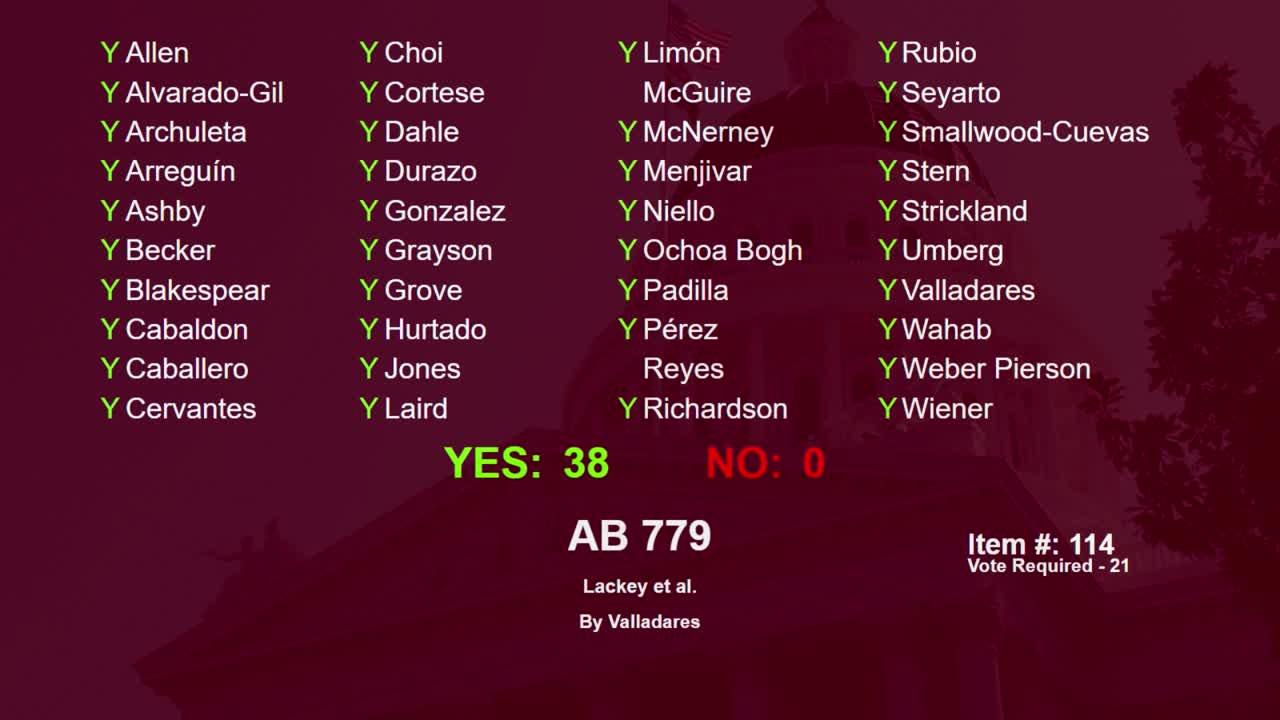 1MIN
Senate Floor
 6MIN
Senate Standing Committee on Natural Resources and Water
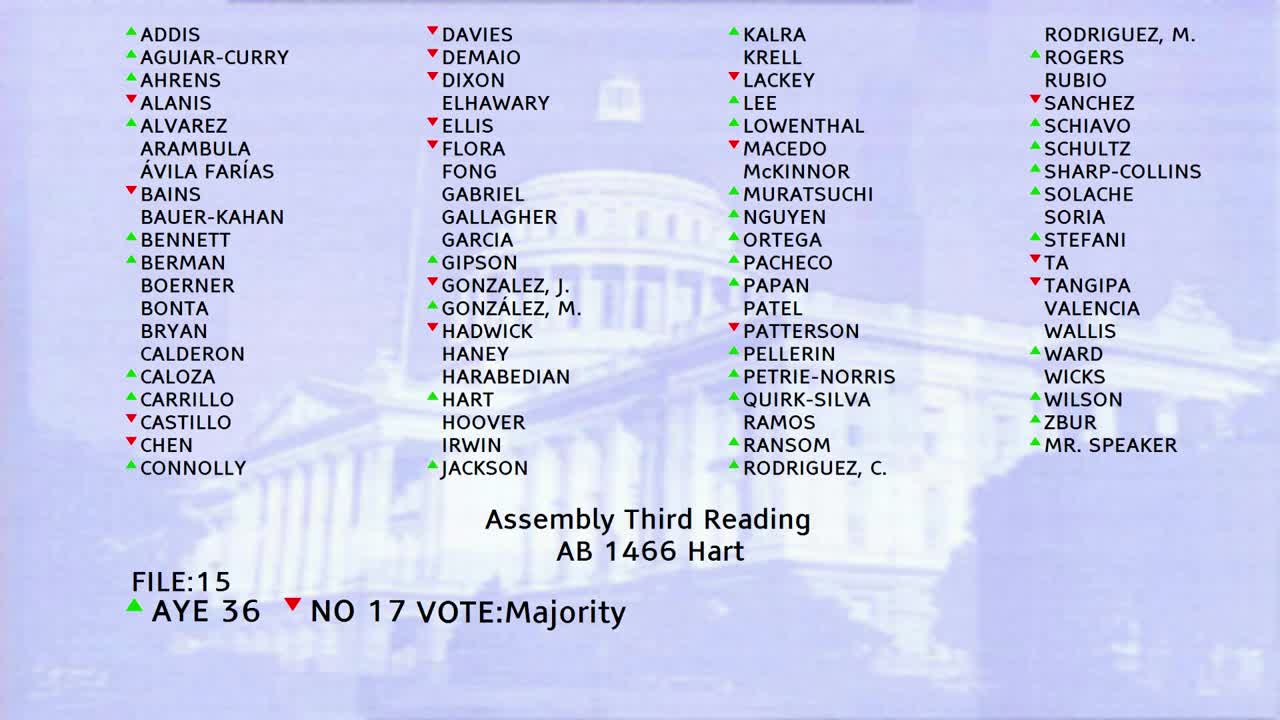 1MIN
Assembly Floor
 22MIN