SB 257: PARENT Act.
- Session Year: 2025-2026
- House: Senate
- Latest Version Date: 2025-09-12
Current Status:
Failed
(2026-03-02: Veto sustained.)
Introduced
In Committee
Awaiting First Chamber Vote
Passed First Chamber
In Committee
Awaiting Second Chamber Vote
Passed Second Chamber
Enacted
Existing law, the Knox-Keene Health Care Service Plan Act of 1975, provides for the licensure and regulation of health care service plans by the Department of Managed Health Care and makes a willful violation of the act a crime. Existing law provides for the regulation of disability insurers by the Department of Insurance. Existing law requires a health care service plan or disability insurer to allow an individual to enroll in or change their health benefit plan as a result of a specified triggering event.
This bill, the PARENT Act, would make pregnancy a triggering event for purposes of enrollment or changing a health benefit plan. Because a willful violation of this provision by a health care service plan would be a crime, the bill would impose a state-mandated local program.
The California Constitution requires the state to reimburse local agencies and school districts for certain costs mandated by the state. Statutory provisions establish procedures for making that reimbursement.
This bill would provide that no reimbursement is required by this act for a specified reason.
Existing law, the Knox-Keene Health Care Service Plan Act of 1975, provides for the licensure and regulation of health care service plans by the Department of Managed Health Care and makes a willful violation of the act a crime. Existing law provides for the regulation of disability insurers by the Department of Insurance. Existing law requires a health care service plan or disability insurer to allow an individual to enroll in or change their health benefit plan as a result of a specified triggering event. Existing law prohibits a health care service plan contract or disability insurance policy issued, amended, renewed, or delivered on or after July 1, 2003, from imposing a copayment or deductible for specified maternity services that exceeds the most common amount of the copayment or deductible imposed for services provided for other covered medical conditions.
This bill, the Pregnancy As a Recognized Event for Nondiscriminatory Treatment (PARENT) PARENT Act, would make pregnancy a triggering event for purposes of enrollment or changing a health benefit plan. The bill would prohibit a health care service plan contract or health insurance policy issued, amended, or renewed on or after January 1, 2026, that provides coverage for maternity services or newborn and pediatric care services from seeking reimbursement for maternity services or newborn and pediatric care services because the enrollee or insured is acting as a gestational carrier. The bill would prohibit a health care service plan or health insurer from discriminating against an enrollee, insured, enrollees or insureds newborn, or attending health care provider based on the circumstances of conception. Because a willful violation of these provisions this provision by a health care service plan would be a crime, the bill would impose a state-mandated local program.
The California Constitution requires the state to reimburse local agencies and school districts for certain costs mandated by the state. Statutory provisions establish procedures for making that reimbursement.
This bill would provide that no reimbursement is required by this act for a specified reason.
Existing law, the Knox-Keene Health Care Service Plan Act of 1975, provides for the licensure and regulation of health care service plans by the Department of Managed Health Care and makes a willful violation of the act a crime. Existing law provides for the regulation of disability insurers by the Department of Insurance. Existing law requires a health care service plan or disability insurer to allow an individual to enroll in or change their health benefit plan as a result of a specified triggering event. Existing law prohibits a health care service plan contract or disability insurance policy issued, amended, renewed, or delivered on or after July 1, 2003, from imposing a copayment or deductible for specified maternity services that exceeds the most common amount of the copayment or deductible imposed for services provided for other covered medical conditions.
This bill, the Pregnancy As a Recognized Event for Nondiscriminatory Treatment (PARENT) Act, would make pregnancy a triggering event for purposes of enrollment or changing a health benefit plan. The bill would prohibit a health care service plan contract or health insurance policy issued, amended, or renewed on or after January 1, 2026, that provides coverage for maternity services or newborn and pediatric care services from taking specified actions based on the circumstances of conception, including seeking reimbursement for maternity services or newborn and pediatric care services because the enrollee or insured is acting as a gestational carrier. The bill would prohibit a health care service plan or health insurer from discriminating against an enrollee, insured, enrollees or insureds newborn, or attending health care provider based on the circumstances of conception. Because a willful violation of these provisions by a health care service plan would be a crime, the bill would impose a state-mandated local program.
The California Constitution requires the state to reimburse local agencies and school districts for certain costs mandated by the state. Statutory provisions establish procedures for making that reimbursement.
This bill would provide that no reimbursement is required by this act for a specified reason.
Existing law, the Knox-Keene Health Care Service Plan Act of 1975, provides for the licensure and regulation of health care service plans by the Department of Managed Health Care and makes a willful violation of the act a crime. Existing law provides for the regulation of disability insurers by the Department of Insurance. Existing law requires a health care service plan or disability insurer to allow an individual to enroll in or change their health benefit plan as a result of a specified triggering event. Existing law prohibits a health care service plan contract or disability insurance policy issued, amended, renewed, or delivered on or after July 1, 2003, from imposing a copayment or deductible for specified maternity services that exceeds the most common amount of the copayment or deductible imposed for services provided for other covered medical conditions.
This bill, the Pregnancy As a Recognized Event for Nondiscriminatory Treatment (PARENT) Act, would make pregnancy a triggering event for purposes of enrollment or changing a health benefit plan. The bill would prohibit a health care service plan contract or disability health insurance policy issued, amended, or renewed on or after January 1, 2026, that provides coverage for maternity services or newborn and pediatric care services from taking specified actions based on the circumstances of conception, including denying, limiting, or seeking reimbursement for maternity services or newborn and pediatric care services because the enrollee or insured is acting as a gestational carrier. Because a willful violation of these provisions by a health care service plan would be a crime, the bill would impose a state-mandated local program.
The California Constitution requires the state to reimburse local agencies and school districts for certain costs mandated by the state. Statutory provisions establish procedures for making that reimbursement.
This bill would provide that no reimbursement is required by this act for a specified reason.
Existing law, the Knox-Keene Health Care Service Plan Act of 1975, provides for the licensure and regulation of health care service plans by the Department of Managed Health Care and makes a willful violation of the act a crime. Existing law provides for the regulation of disability insurers by the Department of Insurance. Existing law requires a health care service plan or disability insurer to allow an individual to enroll in or change their health benefit plan as a result of a specified triggering event. Existing law prohibits a health care service plan contract or disability insurance policy issued, amended, renewed, or delivered on or after July 1, 2003, from imposing a copayment or deductible for specified maternity services that exceeds the most common amount of the copayment or deductible imposed for services provided for other covered medical conditions.
This bill, the Pregnancy As a Recognized Event for Nondiscriminatory Treatment (PARENT) Act, would make pregnancy a triggering event for purposes of enrollment or changing a health benefit plan. The bill would prohibit a health care service plan contract or disability insurance policy issued, amended, or renewed on or after January 1, 2026, that provides coverage for maternity services or newborn and pediatric care services from taking specified actions based on the circumstances of conception, including denying, limiting, or seeking reimbursement for maternity services or newborn and pediatric care services because the enrollee or insured is acting as a gestational carrier. Because a willful violation of these provisions by a health care service plan would be a crime, the bill would impose a state-mandated local program.
The California Constitution requires the state to reimburse local agencies and school districts for certain costs mandated by the state. Statutory provisions establish procedures for making that reimbursement.
This bill would provide that no reimbursement is required by this act for a specified reason.
This act shall be known, and may be cited, as the PARENT Act.
SEC. 2.Section 1399.849 of the Health and Safety Code is amended to read:1399.849.(a)(1)On and after October 1, 2013, a plan shall fairly and affirmatively offer, market, and sell all of the plans health benefit plans that are sold in the individual market for policy years on or after January 1, 2014, to all individuals and dependents in each service area in which the plan provides or arranges for the provision of health care services. A plan shall limit enrollment in individual health benefit plans to open enrollment periods, annual enrollment periods, and special enrollment periods as provided in subdivisions (c) and (d).
(2)A plan shall allow the subscriber of an individual health benefit plan to add a dependent to the subscribers plan at the option of the subscriber, consistent with the open enrollment, annual enrollment, and special enrollment period requirements in this section.
(b)An individual health benefit plan issued, amended, or renewed on or after January 1, 2014, shall not impose any preexisting condition provision upon any individual.
(c)(1)With respect to individual health benefit plans offered outside of the Exchange, a plan shall provide an initial open enrollment period from October 1, 2013, to March 31, 2014, inclusive, an annual enrollment period for the policy year beginning on January 1, 2015, from November 15, 2014, to February 15, 2015, inclusive, annual enrollment periods for policy years beginning on or after January 1, 2016, to December 31, 2018, inclusive, from November 1, of the preceding calendar year, to January 31 of the benefit year, inclusive, and annual enrollment periods for policy years beginning on or after January 1, 2019, from October 15, of the preceding calendar year, to January 15 of the benefit year, inclusive.
(2)With respect to individual health benefit plans offered through the Exchange, a plan shall provide an annual enrollment period for the policy years beginning on January 1, 2016, to December 31, 2018, inclusive, from November 1, of the preceding calendar year, to January 31 of the benefit year, inclusive, and annual enrollment periods for policy years beginning on or after January 1, 2019, from November 1 to December 15 of the preceding calendar year, inclusive.
(3)With respect to individual health benefit plans offered through the Exchange, for policy years beginning on or after January 1, 2019, a plan shall provide a special enrollment period for all individuals selecting an individual health benefit plan through the Exchange from October 15 to October 31 of the preceding calendar year, inclusive, and from December 16, of the preceding calendar year, to January 15 of the benefit year, inclusive. An application for a health benefit plan submitted during these two special enrollment periods shall be treated the same as an application submitted during the annual open enrollment period. The effective date of coverage for plan selections made between October 15 and October 31, inclusive, shall be January 1 of the benefit year, and for plan selections made from December 16 to January 15, inclusive, shall be no later than February 1 of the benefit year.
(4)Pursuant to Section 147.104(b)(2) of Title 45 of the Code of Federal Regulations, for individuals enrolled in noncalendar year individual health plan contracts, a plan shall also provide a limited open enrollment period beginning on the date that is 30 calendar days prior to the date the policy year ends in 2014.
(d)(1)Subject to paragraph (2), commencing January 1, 2014, a plan shall allow an individual to enroll in or change individual health benefit plans as a result of the following triggering events:
(A)The individual or the individuals dependent loses minimum essential coverage. For purposes of this paragraph, the following definitions shall apply:
(i)Minimum essential coverage has the same meaning as that term is defined in Section 1345.5 or subsection (f) of Section 5000A of the Internal Revenue Code (26 U.S.C. Sec. 5000A).
(ii)Loss of minimum essential coverage includes, but is not limited to, loss of that coverage due to the circumstances described in Section 54.9801-6(a)(3)(i) to (iii), inclusive, of Title 26 of the Code of Federal Regulations and the circumstances described in Section 1163 of Title 29 of the United States Code. Loss of minimum essential coverage also includes loss of that coverage for a reason that is not due to the fault of the individual.
(iii)Loss of minimum essential coverage does not include loss of that coverage due to the individuals failure to pay premiums on a timely basis or situations allowing for a rescission, subject to clause (ii) and Sections 1389.7 and 1389.21.
(B)The individual gains a dependent or becomes a dependent.
(C)The individual is mandated to be covered as a dependent pursuant to a valid state or federal court order.
(D)The individual has been released from incarceration.
(E)The individuals health coverage issuer substantially violated a material provision of the health coverage contract.
(F)The individual gains access to new health benefit plans as a result of a permanent move.
(G)The individual was receiving services from a contracting provider under another health benefit plan, as defined in Section 1399.845 of this code or Section 10965 of the Insurance Code, for one of the conditions described in subdivision (c) of Section 1373.96 of this code and that provider is no longer participating in the health benefit plan.
(H)The individual demonstrates to the Exchange, with respect to health benefit plans offered through the Exchange, or to the department, with respect to health benefit plans offered outside the Exchange, that the individual did not enroll in a health benefit plan during the immediately preceding enrollment period available to the individual because the individual was misinformed that the individual was covered under minimum essential coverage.
(I)The individual is a member of the reserve forces of the United States military returning from active duty or a member of the California National Guard returning from active duty service under Title 32 of the United States Code.
(J)The individual is pregnant.
(K)With respect to individual health benefit plans offered through the Exchange, in addition to the triggering events listed in this paragraph, any other events listed in Section 155.420(d) of Title 45 of the Code of Federal Regulations.
(2)With respect to individual health benefit plans offered outside the Exchange, an individual shall have 60 days from the date of a triggering event identified in paragraph (1) to apply for coverage from a health care service plan subject to this section. With respect to individual health benefit plans offered through the Exchange, an individual shall have 60 days from the date of a triggering event identified in paragraph (1) to select a plan offered through the Exchange, unless a longer period is provided in Part 155 (commencing with Section 155.10) of Subchapter B of Subtitle A of Title 45 of the Code of Federal Regulations.
(e)With respect to individual health benefit plans offered through the Exchange, the effective date of coverage required pursuant to this section shall be consistent with the dates specified in Section 155.410 or 155.420 of Title 45 of the Code of Federal Regulations, as applicable. A dependent who is a registered domestic partner pursuant to Section 297 of the Family Code shall have the same effective date of coverage as a spouse.
(f)With respect to individual health benefit plans offered outside the Exchange, the following provisions shall apply:
(1)After an individual submits a completed application form for a plan contract, the health care service plan shall, within 30 days, notify the individual of the individuals actual premium charges for that plan established in accordance with Section 1399.855. The individual shall have 30 days in which to exercise the right to buy coverage at the quoted premium charges.
(2)With respect to an individual health benefit plan for which an individual applies during the initial open enrollment period described in paragraph (1) of subdivision (c), when the subscriber submits a premium payment, based on the quoted premium charges, and that payment is delivered or postmarked, whichever occurs earlier, by December 15, 2013, coverage under the individual health benefit plan shall become effective no later than January 1, 2014. When that payment is delivered or postmarked within the first 15 days of any subsequent month, coverage shall become effective no later than the first day of the following month. When that payment is delivered or postmarked between December 16, 2013, to December 31, 2013, inclusive, or after the 15th day of any subsequent month, coverage shall become effective no later than the first day of the second month following delivery or postmark of the payment.
(3)With respect to an individual health benefit plan for which an individual applies during the annual open enrollment period described in paragraph (1) of subdivision (c), when the individual submits a premium payment, based on the quoted premium charges, and that payment is delivered or postmarked, whichever occurs later, by December 15 of the preceding calendar year, coverage shall become effective on January 1 of the benefit year. When that payment is delivered or postmarked within the first 15 days of any subsequent month, coverage shall become effective no later than the first day of the following month. When that payment is delivered or postmarked between December 16 to December 31, inclusive, or after the 15th day of any subsequent month, coverage shall become effective no later than the first day of the second month following delivery or postmark of the payment.
(4)With respect to an individual health benefit plan for which an individual applies during a special enrollment period described in subdivision (d), the following provisions shall apply:
(A)When the individual submits a premium payment, based on the quoted premium charges, and that payment is delivered or postmarked, whichever occurs earlier, within the first 15 days of the month, coverage under the plan shall become effective no later than the first day of the following month. When the premium payment is neither delivered nor postmarked until after the 15th day of the month, coverage shall become effective no later than the first day of the second month following delivery or postmark of the payment.
(B)Notwithstanding subparagraph (A), in the case of a birth, adoption, or placement for adoption, the coverage shall be effective on the date of birth, adoption, or placement for adoption.
(C)Notwithstanding subparagraph (A), in the case of marriage or becoming a registered domestic partner or in the case where a qualified individual loses minimum essential coverage, the coverage effective date shall be the first day of the month following the date the plan receives the request for special enrollment.
(g)(1)A health care service plan shall not establish rules for eligibility, including continued eligibility, of any individual to enroll under the terms of an individual health benefit plan based on any of the following factors:
(A)Health status.
(B)Medical condition, including physical and mental illnesses.
(C)Claims experience.
(D)Receipt of health care.
(E)Medical history.
(F)Genetic information.
(G)Evidence of insurability, including conditions arising out of acts of domestic violence.
(H)Disability.
(I)Any other health status-related factor as determined by any federal regulations, rules, or guidance issued pursuant to Section 2705 of the federal Public Health Service Act (Public Law 78-410).
(2)Notwithstanding Section 1389.1, a health care service plan shall not require an individual applicant or the applicants dependent to fill out a health assessment or medical questionnaire prior to enrollment under an individual health benefit plan. A health care service plan shall not acquire or request information that relates to a health status-related factor from the applicant or the applicants dependent or any other source prior to enrollment of the individual.
(h)(1)A health care service plan shall consider as a single risk pool for rating purposes in the individual market the claims experience of all insureds and all enrollees in all nongrandfathered individual health benefit plans offered by that health care service plan in this state, whether offered as health care service plan contracts or individual health insurance policies, including those insureds and enrollees who enroll in individual coverage through the Exchange and insureds and enrollees who enroll in individual coverage outside of the Exchange. Student health insurance coverage, as that coverage is defined in Section 147.145(a) of Title 45 of the Code of Federal Regulations, shall not be included in a health care service plans single risk pool for individual coverage.
(2)Each calendar year, a health care service plan shall establish an index rate for the individual market in the state based on the total combined claims costs for providing essential health benefits, as defined pursuant to Section 1302 of PPACA, within the single risk pool required under paragraph (1). The index rate shall be adjusted on a marketwide basis based on the total expected marketwide payments and charges under the risk adjustment program established for the state pursuant to Section 1343 of PPACA and Exchange user fees, as described in subdivision (d) of Section 156.80 of Title 45 of the Code of Federal Regulations. The premium rate for all of the health benefit plans in the individual market within the single risk pool required under paragraph (1) shall use the applicable marketwide adjusted index rate, subject only to the adjustments permitted under paragraph (3).
(3)A health care service plan may vary premium rates for a particular health benefit plan from its index rate based only on the following actuarially justified plan-specific factors:
(A)The actuarial value and cost-sharing design of the health benefit plan.
(B)The health benefit plans provider network, delivery system characteristics, and utilization management practices.
(C)The benefits provided under the health benefit plan that are in addition to the essential health benefits, as defined pursuant to Section 1302 of PPACA and Section 1367.005. These additional benefits shall be pooled with similar benefits within the single risk pool required under paragraph (1) and the claims experience from those benefits shall be utilized to determine rate variations for plans that offer those benefits in addition to essential health benefits.
(D)With respect to catastrophic plans, as described in subsection (e) of Section 1302 of PPACA, the expected impact of the specific eligibility categories for those plans.
(E)Administrative costs, excluding user fees required by the Exchange.
(i)This section shall only apply with respect to individual health benefit plans for policy years on or after January 1, 2014.
(j)This section shall not apply to a grandfathered health plan.
SEC. 3.Section 10965.3 of the Insurance Code is amended to read:10965.3.(a)(1)On and after October 1, 2013, a health insurer shall fairly and affirmatively offer, market, and sell all of the insurers health benefit plans that are sold in the individual market for policy years on or after January 1, 2014, to all individuals and dependents in each service area in which the insurer provides or arranges for the provision of health care services. A health insurer shall limit enrollment in individual health benefit plans to open enrollment periods, annual enrollment periods, and special enrollment periods as provided in subdivisions (c) and (d).
(2)A health insurer shall allow the policyholder of an individual health benefit plan to add a dependent to the policyholders health benefit plan at the option of the policyholder, consistent with the open enrollment, annual enrollment, and special enrollment period requirements in this section.
(b)An individual health benefit plan issued, amended, or renewed on or after January 1, 2014, shall not impose any preexisting condition provision upon any individual.
(c)(1)With respect to individual health benefit plans offered outside of the Exchange, a health insurer shall provide an initial open enrollment period from October 1, 2013, to March 31, 2014, inclusive, an annual enrollment period for the policy year beginning on January 1, 2015, from November 15, 2014, to February 15, 2015, inclusive, annual enrollment periods for policy years beginning on or after January 1, 2016, to December 31, 2018, inclusive, from November 1, of the preceding calendar year, to January 31 of the benefit year, inclusive, and annual enrollment periods for policy years beginning on or after January 1, 2019, from October 15 of the preceding calendar year, to January 15 of the benefit year, inclusive.
(2)With respect to individual health benefit plans offered through the Exchange, a health insurer shall provide an annual enrollment period for the policy years beginning on January 1, 2016, to December 31, 2018, inclusive, from November 1, of the preceding calendar year, to January 31 of the benefit year, inclusive, and annual enrollment periods for policy years beginning on or after January 1, 2019, from November 1 to December 15 of the preceding calendar year, inclusive.
(3)With respect to individual health benefit plans offered through the Exchange, for policy years beginning on or after January 1, 2019, a health insurer shall provide a special enrollment period for all individuals selecting an individual health benefit plan through the Exchange from October 15 to October 31 of the preceding calendar year, inclusive, and from December 16, of the preceding calendar year, to January 15 of the benefit year, inclusive. An application for a health benefit plan submitted during these two special enrollment periods shall be treated the same as an application submitted during the annual open enrollment period. The effective date of coverage for plan selections made between October 15 and October 31, inclusive, shall be January 1 of the benefit year, and for plan selections made from December 16 to January 15, inclusive, shall be no later than February 1 of the benefit year.
(4)Pursuant to Section 147.104(b)(2) of Title 45 of the Code of Federal Regulations, for individuals enrolled in noncalendar year individual health plan contracts, a health insurer shall also provide a limited open enrollment period beginning on the date that is 30 calendar days prior to the date the policy year ends in 2014.
(d)(1)Subject to paragraph (2), commencing January 1, 2014, a health insurer shall allow an individual to enroll in or change individual health benefit plans as a result of the following triggering events:
(A)The individual or the individuals dependent loses minimum essential coverage. For purposes of this paragraph, all of the following definitions shall apply:
(i)Minimum essential coverage has the same meaning as that term is defined in Section 1345.5 of the Health and Safety Code or subsection (f) of Section 5000A of the Internal Revenue Code (26 U.S.C. Sec. 5000A).
(ii)Loss of minimum essential coverage includes, but is not limited to, loss of that coverage due to the circumstances described in Section 54.9801-6(a)(3)(i) to (iii), inclusive, of Title 26 of the Code of Federal Regulations and the circumstances described in Section 1163 of Title 29 of the United States Code. Loss of minimum essential coverage also includes loss of that coverage for a reason that is not due to the fault of the individual.
(iii)Loss of minimum essential coverage does not include loss of that coverage due to the individuals failure to pay premiums on a timely basis or situations allowing for a rescission, subject to clause (ii) and Sections 10119.2 and 10384.17.
(B)The individual gains a dependent or becomes a dependent.
(C)The individual is mandated to be covered as a dependent pursuant to a valid state or federal court order.
(D)The individual has been released from incarceration.
(E)The individuals health coverage issuer substantially violated a material provision of the health coverage contract.
(F)The individual gains access to new health benefit plans as a result of a permanent move.
(G)The individual was receiving services from a contracting provider under another health benefit plan, as defined in Section 10965 of this code or Section 1399.845 of the Health and Safety Code, for one of the conditions described in subdivision (a) of Section 10133.56 of this code and that provider is no longer participating in the health benefit plan.
(H)The individual demonstrates to the Exchange, with respect to health benefit plans offered through the Exchange, or to the department, with respect to health benefit plans offered outside the Exchange, that the individual did not enroll in a health benefit plan during the immediately preceding enrollment period available to the individual because the individual was misinformed that the individual was covered under minimum essential coverage.
(I)The individual is a member of the reserve forces of the United States military returning from active duty or a member of the California National Guard returning from active duty service under Title 32 of the United States Code.
(J)The individual is pregnant.
(K)With respect to individual health benefit plans offered through the Exchange, in addition to the triggering events listed in this paragraph, any other events listed in Section 155.420(d) of Title 45 of the Code of Federal Regulations.
(2)With respect to individual health benefit plans offered outside the Exchange, an individual shall have 60 days from the date of a triggering event identified in paragraph (1) to apply for coverage from a health care service plan subject to this section. With respect to individual health benefit plans offered through the Exchange, an individual shall have 60 days from the date of a triggering event identified in paragraph (1) to select a plan offered through the Exchange, unless a longer period is provided in Part 155 (commencing with Section 155.10) of Subchapter B of Subtitle A of Title 45 of the Code of Federal Regulations.
(e)With respect to individual health benefit plans offered through the Exchange, the effective date of coverage required pursuant to this section shall be consistent with the dates specified in Section 155.410 or 155.420 of Title 45 of the Code of Federal Regulations, as applicable. A dependent who is a registered domestic partner pursuant to Section 297 of the Family Code shall have the same effective date of coverage as a spouse.
(f)With respect to an individual health benefit plan offered outside the Exchange, the following provisions shall apply:
(1)After an individual submits a completed application form for a plan, the insurer shall, within 30 days, notify the individual of the individuals actual premium charges for that plan established in accordance with Section 10965.9. The individual shall have 30 days in which to exercise the right to buy coverage at the quoted premium charges.
(2)With respect to an individual health benefit plan for which an individual applies during the initial open enrollment period described in paragraph (1) of subdivision (c), when the policyholder submits a premium payment, based on the quoted premium charges, and that payment is delivered or postmarked, whichever occurs earlier, by December 15, 2013, coverage under the individual health benefit plan shall become effective no later than January 1, 2014. When that payment is delivered or postmarked within the first 15 days of any subsequent month, coverage shall become effective no later than the first day of the following month. When that payment is delivered or postmarked between December 16, 2013, to December 31, 2013, inclusive, or after the 15th day of any subsequent month, coverage shall become effective no later than the first day of the second month following delivery or postmark of the payment.
(3)With respect to an individual health benefit plan for which an individual applies during the annual open enrollment period described in paragraph (1) of subdivision (c), when the individual submits a premium payment, based on the quoted premium charges, and that payment is delivered or postmarked, whichever occurs later, by December 15 of the preceding calendar year, coverage shall become effective on January 1 of the benefit year. When that payment is delivered or postmarked within the first 15 days of any subsequent month, coverage shall become effective no later than the first day of the following month. When that payment is delivered or postmarked between December 16 to December 31, inclusive, or after the 15th day of any subsequent month, coverage shall become effective no later than the first day of the second month following delivery or postmark of the payment.
(4)With respect to an individual health benefit plan for which an individual applies during a special enrollment period described in subdivision (d), the following provisions shall apply:
(A)When the individual submits a premium payment, based on the quoted premium charges, and that payment is delivered or postmarked, whichever occurs earlier, within the first 15 days of the month, coverage under the plan shall become effective no later than the first day of the following month. When the premium payment is neither delivered nor postmarked until after the 15th day of the month, coverage shall become effective no later than the first day of the second month following delivery or postmark of the payment.
(B)Notwithstanding subparagraph (A), in the case of a birth, adoption, or placement for adoption, the coverage shall be effective on the date of birth, adoption, or placement for adoption.
(C)Notwithstanding subparagraph (A), in the case of marriage or becoming a registered domestic partner or in the case where a qualified individual loses minimum essential coverage, the coverage effective date shall be the first day of the month following the date the insurer receives the request for special enrollment.
(g)(1)A health insurer shall not establish rules for eligibility, including continued eligibility, of any individual to enroll under the terms of an individual health benefit plan based on any of the following factors:
(A)Health status.
(B)Medical condition, including physical and mental illnesses.
(C)Claims experience.
(D)Receipt of health care.
(E)Medical history.
(F)Genetic information.
(G)Evidence of insurability, including conditions arising out of acts of domestic violence.
(H)Disability.
(I)Any other health status-related factor as determined by any federal regulations, rules, or guidance issued pursuant to Section 2705 of the federal Public Health Service Act (Public Law 78-410).
(2)Notwithstanding subdivision (c) of Section 10291.5, a health insurer shall not require an individual applicant or the applicants dependent to fill out a health assessment or medical questionnaire prior to enrollment under an individual health benefit plan. A health insurer shall not acquire or request information that relates to a health status-related factor from the applicant or the applicants dependent or any other source prior to enrollment of the individual.
(h)(1)A health insurer shall consider as a single risk pool for rating purposes in the individual market the claims experience of all insureds and enrollees in all nongrandfathered individual health benefit plans offered by that insurer in this state, whether offered as health care service plan contracts or individual health insurance policies, including those insureds and enrollees who enroll in individual coverage through the Exchange and insureds and enrollees who enroll in individual coverage outside the Exchange. Student health insurance coverage, as such coverage is defined in Section 147.145(a) of Title 45 of the Code of Federal Regulations, shall not be included in a health insurers single risk pool for individual coverage.
(2)Each calendar year, a health insurer shall establish an index rate for the individual market in the state based on the total combined claims costs for providing essential health benefits, as defined pursuant to Section 1302 of PPACA, within the single risk pool required under paragraph (1). The index rate shall be adjusted on a marketwide basis based on the total expected marketwide payments and charges under the risk adjustment program established for the state pursuant to Section 1343 of PPACA and Exchange user fees, as described in subdivision (d) of Section 156.80 of Title 45 of the Code of Federal Regulations. The premium rate for all of the health benefit plans in the individual market within the single risk pool required under paragraph (1) shall use the applicable marketwide adjusted index rate, subject only to the adjustments permitted under paragraph (3).
(3)A health insurer may vary premium rates for a particular health benefit plan from its index rate based only on the following actuarially justified plan-specific factors:
(A)The actuarial value and cost-sharing design of the health benefit plan.
(B)The health benefit plans provider network, delivery system characteristics, and utilization management practices.
(C)The benefits provided under the health benefit plan that are in addition to the essential health benefits, as defined pursuant to Section 1302 of PPACA and Section 10112.27. These additional benefits shall be pooled with similar benefits within the single risk pool required under paragraph (1) and the claims experience from those benefits shall be utilized to determine rate variations for plans that offer those benefits in addition to essential health benefits.
(D)With respect to catastrophic plans, as described in subsection (e) of Section 1302 of PPACA, the expected impact of the specific eligibility categories for those plans.
(E)Administrative costs, excluding any user fees required by the Exchange.
(i)This section shall only apply with respect to individual health benefit plans for policy years on or after January 1, 2014.
(j)This section shall not apply to a grandfathered health plan.
SEC. 4.No reimbursement is required by this act pursuant to Section 6 of Article XIIIB of the California Constitution because the only costs that may be incurred by a local agency or school district will be incurred because this act creates a new crime or infraction, eliminates a crime or infraction, or changes the penalty for a crime or infraction, within the meaning of Section 17556 of the Government Code, or changes the definition of a crime within the meaning of Section 6 of Article XIIIB of the California Constitution.
This act shall be known, and may be cited, as the Pregnancy As a Recognized Event for Nondiscriminatory Treatment (PARENT) Act. PARENT Act.
SEC. 2.Section 1374.54 is added to the Health and Safety Code, to read:1374.54.(a)A health care service plan contract issued, amended, or renewed on or after January 1, 2026, that provides coverage for maternity services or newborn and pediatric care services shall not seek reimbursement for maternity services or newborn and pediatric care services because the enrollee is acting as a gestational carrier.(b)A health care service plan shall not do either of the following based on the circumstances of conception:(1)Deny coverage to an enrollee or the enrollees newborn.(2)Otherwise discriminate against an enrollee, an enrollees newborn, or an attending health care provider.(c)For purposes of this section, maternity services include prenatal care, ambulatory care maternity services, involuntary complications of pregnancy, neonatal care, and inpatient hospital maternity care, including labor and delivery and postpartum care.SEC. 3.SEC. 2.Section 1399.849 of the Health and Safety Code is amended to read:1399.849.(a)(1)On and after October 1, 2013, a plan shall fairly and affirmatively offer, market, and sell all of the plans health benefit plans that are sold in the individual market for policy years on or after January 1, 2014, to all individuals and dependents in each service area in which the plan provides or arranges for the provision of health care services. A plan shall limit enrollment in individual health benefit plans to open enrollment periods, annual enrollment periods, and special enrollment periods as provided in subdivisions (c) and (d).
(2)A plan shall allow the subscriber of an individual health benefit plan to add a dependent to the subscribers plan at the option of the subscriber, consistent with the open enrollment, annual enrollment, and special enrollment period requirements in this section.
(b)An individual health benefit plan issued, amended, or renewed on or after January 1, 2014, shall not impose any preexisting condition provision upon any individual.
(c)(1)With respect to individual health benefit plans offered outside of the Exchange, a plan shall provide an initial open enrollment period from October 1, 2013, to March 31, 2014, inclusive, an annual enrollment period for the policy year beginning on January 1, 2015, from November 15, 2014, to February 15, 2015, inclusive, annual enrollment periods for policy years beginning on or after January 1, 2016, to December 31, 2018, inclusive, from November 1, of the preceding calendar year, to January 31 of the benefit year, inclusive, and annual enrollment periods for policy years beginning on or after January 1, 2019, from October 15, of the preceding calendar year, to January 15 of the benefit year, inclusive.
(2)With respect to individual health benefit plans offered through the Exchange, a plan shall provide an annual enrollment period for the policy years beginning on January 1, 2016, to December 31, 2018, inclusive, from November 1, of the preceding calendar year, to January 31 of the benefit year, inclusive, and annual enrollment periods for policy years beginning on or after January 1, 2019, from November 1 to December 15 of the preceding calendar year, inclusive.
(3)With respect to individual health benefit plans offered through the Exchange, for policy years beginning on or after January 1, 2019, a plan shall provide a special enrollment period for all individuals selecting an individual health benefit plan through the Exchange from October 15 to October 31 of the preceding calendar year, inclusive, and from December 16, of the preceding calendar year, to January 15 of the benefit year, inclusive. An application for a health benefit plan submitted during these two special enrollment periods shall be treated the same as an application submitted during the annual open enrollment period. The effective date of coverage for plan selections made between October 15 and October 31, inclusive, shall be January 1 of the benefit year, and for plan selections made from December 16 to January 15, inclusive, shall be no later than February 1 of the benefit year.
(4)Pursuant to Section 147.104(b)(2) of Title 45 of the Code of Federal Regulations, for individuals enrolled in noncalendar year individual health plan contracts, a plan shall also provide a limited open enrollment period beginning on the date that is 30 calendar days prior to the date the policy year ends in 2014.
(d)(1)Subject to paragraph (2), commencing January 1, 2014, a plan shall allow an individual to enroll in or change individual health benefit plans as a result of the following triggering events:
(A)The individual or the individuals dependent loses minimum essential coverage. For purposes of this paragraph, the following definitions shall apply:
(i)Minimum essential coverage has the same meaning as that term is defined in Section 1345.5 or subsection (f) of Section 5000A of the Internal Revenue Code (26 U.S.C. Sec. 5000A).
(ii)Loss of minimum essential coverage includes, but is not limited to, loss of that coverage due to the circumstances described in Section 54.9801-6(a)(3)(i) to (iii), inclusive, of Title 26 of the Code of Federal Regulations and the circumstances described in Section 1163 of Title 29 of the United States Code. Loss of minimum essential coverage also includes loss of that coverage for a reason that is not due to the fault of the individual.
(iii)Loss of minimum essential coverage does not include loss of that coverage due to the individuals failure to pay premiums on a timely basis or situations allowing for a rescission, subject to clause (ii) and Sections 1389.7 and 1389.21.
(B)The individual gains a dependent or becomes a dependent.
(C)The individual is mandated to be covered as a dependent pursuant to a valid state or federal court order.
(D)The individual has been released from incarceration.
(E)The individuals health coverage issuer substantially violated a material provision of the health coverage contract.
(F)The individual gains access to new health benefit plans as a result of a permanent move.
(G)The individual was receiving services from a contracting provider under another health benefit plan, as defined in Section 1399.845 of this code or Section 10965 of the Insurance Code, for one of the conditions described in subdivision (c) of Section 1373.96 of this code and that provider is no longer participating in the health benefit plan.
(H)The individual demonstrates to the Exchange, with respect to health benefit plans offered through the Exchange, or to the department, with respect to health benefit plans offered outside the Exchange, that the individual did not enroll in a health benefit plan during the immediately preceding enrollment period available to the individual because the individual was misinformed that the individual was covered under minimum essential coverage.
(I)The individual is a member of the reserve forces of the United States military returning from active duty or a member of the California National Guard returning from active duty service under Title 32 of the United States Code.
(J)The individual is pregnant. Enrollment shall not be affected by the circumstances of conception, including if the individual is acting as a gestational carrier, and shall be extended to individuals who are dependents of the pregnant individual and an individual to whom the pregnant individual is a dependent.
(K)With respect to individual health benefit plans offered through the Exchange, in addition to the triggering events listed in this paragraph, any other events listed in Section 155.420(d) of Title 45 of the Code of Federal Regulations.
(2)With respect to individual health benefit plans offered outside the Exchange, an individual shall have 60 days from the date of a triggering event identified in paragraph (1) to apply for coverage from a health care service plan subject to this section. With respect to individual health benefit plans offered through the Exchange, an individual shall have 60 days from the date of a triggering event identified in paragraph (1) to select a plan offered through the Exchange, unless a longer period is provided in Part 155 (commencing with Section 155.10) of Subchapter B of Subtitle A of Title 45 of the Code of Federal Regulations.
(e)With respect to individual health benefit plans offered through the Exchange, the effective date of coverage required pursuant to this section shall be consistent with the dates specified in Section 155.410 or 155.420 of Title 45 of the Code of Federal Regulations, as applicable. A dependent who is a registered domestic partner pursuant to Section 297 of the Family Code shall have the same effective date of coverage as a spouse.
(f)With respect to individual health benefit plans offered outside the Exchange, the following provisions shall apply:
(1)After an individual submits a completed application form for a plan contract, the health care service plan shall, within 30 days, notify the individual of the individuals actual premium charges for that plan established in accordance with Section 1399.855. The individual shall have 30 days in which to exercise the right to buy coverage at the quoted premium charges.
(2)With respect to an individual health benefit plan for which an individual applies during the initial open enrollment period described in paragraph (1) of subdivision (c), when the subscriber submits a premium payment, based on the quoted premium charges, and that payment is delivered or postmarked, whichever occurs earlier, by December 15, 2013, coverage under the individual health benefit plan shall become effective no later than January 1, 2014. When that payment is delivered or postmarked within the first 15 days of any subsequent month, coverage shall become effective no later than the first day of the following month. When that payment is delivered or postmarked between December 16, 2013, to December 31, 2013, inclusive, or after the 15th day of any subsequent month, coverage shall become effective no later than the first day of the second month following delivery or postmark of the payment.
(3)With respect to an individual health benefit plan for which an individual applies during the annual open enrollment period described in paragraph (1) of subdivision (c), when the individual submits a premium payment, based on the quoted premium charges, and that payment is delivered or postmarked, whichever occurs later, by December 15 of the preceding calendar year, coverage shall become effective on January 1 of the benefit year. When that payment is delivered or postmarked within the first 15 days of any subsequent month, coverage shall become effective no later than the first day of the following month. When that payment is delivered or postmarked between December 16 to December 31, inclusive, or after the 15th day of any subsequent month, coverage shall become effective no later than the first day of the second month following delivery or postmark of the payment.
(4)With respect to an individual health benefit plan for which an individual applies during a special enrollment period described in subdivision (d), the following provisions shall apply:
(A)When the individual submits a premium payment, based on the quoted premium charges, and that payment is delivered or postmarked, whichever occurs earlier, within the first 15 days of the month, coverage under the plan shall become effective no later than the first day of the following month. When the premium payment is neither delivered nor postmarked until after the 15th day of the month, coverage shall become effective no later than the first day of the second month following delivery or postmark of the payment.
(B)Notwithstanding subparagraph (A), in the case of a birth, adoption, or placement for adoption, the coverage shall be effective on the date of birth, adoption, or placement for adoption.
(C)Notwithstanding subparagraph (A), in the case of marriage or becoming a registered domestic partner or in the case where a qualified individual loses minimum essential coverage, the coverage effective date shall be the first day of the month following the date the plan receives the request for special enrollment.
(g)(1)A health care service plan shall not establish rules for eligibility, including continued eligibility, of any individual to enroll under the terms of an individual health benefit plan based on any of the following factors:
(A)Health status.
(B)Medical condition, including physical and mental illnesses.
(C)Claims experience.
(D)Receipt of health care.
(E)Medical history.
(F)Genetic information.
(G)Evidence of insurability, including conditions arising out of acts of domestic violence.
(H)Disability.
(I)Any other health status-related factor as determined by any federal regulations, rules, or guidance issued pursuant to Section 2705 of the federal Public Health Service Act (Public Law 78-410).
(2)Notwithstanding Section 1389.1, a health care service plan shall not require an individual applicant or the applicants dependent to fill out a health assessment or medical questionnaire prior to enrollment under an individual health benefit plan. A health care service plan shall not acquire or request information that relates to a health status-related factor from the applicant or the applicants dependent or any other source prior to enrollment of the individual.
(h)(1)A health care service plan shall consider as a single risk pool for rating purposes in the individual market the claims experience of all insureds and all enrollees in all nongrandfathered individual health benefit plans offered by that health care service plan in this state, whether offered as health care service plan contracts or individual health insurance policies, including those insureds and enrollees who enroll in individual coverage through the Exchange and insureds and enrollees who enroll in individual coverage outside of the Exchange. Student health insurance coverage, as that coverage is defined in Section 147.145(a) of Title 45 of the Code of Federal Regulations, shall not be included in a health care service plans single risk pool for individual coverage.
(2)Each calendar year, a health care service plan shall establish an index rate for the individual market in the state based on the total combined claims costs for providing essential health benefits, as defined pursuant to Section 1302 of PPACA, within the single risk pool required under paragraph (1). The index rate shall be adjusted on a marketwide basis based on the total expected marketwide payments and charges under the risk adjustment program established for the state pursuant to Section 1343 of PPACA and Exchange user fees, as described in subdivision (d) of Section 156.80 of Title 45 of the Code of Federal Regulations. The premium rate for all of the health benefit plans in the individual market within the single risk pool required under paragraph (1) shall use the applicable marketwide adjusted index rate, subject only to the adjustments permitted under paragraph (3).
(3)A health care service plan may vary premium rates for a particular health benefit plan from its index rate based only on the following actuarially justified plan-specific factors:
(A)The actuarial value and cost-sharing design of the health benefit plan.
(B)The health benefit plans provider network, delivery system characteristics, and utilization management practices.
(C)The benefits provided under the health benefit plan that are in addition to the essential health benefits, as defined pursuant to Section 1302 of PPACA and Section 1367.005. These additional benefits shall be pooled with similar benefits within the single risk pool required under paragraph (1) and the claims experience from those benefits shall be utilized to determine rate variations for plans that offer those benefits in addition to essential health benefits.
(D)With respect to catastrophic plans, as described in subsection (e) of Section 1302 of PPACA, the expected impact of the specific eligibility categories for those plans.
(E)Administrative costs, excluding user fees required by the Exchange.
(i)This section shall only apply with respect to individual health benefit plans for policy years on or after January 1, 2014.
(j)This section shall not apply to a grandfathered health plan.
SEC. 4.Section 10119.4 is added to the Insurance Code, to read:10119.4.(a)A health insurance policy issued, amended, or renewed on or after January 1, 2026, that provides coverage for maternity services or newborn and pediatric care services shall not seek reimbursement for maternity services or newborn and pediatric care services because the insured is acting as a gestational carrier.(b)A health insurer shall not do either of the following based on the circumstances of conception:(1)Deny coverage to an insured or the insureds newborn.(2)Otherwise discriminate against an insured, an insureds newborn, or an attending health care provider.(c)For purposes of this section, maternity services has the same meaning as in Section 10123.865.SEC. 5.SEC. 3.Section 10965.3 of the Insurance Code is amended to read:10965.3.(a)(1)On and after October 1, 2013, a health insurer shall fairly and affirmatively offer, market, and sell all of the insurers health benefit plans that are sold in the individual market for policy years on or after January 1, 2014, to all individuals and dependents in each service area in which the insurer provides or arranges for the provision of health care services. A health insurer shall limit enrollment in individual health benefit plans to open enrollment periods, annual enrollment periods, and special enrollment periods as provided in subdivisions (c) and (d).
(2)A health insurer shall allow the policyholder of an individual health benefit plan to add a dependent to the policyholders health benefit plan at the option of the policyholder, consistent with the open enrollment, annual enrollment, and special enrollment period requirements in this section.
(b)An individual health benefit plan issued, amended, or renewed on or after January 1, 2014, shall not impose any preexisting condition provision upon any individual.
(c)(1)With respect to individual health benefit plans offered outside of the Exchange, a health insurer shall provide an initial open enrollment period from October 1, 2013, to March 31, 2014, inclusive, an annual enrollment period for the policy year beginning on January 1, 2015, from November 15, 2014, to February 15, 2015, inclusive, annual enrollment periods for policy years beginning on or after January 1, 2016, to December 31, 2018, inclusive, from November 1, of the preceding calendar year, to January 31 of the benefit year, inclusive, and annual enrollment periods for policy years beginning on or after January 1, 2019, from October 15 of the preceding calendar year, to January 15 of the benefit year, inclusive.
(2)With respect to individual health benefit plans offered through the Exchange, a health insurer shall provide an annual enrollment period for the policy years beginning on January 1, 2016, to December 31, 2018, inclusive, from November 1, of the preceding calendar year, to January 31 of the benefit year, inclusive, and annual enrollment periods for policy years beginning on or after January 1, 2019, from November 1 to December 15 of the preceding calendar year, inclusive.
(3)With respect to individual health benefit plans offered through the Exchange, for policy years beginning on or after January 1, 2019, a health insurer shall provide a special enrollment period for all individuals selecting an individual health benefit plan through the Exchange from October 15 to October 31 of the preceding calendar year, inclusive, and from December 16, of the preceding calendar year, to January 15 of the benefit year, inclusive. An application for a health benefit plan submitted during these two special enrollment periods shall be treated the same as an application submitted during the annual open enrollment period. The effective date of coverage for plan selections made between October 15 and October 31, inclusive, shall be January 1 of the benefit year, and for plan selections made from December 16 to January 15, inclusive, shall be no later than February 1 of the benefit year.
(4)Pursuant to Section 147.104(b)(2) of Title 45 of the Code of Federal Regulations, for individuals enrolled in noncalendar year individual health plan contracts, a health insurer shall also provide a limited open enrollment period beginning on the date that is 30 calendar days prior to the date the policy year ends in 2014.
(d)(1)Subject to paragraph (2), commencing January 1, 2014, a health insurer shall allow an individual to enroll in or change individual health benefit plans as a result of the following triggering events:
(A)The individual or the individuals dependent loses minimum essential coverage. For purposes of this paragraph, all of the following definitions shall apply:
(i)Minimum essential coverage has the same meaning as that term is defined in Section 1345.5 of the Health and Safety Code or subsection (f) of Section 5000A of the Internal Revenue Code (26 U.S.C. Sec. 5000A).
(ii)Loss of minimum essential coverage includes, but is not limited to, loss of that coverage due to the circumstances described in Section 54.9801-6(a)(3)(i) to (iii), inclusive, of Title 26 of the Code of Federal Regulations and the circumstances described in Section 1163 of Title 29 of the United States Code. Loss of minimum essential coverage also includes loss of that coverage for a reason that is not due to the fault of the individual.
(iii)Loss of minimum essential coverage does not include loss of that coverage due to the individuals failure to pay premiums on a timely basis or situations allowing for a rescission, subject to clause (ii) and Sections 10119.2 and 10384.17.
(B)The individual gains a dependent or becomes a dependent.
(C)The individual is mandated to be covered as a dependent pursuant to a valid state or federal court order.
(D)The individual has been released from incarceration.
(E)The individuals health coverage issuer substantially violated a material provision of the health coverage contract.
(F)The individual gains access to new health benefit plans as a result of a permanent move.
(G)The individual was receiving services from a contracting provider under another health benefit plan, as defined in Section 10965 of this code or Section 1399.845 of the Health and Safety Code, for one of the conditions described in subdivision (a) of Section 10133.56 of this code and that provider is no longer participating in the health benefit plan.
(H)The individual demonstrates to the Exchange, with respect to health benefit plans offered through the Exchange, or to the department, with respect to health benefit plans offered outside the Exchange, that the individual did not enroll in a health benefit plan during the immediately preceding enrollment period available to the individual because the individual was misinformed that the individual was covered under minimum essential coverage.
(I)The individual is a member of the reserve forces of the United States military returning from active duty or a member of the California National Guard returning from active duty service under Title 32 of the United States Code.
(J)The individual is pregnant. Enrollment shall not be affected by the circumstances of conception, including if the individual is acting as a gestational carrier, and shall be extended to individuals who are dependents of the pregnant individual and an individual to whom the pregnant individual is a dependent.
(K)With respect to individual health benefit plans offered through the Exchange, in addition to the triggering events listed in this paragraph, any other events listed in Section 155.420(d) of Title 45 of the Code of Federal Regulations.
(2)With respect to individual health benefit plans offered outside the Exchange, an individual shall have 60 days from the date of a triggering event identified in paragraph (1) to apply for coverage from a health care service plan subject to this section. With respect to individual health benefit plans offered through the Exchange, an individual shall have 60 days from the date of a triggering event identified in paragraph (1) to select a plan offered through the Exchange, unless a longer period is provided in Part 155 (commencing with Section 155.10) of Subchapter B of Subtitle A of Title 45 of the Code of Federal Regulations.
(e)With respect to individual health benefit plans offered through the Exchange, the effective date of coverage required pursuant to this section shall be consistent with the dates specified in Section 155.410 or 155.420 of Title 45 of the Code of Federal Regulations, as applicable. A dependent who is a registered domestic partner pursuant to Section 297 of the Family Code shall have the same effective date of coverage as a spouse.
(f)With respect to an individual health benefit plan offered outside the Exchange, the following provisions shall apply:
(1)After an individual submits a completed application form for a plan, the insurer shall, within 30 days, notify the individual of the individuals actual premium charges for that plan established in accordance with Section 10965.9. The individual shall have 30 days in which to exercise the right to buy coverage at the quoted premium charges.
(2)With respect to an individual health benefit plan for which an individual applies during the initial open enrollment period described in paragraph (1) of subdivision (c), when the policyholder submits a premium payment, based on the quoted premium charges, and that payment is delivered or postmarked, whichever occurs earlier, by December 15, 2013, coverage under the individual health benefit plan shall become effective no later than January 1, 2014. When that payment is delivered or postmarked within the first 15 days of any subsequent month, coverage shall become effective no later than the first day of the following month. When that payment is delivered or postmarked between December 16, 2013, to December 31, 2013, inclusive, or after the 15th day of any subsequent month, coverage shall become effective no later than the first day of the second month following delivery or postmark of the payment.
(3)With respect to an individual health benefit plan for which an individual applies during the annual open enrollment period described in paragraph (1) of subdivision (c), when the individual submits a premium payment, based on the quoted premium charges, and that payment is delivered or postmarked, whichever occurs later, by December 15 of the preceding calendar year, coverage shall become effective on January 1 of the benefit year. When that payment is delivered or postmarked within the first 15 days of any subsequent month, coverage shall become effective no later than the first day of the following month. When that payment is delivered or postmarked between December 16 to December 31, inclusive, or after the 15th day of any subsequent month, coverage shall become effective no later than the first day of the second month following delivery or postmark of the payment.
(4)With respect to an individual health benefit plan for which an individual applies during a special enrollment period described in subdivision (d), the following provisions shall apply:
(A)When the individual submits a premium payment, based on the quoted premium charges, and that payment is delivered or postmarked, whichever occurs earlier, within the first 15 days of the month, coverage under the plan shall become effective no later than the first day of the following month. When the premium payment is neither delivered nor postmarked until after the 15th day of the month, coverage shall become effective no later than the first day of the second month following delivery or postmark of the payment.
(B)Notwithstanding subparagraph (A), in the case of a birth, adoption, or placement for adoption, the coverage shall be effective on the date of birth, adoption, or placement for adoption.
(C)Notwithstanding subparagraph (A), in the case of marriage or becoming a registered domestic partner or in the case where a qualified individual loses minimum essential coverage, the coverage effective date shall be the first day of the month following the date the insurer receives the request for special enrollment.
(g)(1)A health insurer shall not establish rules for eligibility, including continued eligibility, of any individual to enroll under the terms of an individual health benefit plan based on any of the following factors:
(A)Health status.
(B)Medical condition, including physical and mental illnesses.
(C)Claims experience.
(D)Receipt of health care.
(E)Medical history.
(F)Genetic information.
(G)Evidence of insurability, including conditions arising out of acts of domestic violence.
(H)Disability.
(I)Any other health status-related factor as determined by any federal regulations, rules, or guidance issued pursuant to Section 2705 of the federal Public Health Service Act (Public Law 78-410).
(2)Notwithstanding subdivision (c) of Section 10291.5, a health insurer shall not require an individual applicant or the applicants dependent to fill out a health assessment or medical questionnaire prior to enrollment under an individual health benefit plan. A health insurer shall not acquire or request information that relates to a health status-related factor from the applicant or the applicants dependent or any other source prior to enrollment of the individual.
(h)(1)A health insurer shall consider as a single risk pool for rating purposes in the individual market the claims experience of all insureds and enrollees in all nongrandfathered individual health benefit plans offered by that insurer in this state, whether offered as health care service plan contracts or individual health insurance policies, including those insureds and enrollees who enroll in individual coverage through the Exchange and insureds and enrollees who enroll in individual coverage outside the Exchange. Student health insurance coverage, as such coverage is defined in Section 147.145(a) of Title 45 of the Code of Federal Regulations, shall not be included in a health insurers single risk pool for individual coverage.
(2)Each calendar year, a health insurer shall establish an index rate for the individual market in the state based on the total combined claims costs for providing essential health benefits, as defined pursuant to Section 1302 of PPACA, within the single risk pool required under paragraph (1). The index rate shall be adjusted on a marketwide basis based on the total expected marketwide payments and charges under the risk adjustment program established for the state pursuant to Section 1343 of PPACA and Exchange user fees, as described in subdivision (d) of Section 156.80 of Title 45 of the Code of Federal Regulations. The premium rate for all of the health benefit plans in the individual market within the single risk pool required under paragraph (1) shall use the applicable marketwide adjusted index rate, subject only to the adjustments permitted under paragraph (3).
(3)A health insurer may vary premium rates for a particular health benefit plan from its index rate based only on the following actuarially justified plan-specific factors:
(A)The actuarial value and cost-sharing design of the health benefit plan.
(B)The health benefit plans provider network, delivery system characteristics, and utilization management practices.
(C)The benefits provided under the health benefit plan that are in addition to the essential health benefits, as defined pursuant to Section 1302 of PPACA and Section 10112.27. These additional benefits shall be pooled with similar benefits within the single risk pool required under paragraph (1) and the claims experience from those benefits shall be utilized to determine rate variations for plans that offer those benefits in addition to essential health benefits.
(D)With respect to catastrophic plans, as described in subsection (e) of Section 1302 of PPACA, the expected impact of the specific eligibility categories for those plans.
(E)Administrative costs, excluding any user fees required by the Exchange.
(i)This section shall only apply with respect to individual health benefit plans for policy years on or after January 1, 2014.
(j)This section shall not apply to a grandfathered health plan.
SEC. 6.SEC. 4.No reimbursement is required by this act pursuant to Section 6 of Article XIIIB of the California Constitution because the only costs that may be incurred by a local agency or school district will be incurred because this act creates a new crime or infraction, eliminates a crime or infraction, or changes the penalty for a crime or infraction, within the meaning of Section 17556 of the Government Code, or changes the definition of a crime within the meaning of Section 6 of Article XIIIB of the California Constitution.
This act shall be known, and may be cited, as the Pregnancy As a Recognized Event for Nondiscriminatory Treatment (PARENT) Act.
SEC. 2.Section 1374.54 is added to the Health and Safety Code, to read:1374.54.(a)A health care service plan contract issued, amended, or renewed on or after January 1, 2026, that provides coverage for maternity services or newborn and pediatric care services shall not seek reimbursement for maternity services or newborn and pediatric care services because the enrollee is acting as a gestational carrier.
(b)To comply with subdivision (a), a A health care service plan shall not do either of the following based on the circumstances of conception:
(1)Deny coverage to an enrollee or the enrollees newborn.
(2)Otherwise discriminate against an enrollee, an enrollees newborn, or an attending health care provider.
(c)For purposes of this section, maternity services include prenatal care, ambulatory care maternity services, involuntary complications of pregnancy, neonatal care, and inpatient hospital maternity care, including labor and delivery and postpartum care.
SEC. 3.Section 1399.849 of the Health and Safety Code is amended to read:1399.849.(a)(1)On and after October 1, 2013, a plan shall fairly and affirmatively offer, market, and sell all of the plans health benefit plans that are sold in the individual market for policy years on or after January 1, 2014, to all individuals and dependents in each service area in which the plan provides or arranges for the provision of health care services. A plan shall limit enrollment in individual health benefit plans to open enrollment periods, annual enrollment periods, and special enrollment periods as provided in subdivisions (c) and (d).
(2)A plan shall allow the subscriber of an individual health benefit plan to add a dependent to the subscribers plan at the option of the subscriber, consistent with the open enrollment, annual enrollment, and special enrollment period requirements in this section.
(b)An individual health benefit plan issued, amended, or renewed on or after January 1, 2014, shall not impose any preexisting condition provision upon any individual.
(c)(1)With respect to individual health benefit plans offered outside of the Exchange, a plan shall provide an initial open enrollment period from October 1, 2013, to March 31, 2014, inclusive, an annual enrollment period for the policy year beginning on January 1, 2015, from November 15, 2014, to February 15, 2015, inclusive, annual enrollment periods for policy years beginning on or after January 1, 2016, to December 31, 2018, inclusive, from November 1, of the preceding calendar year, to January 31 of the benefit year, inclusive, and annual enrollment periods for policy years beginning on or after January 1, 2019, from October 15, of the preceding calendar year, to January 15 of the benefit year, inclusive.
(2)With respect to individual health benefit plans offered through the Exchange, a plan shall provide an annual enrollment period for the policy years beginning on January 1, 2016, to December 31, 2018, inclusive, from November 1, of the preceding calendar year, to January 31 of the benefit year, inclusive, and annual enrollment periods for policy years beginning on or after January 1, 2019, from November 1 to December 15 of the preceding calendar year, inclusive.
(3)With respect to individual health benefit plans offered through the Exchange, for policy years beginning on or after January 1, 2019, a plan shall provide a special enrollment period for all individuals selecting an individual health benefit plan through the Exchange from October 15 to October 31 of the preceding calendar year, inclusive, and from December 16, of the preceding calendar year, to January 15 of the benefit year, inclusive. An application for a health benefit plan submitted during these two special enrollment periods shall be treated the same as an application submitted during the annual open enrollment period. The effective date of coverage for plan selections made between October 15 and October 31, inclusive, shall be January 1 of the benefit year, and for plan selections made from December 16 to January 15, inclusive, shall be no later than February 1 of the benefit year.
(4)Pursuant to Section 147.104(b)(2) of Title 45 of the Code of Federal Regulations, for individuals enrolled in noncalendar year individual health plan contracts, a plan shall also provide a limited open enrollment period beginning on the date that is 30 calendar days prior to the date the policy year ends in 2014.
(d)(1)Subject to paragraph (2), commencing January 1, 2014, a plan shall allow an individual to enroll in or change individual health benefit plans as a result of the following triggering events:
(A)The individual or the individuals dependent loses minimum essential coverage. For purposes of this paragraph, the following definitions shall apply:
(i)Minimum essential coverage has the same meaning as that term is defined in Section 1345.5 or subsection (f) of Section 5000A of the Internal Revenue Code (26 U.S.C. Sec. 5000A).
(ii)Loss of minimum essential coverage includes, but is not limited to, loss of that coverage due to the circumstances described in Section 54.9801-6(a)(3)(i) to (iii), inclusive, of Title 26 of the Code of Federal Regulations and the circumstances described in Section 1163 of Title 29 of the United States Code. Loss of minimum essential coverage also includes loss of that coverage for a reason that is not due to the fault of the individual.
(iii)Loss of minimum essential coverage does not include loss of that coverage due to the individuals failure to pay premiums on a timely basis or situations allowing for a rescission, subject to clause (ii) and Sections 1389.7 and 1389.21.
(B)The individual gains a dependent or becomes a dependent.
(C)The individual is mandated to be covered as a dependent pursuant to a valid state or federal court order.
(D)The individual has been released from incarceration.
(E)The individuals health coverage issuer substantially violated a material provision of the health coverage contract.
(F)The individual gains access to new health benefit plans as a result of a permanent move.
(G)The individual was receiving services from a contracting provider under another health benefit plan, as defined in Section 1399.845 of this code or Section 10965 of the Insurance Code, for one of the conditions described in subdivision (c) of Section 1373.96 of this code and that provider is no longer participating in the health benefit plan.
(H)The individual demonstrates to the Exchange, with respect to health benefit plans offered through the Exchange, or to the department, with respect to health benefit plans offered outside the Exchange, that the individual did not enroll in a health benefit plan during the immediately preceding enrollment period available to the individual because the individual was misinformed that the individual was covered under minimum essential coverage.
(I)The individual is a member of the reserve forces of the United States military returning from active duty or a member of the California National Guard returning from active duty service under Title 32 of the United States Code.
(J)The individual is pregnant. Enrollment shall not be affected by the circumstances of conception, including if the individual is acting as a gestational carrier, and shall be extended to individuals who are dependents of the pregnant individual and an individual to whom the pregnant individual is a dependent.
(K)With respect to individual health benefit plans offered through the Exchange, in addition to the triggering events listed in this paragraph, any other events listed in Section 155.420(d) of Title 45 of the Code of Federal Regulations.
(2)With respect to individual health benefit plans offered outside the Exchange, an individual shall have 60 days from the date of a triggering event identified in paragraph (1) to apply for coverage from a health care service plan subject to this section. With respect to individual health benefit plans offered through the Exchange, an individual shall have 60 days from the date of a triggering event identified in paragraph (1) to select a plan offered through the Exchange, unless a longer period is provided in Part 155 (commencing with Section 155.10) of Subchapter B of Subtitle A of Title 45 of the Code of Federal Regulations.
(e)With respect to individual health benefit plans offered through the Exchange, the effective date of coverage required pursuant to this section shall be consistent with the dates specified in Section 155.410 or 155.420 of Title 45 of the Code of Federal Regulations, as applicable. A dependent who is a registered domestic partner pursuant to Section 297 of the Family Code shall have the same effective date of coverage as a spouse.
(f)With respect to individual health benefit plans offered outside the Exchange, the following provisions shall apply:
(1)After an individual submits a completed application form for a plan contract, the health care service plan shall, within 30 days, notify the individual of the individuals actual premium charges for that plan established in accordance with Section 1399.855. The individual shall have 30 days in which to exercise the right to buy coverage at the quoted premium charges.
(2)With respect to an individual health benefit plan for which an individual applies during the initial open enrollment period described in paragraph (1) of subdivision (c), when the subscriber submits a premium payment, based on the quoted premium charges, and that payment is delivered or postmarked, whichever occurs earlier, by December 15, 2013, coverage under the individual health benefit plan shall become effective no later than January 1, 2014. When that payment is delivered or postmarked within the first 15 days of any subsequent month, coverage shall become effective no later than the first day of the following month. When that payment is delivered or postmarked between December 16, 2013, to December 31, 2013, inclusive, or after the 15th day of any subsequent month, coverage shall become effective no later than the first day of the second month following delivery or postmark of the payment.
(3)With respect to an individual health benefit plan for which an individual applies during the annual open enrollment period described in paragraph (1) of subdivision (c), when the individual submits a premium payment, based on the quoted premium charges, and that payment is delivered or postmarked, whichever occurs later, by December 15 of the preceding calendar year, coverage shall become effective on January 1 of the benefit year. When that payment is delivered or postmarked within the first 15 days of any subsequent month, coverage shall become effective no later than the first day of the following month. When that payment is delivered or postmarked between December 16 to December 31, inclusive, or after the 15th day of any subsequent month, coverage shall become effective no later than the first day of the second month following delivery or postmark of the payment.
(4)With respect to an individual health benefit plan for which an individual applies during a special enrollment period described in subdivision (d), the following provisions shall apply:
(A)When the individual submits a premium payment, based on the quoted premium charges, and that payment is delivered or postmarked, whichever occurs earlier, within the first 15 days of the month, coverage under the plan shall become effective no later than the first day of the following month. When the premium payment is neither delivered nor postmarked until after the 15th day of the month, coverage shall become effective no later than the first day of the second month following delivery or postmark of the payment.
(B)Notwithstanding subparagraph (A), in the case of a birth, adoption, or placement for adoption, the coverage shall be effective on the date of birth, adoption, or placement for adoption.
(C)Notwithstanding subparagraph (A), in the case of marriage or becoming a registered domestic partner or in the case where a qualified individual loses minimum essential coverage, the coverage effective date shall be the first day of the month following the date the plan receives the request for special enrollment.
(g)(1)A health care service plan shall not establish rules for eligibility, including continued eligibility, of any individual to enroll under the terms of an individual health benefit plan based on any of the following factors:
(A)Health status.
(B)Medical condition, including physical and mental illnesses.
(C)Claims experience.
(D)Receipt of health care.
(E)Medical history.
(F)Genetic information.
(G)Evidence of insurability, including conditions arising out of acts of domestic violence.
(H)Disability.
(I)Any other health status-related factor as determined by any federal regulations, rules, or guidance issued pursuant to Section 2705 of the federal Public Health Service Act (Public Law 78-410).
(2)Notwithstanding Section 1389.1, a health care service plan shall not require an individual applicant or the applicants dependent to fill out a health assessment or medical questionnaire prior to enrollment under an individual health benefit plan. A health care service plan shall not acquire or request information that relates to a health status-related factor from the applicant or the applicants dependent or any other source prior to enrollment of the individual.
(h)(1)A health care service plan shall consider as a single risk pool for rating purposes in the individual market the claims experience of all insureds and all enrollees in all nongrandfathered individual health benefit plans offered by that health care service plan in this state, whether offered as health care service plan contracts or individual health insurance policies, including those insureds and enrollees who enroll in individual coverage through the Exchange and insureds and enrollees who enroll in individual coverage outside of the Exchange. Student health insurance coverage, as that coverage is defined in Section 147.145(a) of Title 45 of the Code of Federal Regulations, shall not be included in a health care service plans single risk pool for individual coverage.
(2)Each calendar year, a health care service plan shall establish an index rate for the individual market in the state based on the total combined claims costs for providing essential health benefits, as defined pursuant to Section 1302 of PPACA, within the single risk pool required under paragraph (1). The index rate shall be adjusted on a marketwide basis based on the total expected marketwide payments and charges under the risk adjustment program established for the state pursuant to Section 1343 of PPACA and Exchange user fees, as described in subdivision (d) of Section 156.80 of Title 45 of the Code of Federal Regulations. The premium rate for all of the health benefit plans in the individual market within the single risk pool required under paragraph (1) shall use the applicable marketwide adjusted index rate, subject only to the adjustments permitted under paragraph (3).
(3)A health care service plan may vary premium rates for a particular health benefit plan from its index rate based only on the following actuarially justified plan-specific factors:
(A)The actuarial value and cost-sharing design of the health benefit plan.
(B)The health benefit plans provider network, delivery system characteristics, and utilization management practices.
(C)The benefits provided under the health benefit plan that are in addition to the essential health benefits, as defined pursuant to Section 1302 of PPACA and Section 1367.005. These additional benefits shall be pooled with similar benefits within the single risk pool required under paragraph (1) and the claims experience from those benefits shall be utilized to determine rate variations for plans that offer those benefits in addition to essential health benefits.
(D)With respect to catastrophic plans, as described in subsection (e) of Section 1302 of PPACA, the expected impact of the specific eligibility categories for those plans.
(E)Administrative costs, excluding user fees required by the Exchange.
(i)This section shall only apply with respect to individual health benefit plans for policy years on or after January 1, 2014.
(j)This section shall not apply to a grandfathered health plan.
SEC. 4.Section 10119.4 is added to the Insurance Code, to read:10119.4.(a)A health insurance policy issued, amended, or renewed on or after January 1, 2026, that provides coverage for maternity services or newborn and pediatric care services shall not seek reimbursement for maternity services or newborn and pediatric care services because the insured is acting as a gestational carrier.
(b)To comply with subdivision (a), a A health insurer shall not do either of the following based on the circumstances of conception:
(1)Deny coverage to an insured or the insureds newborn.
(2)Otherwise discriminate against an insured, an insureds newborn, or an attending health care provider.
(c)For purposes of this section, maternity services has the same meaning as in Section 10123.865.
SEC. 5.Section 10965.3 of the Insurance Code is amended to read:10965.3.(a)(1)On and after October 1, 2013, a health insurer shall fairly and affirmatively offer, market, and sell all of the insurers health benefit plans that are sold in the individual market for policy years on or after January 1, 2014, to all individuals and dependents in each service area in which the insurer provides or arranges for the provision of health care services. A health insurer shall limit enrollment in individual health benefit plans to open enrollment periods, annual enrollment periods, and special enrollment periods as provided in subdivisions (c) and (d).
(2)A health insurer shall allow the policyholder of an individual health benefit plan to add a dependent to the policyholders health benefit plan at the option of the policyholder, consistent with the open enrollment, annual enrollment, and special enrollment period requirements in this section.
(b)An individual health benefit plan issued, amended, or renewed on or after January 1, 2014, shall not impose any preexisting condition provision upon any individual.
(c)(1)With respect to individual health benefit plans offered outside of the Exchange, a health insurer shall provide an initial open enrollment period from October 1, 2013, to March 31, 2014, inclusive, an annual enrollment period for the policy year beginning on January 1, 2015, from November 15, 2014, to February 15, 2015, inclusive, annual enrollment periods for policy years beginning on or after January 1, 2016, to December 31, 2018, inclusive, from November 1, of the preceding calendar year, to January 31 of the benefit year, inclusive, and annual enrollment periods for policy years beginning on or after January 1, 2019, from October 15 of the preceding calendar year, to January 15 of the benefit year, inclusive.
(2)With respect to individual health benefit plans offered through the Exchange, a health insurer shall provide an annual enrollment period for the policy years beginning on January 1, 2016, to December 31, 2018, inclusive, from November 1, of the preceding calendar year, to January 31 of the benefit year, inclusive, and annual enrollment periods for policy years beginning on or after January 1, 2019, from November 1 to December 15 of the preceding calendar year, inclusive.
(3)With respect to individual health benefit plans offered through the Exchange, for policy years beginning on or after January 1, 2019, a health insurer shall provide a special enrollment period for all individuals selecting an individual health benefit plan through the Exchange from October 15 to October 31 of the preceding calendar year, inclusive, and from December 16, of the preceding calendar year, to January 15 of the benefit year, inclusive. An application for a health benefit plan submitted during these two special enrollment periods shall be treated the same as an application submitted during the annual open enrollment period. The effective date of coverage for plan selections made between October 15 and October 31, inclusive, shall be January 1 of the benefit year, and for plan selections made from December 16 to January 15, inclusive, shall be no later than February 1 of the benefit year.
(4)Pursuant to Section 147.104(b)(2) of Title 45 of the Code of Federal Regulations, for individuals enrolled in noncalendar year individual health plan contracts, a health insurer shall also provide a limited open enrollment period beginning on the date that is 30 calendar days prior to the date the policy year ends in 2014.
(d)(1)Subject to paragraph (2), commencing January 1, 2014, a health insurer shall allow an individual to enroll in or change individual health benefit plans as a result of the following triggering events:
(A)The individual or the individuals dependent loses minimum essential coverage. For purposes of this paragraph, both all of the following definitions shall apply:
(i)Minimum essential coverage has the same meaning as that term is defined in Section 1345.5 of the Health and Safety Code or subsection (f) of Section 5000A of the Internal Revenue Code (26 U.S.C. Sec. 5000A).
(ii)Loss of minimum essential coverage includes, but is not limited to, loss of that coverage due to the circumstances described in Section 54.9801-6(a)(3)(i) to (iii), inclusive, of Title 26 of the Code of Federal Regulations and the circumstances described in Section 1163 of Title 29 of the United States Code. Loss of minimum essential coverage also includes loss of that coverage for a reason that is not due to the fault of the individual.
(iii)Loss of minimum essential coverage does not include loss of that coverage due to the individuals failure to pay premiums on a timely basis or situations allowing for a rescission, subject to clause (ii) and Sections 10119.2 and 10384.17.
(B)The individual gains a dependent or becomes a dependent.
(C)The individual is mandated to be covered as a dependent pursuant to a valid state or federal court order.
(D)The individual has been released from incarceration.
(E)The individuals health coverage issuer substantially violated a material provision of the health coverage contract.
(F)The individual gains access to new health benefit plans as a result of a permanent move.
(G)The individual was receiving services from a contracting provider under another health benefit plan, as defined in Section 10965 of this code or Section 1399.845 of the Health and Safety Code, for one of the conditions described in subdivision (a) of Section 10133.56 of this code and that provider is no longer participating in the health benefit plan.
(H)The individual demonstrates to the Exchange, with respect to health benefit plans offered through the Exchange, or to the department, with respect to health benefit plans offered outside the Exchange, that the individual did not enroll in a health benefit plan during the immediately preceding enrollment period available to the individual because the individual was misinformed that the individual was covered under minimum essential coverage.
(I)The individual is a member of the reserve forces of the United States military returning from active duty or a member of the California National Guard returning from active duty service under Title 32 of the United States Code.
(J)The individual is pregnant. Enrollment shall not be affected by the circumstances of conception, including if the individual is acting as a gestational carrier, and shall be extended to individuals who are dependents of the pregnant individual and an individual to whom the pregnant individual is a dependent.
(K)With respect to individual health benefit plans offered through the Exchange, in addition to the triggering events listed in this paragraph, any other events listed in Section 155.420(d) of Title 45 of the Code of Federal Regulations.
(2)With respect to individual health benefit plans offered outside the Exchange, an individual shall have 60 days from the date of a triggering event identified in paragraph (1) to apply for coverage from a health care service plan subject to this section. With respect to individual health benefit plans offered through the Exchange, an individual shall have 60 days from the date of a triggering event identified in paragraph (1) to select a plan offered through the Exchange, unless a longer period is provided in Part 155 (commencing with Section 155.10) of Subchapter B of Subtitle A of Title 45 of the Code of Federal Regulations.
(e)With respect to individual health benefit plans offered through the Exchange, the effective date of coverage required pursuant to this section shall be consistent with the dates specified in Section 155.410 or 155.420 of Title 45 of the Code of Federal Regulations, as applicable. A dependent who is a registered domestic partner pursuant to Section 297 of the Family Code shall have the same effective date of coverage as a spouse.
(f)With respect to an individual health benefit plan offered outside the Exchange, the following provisions shall apply:
(1)After an individual submits a completed application form for a plan, the insurer shall, within 30 days, notify the individual of the individuals actual premium charges for that plan established in accordance with Section 10965.9. The individual shall have 30 days in which to exercise the right to buy coverage at the quoted premium charges.
(2)With respect to an individual health benefit plan for which an individual applies during the initial open enrollment period described in paragraph (1) of subdivision (c), when the policyholder submits a premium payment, based on the quoted premium charges, and that payment is delivered or postmarked, whichever occurs earlier, by December 15, 2013, coverage under the individual health benefit plan shall become effective no later than January 1, 2014. When that payment is delivered or postmarked within the first 15 days of any subsequent month, coverage shall become effective no later than the first day of the following month. When that payment is delivered or postmarked between December 16, 2013, to December 31, 2013, inclusive, or after the 15th day of any subsequent month, coverage shall become effective no later than the first day of the second month following delivery or postmark of the payment.
(3)With respect to an individual health benefit plan for which an individual applies during the annual open enrollment period described in paragraph (1) of subdivision (c), when the individual submits a premium payment, based on the quoted premium charges, and that payment is delivered or postmarked, whichever occurs later, by December 15 of the preceding calendar year, coverage shall become effective on January 1 of the benefit year. When that payment is delivered or postmarked within the first 15 days of any subsequent month, coverage shall become effective no later than the first day of the following month. When that payment is delivered or postmarked between December 16 to December 31, inclusive, or after the 15th day of any subsequent month, coverage shall become effective no later than the first day of the second month following delivery or postmark of the payment.
(4)With respect to an individual health benefit plan for which an individual applies during a special enrollment period described in subdivision (d), the following provisions shall apply:
(A)When the individual submits a premium payment, based on the quoted premium charges, and that payment is delivered or postmarked, whichever occurs earlier, within the first 15 days of the month, coverage under the plan shall become effective no later than the first day of the following month. When the premium payment is neither delivered nor postmarked until after the 15th day of the month, coverage shall become effective no later than the first day of the second month following delivery or postmark of the payment.
(B)Notwithstanding subparagraph (A), in the case of a birth, adoption, or placement for adoption, the coverage shall be effective on the date of birth, adoption, or placement for adoption.
(C)Notwithstanding subparagraph (A), in the case of marriage or becoming a registered domestic partner or in the case where a qualified individual loses minimum essential coverage, the coverage effective date shall be the first day of the month following the date the insurer receives the request for special enrollment.
(g)(1)A health insurer shall not establish rules for eligibility, including continued eligibility, of any individual to enroll under the terms of an individual health benefit plan based on any of the following factors:
(A)Health status.
(B)Medical condition, including physical and mental illnesses.
(C)Claims experience.
(D)Receipt of health care.
(E)Medical history.
(F)Genetic information.
(G)Evidence of insurability, including conditions arising out of acts of domestic violence.
(H)Disability.
(I)Any other health status-related factor as determined by any federal regulations, rules, or guidance issued pursuant to Section 2705 of the federal Public Health Service Act (Public Law 78-410).
(2)Notwithstanding subdivision (c) of Section 10291.5, a health insurer shall not require an individual applicant or the applicants dependent to fill out a health assessment or medical questionnaire prior to enrollment under an individual health benefit plan. A health insurer shall not acquire or request information that relates to a health status-related factor from the applicant or the applicants dependent or any other source prior to enrollment of the individual.
(h)(1)A health insurer shall consider as a single risk pool for rating purposes in the individual market the claims experience of all insureds and enrollees in all nongrandfathered individual health benefit plans offered by that insurer in this state, whether offered as health care service plan contracts or individual health insurance policies, including those insureds and enrollees who enroll in individual coverage through the Exchange and insureds and enrollees who enroll in individual coverage outside the Exchange. Student health insurance coverage, as such coverage is defined in Section 147.145(a) of Title 45 of the Code of Federal Regulations, shall not be included in a health insurers single risk pool for individual coverage.
(2)Each calendar year, a health insurer shall establish an index rate for the individual market in the state based on the total combined claims costs for providing essential health benefits, as defined pursuant to Section 1302 of PPACA, within the single risk pool required under paragraph (1). The index rate shall be adjusted on a marketwide basis based on the total expected marketwide payments and charges under the risk adjustment program established for the state pursuant to Section 1343 of PPACA and Exchange user fees, as described in subdivision (d) of Section 156.80 of Title 45 of the Code of Federal Regulations. The premium rate for all of the health benefit plans in the individual market within the single risk pool required under paragraph (1) shall use the applicable marketwide adjusted index rate, subject only to the adjustments permitted under paragraph (3).
(3)A health insurer may vary premium rates for a particular health benefit plan from its index rate based only on the following actuarially justified plan-specific factors:
(A)The actuarial value and cost-sharing design of the health benefit plan.
(B)The health benefit plans provider network, delivery system characteristics, and utilization management practices.
(C)The benefits provided under the health benefit plan that are in addition to the essential health benefits, as defined pursuant to Section 1302 of PPACA and Section 10112.27. These additional benefits shall be pooled with similar benefits within the single risk pool required under paragraph (1) and the claims experience from those benefits shall be utilized to determine rate variations for plans that offer those benefits in addition to essential health benefits.
(D)With respect to catastrophic plans, as described in subsection (e) of Section 1302 of PPACA, the expected impact of the specific eligibility categories for those plans.
(E)Administrative costs, excluding any user fees required by the Exchange.
(i)This section shall only apply with respect to individual health benefit plans for policy years on or after January 1, 2014.
(j)This section shall not apply to a grandfathered health plan.
SEC. 6.No reimbursement is required by this act pursuant to Section 6 of Article XIIIB of the California Constitution because the only costs that may be incurred by a local agency or school district will be incurred because this act creates a new crime or infraction, eliminates a crime or infraction, or changes the penalty for a crime or infraction, within the meaning of Section 17556 of the Government Code, or changes the definition of a crime within the meaning of Section 6 of Article XIIIB of the California Constitution.
This act shall be known, and may be cited, as the Pregnancy As a Recognized Event for Nondiscriminatory Treatment (PARENT) Act.
SEC. 2.Section 1374.54 is added to the Health and Safety Code, to read:1374.54.(a)A health care service plan issued, amended, or renewed on or after January 1, 2026, that provides coverage for maternity services or newborn and pediatric care services shall not do any of the following based on the circumstances of conception, including if the enrollee is acting as a gestational carrier:
(1)Deny, limit, or not seek reimbursement for maternity services or newborn and pediatric care services because the enrollee is acting as a gestational carrier.
(b)To comply with subdivision (a), a health care service plan shall not do either of the following based on the circumstances of conception:
(2)(1)Deny coverage to an enrollee or the enrollees newborn.
(3)Increase a premium, deductible, copayment, or coinsurance.(4)Penalize or otherwise reduce or limit the reimbursement of an attending health care provider.(5)Reduce coverage.(6)(2)Otherwise discriminate against an enrollee, an enrollees newborn, or an attending health care provider.
(b)(c)For purposes of this section, maternity services include prenatal care, ambulatory care maternity services, involuntary complications of pregnancy, neonatal care, and inpatient hospital maternity care, including labor and delivery and postpartum care.
SEC. 3.Section 1399.849 of the Health and Safety Code is amended to read:1399.849.(a)(1)On and after October 1, 2013, a plan shall fairly and affirmatively offer, market, and sell all of the plans health benefit plans that are sold in the individual market for policy years on or after January 1, 2014, to all individuals and dependents in each service area in which the plan provides or arranges for the provision of health care services. A plan shall limit enrollment in individual health benefit plans to open enrollment periods, annual enrollment periods, and special enrollment periods as provided in subdivisions (c) and (d).
(2)A plan shall allow the subscriber of an individual health benefit plan to add a dependent to the subscribers plan at the option of the subscriber, consistent with the open enrollment, annual enrollment, and special enrollment period requirements in this section.
(b)An individual health benefit plan issued, amended, or renewed on or after January 1, 2014, shall not impose any preexisting condition provision upon any individual.
(c)(1)With respect to individual health benefit plans offered outside of the Exchange, a plan shall provide an initial open enrollment period from October 1, 2013, to March 31, 2014, inclusive, an annual enrollment period for the policy year beginning on January 1, 2015, from November 15, 2014, to February 15, 2015, inclusive, annual enrollment periods for policy years beginning on or after January 1, 2016, to December 31, 2018, inclusive, from November 1, of the preceding calendar year, to January 31 of the benefit year, inclusive, and annual enrollment periods for policy years beginning on or after January 1, 2019, from October 15, of the preceding calendar year, to January 15 of the benefit year, inclusive.
(2)With respect to individual health benefit plans offered through the Exchange, a plan shall provide an annual enrollment period for the policy years beginning on January 1, 2016, to December 31, 2018, inclusive, from November 1, of the preceding calendar year, to January 31 of the benefit year, inclusive, and annual enrollment periods for policy years beginning on or after January 1, 2019, from November 1 to December 15 of the preceding calendar year, inclusive.
(3)With respect to individual health benefit plans offered through the Exchange, for policy years beginning on or after January 1, 2019, a plan shall provide a special enrollment period for all individuals selecting an individual health benefit plan through the Exchange from October 15 to October 31 of the preceding calendar year, inclusive, and from December 16, of the preceding calendar year, to January 15 of the benefit year, inclusive. An application for a health benefit plan submitted during these two special enrollment periods shall be treated the same as an application submitted during the annual open enrollment period. The effective date of coverage for plan selections made between October 15 and October 31, inclusive, shall be January 1 of the benefit year, and for plan selections made from December 16 to January 15, inclusive, shall be no later than February 1 of the benefit year.
(4)Pursuant to Section 147.104(b)(2) of Title 45 of the Code of Federal Regulations, for individuals enrolled in noncalendar year individual health plan contracts, a plan shall also provide a limited open enrollment period beginning on the date that is 30 calendar days prior to the date the policy year ends in 2014.
(d)(1)Subject to paragraph (2), commencing January 1, 2014, a plan shall allow an individual to enroll in or change individual health benefit plans as a result of the following triggering events:
(A)The individual or the individuals dependent loses minimum essential coverage. For purposes of this paragraph, the following definitions shall apply:
(i)Minimum essential coverage has the same meaning as that term is defined in Section 1345.5 or subsection (f) of Section 5000A of the Internal Revenue Code (26 U.S.C. Sec. 5000A).
(ii)Loss of minimum essential coverage includes, but is not limited to, loss of that coverage due to the circumstances described in Section 54.9801-6(a)(3)(i) to (iii), inclusive, of Title 26 of the Code of Federal Regulations and the circumstances described in Section 1163 of Title 29 of the United States Code. Loss of minimum essential coverage also includes loss of that coverage for a reason that is not due to the fault of the individual.
(iii)Loss of minimum essential coverage does not include loss of that coverage due to the individuals failure to pay premiums on a timely basis or situations allowing for a rescission, subject to clause (ii) and Sections 1389.7 and 1389.21.
(B)The individual gains a dependent or becomes a dependent.
(C)The individual is mandated to be covered as a dependent pursuant to a valid state or federal court order.
(D)The individual has been released from incarceration.
(E)The individuals health coverage issuer substantially violated a material provision of the health coverage contract.
(F)The individual gains access to new health benefit plans as a result of a permanent move.
(G)The individual was receiving services from a contracting provider under another health benefit plan, as defined in Section 1399.845 of this code or Section 10965 of the Insurance Code, for one of the conditions described in subdivision (c) of Section 1373.96 of this code and that provider is no longer participating in the health benefit plan.
(H)The individual demonstrates to the Exchange, with respect to health benefit plans offered through the Exchange, or to the department, with respect to health benefit plans offered outside the Exchange, that the individual did not enroll in a health benefit plan during the immediately preceding enrollment period available to the individual because the individual was misinformed that the individual was covered under minimum essential coverage.
(I)The individual is a member of the reserve forces of the United States military returning from active duty or a member of the California National Guard returning from active duty service under Title 32 of the United States Code.
(J)The individual is pregnant. Enrollment shall not be affected by the circumstances of conception, including if the individual is acting as a gestational carrier, and shall be extended to individuals who are dependents of the pregnant individual and an individual to whom the pregnant individual is a dependent.
(K)With respect to individual health benefit plans offered through the Exchange, in addition to the triggering events listed in this paragraph, any other events listed in Section 155.420(d) of Title 45 of the Code of Federal Regulations.
(2)With respect to individual health benefit plans offered outside the Exchange, an individual shall have 60 days from the date of a triggering event identified in paragraph (1) to apply for coverage from a health care service plan subject to this section. With respect to individual health benefit plans offered through the Exchange, an individual shall have 60 days from the date of a triggering event identified in paragraph (1) to select a plan offered through the Exchange, unless a longer period is provided in Part 155 (commencing with Section 155.10) of Subchapter B of Subtitle A of Title 45 of the Code of Federal Regulations.
(e)With respect to individual health benefit plans offered through the Exchange, the effective date of coverage required pursuant to this section shall be consistent with the dates specified in Section 155.410 or 155.420 of Title 45 of the Code of Federal Regulations, as applicable. A dependent who is a registered domestic partner pursuant to Section 297 of the Family Code shall have the same effective date of coverage as a spouse.
(f)With respect to individual health benefit plans offered outside the Exchange, the following provisions shall apply:
(1)After an individual submits a completed application form for a plan contract, the health care service plan shall, within 30 days, notify the individual of the individuals actual premium charges for that plan established in accordance with Section 1399.855. The individual shall have 30 days in which to exercise the right to buy coverage at the quoted premium charges.
(2)With respect to an individual health benefit plan for which an individual applies during the initial open enrollment period described in paragraph (1) of subdivision (c), when the subscriber submits a premium payment, based on the quoted premium charges, and that payment is delivered or postmarked, whichever occurs earlier, by December 15, 2013, coverage under the individual health benefit plan shall become effective no later than January 1, 2014. When that payment is delivered or postmarked within the first 15 days of any subsequent month, coverage shall become effective no later than the first day of the following month. When that payment is delivered or postmarked between December 16, 2013, to December 31, 2013, inclusive, or after the 15th day of any subsequent month, coverage shall become effective no later than the first day of the second month following delivery or postmark of the payment.
(3)With respect to an individual health benefit plan for which an individual applies during the annual open enrollment period described in paragraph (1) of subdivision (c), when the individual submits a premium payment, based on the quoted premium charges, and that payment is delivered or postmarked, whichever occurs later, by December 15 of the preceding calendar year, coverage shall become effective on January 1 of the benefit year. When that payment is delivered or postmarked within the first 15 days of any subsequent month, coverage shall become effective no later than the first day of the following month. When that payment is delivered or postmarked between December 16 to December 31, inclusive, or after the 15th day of any subsequent month, coverage shall become effective no later than the first day of the second month following delivery or postmark of the payment.
(4)With respect to an individual health benefit plan for which an individual applies during a special enrollment period described in subdivision (d), the following provisions shall apply:
(A)When the individual submits a premium payment, based on the quoted premium charges, and that payment is delivered or postmarked, whichever occurs earlier, within the first 15 days of the month, coverage under the plan shall become effective no later than the first day of the following month. When the premium payment is neither delivered nor postmarked until after the 15th day of the month, coverage shall become effective no later than the first day of the second month following delivery or postmark of the payment.
(B)Notwithstanding subparagraph (A), in the case of a birth, adoption, or placement for adoption, the coverage shall be effective on the date of birth, adoption, or placement for adoption.
(C)Notwithstanding subparagraph (A), in the case of marriage or becoming a registered domestic partner or in the case where a qualified individual loses minimum essential coverage, the coverage effective date shall be the first day of the month following the date the plan receives the request for special enrollment.
(g)(1)A health care service plan shall not establish rules for eligibility, including continued eligibility, of any individual to enroll under the terms of an individual health benefit plan based on any of the following factors:
(A)Health status.
(B)Medical condition, including physical and mental illnesses.
(C)Claims experience.
(D)Receipt of health care.
(E)Medical history.
(F)Genetic information.
(G)Evidence of insurability, including conditions arising out of acts of domestic violence.
(H)Disability.
(I)Any other health status-related factor as determined by any federal regulations, rules, or guidance issued pursuant to Section 2705 of the federal Public Health Service Act (Public Law 78-410).
(2)Notwithstanding Section 1389.1, a health care service plan shall not require an individual applicant or the applicants dependent to fill out a health assessment or medical questionnaire prior to enrollment under an individual health benefit plan. A health care service plan shall not acquire or request information that relates to a health status-related factor from the applicant or the applicants dependent or any other source prior to enrollment of the individual.
(h)(1)A health care service plan shall consider as a single risk pool for rating purposes in the individual market the claims experience of all insureds and all enrollees in all nongrandfathered individual health benefit plans offered by that health care service plan in this state, whether offered as health care service plan contracts or individual health insurance policies, including those insureds and enrollees who enroll in individual coverage through the Exchange and insureds and enrollees who enroll in individual coverage outside of the Exchange. Student health insurance coverage, as that coverage is defined in Section 147.145(a) of Title 45 of the Code of Federal Regulations, shall not be included in a health care service plans single risk pool for individual coverage.
(2)Each calendar year, a health care service plan shall establish an index rate for the individual market in the state based on the total combined claims costs for providing essential health benefits, as defined pursuant to Section 1302 of PPACA, within the single risk pool required under paragraph (1). The index rate shall be adjusted on a marketwide basis based on the total expected marketwide payments and charges under the risk adjustment program established for the state pursuant to Section 1343 of PPACA and Exchange user fees, as described in subdivision (d) of Section 156.80 of Title 45 of the Code of Federal Regulations. The premium rate for all of the health benefit plans in the individual market within the single risk pool required under paragraph (1) shall use the applicable marketwide adjusted index rate, subject only to the adjustments permitted under paragraph (3).
(3)A health care service plan may vary premium rates for a particular health benefit plan from its index rate based only on the following actuarially justified plan-specific factors:
(A)The actuarial value and cost-sharing design of the health benefit plan.
(B)The health benefit plans provider network, delivery system characteristics, and utilization management practices.
(C)The benefits provided under the health benefit plan that are in addition to the essential health benefits, as defined pursuant to Section 1302 of PPACA and Section 1367.005. These additional benefits shall be pooled with similar benefits within the single risk pool required under paragraph (1) and the claims experience from those benefits shall be utilized to determine rate variations for plans that offer those benefits in addition to essential health benefits.
(D)With respect to catastrophic plans, as described in subsection (e) of Section 1302 of PPACA, the expected impact of the specific eligibility categories for those plans.
(E)Administrative costs, excluding user fees required by the Exchange.
(i)This section shall only apply with respect to individual health benefit plans for policy years on or after January 1, 2014.
(j)This section shall not apply to a grandfathered health plan.
SEC. 4.Section 10119.4 is added to the Insurance Code, to read:10119.4.(a)A disability health insurance policy issued, amended, or renewed on or after January 1, 2026, that provides coverage for maternity services or newborn and pediatric care services shall not do any of the following based on the circumstances of conception, including if the insured is acting as a gestational carrier:
(1)Deny, limit, or not seek reimbursement for maternity services or newborn and pediatric care services because the insured is acting as a gestational carrier.
(b)To comply with subdivision (a), a health insurer shall not do either of the following based on the circumstances of conception:
(2)(1)Deny coverage to an insured or the insureds newborn.
(3)Increase a premium, deductible, copayment, or coinsurance.(4)Penalize or otherwise reduce or limit the reimbursement of an attending health care provider.(5)Reduce coverage.(6)(2)Otherwise discriminate against an insured, an insureds newborn, or an attending health care provider.
(b)(c)For purposes of this section, maternity services has the same meaning as in Section 10123.865.
SEC. 5.Section 10965.3 of the Insurance Code is amended to read:10965.3.(a)(1)On and after October 1, 2013, a health insurer shall fairly and affirmatively offer, market, and sell all of the insurers health benefit plans that are sold in the individual market for policy years on or after January 1, 2014, to all individuals and dependents in each service area in which the insurer provides or arranges for the provision of health care services. A health insurer shall limit enrollment in individual health benefit plans to open enrollment periods, annual enrollment periods, and special enrollment periods as provided in subdivisions (c) and (d).
(2)A health insurer shall allow the policyholder of an individual health benefit plan to add a dependent to the policyholders health benefit plan at the option of the policyholder, consistent with the open enrollment, annual enrollment, and special enrollment period requirements in this section.
(b)An individual health benefit plan issued, amended, or renewed on or after January 1, 2014, shall not impose any preexisting condition provision upon any individual.
(c)(1)With respect to individual health benefit plans offered outside of the Exchange, a health insurer shall provide an initial open enrollment period from October 1, 2013, to March 31, 2014, inclusive, an annual enrollment period for the policy year beginning on January 1, 2015, from November 15, 2014, to February 15, 2015, inclusive, annual enrollment periods for policy years beginning on or after January 1, 2016, to December 31, 2018, inclusive, from November 1, of the preceding calendar year, to January 31 of the benefit year, inclusive, and annual enrollment periods for policy years beginning on or after January 1, 2019, from October 15 of the preceding calendar year, to January 15 of the benefit year, inclusive.
(2)With respect to individual health benefit plans offered through the Exchange, a health insurer shall provide an annual enrollment period for the policy years beginning on January 1, 2016, to December 31, 2018, inclusive, from November 1, of the preceding calendar year, to January 31 of the benefit year, inclusive, and annual enrollment periods for policy years beginning on or after January 1, 2019, from November 1 to December 15 of the preceding calendar year, inclusive.
(3)With respect to individual health benefit plans offered through the Exchange, for policy years beginning on or after January 1, 2019, a health insurer shall provide a special enrollment period for all individuals selecting an individual health benefit plan through the Exchange from October 15 to October 31 of the preceding calendar year, inclusive, and from December 16, of the preceding calendar year, to January 15 of the benefit year, inclusive. An application for a health benefit plan submitted during these two special enrollment periods shall be treated the same as an application submitted during the annual open enrollment period. The effective date of coverage for plan selections made between October 15 and October 31, inclusive, shall be January 1 of the benefit year, and for plan selections made from December 16 to January 15, inclusive, shall be no later than February 1 of the benefit year.
(4)Pursuant to Section 147.104(b)(2) of Title 45 of the Code of Federal Regulations, for individuals enrolled in noncalendar year individual health plan contracts, a health insurer shall also provide a limited open enrollment period beginning on the date that is 30 calendar days prior to the date the policy year ends in 2014.
(d)(1)Subject to paragraph (2), commencing January 1, 2014, a health insurer shall allow an individual to enroll in or change individual health benefit plans as a result of the following triggering events:
(A)The individual or the individuals dependent loses minimum essential coverage. For purposes of this paragraph, both of the following definitions shall apply:
(i)Minimum essential coverage has the same meaning as that term is defined in Section 1345.5 of the Health and Safety Code or subsection (f) of Section 5000A of the Internal Revenue Code (26 U.S.C. Sec. 5000A).
(ii)Loss of minimum essential coverage includes, but is not limited to, loss of that coverage due to the circumstances described in Section 54.9801-6(a)(3)(i) to (iii), inclusive, of Title 26 of the Code of Federal Regulations and the circumstances described in Section 1163 of Title 29 of the United States Code. Loss of minimum essential coverage also includes loss of that coverage for a reason that is not due to the fault of the individual.
(iii)Loss of minimum essential coverage does not include loss of that coverage due to the individuals failure to pay premiums on a timely basis or situations allowing for a rescission, subject to clause (ii) and Sections 10119.2 and 10384.17.
(B)The individual gains a dependent or becomes a dependent.
(C)The individual is mandated to be covered as a dependent pursuant to a valid state or federal court order.
(D)The individual has been released from incarceration.
(E)The individuals health coverage issuer substantially violated a material provision of the health coverage contract.
(F)The individual gains access to new health benefit plans as a result of a permanent move.
(G)The individual was receiving services from a contracting provider under another health benefit plan, as defined in Section 10965 of this code or Section 1399.845 of the Health and Safety Code, for one of the conditions described in subdivision (a) of Section 10133.56 of this code and that provider is no longer participating in the health benefit plan.
(H)The individual demonstrates to the Exchange, with respect to health benefit plans offered through the Exchange, or to the department, with respect to health benefit plans offered outside the Exchange, that the individual did not enroll in a health benefit plan during the immediately preceding enrollment period available to the individual because the individual was misinformed that the individual was covered under minimum essential coverage.
(I)The individual is a member of the reserve forces of the United States military returning from active duty or a member of the California National Guard returning from active duty service under Title 32 of the United States Code.
(J)The individual is pregnant. Enrollment shall not be affected by the circumstances of conception, including if the individual is acting as a gestational carrier, and shall be extended to individuals who are dependents of the pregnant individual and an individual to whom the pregnant individual is a dependent.
(K)With respect to individual health benefit plans offered through the Exchange, in addition to the triggering events listed in this paragraph, any other events listed in Section 155.420(d) of Title 45 of the Code of Federal Regulations.
(2)With respect to individual health benefit plans offered outside the Exchange, an individual shall have 60 days from the date of a triggering event identified in paragraph (1) to apply for coverage from a health care service plan subject to this section. With respect to individual health benefit plans offered through the Exchange, an individual shall have 60 days from the date of a triggering event identified in paragraph (1) to select a plan offered through the Exchange, unless a longer period is provided in Part 155 (commencing with Section 155.10) of Subchapter B of Subtitle A of Title 45 of the Code of Federal Regulations.
(e)With respect to individual health benefit plans offered through the Exchange, the effective date of coverage required pursuant to this section shall be consistent with the dates specified in Section 155.410 or 155.420 of Title 45 of the Code of Federal Regulations, as applicable. A dependent who is a registered domestic partner pursuant to Section 297 of the Family Code shall have the same effective date of coverage as a spouse.
(f)With respect to an individual health benefit plan offered outside the Exchange, the following provisions shall apply:
(1)After an individual submits a completed application form for a plan, the insurer shall, within 30 days, notify the individual of the individuals actual premium charges for that plan established in accordance with Section 10965.9. The individual shall have 30 days in which to exercise the right to buy coverage at the quoted premium charges.
(2)With respect to an individual health benefit plan for which an individual applies during the initial open enrollment period described in paragraph (1) of subdivision (c), when the policyholder submits a premium payment, based on the quoted premium charges, and that payment is delivered or postmarked, whichever occurs earlier, by December 15, 2013, coverage under the individual health benefit plan shall become effective no later than January 1, 2014. When that payment is delivered or postmarked within the first 15 days of any subsequent month, coverage shall become effective no later than the first day of the following month. When that payment is delivered or postmarked between December 16, 2013, to December 31, 2013, inclusive, or after the 15th day of any subsequent month, coverage shall become effective no later than the first day of the second month following delivery or postmark of the payment.
(3)With respect to an individual health benefit plan for which an individual applies during the annual open enrollment period described in paragraph (1) of subdivision (c), when the individual submits a premium payment, based on the quoted premium charges, and that payment is delivered or postmarked, whichever occurs later, by December 15 of the preceding calendar year, coverage shall become effective on January 1 of the benefit year. When that payment is delivered or postmarked within the first 15 days of any subsequent month, coverage shall become effective no later than the first day of the following month. When that payment is delivered or postmarked between December 16 to December 31, inclusive, or after the 15th day of any subsequent month, coverage shall become effective no later than the first day of the second month following delivery or postmark of the payment.
(4)With respect to an individual health benefit plan for which an individual applies during a special enrollment period described in subdivision (d), the following provisions shall apply:
(A)When the individual submits a premium payment, based on the quoted premium charges, and that payment is delivered or postmarked, whichever occurs earlier, within the first 15 days of the month, coverage under the plan shall become effective no later than the first day of the following month. When the premium payment is neither delivered nor postmarked until after the 15th day of the month, coverage shall become effective no later than the first day of the second month following delivery or postmark of the payment.
(B)Notwithstanding subparagraph (A), in the case of a birth, adoption, or placement for adoption, the coverage shall be effective on the date of birth, adoption, or placement for adoption.
(C)Notwithstanding subparagraph (A), in the case of marriage or becoming a registered domestic partner or in the case where a qualified individual loses minimum essential coverage, the coverage effective date shall be the first day of the month following the date the insurer receives the request for special enrollment.
(g)(1)A health insurer shall not establish rules for eligibility, including continued eligibility, of any individual to enroll under the terms of an individual health benefit plan based on any of the following factors:
(A)Health status.
(B)Medical condition, including physical and mental illnesses.
(C)Claims experience.
(D)Receipt of health care.
(E)Medical history.
(F)Genetic information.
(G)Evidence of insurability, including conditions arising out of acts of domestic violence.
(H)Disability.
(I)Any other health status-related factor as determined by any federal regulations, rules, or guidance issued pursuant to Section 2705 of the federal Public Health Service Act (Public Law 78-410).
(2)Notwithstanding subdivision (c) of Section 10291.5, a health insurer shall not require an individual applicant or the applicants dependent to fill out a health assessment or medical questionnaire prior to enrollment under an individual health benefit plan. A health insurer shall not acquire or request information that relates to a health status-related factor from the applicant or the applicants dependent or any other source prior to enrollment of the individual.
(h)(1)A health insurer shall consider as a single risk pool for rating purposes in the individual market the claims experience of all insureds and enrollees in all nongrandfathered individual health benefit plans offered by that insurer in this state, whether offered as health care service plan contracts or individual health insurance policies, including those insureds and enrollees who enroll in individual coverage through the Exchange and insureds and enrollees who enroll in individual coverage outside the Exchange. Student health insurance coverage, as such coverage is defined in Section 147.145(a) of Title 45 of the Code of Federal Regulations, shall not be included in a health insurers single risk pool for individual coverage.
(2)Each calendar year, a health insurer shall establish an index rate for the individual market in the state based on the total combined claims costs for providing essential health benefits, as defined pursuant to Section 1302 of PPACA, within the single risk pool required under paragraph (1). The index rate shall be adjusted on a marketwide basis based on the total expected marketwide payments and charges under the risk adjustment program established for the state pursuant to Section 1343 of PPACA and Exchange user fees, as described in subdivision (d) of Section 156.80 of Title 45 of the Code of Federal Regulations. The premium rate for all of the health benefit plans in the individual market within the single risk pool required under paragraph (1) shall use the applicable marketwide adjusted index rate, subject only to the adjustments permitted under paragraph (3).
(3)A health insurer may vary premium rates for a particular health benefit plan from its index rate based only on the following actuarially justified plan-specific factors:
(A)The actuarial value and cost-sharing design of the health benefit plan.
(B)The health benefit plans provider network, delivery system characteristics, and utilization management practices.
(C)The benefits provided under the health benefit plan that are in addition to the essential health benefits, as defined pursuant to Section 1302 of PPACA and Section 10112.27. These additional benefits shall be pooled with similar benefits within the single risk pool required under paragraph (1) and the claims experience from those benefits shall be utilized to determine rate variations for plans that offer those benefits in addition to essential health benefits.
(D)With respect to catastrophic plans, as described in subsection (e) of Section 1302 of PPACA, the expected impact of the specific eligibility categories for those plans.
(E)Administrative costs, excluding any user fees required by the Exchange.
(i)This section shall only apply with respect to individual health benefit plans for policy years on or after January 1, 2014.
(j)This section shall not apply to a grandfathered health plan.
SEC. 6.No reimbursement is required by this act pursuant to Section 6 of Article XIIIB of the California Constitution because the only costs that may be incurred by a local agency or school district will be incurred because this act creates a new crime or infraction, eliminates a crime or infraction, or changes the penalty for a crime or infraction, within the meaning of Section 17556 of the Government Code, or changes the definition of a crime within the meaning of Section 6 of Article XIIIB of the California Constitution.
This act shall be known, and may be cited, as the Pregnancy As a Recognized Event for Nondiscriminatory Treatment (PARENT) Act.
SEC. 2.Section 1374.54 is added to the Health and Safety Code, to read:1374.54.(a)A health care service plan issued, amended, or renewed on or after January 1, 2026, that provides coverage for maternity services or newborn and pediatric care services shall not do any of the following based on the circumstances of conception, including if the enrollee is acting as a gestational carrier:
(1)Deny, limit, or seek reimbursement for maternity services or newborn and pediatric care services because the enrollee is acting as a gestational carrier.
(2)Deny coverage to an enrollee or the enrollees newborn.
(3)Increase a premium, deductible, copayment, or coinsurance.
(4)Penalize or otherwise reduce or limit the reimbursement of an attending health care provider.
(5)Reduce coverage.
(6)Otherwise discriminate against an enrollee, an enrollees newborn, or an attending health care provider.
(b)For purposes of this section, maternity services include prenatal care, ambulatory care maternity services, involuntary complications of pregnancy, neonatal care, and inpatient hospital maternity care, including labor and delivery and postpartum care.
SEC. 3.Section 1399.849 of the Health and Safety Code is amended to read:1399.849.(a)(1)On and after October 1, 2013, a plan shall fairly and affirmatively offer, market, and sell all of the plans health benefit plans that are sold in the individual market for policy years on or after January 1, 2014, to all individuals and dependents in each service area in which the plan provides or arranges for the provision of health care services. A plan shall limit enrollment in individual health benefit plans to open enrollment periods, annual enrollment periods, and special enrollment periods as provided in subdivisions (c) and (d).
(2)A plan shall allow the subscriber of an individual health benefit plan to add a dependent to the subscribers plan at the option of the subscriber, consistent with the open enrollment, annual enrollment, and special enrollment period requirements in this section.
(b)An individual health benefit plan issued, amended, or renewed on or after January 1, 2014, shall not impose any preexisting condition provision upon any individual.
(c)(1)With respect to individual health benefit plans offered outside of the Exchange, a plan shall provide an initial open enrollment period from October 1, 2013, to March 31, 2014, inclusive, an annual enrollment period for the policy year beginning on January 1, 2015, from November 15, 2014, to February 15, 2015, inclusive, annual enrollment periods for policy years beginning on or after January 1, 2016, to December 31, 2018, inclusive, from November 1, of the preceding calendar year, to January 31 of the benefit year, inclusive, and annual enrollment periods for policy years beginning on or after January 1, 2019, from October 15, of the preceding calendar year, to January 15 of the benefit year, inclusive.
(2)With respect to individual health benefit plans offered through the Exchange, a plan shall provide an annual enrollment period for the policy years beginning on January 1, 2016, to December 31, 2018, inclusive, from November 1, of the preceding calendar year, to January 31 of the benefit year, inclusive, and annual enrollment periods for policy years beginning on or after January 1, 2019, from November 1 to December 15 of the preceding calendar year, inclusive.
(3)With respect to individual health benefit plans offered through the Exchange, for policy years beginning on or after January 1, 2019, a plan shall provide a special enrollment period for all individuals selecting an individual health benefit plan through the Exchange from October 15 to October 31 of the preceding calendar year, inclusive, and from December 16, of the preceding calendar year, to January 15 of the benefit year, inclusive. An application for a health benefit plan submitted during these two special enrollment periods shall be treated the same as an application submitted during the annual open enrollment period. The effective date of coverage for plan selections made between October 15 and October 31, inclusive, shall be January 1 of the benefit year, and for plan selections made from December 16 to January 15, inclusive, shall be no later than February 1 of the benefit year.
(4)Pursuant to Section 147.104(b)(2) of Title 45 of the Code of Federal Regulations, for individuals enrolled in noncalendar year individual health plan contracts, a plan shall also provide a limited open enrollment period beginning on the date that is 30 calendar days prior to the date the policy year ends in 2014.
(d)(1)Subject to paragraph (2), commencing January 1, 2014, a plan shall allow an individual to enroll in or change individual health benefit plans as a result of the following triggering events:
(A)The individual or the individuals dependent loses minimum essential coverage. For purposes of this paragraph, the following definitions shall apply:
(i)Minimum essential coverage has the same meaning as that term is defined in Section 1345.5 or subsection (f) of Section 5000A of the Internal Revenue Code (26 U.S.C. Sec. 5000A).
(ii)Loss of minimum essential coverage includes, but is not limited to, loss of that coverage due to the circumstances described in Section 54.9801-6(a)(3)(i) to (iii), inclusive, of Title 26 of the Code of Federal Regulations and the circumstances described in Section 1163 of Title 29 of the United States Code. Loss of minimum essential coverage also includes loss of that coverage for a reason that is not due to the fault of the individual.
(iii)Loss of minimum essential coverage does not include loss of that coverage due to the individuals failure to pay premiums on a timely basis or situations allowing for a rescission, subject to clause (ii) and Sections 1389.7 and 1389.21.
(B)The individual gains a dependent or becomes a dependent.
(C)The individual is mandated to be covered as a dependent pursuant to a valid state or federal court order.
(D)The individual has been released from incarceration.
(E)The individuals health coverage issuer substantially violated a material provision of the health coverage contract.
(F)The individual gains access to new health benefit plans as a result of a permanent move.
(G)The individual was receiving services from a contracting provider under another health benefit plan, as defined in Section 1399.845 of this code or Section 10965 of the Insurance Code, for one of the conditions described in subdivision (c) of Section 1373.96 of this code and that provider is no longer participating in the health benefit plan.
(H)The individual demonstrates to the Exchange, with respect to health benefit plans offered through the Exchange, or to the department, with respect to health benefit plans offered outside the Exchange, that the individual did not enroll in a health benefit plan during the immediately preceding enrollment period available to the individual because the individual was misinformed that the individual was covered under minimum essential coverage.
(I)The individual is a member of the reserve forces of the United States military returning from active duty or a member of the California National Guard returning from active duty service under Title 32 of the United States Code.
(J)The individual is pregnant. Enrollment shall not be affected by the circumstances of conception, including if the individual is acting as a gestational carrier, and shall be extended to individuals who are dependents of the pregnant individual and an individual to whom the pregnant individual is a dependent.
(J)(K)With respect to individual health benefit plans offered through the Exchange, in addition to the triggering events listed in this paragraph, any other events listed in Section 155.420(d) of Title 45 of the Code of Federal Regulations.
(2)With respect to individual health benefit plans offered outside the Exchange, an individual shall have 60 days from the date of a triggering event identified in paragraph (1) to apply for coverage from a health care service plan subject to this section. With respect to individual health benefit plans offered through the Exchange, an individual shall have 60 days from the date of a triggering event identified in paragraph (1) to select a plan offered through the Exchange, unless a longer period is provided in Part 155 (commencing with Section 155.10) of Subchapter B of Subtitle A of Title 45 of the Code of Federal Regulations.
(e)With respect to individual health benefit plans offered through the Exchange, the effective date of coverage required pursuant to this section shall be consistent with the dates specified in Section 155.410 or 155.420 of Title 45 of the Code of Federal Regulations, as applicable. A dependent who is a registered domestic partner pursuant to Section 297 of the Family Code shall have the same effective date of coverage as a spouse.
(f)With respect to individual health benefit plans offered outside the Exchange, the following provisions shall apply:
(1)After an individual submits a completed application form for a plan contract, the health care service plan shall, within 30 days, notify the individual of the individuals actual premium charges for that plan established in accordance with Section 1399.855. The individual shall have 30 days in which to exercise the right to buy coverage at the quoted premium charges.
(2)With respect to an individual health benefit plan for which an individual applies during the initial open enrollment period described in paragraph (1) of subdivision (c), when the subscriber submits a premium payment, based on the quoted premium charges, and that payment is delivered or postmarked, whichever occurs earlier, by December 15, 2013, coverage under the individual health benefit plan shall become effective no later than January 1, 2014. When that payment is delivered or postmarked within the first 15 days of any subsequent month, coverage shall become effective no later than the first day of the following month. When that payment is delivered or postmarked between December 16, 2013, to December 31, 2013, inclusive, or after the 15th day of any subsequent month, coverage shall become effective no later than the first day of the second month following delivery or postmark of the payment.
(3)With respect to an individual health benefit plan for which an individual applies during the annual open enrollment period described in paragraph (1) of subdivision (c), when the individual submits a premium payment, based on the quoted premium charges, and that payment is delivered or postmarked, whichever occurs later, by December 15 of the preceding calendar year, coverage shall become effective on January 1 of the benefit year. When that payment is delivered or postmarked within the first 15 days of any subsequent month, coverage shall become effective no later than the first day of the following month. When that payment is delivered or postmarked between December 16 to December 31, inclusive, or after the 15th day of any subsequent month, coverage shall become effective no later than the first day of the second month following delivery or postmark of the payment.
(4)With respect to an individual health benefit plan for which an individual applies during a special enrollment period described in subdivision (d), the following provisions shall apply:
(A)When the individual submits a premium payment, based on the quoted premium charges, and that payment is delivered or postmarked, whichever occurs earlier, within the first 15 days of the month, coverage under the plan shall become effective no later than the first day of the following month. When the premium payment is neither delivered nor postmarked until after the 15th day of the month, coverage shall become effective no later than the first day of the second month following delivery or postmark of the payment.
(B)Notwithstanding subparagraph (A), in the case of a birth, adoption, or placement for adoption, the coverage shall be effective on the date of birth, adoption, or placement for adoption.
(C)Notwithstanding subparagraph (A), in the case of marriage or becoming a registered domestic partner or in the case where a qualified individual loses minimum essential coverage, the coverage effective date shall be the first day of the month following the date the plan receives the request for special enrollment.
(g)(1)A health care service plan shall not establish rules for eligibility, including continued eligibility, of any individual to enroll under the terms of an individual health benefit plan based on any of the following factors:
(A)Health status.
(B)Medical condition, including physical and mental illnesses.
(C)Claims experience.
(D)Receipt of health care.
(E)Medical history.
(F)Genetic information.
(G)Evidence of insurability, including conditions arising out of acts of domestic violence.
(H)Disability.
(I)Any other health status-related factor as determined by any federal regulations, rules, or guidance issued pursuant to Section 2705 of the federal Public Health Service Act (Public Law 78-410).
(2)Notwithstanding Section 1389.1, a health care service plan shall not require an individual applicant or the applicants dependent to fill out a health assessment or medical questionnaire prior to enrollment under an individual health benefit plan. A health care service plan shall not acquire or request information that relates to a health status-related factor from the applicant or the applicants dependent or any other source prior to enrollment of the individual.
(h)(1)A health care service plan shall consider as a single risk pool for rating purposes in the individual market the claims experience of all insureds and all enrollees in all nongrandfathered individual health benefit plans offered by that health care service plan in this state, whether offered as health care service plan contracts or individual health insurance policies, including those insureds and enrollees who enroll in individual coverage through the Exchange and insureds and enrollees who enroll in individual coverage outside of the Exchange. Student health insurance coverage, as that coverage is defined in Section 147.145(a) of Title 45 of the Code of Federal Regulations, shall not be included in a health care service plans single risk pool for individual coverage.
(2)Each calendar year, a health care service plan shall establish an index rate for the individual market in the state based on the total combined claims costs for providing essential health benefits, as defined pursuant to Section 1302 of PPACA, within the single risk pool required under paragraph (1). The index rate shall be adjusted on a marketwide basis based on the total expected marketwide payments and charges under the risk adjustment program established for the state pursuant to Section 1343 of PPACA and Exchange user fees, as described in subdivision (d) of Section 156.80 of Title 45 of the Code of Federal Regulations. The premium rate for all of the health benefit plans in the individual market within the single risk pool required under paragraph (1) shall use the applicable marketwide adjusted index rate, subject only to the adjustments permitted under paragraph (3).
(3)A health care service plan may vary premium rates for a particular health benefit plan from its index rate based only on the following actuarially justified plan-specific factors:
(A)The actuarial value and cost-sharing design of the health benefit plan.
(B)The health benefit plans provider network, delivery system characteristics, and utilization management practices.
(C)The benefits provided under the health benefit plan that are in addition to the essential health benefits, as defined pursuant to Section 1302 of PPACA and Section 1367.005. These additional benefits shall be pooled with similar benefits within the single risk pool required under paragraph (1) and the claims experience from those benefits shall be utilized to determine rate variations for plans that offer those benefits in addition to essential health benefits.
(D)With respect to catastrophic plans, as described in subsection (e) of Section 1302 of PPACA, the expected impact of the specific eligibility categories for those plans.
(E)Administrative costs, excluding user fees required by the Exchange.
(i)This section shall only apply with respect to individual health benefit plans for policy years on or after January 1, 2014.
(j)This section shall not apply to a grandfathered health plan.
SEC. 4.Section 10119.4 is added to the Insurance Code, to read:10119.4.(a)A disability insurance policy issued, amended, or renewed on or after January 1, 2026, that provides coverage for maternity services or newborn and pediatric care services shall not do any of the following based on the circumstances of conception, including if the insured is acting as a gestational carrier:
(1)Deny, limit, or seek reimbursement for maternity services or newborn and pediatric care services because the insured is acting as a gestational carrier.
(2)Deny coverage to an insured or the insureds newborn.
(3)Increase a premium, deductible, copayment, or coinsurance.
(4)Penalize or otherwise reduce or limit the reimbursement of an attending health care provider.
(5)Reduce coverage.
(6)Otherwise discriminate against an insured, an insureds newborn, or an attending health care provider.
(b)For purposes of this section, maternity services has the same meaning as in Section 10123.865.
SEC. 5.Section 10965.3 of the Insurance Code is amended to read:10965.3.(a)(1)On and after October 1, 2013, a health insurer shall fairly and affirmatively offer, market, and sell all of the insurers health benefit plans that are sold in the individual market for policy years on or after January 1, 2014, to all individuals and dependents in each service area in which the insurer provides or arranges for the provision of health care services. A health insurer shall limit enrollment in individual health benefit plans to open enrollment periods, annual enrollment periods, and special enrollment periods as provided in subdivisions (c) and (d).
(2)A health insurer shall allow the policyholder of an individual health benefit plan to add a dependent to the policyholders health benefit plan at the option of the policyholder, consistent with the open enrollment, annual enrollment, and special enrollment period requirements in this section.
(b)An individual health benefit plan issued, amended, or renewed on or after January 1, 2014, shall not impose any preexisting condition provision upon any individual.
(c)(1)With respect to individual health benefit plans offered outside of the Exchange, a health insurer shall provide an initial open enrollment period from October 1, 2013, to March 31, 2014, inclusive, an annual enrollment period for the policy year beginning on January 1, 2015, from November 15, 2014, to February 15, 2015, inclusive, annual enrollment periods for policy years beginning on or after January 1, 2016, to December 31, 2018, inclusive, from November 1, of the preceding calendar year, to January 31 of the benefit year, inclusive, and annual enrollment periods for policy years beginning on or after January 1, 2019, from October 15 of the preceding calendar year, to January 15 of the benefit year, inclusive.
(2)With respect to individual health benefit plans offered through the Exchange, a health insurer shall provide an annual enrollment period for the policy years beginning on January 1, 2016, to December 31, 2018, inclusive, from November 1, of the preceding calendar year, to January 31 of the benefit year, inclusive, and annual enrollment periods for policy years beginning on or after January 1, 2019, from November 1 to December 15 of the preceding calendar year, inclusive.
(3)With respect to individual health benefit plans offered through the Exchange, for policy years beginning on or after January 1, 2019, a health insurer shall provide a special enrollment period for all individuals selecting an individual health benefit plan through the Exchange from October 15 to October 31 of the preceding calendar year, inclusive, and from December 16, of the preceding calendar year, to January 15 of the benefit year, inclusive. An application for a health benefit plan submitted during these two special enrollment periods shall be treated the same as an application submitted during the annual open enrollment period. The effective date of coverage for plan selections made between October 15 and October 31, inclusive, shall be January 1 of the benefit year, and for plan selections made from December 16 to January 15, inclusive, shall be no later than February 1 of the benefit year.
(4)Pursuant to Section 147.104(b)(2) of Title 45 of the Code of Federal Regulations, for individuals enrolled in noncalendar year individual health plan contracts, a health insurer shall also provide a limited open enrollment period beginning on the date that is 30 calendar days prior to the date the policy year ends in 2014.
(d)(1)Subject to paragraph (2), commencing January 1, 2014, a health insurer shall allow an individual to enroll in or change individual health benefit plans as a result of the following triggering events:
(A)The individual or the individuals dependent loses minimum essential coverage. For purposes of this paragraph, both of the following definitions shall apply:
(i)Minimum essential coverage has the same meaning as that term is defined in Section 1345.5 of the Health and Safety Code or subsection (f) of Section 5000A of the Internal Revenue Code (26 U.S.C. Sec. 5000A).
(ii)Loss of minimum essential coverage includes, but is not limited to, loss of that coverage due to the circumstances described in Section 54.9801-6(a)(3)(i) to (iii), inclusive, of Title 26 of the Code of Federal Regulations and the circumstances described in Section 1163 of Title 29 of the United States Code. Loss of minimum essential coverage also includes loss of that coverage for a reason that is not due to the fault of the individual.
(iii)Loss of minimum essential coverage does not include loss of that coverage due to the individuals failure to pay premiums on a timely basis or situations allowing for a rescission, subject to clause (ii) and Sections 10119.2 and 10384.17.
(B)The individual gains a dependent or becomes a dependent.
(C)The individual is mandated to be covered as a dependent pursuant to a valid state or federal court order.
(D)The individual has been released from incarceration.
(E)The individuals health coverage issuer substantially violated a material provision of the health coverage contract.
(F)The individual gains access to new health benefit plans as a result of a permanent move.
(G)The individual was receiving services from a contracting provider under another health benefit plan, as defined in Section 10965 of this code or Section 1399.845 of the Health and Safety Code, for one of the conditions described in subdivision (a) of Section 10133.56 of this code and that provider is no longer participating in the health benefit plan.
(H)The individual demonstrates to the Exchange, with respect to health benefit plans offered through the Exchange, or to the department, with respect to health benefit plans offered outside the Exchange, that the individual did not enroll in a health benefit plan during the immediately preceding enrollment period available to the individual because the individual was misinformed that the individual was covered under minimum essential coverage.
(I)The individual is a member of the reserve forces of the United States military returning from active duty or a member of the California National Guard returning from active duty service under Title 32 of the United States Code.
(J)The individual is pregnant. Enrollment shall not be affected by the circumstances of conception, including if the individual is acting as a gestational carrier, and shall be extended to individuals who are dependents of the pregnant individual and an individual to whom the pregnant individual is a dependent.
(J)(K)With respect to individual health benefit plans offered through the Exchange, in addition to the triggering events listed in this paragraph, any other events listed in Section 155.420(d) of Title 45 of the Code of Federal Regulations.
(2)With respect to individual health benefit plans offered outside the Exchange, an individual shall have 60 days from the date of a triggering event identified in paragraph (1) to apply for coverage from a health care service plan subject to this section. With respect to individual health benefit plans offered through the Exchange, an individual shall have 60 days from the date of a triggering event identified in paragraph (1) to select a plan offered through the Exchange, unless a longer period is provided in Part 155 (commencing with Section 155.10) of Subchapter B of Subtitle A of Title 45 of the Code of Federal Regulations.
(e)With respect to individual health benefit plans offered through the Exchange, the effective date of coverage required pursuant to this section shall be consistent with the dates specified in Section 155.410 or 155.420 of Title 45 of the Code of Federal Regulations, as applicable. A dependent who is a registered domestic partner pursuant to Section 297 of the Family Code shall have the same effective date of coverage as a spouse.
(f)With respect to an individual health benefit plan offered outside the Exchange, the following provisions shall apply:
(1)After an individual submits a completed application form for a plan, the insurer shall, within 30 days, notify the individual of the individuals actual premium charges for that plan established in accordance with Section 10965.9. The individual shall have 30 days in which to exercise the right to buy coverage at the quoted premium charges.
(2)With respect to an individual health benefit plan for which an individual applies during the initial open enrollment period described in paragraph (1) of subdivision (c), when the policyholder submits a premium payment, based on the quoted premium charges, and that payment is delivered or postmarked, whichever occurs earlier, by December 15, 2013, coverage under the individual health benefit plan shall become effective no later than January 1, 2014. When that payment is delivered or postmarked within the first 15 days of any subsequent month, coverage shall become effective no later than the first day of the following month. When that payment is delivered or postmarked between December 16, 2013, to December 31, 2013, inclusive, or after the 15th day of any subsequent month, coverage shall become effective no later than the first day of the second month following delivery or postmark of the payment.
(3)With respect to an individual health benefit plan for which an individual applies during the annual open enrollment period described in paragraph (1) of subdivision (c), when the individual submits a premium payment, based on the quoted premium charges, and that payment is delivered or postmarked, whichever occurs later, by December 15 of the preceding calendar year, coverage shall become effective on January 1 of the benefit year. When that payment is delivered or postmarked within the first 15 days of any subsequent month, coverage shall become effective no later than the first day of the following month. When that payment is delivered or postmarked between December 16 to December 31, inclusive, or after the 15th day of any subsequent month, coverage shall become effective no later than the first day of the second month following delivery or postmark of the payment.
(4)With respect to an individual health benefit plan for which an individual applies during a special enrollment period described in subdivision (d), the following provisions shall apply:
(A)When the individual submits a premium payment, based on the quoted premium charges, and that payment is delivered or postmarked, whichever occurs earlier, within the first 15 days of the month, coverage under the plan shall become effective no later than the first day of the following month. When the premium payment is neither delivered nor postmarked until after the 15th day of the month, coverage shall become effective no later than the first day of the second month following delivery or postmark of the payment.
(B)Notwithstanding subparagraph (A), in the case of a birth, adoption, or placement for adoption, the coverage shall be effective on the date of birth, adoption, or placement for adoption.
(C)Notwithstanding subparagraph (A), in the case of marriage or becoming a registered domestic partner or in the case where a qualified individual loses minimum essential coverage, the coverage effective date shall be the first day of the month following the date the insurer receives the request for special enrollment.
(g)(1)A health insurer shall not establish rules for eligibility, including continued eligibility, of any individual to enroll under the terms of an individual health benefit plan based on any of the following factors:
(A)Health status.
(B)Medical condition, including physical and mental illnesses.
(C)Claims experience.
(D)Receipt of health care.
(E)Medical history.
(F)Genetic information.
(G)Evidence of insurability, including conditions arising out of acts of domestic violence.
(H)Disability.
(I)Any other health status-related factor as determined by any federal regulations, rules, or guidance issued pursuant to Section 2705 of the federal Public Health Service Act (Public Law 78-410).
(2)Notwithstanding subdivision (c) of Section 10291.5, a health insurer shall not require an individual applicant or the applicants dependent to fill out a health assessment or medical questionnaire prior to enrollment under an individual health benefit plan. A health insurer shall not acquire or request information that relates to a health status-related factor from the applicant or the applicants dependent or any other source prior to enrollment of the individual.
(h)(1)A health insurer shall consider as a single risk pool for rating purposes in the individual market the claims experience of all insureds and enrollees in all nongrandfathered individual health benefit plans offered by that insurer in this state, whether offered as health care service plan contracts or individual health insurance policies, including those insureds and enrollees who enroll in individual coverage through the Exchange and insureds and enrollees who enroll in individual coverage outside the Exchange. Student health insurance coverage, as such coverage is defined in Section 147.145(a) of Title 45 of the Code of Federal Regulations, shall not be included in a health insurers single risk pool for individual coverage.
(2)Each calendar year, a health insurer shall establish an index rate for the individual market in the state based on the total combined claims costs for providing essential health benefits, as defined pursuant to Section 1302 of PPACA, within the single risk pool required under paragraph (1). The index rate shall be adjusted on a marketwide basis based on the total expected marketwide payments and charges under the risk adjustment program established for the state pursuant to Section 1343 of PPACA and Exchange user fees, as described in subdivision (d) of Section 156.80 of Title 45 of the Code of Federal Regulations. The premium rate for all of the health benefit plans in the individual market within the single risk pool required under paragraph (1) shall use the applicable marketwide adjusted index rate, subject only to the adjustments permitted under paragraph (3).
(3)A health insurer may vary premium rates for a particular health benefit plan from its index rate based only on the following actuarially justified plan-specific factors:
(A)The actuarial value and cost-sharing design of the health benefit plan.
(B)The health benefit plans provider network, delivery system characteristics, and utilization management practices.
(C)The benefits provided under the health benefit plan that are in addition to the essential health benefits, as defined pursuant to Section 1302 of PPACA and Section 10112.27. These additional benefits shall be pooled with similar benefits within the single risk pool required under paragraph (1) and the claims experience from those benefits shall be utilized to determine rate variations for plans that offer those benefits in addition to essential health benefits.
(D)With respect to catastrophic plans, as described in subsection (e) of Section 1302 of PPACA, the expected impact of the specific eligibility categories for those plans.
(E)Administrative costs, excluding any user fees required by the Exchange.
(i)This section shall only apply with respect to individual health benefit plans for policy years on or after January 1, 2014.
(j)This section shall not apply to a grandfathered health plan.
SEC. 6.No reimbursement is required by this act pursuant to Section 6 of Article XIIIB of the California Constitution because the only costs that may be incurred by a local agency or school district will be incurred because this act creates a new crime or infraction, eliminates a crime or infraction, or changes the penalty for a crime or infraction, within the meaning of Section 17556 of the Government Code, or changes the definition of a crime within the meaning of Section 6 of Article XIIIB of the California Constitution.
|
Date
|
Status
|
|---|---|
| Mar 2, 2026 | Veto sustained. |
| Mar 2, 2026 | Stricken from file. |
| Oct 13, 2025 | In Senate. Consideration of Governor's veto pending. |
| Oct 13, 2025 | Vetoed by the Governor. |
| Sep 17, 2025 | Enrolled and presented to the Governor at 2 p.m. |
| Sep 10, 2025 | Assembly amendments concurred in. (Ayes 40. Noes 0. Page 2827.) Ordered to engrossing and enrolling. |
| Sep 9, 2025 | In Senate. Concurrence in Assembly amendments pending. |
| Sep 9, 2025 | Read third time. Passed. (Ayes 68. Noes 0. Page 3072.) Ordered to the Senate. |
| Sep 4, 2025 | Read third time and amended. |
| Sep 4, 2025 | Ordered to third reading. |
| Sep 2, 2025 | Read second time. Ordered to third reading. |
| Aug 29, 2025 | From committee: Do pass. (Ayes 14. Noes 0.) (August 29). |
| Aug 20, 2025 | August 20 set for first hearing. Placed on APPR. suspense file. |
| Jul 17, 2025 | Read second time and amended. Re-referred to Com. on APPR. |
| Jul 16, 2025 | From committee: Do pass as amended and re-refer to Com. on APPR. (Ayes 14. Noes 0.) (July 15). |
| Jul 3, 2025 | From committee with author's amendments. Read second time and amended. Re-referred to Com. on HEALTH. |
| Jun 9, 2025 | Referred to Com. on HEALTH. |
| Jun 4, 2025 | In Assembly. Read first time. Held at Desk. |
| Jun 3, 2025 | Read third time. Passed. (Ayes 39. Noes 0. Page 1464.) Ordered to the Assembly. |
| May 23, 2025 | Read second time. Ordered to third reading. |
| May 23, 2025 | From committee: Do pass. (Ayes 6. Noes 0. Page 1193.) (May 23). |
| May 16, 2025 | Set for hearing May 23. |
| May 12, 2025 | May 12 hearing: Placed on APPR. suspense file. |
| May 2, 2025 | Set for hearing May 12. |
| Apr 24, 2025 | From committee: Do pass and re-refer to Com. on APPR. (Ayes 11. Noes 0. Page 868.) (April 23). Re-referred to Com. on APPR. |
| Apr 8, 2025 | Set for hearing April 23. |
| Apr 7, 2025 | April 30 set for first hearing canceled at the request of author. |
| Apr 4, 2025 | Set for hearing April 30. |
| Feb 14, 2025 | Referred to Com. on HEALTH. |
| Feb 4, 2025 | From printer. May be acted upon on or after March 6. |
| Feb 3, 2025 | Introduced. Read first time. To Com. on RLS. for assignment. To print. |
|
Date
|
Description
|
Location
|
Votes
|
|
|---|---|---|---|---|
| Sep 10, 2025 | Unfinished Business SB257 Wahab et al. Concurrence | Senate Floor |
Passed |
|
| Sep 9, 2025 | SB 257 Wahab Senate Third Reading By Bonta | Assembly Floor |
Passed |
|
| Aug 29, 2025 | Do pass. | Assembly Standing Committee on Appropriations |
Passed |
|
| Jul 15, 2025 | Do pass as amended and be re-referred to the Committee on [Appropriations] | Assembly Standing Committee on Health |
Passed |
|
| Jun 3, 2025 | Senate 3rd Reading SB257 Wahab et al. | Senate Floor |
Passed |
|
| May 23, 2025 | Do pass | Senate Standing Committee on Appropriations |
Passed |
|
| May 12, 2025 | Placed on suspense file | Senate Standing Committee on Appropriations |
Passed |
|
| Apr 23, 2025 | Do pass, but first be re-referred to the Committee on [Appropriations] | Senate Standing Committee on Health |
Passed |
This list shows positions taken on this bill by organizations on the date displayed, which is linked to the original source.
Positions by individuals are not included.
|
Organization
|
Position
|
Date
|
|---|---|---|
| 1 individual | ** Against | |
| Academy of California Adoption Lawyers | ** Support | |
| Academy of California Adoption-Assisted Reproduction Technology Attorneys | ** Support | |
| Acorn Surrogacy Center | ** Support | |
| Adbundant Beginnings Co. | ** Support | |
| AFSCME, AFL-CIO | ** Support | |
| Alcea Surrogacy, LLC | ** Support | |
| All Families Surrogacy | ** Support | |
| All Family Legal | ** Support | |
| All Love Surrogacy | ** Support | |
| American College Of Obstetricians And Gynecologists District Ix | ** Support | |
| Art Risk Financial & Insurance Solutions, Inc. | ** Support | |
| Association Of California Life & Health Insurance Companies | ** Against | |
| Bright Future Families | ** Support | |
| Brinkley Law Firm LLC | ** Support | |
| Brownstone Surrogacy | ** Support | |
| California Association Of Health Plans | ** Against | |
| California Family Council | ** Against | |
| California Wic Association | ** Support | |
| Compass Creative Consultants | ** Support | |
| Compass Family Journeys | ** Support | |
| Copps Dipaola Silverman, PLLC | ** Support | |
| County of Santa Clara | ** Support | |
| Creative Family Connections LLC | ** Support | |
| Eggceptional Match, LLC | ** Support | |
| Embra Health | ** Support | |
| Equality California | ** Support | |
| Family Match Consulting, LLC | ** Support | |
| GASTON & GASTON APLC | ** Support | |
| Genesis Group | ** Support | |
| Guided Surrogacy Solutions, LLC | ** Support | |
| Hatch Egg Donation and Surrogacy | ** Support | |
| Heart to Hands Surrogacy LLC | ** Support | |
| Insurance Access And Equity Alliance | ** Support | |
| Insurance Access Equity Alliance | ** Support | |
| International Fertility Law Group | ** Support | |
| International Surrogacy Center | ** Support | |
| Joy of Life | ** Support | |
| Joy of Life Surrogacy | ** Support | |
| K.B. Surrogacy | ** Support | |
| Law Office of Eric C. O’Kane | ** Support | |
| Law Office of Erin C. O’Kane, Esq. | ** Support | |
| Law Office of Melissa L. Torto | ** Support | |
| Law Offices of Robert Rettenmaier, P.C. | ** Support | |
| Modern Fertility Law | ** Support | |
| National Association of Pediatric Nurse Practitioners | ** Support | |
| National Center for Lesbian Rights | ** Support | |
| New Family Fertility Law | ** Support | |
| New Life Agency Inc. | ** Support | |
| New York Surrogacy Center | ** Support | |
| NewGen Families | ** Support | |
| NW Surrogacy Center | ** Support | |
| OC Child and Family Formation Law Group | ** Support | |
| Omega Family Global | ** Support | |
| Palo Alto Psychology Group | ** Support | |
| Reproductive Law Center | ** Support | |
| Reproductive Possibilities, LLC | ** Support | |
| Roots Surrogacy | ** Support | |
| San Francisco Women's Political Committee | ** Support | |
| SEEDS | ** Support | |
| Seedtrust Escrow | ** Support | |
| Several individuals | ** Support | |
| SoCal Workers Comp | ** Support | |
| Supportive Conceptions Surrogacy Agency | ** Support | |
| Surrogacy Mentor | ** Support | |
| Surrogacy Partnership | ** Support | |
| Surrogate First | ** Support | |
| Tarnoff Family Formation | ** Support | |
| The Association of California Life and Health Insurance Companies (ACLHIC) | ** Against | |
| The Cooley Law Firm | ** Support | |
| The Fertility Law Center, P.C. | ** Support | |
| Tsong Law Group | ** Support | |
| United Surrogacy | ** Support | |
| Vorzimer Masserman Fertility & Family Law | ** Support | |
| Women’s Liberation Front | ** Against |
SENATE RULES COMMITTEE Office of Senate Floor Analyses (916) 651-1520 Fax: (916) 327-4478 | SB 257 |
VETO
Bill No: SB 257
Author: Wahab (D), et al.
Enrolled: 9/12/25
Vote: 27
SENATE HEALTH COMMITTEE: 11-0, 4/23/25
AYES: Menjivar, Valladares, Durazo, Gonzalez, Grove, Limón, Padilla, Richardson, Rubio, Weber Pierson, Wiener
SENATE APPROPRIATIONS COMMITTEE: 6-0, 5/23/25
AYES: Caballero, Seyarto, Cabaldon, Grayson, Richardson, Wahab
NO VOTE RECORDED: Dahle
SENATE FLOOR: 40-0, 9/10/25
AYES: Allen, Alvarado-Gil, Archuleta, Arreguín, Ashby, Becker, Blakespear, Cabaldon, Caballero, Cervantes, Choi, Cortese, Dahle, Durazo, Gonzalez, Grayson, Grove, Hurtado, Jones, Laird, Limón, McGuire, McNerney, Menjivar, Niello, Ochoa Bogh, Padilla, Pérez, Reyes, Richardson, Rubio, Seyarto, Smallwood-Cuevas, Stern, Strickland, Umberg, Valladares, Wahab, Weber Pierson, Wiener
ASSEMBLY FLOOR: 68-0, 9/9/25 - See last page for vote
SUBJECT: PARENT Act
SOURCE: Insurance Access and Equity Alliance
DIGEST:
This bill establishes pregnancy as a health plan/insurer triggering event for a special enrollment opportunity in the individual health insurance market.
ANALYSIS:
Existing law:
- Establishes the Department of Managed Health Care (DMHC) to regulate health plans under the Knox-Keene Health Care Services Plan Act of 1975; the California Department of Insurance (CDI) to regulate health and other insurers; and the Medi-Cal program, administered by the Department of Health Care Services (DHCS), under which low-income individuals are eligible for medical coverage. [Health & Safety Code (HSC) §1340, et seq., Insurance Code (INS) §106, et seq. and Welfare & Institutions Code (WIC) §14000, et seq.]
- Requires health plan and insurers to fairly and affirmatively offer, market, and sell all of their health benefit plans that sold in the individual health insurance market to all individuals and dependents in each service area in which health care services are provided or arranged, and limit enrollment to specified open enrollment periods, annual enrollment periods, and special enrollment periods, as specified. Prohibits the imposition of any preexisting condition provision upon any individual. [HSC §1399.849 and INS §10965.3]
- Requires a health plan or insurer to allow an individual to enrollee in or change individual health benefit plans, or add a dependent, as a result of the following triggering events:
- Individual or dependent losses minimum essential coverage;
- Individual gains or becomes a dependent;
- Individual is mandated to be covered as a dependent pursuant to a valid state or federal court order;
- Individual is released from incarceration;
- Individual’s health coverage issuer substantially violated a material provision of the health coverage contract;
- Individual gains access to a new health benefit plan as a result of a permanent move;
- The individual was receiving services from a contracting provider under another health plan, for a specified conditions and that provider is no longer participating in the health benefit plan. The conditions include an acute or serious condition, pregnancy including maternal mental health treatment, terminal illness, newborn care, and surgery;
- The individual demonstrates to Covered California, with respect to health plans offered through Covered California, or DMHC and CDI, with respect to plans offered outside of Covered California, that the individual did not enrolled during the immediate preceding enrollment period because the individual was misinformed that individual was covered with minimum essential coverage;
- The individual is a member of the reserve forces of the U.S. military returning from active duty or a member of the California National Guard returning from active duty; or,
- With respect to Covered California, any triggering events listed in federal regulations. [HSC §1399.849 and INS §10965.3]
- Prohibits a lien asserted by a DMHC or CDI licensee, or, a medical group or independent practice association, to the extent it asserts or enforces a lien, for the recovery of money paid or payable to or on behalf of an enrollee or insured for health care services provided from exceeding reasonable costs actually paid, as specified. [Civil Code (CIV) §3040]
This bill establishes pregnancy as a health plan or insurer, enrollment triggering event in the individual health insurance market.
Comments
According to the author of this bill:
This bill closes an unfair loophole in health insurance coverage for pregnancy. Health insurers are increasingly exploiting surrogacy contracts to demand reimbursement for maternal healthcare coverage. This discriminatory practice penalizes gestational carriers, people pursuing family building through surrogacy, and the professionals who support them. It forces intended parents to pay exorbitant out-of-pocket expenses, putting surrogacy further out of reach for people facing infertility and LGBTQ+ individuals who want to be parents. Without proper regulation, some insurers even seek reimbursement beyond deductibles or out-of-pocket maximums, skirting their mandate to cover maternity care. This bill also makes pregnancy a qualifying life event to enroll in health insurance outside of open enrollment, because neither the method nor timing of conception should affect one’s access to prenatal healthcare. This bill will ensure consistent, equitable pregnancy-related coverage and protect access to affordable care for all pregnant individuals, including gestational carriers, and the families they help create.
Background
Existing programs for pregnancy coverage without enrollment periods. A person can apply for Medi-Cal coverage at any time, as there are no open enrollment periods or special enrollment periods. To qualify for Medi-Cal, there are different eligibility categories which may have different income eligibility limits. For example, a person can apply for full scope Medi-Cal coverage if they are an adult under age 65, parents with incomes up to 138% of the FPL ($29,187 in 2025), or children with family incomes up to 266% of the FPL ($56,259 in 2025). There are also programs for pregnant women and infants with family income up to 322% of the FPL ($68,103 in 2025). Medi-Cal grants presumptive eligibility to cover prenatal benefits for a pregnant person, and makes a person Medi-Cal eligible as though that person was pregnant for all pregnancy-related and postpartum services for a 60-day period beginning on the last day of pregnancy.
California Health Benefits Review Program (CHBRP) report. CHBRP found some evidence that special enrollment periods increase take-up of health insurance among pregnant people, but that not enough research has been conducted to determine whether special enrollment periods improve utilization of maternity services or maternal and infant health outcomes.
Other states. According to CHBRB, New York was the first state to make pregnancy a triggering event for special enrollment in 2015. Seven other states and the District of Columbia have done the same (Connecticut, New Jersey, Maryland, Maine, Rhode Island, Colorado, and Vermont) with Illinois and Virginia recently enacting legislation that will take effect in 2026.
FISCAL EFFECT: Appropriation: No Fiscal Com.: Yes Local: Yes
According to the Assembly Appropriations Committee:
The Department of Insurance estimates costs of $6,000 in fiscal year (FY) 2025-26 and $18,000 in FY 2026-27 for state administration (Insurance Fund).
The Department of Managed Health Care estimates minor and absorbable costs.
Covered California anticipates minor and absorbable systems and outreach costs.
SUPPORT: (Verified 10/15/25)
AFSCME, AFL-CIO
American College of Obstetricians and Gynecologists District IX
California WIC Association
County of Santa Clara
Equality California
National Association of Pediatric Nurse Practitioners
OPPOSITION: (Verified 10/15/25)
Association of California Life & Health Insurance Companies
California Association of Health Plans
California Family Council
Women’s Liberation Front
1 Individual
ARGUMENTS IN SUPPORT: Proponents believe the enactment of this bill would signify a monumental step forward in eliminating discriminatory practices in healthcare coverage related to pregnancy, and that it aligns with California’s longstanding commitment to reproductive freedom and the protection of individual rights. The American College of Obstetricians and Gynecologists (ACOG) writes pregnancy is a significant medical and life circumstance that deserves the same flexibility and responsiveness currently afforded to other triggering events like marriage or job loss. ACOG says ensuring that individuals can access or adjust their health coverage when they become pregnant is a commonsense step that promotes maternal and infant health, especially in communities where coverage gaps contribute to disparities in care. The California WIC Association writes this bill is especially timely and needed given California’s ongoing efforts to reduce maternal mortality, eliminate racial disparities in birth outcomes, and expand reproductive justice.
ARGUMENTS IN OPPOSITION: The California Association of Health Plans (CAHP) and the Association of California Life and Health Insurance Companies (ACLHIC) write “tying special enrollment periods to a specific medical condition sets a concerning precedent, undermining market rules that ensure broad participation and affordability. CHBRP analysis estimates [this bill] would increase net expenditures by nearly $70 million annually and raise individual plan premiums by $2.04 PMPM, making coverage less affordable for Californians. Allowing enrollment triggered by pregnancy risks encouraging individuals to defer purchasing insurance until they need care, weakening California’s coverage model.”
GOVERNOR'S VETO MESSAGE:
This bill would make pregnancy a triggering event for purposes of enrollment or changing a health benefit plan.
I thank the author for her commitment to ensuring pregnant individuals have access to early and regular prenatal care and am supportive of policies that provide timely access to health care coverage. Unfortunately, this bill risks the overall affordability of health care in California, and is projected to increase health care spending by tens of millions of dollars annually - at a time when California is taking steps to control costs, as consumers are facing uncertainty and double-digit rate increases in their health care premiums across the nation.
Additionally, just this spring, California submitted a new essential health benefits (EHB) benchmark plan, which establishes minimum coverage requirements for specified plans as required by the ACA, to include specified infertility services, specified durable medical equipment, and hearing exams and hearing aids. This proposed expansion reached the upper limit of projected premium increases permitted by federal regulations. Passing additional policies that will lead to further premium increases while the EHB benchmark plan is still pending federal consideration would be irresponsible.
Finally, this bill would set a dangerous precedent for condition-specific special enrollment periods. The individual health insurance market can easily become unstable if persons are allowed to enroll when medical expenses first occur. This is why I signed a bill in 2019, SB 78, establishing an individual shared responsibility penalty for people who do not have or maintain their health insurance coverage. Individual market instability will lead to even higher costs in this fragile market.
For these reasons, I cannot sign this bill.
ASSEMBLY FLOOR: 68-0, 9/9/25
AYES: Addis, Aguiar-Curry, Ahrens, Alvarez, Arambula, Ávila Farías, Bains, Bauer-Kahan, Bennett, Berman, Boerner, Bonta, Bryan, Calderon, Caloza, Carrillo, Chen, Connolly, Davies, Dixon, Elhawary, Flora, Fong, Gabriel, Garcia, Jeff Gonzalez, Mark González, Haney, Harabedian, Hart, Hoover, Jackson, Kalra, Krell, Lackey, Lee, Lowenthal, McKinnor, Muratsuchi, Nguyen, Ortega, Pacheco, Papan, Patel, Patterson, Pellerin, Petrie-Norris, Quirk-Silva, Ramos, Ransom, Celeste Rodriguez, Michelle Rodriguez, Rogers, Blanca Rubio, Sanchez, Schiavo, Schultz, Sharp-Collins, Solache, Soria, Stefani, Ta, Valencia, Wallis, Wicks, Wilson, Zbur, Rivas
NO VOTE RECORDED: Alanis, Castillo, DeMaio, Ellis, Gallagher, Gipson, Hadwick, Irwin, Johnson, Macedo, Tangipa, Ward
Prepared by: Teri Boughton / HEALTH / (916) 651-4111
10/15/25 14:25:52
**** END ****
SENATE RULES COMMITTEE Office of Senate Floor Analyses (916) 651-1520 Fax: (916) 327-4478 | SB 257 |
UNFINISHED BUSINESS
Bill No: SB 257
Author: Wahab (D), et al.
Amended: 9/4/25
Vote: 21
SENATE HEALTH COMMITTEE: 11-0, 4/23/25
AYES: Menjivar, Valladares, Durazo, Gonzalez, Grove, Limón, Padilla, Richardson, Rubio, Weber Pierson, Wiener
SENATE APPROPRIATIONS COMMITTEE: 6-0, 5/23/25
AYES: Caballero, Seyarto, Cabaldon, Grayson, Richardson, Wahab
NO VOTE RECORDED: Dahle
SENATE FLOOR: 39-0, 6/3/25
AYES: Allen, Alvarado-Gil, Archuleta, Arreguín, Ashby, Becker, Blakespear, Cabaldon, Caballero, Cervantes, Choi, Cortese, Dahle, Durazo, Gonzalez, Grayson, Grove, Hurtado, Jones, Laird, Limón, McGuire, McNerney, Menjivar, Niello, Ochoa Bogh, Padilla, Pérez, Richardson, Rubio, Seyarto, Smallwood-Cuevas, Stern, Strickland, Umberg, Valladares, Wahab, Weber Pierson, Wiener
NO VOTE RECORDED: Reyes
ASSEMBLY FLOOR: 56-0, 9/9/25 – Roll call not available.
SUBJECT: PARENT Act
SOURCE: Insurance Access
Equity Alliance
DIGEST:
This bill establishes pregnancy as a health plan/insurer triggering event for a special enrollment opportunity in the individual health insurance market.
Assembly Amendments
of 9/4/25 delete prohibitions on plans and insurers with respect to coverage of maternity, newborn, and pediatric services when an enrollee or insured acts as a gestational carrier. Assembly amendments also delete, related to pregnancy as a triggering event, a restriction on enrollment being affected by circumstances of conception, such as acting as a gestational carrier.
ANALYSIS:
Existing law:
- Establishes the Department of Managed Health Care (DMHC) to regulate health plans under the Knox-Keene Health Care Services Plan Act of 1975; the California Department of Insurance (CDI) to regulate health and other insurers; and the Medi-Cal program, administered by the Department of Health Care Services (DHCS), under which low-income individuals are eligible for medical coverage. [Health & Safety Code (HSC) §1340, et seq., Insurance Code (INS) §106, et seq. and Welfare & Institutions Code (WIC) §14000, et seq.]
- Requires health plan and insurers to fairly and affirmatively offer, market, and sell all of their health benefit plans that sold in the individual health insurance market to all individuals and dependents in each service area in which health care services are provided or arranged, and limit enrollment to specified open enrollment periods, annual enrollment periods, and special enrollment periods, as specified. Prohibits the imposition of any preexisting condition provision upon any individual. [HSC §1399.849 and INS §10965.3]
- Requires a health plan or insurer to allow an individual to enrollee in or change individual health benefit plans, or add a dependent, as a result of the following triggering events:
- Individual or dependent losses minimum essential coverage;
- Individual gains or becomes a dependent;
- Individual is mandated to be covered as a dependent pursuant to a valid state or federal court order;
- Individual is released from incarceration;
- Individual’s health coverage issuer substantially violated a material provision of the health coverage contract;
- Individual gains access to a new health benefit plan as a result of a permanent move;
- The individual was receiving services from a contracting provider under another health plan, for a specified conditions and that provider is no longer participating in the health benefit plan. The conditions include an acute or serious condition, pregnancy including maternal mental health treatment, terminal illness, newborn care, and surgery;
- The individual demonstrates to Covered California, with respect to health plans offered through Covered California, or DMHC and CDI, with respect to plans offered outside of Covered California, that the individual did not enrolled during the immediate preceding enrollment period because the individual was misinformed that individual was covered with minimum essential coverage;
- The individual is a member of the reserve forces of the U.S. military returning from active duty or a member of the California National Guard returning from active duty; or,
- With respect to Covered California, any triggering events listed in federal regulations. [HSC §1399.849 and INS §10965.3]
- Prohibits a lien asserted by a DMHC or CDI licensee, or, a medical group or independent practice association, to the extent it asserts or enforces a lien, for the recovery of money paid or payable to or on behalf of an enrollee or insured for health care services provided from exceeding reasonable costs actually paid, as specified. [Civil Code (CIV) §3040]
This bill establishes pregnancy as a health plan or insurer, enrollment triggering event in the individual health insurance market.
Comments
According to the author of this bill:
This bill closes an unfair loophole in health insurance coverage for pregnancy. Health insurers are increasingly exploiting surrogacy contracts to demand reimbursement for maternal healthcare coverage. This discriminatory practice penalizes gestational carriers, people pursuing family building through surrogacy, and the professionals who support them. It forces intended parents to pay exorbitant out-of-pocket expenses, putting surrogacy further out of reach for people facing infertility and LGBTQ+ individuals who want to be parents. Without proper regulation, some insurers even seek reimbursement beyond deductibles or out-of-pocket maximums, skirting their mandate to cover maternity care. This bill also makes pregnancy a qualifying life event to enroll in health insurance outside of open enrollment, because neither the method nor timing of conception should affect one’s access to prenatal healthcare. This bill will ensure consistent, equitable pregnancy-related coverage and protect access to affordable care for all pregnant individuals, including gestational carriers, and the families they help create.
Background
Existing programs for pregnancy coverage without enrollment periods. A person can apply for Medi-Cal coverage at any time, as there are no open enrollment periods or special enrollment periods. To qualify for Medi-Cal, there are different eligibility categories which may have different income eligibility limits. For example, a person can apply for full scope Medi-Cal coverage if they are an adult under age 65, parents with incomes up to 138% of the FPL ($29,187 in 2025), or children with family incomes up to 266% of the FPL ($56,259 in 2025). There are also programs for pregnant women and infants with family income up to 322% of the FPL ($68,103 in 2025). Medi-Cal grants presumptive eligibility to cover prenatal benefits for a pregnant person, and makes a person Medi-Cal eligible as though that person was pregnant for all pregnancy-related and postpartum services for a 60-day period beginning on the last day of pregnancy.
California Health Benefits Review Program (CHBRP) report. CHBRP found some evidence that special enrollment periods increase take-up of health insurance among pregnant people, but that not enough research has been conducted to determine whether special enrollment periods improve utilization of maternity services or maternal and infant health outcomes.
Other states. According to CHBRB, New York was the first state to make pregnancy a triggering event for special enrollment in 2015. Seven other states and the District of Columbia have done the same (Connecticut, New Jersey, Maryland, Maine, Rhode Island, Colorado, and Vermont) with Illinois and Virginia recently enacting legislation that will take effect in 2026.
FISCAL EFFECT: Appropriation: No Fiscal Com.: Yes Local: Yes
According to the Assembly Appropriations Committee:
The Department of Insurance estimates costs of $6,000 in fiscal year (FY) 2025-26 and $18,000 in FY 2026-27 for state administration (Insurance Fund).
The Department of Managed Health Care estimates minor and absorbable costs.
Covered California anticipates minor and absorbable systems and outreach costs.
SUPPORT: (Verified 9/9/25)
AFSCME, AFL-CIO
American College of Obstetricians and Gynecologists District IX
California WIC Association
County of Santa Clara
Equality California
National Association of Pediatric Nurse Practitioners
OPPOSITION: (Verified 9/9/25)
Association of California Life & Health Insurance Companies
California Association of Health Plans
California Family Council
Women’s Liberation Front
1 Individual
ARGUMENTS IN SUPPORT: Proponents believe the enactment of this bill would signify a monumental step forward in eliminating discriminatory practices in healthcare coverage related to pregnancy, and that it aligns with California’s longstanding commitment to reproductive freedom and the protection of individual rights. The American College of Obstetricians and Gynecologists (ACOG) writes pregnancy is a significant medical and life circumstance that deserves the same flexibility and responsiveness currently afforded to other triggering events like marriage or job loss. ACOG says ensuring that individuals can access or adjust their health coverage when they become pregnant is a commonsense step that promotes maternal and infant health, especially in communities where coverage gaps contribute to disparities in care. The California WIC Association writes this bill is especially timely and needed given California’s ongoing efforts to reduce maternal mortality, eliminate racial disparities in birth outcomes, and expand reproductive justice.
ARGUMENTS IN OPPOSITION: The California Association of Health Plans (CAHP) and the Association of California Life and Health Insurance Companies (ACLHIC) write “tying special enrollment periods to a specific medical condition sets a concerning precedent, undermining market rules that ensure broad participation and affordability. CHBRP analysis estimates [this bill] would increase net expenditures by nearly $70 million annually and raise individual plan premiums by $2.04 PMPM, making coverage less affordable for Californians. Allowing enrollment triggered by pregnancy risks encouraging individuals to defer
purchasing insurance until they need care, weakening California’s coverage model.”
Prepared by: Teri Boughton / HEALTH / (916) 651-4111
9/9/25 15:06:31
**** END ****
SENATE THIRD READING
STR Bill Id:SB 257
Author:(Wahab)
As Amended Ver:September 4, 2025
Majority vote
SUMMARY
Expands the existing law provisions that require health plans and health insurers to allow an individual to enroll in or change individual health benefit plans as a result of a triggering event by including, as an additional triggering event, when an individual is pregnant (the effect of this provision is to allow a pregnant individual to enroll in individual coverage, or switch their health plan coverage outside of open enrollment).
Major Provisions
COMMENTS
Under California law, a health plan or health insurer is required to limit enrollment in individual health benefit plans to open enrollment periods, annual enrollment periods, and special enrollment periods. A special enrollment period in the individual market is generally limited to individuals who experience a triggering event (also called a qualifying life event or QLE).
For Covered California, the current open enrollment period and annual enrollment period span the same time period of November 1st to January 31st. Without a qualifying event, individuals must wait until the next open enrollment period to apply for coverage, or change health coverage. This bill would make a two-fold change. First, it would allow individuals who are pregnant to purchase coverage outside of existing annual open enrollment periods. Second, it would allow pregnant individuals who already have individual insurance coverage to switch coverage.
California Health Benefits Review Program (CHBRP) Report. AB 1996 (Thomson), Chapter 795, Statutes of 2002 requests the University of California to assess legislation proposing a mandated benefit or service and prepare a written analysis with relevant data on the medical, economic, and public health impacts of proposed health plan and health insurance benefit mandate legislation. CHBRP was created in response to AB 1996, and reviewed this bill. CHBRP found some evidence that special enrollment periods increase take-up of health insurance among pregnant people, but that not enough research has been conducted to determine whether special enrollment periods improve utilization of maternity services or maternal and infant health outcomes. CHBRP estimates that 5,303 people would gain full coverage for maternity and pediatric newborn services who were previously uninsured and their dependents who would gain full coverage because of the special enrollment period.
According to the Author
This bill continues the state's work to support maternal health by creating a special enrollment period for pregnancy. While Medi-Cal provides free or low-cost maternity services for the lowest-income Californians, an uninsured pregnant person who is ineligible for Medi-Cal must pay out of pocket for maternity healthcare, which can cost over $40,000 for an uncomplicated delivery, or may choose to forgo care altogether. This bill will bridge this gap for thousands of uninsured pregnant individuals, ensuring all Californians can access essential maternity care.
Arguments in Support
The California Chapters of the National Association of Pediatric Nurse Practitioners writes in support that this bill codifies pregnancy regardless of how it occurred as a qualifying event for special enrollment in individual health plans. This provision will ensure timely access to care for pregnant individuals and their dependents, without forcing them to wait for open enrollment periods, which could jeopardize the health of both parent and child.
The American College of Obstetricians and Gynecologists District IX writes in support that pregnancy is a significant medical and life circumstance that deserves the same flexibility and responsiveness currently afforded to other triggering events like marriage or job loss. Ensuring that individuals can access or adjust their health coverage when they become pregnant is a commonsense step that promotes maternal and infant health, especially in communities where coverage gaps contribute to disparities in care.
Arguments in Opposition
The California Association of Health Plans (CAHP) and the Association of California Life and Health Insurance Companies (ACLHIC) write in opposition that in 2014, California saw the complete implementation of the Affordable Care Act (ACA), which brought substantial reforms to the health care landscape. One of the pivotal changes was the introduction of guaranteed issue coverage in the individual market, granting individuals and families the ability to secure health insurance without preexisting condition restrictions. A balancing measure to sustain a healthy insurance market required establishing an individual mandate and limiting enrollment periods to annual open enrollments and designated special enrollment periods linked to life events. Historically, unregulated enrollment opportunities without coverage constraints have led to market instability, as demonstrated in Washington State during the 1990s.
CAHP and ACLHIC write that special enrollment periods are currently confined to "qualifying life events," such as relocation, marriage, family expansion, or the loss of employer-sponsored coverage. These exceptions, generic and universally applicable, maintain market integrity without tying access to specific medical conditions. This bill challenges this equilibrium by introducing condition-based enrollment provisions, potentially setting precedent for favoring particular medical conditions over others, thereby destabilizing the market. A significant component of California's strategy to ensure broad access to affordable quality health care is the encouragement and incentivization of insurance purchases, even in the absence of immediate medical need. CAHP and ACLHIC argue this practice sustains the financial robustness of the insurance market. CAHP and ACLHIC write that this bill risks undermining this objective by potentially permitting individuals to defer purchasing insurance until its necessity becomes apparent.
FISCAL COMMENTS
According to the Assembly Appropriations Committee:
- Costs to the California Public Employees Retirement System (CalPERS) of an unknown amount, likely in the low to mid hundreds of thousands of dollars per year, based on a previous version of the bill.
- Costs to the Department of Insurance of an unknown, but likely absorbable amount.
- Costs to the Department of Managed Health Care of an unknown, but likely absorbable amount.
- Minor and absorbable costs to Covered California.
VOTES
SENATE FLOOR: 39-0-1
YES: Allen, Alvarado-Gil, Archuleta, Arreguín, Ashby, Becker, Blakespear, Cabaldon, Caballero, Cervantes, Choi, Cortese, Dahle, Durazo, Gonzalez, Grayson, Grove, Hurtado, Jones, Laird, Limón, McGuire, McNerney, Menjivar, Niello, Ochoa Bogh, Padilla, Pérez, Richardson, Rubio, Seyarto, Smallwood-Cuevas, Stern, Strickland, Umberg, Valladares, Wahab, Weber Pierson, Wiener
ABS, ABST OR NV: Reyes
ASM HEALTH: 14-0-2
YES: Bonta, Addis, Aguiar-Curry, Caloza, Carrillo, Flora, Mark González, Krell, Patel, Celeste Rodriguez, Sanchez, Schiavo, Sharp-Collins, Stefani
ABS, ABST OR NV: Chen, Patterson
ASM APPROPRIATIONS: 14-0-1
YES: Wicks, Sanchez, Arambula, Calderon, Caloza, Dixon, Elhawary, Fong, Mark González, Ahrens, Pacheco, Pellerin, Solache, Ta
ABS, ABST OR NV: Tangipa
UPDATED
VERSION: September 4, 2025
CONSULTANT: Scott Bain / HEALTH / (916) 319-2097 FN: 0001820
SENATE THIRD READING
STR Bill Id:SB 257
Author:(Wahab)
As Amended Ver:September 4, 2025
Majority vote
SUMMARY
Expands the existing law provisions that require health plans and health insurers to allow an individual to enroll in or change individual health benefit plans as a result of a triggering event by including, as an additional triggering event, when an individual is pregnant (the effect of this provision is to allow a pregnant individual to enroll in individual coverage, or switch their health plan coverage outside of open enrollment).
Major Provisions
COMMENTS
Under California law, a health plan or health insurer is required to limit enrollment in individual health benefit plans to open enrollment periods, annual enrollment periods, and special enrollment periods. A special enrollment period in the individual market is generally limited to individuals who experience a triggering event (also called a qualifying life event or QLE).
For Covered California, the current open enrollment period and annual enrollment period span the same time period of November 1st to January 31st. Without a qualifying event, individuals must wait until the next open enrollment period to apply for coverage, or change health coverage. This bill would make a two-fold change. First, it would allow individuals who are pregnant to purchase coverage outside of existing annual open enrollment periods. Second, it would allow pregnant individuals who already have individual insurance coverage to switch coverage.
California Health Benefits Review Program (CHBRP) Report. AB 1996 (Thomson), Chapter 795, Statutes of 2002 requests the University of California to assess legislation proposing a mandated benefit or service and prepare a written analysis with relevant data on the medical, economic, and public health impacts of proposed health plan and health insurance benefit mandate legislation. CHBRP was created in response to AB 1996, and reviewed this bill. CHBRP found some evidence that special enrollment periods increase take-up of health insurance among pregnant people, but that not enough research has been conducted to determine whether special enrollment periods improve utilization of maternity services or maternal and infant health outcomes. CHBRP estimates that 5,303 people would gain full coverage for maternity and pediatric newborn services who were previously uninsured and their dependents who would gain full coverage because of the special enrollment period.
According to the Author
This bill makes pregnancy a qualifying life event for enrollment in health insurance, so every pregnant person can access essential prenatal care. The author concludes this bill bridges gaps to support consistent, equitable maternal health care coverage and healthy pregnancies for all, including gestational carriers and the families they help create.
Arguments in Support
The California Chapters of the National Association of Pediatric Nurse Practitioners writes in support that this bill codifies pregnancy regardless of how it occurred as a qualifying event for special enrollment in individual health plans. This provision will ensure timely access to care for pregnant individuals and their dependents, without forcing them to wait for open enrollment periods, which could jeopardize the health of both parent and child.
Arguments in Opposition
The California Association of Health Plans (CAHP) and the Association of California Life and Health Insurance Companies (ACLHIC) write in opposition that in 2014, California saw the complete implementation of the Affordable Care Act (ACA), which brought substantial reforms to the health care landscape. One of the pivotal changes was the introduction of guaranteed issue coverage in the individual market, granting individuals and families the ability to secure health insurance without preexisting condition restrictions. A balancing measure to sustain a healthy insurance market required establishing an individual mandate and limiting enrollment periods to annual open enrollments and designated special enrollment periods linked to life events. Historically, unregulated enrollment opportunities without coverage constraints have led to market instability, as demonstrated in Washington State during the 1990s.
CAHP and ACLHIC write that special enrollment periods are currently confined to "qualifying life events," such as relocation, marriage, family expansion, or the loss of employer-sponsored coverage. These exceptions, generic and universally applicable, maintain market integrity without tying access to specific medical conditions. This bill challenges this equilibrium by introducing condition-based enrollment provisions, potentially setting precedent for favoring particular medical conditions over others, thereby destabilizing the market. A significant component of California's strategy to ensure broad access to affordable quality health care is the encouragement and incentivization of insurance purchases, even in the absence of immediate medical need. CAHP and ACLHIC argue this practice sustains the financial robustness of the insurance market. CAHP and ACLHIC write that this bill risks undermining this objective by potentially permitting individuals to defer purchasing insurance until its necessity becomes apparent.
FISCAL COMMENTS
According to the Assembly Appropriations Committee:
- Costs to the California Public Employees Retirement System (CalPERS) of an unknown amount, likely in the low to mid hundreds of thousands of dollars per year, based on a previous version of the bill.
- Costs to the Department of Insurance of an unknown, but likely absorbable amount.
- Costs to the Department of Managed Health Care of an unknown, but likely absorbable amount.
- Minor and absorbable costs to Covered California.
VOTES
SENATE FLOOR: 39-0-1
YES: Allen, Alvarado-Gil, Archuleta, Arreguín, Ashby, Becker, Blakespear, Cabaldon, Caballero, Cervantes, Choi, Cortese, Dahle, Durazo, Gonzalez, Grayson, Grove, Hurtado, Jones, Laird, Limón, McGuire, McNerney, Menjivar, Niello, Ochoa Bogh, Padilla, Pérez, Richardson, Rubio, Seyarto, Smallwood-Cuevas, Stern, Strickland, Umberg, Valladares, Wahab, Weber Pierson, Wiener
ABS, ABST OR NV: Reyes
ASM HEALTH: 14-0-2
YES: Bonta, Addis, Aguiar-Curry, Caloza, Carrillo, Flora, Mark González, Krell, Patel, Celeste Rodriguez, Sanchez, Schiavo, Sharp-Collins, Stefani
ABS, ABST OR NV: Chen, Patterson
ASM APPROPRIATIONS: 14-0-1
YES: Wicks, Sanchez, Arambula, Calderon, Caloza, Dixon, Elhawary, Fong, Mark González, Ahrens, Pacheco, Pellerin, Solache, Ta
ABS, ABST OR NV: Tangipa
UPDATED
VERSION: September 4, 2025
CONSULTANT: Scott Bain / HEALTH / (916) 319-2097 FN: 0001746
SENATE THIRD READING
STR Bill Id:SB 257
Author:(Wahab)
As Amended Ver:July 17, 2025
Majority vote
SUMMARY
Prohibits a health plan or health insurance policy that provides coverage for maternity services or newborn and pediatric care services from seeking reimbursement for maternity services or newborn and pediatric care services because the enrollee is acting as a gestational carrier. Requires health plans and health insurers to allow a pregnant individual to enroll in or change individual health benefit plans and policies outside of existing enrollment time periods.
Major Provisions
- Prohibits a plan or health insurer, to comply with the above, from doing either of the following based on the circumstances of conception:
- Denying coverage to an enrollee or the enrollee's newborn; and,
- Otherwise discriminating against an enrollee, an enrollee's newborn, or an attending health care provider.
- Expands the existing law provisions that require health plans and health insurers to allow an individual to enroll in or change individual health benefit plans and policies as a result of a triggering event by including as an additional triggering event when an individual is pregnant (the effect of this provision is to allow a pregnant individual to enroll in individual coverage, or switch their health plan coverage outside of open enrollment).
COMMENTS
Under California law, a health plan or health insurer is required to limit enrollment in individual health benefit plans to open enrollment periods, annual enrollment periods, and special enrollment periods. A special enrollment period in the individual market is generally limited to individuals who experience a triggering event (also called a qualifying life event or QLE).
Without a qualifying life event, individuals must wait until the next open enrollment period to apply for individual health plan coverage, or change individual health plan coverage. Related to this provision of existing law, this bill would make a two-fold change. First, it would allow individuals who are pregnant to purchase individual coverage outside of existing annual open enrollment periods. Second, it would allow pregnant individuals who already have individual coverage to switch coverage.
In addition, this bill also prohibits a health plan or health insurance policy that provides coverage for maternity services or newborn and pediatric care services from seeking reimbursement for maternity services or newborn and pediatric care services because the enrollee is acting as a gestational carrier. According to California Health Benefits Review Program (CHBRP), the Kaiser Essential Health Benefits (EHB) benchmark plan's Evidence of Coverage states that enrollees who enter into a surrogacy arrangement must pay for any covered medical services related to conception, pregnancy, or delivery connected to that arrangement. The amount the enrollee must pay cannot exceed the compensation the surrogate or gestational carrier is entitled to receive under the agreement. The Kaiser policy also requires enrollees to notify the plan in writing within 30 days of entering into a surrogacy arrangement. This notice must include a copy of any contracts or documents explaining the arrangement. By using the plan's surrogacy-related health services, the surrogate or gestational carrier automatically assigns to the plan their right to receive any payments due to them (or a designated payee) under the surrogacy agreement, and allows Kaiser to place a lien on those payments to recover its costs.
CHBRP estimates that 83% of the insurance market has such repayment provisions. Sponsors of this bill report that other insurers, including Blue Shield of California, Molina, Western Health Advantage, Sharp Healthcare, Sutter Health, L.A. Care, and Inland Empire Health Plan, have similar surrogacy policies.
This bill would also prohibit a health plan or health insurer from denying coverage to an enrollee or the enrollee's newborn. This provision is intended to avoid a gap in care for the newborn because the newborn is not the dependent of the gestational carrier under the surrogacy arrangement (the newborn child is a dependent of the intended parents). This bill would require coverage for the infant in the event the intended parents' coverage does not provide services in California beyond emergency care (for example, if the intended parents reside outside of California).
In 2026, CHBRP estimates that 6,368 people would gain full coverage for maternity and pediatric newborn services without having to reimburse their health plan or insurer. Of those, 5,303 people are expected to be previously uninsured pregnant people and their dependents who would gain full coverage because of the special enrollment period. An additional 1,065 are expected to be surrogates or gestational carriers and their dependents. CHBRP indicates total average annual cost of all health care for pregnant enrollees is $21,700, divided between insurance carrier ($16,217) and the enrollee cost-sharing ($5,483). Annual average costs per dependent are $5,545 for insurance carriers and $1,875 for enrollee cost-sharing. CHBRP estimates this bill would increase total premiums paid by employers and enrollees for newly covered benefits by $70,912,000. Enrollee cost-sharing for these benefits is estimated at $20,343,000 compared to expenses previously not covered of $21,310,000. Premium increases will range from $.12 per member per month to as high as over $2 per member per month for plans that are purchased in the individual market not through an employer.
According to the Author
This bill closes an unfair loophole in health insurance coverage for pregnancy. Health insurers are increasingly exploiting surrogate and gestational carrier contracts to demand reimbursement after claims are paid by asserting a right to reimbursement and placing liens on the policyholder. This practice penalizes surrogates and gestational carriers, the people pursuing family building through surrogacy, and the professionals who support them. The author argues this practice deters participation in surrogacy, and when people do participate, it forces intended parents to pay exorbitant out-of-pocket expenses, putting surrogacy further out of reach for average people. Without proper regulation, some insurers even seek reimbursement beyond deductibles or out-of-pocket maximums. This disproportionately impacts people facing infertility, LGBTQ+ individuals, and single parents. This bill also makes pregnancy a qualifying life event for enrollment in health insurance, so every pregnant person can access essential prenatal care. The author concludes this bill bridges gaps to support consistent, equitable maternal health care coverage and healthy pregnancies for all, including gestational carriers and the families they help create.
Arguments in Support
This bill is sponsored by the Insurance Access and Equity Alliance. Proponents write that this vital legislation addresses critical gaps in health care coverage, ensuring that all pregnant individuals receive equitable treatment, regardless of the circumstances surrounding their pregnancy. Proponents believe the enactment of this bill would signify a monumental step forward in eliminating discriminatory practices in health care coverage related to pregnancy, and that it aligns with California's longstanding commitment to reproductive freedom and the protection of individual rights. The American College of Obstetricians and Gynecologists (ACOG) writes pregnancy is a significant medical and life circumstance that deserves the same flexibility and responsiveness currently afforded to other triggering events like marriage or job loss. ACOG says ensuring that individuals can access or adjust their health coverage when they become pregnant is a commonsense step that promotes maternal and infant health, especially in communities where coverage gaps contribute to disparities in care. The California WIC Association writes this bill is especially timely and needed given California's ongoing efforts to reduce maternal mortality, eliminate racial disparities in birth outcomes, and expand reproductive justice. The California WIC Association believes this bill takes a clear stand that pregnancy, no matter the pathway, deserves respect, timely care, and equal insurance treatment. The San Francisco Women's Political Committee writes that insurance discrimination disproportionately impacts women, LGBTQ+ individuals, people of color, and those in nontraditional family structures, and, that this bill ensures that all pregnant individuals have equitable access to health care, a crucial step toward reproductive freedom and gender justice in California.
Arguments in Opposition
The California Association of Health Plans (CAHP) and the Association of California Life and Health Insurance Companies (ACLHIC) write in opposition that in 2014, California saw the complete implementation of the Affordable Care Act (ACA), which brought substantial reforms to the health care landscape. One of the pivotal changes was the introduction of guaranteed issue coverage in the individual market, granting individuals and families the ability to secure health insurance without preexisting condition restrictions. A balancing measure to sustain a healthy insurance market required establishing an individual mandate and limiting enrollment periods to annual open enrollments and designated special enrollment periods linked to life events. Historically, unregulated enrollment opportunities without coverage constraints have led to market instability, as demonstrated in Washington State during the 1990s.
CAHP and ACLHIC write that special enrollment periods are currently confined to "qualifying life events," such as relocation, marriage, family expansion, or the loss of employer-sponsored coverage. These exceptions, generic and universally applicable, maintain market integrity without tying access to specific medical conditions. This bill challenges this equilibrium by introducing condition-based enrollment provisions, potentially setting precedent for favoring particular medical conditions over others, thereby destabilizing the market. A significant component of California's strategy to ensure broad access to affordable quality health care is the encouragement and incentivization of insurance purchases, even in the absence of immediate medical need. CAHP and ACLHIC argue this practice sustains the financial robustness of the insurance market. CAHP and ACLHIC write that this bill risks undermining this objective by potentially permitting individuals to defer purchasing insurance until its necessity becomes apparent.
CAHP and ACLHIC also write that additional complexities arise with provisions allowing gestational carriers to add newborn children to their coverage, stating this raises various legal questions, such as what defines a dependent, noting that gestational carriers often have no legal or biological ties to the child, and there is the matter of who holds responsibility for medical and financial decisions for the child's care. Finally, CAHP and ACLHIC write that forbidding insurers from recouping maternity service costs when an enrollee functions as a gestational carrier risks promoting a phenomenon referred to as surrogacy tourism, wherein non-California residents exploit California's accommodating health care framework, potentially further straining resources and affordability for the state's residents.
FISCAL COMMENTS
According to the Assembly Appropriations Committee:
- Costs to the California Public Employees Retirement System (CalPERS) in the low to mid hundreds of thousands of dollars per year, based on CHBRP's and CalPERS' estimated total CalPERS premium increases of $1.15 million (General Fund).
- The Department of Insurance estimates costs of $6,000 in fiscal year (FY) 2025-26 and $18,000 in FY 2026-27 for state administration (Insurance Fund).
- The Department of Managed Health Care estimates minor and absorbable costs.
- Covered California anticipates minor and absorbable systems and outreach costs.
- CHBRP estimates this bill will increase annual net expenditures for employers and enrollees for newly covered benefits by approximately $69.9 million.
VOTES
SENATE FLOOR: 39-0-1
YES: Allen, Alvarado-Gil, Archuleta, Arreguín, Ashby, Becker, Blakespear, Cabaldon, Caballero, Cervantes, Choi, Cortese, Dahle, Durazo, Gonzalez, Grayson, Grove, Hurtado, Jones, Laird, Limón, McGuire, McNerney, Menjivar, Niello, Ochoa Bogh, Padilla, Pérez, Richardson, Rubio, Seyarto, Smallwood-Cuevas, Stern, Strickland, Umberg, Valladares, Wahab, Weber Pierson, Wiener
ABS, ABST OR NV: Reyes
ASM HEALTH: 14-0-2
YES: Bonta, Addis, Aguiar-Curry, Caloza, Carrillo, Flora, Mark González, Krell, Patel, Celeste Rodriguez, Sanchez, Schiavo, Sharp-Collins, Stefani
ABS, ABST OR NV: Chen, Patterson
ASM APPROPRIATIONS: 14-0-1
YES: Wicks, Sanchez, Arambula, Calderon, Caloza, Dixon, Elhawary, Fong, Mark González, Ahrens, Pacheco, Pellerin, Solache, Ta
ABS, ABST OR NV: Tangipa
UPDATED
VERSION: July 17, 2025
CONSULTANT: Scott Bain / HEALTH / (916) 319-2097 FN: 0001368
Date of Hearing: August 20, 2025
ASSEMBLY COMMITTEE ON APPROPRIATIONS
Buffy Wicks, Chair
SBPCA Bill Id:SB 257
Author:(Wahab) – As Amended Ver:July 17, 2025
Policy Committee: | Health | Vote: | 14 - 0 |
|
| ||
|
|
Urgency: No State Mandated Local Program: Yes Reimbursable: No
SUMMARY:
This bill prohibits a health plan or insurer from denying, limiting, or seeking reimbursement for maternity services or newborn and pediatric care services because the enrollee or insured is acting as a gestational carrier. This bill also establishes pregnancy as a triggering event for enrollment in the individual health insurance market.
Specifically, this bill:
- Prohibits a health plan contract or health insurance policy issued, amended, or renewed on or after January 1, 2026, that provides coverage for maternity services or newborn and pediatric care services from seeking reimbursement for maternity services or newborn and pediatric care services because the enrollee is acting as a gestational carrier.
- Prohibits a health plan or health insurer, to comply with the restriction on seeking reimbursement described in item 1, above, from denying coverage to an enrollee or the enrollee’s newborn or otherwise discriminating against an enrollee, an enrollee’s newborn, or an attending health care provider based on the circumstances of conception.
- Defines “maternity services” to include prenatal care, ambulatory care maternity services, involuntary complications of pregnancy, neonatal care, and inpatient hospital maternity care, including labor and delivery and postpartum care.
- Adds pregnancy as a triggering event for which an individual health plan or health insurer must allow an individual to enroll in or change individual health benefit plans and policies outside of the usual enrollment periods.
- Prohibits enrollment in an individual health plan contract or health insurance policy from being affected by the circumstances of conception, including if the individual is acting as a gestational carrier, and requires coverage be extended to individuals who are dependents of the pregnant individual and an individual to whom the pregnant individual is a dependent.
FISCAL EFFECT:
Costs to the California Public Employees Retirement System (CalPERS) in the low to mid hundreds of thousands of dollars per year, based on CHBRP’s and CalPERS’ estimated total CalPERS premium increases of $1.15 million (General Fund).
The Department of Insurance estimates costs of $6,000 in fiscal year (FY) 2025-26 and $18,000 in FY 2026-27 for state administration (Insurance Fund).
The Department of Managed Health Care estimates minor and absorbable costs.
Covered California anticipates minor and absorbable systems and outreach costs.
CHBRP estimates this bill will increase annual net expenditures for employers and enrollees for newly covered benefits by approximately $69.9 million.
COMMENTS:
- Purpose. This bill is sponsored by Insurance Access Equity Alliance. According to the author:
[This bill] closes an unfair loophole in health insurance coverage for pregnancy. Health insurers are increasingly exploiting surrogate and gestational carrier contracts to demand reimbursement after claims are paid by asserting a right to reimbursement and placing liens on the policyholder. This practice penalizes surrogates/gestational carriers, people pursuing family building through surrogacy, and the professionals who support them. It deters participation in surrogacy, and when people do participate, it forces intended parents to pay exorbitant out-of-pocket expenses, putting surrogacy further out of reach for average people. Without proper regulation, some insurers even seek reimbursement beyond deductibles or out-of-pocket maximums. This disproportionately impacts people facing infertility, LGBTQ+ individuals, and single parents.
[This bill] also makes pregnancy a qualifying life event for enrollment in health insurance, so every pregnant person can access essential prenatal care. SB 257 bridges gaps to support consistent, equitable maternal healthcare coverage and healthy pregnancies for all, including gestational carriers and the families they help create.
- Background. Health Coverage for Surrogates or Gestational Carriers. According to the California Health Benefits Review Program (CHBRP), the Kaiser Essential Health Benefits (EHB) benchmark plan's Evidence of Coverage states enrollees who enter into a surrogacy arrangement must pay for any covered medical services related to conception, pregnancy, or delivery connected to that arrangement. The amount the enrollee must pay must not exceed the compensation the surrogate or gestational carrier is entitled to receive under the agreement. The Kaiser EHB plan also requires enrollees to notify the plan in writing within 30 days of entering into a surrogacy arrangement. This notice must include a copy of any contracts or documents explaining the arrangement. By using the plan’s surrogacy-related health services, the surrogate or gestational carrier automatically assigns to the plan their right to receive any payments due to them (or a designated payee) under the surrogacy agreement, and allows Kaiser to place a lien on those payments to recover its costs. CHBRP estimates 83% of the insurance market now has such repayment provisions, but if this bill is implemented, that percentage would drop to zero.
Pregnancy as a Qualifying Event. CHBRP estimates this bill would result in 5,303 previously uninsured pregnant people and their dependents gaining coverage. In addition, 1,065 gestational carriers and their dependents will gain full coverage for all maternity and labor/delivery services, with no requirement to reimburse their insurers or health plans. CHRBP found one study suggesting a special enrollment period for pregnant people is associated with increased enrollment in health insurance among pregnant people, but noted that it found no studies of the effects of special enrollment periods on use of maternity services or maternal or infant health outcomes. CHBRP noted this bill could result in small cost savings due to better prenatal care leading to improved health outcomes for both the person who was pregnant and the child.
Costs. CHBRP estimates this bill would increase annual net expenditures by $69.9 million for health plans and insurance. CHBRP projects premium increases will range from $.12 per member per month (PMPM) for small-group plans to $2.04 PMPM for plans purchased in the individual market, and health insurance policy costs would rise $0.11 PMPM for small-group policies and $0.13 PMPM for individual market policies. CHBRP also estimates a total increase of $1.15 million for CalPERS plan premiums, of which the state pays an estimated 40% to 50%.
- Opposition. The California Association of Health Plans (CAHP) and the Association of California Life and Health Insurance Companies (ACLHIC) write in opposition that special enrollment periods are currently confined to “qualifying life events,” such as relocation, marriage, family expansion, or the loss of employer-sponsored coverage. These exceptions maintain market integrity without tying access to specific medical conditions. CAHP and ACLHIC argue this bill challenges the existing equilibrium by introducing condition-based enrollment provisions, potentially setting precedent for favoring particular medical conditions over others and destabilizing the market. A significant component of California’s strategy to ensure broad access to affordable quality health care is the encouragement and incentivization of insurance purchases among those without immediate medical need. CAHP and ACLHIC argue this bill risks undermining this objective by permitting individuals to defer purchasing insurance until its necessity becomes apparent.
CAHP and ACLHIC also argue that provisions allowing gestational carriers to add newborn children to their coverage raises various legal questions, such as what defines a dependent, noting that gestational carriers often have no legal or biological ties to the child. Finally, CAHP and ACLHIC contend that forbidding insurers from recouping maternity service costs when an enrollee functions as a gestational carrier risks encouraging non-California residents to exploit California’s accommodating health care framework, potentially further straining resources and affordability for the state's residents. - Drafting Question: this bill lists “involuntary complications of pregnancy” under “maternity services.” The author may wish to clarify this provision.
Analysis Prepared by: Allegra Kim / APPR. / (916) 319-2081
Date of Hearing: July 15, 2025
ASSEMBLY COMMITTEE ON HEALTH
Mia Bonta, Chair
SBPCA Bill Id:SB 257
Author:(Wahab) – As Amended Ver:July 3, 2025
SENATE VOTE: 39-0
SUBJECT: Pregnancy As a Recognized Event for Nondiscriminatory Treatment (PARENT) Act.
SUMMARY: Prohibits a health plan or health insurance policy that provides coverage for maternity services or newborn and pediatric care services from seeking reimbursement for maternity services or newborn and pediatric care services because the enrollee is acting as a gestational carrier. Requires health plans and health insurers to allow a pregnant individual to enroll in or change individual health benefit plans and policies outside of existing enrollment time periods. Specifically, this bill:
- Prohibits a health plan or health insurance issued, amended, or renewed on or after January 1, 2026, that provides coverage for maternity services or newborn and pediatric care services from seeking reimbursement for maternity services or newborn and pediatric care services because the enrollee is acting as a gestational carrier.
- Prohibits a plan or health insurer, to comply with the above, from doing either of the following based on the circumstances of conception:
- Denying coverage to an enrollee or the enrollee’s newborn; and,
- Otherwise discriminating against an enrollee, an enrollee’s newborn, or an attending health care provider.
- Defines “maternity services” to include prenatal care, ambulatory care maternity services, involuntary complications of pregnancy, neonatal care, and inpatient hospital maternity care, including labor and delivery and postpartum care.
- Expands the existing law provisions that require health plans and health insurers to allow an individual to enroll in or change individual health benefit plans and policies as a result of a triggering event by including as an additional triggering event when an individual is pregnant (the effect of this provision is to allow a pregnant individual to enroll in individual coverage, or switch their health plan coverage outside of open enrollment).
- Prohibits enrollment in an individual health plan contract or health insurance policy from being affected by the circumstances of conception, including if the individual is acting as a gestational carrier.
- Requires coverage to be extended to individuals who are dependents of the pregnant individual and an individual to whom the pregnant individual is a dependent.
EXISTING LAW:
- Establishes the Department of Managed Health Care (DMHC) to regulate health plans under the Knox-Keene Health Care Service Plan Act of 1975 (Knox-Keene Act) and the California Department of Insurance (CDI) to regulate health insurers under the Insurance Code. [HSC § 1340, et seq. and INS § 106, et seq.]
- Requires a health plan and health insurer to fairly and affirmatively offer, market, and sell all of the plan’s health plans that are sold in the individual market to all individuals and dependents in each service area in which the plan provides or arranges for the provision of health care services. [HSC § 1399.849 and INS § 10965.3]
- Requires a health plan and health insurer to limit enrollment in individual health benefit plans to open enrollment periods, annual enrollment periods, and special enrollment periods. [Ibid.]
- Requires a health plan and health insurer to allow an individual to enroll in or change individual health benefit plans as a result of the following triggering events:
- The individual or the individual’s dependent loses minimum essential coverage (excluding loss of coverage due to the individual’s failure to pay premiums on a timely basis, or situations allowing for a rescission of coverage);
- The individual gains a dependent or becomes a dependent;
- The individual is mandated to be covered as a dependent pursuant to a valid state or federal court order;
- The individual has been released from incarceration;
- The individual’s health coverage issuer substantially violated a material provision of the health coverage contract;
- The individual gains access to new health benefit plans as a result of a permanent move;
- The individual was receiving services from a contracting provider under another health plan, for a specified conditions and that provider is no longer participating in the health benefit plan (the conditions include an acute or serious condition, pregnancy including maternal mental health treatment, terminal illness, newborn care, and surgery);
- The individual demonstrates to Covered California, with respect to health benefit plans offered through the Covered California, or to the DMHC or CDI with respect to health benefit plans offered outside the Covered California, that the individual did not enroll in a health benefit plan during the immediately preceding enrollment period available to the individual because the individual was misinformed that the individual was covered under minimum essential coverage;
- The individual is a member of the reserve forces of the United States military returning from active duty or a member of the California National Guard returning from active duty service; and,
- With respect to individual coverage offered through Covered California, any triggering events listed in federal regulations. [HSC § 1399.849 and INS § 10965.3]
- Prohibits a lien asserted by a licensee of the DMHC or CDI, or a medical group or an independent practice association for the recovery of money paid or payable to or on behalf of an enrollee or insured for health care services provided under a health plan contract or a disability insurance policy from exceeding exceed the sum of the reasonable costs actually paid, as specified. [Civil Code § 3040]
FISCAL EFFECT: According to the Senate Appropriations Committee:
- Unknown ongoing costs, potentially hundreds of thousands, for DMHC for state administration (Managed Care Fund);
- CDI estimates costs of $6,000 in 2025-26 and $18,000 in 2026-27 for state administration (Insurance Fund);
- Department of Health Care Services (DHCS) indicates no fiscal impact to the Medi-Cal program; and,
- Unknown potential General Fund costs, likely under $1 million, due to increases in CalPERS plan premiums.
COMMENTS:
- PURPOSE OF THIS BILL. According to the author, this bill closes an unfair loophole in health insurance coverage for pregnancy. Health insurers are increasingly exploiting surrogate and gestational carrier contracts to demand reimbursement after claims are paid by asserting a right to reimbursement and placing liens on the policyholder. This practice penalizes surrogates and gestational carriers, the people pursuing family building through surrogacy, and the professionals who support them. The author argues this practice deters participation in surrogacy, and when people do participate, it forces intended parents to pay exorbitant out-of-pocket expenses, putting surrogacy further out of reach for average people. Without proper regulation, some insurers even seek reimbursement beyond deductibles or out-of-pocket maximums. This disproportionately impacts people facing infertility, LGBTQ+ individuals, and single parents. This bill also makes pregnancy a qualifying life event for enrollment in health insurance, so every pregnant person can access essential prenatal care. The author concludes this bill bridges gaps to support consistent, equitable maternal health care coverage and healthy pregnancies for all, including gestational carriers and the families they help create.
- BACKGROUND. This bill has several provisions dealing with pregnancy and liens placed on gestational carriers, as follows:
- Liens on Surrogacy Arrangements. This bill prohibits a health plan or health insurance policy that provides coverage for maternity services or newborn and pediatric care services from seeking reimbursement for maternity services or newborn and pediatric care services because the enrollee is acting as a gestational carrier. According to California Health Benefits Review Program (CHBRP), the Kaiser Essential Health Benefits (EHB) benchmark plan's Evidence of Coverage states that enrollees who enter into a surrogacy arrangement must pay for any covered medical services related to conception, pregnancy, or delivery connected to that arrangement. The amount the enrollee must pay cannot exceed the compensation the surrogate or gestational carrier is entitled to receive under the agreement. The Kaiser policy also requires enrollees to notify the plan in writing within 30 days of entering into a surrogacy arrangement. This notice must include a copy of any contracts or documents explaining the arrangement. By using the plan’s surrogacy-related health services, the surrogate or gestational carrier automatically assigns to the plan their right to receive any payments due to them (or a designated payee) under the surrogacy agreement, and allows Kaiser to place a lien on those payments to recover its costs.
CHBRP estimates that 83% of the insurance market has such repayment provisions. Sponsors of this bill report that other insurers, including Blue Shield of California, Molina, Western Health Advantage, Sharp Health care, Sutter Health, L.A. Care, and Inland Empire Health Plan, have similar surrogacy policies.
- Qualifying Life Event. Under California law, a health plan or health insurer is required to limit enrollment in individual health benefit plans to open enrollment periods, annual enrollment periods, and special enrollment periods. A special enrollment period in the individual market is generally limited to individuals who experience a triggering event (also called a qualifying life event or QLE). For Covered California, the current open enrollment period and annual enrollment period span the same time period of November 1st to January 31st. Without a qualifying event, individuals must wait until the next open enrollment period to apply for coverage, or change health coverage. This bill would make a two-fold change. First, it would allow individuals who are pregnant to purchase coverage outside of existing annual open enrollment periods. Second, it would allow pregnant individuals who already have individual insurance coverage to switch coverage.
- Newborn Coverage. This bill prohibits a plan or health insurer from denying coverage to an enrollee or the enrollee’s newborn. This provision is intended to avoid a gap in care for the newborn because the newborn is not the dependent of the gestational carrier under the surrogacy arrangement (the newborn child is a dependent of the intended parents). This bill would require coverage for the infant in the event the intended parents’ coverage does not provide services in California beyond emergency care (for example, if the intended parents reside outside of California).
- MEDI-CAL POLICY. Medi-Cal covers approximately 45% of all in-hospital births in California. Medi-Cal covers all pregnancy-related services for a Medi-Cal member who is pregnant, regardless of if the individual is a surrogate, during the pregnancy and for one year postpartum. Medi-Cal eligibility extends up to 322% of the federal poverty level, or $7,512 a month or $85,813 a year in 2025 for a family of three. However, any income a gestational carrier received would count as income for purposes of determining Medi-Cal eligibility.
- CHBRP report. AB 1996 (Thomson), Chapter 795, Statutes of 2002 requests the University of California to assess legislation proposing a mandated benefit or service and prepare a written analysis with relevant data on the medical, economic, and public health impacts of proposed health plan and health insurance benefit mandate legislation. CHBRP was created in response to AB 1996, and reviewed this bill. Key findings include:
- Definitions of gestational carrier vs. surrogates. A gestational carrier is defined as a person who carries a pregnancy for intended parents but does not provide the egg(s) for fertilization and thus does not have a biological relation to the baby. A surrogate provides their own egg(s) for fertilization and is biologically related to the baby. Intended parents plan to become the legal parent(s) of a child born through the assistance of a surrogate or gestational carrier. A surrogacy arrangement is a legally binding contract into which a surrogate/gestational carrier and intended parents enter that outlines the rights, responsibilities, and obligations of all parties involved, often including by whom insurance costs will be paid.
- Gestational carrier costs. CHBRP estimates the average cost of health services for a gestational carrier are $20,000. These are estimates for all health care, not just maternity services. On average, gestational carriers use slightly fewer services than pregnant people overall and therefore have slightly lower average costs. An insurance carrier would be required to pay an average of $17,230 and the enrollee would pay an average of $2,770.
- Coverage impacts and enrollees covered. CHBRP estimates that 83% of Californians (11,216,000) with state regulated insurance (not Medi-Cal) are enrolled in health plans or insurance policies that have requirements that people with surrogacy arrangements must pay charges for covered services received related to conception, pregnancy, or delivery in connection with the surrogacy arrangement.
- Medical effectiveness. CHBRP found some evidence that special enrollment periods increase take-up of health insurance among pregnant people, but that not enough research has been conducted to determine whether special enrollment periods improve utilization of maternity services or maternal and infant health outcomes.
- Utilization. In 2026, CHBRP estimates that 6,368 people would gain full coverage for maternity and pediatric newborn services without having to reimburse their health plan or insurer. Of those, 5,303 people are expected to be previously uninsured pregnant people and their dependents who would gain full coverage because of the special enrollment period. An additional 1,065 are expected to be surrogates or gestational carriers and their dependents. CHBRP indicates total average annual cost of all health care for pregnant enrollees is $21,700, divided between insurance carrier ($16,217) and the enrollee cost-sharing ($5,483). Annual average costs per dependent are $5,545 for insurance carriers and $1,875 for enrollee cost-sharing.
- Impact on expenditures. This bill would increase total premiums paid by employers and enrollees for newly covered benefits by $70,912,000. Enrollee cost-sharing for these benefits is estimated at $20,343,000 compared to expenses previously not covered of $21,310,000. Premium increases will range from $.12 per member per month to as high as over $2 per member per month for plans that are purchased in the individual market not through an employer.
- CalPERs. For enrollees associated with CalPERs in DMHC-regulated plan, premium are expected to increase by $.13 per member per month.
- Essential health benefits. This bill does not exceed EHBs because it does not create a new coverage requirement.
- SUPPORT. This bill is sponsored by the Insurance Access and Equity Alliance. Proponents write that this vital legislation addresses critical gaps in health care coverage, ensuring that all pregnant individuals receive equitable treatment, regardless of the circumstances surrounding their pregnancy. Proponents believe the enactment of this bill would signify a monumental step forward in eliminating discriminatory practices in health care coverage related to pregnancy, and that it aligns with California’s longstanding commitment to reproductive freedom and the protection of individual rights.
The American College of Obstetricians and Gynecologists (ACOG) writes pregnancy is a significant medical and life circumstance that deserves the same flexibility and responsiveness currently afforded to other triggering events like marriage or job loss. ACOG says ensuring that individuals can access or adjust their health coverage when they become pregnant is a commonsense step that promotes maternal and infant health, especially in communities where coverage gaps contribute to disparities in care.
The California WIC Association writes this bill is especially timely and needed given California’s ongoing efforts to reduce maternal mortality, eliminate racial disparities in birth outcomes, and expand reproductive justice. The California WIC Association believes this bill takes a clear stand that pregnancy, no matter the pathway, deserves respect, timely care, and equal insurance treatment.
The San Francisco Women’s Political Committee writes that insurance discrimination disproportionately impacts women, LGBTQ+ individuals, people of color, and those in nontraditional family structures, and, that this bill ensures that all pregnant individuals have equitable access to health care, a crucial step toward reproductive freedom and gender justice in California.
- OPPOSITION. The California Association of Health Plans (CAHP) and the Association of California Life and Health Insurance Companies (ACLHIC) write in opposition that in 2014, California saw the complete implementation of the Affordable Care Act (ACA), which brought substantial reforms to the health care landscape. One of the pivotal changes was the introduction of guaranteed issue coverage in the individual market, granting individuals and families the ability to secure health insurance without preexisting condition restrictions. A balancing measure to sustain a healthy insurance market required establishing an individual mandate and limiting enrollment periods to annual open enrollments and designated special enrollment periods linked to life events. Historically, unregulated enrollment opportunities without coverage constraints have led to market instability, as demonstrated in Washington State during the 1990s.
CAHP and ACLHIC write that special enrollment periods are currently confined to "qualifying life events," such as relocation, marriage, family expansion, or the loss of employer-sponsored coverage. These exceptions, generic and universally applicable, maintain market integrity without tying access to specific medical conditions. This bill challenges this equilibrium by introducing condition-based enrollment provisions, potentially setting precedent for favoring particular medical conditions over others, thereby destabilizing the market. A significant component of California’s strategy to ensure broad access to affordable quality health care is the encouragement and incentivization of insurance purchases, even in the absence of immediate medical need. CAHP and ACLHIC argue this practice sustains the financial robustness of the insurance market. CAHP and ACLHIC write that this bill risks undermining this objective by potentially permitting individuals to defer purchasing insurance until its necessity becomes apparent.
CAHP and ACLHIC also write that additional complexities arise with provisions allowing gestational carriers to add newborn children to their coverage, stating this raises various legal questions, such as what defines a dependent, noting that gestational carriers often have no legal or biological ties to the child, and there is the matter of who holds responsibility for medical and financial decisions for the child's care. Finally, CAHP and ACLHIC write that forbidding insurers from recouping maternity service costs when an enrollee functions as a gestational carrier risks promoting a phenomenon referred to as surrogacy tourism, wherein non-California residents exploit California’s accommodating health care framework, potentially further straining resources and affordability for the state's residents.
- PREVIOUS LEGISLATION.
- SB 729 (Menjivar) Chapter 930, Statutes of 2024 requires a health plan contract or policy of disability insurance sold in the large group market (employers with more than 100 covered individuals) to provide coverage for the diagnosis and treatment of infertility and fertility services, including services of a maximum of three completed oocyte retrievals with unlimited embryo transfers in accordance with the guidelines of the American Society for Reproductive Medicine using single embryo transfer when recommended and medically appropriate.
- AB 116 (Committee on Budget), Chapter 21, Statutes of 2025, the health budget trailer bill, delays the operative date of SB 729 by six months (from July 1 2025 to January 1, 2026), authorized the DMHC and CDI to issue guidance regarding compliance with the provisions of SB 729 until January 1, 2027, and exempted that guidance from the rulemaking provisions of the Administrative Procedure Act. AB 116 also required DMHC and CDI to consult with each other and stakeholders in issuing the guidance.
- AB 1102 (Santiago) of 2015 would have required a health plan or health insurer to allow an individual to enroll in or change an individual plan or policy as a result of pregnancy. AB 1102 was later amended to address a different subject matter.
- SB 1471 (Schiff), Chapter 848, Statutes of 2000 prohibits a health plan, insurer, medical group or independent practice association lien for recovery of money paid for health care services for an enrollee or insured from exceeding the amount actually paid for those health care services. This bill was passed in response to health insurers placing liens of judgements in excess of medical costs associated with medical care when there is a judgement or settlement.
- TECHNICAL AMENDMENTS. Section 1 of this bill applies to health plans but an amendment is needed to clarify that it applies to health plan “contracts” in the same way that this bill applies to health insurance policies. In addition, staff recommends deleting language in Section 2 and 4 that reads “to comply with subdivision (a),” as the newly amended language no longer refers to subdivision (a).
REGISTERED SUPPORT / OPPOSITION:
Support
Academy of California Adoption Lawyers (ACAL)
Acorn Surrogacy Center
Adbundant Beginnings Co.
Alcea Surrogacy, LLC
All Families Surrogacy
All Family Legal
All Love Surrogacy
American College of Obstetricians & Gynecologists - District IX
American Federation of State, County and Municipal Employees, AFL-CIO
Art Risk Financial & Insurance Solutions, Inc.
Bright Futures Families
Brinkley Law Firm LLC
Brownstone Surrogacy
California WIC Association
Compass Creative Consultants
Compass Family Journeys
Copps Dipaola Silverman, PLLC
County of Santa Clara
Creative Family Connections LLC
Eggceptional Match, LLC
Embra Health
Equality California
Family Match Consulting, LLC
Gaston & Gaston, APLC
Genesis Group
Guided Surrogacy Solutions, LLC
Hatch Egg Donation and Surrogacy
Heart to Hands Surrogacy LLC
Insurance Access and Equity Alliance
International Fertility Law Group
International Surrogacy Center
Joy of Life
K.B. Surrogacy
Law Office of Erin C. O’Kane, Esq.
Law Office of Melissa L. Torto
Law Offices of Robert Rettenmaier, P.C.
Modern Fertility Law
National Association of Pediatric Nurse Practitioners (NAPNAP)
New Family Fertility Law
New Life Agency Inc.
New York Surrogacy Center
NewGen Families
NW Surrogacy Center
OC Child and Family Formation Law Group
Omega Family Global
Palo Alto Psychology Group
Reproductive Law Center
Reproductive Possibilities, LLC
Roots Surrogacy
Seeds
Seedtrust Escrow
SoCal Workers Comp
Surrogacy Mentor
Surrogacy Partnership
SurrogateFirst
Tarnoff Family Formation
The Cooley Law Firm
The Fertility Law Center, P.C.
Tsong Law Group
United Surrogacy
Vorzimer Masserman Fertility & Family Law
Several individuals
Oppose
Association of California Life & Health Insurance Companies
California Association of Health Plans
Analysis Prepared by: Scott Bain / HEALTH / (916) 319-2097
Date of Hearing: July 15, 2025
ASSEMBLY COMMITTEE ON HEALTH
Mia Bonta, Chair
SBPCA Bill Id:SB 257
Author:(Wahab) – As Amended Ver:July 3, 2025
SENATE VOTE: 39-0
SUBJECT: Pregnancy As a Recognized Event for Nondiscriminatory Treatment (PARENT) Act.
SUMMARY: Prohibits a health plan or health insurance policy that provides coverage for maternity services or newborn and pediatric care services from seeking reimbursement for maternity services or newborn and pediatric care services because the enrollee is acting as a gestational carrier. Requires health plans and health insurers to allow a pregnant individual to enroll in or change individual health benefit plans and policies outside of existing enrollment time periods. Specifically, this bill:
- Prohibits a health plan or health insurance issued, amended, or renewed on or after January 1, 2026, that provides coverage for maternity services or newborn and pediatric care services from seeking reimbursement for maternity services or newborn and pediatric care services because the enrollee is acting as a gestational carrier.
- Prohibits a plan or health insurer, to comply with the above, from doing either of the following based on the circumstances of conception:
- Denying coverage to an enrollee or the enrollee’s newborn; and,
- Otherwise discriminating against an enrollee, an enrollee’s newborn, or an attending health care provider.
- Defines “maternity services” to include prenatal care, ambulatory care maternity services, involuntary complications of pregnancy, neonatal care, and inpatient hospital maternity care, including labor and delivery and postpartum care.
- Expands the existing law provisions that require health plans and health insurers to allow an individual to enroll in or change individual health benefit plans and policies as a result of a triggering event by including as an additional triggering event when an individual is pregnant (the effect of this provision is to allow a pregnant individual to enroll in individual coverage, or switch their health plan coverage outside of open enrollment).
- Prohibits enrollment in an individual health plan contract or health insurance policy from being affected by the circumstances of conception, including if the individual is acting as a gestational carrier.
- Requires coverage to be extended to individuals who are dependents of the pregnant individual and an individual to whom the pregnant individual is a dependent.
EXISTING LAW:
- Establishes the Department of Managed Health Care (DMHC) to regulate health plans under the Knox-Keene Health Care Service Plan Act of 1975 (Knox-Keene Act) and the California Department of Insurance (CDI) to regulate health insurers under the Insurance Code. [HSC § 1340, et seq. and INS § 106, et seq.]
- Requires a health plan and health insurer to fairly and affirmatively offer, market, and sell all of the plan’s health plans that are sold in the individual market to all individuals and dependents in each service area in which the plan provides or arranges for the provision of health care services. [HSC § 1399.849 and INS § 10965.3]
- Requires a health plan and health insurer to limit enrollment in individual health benefit plans to open enrollment periods, annual enrollment periods, and special enrollment periods. [Ibid.]
- Requires a health plan and health insurer to allow an individual to enroll in or change individual health benefit plans as a result of the following triggering events:
- The individual or the individual’s dependent loses minimum essential coverage (excluding loss of coverage due to the individual’s failure to pay premiums on a timely basis, or situations allowing for a rescission of coverage);
- The individual gains a dependent or becomes a dependent;
- The individual is mandated to be covered as a dependent pursuant to a valid state or federal court order;
- The individual has been released from incarceration;
- The individual’s health coverage issuer substantially violated a material provision of the health coverage contract;
- The individual gains access to new health benefit plans as a result of a permanent move;
- The individual was receiving services from a contracting provider under another health plan, for a specified conditions and that provider is no longer participating in the health benefit plan (the conditions include an acute or serious condition, pregnancy including maternal mental health treatment, terminal illness, newborn care, and surgery);
- The individual demonstrates to Covered California, with respect to health benefit plans offered through the Covered California, or to the DMHC or CDI with respect to health benefit plans offered outside the Covered California, that the individual did not enroll in a health benefit plan during the immediately preceding enrollment period available to the individual because the individual was misinformed that the individual was covered under minimum essential coverage;
- The individual is a member of the reserve forces of the United States military returning from active duty or a member of the California National Guard returning from active duty service; and,
- With respect to individual coverage offered through Covered California, any triggering events listed in federal regulations. [HSC § 1399.849 and INS § 10965.3]
- Prohibits a lien asserted by a licensee of the DMHC or CDI, or a medical group or an independent practice association for the recovery of money paid or payable to or on behalf of an enrollee or insured for health care services provided under a health plan contract or a disability insurance policy from exceeding exceed the sum of the reasonable costs actually paid, as specified. [Civil Code § 3040]
FISCAL EFFECT: According to the Senate Appropriations Committee:
- Unknown ongoing costs, potentially hundreds of thousands, for DMHC for state administration (Managed Care Fund);
- CDI estimates costs of $6,000 in 2025-26 and $18,000 in 2026-27 for state administration (Insurance Fund);
- Department of Health Care Services (DHCS) indicates no fiscal impact to the Medi-Cal program; and,
- Unknown potential General Fund costs, likely under $1 million, due to increases in CalPERS plan premiums.
COMMENTS:
- PURPOSE OF THIS BILL. According to the author, this bill closes an unfair loophole in health insurance coverage for pregnancy. Health insurers are increasingly exploiting surrogate and gestational carrier contracts to demand reimbursement after claims are paid by asserting a right to reimbursement and placing liens on the policyholder. This practice penalizes surrogates and gestational carriers, the people pursuing family building through surrogacy, and the professionals who support them. The author argues this practice deters participation in surrogacy, and when people do participate, it forces intended parents to pay exorbitant out-of-pocket expenses, putting surrogacy further out of reach for average people. Without proper regulation, some insurers even seek reimbursement beyond deductibles or out-of-pocket maximums. This disproportionately impacts people facing infertility, LGBTQ+ individuals, and single parents. This bill also makes pregnancy a qualifying life event for enrollment in health insurance, so every pregnant person can access essential prenatal care. The author concludes this bill bridges gaps to support consistent, equitable maternal health care coverage and healthy pregnancies for all, including gestational carriers and the families they help create.
- BACKGROUND. This bill has several provisions dealing with pregnancy and liens placed on gestational carriers, as follows:
- Liens on Surrogacy Arrangements. This bill prohibits a health plan or health insurance policy that provides coverage for maternity services or newborn and pediatric care services from seeking reimbursement for maternity services or newborn and pediatric care services because the enrollee is acting as a gestational carrier. According to California Health Benefits Review Program (CHBRP), the Kaiser Essential Health Benefits (EHB) benchmark plan's Evidence of Coverage states that enrollees who enter into a surrogacy arrangement must pay for any covered medical services related to conception, pregnancy, or delivery connected to that arrangement. The amount the enrollee must pay cannot exceed the compensation the surrogate or gestational carrier is entitled to receive under the agreement. The Kaiser policy also requires enrollees to notify the plan in writing within 30 days of entering into a surrogacy arrangement. This notice must include a copy of any contracts or documents explaining the arrangement. By using the plan’s surrogacy-related health services, the surrogate or gestational carrier automatically assigns to the plan their right to receive any payments due to them (or a designated payee) under the surrogacy agreement, and allows Kaiser to place a lien on those payments to recover its costs.
CHBRP estimates that 83% of the insurance market has such repayment provisions. Sponsors of this bill report that other insurers, including Blue Shield of California, Molina, Western Health Advantage, Sharp Health care, Sutter Health, L.A. Care, and Inland Empire Health Plan, have similar surrogacy policies.
- Qualifying Life Event. Under California law, a health plan or health insurer is required to limit enrollment in individual health benefit plans to open enrollment periods, annual enrollment periods, and special enrollment periods. A special enrollment period in the individual market is generally limited to individuals who experience a triggering event (also called a qualifying life event or QLE). For Covered California, the current open enrollment period and annual enrollment period span the same time period of November 1st to January 31st. Without a qualifying event, individuals must wait until the next open enrollment period to apply for coverage, or change health coverage. This bill would make a two-fold change. First, it would allow individuals who are pregnant to purchase coverage outside of existing annual open enrollment periods. Second, it would allow pregnant individuals who already have individual insurance coverage to switch coverage.
- Newborn Coverage. This bill prohibits a plan or health insurer from denying coverage to an enrollee or the enrollee’s newborn. This provision is intended to avoid a gap in care for the newborn because the newborn is not the dependent of the gestational carrier under the surrogacy arrangement (the newborn child is a dependent of the intended parents). This bill would require coverage for the infant in the event the intended parents’ coverage does not provide services in California beyond emergency care (for example, if the intended parents reside outside of California).
- MEDI-CAL POLICY. Medi-Cal covers approximately 45% of all in-hospital births in California. Medi-Cal covers all pregnancy-related services for a Medi-Cal member who is pregnant, regardless of if the individual is a surrogate, during the pregnancy and for one year postpartum. Medi-Cal eligibility extends up to 322% of the federal poverty level, or $7,512 a month or $85,813 a year in 2025 for a family of three. However, any income a gestational carrier received would count as income for purposes of determining Medi-Cal eligibility.
- CHBRP report. AB 1996 (Thomson), Chapter 795, Statutes of 2002 requests the University of California to assess legislation proposing a mandated benefit or service and prepare a written analysis with relevant data on the medical, economic, and public health impacts of proposed health plan and health insurance benefit mandate legislation. CHBRP was created in response to AB 1996, and reviewed this bill. Key findings include:
- Definitions of gestational carrier vs. surrogates. A gestational carrier is defined as a person who carries a pregnancy for intended parents but does not provide the egg(s) for fertilization and thus does not have a biological relation to the baby. A surrogate provides their own egg(s) for fertilization and is biologically related to the baby. Intended parents plan to become the legal parent(s) of a child born through the assistance of a surrogate or gestational carrier. A surrogacy arrangement is a legally binding contract into which a surrogate/gestational carrier and intended parents enter that outlines the rights, responsibilities, and obligations of all parties involved, often including by whom insurance costs will be paid.
- Gestational carrier costs. CHBRP estimates the average cost of health services for a gestational carrier are $20,000. These are estimates for all health care, not just maternity services. On average, gestational carriers use slightly fewer services than pregnant people overall and therefore have slightly lower average costs. An insurance carrier would be required to pay an average of $17,230 and the enrollee would pay an average of $2,770.
- Coverage impacts and enrollees covered. CHBRP estimates that 83% of Californians (11,216,000) with state regulated insurance (not Medi-Cal) are enrolled in health plans or insurance policies that have requirements that people with surrogacy arrangements must pay charges for covered services received related to conception, pregnancy, or delivery in connection with the surrogacy arrangement.
- Medical effectiveness. CHBRP found some evidence that special enrollment periods increase take-up of health insurance among pregnant people, but that not enough research has been conducted to determine whether special enrollment periods improve utilization of maternity services or maternal and infant health outcomes.
- Utilization. In 2026, CHBRP estimates that 6,368 people would gain full coverage for maternity and pediatric newborn services without having to reimburse their health plan or insurer. Of those, 5,303 people are expected to be previously uninsured pregnant people and their dependents who would gain full coverage because of the special enrollment period. An additional 1,065 are expected to be surrogates or gestational carriers and their dependents. CHBRP indicates total average annual cost of all health care for pregnant enrollees is $21,700, divided between insurance carrier ($16,217) and the enrollee cost-sharing ($5,483). Annual average costs per dependent are $5,545 for insurance carriers and $1,875 for enrollee cost-sharing.
- Impact on expenditures. This bill would increase total premiums paid by employers and enrollees for newly covered benefits by $70,912,000. Enrollee cost-sharing for these benefits is estimated at $20,343,000 compared to expenses previously not covered of $21,310,000. Premium increases will range from $.12 per member per month to as high as over $2 per member per month for plans that are purchased in the individual market not through an employer.
- CalPERs. For enrollees associated with CalPERs in DMHC-regulated plan, premium are expected to increase by $.13 per member per month.
- Essential health benefits. This bill does not exceed EHBs because it does not create a new coverage requirement.
- SUPPORT. This bill is sponsored by the Insurance Access and Equity Alliance. Proponents write that this vital legislation addresses critical gaps in health care coverage, ensuring that all pregnant individuals receive equitable treatment, regardless of the circumstances surrounding their pregnancy. Proponents believe the enactment of this bill would signify a monumental step forward in eliminating discriminatory practices in health care coverage related to pregnancy, and that it aligns with California’s longstanding commitment to reproductive freedom and the protection of individual rights.
The American College of Obstetricians and Gynecologists (ACOG) writes pregnancy is a significant medical and life circumstance that deserves the same flexibility and responsiveness currently afforded to other triggering events like marriage or job loss. ACOG says ensuring that individuals can access or adjust their health coverage when they become pregnant is a commonsense step that promotes maternal and infant health, especially in communities where coverage gaps contribute to disparities in care.
The California WIC Association writes this bill is especially timely and needed given California’s ongoing efforts to reduce maternal mortality, eliminate racial disparities in birth outcomes, and expand reproductive justice. The California WIC Association believes this bill takes a clear stand that pregnancy, no matter the pathway, deserves respect, timely care, and equal insurance treatment.
The San Francisco Women’s Political Committee writes that insurance discrimination disproportionately impacts women, LGBTQ+ individuals, people of color, and those in nontraditional family structures, and, that this bill ensures that all pregnant individuals have equitable access to health care, a crucial step toward reproductive freedom and gender justice in California.
- OPPOSITION. The California Association of Health Plans (CAHP) and the Association of California Life and Health Insurance Companies (ACLHIC) write in opposition that in 2014, California saw the complete implementation of the Affordable Care Act (ACA), which brought substantial reforms to the health care landscape. One of the pivotal changes was the introduction of guaranteed issue coverage in the individual market, granting individuals and families the ability to secure health insurance without preexisting condition restrictions. A balancing measure to sustain a healthy insurance market required establishing an individual mandate and limiting enrollment periods to annual open enrollments and designated special enrollment periods linked to life events. Historically, unregulated enrollment opportunities without coverage constraints have led to market instability, as demonstrated in Washington State during the 1990s.
CAHP and ACLHIC write that special enrollment periods are currently confined to "qualifying life events," such as relocation, marriage, family expansion, or the loss of employer-sponsored coverage. These exceptions, generic and universally applicable, maintain market integrity without tying access to specific medical conditions. This bill challenges this equilibrium by introducing condition-based enrollment provisions, potentially setting precedent for favoring particular medical conditions over others, thereby destabilizing the market. A significant component of California’s strategy to ensure broad access to affordable quality health care is the encouragement and incentivization of insurance purchases, even in the absence of immediate medical need. CAHP and ACLHIC argue this practice sustains the financial robustness of the insurance market. CAHP and ACLHIC write that this bill risks undermining this objective by potentially permitting individuals to defer purchasing insurance until its necessity becomes apparent.
CAHP and ACLHIC also write that additional complexities arise with provisions allowing gestational carriers to add newborn children to their coverage, stating this raises various legal questions, such as what defines a dependent, noting that gestational carriers often have no legal or biological ties to the child, and there is the matter of who holds responsibility for medical and financial decisions for the child's care. Finally, CAHP and ACLHIC write that forbidding insurers from recouping maternity service costs when an enrollee functions as a gestational carrier risks promoting a phenomenon referred to as surrogacy tourism, wherein non-California residents exploit California’s accommodating health care framework, potentially further straining resources and affordability for the state's residents.
- PREVIOUS LEGISLATION.
- SB 729 (Menjivar) Chapter 930, Statutes of 2024 requires a health plan contract or policy of disability insurance sold in the large group market (employers with more than 100 covered individuals) to provide coverage for the diagnosis and treatment of infertility and fertility services, including services of a maximum of three completed oocyte retrievals with unlimited embryo transfers in accordance with the guidelines of the American Society for Reproductive Medicine using single embryo transfer when recommended and medically appropriate.
- AB 116 (Committee on Budget), Chapter 21, Statutes of 2025, the health budget trailer bill, delays the operative date of SB 729 by six months (from July 1 2025 to January 1, 2026), authorized the DMHC and CDI to issue guidance regarding compliance with the provisions of SB 729 until January 1, 2027, and exempted that guidance from the rulemaking provisions of the Administrative Procedure Act. AB 116 also required DMHC and CDI to consult with each other and stakeholders in issuing the guidance.
- AB 1102 (Santiago) of 2015 would have required a health plan or health insurer to allow an individual to enroll in or change an individual plan or policy as a result of pregnancy. AB 1102 was later amended to address a different subject matter.
- SB 1471 (Schiff), Chapter 848, Statutes of 2000 prohibits a health plan, insurer, medical group or independent practice association lien for recovery of money paid for health care services for an enrollee or insured from exceeding the amount actually paid for those health care services. This bill was passed in response to health insurers placing liens of judgements in excess of medical costs associated with medical care when there is a judgement or settlement.
- TECHNICAL AMENDMENTS. Section 1 of this bill applies to health plans but an amendment is needed to clarify that it applies to health plan “contracts” in the same way that this bill applies to health insurance policies. In addition, staff recommends deleting language in Section 2 and 4 that reads “to comply with subdivision (a),” as the newly amended language no longer refers to subdivision (a).
REGISTERED SUPPORT / OPPOSITION:
Support
Academy of California Adoption Lawyers (ACAL)
Acorn Surrogacy Center
Adbundant Beginnings Co.
Alcea Surrogacy, LLC
All Families Surrogacy
All Family Legal
All Love Surrogacy
American Federation of State, County and Municipal Employees, AFL-CIO
Art Risk Financial & Insurance Solutions, Inc.
Bright Futures Families
Brinkley Law Firm LLC
Brownstone Surrogacy
California WIC Association
Compass Creative Consultants
Compass Family Journeys
Copps Dipaola Silverman, PLLC
Creative Family Connections LLC
Eggceptional Match, LLC
Embra Health
Family Match Consulting, LLC
Gaston & Gaston, APLC
Genesis Group
Guided Surrogacy Solutions, LLC
Hatch Egg Donation and Surrogacy
Heart to Hands Surrogacy LLC
International Fertility Law Group
International Surrogacy Center
Joy of Life
K.B. Surrogacy
Law Office of Erin C. O’Kane, Esq.
Law Office of Melissa L. Torto
Law Offices of Robert Rettenmaier, P.C.
Modern Fertility Law
National Association of Pediatric Nurse Practitioners (NAPNAP)
New Family Fertility Law
New Life Agency Inc.
New York Surrogacy Center
NewGen Families
NW Surrogacy Center
OC Child and Family Formation Law Group
Omega Family Global
Palo Alto Psychology Group
Reproductive Law Center
Reproductive Possibilities, LLC
Roots Surrogacy
Seeds
Seedtrust Escrow
SoCal Workers Comp
Surrogacy Mentor
Surrogacy Partnership
SurrogateFirst
Tarnoff Family Formation
The Cooley Law Firm
The Fertility Law Center, P.C.
Tsong Law Group
United Surrogacy
Vorzimer Masserman Fertility & Family Law
Several individuals
Oppose
Association of California Life & Health Insurance Companies
California Association of Health Plans
Analysis Prepared by: Scott Bain / HEALTH / (916) 319-2097
SENATE RULES COMMITTEE Office of Senate Floor Analyses (916) 651-1520 Fax: (916) 327-4478 | SB 257 |
THIRD READING
Bill No: SB 257
Author: Wahab (D), et al.
Introduced: 2/3/25
Vote: 21
SENATE HEALTH COMMITTEE: 11-0, 4/23/25
AYES: Menjivar, Valladares, Durazo, Gonzalez, Grove, Limón, Padilla, Richardson, Rubio, Weber Pierson, Wiener
SENATE APPROPRIATIONS COMMITTEE: 6-0, 5/23/25
AYES: Caballero, Seyarto, Cabaldon, Grayson, Richardson, Wahab
NO VOTE RECORDED: Dahle
SUBJECT: Pregnancy As a Recognized Event for Nondiscriminatory Treatment (PARENT) Act
SOURCE: Insurance Access and Equity Alliance
DIGEST: This bill prohibits a health plan or insurer from denying, limiting, or seeking reimbursement for maternity services or newborn and pediatric care services because the enrollee or insured is acting as a gestational carrier, and, establishes pregnancy as a health plan or insurer enrollment triggering event in the individual health insurance market.
ANALYSIS:
Existing law:
- Establishes the Department of Managed Health Care (DMHC) to regulate health plans under the Knox-Keene Health Care Services Plan Act of 1975; the California Department of Insurance (CDI) to regulate health and other insurers; and the Medi-Cal program, administered by the Department of Health Care Services (DHCS), under which low-income individuals are eligible for medical coverage. [Healthy and Safety Code (HSC) §1340, et seq., Insurance (INS) §106, et seq. and Welfare and Institutions (WIC) §14000, et seq.]
- Requires health plan and insurers to fairly and affirmatively offer, market, and sell all of their health benefit plans that sold in the individual health insurance market to all individuals and dependents in each service area in which health care services are provided or arranged, and limit enrollment to specified open enrollment periods, annual enrollment periods, and special enrollment periods, as specified. Prohibits the imposition of any preexisting condition provision upon any individual. [HSC §1399.849 and INS §10965.3]
- Requires a health plan or insurer to allow an individual to enrollee in or change individual health benefit plans, or add a dependent, as a result of the following triggering events:
- Individual or dependent losses minimum essential coverage;
- Individual gains or becomes a dependent;
- Individual is mandated to be covered as a dependent pursuant to a valid state or federal court order;
- Individual is released from incarceration;
- Individual’s health coverage issuer substantially violated a material provision of the health coverage contract;
- Individual gains access to a new health benefit plan as a result of a permanent move;
- The individual was receiving services from a contracting provider under another health plan, for a specified conditions and that provider is no longer participating in the health benefit plan. The conditions include an acute or serious condition, pregnancy including maternal mental health treatment, terminal illness, newborn care, and surgery;
- The individual demonstrates to Covered California, with respect to health plans offered through Covered California, or DMHC and CDI, with respect to plans offered outside of Covered California, that the individual did not enrolled during the immediate preceding enrollment period because the individual was misinformed that individual was covered with minimum essential coverage;
- The individual is a member of the reserve forces of the U.S. military returning from active duty or a member of the California National Guard returning from active duty; or,
- With respect to Covered California, any triggering events listed in federal regulations. [HSC §1399.849 and INS §10965.3]
- Prohibits a lien asserted by a DMHC or CDI licensee, or, a medical group or independent practice association, to the extent it asserts or enforces a lien, for the recovery of money paid or payable to or on behalf of an enrollee or insured for health care services provided from exceeding reasonable costs actually paid, as specified. [CIV §3040]
This bill:
- Prohibits a health plan or disability insurance policy issued, amended, or renewed on or after January 1, 2026 that provides coverage for maternity services or newborn and pediatric service from any of the following based on circumstances of conception, including if the enrollee is acting as a gestational carrier:
- Denying, limiting, or seeking reimbursement for maternity services or newborn and pediatric care services because the enrollee or insured is acting as a gestational carrier;
- Denying coverage to an enrollee, insured or the enrollee’s or insured’s newborn;
- Increasing a premium, deductible, copayment, or coinsurance; or,
- Penalizing or otherwise reducing or limiting the reimbursement of an attending health care provider.
- Defines “maternity services” to include prenatal care, ambulatory care maternity services, involuntary complications of pregnancy, neonatal care, and inpatient hospital maternity care, including labor and delivery and postpartum care.
- Establishes pregnancy as a health plan or insurer, enrollment triggering event in the individual health insurance market. Prohibits enrollment from being affected by the circumstances of conception, including if the individual is acting as a gestational carrier. Includes individuals who are dependents of the pregnant individual and an individual to whom the pregnant individual is a dependent.
Comments
According to the author of this bill:
This bill closes an unfair loophole in health insurance coverage for pregnancy. Health insurers are increasingly exploiting surrogacy contracts to demand reimbursement for maternal healthcare coverage. This discriminatory practice penalizes gestational carriers, people pursuing family building through surrogacy, and the professionals who support them. It forces intended parents to pay exorbitant out-of-pocket expenses, putting surrogacy further out of reach for people facing infertility and LGBTQ+ individuals who want to be parents. Without proper regulation, some insurers even seek reimbursement beyond deductibles or out-of-pocket maximums, skirting their mandate to cover maternity care. This bill also makes pregnancy a qualifying life event to enroll in health insurance outside of open enrollment, because neither the method nor timing of conception should affect one’s access to prenatal healthcare. This bill will ensure consistent, equitable pregnancy-related coverage and protect access to affordable care for all pregnant individuals, including gestational carriers, and the families they help create.
Background
Existing programs for pregnancy coverage without enrollment periods. A person can apply for Medi-Cal coverage at any time, as there are no open enrollment periods or special enrollment periods. To qualify for Medi-Cal, there are different eligibility categories which may have different income eligibility limits. For example, a person can apply for full scope Medi-Cal coverage if they are an adult under age 65, parents with incomes up to 138% of the FPL ($29,187 in 2025), or children with family incomes up to 266% of the FPL ($56,259 in 2025). There are also programs for pregnant women and infants with family income up to 322% of the FPL ($68,103 in 2025). Medi-Cal grants presumptive eligibility to cover prenatal benefits for a pregnant person, and makes a person Medi-Cal eligible as though that person was pregnant for all pregnancy-related and postpartum services for a 60-day period beginning on the last day of pregnancy.
California Health Benefits Review Program (CHBRP) report. Key findings include:
- Definitions of gestational carrier vs. surrogates. A gestational carrier is defined as a person who carries a pregnancy for intended parents but does not provide the egg(s) for fertilization and thus does not have a biological relation to the baby. A surrogate provides their own egg(s) for fertilization and is biologically related to the baby. Intended parents plan to become the legal parent(s) of a child born through the assistance of a surrogate or gestational carrier. A surrogacy arrangement is a legally binding contract into which a surrogate/gestational carrier and intended parents enter that outlines the rights, responsibilities, and obligations of all parties involved, often including by whom insurance costs will be paid.
- Gestational carrier costs. CHBRP estimates the average cost of health services for a gestational carrier are $20,000. These are estimates for all health care, not just maternity services. On average, gestational carriers use slightly fewer services than pregnant people overall and therefore have slightly lower average costs. An insurance carrier would be required to pay an average of $17,230 and the enrollee would pay an average of $2,770.
- Coverage impacts and enrollees covered. CHBRP estimates that 83% of Californians (11,216,000) with state regulated insurance (not Medi-Cal) are enrolled in health plans or insurance policies that have requirements that people with surrogacy arrangements must pay charges for covered services received related to conception, pregnancy, or delivery in connection with the surrogacy arrangement.
- Medical effectiveness. CHBRP found some evidence that special enrollment periods increase take-up of health insurance among pregnant people, but that not enough research has been conducted to determine whether special enrollment periods improve utilization of maternity services or maternal and infant health outcomes.
- Utilization. In 2026, CHBRP estimates that 6,368 people would gain full coverage for maternity and pediatric newborn services without having to reimburse their health plan or insurer. Of those 5,303 people are expected to be previously uninsured pregnant people and their dependents who would gain full coverage because of the special enrollment period. An additional 1,065 are expected to be surrogates or gestational carriers and their dependents. CHBRP indicates total average annual cost of all health care for pregnant enrollees is $21,700, divided between insurance carrier ($16,217) and the enrollee cost-sharing ($5,483). Annual average costs per dependent are $5,545 for insurance carriers and $1,875 for enrollee cost-sharing.
- Impact on expenditures. This bill would increase total premiums paid by employers and enrollees for newly covered benefits by $70,912,000. Enrollee cost-sharing for these benefits is estimated at $20,343,000 compared to expenses previously not covered of $21,310,000. Premium increases will range from $.12 per member per month to as high as over $2 per member per month for plans that are purchased in the individual market not through an employer.
- CalPERs. For enrollees associated with CalPERs in DMHC-regulated plan, premium are expected to increase by $.13 per member per month.
Other states. According to CHBRB, New York was the first state to make pregnancy a triggering event for special enrollment in 2015. Seven other states and the District of Columbia have done the same (Connecticut, New Jersey, Maryland, Maine, Rhode Island, Colorado, and Vermont) with Illinois and Virginia recently enacting legislation that will take effect in 2026.
Risk pools and enrollment periods. CHBRP points out that health insurance distributes risk and expenditures across everyone enrolled in a plan or policy. Spreading these costs across the group (or pool) protects each enrollee from the full impact of health care costs that arise from that enrollee’s care. Increases in utilization of services can result in higher premiums. Without adequate balance of both high and low expenditure enrollees, a risk pool could have expenditures so high that the premium charges are not affordable enough to attract new entrants. Policies, like mandates to have coverage and even limited enrollment opportunities are used to encourage individuals with lower risk scores to enroll in coverage as opposed to enrolling only when they have needs for higher utilization of health care services. Covered California’s open enrollment period for individual market coverage runs November 1 through January 31. Covered California has reported that their data and experience with their longer open enrollment period strengthens their risk pool and enhances market stability. Enrollees who sign up later in the period tend to be healthier and younger, contributing positively to their risk pool and overall market health. Covered California also notes that enrollments during special enrollment periods have shown enrollee risk scores equal to or lower than those during the open enrollment period.
Insurance Liens. CHBRP reports that the Kaiser EHB benchmark plan Evidence of Coverage states that anyone who enters a surrogacy arrangement must pay charges for covered services received related to conception, pregnancy, or delivery in connection with the arrangement. The amount paid will not exceed the compensation the surrogate/gestational carrier is entitled to receive under the surrogacy arrangement. The Kaiser Evidence of Coverage also requires an enrollee to notify the plan in writing within 30 days of entering into a surrogacy arrangement. The notice must include a copy of any contracts or other documents explaining the arrangement. By accepting the plan’s Surrogacy Health Services, a surrogate/gestational carrier automatically assigns to the plan their right to receive payments that are payable to the surrogate/gestational carrier or chosen payee under the surrogacy arrangement. The plan places a lien on those payments to secure its rights. A surrogacy arrangement is defined by the benchmark plan as one in which a woman agrees to become pregnant and to surrender the baby to another person or persons who intend to raise the child, meaning this policy applies to both surrogates and gestational carriers. This bill’s sponsors indicate that in addition to Kaiser, Blue Shield of California, Molina, Western Health Advantage, Sharp Healthcare, Sutter Health, LA Care, and Inland Empire Health Plan have similar policies.
FISCAL EFFECT: Appropriation: No Fiscal Com.: Yes Local: Yes
According to the Senate Appropriations Committee”
- Unknown ongoing costs, potentially hundreds of thousands, for DMHC for state administration (Managed Care Fund).
- CDI estimates costs of $6,000 in 2025-26 and $18,000 in 2026-27 for state administration (Insurance Fund).
- DHCS indicates no fiscal impact to the Medi-Cal program.
- Unknown potential General Fund costs, likely under $1 million, due to increases in CalPERS plan premiums.
SUPPORT: (Verified 5/23/25)
Insurance Access and Equity Alliance (source)
Academy of California Adoption-Assisted Reproduction Technology Attorneys
All Family Legal
All Love Surrogacy
American College of Obstetricians & Gynecologists
American Federation of State, County, and Municipal Employees
Bright Futures Families
California WIC Association
Compass Family Journeys
Equality California
Hatch Egg Donation and Surrogacy
International Fertility Law Group
International Surrogacy Center
Joy of Life Surrogacy
Law Office of Eric C. O’Kane
National Center for Lesbian Rights
New Family Fertility Law
NewGen Families
OC Child and Family Formation Law Group
Reproductive Law Center
Roots Surrogacy
San Francisco Women’s Political Committee
SEEDS
SoCal Workers Comp
Supportive Conceptions Surrogacy Agency
Surrogacy Mentor
Surrogacy Partnership
Surrogate First
Six individuals
OPPOSITION: (Verified 5/23/25)
Association of California Life & Health Insurance Companies
California Association of Health Plans
ARGUMENTS IN SUPPORT: This bill is sponsored by the Insurance Access and Equity Alliance. Proponents write that this vital legislation addresses critical gaps in healthcare coverage, ensuring that all pregnant individuals receive equitable treatment, regardless of the circumstances surrounding their pregnancy. Proponents believe the enactment of this bill would signify a monumental step forward in eliminating discriminatory practices in healthcare coverage related to pregnancy, and that it aligns with California’s longstanding commitment to reproductive freedom and the protection of individual rights. The American College of Obstetricians and Gynecologists (ACOG) writes pregnancy is a significant medical and life circumstance that deserves the same flexibility and responsiveness currently afforded to other triggering events like marriage or job loss. ACOG says ensuring that individuals can access or adjust their health coverage when they become pregnant is a commonsense step that promotes maternal and infant health, especially in communities where coverage gaps contribute to disparities in care. The California WIC Association writes this bill is especially timely and needed given California’s ongoing efforts to reduce maternal mortality, eliminate racial disparities in birth outcomes, and expand reproductive justice. The California WIC Association believes this bill takes a clear stand that pregnancy, no matter the pathway, deserves respect, timely care, and equal insurance treatment. The San Francisco Women’s Political Committee writes that insurance discrimination disproportionately impacts women, LGBTQ+ individuals, people of color, and those in nontraditional family structures, and, that this bill ensures that all pregnant individuals have equitable access to healthcare, a crucial step toward reproductive freedom and gender justice in California.
ARGUMENTS IN OPPOSITION: The California Association of Health Plans (CAHP) and the Association of California Life and Health Insurance Companies (ACLHIC) write in opposition to 17 health insurance mandate bills including this one. The opposition writes these bills will increase costs, reduce choice and competition, and further incent some employers and individuals to avoid state regulation by seeking other coverage options. According to the opposition, benefit mandates impose a one-size-fits all approach to medical care and benefit design without consideration for consumer choice. The opposition strongly urges the Legislature to pause any new mandate bills at this time given the uncertainty regarding what benefits may or may not be covered in the EHB benchmark plan. The opposition also indicates that adding new mandates at a time when the Office of Health Care Affordability (OHCA) is working to curb healthcare costs could disrupt those efforts and make it difficult for health care entities to meet the OCHA
spending target. The opposition urges the Legislature to consider the cumulative impacts of these mandates on premiums and access to coverage, and they believe that benefit mandates stifle the use of innovative, evidence-based medicine.
Prepared by: Teri Boughton / HEALTH / (916) 651-4111
5/25/25 14:23:38
**** END ****
SENATE COMMITTEE ON APPROPRIATIONS
Senator Anna Caballero, Chair
2025 - 2026 Regular Session
SB 257 (Wahab) - Pregnancy As a Recognized Event for Nondiscriminatory Treatment (PARENT) Act
Version: February 3, 2025 | Policy Vote: HEALTH 11 - 0 |
Urgency: No | Mandate: Yes |
Hearing Date: May 12, 2025 | Consultant: Agnes Lee |
Bill Summary:
SB 257 would prohibit a health plan or insurer from denying, limiting, or seeking reimbursement for maternity services or newborn and pediatric care services because the enrollee or insured is acting as a gestational carrier; and establish pregnancy as a triggering event for enrollment in the individual health insurance market.
Fiscal Impact:
- Unknown ongoing costs, potentially hundreds of thousands, for the Department of Managed Health Care (DMHC) for state administration (Managed Care Fund).
- The California Department of Insurance (CDI) estimates costs of $6,000 in 2025-26 and $18,000 in 2026-27 for state administration (Insurance Fund).
- The Department of Health Care Services indicates no fiscal impact to the Medi-Cal program.
- Unknown potential General Fund costs, likely under $1 million, due to increases in CalPERS plan premiums.
Background:
Special Enrollment for Health Coverage in the Individual Market. Current law requires a health plan or insurer to allow an individual to enroll in or change individual health benefit plans, or add a dependent, as a result of the following triggering events:
- Individual or dependent losses minimum essential coverage;
- Individual gains or becomes a dependent;
- Individual is mandated to be covered as a dependent pursuant to a valid state or federal court order;
- Individual is released from incarceration;
- Individual’s health coverage issuer substantially violated a material provision of the health coverage contract;
- Individual gains access to a new health benefit plan as a result of a permanent move;
- The individual was receiving services from a contracting provider under another health plan, for a specified condition and that provider is no longer participating in the health benefit plan. The conditions include an acute or serious condition, pregnancy including maternal mental health treatment, terminal illness, newborn care, and surgery;
- The individual demonstrates to Covered California, with respect to health plans offered through Covered California, or DMHC and CDI, with respect to plans offered outside of Covered California, that the individual did not enroll during the immediate preceding enrollment period because the individual was misinformed that individual was covered with minimum essential coverage;
- The individual is a member of the reserve forces of the U.S. military returning from active duty or a member of the California National Guard returning from active duty; or,
- With respect to Covered California, any triggering events listed in federal regulations.
Coverage of Maternity Services under Surrogacy Arrangements. The federal Affordable Care Act (ACA) requires coverage of maternity services as an essential health benefit (EHB) in the small and individual markets, including prenatal care, labor and delivery, and postpartum care. According to the California Health Benefits Review Program (CHBRP), the California EHB benchmark health plan Evidence of Coverage states that anyone who enters a “surrogacy arrangement” — a legally binding contract between surrogates/gestational carriers and intended parents (IPs) outlining the rights, responsibilities, and obligations of all parties involved — must pay charges for covered services received related to conception, pregnancy, or delivery in connection with the arrangement. Surrogacy arrangements between surrogates/gestational carriers and IPs often address, among other things, how health and life insurance coverage and costs will be handled during pregnancy. IPs commonly pay out-of-pocket costs (including charges from insurers for covered services), cost sharing, expenses not covered by the surrogate/gestational carrier’s insurance, and/or a supplemental insurance policy if deemed necessary. Several insurers in California have adopted this language in their Evidence of Coverage, such that they may impose a lien upon the compensation a surrogate or gestational carrier receives for their service to recover medical expenses. As identified through surveys of commercial and CalPERS carriers in California, among enrollees in plans subject to state mandates, 83 percent of enrollees are in plans or policies that seek reimbursement for maternity services from surrogates/gestational carriers.
Proposed Law:
Specific provisions of the bill would:
- Would add pregnancy as a triggering event for purposes of enrollment for health coverage in the individual market; prohibit enrollment from being affected by the circumstances of conception, including if the individual is acting as a gestational carrier; and extend enrollment to individuals who are dependents of the pregnant individual and an individual to whom the pregnant individual is a dependent.
- Prohibit health plans and insurers that provide coverage for maternity services or newborn and pediatric care services from doing any of the following based on the circumstances of conception, including if the enrollee/insured is acting as a gestational carrier:
- Deny, limit, or seek reimbursement for maternity services or newborn and pediatric care services because the enrollee/insured is acting as a gestational carrier.
- Deny coverage to an enrollee/insured or their newborn.
- Increase a premium, deductible, copayment, or coinsurance.
- Penalize or otherwise reduce or limit the reimbursement of an attending health care provider.
- Reduce coverage.
- Otherwise discriminate against an enrollee/insured, an enrollee’s/insured’s newborn, or an attending health care provider.
Staff Comments:
According to the CHBRP analysis of SB 257 (as introduced), the CHBRP estimates that 6,368 people (5,303 previously uninsured pregnant people and their dependents, and 1,065 insured gestational carriers and their dependents) will gain full coverage for all maternity and labor/delivery services, with no requirement to reimburse their carriers. For DMHC-regulated plans and CDI-regulated policies, SB 257 would increase annual net expenditures by $69,946,000. This includes an increase of $1,150,000 for CalPERS plan premiums. CHBRP projects that there would be no impact on Medi-Cal expenditures, as the health insurance of all Medi-Cal beneficiaries is exempt from SB 257 because Medi-Cal eligibility does not include surrogates or gestational carriers, and because people who are pregnant can already enroll in Medi-Cal at any time if they meet the income eligibility determination.
-- END --
SENATE COMMITTEE ON HEALTH
Senator Caroline Menjivar, Chair
BILL NO: SB 257
AUTHOR: | Wahab | ||
VERSION: | February 3, 2025 | ||
HEARING DATE: | April 23, 2025 | ||
CONSULTANT: | Teri Boughton | ||
SUBJECT: Pregnancy As a Recognized Event for Nondiscriminatory Treatment (PARENT) Act
SUMMARY:
Prohibits a health plan or insurer from denying, limiting, or seeking reimbursement for maternity services or newborn and pediatric care services because the enrollee or insured is acting as a gestational carrier, and establishes pregnancy as a health plan or insurer enrollment triggering event in the individual health insurance market.
Existing law:
- Establishes the Department of Managed Health Care (DMHC) to regulate health plans under the Knox-Keene Health Care Services Plan Act of 1975; the California Department of Insurance (CDI) to regulate health and other insurers; and the Medi-Cal program, administered by the Department of Health Care Services (DHCS), under which low-income individuals are eligible for medical coverage. [HSC §1340, et seq., INS §106, et seq. and WIC §14000, et seq.]
- Defines “basic health care services” as all of the following:
- Physician services, including consultation and referral;
- Hospital inpatient services and ambulatory care services;
- Diagnostic laboratory and therapeutic radiologic services;
- Home health services;
- Preventive health services;
- Emergency health care services, including ambulance and ambulance transport services and out-of-area coverage. Basic health care services includes ambulance and ambulance transport services provided through the 911 emergency response system; and,
- Hospice care. [HSC §1345 and INS §10112.9]
- Requires an individual or small group health plan contract or insurance policy to include at a minimum, coverage for essential health benefits (EHBs) pursuant to the Patient Protection and Affordable Care Act (ACA), and as outlined below:
- Health benefits within the categories identified in the ACA:
- Ambulatory patient services;
- Emergency services;
- Hospitalization;
- Maternity and newborn care;
- Mental health and substance use disorder services;
- Prescription drugs;
- Rehabilitative and habilitative services and devices;
- Laboratory services;
- Preventive and wellness services and chronic disease management; and,
- Pediatric services, including oral and vision care;
- Health benefits covered by the Kaiser Foundation Health Plan Small Group HMO 30 (Kaiser Small Group HMO), as this plan was offered during the first quarter of 2014, regardless of whether the benefits are specifically referenced in the evidence of coverage or plan contract for that plan;
- Medically necessary basic health care services, as specified;
- Health benefits mandated to be covered by the plan pursuant to statutes enacted before December 31, 2011, as described; and,
- Health benefits covered by the plan that are not otherwise required to be covered. [HSC §1367.005 and INS §10112.27]
- Health benefits within the categories identified in the ACA:
- Requires health plan and insurers to fairly and affirmatively offer, market, and sell all of their health benefit plans that sold in the individual health insurance market to all individuals and dependents in each service area in which health care services are provided or arranged, and limit enrollment to specified open enrollment periods, annual enrollment periods, and special enrollment periods, as specified. Prohibits the imposition of any preexisting condition provision upon any individual. [HSC §1399.849 and INS §10965.3]
- Requires a health plan or insurer to allow an individual to enrollee in or change individual health benefit plans, or add a dependent, as a result of the following triggering events:
- Individual or dependent losses minimum essential coverage;
- Individual gains or becomes a dependent;
- Individual is mandated to be covered as a dependent pursuant to a valid state or federal court order;
- Individual is released from incarceration;
- Individual’s health coverage issuer substantially violated a material provision of the health coverage contract;
- Individual gains access to a new health benefit plan as a result of a permanent move;
- The individual was receiving services from a contracting provider under another health plan, for a specified conditions and that provider is no longer participating in the health benefit plan. The conditions include an acute or serious condition, pregnancy including maternal mental health treatment, terminal illness, newborn care, and surgery;
- The individual demonstrates to Covered California, with respect to health plans offered through Covered California, or DMHC and CDI, with respect to plans offered outside of Covered California, that the individual did not enrolled during the immediate preceding enrollment period because the individual was misinformed that individual was covered with minimum essential coverage;
- The individual is a member of the reserve forces of the U.S. military returning from active duty or a member of the California National Guard returning from active duty; or,
- With respect to Covered California, any triggering events listed in federal regulations. [HSC §1399.849 and INS §10965.3]
- Prohibits a lien asserted by a DMHC or CDI licensee, or, a medical group or independent practice association, to the extent it asserts or enforces a lien, for the recovery of money paid or payable to or on behalf of an enrollee or insured for health care services provided from exceeding reasonable costs actually paid, as specified. [CIV §3040]
- Requires DHCS to implement the federal option to grant presumptive eligibility for a Medi-Cal temporary benefits program that covers prenatal services for pregnant women. [WIC §14148.7]
- Requires Medi-Cal to cover a pregnant individual who is eligible for and is receiving health care coverage under a Medi-Cal program for full-scope Medi-Cal benefits for the duration of the pregnancy and for a period of one year following the last day of the individual’s pregnancy. [WIC §14005.185]
- Requires DHCS to adopt the federal option provided under the Omnibus Budget Reconciliation Act of 1987 (Public Law 100-203) to extend eligibility for medical assistance to all pregnant women and infants with family incomes not in excess of 185% of the federal poverty limit (FPL). [WIC §14148]
- Makes state-funded perinatal services available under the Medi-Cal program to pregnant women and state funded medical services to infants up to one year of age in families with incomes from 185% to 208% of the FPL. [WIC §14148]
- Establishes the MCAP for pregnant women and infants with family incomes between 208% (effectively 213%) and 322% of the FPL. [WIC §115810]
- Makes a person Medi-Cal eligible, to the extent required by federal law, as though that person was pregnant, for all pregnancy-related and postpartum services for a 60-day period beginning on the last day of pregnancy. [WIC §14016.10]
This bill:
- Prohibits a health plan or disability insurance policy issued, amended, or renewed on or after January 1, 2026 that provides coverage for maternity services or newborn and pediatric service from any of the following based on circumstances of conception, including if the enrollee is acting as a gestational carrier:
- Denying, limiting, or seeking reimbursement for maternity services or newborn and pediatric care services because the enrollee or insured is acting as a gestational carrier;
- Denying coverage to an enrollee, insured or the enrollee’s or insured’s newborn;
- Increasing a premium, deductible, copayment, or coinsurance; or,
- Penalizing or otherwise reducing or limiting the reimbursement of an attending health care provider.
- Defines “maternity services” to include prenatal care, ambulatory care maternity services, involuntary complications of pregnancy, neonatal care, and inpatient hospital maternity care, including labor and delivery and postpartum care.
- Establishes pregnancy as a health plan or insurer, enrollment triggering event in the individual health insurance market. Prohibits enrollment from being affected by the circumstances of conception, including if the individual is acting as a gestational carrier. Includes individuals who are dependents of the pregnant individual and an individual to whom the pregnant individual is a dependent.
FISCAL EFFECT:
This bill has not been analyzed by a fiscal committee.
COMMENTS:
- Author’s statement. According to the author, this bill closes an unfair loophole in health insurance coverage for pregnancy. Health insurers are increasingly exploiting surrogacy contracts to demand reimbursement for maternal healthcare coverage. This discriminatory practice penalizes gestational carriers, people pursuing family building through surrogacy, and the professionals who support them. It forces intended parents to pay exorbitant out-of-pocket expenses, putting surrogacy further out of reach for people facing infertility and LGBTQ+ individuals who want to be parents. Without proper regulation, some insurers even seek reimbursement beyond deductibles or out-of-pocket maximums, skirting their mandate to cover maternity care. This bill also makes pregnancy a qualifying life event to enroll in health insurance outside of open enrollment, because neither the method nor timing of conception should affect one’s access to prenatal healthcare. This bill will ensure consistent, equitable pregnancy-related coverage and protect access to affordable care for all pregnant individuals, including gestational carriers, and the families they help create.
- Existing programs for pregnancy coverage without enrollment periods. A person can apply for Medi-Cal coverage at any time, as there are no open enrollment periods or special enrollment periods. To qualify for Medi-Cal, there are different eligibility categories which may have different income eligibility limits. For example, a person can apply for full scope Medi-Cal coverage if they are an adult under age 65, parents with incomes up to 138% of the FPL ($29,187 in 2025), or children with family incomes up to 266% of the FPL ($56,259 in 2025). There are also programs for pregnant women and infants with family income up to 322% of the FPL ($68,103 in 2025). Medi-Cal grants presumptive eligibility to cover prenatal benefits for a pregnant person, and makes a person Medi-Cal eligible as though that person was pregnant for all pregnancy-related and postpartum services for a 60-day period beginning on the last day of pregnancy.
- California Health Benefits Review Program (CHBRP) report. AB 1996 (Thomson, Chapter 795, Statutes of 2002) requests the University of California to assess legislation proposing a mandated benefit or service and prepare a written analysis with relevant data on the medical, economic, and public health impacts of proposed health plan and health insurance benefit mandate legislation. CHBRP was created in response to AB 1996, and reviewed this bill. Key findings include:
- Definitions of gestational carrier vs. surrogates. A gestational carrier is defined as a person who carries a pregnancy for intended parents but does not provide the egg(s) for fertilization and thus does not have a biological relation to the baby. A surrogate provides their own egg(s) for fertilization and is biologically related to the baby. Intended parents plan to become the legal parent(s) of a child born through the assistance of a surrogate or gestational carrier. A surrogacy arrangement is a legally binding contract into which a surrogate/gestational carrier and intended parents enter that outlines the rights, responsibilities, and obligations of all parties involved, often including by whom insurance costs will be paid.
- Gestational carrier costs. CHBRP estimates the average cost of health services for a gestational carrier are $20,000. These are estimates for all health care, not just maternity services. On average, gestational carriers use slightly fewer services than pregnant people overall and therefore have slightly lower average costs. An insurance carrier would be required to pay an average of $17,230 and the enrollee would pay an average of $2,770.
- Coverage impacts and enrollees covered. CHBRP estimates that 83% of Californians (11,216,000) with state regulated insurance (not Medi-Cal) are enrolled in health plans or insurance policies that have requirements that people with surrogacy arrangements must pay charges for covered services received related to conception, pregnancy, or delivery in connection with the surrogacy arrangement.
- Medical effectiveness. CHBRP found some evidence that special enrollment periods increase take-up of health insurance among pregnant people, but that not enough research has been conducted to determine whether special enrollment periods improve utilization of maternity services or maternal and infant health outcomes.
- Utilization. In 2026, CHBRP estimates that 6,368 people would gain full coverage for maternity and pediatric newborn services without having to reimburse their health plan or insurer. Of those 5,303 people are expected to be previously uninsured pregnant people and their dependents who would gain full coverage because of the special enrollment period. An additional 1,065 are expected to be surrogates or gestational carriers and their dependents. CHBRP indicates total average annual cost of all health care for pregnant enrollees is $21,700, divided between insurance carrier ($16,217) and the enrollee cost-sharing ($5,483). Annual average costs per dependent are $5,545 for insurance carriers and $1,875 for enrollee cost-sharing.
- Impact on expenditures. This bill would increase total premiums paid by employers and enrollees for newly covered benefits by $70,912,000. Enrollee cost-sharing for these benefits is estimated at $20,343,000 compared to expenses previously not covered of $21,310,000. Premium increases will range from $.12 per member per month to as high as over $2 per member per month for plans that are purchased in the individual market not through an employer.
- CalPERs. For enrollees associated with CalPERs in DMHC-regulated plan, premium are expected to increase by $.13 per member per month.
- Essential health benefits. This bill does not exceed EHBs because it does not create a new coverage requirement.
- Other states. According to CHBRB, New York was the first state to make pregnancy a triggering event for special enrollment in 2015. Seven other states and the District of Columbia have done the same (Connecticut, New Jersey, Maryland, Maine, Rhode Island, Colorado, and Vermont) with Illinois and Virginia recently enacting legislation that will take effect in 2026.
- Risk pools and enrollment periods. CHBRP points out that health insurance distributes risk and expenditures across everyone enrolled in a plan or policy. Spreading these costs across the group (or pool) protects each enrollee from the full impact of health care costs that arise from that enrollee’s care. Increases in utilization of services can result in higher premiums. Without adequate balance of both high and low expenditure enrollees, a risk pool could have expenditures so high that the premium charges are not affordable enough to attract new entrants. Policies, like mandates to have coverage and even limited enrollment opportunities are used to encourage individuals with lower risk scores to enroll in coverage as opposed to enrolling only when they have needs for higher utilization of health care services. Covered California’s open enrollment period for individual market coverage runs November 1 through January 31. Covered California has reported that their data and experience with their longer open enrollment period strengthens their risk pool and enhances market stability. Enrollees who sign up later in the period tend to be healthier and younger, contributing positively to their risk pool and overall market health. Covered California also notes that enrollments during special enrollment periods have shown enrollee risk scores equal to or lower than those during the open enrollment period.
- Insurance Liens. CHBRP reports that the Kaiser EHB benchmark plan Evidence of Coverage states that anyone who enters a surrogacy arrangement must pay charges for covered services received related to conception, pregnancy, or delivery in connection with the arrangement. The amount paid will not exceed the compensation the surrogate/gestational carrier is entitled to receive under the surrogacy arrangement. The Kaiser Evidence of Coverage also requires an enrollee to notify the plan in writing within 30 days of entering into a surrogacy arrangement. The notice must include a copy of any contracts or other documents explaining the arrangement. By accepting the plan’s Surrogacy Health Services, a surrogate/gestational carrier automatically assigns to the plan their right to receive payments that are payable to the surrogate/gestational carrier or chosen payee under the surrogacy arrangement. The plan places a lien on those payments to secure its rights. A surrogacy arrangement is defined by the benchmark plan as one in which a woman agrees to become pregnant and to surrender the baby to another person or persons who intend to raise the child, meaning this policy applies to both surrogates and gestational carriers. This bill’s sponsors indicate that in addition to Kaiser, Blue Shield of California, Molina, Western Health Advantage, Sharp Healthcare, Sutter Health, LA Care, and Inland Empire Health Plan have similar policies.
- Prior legislation. SB 729 (Menjivar, Chapter 930, Statutes of 2024) requires a health plan contract or policy of disability insurance sold in the large group market (employers with more than 100 covered individuals) to provide coverage for the diagnosis and treatment of infertility and fertility services, including services of a maximum of three completed oocyte retrievals with unlimited embryo transfers in accordance with the guidelines of the American Society for Reproductive Medicine using single embryo transfer when recommended and medically appropriate.
AB 1102 (Santiago of 2015) would have required a health plan or health insurer to allow an individual to enroll in or change an individual plan or policy as a result of pregnancy. AB 1102 was amended to a different subject matter.
SB 1471 (Schiff, Chapter 848, Statutes of 2000) prohibits a health plan, insurer, medical group or independent practice association lien for recovery of money paid for health care services for an enrollee or insured from exceeding the amount actually paid for those health care services. This bill was passed in response to health insurers placing liens of judgements in excess of medical costs associated with medical care when there is a judgement or settlement.
- Support. This bill is sponsored by the Insurance Access and Equity Alliance. Proponents write that this vital legislation addresses critical gaps in healthcare coverage, ensuring that all pregnant individuals receive equitable treatment, regardless of the circumstances surrounding their pregnancy. The enactment of this bill would signify a monumental step forward in eliminating discriminatory practices in healthcare coverage related to pregnancy. It aligns with California’s longstanding commitment to reproductive freedom and the protection of individual rights. The American College of Obstetricians and Gynecologists writes pregnancy is a significant medical and life circumstance that deserves the same flexibility and responsiveness currently afforded to other triggering events like marriage or job loss. Ensuring that individuals can access or adjust their health coverage when they become pregnant is a commonsense step that promotes maternal and infant health, especially in communities where coverage gaps contribute to disparities in care. The California WIC Association writes this bill is especially timely and needed given California’s ongoing efforts to reduce maternal mortality, eliminate racial disparities in birth outcomes, and expand reproductive justice. This bill takes a clear stand that pregnancy, no matter the pathway, deserves respect, timely care, and equal insurance treatment. The San Francisco Women’s Political Committee writes that insurance discrimination disproportionately impacts women, LGBTQ+ individuals, people of color, and those in nontraditional family structures. This bill ensures that all pregnant individuals have equitable access to healthcare, a crucial step toward reproductive freedom and gender justice in California.
- Opposition. The California Association of Health Plans (CAHP) and the Association of California Life and Health Insurance Companies (ACLHIC) write in opposition to 17 health insurance mandate bills including this one. The opposition writes these bills will increase costs, reduce choice and completion and further incent some employers and individuals to avoid state regulation by seeking other coverage options. Benefit mandates impose a one-size-fits all approach to medical care and benefit design without consideration for consumer choice. The opposition strongly urges the Legislature to pause any new mandate bills at this time given the uncertainty regarding what benefits may or may not be covered in the EHB benchmark plan. The opposition also indicates that adding new mandates at a time when the Office of Health Care Affordability (OHCA) is working to curb healthcare costs could disrupt those efforts and make it difficult for health care entities to meet the OCHA spending target. The opposition urges the Legislature to consider the cumulative impacts of these mandates on premiums and access to coverage, and they believe that benefit mandates stifle the use of innovative, evidence-based medicine.
- Policy comment. It is unclear how allowing pregnant people to enroll in individual market insurance coverage as a special enrollment triggering event will impact the individual market risk pool. While other states have enacted policies similar to this bill there appear not to be any studies published that can shed light on these impacts. CHBRP found one observational study of New York’s special enrollment period in New York’s health benefit exchange which found a 6.3% increase in pregnant persons in the exchange and a 1.4% decrease in the number of pregnant uninsured persons. The study did not assess whether the special enrollment period was associated with differences in utilization of maternity services or maternal or infant health outcomes.
SUPPORT AND OPPOSITION:
Support: Insurance Access and Equity Alliance (sponsor)
Academy of California Adoption-Assisted Reproduction Technology Attorneys
Academy of California Adoption Lawyers
All Family Legal
All Love Surrogacy
American College of Obstetricians & Gynecologists
American Federation of State, County, and Municipal Employees
Bright Future Families
California WIC Association
Compass Family Journeys
Hatch Egg Donation and Surrogacy
International Fertility Law Group
International Surrogacy Center
Joy of Life Surrogacy
Law Office of Eric C. O’Kane
National Center for Lesbian Rights
New Family Fertility Law
NewGen Families
OC Child and Family Formation Law Group
Reproductive Law Center
Roots Surrogacy
San Francisco Women’s Political Committee
SEEDS
SoCal Workers Comp
Supportive Conceptions Surrogacy Agency
Surrogacy Mentor
Surrogacy Partnership
Surrogate First
Six individuals
Oppose: Association of California Life & Health Insurance Companies
California Association of Health Plans
-- END --


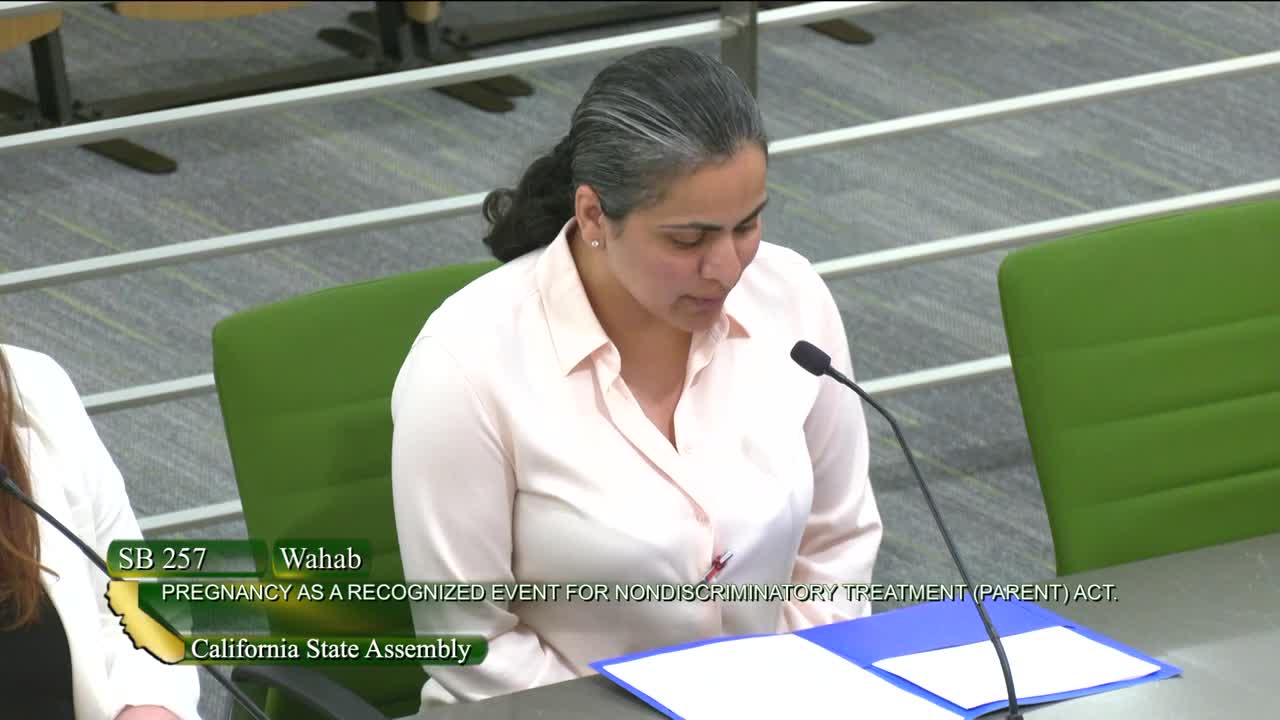

Bill Author

Bill Co-Author(s):