SB 258: Crimes: rape.
- Session Year: 2025-2026
- House: Senate
- Latest Version Date: 2025-10-11
Current Status:
Passed
(2025-10-11: Chaptered by Secretary of State. Chapter 599, Statutes of 2025.)
Introduced
In Committee
Awaiting First Chamber Vote
Passed First Chamber
In Committee
Awaiting Second Chamber Vote
Passed Second Chamber
Enacted
Existing law defines rape as an act of sexual intercourse accomplished under certain circumstances, including with a person not the spouse of the perpetrator where the person is incapable of giving legal consent because of a mental disorder or developmental or physical disability.
This bill would remove the spousal exception from this definition of rape.
By expanding the scope of a crime, this bill would impose a state-mandated local program.
The California Constitution requires the state to reimburse local agencies and school districts for certain costs mandated by the state. Statutory provisions establish procedures for making that reimbursement.
This bill would provide that no reimbursement is required by this act for a specified reason.
(a)Rape is an act of sexual intercourse accomplished under any of the following circumstances:
(1)(A)If a person is at the time incapable, because of a mental disorder or developmental or physical disability, of giving legal consent, and this is known or reasonably should be known to the person committing the act. A person with a mental disorder or developmental or physical disability shall not be presumed to be unable to give legal consent to sexual intercourse due to that disability. Notwithstanding the existence of a conservatorship pursuant to the provisions of the Lanterman-Petris-Short Act (Part 1 (commencing with Section 5000) of Division 5 of the Welfare and Institutions Code) or the absence of voluntary supports as described in Division 11.5 (commencing with Section 21000) of the Welfare and Institutions Code, except subdivisions (a) and (b) of Section 21000, the prosecuting attorney shall prove, as an element of the crime, that a mental disorder or developmental or physical disability rendered the alleged victim incapable of giving consent. This paragraph does not preclude the prosecution of the person committing the act under any other paragraph of this subdivision or any other law.
(B)In determining whether the person is at the time incapable, because of a mental disorder or developmental or physical disability, of giving legal consent, both of the following shall be considered, as applicable:
(i)Any mitigating measure in place, as defined in subdivision (n) of Section 11065 of Title 2 of the California Code of Regulations, as that regulation existed on January 1, 2025.
(ii)Any voluntary supports in place, as described in Division 11.5 (commencing with Section 21000) of the Welfare and Institutions Code, except subdivisions (a) and (b) of Section 21000.
(2)If it is accomplished against a persons will by means of force, violence, duress, menace, or fear of immediate and unlawful bodily injury on the person or another.
(3)If a person is prevented from resisting by an intoxicating or anesthetic substance or a controlled substance, and this condition was known, or reasonably should have been known by the accused.
(4)If a person is at the time unconscious of the nature of the act, and this is known to the accused. As used in this paragraph, unconscious of the nature of the act means incapable of resisting because the victim meets any one of the following conditions:
(A)Was unconscious or asleep.
(B)Was not aware, knowing, perceiving, or cognizant that the act occurred.
(C)Was not aware, knowing, perceiving, or cognizant of the essential characteristics of the act due to the perpetrators fraud in fact.
(D)Was not aware, knowing, perceiving, or cognizant of the essential characteristics of the act due to the perpetrators fraudulent representation that the sexual penetration served a professional purpose when it served no professional purpose.
(5)If a person submits under the belief that the person committing the act is someone known to the victim other than the accused, and this belief is induced by artifice, pretense, or concealment practiced by the accused, with intent to induce the belief.
(6)If the act is accomplished against the victims will by threatening to retaliate in the future against the victim or any other person, and there is a reasonable possibility that the perpetrator will execute the threat. As used in this paragraph, threatening to retaliate means a threat to kidnap or falsely imprison, or to inflict extreme pain, serious bodily injury, or death.
(7)If the act is accomplished against the victims will by threatening to use the authority of a public official to incarcerate, arrest, or deport the victim or another, and the victim has a reasonable belief that the perpetrator is a public official. As used in this paragraph, public official means a person employed by a governmental agency who has the authority, as part of that position, to incarcerate, arrest, or deport another. The perpetrator does not actually have to be a public official.
(b)For purposes of this section, the following definitions apply:
(1)Duress means a direct or implied threat of force, violence, danger, or retribution sufficient to coerce a reasonable person of ordinary susceptibilities to perform an act which otherwise would not have been performed, or acquiesce in an act to which one otherwise would not have submitted. The total circumstances, including the age of the victim, and the victims relationship to the defendant, are factors to consider in appraising the existence of duress.
(2)Incapable, because of a mental disorder or developmental or physical disability, of giving legal consent means that a person is at the time of the intercourse either of the following:
(A)Unable to understand the nature of the act or transaction involved due to a mental disorder or developmental or physical disability.
(B)Unable to act freely and voluntarily due to a mental disorder or developmental or physical disability.
(3)Menace means any threat, declaration, or act that shows an intention to inflict an injury upon another.
SEC. 2.No reimbursement is required by this act pursuant to Section 6 of Article XIIIB of the California Constitution because the only costs that may be incurred by a local agency or school district will be incurred because this act creates a new crime or infraction, eliminates a crime or infraction, or changes the penalty for a crime or infraction, within the meaning of Section 17556 of the Government Code, or changes the definition of a crime within the meaning of Section 6 of Article XIIIB of the California Constitution.
(a)Rape is an act of sexual intercourse accomplished under any of the following circumstances:
(1)(A)If a person is at the time incapable, because of a mental disorder or developmental or physical disability, of giving legal consent, and this is known or reasonably should be known to the person committing the act. A person with a mental disorder or developmental or physical disability shall not be presumed to be unable to give legal consent to sexual intercourse due to that disability. Notwithstanding the existence of a conservatorship pursuant to the provisions of the Lanterman-Petris-Short Act (Part 1 (commencing with Section 5000) of Division 5 of the Welfare and Institutions Code), Code) or the absence of voluntary supports as described in Division 11.5 (commencing with Section 21000) of the Welfare and Institutions Code, except subdivisions (a) and (b) of Section 21000, the prosecuting attorney shall prove, as an element of the crime, that a mental disorder or developmental or physical disability rendered the alleged victim incapable of giving consent. This paragraph does not preclude the prosecution of the person committing the act under any other paragraph of this subdivision or any other law.
(B)In determining whether the person is at the time incapable, because of a mental disorder or developmental or physical disability, of giving legal consent, both of the following shall be considered, as applicable:
(i)Any mitigating measure in place, as defined in subdivision (n) of Section 11065 of Title 2 of the California Code of Regulations, as that regulation existed on January 1, 2025.
(ii)Any voluntary supports in place, as described in Division 11.5 (commencing with Section 21000) of the Welfare and Institutions Code, except subdivisions (a) and (b) of Section 21000.
(2)If it is accomplished against a persons will by means of force, violence, duress, menace, or fear of immediate and unlawful bodily injury on the person or another.
(3)If a person is prevented from resisting by an intoxicating or anesthetic substance or a controlled substance, and this condition was known, or reasonably should have been known by the accused.
(4)If a person is at the time unconscious of the nature of the act, and this is known to the accused. As used in this paragraph, unconscious of the nature of the act means incapable of resisting because the victim meets any one of the following conditions:
(A)Was unconscious or asleep.
(B)Was not aware, knowing, perceiving, or cognizant that the act occurred.
(C)Was not aware, knowing, perceiving, or cognizant of the essential characteristics of the act due to the perpetrators fraud in fact.
(D)Was not aware, knowing, perceiving, or cognizant of the essential characteristics of the act due to the perpetrators fraudulent representation that the sexual penetration served a professional purpose when it served no professional purpose.
(5)If a person submits under the belief that the person committing the act is someone known to the victim other than the accused, and this belief is induced by artifice, pretense, or concealment practiced by the accused, with intent to induce the belief.
(6)If the act is accomplished against the victims will by threatening to retaliate in the future against the victim or any other person, and there is a reasonable possibility that the perpetrator will execute the threat. As used in this paragraph, threatening to retaliate means a threat to kidnap or falsely imprison, or to inflict extreme pain, serious bodily injury, or death.
(7)If the act is accomplished against the victims will by threatening to use the authority of a public official to incarcerate, arrest, or deport the victim or another, and the victim has a reasonable belief that the perpetrator is a public official. As used in this paragraph, public official means a person employed by a governmental agency who has the authority, as part of that position, to incarcerate, arrest, or deport another. The perpetrator does not actually have to be a public official.
(b)For purposes of this section, the following definitions apply:
(1)Duress means a direct or implied threat of force, violence, danger, or retribution sufficient to coerce a reasonable person of ordinary susceptibilities to perform an act which otherwise would not have been performed, or acquiesce in an act to which one otherwise would not have submitted. The total circumstances, including the age of the victim, and the victims relationship to the defendant, are factors to consider in appraising the existence of duress.
(2)Incapable, because of a mental disorder or developmental or physical disability, of giving legal consent means that a person is at the time of the intercourse either of the following:
(A)Unable to understand the nature of the act or transaction involved due to a mental disorder or developmental or physical disability.
(B)Unable to act freely and voluntarily due to a mental disorder or developmental or physical disability.
(2)(3)Menace means any threat, declaration, or act that shows an intention to inflict an injury upon another.
SEC. 2.No reimbursement is required by this act pursuant to Section 6 of Article XIIIB of the California Constitution because the only costs that may be incurred by a local agency or school district will be incurred because this act creates a new crime or infraction, eliminates a crime or infraction, or changes the penalty for a crime or infraction, within the meaning of Section 17556 of the Government Code, or changes the definition of a crime within the meaning of Section 6 of Article XIIIB of the California Constitution.
(a)Rape is an act of sexual intercourse accomplished under any of the following circumstances:
(1)If a person is incapable, because of a mental disorder or developmental or physical disability, of giving legal consent, and this is known or reasonably should be known to the person committing the act. Notwithstanding the existence of a conservatorship pursuant to the provisions of the Lanterman-Petris-Short Act (Part 1 (commencing with Section 5000) of Division 5 of the Welfare and Institutions Code), the prosecuting attorney shall prove, as an element of the crime, that a mental disorder or developmental or physical disability rendered the alleged victim incapable of giving consent.
(2)If it is accomplished against a persons will by means of force, violence, duress, menace, or fear of immediate and unlawful bodily injury on the person or another.
(3)If a person is prevented from resisting by an intoxicating or anesthetic substance, substance or a controlled substance, and this condition was known, or reasonably should have been known by the accused.
(4)If a person is at the time unconscious of the nature of the act, and this is known to the accused. As used in this paragraph, unconscious of the nature of the act means incapable of resisting because the victim meets any one of the following conditions:
(A)Was unconscious or asleep.
(B)Was not aware, knowing, perceiving, or cognizant that the act occurred.
(C)Was not aware, knowing, perceiving, or cognizant of the essential characteristics of the act due to the perpetrators fraud in fact.
(D)Was not aware, knowing, perceiving, or cognizant of the essential characteristics of the act due to the perpetrators fraudulent representation that the sexual penetration served a professional purpose when it served no professional purpose.
(5)If a person submits under the belief that the person committing the act is someone known to the victim other than the accused, and this belief is induced by artifice, pretense, or concealment practiced by the accused, with intent to induce the belief.
(6)If the act is accomplished against the victims will by threatening to retaliate in the future against the victim or any other person, and there is a reasonable possibility that the perpetrator will execute the threat. As used in this paragraph, threatening to retaliate means a threat to kidnap or falsely imprison, or to inflict extreme pain, serious bodily injury, or death.
(7)If the act is accomplished against the victims will by threatening to use the authority of a public official to incarcerate, arrest, or deport the victim or another, and the victim has a reasonable belief that the perpetrator is a public official. As used in this paragraph, public official means a person employed by a governmental agency who has the authority, as part of that position, to incarcerate, arrest, or deport another. The perpetrator does not actually have to be a public official.
(b)For purposes of this section, the following definitions apply:
(1)Duress means a direct or implied threat of force, violence, danger, or retribution sufficient to coerce a reasonable person of ordinary susceptibilities to perform an act which otherwise would not have been performed, or acquiesce in an act to which one otherwise would not have submitted. The total circumstances, including the age of the victim, and the victims relationship to the defendant, are factors to consider in appraising the existence of duress.
(2)Menace means any threat, declaration, or act that shows an intention to inflict an injury upon another.
SEC. 2.No reimbursement is required by this act pursuant to Section 6 of Article XIIIB of the California Constitution because the only costs that may be incurred by a local agency or school district will be incurred because this act creates a new crime or infraction, eliminates a crime or infraction, or changes the penalty for a crime or infraction, within the meaning of Section 17556 of the Government Code, or changes the definition of a crime within the meaning of Section 6 of Article XIIIB of the California Constitution.
REVISIONS: HeadingLine 5.(a)Rape is an act of sexual intercourse accomplished under any of the following circumstances:
(1)If a person who is not the spouse of the person committing the act is incapable, because of a mental disorder or developmental or physical disability, of giving legal consent, and this is known or reasonably should be known to the person committing the act. Notwithstanding the existence of a conservatorship pursuant to the provisions of the Lanterman-Petris-Short Act (Part 1 (commencing with Section 5000) of Division 5 of the Welfare and Institutions Code), the prosecuting attorney shall prove, as an element of the crime, that a mental disorder or developmental or physical disability rendered the alleged victim incapable of giving consent. This paragraph does not preclude the prosecution of a spouse committing the act from being prosecuted under any other paragraph of this subdivision or any other law.
(2)If it is accomplished against a persons will by means of force, violence, duress, menace, or fear of immediate and unlawful bodily injury on the person or another.
(3)If a person is prevented from resisting by an intoxicating or anesthetic substance, or a controlled substance, and this condition was known, or reasonably should have been known by the accused.
(4)If a person is at the time unconscious of the nature of the act, and this is known to the accused. As used in this paragraph, unconscious of the nature of the act means incapable of resisting because the victim meets any one of the following conditions:
(A)Was unconscious or asleep.
(B)Was not aware, knowing, perceiving, or cognizant that the act occurred.
(C)Was not aware, knowing, perceiving, or cognizant of the essential characteristics of the act due to the perpetrators fraud in fact.
(D)Was not aware, knowing, perceiving, or cognizant of the essential characteristics of the act due to the perpetrators fraudulent representation that the sexual penetration served a professional purpose when it served no professional purpose.
(5)If a person submits under the belief that the person committing the act is someone known to the victim other than the accused, and this belief is induced by artifice, pretense, or concealment practiced by the accused, with intent to induce the belief.
(6)If the act is accomplished against the victims will by threatening to retaliate in the future against the victim or any other person, and there is a reasonable possibility that the perpetrator will execute the threat. As used in this paragraph, threatening to retaliate means a threat to kidnap or falsely imprison, or to inflict extreme pain, serious bodily injury, or death.
(7)If the act is accomplished against the victims will by threatening to use the authority of a public official to incarcerate, arrest, or deport the victim or another, and the victim has a reasonable belief that the perpetrator is a public official. As used in this paragraph, public official means a person employed by a governmental agency who has the authority, as part of that position, to incarcerate, arrest, or deport another. The perpetrator does not actually have to be a public official.
(b)For purposes of this section, the following definitions apply:
(1)Duress means a direct or implied threat of force, violence, danger, or retribution sufficient to coerce a reasonable person of ordinary susceptibilities to perform an act which otherwise would not have been performed, or acquiesce in an act to which one otherwise would not have submitted. The total circumstances, including the age of the victim, and the victims relationship to the defendant, are factors to consider in appraising the existence of duress.
(2)Menace means any threat, declaration, or act that shows an intention to inflict an injury upon another.
SEC. 2.No reimbursement is required by this act pursuant to Section 6 of Article XIIIB of the California Constitution because the only costs that may be incurred by a local agency or school district will be incurred because this act creates a new crime or infraction, eliminates a crime or infraction, or changes the penalty for a crime or infraction, within the meaning of Section 17556 of the Government Code, or changes the definition of a crime within the meaning of Section 6 of Article XIIIB of the California Constitution.
|
Date
|
Status
|
|---|---|
| Oct 11, 2025 | Chaptered by Secretary of State. Chapter 599, Statutes of 2025. |
| Oct 11, 2025 | Approved by the Governor. |
| Sep 23, 2025 | Enrolled and presented to the Governor at 2 p.m. |
| Sep 12, 2025 | In Senate. Concurrence in Assembly amendments pending. |
| Sep 12, 2025 | Assembly amendments concurred in. (Ayes 38. Noes 0. Page 2967.) Ordered to engrossing and enrolling. |
| Sep 11, 2025 | Read third time. Passed. (Ayes 77. Noes 0. Page 3279.) Ordered to the Senate. |
| Sep 3, 2025 | Read second time. Ordered to third reading. |
| Sep 2, 2025 | Read second time and amended. Ordered to second reading. |
| Aug 29, 2025 | From committee: Do pass as amended. (Ayes 11. Noes 0.) (August 29). |
| Aug 20, 2025 | August 20 set for first hearing. Placed on APPR. suspense file. |
| Jul 16, 2025 | From committee: Do pass and re-refer to Com. on APPR. (Ayes 9. Noes 0.) (July 15). Re-referred to Com. on APPR. |
| Jul 16, 2025 | Coauthors revised. |
| Jun 9, 2025 | Referred to Com. on PUB. S. |
| Jun 3, 2025 | In Assembly. Read first time. Held at Desk. |
| Jun 2, 2025 | Read third time. Passed. (Ayes 37. Noes 0. Page 1391.) Ordered to the Assembly. |
| May 23, 2025 | Read second time. Ordered to third reading. |
| May 23, 2025 | From committee: Do pass. (Ayes 6. Noes 0. Page 1193.) (May 23). |
| May 16, 2025 | Set for hearing May 23. |
| May 12, 2025 | May 12 hearing: Placed on APPR. suspense file. |
| May 2, 2025 | Set for hearing May 12. |
| May 1, 2025 | From committee with author's amendments. Read second time and amended. Re-referred to Com. on APPR. |
| Apr 30, 2025 | From committee: Do pass and re-refer to Com. on APPR. (Ayes 6. Noes 0. Page 944.) (April 29). Re-referred to Com. on APPR. |
| Apr 11, 2025 | Set for hearing April 29. |
| Feb 14, 2025 | Referred to Com. on PUB. S. |
| Feb 4, 2025 | From printer. May be acted upon on or after March 6. |
| Feb 3, 2025 | Introduced. Read first time. To Com. on RLS. for assignment. To print. |
|
Date
|
Description
|
Location
|
Votes
|
|
|---|---|---|---|---|
| Sep 12, 2025 | Unfinished Business SB258 Wahab et al. Concurrence | Senate Floor |
Passed |
|
| Sep 11, 2025 | SB 258 Wahab Senate Third Reading By Aguiar-Curry | Assembly Floor |
Passed |
|
| Aug 29, 2025 | Do pass as amended. | Assembly Standing Committee on Appropriations |
Passed |
|
| Jul 15, 2025 | Do pass and be re-referred to the Committee on [Appropriations] | Assembly Standing Committee on Public Safety |
Passed |
|
| Jun 2, 2025 | Senate 3rd Reading SB258 Wahab et al. | Senate Floor |
Passed |
|
| May 23, 2025 | Do pass | Senate Standing Committee on Appropriations |
Passed |
|
| May 12, 2025 | Placed on suspense file | Senate Standing Committee on Appropriations |
Passed |
|
| Apr 29, 2025 | Do pass, but first be re-referred to the Committee on [Appropriations] | Senate Standing Committee on Public Safety |
Passed |
This list shows positions taken on this bill by organizations on the date displayed, which is linked to the original source.
Positions by individuals are not included.
|
Organization
|
Position
|
Date
|
|---|---|---|
| 1 individual | ** Against | |
| Aclu California Action | ** Against | |
| Action Together Bay Area | ** Support | |
| Alameda County Families Advocating for The Seriously Mentally Ill | ** Support | |
| American Association Of University Women - California | ** Support | |
| American Association of University Women - San Jose | ** Support | |
| Arc Of California | ** Support | |
| Asian Americans for Community Involvement | ** Support | |
| Association Of Regional Center Agencies | ** Support | |
| Black Women For Wellness Action Project | ** Against | |
| CA Legislative Women's Caucus | ** Support | |
| Cal Voices | ** Against | |
| California Attorneys For Criminal Justice | ** Against | |
| California Civil Liberties Advocacy | ** Support | |
| California Democratic Party | ** Support | |
| California District Attorneys Association | ** Support | |
| California National Organization For Women | ** Support | |
| California Public Defenders Association | ** Against | |
| California State Sheriffs' Association | ** Support | |
| Californians United for a Responsible Budget | ** Against | |
| Coalition for Gender Equity | ** Support | |
| Coalition of Gender Equality | ** Support | |
| Community Solutions for Children, Families, and Individuals | ** Support | |
| County of Santa Clara | ** Support | |
| DAWN | ** Support | |
| Dawn (Democratic Activists for Women Now) | ** Support | |
| Democratic Activists for Women Now | ** Support | |
| Disability Rights California | ** Against | |
| Disability Rights Education And Defense Fund (Dredf) | ** Against | |
| DRC | ** Against | |
| Felony Murder Elimination Project | ** Against | |
| Feminist Majority | ** Support | |
| Former Assemblymember Garcia | ** Support | |
| Initiate Justice | ** Against | |
| Joyful Heart Foundation | ** Support | |
| LA Defensa | ** Against | |
| Law Project for Psychiatric Rights | ** Against | |
| Local 148 La County Public Defenders Union | ** Against | |
| Los Angeles County Democratic Party | ** Support | |
| Multiple Individuals | ** Support | |
| National Clearinghouse on Marital and Date Rape | ** Support | |
| National Women’s Political Caucus of California (source) | ** Support | |
| Racial and Ethnic Mental Health Disparities Coalition | ** Against | |
| Ruby'S Place | ** Support | |
| San Francisco Public Defender’s Office | ** Against | |
| San Francisco Senior and Disability Action | ** Support | |
| Santa Barbara Women's Political Committee | ** Support | |
| Santa Clara County Democratic Party | ** Support | |
| Santa Clara County District Attorney's Office | ** Support | |
| SANTA CLARA; CITY OF | ** Support | |
| Silicon Valley Democratic Club | ** Support | |
| Smart Justice California, a project of Tides Advocacy | ** Against | |
| tahirih justice center | ** Support | |
| The Arc California | ** Support | |
| The Public Defenders | ** Against | |
| United Cerebral Palsy | ** Support | |
| Universidad Popular | ** Against | |
| Voices of Women for Change | ** Support | |
| WEAVE | ** Support | |
| Women's Equal Justice | ** Support | |
| Women's March Action | ** Support |
SENATE RULES COMMITTEE Office of Senate Floor Analyses (916) 651-1520 Fax: (916) 327-4478 | SB 258 |
UNFINISHED BUSINESS
Bill No: SB 258
Author: Wahab (D), Cervantes (D) and Rubio (D), et al.
Amended: 9/2/25
Vote: 21
SENATE PUBLIC SAFETY COMMITTEE: 6-0, 4/29/25
AYES: Arreguín, Seyarto, Caballero, Gonzalez, Pérez, Wiener
SENATE APPROPRIATIONS COMMITTEE: 6-0, 5/23/25
AYES: Caballero, Seyarto, Cabaldon, Grayson, Richardson, Wahab
NO VOTE RECORDED: Dahle
SENATE FLOOR: 37-0, 6/2/25
AYES: Allen, Alvarado-Gil, Archuleta, Arreguín, Ashby, Becker, Blakespear, Cabaldon, Caballero, Cervantes, Choi, Cortese, Dahle, Gonzalez, Grayson, Grove, Jones, Laird, Limón, McGuire, McNerney, Menjivar, Niello, Ochoa Bogh, Padilla, Pérez, Richardson, Rubio, Seyarto, Smallwood-Cuevas, Stern, Strickland, Umberg, Valladares, Wahab, Weber Pierson, Wiener
NO VOTE RECORDED: Durazo, Hurtado, Reyes
ASSEMBLY FLOOR: 77-0, 9/11/25 - See last page for vote
SUBJECT: Crimes: rape
SOURCE: National Women’s Political Caucus of California
DIGEST:
This bill expands the circumstances under which sexual intercourse with a spouse is rape, to include where a spouse is incapable of giving “legal consent” due to a mental disorder or developmental or physical disability.
Assembly Amendments
provide that:
- A person with a mental disorder or development or physical disability shall not be presumed to be unable to give legal consent to sexual intercourse due to that disability.
- States that notwithstanding the absence of voluntary supports, as defined, the prosecutor shall prove, as an element of the crime, that a mental disorder or developmental or physical disability rendered the alleged victim incapable of gibing consent.
- States that this provision does not preclude the prosecution of the person committing the act under any other law, including other circumstances where the act constitutes rape.
- Provides that in determining whether the person is at the time incapable, because of a mental disorder or developmental or physical disability, of giving legal consent, both of the following shall be considered, as applicable:
- Any mitigating measure in place, as defined; and
- Any voluntary supports in place, as described.
ANALYSIS:
Existing law:
- Provides that the punishment for all forms of rape is imprisonment in the state prison for three, six or eight years. (Penal (Pen.) Code § 264.)
- Defines rape as an act of sexual intercourse accomplished under any of the following circumstances:
- If a person who is not the spouse of the person committing the act is incapable, because of a mental disorder or developmental or physical disability, of giving legal consent, and this is known or reasonably should be known to the person committing the act. Notwithstanding the existence of a conservatorship, the prosecuting attorney must prove, that a mental disorder or developmental or physical disability rendered the alleged victim incapable of giving consent. This does not preclude the prosecution of a spouse under any other provision of this law or any other law;
- Against the victim’s will by force, violence, duress, menace, or fear of immediate and unlawful bodily injury on the person or another;
- When the victim is prevented from resisting by an intoxicating or anesthetic substance, controlled substance, and this condition was known, or should have been known, to the accused;
- Where the victim was not conscious of the nature of the act, as follows:
- Was unconscious or asleep;
- Was not aware, knowing, perceiving, or cognizant that the act occurred;
- Was not aware, knowing, perceiving, or cognizant of the essential characteristics of the act due to the perpetrator’s fraud in fact (the perpetrator tricked, lied to, or concealed information); or,
- Was not aware, knowing, perceiving, or cognizant of the essential characteristics of the act due to the perpetrator’s fraud in fact (the perpetrator tricked, lied to, or concealed information);
- Was unconscious or asleep;
- Against the victim’s will by threat of retaliation, as defined; or,
- Against the victim’s will by threat of authority, as defined. (Pen. Code § 262, subd. (a).)
- If a person who is not the spouse of the person committing the act is incapable, because of a mental disorder or developmental or physical disability, of giving legal consent, and this is known or reasonably should be known to the person committing the act. Notwithstanding the existence of a conservatorship, the prosecuting attorney must prove, that a mental disorder or developmental or physical disability rendered the alleged victim incapable of giving consent. This does not preclude the prosecution of a spouse under any other provision of this law or any other law;
- Defines “duress” as “a direct or implied threat of force, violence, danger, or retribution sufficient to coerce a reasonable person of ordinary susceptibilities to perform an act which otherwise would not have been performed, or acquiesce in an act to which one otherwise would not have submitted. The total circumstances, including the age of the victim, and the victim’s relationship to the defendant, are factors to consider in appraising the existence of duress.” (Pen. Code § 262, subd. (b)(1).)
- Defines “menace” as “any threat, declaration, or act that shows an intention to inflict an injury upon another.” (Pen. Code § 262, subd. (b)(2).)
- Provides that before probation may be granted for the crime of rape, the court must:
- Order a diagnostic study of the defendant, which can include being placed in a facility for up to 90 days;
- Conduct a hearing at the time of sentencing to determine if the defendant would pose a threat to the victim; and,
- Order a psychologist or psychiatrist appointed to include a consideration of the threat to the victim and the defendant’s potential for positive response. (Pen. Code, § 1203.067. subd. (a).
- Order a diagnostic study of the defendant, which can include being placed in a facility for up to 90 days;
- Provides that if probation is granted for rape, the defendant must complete a sex offender management program, which shall not be less than one year. (Pen. Code, § 1203.067. subd (b)(2).)
- Provides sentences of 15-years-to-life, 25-years-to-life, or life without the possibility of parole for certain sex crimes if specified circumstances are found to be true. This is known as the One-Strike-Sex-Law. Includes within the qualifying offenses under the One-Strike Sex Law rape and spousal rape accomplished by force, duress, menace, or fear of immediate and unlawful bodily injury and rape and spousal rape accomplished by threat of retaliation. (Pen. Code, § 667.61.)
- States a legislative intent that district attorneys prosecute violent sex crimes under statutes that provide sentencing under a “one strike,” “three strikes” or habitual sex offender statute instead of engaging in plea bargaining over those offenses. (Pen. Code, § 1192.7, subd. (a)(1).)
- Prohibits plea bargaining when an indictment or information charges any serious felony, unless there is insufficient evidence to prove the people’s case, or testimony of a material witness cannot be obtained, or a reduction or dismissal would not result in a substantial change in sentence. (Pen. Code, § 1192.7, subd. (a)(2).)
- Classifies rape as a serious felony, a strike. (Pen. Code, §§ 667 & 1192.7, subd. (c)(3).)
- Requires a person convicted of rape to register as a sex offender. (Pen. Code § 290, subd. (c)(1).)
- Requires a person required to register as a sex offender to be listed on the Megan’s law website, except as specified. (Pen. Code, § 290.46.)
This bill:
- Expands the circumstances under which sexual intercourse with a spouse is rape, to include where a spouse is incapable of giving “legal consent” due to a mental disorder or developmental or physical disability.
- Provides that a person with a mental disorder or development or physical disability shall not be presumed to be unable to give legal consent to sexual intercourse due to that disability.
- States that notwithstanding the absence of voluntary supports, as defined, the prosecutor shall prove, as an element of the crime, that a mental disorder or developmental or physical disability rendered the alleged victim incapable of gibing consent.
- Provides that this provision does not preclude the prosecution of the person committing the act under any other law, including other circumstances where the act constitutes rape.
- States that in determining whether the person is at the time incapable, because of a mental disorder or developmental or physical disability, of giving legal consent, both of the following shall be considered, as applicable:
- Any mitigating measure in place, as defined; and
- Any voluntary supports in place, as described.
Background
Legislative History of Spousal Rape. Before 1979, the law in California did not recognize that a wife could be raped by her husband. AB 546 (Mori) enacted a spousal rape law (former Pen. Code, § 262) and distinguished between marital and non-marital rape (Pen. Code, § 261). “Supporters of the 1979 bill spoke out against historical arguments like irrevocable consent, women as property, and violence in marriage. One line of argument, irrevocable consent, posited that “a woman does not give up her right to consent to sexual intercourse by virtue of marriage, and that the existing definition of rape treats married women in an unequal and unfair fashion.” (Ross, Making Marital Rape Visible: A History of American Legal and Social Movements Criminalizing Rape in Marriage (Dec. 2015) Digital Commons @ University of Nebraska – Lincoln; https://digitalcommons.unl.edu/cgi/viewcontent.cgi?article=1085&context=historydiss at p. 136, citing Senate Committee on Judiciary summary of A.B. 546 at fn. 384 [as of April 18, 2025].) In the years that followed, the Legislature amended the spousal rape law (Pen. Code, § 262) several times. These amendments better defined spousal rape to correspond with and mostly mirror the language of Penal Code section 261 (non-spousal rape). (Id. at pp. 127-193.)
Though rape and spousal rape were set forth in separate statutes, the courts viewed them as one offense – rape. (See People v. Hillard (1989) 212 Cal.App.3d 780, 784 [“It is evident that the Legislature added . . . section 262 for the sole purpose of eliminating the marital exemption for forcible spousal rape, and not to define a new and separate offense, apart from rape by a stranger, of spousal rape.”].) The Legislature also found and declared “that all forms of nonconsensual sexual assault may be considered rape for purposes of the gravity of the offense and the support of survivors.” (Pen. Code, § 263.1.)
Nonetheless, balancing tensions between treating rape as rape irrespective of the marital status with the considerations presented by marital units, limited distinctions remained between the two statutes: probation eligibility and discretionary sex offender registration. California was one of 11 states that still retained some distinction between rape and spousal rape. (https://apnews.com/article/legislature-california-sexual-assault-962ff3592c5b86c35097de0e35d4c860 [as of April 18, 2025].)
Then, in 2021, the Legislature passed AB 1171 (C. Garcia, Chapter 626, Statutes of 2021), which repealed the stand-alone spousal rape statute (Pen. Code, § 262) and expanded the definition of rape (Pen. Code, § 261) to include the rape of a spouse in all but one circumstance. The expanded version of the rape statute maintained a limited exemption for the act of sexual intercourse with a spouse who is incapable of giving “legal consent” because of a mental disorder or developmental or physical disability. (Pen. Code, § 261, subd. (a)(1).)
This bill would eliminate that limited distinction.
FISCAL EFFECT: Appropriation: No Fiscal Com.: Yes Local: Yes
According to the Assembly Appropriations Committee:
Cost pressures (Trial Court Trust Fund, General Fund) of an unknown but potentially significant amount to the courts to adjudicate felony rape charges resulting from this bill. A defendant charged with a felony is entitled to a jury trial and, if the defendant is indigent, legal representation provided by the government. Actual court costs will depend on the number of violations, prosecutorial discretion, and the amount of court time needed to adjudicate each case. Although courts are not funded on the basis of workload, increased pressure on the Trial Court Trust Fund may create a demand for increased funding for courts from the General Fund. The fiscal year 2025-26 state budget provides $82 million ongoing General Fund to the Trial Court Trust Fund for court operations.
- Costs (General Fund) to the California Department of Corrections and Rehabilitation (CDCR) to incarcerate people convicted of rape as a result of this bill. Actual incarceration costs will depend on the number of convictions, the length of each sentence, and each person’s credit earning. Rape is punishable by a prison term of three, six, or eight years. The Legislative Analyst’s Office estimates the average annual cost to incarcerate one person in state prison is $133,000. The incidence of the conduct affected by this bill is unknown. Data from CDCR shows that in 2024, four people were admitted into prison with the primary offense of rape of a person incapable of giving legal consent due to a disability. If this bill results in the conviction of three additional people each year, each of whom must serve four years in prison, the resulting cost to CDCR would be approximately $1.6 million annually ongoing by the fourth year of implementation.
- Possible costs to the Department of State Hospitals (DSH) of an unknown but potentially significant amount due to the bill’s expansion of criminal liability. DSH reports a person who is charged with rape under the circumstances affected by this bill and diagnosed with a serious mental disorder could be found incompetent to stand trial (IST) and referred to DSH for treatment. Any increase in referrals would increase costs to the General Fund for DSH. DSH states it cannot accurately estimate the number of referrals that may result from this bill but reports the annual General Fund cost per patient for IST treatment varies from about $200,000 for DSH-funded diversion to about $400,000 for inpatient hospital treatment. If this bill passed, DSH plans to monitor its implementation and may request a budget augmentation at a later date.
SUPPORT: (Verified 9/11/25)
National Women’s Political Caucus of California (source)
Action Together Bay Area
Alameda County Families Advocating for the Seriously Mentally Ill
American Association of University Women - San Jose
American Association of University Women - California
Asian Americans for Community Involvement
Association of Regional Center Agencies
CA Legislative Women's Caucus
California Civil Liberties Advocacy
California Democratic Party
California District Attorneys Association
California National Organization for Women
California State Sheriffs' Association
Coalition for Gender Equity
County of Santa Clara
Dawn (Democratic Activists for Women Now)
Feminist Majority
Joyful Heart Foundation
Los Angeles County Democratic Party
National Clearinghouse on Marital and Date Rape
Ruby's Place
San Francisco Senior and Disability Action
Santa Barbara Women's Political Committee
Santa Clara County Democratic Party
Santa Clara County District Attorney's Office
Santa Clara; City of
Silicon Valley Democratic Club
Tahirih Justice Center
Voices of Women for Change
Weave
Women's Equal Justice
Women's March Action
OPPOSITION: (Verified 9/11/25)
Californians United for a Responsible Budget
Disability Rights California
Initiate Justice
Local 148 LA County Public Defenders Union
San Francisco Public Defender’s Office
Universidad Popular
1 Individual
ARGUMENTS IN SUPPORT: According to the National Women’s Political Caucus of California, the sponsor of this bill:
…Senate Bill (SB) 258 … closes a loophole in the California Penal Code that permits the rape of a spouse who is unable to consent due to a mental disorder or disability.
Founded in 1973, NWPC CA is the state chapter of the oldest grassroots organization that recruits, trains, and supports pro-choice women candidates at all levels of public office. We also advocate for policy initiatives that support our bottom line issues, especially reproductive freedom, and that we believe will promote equity in general, particularly for women. This bill supports our policy priorities.
Since the 1970s, 42 states have passed laws to remove spousal rape exceptions, but California has lagged behind. Assembly Bill 1171 (Chapter 626, Statutes of 2021) eliminated most differences between how spousal rape and non-spousal rape are treated in the Penal Code, but left a disparity when a person is unable to consent due to a disability.
An estimated 1 in 10 US women have experienced rape by a spouse. For disabled women, this number is likely higher, as people with disabilities are four times as likely to be sexually assaulted, according to the U.S. Bureau of Justice Statistics National Crime Victimization Survey.
SB 258 eliminates this distinction, clarifying that rape is rape, regardless of a victim’s abilities and their relationship to the offender.
ARGUMENTS IN OPPOSITION: According to Disability Rights of California:
While we share the goal of preventing sexual violence, especially against people with disabilities, this bill has serious unintended consequences for people with disabilities.
DRC believes this bill fails to truly respect and keep the intellectual and developmental disability (I/DD) community safe. SB 258 undermines the rights and dignity of people with I/DD by reinforcing outdated and discriminatory assumptions about their capacity to consent to sexual relationships. It removes an important legal protection and effectively creates a presumption that individuals with I/DD cannot consent regardless of the context.
ASSEMBLY FLOOR: 77-0, 9/11/25
AYES: Addis, Aguiar-Curry, Ahrens, Alanis, Alvarez, Arambula, Ávila Farías, Bains, Bauer-Kahan, Bennett, Berman, Boerner, Calderon, Carrillo, Castillo, Chen, Connolly, Davies, DeMaio, Dixon, Elhawary, Ellis, Flora, Fong, Gabriel, Gallagher, Garcia, Gipson, Jeff Gonzalez, Mark González, Hadwick, Haney, Harabedian, Hart, Hoover, Irwin, Jackson, Johnson, Kalra, Krell, Lackey, Lee, Lowenthal, Macedo, McKinnor, Muratsuchi, Nguyen, Ortega, Pacheco, Papan, Patel, Patterson, Pellerin, Petrie-Norris, Quirk-Silva, Ramos, Ransom, Celeste Rodriguez, Michelle Rodriguez, Rogers, Blanca Rubio, Sanchez, Schiavo, Schultz, Sharp-Collins, Solache, Soria, Stefani, Ta, Tangipa, Valencia, Wallis, Ward, Wicks, Wilson, Zbur, Rivas
NO VOTE RECORDED: Bonta, Bryan, Caloza
Prepared by: Cheryl Anderson / PUB. S. / (916) 651-4118
9/14/26 11:58:22
SENATE RULES COMMITTEE Office of Senate Floor Analyses (916) 651-1520 Fax: (916) 327-4478 | SB 258 |
UNFINISHED BUSINESS
Bill No: SB 258
Author: Wahab (D), Cervantes (D) and Rubio (D), et al.
Amended: 9/2/25 in Assembly
Vote: 21
SENATE PUBLIC SAFETY COMMITTEE: 6-0, 4/29/25
AYES: Arreguín, Seyarto, Caballero, Gonzalez, Pérez, Wiener
SENATE APPROPRIATIONS COMMITTEE: 6-0, 5/23/25
AYES: Caballero, Seyarto, Cabaldon, Grayson, Richardson, Wahab
NO VOTE RECORDED: Dahle
SENATE FLOOR: 37-0, 6/2/25
AYES: Allen, Alvarado-Gil, Archuleta, Arreguín, Ashby, Becker, Blakespear, Cabaldon, Caballero, Cervantes, Choi, Cortese, Dahle, Gonzalez, Grayson, Grove, Jones, Laird, Limón, McGuire, McNerney, Menjivar, Niello, Ochoa Bogh, Padilla, Pérez, Richardson, Rubio, Seyarto, Smallwood-Cuevas, Stern, Strickland, Umberg, Valladares, Wahab, Weber Pierson, Wiener
NO VOTE RECORDED: Durazo, Hurtado, Reyes
ASSEMBLY FLOOR: 59-0, 9/11/25 – Roll call vote not available
SUBJECT: Crimes: rape
SOURCE: National Women’s Political Caucus of California
DIGEST:
This bill expands the circumstances under which sexual intercourse with a spouse is rape, to include where a spouse is incapable of giving “legal consent” due to a mental disorder or developmental or physical disability.
Assembly Amendments
provide that:
- A person with a mental disorder or development or physical disability shall not be presumed to be unable to give legal consent to sexual intercourse due to that disability.
- States that notwithstanding the absence of voluntary supports, as defined, the prosecutor shall prove, as an element of the crime, that a mental disorder or developmental or physical disability rendered the alleged victim incapable of gibing consent.
- States that this provision does not preclude the prosecution of the person committing the act under any other law, including other circumstances where the act constitutes rape.
- Provides that in determining whether the person is at the time incapable, because of a mental disorder or developmental or physical disability, of giving legal consent, both of the following shall be considered, as applicable:
- Any mitigating measure in place, as defined; and
- Any voluntary supports in place, as described.
ANALYSIS:
Existing law:
- Provides that the punishment for all forms of rape is imprisonment in the state prison for three, six or eight years. (Penal (Pen.) Code § 264.)
- Defines rape as an act of sexual intercourse accomplished under any of the following circumstances:
- If a person who is not the spouse of the person committing the act is incapable, because of a mental disorder or developmental or physical disability, of giving legal consent, and this is known or reasonably should be known to the person committing the act. Notwithstanding the existence of a conservatorship, the prosecuting attorney must prove, that a mental disorder or developmental or physical disability rendered the alleged victim incapable of giving consent. This does not preclude the prosecution of a spouse under any other provision of this law or any other law;
- Against the victim’s will by force, violence, duress, menace, or fear of immediate and unlawful bodily injury on the person or another;
- When the victim is prevented from resisting by an intoxicating or anesthetic substance, controlled substance, and this condition was known, or should have been known, to the accused;
- Where the victim was not conscious of the nature of the act, as follows:
- Was unconscious or asleep;
- Was not aware, knowing, perceiving, or cognizant that the act occurred;
- Was not aware, knowing, perceiving, or cognizant of the essential characteristics of the act due to the perpetrator’s fraud in fact (the perpetrator tricked, lied to, or concealed information); or,
- Was not aware, knowing, perceiving, or cognizant of the essential characteristics of the act due to the perpetrator’s fraud in fact (the perpetrator tricked, lied to, or concealed information);
- Was unconscious or asleep;
- Against the victim’s will by threat of retaliation, as defined; or,
- Against the victim’s will by threat of authority, as defined. (Pen. Code § 262, subd. (a).)
- If a person who is not the spouse of the person committing the act is incapable, because of a mental disorder or developmental or physical disability, of giving legal consent, and this is known or reasonably should be known to the person committing the act. Notwithstanding the existence of a conservatorship, the prosecuting attorney must prove, that a mental disorder or developmental or physical disability rendered the alleged victim incapable of giving consent. This does not preclude the prosecution of a spouse under any other provision of this law or any other law;
- Defines “duress” as “a direct or implied threat of force, violence, danger, or retribution sufficient to coerce a reasonable person of ordinary susceptibilities to perform an act which otherwise would not have been performed, or acquiesce in an act to which one otherwise would not have submitted. The total circumstances, including the age of the victim, and the victim’s relationship to the defendant, are factors to consider in appraising the existence of duress.” (Pen. Code § 262, subd. (b)(1).)
- Defines “menace” as “any threat, declaration, or act that shows an intention to inflict an injury upon another.” (Pen. Code § 262, subd. (b)(2).)
- Provides that before probation may be granted for the crime of rape, the court must:
- Order a diagnostic study of the defendant, which can include being placed in a facility for up to 90 days;
- Conduct a hearing at the time of sentencing to determine if the defendant would pose a threat to the victim; and,
- Order a psychologist or psychiatrist appointed to include a consideration of the threat to the victim and the defendant’s potential for positive response. (Pen. Code, § 1203.067. subd. (a).
- Order a diagnostic study of the defendant, which can include being placed in a facility for up to 90 days;
- Provides that if probation is granted for rape, the defendant must complete a sex offender management program, which shall not be less than one year. (Pen. Code, § 1203.067. subd (b)(2).)
- Provides sentences of 15-years-to-life, 25-years-to-life, or life without the possibility of parole for certain sex crimes if specified circumstances are found to be true. This is known as the One-Strike-Sex-Law. Includes within the qualifying offenses under the One-Strike Sex Law rape and spousal rape accomplished by force, duress, menace, or fear of immediate and unlawful bodily injury and rape and spousal rape accomplished by threat of retaliation. (Pen. Code, § 667.61.)
- States a legislative intent that district attorneys prosecute violent sex crimes under statutes that provide sentencing under a “one strike,” “three strikes” or habitual sex offender statute instead of engaging in plea bargaining over those offenses. (Pen. Code, § 1192.7, subd. (a)(1).)
- Prohibits plea bargaining when an indictment or information charges any serious felony, unless there is insufficient evidence to prove the people’s case, or testimony of a material witness cannot be obtained, or a reduction or dismissal would not result in a substantial change in sentence. (Pen. Code, § 1192.7, subd. (a)(2).)
- Classifies rape as a serious felony, a strike. (Pen. Code, §§ 667 & 1192.7, subd. (c)(3).)
- Requires a person convicted of rape to register as a sex offender. (Pen. Code § 290, subd. (c)(1).)
- Requires a person required to register as a sex offender to be listed on the Megan’s law website, except as specified. (Pen. Code, § 290.46.)
This bill:
- Expands the circumstances under which sexual intercourse with a spouse is rape, to include where a spouse is incapable of giving “legal consent” due to a mental disorder or developmental or physical disability.
- Provides that a person with a mental disorder or development or physical disability shall not be presumed to be unable to give legal consent to sexual intercourse due to that disability.
- States that notwithstanding the absence of voluntary supports, as defined, the prosecutor shall prove, as an element of the crime, that a mental disorder or developmental or physical disability rendered the alleged victim incapable of gibing consent.
- Provides that this provision does not preclude the prosecution of the person committing the act under any other law, including other circumstances where the act constitutes rape.
- States that in determining whether the person is at the time incapable, because of a mental disorder or developmental or physical disability, of giving legal consent, both of the following shall be considered, as applicable:
- Any mitigating measure in place, as defined; and
- Any voluntary supports in place, as described.
Background
Legislative History of Spousal Rape. Before 1979, the law in California did not recognize that a wife could be raped by her husband. AB 546 (Mori) enacted a spousal rape law (former Pen. Code, § 262) and distinguished between marital and non-marital rape (Pen. Code, § 261). “Supporters of the 1979 bill spoke out against historical arguments like irrevocable consent, women as property, and violence in marriage. One line of argument, irrevocable consent, posited that “a woman does not give up her right to consent to sexual intercourse by virtue of marriage, and that the existing definition of rape treats married women in an unequal and unfair fashion.” (Ross, Making Marital Rape Visible: A History of American Legal and Social Movements Criminalizing Rape in Marriage (Dec. 2015) Digital Commons @ University of Nebraska – Lincoln; https://digitalcommons.unl.edu/cgi/viewcontent.cgi?article=1085&context=historydiss at p. 136, citing Senate Committee on Judiciary summary of A.B. 546 at fn. 384 [as of April 18, 2025].) In the years that followed, the Legislature amended the spousal rape law (Pen. Code, § 262) several times. These amendments better defined spousal rape to correspond with and mostly mirror the language of Penal Code section 261 (non-spousal rape). (Id. at pp. 127-193.)
Though rape and spousal rape were set forth in separate statutes, the courts viewed them as one offense – rape. (See People v. Hillard (1989) 212 Cal.App.3d 780, 784 [“It is evident that the Legislature added . . . section 262 for the sole purpose of eliminating the marital exemption for forcible spousal rape, and not to define a new and separate offense, apart from rape by a stranger, of spousal rape.”].) The Legislature also found and declared “that all forms of nonconsensual sexual assault may be considered rape for purposes of the gravity of the offense and the support of survivors.” (Pen. Code, § 263.1.)
Nonetheless, balancing tensions between treating rape as rape irrespective of the marital status with the considerations presented by marital units, limited distinctions remained between the two statutes: probation eligibility and discretionary sex offender registration. California was one of 11 states that still retained some distinction between rape and spousal rape. (https://apnews.com/article/legislature-california-sexual-assault-962ff3592c5b86c35097de0e35d4c860 [as of April 18, 2025].)
Then, in 2021, the Legislature passed AB 1171 (C. Garcia, Chapter 626, Statutes of 2021), which repealed the stand-alone spousal rape statute (Pen. Code, § 262) and expanded the definition of rape (Pen. Code, § 261) to include the rape of a spouse in all but one circumstance. The expanded version of the rape statute maintained a limited exemption for the act of sexual intercourse with a spouse who is incapable of giving “legal consent” because of a mental disorder or developmental or physical disability. (Pen. Code, § 261, subd. (a)(1).)
This bill would eliminate that limited distinction.
FISCAL EFFECT: Appropriation: No Fiscal Com.: Yes Local: Yes
According to the Assembly Appropriations Committee:
Cost pressures (Trial Court Trust Fund, General Fund) of an unknown but potentially significant amount to the courts to adjudicate felony rape charges resulting from this bill. A defendant charged with a felony is entitled to a jury trial and, if the defendant is indigent, legal representation provided by the government. Actual court costs will depend on the number of violations, prosecutorial discretion, and the amount of court time needed to adjudicate each case. Although courts are not funded on the basis of workload, increased pressure on the Trial Court Trust Fund may create a demand for increased funding for courts from the General Fund. The fiscal year 2025-26 state budget provides $82 million ongoing General Fund to the Trial Court Trust Fund for court operations.
- Costs (General Fund) to the California Department of Corrections and Rehabilitation (CDCR) to incarcerate people convicted of rape as a result of this bill. Actual incarceration costs will depend on the number of convictions, the length of each sentence, and each person’s credit earning. Rape is punishable by a prison term of three, six, or eight years. The Legislative Analyst’s Office estimates the average annual cost to incarcerate one person in state prison is $133,000. The incidence of the conduct affected by this bill is unknown. Data from CDCR shows that in 2024, four people were admitted into prison with the primary offense of rape of a person incapable of giving legal consent due to a disability. If this bill results in the conviction of three additional people each year, each of whom must serve four years in prison, the resulting cost to CDCR would be approximately $1.6 million annually ongoing by the fourth year of implementation.
- Possible costs to the Department of State Hospitals (DSH) of an unknown but potentially significant amount due to the bill’s expansion of criminal liability. DSH reports a person who is charged with rape under the circumstances affected by this bill and diagnosed with a serious mental disorder could be found incompetent to stand trial (IST) and referred to DSH for treatment. Any increase in referrals would increase costs to the General Fund for DSH. DSH states it cannot accurately estimate the number of referrals that may result from this bill but reports the annual General Fund cost per patient for IST treatment varies from about $200,000 for DSH-funded diversion to about $400,000 for inpatient hospital treatment. If this bill passed, DSH plans to monitor its implementation and may request a budget augmentation at a later date.
SUPPORT: (Verified 9/11/25)
National Women’s Political Caucus of California (source)
Action Together Bay Area
Alameda County Families Advocating for the Seriously Mentally Ill
American Association of University Women - San Jose
American Association of University Women - California
Asian Americans for Community Involvement
Association of Regional Center Agencies
CA Legislative Women's Caucus
California Civil Liberties Advocacy
California Democratic Party
California District Attorneys Association
California National Organization for Women
California State Sheriffs' Association
Coalition for Gender Equity
County of Santa Clara
Dawn (Democratic Activists for Women Now)
Feminist Majority
Joyful Heart Foundation
Los Angeles County Democratic Party
National Clearinghouse on Marital and Date Rape
Ruby's Place
San Francisco Senior and Disability Action
Santa Barbara Women's Political Committee
Santa Clara County Democratic Party
Santa Clara County District Attorney's Office
Santa Clara; City of
Silicon Valley Democratic Club
Tahirih Justice Center
Voices of Women for Change
Weave
Women's Equal Justice
Women's March Action
OPPOSITION: (Verified 9/11/25)
Californians United for a Responsible Budget
Disability Rights California
Initiate Justice
Local 148 LA County Public Defenders Union
San Francisco Public Defender’s Office
Universidad Popular
1 Individual
ARGUMENTS IN SUPPORT: According to the National Women’s Political Caucus of California, the sponsor of this bill:
…Senate Bill (SB) 258 … closes a loophole in the California Penal Code that permits the rape of a spouse who is unable to consent due to a mental disorder or disability.
Founded in 1973, NWPC CA is the state chapter of the oldest grassroots organization that recruits, trains, and supports pro-choice women candidates at all levels of public office. We also advocate for policy initiatives that support our bottom line issues, especially reproductive freedom, and that we believe will promote equity in general, particularly for women. This bill supports our policy priorities.
Since the 1970s, 42 states have passed laws to remove spousal rape exceptions, but California has lagged behind. Assembly Bill 1171 (Chapter 626, Statutes of 2021) eliminated most differences between how spousal rape and non-spousal rape are treated in the Penal Code, but left a disparity when a person is unable to consent due to a disability.
An estimated 1 in 10 US women have experienced rape by a spouse. For disabled women, this number is likely higher, as people with disabilities are four times as likely to be sexually assaulted, according to the U.S. Bureau of Justice Statistics National Crime Victimization Survey.
SB 258 eliminates this distinction, clarifying that rape is rape, regardless of a victim’s abilities and their relationship to the offender.
ARGUMENTS IN OPPOSITION: According to Disability Rights of California:
While we share the goal of preventing sexual violence, especially against people with disabilities, this bill has serious unintended consequences for people with disabilities.
DRC believes this bill fails to truly respect and keep the intellectual and developmental disability (I/DD) community safe. SB 258 undermines the rights and dignity of people with I/DD by reinforcing outdated and discriminatory assumptions about their capacity to consent to sexual relationships. It removes an important legal protection and effectively creates a presumption that individuals with I/DD cannot consent regardless of the context.
Prepared by: Cheryl Anderson / PUB. S. /
9/11/25 11:57:20
SENATE THIRD READING
STR Bill Id:SB 258
Author:(Wahab, et al.)
As Amended Ver:September 02, 2025
Majority vote
SUMMARY
Eliminates the spousal exception from the definition of rape based on the victim's inability to legally consent, as specified, because of a mental disorder or developmental or physical disability.
Major Provisions
- States a person must be incapable of legal consent at the time of the sexual intercourse to constitute rape based on the victim's inability to consent.
- Prohibits any person with a mental disorder or mental or physical disability be presumed unable to give legal consent to sexual intercourse due to that disability.
- States in determining whether the person is, at the time incapable, because of a mental disorder or developmental or physical disability, of giving legal consent, both of the following must be considered:
- Any mitigating measures, as specified.
- Voluntary supports in place, as defined.
- States "incapable, because of a mental disorder or developmental or physical disability, of giving legal consent" means a person is, at the time of the intercourse, either unable to understand the nature of the act or transaction involved due to a mental order or developmental or physical disability or unable to act freely and voluntarily due to a mental disorder or developmental or physical disability.
COMMENTS
According to the Author
"Marriage should never be a shield for rape. Senate Bill (SB) 258 ends the unequal treatment of spousal rape in California by closing a legal loophole that allows the rape of a spouse who is unable to consent due to a disability. This outdated exception denies justice to disabled survivors of sexual assault, simply because they are married to the perpetrators. All survivors of sexual assault deserve equal access to protections and legal recourse.
"Spousal rape is already underreported, and even more so among people with disabilities, who face significantly higher risks of sexual violence—particularly those with intellectual disabilities, who are over seven times more likely to be assaulted than people without disabilities. Abolishing this two-tiered system of justice is long overdue. More than 40 states have already eliminated similar provisions, affirming that rape is rape, regardless of marital status. SB 258 is essential to correct this harmful and outdated exception, bringing California in line with nearly every other state."
Arguments in Support
According to the Coalition of Gender Equality: SB 258 is a follow-up bill to AB 1171 (Garcia) [Chapter 626, Statutes of 2021] which passed in 2021. AB 1171 repealed the spousal rape exception, but left one loophole that allows the spousal rape when the victim cannot consent due to a severe disability. This was not an omission that the author or sponsors wanted, but we ran out of time and committed that we would come back in order to remove that last exception. Former Assemblymember Garcia generally supports SB 258's goal of closing this loophole, as a continuation of her work on AB 1171.
SB 258 protects disabled individuals from being raped by their spouses when they cannot consent to sex due to the impact of a disability. Today, rape of a spouse who is too disabled to consent is not a crime in California. That same rape, if committed by a non-spouse, is a crime. SB 258 simply removes the discriminatory law that allows this rape of disabled married spouses. The bill is strongly supported by numerous disability rights and service organizations, most notably the ARC of California, United Cerebral Palsy, The Association of Regional Center Agencies which coordinate services for, and advocate on behalf of, over 450,000 Californians with intellectual and developmental disabilities. It also has the support of national and state women's rights organizations and numerous domestic violence service providers.
California is currently one of a tiny, shrinking handful of states that provide any form of spousal rape exception. These laws are an archaic holdover from 17th century common law that have no place in a modern penal code. In the last four years since the passage of AB 1171 more than 10 states have repealed their spousal rape exceptions. Now California stands nearly alone with this retrograde statute and is clearly an outlier. SB 258 is necessary to bring California law into alignment with that of other states.
The Public Defenders and their allies oppose the bill in a series of near-identical form letters. The Public Defenders have opposed virtually every effort to repeal California's spousal rape exception for the last 50 years. In 1993, for example, with reference to then-Assembly Member Hilda Solis's AB 187, they wrote that they opposed any effort to eliminate the spousal rape exception because "spousal rape should not be generalized in the same category as rape by a stranger, or date rape. These were outdated views in 1993, and are even more so now.
The opponents, including DRC, claim that SB 258 criminalizes all sex between disabled people. This is simply untrue. This bill respects the ability of all people, including disabled married people to have choice about their bodily autonomy -- to have sex when they choose and not have it thrust on them without their consent. Furthermore the bill provides appropriate protection for accused spouses by requiring that the accused spouse either knew or should have known that the victim was too disabled to consent.
Current law contains an ironclad presumption that a disabled spouse can never be too impaired by their disability to consent to sex. This is unconscionable. According to the opposition, It doesn't matter if the victim is paralyzed from a stroke. It doesn't matter if the victim is unable to understand their surroundings, move, or speak after being hit by a drunk driver. It doesn't matter if they have dementia and no longer recognize their spouse. It doesn't matter if they are unable to scream, fight back, or flee.
It also doesn't matter if the defendant knew for a fact that the victim was too disabled to consent but sexually violated them anyway. According to the opponents, if a victim was competent to get married on her wedding day, then the marriage is itself proof of ongoing ability to consent to sex, regardless of how distant in time the marriage may have been, what has happened with her health since then, or what the specific facts and circumstances were at the time of the rape. Common sense alone tells you that is wrong. Current law discriminates on the basis of both marital status and disability. SB 258 will finally end that discrimination.
Arguments in Opposition
Arguments in Opposition no longer apply.
FISCAL COMMENTS
According to the Assembly Appropriations Committee:
- Cost pressures (Trial Court Trust Fund, General Fund) of an unknown but potentially significant amount to the courts to adjudicate felony rape charges resulting from this bill. A defendant charged with a felony is entitled to a jury trial and, if the defendant is indigent, legal representation provided by the government. Actual court costs will depend on the number of violations, prosecutorial discretion, and the amount of court time needed to adjudicate each case. Although courts are not funded on the basis of workload, increased pressure on the Trial Court Trust Fund may create a demand for increased funding for courts from the General Fund. The fiscal year 2025-26 state budget provides $82 million ongoing General Fund to the Trial Court Trust Fund for court operations.
- Costs (General Fund) to the California Department of Corrections and Rehabilitation (CDCR) to incarcerate people convicted of rape as a result of this bill. Actual incarceration costs will depend on the number of convictions, the length of each sentence, and each person's credit earning. Rape is punishable by a prison term of three, six, or eight years. The Legislative Analyst's Office estimates the average annual cost to incarcerate one person in state prison is $133,000. The incidence of the conduct affected by this bill is unknown. Data from CDCR shows that in 2024, four people were admitted into prison with the primary offense of rape of a person incapable of giving legal consent due to a disability. If this bill results in the conviction of three additional people each year, each of whom must serve four years in prison, the resulting cost to CDCR would be approximately $1.6 million annually ongoing by the fourth year of implementation.
- Possible costs to the Department of State Hospitals (DSH) of an unknown but potentially significant amount due to the bill's expansion of criminal liability. DSH reports a person who is charged with rape under the circumstances affected by this bill and diagnosed with a serious mental disorder could be found incompetent to stand trial (IST) and referred to DSH for treatment. Any increase in referrals would increase costs to the General Fund for DSH. DSH states it cannot accurately estimate the number of referrals that may result from this bill but reports the annual General Fund cost per patient for IST treatment varies from about $200,000 for DSH-funded diversion to about $400,000 for inpatient hospital treatment. If this bill passed, DSH plans to monitor its implementation and may request a budget augmentation at a later date.
VOTES
SENATE FLOOR: 37-0-3
YES: Allen, Alvarado-Gil, Archuleta, Arreguín, Ashby, Becker, Blakespear, Cabaldon, Caballero, Cervantes, Choi, Cortese, Dahle, Gonzalez, Grayson, Grove, Jones, Laird, Limón, McGuire, McNerney, Menjivar, Niello, Ochoa Bogh, Padilla, Pérez, Richardson, Rubio, Seyarto, Smallwood-Cuevas, Stern, Strickland, Umberg, Valladares, Wahab, Weber Pierson, Wiener
ABS, ABST OR NV: Durazo, Hurtado, Reyes
ASM PUBLIC SAFETY: 9-0-0
YES: Schultz, Alanis, Mark González, Haney, Harabedian, Lackey, Nguyen, Ramos, Sharp-Collins
ASM APPROPRIATIONS: 11-0-4
YES: Wicks, Arambula, Calderon, Caloza, Elhawary, Fong, Mark González, Ahrens, Pacheco, Pellerin, Solache
ABS, ABST OR NV: Sanchez, Dixon, Ta, Tangipa
UPDATED
VERSION: September 02, 2025
CONSULTANT: Kimberly Horiuchi / PUB. S. / (916) 319-3744 FN: 0001343
Date of Hearing: August 20, 2025
ASSEMBLY COMMITTEE ON APPROPRIATIONS
Buffy Wicks, Chair
SBPCA Bill Id:SB 258
Author:(Wahab) – As Amended Ver:May 1, 2025
Policy Committee: | Public Safety | Vote: | 9 - 0 |
|
| ||
|
|
Urgency: No State Mandated Local Program: Yes Reimbursable: No
SUMMARY:
This bill eliminates, from the definition of the crime of rape, the exception for a person who has sexual intercourse with their spouse who is incapable of legally consenting because of a mental disorder or developmental or physical disability.
FISCAL EFFECT:
- Cost pressures (Trial Court Trust Fund, General Fund) of an unknown but potentially significant amount to the courts to adjudicate felony rape charges resulting from this bill. A defendant charged with a felony is entitled to a jury trial and, if the defendant is indigent, legal representation provided by the government. Actual court costs will depend on the number of violations, prosecutorial discretion, and the amount of court time needed to adjudicate each case. Although courts are not funded on the basis of workload, increased pressure on the Trial Court Trust Fund may create a demand for increased funding for courts from the General Fund. The fiscal year 2025-26 state budget provides $82 million ongoing General Fund to the Trial Court Trust Fund for court operations.
- Costs (General Fund) to the California Department of Corrections and Rehabilitation (CDCR) to incarcerate people convicted of rape as a result of this bill. Actual incarceration costs will depend on the number of convictions, the length of each sentence, and each person’s credit earning. Rape is punishable by a prison term of three, six, or eight years. The Legislative Analyst’s Office estimates the average annual cost to incarcerate one person in state prison is $133,000. The incidence of the conduct affected by this bill is unknown. Data from CDCR shows that in 2024, four people were admitted into prison with the primary offense of rape of a person incapable of giving legal consent due to a disability. If this bill results in the conviction of three additional people each year, each of whom must serve four years in prison, the resulting cost to CDCR would be approximately $1.6 million annually ongoing by the fourth year of implementation.
- Possible costs to the Department of State Hospitals (DSH) of an unknown but potentially significant amount due to the bill’s expansion of criminal liability. DSH reports a person who is charged with rape under the circumstances affected by this bill and diagnosed with a serious mental disorder could be found incompetent to stand trial (IST) and referred to DSH for treatment. Any increase in referrals would increase costs to the General Fund for DSH. DSH states it cannot accurately estimate the number of referrals that may result from this bill but reports the annual General Fund cost per patient for IST treatment varies from about $200,000 for DSH-funded diversion to about $400,000 for inpatient hospital treatment. If this bill passed, DSH plans to monitor its implementation and may request a budget augmentation at a later date.
COMMENTS:
- Background. Historically, the California Penal Code contained separate sections criminalizing rape of a spouse and rape of any other person. In 2021, the Legislature enacted AB 1171 (Garcia), Chapter 626, Statutes of 2021, which eliminated the spousal rape statute and expanded the general definition of rape to include rape of a spouse in most circumstances. However, the law maintained a provision permitting sexual intercourse between spouses where one spouse is deemed incapable of giving legal consent because of a mental disorder, developmental disability, or physical disability. When AB 1171 was passed, disability rights advocates expressed the importance of continuing to amend this area of law. They stressed their desire to avoid undermining the already limited sexual rights of people with disabilities and criminalizing consensual sex among adults with disabilities.
The current rape statute makes it a crime for a person to have sex with someone who is incapable of giving legal consent because of a mental disorder or developmental or physical disability, unless the two people are married. In other words, it is a crime for a person to have sex with a second person who is deemed incapable provide legal consent due to their disability, unless the first person is married to the second person. Within a marriage, a person with a disability, including an intellectual or developmental disability (I/DD), is presumed to have the capacity to consent to sex because they had demonstrated the capacity required by law to enter into a marriage.
Other provisions in existing law criminalize rape involving force or duress, intoxication, or power imbalances between the parties, like an incarcerated person and a prison staff member. Those provisions are not affected by this bill.
- Capacity to Consent versus Legal Consent. To determine whether a person consented to a sex act, courts must decide whether they (a) have the capacity to consent, and (b) provided legal consent to the act. Capacity to consent means, generally, a person has the mental capacity to understand the nature and consequences of their decision-making. California law contains multiple definitions of capacity that apply in various circumstances, but there is no definition of capacity to consent in the Penal Code. As noted above, a person with I/DD who is married is presumed to have the capacity to consent to sex with their spouse. For an unmarried person with I/DD, the courts use a legal standard established in 1897 to determine whether the person has the capacity to consent. Writing to oppose this bill unless it is amended, the Disability Rights Education and Defense Fund (DREDF) explains that courts using this standard:
readily find that people with even mild or moderate intellectual and developmental disabilities lack capacity to consent to sex…This body of case law raises serious concerns about the rights of people with intellectual and developmental disabilities to make intimate choices free of government interference.
Legal consent is defined in the Penal Code as “positive cooperation in an act or attitude pursuant to an exercise of free will.” To provide legal consent, the person “must act freely and voluntarily and have knowledge of the nature of the act.” In other words, a person who has the capacity to consent may provide or withhold legal consent in a given situation.
- This Bill. The practical implications of this bill are viewed very differently by its supporters and opponents. Supporters of this bill believe it closes the final loophole that permits spousal rape, continuing the work done by the Legislature in passing AB 1171. The California District Attorneys Association, writing in support, states:
SB 258 aligns California’s laws with modern understandings of consent and sexual violence, ensuring that individuals who commit rape are held accountable, regardless of whether the victim is their spouse. Removing this exemption is critical to providing survivors with equal access to justice and reinforcing that marriage is not a defense to sexual violence.
Opponents of the bill believe it eliminates a safe harbor that allows a person with I/DD to engage in consensual sex with their spouse without fear that their spouse will be prosecuted. Since there is no statutory definition of capacity for consent, opponents fear that eliminating the presumption of capacity within marriage means courts will use the outdated and discriminatory capacity standard referenced above to deem any person with I/DD incapable of rendering consent, regardless of their individual understanding and experience. Disability Rights California, writing in opposition to the bill, explains:
No [court] has found that a person with I/DD has capacity to consent or withhold consent to sexual activity, even if they have the ability to consent. The bill in its current form would define all sex with a person with I/DD as rape even within the confines of marriage. This bill does not fix the discriminatory issues of capacity, despite multiple organizations making suggestions and amendments over the months.
DREDF also points out that this bill implicates the state’s history of regulating:
the bodies and intimate choices of people with disabilities, particularly people with intellectual and developmental disabilities. California sought to regulate and prevent sex, marriage, and reproduction by disabled people, consistent with the eugenical mandate to prevent the “breeding” of biologically inferior persons.
Analysis Prepared by: Annika Carlson / APPR. / (916) 319-2081
Date of Hearing: July 15, 2025
Counsel: Kimberly Horiuchi
ASSEMBLY COMMITTEE ON PUBLIC SAFETY
Nick Schultz, Chair
SBPCA Bill Id:SB 258
Author:(Wahab) – As Amended Ver:May 1, 2025
SUMMARY: Eliminates the spousal exception from the definition of rape based on the victim’s inability to legally consent, as specified, because of a mental disorder or developmental or physical disability.
EXISTING LAW:
- States rape is an act of sexual intercourse accomplished under any of the following circumstances:
- If a person who is not the spouse of the person committing the act is incapable, because of a mental disorder or developmental or physical disability, of giving legal consent, and this is known or reasonably should be known to the person committing the act. Notwithstanding the existence of a conservatorship, as specified, the prosecuting attorney shall prove, as an element of the crime, that a mental disorder or developmental or physical disability rendered the alleged victim incapable of giving consent.
- If it is accomplished against a person’s will by means of force, violence, duress, menace, or fear of immediate and unlawful bodily injury on the person or another.
- If a person is prevented from resisting by an intoxicating or anesthetic substance, or a controlled substance, and this condition was known, or reasonably should have been known by the accused.
- If a person is at the time unconscious of the nature of the act, and this is known to the accused. As used in this paragraph, “unconscious of the nature of the act” means incapable of resisting because the victim meets any one of the following conditions:
- Was unconscious or asleep.
- Was not aware, knowing, perceiving, or cognizant that the act occurred.
- Was not aware, knowing, perceiving, or cognizant of the essential characteristics of the act due to the perpetrator’s fraud in fact.
- Was not aware, knowing, perceiving, or cognizant of the essential characteristics of the act due to the perpetrator’s fraudulent representation that the sexual penetration served a professional purpose when it served no professional purpose.
- If a person submits under the belief that the person committing the act is someone known to the victim other than the accused, and this belief is induced by artifice, pretense, or concealment practiced by the accused, with intent to induce the belief.
- If the act is accomplished against the victim’s will by threatening to retaliate in the future against the victim or any other person, and there is a reasonable possibility that the perpetrator will execute the threat. As used in this paragraph, “threatening to retaliate” means a threat to kidnap or falsely imprison, or to inflict extreme pain, serious bodily injury, or death.
- Was unconscious or asleep.
- If the act is accomplished against the victim’s will by threatening to use the authority of a public official to incarcerate, arrest, or deport the victim or another, and the victim has a reasonable belief that the perpetrator is a public official. As used in this paragraph, “public official” means a person employed by a governmental agency who has the authority, as part of that position, to incarcerate, arrest, or deport another. The perpetrator does not actually have to be a public official.
- If a person who is not the spouse of the person committing the act is incapable, because of a mental disorder or developmental or physical disability, of giving legal consent, and this is known or reasonably should be known to the person committing the act. Notwithstanding the existence of a conservatorship, as specified, the prosecuting attorney shall prove, as an element of the crime, that a mental disorder or developmental or physical disability rendered the alleged victim incapable of giving consent.
- States in a prosecution for rape, sodomy, forcible oral copulation, or sexual penetration, in which consent is at issue, “consent” means positive cooperation in act or attitude pursuant to an exercise of free will. The person must act freely and voluntarily and have knowledge of the nature of the act or transaction involved. (Pen. Code, § 261.6, subd. (a).)
- Punishes rape of a person, including a person who is incapable, because of a mental disorder or developmental or physical disability, of giving legal consent, and this is known or reasonably should be known to the person committing the act, by imprisonment in the state prison for 3, 6 or 8 years. (Pen. Code, § 264, subd. (a).)
- Punishes rape of a minor under the age of 14 if it is accomplished against the person’s will by means of force, violence, duress, menace or fear of immediate and unlawful bodily injury on the person or another by imprisonment in the state prison for 9, 11 or 13 years. (Pen. Code, § 264, subd. (c)(1).)
- Punishes rape of a minor who is 14 years of age or older if it is accomplished against the person’s will by means of force, violence, duress, menace or fear of immediate and unlawful bodily injury on the person or another by imprisonment in the state prison for 7, 9 or 11 years. (Pen. Code, § 264, subd. (c)(1).)
- Defines “duress” for purposes of rape to mean “a direct or implied threat of force, violence, danger, or retribution sufficient to coerce a reasonable person of ordinary susceptibilities to perform an act which otherwise would not have been performed, or acquiesce in an act to which one would not have submitted. The total circumstances, including the age of the victim, and the victim’s relationship to the defendant, are factors to consider in appraising the existence of duress.” (Pen. Code, § 261, subd. (b)(1).)
- Punishes a person who engages in sodomy, oral copulation, or sexual penetration with a minor, except as punishable as a lewd and lascivious act with a minor under 14, by imprisonment in the state prison or in a county jail for not more than one year. (Pen. Code, §§ 286, subd. (b)(1), 287, subd. (b)(1), and 289, subd. (h).)
- Punishes a person over the age of 21 who participates in an act of sodomy, oral copulation, or sexual penetration with a minor who is under the age of 16 with a felony. (Pen. Code, §§ 286, subd. (b)(2), 287, subd. (b)(2), and 289, subd. (i).)
- Punishes a person who participates in an act of sodomy, oral copulation, or sexual penetration with a minor who is under 14 years of age and the minor is more than 10 years younger than the person by imprisonment in the state prison for 3, 6 or 8 years. (Pen. Code, §§ 286, subd. (c)(1), 287, subd. (c)(1), and 289, subd. (j).)
FISCAL EFFECT: Unknown.
COMMENTS:
- Author's Statement: According to the author, “Marriage should never be a shield for rape. Senate Bill (SB) 258 ends the unequal treatment of spousal rape in California by closing a legal loophole that allows the rape of a spouse who is unable to consent due to a disability. This outdated exception denies justice to disabled survivors of sexual assault, simply because they are married to the perpetrators. All survivors of sexual assault deserve equal access to protections and legal recourse.
“Spousal rape is already underreported, and even more so among people with disabilities, who face significantly higher risks of sexual violence—particularly those with intellectual disabilities, who are over seven times more likely to be assaulted than people without disabilities. Abolishing this two-tiered system of justice is long overdue. More than 40 states have already eliminated similar provisions, affirming that rape is rape, regardless of marital status. SB 258 is essential to correct this harmful and outdated exception, bringing California in line with nearly every other state.
- History of Spousal Rape: For decades, California did not recognize the crime of rape between a husband and wife. AB 546 (Mori), Statutes of 1979, enacted the first spousal rape law in California by adding former Penal Code section 262, which was separately codified from the general (non-marital) rape section in Penal Code section 261.
The initial reasoning for criminalizing the rape of a spouse were arguments centered upon the fact that marriage did not grant irrevocable consent to engage in intercourse with a spouse, and women should not be viewed as property. Specifically, “a woman does not give up her right to consent to sexual intercourse by virtue of marriage, and that the existing definition of rape treats married women in an unequal and unfair fashion.” [1]
Former Penal Code section 262 was the spousal rape statute and mostly mirrored the rape statute:
Rape of a person who is the spouse of the perpetrator is an act of sexual intercourse accomplished under any of the following circumstances:
(a) Where it is accomplished against a person's will by means of force, violence, duress, menace, or fear of immediate and unlawful bodily injury on the person or another.
(b) Where a person is prevented from resisting by any intoxicating or anesthetic substance, or any controlled substance, and this condition was known, or reasonably should have been known, by the accused.
(c) Where a person is at the time unconscious of the nature of the act, and this is known to the accused.
(d) Where the act is accomplished against the victim's will by threatening to retaliate in the future against the victim or any other person, and there is a reasonable possibility that the perpetrator will execute the threat. As used in this paragraph, "threatening to retaliate" means a threat to kidnap or falsely imprison, or to inflict extreme pain, serious bodily injury, or death.
(e) Where the act is accomplished against the victim's will by threatening to use the authority of a public official to incarcerate, arrest, or deport the victim or another, and the victim has a reasonable belief that the perpetrator is a public official.
Former Penal Code section 262 did not require a person to register as a sex offender and a defendant convicted of former Penal Code section 262 was eligible for probation.
In 2021, the Legislature passed AB 1171 (C. Garcia, Chapter 626, Statutes of 2021), which repealed the stand-alone spousal rape statute (Pen. Code, § 262) and expanded the definition of rape (Pen. Code, § 261) to include the rape of a spouse in all but one circumstance. The expanded version of the rape statute maintained a limited exemption for the act of sexual intercourse with a spouse who is incapable of giving “legal consent” or having the capacity to consent because of a mental disorder or developmental or physical disability. (Pen. Code, § 261, subd. (a)(1).)
The reasoning for this narrow exception at the time the Legislature eliminated spousal rape were concerns about over-criminalization of developmentally disabled people who are legally allowed to marry, but may be prohibited from having sex.
Disability advocates at the time argued, “We believe there should be continued dialog about the impacts of Penal Code 261(a)(1) to preserve the sexual agency of people with disabilities and provide equitable protections for disabled victims of spousal rape…”[2]
This bill now proposes to eliminate the spousal language from rape of a person not able to provide legal consent due to a mental disorder or physical or developmental disability.
Penal Code section 261 criminalizes rape, without reference to the relationship between the perpetrator and victim as a sexual act: (a) against the victim’s will by force, violence, duress, menace, or fear of immediate and unlawful bodily injury on the person or another; (b) when the victim is prevented from resisting by an intoxicating or anesthetic substance, or controlled substance, and this condition was known, or should have been known, to the accused; (c) where the victim was unconscious of the nature of the act, because they were unconscious or asleep, not aware, knowing, perceiving, or cognizant that the act occurred, not aware, knowing, perceiving, or cognizant of the essential characteristics of the act due to the perpetrator’s fraud in fact (the perpetrator tricked, lied to, or concealed information); or not aware, knowing, perceiving, or cognizant of the essential characteristics of the act due to the perpetrator’s fraud in fact (the perpetrator tricked, lied to, or concealed information); (d) against the victim’s will by threat of retaliation, as defined; or, (e) against the victim’s will by threatening to use the authority of a public official to incarcerate, arrest, or deport the victim or another, and the victim has a reasonable belief that the perpetrator is a public official. (Pen. Code, § 261, subd. (a)(1-7).)
- Legal Consent and Capacity to Consent: Penal Code section 261.6 defines legal consent for offenses involving developmental or intellectual disabilities as “positive cooperation in act or attitude pursuant to an exercise of free will. The person must act freely and voluntarily and have knowledge of the nature of the act or transaction involved.” (Pen. Code, § 261.6, subd. (a).) The concept of legal consent in statute dates back to 1980 when the court expressly rejected the idea that “the person who does not resist, consents.”
In People v. Barnes (1986) 42 Cal. 3d 284, our Supreme Court explained that the traditional requirement that a woman resist her attacker was ‘grounded in the basic distrust with which courts and commentators traditionally viewed a woman's testimony regarding sexual assault.’ (Internal citation omitted.) ‘Such wariness of the complainant's credibility created 'an exaggerated insistence on evidence of resistance.' [Citation.] As an objective indicator of non-consent, the requirement of resistance insured against wrongful conviction based solely on testimony the law considered to be inherently suspect. In our state, it supplied a type of intrinsic corroboration of the prosecuting witness's testimony, a collateral demanded even when extrinsic corroboration was not required. Elimination of the resistance requirement in our criminal law represents what the people of this state believe is reasonable to expect of a victim of a sexual assault. (Catchpole v. Brannon (1995) 36 Cal.App.4th 237, 262.)
However, capacity to consent is slightly different than legal consent. Capacity to consent includes instances where the victim is incapable of consent due to intoxication or unable to consent due to a mental disorder or physical or developmental disability.
The existence of capacity to consent is a question of fact. (People v. Griffin (1897) 117 Cal. 583, 585, overruled on other grounds in People v. Hernandez (1964) 61 Cal.2d 529, 536.) A juror is able to assess the extent of a victim's mental disability.
“The question whether a person possesses sufficient resources—intellectual, emotional, social, psychological—to determine whether to participate in sexual contact with another is an assessment within the [experience] of the average juror, who likely has made the same determination at some point.’”(People v. Miranda (2011) 199 Cal.App.4th 1403, 1413.)
However, in instances where a victim may have an intellectual or developmental disorder (I/DD), capacity to consent likely requires expert testimony to avoid discriminatory commentary from family members or law enforcement about a person being too “simple” or “child-like” to consent. According to Disability Rights California:
California law generally presumes all persons have legal capacity to make decisions and be responsible for their acts, including people with I/DD.[3] For example, the legal threshold for marrying is the lowest capacity standard in California, and even people under conservatorships can retain this right unless a court specifically finds they lack it based on medical testimony and affidavits.[4] The probate code uses a case-by-case approach and relies on expert opinions to assess a person’s capacity. Unfortunately, the criminal legal system lags behind the probate code and still applies outdated, discriminatory, and paternalistic biases about disability. California courts have never recognized that a person with I/DD has the legal capacity to consent to sexual intercourse. … In some cases, individuals were found legally incapable of consent even after prior sexual experience, childbirth, or explicit verbal objections to the charged sexual acts.”
DRC points to cases like People v. Mobley (1999) 72 Cal.App.4th 761, 781, overruled on other grounds, People v. Trujillo (2006) 40 Cal. 4th 165, wherein the lack of testimony about capacity to consent and familial explanations about what a person understands or does not understand, may lead to profoundly unjust and discriminatory findings by the court.
Legal consent and capacity to consent is not the same. If an adult with no history of I/DD or physical disability is so intoxicated that they cannot affirmatively consent, they lack legal consent.
“A person is prevented from resisting if he or she is so incapacitated that he or she cannot give legal consent. In order to give legal consent, a person must be able to exercise reasonable judgment. In other words, the person must be able to understand and weigh the physical nature of the act, its moral character and probable consequences. Legal consent is consent that's given freely and voluntarily by someone who knows the nature of the act involved.” ((People v. White (July 14, 2015, No. D060969) ___Cal.App.5th___, citing 1 CALCRIM 1002.))
Capacity to consent means a person, due to an I/DD or physical disability, intoxication, or unconsciousness cannot understand the nature and consequences of the act of sexual intercourse.
Rape occurs when the victim lacks capacity to consent because of a mental disorder or disability (§ 261, subd. (a)(1)), unconsciousness (§ 261, subd. (a)(4)), or a level of intoxication that prevents resistance (§ 261, subd. (a)(3)). In each of these latter three circumstances, the accused either must have known or reasonably should have known of the victim's particular condition that precluded consent.(People v. Linwood (2003) 105 Cal.App.4th 59, 71 [129 Cal.Rptr.2d 73].)
A review of case law on Penal Code section 261, subdivision (a) prosecutions arguably demonstrates a discrimination of a different kind. In many cases, the conduct at issue is actually rape based on duress (Pen. Code, § 261, subd. (a)(2)) or threat of use of authority (Pen. Code, § 261, subd. (a)(7)), but are prosecuted as lack of capacity to consent. As noted in a report issued by the Stanford Law School Intellectual & Developmental Disabilities Law and Policy Project:
The law surrounding the capacity of people with developmental disabilities to consent to sexual activity is characterized by an inherent tension between a desire to protect these individuals from harm and a fear of inhibiting their autonomy. This theme runs throughout much of the case law on the topic and informs state legislature’s choices in drafting the language of assault statutes. …
Though each state has attempted to set forth its standards for capacity to consent in the statute and accompanying case law, it should be noted that the law is a blunt and imperfect instrument for assessing this question—one that has ethical, contextual, and social dimensions. The law is best adept to deal with concrete standards and facts. However, the majority of standards relating to capacity to consent to sexual activity are highly abstract and mutable.”[5]
In People v. Mobley, supra, specifically, the perpetrator was convicted of sodomy against two young men who, as it appeared from the facts, may have been manipulated and led to believe they could not refuse the perpetrator’s request for sex. The perpetrator befriended one of the victims at a train museum in San Diego and the other victim was the best friend of the first victim. (Mobley, supra, 72 Cal.App. at 769) According to the facts:
When he told Mobley it hurt him and that he did not want to do it, Mobley told him “just do it.” One time he threatened [victim] that if he did not do it, he would not be able to leave the room. Other times, he would lie on top of [victim] and just ‘rammed it in.’ Steve said the [act] was only painful a short time and then it would be done. He just got used to it and ‘cooperated.’” (People v. Mobley, 72 Cal.App.4th, at 775.)
In this case, it is not at all clear the victims’ actually consented without reference to the capacity to consent. The two victims may have had capacity to consent, they just did not consent.
In People v. Thompson (2006) 142 Cal.App.4th 1426, the perpetrator was an employee of a group home for people with I/DD. The perpetrator entered the victims’ rooms at night while they slept and committed sex acts against them. The victim explained she did not consent and told her mother she had been raped. (Thompson, supra, 142 Cal.App. at 1430-31.) Despite the victim’s statements that she had been raped – defendant was prosecuted solely on a theory of her capacity to consent.
[Victim], who is trusting and docile, did not resist; instead, she dissociated—at trial, she was able to describe everything defendant did to her, yet she insisted that she had been ‘in a deep sleep.’ Thus, while the record leaves no doubt that she did not consent, there was some question as to whether defendant knew that she did not consent, and also as to whether he used force. (People v. Thompson, 142 Cal.App.4th at 1429.)
Both Mobley and Thompson may be somewhat demonstrative of a lack of respect for the victim’s experience.
If the victim is able to clearly explain they consented to sex, that must be respected; yet, if a victim states they either did not express affirmative consent or said they did not want to have to sex, that must be taken just as seriously and prosecuted in accordance with a lack of consent rather than lack of capacity to consent. The feelings, thoughts, and expressions of the victims should be the foundation of any decision to prosecute, and if so, what charge should be lodged. However, given the latent discrimination in rape prosecutions generally, it is unclear to what extend the removal of the spousal exception will impact people with I/DD. Perhaps it makes more sense to develop a more specific basis to determine capacity to consent similar to what was proposed by the opposition. The most important voice should be those with I/DD.
- Sex Offender Registration and Probation: One of the primary differences between spousal rape and rape, before 2021, was spousal rape was eligible for probation and sex offender registration was not mandatory.[6]
Penal Code section 1203.065 states offenses that are defined as rape, with the exception of Penal Code section 261, subdivision (a) may not be granted probation. (Pen. Code, § 1203.065, subd. (a).) This bill does not eliminate the possibility that a charge of rape based on a lack of capacity to consent may be sentenced to probation.
As for sex offender registration, rape generally requires mandatory sex offender registration. (Pen. Code, § 290, subd. (c) [Penal Code section 261 convictions are required to register as a sex offender].) That will remain the case without reference to the removal of the spouse exception in Penal Code section 261, subdivision (a) because of the elimination of the spousal rape statute in 2021. As explained in the Committee analysis of AB 1171 (C. Garcia), Chapter 626, Statutes of 2021:
“By repealing the spousal rape statute and including it in the non-spousal rape statute, this bill would require mandatory sex offender registration in all instances of spousal rape. The period of registration could be from 20 years to life depending on the circumstances. (Pen. Code, § 290.) Further, a person required to register as a sex offender for spousal rape could also be included on the Megan’s law website. (Pen. Code, § 290.46, subds. (c)(1) & (d)(1)(A).)”
Therefore, removal of the spousal exception in Penal Code section 261, subdivision (a) will have no impact on either probation or registration. Probation is still an option and, since the changes in AB 1171, registration is still mandatory.
- Argument in Support: According to the Coalition of Gender Equality: SB 258 is a follow-up bill to AB 1171 (Garcia) which passed in 2021. AB 1171 repealed the spousal rape exception, but left one loophole that allows the spousal rape when the victim cannot consent due to a severe disability. This was not an omission that the author or sponsors wanted, but we ran out of time and committed that we would come back in order to remove that last exception. Former Assemblymember Garcia generally supports SB 258's goal of closing this loophole, as a continuation of her work on AB 1171.
SB 258 protects disabled individuals from being raped by their spouses when they cannot consent to sex due to the impact of a disability. Today, rape of a spouse who is too disabled to consent is not a crime in California. That same rape, if committed by a non-spouse, is a crime. SB 258 simply removes the discriminatory law that allows this rape of disabled married spouses. The bill is strongly supported by numerous disability rights and service organizations, most notably the ARC of California, United Cerebral Palsy, The Association of Regional Center Agencies which coordinate services for, and advocate on behalf of, over 450,000 Californians with intellectual and developmental disabilities. It also has the support of national and state women’s rights organizations and numerous domestic violence service providers.
California is currently one of a tiny, shrinking handful of states that provide any form of spousal rape exception. These laws are an archaic holdover from 17th century common law that have no place in a modern penal code. In the last 4 years since the passage of AB 1171 more than 10 states have repealed their spousal rape exceptions. Now California stands nearly alone with this retrograde statute and is clearly an outlier. SB 258 is necessary to bring California law into alignment with that of other states.
The Public Defenders and their allies oppose the bill in a series of near-identical form letters. The Public Defenders have opposed virtually every effort to repeal California’s spousal rape exception for the last 50 years. In 1993, for example, with reference to then-Assembly Member Hilda Solis’s AB 187, they wrote that they opposed any effort to eliminate the spousal rape exception because “spousal rape should not be generalized in the same category as rape by a stranger, or date rape. These were outdated views in 1993, and are even more so now.
The opponents, including DRC, claim that SB 258 criminalizes all sex between disabled people. This is simply untrue. This bill respects the ability of all people, including disabled married people to have choice about their bodily autonomy -- to have sex when they choose and not have it thrust on them without their consent. Furthermore the bill provides appropriate protection for accused spouses by requiring that the accused spouse either knew or should have known that the victim was too disabled to consent.
Current law contains an ironclad presumption that a disabled spouse can never be too impaired by their disability to consent to sex. This is unconscionable. According to the opposition, It doesn’t matter if the victim is paralyzed from a stroke. It doesn’t matter if the victim is unable to understand their surroundings, move, or speak after being hit by a drunk driver. It doesn’t matter if they have dementia and no longer recognize their spouse. It doesn’t matter if they are unable to scream, fight back, or flee.
It also doesn’t matter if the defendant knew for a fact that the victim was too disabled to consent but sexually violated them anyway. According to the opponents, if a victim was competent to get married on her wedding day, then the marriage is itself proof of ongoing ability to consent to sex, regardless of how distant in time the marriage may have been, what has happened with her health since then, or what the specific facts and circumstances were at the time of the rape. Common sense alone tells you that is wrong. Current law discriminates on the basis of both marital status and disability. SB 258 will finally end that discrimination.
- Argument in Opposition: According to Disability Rights Education and Defense Fund:
DREDF served as a co-sponsor of AB 1663 (Maienschein), the Probate Conservatorship Reform and Supported Decision-Making Act enacted in 2022. Since then, DREDF has trained hundreds of lawyers and community members on supported decision-making as a tool to support and preserve the capacity of people with disabilities, including people with intellectual and developmental disabilities. DREDF advocates for the right of people with disabilities to make their own decisions in life with any needed supports, including decisions about friends, dating, consensual sex, reproductive health care, marriage, and parenting. …
“Autonomy Issues Raised by SB 258
The history of law is riddled with misogyny and ableism, among other forms of oppression. Prior to the 1970s, marital rape – sex by one spouse (typically a man) with the other spouse (typically a woman) without the second spouse’s consent – was legal in every US state. The original structure of Penal Code section 261, first enacted in the late 1880s, is a relic from this shameful history. California criminalized marital rape in 1979 and reformed the marital language of Penal Code 261 in 2021 (except for the provision at issue in SB 258). 2021 Cal. Stats. ch. 626 (AB 1171).
“Alongside the history of sexism which included marital rape is the history of state-sponsored eugenics and state regulation of the bodies and intimate choices of people with disabilities, particularly people with intellectual and developmental disabilities. California sought to regulate and prevent sex, marriage, and reproduction by disabled people, consistent with the eugenical mandate to prevent the “breeding” of biologically inferior persons. For decades, California law allowed the commitment of “an imbecile, or feeble-minded person, or any idiot, or epileptic” upon petition of their guardian, and permitted the sterilization of “such idiot or fool” upon the written request of their guardian. Cal. Code § 2192 (1916);[7] see also Buck v. Bell, 274 U.S. 200, 206 (1927) (affirming constitutionality of law permitting sterilization of “any patient afflicted with hereditary forms of insanity [or] imbecility”).
“State law prohibited the issuance of a marriage license when either party was “an imbecile, or insane.” 1907 Cal. ch. 241, page 053, amending Cal. Civ. Code § 69 (1907).[8] And under Section 261 as enacted in 1872, sex between two unmarried people in which one person was found “incapable, through lunacy or any other unsoundness of mind” of giving legal consent, was deemed rape. See People v. Griffin, 117 Cal. 583, 587 (1897) (finding that adult with intellectual disability could not consent to sex under Penal Code 261 where “medical superintendent for the state home for feeble-minded testified that she was (at the time of the trial) an inmate of his institution and was feeble-minded”). Over the many decades between the height of the eugenics movement and today, disabled people and their advocates have slowly built the modern disability rights and disability protection systems. In 1992, following the 1990 enactment of the federal Americans with Disabilities Act, California amended its marriage laws to eliminate the provision that barred the issuance of a marriage license “when either of the parties, applicants therefor, is an imbecile, is insane,” replacing this language with “if either of the applicants lacks the capacity to enter into a valid marriage.” 1992 Cal Stats. ch. 162 (AB 2650) (amending Fam. Code § 352); compare 1988 Cal Stats. ch. 228 (AB 2749).
“Californians with intellectual and developmental disabilities can now freely marry. The level of capacity required to marry is extremely low. In re Marriage of Greenway, 217 Cal. App. 4th 628, 641 (2013) (“There is a large body of case authority reflecting an extremely low level of mental capacity needed before making the decision to marry or execute a will. … Family Code section 300, subdivision (a) simply states marriage requires ‘the consent of the parties capable of making that contract.’”); see also 1895 Stats. ch. 29 (amending Civ. Code § 55 to contain language virtually identical to present-day Family Code § 300).[9]
“In 1995, California amended the Penal Code to protect people with disabilities from sexual contact by staff and caretakers. 1995 Cal Stats. ch. 890 (SB 1161) (adding sections to Penal Code § 288 to prohibit lewd and lascivious acts by caretakers on dependent disabled people in many settings); see also Penal Code §§ 237, 243.4(b), 243.25, 368 et seq., 422.56(b) & (d), 422.75. This category of crime does not turn on capacity to consent to sex and is often applicable to the fact patterns charged under Section 261(a)(1).
“In 2021, the Legislature declined to eliminate the marital language in section (a)(1) – retaining an imperfect form of “safe harbor” for married people with intellectual and developmental disabilities – but emphasized that “[t]his paragraph [regarding capacity to consent to sex] does not preclude the prosecution of a spouse committing the act from being prosecuted under any other paragraph of this subdivision or any other law.” In other words, while the safe harbor meant that consensual sex within a marriage cannot be rape based on lack of capacity, other types of rape can be prosecuted, including sex against a person’s will by means of force, violence, duress, menace, fear, or threats. See Pen. Code § 261(a)(2)-(7). SB 258 would reverse the Legislature’s 2021 decision by deleting the marital language from section (a)(1). This means that consensual sex within a marriage would be rape if one party is found to lack capacity to consent to sex.
“The California code does not include a definition of capacity to consent to sex and does not require expert testimony on such capacity. Instead, prosecutors, judges, and juries use the standard adopted by Griffin in 1897. In practice, appellate courts affirming Section 261(a)(1) convictions readily find that people with even mild or moderate intellectual and developmental disabilities lack capacity to consent to sex,[10] often in factual contexts in which another form of rape set out in section (a)(2)-(7) and other criminal offenses (such as those set out in Penal Code § 288) could have been charged.
“This body of case law raises serious concerns about the rights of people with intellectual and developmental disabilities to make intimate choices free of government interference. As the appellate court acknowledged in People v. Thompson, “the state has restricted the ability of developmentally disabled people to have consensual sex.” People v. Thompson, 142 Cal. App. 4th 1426 (2006). SB 238 would not modify or update existing restrictions but would extend them to married disabled people.
“Oppose Unless Amended
Given the serious autonomy concerns described, DREDF opposes SB 258 unless it is amended. Along with other disability rights stakeholders, DREDF seeks an amendment to provide updated standards on the capacity of people with intellectual and developmental disabilities to consent to sex. DREDF and other stakeholders have offered language and are prepared to work with the author to resolve these concerns. DREDF also recommends that SB 258 be made a two-year bill to permit this work to continue.”
- Prior Legislation: AB 1171 (C. Garcia), Chapter 626, Statutes of 2021, repeals provisions of code relating to spousal rape thereby making an act of sexual intercourse accomplished with a spouse punishable as rape if the act otherwise meets the definition of rape.
REGISTERED SUPPORT / OPPOSITION:
Support
Action Together Bay Area
Alameda County Families Advocating for the Seriously Mentally Ill
American Association of University Women (AAUW) San Jose
American Association of University Women - California
Asian Americans for Community Involvement
Association of Regional Center Agencies
CA Legislative Women's Caucus
California Civil Liberties Advocacy
California District Attorneys Association
California National Organization for Women
California State Sheriffs' Association
Coalition for Gender Equity
Community Solutions for Children, Families, and Individuals
County of Santa Clara
Dawn (democratic Activists for Women Now)
Feminist Majority
Joyful Heart Foundation
Los Angeles County Democratic Party
National Clearinghouse on Marital and Date Rape
National Women's Political Caucus of California
Ruby's Place
San Francisco Senior and Disability Action
Santa Barbara Women's Political Committee
Santa Clara County Democratic Party
Santa Clara County District Attorney's Office
Santa Clara; City of
Silicon Valley Democratic Club
Tahirih Justice Center
The Arc California
Voices of Women for Change
Weave
Women's Equal Justice
Women's March Action
2 private individuals
Oppose
ACLU California Action
Black Women for Wellness Action Project
California Public Defenders Association
Cal Voices
California Attorneys for Criminal Justice
Californians United for a Responsible Budget
Disability Rights California
Disability Rights Education & Defense Fund
Felony Murder Elimination Project
Initiate Justice
LA Defensa
Law Project for Psychiatric Rights (PSYCHRIGHTS)
Local 148 LA County Public Defenders Union
Racial and Ethnic Mental Health Disparities Coalition
San Francisco Public Defender
Smart Justice California, a Project of Tides Advocacy
Universidad Popular
Analysis Prepared by: Kimberly Horiuchi / PUB. S. / (916) 319-3744
Ross, Making Marital Rape Visible: A History of American Legal and Social Movements Criminalizing Rape in Marriage (Dec. 2015) Digital Commons @ University of Nebraska – Lincoln; https://digitalcommons.unl.edu/cgi/viewcontent.cgi?article=1085&context=historydiss at p. 136, citing Senate Committee on Judiciary summary of A.B. 546 at fn. 384 [as of May 26, 2021]. ↑
Disability Rights California, “RE: AB 1171 (Garcia) – Updated Position Letter – NEUTRAL” July 10, 2021 to the Sen. Comm. on Public Safety. ↑
See In re Marriage of Greenway (2013) 217 Cal.App.4th 628, 639; see generally Rabbi Norman Cohen, The Story of Robert and Julie (2010) Impact 23(2) available at https://publications.ici.umn.edu/impact/23-2/the-story-of-robert-and-julie.
↑Prob. Code, §§ 1900-1901, 2351.5, subd. (b)(6); In re Marriage of Greenway, supra, at 639-640; Conservatorship of Navarrete (2020) 58 Cal.App.5th 1018, 1031, as modified (Dec. 21, 2020); see also generally Dinnerstein, Sexual Expression for Adults with Disabilities: The Role of Guardianship (2010) Impact 23(2) available at https://publications.ici.umn.edu/impact/23-2/sexual-expression-for-adults-with-disabilities-the-role-of-guardianship. ↑
Linder, “Capacity to Consent to Sexual Activity among those with Developmental Disabilities,” Stanford Law School, Stanford Intellectual % Developmental Disabilities Law & Policy Project, p. 3.) ↑
Rape carries significant penalties. The offense is punishable by a state prison sentence up to eight years. (Pen. Code, § 264.) Probation is prohibited if the perpetrator uses a firearm in the commission of the offense or inflicts great bodily injury upon the victim. (Pen. Code, §§ 1203.06, subd. (a)(1)(F) & 1203.075, subd. (a)(6).) ↑
One third, or 20,000, of all documented compulsory sterilizations conducted under state eugenics laws occurred in California. ↑
Accord Cal. Civ. Code § 4201 (1988) (“No [marriage] license shall be granted when either of the parties, applicants therefor, is an imbecile, is insane.”). Such regulation of marriage was a common component of laws implementing eugenical thinking. Robyn M. Powell, “Achieving Justice for Disabled Parents and Their Children: An Abolitionist Approach,” 33 Yale J.L. & Feminism 37, 71 (2022) (“Another aspect of eugenics that restricted people with disabilities from creating and maintaining families was the enactment of state laws that barred disabled people from marrying or alternatively permitted marriages only after the age of forty-five. For example, a Connecticut law prohibited ‘epileptics, imbeciles, and feebleminded persons’ from marrying or having extramarital sexual relations before the age of forty-five.”); see also Robyn M. Powell, “Including Disabled People in the Battle to Protect Abortion Rights: A Call-to-Action,” 70 UCLA L. Rev. 774, 793 (2023) (discussing analogous state marriage laws in Tennessee and Massachusetts). ↑
Consistently, the Probate Code allocates certain autonomy rights to people with intellectual and developmental disabilities under conservatorship, including the right to consent or withhold consent to marriage, and to control their own social and sexual contacts and relationships, unless a court orders otherwise. Prob. Code § 2351.5(b)(3), (6). ↑
See, e.g., People v. Thompson, 142 Cal. App. 4th 1426, 1429, 1431 (2006) (evidence showed that victim knew what sex was, knew that sex causes pregnancy when sperm connects to the egg, had heard of AIDS, had had sex with developmentally disabled boyfriend, could feed and dress herself, and could read at a second-grade level); People v. Mobley, 72 Cal. App. 4th 761, 768, 770-771, 774, 776-777 (1999) (evidence showed that one victim could read, dress himself, hold down a part-time job, handle money, make purchases, vote, use a microwave, use public transportation, and choose friends, and the other victim could read, hold down a job, vote, take public transportation, and choose friends); People v. Boggs, 107 Cal. App. 492, 493-94 (Dist. Ct. App. 1930) (testimony was that victim kept house on a farm for her father and brother for several years, doing the cooking and general housework, attended school, was able to describe dates, places, and events, and knew what sex was and that it could result in pregnancy). ↑
SENATE RULES COMMITTEE Office of Senate Floor Analyses (916) 651-1520 Fax: (916) 327-4478 | SB 258 |
THIRD READING
Bill No: SB 258
Author: Wahab (D), Cervantes (D) and Rubio (D), et al.
Amended: 5/1/25
Vote: 21
SENATE PUBLIC SAFETY COMMITTEE: 6-0, 4/29/25
AYES: Arreguín, Seyarto, Caballero, Gonzalez, Pérez, Wiener
SENATE APPROPRIATIONS COMMITTEE: 6-0, 5/23/25
AYES: Caballero, Seyarto, Cabaldon, Grayson, Richardson, Wahab
NO VOTE RECORDED: Dahle
SUBJECT: Crimes: rape
SOURCE: National Women’s Political Caucus of California
DIGEST:
This bill expands the circumstances under which sexual intercourse with a spouse is rape, to include where a spouse is incapable of giving “legal consent” due to a mental disorder or developmental or physical disability.
ANALYSIS:
Existing law:
- Provides that the punishment for all forms of rape is imprisonment in the state prison for three, six or eight years. (Penal (Pen.) Code § 264.)
- Defines rape as an act of sexual intercourse accomplished under any of the following circumstances:
- If a person who is not the spouse of the person committing the act is incapable, because of a mental disorder or developmental or physical disability, of giving legal consent, and this is known or reasonably should be known to the person committing the act. Notwithstanding the existence of a conservatorship, the prosecuting attorney must prove, that a mental disorder or developmental or physical disability rendered the alleged victim incapable of giving consent. This does not preclude the prosecution of a spouse under any other provision of this law or any other law;
- Against the victim’s will by force, violence, duress, menace, or fear of immediate and unlawful bodily injury on the person or another;
- When the victim is prevented from resisting by an intoxicating or anesthetic substance, controlled substance, and this condition was known, or should have been known, to the accused;
- Where the victim was not conscious of the nature of the act, as follows:
- Was unconscious or asleep;
- Was not aware, knowing, perceiving, or cognizant that the act occurred;
- Was not aware, knowing, perceiving, or cognizant of the essential characteristics of the act due to the perpetrator’s fraud in fact (the perpetrator tricked, lied to, or concealed information); or,
- Was not aware, knowing, perceiving, or cognizant of the essential characteristics of the act due to the perpetrator’s fraud in fact (the perpetrator tricked, lied to, or concealed information);
- Was unconscious or asleep;
- Against the victim’s will by threat of retaliation, as defined; or,
- Against the victim’s will by threat of authority, as defined. (Pen. Code § 262, subd. (a).)
- If a person who is not the spouse of the person committing the act is incapable, because of a mental disorder or developmental or physical disability, of giving legal consent, and this is known or reasonably should be known to the person committing the act. Notwithstanding the existence of a conservatorship, the prosecuting attorney must prove, that a mental disorder or developmental or physical disability rendered the alleged victim incapable of giving consent. This does not preclude the prosecution of a spouse under any other provision of this law or any other law;
- Defines “duress” as “a direct or implied threat of force, violence, danger, or retribution sufficient to coerce a reasonable person of ordinary susceptibilities to perform an act which otherwise would not have been performed, or acquiesce in an act to which one otherwise would not have submitted. The total circumstances, including the age of the victim, and the victim’s relationship to the defendant, are factors to consider in appraising the existence of duress.” (Pen. Code § 262, subd. (b)(1).)
- Defines “menace” as “any threat, declaration, or act that shows an intention to inflict an injury upon another.” (Pen. Code § 262, subd. (b)(2).)
- Provides that before probation may be granted for the crime of rape, the court must:
- Order a diagnostic study of the defendant, which can include being placed in a facility for up to 90 days;
- Conduct a hearing at the time of sentencing to determine if the defendant would pose a threat to the victim; and,
- Order a psychologist or psychiatrist appointed to include a consideration of the threat to the victim and the defendant’s potential for positive response. (Pen. Code, § 1203.067. subd. (a).
- Provides that if probation is granted for rape, the defendant must complete a sex offender management program, which shall not be less than one year. (Pen. Code, § 1203.067. subd (b)(2).)
- Provides sentences of 15-years-to-life, 25-years-to-life, or life without the possibility of parole for certain sex crimes if specified circumstances are found to be true. This is known as the One-Strike-Sex-Law. Includes within the qualifying offenses under the One-Strike Sex Law rape and spousal rape accomplished by force, duress, menace, or fear of immediate and unlawful bodily injury and rape and spousal rape accomplished by threat of retaliation. (Pen. Code, § 667.61.)
- States a legislative intent that district attorneys prosecute violent sex crimes under statutes that provide sentencing under a “one strike,” “three strikes” or habitual sex offender statute instead of engaging in plea bargaining over those offenses. (Pen. Code, § 1192.7, subd. (a)(1).)
- Prohibits plea bargaining when an indictment or information charges any serious felony, unless there is insufficient evidence to prove the people’s case, or testimony of a material witness cannot be obtained, or a reduction or dismissal would not result in a substantial change in sentence. (Pen. Code, § 1192.7, subd. (a)(2).)
- Classifies rape as a serious felony, a strike. (Pen. Code, §§ 667 & 1192.7, subd. (c)(3).)
- Requires a person convicted of rape to register as a sex offender. (Pen. Code § 290, subd. (c)(1).)
- Requires a person required to register as a sex offender to be listed on the Megan’s law website, except as specified. (Pen. Code, § 290.46.)
This bill expands the circumstances under which sexual intercourse with a spouse is rape, to include where a spouse is incapable of giving “legal consent” due to a mental disorder or developmental or physical disability.
Background
Legislative History of Spousal Rape. Before 1979, the law in California did not recognize that a wife could be raped by her husband. AB 546 (Mori) enacted a spousal rape law (former Pen. Code, § 262) and distinguished between marital and non-marital rape (Pen. Code, § 261). “Supporters of the 1979 bill spoke out against historical arguments like irrevocable consent, women as property, and violence in marriage. One line of argument, irrevocable consent, posited that “a woman does not give up her right to consent to sexual intercourse by virtue of marriage, and that the existing definition of rape treats married women in an unequal and unfair fashion.” (Ross, Making Marital Rape Visible: A History of American Legal and Social Movements Criminalizing Rape in Marriage (Dec. 2015) Digital Commons @ University of Nebraska – Lincoln; https://digitalcommons.unl.edu/cgi/viewcontent.cgi?article=1085&context=historydiss at p. 136, citing Senate Committee on Judiciary summary of A.B. 546 at fn. 384 [as of April 18, 2025].) In the years that followed, the Legislature amended the spousal rape law (Pen. Code, § 262) several times. These amendments better defined spousal rape to correspond with and mostly mirror the language of Penal Code section 261 (non-spousal rape). (Id. at pp. 127-193.)
Though rape and spousal rape were set forth in separate statutes, the courts viewed them as one offense – rape. (See People v. Hillard (1989) 212 Cal.App.3d 780, 784 [“It is evident that the Legislature added . . . section 262 for the sole purpose of eliminating the marital exemption for forcible spousal rape, and not to define a new and separate offense, apart from rape by a stranger, of spousal rape.”].) The Legislature also found and declared “that all forms of nonconsensual sexual assault may be considered rape for purposes of the gravity of the offense and the support of survivors.” (Pen. Code, § 263.1.)
Nonetheless, balancing tensions between treating rape as rape irrespective of the marital status with the considerations presented by marital units, limited distinctions remained between the two statutes: probation eligibility and discretionary sex offender registration. California was one of 11 states that still retained some distinction between rape and spousal rape. (https://apnews.com/article/legislature-california-sexual-assault-962ff3592c5b86c35097de0e35d4c860 [as of April 18, 2025].)
Then, in 2021, the Legislature passed AB 1171 (C. Garcia, Chapter 626, Statutes of 2021), which repealed the stand-alone spousal rape statute (Pen. Code, § 262) and expanded the definition of rape (Pen. Code, § 261) to include the rape of a spouse in all but one circumstance. The expanded version of the rape statute maintained a limited exemption for the act of sexual intercourse with a spouse who is incapable of giving “legal consent” because of a mental disorder or developmental or physical disability. (Pen. Code, § 261, subd. (a)(1).)
This bill would eliminate that limited distinction.
FISCAL EFFECT: Appropriation: No Fiscal Com.: Yes Local: Yes
According to the Senate Appropriations Committee:
- Trial Courts: Unknown, potentially significant cost to the state funded trial court system (Trial Court Trust Fund, General Fund) to adjudicate the criminal offense in this bill. Defendants are constitutionally guaranteed certain rights during criminal proceedings, including the right to a jury trial and the right to counsel (at public expense if the defendants are unable to afford the costs of representation). Creating and expanding crimes leads to lengthier and more complex court proceedings with attendant workload and resource costs to the court. Specifically, by expanding the particular rape offense in this bill, courts will be tasked with ordering diagnostic studies of the defendants and order a psychologist or psychiatrist to evaluate the defendant to determine their potential for positive response and their threat to the victim. At the time of sentencing, the court must conduct a hearing to determine if probation would pose a threat to the victim. The fiscal impact of this bill to the courts will depend on many unknown factors, including the numbers of people charged with an offense and the factors unique to each case. An eight-hour court day costs approximately $10,500 in staff in workload. If court days exceed 10, costs to the trial courts could reach hundreds of thousands of dollars. In 2023–24, over 4.8 million cases were filed statewide in the superior courts, including 77,850 nontraffic infractions, 451,647 misdemeanor cases, and 179,821 felony cases. Filings increased over the past year, driven mostly by misdemeanors and infractions, and civil limited cases. The increase in filings from the previous year is greater than 5% for civil limited and unlimited, appellate division appeals, juvenile delinquency, misdemeanors and infractions, and probate. While the courts are not funded on a workload basis, an increase in workload could result in delayed court services and would put pressure on the General Fund to fund additional staff and resources and to increase the amount appropriated to backfill for trial court operations. The Governor’s 2025-26 budget proposes a $40 million ongoing increase in discretionary funding from the General Fund to help pay for increased trial court operation costs beginning in 2025-26.
- State Prisons: Unknown, potentially significant costs (General Fund) to the Department of Corrections and Rehabilitation (CDCR) to incarcerate people for the crime expanded by this bill for which a state prison sentence may be mandatory. The Legislative Analyst’s Office (LAO) estimates the average annual cost to incarcerate one person in state prison is $133,000. The Governor’s budget estimates that Proposition 36 (2024), which increased punishment for various theft and drug crimes, will cause the average daily prison population to be about 1% higher in 2024‑25 and 4% higher in 2025‑26, creating additional costs pressures for CDCR. Further, given the prevalence of mental health needs among incarcerated people, legislation that sends more people to state prison adds significant costs to CDCR for the delivery of mental health care. About one‑third of the prison population has a diagnosed mental health need. The annual cost of operating a mental health crisis bed at CDCR is around $400,000. As part of the ongoing Coleman court case, CDCR has been incurring fines monthly since April 2023 for failing to reduce vacancy rates for five mental health classifications. The state has paid over $200 million in fines to date, and is still accruing fines. Thus, even if just one person is sentenced to state prison for one year under this bill, it will add significant costs pressures to CDCR. Also, the offense expanded by this bill requires sex offender registration. According to CDCR data, 469 people were admitted to prison in 2023 with the primary offense of felony failure to register as a sex offender. By way of illustration: if 20 people are convicted of failure to register following a rape conviction as a result of this bill, and each must serve 16 months in prison, the resulting cost from this bill to CDCR would be over $3.5 million. (See staff comments)
- Department of State Hospitals (DSH): Potential cost pressures (General Fund) to the Department of State Hospitals (DSH), in order to adequately house, treat, and care for persons committed to DSH that otherwise would not. Cost pressures to DSH are connected with an increase in state prison sentences. Creating a new crime will increase the number of defendants declared incompetent to stand trial (IST), or committed to DSH due to their being not guilty by reason of insanity, or committed as pursuant to the Sexually Violent Predator law following incarceration. DSH’s proposed budget for fiscal year 2025-26 totals $3.4 billion – an increase of $3.4 million from the 2024 Budget Act. An increase the DSH population would result in the need for additional funding.
- County Jails: Unknown, potentially significant costs (local funds, General Fund) to the counties to incarcerate people for the crime expanded by this bill. The average annual cost to incarcerate one person in county jail is approximately $77,252 per year. Actual incarceration costs to counties will depend on the number of convictions and the length of each sentence. Although county incarceration costs are generally not considered reimbursable state mandates pursuant to Proposition 30 (2012), overcrowding in county jails creates cost pressure on the General Fund because the state has historically granted new funding to counties to offset overcrowding resulting from 2011 public safety realignment.
- Sex Offender Registration: According to data from CDCR 3,443 individuals were released from prison in 2024 who are required to register as a sex offender. Increasing the number of individuals who have to register as a sex offender is a cost pressure for both the state and counties for the administrative maintenance of registry and notification. An increase in registrations would create cost pressures (General Fund) to the Department of Justice (DOJ) for staffing in its Division of California Justice Information Services to handle increased workload resulting from additional sex offender registrations. The DOJ is responsible for, among other duties, processing requests for offender information from law enforcement agencies, processing registration documents and termination requests, updating offenders’ criminal history records, and handling related record management and programming. This bill could also result in potential costs pressures to the DOJ associated with entering restraining orders in the California Restraining and Protective Order System (CARPOS), the statewide registry maintained by the DOJ that stores data and images of restraining orders and protective orders, providing courts and law enforcement access to this information. Further DOJ costs pressures may result from the additional workload associated with updating a person’s state summary criminal history information.
Likely non-reimbursable costs (local funds) of an unknown but potentially significant amount to local law enforcement agencies to fulfill sex offender registration requirements and provide supervision for people required to register under this bill. Local police departments and sheriff’s offices are charged with managing the registration process. Registered sex offenders must re-register annually on their birthdays as well as every time they have a change of address. Transient sex offenders re-register every 30 days. Registration information collected by law enforcement is sent to the DOJ and stored in the statewide registry. According to the DOJ, there are over 120,000 individuals currently on the sex offender registry monitored by local law enforcement. Based on a survey of several municipal law enforcement agencies in California, it is estimated that local law enforcement agencies spend between 60-66% of their resources dedicated for sex offender supervision on monthly or annual registration paperwork because of the large numbers of registered sex offenders on our registry. Although these duties are mandated by the state, the Commission on State Mandates has previously denied reimbursement for law enforcement duties relating to new sex offender registration requirements. The Commission determined that since the penalty for failure to register is a crime, a statute that adds a new registration requirement creates a new crime and therefore state reimbursement is not required.
Local Supervision: Cost pressures (local funds) to county probation departments of an unknown, but potentially significant amount, if individuals convicted of offenses under this bill are supervised locally in the community in lieu of or in addition to incarceration. In each criminal case, county probation departments conduct investigations to provide presentencing reports to the courts after a conviction, supervise people in the community to ensure they comply with the terms of their supervision, and refer people to programs intended to help them avoid committing new crimes and improve their lives. This bill would create workload and costs pressures for probation departments, namely ensuring the defendant attends the required court ordered sex offender management program, which shall not be less than one year, for the offense expanded by this bill. Annual supervision costs could range from approximately $4,000 to $15,000 per person. Actual costs would depend on the cost of supervision by each county probation department and how many individuals are granted probation, mandatory supervision or post release community supervision for the offense.
SUPPORT: (Verified 5/23/25)
National Women's Political Caucus of California (source)
Action Together Bay Area
Alameda County Families Advocating for the Seriously Mentally Ill
American Association of University Women - California
Asian Americans for Community Involvement
Association of Regional Center Agencies
CA Legislative Women's Caucus
California Civil Liberties Advocacy
California District Attorneys Association
California National Organization for Women
California State Sheriffs' Association
Coalition for Gender Equity
County of Santa Clara
DAWN (Democratic Activists for Women Now)
Feminist Majority
Joyful Heart Foundation
Los Angeles County Democratic Party
National Clearinghouse on Marital and Date Rape
Ruby's Place
San Francisco Senior and Disability Action
Santa Barbara Women's Political Committee
Santa Clara County Democratic Party
Santa Clara County District Attorney's Office
Silicon Valley Democratic Club
Tahirih Justice Center
Voices of Women for Change
Weave
Women's Equal Justice
Women's March Action
Multiple Individuals
OPPOSITION: (Verified 5/23/25)
ACLU California Action
California Public Defenders Association
Californians United for a Responsible Budget
Disability Rights California
Initiate Justice
La Defensa
Local 148 LA County Public Defenders Union
San Francisco Public Defender
Smart Justice California
Universidad Popular
ARGUMENTS IN SUPPORT:
According to the National Women’s Political Caucus of California, the sponsor of this bill:
…Senate Bill (SB) 258 … closes a loophole in the California Penal Code that permits the rape of a spouse who is unable to consent due to a mental disorder or disability.
Founded in 1973, NWPC CA is the state chapter of the oldest grassroots organization that recruits, trains, and supports pro-choice women candidates at all levels of public office. We also advocate for policy initiatives that support our bottom line issues, especially reproductive freedom, and that we believe will promote equity in general, particularly for women. This bill supports our policy priorities.
Since the 1970s, 42 states have passed laws to remove spousal rape exceptions, but California has lagged behind. Assembly Bill 1171 (Chapter 626, Statutes of 2021) eliminated most differences between how spousal rape and non-spousal rape are treated in the Penal Code, but left a disparity when a person is unable to consent due to a disability.
An estimated 1 in 10 US women have experienced rape by a spouse. For disabled women, this number is likely higher, as people with disabilities are four times as likely to be sexually assaulted, according to the U.S. Bureau of Justice Statistics National Crime Victimization Survey.
SB 258 eliminates this distinction, clarifying that rape is rape, regardless of a victim’s abilities and their relationship to the offender.
ARGUMENTS IN OPPOSITION:
According to Disability Rights of California:
While we share the goal of preventing sexual violence, especially against people with disabilities, this bill has serious unintended consequences for people with disabilities.
DRC believes this bill fails to truly respect and keep the intellectual and developmental disability (I/DD) community safe. SB 258 undermines the rights and dignity of people with I/DD by reinforcing outdated and discriminatory assumptions about their capacity to consent to sexual relationships. It removes an important legal protection and effectively creates a presumption that individuals with I/DD cannot consent regardless of the context.
Individuals with I/DD have sexual desires and rights.
It is a human right to have intimate relationships with the accompanying love, support, and companionship whether or not a person has I/DD.[1] People with I/DD meet unsupervised outside of the family home often for the first time in supported living environments, day programs, and social recreation activities where their adaptive living skills continue to develop. But they do so without sexual education that people without I/DD receive in high school, which does leave them vulnerable.[2] To differentiate between normal sexuality and criminalized sexual intercourse, courts must use nuance not simply apply disability-based stereotypes to justify and impose harmful penalties like this bill.
Eliminating spousal rape will criminalize individuals with I/DD.
In general, people with disabilities are overrepresented in the jail and prison population. SB 258 will lead to the continued overcriminalization of people with I/DD. DRC has seen and heard that in most cases, this prosecution is against an individual with I/DD who forms a mutual and consensual romantic relationship with another person with I/DD, only for family members or caregivers to object and initiate criminal proceedings. SB 258 reinforces and gives power to these dynamics and risks labeling consensual relationships as crimes based solely by the presence of a disability.
SB 258 presumes individuals with I/DD do not have capacity to consent.
SB 258 strips away the few spaces in the law that recognize the rights of individuals with I/DD to engage in sexual relationships: marriage. It undermines the presumption of capacity to be in a marriage and relies instead on outdated stereotypes that do not see people with I/DD that have autonomy, desires, or rights. California law generally presumes all persons have legal capacity to make decisions and be responsible for their acts, including people with I/DD. For example, the legal threshold for marrying is the lowest capacity standard in California[3], and even people under conservatorships can retain this right unless a court specifically finds they lack it based on medical testimony and affidavits.[4]
The probate code uses a case-by-case approach and relies on expert opinions to assess a person’s capacity. Unfortunately, the criminal legal system lags behind the probate code and still applies outdated, discriminatory, and paternalistic biases about disability. California courts have never recognized that a person with I/DD has the legal capacity to consent to sexual intercourse.[5] Many of these prosecutions this bill addresses lacked medical evidence or a formal diagnosis and were based solely on communication differences or family objections.[6] In some cases, individuals were found legally incapable of consent even after prior sexual experience, childbirth, or explicit verbal objections to the charged sexual acts.[7]
SB 258 fails to understand the purpose behind the presumption that when a person has been found to have capacity to marry another person, they cannot simply be deemed incapacitated in another situation based solely on that disability. The bill strips that presumption away from the I/DD community.
SB 258 is simply a symbolic attempt to ensure coercive sexual violence is prevented but it actually contributes to discrimination and the unjustified excessive criminalization of individuals with I/DD. For these reasons, DRC opposes this bill. Please contact me if you have any questions about our position or if I can provide any further information.
Prepared by: Cheryl Anderson / PUB. S. /
5/25/25 14:37:27
**** END ****
Mattila, et al. (2017) “Everyone Needs Love” – An Interview Study About Perceptions of Love in People with Intellectual Disability (ID) International Journal of Adolescence and Youth 22(3): 296-307, available at https://pmc.ncbi.nlm.nih.gov/articles/PMC9927053/pdf/11195_2023_Article_9775.pdf. ↑
Treacy, et al. (2017) Sexual Health Education for Individuals with Disabilities: A Call to Action American Journal of Sexuality Education 13(1): 65-93, available at https://www.researchgate.net/profile/Shanon-Taylor/publication/322141969_Sexual_Health_Education_for_Individuals_with_Disabilities_A_Call_to_Act ion/links/5ca6f936299bf118c4b33ad2/Sexual-Health-Education-for-Individuals-with-Disabilities-A-Call-to-Action.pdf; Stobbe, et al. (2021) Prevention and Intervention Programs Targeting Sexual Abuse in Individuals with Mild Intellectual Disability: A Systematic Review Journal of Mental Health Research in Intellectual Disabilities 14(2): 135-158, available at https://www.tandfonline.com/doi/full/10.1080/19315864.2021.1883780 ↑
In re Marriage of Greenway (2013) 217 Cal.App.4th 628, 639; see generally Rabbi Norman Cohen, The Story of Robert and Julie (2010) Impact 23(2) available at https://publications.ici.umn.edu/impact/23- 2/the-story-of-robert-and-julie ↑
Probate Code sections 1900-1901, 2351.5, subd. (b)(6); In re Marriage of Greenway (2013) 217 Cal.App.4th 628, 639-640; Conservatorship of Navarrete (2020) 58 Cal.App.5th 1018, 1031, as modified (Dec. 21, 2020); see also generally Dinnerstein, Sexual Expression for Adults with Disabilities: The Role of Guardianship (2010) Impact 23(2) available at https://publications.ici.umn.edu/impact/23-2/sexual-expression-for-adults-with-disabilities-the-role-of-guardianship. ↑
5 People v. Vukodinovich (2015) 238 Cal.App.4th 166; People v. Miranda (2011) 199 Cal.App.4th 1403; People v. Thompson (2006) 142 Cal.App.4th 1426; People v. Mobley (1999) 72 Cal.App.4th 761. ↑
People v. Miranda (2011) 199 Cal.App.4th 1403; People v. Thompson (2006) 142 Cal.App.4th 1426
[including discussion of knowledge of intercourse leading to pregnancy but found incapacity due to lack of
knowledge of specific STD transmission]; People v. Johnson 2015 WL 9584941. ↑
People v. Mobley (1999) 72 Cal.App.4th 761; People v. Garner 2013 WL 6228738; People v. Wolfe 2013 WL 1791030; People v. Duhart 2011 WL 4063190 ↑
SENATE COMMITTEE ON APPROPRIATIONS
Senator Anna Caballero, Chair
2025 - 2026 Regular Session
SB 258 (Wahab) - Crimes: rape
Version: May 1, 2025 | Policy Vote: PUB. S. 6 - 0 |
Urgency: No | Mandate: Yes |
Hearing Date: May 12, 2025 | Consultant: Liah Burnley |
Bill Summary:
SB 258 expands the crime of rape to include cases where a person has sexual intercourse with their spouse who cannot “legally consent” due to a mental disorder, developmental disability, or physical disability.
Fiscal Impact:
- Trial Courts: Unknown, potentially significant cost to the state funded trial court system (Trial Court Trust Fund, General Fund) to adjudicate the criminal offense in this bill. Defendants are constitutionally guaranteed certain rights during criminal proceedings, including the right to a jury trial and the right to counsel (at public expense if the defendants are unable to afford the costs of representation). Creating and expanding crimes leads to lengthier and more complex court proceedings with attendant workload and resource costs to the court. Specifically, by expanding the particular rape offense in this bill, courts will be tasked with ordering diagnostic studies of the defendants and order a psychologist or psychiatrist to evaluate the defendant to determine their potential for positive response and their threat to the victim. At the time of sentencing, the court must conduct a hearing to determine if probation would pose a threat to the victim. The fiscal impact of this bill to the courts will depend on many unknown factors, including the numbers of people charged with an offense and the factors unique to each case. An eight-hour court day costs approximately $10,500 in staff in workload. If court days exceed 10, costs to the trial courts could reach hundreds of thousands of dollars. In 2023–24, over 4.8 million cases were filed statewide in the superior courts, including 77,850 nontraffic infractions, 451,647 misdemeanor cases, and 179,821 felony cases. Filings increased over the past year, driven mostly by misdemeanors and infractions, and civil limited cases. The increase in filings from the previous year is greater than 5% for civil limited and unlimited, appellate division appeals, juvenile delinquency, misdemeanors and infractions, and probate. While the courts are not funded on a workload basis, an increase in workload could result in delayed court services and would put pressure on the General Fund to fund additional staff and resources and to increase the amount appropriated to backfill for trial court operations. The Governor’s 2025-26 budget proposes a $40 million ongoing increase in discretionary funding from the General Fund to help pay for increased trial court operation costs beginning in 2025-26.
- State Prisons: Unknown, potentially significant costs (General Fund) to the Department of Corrections and Rehabilitation (CDCR) to incarcerate people for the crime expanded by this bill for which a state prison sentence may be mandatory. The Legislative Analyst’s Office (LAO) estimates the average annual cost to incarcerate one person in state prison is $133,000. The Governor’s budget estimates that Proposition 36 (2024), which increased punishment for various theft and drug crimes, will cause the average daily prison population to be about 1% higher in 2024‑25 and 4% higher in 2025‑26, creating additional costs pressures for CDCR. Further, given the prevalence of mental health needs among incarcerated people, legislation that sends more people to state prison adds significant costs to CDCR for the delivery of mental health care. About one‑third of the prison population has a diagnosed mental health need. The annual cost of operating a mental health crisis bed at CDCR is around $400,000. As part of the ongoing Coleman court case, CDCR has been incurring fines monthly since April 2023 for failing to reduce vacancy rates for five mental health classifications. The state has paid over $200 million in fines to date, and is still accruing fines. Thus, even if just one person is sentenced to state prison for one year under this bill, it will add significant costs pressures to CDCR. Also, the offense expanded by this bill requires sex offender registration. According to CDCR data, 469 people were admitted to prison in 2023 with the primary offense of felony failure to register as a sex offender. By way of illustration: if 20 people are convicted of failure to register following a rape conviction as a result of this bill, and each must serve 16 months in prison, the resulting cost from this bill to CDCR would be over $3.5 million. (See staff comments)
- Department of State Hospitals (DSH): Potential cost pressures (General Fund) to the Department of State Hospitals (DSH), in order to adequately house, treat, and care for persons committed to DSH that otherwise would not. Cost pressures to DSH are connected with an increase in state prison sentences. Creating a new crime will increase the number of defendants declared incompetent to stand trial (IST), or committed to DSH due to their being not guilty by reason of insanity, or committed as pursuant to the Sexually Violent Predator law following incarceration. DSH’s proposed budget for fiscal year 2025-26 totals $3.4 billion – an increase of $3.4 million from the 2024 Budget Act. An increase the DSH population would result in the need for additional funding.
- County Jails: Unknown, potentially significant costs (local funds, General Fund) to the counties to incarcerate people for the crime expanded by this bill. The average annual cost to incarcerate one person in county jail is approximately $77,252 per year. Actual incarceration costs to counties will depend on the number of convictions and the length of each sentence. Although county incarceration costs are generally not considered reimbursable state mandates pursuant to Proposition 30 (2012), overcrowding in county jails creates cost pressure on the General Fund because the state has historically granted new funding to counties to offset overcrowding resulting from 2011 public safety realignment.
- Sex Offender Registration: According to data from CDCR 3,443 individuals were released from prison in 2024 who are required to register as a sex offender. Increasing the number of individuals who have to register as a sex offender is a cost pressure for both the state and counties for the administrative maintenance of registry and notification. An increase in registrations would create cost pressures (General Fund) to the Department of Justice (DOJ) for staffing in its Division of California Justice Information Services to handle increased workload resulting from additional sex offender registrations. The DOJ is responsible for, among other duties, processing requests for offender information from law enforcement agencies, processing registration documents and termination requests, updating offenders’ criminal history records, and handling related record management and programming. This bill could also result in potential costs pressures to the DOJ associated with entering restraining orders in the California Restraining and Protective Order System (CARPOS), the statewide registry maintained by the DOJ that stores data and images of restraining orders and protective orders, providing courts and law enforcement access to this information. Further DOJ costs pressures may result from the additional workload associated with updating a person’s state summary criminal history information.
Likely non-reimbursable costs (local funds) of an unknown but potentially significant amount to local law enforcement agencies to fulfill sex offender registration requirements and provide supervision for people required to register under this bill. Local police departments and sheriff’s offices are charged with managing the registration process. Registered sex offenders must re-register annually on their birthdays as well as every time they have a change of address. Transient sex offenders re-register every 30 days. Registration information collected by law enforcement is sent to the DOJ and stored in the statewide registry. According to the DOJ, there are over 120,000 individuals currently on the sex offender registry monitored by local law enforcement. Based on a survey of several municipal law enforcement agencies in California, it is estimated that local law enforcement agencies spend between 60-66% of their resources dedicated for sex offender supervision on monthly or annual registration paperwork because of the large numbers of registered sex offenders on our registry. Although these duties are mandated by the state, the Commission on State Mandates has previously denied reimbursement for law enforcement duties relating to new sex offender registration requirements. The Commission determined that since the penalty for failure to register is a crime, a statute that adds a new registration requirement creates a new crime and therefore state reimbursement is not required.
Local Supervision: Cost pressures (local funds) to county probation departments of an unknown, but potentially significant amount, if individuals convicted of offenses under this bill are supervised locally in the community in lieu of or in addition to incarceration. In each criminal case, county probation departments conduct investigations to provide presentencing reports to the courts after a conviction, supervise people in the community to ensure they comply with the terms of their supervision, and refer people to programs intended to help them avoid committing new crimes and improve their lives. This bill would create workload and costs pressures for probation departments, namely ensuring the defendant attends the required court ordered sex offender management program, which shall not be less than one year, for the offense expanded by this bill. Annual supervision costs could range from approximately $4,000 to $15,000 per person. Actual costs would depend on the cost of supervision by each county probation department and how many individuals are granted probation, mandatory supervision or post release community supervision for the offense.
Background:
- Spousal Rape: Before 1979, California law did not recognize that a husband could rape his wife. Assembly Bill 546 (Mori) changed that by enacting a spousal rape law. The law still distinguished between marital and non-marital rape. Over the years, the Legislature amended the spousal rape statute multiple times, gradually aligning the crime of spousal rape to non-spousal rape. The Legislature further clarified its intent in Penal Code § 263.1, declaring that “all forms of nonconsensual sexual assault may be considered rape for purposes of the gravity of the offense and the support of survivors.”
Although spousal rape and non-spousal rape were codified in separate statutes, courts treated them as the same crime. (See e.g., People v. Hillard (1989) 212 Cal.App.3d 780, 784.) Still, limited legal distinctions remained between spousal and non-spousal rape—most notably in areas like probation eligibility and discretionary sex offender registration. In 2021, the Legislature passed AB 1171 (C. Garcia), Chapter 626, Statutes of 2021, which repealed the stand-alone spousal rape statute and expanded the rape statute to include rape of a spouse in nearly all circumstances. The revised statute retained one narrow exemption: sexual intercourse with a spouse who cannot legally consent due to a mental disorder or developmental or physical disability.
Under current law, irrespective of whether the person committing the act is a spouse or not, rape is an act of sexual intercourse accomplished under any of the following circumstances:
- Against the victim’s will by force, violence, duress, menace, or fear of immediate and unlawful bodily injury on the person or another;
- When the victim is prevented from resisting by an intoxicating or anesthetic substance, or controlled substance, and this condition was known, or should have been known, to the accused;
- Where the victim was unconscious of the nature of the act, as follows:
- Was unconscious or asleep;
- Was not aware, knowing, perceiving, or cognizant that the act occurred;
- Was not aware, knowing, perceiving, or cognizant of the essential characteristics of the act due to the perpetrator’s fraud in fact (the perpetrator tricked, lied to, or concealed information); or,
- Was not aware, knowing, perceiving, or cognizant of the essential characteristics of the act due to the perpetrator’s fraud in fact (the perpetrator tricked, lied to, or concealed information);
- Against the victim’s will by threat of retaliation; or,
- Against the victim’s will by threat of authority.
Additionally, it is rape if a person who is not the spouse of the person committing the act is incapable, because of a mental disorder or developmental or physical disability, of giving “legal consent, and this is known or reasonably should be known to the person committing the act. The prosecuting attorney must prove that a mental disorder or developmental or physical disability rendered the alleged victim incapable of giving consent.
A limited exception, however, has remained under California’s rape statute for circumstances where a spouse is incapable of giving “legal consent” due to a mental disorder or developmental or physical disability. Notably, existing law does not preclude the prosecution of a spouse under any other law. A spouse can be prosecuted for rape if they commit any of the above listed acts.
- Punishment for Rape: Rape, spouse or not, carries significant penalties. The offense is punishable by a state prison sentence up to eight years. Probation is prohibited if the perpetrator uses a firearm in the commission of the offense or inflicts great bodily injury upon the victim.
In other specified rape cases, the trial court may not grant probation; a state prison sentence is mandatory. This includes: where the act is accomplished by means of force, violence, duress, menace, or fear of immediate and unlawful bodily injury of another person; where the victim is prevented from resisting by any intoxicating or controlled substance; where the victim is unconscious of the nature of the act; or where there is threat of retaliation. If the rape is accomplished by threat of authority, the court may only grant probation in unusual circumstances where the interests of justice would best be served. The court may grant probation in cases where rape is committed by false pretenses or where the victim is incapable of giving legal consent due a mental disorder or a developmental or physical disability. This discretion, however, is not without limits. In order to do so, the court must order a diagnostic study of the defendant which can include up to 90 days in a facility. The court must also order a psychologist or psychiatrist to evaluate the defendant to determine their potential for positive response and their threat to the victim. At the time of sentencing, the court must conduct a hearing to determine if probation would pose a threat to the victim. If probation is granted, the defendant must complete a sex offender management program, which shall not be less than one year.
Moreover, a rape conviction requires mandatory sex offender registration. Because all rape is a “serious” felony, registration is for at least 20-years.
- Legal Consent: To be found guilty of rape under this bill, the prosecution must prove that the spouse charged with rape knew or reasonably should have known that their spouse was incapable of giving “legal consent” because of a mental disorder or developmental or physical disability.
In the context of rape there is a difference between actual and “legal consent.” Actual consent is consent that is actually and freely given without any misapprehension of material fact. On the other hand, under the law, a person cannot give legal consent unless they are able to unable to understand the act, its nature, and possible consequences. (People v. Boggs (1930) 107 Cal.App. 492, 495 [“mental capacity sufficient to give legal consent must, saving in exceptional cases, remain a question of fact for the jury. … consent presupposes an intelligence capable of understanding the act, its nature, and possible consequences. This degree of intelligence may exist with an impaired and weakened intellect, or it may not.”.) Thus, this bill would require a person to know their spouse’s current mental and/or physical state as it relates to whether they understand sex, the nature of sex, and vaguely, “the possible consequences of sex” as a result of their disability.
While well intentioned and aimed at protecting spouses with a mental disorder or developmental or physical disability, this bill could have unintended consequences and could result in unjust prosecutions that overlook the nuances of committed, consensual relationships. Take for example, a marriage wherein both spouses have a developmental disability. In such cases, it might not be straightforward for one spouse to determine if the other, while actually consenting to sex, is able to understand the act, its nature, and possible consequences, even though there was no coercion or intent to harm. This bill may have an unintended chilling effect on person’s sexual life and autonomy. For example, a person who develops Alzheimer’s may be denied a sexual relationship fears that their spouse charged with rape, punishable by up to eight years in state prison and sex offender registration. Additionally, the prosecutions under this bill could reinforce stereotypes and misconceptions about individuals with disabilities, portraying them as perpetually incapable of engaging in sexual activity, even in the context of a healthy marital relationship. In cases where there is actual consent, engaging in fact finding on the question of legal consent can limit autonomy and cast people with disabilities as objects of legal protection, rather than active participants in their relationships.
Proposed Law:
Makes it rape to engage in sexual intercourse with a spouse who cannot legally consent due to a mental disorder, developmental disability, or physical disability.
Staff Comments:
Mass incarceration in California did not occur in a vacuum; it was the result of decades of cumulative policy decisions—often well-intentioned on their own—that collectively expanded the scope and severity of the criminal justice system. Although individual pieces of legislation like this bill, and many others introduced this legislative session, may appear narrow or incremental, their combined effect will significantly increase incarceration rates. California has a well-documented history of prison overcrowding, which culminated in federal court intervention and a U.S. Supreme Court ruling in Brown v. Plata (2011) that found the state’s prison conditions unconstitutional due to severe overcrowding. Returning to such conditions would undermine fiscal sustainability, public safety, and rehabilitation goals
-- END --
SENATE COMMITTEE ON PUBLIC SAFETY
Senator Jesse Arreguín, Chair
2025 - 2026 Regular
Bill No: SB 258 Hearing Date: April 29, 2025
Author: | Wahab | ||
Version: | February 3, 2025 | ||
Urgency: | No | Fiscal: | Yes |
Consultant: | CA | ||
Subject: Crimes: rape
HISTORY
Source: National Women’s Political Caucus of California
Prior Legislation: AB 1171 (C. Garcia), Ch. 626, Stats. 2021
SB 530 (Cortese), died in the Senate Public Safety Committee, 2022
AB 701 (C. Garcia), Ch. 848, Stats. 2016
SB 1402 (Kuehl), Ch. 45, Stats. 2006
SB 208 (Solis, Ch. 177, Stats. 1995
SB 187 (Solis), Ch. 595, Stats. 1993
Support: Action Together Bay Area; Alameda County Families Advocating for the Seriously Mentally Ill; Asian Americans for Community Involvement; Association of Regional Center Agencies; CA Legislative Women's Caucus; California Civil Liberties Advocacy; California District Attorneys Association; California National Organization for Women; California State Sheriffs' Association; Coalition for Gender Equity; Democratic Activists for Women Now; Feminist Majority; Joyful Heart Foundation; Los Angeles County Democratic Party; National Clearinghouse on Marital and Date Rape; National Women's Political Caucus of California; Ruby's Place; San Francisco Senior and Disability Action; Santa Barbara Women's Political Committee; Santa Clara County Democratic Party; Santa Clara County District Attorney's Office; Silicon Valley Democratic Club; Tahirih Justice Center; Voices of Women for Change; WEAVE; Women's Equal Justice; Women's March Action; Multiple Individuals
Opposition: ACLU California Action; California Public Defenders Association; Californians United for a Responsible Budget; Disability Rights California; Initiate Justice; LA County Public Defenders Union, Local 148; La Defensa; San Francisco Public Defender; Smart Justice California; Universidad Popular
PURPOSE
The purpose of this bill is to expand the circumstances under which sexual intercourse with a spouse is rape, to include where a spouse is incapable of giving “legal consent” due to a mental disorder or developmental or physical disability.
Existing law provides that the punishment for all forms of rape is imprisonment in the state prison for three, six or eight years. (Pen. Code § 264.)
Existing law defines rape as an act of sexual intercourse accomplished under any of the following circumstances:
- If a person who is not the spouse of the person committing the act is incapable, because of a mental disorder or developmental or physical disability, of giving legal consent, and this is known or reasonably should be known to the person committing the act. Notwithstanding the existence of a conservatorship, the prosecuting attorney must prove, that a mental disorder or developmental or physical disability rendered the alleged victim incapable of giving consent. This does not preclude the prosecution of a spouse under any other provision of this law or any other law;
- Against the victim’s will by force, violence, duress, menace, or fear of immediate and unlawful bodily injury on the person or another;
- When the victim is prevented from resisting by an intoxicating or anesthetic substance, controlled substance, and this condition was known, or should have been known, to the accused;
- Where the victim was not conscious of the nature of the act, as follows:
- Was unconscious or asleep;
- Was not aware, knowing, perceiving, or cognizant that the act occurred;
- Was not aware, knowing, perceiving, or cognizant of the essential characteristics of the act due to the perpetrator’s fraud in fact (the perpetrator tricked, lied to, or concealed information); or,
- Was not aware, knowing, perceiving, or cognizant of the essential characteristics of the act due to the perpetrator’s fraud in fact (the perpetrator tricked, lied to, or concealed information);
- Against the victim’s will by threat of retaliation, as defined; or,
- Against the victim’s will by threat of authority, as defined. (Pen. Code § 262, subd. (a).)
Existing law defines “duress” as “a direct or implied threat of force, violence, danger, or retribution sufficient to coerce a reasonable person of ordinary susceptibilities to perform an act which otherwise would not have been performed, or acquiesce in an act to which one otherwise would not have submitted. The total circumstances, including the age of the victim, and the victim’s relationship to the defendant, are factors to consider in appraising the existence of duress.” (Pen. Code § 262, subd. (b)(1).)
Existing law defines “menace” as “any threat, declaration, or act that shows an intention to inflict an injury upon another.” (Pen. Code § 262, subd. (b)(2).)
Existing law provides that before probation may be granted for the crime of rape, the court must:
- Order a diagnostic study of the defendant, which can include being placed in a facility for up to 90 days;
- Conduct a hearing at the time of sentencing to determine if the defendant would pose a threat to the victim; and,
- Order a psychologist or psychiatrist appointed to include a consideration of the threat to the victim and the defendant’s potential for positive response. (Pen. Code, § 1203.067. subd. (a).)
Existing law provides that if probation is granted for rape, the defendant must complete a sex offender management program, which shall not be less than one year. (Pen. Code, § 1203.067. subd (b)(2).)
Existing law provides sentences of 15-years-to-life, 25-years-to-life, or life without the possibility of parole for certain sex crimes if specified circumstances are found to be true. This is known as the One-Strike-Sex-Law. Includes within the qualifying offenses under the One-Strike Sex Law rape and spousal rape accomplished by force, duress, menace, or fear of immediate and unlawful bodily injury and rape and spousal rape accomplished by threat of retaliation. (Pen. Code, § 667.61.)
Existing law states a legislative intent that district attorneys prosecute violent sex crimes under statutes that provide sentencing under a “one strike,” “three strikes” or habitual sex offender statute instead of engaging in plea bargaining over those offenses. (Pen. Code, § 1192.7, subd. (a)(1).)
Existing law prohibits plea bargaining when an indictment or information charges any serious felony, unless there is insufficient evidence to prove the people’s case, or testimony of a material witness cannot be obtained, or a reduction or dismissal would not result in a substantial change in sentence. (Pen. Code, § 1192.7, subd. (a)(2).)
Existing law classifies rape as a serious felony, a strike. (Pen. Code, §§ 667 & 1192.7, subd. (c)(3).)
Existing law requires a person convicted of rape to register as a sex offender. (Pen. Code § 290, subd. (c)(1).)
Existing law requires a person required to register as a sex offender to be listed on the Megan’s law website, except as specified. (Pen. Code, § 290.46.)
This bill makes rape where the person is incapable of giving “legal consent” because of a mental disorder or developmental or physical disability applicable to spouses.
COMMENTS
- Need for This Bill
According to the author:
SB 258 puts an end to unequal treatment of spousal rape in California. It closes a loophole which permits the rape of a spouse who is unable to consent due to a disability. 42 states have already eliminated this inequity in their statutes, recognizing that rape is rape, regardless of the relationship between victim and offender.
We cannot allow sexual assault of the most vulnerable members of our community merely because they are married to the perpetrators. SB 258 will ensure that California law protects all survivors of rape.
- Legislative History of Spousal Rape
Before 1979, the law in California did not recognize that a wife could be raped by her husband. AB 546 (Mori) enacted a spousal rape law (former Pen. Code, § 262) and distinguished between marital and non-marital rape (Pen. Code, § 261). “Supporters of the 1979 bill spoke out against historical arguments like irrevocable consent, women as property, and violence in marriage. One line of argument, irrevocable consent, posited that “a woman does not give up her right to consent to sexual intercourse by virtue of marriage, and that the existing definition of rape treats married women in an unequal and unfair fashion.” (Ross, Making Marital Rape Visible: A History of American Legal and Social Movements Criminalizing Rape in Marriage (Dec. 2015) Digital Commons @ University of Nebraska – Lincoln; https://digitalcommons.unl.edu/cgi/viewcontent.cgi?article=1085&context=historydiss at p. 136, citing Senate Committee on Judiciary summary of A.B. 546 at fn. 384 [as of April 18, 2025].) In the years that followed, the Legislature amended the spousal rape law (Pen. Code, § 262) several times. These amendments better defined spousal rape to correspond with and mostly mirror the language of Penal Code section 261 (non-spousal rape). (Id. at pp. 127-193.)
Though rape and spousal rape were set forth in separate statutes, the courts viewed them as one offense – rape. (See People v. Hillard (1989) 212 Cal.App.3d 780, 784 [“It is evident that the Legislature added . . . section 262 for the sole purpose of eliminating the marital exemption for forcible spousal rape, and not to define a new and separate offense, apart from rape by a stranger, of spousal rape.”].) The Legislature also found and declared “that all forms of nonconsensual sexual assault may be considered rape for purposes of the gravity of the offense and the support of survivors.” (Pen. Code, § 263.1.)
Nonetheless, balancing tensions between treating rape as rape irrespective of the marital status with the considerations presented by marital units, limited distinctions remained between the two statutes: probation eligibility and discretionary sex offender registration.
California was one of 11 states that still retained some distinction between rape and spousal rape. (https://apnews.com/article/legislature-california-sexual-assault-962ff3592c5b86c35097de0e35d4c860 [as of April 18, 2025].)
Then, in 2021, the Legislature passed AB 1171 (C. Garcia), Chapter 626, Statutes of 2021, which repealed the stand-alone spousal rape statute (Pen. Code, § 262) and expanded the definition of rape (Pen. Code, § 261) to include the rape of a spouse in all but one circumstance. The expanded version of the rape statute maintained a limited exemption for the act of sexual intercourse with a spouse who is incapable of giving “legal consent” because of a mental disorder or developmental or physical disability. (Pen. Code, § 261, subd. (a)(1).)
This bill would eliminate that limited distinction.
- Rape Offenses and Penalties
Under current law, irrespective of whether the person committing the act is a spouse or not, rape is defined as an act of sexual intercourse accomplished under any of the following circumstances:
- Against the victim’s will by force, violence, duress, menace, or fear of immediate and unlawful bodily injury on the person or another;
- When the victim is prevented from resisting by an intoxicating or anesthetic substance, or controlled substance, and this condition was known, or should have been known, to the accused;
- Where the victim was unconscious of the nature of the act, as follows:
- Was unconscious or asleep;
- Was not aware, knowing, perceiving, or cognizant that the act occurred;
- Was not aware, knowing, perceiving, or cognizant of the essential characteristics of the act due to the perpetrator’s fraud in fact (the perpetrator tricked, lied to, or concealed information); or,
- Was not aware, knowing, perceiving, or cognizant of the essential characteristics of the act due to the perpetrator’s fraud in fact (the perpetrator tricked, lied to, or concealed information);
- Against the victim’s will by threat of retaliation, as defined; or,
- Against the victim’s will by threat of authority, as defined. (Pen. Code § 262, subd. (a)(2)-(7).)
Additionally, it is rape if a person who is not the spouse of the person committing the act is incapable, because of a mental disorder or developmental or physical disability, of giving legal consent, and this is known or reasonably should be known to the person committing the act. Notwithstanding the existence of a conservatorship, the prosecuting attorney must prove, that a mental disorder or developmental or physical disability rendered the alleged victim incapable of giving consent. This does not preclude the prosecution of a spouse under any other provision of this law or any other law. (Pen. Code, § 261, subd. (a)(1).) This includes the aforementioned sexual acts constituting rape.
Rape under any of these provisions, spouse or not, carries significant penalties. The offense is punishable by a state prison sentence up to eight years. (Pen. Code, § 264.) Probation is prohibited if the perpetrator uses a firearm in the commission of the offense or inflicts great bodily injury upon the victim. (Pen. Code, §§ 1203.06, subd. (a)(1)(F) & 1203.075, subd. (a)(6).)
In other specified rape cases, the trial court may not grant probation; a state prison sentence is mandatory. This includes: where the act is accomplished by means of force, violence, duress, menace, or fear of immediate and unlawful bodily injury of another person; where the victim is prevented from resisting by any intoxicating or controlled substance; where the victim is unconscious of the nature of the act; or where there is threat of retaliation. (Pen. Code, §§ 1203.065, subd. (a), 261, subd. (a)(2), (3), (4), & (6).) If the rape is accomplished by threat of authority, the court may only grant probation in unusual circumstances where the interests of justice would best be served. (Pen. Code, §§ 1203.065, subd. (b) & 261, subd. (a)(7).) The court may grant probation in cases where rape is committed by false pretenses or where the victim is incapable of giving legal consent due a mental disorder or a developmental or physical disability.
This discretion, however, is not without limits. In order to do so, the court must order a diagnostic study of the defendant which can include up to 90 days in a facility. (See Pen. Code, §§ 1203.067. subd. (a)(1) & 1203.03.) The court must also order a psychologist or psychiatrist to evaluate the defendant to determine their potential for positive response and their threat to the victim. (Pen. Code, § 1203.067. subd. (a)(3).) At the time of sentencing, the court must conduct a hearing to determine if probation would pose a threat to the victim. (Pen. Code, § 1203.067. subd. (a)(2).) If probation is granted, the defendant must complete a sex offender management program, which shall not be less than one year. (Pen. Code, § 1203.067. subd. (b).)
Moreover, a rape conviction requires mandatory sex offender registration. (Pen. Code, § 290, subd. (c)(1).) California has required sex offender registration since 1947. The purpose for sex offender registration is to deter offenders from committing future crimes, provide law enforcement with an additional investigative tool, and increase public protection. (Wright vs. Superior Court (1997) 15 Cal.4th521, 526; Alissa Pleau (2007) Review of Selected 2007 California Legislation: Closing a Loophole in California's Sex Offender Registration Laws, 38 McGeorge L. Rev. 276, 278.) Because all rape is a “serious” felony, registration is for at least 20-years. (Pen. Code, §§ 290, subd. (d)(2), 1192.7, subd. (c)(3).) The defendant could also be included on the Megan’s law website. (Pen. Code, § 290.46, subds. (c)(1) & (d)(1)(A).)
A limited exception, however, has remained under California’s rape statute for circumstances where a spouse is incapable of giving “legal consent” due to a mental disorder or developmental or physical disability. (Pen. Code, § 261, subd. (a)(1).) This bill removes that remaining and limited exception.
- Potential Unintended Consequences of Expanding Rape to Include Spouses Who Are Unable to Give “Legal Consent”
While well intentioned and aimed at protecting spouses with a mental disorder or developmental or physical disability, this bill could have unintended consequences. For example, some people might become disabled during their marriage due to age, disease, or accident. One spouse might develop Parkinson’s Disease, Alzheimer’s Disease, or another form of dementia. In such cases, it might not be easy for one spouse to determine if the other is legally consenting to sexual intercourse.
It is true that in order to be found guilty of rape under this circumstance, the prosecution must show the spouse charged with rape knew or reasonably should have known that their spouse was incapable of giving “legal consent” because of a mental disorder or developmental or physical disability. (See Pen. Code, § 261, subd. (a).) “In the context of rape, however, there is a difference between actual and “legal consent.” Actual consent is consent that is actually and freely given without any misapprehension of material fact.” (People v. Sta Ana (2021) 73 Cal.App.5th 44, 60.) On the other hand, under the law, “[a] woman is prevented from legally consenting if she is unable to understand the act, its nature, and possible consequences.” (CALCRIM No. 1400 [italics in original]; see also Pen. Code § 261.6; People v. Boggs (1930) 107 Cal.App. 492, 495 [“Whether the woman possessed mental capacity sufficient to give legal consent must, saving in exceptional cases, remain a question of fact for the jury. It need but be said that legal consent presupposes an intelligence capable of understanding the act, its nature, and possible consequences. This degree of intelligence may exist with an impaired and weakened intellect, or it may not.” [citation and quotations omitted].)
Given the nuances of what constitutes “legal consent” in any given situation, the fairness and implications of this bill are questionable. This bill may have an unintended chilling effect on a disabled person’s sexual life and autonomy. For example, the disabled spouse may be denied a sexual relationship with the other spouse who fears they could potentially be charged with rape, punishable by up to eight years in state prison and sex offender registration.
Arguably, education is a better and more effective means to protect disabled individuals from sexual abuse. Knowledge of the law combined with education would help to ensure that disabled individuals are able to exercise their rights and ensure that those rights are not infringed upon. (See Linder, Ann, Capacity to Consent to Sexual Activity Among Those with Developmental Disabilities (2018) Stanford Intellectual and Developmental Disabilities Law and Policy Project, Stanford Law School; https://law.stanford.edu/wp-content/uploads/2018/11/Ann-Linder-Capacity-to-Consent-to-Sexual-Activity-Among-those-with-Developmental-Disabilities.pdf [as of April 18, 2025].)
- Argument in Support
According to the National Women’s Political Caucus of California, the sponsor of this bill:
…Senate Bill (SB) 258 … closes a loophole in the California Penal Code that permits the rape of a spouse who is unable to consent due to a mental disorder or disability.
Founded in 1973, NWPC CA is the state chapter of the oldest grassroots organization that recruits, trains, and supports pro-choice women candidates at all levels of public office. We also advocate for policy initiatives that support our bottom line issues, especially reproductive freedom, and that we believe will promote equity in general, particularly for women. This bill supports our policy priorities.
Since the 1970s, 42 states have passed laws to remove spousal rape exceptions, but California has lagged behind. Assembly Bill 1171 (Chapter 626, Statutes of 2021) eliminated most differences between how spousal rape and non-spousal rape are treated in the Penal Code, but left a disparity when a person is unable to consent due to a disability.
An estimated 1 in 10 US women have experienced rape by a spouse. For disabled women, this number is likely higher, as people with disabilities are four times as likely to be sexually assaulted, according to the U.S. Bureau of Justice Statistics National Crime Victimization Survey.
SB 258 eliminates this distinction, clarifying that rape is rape, regardless of a victim’s abilities and their relationship to the offender.
- Argument in Opposition
According to Disability Rights of California:
While we share the goal of preventing sexual violence, especially against people with disabilities, this bill has serious unintended consequences for people with disabilities.
DRC believes this bill fails to truly respect and keep the intellectual and developmental disability (I/DD) community safe. SB 258 undermines the rights and dignity of people with I/DD by reinforcing outdated and discriminatory assumptions about their capacity to consent to sexual relationships. It removes an important legal protection and effectively creates a presumption that individuals with I/DD cannot consent regardless of the context.
Individuals with I/DD have sexual desires and rights.
It is a human right to have intimate relationships with the accompanying love, support, and companionship whether or not a person has I/DD.[1] People with I/DD meet unsupervised outside of the family home often for the first time in supported living environments, day programs, and social recreation activities where their adaptive living skills continue to develop. But they do so without sexual education that people without I/DD receive in high school, which does leave them vulnerable.[2] To differentiate between normal sexuality and criminalized sexual intercourse, courts must use nuance not simply apply disability-based stereotypes to justify and impose harmful penalties like this bill.
Eliminating spousal rape will criminalize individuals with I/DD.
In general, people with disabilities are overrepresented in the jail and prison population. SB 258 will lead to the continued overcriminalization of people with I/DD. DRC has seen and heard that in most cases, this prosecution is against an individual with I/DD who forms a mutual and consensual romantic relationship with another person with I/DD, only for family members or caregivers to object and initiate criminal proceedings. SB 258 reinforces and gives power to these dynamics and risks labeling consensual relationships as crimes based solely by the presence of a disability.
SB 258 presumes individuals with I/DD do not have capacity to consent.
SB 258 strips away the few spaces in the law that recognize the rights of individuals with I/DD to engage in sexual relationships: marriage. It undermines the presumption of capacity to be in a marriage and relies instead on outdated stereotypes that do not see people with I/DD that have autonomy, desires, or rights. California law generally presumes all persons have legal capacity to make decisions and be responsible for their acts, including people with I/DD. For example, the legal threshold for marrying is the lowest capacity standard in California[3], and even people under conservatorships can retain this right unless a court specifically finds they lack it based on medical testimony and affidavits.[4]
The probate code uses a case-by-case approach and relies on expert opinions to assess a person’s capacity. Unfortunately, the criminal legal system lags behind the probate code and still applies outdated, discriminatory, and paternalistic biases about disability. California courts have never recognized that a person with I/DD has the legal capacity to consent to sexual intercourse.[5] Many of these prosecutions this bill addresses lacked medical evidence or a formal diagnosis and were based solely on communication differences or family objections.[6] In some cases, individuals were found legally incapable of consent even after prior sexual experience, childbirth, or explicit verbal objections to the charged sexual acts.[7]
SB 258 fails to understand the purpose behind the presumption that when a person has been found to have capacity to marry another person, they cannot simply be deemed incapacitated in another situation based solely on that disability. The bill strips that presumption away from the I/DD community.
SB 258 is simply a symbolic attempt to ensure coercive sexual violence is prevented but it actually contributes to discrimination and the unjustified excessive criminalization of individuals with I/DD. For these reasons, DRC opposes this bill. Please contact me if you have any questions about our position or if I can provide any further information.
-- END –
Mattila, et al. (2017) “Everyone Needs Love” – An Interview Study About Perceptions of Love in People with Intellectual Disability (ID) International Journal of Adolescence and Youth 22(3): 296-307, available at https://pmc.ncbi.nlm.nih.gov/articles/PMC9927053/pdf/11195_2023_Article_9775.pdf. ↑
Treacy, et al. (2017) Sexual Health Education for Individuals with Disabilities: A Call to Action American Journal of Sexuality Education 13(1): 65-93, available at https://www.researchgate.net/profile/Shanon-Taylor/publication/322141969_Sexual_Health_Education_for_Individuals_with_Disabilities_A_Call_to_Act ion/links/5ca6f936299bf118c4b33ad2/Sexual-Health-Education-for-Individuals-with-Disabilities-A-Call-to-Action.pdf; Stobbe, et al. (2021) Prevention and Intervention Programs Targeting Sexual Abuse in Individuals with Mild Intellectual Disability: A Systematic Review Journal of Mental Health Research in Intellectual Disabilities 14(2): 135-158, available at https://www.tandfonline.com/doi/full/10.1080/19315864.2021.1883780 ↑
In re Marriage of Greenway (2013) 217 Cal.App.4th 628, 639; see generally Rabbi Norman Cohen, The Story of Robert and Julie (2010) Impact 23(2) available at https://publications.ici.umn.edu/impact/23- 2/the-story-of-robert-and-julie ↑
Probate Code sections 1900-1901, 2351.5, subd. (b)(6); In re Marriage of Greenway (2013) 217 Cal.App.4th 628, 639-640; Conservatorship of Navarrete (2020) 58 Cal.App.5th 1018, 1031, as modified (Dec. 21, 2020); see also generally Dinnerstein, Sexual Expression for Adults with Disabilities: The Role of Guardianship (2010) Impact 23(2) available at https://publications.ici.umn.edu/impact/23-2/sexual-expression-for-adults-with-disabilities-the-role-of-guardianship. ↑
5 People v. Vukodinovich (2015) 238 Cal.App.4th 166; People v. Miranda (2011) 199 Cal.App.4th 1403; People v. Thompson (2006) 142 Cal.App.4th 1426; People v. Mobley (1999) 72 Cal.App.4th 761. ↑
People v. Miranda (2011) 199 Cal.App.4th 1403; People v. Thompson (2006) 142 Cal.App.4th 1426
[including discussion of knowledge of intercourse leading to pregnancy but found incapacity due to lack of
knowledge of specific STD transmission]; People v. Johnson 2015 WL 9584941. ↑
People v. Mobley (1999) 72 Cal.App.4th 761; People v. Garner 2013 WL 6228738; People v. Wolfe 2013 WL 1791030; People v. Duhart 2011 WL 4063190 ↑

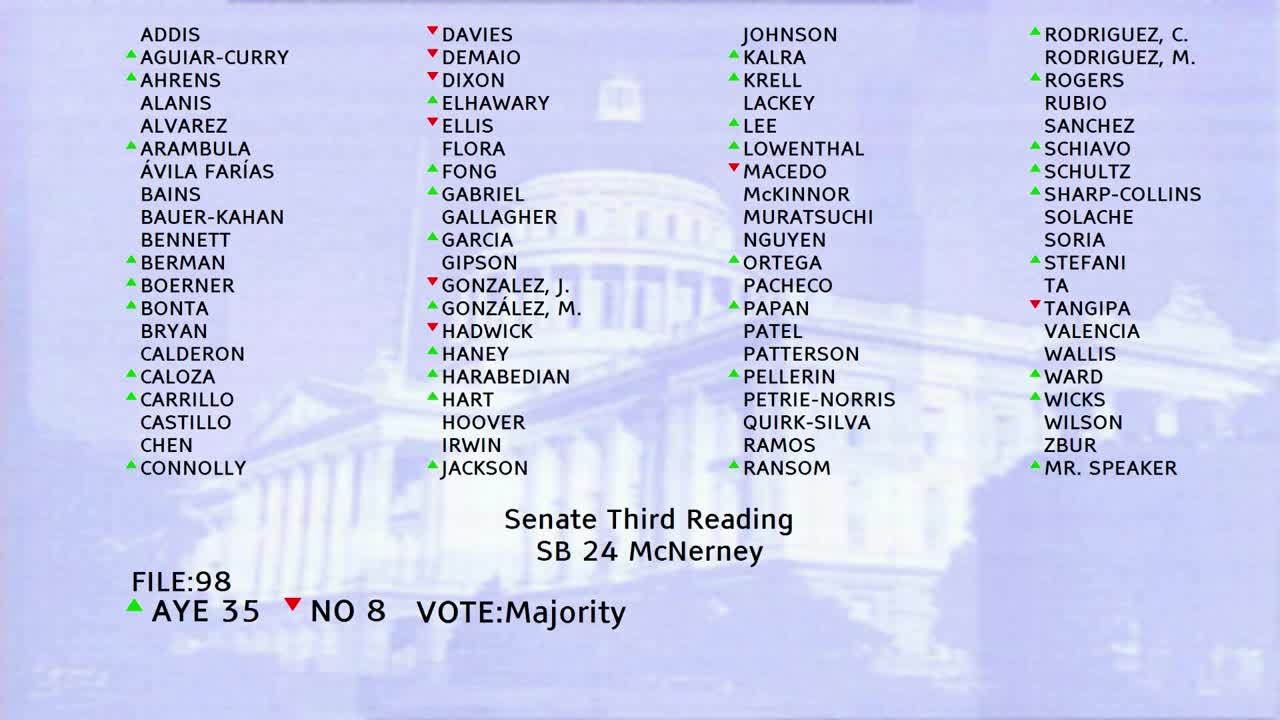

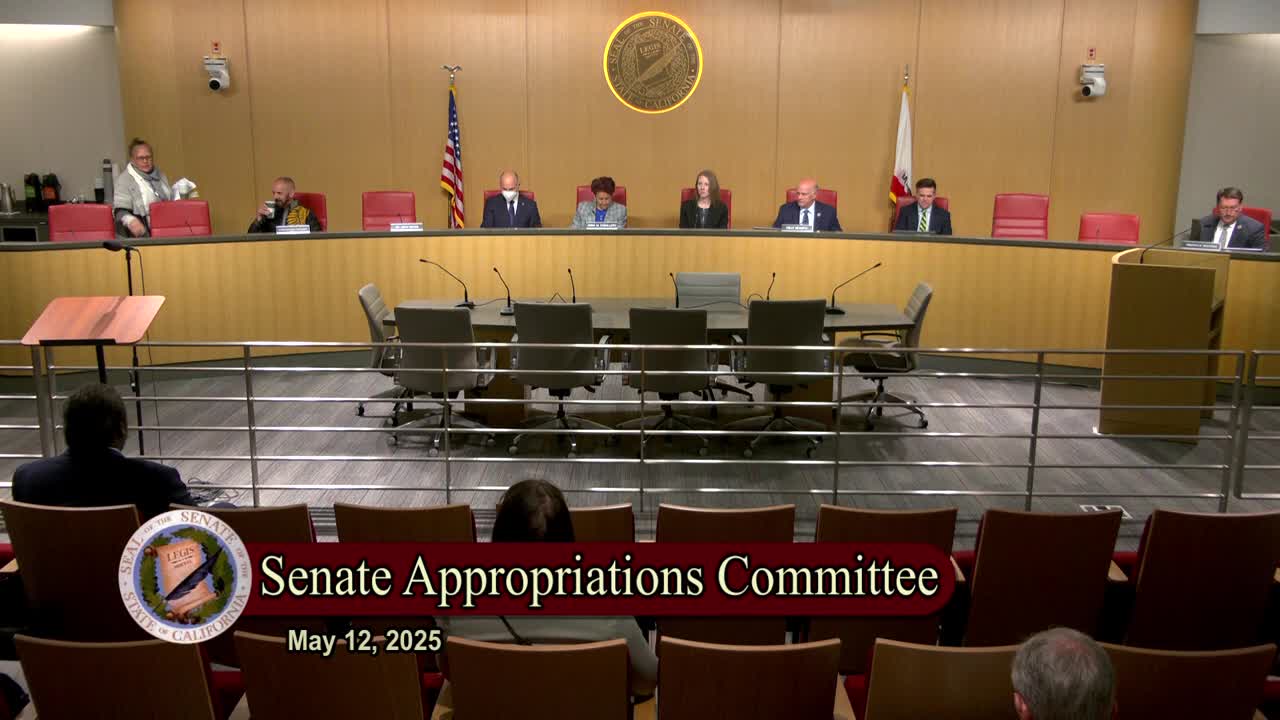



Bill Co-Author(s):