SB 281: Pleas: immigration advisement.
- Session Year: 2025-2026
- House: Senate
- Latest Version Date: 2025-10-12
Current Status:
Passed
(2025-10-12: Chaptered by Secretary of State. Chapter 666, Statutes of 2025.)
Introduced
In Committee
Awaiting First Chamber Vote
Passed First Chamber
In Committee
Awaiting Second Chamber Vote
Passed Second Chamber
Enacted
What does this bill do?
This bill requires courts to read a specific, word‑for‑word warning to defendants that if they are not U.S. citizens, a conviction may lead to deportation, exclusion from admission to the United States, or denial of naturalization before accepting a guilty or no‑contest plea. For pleas accepted before January 1, 2026, the bill says that failing to use the exact wording is not intended to automatically overturn convictions or allow withdrawal of the plea, though courts may still do so where allowed by law.
The summary is provided by generative AI which can make mistakes. For original language, please view the details in the table below.
Existing law requires the court, prior to the acceptance of a plea of guilty or nolo contendere, to advise the defendant that if they are not a citizen, conviction of the crime charged may result in deportation, exclusion from admission to the United States, or denial of naturalization. After January 1, 1978, if the court fails to advise the defendant, as required, and the defendant shows that conviction of the offense to which the defendant pleaded guilty or nolo contendere may have the consequences for the defendant of deportation, exclusion from admission to the United States, or denial of naturalization pursuant to the laws of the United States, the court, on the defendants motion, is required to vacate the judgment and permit the defendant to withdraw the plea of guilty or nolo contendere, and enter a plea of not guilty.
This bill would require the court to give the above-described advisement verbatim and would clarify the advisement to state that if the defendant is not a citizen of the United States, conviction may result in the specified immigration consequences. The bill would state that for a plea accepted prior to January 1, 2026, it is not the intent of the Legislature that a courts failure to provide the advisement verbatim requires vacation of judgment and withdrawal of the plea or constitutes grounds for finding a prior conviction invalid, as specified.
Existing law requires the court, prior to the acceptance of a plea of guilty or nolo contendere, to advise the defendant that if they are not a citizen, conviction of the crime charged may result in deportation, exclusion from admission to the United States, or denial of naturalization. After January 1, 1978, if the court fails to advise the defendant, as required, and the defendant shows that conviction of the offense to which the defendant pleaded guilty or nolo contendere may have the consequences for the defendant of deportation, exclusion from admission to the United States, or denial of naturalization pursuant to the laws of the United States, the court, on the defendants motion, is required to vacate the judgment and permit the defendant to withdraw the plea of guilty or nolo contendere, and enter a plea of not guilty.
This bill would require the court to give the above-described advisement verbatim and would clarify the advisement to state that if the defendant is not a citizen of the United States, conviction may result in the specified immigration consequences.
(a)Prior to acceptance of a plea of guilty or nolo contendere to any offense punishable as a crime under state law, except offenses designated as infractions under state law, the court shall administer the following advisement verbatim on the record to the defendant:
If you are not a citizen of the United States, you are hereby advised that conviction of the offense for which you have been charged may have the consequences of deportation, exclusion from admission to the United States, or denial of naturalization pursuant to the laws of the United States.
(b)Upon request, the court shall allow the defendant additional time to consider the appropriateness of the plea in light of the advisement as described in this section. If, after January 1, 1978, the court fails to advise the defendant as required by this section and the defendant shows that conviction of the offense to which defendant pleaded guilty or nolo contendere may have the consequences for the defendant of deportation, exclusion from admission to the United States, or denial of naturalization pursuant to the laws of the United States, the court, on defendants motion, shall vacate the judgment and permit the defendant to withdraw the plea of guilty or nolo contendere, and enter a plea of not guilty. Absent a record that the court provided the advisement required by this section, the defendant shall be presumed not to have received the required advisement.
(c)With respect to pleas accepted prior to January 1, 1978, it is not the intent of the Legislature that a courts failure to provide the advisement required by subdivision (a) of Section 1016.5 should require the vacation of judgment and withdrawal of the plea or constitute grounds for finding a prior conviction invalid. Nothing in this section, however, shall be deemed to inhibit a court, in the sound exercise of its discretion, from vacating a judgment and permitting a defendant to withdraw a plea.
(d)The Legislature finds and declares that in many instances involving an individual who is not a citizen of the United States charged with an offense punishable as a crime under state law, a plea of guilty or nolo contendere is entered without the defendant knowing that a conviction of such offense is grounds for deportation, exclusion from admission to the United States, or denial of naturalization pursuant to the laws of the United States. Therefore, it is the intent of the Legislature in enacting this section to promote fairness to such accused individuals by requiring in such cases that acceptance of a guilty plea or plea of nolo contendere be preceded by an appropriate warning of the special consequences for such a defendant which may result from the plea. It is also the intent of the Legislature that the court in such cases shall grant the defendant a reasonable amount of time to negotiate with the prosecuting agency in the event the defendant or the defendants counsel was unaware of the possibility of deportation, exclusion from admission to the United States, or denial of naturalization as a result of conviction. It is further the intent of the Legislature that at the time of the plea no defendant shall be required to disclose their legal status to the court.
(e)For a plea accepted prior to January 1, 2026, it is not the intent of the Legislature in amending this section that a courts failure to provide a verbatim advisement as described in subdivision (a) requires the vacation of judgment and withdrawal of the plea or otherwise constitutes grounds for finding a prior conviction invalid pursuant to subdivision (b). However, this section does not inhibit a court in the exercise of its discretion, or as otherwise required by law, from vacating a judgment and permitting a defendant to withdraw a plea as otherwise authorized by law.
(a)Prior to acceptance of a plea of guilty or nolo contendere to any offense punishable as a crime under state law, except offenses designated as infractions under state law, the court shall administer the following advisement verbatim on the record to the defendant:
If you are not a citizen, citizen of the United States, you are hereby advised that conviction of the offense for which you have been charged may have the consequences of deportation, exclusion from admission to the United States, or denial of naturalization pursuant to the laws of the United States.
(b)Upon request, the court shall allow the defendant additional time to consider the appropriateness of the plea in light of the advisement as described in this section. If, after January 1, 1978, the court fails to advise the defendant as required by this section and the defendant shows that conviction of the offense to which defendant pleaded guilty or nolo contendere may have the consequences for the defendant of deportation, exclusion from admission to the United States, or denial of naturalization pursuant to the laws of the United States, the court, on defendants motion, shall vacate the judgment and permit the defendant to withdraw the plea of guilty or nolo contendere, and enter a plea of not guilty. Absent a record that the court provided the advisement required by this section, the defendant shall be presumed not to have received the required advisement.
(c)With respect to pleas accepted prior to January 1, 1978, it is not the intent of the Legislature that a courts failure to provide the advisement required by subdivision (a) of Section 1016.5 should require the vacation of judgment and withdrawal of the plea or constitute grounds for finding a prior conviction invalid. Nothing in this section, however, shall be deemed to inhibit a court, in the sound exercise of its discretion, from vacating a judgment and permitting a defendant to withdraw a plea.
(d)The Legislature finds and declares that in many instances involving an individual who is not a citizen of the United States charged with an offense punishable as a crime under state law, a plea of guilty or nolo contendere is entered without the defendant knowing that a conviction of such offense is grounds for deportation, exclusion from admission to the United States, or denial of naturalization pursuant to the laws of the United States. Therefore, it is the intent of the Legislature in enacting this section to promote fairness to such accused individuals by requiring in such cases that acceptance of a guilty plea or plea of nolo contendere be preceded by an appropriate warning of the special consequences for such a defendant which may result from the plea. It is also the intent of the Legislature that the court in such cases shall grant the defendant a reasonable amount of time to negotiate with the prosecuting agency in the event the defendant or the defendants counsel was unaware of the possibility of deportation, exclusion from admission to the United States, or denial of naturalization as a result of conviction. It is further the intent of the Legislature that at the time of the plea no defendant shall be required to disclose his or her their legal status to the court.
|
Date
|
Status
|
|---|---|
| Oct 12, 2025 | Chaptered by Secretary of State. Chapter 666, Statutes of 2025. |
| Oct 12, 2025 | Approved by the Governor. |
| Sep 9, 2025 | Enrolled and presented to the Governor at 2 p.m. |
| Sep 3, 2025 | Assembly amendments concurred in. (Ayes 30. Noes 10. Page 2424.) Ordered to engrossing and enrolling. |
| Aug 28, 2025 | In Senate. Concurrence in Assembly amendments pending. |
| Aug 28, 2025 | Read third time. Passed. (Ayes 53. Noes 18. Page 2764.) Ordered to the Senate. |
| Jul 15, 2025 | Read third time and amended. |
| Jul 15, 2025 | Ordered to third reading. |
| Jun 18, 2025 | Read second time. Ordered to third reading. |
| Jun 17, 2025 | From committee: Do pass. (Ayes 7. Noes 2.) (June 17). |
| Jun 5, 2025 | Referred to Com. on PUB. S. |
| May 28, 2025 | In Assembly. Read first time. Held at Desk. |
| May 28, 2025 | Read third time. Passed. (Ayes 28. Noes 10. Page 1291.) Ordered to the Assembly. |
| Mar 26, 2025 | Read second time. Ordered to third reading. |
| Mar 25, 2025 | From committee: Do pass. (Ayes 5. Noes 1. Page 533.) (March 25). |
| Mar 7, 2025 | Set for hearing March 25. |
| Feb 14, 2025 | Referred to Com. on PUB. S. |
| Feb 6, 2025 | From printer. May be acted upon on or after March 8. |
| Feb 5, 2025 | Introduced. Read first time. To Com. on RLS. for assignment. To print. |
|
Date
|
Description
|
Location
|
Votes
|
|
|---|---|---|---|---|
| Sep 3, 2025 | Unfinished Business SB281 Pérez et al. Concurrence | Senate Floor |
Passed |
|
| Aug 28, 2025 | SB 281 Pérez Senate Third Reading By Gabriel | Assembly Floor |
Passed |
|
| Jun 17, 2025 | Do pass. | Assembly Standing Committee on Public Safety |
Passed |
|
| May 28, 2025 | Senate 3rd Reading SB281 Pérez | Senate Floor |
Passed |
|
| Mar 25, 2025 | Do pass | Senate Standing Committee on Public Safety |
Passed |
This list shows positions taken on this bill by organizations on the date displayed, which is linked to the original source.
Positions by individuals are not included.
|
Organization
|
Position
|
Date
|
|---|---|---|
| Aclu California Action | ** Support | |
| California Attorneys For Criminal Justice | ** Support | |
| California Civil Liberties Advocacy | ** Support | |
| California District Attorneys Association | ** Against | |
| California Federation of Labor Unions, Afl-cio | ** Support | |
| California Public Defenders Association | ** Support | |
| California State Council of Service Employees International Union | ** Support | |
| Central American Resource Center of California | ** Support | |
| Ella Baker Center For Human Rights | ** Support | |
| Friends Committee On Legislation Of California | ** Support | |
| Immigrant Legal Resource Center | ** Support | |
| Local 148 La County Public Defenders Union | ** Support | |
| Los Angeles County District Attorney'S Office | ** Against | |
| Prosecutors Alliance Action | ** Support | |
| Prosecutors Alliance of California, a Project of Tides Advocacy | ** Support | |
| Riverside County District Attorney | ** Against | |
| San Diego County District Attorney's Office | ** Against | |
| Secure Justice | ** Support |
SENATE RULES COMMITTEE Office of Senate Floor Analyses (916) 651-1520 Fax: (916) 327-4478 | SB 281 |
UNFINISHED BUSINESS
Bill No: SB 281
Author: Pérez (D), et al.
Amended: 7/15/25 in Assembly
Vote: 21
SENATE PUBLIC SAFETY COMMITTEE: 5-1, 3/25/25
AYES: Arreguín, Caballero, Gonzalez, Pérez, Wiener
NOES: Seyarto
SENATE FLOOR: 28-10, 5/28/25
AYES: Allen, Archuleta, Arreguín, Ashby, Becker, Blakespear, Cabaldon, Caballero, Cervantes, Cortese, Durazo, Gonzalez, Grayson, Hurtado, Laird, McGuire, McNerney, Menjivar, Padilla, Pérez, Richardson, Rubio, Smallwood-Cuevas, Stern, Umberg, Wahab, Weber Pierson, Wiener
NOES: Alvarado-Gil, Choi, Dahle, Grove, Jones, Niello, Ochoa Bogh, Seyarto, Strickland, Valladares
NO VOTE RECORDED: Limón, Reyes
ASSEMBLY FLOOR: 53-18, 8/28/25 - See last page for vote
SUBJECT: Pleas: immigration advisement
SOURCE: California Attorneys for Criminal Justice
DIGEST:
This bill requires judges to recite the statutory immigration advisement verbatim before accepting a plea.
Assembly Amendments
of 7/15/25 provide that for a plea entered before January 1, 2026, it is not the Legislature’s intent that a court's failure to provide a verbatim immigration advisement requires the vacation of judgment and withdrawal of the plea or otherwise constitutes grounds for finding a prior conviction invalid due to a failure to provide the immigration advisement, although this does not inhibit a court in the exercise of its discretion, or as otherwise required by law, from vacating a judgment and permitting a defendant to withdraw a plea as otherwise authorized by law.
ANALYSIS:
Existing law:
- Requires, prior to acceptance of a plea of guilty or nolo contendere to any offense punishable as a crime under state law, the court shall administer the following advisement on the record to the defendant: "[i]f you are not a citizen, you are hereby advised that conviction of the offense for which you have been charged may have the consequences of deportation, exclusion from admission to the United States, or denial of naturalization pursuant to the laws of the United States. (Penal Code (Pen. Code), § 1016.5, subd. (a).)
- States that upon request, the court shall allow the defendant additional time to consider the appropriateness of the plea in light of the advisement as described in this section. (Pen. Code, § 1016.5, subd. (b).)
- Provides that if the court fails to advise the defendant as required and the defendant shows that conviction of the offense to which defendant pleaded guilty or nolo contendere may have the consequences for the defendant of deportation, exclusion from admission to the United States, or denial of naturalization pursuant to the laws of the United States, the court, on defendant’s motion, shall vacate the judgment and permit the defendant to withdraw the plea of guilty or nolo contendere, and enter a plea of not guilty. (Pen. Code, § 1016.5, subd. (b).)
- States that absent a record that the court provided the advisement required by this section, the defendant shall be presumed not to have received the required advisement. (Pen. Code, § 1016.5, subd. (b).)
This bill:
- Requires the court to administer the immigration advisement verbatim as it appears in statute.
- Provides that for a plea accepted before January 1, 2026, it is not the Legislature’s intent that a court's failure to provide a verbatim immigration advisement requires the vacation of judgment and withdrawal of the plea or otherwise constitutes grounds for finding a prior conviction invalid due to a failure to provide the immigration advisement. This does not inhibit a court in the exercise of its discretion, or as otherwise required by law, from vacating a judgment and permitting a defendant to withdraw a plea as otherwise authorized by law.
Background
In Padilla v. Kentucky (2010), 559 U.S. 356, the United States Supreme Court held that the sixth Amendment requires defense counsel to provide affirmative and competent advice to noncitizen defendants regarding the potential immigration consequences of their criminal cases. The Supreme Court found that for noncitizens, deportation is an integral part of the penalty imposed for criminal convictions. Deportation may result from serious offenses or a single minor conviction. It may be by far the most serious penalty flowing from the conviction. (Id. at p. 365-366, 368.) This conforms with California court decisions, which have held that defense counsel must investigate, advice regarding, and defend against, potential adverse immigration consequences of a proposed disposition. (See People v. Bautista (2004) 115 Cal.App.4th 229, People v. Barocio (1989) 216 Cal.App.3d 99, People v. Soriano (1987) 194 Cal.App.3d 1470.)
In addition to defense counsel’s obligation to advise a defendant of the potential immigration consequence of the plea, under current law, prior to accepting a plea, the court shall inform defendants that if not a citizen, the defendant may face consequences including deportation, exclusion from admission to the United States, or denial of naturalization. (Pen. Code, § 1016.5, subd. (a).) If the advisement is not given, and the defendant shows that conviction of the offense to which they pleaded guilty or no contest may result in adverse immigration consequences, the court, on the defendant's motion, is required to vacate the judgment and allow the defendant to withdraw the plea. (People v. Martinez (2013) 57 Cal.4th 555, 559.) Relief will only be granted, however, if the defendant establishes prejudice – that is if they show that it was reasonably probable they would not have entered the plea if properly advised. (Ibid.)
“[C]riminal convictions may have ‘dire consequences’ under federal immigration law [citation] and that such consequences are ‘material matters’ [citation] for noncitizen defendants faced with pleading decisions.” (In re Resendiz (2001) 25 Cal.4th 230, 250; see also Padilla v. Kentucky, supra, 559 U.S. at 368.) This bill will require the court to provide the statutory immigration admonition verbatim.
FISCAL EFFECT: Appropriation: No Fiscal Com.: No Local: No
SUPPORT: (Verified 8/28/25)
ACLU California Action
California Attorneys for Criminal Justice
California Civil Liberties Advocacy
California Federation of Labor Unions, AFL-CIO
California Public Defenders Association
California State Council of Service Employees International Union
Central American Resource Center of California
Ella Baker Center for Human Rights
Friends Committee on Legislation of California
Immigrant Legal Resource Center
Local 148 LA County Public Defenders Union
Prosecutors Alliance Action
Prosecutors Alliance of California, a Project of Tides Advocacy
Secure Justice
OPPOSITION: (Verified 8/25/25)
California District Attorneys Association
Los Angeles County District Attorney's Office
Riverside County District Attorney
San Diego County District Attorney's Office
ARGUMENTS IN SUPPORT:
According to the California Attorneys for Criminal Justice, the sponsor of this bill:
Penal Code section 1016.5 describes the specific immigration advisement to be given by judges in California whenever they accept a plea deal. The statute has been on the books for many years and is a key component of the legal proceeding. Unfortunately, judges have not consistently followed the actual language of the statute. Most pronounced, is the problem of judges telling individuals that there "will" be adverse immigration consequences in every case. Not only is this incongruent with the language of section 1016.5, it also runs afoul of the clear judicial and legal doctrine that judges are not allowed to dispense legal advice to those who appear before them in court.
By stating that there "will" be adverse immigration consequences, instead of the statutorily described "may," these judges are mistakenly giving the impression that a thorough review of the applicable immigration law has taken place, and the judge has reached a legal conclusion; a conclusion which they are not allowed to provide, and a conclusion that cannot be reached because judges have not reviewed applicable immigration law in every case that is presented before them. SB 281 achieves this goal by simply clarifying the statutory admonition is to be given “verbatim” as described in Penal Code 1016.5 and judges cannot substitute their own language.
Another additional concern for CACJ is that judges are unintentionally giving the impression that individuals need not seek out legal advice from their defense attorneys and/or immigration counsel to obtain specific legal advice. Immigration law is complex, ever-changing, and has many layers. For example, someone with legal permanent resident status may face adverse immigration consequences, but there may be a variety of available legal options that could be exercised in order to resolve an immigration matter without exclusion. Each case is different and it is imperative, legally required, and most effective when an individual consults appropriate legal counsel for legal advice on his/her case. SB 281 will make this clear, and ensure that judges in every courtroom in California follow the same law, in the same way.
ARGUMENTS IN OPPOSITION:
According to the Los Angeles County District Attorney’s Office:
While this bill may look innocuous with its one-word amendment, “verbatim,” to an existing Penal Code advisement, it will have the unintended consequence of resulting in valid convictions getting reversed on appeal because defendants did not understand the immigration consequences of their guilty or no contest plea.
There is good reason why for many years, courts and prosecutors taking pleas throughout Los Angeles, and elsewhere in the State, have advised defendants that their plea “will” result in immigration consequences. That is because defendants who suffer immigration consequences often make a motion to vacate their plea, arguing that they did not think the advisement applied to them, and use of the “may” language during pleas has proven problematic on appeals brought pursuant to section 1473.6 of the Penal Code. In fact, two CA Supreme Court cases prove this point.
In People v. Patterson, 2 Cal.5th 885, 895–97 (2017), the CA Supreme Court found that the section 1016.5 statutory advisement of “may” was insufficient to bar relief:
The question before us is whether Patterson is barred from seeking…relief on grounds of mistake or ignorance because he received the standard advisement—given to all criminal defendants in California who plead guilty to any offense other than an infraction—that his or her criminal conviction ‘may’ have adverse immigration consequences. (§ 1016.5.) We see no logical reason why the section 1016.5 advisement would operate as such a bar. A defendant entering a guilty plea may be aware that some criminal convictions may have immigration consequences as a general matter, and yet be unaware that a conviction for a specific charged offense will render the defendant subject to mandatory removal. Thus, as we have previously noted in a different context, the standard section 1016.5 advisement that a criminal conviction “may” have adverse immigration consequences “cannot be taken as placing [the defendant] on notice that, owing to his particular circumstances, he faces an actual risk of suffering such.” And for many noncitizen defendants deciding whether to plead guilty, the “actual risk” that the conviction will lead to deportation—as opposed to general awareness that a criminal conviction “may” have adverse immigration consequences—will undoubtedly be a “material matter…” that may factor heavily in the decision whether to plead guilty . . . As Judge Robert L. Hinkle explained, “Well, I know every time that I get on an airplane that it could crash, but if you tell me it's going to crash, I'm not getting on.”
Likewise, in People v. Vivar, 11 Cal.5th 510, 519 (2021), the Court found that initialing a plea form acknowledging that “conviction may have the consequences of deportation” was insufficient to disprove prejudice. The Court noted that sections 1473.7 and 1016.5 used the same prejudice test. Id. at 529. Describing the test under section 1473.7(a)(1), the Court noted:
…showing prejudicial error under section 1473.7 subdivision (a)(1) means demonstrating a reasonable probability that the defendant would have rejected the plea if the defendant had correctly understood its actual or potential immigration consequences. When courts assess whether a petitioner has shown that reasonable probability, they consider the totality of the circumstances. Factors particularly relevant to this inquiry include the defendant’s ties to the United States, the importance the defendant placed on avoiding deportation, the defendant’s priorities in seeking a plea bargain, and whether the defendant had reason to believe an immigration-neutral negotiated disposition was possible…
Proponents of this bill have argued that when judges replace the word “may” with the word “will,” they are giving defendants the impression that a thorough review of the applicable immigration law has taken place, and the judge has reached a legal conclusion about the immigration issues in a particular defendant’s situation. They have also argued that judges are giving defendant’s the impression that they don’t have to seek out specific legal advice from their defense attorneys or their immigration attorneys. However, this is incorrect. Courts routinely advise defendants to speak with their attorneys about the immigration consequences of their plea.
The Los Angeles County District Attorney’s Office agrees with and fully supports the well-intentioned goal of this bill, which is to ensure that defendants entering guilty, or no contest pleas fully understand the immigration consequences of their plea. However, a verbatim recitation of the advisement in the existing statute is, and has proven to be, insufficient to satisfy this goal…
ASSEMBLY FLOOR: 53-18, 8/28/25
AYES: Addis, Aguiar-Curry, Ahrens, Arambula, Ávila Farías, Bains, Bauer-Kahan, Bennett, Boerner, Bonta, Bryan, Calderon, Caloza, Carrillo, Connolly, Elhawary, Fong, Gabriel, Garcia, Gipson, Mark González, Haney, Harabedian, Hart, Jackson, Kalra, Lee, Lowenthal, McKinnor, Muratsuchi, Nguyen, Ortega, Papan, Patel, Pellerin, Petrie-Norris, Quirk-Silva, Ramos, Ransom, Celeste Rodriguez, Rogers, Blanca Rubio, Schiavo, Schultz, Sharp-Collins, Solache, Soria, Stefani, Ward, Wicks, Wilson, Zbur, Rivas
NOES: Alanis, Castillo, Chen, Davies, DeMaio, Dixon, Ellis, Gallagher, Jeff Gonzalez, Hadwick, Hoover, Lackey, Macedo, Patterson, Sanchez, Ta, Tangipa, Wallis
NO VOTE RECORDED: Alvarez, Berman, Flora, Irwin, Krell, Pacheco, Michelle Rodriguez, Valencia
Prepared by: Sandy Uribe / PUB. S. /
8/28/25 16:50:00
SENATE THIRD READING
STR Bill Id:SB 281
Author:(Pérez)
As Amended Ver:July 15, 2025
Majority vote
SUMMARY
Requires the immigration advisement that a court must administer before accepting a guilty plea to be administered verbatim as it appears in the statute.
Major Provisions
- Requires the immigration advisement that must be administered by a court, prior to accepting a plea of guilty or nolo contendere to any crime under state law, except for infractions, to be administered verbatim as it appears in the statute.
- Provides that for a plea accepted prior to January 1, 2026, it is not the intent of the Legislature that a court's failure to provide a verbatim immigration advisement, as specified, requires the vacation of judgment and withdrawal of the plea or otherwise constitutes grounds for finding a prior conviction invalid due to a failure to provide the immigration advisement, as specified, although this does not inhibit a court in the exercise of its discretion, or as otherwise required by law, from vacating a judgment and permitting a defendant to withdraw a plea as otherwise authorized by law.
COMMENTS
According to the Author
"I'm authoring SB 281 to ensure there is consistency in California Courts when offering plea agreements. Sometimes when judges are reciting plea agreements they will switch the word 'may' to 'will.' By the slight word change from 'may' to 'will' it can greatly affect a person's understanding of the plea agreement once they enter into said agreement based on the court's interpretation of the two words. While they are similar in nature, the court's interpretation of 'may' means something is a possibility versus 'will' meaning for certain. By clarifying in statute we will create parity across the board when people are offered plea agreements. Everyone has a right to know what they are entering into."
Arguments in Support
According to the California Attorneys for Criminal Justice, "Penal Code section 1016.5 describes the specific immigration advisement to be given by judges in California whenever they accept a plea deal. The statute has been on the books for many years and is a key component of the legal proceeding. Unfortunately, judges have not consistently followed the actual language of the statute. Most pronounced, is the problem of judges telling individuals that there 'will' be adverse immigration consequences in every case. Not only is this incongruent with the language of section 1016.5, it also runs afoul of the clear judicial and legal doctrine that judges are not allowed to dispense legal advice to those who appear before them in court.
"By stating that there 'will' be adverse immigration consequences, instead of the statutorily described "may," these judges are mistakenly giving the impression that a thorough review of the applicable immigration law has taken place, and the judge has reached a legal conclusion; a conclusion which they are not allowed to provide, and a conclusion that cannot be reached because judges have not reviewed applicable immigration law in every case that is presented before them. SB 281 achieves this goal by simply clarifying the statutory admonition is to be given 'verbatim' as described in Penal Code 1016.5 and judges cannot substitute their own language.
"Another additional concern for CACJ is that judges are unintentionally giving the impression that individuals need not seek out legal advice from their defense attorneys and/or immigration counsel to obtain specific legal advice. Immigration law is complex, ever-changing, and has many layers. For example, someone with legal permanent resident status may face adverse immigration consequences, but there may be a variety of available legal options that could be exercised in order to resolve an immigration matter without exclusion. Each case is different and it is imperative, legally required, and most effective when an individual consults appropriate legal counsel for legal advice on his/her case. SB 281 will make this clear, and ensure that judges in every courtroom in California follow the same law, in the same way."
Arguments in Opposition
According to the Los Angeles County District Attorney's Office, "SB 281 would mandate courts taking a plea to advise defendants verbatim of the immigration consequences language delineated in section 1016.5 of the Penal Code which says that a conviction 'may' result in their deportation, exclusion from admission, or denial of naturalization. While this bill may look innocuous with its one-word amendment, 'verbatim,' to an existing Penal Code advisement, it will have the unintended consequence of resulting in valid convictions getting reversed on appeal because defendants did not understand the immigration consequences of their guilty or no contest plea.
"There is good reason why for many years, courts and prosecutors taking pleas throughout Los Angeles, and elsewhere in the State, have advised defendants that their plea 'will' result in immigration consequences. That is because defendants who suffer immigration consequences often make a motion to vacate their plea, arguing that they did not think the advisement applied to them, and use of the 'may' language during pleas has proven problematic on appeals brought pursuant to section 1473.6 of the Penal Code.
"Proponents of this bill have argued that when judges replace the word 'may' with the word 'will,' they are giving defendants the impression that a thorough review of the applicable immigration law has taken place, and the judge has reached a legal conclusion about the immigration issues in a particular defendant's situation. They have also argued that judges are giving defendant's the impression that they don't have to seek out specific legal advice from their defense attorneys or their immigration attorneys. However, this is incorrect. Courts routinely advise defendants to speak with their attorneys about the immigration consequences of their plea.
"The Los Angeles County District Attorney's Office agrees with and fully supports the well-intentioned goal of this bill, which is to ensure that defendants entering guilty, or no contest pleas fully understand the immigration consequences of their plea. However, a verbatim recitation of the advisement in the existing statute is, and has proven to be, insufficient to satisfy this goal. To that end, we propose the following amendment to Penal Code section 1016.5:
"If you are not a citizen of the United States, your plea may have adverse immigration consequences. Before entering the plea, you should consult with your attorney, or an immigration attorney, to obtain full, accurate advice about the immigration consequences of your plea. The court will give you time to do so if you wish. If you are unsure about the immigration consequences, you should assume that your plea will result in deportation, exclusion from the United States, or denial of naturalization or amnesty."
"Our proposed amendment strikes a fair balance between making sure defendants enter their plea with a full understanding of their rights and collateral consequences, and the public safety goal of ensuring that legitimate convictions are preserved on appeal."
FISCAL COMMENTS
Unknown. This bill is keyed non-fiscal by the Legislative Counsel.
VOTES
SENATE FLOOR: 28-10-2
YES: Allen, Archuleta, Arreguín, Ashby, Becker, Blakespear, Cabaldon, Caballero, Cervantes, Cortese, Durazo, Gonzalez, Grayson, Hurtado, Laird, McGuire, McNerney, Menjivar, Padilla, Pérez, Richardson, Rubio, Smallwood-Cuevas, Stern, Umberg, Wahab, Weber Pierson, Wiener
NO: Alvarado-Gil, Choi, Dahle, Grove, Jones, Niello, Ochoa Bogh, Seyarto, Strickland, Valladares
ABS, ABST OR NV: Limón, Reyes
ASM PUBLIC SAFETY: 7-2-0
YES: Schultz, Mark González, Haney, Harabedian, Nguyen, Ramos, Sharp-Collins
NO: Alanis, Lackey
UPDATED
VERSION: July 15, 2025
CONSULTANT: Ilan Zur / PUB. S. / (916) 319-3744 FN: 0001119
SENATE THIRD READING
STR Bill Id:SB 281
Author:(Pérez)
As Introduced Ver:February 5, 2025
Majority vote
SUMMARY
Requires the immigration advisement that must be administered by a court, prior to accepting a plea of guilty or nolo contendere to any crime under state law, except for infractions, to be administered verbatim as it appears in the statute.
Major Provisions
COMMENTS
According to the Author
"I'm authoring SB 281 to ensure there is consistency in California Courts when offering plea agreements. Sometimes when judges are reciting plea agreements they will switch the word 'may' to 'will.' By the slight word change from 'may' to 'will' it can greatly affect a person's understanding of the plea agreement once they enter into said agreement based on the court's interpretation of the two words. While they are similar in nature, the court's interpretation of 'may' means something is a possibility versus 'will' meaning for certain. By clarifying in statute we will create parity across the board when people are offered plea agreements. Everyone has a right to know what they are entering into."
Arguments in Support
According to the California Attorneys for Criminal Justice, "Penal Code section 1016.5 describes the specific immigration advisement to be given by judges in California whenever they accept a plea deal. The statute has been on the books for many years and is a key component of the legal proceeding. Unfortunately, judges have not consistently followed the actual language of the statute. Most pronounced, is the problem of judges telling individuals that there 'will' be adverse immigration consequences in every case. Not only is this incongruent with the language of section 1016.5, it also runs afoul of the clear judicial and legal doctrine that judges are not allowed to dispense legal advice to those who appear before them in court.
"By stating that there 'will' be adverse immigration consequences, instead of the statutorily described "may," these judges are mistakenly giving the impression that a thorough review of the applicable immigration law has taken place, and the judge has reached a legal conclusion; a conclusion which they are not allowed to provide, and a conclusion that cannot be reached because judges have not reviewed applicable immigration law in every case that is presented before them. SB 281 achieves this goal by simply clarifying the statutory admonition is to be given 'verbatim' as described in Penal Code 1016.5 and judges cannot substitute their own language.
"Another additional concern for CACJ is that judges are unintentionally giving the impression that individuals need not seek out legal advice from their defense attorneys and/or immigration counsel to obtain specific legal advice. Immigration law is complex, ever-changing, and has many layers. For example, someone with legal permanent resident status may face adverse immigration consequences, but there may be a variety of available legal options that could be exercised in order to resolve an immigration matter without exclusion. Each case is different and it is imperative, legally required, and most effective when an individual consults appropriate legal counsel for legal advice on his/her case. SB 281 will make this clear, and ensure that judges in every courtroom in California follow the same law, in the same way."
Arguments in Opposition
According to the Los Angeles County District Attorney's Office, "SB 281 would mandate courts taking a plea to advise defendants verbatim of the immigration consequences language delineated in section 1016.5 of the Penal Code which says that a conviction 'may' result in their deportation, exclusion from admission, or denial of naturalization. While this bill may look innocuous with its one-word amendment, 'verbatim,' to an existing Penal Code advisement, it will have the unintended consequence of resulting in valid convictions getting reversed on appeal because defendants did not understand the immigration consequences of their guilty or no contest plea.
"There is good reason why for many years, courts and prosecutors taking pleas throughout Los Angeles, and elsewhere in the State, have advised defendants that their plea 'will' result in immigration consequences. That is because defendants who suffer immigration consequences often make a motion to vacate their plea, arguing that they did not think the advisement applied to them, and use of the 'may' language during pleas has proven problematic on appeals brought pursuant to section 1473.6 of the Penal Code.
"Proponents of this bill have argued that when judges replace the word 'may' with the word 'will,' they are giving defendants the impression that a thorough review of the applicable immigration law has taken place, and the judge has reached a legal conclusion about the immigration issues in a particular defendant's situation. They have also argued that judges are giving defendant's the impression that they don't have to seek out specific legal advice from their defense attorneys or their immigration attorneys. However, this is incorrect. Courts routinely advise defendants to speak with their attorneys about the immigration consequences of their plea.
"The Los Angeles County District Attorney's Office agrees with and fully supports the well-intentioned goal of this bill, which is to ensure that defendants entering guilty, or no contest pleas fully understand the immigration consequences of their plea. However, a verbatim recitation of the advisement in the existing statute is, and has proven to be, insufficient to satisfy this goal. To that end, we propose the following amendment to Penal Code section 1016.5:
"If you are not a citizen of the United States, your plea may have adverse immigration consequences. Before entering the plea, you should consult with your attorney, or an immigration attorney, to obtain full, accurate advice about the immigration consequences of your plea. The court will give you time to do so if you wish. If you are unsure about the immigration consequences, you should assume that your plea will result in deportation, exclusion from the United States, or denial of naturalization or amnesty."
"Our proposed amendment strikes a fair balance between making sure defendants enter their plea with a full understanding of their rights and collateral consequences, and the public safety goal of ensuring that legitimate convictions are preserved on appeal."
FISCAL COMMENTS
Unknown. This bill is keyed non-fiscal by the Legislative Counsel.
VOTES
SENATE FLOOR: 28-10-2
YES: Allen, Archuleta, Arreguín, Ashby, Becker, Blakespear, Cabaldon, Caballero, Cervantes, Cortese, Durazo, Gonzalez, Grayson, Hurtado, Laird, McGuire, McNerney, Menjivar, Padilla, Pérez, Richardson, Rubio, Smallwood-Cuevas, Stern, Umberg, Wahab, Weber Pierson, Wiener
NO: Alvarado-Gil, Choi, Dahle, Grove, Jones, Niello, Ochoa Bogh, Seyarto, Strickland, Valladares
ABS, ABST OR NV: Limón, Reyes
ASM PUBLIC SAFETY: 7-2-0
YES: Schultz, Mark González, Haney, Harabedian, Nguyen, Ramos, Sharp-Collins
NO: Alanis, Lackey
UPDATED
VERSION: February 5, 2025
CONSULTANT: Ilan Zur / PUB. S. / (916) 319-3744 FN: 0000983
Date of Hearing: June 17, 2025
Counsel: Ilan Zur
ASSEMBLY COMMITTEE ON PUBLIC SAFETY
Nick Schultz, Chair
SBPCA Bill Id:SB 281
Author:(Pérez) – As Introduced Ver:February 5, 2025
SUMMARY:
Requires the immigration advisement that must be administered by a court, prior to accepting a plea of guilty or nolo contendere to any crime under state law, except for infractions, to be administered verbatim as it appears in the statute.
EXISTING FEDERAL LAW:
- Subjects a non-citizen to removal from the United States they are convicted of certain crimes, including crimes of moral turpitude, aggravated felonies, high speed flight, specified drug offenses, specified firearm offenses, and domestic violence offenses, among other offenses. (8 U.S.C. § 1227, subd. (a)(2).)
- Makes a non-citizen inadmissible to be admitted into the United States if they have been convicted or admit to committing acts which contain the essential elements of crimes of moral turpitude, where there is reason to believe the person has engaged in specified drug offenses, or has engaged in prostitution, among other offenses. (8 U.S.C. § 1182, subd. (a)(2).)
- Renders an asylum applicant statutorily ineligible for political asylum if convicted of an aggravated felony. (8 U.S.C. § 1158(b).)
EXISTING STATE LAW:
- Requires defense counsel to provide accurate and affirmative advice about the immigration consequences of a proposed disposition, and when consistent with the goals of and with the informed consent of the defendant, and consistent with professional standards, defend against those consequences. (Pen. Code, § 1016.3, subd. (a).)
- Requires the prosecution, in the interests of justice, and in furtherance of specified Legislative findings and declarations, to consider the avoidance of adverse immigration consequences in the plea negotiation process as one factor in an effort to reach a just resolution. (Pen. Code, § 1016.3.)
- Requires, prior to acceptance of a plea of guilty or nolo contendere to any offense punishable as a crime under state law, except offenses designated as infractions, the court to administer the following advisement (hereafter “immigration advisement”) on the record to the defendant: "If you are not a citizen, you are hereby advised that conviction of the offense for which you have been charged may have the consequences of deportation, exclusion from admission to the United States, or denial of naturalization pursuant to the laws of the United States.” (Pen. Code, § 1016.5, subd. (a).)
- States that upon request, the court shall allow the defendant additional time to consider the appropriateness of the plea in light of the immigration advisement. (Pen. Code, § 1016.5, subd. (b).)
- Provides that if, after January 1, 1978, the court fails to advise the defendant as required and the defendant shows that conviction of the offense to which defendant pleaded guilty or nolo contendere may have the consequences for the defendant of deportation, exclusion from admission to the United States, or denial of naturalization pursuant to the laws of the United States, the court, on defendant’s motion, shall vacate the judgment and permit the defendant to withdraw the plea of guilty or nolo contendere, and enter a plea of not guilty. (Pen. Code, § 1016.5, subd. (b).)
- States that absent a record that the court provided the immigration advisement, the defendant shall be presumed not to have received the required advisement. (Pen. Code, § 1016.5, subd. (b).)
- Provides that with respect to pleas accepted prior to January 1, 1978, it is not the intent of the Legislature that a court's failure to provide the immigration advisement should require the vacation of judgment and withdrawal of the plea or constitute grounds for finding a prior conviction invalid, and that none of the above shall be deemed to inhibit a court, in the sound exercise of its discretion, from vacating a judgment and permitting a defendant to withdraw a plea. (Pen. Code, § 1016.5, subd. (c).)
- Finds and declares that in many instances involving an individual who is not a citizen of the United States charged with an offense punishable as a crime under state law, a plea of guilty or nolo contendere is entered without the defendant knowing that a conviction of such offense is grounds for deportation, exclusion from admission to the United States, or denial of naturalization pursuant to the laws of the United States. Therefore, it is the intent of the Legislature in enacting the above laws to promote fairness to such accused individuals by requiring in such cases that acceptance of a guilty plea or plea of nolo contendere be preceded by an appropriate warning of the special consequences for such a defendant which may result from the plea. It is also the intent of the Legislature that the court in such cases shall grant the defendant a reasonable amount of time to negotiate with the prosecuting agency in the event the defendant or the defendant’s counsel was unaware of the possibility of deportation, exclusion from admission to the United States, or denial of naturalization as a result of conviction. It is further the intent of the Legislature that at the time of the plea no defendant shall be required to disclose his or her legal status to the court. (Pen. Code, § 1016.5, subd. (d).)
- Authorizes a person who is no longer in criminal custody to file a motion to vacate a conviction or sentence for any of the following reasons:
- Newly discovered evidence of actual innocence exists that requires vacation of the conviction or sentence as a matter of law or in the interests of justice. (Pen. Code, § 1473.7, subd. (a)(2).)
- A conviction or sentence was unlawfully sought, obtained, or imposed on the basis of race, ethnicity, or national origin, as specified. (Pen. Code, § 1473.7, subd. (a)(3).)
- The conviction or sentence is legally invalid due to prejudicial error damaging the moving party’s ability to meaningfully understand, defend against, or knowingly accept the actual or potential adverse immigration consequences of a conviction or sentence, subject to the following:
- A finding of legal invalidity may, but need not, include a finding of ineffective assistance of counsel. (Pen. Code, § 1473.7, subds. (a)(1).)
- Except as specified in the subsequent paragraph, a motion shall be deemed timely filed at any time in which the individual filing the motion is no longer in criminal custody. (Pen. Code, § 1473.7, subd. (b)(1).)
- The motion may be deemed untimely filed if it was not filed with reasonable diligence after the later of the following:
- The moving party receives a notice to appear in immigration court or other notice from immigration authorities that asserts the conviction or sentence as a basis for removal or the denial of an application for an immigration benefit, lawful status, or naturalization.
- Notice that a final removal order has been issued against the moving party, based on the existence of the conviction or sentence that the moving party seeks to vacate. (Pen. Code, § 1473.7, subd. (b)(2).)
- The court shall grant a motion to vacate the conviction or sentence on this basis if the moving party: 1) establishes by a preponderance of the evidence, the existence of prejudicial error damaging the moving party’s ability to meaningfully understand, defend against, or knowingly accept the actual or potential adverse immigration consequences of a conviction or sentence; and 2) the moving party shall also establish that the conviction or sentence being challenged is currently causing or has the potential to cause removal or the denial of an application for an immigration benefit, lawful status, or naturalization. (Pen. Code, § 1473.7, subd. (e)(1).)
- There is a presumption of legal invalidity of a conviction or sentence if the moving party pleaded guilty or nolo contendere pursuant to a statute that provided that, upon completion of specific requirements, the arrest and conviction shall be deemed never to have occurred, where the moving party complied with these requirements, and where the disposition under the statute has been, or potentially could be, used as a basis for adverse immigration consequences. (Pen. Code, § 1473.7, subd. (e)(2).)
- In ruling on the motion, the only finding that the court is required to make is whether the conviction is legally invalid due to prejudicial error damaging the moving party’s ability to meaningfully understand, defend against, or knowingly accept the actual or potential adverse immigration consequences of a conviction or sentence. (Pen. Code, § 1473.7, subd. (e)(4).)
- A court may only issue a specific finding of ineffective assistance of counsel if the attorney found to be ineffective was given timely advance notice of the motion hearing by the moving party or the prosecutor, as specified. (Pen. Code, § 1473.7, subd. (g).)
- If the court grants a motion to vacate a conviction or sentence obtained through a plea of guilty or nolo contendere, the court shall allow the moving party to withdraw the plea. (Pen. Code, § 1473.7, subd. (e)(3).)
FISCAL EFFECT:
Unknown
COMMENTS:
- Author's Statement: According to the author, “I’m authoring SB 281 to ensure there is consistency in California Courts when offering plea agreements. Sometimes when judges are reciting plea agreements they will switch the word ‘may’ to ‘will.’ By the slight word change from ‘may’ to ‘will’ it can greatly affect a person’s understanding of the plea agreement once they enter into said agreement based on the court’s interpretation of the two words. While they are similar in nature, the court’s interpretation of ‘may’ means something is a possibility versus ‘will’ meaning for certain. By clarifying in statute we will create parity across the board when people are offered plea agreements. Everyone has a right to know what they are entering into.”
- Defense Counsel’s Duty to Advise on Immigration Consequences. A non-citizen is subject to removal from the United States, among other immigration consequences, if they are convicted of certain crimes. (8 U.S.C. §§ 1227(a)(2), 1182(a)(2).) The duty to advise a criminal defendant of the potential consequences of entering a guilty plea generally lies with defense counsel. Defense counsel must provide accurate and affirmative advice about the immigration consequences of a proposed disposition. (Pen. Code, § 1016.3, subd. (a).) When doing so is consistent with professional standards and the goals of the defendant, defense counsel must defend against those consequences. (Ibid.)
In Padilla v. Kentucky (2010), 559 U.S. 356, the United States Supreme Court held that the Sixth Amendment requires defense counsel to inform their client whether their plea carries a risk of deportation. (Id. at p. 374.) The Supreme Court found that for noncitizens, deportation is an integral part, and sometimes the most important part, of the penalty that may be imposed on noncitizens who plead guilty to specified crimes. (Id. at p. 364.) As stated by the Court, “the severity of deportation--‘the equivalent of [] banishment [] or exile,’ [] --only underscores how critical it is for counsel to inform her noncitizen client that he faces a risk of deportation.” (Id. at p. 373) (citation omitted). This conforms with California court decisions, which have held that defense counsel must investigate, advise regarding, and defend against, potential adverse immigration consequences of a proposed disposition. (See People v. Bautista (2004) 115 Cal.App.4th 229, People v. Barocio (1989) 216 Cal.App.3d 99, People v. Soriano (1987) 194 Cal.App.3d 1470.)
The Padilla Court found that immigration consequences of a guilty or nolo contendere plea are too difficult to classify as either direct or collateral consequences, and that a defendant may contest a guilty plea based on defense counsel’s failure to advise or giving mis-advisement on those consequences of the plea. (Padilla, supra, 559 U.S. at pp. 366-371.) As a result the Supreme Court established the following duty for defense counsel: 1) if the immigration consequences can be easily determined from the text of the federal deportation statutes, defense counsel must advise the defendant of the immigration consequences of the plea; and 2) if the law is not succinct and straightforward regarding the immigration consequences, defense counsel must advise the noncitizen defendant that pending criminal charges may carry a risk of adverse immigration consequences. (Id. at pp. 368-370.)
- Court-Mandated Immigration Advisements: In addition to the defense counsel obligation to advise a defendant of the potential immigration ramifications of the plea, California law additionally requires a court, prior to accepting a plea from a defendant, to advise the defendant of the potential immigration consequences of a guilty plea. (Pen. Code, § 1016.5, subd. (a).) Particularly, the court must administer the following advisement, on the record, to the defendant: "If you are not a citizen, you are hereby advised that conviction of the offense for which you have been charged may have the consequences of deportation, exclusion from admission to the United States, or denial of naturalization pursuant to the laws of the United States.” (Ibid.) (emphasis added). The advisement must be on the record, and may be verbal or contained in a written plea form that contains the minimum required language. (People v. Gutierrez (2003) 106 Cal.App.4th 169, 173; People v. Ramirez (1999) 71 Cal.App.4th 519, 521-522.) Upon receiving the advisement, the court must allow, if requested, the defendant additional time to consider the appropriateness of the plea. (Pen. Code, § 1016.5, subd. (b).) In accepting the plea, the trial court may not inquire into the defendant’s legal immigration status. (Pen. Code, § 1016.5, subd. (d).)
If a court fails to give this advisement, a defendant may bring a motion to withdraw their plea. (Pen. Code, § 1016.5, subd. (b).) Particularly, if, after January 1, 1978, the court does not administer the advisement and the defendant shows that conviction of the offense to which they pleaded guilty or no contest may result in adverse immigration consequences, the court, on the defendant's motion, is required to vacate the judgment and allow the defendant to withdraw the plea. (Pen. Code, § 1016.5, subd. (b).) If there is no record that the advisement was given, it shall be presumed that the defendant was not adequately advised. (Pen. Code, § 1016.5, subd. (b).) In order to vacate the judgement and withdraw a plea, the defendant’s motion under Penal Code section 1016.5 must establish: 1) the trial court failed to advise of one or more immigration consequences required to be identified (deportation, exclusion from admission to the U.S., or denial of naturalization); 2) the defendant faces one or more of the specified immigration consequences; and 3) the defendant was prejudiced by the courts incomplete advisement. (People v. Superior Court (Zamudio) (2000) 23 Cal.4th 183. A showing of prejudice requires proof that it was reasonably probable the defendant would not have entered the plea if properly advised. (People v. Martinez (2013) 57 Cal.4th 555, 559.)
A defendant that is no longer in criminal custody may also bring a motion to vacate a conviction or sentence on the grounds that it is legally invalid due to prejudicial error damaging the moving party’s ability to meaningfully understand, defend against, or knowingly accept the actual or potential adverse immigration consequences of a conviction or sentence. (Pen. Code, § 1473.7, subd. (a)(1).) The court shall grant a motion to vacate the conviction or sentence on this basis if the moving party establishes by a preponderance of the evidence, the existence of prejudicial error damaging the moving party’s ability to meaningfully understand, defend against, or knowingly accept the actual or potential adverse immigration consequences of a conviction or sentence. (Pen. Code, § 1473.7, subd. (e)(1).) The moving party shall also establish that the conviction or sentence being challenged is currently causing or has the potential to cause removal or the denial of an application for an immigration benefit, lawful status, or naturalization. (Ibid.)
- Effect of this Bill: This bill requires the court to provide their statutorily mandated immigration advisement verbatim as it appears in the statute. The bill stems from the admitted practice of certain courts advising defendants that their plea “will” result in adverse immigration consequences. Opponents of the bill acknowledge the frequency of this practice.[1] This is in contrast to the text of the statute which simply requires courts to advise defendants that their plea “may have” adverse immigration consequences. Under existing law, the immigration advisement is not outlined in quotations or explicitly required to be administered verbatim. (Pen. Code, § 1016.5, subd. (b).)
A judicially administered admonition to a defendant that their plea “will” result in adverse immigration ramifications raises several concerns. Particularly, it creates an appearance that adverse immigration consequences are inevitable, even if in fact they are not. This may create confusion for defendants whose plea do not carry immigration consequences and are being advised as such by their defense counsel, and could deter noncitizen defendants from accepting otherwise favorable plea bargains. Informing a defendant that their plea “will” result in adverse immigration consequences may also mislead the defendant’s into believing that the judge has thoroughly analyzed the immigration consequences of the defendant’s plea, which is not the intended function of the judicially mandated immigration advisement. Rather, this general admonition serves to give defendants “some advice regarding immigration consequences – a general warning of three immigration consequences that ‘may’ occur.” (People v. Patterson (2017) 2 Cal.5th 885, 896.) Rather than relying on the judicial admonition, the defendant can be expected to rely on their counsel’s independent evaluation of the charges, and the risks and probable outcome of trial. (Ibid.) Indeed, one of the functions of this advisement is to prompt noncitizen defendants to seek additional information from their defense counsel about the immigration consequences associated with the plea. (Ibid; Pen. Code, § 1016.5, subd. (b).)
Requiring courts to strictly adhere to statutory use of “may” rather than “will” may more accurately encompass the broad range of immigration consequences that can result from a plea. Since “may have” only reflects the possibility of immigration consequences, it accurately applies to defendants whose pleas do not carry immigration ramifications or where immigration consequences are uncertain, while also providing general notice to noncitizen defendants whose pleas will certainly result in adverse immigration consequences.
In People v. Patterson (2017) 2 Cal.5th 885, the California Supreme Court emphasized the important distinction between the possibility versus the certainty, of adverse immigration consequences. As stated by the Court:
A defendant entering a guilty plea may be aware that some criminal convictions may have immigration consequences as a general matter, and yet be unaware that a conviction for a specific charged offense will render the defendant subject to mandatory removal. [T]he standard section 1016.5 advisement that a criminal conviction “may” have adverse immigration consequences “cannot be taken as placing [the defendant] on notice that, owing to his particular circumstances, he faces an actual risk of suffering such.” And for many noncitizen defendants deciding whether to plead guilty, the “actual risk” that the conviction will lead to deportation—as opposed to general awareness that a criminal conviction “may” have adverse immigration consequences—will undoubtedly be a “material matter[]” that may factor heavily in the decision whether to plead guilty…. [for noncitizens, “[t]here is a clear difference … between facing possible deportation and facing certain deportation”] (People v. Patterson (2017) 2 Cal.5th 885, 896) (citation omitted).
Ultimately, the Patterson Court found that a defendant that received the standard immigration advisement that their plea “may have” adverse immigration consequences was not barred from seeking to withdraw a plea on the grounds of mistake or ignorance under Penal Code section 1018 (Id. at p. 896.)
Some appellate courts have found, however, that an admonition that a plea “may have” immigration consequences is not an appropriate advisement in cases where such consequences are mandatory (e.g. aggravated felonies). In People v. Ruiz (2020) 49 Cal.App.5th 1061, for example, the Second District Court of Appeal interpreted Patterson to mean that “the words ‘may have’ in a section 1016.5 immigration advisement are not an adequate immigration advisement for defendants charged with serious controlled substance offenses.” (Id. at p. 1065). Rather, the Ruiz court stated that such defendants “must be advised that they will be deported, excluded, and denied naturalization as a mandatory consequence of the conviction.” (Ibid.) As such, the court found that the admonition given to a defendant that plead guilty to sale of a controlled substance in 1991 (permanently rendering her ineligible to become a legal resident in the U.S.), which stated that her conviction “may result in deportation,” was not valid, and therefore the trial court erred in ruling she was properly advised. (Id. at pp. 1065-1066). The Court remanded the case to the trial court with instructions to consider the defendant’s Penal Code Section 1473.7 motion to vacate the prior conviction.
Similarly, in People v. Bravo (2021) 69 Cal.App.5th 1063, the Fourth District Court of Appeal cited Ruiz finding that the immigration advisement given to the defendant, which used the word “may have,” was not an adequate advisement because the defendant was pleading to an aggravated felony, which is presumptively deportable. (Id. at p. 1073.) Although, the Court proceeded to find that the defendant’s Section 1473.7 motion to vacate failed due to lack of prejudice. (Ibid.) Phrased differently, the inadequate advisement was insufficient in and of itself to vacate the conviction. Most recently, in People v. Lopez (2022) 83 Cal.App.5th 698, the Second District Court of Appeal found that the judicial advisement that the defendant “may” face certain adverse immigration consequences was insufficient to inform defendant that his second-degree robbery conviction would subject him to mandatory deportation and permanent exclusion from the United States. (Id. at 712.)
Opponents of the bill cite the concern that requiring strict adherence to the words “may have” in the immigration advisement “will have the unintended consequence of resulting in valid convictions getting reversed on appeal because defendants did not understand the immigration consequences of their guilty or no contest plea.”[2] Judicial advisements that a given plea will result in adverse immigration consequences appear more likely to survive challenges on appeal. (People v. Tapia (2018) 26 Cal.App.5th 942, 953; see also People v. Olvera (2018) 24 Cal.App.5th 1112, 1115-1116.) However, while this practice may contribute to judicial economy, it may also unfairly impact noncitizen defendants seeking to vacate convictions because they genuinely did not understand the immigration consequences of their pleas.
The author may wish to clarify whether this bill is intended to have retroactive application. When Penal Code Section 1016.5 was adopted in 1977 it stated that it would not be retroactive. (Pen. Code, § 1016.5, subd. (c); People v. Perez (2018) 19 Cal.App.5th 818, 825.) Particularly, it stated that if a court fails to properly administer the immigration advisement on or after January 1, 1978, and the defendant shows that the conviction to which they pleaded guilty or no contest may result in adverse immigration consequences and that they that they would not have entered the plea if properly advised, the court, on the defendant's motion, is required to vacate the judgment and allow the defendant to withdraw the plea. (Pen. Code, § 1016.5, subd. (b); People v. Martinez (2013) 57 Cal.4th 555, 559.)
This can be contrasted with AB 813 (Gonzalez Fletcher) Chapter 739, Statutes of 2016, which authorized a person to bring a motion to vacate a conviction or sentence on the grounds that it is legally invalid due to prejudicial error damaging the moving party’s ability to meaningfully understand, defend against, or knowingly accept the adverse immigration consequences of a conviction. (Pen. Code, § 1473.7, subd. (a)(1).) This post-conviction mechanism has been interpreted to apply retroactively to guilty pleas that occurred prior to the statute’s effective date. (Perez, supra, 19 Cal.App.5th at pp. 826-827.) The passage of AB 2867 (Gonzalez), Chapter 825, Statutes of 2018, has since made it even easier to retroactively challenge convictions due to inadequate immigration advisements. (Ruiz, supra, 49 Cal.App.5th at p. 1066.)
Because Penal Code Section 1016.5 currently provides that inadequate advisements given after January 1, 1978 must be vacated, as specified, requiring this advisement to be made verbatim, without additional clarification, could lead to challenges to non-verbatim immigration advisements given prior to this bill’s effective date. In such cases, defendants would still be required to show they were prejudiced by the advisement, a showing that may be difficult for challenges to judicial advisements that deviated from the statutory language in minor or purely technical ways.
- Argument in Support: According to the California Attorneys for Criminal Justice, “Penal Code section 1016.5 describes the specific immigration advisement to be given by judges in California whenever they accept a plea deal. The statute has been on the books for many years and is a key component of the legal proceeding. Unfortunately, judges have not consistently followed the actual language of the statute. Most pronounced, is the problem of judges telling individuals that there ‘will’ be adverse immigration consequences in every case. Not only is this incongruent with the language of section 1016.5, it also runs afoul of the clear judicial and legal doctrine that judges are not allowed to dispense legal advice to those who appear before them in court.
“By stating that there ‘will’ be adverse immigration consequences, instead of the statutorily described "may," these judges are mistakenly giving the impression that a thorough review of the applicable immigration law has taken place, and the judge has reached a legal conclusion; a conclusion which they are not allowed to provide, and a conclusion that cannot be reached because judges have not reviewed applicable immigration law in every case that is presented before them. SB 281 achieves this goal by simply clarifying the statutory admonition is to be given ‘verbatim’ as described in Penal Code 1016.5 and judges cannot substitute their own language.
“Another additional concern for CACJ is that judges are unintentionally giving the impression that individuals need not seek out legal advice from their defense attorneys and/or immigration counsel to obtain specific legal advice. Immigration law is complex, ever-changing, and has many layers. For example, someone with legal permanent resident status may face adverse immigration consequences, but there may be a variety of available legal options that could be exercised in order to resolve an immigration matter without exclusion. Each case is different and it is imperative, legally required, and most effective when an individual consults appropriate legal counsel for legal advice on his/her case. SB 281 will make this clear, and ensure that judges in every courtroom in California follow the same law, in the same way.”
- Argument in Opposition: According to the Los Angeles County District Attorney’s Office, “SB 281 would mandate courts taking a plea to advise defendants verbatim of the immigration consequences language delineated in section 1016.5 of the Penal Code which says that a conviction ‘may’ result in their deportation, exclusion from admission, or denial of naturalization. While this bill may look innocuous with its one-word amendment, ‘verbatim,’ to an existing Penal Code advisement, it will have the unintended consequence of resulting in valid convictions getting reversed on appeal because defendants did not understand the immigration consequences of their guilty or no contest plea.
“There is good reason why for many years, courts and prosecutors taking pleas throughout Los Angeles, and elsewhere in the State, have advised defendants that their plea ‘will’ result in immigration consequences. That is because defendants who suffer immigration consequences often make a motion to vacate their plea, arguing that they did not think the advisement applied to them, and use of the ‘may’ language during pleas has proven problematic on appeals brought pursuant to section 1473.6 of the Penal Code.
“Proponents of this bill have argued that when judges replace the word ‘may’ with the word ‘will,’ they are giving defendants the impression that a thorough review of the applicable immigration law has taken place, and the judge has reached a legal conclusion about the immigration issues in a particular defendant’s situation. They have also argued that judges are giving defendant’s the impression that they don’t have to seek out specific legal advice from their defense attorneys or their immigration attorneys. However, this is incorrect. Courts routinely advise defendants to speak with their attorneys about the immigration consequences of their plea.
“The Los Angeles County District Attorney’s Office agrees with and fully supports the well-intentioned goal of this bill, which is to ensure that defendants entering guilty, or no contest pleas fully understand the immigration consequences of their plea. However, a verbatim recitation of the advisement in the existing statute is, and has proven to be, insufficient to satisfy this goal. To that end, we propose the following amendment to Penal Code section 1016.5:
“If you are not a citizen of the United States, your plea may have adverse immigration consequences. Before entering the plea, you should consult with your attorney, or an immigration attorney, to obtain full, accurate advice about the immigration consequences of your plea. The court will give you time to do so if you wish. If you are unsure about the immigration consequences, you should assume that your plea will result in deportation, exclusion from the United States, or denial of naturalization or amnesty.”
“Our proposed amendment strikes a fair balance between making sure defendants enter their plea with a full understanding of their rights and collateral consequences, and the public safety goal of ensuring that legitimate convictions are preserved on appeal.”
- Prior Legislation:
- AB 2867 (Gonzalez), Chapter 825, Statutes of 2018, clarifies the timing and procedural requirements of motions for post-conviction relief that are based on either a prejudicial error regarding a defendant's comprehension of immigration consequences stemming from his or her conviction, or newly discovered evidence of actual innocence.
- AB 813 (Gonzalez Fletcher) Chapter 739, Statutes of 2016, created a mechanism of post-conviction relief for a person to vacate a conviction or sentence based on error damaging their ability to meaningfully understand, defend against, or knowingly accept the immigration consequences of the conviction.
- AB 1343 (Thurmond), Chapter 705, Statutes of 2015, requires defense counsel to provide accurate advice on the potential immigration consequences of a proposed plea agreement and attempt to defend against those consequences, consistent with the goals of the defendant, and requires the prosecution and defense counsel to contemplate immigration consequences in the plea negotiation process.
- AB 1352 (Eggman), Chapter 646, Statutes of 2015, specified that the statutory statement that completion of a deferred entry of judgment program shall not be used in any way that could result in the denial of any employment, benefit, license, or certificate constitutes misinformation about the actual consequences of the plea underlying DEJ, because the plea may cause adverse consequences, including adverse immigration consequences.
- SB 653 (Knight), of the 2013-2014 Legislative Session, would have provided that the motion to set aside a plea because the advisement on immigration consequences was not given must be brought within the statutory time frame in which the records must be kept. SB 653 failed passage in the Senate Public Safety Committee.
- AB 142 (Fuentes), of the 2011-2012 Legislative Session, would have provided for an additional advisement when a non-citizen pleads guilty so that the person is aware that if they are deported and return to the United States, they could be charged with a separate federal offense. AB 142 was vetoed.
- SB 1566 (Ashburn), of the 2007-2008 Legislative Session would have, among other changes, required a defendant to bring a motion to vacate a judgment on the basis of failure to administer an immigration advisement within 5 years of the date of the plea and would specify findings that a court would be required to make in order to grant a motion to vacate the judgment and permit a change of plea. SB 1566 was never heard in Senate Public Safety Committee.
REGISTERED SUPPORT / OPPOSITION:
Support
ACLU California Action
California Attorneys for Criminal Justice
California Civil Liberties Advocacy
California Federation of Labor Unions, Afl-cio
California Public Defenders Association (CPDA)
California State Council of Service Employees International Union (seiu California)
Ella Baker Center for Human Rights
Friends Committee on Legislation of California
Local 148 LA County Public Defenders Union
Prosecutors Alliance Action
Secure Justice
Opposition
California District Attorneys Association
Los Angeles County District Attorney's Office
Riverside County District Attorney
San Diego County District Attorney's Office
Analysis Prepared by: Ilan Zur / PUB. S. / (916) 319-3744
See Los Angeles County District Attorney’s Office, SB 281 Oppose Unless Amended Letter (June 8, 2025) (“There is good reason why for many years, courts and prosecutors taking pleas throughout Los Angeles, and elsewhere in the State, have advised defendants that their plea “will” result in immigration consequences.”) ↑
See Los Angeles County District Attorney’s Office, SB 281 Oppose Unless Amended Letter (June 8, 2025). ↑
SENATE RULES COMMITTEE Office of Senate Floor Analyses (916) 651-1520 Fax: (916) 327-4478 | SB 281 |
THIRD READING
Bill No: SB 281
Author: Pérez (D)
Introduced: 2/5/25
Vote: 21
SENATE PUBLIC SAFETY COMMITTEE: 5-1, 3/25/25
AYES: Arreguín, Caballero, Gonzalez, Pérez, Wiener
NOES: Seyarto
SUBJECT: Pleas: immigration advisement
SOURCE: California Attorneys for Criminal Justice
DIGEST:
This bill requires judges to recite the statutory immigration advisement verbatim before accepting a plea.
ANALYSIS:
Existing law:
- Requires, prior to acceptance of a plea of guilty or nolo contendere to any offense punishable as a crime under state law, the court shall administer the following advisement on the record to the defendant: "[i]f you are not a citizen, you are hereby advised that conviction of the offense for which you have been charged may have the consequences of deportation, exclusion from admission to the United States, or denial of naturalization pursuant to the laws of the United States.” (Penal (Pen.) Code, § 1016.5, subdivision (subd.) (a).)
- States that upon request, the court shall allow the defendant additional time to consider the appropriateness of the plea in light of the advisement as described in this section. (Pen. Code, § 1016.5, subd. (b).)
- Provides that if the court fails to advise the defendant as required and the defendant shows that conviction of the offense to which defendant pleaded guilty or nolo contendere may have the consequences for the defendant of deportation, exclusion from admission to the United States, or denial of naturalization pursuant to the laws of the United States, the court, on defendant’s motion, shall vacate the judgment and permit the defendant to withdraw the plea of guilty or nolo contendere, and enter a plea of not guilty. (Pen. Code, § 1016.5, subd. (b).)
- States that absent a record that the court provided the advisement required by this section, the defendant shall be presumed not to have received the required advisement. (Pen. Code, § 1016.5, subd. (b).)
This bill requires the court to administer the immigration advisement verbatim as it appears in statute.
Background
Immigration Advisements. In Padilla v. Kentucky (2010), 559 U.S. 356, the United States Supreme Court held that the Sixth Amendment requires defense counsel to provide affirmative and competent advice to noncitizen defendants regarding the potential immigration consequences of their criminal cases. The Supreme Court found that for noncitizens, deportation is an integral part of the penalty imposed for criminal convictions. Deportation may result from serious offenses or a single minor conviction. It may be by far the most serious penalty flowing from the conviction. (Id. at p. 365-366, 368.) This conforms with California court decisions, which have held that defense counsel must investigate, advice regarding, and defend against, potential adverse immigration consequences of a proposed disposition. (See People v. Bautista (2004) 115 Cal.App.4th 229, People v. Barocio (1989) 216 Cal.App.3d 99, People v. Soriano (1987) 194 Cal.App.3d 1470.)
In addition to defense counsel’s obligation to advise a defendant of the potential immigration consequence of the plea, under current law, prior to accepting a plea, the court shall inform defendants that if not a citizen, the defendant may face consequences including deportation, exclusion from admission to the United States, or denial of naturalization. (Pen. Code, § 1016.5, subd. (a).) If the advisement is not given, and the defendant shows that conviction of the offense to which they pleaded guilty or no contest may result in adverse immigration consequences, the court, on the defendant's motion, is required to vacate the judgment and allow the defendant to withdraw the plea. (People v. Martinez (2013) 57 Cal.4th 555, 559.) Relief will only be granted, however, if the defendant establishes prejudice – that is if they show that it was reasonably probable they would not have entered the plea if properly advised. (Ibid.)
“[C]riminal convictions may have ‘dire consequences’ under federal immigration law [citation] and that such consequences are ‘material matters’ [citation] for noncitizen defendants faced with pleading decisions.” (In re Resendiz (2001) 25 Cal.4th 230, 250; see also Padilla v. Kentucky, supra, 559 U.S. at 368.) This bill will require the court to provide the statutory immigration admonition verbatim.
FISCAL EFFECT: Appropriation: No Fiscal Com.: No Local: No
SUPPORT: (Verified 3/25/25)
California Attorneys for Criminal Justice (source)
ACLU California Action
California Civil Liberties Advocacy
California Federation of Labor Unions, AFL-CIO
California Public Defenders Association
California State Council of Service Employees International Union
OPPOSITION: (Verified 3/25/25)
None received
ARGUMENTS IN SUPPORT: According to the California Attorneys for Criminal Justice, the sponsor of this bill:
Penal Code section 1016.5 describes the specific immigration advisement to be given by judges in California whenever they accept a plea deal. The statute has been on the books for many years and is a key component of the legal proceeding. Unfortunately, judges have not consistently followed the actual language of the statute. Most pronounced, is the problem of judges telling individuals that there "will" be adverse immigration consequences in every case. Not only is this incongruent with the language of section 1016.5, it also runs afoul of the clear judicial and legal doctrine that judges are not allowed to dispense legal advice to those who appear before them in court.
By stating that there "will" be adverse immigration consequences, instead of the statutorily described "may," these judges are mistakenly giving the impression that a thorough review of the applicable immigration law has taken place, and the judge has reached a legal conclusion; a conclusion which they are not allowed to provide, and a conclusion that cannot be reached because judges have not reviewed applicable immigration law in every case that is presented before them. SB 281 achieves this goal by simply clarifying the statutory admonition is to be given “verbatim” as described in Penal Code 1016.5 and judges cannot substitute their own language.
Another additional concern for CACJ is that judges are unintentionally giving the impression that individuals need not seek out legal advice from their defense attorneys and/or immigration counsel to obtain specific legal advice. Immigration law is complex, ever-changing, and has many layers. For example, someone with legal permanent resident status may face adverse immigration consequences, but there may be a variety of available legal options that could be exercised in order to resolve an immigration matter without exclusion. Each case is different and it is imperative, legally required, and most effective when an individual consults appropriate legal counsel for legal advice on his/her case. SB 281 will make this clear, and ensure that judges in every courtroom in California follow the same law, in the same way.
Prepared by: Sandy Uribe / PUB. S. /
3/27/25 15:58:02
**** END ****
SENATE COMMITTEE ON PUBLIC SAFETY
Senator Jesse Arreguín, Chair
2025 - 2026 Regular
Bill No: SB 281 Hearing Date: March 25, 2025
Author: | Pérez | ||
Version: | February 5, 2025 | ||
Urgency: | No | Fiscal: | No |
Consultant: | SU | ||
Subject: Pleas: immigration advisement
HISTORY
Source: California Attorneys for Criminal Justice
Prior Legislation: AB 2867 (Gonzalez), Ch. 825, Stats. of 2018
AB 267 (Jones-Sawyer), Vetoed in 2016
AB 813 (Gonzalez), Ch. 739, Stats. of 2016
AB 1343 (Thurmond), Ch. 705, Stats. of 2015
AB 1352 (Eggman), Ch. 646, Stats. of 2015
SB 1310 (Lara), Ch. 174, Stats. of 2014
Ch. 1088, Stats. of 1977
Support: ACLU California Action; California Attorneys for Criminal Justice; California Civil Liberties Advocacy; California Federation of Labor Unions, AFL-CIO; California Public Defenders Association
Opposition: None known
PURPOSE
The purpose of this bill is to require judges to recite the statutory immigration advisement verbatim before accepting a plea.
Existing law requires, prior to acceptance of a plea of guilty or nolo contendere to any offense punishable as a crime under state law, the court shall administer the following advisement on the record to the defendant: "[i]f you are not a citizen, you are hereby advised that conviction of the offense for which you have been charged may have the consequences of deportation, exclusion from admission to the United States, or denial of naturalization pursuant to the laws of the United States. (Pen. Code, § 1016.5, subd. (a).)
Existing law states that upon request, the court shall allow the defendant additional time to consider the appropriateness of the plea in light of the advisement as described in this section. (Pen. Code, § 1016.5, subd. (b).)
Existing law provides that if the court fails to advise the defendant as required and the defendant shows that conviction of the offense to which defendant pleaded guilty or nolo contendere may have the consequences for the defendant of deportation, exclusion from admission to the United States, or denial of naturalization pursuant to the laws of the United States, the court, on defendant’s motion, shall vacate the judgment and permit the defendant to withdraw the plea of guilty or nolo contendere, and enter a plea of not guilty. (Pen. Code, § 1016.5, subd. (b).)
Existing law states that absent a record that the court provided the advisement required by this section, the defendant shall be presumed not to have received the required advisement. (Pen. Code, § 1016.5, subd. (b).)
Existing law provides that with respect to pleas entered prior to January 1, 1978, it is not the intent of the Legislature that a court's failure to provide the required advisement should require the vacation of judgment and withdrawal of the plea or constitute grounds for finding a prior conviction invalid. (Pen. Code, § 1016.5, subd. (c).)
Existing law finds and declares that in many instances involving an individual who is not a citizen of the United States charged with an offense punishable as a crime under state law, a plea of guilty or nolo contendere is entered without the defendant knowing that a conviction of such offense is grounds for deportation, exclusion from admission to the United States, or denial of naturalization pursuant to the laws of the United States. Therefore, it is the intent of the Legislature in enacting this section to promote fairness to such accused individuals by requiring in such cases that acceptance of a guilty plea or plea of nolo contendere be preceded by an appropriate warning of the special consequences for such a defendant which may result from the plea. It is also the intent of the Legislature that the court in such cases shall grant the defendant a reasonable amount of time to negotiate with the prosecuting agency in the event the defendant or the defendant’s counsel was unaware of the possibility of deportation, exclusion from admission to the United States, or denial of naturalization as a result of conviction. It is further the intent of the Legislature that at the time of the plea no defendant shall be required to disclose his or her legal status to the court. (Pen. Code, § 1016.5, subd. (d.)
This bill requires the court to administer the immigration advisement verbatim as it appears in statute.
COMMENTS
- Need for This Bill
According to the author:
“I’m authoring SB 281 to ensure there is consistency in California Courts when offering plea agreements. Sometimes when judges are reciting plea agreements they will switch the word ‘may’ to ‘will.’ By the slight word change from ‘may’ to ‘will’ it can greatly affect a person’s understanding of the plea agreement once they enter into said agreement based on the court’s interpretation of the two words. While they are similar in nature, the court’s interpretation of ‘may’ means something is a possibility versus ‘will’ meaning for certain. By clarifying in statute we will create parity across the board when people are offered plea agreements. Everyone has a right to know what they are entering into.”
- Immigration Advisements
Generally, the duty to advise a criminal defendant of the potential consequences of entering a guilty plea lies with defense counsel. Attorneys have a constitutional requirement to advise their clients of potential immigration consequences.
In Padilla v. Kentucky (2010), 559 U.S. 356, the United States Supreme Court held that the sixth Amendment requires defense counsel to provide affirmative and competent advice to noncitizen defendants regarding the potential immigration consequences of their criminal cases. The Supreme Court found that for noncitizens, deportation is an integral part of the penalty imposed for criminal convictions. Deportation may result from serious offenses or a single minor conviction. It may be by far the most serious penalty flowing from the conviction. (Id. at p. 365-366, 368.) This conforms with California court decisions, which have held that defense counsel must investigate, advice regarding, and defend against, potential adverse immigration consequences of a proposed disposition. (See People v. Bautista (2004) 115 Cal.App.4th 229, People v. Barocio (1989) 216 Cal.App.3d 99, People v. Soriano (1987) 194 Cal.App.3d 1470.)
In addition to defense counsel’s obligation to advise a defendant of the potential immigration consequence of the plea, under current law, prior to accepting a plea, the court shall inform defendants that if not a citizen, the defendant may face consequences including deportation, exclusion from admission to the United States, or denial of naturalization. (Pen. Code, § 1016.5, subd. (a).) If the advisement is not given, and the defendant shows that conviction of the offense to which they pleaded guilty or no contest may result in adverse immigration consequences, the court, on the defendant's motion, is required to vacate the judgment and allow the defendant to withdraw the plea. (People v. Martinez (2013) 57 Cal.4th 555, 559.) Relief will only be granted, however, if the defendant establishes prejudice – that is if they show that it was reasonably probable they would not have entered the plea if properly advised. (Ibid.)
“[C]riminal convictions may have ‘dire consequences’ under federal immigration law [citation] and that such consequences are ‘material matters’ [citation] for noncitizen defendants faced with pleading decisions.” (In re Resendiz (2001) 25 Cal.4th 230, 250; see also Padilla v. Kentucky, supra, 559 U.S. at 368.) This bill will require the court to provide the statutory immigration admonition verbatim.
- Argument in Support
According to the California Attorneys for Criminal Justice, the sponsor of this bill:
Penal Code section 1016.5 describes the specific immigration advisement to be given by judges in California whenever they accept a plea deal. The statute has been on the books for many years and is a key component of the legal proceeding. Unfortunately, judges have not consistently followed the actual language of the statute. Most pronounced, is the problem of judges telling individuals that there "will" be adverse immigration consequences in every case. Not only is this incongruent with the language of section 1016.5, it also runs afoul of the clear judicial and legal doctrine that judges are not allowed to dispense legal advice to those who appear before them in court.
By stating that there "will" be adverse immigration consequences, instead of the statutorily described "may," these judges are mistakenly giving the impression that a thorough review of the applicable immigration law has taken place, and the judge has reached a legal conclusion; a conclusion which they are not allowed to provide, and a conclusion that cannot be reached because judges have not reviewed applicable immigration law in every case that is presented before them. SB 281 achieves this goal by simply clarifying the statutory admonition is to be given “verbatim” as described in Penal Code 1016.5 and judges cannot substitute their own language.
Another additional concern for CACJ is that judges are unintentionally giving the impression that individuals need not seek out legal advice from their defense attorneys and/or immigration counsel to obtain specific legal advice. Immigration law is complex, ever-changing, and has many layers. For example, someone with legal permanent resident status may face adverse immigration consequences, but there may be a variety of available legal options that could be exercised in order to resolve an immigration matter without exclusion. Each case is different and it is imperative, legally required, and most effective when an individual consults appropriate legal counsel for legal advice on his/her case. SB 281 will make this clear, and ensure that judges in every courtroom in California follow the same law, in the same way.
-- END –
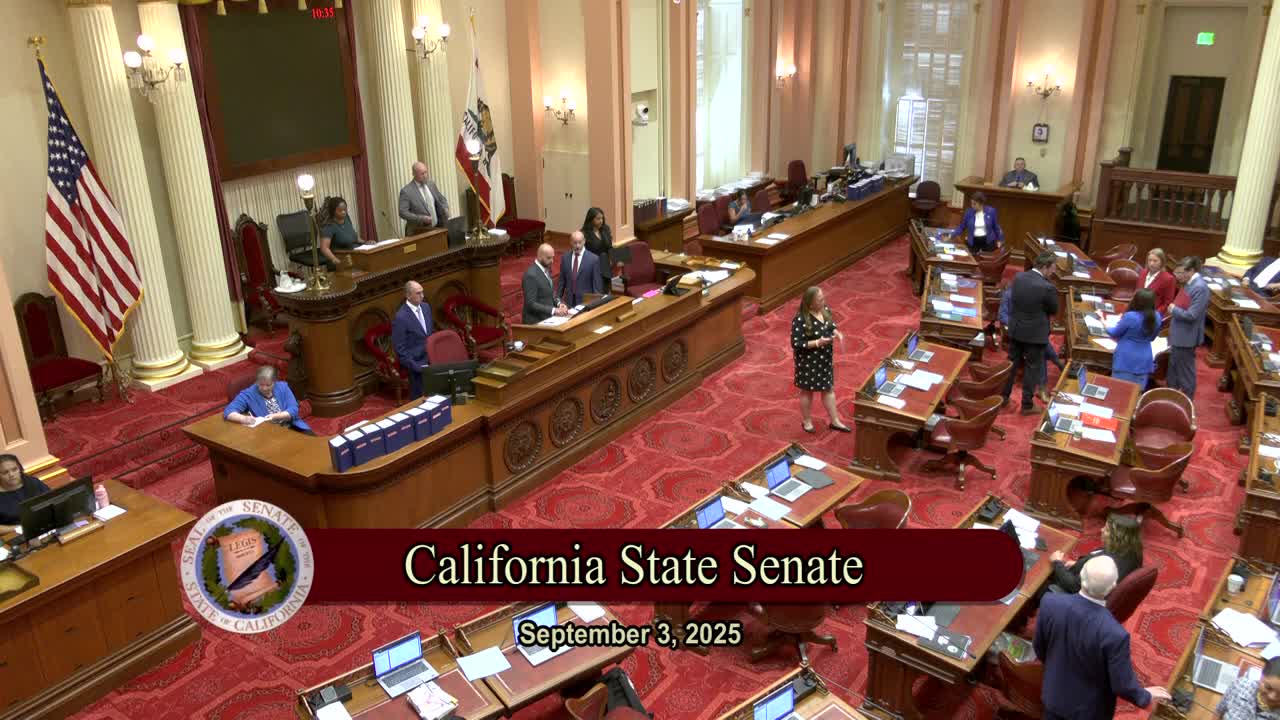


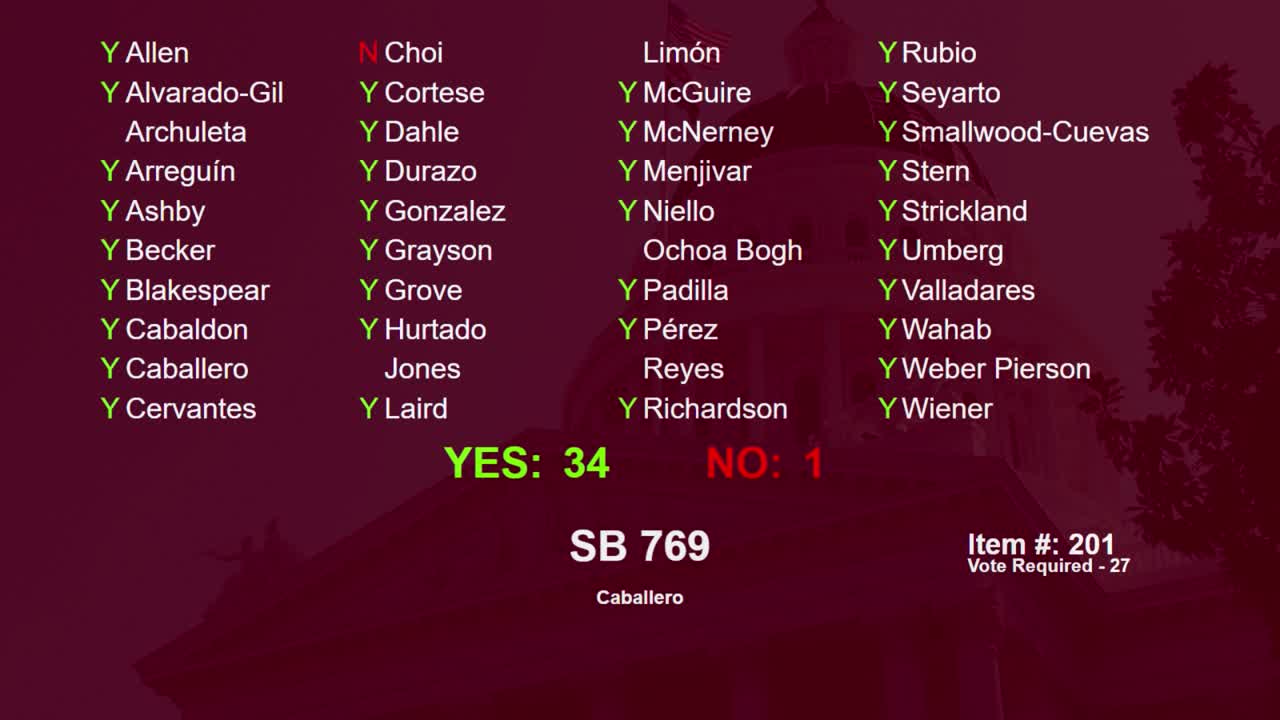
Bill Author