SB 313: Vital records: birth certificates.
- Session Year: 2025-2026
- House: Senate
- Latest Version Date: 2025-10-12
Current Status:
Passed
(2025-10-12: Chaptered by Secretary of State. Chapter 669, Statutes of 2025.)
Introduced
In Committee
Awaiting First Chamber Vote
Passed First Chamber
In Committee
Awaiting Second Chamber Vote
Passed Second Chamber
Enacted
Existing law requires each live birth to be registered with the local registrar of births and deaths for the district in which the birth occurred, and prescribes specified information to be listed on a certificate of live birth, including the full name and sex of the child and the full name, birthplace, and date of birth of each parent. Existing law requires, in addition to the information mentioned above, the certificate of live birth to contain specified medical and social information, including, among other things, race and ethnicity of the mother and any other parent, and requires that information to be kept confidential.
This bill, commencing July 1, 2027, would instead require the birthplace of each parent to be contained in the medical and social portion of the certificate of live birth and to be kept confidential.
Existing constitutional provisions require that a statute that limits the right of access to the meetings of public bodies or the writings of public officials and agencies be adopted with findings demonstrating the interest protected by the limitation and the need for protecting that interest.
This bill would make legislative findings to that effect.
Existing law requires each live birth to be registered with the local registrar of births and deaths for the district in which the birth occurred, and prescribes specified information to be listed on a certificate of live birth, including the full name and sex of the child and the full name, birthplace, and date of birth of each parent. Existing law requires, in addition to the information mentioned above, the certificate of live birth to contain specified medical and social information, including, among other things, race and ethnicity of the mother and any other parent, and requires that information to be kept confidential.
This bill bill, commencing July 1, 2027, would instead require the birthplace of each parent to be contained in the medical and social portion of the certificate of live birth and to be kept confidential.
Existing constitutional provisions require that a statute that limits the right of access to the meetings of public bodies or the writings of public officials and agencies be adopted with findings demonstrating the interest protected by the limitation and the need for protecting that interest.
This bill would make legislative findings to that effect.
Existing law requires each live birth to be registered with the local registrar of births and deaths for the district in which the birth occurred, and prescribes specified information to be listed on a certificate of live birth, including the full name and sex of the child and the full name, birthplace, and date of birth of each parent. Existing law requires the State Registrar to appoint a Vital Statistics Advisory Committee, which, among other things, is required to review and make recommendations to the State Registrar as to proposals for addition or deletion of items on the certificate of live birth and advise the State Registrar on the content and format of the certificate. Existing law requires the State Registrar to publish within 30 days of receipt of recommendations by the committee, both a list of the recommendations adopted and a list of the recommendations not adopted, with reasons for the action. Existing law requires, in addition to the information mentioned above, the certificate of live birth to contain specified medical and social information, including, among other things, race and ethnicity of the mother and any other parent, and requires that information to be kept confidential.
This bill would instead require the birthplace of each parent to be contained in the medical and social portion of the certificate of live birth and to be kept confidential.
Existing constitutional provisions require that a statute that limits the right of access to the meetings of public bodies or the writings of public officials and agencies be adopted with findings demonstrating the interest protected by the limitation and the need for protecting that interest.
This bill would make legislative findings to that effect.
This bill would require the State Registrar, notwithstanding the above provisions, to modify the certificate of live birth to include a statement that a person is a citizen of the United States upon their birth in the United States.Existing law requires each live birth to be registered with the local registrar of births and deaths for the district in which the birth occurred, and prescribes specified information to be listed on a certificate of live birth, including the full name and sex of the child and the full name, birthplace, and date of birth of each parent. Existing law requires the State Registrar to appoint a Vital Statistics Advisory Committee, which, among other things, is required to review and make recommendations to the State Registrar as to proposals for addition or deletion of items on the certificate of live birth and advise the State Registrar on the content and format of the certificate. Existing law requires the State Registrar to publish within 30 days of receipt of recommendations by the committee, both a list of the recommendations adopted and a list of the recommendations not adopted, with reasons for the action.
This bill would state the intent of the Legislature to enact legislation that would require a certificate of live birth to include a statement that the child is a citizen of the United States by virtue of their birth within California.This bill would require the State Registrar, notwithstanding the above provisions, to modify the certificate of live birth to include a statement that a person is a citizen of the United States upon their birth in the United States.
Existing law requires each live birth to be registered with the local registrar of births and deaths for the district in which the birth occurred, and prescribes specified information to be listed on a certificate of live birth, including the full name and sex of the child and the full name, birthplace, and date of birth of each parent.
This bill would state the intent of the Legislature to enact legislation that would require a certificate of live birth to include a statement that the child is a citizen of the United States by virtue of their birth within California.
(a)The certificate of live birth shall contain those items necessary to establish the fact of the birth and shall contain only the following information:
(1)Full name and sex of the child.
(2)Date of birth, including month, day, hour, and year.
(3)Place of birth.
(4)Full name and date of birth of each parent, including month, day, and year, and the parental relationship of the parent to the child.
(A)The full name of the mother shall be the birth name of the mother.
(B)If the birth mother is one of the parents listed on the certificate of live birth, the birth mothers name shall be placed on the second parent line.
(C)If the parents are not married to each other, the name of the person identified by the woman giving birth as either the only possible genetic parent other than the woman giving birth or the intended parent of a child conceived through assisted reproduction shall not be listed on the birth certificate unless the woman who gave birth to the child and either the only possible genetic parent other than the woman who gave birth or the intended parent of a child conceived through assisted reproduction sign a voluntary declaration of parentage at the hospital before the birth certificate is submitted for registration. The birth certificate may be amended to add another parents name at a later date only if parentage for the child has been established by a judgment of a court of competent jurisdiction or by the filing of a voluntary declaration of parentage.
(5)Multiple births and birth order of multiple births.
(6)Signature, and relationship to the child, of a parent or other informant, and date signed.
(7)Name, title, and mailing address of the attending physician and surgeon or principal attendant, signature, and certification of live birth by the attending physician and surgeon or principal attendant or certifier, date signed, and name and title of the certifier, if other than the attending physician and surgeon or principal attendant.
(8)Date accepted for registration and signature of local registrar.
(9)A state birth certificate number and local registration district and number.
(10)A blank space for entry of the date of death with a caption reading Date of Death.
(b)In addition to the items listed in subdivision (a), the certificate of live birth shall contain the following medical and social information, provided that the information is kept confidential pursuant to Sections 102430 and 102447 and is clearly labeled Confidential Information for Public Health Use Only:
(1)Birth weight.
(2)Pregnancy history.
(3)Race and ethnicity of the mother and any other parent.
(4)Residence address of the birth mother.
(5)A blank space for entry of census tract for the birth mothers address.
(6)Date of first prenatal care visit, the number of prenatal care visits, and commencing January 1, 2007, the date of last prenatal care visit.
(7)Date of last normal menses and, commencing January 1, 2007, an obstetric estimate of completed weeks of gestation at delivery.
(8)Description of complications and procedures of pregnancy and concurrent illnesses, congenital malformation, and any complication or procedure of labor and delivery, including surgery, provided that this information is essential medical information and appears in total on the face of the certificate.
(9)Commencing January 1, 2007, hearing screen results.
(10)The occupations of the mother and father or parent and kind of business or industry.
(11)Education level of the mother and father or parent.
(12)Principal source of payment for prenatal care, which shall include the following: Medi-Cal, private insurance, self-pay, other sources, and any other categories determined by the State Department of Public Health.
(13)Expected principal source of payment for delivery, which shall include the following: Medi-Cal, private insurance, self-pay, other sources, and any other categories determined by the State Department of Public Health.
(14)An indication of whether or not the childs parent desires the automatic issuance of a social security number to the child.
(15)On and after January 1, 1995, the social security numbers of the mother and father or parent, unless subdivision (d) applies.
(16)Commencing July 1, 2027, the birthplace of each parent.
(c)When an objection is made by either parent to the furnishing of the information specified in paragraphs (3), (10), and (11) of subdivision (b) for the confidential portion of the certificate of live birth, this information shall not be required to be entered on that portion of the certificate of live birth.
(d)A parent is not required to disclose the parents social security number as required by paragraph (15) of subdivision (b) if the parent has good cause for not disclosing the parents social security number. Good cause shall be defined by regulations adopted by the Department of Child Support Services.
(e)Paragraph (8) of subdivision (b) shall be completed by the attending physician and surgeon or the attending physician and surgeons designated representative. The names and addresses of children born with congenital malformations who require followup treatment, as determined by the childs physician and surgeon, shall be furnished by the physician and surgeon to the local health officer, if permission is granted by either parent of the child.
(f)The parent shall only be asked to sign the form after both the public portion and the confidential medical and social information items have been entered upon the certificate of live birth.
(g)(1)The State Registrar shall instruct all local registrars to collect the information specified in this section with respect to certificates of live birth. The information shall be transcribed on the certificate of live birth in use at the time and shall be limited to the information specified in this section.
(2)Information relating to concurrent illnesses, complications and procedures of pregnancy and delivery, and congenital malformations shall be completed by the physician and surgeon, or the physician and surgeons designee, who shall insert in the space provided on the confidential portion of the certificate the appropriate number or numbers listed on the VS-10A supplemental worksheet. The VS-10A supplemental form shall be used as a worksheet only and shall not in any manner be linked with the identity of the child or the birth mother, nor submitted with the certificate to the State Registrar. All information transferred from the worksheet to the certificate shall be fully explained to the parent or other informant prior to the signing of the certificate. Questions relating to drug or alcohol abuse shall not be asked.
(h)(1)The Vital Statistics Advisory Committee, in accordance with Section 102465, shall conduct a review of the contents of the certificate of live birth to coincide with decennial revisions by the National Center for Health Statistics to the United States Standard Certificate of Live Birth. The Vital Statistics Advisory Committee shall make recommendations to the State Registrar regarding the adoption of modifications to the state certificate of live birth that are similar to those made to the federal certificate.
(2)Notwithstanding Section 102470, the State Registrar shall review the Vital Statistics Advisory Committee recommendations and, at the State Registrars discretion, shall submit to the Legislature, for approval, additions or deletions to the certificate of live birth.
SEC. 2.The Legislature finds and declares that Section 1 of this act, which amends Section 102425 of the Health and Safety Code, imposes a limitation on the publics right of access to the meetings of public bodies or the writings of public officials and agencies within the meaning of Section 3 of Article I of the California Constitution. Pursuant to that constitutional provision, the Legislature makes the following findings to demonstrate the interest protected by this limitation and the need for protecting that interest:
In order to protect the privacy of persons with regard to information about the birthplace of their parents, except for access by authorized entities or individuals for health-related or other limited purposes as specified in Section 102430 of the Health and Safety Code, it is necessary that this act limit the publics right of access to that information.
(a)The certificate of live birth shall contain those items necessary to establish the fact of the birth and shall contain only the following information:
(1)Full name and sex of the child.
(2)Date of birth, including month, day, hour, and year.
(3)Place of birth.
(4)Full name and date of birth of each parent, including month, day, and year, and the parental relationship of the parent to the child.
(A)The full name of the mother shall be the birth name of the mother.
(B)If the birth mother is one of the parents listed on the certificate of live birth, the birth mothers name shall be placed on the second parent line.
(C)If the parents are not married to each other, the name of the person identified by the woman giving birth as either the only possible genetic parent other than the woman giving birth or the intended parent of a child conceived through assisted reproduction shall not be listed on the birth certificate unless the woman who gave birth to the child and either the only possible genetic parent other than the woman who gave birth or the intended parent of a child conceived through assisted reproduction sign a voluntary declaration of parentage at the hospital before the birth certificate is submitted for registration. The birth certificate may be amended to add another parents name at a later date only if parentage for the child has been established by a judgment of a court of competent jurisdiction or by the filing of a voluntary declaration of parentage.
(5)Multiple births and birth order of multiple births.
(6)Signature, and relationship to the child, of a parent or other informant, and date signed.
(7)Name, title, and mailing address of the attending physician and surgeon or principal attendant, signature, and certification of live birth by the attending physician and surgeon or principal attendant or certifier, date signed, and name and title of the certifier, if other than the attending physician and surgeon or principal attendant.
(8)Date accepted for registration and signature of local registrar.
(9)A state birth certificate number and local registration district and number.
(10)A blank space for entry of the date of death with a caption reading Date of Death.
(b)In addition to the items listed in subdivision (a), the certificate of live birth shall contain the following medical and social information, provided that the information is kept confidential pursuant to Sections 102430 and 102447 and is clearly labeled Confidential Information for Public Health Use Only:
(1)Birth weight.
(2)Pregnancy history.
(3)Race and ethnicity of the mother and any other parent.
(4)Residence address of the birth mother.
(5)A blank space for entry of census tract for the birth mothers address.
(6)Date of first prenatal care visit, the number of prenatal care visits, and commencing January 1, 2007, the date of last prenatal care visit.
(7)Date of last normal menses and, commencing January 1, 2007, an obstetric estimate of completed weeks of gestation at delivery.
(8)Description of complications and procedures of pregnancy and concurrent illnesses, congenital malformation, and any complication or procedure of labor and delivery, including surgery, provided that this information is essential medical information and appears in total on the face of the certificate.
(9)Commencing January 1, 2007, hearing screen results.
(10)The occupations of the mother and father or parent and kind of business or industry.
(11)Education level of the mother and father or parent.
(12)Principal source of payment for prenatal care, which shall include the following: Medi-Cal, private insurance, self-pay, other sources, and any other categories determined by the State Department of Public Health.
(13)Expected principal source of payment for delivery, which shall include the following: Medi-Cal, private insurance, self-pay, other sources, and any other categories determined by the State Department of Public Health.
(14)An indication of whether or not the childs parent desires the automatic issuance of a social security number to the child.
(15)On and after January 1, 1995, the social security numbers of the mother and father or parent, unless subdivision (d) applies.
(16)Birthplace Commencing July 1, 2027, the birthplace of each parent.
(c)When an objection is made by either parent to the furnishing of the information specified in paragraphs (3), (10), and (11) of subdivision (b) for the confidential portion of the certificate of live birth, this information shall not be required to be entered on that portion of the certificate of live birth.
(d)A parent is not required to disclose the parents social security number as required by paragraph (15) of subdivision (b) if the parent has good cause for not disclosing the parents social security number. Good cause shall be defined by regulations adopted by the Department of Child Support Services.
(e)Paragraph (8) of subdivision (b) shall be completed by the attending physician and surgeon or the attending physician and surgeons designated representative. The names and addresses of children born with congenital malformations who require followup treatment, as determined by the childs physician and surgeon, shall be furnished by the physician and surgeon to the local health officer, if permission is granted by either parent of the child.
(f)The parent shall only be asked to sign the form after both the public portion and the confidential medical and social information items have been entered upon the certificate of live birth.
(g)(1)The State Registrar shall instruct all local registrars to collect the information specified in this section with respect to certificates of live birth. The information shall be transcribed on the certificate of live birth in use at the time and shall be limited to the information specified in this section.
(2)Information relating to concurrent illnesses, complications and procedures of pregnancy and delivery, and congenital malformations shall be completed by the physician and surgeon, or the physician and surgeons designee, who shall insert in the space provided on the confidential portion of the certificate the appropriate number or numbers listed on the VS-10A supplemental worksheet. The VS-10A supplemental form shall be used as a worksheet only and shall not in any manner be linked with the identity of the child or the birth mother, nor submitted with the certificate to the State Registrar. All information transferred from the worksheet to the certificate shall be fully explained to the parent or other informant prior to the signing of the certificate. Questions relating to drug or alcohol abuse shall not be asked.
(h)(1)The Vital Statistics Advisory Committee, in accordance with Section 102465, shall conduct a review of the contents of the certificate of live birth to coincide with decennial revisions by the National Center for Health Statistics to the United States Standard Certificate of Live Birth. The Vital Statistics Advisory Committee shall make recommendations to the State Registrar regarding the adoption of modifications to the state certificate of live birth that are similar to those made to the federal certificate.
(2)Notwithstanding Section 102470, the State Registrar shall review the Vital Statistics Advisory Committee recommendations and, at the State Registrars discretion, shall submit to the Legislature, for approval, additions or deletions to the certificate of live birth.
SEC. 2.The Legislature finds and declares that Section 1 of this act, which amends Section 102425 of the Health and Safety Code, imposes a limitation on the publics right of access to the meetings of public bodies or the writings of public officials and agencies within the meaning of Section 3 of Article I of the California Constitution. Pursuant to that constitutional provision, the Legislature makes the following findings to demonstrate the interest protected by this limitation and the need for protecting that interest:
In order to protect the privacy of persons with regard to information about the birthplace of their parents, except for access by authorized entities or individuals for health-related or other limited purposes as specified in Section 102430 of the Health and Safety Code, it is necessary that this act limit the publics right of access to that information.
(a)The certificate of live birth for a live birth occurring on or after January 1, 2016, shall contain those items necessary to establish the fact of the birth and shall contain only the following information:
(1)Full name and sex of the child.
(2)Date of birth, including month, day, hour, and year.
(3)Place of birth.
(4)Full name, birthplace, name and date of birth of each parent, including month, day, and year, and the parental relationship of the parent to the child.
(A)The full name of the mother shall be the birth name of the mother.
(B)If the birth mother is one of the parents listed on the certificate of live birth, the birth mothers name shall be placed on the second parent line.
(C)If the parents are not married to each other, the name of the person identified by the woman giving birth as either the only possible genetic parent other than the woman giving birth or the intended parent of a child conceived through assisted reproduction shall not be listed on the birth certificate unless the woman who gave birth to the child and either the only possible genetic parent other than the woman who gave birth or the intended parent of a child conceived through assisted reproduction sign a voluntary declaration of parentage at the hospital before the birth certificate is submitted for registration. The birth certificate may be amended to add another parents name at a later date only if parentage for the child has been established by a judgment of a court of competent jurisdiction or by the filing of a voluntary declaration of parentage.
(5)Multiple births and birth order of multiple births.
(6)Signature, and relationship to the child, of a parent or other informant, and date signed.
(7)Name, title, and mailing address of the attending physician and surgeon or principal attendant, signature, and certification of live birth by the attending physician and surgeon or principal attendant or certifier, date signed, and name and title of the certifier, if other than the attending physician and surgeon or principal attendant.
(8)Date accepted for registration and signature of local registrar.
(9)A state birth certificate number and local registration district and number.
(10)A blank space for entry of the date of death with a caption reading Date of Death.
(b)In addition to the items listed in subdivision (a), the certificate of live birth shall contain the following medical and social information, provided that the information is kept confidential pursuant to Sections 102430 and 102447 and is clearly labeled Confidential Information for Public Health Use Only:
(1)Birth weight.
(2)Pregnancy history.
(3)Race and ethnicity of the mother and any other parent.
(4)Residence address of the birth mother.
(5)A blank space for entry of census tract for the birth mothers address.
(6)Date of first prenatal care visit, the number of prenatal care visits, and commencing January 1, 2007, the date of last prenatal care visit.
(7)Date of last normal menses and, commencing January 1, 2007, an obstetric estimate of completed weeks of gestation at delivery.
(8)Description of complications and procedures of pregnancy and concurrent illnesses, congenital malformation, and any complication or procedure of labor and delivery, including surgery, provided that this information is essential medical information and appears in total on the face of the certificate.
(9)Commencing January 1, 2007, hearing screen results.
(10)The occupations of the mother and father or parent and kind of business or industry.
(11)Education level of the mother and father or parent.
(12)Principal source of payment for prenatal care, which shall include the following: Medi-Cal, private insurance, self-pay, other sources, and any other categories determined by the State Department of Public Health.
(13)Expected principal source of payment for delivery, which shall include the following: Medi-Cal, private insurance, self-pay, other sources, and any other categories determined by the State Department of Public Health.
(14)An indication of whether or not the childs parent desires the automatic issuance of a social security number to the child.
(15)On and after January 1, 1995, the social security numbers of the mother and father or parent, unless subdivision (d) applies.
(16)Birthplace of each parent.
(c)When an objection is made by either parent to the furnishing of the information specified in paragraphs (3), (10), and (11) of subdivision (b) for the confidential portion of the certificate of live birth, this information shall not be required to be entered on that portion of the certificate of live birth.
(d)A parent is not required to disclose the parents social security number as required by paragraph (15) of subdivision (b) if the parent has good cause for not disclosing the parents social security number. Good cause shall be defined by regulations adopted by the Department of Child Support Services.
(e)Paragraph (8) of subdivision (b) shall be completed by the attending physician and surgeon or the attending physician and surgeons designated representative. The names and addresses of children born with congenital malformations who require followup treatment, as determined by the childs physician and surgeon, shall be furnished by the physician and surgeon to the local health officer, if permission is granted by either parent of the child.
(f)The parent shall only be asked to sign the form after both the public portion and the confidential medical and social information items have been entered upon the certificate of live birth.
(g)(1)The State Registrar shall instruct all local registrars to collect the information specified in this section with respect to certificates of live birth. The information shall be transcribed on the certificate of live birth in use at the time and shall be limited to the information specified in this section.
(2)Information relating to concurrent illnesses, complications and procedures of pregnancy and delivery, and congenital malformations shall be completed by the physician and surgeon, or the physician and surgeons designee, who shall insert in the space provided on the confidential portion of the certificate the appropriate number or numbers listed on the VS-10A supplemental worksheet. The VS-10A supplemental form shall be used as a worksheet only and shall not in any manner be linked with the identity of the child or the birth mother, nor submitted with the certificate to the State Registrar. All information transferred from the worksheet to the certificate shall be fully explained to the parent or other informant prior to the signing of the certificate. Questions relating to drug or alcohol abuse shall not be asked.
(h)(1)The Vital Statistics Advisory Committee, in accordance with Section 102465, shall conduct a review of the contents of the certificate of live birth to coincide with decennial revisions by the National Center for Health Statistics to the United States Standard Certificate of Live Birth. The Vital Statistics Advisory Committee shall make recommendations to the State Registrar regarding the adoption of modifications to the state certificate of live birth that are similar to those made to the federal certificate.
(2)Notwithstanding Section 102470, the State Registrar shall review the Vital Statistics Advisory Committee recommendations and, at the State Registrars discretion, shall submit to the Legislature, for approval, additions or deletions to the certificate of live birth.
SEC. 2.The Legislature finds and declares that Section 1 of this act, which amends Section 102425 of the Health and Safety Code, imposes a limitation on the publics right of access to the meetings of public bodies or the writings of public officials and agencies within the meaning of Section 3 of Article I of the California Constitution. Pursuant to that constitutional provision, the Legislature makes the following findings to demonstrate the interest protected by this limitation and the need for protecting that interest:
In order to protect the privacy of persons with regard to information about the birthplace of their parents, except for access by authorized entities or individuals for health-related or other limited purposes as specified in Section 102430 of the Health and Safety Code, it is necessary that this act limit the publics right of access to that information.
SECTION 1.The Legislature finds and declares all of the following:(a)The Fourteenth Amendment to the United States Constitution clearly states that individuals born in the United States are citizens of the United States.(b)This is the clear understanding of the Framers of the Fourteenth Amendment, as confirmed by the United States Supreme Court in the landmark case United States v. Wong Kim Ark (1898) 169 U.S. 649.(c)The passage and enactment of this bill does not imply that individuals whose birth certificates were issued before its enactment are not citizens of the United States.(d)Every individual born in California whose birth certificate was issued by the State before the enactment of this bill was granted United States citizenship by virtue of their birth in the United States.SEC. 2.Section 102425.3 is added to the Health and Safety Code, to read:102425.3.Notwithstanding Sections 102465 and 102470, the State Registrar shall modify the certificate of live birth to include a statement that a person is a citizen of the United States upon their birth in the United States. REVISIONS: HeadingLine 3.The Legislature finds and declares all of the following:
(a)The Fourteenth Amendment to the United States Constitution clearly states that individuals born in the United States are citizens of the United States.
(b)This is the clear understanding of the Framers of the Fourteenth Amendment, as confirmed by the United States Supreme Court in the landmark case United States v. Wong Kim Ark (1898) 169 U.S. 649.
(c)The passage and enactment of this bill does not imply that individuals whose birth certificates were issued before its enactment are not citizens of the United States.
(d)Every individual born in California whose birth certificate was issued by the State before the enactment of this bill was granted United States citizenship by virtue of their birth in the United States.
SEC. 2.Section 102425.3 is added to the Health and Safety Code, to read:102425.3.Notwithstanding Sections 102465 and 102470, the State Registrar shall modify the certificate of live birth to include a statement that a person is a citizen of the United States upon their birth in the United States.
SECTION 1.It is the intent of the Legislature to enact legislation that would require a certificate of live birth to include a statement that the child is a citizen of the United States by virtue of their birth within California. This legislation would reaffirm the longstanding legal principle that a person born in California is a citizen of the United States, as intended by the framers of the Fourteenth Amendment and confirmed by the United States Supreme Court in United States v. Wong Kim Ark (1898) 169 U.S. 649.It is the intent of the Legislature to enact legislation that would require a certificate of live birth to include a statement that the child is a citizen of the United States by virtue of their birth within California. This legislation would reaffirm the longstanding legal principle that a person born in California is a citizen of the United States, as intended by the framers of the Fourteenth Amendment and confirmed by the United States Supreme Court in United States v. Wong Kim Ark (1898) 169 U.S. 649.
|
Date
|
Status
|
|---|---|
| Oct 12, 2025 | Chaptered by Secretary of State. Chapter 669, Statutes of 2025. |
| Oct 12, 2025 | Approved by the Governor. |
| Sep 22, 2025 | Enrolled and presented to the Governor at 11 a.m. |
| Sep 11, 2025 | Assembly amendments concurred in. (Ayes 29. Noes 10. Page 2881.) Ordered to engrossing and enrolling. |
| Sep 10, 2025 | In Senate. Concurrence in Assembly amendments pending. |
| Sep 10, 2025 | Read third time. Passed. (Ayes 59. Noes 14. Page 3173.) Ordered to the Senate. |
| Sep 5, 2025 | Ordered to third reading. |
| Sep 5, 2025 | Assembly Rule 69(b)(1) suspended. |
| Sep 5, 2025 | Read third time and amended. |
| Sep 2, 2025 | Read second time. Ordered to third reading. |
| Aug 29, 2025 | From committee: Do pass. (Ayes 11. Noes 3.) (August 29). |
| Aug 20, 2025 | August 20 set for first hearing. Placed on APPR. suspense file. |
| Jul 9, 2025 | From committee: Do pass and re-refer to Com. on APPR. (Ayes 9. Noes 3.) (July 8). Re-referred to Com. on APPR. |
| Jul 9, 2025 | Coauthors revised. |
| Jul 2, 2025 | From committee: Do pass and re-refer to Com. on JUD. (Ayes 12. Noes 1.) (July 1). Re-referred to Com. on JUD. |
| Jun 9, 2025 | Referred to Coms. on HEALTH and JUD. |
| Jun 3, 2025 | In Assembly. Read first time. Held at Desk. |
| Jun 2, 2025 | Read third time. Passed. (Ayes 28. Noes 10. Page 1392.) Ordered to the Assembly. |
| May 23, 2025 | Read second time. Ordered to third reading. |
| May 23, 2025 | From committee: Do pass. (Ayes 5. Noes 1. Page 1195.) (May 23). |
| May 16, 2025 | Set for hearing May 23. |
| May 12, 2025 | May 12 hearing: Placed on APPR. suspense file. |
| May 6, 2025 | Set for hearing May 12. |
| May 1, 2025 | Read second time and amended. Re-referred to Com. on APPR. |
| Apr 30, 2025 | From committee: Do pass as amended and re-refer to Com. on APPR. (Ayes 11. Noes 1. Page 939.) (April 29). |
| Apr 24, 2025 | From committee: Do pass and re-refer to Com. on JUD. (Ayes 9. Noes 2. Page 868.) (April 23). Re-referred to Com. on JUD. |
| Apr 17, 2025 | Set for hearing April 29 in JUD. pending receipt. |
| Apr 4, 2025 | Set for hearing April 23. |
| Apr 2, 2025 | Re-referred to Coms. on HEALTH and JUD. |
| Mar 26, 2025 | From committee with author's amendments. Read second time and amended. Re-referred to Com. on RLS. |
| Feb 19, 2025 | Referred to Com. on RLS. |
| Feb 11, 2025 | From printer. May be acted upon on or after March 13. |
| Feb 10, 2025 | Introduced. Read first time. To Com. on RLS. for assignment. To print. |
|
Date
|
Description
|
Location
|
Votes
|
|
|---|---|---|---|---|
| Sep 11, 2025 | Unfinished Business SB313 Cervantes et al. Concurrence | Senate Floor |
Passed |
|
| Sep 10, 2025 | SB 313 Cervantes Senate Third Reading By Bonta | Assembly Floor |
Passed |
|
| Aug 29, 2025 | Do pass. | Assembly Standing Committee on Appropriations |
Passed |
|
| Jul 8, 2025 | Do pass and be re-referred to the Committee on [Appropriations] | Assembly Standing Committee on Judiciary |
Passed |
|
| Jul 1, 2025 | Do pass and be re-referred to the Committee on [Judiciary] | Assembly Standing Committee on Health |
Passed |
|
| Jun 2, 2025 | Senate 3rd Reading SB313 Cervantes et al. | Senate Floor |
Passed |
|
| May 23, 2025 | Do pass | Senate Standing Committee on Appropriations |
Passed |
|
| May 12, 2025 | Placed on suspense file | Senate Standing Committee on Appropriations |
Passed |
|
| Apr 29, 2025 | Do pass as amended, but first amend, and re-refer to the Committee on [Appropriations] | Senate Standing Committee on Judiciary |
Passed |
|
| Apr 23, 2025 | Do pass, but first be re-referred to the Committee on [Judiciary] | Senate Standing Committee on Health |
Passed |
This list shows positions taken on this bill by organizations on the date displayed, which is linked to the original source.
Positions by individuals are not included.
|
Organization
|
Position
|
Date
|
|---|---|---|
| Oakland Privacy | ** Support |
SENATE RULES COMMITTEE Office of Senate Floor Analyses (916) 651-1520 Fax: (916) 327-4478 | SB 313 |
UNFINISHED BUSINESS
Bill No: SB 313
Author: Cervantes (D), et al.
Amended: 9/5/25
Vote: 21
SENATE HEALTH COMMITTEE: 9-2, 4/23/25
AYES: Menjivar, Durazo, Gonzalez, Limón, Padilla, Richardson, Rubio, Weber Pierson, Wiener
NOES: Valladares, Grove
SENATE JUDICIARY COMMITTEE: 11-1, 4/29/25
AYES: Umberg, Allen, Arreguín, Ashby, Caballero, Durazo, Laird, Stern, Wahab, Weber Pierson, Wiener
NOES: Niello
NO VOTE RECORDED: Valladares
SENATE APPROPRIATIONS COMMITTEE: 5-1, 5/23/25
AYES: Caballero, Cabaldon, Grayson, Richardson, Wahab
NOES: Seyarto
NO VOTE RECORDED: Dahle
SENATE FLOOR: 28-10, 6/2/25
AYES: Allen, Archuleta, Arreguín, Ashby, Becker, Blakespear, Cabaldon, Caballero, Cervantes, Cortese, Durazo, Gonzalez, Grayson, Laird, Limón, McGuire, McNerney, Menjivar, Padilla, Pérez, Richardson, Rubio, Smallwood-Cuevas, Stern, Umberg, Wahab, Weber Pierson, Wiener
NOES: Alvarado-Gil, Choi, Dahle, Grove, Jones, Niello, Ochoa Bogh, Seyarto, Strickland, Valladares
NO VOTE RECORDED: Hurtado, Reyes
ASSEMBLY FLOOR: 59-14, 9/10/25 - See last page for vote
SUBJECT: Vital records: birth certificates
SOURCE: Author
DIGEST:
This bill requires the birthplace of each parent to be contained in the medical and social portion of the certificate of live birth and to be kept confidential.
Assembly Amendments
delay implementation until July 1, 2027.
ANALYSIS:
Existing law:
- Establishes the California Department of Public Health (CDPH) and sets forth its powers and duties, including duties as the State Registrar relating to vital records and health statistics. [Health and Safety Code (HSC) §102100, et seq.]
- Makes the local health officer of an approved public health department the local registrar in and for all registration districts within that health jurisdiction and requires the local registrar to perform all the duties of a local registrar of births and deaths. Requires the State Registrar, in other areas, to appoint a local registrar of births and deaths for each registration district. [HSC §102275 and §102280]
- Requires the certificate of live birth to include only the following information:
- Full name and sex of the child;
- Date of birth, including month, day, hour, and year;
- Place of birth;
- Full name, birthplace, and date of birth of each parent, including month, day, and year, and the parental relationship of the parent to the child;
- Multiple births and birth order of multiple births;
- Signature, and relationship to the child, of a parent or other informant, and date signed;
- Name, title, and mailing address of the attending physician and surgeon or principal attendant, signature, and certification of live birth by the attending physician and surgeon or principal attendant or certifier, date signed, and name and title of the certifier, if other than the attending physician and surgeon or principal attendant;
- Date accepted for registration and signature of local registrar;
- A state birth certificate number and local registration district and number; and,
- A blank space for entry of the date of death with a caption reading “Date of Death”. [HSC §102425(a)]
- Requires, in addition to the items listed in 5) above, the certificate of live birth to contain only the following medical and social information, provided that the information is kept confidential, and is clearly labeled “Confidential Information for Public Health Use Only”:
- Birth weight;
- Pregnancy history;
- Race and ethnicity of the mother and any other parent;
- Residence address of the birth mother;
- A blank space for entry of census tract for the birth mother’s address;
- Date of first prenatal care visit, the number of prenatal care visits, and commencing January 1, 2007, the date of last prenatal care visit;
- Description of complications and procedures of pregnancy and concurrent illnesses, congenital malformation, and any complication or procedure of labor and delivery, including surgery, providing that this information is essential medical information and appears in the total of the face of the certificate;
- Commencing January 1, 2007, hearing screen results;
- The occupations of the mother and father or parent and kind of business or industry;
- Education level of the mother and father or parent;
- Principal source of payment for prenatal care, which includes the following: Medi-Cal, private insurance, self-pay, other sources, and any other categories determined by CDPH;
- Expected principal source of payment for delivery, which includes the following: Medi-Cal, private insurance, self-pay, other sources, and any other categories determined by CPDH;
- Any indication of whether or not the child’s parent desires the automatic issuance of a social security number to the child; and
- On and after January 1, 1995, the social security numbers of the mother and father or parent, unless the parent has good cause for not disclosing the parent’s social security number. [HSC §102425(b)]
- Requires, the second section of the certificate of live birth as specified in 6) above shall be limited to the following:
- CDPH staff;
- Local registrar’s staff and local health department staff when approved by the local registrar or local health officer, respectively;
- The county coroner;
- Persons with a valid scientific interest as determined by the State Registrar, who are engaged in demographic, epidemiological, or other similar studies related to health, and who agree to maintain confidentiality as prescribed by this part and by regulation of the State Registrar;
- The parent who signed the certificate or, if no parent signed the certificate, the mother;
- The person named on the certificate;
- A person who has petitioned to adopt the person named on the certificate of live birth;
- The following state government departments requesting the information for official government business purposes as deemed appropriate by the State Registrar, that agree to maintain confidentiality: CDPH, the State Department of Health Care Services, the Department of Finance, the Scholarshare Investment Board, for the purpose of implementing the California Kids Investment and Development Savings Program, and the Department of Health Care Access and Information; and
- The birth hospital responsible for preparing and submitting a record of the birth or fetal death for purposes of reviewing and correcting birth or fetal death records. The birth hospital shall not further disclose the information nor use the information for purposes other than allowed by this part. [HSC §102430(a)]
- Requires CDPH to maintain an accurate record of all persons who are given access to the confidential portion of the certificates. The record shall include all of the following: the name of the person authorizing access, the name, title, and organizational affiliation of persons given access, the dates of access, and the specific purpose for which the information is to be used. [HSC §102430(b)]
This bill requires, commencing July 1, 2027, the birthplace of each parent to be contained in the medical and social portion of the certificate of live birth and to be kept confidential.
Comments
According to the author of this bill:
President Trump’s unconstitutional executive order attempting to deny birthright citizenship to certain groups of Americans based on their parentage is contrary to legal precedents dating back to the post-Civil War era. This includes the original understanding of the Framers of the Fourteenth Amendment and the landmark Supreme Court decision in United States v. Wong Kim Ark from 1898, which affirmed that citizenship is granted to any person born in the U.S. This bill will reinforce California's commitment to this principle by requiring birth certificates issued in California to include a clear statement that the individual is granted citizenship by virtue of their birth in the U.S. This will protect the rights of all citizens born in California and affirm the longstanding principle of birthright citizenship embodied in the Fourteenth Amendment.
Background
The State Registrar. CDPH’s Vital Records Registration Branch is charged with maintaining a uniform, comprehensive, and continuous index for all birth, death, fetal death, and marriage vital events that occur in California, of which there are over one million each year. Certified copies of vital records are available from CDPH, 58 county recorders, and 61 local health jurisdictions. CDPH maintains, and can provide, birth and death records from 1905 to the present. For marriage records, CDPH maintains and can provide those from 1946 to the present, with some years excluded. CDPH uses the data collected through death certificates for public health research and planning.
Birth and death certificates. According to CDPH, there are two types of birth and death certificates available: an authorized copy and an informational copy. The authorized copy is only available to an authorized person (generally, the registrant or their family member, law enforcement, the registrant’s attorney, or a person empowered by the court). Any person who is not an authorized person can obtain an informational copy. The main differences between authorized and informational copies of death certificates are that an informational copy will have Social Security numbers and signatures redacted along with a legend across the document that states, “INFORMATIONAL, NOT A VALID DOCUMENT TO ESTABLISH IDENTITY.” The confidential section of a birth record is restricted and contains confidential medical and social information, which is often used for health or research purposes. Only the registrant, the parent who signed the certificate, or a person who has petitioned to adopt the person named on the certificate can receive the confidential section of the birth certificate.
Birthright citizenship. The Fourteenth Amendment of the U.S. Constitution guarantees birthright citizenship, stating that all persons born or naturalized in the U.S. are citizens of the U.S. and of the State wherein they reside. In the Supreme Court case United States v. Wong Kim Ark (1898), the decision clarified that children born in the U.S. to immigrant parents are citizens, regardless of their parents’ immigration status. On January 20, 2025, however, President Trump issued Executive Order 14160, titled “Protecting the Meaning and Value of American Citizenship” that would narrow U.S. birthright citizenship by excluding children born in the U.S. to mothers who are either unlawfully present or legally present but on temporary status, unless the father is either a U.S. citizen or lawful permanent resident. According to the National Public Radio, the Supreme Court says it will hear arguments in the challenges against Trump’s Executive Order on May 15, and will come to a decision likely by late June or early July.
Related/Prior Legislation
AB 64 (Pacheco) of the current legislative session requires the State Registrar to require the use of a diacritical mark on an English letter within a name to be properly recorded, when applicable, on a certificate of live birth, fetal death, death, marriage license and certificate, and would require the use of a diacritical mark to be deemed an acceptable entry by the State Registrar. The bill is pending on the Senate Floor.
AB 1084 (Zbur) of the current legislative session streamlines the process for legally changing one’s name, including a change of name to match a person’s gender identity. The bill requires the State Registrar or county clerk to issue a new birth certificate or marriage license and certificate within two weeks of the receipt of an application of a name change. The bill is pending on the Senate Floor.
FISCAL EFFECT: Appropriation: No Fiscal Com.: Yes Local: No
According to the Assembly Appropriations Committee, the California Department of Public Health (CDPH) estimates annual General Fund costs of $315,000 in Fiscal Year (FY) 2026-27, and $157,000 in FY 2027-28 and ongoing to support the salary of one full-time position to process, review, and revise Certificate of Live Birth and Certificate of Fetal Death paper forms, as well as the cost of reprogramming the California Integrated Vital Records System.
SUPPORT: (Verified 9/8/25)
None received
OPPOSITION: (Verified 9/8/25)
None received
Arguments in Support: Support if amended. Oakland Privacy writes that the current federal administration is threatening to upend the Fourteenth Amendment, which grants individuals born in the U.S. with citizenship. This bill would protect individuals born in California by keeping the birthplace of their parents confidential. Oakland Privacy adds that there needs to be a balance between privacy and the interests of public disclosure; in particular, when it would be in the public interest to disclose certain information. By keeping the birthplace of parents confidential, it would make it more difficult for the public to obtain background information on public information on public figures and fact check statements. They exemplify this by stating that Congressmember Ted Cruz has publicly spoken out against birthright citizenship when journalists uncovered that his parents are immigrants themselves. They propose to allow a process for approved entities which includes journalists to be able to petition a court for access to this confidential information, as well as establish a sunset clause in this bill.
ASSEMBLY FLOOR: 59-14, 9/10/25
AYES: Addis, Aguiar-Curry, Ahrens, Alvarez, Arambula, Ávila Farías, Bains, Bauer-Kahan, Bennett, Berman, Boerner, Bonta, Bryan, Calderon, Caloza, Carrillo, Connolly, Elhawary, Fong, Garcia, Gipson, Mark González, Haney, Harabedian, Hart, Irwin, Jackson, Kalra, Krell, Lee, Lowenthal, McKinnor, Muratsuchi, Nguyen, Ortega, Pacheco, Papan, Patel, Pellerin, Petrie-Norris, Quirk-Silva, Ramos, Ransom, Celeste Rodriguez, Michelle Rodriguez, Rogers, Blanca Rubio, Schiavo, Schultz, Sharp-Collins, Solache, Soria, Stefani, Valencia, Ward, Wicks, Wilson, Zbur, Rivas
NOES: Alanis, Castillo, Davies, DeMaio, Dixon, Ellis, Gallagher, Jeff Gonzalez, Hadwick, Hoover, Johnson, Macedo, Patterson, Sanchez
NO VOTE RECORDED: Chen, Flora, Gabriel, Lackey, Ta, Tangipa, Wallis
Prepared by: Margarita Niemann / HEALTH / (916) 651-4111
9/22/26 12:31:51
**** END ****
SENATE RULES COMMITTEE Office of Senate Floor Analyses (916) 651-1520 Fax: (916) 327-4478 | SB 313 |
UNFINISHED BUSINESS
Bill No: SB 313
Author: Cervantes (D), et al.
Amended: 9/5/25
Vote: 21
SENATE HEALTH COMMITTEE: 9-2, 4/23/25
AYES: Menjivar, Durazo, Gonzalez, Limón, Padilla, Richardson, Rubio, Weber Pierson, Wiener
NOES: Valladares, Grove
SENATE JUDICIARY COMMITTEE: 11-1, 4/29/25
AYES: Umberg, Allen, Arreguín, Ashby, Caballero, Durazo, Laird, Stern, Wahab, Weber Pierson, Wiener
NOES: Niello
NO VOTE RECORDED: Valladares
SENATE APPROPRIATIONS COMMITTEE: 5-1, 5/23/25
AYES: Caballero, Cabaldon, Grayson, Richardson, Wahab
NOES: Seyarto
NO VOTE RECORDED: Dahle
SENATE FLOOR: 28-10, 6/2/25
AYES: Allen, Archuleta, Arreguín, Ashby, Becker, Blakespear, Cabaldon, Caballero, Cervantes, Cortese, Durazo, Gonzalez, Grayson, Laird, Limón, McGuire, McNerney, Menjivar, Padilla, Pérez, Richardson, Rubio, Smallwood-Cuevas, Stern, Umberg, Wahab, Weber Pierson, Wiener
NOES: Alvarado-Gil, Choi, Dahle, Grove, Jones, Niello, Ochoa Bogh, Seyarto, Strickland, Valladares
NO VOTE RECORDED: Hurtado, Reyes
ASSEMBLY FLOOR:
SUBJECT: Vital records: birth certificates
SOURCE: Author
DIGEST:
This bill requires the birthplace of each parent to be contained in the medical and social portion of the certificate of live birth and to be kept confidential.
Assembly Amendments
delay implementation until July 1, 2027.
ANALYSIS:
Existing law:
- Establishes the California Department of Public Health (CDPH) and sets forth its powers and duties, including duties as the State Registrar relating to vital records and health statistics. [Health and Safety Code (HSC) §102100, et seq.]
- Makes the local health officer of an approved public health department the local registrar in and for all registration districts within that health jurisdiction and requires the local registrar to perform all the duties of a local registrar of births and deaths. Requires the State Registrar, in other areas, to appoint a local registrar of births and deaths for each registration district. [HSC §102275 and §102280]
- Requires the certificate of live birth to include only the following information:
- Full name and sex of the child;
- Date of birth, including month, day, hour, and year;
- Place of birth;
- Full name, birthplace, and date of birth of each parent, including month, day, and year, and the parental relationship of the parent to the child;
- Multiple births and birth order of multiple births;
- Signature, and relationship to the child, of a parent or other informant, and date signed;
- Name, title, and mailing address of the attending physician and surgeon or principal attendant, signature, and certification of live birth by the attending physician and surgeon or principal attendant or certifier, date signed, and name and title of the certifier, if other than the attending physician and surgeon or principal attendant;
- Date accepted for registration and signature of local registrar;
- A state birth certificate number and local registration district and number; and,
- A blank space for entry of the date of death with a caption reading “Date of Death”. [HSC §102425(a)]
- Requires, in addition to the items listed in 5) above, the certificate of live birth to contain only the following medical and social information, provided that the information is kept confidential, and is clearly labeled “Confidential Information for Public Health Use Only”:
- Birth weight;
- Pregnancy history;
- Race and ethnicity of the mother and any other parent;
- Residence address of the birth mother;
- A blank space for entry of census tract for the birth mother’s address;
- Date of first prenatal care visit, the number of prenatal care visits, and commencing January 1, 2007, the date of last prenatal care visit;
- Description of complications and procedures of pregnancy and concurrent illnesses, congenital malformation, and any complication or procedure of labor and delivery, including surgery, providing that this information is essential medical information and appears in the total of the face of the certificate;
- Commencing January 1, 2007, hearing screen results;
- The occupations of the mother and father or parent and kind of business or industry;
- Education level of the mother and father or parent;
- Principal source of payment for prenatal care, which includes the following: Medi-Cal, private insurance, self-pay, other sources, and any other categories determined by CDPH;
- Expected principal source of payment for delivery, which includes the following: Medi-Cal, private insurance, self-pay, other sources, and any other categories determined by CPDH;
- Any indication of whether or not the child’s parent desires the automatic issuance of a social security number to the child; and
- On and after January 1, 1995, the social security numbers of the mother and father or parent, unless the parent has good cause for not disclosing the parent’s social security number. [HSC §102425(b)]
- Requires, the second section of the certificate of live birth as specified in 6) above shall be limited to the following:
- CDPH staff;
- Local registrar’s staff and local health department staff when approved by the local registrar or local health officer, respectively;
- The county coroner;
- Persons with a valid scientific interest as determined by the State Registrar, who are engaged in demographic, epidemiological, or other similar studies related to health, and who agree to maintain confidentiality as prescribed by this part and by regulation of the State Registrar;
- The parent who signed the certificate or, if no parent signed the certificate, the mother;
- The person named on the certificate;
- A person who has petitioned to adopt the person named on the certificate of live birth;
- The following state government departments requesting the information for official government business purposes as deemed appropriate by the State Registrar, that agree to maintain confidentiality: CDPH, the State Department of Health Care Services, the Department of Finance, the Scholarshare Investment Board, for the purpose of implementing the California Kids Investment and Development Savings Program, and the Department of Health Care Access and Information; and
- The birth hospital responsible for preparing and submitting a record of the birth or fetal death for purposes of reviewing and correcting birth or fetal death records. The birth hospital shall not further disclose the information nor use the information for purposes other than allowed by this part. [HSC §102430(a)]
- Requires CDPH to maintain an accurate record of all persons who are given access to the confidential portion of the certificates. The record shall include all of the following: the name of the person authorizing access, the name, title, and organizational affiliation of persons given access, the dates of access, and the specific purpose for which the information is to be used. [HSC §102430(b)]
This bill requires, commencing July 1, 2027, the birthplace of each parent to be contained in the medical and social portion of the certificate of live birth and to be kept confidential.
Comments
According to the author of this bill:
President Trump’s unconstitutional executive order attempting to deny birthright citizenship to certain groups of Americans based on their parentage is contrary to legal precedents dating back to the post-Civil War era. This includes the original understanding of the Framers of the Fourteenth Amendment and the landmark Supreme Court decision in United States v. Wong Kim Ark from 1898, which affirmed that citizenship is granted to any person born in the U.S. This bill will reinforce California's commitment to this principle by requiring birth certificates issued in California to include a clear statement that the individual is granted citizenship by virtue of their birth in the U.S. This will protect the rights of all citizens born in California and affirm the longstanding principle of birthright citizenship embodied in the Fourteenth Amendment.
Background
The State Registrar. CDPH’s Vital Records Registration Branch is charged with maintaining a uniform, comprehensive, and continuous index for all birth, death, fetal death, and marriage vital events that occur in California, of which there are over one million each year. Certified copies of vital records are available from CDPH, 58 county recorders, and 61 local health jurisdictions. CDPH maintains, and can provide, birth and death records from 1905 to the present. For marriage records, CDPH maintains and can provide those from 1946 to the present, with some years excluded. CDPH uses the data collected through death certificates for public health research and planning.
Birth and death certificates. According to CDPH, there are two types of birth and death certificates available: an authorized copy and an informational copy. The authorized copy is only available to an authorized person (generally, the registrant or their family member, law enforcement, the registrant’s attorney, or a person empowered by the court). Any person who is not an authorized person can obtain an informational copy. The main differences between authorized and informational copies of death certificates are that an informational copy will have Social Security numbers and signatures redacted along with a legend across the document that states, “INFORMATIONAL, NOT A VALID DOCUMENT TO ESTABLISH IDENTITY.” The confidential section of a birth record is restricted and contains confidential medical and social information, which is often used for health or research purposes. Only the registrant, the parent who signed the certificate, or a person who has petitioned to adopt the person named on the certificate can receive the confidential section of the birth certificate.
Birthright citizenship. The Fourteenth Amendment of the U.S. Constitution guarantees birthright citizenship, stating that all persons born or naturalized in the U.S. are citizens of the U.S. and of the State wherein they reside. In the Supreme Court case United States v. Wong Kim Ark (1898), the decision clarified that children born in the U.S. to immigrant parents are citizens, regardless of their parents’ immigration status. On January 20, 2025, however, President Trump issued Executive Order 14160, titled “Protecting the Meaning and Value of American Citizenship” that would narrow U.S. birthright citizenship by excluding children born in the U.S. to mothers who are either unlawfully present or legally present but on temporary status, unless the father is either a U.S. citizen or lawful permanent resident. According to the National Public Radio, the Supreme Court says it will hear arguments in the challenges against Trump’s Executive Order on May 15, and will come to a decision likely by late June or early July.
Related/Prior Legislation
AB 64 (Pacheco) of the current legislative session requires the State Registrar to require the use of a diacritical mark on an English letter within a name to be properly recorded, when applicable, on a certificate of live birth, fetal death, death, marriage license and certificate, and would require the use of a diacritical mark to be deemed an acceptable entry by the State Registrar. The bill is pending on the Senate Floor.
AB 1084 (Zbur) of the current legislative session streamlines the process for legally changing one’s name, including a change of name to match a person’s gender identity. The bill requires the State Registrar or county clerk to issue a new birth certificate or marriage license and certificate within two weeks of the receipt of an application of a name change. The bill is pending on the Senate Floor.
FISCAL EFFECT: Appropriation: No Fiscal Com.: Yes Local: No
According to the Assembly Appropriations Committee, the California Department of Public Health (CDPH) estimates annual General Fund costs of $315,000 in Fiscal Year (FY) 2026-27, and $157,000 in FY 2027-28 and ongoing to support the salary of one full-time position to process, review, and revise Certificate of Live Birth and Certificate of Fetal Death paper forms, as well as the cost of reprogramming the California Integrated Vital Records System.
SUPPORT: (Verified 9/8/25)
None received
OPPOSITION: (Verified 9/8/25)
None received
SUPPORT. Support if amended. Oakland Privacy writes that the current federal administration is threatening to upend the Fourteenth Amendment, which grants individuals born in the U.S. with citizenship. This bill would protect individuals born in California by keeping the birthplace of their parents confidential. Oakland Privacy adds that there needs to be a balance between privacy and the interests of public disclosure; in particular, when it would be in the public interest to disclose certain information. By keeping the birthplace of parents confidential, it would make it more difficult for the public to obtain background information on public information on public figures and fact check statements. They exemplify this by stating that Congressmember Ted Cruz has publicly spoken out against birthright citizenship when journalists uncovered that his parents are immigrants themselves. They propose to allow a process for approved entities which includes journalists to be able to petition a court for access to this confidential information, as well as establish a sunset clause in this bill.
Prepared by: Margarita Niemann / HEALTH / (916) 651-4111
9/10/25 15:00:06
**** END ****
SENATE THIRD READING
STR Bill Id:SB 313
Author:(Cervantes)
As Amended Ver:September 5, 2025
Majority vote
SUMMARY
Requires the birthplace of each parent, beginning July 1, 2027, to be contained in the medical and social information section of the live birth certificate, which is confidential, rather than the publicly available section containing items necessary to establish the fact of the birth. States that it is necessary to limit the public's right of access to this information in order to protect the privacy of persons with regard to information about the birthplace of their parents, except for access by authorized entities or individuals for health-related or other limited purposes.
Major Provisions
COMMENTS
State Registrar. The Office of Vital Records within the State Department of Public Health (DPH) is the State Registrar for the State of California. The State Registrar is charged with maintaining a uniform system for registration and a permanent central registry with a comprehensive and continuous index for all birth, death, fetal death, marriage, and dissolution certificates registered for vital events which occur in California. Certified copies of these records are available from the State Registrar which maintains a permanent, public record of every birth and death that has occurred in California since July 1905, and has more than 50 million records on file. The State Registrar is a separate entity from local registrars and county recorders, but has supervisory power over local registrars. According DPH, after state registration, birth data are sent to:
- The National Center for Health Statistics (NCHS) via the Inter-Jurisdictional Exchange (IJE) natality file. Birth data is used for surveillance and generating state and national statistics. The mother's place of birth is currently included in the IJE file whether the mother's place of birth is in the public or confidential section. The father's place of birth is not available to anyone. Although NCHS does not receive names of children or their parents, they do receive other fields that could be used for identification, including the mother's date of birth and residence address. Moving parent place of birth to the confidential section does not prevent their inclusion in the IJE file.
- The Social Security Administration (SSA) receives birth data (e.g., names, mailing address, parent Social Security Numbers) from DPH when parents request a Social Security Number for their child, but parents' place of birth is not reported in this file.
- California Local Health Departments have access to birth data from their own county, including parents' place of birth, via the California Comprehensive Birth File in the Vital Records Business Intelligence System.
Local Registrars and County Recorders. Health officers of local health departments serve as the local registrars for their respective health jurisdiction, and perform all the duties of a local registrar of births and deaths. Before birth and death records are registered with the State Registrar, the records are first registered by the county health department and recorded by the county recorder's office in the local jurisdiction where the birth or death took place. The county health department keeps birth and death records for current year events and one year prior, but records for all years are maintained by the county recorder.
Birth certificate availability. According to DPH, there are two types of birth certificates available: a certified copy and a certified informational copy. The certified copy is only available to an authorized person (generally, the registrant or their family member, law enforcement, the registrant's attorney, or a person empowered by the court). Any person who is not an authorized person can obtain a certified informational copy. The main differences between certified and certified informational copies of birth certificates are that an informational copy will have Social Security numbers and signatures redacted along with a legend across the document that states, "INFORMATIONAL, NOT A VALID DOCUMENT TO ESTABLISH IDENTITY." The confidential section of a birth record is restricted and contains confidential medical and social information, which is often used for health or research purposes. Only the registrant, the parent who signed the certificate, or a person who has petitioned to adopt the person named on the certificate can receive the confidential section of the birth certificate.
Birthright Citizenship. The Fourteenth Amendment of the U.S. Constitution guarantees birthright citizenship, stating that all persons born or naturalized in the U.S. are citizens of the U.S. and of the State wherein they reside. In the Supreme Court case United States v. Wong Kim Ark (1898), the decision clarified that children born in the U.S. to immigrant parents are citizens, regardless of their parents' immigration status. On January 20, 2025, however, President Trump issued Executive Order (EO) 14160, titled "Protecting the Meaning and Value of American Citizenship" that would narrow U.S. birthright citizenship by excluding children born in the U.S. to mothers who are either unlawfully present or legally present but on temporary status, unless the father is either a U.S. citizen or lawful permanent resident. The EO was challenged and on June 27, 2025, the Supreme Court released its decision in the case Trump v. CASA. The decision limits the ability of lower courts to issue nationwide injunctions and allows the EO to take effect in 30 days in the jurisdictions that have not challenged it. It would not take effect in California. The Court did not rule on the constitutionality of the EO. On August 8, 2025, a Maryland District Court certified a class action "on behalf of children born, or who will be born, on U.S. soil who have been targeted by an Executive Order that seeks to deny them birthright citizenship," and issued a preliminary injunction against the order.
Medicaid and tax data provided to immigration officials. According to the Associated Press, in June 2025 the Trump Administration provided deportation officials with personal data, including the immigration status, on millions of Medicaid enrollees (the Medi-Cal program in California). The data includes addresses, names, social security numbers, and claims data for enrollees in California, Washington, and Illinois. The Trump Administration has sought other avenues for obtaining information on immigrants in the U.S., including tax data from the Internal Revenue Service. According to a press release from Governor Newsom, the Centers for Medicare and Medicaid Services regularly receives data for every person enrolled in Medi-Cal, including immigrants with lawful status who are eligible for full-scope Medi-Cal, and undocumented immigrants who, under federal law, are eligible for Medicaid emergency services. Emergency Medi-Cal provides coverage for medical emergencies, including childbirth, for all eligible low-income residents of California, including undocumented immigrants. Every state has an emergency Medicaid program.
According to the Author
The birth certificate is often one of the first legal documents a person acquires, and its significance is sometimes overlooked. In the U.S., birth certificates serve as proof of an individual's age, citizenship status, and identity. They are essential for obtaining a Social Security number, applying for a passport, enrolling in schools, getting a driver's license, securing employment, or applying for other benefits. Birth certificates include sensitive information of a child's parents, including their place of birth. The author continues that the bottom portion of the certificate, containing "Confidential Information for Public Health Use," is typically not included on routine copies unless specifically requested by the person named on the certificate, the parent who signed it, or, if no parent signed, the mother.
The author says that, unfortunately, parent birthplace is not confidential information. The current federal administration attempted, by executive order, to deny citizenship to children born not only to undocumented parents but to anyone with one parent who is either undocumented or is in the U.S. on a temporary visa or stay. The author contends this bill does not take away the authority of the DPH to authenticate any documents presented by applicants nor does it aim to reform birth certificates. However, it does ensure the confidentiality of the parent's country of origin by designating it as confidential under the law, similar to other types of sensitive information that are already protected. This bill aims to enhance the privacy of families by keeping personal information secure and away from public access. Although the practice of information sharing is not new, the implications of the lack of protection of personal information could be far-reaching, particularly in the context of increased scrutiny over personal data. Individuals must remain vigilant about how their data is shared and utilized, as any breach could have serious implications for their privacy and security. The author concludes that ensuring robust safeguards and policies is essential in this evolving landscape, to maintain trust and protect the rights of individuals in an era where personal information is more vulnerable than ever.
Arguments in Support
Oakland Privacy supports this bill, if amended, stating that California has recognized that the expansion of information contained in a birth certificate should be private, and has made some information confidential which can only be viewed by certain entities. The current federal administration is threatening to up-end the Fourteenth Amendment, which grants people born in the U.S. with citizenship. This bill would protect individuals born in California if born to immigrant parents by keeping the birthplace of parents confidential. Oakland Privacy supports striking a balance between privacy and the interests of public disclosure, in particular when it would be in the public interest to disclose certain information. By keeping the birthplace of parents confidential, it would make it harder for the public to obtain background information on public figures and fact-check statements. To balance privacy while maintaining the ability to hold public officials accountable for their rhetoric and actions, Oakland Privacy suggests allowing a process for approved entities, which includes journalists, to be able to petition a court for access to this confidential information and establishing a sunset clause.
Arguments in Opposition
None.
FISCAL COMMENTS
According to the Assembly Appropriations Committee, DPH estimates annual General Fund costs of $315,000 in Fiscal Year (FY) 2026-27, and $157,000 in FY 2027-28 and ongoing to support the salary of one full-time position to process, review, and revise Certificate of Live Birth and Certificate of Fetal Death paper forms, as well as the cost of reprogramming the California Integrated Vital Records System.
VOTES
SENATE FLOOR: 28-10-2
YES: Allen, Archuleta, Arreguín, Ashby, Becker, Blakespear, Cabaldon, Caballero, Cervantes, Cortese, Durazo, Gonzalez, Grayson, Laird, Limón, McGuire, McNerney, Menjivar, Padilla, Pérez, Richardson, Rubio, Smallwood-Cuevas, Stern, Umberg, Wahab, Weber Pierson, Wiener
NO: Alvarado-Gil, Choi, Dahle, Grove, Jones, Niello, Ochoa Bogh, Seyarto, Strickland, Valladares
ABS, ABST OR NV: Hurtado, Reyes
ASM HEALTH: 12-1-3
YES: Bonta, Addis, Aguiar-Curry, Caloza, Carrillo, Mark González, Krell, Patel, Celeste Rodriguez, Schiavo, Sharp-Collins, Stefani
NO: Sanchez
ABS, ABST OR NV: Chen, Flora, Patterson
ASM JUDICIARY: 9-3-0
YES: Kalra, Hart, Bryan, Connolly, Harabedian, Pacheco, Papan, Stefani, Zbur
NO: Dixon, Macedo, Sanchez
ASM APPROPRIATIONS: 11-3-1
YES: Wicks, Arambula, Calderon, Caloza, Elhawary, Fong, Mark González, Ahrens, Pacheco, Pellerin, Solache
NO: Sanchez, Dixon, Tangipa
ABS, ABST OR NV: Ta
UPDATED
VERSION: September 5, 2025
CONSULTANT: Logan Hess / HEALTH / (916) 319-2097 FN: 0001769
SENATE THIRD READING
STR Bill Id:SB 313
Author:(Cervantes)
As Amended Ver:May 1, 2025
Majority vote
SUMMARY
Requires the birthplace of each parent to be contained in the medical and social information section of the live birth certificate, which is confidential, rather than the publicly available section containing items necessary to establish the fact of the birth. States that it is necessary to limit the public's right of access to this information in order to protect the privacy of persons with regard to information about the birthplace of their parents, except for access by authorized entities or individuals for health-related or other limited purposes.
Major Provisions
COMMENTS
State Registrar. The Office of Vital Records within the State Department of Public Health (DPH) is the State Registrar for the State of California. The State Registrar is charged with maintaining a uniform system for registration and a permanent central registry with a comprehensive and continuous index for all birth, death, fetal death, marriage, and dissolution certificates registered for vital events which occur in California. Certified copies of these records are available from the State Registrar which maintains a permanent, public record of every birth and death that has occurred in California since July 1905, and has more than 50 million records on file. The State Registrar is a separate entity from local registrars and county recorders, but has supervisory power over local registrars. According DPH, after state registration, birth data are sent to:
- The National Center for Health Statistics (NCHS) via the Inter-Jurisdictional Exchange (IJE) natality file. Birth data is used for surveillance and generating state and national statistics. The mother's place of birth is currently included in the IJE file whether the mother's place of birth is in the public or confidential section. The father's place of birth is not available to anyone. Although NCHS does not receive names of children or their parents, they do receive other fields that could be used for identification, including the mother's date of birth and residence address. Moving parent place of birth to the confidential section does not prevent their inclusion in the IJE file.
- The Social Security Administration (SSA) receives birth data (e.g., names, mailing address, parent Social Security Numbers) from DPH when parents request a Social Security Number for their child, but parents' place of birth is not reported in this file.
- California Local Health Departments have access to birth data from their own county, including parents' place of birth, via the California Comprehensive Birth File in the Vital Records Business Intelligence System.
Local Registrars and County Recorders. Health officers of local health departments serve as the local registrars for their respective health jurisdiction, and perform all the duties of a local registrar of births and deaths. Before birth and death records are registered with the State Registrar, the records are first registered by the county health department and recorded by the county recorder's office in the local jurisdiction where the birth or death took place. The county health department keeps birth and death records for current year events and one year prior, but records for all years are maintained by the county recorder.
Birth certificate availability. According to DPH, there are two types of birth certificates available: a certified copy and a certified informational copy. The certified copy is only available to an authorized person (generally, the registrant or their family member, law enforcement, the registrant's attorney, or a person empowered by the court). Any person who is not an authorized person can obtain a certified informational copy. The main differences between certified and certified informational copies of birth certificates are that an informational copy will have Social Security numbers and signatures redacted along with a legend across the document that states, "INFORMATIONAL, NOT A VALID DOCUMENT TO ESTABLISH IDENTITY." The confidential section of a birth record is restricted and contains confidential medical and social information, which is often used for health or research purposes. Only the registrant, the parent who signed the certificate, or a person who has petitioned to adopt the person named on the certificate can receive the confidential section of the birth certificate.
Birthright Citizenship. The Fourteenth Amendment of the U.S. Constitution guarantees birthright citizenship, stating that all persons born or naturalized in the U.S. are citizens of the U.S. and of the State wherein they reside. In the Supreme Court case United States v. Wong Kim Ark (1898), the decision clarified that children born in the U.S. to immigrant parents are citizens, regardless of their parents' immigration status. On January 20, 2025, however, President Trump issued Executive Order (EO) 14160, titled "Protecting the Meaning and Value of American Citizenship" that would narrow U.S. birthright citizenship by excluding children born in the U.S. to mothers who are either unlawfully present or legally present but on temporary status, unless the father is either a U.S. citizen or lawful permanent resident. The EO was challenged and on June 27, 2025, the Supreme Court released its decision in the case Trump v. CASA. The decision limits the ability of lower courts to issue nationwide injunctions and allows the EO to take effect in 30 days in the jurisdictions that have not challenged it. It would not take effect in California. The Court did not rule on the constitutionality of the EO. On August 8, 2025, a Maryland District Court certified a class action "on behalf of children born, or who will be born, on U.S. soil who have been targeted by an Executive Order that seeks to deny them birthright citizenship," and issued a preliminary injunction against the order.
Medicaid and tax data provided to immigration officials. According to the Associated Press, in June 2025 the Trump Administration provided deportation officials with personal data, including the immigration status, on millions of Medicaid enrollees (the Medi-Cal program in California). The data includes addresses, names, social security numbers, and claims data for enrollees in California, Washington, and Illinois. The Trump Administration has sought other avenues for obtaining information on immigrants in the U.S., including tax data from the Internal Revenue Service. According to a press release from Governor Newsom, the Centers for Medicare and Medicaid Services regularly receives data for every person enrolled in Medi-Cal, including immigrants with lawful status who are eligible for full-scope Medi-Cal, and undocumented immigrants who, under federal law, are eligible for Medicaid emergency services. Emergency Medi-Cal provides coverage for medical emergencies, including childbirth, for all eligible low-income residents of California, including undocumented immigrants. Every state has an emergency Medicaid program.
According to the Author
The birth certificate is often one of the first legal documents a person acquires, and its significance is sometimes overlooked. In the U.S., birth certificates serve as proof of an individual’s age, citizenship status, and identity. They are essential for obtaining a Social Security number, applying for a passport, enrolling in schools, getting a driver’s license, securing employment, or applying for other benefits. Birth certificates include sensitive information of a child’s parents, including their place of birth. The author continues that the bottom portion of the certificate, containing "Confidential Information for Public Health Use," is typically not included on routine copies unless specifically requested by the person named on the certificate, the parent who signed it, or, if no parent signed, the mother.
The author says that, unfortunately, parent birthplace is not confidential information. The current federal administration attempted, by executive order, to deny citizenship to children born not only to undocumented parents but to anyone with one parent who is either undocumented or is in the U.S. on a temporary visa or stay. The author contends this bill does not take away the authority of the DPH to authenticate any documents presented by applicants nor does it aim to reform birth certificates. However, it does ensure the confidentiality of the parent’s country of origin by designating it as confidential under the law, similar to other types of sensitive information that are already protected. This bill aims to enhance the privacy of families by keeping personal information secure and away from public access. Although the practice of information sharing is not new, the implications of the lack of protection of personal information could be far-reaching, particularly in the context of increased scrutiny over personal data. Individuals must remain vigilant about how their data is shared and utilized, as any breach could have serious implications for their privacy and security. The author concludes that ensuring robust safeguards and policies is essential in this evolving landscape, to maintain trust and protect the rights of individuals in an era where personal information is more vulnerable than ever.
Arguments in Support
Oakland Privacy supports this bill, if amended, stating that California has recognized that the expansion of information contained in a birth certificate should be private, and has made some information confidential which can only be viewed by certain entities. The current federal administration is threatening to up-end the Fourteenth Amendment, which grants people born in the U.S. with citizenship. This bill would protect individuals born in California if born to immigrant parents by keeping the birthplace of parents confidential. Oakland Privacy supports striking a balance between privacy and the interests of public disclosure, in particular when it would be in the public interest to disclose certain information. By keeping the birthplace of parents confidential, it would make it harder for the public to obtain background information on public figures and fact-check statements. To balance privacy while maintaining the ability to hold public officials accountable for their rhetoric and actions, Oakland Privacy suggests allowing a process for approved entities, which includes journalists, to be able to petition a court for access to this confidential information and establishing a sunset clause.
Arguments in Opposition
None.
FISCAL COMMENTS
According to the Assembly Appropriations Committee, DPH estimates annual General Fund costs of $315,000 in Fiscal Year (FY) 2026-27, and $157,000 in FY 2027-28 and ongoing to support the salary of one full-time position to process, review, and revise Certificate of Live Birth and Certificate of Fetal Death paper forms, as well as the cost of reprogramming the California Integrated Vital Records System.
VOTES
SENATE FLOOR: 28-10-2
YES: Allen, Archuleta, Arreguín, Ashby, Becker, Blakespear, Cabaldon, Caballero, Cervantes, Cortese, Durazo, Gonzalez, Grayson, Laird, Limón, McGuire, McNerney, Menjivar, Padilla, Pérez, Richardson, Rubio, Smallwood-Cuevas, Stern, Umberg, Wahab, Weber Pierson, Wiener
NO: Alvarado-Gil, Choi, Dahle, Grove, Jones, Niello, Ochoa Bogh, Seyarto, Strickland, Valladares
ABS, ABST OR NV: Hurtado, Reyes
ASM HEALTH: 12-1-3
YES: Bonta, Addis, Aguiar-Curry, Caloza, Carrillo, Mark González, Krell, Patel, Celeste Rodriguez, Schiavo, Sharp-Collins, Stefani
NO: Sanchez
ABS, ABST OR NV: Chen, Flora, Patterson
ASM JUDICIARY: 9-3-0
YES: Kalra, Hart, Bryan, Connolly, Harabedian, Pacheco, Papan, Stefani, Zbur
NO: Dixon, Macedo, Sanchez
ASM APPROPRIATIONS: 11-3-1
YES: Wicks, Arambula, Calderon, Caloza, Elhawary, Fong, Mark González, Ahrens, Pacheco, Pellerin, Solache
NO: Sanchez, Dixon, Tangipa
ABS, ABST OR NV: Ta
UPDATED
VERSION: May 1, 2025
CONSULTANT: Logan Hess / HEALTH / (916) 319-2097 FN: 0001422
Date of Hearing: August 20, 2025
ASSEMBLY COMMITTEE ON APPROPRIATIONS
Buffy Wicks, Chair
SBPCA Bill Id:SB 313
Author:(Cervantes) – As Amended Ver:May 1, 2025
Policy Committee: | Health | Vote: | 12 - 1 |
Judiciary | 9 - 3 | ||
|
|
Urgency: No State Mandated Local Program: No Reimbursable: No
SUMMARY:
This bill requires the birthplace of each parent be contained in the confidential medical and social information section of the California Certificate of Live Birth.
FISCAL EFFECT:
The California Department of Public Health (CDPH) estimates annual General Fund costs of $315,000 in Fiscal Year (FY) 2026-27, and $157,000 in FY 2027-28 and ongoing to support the salary of one full-time position to process, review, and revise Certificate of Live Birth and Certificate of Fetal Death paper forms, as well as the cost of reprogramming the California Integrated Vital Records System.
COMMENTS:
- Purpose. According to the author,
In the U.S. birth certificates serve as proof of an individual’s age, citizenship status, and identity. They are essential for obtaining a Social Security number, applying for a passport, enrolling in schools, getting a driver’s license, securing employment, or applying for other benefits. Birth Certificates include sensitive information of a child’s parents, including their place of birth. However,…the bottom portion of the certificate, containing "Confidential Information for Public Health Use," is typically not included on routine copies unless specifically requested by the person named on the certificate, the parent who signed it, or, if no parent signed, the mother. Unfortunately, parent birthplace is not confidential information. The current federal administration attempted by executive order to deny citizenship to children born not only to undocumented parents, but to anyone with one parent who is either undocumented or is in the U.S. on a temporary visa or stay.
Senate Bill 313 requires [CDPH], upon an individual’s birth in the U.S. to remove the parents’ birthplace from the informational portion of the birth certificate, and include that information in the confidential portion of the document. This change aims to enhance the privacy of families by keeping personal information secure and away from public access.
- Background. Birth Certificates. Existing law specifies the information that must be included on a birth certificate for each child born in California, on either a public section or a confidential section. Public information requirements include the child’s full name, date and hour of birth, child’s sex, place of birth, and place of birth of each parent. Generally, birth certificates and records of birth are public information but only certain individuals, such as parents and the individual themselves, may access a certificated copy of a birth certificate.
The confidential portion of a birth certificate includes birth weight, the mother’s pregnancy history, each parents’ race and ethnicity, residence information, education level, and social security numbers if applicable. The information is kept confidential except for specified persons, including the person named on the certificate or the parent who signed the certificate, CDPH staff, the county coroner, researchers approved by the State Registrar, and other specified, mostly state government entities.
Birthright Citizenship. The Fourteenth Amendment of the U.S. Constitution guarantees birthright citizenship, stating that all persons born or naturalized in the U.S. are citizens of the U.S. and of the state wherein they reside. The Supreme Court decision in United States v. Wong Kim Ark (1898), clarified that children born in the U.S. to immigrant parents are citizens, regardless of their parents’ immigration status. On January 20, 2025, however, President Trump issued Executive Order (EO) 14160, titled “Protecting the Meaning and Value of American Citizenship” that would narrow U.S. birthright citizenship by excluding children born in the U.S. to mothers who are either unlawfully present or legally present but on temporary status, unless the father is either a U.S. citizen or lawful permanent resident. The EO was challenged and on June 27, 2025, the Supreme Court released its decision limiting the ability of lower courts to issue nationwide injunctions and allows the EO to take effect in 30 days in the jurisdictions that have not challenged it. The EO would not take effect in California.
- Policy Concern. Oakland Privacy raises the concern that this bill would limit the right of public access, making it harder for the public to obtain background information on public figures and fact-check statements. To strike a balance between providing bolstered protections for children of immigrants and ensuring continued access to information necessary to keep public figures accountable, Oakland Privacy suggests two new elements: first, a process by which individuals could petition a court to gain access to the confidential information, and second, a sunset date.
Analysis Prepared by: Allegra Kim / APPR. / (916) 319-2081
Date of Hearing: July 1, 2025
ASSEMBLY COMMITTEE ON HEALTH
Mia Bonta, Chair
SBPCA Bill Id:SB 313
Author:(Cervantes) – As Amended Ver:May 1, 2025
SENATE VOTE: 28-10
SUBJECT: Vital records: birth certificates.
SUMMARY: Requires the birthplace of each parent to be contained in the medical and social information section of the live birth certificate, which is confidential, rather than the publicly available section containing items necessary to establish the fact of the birth. States that it is necessary to limit the public’s right of access to this information in order to protect the privacy of persons with regard to information about the birthplace of their parents, except for access by authorized entities or individuals for health-related or other limited purposes.
EXISTING LAW:
- Establishes the State Department of Public Health (DPH) and sets forth its powers and duties, including duties of the State Registrar relating to vital records and health statistics. [Health and Safety Code (HSC) § 102100 et seq.]
- Makes the local health officer of an approved public health department the local registrar for all registration districts within that health jurisdiction and requires the local registrar to perform all the duties of a local registrar of births and deaths. Requires the State Registrar, in other areas, to appoint a local registrar of births and deaths for each registration district. [HSC § 102275 and § 102280]
- Requires the certificate of live birth to include only the following information:
- Full name and sex of the child;
- Date of birth, including month, day, hour, and year;
- Place of birth;
- Full name, birthplace, and date of birth of each parent, including month, day, and year, and the parental relationship of the parent to the child;
- Multiple births and birth order of multiple births;
- Signature, and relationship to the child, of a parent or other informant, and date signed;
- Name, title, and mailing address of the attending physician and surgeon or principal attendant, signature, and certification of live birth by the attending physician and surgeon or principal attendant or certifier, date signed, and name and title of the certifier, if other than the attending physician and surgeon or principal attendant;
- Date accepted for registration and signature of local registrar;
- A state birth certificate number and local registration district and number; and,
- A blank space for entry of the date of death with a caption reading “Date of Death”. [HSC § 102425(a)]
- Requires the certificate of live birth to additionally contain the following medical and social information, provided the information is kept confidential, and is clearly labeled “Confidential Information for Public Health Use Only”:
- Birth weight;
- Pregnancy history;
- Race and ethnicity of the mother and any other parent;
- Residence address of the birth mother;
- A blank space for entry of census tract for the birth mother’s address;
- Date of first prenatal care visit, the number of prenatal care visits, and commencing January 1, 2007, the date of last prenatal care visit;
- Description of complications and procedures of pregnancy and concurrent illnesses, congenital malformation, and any complication or procedure of labor and delivery, including surgery, providing that this information is essential medical information and appears in the total of the face of the certificate;
- Commencing January 1, 2007, hearing screen results;
- The occupations of the mother and father or parent and kind of business or industry;
- Education level of the mother and father or parent;
- Principal source of payment for prenatal care, which includes the following: Medi-Cal, private insurance, self-pay, other sources, and any other categories determined by DPH;
- Expected principal source of payment for delivery, which includes the following: Medi-Cal, private insurance, self-pay, other sources, and any other categories determined by DPH;
- Any indication of whether or not the child’s parent desires the automatic issuance of a social security number to the child; and
- On and after January 1, 1995, the social security numbers of the mother and father or parent, unless the parent has good cause for not disclosing the parent’s social security number. [HSC § 102425(b)]
- Provides that the race and ethnicity of the mother and any other parent, the occupations of the mother and father or parent and kind of business or industry, and the education level of the mother and father or parent shall not be required to be entered on the confidential portion of the birth certificate when an objection is made by either parent to providing the information. [HSC § 102425(c)]
- Requires access to the confidential section of the certificate of live birth specified in 4) above to be limited to the following:
- DPH staff;
- Local registrar’s staff and local health department staff when approved by the local registrar or local health officer, respectively;
- The county coroner;
- Persons with a valid scientific interest as determined by the State Registrar, who are engaged in demographic, epidemiological, or other similar studies related to health, and who agree to maintain confidentiality as prescribed by this part and by regulation of the State Registrar;
- The parent who signed the certificate or, if no parent signed the certificate, the mother;
- The person named on the certificate;
- A person who has petitioned to adopt the person named on the certificate of live birth;
- The following state government departments requesting the information for official government business purposes as deemed appropriate by the State Registrar, that agree to maintain confidentiality: DPH, the State Department of Health Care Services, the Department of Finance, the Scholarshare Investment Board, for the purpose of implementing the California Kids Investment and Development Savings Program, and the Department of Health Care Access and Information; and
- The birth hospital responsible for preparing and submitting a record of the birth or fetal death for purposes of reviewing and correcting birth or fetal death records. Prohibits the birth hospital from further disclosing the information or using the information for purposes other than allowed by this part. [HSC § 102430(a)]
- Requires DPH to maintain an accurate record of all persons who are given access to the confidential portion of the certificates. Requires the record to include all of the following: the name of the person authorizing access, the name, title, and organizational affiliation of persons given access, the dates of access, and the specific purpose for which the information is to be used. [HSC § 102430(b)]
FISCAL EFFECT: According to the Senate Appropriations Committee, unknown one-time and/or ongoing General Fund costs for the DPH for state operations for system reprogramming.
COMMENTS:
- PURPOSE OF THIS BILL. According to the author, the birth certificate is often one of the first legal documents a person acquires, and its significance is sometimes overlooked. In the United States (U.S.), birth certificates serve as proof of an individual’s age, citizenship status, and identity. They are essential for obtaining a Social Security number, applying for a passport, enrolling in schools, getting a driver’s license, securing employment, or applying for other benefits. Birth certificates include sensitive information of a child’s parents, including their place of birth. The author continues that the bottom portion of the certificate, containing "Confidential Information for Public Health Use," is typically not included on routine copies unless specifically requested by the person named on the certificate, the parent who signed it, or, if no parent signed, the mother.
The author says that, unfortunately, parent birthplace is not confidential information. The current federal administration attempted, by executive order, to deny citizenship to children born not only to undocumented parents but to anyone with one parent who is either undocumented or is in the U.S. on a temporary visa or stay. The author contends this bill does not take away the authority of the DPH to authenticate any documents presented by applicants nor does it aim to reform birth certificates. However, it does ensure the confidentiality of the parent’s country of origin by designating it as confidential under the law, similar to other types of sensitive information that are already protected. This bill aims to enhance the privacy of families by keeping personal information secure and away from public access. Although the practice of information sharing is not new, the implications of the lack of protection of personal information could be far-reaching, particularly in the context of increased scrutiny over personal data. Individuals must remain vigilant about how their data is shared and utilized, as any breach could have serious implications for their privacy and security. The author concludes that ensuring robust safeguards and policies is essential in this evolving landscape, to maintain trust and protect the rights of individuals in an era where personal information is more vulnerable than ever.
- BACKGROUND.
- State Registrar. The Office of Vital Records within DPH is the State Registrar for the State of California. The State Registrar is charged with maintaining a uniform system for registration and a permanent central registry with a comprehensive and continuous index for all birth, death, fetal death, marriage, and dissolution certificates registered for vital events which occur in California. Certified copies of these records are available from the State Registrar which maintains a permanent, public record of every birth and death that has occurred in California since July 1905, and has more than 50 million records on file. The State Registrar is a separate entity from local registrars and county recorders, but has supervisory power over local registrars. According DPH, after state registration, birth data are sent to:
- The National Center for Health Statistics (NCHS) via the Inter-Jurisdictional Exchange (IJE) natality file. Birth data is used for surveillance and generating state and national statistics. The mother’s place of birth is currently included in the IJE file whether the mother’s place of birth is in the public or confidential section. The father’s place of birth is not available to anyone. Although NCHS does not receive names of children or their parents, they do receive other fields that could be used for identification, including the mother’s date of birth and residence address. Moving parent place of birth to the confidential section does not prevent their inclusion in the IJE file.
- The Social Security Administration (SSA) receives birth data (e.g., names, mailing address, parent Social Security Numbers) from DPH when parents request a Social Security Number for their child, but parents’ place of birth is not reported in this file.
- California Local Health Departments have access to birth data from their own county, including parents’ place of birth, via the California Comprehensive Birth File in the Vital Records Business Intelligence System.
- Local Registrars and County Recorders. Health officers of local health departments serve as the local registrars for their respective health jurisdiction, and perform all the duties of a local registrar of births and deaths. Before birth and death records are registered with the State Registrar, the records are first registered by the county health department and recorded by the county recorder’s office in the local jurisdiction where the birth or death took place. The county health department keeps birth and death records for current year events and one year prior, but records for all years are maintained by the county recorder.
- Birth certificate availability. According to DPH, there are two types of birth certificates available: a certified copy and a certified informational copy. The certified copy is only available to an authorized person (generally, the registrant or their family member, law enforcement, the registrant’s attorney, or a person empowered by the court). Any person who is not an authorized person can obtain a certified informational copy. The main differences between certified and certified informational copies of birth certificates are that an informational copy will have Social Security numbers and signatures redacted along with a legend across the document that states, “INFORMATIONAL, NOT A VALID DOCUMENT TO ESTABLISH IDENTITY.” The confidential section of a birth record is restricted and contains confidential medical and social information, which is often used for health or research purposes. Only the registrant, the parent who signed the certificate, or a person who has petitioned to adopt the person named on the certificate can receive the confidential section of the birth certificate.
- Birthright Citizenship. The Fourteenth Amendment of the U.S. Constitution guarantees birthright citizenship, stating that all persons born or naturalized in the U.S. are citizens of the U.S. and of the State wherein they reside. In the Supreme Court case United States v. Wong Kim Ark (1898), the decision clarified that children born in the U.S. to immigrant parents are citizens, regardless of their parents’ immigration status. On January 20, 2025, however, President Trump issued Executive Order (EO) 14160, titled “Protecting the Meaning and Value of American Citizenship” that would narrow U.S. birthright citizenship by excluding children born in the U.S. to mothers who are either unlawfully present or legally present but on temporary status, unless the father is either a U.S. citizen or lawful permanent resident. The EO was challenged and on June 27, 2025, the Supreme Court released its decision in the case Trump v. Casa. The decision limits the ability of lower courts to issue nationwide injunctions and allows the EO to take effect in 30 days in the jurisdictions that have not challenged it. It would not take effect in California. The Court did not rule on the constitutionality of the EO.
- Medicaid and tax data provided to immigration officials. According to the Associated Press, in June 2025 the Trump Administration provided deportation officials with personal data, including the immigration status, on millions of Medicaid enrollees (the Medi-Cal program in California). The data includes addresses, names, social security numbers, and claims data for enrollees in California, Washington, and Illinois. The Trump Administration has sought other avenues for obtaining information on immigrants in the U.S., including tax data from the Internal Revenue Service. According to a press release from Governor Newsom, the Centers for Medicare and Medicaid Services regularly receives data for every person enrolled in Medi-Cal, including immigrants with lawful status who are eligible for full-scope Medi-Cal, and undocumented immigrants who, under federal law, are eligible for Medicaid emergency services. Emergency Medi-Cal provides coverage for medical emergencies, including childbirth, for all eligible low-income residents of California, including undocumented immigrants. Every state has an emergency Medicaid program.
- State Registrar. The Office of Vital Records within DPH is the State Registrar for the State of California. The State Registrar is charged with maintaining a uniform system for registration and a permanent central registry with a comprehensive and continuous index for all birth, death, fetal death, marriage, and dissolution certificates registered for vital events which occur in California. Certified copies of these records are available from the State Registrar which maintains a permanent, public record of every birth and death that has occurred in California since July 1905, and has more than 50 million records on file. The State Registrar is a separate entity from local registrars and county recorders, but has supervisory power over local registrars. According DPH, after state registration, birth data are sent to:
- SUPPORT IF AMENDED. Oakland Privacy supports this bill, if amended, stating that California has recognized that the expansion of information contained in a birth certificate should be private, and has made some information confidential which can only be viewed by certain entities. The current federal administration is threatening to up-end the Fourteenth Amendment, which grants people born in the U.S. with citizenship. This bill would protect individuals born in California if born to immigrant parents by keeping the birthplace of parents confidential. Oakland Privacy supports striking a balance between privacy and the interests of public disclosure, in particular when it would be in the public interest to disclose certain information. By keeping the birthplace of parents confidential, it would make it harder for the public to obtain background information on public figures and fact-check statements. To balance privacy while maintaining the ability to hold public officials accountable for their rhetoric and actions, Oakland Privacy suggests allowing a process for approved entities, which includes journalists, to be able to petition a court for access to this confidential information and establishing a sunset clause.
- DOUBLE REFERRAL. This bill has been double referred; upon passage in this committee, this bill will be referred to the Assembly Judiciary Committee.
- RELATED LEGISLATION.
- AB 64 (Pacheco) would allow the State Registrar, subject to an appropriation of funds, to require the use of a diacritical mark on an English letter on vital records, including birth certificates. AB 64 is pending in the Senate Appropriations Committee.
- AB 1084 (Zbur) would streamline the process for legally changing one's name, including a change of name to match a person's gender identity. AB 1084 is pending in the Senate Judiciary Committee.
- PREVIOUS LEGISLATION.
- AB 2156 (Pacheco) of 2024 was substantially similar to AB 64 (Pacheco, 2025), except without the condition of an appropriation of funds. AB 2156 was held in the Assembly Appropriations Committee.
- AB 77 (Pacheco) of 2023 was substantially similar to AB 2156 (Pacheco, 2024). AB 77 was held in the Assembly Appropriations Committee.
- AB 785 (Bloom) Chapter 539, Statutes of 2019, modifies the provisions surrounding who may be listed as a parent on a birth certificate when the child was born through assisted reproduction.
- AB 15 (Nazarian) of 2019 would have required a birth certificate to include the email address and cell phone number of each parent in the confidential portion of the birth certificate. AB 15 was held in the Senate Rules Committee.
- POLICY COMMENT. Information included on the confidential portion of the birth certificate can still be reported to the federal government for statistical purposes. While this information may not include names, it can include identifying information such as a parent’s date of birth and address. Moving parent birthplace to the confidential portion would prevent that information from being disseminated publicly, but it still would be accessible to certain government entities (local, state, and federal) and to researchers. The author may wish to continue conversations with DPH to ensure the author’s goal of keeping parent birthplace information confidential is met by this bill if the relevant information is still being provided to the federal government along with potential identifying information.
REGISTERED SUPPORT / OPPOSITION:
Support
None on file
Opposition
None on file
Analysis Prepared by: Logan Hess / HEALTH / (916) 319-2097
SENATE RULES COMMITTEE Office of Senate Floor Analyses (916) 651-1520 Fax: (916) 327-4478 | SB 313 |
THIRD READING
Bill No: SB 313
Author: Cervantes (D), et al.
Amended: 5/1/25
Vote: 21
SENATE HEALTH COMMITTEE: 9-2, 4/23/25
AYES: Menjivar, Durazo, Gonzalez, Limón, Padilla, Richardson, Rubio, Weber Pierson, Wiener
NOES: Valladares, Grove
SENATE JUDICIARY COMMITTEE: 11-1, 4/29/25
AYES: Umberg, Allen, Arreguín, Ashby, Caballero, Durazo, Laird, Stern, Wahab, Weber Pierson, Wiener
NOES: Niello
NO VOTE RECORDED: Valladares
SENATE APPROPRIATIONS COMMITTEE: 5-1, 5/23/25
AYES: Caballero, Cabaldon, Grayson, Richardson, Wahab
NOES: Seyarto
NO VOTE RECORDED: Dahle
SUBJECT: Vital records: birth certificates
SOURCE: Author
DIGEST:
This bill requires the birthplace of each parent to be contained in the medical and social portion of the certificate of live birth and to be kept confidential.
ANALYSIS:
Existing law:
- Establishes the California Department of Public Health (CDPH) and sets forth its powers and duties, including duties as the State Registrar relating to vital records and health statistics. [Health and Safety Code (HSC) §102100, et seq.]
- Makes the local health officer of an approved public health department the local registrar in and for all registration districts within that health jurisdiction and requires the local registrar to perform all the duties of a local registrar of births and deaths. Requires the State Registrar, in other areas, to appoint a local registrar of births and deaths for each registration district. [HSC §102275 and §102280]
- Requires the certificate of live birth to include only the following information:
- Full name and sex of the child;
- Date of birth, including month, day, hour, and year;
- Place of birth;
- Full name, birthplace, and date of birth of each parent, including month, day, and year, and the parental relationship of the parent to the child;
- Multiple births and birth order of multiple births;
- Signature, and relationship to the child, of a parent or other informant, and date signed;
- Name, title, and mailing address of the attending physician and surgeon or principal attendant, signature, and certification of live birth by the attending physician and surgeon or principal attendant or certifier, date signed, and name and title of the certifier, if other than the attending physician and surgeon or principal attendant;
- Date accepted for registration and signature of local registrar;
- A state birth certificate number and local registration district and number; and,
- A blank space for entry of the date of death with a caption reading “Date of Death”. [HSC §102425(a)]
- Requires, in addition to the items listed in 5) above, the certificate of live birth to contain only the following medical and social information, provided that the information is kept confidential, and is clearly labeled “Confidential Information for Public Health Use Only”:
- Birth weight;
- Pregnancy history;
- Race and ethnicity of the mother and any other parent;
- Residence address of the birth mother;
- A blank space for entry of census tract for the birth mother’s address;
- Date of first prenatal care visit, the number of prenatal care visits, and commencing January 1, 2007, the date of last prenatal care visit;
- Description of complications and procedures of pregnancy and concurrent illnesses, congenital malformation, and any complication or procedure of labor and delivery, including surgery, providing that this information is essential medical information and appears in the total of the face of the certificate;
- Commencing January 1, 2007, hearing screen results;
- The occupations of the mother and father or parent and kind of business or industry;
- Education level of the mother and father or parent;
- Principal source of payment for prenatal care, which includes the following: Medi-Cal, private insurance, self-pay, other sources, and any other categories determined by CDPH;
- Expected principal source of payment for delivery, which includes the following: Medi-Cal, private insurance, self-pay, other sources, and any other categories determined by CPDH;
- Any indication of whether or not the child’s parent desires the automatic issuance of a social security number to the child; and
- On and after January 1, 1995, the social security numbers of the mother and father or parent, unless the parent has good cause for not disclosing the parent’s social security number. [HSC §102425(b)]
- Requires, the second section of the certificate of live birth as specified in 6) above shall be limited to the following:
- CDPH staff;
- Local registrar’s staff and local health department staff when approved by the local registrar or local health officer, respectively;
- The county coroner;
- Persons with a valid scientific interest as determined by the State Registrar, who are engaged in demographic, epidemiological, or other similar studies related to health, and who agree to maintain confidentiality as prescribed by this part and by regulation of the State Registrar;
- The parent who signed the certificate or, if no parent signed the certificate, the mother;
- The person named on the certificate;
- A person who has petitioned to adopt the person named on the certificate of live birth;
- The following state government departments requesting the information for official government business purposes as deemed appropriate by the State Registrar, that agree to maintain confidentiality: CDPH, the State Department of Health Care Services, the Department of Finance, the Scholarshare Investment Board, for the purpose of implementing the California Kids Investment and Development Savings Program, and the Department of Health Care Access and Information; and
- The birth hospital responsible for preparing and submitting a record of the birth or fetal death for purposes of reviewing and correcting birth or fetal death records. The birth hospital shall not further disclose the information nor use the information for purposes other than allowed by this part. [HSC §102430(a)]
- Requires CDPH to maintain an accurate record of all persons who are given access to the confidential portion of the certificates. The record shall include all of the following: the name of the person authorizing access, the name, title, and organizational affiliation of persons given access, the dates of access, and the specific purpose for which the information is to be used. [HSC §102430(b)]
This bill requires the birthplace of each parent to be contained in the medical and social portion of the certificate of live birth and to be kept confidential.
Comments
According to the author of this bill:
President Trump’s unconstitutional executive order attempting to deny birthright citizenship to certain groups of Americans based on their parentage is contrary to legal precedents dating back to the post-Civil War era. This includes the original understanding of the Framers of the Fourteenth Amendment and the landmark Supreme Court decision in United States v. Wong Kim Ark from 1898, which affirmed that citizenship is granted to any person born in the U.S. This bill will reinforce California's commitment to this principle by requiring birth certificates issued in California to include a clear statement that the individual is granted citizenship by virtue of their birth in the U.S. This will protect the rights of all citizens born in California and affirm the longstanding principle of birthright citizenship embodied in the Fourteenth Amendment.
Background
The State Registrar. CDPH’s Vital Records Registration Branch is charged with maintaining a uniform, comprehensive, and continuous index for all birth, death, fetal death, and marriage vital events that occur in California, of which there are over one million each year. Certified copies of vital records are available from CDPH, 58 county recorders, and 61 local health jurisdictions. CDPH maintains, and can provide, birth and death records from 1905 to the present. For marriage records, CDPH maintains and can provide those from 1946 to the present, with some years excluded. CDPH uses the data collected through death certificates for public health research and planning.
Birth and death certificates. According to CDPH, there are two types of birth and death certificates available: an authorized copy and an informational copy. The authorized copy is only available to an authorized person (generally, the registrant or their family member, law enforcement, the registrant’s attorney, or a person empowered by the court). Any person who is not an authorized person can obtain an informational copy. The main differences between authorized and informational copies of death certificates are that an informational copy will have Social Security numbers and signatures redacted along with a legend across the document that states, “INFORMATIONAL, NOT A VALID DOCUMENT TO ESTABLISH IDENTITY.” The confidential section of a birth record is restricted and contains confidential medical and social information, which is often used for health or research purposes. Only the registrant, the parent who signed the certificate, or a person who has petitioned to adopt the person named on the certificate can receive the confidential section of the birth certificate.
Birthright citizenship. The Fourteenth Amendment of the U.S. Constitution guarantees birthright citizenship, stating that all persons born or naturalized in the U.S. are citizens of the U.S. and of the State wherein they reside. In the Supreme Court case United States v. Wong Kim Ark (1898), the decision clarified that children born in the U.S. to immigrant parents are citizens, regardless of their parents’ immigration status. On January 20, 2025, however, President Trump issued Executive Order 14160, titled “Protecting the Meaning and Value of American Citizenship” that would narrow U.S. birthright citizenship by excluding children born in the U.S. to mothers who are either unlawfully present or legally present but on temporary status, unless the father is either a U.S. citizen or lawful permanent resident. According to the National Public Radio, the Supreme Court says it will hear arguments in the challenges against Trump’s Executive Order on May 15, and will come to a decision likely by late June or early July.
Related/Prior Legislation
AB 64 (Pacheco) of the current legislative session requires the State Registrar to require the use of a diacritical mark on an English letter within a name to be properly recorded, when applicable, on a certificate of live birth, fetal death, death, marriage license and certificate, and would require the use of a diacritical mark to be deemed an acceptable entry by the State Registrar. AB 64 is set for hearing on May 23, 2025 in the Assembly Appropriations Committee suspense file.
AB 1084 (Zbur) of the current legislative session streamlines the process for legally changing one’s name, including a change of name to match a person’s gender identity. The bill requires the State Registrar or county clerk to issue a new birth certificate or marriage license and certificate within two weeks of the receipt of an application of a name change. AB 1084 is set for hearing on May 23, 2025 in the Assembly Appropriations Committee suspense file.
FISCAL EFFECT: Appropriation: No Fiscal Com.: Yes Local: No
According to the Senate Appropriations Committee, unknown one-time and/or ongoing General Fund costs for the California Department of Public Health (CDPH) for state operations for system reprogramming.
SUPPORT: (Verified 5/23/25)
None received
OPPOSITION: (Verified 5/23/25)
None received
Prepared by: Margarita Niemann / HEALTH / (916) 651-4111
5/25/25 15:44:27
**** END ****
SENATE COMMITTEE ON APPROPRIATIONS
Senator Anna Caballero, Chair
2025 - 2026 Regular Session
SB 313 (Cervantes) - Vital records: birth certificates
Version: May 1, 2025 | Policy Vote: HEALTH 9 - 2, JUD. 11 - 1 |
Urgency: No | Mandate: No |
Hearing Date: May 12, 2025 | Consultant: Agnes Lee |
Bill Summary:
SB 313 would revise the display of information regarding the birthplace of a parent, on a certificate of live birth, as specified.
Fiscal Impact:
Unknown one-time and/or ongoing General Fund costs for the California Department of Public Health (CDPH) for state operations for system reprogramming.
Background:
CDPH is responsible for maintaining a uniform, comprehensive, and continuous index for all birth, death, fetal death, and marriage vital events that occur in California. Certified copies of vital records are available from CDPH, 58 county recorders, and 61 local health jurisdictions.
Current law requires the certificate of live birth to contain those items necessary to establish the fact of the birth and to contain only the following information:
- Full name and sex of the child.
- Date of birth, including month, day, hour, and year.
- Place of birth.
- Full name, birthplace, and date of birth of each parent, including month, day, and year, and the parental relationship of the parent to the child, as specified.
- Multiple births and birth order of multiple births.
- Signature, and relationship to the child, of a parent or other informant, and date signed.
- Name, title, and mailing address of the attending physician and surgeon or principal attendant, signature, and certification of live birth by the attending physician and surgeon or principal attendant or certifier, date signed, and name and title of the certifier, if other than the attending physician and surgeon or principal attendant.
- Date accepted for registration and signature of local registrar.
- A state birth certificate number and local registration district and number.
- A blank space for entry of the date of death with a caption reading “Date of Death.”
Current law also requires the certificate of live birth to contain, in addition to the items listed above, the following medical and social information, provided that the information is kept confidential and is clearly labeled “Confidential Information for Public Health Use Only:”
- Birth weight.
- Pregnancy history.
- Race and ethnicity of the mother and any other parent.
- Residence address of the birth mother.
- A blank space for entry of census tract for the birth mother’s address.
- Date of first prenatal care visit, the number of prenatal care visits, and the date of last prenatal care visit.
- Date of last normal menses and an obstetric estimate of completed weeks of gestation at delivery.
- Description of complications and procedures of pregnancy and concurrent illnesses, congenital malformation, and any complication or procedure of labor and delivery, including surgery, provided that this information is essential medical information and appears in total on the face of the certificate.
- Hearing screen results.
- The occupations of the mother and father or parent and kind of business or industry.
- Education level of the mother and father or parent.
- Principal source of payment for prenatal care, as specified.
- Expected principal source of payment for delivery, as specified.
- An indication of whether or not the child’s parent desires the automatic issuance of a social security number to the child.
- The social security numbers of the mother and father or parent, except as provided.
Proposed Law:
SB 313 would require the birthplace of each parent to be contained in the medical and social information section of the live birth certificate, which is confidential, rather than the section of the live birth certificate containing items necessary to establish the fact of the birth.
-- END --
Senator Thomas Umberg, Chair
2025-2026 Regular Session
Bill No: SB 313 (Author:Cervantes)
Version: March 26, 2025
Hearing Date: April 29, 2025
Fiscal: Yes
Urgency: No
Consultant: AWM
SUBJECT
Vital records: birth certificates
DIGEST
This bill, as the author agreed to amend it in the Senate Health Committee, requires a child’s parents’ places of birth to be included on the confidential portion of the child’s certificate of live birth, rather than on the primary portion.
EXECUTIVE SUMMARY
State law requires every child born in California to have a certificate of live birth, or birth certificate, completed by specified persons and submitted to the registrar of the county in which the child was born. The birth certificate has two portions: the main portion, which contains information such as the child’s name, place of birth, and specific information about the child’s parent or parents; and the confidential portion, which contains information collected by the state for demographic and research purposes. Under current law, the parents’ places of birth are listed on the main portion of the birth certificate.
This bill, as the author has agreed to amend it in the Senate Health Committee, requires a child’s parents’ place of birth to be listed on the confidential portion of the child’s birth certificate, rather than the primary portion. This change is intended to provide children born in California, and their parents, some measure of protection against attacks on their citizenship or right to reside in the United States.
This bill is sponsored by the author. The Committee has not received timely opposition to this bill. The Senate Health Committee passed this bill with a vote of 9-2.
PROPOSED CHANGES TO THE LAW
Existing law:
- Provides that all people are by nature free and independent and have inalienable rights, including pursuing and obtaining privacy. (Cal. Const., art. I, § 1.)
- Requires every live birth to be registered with the local registrar of births and deaths for the district in which the birth occurred within 21 days following the date of the event. (Health & Saf. Code, § 102400.)
- Requires the certificate of live birth to be completed and submitted to the registrar as follows:
- For live births that occur in a hospital or state-licensed alternative birth center, the administrator of the hospital or center, or their representative, may complete and sign the birth certificate if the attending professional who assisted with the birth is not available; the administrator or representative is also responsible for registering the certificate with the local registrar within the time required. (Health & Saf. Code, § 102405.)
- For live births that occur outside of a hospital or state-licensed alternative birth center, the professional who attended at the birth or, in the absence of an attending professional, one of the parents shall be responsible for entering the information on the certificate, securing the required signatures, and registering the certificate with the local registrar. (Health & Saf. Code, § 102415.)
- Requires a certificate of a live birth for a birth occurring on or after January 1, 2016, to include specified information, including:
- The full name and sex of the child.
- Date of birth, including month, day, hour, and year.
- Place of birth.
- Full name, birthplace, and date of birth of each parent, including month, day, and year, and the parental relationship of the parent to the child.
- Multiple births and birth order of multiple births.
- Signature, and relationship to the child, of a parent or other informant, and date signed.
- Name, title, and mailing address of the attending professional person, as specified.
- Date accepted for registration and signature of the local registrar.
- A state birth certificate number and local registration district and number.
- A blank space for entry of the date of death with a caption reading “Date of Death.” (Health & Saf. Code, § 102425(a).)
- Requires, in addition to the items listed in 4), the certificate of live birth to contain the following medical and social information, provided that the information is kept confidential pursuant to 8) and 9), below, and is clearly labeled “Confidential Information for Public Health Use Only:”
- Birth weight.
- Pregnancy history.
- Race and ethnicity of the mother and any other parent.
- Residence of the birth mother.
- A blank space for entry of census tract for the birth mother’s address.
- Date of the first prenatal care visit, the number of prenatal care visits, and commencing January 1, 2007, the date of the last prenatal care visit.
- Date of the last normal menses and, commencing January 1, 2007, the obstetric estimate of completed weeks of gestation at delivery.
- Description of complications and procedures of pregnancy and concurrent illnesses, congenital malformation, and any complication or procedure of labor and delivery, including surgery, provided that this information is essential medical information and appears in total on the face of the certificate.
- Commencing January 1, 2007, hearing screen results.
- The occupation of the mother and father or parent and kind of business or industry.
- Education level of the mother and father or parent.
- Principal source of payment for prenatal care, as specified.
- Expected principal source of payment for delivery, as specified.
- An indication of whether or not the child’s parent desires the automatic issuance of a social security number to the child.
- On or after January 1, 1995, the social security of the mother and father or parent, unless the parent has good cause for not disclosing their social security number, as defined by regulations adopted by the Department of Child Support Services (DCSS). (Health & Saf. Code, § 102425(b), (d).)
- Provides that the information regarding a parent’s race and ethnicity, occupation, and education level shall not be included in a certificate of live birth if the parent objects. (Health & Saf. Code, § 102425(c).)
- Provides that access to the confidential portion of the certificate of live birth shall be limited to the following:
- The Department of Public Health (DPH).
- Local registrar’s staff and local health department staff when approved by the local registrar or local health officer, respectively.
- The county coroner.
- Persons with a valid scientific interest, as determined by the State Registrar, who are engaged in specified health-related studies and agree to maintain confidentiality, as provided.
- The parent who signed the certificate.
- The person named on the certificate.
- A person who has petitioned to adopt the person named on the certificate.
- Specified state departments requesting the information for official government business purposes deemed appropriate by the State Registrar.
- The birth hospital responsible for preparing and submitting a record of the birth, for purposes of reviewing and correcting records. (Health & Saf. Code, § 102430(a).)
- Requires DPH to maintain an accurate record of all persons who are given access to the confidential portion of certificates of live birth, including specified information. The records of access shall be open to public inspection during DPH’s normal operating hours. (Health & Saf. Code, § 102430(b).)
- Provides that a parent’s social security number contained on the confidential portion of a certificate of live birth shall be assessable to DCSS and local child support agencies for the purposes of operating the Child Support Enforcement Program, as specified under federal law. (Health & Saf. Code, § 102447.)
This bill, as the author agreed to amend it in the Senate Health Committee:
- Provides that a child’s parents’ places of birth shall be included on the confidential portion of the child’s birth certificate, rather than on the public portion.
- Makes nonsubstantive technical and conforming changes.
COMMENTS
- Author’s comment
According to the author:
The birth certificate is often one of the first legal documents a person acquires, and its significance is sometimes overlooked. In the United States, birth certificates serve as proof of an individual’s age, citizenship status, and identity. They are essential for obtaining a Social Security number, applying for a passport, enrolling in schools, getting a driver’s license, securing employment, or applying for other benefits. Birth Certificates include sensitive information of a child’s parents, including their place of birth. However, CDPH, notes that the bottom portion of the certificate, containing "Confidential Information for Public Health Use," is typically not included on routine copies unless specifically requested by the person named on the certificate, the parent who signed it, or, if no parent signed, the mother. Unfortunately, parent birthplace is not confidential information. The current federal administration, attempted by executive order, to deny citizenship to children born not only to undocumented parents, but to anyone with one parent who is either undocumented or is in the U.S. on a temporary visa or stay.
The right to citizenship is fundamentally important in American law, often described as a precious right. This status is not merely a privilege but a vital aspect of individual identity and rights within the nation. Consequently, it cannot be arbitrarily shifted, canceled, or diluted by the Federal Government, state governments, or any other governmental entities. Such a safeguard underscores the belief that citizenship carries with it a set of inherent rights and responsibilities that should remain protected from the whims of political entities. This principle ensures that every citizen maintains their status and the associated rights as a core element of American democracy.
SB 313 does not take away the authority of the Department of Health or the Office of Vital Records to authenticate any documents presented by applicants nor does it aim to reform birth certificates.
However, it does ensure the confidentiality of the parentage country of origin by designating it as confidential under the law, similar to other types of sensitive information that are already protected.
Senate Bill 313 requires the California Department of Public Health, upon an individual’s birth in the U.S. to remove the parents’ birthplace from the informational portion of the birth certificate, and include that information in the confidential portion of the document. This change aims to enhance the privacy of families by keeping personal information secure and away from public access. Although the practice of information sharing is not new, the implications of the lack of protection of personal information could be far-reaching, particularly in the context of increased scrutiny over personal data. No entity, should infringe upon privacy rights and confidentiality standards, it becomes increasingly crucial to prioritize the protection of sensitive personal information. Individuals must remain vigilant about how their data is shared and utilized, as any breach could have serious implications for their privacy and security. Ensuring robust safeguards and policies is essential in this evolving landscape, to maintain trust and protect the rights of individuals in an era where personal information is more vulnerable than ever.
2. Background on the format of California’s certificate of live birth
A certificate of live birth, also known as a birth certificate, must be completed and submitted to the county registrar for every child born in California.[1] The birth certificate must be completed by the designated staff at the hospital or alternative birthing center at which the child was born, or, if the child was not born at one of those locations, by the attending medical professional or one of the parents.[2]
The Health and Safety Code prescribes what information must be included on the main, or public-facing, portion of the birth certificate, including:
- The child’s name.
- The date and time of the child’s birth.
- The place of the child’s birth.
- The full names of the parent or parents, their birthdates, and their places of birth.
- Whether the birth was a multiple birth, and the birth order.
- The name and signature of the person who assisted with the birth.[3]
In addition to the above, California also requires the completion of what is known as the “confidential portion” of the birth certificate, which includes personal data about the child and parents collected for demographic and research purposes. Information listed on the confidential portion of the birth certificate includes:
- The child’s birth weight.
- The birthing parent’s pregnancy history and prenatal medical appointment schedule, if any.
- A description of any complications experienced during the pregnancy or in connection with the birth.
- The parents’ race and ethnicity, occupations, and educational level, unless they decline to provide that information.
- The principal source of payment for any prenatal care and the anticipated source of payment for the birth.
- An indication of whether or not the child’s parent desires the automatic issuance of a social security number to the child.[4]
The confidential portion of the birth certificate is not a public record, and only specified entities are permitted to view the confidential portion or obtain a copy, including:
- The Department of Public Health.
- Approved local registrar or local department of public health staff.
- The person named in the certificate.
- The parent(s) who signed the certificate.
- Specified state departments requesting the information for official government business purposes deemed appropriate by the State Registrar.
- Persons with a valid scientific interest, as determined by the State Registrar, who are engaged in specified health-related studies and agree to maintain confidentiality, as provided.[5]
3. Birthright citizenship and Executive Order 14160
The first sentence of the Fourteenth Amendment, ratified in 1868, states: “All persons born or naturalized in the United States, and subject to the jurisdiction thereof, are citizens of the United States and of the State wherein they reside.”[6] In 1898, the United States Supreme Court affirmed, in United States v. Wong Kim Ark that the Fourteenth Amendment extended birthright citizenship to virtually every person born in the United States.[7] The Court explained:
The fourteenth amendment affirms the ancient and fundamental rule of citizenship by birth within the territory, in the allegiance and under the protection of the country, including all children here born of resident aliens, with the exceptions or qualifications (as old as the rule itself) of children of foreign sovereigns or their ministers, or born on foreign public ships, or of enemies within and during a hostile occupation of part of our territory, and with the single additional exception of children of members of the Indian tribes owing direct allegiance to their several tribes. The amendment, in clear words and in manifest intent, includes the children born within the territory of the United States of all other persons, of whatever race or color, domiciled within the United States. Every citizen or subject of another country, while domiciled here, is within the allegiance and the protection, and consequently subject to the jurisdiction, of the United States. His allegiance to the United States is direct and immediate, and, although but local and temporary, continuing only so long as he remains within our territory, is yet, in the words of Lord Coke in Calvin's Case, 7 Coke, 6a, “strong enough to make a natural subject, for, if he hath issue here, that issue is a natural-born subject”; and his child, as said by Mr. Binney in his essay before quoted, “If born in the country, is as much a citizen as the natural-born child of a citizen, and by operation of the same principle.”[8]
Wong Ark Kim has been the law of the land for 127 years.
On January 20, 2025, President Donald Trump signed Executive Order 14160 (the Order), entitled “Protecting the Meaning and Value of Citizenship.”[9] The Order notes that the Fourteenth Amendment “has always excluded from birthright citizenship persons who were born in the United States but not ‘subject to the jurisdiction thereof,’ ” but then goes on to advance a “meaning” of the Fourteenth Amendment which directly contradicts Wong Ark Kim.[10] Specifically, the order asserts the novel theory that:
Among the categories of individuals born in the United States and not subject to the jurisdiction thereof, the privilege of United States citizenship does not automatically extend to persons born in the United States: (1) when that person's mother was unlawfully present in the United States and the father was not a United States citizen or lawful permanent resident at the time of said person's birth, or (2) when that person's mother's presence in the United States at the time of said person's birth was lawful but temporary (such as, but not limited to, visiting the United States under the auspices of the Visa Waiver Program or visiting on a student, work, or tourist visa) and the father was not a United States citizen or lawful permanent resident at the time of said person's birth.[11]
The Order goes on to announce that it is the policy of the United States that no department or agency should issue documents recognizing U.S. citizenship for persons born within the United States, after 30 days from the date of the order, under the circumstances identified above.[12]
California, along with 18 other states, the City and County of San Francisco, and the District of Columbia, sued to enjoin Executive Order 14160 the next day.[13] Judge Leo T. Sorokin granted the injunction motion, staying enforcement of the Order nationwide.[14] Judge Sorokin’s order notes that Wong Kim Ark plainly extends birthright citizenship to all persons born here with only a handful of “narrow exceptions,” none of which is consistent with the Executive Order.[15] The order also points out that “Congress incorporated the language of the [Fourteenth Amendment’s] Citizenship Clause into provisions of the [Immigration and Naturalization Act] passed more than forty years after Wong Kim Ark” was decided.[16] The United States Court of Appeals for the First Circuit denied the Trump Administration’s request for a stay of the injunction pending their appeal.[17] At least three other federal district courts have also enjoined Executive Order 14160 on the basis that it is unconstitutional.[18] The Trump Administration has sought emergency stays in the United States Supreme Court; the Court has consolidated three of the matters, and they are set for oral argument on May 15, 2025.[19]
3. This bill, as the author has agreed to amend it, requires a child’s parents’ places of birth to be recorded on the confidential portion, rather than the main portion, of a birth certificate
As currently in print, this bill requires a statement regarding birthright citizenship to be added to the main portion of the birth certificate. The author, however, agreed in the Senate Health Committee to amend the bill to (1) remove that provision and the related findings and declarations, and (2) require that the parents’ place of birth be listed on the confidential portion, rather than the main portion, of the birth certificate. The Health Committee’s hearing schedule did not allow the amendments to be processed in time for this Committee to hear the bill as amended, so this Committee will pass the bill with the amendments that the author agreed to take in the Senate Health Committee.
The author’s goal for the amended bill is to protect persons who may be the target of the Trump Administration’s attacks on birthright citizenship. Even if Executive Order 14160 is allowed to stand—contrary to over 125 years of precedent—the fact that a child’s parent was born in another country would not establish that the child is not an American citizen. If, for example, the parent was naturalized before the child was born, the child would still be a citizen under Executive Order 14160. Nevertheless, it is conceivable that Administration officials could use the parent’s place of birth listed on a child’s birth certificate to target the child, the parent, or both, for deportation, incarceration, or other consequences. Furthermore, given this Administration’s apparent willingness to deport lawful residents with no due process,[20] persons with foreign-born parents listed on their birth certificates could have reason to fear even if the Supreme Court holds that Executive Order 14160 is unconstitutional.
SB 313 will not help persons with existing birth certificates, but for persons born here going forward, it may provide a measure of protection against too-hasty or bad-faith assumptions about the person’s citizenship, or that of their parents. In doing so, this bill creates an exception to the general public right of access to documents;[21] however, this exception appears reasonable in light of the constitutional right to privacy[22] and the potential threats that Californians with foreign-born parents may face if this information is public.
Committee staff are not aware of any unintended negative consequences that would arise from moving the parents’ places of birth to the confidential portion of the birth certificate; for example, a passport application does not require proof of the parents’ place of birth.[23] The parents, the child, and any person who has petitioned to adopt the child can obtain a copy of the confidential portion of the birth certificate, so official proof of the parents’ place of birth will still be available to the child and their birth or adopted parents if needed.[24] The author has also pledged to continue reaching out to stakeholders to ensure that this bill will not inadvertently harm children born in this state.
SUPPORT
None received
OPPOSITION
None received
RELATED LEGISLATION
Pending legislation:
SR 32 (Wahab, 2025) sets forth the Senate’s opposition to Executive Order No. 14160, which purports to end birthright citizenship in the United States, affirms the Senate’s commitment to birthright citizenship, and honors Wong Kim Ark’s fight for legal recognition of birthright citizenship under the Fourteenth Amendment to the United States Constitution.
AB 64 (Pacheco, 2025) allows the State Registrar, subject to an appropriation of funds, to require the use of a diacritical mark on an English letter on vital records, including birth certificates. AB 64 is pending before the Senate Appropriations Committee.
Prior legislation:
AB 2156 (Pacheco, 2024) was substantially similar to AB 64 (Pacheco, 2025), except without the condition of an appropriation of funds. AB 2156 died in the Assembly Appropriations Committee.
AB 77 (Pacheco, 2023) was substantially similar to AB 2156 (Pacheco, 2024). AB 77 died in the Assembly Appropriations Committee.
AB 785 (Bloom, Ch. 539, Stats. 2019) modified the provisions surrounding who may be listed as a parent on a birth certificate when the child was born through assisted reproduction.
AB 15 (Nazarian, 2019) would have required a birth certificate to include the email address and cell phone number of each parent in the confidential portion of the birth certificate. AB 15 died in the Senate Rules Committee.
PRIOR VOTES:
Senate Health Committee (Ayes 9, Noes 2)
**************
Health & Saf. Code, § 102400. ↑
Id., §§ 102405, 102415. ↑
Id., § 102425(a). ↑
Id., § 102425(b), (c). ↑
Id., § 102430(a). ↑
U.S. Const. 14th amend, § 1. ↑
United States v. Wong Kim Ark (1898) 169 U.S. 649, 652. ↑
Id.at p. 693. ↑
Exec. Order No. 14160 (Jan. 20, 2025) 90 Fed. Reg 8449. ↑
Ibid. ↑
Ibid. ↑
Ibid. ↑
See City Attorney of San Francisco, Press Release: San Francisco City Attorney and Attorneys General file suit to protect birthright citizenship (Jan. 21, 2025), https://www.sfcityattorney.org/2025/01/21/san-francisco-city-attorney-and-attorneys-general-file-suit-to-protect-birthright-citizenship/. ↑
Doe v. Trump (D.Mass., Feb. 13, 2025) —F. Supp.3d—, 2025 WL 485070, 2. ↑
Id. at pp. 8-11. ↑
Id. at p. 10. ↑
New Jersey v. Trump (1st Cir. 2025) 131 F.th 27, 33. ↑
See New Hampshire Indonesian Community Support v. Trump (D.N.H. Feb. 11, 2025) —F.Supp.3d—, 2025 WL 457609 (granting motion for preliminary injunction filed by several nonprofit groups); State v. Trump (W.D. Wash. Feb. 6, 2025) —F.Supp.3d—, 2025 WL 415165 (granting motion for preliminary injunction filed by Washington, Arizona, Illinois, and Oregon), emergency mot. for partial stay denied in Washington v. Trump (9th Cir. Feb. 19, 2025) 2025 WL 553485; CASA, Inc. v. Trump (D. Md, Feb. 5, 2020) —F.Supp.3d—, 2025 WL 408636 (granting motion for preliminary injunction filed by CASA, Inc. and Asylum Seeker Advocacy Project), motion for stay pending appeal denied in CASA, Inc. v. Trump (4th Cir. Feb. 28, 2025) 2025 WL 654902. ↑
See Trump v. Washington, Docket No. 25-807, https://www.supremecourt.gov/search.aspx?filename=/docket/docketfiles/html/public/24a885.html; Trump v. CASA, Inc., Docket No. 25-1153, https://www.supremecourt.gov/search.aspx?filename=/docket/docketfiles/html/public/24a884.html; Trump v. New Jersey, Docket No. 25-1170, https://www.supremecourt.gov/search.aspx?filename=/docket/docketfiles/html/public/24a886.html. All links in this analysis are current as of April 24, 2025.. ↑
E.g.. Abrego Garcia v. Noem (4th Cir. Apr. 17, 2025) 25 WL 1135112, *1 (“It is in some cases to get to the very heart of the matter. But in this case, it is not hard at all. The government is asserting a right to stash away residents of this county in foreign prisons without the semblance of due process that is the foundation of our constitutional order. Further, it claims in essence that because it has rid itself of custody, there is nothing that can be done. This should be shocking not only to judges, but to the intuitive sense of liberty that Americans far removed from courthouses still hold dear.”). ↑
Cal. Const., art. I, § 3 (b)(1). ↑
Id., art. I, § 1. ↑
See United States Department of State, U.S. Passports, Citizenship evidence, https://travel.state.gov/content/travel/en/passports/how-apply/citizenship-evidence.html. Even if proof of parents’ place of birth were required, it is not clear that the listing on the birth certificate would be sufficient; it does not appear that anyone verifies a parent’s stated place of birth that is included on their child’s birth certificate. ↑
See Welf. & Inst. Code, § 102430(a). ↑
SENATE COMMITTEE ON HEALTH
Senator Caroline Menjivar, Chair
BILL NO: SB 313
AUTHOR: | Cervantes | ||
VERSION: | March 26, 2025 | ||
HEARING DATE: | April 23, 2025 | ||
CONSULTANT: | Margarita Niemann | ||
SUBJECT: Vital records: birth certificates
SUMMARY:
Requires the State Registrar to modify the certificate of live birth to include a statement that a person is a citizen of the U.S. upon their birth in the U.S.
Existing law:
- Establishes the California Department of Public Health (CDPH) and sets forth its powers and duties, including duties as the State Registrar relating to vital records and health statistics. [HSC §102100, et seq.]
- Makes the local health officer of an approved public health department the local registrar in and for all registration districts within that health jurisdiction and requires the local registrar to perform all the duties of a local registrar of births and deaths. Requires the State Registrar, in other areas, to appoint a local registrar of births and deaths for each registration district. [HSC §102275 and §102280]
- Requires the certificate of live birth to include only the following information:
- Full name and sex of the child;
- Date of birth, including month, day, hour, and year;
- Place of birth;
- Full name, birthplace, and date of birth of each parent, including month, day, and year, and the parental relationship of the parent to the child;
- Multiple births and birth order of multiple births;
- Signature, and relationship to the child, of a parent or other informant, and date signed;
- Name, title, and mailing address of the attending physician and surgeon or principal attendant, signature, and certification of live birth by the attending physician and surgeon or principal attendant or certifier, date signed, and name and title of the certifier, if other than the attending physician and surgeon or principal attendant;
- Date accepted for registration and signature of local registrar;
- A state birth certificate number and local registration district and number; and,
- A blank space for entry of the date of death with a caption reading “Date of Death”. [HSC §102425(a)]
- Requires the State Registrar to appoint a Vital Statistics Advisory Committee, which, among other things, is required to review and make recommendations to the State Registrar as to proposals for addition or deletion of items on the certificate of live birth and advise the State Registrar on the content and format of the certificate. Requires the State Registrar to publish, within 30 days of receipt of recommendations by the Vital Statistics Advisory Committee, both a list of the recommendations adopted and a list of the recommendations not adopted, with reason for the action. [HSC §102465 and §102470]
This bill: Requires the State Registrar to modify the certificate of live birth to include a statement that a person is a citizen of the U.S. upon their birth in the U.S.
FISCAL EFFECT:
This bill has not been analyzed by a fiscal committee.
COMMENTS:
- Author’s statement. According to the author, President Trump’s unconstitutional executive order attempting to deny birthright citizenship to certain groups of Americans based on their parentage is contrary to legal precedents dating back to the post-Civil War era. This includes the original understanding of the Framers of the Fourteenth Amendment and the landmark Supreme Court decision in United States v. Wong Kim Ark from 1898, which affirmed that citizenship is granted to any person born in the U.S. This bill will reinforce California's commitment to this principle by requiring birth certificates issued in California to include a clear statement that the individual is granted citizenship by virtue of their birth in the U.S. This will protect the rights of all citizens born in California and affirm the longstanding principle of birthright citizenship embodied in the Fourteenth Amendment.
- The State Registrar. CDPH’s Vital Records Registration Branch is charged with maintaining a uniform, comprehensive, and continuous index for all birth, death, fetal death, and marriage vital events that occur in California, of which there are over one million each year. Certified copies of vital records are available from CDPH, 58 county recorders, and 61 local health jurisdictions. CDPH maintains, and can provide, birth and death records from 1905 to the present. For marriage records, CDPH maintains and can provide those from 1946 to the present, with some years excluded. CDPH uses the data collected through death certificates for public health research and planning.
- Birth and death certificates. According to CDPH, there are two types of birth and death certificates available: an authorized copy and an informational copy. The authorized copy is only available to an authorized person (generally, the registrant or their family member, law enforcement, the registrant’s attorney, or a person empowered by the court). Any person who is not an authorized person can obtain an informational copy. The main differences between authorized and informational copies of death certificates are that an informational copy will have Social Security numbers and signatures redacted along with a legend across the document that states, “INFORMATIONAL, NOT A VALID DOCUMENT TO ESTABLISH IDENTITY.” The confidential section of a birth record is restricted and contains confidential medical and social information, which is often used for health or research purposes. Only the registrant, the parent who signed the certificate, or a person who has petitioned to adopt the person named on the certificate can receive the confidential section of the birth certificate.
- Birthright citizenship. The Fourteenth Amendment of the U.S. Constitution guarantees birthright citizenship, stating that all persons born or naturalized in the U.S. are citizens of the U.S. and of the State wherein they reside. In the Supreme Court case United States v. Wong Kim Ark (1898), the decision clarified that children born in the U.S. to immigrant parents are citizens, regardless of their parents’ immigration status. On January 20, 2025, however, President Trump issued Executive Order 14160, titled “Protecting the Meaning and Value of American Citizenship” that would narrow U.S. birthright citizenship by excluding children born in the U.S. to mothers who are either unlawfully present or legally present but on temporary status, unless the father is either a U.S. citizen or lawful permanent resident. According to the National Public Radio, the Supreme Court says it will hear arguments in the challenges against Trump’s Executive Order on May 15, and will come to a decision likely by late June or early July.
- Double referral. This bill is double referred. Should it pass out of this Committee, it will be referred to the Senate Judiciary Committee.
- Related legislation. AB 64 (Pacheco) requires the State Registrar to require the use of a diacritical mark on an English letter within a name to be properly recorded, when applicable, on a certificate of live birth, fetal death, death, marriage license and certificate, and would require the use of a diacritical mark to be deemed an acceptable entry by the State Registrar. AB 64 is pending on the Assembly Appropriations Committee suspense file.
AB 1084 (Zbur) Streamlines the process for legally changing one’s name, including a change of name to match a person’s gender identity. Requires the State Registrar or county clerk to issue a new birth certificate or marriage license and certificate within two weeks of the receipt of an application of a name change. AB 1084 is pending in the Assembly Health Committee.
- Amendments. The author requests the Committee approve amendments to, instead of including a statement on the birth certificate that a person is a citizen of the U.S. upon their birth in the U.S., require CDPH to remove the parents’ birthplace from the informational portion of the birth certificate, and include that information in the confidential portion of the document, as follows:
HSC 102425. (a) The certificate of live birth for a live birth occurring on or after January 1, 2016, shall contain those items necessary to establish the fact of the birth and shall contain only the following information:
(1) Full name and sex of the child.
(2) Date of birth, including month, day, hour, and year.
(3) Place of birth.
(4) Full name, birthplace, and date of birth of each parent, including month, day, and year, and the parental relationship of the parent to the child.
(A) The full name of the mother shall be the birth name of the mother.
(B) If the birth mother is one of the parents listed on the certificate of live birth, the birth mother’s name shall be placed on the second parent line.
(C) If the parents are not married to each other, the name of the person identified by the woman giving birth as either the only possible genetic parent other than the woman giving birth or the intended parent of a child conceived through assisted reproduction shall not be listed on the birth certificate unless the woman who gave birth to the child and either the only possible genetic parent other than the woman who gave birth or the intended parent of a child conceived through assisted reproduction sign a voluntary declaration of parentage at the hospital before the birth certificate is submitted for registration. The birth certificate may be amended to add another parent’s name at a later date only if parentage for the child has been established by a judgment of a court of competent jurisdiction or by the filing of a voluntary declaration of parentage.
(5) Multiple births and birth order of multiple births.
(6) Signature, and relationship to the child, of a parent or other informant, and date signed.
(7) Name, title, and mailing address of the attending physician and surgeon or principal attendant, signature, and certification of live birth by the attending physician and surgeon or principal attendant or certifier, date signed, and name and title of the certifier, if other than the attending physician and surgeon or principal attendant.
(8) Date accepted for registration and signature of local registrar.
(9) A state birth certificate number and local registration district and number.
(10) A blank space for entry of the date of death with a caption reading “Date of Death.”
(b) In addition to the items listed in subdivision (a), the certificate of live birth shall contain the following medical and social information, provided that the information is kept confidential pursuant to Sections 102430 and 102447 and is clearly labeled “Confidential Information for Public Health Use Only:”
(1) Birth weight.
(2) Pregnancy history.
(3) Race and ethnicity of the mother and any other parent.
(4) Residence address of the birth mother.
(5) A blank space for entry of census tract for the birth mother’s address.
(6) Date of first prenatal care visit, the number of prenatal care visits, and commencing January 1, 2007, the date of last prenatal care visit.
(7) Date of last normal menses and, commencing January 1, 2007, an obstetric estimate of completed weeks of gestation at delivery.
(8) Description of complications and procedures of pregnancy and concurrent illnesses, congenital malformation, and any complication or procedure of labor and delivery, including surgery, provided that this information is essential medical information and appears in total on the face of the certificate.
(9) Commencing January 1, 2007, hearing screen results.
(10) The occupations of the mother and father or parent and kind of business or industry.
(11) Education level of the mother and father or parent.
(12) Principal source of payment for prenatal care, which shall include the following: Medi-Cal, private insurance, self-pay, other sources, and any other categories determined by the State Department of Public Health.
(13) Expected principal source of payment for delivery, which shall include the following: Medi-Cal, private insurance, self-pay, other sources, and any other categories determined by the State Department of Public Health.
(14) An indication of whether or not the child’s parent desires the automatic issuance of a social security number to the child.
(15) On and after January 1, 1995, the social security numbers of the mother and father or parent, unless subdivision (d) applies.
(16) Birthplace of each parent.
SUPPORT AND OPPOSITION:
Support: None received.
Oppose: None received.
-- END --
Discussed in Hearing
 2MIN
Senate Floor
 2MIN
Assembly Floor
 3MIN
Assembly Standing Committee on Judiciary
 4MIN
Assembly Standing Committee on Health
 4MIN
Senate Floor
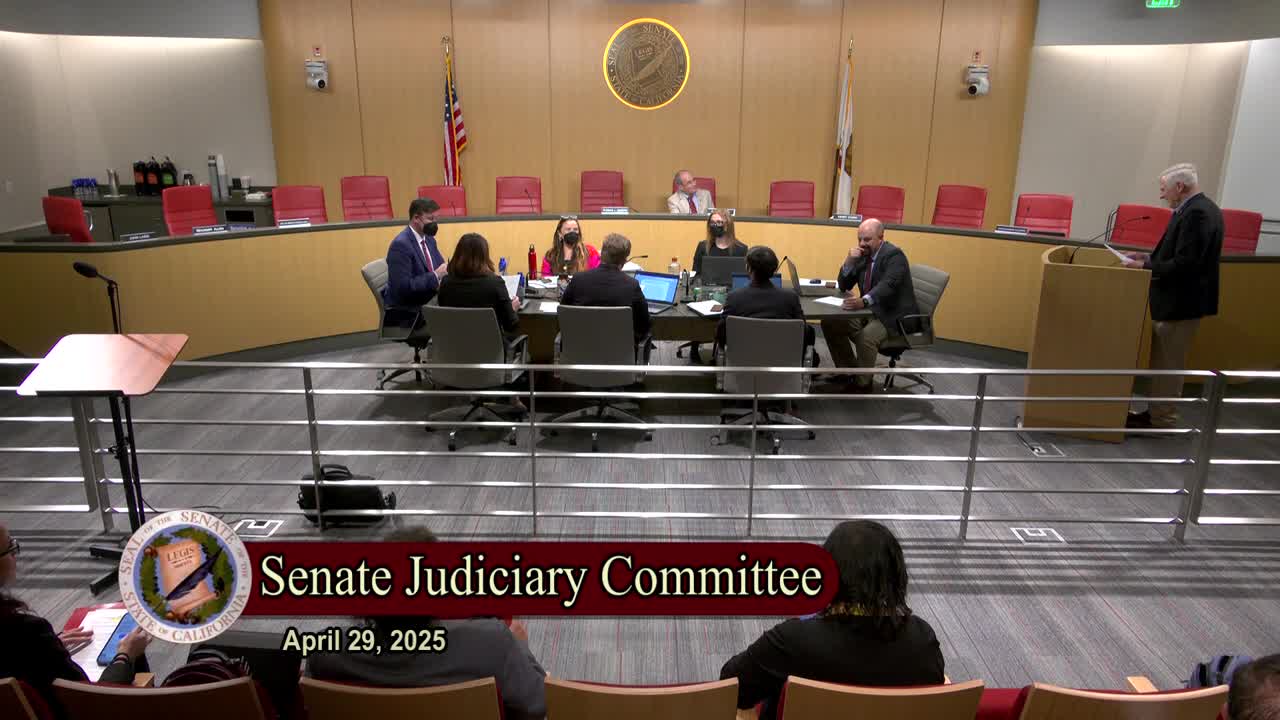 4MIN
Senate Standing Committee on Judiciary
 12MIN
Senate Standing Committee on Health
Bill Author