SB 327: Public utilities: review of accounts: electrical and gas corporations: rates: political influence activities.
- Session Year: 2025-2026
- House: Senate
- Latest Version Date: 2026-09-27
Current Status:
Passed
(2026-09-27: Chaptered by Secretary of State. Chapter 645, Statutes of 2026.)
Introduced
In Committee
Awaiting First Chamber Vote
Passed First Chamber
In Committee
Awaiting Second Chamber Vote
Passed Second Chamber
Enacted
What does this bill do?
The bill stops electric and gas companies from charging customers for activities that oppose municipalization — efforts to create a publicly owned city or county utility — and bars recovery of those costs through rates. It also gives the PUC’s Public Advocates Office the same power as the commission to demand and review company records and requires broader reporting and public disclosure about expenses and staff time tied to these activities.
The summary is provided by generative AI which can make mistakes. For original language, please view the details in the table below.
Existing law authorizes the Public Utilities Commission to fix the rates and charges for public utilities, including electrical corporations and gas corporations, and requires those rates and charges to be just and reasonable. Under existing law, a regulated public utility is prohibited from using ratepayer funds for advocacy-related activities that are political or do not otherwise benefit ratepayers. Existing law prohibits each electrical corporation or gas corporation from recording to an above-the-line account, or otherwise recovering from ratepayers, direct or indirect costs of specified activities.
This bill would include in those activities for which costs may not be recovered from ratepayers any activities related to opposing the municipalization of electrical or gas utility service, as specified.
Existing law authorizes the commission, each commissioner, and each officer and person employed by the commission to inspect the accounts, books, papers, and documents of any public utility. Existing law establishes within the commission an independent Public Advocates Office of the Public Utilities Commission and authorizes the office to require an entity regulated by the commission to produce or disclose any information the office deems necessary to perform its duties, as provided.
This bill would additionally authorize the office to require an entity regulated by the commission to produce or disclose any information the office deems necessary to support the commissions duties. The bill would also specify that the office has the same authority to discover information and review the accounts of a public utility as the commission and would change the timing of a specified annual report by the office to the Legislature.
Under existing law, a violation of the Public Utilities Act or any order, decision, rule, direction, demand, or requirement of the commission is a crime.
Because the above-described provisions would be part of the act and a violation of a commission action implementing the bills requirements would be a crime, this bill would impose a state-mandated local program.
The California Constitution requires the state to reimburse local agencies and school districts for certain costs mandated by the state. Statutory provisions establish procedures for making that reimbursement.
This bill would provide that no reimbursement is required by this act for a specified reason.
Existing law authorizes the Public Utilities Commission to fix the rates and charges for public utilities, including electrical corporations and gas corporations, and requires those rates and charges to be just and reasonable. Under existing law, a regulated public utility is prohibited from using ratepayer funds for advocacy-related activities that are political or do not otherwise benefit ratepayers. Existing law prohibits each electrical corporation or gas corporation from recording to an above-the-line account, or otherwise recovering from ratepayers, direct or indirect costs of specified activities.
This bill would additionally prohibit, except as provided, each electrical corporation or gas corporation from recording to an above-the-line account, or otherwise recovering from ratepayers, the direct or indirect costs of include in those activities for which costs may not be recovered from ratepayers any activities related to opposing the municipalization of electrical or gas utility service, as specified.
Existing law authorizes the commission, each commissioner, and each officer and person employed by the commission to inspect the accounts, books, papers, and documents of any public utility. Existing law establishes within the commission an independent Public Advocates Office of the Public Utilities Commission and authorizes the office to require an entity regulated by the commission to produce or disclose any information the office deems necessary to perform its duties, as provided.
This bill would additionally authorize the office to require an entity regulated by the commission to produce or disclose any information the office deems necessary to support the commissions duties. The bill would also specify that the office has the same authority to discover information and review the accounts of a public utility as the commission. commission and would change the timing of a specified annual report by the office to the Legislature.
Under existing law, a violation of the Public Utilities Act or any order, decision, rule, direction, demand, or requirement of the commission is a crime.
Because the above-described provisions would be part of the act and a violation of a commission action implementing the bills requirements would be a crime, this bill would impose a state-mandated local program.
The California Constitution requires the state to reimburse local agencies and school districts for certain costs mandated by the state. Statutory provisions establish procedures for making that reimbursement.
This bill would provide that no reimbursement is required by this act for a specified reason.
Existing law authorizes the Public Utilities Commission to fix the rates and charges for public utilities, including electrical corporations and gas corporations, and requires those rates and charges to be just and reasonable. Under existing law, a regulated public utility is prohibited from using ratepayer funds for advocacy-related activities that are political or do not otherwise benefit ratepayers. Existing law prohibits each electrical corporation or gas corporation from recording to an above-the-line account, or otherwise recovering from ratepayers, direct or indirect costs of specified activities.
This bill would additionally prohibit, except as provided, each electrical corporation or gas corporation from recording to an above-the-line account, or otherwise recovering from ratepayers, the direct or indirect costs of activities related to opposing the municipalization of electrical or gas utility service, as specified.
Existing law authorizes the commission, each commissioner, and each officer and person employed by the commission to inspect the accounts, books, papers, and documents of any public utility. Existing law establishes within the commission an independent Public Advocates Office of the Public Utilities Commission and authorizes the office to require an entity regulated by the commission to produce or disclose any information the office deems necessary to perform its duties, as provided.
This bill would additionally authorize the office to require an entity regulated by the commission to produce or disclose any information the office deems necessary to support the commissions duties. The bill would specify that the Public Advocates Office of the Public Utilities Commission office has the same authority to discover information and review the accounts of a public utility as the commission.
Under existing law, a violation of the Public Utilities Act or any order, decision, rule, direction, demand, or requirement of the commission is a crime.
Because the above-described provisions would be part of the act and a violation of a commission action implementing the bills requirements would be a crime, this bill would impose a state-mandated local program.
The California Constitution requires the state to reimburse local agencies and school districts for certain costs mandated by the state. Statutory provisions establish procedures for making that reimbursement.
This bill would provide that no reimbursement is required by this act for a specified reason.
Existing law authorizes the Public Utilities Commission to fix the rates and charges for public utilities, including electrical corporations and gas corporations, and requires those rates and charges to be just and reasonable. Under existing law, a regulated public utility is prohibited from using ratepayer funds for advocacy-related activities that are political or do not otherwise benefit ratepayers. Existing law prohibits each electrical corporation or gas corporation from recording to an above-the-line account, or otherwise recovering from ratepayers, direct or indirect costs of specified activities.
This bill would additionally prohibit, except as provided, each electrical corporation or gas corporation from recording to an above-the-line account, or otherwise recovering from ratepayers, the direct or indirect costs of activities related to opposing the municipalization of electrical or gas utility service, as specified.
Existing law authorizes the commission, each commissioner, and each officer and person employed by the commission to inspect the accounts, books, papers, and documents of any public utility.
This bill would specify that the Public Advocates Office of the Public Utilities Commission has the same authority to discover information and review the accounts of a public utility as the commission.
Under existing law, a violation of the Public Utilities Act or any order, decision, rule, direction, demand, or requirement of the commission is a crime.
Because the above-described provisions would be part of the act and a violation of a commission action implementing the bills requirements would be a crime, this bill would impose a state-mandated local program.
The California Constitution requires the state to reimburse local agencies and school districts for certain costs mandated by the state. Statutory provisions establish procedures for making that reimbursement.
This bill would provide that no reimbursement is required by this act for a specified reason.
Existing law authorizes the Public Utilities Commission to fix the rates and charges for public utilities, including electrical corporations and gas corporations, and requires those rates and charges to be just and reasonable. Under existing law, a regulated public utility is prohibited from using ratepayer funds for advocacy-related activities that are political or do not otherwise benefit ratepayers. Existing law prohibits each electrical corporation or gas corporation from recording to an above-the-line account, or otherwise recovering from ratepayers, direct or indirect costs of specified activities.
This bill would additionally prohibit, except as provided, each electrical corporation or gas corporation from recording to accounts that contain expenses that the electrical corporation or gas corporation recovers from ratepayers, an above-the-line account, or otherwise recovering from ratepayers, the direct or indirect costs of activities related to opposing the municipalization of electrical or gas utility service, as specified. The bill would require the commission to monitor and investigate compliance and noncompliance with the prohibition.
Existing law authorizes the commission, each commissioner, and each officer and person employed by the commission to inspect the accounts, books, papers, and documents of any public utility.
This bill would specify that the Public Advocates Office of the Public Utilities Commission has the same authority to discover information and review the accounts of a public utility as the commission.
Under existing law, a violation of the Public Utilities Act or any order, decision, rule, direction, demand, or requirement of the commission is a crime.
Because the above-described provisions would be part of the act and a violation of a commission action implementing the bills requirements would be a crime, this bill would impose a state-mandated local program.
The California Constitution requires the state to reimburse local agencies and school districts for certain costs mandated by the state. Statutory provisions establish procedures for making that reimbursement.
This bill would provide that no reimbursement is required by this act for a specified reason.
Existing law authorizes the Public Utilities Commission to fix the rates and charges for public utilities, including electrical corporations and gas corporations, and requires those rates and charges to be just and reasonable. Under existing law, a regulated public utility is prohibited from using ratepayer funds for advocacy-related activities that are political or do not otherwise benefit ratepayers.
This bill would prohibit, except as provided, each electrical corporation or gas corporation from recording to accounts that contain expenses that the electrical corporation or gas corporation recovers from ratepayers, or otherwise recovering from ratepayers, direct or indirect costs of opposing the municipalization of electrical or gas service, as specified. The bill would require the commission to monitor and investigate compliance and noncompliance with the prohibition.
Existing law authorizes the commission, each commissioner, and each officer and person employed by the commission to inspect the accounts, books, papers, and documents of any public utility.
This bill would specify that the Public Advocates Office of the Public Utilities Commission has the same authority to discover information and review the accounts of a public utility as the commission.
Under existing law, a violation of the Public Utilities Act or any order, decision, rule, direction, demand, or requirement of the commission is a crime.
Because the above-described provisions would be part of the act and a violation of a commission action implementing the bills requirements would be a crime, this bill would impose a state-mandated local program.
The California Constitution requires the state to reimburse local agencies and school districts for certain costs mandated by the state. Statutory provisions establish procedures for making that reimbursement.
This bill would provide that no reimbursement is required by this act for a specified reason.
Existing law requires the State Energy Resources Conservation and Development Commission to carry out technical assessment studies on all forms of energy and energy-related problems in order to influence federal research and development priorities and to be informed on future energy options and their impacts, including, among other things, advanced nuclear powerplant concepts, fusion, and fuel cells.This bill would require the commission to initiate an agreement with the United States Department of Energy for the establishment of a fusion energy data center, as specified.Existing law requires the State Energy Resources Conservation and Development Commission to carry out technical assessment studies on all forms of energy and energy-related problems in order to influence federal research and development priorities and to be informed on future energy options and their impacts, including, among other things, advanced nuclear powerplant concepts, fusion, and fuel cells.
This bill would require the commission to initiate an agreement with the United States Department of Energy for the establishment of a fusion energy data center, as specified.
Existing law requires the State Energy Resources Conservation and Development Commission to carry out technical assessment studies on all forms of energy and energy-related problems in order to influence federal research and development priorities and to be informed on future energy options and their impacts, including, among other things, advanced nuclear powerplant concepts, fusion, and fuel cells.
This bill would state the intent of the Legislature to enact subsequent legislation that would develop standards for nuclear fusion research data sharing. require the commission to initiate an agreement with the United States Department of Energy for the establishment of a fusion energy data center, as specified.
Existing law requires the State Energy Resources Conservation and Development Commission to carry out technical assessment studies on all forms of energy and energy-related problems in order to influence federal research and development priorities and to be informed on future energy options and their impacts, including, among other things, advanced nuclear powerplant concepts, fusion, and fuel cells.
This bill would state the intent of the Legislature to enact subsequent legislation that would develop standards for nuclear fusion research data sharing.
(a)There is within the commission an independent Public Advocates Office of the Public Utilities Commission to represent and advocate on behalf of the interests of public utility customers and subscribers within the jurisdiction of the commission. The goal of the office shall be to obtain the lowest possible rate for service consistent with reliable and safe service levels. For revenue allocation and rate design matters, the office shall primarily consider the interests of residential and small commercial customers.
(b)(1)The director of the office shall be appointed by, and serve at the pleasure of, the Governor, subject to confirmation by the Senate.
(2)The director shall annually appear before the appropriate policy committees of the Assembly and the Senate to report on the activities of the office.
(c)The director shall develop a budget for the office that shall be subject to final approval of the Department of Finance. As authorized in the approved budget, the office shall employ personnel and resources, including attorneys and other legal support staff, at a level sufficient to ensure that customer and subscriber interests are effectively represented in all significant proceedings. The office may employ experts necessary to carry out its functions. The director may appoint a lead attorney who shall represent the office, and shall report to and serve at the pleasure of the director. The lead attorney for the office shall obtain adequate legal personnel for the work to be conducted by the office from the commissions attorney appointed pursuant to Section 307. The commissions attorney shall timely and appropriately fulfill all requests for legal personnel made by the lead attorney for the office, if the office has sufficient moneys and positions in its budget for the services requested.
(d)The commission shall develop appropriate procedures to ensure that the existence of the office does not create a conflict of roles for any employee. The procedures shall include, but shall not be limited to, the development of a code of conduct and procedures for ensuring that advocates and their representatives on a particular case or proceeding are not advising decisionmakers on the same case or proceeding.
(e)(1)The office may compel the production or disclosure of any information it deems necessary to perform its duties, or to support the commissions duties, from any entity regulated by the commission, and has the same authority as the commission to discover information and review the accounts of any entity regulated by the commission.
(2)Any objections to any request for information pursuant to paragraph (1) shall be decided in writing by the assigned commissioner or by the president of the commission, if there is no assigned commissioner.
(f)There is hereby created the Public Utilities Commission Public Advocates Office Account in the General Fund. Moneys from the Public Utilities Commission Utilities Reimbursement Account in the General Fund shall be transferred in the annual Budget Act to the Public Utilities Commission Public Advocates Office Account. The funds in the Public Utilities Commission Public Advocates Office Account shall be a budgetary program fund administered and utilized exclusively by the office in the performance of its duties as determined by the director. The director shall annually submit a staffing report containing a comparison of the staffing levels for each five-year period.
(g)On or before February 1 of each year, the office shall provide to the chairperson of the fiscal committee of each house of the Legislature and to the Joint Legislative Budget Committee all of the following information:
(1)The number of personnel years utilized during the prior year by the office.
(2)The total dollars expended by the office in the prior year, the estimated total dollars expended in the current year, and the total dollars proposed for appropriation in the following budget year.
(3)Workload standards and measures for the office.
(h)The office shall meet and confer in an informal setting with a regulated entity before issuing a report or pleading to the commission regarding alleged misconduct, or a violation of a law or a commission rule or order, raised by the office in a complaint. The meet and confer process shall be utilized in good faith to reach agreement on issues raised by the office regarding any regulated entity in the complaint proceeding.
SEC. 2.Section 748.3 of the Public Utilities Code is amended to read:748.3.(a)For purposes of this section, all of the following definitions apply:
(1)Above-the-line account means an account that contains expenses that a utility recovers from ratepayers, including an account that contains expenses that the utility used to calculate a revenue requirement request in its general rate case.
(2)Below-the-line account means an account that contains expenses that a utility does not generally recover from ratepayers.
(3)Compensation means salary, a bonus, benefits, or other consideration of any value.
(4)Covered business unit means a division, department, or other organizational employee group within a utility that performs activities specified in subdivision (b).
(5)Expense means a payment to an external entity, a cost incurred by a parent company or corporate affiliate and invoiced to a utility, and compensation paid to an employee of a utility.
(6)(A)Political influence activity means any of the following:
(i)An activity for the purpose of directly or indirectly influencing any of the following:
(I)The adoption, repeal, or modification of federal, state, regional, or local legislation, regulations, or ordinances.
(II)The election, recall, appointment, or removal of a public official or the adoption of initiatives or referenda.
(III)The approval, modification, or revocation of a franchise of a utility.
(IV)Public opinion with respect to legislation, regulations, ordinances, elections, referenda, or rate setting of a utility.
(V)Decisions of federal, state, regional, or local public officials.
(ii)Opposition to the municipalization of electrical or gas utility service, including, but not limited to, by any of the following:
(I)Lobbying.
(II)Engaging in city or county proceedings, such as city council meetings or county board of supervisor meetings, to oppose efforts to municipalize electrical or gas utility service.
(III)Other activities intended to directly or indirectly prevent the establishment of a publicly owned municipal utility.
(iii)Research, preparation, or any other activity undertaken for the purpose of supporting any activities specified in clause (i) or (ii).
(B)Political influence activity does not include any of the following:
(i)An activity that is directly and necessarily related to appearances before regulatory or other governmental bodies in connection with the utilitys existing or proposed operations of the utilitys regulated system. Policies affecting the use of gaseous fuels or electricity are not directly and necessarily related to the utilitys existing or proposed operations.
(ii)An activity that is directly related to a commission-approved energy efficiency program or another commission-approved public purpose program if the participation of the utility has not otherwise been prohibited by the commission.
(iii)An activity that responds to a request by a legislative committee, the commission, or a government agency for technical information from the utility.
(iv)An activity required by applicable federal or state statute, or by order of a regulatory authority, and undertaken for the purpose of satisfying that statutory or regulatory requirement.
(7)(A)Promotional advertising means written, online, video, or audio communications that primarily build the public image of a utility and that is not required by the commission, including communications about the undergrounding of electrical lines or other actions that a utility may take in the future.
(B)Promotional advertising does not include, except as specified in subparagraph (A), any of the following:
(i)Public messages that the utility is directed to publish by a federal, state, or local agency.
(ii)Public messages that provide information on safety measures, emergency conditions, the conservation of energy as described in subdivision (b) of Section 796, rates, utility programs and services approved by the commission, or service interruptions, and that do not primarily build the public image of the utility.
(iii)Public messages providing necessary information to customers about specific actions the customers can take for their safety.
(8)Public official means a decisionmaker within an administrative agency or legislative body at the local, regional, state, or federal level, or an executive officer at the local, regional, state, or federal level.
(9)Utility means an electrical corporation or gas corporation.
(10)Utility affiliate means an entity that is related to the utility as a subsidiary, parent, or sibling corporation, including by shareholding or other means of control.
(11)Vendor means a person or business that provides goods and services.
(b)Except as provided in subdivision (c), a utility shall not record to an above-the-line account, or otherwise recover from ratepayers, direct or indirect costs of any of the following:
(1)Membership dues, sponsorships, or other contributions to an industry trade association, group, or related entity incorporated under Section 501 of the Internal Revenue Code of 1986, as amended, if any portion of those contributions support political influence activities or advertising. This paragraph does not apply to fees for professional licenses necessary for employee job duties.
(2)Charitable giving, including contributions to an organization that qualified under Section 501(c)(3) or 501(c)(4) of the Internal Revenue Code of 1986, as amended.
(3)Political influence activities.
(4)Promotional advertising.
(5)Payments to outside attorneys representing a utility in commission proceedings or experts testifying on behalf of, or otherwise supporting the participation by, a utility in commission proceedings that exceed the hourly rates that would be permitted for rate recovery under the commissions intervenor compensation program.
(6)Contributions to political candidates, political parties, campaign committees, issue committees, or independent expenditure committees, or other political expenses.
(7)A cost, including marketing, administration, or customer service, for products or services not regulated by the commission.
(8)Penalties or fines, including tax penalties or fines, issued against a utility.
(9)Board of directors and officers liability insurance, and travel, lodging, food, or beverage expenses for a utilitys board of directors and officers or the board of directors and officers of a utility affiliate.
(10)An owned, leased, or chartered aircraft for the utilitys board of directors and officers or the board of directors and officers of a utility affiliate.
(11)Investor relations.
(c)Subdivision (b) does not prohibit a utility from recording to an above-the-line account payments made pursuant to an agreement authorized by the National Labor Relations Act (29 U.S.C. Sec. 151 et seq.) or payments authorized by the federal National Labor Management Cooperation Act of 1978 (Public Law 95-524), and does not restrict any use permitted by federal law of moneys paid pursuant to those federal acts.
(d)(1)A utility shall clearly and conspicuously disclose in all of its public messages whether the costs of the public messages are being paid for by the utilitys shareholders or ratepayers, consistent with rules and regulations related to candidate disclosure rules adopted pursuant to Article 5 (commencing with Section 84501) of Chapter 4 of Title 9 of the Government Code.
(2)A disclosure is not clear and conspicuous if the disclosure is difficult to hear or read, or if the placement of the disclosure is easily overlooked.
(3)For public messages recorded to an above-the-line account, the utility shall identify, in response to a request from a party in the utilitys most recent general rate case, which expense or capital account is the source of the funding.
(e)(1)On or before May 31, 2026, and annually thereafter, each utility shall report, as part of the statement required under General Order 77-M, all of the following information from the previous calendar year to ensure the utilitys compliance with this section:
(A)(i)A list of covered business units of the utility. Except as specified in clause (ii), for each covered business unit, the report shall contain all of the following:
(I)A list of each employees name and job title.
(II)A job description of each listed employee sufficient to describe the employees responsibilities.
(III)The total annual compensation provided to each listed employee.
(IV)The number of hours booked to an above-the-line account for each listed employee.
(V)The percent of total annual compensation booked to an above-the-line account for each employee.
(ii)This subparagraph does not apply to an employee represented by a labor organization, covered under a valid collective bargaining agreement, and performing activities described in this chapter at the direction of the labor organization.
(B)To the extent the utility retains outside vendors to perform activities described in subdivision (b) and those vendors conduct any other work where the costs of the work are recorded to above-the-line accounts, the utility shall provide the Federal Energy Regulatory Commission Uniform System of Accounts number under which those costs are recorded and a log documenting the time, work performed, total cost incurred, how those costs benefit ratepayers, and the reason those activities are not deemed to be activities for which the recovery through rates of those costs is prohibited pursuant to subdivision (b).
(C)A detailed accounting of expenses booked to an above-the-line account for participation in each commission proceeding for which the utility is a party, including employee compensation, and vendor and other expenses.
(2)The commission shall make all reports filed pursuant to paragraph (1) with the commission publicly available, consistent with Section 583.
(f)The commission shall monitor and investigate compliance and noncompliance with this section.
(g)Moving an expense to a below-the-line account after it was booked to an above-the-line account does not protect that expense from being disclosed to the commission or disclosed in response to a discovery request or order in a general rate case or other relevant commission proceeding.
(h)(1)In addition to any disallowance or future adjustment ordered by the commission, the commission shall assess a civil penalty, based on the severity of the violation, against a utility that violates subdivision (b) or fails or neglects to comply with any part or provision of any order, decision, decree, rule, direction, demand, or requirement of the commission implementing subdivision (b).
(2)This section does not limit the commissions authority under any other law to assess a penalty or sanction against a utility that violates subdivision (b) or fails or neglects to comply with any part or provision of any order, decision, decree, rule, direction, demand, or requirement of the commission implementing subdivision (b).
SEC. 3.No reimbursement is required by this act pursuant to Section 6 of Article XIIIB of the California Constitution because the only costs that may be incurred by a local agency or school district will be incurred because this act creates a new crime or infraction, eliminates a crime or infraction, or changes the penalty for a crime or infraction, within the meaning of Section 17556 of the Government Code, or changes the definition of a crime within the meaning of Section 6 of Article XIIIB of the California Constitution.
(a)There is within the commission an independent Public Advocates Office of the Public Utilities Commission to represent and advocate on behalf of the interests of public utility customers and subscribers within the jurisdiction of the commission. The goal of the office shall be to obtain the lowest possible rate for service consistent with reliable and safe service levels. For revenue allocation and rate design matters, the office shall primarily consider the interests of residential and small commercial customers.
(b)(1)The director of the office shall be appointed by, and serve at the pleasure of, the Governor, subject to confirmation by the Senate.
(2)The director shall annually appear before the appropriate policy committees of the Assembly and the Senate to report on the activities of the office.
(c)The director shall develop a budget for the office that shall be subject to final approval of the Department of Finance. As authorized in the approved budget, the office shall employ personnel and resources, including attorneys and other legal support staff, at a level sufficient to ensure that customer and subscriber interests are effectively represented in all significant proceedings. The office may employ experts necessary to carry out its functions. The director may appoint a lead attorney who shall represent the office, and shall report to and serve at the pleasure of the director. The lead attorney for the office shall obtain adequate legal personnel for the work to be conducted by the office from the commissions attorney appointed pursuant to Section 307. The commissions attorney shall timely and appropriately fulfill all requests for legal personnel made by the lead attorney for the office, if the office has sufficient moneys and positions in its budget for the services requested.
(d)The commission shall develop appropriate procedures to ensure that the existence of the office does not create a conflict of roles for any employee. The procedures shall include, but shall not be limited to, the development of a code of conduct and procedures for ensuring that advocates and their representatives on a particular case or proceeding are not advising decisionmakers on the same case or proceeding.
(e)(1)The office may compel the production or disclosure of any information it deems necessary to perform its duties, or to support the commissions duties, from any entity regulated by the commission, and has the same authority as the commission to discover information and review the accounts of any entity regulated by the commission.
(2)Any objections to any request for information pursuant to paragraph (1) shall be decided in writing by the assigned commissioner or by the president of the commission, if there is no assigned commissioner.
(f)There is hereby created the Public Utilities Commission Public Advocates Office Account in the General Fund. Moneys from the Public Utilities Commission Utilities Reimbursement Account in the General Fund shall be transferred in the annual Budget Act to the Public Utilities Commission Public Advocates Office Account. The funds in the Public Utilities Commission Public Advocates Office Account shall be a budgetary program fund administered and utilized exclusively by the office in the performance of its duties as determined by the director. The director shall annually submit a staffing report containing a comparison of the staffing levels for each five-year period.
(g)On or before January 10 February 1 of each year, the office shall provide to the chairperson of the fiscal committee of each house of the Legislature and to the Joint Legislative Budget Committee all of the following information:
(1)The number of personnel years utilized during the prior year by the office.
(2)The total dollars expended by the office in the prior year, the estimated total dollars expended in the current year, and the total dollars proposed for appropriation in the following budget year.
(3)Workload standards and measures for the office.
(h)The office shall meet and confer in an informal setting with a regulated entity before issuing a report or pleading to the commission regarding alleged misconduct, or a violation of a law or a commission rule or order, raised by the office in a complaint. The meet and confer process shall be utilized in good faith to reach agreement on issues raised by the office regarding any regulated entity in the complaint proceeding.
SEC. 2.Section 748.3 of the Public Utilities Code is amended to read:748.3.(a)For purposes of this section, all of the following definitions apply:
(1)Above-the-line account means an account that contains expenses that a utility recovers from ratepayers, including an account that contains expenses that the utility used to calculate a revenue requirement request in its general rate case.
(2)Below-the-line account means an account that contains expenses that a utility does not generally recover from ratepayers.
(3)Compensation means salary, a bonus, benefits, or other consideration of any value.
(4)Covered business unit means a division, department, or other organizational employee group within a utility that performs activities specified in subdivision (b).
(5)Expense means a payment to an external entity, a cost incurred by a parent company or corporate affiliate and invoiced to a utility, and compensation paid to an employee of a utility.
(6)(A)Political influence activity means either any of the following:
(i)An activity for the purpose of directly or indirectly influencing any of the following:
(I)The adoption, repeal, or modification of federal, state, regional, or local legislation, regulations, or ordinances.
(II)The election, recall, appointment, or removal of a public official or the adoption of initiatives or referenda.
(III)The approval, modification, or revocation of a franchise of a utility.
(IV)Public opinion with respect to legislation, regulations, ordinances, elections, referenda, or rate setting of a utility.
(V)Decisions of federal, state, regional, or local public officials.
(ii)Opposition to the municipalization of electrical or gas utility service, including, but not limited to, by any of the following:
(I)Lobbying.
(II)Engaging in city or county proceedings, such as city council meetings or county board of supervisor meetings, to oppose efforts to municipalize electrical or gas utility service.
(III)Other activities intended to directly or indirectly prevent the establishment of a publicly owned municipal utility.
(ii)(iii)Research, preparation, or any other activity undertaken for the purpose of supporting any activities specified in clause (i). (i) or (ii).
(B)Political influence activity does not include any of the following:
(i)An activity that is directly and necessarily related to appearances before regulatory or other governmental bodies in connection with the utilitys existing or proposed operations of the utilitys regulated system. Policies affecting the use of gaseous fuels or electricity are not directly and necessarily related to the utilitys existing or proposed operations.
(ii)An activity that is directly related to a commission-approved energy efficiency program or another commission-approved public purpose program if the participation of the utility has not otherwise been prohibited by the commission.
(iii)An activity that responds to a request by a legislative committee, the commission, or a government agency for technical information from the utility.
(iv)An activity required by applicable federal or state statute, or by order of a regulatory authority, and undertaken for the purpose of satisfying that statutory or regulatory requirement.
(7)(A)Promotional advertising means written, online, video, or audio communications that primarily build the public image of a utility and that is not required by the commission, including communications about the undergrounding of electrical lines or other actions that a utility may take in the future.
(B)Promotional advertising does not include, except as specified in subparagraph (A), any of the following:
(i)Public messages that the utility is directed to publish by a federal, state, or local agency.
(ii)Public messages that provide information on safety measures, emergency conditions, the conservation of energy as described in subdivision (b) of Section 796, rates, utility programs and services approved by the commission, or service interruptions, and that do not primarily build the public image of the utility.
(iii)Public messages providing necessary information to customers about specific actions the customers can take for their safety.
(8)Public official means a decisionmaker within an administrative agency or legislative body at the local, regional, state, or federal level, or an executive officer at the local, regional, state, or federal level.
(9)Utility means an electrical corporation or gas corporation.
(10)Utility affiliate means an entity that is related to the utility as a subsidiary, parent, or sibling corporation, including by shareholding or other means of control.
(11)Vendor means a person or business that provides goods and services.
(b)Except as provided in subdivision (c), a utility shall not record to an above-the-line account, or otherwise recover from ratepayers, direct or indirect costs of any of the following:
(1)Membership dues, sponsorships, or other contributions to an industry trade association, group, or related entity incorporated under Section 501 of the Internal Revenue Code of 1986, as amended, if any portion of those contributions support political influence activities or advertising. This paragraph does not apply to fees for professional licenses necessary for employee job duties.
(2)Charitable giving, including contributions to an organization that qualified under Section 501(c)(3) or 501(c)(4) of the Internal Revenue Code of 1986, as amended.
(3)Political influence activities.
(4)Promotional advertising.
(5)Payments to outside attorneys representing a utility in commission proceedings or experts testifying on behalf of, or otherwise supporting the participation by, a utility in commission proceedings that exceed the hourly rates that would be permitted for rate recovery under the commissions intervenor compensation program.
(6)Contributions to political candidates, political parties, campaign committees, issue committees, or independent expenditure committees, or other political expenses.
(7)A cost, including marketing, administration, or customer service, for products or services not regulated by the commission.
(8)Penalties or fines, including tax penalties or fines, issued against a utility.
(9)Board of directors and officers liability insurance, and travel, lodging, food, or beverage expenses for a utilitys board of directors and officers or the board of directors and officers of a utility affiliate.
(10)An owned, leased, or chartered aircraft for the utilitys board of directors and officers or the board of directors and officers of a utility affiliate.
(11)Investor relations.
(12)Activities related to opposing the municipalization of electrical or gas utility service, including, but not limited to, any of the following:(A)Lobbying.(B)Engaging in city or county proceedings, such as city council meetings or county board of supervisor meetings, to oppose efforts to municipalize electrical or gas utility service.(C)Other political influence activities intended to prevent the establishment of a publicly owned municipal utility.(c)Subdivision (b) does not prohibit a utility from recording to an above-the-line account payments made pursuant to an agreement authorized by the National Labor Relations Act (29 U.S.C. Sec. 151 et seq.) or payments authorized by the federal National Labor Management Cooperation Act of 1978 (Public Law 95-524), and does not restrict any use permitted by federal law of moneys paid pursuant to those federal acts.
(d)(1)A utility shall clearly and conspicuously disclose in all of its public messages whether the costs of the public messages are being paid for by the utilitys shareholders or ratepayers, consistent with rules and regulations related to candidate disclosure rules adopted pursuant to Article 5 (commencing with Section 84501) of Chapter 4 of Title 9 of the Government Code.
(2)A disclosure is not clear and conspicuous if the disclosure is difficult to hear or read, or if the placement of the disclosure is easily overlooked.
(3)For public messages recorded to an above-the-line account, the utility shall identify, in response to a request from a party in the utilitys most recent general rate case, which expense or capital account is the source of the funding.
(e)(1)On or before May 31, 2026, and annually thereafter, each utility shall report, as part of the statement required under General Order 77-M, all of the following information from the previous calendar year to ensure the utilitys compliance with this section:
(A)(i)A list of covered business units of the utility. Except as specified in clause (ii), for each covered business unit, the report shall contain all of the following:
(I)A list of each employees name and job title.
(II)A job description of each listed employee sufficient to describe the employees responsibilities.
(III)The total annual compensation provided to each listed employee.
(IV)The number of hours booked to an above-the-line account for each listed employee.
(V)The percent of total annual compensation booked to an above-the-line account for each employee.
(ii)This subparagraph does not apply to an employee represented by a labor organization, covered under a valid collective bargaining agreement, and performing activities described in this chapter at the direction of the labor organization.
(B)To the extent the utility retains outside vendors to perform activities described in subdivision (b) and those vendors conduct any other work where the costs of the work are recorded to above-the-line accounts, the utility shall provide the Federal Energy Regulatory Commission Uniform System of Accounts number under which those costs are recorded and a log documenting the time, work performed, total cost incurred, how those costs benefit ratepayers, and the reason those activities are not deemed to be activities for which the recovery through rates of those costs is prohibited pursuant to subdivision (b).
(C)A detailed accounting of expenses booked to an above-the-line account for participation in each commission proceeding for which the utility is a party, including employee compensation, and vendor and other expenses.
(2)The commission shall make all reports filed pursuant to paragraph (1) with the commission publicly available, consistent with Section 583.
(f)The commission shall monitor and investigate compliance and noncompliance with this section.
(g)Moving an expense to a below-the-line account after it was booked to an above-the-line account does not protect that expense from being disclosed to the commission or disclosed in response to a discovery request or order in a general rate case or other relevant commission proceeding.
(h)(1)In addition to any disallowance or future adjustment ordered by the commission, the commission shall assess a civil penalty, based on the severity of the violation, against a utility that violates subdivision (b) or fails or neglects to comply with any part or provision of any order, decision, decree, rule, direction, demand, or requirement of the commission implementing subdivision (b).
(2)This section does not limit the commissions authority under any other law to assess a penalty or sanction against a utility that violates subdivision (b) or fails or neglects to comply with any part or provision of any order, decision, decree, rule, direction, demand, or requirement of the commission implementing subdivision (b).
SEC. 3.No reimbursement is required by this act pursuant to Section 6 of Article XIIIB of the California Constitution because the only costs that may be incurred by a local agency or school district will be incurred because this act creates a new crime or infraction, eliminates a crime or infraction, or changes the penalty for a crime or infraction, within the meaning of Section 17556 of the Government Code, or changes the definition of a crime within the meaning of Section 6 of Article XIIIB of the California Constitution.
(a)There is within the commission an independent Public Advocates Office of the Public Utilities Commission to represent and advocate on behalf of the interests of public utility customers and subscribers within the jurisdiction of the commission. The goal of the office shall be to obtain the lowest possible rate for service consistent with reliable and safe service levels. For revenue allocation and rate design matters, the office shall primarily consider the interests of residential and small commercial customers.
(b)(1)The director of the office shall be appointed by, and serve at the pleasure of, the Governor, subject to confirmation by the Senate.
The(2)The director shall annually appear before the appropriate policy committees of the Assembly and the Senate to report on the activities of the office.
(c)The director shall develop a budget for the office that shall be subject to final approval of the Department of Finance. As authorized in the approved budget, the office shall employ personnel and resources, including attorneys and other legal support staff, at a level sufficient to ensure that customer and subscriber interests are effectively represented in all significant proceedings. The office may employ experts necessary to carry out its functions. The director may appoint a lead attorney who shall represent the office, and shall report to and serve at the pleasure of the director. The lead attorney for the office shall obtain adequate legal personnel for the work to be conducted by the office from the commissions attorney appointed pursuant to Section 307. The commissions attorney shall timely and appropriately fulfill all requests for legal personnel made by the lead attorney for the office, provided if the office has sufficient moneys and positions in its budget for the services requested.
(d)The commission shall develop appropriate procedures to ensure that the existence of the office does not create a conflict of roles for any employee. The procedures shall include, but shall not be limited to, the development of a code of conduct and procedures for ensuring that advocates and their representatives on a particular case or proceeding are not advising decisionmakers on the same case or proceeding.
(e)(1)The office may compel the production or disclosure of any information it deems necessary to perform its duties duties, or to support the commissions duties, from any entity regulated by the commission, provided that any and has the same authority as the commission to discover information and review the accounts of any entity regulated by the commission.
(2)Any objections to any request for information pursuant to paragraph (1) shall be decided in writing by the assigned commissioner or by the president of the commission, if there is no assigned commissioner.
(f)There is hereby created the Public Utilities Commission Public Advocates Office Account in the General Fund. Moneys from the Public Utilities Commission Utilities Reimbursement Account in the General Fund shall be transferred in the annual Budget Act to the Public Utilities Commission Public Advocates Office Account. The funds in the Public Utilities Commission Public Advocates Office Account shall be a budgetary program fund administered and utilized exclusively by the office in the performance of its duties as determined by the director. The director shall annually submit a staffing report containing a comparison of the staffing levels for each five-year period.
(g)On or before January 10 of each year, the office shall provide to the chairperson of the fiscal committee of each house of the Legislature and to the Joint Legislative Budget Committee all of the following information:
(1)The number of personnel years utilized during the prior year by the office.
(2)The total dollars expended by the office in the prior year, the estimated total dollars expended in the current year, and the total dollars proposed for appropriation in the following budget year.
(3)Workload standards and measures for the office.
(h)The office shall meet and confer in an informal setting with a regulated entity prior to before issuing a report or pleading to the commission regarding alleged misconduct, or a violation of a law or a commission rule or order, raised by the office in a complaint. The meet and confer process shall be utilized in good faith to reach agreement on issues raised by the office regarding any regulated entity in the complaint proceeding.
SEC. 2.Section 748.3 of the Public Utilities Code is amended to read:748.3.(a)For purposes of this section, all of the following definitions apply:
(1)Above-the-line account means an account that contains expenses that a utility recovers from ratepayers, including an account that contains expenses that the utility used to calculate a revenue requirement request in its general rate case.
(2)Below-the-line account means an account that contains expenses that a utility does not generally recover from ratepayers.
(3)Compensation means salary, a bonus, benefits, or other consideration of any value.
(4)Covered business unit means a division, department, or other organizational employee group within a utility that performs activities specified in subdivision (b).
(5)Expense means a payment to an external entity, a cost incurred by a parent company or corporate affiliate and invoiced to a utility, and compensation paid to an employee of a utility.
(6)(A)Political influence activity means either of the following:
(i)An activity for the purpose of directly or indirectly influencing any of the following:
(I)The adoption, repeal, or modification of federal, state, regional, or local legislation, regulations, or ordinances.
(II)The election, recall, appointment, or removal of a public official or the adoption of initiatives or referenda.
(III)The approval, modification, or revocation of a franchise of a utility.
(IV)Public opinion with respect to legislation, regulations, ordinances, elections, referenda, or rate setting of a utility.
(V)Decisions of federal, state, regional, or local public officials.
(ii)Research, preparation, or any other activity undertaken for the purpose of supporting any activities specified in clause (i).
(B)Political influence activity does not include any of the following:
(i)An activity that is directly and necessarily related to appearances before regulatory or other governmental bodies in connection with the utilitys existing or proposed operations of the utilitys regulated system. Policies affecting the use of gaseous fuels or electricity are not directly and necessarily related to the utilitys existing or proposed operations.
(ii)An activity that is directly related to a commission-approved energy efficiency program or another commission-approved public purpose program if the participation of the utility has not otherwise been prohibited by the commission.
(iii)An activity that responds to a request by a legislative committee, the commission, or a government agency for technical information from the utility.
(iv)An activity required by applicable federal or state statute, or by order of a regulatory authority, and undertaken for the purpose of satisfying that statutory or regulatory requirement.
(7)(A)Promotional advertising means written, online, video, or audio communications that primarily build the public image of a utility and that is not required by the commission, including communications about the undergrounding of electrical lines or other actions that a utility may take in the future.
(B)Promotional advertising does not include, except as specified in subparagraph (A), any of the following:
(i)Public messages that the utility is directed to publish by a federal, state, or local agency.
(ii)Public messages that provide information on safety measures, emergency conditions, the conservation of energy as described in subdivision (b) of Section 796, rates, utility programs and services approved by the commission, or service interruptions, and that do not primarily build the public image of the utility.
(iii)Public messages providing necessary information to customers about specific actions the customers can take for their safety.
(8)Public official means a decisionmaker within an administrative agency or legislative body at the local, regional, state, or federal level, or an executive officer at the local, regional, state, or federal level.
(9)Utility means an electrical corporation or gas corporation.
(10)Utility affiliate means an entity that is related to the utility as a subsidiary, parent, or sibling corporation, including by shareholding or other means of control.
(11)Vendor means a person or business that provides goods and services.
(b)Except as provided in subdivision (c), a utility shall not record to an above-the-line account, or otherwise recover from ratepayers, direct or indirect costs of any of the following:
(1)Membership dues, sponsorships, or other contributions to an industry trade association, group, or related entity incorporated under Section 501 of the Internal Revenue Code of 1986, as amended, if any portion of those contributions support political influence activities or advertising. This paragraph does not apply to fees for professional licenses necessary for employee job duties.
(2)Charitable giving, including contributions to an organization that qualified under Section 501(c)(3) or 501(c)(4) of the Internal Revenue Code of 1986, as amended.
(3)Political influence activities.
(4)Promotional advertising.
(5)Payments to outside attorneys representing a utility in commission proceedings or experts testifying on behalf of, or otherwise supporting the participation by, a utility in commission proceedings that exceed the hourly rates that would be permitted for rate recovery under the commissions intervenor compensation program.
(6)Contributions to political candidates, political parties, campaign committees, issue committees, or independent expenditure committees, or other political expenses.
(7)A cost, including marketing, administration, or customer service, for products or services not regulated by the commission.
(8)Penalties or fines, including tax penalties or fines, issued against a utility.
(9)Board of directors and officers liability insurance, and travel, lodging, food, or beverage expenses for a utilitys board of directors and officers or the board of directors and officers of a utility affiliate.
(10)An owned, leased, or chartered aircraft for the utilitys board of directors and officers or the board of directors and officers of a utility affiliate.
(11)Investor relations.
(12)Activities related to opposing the municipalization of electrical or gas utility service, including, but not limited to, any of the following:
(A)Lobbying.
(B)Engaging in city or county proceedings, such as city council meetings or county board of supervisor meetings, to oppose efforts to municipalize electrical or gas utility service.
(C)Other political influence activities intended to prevent the establishment of a publicly owned municipal utility.
(c)Subdivision (b) does not prohibit a utility from recording to an above-the-line account payments made pursuant to an agreement authorized by the National Labor Relations Act (29 U.S.C. Sec. 151 et seq.) or payments authorized by the federal National Labor Management Cooperation Act of 1978 (Public Law 95-524), and does not restrict any use permitted by federal law of moneys paid pursuant to those federal acts.
(d)(1)A utility shall clearly and conspicuously disclose in all of its public messages whether the costs of the public messages are being paid for by the utilitys shareholders or ratepayers, consistent with rules and regulations related to candidate disclosure rules adopted pursuant to Article 5 (commencing with Section 84501) of Chapter 4 of Title 9 of the Government Code.
(2)A disclosure is not clear and conspicuous if the disclosure is difficult to hear or read, or if the placement of the disclosure is easily overlooked.
(3)For public messages recorded to an above-the-line account, the utility shall identify, in response to a request from a party in the utilitys most recent general rate case, which expense or capital account is the source of the funding.
(e)(1)On or before May 31, 2026, and annually thereafter, each utility shall report, as part of the statement required under General Order 77-M, all of the following information from the previous calendar year to ensure the utilitys compliance with this section:
(A)(i)A list of covered business units of the utility. Except as specified in clause (ii), for each covered business unit, the report shall contain all of the following:
(I)A list of each employees name and job title.
(II)A job description of each listed employee sufficient to describe the employees responsibilities.
(III)The total annual compensation provided to each listed employee.
(IV)The number of hours booked to an above-the-line account for each listed employee.
(V)The percent of total annual compensation booked to an above-the-line account for each employee.
(ii)This subparagraph does not apply to an employee represented by a labor organization, covered under a valid collective bargaining agreement, and performing activities described in this chapter at the direction of the labor organization.
(B)To the extent the utility retains outside vendors to perform activities described in subdivision (b) and those vendors conduct any other work where the costs of the work are recorded to above-the-line accounts, the utility shall provide the Federal Energy Regulatory Commission Uniform System of Accounts number under which those costs are recorded and a log documenting the time, work performed, total cost incurred, how those costs benefit ratepayers, and the reason those activities are not deemed to be activities for which the recovery through rates of those costs is prohibited pursuant to subdivision (b).
(C)A detailed accounting of expenses booked to an above-the-line account for participation in each commission proceeding for which the utility is a party, including employee compensation, and vendor and other expenses.
(2)The commission shall make all reports filed pursuant to paragraph (1) with the commission publicly available, consistent with Section 583.
(f)The commission shall monitor and investigate compliance and noncompliance with this section.
(g)Moving an expense to a below-the-line account after it was booked to an above-the-line account does not protect that expense from being disclosed to the commission or disclosed in response to a discovery request or order in a general rate case or other relevant commission proceeding.
(h)(1)In addition to any disallowance or future adjustment ordered by the commission, the commission shall assess a civil penalty, based on the severity of the violation, against a utility that violates subdivision (b) or fails or neglects to comply with any part or provision of any order, decision, decree, rule, direction, demand, or requirement of the commission implementing subdivision (b).
(2)This section does not limit the commissions authority under any other law to assess a penalty or sanction against a utility that violates subdivision (b) or fails or neglects to comply with any part or provision of any order, decision, decree, rule, direction, demand, or requirement of the commission implementing subdivision (b).
SEC. 3.No reimbursement is required by this act pursuant to Section 6 of Article XIIIB of the California Constitution because the only costs that may be incurred by a local agency or school district will be incurred because this act creates a new crime or infraction, eliminates a crime or infraction, or changes the penalty for a crime or infraction, within the meaning of Section 17556 of the Government Code, or changes the definition of a crime within the meaning of Section 6 of Article XIIIB of the California Constitution.
(a)The commission, each commissioner, and each officer and person employed by the commission may, at any time, inspect the accounts, books, papers, and documents of any public utility. The commission, each commissioner, and any officer of the commission or any employee authorized to administer oaths may examine under oath any officer, agent, or employee of a public utility in relation to its business and affairs. Any person, other than a commissioner or an officer of the commission, demanding to make any inspection shall produce, under the hand and seal of the commission, authorization to make the inspection. A written record of the testimony or statement so given under oath shall be made and filed with the commission.
(b)Subdivision (a) also applies to inspections of the accounts, books, papers, and documents of any business that is a subsidiary or affiliate of, or a corporation that holds a controlling interest in, an electrical, gas, or telephone corporation, or a water corporation that has 2,000 or more service connections, with respect to any transaction between the water, electrical, gas, or telephone corporation and the subsidiary, affiliate, or holding corporation on any matter that might adversely affect the interests of the ratepayers of the water, electrical, gas, or telephone corporation.
(c)The Public Advocates Office of the Public Utilities Commission shall have the same authority to discover information and review the accounts of a public utility as the commission.
SEC. 2.Section 748.3 of the Public Utilities Code is amended to read:748.3.(a)For purposes of this section, all of the following definitions apply:
(1)Above-the-line account means an account that contains expenses that a utility recovers from ratepayers, including an account that contains expenses that the utility used to calculate a revenue requirement request in its general rate case.
(2)Below-the-line account means an account that contains expenses that a utility does not generally recover from ratepayers.
(3)Compensation means salary, a bonus, benefits, or other consideration of any value.
(4)Covered business unit means a division, department, or other organizational employee group within a utility that performs activities specified in subdivision (b).
(5)Expense means a payment to an external entity, a cost incurred by a parent company or corporate affiliate and invoiced to a utility, and compensation paid to an employee of a utility.
(6)(A)Political influence activity means either of the following:
(i)An activity for the purpose of directly or indirectly influencing any of the following:
(I)The adoption, repeal, or modification of federal, state, regional, or local legislation, regulations, or ordinances.
(II)The election, recall, appointment, or removal of a public official or the adoption of initiatives or referenda.
(III)The approval, modification, or revocation of franchises a franchise of a utility.
(IV)Public opinion with respect to legislation, regulations, ordinances, elections, referenda, or rate setting of a utility.
(V)Decisions of federal, state, regional, or local public officials.
(ii)Research, preparation, or any other activity undertaken for the purpose of supporting any activities specified in clause (i).
(B)Political influence activity does not include any of the following:
(i)An activity that is directly and necessarily related to appearances before regulatory or other governmental bodies in connection with the utilitys existing or proposed operations of the utilitys regulated system. Policies affecting the use of gaseous fuels or electricity are not directly and necessarily related to the utilitys existing or proposed operations.
(ii)An activity that is directly related to a commission-approved energy efficiency program or another commission-approved public purpose program if the participation of the utility has not otherwise been prohibited by the commission.
(iii)An activity that responds to a request by a legislative committee, the commission, or a government agency for technical information from the utility.
(iv)An activity required by applicable federal or state statute, or by order of a regulatory authority, and undertaken for the purpose of satisfying that statutory or regulatory requirement.
(7)(A)Promotional advertising means written, online, video, or audio communications that primarily build the public image of a utility and that is not required by the commission, including communications about the undergrounding of electrical lines or other actions that a utility may take in the future.
(B)Promotional advertising does not include, except as specified in subparagraph (A), any of the following:
(i)Public messages that the utility is directed to publish by a federal, state, or local agency.
(ii)Public messages that provide information on safety measures, emergency conditions, the conservation of energy as described in subdivision (b) of Section 796, rates, utility programs and services approved by the commission, or service interruptions, and that do not primarily build the public image of the utility.
(iii)Public messages providing necessary information to customers about specific actions the customers can take for their safety.
(8)Public official means a decisionmaker within an administrative agency or legislative body at the local, regional, state, or federal level, or an executive officer at the local, regional, state, or federal level.
(9)Utility means an electrical corporation or gas corporation.
(10)Utility affiliate means an entity that is related to the utility as a subsidiary, parent, or sibling corporation, including by shareholding or other means of control.
(11)Vendor means a person or business that provides goods and services.
(b)Except as provided in subdivision (c), a utility shall not record to an above-the-line account, or otherwise recover from ratepayers, direct or indirect costs of any of the following:
(1)Membership dues, sponsorships, or other contributions to an industry trade association, group, or related entity incorporated under Section 501 of the Internal Revenue Code of 1986, as amended, if any portion of those contributions support political influence activities or advertising. This paragraph does not apply to fees for professional licenses necessary for employee job duties.
(2)Charitable giving, including contributions to an organization that qualified under Section 501(c)(3) or 501(c)(4) of the Internal Revenue Code of 1986, as amended.
(3)Political influence activities.
(4)Promotional advertising.
(5)Payments to outside attorneys representing utilities a utility in commission proceedings or experts testifying on behalf of, or otherwise supporting the participation by, utilities a utility in commission proceedings that exceed the hourly rates that would be permitted for rate recovery under the commissions intervenor compensation program.
(6)Contributions to political candidates, political parties, campaign committees, issue committees, or independent expenditure committees, or other political expenses.
(7)A cost, including marketing, administration, or customer service, for products or services not regulated by the commission.
(8)Penalties or fines, including tax penalties or fines, issued against a utility.
(9)Board of directors and officers liability insurance, and travel, lodging, food, or beverage expenses for a utilitys board of directors and officers or the board of directors and officers of a utility affiliate.
(10)An owned, leased, or chartered aircraft for the utilitys board of directors and officers or the board of directors and officers of a utility affiliate.
(11)Investor relations.
(12)Activities related to opposing the municipalization of electrical or gas utility service, including, but not limited to, any of the following:
(A)Lobbying.
(B)Engaging in city or county proceedings, such as city council meetings or county board of supervisor meetings, to oppose efforts to municipalize electrical or gas utility service.
(C)Other political influence activities intended to prevent the establishment of a publicly owned municipal utility.
(c)Subdivision (b) does not prohibit a utility from recording to an above-the-line account payments made pursuant to an agreement authorized by the National Labor Relations Act (29 U.S.C. Sec. 151 et seq.) or payments authorized by the federal National Labor Management Cooperation Act of 1978 (Public Law 95-524), and does not restrict any use permitted by federal law of moneys paid pursuant to those federal acts.
(d)(1)A utility shall clearly and conspicuously disclose in all of its public messages whether the costs of the public messages are being paid for by the utilitys shareholders or ratepayers, consistent with rules and regulations related to candidate disclosure rules adopted pursuant to Article 5 (commencing with Section 84501) of Chapter 4 of Title 9 of the Government Code.
(2)A disclosure is not clear and conspicuous if the disclosure is difficult to hear or read, or if the placement of the disclosure is easily overlooked.
(3)For public messages recorded to an above-the-line account, the utility shall identify, in response to a request from a party in the utilitys most recent general rate case, which expense or capital account is the source of the funding.
(e)(1)On or before May 31, 2026, and annually thereafter, each utility shall report, as part of the statement required under General Order 77-M, all of the following information from the previous calendar year to ensure the utilitys compliance with this section:
(A)(i)A list of covered business units of the utility. Except as specified in clause (ii), for each covered business unit, the report shall contain all of the following:
(I)A list of each employees name and job title.
(II)A job description of each listed employee sufficient to describe the employees responsibilities.
(III)The total annual compensation provided to each listed employee.
(IV)The number of hours booked to an above-the-line account for each listed employee.
(V)The percent of total annual compensation booked to an above-the-line account for each employee.
(ii)This subparagraph does not apply to an employee represented by a labor organization, covered under a valid collective bargaining agreement, and performing activities described in this chapter at the direction of the labor organization.
(B)To the extent the utility retains outside vendors to perform activities described in subdivision (b) and those vendors conduct any other work where the costs of the work are recorded to above-the-line accounts, the utility shall provide the Federal Energy Regulatory Commission Uniform System of Accounts number under which those costs are recorded and a log documenting the time, work performed, total cost incurred, how those costs benefit ratepayers, and the reason those activities are not deemed to be activities for which the recovery through rates of those costs is prohibited pursuant to subdivision (b).
(C)A detailed accounting of expenses booked to an above-the-line account for participation in each commission proceeding for which the utility is a party, including employee compensation, and vendor and other expenses.
(2)The commission shall make all reports filed pursuant to paragraph (1) with the commission publicly available, consistent with Section 583.
(f)The commission shall monitor and investigate compliance and noncompliance with this section.
(g)Moving an expense to a below-the-line account after it was booked to an above-the-line account does not protect that expense from being disclosed to the commission or disclosed in response to a discovery request or order in a general rate case or other relevant commission proceeding.
(h)(1)In addition to any disallowance or future adjustment ordered by the commission, the commission shall assess a civil penalty, based on the severity of the violation, against a utility that violates subdivision (b) or fails or neglects to comply with any part or provision of any order, decision, decree, rule, direction, demand, or requirement of the commission implementing subdivision (b).
(2)This section does not limit the commissions authority under any other law to assess a penalty or sanction against a utility that violates subdivision (b) or fails or neglects to comply with any part or provision of any order, decision, decree, rule, direction, demand, or requirement of the commission implementing subdivision (b).
SEC. 3.No reimbursement is required by this act pursuant to Section 6 of Article XIIIB of the California Constitution because the only costs that may be incurred by a local agency or school district will be incurred because this act creates a new crime or infraction, eliminates a crime or infraction, or changes the penalty for a crime or infraction, within the meaning of Section 17556 of the Government Code, or changes the definition of a crime within the meaning of Section 6 of Article XIIIB of the California Constitution.
(a)The commission, each commissioner, and each officer and person employed by the commission may, at any time, inspect the accounts, books, papers, and documents of any public utility. The commission, each commissioner, and any officer of the commission or any employee authorized to administer oaths may examine under oath any officer, agent, or employee of a public utility in relation to its business and affairs. Any person, other than a commissioner or an officer of the commission, demanding to make any inspection shall produce, under the hand and seal of the commission, authorization to make the inspection. A written record of the testimony or statement so given under oath shall be made and filed with the commission.
(b)Subdivision (a) also applies to inspections of the accounts, books, papers, and documents of any business that is a subsidiary or affiliate of, or a corporation that holds a controlling interest in, an electrical, gas, or telephone corporation, or a water corporation that has 2,000 or more service connections, with respect to any transaction between the water, electrical, gas, or telephone corporation and the subsidiary, affiliate, or holding corporation on any matter that might adversely affect the interests of the ratepayers of the water, electrical, gas, or telephone corporation.
(c)The Public Advocates Office of the Public Utilities Commission shall have the same authority to discover information and review the accounts of a public utility as the commission.
SEC. 2.Section 748.4 is added to the Public Utilities Code, to read:748.4.(a)For purposes of this section, all of the following definitions apply:(1)Above-the-line account means an account that contains expenses that a utility recovers from ratepayers, including an account that contains expenses that the utility used to calculate a revenue requirement request in its general rate case.(2)Below-the-line account means an account that contains expenses that a utility does not generally recover from ratepayers.(3)Compensation means salary, a bonus, benefits, or other consideration of any value.(4)Expense means a payment to an external entity, a cost incurred by a parent company or corporate affiliate and invoiced to a utility, and compensation paid to an employee of a utility.(5)(A)Political influence activity means either of the following:(i)An activity for the purpose of directly or indirectly influencing any of the following:(I)The adoption, repeal, or modification of federal, state, regional, or local legislation, regulations, or ordinances.(II)The election, recall, appointment, or removal of a public official or the adoption of initiatives or referenda.(III)The approval, modification, or revocation of franchises of a utility.(IV)Public opinion with respect to legislation, regulations, ordinances, elections, referenda, or rate setting of a utility.(V)Decisions of federal, state, regional, or local public officials.(ii)Research, preparation, or any other activity undertaken for the purpose of supporting any activities specified in clause (i).(B)Political influence activity does not include any of the following:(i)An activity that is directly and necessarily related to appearances before regulatory or other governmental bodies in connection with the utilitys existing or proposed operations of the utilitys regulated system. Policies affecting the use of gaseous fuels or electricity are not directly and necessarily related to the utilitys existing or proposed operations.(ii)An activity that is directly related to a commission-approved energy efficiency program or another commission-approved public purpose program if the participation of the utility has not otherwise been prohibited by the commission.(iii)Public messages providing necessary information to customers about specific actions the customers can take for their safety.(iv)An activity required by applicable federal or state statute, or by order of a regulatory authority, and undertaken for the purpose of satisfying that statutory or regulatory requirement.(6)Public official means a decisionmaker within an administrative agency or legislative body at the local, regional, state, or federal level, or an executive officer at the local, regional, state, or federal level.(7)Utility means an electrical corporation or gas corporation.(b)A utility shall not record to an above-the-line account, or otherwise recover from ratepayers, direct or indirect costs for opposing the municipalization of electrical or gas service, including, but not limited to, any of the following:(1)Lobbying.(2)Engaging in city or county political proceedings, such as city council meetings or county board of supervisor meetings.(3)Other political influence activities intended to undermine or prevent the establishment of a publicly owned municipal utility.(c)The commission shall monitor and investigate compliance and noncompliance with this section.(d)Moving an expense to a below-the-line account after it was booked to an above-the-line account does not protect that expense from being disclosed to the commission or disclosed in response to a discovery request or order in a general rate case or other relevant commission proceeding.(e)Subdivision (b) does not prohibit a utility from recording to an above-the-line account a payment made pursuant to an agreement authorized by the National Labor Relations Act (29 U.S.C. Sec. 151 et seq.) or payment authorized by the federal National Labor Management Cooperation Act of 1978 (Public Law 95-524), and does not restrict any use permitted by federal law of moneys paid pursuant to those federal acts.SEC. 2.Section 748.3 of the Public Utilities Code is amended to read:748.3.(a)For purposes of this section, all of the following definitions apply:
(1)Above-the-line account means an account that contains expenses that a utility recovers from ratepayers, including an account that contains expenses that the utility used to calculate a revenue requirement request in its general rate case.
(2)Below-the-line account means an account that contains expenses that a utility does not generally recover from ratepayers.
(3)Compensation means salary, a bonus, benefits, or other consideration of any value.
(4)Covered business unit means a division, department, or other organizational employee group within a utility that performs activities specified in subdivision (b).
(5)Expense means a payment to an external entity, a cost incurred by a parent company or corporate affiliate and invoiced to a utility, and compensation paid to an employee of a utility.
(6)(A)Political influence activity means either of the following:
(i)An activity for the purpose of directly or indirectly influencing any of the following:
(I)The adoption, repeal, or modification of federal, state, regional, or local legislation, regulations, or ordinances.
(II)The election, recall, appointment, or removal of a public official or the adoption of initiatives or referenda.
(III)The approval, modification, or revocation of franchises of a utility.
(IV)Public opinion with respect to legislation, regulations, ordinances, elections, referenda, or rate setting of a utility.
(V)Decisions of federal, state, regional, or local public officials.
(ii)Research, preparation, or any other activity undertaken for the purpose of supporting any activities specified in clause (i).
(B)Political influence activity does not include any of the following:
(i)An activity that is directly and necessarily related to appearances before regulatory or other governmental bodies in connection with the utilitys existing or proposed operations of the utilitys regulated system. Policies affecting the use of gaseous fuels or electricity are not directly and necessarily related to the utilitys existing or proposed operations.
(ii)An activity that is directly related to a commission-approved energy efficiency program or another commission-approved public purpose program if the participation of the utility has not otherwise been prohibited by the commission.
(iii)An activity that responds to a request by a legislative committee, the commission, or a government agency for technical information from the utility.
(iv)An activity required by applicable federal or state statute, or by order of a regulatory authority, and undertaken for the purpose of satisfying that statutory or regulatory requirement.
(7)(A)Promotional advertising means written, online, video, or audio communications that primarily build the public image of a utility and that is not required by the commission, including communications about the undergrounding of electrical lines or other actions that a utility may take in the future.
(B)Promotional advertising does not include, except as specified in subparagraph (A), any of the following:
(i)Public messages that the utility is directed to publish by a federal, state, or local agency.
(ii)Public messages that provide information on safety measures, emergency conditions, the conservation of energy as described in subdivision (b) of Section 796, rates, utility programs and services approved by the commission, or service interruptions, and that do not primarily build the public image of the utility.
(iii)Public messages providing necessary information to customers about specific actions the customers can take for their safety.
(8)Public official means a decisionmaker within an administrative agency or legislative body at the local, regional, state, or federal level, or an executive officer at the local, regional, state, or federal level.
(9)Utility means an electrical corporation or gas corporation.
(10)Utility affiliate means an entity that is related to the utility as a subsidiary, parent, or sibling corporation, including by shareholding or other means of control.
(11)Vendor means a person or business that provides goods and services.
(b)Except as provided in subdivision (c), a utility shall not record to an above-the-line account, or otherwise recover from ratepayers, direct or indirect costs of any of the following:
(1)Membership dues, sponsorships, or other contributions to an industry trade association, group, or related entity incorporated under Section 501 of the Internal Revenue Code of 1986, as amended, if any portion of those contributions support political influence activities or advertising. This paragraph does not apply to fees for professional licenses necessary for employee job duties.
(2)Charitable giving, including contributions to an organization that qualified under Section 501(c)(3) or 501(c)(4) of the Internal Revenue Code of 1986, as amended.
(3)Political influence activities.
(4)Promotional advertising.
(5)Payments to outside attorneys representing utilities in commission proceedings or experts testifying on behalf of, or otherwise supporting the participation by, utilities in commission proceedings that exceed the hourly rates that would be permitted for rate recovery under the commissions intervenor compensation program.
(6)Contributions to political candidates, political parties, campaign committees, issue committees, or independent expenditure committees, or other political expenses.
(7)A cost, including marketing, administration, or customer service, for products or services not regulated by the commission.
(8)Penalties or fines, including tax penalties or fines, issued against a utility.
(9)Board of directors and officers liability insurance, and travel, lodging, food, or beverage expenses for a utilitys board of directors and officers or the board of directors and officers of a utility affiliate.
(10)An owned, leased, or chartered aircraft for the utilitys board of directors and officers or the board of directors and officers of a utility affiliate.
(11)Investor relations.
(12)Activities related to opposing the municipalization of electrical or gas utility service, including, but not limited to, any of the following:
(A)Lobbying.
(B)Engaging in city or county proceedings, such as city council meetings or county board of supervisor meetings, to oppose efforts to municipalize electrical or gas utility service.
(C)Other political influence activities intended to prevent the establishment of a publicly owned municipal utility.
(c)Subdivision (b) does not prohibit a utility from recording to an above-the-line account payments made pursuant to an agreement authorized by the National Labor Relations Act (29 U.S.C. Sec. 151 et seq.) or payments authorized by the federal National Labor Management Cooperation Act of 1978 (Public Law 95-524), and does not restrict any use permitted by federal law of moneys paid pursuant to those federal acts.
(d)(1)A utility shall clearly and conspicuously disclose in all of its public messages whether the costs of the public messages are being paid for by the utilitys shareholders or ratepayers, consistent with rules and regulations related to candidate disclosure rules adopted pursuant to Article 5 (commencing with Section 84501) of Chapter 4 of Title 9 of the Government Code.
(2)A disclosure is not clear and conspicuous if the disclosure is difficult to hear or read, or if the placement of the disclosure is easily overlooked.
(3)For public messages recorded to an above-the-line account, the utility shall identify, in response to a request from a party in the utilitys most recent general rate case, which expense or capital account is the source of the funding.
(e)(1)On or before May 31, 2026, and annually thereafter, each utility shall report, as part of the statement required under General Order 77-M, all of the following information from the previous calendar year to ensure the utilitys compliance with this section:
(A)(i)A list of covered business units of the utility. Except as specified in clause (ii), for each covered business unit, the report shall contain all of the following:
(I)A list of each employees name and job title.
(II)A job description of each listed employee sufficient to describe the employees responsibilities.
(III)The total annual compensation provided to each listed employee.
(IV)The number of hours booked to an above-the-line account for each listed employee.
(V)The percent of total annual compensation booked to an above-the-line account for each employee.
(ii)This subparagraph does not apply to an employee represented by a labor organization, covered under a valid collective bargaining agreement, and performing activities described in this chapter at the direction of the labor organization.
(B)To the extent the utility retains outside vendors to perform activities described in subdivision (b) and those vendors conduct any other work where the costs of the work are recorded to above-the-line accounts, the utility shall provide the Federal Energy Regulatory Commission Uniform System of Accounts number under which those costs are recorded and a log documenting the time, work performed, total cost incurred, how those costs benefit ratepayers, and the reason those activities are not deemed to be activities for which the recovery through rates of those costs is prohibited pursuant to subdivision (b).
(C)A detailed accounting of expenses booked to an above-the-line account for participation in each commission proceeding for which the utility is a party, including employee compensation, and vendor and other expenses.
(2)The commission shall make all reports filed pursuant to paragraph (1) with the commission publicly available, consistent with Section 583.
(f)The commission shall monitor and investigate compliance and noncompliance with this section.
(g)Moving an expense to a below-the-line account after it was booked to an above-the-line account does not protect that expense from being disclosed to the commission or disclosed in response to a discovery request or order in a general rate case or other relevant commission proceeding.
(h)(1)In addition to any disallowance or future adjustment ordered by the commission, the commission shall assess a civil penalty, based on the severity of the violation, against a utility that violates subdivision (b) or fails or neglects to comply with any part or provision of any order, decision, decree, rule, direction, demand, or requirement of the commission implementing subdivision (b).
(2)This section does not limit the commissions authority under any other law to assess a penalty or sanction against a utility that violates subdivision (b) or fails or neglects to comply with any part or provision of any order, decision, decree, rule, direction, demand, or requirement of the commission implementing subdivision (b).
SEC. 3.No reimbursement is required by this act pursuant to Section 6 of Article XIIIB of the California Constitution because the only costs that may be incurred by a local agency or school district will be incurred because this act creates a new crime or infraction, eliminates a crime or infraction, or changes the penalty for a crime or infraction, within the meaning of Section 17556 of the Government Code, or changes the definition of a crime within the meaning of Section 6 of Article XIIIB of the California Constitution.
(a)The commission, each commissioner, and each officer and person employed by the commission may, at any time, inspect the accounts, books, papers, and documents of any public utility. The commission, each commissioner, and any officer of the commission or any employee authorized to administer oaths may examine under oath any officer, agent, or employee of a public utility in relation to its business and affairs. Any person, other than a commissioner or an officer of the commission, demanding to make any inspection shall produce, under the hand and seal of the commission, authorization to make the inspection. A written record of the testimony or statement so given under oath shall be made and filed with the commission.
(b)Subdivision (a) also applies to inspections of the accounts, books, papers, and documents of any business that is a subsidiary or affiliate of, or a corporation that holds a controlling interest in, an electrical, gas, or telephone corporation, or a water corporation that has 2,000 or more service connections, with respect to any transaction between the water, electrical, gas, or telephone corporation and the subsidiary, affiliate, or holding corporation on any matter that might adversely affect the interests of the ratepayers of the water, electrical, gas, or telephone corporation.
(c)The Public Advocates Office of the Public Utilities Commission shall have the same authority to discover information and review the accounts of a public utility as the commission.
SEC. 2.Section 748.4 is added to the Public Utilities Code, to read:748.4.(a)For purposes of this section, all of the following definitions apply:
(1)Above-the-line account means an account that contains expenses that a utility recovers from ratepayers, including an account that contains expenses that the utility used to calculate a revenue requirement request in its general rate case.
(2)Below-the-line account means an account that contains expenses that a utility does not generally recover from ratepayers.
(3)Compensation means salary, a bonus, benefits, or other consideration of any value.
(4)Expense means a payment to an external entity, a cost incurred by a parent company or corporate affiliate and invoiced to a utility, and compensation paid to an employee of a utility.
(5)(A)Political influence activity means either of the following:
(i)An activity for the purpose of directly or indirectly influencing any of the following:
(I)The adoption, repeal, or modification of federal, state, regional, or local legislation, regulations, or ordinances.
(II)The election, recall, appointment, or removal of a public official or the adoption of initiatives or referenda.
(III)The approval, modification, or revocation of franchises of a utility.
(IV)Public opinion with respect to legislation, regulations, ordinances, elections, referenda, or rate setting of a utility.
(V)Decisions of federal, state, regional, or local public officials.
(ii)Research, preparation, or any other activity undertaken for the purpose of supporting any activities specified in clause (i).
(B)Political influence activity does not include any of the following:
(i)An activity that is directly and necessarily related to appearances before regulatory or other governmental bodies in connection with the utilitys existing or proposed operations of the utilitys regulated system. Policies affecting the use of gaseous fuels or electricity are not directly and necessarily related to the utilitys existing or proposed operations.
(ii)An activity that is directly related to a commission-approved energy efficiency program or another commission-approved public purpose program if the participation of the utility has not otherwise been prohibited by the commission.
(iii)Public messages providing necessary information to customers about specific actions the customers can take for their safety.
(iv)An activity required by applicable federal or state statute, or by order of a regulatory authority, and undertaken for the purpose of satisfying that statutory or regulatory requirement.
(6)Public official means a decisionmaker within an administrative agency or legislative body at the local, regional, state, or federal level, or an executive officer at the local, regional, state, or federal level.
(7)Utility means an electrical corporation or gas corporation.
(b)A utility shall not record to an above-the-line account, or otherwise recover from ratepayers, direct or indirect costs for opposing the municipalization of electrical or gas service, including, but not limited to, any of the following:
(1)Lobbying.
(2)Engaging in city or county political proceedings, such as city council meetings or county board of supervisor meetings.
(3)Other political influence activities intended to undermine or prevent the establishment of a publicly owned municipal utility.
(c)The commission shall monitor and investigate compliance and noncompliance with this section.
(d)Moving an expense to a below-the-line account after it was booked to an above-the-line account does not protect that expense from being disclosed to the commission or disclosed in response to a discovery request or order in a general rate case or other relevant commission proceeding.
(e)Subdivision (b) does not prohibit a utility from recording to an above-the-line account a payment made pursuant to an agreement authorized by the National Labor Relations Act (29 U.S.C. Sec. 151 et seq.) or payment authorized by the federal National Labor Management Cooperation Act of 1978 (Public Law 95-524), and does not restrict any use permitted by federal law of moneys paid pursuant to those federal acts.
SEC. 3.No reimbursement is required by this act pursuant to Section 6 of Article XIIIB of the California Constitution because the only costs that may be incurred by a local agency or school district will be incurred because this act creates a new crime or infraction, eliminates a crime or infraction, or changes the penalty for a crime or infraction, within the meaning of Section 17556 of the Government Code, or changes the definition of a crime within the meaning of Section 6 of Article XIIIB of the California Constitution.
SECTION 1.(a)The Legislature finds and declares all of the following:(1)The 2021 Senate Bill 100 Joint Agency Report published by the State Energy Resources Conservation and Development Commission pursuant to the 100 Percent Clean Energy Act of 2018 (Chapter 312 of the Statutes of 2018) established a target of requiring renewable energy and zero-carbon resources to supply 100 percent of electric retail sales to end-use customers by 2045.(2)When successfully commercialized, fusion energy will provide nearly limitless clean, safe, and reliable energy that can be utilized for dispatchable baseload electricity without producing air pollution, harmful emissions, or long-lasting nuclear waste and could play an important role in meeting Californias zero-carbon targets, thereby contributing to Californias broader climate goals, including those of the California Global Warming Solutions Act of 2006 (Division 25.5 (commencing with Section 38500) of the Health and Safety Code).(3)California has the largest fusion economy in the United States, hosting one-third of United States fusion energy startup companies, supporting more than 20,000 jobs at national laboratories, national user facilities, the University of California system, the California State University system, and other academic institutions, and leveraging billions of dollars in public and private investments. This position presents a unique opportunity for California to lead the way in advancing fusion energy innovation.(4)The United States Department of Energys Decadal Fusion Energy Strategy calls for closing science and technology gaps to a commercially relevant fusion pilot plant. In July 2024, the department published a request for information soliciting input for a Fusion Energy Public-Private Consortium Framework with the goal of accelerating fusion energy research, development, demonstration, and deployment by amplifying federal funding with state, local government, private, and philanthropic funding sources to meet the goal of delivering the worlds first fusion pilot plant in the 2030s.(b)It is the intent of the Legislature to foster collaboration between public and private research organizations to promote the development of fusion energy in California, with the ultimate goal of positioning the state as the global leader in fusion energy.SEC. 2.Section 25604 is added to the Public Resources Code, to read:25604.The commission shall initiate an agreement with the United States Department of Energy for the establishment of a fusion energy data center that meets all of the following criteria:(a)Allows public and private researchers to access a supercomputer in order to conduct fusion energy research projects.(b)Accepts data from public and private researchers and establishes data standards for submittal.(c)Requires data to be publicly available, subject to security protections, intellectual property rights, and data rights.(d)Is located at an established site dedicated to fusion energy research.(e)Provides access to storage and management of large datasets.(f)Provides an ample energy supply and the ability to scale up energy supply capacity.(g)Provides access to fusion energy research data and mechanisms for outside entities to access fusion energy research data.(h)Is able to leverage federal matching funds, if available.(a)The Legislature finds and declares all of the following:
(1)The 2021 Senate Bill 100 Joint Agency Report published by the State Energy Resources Conservation and Development Commission pursuant to the 100 Percent Clean Energy Act of 2018 (Chapter 312 of the Statutes of 2018) established a target of requiring renewable energy and zero-carbon resources to supply 100 percent of electric retail sales to end-use customers by 2045.
(2)When successfully commercialized, fusion energy will provide nearly limitless clean, safe, and reliable energy that can be utilized for dispatchable baseload electricity without producing air pollution, harmful emissions, or long-lasting nuclear waste and could play an important role in meeting Californias zero-carbon targets, thereby contributing to Californias broader climate goals, including those of the California Global Warming Solutions Act of 2006 (Division 25.5 (commencing with Section 38500) of the Health and Safety Code).
(3)California has the largest fusion economy in the United Sates, States, hosting one-third of United States fusion energy startup companies, supporting more than 20,000 jobs at national laboratories, national user facilities, the University of California system, the California State University system, and other academic institutions, and leveraging billions of dollars in public and private investments. This position presents a unique opportunity for California to lead the way in advancing fusion energy innovation.
(4)The United States Department of Energys Decadal Fusion Energy Strategy calls for closing science and technology gaps to a commercially relevant fusion pilot plant. In July 2024, the department published a request for information soliciting input for a Fusion Energy Public-Private Consortium Framework with the goal of accelerating fusion energy research, development, demonstration, and deployment by amplifying federal funding with state, local government, private, and philanthropic funding sources to meet the goal of delivering the worlds first fusion pilot plant in the 2030s.
(b)It is the intent of the Legislature to foster collaboration between public and private research organizations to promote the development of fusion energy in California, with the ultimate goal of positioning the state as the global leader in fusion energy.
SEC. 2.Section 25604 is added to the Public Resources Code, to read:25604.The commission shall initiate an agreement with the United States Department of Energy for the establishment of a fusion energy data center that meets all of the following criteria:
(a)Allows public and private researchers to access a supercomputer in order to conduct fusion energy research projects.
(b)Accepts data from public and private researchers and establishes data standards for submittal.
(c)Requires data to be publicly available, subject to security protections, intellectual property rights, and data rights.
(d)Is located at an established site dedicated to fusion energy research.
(e)Provides access to storage and management of large datasets.
(f)Provides an ample energy supply and the ability to scale up energy supply capacity.
(g)Provides access to ignition data and mechanisms fusion energy research data and mechanisms for outside entities to access ignition fusion energy research data.
(h)Is able to leverage federal matching funds, if available.
(a)The Legislature finds and declares all of the following:
(1)The 2021 Senate Bill 100 Joint Agency Report published by the State Energy Resources Conservation and Development Commission pursuant to the 100 Percent Clean Energy Act of 2018 (Chapter 312 of the Statutes of 2018) established a target of requiring renewable energy and zero-carbon resources to supply 100 percent of electric retail sales to end-use customers by 2045.
(2)When successfully commercialized, fusion energy will provide nearly limitless clean, safe, and reliable energy that can be utilized for dispatchable baseload electricity without producing air pollution, harmful emissions, or long-lasting nuclear waste and could play an important role in meeting Californias zero-carbon targets, thereby contributing to Californias broader climate goals, including those of the California Global Warming Solutions Act of 2006 (Division 25.5 (commencing with Section 38500) of the Health and Safety Code).
(3)California has the largest fusion economy in the United Sates, hosting one-third of United States fusion energy startup companies, supporting more than 20,000 jobs at national laboratories, national user facilities, the University of California system, the California State University system, and other academic institutions, and leveraging billions of dollars in public and private investments. This position presents a unique opportunity for California to lead the way in advancing fusion energy innovation.
(4)The United States Department of Energys Decadal Fusion Energy Strategy calls for closing science and technology gaps to a commercially relevant fusion pilot plant. In July 2024, the department published a request for information soliciting input for a Fusion Energy Public-Private Consortium Framework with the goal of accelerating fusion energy research, development, demonstration, and deployment by amplifying federal funding with state, local government, private, and philanthropic funding sources to meet the goal of delivering the worlds first fusion pilot plant in the 2030s.
(b)It is the intent of the Legislature to foster collaboration between public and private research organizations to promote the development of fusion energy in California, with the ultimate goal of positioning the state as the global leader in fusion energy.
SEC. 2.Section 25604 is added to the Public Resources Code, to read:25604.The commission shall initiate an agreement with the United States Department of Energy for the establishment of a fusion energy data center that meets all of the following criteria:
(a)Allows public and private researchers to access a supercomputer in order to conduct fusion energy research projects.
(b)Accepts data from public and private researchers and establishes data standards for submittal.
(c)Requires data to be publicly available, subject to security protections, intellectual property rights, and data rights.
(d)Is located at an established site dedicated to fusion energy research.
(e)Provides access to storage and management of large datasets.
(f)Provides an ample energy supply and the ability to scale up energy supply capacity.
(g)Provides access to ignition data and mechanisms for outside entities to access ignition data.
(h)Is able to leverage federal matching funds, if available.
SECTION 1.It is the intent of the Legislature to enact subsequent legislation that would develop standards for nuclear fusion research data sharing.It is the intent of the Legislature to enact subsequent legislation that would develop standards for nuclear fusion research data sharing.
|
Date
|
Status
|
|---|---|
| Sep 27, 2026 | Chaptered by Secretary of State. Chapter 645, Statutes of 2026. |
| Sep 27, 2026 | Approved by the Governor. |
| Sep 4, 2026 | Enrolled and presented to the Governor at 2 p.m. |
| Aug 28, 2026 | Assembly amendments concurred in. (Ayes 30. Noes 10.) Ordered to engrossing and enrolling. |
| Aug 28, 2026 | In Senate. Concurrence in Assembly amendments pending. |
| Aug 27, 2026 | Read third time. Passed. (Ayes 46. Noes 18. Page 6743.) Ordered to the Senate. |
| Aug 27, 2026 | Read third time. Passed. Ordered to the Senate. |
| Aug 18, 2026 | Read second time. Ordered to third reading. |
| Aug 17, 2026 | From committee: Do pass as amended. (Ayes 11. Noes 3.) (August 13). |
| Aug 17, 2026 | Assembly Rule 63 suspended. |
| Aug 17, 2026 | Read second time and amended. Ordered to second reading. |
| Aug 5, 2026 | August 5 set for first hearing. Placed on suspense file. |
| Jun 15, 2026 | Read second time and amended. Re-referred to Com. on APPR. |
| Jun 11, 2026 | From committee: Do pass as amended and re-refer to Com. on APPR. (Ayes 12. Noes 2.) (June 10). |
| May 7, 2026 | From committee with author's amendments. Read second time and amended. Re-referred to Com. on U. & E. |
| May 4, 2026 | Referred to Com. on U. & E. |
| Jan 27, 2026 | In Assembly. Read first time. Held at Desk. |
| Jan 27, 2026 | Read third time. Passed. (Ayes 30. Noes 10. Page 3302.) Ordered to the Assembly. |
| Jan 27, 2026 | Reconsideration granted. (Ayes 40. Noes 0. Page 3301.) |
| Jan 27, 2026 | Read third time. Passed. (Ayes 31. Noes 9. Page 3297.) Ordered to the Assembly. |
| Jan 27, 2026 | Motion to reconsider made by Senator McNerney. |
| Jan 22, 2026 | Read second time. Ordered to third reading. |
| Jan 22, 2026 | From committee: Do pass. (Ayes 5. Noes 2. Page 3268.) (January 22). |
| Jan 21, 2026 | Set for hearing January 22. |
| Jan 20, 2026 | January 20 hearing: Placed on APPR. suspense file. |
| Jan 15, 2026 | Set for hearing January 20. |
| Jan 15, 2026 | Read second time and amended. Re-referred to Com. on APPR. |
| Jan 14, 2026 | From committee: Do pass as amended and re-refer to Com. on APPR. (Ayes 10. Noes 3. Page 3203.) (January 12). |
| Jan 5, 2026 | From committee with author's amendments. Read second time and amended. Re-referred to Com. on E., U & C. |
| Dec 23, 2025 | Set for hearing January 12. |
| Apr 24, 2025 | April 29 set for first hearing canceled at the request of author. |
| Apr 11, 2025 | Set for hearing April 29. |
| Apr 8, 2025 | From committee with author's amendments. Read second time and amended. Re-referred to Com. on E., U & C. |
| Apr 2, 2025 | Re-referred to Com. on E., U & C. |
| Mar 24, 2025 | From committee with author's amendments. Read second time and amended. Re-referred to Com. on RLS. |
| Feb 19, 2025 | Referred to Com. on RLS. |
| Feb 12, 2025 | From printer. May be acted upon on or after March 14. |
| Feb 11, 2025 | Introduced. Read first time. To Com. on RLS. for assignment. To print. |
|
Date
|
Description
|
Location
|
Votes
|
|
|---|---|---|---|---|
| Aug 28, 2026 | Unfinished Business SB327 McNerney et al. Concurrence | Senate Floor |
Passed |
|
| Aug 27, 2026 | SB 327 McNerney Senate Third Reading By Berman | Assembly Floor |
Passed |
|
| Aug 13, 2026 | Do pass as amended. | Assembly Standing Committee on Appropriations |
Passed |
|
| Jun 10, 2026 | Do pass as amended and be re-referred to the Committee on [Appropriations] | Assembly Standing Committee on Utilities and Energy |
Passed |
|
| Jan 27, 2026 | Senate 3rd Reading SB327 McNerney | Senate Floor |
Passed |
|
| Jan 27, 2026 | Senate 3rd Reading SB327 McNerney Reconsider | Senate Floor |
Passed |
|
| Jan 27, 2026 | Senate 3rd Reading SB327 McNerney | Senate Floor |
Passed |
|
| Jan 22, 2026 | Do pass | Senate Standing Committee on Appropriations |
Passed |
|
| Jan 20, 2026 | Placed on suspense file | Senate Standing Committee on Appropriations |
Passed |
|
| Jan 12, 2026 | Do pass as amended, but first amend, and re-refer to the Committee on [Appropriations] | Senate Standing Committee on Energy, Utilities and Communications |
Passed |
This list shows positions taken on this bill by organizations on the date displayed, which is linked to the original source.
Positions by individuals are not included.
|
Organization
|
Position
|
Date
|
|---|---|---|
| 350 Bay Area Action | ** Support | |
| 350 Humboldt: Grass Roots Climate Action | ** Support | |
| Affordable Energy Campaign | ** Support | |
| Agricultural Energy Consumers Association | ** Support | |
| Alliance Of Californians For Community Empowerment | ** Support | |
| California Broadband & Video Association | ** Against | |
| California Chamber Of Commerce | ** Against | |
| California Communications Association | ** Against | |
| California Environmental Justice Alliance | ** Support | |
| California Environmental Voters | ** Support | |
| California Public Interest Research Group | ** Support | |
| California Water Association | ** Against | |
| City of Davis | ** Support | |
| City of Pico Rivera | ** Support | |
| City Of San Diego | ** Support | |
| Climate Action California | ** Support | |
| Climate Action Campaign, Orange County | ** Support | |
| Climate Reality Project - Silicon Valley Chapter | ** Support | |
| CTIA | ** Against | |
| CTIA – The Wireless Association | ** Against | |
| DEMOCRATS OF GREATER IRVINE | ** Support | |
| Earthjustice | ** Support | |
| Mayor Todd Gloria, City of San Diego | ** Support | |
| Media Alliance | ** Support | |
| NextGen California | ** Support | |
| Orange County Young Democrats | ** Support | |
| Pacific Gas and Electric | ** Against | |
| Public Advocates Office | ** Support | |
| Rising Sun Center for Opportunity | ** Support | |
| San Diego Gas & Electric Company | ** Against | |
| SanDiego350 | ** Support | |
| Sierra Club California | ** Support | |
| Small Business Utility Advocates | ** Support | |
| Southern California Edison | ** Against | |
| Southern California Gas Company | ** Against | |
| Sustainable Rossmoor | ** Support | |
| The Climate Center | ** Support | |
| The Utility Reform Network (TURN) | ** Support | |
| Third Act Bay Area Working Group | ** Support | |
| USTelecom – The Broadband Association | ** Against | |
| Women for American Values and Ethics | ** Support | |
| WOMEN FOR AMERICAN VALUES AND ETHICS (WAVE) | ** Support |
SENATE RULES COMMITTEE Office of Senate Floor Analyses (916) 651-4171 | SB 327 |
UNFINISHED BUSINESS
Bill No: SB 327
Author: McNerney (D) and Wahab (D), et al.
Amended: 8/17/26
Vote: 21
SENATE ENERGY, U. & C. COMMITTEE: 10-3, 1/12/26
AYES: Becker, Allen, Archuleta, Arreguín, Caballero, Hurtado, McNerney, Rubio, Stern, Wahab
NOES: Ochoa Bogh, Dahle, Strickland
NO VOTE RECORDED: Ashby, Gonzalez, Grove, Limón
SENATE APPROPRIATIONS COMMITTEE: 5-2, 1/22/26
AYES: Caballero, Cabaldon, Grayson, Richardson, Wahab
NOES: Seyarto, Dahle
SENATE FLOOR: 30-10, 1/27/26
AYES: Allen, Archuleta, Arreguín, Ashby, Becker, Blakespear, Cabaldon, Caballero, Cervantes, Cortese, Durazo, Gonzalez, Grayson, Hurtado, Laird, Limón, McGuire, McNerney, Menjivar, Padilla, Pérez, Reyes, Richardson, Rubio, Smallwood-Cuevas, Stern, Umberg, Wahab, Weber Pierson, Wiener
NOES: Alvarado-Gil, Choi, Dahle, Grove, Jones, Niello, Ochoa Bogh, Seyarto, Strickland, Valladares
ASSEMBLY FLOOR: 46-18, 8/27/26 - See last page for vote
SUBJECT: Public utilities: review of accounts: electrical and gas corporations: rates: political influence activities
SOURCE: The Utility Reform Network
DIGEST:
This bill (1) explicitly prohibits certain political influence activities and expenses by electrical or gas corporations, those related to opposing efforts to municipalize energy utility service, from being recorded in certain accounts and having the costs recovered from ratepayers; (2) states the Public Advocates Office (PAO) has the same authority as the California Public Utilities Commission (CPUC) to discover information and review the accounts of public utilities.
Assembly Amendments
recast the language concerning the PAO’s authority into a different code section; shift into a different subdivision of the same code section the language regarding prohibition on activities related to opposing municipalization and make other clarifying changes.
ANALYSIS:
Existing law:
- Provides, under the Public Utility Regulatory Policies Act, that no electric utility may recover from any person other than the shareholders (or other owners) of the utility any direct or indirect expenditure by such utility for political advertising. This is defined to include advertising intended to influence public opinion with respect to legislative, administrative, or electoral matters, or with respect to any controversial issue of public importance. (16 United States Code §2623(b)(5))
- Establishes and vests the CPUC with regulatory authority over public utilities, including electrical, gas, telephone, and water corporations. (Article XII of the California Constitution)
- Authorizes the CPUC to, at any time, inspect the accounts, books, papers, and documents of any public utility. (Public Utilities Code §314)
- Authorizes the CPUC to fix the rates and charges for public utilities and requires those rates and charges to be just and reasonable. (Public Utilities Code §451)
- Prohibits a public utility from including any bill for services or commodities furnished by any customer or subscriber any advertising or literature designed or intended: (1) to promote the passage or defeat of a measure appearing on the ballot at an election; (2) to promote or defeat of a candidate to any public office, (3) to promote or defeat the appointment of any person to any administrative or executive positions in government; or (4) to promote or defeat any change in legislation or regulations. (Public Utilities Code §453(d))
- Prohibits an electrical or gas corporation from recovering expenses for compensation (defined to include annual salary, bonus, benefits, or other consideration paid to an officer of the corporation) from ratepayers and requires compensation is paid solely by shareholders of the electrical or gas corporation. (Public Utilities Code §706)
- Requires the CPUC to consider and adopt a code of conduct to govern the conduct of the electrical corporations in order to ensure that an electrical corporation does not market against a community choice aggregator (CCA) program except through an independent marketing division that is funded by the shareholders of the electrical corporation. (Public Utilities Code §707)
- Prohibits a utility from recording to an above-the-line account, or otherwise recover from ratepayers, direct or indirect costs for political influence activities, among other activities. Defines “political influence activities” to include an activity for the purpose of directly or indirectly influencing: (1) the adoption, repeal, or modification of federal, state, regional, or local legislation; (2) the election or adoption of initiatives or referenda; or (3) the approval, modification, or revocation of franchise of a utility. Provides that a “political influence activity” does not include an activity that is directly and necessarily related to appearances before regulatory or other governmental bodies in connection with the utility’s existing or proposed operations of the utility’s regulated system or a request by a government agency for technical information. Requires the CPUC to assess a civil penalty based on the severity of the violation against a public utility that violates or fails to comply with the requirements to record political influence activities to an above-the-line account. (Public Utilities Code §748.3)
- Prohibits the CPUC from prescribing a system of accounts and form of accounts, records, and memoranda for corporations subject to the regulatory authority of the United States that is inconsistent with that established and updated by or under the authority of the United States. (Public Utilities Code §793)
This bill:
- Authorizes the PAO to require an entity regulated by the CPUC to produce or disclose any information the PAO deems necessary to support the CPUC’s duties. Specifies that the PAO has the same authority to discover information and review the accounts of a public utility as the CPUC.
- Shifts the timing of the PAO’s annual report to the Legislature to February 1st, instead of January 10th, of each year.
- Explicitly prohibits, except as provided, an electrical corporation or gas corporation from recording to an above-the-line account, or otherwise recover from ratepayers, direct or indirect costs for opposing the municipalization of electrical or gas service, including lobbying, engaging in city or county political proceedings, or other political influence activities related to opposing the municipalization of electrical or gas utility service.
Background
Cost recovery of expenses by investor-owned utilities (IOUs). CPUC-regulated utilities routinely submit requests for cost recovery from ratepayers related to their operations, including expanding their infrastructure, paying for operation expenses, etc. As required by statute in Public Utilities Code §451, the CPUC may only approve a utility’s request for cost recovery that is deemed just and reasonable. Review of utility expenses to ensure they are just and reasonable is the principal purpose of the CPUC’s existence and the main task of the agency as an economic regulator. Statutory authority also authorizes the CPUC to disallow expenses that are not deemed just and reasonable or prudent. The review of a utility’s expenses is largely, although not exclusively, conducted through the utility’s general rate case (GRC). Most utilities regulated by the CPUC are required to undergo a GRC whereby the utility requests funding for distribution, generation and operation costs associated with their service. Usually performed every three (now four) years and conducted over roughly 18+ months, the GRCs are major regulatory proceedings which allow the CPUC and stakeholders, including the PAO, to conduct a broad, exhaustive, and detailed review of a utility’s revenues, expenses, and investments in plant and equipment to establish an approved revenue requirement.
Federal Energy Regulatory Commission (FERC) accounting and financial reporting. FERC jurisdiction Account 426.4 of the Uniform System of Accounts (USofA) requires that utility shareholders pay for expenditures for the purpose of influencing public opinion or the decisions of public offices. FERC has established regulatory accounting and financial reporting requirements for its jurisdictional entities in the electric, natural gas, and oil pipeline industries. These requirements play a role in FERC’s strategy of setting just and reasonable cost-of-service rates. The foundation of the FERC’s accounting program is the USofA codified in the agency’s regulations. In addition, FERC issues accounting rulings relating to specific transactions and applications through orders and Chief Accountant guidance letters. This body of accounting regulations, orders, and guidance letters comprises the FERC’s accounting and financial reporting requirements which promote consistent, transparent, and decision-useful accounting information for the FERC and other stakeholders. These accounting and financial reporting requirements take into consideration the FERC’s ratemaking policies, past FERC actions, industry trends, and external factors (e.g., economic, environmental, and technological changes, and mandates from other regulatory bodies) that impact the industries under the agency’s jurisdiction. Electric Public Utilities & Licensees, Natural Gas, and Oil Pipeline companies within FERC jurisdiction are required to maintain their books and records in accordance with the USofA. The USofA provides basic account descriptions, instructions, and accounting definitions that are useful in understanding the information reported in the Annual Report.
Statute disallows recovery of certain expenses. Statute prohibits IOUs from recovering from ratepayers certain expenses, including activities related to elections of candidates, legislation, bonuses paid to executives of the IOU under specified conditions, activities marketing against CCAs, as well as, any situation where the IOU has failed to sufficiently maintain records to enable the CPUC to completely evaluate any relevant issues related to the prudence of any expense relating to the planning, construction, or operation of the IOU’s plant. Under the requirements of the Federal Public Utility Regulatory Policies Act of 1978 and subsequent state statute, IOUs are also prohibited from recovering from any person other than shareholders direct and indirect expenditures for promotional or political advertising. Additionally, IOUs must abide by CPUC orders.
AB 1167 (Berman, Chapter 634, Statutes of 2025). Recent legislation expanded the scope of prohibited activities. Most recently, AB 1167 prohibits recovery of political influence expenses from ratepayers by IOUs, including both direct and indirect costs of political activities and promotional advertisements. The bill takes effect this year, however, utilities report a need for clarity on implementing some of the requirements. SB 24 (McNerney, 2025) included nearly identical provisions as AB 1167 until it was amended in the Assembly, the final version which included nearly the identical language currently in this bill. SB 24 was vetoed by the Governor citing a clerical error related to the definition of political influence activity.
Comments
Supporters contend California law needs strengthening to protect ratepayers. The supporters of this bill argue that California law needs to be strengthened to better define the expenses that utilities must charge their shareholders and are not recoverable from their customers. They argue that high utility bills of electric IOU customers have led many cities to consider establishing publicly owned utilities - municipalization of electricity utility service that is operated by private companies (the opposite of privatization). The supporters of this bill state that electric IOUs have also spent millions historically to oppose these initiatives, including efforts by the City of Davis and more recently the City of San Diego. They argue that this bill is needed to protect against electric IOUs spending ratepayer funds to oppose efforts to municipalize electric utility service. There are currently active efforts across the state to municipalize electric utility service, including the City of San Diego and South San Joaquin Irrigation District, as well as recent efforts by the City of San Jose, and ongoing active exploration by the City of San Francisco. Given that efforts to municipalize electric utility service must be voted on by the affected electorate, IOUs are already prohibited from using ratepayer funds to take positions and campaign on ballot measures. However, this bill extends to activities beyond activities specific to ballot measures to include other activities to influence whether a local jurisdiction municipalizes electric utility service.
Utilities argue that the proposals in this bill are too far reaching and could hurt customers. They contend that the limitations imposed by this bill go beyond those in the FERC USofA accounting and reporting and could conflict. They suggest that the current law already protects ratepayers from funding political influence activities, including prohibitions on using ratepayer funds to oppose initiatives supporting efforts to municipalize electricity service. They, generally, point to the GRC proceedings as the venues where these issues should be appropriately resolved and where dozens of intervenors can review utility expenses, along with the CPUC. San Diego Gas & Electric (SDG&E) and Southern California Gas Company (SoCalGas) note that in recent CPUC decisions (SoCalGas GRC 2024 Test Year, D. 24-12-074) the CPUC required annual reporting and attestation mechanisms for SoCalGas to demonstrate its compliance and governance activities and monitor proper accounting for costs related to political activities.
PAO’s authority equivalent to CPUC’s to review accounts of public utilities. This bill includes a proposal to explicitly state that the PAO has equivalent authority to the CPUC in relation to the authority to discover information and review the accounts of a public utility, which includes electric, gas, telephone, and water corporations. In 2019 the Sierra Club alleged that an association, known as California for Balanced Energy Solutions (C4BES), which moved to obtain party status within a building decarbonization proceeding at the CPUC was funded by SoCalGas. Subsequently, the PAO began investigating the allegation which culminated in efforts to compel discovery by the utility, including of contracts funded by shareholders. Ultimately, the CPUC sided with the PAO and rejected the utility’s claim to First Amendment infringement on freedom of speech. SoCalGas then appealed to the court. The California Court of Appeals sided with SoCalGas, Southern California Gas Co. v. Public Utilities Com. (2023) 87 Cal. App. 5th 324. SoCalGas was successful in its argument to the court that the PAO’s inquiries were an infringement on the utility’s First Amendment rights. The court stated the PAO’s authority is narrower to that of the CPUC, while also stating that SoCalGas has shown that disclosure of contracts funded by shareholders would impact its First Amendment rights. Furthermore, the court was convinced that disclosure of such information could result in a chilling effect on SoCalGas’ ability to contract for services, stating that impact outweighs the interest to view the contracts paid by shareholders. However, it is unclear whether the courts would find a similar decision if the CPUC compels this information directly, as opposed to the PAO.
This bill weighs into the legal challenges by making explicit that PAO has the same authority as the CPUC in discovery and reviewing the accounts of public utilities. The utilities opposed to this bill argue that this expansion of PAO’s authority undermines the utilities’ procedural due process, as it could lead to overbroad intrusions into constitutionally protected areas or fishing expeditions by the PAO. The PAO argues the court decision has stymied their historical authority and role. They and the supporters of this bill believe the PAO needs its discovery rights clearly reinstated in statute because it plays a critical watchdog role in protecting California ratepayers from utility misconduct, including the misuse of ratepayer funds. The PAO raises concerns about the limitations by the Appellate Court’s 2023 decision to allow them to issue data requests for shareholder accounts – under that authority they were able to discover the SoCalGas activity supporting C4BES. They believe SB 327 would restore the PAO’s discovery authority, which will help it in its role of protecting the public’s interest.
Prior/Related Legislation
AB 1167 (Berman, Chapter 634, Statutes of 2025) included related provisions prohibiting recovery of political influence expenses from ratepayers by IOUs.
FISCAL EFFECT: Appropriation: No Fiscal Com.: Yes Local: Yes
According to the Assembly Appropriations Committee:
… the CPUC characterizes the bill as creating “new prohibitions” the CPUC is to track and enforce. Accordingly, the CPUC provided the committee with a cost estimate to enable it to undertake additional activity: $958,000 annually (Public Utilities Commission Utilities Reimbursement Account) for four new positions (two attorneys, an administrative law judge and a regulatory analyst) to conduct ongoing regulatory and enforcement work.
SUPPORT: (Verified 8/24/26)
The Utility Reform Network (Source)
Mayor Todd Gloria, City of San Diego
350 Bay Area Action
350 Humboldt: Grass Roots Climate Action
Affordable Energy Campaign
Agricultural Energy Consumers Association
Alliance of Californians for Community Empowerment
California Environmental Justice Alliance
California Environmental Voters
California Public Interest Research Group
City of Pico Rivera
Climate Action California
Climate Action Campaign, Orange County
Climate Reality Project - Silicon Valley Chapter
Democrats of Greater Irvine
Earthjustice
Media Alliance
NextGen California
Orange County Young Democrats
Public Advocates Office
Rising Sun Center for Opportunity
SanDiego350
Sierra Club California
Small Business Utility Advocates
Sustainable Rossmoor
The Climate Center
Third Act Bay Area Working Group
Women for American Values and Ethics
OPPOSITION: (Verified 8/24/26)
California Broadband & Video Association
California Chamber of Commerce
California Communications Association
California Water Association
CTIA – The Wireless Association
Pacific Gas and Electric
San Diego Gas and Electric Company
Southern California Edison
Southern California Gas Company
USTelecom – The Broadband Association
ARGUMENTS IN SUPPORT: The Utility Reform Network (TURN), the sponsor of this bill, states:
TURN is proud to sponsor and support SB 327 to protect ratepayers from having their money used against them to support utility lobbying, promotional advertising, and to stop cities from creating or expanding municipal utilities. … It is critical that the legislature act to protect ratepayers and ensure that ratepayer dollars are not used to undermine the wellbeing of ratepayers. …For-profit utilities generally have a monopoly within their service territories, except where cities have established a municipal utility district. …The establishment of municipal utilities are significantly more affordable, and more attractive, for municipal residents, but removes customers from the for-profit utilities’ territories. For this reason, for-profit utilities spend ratepayer money lobbying city council members and using other means to fight the formation of municipal utilities. This inappropriate use of ratepayer money is another way that for-profit utilities use ratepayer money to harm ratepayers.
ARGUMENTS IN OPPOSITION: San Diego Gas & Electric and Southern California Gas state:
While we support efforts to ensure transparency and accountability in utility operations, SB 24 raises serious constitutional and regulatory concerns by expanding the authority of the Public Advocate’s Office (PAO) in ways that conflict with established law and judicial precedent. In addition, SB 327 is internally inconsistent with respect to its definition of political influence activity and how it treats costs associated with municipalization, some of which are legitimately treated as above the line costs. …Expanding PAO authority in a manner inconsistent with the intent for PAO to collect information relevant to rate affordability risks violating procedural due process, gives the PAO more discovery authority than any other advocate in the same proceeding, and increases the risk of PAO’s abuse of power, including unchecked intrusions into constitutionally protected areas in which the judiciary had to recently intervene. This expansion is unnecessary, as the PAO already has full access to ratepayer-funded accounts and data needed to assess ratepayer impacts. Thus, this change in law would not lower rates for utility customers – the purported purpose of this statute. Granting additional authority would not improve transparency but rather create imbalance and risk.
Assembly Floor 46 18 15
Ayes: Addis, Aguiar-Curry, Ahrens, Alvarez, Arambula, Bauer-Kahan, Bennett, Berman, Boerner, Bonta, Bryan, Caloza, Connolly, Elhawary, Fong, Gabriel, Garcia, Mark González, Haney, Harabedian, Hart, Irwin, Jackson, Kalra, Krell, Lee, Lowenthal, Muratsuchi, Ortega, Papan, Patel, Pellerin, Petrie-Norris, Quirk-Silva, Ransom, Celeste Rodriguez, Rogers, Schiavo, Schultz, Sharp-Collins, Solache, Stefani, Ward, Wicks, Zbur, Rivas
Noes: Alanis, Ávila Farías, Castillo, Chen, Davies, DeMaio, Dixon, Ellis, Flora, Jeff Gonzalez, Hadwick, Hoover, Johnson, Lackey, Macedo, Patterson, Sanchez, Tangipa
No Vote Recorded: Bains, Calderon, Carrillo, Gipson, McKinnor, Nguyen, Pacheco, Ramos, Michelle Rodriguez, Blanca Rubio, Soria, Ta, Valencia, Wallis, Wilson
Prepared by: Nidia Bautista / E., U. & C. / (916) 651-4107
10/20/26 16:03:47
**** END ****
SENATE RULES COMMITTEE Office of Senate Floor Analyses (916) 651-4171 | SB 327 |
UNFINISHED BUSINESS
Bill No: SB 327
Author: McNerney (D) and Wahab (D), et al.
Amended: 8/17/26
Vote: 21
SENATE ENERGY, U. & C. COMMITTEE: 10-3, 1/12/26
AYES: Becker, Allen, Archuleta, Arreguín, Caballero, Hurtado, McNerney, Rubio, Stern, Wahab
NOES: Ochoa Bogh, Dahle, Strickland
NO VOTE RECORDED: Ashby, Gonzalez, Grove, Limón
SENATE APPROPRIATIONS COMMITTEE: 5-2, 1/22/26
AYES: Caballero, Cabaldon, Grayson, Richardson, Wahab
NOES: Seyarto, Dahle
SENATE FLOOR: 30-10, 1/27/26
AYES: Allen, Archuleta, Arreguín, Ashby, Becker, Blakespear, Cabaldon, Caballero, Cervantes, Cortese, Durazo, Gonzalez, Grayson, Hurtado, Laird, Limón, McGuire, McNerney, Menjivar, Padilla, Pérez, Reyes, Richardson, Rubio, Smallwood-Cuevas, Stern, Umberg, Wahab, Weber Pierson, Wiener
NOES: Alvarado-Gil, Choi, Dahle, Grove, Jones, Niello, Ochoa Bogh, Seyarto, Strickland, Valladares
ASSEMBLY FLOOR: Passed, 8/27/26
SUBJECT: Public utilities: review of accounts: electrical and gas corporations: rates: political influence activities
SOURCE: The Utility Reform Network
DIGEST:
This bill (1) explicitly prohibits certain political influence activities and expenses by electrical or gas corporations, those related to opposing efforts to municipalize energy utility service, from being recorded in certain accounts and having the costs recovered from ratepayers; (2) states the Public Advocates Office (PAO) has the same authority as the California Public Utilities Commission (CPUC) to discover information and review the accounts of public utilities.
Assembly Amendments
recast the language concerning the PAO’s authority into a different code section; shift into a different subdivision of the same code section the language regarding prohibition on activities related to opposing municipalization and make other clarifying changes.
ANALYSIS:
Existing law:
- Provides, under the Public Utility Regulatory Policies Act, that no electric utility may recover from any person other than the shareholders (or other owners) of the utility any direct or indirect expenditure by such utility for political advertising. This is defined to include advertising intended to influence public opinion with respect to legislative, administrative, or electoral matters, or with respect to any controversial issue of public importance. (16 United States Code §2623(b)(5))
- Establishes and vests the CPUC with regulatory authority over public utilities, including electrical, gas, telephone, and water corporations. (Article XII of the California Constitution)
- Authorizes the CPUC to, at any time, inspect the accounts, books, papers, and documents of any public utility. (Public Utilities Code §314)
- Authorizes the CPUC to fix the rates and charges for public utilities and requires those rates and charges to be just and reasonable. (Public Utilities Code §451)
- Prohibits a public utility from including any bill for services or commodities furnished by any customer or subscriber any advertising or literature designed or intended: (1) to promote the passage or defeat of a measure appearing on the ballot at an election; (2) to promote or defeat of a candidate to any public office, (3) to promote or defeat the appointment of any person to any administrative or executive positions in government; or (4) to promote or defeat any change in legislation or regulations. (Public Utilities Code §453(d))
- Prohibits an electrical or gas corporation from recovering expenses for compensation (defined to include annual salary, bonus, benefits, or other consideration paid to an officer of the corporation) from ratepayers and requires compensation is paid solely by shareholders of the electrical or gas corporation. (Public Utilities Code §706)
- Requires the CPUC to consider and adopt a code of conduct to govern the conduct of the electrical corporations in order to ensure that an electrical corporation does not market against a community choice aggregator (CCA) program except through an independent marketing division that is funded by the shareholders of the electrical corporation. (Public Utilities Code §707)
- Prohibits a utility from recording to an above-the-line account, or otherwise recover from ratepayers, direct or indirect costs for political influence activities, among other activities. Defines “political influence activities” to include an activity for the purpose of directly or indirectly influencing: (1) the adoption, repeal, or modification of federal, state, regional, or local legislation; (2) the election or adoption of initiatives or referenda; or (3) the approval, modification, or revocation of franchise of a utility. Provides that a “political influence activity” does not include an activity that is directly and necessarily related to appearances before regulatory or other governmental bodies in connection with the utility’s existing or proposed operations of the utility’s regulated system or a request by a government agency for technical information. Requires the CPUC to assess a civil penalty based on the severity of the violation against a public utility that violates or fails to comply with the requirements to record political influence activities to an above-the-line account. (Public Utilities Code §748.3)
- Prohibits the CPUC from prescribing a system of accounts and form of accounts, records, and memoranda for corporations subject to the regulatory authority of the United States that is inconsistent with that established and updated by or under the authority of the United States. (Public Utilities Code §793)
This bill:
- Authorizes the PAO to require an entity regulated by the CPUC to produce or disclose any information the PAO deems necessary to support the CPUC’s duties. Specifies that the PAO has the same authority to discover information and review the accounts of a public utility as the CPUC.
- Shifts the timing of the PAO’s annual report to the Legislature to February 1st, instead of January 10th, of each year.
- Explicitly prohibits, except as provided, an electrical corporation or gas corporation from recording to an above-the-line account, or otherwise recover from ratepayers, direct or indirect costs for opposing the municipalization of electrical or gas service, including lobbying, engaging in city or county political proceedings, or other political influence activities related to opposing the municipalization of electrical or gas utility service.
Background
Cost recovery of expenses by investor-owned utilities (IOUs). CPUC-regulated utilities routinely submit requests for cost recovery from ratepayers related to their operations, including expanding their infrastructure, paying for operation expenses, etc. As required by statute in Public Utilities Code §451, the CPUC may only approve a utility’s request for cost recovery that is deemed just and reasonable. Review of utility expenses to ensure they are just and reasonable is the principal purpose of the CPUC’s existence and the main task of the agency as an economic regulator. Statutory authority also authorizes the CPUC to disallow expenses that are not deemed just and reasonable or prudent. The review of a utility’s expenses is largely, although not exclusively, conducted through the utility’s general rate case (GRC). Most utilities regulated by the CPUC are required to undergo a GRC whereby the utility requests funding for distribution, generation and operation costs associated with their service. Usually performed every three (now four) years and conducted over roughly 18+ months, the GRCs are major regulatory proceedings which allow the CPUC and stakeholders, including the PAO, to conduct a broad, exhaustive, and detailed review of a utility’s revenues, expenses, and investments in plant and equipment to establish an approved revenue requirement.
Federal Energy Regulatory Commission (FERC) accounting and financial reporting. FERC jurisdiction Account 426.4 of the Uniform System of Accounts (USofA) requires that utility shareholders pay for expenditures for the purpose of influencing public opinion or the decisions of public offices. FERC has established regulatory accounting and financial reporting requirements for its jurisdictional entities in the electric, natural gas, and oil pipeline industries. These requirements play a role in FERC’s strategy of setting just and reasonable cost-of-service rates. The foundation of the FERC’s accounting program is the USofA codified in the agency’s regulations. In addition, FERC issues accounting rulings relating to specific transactions and applications through orders and Chief Accountant guidance letters. This body of accounting regulations, orders, and guidance letters comprises the FERC’s accounting and financial reporting requirements which promote consistent, transparent, and decision-useful accounting information for the FERC and other stakeholders. These accounting and financial reporting requirements take into consideration the FERC’s ratemaking policies, past FERC actions, industry trends, and external factors (e.g., economic, environmental, and technological changes, and mandates from other regulatory bodies) that impact the industries under the agency’s jurisdiction. Electric Public Utilities & Licensees, Natural Gas, and Oil Pipeline companies within FERC jurisdiction are required to maintain their books and records in accordance with the USofA. The USofA provides basic account descriptions, instructions, and accounting definitions that are useful in understanding the information reported in the Annual Report.
Statute disallows recovery of certain expenses. Statute prohibits IOUs from recovering from ratepayers certain expenses, including activities related to elections of candidates, legislation, bonuses paid to executives of the IOU under specified conditions, activities marketing against CCAs, as well as, any situation where the IOU has failed to sufficiently maintain records to enable the CPUC to completely evaluate any relevant issues related to the prudence of any expense relating to the planning, construction, or operation of the IOU’s plant. Under the requirements of the Federal Public Utility Regulatory Policies Act of 1978 and subsequent state statute, IOUs are also prohibited from recovering from any person other than shareholders direct and indirect expenditures for promotional or political advertising. Additionally, IOUs must abide by CPUC orders.
AB 1167 (Berman, Chapter 634, Statutes of 2025). Recent legislation expanded the scope of prohibited activities. Most recently, AB 1167 prohibits recovery of political influence expenses from ratepayers by IOUs, including both direct and indirect costs of political activities and promotional advertisements. The bill takes effect this year, however, utilities report a need for clarity on implementing some of the requirements. SB 24 (McNerney, 2025) included nearly identical provisions as AB 1167 until it was amended in the Assembly, the final version which included nearly the identical language currently in this bill. SB 24 was vetoed by the Governor citing a clerical error related to the definition of political influence activity.
Comments
Supporters contend California law needs strengthening to protect ratepayers. The supporters of this bill argue that California law needs to be strengthened to better define the expenses that utilities must charge their shareholders and are not recoverable from their customers. They argue that high utility bills of electric IOU customers have led many cities to consider establishing publicly owned utilities - municipalization of electricity utility service that is operated by private companies (the opposite of privatization). The supporters of this bill state that electric IOUs have also spent millions historically to oppose these initiatives, including efforts by the City of Davis and more recently the City of San Diego. They argue that this bill is needed to protect against electric IOUs spending ratepayer funds to oppose efforts to municipalize electric utility service. There are currently active efforts across the state to municipalize electric utility service, including the City of San Diego and South San Joaquin Irrigation District, as well as recent efforts by the City of San Jose, and ongoing active exploration by the City of San Francisco. Given that efforts to municipalize electric utility service must be voted on by the affected electorate, IOUs are already prohibited from using ratepayer funds to take positions and campaign on ballot measures. However, this bill extends to activities beyond activities specific to ballot measures to include other activities to influence whether a local jurisdiction municipalizes electric utility service.
Utilities argue that the proposals in this bill are too far reaching and could hurt customers. They contend that the limitations imposed by this bill go beyond those in the FERC USofA accounting and reporting and could conflict. They suggest that the current law already protects ratepayers from funding political influence activities, including prohibitions on using ratepayer funds to oppose initiatives supporting efforts to municipalize electricity service. They, generally, point to the GRC proceedings as the venues where these issues should be appropriately resolved and where dozens of intervenors can review utility expenses, along with the CPUC. San Diego Gas & Electric (SDG&E) and Southern California Gas Company (SoCalGas) note that in recent CPUC decisions (SoCalGas GRC 2024 Test Year, D. 24-12-074) the CPUC required annual reporting and attestation mechanisms for SoCalGas to demonstrate its compliance and governance activities and monitor proper accounting for costs related to political activities.
PAO’s authority equivalent to CPUC’s to review accounts of public utilities. This bill includes a proposal to explicitly state that the PAO has equivalent authority to the CPUC in relation to the authority to discover information and review the accounts of a public utility, which includes electric, gas, telephone, and water corporations. In 2019 the Sierra Club alleged that an association, known as California for Balanced Energy Solutions (C4BES), which moved to obtain party status within a building decarbonization proceeding at the CPUC was funded by SoCalGas. Subsequently, the PAO began investigating the allegation which culminated in efforts to compel discovery by the utility, including of contracts funded by shareholders. Ultimately, the CPUC sided with the PAO and rejected the utility’s claim to First Amendment infringement on freedom of speech. SoCalGas then appealed to the court. The California Court of Appeals sided with SoCalGas, Southern California Gas Co. v. Public Utilities Com. (2023) 87 Cal. App. 5th 324. SoCalGas was successful in its argument to the court that the PAO’s inquiries were an infringement on the utility’s First Amendment rights. The court stated the PAO’s authority is narrower to that of the CPUC, while also stating that SoCalGas has shown that disclosure of contracts funded by shareholders would impact its First Amendment rights. Furthermore, the court was convinced that disclosure of such information could result in a chilling effect on SoCalGas’ ability to contract for services, stating that impact outweighs the interest to view the contracts paid by shareholders. However, it is unclear whether the courts would find a similar decision if the CPUC compels this information directly, as opposed to the PAO.
This bill weighs into the legal challenges by making explicit that PAO has the same authority as the CPUC in discovery and reviewing the accounts of public utilities. The utilities opposed to this bill argue that this expansion of PAO’s authority undermines the utilities’ procedural due process, as it could lead to overbroad intrusions into constitutionally protected areas or fishing expeditions by the PAO. The PAO argues the court decision has stymied their historical authority and role. They and the supporters of this bill believe the PAO needs its discovery rights clearly reinstated in statute because it plays a critical watchdog role in protecting California ratepayers from utility misconduct, including the misuse of ratepayer funds. The PAO raises concerns about the limitations by the Appellate Court’s 2023 decision to allow them to issue data requests for shareholder accounts – under that authority they were able to discover the SoCalGas activity supporting C4BES. They believe SB 327 would restore the PAO’s discovery authority, which will help it in its role of protecting the public’s interest.
Prior/Related Legislation
AB 1167 (Berman, Chapter 634, Statutes of 2025) included related provisions prohibiting recovery of political influence expenses from ratepayers by IOUs.
FISCAL EFFECT: Appropriation: No Fiscal Com.: Yes Local: Yes
According to the Assembly Appropriations Committee:
… the CPUC characterizes the bill as creating “new prohibitions” the CPUC is to track and enforce. Accordingly, the CPUC provided the committee with a cost estimate to enable it to undertake additional activity: $958,000 annually (Public Utilities Commission Utilities Reimbursement Account) for four new positions (two attorneys, an administrative law judge and a regulatory analyst) to conduct ongoing regulatory and enforcement work.
SUPPORT: (Verified 8/24/26)
The Utility Reform Network (Source)
Mayor Todd Gloria, City of San Diego
350 Bay Area Action
350 Humboldt: Grass Roots Climate Action
Affordable Energy Campaign
Agricultural Energy Consumers Association
Alliance of Californians for Community Empowerment
California Environmental Justice Alliance
California Environmental Voters
California Public Interest Research Group
City of Pico Rivera
Climate Action California
Climate Action Campaign, Orange County
Climate Reality Project - Silicon Valley Chapter
Democrats of Greater Irvine
Earthjustice
Media Alliance
NextGen California
Orange County Young Democrats
Public Advocates Office
Rising Sun Center for Opportunity
SanDiego350
Sierra Club California
Small Business Utility Advocates
Sustainable Rossmoor
The Climate Center
Third Act Bay Area Working Group
Women for American Values and Ethics
OPPOSITION: (Verified 8/24/26)
California Broadband & Video Association
California Chamber of Commerce
California Communications Association
California Water Association
CTIA – The Wireless Association
Pacific Gas and Electric
San Diego Gas and Electric Company
Southern California Edison
Southern California Gas Company
USTelecom – The Broadband Association
ARGUMENTS IN SUPPORT: The Utility Reform Network (TURN), the sponsor of this bill, states:
TURN is proud to sponsor and support SB 327 to protect ratepayers from having their money used against them to support utility lobbying, promotional advertising, and to stop cities from creating or expanding municipal utilities. … It is critical that the legislature act to protect ratepayers and ensure that ratepayer dollars are not used to undermine the wellbeing of ratepayers. …For-profit utilities generally have a monopoly within their service territories, except where cities have established a municipal utility district. …The establishment of municipal utilities are significantly more affordable, and more attractive, for municipal residents, but removes customers from the for-profit utilities’ territories. For this reason, for-profit utilities spend ratepayer money lobbying city council members and using other means to fight the formation of municipal utilities. This inappropriate use of ratepayer money is another way that for-profit utilities use ratepayer money to harm ratepayers.
ARGUMENTS IN OPPOSITION: San Diego Gas & Electric and Southern California Gas state:
While we support efforts to ensure transparency and accountability in utility operations, SB 24 raises serious constitutional and regulatory concerns by expanding the authority of the Public Advocate’s Office (PAO) in ways that conflict with established law and judicial precedent. In addition, SB 327 is internally inconsistent with respect to its definition of political influence activity and how it treats costs associated with municipalization, some of which are legitimately treated as above the line costs. …Expanding PAO authority in a manner inconsistent with the intent for PAO to collect information relevant to rate affordability risks violating procedural due process, gives the PAO more discovery authority than any other advocate in the same proceeding, and increases the risk of PAO’s abuse of power, including unchecked intrusions into constitutionally protected areas in which the judiciary had to recently intervene. This expansion is unnecessary, as the PAO already has full access to ratepayer-funded accounts and data needed to assess ratepayer impacts. Thus, this change in law would not lower rates for utility customers – the purported purpose of this statute. Granting additional authority would not improve transparency but rather create imbalance and risk.
Prepared by: Nidia Bautista / E., U. & C. / (916) 651-4107
8/27/26 16:54:52
**** END ****
SENATE THIRD READING
STR Bill Id:SB 327
Author:(McNerney and Wahab)
As Amended Ver:August 17, 2026
Majority vote
SUMMARY
Explicitly grants the Public Advocates Office (Cal Advocates) the same authority to discover information and review public utility accounts as the California Public Utilities Commission (CPUC), and adds municipalization opposition to the existing list of political influence activities that investor-owned utilities (IOUs) may not recover from ratepayers.
Major Provisions
- Authorizes Cal Advocates to compel the production or disclosure of any information it deems necessary to perform its duties, or to support the CPUC's duties, from any entity regulated by the CPUC, and specifies that Cal Advocates has the same authority as the CPUC to discover information and review the accounts of any entity regulated by the CPUC.
- Expands the list of "political influence activities" which IOUs are prohibited from recovering costs from ratepayers to include activities related to opposing the municipalization of electrical or gas utility service, including, but not limited to lobbying, engaging in city or county proceedings, such as city council meetings or county board of supervisor meetings, to oppose efforts to municipalize electrical or gas utility service, or other political influence activities intended to prevent the establishment of a publicly owned municipal utility.
- Moves Cal Advocates' annual legislative reporting requirement from January 1 to February 1 of each year.
COMMENTS
This bill amends two sections of the Public Utilities Code to address utility accountability and ratepayer protections.
First, it explicitly grants Cal Advocates the same authority to discover information and review public utility accounts as the CPUC. Existing law grants the CPUC broad authority to inspect the accounts, books, papers, and documents of any public utility at any time, extending to each commissioner and each officer and person employed by the CPUC. The text of the statute governing Cal Advocates, by contrast, authorizes it to compel the production or disclosure of information only as necessary to perform its duties – language that the California Court of Appeal, Second Appellate District, construed in Southern California Gas Co. v. Public Utilities Com., 87 Cal.App.5th 324 (2023), to limit Cal Advocates' discovery authority to information relating to rates for service. The CPUC, however, has historically interpreted Cal Advocates' authority far more broadly, treating Cal Advocates as Commission staff with access to the Commission’s investigatory tools. The SoCalGas decision brought this tension between the statutory text as construed by the Court of Appeal and the CPUC's longstanding administrative practice to a head, and this bill responds by codifying the broader interpretation in statute.
Second, it adds municipalization opposition to the existing list of political influence activities that IOUs may not recover from ratepayers. Specifically, this new clause prohibits cost recovery for activities opposing the municipalization of electrical or gas utility service, including lobbying, participation in city council or county board of supervisors proceedings to oppose municipalization efforts, and other political influence activities intended to prevent the establishment of a publicly-owned municipal utility. There are currently active efforts across the state to municipalize electric utility service, including the City of San Diego and South San Joaquin Irrigation District, as well as recent efforts by the City of San Jose, and ongoing active exploration by the City of San Francisco. Current law already prohibits ratepayer funding of IOU ballot measure activity; this bill extends that prohibition to a broader range of anti-municipalization activities.
The provisions in this bill are substantively identical to those in SB 24 (McNerney, 2025), which was vetoed due to a clerical error introducing a contradictory definition of "political influence activity." That error is not at issue in this bill.
According to the Author
"Utility bills are soaring, and California is becoming increasingly unaffordable as IOUs pocket billions in record profits. That's particularly appalling when those same utilities are using their customers' money to finance expensive lobbying and political campaigns and battle efforts by cities and counties to create their own municipal utilities. Additionally, this bill will ensure the Public Advocates Office has the authority to review utility information available to the CPUC."
Arguments in Support
Supporters argue that the SoCalGas decision mischaracterizes Cal Advocates' historical role and the administrative practice under which it has long operated as CPUC staff.
Supporters argue that California law needs to be strengthened to better define the expenses that IOUs must charge their shareholders and are not recoverable from their customers. They argue that high IOU bills have led many cities to consider establishing publicly-owned utilities. Supporters state that IOUs have spent millions historically to oppose these initiatives, including efforts by the City of Davis and, more recently, the City of San Diego. They argue that this bill is needed to protect against IOUs spending ratepayer funds to oppose efforts to municipalize electric utility service.
Arguments in Opposition
Opponents argue that this bill represents a meaningful expansion of Cal Advocates' powers rather than a codification of existing practice, conflicts with the 2023 appellate court ruling in SoCalGas, and could open the door to fishing expeditions into information unrelated to Cal Advocates' core ratepayer advocacy duties.
Opponents argue that the activities in this bill related to efforts to oppose municipalization are already prohibited under AB 1167 (Berman, Chapter 634, Statutes of 2025), which broadly bars the use of ratepayer funds for political influence activities, making this bill redundant at best and legally contradictory at worst. They further contend that the bill fails to account for circumstances where utilities are legally compelled – not acting voluntarily – to participate in municipalization proceedings, such as providing detailed information regarding the location, valuation, and function of utility assets, responding to discovery, and presenting testimony before courts or the CPUC.
FISCAL COMMENTS
According to the Assembly Committee on Appropriations, costs to the CPUC should be minor and absorbable as this bill specifies requirements of existing law but does not make new requirements of the CPUC.
VOTES
SENATE FLOOR: 31-9-0
YES: Allen, Archuleta, Arreguín, Ashby, Becker, Blakespear, Cabaldon, Caballero, Cervantes, Cortese, Durazo, Gonzalez, Grayson, Hurtado, Laird, Limón, McGuire, McNerney, Menjivar, Padilla, Pérez, Reyes, Richardson, Rubio, Smallwood-Cuevas, Stern, Umberg, Valladares, Wahab, Weber Pierson, Wiener
NO: Alvarado-Gil, Choi, Dahle, Grove, Jones, Niello, Ochoa Bogh, Seyarto, Strickland
ASM UTILITIES AND ENERGY: 12-2-4
YES: Petrie-Norris, Boerner, Mark González, Harabedian, Hart, Irwin, Kalra, Papan, Rogers, Schiavo, Schultz, Zbur
NO: Chen, Davies
ABS, ABST OR NV: Patterson, Calderon, Ta, Wallis
ASM APPROPRIATIONS: 11-3-1
YES: Wicks, Arambula, Calderon, Caloza, Fong, Mark González, Krell, Pacheco, Pellerin, Sharp-Collins, Solache
NO: Hoover, Dixon, Tangipa
ABS, ABST OR NV: Ta
SENATE FLOOR: 40-0-0
YES: Allen, Alvarado-Gil, Archuleta, Arreguín, Ashby, Becker, Blakespear, Cabaldon, Caballero, Cervantes, Choi, Cortese, Dahle, Durazo, Gonzalez, Grayson, Grove, Hurtado, Jones, Laird, Limón, McGuire, McNerney, Menjivar, Niello, Ochoa Bogh, Padilla, Pérez, Reyes, Richardson, Rubio, Seyarto, Smallwood-Cuevas, Stern, Strickland, Umberg, Valladares, Wahab, Weber Pierson, Wiener
SENATE FLOOR: 30-10-0
YES: Allen, Archuleta, Arreguín, Ashby, Becker, Blakespear, Cabaldon, Caballero, Cervantes, Cortese, Durazo, Gonzalez, Grayson, Hurtado, Laird, Limón, McGuire, McNerney, Menjivar, Padilla, Pérez, Reyes, Richardson, Rubio, Smallwood-Cuevas, Stern, Umberg, Wahab, Weber Pierson, Wiener
NO: Alvarado-Gil, Choi, Dahle, Grove, Jones, Niello, Ochoa Bogh, Seyarto, Strickland, Valladares
UPDATED
VERSION: August 17, 2026
CONSULTANT: Suman Tatapudy / U. & E. / (916) 319-2083 FN: 0003694
Date of Hearing: August 5, 2026
ASSEMBLY COMMITTEE ON APPROPRIATIONS
Buffy Wicks, Chair
SBPCA Bill Id:SB 327
Author:(McNerney) – As Amended Ver:June 15, 2026
Policy Committee: | Utilities and Energy | Vote: | 12 - 2 |
|
| ||
|
|
Urgency: No State Mandated Local Program: Yes Reimbursable: No
SUMMARY:
This bill (1) adds efforts to oppose municipalization of electrical or gas utility service to the existing list of expenses that an electrical or gas investor-owned utility (IOU) may not recover from ratepayers (by recording such expenses to what is known as an “above-the-line account” or otherwise recovering from ratepayers) and (2) provides the Public Advocates Office (PAO) within the California Public Utilities Commission (CPUC) the same authority as the CPUC to compel disclosure or sharing of an IOU’s information and review of the IOU’s accounts.
FISCAL EFFECT:
As described further below, existing state law explicitly prohibits an IOU from recording to an above-the-line account or otherwise recovering from ratepayers costs for, among many other things, “political influence activities.” This bill further applies this prohibition to activities related to opposing the municipalization of IOU electrical or gas service. The bill then provides a nonexhaustive list of such political influence activities: lobbying and engaging in city or county proceedings, as well as “other political influence activities.”
It seems, therefore, that the author of the bill understands activities related to opposing municipalization to be types of political influence activities. Nonetheless, the bill structures political influence activities and activities related to opposing municipalization as distinct, coequal items, the costs of which an IOU may not recover from ratepayers.
Perhaps for this reason, the CPUC characterizes the bill as creating “new prohibitions” the CPUC is to track and enforce. Accordingly, the CPUC provided the committee with a cost estimate to enable it to undertake additional activity: $958,000 annually (Public Utilities Commission Utilities Reimbursement Account) for four new positions (two attorneys, an administrative law judge and a regulatory analyst) to conduct ongoing regulatory and enforcement work.
COMMENTS:
- Purpose. This bill addresses two distinct issues: (a) an IOU’s ability to recover from its ratepayers costs the IOU incurs to oppose an effort to municipalize electrical or gas utility service and (b) the authority of PAO to compel an IOU to make certain information available to PAO. Each topic was addressed by legislation—SB 24 (McNerney)—approved by this committee in 2025; however, the Governor, who expressed his support for “clarifying” the authority of PAO to “collect information relevant to the affordability of customer electric and gas rates and bills” but asserted the bill “contains a significant clerical error…making this bill unimplementable,” vetoed SB 24.
This bill includes generally the same provisions as SB 24, though the author has pared back the language from SB 24 and seems to have resolved the clerical error to which the Governor objected. The author argues in favor of this bill, as he did for SB 24, that:
Utility bills are soaring, and California is becoming increasingly unaffordable as IOUs pocket billions in record profits. That’s particularly appalling when those same utilities are using their customers’ money to finance expensive lobbying and political campaigns and battle efforts by cities and counties to create their own municipal utilities. SB 327 will ban the use of ratepayer funds to oppose efforts to form municipal utilities. Additionally, this bill will ensure the Public Advocates Office has the authority to review utility information available to the CPUC.
- Background. No Ratepayer Monies for IOU Political Communication. Existing law limits an IOU’s ability to collect from its ratepayers the costs of certain types of communication. For example, federal law prohibits an IOU to collect from its ratepayers costs for political advertising, which federal law defines as advertising having the purpose of influencing public opinion with respect to legislative, administrative or electoral matters, or with respect to any controversial issue of public importance. Similarly, state law prohibits an IOU from collecting from ratepayers any advertising or literature designed or intended to (a) promote the passage or defeat of a measure appearing on the ballot at an election, (b) promote or defeat of a candidate to any public office, (c) promote or defeat the appointment of any person to any administrative or executive positions in government or (d) promote or defeat any change in legislation or regulations. What’s more, state law prohibits the CPUC from allowing an IOU to collect from ratepayers costs for advertising that encourages increased consumption of the services or commodities the IOU provides.
It would seem this body of law already prohibits an IOU from collecting from its ratepayers costs to oppose municipalization of utility governance. Indeed, the state’s largest IOUs, writing collectively in opposition to this bill, make just this claim and warn:
At best, SB 327 is redundant and adds no substantive restriction beyond AB 1167. At worst, it creates confusion about the scope and application of existing law, making it more difficult for regulators and courts to interpret legislative intent. This ambiguity increases compliance risk and potential penalty exposure for utilities, without providing any meaningful additional protection for ratepayers.
Supporters do not counter this objection directly. Rather, they generally note California’s high electric utility rates and the propriety of prohibiting IOU ratepayer spending on political activities, such as municipalization.
PAO Authority to Compel Disclosure or IOU Information. State law creates PAO as an independent office within the CPUC to represent and advocate on behalf of the interests of IOU customers and subscribers with the goal of obtaining the lowest possible rate for service consistent with reliable and safe service levels.
State law provides the CPUC broad authority to inspect the accounts, books, papers and documents of any IOU. Similarly, state law provides PAO authority to compel the production or disclosure of any information it deems necessary to perform its duties from any entity regulated by the CPUC; however, the law conditions this authrority in that any objections to a PAO request for information is to be decided in writing by a commissioner of the CPUC.
For years, the CPUC has viewed PAO’s authority to compel production or discovery of IOU information as the same as the CPUC’s own authority. Despite the CPUC’s description of its longstanding view, in 2023, a state appellate court concluded PAO’s scope of authority is less than the CPUC’s scope of authority. Specifcally, the court noted state law’s description of the goal of PAO as limited to obtaining the lowest possible rate for service consistent with reliable and safe service levels. Consistent with that description, the court found PAO’s authority to compel disclosure is limited to its mission of achieving the lowest rates for ratepayers. (See Southern California Gas Co. v. Public Utilities Com., 87 Cal.App.5th 324 (2023).)
The CPUC, in February of 2023, petitioned the California Supreme Court to review the appellate court decision, arguing, among other things, that “the Opinion’s narrow focus on low utility rates as the mission of [PAO] is not correct” and that the CPUC “has consistently taken the position that [PAO] is Commission staff, with all of the requisite regulatory and investigatory tools as other Commission staff.”
The IOUs disagree, as does the California Chamber of Commerce, which writes:
Because SB 327 seeks to allow the PAO to discover information unnecessary to the performance of the PAO’s duties, SB 327 invites fishing expeditions, increases the risk of misuse of competitively sensitive or confidential information, and unnecessarily creates additional costs of compliance that ratepayers will ultimately bear.
The California Water Association makes similar arguments and asserts that providing PAO such discovery authority will result in increased PAO activity, with resulting increases in state costs.
Analysis Prepared by: Jay Dickenson / APPR. / (916) 319-2081
Date of Hearing: June 10, 2026
ASSEMBLY COMMITTEE ON UTILITIES AND ENERGY
Cottie Petrie-Norris, Chair
SBPCA Bill Id:SB 327
Author:(McNerney) – As Amended Ver:May 7, 2026
SENATE VOTE: 30-10
SUBJECT: Public utilities: review of accounts: electrical and gas corporations: rates: political influence activities
SUMMARY: Explicitly grants the Public Advocates Office (Cal Advocates) the same authority to discover information and review public utility accounts as the California Public Utilities Commission (CPUC), and adds municipalization opposition to the existing list of expenses that investor-owned utilities (IOUs) may not recover from ratepayers.
EXISTING LAW:
Pursuant to Federal Law:
- Provides that no electric utility may recover from any person other than the shareholders (or other owners) of the utility any direct or indirect expenditure by such utility for political advertising. This is defined to include advertising intended to influence public opinion with respect to legislative, administrative, or electoral matters, or with respect to any controversial issue of public importance. (16 United States Code § 2623(b)(5))
- Defines “political advertising” as any advertising for the purpose of influencing public opinion with respect to legislative, administrative, or electoral matters, or with respect to any controversial issue of public importance. (16 United States Code § 2625(h)(1)(B))
Pursuant to State Law:
- Establishes and vests the CPUC with regulatory jurisdiction over public utilities, including electrical, gas, telephone, and water corporations. (Article XII of the California Constitution)
- Prohibits a public utility from including with any bill for services or commodities furnished any customer or subscriber any advertising or literature designed or intended (1) to promote the passage or defeat of a measure appearing on the ballot at any election whether local, statewide, or national, (2) to promote or defeat any candidate for nomination or election to any public office, (3) to promote or defeat the appointment of any person to any administrative or executive position in federal, state, or local government, or (4) to promote or defeat any change in federal, state, or local legislation or regulations. (Public Utilities Code § 453(d))
- Provides the CPUC with general, broad authority to regulate every public utility in the state. (Public Utilities Code § 701)
- Authorizes the CPUC to, at any time, inspect the accounts, books, papers, and documents of any public utility. (Public Utilities Code § 314)
- Prohibits a utility from recording to an above-the-line account, or otherwise recovering from ratepayers, direct or indirect costs for political influence activities, among other activities. Defines “political influence activities” to include activity for the purpose of directly or indirectly influencing: (1) the adoption, repeal, or modification of federal, state, regional, or local legislation; (2) the election or adoption of initiatives or referanda; or (3) the approval, modification, or revocation of franchise of a utility. Provides that a “political influence activity” does not include an activity that is directly and necessarily related to appearance before regulatory or other governmental bodies in connection with the utility’s existing or proposed operations of the utility’s regulated system or a request by a government agency for technical information. Requires the CPUC to assess a civil penalty based on the severity of the violation against a public utility that violates or fails to comply with the requirements to record political influence activities to an above-the-line account. (Public Utilities Code § 748.3)
- Establishes Cal Advocates as an independent office within the CPUC to represent and advocate on behalf of the interests of public utility customers and subscribers within the CPUC’s jurisdiction. Provides that the goal of Cal Advocates is to obtain the lowest possible rate for service consistent with reliable and safe service levels, and that Cal Advocates shall primarily consider the interests of residential and small commercial customers in revenue allocation and rate design matters. (Public Utilities Code § 309.5(a))
- Authorizes Cal Advocates to compel the production or disclosure of any information it deems necessary to perform its duties from any entity regulated by the CPUC. Requires that any objections to a request for information be decided in writing by the assigned commissioner or, if there is no assigned commissioner, by the president of the CPUC. (Public Utilities Code § 309.5(e))
BACKGROUND:
Statute disallows recovery of certain expenses – Statute prohibits IOUs from recovering from ratepayers certain expenses, including activities related to elections of candidates, legislation, bonuses paid to executives of the IOU under specified conditions, activities marketing against CCAs, as well as, any situation where the IOU has failed to sufficiently maintain records to enable the CPUC to completely evaluate any relevant issues related to the prudence of any expense relating to the planning, construction, or operation of the IOU’s plant. Under the requirements of the Federal Public Utility Regulatory Policies Act of 1978 and subsequent state statute, IOUs are also prohibited from recovering from any person other than shareholders direct and indirect expenditures for promotional or political advertising. Additionally, IOUs must abide by CPUC orders.
Recent legislation expands the scope of prohibited activities. Most recently, AB 1167 (Berman, Chapter 634, Statutes of 2025) prohibits recovery of political influence expenses from ratepayers by IOUs, including both direct and indirect costs of political activities and promotional advertisements. The bill takes effect this year; however, utilities report need for clarity on implementing some of the requirements.
FISCAL EFFECT: Unknown. This bill is keyed fiscal, and will be referred to the Assembly Committee on Appropriations for its review. According to the Senate Committee on Appropriations, an earlier version of this measure resulted in unknown, potentially significant ongoing cost pressures (ratepayer funds) for the CPUC and Cal Advocates to expand their scope of activities as provided by an earlier version of this bill. This bill has since been amended.
COMMENTS:
- Author’s Statement. According to the author, “Utility bills are soaring, and California is becoming increasingly unaffordable as IOUs pocket billions in record profits. That’s particularly appalling when those same utilities are using their customers’ money to finance expensive lobbying and political campaigns and battle efforts by cities and counties to create their own municipal utilities. SB 327 will ban the use of ratepayer funds to oppose efforts to form municipal utilities. Additionally, this bill will ensure the Public Advocates Office has the authority to review utility information available to the CPUC.”
- Purpose of Bill. This bill amends two sections of the Public Utilities Code to address utility accountability and ratepayer protections. First, it adds subdivision (c) to Section 314 to explicitly grant Cal Advocates the same authority to discover information and review public utility accounts as the CPUC. Second, it amends Section 748.3 to add municipalization opposition to the existing list of expenses that IOUs may not recover from ratepayers. Specifically, new subdivision (b)(12) prohibits above-the-line cost recovery for activities opposing the municipalization of electrical or gas utility service, including lobbying, participation in city council or county board of supervisors proceedings to oppose municipalization efforts, and other political influence activities intended to prevent the establishment of a publicly owned municipal utility. Current law already prohibits ratepayer funding of IOU ballot measure activity; this bill extends that prohibition to a broader range of anti-municipalization activities.
The provisions in this bill are substantively identical to those in SB 24 (McNerney, 2025), which was vetoed due to a clerical error introducing a contradictory definition of “political influence activity.” That error is not at issue in this bill. Language substantially similar in policy effect previously passed this committee 11-1-6.
- Cal Advocates Discovery Authority: Codification of CPUC Administrative Practice. Existing law grants the CPUC broad authority to inspect the accounts, books, papers, and documents of any public utility at any time, extending to each commissioner and each officer and person employed by the CPUC.[1] The text of the statute governing Cal Advocates, by contrast, authorizes it to compel the production or disclosure of information only as necessary to perform its duties – language that the California Court of Appeal, Second Appellate District, construed in Southern California Gas Co. v. Public Utilities Com., 87 Cal.App.5th 324 (2023), to limit Cal Advocates’ discovery authority to information relating to rates for service.[2] As discussed below, however, the CPUC has historically interpreted Cal Advocates’ authority far more broadly, treating Cal Advocates as Commission staff with access to the Commission’s investigatory tools. The SoCalGas decision brought this tension between the statutory text as construed by the Court of Appeal and the CPUC’s longstanding administrative practice to a head, and this bill responds by codifying the broader interpretation in statute.
The scope of Cal Advocates’ discovery authority was tested following a 2019 Sierra Club allegation that C4BES, a nonprofit that had sought party status in a building decarbonization proceeding before the CPUC, was actually founded and funded by Southern California Gas Company (SCG). Cal Advocates investigated and sought to compel discovery from SCG, including of contracts funded solely by shareholders. The CPUC sided with Cal Advocates, rejecting SCG’s First Amendment freedom of association objection. SCG appealed.
In SoCalGas, the Court of Appeal reversed and held that Cal Advocates’ discovery authority is not coextensive with that of the CPUC, concluding that their distinct statutory mandates necessarily produce different discovery rights. Because the shareholder-funded expenditures at issue were not directly related to ratepayer costs, the court held that Cal Advocates’ requests exceeded its authority under Section 309.5(e). The court further found that SCG had made a sufficient showing that disclosure of shareholder-funded contracts would chill its First Amendment right to freely associate, and that this interest outweighed the case for compelled disclosure. It is unclear whether the courts would reach a similar conclusion if the CPUC itself, rather than Cal Advocates, were to compel the same information.
Following the decision, the CPUC filed a petition for review with the California Supreme Court, arguing that the Opinion contained significant legal errors and “blocks Cal Advocates from accessing critical accounting data necessary to fulfill its core functions.”[3] The CPUC maintained that the Opinion erred by failing to recognize that Resolution ALJ-391 compelling discovery “was issued by the Commission, not Cal Advocates,” and that the Commission “has consistently taken the position that Cal Advocates is Commission staff, with all of the requisite regulatory and investigatory tools as other Commission staff.”[4] The CPUC also argued that the Court of Appeal’s treatment of ratepayer and shareholder accounts as clearly separable was mistaken, as “[t]he distinctions between shareholder and ratepayer-funded accounts are not always clear-cut” and “[t]he division itself is a regulatory construct,” such that “Cal Advocates cannot ensure that advocacy costs are not booked to ratepayer accounts by strictly examining ratepayer accounts.”[5] The CPUC further relied on the legislative history of AB 476 (Stats. 1985, ch. 562), which created Cal Advocates’ predecessor, to argue that “the Opinion’s narrow focus on low utility rates as the mission of Cal Advocates is not correct” and that “[n]o California court has ever construed Cal Advocates’ authority so narrowly.”[6]
This bill responds to the SoCalGas decision by adding a new subdivision (c) to Section 314 granting Cal Advocates the same discovery authority as the CPUC. Opponents argue that this represents a meaningful expansion of Cal Advocates’ powers rather than a codification of existing practice, conflicts with the 2023 appellate court ruling, and could open the door to fishing expeditions into information unrelated to Cal Advocates’ core ratepayer advocacy duties.
Supporters counter that the SoCalGas decision mischaracterizes Cal Advocates’ historical role and the administrative practice under which it has long operated as CPUC staff. As a statutory body, Cal Advocates may be granted additional duties and authority by the Legislature, and to the extent this bill codifies the CPUC’s longstanding administrative treatment of Cal Advocates as having coextensive discovery authority, it may be understood as a statutory expression of existing practice – even if it goes beyond what the Court of Appeals recognized as Cal Advocates’ existing statutory authority. While the bill codifies that longstanding practice, it would also have the practical effect of narrowing the legal grounds on which public utilities may challenge Cal Advocates data requests.
The Committee may wish to amend the bill to relocate the expanded authority from Section 314 to Section 309.5(e), which directly governs Cal Advocates’ role and powers. Doing so would consolidate all Cal Advocates-related provisions in one place, reduce the risk that amending the CPUC’s general discovery statute would unsettle existing precedent, and expressly preserve the existing procedural check requiring that any utility objection to a Cal Advocates data request be decided in writing by the assigned commissioner or CPUC president. These amendments would not alter the Author’s intent that Cal Advocates have coextensive discovery authority with the CPUC, including the ability to issue data requests both to perform its own duties and to support the CPUC’s duties – an interpretation this Committee understands to be consistent with the CPUC’s longstanding administrative practice under current law.
- Scope of New Subdivision (b)(12) – What Activities Are Intended to Be Covered Beyond Current Law? Supporters of this bill argue that California law needs to be strengthened to better define the expenses that IOUs must charge their shareholders and are not recoverable from their customers. They argue that high IOU bills have led many cities to consider establishing publicly owned utilities – municipalization of electricity utility service that is operated by private companies (the opposite of privatization). The supporters of this bill state that IOUs have spent millions historically to oppose these initiatives, including efforts by the City of Davis and, more recently, the City of San Diego. They argue that this bill is needed to protect against IOUs spending ratepayer funds to oppose efforts to municipalize electric utility service. There are currently active efforts across the state to municipalize electric utility service, including the City of San Diego and South San Joaquin Irrigation District, as well as recent efforts by the City of San Jose, and ongoing active exploration by the City of San Francisco. Given that efforts to municipalize electric utility service must be voted on by the affected electorate, IOUs are already prohibited from using ratepayer funds to take positions and campaign on ballot measures. However, this bill would extend to activities beyond activities specific to ballot measures to include other activities to influence whether a local jurisdiction municipalizes electric utility service.
Opponents argue that these activities are already prohibited under AB 1167 (Berman, Chapter 634, Statutes of 2025), which broadly bars the use of ratepayer funds for political influence activities, making SB 327 redundant at best and legally contradictory at worst. They further contend that the bill fails to account for circumstances where utilities are legally compelled – not acting voluntarily – to participate in municipalization proceedings, such as providing detailed information regarding the location, valuation, and function of utility assets, responding to discovery, and presenting testimony before courts or the CPUC.
- Prior Legislation.
AB 1167 (Berman) included related provisions prohibiting recovery of political influence expenses from ratepayers by IOUs. Status: Chapter 634, Statutes of 2025.
SB 24 (McNerney, 2025) included nearly identical provisions as this bill. The bill was vetoed by the Governor citing a clerical error.
SB 938 (Min, 2023) would have expanded the types of activities an electrical or gas corporation is prohibited from recovering in rates by expanding the definitions of political activities and advertising, and would have required specified reporting of related activities. The bill also would have required the CPUC to assess specified civil penalties for any violations of the proposed prohibition and required ¾ of the moneys to be deposited in a new Zero-Emission Equity Fund within the State Treasury. Status: Died in the Senate Committee on Energy, Utilities, and Communications.
AB 562 (Santiago) required that any expense incurred by an IOU in assisting or deterring union organizing, as defined, is not recoverable either directly or indirectly in the utility’s rates and is required to be borne exclusively by the shareholders of the IOU. Status: Chapter 429, Statutes of 2019.
AB 874 (Williams, 2013) would have prohibited any expense incurred by an IOU in assisting or deterring union organizing to be recoverable either directly or indirectly in the utility’s rates. Status: Died in the Assembly.
SB 790 (Leno) revised and expanded the definition of CCA, required the CPUC to initiate a Code of Conduct rulemaking, and allowed CCAs to receive public purpose funds to administer energy efficiency programs. Status: Chapter 599, Statutes of 2012.
REGISTERED SUPPORT / OPPOSITION:
Support
The Utility Reform Network (TURN) (sponsor)
350 Bay Area Action
350 Humboldt
Affordable Energy Campaign
Alliance for Californians for Community Empowerment (ACCE)
California Environmental Justice Alliance
California Environmental Voters
California Public Interest Research Group (CALPIRG)
Climate Action Campaign, Orange County
Democrats of Greater Irvine
Earthjustice
Media Alliance
NextGen California
Orange County Young Democrats
The Public Advocates Office
Rising Sun Center for Opportunity
San Diego 350
Sierra Club CA
Small Business Utility Advocates
Sustainable Rossmoor
Third Act Bay Area Working Group
The Climate Center
Women for American Values and Ethics (WAVE)
Opposition
The California Chamber of Commerce (CalChamber)
Pacific Gas and Electric (PG&E)
San Diego Gas and Electric (SDG&E)
Southern California Edison (SCE)
Southern California Gas Company (SoCalGas)
Oppose Unless Amended
California Broadband & Video Association
California Communications Association
California Water Association
CTIA
USTelecom – The Broadband Association
Analysis Prepared by: Suman Tatapudy / U. & E. / (916) 319-2083
SENATE RULES COMMITTEE Office of Senate Floor Analyses (916) 651-1520 Fax: (916) 327-4478 | SB 327 |
THIRD READING
Bill No: SB 327
Author: McNerney (D)
Amended: 1/15/26
Vote: 21
SENATE ENERGY, U. & C. COMMITTEE: 10-3, 1/12/26
AYES: Becker, Allen, Archuleta, Arreguín, Caballero, Hurtado, McNerney, Rubio, Stern, Wahab
NOES: Ochoa Bogh, Dahle, Strickland
NO VOTE RECORDED: Ashby, Gonzalez, Grove, Limón
SENATE APPROPRIATIONS COMMITTEE: 5-2, 1/22/26
AYES: Caballero, Cabaldon, Grayson, Richardson, Wahab
NOES: Seyarto, Dahle
SUBJECT: Public utilities: review of accounts: electrical and gas corporations: rates: political influence activities
SOURCE: The Utility Reform Network
DIGEST:
This bill (1) explicitly prohibits certain political influence activities and expenses by electrical or gas corporations, those related to opposing efforts to municipalize energy utility service, from being recorded in certain accounts and having the costs recovered from ratepayers; (2) states the Public Advocates Office (PAO) has the same authority as the California Public Utilities Commission (CPUC) to discover information and review the accounts of public utilities.
ANALYSIS:
Existing law:
- Provides, under the Public Utility Regulatory Policies Act, that no electric utility may recover from any person other than the shareholders (or other owners) of the utility any direct or indirect expenditure by such utility for political advertising. This is defined to include advertising intended to influence public opinion with respect to legislative, administrative, or electoral matters, or with respect to any controversial issue of public importance. (16 United States Code §2623(b)(5))
- Establishes and vests the CPUC with regulatory authority over public utilities, including electrical, gas, telephone, and water corporations. (Article XII of the California Constitution)
- Authorizes the CPUC to, at any time, inspect the accounts, books, papers, and documents of any public utility. (Public Utilities Code §314)
- Authorizes the CPUC to fix the rates and charges for public utilities and requires those rates and charges to be just and reasonable. (Public Utilities Code §451)
- Prohibits a public utility from including any bill for services or commodities furnished by any customer or subscriber any advertising or literature designed or intended: (1) to promote the passage or defeat of a measure appearing on the ballot at an election; (2) to promote or defeat of a candidate to any public office, (3) to promote or defeat the appointment of any person to any administrative or executive positions in government; or (4) to promote or defeat any change in legislation or regulations. (Public Utilities Code §453(d))
- Prohibits an electrical or gas corporation from recovering expenses for compensation (defined to include annual salary, bonus, benefits, or other consideration paid to an officer of the corporation) from ratepayers and requires compensation is paid solely by shareholders of the electrical or gas corporation. (Public Utilities Code §706)
- Requires the CPUC to consider and adopt a code of conduct to govern the conduct of the electrical corporations in order to ensure that an electrical corporation does not market against a community choice aggregator (CCA) program except through an independent marketing division that is funded by the shareholders of the electrical corporation. (Public Utilities Code §707)
- Prohibits a utility from recording to an above-the-line account, or otherwise recover from ratepayers, direct or indirect costs for political influence activities, among other activities. Defines “political influence activities” to include an activity for the purpose of directly or indirectly influencing: (1) the adoption, repeal, or modification of federal, state, regional, or local legislation; (2) the election or adoption of initiatives or referenda; or (3) the approval, modification, or revocation of franchise of a utility. Provides that a “political influence activity” does not include an activity that is directly and necessarily related to appearances before regulatory or other governmental bodies in connection with the utility’s existing or proposed operations of the utility’s regulated system or a request by a government agency for technical information. Requires the CPUC to assess a civil penalty based on the severity of the violation against a public utility that violates or fails to comply with the requirements to record political influence activities to an above-the-line account. (Public Utilities Code §748.3)
- Prohibits the CPUC from prescribing a system of accounts and form of accounts, records, and memoranda for corporations subject to the regulatory authority of the United States that is inconsistent with that established and updated by or under the authority of the United States. (Public Utilities Code §793)
This bill:
- Provides that the PAO has the same authority to discover information and review the accounts of a public utility as the CPUC.
- Explicitly prohibits, except as provided, an electrical corporation or gas corporation from recording to an above-the-line account, or otherwise recover from ratepayers, direct or indirect costs for opposing the municipalization of electrical or gas service, including lobbying, engaging in city or county political proceedings, or other political influence activities related to opposing the municipalization of electrical or gas utility service.
Background
Cost recovery of expenses by investor-owned utilities (IOUs). CPUC-regulated utilities routinely submit requests for cost recovery from ratepayers related to their operations, including expanding their infrastructure, paying for operation expenses, etc. As required by statute in Public Utilities Code §451, the CPUC may only approve a utility’s request for cost recovery that is deemed just and reasonable. Review of utility expenses to ensure they are just and reasonable is the principal purpose of the CPUC’s existence and the main task of the agency as an economic regulator. Statutory authority also authorizes the CPUC to disallow expenses that are not deemed just and reasonable or prudent. The review of a utility’s expenses is largely, although not exclusively, conducted through the utility’s general rate case (GRC). Most utilities regulated by the CPUC are required to undergo a GRC whereby the utility requests funding for distribution, generation and operation costs associated with their service. Usually performed every three (now four) years and conducted over roughly 18+ months, the GRCs are major regulatory proceedings which allow the CPUC and stakeholders, including the PAO, to conduct a broad, exhaustive, and detailed review of a utility’s revenues, expenses, and investments in plant and equipment to establish an approved revenue requirement.
Federal Energy Regulatory Commission (FERC) accounting and financial reporting. FERC jurisdiction Account 426.4 of the Uniform System of Accounts (USofA) requires that utility shareholders pay for expenditures for the purpose of influencing public opinion or the decisions of public offices. FERC has established regulatory accounting and financial reporting requirements for its jurisdictional entities in the electric, natural gas, and oil pipeline industries. These requirements play a role in FERC’s strategy of setting just and reasonable cost-of-service rates. The foundation of the FERC’s accounting program is the USofA codified in the agency’s regulations. In addition, FERC issues accounting rulings relating to specific transactions and applications through orders and Chief Accountant guidance letters. This body of accounting regulations, orders, and guidance letters comprises the FERC’s accounting and financial reporting requirements which promote consistent, transparent, and decision-useful accounting information for the FERC and other stakeholders. These accounting and financial reporting requirements take into consideration the FERC’s ratemaking policies, past FERC actions, industry trends, and external factors (e.g., economic, environmental, and technological changes, and mandates from other regulatory bodies) that impact the industries under the agency’s jurisdiction. Electric Public Utilities & Licensees, Natural Gas, and Oil Pipeline companies within FERC jurisdiction are required to maintain their books and records in accordance with the USofA. The USofA provides basic account descriptions, instructions, and accounting definitions that are useful in understanding the information reported in the Annual Report.
Statute disallows recovery of certain expenses. Statute prohibits IOUs from recovering from ratepayers certain expenses, including activities related to elections of candidates, legislation, bonuses paid to executives of the IOU under specified conditions, activities marketing against CCAs, as well as, any situation where the IOU has failed to sufficiently maintain records to enable the CPUC to completely evaluate any relevant issues related to the prudence of any expense relating to the planning, construction, or operation of the IOU’s plant. Under the requirements of the Federal Public Utility Regulatory Policies Act of 1978 and subsequent state statute, IOUs are also prohibited from recovering from any person other than shareholders direct and indirect expenditures for promotional or political advertising. Additionally, IOUs must abide by CPUC orders.
AB 1167 (Berman, Chapter 634, Statutes of 2025). Recent legislation expanded the scope of prohibited activities. Most recently, AB 1167 (Berman) prohibits recovery of political influence expenses from ratepayers by IOUs, including both direct and indirect costs of political activities and promotional advertisements. The bill takes effect this year, however, utilities report a need for clarity on implementing some of the requirements. SB 24 (McNerney, 2025) included nearly identical provisions as AB 1167 until it was amended in the Assembly, the final version which included nearly the identical language currently in this bill. SB 24 was vetoed by the Governor citing a clerical error related to the definition of political influence activity.
Comments
Supporters contend California law needs strengthening to protect ratepayers. The supporters of this bill argue that California law needs to be strengthened to better define the expenses that utilities must charge their shareholders and are not recoverable from their customers. They argue that high utility bills of electric IOU customers have led many cities to consider establishing publicly owned utilities - municipalization of electricity utility service that is operated by private companies (the opposite of privatization). The supporters of this bill state that electric IOUs have also spent millions historically to oppose these initiatives, including efforts by the City of Davis and more recently the City of San Diego. They argue that this bill is needed to protect against electric IOUs spending ratepayer funds to oppose efforts to municipalize electric utility service. There are currently active efforts across the state to municipalize electric utility service, including the City of San Diego and South San Joaquin Irrigation District, as well as recent efforts by the City of San Jose, and ongoing active exploration by the City of San Francisco. Given that efforts to municipalize electric utility service must be voted on by the affected electorate, IOUs are already prohibited from using ratepayer funds to take positions and campaign on ballot measures. However, this bill would extend to activities beyond activities specific to ballot measures to include other activities to influence whether a local jurisdiction municipalizes electric utility service.
Utilities argue that the proposals in this bill are too far reaching and could hurt customers. They contend that the limitations imposed by this bill go beyond those in the FERC USofA accounting and reporting and could conflict. They suggest that the current law already protects ratepayers from funding political influence activities, including prohibitions on using ratepayer funds to oppose initiatives supporting efforts to municipalize electricity service. They, generally, point to the GRC proceedings as the venues where these issues should be appropriately resolved and where dozens of intervenors can review utility expenses, along with the CPUC. San Diego Gas & Electric (SDG&E) and Southern California Gas Company (SoCalGas) note that in recent CPUC decisions (SoCalGas GRC 2024 Test Year, D. 24-12-074) the CPUC required annual reporting and attestation mechanisms for SoCalGas to demonstrate its compliance and governance activities and monitor proper accounting for costs related to political activities.
PAO’s authority equivalent to CPUC’s to review accounts of public utilities. This bill includes a proposal to explicitly state that the PAO has equivalent authority to the CPUC in relation to the authority to discover information and review the accounts of a public utility, which includes electric, gas, telephone, and water corporations. In 2019 the Sierra Club alleged that an association, known as California for Balanced Energy Solutions (C4BES), which moved to obtain party status within a building decarbonization proceeding at the CPUC was funded by SoCalGas. Subsequently, the PAO began investigating the allegation which culminated in efforts to compel discovery by the utility, including of contracts funded by shareholders. Ultimately, the CPUC sided with the PAO and rejected the utility’s claim to First Amendment infringement on freedom of speech. SoCalGas then appealed to the court. The California Court of Appeals sided with SoCalGas, Southern California Gas Co. v. Public Utilities Com. (2023) 87 Cal. App. 5th 324. SoCalGas was successful in its argument to the court that the PAO’s inquiries were an infringement on the utility’s First Amendment rights. The court stated the PAO’s is more narrow to that of the CPUC, while also stating that SoCalGas has shown that disclosure of contracts funded by shareholders would impact its First Amendment rights. Furthermore, the court was convinced that disclosure of such information could result in a chilling effect on SoCalGas’ ability to contract for services, stating that impact outweighs the interest to view the contracts paid by shareholders. However, it is unclear whether the courts would find a similar decision if the CPUC compels this information directly, as opposed to the PAO.
This bill weighs into the legal challenges by making explicit that PAO has the same authority as the CPUC in discovery and reviewing the accounts of public utilities. The utilities opposed to this bill argue that this expansion of PAO’s authority undermines the utilities’ procedural due process, as it could lead to overbroad intrusions into constitutionally protected areas or fishing expeditions by the PAO. The PAO argues the court decision has stymied their historical authority and role. They and the supporters of this bill believe the PAO needs its discovery rights clearly reinstated in statute because it plays a critical watchdog role in protecting California ratepayers from utility misconduct, including the misuse of ratepayer funds. The PAO raises concerns about the limitations by the Appellate Court’s 2023 decision to allow them to issue data requests for shareholder accounts – under that authority they were able to discover the SoCalGas activity supporting C4BES. They believe SB 327 would restore the PAO’s discovery authority, which will help it in its role of protecting the public’s interest.
Prior/Related Legislation
AB 1167 (Berman, Chapter 634, Statutes of 2025) included related provisions prohibiting recovery of political influence expenses from ratepayers by IOUs.
SB 24 (McNerney) of 2025, included nearly identical provisions as this bill. The bill was vetoed by the Governor.
SB 938 (Min) of 2023, would have expanded the types of activities an electrical or gas corporation is prohibited from recovering in rates by expanding the definitions of political activities and advertising, and requires specified reporting of related activities. The bill also would have required the CPUC to assess specified civil penalties for any violations of the proposed prohibition and required ¾ of the moneys to be deposited in a new Zero-Emission Equity Fund within the State Treasury. The bill died in this committee.
AB 562 (Santiago, Chapter 429, Statutes of 2019) required that any expense incurred by an IOU in assisting or deterring union organizing, as defined, is not recoverable either directly or indirectly in the utility’s rates and is required to be borne exclusively by the shareholders of the IOU.
SB 790 (Leno, Chapter 599, Statutes of 2012) revised and expanded the definition of CCA, required the CPUC to initiate a Code of Conduct rulemaking, and allows CCAs to receive public purpose funds to administer energy efficiency programs.
FISCAL EFFECT: Appropriation: No Fiscal Com.: Yes Local: Yes
According to the Senate Appropriations Committee, unknown, potentially significant ongoing cost pressures (ratepayer funds) for the CPUC and PAO to expand their scope of activities as provided by this bill.
SUPPORT: (Verified 1/22/26)
The Utility Reform Network (Source)
350 Humboldt: Grass Roots Climate Action
Agricultural Energy Consumers Association
California Environmental Voters
Climate Action California
Climate Reality Project - Silicon Valley Chapter
Media Alliance
Public Advocates Office
OPPOSITION: (Verified 1/22/26)
California Chamber of Commerce
Pacific Gas and Electric
San Diego Gas and Electric Company
Southern California Edison
Southern California Gas Company
ARGUMENTS IN SUPPORT: The Utility Reform Network (TURN), the sponsor of this bill, states:
TURN is proud to sponsor and support SB 327 to protect ratepayers from having their money used against them to support utility lobbying, promotional advertising, and to stop cities from creating or expanding municipal utilities. … It is critical that the legislature act to protect ratepayers and ensure that ratepayer dollars are not used to undermine the wellbeing of ratepayers. …For-profit utilities generally have a monopoly within their service territories, except where cities have established a municipal utility district. …The establishment of municipal utilities are significantly more affordable, and more attractive, for municipal residents, but removes customers from the for-profit utilities’ territories. For this reason, for-profit utilities spend ratepayer money lobbying city council members and using other means to fight the formation of municipal utilities. This inappropriate use of ratepayer money is another way that for-profit utilities use ratepayer money to harm ratepayers.
The Public Advocates Office states:
… [SB 327] would directly support and advance our mission to advocate for affordable, safe, and reliable utility services. Californians face the highest energy rates in the country. Decisionmakers are working diligently to find ways to make monthly utility bills more affordable while continuing to advance the state’s clean energy goals. This is done in part by gathering input and analysis from interested stakeholders – including our office, the IOUs, the public, and others – to support well-informed decisions. SB 327 would establish much-needed safeguards, transparency, and support the ensure that ratepayer dollars are not used appropriately – not for political influence or advertising that can unnecessarily increase customers’ bills.
ARGUMENTS IN OPPOSITION: Pacific Gas & Electric and Southern California Edison state:
As noted in prior comments on SB 24 and AB 1167, IOUs are already prohibited from using customer funds in direct support of, or opposition to, campaigns on proposed or actual municipalization initiatives or proposals from local agencies. CPUC orders require IOUs to track time spent analyzing and monitoring proposed legislation or regulations for campaign purposes. SB 327 fails to clarify that customer funds can and should be spent on activities necessary to implement a municipalization order.
San Diego Gas & Electric and Southern California Gas state:
While we support efforts to ensure transparency and accountability in utility operations, SB 24 raises serious constitutional and regulatory concerns by expanding the authority of the Public Advocate’s Office (PAO) in ways that conflict with established law and judicial precedent. In addition, SB 327 is internally inconsistent with respect to its definition of political influence activity and how it treats costs associated with municipalization, some of which are legitimately treated as above the line costs. …Expanding PAO authority in a manner inconsistent with the intent for PAO to collect information relevant to rate affordability risks violating procedural due process, gives the PAO more discovery authority than any other advocate in the same proceeding, and increases the risk of PAO’s abuse of power, including unchecked intrusions into constitutionally protected areas in which the judiciary had to recently intervene. This expansion is unnecessary, as the PAO already has full access to ratepayer-funded accounts and data needed to assess ratepayer impacts. Thus, this change in law would not lower rates for utility customers – the purported purpose of this statute. Granting additional authority would not improve transparency but rather create imbalance and risk.
Prepared by: Nidia Bautista / E.U. & C. / (916) 651-4107
1/23/26 15:39:11
**** END ****
SENATE COMMITTEE ON
Senator Anna Caballero, Chair
2025 - 2026 Regular Session
SB 327 (McNerney) - Public utilities: review of accounts: electrical and gas corporations: rates: political influence activities
Version: | Policy Vote: |
Urgency: | Mandate: |
Hearing Date: | Consultant: |
Bill Summary:
This bill would expand the prohibition on certain political influence activities and advertising expenses by electrical or gas corporations from being recovered from ratepayer to include those related to opposing efforts to municipalize energy utility service. It would also expand the authority of the Public Advocates Office (PAO) to discover information and review the accounts of public utilities.
Fiscal Impact:
- Unknown, potentially significant ongoing cost pressures (ratepayer funds) for the CPUC and PAO to expand their scope of activities as provided by this bill.
Background:
CPUC-regulated utilities routinely submit requests for cost recovery from ratepayers related to their operations, including expanding their infrastructure, paying for operation expenses, etc. As required by statute in Public Utilities Code §451, the CPUC may only approve a utility’s request for cost recovery that is deemed just and reasonable. Review of utility expenses to ensure they are just and reasonable is the principal purpose of the CPUC’s existence and the main task of the agency as an economic regulator. Statutory authority also authorizes the CPUC to disallow expenses that are not deemed just and reasonable or prudent. The review of a utility’s expenses is largely, although not exclusively, conducted through the utility’s general rate case (GRC). Most utilities regulated by the CPUC are required to undergo a GRC whereby the utility requests funding for distribution, generation and operation costs associated with their service. Usually performed every three (now four) years and conducted over roughly 18+ months, the GRCs are major regulatory proceedings which allow the CPUC and stakeholders, including the PAO, to conduct a broad, exhaustive, and detailed review of a utility’s revenues, expenses, and investments in plant and equipment to establish an approved revenue requirement.
Proposed Law:
Under existing law, a regulated public utility is prohibited from using ratepayer funds for advocacy-related activities that are political or do not otherwise benefit ratepayers. Existing law prohibits each electrical corporation or gas corporation from recording to an above-the-line account, or otherwise recovering from ratepayers, direct or indirect costs of specified activities. This bill would additionally prohibit, except as provided, each electrical corporation or gas corporation from recording to, an above-the-line account, or otherwise recovering from ratepayers, the direct or indirect costs of activities related to opposing the municipalization of electrical or gas utility service, as specified.
This bill would also specify that the PAO has the same authority to discover information and review the accounts of a public utility as the CPUC.
Under existing law, a violation of the Public Utilities Act or any order, decision, rule, direction, demand, or requirement of the commission is a crime. Because the above-described provisions would be part of the act and a violation of a commission action implementing the bill’s requirements would be a crime, this bill would impose a state-mandated local program.
Related Legislation:
AB 1167 (Berman, Chapter 634, Statutes of 2025) included related provisions prohibiting recovery of political influence expenses from ratepayers by IOUs.
SB 24 (McNerney) of 2025, included nearly identical provisions as this bill. The bill was vetoed by the Governor.
SB 938 (Min) of 2023, would have expanded the types of activities an electrical or gas corporation is prohibited from recovering in rates by expanding the definitions of political activities and advertising, and requires specified reporting of related activities. The bill also would have required the CPUC to assess specified civil penalties for any violations of the proposed prohibition and required ¾ of the moneys to be deposited in a new Zero-Emission Equity Fund within the State Treasury. The bill died in policy committee.
AB 562 (Santiago, Chapter 429, Statutes of 2019) required that any expense incurred by an IOU in assisting or deterring union organizing, as defined, is not recoverable either directly or indirectly in the utility’s rates and is required to be borne exclusively by the shareholders of the IOU.
AB 874 (Williams) of 2013, would have prohibited any expense incurred by an IOU in assisting or deterring union organizing to be recoverable either directly or indirectly in the utility’s rates. The bill died in the Assembly.
SB 790 (Leno, Chapter 599, Statutes of 2012) revised and expanded the definition of CCA, required the CPUC to initiate a Code of Conduct rulemaking, and allows CCAs to receive public purpose funds to administer energy efficiency programs.
-- END --
SENATE COMMITTEE ON ENERGY, UTILITIES AND COMMUNICATIONS
Senator Josh Becker, Chair
2025 - 2026 Regular
Bill No: Hearing Date: 1/12/2026
Author: | |||
Version: | Amended | ||
Urgency: | Fiscal: | ||
Consultant: | |||
SUBJECT: Public utilities: review of accounts: electrical and gas corporations: rates: political influence activities
DIGEST: This bill prohibits certain political influence activities and expenses by electrical or gas corporations (those related to opposing efforts to municipalize energy utility service) from being recorded in certain accounts and having the costs recovered from ratepayers. This bill also expands the authority of the Public Advocates Office (PAO) to discover information and review the accounts of public utilities.
ANALYSIS:
Existing law:
- Provides, under the Public Utility Regulatory Policies Act, that no electric utility may recover from any person other than the shareholders (or other owners) of the utility any direct or indirect expenditure by such utility for political advertising. This is defined to include advertising intended to influence public opinion with respect to legislative, administrative, or electoral matters, or with respect to any controversial issue of public importance. (16 United States Code §2623(b)(5))
- Establishes and vests the California Public Utilities Commission (CPUC) with regulatory authority over public utilities, including electrical, gas, telephone, and water corporations. (Article XII of the California Constitution)
- Authorizes the CPUC to, at any time, inspect the accounts, books, papers, and documents of any public utility. (Public Utilities Code §314)
- Authorizes the CPUC to fix the rates and charges for public utilities and requires those rates and charges to be just and reasonable. (Public Utilities Code §451)
- Prohibits a public utility from including any bill for services or commodities furnished by any customer or subscriber any advertising or literature designed or intended: (1) to promote the passage or defeat of a measure appearing on the ballot at an election; (2) to promote or defeat of a candidate to any public office, (3) to promote or defeat the appointment of any person to any administrative or executive positions in government; or (4) to promote or defeat any change in legislation or regulations. (Public Utilities Code §453(d))
- Prohibits an electrical or gas corporation from recovering expenses for compensation (defined to include annual salary, bonus, benefits, or other consideration paid to an officer of the corporation) from ratepayers and requires compensation is paid solely by shareholders of the electrical or gas corporation. (Public Utilities Code §706)
- Requires the CPUC to consider and adopt a code of conduct to govern the conduct of the electrical corporations in order to ensure that an electrical corporation does not market against a community choice aggregator (CCA) program except through an independent marketing division that is funded by the shareholders of the electrical corporation. (Public Utilities Code §707)
- Prohibits a utility from recording to an above-the-line account, or otherwise recover from ratepayers, direct or indirect costs for political influence activities, among other activities. Defines “political influence activities” to include activity for the purpose of directly or indirectly influencing: (1) the adoption, repeal, or modification of federal, state, regional, or local legislation; (2) the election or adoption of initiatives or referenda; or (3) the approval, modification, or revocation of franchise of a utility. Provides that a “political influence activity” does not include an activity that is directly and necessarily related to appearance before regulatory or other governmental bodies in connection with the utility’s existing or proposed operations of the utility’s regulated system or a request by a government agency for technical information. Requires the CPUC to assess a civil penalty based on the severity of the violation against a public utility that violates or fails to comply with the requirements to record political influence activities to an above-the-line account. (Public Utilities Code §748.3)
- Prohibits the CPUC from prescribing a system of accounts and form of accounts, records, and memoranda for corporations subject to the regulatory authority of the United States that is inconsistent with that established and updated by or under the authority of the United States. (Public Utilities Code §793)
- Provides the CPUC with authority to levy fines against regulated entities for violation of law. Requires penalties to be deposited in the State’s General Fund. (Public Utilities Code §2100 et seq.)
This bill:
- Provides that the PAO has the same authority to discover information and review the accounts of a public utility as the CPUC.
- Defines “political influence activity” to mean: (1) an activity that is directly and necessarily related to appearances before regulatory or other governmental bodies in connection with the utility’s existing or proposed operations of the utility’s regulated system; or (2) research, preparation, or any other activity undertaken for the purpose of supporting any activities specified. These activities include adoption, repeal, or modification of federal, state, regional, or local legislation, regulations, or ordinances, election, recall, appointment or removal of a public official or adoption of initiative or referenda, or the approval, modification, or revocation of franchises of a utility, and activities in support of these efforts.
- Provides that the definition of “political influence activity” does not include an activity that is directly and necessarily related to appearances before regulatory or other governmental bodies in connection with the utility’s existing or proposed operations. These activities include those that directly relate to CPUC-approved energy efficiency programs or other public purpose programs, public messages providing necessary information to customers, and those required by federal or state statute or orders of a regulatory authority.
- Makes explicit that policies affecting gaseous fuels or electricity are not directly and necessarily related to the utility’s existing or proposed operations.
- Prohibits, except as provided, an electrical corporation or gas corporation from recording to an above-the-line account, or otherwise recover from ratepayers, direct or indirect costs for opposing the municipalization of electrical or gas service, including lobbying, engaging in city or county political proceedings, or other political influence activities to undermine the establishment of a publicly owned municipal utility.
- Requires the CPUC to monitor and investigate compliance and noncompliance.
- Makes explicit that the requirements to prohibit electrical or gas corporations from recording or recovering costs for opposing municipalization of energy utility service does not prohibit a utility from recording to an above-the-line account a payment made pursuant to an agreement authorized by the National Labor Relations Act or payment authorized by the National Labor Management Cooperation Act of 1978.
Background
Cost recovery of expenses by investor-owned utilities (IOUs). CPUC-regulated utilities routinely submit requests for cost recovery from ratepayers related to their operations, including expanding their infrastructure, paying for operation expenses, etc. As required by statute in Public Utilities Code §451, the CPUC may only approve a utility’s request for cost recovery that is deemed just and reasonable. Review of utility expenses to ensure they are just and reasonable is the principal purpose of the CPUC’s existence and the main task of the agency as an economic regulator. Statutory authority also authorizes the CPUC to disallow expenses that are not deemed just and reasonable or prudent. The review of a utility’s expenses is largely, although not exclusively, conducted through the utility’s general rate case (GRC). Most utilities regulated by the CPUC are required to undergo a GRC whereby the utility requests funding for distribution, generation and operation costs associated with their service. Usually performed every three (now four) years and conducted over roughly 18+ months, the GRCs are major regulatory proceedings which allow the CPUC and stakeholders, including the PAO, to conduct a broad, exhaustive, and detailed review of a utility’s revenues, expenses, and investments in plant and equipment to establish an approved revenue requirement.
Federal Energy Regulatory Commission (FERC) accounting and financial reporting. FERC jurisdiction Account 426.4 of the Uniform System of Accounts (USofA) requires that utility shareholders pay for expenditures for the purpose of influencing public opinion or the decisions of public offices. FERC has established regulatory accounting and financial reporting requirements for its jurisdictional entities in the electric, natural gas, and oil pipeline industries. These requirements play a role in FERC’s strategy of setting just and reasonable cost-of-service rates. The foundation of the FERC’s accounting program is the USofA codified in the agency’s regulations. In addition, FERC issues accounting rulings relating to specific transactions and applications through orders and Chief Accountant guidance letters. This body of accounting regulations, orders, and guidance letters comprises the FERC’s accounting and financial reporting requirements which promote consistent, transparent, and decision-useful accounting information for the FERC and other stakeholders. These accounting and financial reporting requirements take into consideration the FERC’s ratemaking policies, past FERC actions, industry trends, and external factors (e.g., economic, environmental, and technological changes, and mandates from other regulatory bodies) that impact the industries under the agency’s jurisdiction. Electric Public Utilities & Licensees, Natural Gas, and Oil Pipeline companies within FERC jurisdiction are required to maintain their books and records in accordance with the USofA. The USofA provides basic account descriptions, instructions, and accounting definitions that are useful in understanding the information reported in the Annual Report.
Statute disallows recovery of certain expenses. Statute prohibits IOUs from recovering from ratepayers certain expenses, including activities related to elections of candidates, legislation, bonuses paid to executives of the IOU under specified conditions, activities marketing against CCAs, as well as, any situation where the IOU has failed to sufficiently maintain records to enable the CPUC to completely evaluate any relevant issues related to the prudence of any expense relating to the planning, construction, or operation of the IOU’s plant. Under the requirements of the Federal Public Utility Regulatory Policies Act of 1978 and subsequent state statute, IOUs are also prohibited from recovering from any person other than shareholders direct and indirect expenditures for promotional or political advertising. Additionally, IOUs must abide by CPUC orders.
Recent legislation expands the scope of prohibited activities. Most recently, AB 1167 (Berman, Chapter 634, Statutes of 2025) prohibits recovery of political influence expenses from ratepayers by IOUs, including both direct and indirect costs of political activities and promotional advertisements. The bill takes effect this year, however, utilities report need for clarity on implementing some of the requirements. SB 24 (McNerney, 2025) included nearly identical provisions as AB 1167 until it was amended on the Assembly Floor and reflecting nearly the identical language currently in this bill. SB 24 was vetoed by the Governor citing a clerical error related to the definition of political influence activity.
Comments
Supporters contend California law needs strengthening to protect ratepayers. The supporters of this bill argue that California law needs to be strengthened to better define the expenses that utilities must charge their shareholders and are not recoverable from their customers. They argue that high utility bills of electric IOU customers have led many cities to consider establishing publicly owned utilities - municipalization of electricity utility service that is operated by private companies (the opposite of privatization). The supporters of this bill state that electric IOUs have also spent millions historically to oppose these initiatives, including efforts by the City of Davis and more recently the City of San Diego. They argue that this bill is needed to protect against electric IOUs spending ratepayer funds to oppose efforts to municipalize electric utility service. There are currently active efforts across the state to municipalize electric utility service, including the City of San Diego and South San Joaquin Irrigation District, as well as recent efforts by the City of San Jose, and ongoing active exploration by the City of San Francisco. Given that efforts to municipalize electric utility service must be voted on by the affected electorate, IOUs are already prohibited from using ratepayer funds to take positions and campaign on ballot measures. However, this bill would extend to activities beyond activities specific to ballot measures to include other activities to influence whether a local jurisdiction municipalizes electric utility service.
Utilities argue that the proposals in this bill are too far reaching and could hurt customers. They contend that the limitations imposed by this bill go beyond those in the FERC USofA accounting and reporting and could conflict. They suggest that the current law already protects ratepayers from funding political influence activities, including prohibitions on using ratepayer funds to oppose initiatives supporting efforts to municipalize electricity service. They, generally, point to the GRC proceedings as the venues where these issues should be appropriately resolved and where dozens of intervenors can review utility expenses, along with the CPUC. San Diego Gas & Electric (SDG&E) and Southern California Gas Company (SoCalGas) note that in recent CPUC decisions (SoCalGas GRC 2024 Test Year, D. 24-12-074) the CPUC required annual reporting and attestation mechanisms for SoCalGas to demonstrate its compliance and governance activities and monitor proper accounting for costs related to political activities.
Expanding PAO’s authority. This bill includes a proposal to explicitly state that the PAO has equivalent authority to the CPUC in relation to the authority to discover information and review the accounts of a public utility, which includes electric, gas, telephone, and water corporations. In 2019 the Sierra Club alleged that an association, known as California for Balanced Energy Solutions (C4BES), which moved to obtain party status within a building decarbonization proceeding at the CPUC was funded by SoCalGas. Subsequently, the PAO began investigating the allegation which culminated in efforts to compel discovery by the utility, including of contracts funded by shareholders. Ultimately, the CPUC sided with the PAO and rejected the utility’s claim to First Amendment infringement on freedom of speech. SoCalGas then appealed to the court. The California Court of Appeals sided with SoCalGas, Southern California Gas Co. v. Public Utilities Com. (2023) 87 Cal. App. 5th 324. SoCalGas was successful in its argument to the court that the PAO’s inquiries were an infringement on the utility’s First Amendment rights. The court stated the difference between the statutory authority of the PAO to that of the CPUC, viewing PAO’s authority as more narrow, while also stating that SoCalGas has shown that disclosure of contracts funded by shareholders would impact its First Amendment rights. Furthermore, the court was convinced that disclosure of such information could result in a chilling effect on SoCalGas’ ability to contract for services, stating that impact outweighs the interest to view the contracts paid by shareholders. However, it is unclear whether the courts would find a similar decision if the CPUC compels this information directly, as opposed to the PAO. This bill weighs into the legal challenges by making explicit that PAO has the same authority as the CPUC in discovery and reviewing the accounts of public utilities. The utilities opposed to this bill argue that this expansion of PAO’s authority undermines the utilities’ procedural due process, as it could lead to overbroad intrusions into constitutionally protected areas or fishing expeditions by the PAO. The PAO argues the court decision has stymied their historical authority and role. They and the supporters of this bill believe the PAO needs its discovery rights clearly reinstated in statute because it plays a critical watchdog role in protecting California ratepayers from utility misconduct, including the misuse of ratepayer funds. The PAO raises concerns about the limitations by the Appellate Court’s 2023 decision to allow them to issue data requests for shareholder accounts – under that authority they were able to discover the SoCalGas activity supporting C4BES. They believe SB 327 would restore the PAO’s discovery authority, which will help it in its role of protecting the public’s interest.
Amendments needed. The author and committee may wish to amend this bill to address redundancy and conflicts with the chaptering of AB 1167 (Berman, 2025). Specifically, the author and committee may wish to delete Section 2 of this bill and instead replace the author’s language, with some clarifications, within Public Utilities Code §748.3, as added by AB 1167.
Prior/Related Legislation
AB 1167 (Berman, Chapter 634, Statutes of 2025) included related provisions prohibiting recovery of political influence expenses from ratepayers by IOUs.
SB 24 (McNerney) of 2025, included nearly identical provisions as this bill. The bill was vetoed by the Governor.
SB 938 (Min) of 2023, would have expanded the types of activities an electrical or gas corporation is prohibited from recovering in rates by expanding the definitions of political activities and advertising, and requires specified reporting of related activities. The bill also would have required the CPUC to assess specified civil penalties for any violations of the proposed prohibition and required ¾ of the moneys to be deposited in a new Zero-Emission Equity Fund within the State Treasury. The bill died in this committee.
AB 562 (Santiago, Chapter 429, Statutes of 2019) required that any expense incurred by an IOU in assisting or deterring union organizing, as defined, is not recoverable either directly or indirectly in the utility’s rates and is required to be borne exclusively by the shareholders of the IOU.
AB 874 (Williams) of 2013, would have prohibited any expense incurred by an IOU in assisting or deterring union organizing to be recoverable either directly or indirectly in the utility’s rates. The bill died in the Assembly.
SB 790 (Leno, Chapter 599, Statutes of 2012) revised and expanded the definition of CCA, required the CPUC to initiate a Code of Conduct rulemaking, and allows CCAs to receive public purpose funds to administer energy efficiency programs.
FISCAL EFFECT: Appropriation: Fiscal Com.: Local:
SUPPORT:
The Utility Reform Network (Sponsor)
350 Humboldt: Grass Roots Climate Action
Agricultural Energy Consumers Association
California Environmental Voters
Climate Action California
Climate Reality Project - Silicon Valley Chapter
Public Advocates Office
OPPOSITION:
California Chamber of Commerce
Pacific Gas and Electric
San Diego Gas and Electric Company
Southern California Edison
Southern California Gas Company
ARGUMENTS IN SUPPORT: The Utility Reform Network (TURN), the sponsor of this bill, states:
TURN is proud to sponsor and support SB 327 to protect ratepayers from having their money used against them to support utility lobbying, promotional advertising, and to stop cities from creating or expanding municipal utilities. … It is critical that the legislature act to protect ratepayers and ensure that ratepayer dollars are not used to undermine the wellbeing of ratepayers. …For-profit utilities generally have a monopoly within their service territories, except where cities have established a municipal utility district. …The establishment of municipal utilities are significantly more affordable, and more attractive, for municipal residents, but removes customers from the for-profit utilities’ territories. For this reason, for-profit utilities spend ratepayer money lobbying city council members and using other means to fight the formation of municipal utilities. This inappropriate use of ratepayer money is another way that for-profit utilities use ratepayer money to harm ratepayers.
The Public Advocates Office states:
… [SB 327] would directly support and advance our mission to advocate for affordable, safe, and reliable utility services. Californians face the highest energy rates in the country. Decisionmakers are working diligently to find ways to make monthly utility bills more affordable while continuing to advance the state’s clean energy goals. This is done in part by gathering input and analysis from interested stakeholders – including our office, the IOUs, the public, and others – to support well-informed decisions. SB 327 would establish much-needed safeguards, transparency, and support the ensure that ratepayer dollars are not used appropriately – not for political influence or advertising that can unnecessarily increase customers’ bills.
ARGUMENTS IN OPPOSITION: Pacific Gas & Electric and Southern California Edison state:
SB 327 creates duplicative regulation, adds additional vague terms, and imposes unnecessary compliance costs—ultimately harming the customers it seeks to protect. PG&E and SCE urge the Legislature to narrow SB 327 to clarifications aligned with Governor Newsom’s veto message and avoid duplicating AB 1167. SB 327 disregards the Governor’s veto message of SB 24 and creates a code section that is duplicative to AB 1167 (Berman, 2025), which was just enacted. While SB 327 corrects the drafting error, it still creates a new code section (PUC § 748.4) that is essentially identical to AB 1167 (PUC §743.3). …As noted in prior comments on SB 24 and AB 1167, IOUs are already prohibited from using customer funds in direct support of, or opposition to, campaigns on proposed or actual municipalization initiatives or proposals from local agencies. CPUC orders require IOUs to track time spent analyzing and monitoring proposed legislation or regulations for campaign purposes. SB 327 fails to clarify that customer funds can and should be spent on activities necessary to implement a municipalization order.
San Diego Gas & Electric and Southern California Gas state:
While we support efforts to ensure transparency and accountability in utility operations, SB 24 raises serious constitutional and regulatory concerns by expanding the authority of the Public Advocate’s Office (PAO) in ways that conflict with established law and judicial precedent. In addition, SB 327 is internally inconsistent with respect to its definition of political influence activity and how it treats costs associated with municipalization, some of which are legitimately treated as above the line costs. …Expanding PAO authority in a manner inconsistent with the intent for PAO to collect information relevant to rate affordability risks violating procedural due process, gives the PAO more discovery authority than any other advocate in the same proceeding, and increases the risk of PAO’s abuse of power, including unchecked intrusions into constitutionally protected areas in which the judiciary had to recently intervene. This expansion is unnecessary, as the PAO already has full access to ratepayer-funded accounts and data needed to assess ratepayer impacts. Thus, this change in law would not lower rates for utility customers – the purported purpose of this statute. Granting additional authority would not improve transparency but rather create imbalance and risk.
-- END --
Discussed in Hearing
 3MIN
Senate Floor
 3MIN
Assembly Floor
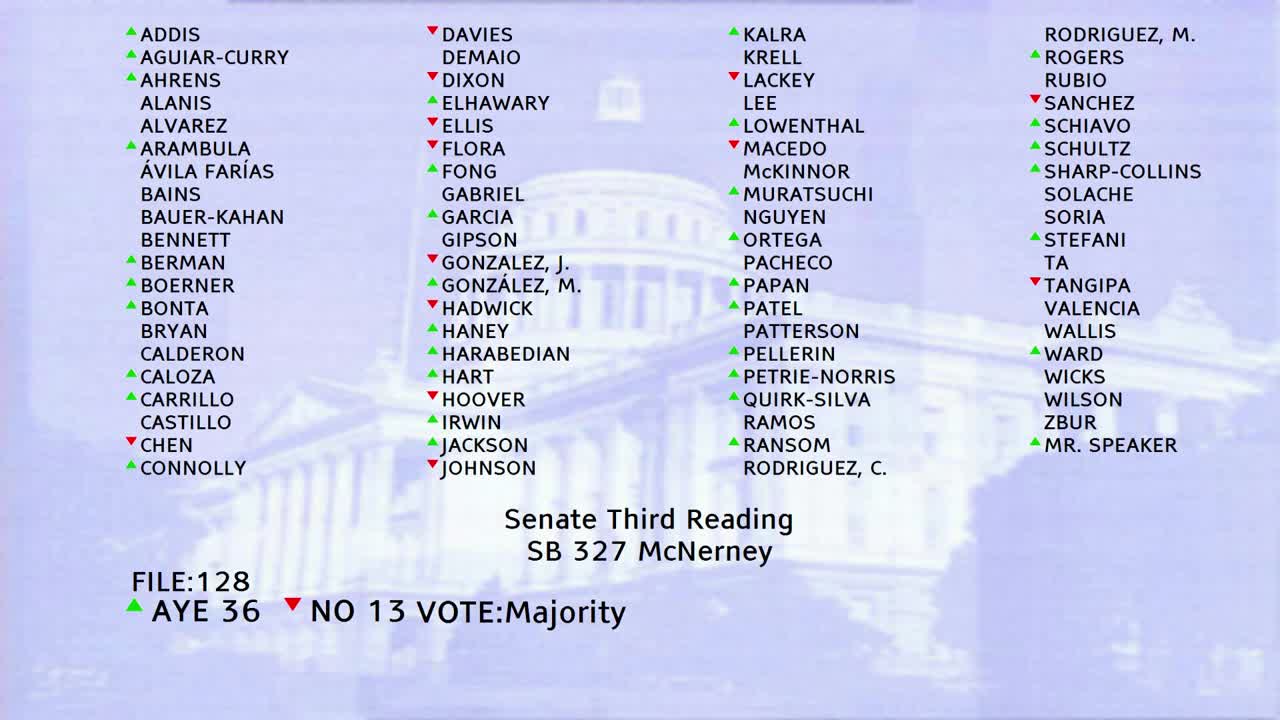 31SEC
Assembly Floor
 27MIN
Assembly Standing Committee on Utilities and Energy
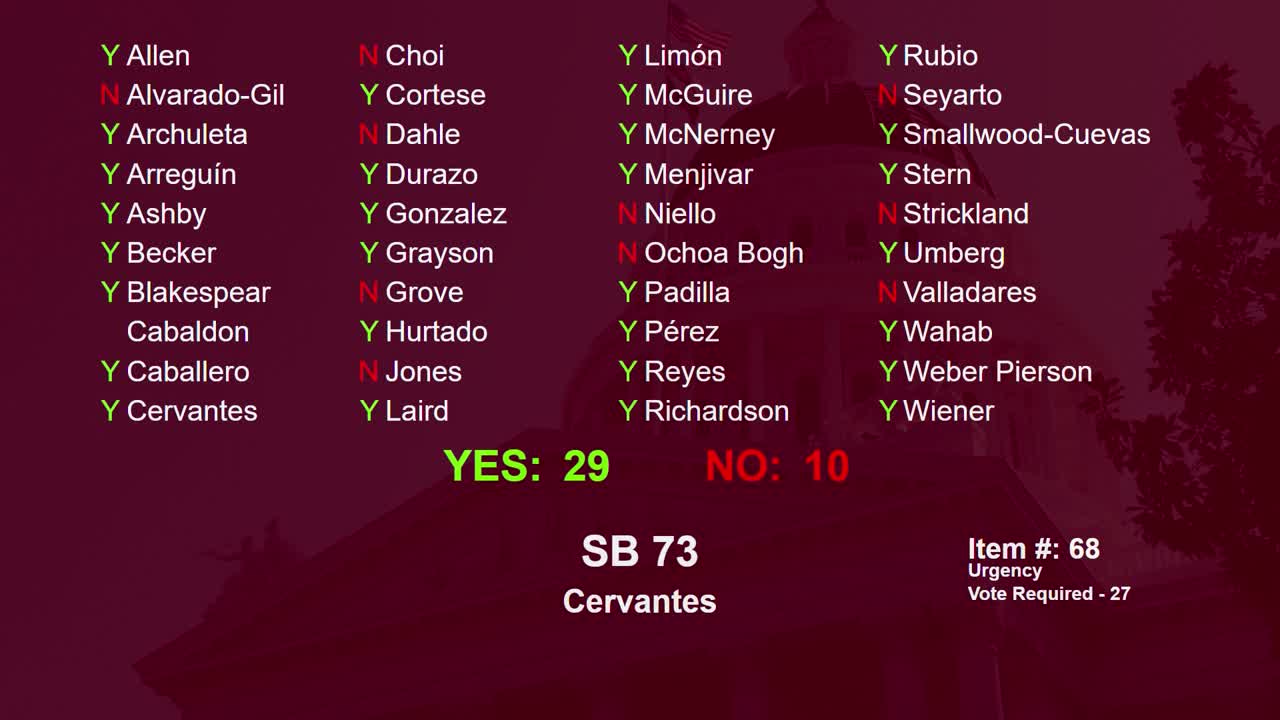 5MIN
Senate Floor
 13MIN