SB 390: Community facilities district: inclusion or annexation of territory: County of San Mateo.
- Session Year: 2025-2026
- House: Senate
- Latest Version Date: 2025-10-11
Current Status:
Passed
(2025-10-11: Chaptered by Secretary of State. Chapter 652, Statutes of 2025.)
Introduced
In Committee
Awaiting First Chamber Vote
Passed First Chamber
In Committee
Awaiting Second Chamber Vote
Passed Second Chamber
Enacted
Existing law, the Mello-Roos Community Facilities Act of 1982, authorizes the legislative body of a local agency, as defined, to create a community facilities district to finance specified types of services within an area.
Existing law prohibits a territory that is dedicated or restricted to agricultural, open-space, or conservation uses from being included within or annexed to a specified community facilities district without the landowners consent.
This bill would, notwithstanding those prohibitions, specify that for territory that is located within the regional shoreline of the County of San Mateo, the consent of a landowner is not required, if specified conditions are met.
This bill would make legislative findings and declarations as to the necessity of a special statute for the County of San Mateo.
(a)(1)Territory that is dedicated or restricted to agricultural, open-space, or conservation uses may not be included within or annexed to a community facilities district that provides or would provide facilities or services related to sewers, nonagricultural water, or streets and roads, unless the landowner consents to the inclusion or annexation of that territory to the community facilities district.
(2)Notwithstanding paragraph (1), the consent of a landowner owning territory that is dedicated or restricted to agricultural, open-space, or conservation uses, and is located within the regional shoreline of the County of San Mateo shall not be required in order to include a territory within or annex a territory to a community facilities district, if, despite the dedication or restriction, the territory meets either of the following conditions:
(A)A parcel in the territory has existing entitlements for development of commercial, residential, or industrial uses.
(B)A parcel in the territory is already developed with commercial, residential, or industrial uses.
(b)Notwithstanding any other law, and except as provided in subdivision (c), if a landowner consents to the inclusion or annexation of territory in a community facilities district pursuant to paragraph (1) of subdivision (a), the landowner and any local agency may not terminate any easement or effect a final cancellation of any contract with respect to any portion of the land included within or annexed to the community facilities district prior to the release of land that is the subject of the proposed termination or cancellation from all liens that arise under the community facilities district for any sewers, nonagricultural water, or streets and roads that did not benefit land uses allowed under the contract or easement.
(c)Subdivision (b) shall not apply to any of the following:
(1)Land under a contract entered into pursuant to the California Land Conservation Act of 1965 (Chapter 7 (commencing with Section 51200) of Part 1 of Division 1) included in a community facilities district for which a tentative map may be filed pursuant to paragraph (3) of subdivision (d) of Section 66474.4 or for which a tentative cancellation has been approved.
(2)Land subject to a conservation easement entered into prior to January 1, 2003.
(3)Land included in a community facilities district prior to the imposition of an enforceable restriction listed in subdivision (d) or prior to January 1, 2003.
(4)Land subject to an enforceable restriction listed in subdivision (d) that expressly waives the requirement of subdivision (b).
(d)As used in this section, territory that is dedicated or restricted to agricultural, open-space, or conservation uses means territory that is subject to any of the following:
(1)An open-space easement entered into pursuant to Chapter 6.5 (commencing with Section 51050) of Part 1 of Division 1.
(2)An open-space easement entered into pursuant to the Open-Space Easement Act of 1974 (Chapter 6.6 (commencing with Section 51070) of Part 1 of Division 1).
(3)A contract entered into pursuant to the California Land Conservation Act of 1965 (Chapter 7 (commencing with Section 51200) of Part 1 of Division 1).
(4)A farmland security zone contract created pursuant to Article 7 (commencing with Section 51296) of Chapter 7 of Part 1 of Division 1, except as otherwise provided in Section 51296.4.
(5)A conservation easement entered into pursuant to Chapter 4 (commencing with Section 815) of Title 2 of Part 2 of Division 2 of the Civil Code.
(6)An agricultural conservation easement entered into pursuant to Chapter 4 (commencing with Section 10260) of Division 10.2 of the Public Resources Code.
(7)An agricultural conservation easement entered into pursuant to Section 51256.
SEC. 2.The Legislature finds and declares that a special statute is necessary and that a general statute cannot be made applicable within the meaning of Section 16 of Article IV of the California Constitution because of San Francisco Bay Conservation and Development Commission easements in the County of San Mateo.
(a)(1)Territory that is dedicated or restricted to agricultural, open-space, or conservation uses may not be included within or annexed to a community facilities district that provides or would provide facilities or services related to sewers, nonagricultural water, or streets and roads, unless the landowner consents to the inclusion or annexation of that territory to the community facilities district.
(2)Notwithstanding paragraph (1), the consent of a landowner owning territory that is dedicated or restricted to agricultural, open-space, or conservation uses, and is located within the regional shoreline of the County of San Mateo shall not be required in order to include a territory within or annex a territory to a community facilities district, if, despite the dedication or restriction, the territory meets either of the following conditions:
(A)A parcel in the territory has existing entitlements for development of commercial, residential, or industrial uses.
(B)A parcel in the territory is already developed with commercial, residential, or industrial uses.
(b)Notwithstanding any other provision of law, and except as provided in subdivision (c), if a landowner consents to the inclusion or annexation of territory in a community facilities district pursuant to paragraph (1) of subdivision (a), the landowner and any local agency may not terminate any easement or effect a final cancellation of any contract with respect to any portion of the land included within or annexed to the community facilities district prior to the release of land that is the subject of the proposed termination or cancellation from all liens that arise under the community facilities district for any sewers, nonagricultural water, or streets and roads that did not benefit land uses allowed under the contract or easement.
(c)Subdivision (b) shall not apply to any of the following:
(1)Land under a contract entered into pursuant to the California Land Conservation Act of 1965 (Chapter 7 (commencing with Section 51200) of Part 1 of Division 1) included in a community facilities district for which a tentative map may be filed pursuant to paragraph (3) of subdivision (d) of Section 66474.4 or for which a tentative cancellation has been approved.
(2)Land subject to a conservation easement entered into prior to January 1, 2003.
(3)Land included in a community facilities district prior to the imposition of an enforceable restriction listed in subdivision (d) or prior to January 1, 2003.
(4)Land subject to an enforceable restriction listed in subdivision (d) that expressly waives the requirement of subdivision (b).
(d)As used in this section, territory that is dedicated or restricted to agricultural, open-space, or conservation uses means territory that is subject to any of the following:
(1)An open-space easement entered into pursuant to Chapter 6.5 (commencing with Section 51050) of Part 1 of Division 1.
(2)An open-space easement entered into pursuant to the Open-Space Easement Act of 1974 (Chapter 6.6 (commencing with Section 51070) of Part 1 of Division 1).
(3)A contract entered into pursuant to the California Land Conservation Act of 1965 (Chapter 7 (commencing with Section 51200) of Part 1 of Division 1).
(4)A farmland security zone contract created pursuant to Article 7 (commencing with Section 51296) of Chapter 7 of Part 1 of Division 1, except as otherwise provided in Section 51296.4.
(5)A conservation easement entered into pursuant to Chapter 4 (commencing with Section 815) of Title 2 of Part 2 of Division 2 of the Civil Code.
(6)An agricultural conservation easement entered into pursuant to Chapter 4 (commencing with Section 10260) of Division 10.2 of the Public Resources Code.
(7)An agricultural conservation easement entered into pursuant to Section 51256.
SEC. 2.The Legislature finds and declares that a special statute is necessary and that a general statute cannot be made applicable within the meaning of Section 16 of Article IV of the California Constitution because of San Francisco Bay Conservation and Development Commission easements in the County of San Mateo.
(a)(1)Territory that is dedicated or restricted to agricultural, open-space, or conservation uses may not be included within or annexed to a community facilities district that provides or would provide facilities or services related to sewers, nonagricultural water, or streets and roads, unless the landowner consents to the inclusion or annexation of that territory to the community facilities district.
(2)Notwithstanding paragraph (1), the consent of a landowner owning territory that is dedicated or restricted to agricultural, open-space, or conservation uses, and is located within the regional shoreline of the County of San Mateo shall not be required in order to include a territory within or annex a territory to a community facilities district, if, despite the dedication or restriction, portions of the territory meet meets either of the following conditions:
(A)They have A parcel in the territory has existing entitlements for or are zoned fordevelopment of commercial, residential, or industrial uses.
(B)They are A parcel in the territory is already developed with commercial, residential, or industrial uses.
(b)Notwithstanding any other provision of law, and except as provided in subdivision (c), if a landowner consents to the inclusion or annexation of territory in a community facilities district pursuant to paragraph (1) of subdivision (a), the landowner and any local agency may not terminate any easement or effect a final cancellation of any contract with respect to any portion of the land included within or annexed to the community facilities district prior to the release of land that is the subject of the proposed termination or cancellation from all liens that arise under the community facilities district for any sewers, nonagricultural water, or streets and roads that did not benefit land uses allowed under the contract or easement.
(c)Subdivision (b) shall not apply to any of the following:
(1)Land under a contract entered into pursuant to the California Land Conservation Act of 1965 (Chapter 7 (commencing with Section 51200) of Part 1 of Division 1) included in a community facilities district for which a tentative map may be filed pursuant to paragraph (3) of subdivision (d) of Section 66474.4 or for which a tentative cancellation has been approved.
(2)Land subject to a conservation easement entered into prior to January 1, 2003.
(3)Land included in a community facilities district prior to the imposition of an enforceable restriction listed in subdivision (d) or prior to January 1, 2003.
(4)Land subject to an enforceable restriction listed in subdivision (d) that expressly waives the requirement of subdivision (b).
(d)As used in this section, territory that is dedicated or restricted to agricultural, open-space, or conservation uses means territory that is subject to any of the following:
(1)An open-space easement entered into pursuant to Chapter 6.5 (commencing with Section 51050) of Part 1 of Division 1.
(2)An open-space easement entered into pursuant to the Open-Space Easement Act of 1974 (Chapter 6.6 (commencing with Section 51070) of Part 1 of Division 1).
(3)A contract entered into pursuant to the California Land Conservation Act of 1965 (Chapter 7 (commencing with Section 51200) of Part 1 of Division 1).
(4)A farmland security zone contract created pursuant to Article 7 (commencing with Section 51296) of Chapter 7 of Part 1 of Division 1), 1, except as otherwise provided in Section 51296.4.
(5)A conservation easement entered into pursuant to Chapter 4 (commencing with Section 815) of Title 2 of Part 2 of Division 2 of the Civil Code.
(6)An agricultural conservation easement entered into pursuant to Chapter 4 (commencing with Section 10260) of Division 10.2 of the Public Resources Code.
(7)An agricultural conservation easement entered into pursuant to Section 51256.
SEC. 2.The Legislature finds and declares that a special statute is necessary and that a general statute cannot be made applicable within the meaning of Section 16 of Article IV of the California Constitution because of San Francisco Bay Conservation and Development Commission easements in the County of San Mateo.
(a)(1)Territory that is dedicated or restricted to agricultural, open-space, or conservation uses may not be included within or annexed to a community facilities district that provides or would provide facilities or services related to sewers, nonagricultural water, or streets and roads, unless the landowner consents to the inclusion or annexation of that territory to the community facilities district.
(2)Notwithstanding paragraph (1), the consent of a landowner owning territory that is dedicated or restricted to agricultural, open-space, or conservation uses, and is located within the regional shoreline of the County of San Mateo shall not be required in order to include a territory within or annex a territory to a community facilities district, if, despite the dedication or restriction, portions of the territory meet either of the following conditions:
(A)They have existing entitlements for or are zoned for development of commercial, residential, or industrial uses.
(B)They are already developed with commercial, residential, or industrial uses.
(b)Notwithstanding any other provision of law, and except as provided in subdivision (c), if a landowner consents to the inclusion or annexation of territory in a community facilities district pursuant to paragraph (1) of subdivision (a), the landowner and any local agency may not terminate any easement or effect a final cancellation of any contract with respect to any portion of the land included within or annexed to the community facilities district prior to the release of land that is the subject of the proposed termination or cancellation from all liens that arise under the community facilities district for any sewers, nonagricultural water, or streets and roads that did not benefit land uses allowed under the contract or easement.
(c)Subdivision (b) shall not apply to any of the following:
(1)Land under a contract entered into pursuant to the California Land Conservation Act of 1965 (Chapter 7 (commencing with Section 51200) of Part 1 of Division 1) included in a community facilities district for which a tentative map may be filed pursuant to paragraph (3) of subdivision (d) of Section 66474.4 or for which a tentative cancellation has been approved.
(2)Land subject to a conservation easement entered into prior to January 1, 2003.
(3)Land included in a community facilities district prior to the imposition of an enforceable restriction listed in subdivision (d) or prior to January 1, 2003.
(4)Land subject to an enforceable restriction listed in subdivision (d) that expressly waives the requirement of subdivision (b).
(d)As used in this section, territory that is dedicated or restricted to agricultural, open-space, or conservation uses means territory that is subject to any of the following:
(1)An open-space easement entered into pursuant to Chapter 6.5 (commencing with Section 51050) of Part 1 of Division 1.
(2)An open-space easement entered into pursuant to the Open-Space Easement Act of 1974 (Chapter 6.6 (commencing with Section 51070) of Part 1 of Division 1).
(3)A contract entered into pursuant to the California Land Conservation Act of 1965 (Chapter 7 (commencing with Section 51200) of Part 1 of Division 1).
(4)A farmland security zone contract created pursuant to Article 7 (commencing with Section 51296) of Chapter 7 of Part 1 of Division 1), except as otherwise provided in Section 51296.4.
(5)A conservation easement entered into pursuant to Chapter 4 (commencing with Section 815) of Title 2 of Part 2 of Division 2 of the Civil Code.
(6)An agricultural conservation easement entered into pursuant to Chapter 4 (commencing with Section 10260) of Division 10.2 of the Public Resources Code.
(7)An agricultural conservation easement entered into pursuant to Section 51256.
SEC. 2.The Legislature finds and declares that a special statute is necessary and that a general statute cannot be made applicable within the meaning of Section 16 of Article IV of the California Constitution because of San Francisco Bay Conservation and Development Commission easements in the County of San Mateo.
|
Date
|
Status
|
|---|---|
| Oct 11, 2025 | Chaptered by Secretary of State. Chapter 652, Statutes of 2025. |
| Oct 11, 2025 | Approved by the Governor. |
| Sep 9, 2025 | Enrolled and presented to the Governor at 2 p.m. |
| Sep 3, 2025 | Assembly amendments concurred in. (Ayes 40. Noes 0. Page 2443.) Ordered to engrossing and enrolling. |
| Aug 28, 2025 | In Senate. Concurrence in Assembly amendments pending. |
| Aug 28, 2025 | Read third time. Passed. (Ayes 74. Noes 1. Page 2765.) Ordered to the Senate. |
| Aug 20, 2025 | Read third time and amended. |
| Aug 20, 2025 | Ordered to third reading. |
| Jun 19, 2025 | Read second time. Ordered to third reading. |
| Jun 18, 2025 | From committee: Do pass. (Ayes 9. Noes 0.) (June 18). |
| Jun 5, 2025 | Referred to Com. on L. GOV. |
| May 28, 2025 | In Assembly. Read first time. Held at Desk. |
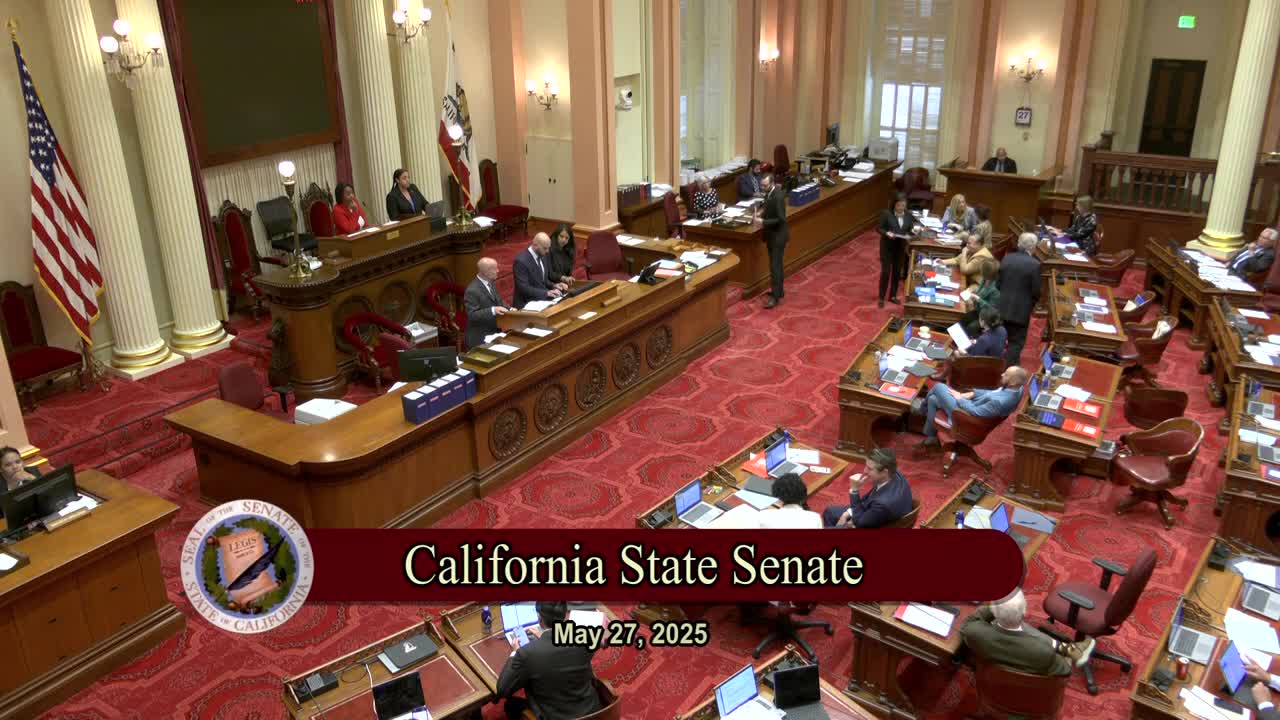
| May 27, 2025 | Read third time. Passed. (Ayes 39. Noes 0. Page 1242.) Ordered to the Assembly. |
| May 8, 2025 | Read second time. Ordered to third reading. |
| May 7, 2025 | From committee: Do pass. (Ayes 7. Noes 0. Page 1038.) (May 7). |
| Apr 30, 2025 | From committee with author's amendments. Read second time and amended. Re-referred to Com. on L. GOV. |
| Mar 24, 2025 | Set for hearing May 7. |
| Feb 26, 2025 | Referred to Com. on L. GOV. |
| Feb 18, 2025 | From printer. May be acted upon on or after March 17. |
| Feb 14, 2025 | Introduced. Read first time. To Com. on RLS. for assignment. To print. |
|
Date
|
Description
|
Location
|
Votes
|
|
|---|---|---|---|---|
| Sep 3, 2025 | Unfinished Business SB390 Becker et al. Concurrence | Senate Floor |
Passed |
|
| Aug 28, 2025 | SB 390 Becker Senate Third Reading By Stefani | Assembly Floor |
Passed |
|
| Jun 18, 2025 | Do pass. | Assembly Standing Committee on Local Government |
Passed |
|
| May 27, 2025 | Senate 3rd Reading SB390 Becker | Senate Floor |
Passed |
|
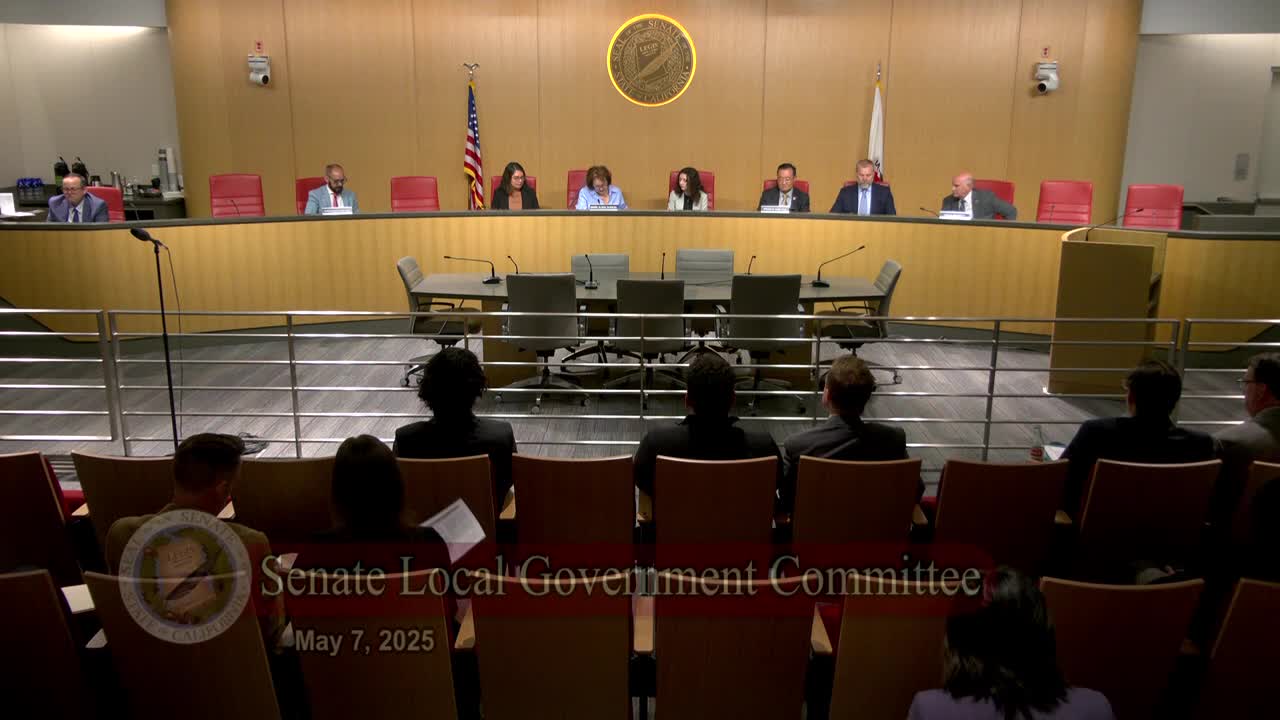
| May 7, 2025 | Do pass | Senate Standing Committee on Local Government |
Passed |
This list shows positions taken on this bill by organizations on the date displayed, which is linked to the original source.
Positions by individuals are not included.
|
Organization
|
Position
|
Date
|
|---|---|---|
| City of South San Francisco | ** Support |
SENATE RULES COMMITTEE Office of Senate Floor Analyses (916) 651-1520 Fax: (916) 327-4478 | SB 390 |
UNFINISHED BUSINESS
Bill No: SB 390
Author: Becker (D), et al.
Amended: 8/20/25 in Assembly
Vote: 21
SENATE LOCAL GOVERNMENT COMMITTEE: 7-0, 5/7/25
AYES: Durazo, Choi, Arreguín, Cabaldon, Laird, Seyarto, Wiener
SENATE FLOOR: 39-0, 5/27/25
AYES: Allen, Alvarado-Gil, Archuleta, Arreguín, Ashby, Becker, Blakespear, Cabaldon, Caballero, Cervantes, Choi, Cortese, Dahle, Durazo, Gonzalez, Grayson, Grove, Hurtado, Jones, Laird, Limón, McGuire, McNerney, Menjivar, Niello, Ochoa Bogh, Padilla, Pérez, Richardson, Rubio, Seyarto, Smallwood-Cuevas, Stern, Strickland, Umberg, Valladares, Wahab, Weber Pierson, Wiener
NO VOTE RECORDED: Reyes
ASSEMBLY FLOOR: 74-1, 8/28/25 - See last page for vote
SUBJECT: Community facilities district: inclusion or annexation of territory: County of San Mateo
SOURCE: City of South San Francisco
DIGEST:
This bill allows Mello-Roos Community Facilities Districts in the regional shoreline of the County of San Mateo to include properties with specified easements without landowner consent.
Assembly Amendments
of 8/20/25 add coauthors.
ANALYSIS:
Existing law:
- Allows, under the Mello-Roos Community Facilities Act, counties, cities, special districts, and school districts to levy special taxes (parcel taxes) to finance a wide variety of public works, such as parks, recreation centers, schools, libraries, child care facilities, and utility infrastructure.
- Allows a Mello-Roos Community Facilities District (CFD) to issue bonds against these special taxes to finance the public works projects with 2/3-voter approval.
- Provides that if there are fewer than 12 registered voters in the territory of the CFD, the affected landowners vote.
- Prohibits including in a CFD territory that is subject to open space, conservation, or agricultural use easements unless the landowner of the parcel consents.
This bill provides that the consent of a landowner owning territory that is dedicated or restricted to agricultural, open-space, or conservation uses is not required in order to include land within a CFD, if the territory:
- Is located within the regional shoreline of the County of San Mateo; and
- Has existing entitlements for, or is already developed with, development of commercial, residential, or industrial uses.
Background
South San Francisco. The City of South San Francisco, located within the County of San Mateo, fronts the San Francisco Bay. South San Francisco incorporated in 1908 following a dispute within the City of San Bruno over the failure to approve development of a smelter. South San Francisco became known as the “industrial city” as other industrial development located there. Today, South San Francisco is better known for its biotechnology firms: the biotechnology giant Genentech opened in 1976 and today is the city’s largest employer.
Because of its location on the Bay, the shoreline within South San Francisco is subject to the jurisdiction of the San Francisco Bay Conservation and Development Commission (BCDC), which the Legislature created in 1965 to regulate development in and around the San Francisco Bay to protect the Bay’s health and ensure public access. BCDC regulates activities in the Bay, in some connected wetlands and waterways, in the Bay’s salt ponds, and in a 100-foot wide strip of land surrounding the Bay (the shoreline band).
State law authorizes BCDC to issue permits for certain actions, including to make any substantial change in use of any water, land or structure in its jurisdiction. Accordingly, development activities—which can range from residential and commercial endeavors to piers and ports—in the shoreline band require a permit from BCDC.
To ensure public access, BCDC often requires easements on properties or dedication of land to public uses as a condition of development.
South San Francisco development plans. South San Francisco expects to experience rapid growth in employees and residents in its “Eastern Neighborhoods” area near the shoreline: growing from 35,000 employees in 2019 to 45,000 in 2024, with a projected increase to over 100,000 employees and 10,000 residents by 2040. Two significant developments include the existing Genentech campus, which is regulated by a Master Plan that includes additional development capacity, and Oyster Point, which is a planned mixed-use development of 50 acres along the waterfront. Oyster Point has received the necessary entitlements to begin construction and has completed the first phase of its development, with four phases remaining to be completed.
To support this growth, South San Francisco needs to improve its transportation infrastructure, including to rehabilitate roadways, develop transit corridors, make pedestrian improvements, and establish bikeways and trails. To fund these activities, South San Francisco wants to establish a CFD. However, there are over 100 property owners in the proposed CFD, and many of the properties have granted easements to BCDC as a result of BCDC permitting requirements. As a result, Mello-Roos requires the consent of those property owners to include their parcels in the CFD. South San Francisco is concerned that this requirement will allow property owners to opt out of paying the taxes that support the CFD, even though they would benefit from the transportation improvements that it would fund. It wants the Legislature to create an exception to the consent requirement in the Mello-Roos Act.
Comments
Purpose of this bill. According to the author, “SB 390 is a targeted bill to fix a loophole affecting infrastructure financing in South San Francisco. Under current law, parcels with conservation easements, even if fully developed, are exempt from being included in a Community Facilities District (CFD) without landowner consent. This has blocked the City from equitably funding critical shoreline infrastructure. SB 390 allows these parcels to be included in a CFD when clear public benefit criteria are met—ensuring all benefiting properties contribute fairly to projects like flood protection and public access, while preserving conservation goals.”
Splitting this bill. Under the Mello-Roos Act, if there are fewer than 12 registered voters that live within the territory of a CFD, landowners in the area cast the vote to levy a special tax. Because CFDs apportion votes on the basis of acreage, larger landowners have a bigger say (and pay more of the tax). They can use this to prevail over smaller landowners—except if those landowners have open space or conservation easements on their properties. SB 390 creates an exception to this requirement for properties that have entitled or existing development on them, on the logic that (1) these properties are not actually agricultural or open space, and (2) the proposed transportation improvements will benefit these properties, so their owners should pay their fair share of the infrastructure costs. SB 390 doesn’t remove the vote requirement to impose the tax, but it does take away a tool that landowners might use to resist paying the tax, for better or worse.
FISCAL EFFECT: Appropriation: No Fiscal Com.: No Local: No
SUPPORT: (Verified 8/28/25)
City of South San Francisco (source)
OPPOSITION: (Verified 8/28/25)
None received
ASSEMBLY FLOOR: 74-1, 8/28/25
AYES: Addis, Aguiar-Curry, Ahrens, Alanis, Arambula, Ávila Farías, Bains, Bauer-Kahan, Bennett, Boerner, Bonta, Bryan, Calderon, Caloza, Carrillo, Castillo, Chen, Connolly, Davies, Dixon, Elhawary, Ellis, Flora, Fong, Gabriel, Gallagher, Garcia, Gipson, Jeff Gonzalez, Mark González, Hadwick, Haney, Harabedian, Hart, Hoover, Irwin, Jackson, Kalra, Krell, Lackey, Lee, Lowenthal, Macedo, McKinnor, Muratsuchi, Nguyen, Ortega, Pacheco, Papan, Patel, Patterson, Pellerin, Petrie-Norris, Quirk-Silva, Ramos, Ransom, Celeste Rodriguez, Michelle Rodriguez, Rogers, Blanca Rubio, Sanchez, Schiavo, Schultz, Sharp-Collins, Solache, Soria, Stefani, Tangipa, Wallis, Ward, Wicks, Wilson, Zbur, Rivas
NOES: DeMaio
NO VOTE RECORDED: Alvarez, Berman, Ta, Valencia
Prepared by: Anton Favorini-Csorba / L. GOV. / (916) 651-4119
8/28/25 16:50:03
**** END ****
SENATE THIRD READING
STR Bill Id:SB 390
Author:(Becker)
As Amended Ver:August 20, 2025
Majority vote
SUMMARY
Allows Mello-Roos Community Facilities Districts (CFDs) in San Mateo County to include specified properties with specified easements without landowner consent.
Major Provisions
- Provides that the consent of a landowner owning territory that is dedicated or restricted to agricultural, open-space, or conservation uses, and is located within the regional shoreline of San Mateo County shall not be required in order to include a territory within or annex a territory to a CFD, if, despite the dedication or restriction, the territory meets either of the following conditions:
- A parcel in the territory has existing entitlements for development of commercial, residential, or industrial uses.
- A parcel in the territory is already developed with commercial, residential, or industrial uses.
- Finds and declares that a special statute is necessary and that a general statute cannot be made applicable because of San Francisco Bay Conservation and Development Commission easements in San Mateo County.
COMMENTS
- Mello-Roos. The Mello-Roos Community Facilities Act allows counties, cities, special districts, and school districts to levy special taxes (parcel taxes), with 2/3rds voter approval, to finance a wide variety of public works, including parks, recreation centers, schools, libraries, child care facilities, and utility infrastructure. A CFD issues bonds against these special taxes to finance the public works projects.
In addition to financing public capital facilities, CFD special taxes can fund a limited list of public services: police services, fire protection, recreation programs, library services, museum operations, park maintenance, flood protection, hazardous waste cleanup, street and road maintenance, lighting of parks, parkways, streets, roads, and open space, plowing and removal of snow, and graffiti management and removal.
To initiate the formation of a CFD, a local agency′s legislative body must adopt a resolution of intention to establish the district, which must do all of the following: describe the district′s boundaries; describe the facilities and services proposed to be financed; state that a special tax, secured by a lien against real property, will be annually levied; specify, in detail, the rate, method of apportionment, and manner of collections of the special tax; and, fix a time and place for public hearing. After holding the hearing and considering protests, the legislative body, to establish the CFD, must adopt a resolution of formation containing all of the information provided in the resolution of intention; and, if a special tax is to be levied, include additional information about the tax levy that must be approved by registered voters. If there are fewer than 12 registered voters in the territory of the CFD, the affected landowners vote. In that case, landowners get one vote per acre included in the CFD.
The Legislature enacted SB 1515 (Machado), Chapter 174, Statutes of 2002, to prevent local officials from levying Mello-Roos taxes for public works when the property owner had restricted their property to open space and agricultural uses through voluntary easements or contractual restrictions under the Williamson Act. SB 1515 excluded from a CFD lands subject to any of those easements or contracts from a CFD that provides facilities or services related to sewers, nonagricultural water, or streets and roads unless the landowner consents.
- South San Francisco. The City of South San Francisco, located within the County of San Mateo, fronts the San Francisco Bay. South San Francisco incorporated in 1908 and currently has a population of more than 65,000 residents. Today, South San Francisco is known for its more than 250 biotechnology firms including Genentech. Because of its location on the Bay, the shoreline within South San Francisco is subject to the jurisdiction of the San Francisco Bay Conservation and Development Commission (BCDC), which the Legislature created in 1965 to regulate development in and around the San Francisco Bay. BCDC regulates activities in the Bay, in some connected wetlands and waterways, in the Bay′s salt ponds, and in a 100-foot wide strip of land surrounding the Bay (the shoreline band).
State law authorizes BCDC to issue permits for certain actions, including to make any substantial change in use of any water, land or structure in its jurisdiction. Accordingly, development activities, which can range from residential and commercial endeavors to piers and ports, in the shoreline band require a permit from BCDC. To ensure public access, BCDC often requires easements on properties or dedication of land to public uses as a condition of development.
- South San Francisco Development Plans. South San Francisco expects to experience rapid growth in employees and residents in its ″Eastern Neighborhoods″ area near the shoreline: growing from 35,000 employees in 2019 to 45,000 in 2024, with a projected increase to over 100,000 employees and 10,000 residents by 2040.
To support this growth, South San Francisco needs to improve its transportation infrastructure, including to rehabilitate roadways, develop transit corridors, make pedestrian improvements, and establish bikeways and trails. To help fund these activities, South San Francisco wants to establish a CFD. However, there are many properties that have been granted easements to BCDC as a result of BCDC permitting requirements. As a result, CFD Law requires the consent of those property owners to include their parcels in the CFD.
According to the Author
″SB 390 is a targeted bill to fix a loophole affecting infrastructure financing in South San Francisco. Under current law, parcels with conservation easements, even if fully developed, are exempt from being included in a Community Facilities District (CFD) without landowner consent. This has blocked the City from equitably funding critical shoreline infrastructure. SB 390 allows these parcels to be included in a CFD when clear public benefit criteria are met—ensuring all benefiting properties contribute fairly to projects like flood protection and public access, while preserving conservation goals.″
Arguments in Support
According to the sponsors, the City of South San Francisco, ″The City of South San Francisco′s East of 101 area is home to the largest and fastest-growing biotechnology cluster in the world, with over 250 firms and 7.5 million square feet of space under construction or approved for development. In addition, the area hosts one of the most active and diverse hubs of industrial and warehouse activity in the Bay Area. The City anticipates the East of 101 area to see a tripling of employees to approximately 100,000 by 2040.
″To respond to and prepare for this growth, and to ensure that South San Francisco remains a global leader in biotechnology innovation, the City is implementing its transportation improvements that enhance transit, biking, and pedestrian safety, intersection improvements to facilitate a more efficient movement of cars and trucks, and improved access to the Bay Trail and shoreline for residential neighborhoods and the downtown with crossings over Highway 101. The work will be funded by General Fund dollars and the Eastern Neighborhoods CFD, consisting of over 330 property owners and 479 parcels whose biotechnology, office, warehouse, industrial, and hospitality tenants face significant transportation challenges.
″The Mello-Roos Act grants counties, cities, special districts, and school districts the authority to form CFDs, dependent on a supermajority vote of property owners in the proposed district, to finance critical public infrastructure such as transportation, school, and sewer improvements. Under Government Code Section 53312.8, the Mello-Roos Act exempts landowners with open-space or conservation easements from being included in a CFD without their express consent. This enables parcels that are already developed, but have an open space easement, to avoid contributing their fair share to public infrastructure funding. The conservation easement on these properties accommodates the San Francisco Bay Trail, a 350-mile paved and developed multi-use path that circles the bay. This legislation would in no way impact the existing protections of the Bay Trail. Instead, it would increase access to the trail by providing new connections across Highway 101, which currently acts as a barrier between the western and eastern sides of the City.
″SB 390 seeks to make minor adjustments only as it relates to South San Francisco because properties within the proposed area can evade their financial responsibility to participate in the CFD, even if the public infrastructure funds directly benefit those properties. This loophole arises simply because the property owners previously agreed to restrict development on part of the parcel as a condition for developing the remainder.″
Arguments in Opposition
None on file.
FISCAL COMMENTS
None.
VOTES
SENATE FLOOR: 39-0-1
YES: Allen, Alvarado-Gil, Archuleta, Arreguín, Ashby, Becker, Blakespear, Cabaldon, Caballero, Cervantes, Choi, Cortese, Dahle, Durazo, Gonzalez, Grayson, Grove, Hurtado, Jones, Laird, Limón, McGuire, McNerney, Menjivar, Niello, Ochoa Bogh, Padilla, Pérez, Richardson, Rubio, Seyarto, Smallwood-Cuevas, Stern, Strickland, Umberg, Valladares, Wahab, Weber Pierson, Wiener
ABS, ABST OR NV: Reyes
ASM LOCAL GOVERNMENT: 9-0-1
YES: Carrillo, Hoover, Pacheco, Ramos, Ransom, Blanca Rubio, Stefani, Haney, Wilson
ABS, ABST OR NV: Ta
UPDATED
VERSION: August 20, 2025
CONSULTANT: Jimmy MacDonald / L. GOV. / (916) 319-3958 FN: 0001183
SENATE THIRD READING
STR Bill Id:SB 390
Author:(Becker)
As Amended Ver:April 30, 2025
Majority vote
SUMMARY
Allows Mello-Roos Community Facilities Districts (CFDs) in San Mateo County to include specified properties with specified easements without landowner consent.
Major Provisions
- Provides that the consent of a landowner owning territory that is dedicated or restricted to agricultural, open-space, or conservation uses, and is located within the regional shoreline of San Mateo County shall not be required in order to include a territory within or annex a territory to a CFD, if, despite the dedication or restriction, the territory meets either of the following conditions:
- A parcel in the territory has existing entitlements for development of commercial, residential, or industrial uses.
- A parcel in the territory is already developed with commercial, residential, or industrial uses.
- Finds and declares that a special statute is necessary and that a general statute cannot be made applicable because of San Francisco Bay Conservation and Development Commission easements in San Mateo County.
COMMENTS
- Mello-Roos. The Mello-Roos Community Facilities Act allows counties, cities, special districts, and school districts to levy special taxes (parcel taxes), with 2/3rds voter approval, to finance a wide variety of public works, including parks, recreation centers, schools, libraries, child care facilities, and utility infrastructure. A CFD issues bonds against these special taxes to finance the public works projects.
In addition to financing public capital facilities, CFD special taxes can fund a limited list of public services: police services, fire protection, recreation programs, library services, museum operations, park maintenance, flood protection, hazardous waste cleanup, street and road maintenance, lighting of parks, parkways, streets, roads, and open space, plowing and removal of snow, and graffiti management and removal.
To initiate the formation of a CFD, a local agency's legislative body must adopt a resolution of intention to establish the district, which must do all of the following: describe the district's boundaries; describe the facilities and services proposed to be financed; state that a special tax, secured by a lien against real property, will be annually levied; specify, in detail, the rate, method of apportionment, and manner of collections of the special tax; and, fix a time and place for public hearing. After holding the hearing and considering protests, the legislative body, to establish the CFD, must adopt a resolution of formation containing all of the information provided in the resolution of intention; and, if a special tax is to be levied, include additional information about the tax levy that must be approved by registered voters. If there are fewer than 12 registered voters in the territory of the CFD, the affected landowners vote. In that case, landowners get one vote per acre included in the CFD.
The Legislature enacted SB 1515 (Machado), Chapter 174, Statutes of 2002, to prevent local officials from levying Mello-Roos taxes for public works when the property owner had restricted their property to open space and agricultural uses through voluntary easements or contractual restrictions under the Williamson Act. SB 1515 excluded from a CFD lands subject to any of those easements or contracts from a CFD that provides facilities or services related to sewers, nonagricultural water, or streets and roads unless the landowner consents.
- South San Francisco. The City of South San Francisco, located within the County of San Mateo, fronts the San Francisco Bay. South San Francisco incorporated in 1908 and currently has a population of more than 65,000 residents. Today, South San Francisco is known for its more than 250 biotechnology firms including Genentech. Because of its location on the Bay, the shoreline within South San Francisco is subject to the jurisdiction of the San Francisco Bay Conservation and Development Commission (BCDC), which the Legislature created in 1965 to regulate development in and around the San Francisco Bay. BCDC regulates activities in the Bay, in some connected wetlands and waterways, in the Bay's salt ponds, and in a 100-foot wide strip of land surrounding the Bay (the shoreline band).
State law authorizes BCDC to issue permits for certain actions, including to make any substantial change in use of any water, land or structure in its jurisdiction. Accordingly, development activities, which can range from residential and commercial endeavors to piers and ports, in the shoreline band require a permit from BCDC. To ensure public access, BCDC often requires easements on properties or dedication of land to public uses as a condition of development.
- South San Francisco Development Plans. South San Francisco expects to experience rapid growth in employees and residents in its "Eastern Neighborhoods" area near the shoreline: growing from 35,000 employees in 2019 to 45,000 in 2024, with a projected increase to over 100,000 employees and 10,000 residents by 2040.
To support this growth, South San Francisco needs to improve its transportation infrastructure, including to rehabilitate roadways, develop transit corridors, make pedestrian improvements, and establish bikeways and trails. To help fund these activities, South San Francisco wants to establish a CFD. However, there are many properties that have been granted easements to BCDC as a result of BCDC permitting requirements. As a result, CFD Law requires the consent of those property owners to include their parcels in the CFD.
According to the Author
"SB 390 is a targeted bill to fix a loophole affecting infrastructure financing in South San Francisco. Under current law, parcels with conservation easements, even if fully developed, are exempt from being included in a Community Facilities District (CFD) without landowner consent. This has blocked the City from equitably funding critical shoreline infrastructure. SB 390 allows these parcels to be included in a CFD when clear public benefit criteria are met—ensuring all benefiting properties contribute fairly to projects like flood protection and public access, while preserving conservation goals."
Arguments in Support
According to the sponsors, the City of South San Francisco, "The City of South San Francisco's East of 101 area is home to the largest and fastest-growing biotechnology cluster in the world, with over 250 firms and 7.5 million square feet of space under construction or approved for development. In addition, the area hosts one of the most active and diverse hubs of industrial and warehouse activity in the Bay Area. The City anticipates the East of 101 area to see a tripling of employees to approximately 100,000 by 2040.
"To respond to and prepare for this growth, and to ensure that South San Francisco remains a global leader in biotechnology innovation, the City is implementing its transportation improvements that enhance transit, biking, and pedestrian safety, intersection improvements to facilitate a more efficient movement of cars and trucks, and improved access to the Bay Trail and shoreline for residential neighborhoods and the downtown with crossings over Highway 101. The work will be funded by General Fund dollars and the Eastern Neighborhoods CFD, consisting of over 330 property owners and 479 parcels whose biotechnology, office, warehouse, industrial, and hospitality tenants face significant transportation challenges.
"The Mello-Roos Act grants counties, cities, special districts, and school districts the authority to form CFDs, dependent on a supermajority vote of property owners in the proposed district, to finance critical public infrastructure such as transportation, school, and sewer improvements. Under Government Code Section 53312.8, the Mello-Roos Act exempts landowners with open-space or conservation easements from being included in a CFD without their express consent. This enables parcels that are already developed, but have an open space easement, to avoid contributing their fair share to public infrastructure funding. The conservation easement on these properties accommodates the San Francisco Bay Trail, a 350-mile paved and developed multi-use path that circles the bay. This legislation would in no way impact the existing protections of the Bay Trail. Instead, it would increase access to the trail by providing new connections across Highway 101, which currently acts as a barrier between the western and eastern sides of the City.
"SB 390 seeks to make minor adjustments only as it relates to South San Francisco because properties within the proposed area can evade their financial responsibility to participate in the CFD, even if the public infrastructure funds directly benefit those properties. This loophole arises simply because the property owners previously agreed to restrict development on part of the parcel as a condition for developing the remainder."
Arguments in Opposition
None on file.
FISCAL COMMENTS
None.
VOTES
SENATE FLOOR: 39-0-1
YES: Allen, Alvarado-Gil, Archuleta, Arreguín, Ashby, Becker, Blakespear, Cabaldon, Caballero, Cervantes, Choi, Cortese, Dahle, Durazo, Gonzalez, Grayson, Grove, Hurtado, Jones, Laird, Limón, McGuire, McNerney, Menjivar, Niello, Ochoa Bogh, Padilla, Pérez, Richardson, Rubio, Seyarto, Smallwood-Cuevas, Stern, Strickland, Umberg, Valladares, Wahab, Weber Pierson, Wiener
ABS, ABST OR NV: Reyes
ASM LOCAL GOVERNMENT: 9-0-1
YES: Carrillo, Hoover, Pacheco, Ramos, Ransom, Blanca Rubio, Stefani, Haney, Wilson
ABS, ABST OR NV: Ta
UPDATED
VERSION: April 30, 2025
CONSULTANT: Jimmy MacDonald / L. GOV. / (916) 319-3958 FN: 0000985
Date of Hearing: June 18, 2025
ASSEMBLY COMMITTEE ON LOCAL GOVERNMENT
Juan Carrillo, Chair
SBPCA Bill Id:SB 390
Author:(Becker) – As Amended Ver:April 30, 2025
SENATE VOTE: 39-0
SUBJECT: Community facilities district: inclusion or annexation of territory: County of San Mateo.
SUMMARY: Allows Mello-Roos Community Facilities Districts (CFDs) in San Mateo County to include specified properties with specified easements without landowner consent. Specifically, this bill:
- Provides that the consent of a landowner owning territory that is dedicated or restricted to agricultural, open-space, or conservation uses, and is located within the regional shoreline of San Mateo County shall not be required in order to include a territory within or annex a territory to a CFD, if, despite the dedication or restriction, the territory meets either of the following conditions:
- A parcel in the territory has existing entitlements for development of commercial, residential, or industrial uses.
- A parcel in the territory is already developed with commercial, residential, or industrial uses.
- Finds and declares that a special statute is necessary and that a general statute cannot be made applicable because of San Francisco Bay Conservation and Development Commission easements in San Mateo County.
EXISTING LAW:
- Allows, under the Mello-Roos Community Facilities Act, counties, cities, special districts, and school districts to levy special taxes (parcel taxes) to finance a wide variety of public works, such as parks, recreation centers, schools, libraries, child care facilities, and utility infrastructure [Government Code (GC) §§ 53311 et seq.]
- Allows a Mello-Roos Community Facilities District (CFD) to issue bonds against these special taxes to finance the public works projects with 2/3-voter approval (GC §§ 53326 & 53328).
- Provides that if there are fewer than 12 registered voters in the territory of the CFD, the affected landowners vote on the levy of a special tax (GC § 53326).
- Specifies that territory that is dedicated or restricted to agricultural, open-space, or conservation uses may not be included within or annexed to a CFD that provides or would provide facilities or services related to sewers, nonagricultural water, or streets and roads, unless the landowner consents to the inclusion or annexation of that territory to the CFD (GC § 53312.8).
FISCAL EFFECT: None.
COMMENTS:
- Mello-Roos. The Mello-Roos Community Facilities Act allows counties, cities, special districts, and school districts to levy special taxes (parcel taxes), with 2/3rds voter approval, to finance a wide variety of public works, including parks, recreation centers, schools, libraries, child care facilities, and utility infrastructure. A CFD issues bonds against these special taxes to finance the public works projects.
In addition to financing public capital facilities, CFD special taxes can fund a limited list of public services: police services, fire protection, recreation programs, library services, museum operations, park maintenance, flood protection, hazardous waste cleanup, street and road maintenance, lighting of parks, parkways, streets, roads, and open space, plowing and removal of snow, and graffiti management and removal.
To initiate the formation of a CFD, a local agency's legislative body must adopt a resolution of intention to establish the district, which must do all of the following: describe the district's boundaries; describe the facilities and services proposed to be financed; state that a special tax, secured by a lien against real property, will be annually levied; specify, in detail, the rate, method of apportionment, and manner of collections of the special tax; and, fix a time and place for public hearing. After holding the hearing and considering protests, the legislative body, to establish the CFD, must adopt a resolution of formation containing all of the information provided in the resolution of intention; and, if a special tax is to be levied, include additional information about the tax levy that must be approved by registered voters. If there are fewer than 12 registered voters in the territory of the CFD, the affected landowners vote. In that case, landowners get one vote per acre included in the CFD.
The Legislature enacted SB 1515 (Machado), Chapter 174, Statutes of 2002, to prevent local officials from levying Mello-Roos taxes for public works when the property owner had restricted their property to open space and agricultural uses through voluntary easements or contractual restrictions under the Williamson Act. SB 1515 excluded from a CFD lands subject to any of those easements or contracts from a CFD that provides facilities or services related to sewers, nonagricultural water, or streets and roads unless the landowner consents.
- South San Francisco. The City of South San Francisco, located within the County of San Mateo, fronts the San Francisco Bay. South San Francisco incorporated in 1908 and currently has a population of more than 65,000 residents. Today, South San Francisco is known for its more than 250 biotechnology firms including Genentech. Because of its location on the Bay, the shoreline within South San Francisco is subject to the jurisdiction of the San Francisco Bay Conservation and Development Commission (BCDC), which the Legislature created in 1965 to regulate development in and around the San Francisco Bay. BCDC regulates activities in the Bay, in some connected wetlands and waterways, in the Bay’s salt ponds, and in a 100-foot wide strip of land surrounding the Bay (the shoreline band).
State law authorizes BCDC to issue permits for certain actions, including to make any substantial change in use of any water, land or structure in its jurisdiction. Accordingly, development activities, which can range from residential and commercial endeavors to piers and ports, in the shoreline band require a permit from BCDC. To ensure public access, BCDC often requires easements on properties or dedication of land to public uses as a condition of development.
- South San Francisco Development Plans. South San Francisco expects to experience rapid growth in employees and residents in its “Eastern Neighborhoods” area near the shoreline: growing from 35,000 employees in 2019 to 45,000 in 2024, with a projected increase to over 100,000 employees and 10,000 residents by 2040.
To support this growth, South San Francisco needs to improve its transportation infrastructure, including to rehabilitate roadways, develop transit corridors, make pedestrian improvements, and establish bikeways and trails. To help fund these activities, South San Francisco wants to establish a CFD. However, there are many properties that have been granted easements to BCDC as a result of BCDC permitting requirements. As a result, CFD Law requires the consent of those property owners to include their parcels in the CFD.
- Bill Summary and Author’s Statement. This bill provides that the consent of a landowner owning territory that is dedicated or restricted to agricultural, open-space, or conservation uses within the regional shoreline of San Mateo County is not required in order to include land within a CFD, if the territory has existing entitlements for, or is already developed with, development of commercial, residential, or industrial uses. The City of South San Francisco is the sponsor of this bill.
According to the author, “SB 390 is a targeted bill to fix a loophole affecting infrastructure financing in South San Francisco. Under current law, parcels with conservation easements, even if fully developed, are exempt from being included in a Community Facilities District (CFD) without landowner consent. This has blocked the City from equitably funding critical shoreline infrastructure. SB 390 allows these parcels to be included in a CFD when clear public benefit criteria are met—ensuring all benefiting properties contribute fairly to projects like flood protection and public access, while preserving conservation goals."
- Arguments in Support. According to the sponsors, the City of South San Francisco, “The City of South San Francisco’s East of 101 area is home to the largest and fastest-growing biotechnology cluster in the world, with over 250 firms and 7.5 million square feet of space under construction or approved for development. In addition, the area hosts one of the most active and diverse hubs of industrial and warehouse activity in the Bay Area. The City anticipates the East of 101 area to see a tripling of employees to approximately 100,000 by 2040.
“To respond to and prepare for this growth, and to ensure that South San Francisco remains a global leader in biotechnology innovation, the City is implementing its transportation improvements that enhance transit, biking, and pedestrian safety, intersection improvements to facilitate a more efficient movement of cars and trucks, and improved access to the Bay Trail and shoreline for residential neighborhoods and the downtown with crossings over Highway 101. The work will be funded by General Fund dollars and the Eastern Neighborhoods CFD, consisting of over 330 property owners and 479 parcels whose biotechnology, office, warehouse, industrial, and hospitality tenants face significant transportation challenges.
“The Mello-Roos Act grants counties, cities, special districts, and school districts the authority to form CFDs, dependent on a supermajority vote of property owners in the proposed district, to finance critical public infrastructure such as transportation, school, and sewer improvements. Under Government Code § 53312.8, the Mello-Roos Act exempts landowners with open-space or conservation easements from being included in a CFD without their express consent. This enables parcels that are already developed, but have an open space easement, to avoid contributing their fair share to public infrastructure funding. The conservation easement on these properties accommodates the San Francisco Bay Trail, a 350-mile paved and developed multi-use path that circles the bay. This legislation would in no way impact the existing protections of the Bay Trail. Instead, it would increase access to the trail by providing new connections across Highway 101, which currently acts as a barrier between the western and eastern sides of the City.
“SB 390 seeks to make minor adjustments only as it relates to South San Francisco because properties within the proposed area can evade their financial responsibility to participate in the CFD, even if the public infrastructure funds directly benefit those properties. This loophole arises simply because the property owners previously agreed to restrict development on part of the parcel as a condition for developing the remainder.”
- Arguments in Opposition. None on file.
REGISTERED SUPPORT / OPPOSITION:
Support
City of South San Francisco [SPONSOR]
Opposition
None on file
Analysis Prepared by: Jimmy MacDonald / L. GOV. / (916) 319-3958
SENATE RULES COMMITTEE Office of Senate Floor Analyses (916) 651-1520 Fax: (916) 327-4478 | SB 390 |
THIRD READING
Bill No: SB 390
Author: Becker (D)
Amended: 4/30/25
Vote: 21
SENATE LOCAL GOVERNMENT COMMITTEE: 7-0, 5/7/25
AYES: Durazo, Choi, Arreguín, Cabaldon, Laird, Seyarto, Wiener
SUBJECT: Community facilities district: inclusion or annexation of territory: County of San Mateo
SOURCE: City of South San Francisco
DIGEST:
This bill allows Mello-Roos Community Facilities Districts in the regional shoreline of the County of San Mateo to include properties with specified easements without landowner consent.
ANALYSIS:
Existing law:
- Allows, under the Mello-Roos Community Facilities Act, counties, cities, special districts, and school districts to levy special taxes (parcel taxes) to finance a wide variety of public works, such as parks, recreation centers, schools, libraries, child care facilities, and utility infrastructure.
- Allows a Mello-Roos Community Facilities District (CFD) to issue bonds against these special taxes to finance the public works projects with 2/3-voter approval.
- Provides that if there are fewer than 12 registered voters in the territory of the CFD, the affected landowners vote.
- Prohibits including in a CFD territory that is subject to open space, conservation, or agricultural use easements unless the landowner of the parcel consents.
This bill provides that the consent of a landowner owning territory that is dedicated or restricted to agricultural, open-space, or conservation uses is not required in order to include land within a CFD, if the territory:
- Is located within the regional shoreline of the County of San Mateo; and
- Has existing entitlements for, or is already developed with, development of commercial, residential, or industrial uses.
Background
South San Francisco. The City of South San Francisco, located within the County of San Mateo, fronts the San Francisco Bay. South San Francisco incorporated in 1908 following a dispute within the City of San Bruno over the failure to approve development of a smelter. South San Francisco became known as the “industrial city” as other industrial development located there. Today, South San Francisco is better known for its biotechnology firms: the biotechnology giant Genentech opened in 1976 and today is the city’s largest employer.
Because of its location on the Bay, the shoreline within South San Francisco is subject to the jurisdiction of the San Francisco Bay Conservation and Development Commission (BCDC), which the Legislature created in 1965 to regulate development in and around the San Francisco Bay to protect the Bay’s health and ensure public access. BCDC regulates activities in the Bay, in some connected wetlands and waterways, in the Bay’s salt ponds, and in a 100-foot wide strip of land surrounding the Bay (the shoreline band).
State law authorizes BCDC to issue permits for certain actions, including to make any substantial change in use of any water, land or structure in its jurisdiction. Accordingly, development activities—which can range from residential and commercial endeavors to piers and ports—in the shoreline band require a permit from BCDC.
To ensure public access, BCDC often requires easements on properties or dedication of land to public uses as a condition of development.
South San Francisco development plans. South San Francisco expects to experience rapid growth in employees and residents in its “Eastern Neighborhoods” area near the shoreline: growing from 35,000 employees in 2019 to 45,000 in 2024, with a projected increase to over 100,000 employees and 10,000 residents by 2040. Two significant developments include the existing Genentech campus, which is regulated by a Master Plan that includes additional development capacity, and Oyster Point, which is a planned mixed-use development of 50 acres along the waterfront. Oyster Point has received the necessary entitlements to begin construction and has completed the first phase of its development, with four phases remaining to be completed.
To support this growth, South San Francisco needs to improve its transportation infrastructure, including to rehabilitate roadways, develop transit corridors, make pedestrian improvements, and establish bikeways and trails. To fund these activities, South San Francisco wants to establish a CFD. However, there are over 100 property owners in the proposed CFD, and many of the properties have granted easements to BCDC as a result of BCDC permitting requirements. As a result, Mello-Roos requires the consent of those property owners to include their parcels in the CFD. South San Francisco is concerned that this requirement will allow property owners to opt out of paying the taxes that support the CFD, even though they would benefit from the transportation improvements that it would fund. It wants the Legislature to create an exception to the consent requirement in the Mello-Roos Act.
Comments
Purpose of the bill. According to the author, “SB 390 is a targeted bill to fix a loophole affecting infrastructure financing in South San Francisco. Under current law, parcels with conservation easements, even if fully developed, are exempt from being included in a Community Facilities District (CFD) without landowner consent. This has blocked the City from equitably funding critical shoreline infrastructure. SB 390 allows these parcels to be included in a CFD when clear public benefit criteria are met—ensuring all benefiting properties contribute fairly to projects like flood protection and public access, while preserving conservation goals.”
Splitting the bill. Under the Mello-Roos Act, if there are fewer than 12 registered voters that live within the territory of a CFD, landowners in the area cast the vote to levy a special tax. Because CFDs apportion votes on the basis of acreage, larger landowners have a bigger say (and pay more of the tax). They can use this to prevail over smaller landowners—except if those landowners have open space or conservation easements on their properties. SB 390 creates an exception to this requirement for properties that have entitled or existing development on them, on the logic that (1) these properties are not actually agricultural or open space, and (2) the proposed transportation improvements will benefit these properties, so their owners should pay their fair share of the infrastructure costs. SB 390 doesn’t remove the vote requirement to impose the tax, but it does take away a tool that landowners might use to resist paying the tax, for better or worse.
FISCAL EFFECT: Appropriation: No Fiscal Com.: No Local: No
SUPPORT: (Verified 5/8/25)
City of South San Francisco (source)
OPPOSITION: (Verified 5/8/25)
Prepared by: Anton Favorini-Csorba / L. GOV. / (916) 651-4119
5/9/25 13:49:39
**** END ****
SENATE COMMITTEE ON LOCAL GOVERNMENT
Senator María Elena Durazo, Chair
2025 - 2026 Regular
Bill No: | SB 390 | Hearing Date: | 5/7/25 |
Author: | Becker | Fiscal: | No |
Version: | 4/30/25 | Consultant: | Favorini-Csorba |
Community facilities district: inclusion or annexation of territory: County of San Mateo
Allows Mello-Roos Community Facilities Districts to include properties with specified easements without landowner consent.
Background
The Mello-Roos Community Facilities Act allows counties, cities, special districts, and school districts to levy special taxes (parcel taxes) to finance a wide variety of public works, such as parks, recreation centers, schools, libraries, child care facilities, and utility infrastructure. A Mello-Roos Community Facilities District (CFD) issues bonds against these special taxes to finance the public works projects. Like all special taxes, Mello-Roos Act special taxes require 2/3-voter approval. If there are fewer than 12 registered voters in the territory of the CFD, the affected landowners vote. In that case, landowners get one vote per acre included in the CFD.
In addition to financing public or governmental capital facilities, Mello-Roos Act special taxes can fund a limited list of public services: police services, fire protection, recreation programs, library services, museum operations, park maintenance, flood protection, hazardous waste cleanup, street and road maintenance, lighting of parks, parkways, streets, roads, and open space, plowing and removal of snow, and graffiti management and removal.
The Mello-Roos Act is an important feature of the local fiscal landscape, providing local officials with a key tool for accumulating the public capital needed to pay for public works projects needed to support new development or redevelopment.
When some landowners complained that local officials were levying Mello-Roos taxes for public works even though they had restricted their property to open space and agricultural uses through voluntary easements or contractual restrictions under the Williamson Act, the Legislature enacted SB 1515 (Machado, 2002). SB 1515 excludes from a CFD lands subject to any of those easements or contracts from a CFD that provides facilities or services related to sewers, nonagricultural water, or streets and roads unless the landowner consents.
South San Francisco. The City of South San Francisco, located within the County of San Mateo, fronts the San Francisco Bay. South San Francisco incorporated in 1908 following a dispute within the City of San Bruno over the failure to approve development of a smelter. South San Francisco became known as the “industrial city” as other industrial development located there. Today, South San Francisco is better known for its biotechnology firms: the biotechnology giant Genentech opened in 1976 and today is the city’s largest employer.
Because of its location on the Bay, the shoreline within South San Francisco is subject to the jurisdiction of the San Francisco Bay Conservation and Development Commission (BCDC), which the Legislature created in 1965 to regulate development in and around the San Francisco Bay to protect the Bay’s health and ensure public access. BCDC regulates activities in the Bay, in some connected wetlands and waterways, in the Bay’s salt ponds, and in a 100-foot wide strip of land surrounding the Bay (the shoreline band).
State law authorizes BCDC to issue permits for certain actions, including to make any substantial change in use of any water, land or structure in its jurisdiction. Accordingly, development activities—which can range from residential and commercial endeavors to piers and ports—in the shoreline band require a permit from BCDC.
To ensure public access, BCDC often requires easements on properties or dedication of land to public uses as a condition of development.
South San Francisco development plans. South San Francisco expects to experience rapid growth in employees and residents in its “Eastern Neighborhoods” area near the shoreline: growing from 35,000 employees in 2019 to 45,000 in 2024, with a projected increase to over 100,000 employees and 10,000 residents by 2040. Two significant developments include the existing Genentech campus, which is regulated by a Master Plan that includes additional development capacity, and Oyster Point, which is a planned mixed-use development of 50 acres along the waterfront. Oyster Point has received the necessary entitlements to begin construction and has completed the first phase of its development, with four phases remaining to be completed.
To support this growth, South San Francisco needs to improve its transportation infrastructure, including to rehabilitate roadways, develop transit corridors, make pedestrian improvements, and establish bikeways and trails. To fund these activities, South San Francisco wants to establish a CFD. However, there are over 100 property owners in the proposed CFD, and many of the properties have granted easements to BCDC as a result of BCDC permitting requirements. As a result, Mello-Roos requires the consent of those property owners to include their parcels in the CFD. South San Francisco is concerned that this requirement will allow property owners to opt out of paying the taxes that support the CFD, even though they would benefit from the transportation improvements that it would fund. It wants the Legislature to create an exception to the consent requirement in the Mello-Roos Act.
Proposed Law
Senate Bill 390 provides that the consent of a landowner owning territory that is dedicated or restricted to agricultural, open-space, or conservation uses is not required in order to include land within a CFD, if the territory:
- Is located within the regional shoreline of the County of San Mateo; and
- Has existing entitlements for, or is already developed with, development of commercial, residential, or industrial uses.
Comments
1. Purpose of the bill. According to the author, “SB 390 is a targeted bill to fix a loophole affecting infrastructure financing in South San Francisco. Under current law, parcels with conservation easements, even if fully developed, are exempt from being included in a Community Facilities District (CFD) without landowner consent. This has blocked the City from equitably funding critical shoreline infrastructure. SB 390 allows these parcels to be included in a CFD when clear public benefit criteria are met—ensuring all benefiting properties contribute fairly to projects like flood protection and public access, while preserving conservation goals.”
2. Splitting the bill. Under the Mello-Roos Act, if there are fewer than 12 registered voters that live within the territory of a CFD, landowners in the area cast the vote to levy a special tax. Because CFDs apportion votes on the basis of acreage, larger landowners have a bigger say (and pay more of the tax). They can use this to prevail over smaller landowners—except if those landowners have open space or conservation easements on their properties. SB 390 creates an exception to this requirement for properties that have entitled or existing development on them, on the logic that (1) these properties are not actually agricultural or open space, and (2) the proposed transportation improvements will benefit these properties, so their owners should pay their fair share of the infrastructure costs. SB 390 doesn’t remove the vote requirement to impose the tax, but it does take away a tool that landowners might use to resist paying the tax, for better or worse.
3. Special legislation. Section 16 of Article IV of the California Constitution prohibits special legislation when a general law can apply. SB 390 contains findings and declarations explaining the need for legislation that applies only to the County of San Mateo because of the unique and special circumstances due to BCDC easements in the County of San Mateo.
Support and Opposition
(5/2/2025)
Support: City of South San Francisco (Sponsor)
Opposition: None Submitted
-- END --
Bill Author